WO2023171473A1 - 電子受容体、ならびにそれを用いた試薬層およびセンサ - Google Patents
電子受容体、ならびにそれを用いた試薬層およびセンサ Download PDFInfo
- Publication number
- WO2023171473A1 WO2023171473A1 PCT/JP2023/007472 JP2023007472W WO2023171473A1 WO 2023171473 A1 WO2023171473 A1 WO 2023171473A1 JP 2023007472 W JP2023007472 W JP 2023007472W WO 2023171473 A1 WO2023171473 A1 WO 2023171473A1
- Authority
- WO
- WIPO (PCT)
- Prior art keywords
- group
- substituent
- hydrophilic moiety
- polymer
- compound
- Prior art date
- Legal status (The legal status is an assumption and is not a legal conclusion. Google has not performed a legal analysis and makes no representation as to the accuracy of the status listed.)
- Ceased
Links
Images







Classifications
-
- C—CHEMISTRY; METALLURGY
- C07—ORGANIC CHEMISTRY
- C07D—HETEROCYCLIC COMPOUNDS
- C07D279/00—Heterocyclic compounds containing six-membered rings having one nitrogen atom and one sulfur atom as the only ring hetero atoms
- C07D279/10—1,4-Thiazines; Hydrogenated 1,4-thiazines
- C07D279/14—1,4-Thiazines; Hydrogenated 1,4-thiazines condensed with carbocyclic rings or ring systems
- C07D279/18—[b, e]-condensed with two six-membered rings
-
- G—PHYSICS
- G01—MEASURING; TESTING
- G01N—INVESTIGATING OR ANALYSING MATERIALS BY DETERMINING THEIR CHEMICAL OR PHYSICAL PROPERTIES
- G01N27/00—Investigating or analysing materials by the use of electric, electrochemical, or magnetic means
- G01N27/26—Investigating or analysing materials by the use of electric, electrochemical, or magnetic means by investigating electrochemical variables; by using electrolysis or electrophoresis
- G01N27/28—Electrolytic cell components
- G01N27/30—Electrodes, e.g. test electrodes; Half-cells
- G01N27/327—Biochemical electrodes, e.g. electrical or mechanical details for in vitro measurements
- G01N27/3271—Amperometric enzyme electrodes for analytes in body fluids, e.g. glucose in blood
- G01N27/3272—Test elements therefor, i.e. disposable laminated substrates with electrodes, reagent and channels
-
- C—CHEMISTRY; METALLURGY
- C07—ORGANIC CHEMISTRY
- C07D—HETEROCYCLIC COMPOUNDS
- C07D417/00—Heterocyclic compounds containing two or more hetero rings, at least one ring having nitrogen and sulfur atoms as the only ring hetero atoms, not provided for by group C07D415/00
- C07D417/02—Heterocyclic compounds containing two or more hetero rings, at least one ring having nitrogen and sulfur atoms as the only ring hetero atoms, not provided for by group C07D415/00 containing two hetero rings
- C07D417/12—Heterocyclic compounds containing two or more hetero rings, at least one ring having nitrogen and sulfur atoms as the only ring hetero atoms, not provided for by group C07D415/00 containing two hetero rings linked by a chain containing hetero atoms as chain links
-
- C—CHEMISTRY; METALLURGY
- C08—ORGANIC MACROMOLECULAR COMPOUNDS; THEIR PREPARATION OR CHEMICAL WORKING-UP; COMPOSITIONS BASED THEREON
- C08G—MACROMOLECULAR COMPOUNDS OBTAINED OTHERWISE THAN BY REACTIONS ONLY INVOLVING UNSATURATED CARBON-TO-CARBON BONDS
- C08G65/00—Macromolecular compounds obtained by reactions forming an ether link in the main chain of the macromolecule
- C08G65/34—Macromolecular compounds obtained by reactions forming an ether link in the main chain of the macromolecule from hydroxy compounds or their metallic derivatives
- C08G65/48—Polymers modified by chemical after-treatment
- C08G65/485—Polyphenylene oxides
-
- C—CHEMISTRY; METALLURGY
- C09—DYES; PAINTS; POLISHES; NATURAL RESINS; ADHESIVES; COMPOSITIONS NOT OTHERWISE PROVIDED FOR; APPLICATIONS OF MATERIALS NOT OTHERWISE PROVIDED FOR
- C09B—ORGANIC DYES OR CLOSELY-RELATED COMPOUNDS FOR PRODUCING DYES, e.g. PIGMENTS; MORDANTS; LAKES
- C09B21/00—Thiazine dyes
-
- C—CHEMISTRY; METALLURGY
- C09—DYES; PAINTS; POLISHES; NATURAL RESINS; ADHESIVES; COMPOSITIONS NOT OTHERWISE PROVIDED FOR; APPLICATIONS OF MATERIALS NOT OTHERWISE PROVIDED FOR
- C09B—ORGANIC DYES OR CLOSELY-RELATED COMPOUNDS FOR PRODUCING DYES, e.g. PIGMENTS; MORDANTS; LAKES
- C09B69/00—Dyes not provided for by a single group of this subclass
-
- C—CHEMISTRY; METALLURGY
- C09—DYES; PAINTS; POLISHES; NATURAL RESINS; ADHESIVES; COMPOSITIONS NOT OTHERWISE PROVIDED FOR; APPLICATIONS OF MATERIALS NOT OTHERWISE PROVIDED FOR
- C09B—ORGANIC DYES OR CLOSELY-RELATED COMPOUNDS FOR PRODUCING DYES, e.g. PIGMENTS; MORDANTS; LAKES
- C09B69/00—Dyes not provided for by a single group of this subclass
- C09B69/10—Polymeric dyes; Reaction products of dyes with monomers or with macromolecular compounds
-
- C—CHEMISTRY; METALLURGY
- C09—DYES; PAINTS; POLISHES; NATURAL RESINS; ADHESIVES; COMPOSITIONS NOT OTHERWISE PROVIDED FOR; APPLICATIONS OF MATERIALS NOT OTHERWISE PROVIDED FOR
- C09B—ORGANIC DYES OR CLOSELY-RELATED COMPOUNDS FOR PRODUCING DYES, e.g. PIGMENTS; MORDANTS; LAKES
- C09B69/00—Dyes not provided for by a single group of this subclass
- C09B69/10—Polymeric dyes; Reaction products of dyes with monomers or with macromolecular compounds
- C09B69/109—Polymeric dyes; Reaction products of dyes with monomers or with macromolecular compounds containing other specific dyes
-
- C—CHEMISTRY; METALLURGY
- C12—BIOCHEMISTRY; BEER; SPIRITS; WINE; VINEGAR; MICROBIOLOGY; ENZYMOLOGY; MUTATION OR GENETIC ENGINEERING
- C12Q—MEASURING OR TESTING PROCESSES INVOLVING ENZYMES, NUCLEIC ACIDS OR MICROORGANISMS; COMPOSITIONS OR TEST PAPERS THEREFOR; PROCESSES OF PREPARING SUCH COMPOSITIONS; CONDITION-RESPONSIVE CONTROL IN MICROBIOLOGICAL OR ENZYMOLOGICAL PROCESSES
- C12Q1/00—Measuring or testing processes involving enzymes, nucleic acids or microorganisms; Compositions therefor; Processes of preparing such compositions
- C12Q1/001—Enzyme electrodes
- C12Q1/004—Enzyme electrodes mediator-assisted
-
- G—PHYSICS
- G01—MEASURING; TESTING
- G01N—INVESTIGATING OR ANALYSING MATERIALS BY DETERMINING THEIR CHEMICAL OR PHYSICAL PROPERTIES
- G01N27/00—Investigating or analysing materials by the use of electric, electrochemical, or magnetic means
- G01N27/26—Investigating or analysing materials by the use of electric, electrochemical, or magnetic means by investigating electrochemical variables; by using electrolysis or electrophoresis
- G01N27/28—Electrolytic cell components
- G01N27/30—Electrodes, e.g. test electrodes; Half-cells
- G01N27/327—Biochemical electrodes, e.g. electrical or mechanical details for in vitro measurements
- G01N27/3271—Amperometric enzyme electrodes for analytes in body fluids, e.g. glucose in blood
-
- G—PHYSICS
- G01—MEASURING; TESTING
- G01N—INVESTIGATING OR ANALYSING MATERIALS BY DETERMINING THEIR CHEMICAL OR PHYSICAL PROPERTIES
- G01N27/00—Investigating or analysing materials by the use of electric, electrochemical, or magnetic means
- G01N27/26—Investigating or analysing materials by the use of electric, electrochemical, or magnetic means by investigating electrochemical variables; by using electrolysis or electrophoresis
- G01N27/28—Electrolytic cell components
- G01N27/30—Electrodes, e.g. test electrodes; Half-cells
- G01N27/327—Biochemical electrodes, e.g. electrical or mechanical details for in vitro measurements
- G01N27/3275—Sensing specific biomolecules, e.g. nucleic acid strands, based on an electrode surface reaction
- G01N27/3276—Sensing specific biomolecules, e.g. nucleic acid strands, based on an electrode surface reaction being a hybridisation with immobilised receptors
-
- G—PHYSICS
- G01—MEASURING; TESTING
- G01N—INVESTIGATING OR ANALYSING MATERIALS BY DETERMINING THEIR CHEMICAL OR PHYSICAL PROPERTIES
- G01N27/00—Investigating or analysing materials by the use of electric, electrochemical, or magnetic means
- G01N27/26—Investigating or analysing materials by the use of electric, electrochemical, or magnetic means by investigating electrochemical variables; by using electrolysis or electrophoresis
- G01N27/28—Electrolytic cell components
- G01N27/30—Electrodes, e.g. test electrodes; Half-cells
- G01N27/327—Biochemical electrodes, e.g. electrical or mechanical details for in vitro measurements
- G01N27/3275—Sensing specific biomolecules, e.g. nucleic acid strands, based on an electrode surface reaction
- G01N27/3277—Sensing specific biomolecules, e.g. nucleic acid strands, based on an electrode surface reaction being a redox reaction, e.g. detection by cyclic voltammetry
-
- A—HUMAN NECESSITIES
- A61—MEDICAL OR VETERINARY SCIENCE; HYGIENE
- A61B—DIAGNOSIS; SURGERY; IDENTIFICATION
- A61B5/00—Measuring for diagnostic purposes; Identification of persons
- A61B5/145—Measuring characteristics of blood in vivo, e.g. gas concentration or pH-value ; Measuring characteristics of body fluids or tissues, e.g. interstitial fluid or cerebral tissue
- A61B5/14532—Measuring characteristics of blood in vivo, e.g. gas concentration or pH-value ; Measuring characteristics of body fluids or tissues, e.g. interstitial fluid or cerebral tissue for measuring glucose, e.g. by tissue impedance measurement
-
- A—HUMAN NECESSITIES
- A61—MEDICAL OR VETERINARY SCIENCE; HYGIENE
- A61B—DIAGNOSIS; SURGERY; IDENTIFICATION
- A61B5/00—Measuring for diagnostic purposes; Identification of persons
- A61B5/145—Measuring characteristics of blood in vivo, e.g. gas concentration or pH-value ; Measuring characteristics of body fluids or tissues, e.g. interstitial fluid or cerebral tissue
- A61B5/1468—Measuring characteristics of blood in vivo, e.g. gas concentration or pH-value ; Measuring characteristics of body fluids or tissues, e.g. interstitial fluid or cerebral tissue using chemical or electrochemical methods, e.g. by polarographic means
- A61B5/1486—Measuring characteristics of blood in vivo, e.g. gas concentration or pH-value ; Measuring characteristics of body fluids or tissues, e.g. interstitial fluid or cerebral tissue using chemical or electrochemical methods, e.g. by polarographic means using enzyme electrodes, e.g. with immobilised oxidase
Definitions
- the present disclosure relates to an electron acceptor, and a reagent layer and sensor using the same. More specifically, the present invention relates to an electron acceptor (redox mediator) that is a compound having a phenothiazine structure, a reagent layer containing the electron acceptor, and a sensor having the reagent layer.
- an electron acceptor redox mediator
- sensors have been known that measure analytes in a sample by making proteins act on them.
- Such sensors include electrochemical sensors that use enzymes, such as glucose oxidoreductase, and, if necessary, redox mediators (redox substances that mediate electron transfer) or redox polymers (redox polymers (redox substances via linkers, etc.).
- enzymes such as glucose oxidoreductase
- redox mediators redox substances that mediate electron transfer
- redox polymers redox polymers (redox substances via linkers, etc.
- An example of this is a glucose sensor fabricated using a polymer bonded with a mediator.
- Glucose sensors are used, for example, for self-testing of blood sugar levels, and in the past, it was common to collect a small amount of blood to use as a sample, but in recent years, glucose sensors have been implanted into living organisms to measure the amount of blood in the blood.
- implantable electrochemical glucose sensors have also been developed that continuously measure glucose in the interstitium.
- Glucose sensors are also used to measure glucose in samples other than biological materials, such as culture media.
- Such a glucose sensor measures the glucose concentration in a sample continuously or semi-continuously for a long period of time, typically from several days to several weeks.
- Patent Document 1 describes a technology to improve the stability of the enzyme itself, which has better storage stability (long-term stability) than the conventionally used glucose oxidase, that is, in the body etc.
- An FAD-dependent glucose dehydrogenase variant having a specific amino acid sequence and a continuous glucose monitoring device using the same has been described, which has a high residual enzyme activity after a long period of time.
- Patent Document 2 exemplifies a redox mediator made of a transition metal complex that is highly stable during use and storage, and a polymer bonded with the redox mediator. There is.
- an object of the present invention is to provide an electrochemical sensor with excellent stability that is suitable for use in long-term measurement (continuous monitoring).
- Another aspect of the present invention is to provide a redox polymer for forming a reagent layer of an electrochemical sensor as described above or a redox mediator constituting the redox polymer.
- a phenothiazine compound having an iminium cation at the 3-position of the phenothiazine skeleton has a hydrophilic moiety (for example, a structure containing a polyethylene glycol chain) bonded to another position (for example, the 6-position) of the skeleton.
- R 9 and R 10 are both substituents, or one of them is a substituent, and the other is a hydrogen atom
- R(L) 1 , R(L) 2 and R(L) 4 to R(L) 8 are each [A] a hydroxy group which may have a substituent, and a hydroxy group which may have a substituent Carboxy group, amino group that may have a substituent, linear or branched saturated or unsaturated hydrocarbon group having 1 to 6 carbon atoms that may have a substituent, an acyl group which may have a substituent, or a phenyl group which may have a substituent
- [B] a group formed by bonding a hydrophilic moiety-introducing compound to a binding substituent selected from [A] above; , or [C] is a hydrogen atom
- R(L) 1 , R(L) 2 and R(L) 4 to R(L) 8 is the group [B] above.
- Item 2 The hydrophilic moiety-introduced phenothiazine compound according to item 1, wherein the substituents in R 9 and R 10 are alkyl groups having 1 to 6 carbon atoms.
- At least one of R(L) 1 , R(L) 2 and R(L) 4 to R(L) 8 is a carboxy group or an active ester thereof, an amino group, a thiol group, a formyl group, an epoxy group or a maleimide group.
- the hydrophilic moiety-introducing phenothiazine according to item 1 or 2 which is a group formed by bonding a hydrophilic moiety-introducing compound to a binding substituent having at least one reactive group selected from the group consisting of system compound.
- At least one of R(L) 1 , R(L) 2 and R(L) 4 to R(L) 8 is -NR 11 R 12 (wherein, one of R 11 and R 12 is reactive N substituent and the other is a hydrogen atom or a non-reactive N substituent.)
- hydrophilic moiety derived from the compound for introducing a hydrophilic moiety contains at least one selected from the group consisting of a hydroxy group, an amino group, a carboxy group, a sulfo group, a quaternary ammonium cation, and a group derived therefrom. 7.
- Item 8 The hydrophilic moiety-introducing phenothiazine compound according to any one of Items 1 to 7, wherein the hydrophilic moiety derived from the hydrophilic moiety-introducing compound contains an oxyethylene chain.
- the hydrophilic moiety derived from the hydrophilic moiety-introducing compound has at least one reactive group selected from the group consisting of a carboxy group or its active ester, an amino group, a thiol group, a formyl group, an epoxy group, and a maleimide group.
- the hydrophilic moiety-introduced phenothiazine compound according to any one of 1 to 8.
- (QP) 1 , (QP) 2 and (QP) 4 to (QP) 8 exists.
- Item 11 The polymer-bonded phenothiazine compound according to Item 10, wherein the substituents in R 9 and R 10 are alkyl groups having 1 to 6 carbon atoms.
- At least one of R(L) 1 , R(L) 2 and R(L) 4 to R(L) 8 is a carboxy group or an active ester thereof, an amino group, a thiol group, a formyl group, an epoxy group or a maleimide group.
- R 11 is a hydrogen atom or a non-reactive N substituent
- R' 12 is a group derived from a reactive N substituent
- (L') is an optional hydrophilic moiety-introducing group. It is a group derived from a compound
- Q' is a group derived from a reactive group of a high molecular weight polymer
- P is a main chain of a high molecular weight polymer
- the other symbols represent general formulas (3A) and (3B).
- hydrophilic moiety derived from the compound for introducing a hydrophilic moiety contains at least one selected from the group consisting of a hydroxy group, an amino group, a carboxy group, a sulfo group, a quaternary ammonium cation, and a group derived therefrom.
- Item 18 The polymer-bonded phenothiazine compound according to any one of Items 10 to 17, wherein the hydrophilic part derived from the compound for introducing a hydrophilic part contains an oxyethylene chain.
- At least one of R(L) 1 , R(L) 2 and R(L) 4 to R(L) 8 has a carboxy group or an active ester thereof, an amino group, a thiol group, or a formyl group as a binding substituent.
- Item 21 The polymer-bonded phenothiazine compound according to any one of Items 10 to 20, wherein the high molecular weight polymer is a cationic high molecular weight polymer.
- a reagent layer comprising the hydrophilic moiety-introduced phenothiazine compound according to any one of Items 1 to 9 or the polymer-bonded phenothiazine compound according to any one of Items 10 to 21.
- Item 24 The reagent layer according to Item 22 or 23, wherein the oxidoreductase is crosslinked with the polymer-bound phenothiazine compound.
- An electrochemical sensor for detecting or quantifying an analyte An electrochemical sensor comprising a working electrode, a counter electrode, and the reagent layer according to any one of Items 22 to 24 disposed on the working electrode.
- 26 The electrochemical sensor according to item 25, further comprising a reference electrode.
- Item 27 The electrochemical sensor according to item 25 or 26, further comprising a protective film covering at least the reagent layer.
- the polymer-bonded phenothiazine compounds and hydrophilic moiety-introduced phenothiazine compounds according to the present disclosure have excellent stability in electron transfer functions, such as stability in vivo or in culture environments.
- By using such polymer-bonded phenothiazine compounds or hydrophilic moiety-introduced phenothiazine compounds as redox polymers or redox mediators highly durable products suitable for long-term measurement (continuous monitoring) can be obtained.
- An electrochemical sensor can be provided.
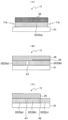
- FIG. 1 is a plan view of a sensor in one embodiment of the invention.
- FIG. 1(A) shows the entire sensor
- FIG. 1(B) shows an enlarged view of the tip portion of the sensor.
- FIG. 2 is a cross-sectional view of the sensor at a specific portion of FIG. 1(B).
- FIG. 2(A) is a sectional view taken along the line AA in FIG. 1(B).
- FIG. 2(B) is a sectional view taken along the BB arrow in FIG. 1(B).
- FIG. 2(C) is a sectional view taken along the line CC in FIG. 1(B).
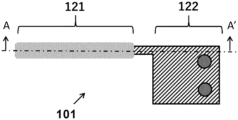
- FIG. 3 is a top view showing another example of the front side (the side having the working electrode and the reference electrode) of the sensor in one embodiment of the present invention.
- FIG. 3 is a top view showing another example of the front side (the side having the working electrode and the reference electrode) of the sensor in one embodiment of the present invention.
- FIG. 3 is a top view showing another
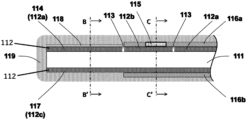
- FIG. 4 is a sectional view taken along the line A-A' in FIG. 3.
- FIG. 5 is a sectional view taken along the line B-B' in FIG. 4.
- FIG. 6 is a sectional view taken along the line C-C' in FIG. 4.
- FIG. 7 is a plan view of a sensor in one embodiment of the invention.
- FIG. 7(A) shows the electrode pattern before the film (insulating resist film) is formed
- FIG. 7(B) shows the electrode pattern after the film is formed.
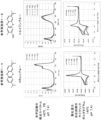
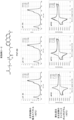
- FIG. 8 shows the PNT compounds of Reference Comparative Examples 1-1 and 1-2, their optical absorption spectra, and their cyclic voltammograms of redox reaction tests.
- FIG. 1-1 and 1-2 shows the electrode pattern before the film (insulating resist film) is formed
- FIG. 7(B) shows the electrode pattern after the film is formed.
- FIG. 8 shows the PNT compounds of Reference Comparative Examples 1-1 and 1-2, their optical absorption spectra, and their cyclic volt
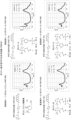
- FIG. 9 shows the PNT compounds of Reference Examples 1-1 to 1-3, their optical test absorption spectra, and their cyclic voltammograms of redox reaction tests.
- FIG. 10 shows the PNT compounds of Reference Examples 1-4 and 1-5, their optical test absorption spectra, and their cyclic voltammograms of redox reaction tests.
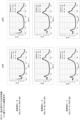
- FIG. 11 shows the PNT compound of Example 2-1, its optical test absorption spectrum, and its redox reaction test cyclic voltammogram.
- FIG. 12 shows the PNT compound of Example 2-2, its optical test absorption spectrum, and its cyclic voltammogram of redox reaction test.
- FIG. 13 shows the PNT compound of Example 2-3, its optical test absorption spectrum, and its cyclic voltammogram of redox reaction test.
- FIG. 14 shows the absorption spectra of the polymer-bonded PNT compounds of Examples 3-1 to 3-4 in an optical test in PBS.
- FIG. 15 is an optical absorption spectrum of the polymer-bonded PNT compounds of Examples 3-2 to 3-4 in a sodium phosphate buffer (pH 6 or pH 8).
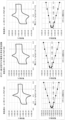
- FIG. 16 is a cyclic voltammogram of the electrochemical response test of the polymer-bonded PNT compounds of Examples 3-2 to 3-4.
- FIG. 17 is a cyclic voltammogram of the electrochemical response and durability test of the polymer-bonded PNT compounds of Examples 3-2 to 3-4.
- FIG. 18 is a diagram showing the sensor responsiveness of the polymer-bonded PNT compounds of Examples 3-3 and 3-4 in a sensor durability test.
- Embodiments of the phenothiazine compound, hydrophilic moiety-introduced phenothiazine compound, polymer-bonded phenothiazine compound, reagent layer, electrochemical sensor, etc. in the present invention will be described in more detail below.
- Non-reactive N substituent A substituent for the nitrogen atom of an amino group that does not have a reactive group capable of forming a covalent bond or a non-covalent bond.
- substituent that a compound has in this specification, in particular, a substituent for the phenothiazine skeleton that a phenothiazine compound has
- which is a substituent that has a binding target in this specification, in particular, a hydrophilic moiety
- “Specific reactive group of a phenothiazine compound (specific binding substituent)” ...
- the first specific reactive group of a compound for introducing a hydrophilic moiety which is constituted by part or all of the specific binding substituent that the phenothiazine compound has or a group capable of reacting with a specific reactive group of a high molecular weight polymer.
- redox mediator means a redox substance that mediates electron transfer, and refers to, for example, a substance responsible for transferring electrons generated by a redox reaction of an analyte by an oxidoreductase.
- redox mediators Various compounds such as ferricyanide and ferrocene are known as redox mediators, but phenothiazine compounds have a negative redox potential (vs.Ag/AgCl/saturated KCl) (lower than 0V).
- Contaminants contained in the sample for electrochemical measurement such as easily oxidizable compounds such as ascorbic acid (vitamin C), uric acid, etc. contained in biological samples or culture medium samples, which are not used as analytes. Therefore, it can be said that it is a preferable redox mediator.
- the phenothiazine compound in the present invention is a compound represented by general formula (1A) or (1B).
- a substituent represented by N + R 9 R 10 (iminium cation) is introduced at the 3-position of the phenothiazine skeleton.
- the compound represented by general formula (1B), that is, compound (1B) has a resonance structure relationship with compound (1A).
- the compound represented by the general formula (1A) is a compound that can also be represented by the general formula (1B), and the compound represented by the general formula (1B) is a compound that can also be represented by the general formula (1A). It is understood that there is.
- R 9 and R 10 are both substituents, or one is a substituent and the other is a hydrogen atom (R 9 and R 10 are not both hydrogen atoms).
- the "substituents" as R 9 and R 10 are those in which the phenothiazine compound of the present invention can form a compound (1A) having an iminium cation at a predetermined position or a compound (1B) having a resonance structure thereof.
- examples include (vi) "straight chain or branched saturated or unsaturated hydrocarbon group which may have a substituent.”
- the hydrocarbon group for example, a (C 1-6 ) hydrocarbon group having 1 to 6 carbon atoms is preferable, and a methyl group is particularly preferable.
- R 1 , R 2 and R 4 to R 8 each independently represent any group or atom of the following (i) to (viii): (i) Hydrogen atom; (ii) halogen atom; (iii) a hydroxy group which may have a substituent; (iv) a carboxy group which may have a substituent; (v) an amino group that may have a substituent; (vi) a saturated or unsaturated hydrocarbon group that may have a substituent (for example, a C 1-15 alkyl group, preferably a C 1-6 alkyl group); (vii) an acyl group that may have a substituent (for example, a C 1-6 acyl group, that is, a C 1-6 alkyl-carbonyl group); (viii) A phenyl group which may have a substituent.
- the substituents (iii) to (viii) above may have, for example, (a) a halogen atom, (b) a hydroxy group, (c) a carboxy group or an active ester thereof (for example, N -hydroxysuccinimide ester (NHS)), (d) an amino group, (e) a linear or branched saturated or unsaturated hydrocarbon group (e.g., a C 1-15 alkyl group, preferably a C 1-6 alkyl group) , more preferably a C 1-3 alkyl group), (f) an acyl group (e.g.
- a C 1-6 acyl group preferably a C 1-3 acyl group
- (g) a guanidino group (h) a mesyl group, (i ) a phenyl group, (j) a thiol group, (k) a formyl group (aldehyde group), (l) an epoxy group, and (m) a maleimide group.
- the substituent that the substituents (iii) to (viii) above may have may be a group consisting of any one of the above (a) to (m) alone, or A group composed of two or more selected from a) to (m), such as (c) a carboxy group or its active ester, (d) an amino group, (j) a thiol group, (k) It may also be a group such as (e) a straight-chain or branched saturated or unsaturated hydrocarbon group, which is further substituted with a formyl group, (l) an epoxy group or (m) a maleimide group.
- a person skilled in the art would be able to select a chemically appropriate substituent from (a) to (m) for each of (iii) to (viii) above, or select a chemically appropriate substituent from (a) to (m).
- the present invention can be carried out by selecting and linking two or more substituents.
- the number of substituents that each of the above (iii) to (viii) may have is not particularly limited, and may be, for example, 1, 2, or 3, or one atom (for example, , a carbon atom of an alkyl group, a nitrogen atom of an amino group), a plurality of substituents may be bonded.
- R 1 , R 2 and R 4 to R 8 may be groups that have a bonding property with a specific compound or polymer, or may be groups that do not have such a bonding property.
- R 1 , R 2 and R 4 to R 8 are used to introduce a hydrophilic moiety into a phenothiazine compound that has binding properties with a hydrophilic moiety-introducing compound in the production of a "hydrophilic moiety-introducing phenothiazine compound”. may be a substituent.
- R 1 , R 2 and R 4 to R 8 may be substituents that have a bonding property with a high molecular weight polymer, and in that case, they can be bonded to a phenothiazine compound without going through the hydrophilic part as described above. It is possible to produce a "polymer-bonded phenothiazine compound" that is directly bound to a high molecular weight polymer.
- R 1 , R 2 and R 4 to R 8 may be hydrophilic groups that contribute to improving the hydrophilicity of the phenothiazine compound by themselves (even without bonding to the hydrophilic moiety-introducing compound). good.
- R 1 , R 2 and R 4 to R 8 may be groups related to performance as a redox mediator.
- any one or more of R 1 , R 2 and R 4 to R 8 is a substituent ( This is the "specific binding substituent" of the phenothiazine compound in the present invention.
- R 6 is a specific binding substituent.
- R 1 , R 2 and R 4 to R 8 those other than those that are specific binding substituents may be all hydrogen atoms, or atoms or substituents other than hydrogen that are not specific binding substituents. It may be.
- the specific bonding substituent is selected from the above (iii) to (viii) shown as specific examples of R 1 , R 2 and R 4 to R 8 , and is bonded to a hydrophilic moiety-introducing compound or a high molecular weight polymer.
- it may have a group that can react with the first specific reactive group of the hydrophilic moiety-introducing compound or the specific reactive group of the high molecular weight polymer under appropriate conditions.
- those that cannot be substantially bonded to the hydrophilic moiety-introducing compound or the high molecular weight polymer, or those that are industrially difficult to bond to (for example, unsubstituted phenyl groups) are used in the present invention.
- each group itself (without a substituent) is capable of reacting with the first specific reactive group of the hydrophilic moiety-introducing compound or the specific reactive group of the high molecular weight polymer.
- group the "specific reactive group” of the phenothiazine compound (specific binding substituent) in the present invention
- the entire group may serve as a specific reactive group.
- Specific reactive group of phenothiazine compound (specific binding substituent) is capable of reacting with the first specific reactive group possessed by the hydrophilic moiety-introducing compound for introducing a hydrophilic moiety or with the specific reactive group possessed by the high molecular weight polymer. It is not particularly limited as long as it is a reactive group, and can be selected from various known reactive groups.
- the specific reactive group of the phenothiazine compound is, for example, selected from the group consisting of a carboxy group or its active ester form (e.g. NHS form), an amino group, a thiol group, a formyl group (aldehyde group), an epoxy group, and a maleimide group. At least one type is preferred.
- the specific reactive group of such a phenothiazine compound is a reactive group possessed by a specific binding substituent, that is, the groups (iii) to (viii) above are the specific reactive groups (c) and (d). ), (j), (k), (l), (m), and the like.
- the specific reactive group of the phenothiazine compound may be bonded with a protecting group if necessary, and must be deprotected before the reaction for bonding the phenothiazine compound with the hydrophilic moiety-introducing compound or high molecular weight polymer. It's okay.
- any one or more of R 1 , R 2 and R 4 to R 8 , particularly preferably at least R 6 is the specific binding substituent (v ) "an amino group which may have a substituent", that is, a group represented by the formula: -NR 11 R 12 (wherein R 11 and R 12 each represent a hydrogen atom or a substituent) .
- the group represented by -NR 11 R 12 serving as a specific binding substituent is an "amino group having a substituent", and R 11 and R 12 are either one or both, preferably One of them is a substituent having a specific reactive group (reactive N substituent, for example, a C 1-6 alkyl group substituted with a carboxy group: -(CH 2 ) 1-6 -COOH), and the other is A substituent that does not have a hydrogen atom or a specific reactive group (non-reactive N substituent, for example, a C 1-6 alkyl group) is preferable.
- a specific reactive group reactive N substituent, for example, a C 1-6 alkyl group substituted with a carboxy group: -(CH 2 ) 1-6 -COOH
- R 11 and R 12 are both hydrogen atoms, that is, -NR 11 R 12 represents an unsubstituted amino group, and the unsubstituted amino group is replaced by a specific binding substituent (a specific reaction of a phenothiazine compound).
- a specific binding substituent a specific reaction of a phenothiazine compound.
- the phenothiazine compound of the present invention can be represented by the following general formulas (1A-1) and (1B-1).
- R 11 is a hydrogen atom or a non-reactive N substituent
- R 12 is a reactive N substituent
- the other symbols are as described above. It has the same meaning as general formulas (1A) and (1B).
- the phenothiazine compound (including a hydrophilic moiety-introduced phenothiazine compound and a polymer-bonded phenothiazine compound) in the present invention may form a salt.
- the phenothiazine compound of the present invention contains a positively charged moiety (cation)
- it can form a salt with a negatively charged ion (anion species)
- the phenothiazine compound of the present invention contains a positively charged moiety (cation). If it contains a positively charged moiety (anion), it can form a salt with a positively charged ion (cation species).
- anion species include halogen ions, ions of compounds containing halogens, hydroxide ions, carboxylate ions, nitrate ions, nitrite ions, formate ions, acetate ions, propionate ions, butyrate ions, and hydrogen carbonate ions. , dihydrogen phosphate ion, hydrogen sulfate ion, alkyl sulfonate ion, hydrogen sulfide ion, hydrogen oxalate ion, cyanate ion, and thiocyanate ion.
- Examples of cation species include alkali metal ions such as sodium ions and potassium ions, alkaline earth metal ions such as calcium ions, magnesium ions, and barium ions, metal ions such as aluminum ions, and quaternary ammonium ions such as choline ions. Examples include cations, ammonium ions, ions of compounds containing amino groups or substituted amino groups, pyridinium ions, ions of compounds containing pyridyl groups or substituted pyridyl groups, and the like.
- hydrophilic moiety-introduced phenothiazine compound of the present invention is a compound in which a "hydrophilic moiety" is introduced into the above-mentioned phenothiazine compound of the present invention, that is, R 1 , R 2 and R 4 in general formula (1A) or (1B).
- Such a compound can be represented by general formula (2A) or (2B).
- Both of R 9 and R 10 are a substituent, or one of them is a substituent and the other is a hydrogen atom. (Synonymous with the definition in general formulas (1A) and (1B).)
- R(L) 1 , R(L) 2 and R(L) 4 to R(L) 8 are each [A] a hydroxy group which may have a substituent, and a hydroxy group which may have a substituent Carboxy group, amino group that may have a substituent, linear or branched saturated or unsaturated hydrocarbon group having 1 to 6 carbon atoms that may have a substituent, an acyl group which may have a substituent, or a phenyl group which may have a substituent, [B] a group formed by bonding a hydrophilic moiety-introducing compound to a binding substituent selected from [A] above; , or [C] is a hydrogen atom or a halogen atom.
- a hydrophilic moiety is further introduced into each of ⁇ 6 linear or branched saturated or unsaturated hydrocarbon groups, optionally substituted acyl groups, or optionally substituted phenyl groups.
- the compound may be bound (that is, a hydrophilic moiety may be introduced) or may not be bound (that is, a hydrophilic moiety may not be introduced).
- R(L) 1 , R(L) 2 and R(L) 4 to R(L) 8 is a group for introducing a hydrophilic moiety into the group [B], that is, the group [A]. It is a group formed by bonding compounds (that is, a hydrophilic part is introduced). When two or more of R(L) 1 , R(L) 2 and R(L) 4 to R(L) 8 are such groups, their respective hydrophilic moieties may be the same or different. You can.
- a hydrophilic moiety is introduced at least in R(L) 6 , and if necessary, R(L) 1 , R(L) 2 , R(L) 4 , R(L) 5 , R(L) 7 and R(L) 8 may have a hydrophilic moiety introduced therein.
- R(L) 6 in general formulas (2A) and (2B), at least R(L) 6 has a specific reactive group for hydrophilic moiety introduction, and a specific bond for hydrophilic moiety introduction.
- the details of the "specific binding substituent" and the “specific reactive group” are as described in the present specification in relation to the phenothiazine compound in the present invention.
- the hydrophilic moiety-introduced phenothiazine compound of the present invention in which a hydrophilic moiety is introduced at the R 6 site can be represented by the following general formulas (2A-1) and (2B-1).
- R' 6 represents a group derived from a specific binding substituent
- L represents a hydrophilic part
- the definitions of other symbols are as follows: 2A) and (2B).
- any one or more of R(L) 1 , R(L) 2 and R(L) 4 to R(L) 8 , particularly preferably At least R(L) 6 is a group formed by bonding a hydrophilic moiety-introducing compound to a specific binding substituent represented by the formula: -NR 11 R 12 .
- the details of the formula: -NR 11 R 12 are as described in the present specification in relation to the phenothiazine compound of the present invention.
- a hydrophilic moiety-introducing type of the present invention in which R(L) 6 is a group formed by binding a hydrophilic moiety-introducing compound to a specific binding substituent represented by -NR 11 R 12
- the phenothiazine compound can be represented by the following general formulas (2A-2) and (2B-2).
- R 11 is a hydrogen atom or a non-reactive N substituent
- R' 12 is a group derived from a reactive N substituent
- L is a hydrophilic moiety derived from a hydrophilic moiety-introducing compound
- the "hydrophilic moiety" in the hydrophilic moiety-introduced phenothiazine compound of the present invention is a part (chemical structure) for imparting "hydrophilicity" to the phenothiazine compound, and in some embodiments, it is a part (chemical structure) that imparts "hydrophilicity" to the phenothiazine compound. It can also be a suitable part for linking phenothiazine compounds.
- the hydrophilic moiety is derived from the first specific reactive group that the hydrophilic moiety-introducing compound had at least in part (for example, at or near the first end), and is a phenothiazine-based compound (specific binding substituent).
- the hydrophilic part has a second specific reactive group, which the hydrophilic part-introducing compound had, as a group capable of reacting with the specific reactive group of the high molecular weight polymer, at another site (for example, at or near the second end).
- the hydrophilic part-introducing compound had, as a group capable of reacting with the specific reactive group of the high molecular weight polymer, at another site (for example, at or near the second end).
- hydrophilic means that it has a high affinity for water, and when using water or other polar solvents, for example, when synthesizing a polymer-bonded phenothiazine compound, a hydrophilic moiety-introduced phenothiazine compound and a high molecular weight
- a solvent for reacting a polymer or a solvent for dissolving a polymer-bonded phenothiazine compound (redox polymer) when forming a predetermined layer in an electrochemical sensor it is dissolved or dissolved to the extent that the purpose can be achieved. Refers to the property of being miscible.
- polar solvent examples include methanol, ethanol, 1-propanol, 2-propanol, 1-butanol, 2-butanol, 2-methyl-1-propanol, 2-methyl-2-propanol, formic acid, acetic acid, tetrahydrofuran, and acetone. , dioxane, methyl methyl ketone, ethyl acetate, acetonitrile, dimethyl formamide, and dimethyl sulfoxide.
- the hydrophilic part in the present invention is not particularly limited, and can be selected from various hydrophilic parts.
- hydrophilic moieties with relatively small chemical structural sizes include functional groups called "hydrophilic groups” such as hydroxy groups, amino groups, carboxy groups, sulfo groups, and quaternary ammonium cations.
- the hydrophilic group itself or a group derived from a molecule containing such a hydrophilic group, which has hydrophilic properties, can be mentioned.
- examples of hydrophilic moieties with a relatively large chemical structure include those with hydrophilic properties (herein referred to as "linker-like hydrophilic moieties") among the so-called “linker groups (parts)”. ) can be mentioned.
- the linker-like hydrophilic moiety except for the reactive group before reaction or the bond structure after reaction at both ends, is mainly composed of carbon atoms and is selected from the group consisting of nitrogen atoms, oxygen atoms, and sulfur atoms.
- a chain structure that may contain at least one type of heteroatom in other words, a chain structure that may have a bond containing a heteroatom such as an ether bond, thioether bond, or amide bond in the middle. It's a certain part.
- the "chain structure” may be linear or branched, but from the viewpoint of hydrophilicity, a linear structure is preferable.
- a "chain structure” is derived from a cyclic compound (aromatic hydrocarbon ring, non-aromatic hydrocarbon ring, aromatic heterocycle, non-aromatic heterocycle, etc.). Although it is preferable that it does not contain any ring structure, it may contain one or more ring structures as long as it has the desired hydrophilicity.
- the linker-like hydrophilic moiety comprises an oxyethylene chain of the formula: -(OC 2 H 4 ) q -.
- q in the formula represents, for example, an integer of 1 to 80, preferably an integer of 3 to 36. Note that among the oxyethylene chains represented by the formula, those in which q is large to some extent are generally called "polyoxyethylene (PEG chain)" or the like.
- the linker-like hydrophilic moiety comprises a hydrocarbon chain of the formula: -(CH 2 ) p -.
- the main chain of the linker-like hydrophilic moiety is a hydrocarbon chain represented by the above formula: -(CH 2 ) p - and a hydrocarbon chain represented by the above formula: -(OC 2 H 4 ) q -. contains both oxyethylene chains.
- p in the formula representing a hydrocarbon chain can be appropriately adjusted so as to be balanced with q in the formula representing an oxyethylene chain.
- the specific reactive group of the hydrophilic part that is, the reactive group for bonding with a high molecular weight polymer that the compound for introducing a hydrophilic part may have (the "second specific reactive group" of the compound for introducing a hydrophilic part) is It is not particularly limited as long as it can react with a specific reactive group of a molecular weight polymer, and can be selected from various known reactive groups.
- Examples of the specific reactive group of the hydrophilic moiety include "carboxy group or its active ester form (for example, NHS form), amino group, thiol group, formyl group ( At least one selected from the group consisting of aldehyde groups), epoxy groups, and maleimide groups is preferred.
- the reactive group for polymer bonding may be bonded with a protecting group if necessary, and may be deprotected before the reaction for bonding the hydrophilic moiety-introduced phenothiazine compound and the high molecular weight polymer.
- the predetermined reactive group in the present invention that is, the specific reactive group of the phenothiazine compound, the first specific reactive group of the hydrophilic moiety-introducing compound or the specific reactive group of the high molecular weight polymer bonded thereto, and the hydrophilic moiety-introducing compound (hydrophilic moiety-introducing compound) in the present invention.
- the second specific reactive group and the specific reactive group of the high molecular weight polymer bonded thereto various known reactive groups can be employed and various combinations can be made.
- the predetermined reactive groups in the present invention may be bonded to each other by covalent bonds or non-covalent bonds (for example, electrostatic interaction), but for example, the stability of the bond From this point of view, those that are bonded by covalent bonds are preferred.
- the predetermined reactive groups in the present invention are "a group consisting of a carboxy group or an active ester thereof, an amino group, a thiol group, a formyl group (aldehyde group), an epoxy group, and a maleimide group” (herein referred to as "preferred reactive group”). ) is preferred.
- Table 1 shows the groups with which each of the reactive groups included in the preferred group of reactive groups can react.
- the other reactive group included in the preferred reactive group group (underlined in the table is It may be a reactive group not included in the preferred group of reactive groups (those not underlined in the table or not included in the table).
- the "second specific reactive group" of the hydrophilic moiety-introducing compound (hydrophilic moiety) or the "specific reactive group of the phenothiazine compound” and the “specific reactive group of the high molecular weight polymer” are either One is “reactive group A” in Table 1, and the other is “reactive group B.”
- one of the "first specific reactive group” of the hydrophilic moiety-introducing compound and the “specific reactive group of the phenothiazine compound” is the “reactive group A” in Table 1. and the other is "reactive group B".
- the "second specific reactive group” or “specific reactive group of the phenothiazine compound” of the hydrophilic moiety-introducing compound (hydrophilic moiety) and the “specific reactive group of the high molecular weight polymer” are: One of them is an amino group and the other is a carboxy group or an active ester thereof.
- one of the "first specific reactive group” of the hydrophilic moiety-introducing compound and the "specific reactive group of the phenothiazine compound” is an amino group and the other is a carboxy group. group or its active ester form.
- a phenothiazine compound having a carboxylic acid active ester as a specific reactive group having an amino group as a first specific reactive group and a carboxylic acid active ester (e.g. carboxylic acid NHS ester) as a second specific reactive group
- a high molecular weight polymer having an amino group as a hydrophilic moiety-introducing compound and a specific reactive group the first A hydrophilic moiety-introduced phenothiazine compound bonded with an amide bond is obtained, and the carboxylic acid active ester of the hydrophilic moiety-introduced phenothiazine compound and the amino group of the high molecular weight polymer are reacted to bond with a second amide bond.
- a polymer-bonded phenothiazine compound is obtained.
- the "compound for introducing a hydrophilic moiety" in the present invention is a compound for bonding with a specific binding substituent that a phenothiazine compound has in order to introduce (additionally form) a "hydrophilic moiety" as described above.
- the compound for introducing a hydrophilic part may include, for example, a structure corresponding to the linker-like hydrophilic part explained in relation to the hydrophilic part, and a part of the structure (for example, at the first end or its vicinity) for bonding with a phenothiazine compound.
- a compound that has a first specific reactive group, and optionally has a second specific reactive group for bonding to a high molecular weight polymer at another portion (e.g., at or near the second end). can be used.
- a compound having a smaller size (molecular weight) than that capable of forming a hydrophilic part can also be used as a compound for introducing a hydrophilic part.
- These compounds for introducing a hydrophilic part are not particularly limited, and can be selected from various known compounds for introducing a hydrophilic part.
- the first specific reactive group possessed by the hydrophilic moiety-introducing compound is not particularly limited as long as it is capable of reacting with the specific reactive group of the phenothiazine compound, and can be selected from various known reactive groups.
- Examples of the first specific reactive group of such a compound for introducing a hydrophilic moiety include "carboxy group or its active ester form (for example, NHS form), amino group, thiol group, formyl group (aldehyde group), epoxy group, and maleimide group. At least one type selected from the group consisting of groups is preferred.
- the first specific reactive group of the compound for introducing a hydrophilic moiety may be bonded with a protecting group if necessary, and is deprotected before the reaction for bonding the compound for introducing a hydrophilic moiety and the phenothiazine compound.
- the second specific reactive group that the hydrophilic moiety-introducing compound may have is a reactive group that corresponds to the specific reactive group that the hydrophilic moiety may have, and the technical matters thereof are as described above. be.
- Hydrophilic moiety-introducing phenothiazine compounds are produced by combining a phenothiazine compound having a desired chemical structure with a hydrophilic moiety-introducing compound having a desired chemical structure under appropriate conditions (temperature, time, adjuvants, etc.). It can be synthesized by reacting with The synthesized hydrophilic moiety-introduced phenothiazine compound may be purified by gel filtration chromatography, ultrafiltration, etc., if necessary.
- the hydrophilic moiety-introduced phenothiazine compounds are R(L) 1 , R(L) 2 and R(L) 4 to R(L) 8 and R 9 and R 10 in general formulas (2A) and (2B), respectively.
- Various types of structures can be manufactured and used.
- the hydrophilic moiety-introduced phenothiazine compound can be used alone, or two or more types can be used as a raw material for synthesizing a polymer-bonded phenothiazine compound as described below, for example. They can also be used in combination.
- the polymer-bonded phenothiazine compound of the present invention has a structure in which the above-described phenothiazine compound of the present invention or a hydrophilic moiety-introduced phenothiazine compound is bonded to a high molecular weight polymer, that is, the phenothiazine compound of the present invention has a hydrophilic moiety. It is a phenothiazine compound that has a structure in which it is bonded to a high molecular weight polymer with or without intervening.
- the polymer-bonded phenothiazine compound of the present invention is a high molecular weight polymer to which a phenothiazine compound or a hydrophilic moiety-introduced phenothiazine compound is bonded and which can be used as a redox polymer.
- a phenothiazine compound or a hydrophilic moiety-introduced phenothiazine compound as a redox mediator By combining a phenothiazine compound or a hydrophilic moiety-introduced phenothiazine compound as a redox mediator with a high molecular weight polymer, outflow from the protective film can be prevented or suppressed.
- the polymer-bonded phenothiazine compound can be represented, for example, by general formula (3A) or (3B).
- Both of R 9 and R 10 are a substituent, or one of them is a substituent and the other is a hydrogen atom. (Synonymous with the definitions in general formulas (1A) and (1B), and (2A) and (2B).)
- R(L) 1 , R(L) 2 and R(L) 4 to R(L) 8 are each [A] a hydroxy group which may have a substituent, and a hydroxy group which may have a substituent Carboxy group, amino group that may have a substituent, linear or branched saturated or unsaturated hydrocarbon group having 1 to 6 carbon atoms that may have a substituent, an acyl group which may have a substituent, or a phenyl group which may have a substituent, [B] a group formed by bonding a hydrophilic moiety-introducing compound to a binding substituent selected from [A] above; , [C] a hydrogen atom or a halogen atom, or [D] a group derived from any of the bonding substituents selected from [A] above or the group [B] above.
- (QP) 1 , (QP) 2 and (QP) 4 to (QP) 8 respectively represent the corresponding R(L) 1 , R(L) 2 and R(L) 4 to R(L) 8 as described above [ D] is a polymer structure derived from a high molecular weight polymer.
- the polymer structure derived from the high molecular weight polymer represented by (QP) 1 , (QP) 2 and (QP) 4 to (QP) 8 has R(L) 1 when a hydrophilic moiety is introduced.
- R(L) 2 and R(L) 4 to R(L) 8 or R(L) 1 , R(L) 2 and R( It may be bonded to the specific binding substituent itself represented by L) 4 to R(L) 8 , ie, R 1 , R 2 and R 4 to R 8 .
- the respective high molecular weight polymers may be the same or different ( That is, molecules of a plurality of high molecular weight polymers may be crosslinked by a hydrophilic moiety-introduced phenothiazine compound).
- R(L) 1 , R(L) 2 and R(L) 4 to R( L ) corresponding to two or more of (QP) 1 , (QP) 2 and (QP) 4 to (QP) 8 )
- the respective hydrophilic moieties may be the same or different.
- R(L) 1 , R(L) 2 and R(L) 4 to R(L) 8 is a carboxy group or an active group thereof.
- R(L) 1 , R(L) 2 and R(L) 4 to R(L) 8 is a specific binding substituent.
- a hydrophilic moiety-introducing compound having at least one specific reactive group selected from the group consisting of a carboxyl group or its active ester, an amino group, a thiol group, a formyl group, an epoxy group, and a maleimide group. This is a group derived from a group that is
- the specific binding substituent of the phenothiazine compound at least at R(L) 6 (QP) 6 has a high It is bonded to a molecular weight polymer, and optionally further contains R(L) 1 (QP) 1 , R(L) 2 (QP) 2 , R(L) 4 (QP) 4 , R(L) 5 ( One or more of QP) 5 , R(L) 7 (QP) 7 and R(L) 8 (QP) 8 may be bonded to a high molecular weight polymer with or without a hydrophilic moiety.
- R(L) 6 is a specific binding substituent or a specific binding substituent into which a hydrophilic moiety has been introduced. This corresponds to the case where the group is derived from any of the following groups.
- the details of the "specific binding substituent", “specific reactive group” and “hydrophilic moiety” are as described in the present specification in relation to the phenothiazine compound and the hydrophilic moiety-introduced phenothiazine compound of the present invention. be.
- a hydrophilic moiety-introducing compound is bonded to a specific binding substituent, and a high molecular weight polymer is bonded via the hydrophilic moiety introduced by this bond.
- the polymer-bonded phenothiazine compound of the invention can be represented by the following general formulas (3A-1) and (3B-1).
- R' 6 is a group derived from the specific bonding substituent (R), and (L') is an optionally present group for introducing a hydrophilic moiety.
- Q' is a group derived from the reactive group (Q) of a high molecular weight polymer
- P is the main chain of the high molecular weight polymer
- definitions of other symbols is the same as general formulas (3A) and (3B). Details of the main chain (P) and reactive group (Q) of the high molecular weight polymer and the high molecular weight polymer having them will be described later.
- any one or more of R(L) 1 , R(L) 2 and R(L) 4 to R(L) 8 , particularly preferably at least R(L) 6 is a specific binding substituent which is an amino group having a substituent represented by the formula: -NR 11 R 12 , or a hydrophilic moiety-introducing compound is bonded to the specific binding substituent.
- R(L) 1 , R(L) 2 and R(L) 4 to R(L) 8 is a specific binding substituent which is an amino group having a substituent represented by the formula: -NR 11 R 12 , or a hydrophilic moiety-introducing compound is bonded to the specific binding substituent.
- the details of the formula: -NR 11 R 12 are as described in the present specification in relation to the phenothiazine compound of the present invention.
- R(L) 6 is a specific binding substituent that may or may not be bound to a compound for introducing a hydrophilic moiety (that is, whether or not a hydrophilic moiety is introduced).
- the polymer-bonded phenothiazine compound of the present invention which is a group represented by -NR 11 R 12 and to which a high molecular weight polymer is further bonded via or without a hydrophilic moiety, is a group represented by -NR 11 R 12 as It can be represented by formulas (3A-2) and (3B-2).
- R 11 is a hydrogen atom or a non-reactive N substituent
- R' 12 is a group derived from a reactive N substituent
- a method for producing a redox polymer that includes a step of reacting a (hydrophilic moiety-introduced) phenothiazine compound with a high molecular weight polymer, as described later in this specification, (hydrophilic moiety introduced type) )
- a high molecular weight polymer composition having a distribution in the number of bonds of the phenothiazine compound is obtained.
- the average is not particularly limited and can be adjusted as appropriate, taking into consideration the use and performance, and depending on the raw materials (high molecular weight polymer or monomers that make it up) and reaction conditions when producing the redox polymer. can do. For example, (1) increasing or decreasing the number of reactive groups contained in one molecule of the monomer used as a raw material for high molecular weight polymers, or (2) increasing or decreasing the number of reactive groups contained in the entire monomer (hydrophilic moiety-introduced) phenothiazine compounds;
- the number (average value) of the phenothiazine-based compound (hydrophilic moiety-introduced) to one molecule of high molecular weight polymer can be increased or decreased by adjusting the ratio of the reactive groups contained in the polymer to those actually reacted with, depending on the reaction conditions. It is possible to change the distribution of the redox polymer, and to produce a high molecular weight redox polymer (composition thereof) having desired properties.
- the polymer-bonded phenothiazine compound of the present invention which is typically used as a redox polymer, preferably has hydrophilicity.
- the details of "hydrophilicity" are as described above in relation to the hydrophilic portion.
- the hydrophilic moiety, the high molecular weight polymer, or both of them impart hydrophilicity to the polymer-bonded phenothiazine compound.
- a high molecular weight polymer is preferably bonded to the phenothiazine compound via a hydrophilic moiety (for example, a PEG chain or other linker-like hydrophilic moiety); More preferably, the molecular weight polymer itself also has hydrophilicity.
- a hydrophilic moiety for example, a PEG chain or other linker-like hydrophilic moiety
- a high molecular weight polymer is a polymer having a molecular weight (weight average molecular weight) above a certain level, and has a structure that can bind and support a phenothiazine compound as a redox mediator (hydrophilic moiety introduced type), that is, a hydrophilic moiety introduced type. Having a reactive group capable of reacting with the specific reactive group possessed by the hydrophilic moiety of the phenothiazine compound or the specific reactive group possessed by the specific binding substituent of the phenothiazine compound (the "specific reactive group" of the high molecular weight polymer in the present invention) Any material that can form a reagent layer on the working electrode may be used.
- the type of high molecular weight polymer (structure of main chain and side chain, etc.) is not particularly limited, and any one type may be used alone or two or more types may be used in combination.
- the molecular weight (weight average molecular weight) of a high molecular weight polymer usually refers to a polymer having a weight average molecular weight of 10,000 or more, preferably 50,000 or more, and more preferably 100,000 or more.
- the upper limit of the weight average molecular weight of the high molecular weight polymer is not particularly limited, but is usually less than 1,000,000, preferably less than 1,000,000.
- the weight average molecular weight and molecular weight distribution of high molecular weight polymers can be measured by known means depending on the type of high molecular weight polymer, such as gel permeation chromatography (GPC) or when the high molecular weight polymer is a protein. For example, SDS-polyacrylamide gel electrophoresis (SDS-PAGE) can be used.
- GPC gel permeation chromatography
- SDS-PAGE SDS-polyacrylamide gel electrophoresis
- the numerical value indicated in the catalog etc. for example as "Mw" or "M.W." can be regarded as the weight average molecular weight. can.
- the main chain of a high molecular weight polymer generally has a chain structure mainly composed of carbon atoms and may contain at least one heteroatom selected from the group consisting of nitrogen atoms, oxygen atoms, and sulfur atoms. In other words, it is a chain structure in which a bond containing a hetero atom such as an ether bond, thioether bond, or amide bond may exist in the middle.
- high molecular weight polymers are designed to support multiple (hydrophilic moiety introduced) phenothiazine compounds in their side chains.
- the high molecular weight polymer may be a homopolymer (homopolymer), a copolymer (copolymer), or a polymer in which they are bonded and/or mixed, and may be a random polymer or a block polymer. Good too.
- the specific reactive group possessed by the high molecular weight polymer of the present invention can react with the specific reactive group of the hydrophilic moiety when bonding with a hydrophilic moiety-introduced phenothiazine compound (that is, bonding with a phenothiazine compound via a hydrophilic moiety).
- a hydrophilic moiety-introduced phenothiazine compound that is, bonding with a phenothiazine compound via a hydrophilic moiety.
- Such reactive groups are not particularly limited and can be selected from various known reactive groups.
- the specific reactive group of the high molecular weight polymer is, for example, selected from the group consisting of a carboxy group or its active ester form (e.g. NHS form), an amino group, a thiol group, a formyl group (aldehyde group), a thiol group, and a maleimide group. At least one type is preferred.
- the specific reactive group of the high molecular weight polymer may be bonded with a protecting group if necessary, and must be deprotected before the reaction for bonding the high molecular weight polymer and the (hydrophilic moiety introduced) phenothiazine compound. You can.
- the specific reactive group of the high molecular weight polymer may be one that originally exists in the monomer used to synthesize the high molecular weight polymer, or one that was introduced later, for example, a monomer originally used for synthesizing the high molecular weight polymer. It may be added by introducing a further reactive substituent to the existing reactive group.
- the "reactive substituent” in the latter embodiment refers to any of the substituents (a) to (viii) that may be included in the substituents (iii) to (viii) described above in relation to the phenothiazine compound. This is the same as the group containing at least one of m). In either of the above embodiments, it can be said that the high molecular weight polymer "has" a specific reactive group.
- high molecular weight polymers include amino acid-based polymers, imine-based polymers, ethylene-based polymers, etc., which have specific reactive groups in their side chains (and terminals). In addition, it can be said that it is a polymer whose monomer is an amino acid (however, it is conceptually distinguished from an artificially synthesized amino acid-based polymer). ) Proteins and polypeptides having amino acid sequences are also included in high molecular weight polymers. Polysaccharide-based polymers having appropriate reactive groups or into which appropriate reactive groups have been introduced are also included in the high molecular weight polymers.
- Examples of monomers containing ethylenic carbon-carbon double bonds include ethylene, propylene, butadiene, isobutene, tetrafluoroethylene, vinyl alcohol, vinyl acetate, vinyl chloride, vinylidene chloride, styrene, methylstyrene, allylamine, diallylamine, diallyl.
- ethylene polymer examples include polyallylamine hydrochloride, allylamine hydrochloride/diallylamine hydrochloride copolymer, and allylamine/diallyldimethylammonium chloride copolymer.
- copolymers of methyl methacrylate and hydroxyethyl methacrylate, copolymers of butyl methacrylate and hydroxyethyl methacrylate, and poly(2-methacryloyloxyethylphosphorylcholine-co-n-butyl), which are generally known as biocompatible polymers are also available.
- Preferred ethylene polymers include (meth)acrylic polymers such as (methacrylate) and polyester polymers such as polyethylene terephthalate. (Meth)acrylic polymers having quaternary ammonium cations, amino groups, etc. in side chains (and terminals) are also mentioned as preferred ethylene polymers.
- imine-based polymers examples include poly(ethyleneimine).
- Poly(ethyleneimine) has -(CH 2 ) 2 -NH 2 , -(CH 2 ) 2 -NH-(CH 2 ) 2 -NH 2 , -(CH 2 ) 2 -N((CH 2 ) 2 -NH 2 ) 2 , the amino group in the structure: -NH 2 becomes a specific reactive group of the high molecular weight polymer, and it contains an appropriate specific reactive group (for example, a carboxy group) corresponding thereto. (Hydrophilic moiety introduced type) Can be combined with phenothiazine compounds.
- amino acid-based polymers examples include poly(L-lysine), poly(L-arginine), poly(L-ornithine), and poly(L-glutamic acid).
- Poly(L-lysine) has a structure of -(CH 2 ) 4 -NH 2 in its side chain.
- Poly(L-glutamic acid) has a -COOH structure in its side chain.
- Amino groups: -NH 2 (or guanidino groups: -NH-C( NH)-NH 2 ), carboxy groups: -COOH, etc.
- amino acid-based polymers contained in the side chains of these amino acid-based polymers are specific reactive groups of the high molecular weight polymers. Therefore, it can be bonded to a (hydrophilic moiety-introduced) phenothiazine compound having a corresponding appropriate specific reactive group (for example, a carboxy group or an amino group).
- the amino acid-based polymer may form a salt, such as poly(L-arginine hydrochloride) and poly(sodium L-glutamate).
- polysaccharide-based polymers examples include chitosan and cellulose derivatives such as carboxymethylcellulose.
- Chitosan is a polysaccharide obtained by hydrolyzing chitin and has an amino group in the side chain (in the sugar structure).
- Carboxymethylcellulose is a cellulose derivative obtained by, for example, treating cellulose with an alkali and then reacting it with monohaloacetic acid, and has a carboxymethyl group in the side chain. Amino groups, carboxy groups, etc.
- proteins include enzymes such as glucose dehydrogenase (GDH) and glucose oxidase, which are used as oxidoreductases in the present invention, and bovine serum albumin (BSA), which is well known and commonly used as a blocking agent.
- GDH glucose dehydrogenase
- BSA bovine serum albumin
- amino acid residues contained in these proteins for example, lysine, arginine, and histidine contain amino groups (or guanidino groups) in their side chains, aspartic acid and glutamic acid contain carboxy groups in their side chains, and cysteine contains carboxy groups in their side chains. Contains a thiol group (sulfanyl group) in the chain. Therefore, a protein containing such an amino acid residue can be combined with a (hydrophilic moiety-introduced) phenothiazine compound containing a corresponding appropriate specific reactive group (for example, a carboxy group or an amino group).
- the high molecular weight polymer is a "cationic polymer.”
- “Cationic polymer” is a general term for polymers having a net positive charge as a whole among the above-mentioned high molecular weight polymers.
- high molecular weight polymers that have positively charged functional groups in their side chains i.e., high molecular weight polymers that are synthesized using monomers that have positively charged functional groups at sites that are not involved in the formation of the main chain, are cationic. becomes a polymer.
- positively charged functional groups include amino groups and quaternary ammonium cations, with quaternary ammonium cations having chemical stability being preferred.
- Examples of cationic polymers include poly(diallyldimethylammonium chloride), poly(allylamine hydrochloride), allylamine hydrochloride/diallylamine hydrochloride copolymer, allylamine/diallyldimethylammonium chloride copolymer, poly(ethyleneimine), etc. .
- amino acid-based polymers such as poly(L-lysine) and poly(L-arginine), which have amino groups (or guanidino groups) in their side chains, and polysaccharide-based polymers such as chitosan are also mentioned as cationic polymers. .
- the polymer-bonded phenothiazine compound of the present invention is produced by combining a phenothiazine compound having a desired chemical structure (hydrophilic moiety-introduced type) and a high molecular weight polymer having a desired chemical structure, particularly with a specific reactive group of the phenothiazine compound. Or, by taking into account the reaction between the specific reactive group of the hydrophilic moiety of the hydrophilic moiety-introduced phenothiazine compound and the specific reactive group of the high molecular weight polymer, the reaction is carried out under appropriate conditions (temperature, time, auxiliary agents, etc.) can do.
- the synthesized polymer-bound phenothiazine compound may be purified by gel filtration chromatography, ultrafiltration, dialysis, etc. to remove low-molecular compounds, if necessary.
- Polymer-bonded phenothiazine compounds include R(L) 1 (QP) 1 , R(L) 2 (QP) 2 , and R(L) 4 (QP) in general formulas (3A-1) and (3B-1).
- Various types can be produced and used depending on the structures of 4 to R(L) 8 (QP) 8 and R 9 and R 10 , respectively.
- any one of the polymer-bonded phenothiazine compounds can be used alone as a redox polymer contained in a reagent layer for producing an electrochemical sensor as described below, for example, or two types can be used alone. It is also possible to use a combination of more than one type.
- the reagent layer of the present invention is a layer containing a hydrophilic moiety-introduced phenothiazine compound or a polymer-bonded phenothiazine compound of the present invention (hereinafter collectively referred to as "phenothiazine compound of the present invention, etc.”).
- This reagent layer is typically placed on the working electrode in the electrochemical sensor of the present invention.
- Phenothiazine compounds (including those constituting hydrophilic moiety-introduced phenothiazine compounds and polymer-bound phenothiazine compounds) function as redox mediators, and polymer-bonded phenothiazine compounds function as redox polymers.
- the details (specific embodiments, preferred embodiments, general formulas, etc.) of the phenothiazine compound of the present invention are as described above in this specification.
- the reagent layer may contain any one kind of phenothiazine compound etc. alone, or may contain two or more kinds of phenothiazine compounds etc. in combination (for example, as a mixture of two or more kinds of phenothiazine compounds etc., or (in a stacked state of layers containing each phenothiazine compound, etc.).
- the reagent layer may contain an "oxidoreductase" corresponding to the analyte, if necessary.
- An electrochemical sensor typically takes the form of an electrochemical sensor (biosensor) containing a redox enzyme in a reagent layer, but is not limited to this. It can also take the form of an electrochemical sensor other than a biosensor, or a sensor other than an electrochemical sensor (for example, an optical sensor). Depending on the application, such as an electrochemical sensor, it is possible to select whether the reagent layer contains an oxidoreductase or not, and what kind of oxidoreductase it contains depending on the type of analyte.
- the reagent layer may further contain other components as necessary.
- other components include conductive particles such as carbon particles and buffer solution components.
- Oxidoreductase refers to an enzyme that can oxidize or dehydrogenate an analyte targeted by an electrochemical sensor or the like.
- oxidoreductases include oxidase enzymes (glucose oxidase, lactate oxidase, pyruvate oxidase, cholesterol oxidase, amino acid oxidase, glutamate oxidase, fructosyl amino acid oxidase, alcohol oxidase, ascorbate oxidase, fructosyl peptide oxidase, bilirubin).
- oxidase aldehyde oxidase, etc.
- dehydrogenase enzymes glucose dehydrogenase, lactate dehydrogenase, pyruvate dehydrogenase, amino acid dehydrogenase, glutamate dehydrogenase, 3-hydroxybutyrate dehydrogenase, alcohol dehydrogenase, aldehyde dehydrogenase. Any one type of oxidoreductase may be used alone, or two or more types may be used in combination as necessary.
- the oxidoreductase may be crosslinked with the polymer-bonded phenothiazine compound of the present invention.
- a crosslinking agent e.g. glutaraldehyde
- a reactive group e.g. amino group
- a protein oxidoreductase and a high molecular weight polymer constituting a polymer-bonded phenothiazine compound ((hydrophilic moiety introduced).
- the oxidoreductase and the polymer-bound phenothiazine compound can be bonded together via a crosslinking agent by reacting with both the amino group and the amino group.
- the polymer-bound phenothiazine compound and the enzyme form a complex with a larger molecular weight, making it possible to further suppress the outflow of the phenothiazine compound (redox mediator) and the enzyme out of the protective film.
- oxidoreductases may be crosslinked with each other. When not crosslinked with the polymer-bound phenothiazine compound, the oxidoreductase may be contained in the reagent layer in a mixed state with the polymer-bound phenothiazine compound.
- the reagent layer can be formed by preparing a reagent solution containing raw materials for forming the reagent layer, applying it onto the substrate, and drying it.
- the reagent solution contains at least the phenothiazine compound of the present invention, etc., and can also contain an oxidoreductase, a crosslinking agent, and other components (for example, conductive carbon black) as necessary. It can be prepared by carrying out a dispersion treatment (for example, ultrasonic treatment of conductive carbon black, etc., performed before adding the oxidoreductase) depending on the situation.
- the substrate to which the reagent solution is applied is typically the working electrode of an electrochemical sensor, for example, by using carbon or conductive metal materials (gold, silver, platinum, palladium, etc.) on both sides of the insulating substrate. , a conductive thin film formed by screen printing, sputtering, vapor deposition, ion plating, etc. By applying a reagent solution to the surface of this conductive thin film and drying it, a working electrode in which a reagent layer is formed on the upper surface of the conductive thin film is obtained.
- a reagent layer with a desired thickness can be formed by adjusting the composition of the reagent solution, the area of the coating surface, and the coating amount.
- Electrochemical sensor for detecting or quantifying an analyte of the present invention has a working electrode, a counter electrode, and a reagent layer of the present invention as described above disposed on the working electrode, and optionally further includes at least a reagent layer. It has a protective film covering it.
- the "protective film” prevents the leakage of substances contained in the reagent layer (phenothiazine compounds as redox mediators (hydrophilic moiety introduced type), oxidoreductases, etc.) into the environment (in vivo, culture medium, etc.) outside the protective film. It is a membrane-like member for preventing or suppressing.
- the protective film covering the reagent layer suitably has permeable pores in the protective film so that analytes present in the environment outside the protective film can come into contact with the reagent layer.
- a protective film is preferably formed when the electrochemical sensor is used for continuous measurement, and does not need to be formed when the electrochemical sensor is used for one-off measurement. .
- the working electrode (probe equipped with the same) on which the reagent layer is formed is used by being inserted into a living body or immersed in a medium, so the protective film covering its surface is coated with proteins.
- the polymer is made of a biocompatible polymer that does not or does not easily adsorb cells or cells.
- biocompatible polymers include copolymers of methyl methacrylate and hydroxyethyl methacrylate, copolymers of butyl methacrylate and hydroxyethyl methacrylate, poly(2-methacryloyloxyethylphosphorylcholine-co-n-butyl methacrylate), and the like.
- the biocompatible polymer mentioned above as a specific example of the high molecular weight polymer in relation to the polymer-bonded phenothiazine compound can also be used to form the protective film.
- protective film solution a solution containing raw materials for forming the protective film
- immersionse the area where you want to form the protective film for example, the area where at least the reagent layer of the working electrode is formed, and then pull it up. It can be formed by drying and, if necessary, repeating such a process multiple times.
- the electrochemical sensor of the present invention may further include a reference electrode as necessary. That is, the electrochemical sensor of the present invention can be of a two-electrode type composed of a working electrode and a counter electrode, or can be of a three-electrode type composed of a working electrode, a counter electrode, and a reference electrode.
- the electrochemical sensor is an implantable electrochemical sensor, e.g. an autoglycemic sensor that measures glucose concentration in blood or interstitial fluid continuously or semi-continuously, e.g. over a period of days to weeks. It can be produced as a biosensor for CGM (Continuous Glucose Monitoring) for measurement.
- the electrochemical sensor may be fabricated as a non-implantable electrochemical sensor, for example a biosensor for continuously or semi-continuously measuring the concentration of glucose etc. in the culture medium. You can also do it.
- the surface located toward the front of the paper in FIGS. 1A and 1B, FIGS. 3 and 7, and the top of the paper in FIGS. 2A to 6 is referred to as the "top surface.” ", and the surface located toward the back of the page in FIGS. 1(A) and (B), FIGS. 3 and 7, and toward the bottom of the page in FIGS. 2(A) to (C) and FIGS. 1(A) and (B), FIGS. 2(A) to (C), and either the left or right side of the page in FIGS. 5 to 7, and either the front or back side of the page in FIG.
- the side on the surface is sometimes called the "side".
- FIG. 1 is a plan view of a sensor 11 in an embodiment of the present invention.
- FIG. 1(A) shows the entire sensor 11.
- FIG. 1(B) shows an enlarged view of the tip portion (sensing portion) of the sensor 11 shown in FIG. 1(A).
- the sensor 11 is suitable for constructing an implantable biosensor system that is used by attaching it to a living body for self-testing of blood sugar levels, for example. It can be inserted into a living body as a protruding part (probe) from the body.
- the sensor 11 can also be used, for example, when constructing a system for measuring the concentration of an analyte in a culture medium.
- the region X1 (head) of the sensor 11 shown in FIG. 1(A) is housed in the main body (not shown), and the tip portion (sensing portion) of the sensor 11 protrudes from the main body.
- Arrow X2 indicates the insertion direction when inserting the sensor 11 into a living body, for example.
- the sensing portion has a length of, for example, 20 to 3 mm, preferably 10 to 3 mm, and a width of, for example, 1 to 50 ⁇ m, preferably 500 to 50 ⁇ m.
- the sensor 11 includes a substrate 21, an electrode 22, a reagent layer 23, a silver/silver chloride layer (sometimes referred to as a reference layer) 24, and a film 25.
- the electrode 22 is uniformly formed on the substrate 21 and includes a working electrode 22a, a reference electrode 22b, and a counter electrode 22c.
- the working electrode 22a and the reference electrode 22b are physically and electrically separated by the groove A1, and the reference electrode 22b and the counter electrode 22c are physically and electrically separated by the groove A2.
- Reagent layer 23 is formed on working electrode 22a.
- a silver/silver chloride layer 24 is formed on the reference electrode 22b.
- the film 25 is formed with the exception of a part of the electrode 22 (a part of the region X4 of the region X1 of the head, a part of the region X3 of the counter electrode 22c, etc.) and a part of the reagent layer 23 (by having an opening that exposes them). ), covering the upper surface of the sensor 11. Note that the exposed region X4 of the electrode 22 is connected to the circuit of the main body 11.
- the reagent layer 23 not be formed at the tip of the sensor 11 (over a predetermined distance from the tip).
- the reagent layer 23 is preferably formed away from the tip of the sensor 11. This is because by doing so, it is possible to prevent the reagent layer 23 from peeling off (turning over) from the sensor 11 when the sensor 11 is inserted into the living body.
- FIG. 2(A) is a cross-sectional view taken along the line AA in FIG. 1(B).
- the substrate 21, the electrode 22 (working electrode 22a), and the reagent layer 23 are laminated in this order.
- the electrode 22 (working electrode 22a), the reagent layer 23, and the film 25 are not laminated (trimmed), and the substrate 21 is exposed.
- FIG. 2(B) is a sectional view taken along the BB arrow in FIG. 1(B).
- a substrate 21, an electrode 22 (reference electrode 22b), a silver/silver chloride layer 24, and a film 25 are laminated on the right side of the groove A1 in a portion where the silver/silver chloride layer 24 is formed.
- a substrate 21, an electrode 22 (working electrode 22a), and a film 25 are laminated on a portion on the left side of the groove A1 that is physically and electrically separated from the reference electrode 22b.
- the film 25 is not disposed on the side surface of the silver/silver chloride layer 24 (the right side surface in FIG. 2(B)) and is exposed.
- the upper surface of the silver/silver chloride layer 24 is covered with the film 25, but it may not be covered with the film 25 and may be exposed.
- FIG. 2(C) is a sectional view taken along the CC arrow in FIG. 1(B).
- a substrate 21 and an electrode 22 are stacked on the right side of the groove A2.
- the upper surface of the counter electrode 22c is not covered with the film 25 and is exposed.
- a substrate 21, an electrode 22 (reference electrode 22b), and a film 25 are laminated in a portion sandwiched between groove A1 and groove A2.
- a substrate 21, an electrode 22 (working electrode 22a), and a film 25 are laminated on the left side of the groove A1.
- the substrate 21 is typically a sheet-shaped synthetic resin.
- the material of the substrate 21 is not particularly limited as long as it is a resin material such as a plastic material (synthetic resin) having at least one of the following characteristics: flexibility, easy workability, and heat resistance.
- a typical example of such a resin material for the substrate 21 is polyethylene terephthalate (PET), but other general-purpose plastics such as polyethylene, polypropylene, and polyethylene naphthalate are also available.
- PET polyethylene terephthalate
- polyimide is preferable.
- the electrode 22 is a thin film (thin layer) formed on the substrate 21.
- the material of the electrode 22 is not particularly limited as long as it is a metal or carbon material that has conductivity and stability (for example, oxidation resistance or salt resistance).
- a typical example of the material for such an electrode 22 is gold, but other materials include platinum, palladium, carbon, and the like. Note that when forming the working electrode 22a (reagent layer 23) on one of the upper and lower surfaces of the sensor 11 and forming the counter electrode 22c on the other, different electrode materials may be used.
- a potential (potential based on the reference electrode 22b) sufficient to oxidize the mediator reduced by the reaction of the analyte (eg, glucose) by the oxidoreductase is applied to the working electrode 22a.
- Glucose concentration is measured by monitoring the current flowing between working electrode 22a and counter electrode 22c.
- the reagent layer 23 is formed on the upper surface of the working electrode 22a at the tip of the sensor 11.
- the silver/silver chloride layer 24 is formed on the upper surface of the reference electrode 22b at the tip of the sensor 11, if necessary.
- an example of a three-electrode configuration consisting of a working electrode 22a, a reference electrode 22b, and a counter electrode 23c is shown in order to realize more accurate measurement. It is also possible to adopt a two-electrode configuration consisting of 23c (for example, such a two-electrode configuration is mainstream in SMBGs currently on the market).
- the reference electrode can be a silver/silver chloride electrode formed with a silver/silver chloride (Ag/AgCl) layer 24 as shown in this embodiment, or a hydrogen electrode or a mercury-containing electrode such as a calomel electrode. A layer may be formed.
- the film 25 is an insulating film that is formed (laminated) on predetermined portions of the electrodes 22 (working electrode 22a, reference electrode 22b, and counter electrode 22c) formed on the substrate 21 and on the silver/silver chloride layer 24. It is a sheet-like member with.
- the thickness of the film 25 is usually 1 ⁇ m or more and 150 ⁇ m or less, preferably 3 ⁇ m or more and 50 ⁇ m or less, and more preferably 5 ⁇ m or more and 30 ⁇ m or less.
- the film 25 has openings in a part corresponding to the reagent layer 23 at the tip of the sensor 11 and a part corresponding to a part of the counter electrode 22c, and the reagent layer 23 and the counter electrode 22c in these parts are exposed. .
- the film 25 can be, for example, a sheet made of the same resin material as the substrate 21 and an adhesive sheet (for example, acrylic, rubber, or hot melt) attached thereto.
- the sheet made of the same resin material as the substrate 21 described above may be a sheet made of a resin material different from that of the substrate 21.
- a single adhesive sheet may be used as the film 25. It is also possible to use as film 25 a thermo- or photoplastic resist film or a layer formed from a resist ink.
- the reagent solution for forming the reagent layer 23 can be applied dropwise onto the surface of the electrode 22 (working electrode 22a) through the openings in the corresponding portions of the film 25.
- the contact angle ( ⁇ ) of the reagent liquid with respect to the surface of the film 25 is determined by the contact angle ( ⁇ ) of the reagent liquid with respect to the opening of the film 25, that is, the exposed surface of the working electrode 22a.
- ⁇ is preferably larger.
- ⁇ is preferably 90° or more, and ⁇ is preferably 50° or less.
- the "contact angle” here is a "static contact angle” measured by the " ⁇ /2 method.” Even if the material itself that forms the film 25 and/or the material that forms the exposed working electrode 22a does not satisfy the above-mentioned contact angle conditions, the film 25 can be treated with water repellent treatment by appropriate surface treatment. By performing at least one of hydrophilic treatment on the working electrode 22a, it is possible to satisfy the above contact angle conditions.
- At least the portion of the sensor 11 that includes the reagent layer 23 may be covered with a protective film. That is, a protective film may be formed (laminated) on the upper surface of the reagent layer 23 in FIG. 2(B).
- a protective film may be formed (laminated) on the upper surface of the reagent layer 23 in FIG. 2(B). The reagent layer will be discussed below with reference to FIGS. 4-6, where it is illustrated.
- the method of manufacturing the sensor 11 is not particularly limited, and any method that can manufacture the sensor 11 having the above-described configuration at a predetermined portion can be appropriately selected and used.
- the sensor 11 can be manufactured by performing the following steps (i) to (viii). (i) Forming (laminating) the electrode 22 on the upper surface of the substrate 21 (ii) A groove A1 and a Step (iii) of forming a silver/silver chloride layer 24 on the upper surface of the electrode 22 (reference electrode 22b) (iv) Forming a film 25 on the upper surface of the electrode 22 and the silver/silver chloride layer 24 ( (v) Step of forming a reagent layer 23 on the upper surface of the electrode 22 (working electrode 22a) (vi) Step of removing the reagent layer 23 and a part (area Step of cutting out the sensor 11 from (viii) Step of forming a protective film
- the method for forming (laminating) the electrode 22 can be appropriately selected and adjusted in consideration of the combination of the material of the electrode 22 and the material of the substrate 21, etc.
- the material of the substrate 21 is a synthetic resin such as PET and the material of the electrode 22 is a metal
- the electrode 22 made of the metal material may be formed on the surface of the substrate 21 by vapor deposition (including sputtering).
- other methods such as printing, plating, and spin coating can also be used.
- the material of the substrate 21 is a synthetic resin such as PET and the material of the electrode 22 is carbon
- the electrode 22 made of carbon can be formed by printing carbon paste on the surface of the substrate 21, for example.
- the substrate 21 in this step does not need to have the shape of the sensor 11 in advance, and may have a larger size than the sensor 11 so that the sensor 11 can be cut out in the subsequent step (vii). can be used.
- laser trimming for example, can be used as a means for forming the grooves A1 and A2.
- the method for forming the silver/silver chloride layer 24 can be appropriately selected and adjusted in consideration of the combination of the material of the silver/silver chloride layer 24 and the material of the electrode 22, etc.
- silver/silver chloride paste (ink) is printed or applied on the top surface of the electrode 22 made of metal or carbon by a screen printing method, an inkjet method, etc., and then dried.
- a silver/silver chloride layer 24 can be formed.
- the silver/silver chloride layer 24 can also be formed by printing, coating, plating, etc. with silver (Ag) on the upper surface of the electrode 22 and then subjecting the surface to a chlorination treatment.
- the method for forming (laminating) the film 25 can be appropriately selected and adjusted in consideration of the combination of the material of the film 25 and the materials of the electrode 22 and silver/silver chloride layer 24.
- an opening corresponding to the size of the reagent layer 23 is formed in the film 25 made of a laminate of a resin sheet and an adhesive sheet, or made of a single adhesive sheet.
- Such a film 25 is placed on the upper surface of the electrode 22 so that its opening surrounds the portion of the electrode 22 (working electrode 22a) that forms the reagent layer 23, and is fixed with an adhesive sheet.
- the film 25 having a predetermined opening can also be formed (laminated) by removing a portion with a predetermined position and size as described above using a resist film or resist ink.
- the film 25 is not formed on the upper surface of a part (region X3) of the counter electrode 22c of the electrode 22, and the counter electrode 22c is exposed. Therefore, for example, after once forming a film including the upper surface of the counter electrode 22c as described above, a notch-shaped opening may be formed in the film 25 by cutting or the like.
- the reagent solution is applied to the opening of the film 25 formed (laminated) in the above step (iv). It can be applied to at least a part of the working electrode 22a by dropping it onto the area. Then, by drying the applied reagent solution, a reagent layer 23 is formed on the upper surface of the working electrode 22a.
- the opening of the film 25 may have, for example, a size and shape such that a reagent layer having a width larger than the width of the sensor 11 (the tip portion shown in FIG. 11(B)) is formed.
- the reagent layer formed from the applied reagent liquid to be larger than the width of the sensor 11 is shaped to have a predetermined width and shape in the next step (vi).
- the removal (trimming) of the reagent layer 23 and the electrode 22 in the above step (vi) is performed at a predetermined position in the length direction of the sensor 11 (for example, in the direction of insertion into the living body) at the widthwise end of the sensor 11 (tip portion). carried out over the length of After the reagent layer is formed over a certain area by trimming in step (vi), an appropriate portion (preferably a uniform portion) is selected to form a reagent layer with a predetermined area aligned between the sensors. In addition to the formation, in the next step (vii), the sensor 11 can be cut out from the substrate 21 along its outer shape without breaking the formed reagent layer.
- the method for removing the reagent layer 23 and the electrode 22 can be appropriately selected and adjusted in consideration of the material of the reagent layer 23 (composition of the reagent solution), the material of the electrode 22, and the like.
- reagent layer 23 and electrode 22 can be removed by laser trimming.
- the method of cutting out (cutting) the sensor 11 from the substrate 21 can be appropriately selected and adjusted in consideration of the material of the substrate 21, the shape of the sensor to be cut out, etc.
- the material of the substrate 21 is resin
- a general cutting technique can be used.
- the cutting position includes the portion trimmed in step (vi), and for example, the cutting position may be near the center line of the bottom portion of the recessed portion by laser trimming. In other words, the cutting is performed at a position somewhat distant from the trimmed reagent layer 23 and the working electrode 22a.
- the material of the protective film that is, the composition of the protective film solution, and the material of the coated part (mainly the reagent It can be selected and adjusted as appropriate by considering the combination of materials for the layer 23 (ie, the composition of the reagent solution), the shape and area of the portion to be coated, etc. For example, by immersing the working electrode 22a (at least the part where the reagent layer 23 is formed) in a protective film solution, pulling it up and drying it, that part can be covered with a protective film.
- FIG. 3 is a plan view showing a sensor 101 in another embodiment of the present invention.
- the sensor 101 is composed of a sensing part (a tip part inserted into a living body or immersed in a culture medium) 121, and a terminal part 122 for electrical connection with an internal circuit of a main body (not shown). Ru.
- FIG. 4 shows a cross-sectional view of the sensor 101 taken along the line A-A' in FIG.
- a conductive thin film 112 is provided on both sides of an insulating substrate 111.
- the conductive thin film 112 on one surface (front side) of the insulating substrate 111 is formed with a groove 113 deep enough to reach the surface of the insulating substrate 111 by laser drawing to electrically insulate the working electrode region 112a. and a reference electrode region 112b.
- the upper surface of the insulating substrate 111 is covered with an insulating resist film 116a having an opening for forming the reference electrode 115 at a predetermined position of the reference electrode region 112b, and the lower surface of the insulating substrate 111 is covered with an insulating resist film 116a. 116b.
- the upper surface nor the lower surface is covered with the insulating resist films 116a and 116b, and the region 112a on the front side becomes the working electrode 114, and the region 112c on the back side becomes the working electrode 114. It becomes the opposite pole 117.
- Reagent layer 118 is formed on working electrode 114.
- FIG. 5 shows a cross-sectional view taken along the line B-B' in FIG. 4
- FIG. 6 shows a cross-sectional view taken along the line C-C' in FIG.
- the protective film 119, reagent layer 118, working electrode 114, insulating substrate 111, counter electrode 117, and A protective film 119 is formed. Further, as shown in FIG.
- the protective film 119, the reference electrode 115 (insulating resist film 116a), the working electrode region 112a, an insulating substrate 111, a counter electrode region 112c, an insulating resist film 116b, and a protective film 119 are formed.
- the working electrode region 112a and the counter electrode region 112c shown in FIG. 6 have insulating resist films 116a and 116b on their upper surfaces, so they do not function as a working electrode and a counter electrode.
- FIG. 7 is a plan view showing a sensor 201 in another embodiment of the present invention.
- the sensor 201 includes a sensing section 202 having a configuration for electrochemically measuring an analyte, a terminal section 203 having a configuration for electrically connecting to an internal circuit of a main body (not shown), and a terminal. It includes a notch 204 provided near the section.
- the sensor 201 is a preferred embodiment when constructing a system for measuring analytes in a culture medium, for example, and the sensing part 202 has a structure that can be immersed even in a medium with a small liquid volume,
- the cutout 204 has a structure suitable for installing the sensor 201 in the culture container.
- 7(A) shows the electrode pattern before the film (insulating resist film) 220 is formed
- FIG. 7(B) shows the electrode pattern after the film 220 is formed.
- an electrode 220 is formed on a substrate 210, and the electrode 220 is physically and electrically connected to a first working electrode 221, a second working electrode 221, and a second working electrode 221 through a groove 225. It is separated into a working electrode 222, a reference electrode 223, and a counter electrode 224.
- the first working electrode 221 has an exposed region 221a in the sensing section 202 and an exposed region 221b in the terminal section 203.
- the second working electrode 222, the reference electrode 223, and the counter electrode 224 have exposed regions 222a, 223a, and 224a in the sensing section 202, and exposed regions 222b, 223b, and 224b in the terminal section 203, respectively.
- an exposed region 221a of a first working electrode and an exposed region 222a of a second working electrode are arranged side by side to maximize the area
- an exposed region 223a of a reference electrode and an exposed region 222a of a counter electrode are arranged side by side to maximize the area.
- An exposed region 224a is also arranged.
- Different types of reagent layers for measuring different analytes can be formed in the exposed region 221a of the first working electrode and the exposed region 222a of the second working electrode, respectively.
- the exposed areas 221b, 222b, 223b, and 224b in the terminal portions 203 of the first working electrode, second working electrode, reference electrode, and counter electrode are connected to the main body (not shown) by, for example, electrode pads (not shown). can be connected.
- phenothiazine compounds include 3-(4'-carboxyphenyl)imino-3H-phenothiazine (manufactured by Glanren), thionin (manufactured by Fujifilm Wako Pure Chemical Industries, Ltd.), and Azure A (manufactured by Fujifilm Wako Pure Chemical Industries, Ltd.).
- Azure B manufactured by Fujifilm Wako Pure Chemicals
- Azure C manufactured by MP Biomedicals or Fujifilm Wako Pure Chemicals
- Methylene Blue manufactured by MP Biomedicals
- Toluidine Blue manufactured by Tokyo Kasei Kogyo Co., Ltd.
- Polymer A, Polymer B, and Polymer C used in the following Examples and Comparative Examples are polymers obtained according to the following procedures, respectively.
- 2-aminoethyl methacrylate hydrochloride, (4-vinylphenyl)methanamine, and methacroylcholine chloride were prepared. Then, in a four-necked flask, add 0.97 mmol of 2-aminoethyl methacrylate hydrochloride, 0.97 mmol of (4-vinylphenyl)methanamine, 11.97 mmol of methacroylcholine chloride, 0.08 mmol of V-50, and ethanol. 10.49g was added. Thereafter, the same treatment as in the case of Polymer A was performed to obtain Polymer C.
- GPC gel permeation chromatography
- ⁇ Optical test> Prepare an aqueous solution of each PNT compound in 100mM sodium phosphate buffer (pH 7.4) to an appropriate concentration in the range of 0.01 to 0.2mM, and use Violamo UV-transmissive Dispocell semi-micro type and Agilent 8453 UV. Absorption spectra were measured using a visible spectrophotometric system. After the measurement, the aqueous solution of each PNT compound was stored in a 40° C. environment, and thereafter, it was taken out at any time and measured, and changes over time were confirmed until the 14th or 15th day.
- Redox reactions were measured by cyclic voltammetry. The measurement was carried out using a glassy carbon electrode as the working electrode, a platinum wire as the counter electrode, and an Ag/AgCl electrode (saturated KCl ) using a potentiostat. The sweep speed was 0.1V/Sec. It was set to Various electrodes and potentiostats manufactured by BAS, which are commonly used in electrochemistry, were used. After the measurement, the aqueous solution of each PNT compound was stored in a 40° C. environment, and thereafter, it was taken out at any time and measured, and changes over time were confirmed for a predetermined number of days.
- Example 2-2 Hydrophilic moiety (-N(CH 3 )(CH 2 ) 3 -CO-NH-PEG12-(CH 2 ) 2 derived from a hydrophilic moiety-introducing compound bonded to a specific binding substituent -COOH) PNT compound (PNT-69)
- PNT-69 Hydrophilic moiety (-N(CH 3 )(CH 2 ) 3 -CO-NH-PEG12-(CH 2 ) 2 derived from a hydrophilic moiety-introducing compound bonded to a specific binding substituent -COOH) PNT compound (PNT-69)
- PNT-68 condensate
- PNT-34 see Example 2-1
- the mixture was stirred at room temperature for 3 hours. After concentrating the reaction solution, it was purified three times by silica gel column chromatography to obtain a condensate (PNT-68).
- Step 1 Synthesis of phenothiazine compounds by alkylation reaction 100 mg (343.57 ⁇ mol) of Azure A was dissolved (suspended) in 2 mL of DMF, followed by 355 mg (1,710.9 ⁇ mol) of t-butyl bromoacetate, followed by 226 mg (1,635 ⁇ mol) of potassium carbonate (K 2 CO 3 ). The mixture was added and stirred at room temperature for 3 hours. 244 mg (1,718 ⁇ mol) of methyl iodide was added and stirred at room temperature for 2 hours. After filtering to remove insoluble matter, the product was purified using a silica gel column (methanol/chloroform, stepwise) followed by an ODS column (0.1% TFA/methanol, linear gradient) to obtain 40 mg of PNT-54.
- Step 2 Deprotection of substituents for introduction of hydrophilic moieties and introduction of hydrophilic moieties by amidation reaction 1 mL of TFA was added to 53 mg of PNT-54, and the mixture was stirred at room temperature for 1 hour. After removing TFA under reduced pressure, a DMF solution in which 40.5 mg (96.4 ⁇ mol) of NH 2 -PEG13-COOtBu and 123 mg (642.6 ⁇ mol) of WSC were dissolved was added at once. After stirring at room temperature for 1 hour, the mixture was concentrated under reduced pressure to remove DMF, and purified using an ODS column and then an HPLC column (0.1% TFA/water, acetonitrile linear gradient) to obtain 17.7 mg of PNT-62.
- Step 3 Deprotection of hydrophilic part 21 mg of PNT-62 was mixed with 1 mL of TFA and stirred at room temperature for 1 hour. TFA was removed under reduced pressure, and the product was directly dried under reduced pressure to obtain 20 mg of the target product, PNT-63.
- PNT compounds have an iminium cation at the 3-position of the phenothiazine skeleton and a hydrophilic moiety (PEG chain) is introduced at the other site (6-position) of the phenothiazine skeleton. It was revealed that it has high storage stability.
- the total volume was adjusted to 1200 ⁇ L with MiliQ water. Thereafter, the reaction was allowed to proceed for about 20 hours at room temperature with stirring. Thereafter, ultrafiltration was performed several times using a centrifugal ultrafiltration filter (Amicon Ultra-4 50k; Merck Millipore), and the liquid from which low molecules were removed was collected.
- a centrifugal ultrafiltration filter Amicon Ultra-4 50k; Merck Millipore
- the total volume was adjusted to 1200 ⁇ L with MiliQ water. Thereafter, the reaction was allowed to proceed for about 20 hours at room temperature with stirring. Thereafter, ultrafiltration was performed several times using a centrifugal ultrafiltration filter (Amicon Ultra-4 50k; Merck Millipore), and the liquid from which low molecules were removed was collected.
- a centrifugal ultrafiltration filter Amicon Ultra-4 50k; Merck Millipore
- the total volume was adjusted to 1200 ⁇ L with MiliQ water. Thereafter, the reaction was allowed to proceed for about 20 hours at room temperature with stirring. Thereafter, ultrafiltration was performed several times using a centrifugal ultrafiltration filter (Amicon Ultra-4 50k; Merck Millipore), and the liquid from which low molecules were removed was collected.
- a centrifugal ultrafiltration filter Amicon Ultra-4 50k; Merck Millipore
- reagent for polymer-bonded PNT The reagents for each polymer-bonded PNT and carbon dispersion prepared in Examples 3-2 to 3-4 were mixed to have the composition shown in Table 2, and approximately A reagent was prepared by reacting for a period of time.
- For the carbon dispersion mix Ketjenblack EC300J (Lion Specialty Chemicals Co., Ltd.) with a 5 mg/mL hydroxypropyl cellulose (NISSO HPCL) solution to a carbon concentration of 16 mg/mL, and mix with an ultrasonic homogenizer for at least 3 minutes. Prepared by processing.
- each polymer-bonded PNT can be determined by diluting each solution 25 times, injecting 100 ⁇ L into a microplate, and measuring the absorption spectrum with a plate reader to check the concentration of the stock solution and adjust based on that value. went.
- tBuMA4VP tBuMA4VP
- TGMAS4VP TGMAS4VP
- PEGDGE PEGDGE
- Mw/Mn 1.16
- the number average molecular weight Mn of PEGDGE is ⁇ 1,000.
- the HEPES buffer solution was prepared using 2-[4-(2-hydroxyethyl)-1-piperazinyl]ethanesulfonic acid (manufactured by Dojindo Chemical Co., Ltd.).
- the RPMI medium is a solution prepared with RPMI-1640 Medium (R1383, manufactured by Sigma-Aldrich), and MES (2-Morpholinoethanesulfonic acid monohydrate) (manufactured by Dojindo Chemical Co., Ltd.) and MOPS (3-Morphol) as buffer components.
- MES 2-Morpholinoethanesulfonic acid monohydrate
- MOPS MOPS (3-Morphol
- inopropanesulfonic acid (manufactured by Dojin Kagaku Co., Ltd.) was added to each solution at a final concentration of 25 mM, and the pH was adjusted to 7.4.
- ⁇ Sensor evaluation test> (1) Preparation of reagent solution The following reagents were mixed to the following final concentrations and reacted for about 1 hour to prepare a reagent solution. Note that the carbon dispersion liquid was treated in an ultrasonic bath for about 10 minutes before use.
- the sodium phosphate buffer was prepared with disodium hydrogen phosphate (manufactured by Fuji Film Wako Pure Chemical Industries, Ltd.) and sodium dihydrogen phosphate (manufactured by Fuji Film Wako Pure Chemical Industries, Ltd.).
- the carbon dispersion liquid was prepared by mixing Ketjen black (EC300J, manufactured by Lion Specialty Chemicals Co., Ltd.) with a 5 mg/mL hydroxypropyl cellulose (NISSO HPCL, manufactured by Nippon Soda Co., Ltd.) solution so that the carbon concentration was 16 mg/mL. , obtained by processing with an ultrasonic homogenizer for 3 minutes or more.
- the concentration of each polymer-bonded PNT was determined by diluting the solution of each polymer-bonding PNT 25 times, injecting 100 ⁇ L into a microplate, and measuring the absorption spectrum with a plate reader to confirm the concentration of each PNT in the solution. Adjusted based on the value.
- the sensor electrode prepared according to (3) above was used as a working electrode, a gold electrode was used as a counter electrode, and an Ag/AgCl electrode (saturated KCl) (manufactured by BAS) was used as a reference electrode. A three-electrode type electrode section was created by combining them. Then, using a potentiostat (manufactured by BAS), the time change in current in PBS or RPMI medium at about 37° C. was measured by an amperometric method. Specifically, glucose was added every 500 seconds from 1000 seconds after the start of measurement to the theoretical values of 50 mg/dL, 150 mg/dL, 300 mg/dL, and 500 mg/dL, and the current response value was continuously measured. did.
- a potentiostat manufactured by BAS
- the electrodes were stored in PBS or RPMI medium at 37°C. In addition, similar measurements were performed on the second and third days after storage.
- the current values at glucose concentrations of 50 mg/dL, 150 mg/dL, and 300 mg/dL are determined from the time after adding the glucose to be measured, to 5 seconds before, 10 seconds before, 15 seconds before, and 20 seconds before the next glucose addition. The average value was calculated from the measured values at 5 points taken seconds before and 25 seconds before.
- the current value at the final concentration was measured at five points 480 seconds, 485 seconds, 490 seconds, 495 seconds, and 500 seconds after adding the glucose solution so that the glucose concentration was 500 mg/dL. The average value calculated from the values was taken as the average value.
- the current value at each glucose concentration is a current value after background correction processing is performed to subtract the current value at a glucose concentration of 0 mg/dL.
Landscapes
- Chemical & Material Sciences (AREA)
- Organic Chemistry (AREA)
- Health & Medical Sciences (AREA)
- Life Sciences & Earth Sciences (AREA)
- Molecular Biology (AREA)
- Physics & Mathematics (AREA)
- Chemical Kinetics & Catalysis (AREA)
- Analytical Chemistry (AREA)
- Biochemistry (AREA)
- General Health & Medical Sciences (AREA)
- Immunology (AREA)
- Electrochemistry (AREA)
- General Physics & Mathematics (AREA)
- Pathology (AREA)
- Spectroscopy & Molecular Physics (AREA)
- Hematology (AREA)
- Zoology (AREA)
- Biophysics (AREA)
- Proteomics, Peptides & Aminoacids (AREA)
- Engineering & Computer Science (AREA)
- Wood Science & Technology (AREA)
- Medicinal Chemistry (AREA)
- General Chemical & Material Sciences (AREA)
- Polymers & Plastics (AREA)
- Bioinformatics & Cheminformatics (AREA)
- Biotechnology (AREA)
- Microbiology (AREA)
- General Engineering & Computer Science (AREA)
- Genetics & Genomics (AREA)
- Nitrogen- Or Sulfur-Containing Heterocyclic Ring Compounds With Rings Of Six Or More Members (AREA)
- Addition Polymer Or Copolymer, Post-Treatments, Or Chemical Modifications (AREA)
Priority Applications (4)
| Application Number | Priority Date | Filing Date | Title |
|---|---|---|---|
| US18/844,625 US20250179039A1 (en) | 2022-03-07 | 2023-03-01 | Electron acceptor, and reagent layer and sensor each using same |
| JP2024506095A JPWO2023171473A1 (https=) | 2022-03-07 | 2023-03-01 | |
| CN202380026162.XA CN118843620A (zh) | 2022-03-07 | 2023-03-01 | 电子受体、以及使用其的试剂层和传感器 |
| EP23766651.6A EP4491619A4 (en) | 2022-03-07 | 2023-03-01 | ELECTRON ACCEPTOR, REACTIVE LAYER AND SENSOR EACH USING THIS |
Applications Claiming Priority (2)
| Application Number | Priority Date | Filing Date | Title |
|---|---|---|---|
| JP2022-034824 | 2022-03-07 | ||
| JP2022034824 | 2022-03-07 |
Publications (1)
| Publication Number | Publication Date |
|---|---|
| WO2023171473A1 true WO2023171473A1 (ja) | 2023-09-14 |
Family
ID=87935219
Family Applications (1)
| Application Number | Title | Priority Date | Filing Date |
|---|---|---|---|
| PCT/JP2023/007472 Ceased WO2023171473A1 (ja) | 2022-03-07 | 2023-03-01 | 電子受容体、ならびにそれを用いた試薬層およびセンサ |
Country Status (5)
| Country | Link |
|---|---|
| US (1) | US20250179039A1 (https=) |
| EP (1) | EP4491619A4 (https=) |
| JP (1) | JPWO2023171473A1 (https=) |
| CN (1) | CN118843620A (https=) |
| WO (1) | WO2023171473A1 (https=) |
Cited By (1)
| Publication number | Priority date | Publication date | Assignee | Title |
|---|---|---|---|---|
| CN118772197A (zh) * | 2024-06-07 | 2024-10-15 | 江苏鱼跃凯立特生物科技有限公司 | 一种苯胺2,4二磷酸及制备方法和制备二磷酸苯胺吩噻嗪的方法与应用 |
Citations (3)
| Publication number | Priority date | Publication date | Assignee | Title |
|---|---|---|---|---|
| US8444834B2 (en) | 1999-11-15 | 2013-05-21 | Abbott Diabetes Care Inc. | Redox polymers for use in analyte monitoring |
| JP2018201486A (ja) | 2017-06-05 | 2018-12-27 | キッコーマン株式会社 | 保存安定性に優れたグルコースデヒドロゲナーゼ及び持続血糖測定 |
| WO2022043491A2 (en) * | 2020-08-28 | 2022-03-03 | Ventana Medical Systems, Inc. | Conjugates including a detectable moiety |
Family Cites Families (2)
| Publication number | Priority date | Publication date | Assignee | Title |
|---|---|---|---|---|
| JPS608010B2 (ja) * | 1978-09-11 | 1985-02-28 | 森六株式会社 | 色素骨格を有する重合体 |
| US5344928A (en) * | 1991-04-26 | 1994-09-06 | Takeda Chemical Industries, Ltd. | Phenothiazine derivatives, their production and use |
-
2023
- 2023-03-01 JP JP2024506095A patent/JPWO2023171473A1/ja active Pending
- 2023-03-01 WO PCT/JP2023/007472 patent/WO2023171473A1/ja not_active Ceased
- 2023-03-01 CN CN202380026162.XA patent/CN118843620A/zh active Pending
- 2023-03-01 EP EP23766651.6A patent/EP4491619A4/en active Pending
- 2023-03-01 US US18/844,625 patent/US20250179039A1/en active Pending
Patent Citations (3)
| Publication number | Priority date | Publication date | Assignee | Title |
|---|---|---|---|---|
| US8444834B2 (en) | 1999-11-15 | 2013-05-21 | Abbott Diabetes Care Inc. | Redox polymers for use in analyte monitoring |
| JP2018201486A (ja) | 2017-06-05 | 2018-12-27 | キッコーマン株式会社 | 保存安定性に優れたグルコースデヒドロゲナーゼ及び持続血糖測定 |
| WO2022043491A2 (en) * | 2020-08-28 | 2022-03-03 | Ventana Medical Systems, Inc. | Conjugates including a detectable moiety |
Non-Patent Citations (5)
| Title |
|---|
| BOGUSLAVSKY L. I., ET AL.: "AMPEROMETRIC THIN FILM BIOSENSORS BASED ON GLUCOSE DEHYDROGENASE AND TOLUIDINE BLUE O AS CATALYST FOR NADH ELECTROOXIDATION.", BIOSENSORS AND BIOELECTRONICS, ELSEVIER SCIENCE LTD, UK, AMSTERDAM , NL, vol. 10., no. 08., 1 January 1995 (1995-01-01), Amsterdam , NL , pages 693 - 704., XP000564136, ISSN: 0956-5663, DOI: 10.1016/0956-5663(95)96960-7 * |
| KOUTSOUMPELI ELENI, TIEDE CHRISTIAN, MURRAY JAMES, TANG ANNA, BON ROBIN S., TOMLINSON DARREN C., JOHNSON STEVEN: "Antibody Mimetics for the Detection of Small Organic Compounds Using a Quartz Crystal Microbalance", ANALYTICAL CHEMISTRY, AMERICAN CHEMICAL SOCIETY, US, vol. 89, no. 5, 7 March 2017 (2017-03-07), US , pages 3051 - 3058, XP055934122, ISSN: 0003-2700, DOI: 10.1021/acs.analchem.6b04790 * |
| MURRAY JAMES, NOWAK DOMINIKA, PUKENAS LAURYNAS, AZHAR RIZUAN, GUILLORIT MATHIEU, WÄLTI CHRISTOPH, CRITCHLEY KEVIN, JOHNSON STEVEN,: "Solid phase synthesis of functionalised SAM-forming alkanethiol–oligoethyleneglycols", JOURNAL OF MATERIALS CHEMISTRY. B, ROYAL SOCIETY OF CHEMISTRY, GB, vol. 2, no. 24, 1 January 2014 (2014-01-01), GB , pages 3741 - 3744, XP055934217, ISSN: 2050-750X, DOI: 10.1039/C4TB00573B * |
| See also references of EP4491619A4 |
| YETUNDE E. SORUNMU; MINDY NGUYEN; JOHN B. SAPP; WALDEMAR GORSKI; TUAN D. PHAN; XIN WEI: "Study of Factors Affecting Molecular Behaviors in Phenothiazine‐Mediated Biosensing by Electrochemical and Spectroscopic Methods", ELECTROANALYSIS, VHC PUBLISHERS, INC., US, vol. 18, no. 23, 27 November 2006 (2006-11-27), US , pages 2375 - 2380, XP071934956, ISSN: 1040-0397, DOI: 10.1002/elan.200603673 * |
Cited By (1)
| Publication number | Priority date | Publication date | Assignee | Title |
|---|---|---|---|---|
| CN118772197A (zh) * | 2024-06-07 | 2024-10-15 | 江苏鱼跃凯立特生物科技有限公司 | 一种苯胺2,4二磷酸及制备方法和制备二磷酸苯胺吩噻嗪的方法与应用 |
Also Published As
| Publication number | Publication date |
|---|---|
| US20250179039A1 (en) | 2025-06-05 |
| EP4491619A1 (en) | 2025-01-15 |
| JPWO2023171473A1 (https=) | 2023-09-14 |
| EP4491619A4 (en) | 2026-04-01 |
| CN118843620A (zh) | 2024-10-25 |
Similar Documents
| Publication | Publication Date | Title |
|---|---|---|
| JP4112499B2 (ja) | 複素環窒素を含む重合体からなるバイオセンサ・メンブラン | |
| US7563588B2 (en) | Electrically non-conductive, nanoparticulate membrane | |
| JP4680009B2 (ja) | 透析膜によってトラップされたレドックスポリマーと酸化還元酵素とを用いた、電気化学に基づくセンサー | |
| US8005188B2 (en) | Test-sensor production monitoring using XRF spectrometry | |
| CN111801425B (zh) | 用于连续分析物测量的生物相容性涂层 | |
| US11959873B2 (en) | Sensor using phenazine derivative or high molecular weight redox polymer containing phenazine derivative | |
| US20190170739A1 (en) | Electrochemical detection systems and components thereof | |
| WO2023171473A1 (ja) | 電子受容体、ならびにそれを用いた試薬層およびセンサ | |
| US20150369770A1 (en) | Biosensor and method for manufacturing same | |
| JP2022113982A (ja) | 電気化学センサ、電気化学センサの製造方法、およびその製造方法に用いる試薬液 | |
| JP7285332B2 (ja) | 高分子量レドックスポリマー及びそれを用いたバイオセンサ | |
| WO2024005174A1 (ja) | 導電性炭素フィラーを含む試薬層、当該試薬層を有するセンサ、および当該試薬層の形成方法 | |
| JP7671848B2 (ja) | 試薬層およびセンサ | |
| US20260015649A1 (en) | Reagent layer and biosensor comprising reagent layer | |
| CN115215953B (zh) | 自组装氧化还原聚合物、传感器及其制备方法 | |
| HK1088044B (en) | Ionic hydrophilic high molecular weight redox polymers for use in enzymatic electrochemical-based sensors |
Legal Events
| Date | Code | Title | Description |
|---|---|---|---|
| 121 | Ep: the epo has been informed by wipo that ep was designated in this application |
Ref document number: 23766651 Country of ref document: EP Kind code of ref document: A1 |
|
| ENP | Entry into the national phase |
Ref document number: 2024506095 Country of ref document: JP Kind code of ref document: A |
|
| WWE | Wipo information: entry into national phase |
Ref document number: 18844625 Country of ref document: US Ref document number: 202380026162.X Country of ref document: CN |
|
| WWE | Wipo information: entry into national phase |
Ref document number: 2023766651 Country of ref document: EP |
|
| NENP | Non-entry into the national phase |
Ref country code: DE |
|
| ENP | Entry into the national phase |
Ref document number: 2023766651 Country of ref document: EP Effective date: 20241007 |
|
| WWE | Wipo information: entry into national phase |
Ref document number: 11202406111V Country of ref document: SG |
|
| WWP | Wipo information: published in national office |
Ref document number: 18844625 Country of ref document: US |