WO2023136142A1 - ヘテロアリールピリミジン化合物および有害生物防除剤 - Google Patents
ヘテロアリールピリミジン化合物および有害生物防除剤 Download PDFInfo
- Publication number
- WO2023136142A1 WO2023136142A1 PCT/JP2022/048259 JP2022048259W WO2023136142A1 WO 2023136142 A1 WO2023136142 A1 WO 2023136142A1 JP 2022048259 W JP2022048259 W JP 2022048259W WO 2023136142 A1 WO2023136142 A1 WO 2023136142A1
- Authority
- WO
- WIPO (PCT)
- Prior art keywords
- group
- substituted
- unsubstituted
- formula
- spp
- Prior art date
- Legal status (The legal status is an assumption and is not a legal conclusion. Google has not performed a legal analysis and makes no representation as to the accuracy of the status listed.)
- Ceased
Links
Classifications
-
- A—HUMAN NECESSITIES
- A01—AGRICULTURE; FORESTRY; ANIMAL HUSBANDRY; HUNTING; TRAPPING; FISHING
- A01N—PRESERVATION OF BODIES OF HUMANS OR ANIMALS OR PLANTS OR PARTS THEREOF; BIOCIDES, e.g. AS DISINFECTANTS, AS PESTICIDES OR AS HERBICIDES; PEST REPELLANTS OR ATTRACTANTS; PLANT GROWTH REGULATORS
- A01N43/00—Biocides, pest repellants or attractants, or plant growth regulators containing heterocyclic compounds
- A01N43/48—Biocides, pest repellants or attractants, or plant growth regulators containing heterocyclic compounds having rings with two nitrogen atoms as the only ring hetero atoms
- A01N43/50—1,3-Diazoles; Hydrogenated 1,3-diazoles
-
- A—HUMAN NECESSITIES
- A01—AGRICULTURE; FORESTRY; ANIMAL HUSBANDRY; HUNTING; TRAPPING; FISHING
- A01N—PRESERVATION OF BODIES OF HUMANS OR ANIMALS OR PLANTS OR PARTS THEREOF; BIOCIDES, e.g. AS DISINFECTANTS, AS PESTICIDES OR AS HERBICIDES; PEST REPELLANTS OR ATTRACTANTS; PLANT GROWTH REGULATORS
- A01N43/00—Biocides, pest repellants or attractants, or plant growth regulators containing heterocyclic compounds
- A01N43/48—Biocides, pest repellants or attractants, or plant growth regulators containing heterocyclic compounds having rings with two nitrogen atoms as the only ring hetero atoms
- A01N43/54—1,3-Diazines; Hydrogenated 1,3-diazines
-
- A—HUMAN NECESSITIES
- A01—AGRICULTURE; FORESTRY; ANIMAL HUSBANDRY; HUNTING; TRAPPING; FISHING
- A01N—PRESERVATION OF BODIES OF HUMANS OR ANIMALS OR PLANTS OR PARTS THEREOF; BIOCIDES, e.g. AS DISINFECTANTS, AS PESTICIDES OR AS HERBICIDES; PEST REPELLANTS OR ATTRACTANTS; PLANT GROWTH REGULATORS
- A01N43/00—Biocides, pest repellants or attractants, or plant growth regulators containing heterocyclic compounds
- A01N43/64—Biocides, pest repellants or attractants, or plant growth regulators containing heterocyclic compounds having rings with three nitrogen atoms as the only ring hetero atoms
- A01N43/647—Triazoles; Hydrogenated triazoles
- A01N43/653—1,2,4-Triazoles; Hydrogenated 1,2,4-triazoles
-
- A—HUMAN NECESSITIES
- A01—AGRICULTURE; FORESTRY; ANIMAL HUSBANDRY; HUNTING; TRAPPING; FISHING
- A01P—BIOCIDAL, PEST REPELLANT, PEST ATTRACTANT OR PLANT GROWTH REGULATORY ACTIVITY OF CHEMICAL COMPOUNDS OR PREPARATIONS
- A01P7/00—Arthropodicides
-
- A—HUMAN NECESSITIES
- A01—AGRICULTURE; FORESTRY; ANIMAL HUSBANDRY; HUNTING; TRAPPING; FISHING
- A01P—BIOCIDAL, PEST REPELLANT, PEST ATTRACTANT OR PLANT GROWTH REGULATORY ACTIVITY OF CHEMICAL COMPOUNDS OR PREPARATIONS
- A01P7/00—Arthropodicides
- A01P7/02—Acaricides
-
- A—HUMAN NECESSITIES
- A61—MEDICAL OR VETERINARY SCIENCE; HYGIENE
- A61K—PREPARATIONS FOR MEDICAL, DENTAL OR TOILETRY PURPOSES
- A61K31/00—Medicinal preparations containing organic active ingredients
- A61K31/33—Heterocyclic compounds
- A61K31/395—Heterocyclic compounds having nitrogen as a ring hetero atom, e.g. guanethidine or rifamycins
- A61K31/495—Heterocyclic compounds having nitrogen as a ring hetero atom, e.g. guanethidine or rifamycins having six-membered rings with two or more nitrogen atoms as the only ring heteroatoms, e.g. piperazine or tetrazines
- A61K31/505—Pyrimidines; Hydrogenated pyrimidines, e.g. trimethoprim
- A61K31/506—Pyrimidines; Hydrogenated pyrimidines, e.g. trimethoprim not condensed and containing further heterocyclic rings
-
- A—HUMAN NECESSITIES
- A61—MEDICAL OR VETERINARY SCIENCE; HYGIENE
- A61P—SPECIFIC THERAPEUTIC ACTIVITY OF CHEMICAL COMPOUNDS OR MEDICINAL PREPARATIONS
- A61P33/00—Antiparasitic agents
- A61P33/10—Anthelmintics
-
- A—HUMAN NECESSITIES
- A61—MEDICAL OR VETERINARY SCIENCE; HYGIENE
- A61P—SPECIFIC THERAPEUTIC ACTIVITY OF CHEMICAL COMPOUNDS OR MEDICINAL PREPARATIONS
- A61P33/00—Antiparasitic agents
- A61P33/14—Ectoparasiticides, e.g. scabicides
-
- C—CHEMISTRY; METALLURGY
- C07—ORGANIC CHEMISTRY
- C07D—HETEROCYCLIC COMPOUNDS
- C07D403/00—Heterocyclic compounds containing two or more hetero rings, having nitrogen atoms as the only ring hetero atoms, not provided for by group C07D401/00
- C07D403/02—Heterocyclic compounds containing two or more hetero rings, having nitrogen atoms as the only ring hetero atoms, not provided for by group C07D401/00 containing two hetero rings
- C07D403/04—Heterocyclic compounds containing two or more hetero rings, having nitrogen atoms as the only ring hetero atoms, not provided for by group C07D401/00 containing two hetero rings directly linked by a ring-member-to-ring-member bond
-
- C—CHEMISTRY; METALLURGY
- C07—ORGANIC CHEMISTRY
- C07D—HETEROCYCLIC COMPOUNDS
- C07D403/00—Heterocyclic compounds containing two or more hetero rings, having nitrogen atoms as the only ring hetero atoms, not provided for by group C07D401/00
- C07D403/14—Heterocyclic compounds containing two or more hetero rings, having nitrogen atoms as the only ring hetero atoms, not provided for by group C07D401/00 containing three or more hetero rings
Definitions
- the present invention relates to heteroarylpyrimidine compounds and pesticides. More specifically, the present invention provides a heteroarylpyrimidine compound that has excellent insecticidal activity and/or acaricidal activity, is excellent in safety, and can be industrially advantageously synthesized, and a pest containing the same as an active ingredient. Relating to control agents.
- This application claims priority based on Japanese Patent Application No. 2022-005354 filed in Japan on January 17, 2022, the content of which is incorporated herein.
- Patent Document 1 discloses a compound represented by Formula (A).
- Patent Document 2 discloses a compound represented by formula (B).
- An object of the present invention is to provide a heteroarylpyrimidine compound that has excellent pesticidal activity, particularly insecticidal activity and/or acaricidal activity, is excellent in safety, and can be industrially advantageously synthesized.
- Another object of the present invention is to provide a pest control agent, insecticide or acaricide, ectoparasite control agent, or endoparasite control or extermination agent containing the heteroarylpyrimidine compound as an active ingredient. .
- R 1 is a substituted or unsubstituted C2-6 alkenyl group or a substituted or unsubstituted C2-6 alkynyl group
- R 2 is a hydrogen atom, a substituted or unsubstituted C1-6 alkyl group, or a halogeno group
- R 3 is a substituted or unsubstituted C1-6 alkyl group
- X 1 and X 2 are each independently a hydrogen atom, a substituted or unsubstituted C1-6 alkyl group, a substituted or unsubstituted C2-6 alkenyl group, a substituted or unsubstituted C2-6 alkynyl group, a hydroxyl group, substituted or unsubstituted C1-6 alkoxy group, substituted or unsubstituted C1-6 alkylcarbonyl group, substituted or unsubstituted C1-6 alkoxycarbonyl group, substituted or unsubstituted C1-6 al
- X 1 is a substituted or unsubstituted C1-6 alkoxy group, a substituted or unsubstituted 5- to 6-membered heteroaryl group, or a substituted or unsubstituted amino group.
- X 1 is a substituted or unsubstituted C1-6 alkoxy group, a substituted or unsubstituted pyrimidinyl group, a substituted or unsubstituted triazolyl group, or a substituted or unsubstituted amino group
- R 1 is a C2-6 haloalkenyl group or a C2-6 haloalkynyl group The represented compound or a salt thereof.
- a pest control agent containing as an active ingredient at least one selected from the group consisting of the compound represented by formula (I) according to any one of [1] to [5] and salts thereof. .
- An insecticide or acaricide containing as an active ingredient at least one selected from the group consisting of the compound represented by the formula (I) according to any one of [1] to [5] and salts thereof agent.
- Ectoparasite control containing at least one selected from the group consisting of the compound represented by formula (I) according to any one of [1] to [5] and salts thereof as an active ingredient agent.
- Internal parasite control containing at least one selected from the group consisting of the compound represented by formula (I) according to any one of [1] to [5] and salts thereof as an active ingredient or pesticides.
- the heteroarylpyrimidine compound of the present invention can control agricultural crops and pests that are problematic in terms of hygiene.
- the heteroarylpyrimidine compounds of the present invention can effectively control especially agricultural pests and mites at lower concentrations.
- the heteroarylpyrimidine compounds of the present invention can also effectively control ectoparasites and endoparasites that harm humans and animals.
- the heteroarylpyrimidine compound of the present invention is a compound represented by formula (I) (hereinafter sometimes referred to as compound (I)) or a salt of compound (I).
- the term "unsubstituted” means only a base group. When only the name of the mother nucleus group is described without the description of "substituted”, it means “unsubstituted” unless otherwise specified.
- substituted means that any hydrogen atom in a mother nucleus group is substituted with a group (substituent) having the same or different structure as that of the mother nucleus.
- a “substituent” is another group attached to a scaffold group.
- the number of substituents may be one, or two or more. Two or more substituents may be the same or different.
- C1-6 indicates that the number of carbon atoms in the mother nucleus group is from 1 to 6, and the like. This number of carbon atoms does not include the number of carbon atoms in substituent groups.
- a butyl group having an ethoxy group as a substituent is classified as a C2 alkoxy C4 alkyl group.
- a "substituent” is not particularly limited as long as it is chemically acceptable and has the effects of the present invention.
- C1-6 such as methyl group, ethyl group, n-propyl group, i-propyl group, n-butyl group, s-butyl group, i-butyl group, t-butyl group, n-pentyl group, n-hexyl group alkyl group; vinyl group, 1-propenyl group, 2-propenyl group (allyl group), 1-butenyl group, 2-butenyl group, 3-butenyl group, 1-methyl-2-propenyl group, 2-methyl-2-propenyl group, etc.
- C3-6 cycloalkyl groups such as cyclopropyl group, cyclobutyl group, cyclopentyl group, cyclohexyl group; phenyl group, naphthyl group; phenyl C1-6 alkyl groups such as benzyl group and phenethyl group; 3-6 membered heterocyclyl group; 3-6 membered heterocyclyl C1-6 alkyl group;
- C1-6 alkoxy groups such as methoxy, ethoxy, n-propoxy, i-propoxy, n-butoxy, s-butoxy, i-butoxy and t-butoxy
- C2-6 alkenyloxy groups such as a vinyloxy group, an allyloxy group, a propenyloxy group, and a butenyloxy group
- C2-6 alkynyloxy groups such as an ethynyloxy group and a propargyloxy group
- a phenyl C1-6 alkoxy group such as a benzyloxy group and a phenethyloxy group
- 5- to 6-membered heteroaryloxy groups such as a thiazolyloxy group and a pyridyloxy group
- 5- to 6-membered heteroaryl C1-6 alkyloxy groups such as a thiazolylmethyloxy group and a pyridylmethyloxy group
- C1-6 alkylcarbonyl groups such as acetyl group and propionyl group; formyloxy group; C1-6 alkylcarbonyloxy groups such as an acetyloxy group and a propionyloxy group; benzoyl group; Methoxycarbonyl group, ethoxycarbonyl group, n-propoxycarbonyl group, i-propoxycarbonyl group, n-butoxycarbonyl group, C1-6 alkoxycarbonyl group such as t-butoxycarbonyl group; C1-6 alkoxycarbonyloxy groups such as a methoxycarbonyloxy group, an ethoxycarbonyloxy group, an n-propoxycarbonyloxy group, an i-propoxycarbonyloxy group, an n-butoxycarbonyloxy group, and a t-butoxycarbonyloxy group; Carboxyl group;
- Halogeno groups such as fluoro, chloro, bromo and iodo groups; C1-6 haloalkyl groups such as chloromethyl group, chloroethyl group, trifluoromethyl group, 1,2-dichloro-n-propyl group, 1-fluoro-n-butyl group, perfluoro-n-pentyl group; C2-6 haloalkenyl groups such as 2-chloro-1-propenyl group and 2-fluoro-1-butenyl group; C2-6 haloalkynyl groups such as 4,4-dichloro-1-butynyl group, 4-fluoro-1-pentynyl group, 5-bromo-2-pentynyl group; C1-6 haloalkoxy groups such as trifluoromethoxy group, 2-chloro-n-propoxy group, 2,3-dichlorobutoxy group; C2-6 haloalkenyloxy groups such as 2-chloropropenyloxy group
- amino group amino group; hydrazino group; C1-6 alkyl-substituted amino groups such as methylamino group, dimethylamino group and diethylamino group; Anilino group, naphthylamino group; phenyl C1-6 alkylamino groups such as benzylamino group and phenethylamino group; formylamino group; C1-6 alkylcarbonylamino groups such as acetylamino group, propanoylamino group, butyrylamino group, i-propylcarbonylamino group; C1-6 alkoxycarbonylamino groups such as methoxycarbonylamino group, ethoxycarbonylamino group, n-propoxycarbonylamino group, i-propoxycarbonylamino group; unsubstituted or substituted aminocarbonyl group such as aminocarbonyl group, dimethylaminocarbonyl group, phenylaminocarbonyl
- C1-6 alkylthio groups such as methylthio, ethylthio, n-propylthio, i-propylthio, n-butylthio, i-butylthio, s-butylthio and t-butylthio; C1-6 haloalkylthio groups such as a trifluoromethylthio group and a 2,2,2-trifluoroethylthio group; phenylthio group, naphthylthio group; 5- to 6-membered heteroarylthio groups such as a thiazolylthio group and a pyridylthio group;
- C1-6 alkylsulfinyl groups such as a methylsulfinyl group, an ethylsulfinyl group and a t-butylsulfinyl group; C1-6 haloalkylsulfinyl groups such as a trifluoromethylsulfinyl group and a 2,2,2-trifluoroethylsulfinyl group; phenylsulfinyl group; 5- to 6-membered heteroarylsulfinyl groups such as a thiazolylsulfinyl group and a pyridylsulfinyl group;
- C1-6 alkylsulfonyl groups such as a methylsulfonyl group, an ethylsulfonyl group, and a t-butylsulfonyl group
- C1-6 haloalkylsulfonyl groups such as a trifluoromethylsulfonyl group and a 2,2,2-trifluoroethylsulfonyl group
- phenylsulfonyl group 5- to 6-membered heteroarylsulfonyl groups such as a thiazolylsulfonyl group and a pyridylsulfonyl group
- C1-6 alkylsulfonyloxy groups such as a methylsulfonyloxy group, an ethylsulfonyloxy group and a t-butylsulfonyloxy group
- C1-6 haloalkylsulfonyloxy groups such as a
- tri-C1-6 alkyl-substituted silyl groups such as trimethylsilyl group, triethylsilyl group and t-butyldimethylsilyl group; a triphenylsilyl group; cyano group; nitro group.
- any hydrogen atom in these "substituents” may be substituted with a group having a different structure.
- the "substituent” includes a C1-6 alkyl group, a C1-6 haloalkyl group, a C3-6 cycloalkyl group, a C1-6 alkoxy group, a C1-6 haloalkoxy group, a 3-6 membered saturated heterocyclyl group, Halogeno group, amino group, cyano group, nitro group and the like, preferably C1-6 alkyl group, C1-6 haloalkyl group, C3-6 cycloalkyl group, C1-6 alkoxy group, 3-6 membered saturated Heterocyclyl groups, halogeno groups and amino groups can be mentioned.
- heterocyclyl group contains 1 to 4 heteroatoms selected from the group consisting of a nitrogen atom, an oxygen atom and a sulfur atom as ring-constituting atoms.
- Heterocyclyl groups can be either monocyclic or polycyclic. As long as at least one ring of the polycyclic heterocyclyl group is a heterocyclic ring, the remaining rings may be saturated alicyclic, unsaturated alicyclic or aromatic rings.
- the "3- to 6-membered heterocyclyl group” includes a 3- to 6-membered saturated heterocyclyl group, a 5- to 6-membered heteroaryl group, a 5- to 6-membered partially unsaturated heterocyclyl group, and the like.
- Examples of the "3- to 6-membered saturated heterocyclyl group” include an aziridinyl group, an epoxy group, a pyrrolidinyl group, a tetrahydrofuranyl group, a tetrahydropyranyl group, a thiazolidinyl group, a piperidyl group, a piperazinyl group, a morpholinyl group, a dioxolanyl group, and a dioxanyl group. be able to.
- the "5-membered heteroaryl group” includes a pyrrolyl group, a furyl group, a thienyl group, an imidazolyl group, a pyrazolyl group, an oxazolyl group, an isoxazolyl group, a thiazolyl group, an isothiazolyl group, a triazolyl group, an oxadiazolyl group, a thiadiazolyl group, a tetrazolyl group, and the like. can be mentioned.
- Examples of the "6-membered heteroaryl group” include a pyridyl group, a pyrazinyl group, a pyrimidinyl group, a pyridazinyl group, a triazinyl group and the like.
- the "5- to 6-membered partially unsaturated heterocyclyl group” includes pyrrolinyl, dihydrofuranyl, dihydrothiophenyl, imidazolinyl, pyrazolinyl, oxazolinyl, isoxazolinyl, thiazolinyl, and isothiazolinyl groups.
- a 5-membered partially unsaturated heterocyclyl group; and a 6-membered partially unsaturated heterocyclyl group such as a dihydropyranyl group can be mentioned.
- R 1 in formula (I) is a substituted or unsubstituted C2-6 alkenyl group or a substituted or unsubstituted C2-6 alkynyl group.
- the C2-6 alkenyl group for R 1 includes a vinyl group, 1-propenyl group, 2-propenyl group, 1-butenyl group, 2-butenyl group, 3-butenyl group, 1-methyl-2-propenyl group, 2- methyl-2-propenyl group, 1-pentenyl group, 2-pentenyl group, 3-pentenyl group, 4-pentenyl group, 1-methyl-2-butenyl group, 2-methyl-2-butenyl group, 1-hexenyl group, 2-hexenyl group, 3-hexenyl group, 4-hexenyl group, 5-hexenyl group and the like can be mentioned, and 1-propenyl group or 1-butenyl group is preferable.
- the C2-6 alkynyl group for R 1 includes an ethynyl group, 1-propynyl group, 2-propynyl group, 1-butynyl group, 2-butynyl group, 3-butynyl group, 1-methyl-2-propynyl group, 2- methyl-3-butynyl group, 1-pentynyl group, 2-pentynyl group, 3-pentynyl group, 4-pentynyl group, 1-methyl-2-butynyl group, 2-methyl-3-pentynyl group, 1-hexynyl group, Examples include 1,1-dimethyl-2-butynyl group, and 1-butynyl group is preferred.
- Substituents on the "C2-6 alkenyl group” or "C2-6 alkynyl group” in R 1 include halogeno groups such as a fluoro group, a chloro group, a bromo group, and an iodo group; a hydroxyl group; a methoxy group, an ethoxy group, n -C1-6 alkoxy groups such as propoxy group, i-propoxy group, n-butoxy group, s-butoxy group, i-butoxy group, t-butoxy group; 2-chloro-n-propoxy group, 2,3-dichloro C1-6 haloalkoxy groups such as butoxy group and trifluoromethoxy group; phenyl group; halogeno groups such as 4-chlorophenyl group, 4-trifluoromethylphenyl group and 4-trifluoromethoxyphenyl group; , or a phenyl group substituted with a C1-6 haloalkoxy group; or
- Halogeno-substituted C2-6 alkenyl groups include 2,3,3,3-tetrafluoro-1-propenyl group, 3,3,3-trifluoro-1-propenyl group, 2-chloro-3,3,3- trifluoro-1-propenyl group, 2-bromo-3,3,3-trifluoro-1-propenyl group, 3,3,3-trifluoro-2-trifluoromethyl-1-propenyl group, 3,3, 4,4,4-pentafluoro-1-butenyl group, 2,3,3,4,4,4-hexafluoro-1-butenyl group, 2-chloro-3,3,4,4,4-pentafluoro -C2-6 haloalkenyl groups such as 1-butenyl group, 2-chloro-3,3,3-trifluoro-1-propenyl group or 2-chloro-3,3,4,4,4, A 4-pentafluoro-1-butenyl group is preferred.
- Halogeno-substituted C2-6 alkynyl groups include C2-6 haloalkynyl groups such as 3,3,3-trifluoro-1-propynyl group and 3,3,4,4,4-pentafluoro-1-butynyl group 3,3,4,4,4-pentafluoro-1-butynyl group is preferred.
- R2 in formula (I) is a hydrogen atom, a substituted or unsubstituted C1-6 alkyl group, or a halogeno group.
- R 3 in formula (I) is a substituted or unsubstituted C1-6 alkyl group.
- halogeno group examples include a fluoro group, a chloro group, a bromo group and an iodo group.
- C1-6 alkyl group examples include linear or branched.
- the "C1-6 alkyl group" for R 2 and R 3 includes methyl group, ethyl group, n-propyl group, n-butyl group, n-pentyl group, n-hexyl group, i-propyl group, i-butyl group, s-butyl group, t-butyl group, i-pentyl group, neopentyl group, 2-methylbutyl group, i-hexyl group and the like.
- Substituents on the “C1-6 alkyl group” for R 2 and R 3 include: Halogeno group, hydroxyl group, C1-6 alkoxy group, C1-6 haloalkoxy group, C3-6 cycloalkyl group, phenyl group, 5-membered heteroaryl group, 6-membered heteroaryl group, cyano group; a phenyl group substituted with one or more substituents selected from a C1-6 alkyl group, a C1-6 alkoxy group, a halogeno group, a C1-6 haloalkyl group, or a C1-6 haloalkoxy group; a 5-membered heteroaryl group substituted with one or more substituents selected from a C1-6 alkyl group, a C1-6 alkoxy group, a halogeno group, a C1-6 haloalkyl group, or a C1-6 haloalkoxy group; or C1- A 6-membered heteroaryl group substituted with one or more substituents selected
- R 2 in formula (I) is preferably a hydrogen atom.
- R 3 in formula (I) is preferably a methyl group.
- X 1 and X 2 in formula (I) are each independently a hydrogen atom, a substituted or unsubstituted C1-6 alkyl group, a substituted or unsubstituted C2-6 alkenyl group, a substituted or unsubstituted C2- 6 alkynyl group, hydroxyl group, substituted or unsubstituted C1-6 alkoxy group, substituted or unsubstituted C1-6 alkylcarbonyl group, substituted or unsubstituted C1-6 alkoxycarbonyl group, substituted or unsubstituted C1-6 alkylthio group, substituted or unsubstituted C1-6 alkylsulfinyl group, substituted or unsubstituted C1-6 alkylsulfonyl group, substituted or unsubstituted C3-6 cycloalkyl group, substituted or unsubstituted phenyl group, substituted or unsubstituted A naphthyl group, a
- halogeno group examples include a fluoro group, a chloro group, a bromo group, an iodine group and the like.
- the “C1-6 alkyl group” for X 1 and X 2 may be linear or branched.
- the "C1-6 alkyl group” for X 1 includes methyl group, ethyl group, n-propyl group, n-butyl group, n-pentyl group, n-hexyl group, i-propyl group, i-butyl group, s -butyl group, t-butyl group, i-pentyl group, neopentyl group, 2-methylbutyl group, i-hexyl group and the like.
- the "C2-6 alkenyl group" for X 1 and X 2 includes a vinyl group, 1-propenyl group, 2-propenyl group, 1-butenyl group, 2-butenyl group, 3-butenyl group, 1-methyl-2- propenyl group, 2-methyl-2-propenyl group, 1-pentenyl group, 2-pentenyl group, 3-pentenyl group, 4-pentenyl group, 1-methyl-2-butenyl group, 2-methyl-2-butenyl group, 1-hexenyl group, 2-hexenyl group, 3-hexenyl group, 4-hexenyl group, 5-hexenyl group and the like can be mentioned.
- the "C2-6 alkynyl group" for X 1 and X 2 includes an ethynyl group, 1-propynyl group, 2-propynyl group, 1-butynyl group, 2-butynyl group, 3-butynyl group, 1-methyl-2- propynyl group, 2-methyl-3-butynyl group, 1-pentynyl group, 2-pentynyl group, 3-pentynyl group, 4-pentynyl group, 1-methyl-2-butynyl group, 2-methyl-3-pentynyl group, 1-hexynyl group, 1,1-dimethyl-2-butynyl group and the like can be mentioned.
- the "C1-6 alkoxy group" for X 1 and X 2 includes a methoxy group, ethoxy group, n-propoxy group, i-propoxy group, n-butoxy group, s-butoxy group, i-butoxy group, t-butoxy and the like.
- C1-6 alkylcarbonyl group examples include acetyl group, propionyl, n-propylcarbonyl group, i-propylcarbonyl group, n-butylcarbonyl group, t-butylcarbonyl group and the like. can.
- the "C1-6 alkoxycarbonyl group" for X 1 and X 2 includes a methoxycarbonyl group, ethoxycarbonyl group, n-propoxycarbonyl group, i-propoxycarbonyl group, n-butoxycarbonyl group, t-butoxycarbonyl group and the like. can be mentioned.
- C1-6 alkylthio group for X 1 and X 2 is methylthio group, ethylthio group, n-propylthio group, n-butylthio group, n-pentylthio group, n-hexylthio group, i-propylthio group, i-butylthio group etc. can be mentioned.
- C1-6 alkylsulfinyl group examples include methylsulfinyl group, ethylsulfinyl group, t-butylsulfinyl group and the like.
- Examples of the “C1-6 alkylsulfonyl group” for X 1 and X 2 include methylsulfonyl group, ethylsulfonyl group, t-butylsulfonyl group and the like.
- Examples of the “C3-6 cycloalkyl group” for X 1 and X 2 include a cyclopropyl group, a cyclobutyl group, a cyclopentyl group, a cyclohexyl group and the like.
- the “5- to 10-membered heterocyclyl group” for X 1 and X 2 is a group containing 1, 2, 3 or 4 heteroatoms selected from the group consisting of a nitrogen atom, an oxygen atom and a sulfur atom as ring-constituting atoms. is. When there are two or more heteroatoms, they may be the same or different. It may be monocyclic or polycyclic.
- the "5- to 10-membered heterocyclyl group” includes a 5- to 10-membered saturated heterocyclyl group, a 5- to 10-membered heteroaryl group, a 5- to 10-membered partially unsaturated heterocyclyl group, and the like.
- Examples of the 5- to 10-membered saturated heterocyclyl group include a pyrrolidinyl group, a tetrahydrofuranyl group, a thiazolidinyl group, a tetrahydro-2H-pyranyl group, a piperidyl group, a piperazinyl group, a morpholinyl group, a dioxolanyl group, and a dioxanyl group.
- Five-membered heteroaryl groups include pyrrolyl, furyl, thienyl, imidazolyl, pyrazolyl, oxazolyl, isoxazolyl, thiazolyl, isothiazolyl, triazolyl, oxadiazolyl, thiadiazolyl, and tetrazolyl groups. can be done.
- a pyridyl group, a pyrazinyl group, a pyrimidinyl group, a pyridazinyl group, a triazinyl group, etc. can be mentioned as a 6-membered heteroaryl group.
- 7-membered heteroaryl groups include 3-azabicyclo[3.2.0]heptane-1,4-dien-2-yl group and 3-azabicyclo[3.2.0]heptane-1,4,6-trien-6-yl and the like.
- 8-membered heteroaryl group examples include 2,4,5,6-tetrahydrocyclopenta[c]pyrrol-2-yl group and 2,4-dihydrocyclopenta[c]pyrrol-4-yl group.
- 9-membered heteroaryl groups include indolyl, isoindolyl, benzofuranyl, benzothienyl, indazolyl, benzimidazolyl, benzoxazolyl, benzisoxazolyl, benzothiazolyl, and benzisothiazolyl groups.
- 10-membered heteroaryl groups include quinolinyl, isoquinolinyl, cinnolinyl, phthalazinyl, quinazolinyl, and quinoxalinyl groups.
- 5- to 10-membered partially unsaturated heterocyclyl groups include pyrrolinyl, dihydrofuranyl, imidazolinyl, pyrazolinyl, oxazolinyl, isoxazolinyl, and other 5-membered partially unsaturated heterocyclyl groups; 6-membered partially unsaturated heterocyclyl group of; indolinyl group, isoindolinyl group, 2,3-dihydrobenzofuranyl group, 9-membered partially unsaturated heterocyclyl group such as 1,3-dihydrobenzofuranyl group; 1,2,3 , a 10-membered partially unsaturated heterocyclyl group such as a 4-tetrahydroquinolinyl group;
- the “5- to 10-membered heterocyclyl group” for X 1 and X 2 is preferably a 5- to 6-membered heteroaryl group, more preferably a triazolyl group or a pyrimidinyl group.
- Examples of the “5- to 10-membered heterocyclyloxy group” for X 1 and X 2 include a pyridyloxy group, a pyrimidyloxy group, a piperidyloxy group, a pyrrolinyloxy group and a dihydrofuranyloxy group.
- the “substituted or unsubstituted amino group” for X 1 and X 2 is a group represented by “—NR a R b ”.
- the “substituted or unsubstituted aminocarbonyl group” for X 1 and X 2 is a group represented by “—CO—NR a R b ”.
- R a and R b each independently include a hydrogen atom, a C1-6 alkyl group, a formyl group, a C1-6 alkylcarbonyl group, a substituted or unsubstituted aminocarbonyl group, an amino group, and the like. can be done.
- Examples of the “C1-6 alkyl group” for R a and R b include those exemplified for X 1 .
- Examples of the "C1-6 alkylcarbonyl group" for R a and R b include an acetyl group and a propionyl group.
- R a and R b are a group represented by “—ONR c R d ”.
- R c and R d each independently include a hydrogen atom, a C1-6 alkyl group, a formyl group, a C1-6 alkylcarbonyl group, a substituted or unsubstituted aminocarbonyl group, and the like.
- Examples of the " C1-6 alkyl group”, “C1-6 alkylcarbonyl group”, and "substituted or unsubstituted aminocarbonyl group” for R c and R d are the same as those exemplified for R a and R b . be able to.
- Examples of the “substituted or unsubstituted amino group” for X 1 and X 2 include an amino group, a methylamino group, an ethylamino group, a dimethylamino group, a hydrazino group and the like. Preferably.
- Examples of the "substituted or unsubstituted aminocarbonyl group" for X 1 and X 2 include a methylaminocarbonyl group, an ethylaminocarbonyl group, a dimethylaminocarbonyl group and the like.
- R c is a hydrogen atom or a substituted or unsubstituted C1-6 alkyl group.
- R d is a hydrogen atom, a substituted or unsubstituted C1-6 alkyl group, a substituted or unsubstituted C2-6 alkenyl group, or a C2-6 alkynyl group.
- Examples of the C1-6 alkyl group for R c and R d are the same as those exemplified for X 1 and X 2 .
- Examples of the C2-6 alkenyl group and the C2-6 alkynyl group for R d are the same as those exemplified for X 1 and X 2 .
- a group represented by -C(R c ) N-OR d in X 1 and X 2 causes cis-trans isomerism due to a double bond.
- the compounds of the present invention include any one of such isomers or two or more such isomers (mixtures).
- X 1 is preferably a substituted or unsubstituted C1-6 alkoxy group, a substituted or unsubstituted 5- to 6-membered heteroaryl group, or a substituted or unsubstituted amino group.
- a substituted C1-6 alkoxy group, a substituted or unsubstituted triazolyl group, a substituted or unsubstituted pyrimidinyl group, or a substituted or unsubstituted amino group more preferably a triazolyl group substituted with a C1-6 alkyl group , a triazolyl group substituted with a C1-6 haloalkyl group, a triazolyl group substituted with a C3-6 cycloalkyl group (preferably a cyclopropyl group), a 6-membered saturated heterocyclyl group (preferably a tetrahydropyranyl group) substituted a triazolyl group, a triazolyl group substituted with an amino group, an unsubstituted pyrimidinyl group, a pyrimidinyl group substituted with a halogeno group, a pyrimidinyl group substituted with a C1-6 alkoxy group, an amino group, a hydra
- X2 is preferably a hydrogen atom.
- R N is a hydrogen atom, a substituted or unsubstituted C1-6 alkyl group, a substituted or unsubstituted C2-6 alkenyl group, a substituted or unsubstituted C2-6 alkynyl group, a substituted or unsubstituted C1-6 alkylcarbonyl group, substituted or unsubstituted C1-6 alkoxycarbonyl group, substituted or unsubstituted C1-6 alkylsulfonyl group, substituted or unsubstituted C3-6 cycloalkyl group, substituted or unsubstituted phenyl group, substituted or unsubstituted a naphthyl group, a substituted or
- the “C1-6 alkyl group” in R N may be linear or branched.
- the "C1-6 alkyl group” in R N includes a methyl group, ethyl group, n-propyl group, n-butyl group, n-pentyl group, n-hexyl group, i-propyl group, i-butyl group, s -butyl group, t-butyl group, i-pentyl group, neopentyl group, 2-methylbutyl group, i-hexyl group and the like.
- the "C2-6 alkenyl group" in R N includes a vinyl group, 1-propenyl group, 2-propenyl group, 1-butenyl group, 2-butenyl group, 3-butenyl group, 1-methyl-2-propenyl group, 2-methyl-2-propenyl group, 1-pentenyl group, 2-pentenyl group, 3-pentenyl group, 4-pentenyl group, 1-methyl-2-butenyl group, 2-methyl-2-butenyl group, 1-hexenyl group, 2-hexenyl group, 3-hexenyl group, 4-hexenyl group, 5-hexenyl group and the like.
- the "C2-6 alkynyl group" in R N includes an ethynyl group, 1-propynyl group, 2-propynyl group, 1-butynyl group, 2-butynyl group, 3-butynyl group, 1-methyl-2-propynyl group, 2-methyl-3-butynyl group, 1-pentynyl group, 2-pentynyl group, 3-pentynyl group, 4-pentynyl group, 1-methyl-2-butynyl group, 2-methyl-3-pentynyl group, 1-hexynyl groups, 1,1-dimethyl-2-butynyl groups, and the like.
- Examples of the “C1-6 alkylcarbonyl group” in R N include acetyl group, propionyl, n-propylcarbonyl group, i-propylcarbonyl group, n-butylcarbonyl group, t-butylcarbonyl group and the like.
- Examples of the "C1-6 alkoxycarbonyl group" in R N include a methoxycarbonyl group, an ethoxycarbonyl group, an n-propoxycarbonyl group, an i-propoxycarbonyl group, an n-butoxycarbonyl group, a t-butoxycarbonyl group, and the like. can.
- Examples of the “C1-6 alkylsulfonyl group” in R N include methylsulfonyl group, ethylsulfonyl group, t-butylsulfonyl group and the like.
- R N "C1-6 alkyl group”, “C2-6 alkenyl group”, “C2-6 alkynyl group”, “C1-6 alkylcarbonyl group”, “C1-6 alkoxycarbonyl group”, or "C1-6 As a substituent on the alkylsulfonyl group, Halogeno group, hydroxyl group, C1-6 alkoxy group, C1-6 haloalkoxy group, C3-6 cycloalkyl group, phenyl group, 5-membered heteroaryl group, 6-membered heteroaryl group, cyano group; a phenyl group substituted with one or more substituents selected from a C1-6 alkyl group, a C1-6 alkoxy group, a halogeno group, a C1-6 haloalkyl group, or a C1-6 haloalkoxy group; a 5-membered heteroaryl group substituted with one or more substituents selected from a C1-6 alkyl group, a C1-6 alkoxy group, a halogen
- Examples of the “C3-6 cycloalkyl group” in R N include a cyclopropyl group, a cyclobutyl group, a cyclopentyl group, a cyclohexyl group and the like.
- the “5- to 10-membered heteroaryl group” for R N is an aromatic group containing 1 to 4 heteroatoms selected from the group consisting of a nitrogen atom, an oxygen atom and a sulfur atom as ring-constituting atoms.
- the "5-membered heteroaryl group” includes a pyrrolyl group, a furyl group, a thienyl group, an imidazolyl group, a pyrazolyl group, an oxazolyl group, an isoxazolyl group, a thiazolyl group, an isothiazolyl group, a triazolyl group, an oxadiazolyl group, a thiadiazolyl group, a tetrazolyl group, and the like. can be mentioned.
- Examples of the "6-membered heteroaryl group” include a pyridyl group, a pyrazinyl group, a pyrimidinyl group, a pyridazinyl group, a triazinyl group and the like.
- the "7-membered heteroaryl group” includes 3-azabicyclo[3.2.0]heptane-1,4-dien-2-yl group, 3-azabicyclo[3.2.0]heptane-1,4,6 -trien-6-yl group and the like.
- Examples of the "8-membered heteroaryl group” include 2,4,5,6-tetrahydrocyclopenta[c]pyrrol-2-yl group and 2,4-dihydrocyclopenta[c]pyrrol-4-yl group. can be done.
- the "9-membered heteroaryl group” includes an indolyl group, an isoindolyl group, a benzofuranyl group, a benzothienyl group, an indazolyl group, a benzimidazolyl group, a benzoxazolyl group, a benzisoxoxazolyl group, a benzothiazolyl group, and a benzisothiazolyl group. etc. can be mentioned.
- Examples of the "10-membered heteroaryl group” include a quinolinyl group, an isoquinolinyl group, a cinnolinyl group, a phthalazinyl group, a quinazolinyl group, and a quinoxalinyl group.
- Substituents on the "C3-6 cycloalkyl group", "phenyl group”, “naphthyl group” or “5- to 10-membered heteroaryl group” in R N include: halogeno group, C1-6 alkyl group, C1-6 haloalkyl group, hydroxyl group, C1-6 alkoxy group, C1-6 haloalkoxy group, C3-6 cycloalkyl group, phenyl group, 5-membered heteroaryl group, 6-membered heteroaryl group, cyano group; a phenyl group substituted with one or more substituents selected from a C1-6 alkyl group, a C1-6 alkoxy group, a halogeno group, a C1-6 haloalkyl group, or a C1-6 haloalkoxy group; a 5-membered heteroaryl group substituted with one or more substituents selected from a C1-6 alkyl group, a C1-6 alkoxy group, a halogeno group,
- R N is a group represented by “—NR a1 R b1 ”.
- the “substituted or unsubstituted aminocarbonyl group” for R N is a group represented by “—CO—NR a1 R b1 ”.
- R a1 and R b1 each independently include a hydrogen atom, a C1-6 alkyl group, a formyl group, a C1-6 alkylcarbonyl group, a substituted or unsubstituted aminocarbonyl group, and the like.
- Examples of the “C1-6 alkyl group” for R a1 and R b1 include those exemplified for R N .
- Examples of the "C1-6 alkylcarbonyl group" for R a1 and R b1 include an acetyl group and a propionyl group.
- R a1 and R b1 are groups represented by “—CONR c1 R d1 ”.
- R c1 and R d1 each independently include a hydrogen atom, a C1-6 alkyl group, a formyl group, a C1-6 alkylcarbonyl group, a substituted or unsubstituted aminocarbonyl group, and the like.
- Examples of the " C1-6 alkyl group”, “C1-6 alkylcarbonyl group”, and “substituted or unsubstituted aminocarbonyl group” for R c1 and R d1 are the same as those exemplified for R a1 and R b1 . be able to.
- Examples of the "substituted or unsubstituted amino group" in RN include amino group, methylamino group, ethylamino group, dimethylamino group and the like.
- Examples of the "substituted or unsubstituted aminocarbonyl group" in RN include a methylaminocarbonyl group, an ethylaminocarbonyl group, a dimethylaminocarbonyl group, and the like.
- the salt of compound (I) is not particularly limited as long as it is an agriculturally and horticulturally acceptable salt.
- Salts of compound (I) include, for example, salts of inorganic acids such as hydrochloric acid and sulfuric acid; salts of organic acids such as acetic acid and lactic acid; salts of alkali metals such as lithium, sodium and potassium; alkaline earth salts such as calcium and magnesium; salts of metals; salts of transition metals such as iron and copper; salts of ammonia; salts of organic bases such as triethylamine, tributylamine, pyridine and hydrazine.
- the method for producing compound (I) or a salt of compound (I) is not particularly limited.
- compound (I) or a salt of compound (I) can be obtained by a known production method described in Examples and the like.
- a salt of compound (I) can be obtained from compound (I) by a known method.
- the heteroarylpyrimidine compound of the present invention (hereinafter referred to as the "compound of the present invention") is excellent in controlling pests such as various agricultural pests and mites that affect plant growth.
- the compounds of the present invention are highly safe substances because they cause little phytotoxicity to crops and have low toxicity to fish and warm-blooded animals. Therefore, it is useful as an active ingredient of insecticides or acaricides.
- many insect pests such as diamondback moths, planthoppers, leafhoppers, and aphids, have developed resistance to various existing pesticides, causing the problem of insufficient efficacy of these pesticides. ing.
- the compounds of the present invention exhibit excellent control effects not only on susceptible strains, but also on various resistant strains of insect pests and miticide-resistant strains of mites.
- the compound of the present invention has an excellent control effect on ectoparasites and endoparasites that harm humans and animals. In addition, it is a highly safe substance due to its low toxicity to fish and warm-blooded animals. Therefore, it is useful as an active ingredient of an agent for controlling ectoparasites and endoparasites.
- the compound of the present invention exhibits efficacy in all developmental stages of organisms to be controlled, and exhibits excellent control effects, for example, against mites, eggs, nymphs, larvae, pupae, and adults of insects.
- Pest control agent contains at least one compound selected from the compounds of the present invention as an active ingredient.
- the amount of the compound of the present invention contained in the pest control agent of the present invention is not particularly limited as long as the pest controlling effect is exhibited.
- Pesticides are agents that control pests, and include insecticides or acaricides, ectoparasite control agents, or endoparasite control or extermination agents.
- the insecticide or acaricide of the present invention contains at least one compound selected from the compounds of the present invention as an active ingredient.
- the amount of the compound of the present invention contained in the insecticidal or acaricidal agent of the present invention is not particularly limited as long as it exhibits an insecticidal or acaricidal effect.
- the pest control agent or insecticide or acaricide of the present invention includes: cereals; vegetables; root crops; potatoes; It is preferably used for grasses; plants such as cotton.
- the pesticides or insecticides or acaricides of the present invention can be applied to leaves, stems, stems, flowers, buds, fruits, seeds, sprouts, roots, tubers, tuberous roots, shoots, cuttings and the like. You may use it for the part of
- the pest control agent, insecticide or acaricide of the present invention is not particularly limited by the species of plant to which it is applied. Plant species include, for example, original species, varieties, improved varieties, cultivars, mutants, hybrids, genetically modified organisms (GMO), and the like.
- the pest control agent of the present invention can be used for seed treatment, foliage application, soil application, water surface application, etc. in order to control various agricultural pests and mites.
- Lepidoptera butterflies or moths (a) Arctiidae moths, such as Hyphantria cunea, Lemyra imparilis; (b) moths of the family Bucculatricidae, such as Bucculatrix pyrivorella; (c) moths of the family Carposinidae, such as Carposina sasakii; (d) Crambidae moths, such as Diaphania spp., Diaphania indica, Diaphania nitidalis; for example, Ostrinia spp.
- Pieris brassicae Pieris rapae crucivora
- Plutellidae moths for example, Acrolepiopsis spp., Acrolepiopsis sapporensis, Acrolepiopsis suzukiella; other, Plutella xylostella
- Pyralidae moths for example, Cadra cautella, Elasmopalpus lignosellus, Etiella zinckenella, Galleria mellonella
- moths of the Sphingidae family such as Manduca spp., Manduca quinquemaculata, Manduca sexta;
- Thysanoptera pest Phlaeothripidae, for example, Ponticulothrips diospyrosi;
- Thripidae for example, Frankliniella spp., Frankliniella intonsa, Frankliniella occidentalis; for example, Thrips spp. Thrips (Thrips palmi), Thrips tabaci; others, Croton thrips (Heliothrips haemorrhoidalis), Tea thrips (Scirtothrips dorsalis).
- Hemiptera pests A) Archaeorrhyncha (a) Delphacidae, for example, Laodelphax striatella, Nilaparvata lugens, Perkinsiella saccharicida, Sogatella furcifera.
- (B) Clypeorrhyncha (a) Cicadellidae, for example, Empoasca spp. Empoasca fabae, Empoasca nipponica, Empoasca onukii, bean green leafhopper Leafhopper (Empoasca sakaii); other Leafhopper (Arboridia apicalis), Leafhopper (Balclutha saltuella), Leafhopper (Epiacanthus stramineus), Leafhopper (Macrosteles striifrons), Leafhopper (Nephotettix cinctinceps) .
- C Heteroptera
- Alydidae for example, Riptortus clavatus
- B of the family Coreidae, for example, Cletus punctiger, Leptocorisa chinensis
- Lygaeidae family for example, Blissus leucopterus, Cavelerius saccharivorus, Togo hemipterus
- Miridae for example, Halticus insularis, Lygus lineolaris, Psuedatomoscelis seriatus, Stenodema sibiricum, Stenotus rubrovittatus ), Trigonotylus caelestialium
- Miridae for example, Halticus insularis, Lygus lineolaris, Psuedatomoscelis seriatus, Stenodema sibiricum, Stenotus rubrovittatus ), Trigonotylus caelestialium
- alydidae for example, Riptor
- E Pentatomidae, for example, Nezara spp., Nezara antennata, Nezara viridula; for example, Eysarcoris spp. , Eysarcoris aeneus, Eysarcoris lewisi, Eysarcoris ventralis, other, Dolycoris baccarum, Eurydema rugosum, Glaucias subpunctatus, Glaucias subpunctatus stinkbug ( Halyomorpha halys), Piezodorus hybneri, Plautia crossota, Scotinophora lurida; (f) Pyrrhocoridae, for example, Dysdercus cingulatus; (g) Rhopalidae, for example, Rhopalusmsculatus; (h) Scutelleridae, for example, Eurygaster integriceps; (i) Tingidae, such as Stephan
- (D) Sternorrhyncha (a) of the Adelgidae family, for example, Adelges laricis; (b) Aleyrodidae, for example, Bemisia spp., Bemisia argentifolii, Bemisia tabaci; other Aleurocanthus spiniferus, mandarin whitefly (Dialeurodes citri), whitefly (Trialeurodes vaporariorum); (c) Aphididae, for example, Aphis spp., Aphis craccivora, Aphis fabae, Aphis forbesi, Aphis gossypii ), Aphis pomi, Aphis sambuci, Aphis spiraecola; e.g.
- Rhopalosiphum spp. Rhopalosiphum maidis, Rhopalosiphum padi e.g. Dysaphis plantaginea, Dysaphis radicola of Dysaphis spp.; e.g. Macrosiphum avenae of Macrosiphum spp. Aphids (Macrosiphum euphorbiae); e.g.
- Myzus spp. Myzus cerasi, Myzus persicae, Myzus varians; Acyrthosiphon pisum), potato aphid (Aulacorthum solani), wheat wart aphid (Brachycaudus helichrysi), radish aphid (Brevicoryne brassicae), strawberry hairy aphid (Chaetosiphon fragaefolii), peach aphid (Hyalopterus pruni), sage aphid (Hyperomy) zus lactucae ), Lipaphis erysimi, Megoura viciae, Metopolophium dirhodum, Nasonovia ribis-nigri, Phorodon humuli, Schizaphis graminum ), Sitobion avenae, Toxoptera aurantii;
- Coccidae for example, Ceroplastess spp., Ceroplastes ceriferus, Ceroplastes rubens;
- Pseudaulacaspis spp. Pseudaulacaspis pentagona, Pseudaulacaspis prunicola of Pseudaulacaspis spp. of Diaspididae family; for example, Unaspis spp.
- Bruchus spp. Bruchus pisorum, Bruchus rufimanus; e.g. Diabrotica spp., northern corn Rootworm (Diabrotica barberi), Southern Corn Rootworm (Diabrotica undecimpunctata), Western Corn Rootworm (Diabrotica virgifera); ); others, Aulacophora femoralis, Callosobruchus chinensis, Cassida nebulosa, Chaetocnema concinna, Leptinotarsa decemlineata, Oulema oryzae, eggplant Psylliodes angusticollis;
- Coccinellidae for example, Epilachna spp., Epilachna varivestis, Epilachna vigintioctopunctata
- Curculionidae for example, Anthonomus spp., Anthonomus grandis, Anthonomus pomorum; for example, Sitophilus spp.
- A Brachycera
- Agromyzidae for example, Liriomyza spp., Liriomyza bryoniae, Liriomyza chinensis, Liriomyza sativae, Liriomyza trifolii; other Chromatomyia horticola, Agromyza oryzae
- Anthomyiidae such as Delia spp., Delia platura, Delia radicum; other Pegomya cunicularia
- Drosophilidae for example, Drosophila spp., Drosophila melanogaster, Drosophila suzukii
- Ephydridae for example, Hydrellia griseola
- Psilidae such as Psila rosae
- Tephritidae for example, Bactrocera spp., Bactrocera
- Nematocera (a) Cecidomyiidae, such as Asphondylia yushimai, Contarinia sorghicola, Mayetiola destructor, and Sitodiplosis moselana.
- Pests of the order Orthoptera (a) Acrididae, for example, Schistocerca spp., Schistocerca americana, Schistocerca gregaria; Australian Flying Locust (Chortoicetes terminifera),ixie Locust (Dociostaurus maroccanus), Migratory Locust (Locusta migratoria), Brown Locust (Locustana pardalina), Red Flying Locust (Nomadacris septemfasciata), Oxya yezoensis; (b) cricket family (Gryllidae), for example, European house cricket (Acheta domestica), Emma cricket (Teleogryllus emma); (c) of the family Gryllotalpidae, such as Gryllotalpa orientalis; (d) Tettigoniidae, such as Tachycines asynamorus.
- B Actinedida of Prostigmata
- mites of the family Tetranychidae such as Bryobia spp., Bryobia praetiosa, Bryobia rubrioculus; for example, Eotetranychus spp.
- Sasanychus akitanus Sasanychus pusillus;
- Eriophyes chibaensis Eriophyes of Eriophyes spp. emarginatae; e.g. Aculops spp., Aculops lycopersici, Aculops pelekassi; e.g., Aculus spp., Aculus fockeui, Aculus Westendali); others, Acaphylla theavagrans, Calacarus carinatus, Colomerus vitis, Calepitrimerus vitis, Epitrimerus pyri, Paraphytoptus kikus, Paracalacarus podocarpi), Phyllocotruta citri; (d) mites of the family Transonemidae, for example, Tarsonemus spp., Tarsonemus bilobatus, Tarsonemus waitei; Others, Phytonemus pallidus, Polyphagotarsonemus latus ; (e) mites of the family Penthaleidae, for example
- the pest control agent of the present invention includes other active ingredients such as fungicides, insecticides/miticides, nematicides, and soil pesticides; plant regulators, synergists, fertilizers, soil conditioners, and animal It may be mixed or used together with feed or the like.
- the combination of the compound of the present invention and other active ingredients can be expected to have a synergistic effect with respect to insecticidal, acaricidal and nematicidal activity.
- the synergistic effect can be confirmed by Colby's formula (Colby.SR; Calculating Synergistic and Antagonistic Responses of Herbicide Combinations; Weeds 15, pp. 20-22, 1967) according to the standard method.
- Acetylcholinesterase (AChE) inhibitors organophosphorus
- Acephate Azamethifos, Azinphos-ethyl, Azinphosmethyl, Cadusafos, Chlorethoxyfos, Chlorfenvinphos, Chlormephos, Chlorpyrifos, Chlorpyrifos-methyl, Coumaphos, Cyanophos, Demeton-S-methyl, Diazinon, Dichlorvos/ DDVP, Dicrotophos, Dimethoate ( Dimethoate, Dimethylvinphos, Disulfoton, EPN, Ethion, Ethoprophos, Famphur, Fenamiphos, Fenitrothion, Fenthion, Fosthiazate ( Fosthiazate, Heptenophos, Imicyafos, Isofenphos,
- ⁇ -Bifenthrin Biopermethrin, Chloroprallethrin, Dimefluthrin, Fenfluthrin, Fenpirithrin, Flufenprox, Heptaflu Heptafluthrin, Meperfluthrin, epsilon-Metofluthrin, Momfluorothrin, epsilon-Momfluorothrin, trans-Permethrin, Profluthrin , Protrifenbute, kappa-Tefluthrin, Terallethrin, Tetramethylfluthrin; Bioethanomethrin.
- Nicotinic Acetylcholine Receptor (nAChR) Competitive Modulators Acetamiprid, Clothianidin, Dinotefuran, Imidacloprid, Nitenpyram, Thiacloprid, Thiamethoxam; Nicotine Sulfoxaflor; Flupyradifurone; Triflumezopyrim. Nithiazine; Dichloromezotiaz, Flupyrimin.
- Nicotinic Acetylcholine Receptor (nAChR) Channel Blockers Bensultap, Cartap hydrochloride, Thiocyclam, Thiosultap-sodium.
- chitin biosynthesis inhibitor type 0 Bistrifluron, Chlorfluazuron, Diflubenzuron, Flucycloxuron, Flufenoxuron, Hexaflumuron, Lufenuron, Novaluron ), Noviflumuron, Teflubenzuron, Triflumuron. Fluazuron.
- ryanodine receptor modulators Chlorantraniliprole, Cyantraniliprole, Cyclaniliprole, Flubendiamide. Cyhalodiamide, Tetrachlorantraniliprole, Tetraniliprole.
- anthelmintics that can be mixed or used together with the pest control agent of the present invention are shown below.
- Salicylanilides Closantel, Oxyclozanide, Rafoxanide, Niclosamide;
- substituted phenolic nitroxynil, nitroskanate;
- Other Anthelmintics Cyclodiene, Riania, Clorsulfened
- fungicides that can be mixed or used together with the pest control agent of the present invention are shown below.
- A) Inhibitors of nucleic acid synthesis metabolism A1) RNA polymerase I inhibitors benalaxyl, benalaxyl-M, furalaxyl, metalaxyl, metalaxyl-M; oxadixyl ); ofrace.
- DNA/RNA biosynthesis inhibitors hymexazole, octhilinone A4) DNA topoisomerase type II inhibitors oxolinic acid.
- B Agents acting on cytoskeleton and motor proteins
- B1 ⁇ -Tubulin polymerization inhibitors benomyl, carbendazim, fuberidazole, thiabendazole, thiophanate, thiophanate-methyl methyl), diethofencarb, zoxamide, ethaboxam. chlorfenazole, debacarb, trichlamide, zarilamid.
- B3) Delocalization of spectrin-like proteins Fluopicolide, fluopimomide.
- Cytochrome bc1 ubiquinol oxidase
- Qo site cyt b gene
- azoxystrobin coumoxystrobin, enoxastrobin, flufenoxystrobin, picoxystrobin, pyraoxystrobin; mandestrobin pyraclostrobin, pyrametostrobin, triclopyricarb; kresoxim-methyl, trifloxystrobin; dimoxystrobin, fenaminst famoxadone; fluoxastrobin; fenamidone; pyribencarb; methyltetraprole.
- D Inhibitors of amino acid and protein synthesis D1) Methionine biosynthesis (cgs gene) Cyprodinil, mepanipyrim, pyrimethanil. D2) Protein synthesis (ribosome translation termination stage) blasticidin-S D3) Protein synthesis (ribosome translation initiation stage) kasugamycin, kasugamycin hydrochloride, streptomycin. D4) protein synthesis (ribosomal polypeptide elongation step) Oxytetracycline.
- E Signal transduction inhibitor
- E1 Signal transduction (mechanism of action unknown) quinoxyfen, proquinazid.
- E2 MAP/histidine kinase (os-2, HOG1) in osmotic signaling fenpiclonil, fludioxonil.
- E3 MAP/histidine kinase (os-1, Daf1) in osmotic signaling clozolinate, dimethachlone, iprodione, procymidone, vinclozolin.
- F Agents that inhibit lipid biosynthesis or transport/cell membrane structure or function
- F1 Phospholipid biosynthesis, methyltransferases edifenphos, iprobenfos, pyrazophos; isoprothiolane.
- F2) Cellular peroxides biphenyl, chloroneb, dichloran, quintozene, tecnazene, tolclofos-methyl; etridiazole.
- F3 Cell membrane permeable, fatty acids iodocarb, propamocarb, propamocarb hydrochloride, prothiocarb.
- G1 Inhibitor of cell membrane sterol biosynthesis (erg11/cyp51) triforine; pyrifenox, pyrisoxazole; fenarimol, nuarimol; imazalil, oxpoconazole, pefurazoate, prochloraz, triflumizole; azaconazole, bitertanol, bromuconazole, cyproconazole, difenoconazole, diniconazole, epoxiconazole, etaconazole ( etaconazole, fenbuconazole, fluquinconazole, flusilazole, flutriafol, hexaconazole, imibenconazole, ipconazole, mefen trifluconazole, metconazole, myclobutanil, penconazole, propiconazole, simeconazole,
- G2 ⁇ 14 reductase and ⁇ 8 ⁇ 7-isomerase in sterol biosynthesis (erg24, erg2) aldimorph, dodemorph, dodemorphacetate, fenpropimorph, tridemorph; fenpropidin, piperalin; spiroxamine. buthiobate.
- G4 Squalene epoxidase of sterol biosynthesis system (erg1) pyributicarb; naftifine, terbinafine.
- I Inhibitors of Cell Wall Melanin Synthesis I1) Reductases of Melanin Biosynthesis fthalide; pyroquilon; tricyclazole. I2) Dehydrogenases of melanin biosynthesis carpropamid; diclocymet; fenoxanil. I3) Polyketide synthase of melanin biosynthesis tolprocarb.
- P Agents that induce host plant resistance
- P1 Salicylic acid signaling acibenzolar-S-methyl; probenazole; tiadinil, isotianil.
- P2) Polysaccharide elicitor laminarin.
- P3) Anthraquinone elicitor extract from Reynoutria sachalinensis.
- P4) Microbial elicitor Bacillus mycoides isolate J; cell walls of Saccharomyces cerevisiae strain LAS117.
- P5 Phosphonates fosetyl-Al; phosphorous acid and salts; fosetyl-K, fosetyl-Na.
- (U) agents with unknown mechanism of action cymoxanil; tecloftalam; triazoxide; flusulfamide; diclomezine; ferimzone; tebufloquin; picarbutrazox; validamycin.
- ipflufenoquin pyridaclomethyl, pyrapropoyne, aminopyrifen, ipfentrifluconazole, quinofumelin, dipymetitrone.
- Copper (different salts), basic copper sulfate, Bordeaux mixture, copper hydroxide, copper Naphthalate, copper oxychloride, copper sulfate, cuprous oxide, oxine-copper; sulfur, Lime sulfur; amobam, ferbam, mancozeb, maneb, metiram, propineb, thiram, zinc thiazole, zineb, ziram ); captan, captafol, folpet; chlorothalonil; dichlofluanid, tolylfluanid; guazatine, guazatine acetates, iminoctadine dithianon; chinomethionat; fluoroimide; methasulfocarb. dazomet, cufraneb, mancopper, polycarbamate.
- BM01 Biological/biological pesticides with multiple mechanisms of action Extract from the cotyledons of lupine plantlets; extract from Swinglea glutinosa; extract from Melaleuca alternifolia (tea treeoil); plant oils (mixtures): eugenol, geraniol, thymol.
- Trichoderma atroviride strain I-1237 Trichoderma atroviride strain LU132, Trichoderma atroviride strain SC1 ( Trichoderma atroviride strain SC1), Trichoderma atroviride strain SKT-1, Trichoderma atroviride strain 77B; Trichoderma asperellum strain T34, Trichoderma asperellum kd Trichoderma asperellum strain kd; Trichoderma harzianum strain T-22; Trichoderma virens strain G-41; Gliocladium catenaratum J1446 strain (Gliocladium catenulatum strain J1446); Clonostachys rosea strain CR-7; Coniothyrium minitans strain CON/M/91-08; Talaromyces flavus SAY -Y-94-01 strain (Talaromyces flavus strain SAY-Y-94-01 strain (Talaromyces flavus strain SAY-Y-94-01 strain (Tala
- NC Unclassified ingredients Mineral oils, organic oils, inorganic salts, material of biological origin.
- plant regulators that can be mixed or used together with the pest control agent of the present invention are shown below. Abscisic acid, kinetin, benzylaminopurine, 1,3-diphenylurea, horchlorfenurone, thidiazuron, chlorfenurone, dihydrozeatin, gibberellin A, gibberellin A4, gibberellin A7, gibberellin A3, 1-methylcyclopropane, N-acetyl Aminoethoxyvinylglycine (also known as abiglycine), aminooxyacetic acid, silver nitrate, cobalt chloride, IAA, 4-CPA, cloprop, 2,4-D, MCPB, indole-3-butyric acid, dichlorprop, phenothiol, 1 - naphthylacetamide, ethiclozate, cloxyhonac, maleic hydrazide, 2,3,5-triiodobenzoic acid, sal
- the ectoparasite control agent of the present invention contains at least one selected from the compounds of the present invention as an active ingredient.
- the amount of the compound of the present invention contained in the agent for controlling ectoparasites of the present invention is not particularly limited as long as the effect of controlling ectoparasites is exhibited.
- Host animals to be treated with the ectoparasite control agent of the present invention include humans, livestock mammals (e.g., cows, horses, pigs, sheep, goats, etc.), experimental animals (e.g., mice, rats, gerbils, etc.).
- livestock mammals e.g., cows, horses, pigs, sheep, goats, etc.
- experimental animals e.g., mice, rats, gerbils, etc.
- companion animals e.g., hamsters, guinea pigs, dogs, cats, horses, squirrels, rabbits, ferrets, etc.
- wild and zoo mammals monkeys, foxes, deer, buffalo, etc.
- poultry turkeys, ducks, chickens, warm-blooded animals such as quails, geese, etc.
- pet birds pigeons, parrots, myna birds, Java sparrows, parakeets, marigolds, canaries, etc.
- fish such as salmon, trout, and koi.
- Others include bees, stag beetles, and beetles.
- the ectoparasite control agent of the present invention can be applied by known veterinary techniques (topical, oral, parenteral or subcutaneous administration). Methods include orally administering tablets, capsules, mixed feed, etc. to animals; methods of administering to animals by immersion solutions, suppositories, injections (intramuscular, subcutaneous, intravenous, intraperitoneal, etc.); A method of locally administering an aqueous solution by spraying, pour-on, spot-on, etc.; kneading an ectoparasite control agent into a resin, molding the kneaded product into an appropriate shape such as a collar or ear tag, and applying it to an animal A method of wearing and administering locally;
- Ectoparasites live in and on host animals, especially warm-blooded animals. Specifically, it lives in the host animal's back, armpit, lower abdomen, inner thigh, etc., and obtains nutrients such as blood and dander from the animal. Ectoparasites include mites, lice, fleas, mosquitoes, stable flies, flesh flies, and the like. Specific examples of ectoparasites that can be controlled by the ectoparasite control agent of the present invention are shown below.
- Mites Dermanyssidae ticks, Macronyssidae ticks, Laelapidae ticks, Varroidae ticks, Argasidae ticks, Ixodidae ticks, Dirtid mites Insect-parasitic mites such as Psoroptidae mites, Sarcoptidae mites, Knemidokoptidae mites, Demodixidae mites, Trombiculidae mites, and Stag beetles .
- Hemiptera Hemiptera.
- the internal parasite control or extermination agent of the present invention contains at least one selected from the compounds of the present invention as an active ingredient.
- the amount of the compound of the present invention contained in the agent for controlling or exterminating internal parasites of the present invention is not particularly limited as long as the effect of controlling internal parasites is exhibited.
- the parasites targeted by the endoparasite control or extermination agent of the present invention parasitize host animals, particularly warm-blooded animals and fish (endoparasites).
- Host animals for which the internal parasite control or extermination agent of the present invention is effective include humans, livestock mammals (eg, cows, horses, pigs, sheep, goats, etc.), experimental animals (eg, mice, rats, gerbils, etc.).
- companion animals e.g., hamsters, guinea pigs, dogs, cats, horses, squirrels, rabbits, ferrets, etc.
- wild and zoo mammals monkeys, foxes, deer, buffalo, etc.
- poultry turkeys, ducks, chickens, quail, etc.
- geese, etc. pet birds
- fishes such as salmon, trout and koi.
- Parasite-borne parasitic diseases can be prevented or treated by controlling and eliminating parasites.
- Parasites to be controlled or exterminated include the following. (1) nematodes of the order Dioctophymatida (a) kidney worms of the family Dioctophymatidae, such as Dioctophyma renale of the spp. Dioctophyma spp.; (b) kidney worms of the family Soboliphymatidae, for example Soboliphyme abei, Soboliphyme baturini of the spp. Soboliphyme spp.
- Trichocephalida (a) Trichinella of the family Trichinellidae, such as Trichinella spiralis of the genus Trichinella spp.; (b) whipworms of the Trichuridae family, for example, Capillaria spp., Capillaria annulata, Capillaria contorta, Hepatic Capillaries ( Capillaria hepatica, Capillaria perforans, Capillaria plica, Capillaria suis; Trichuris spp., Trichuris vulpis, cattle Trichuris discolor, Trichuris ovis, Trichuris skrjabini, Trichuris suis.
- Capillaria spp. Capillaria annulata, Capillaria contorta
- Hepatic Capillaries Capillaria hepatica, Capillaria perforans, Capillaria plica, Capillaria suis
- Trichuris spp. Trichuris
- Nematodes of the order Rhabditida Strongyloidae of the Strongyloididae family for example, Strongyloides papillosus of the genus Strongyloides spp., cat droppings Strongyloides planiceps, Strongyloides ransomi, Strongyloides suis, Strongyloides stercoralis, Strongyloides tumefaciens, Strongyloides ratti .
- Nematodes of the order Strongylida Hookworms of the family Ancylostomatidae for example, Ancylostoma braziliense, Ancylostoma caninum, and Ancylostoma caninum of the genus Ancylostoma spp.
- Ancylostoma duodenale Ancylostoma tubaeforme; Uncinaria stenocephala, Uncinaria stenocephala; Bunostomum phlebotomum, Bunostomum spp. Bunostomum trigonocephalum).
- nematodes of the order Strongylida (a) nematodes of the family Angiostrongylidae, such as Aelurostrongylus abstrusus of the genus Aelurostrongylus spp.; of Angiostrongylus spp., Angiostrongylus vasorum, Angiostrongylus cantonesis; (b) nematodes of the Crenosomatidae family, such as Crenosoma aerophila, Crenosoma vulpis of the spp.
- Angiostrongylidae such as Aelurostrongylus abstrusus of the genus Aelurostrongylus spp.
- Angiostrongylus spp. Angiostrongylus vasorum
- Angiostrongylus cantonesis (b) nematodes of the Crenosomatidae family, such as Crenosoma aerophila, Crenosoma vulpis of the spp
- Crenosoma spp. nematodes of the family Filaroididae, for example Filaroides spp., Filaroides hirthi, Filaroidesosleri;
- lungworms of the family Metastrongylidae such as Metastrongylus spp., Metastrongylus apri, Metastrongylus asymmetricus, Metastrongylus pudendoctus ( Metastrongylus pudendotectus), Metastrongylus salmi;
- E open beaks of the Syngamidae family, for example, Cyathostoma bronchialis of the genus Cyathostoma spp.; Syngamus skrjabinomorpha), chicken beak (Syngamus trachea).
- Nematodes of the order Strongylida (a) Nematodes of the Molineidae family, for example, Nematodirus filicollis of the genus Nematodirus spp., Nematodirus spa Tigger (Nematodirus spathiger); (b) Nematodes of the family Dictyocaulidae, for example, Dictyocaulus spp., Dictyocaulus filaria, Dictyocaulus viviparus; (c) nematodes of the family Haemonchidae, for example, Haemonchus contortus of the spp. Haemonchus spp.; Bovine spp.
- Mecistocirrus (Mecistocirrus digitatus); (d) nematodes of the family Haemonchidae, such as Ostertagia ostertagi of the genus Ostertagia spp.; (e) nematodes of the family Heligmonellidae, for example, Nippostrongylus braziliensis of the genus Nippostrongylus spp.; (f) Nematodes of the Trichostrongylidae family, for example, Trichostrongylus spp., Trichostrongylus axei, Trichostrongylus colubriformis ), Trichostrongylus tenuis; Hyostrongylus spp., Hyostrongylus rubidus; Obeliscoides spp., Obeliscoides cuniculi ).
- Nematodes of the order Strongylida (a) Nematodes of the family Chabertiidae, such as Chabertia ovina of the genus Chabertia spp.; Oesophagostomum spp., Oesophagostomum brevicaudatum, Oesophagostomum columbianum, Oesophagostomum dentatum, Oesophagostomum georgianum, Oesophagostomum maplestonei, Oesophagostomum quadrispinulatum, Oesophagostomum radiatum, Oesophagostomum venulosum, Oesophagostomum watanabei; (b) nematodes of the Stephanuridae family, such as Stephanurus dentatus of the genus Stephanurus spp.; (c) Nematodes of the family Strongylidae,
- Nematodes of the order Oxyurida Nematodes of the Oxyuridae family, for example, Enterobius spp., Chimpanzee pinworm (Enterobius anthropopitheci), Pinworm (Enterobius vermicularis); Oxyuris spp.), equine pinworm (Oxyuris equi); Passalurus spp., rabbit pinworm (Passalurus ambiguus).
- nematodes of the order Ascaridida (a) nematodes of the family Ascaridiidae, for example Ascaridia galli of the genus Ascaridiasp.; (b) Nematodes of the family Heterakidae, such as Heterakis spp., Heterakis beramporia, Heterakis brevispiculum, Heterakis gallinarum , Heterakis pusilla, Heterakis putaustralis; (c) nematodes of the Anisakidae family, such as Anisakis simplex of the Anisakis spp.; (d) Nematodes of the Ascarididae family, such as Ascaris lumbricoides, Ascaris suum of Ascaris spp.; Parascaris spp.
- nematodes of the family Toxocaridae for example, Toxocara spp., Toxocara canis, Toxocara leonina, Toxocarasuum, Ox roundworm (Toxocara vitulorum), cat roundworm (Toxocara cati).
- nematodes of the order Spirurida (a) nematodes of the family Onchocercidae, for example, Brugia malayi of Brugia spp., Brugia pahangi (Brugia pahangi), Brugia patei; Dipetalonema spp., Dipetalonema reconditum; Dirofilaria spp., Dirofilaria immitis; Filaria spp., Filaria oculi; Onchocerca spp., Onchocerca cervicalis, Onchocerca gibsoni, pharyngeal filamentous bugs (Onchocerca gutturosa); (b) Nematodes of the Setariidae family, such as Setaria spp., Setaria digitata, Setaria equina, Setarialabiatopapillosa, Setaria marshalli; Wuchereria bancrofti of Wuchereria spp.; (c) nematodes of the family Filariid
- Parafilaria spp. ; Stephanofilaria assam of the spp. Stephanofilaria spp. Stephanofilaria assamensis, Stephanofilaria dedoesi, Stephanofilaria kaeli, Stephanofilaria okinawaensis, Stephanofilaria stilesi.
- nematodes of the order Spirurida (a) nematodes of the family Gnathostomatidae, for example, Gnathostoma doloresi of the genus Gnathostoma spp.
- nematodes of the Habronematidae family for example Habronema majus, Habronema microstoma, Habronema muscae of Habronema spp.; Draschia megastoma, of the genus Draschia spp.;
- nematodes of the family Physalopteridae for example, Physaloptera spp., Physaloptera canis, Physaloptera cesticillata, Physaloptera erdocyona, Physaloptera spp.
- Physaloptera felidis Physaloptera gemina, Physaloptera papilloradiata, Physaloptera praeputialis, Physaloptera pseudopraerutialis, Physaloptera rara), Physaloptera sibirica, Physaloptera vulpineus;
- nematodes of the family Gongylonematidae such as Gongylonema pulchrum of the genus Gongylonema spp.
- nematodes of the family Spirocercidae for example, Ascarops strongylina of Ascarops spp.
- nematodes of the Thelaziidae family for example, Thelazia spp., Thelazia callipaeda, Thelazia gulosa, Thelazia lacrymalis, Rhodesian eye Worm (Thelazia rhodesi)
- the compound of the present invention has poisonous stingers and venomous liquids, and is a pest that damages humans and beasts, pests that transmit various pathogens and pathogens, and pests that give discomfort to humans (toxic pests, sanitary pests, unpleasant pests). etc.).
- formulations of the pest control agent, insecticide or acaricide, ectoparasite control agent, or internal parasite control or extermination agent of the present invention are shown, but the additives and addition ratios are limited to these examples. It is not a must and can be varied over a wide range. Parts in the formulations indicate parts by weight, and % indicates weight %. Formulations for agricultural and horticultural use and paddy rice are shown below.
- Formulation 1 wettable powder
- 40 parts of the compound of the present invention, 53 parts of diatomaceous earth, 4 parts of higher alcohol sulfate and 3 parts of alkylnaphthalenesulfonate are uniformly mixed and finely pulverized to obtain a wettable powder containing 40% of the active ingredient.
- Formulation 3 granules
- 5 parts of the compound of the present invention, 40 parts of talc, 38 parts of clay, 10 parts of bentonite, and 7 parts of sodium alkyl sulfate are uniformly mixed and finely pulverized, and then granulated into granules having a diameter of 0.5 to 1.0 mm. Granules with 5% active ingredient are obtained.
- Formulation 4 granules 5 parts of the compound of the present invention, 73 parts of clay, 20 parts of bentonite, 1 part of dioctylsulfosuccinate sodium salt and 1 part of potassium phosphate are well pulverized and mixed, water is added and well kneaded, then granulated and dried. Granules with 5% active ingredient are obtained.
- Formulation 5 suspension agent 10 parts of the compound of the present invention, 4 parts of polyoxyethylene alkyl allyl ether, 2 parts of polycarboxylic acid sodium salt, 10 parts of glycerin, 0.2 parts of xanthan gum, and 73.8 parts of water are mixed until the particle size becomes 3 microns or less. to obtain a 10% active ingredient suspension.
- formulations of ectoparasite control agents or endoparasite control or extermination agents are listed below.
- formulation 6 granules
- Five parts of the compound of the invention are dissolved in an organic solvent to obtain a solution, the solution is sprayed onto 94 parts of kaolin and 1 part of white carbon, and the solvent is then evaporated under reduced pressure.
- Granules of this kind can be mixed with animal feed.
- Formulation 7 injection
- 0.1 to 1 part of the compound of the present invention and 99 to 99.9 parts of peanut oil are uniformly mixed and then filtered and sterilized using a sterilizing filter.
- Formulation 8 pour-on agent 5 parts of the compound of the present invention, 10 parts of myristic acid ester and 85 parts of isopropanol are uniformly mixed to obtain a pour-on agent.
- a spot-on agent is obtained by uniformly mixing 10 to 15 parts of the compound of the present invention, 10 parts of palmitate and 75 to 80 parts of isopropanol.
- Formulation 10 Spray
- 1 part of the compound of the present invention 10 parts of propylene glycol and 89 parts of isopropanol are uniformly mixed to obtain a spray.
- Step 1 1-(5-((Z)-2-chloro-3,3,3-trifluoroprop-1-en-1-yl)-1-methyl-1H-imidazol-2-yl)-3-(dimethyl Amino)-2-(ethylsulfonyl)prop-2-en-1-one [1-(5-((Z)-2-chloro-3,3,3-trifluoroprop-1-en-1-yl)- 1-methyl-1H-imidazol-2-yl)-3-(dimethylamino)-2-(ethylsulfonyl)prop-2-en-1-one]
- Step 2 (Z)-4-(5-(2-chloro-3,3,3-trifluoroprop-1-en-1-yl)-1-methyl-1H-imidazol-2-yl)-5-(ethyl sulfonyl)-2,2'-bipyrimidine [(Z)-4-(5-(2-chloro-3,3,3-trifluoroprop-1-en-1-yl)-1-methyl-1H-imidazol-2 -yl)-5-(ethylsulfonyl)-2,2'-bipyrimidine]
- Insecticide rate (%) (number of dead insects/number of test insects) x 100
- Test Example 1 Efficacy test against armyworm Emulsion (I) was diluted with water so that the concentration of the compound of the present invention was 125 ppm by weight. Corn leaf pieces were immersed in the dilution for 30 seconds. This corn leaf piece was placed in a petri dish, and five armyworm second instar larvae were released. The petri dish was left in a constant temperature room with a temperature of 25° C. and a humidity of 60% during the test period. After 6 days from the release of insects, life and death judgment was performed, and the kill rate was calculated. The test was done in duplicate. Compound Nos. 1, 2, 3, 4, 5, 6, 7, 8, 9, 10, 11, 14, 15, 16, 17, 18, 19, 20, 21, 22, 23, 24, 25 and 26 The compounds were tested for efficacy against armyworm. All compounds showed an insecticidal rate of 80% or more.
- Test Example 3 Efficacy test against Chrysanthemum flea beetle Emulsion (I) was diluted with water so that the concentration of the compound of the present invention was 125 ppm by weight to prepare a test drug solution.
- the test solution was sprayed on bok choy seedlings (seventh true leaf development stage) planted in a 3-inch pot.
- the bok choy seedlings were allowed to air dry and then placed in plastic cups. 10 adults of Phyllotreta striolata were released on this.
- the insects were stored in a constant temperature room at a temperature of 25° C. and a humidity of 65%, and life and death were determined 7 days after release, and the kill rate was calculated.
- the test was done in duplicate. Compound Nos. 1, 2, 3, 4, 5, 6, 8, 9, 11, 14, 16, 17, 18, 19 and 24 were tested for efficacy against adult leaf beetles. All compounds showed an insecticidal rate of 80% or more.
- Control rate (%) ⁇ 1- (Nt)/(Nc) ⁇ x 100
- Nt Number of parasites in area with diluted solution sprayed
- Nc Number of parasites in area without diluted solution sprayed
- the heteroarylpyrimidine compounds of the present invention are pests It can be understood that it is a compound having a control effect, especially an acaricidal effect, an insecticidal effect, and the like. In addition, it can be understood that the compound is effective against parasites such as ectoparasites that are harmful to humans and animals.
- the heteroarylpyrimidine compound of the present invention can control agricultural crops and pests that are problematic in terms of hygiene.
- the heteroarylpyrimidine compounds of the present invention can effectively control especially agricultural pests and mites at lower concentrations.
- the heteroarylpyrimidine compounds of the present invention can also effectively control ectoparasites and endoparasites that harm humans and animals.
Landscapes
- Life Sciences & Earth Sciences (AREA)
- Health & Medical Sciences (AREA)
- Chemical & Material Sciences (AREA)
- Organic Chemistry (AREA)
- General Health & Medical Sciences (AREA)
- Plant Pathology (AREA)
- Environmental Sciences (AREA)
- Zoology (AREA)
- Wood Science & Technology (AREA)
- Pest Control & Pesticides (AREA)
- Engineering & Computer Science (AREA)
- Veterinary Medicine (AREA)
- Chemical Kinetics & Catalysis (AREA)
- General Chemical & Material Sciences (AREA)
- Medicinal Chemistry (AREA)
- Public Health (AREA)
- Dentistry (AREA)
- Animal Behavior & Ethology (AREA)
- Pharmacology & Pharmacy (AREA)
- Agronomy & Crop Science (AREA)
- Insects & Arthropods (AREA)
- Nuclear Medicine, Radiotherapy & Molecular Imaging (AREA)
- Tropical Medicine & Parasitology (AREA)
- Epidemiology (AREA)
- Plural Heterocyclic Compounds (AREA)
- Pharmaceuticals Containing Other Organic And Inorganic Compounds (AREA)
- Agricultural Chemicals And Associated Chemicals (AREA)
Abstract
式(I)(式中、R1はC2~6ハロアルケニル基、C2~6ハロアルキニル基などであり、R2は水素原子などであり、R3はC1~6アルキル基などであり、X1はC1~6アルコキシ基、5~10員ヘテロシクリル基、アミノ基などであり、X2は水素原子などであり、Yは-S(=O)n-で表される基などであり、nは0~2のいずれかの整数である)で表される化合物またはその塩が提供される。
Description
本発明はヘテロアリールピリミジン化合物および有害生物防除剤に関する。より詳細に、本発明は、優れた殺虫活性および/または殺ダニ活性を有し、安全性に優れ、且つ工業的に有利に合成できるヘテロアリールピリミジン化合物、ならびにこれを有効成分として含有する有害生物防除剤に関する。
本願は、2022年1月17日に、日本に出願された特願2022-005354号に基づき優先権を主張し、その内容をここに援用する。
本願は、2022年1月17日に、日本に出願された特願2022-005354号に基づき優先権を主張し、その内容をここに援用する。
殺虫・殺ダニ活性を有する化合物が種々提案されている。そのような化合物を農薬として実用するためには、効力が十分に高いだけでなく、薬剤抵抗性が生じ難いこと、植物に対する薬害や土壌汚染を生じさせないこと、家畜や魚類などに対する毒性が低いことなどが要求される。
ところで、特許文献1には、式(A)で表される化合物などが開示されている。
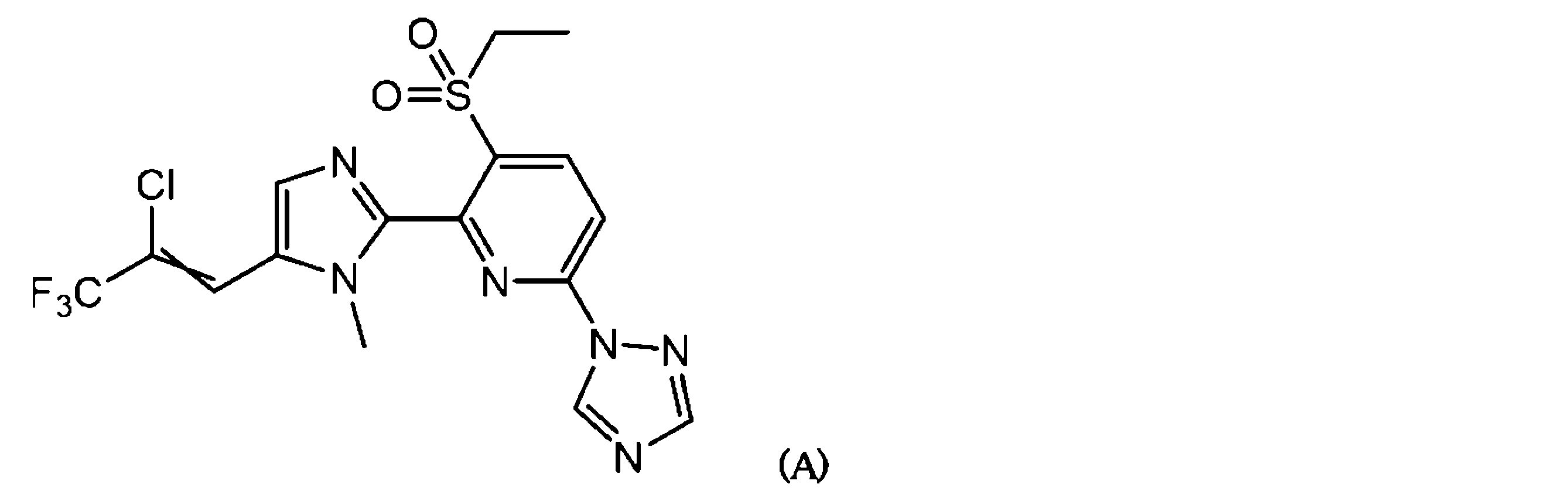
特許文献2には、式(B)で表される化合物などが開示されている。
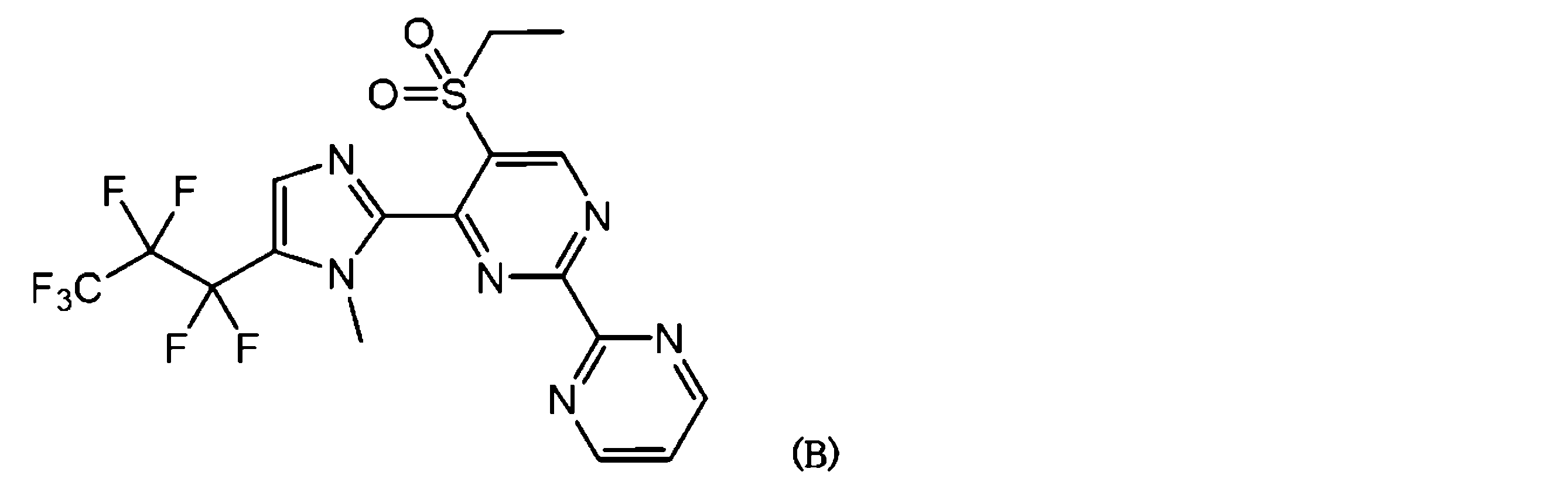
"Graphical representation of stereochemical configuration", Pure and Applied Chemistry 78, 1897-1970, 2006 IUPAC
本発明の課題は、有害生物防除活性、その中でも特に殺虫活性および/または殺ダニ活性に優れ、安全性に優れ、かつ工業的に有利に合成できるヘテロアリールピリミジン化合物を提供することである。本発明の別の課題は、上記ヘテロアリールピリミジン化合物を有効成分として含有する有害生物防除剤、殺虫若しくは殺ダニ剤、外部寄生虫防除剤、または内部寄生虫防除若しくは駆除剤を提供することである。
上記課題を解決すべく鋭意検討した結果、以下の形態を包含する本発明を完成するに至った。
〔1〕 式(I)で表される化合物またはその塩。
〔1〕 式(I)で表される化合物またはその塩。
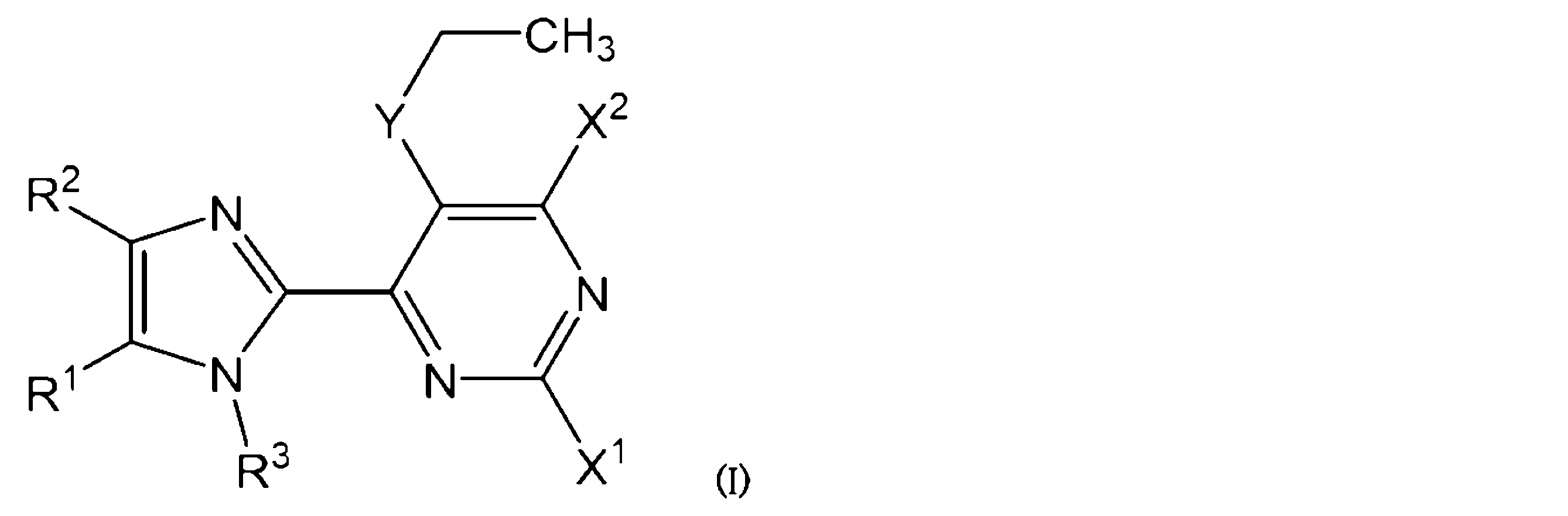
〔式(I)中、
R1は、置換若しくは無置換のC2~6アルケニル基、または置換若しくは無置換のC2~6アルキニル基であり、
R2は、水素原子、置換若しくは無置換のC1~6アルキル基、またはハロゲノ基であり、
R3は、置換若しくは無置換のC1~6アルキル基であり、
X1およびX2は、それぞれ独立して、水素原子、置換若しくは無置換のC1~6アルキル基、置換若しくは無置換のC2~6アルケニル基、置換若しくは無置換のC2~6アルキニル基、水酸基、置換若しくは無置換のC1~6アルコキシ基、置換若しくは無置換のC1~6アルキルカルボニル基、置換若しくは無置換のC1~6アルコキシカルボニル基、置換若しくは無置換のC1~6アルキルチオ基、置換若しくは無置換のC1~6アルキルスルフィニル基、置換若しくは無置換のC1~6アルキルスルホニル基、置換若しくは無置換のC3~6シクロアルキル基、置換若しくは無置換のフェニル基、置換若しくは無置換のナフチル基、置換若しくは無置換の5~10員ヘテロシクリル基、置換若しくは無置換のフェノキシ基、置換若しくは無置換のナフトキシ基、置換若しくは無置換の5~10員ヘテロシクリルオキシ基、置換若しくは無置換のアミノ基、置換若しくは無置換のアミノカルボニル基、ニトロ基、シアノ基、ハロゲノ基または-C(Rc)=N-ORdで表される基であり、
Rcは、水素原子または置換もしくは無置換のC1~6アルキル基であり、
Rdは、水素原子、置換もしくは無置換のC1~6アルキル基、置換もしくは無置換のC2~6アルケニル基、またはC2~6アルキニル基であり、
Yは、-S(=O)n-で表される基、または-S(=O)(=NRN)-で表される基であり、
nは、=Oの数を示し且つ0~2のいずれかの整数であり、
RNは、水素原子、置換若しくは無置換のC1~6アルキル基、置換若しくは無置換のC2~6アルケニル基、置換若しくは無置換のC2~6アルキニル基、置換若しくは無置換のC1~6アルキルカルボニル基、置換若しくは無置換のC1~6アルコキシカルボニル基、置換若しくは無置換のC1~6アルキルスルホニル基、置換若しくは無置換のC3~6シクロアルキル基、置換若しくは無置換のフェニル基、置換若しくは無置換のナフチル基、置換若しくは無置換の5~10員ヘテロアリール基、置換若しくは無置換のアミノ基、置換若しくは無置換のアミノカルボニル基、ニトロ基、またはシアノ基である。〕
R1は、置換若しくは無置換のC2~6アルケニル基、または置換若しくは無置換のC2~6アルキニル基であり、
R2は、水素原子、置換若しくは無置換のC1~6アルキル基、またはハロゲノ基であり、
R3は、置換若しくは無置換のC1~6アルキル基であり、
X1およびX2は、それぞれ独立して、水素原子、置換若しくは無置換のC1~6アルキル基、置換若しくは無置換のC2~6アルケニル基、置換若しくは無置換のC2~6アルキニル基、水酸基、置換若しくは無置換のC1~6アルコキシ基、置換若しくは無置換のC1~6アルキルカルボニル基、置換若しくは無置換のC1~6アルコキシカルボニル基、置換若しくは無置換のC1~6アルキルチオ基、置換若しくは無置換のC1~6アルキルスルフィニル基、置換若しくは無置換のC1~6アルキルスルホニル基、置換若しくは無置換のC3~6シクロアルキル基、置換若しくは無置換のフェニル基、置換若しくは無置換のナフチル基、置換若しくは無置換の5~10員ヘテロシクリル基、置換若しくは無置換のフェノキシ基、置換若しくは無置換のナフトキシ基、置換若しくは無置換の5~10員ヘテロシクリルオキシ基、置換若しくは無置換のアミノ基、置換若しくは無置換のアミノカルボニル基、ニトロ基、シアノ基、ハロゲノ基または-C(Rc)=N-ORdで表される基であり、
Rcは、水素原子または置換もしくは無置換のC1~6アルキル基であり、
Rdは、水素原子、置換もしくは無置換のC1~6アルキル基、置換もしくは無置換のC2~6アルケニル基、またはC2~6アルキニル基であり、
Yは、-S(=O)n-で表される基、または-S(=O)(=NRN)-で表される基であり、
nは、=Oの数を示し且つ0~2のいずれかの整数であり、
RNは、水素原子、置換若しくは無置換のC1~6アルキル基、置換若しくは無置換のC2~6アルケニル基、置換若しくは無置換のC2~6アルキニル基、置換若しくは無置換のC1~6アルキルカルボニル基、置換若しくは無置換のC1~6アルコキシカルボニル基、置換若しくは無置換のC1~6アルキルスルホニル基、置換若しくは無置換のC3~6シクロアルキル基、置換若しくは無置換のフェニル基、置換若しくは無置換のナフチル基、置換若しくは無置換の5~10員ヘテロアリール基、置換若しくは無置換のアミノ基、置換若しくは無置換のアミノカルボニル基、ニトロ基、またはシアノ基である。〕
〔2〕前記式(I)中、X1が、置換若しくは無置換のC1~6アルコキシ基、置換若しくは無置換の5~6員ヘテロアリール基、または、置換若しくは無置換のアミノ基である前記〔1〕に記載の式(I)で表される化合物またはその塩。
〔3〕 前記式(I)中、X1が、置換若しくは無置換のC1~6アルコキシ基、置換若しくは無置換のピリミジニル基、置換若しくは無置換のトリアゾリル基、または、置換若しくは無置換のアミノ基である前記〔2〕に記載の式(I)で表される化合物またはその塩。
〔4〕 前記式(I)中、Yは-S(=O)2-で表される基である前記〔1〕~〔3〕のいずれか一項に記載の式(I)で表される化合物またはその塩。
〔5〕 前記式(I)中、R1は、C2~6ハロアルケニル基またはC2~6ハロアルキニル基である前記〔1〕~〔4〕のいずれか一項に記載の式(I)で表される化合物またはその塩。
〔3〕 前記式(I)中、X1が、置換若しくは無置換のC1~6アルコキシ基、置換若しくは無置換のピリミジニル基、置換若しくは無置換のトリアゾリル基、または、置換若しくは無置換のアミノ基である前記〔2〕に記載の式(I)で表される化合物またはその塩。
〔4〕 前記式(I)中、Yは-S(=O)2-で表される基である前記〔1〕~〔3〕のいずれか一項に記載の式(I)で表される化合物またはその塩。
〔5〕 前記式(I)中、R1は、C2~6ハロアルケニル基またはC2~6ハロアルキニル基である前記〔1〕~〔4〕のいずれか一項に記載の式(I)で表される化合物またはその塩。
〔6〕 前記〔1〕~〔5〕のいずれか一項に記載の式(I)で表される化合物およびその塩からなる群から選ばれる少なくとも1つを有効成分として含有する有害生物防除剤。
〔7〕 前記〔1〕~〔5〕のいずれか一項に記載の式(I)で表される化合物およびその塩からなる群から選ばれる少なくとも1つを有効成分として含有する殺虫または殺ダニ剤。
〔8〕 前記〔1〕~〔5〕のいずれか一項に記載の式(I)で表される化合物およびその塩からなる群から選ばれる少なくとも1つを有効成分として含有する外部寄生虫防除剤。
〔9〕 前記〔1〕~〔5〕のいずれか一項に記載の式(I)で表される化合物およびその塩からなる群から選ばれる少なくとも1つを有効成分として含有する内部寄生虫防除若しくは駆除剤。
〔7〕 前記〔1〕~〔5〕のいずれか一項に記載の式(I)で表される化合物およびその塩からなる群から選ばれる少なくとも1つを有効成分として含有する殺虫または殺ダニ剤。
〔8〕 前記〔1〕~〔5〕のいずれか一項に記載の式(I)で表される化合物およびその塩からなる群から選ばれる少なくとも1つを有効成分として含有する外部寄生虫防除剤。
〔9〕 前記〔1〕~〔5〕のいずれか一項に記載の式(I)で表される化合物およびその塩からなる群から選ばれる少なくとも1つを有効成分として含有する内部寄生虫防除若しくは駆除剤。
本発明のヘテロアリールピリミジン化合物は、農作物や衛生面で問題となる有害生物を防除することができる。本発明のヘテロアリールピリミジン化合物は、特に農業害虫およびダニ類をより低濃度で効果的に防除することができる。本発明のヘテロアリールピリミジン化合物は、さらに、人畜を害する外部寄生虫および内部寄生虫を効果的に防除することができる。
本発明のヘテロアリールピリミジン化合物は、式(I)で表される化合物(以下、化合物(I)と表記することがある。)または化合物(I)の塩である。

本発明において、「無置換(unsubstituted)」の用語は、母核となる基のみであることを意味する。「置換」との記載がなく母核となる基の名称のみで記載しているときは、別段の断りがない限り「無置換」の意味である。
一方、「置換(substituted)」の用語は、母核となる基のいずれかの水素原子が、母核と同一または異なる構造の基(置換基)で置換されていることを意味する。従って、「置換基」は、母核となる基に結合した他の基である。置換基は1つであってもよいし、2つ以上であってもよい。2つ以上の置換基は同一であってもよいし、異なるものであってもよい。
「C1~6」などの用語は、母核となる基の炭素原子数が1~6個などであることを表している。この炭素原子数には、置換基の中に在る炭素原子の数を含まない。例えば、置換基としてエトキシ基を有するブチル基は、C2アルコキシC4アルキル基に分類する。
「置換基」は化学的に許容され、本発明の効果を有する限りにおいて特に制限されない。
一方、「置換(substituted)」の用語は、母核となる基のいずれかの水素原子が、母核と同一または異なる構造の基(置換基)で置換されていることを意味する。従って、「置換基」は、母核となる基に結合した他の基である。置換基は1つであってもよいし、2つ以上であってもよい。2つ以上の置換基は同一であってもよいし、異なるものであってもよい。
「C1~6」などの用語は、母核となる基の炭素原子数が1~6個などであることを表している。この炭素原子数には、置換基の中に在る炭素原子の数を含まない。例えば、置換基としてエトキシ基を有するブチル基は、C2アルコキシC4アルキル基に分類する。
「置換基」は化学的に許容され、本発明の効果を有する限りにおいて特に制限されない。
以下に「置換基」となり得る基を例示する。
メチル基、エチル基、n-プロピル基、i-プロピル基、n-ブチル基、s-ブチル基、i-ブチル基、t-ブチル基、n-ペンチル基、n-ヘキシル基などのC1~6アルキル基;
ビニル基、1-プロペニル基、2-プロペニル基(アリル基)、1-ブテニル基、2-ブテニル基、3-ブテニル基、1-メチル-2-プロペニル基、2-メチル-2-プロペニル基などのC2~6アルケニル基;
エチニル基、1-プロピニル基、2-プロピニル基、1-ブチニル基、2-ブチニル基、3-ブチニル基、1-メチル-2-プロピニル基などのC2~6アルキニル基;
メチル基、エチル基、n-プロピル基、i-プロピル基、n-ブチル基、s-ブチル基、i-ブチル基、t-ブチル基、n-ペンチル基、n-ヘキシル基などのC1~6アルキル基;
ビニル基、1-プロペニル基、2-プロペニル基(アリル基)、1-ブテニル基、2-ブテニル基、3-ブテニル基、1-メチル-2-プロペニル基、2-メチル-2-プロペニル基などのC2~6アルケニル基;
エチニル基、1-プロピニル基、2-プロピニル基、1-ブチニル基、2-ブチニル基、3-ブチニル基、1-メチル-2-プロピニル基などのC2~6アルキニル基;
シクロプロピル基、シクロブチル基、シクロペンチル基、シクロヘキシル基などのC3~6シクロアルキル基;
フェニル基、ナフチル基;
ベンジル基、フェネチル基などのフェニルC1~6アルキル基;
3~6員ヘテロシクリル基;
3~6員へテロシクリルC1~6アルキル基;
フェニル基、ナフチル基;
ベンジル基、フェネチル基などのフェニルC1~6アルキル基;
3~6員ヘテロシクリル基;
3~6員へテロシクリルC1~6アルキル基;
水酸基;
メトキシ基、エトキシ基、n-プロポキシ基、i-プロポキシ基、n-ブトキシ基、s-ブトキシ基、i-ブトキシ基、t-ブトキシ基などのC1~6アルコキシ基;
ビニルオキシ基、アリルオキシ基、プロペニルオキシ基、ブテニルオキシ基などのC2~6アルケニルオキシ基;
エチニルオキシ基、プロパルギルオキシ基などのC2~6アルキニルオキシ基;
フェノキシ基、ナフトキシ基;
ベンジルオキシ基、フェネチルオキシ基などのフェニルC1~6アルコキシ基;
チアゾリルオキシ基、ピリジルオキシ基などの5~6員ヘテロアリールオキシ基;
チアゾリルメチルオキシ基、ピリジルメチルオキシ基などの5~6員ヘテロアリールC1~6アルキルオキシ基;
メトキシ基、エトキシ基、n-プロポキシ基、i-プロポキシ基、n-ブトキシ基、s-ブトキシ基、i-ブトキシ基、t-ブトキシ基などのC1~6アルコキシ基;
ビニルオキシ基、アリルオキシ基、プロペニルオキシ基、ブテニルオキシ基などのC2~6アルケニルオキシ基;
エチニルオキシ基、プロパルギルオキシ基などのC2~6アルキニルオキシ基;
フェノキシ基、ナフトキシ基;
ベンジルオキシ基、フェネチルオキシ基などのフェニルC1~6アルコキシ基;
チアゾリルオキシ基、ピリジルオキシ基などの5~6員ヘテロアリールオキシ基;
チアゾリルメチルオキシ基、ピリジルメチルオキシ基などの5~6員ヘテロアリールC1~6アルキルオキシ基;
ホルミル基;
アセチル基、プロピオニル基などのC1~6アルキルカルボニル基;
ホルミルオキシ基;
アセチルオキシ基、プロピオニルオキシ基などのC1~6アルキルカルボニルオキシ基;
ベンゾイル基;
メトキシカルボニル基、エトキシカルボニル基、n-プロポキシカルボニル基、i-プロポキシカルボニル基、n-ブトキシカルボニル基、t-ブトキシカルボニル基などのC1~6アルコキシカルボニル基;
メトキシカルボニルオキシ基、エトキシカルボニルオキシ基、n-プロポキシカルボニルオキシ基、i-プロポキシカルボニルオキシ基、n-ブトキシカルボニルオキシ基、t-ブトキシカルボニルオキシ基などのC1~6アルコキシカルボニルオキシ基;
カルボキシル基;
アセチル基、プロピオニル基などのC1~6アルキルカルボニル基;
ホルミルオキシ基;
アセチルオキシ基、プロピオニルオキシ基などのC1~6アルキルカルボニルオキシ基;
ベンゾイル基;
メトキシカルボニル基、エトキシカルボニル基、n-プロポキシカルボニル基、i-プロポキシカルボニル基、n-ブトキシカルボニル基、t-ブトキシカルボニル基などのC1~6アルコキシカルボニル基;
メトキシカルボニルオキシ基、エトキシカルボニルオキシ基、n-プロポキシカルボニルオキシ基、i-プロポキシカルボニルオキシ基、n-ブトキシカルボニルオキシ基、t-ブトキシカルボニルオキシ基などのC1~6アルコキシカルボニルオキシ基;
カルボキシル基;
フルオロ基、クロロ基、ブロモ基、イオド基などのハロゲノ基;
クロロメチル基、クロロエチル基、トリフルオロメチル基、1,2-ジクロロ-n-プロピル基、1-フルオロ-n-ブチル基、パーフルオロ-n-ペンチル基などのC1~6ハロアルキル基;
2-クロロ-1-プロペニル基、2-フルオロ-1-ブテニル基などのC2~6ハロアルケニル基;
4,4-ジクロロ-1-ブチニル基、4-フルオロ-1-ペンチニル基、5-ブロモ-2-ペンチニル基などのC2~6ハロアルキニル基;
トリフルオロメトキシ基、2-クロロ-n-プロポキシ基、2,3-ジクロロブトキシ基などのC1~6ハロアルコキシ基;
2-クロロプロペニルオキシ基、3-ブロモブテニルオキシ基などのC2~6ハロアルケニルオキシ基;
クロロアセチル基、トリフルオロアセチル基、トリクロロアセチル基などのC1~6ハロアルキルカルボニル基;
クロロメチル基、クロロエチル基、トリフルオロメチル基、1,2-ジクロロ-n-プロピル基、1-フルオロ-n-ブチル基、パーフルオロ-n-ペンチル基などのC1~6ハロアルキル基;
2-クロロ-1-プロペニル基、2-フルオロ-1-ブテニル基などのC2~6ハロアルケニル基;
4,4-ジクロロ-1-ブチニル基、4-フルオロ-1-ペンチニル基、5-ブロモ-2-ペンチニル基などのC2~6ハロアルキニル基;
トリフルオロメトキシ基、2-クロロ-n-プロポキシ基、2,3-ジクロロブトキシ基などのC1~6ハロアルコキシ基;
2-クロロプロペニルオキシ基、3-ブロモブテニルオキシ基などのC2~6ハロアルケニルオキシ基;
クロロアセチル基、トリフルオロアセチル基、トリクロロアセチル基などのC1~6ハロアルキルカルボニル基;
アミノ基;
ヒドラジノ基;
メチルアミノ基、ジメチルアミノ基、ジエチルアミノ基などのC1~6アルキル置換アミノ基;
アニリノ基、ナフチルアミノ基;
ベンジルアミノ基、フェネチルアミノ基などのフェニルC1~6アルキルアミノ基;
ホルミルアミノ基;
アセチルアミノ基、プロパノイルアミノ基、ブチリルアミノ基、i-プロピルカルボニルアミノ基などのC1~6アルキルカルボニルアミノ基;
メトキシカルボニルアミノ基、エトキシカルボニルアミノ基、n-プロポキシカルボニルアミノ基、i-プロポキシカルボニルアミノ基などのC1~6アルコキシカルボニルアミノ基;
アミノカルボニル基、ジメチルアミノカルボニル基、フェニルアミノカルボニル基、N-フェニル-N-メチルアミノカルボニル基などの無置換若しくは置換基を有するアミノカルボニル基;
イミノメチル基、(1-イミノ)エチル基、(1-イミノ)-n-プロピル基などのイミノC1~6アルキル基;
N-ヒドロキシ-イミノメチル基、(1-(N-ヒドロキシ)-イミノ)エチル基、(1-(N-ヒドロキシ)-イミノ)プロピル基、N-メトキシ-イミノメチル基、(1-(N-メトキシ)-イミノ)エチル基などの置換若しくは無置換のN-ヒドロキシイミノC1~6アルキル基;
アミノカルボニルオキシ基;
エチルアミノカルボニルオキシ基、ジメチルアミノカルボニルオキシ基などのC1~6アルキル置換アミノカルボニルオキシ基;
ヒドラジノ基;
メチルアミノ基、ジメチルアミノ基、ジエチルアミノ基などのC1~6アルキル置換アミノ基;
アニリノ基、ナフチルアミノ基;
ベンジルアミノ基、フェネチルアミノ基などのフェニルC1~6アルキルアミノ基;
ホルミルアミノ基;
アセチルアミノ基、プロパノイルアミノ基、ブチリルアミノ基、i-プロピルカルボニルアミノ基などのC1~6アルキルカルボニルアミノ基;
メトキシカルボニルアミノ基、エトキシカルボニルアミノ基、n-プロポキシカルボニルアミノ基、i-プロポキシカルボニルアミノ基などのC1~6アルコキシカルボニルアミノ基;
アミノカルボニル基、ジメチルアミノカルボニル基、フェニルアミノカルボニル基、N-フェニル-N-メチルアミノカルボニル基などの無置換若しくは置換基を有するアミノカルボニル基;
イミノメチル基、(1-イミノ)エチル基、(1-イミノ)-n-プロピル基などのイミノC1~6アルキル基;
N-ヒドロキシ-イミノメチル基、(1-(N-ヒドロキシ)-イミノ)エチル基、(1-(N-ヒドロキシ)-イミノ)プロピル基、N-メトキシ-イミノメチル基、(1-(N-メトキシ)-イミノ)エチル基などの置換若しくは無置換のN-ヒドロキシイミノC1~6アルキル基;
アミノカルボニルオキシ基;
エチルアミノカルボニルオキシ基、ジメチルアミノカルボニルオキシ基などのC1~6アルキル置換アミノカルボニルオキシ基;
メルカプト基;
メチルチオ基、エチルチオ基、n-プロピルチオ基、i-プロピルチオ基、n-ブチルチオ基、i-ブチルチオ基、s-ブチルチオ基、t-ブチルチオ基などのC1~6アルキルチオ基;
トリフルオロメチルチオ基、2,2,2-トリフルオロエチルチオ基などのC1~6ハロアルキルチオ基;
フェニルチオ基、ナフチルチオ基;
チアゾリルチオ基、ピリジルチオ基などの5~6員ヘテロアリールチオ基;
メチルチオ基、エチルチオ基、n-プロピルチオ基、i-プロピルチオ基、n-ブチルチオ基、i-ブチルチオ基、s-ブチルチオ基、t-ブチルチオ基などのC1~6アルキルチオ基;
トリフルオロメチルチオ基、2,2,2-トリフルオロエチルチオ基などのC1~6ハロアルキルチオ基;
フェニルチオ基、ナフチルチオ基;
チアゾリルチオ基、ピリジルチオ基などの5~6員ヘテロアリールチオ基;
メチルスルフィニル基、エチルスルフィニル基、t-ブチルスルフィニル基などのC1~6アルキルスルフィニル基;
トリフルオロメチルスルフィニル基、2,2,2-トリフルオロエチルスルフィニル基などのC1~6ハロアルキルスルフィニル基;
フェニルスルフィニル基;
チアゾリルスルフィニル基、ピリジルスルフィニル基などの5~6員ヘテロアリールスルフィニル基;
トリフルオロメチルスルフィニル基、2,2,2-トリフルオロエチルスルフィニル基などのC1~6ハロアルキルスルフィニル基;
フェニルスルフィニル基;
チアゾリルスルフィニル基、ピリジルスルフィニル基などの5~6員ヘテロアリールスルフィニル基;
メチルスルホニル基、エチルスルホニル基、t-ブチルスルホニル基などのC1~6アルキルスルホニル基;
トリフルオロメチルスルホニル基、2,2,2-トリフルオロエチルスルホニル基などのC1~6ハロアルキルスルホニル基;
フェニルスルホニル基;
チアゾリルスルホニル基、ピリジルスルホニル基などの5~6員ヘテロアリールスルホニル基;
メチルスルホニルオキシ基、エチルスルホニルオキシ基、t-ブチルスルホニルオキシ基などのC1~6アルキルスルホニルオキシ基;
トリフルオロメチルスルホニルオキシ基、2,2,2-トリフルオロエチルスルホニルオキシ基などのC1~6ハロアルキルスルホニルオキシ基;
トリフルオロメチルスルホニル基、2,2,2-トリフルオロエチルスルホニル基などのC1~6ハロアルキルスルホニル基;
フェニルスルホニル基;
チアゾリルスルホニル基、ピリジルスルホニル基などの5~6員ヘテロアリールスルホニル基;
メチルスルホニルオキシ基、エチルスルホニルオキシ基、t-ブチルスルホニルオキシ基などのC1~6アルキルスルホニルオキシ基;
トリフルオロメチルスルホニルオキシ基、2,2,2-トリフルオロエチルスルホニルオキシ基などのC1~6ハロアルキルスルホニルオキシ基;
トリメチルシリル基、トリエチルシリル基、t-ブチルジメチルシリル基などのトリC1~6アルキル置換シリル基;
トリフェニルシリル基;
シアノ基;ニトロ基。
トリフェニルシリル基;
シアノ基;ニトロ基。
また、これらの「置換基」は、当該置換基中のいずれかの水素原子が、異なる構造の基で置換されていてもよい。その場合の「置換基」としては、C1~6アルキル基、C1~6ハロアルキル基、C3~6シクロアルキル基、C1~6アルコキシ基、C1~6ハロアルコキシ基、3~6員飽和ヘテロシクリル基、ハロゲノ基、アミノ基、シアノ基、ニトロ基などを挙げることができ、好ましくはC1~6アルキル基、C1~6ハロアルキル基、C3~6シクロアルキル基、C1~6アルコキシ基、3~6員飽和ヘテロシクリル基、ハロゲノ基、アミノ基を挙げることができる。
また、上記の「3~6員ヘテロシクリル基」とは、窒素原子、酸素原子および硫黄原子からなる群から選ばれる1~4個のヘテロ原子を環の構成原子として含むものである。ヘテロシクリル基は、単環および多環のいずれであってもよい。多環ヘテロシクリル基は、少なくとも一つの環がヘテロ環であれば、残りの環が飽和脂環、不飽和脂環または芳香環のいずれであってもよい。「3~6員ヘテロシクリル基」としては、3~6員飽和ヘテロシクリル基、5~6員ヘテロアリール基、5~6員部分不飽和ヘテロシクリル基などを挙げることができる。
「3~6員飽和ヘテロシクリル基」としては、アジリジニル基、エポキシ基、ピロリジニル基、テトラヒドロフラニル基、テトラヒドロピラニル基、チアゾリジニル基、ピペリジル基、ピペラジニル基、モルホリニル基、ジオキソラニル基、ジオキサニル基などを挙げることができる。
「5員ヘテロアリール基」としては、ピロリル基、フリル基、チエニル基、イミダゾリル基、ピラゾリル基、オキサゾリル基、イソオキサゾリル基、チアゾリル基、イソチアゾリル基、トリアゾリル基、オキサジアゾリル基、チアジアゾリル基、テトラゾリル基などを挙げることができる。
「6員ヘテロアリール基」としては、ピリジル基、ピラジニル基、ピリミジニル基、ピリダジニル基、トリアジニル基などを挙げることができる。
「5~6員部分不飽和へテロシクリル基」としては、ピロリニル基、ジヒドロフラニル基、ジヒドロチオフェニル基、イミダゾリニル基、ピラゾリニル基、オキサゾリニル基、イソオキサゾリニル基、チアゾリニル基、イソチアゾリニル基などの5員部分不飽和ヘテロシクリル基;ジヒドロピラニル基などの6員部分不飽和へテロシクリル基を挙げることができる。
「6員ヘテロアリール基」としては、ピリジル基、ピラジニル基、ピリミジニル基、ピリダジニル基、トリアジニル基などを挙げることができる。
「5~6員部分不飽和へテロシクリル基」としては、ピロリニル基、ジヒドロフラニル基、ジヒドロチオフェニル基、イミダゾリニル基、ピラゾリニル基、オキサゾリニル基、イソオキサゾリニル基、チアゾリニル基、イソチアゾリニル基などの5員部分不飽和ヘテロシクリル基;ジヒドロピラニル基などの6員部分不飽和へテロシクリル基を挙げることができる。
式(I)中のR1は、置換若しくは無置換のC2~6アルケニル基、または置換若しくは無置換のC2~6アルキニル基である。
R1におけるC2~6アルケニル基としては、ビニル基、1-プロペニル基、2-プロペニル基、1-ブテニル基、2-ブテニル基、3-ブテニル基、1-メチル-2-プロペニル基、2-メチル-2-プロペニル基、1-ペンテニル基、2-ペンテニル基、3-ペンテニル基、4-ペンテニル基、1-メチル-2-ブテニル基、2-メチル-2-ブテニル基、1-ヘキセニル基、2-ヘキセニル基、3-ヘキセニル基、4-ヘキセニル基、5-ヘキセニル基などを挙げることができ、1-プロペニル基または1-ブテニル基が好ましい。
R1におけるC2~6アルキニル基としては、エチニル基、1-プロピニル基、2-プロピニル基、1-ブチニル基、2-ブチニル基、3-ブチニル基、1-メチル-2-プロピニル基、2-メチル-3-ブチニル基、1-ペンチニル基、2-ペンチニル基、3-ペンチニル基、4-ペンチニル基、1-メチル-2-ブチニル基、2-メチル-3-ペンチニル基、1-ヘキシニル基、1,1-ジメチル-2-ブチニル基などを挙げることができ、1-ブチニル基が好ましい。
R1におけるC2~6アルキニル基としては、エチニル基、1-プロピニル基、2-プロピニル基、1-ブチニル基、2-ブチニル基、3-ブチニル基、1-メチル-2-プロピニル基、2-メチル-3-ブチニル基、1-ペンチニル基、2-ペンチニル基、3-ペンチニル基、4-ペンチニル基、1-メチル-2-ブチニル基、2-メチル-3-ペンチニル基、1-ヘキシニル基、1,1-ジメチル-2-ブチニル基などを挙げることができ、1-ブチニル基が好ましい。
R1における「C2~6アルケニル基」または「C2~6アルキニル基」上の置換基としては、フルオロ基、クロロ基、ブロモ基、イオド基などのハロゲノ基; 水酸基; メトキシ基、エトキシ基、n-プロポキシ基、i-プロポキシ基、n-ブトキシ基、s-ブトキシ基、i-ブトキシ基、t-ブトキシ基などのC1~6アルコキシ基; 2-クロロ-n-プロポキシ基、2,3-ジクロロブトキシ基、トリフルオロメトキシ基などのC1~6ハロアルコキシ基; フェニル基; 4-クロロフェニル基、4-トリフルオロメチルフェニル基、4-トリフルオロメトキシフェニル基などの、ハロゲノ基、C1~6ハロアルキル基、またはC1~6ハロアルコキシ基で置換されたフェニル基; またはシアノ基;を挙げることができる。これらのうち、ハロゲノ基が好ましく、フルオロ基またはクロロ基がより好ましい。
ハロゲノ置換C2~6アルケニル基としては、2,3,3,3-テトラフルオロ-1-プロペニル基、3,3,3-トリフルオロ-1-プロペニル基、2-クロロ-3,3,3-トリフルオロ-1-プロペニル基、2-ブロモ-3,3,3-トリフルオロ-1-プロペニル基、3,3,3-トリフルオロ-2-トリフルオロメチル-1-プロペニル基、3,3,4,4,4-ペンタフルオロ-1-ブテニル基、2,3,3,4,4,4-ヘキサフルオロ-1-ブテニル基、2-クロロ-3,3,4,4,4-ペンタフルオロ-1-ブテニル基などのC2~6ハロアルケニル基などを挙げることができ、2-クロロ-3,3,3-トリフルオロ-1-プロペニル基または2-クロロ-3,3,4,4,4-ペンタフルオロ-1-ブテニル基が好ましい。
ハロゲノ置換C2~6アルキニル基としては、3,3,3-トリフルオロ-1-プロピニル基、3,3,4,4,4-ペンタフルオロ-1-ブチニル基などのC2~6ハロアルキニル基などを挙げることができ、3,3,4,4,4-ペンタフルオロ-1-ブチニル基が好ましい。
ハロゲノ置換C2~6アルケニル基としては、2,3,3,3-テトラフルオロ-1-プロペニル基、3,3,3-トリフルオロ-1-プロペニル基、2-クロロ-3,3,3-トリフルオロ-1-プロペニル基、2-ブロモ-3,3,3-トリフルオロ-1-プロペニル基、3,3,3-トリフルオロ-2-トリフルオロメチル-1-プロペニル基、3,3,4,4,4-ペンタフルオロ-1-ブテニル基、2,3,3,4,4,4-ヘキサフルオロ-1-ブテニル基、2-クロロ-3,3,4,4,4-ペンタフルオロ-1-ブテニル基などのC2~6ハロアルケニル基などを挙げることができ、2-クロロ-3,3,3-トリフルオロ-1-プロペニル基または2-クロロ-3,3,4,4,4-ペンタフルオロ-1-ブテニル基が好ましい。
ハロゲノ置換C2~6アルキニル基としては、3,3,3-トリフルオロ-1-プロピニル基、3,3,4,4,4-ペンタフルオロ-1-ブチニル基などのC2~6ハロアルキニル基などを挙げることができ、3,3,4,4,4-ペンタフルオロ-1-ブチニル基が好ましい。
〔R2〕
式(I)中のR2は、水素原子、置換若しくは無置換のC1~6アルキル基、またはハロゲノ基である。
式(I)中のR3は、置換若しくは無置換のC1~6アルキル基である。
式(I)中のR2は、水素原子、置換若しくは無置換のC1~6アルキル基、またはハロゲノ基である。
式(I)中のR3は、置換若しくは無置換のC1~6アルキル基である。
R2における「ハロゲノ基」としては、フルオロ基、クロロ基、ブロモ基、イオド基などを挙げることができる。
R2およびR3における「C1~6アルキル基」は、直鎖であってもよいし、分岐鎖であってもよい。R2およびR3における「C1~6アルキル基」としては、メチル基、エチル基、n-プロピル基、n-ブチル基、n-ペンチル基、n-ヘキシル基、i-プロピル基、i-ブチル基、s-ブチル基、t-ブチル基、i-ペンチル基、ネオペンチル基、2-メチルブチル基、i-ヘキシル基などを挙げることができる。
R2およびR3における「C1~6アルキル基」は、直鎖であってもよいし、分岐鎖であってもよい。R2およびR3における「C1~6アルキル基」としては、メチル基、エチル基、n-プロピル基、n-ブチル基、n-ペンチル基、n-ヘキシル基、i-プロピル基、i-ブチル基、s-ブチル基、t-ブチル基、i-ペンチル基、ネオペンチル基、2-メチルブチル基、i-ヘキシル基などを挙げることができる。
R2およびR3における「C1~6アルキル基」上の置換基としては、
ハロゲノ基、水酸基、C1~6アルコキシ基、C1~6ハロアルコキシ基、C3~6シクロアルキル基、フェニル基、5員ヘテロアリール基、6員ヘテロアリール基、シアノ基;
C1~6アルキル基、C1~6アルコキシ基、ハロゲノ基、C1~6ハロアルキル基、若しくはC1~6ハロアルコキシ基のいずれか1つ以上の置換基で置換されたフェニル基;
C1~6アルキル基、C1~6アルコキシ基、ハロゲノ基、C1~6ハロアルキル基、若しくはC1~6ハロアルコキシ基のいずれか1つ以上の置換基で置換された5員ヘテロアリール基;または
C1~6アルキル基、C1~6アルコキシ基、ハロゲノ基、C1~6ハロアルキル基、若しくはC1~6ハロアルコキシ基のいずれか1つ以上の置換基で置換された6員ヘテロアリール基が好ましい。
ハロゲノ基、水酸基、C1~6アルコキシ基、C1~6ハロアルコキシ基、C3~6シクロアルキル基、フェニル基、5員ヘテロアリール基、6員ヘテロアリール基、シアノ基;
C1~6アルキル基、C1~6アルコキシ基、ハロゲノ基、C1~6ハロアルキル基、若しくはC1~6ハロアルコキシ基のいずれか1つ以上の置換基で置換されたフェニル基;
C1~6アルキル基、C1~6アルコキシ基、ハロゲノ基、C1~6ハロアルキル基、若しくはC1~6ハロアルコキシ基のいずれか1つ以上の置換基で置換された5員ヘテロアリール基;または
C1~6アルキル基、C1~6アルコキシ基、ハロゲノ基、C1~6ハロアルキル基、若しくはC1~6ハロアルコキシ基のいずれか1つ以上の置換基で置換された6員ヘテロアリール基が好ましい。
これらの中でも、式(I)中のR2は、水素原子であることが好ましい。
また、式(I)中のR3は、メチル基であることが好ましい。
また、式(I)中のR3は、メチル基であることが好ましい。
式(I)中のX1およびX2は、それぞれ独立して、水素原子、置換若しくは無置換のC1~6アルキル基、置換若しくは無置換のC2~6アルケニル基、置換若しくは無置換のC2~6アルキニル基、水酸基、置換若しくは無置換のC1~6アルコキシ基、置換若しくは無置換のC1~6アルキルカルボニル基、置換若しくは無置換のC1~6アルコキシカルボニル基、置換若しくは無置換のC1~6アルキルチオ基、置換若しくは無置換のC1~6アルキルスルフィニル基、置換若しくは無置換のC1~6アルキルスルホニル基、置換若しくは無置換のC3~6シクロアルキル基、置換若しくは無置換のフェニル基、置換若しくは無置換のナフチル基、置換若しくは無置換の5~10員ヘテロシクリル基、置換若しくは無置換のフェノキシ基、置換若しくは無置換のナフトキシ基、置換若しくは無置換の5~10員ヘテロシクリルオキシ基、置換若しくは無置換のアミノ基、置換若しくは無置換のアミノカルボニル基、ニトロ基、シアノ基、ハロゲノ基または-C(Rc)=N-ORdで表される基である。
X1における「ハロゲノ基」としては、フルオロ基、クロロ基、ブロモ基、イオド基などを挙げることができる。
X1およびX2における「C1~6アルキル基」は、直鎖であってもよいし、分岐鎖であってもよい。X1における「C1~6アルキル基」としては、メチル基、エチル基、n-プロピル基、n-ブチル基、n-ペンチル基、n-ヘキシル基、i-プロピル基、i-ブチル基、s-ブチル基、t-ブチル基、i-ペンチル基、ネオペンチル基、2-メチルブチル基、i-ヘキシル基などを挙げることができる。
X1およびX2における「C2~6アルケニル基」としては、ビニル基、1-プロペニル基、2-プロペニル基、1-ブテニル基、2-ブテニル基、3-ブテニル基、1-メチル-2-プロペニル基、2-メチル-2-プロペニル基、1-ペンテニル基、2-ペンテニル基、3-ペンテニル基、4-ペンテニル基、1-メチル-2-ブテニル基、2-メチル-2-ブテニル基、1-ヘキセニル基、2-ヘキセニル基、3-ヘキセニル基、4-ヘキセニル基、5-ヘキセニル基などを挙げることができる。
X1およびX2における「C2~6アルキニル基」としては、エチニル基、1-プロピニル基、2-プロピニル基、1-ブチニル基、2-ブチニル基、3-ブチニル基、1-メチル-2-プロピニル基、2-メチル-3-ブチニル基、1-ペンチニル基、2-ペンチニル基、3-ペンチニル基、4-ペンチニル基、1-メチル-2-ブチニル基、2-メチル-3-ペンチニル基、1-ヘキシニル基、1,1-ジメチル-2-ブチニル基などを挙げることができる。
X1およびX2における「C1~6アルコキシ基」としては、メトキシ基、エトキシ基、n-プロポキシ基、i-プロポキシ基、n-ブトキシ基、s-ブトキシ基、i-ブトキシ基、t-ブトキシ基などを挙げることができる。
X1およびX2における「C1~6アルキルカルボニル基」としては、アセチル基、プロピオニル、n-プロピルカルボニル基、i-プロピルカルボニル基、n-ブチルカルボニル基、t-ブチルカルボニル基などを挙げることができる。
X1およびX2における「C1~6アルコキシカルボニル基」としては、メトキシカルボニル基、エトキシカルボニル基、n-プロポキシカルボニル基、i-プロポキシカルボニル基、n-ブトキシカルボニル基、t-ブトキシカルボニル基などを挙げることができる。
X1およびX2における「C1~6アルキルチオ基」は、メチルチオ基、エチルチオ基、n-プロピルチオ基、n-ブチルチオ基、n-ペンチルチオ基、n-ヘキシルチオ基、i-プロピルチオ基、i-ブチルチオ基などを挙げることができる。
X1およびX2における「C1~6アルキルスルフィニル基」としては、メチルスルフィニル基、エチルスルフィニル基、t-ブチルスルフィニル基などを挙げることができる。
X1およびX2における「C1~6アルキルスルホニル基」としては、メチルスルホニル基、エチルスルホニル基、t-ブチルスルホニル基などを挙げることができる。
X1およびX2における、「C1~6アルキル基」、「C2~6アルケニル基」、「C2~6アルキニル基」、「C1~6アルコキシ基」、「C1~6アルキルカルボニル基」、「C1~6アルコキシカルボニル基」、「C1~6アルキルチオ基」、「C1~6アルキルスルフィニル基」、または「C1~6アルキルスルホニル基」上の置換基としては、
ハロゲノ基、水酸基、C1~6アルコキシ基、C1~6ハロアルコキシ基、C3~6シクロアルキル基、フェニル基、5員ヘテロアリール基、6員ヘテロアリール基、シアノ基;
C1~6アルキル基、C1~6アルコキシ基、ハロゲノ基、C1~6ハロアルキル基、若しくはC1~6ハロアルコキシ基のいずれか1つ以上の置換基で置換されたフェニル基;
C1~6アルキル基、C1~6アルコキシ基、ハロゲノ基、C1~6ハロアルキル基、若しくはC1~6ハロアルコキシ基のいずれか1つ以上の置換基で置換された5員ヘテロアリール基;または
C1~6アルキル基、C1~6アルコキシ基、ハロゲノ基、C1~6ハロアルキル基、若しくはC1~6ハロアルコキシ基のいずれか1つ以上の置換基で置換された6員ヘテロアリール基が好ましい。
ハロゲノ基、水酸基、C1~6アルコキシ基、C1~6ハロアルコキシ基、C3~6シクロアルキル基、フェニル基、5員ヘテロアリール基、6員ヘテロアリール基、シアノ基;
C1~6アルキル基、C1~6アルコキシ基、ハロゲノ基、C1~6ハロアルキル基、若しくはC1~6ハロアルコキシ基のいずれか1つ以上の置換基で置換されたフェニル基;
C1~6アルキル基、C1~6アルコキシ基、ハロゲノ基、C1~6ハロアルキル基、若しくはC1~6ハロアルコキシ基のいずれか1つ以上の置換基で置換された5員ヘテロアリール基;または
C1~6アルキル基、C1~6アルコキシ基、ハロゲノ基、C1~6ハロアルキル基、若しくはC1~6ハロアルコキシ基のいずれか1つ以上の置換基で置換された6員ヘテロアリール基が好ましい。
X1およびX2における「C3~6シクロアルキル基」としては、シクロプロピル基、シクロブチル基、シクロペンチル基、シクロヘキシル基などを挙げることができる。
X1およびX2における「5~10員ヘテロシクリル基」とは、窒素原子、酸素原子および硫黄原子からなる群から選ばれる1、2、3または4個のヘテロ原子を環の構成原子として含む基である。ヘテロ原子が2個以上であるとき、それらは同じでもよいし、異なってもよい。単環および多環のいずれでもよい。
「5~10員ヘテロシクリル基」としては、5~10員飽和ヘテロシクリル基、5~10員ヘテロアリール基、5~10員部分不飽和ヘテロシクリル基などを挙げることができる。
「5~10員ヘテロシクリル基」としては、5~10員飽和ヘテロシクリル基、5~10員ヘテロアリール基、5~10員部分不飽和ヘテロシクリル基などを挙げることができる。
5~10員飽和ヘテロシクリル基としては、ピロリジニル基、テトラヒドロフラニル基、チアゾリジニル基、テトラヒドロ-2H-ピラニル基、ピペリジル基、ピペラジニル基、モルホリニル基、ジオキソラニル基、ジオキサニル基などを挙げることができる。
5員ヘテロアリール基としては、ピロリル基、フリル基、チエニル基、イミダゾリル基、ピラゾリル基、オキサゾリル基、イソオキサゾリル基、チアゾリル基、イソチアゾリル基、トリアゾリル基、オキサジアゾリル基、チアジアゾリル基、テトラゾリル基などを挙げることができる。
6員ヘテロアリール基としては、ピリジル基、ピラジニル基、ピリミジニル基、ピリダジニル基、トリアジニル基などを挙げることができる。
7員ヘテロアリール基としては、3-アザビシクロ[3.2.0]ヘプタン-1,4-ジエン-2-イル基、3-アザビシクロ[3.2.0]ヘプタン-1,4,6-トリエン-6-イル基などを挙げることができる。
8員ヘテロアリール基としては、2,4,5,6-テトラヒドロシクロペンタ[c]ピロール2-イル基、2,4-ジヒドロシクロペンタ[c]ピロール-4-イル基などを挙げることができる。
9員ヘテロアリール基としては、インドリル基、イソインドリル基、ベンゾフラニル基、ベンゾチエニル基、インダゾリル基、ベンゾイミダゾリル基、ベンゾオキサゾリル基、ベンゾイソオキサオゾリル基、ベンゾチアゾリル基、ベンゾイソチアゾリル基などを挙げることができる。
10員ヘテロアリール基としては、キノリニル基、イソキノリニル基、シンノリニル基、フタラジニル基、キナゾリニル基、キノキサリニル基などを挙げることができる。
6員ヘテロアリール基としては、ピリジル基、ピラジニル基、ピリミジニル基、ピリダジニル基、トリアジニル基などを挙げることができる。
7員ヘテロアリール基としては、3-アザビシクロ[3.2.0]ヘプタン-1,4-ジエン-2-イル基、3-アザビシクロ[3.2.0]ヘプタン-1,4,6-トリエン-6-イル基などを挙げることができる。
8員ヘテロアリール基としては、2,4,5,6-テトラヒドロシクロペンタ[c]ピロール2-イル基、2,4-ジヒドロシクロペンタ[c]ピロール-4-イル基などを挙げることができる。
9員ヘテロアリール基としては、インドリル基、イソインドリル基、ベンゾフラニル基、ベンゾチエニル基、インダゾリル基、ベンゾイミダゾリル基、ベンゾオキサゾリル基、ベンゾイソオキサオゾリル基、ベンゾチアゾリル基、ベンゾイソチアゾリル基などを挙げることができる。
10員ヘテロアリール基としては、キノリニル基、イソキノリニル基、シンノリニル基、フタラジニル基、キナゾリニル基、キノキサリニル基などを挙げることができる。
5~10員部分不飽和へテロシクリル基としては、ピロリニル基、ジヒドロフラニル基、イミダゾリニル基、ピラゾリニル基、オキサゾリニル基、イソオキサゾリニル基などの5員部分不飽和ヘテロシクリル基;ジヒドロピラニル基などの6員部分不飽和へテロシクリル基;インドリニル基、イソインドリニル基、2,3-ジヒドロベンゾフラニル基、1,3-ジヒドロベンゾフラニル基などの9員部分不飽和ヘテロシクリル基;1,2,3,4-テトラヒドロキノリニル基などの10員部分不飽和ヘテロシクリル基;を挙げることができる。
これらの中でも、X1およびX2における「5~10員ヘテロシクリル基」としては、5員~6員ヘテロアリール基が好ましく、トリアゾリル基またはピリミジニル基がより好ましい。
X1およびX2における「5~10員ヘテロシクリルオキシ基」としては、ピリジルオキシ基、ピリミジルオキシ基、ピペリジルオキシ基、ピロリニルオキシ基、ジヒドロフラニルオキシ基などを挙げることができる。
X1およびX2における、「C3~6シクロアルキル基」、「フェニル基」、「ナフチル基」、「5~10員ヘテロシクリル基」、「フェノキシ基」、「ナフトキシ基」、または「5~10員ヘテロシクリルオキシ基」上の置換基としては、
ハロゲノ基、C1~6アルキル基、C1~6ハロアルキル基、水酸基、C1~6アルコキシ基、C1~6ハロアルコキシ基、C3~6シクロアルキル基、フェニル基、6員飽和ヘテロシクリル基、5員ヘテロアリール基、6員ヘテロアリール基、アミノ基、シアノ基;
C1~6アルキル基、C1~6アルコキシ基、ハロゲノ基、C1~6ハロアルキル基、若しくはC1~6ハロアルコキシ基のいずれか1つ以上の置換基で置換されたフェニル基;
C1~6アルキル基、C1~6アルコキシ基、ハロゲノ基、C1~6ハロアルキル基、若しくはC1~6ハロアルコキシ基のいずれか1つ以上の置換基で置換された5員ヘテロアリール基;または
C1~6アルキル基、C1~6アルコキシ基、ハロゲノ基、C1~6ハロアルキル基、若しくはC1~6ハロアルコキシ基のいずれか1つ以上の置換基で置換された6員ヘテロアリール基が好ましく、
ハロゲノ基(好ましくはフルオロ基)、C1~6アルキル基、C1~6ハロアルキル基、1~6アルコキシ基、C3~6シクロアルキル基(好ましくはシクロプロピル基)、6員飽和ヘテロシクリル基(好ましくはテトラヒドロピラニル基)、または、アミノ基がより好ましい。
ハロゲノ基、C1~6アルキル基、C1~6ハロアルキル基、水酸基、C1~6アルコキシ基、C1~6ハロアルコキシ基、C3~6シクロアルキル基、フェニル基、6員飽和ヘテロシクリル基、5員ヘテロアリール基、6員ヘテロアリール基、アミノ基、シアノ基;
C1~6アルキル基、C1~6アルコキシ基、ハロゲノ基、C1~6ハロアルキル基、若しくはC1~6ハロアルコキシ基のいずれか1つ以上の置換基で置換されたフェニル基;
C1~6アルキル基、C1~6アルコキシ基、ハロゲノ基、C1~6ハロアルキル基、若しくはC1~6ハロアルコキシ基のいずれか1つ以上の置換基で置換された5員ヘテロアリール基;または
C1~6アルキル基、C1~6アルコキシ基、ハロゲノ基、C1~6ハロアルキル基、若しくはC1~6ハロアルコキシ基のいずれか1つ以上の置換基で置換された6員ヘテロアリール基が好ましく、
ハロゲノ基(好ましくはフルオロ基)、C1~6アルキル基、C1~6ハロアルキル基、1~6アルコキシ基、C3~6シクロアルキル基(好ましくはシクロプロピル基)、6員飽和ヘテロシクリル基(好ましくはテトラヒドロピラニル基)、または、アミノ基がより好ましい。
X1およびX2における「置換若しくは無置換のアミノ基」は、「-NRaRb」で表される基である。
X1およびX2における「置換若しくは無置換のアミノカルボニル基」は、「-CO-NRaRb」で表される基である。
前記式中、RaおよびRbは、それぞれ独立して、水素原子、C1~6アルキル基、ホルミル基、C1~6アルキルカルボニル基、置換若しくは無置換のアミノカルボニル基、アミノ基などを挙げることができる。
X1およびX2における「置換若しくは無置換のアミノカルボニル基」は、「-CO-NRaRb」で表される基である。
前記式中、RaおよびRbは、それぞれ独立して、水素原子、C1~6アルキル基、ホルミル基、C1~6アルキルカルボニル基、置換若しくは無置換のアミノカルボニル基、アミノ基などを挙げることができる。
RaおよびRbにおける「C1~6アルキル基」としては、X1において例示したそれらと同じものを挙げることができる。
RaおよびRbにおける「C1~6アルキルカルボニル基」としては、アセチル基、プロピオニル基などを挙げることができる。
RaおよびRbにおける「置換若しくは無置換のアミノカルボニル基」は、「-ONRcRd」で表される基である。
式中、RcおよびRdは、それぞれ独立して、水素原子、C1~6アルキル基、ホルミル基、C1~6アルキルカルボニル基、置換若しくは無置換のアミノカルボニル基などを挙げることができる。
RcおよびRdにおける「C1~6アルキル基」、「C1~6アルキルカルボニル基」、「置換若しくは無置換のアミノカルボニル基」としては、RaおよびRbにおいて例示したそれらと同じものを挙げることができる。
式中、RcおよびRdは、それぞれ独立して、水素原子、C1~6アルキル基、ホルミル基、C1~6アルキルカルボニル基、置換若しくは無置換のアミノカルボニル基などを挙げることができる。
RcおよびRdにおける「C1~6アルキル基」、「C1~6アルキルカルボニル基」、「置換若しくは無置換のアミノカルボニル基」としては、RaおよびRbにおいて例示したそれらと同じものを挙げることができる。
X1およびX2における「置換若しくは無置換のアミノ基」としては、例えば、アミノ基、メチルアミノ基、エチルアミノ基、ジメチルアミノ基、ヒドラジノ基などを挙げることができ、アミノ基またはヒドラジノ基であることが好ましい。
X1およびX2における「置換若しくは無置換のアミノカルボニル基」としては、例えば、メチルアミノカルボニル基、エチルアミノカルボニル基、ジメチルアミノカルボニル基などを挙げることができる。
Rcは、水素原子または置換もしくは無置換のC1~6アルキル基である。
Rdは、水素原子、置換もしくは無置換のC1~6アルキル基、置換もしくは無置換のC2~6アルケニル基、またはC2~6アルキニル基である。
RcおよびRdにおけるC1~6アルキル基は、X1およびX2において例示したそれと同じものを挙げることができる。
RdにおけるC2~6アルケニル基およびC2~6アルキニル基は、X1およびX2において例示したそれらと同じものを挙げることができる。
X1およびX2における-C(Rc)=N-ORdで表される基は二重結合によるシス-トランス異性を生じる。本発明化合物は、そのような異性体のいずれか一つからなるもの若しくはそのような異性体二つ以上からなるもの(混合物)を包含する。
Rdは、水素原子、置換もしくは無置換のC1~6アルキル基、置換もしくは無置換のC2~6アルケニル基、またはC2~6アルキニル基である。
RcおよびRdにおけるC1~6アルキル基は、X1およびX2において例示したそれと同じものを挙げることができる。
RdにおけるC2~6アルケニル基およびC2~6アルキニル基は、X1およびX2において例示したそれらと同じものを挙げることができる。
X1およびX2における-C(Rc)=N-ORdで表される基は二重結合によるシス-トランス異性を生じる。本発明化合物は、そのような異性体のいずれか一つからなるもの若しくはそのような異性体二つ以上からなるもの(混合物)を包含する。
これらの中でも、X1としては、置換もしくは無置換のC1~6アルコキシ基、置換もしくは無置換の5~6員ヘテロアリール基、または置換もしくは無置換のアミノ基であることが好ましく、置換もしくは無置換のC1~6アルコキシ基、置換もしくは無置換のトリアゾリル基、置換もしくは無置換のピリミジニル基、または置換もしくは無置換のアミノ基であることがより好ましく、C1~6アルキル基で置換されたトリアゾリル基、C1~6ハロアルキル基で置換されたトリアゾリル基、C3~6シクロアルキル基(好ましくはシクロプロピル基)で置換されたトリアゾリル基、6員飽和ヘテロシクリル基(好ましくはテトラヒドロピラニル基)で置換されたトリアゾリル基、アミノ基で置換されたトリアゾリル基、無置換のピリミジニル基、ハロゲノ基で置換されたピリミジニル基、C1~6アルコキシ基で置換されたピリミジニル基、アミノ基、ヒドラジノ基、またはC1~6アルコキシ基であることがより更に好ましい。
X2としては、水素原子が好ましい。
式(I)中のYは、-S(=O)n-で表される基、または-S(=O)(=NRN)-で表される基である。
nは、=Oの数を示し且つ0~2のいずれかの整数である。
RNは、水素原子、置換若しくは無置換のC1~6アルキル基、置換若しくは無置換のC2~6アルケニル基、置換若しくは無置換のC2~6アルキニル基、置換若しくは無置換のC1~6アルキルカルボニル基、置換若しくは無置換のC1~6アルコキシカルボニル基、置換若しくは無置換のC1~6アルキルスルホニル基、置換若しくは無置換のC3~6シクロアルキル基、置換若しくは無置換のフェニル基、置換若しくは無置換のナフチル基、置換若しくは無置換の5~10員ヘテロアリール基、置換若しくは無置換のアミノ基、置換若しくは無置換のアミノカルボニル基、ニトロ基、またはシアノ基である。
nは、=Oの数を示し且つ0~2のいずれかの整数である。
RNは、水素原子、置換若しくは無置換のC1~6アルキル基、置換若しくは無置換のC2~6アルケニル基、置換若しくは無置換のC2~6アルキニル基、置換若しくは無置換のC1~6アルキルカルボニル基、置換若しくは無置換のC1~6アルコキシカルボニル基、置換若しくは無置換のC1~6アルキルスルホニル基、置換若しくは無置換のC3~6シクロアルキル基、置換若しくは無置換のフェニル基、置換若しくは無置換のナフチル基、置換若しくは無置換の5~10員ヘテロアリール基、置換若しくは無置換のアミノ基、置換若しくは無置換のアミノカルボニル基、ニトロ基、またはシアノ基である。
RNにおける「C1~6アルキル基」は、直鎖であってもよいし、分岐鎖であってもよい。RNにおける「C1~6アルキル基」としては、メチル基、エチル基、n-プロピル基、n-ブチル基、n-ペンチル基、n-ヘキシル基、i-プロピル基、i-ブチル基、s-ブチル基、t-ブチル基、i-ペンチル基、ネオペンチル基、2-メチルブチル基、i-ヘキシル基などを挙げることができる。
RNにおける「C2~6アルケニル基」としては、ビニル基、1-プロペニル基、2-プロペニル基、1-ブテニル基、2-ブテニル基、3-ブテニル基、1-メチル-2-プロペニル基、2-メチル-2-プロペニル基、1-ペンテニル基、2-ペンテニル基、3-ペンテニル基、4-ペンテニル基、1-メチル-2-ブテニル基、2-メチル-2-ブテニル基、1-ヘキセニル基、2-ヘキセニル基、3-ヘキセニル基、4-ヘキセニル基、5-ヘキセニル基などを挙げることができる。
RNにおける「C2~6アルキニル基」としては、エチニル基、1-プロピニル基、2-プロピニル基、1-ブチニル基、2-ブチニル基、3-ブチニル基、1-メチル-2-プロピニル基、2-メチル-3-ブチニル基、1-ペンチニル基、2-ペンチニル基、3-ペンチニル基、4-ペンチニル基、1-メチル-2-ブチニル基、2-メチル-3-ペンチニル基、1-ヘキシニル基、1,1-ジメチル-2-ブチニル基などを挙げることができる。
RNにおける「C1~6アルキルカルボニル基」としては、アセチル基、プロピオニル、n-プロピルカルボニル基、i-プロピルカルボニル基、n-ブチルカルボニル基、t-ブチルカルボニル基などを挙げることができる。
RNにおける「C1~6アルコキシカルボニル基」としては、メトキシカルボニル基、エトキシカルボニル基、n-プロポキシカルボニル基、i-プロポキシカルボニル基、n-ブトキシカルボニル基、t-ブトキシカルボニル基などを挙げることができる。
RNにおける「C1~6アルキルスルホニル基」としては、メチルスルホニル基、エチルスルホニル基、t-ブチルスルホニル基などを挙げることができる。
RNにおける「C1~6アルキル基」、「C2~6アルケニル基」、「C2~6アルキニル基」、「C1~6アルキルカルボニル基」、「C1~6アルコキシカルボニル基」、または「C1~6アルキルスルホニル基」上の置換基としては、
ハロゲノ基、水酸基、C1~6アルコキシ基、C1~6ハロアルコキシ基、C3~6シクロアルキル基、フェニル基、5員ヘテロアリール基、6員ヘテロアリール基、シアノ基;
C1~6アルキル基、C1~6アルコキシ基、ハロゲノ基、C1~6ハロアルキル基、若しくはC1~6ハロアルコキシ基のいずれか1つ以上の置換基で置換されたフェニル基;
C1~6アルキル基、C1~6アルコキシ基、ハロゲノ基、C1~6ハロアルキル基、若しくはC1~6ハロアルコキシ基のいずれか1つ以上の置換基で置換された5員ヘテロアリール基;または
C1~6アルキル基、C1~6アルコキシ基、ハロゲノ基、C1~6ハロアルキル基、若しくはC1~6ハロアルコキシ基のいずれか1つ以上の置換基で置換された6員ヘテロアリール基が好ましい。
ハロゲノ基、水酸基、C1~6アルコキシ基、C1~6ハロアルコキシ基、C3~6シクロアルキル基、フェニル基、5員ヘテロアリール基、6員ヘテロアリール基、シアノ基;
C1~6アルキル基、C1~6アルコキシ基、ハロゲノ基、C1~6ハロアルキル基、若しくはC1~6ハロアルコキシ基のいずれか1つ以上の置換基で置換されたフェニル基;
C1~6アルキル基、C1~6アルコキシ基、ハロゲノ基、C1~6ハロアルキル基、若しくはC1~6ハロアルコキシ基のいずれか1つ以上の置換基で置換された5員ヘテロアリール基;または
C1~6アルキル基、C1~6アルコキシ基、ハロゲノ基、C1~6ハロアルキル基、若しくはC1~6ハロアルコキシ基のいずれか1つ以上の置換基で置換された6員ヘテロアリール基が好ましい。
RNにおける「C3~6シクロアルキル基」としては、シクロプロピル基、シクロブチル基、シクロペンチル基、シクロヘキシル基などを挙げることができる。
RNにおける「5~10員ヘテロアリール基」とは、窒素原子、酸素原子および硫黄原子からなる群から選ばれる1~4個のヘテロ原子を環の構成原子として含む芳香性の基である。
「5員ヘテロアリール基」としては、ピロリル基、フリル基、チエニル基、イミダゾリル基、ピラゾリル基、オキサゾリル基、イソオキサゾリル基、チアゾリル基、イソチアゾリル基、トリアゾリル基、オキサジアゾリル基、チアジアゾリル基、テトラゾリル基などを挙げることができる。
「6員ヘテロアリール基」としては、ピリジル基、ピラジニル基、ピリミジニル基、ピリダジニル基、トリアジニル基などを挙げることができる。
「7員ヘテロアリール基」としては、3-アザビシクロ[3.2.0]ヘプタン-1,4-ジエン-2-イル基、3-アザビシクロ[3.2.0]ヘプタン-1,4,6-トリエン-6-イル基などを挙げることができる。
「8員ヘテロアリール基」としては、2,4,5,6-テトラヒドロシクロペンタ[c]ピロール2-イル基、2,4-ジヒドロシクロペンタ[c]ピロール-4-イル基などを挙げることができる。
「9員ヘテロアリール基」としては、インドリル基、イソインドリル基、ベンゾフラニル基、ベンゾチエニル基、インダゾリル基、ベンゾイミダゾリル基、ベンゾオキサゾリル基、ベンゾイソオキサオゾリル基、ベンゾチアゾリル基、ベンゾイソチアゾリル基などを挙げることができる。
「10員ヘテロアリール基」としては、キノリニル基、イソキノリニル基、シンノリニル基、フタラジニル基、キナゾリニル基、キノキサリニル基などを挙げることができる。
「5員ヘテロアリール基」としては、ピロリル基、フリル基、チエニル基、イミダゾリル基、ピラゾリル基、オキサゾリル基、イソオキサゾリル基、チアゾリル基、イソチアゾリル基、トリアゾリル基、オキサジアゾリル基、チアジアゾリル基、テトラゾリル基などを挙げることができる。
「6員ヘテロアリール基」としては、ピリジル基、ピラジニル基、ピリミジニル基、ピリダジニル基、トリアジニル基などを挙げることができる。
「7員ヘテロアリール基」としては、3-アザビシクロ[3.2.0]ヘプタン-1,4-ジエン-2-イル基、3-アザビシクロ[3.2.0]ヘプタン-1,4,6-トリエン-6-イル基などを挙げることができる。
「8員ヘテロアリール基」としては、2,4,5,6-テトラヒドロシクロペンタ[c]ピロール2-イル基、2,4-ジヒドロシクロペンタ[c]ピロール-4-イル基などを挙げることができる。
「9員ヘテロアリール基」としては、インドリル基、イソインドリル基、ベンゾフラニル基、ベンゾチエニル基、インダゾリル基、ベンゾイミダゾリル基、ベンゾオキサゾリル基、ベンゾイソオキサオゾリル基、ベンゾチアゾリル基、ベンゾイソチアゾリル基などを挙げることができる。
「10員ヘテロアリール基」としては、キノリニル基、イソキノリニル基、シンノリニル基、フタラジニル基、キナゾリニル基、キノキサリニル基などを挙げることができる。
RNにおける「C3~6シクロアルキル基」、「フェニル基」、「ナフチル基」、または「5~10員ヘテロアリール基」上の置換基としては、
ハロゲノ基、C1~6アルキル基、C1~6ハロアルキル基、水酸基、C1~6アルコキシ基、C1~6ハロアルコキシ基、C3~6シクロアルキル基、フェニル基、5員ヘテロアリール基、6員ヘテロアリール基、シアノ基;
C1~6アルキル基、C1~6アルコキシ基、ハロゲノ基、C1~6ハロアルキル基、若しくはC1~6ハロアルコキシ基のいずれか1つ以上の置換基で置換されたフェニル基;
C1~6アルキル基、C1~6アルコキシ基、ハロゲノ基、C1~6ハロアルキル基、若しくはC1~6ハロアルコキシ基のいずれか1つ以上の置換基で置換された5員ヘテロアリール基;または
C1~6アルキル基、C1~6アルコキシ基、ハロゲノ基、C1~6ハロアルキル基、若しくはC1~6ハロアルコキシ基のいずれか1つ以上の置換基で置換された6員ヘテロアリール基が好ましい。
ハロゲノ基、C1~6アルキル基、C1~6ハロアルキル基、水酸基、C1~6アルコキシ基、C1~6ハロアルコキシ基、C3~6シクロアルキル基、フェニル基、5員ヘテロアリール基、6員ヘテロアリール基、シアノ基;
C1~6アルキル基、C1~6アルコキシ基、ハロゲノ基、C1~6ハロアルキル基、若しくはC1~6ハロアルコキシ基のいずれか1つ以上の置換基で置換されたフェニル基;
C1~6アルキル基、C1~6アルコキシ基、ハロゲノ基、C1~6ハロアルキル基、若しくはC1~6ハロアルコキシ基のいずれか1つ以上の置換基で置換された5員ヘテロアリール基;または
C1~6アルキル基、C1~6アルコキシ基、ハロゲノ基、C1~6ハロアルキル基、若しくはC1~6ハロアルコキシ基のいずれか1つ以上の置換基で置換された6員ヘテロアリール基が好ましい。
RNにおける「置換若しくは無置換のアミノ基」は、「-NRa1Rb1」で表される基である。RNにおける「置換若しくは無置換のアミノカルボニル基」は、「-CO-NRa1Rb1」で表される基である。式中、Ra1およびRb1は、それぞれ独立して、水素原子、C1~6アルキル基、ホルミル基、C1~6アルキルカルボニル基、置換若しくは無置換のアミノカルボニル基などを挙げることができる。
Ra1およびRb1における「C1~6アルキル基」としては、RNにおいて例示したそれらと同じものを挙げることができる。
Ra1およびRb1における「C1~6アルキルカルボニル基」としては、アセチル基、プロピオニル基などを挙げることができる。
Ra1およびRb1における「置換若しくは無置換のアミノカルボニル基」は、「-CONRc1Rd1」で表される基である。式中、Rc1およびRd1は、それぞれ独立して、水素原子、C1~6アルキル基、ホルミル基、C1~6アルキルカルボニル基、置換若しくは無置換のアミノカルボニル基などを挙げることができる。
Rc1およびRd1における「C1~6アルキル基」、「C1~6アルキルカルボニル基」、「置換若しくは無置換のアミノカルボニル基」としては、Ra1およびRb1において例示したそれらと同じものを挙げることができる。
Rc1およびRd1における「C1~6アルキル基」、「C1~6アルキルカルボニル基」、「置換若しくは無置換のアミノカルボニル基」としては、Ra1およびRb1において例示したそれらと同じものを挙げることができる。
RNにおける「置換若しくは無置換のアミノ基」としては、例えば、アミノ基、メチルアミノ基、エチルアミノ基、ジメチルアミノ基などを挙げることができる。
RNにおける「置換若しくは無置換のアミノカルボニル基」としては、例えば、メチルアミノカルボニル基、エチルアミノカルボニル基、ジメチルアミノカルボニル基などを挙げることができる。
これらの中でも、式(I)中のYは、-S(=O)2-で表される基であることが好ましい。
化合物(I)の塩は、農園芸学的に許容される塩であれば、特に制限されない。化合物(I)の塩としては、例えば、塩酸、硫酸などの無機酸の塩;酢酸、乳酸などの有機酸の塩;リチウム、ナトリウム、カリウムなどのアルカリ金属の塩;カルシウム、マグネシウムなどのアルカリ土類金属の塩;鉄、銅などの遷移金属の塩;アンモニア;トリエチルアミン、トリブチルアミン、ピリジン、ヒドラジンなどの有機塩基の塩などを挙げることができる。
化合物(I)または化合物(I)の塩の製造方法は特に限定されない。例えば、化合物(I)または化合物(I)の塩は、実施例等に記載した公知の製造方法によって得ることができる。また、化合物(I)の塩は、化合物(I)から公知の手法によって得ることができる。
本発明のヘテロアリールピリミジン化合物(以下、「本発明化合物」という。)は、植物の生育に影響する各種の農業害虫およびダニ類などの有害生物の防除効果に優れている。
また、本発明化合物は、作物に対する薬害が少なく、魚類や温血動物への毒性が低いため、安全性の高い物質である。そのため、殺虫剤または殺ダニ剤の有効成分として有用である。
さらに、近年、コナガ、ウンカ、ヨコバイ、アブラムシなど多くの害虫において各種既存薬剤に対する抵抗性が発達し、それら薬剤の効力不足問題を生じており、抵抗性系統の害虫にも有効な薬剤が望まれている。本発明化合物は、感受性系統のみならず、各種抵抗性系統の害虫や、さらに殺ダニ剤抵抗性系統のダニ類にも優れた防除効果を示す。
また、本発明化合物は、作物に対する薬害が少なく、魚類や温血動物への毒性が低いため、安全性の高い物質である。そのため、殺虫剤または殺ダニ剤の有効成分として有用である。
さらに、近年、コナガ、ウンカ、ヨコバイ、アブラムシなど多くの害虫において各種既存薬剤に対する抵抗性が発達し、それら薬剤の効力不足問題を生じており、抵抗性系統の害虫にも有効な薬剤が望まれている。本発明化合物は、感受性系統のみならず、各種抵抗性系統の害虫や、さらに殺ダニ剤抵抗性系統のダニ類にも優れた防除効果を示す。
本発明化合物は、人獣に害を及ぼす外部寄生虫および内部寄生虫の防除効果に優れている。また、魚類や温血動物への毒性が低いため、安全性の高い物質である。そのため、外部寄生虫および内部寄生虫の防除剤の有効成分として有用である。
また、本発明化合物は、防除の対象となる生物のすべての発育ステージにおいて効力を示し、例えば、ダニ、昆虫などの卵、若虫、幼虫、蛹、成虫に対して優れた防除効果を示す。
〔有害生物防除剤〕
本発明の有害生物防除剤は、本発明化合物から選ばれる少なくともひとつを有効成分として含有する。本発明の有害生物防除剤に含まれる本発明化合物の量は有害生物の防除効果を示す限りにおいて特に制限されない。有害生物防除剤は、有害生物を防除する剤であり、殺虫若しくは殺ダニ剤、外部寄生虫防除剤、または内部寄生虫防除若しくは駆除剤などを包含するものである。
本発明の有害生物防除剤は、本発明化合物から選ばれる少なくともひとつを有効成分として含有する。本発明の有害生物防除剤に含まれる本発明化合物の量は有害生物の防除効果を示す限りにおいて特に制限されない。有害生物防除剤は、有害生物を防除する剤であり、殺虫若しくは殺ダニ剤、外部寄生虫防除剤、または内部寄生虫防除若しくは駆除剤などを包含するものである。
〔殺虫若しくは殺ダニ剤〕
本発明の殺虫若しくは殺ダニ剤は、本発明化合物から選ばれる少なくともひとつを有効成分として含有する。本発明の殺虫若しくは殺ダニ剤に含まれる本発明化合物の量は殺虫若しくは殺ダニ効果を示す限りにおいて特に制限されない。
本発明の殺虫若しくは殺ダニ剤は、本発明化合物から選ばれる少なくともひとつを有効成分として含有する。本発明の殺虫若しくは殺ダニ剤に含まれる本発明化合物の量は殺虫若しくは殺ダニ効果を示す限りにおいて特に制限されない。
本発明の有害生物防除剤、または殺虫若しくは殺ダニ剤は、穀物類;野菜類;根菜類;イモ類;花卉類;果樹類;観葉植物、茶、コーヒー、カカオなどの樹木類;牧草類;芝類;ワタなどの植物に対して用いることが好ましい。
植物への施用において、本発明の有害生物防除剤、または殺虫若しくは殺ダニ剤は、葉、茎、柄、花、蕾、果実、種子、スプラウト、根、塊茎、塊根、苗条、挿し木などのいずれの部位に用いてもよい。
また、本発明の有害生物防除剤、または殺虫若しくは殺ダニ剤は、施用される植物の種によって特に制限されない。植物の種としては、例えば、原種、変種、改良品種、栽培品種、突然変異体、ハイブリッド体、遺伝子組み換え体(GMO)などを挙げることができる。
本発明の有害生物防除剤は、各種の農業害虫およびダニ類を防除するために、種子処理、茎葉散布、土壌施用、水面施用などに使用することができる。
植物への施用において、本発明の有害生物防除剤、または殺虫若しくは殺ダニ剤は、葉、茎、柄、花、蕾、果実、種子、スプラウト、根、塊茎、塊根、苗条、挿し木などのいずれの部位に用いてもよい。
また、本発明の有害生物防除剤、または殺虫若しくは殺ダニ剤は、施用される植物の種によって特に制限されない。植物の種としては、例えば、原種、変種、改良品種、栽培品種、突然変異体、ハイブリッド体、遺伝子組み換え体(GMO)などを挙げることができる。
本発明の有害生物防除剤は、各種の農業害虫およびダニ類を防除するために、種子処理、茎葉散布、土壌施用、水面施用などに使用することができる。
本発明の有害生物防除剤によって防除可能な各種の農業害虫およびダニ類の具体例を以下に示す。
(1)鱗翅目(Lepidoptera)のチョウまたは蛾
(a)ヒトリガ科(Arctiidae)のガ、例えば、アメリカシロヒトリ(Hyphantria cunea)、クワゴマダラヒトリ(Lemyra imparilis);
(b)チビガ科(Bucculatricidae)のガ、例えば、ナシチビガ(Bucculatrix pyrivorella);
(c)シンクイガ科(Carposinidae)のガ、例えば、モモシンクイガ(Carposina sasakii);
(d)ツトガ科(Crambidae)のガ、例えば、ジアファニア属種(Diaphania spp.)の、ワタヘリクロノメイガ(Diaphania indica)、アメリカウリノメイガ(Diaphania nitidalis);例えば、オストリニア属種(Ostrinia spp.)の、アワノメイガ(Ostrinia furnacalis)、ヨーロピアンコーンボーラー(Ostrinia nubilalis)、アズキノメイガ(Ostrinia scapulalis);その他、ニカメイガ(Chilo suppressalis)、コブノメイガ(Cnaphalocrocis medinalis)、モモノゴマダラノメイガ(Conogethes punctiferalis)、サウスウエスタンコンボーラー(Diatraea grandiosella)、クワノメイガ(Glyphodes pyloalis)、ハイマダラノメイガ(Hellula undalis)、シバツトガ(Parapediasia teterrella);
(e)キバガ科(Gelechiidae)のガ、例えば、イモキバガ(Helcystogramma triannulella)、ワタアカミムシ(Pectinophora gossypiella)、ジャガイモキバガ(Phthorimaeaoperculella)、バクガ(Sitotroga cerealella);
(f)シャクガ科(Geometridae)のガ、例えば、ヨモギエダシャク(Ascotis selenaria);
(g)ホソガ科(Gracillariidae)のガ、例えば、チャノホソガ(Caloptilia theivora)、ミカンハモグリガ(Phyllocnistis citrella)、キンモンホソガ(Phyllonorycter ringoniella);
(h)セセリチョウ科(Hesperiidae)のチョウ、例えば、イチモンジセセリ(Parnara guttata);
(i)カレハガ科(Lasiocampidae)のガ、例えば、オビカレハ(Malacosoma neustria);
(j)ドクガ科(Lymantriidae)のガ、例えば、リマントリア属種(Lymantria spp.)の、マイマイガ(Lymantria dispar)、ノンネマイマイ(Lymantria monacha);その他の、チャドクガ(Euproctis pseudoconspersa)、ヒメシロモンドクガ(Orgyia thyellina);
(a)ヒトリガ科(Arctiidae)のガ、例えば、アメリカシロヒトリ(Hyphantria cunea)、クワゴマダラヒトリ(Lemyra imparilis);
(b)チビガ科(Bucculatricidae)のガ、例えば、ナシチビガ(Bucculatrix pyrivorella);
(c)シンクイガ科(Carposinidae)のガ、例えば、モモシンクイガ(Carposina sasakii);
(d)ツトガ科(Crambidae)のガ、例えば、ジアファニア属種(Diaphania spp.)の、ワタヘリクロノメイガ(Diaphania indica)、アメリカウリノメイガ(Diaphania nitidalis);例えば、オストリニア属種(Ostrinia spp.)の、アワノメイガ(Ostrinia furnacalis)、ヨーロピアンコーンボーラー(Ostrinia nubilalis)、アズキノメイガ(Ostrinia scapulalis);その他、ニカメイガ(Chilo suppressalis)、コブノメイガ(Cnaphalocrocis medinalis)、モモノゴマダラノメイガ(Conogethes punctiferalis)、サウスウエスタンコンボーラー(Diatraea grandiosella)、クワノメイガ(Glyphodes pyloalis)、ハイマダラノメイガ(Hellula undalis)、シバツトガ(Parapediasia teterrella);
(e)キバガ科(Gelechiidae)のガ、例えば、イモキバガ(Helcystogramma triannulella)、ワタアカミムシ(Pectinophora gossypiella)、ジャガイモキバガ(Phthorimaeaoperculella)、バクガ(Sitotroga cerealella);
(f)シャクガ科(Geometridae)のガ、例えば、ヨモギエダシャク(Ascotis selenaria);
(g)ホソガ科(Gracillariidae)のガ、例えば、チャノホソガ(Caloptilia theivora)、ミカンハモグリガ(Phyllocnistis citrella)、キンモンホソガ(Phyllonorycter ringoniella);
(h)セセリチョウ科(Hesperiidae)のチョウ、例えば、イチモンジセセリ(Parnara guttata);
(i)カレハガ科(Lasiocampidae)のガ、例えば、オビカレハ(Malacosoma neustria);
(j)ドクガ科(Lymantriidae)のガ、例えば、リマントリア属種(Lymantria spp.)の、マイマイガ(Lymantria dispar)、ノンネマイマイ(Lymantria monacha);その他の、チャドクガ(Euproctis pseudoconspersa)、ヒメシロモンドクガ(Orgyia thyellina);
(k)モグリガ科(Lyonetiidae)のガ、例えば、リオネチア属種(Lyonetia spp.)の、モモハモグリガ(Lyonetia clerkella)、ギンモンハモグリガ(Lyonetia prunifoliellamalinella);
(l)ヤガ科(Noctuidae)のガ、例えば、スポドプテラ属種(Spodoptera spp.)の、スジキリヨトウ(Spodoptera depravata)、サザンアーミーワーム(Spodoptera eridania)、シロイチモジヨトウ(Spodoptera exigua)、ツマジロクサヨトウ(Spodoptera frugiperda)、アフリカヨトウ(Spodoptera littoralis)、ハスモンヨトウ(Spodoptera litura);例えば、オートグラファ属種(Autographa spp.)の、ガマキンウワバ(Autographa gamma)、タマナギンウワバ(Autographa nigrisigna);例えば、アグロチス属種(Agrotis spp.)の、タマナヤガ(Agrotis ipsilon)、カブラヤガ(Agrotis segetum);例えば、ヘリコベルパ属種(Helicoverpa spp.)の、オオタバコガ(Helicoverpa armigera)、タバコガ(Helicoverpa assulta)、コットンボールワーム(Helicoverpa zea);例えば、ヘリオチス属種(Heliothis spp.)の、ワタキバガ (Heliothis armigera)、ニセアメリカタバコガ(Heliothis virescens);その他の、ナカジロシタバ(Aedia leucomelas)、ミツモンキンウワバ(Ctenoplusia agnata)、アケビコノハ(Eudocima tyrannus)、ヨトウガ(Mamestra brassicae)、アワヨトウ(Mythimna separata)、フタオビコヤガ(Naranga aenescens)、マツキリガ(Panolis japonica)、ニセタマナヤガ(Peridroma saucia)、ソイビーンルーパー(Pseudoplusia includens)、イラクサギンウワバ(Trichoplusia ni);
(m)コブガ科(Nolidae)のガ、例えば、ミスジアオリンガ (Earias insulana);
(n)シロチョウ科(Pieridae)のチョウ、例えば、モンシロチョウ属種(Pieris spp.)のオオモンシロチョウ(Pieris brassicae)、モンシロチョウ(Pieris rapae crucivora);
(o)コナガ科(Plutellidae)のガ、例えば、アクロレピオプシス属種(Acrolepiopsisspp.)の、ネギコガ(Acrolepiopsis sapporensis)、ヤマノイモコガ(Acrolepiopsis suzukiella);その他、コナガ(Plutella xylostella);
(p)メイガ科(Pyralidae)のガ、例えば、スジマダラメイガ(Cadra cautella)、モロコシマダラメイガ(Elasmopalpus lignosellus)、シロイチモジマダラメイガ(Etiella zinckenella)、ハチノスツヅリガ (Galleria mellonella);
(q)スズメガ科(Sphingidae)のガ、例えば、マンジュカ属種(Manduca spp.)の、トマトホーンワーム(Manduca quinquemaculata)、タバコホーンワーム(Manduca sexta);
(l)ヤガ科(Noctuidae)のガ、例えば、スポドプテラ属種(Spodoptera spp.)の、スジキリヨトウ(Spodoptera depravata)、サザンアーミーワーム(Spodoptera eridania)、シロイチモジヨトウ(Spodoptera exigua)、ツマジロクサヨトウ(Spodoptera frugiperda)、アフリカヨトウ(Spodoptera littoralis)、ハスモンヨトウ(Spodoptera litura);例えば、オートグラファ属種(Autographa spp.)の、ガマキンウワバ(Autographa gamma)、タマナギンウワバ(Autographa nigrisigna);例えば、アグロチス属種(Agrotis spp.)の、タマナヤガ(Agrotis ipsilon)、カブラヤガ(Agrotis segetum);例えば、ヘリコベルパ属種(Helicoverpa spp.)の、オオタバコガ(Helicoverpa armigera)、タバコガ(Helicoverpa assulta)、コットンボールワーム(Helicoverpa zea);例えば、ヘリオチス属種(Heliothis spp.)の、ワタキバガ (Heliothis armigera)、ニセアメリカタバコガ(Heliothis virescens);その他の、ナカジロシタバ(Aedia leucomelas)、ミツモンキンウワバ(Ctenoplusia agnata)、アケビコノハ(Eudocima tyrannus)、ヨトウガ(Mamestra brassicae)、アワヨトウ(Mythimna separata)、フタオビコヤガ(Naranga aenescens)、マツキリガ(Panolis japonica)、ニセタマナヤガ(Peridroma saucia)、ソイビーンルーパー(Pseudoplusia includens)、イラクサギンウワバ(Trichoplusia ni);
(m)コブガ科(Nolidae)のガ、例えば、ミスジアオリンガ (Earias insulana);
(n)シロチョウ科(Pieridae)のチョウ、例えば、モンシロチョウ属種(Pieris spp.)のオオモンシロチョウ(Pieris brassicae)、モンシロチョウ(Pieris rapae crucivora);
(o)コナガ科(Plutellidae)のガ、例えば、アクロレピオプシス属種(Acrolepiopsisspp.)の、ネギコガ(Acrolepiopsis sapporensis)、ヤマノイモコガ(Acrolepiopsis suzukiella);その他、コナガ(Plutella xylostella);
(p)メイガ科(Pyralidae)のガ、例えば、スジマダラメイガ(Cadra cautella)、モロコシマダラメイガ(Elasmopalpus lignosellus)、シロイチモジマダラメイガ(Etiella zinckenella)、ハチノスツヅリガ (Galleria mellonella);
(q)スズメガ科(Sphingidae)のガ、例えば、マンジュカ属種(Manduca spp.)の、トマトホーンワーム(Manduca quinquemaculata)、タバコホーンワーム(Manduca sexta);
(r)ニセマイコガ科(Stathmopodidae)のガ、例えば、カキノヘタムシガ(Stathmopoda masinissa);
(s)ヒロズコガ科(Tineidae)のガ、例えば、イガ(Tinea translucens);
(t)ハマキガ科(Tortricidae)のガ、例えば、アドキソフィエス属種(Adoxophyes spp.)の、チャノコカクモンハマキ(Adoxophyes honmai)、リンゴコカクモンハマキ(Adoxophyes orana);例えば、アルチプス属種(Archips spp.)の、リンゴモンハマキ(Archips breviplicanus)、ミダレカクモンハマキ(Archips fuscocupreanus);その他の、トウヒノシントメハマキ (Choristoneura fumiferana)、コドリンガ(Cydia pomonella)、ブドウホソハマキ(Eupoecilia ambiguella)、ナシヒメシンクイ(Grapholitha molesta)、チャハマキ(Homona magnanima)、マメシンクイガ(Leguminivora glycinivorella)、ホソバヒメハマキ(Lobesia botrana)、マメヒメサヤムシガ(Matsumuraeses phaseoli)、トビハマキ(Pandemis heparana)、テングハマキ(Sparganothis pilleriana);
(u)スガ科(Yponomeutidae)のガ、例えば、リンゴヒメシンクイ(Argyresthia conjugella)。
(s)ヒロズコガ科(Tineidae)のガ、例えば、イガ(Tinea translucens);
(t)ハマキガ科(Tortricidae)のガ、例えば、アドキソフィエス属種(Adoxophyes spp.)の、チャノコカクモンハマキ(Adoxophyes honmai)、リンゴコカクモンハマキ(Adoxophyes orana);例えば、アルチプス属種(Archips spp.)の、リンゴモンハマキ(Archips breviplicanus)、ミダレカクモンハマキ(Archips fuscocupreanus);その他の、トウヒノシントメハマキ (Choristoneura fumiferana)、コドリンガ(Cydia pomonella)、ブドウホソハマキ(Eupoecilia ambiguella)、ナシヒメシンクイ(Grapholitha molesta)、チャハマキ(Homona magnanima)、マメシンクイガ(Leguminivora glycinivorella)、ホソバヒメハマキ(Lobesia botrana)、マメヒメサヤムシガ(Matsumuraeses phaseoli)、トビハマキ(Pandemis heparana)、テングハマキ(Sparganothis pilleriana);
(u)スガ科(Yponomeutidae)のガ、例えば、リンゴヒメシンクイ(Argyresthia conjugella)。
(2)アザミウマ目(Thysanoptera)害虫
(a)クダアザミウマ科(Phlaeothripidae)の、例えば、カキクダアザミウマ(Ponticulothrips diospyrosi);
(b)アザミウマ科(Thripidae)の、例えば、フランクリニェラ属種(Frankliniella spp.)の、ヒラズハナアザミウマ(Frankliniella intonsa)、ミカンキイロアザミウマ(Frankliniella occidentalis);例えば、トリプス属種(Thrips spp.)の、ミナミキイロアザミウマ(Thrips palmi)、ネギアザミウマ(Thrips tabaci);その他の、クロトンアザミウマ(Heliothrips haemorrhoidalis)、チャノキイロアザミウマ(Scirtothrips dorsalis)。
(a)クダアザミウマ科(Phlaeothripidae)の、例えば、カキクダアザミウマ(Ponticulothrips diospyrosi);
(b)アザミウマ科(Thripidae)の、例えば、フランクリニェラ属種(Frankliniella spp.)の、ヒラズハナアザミウマ(Frankliniella intonsa)、ミカンキイロアザミウマ(Frankliniella occidentalis);例えば、トリプス属種(Thrips spp.)の、ミナミキイロアザミウマ(Thrips palmi)、ネギアザミウマ(Thrips tabaci);その他の、クロトンアザミウマ(Heliothrips haemorrhoidalis)、チャノキイロアザミウマ(Scirtothrips dorsalis)。
(3)カメムシ目(Hemiptera)の害虫
(A)頸吻亜目(Archaeorrhyncha)
(a)ウンカ科(Delphacidae)の、例えば、ヒメトビウンカ(Laodelphax striatella)、トビイロウンカ(Nilaparvata lugens)、クロフツノウンカ(Perkinsiella saccharicida)、セジロウンカ(Sogatella furcifera)。
(A)頸吻亜目(Archaeorrhyncha)
(a)ウンカ科(Delphacidae)の、例えば、ヒメトビウンカ(Laodelphax striatella)、トビイロウンカ(Nilaparvata lugens)、クロフツノウンカ(Perkinsiella saccharicida)、セジロウンカ(Sogatella furcifera)。
(B)頸吻亜目(Clypeorrhyncha)
(a)ヨコバイ科(Cicadellidae)の、例えば、エンポアスカ属種(Empoasca spp.)の、ジャガイモヒメヨコバイ(Empoasca fabae)、カキノヒメヨコバイ(Empoasca nipponica)、チャノミドリヒメヨコバイ(Empoasca onukii)、マメノミドリヒメヨコバイ(Empoasca sakaii);その他の、フタテンヒメヨコバイ(Arboridia apicalis)、ミドリナガヨコバイ(Balclutha saltuella)、フタテンオオヨコバイ(Epiacanthus stramineus)、ヒメフタテンヨコバイ(Macrosteles striifrons)、ツマグロヨコバイ(Nephotettix cinctinceps)。
(a)ヨコバイ科(Cicadellidae)の、例えば、エンポアスカ属種(Empoasca spp.)の、ジャガイモヒメヨコバイ(Empoasca fabae)、カキノヒメヨコバイ(Empoasca nipponica)、チャノミドリヒメヨコバイ(Empoasca onukii)、マメノミドリヒメヨコバイ(Empoasca sakaii);その他の、フタテンヒメヨコバイ(Arboridia apicalis)、ミドリナガヨコバイ(Balclutha saltuella)、フタテンオオヨコバイ(Epiacanthus stramineus)、ヒメフタテンヨコバイ(Macrosteles striifrons)、ツマグロヨコバイ(Nephotettix cinctinceps)。
(C)カメムシ亜目(Heteroptera)
(a)ホソヘリカメムシ科(Alydidae)の、例えば、ホソヘリカメムシ(Riptortus clavatus);
(b)ヘリカメムシ科(Coreidae)の、例えば、ホソハリカメムシ(Cletus punctiger)、クモヘリカメムシ(Leptocorisa chinensis);
(c)ナガカメムシ科(Lygaeidae)の、例えば、アメリカコバネナガカメムシ (Blissus leucopterus)、カンシャコバネナガカメムシ(Cavelerius saccharivorus)、コバネヒョウタンナガカメムシ(Togo hemipterus);
(d)カスミカメムシ科(Miridae)の、例えば、クロトビカスミカメ(Halticus insularis)、サビイロカスミカメ (Lygus lineolaris)、コットンフリーホッパー(Psuedatomoscelis seriatus)、ナガムギカスミカメ(Stenodema sibiricum)、アカスジカスミカメ(Stenotus rubrovittatus)、イネホソミドリカスミカメ(Trigonotylus caelestialium);
(a)ホソヘリカメムシ科(Alydidae)の、例えば、ホソヘリカメムシ(Riptortus clavatus);
(b)ヘリカメムシ科(Coreidae)の、例えば、ホソハリカメムシ(Cletus punctiger)、クモヘリカメムシ(Leptocorisa chinensis);
(c)ナガカメムシ科(Lygaeidae)の、例えば、アメリカコバネナガカメムシ (Blissus leucopterus)、カンシャコバネナガカメムシ(Cavelerius saccharivorus)、コバネヒョウタンナガカメムシ(Togo hemipterus);
(d)カスミカメムシ科(Miridae)の、例えば、クロトビカスミカメ(Halticus insularis)、サビイロカスミカメ (Lygus lineolaris)、コットンフリーホッパー(Psuedatomoscelis seriatus)、ナガムギカスミカメ(Stenodema sibiricum)、アカスジカスミカメ(Stenotus rubrovittatus)、イネホソミドリカスミカメ(Trigonotylus caelestialium);
(e)カメムシ科(Pentatomidae)の、例えば、ネザラ属種(Nezara spp.)の、アオクサカメムシ(Nezara antennata)、ミナミアオカメムシ(Nezara viridula);例えば、シラホシカメムシ属種(Eysarcoris spp.)の、トゲシラホシカメムシ(Eysarcoris aeneus)、オオトゲシラホシカメムシ(Eysarcoris lewisi)、シラホシカメムシ(Eysarcoris ventralis)、その他の、ブチヒゲカメムシ(Dolycoris baccarum)、ナガメ(Eurydema rugosum)、ツヤアオカメムシ(Glaucias subpunctatus)、サギカメムシ(Halyomorpha halys)、クイチモンジカメムシ(Piezodorus hybneri)、チャバネアオカメムシ(Plautia crossota)、イネクロカメムシ(Scotinophora lurida);
(f)ホシカメムシ科(Pyrrhocoridae)の、例えば、アカホシカメムシ(Dysdercus cingulatus);
(g)ヒメヘリカメムシ科(Rhopalidae)の、例えば、アカヒメヘリカメムシ(Rhopalusmsculatus);
(h)キンカメムシ科(Scutelleridae)の、例えば、ムギチャイロカメムシ(Eurygaster integriceps);
(i)グンバイムシ科(Tingidae)の、例えば、ナシグンバイ(Stephanitis nashi)。
(f)ホシカメムシ科(Pyrrhocoridae)の、例えば、アカホシカメムシ(Dysdercus cingulatus);
(g)ヒメヘリカメムシ科(Rhopalidae)の、例えば、アカヒメヘリカメムシ(Rhopalusmsculatus);
(h)キンカメムシ科(Scutelleridae)の、例えば、ムギチャイロカメムシ(Eurygaster integriceps);
(i)グンバイムシ科(Tingidae)の、例えば、ナシグンバイ(Stephanitis nashi)。
(D)腹吻亜目(Sternorrhyncha)
(a)カサアブラムシ科(Adelgidae)の、例えば、カラマツカサアブラムシ(Adelges laricis);
(b)コナジラミ科(Aleyrodidae)の、例えば、ベミシア属種(Bemisia spp.)の、シルバーリーフコナジラミ(Bemisia argentifolii)、タバココナジラミ(Bemisia tabaci);その他の、ミカントゲコナジラミ(Aleurocanthus spiniferus)、ミカンコナジラミ(Dialeurodes citri)、オンシツコナジラミ(Trialeurodes vaporariorum);
(c)アブラムシ科(Aphididae)の、例えば、アフィス属種(Aphis spp.)の、マメアブラムシ(Aphis craccivora)、マメクロアブラムシ(Aphis fabae)、イチゴネアブラムシ(Aphis forbesi)、ワタアブラムシ(Aphis gossypii)、ヨーロッパリンゴアブラムシ(Aphis pomi)、ニワトコアブラムシ(Aphis sambuci)、ユキヤナギアブラムシ(Aphis spiraecola);例えば、ロパロシフム属種(Rhopalosiphum spp.)の、トウモロコシアブラムシ(Rhopalosiphum maidis)、ムギクビレアブラムシ(Rhopalosiphum padi);例えば、ジサフィス属種(Dysaphis spp.)の、オオバコアブラムシ(Dysaphis plantaginea)、ギシギシネアブラムシ(Dysaphis radicola);例えば、マクロシフム属種(Macrosiphum spp.)の、ムギヒゲナガアブラムシ(Macrosiphum avenae)、チューリップヒゲナガアブラムシ(Macrosiphum euphorbiae);例えば、ミズス属種(Myzus spp.)の、ニワウメクロコブアブラムシ (Myzus cerasi)、モモアカアブラムシ(Myzus persicae)、カワリコブアブラムシ(Myzus varians);その他の、エンドウヒゲナガアブラムシ(Acyrthosiphon pisum)、ジャガイモヒゲナガアブラムシ(Aulacorthum solani)、ムギワラギクオマルアブラムシ(Brachycaudus helichrysi)、ダイコンアブラムシ(Brevicoryne brassicae)、イチゴケナガアブラムシ(Chaetosiphon fragaefolii)、モモコフキアブラムシ(Hyalopterus pruni)、チシャミドリアブラムシ(Hyperomyzus lactucae)、ニセダイコンアブラムシ(Lipaphis erysimi)、ソラマメヒゲナガアブラムシ(Megoura viciae)、ムギウスイロアブラムシ(Metopolophium dirhodum)、レタスアブラムシ(Nasonovia ribis-nigri)、ホップイボアブラムシ(Phorodon humuli)、ムギミドリアブラムシ(Schizaphis graminum)、ムギヒゲナガアブラムシ(Sitobion avenae)、コミカンアブラムシ(Toxoptera aurantii);
(a)カサアブラムシ科(Adelgidae)の、例えば、カラマツカサアブラムシ(Adelges laricis);
(b)コナジラミ科(Aleyrodidae)の、例えば、ベミシア属種(Bemisia spp.)の、シルバーリーフコナジラミ(Bemisia argentifolii)、タバココナジラミ(Bemisia tabaci);その他の、ミカントゲコナジラミ(Aleurocanthus spiniferus)、ミカンコナジラミ(Dialeurodes citri)、オンシツコナジラミ(Trialeurodes vaporariorum);
(c)アブラムシ科(Aphididae)の、例えば、アフィス属種(Aphis spp.)の、マメアブラムシ(Aphis craccivora)、マメクロアブラムシ(Aphis fabae)、イチゴネアブラムシ(Aphis forbesi)、ワタアブラムシ(Aphis gossypii)、ヨーロッパリンゴアブラムシ(Aphis pomi)、ニワトコアブラムシ(Aphis sambuci)、ユキヤナギアブラムシ(Aphis spiraecola);例えば、ロパロシフム属種(Rhopalosiphum spp.)の、トウモロコシアブラムシ(Rhopalosiphum maidis)、ムギクビレアブラムシ(Rhopalosiphum padi);例えば、ジサフィス属種(Dysaphis spp.)の、オオバコアブラムシ(Dysaphis plantaginea)、ギシギシネアブラムシ(Dysaphis radicola);例えば、マクロシフム属種(Macrosiphum spp.)の、ムギヒゲナガアブラムシ(Macrosiphum avenae)、チューリップヒゲナガアブラムシ(Macrosiphum euphorbiae);例えば、ミズス属種(Myzus spp.)の、ニワウメクロコブアブラムシ (Myzus cerasi)、モモアカアブラムシ(Myzus persicae)、カワリコブアブラムシ(Myzus varians);その他の、エンドウヒゲナガアブラムシ(Acyrthosiphon pisum)、ジャガイモヒゲナガアブラムシ(Aulacorthum solani)、ムギワラギクオマルアブラムシ(Brachycaudus helichrysi)、ダイコンアブラムシ(Brevicoryne brassicae)、イチゴケナガアブラムシ(Chaetosiphon fragaefolii)、モモコフキアブラムシ(Hyalopterus pruni)、チシャミドリアブラムシ(Hyperomyzus lactucae)、ニセダイコンアブラムシ(Lipaphis erysimi)、ソラマメヒゲナガアブラムシ(Megoura viciae)、ムギウスイロアブラムシ(Metopolophium dirhodum)、レタスアブラムシ(Nasonovia ribis-nigri)、ホップイボアブラムシ(Phorodon humuli)、ムギミドリアブラムシ(Schizaphis graminum)、ムギヒゲナガアブラムシ(Sitobion avenae)、コミカンアブラムシ(Toxoptera aurantii);
(d)カタカイガラムシ科(Coccidae)の、例えば、セロプラスター属種(Ceroplastesspp.)の、ツノロウムシ(Ceroplastes ceriferus)、ルビーロウムシ(Ceroplastes rubens);
(e)マルカイガラムシ科(Diaspididae)の、シューダウラカスピス属種(Pseudaulacaspis spp.)の、クワシロカイガラムシ(Pseudaulacaspis pentagona)、ウメシロカイガラムシ(Pseudaulacaspis prunicola);例えば、ウナスピス属種(Unaspis spp.)の、マサキナガカイガラムシ(Unaspis euonymi)、ヤノネカイガラムシ(Unaspis yanonensis);その他の、アカマルカイガラムシ(Aonidiella aurantii)、ナシマルカイガラムシ(Comstockaspis perniciosa)、チャコノハカイガラムシ(Fiorinia theae)、チャノマルカイガラムシ(Pseudaonidia paeoniae);
(f)ワタフキカイガラムシ科(Margarodidae)の、例えば、オオワラジカイガラムシ(Drosicha corpulenta)、イセリアカイガラムシ(Icerya purchasi);
(g)ネアブラムシ科(Phylloxeridae)の、例えば、ブドウネアブラムシ(Viteus vitifolii);
(h)コナカイガラムシ科(Pseudococcidae)の、例えば、プラノコッカス属種(Planococcus spp.)の、ミカンコナカイガラムシ(Planococcus citri)、フジコナカイガラムシ(Planococcus kuraunhiae);その他の、ナスコナカイガラムシ(Phenacoccus solani)、クワコナカイガラムシ(Pseudococcus comstocki);
(i)キジラミ科(Psyllidae)の、例えば、プスルラ属種(Psylla spp.)の、リンゴキジラミ(Psylla mali)、ナシキジラミ(Psylla pyrisuga);その他の、ミカンキジラミ(Diaphorina citri)。
(e)マルカイガラムシ科(Diaspididae)の、シューダウラカスピス属種(Pseudaulacaspis spp.)の、クワシロカイガラムシ(Pseudaulacaspis pentagona)、ウメシロカイガラムシ(Pseudaulacaspis prunicola);例えば、ウナスピス属種(Unaspis spp.)の、マサキナガカイガラムシ(Unaspis euonymi)、ヤノネカイガラムシ(Unaspis yanonensis);その他の、アカマルカイガラムシ(Aonidiella aurantii)、ナシマルカイガラムシ(Comstockaspis perniciosa)、チャコノハカイガラムシ(Fiorinia theae)、チャノマルカイガラムシ(Pseudaonidia paeoniae);
(f)ワタフキカイガラムシ科(Margarodidae)の、例えば、オオワラジカイガラムシ(Drosicha corpulenta)、イセリアカイガラムシ(Icerya purchasi);
(g)ネアブラムシ科(Phylloxeridae)の、例えば、ブドウネアブラムシ(Viteus vitifolii);
(h)コナカイガラムシ科(Pseudococcidae)の、例えば、プラノコッカス属種(Planococcus spp.)の、ミカンコナカイガラムシ(Planococcus citri)、フジコナカイガラムシ(Planococcus kuraunhiae);その他の、ナスコナカイガラムシ(Phenacoccus solani)、クワコナカイガラムシ(Pseudococcus comstocki);
(i)キジラミ科(Psyllidae)の、例えば、プスルラ属種(Psylla spp.)の、リンゴキジラミ(Psylla mali)、ナシキジラミ(Psylla pyrisuga);その他の、ミカンキジラミ(Diaphorina citri)。
(4)カブトムシ亜目(Polyphaga)の害虫
(a)シバンムシ科(Anobiidae)の、例えば、タバコシバンムシ(Lasioderma serricorne);
(b)オトシブミ科(Attelabidae)の、例えば、ドロハマキチョッキリ(Byctiscus betulae)、モモチョッキリゾウムシ(Rhynchites heros);
(c)ナガシンクイムシ科(Bostrichidae)の、例えば、ヒラタキクイムシ(Lyctus brunneus);
(d)ミツギリゾウムシ科(Brentidae)の、例えば、アリモドキゾウムシ(Cylas formicarius);
(e)タマムシ科(Buprestidae)の、例えば、アカバナガタマムシ(Agrilus sinuatus);
(f)カミキリムシ科(Cerambycidae)の、例えば、ゴマダラカミキリ(Anoplophora malasiaca)、マツノマダラカミキリ(Monochamus alternatus)、キボシカミキリ(Psacothea hilaris)、ブドウトラカミキリ(Xylotrechus pyrrhoderus);
(g)ハムシ科(Chrysomelidae)の、例えば、ブルクス属種(Bruchus spp.)の、エンドウマメゾウムシ (Bruchus pisorum)、ソラマメゾウムシ(Bruchus rufimanus);例えば、ジアブロチカ属種(Diabrotica spp.)の、ノーザンコーンルートワーム(Diabrotica barberi)、サザンコーンルートワーム(Diabrotica undecimpunctata)、ウエスタンコーンルートワーム(Diabrotica virgifera);例えば、フィロトレタ属種(Phyllotreta spp.)の、ノミトビヨロイムシ(Phyllotreta nemorum)、キスジノミハムシ(Phyllotreta striolata);その他の、ウリハムシ(Aulacophora femoralis)、アズキゾウムシ(Callosobruchus chinensis)、カメノコハムシ(Cassida nebulosa)、テンサイトビハムシ(Chaetocnema concinna)、コロラドハムシ(Leptinotarsa decemlineata)、イネクビホソハムシ(Oulema oryzae)、ナスナガスネトビハムシ(Psylliodes angusticollis);
(a)シバンムシ科(Anobiidae)の、例えば、タバコシバンムシ(Lasioderma serricorne);
(b)オトシブミ科(Attelabidae)の、例えば、ドロハマキチョッキリ(Byctiscus betulae)、モモチョッキリゾウムシ(Rhynchites heros);
(c)ナガシンクイムシ科(Bostrichidae)の、例えば、ヒラタキクイムシ(Lyctus brunneus);
(d)ミツギリゾウムシ科(Brentidae)の、例えば、アリモドキゾウムシ(Cylas formicarius);
(e)タマムシ科(Buprestidae)の、例えば、アカバナガタマムシ(Agrilus sinuatus);
(f)カミキリムシ科(Cerambycidae)の、例えば、ゴマダラカミキリ(Anoplophora malasiaca)、マツノマダラカミキリ(Monochamus alternatus)、キボシカミキリ(Psacothea hilaris)、ブドウトラカミキリ(Xylotrechus pyrrhoderus);
(g)ハムシ科(Chrysomelidae)の、例えば、ブルクス属種(Bruchus spp.)の、エンドウマメゾウムシ (Bruchus pisorum)、ソラマメゾウムシ(Bruchus rufimanus);例えば、ジアブロチカ属種(Diabrotica spp.)の、ノーザンコーンルートワーム(Diabrotica barberi)、サザンコーンルートワーム(Diabrotica undecimpunctata)、ウエスタンコーンルートワーム(Diabrotica virgifera);例えば、フィロトレタ属種(Phyllotreta spp.)の、ノミトビヨロイムシ(Phyllotreta nemorum)、キスジノミハムシ(Phyllotreta striolata);その他の、ウリハムシ(Aulacophora femoralis)、アズキゾウムシ(Callosobruchus chinensis)、カメノコハムシ(Cassida nebulosa)、テンサイトビハムシ(Chaetocnema concinna)、コロラドハムシ(Leptinotarsa decemlineata)、イネクビホソハムシ(Oulema oryzae)、ナスナガスネトビハムシ(Psylliodes angusticollis);
(h)テントウムシ科(Coccinellidae)の、例えば、エピラクナ属種(Epilachna spp.)の、インゲンテントウ(Epilachna varivestis)、ニジュウヤホシテントウ(Epilachna vigintioctopunctata);
(i)ゾウムシ科(Curculionidae)の、例えば、アントノムス属種(Anthonomus spp.)の、ワタミゾウムシ(Anthonomus grandis)、ナシハナゾウムシ(Anthonomus pomorum);例えば、シトフィルスコクゾウムシ属種(Sitophilus spp.)の、グラナリーウィービル(Sitophilus granarius)、コクゾウムシ(Sitophilus zeamais);その他の、イネゾウムシ(Echinocnemus squameus)、イモゾウムシ(Euscepes postfasciatus)、マツアナアキゾウムシ(Hylobius abietis)、アルファルファタコゾウムシ(Hypera postica)、イネミズゾウムシ(Lissohoptrus oryzophilus)、キンケクチブトゾウムシ(Otiorhynchus sulcatus)、アカアシチビコフキゾウムシ(Sitona lineatus)、シバオサゾウムシ(Sphenophorus venatus);
(j)コメツキムシ科(Elateridae)の、例えば、メラノツス属種(Melanotus spp.)の、マルクビクシコメツキ(Melanotus fortnumi)、カンシャクシコメツキ(Melanotus tamsuyensis);
(k)ケシキスイ科(Nitidulidae)の、例えば、ヒメヒラタケシキスイ(Epuraea domina);
(l)コガネムシ科(Scarabaeidae)の、例えば、アノマラ属種(Anomala spp.)の、ドウガネブイブイ(Anomala cuprea)、ヒメコガネ(Anomala rufocuprea);その他の、キンイロハナムグリ(Cetonia aurata)、コアオハナムグリ(Gametis jucunda)、ナガチャコガネ(Heptophylla picea)、ヨーロッパコフキコガネ(Melolontha melolontha)、マメコガネ(Popillia japonica);
(m)キクイムシ科(Scolytidae)の、例えば、ヤツバキクイ(Ips typographus);
(n)ハネカクシ科(Staphylinidae)の、例えば、アオバアリガタハネカクシ(Paederus fuscipes);
(o)ゴミムシダマシ科(Tenebrionidae)の、例えば、チャイロコメノゴミムシダマシ(Tenebrio molitor)、コクヌストモドキ(Tribolium castaneum);
(p)コクヌスト科(Trogossitidae)の、例えば、コクヌスト(Tenebroides mauritanicus)。
(i)ゾウムシ科(Curculionidae)の、例えば、アントノムス属種(Anthonomus spp.)の、ワタミゾウムシ(Anthonomus grandis)、ナシハナゾウムシ(Anthonomus pomorum);例えば、シトフィルスコクゾウムシ属種(Sitophilus spp.)の、グラナリーウィービル(Sitophilus granarius)、コクゾウムシ(Sitophilus zeamais);その他の、イネゾウムシ(Echinocnemus squameus)、イモゾウムシ(Euscepes postfasciatus)、マツアナアキゾウムシ(Hylobius abietis)、アルファルファタコゾウムシ(Hypera postica)、イネミズゾウムシ(Lissohoptrus oryzophilus)、キンケクチブトゾウムシ(Otiorhynchus sulcatus)、アカアシチビコフキゾウムシ(Sitona lineatus)、シバオサゾウムシ(Sphenophorus venatus);
(j)コメツキムシ科(Elateridae)の、例えば、メラノツス属種(Melanotus spp.)の、マルクビクシコメツキ(Melanotus fortnumi)、カンシャクシコメツキ(Melanotus tamsuyensis);
(k)ケシキスイ科(Nitidulidae)の、例えば、ヒメヒラタケシキスイ(Epuraea domina);
(l)コガネムシ科(Scarabaeidae)の、例えば、アノマラ属種(Anomala spp.)の、ドウガネブイブイ(Anomala cuprea)、ヒメコガネ(Anomala rufocuprea);その他の、キンイロハナムグリ(Cetonia aurata)、コアオハナムグリ(Gametis jucunda)、ナガチャコガネ(Heptophylla picea)、ヨーロッパコフキコガネ(Melolontha melolontha)、マメコガネ(Popillia japonica);
(m)キクイムシ科(Scolytidae)の、例えば、ヤツバキクイ(Ips typographus);
(n)ハネカクシ科(Staphylinidae)の、例えば、アオバアリガタハネカクシ(Paederus fuscipes);
(o)ゴミムシダマシ科(Tenebrionidae)の、例えば、チャイロコメノゴミムシダマシ(Tenebrio molitor)、コクヌストモドキ(Tribolium castaneum);
(p)コクヌスト科(Trogossitidae)の、例えば、コクヌスト(Tenebroides mauritanicus)。
(5)ハエ目(Diptera)の害虫
(A)ハエ亜目(Brachycera)
(a)ハモグリバエ科(Agromyzidae)の、例えば、リリオマイザ属種(Liriomyza spp.)の、ナスハモグリバエ(Liriomyza bryoniae)、ネギハモグリバエ(Liriomyza chinensis)、トマトハモグリバエ(Liriomyza sativae)、マメハモグリバエ(Liriomyza trifolii);その他の、ナモグリバエ(Chromatomyia horticola)、イネハモグリバエ(Agromyza oryzae);
(b)ハナバエ科(Anthomyiidae)の、例えば、デリア属種(Delia spp.)の、タネバエ(Delia platura)、キャベツハナバエ (Delia radicum);その他の、テンサイモグリハナバエ(Pegomya cunicularia);
(c)ショウジョウバエ科(Drosophilidae)の、例えば、ショウジョウバエ属種(Drosophila spp.)の、キイロショウジョウバエ(Drosophila melanogaster)、オウトウショウジョウバエ(Drosophila suzukii);
(d)ミギワバエ科(Ephydridae)の、例えば、イネヒメハモグリバエ(Hydrellia griseola);
(e)ハネオレバエ科(Psilidae)の、例えば、ニンジンサビバエ(Psila rosae);
(f)ミバエ科(Tephritidae)の、例えば、バクトロセラ属種(Bactrocera spp.)の、ウリミバエ(Bactrocera cucurbitae)、ミカンコミバエ(Bactrocera dorsalis);例えば、ラゴレチス属種(Rhagoletis spp.)の、ヨーロッパオウトウミバエ (Rhagoletis cerasi)、リンゴミバエ (Rhagoletis pomonella);その他の、チチュウカイミバエ(Ceratitis capitata)、オリーブミバエ(Dacus oleae)。
(A)ハエ亜目(Brachycera)
(a)ハモグリバエ科(Agromyzidae)の、例えば、リリオマイザ属種(Liriomyza spp.)の、ナスハモグリバエ(Liriomyza bryoniae)、ネギハモグリバエ(Liriomyza chinensis)、トマトハモグリバエ(Liriomyza sativae)、マメハモグリバエ(Liriomyza trifolii);その他の、ナモグリバエ(Chromatomyia horticola)、イネハモグリバエ(Agromyza oryzae);
(b)ハナバエ科(Anthomyiidae)の、例えば、デリア属種(Delia spp.)の、タネバエ(Delia platura)、キャベツハナバエ (Delia radicum);その他の、テンサイモグリハナバエ(Pegomya cunicularia);
(c)ショウジョウバエ科(Drosophilidae)の、例えば、ショウジョウバエ属種(Drosophila spp.)の、キイロショウジョウバエ(Drosophila melanogaster)、オウトウショウジョウバエ(Drosophila suzukii);
(d)ミギワバエ科(Ephydridae)の、例えば、イネヒメハモグリバエ(Hydrellia griseola);
(e)ハネオレバエ科(Psilidae)の、例えば、ニンジンサビバエ(Psila rosae);
(f)ミバエ科(Tephritidae)の、例えば、バクトロセラ属種(Bactrocera spp.)の、ウリミバエ(Bactrocera cucurbitae)、ミカンコミバエ(Bactrocera dorsalis);例えば、ラゴレチス属種(Rhagoletis spp.)の、ヨーロッパオウトウミバエ (Rhagoletis cerasi)、リンゴミバエ (Rhagoletis pomonella);その他の、チチュウカイミバエ(Ceratitis capitata)、オリーブミバエ(Dacus oleae)。
(B)カ亜目(Nematocera)
(a)タマバエ科(Cecidomyiidae)の、例えば、ダイズサヤタマバエ(Asphondylia yushimai)、ソルガムタマバエ(Contarinia sorghicola)、ヘシアンバエ(Mayetiola destructor)、ムギアカタマバエ(Sitodiplosis mosellana)。
(a)タマバエ科(Cecidomyiidae)の、例えば、ダイズサヤタマバエ(Asphondylia yushimai)、ソルガムタマバエ(Contarinia sorghicola)、ヘシアンバエ(Mayetiola destructor)、ムギアカタマバエ(Sitodiplosis mosellana)。
(6)バッタ目(Orthoptera)の害虫
(a)バッタ科(Acrididae)の、例えば、スキストセルカ属種(Schistocerca spp.)の、アメリカイナゴ (Schistocerca americana)、サバクトビバッタ(Schistocerca gregaria);その他の、オーストラリアトビバッタ(Chortoicetes terminifera)、モロッコイナゴ (Dociostaurus maroccanus)、トノサマバッタ(Locusta migratoria)、ブラウンイナゴ(Locustana pardalina)、アカトビバッタ(Nomadacris septemfasciata)、コバネイナゴ(Oxya yezoensis);
(b)コオロギ科(Gryllidae)の、例えば、ヨーロッパイエコオロギ(Acheta domestica)、エンマコオロギ(Teleogryllus emma);
(c)ケラ科(Gryllotalpidae)の、例えば、ケラ(Gryllotalpa orientalis);
(d)キリギリス科(Tettigoniidae)の、例えば、クラズミウマ (Tachycines asynamorus)。
(a)バッタ科(Acrididae)の、例えば、スキストセルカ属種(Schistocerca spp.)の、アメリカイナゴ (Schistocerca americana)、サバクトビバッタ(Schistocerca gregaria);その他の、オーストラリアトビバッタ(Chortoicetes terminifera)、モロッコイナゴ (Dociostaurus maroccanus)、トノサマバッタ(Locusta migratoria)、ブラウンイナゴ(Locustana pardalina)、アカトビバッタ(Nomadacris septemfasciata)、コバネイナゴ(Oxya yezoensis);
(b)コオロギ科(Gryllidae)の、例えば、ヨーロッパイエコオロギ(Acheta domestica)、エンマコオロギ(Teleogryllus emma);
(c)ケラ科(Gryllotalpidae)の、例えば、ケラ(Gryllotalpa orientalis);
(d)キリギリス科(Tettigoniidae)の、例えば、クラズミウマ (Tachycines asynamorus)。
(7)ダニ類(Acari)
(A)無気門目(Astigmata)のコナダニ類(Acaridida)
(a)コナダニ科(Acaridae)のダニ、例えば、リゾギルホス属種(Rhizoglyphus spp.)の、ネダニ(Rhizoglyphus echinopus)、ロビンネダニ(Rhizoglyphus robini);例えば、ケナガコナダニ属種(Tyrophagus spp.)の、オンシツケナガコナダニ(Tyrophagus neiswanderi)、オオケナガコナダニ(Tyrophagus perniciosus)、ケナガコナダニ(Tyrophagus putrescentiae)、ホウレンソウケナガコナダニ(Tyrophagus similis);その他、アシブトコナダニ(Acarus siro)、ムギコナダニ(Aleuroglyphus ovatus)、ニセケナガコナダニ(Mycetoglyphus fungivorus)。
(A)無気門目(Astigmata)のコナダニ類(Acaridida)
(a)コナダニ科(Acaridae)のダニ、例えば、リゾギルホス属種(Rhizoglyphus spp.)の、ネダニ(Rhizoglyphus echinopus)、ロビンネダニ(Rhizoglyphus robini);例えば、ケナガコナダニ属種(Tyrophagus spp.)の、オンシツケナガコナダニ(Tyrophagus neiswanderi)、オオケナガコナダニ(Tyrophagus perniciosus)、ケナガコナダニ(Tyrophagus putrescentiae)、ホウレンソウケナガコナダニ(Tyrophagus similis);その他、アシブトコナダニ(Acarus siro)、ムギコナダニ(Aleuroglyphus ovatus)、ニセケナガコナダニ(Mycetoglyphus fungivorus)。
(B)前気門目(Prostigmata)のケダニ類(Actinedida)
(a)ハダニ科(Tetranychidae)のダニ、例えば、ブリオビア属種(Bryobia spp.)の、クローバーハダニ(Bryobia praetiosa)、ニセクローバーハダニ(Bryobia rubrioculus);例えば、エオテトラニクス属種(Eotetranychus spp.)の、コウノシロハダニ(Eotetranychus asiaticus)、アンズハダニ(Eotetranychus boreus)、エノキハダニ(Eotetranychus celtis)、ミチノクハダニ(Eotetranychus geniculatus)、ミヤケハダニ(Eotetranychus kankitus)、クリハダニ(Eotetranychus pruni)、シイノキハダニ(Eotetranychus shii)、スミスハダニ(Eotetranychus smithi)、スギナミハダニ(Eotetranychus suginamensis)、クルミハダニ(Eotetranychus uncatus);例えば、オリゴニクス属種(Oligonychus spp.)の、スギノハダニ(Oligonychus hondoensis)、チビコブハダニ(Oligonychus ilicis)、カラマツハダニ(Oligonychus karamatus)、マンゴーハダニ(Oligonychus mangiferus)、サトウキビハダニ(Oligonychus orthius)、アボガドハダニ(Oligonychus perseae)、エゾスギハダニ(Oligonychus pustulosus)、イネハダニ(Oligonychus shinkajii)、トドマツハダニ(Oligonychus ununguis);例えば、パノニクス属種(Panonychus spp.)の、ミカンハダニ(Panonychus citri)、クワオオハダニ(Panonychus mori)、リンゴハダニ(Panonychus ulmi);例えば、テトラニクス属種(Tetranychus spp.)の、ニセナミハダニ(Tetranychus cinnabarinus)、カンザワハダニ(Tetranychus kanzawai)、アシノワハダニ(Tetranychus ludeni)、ミズナラハダニ(Tetranychus quercivorus)、サガミハダニ(Tetranychus phaselus)、ナミハダニ(Tetranychus urticae)、オウトウハダニ(Tetranychus viennensis)ミツユビナミハダニ (Tetranychus evansi);例えば、アポニクス属(Aponychus spp.)の、イトマキハダニ(Aponychus corpuzae)、タイリクハダニ(Aponychus firmianae);例えば、ミドリハダニ属(Sasanychus spp.)の、ミドリハダニ(Sasanychus akitanus)、ヒメミドリハダニ(Sasanychus pusillus);例えば、シゾテトラニクス属(Shizotetranychus spp.)の、タケスゴモリハダニ(Shizotetranychus celarius)、ケナガスゴモリハダニ(Shizotetranychus longus)、ススキスゴモリハダニ(Shizotetranychus miscanthi)、ヒメササハダニ(Shizotetranychus recki)、ヤナギハダニ(Shizotetranychus schizopus);その他、カタバミハダニ(Tetranychina harti)、ナミケナガハダニ(Tuckerella pavoniformis)、ケウスハダニ(Yezonychus sapporensis);
(a)ハダニ科(Tetranychidae)のダニ、例えば、ブリオビア属種(Bryobia spp.)の、クローバーハダニ(Bryobia praetiosa)、ニセクローバーハダニ(Bryobia rubrioculus);例えば、エオテトラニクス属種(Eotetranychus spp.)の、コウノシロハダニ(Eotetranychus asiaticus)、アンズハダニ(Eotetranychus boreus)、エノキハダニ(Eotetranychus celtis)、ミチノクハダニ(Eotetranychus geniculatus)、ミヤケハダニ(Eotetranychus kankitus)、クリハダニ(Eotetranychus pruni)、シイノキハダニ(Eotetranychus shii)、スミスハダニ(Eotetranychus smithi)、スギナミハダニ(Eotetranychus suginamensis)、クルミハダニ(Eotetranychus uncatus);例えば、オリゴニクス属種(Oligonychus spp.)の、スギノハダニ(Oligonychus hondoensis)、チビコブハダニ(Oligonychus ilicis)、カラマツハダニ(Oligonychus karamatus)、マンゴーハダニ(Oligonychus mangiferus)、サトウキビハダニ(Oligonychus orthius)、アボガドハダニ(Oligonychus perseae)、エゾスギハダニ(Oligonychus pustulosus)、イネハダニ(Oligonychus shinkajii)、トドマツハダニ(Oligonychus ununguis);例えば、パノニクス属種(Panonychus spp.)の、ミカンハダニ(Panonychus citri)、クワオオハダニ(Panonychus mori)、リンゴハダニ(Panonychus ulmi);例えば、テトラニクス属種(Tetranychus spp.)の、ニセナミハダニ(Tetranychus cinnabarinus)、カンザワハダニ(Tetranychus kanzawai)、アシノワハダニ(Tetranychus ludeni)、ミズナラハダニ(Tetranychus quercivorus)、サガミハダニ(Tetranychus phaselus)、ナミハダニ(Tetranychus urticae)、オウトウハダニ(Tetranychus viennensis)ミツユビナミハダニ (Tetranychus evansi);例えば、アポニクス属(Aponychus spp.)の、イトマキハダニ(Aponychus corpuzae)、タイリクハダニ(Aponychus firmianae);例えば、ミドリハダニ属(Sasanychus spp.)の、ミドリハダニ(Sasanychus akitanus)、ヒメミドリハダニ(Sasanychus pusillus);例えば、シゾテトラニクス属(Shizotetranychus spp.)の、タケスゴモリハダニ(Shizotetranychus celarius)、ケナガスゴモリハダニ(Shizotetranychus longus)、ススキスゴモリハダニ(Shizotetranychus miscanthi)、ヒメササハダニ(Shizotetranychus recki)、ヤナギハダニ(Shizotetranychus schizopus);その他、カタバミハダニ(Tetranychina harti)、ナミケナガハダニ(Tuckerella pavoniformis)、ケウスハダニ(Yezonychus sapporensis);
(b)ヒメハダニ科(Tenuipalpidae)のダニ、例えば、ブレビパルプス属種(Brevipalpus spp.)の、ブドウヒメハダニ(Brevipalpus lewisi)、チャノヒメハダニ(Brevipalpus obovatus)、ミナミヒメハダニ(Brevipalpus phoenicis)、サボテンヒメハダニ(Brevipalpus russulus)、オンシツヒメハダニ(brevipalpus californicus);例えば、テニパルプス属種(Tenuipalpus spp.)の、ランヒメハダニ(Tenuipalpus pacificus)、カキヒメハダニ(Tenuipalpus zhizhilashviliae);その他、パイナップルヒメハダニ(Dolichotetranychus floridanus);
(c)フシダニ科(Eriophyidae)のダニ、例えば、アセリア属種(Aceria spp.)の、カキサビダニ(Aceria diospyri)、イチジクモンサビダニ(Aceria ficus)、クリフシダニ(Aceria japonica)、クコフシダニ(Aceria kuko)、カーネーションサビダニ(Aceria paradianthi)、クコハモグリダニ(Aceria tiyingi)、チューリップサビダニ(Aceria tulipae)、シバハマキフシダニ(Aceria zoysiea);例えば、エリオフィエス属種(Eriophyes spp.)の、ニセナシサビダニ(Eriophyes chibaensis)、ウメフシダニ(Eriophyes emarginatae);例えばアクロプス属種(Aculops spp.)の、トマトサビダニ(Aculops lycopersici)、ミカンサビダニ(Aculops pelekassi);例えば、アクルス属種(Aculus spp.)の、モモサビダニ(Aculus fockeui)、リンゴサビダニ(Aculus schlechtendali);その他、チャノナガサビダニ(Acaphylla theavagrans)、チャノサビダニ(Calacarus carinatus)、ブドウハモグリダニ(Colomerus vitis)、ブドウサビダニ(Calepitrimerus vitis)、ナシサビダニ(Epitrimerus pyri)、キンモクサビダニ(Paraphytoptus kikus)、マキサビダニ(Paracalacarus podocarpi)、リュウキュウミカンサビダニ(Phyllocotruta citri);
(d)ホコリダニ科(Transonemidae)のダニ、例えば、タルソネムス属種(Tarsonemusspp.)の、スジブトホコリダニ(Tarsonemus bilobatus)、アシボソホコリダニ(Tarsonemus waitei);その他、シクラメンホコリダニ(Phytonemus pallidus)、チャノホコリダニ(Polyphagotarsonemus latus);
(e)ハシリダニ科(Penthaleidae)のダニ、例えば、ペンタレウス属種(Penthaleus spp.)の、ハクサイダニ(Penthaleus erythrocephalus)、ムギダニ(Penthaleus major)。
(c)フシダニ科(Eriophyidae)のダニ、例えば、アセリア属種(Aceria spp.)の、カキサビダニ(Aceria diospyri)、イチジクモンサビダニ(Aceria ficus)、クリフシダニ(Aceria japonica)、クコフシダニ(Aceria kuko)、カーネーションサビダニ(Aceria paradianthi)、クコハモグリダニ(Aceria tiyingi)、チューリップサビダニ(Aceria tulipae)、シバハマキフシダニ(Aceria zoysiea);例えば、エリオフィエス属種(Eriophyes spp.)の、ニセナシサビダニ(Eriophyes chibaensis)、ウメフシダニ(Eriophyes emarginatae);例えばアクロプス属種(Aculops spp.)の、トマトサビダニ(Aculops lycopersici)、ミカンサビダニ(Aculops pelekassi);例えば、アクルス属種(Aculus spp.)の、モモサビダニ(Aculus fockeui)、リンゴサビダニ(Aculus schlechtendali);その他、チャノナガサビダニ(Acaphylla theavagrans)、チャノサビダニ(Calacarus carinatus)、ブドウハモグリダニ(Colomerus vitis)、ブドウサビダニ(Calepitrimerus vitis)、ナシサビダニ(Epitrimerus pyri)、キンモクサビダニ(Paraphytoptus kikus)、マキサビダニ(Paracalacarus podocarpi)、リュウキュウミカンサビダニ(Phyllocotruta citri);
(d)ホコリダニ科(Transonemidae)のダニ、例えば、タルソネムス属種(Tarsonemusspp.)の、スジブトホコリダニ(Tarsonemus bilobatus)、アシボソホコリダニ(Tarsonemus waitei);その他、シクラメンホコリダニ(Phytonemus pallidus)、チャノホコリダニ(Polyphagotarsonemus latus);
(e)ハシリダニ科(Penthaleidae)のダニ、例えば、ペンタレウス属種(Penthaleus spp.)の、ハクサイダニ(Penthaleus erythrocephalus)、ムギダニ(Penthaleus major)。
本発明の有害生物防除剤は、殺菌剤、殺虫・殺ダニ剤、殺線虫剤、殺土壌害虫剤などの他の有効成分; 植物調節剤、共力剤、肥料、土壌改良剤、動物用飼料などと混用または併用してもよい。
本発明化合物と他の有効成分との組合せは、殺虫・殺ダニ・殺線虫活性に関して相乗効果が期待できる。相乗効果は、定法に従ってコルビーの式(Colby.S.R. ; Calculating Synergistic and Antagonistic Responses of Herbicide Combinations ; Weeds 15, 20-22頁, 1967)により確認することができる。
本発明化合物と他の有効成分との組合せは、殺虫・殺ダニ・殺線虫活性に関して相乗効果が期待できる。相乗効果は、定法に従ってコルビーの式(Colby.S.R. ; Calculating Synergistic and Antagonistic Responses of Herbicide Combinations ; Weeds 15, 20-22頁, 1967)により確認することができる。
本発明の有害生物防除剤と混用または併用することができる、殺虫・殺ダニ剤の具体例を以下に示す。
(1)アセチルコリンエステラーゼ(AChE)阻害剤(有機リン系)
アセフェート(Acephate)、アザメチホス(Azamethiphos)、アジンホスエチル(Azinphos-ethyl)、アジンホスメチル(Azinphosmethyl)、カズサホス(Cadusafos)、クロレトキシホス(Chlorethoxyfos)、クロルフェンビンホス(Chlorfenvinphos)、クロルメホス(Chlormephos)、クロルピリホス(Chlorpyrifos)、クロルピリホスメチル(Chlorpyrifos-methyl)、クマホス(Coumaphos)、シアノホス(Cyanophos)、ジメトン-S-メチル(Demeton-S-methyl)、ダイアジノン(Diazinon)、ジクロルボス(Dichlorvos/ DDVP)、ジクロトホス(Dicrotophos)、ジメトエート(Dimethoate)、ジメチルビンホス(Dimethylvinphos)、ジスルホトン(Disulfoton)、EPN、エチオン(Ethion)、エトプロホス(Ethoprophos)、ファンフル(Famphur)、フェナミホス(Fenamiphos)、フェニトロチオン(Fenitrothion)、フェンチオン(Fenthion)、ホスチアゼート(Fosthiazate)、ヘプテノホス(Heptenophos)、イミシアホス(Imicyafos)、イソフェンホス(Isofenphos)、イソプロピル=O-(メトキシアミノチオホスホリル)サリチラート(Isopropyl O-(methoxyaminothio-phosphoryl) salicylate)、イソキサチオン(Isoxathion)、マラチオン(Malathion)、メカルバム(Mecarbam)、メタミドホス(Methamidophos)、メチダチオン(Methidathion)、メビンホス(Mevinphos)、モノクロトホス(Monocrotophos)、ナレッド(Naled)、オメトエート(Omethoate)、オキシジメトンメチル(Oxydemeton-methyl)、パラチオン(Parathion)、パラチオンメチル(Parathion-methyl)、フェントエート(Phenthoate)、ホレート(Phorate)、ホサロン(Phosalone)、ホスメット(Phosmet)、ホスファミドン(Phosphamidon)、ホキシム(Phoxim)、ピリミホスメチル(Pirimiphos- methyl)、プロフェノホス(Profenofos)、プロペタムホス(Propetamphos)、プロチオホス(Prothiofos)、ピラクロホス(Pyraclofos)、ピリダフェンチオン(Pyridaphenthion)、キナルホス(Quinalphos)、スルホテップ(Sulfotep)、テブピリムホス(Tebupirimfos)、テメホス(Temephos)、テルブホス(Terbufos)、テトラクロルビンホス(Tetrachlorvinphos)、チオメトン(Thiometon)、トリアゾホス(Triazophos)、トリクロルホン(Trichlorfon)、バミドチオン(Vamidothion)。
ブロモホス-エチル(Bromophos-e)、シアノフェンホス(Cyanofenphos)、デメトン-S-メチルスルホン(Demeton-S-methylsulfone )、ジアリホス(Dialifos)、ジクロフェンチオン(Dichlofenthion)、ジオキサベンゾホス(Dioxabenzofos)、エトリムホス(Etrimfos)、フェンスルホチオン(Fensulfothion)、ホノホス(Fonofos)、ホルモチオン(Formothion)、ヨードフェンホス(iodofenphos)、イサゾホス(Isazofos)、イソカルボホス(Isocarbofos)、メタクリホス(Methacrifos)、ホスホカルブ(Phosphocarb)、ピリミホス-エチル(Pirimiphos-e)、プロパホス(Propaphos)、プロトエート(Prothoate)、スルプロホス(Sulprofos)。
(1)アセチルコリンエステラーゼ(AChE)阻害剤(有機リン系)
アセフェート(Acephate)、アザメチホス(Azamethiphos)、アジンホスエチル(Azinphos-ethyl)、アジンホスメチル(Azinphosmethyl)、カズサホス(Cadusafos)、クロレトキシホス(Chlorethoxyfos)、クロルフェンビンホス(Chlorfenvinphos)、クロルメホス(Chlormephos)、クロルピリホス(Chlorpyrifos)、クロルピリホスメチル(Chlorpyrifos-methyl)、クマホス(Coumaphos)、シアノホス(Cyanophos)、ジメトン-S-メチル(Demeton-S-methyl)、ダイアジノン(Diazinon)、ジクロルボス(Dichlorvos/ DDVP)、ジクロトホス(Dicrotophos)、ジメトエート(Dimethoate)、ジメチルビンホス(Dimethylvinphos)、ジスルホトン(Disulfoton)、EPN、エチオン(Ethion)、エトプロホス(Ethoprophos)、ファンフル(Famphur)、フェナミホス(Fenamiphos)、フェニトロチオン(Fenitrothion)、フェンチオン(Fenthion)、ホスチアゼート(Fosthiazate)、ヘプテノホス(Heptenophos)、イミシアホス(Imicyafos)、イソフェンホス(Isofenphos)、イソプロピル=O-(メトキシアミノチオホスホリル)サリチラート(Isopropyl O-(methoxyaminothio-phosphoryl) salicylate)、イソキサチオン(Isoxathion)、マラチオン(Malathion)、メカルバム(Mecarbam)、メタミドホス(Methamidophos)、メチダチオン(Methidathion)、メビンホス(Mevinphos)、モノクロトホス(Monocrotophos)、ナレッド(Naled)、オメトエート(Omethoate)、オキシジメトンメチル(Oxydemeton-methyl)、パラチオン(Parathion)、パラチオンメチル(Parathion-methyl)、フェントエート(Phenthoate)、ホレート(Phorate)、ホサロン(Phosalone)、ホスメット(Phosmet)、ホスファミドン(Phosphamidon)、ホキシム(Phoxim)、ピリミホスメチル(Pirimiphos- methyl)、プロフェノホス(Profenofos)、プロペタムホス(Propetamphos)、プロチオホス(Prothiofos)、ピラクロホス(Pyraclofos)、ピリダフェンチオン(Pyridaphenthion)、キナルホス(Quinalphos)、スルホテップ(Sulfotep)、テブピリムホス(Tebupirimfos)、テメホス(Temephos)、テルブホス(Terbufos)、テトラクロルビンホス(Tetrachlorvinphos)、チオメトン(Thiometon)、トリアゾホス(Triazophos)、トリクロルホン(Trichlorfon)、バミドチオン(Vamidothion)。
ブロモホス-エチル(Bromophos-e)、シアノフェンホス(Cyanofenphos)、デメトン-S-メチルスルホン(Demeton-S-methylsulfone )、ジアリホス(Dialifos)、ジクロフェンチオン(Dichlofenthion)、ジオキサベンゾホス(Dioxabenzofos)、エトリムホス(Etrimfos)、フェンスルホチオン(Fensulfothion)、ホノホス(Fonofos)、ホルモチオン(Formothion)、ヨードフェンホス(iodofenphos)、イサゾホス(Isazofos)、イソカルボホス(Isocarbofos)、メタクリホス(Methacrifos)、ホスホカルブ(Phosphocarb)、ピリミホス-エチル(Pirimiphos-e)、プロパホス(Propaphos)、プロトエート(Prothoate)、スルプロホス(Sulprofos)。
(2)GABA作動性塩化物イオン(塩素イオン)チャネルブロッカー
クロルデン(Chlordane)、エンドスルファン(Endosulfan);エチプロール(Ethiprole)、フィプロニル(Fipronil)。
アセトプロール(Acetoprole)、カンフェクロル(Camphechlor)、ジエノクロル(Dienochlor)、ヘプタクロル(Heptachlor)、ピラフルプロール(Pyrafluprole)、ピリプロール(Pyriprole);フルフィプロル(Flufiprole)。
クロルデン(Chlordane)、エンドスルファン(Endosulfan);エチプロール(Ethiprole)、フィプロニル(Fipronil)。
アセトプロール(Acetoprole)、カンフェクロル(Camphechlor)、ジエノクロル(Dienochlor)、ヘプタクロル(Heptachlor)、ピラフルプロール(Pyrafluprole)、ピリプロール(Pyriprole);フルフィプロル(Flufiprole)。
(3A)ナトリウムチャネルモジュレーター(ピレスロイド系)
アクリナトリン(Acrinathrin)、アレスリン(Allethrin)、d-シス-トランス-アレスリン(d-cis-trans Allethrin)、d-トランス-アレスリン(d-transAllethrin)、ビフェントリン(Bifenthrin)、ビオアレスリン(Bioallethrin)、ビオアレスリン-S-シクロペンテニル-異性体(Bioallethrin S-cyclopentenyl-isomer)、ビオレスメトリン(Bioresmethrin)、シクロプロトリン(Cycloprothrin)、シフルトリン(Cyfluthrin)、β-シフルトリン(beta-Cyfluthrin)、シハロトリン(Cyhalothrin)、λ-シハロトリン(lambda-Cyhalothrin)、γ-シハロトリン(gamma-Cyhalothrin)、シペルメトリン(Cypermethrin)、α-シペルメトリン(alpha-Cypermethrin)、β-シペルメトリン(beta-Cypermethrin)、θ-シペルメトリン(theta-Cypermethrin)、ζ-シペルメトリン(zeta-Cypermethrin)、シフェノトリン[(1R)-トランス異性体](Cyphenothrin [(1R)-trans-isomers] )、デルタメトリン(Deltamethrin)、エンペントリン[(EZ)-(1R)-異性体](Empenthrin[(EZ)-(1R)-isomers] )、エスフェンバレレート(Esfenvalerate)、エトフェンプロックス(Etofenprox)、フェンプロパトリン(Fenpropathrin)、フェンバレレート(Fenvalerate)、フルシトリネート(Flucythrinate)、フルメトリン(Flumethrin)、τ-フルバリネート(tau-Fluvalinate)、ハルフェンプロックス(Halfenprox)、イミプロトリン(Imiprothrin)、カデスリン(Kadethrin)、ペルメトリン(Permethrin)、フェノトリン[(1R)-トランス異性体](Phenothrin [(1R)-trans-isomer] )、プラレトリン(Prallethrin)、ピレトリン(Pyrethrins)、レスメトリン(Resmethrin)、シラフルオフェン(Silafluofen)、テフルトリン(Tefluthrin)、テトラメスリン(Tetramethrin)、テトラメスリン[(1R)-異性体](Tetramethrin[(1R)-isomers] )、トラロメトリン(Tralomethrin)、トランスフルトリン(Transfluthrin)。
κ-ビフェントリン(kappa-Bifenthrin)、ビオペルメトリン(Biopermethrin)、クロロプラレスリン(Chloroprallethrin)、ジメフルトリン(Dimefluthrin)、フェンフルトリン(Fenfluthrin)、フェンピリトリン(Fenpirithrin)、フルフェンプロックス(Flufenprox)、ヘプタフルスリン(Heptafluthrin)、メペルフルスリン(Meperfluthrin)、ε-メトフルトリン(epsilon-Metofluthrin)、モンフルオロトリン(Momfluorothrin)、ε-モンフルオロトリン(epsilon-Momfluorothrin)、トランス-ペルメトリン(trans-Permethrin)、プロフルトリン(Profluthrin)、プロトリフェンブト(Protrifenbute)、κ-テフルトリン(kappa-Tefluthrin)、テラレトリン(Terallethrin)、テトラメチルフルスリン(Tetramethylfluthrin);ビオエタノメトリン(Bioethanomethrin)。
アクリナトリン(Acrinathrin)、アレスリン(Allethrin)、d-シス-トランス-アレスリン(d-cis-trans Allethrin)、d-トランス-アレスリン(d-transAllethrin)、ビフェントリン(Bifenthrin)、ビオアレスリン(Bioallethrin)、ビオアレスリン-S-シクロペンテニル-異性体(Bioallethrin S-cyclopentenyl-isomer)、ビオレスメトリン(Bioresmethrin)、シクロプロトリン(Cycloprothrin)、シフルトリン(Cyfluthrin)、β-シフルトリン(beta-Cyfluthrin)、シハロトリン(Cyhalothrin)、λ-シハロトリン(lambda-Cyhalothrin)、γ-シハロトリン(gamma-Cyhalothrin)、シペルメトリン(Cypermethrin)、α-シペルメトリン(alpha-Cypermethrin)、β-シペルメトリン(beta-Cypermethrin)、θ-シペルメトリン(theta-Cypermethrin)、ζ-シペルメトリン(zeta-Cypermethrin)、シフェノトリン[(1R)-トランス異性体](Cyphenothrin [(1R)-trans-isomers] )、デルタメトリン(Deltamethrin)、エンペントリン[(EZ)-(1R)-異性体](Empenthrin[(EZ)-(1R)-isomers] )、エスフェンバレレート(Esfenvalerate)、エトフェンプロックス(Etofenprox)、フェンプロパトリン(Fenpropathrin)、フェンバレレート(Fenvalerate)、フルシトリネート(Flucythrinate)、フルメトリン(Flumethrin)、τ-フルバリネート(tau-Fluvalinate)、ハルフェンプロックス(Halfenprox)、イミプロトリン(Imiprothrin)、カデスリン(Kadethrin)、ペルメトリン(Permethrin)、フェノトリン[(1R)-トランス異性体](Phenothrin [(1R)-trans-isomer] )、プラレトリン(Prallethrin)、ピレトリン(Pyrethrins)、レスメトリン(Resmethrin)、シラフルオフェン(Silafluofen)、テフルトリン(Tefluthrin)、テトラメスリン(Tetramethrin)、テトラメスリン[(1R)-異性体](Tetramethrin[(1R)-isomers] )、トラロメトリン(Tralomethrin)、トランスフルトリン(Transfluthrin)。
κ-ビフェントリン(kappa-Bifenthrin)、ビオペルメトリン(Biopermethrin)、クロロプラレスリン(Chloroprallethrin)、ジメフルトリン(Dimefluthrin)、フェンフルトリン(Fenfluthrin)、フェンピリトリン(Fenpirithrin)、フルフェンプロックス(Flufenprox)、ヘプタフルスリン(Heptafluthrin)、メペルフルスリン(Meperfluthrin)、ε-メトフルトリン(epsilon-Metofluthrin)、モンフルオロトリン(Momfluorothrin)、ε-モンフルオロトリン(epsilon-Momfluorothrin)、トランス-ペルメトリン(trans-Permethrin)、プロフルトリン(Profluthrin)、プロトリフェンブト(Protrifenbute)、κ-テフルトリン(kappa-Tefluthrin)、テラレトリン(Terallethrin)、テトラメチルフルスリン(Tetramethylfluthrin);ビオエタノメトリン(Bioethanomethrin)。
(3B)ナトリウムチャネルモジュレーター(DDT類)
DDT、メトキシクロル(Methoxychlor)。
DDT、メトキシクロル(Methoxychlor)。
(4)ニコチン性アセチルコリン受容体(nAChR)競合的モジュレーター
アセタミプリド(Acetamiprid)、クロチアニジン(Clothianidin)、ジノテフラン(Dinotefuran)、イミダクロプリド(Imidacloprid)、ニテンピラム(Nitenpyram)、チアクロプリド(Thiacloprid)、チアメトキサム(Thiamethoxam);ニコチン(Nicotine);スルホキサフロル(Sulfoxaflor);フルピラジフロン(Flupyradifurone);トリフルメゾピリム(Triflumezopyrim)。
ニチアジン(Nithiazine);ジクロロメゾチアズ(Dicloromezotiaz)、フルピリミン(Flupyrimin)。
アセタミプリド(Acetamiprid)、クロチアニジン(Clothianidin)、ジノテフラン(Dinotefuran)、イミダクロプリド(Imidacloprid)、ニテンピラム(Nitenpyram)、チアクロプリド(Thiacloprid)、チアメトキサム(Thiamethoxam);ニコチン(Nicotine);スルホキサフロル(Sulfoxaflor);フルピラジフロン(Flupyradifurone);トリフルメゾピリム(Triflumezopyrim)。
ニチアジン(Nithiazine);ジクロロメゾチアズ(Dicloromezotiaz)、フルピリミン(Flupyrimin)。
(5)ニコチン性アセチルコリン受容体(nAChR)アロステリックモジュレーター
スピネトラム(Spinetoram)、スピノサド(Spinosad)。
スピネトラム(Spinetoram)、スピノサド(Spinosad)。
(6)グルタミン酸作動性塩化物イオン(塩素イオン)チャネル(GluCl)アロステリックモジュレーター
アバメクチン(Abamectin)、エマメクチン(Emamectin)、エマメクチン安息香酸塩(Emamectin-benzoate)、レピメクチン(Lepimectin)、ミルベメクチン(Milbemectin)。
ドラメクチン(Doramectin)、エプリノメクチン(Eprinomectin)、イベルメクチン(Ivermectin)、モキシデクチン(Moxidectin)、セラメクチン(Selamectin)。
アバメクチン(Abamectin)、エマメクチン(Emamectin)、エマメクチン安息香酸塩(Emamectin-benzoate)、レピメクチン(Lepimectin)、ミルベメクチン(Milbemectin)。
ドラメクチン(Doramectin)、エプリノメクチン(Eprinomectin)、イベルメクチン(Ivermectin)、モキシデクチン(Moxidectin)、セラメクチン(Selamectin)。
(7)幼若ホルモン類似剤
ヒドロプレン(Hydroprene)、キノプレン(Kinoprene)、メトプレン(Methoprene);フェノキシカルブ(Fenoxycarb);ピリプロキシフェン(Pyriproxifen)。
ジオフェノラン(Diofenolan)、エポフェノナン(Epofenonane)、トリプレン(Triprene)。
ヒドロプレン(Hydroprene)、キノプレン(Kinoprene)、メトプレン(Methoprene);フェノキシカルブ(Fenoxycarb);ピリプロキシフェン(Pyriproxifen)。
ジオフェノラン(Diofenolan)、エポフェノナン(Epofenonane)、トリプレン(Triprene)。
(8)その他の非特異的(マルチサイト)阻害剤
臭化メチル(Methyl bromide)、ハロゲン化アルキル類(alkyl halides);クロルピクリン(Chloropicrin);弗化アルミニウムナトリウム(Sodium aluminum fluoride)、フッ化スルフリル(Sulfuryl fluoride);ホウ砂(Borax)、ホウ酸(Boric acid)、オクタホウ酸ニナトリウム塩(Disodium octaborate)、ホウ酸ナトリウム塩(Sodium borate)、メタホウ酸ナトリウム塩(Sodium metaborate);吐酒石(Tartar emetic);ダゾメット(Dazomet)、メタム(Metam)、メタムカリウム塩(Metam Sodium)、メタムナトリウム塩(Metam Potassium)。
臭化メチル(Methyl bromide)、ハロゲン化アルキル類(alkyl halides);クロルピクリン(Chloropicrin);弗化アルミニウムナトリウム(Sodium aluminum fluoride)、フッ化スルフリル(Sulfuryl fluoride);ホウ砂(Borax)、ホウ酸(Boric acid)、オクタホウ酸ニナトリウム塩(Disodium octaborate)、ホウ酸ナトリウム塩(Sodium borate)、メタホウ酸ナトリウム塩(Sodium metaborate);吐酒石(Tartar emetic);ダゾメット(Dazomet)、メタム(Metam)、メタムカリウム塩(Metam Sodium)、メタムナトリウム塩(Metam Potassium)。
(9)弦音器官TRPVチャネルモジュレーター
ピメトロジン(Pymetrozine)、ピリフルキナゾン(Pyrifluquinazon);アフィドピロペン(Afidopyropen)。
ピメトロジン(Pymetrozine)、ピリフルキナゾン(Pyrifluquinazon);アフィドピロペン(Afidopyropen)。
(10)ダニ類成長阻害剤
クロフェンテジン(Clofentezine)、ジフロビダジン(Diflovidazin)、ヘキシチアゾクス(Hexythiazox);エトキサゾール(Etoxazole)。
クロフェンテジン(Clofentezine)、ジフロビダジン(Diflovidazin)、ヘキシチアゾクス(Hexythiazox);エトキサゾール(Etoxazole)。
(11)微生物由来昆虫中腸内膜破壊剤
B.t. subsp. israelensis、B.t. subsp. aizawai、B.t. subsp. kurstaki、B.t. subsp. tenebrionis;B.t.作物に含まれるタンパク質(B.t. crop proteins):Cry1Ab、Cry1Ac、Cry1Fa、Cry1A.105、Cry2Ab、 Vip3A、mCry3A、Cry3Ab、Cry3Bb、Cry34Ab1/Cry35Ab1;Bacillus sphaericus。
B.t. subsp. israelensis、B.t. subsp. aizawai、B.t. subsp. kurstaki、B.t. subsp. tenebrionis;B.t.作物に含まれるタンパク質(B.t. crop proteins):Cry1Ab、Cry1Ac、Cry1Fa、Cry1A.105、Cry2Ab、 Vip3A、mCry3A、Cry3Ab、Cry3Bb、Cry34Ab1/Cry35Ab1;Bacillus sphaericus。
(12)ミトコンドリアATP合成酵素阻害剤
ジアフェンチウロン(Diafenthiuron);アゾシクロチン(Azocyclotin)、シヘキサチン(Cyhexatin)、酸化フェンブタスズ(Fenbutatin-oxide);プロパルギット(Propargite);テトラジホン(Tetradifon)。
ジアフェンチウロン(Diafenthiuron);アゾシクロチン(Azocyclotin)、シヘキサチン(Cyhexatin)、酸化フェンブタスズ(Fenbutatin-oxide);プロパルギット(Propargite);テトラジホン(Tetradifon)。
(13)プロトン勾配を撹乱する酸化的リン酸化脱共役剤
クロルフェナピル(Chlorfenapyr)、DNOC(4,6-dinitro-o-cresol)、スルフルラミド(Sulfluramid)。
ビナパクリル(Binapacryl)、ジノブトン(Dinobuton)、ジノカップ(Dinocap)。
クロルフェナピル(Chlorfenapyr)、DNOC(4,6-dinitro-o-cresol)、スルフルラミド(Sulfluramid)。
ビナパクリル(Binapacryl)、ジノブトン(Dinobuton)、ジノカップ(Dinocap)。
(14)ニコチン性アセチルコリン受容体(nAChR)チャネルブロッカー
ベンスルタップ(Bensultap)、カルタップ塩酸塩(Cartap hydrochloride)、チオシクラム(Thiocyclam)、チオスルタップ-ナトリウム塩(Thiosultap-sodium)。
ベンスルタップ(Bensultap)、カルタップ塩酸塩(Cartap hydrochloride)、チオシクラム(Thiocyclam)、チオスルタップ-ナトリウム塩(Thiosultap-sodium)。
(15)キチン生合成阻害剤、タイプ0
ビストリフルロン(Bistrifluron)、クロルフルアズロン(Chlorfluazuron)、ジフルベンズロン(Diflubenzuron)、フルシクロクスロン(Flucycloxuron)、フルフェノクスロン(Flufenoxuron)、ヘキサフルムロン(Hexaflumuron)、ルフェヌロン(Lufenuron)、ノバルロン(Novaluron)、ノビフルムロン(Noviflumuron)、テフルベンズロン(Teflubenzuron)、トリフルムロン(Triflumuron)。
フルアズロン(Fluazuron)。
ビストリフルロン(Bistrifluron)、クロルフルアズロン(Chlorfluazuron)、ジフルベンズロン(Diflubenzuron)、フルシクロクスロン(Flucycloxuron)、フルフェノクスロン(Flufenoxuron)、ヘキサフルムロン(Hexaflumuron)、ルフェヌロン(Lufenuron)、ノバルロン(Novaluron)、ノビフルムロン(Noviflumuron)、テフルベンズロン(Teflubenzuron)、トリフルムロン(Triflumuron)。
フルアズロン(Fluazuron)。
(16)キチン生合成阻害剤、タイプ1
ブプロフェジン(Buprofezin)。
ブプロフェジン(Buprofezin)。
(17)脱皮阻害剤
シロマジン(Cyromazine)。
シロマジン(Cyromazine)。
(18)脱皮ホルモン(エクダイソン)受容体アゴニスト
クロマフェノジド(Chromafenozide)、ハロフェノジド(Halofenozid)、メトキシフェノジド(Methoxyfenozide)、テブフェノジド(Tebufenozide)。
クロマフェノジド(Chromafenozide)、ハロフェノジド(Halofenozid)、メトキシフェノジド(Methoxyfenozide)、テブフェノジド(Tebufenozide)。
(19)オクトパミン受容体アゴニスト
アミトラズ(Amitraz)。
クロルジメホルム(Chlordimeform)。
アミトラズ(Amitraz)。
クロルジメホルム(Chlordimeform)。
(20)ミトコンドリア電子伝達系複合体III阻害剤
ヒドラメチルノン(Hydramethylnon);アセキノシル(Acequinocyl);フルアクリピリム(Fluacrypyrim);ビフェナゼート(Bifenazate)。
ヒドラメチルノン(Hydramethylnon);アセキノシル(Acequinocyl);フルアクリピリム(Fluacrypyrim);ビフェナゼート(Bifenazate)。
(21)ミトコンドリア電子伝達系複合体I阻害剤(METI)
フェナザキン(Fenazaquin)、フェンピロキシメート(Fenpyroximate)、ピリダベン(Pyridaben)、ピリミジフェン(Pyrimidifen)、テブフェンピラド(Tebufenpyrad)、トルフェンピラド(Tolfenpyrad);ロテノン(Rotenone)。
フェナザキン(Fenazaquin)、フェンピロキシメート(Fenpyroximate)、ピリダベン(Pyridaben)、ピリミジフェン(Pyrimidifen)、テブフェンピラド(Tebufenpyrad)、トルフェンピラド(Tolfenpyrad);ロテノン(Rotenone)。
(22)電位依存性ナトリウムチャネルブロッカー
インドキサカルブ(Indoxacarb);メタフルミゾン(Metaflumizone)。
インドキサカルブ(Indoxacarb);メタフルミゾン(Metaflumizone)。
(23)アセチルCoAカルボキシラーゼ阻害剤
スピロジクロフェン(Spirodiclofen)、スピロメシフェン(Spiromesifen)、スピロテトラマト(Spirotetramat)。
スピロピジオン(Spiropidion)。
スピロジクロフェン(Spirodiclofen)、スピロメシフェン(Spiromesifen)、スピロテトラマト(Spirotetramat)。
スピロピジオン(Spiropidion)。
(24)ミトコンドリア電子伝達系複合体IV阻害剤
リン化アルミニウム (Al-phosphide)、リン化カルシウム(Ca-phosphide)、リン化亜鉛(Zn-phosphide)、ホスフィン(Phosphine);シアン化カルシウム(Ca-cyanide)シアン化ナトリウム(Na-cyanide)、シアン化カリウム(K-cyanide)。
リン化アルミニウム (Al-phosphide)、リン化カルシウム(Ca-phosphide)、リン化亜鉛(Zn-phosphide)、ホスフィン(Phosphine);シアン化カルシウム(Ca-cyanide)シアン化ナトリウム(Na-cyanide)、シアン化カリウム(K-cyanide)。
(25)ミトコンドリア電子伝達系複合体II阻害剤
シエノピラフェン(Cyenopyrafen)、シフルメトフェン(Cyflumetofen);ピフルブミド(Pyflubumide)。
シエノピラフェン(Cyenopyrafen)、シフルメトフェン(Cyflumetofen);ピフルブミド(Pyflubumide)。
(26)リアノジン受容体モジュレーター
クロラントラニリプロール(Chlorantraniliprole)、シアントラニリプロール(Cyantraniliprole)、シクラニリプロール(Cyclaniliprole)、フルベンジアミド(Flubendiamide)。
シハロジアミド(Cyhalodiamide)、テトラクロラントラニリプロール(Tetrachlorantraniliprole)、テトラニリプロール(Tetraniliprole)。
クロラントラニリプロール(Chlorantraniliprole)、シアントラニリプロール(Cyantraniliprole)、シクラニリプロール(Cyclaniliprole)、フルベンジアミド(Flubendiamide)。
シハロジアミド(Cyhalodiamide)、テトラクロラントラニリプロール(Tetrachlorantraniliprole)、テトラニリプロール(Tetraniliprole)。
(27)弦音器官モジュレーター標的部位未特定
フロニカミド(Flonicamid)。
フロニカミド(Flonicamid)。
(28)GABA作動性塩化物イオン(塩素イオン)チャネルアロステリックモジュレーター
ブロフラニリド(Broflanilide)、フルキサメタミド(Fluxametamide)。
イソシクロセラム(Isocycloseram);アフォキソラネル(Afoxolaner)、フルララネル(Fluralaner)、ロチラネル(Lotilaner)、サロラネル(Sarolaner)。
ブロフラニリド(Broflanilide)、フルキサメタミド(Fluxametamide)。
イソシクロセラム(Isocycloseram);アフォキソラネル(Afoxolaner)、フルララネル(Fluralaner)、ロチラネル(Lotilaner)、サロラネル(Sarolaner)。
(29)その他の殺虫剤、殺ダニ剤
アザジラクチン(Azadirachtin)、ベンゾキシメート(Benzoximate)、ブロモプロピレート(Bromopropylate)、キノメチオナート(Chinomethionat)、ジコホル(Dicofol)、石灰硫黄合剤(Lime sulfur)、マンコゼブ(Mancozeb)、ピリダリル(Pyridalyl)、硫黄(Sulfur)。
アシノナピル(Acynonapyr)、アミドフルメット(Amidoflumet)、ベンゾメート(Benzomate)、ベンズピリモキサン(Benzpyrimoxan)、クロルベンジレート(Chlorobenzilate)、ジシクラニル(Dicyclanil)、フェノキサクリム(Fenoxacrim)、フェントリファニル(Fentrifanil)、フロメトキン(Flometoquin)、フルベンジミン(Flubenzimine)、フルフェンジン(Flufenzine)、フルヘキサホン(Fluhexafon)、フルオピラム(Fluopyram)、メタフルミゾン(Metaflumizone)、メトキサジアゾン(Metoxadiazone)、オキサゾスルフィル(Oxazosulfyl)、テトラスル(Tetrasul)、トリアラセン(Triarathene)、チクロピラゾフロル(Tyclopyrazoflor)。
アザジラクチン(Azadirachtin)、ベンゾキシメート(Benzoximate)、ブロモプロピレート(Bromopropylate)、キノメチオナート(Chinomethionat)、ジコホル(Dicofol)、石灰硫黄合剤(Lime sulfur)、マンコゼブ(Mancozeb)、ピリダリル(Pyridalyl)、硫黄(Sulfur)。
アシノナピル(Acynonapyr)、アミドフルメット(Amidoflumet)、ベンゾメート(Benzomate)、ベンズピリモキサン(Benzpyrimoxan)、クロルベンジレート(Chlorobenzilate)、ジシクラニル(Dicyclanil)、フェノキサクリム(Fenoxacrim)、フェントリファニル(Fentrifanil)、フロメトキン(Flometoquin)、フルベンジミン(Flubenzimine)、フルフェンジン(Flufenzine)、フルヘキサホン(Fluhexafon)、フルオピラム(Fluopyram)、メタフルミゾン(Metaflumizone)、メトキサジアゾン(Metoxadiazone)、オキサゾスルフィル(Oxazosulfyl)、テトラスル(Tetrasul)、トリアラセン(Triarathene)、チクロピラゾフロル(Tyclopyrazoflor)。
本発明の有害生物防除剤と混用または併用することができる、駆虫剤の具体例を以下に示す。
(a)ベンズイミダゾール系: フェンベンダゾール、アルベンダゾール、トリクラベンダゾール、オキシベンダゾール、メベンダゾール、オクスフェンダゾール、パーベンダゾール、フルベンダゾール;フェバンテル、ネトビミン、チオファネート;チアベンダゾール、カンベンダゾール;
(b)サリチルアニリド系: クロサンテル、オキシクロザニド、ラフォキサニド、ニクロサミド;
(c)置換フェノール系: ニトロキシニル、ニトロスカネイト;
(d)ピリミジン系: ピランテル、モランテル;
(e)イミダゾチアゾール系: レバミソール、テトラミソール;
(f)テトラヒドロピリミジン系: プラジカンテル、エプシプランテル;
(g)その他の駆虫薬: シクロジエン、リアニア、クロルスロン、メトロニダゾール、デミジトラズ;ピペラジン、ジエチルカルバマジン、ジクロロフェン、モネパンテル、トリベンジミジン、アミダンテル;チアセタルサミド、メラルサミン、アルセナマイド。
(a)ベンズイミダゾール系: フェンベンダゾール、アルベンダゾール、トリクラベンダゾール、オキシベンダゾール、メベンダゾール、オクスフェンダゾール、パーベンダゾール、フルベンダゾール;フェバンテル、ネトビミン、チオファネート;チアベンダゾール、カンベンダゾール;
(b)サリチルアニリド系: クロサンテル、オキシクロザニド、ラフォキサニド、ニクロサミド;
(c)置換フェノール系: ニトロキシニル、ニトロスカネイト;
(d)ピリミジン系: ピランテル、モランテル;
(e)イミダゾチアゾール系: レバミソール、テトラミソール;
(f)テトラヒドロピリミジン系: プラジカンテル、エプシプランテル;
(g)その他の駆虫薬: シクロジエン、リアニア、クロルスロン、メトロニダゾール、デミジトラズ;ピペラジン、ジエチルカルバマジン、ジクロロフェン、モネパンテル、トリベンジミジン、アミダンテル;チアセタルサミド、メラルサミン、アルセナマイド。
本発明の有害生物防除剤と混用または併用することができる、殺菌剤の具体例を以下に示す。
(A)核酸合成代謝の阻害剤
A1)RNAポリメラーゼI阻害剤
ベナラキシル(benalaxyl)、ベナラキシルM(benalaxyl-M)、フララキシル(furalaxyl)、メタラキシル(metalaxyl)、メタラキシルM(metalaxyl-M);オキサジキシル(oxadixyl);オフラセ(ofurace)。
A2)アデノシンデアミナーゼ阻害剤
ブピリメート(bupirimate)、ジメチリモール(dimethirimol)、エチリモール(ethirimol)。
A3)DNA/RNA生合成阻害剤
ヒメキサゾール(hymexazole)、オクチリノン(octhilinone)。
A4)DNAトポイソメラーゼタイプII阻害剤
オキソリニック酸(oxolinic acid)。
(A)核酸合成代謝の阻害剤
A1)RNAポリメラーゼI阻害剤
ベナラキシル(benalaxyl)、ベナラキシルM(benalaxyl-M)、フララキシル(furalaxyl)、メタラキシル(metalaxyl)、メタラキシルM(metalaxyl-M);オキサジキシル(oxadixyl);オフラセ(ofurace)。
A2)アデノシンデアミナーゼ阻害剤
ブピリメート(bupirimate)、ジメチリモール(dimethirimol)、エチリモール(ethirimol)。
A3)DNA/RNA生合成阻害剤
ヒメキサゾール(hymexazole)、オクチリノン(octhilinone)。
A4)DNAトポイソメラーゼタイプII阻害剤
オキソリニック酸(oxolinic acid)。
(B)細胞骨格とモーター蛋白質に作用する剤
B1)β-チューブリン重合阻害
ベノミル(benomyl)、カルベンダジム(carbendazim)、フベリダゾール(fuberidazole)、チアベンダゾール(thiabendazole)、チオファネート(thiophanate)、チオファネートメチル(thiophanate-methyl)、ジエトフェンカルブ(diethofencarb)、ゾキサミド(zoxamide)、エタボキサム(ethaboxam)。
クロルフェナゾール(chlorfenazole)、デバカルブ(debacarb)、トリクラミド(trichlamide)、ザリラミド(zarilamid)。
B2)細胞分裂(作用点不明)
ペンシクロン(pencycuron)。
B3)スペクトリン様蛋白質の非局在化
フルオピコリド(fluopicolide)、フルオピモミド(fluopimomide)。
B4)アクチン/ミオシン/フィンブリン機能
フェナマクリル(phenamacril)、メトラフェノン(metrafenone)、ピリオフェノン(pyriofenone)。
B1)β-チューブリン重合阻害
ベノミル(benomyl)、カルベンダジム(carbendazim)、フベリダゾール(fuberidazole)、チアベンダゾール(thiabendazole)、チオファネート(thiophanate)、チオファネートメチル(thiophanate-methyl)、ジエトフェンカルブ(diethofencarb)、ゾキサミド(zoxamide)、エタボキサム(ethaboxam)。
クロルフェナゾール(chlorfenazole)、デバカルブ(debacarb)、トリクラミド(trichlamide)、ザリラミド(zarilamid)。
B2)細胞分裂(作用点不明)
ペンシクロン(pencycuron)。
B3)スペクトリン様蛋白質の非局在化
フルオピコリド(fluopicolide)、フルオピモミド(fluopimomide)。
B4)アクチン/ミオシン/フィンブリン機能
フェナマクリル(phenamacril)、メトラフェノン(metrafenone)、ピリオフェノン(pyriofenone)。
(C)呼吸阻害剤
C1)複合体I:NADH酸化還元酵素
ジフルメトリム(diflumetorim)、トルフェンピラド(tolfenpyrad)、フェナザキン(fenazaquin)。
C1)複合体I:NADH酸化還元酵素
ジフルメトリム(diflumetorim)、トルフェンピラド(tolfenpyrad)、フェナザキン(fenazaquin)。
C2)複合体II:コハク酸脱水素酵素
ベノダニル(benodanil)、フルトラニル(flutolanil)、メプロニル(mepronil);イソフェタミド(isofetamid);フルオピラム(fluopyram);シクロブトリフルラム(cyclobutrifluram);フェンフラム(fenfuram);カルボキシン(carboxin)、オキシカルボキシン(oxycarboxin);チフルザミド(thifluzamide);ベンゾビンジフルピル(benzovindiflupyr)、ビキサフェン(bixafen)、フルインダピル(fluindapyr)、フルキサピロキサド(fluxapyroxad)、フラメトピル(furametpyr)、インピルフルキサム(inpyrfluxam)、イソピラザム(isopyrazam)、ペンフルフェン(penflufen)、ペンチオピラド(penthiopyrad)、セダキサン(sedaxane);イソフルシプラム(isoflucypram);ピジフルメトフェン(pydiflumetofen);ボスカリド(boscalid);ピラジフルミド(pyraziflumid)。
フルメシクロックス(furmecyclox)。
ベノダニル(benodanil)、フルトラニル(flutolanil)、メプロニル(mepronil);イソフェタミド(isofetamid);フルオピラム(fluopyram);シクロブトリフルラム(cyclobutrifluram);フェンフラム(fenfuram);カルボキシン(carboxin)、オキシカルボキシン(oxycarboxin);チフルザミド(thifluzamide);ベンゾビンジフルピル(benzovindiflupyr)、ビキサフェン(bixafen)、フルインダピル(fluindapyr)、フルキサピロキサド(fluxapyroxad)、フラメトピル(furametpyr)、インピルフルキサム(inpyrfluxam)、イソピラザム(isopyrazam)、ペンフルフェン(penflufen)、ペンチオピラド(penthiopyrad)、セダキサン(sedaxane);イソフルシプラム(isoflucypram);ピジフルメトフェン(pydiflumetofen);ボスカリド(boscalid);ピラジフルミド(pyraziflumid)。
フルメシクロックス(furmecyclox)。
C3)複合体III:チトクロームbc1(ユビキノール酸化酵素)Qo部位(cyt b遺伝子)
アゾキシストロビン(azoxystrobin)、クモキシストロビン(coumoxystrobin)、エノキサストロビン(enoxastrobin)、フルフェノキシストロビン(flufenoxystrobin)、ピコキシストロビン(picoxystrobin)、ピラオキシストロビン(pyraoxystrobin);マンデストロビン (mandestrobin);ピラクロストロビン(pyraclostrobin)、ピラメトストロビン(pyrametostrobin)、トリクロピリカルブ(triclopyricarb);クレソキシムメチル(kresoxim-methyl)、トリフロキシストロビン(trifloxystrobin);ジモキシストロビン(dimoxystrobin)、フェナミンストロビン(fenaminstrobin)、メトミノストロビン(metominostrobin)、オリサストロビン(orysastrobin);ファモキサドン(famoxadone);フルオキサストロビン(fluoxastrobin);フェンアミドン(fenamidone);ピリベンカルブ(pyribencarb);メチルテトラプロール(metyltetraprole)。
アゾキシストロビン(azoxystrobin)、クモキシストロビン(coumoxystrobin)、エノキサストロビン(enoxastrobin)、フルフェノキシストロビン(flufenoxystrobin)、ピコキシストロビン(picoxystrobin)、ピラオキシストロビン(pyraoxystrobin);マンデストロビン (mandestrobin);ピラクロストロビン(pyraclostrobin)、ピラメトストロビン(pyrametostrobin)、トリクロピリカルブ(triclopyricarb);クレソキシムメチル(kresoxim-methyl)、トリフロキシストロビン(trifloxystrobin);ジモキシストロビン(dimoxystrobin)、フェナミンストロビン(fenaminstrobin)、メトミノストロビン(metominostrobin)、オリサストロビン(orysastrobin);ファモキサドン(famoxadone);フルオキサストロビン(fluoxastrobin);フェンアミドン(fenamidone);ピリベンカルブ(pyribencarb);メチルテトラプロール(metyltetraprole)。
C4)複合体III:ユビキノン還元酵素Qi部位
シアゾファミド(cyazofamid);アミスルブロム(amisulbrom);フェンピコキサミド(fenpicoxamid)、フロリルピコキサミド(florylpicoxamid)。
シアゾファミド(cyazofamid);アミスルブロム(amisulbrom);フェンピコキサミド(fenpicoxamid)、フロリルピコキサミド(florylpicoxamid)。
C5)酸化的リン酸化の脱共役
ビナパクリル(binapacryl)、ジノカップ(dinocap)、メプチルジノカップ(meptyldinocap);フルアジナム(fluazinam)。
ビナパクリル(binapacryl)、ジノカップ(dinocap)、メプチルジノカップ(meptyldinocap);フルアジナム(fluazinam)。
C6)酸化的リン酸化、ATP合成酵素の阻害
酢酸トリフェニルスズ(fentin acetate)、塩化トリフェニルスズ(fentin chloride)、水酸化トリフェニルスズ(fentin hydroxide)。
酢酸トリフェニルスズ(fentin acetate)、塩化トリフェニルスズ(fentin chloride)、水酸化トリフェニルスズ(fentin hydroxide)。
C7)ATP輸送
シルチオファム(silthiofam)。
シルチオファム(silthiofam)。
C8)複合体III:ユビキノン還元酵素(Qo部位、スチグマテリン結合サブサイト)
アメトクトラジン(ametoctradin)。
アメトクトラジン(ametoctradin)。
(D)アミノ酸および蛋白質合成の阻害剤
D1)メチオニン生合成(cgs遺伝子)
シプロジニル(cyprodinil)、メパニピリム(mepanipyrim)、ピリメタニル(pyrimethanil)。
D2)蛋白質合成(リボソーム 翻訳終了段階)
ブラストサイジンS(blasticidin-S)
D3)蛋白質合成(リボソーム 翻訳開始段階)
カスガマイシン(kasugamycin)、カスガマイシン塩酸塩(kasugamycin hydrochloride)、ストレプトマイシン(streptomycin)。
D4)蛋白質合成(リボソーム ポリペプチド伸長段階)
オキシテトラサイクリン(oxytetracycline)。
D1)メチオニン生合成(cgs遺伝子)
シプロジニル(cyprodinil)、メパニピリム(mepanipyrim)、ピリメタニル(pyrimethanil)。
D2)蛋白質合成(リボソーム 翻訳終了段階)
ブラストサイジンS(blasticidin-S)
D3)蛋白質合成(リボソーム 翻訳開始段階)
カスガマイシン(kasugamycin)、カスガマイシン塩酸塩(kasugamycin hydrochloride)、ストレプトマイシン(streptomycin)。
D4)蛋白質合成(リボソーム ポリペプチド伸長段階)
オキシテトラサイクリン(oxytetracycline)。
(E)シグナル伝達阻害剤
E1)シグナル伝達(作用機構不明)
キノキシフェン(quinoxyfen)、プロキナジド(proquinazid)。
E2)浸透圧シグナル伝達におけるMAP/ヒスチジンキナーゼ(os-2、HOG1)
フェンピクロニル(fenpiclonil)、フルジオキソニル(fludioxonil)。
E3)浸透圧シグナル伝達におけるMAP/ヒスチジンキナーゼ(os-1、Daf1)
クロゾリネート(chlozolinate)、ジメタクロン(dimethachlone)、イプロジオン(iprodione)、プロシミドン(procymidone)、ビンクロゾリン(vinclozolin)。
E1)シグナル伝達(作用機構不明)
キノキシフェン(quinoxyfen)、プロキナジド(proquinazid)。
E2)浸透圧シグナル伝達におけるMAP/ヒスチジンキナーゼ(os-2、HOG1)
フェンピクロニル(fenpiclonil)、フルジオキソニル(fludioxonil)。
E3)浸透圧シグナル伝達におけるMAP/ヒスチジンキナーゼ(os-1、Daf1)
クロゾリネート(chlozolinate)、ジメタクロン(dimethachlone)、イプロジオン(iprodione)、プロシミドン(procymidone)、ビンクロゾリン(vinclozolin)。
(F)脂質生合成または輸送/細胞膜の構造または機能を阻害する剤
F1)リン脂質生合成、メチルトランスフェラーゼ
エジフェンホス(edifenphos)、イプロベンホス(iprobenfos)、ピラゾホス(pyrazophos);イソプロチオラン(isoprothiolane)。
F2)細胞の過酸化
ビフェニル(biphenyl)、クロロネブ(chloroneb)、ジクロラン(dicloran)、キントゼン(quintozene)、テクナゼン(tecnazene)、トルクロホスメチル(tolclofos-methyl);エトリジアゾール(etridiazole)。
F3)細胞膜透過性、脂肪酸
ヨードカルブ(iodocarb)、プロパモカルブ(propamocarb)、プロパモカルブ塩酸塩(propamocarb hydrochloride)、プロチオカルブ(prothiocarb)。
F4)エルゴステロール結合
ナタマイシン(natamycin)。
F5)脂質恒常性および輸送/貯蔵
オキサチアピプロリン(oxathiapiprolin)、フルオキサピプロリン(fluoxapiprolin)。
F1)リン脂質生合成、メチルトランスフェラーゼ
エジフェンホス(edifenphos)、イプロベンホス(iprobenfos)、ピラゾホス(pyrazophos);イソプロチオラン(isoprothiolane)。
F2)細胞の過酸化
ビフェニル(biphenyl)、クロロネブ(chloroneb)、ジクロラン(dicloran)、キントゼン(quintozene)、テクナゼン(tecnazene)、トルクロホスメチル(tolclofos-methyl);エトリジアゾール(etridiazole)。
F3)細胞膜透過性、脂肪酸
ヨードカルブ(iodocarb)、プロパモカルブ(propamocarb)、プロパモカルブ塩酸塩(propamocarb hydrochloride)、プロチオカルブ(prothiocarb)。
F4)エルゴステロール結合
ナタマイシン(natamycin)。
F5)脂質恒常性および輸送/貯蔵
オキサチアピプロリン(oxathiapiprolin)、フルオキサピプロリン(fluoxapiprolin)。
(G)細胞膜のステロール生合成の阻害剤
G1)ステロール生合成のC14位のデメチラーゼ(erg11/cyp51)
トリホリン(triforine);ピリフェノックス(pyrifenox)、ピリソキサゾール(pyrisoxazole);フェナリモル(fenarimol)、ヌアリモール(nuarimol);イマザリル(imazalil)、オキスポコナゾール(oxpoconazole)、ペフラゾエート(pefurazoate)、プロクロラズ(prochloraz)、トリフルミゾール(triflumizole);アザコナゾール(azaconazole)、ビテルタノール(bitertanol)、ブロムコナゾール(bromuconazole)、シプロコナゾール(cyproconazole)、ジフェノコナゾール(difenoconazole)、ジニコナゾール(diniconazole)、エポキシコナゾール(epoxiconazole)、エタコナゾール(etaconazole)、フェンブコナゾール(fenbuconazole)、フルキンコナゾール(fluquinconazole)、フルシラゾール(flusilazole)、フルトリアホール(flutriafol)、ヘキサコナゾール(hexaconazole)、イミベンコナゾール(imibenconazole)、イプコナゾール(ipconazole)、メフェントリフルコナゾール(mefentrifluconazole)、メトコナゾール(metconazole)、ミクロブタニル(myclobutanil)、ペンコナゾール(penconazole)、プロピコナゾール(propiconazole)、シメコナゾール(simeconazole)、テブコナゾール(tebuconazole)、テトラコナゾール(tetraconazole)、トリアジメホン(triadimefon)、トリアジメノール(triadimenol)、トリチコナゾール(triticonazole)、プロチオコナゾール(prothioconazole)。
フルコナゾール(furconazole)、フルコナゾール-シス(furconazole-cis)、ジニコナゾールM(diniconazole-M)。
G1)ステロール生合成のC14位のデメチラーゼ(erg11/cyp51)
トリホリン(triforine);ピリフェノックス(pyrifenox)、ピリソキサゾール(pyrisoxazole);フェナリモル(fenarimol)、ヌアリモール(nuarimol);イマザリル(imazalil)、オキスポコナゾール(oxpoconazole)、ペフラゾエート(pefurazoate)、プロクロラズ(prochloraz)、トリフルミゾール(triflumizole);アザコナゾール(azaconazole)、ビテルタノール(bitertanol)、ブロムコナゾール(bromuconazole)、シプロコナゾール(cyproconazole)、ジフェノコナゾール(difenoconazole)、ジニコナゾール(diniconazole)、エポキシコナゾール(epoxiconazole)、エタコナゾール(etaconazole)、フェンブコナゾール(fenbuconazole)、フルキンコナゾール(fluquinconazole)、フルシラゾール(flusilazole)、フルトリアホール(flutriafol)、ヘキサコナゾール(hexaconazole)、イミベンコナゾール(imibenconazole)、イプコナゾール(ipconazole)、メフェントリフルコナゾール(mefentrifluconazole)、メトコナゾール(metconazole)、ミクロブタニル(myclobutanil)、ペンコナゾール(penconazole)、プロピコナゾール(propiconazole)、シメコナゾール(simeconazole)、テブコナゾール(tebuconazole)、テトラコナゾール(tetraconazole)、トリアジメホン(triadimefon)、トリアジメノール(triadimenol)、トリチコナゾール(triticonazole)、プロチオコナゾール(prothioconazole)。
フルコナゾール(furconazole)、フルコナゾール-シス(furconazole-cis)、ジニコナゾールM(diniconazole-M)。
G2)ステロール生合成におけるΔ14還元酵素およびΔ8→Δ7-イソメラーゼ(erg24、erg2)
アルジモルフ(aldimorph)、ドデモルフ(dodemorph)、ドデモルフ酢酸塩(dodemorphacetate)、フェンプロピモルフ(fenpropimorph)、トリデモルフ(tridemorph);フェンプロピジン(fenpropidin)、ピペラリン(piperalin);スピロキサミン(spiroxamine)。
ブチオベート(buthiobate)。
アルジモルフ(aldimorph)、ドデモルフ(dodemorph)、ドデモルフ酢酸塩(dodemorphacetate)、フェンプロピモルフ(fenpropimorph)、トリデモルフ(tridemorph);フェンプロピジン(fenpropidin)、ピペラリン(piperalin);スピロキサミン(spiroxamine)。
ブチオベート(buthiobate)。
G3)ステロール生合成系のC4位脱メチル化における3-ケト還元酵素(erg27)
フェンヘキサミド(fenhexamid);フェンピラザミン(fenpyrazamine)。
フェンヘキサミド(fenhexamid);フェンピラザミン(fenpyrazamine)。
G4)ステロール生合成系のスクワレンエポキシダーゼ(erg1)
ピリブチカルブ(pyributicarb);ナフチフィン(naftifine)、テルビナフィン(terbinafine)。
ピリブチカルブ(pyributicarb);ナフチフィン(naftifine)、テルビナフィン(terbinafine)。
(H)細胞壁生合成の阻害剤
H1)キチン合成酵素
ポリオキシン(polyoxin)。
ポリオクソリム(polyoxorim)。
H1)キチン合成酵素
ポリオキシン(polyoxin)。
ポリオクソリム(polyoxorim)。
H2)セルロース合成酵素
ジメトモルフ(dimethomorph)、フルモルフ(flumorph)、ピリモルフ(pyrimorph);ベンチアバリカルブ(benthiavalicarb)、イプロバリカルブ(iprovalicarb)、バリフェナレート(valifenalate);マンジプロパミド(mandipropamid)。
ジメトモルフ(dimethomorph)、フルモルフ(flumorph)、ピリモルフ(pyrimorph);ベンチアバリカルブ(benthiavalicarb)、イプロバリカルブ(iprovalicarb)、バリフェナレート(valifenalate);マンジプロパミド(mandipropamid)。
(I)細胞壁のメラニン合成の阻害剤
I1)メラニン生合成の還元酵素
フサライド(fthalide);ピロキロン(pyroquilon);トリシクラゾール(tricyclazole)。
I2)メラニン生合成の脱水酵素
カルプロパミド(carpropamid);ジクロシメット(diclocymet);フェノキサニル(fenoxanil)。
I3)メラニン生合成のポリケタイド合成酵素
トルプロカルブ(tolprocarb)。
I1)メラニン生合成の還元酵素
フサライド(fthalide);ピロキロン(pyroquilon);トリシクラゾール(tricyclazole)。
I2)メラニン生合成の脱水酵素
カルプロパミド(carpropamid);ジクロシメット(diclocymet);フェノキサニル(fenoxanil)。
I3)メラニン生合成のポリケタイド合成酵素
トルプロカルブ(tolprocarb)。
(P)宿主植物の抵抗性を誘導する剤
P1)サリチル酸シグナル伝達
アシベンゾラルSメチル(acibenzolar-S-methyl);プロベナゾール(probenazole);チアジニル(tiadinil)、イソチアニル(isotianil)。
P2)多糖類エリシター
ラミナリン(laminarin)。
P3)アントラキノンエリシター
オオイタドリ抽出液(extract from Reynoutria sachalinensis)。
P4)微生物エリシター
バチルス・マイコイデス分離株J(Bacillus mycoides isolate J);サッカロミセス・セレビシア LAS117 株の細胞壁(cell walls of Saccharomyces cerevisiae strain LAS117)。
P5)ホスホナート
ホセチル(fosetyl-Al);亜リン酸および塩(phosphorous acid and salts);ホセチルカルシウム(fosetyl-K)、ホセチルナトリウム(fosetyl-Na)。
P6)サリチル酸関連
ジクロベンチアゾクス(dichlobentiazox)
P1)サリチル酸シグナル伝達
アシベンゾラルSメチル(acibenzolar-S-methyl);プロベナゾール(probenazole);チアジニル(tiadinil)、イソチアニル(isotianil)。
P2)多糖類エリシター
ラミナリン(laminarin)。
P3)アントラキノンエリシター
オオイタドリ抽出液(extract from Reynoutria sachalinensis)。
P4)微生物エリシター
バチルス・マイコイデス分離株J(Bacillus mycoides isolate J);サッカロミセス・セレビシア LAS117 株の細胞壁(cell walls of Saccharomyces cerevisiae strain LAS117)。
P5)ホスホナート
ホセチル(fosetyl-Al);亜リン酸および塩(phosphorous acid and salts);ホセチルカルシウム(fosetyl-K)、ホセチルナトリウム(fosetyl-Na)。
P6)サリチル酸関連
ジクロベンチアゾクス(dichlobentiazox)
(U)作用機構不明の剤
シモキサニル(cymoxanil);テクロフタラム(tecloftalam);トリアゾキシド(triazoxide);フルスルファミド(flusulfamide);ジクロメジン(diclomezine);シフルフェナミド(cyflufenamid);ドジン(dodine)、ドジン遊離塩基(dodine free base);フルチアニル(flutianil);フェリムゾン(ferimzone);テブフロキン(tebufloquin);ピカルブトラゾクス(picarbutrazox);バリダマイシン(validamycin)。
ベトキサジン(bethoxazin)、シプロフラム(cyprofuram)、フルメトベル(flumetover)、ニトロタールイソプロピル(nitrothal-isopropyl)、プロパミジン(propamidine)。
イプフルフェノキン(ipflufenoquin)、ピリダクロメチル(pyridachlometyl)、ピラプロポイン(pyrapropoyne)、アミノピリフェン(aminopyrifen)、イプフェントリフルコナゾール(ipfentrifluconazole)、キノフメリン(quinofumelin)、ジピメチトロン(dipymetitrone)。
シモキサニル(cymoxanil);テクロフタラム(tecloftalam);トリアゾキシド(triazoxide);フルスルファミド(flusulfamide);ジクロメジン(diclomezine);シフルフェナミド(cyflufenamid);ドジン(dodine)、ドジン遊離塩基(dodine free base);フルチアニル(flutianil);フェリムゾン(ferimzone);テブフロキン(tebufloquin);ピカルブトラゾクス(picarbutrazox);バリダマイシン(validamycin)。
ベトキサジン(bethoxazin)、シプロフラム(cyprofuram)、フルメトベル(flumetover)、ニトロタールイソプロピル(nitrothal-isopropyl)、プロパミジン(propamidine)。
イプフルフェノキン(ipflufenoquin)、ピリダクロメチル(pyridachlometyl)、ピラプロポイン(pyrapropoyne)、アミノピリフェン(aminopyrifen)、イプフェントリフルコナゾール(ipfentrifluconazole)、キノフメリン(quinofumelin)、ジピメチトロン(dipymetitrone)。
(M)多作用点接触活性を示す剤
銅(種々の塩)(copper(different salts))、塩基性硫酸銅(basic copper sulfate)、ボルドー液(Bordeaux mixture)、水酸化銅(copper hydroxide)、銅ナフタレート(copper naphthenate)、オキシ塩化銅(copper oxychloride)、硫酸銅(copper sulfate)、酸化銅(cuprous oxide)、オキシン銅(oxine-copper);硫黄(sulphur)、石灰硫黄合剤(Lime sulfur);アンバム(amobam)、ファーバム(ferbam)、マンゼブ(mancozeb)、マンネブ(maneb)、メチラム(metiram)、プロピネブ(propineb)、チウラム(thiram)、チアゾール亜鉛(zinc thiazole)、ジネブ(zineb)、ジラム(ziram);キャプタン(captan)、カプタホール(captafol)、ホルペット(folpet);クロロタロニル(chlorothalonil);ジクロフルアニド(dichlofluanid)、トリルフルアニド(tolylfluanid);グアザチン(guazatine)、グアザチン酢酸塩(guazatine acetates)、イミノクタジン(iminoctadine)、イミノクタジン酢酸塩(iminoctadine triacetate)、イミノクタジンアルベシル酸塩(iminoctadine trialbesilate;アニラジン(anilazine);ジチアノン(dithianon);キノメチオナート(chinomethionat);フルオルイミド(fluoroimide);メタスルホカルブ(methasulfocarb)。
ダゾメット(dazomet)、クフラネブ(cufraneb)、マンカッパー(mancopper)、ポリカーバメート(polycarbamate)。
銅(種々の塩)(copper(different salts))、塩基性硫酸銅(basic copper sulfate)、ボルドー液(Bordeaux mixture)、水酸化銅(copper hydroxide)、銅ナフタレート(copper naphthenate)、オキシ塩化銅(copper oxychloride)、硫酸銅(copper sulfate)、酸化銅(cuprous oxide)、オキシン銅(oxine-copper);硫黄(sulphur)、石灰硫黄合剤(Lime sulfur);アンバム(amobam)、ファーバム(ferbam)、マンゼブ(mancozeb)、マンネブ(maneb)、メチラム(metiram)、プロピネブ(propineb)、チウラム(thiram)、チアゾール亜鉛(zinc thiazole)、ジネブ(zineb)、ジラム(ziram);キャプタン(captan)、カプタホール(captafol)、ホルペット(folpet);クロロタロニル(chlorothalonil);ジクロフルアニド(dichlofluanid)、トリルフルアニド(tolylfluanid);グアザチン(guazatine)、グアザチン酢酸塩(guazatine acetates)、イミノクタジン(iminoctadine)、イミノクタジン酢酸塩(iminoctadine triacetate)、イミノクタジンアルベシル酸塩(iminoctadine trialbesilate;アニラジン(anilazine);ジチアノン(dithianon);キノメチオナート(chinomethionat);フルオルイミド(fluoroimide);メタスルホカルブ(methasulfocarb)。
ダゾメット(dazomet)、クフラネブ(cufraneb)、マンカッパー(mancopper)、ポリカーバメート(polycarbamate)。
(BM01)複数の作用機構を有する生物農薬/生物由来の農薬
ハウチワマメ苗木の子葉からの抽出物(extract from the cotyledons of lupine plantlets);Swinglea glutinosa からの抽出物 (extract from Swinglea glutinosa);ゴセイカユプテ(ティーツリー)の抽出物(extract from Melaleuca alternifolia (tea treeoil));植物油類(混合物)(plant oils (mixtures)):オイゲノール(eugenol)、ゲラニオール(geraniol)、チモール(thymol)。
ハウチワマメ苗木の子葉からの抽出物(extract from the cotyledons of lupine plantlets);Swinglea glutinosa からの抽出物 (extract from Swinglea glutinosa);ゴセイカユプテ(ティーツリー)の抽出物(extract from Melaleuca alternifolia (tea treeoil));植物油類(混合物)(plant oils (mixtures)):オイゲノール(eugenol)、ゲラニオール(geraniol)、チモール(thymol)。
(BM02)複数の作用機構を有する生物農薬/生物由来の農薬
トリコデルマ・アトロビリデ I-1237株(Trichoderma atroviride strain I-1237)、トリコデルマ・アトロビリデ LU132株(Trichoderma atroviride strain LU132)、トリコデルマ・アトロビリデ SC1株(Trichoderma atroviride strain SC1)、トリコデルマ・アトロビリデ SKT-1株(Trichoderma atroviride strain SKT-1)、トリコデルマ・アトロビリデ 77B株(Trichoderma atroviride strain 77B);トリコデルマ・アスペレルム T34 株(Trichoderma asperellum strain T34)、トリコデルマ・アスペレルムkd株(Trichoderma asperellum strain kd);トリコデルマ・ハルチアナム T-22 株(Trichoderma harzianum strain T-22);トリコデルマ・ ビレンスG-41株(Trichoderma virens strain G-41);グリオクラディウム・カテナラタム J1446 株 (Gliocladium catenulatum strain J1446);クロノスタキス・ロゼアCR-7株(Clonostachys rosea strain CR-7);コニオチリウム・ミニタンスCON/M/91-08株(Coniothyrium minitans strain CON/M/91-08);タラロマイセス・ フラバス SAY-Y-94-01 株 (Talaromyces flavus strain SAY-Y-94-01);サッカロマイセス・セレビシエLAS02株 (Saccharomyces cerevisae strain LAS02);バチルス・アミロリクエファシエンスQST713 株(Bacillus amyloliquefaciens strain QST713)、バチルス・アミロリクエファシエンスFZB24 株(Bacillus amyloliquefaciensstrain FZB24)、バチルス・アミロリクエファシエンスMBI600 株(Bacillus amyloliquefaciens strain MBI600)、バチルス・アミロリクエファシエンスD747 株(Bacillus amyloliquefaciens strain D747)、バチルス・アミロリクエファシエンスF727 株(Bacillus amyloliquefaciens strain F727)、バチルス・アミロリクエファシエンスAT-332 株(Bacillus amyloliquefaciens strain AT-332);バチルス・ズブチリスAFS032321 株(Bacillus subtilis strain AFS032321) 、バチルス・ズブチリスY1336 株 (Bacillus subtilis strain Y1336)、バチルス・ズブチリスHAI-0404 株(Bacillus subtilis strain HAI-0404);シュードモナス・クロロファフィスAFS 009 株(Pseudomonas chlororaphis strainAFS009);ストレプトミセス・グリセオビリデス K61 株(Streptomyces griseovirides strain K61);ストレプトミセス・リディクス WYEC 108株(Streptomyces lydicus strain WYEC108)。
トリコデルマ・アトロビリデ I-1237株(Trichoderma atroviride strain I-1237)、トリコデルマ・アトロビリデ LU132株(Trichoderma atroviride strain LU132)、トリコデルマ・アトロビリデ SC1株(Trichoderma atroviride strain SC1)、トリコデルマ・アトロビリデ SKT-1株(Trichoderma atroviride strain SKT-1)、トリコデルマ・アトロビリデ 77B株(Trichoderma atroviride strain 77B);トリコデルマ・アスペレルム T34 株(Trichoderma asperellum strain T34)、トリコデルマ・アスペレルムkd株(Trichoderma asperellum strain kd);トリコデルマ・ハルチアナム T-22 株(Trichoderma harzianum strain T-22);トリコデルマ・ ビレンスG-41株(Trichoderma virens strain G-41);グリオクラディウム・カテナラタム J1446 株 (Gliocladium catenulatum strain J1446);クロノスタキス・ロゼアCR-7株(Clonostachys rosea strain CR-7);コニオチリウム・ミニタンスCON/M/91-08株(Coniothyrium minitans strain CON/M/91-08);タラロマイセス・ フラバス SAY-Y-94-01 株 (Talaromyces flavus strain SAY-Y-94-01);サッカロマイセス・セレビシエLAS02株 (Saccharomyces cerevisae strain LAS02);バチルス・アミロリクエファシエンスQST713 株(Bacillus amyloliquefaciens strain QST713)、バチルス・アミロリクエファシエンスFZB24 株(Bacillus amyloliquefaciensstrain FZB24)、バチルス・アミロリクエファシエンスMBI600 株(Bacillus amyloliquefaciens strain MBI600)、バチルス・アミロリクエファシエンスD747 株(Bacillus amyloliquefaciens strain D747)、バチルス・アミロリクエファシエンスF727 株(Bacillus amyloliquefaciens strain F727)、バチルス・アミロリクエファシエンスAT-332 株(Bacillus amyloliquefaciens strain AT-332);バチルス・ズブチリスAFS032321 株(Bacillus subtilis strain AFS032321) 、バチルス・ズブチリスY1336 株 (Bacillus subtilis strain Y1336)、バチルス・ズブチリスHAI-0404 株(Bacillus subtilis strain HAI-0404);シュードモナス・クロロファフィスAFS 009 株(Pseudomonas chlororaphis strainAFS009);ストレプトミセス・グリセオビリデス K61 株(Streptomyces griseovirides strain K61);ストレプトミセス・リディクス WYEC 108株(Streptomyces lydicus strain WYEC108)。
(NC)未分類の成分
鉱物油(mineral oils)、有機油(organic oils)、無機塩類(inorganic salts)、天然物起源(material of biological origin)。
鉱物油(mineral oils)、有機油(organic oils)、無機塩類(inorganic salts)、天然物起源(material of biological origin)。
本発明の有害生物防除剤と混用または併用することができる、植物調節剤の具体例を以下に示す。
アブシジン酸、カイネチン、ベンジルアミノプリン、1,3-ジフェニルウレア、ホルクロルフェヌロン、チジアズロン、クロルフェヌロン、ジヒドロゼアチン、ジベレリンA、ジベレリンA4、ジベレリンA7、ジベレリンA3、1-メチルシクロプロパン、N-アセチルアミノエトキシビニルグリシン(別名:アビグリシン)、アミノオキシ酢酸、硝酸銀、塩化コバルト、IAA、4-CPA、クロプロップ、2,4-D、MCPB、インドール-3-酪酸、ジクロルプロップ、フェノチオール、1-ナフチルアセトアミド、エチクロゼート、クロキシホナック、マレイン酸ヒドラジド、2,3,5-トリヨード安息香酸、サリチル酸、サリチル酸メチル、(-)-ジャスモン酸、ジャスモン酸メチル、(+)-ストリゴール、(+)-デオキシストリゴール、(+)-オロバンコール、(+)-ソルゴラクトン、4-オキソ-4-(2-フェニルエチル)アミノ酪酸;エテホン、クロルメコート、メピコートクロリド、ベンジルアデニン、5-アミノレブリン酸。
アブシジン酸、カイネチン、ベンジルアミノプリン、1,3-ジフェニルウレア、ホルクロルフェヌロン、チジアズロン、クロルフェヌロン、ジヒドロゼアチン、ジベレリンA、ジベレリンA4、ジベレリンA7、ジベレリンA3、1-メチルシクロプロパン、N-アセチルアミノエトキシビニルグリシン(別名:アビグリシン)、アミノオキシ酢酸、硝酸銀、塩化コバルト、IAA、4-CPA、クロプロップ、2,4-D、MCPB、インドール-3-酪酸、ジクロルプロップ、フェノチオール、1-ナフチルアセトアミド、エチクロゼート、クロキシホナック、マレイン酸ヒドラジド、2,3,5-トリヨード安息香酸、サリチル酸、サリチル酸メチル、(-)-ジャスモン酸、ジャスモン酸メチル、(+)-ストリゴール、(+)-デオキシストリゴール、(+)-オロバンコール、(+)-ソルゴラクトン、4-オキソ-4-(2-フェニルエチル)アミノ酪酸;エテホン、クロルメコート、メピコートクロリド、ベンジルアデニン、5-アミノレブリン酸。
〔外部寄生虫防除剤〕
本発明の外部寄生虫防除剤は、本発明化合物から選ばれる少なくともひとつを有効成分として含有するものである。本発明の外部寄生虫防除剤に含まれる本発明化合物の量は外部寄生虫の防除効果を示す限りにおいて特に制限されない。
本発明の外部寄生虫防除剤は、本発明化合物から選ばれる少なくともひとつを有効成分として含有するものである。本発明の外部寄生虫防除剤に含まれる本発明化合物の量は外部寄生虫の防除効果を示す限りにおいて特に制限されない。
本発明の外部寄生虫防除剤の処理の対象となる宿主動物としては、ヒト、家畜哺乳動物(例えば、ウシ、ウマ、ブタ、ヒツジ、ヤギなど)、実験動物(例えば、マウス、ラット、スナネズミなど)、愛玩動物(例えば、ハムスター、モルモット、イヌ、ネコ、ウマ、リス、ウサギ、フェレットなど)、野生および動物園の哺乳動物(サル、キツネ、シカ、バッファローなど)、家禽(シチメンチョウ、アヒル、ニワトリ、ウズラ、ガチョウなど)、愛玩鳥(ハト、オウム、九官鳥、文鳥、インコ、ジュウシマツ、カナリアなど)などの温血動物; または、サケ、マス、ニシキゴイなどの魚類を挙げることができる。その他にも、ミツバチ、クワガタムシ、カブトムシを挙げることができる。
本発明の外部寄生虫防除剤は、公知の獣医学的な手法(局所、経口、非経口または皮下投与)で施用することができる。その方法として、錠剤、カプセル、飼料混入などにより動物に経口的に投与する方法; 浸漬液、坐薬、注射(筋肉内、皮下、静脈内、腹腔内など)などにより動物に投与する方法; 油性または水性液剤を噴霧、ポアオン、スポットオンなどにより局所的に投与する方法; 樹脂に外部寄生虫防除剤を練り込み、前記混練物を首輪、耳札などの適当な形状に成形し、それを動物に装着し局所的に投与する方法; などを挙げることができる。
外部寄生虫は、宿主動物、特には温血動物の中および上に寄生する。詳しくは、宿主動物の背、脇下、下腹部、内股部などに寄生して動物から血液やフケなどの栄養源を得て生息する。外部寄生虫としては、ダニ類、シラミ類、ノミ類、カ、サシバエ、ニクバエなどを挙げることができる。本発明の外部寄生虫防除剤によって防除可能な外部寄生虫の具体例を以下に示す。
(1)ダニ類(Acari)
ワクモ科(Dermanyssidae)のダニ、オオサシダニ科(Macronyssidae)のダニ、トゲダニ科(Laelapidae)のダニ、ヘギダニ科(Varroidae)のダニ、ヒメダニ科(Argasidae)のダニ、マダニ科(Ixodidae)のダニ、キュウセンヒゼンダニ科(Psoroptidae)のダニ、ヒゼンダニ科(Sarcoptidae)のダニ、トリヒゼンダニ科(Knemidokoptidae)のダニ、ニキビダニ科(Demodixidae)のダニ、ツツガムシ科(Trombiculidae)のダニ、クワガタナカセ類等の昆虫寄生性のダニ。
(2)シラミ目(Phthiraptera)
ケモノジラミ科(Haematopinidae)のシラミ、ケモノホソジラミ科(Linognathidae)のシラミ、タンカクハジラミ科(Menoponidae)のハジラミ、チョウカクハジラミ科(Philopteridae)のハジラミ、ケモノハジラミ科(Trichodectidae)のハジラミ。
(3)ノミ目(Siphonaptera)
ヒトノミ科(Pulicidae)のノミ、例えば、イヌノミ属種(Ctenocephalides spp.)の、イヌノミ(Ctenocephalides canis)、ネコノミ(Ctenocephalides felis);スナノミ科(Tungidae)のノミ、ナガノミ科(Ceratophyllidae)のノミ、ホソノミ科(Leptopsyllidae)のノミ。
(4)カメムシ目(Hemiptera)。
(5)ハエ目(Diptera)の害虫
カ科(Culicidae)のカ、ブユ科(Simuliidae)のブユ、ヌカカ科(Ceratopogonidae)のヌカカ、アブ科(Tabanidae)のアブ、イエバエ科(Muscidae)のハエ、ツエツエバエ科(Glossinidae)のシェシェバエ、ニクバエ科のニクバエ、シラミバエ科(Hippoboscidae)のハエ、クロバエ科(Calliphoridae)のハエ、ヒツジバエ科(Oestridae)のハエ。
ワクモ科(Dermanyssidae)のダニ、オオサシダニ科(Macronyssidae)のダニ、トゲダニ科(Laelapidae)のダニ、ヘギダニ科(Varroidae)のダニ、ヒメダニ科(Argasidae)のダニ、マダニ科(Ixodidae)のダニ、キュウセンヒゼンダニ科(Psoroptidae)のダニ、ヒゼンダニ科(Sarcoptidae)のダニ、トリヒゼンダニ科(Knemidokoptidae)のダニ、ニキビダニ科(Demodixidae)のダニ、ツツガムシ科(Trombiculidae)のダニ、クワガタナカセ類等の昆虫寄生性のダニ。
(2)シラミ目(Phthiraptera)
ケモノジラミ科(Haematopinidae)のシラミ、ケモノホソジラミ科(Linognathidae)のシラミ、タンカクハジラミ科(Menoponidae)のハジラミ、チョウカクハジラミ科(Philopteridae)のハジラミ、ケモノハジラミ科(Trichodectidae)のハジラミ。
(3)ノミ目(Siphonaptera)
ヒトノミ科(Pulicidae)のノミ、例えば、イヌノミ属種(Ctenocephalides spp.)の、イヌノミ(Ctenocephalides canis)、ネコノミ(Ctenocephalides felis);スナノミ科(Tungidae)のノミ、ナガノミ科(Ceratophyllidae)のノミ、ホソノミ科(Leptopsyllidae)のノミ。
(4)カメムシ目(Hemiptera)。
(5)ハエ目(Diptera)の害虫
カ科(Culicidae)のカ、ブユ科(Simuliidae)のブユ、ヌカカ科(Ceratopogonidae)のヌカカ、アブ科(Tabanidae)のアブ、イエバエ科(Muscidae)のハエ、ツエツエバエ科(Glossinidae)のシェシェバエ、ニクバエ科のニクバエ、シラミバエ科(Hippoboscidae)のハエ、クロバエ科(Calliphoridae)のハエ、ヒツジバエ科(Oestridae)のハエ。
〔内部寄生虫防除若しくは駆除剤〕
本発明の内部寄生虫防除若しくは駆除剤は、本発明化合物から選ばれる少なくともひとつを有効成分として含有するものである。本発明の内部寄生虫防除若しくは駆除剤に含まれる本発明化合物の量は内部寄生虫の防除効果を示す限りにおいて特に制限されない。
本発明の内部寄生虫防除若しくは駆除剤は、本発明化合物から選ばれる少なくともひとつを有効成分として含有するものである。本発明の内部寄生虫防除若しくは駆除剤に含まれる本発明化合物の量は内部寄生虫の防除効果を示す限りにおいて特に制限されない。
本発明の内部寄生虫防除若しくは駆除剤の対象となる寄生虫は、宿主動物、特には温血動物や魚類の中に寄生する(内部寄生虫)。本発明の内部寄生虫防除若しくは駆除剤が有効な宿主動物としては、ヒト、家畜哺乳動物(例えば、ウシ、ウマ、ブタ、ヒツジ、ヤギなど)、実験動物(例えば、マウス、ラット、スナネズミなど)、愛玩動物(例えば、ハムスター、モルモット、イヌ、ネコ、ウマ、リス、ウサギ、フェレットなど)、野生および動物園の哺乳動物(サル、キツネ、シカ、バッファローなど)、家禽(シチメンチョウ、アヒル、ニワトリ、ウズラ、ガチョウなど)、愛玩鳥(ハト、オウム、九官鳥、文鳥、インコ、ジュウシマツ、カナリアなど)などの温血動物;または、サケ、マス、ニシキゴイなどの魚類を挙げることができる。寄生虫を防除および駆除することで、寄生虫が媒介する寄生虫疾患を予防または治療することができる。
防除または駆除対象の寄生虫としては、以下のものを挙げることができる。
(1)腎虫目(Dioctophymatida)の線虫類
(a)腎虫科(Dioctophymatidae)の腎虫、例えば、ディオクトフィーマ属種(Dioctophyma spp.)の、腎虫(Dioctophyma renale);
(b)ソブリフィメ科(Soboliphymatidae)の腎虫、例えば、ソブリフィメ属種(Soboliphyme spp.)の、ソブリフィメ・アベイ(Soboliphyme abei)、ソブリフィメ・ブツリニ(Soboliphyme baturini)。
(1)腎虫目(Dioctophymatida)の線虫類
(a)腎虫科(Dioctophymatidae)の腎虫、例えば、ディオクトフィーマ属種(Dioctophyma spp.)の、腎虫(Dioctophyma renale);
(b)ソブリフィメ科(Soboliphymatidae)の腎虫、例えば、ソブリフィメ属種(Soboliphyme spp.)の、ソブリフィメ・アベイ(Soboliphyme abei)、ソブリフィメ・ブツリニ(Soboliphyme baturini)。
(2)毛頭虫目(Trichocephalida)の線虫類
(a)旋毛虫科(Trichinellidae)の旋毛虫、例えば、旋毛虫属種(Trichinella spp.)の、旋毛虫(Trichinella spiralis);
(b)鞭虫科(Trichuridae)の鞭虫、例えば、キャピラリア属種(Capillaria spp.)の、有環毛細線虫(Capillaria annulata)、捻転毛細線虫(Capillaria contorta)、肝毛細線虫(Capillaria hepatica)、穿通毛細線虫(Capillaria perforans)、キャピラリア・プリカ(Capillaria plica)、豚毛細線虫(Capillaria suis);トリキュリス属種(Trichuris spp.)の、犬鞭虫(Trichuris vulpis)、牛鞭虫(Trichuris discolor)、羊鞭虫(Trichuris ovis)、トリキュリス・スクリジャビニー(Trichuris skrjabini)、豚鞭虫(Trichuris suis)。
(a)旋毛虫科(Trichinellidae)の旋毛虫、例えば、旋毛虫属種(Trichinella spp.)の、旋毛虫(Trichinella spiralis);
(b)鞭虫科(Trichuridae)の鞭虫、例えば、キャピラリア属種(Capillaria spp.)の、有環毛細線虫(Capillaria annulata)、捻転毛細線虫(Capillaria contorta)、肝毛細線虫(Capillaria hepatica)、穿通毛細線虫(Capillaria perforans)、キャピラリア・プリカ(Capillaria plica)、豚毛細線虫(Capillaria suis);トリキュリス属種(Trichuris spp.)の、犬鞭虫(Trichuris vulpis)、牛鞭虫(Trichuris discolor)、羊鞭虫(Trichuris ovis)、トリキュリス・スクリジャビニー(Trichuris skrjabini)、豚鞭虫(Trichuris suis)。
(3)桿線虫目(Rhabditida)の線虫類
糞線虫科(Strongyloididae)の糞線虫、例えば、糞線虫属種(Strongyloides spp.)の、乳頭糞線虫(Strongyloides papillosus)、猫糞線虫(Strongyloides planiceps)、豚糞線虫(Strongyloides ransomi)、豚糞線虫(Strongyloides suis)、糞線虫(Strongyloides stercoralis )、アメリカ猫糞線虫(Strongyloides tumefaciens)、ネズミ糞線虫(Strongyloides ratti)。
糞線虫科(Strongyloididae)の糞線虫、例えば、糞線虫属種(Strongyloides spp.)の、乳頭糞線虫(Strongyloides papillosus)、猫糞線虫(Strongyloides planiceps)、豚糞線虫(Strongyloides ransomi)、豚糞線虫(Strongyloides suis)、糞線虫(Strongyloides stercoralis )、アメリカ猫糞線虫(Strongyloides tumefaciens)、ネズミ糞線虫(Strongyloides ratti)。
(4)円虫目(Strongylida)の線虫類
鈎虫科(Ancylostomatidae)の鉤虫、例えば、鉤虫属種(Ancylostoma spp.)の、ブラジル鉤虫(Ancylostoma braziliense)、犬鉤虫(Ancylostoma caninum)、ズビニ鉤虫(Ancylostoma duodenale)、ネコ鈎虫(Ancylostoma tubaeforme);ウンシナリア属種(Uncinaria stenocephala)の、狭頭鉤虫(Uncinaria stenocephala);ブノストマム属種(Bunostomum spp.)の、牛鉤虫(Bunostomum phlebotomum)、羊鉤虫(Bunostomum trigonocephalum)。
鈎虫科(Ancylostomatidae)の鉤虫、例えば、鉤虫属種(Ancylostoma spp.)の、ブラジル鉤虫(Ancylostoma braziliense)、犬鉤虫(Ancylostoma caninum)、ズビニ鉤虫(Ancylostoma duodenale)、ネコ鈎虫(Ancylostoma tubaeforme);ウンシナリア属種(Uncinaria stenocephala)の、狭頭鉤虫(Uncinaria stenocephala);ブノストマム属種(Bunostomum spp.)の、牛鉤虫(Bunostomum phlebotomum)、羊鉤虫(Bunostomum trigonocephalum)。
(5)円虫目(Strongylida)の線虫類
(a)住血線虫科(Angiostrongylidae)の線虫、例えば、ネコ肺虫属種(Aelurostrongylus spp.)の、猫肺虫(Aelurostrongylus abstrusus);住血線虫属種(Angiostrongylus spp.)の、住血線虫(Angiostrongylus vasorum)、広東住血線虫(Angiostrongylus cantonesis);
(b)クレノゾーマ科(Crenosomatidae)の線虫、例えば、クレノゾーマ属種(Crenosoma spp.)の、肺毛細線虫(Crenosoma aerophila)、キツネ肺虫(Crenosoma vulpis);
(c)フィラロイデス科(Filaroididae)の線虫、例えば、フィラロイデス属種(Filaroides spp.)の、犬肺虫(Filaroides hirthi)、フィラロイデス・オスレリ(Filaroidesosleri);
(d)肺虫科(Metastrongylidae)の肺虫、例えば、豚肺虫属種(Metastrongylus spp.)の、豚肺虫(Metastrongylus apri)、メタストロンギルス・アシムメトリクス(Metastrongylus asymmetricus)、メタストロンギルス・プデンドテクタス(Metastrongylus pudendotectus)、メタストロンギルス・サルミィ(Metastrongylus salmi);
(e)開嘴虫科(Syngamidae)の開嘴虫、例えば、シアトストーマ属種(Cyathostoma spp.)の、水鳥肺虫(Cyathostoma bronchialis);シンガムス属種(Syngamus spp.)の、スクリジャビン開嘴虫(Syngamus skrjabinomorpha)、鶏開嘴虫(Syngamus trachea)。
(a)住血線虫科(Angiostrongylidae)の線虫、例えば、ネコ肺虫属種(Aelurostrongylus spp.)の、猫肺虫(Aelurostrongylus abstrusus);住血線虫属種(Angiostrongylus spp.)の、住血線虫(Angiostrongylus vasorum)、広東住血線虫(Angiostrongylus cantonesis);
(b)クレノゾーマ科(Crenosomatidae)の線虫、例えば、クレノゾーマ属種(Crenosoma spp.)の、肺毛細線虫(Crenosoma aerophila)、キツネ肺虫(Crenosoma vulpis);
(c)フィラロイデス科(Filaroididae)の線虫、例えば、フィラロイデス属種(Filaroides spp.)の、犬肺虫(Filaroides hirthi)、フィラロイデス・オスレリ(Filaroidesosleri);
(d)肺虫科(Metastrongylidae)の肺虫、例えば、豚肺虫属種(Metastrongylus spp.)の、豚肺虫(Metastrongylus apri)、メタストロンギルス・アシムメトリクス(Metastrongylus asymmetricus)、メタストロンギルス・プデンドテクタス(Metastrongylus pudendotectus)、メタストロンギルス・サルミィ(Metastrongylus salmi);
(e)開嘴虫科(Syngamidae)の開嘴虫、例えば、シアトストーマ属種(Cyathostoma spp.)の、水鳥肺虫(Cyathostoma bronchialis);シンガムス属種(Syngamus spp.)の、スクリジャビン開嘴虫(Syngamus skrjabinomorpha)、鶏開嘴虫(Syngamus trachea)。
(6)円虫目(Strongylida)の線虫類
(a)モリネウス科(Molineidae)の線虫、例えば、ネマトジルス属種(Nematodirus spp.)の、細頸毛円虫(Nematodirus filicollis)、ネマトジルス・スパティガー(Nematodirus spathiger);
(b)ディクチオカウルス科(Dictyocaulidae)の線虫、例えば、ディクチオカウルス属種(Dictyocaulus spp.)の、糸状肺虫(Dictyocaulus filaria)、牛肺虫(Dictyocaulus viviparus );
(c)捻転胃虫科(Haemonchidae )の線虫、例えば、ヘモンクス属種(Haemonchus spp.)の、捻転胃虫(Haemonchus contortus);メキストシリウス属種(Mecistocirrus spp.)の、牛捻転胃虫(Mecistocirrus digitatus);
(d)捻転胃虫科(Haemonchidae)の線虫、例えば、胃虫属種(Ostertagia spp.)の、オステルターグ胃虫(Ostertagia ostertagi );
(e)ヘリグモネラ科(Heligmonellidae )の線虫、例えば、ニッポストロンジルス属種(Nippostrongylus spp.)の、ネズミ円虫(Nippostrongylus braziliensis);
(f)毛様線虫科(Trichostrongylidae)の線虫、例えば、毛様線虫属種(Trichostrongylus spp.)の、皺胃毛様線虫(Trichostrongylus axei )、蛇状毛様線虫(Trichostrongylus colubriformis )、毛様線虫科(Trichostrongylus tenuis);ヒオストロンギルス属種(Hyostrongylus spp.)の、紅色毛様線虫(Hyostrongylus rubidus);オベリスコイデス属種(Obeliscoides spp.)の、オベリスコイデス・クニクリ(Obeliscoides cuniculi)。
(a)モリネウス科(Molineidae)の線虫、例えば、ネマトジルス属種(Nematodirus spp.)の、細頸毛円虫(Nematodirus filicollis)、ネマトジルス・スパティガー(Nematodirus spathiger);
(b)ディクチオカウルス科(Dictyocaulidae)の線虫、例えば、ディクチオカウルス属種(Dictyocaulus spp.)の、糸状肺虫(Dictyocaulus filaria)、牛肺虫(Dictyocaulus viviparus );
(c)捻転胃虫科(Haemonchidae )の線虫、例えば、ヘモンクス属種(Haemonchus spp.)の、捻転胃虫(Haemonchus contortus);メキストシリウス属種(Mecistocirrus spp.)の、牛捻転胃虫(Mecistocirrus digitatus);
(d)捻転胃虫科(Haemonchidae)の線虫、例えば、胃虫属種(Ostertagia spp.)の、オステルターグ胃虫(Ostertagia ostertagi );
(e)ヘリグモネラ科(Heligmonellidae )の線虫、例えば、ニッポストロンジルス属種(Nippostrongylus spp.)の、ネズミ円虫(Nippostrongylus braziliensis);
(f)毛様線虫科(Trichostrongylidae)の線虫、例えば、毛様線虫属種(Trichostrongylus spp.)の、皺胃毛様線虫(Trichostrongylus axei )、蛇状毛様線虫(Trichostrongylus colubriformis )、毛様線虫科(Trichostrongylus tenuis);ヒオストロンギルス属種(Hyostrongylus spp.)の、紅色毛様線虫(Hyostrongylus rubidus);オベリスコイデス属種(Obeliscoides spp.)の、オベリスコイデス・クニクリ(Obeliscoides cuniculi)。
(7)円虫目(Strongylida)の線虫類
(a)シャベルティア科(Chabertiidae)の線虫、例えば、シャベルティア属種(Chabertia spp.)の、羊縮小線虫(Chabertia ovina);腸結節虫属種(Oesophagostomum spp.)の、腸結節虫(豚)(Oesophagostomum brevicaudatum)、コロンビア腸結節虫(Oesophagostomum columbianum)、豚腸結節虫(Oesophagostomum dentatum)、腸結節虫(豚)(Oesophagostomum georgianum)、腸結節虫(Oesophagostomum maplestonei)、腸結節虫(豚)(Oesophagostomum quadrispinulatum)、牛腸結節虫(Oesophagostomum radiatum)、山羊腸結節虫(Oesophagostomum venulosum)、腸結節虫(イノシシ)(Oesophagostomum watanabei);
(b)豚腎虫科(Stephanuridae)の線虫、例えば、ステファヌラス属種(Stephanurus spp.)の、豚腎虫(Stephanurus dentatus );
(c)円虫科(Strongylidae)の線虫、例えば、円虫属種(Strongylus spp.)の、ロバ円虫(Strongylus asini )、無歯円虫(Strongylus edentatus)、馬円虫(Strongylusequinus)、普通円虫(Strongylus vulgaris)。
(a)シャベルティア科(Chabertiidae)の線虫、例えば、シャベルティア属種(Chabertia spp.)の、羊縮小線虫(Chabertia ovina);腸結節虫属種(Oesophagostomum spp.)の、腸結節虫(豚)(Oesophagostomum brevicaudatum)、コロンビア腸結節虫(Oesophagostomum columbianum)、豚腸結節虫(Oesophagostomum dentatum)、腸結節虫(豚)(Oesophagostomum georgianum)、腸結節虫(Oesophagostomum maplestonei)、腸結節虫(豚)(Oesophagostomum quadrispinulatum)、牛腸結節虫(Oesophagostomum radiatum)、山羊腸結節虫(Oesophagostomum venulosum)、腸結節虫(イノシシ)(Oesophagostomum watanabei);
(b)豚腎虫科(Stephanuridae)の線虫、例えば、ステファヌラス属種(Stephanurus spp.)の、豚腎虫(Stephanurus dentatus );
(c)円虫科(Strongylidae)の線虫、例えば、円虫属種(Strongylus spp.)の、ロバ円虫(Strongylus asini )、無歯円虫(Strongylus edentatus)、馬円虫(Strongylusequinus)、普通円虫(Strongylus vulgaris)。
(8)蟯虫目(Oxyurida)の線虫類
蟯虫科(Oxyuridae)の線虫、例えば、エンテロビウス属種(Enterobius spp.)の、チンパンジー蟯虫(Enterobius anthropopitheci)、蟯虫(Enterobius vermicularis);オキシルス属(Oxyuris spp.)の、馬蟯虫(Oxyuris equi);パサルルス属種(Passalurus spp.)の、ウサギ蟯虫(Passalurus ambiguus)。
蟯虫科(Oxyuridae)の線虫、例えば、エンテロビウス属種(Enterobius spp.)の、チンパンジー蟯虫(Enterobius anthropopitheci)、蟯虫(Enterobius vermicularis);オキシルス属(Oxyuris spp.)の、馬蟯虫(Oxyuris equi);パサルルス属種(Passalurus spp.)の、ウサギ蟯虫(Passalurus ambiguus)。
(9)回虫目(Ascaridida)の線虫類
(a)ニワトリ回虫科(Ascaridiidae)の線虫、例えば、ニワトリ回虫属種(Ascaridiaspp.)の、ニワトリ回虫(Ascaridia galli);
(b)盲腸虫科(Heterakidae)の線虫、例えば、ヘテラキス属種(Heterakis spp.)の、ヘテラキス・ベラムポリア(Heterakis beramporia)、ヘテラキス・ブレビスピクルム(Heterakis brevispiculum)、鶏盲腸虫(Heterakis gallinarum)、ヘテラキス・プシーラ(Heterakis pusilla)、ヘテラキス・プトオーストラリス(Heterakis putaustralis);
(c)アニサキス科(Anisakidae)の線虫、例えば、アニサキス属種(Anisakis spp.)の、アニサキス線虫(Anisakis simplex);
(d)回虫科(Ascarididae)の線虫、例えば、回虫属種(Ascaris spp.)の、ヒト回虫(Ascaris lumbricoides)、豚回虫(Ascaris suum);パラスカリア属種(Parascaris spp.)の、馬回虫(Parascaris equorum);(e)トキソカーラ科(Toxocaridae)の線虫、例えば、トキソカーラ属種(Toxocara spp.)の、犬回虫(Toxocara canis)、犬小回虫(Toxocara leonina)、豚回虫(Toxocarasuum)、牛回虫(Toxocara vitulorum)、猫回虫(Toxocara cati)。
(a)ニワトリ回虫科(Ascaridiidae)の線虫、例えば、ニワトリ回虫属種(Ascaridiaspp.)の、ニワトリ回虫(Ascaridia galli);
(b)盲腸虫科(Heterakidae)の線虫、例えば、ヘテラキス属種(Heterakis spp.)の、ヘテラキス・ベラムポリア(Heterakis beramporia)、ヘテラキス・ブレビスピクルム(Heterakis brevispiculum)、鶏盲腸虫(Heterakis gallinarum)、ヘテラキス・プシーラ(Heterakis pusilla)、ヘテラキス・プトオーストラリス(Heterakis putaustralis);
(c)アニサキス科(Anisakidae)の線虫、例えば、アニサキス属種(Anisakis spp.)の、アニサキス線虫(Anisakis simplex);
(d)回虫科(Ascarididae)の線虫、例えば、回虫属種(Ascaris spp.)の、ヒト回虫(Ascaris lumbricoides)、豚回虫(Ascaris suum);パラスカリア属種(Parascaris spp.)の、馬回虫(Parascaris equorum);(e)トキソカーラ科(Toxocaridae)の線虫、例えば、トキソカーラ属種(Toxocara spp.)の、犬回虫(Toxocara canis)、犬小回虫(Toxocara leonina)、豚回虫(Toxocarasuum)、牛回虫(Toxocara vitulorum)、猫回虫(Toxocara cati)。
(10)旋尾線虫目(Spirurida)の線虫類
(a)オンコセルカ科(Onchocercidae)の線虫、例えば、ブルギア属種(Brugia spp.)の、マレー糸状虫(Brugia malayi)、ブルギア・パハンギィ(Brugia pahangi)、ブルギア・パティ(Brugia patei);ディペタロネーマ属種(Dipetalonema spp.)の、ディペタロネーマ・リコンディトゥム(Dipetalonema reconditum);イヌ糸状虫属種(Dirofilaria spp.)の、イヌ糸状虫(Dirofilaria immitis);フィラリア属種(Filaria spp.)の、フィラリア・オクリィ(Filaria oculi);オンコセルカ属種(Onchocerca spp.)の、頸部糸状虫(Onchocerca cervicalis)、ギブソン糸状虫(Onchocerca gibsoni)、咽頭糸状虫(Onchocerca gutturosa);
(b)セタリア科(Setariidae)の線虫、例えば、セタリア属種(Setaria spp.)の、指状糸状虫(Setaria digitata)、馬糸条虫(Setaria equina)、唇乳頭糸状虫(Setarialabiatopapillosa)、マーシャル糸状虫(Setaria marshalli);ブケレリア属種(Wuchereria spp.)の、バンクロフト糸状虫(Wuchereria bancrofti);
(c)糸状虫科(Filariidae)の線虫、例えば、パラフィラリア属種(Parafilaria spp.)の、多乳頭糸状虫(Parafilaria multipapillosa);ステファノフィラリア属種(Stephanofilaria spp.)の、ステファノフィラリア・アッサムエンシス(Stephanofilaria assamensis)、ステファノフィラリア・デドエシー(Stephanofilaria dedoesi)、ステファノフィラリア・カエリー(Stephanofilaria kaeli)、沖縄糸状虫(Stephanofilaria okinawaensis)、ステファノフィラリア・スティレシー(Stephanofilaria stilesi)。
(a)オンコセルカ科(Onchocercidae)の線虫、例えば、ブルギア属種(Brugia spp.)の、マレー糸状虫(Brugia malayi)、ブルギア・パハンギィ(Brugia pahangi)、ブルギア・パティ(Brugia patei);ディペタロネーマ属種(Dipetalonema spp.)の、ディペタロネーマ・リコンディトゥム(Dipetalonema reconditum);イヌ糸状虫属種(Dirofilaria spp.)の、イヌ糸状虫(Dirofilaria immitis);フィラリア属種(Filaria spp.)の、フィラリア・オクリィ(Filaria oculi);オンコセルカ属種(Onchocerca spp.)の、頸部糸状虫(Onchocerca cervicalis)、ギブソン糸状虫(Onchocerca gibsoni)、咽頭糸状虫(Onchocerca gutturosa);
(b)セタリア科(Setariidae)の線虫、例えば、セタリア属種(Setaria spp.)の、指状糸状虫(Setaria digitata)、馬糸条虫(Setaria equina)、唇乳頭糸状虫(Setarialabiatopapillosa)、マーシャル糸状虫(Setaria marshalli);ブケレリア属種(Wuchereria spp.)の、バンクロフト糸状虫(Wuchereria bancrofti);
(c)糸状虫科(Filariidae)の線虫、例えば、パラフィラリア属種(Parafilaria spp.)の、多乳頭糸状虫(Parafilaria multipapillosa);ステファノフィラリア属種(Stephanofilaria spp.)の、ステファノフィラリア・アッサムエンシス(Stephanofilaria assamensis)、ステファノフィラリア・デドエシー(Stephanofilaria dedoesi)、ステファノフィラリア・カエリー(Stephanofilaria kaeli)、沖縄糸状虫(Stephanofilaria okinawaensis)、ステファノフィラリア・スティレシー(Stephanofilaria stilesi)。
(11)旋尾線虫目(Spirurida)の線虫類
(a)顎口虫科(Gnathostomatidae)の線虫、例えば、顎口虫属種(Gnathostoma spp.)の、顎口虫(Gnathostoma doloresi)、有棘顎口虫(Gnathostoma spinigerum);
(b)ハブロネーマ科(Habronematidae)の線虫、例えば、ハブロネーマ属種(Habronema spp.)の、小口胃虫(Habronema majus)、小口胃虫(Habronema microstoma)、蠅馬胃虫(Habronema muscae);ドラスキア属種(Draschia spp.)の、大口馬胃虫(Draschia megastoma);
(c)フィザロプテラ科(Physalopteridae)の線虫、例えば、フィサロプテラ属種(Physaloptera spp.)の、犬胃虫(Physaloptera canis)、キツネ胃虫(Physaloptera cesticillata)、フィサロプテラ・エルドシオーナ(Physaloptera erdocyona)、フィサロプテラ・フェリディス(Physaloptera felidis)、エジプト猫胃虫(Physaloptera gemina)、フィサロプテラ・パピロラディラータ(Physaloptera papilloradiata)、猫胃虫(Physaloptera praeputialis)、フィサロプテラ・シュードプラエルティアリス(Physaloptera pseudopraerutialis)、ラーラ胃虫(Physaloptera rara)、フィサロプテラ・シビリカ(Physaloptera sibirica)、フィサロプテラ・ブルピニウス(Physaloptera vulpineus);
(d)ゴンギロネマ科(Gongylonematidae)の線虫、例えば、ゴンギロネマ属種(Gongylonema spp.)の、美麗食道虫(Gongylonema pulchrum);
(e)スピロセルカ科(Spirocercidae)の線虫、例えば、アスカロプス属種(Ascaropsspp.)の、類円豚胃虫(Ascarops strongylina);
(f)テラジア科(Thelaziidae)の線虫、例えば、テラジア属種(Thelazia spp.)の、東洋眼虫(Thelazia callipaeda)、テラジア・グローサ(Thelazia gulosa)、涙眼虫(Thelazia lacrymalis)、ロデシア眼虫(Thelazia rhodesi)、スクリャービン眼虫(Thelazia skrjabini)。
(a)顎口虫科(Gnathostomatidae)の線虫、例えば、顎口虫属種(Gnathostoma spp.)の、顎口虫(Gnathostoma doloresi)、有棘顎口虫(Gnathostoma spinigerum);
(b)ハブロネーマ科(Habronematidae)の線虫、例えば、ハブロネーマ属種(Habronema spp.)の、小口胃虫(Habronema majus)、小口胃虫(Habronema microstoma)、蠅馬胃虫(Habronema muscae);ドラスキア属種(Draschia spp.)の、大口馬胃虫(Draschia megastoma);
(c)フィザロプテラ科(Physalopteridae)の線虫、例えば、フィサロプテラ属種(Physaloptera spp.)の、犬胃虫(Physaloptera canis)、キツネ胃虫(Physaloptera cesticillata)、フィサロプテラ・エルドシオーナ(Physaloptera erdocyona)、フィサロプテラ・フェリディス(Physaloptera felidis)、エジプト猫胃虫(Physaloptera gemina)、フィサロプテラ・パピロラディラータ(Physaloptera papilloradiata)、猫胃虫(Physaloptera praeputialis)、フィサロプテラ・シュードプラエルティアリス(Physaloptera pseudopraerutialis)、ラーラ胃虫(Physaloptera rara)、フィサロプテラ・シビリカ(Physaloptera sibirica)、フィサロプテラ・ブルピニウス(Physaloptera vulpineus);
(d)ゴンギロネマ科(Gongylonematidae)の線虫、例えば、ゴンギロネマ属種(Gongylonema spp.)の、美麗食道虫(Gongylonema pulchrum);
(e)スピロセルカ科(Spirocercidae)の線虫、例えば、アスカロプス属種(Ascaropsspp.)の、類円豚胃虫(Ascarops strongylina);
(f)テラジア科(Thelaziidae)の線虫、例えば、テラジア属種(Thelazia spp.)の、東洋眼虫(Thelazia callipaeda)、テラジア・グローサ(Thelazia gulosa)、涙眼虫(Thelazia lacrymalis)、ロデシア眼虫(Thelazia rhodesi)、スクリャービン眼虫(Thelazia skrjabini)。
〔その他の有害生物についての防除剤〕
本発明化合物は、その他にも、毒針や毒液を持ち、人獣に被害を加える害虫、各種の病原体・病原菌を媒介する害虫、人に不快感を与える害虫(有毒害虫・衛生害虫・不快害虫など)の防除効果に優れている。
本発明化合物は、その他にも、毒針や毒液を持ち、人獣に被害を加える害虫、各種の病原体・病原菌を媒介する害虫、人に不快感を与える害虫(有毒害虫・衛生害虫・不快害虫など)の防除効果に優れている。
以下に、その具体例を示す。
(1)ハチ目(Hymenoptera)の害虫
ミフシババチ科(Argidae)のハチ、タマバチ科(Cynipidae)のハチ、マツハバチ科(Diprionidae)のハチ、アリ科(Formicidae)のアリ、アリバチ科(Mutillidae )のハチ、スズメバチ科(Vespidae)のハチ。
(1)ハチ目(Hymenoptera)の害虫
ミフシババチ科(Argidae)のハチ、タマバチ科(Cynipidae)のハチ、マツハバチ科(Diprionidae)のハチ、アリ科(Formicidae)のアリ、アリバチ科(Mutillidae )のハチ、スズメバチ科(Vespidae)のハチ。
(2)その他の害虫
ゴキブリ類(Blattodea)、シロアリ類(termite)、クモ類(Araneae)、ムカデ類(cetipede)、ヤスデ類(millipede)、甲殻類(crustacea)、南京虫(Cimex lectularius)。
ゴキブリ類(Blattodea)、シロアリ類(termite)、クモ類(Araneae)、ムカデ類(cetipede)、ヤスデ類(millipede)、甲殻類(crustacea)、南京虫(Cimex lectularius)。
〔製剤処方〕
本発明の有害生物防除剤、殺虫若しくは殺ダニ剤、外部寄生虫防除剤、または内部寄生虫防除若しくは駆除剤の製剤処方を若干示すが、添加物および添加割合は、これら実施例に限定されるべきものではなく、広範囲に変化させることが可能である。製剤処方中の部は重量部を示し、%は重量%を示す。
以下に農園芸用および水稲用の製剤処方を示す。
本発明の有害生物防除剤、殺虫若しくは殺ダニ剤、外部寄生虫防除剤、または内部寄生虫防除若しくは駆除剤の製剤処方を若干示すが、添加物および添加割合は、これら実施例に限定されるべきものではなく、広範囲に変化させることが可能である。製剤処方中の部は重量部を示し、%は重量%を示す。
以下に農園芸用および水稲用の製剤処方を示す。
(製剤1:水和剤)
本発明化合物40部、珪藻土53部、高級アルコール硫酸エステル4部、およびアルキルナフタレンスルホン酸塩3部を均一に混合して微細に粉砕して、有効成分40%の水和剤を得る。
本発明化合物40部、珪藻土53部、高級アルコール硫酸エステル4部、およびアルキルナフタレンスルホン酸塩3部を均一に混合して微細に粉砕して、有効成分40%の水和剤を得る。
(製剤2:乳剤)
本発明化合物30部、キシレン33部、ジメチルホルムアミド30部、およびポリオキシエチレンアルキルアリルエーテル7部を混合溶解して、有効成分30%の乳剤を得る。
本発明化合物30部、キシレン33部、ジメチルホルムアミド30部、およびポリオキシエチレンアルキルアリルエーテル7部を混合溶解して、有効成分30%の乳剤を得る。
(製剤3:粒剤)
本発明化合物5部、タルク40部、クレー38部、ベントナイト10部、およびアルキル硫酸ソーダ7部を均一に混合して微細に粉砕後、直径0.5~1.0mmの粒状に造粒して有効成分5%の粒剤を得る。
本発明化合物5部、タルク40部、クレー38部、ベントナイト10部、およびアルキル硫酸ソーダ7部を均一に混合して微細に粉砕後、直径0.5~1.0mmの粒状に造粒して有効成分5%の粒剤を得る。
(製剤4:粒剤)
本発明化合物5部、クレー73部、ベントナイト20部、ジオクチルスルホサクシネートナトリウム塩1部、およびリン酸カリウム1部をよく粉砕混合し、水を加えてよく練り合せた後、造粒乾燥して有効成分5%の粒剤を得る。
本発明化合物5部、クレー73部、ベントナイト20部、ジオクチルスルホサクシネートナトリウム塩1部、およびリン酸カリウム1部をよく粉砕混合し、水を加えてよく練り合せた後、造粒乾燥して有効成分5%の粒剤を得る。
(製剤5:懸濁剤)
本発明化合物10部、ポリオキシエチレンアルキルアリルエーテル4部、ポリカルボン酸ナトリウム塩2部、グリセリン10部、キサンタンガム0.2部、および水73.8部を混合し、粒度が3ミクロン以下になるまで湿式粉砕し、有効成分10%の懸濁剤を得る。
本発明化合物10部、ポリオキシエチレンアルキルアリルエーテル4部、ポリカルボン酸ナトリウム塩2部、グリセリン10部、キサンタンガム0.2部、および水73.8部を混合し、粒度が3ミクロン以下になるまで湿式粉砕し、有効成分10%の懸濁剤を得る。
以下に外部寄生虫防除剤、または内部寄生虫防除もしくは駆除剤の製剤処方を示す。
(製剤6:顆粒剤)
本発明化合物5部を有機溶媒中で溶解させて溶液を得、該溶液をカオリン94部およびホワイトカーボン1部の上に噴霧し、次いで溶媒を減圧下蒸発させる。この種の顆粒は動物の餌と混合できる。
(製剤6:顆粒剤)
本発明化合物5部を有機溶媒中で溶解させて溶液を得、該溶液をカオリン94部およびホワイトカーボン1部の上に噴霧し、次いで溶媒を減圧下蒸発させる。この種の顆粒は動物の餌と混合できる。
(製剤7:注入剤)
本発明化合物0.1~1部とラッカセイ油99~99.9部を均一に混合し、次いで滅菌フィルターによりろ過滅菌する。
本発明化合物0.1~1部とラッカセイ油99~99.9部を均一に混合し、次いで滅菌フィルターによりろ過滅菌する。
(製剤8:ポアオン剤)
本発明化合物5部、ミリスチン酸エステル10部、およびイソプロパノール85部を均一に混合してポアオン剤を得る。
本発明化合物5部、ミリスチン酸エステル10部、およびイソプロパノール85部を均一に混合してポアオン剤を得る。
(製剤9:スポットオン剤)
本発明化合物10~15部、パルミチン酸エステル10部、およびイソプロパノール75~80部を均一に混合してスポットオン剤を得る。
本発明化合物10~15部、パルミチン酸エステル10部、およびイソプロパノール75~80部を均一に混合してスポットオン剤を得る。
(製剤10:スプレー剤)
本発明化合物1部、プロピレングリコール10部、およびイソプロパノール89部を均一に混合してスプレー剤を得る。
本発明化合物1部、プロピレングリコール10部、およびイソプロパノール89部を均一に混合してスプレー剤を得る。
次に、実施例を示し、本発明をより具体的に説明する。ただし、本発明は以下の実施例によって何ら制限されるものではない。
〔実施例1〕
以下の工程にて、(Z)-4-(5-(2-クロロ-3,3,3-トリフルオロプロプ-1-エン-1-イル)-1-メチル-1H-イミダゾール-2-イル)-5-(エチルスルホニル)-2,2’-ビピリミジン〔(Z)-4-(5-(2-chloro-3,3,3-trifluoroprop-1-en-1-yl)-1-methyl-1H-imidazol-2-yl)-5-(ethylsulfonyl)-2,2'-bipyrimidine〕(化合物番号1)を合成した。
以下の工程にて、(Z)-4-(5-(2-クロロ-3,3,3-トリフルオロプロプ-1-エン-1-イル)-1-メチル-1H-イミダゾール-2-イル)-5-(エチルスルホニル)-2,2’-ビピリミジン〔(Z)-4-(5-(2-chloro-3,3,3-trifluoroprop-1-en-1-yl)-1-methyl-1H-imidazol-2-yl)-5-(ethylsulfonyl)-2,2'-bipyrimidine〕(化合物番号1)を合成した。
(工程1)
1-(5-((Z)-2-クロロ-3,3,3-トリフルオロプロプ-1-エン-1-イル)-1-メチル-1H-イミダゾール-2-イル)-3-(ジメチルアミノ)-2-(エチルスルホニル)プロプ-2-エン-1-オン〔1-(5-((Z)-2-chloro-3,3,3-trifluoroprop-1-en-1-yl)-1-methyl-1H-imidazol-2-yl)-3-(dimethylamino)-2-(ethylsulfonyl)prop-2-en-1-one〕の合成
1-(5-((Z)-2-クロロ-3,3,3-トリフルオロプロプ-1-エン-1-イル)-1-メチル-1H-イミダゾール-2-イル)-3-(ジメチルアミノ)-2-(エチルスルホニル)プロプ-2-エン-1-オン〔1-(5-((Z)-2-chloro-3,3,3-trifluoroprop-1-en-1-yl)-1-methyl-1H-imidazol-2-yl)-3-(dimethylamino)-2-(ethylsulfonyl)prop-2-en-1-one〕の合成

(Z)-1(5-(2-クロロ-3,3,3-トリフルオロプロプ-1-エン-1-イル)-1-メチル-1H-イミダゾール-2-イル)-2-(エチルスルホニル)エタン-1-オン(0.38g)をテトラヒドロフラン(5ml)へ溶解させ、室温で攪拌した。これにN,N-ジメチルホルムアミドジメチルアセタール(0.38g)を加え、加熱還流下で4時間攪拌した。得られた液を減圧濃縮し、濃縮物をシリカゲルカラムクロマトグラフィーで精製することによって目的物0.39g(収率97%)を得た。得られた目的物の1H-NMRを以下に示す。
1H-NMR (400 MHz, CDCl3): δ 7.91 (s, 1H), 7.83 (s, 1H), 7.13 (s, 1H), 3.85 (s, 3H), 3.49 (q, 2H), 3.33 (s, 3H), 2.80 (s, 3H), 1.32 (t, 3H).
なお、交差二重結合は、非特許文献1に記載のとおり、立体配置が不明(unspecified double bond configuration)若しくは異種立体配置の混合物(a mixture of configurations)であることを示す。
1H-NMR (400 MHz, CDCl3): δ 7.91 (s, 1H), 7.83 (s, 1H), 7.13 (s, 1H), 3.85 (s, 3H), 3.49 (q, 2H), 3.33 (s, 3H), 2.80 (s, 3H), 1.32 (t, 3H).
なお、交差二重結合は、非特許文献1に記載のとおり、立体配置が不明(unspecified double bond configuration)若しくは異種立体配置の混合物(a mixture of configurations)であることを示す。
(工程2)
(Z)-4-(5-(2-クロロ-3,3,3-トリフルオロプロプ-1-エン-1-イル)-1-メチル-1H-イミダゾール-2-イル)-5-(エチルスルホニル)-2,2’-ビピリミジン〔(Z)-4-(5-(2-chloro-3,3,3-trifluoroprop-1-en-1-yl)-1-methyl-1H-imidazol-2-yl)-5-(ethylsulfonyl)-2,2'-bipyrimidine〕の合成
(Z)-4-(5-(2-クロロ-3,3,3-トリフルオロプロプ-1-エン-1-イル)-1-メチル-1H-イミダゾール-2-イル)-5-(エチルスルホニル)-2,2’-ビピリミジン〔(Z)-4-(5-(2-chloro-3,3,3-trifluoroprop-1-en-1-yl)-1-methyl-1H-imidazol-2-yl)-5-(ethylsulfonyl)-2,2'-bipyrimidine〕の合成

1-(5-((Z)-2-クロロ-3,3,3-トリフルオロプロプ-1-エン-1-イル)-1-メチル-1H-イミダゾール-2-イル)-3-(ジメチルアミノ)-2-(エチルスルホニル)プロプ-2-エン-1-オン(0.18g)をエタノール(7ml)へ溶解させて、室温で撹拌した。これにトリエチルアミン(0.13g)と2-アミジノピリミジン塩酸塩(0.08g)を加え、加熱還流下で1時間撹拌した。得られた液を濃縮し、濃縮物をシリカゲルカラムクロマトグラフィーで精製することによって目的物0.15g(収率30%)を得た。得られた目的物の1H-NMRを以下に示す。
1H-NMR (400 MHz, CDCl3): δ 9.64 (s, 1H), 9.08 (d, 2H), 8.10 (s, 1H), 7.54 (t, 1H
), 7.19 (s, 1H), 4.09 (q, 2H), 3.94 (s, 3H), 1.44 (t, 3H).
1H-NMR (400 MHz, CDCl3): δ 9.64 (s, 1H), 9.08 (d, 2H), 8.10 (s, 1H), 7.54 (t, 1H
), 7.19 (s, 1H), 4.09 (q, 2H), 3.94 (s, 3H), 1.44 (t, 3H).
実施例1と同様の工程を経て以下の表に示す化合物を合成した。
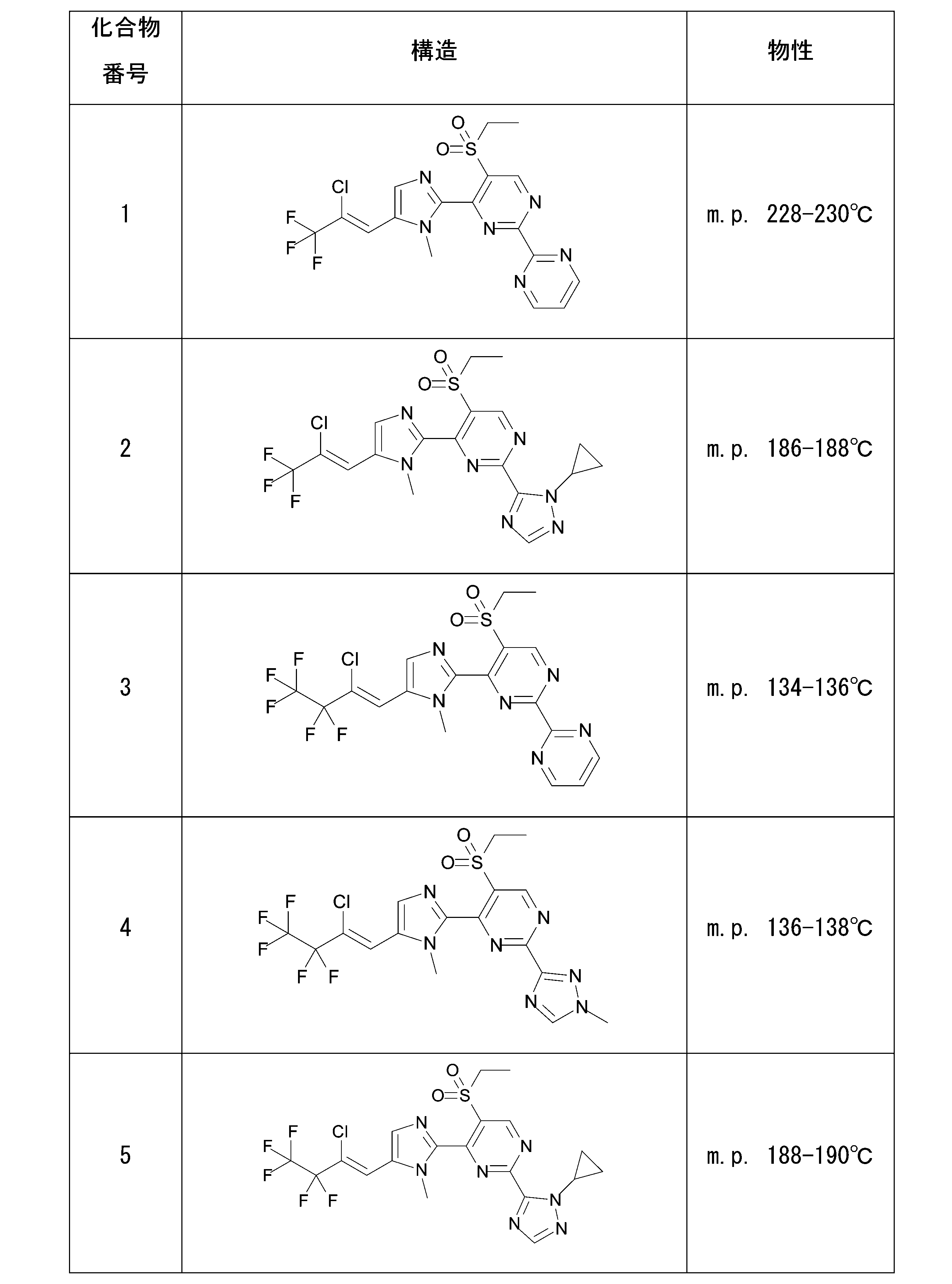
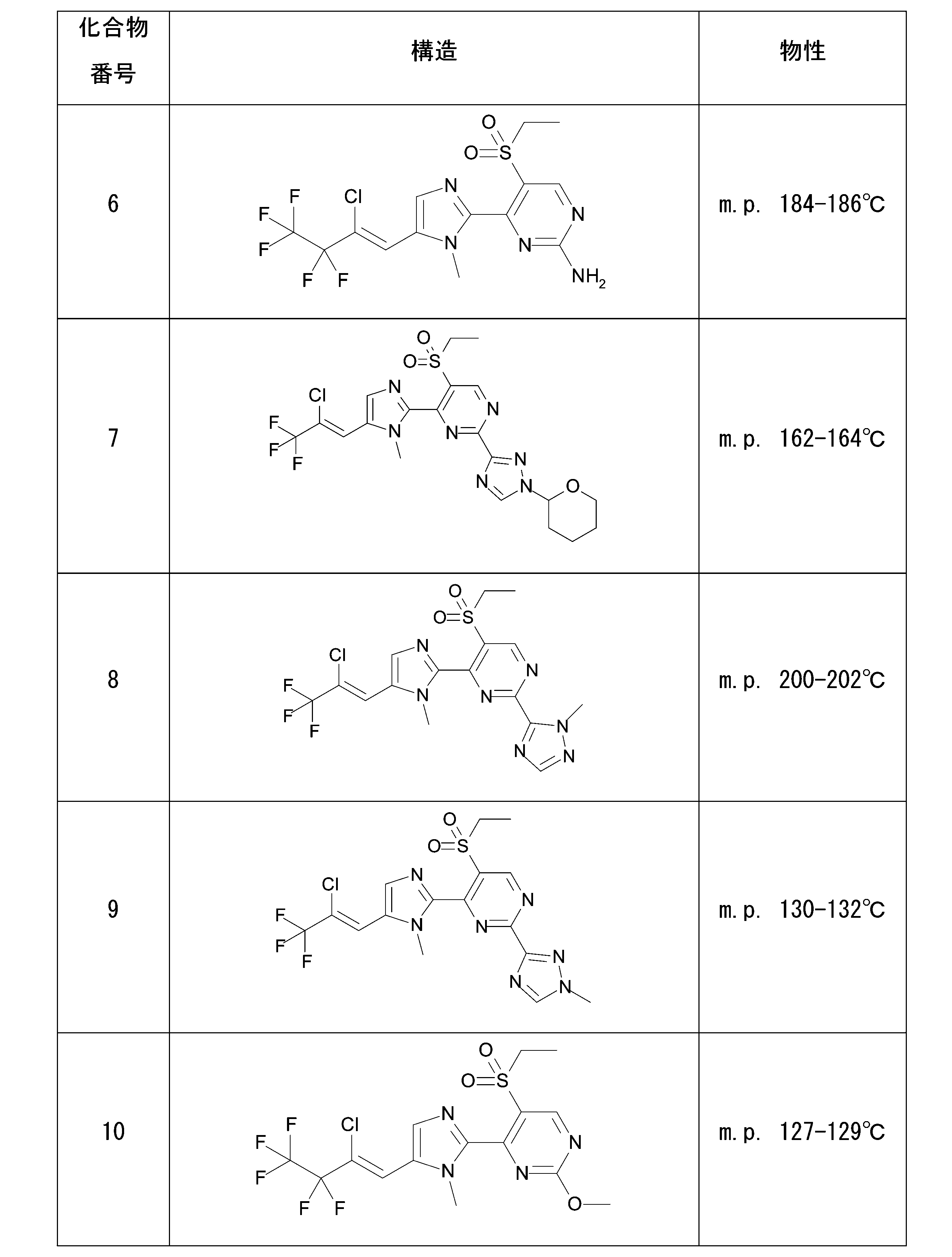

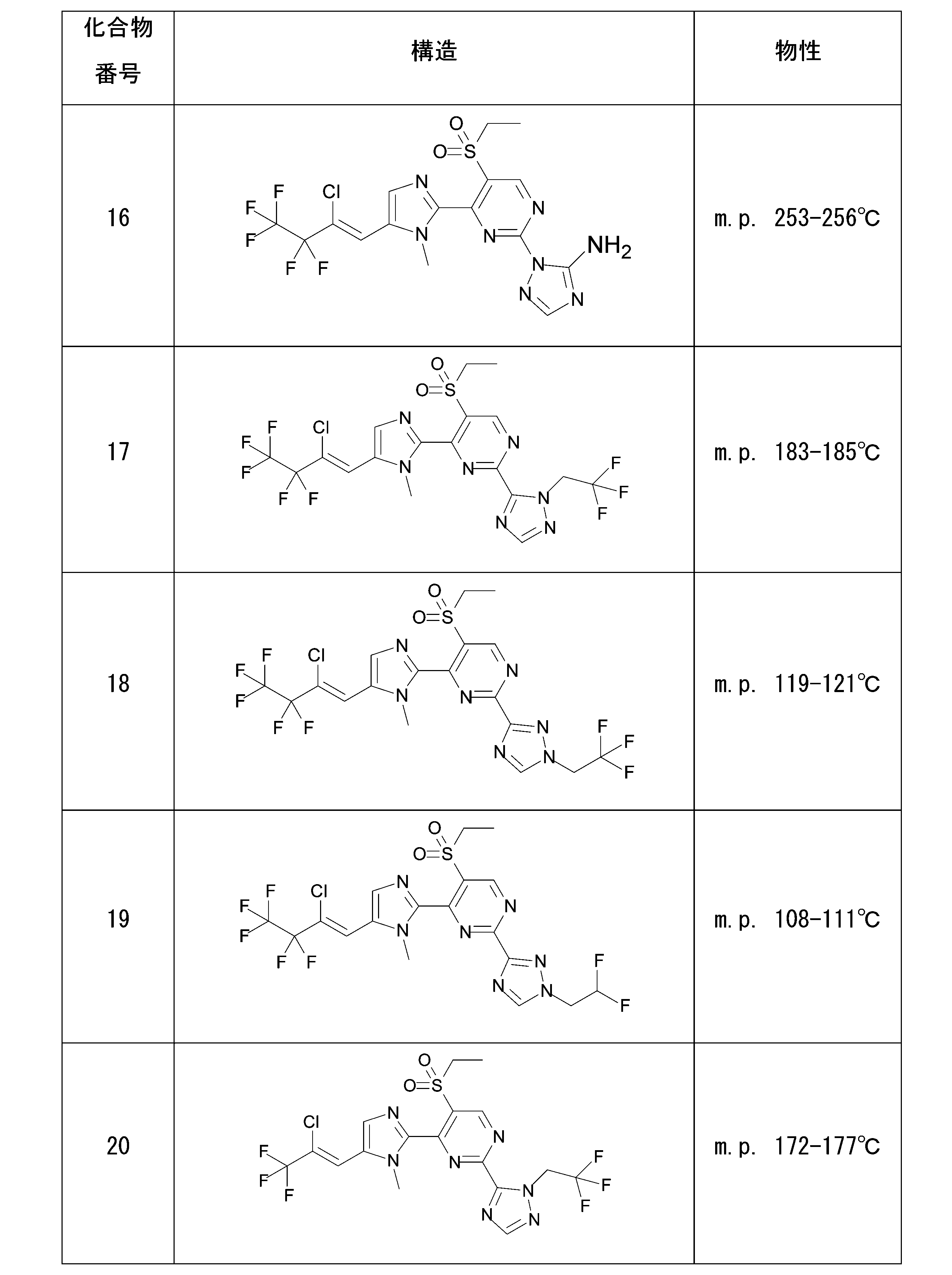


〔生物試験〕
本発明化合物が、有害生物防除剤および外部寄生虫防除剤の有効成分として有用であることを以下の試験例で示す。なお「部」は重量基準である。
本発明化合物が、有害生物防除剤および外部寄生虫防除剤の有効成分として有用であることを以下の試験例で示す。なお「部」は重量基準である。
(試験用乳剤の調製)
本発明化合物5部、ジメチルホルムアミド93.6部、およびポリオキシエチレンアルキルアリールエーテル1.4部を混合溶解し、有効成分5重量%の乳剤(I)を調製した。
本発明化合物5部、ジメチルホルムアミド93.6部、およびポリオキシエチレンアルキルアリールエーテル1.4部を混合溶解し、有効成分5重量%の乳剤(I)を調製した。
殺虫率は、下記の式により計算した。
殺虫率(%)=(死亡虫数/供試虫数)×100
殺虫率(%)=(死亡虫数/供試虫数)×100
(試験例1)アワヨトウに対する効力試験
乳剤(I)を、本発明化合物の濃度が125重量ppmになるように水で希釈した。トウモロコシ葉片を前記希釈液に30秒間浸漬した。このトウモロコシ葉片を、シャーレに入れ、アワヨトウ2齢幼虫5頭を放った。
前記のシャーレを、試験期間中、温度25℃、湿度60%の恒温室内に放置した。放虫から6日間経過したときに生死判定を行い、殺虫率を算出した。試験は2反復で行った。
化合物番号1、2、3、4、5、6、7、8、9、10、11、14、15、16、17、18、19、20、21、22、23、24、25および26の化合物について、アワヨトウに対する効力試験を行った。いずれの化合物も80%以上の殺虫率を示した。
乳剤(I)を、本発明化合物の濃度が125重量ppmになるように水で希釈した。トウモロコシ葉片を前記希釈液に30秒間浸漬した。このトウモロコシ葉片を、シャーレに入れ、アワヨトウ2齢幼虫5頭を放った。
前記のシャーレを、試験期間中、温度25℃、湿度60%の恒温室内に放置した。放虫から6日間経過したときに生死判定を行い、殺虫率を算出した。試験は2反復で行った。
化合物番号1、2、3、4、5、6、7、8、9、10、11、14、15、16、17、18、19、20、21、22、23、24、25および26の化合物について、アワヨトウに対する効力試験を行った。いずれの化合物も80%以上の殺虫率を示した。
(試験例2)コナガに対する効力試験
乳剤(I)を、本発明化合物の濃度が125重量ppmになるように水で希釈した。キャベツ葉を前記希釈液中に30秒間浸漬した。このキャベツ葉をシャーレに入れた。これにコナガ2齢幼虫5頭を放した。シャーレを温度25℃、湿度60%の恒温室内に置いた。放虫から3日間経過したときに生死判定を行い、殺虫率を算出した。試験は2反復で行った。
化合物番号1、2、3、4、5、6、8、10、14、16、17、19、20、21、22、24および25の化合物について、コナガに対する効力試験を行った。いずれの化合物も80%以上の殺虫率を示した。
乳剤(I)を、本発明化合物の濃度が125重量ppmになるように水で希釈した。キャベツ葉を前記希釈液中に30秒間浸漬した。このキャベツ葉をシャーレに入れた。これにコナガ2齢幼虫5頭を放した。シャーレを温度25℃、湿度60%の恒温室内に置いた。放虫から3日間経過したときに生死判定を行い、殺虫率を算出した。試験は2反復で行った。
化合物番号1、2、3、4、5、6、8、10、14、16、17、19、20、21、22、24および25の化合物について、コナガに対する効力試験を行った。いずれの化合物も80%以上の殺虫率を示した。
(試験例3)キスジノミハムシに対する効力試験
乳剤(I)を本発明化合物が125重量ppmになるように水で希釈し、試験用薬液を調製した。3寸鉢に植えたチンゲンサイ苗(第7本葉展開期)に前記試験用薬液を散布した。チンゲンサイ苗を風乾させ、次いでプラスチックカップに入れた。これに、キスジノミハムシ(Phyllotreta striolata)成虫10頭を放した。温度25℃、湿度65%の恒温室内で保管し、放虫から7日間経過したときに生死判定を行い、殺虫率を算出した。試験は2反復で行った。
化合物番号1、2、3、4、5、6、8、9、11、14、16、17、18、19および24の化合物について、キスジノミハムシ成虫に対する効力試験を行った。いずれの化合物も80%以上の殺虫率を示した。
乳剤(I)を本発明化合物が125重量ppmになるように水で希釈し、試験用薬液を調製した。3寸鉢に植えたチンゲンサイ苗(第7本葉展開期)に前記試験用薬液を散布した。チンゲンサイ苗を風乾させ、次いでプラスチックカップに入れた。これに、キスジノミハムシ(Phyllotreta striolata)成虫10頭を放した。温度25℃、湿度65%の恒温室内で保管し、放虫から7日間経過したときに生死判定を行い、殺虫率を算出した。試験は2反復で行った。
化合物番号1、2、3、4、5、6、8、9、11、14、16、17、18、19および24の化合物について、キスジノミハムシ成虫に対する効力試験を行った。いずれの化合物も80%以上の殺虫率を示した。
(試験例4)ミナミキイロアザミウマに対する効力試験
キュウリ苗にミナミキイロアザミウマ成虫を8頭接種した。乳剤(I)を、本発明化合物の濃度が125重量ppmになるように水で希釈した。該希釈液をキュウリ苗に散布し、風乾した。散布から7日間経過したときに寄生幼虫数を数えた。化合物の効力は、下記に示す防除率により評価した。
防除率(%)={1- (Nt)/(Nc)}×100
Nt:希釈液散布有りの区域の寄生虫数
Nc:希釈液散布無しの区域の寄生虫数
化合物番号1、2、3、4、5、9、14、19、21、22および24の化合物について、ミナミキイロアザミウマに対する効力試験を行った。いずれの化合物も80%以上の防除率を示した。
キュウリ苗にミナミキイロアザミウマ成虫を8頭接種した。乳剤(I)を、本発明化合物の濃度が125重量ppmになるように水で希釈した。該希釈液をキュウリ苗に散布し、風乾した。散布から7日間経過したときに寄生幼虫数を数えた。化合物の効力は、下記に示す防除率により評価した。
防除率(%)={1- (Nt)/(Nc)}×100
Nt:希釈液散布有りの区域の寄生虫数
Nc:希釈液散布無しの区域の寄生虫数
化合物番号1、2、3、4、5、9、14、19、21、22および24の化合物について、ミナミキイロアザミウマに対する効力試験を行った。いずれの化合物も80%以上の防除率を示した。
(試験例5)ネコノミに対する効力試験
本発明化合物をイソプロパノールに溶解させ、濃度20重量ppmの薬液を調製した。この薬液100μLをガラス製バイアル瓶(φ330mm)の底の内面に塗布し、風乾にてイソプロパノールを揮発させて、本発明化合物の薄膜を形成させた。
バイアル瓶にネコノミ(Cat flea、Ctenocephalides felis)の成虫(雌雄混合)5頭を放した。蓋をして25℃の恒温室に置いた。放虫してから4日間経過したときにネコノミの生死判定を行い、殺虫率を算出した。試験は2反復で行った。
化合物番号1、2、3、4、5、6、8、9、13、14、15、16、17、18、19および24の化合物について、ネコノミ成虫に対する効力試験を行った。いずれの化合物も80%以上の殺虫率を示した。
本発明化合物をイソプロパノールに溶解させ、濃度20重量ppmの薬液を調製した。この薬液100μLをガラス製バイアル瓶(φ330mm)の底の内面に塗布し、風乾にてイソプロパノールを揮発させて、本発明化合物の薄膜を形成させた。
バイアル瓶にネコノミ(Cat flea、Ctenocephalides felis)の成虫(雌雄混合)5頭を放した。蓋をして25℃の恒温室に置いた。放虫してから4日間経過したときにネコノミの生死判定を行い、殺虫率を算出した。試験は2反復で行った。
化合物番号1、2、3、4、5、6、8、9、13、14、15、16、17、18、19および24の化合物について、ネコノミ成虫に対する効力試験を行った。いずれの化合物も80%以上の殺虫率を示した。
本発明のヘテロアリールピリミジン化合物の中から無作為に選択したものが、いずれも上記のような効果を奏することから、本発明のヘテロアリールピリミジン化合物は、例示しきれなかった化合物を含め、有害生物防除、特に殺ダニ、殺虫などの効果を有する化合物であることが理解できる。また、外部寄生虫などの人畜に害のある寄生虫にも効果を有する化合物であることが理解できる。
本発明のヘテロアリールピリミジン化合物は、農作物や衛生面で問題となる有害生物を防除することができる。本発明のヘテロアリールピリミジン化合物は、特に農業害虫およびダニ類をより低濃度で効果的に防除することができる。本発明のヘテロアリールピリミジン化合物は、さらに、人畜を害する外部寄生虫および内部寄生虫を効果的に防除することができる。
Claims (9)
- 式(I)で表される化合物またはその塩。

R1は、置換若しくは無置換のC2~6アルケニル基、または置換若しくは無置換のC2~6アルキニル基であり、
R2は、水素原子、置換若しくは無置換のC1~6アルキル基、またはハロゲノ基であり、
R3は、置換若しくは無置換のC1~6アルキル基であり、
X1およびX2は、それぞれ独立して、水素原子、置換若しくは無置換のC1~6アルキル基、置換若しくは無置換のC2~6アルケニル基、置換若しくは無置換のC2~6アルキニル基、水酸基、置換若しくは無置換のC1~6アルコキシ基、置換若しくは無置換のC1~6アルキルカルボニル基、置換若しくは無置換のC1~6アルコキシカルボニル基、置換若しくは無置換のC1~6アルキルチオ基、置換若しくは無置換のC1~6アルキルスルフィニル基、置換若しくは無置換のC1~6アルキルスルホニル基、置換若しくは無置換のC3~6シクロアルキル基、置換若しくは無置換のフェニル基、置換若しくは無置換のナフチル基、置換若しくは無置換の5~10員ヘテロシクリル基、置換若しくは無置換のフェノキシ基、置換若しくは無置換のナフトキシ基、置換若しくは無置換の5~10員ヘテロシクリルオキシ基、置換若しくは無置換のアミノ基、置換若しくは無置換のアミノカルボニル基、ニトロ基、シアノ基、ハロゲノ基または-C(Rc)=N-ORdで表される基であり、
Rcは、水素原子または置換もしくは無置換のC1~6アルキル基であり、
Rdは、水素原子、置換もしくは無置換のC1~6アルキル基、置換もしくは無置換のC2~6アルケニル基、またはC2~6アルキニル基であり、
Yは、-S(=O)n-で表される基、または-S(=O)(=NRN)-で表される基であり、
nは、=Oの数を示し且つ0~2のいずれかの整数であり、
RNは、水素原子、置換若しくは無置換のC1~6アルキル基、置換若しくは無置換のC2~6アルケニル基、置換若しくは無置換のC2~6アルキニル基、置換若しくは無置換のC1~6アルキルカルボニル基、置換若しくは無置換のC1~6アルコキシカルボニル基、置換若しくは無置換のC1~6アルキルスルホニル基、置換若しくは無置換のC3~6シクロアルキル基、置換若しくは無置換のフェニル基、置換若しくは無置換のナフチル基、置換若しくは無置換の5~10員ヘテロアリール基、置換若しくは無置換のアミノ基、置換若しくは無置換のアミノカルボニル基、ニトロ基、またはシアノ基である。 - 前記式(I)中、X1が、置換若しくは無置換のC1~6アルコキシ基、置換若しくは無置換の5~6員ヘテロアリール基、または、置換若しくは無置換のアミノ基である請求項1に記載の式(I)で表される化合物またはその塩。
- 前記式(I)中、X1が、置換若しくは無置換のC1~6アルコキシ基、置換若しくは無置換のピリミジニル基、置換若しくは無置換のトリアゾリル基、または、置換若しくは無置換のアミノ基である請求項2に記載の式(I)で表される化合物またはその塩。
- 前記式(I)中、Yは-S(=O)2-で表される基である請求項1に記載の式(I)で表される化合物またはその塩。
- 前記式(I)中、R1は、C2~6ハロアルケニル基またはC2~6ハロアルキニル基である請求項1に記載の式(I)で表される化合物またはその塩。
- 請求項1に記載の式(I)で表される化合物およびその塩からなる群から選ばれる少なくとも1つを有効成分として含有する有害生物防除剤。
- 請求項1に記載の式(I)で表される化合物およびその塩からなる群から選ばれる少なくとも1つを有効成分として含有する殺虫または殺ダニ剤。
- 請求項1に記載の式(I)で表される化合物およびその塩からなる群から選ばれる少なくとも1つを有効成分として含有する外部寄生虫防除剤。
- 請求項1に記載の式(I)で表される化合物およびその塩からなる群から選ばれる少なくとも1つを有効成分として含有する内部寄生虫防除若しくは駆除剤。
Applications Claiming Priority (2)
| Application Number | Priority Date | Filing Date | Title |
|---|---|---|---|
| JP2022-005354 | 2022-01-17 | ||
| JP2022005354A JP2025026809A (ja) | 2022-01-17 | 2022-01-17 | ヘテロアリールピリミジン化合物および有害生物防除剤 |
Publications (1)
| Publication Number | Publication Date |
|---|---|
| WO2023136142A1 true WO2023136142A1 (ja) | 2023-07-20 |
Family
ID=87279105
Family Applications (1)
| Application Number | Title | Priority Date | Filing Date |
|---|---|---|---|
| PCT/JP2022/048259 Ceased WO2023136142A1 (ja) | 2022-01-17 | 2022-12-27 | ヘテロアリールピリミジン化合物および有害生物防除剤 |
Country Status (2)
| Country | Link |
|---|---|
| JP (1) | JP2025026809A (ja) |
| WO (1) | WO2023136142A1 (ja) |
Cited By (1)
| Publication number | Priority date | Publication date | Assignee | Title |
|---|---|---|---|---|
| WO2024189139A1 (en) | 2023-03-14 | 2024-09-19 | Syngenta Crop Protection Ag | Control of pests resistant to insecticides |
Citations (7)
| Publication number | Priority date | Publication date | Assignee | Title |
|---|---|---|---|---|
| WO2005019207A1 (en) * | 2003-08-15 | 2005-03-03 | Nippon Soda Co. Ltd. | Fungicidal pyrimidine derivatives |
| JP2017512817A (ja) * | 2014-04-02 | 2017-05-25 | バイエル・クロップサイエンス・アクチェンゲゼルシャフト | 新規な3−[(ピラゾール−5−イル)−ヘテロアリール]−ベンズアミド誘導体および有害生物防除剤としてのそれらの使用 |
| WO2017104741A1 (ja) * | 2015-12-16 | 2017-06-22 | 日本曹達株式会社 | アリールアゾール化合物および有害生物防除剤 |
| WO2018052035A1 (ja) * | 2016-09-15 | 2018-03-22 | 日本曹達株式会社 | ジアリールアゾール化合物および有害生物防除剤 |
| WO2020050212A1 (ja) * | 2018-09-03 | 2020-03-12 | 日本曹達株式会社 | ヘテロアリールアゾール化合物および有害生物防除剤 |
| WO2020071304A1 (ja) * | 2018-10-02 | 2020-04-09 | 日本曹達株式会社 | ヘテロアリールアゾール化合物および有害生物防除剤 |
| WO2021200488A1 (ja) * | 2020-04-02 | 2021-10-07 | 日本曹達株式会社 | 有害生物防除方法、ならびに有害生物防除剤組成物および有害生物防除剤セット |
-
2022
- 2022-01-17 JP JP2022005354A patent/JP2025026809A/ja active Pending
- 2022-12-27 WO PCT/JP2022/048259 patent/WO2023136142A1/ja not_active Ceased
Patent Citations (7)
| Publication number | Priority date | Publication date | Assignee | Title |
|---|---|---|---|---|
| WO2005019207A1 (en) * | 2003-08-15 | 2005-03-03 | Nippon Soda Co. Ltd. | Fungicidal pyrimidine derivatives |
| JP2017512817A (ja) * | 2014-04-02 | 2017-05-25 | バイエル・クロップサイエンス・アクチェンゲゼルシャフト | 新規な3−[(ピラゾール−5−イル)−ヘテロアリール]−ベンズアミド誘導体および有害生物防除剤としてのそれらの使用 |
| WO2017104741A1 (ja) * | 2015-12-16 | 2017-06-22 | 日本曹達株式会社 | アリールアゾール化合物および有害生物防除剤 |
| WO2018052035A1 (ja) * | 2016-09-15 | 2018-03-22 | 日本曹達株式会社 | ジアリールアゾール化合物および有害生物防除剤 |
| WO2020050212A1 (ja) * | 2018-09-03 | 2020-03-12 | 日本曹達株式会社 | ヘテロアリールアゾール化合物および有害生物防除剤 |
| WO2020071304A1 (ja) * | 2018-10-02 | 2020-04-09 | 日本曹達株式会社 | ヘテロアリールアゾール化合物および有害生物防除剤 |
| WO2021200488A1 (ja) * | 2020-04-02 | 2021-10-07 | 日本曹達株式会社 | 有害生物防除方法、ならびに有害生物防除剤組成物および有害生物防除剤セット |
Cited By (1)
| Publication number | Priority date | Publication date | Assignee | Title |
|---|---|---|---|---|
| WO2024189139A1 (en) | 2023-03-14 | 2024-09-19 | Syngenta Crop Protection Ag | Control of pests resistant to insecticides |
Also Published As
| Publication number | Publication date |
|---|---|
| JP2025026809A (ja) | 2025-02-26 |
Similar Documents
| Publication | Publication Date | Title |
|---|---|---|
| JP7288100B2 (ja) | アリールアゾール化合物および有害生物防除剤 | |
| JP6675986B2 (ja) | ジアリールイミダゾール化合物および有害生物防除剤 | |
| TW202146397A (zh) | 吖嗪基唑化合物及有害生物防治劑 | |
| TW201813962A (zh) | 二芳基唑化合物及有害生物防除劑 | |
| KR102469835B1 (ko) | 디아릴피라졸 화합물 및 유해 생물 방제제 | |
| US12439920B2 (en) | Pyridine n-oxide compound and pest control agent | |
| WO2020050212A1 (ja) | ヘテロアリールアゾール化合物および有害生物防除剤 | |
| JP7191852B2 (ja) | ピリジニウム塩および有害生物防除剤 | |
| JP7532355B2 (ja) | ピリジニウム塩および有害生物防除剤 | |
| US12384749B2 (en) | Onium salt of nitrogen-containing heteroaryl compound and pest control agent | |
| WO2023136142A1 (ja) | ヘテロアリールピリミジン化合物および有害生物防除剤 | |
| JP7150713B2 (ja) | ヘテロアリールピリミジン化合物および有害生物防除剤 | |
| EP4219491A1 (en) | Imidazo[1,2-a]pyridine compound and pest control agent | |
| JP7772973B2 (ja) | 有害生物防除剤組成物および有害生物の防除方法 | |
| JP2024024537A (ja) | アゾリルピリジン化合物および有害生物防除剤 | |
| WO2024034565A1 (ja) | イミダゾリルアゾール化合物および有害生物防除剤 | |
| WO2023248871A1 (ja) | ヘテロアリール化合物および有害生物防除剤 | |
| EP4574818A1 (en) | Onium salt of nitrogen-containing heteroaryl compound and pest control agent | |
| JP2026014715A (ja) | カーバメート化合物および殺虫剤 | |
| WO2022224975A1 (ja) | ベンゾイミダゾール化合物および有害生物防除剤 | |
| BR112019026969B1 (pt) | Composto, agentes de controle de praga, de ectoparasita, de endoparasita ou agente que expele endoparasita, e, agente inseticida ou acaricida | |
| JP2019064998A (ja) | スルホニルピリドン化合物および有害生物防除剤 |
Legal Events
| Date | Code | Title | Description |
|---|---|---|---|
| 121 | Ep: the epo has been informed by wipo that ep was designated in this application |
Ref document number: 22920658 Country of ref document: EP Kind code of ref document: A1 |
|
| NENP | Non-entry into the national phase |
Ref country code: DE |
|
| 122 | Ep: pct application non-entry in european phase |
Ref document number: 22920658 Country of ref document: EP Kind code of ref document: A1 |
|
| NENP | Non-entry into the national phase |
Ref country code: JP |