WO2023112939A1 - 組成物の純化方法 - Google Patents
組成物の純化方法 Download PDFInfo
- Publication number
- WO2023112939A1 WO2023112939A1 PCT/JP2022/045954 JP2022045954W WO2023112939A1 WO 2023112939 A1 WO2023112939 A1 WO 2023112939A1 JP 2022045954 W JP2022045954 W JP 2022045954W WO 2023112939 A1 WO2023112939 A1 WO 2023112939A1
- Authority
- WO
- WIPO (PCT)
- Prior art keywords
- compound
- composition
- group
- liquid
- formula
- Prior art date
- Legal status (The legal status is an assumption and is not a legal conclusion. Google has not performed a legal analysis and makes no representation as to the accuracy of the status listed.)
- Ceased
Links
Images


Classifications
-
- A—HUMAN NECESSITIES
- A61—MEDICAL OR VETERINARY SCIENCE; HYGIENE
- A61P—SPECIFIC THERAPEUTIC ACTIVITY OF CHEMICAL COMPOUNDS OR MEDICINAL PREPARATIONS
- A61P35/00—Antineoplastic agents
-
- C—CHEMISTRY; METALLURGY
- C07—ORGANIC CHEMISTRY
- C07C—ACYCLIC OR CARBOCYCLIC COMPOUNDS
- C07C219/00—Compounds containing amino and esterified hydroxy groups bound to the same carbon skeleton
- C07C219/02—Compounds containing amino and esterified hydroxy groups bound to the same carbon skeleton having esterified hydroxy groups and amino groups bound to acyclic carbon atoms of the same carbon skeleton
- C07C219/20—Compounds containing amino and esterified hydroxy groups bound to the same carbon skeleton having esterified hydroxy groups and amino groups bound to acyclic carbon atoms of the same carbon skeleton the carbon skeleton being unsaturated
-
- A—HUMAN NECESSITIES
- A61—MEDICAL OR VETERINARY SCIENCE; HYGIENE
- A61K—PREPARATIONS FOR MEDICAL, DENTAL OR TOILETRY PURPOSES
- A61K31/00—Medicinal preparations containing organic active ingredients
- A61K31/70—Carbohydrates; Sugars; Derivatives thereof
- A61K31/7088—Compounds having three or more nucleosides or nucleotides
- A61K31/713—Double-stranded nucleic acids or oligonucleotides
-
- A—HUMAN NECESSITIES
- A61—MEDICAL OR VETERINARY SCIENCE; HYGIENE
- A61K—PREPARATIONS FOR MEDICAL, DENTAL OR TOILETRY PURPOSES
- A61K47/00—Medicinal preparations characterised by the non-active ingredients used, e.g. carriers or inert additives; Targeting or modifying agents chemically bound to the active ingredient
- A61K47/06—Organic compounds, e.g. natural or synthetic hydrocarbons, polyolefins, mineral oil, petrolatum or ozokerite
- A61K47/16—Organic compounds, e.g. natural or synthetic hydrocarbons, polyolefins, mineral oil, petrolatum or ozokerite containing nitrogen, e.g. nitro-, nitroso-, azo-compounds, nitriles, cyanates
- A61K47/18—Amines; Amides; Ureas; Quaternary ammonium compounds; Amino acids; Oligopeptides having up to five amino acids
-
- A—HUMAN NECESSITIES
- A61—MEDICAL OR VETERINARY SCIENCE; HYGIENE
- A61K—PREPARATIONS FOR MEDICAL, DENTAL OR TOILETRY PURPOSES
- A61K47/00—Medicinal preparations characterised by the non-active ingredients used, e.g. carriers or inert additives; Targeting or modifying agents chemically bound to the active ingredient
- A61K47/06—Organic compounds, e.g. natural or synthetic hydrocarbons, polyolefins, mineral oil, petrolatum or ozokerite
- A61K47/16—Organic compounds, e.g. natural or synthetic hydrocarbons, polyolefins, mineral oil, petrolatum or ozokerite containing nitrogen, e.g. nitro-, nitroso-, azo-compounds, nitriles, cyanates
- A61K47/18—Amines; Amides; Ureas; Quaternary ammonium compounds; Amino acids; Oligopeptides having up to five amino acids
- A61K47/183—Amino acids, e.g. glycine, EDTA or aspartame
-
- A—HUMAN NECESSITIES
- A61—MEDICAL OR VETERINARY SCIENCE; HYGIENE
- A61K—PREPARATIONS FOR MEDICAL, DENTAL OR TOILETRY PURPOSES
- A61K9/00—Medicinal preparations characterised by special physical form
- A61K9/48—Preparations in capsules, e.g. of gelatin, of chocolate
- A61K9/50—Microcapsules having a gas, liquid or semi-solid filling; Solid microparticles or pellets surrounded by a distinct coating layer, e.g. coated microspheres, coated drug crystals
- A61K9/51—Nanocapsules; Nanoparticles
- A61K9/5107—Excipients; Inactive ingredients
- A61K9/5123—Organic compounds, e.g. fats, sugars
-
- B—PERFORMING OPERATIONS; TRANSPORTING
- B01—PHYSICAL OR CHEMICAL PROCESSES OR APPARATUS IN GENERAL
- B01D—SEPARATION
- B01D11/00—Solvent extraction
- B01D11/04—Solvent extraction of solutions which are liquid
- B01D11/0492—Applications, solvents used
-
- C—CHEMISTRY; METALLURGY
- C07—ORGANIC CHEMISTRY
- C07C—ACYCLIC OR CARBOCYCLIC COMPOUNDS
- C07C213/00—Preparation of compounds containing amino and hydroxy, amino and etherified hydroxy or amino and esterified hydroxy groups bound to the same carbon skeleton
- C07C213/10—Separation; Purification; Stabilisation; Use of additives
-
- C—CHEMISTRY; METALLURGY
- C07—ORGANIC CHEMISTRY
- C07C—ACYCLIC OR CARBOCYCLIC COMPOUNDS
- C07C219/00—Compounds containing amino and esterified hydroxy groups bound to the same carbon skeleton
- C07C219/02—Compounds containing amino and esterified hydroxy groups bound to the same carbon skeleton having esterified hydroxy groups and amino groups bound to acyclic carbon atoms of the same carbon skeleton
- C07C219/04—Compounds containing amino and esterified hydroxy groups bound to the same carbon skeleton having esterified hydroxy groups and amino groups bound to acyclic carbon atoms of the same carbon skeleton the carbon skeleton being acyclic and saturated
- C07C219/08—Compounds containing amino and esterified hydroxy groups bound to the same carbon skeleton having esterified hydroxy groups and amino groups bound to acyclic carbon atoms of the same carbon skeleton the carbon skeleton being acyclic and saturated having at least one of the hydroxy groups esterified by a carboxylic acid having the esterifying carboxyl group bound to an acyclic carbon atom of an acyclic unsaturated carbon skeleton
-
- C—CHEMISTRY; METALLURGY
- C07—ORGANIC CHEMISTRY
- C07C—ACYCLIC OR CARBOCYCLIC COMPOUNDS
- C07C227/00—Preparation of compounds containing amino and carboxyl groups bound to the same carbon skeleton
- C07C227/38—Separation; Purification; Stabilisation; Use of additives
- C07C227/40—Separation; Purification
-
- C—CHEMISTRY; METALLURGY
- C07—ORGANIC CHEMISTRY
- C07C—ACYCLIC OR CARBOCYCLIC COMPOUNDS
- C07C229/00—Compounds containing amino and carboxyl groups bound to the same carbon skeleton
- C07C229/02—Compounds containing amino and carboxyl groups bound to the same carbon skeleton having amino and carboxyl groups bound to acyclic carbon atoms of the same carbon skeleton
- C07C229/04—Compounds containing amino and carboxyl groups bound to the same carbon skeleton having amino and carboxyl groups bound to acyclic carbon atoms of the same carbon skeleton the carbon skeleton being acyclic and saturated
- C07C229/06—Compounds containing amino and carboxyl groups bound to the same carbon skeleton having amino and carboxyl groups bound to acyclic carbon atoms of the same carbon skeleton the carbon skeleton being acyclic and saturated having only one amino and one carboxyl group bound to the carbon skeleton
- C07C229/10—Compounds containing amino and carboxyl groups bound to the same carbon skeleton having amino and carboxyl groups bound to acyclic carbon atoms of the same carbon skeleton the carbon skeleton being acyclic and saturated having only one amino and one carboxyl group bound to the carbon skeleton the nitrogen atom of the amino group being further bound to acyclic carbon atoms or to carbon atoms of rings other than six-membered aromatic rings
- C07C229/12—Compounds containing amino and carboxyl groups bound to the same carbon skeleton having amino and carboxyl groups bound to acyclic carbon atoms of the same carbon skeleton the carbon skeleton being acyclic and saturated having only one amino and one carboxyl group bound to the carbon skeleton the nitrogen atom of the amino group being further bound to acyclic carbon atoms or to carbon atoms of rings other than six-membered aromatic rings to carbon atoms of acyclic carbon skeletons
-
- C—CHEMISTRY; METALLURGY
- C07—ORGANIC CHEMISTRY
- C07C—ACYCLIC OR CARBOCYCLIC COMPOUNDS
- C07C229/00—Compounds containing amino and carboxyl groups bound to the same carbon skeleton
- C07C229/02—Compounds containing amino and carboxyl groups bound to the same carbon skeleton having amino and carboxyl groups bound to acyclic carbon atoms of the same carbon skeleton
- C07C229/30—Compounds containing amino and carboxyl groups bound to the same carbon skeleton having amino and carboxyl groups bound to acyclic carbon atoms of the same carbon skeleton the carbon skeleton being acyclic and unsaturated
-
- C—CHEMISTRY; METALLURGY
- C12—BIOCHEMISTRY; BEER; SPIRITS; WINE; VINEGAR; MICROBIOLOGY; ENZYMOLOGY; MUTATION OR GENETIC ENGINEERING
- C12N—MICROORGANISMS OR ENZYMES; COMPOSITIONS THEREOF; PROPAGATING, PRESERVING, OR MAINTAINING MICROORGANISMS; MUTATION OR GENETIC ENGINEERING; CULTURE MEDIA
- C12N15/00—Mutation or genetic engineering; DNA or RNA concerning genetic engineering, vectors, e.g. plasmids, or their isolation, preparation or purification; Use of hosts therefor
- C12N15/09—Recombinant DNA-technology
- C12N15/11—DNA or RNA fragments; Modified forms thereof; Non-coding nucleic acids having a biological activity
- C12N15/113—Non-coding nucleic acids modulating the expression of genes, e.g. antisense oligonucleotides; Antisense DNA or RNA; Triplex- forming oligonucleotides; Catalytic nucleic acids, e.g. ribozymes; Nucleic acids used in co-suppression or gene silencing
-
- C—CHEMISTRY; METALLURGY
- C12—BIOCHEMISTRY; BEER; SPIRITS; WINE; VINEGAR; MICROBIOLOGY; ENZYMOLOGY; MUTATION OR GENETIC ENGINEERING
- C12N—MICROORGANISMS OR ENZYMES; COMPOSITIONS THEREOF; PROPAGATING, PRESERVING, OR MAINTAINING MICROORGANISMS; MUTATION OR GENETIC ENGINEERING; CULTURE MEDIA
- C12N2310/00—Structure or type of the nucleic acid
- C12N2310/10—Type of nucleic acid
- C12N2310/14—Type of nucleic acid interfering nucleic acids [NA]
Definitions
- the drugs administered to the body are metabolized in the liver and excreted through the kidneys before reaching the target site (on-target) such as receptors and genes. In addition, they may act on off-target sites and cause side effects.
- Lipid nanoparticles encapsulating drugs are known as DDS.
- Patent Document 1 and Non-Patent Document 1 describe lipid nanoparticles encapsulating siRNA.
- Patent Document 1 and Non-Patent Document 1 disclose that lipid nanoparticles encapsulating siRNA are useful for cancer immunotherapy and the like by knockdown using siRNA targeting immunosuppressive factors of dendritic cells. is described.
- a method for purifying a composition comprising a step of dissolving a composition containing a compound represented by the following formula (1) in an aqueous layer and performing liquid-liquid extraction to purify the compound represented by the following formula (1), , the oil layer used in the liquid-liquid extraction is selected from the group consisting of ketone-based liquids, ester-based liquids, and ether-based liquids having a solubility parameter (SP value) of 14.8 to 20.5 (MPa 1/2 ).
- SP value solubility parameter
- R 1 represents -N(R 2 )-R 2 (wherein each R 2 independently represents a C1-C4 alkyl group), and R 3 represents a C3-C8 represents an alkanediyl group, R 4 represents a C3-C8 alkanediyl group, R 5 represents a hydroxyl group, R 6 each independently represents -R 7 -OH (wherein R 7 represents a C4-C12 alkanediyl group) or a hydrogen atom, and n is an integer of 0 or 1.
- R 1 represents -N(R 2 )-R 2 (wherein each R 2 independently represents a C1-C4 alkyl group), and R 3 represents a C3-C8 represents an alkanediyl group, R 4 represents a C3-C8 alkanediyl group, R 5 represents a hydroxyl group or a hydrogen atom, R 9 each independently represents -R 7 -OC(O)-R 10 or - O—C(O)—R 10 wherein R 7 represents a C4-C12 alkanediyl group and R 10 represents a C4-C25 alkenyl group, wherein at least one R 9 is —R 7 —O—C(O)—R 10 and n is an integer of 0 or 1; ] [4]
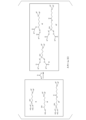
- FIG. 1 shows the reaction of scheme (I).
- FIG. 2 shows the reaction of scheme (II).
- FIG. 3 shows the reaction of scheme (III).
- the present invention provides a composition comprising a step of dissolving a composition containing a compound represented by the following formula (1) in an aqueous layer and performing liquid-liquid extraction to purify the compound represented by the following formula (1): wherein the oil layer used in the liquid-liquid extraction is from a ketone-based liquid, an ester-based liquid, and an ether-based liquid with a solubility parameter (SP value) of 14.8 to 20.5 (MPa 1/2 )
- SP value solubility parameter
- a purification method comprising one or more liquids selected from the group consisting of:
- R 1 represents -N(R 2 )-R 2 (wherein each R 2 independently represents a C1-C4 alkyl group), and R 3 represents a C3-C8 alkane. represents a diyl group, R 4 represents a C3-C8 alkanediyl group, R 5 represents a hydroxyl group, and R 6 represents -R 7 -OH (wherein R 7 represents a C4-C12 alkanediyl group; ) or a hydrogen atom, and n is an integer of 0 or 1.
- the compound represented by the above formula (1) can be purified to remove contaminants, and the composition (lipid) described later can be produced. Then, when lipid nanoparticles encapsulating siRNA are produced with this lipid, compared with the case where the purification method of the present embodiment is not performed, the pharmacokinetics of the lipid nanoparticles to the target site is improved, and It is possible to suppress the decrease in target gene knockdown efficiency.
- improving pharmacokinetics means increasing the proportion of lipid nanoparticles delivered to the target site among the administered lipid nanoparticles.
- a composition containing the compound represented by formula (1) above can be obtained, for example, by the reaction of scheme (I) shown in FIG.
- R 2 and R 7 are the same as in the above formula (1), each R 2 independently represents a C1-C4 alkyl group, and each R 7 independently represents a C4-C12 alkanediyl group. and R 8 represents a protecting group.
- R 2 and R 7 are the same as in the above formula (1), each R 2 independently represents a C1-C4 alkyl group, and each R 7 independently represents a C4-C12 alkanediyl group. and R 8 represents a protecting group.
- protective group for R 8 those commonly used as protective groups for hydroxyl groups can be appropriately used. Specific examples include tert-butyldimethylsilyl group, trimethylsilyl group, triethylsilyl group, benzyl group, tert-butyl group, methoxymethyl group, 2-tetrahydropyranyl group, acetyl group, benzoyl group and the like.
- Liquid-liquid extraction is a separation/concentration method that utilizes the distribution of solutes between two immiscible liquids.
- the composition containing the compound represented by the above formula (1) is dissolved in an aqueous layer, and extraction is performed between this and an immiscible oil layer.
- the oil layer used in liquid-liquid extraction is selected from the group consisting of ketone-based liquids, ester-based liquids and ether-based liquids having a solubility parameter (SP value) of 14.8 to 20.5 (MPa 1/2 ). A seed or two or more liquids are used. Liquid-liquid extraction can be performed under normal conditions.
- R 1 represents -N(R 2 )-R 2 (wherein each R 2 independently represents a C1-C4 alkyl group), and R 3 represents a C3-C8 , each R 7 independently represents a C4-C12 alkanediyl group, and each R 10 independently represents a C4-C25 alkenyl group. ]
- R 1 represents -N(R 2 )-R 2 (wherein each R 2 independently represents a C1-C4 alkyl group), and R 3 represents a C3-C8 R 4 represents a C3-C8 alkanediyl group, R 7 independently represents a C4-C12 alkanediyl group, and R 10 independently represents a C4-C25 alkenyl group. . ]
- composition of this embodiment can be obtained, for example, by the reaction of scheme (II) shown in FIG. Scheme (II) is a continuation reaction to scheme (I) shown in FIG.
- R 2 and R 7 are the same as in the above formula (1), each R 2 independently represents a C1-C4 alkyl group, and each R 7 independently represents a C4-C12 alkanediyl group. indicates Each R 10 independently represents a C4-C25 alkenyl group.
- R 6 is converted to R 9 (wherein X is a halogen atom) by reacting a composition containing compounds 5, 5′ and 5′′ with X—C(O)—R 10 and R 9 represents -R 7 -OC(O)-R 10 or -OC(O)-R 10. ).
- the composition of this embodiment contains one or more compounds selected from the group consisting of the compounds (2-1), (2-2) and (2-3), and is included in the composition.
- the total content of compound (2-1), compound (2-2) and compound (2-3) is 90% by mass or more, preferably 95% by mass or more, more preferably 98% by mass or more, and still more preferably is 99% by mass or more, and the remainder contains contaminants.
- the composition of the present embodiment can be obtained by removing contaminants by carrying out the above-described method for purifying the composition.
- the composition of the present embodiment preferably contains 85 to 99% by mass of the compound (2-1) contained in the composition.
- the total content of compound (2-2) and compound (2-3) contained in the composition is preferably 0.1 to 15% by mass.
- n is 0, one of R 9 is —R 7 —O—C(O)—R 10 and the other of R 9 is —O It provides a compound (2-2) wherein —C(O)—R 10 and R 5 is a hydrogen atom.
- the general formula of compound (2-2) is as described above.
- the present invention contains one or more compounds selected from the group consisting of compounds (2-1), (2-2) and (2-3) above, and in the composition
- the total content of compound (2-1), compound (2-2) and compound (2-3) is 90% by mass or more, preferably 95% by mass or more, more preferably 98% by mass or more, and further Provided are drug-encapsulating lipid nanoparticles formed from a composition, preferably 99% by mass or more.
- lipid nanoparticles in this specification refer to particles with a particle size of 10 nm to 1,000 nm, the main component of which is lipid. Lipid nanoparticles are also referred to as “Lipid Nanoparticles” (LNP).
- LNP Lipid Nanoparticles
- the lipid nanoparticles of the present embodiment have reduced contamination with adversely affecting contaminants, so they have good pharmacokinetics to the target site. Also, when the drug is siRNA, the knockdown efficiency of the target gene is high.
- the lipid nanoparticles of the present embodiment can be formed from the composition from which contaminants have been removed by performing the above-described method for purifying the composition.
- lipid component of the lipid nanoparticles only one or two or more compounds selected from the group consisting of the above compounds (2-1), (2-2) and (2-3) may be used, In general, for example, lipid nanoparticles are combined with one or more lipids selected from the group consisting of phospholipids, glycolipids, sterols, saturated or unsaturated fatty acids, and saturated or unsaturated fatty acid esters. form particles.
- lipids selected from the group consisting of phospholipids, glycolipids, sterols, saturated or unsaturated fatty acids, and saturated or unsaturated fatty acid esters. form particles.
- the combination of multiple lipids and the blending ratio thereof can be appropriately adjusted according to the purpose.
- Phospholipids and phospholipid derivatives include, for example, phosphatidylethanolamine, phosphatidylcholine, phosphatidylserine, phosphatidylinositol, phosphatidylglycerol, cardiolipin, sphingomyelin, ceramide phosphorylethanolamine, ceramide phosphorylglycerol, ceramide phosphorylglycerol phosphate, 1 ,2-dimyristoyl-1,2-deoxyphosphatidylcholine, distearoylphosphatidylcholine, plasmalogen, phosphatidic acid and the like, and these can be used singly or in combination of two or more.
- Glycolipids include, for example, glyceroglycolipids (e.g., sulfoxyribosylglyceride, diglycosyldiglyceride, digalactosyldiglyceride, galactosyldiglyceride, glycosyldiglyceride), glycosphingolipids (e.g., galactosylcerebroside, lactosylcerebroside, ganglioside), and the like. mentioned.
- glyceroglycolipids e.g., sulfoxyribosylglyceride, diglycosyldiglyceride, digalactosyldiglyceride, galactosyldiglyceride, glycosyldiglyceride
- glycosphingolipids e.g., galactosylcerebroside, lactosylcerebroside, ganglioside
- sterols examples include animal-derived sterols (e.g., cholesterol, cholesterol succinate, lanosterol, dihydrolanosterol, desmosterol, dihydrocholesterol), plant-derived sterols (phytosterols) (e.g., stigmasterol, sitosterol, campesterol, Brassicasterol), microorganism-derived sterols (eg, zymosterol, ergosterol), and the like.
- animal-derived sterols e.g., cholesterol, cholesterol succinate, lanosterol, dihydrolanosterol, desmosterol, dihydrocholesterol
- plant-derived sterols e.g., stigmasterol, sitosterol, campesterol, Brassicasterol
- microorganism-derived sterols eg, zymosterol, ergosterol
- saturated or unsaturated fatty acids include saturated or unsaturated fatty acids having 12 to 20 carbon atoms such as palmitic acid, oleic acid, stearic acid, arachidonic acid and myristic acid.
- the size of the lipid nanoparticles in the dispersed state can be appropriately selected according to the purpose.
- the average particle size of lipid nanoparticles means the number average particle size measured by DLS. Measurement by DLS can be performed by a conventional method using a commercially available DLS device or the like.
- the polydispersity index (PDI) is about 0.05-0.1, preferably about 0.06-0.08, more preferably about 0.07.
- the composition of the aqueous solvent (dispersion medium) is not particularly limited. can be done.
- These aqueous solvents (dispersion media) can stably disperse lipid nanoparticles, and furthermore, monosaccharides such as glucose, galactose, mannose, fructose, inositol, ribose, xylose sugar, lactose, sucrose, cellobiose, trehalose, Disaccharides such as maltose, trisaccharides such as raffinose and melezinose, polysaccharides such as cyclodextrin, sugars (aqueous solutions) such as sugar alcohols such as erythritol, xylitol, sorbitol, mannitol and maltitol, glycerin, diglycerin and polyglycerin , Polyhydric alcohol (aqueous solution) such as propylene glycol, polypropylene glycol,
- lipid nanoparticles may be added.
- electrolytes in the aqueous solvent it is preferable to eliminate electrolytes in the aqueous solvent as much as possible from the viewpoint of physical stability such as inhibition of aggregation.
- lipid nanoparticles for example, monosaccharides of glucose, galactose, mannose, fructose, inositol, ribose, xylose sugar; lactose, sucrose, cellobiose, trehalose, Disaccharides such as maltose; trisaccharides such as raffinose and melezinose; polysaccharides such as cyclodextrin; sugar alcohols such as erythritol, xylitol, sorbitol, mannitol and maltitol; Sometimes.
- the above sugars, glycerin, diglycerin, polyglycerin, propylene glycol, polypropylene glycol, ethylene glycol, diethylene glycol, triethylene glycol, polyethylene glycol, ethylene glycol monoalkyl ether , diethylene glycol monoalkyl ether, 1,3-butylene glycol, and other polyhydric alcohols (aqueous solutions) may improve stability.
- the drug to be encapsulated in the lipid nanoparticles of this embodiment is not particularly limited.
- active ingredients of any medicine such as antitumor agents, anti-inflammatory agents, antibacterial agents, and antiviral agents, sugars, peptides, low-molecular-weight compounds, metals
- Any substance, such as a chemical compound, can be encapsulated in the lipid nanoparticles.
- One type of these may be included alone, or two or more types may be mixed and included.
- siRNA small interfering RNA
- RNAi RNA interference
- genes can be knocked down by RNA interference using siRNA, it is expected to be used as a medicine and applied in the therapeutic field of cancer and the like.
- the type of siRNA that can be used is not particularly limited, and any siRNA can be used as long as it can cause RNA interference.
- an RNA having a structure in which the 3′ portion of the RNA strand protrudes by two bases and each strand has a phosphate group at the 5′ end and a hydroxyl group at the 3′ end can be used as siRNA.
- siRNAs in which the hydroxyl group at the 2'-position of the ribose backbone is partially substituted with a methoxy group, fluoro group or methoxyethyl group, and the phosphodiester bond is partially substituted with a phosphorothioate bond.
- the form of the lipid nanoparticles of the present embodiment is not particularly limited. is mentioned.
- composition (1-3) containing compound (4-1-1), compound (4-2-1), and compound (4-3-1)
- composition (1-3) containing compound (4-1-1), compound (4-2-1), and compound (4-3-1)
- tetrahydrofuran was added to 12.4 g of the composition of Experimental Example 1-2 and cooled to 4°C.
- 7.38 mL (54.0 mmol) of dipropylamine was added to the flask and reacted at room temperature for 11 days. After distilling off the solvent using a rotary evaporator, the residue was suspended in ethyl acetate and separated and washed with 0.5N sodium hydroxide aqueous solution and saturated brine.
- siRNA-encapsulating lipid nanoparticles (LNP2 to LNP11) were produced in the same manner except that compositions (3-2) to (3-11) were used instead of composition (3-1). .
- each excised organ was diluted with PBS containing 0.25% Triton X-100 and homogenized with a bead crusher. Subsequently, the protein was heat denatured by treatment at 95° C. for 10 minutes. Subsequently, each sample was allowed to stand on ice for 5 minutes, and then centrifuged at 20,000 xg at 4°C for 20 minutes. Subsequently, the supernatant of each sample was treated at 95° C. for 10 minutes, and RNA reverse transcription reaction was performed. A commercially available kit (product name "TaqMan MicroRNA Reverse Transcription Kit", Thermo Fisher Scientific) was used for the reverse transcription reaction. The reaction conditions were 16° C. for 30 minutes, followed by 42° C. for 30 minutes, followed by 85° C. for 5 minutes.
- Example 8 In vivo knockdown activity evaluation of lipid nanoparticles encapsulating siRNA
- the in vivo knockdown activity of lipid nanoparticles encapsulating siRNA was evaluated. Specifically, (LNP1 to LNP11) produced in Experimental Example 6 were added to mice (C57BL/6NCrSlc, 6 weeks old, female, Sankyo Lab Service Co., Ltd.) so that the amount of siRNA was 0.03 mg/kg body weight. Each was administered through the tail vein. Subsequently, mice were euthanized 24 hours later and bled from the inferior vena cava. Blood samples were then centrifuged at 800 xg for 5 minutes at 4°C to obtain plasma samples.
Landscapes
- Chemical & Material Sciences (AREA)
- Organic Chemistry (AREA)
- Health & Medical Sciences (AREA)
- Life Sciences & Earth Sciences (AREA)
- Engineering & Computer Science (AREA)
- General Health & Medical Sciences (AREA)
- Public Health (AREA)
- Veterinary Medicine (AREA)
- Medicinal Chemistry (AREA)
- Pharmacology & Pharmacy (AREA)
- Animal Behavior & Ethology (AREA)
- Epidemiology (AREA)
- Bioinformatics & Cheminformatics (AREA)
- Biomedical Technology (AREA)
- Chemical Kinetics & Catalysis (AREA)
- Molecular Biology (AREA)
- Genetics & Genomics (AREA)
- General Chemical & Material Sciences (AREA)
- Biochemistry (AREA)
- Physics & Mathematics (AREA)
- Oil, Petroleum & Natural Gas (AREA)
- General Engineering & Computer Science (AREA)
- Proteomics, Peptides & Aminoacids (AREA)
- Optics & Photonics (AREA)
- Nanotechnology (AREA)
- Zoology (AREA)
- Biotechnology (AREA)
- Wood Science & Technology (AREA)
- Nuclear Medicine, Radiotherapy & Molecular Imaging (AREA)
- Plant Pathology (AREA)
- Microbiology (AREA)
- Biophysics (AREA)
- Organic Low-Molecular-Weight Compounds And Preparation Thereof (AREA)
- Extraction Or Liquid Replacement (AREA)
- Medicinal Preparation (AREA)
Priority Applications (6)
| Application Number | Priority Date | Filing Date | Title |
|---|---|---|---|
| US18/719,492 US20250346554A1 (en) | 2021-12-16 | 2022-12-14 | Method for purifying composition |
| CN202280082023.4A CN118401495A (zh) | 2021-12-16 | 2022-12-14 | 组合物的纯化方法 |
| EP22907463.8A EP4450485A1 (en) | 2021-12-16 | 2022-12-14 | Method for purifying composition |
| KR1020247019412A KR20240110610A (ko) | 2021-12-16 | 2022-12-14 | 조성물의 순화 방법 |
| CA3242621A CA3242621A1 (en) | 2021-12-16 | 2022-12-14 | Method for purifying composition |
| JP2023567800A JP7698851B2 (ja) | 2021-12-16 | 2022-12-14 | 組成物の純化方法 |
Applications Claiming Priority (2)
| Application Number | Priority Date | Filing Date | Title |
|---|---|---|---|
| JP2021-204594 | 2021-12-16 | ||
| JP2021204594 | 2021-12-16 |
Publications (1)
| Publication Number | Publication Date |
|---|---|
| WO2023112939A1 true WO2023112939A1 (ja) | 2023-06-22 |
Family
ID=86774752
Family Applications (1)
| Application Number | Title | Priority Date | Filing Date |
|---|---|---|---|
| PCT/JP2022/045954 Ceased WO2023112939A1 (ja) | 2021-12-16 | 2022-12-14 | 組成物の純化方法 |
Country Status (8)
| Country | Link |
|---|---|
| US (1) | US20250346554A1 (https=) |
| EP (1) | EP4450485A1 (https=) |
| JP (1) | JP7698851B2 (https=) |
| KR (1) | KR20240110610A (https=) |
| CN (1) | CN118401495A (https=) |
| CA (1) | CA3242621A1 (https=) |
| TW (1) | TW202328053A (https=) |
| WO (1) | WO2023112939A1 (https=) |
Citations (8)
| Publication number | Priority date | Publication date | Assignee | Title |
|---|---|---|---|---|
| JPH03204594A (ja) | 1990-01-08 | 1991-09-06 | Tadao Totsuka | 熱交換器 |
| WO2016153012A1 (ja) * | 2015-03-24 | 2016-09-29 | 協和発酵キリン株式会社 | 核酸含有脂質ナノ粒子 |
| US20170273905A1 (en) | 2014-05-20 | 2017-09-28 | National University Corporation Hokkaido University | LIPID MEMBRANE STRUCTURE FOR siRNA INTRACELLULAR DELIVERY |
| WO2018230710A1 (ja) * | 2017-06-15 | 2018-12-20 | 国立大学法人北海道大学 | siRNA細胞内送達のための脂質膜構造体 |
| WO2019027055A1 (ja) * | 2017-08-04 | 2019-02-07 | 協和発酵キリン株式会社 | 核酸含有脂質ナノ粒子 |
| EP3443952A1 (en) * | 2016-04-11 | 2019-02-20 | Biomics Biotechnologies Co., Ltd. | Liposome preparation having high-content cationic lipid compound and use thereof |
| JP2019151589A (ja) * | 2018-03-02 | 2019-09-12 | 国立大学法人北海道大学 | 脂質ナノ粒子 |
| WO2021113365A1 (en) * | 2019-12-06 | 2021-06-10 | Guide Therapeutics, Inc. | Nanomaterials |
-
2022
- 2022-12-14 JP JP2023567800A patent/JP7698851B2/ja active Active
- 2022-12-14 CA CA3242621A patent/CA3242621A1/en active Pending
- 2022-12-14 US US18/719,492 patent/US20250346554A1/en active Pending
- 2022-12-14 CN CN202280082023.4A patent/CN118401495A/zh active Pending
- 2022-12-14 WO PCT/JP2022/045954 patent/WO2023112939A1/ja not_active Ceased
- 2022-12-14 EP EP22907463.8A patent/EP4450485A1/en active Pending
- 2022-12-14 TW TW111147982A patent/TW202328053A/zh unknown
- 2022-12-14 KR KR1020247019412A patent/KR20240110610A/ko active Pending
Patent Citations (8)
| Publication number | Priority date | Publication date | Assignee | Title |
|---|---|---|---|---|
| JPH03204594A (ja) | 1990-01-08 | 1991-09-06 | Tadao Totsuka | 熱交換器 |
| US20170273905A1 (en) | 2014-05-20 | 2017-09-28 | National University Corporation Hokkaido University | LIPID MEMBRANE STRUCTURE FOR siRNA INTRACELLULAR DELIVERY |
| WO2016153012A1 (ja) * | 2015-03-24 | 2016-09-29 | 協和発酵キリン株式会社 | 核酸含有脂質ナノ粒子 |
| EP3443952A1 (en) * | 2016-04-11 | 2019-02-20 | Biomics Biotechnologies Co., Ltd. | Liposome preparation having high-content cationic lipid compound and use thereof |
| WO2018230710A1 (ja) * | 2017-06-15 | 2018-12-20 | 国立大学法人北海道大学 | siRNA細胞内送達のための脂質膜構造体 |
| WO2019027055A1 (ja) * | 2017-08-04 | 2019-02-07 | 協和発酵キリン株式会社 | 核酸含有脂質ナノ粒子 |
| JP2019151589A (ja) * | 2018-03-02 | 2019-09-12 | 国立大学法人北海道大学 | 脂質ナノ粒子 |
| WO2021113365A1 (en) * | 2019-12-06 | 2021-06-10 | Guide Therapeutics, Inc. | Nanomaterials |
Non-Patent Citations (2)
| Title |
|---|
| "Institutional Animal Care and Use Committee", HOKKAIDO UNIVERSITY |
| WARASHINA S. ET AL.: "A lipid nanoparticle for the efficient delivery of siRNA to dendritic cells", JOURNAL OF CONTROLLED RELEASE, vol. 225, 2016, pages 183 - 191, XP029438895, DOI: 10.1016/j.jconrel.2016.01.042 |
Also Published As
| Publication number | Publication date |
|---|---|
| TW202328053A (zh) | 2023-07-16 |
| JP7698851B2 (ja) | 2025-06-26 |
| CN118401495A (zh) | 2024-07-26 |
| KR20240110610A (ko) | 2024-07-15 |
| CA3242621A1 (en) | 2023-06-22 |
| EP4450485A1 (en) | 2024-10-23 |
| JPWO2023112939A1 (https=) | 2023-06-22 |
| US20250346554A1 (en) | 2025-11-13 |
Similar Documents
| Publication | Publication Date | Title |
|---|---|---|
| US12268753B2 (en) | Nanomaterials comprising a biodegradable feature | |
| EP3239132B1 (en) | Cationic lipid | |
| EP4436549A1 (en) | Novel ionizable lipids and lipid nanoparticles and methods of using the same | |
| AU2021409638A1 (en) | Nanomaterials comprising carbonates | |
| WO2018225871A1 (ja) | カチオン性脂質としての化合物 | |
| EP4281114A1 (en) | Ionizable lipids for nanomaterials | |
| JP2006518701A (ja) | カルジオリピン組成物、その製造方法及び使用 | |
| WO2022159463A1 (en) | Nanomaterials | |
| US20150272886A1 (en) | Lipidosome preparation, preparation method and application thereof | |
| CN115956072B (zh) | 一类阳离子脂质化合物及其应用 | |
| JP7698851B2 (ja) | 組成物の純化方法 | |
| JP2024543272A (ja) | マルチモチーフデンドロン及びその超分子構造ならびにその使用 | |
| WO2010058669A1 (ja) | 新規プロスタグランジンe1誘導体及びそれを封入するナノ粒子 | |
| CN117982460A (zh) | 一种球棍状脂质纳米颗粒的制备及应用 | |
| JP2025530781A (ja) | 新規のイオン化可能な脂質および脂質ナノ粒子ならびにそれらの使用方法 | |
| CN117534585A (zh) | 一种新型可电离阳离子脂质化合物及其制备方法与应用 | |
| CN119874553A (zh) | 用于递送的脂质化合物和脂质纳米颗粒 | |
| CN119874554A (zh) | 用于递送的脂质化合物和脂质纳米颗粒 | |
| JP2018016642A (ja) | 脂質粒子の製造法および脂質粒子を有する核酸送達キャリア | |
| CN121426768A (zh) | 一种化合物、lnp组合物、药用组合物及其应用 | |
| JP2026514094A (ja) | ミコフェノール酸プロドラッグのナノ粒子及びその治療用途 | |
| CN117580820A (zh) | Mc3型脂质及其在脂质纳米颗粒的制备中的用途 | |
| JP2016023148A (ja) | 脂質粒子の製造法および脂質粒子を有する核酸送達キャリア |
Legal Events
| Date | Code | Title | Description |
|---|---|---|---|
| 121 | Ep: the epo has been informed by wipo that ep was designated in this application |
Ref document number: 22907463 Country of ref document: EP Kind code of ref document: A1 |
|
| ENP | Entry into the national phase |
Ref document number: 2023567800 Country of ref document: JP Kind code of ref document: A |
|
| ENP | Entry into the national phase |
Ref document number: 20247019412 Country of ref document: KR Kind code of ref document: A |
|
| WWE | Wipo information: entry into national phase |
Ref document number: 1020247019412 Country of ref document: KR |
|
| WWE | Wipo information: entry into national phase |
Ref document number: 202280082023.4 Country of ref document: CN |
|
| WWE | Wipo information: entry into national phase |
Ref document number: 3242621 Country of ref document: CA |
|
| WWE | Wipo information: entry into national phase |
Ref document number: 2022907463 Country of ref document: EP |
|
| NENP | Non-entry into the national phase |
Ref country code: DE |
|
| ENP | Entry into the national phase |
Ref document number: 2022907463 Country of ref document: EP Effective date: 20240716 |
|
| WWP | Wipo information: published in national office |
Ref document number: 18719492 Country of ref document: US |