WO2023112529A1 - 端末装置、基地局装置、および、通信方法 - Google Patents
端末装置、基地局装置、および、通信方法 Download PDFInfo
- Publication number
- WO2023112529A1 WO2023112529A1 PCT/JP2022/040683 JP2022040683W WO2023112529A1 WO 2023112529 A1 WO2023112529 A1 WO 2023112529A1 JP 2022040683 W JP2022040683 W JP 2022040683W WO 2023112529 A1 WO2023112529 A1 WO 2023112529A1
- Authority
- WO
- WIPO (PCT)
- Prior art keywords
- frame
- service period
- access category
- terminal device
- value
- Prior art date
- Legal status (The legal status is an assumption and is not a legal conclusion. Google has not performed a legal analysis and makes no representation as to the accuracy of the status listed.)
- Ceased
Links
Images


Classifications
-
- H—ELECTRICITY
- H04—ELECTRIC COMMUNICATION TECHNIQUE
- H04L—TRANSMISSION OF DIGITAL INFORMATION, e.g. TELEGRAPHIC COMMUNICATION
- H04L27/00—Modulated-carrier systems
- H04L27/26—Systems using multi-frequency codes
- H04L27/2601—Multicarrier modulation systems
- H04L27/2602—Signal structure
- H04L27/2605—Symbol extensions, e.g. Zero Tail, Unique Word [UW]
-
- H—ELECTRICITY
- H04—ELECTRIC COMMUNICATION TECHNIQUE
- H04W—WIRELESS COMMUNICATION NETWORKS
- H04W48/00—Access restriction; Network selection; Access point selection
- H04W48/16—Discovering, processing access restriction or access information
-
- H—ELECTRICITY
- H04—ELECTRIC COMMUNICATION TECHNIQUE
- H04W—WIRELESS COMMUNICATION NETWORKS
- H04W72/00—Local resource management
- H04W72/02—Selection of wireless resources by user or terminal
-
- H—ELECTRICITY
- H04—ELECTRIC COMMUNICATION TECHNIQUE
- H04W—WIRELESS COMMUNICATION NETWORKS
- H04W74/00—Wireless channel access
- H04W74/08—Non-scheduled access, e.g. ALOHA
-
- H—ELECTRICITY
- H04—ELECTRIC COMMUNICATION TECHNIQUE
- H04W—WIRELESS COMMUNICATION NETWORKS
- H04W74/00—Wireless channel access
- H04W74/08—Non-scheduled access, e.g. ALOHA
- H04W74/0808—Non-scheduled access, e.g. ALOHA using carrier sensing, e.g. carrier sense multiple access [CSMA]
-
- H—ELECTRICITY
- H04—ELECTRIC COMMUNICATION TECHNIQUE
- H04W—WIRELESS COMMUNICATION NETWORKS
- H04W74/00—Wireless channel access
- H04W74/08—Non-scheduled access, e.g. ALOHA
- H04W74/0808—Non-scheduled access, e.g. ALOHA using carrier sensing, e.g. carrier sense multiple access [CSMA]
- H04W74/0816—Non-scheduled access, e.g. ALOHA using carrier sensing, e.g. carrier sense multiple access [CSMA] with collision avoidance
-
- H—ELECTRICITY
- H04—ELECTRIC COMMUNICATION TECHNIQUE
- H04W—WIRELESS COMMUNICATION NETWORKS
- H04W84/00—Network topologies
- H04W84/02—Hierarchically pre-organised networks, e.g. paging networks, cellular networks, WLAN [Wireless Local Area Network] or WLL [Wireless Local Loop]
- H04W84/10—Small scale networks; Flat hierarchical networks
- H04W84/12—WLAN [Wireless Local Area Networks]
-
- H—ELECTRICITY
- H04—ELECTRIC COMMUNICATION TECHNIQUE
- H04W—WIRELESS COMMUNICATION NETWORKS
- H04W80/00—Wireless network protocols or protocol adaptations to wireless operation
- H04W80/02—Data link layer protocols
-
- Y—GENERAL TAGGING OF NEW TECHNOLOGICAL DEVELOPMENTS; GENERAL TAGGING OF CROSS-SECTIONAL TECHNOLOGIES SPANNING OVER SEVERAL SECTIONS OF THE IPC; TECHNICAL SUBJECTS COVERED BY FORMER USPC CROSS-REFERENCE ART COLLECTIONS [XRACs] AND DIGESTS
- Y02—TECHNOLOGIES OR APPLICATIONS FOR MITIGATION OR ADAPTATION AGAINST CLIMATE CHANGE
- Y02D—CLIMATE CHANGE MITIGATION TECHNOLOGIES IN INFORMATION AND COMMUNICATION TECHNOLOGIES [ICT], I.E. INFORMATION AND COMMUNICATION TECHNOLOGIES AIMING AT THE REDUCTION OF THEIR OWN ENERGY USE
- Y02D30/00—Reducing energy consumption in communication networks
- Y02D30/70—Reducing energy consumption in communication networks in wireless communication networks
Definitions
- the present invention relates to a terminal device, a base station device, and a communication method.
- This application claims priority to Japanese Patent Application No. 2021-203210 filed in Japan on December 15, 2021, the contents of which are incorporated herein.
- Non-Patent Document 1 The IEEE (The Institute of Electrical and Electronics Engineers Inc.) is considering establishing IEEE802.11be, which is the successor to the IEEE802.11 standard (Non-Patent Document 1).
- One aspect of the present invention provides a terminal device, a base station device, and a communication method used in the terminal device for performing efficient communication.
- a first aspect of the present invention is a terminal device comprising a MAC layer processing unit that recognizes a service period set in a TWT, and a transmitting unit that transmits frames within the TWT, Based on the condition regarding the service period, the maximum value of the contention window size is changed in the carrier sense performed prior to the transmission of the frame.
- a second aspect of the present invention is a base station apparatus comprising: a MAC layer processing unit that recognizes a service period set in a TWT; and a transmission unit that transmits frames within the TWT. , based on the condition regarding the service period, change the maximum value of the contention window size in the carrier sense performed prior to the transmission of the frame.
- a third aspect of the present invention is a communication method used in a terminal device, comprising the steps of recognizing a service period set in a TWT, and transmitting a frame within the TWT. , based on the condition regarding the service period, change the maximum value of the contention window size in the carrier sense performed prior to the transmission of the frame.
- the terminal device can communicate efficiently. Also, the base station apparatus can communicate efficiently.
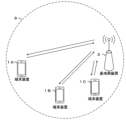
- FIG. 1 is a conceptual diagram of a wireless communication system 9 according to one aspect of the present embodiment
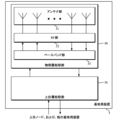
- FIG. 1 is a schematic block diagram showing a configuration example of a base station device 3 according to one aspect of the present embodiment
- FIG. 1 is a schematic block diagram showing a configuration example of a terminal device 1 according to one aspect of the present embodiment
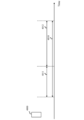
- FIG. 10 is a diagram showing a setting example of TWT in wireless communication system #9 according to one aspect of the present embodiment
- It is a figure which shows the example of the counting procedure which concerns on one aspect
- floor(C) may be the floor function for the real number C.
- floor(C) may be a function that outputs the largest integer that does not exceed the real number C.
- ceil(D) may be the ceiling function for real D.
- ceil(D) may be a function that outputs the smallest integer not less than the real number D.
- mod(E,F) may be a function that outputs the remainder of dividing E by F.
- mod(E,F) may be a function that outputs a value corresponding to the remainder of E divided by F.
- exp(G) e ⁇ G. where e is the Napier number.
- H ⁇ I indicates H to the Ith power.
- max(J,K) is a function that outputs the maximum value of J and K.
- max(J,K) is a function that outputs J or K if J and K are equal.
- min(L,M) is a function that outputs the maximum value of L and M.
- min(L,M) is a function that outputs L or M when L and M are equal.
- round(N) is a function that outputs the integer value closest to N. “ ⁇ ” indicates multiplication.
- FIG. 1 is a conceptual diagram of a wireless communication system 9 according to one aspect of the present embodiment.
- the radio communication system includes terminal devices 1A to 1C and a base station device 3 (AP#3: Access Point#3).
- AP#3 Access Point#3
- STA#1 Station#1
- a frame is transmitted from the terminal device 1 to the base station device 3 . It may be applied when transmitting a frame to the device 1 .
- the terminal device 1 may be called a Non-AP STA.
- the base station apparatus may be called AP STA.
- the terminal device 1 and the base station device 3 may communicate using CP-OFDM (Cyclic Prefix-Orthogonal Frequency Division Multiplex).
- the wireless communication system 9 is also called BSS (Basic Service Set) #9.
- the base station device 3 may be configured by one transmitting/receiving device (or transmitting point, transmitting device, receiving point, receiving device, transmitting/receiving point).
- the base station device 3 may be configured including a plurality of transmitting/receiving devices.
- each of the plurality of transmitting/receiving devices may be arranged at geographically different positions.
- FIG. 2 is a schematic block diagram showing a configuration example of the base station device 3 according to one aspect of the present embodiment.
- the base station device 3 includes a physical layer processing section (radio transmitting/receiving section) 30 and a higher layer processing section 34 .
- the physical layer processing unit 30 includes part or all of an antenna unit 31 , an RF (Radio Frequency) processing unit 32 , and a baseband processing unit 33 .
- the physical layer processing unit 30 performs physical layer processing.
- the physical layer processing may include OFDM baseband signal generation processing and frame detection processing.
- a frame is also called a data unit.
- the upper layer processing unit 34 performs MAC (Medium Access Control) layer processing.
- the processing of the MAC processing unit 34 includes a carrier sense mechanism.
- the physical layer processing unit 30 may perform part or all of modulation processing, encoding processing, and transmission processing.
- the physical layer processing unit 30 may generate a frame based on part or all of the encoding processing, modulation processing, and baseband signal generation processing for the information bit sequence to be transmitted in the frame.
- the physical layer processing unit 30 may perform one or both of demodulation processing and decoding processing.
- the physical layer processing unit 30 may perform detection based on demodulation processing and decoding processing for the received frame.
- the physical layer processing unit 30 may perform carrier sense prior to frame transmission.
- the RF unit 32 may convert the signal received via the antenna unit 31 into a baseband signal and remove unnecessary frequency components.
- the RF section 32 outputs the baseband signal to the baseband section 33 .
- the baseband section 33 may digitize the baseband signal input from the RF section 32 .
- the baseband unit 33 may remove a portion corresponding to CP (Cyclic Prefix) from the digitized baseband signal.
- the baseband unit 33 may perform a fast Fourier transform (FFT) on the CP-removed baseband signal to extract a signal in the frequency domain.
- FFT fast Fourier transform
- the baseband unit 33 may generate a baseband signal by inverse fast Fourier transform (IFFT) of the physical signal.
- the baseband unit 33 may add CP to the generated baseband signal.
- the baseband unit 33 may analogize the baseband signal to which the CP is added.
- the baseband section 33 may output the analogized baseband signal to the RF section 32 .
- IFFT inverse fast Fourier transform
- the RF section 32 may remove extra frequency components from the baseband signal input from the baseband section 33 .
- the RF section 32 may upconvert the baseband signal to a carrier frequency to generate the RF signal.
- the RF section 32 may transmit RF signals via the antenna section 31 .
- the RF unit 32 may have a function of controlling transmission power.
- FIG. 3 is a schematic block diagram showing a configuration example of the terminal device 1 according to one aspect of the present embodiment.
- the terminal device 1 includes a physical layer processing section (radio transmitting/receiving section) 10 and part or all of an upper layer processing section 14 .
- Radio transmitting/receiving section 10 includes part or all of antenna section 11 , RF section 12 , and baseband section 13 .
- the physical layer processing unit 10 performs physical layer processing.
- the physical layer processing may include OFDM baseband signal generation processing and frame detection processing.
- the upper layer processing unit 14 performs MAC (Medium Access Control) layer processing.
- the processing of the MAC processing unit 14 includes a carrier sense mechanism.
- the physical layer processing unit 10 may perform part or all of modulation processing, encoding processing, and transmission processing.
- the physical layer processing unit 30 may generate a frame based on part or all of the encoding processing, modulation processing, and baseband signal generation processing for the information bit sequence to be transmitted in the frame.
- the physical layer processing unit 10 may perform one or both of demodulation processing and decoding processing.
- the physical layer processing unit 10 may perform detection based on demodulation processing and decoding processing for the received frame.
- the physical layer processing unit 10 may perform carrier sense prior to frame transmission.
- the physical layer processing unit 10 may perform part or all of modulation processing, encoding processing, and transmission processing.
- the physical layer processing unit 10 may generate the physical signal based on part or all of the encoding processing, modulation processing, and baseband signal generation processing for the information bit sequence to be transmitted in the frame.
- the physical layer processing unit 10 may perform one or both of demodulation processing and decoding processing.
- the physical layer processing unit 10 may perform carrier sense prior to frame transmission.
- the RF unit 12 may convert the signal received via the antenna unit 11 into a baseband signal and remove unnecessary frequency components.
- the RF section 12 outputs the baseband signal to the baseband section 13 .
- the baseband section 13 may digitize the baseband signal input from the RF section 12 .
- the baseband unit 13 may remove a portion corresponding to CP (Cyclic Prefix) from the digitized baseband signal.
- the baseband unit 13 may perform a fast Fourier transform (FFT) on the CP-removed baseband signal to extract a signal in the frequency domain.
- FFT fast Fourier transform
- the baseband unit 13 may generate a baseband signal by inverse fast Fourier transform (IFFT) of the physical signal.
- the baseband unit 13 may add CP to the generated baseband signal.
- the baseband unit 13 may analogize the baseband signal to which the CP is added.
- the baseband section 13 may output the analogized baseband signal to the RF section 12 .
- IFFT inverse fast Fourier transform
- the RF section 12 may remove extra frequency components from the baseband signal input from the baseband section 13 .
- the RF section 12 may upconvert the baseband signal to a carrier frequency to generate the RF signal.
- the RF section 12 may transmit RF signals via the antenna section 31 .
- the RF unit 12 may have a function of controlling transmission power.
- a TWT (Target Wake Time) may be used for radio resource management in the radio communication system #9. For example, it may be used to reduce contention within wireless communication system #9.
- FIG. 4 is a diagram showing a setting example of TWT in the wireless communication system #9 according to one aspect of the present embodiment.
- the horizontal axis is the time axis.
- a frame 4000 includes information indicating TWT settings.
- frame 4000 may be a beacon frame.
- TWT 4010 is TWT.
- TWT 4010 is set as a period in the time domain.
- another TWT may start at the end of TWT 4010 .
- the TWT may be set periodically.
- 4011 is a service period.
- 4012 is a period of TWT 4010 that is not a service period.
- the frame 4000 may include information indicating the length of the TWT and information indicating the length of the service period.
- the terminal device 1 may set the TWT 4010 based on information indicating the setting of the TWT 4010 included in the frame 4000 .
- the upper layer processing unit 14 may implement a carrier sense mechanism prior to frame 0 transmission.
- the carrier sense mechanism may be configured to include at least one or both of processing and counting procedures regarding IFS (Inter-Frame Space).
- the physical layer processing unit 10 may transmit the frame after the carrier sense mechanism is implemented.
- the procedure for IFS may be used to perform carrier sense during different periods set for each type of IFS and determine whether the medium is idle or busy. That is, in the IFS procedure, the physical layer processing unit 10 may perform carrier sense and determine whether the medium is idle or busy.
- Carrier sense is a type of monitoring used by the physical layer processor 10 .
- detection of certain preambles may be implemented.
- the preamble monitored in carrier sense may be STF (Short Training Sequence).
- the STF is a preamble added to the beginning of the frame transmitted by the terminal device 1 .
- the physical layer processing unit 10 may report busyness to the upper layer processing unit 14 based on the detection of the certain preamble by carrier sense. Also, the physical layer processing unit 10 may report idle to the upper layer processing unit 14 based on the fact that the certain preamble is not detected by carrier sense.
- the amount of energy detected may be monitored.
- the amount of energy when the amount of energy is detected in carrier sense, it may be used to determine whether the medium is idle or busy based on a comparison of the amount of energy and a threshold value. good.
- the physical layer processing unit 10 may report idle to the upper layer processing unit 14 based on the amount of energy measured in the medium being greater than the certain threshold.
- the physical layer processing unit 10 may report busyness to the upper layer processing unit 14 based on the fact that the amount of energy measured in the medium is smaller than the certain threshold.
- the physical layer processing unit 10 may report either busy or idle to the upper layer processing unit 14 when the amount of energy measured in the medium is equal to the certain threshold.
- SIFS is a type of IFS.
- SIFS may be configured with 16 microseconds.
- the time length of SIFS is also called aSIFSTime.
- DIFS is a type of IFS.
- DIFS may consist of a length of time calculated as aSIFSTime+2*aSlotTime.
- aSlotTime is the length of time that constitutes a slot used for carrier sensing.
- the length of time that constitutes a slot may be 9 microseconds.
- AIFS is a type of IFS.
- DIFS may consist of a length of time calculated as aSIFSTime+AIFSN(AC)*aSlotTime.
- AIFSN(AC) is the value of AIFSN when the access category is AC.
- the value of AIFSN may be different for each access category. Details of AIFSN will be described later.
- the physical layer processing unit 10 does not need to perform carrier sense.
- FIG. 5 is a diagram illustrating an example of a counting procedure according to one aspect of the present embodiment.
- the counting procedure is also called a random backoff procedure.
- the counting procedure includes at least some or all of steps A1 to A6.
- Step A1 includes the operation of setting the value of counter N to Ninit .
- N init is a value randomly (or pseudo-randomly) selected from integer values in the range from 0 to CW(AC).
- CWp is the Contention Window Size (CWS) for AC.
- Step A2 it is determined whether or not the value of the counter N is 0.
- Step A2 includes completing (or terminating) the carrier sense mechanism when the counter N is zero.
- Step A2 includes proceeding to step A3 if the counter N is different from zero.
- True in FIG. 5 corresponds to the fact that the evaluation formula is true in the step including the operation of determining the evaluation formula.
- False corresponds to the fact that the evaluation formula is false in a step including an operation for determining the evaluation formula.
- step A3 may include a step of decrementing the value of counter N. Decrementing the value of the counter N may be decreasing the value of the counter N by one. That is, decrementing the value of counter N may be setting the value of counter N to N ⁇ 1.
- step A3 may include decrementing the value of the counter N when N>0. Moreover, step A3 may include a step of decrementing the value of the counter N when the base station device 3 or the terminal device 1 selects to decrement the counter N. Step A3 may also include a step of decrementing the value of the counter N when N>0 and the base station device 3 and the terminal device 1 choose to decrement the counter N. good.
- step A4 may include performing carrier sensing of the medium in slot d and proceeding to step A2 if slot d is idle. Further, step A4 may include an operation of proceeding to step A2 when slot d is determined to be idle by carrier sense. Step A4 may also include performing carrier sense in slot d and proceeding to step A5 if slot d is busy. Further, step A4 may include an operation of proceeding to step A5 when slot d is determined to be busy by carrier sense.
- the slot d is a slot and may be the next slot period of the LBT slot period already carrier-sensed in the counting procedure.
- the evaluation formula may correspond to slot d being idle.
- Step A5 includes the operation of performing carrier sense until it is detected that the medium is busy in the processing relating to IFS.
- Step A6 includes the operation of proceeding to step A5 when the medium is detected to be busy in the processing relating to IFS.
- Step A6 includes proceeding to step A2 if the medium is detected to be idle in the processing for IFS.
- CWmin(AC) indicates the minimum possible value range of the contention window size CWp for the access category AC.
- CWmax(AC) indicates the maximum possible value range of the contention window size CWp for the access category AC.
- the contention window size CWp for access category AC is also called CWp.
- the value of the counter N used for the carrier sense mechanism may be managed for each access category.
- the terminal device 1 may independently manage multiple access categories.
- the terminal device 1 may independently perform a random backoff procedure for each of a plurality of access categories.
- the terminal device 1 may manage a counter N for each of a plurality of access categories.
- the value of counter N for access category AC is also referred to as counter N(AC).
- CWp is managed by the base station device 3 or terminal device 1 and adjusted before step A1 of the counting procedure (the CWp adjustment procedure is performed be done).
- CWmin(AC_VI) (aCWmin+1)/2-1
- CWmax(AC_VI) aCWmin
- AIFSN(AC_VI) 3.
- CWmin(AC_VO) (aCWmin+1)/4-1
- CWmax(AC_VO) (aCWmin+1)/2-1
- AIFSN(AC_VO) 2.
- EDCA Enhanced Distributed Channel Access
- terminal device 1 When terminal device 1 transmits a frame in TWT 4010, a carrier sense mechanism is implemented prior to transmission of the frame.
- the terminal device 1 may recognize the service period 4011 and implement a carrier sense mechanism.
- various parameters used in the carrier sense mechanism may be determined.
- the terminal device 1 may determine various parameters used in the carrier sense mechanism based on whether or not the condition regarding the service period 4011 is satisfied and the access category associated with the frame.
- condition regarding the service period 4011 may be any one of conditions 1 to 6 below.
- Condition 1) The frame intended to be transmitted by the terminal device 1 is included in the service period 4011
- Condition 2) The timing at which frame transmission is determined is included in the service period 4011
- the service period 4011 includes the period after the period has elapsed
- the predetermined period may be a period corresponding to SHIS.
- the predetermined period may be a period corresponding to PIFS.
- the predetermined period may be a period corresponding to DIFS.
- the predetermined period may be a period corresponding to the AIFS corresponding to the access category with the highest priority among the access categories.
- the AIFSN may be determined based on whether the condition regarding the service period 4011 is satisfied and the value of the access category related to the frame.
- determining the value of AIFSN to be 2 may be interpreted as using DIFS.
- AIFSN(AC_BK) 9 when the condition for service period 4011 is satisfied and the access category associated with the frame is AC_BK.
- AIFSN(AC_BK) 2 when the condition for service period 4011 is not satisfied and the access category associated with the frame is AC_BK.
- AIFSN(AC_BE) 6 when the condition for service period 4011 is satisfied and the access category associated with the frame is AC_BE.
- AIFSN(AC_BE) 3 when the condition for service period 4011 is not satisfied and the access category associated with the frame is AC_BE.
- AIFSN(AC_VI) 3 when the condition for service period 4011 is satisfied and the access category associated with the frame is AC_VI.
- AIFSN(AC_VO) 2 when the condition for service period 4011 is not satisfied and the access category associated with the frame is AC_VO.
- AIFSN(AC_VO) 2 when the condition for service period 4011 is satisfied and the access category associated with the frame is AC_VO.
- AIFSN(AC_VI) 2 when the condition for service period 4011 is not satisfied and the access category associated with the frame is AC_VI.
- CWmin(AC_BK) aCWmin when the condition for service period 4011 is not satisfied and the access category associated with the frame is AC_BK.
- CWmin(AC_BE) aCWmin when the condition for service period 4011 is satisfied and the access category associated with the frame is AC_BE.
- CWmin(AC_BE) aCWmin when the condition for service period 4011 is not satisfied and the access category associated with the frame is AC_BE.
- CWmin(AC_VI) (aCWmin+1)/2-1 when the condition for service period 4011 is satisfied and the access category associated with the frame is AC_VI.
- CWmin(AC_VO) aCWmin when the condition for service period 4011 is not satisfied and the access category associated with the frame is AC_VO.
- CWmin(AC_VO) (aCWmin+1)/4-1 when the condition for service period 4011 is satisfied and the access category associated with the frame is AC_VO.
- CWmin(AC_VI) aCWmin when the condition for service period 4011 is not satisfied and the access category associated with the frame is AC_VI.
- CWmax (AC_BE) aCWmin when the condition for service period 4011 is satisfied and the access category associated with the frame is AC_BE.
- CWmax (AC_BE) aCWmin when the condition for service period 4011 is not satisfied and the access category associated with the frame is AC_BE.
- CWmax (AC_VI) (aCWmin+1)/2-1 when the condition for service period 4011 is satisfied and the access category associated with the frame is AC_VI.
- CWmax (AC_VO) aCWmin when the condition for service period 4011 is not satisfied and the access category associated with the frame is AC_VO.
- CWmax (AC_VO) (aCWmin+1)/4-1 when the condition for service period 4011 is satisfied and the access category associated with the frame is AC_VO.
- CWmax (AC_VI) (aCWmin+1)/2-1 when the condition for service period 4011 is not satisfied and the access category associated with the frame is AC_VI.
- the access category to which the frame belongs may be determined based on whether the condition regarding the service period 4011 is satisfied.
- terminal device 1 may determine the access category associated with the frame to be AC_BK_X.
- the first requirement may be non-time-critical, loss insensitive, and lower priority than best effort. .
- AIFSN(AC_BK_X) may be set to a value different from AIFSN(AC_BK).
- CWmin(AC_BK_X) may be set to a value different from CWmin(AC_BK).
- CWmax(AC_BK_X) may be set to a value different from CWmax(AC_BK).
- the terminal device 1 may determine the access category associated with the frame to be AC_BK.
- terminal device 1 may determine the access category associated with the frame to be AC_BE_X.
- the second requirement may be non-time-critical and loss insensitive.
- the second requirement is also called best effort.
- AIFSN(AC_BE_X) may be set to a value different from AIFSN(AC_BE).
- CWmin(AC_BE_X) may be set to a value different from CWmin(AC_BE).
- CWmax(AC_BE_X) may be set to a value different from CWmax(AC_BE).
- the terminal device 1 may determine the access category associated with the frame to be AC_BE.
- terminal device 1 may determine the access category associated with the frame to be AC_VI_X.
- the third requirement may be time-critical, loss sensitive, and requiring a delay of 100 ms or less.
- AIFSN(AC_VI_X) may be set to a value different from AIFSN(AC_VI).
- CWmin(AC_VI_X) may be set to a value different from CWmin(AC_VI).
- CWmax(AC_VI_X) may be set to a value different from CWmax(AC_VI).
- the terminal device 1 may determine the access category associated with the frame to be AC_VI.
- terminal device 1 may determine the access category associated with the frame to be AC_VO_X.
- the fourth requirement may be time-critical, loss sensitive, and requiring a delay of 10 ms or less.
- AIFSN(AC_VO_X) may be set to a value different from AIFSN(AC_VO).
- CWmin(AC_VO_X) may be set to a value different from CWmin(AC_VO).
- CWmax(AC_VO_X) may be set to a value different from CWmax(AC_VO).
- the terminal device 1 may determine the access category associated with the frame to be AC_VO.
- the access category set to which the frame belongs may be determined based on whether the conditions regarding the service period 4011 are satisfied.
- the condition regarding service period 4011 is satisfied, and terminal device 1 may select the first access category set.
- the first access category set may include some or all of AC_BK_X, AC_BE_X, AC_VI_X, AC_VO_X.
- the condition regarding service period 4011 is not met, and terminal device 1 may select the second access category set.
- the second access category set may include some or all of AC_BK, AC_BE, AC_VI, AC_VO.
- the terminal device 1 may select one access category from among one or more access categories included in the selected access category set based on requirements corresponding to frames to be transmitted.
- a first aspect of the present invention is a terminal device comprising: a MAC layer processing unit that recognizes a service period set in a TWT; and a transmission unit that transmits a frame within the TWT. Based on the service period condition, the maximum value of the contention window size is changed in the carrier sense performed prior to the transmission of the frame.
- the maximum value is set to set to a value of 1 and set the maximum value to a second value if the frame belongs to the first access category and transmission of the frame is not intended to occur within the service period;
- the maximum value is set to the second value if the frame belongs to the second access category.
- an access category related to the frame is determined based on the condition regarding the service period.
- a second aspect of the present invention is a base station apparatus comprising: a MAC layer processing unit that recognizes a service period set in a TWT; a transmission unit that transmits a frame within the TWT; and changing a maximum value of a contention window size in carrier sensing performed prior to transmission of the frame based on the condition regarding the service period.
- the maximum value is set to set to a value of 1 and set the maximum value to a second value if the frame belongs to the first access category and transmission of the frame is not intended to occur within the service period; The maximum value is set to the second value if the frame belongs to the second access category.
- an access category related to the frame is determined based on the condition regarding the service period.
- a program that operates on the base station device 3 and the terminal device 1 according to one aspect of the present invention controls a CPU (Central Processing Unit) and the like so as to realize the functions of the above-described embodiments related to one aspect of the present invention. It may be a program (a program that causes a computer to function).
- the information handled by these devices is temporarily stored in RAM (Random Access Memory) during processing, and then stored in various ROMs such as Flash ROM (Read Only Memory) and HDD (Hard Disk Drive). It is read, modified, and written by the CPU as necessary.
- the terminal device 1 and part of the base station device 3 in the above-described embodiment may be realized by a computer.
- a program for realizing this control function may be recorded in a computer-readable recording medium, and the program recorded in this recording medium may be read into a computer system and executed.
- the “computer system” here is a computer system built into the terminal device 1 or the base station device 3, and includes hardware such as an OS and peripheral devices.
- the term “computer-readable recording medium” refers to portable media such as flexible discs, magneto-optical discs, ROMs and CD-ROMs, and storage devices such as hard discs built into computer systems.
- “computer-readable recording medium” means a medium that dynamically stores a program for a short period of time, such as a communication line for transmitting a program via a network such as the Internet or a communication line such as a telephone line. In that case, it may also include a memory that holds the program for a certain period of time, such as a volatile memory inside a computer system that serves as a server or client. Further, the program may be for realizing part of the functions described above, or may be capable of realizing the functions described above in combination with a program already recorded in the computer system.
- the base station device 3 in the above-described embodiment can be realized as an aggregate (device group) composed of a plurality of devices.
- Each of the devices constituting the device group may include a part or all of each function or each functional block of the base station device 3 related to the above-described embodiments.
- a device group may have a series of functions or functional blocks of the base station device 3 .
- the terminal device 1 according to the above-described embodiments can communicate with a base station device as a group.
- the base station device 3 in the above-described embodiment may be EUTRAN (Evolved Universal Terrestrial Radio Access Network) and/or NG-RAN (NextGen RAN, NR RAN). Also, the base station apparatus 3 in the above-described embodiment may have some or all of the functions of an upper node for eNodeB and/or gNB.
- EUTRAN Evolved Universal Terrestrial Radio Access Network
- NG-RAN NextGen RAN, NR RAN
- the base station apparatus 3 in the above-described embodiment may have some or all of the functions of an upper node for eNodeB and/or gNB.
- part or all of the terminal device 1 and the base station device 3 in the above-described embodiments may be typically implemented as an LSI, which is an integrated circuit, or may be implemented as a chipset. Each functional block of the terminal device 1 and the base station device 3 may be individually chipped, or part or all of them may be integrated and chipped.
- the method of circuit integration is not limited to LSI, but may be realized by a dedicated circuit or a general-purpose processor.
- a technology for integrating circuits that replaces LSIs emerges due to advances in semiconductor technology, it is also possible to use integrated circuits based on this technology.
- a terminal device was described as an example of a communication device, but the present invention is not limited to this.
- terminal devices or communication devices such as AV equipment, kitchen equipment, cleaning/washing equipment, air conditioning equipment, office equipment, vending machines, and other household equipment.
- One aspect of the present invention is, for example, a communication system, a communication device (e.g., a mobile phone device, a base station device, a wireless LAN device, or a sensor device), an integrated circuit (e.g., a communication chip), or a program, etc. be able to.
- a communication device e.g., a mobile phone device, a base station device, a wireless LAN device, or a sensor device
- an integrated circuit e.g., a communication chip
- a program etc. be able to.
- terminal device 3 base station device 9 wireless communication system 10, 30 physical layer processing units 10a, 30a wireless transmission units 10b, 30b wireless reception units 11, 31 antenna units 12, 32 RF units 13, 33 Baseband units 14, 34 Upper layer processing unit 4000 Frame 4010 TWT 4011 Service period 4012 Period
Landscapes
- Engineering & Computer Science (AREA)
- Computer Networks & Wireless Communication (AREA)
- Signal Processing (AREA)
- Computer Security & Cryptography (AREA)
- Mobile Radio Communication Systems (AREA)
Priority Applications (2)
| Application Number | Priority Date | Filing Date | Title |
|---|---|---|---|
| US18/850,217 US20250212256A1 (en) | 2021-12-15 | 2022-10-31 | Terminal apparatus, base station apparatus, and communication method |
| JP2023567599A JPWO2023112529A1 (https=) | 2021-12-15 | 2022-10-31 |
Applications Claiming Priority (2)
| Application Number | Priority Date | Filing Date | Title |
|---|---|---|---|
| JP2021203210 | 2021-12-15 | ||
| JP2021-203210 | 2021-12-15 |
Publications (1)
| Publication Number | Publication Date |
|---|---|
| WO2023112529A1 true WO2023112529A1 (ja) | 2023-06-22 |
Family
ID=86774037
Family Applications (1)
| Application Number | Title | Priority Date | Filing Date |
|---|---|---|---|
| PCT/JP2022/040683 Ceased WO2023112529A1 (ja) | 2021-12-15 | 2022-10-31 | 端末装置、基地局装置、および、通信方法 |
Country Status (3)
| Country | Link |
|---|---|
| US (1) | US20250212256A1 (https=) |
| JP (1) | JPWO2023112529A1 (https=) |
| WO (1) | WO2023112529A1 (https=) |
Citations (1)
| Publication number | Priority date | Publication date | Assignee | Title |
|---|---|---|---|---|
| WO2006049178A1 (ja) * | 2004-11-02 | 2006-05-11 | Matsushita Electric Industrial Co., Ltd. | 通信装置 |
-
2022
- 2022-10-31 JP JP2023567599A patent/JPWO2023112529A1/ja active Pending
- 2022-10-31 US US18/850,217 patent/US20250212256A1/en active Pending
- 2022-10-31 WO PCT/JP2022/040683 patent/WO2023112529A1/ja not_active Ceased
Patent Citations (1)
| Publication number | Priority date | Publication date | Assignee | Title |
|---|---|---|---|---|
| WO2006049178A1 (ja) * | 2004-11-02 | 2006-05-11 | Matsushita Electric Industrial Co., Ltd. | 通信装置 |
Non-Patent Citations (2)
| Title |
|---|
| EDWARD AU (HUAWEI): "Specification Framework for TGbe", IEEE DRAFT; 11-19-1262-23-00BE-SPECIFICATION-FRAMEWORK-FOR-TGBE, IEEE-SA MENTOR, PISCATAWAY, NJ USA, vol. 802.11 EHT; 802.11be, no. 23, 17 January 2021 (2021-01-17), Piscataway, NJ USA , pages 1 - 116, XP068175856 * |
| HO DUNCAN, CHERIAN GEORGE ET AL.: "CC36 Resolution for CIDs in Clause 35.7.4 (Random Backoff for EHT STAs before Restricted TWT Service Period)", IEEE 802.11-21/1699R1, 19 October 2021 (2021-10-19), pages 1 - 3, XP093072734 * |
Also Published As
| Publication number | Publication date |
|---|---|
| US20250212256A1 (en) | 2025-06-26 |
| JPWO2023112529A1 (https=) | 2023-06-22 |
Similar Documents
| Publication | Publication Date | Title |
|---|---|---|
| US10674539B2 (en) | System and method for managing contention in a wireless communications system | |
| CN109076614B (zh) | 重叠的基本服务集的空间重用的无线通信方法和无线通信终端 | |
| KR101688553B1 (ko) | 밀집 네트워크들을 위한 반송파 감지 다중 접속(csma)을 수정하기 위한 시스템들 및 방법들 | |
| RU2625441C2 (ru) | Способ и устройство для избирательного доступа к подканалу в системе беспроводной lan | |
| RU2628490C1 (ru) | Способ для доступа к каналу в системе на основе беспроводной lan и устройство для этого | |
| US9609520B2 (en) | Methods and apparatuses for communicating in television white space (TVWS) based on TVWS enablement signal | |
| CN104094664B (zh) | 用于减少话务指示映射寻呼之后的冲突的系统和方法 | |
| US9992797B2 (en) | Wide bandwidth favored channel access methods in wireless local area networks | |
| US20150117366A1 (en) | Systems and methods for improved communication efficiency in high efficiency wireless networks | |
| US20160197700A1 (en) | Method and apparatus for communicating with extended range in a wireless network | |
| US9107078B2 (en) | Methods and apparatuses for low-rate television white space (TVWS) enablement | |
| TWI629912B (zh) | 於無線網路中減少碰撞之系統及方法 | |
| MX2015004481A (es) | Metodo y aparato para acceso a canal en sistema inalambrico de red de area local. | |
| US9924407B2 (en) | Contention adjustment method, apparatus, and system in wireless local area network | |
| JP7079060B2 (ja) | 端末装置、基地局装置、通信方法及び通信システム | |
| WO2017082094A1 (ja) | 端末装置および通信方法 | |
| WO2023112529A1 (ja) | 端末装置、基地局装置、および、通信方法 | |
| WO2018236398A1 (en) | Methods and apparatus for enabling communications on non-adjacent secondary channels in wireless local area network protocols | |
| KR102216010B1 (ko) | Asr 기반의 무선 데이터 송신 방법 및 장치 |
Legal Events
| Date | Code | Title | Description |
|---|---|---|---|
| 121 | Ep: the epo has been informed by wipo that ep was designated in this application |
Ref document number: 22907062 Country of ref document: EP Kind code of ref document: A1 |
|
| ENP | Entry into the national phase |
Ref document number: 2023567599 Country of ref document: JP Kind code of ref document: A |
|
| NENP | Non-entry into the national phase |
Ref country code: DE |
|
| WWE | Wipo information: entry into national phase |
Ref document number: 18850217 Country of ref document: US |
|
| 122 | Ep: pct application non-entry in european phase |
Ref document number: 22907062 Country of ref document: EP Kind code of ref document: A1 |
|
| WWP | Wipo information: published in national office |
Ref document number: 18850217 Country of ref document: US |