WO2023100989A1 - 下痢治療剤および牛の下痢治療方法 - Google Patents
下痢治療剤および牛の下痢治療方法 Download PDFInfo
- Publication number
- WO2023100989A1 WO2023100989A1 PCT/JP2022/044458 JP2022044458W WO2023100989A1 WO 2023100989 A1 WO2023100989 A1 WO 2023100989A1 JP 2022044458 W JP2022044458 W JP 2022044458W WO 2023100989 A1 WO2023100989 A1 WO 2023100989A1
- Authority
- WO
- WIPO (PCT)
- Prior art keywords
- diarrhea
- therapeutic agent
- bacteria
- group
- agent
- Prior art date
- Legal status (The legal status is an assumption and is not a legal conclusion. Google has not performed a legal analysis and makes no representation as to the accuracy of the status listed.)
- Ceased
Links
Images



Classifications
-
- C—CHEMISTRY; METALLURGY
- C12—BIOCHEMISTRY; BEER; SPIRITS; WINE; VINEGAR; MICROBIOLOGY; ENZYMOLOGY; MUTATION OR GENETIC ENGINEERING
- C12N—MICROORGANISMS OR ENZYMES; COMPOSITIONS THEREOF; PROPAGATING, PRESERVING, OR MAINTAINING MICROORGANISMS; MUTATION OR GENETIC ENGINEERING; CULTURE MEDIA
- C12N1/00—Microorganisms; Compositions thereof; Processes of propagating, maintaining or preserving microorganisms or compositions thereof; Processes of preparing or isolating a composition containing a microorganism; Culture media therefor
- C12N1/20—Bacteria; Culture media therefor
-
- A—HUMAN NECESSITIES
- A61—MEDICAL OR VETERINARY SCIENCE; HYGIENE
- A61K—PREPARATIONS FOR MEDICAL, DENTAL OR TOILETRY PURPOSES
- A61K35/00—Medicinal preparations containing materials or reaction products thereof with undetermined constitution
- A61K35/66—Microorganisms or materials therefrom
- A61K35/74—Bacteria
- A61K35/741—Probiotics
-
- A—HUMAN NECESSITIES
- A61—MEDICAL OR VETERINARY SCIENCE; HYGIENE
- A61P—SPECIFIC THERAPEUTIC ACTIVITY OF CHEMICAL COMPOUNDS OR MEDICINAL PREPARATIONS
- A61P1/00—Drugs for disorders of the alimentary tract or the digestive system
- A61P1/12—Antidiarrhoeals
-
- Y—GENERAL TAGGING OF NEW TECHNOLOGICAL DEVELOPMENTS; GENERAL TAGGING OF CROSS-SECTIONAL TECHNOLOGIES SPANNING OVER SEVERAL SECTIONS OF THE IPC; TECHNICAL SUBJECTS COVERED BY FORMER USPC CROSS-REFERENCE ART COLLECTIONS [XRACs] AND DIGESTS
- Y02—TECHNOLOGIES OR APPLICATIONS FOR MITIGATION OR ADAPTATION AGAINST CLIMATE CHANGE
- Y02A—TECHNOLOGIES FOR ADAPTATION TO CLIMATE CHANGE
- Y02A50/00—TECHNOLOGIES FOR ADAPTATION TO CLIMATE CHANGE in human health protection, e.g. against extreme weather
- Y02A50/30—Against vector-borne diseases, e.g. mosquito-borne, fly-borne, tick-borne or waterborne diseases whose impact is exacerbated by climate change
Definitions
- the disclosure in this application relates to a therapeutic agent for diarrhea and a method for treating bovine diarrhea.
- Non-Patent Document 1 describes that an increase in the Porphyromonadaceae Family is useful for FMT.
- the type of bacteria contained in the therapeutic agent to be transplanted (eg feces) is important.
- feces the type of bacteria contained in the therapeutic agent to be transplanted
- the disclosure in this application was made to solve the above problems.
- the present inventors have conducted intensive research and found that by analyzing in more detail the successes and failures of combinations of donors who provide feces and recipients who transplant feces in FMT, it is possible to find a useful treatment for diarrhea. A new species of bacteria was discovered.
- the purpose of the disclosure of the present application is to provide a therapeutic agent for diarrhea and a method for treating bovine diarrhea.
- a therapeutic agent for diarrhea containing a bacterium comprising: Bacterial classification No. described in Table 1 below. containing at least one bacterium selected from the group consisting of the 13 types of bacteria described in 1 to 13; The bacterial classification no. A therapeutic agent for diarrhea, wherein the 13 kinds of bacteria described in 1 to 13 each contain a sequence that is 95% or more identical to the DNA sequence encoding the 16S rRNA described in SEQ ID NOs: 1 to 13. (2) the bacterium is Bacterial Classification No. 1 to 5, 7, 10 and 13, and having a occupancy shown in Table 2 below. (3) Bacterial classification No. The therapeutic agent for diarrhea according to (1) or (2) above, which contains at least 13 g_Sporobacter.
- a therapeutic agent for diarrhea according to any one of the above.
- the antidiarrheal agent according to any one of (1) to (8) above, which increases at least one bacterium selected from the group consisting of 12 g_Collinsella.
- a method of treating bovine diarrhea comprising: A method for treating bovine diarrhea, comprising the step of administering the agent for treating diarrhea according to any one of (1) to (10) above into the intestinal tract of a bovine.
- the therapeutic effect of diarrhea can be improved by the therapeutic agent for diarrhea and the method for treating bovine diarrhea disclosed in this application.
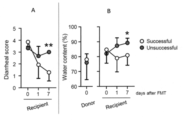
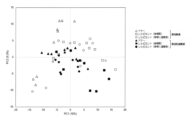
- FIG. 1 is a graph showing the results of FMT in Example 1.
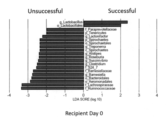
- FIG. FIG. 2 is a graph showing analysis results of bacteria contained in donors before FMT (day 0) in Example 2;
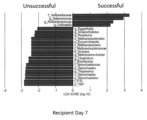
- FIG. 3 is a graph showing analysis results of bacteria contained in recipients before FMT (day 0) in Example 2;
- FIG. 4 is a graph showing analysis results of bacteria contained in recipients after FMT (7 days) in Example 2.
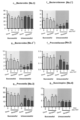
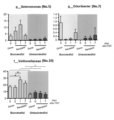
- FIG. 5A shows the relative abundance of each bacterium in total bacteria in feces collected from donors and recipients of the success group and recipients (days 0, 1, and 7) and donors of the failure group in Example 3. and a graph showing the relative abundance of each bacterium in total bacteria in feces collected from 0, 1, and 7 days after treatment.
- FIG. 5A shows the relative abundance of each bacterium in total bacteria in feces collected from donors and recipients of the success group and recipients (days 0, 1, and 7) and donors of the failure group in Example 3. and a graph showing the relative abundance of each bacterium in total bacteria in f
- FIG. 5B shows the relative abundance of each bacterium in the total bacteria in feces collected from donors and recipients of the success group and recipients (days 0, 1, and 7) and the donors of the failure group in Example 3. and a graph showing the relative abundance of each bacterium in total bacteria in feces collected from 0, 1, and 7 days after treatment.
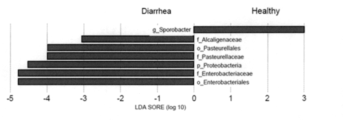
- 6 is a graph showing the results of LEfSe analysis in Example 4.
- FIG. 7 shows healthy cows, diarrhea cows, success group donors and recipients (0 days, 1 day, 7 days later) and failure group donors and recipients (0 days, 1 day later). , 7 days) relative abundance of g_Sporobacter to total bacteria in feces.
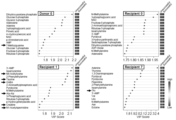
- 8 is a graph showing VIP scores of metabolites analyzed by CE-TOFMS metabolomics analysis in Example 5.
- FIG. 9 is a graph showing an overview of the results of metagenomic analysis in Example 6.
- FIG. 10 is a graph showing detailed results of metagenomic analysis in Example 6.
- FIG. 11 is a graph showing detailed results
- the antidiarrheal agent disclosed in the present application is bacterial classification No. 1 shown in Table 3 below. 1 to 13 (hereinafter, bacterial classification No. may be simply referred to as "No.”).
- No. 1 contains a sequence that is 95% or more identical to the DNA sequence encoding the 16S rRNA set forth in SEQ ID NO:1.
- No. 1 may be 96% or more, 97% or more, 98% or more, 99% or more, or 100% identical to SEQ ID NO:1.
- No. 2 contains a sequence that is 95% or more identical to the DNA sequence encoding the 16S rRNA set forth in SEQ ID NO:2.
- No. 3-13 contain sequences that are 95% or more identical to the DNA sequences encoding the 16S rRNAs set forth in SEQ ID NOS:3-13, respectively.
- No. 3-13 may be 96% or more, 97% or more, 98% or more, 99% or more or 100% identical to SEQ ID NOs:3-13.
- At least one type or more of the bacteria described in 1 to 13 may be contained in the antidiarrheal agent, and a plurality of types such as two or more, three or more, four or more may be combined.
- No. All 13 types of bacteria described in 1 to 13 may be included. In Table 3, "p" at the beginning of the bacterial name is phylum, "c” is class, "o” is order, "f” is family, and "g” is means genus.
- the antidiarrheal agent is the above No. There is no particular limitation as long as at least one selected from the group consisting of bacteria described in 1 to 13 is included. For example, anti-diarrheal agents are listed in No. 1 above. It is obtained by first selecting a donor that contains a large amount of the bacteria described in 1 to 13, and collecting stool from the selected donor. In addition, feces collected from selected donors or healthy donors (in other words, no symptoms of diarrhea) were cultured separately. A therapeutic agent for diarrhea may be produced by adding the bacteria described in 1 to 13. In addition, the therapeutic agent for diarrhea may be used as a liquid by diluting the collected feces with a buffer solution, physiological saline, or the like, or may be freeze-dried to form a powder.
- a therapeutic agent for diarrhea may be prepared based on feces obtained from a donor, or may not use the donor's feces.
- the above No. At least one selected from the bacteria described in 1 to 13 may be grown by culturing, and the culture solution may be used as a therapeutic agent for diarrhea.
- bacteria grown by culture they may be powdered by, for example, freeze-drying.
- the therapeutic agent for diarrhea disclosed in the present application may be in a desired dosage form, a carrier, an excipient, as long as the effects disclosed in the present application are not affected. Molding agents, diluents and the like may be included. Dosage forms of antidiarrheal agents include, for example, liquids, capsules, granules, pills, powders, suspensions/emulsions, suppositories and the like.
- Carriers, excipients and diluents are, for example, lactose, dextrose, sucrose, sorbitol, mannitol, starch, gum acacia, calcium phosphate, alginate, tragacanth, gelatin, calcium silicate, microcrystalline cellulose, polyvinylpyrrolidone, cellulose, water. , phosphate buffered saline (PBS), syrup, methylcellulose, methyl- and propyloxybenzoates, talc, magnesium stearate and mineral oil. Additionally, vitamins, lubricants, wetting agents, emulsifying and suspending agents, preserving agents, sweetening agents or flavoring agents may be added. In addition, the antidiarrheal drug may be combined with known drugs.
- the above No. Bacteria described in 1-13 were more abundant in FMT success donors than in FMT failure donors. Therefore, no.
- the bacteria described in 1 to 13 are more desirable as they occupy a larger proportion of the bacterial flora in the antidiarrheal agent.
- the bacteria described in 1-5, 7, 10 and 13 include the following occupancies.
- the term "occupancy rate" refers to the number of bacteria with respect to the total number of bacteria contained in the antidiarrheal agent. 1 to 5, 7, 10 and 13 means the ratio of the number of bacteria of each type.
- occupancy is a comparison at the same level of bacterial taxonomy (eg, class, order, family, genus). For example, No. The occupancy rate of 1 (c_Bacteroidia) is the No. when all bacteria are classified by class level. 1 (c_Bacteroidia). Similarly, no. The occupancy rate of 2 (f_Prevotellaceaec) is the No. when all bacteria are classified at the family level. 2 (f_Prevotellaceaec), no. The occupancy rate of 3 (g_Prevotella) is the No. when all bacteria are classified according to the genus level. There is a rate of 3 (g_Prevotella). ⁇ No.
- g_Odoribacter 0% or more (greater than 0), preferably 0.46% or more, more preferably 0.92% or more.
- ⁇ No. 10 f_Veillonellaceae: 4.86% or more, preferably 10.32% or more, more preferably 15.78% or more.
- ⁇ No. 13 g_Sporobacter: 0.16% or more, preferably 0.21% or more, more preferably 0.28% or more.
- No. 6 The occupancy rate of No. 6, 8, 9, 11 and 12 bacteria is omitted.
- a preferred range may be determined in the same manner as for the bacteria described in 1-5, 7, 10 and 13.
- the 13 Sporobacter genera are considered particularly preferred bacteria. Therefore, no. 5 and/or No. Antidiarrheal agents may be engineered to ensure that the 13 Sporobacter genera are included. Also, No. The occupancy rate of the genus Selenomonas of No. 5 is 1.78% or more. The 13 Sporobacter genera may account for 0.21% or more.
- metabolites that were abundantly contained in the success group were identified.
- Specific examples include 7-Methylguanine, N6-Acetyllysine, Taurine, GABA ( ⁇ -aminobutyric acid), Ala-Ala, Creatine, N1-Acetylspermidine, and Glu (glutamic acid).
- the therapeutic agents for diarrhea disclosed in the present application may optionally include 7-Methylguanine, N6-Acetyllysine, Taurine, GABA ( ⁇ -aminobutyric acid), Ala-Ala, Creatine, N1-Acetylspermidine, and Glu (glutamic acid). It may contain at least one compound selected from the group consisting of
- Diarrhea treatment agents can be used in any animal, including livestock and poultry (e.g., cows, sheep, goats, pigs, chickens), domestic pets (e.g., dogs, cats, rodents, etc.), and racehorses and food horses. useful for livestock and poultry (e.g., cows, sheep, goats, pigs, chickens), domestic pets (e.g., dogs, cats, rodents, etc.), and racehorses and food horses. useful for livestock and poultry (e.g., cows, sheep, goats, pigs, chickens), domestic pets (e.g., dogs, cats, rodents, etc.), and racehorses and food horses. useful for livestock and poultry (e.g., cows, sheep, goats, pigs, chickens), domestic pets (e.g., dogs, cats, rodents, etc.), and racehorses and food horses. useful for livestock and poultry (e.g., cows, sheep, goats, pigs, chickens
- the therapeutic agent for diarrhea disclosed in this application is No. It preferably contains a large amount of the bacteria described in 1 to 13.
- No. shown in Tables 5A and 5B below The bacteria described in 14 to 64 are not preferable as bacteria contained in antidiarrheal agents. Therefore, no. 14 to 64, the lower the occupancy rate in the antidiarrheal agent, the better. If the antidiarrheal agent is based on donor feces, no. A donor with a low occupancy of the bacteria described in 14-64 may be selected and stool collected. When producing a therapeutic agent for diarrhea using cultured bacteria, No. 14 to 64 should not be used.
- No. 14 to 64 From the viewpoint of regulating the bacterial flora (intestinal flora), No. 14 to 64, it may be adjusted so that its occupancy rate in the antidiarrheal agent is low. In addition, No. At least one of the bacteria described in 14 to 64 may have a low occupancy rate, or two or more types may be combined to have a low occupancy rate. Also, No. Bacteria described in No. 14-64 are 1 to 13, are bacteria identified by DNA sequences encoding 16S rRNAs set forth in SEQ ID NOs: 14 to 64, respectively. In addition, in Tables 5A and 5B below, different bacterial classification numbers are shown for the same bacterial name. and SEQ ID NOs (for example, No. 16 and No. 25 are assigned to "p_Tenericutes"). However, in Tables 5A and 5B below, bacterial classification no. And even if the sequence numbers are different, if the bacterium name is the same, it is the same kind of bacterium.
- An embodiment of the method for treating diarrhea in cattle disclosed in the present application comprises the step of administering the above-described agent for treating diarrhea into the intestinal tract (eg, colon) of a cattle.
- a therapeutic agent for diarrhea may be administered, for example, through the anus to cattle exhibiting symptoms of diarrhea.
- the therapeutic agent for diarrhea may be orally administered.
- FMT was performed according to the procedure shown below.
- fecal samples collected from FMT donors and recipients were tested for causes of diarrhea (i.e., bovine leukemia virus, bovine viral diarrhea, rotavirus, C. perfringens, C. parvum, coccidia, salmonella, coronavirus, pathogenic E. coli).
- causes of diarrhea i.e., bovine leukemia virus, bovine viral diarrhea, rotavirus, C. perfringens, C. parvum, coccidia, salmonella, coronavirus, pathogenic E. coli.
- nematodes underwent etiological evaluation against 10 major enteropathogens.
- FIG. 1 shows the results of FMT.
- the efficacy of FMT was comprehensively determined by diarrhea score, body appearance, and enteropathogenic bacterial status in faeces collected from recipients on days 0 and 7.
- 14 showed a therapeutic effect (successful group: Successful) and 6 did not show a therapeutic effect (failed group: Unsuccessful).
- FIG. 1A shows the diarrhea score.
- the successful group a significant therapeutic effect was observed 1 day after FMT, and the diarrhea score became almost normal after 7 days.
- the failure group although a slight therapeutic effect was observed 1 day after FMT, the symptoms deteriorated to almost the same symptoms as on day 0 after 7 days.
- FIG. 1B the fecal water content of the donors was almost the same, whereas the FMT failure group had an increased fecal water content.
- Example 2 As shown in FIG. 1, approximately 30% of recipients who underwent FMT showed no effect, although all donors were in good health. Therefore, focusing on the combination of donors and recipients in the success group and the combination of donors and recipients in the failure group, LEfSe (Linear discriminant analysis effect size) determines the types of bacteria that lead to successful FMT and the types of bacteria that lead to failure. was analyzed. We also analyzed the types of metabolites that lead to successful and unsuccessful FMT. Experimental procedures are described below.
- Genomic DNA was extracted from collected stool samples using the Stool DNA Isolation Kit according to the manufacturer's protocol. PCR was performed by a known method (T. Ricki et al., "Elucidation of the Effects of a Current X-SCID Therapy on Intestinal Lymphoid Organogenesis Using an In Vivo Animal Model", Cel l.Mol.Gastroenterol.Hepatol., 10(1), 83-100 (2020)).
- FIGS. 2 to 4 show the analysis results of the types of bacteria.
- FIG. 2 shows the donor analysis results before FMT (day 0)
- FIG. 3 shows the recipient analysis results before FMT (day 0)
- FIG. 4 shows the recipient analysis results 7 days after FMT.
- success group Successful
- the bacteria shown in FIGS. 2 to 4 are examples of bacteria with particularly high LDA scores, and not all bacteria in both the success group and the failure group are described.
- Bacteroidia net No. 1
- Prevotellaceae family No. 2
- Prevotella genus No. 3
- Succinispira genus No. 4
- Selenomonas No. 5
- Gemmiger No. 6
- Odoribacter No. 7
- Lactnifactor No. 23
- Alistipes No. 22
- Roseburia No. 21
- the details of the bacteria included in the failure group are the bacteria classification No. 14-23.
- Lactobacillus genus No. 8
- Lactobacillus order No. 9
- the LDA score was high in Ruminococcaceae (No. 40), Lachnospiraceae (No. 39), etc. before FMT. Details of the bacteria included in the failure group can be found in Bacteria Classification No. 24-40.
- the recipients of the successful group included the family Veillonellaceae (No. 10), the genus Selenomonas (No. 5), the genus Acidaminococcus (No. 11), the genus Collinsella (No. 12). ) had a high LDA score.
- the TM7 division (No. 58), the F16 division (No. 57), etc. had high LDA scores. Details of the bacteria included in the failure group can be found in Bacteria Classification No. 41-58.
- the phylum Tenericutes (No. 16) and the phylum Spirochaetes (No. 20) were found in both failure group donors and failure group recipients (Day 0). Therefore, when preparing a therapeutic agent for diarrhea, it is preferable not to contain or to reduce the content as much as possible. Further, from the results shown in FIG. 4, the antidiarrheal agent disclosed in the present application was found to be of the family Veillonellaceae (No. 10), the genus Selenomonas (No. 5), the genus Acidaminococcus (No. 11), and Collinsella genus (No. 12).
- FIG. 5 shows the relative abundance of each bacterium in the feces collected from donors and recipients of the success group (day 0, day 1, day 7) (relative abundance: % on the vertical axis), and the relative abundance of each bacterium relative to total bacteria in feces collected from donors and recipients in the failure group (days 0, 1, 7).
- the relative abundance shown in FIG. 5 is the ratio of the copy number of each bacterium to the 16S rRNA copy number of all bacteria, and the ratio (occupancy) of the number of each bacterium to the total number of bacteria in feces. Equivalent to.
- ⁇ No. 1 (c_Bacteroidia): (1) 24.21% or more, (2) 31.34% or more, (3) 38.47% or more.
- ⁇ No. 2 (f_Prevotellaceae): (1) 4.43% or more, (2) 12.64% or more, (3) 20.85% or more.
- ⁇ No. 3 (g_Prevotella): (1) 4.77% or more, (2) 15.89% or more, (3) 27.00% or more.
- ⁇ No. 4 (g_Succinispira): (1) 4.12% or more, (2) 5.75% or more, (3) 7.40% or more.
- ⁇ No. 5 (g_Selenomonas): (1) 0.09% or more, (2) 1.78% or more, (3) 3.47% or more.
- no. 1 (c_Bacteroidia) subclasses, family and genus levels also contained higher occupancy rates in successful donors and recipients than in failed donors and recipients.
- the values of the occupancy calculated based on the above (1) to (3) are described below.
- Figure 6 shows the results of the LEfSe analysis.
- Sporobacter spp. No. 13
- the LDA score was high for the family Enterobacteriaceae (No. 64), the order Enterobacteriales (No. 63), and the like. Details of the bacteria contained in diarrhea cattle can be found in Bacterial Classification No. 59-64.
- the proportion of Sporobacter genus (No. 13) in donors and recipients who actually performed FMT was examined.
- the results are shown in FIG.
- the bacteria that lead to successful FMT are (1) abundant in healthy cows and low in diarrheal cows, (2) abundant in donors in the success group and low in donors in the failure group. 3) Very few recipients of the success group (day 0) (that is, the occupancy rate of recipients before administration of the antidiarrheal agent is small), and even few recipients of the failure group (day 0) desirable.
- the Sporobacter genus (No. 13) does not necessarily have a large occupancy rate in feces as compared to the bacteria searched in Example 3, but favorable conditions for leading the above FMT to success.
- the anti-diarrheal agent Since it is equipped with all of them, it is desirable to be included in the anti-diarrheal agent as a super-donor.
- the Sporobacter genus No. 13
- it is preferably included in the antidiarrheal agent in the following ratio or more, when calculated in the same manner as in Example 3.
- bacterial classification No It was confirmed that the bacteria described in 1 to 13 can lead to successful FMT, among which the genus Selenomonas (No. 5) and the genus Sporobacter (No. 13) are preferred. Therefore, it is expected that a large amount of Selenomonas (No. 5) and/or Sporobacter (No. 13) is included in the antidiarrheal agent to further enhance the therapeutic effect of FMT.
- the genus Selenomonas is known to be involved in ATP production through its influence on the succinate-propionate pathway. It is assumed that the improvement of energy metabolism due to the presence of the genus Selenomonas has some involvement in the therapeutic effect of diarrhea.
- Example 5 [CE-TOFMS metabolomics analysis]
- Metabolomics analysis using fecal samples was performed at Human Metabolome Technologies, Inc. Specifically, samples were dried using a lyophilizer (TAITEC) and analyzed by CE-TOFMS (Agilent). Identified metabolites were quantified by comparing the measured peak areas to those of standards (known metabolites) using ChemStation software (Agilent Technologies).
- FIG. 8 shows the VIP scores of metabolites analyzed by CE-TOFMS metabolomics analysis. Metabolites indicated by arrows in FIG. 8 are metabolites peculiar to the success group, and metabolites not indicated by arrows are peculiar to the failure group. As shown in “Donor 0" in FIG. 8, the VIP score of 7-Methylguanine was large in donors in the successful group. As shown in “Recipient 1" in FIG. 8, one day after FMT was performed, the recipients of the successful group included VIP The score was large. In addition, as shown in "Recipient 7" in FIG. 8, 7 days after FMT, recipients in the successful group had a high Glu (glutamic acid) VIP score.
- a multipurpose density gradient centrifugation medium (Nycodenz) was used to adjust the ratio to 3:1 (filtrate of (3) above: Nycodenz).
- High speed centrifugation at 10,000 g, 4° C., 40 minutes.
- the microbial fraction was collected (partially collected for metagenomic analysis).
- the microbial fraction collected in (6) above was subjected to the following treatment to prepare fecal microorganisms. ⁇ Store at -80°C (frozen fecal microorganisms) ⁇ Drying for 6 hours using a freeze-drying device (TAITEC, model: VD-550R) (freeze-dried fecal microorganisms)
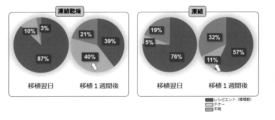
- Fig. 9 shows an outline of the results of metagenomic analysis.
- the white arrows in FIG. 9 indicate the concordance rate of the recipient's intestinal flora with the donor one week after transplantation.
- the ratio of the recipient's intestinal flora to the donor's intestinal flora was about four times higher than when the frozen fecal microorganisms were used.
- FMT aims to bring the recipient's gut flora closer to that of the donor. Therefore, it can be said that freeze-dried fecal microorganisms have a significant effect when performing FMT compared to frozen fecal microorganisms.
- Figure 10 shows the detailed results of the metagenomic analysis
- Figure 11 shows the detailed results of the metabolomics analysis.
- Table 7 shows the p-values of the metagenomic analysis shown in FIG. 10
- Table 8 shows the p-values of the metabolomics analysis shown in FIG.
- freeze-dried fecal microbes have a marked effect on the recipient's intestinal flora and metabolites compared to frozen fecal microbes when FMT is performed using fecal microbes collected from donors. It was confirmed that it is excellent in
- freeze-dried fecal microorganisms can be stored at room temperature, they are extremely easy to handle. The problem is that the location is limited.
- freeze-dried fecal microorganisms are used, compared with frozen fecal microorganisms, in addition to the above-mentioned effects obtained when FMT is performed, a unique effect of convenience in handling can be obtained at the same time.
- Diarrhea in cattle can be treated by using the antidiarrheal agent disclosed in this application. Therefore, the therapeutic agent for diarrhea disclosed in the present application is useful in the livestock industry.
Landscapes
- Health & Medical Sciences (AREA)
- Life Sciences & Earth Sciences (AREA)
- Chemical & Material Sciences (AREA)
- General Health & Medical Sciences (AREA)
- Microbiology (AREA)
- Engineering & Computer Science (AREA)
- Medicinal Chemistry (AREA)
- Bioinformatics & Cheminformatics (AREA)
- Mycology (AREA)
- Animal Behavior & Ethology (AREA)
- Pharmacology & Pharmacy (AREA)
- Public Health (AREA)
- Veterinary Medicine (AREA)
- Organic Chemistry (AREA)
- Molecular Biology (AREA)
- Wood Science & Technology (AREA)
- Zoology (AREA)
- Genetics & Genomics (AREA)
- Epidemiology (AREA)
- Biotechnology (AREA)
- Tropical Medicine & Parasitology (AREA)
- Virology (AREA)
- Biomedical Technology (AREA)
- Nuclear Medicine, Radiotherapy & Molecular Imaging (AREA)
- Chemical Kinetics & Catalysis (AREA)
- General Chemical & Material Sciences (AREA)
- Biochemistry (AREA)
- General Engineering & Computer Science (AREA)
- Medicines Containing Material From Animals Or Micro-Organisms (AREA)
Priority Applications (2)
| Application Number | Priority Date | Filing Date | Title |
|---|---|---|---|
| JP2023565093A JPWO2023100989A1 (cg-RX-API-DMAC7.html) | 2021-12-02 | 2022-12-01 | |
| EP22901419.6A EP4442264A4 (en) | 2021-12-02 | 2022-12-01 | THERAPEUTIC AGENT FOR DIARRHEA AND METHOD FOR TREATING BOVINE DIARRHEA |
Applications Claiming Priority (2)
| Application Number | Priority Date | Filing Date | Title |
|---|---|---|---|
| JP2021196413 | 2021-12-02 | ||
| JP2021-196413 | 2021-12-02 |
Publications (1)
| Publication Number | Publication Date |
|---|---|
| WO2023100989A1 true WO2023100989A1 (ja) | 2023-06-08 |
Family
ID=86612386
Family Applications (1)
| Application Number | Title | Priority Date | Filing Date |
|---|---|---|---|
| PCT/JP2022/044458 Ceased WO2023100989A1 (ja) | 2021-12-02 | 2022-12-01 | 下痢治療剤および牛の下痢治療方法 |
Country Status (3)
| Country | Link |
|---|---|
| EP (1) | EP4442264A4 (cg-RX-API-DMAC7.html) |
| JP (1) | JPWO2023100989A1 (cg-RX-API-DMAC7.html) |
| WO (1) | WO2023100989A1 (cg-RX-API-DMAC7.html) |
Cited By (1)
| Publication number | Priority date | Publication date | Assignee | Title |
|---|---|---|---|---|
| CN120048440A (zh) * | 2025-04-27 | 2025-05-27 | 西北农林科技大学 | 基于奶牛腹泻病原分析的肠道微生物评估系统及方法 |
Citations (4)
| Publication number | Priority date | Publication date | Assignee | Title |
|---|---|---|---|---|
| WO2020150672A2 (en) * | 2019-01-18 | 2020-07-23 | Mars, Incorporated | Methods and compositions for treating intestinal dysbiosis |
| WO2020150712A1 (en) * | 2019-01-18 | 2020-07-23 | Mars, Incorporated | Canid microbiome monitoring tools and diagnostic methods |
| JP2020530493A (ja) * | 2017-08-07 | 2020-10-22 | フィンチ セラピューティクス、インコーポレイテッド. | 腸内の抗生物質耐性菌を除菌するための組成物及び方法 |
| WO2021183701A1 (en) * | 2020-03-10 | 2021-09-16 | Federation Bio Inc. | Microbial consortia for the treatment of disease |
Family Cites Families (3)
| Publication number | Priority date | Publication date | Assignee | Title |
|---|---|---|---|---|
| JP2009102292A (ja) * | 2007-04-27 | 2009-05-14 | Chiba Prefecture | ストレス抑制剤 |
| JP6214162B2 (ja) * | 2012-11-16 | 2017-10-18 | アサヒグループホールディングス株式会社 | 新規の低温耐性ラクトバチルス・ガセリ株 |
| GB2596661B (en) * | 2018-12-27 | 2023-09-27 | Univ Hong Kong Chinese | Therapeutic and prophylactic use of microorganisms |
-
2022
- 2022-12-01 JP JP2023565093A patent/JPWO2023100989A1/ja active Pending
- 2022-12-01 WO PCT/JP2022/044458 patent/WO2023100989A1/ja not_active Ceased
- 2022-12-01 EP EP22901419.6A patent/EP4442264A4/en active Pending
Patent Citations (4)
| Publication number | Priority date | Publication date | Assignee | Title |
|---|---|---|---|---|
| JP2020530493A (ja) * | 2017-08-07 | 2020-10-22 | フィンチ セラピューティクス、インコーポレイテッド. | 腸内の抗生物質耐性菌を除菌するための組成物及び方法 |
| WO2020150672A2 (en) * | 2019-01-18 | 2020-07-23 | Mars, Incorporated | Methods and compositions for treating intestinal dysbiosis |
| WO2020150712A1 (en) * | 2019-01-18 | 2020-07-23 | Mars, Incorporated | Canid microbiome monitoring tools and diagnostic methods |
| WO2021183701A1 (en) * | 2020-03-10 | 2021-09-16 | Federation Bio Inc. | Microbial consortia for the treatment of disease |
Non-Patent Citations (8)
| Title |
|---|
| H. S. KIM ET AL.: "Longitudinal evaluation of fecal microbiota transplantation for ameliorating calf diarrhea and improving growth performance", NAT. COMMUN, vol. 12, no. 1, 2021, pages 1 - 16 |
| HIDEKAZU TANAKA, NATSUKI OTANI, MASATO KIKUCHI, YU SHIMIZU: "Review of effectiveness Fecal Microbiota Transplantation (FMT) in Calf with the refractory Diarrhea", THE JOURNAL OF FARM ANIMAL IN INFECTIOUS DISEASE, JAPAN, vol. 9, no. 4, 1 January 2020 (2020-01-01), Japan, pages 93 - 103, XP009546767, ISSN: 2186-7208 * |
| LEO STEFANO, LAZAREVIC VLADIMIR, GAÏA NADIA, ESTELLAT CANDICE, GIRARD MYRIAM, MATHERON SOPHIE, ARMAND-LEFÈVRE LAURENCE, ANDREMONT : "The intestinal microbiota predisposes to traveler’s diarrhea and to the carriage of multidrug-resistant Enterobacteriaceae after traveling to tropical regions", GUT MICROBES, LANDES BIOSCIENCE, UNITED STATES, vol. 10, no. 5, 3 September 2019 (2019-09-03), United States , pages 631 - 641, XP093070016, ISSN: 1949-0976, DOI: 10.1080/19490976.2018.1564431 * |
| POP MIHAI, PAULSON JOSEPH N., CHAKRABORTY SUBHRA, ASTROVSKAYA IRINA, LINDSAY BRIANNA R., LI SHAN, BRAVO HÉCTOR CORRADA, HARRO CLAY: "Individual-specific changes in the human gut microbiota after challenge with enterotoxigenic Escherichia coli and subsequent ciprofloxacin treatment", BMC GENOMICS, vol. 17, no. 1, 1 December 2016 (2016-12-01), XP093070018, DOI: 10.1186/s12864-016-2777-0 * |
| See also references of EP4442264A4 |
| SUGIYAMA, KENTARO ET AL.: "Exploration of factors contributing to the therapeutic effect of fecal microbial transplantation (FMT) for calf diarrhea", JOURNAL OF LIVESTOCK MEDICINE, no. 704, 1 February 2022 (2022-02-01), pages 111 - 112, XP009546765 * |
| T. NOCHI ET AL.: "Elucidation of the Effects of a Current X-SCID Therapy on Intestinal Lymphoid Organogenesis Using an In Vivo Animal Model", CELL. MOL. GASTROENTEROL. HEPATOL., vol. 10, no. 1, 2020, pages 83 - 100 |
| TANIMIZU, MASAE ET AL.: "Verification of the effectiveness of fecal microbiota transplantation in calves with intractable diarrhea", JOURNAL OF LIVESTOCK MEDICINE, no. 699, 1 September 2021 (2021-09-01), pages 497 - 504, XP009546764 * |
Cited By (1)
| Publication number | Priority date | Publication date | Assignee | Title |
|---|---|---|---|---|
| CN120048440A (zh) * | 2025-04-27 | 2025-05-27 | 西北农林科技大学 | 基于奶牛腹泻病原分析的肠道微生物评估系统及方法 |
Also Published As
| Publication number | Publication date |
|---|---|
| EP4442264A4 (en) | 2025-07-16 |
| EP4442264A1 (en) | 2024-10-09 |
| JPWO2023100989A1 (cg-RX-API-DMAC7.html) | 2023-06-08 |
Similar Documents
| Publication | Publication Date | Title |
|---|---|---|
| Aruwa et al. | Poultry gut health–microbiome functions, environmental impacts, microbiome engineering and advancements in characterization technologies | |
| Rodriguez Diaz et al. | Non-human C. difficile reservoirs and sources: animals, food, environment | |
| Jiang et al. | Assessment of the safety and probiotic characteristics of Lactobacillus salivarius CGMCC20700 based on whole-genome sequencing and phenotypic analysis | |
| CA2886244C (en) | Probiotic and prebiotic compositions | |
| Bednarczyk et al. | Influence of different prebiotics and mode of their administration on broiler chicken performance | |
| US9861665B2 (en) | Use of UVE bacteria for growth promotion in animals | |
| Al‐Tarazi et al. | Effect of dietary formic and propionic acids on Salmonella pullorum shedding and mortality in layer chicks after experimental infection | |
| KR20170088847A (ko) | 프로바이오틱 및 프리바이오틱 조성물 | |
| Ilina et al. | Metagenomic bacterial community profiles of chicken embryo gastrointestinal tract by using T-RFLP analysis | |
| Olsen et al. | Transmission and genetic diversity of Enterococcus faecalis during hatch of broiler chicks | |
| Zhao et al. | Recent advances in the application of microbiota transplantation in chickens | |
| CN115925832B (zh) | 一种乳酸菌素及其在防控畜禽细菌感染的应用 | |
| CN109069550A (zh) | 减少微生物在家禽孵化场中大量繁殖的方法 | |
| EP4442264A1 (en) | Therapeutic agent for diarrhea and method for treating bovine diarrhea | |
| Hou et al. | Characterization and assessment of sheep-origin probiotic Bacillus licheniformis B63 strain for potential use in intestinal health and disease | |
| Mahmoodian et al. | Dietary probiotic prototypes and their effects on growth performance, immune function, and gut microbiota of rainbow trout (Oncorhynchus mykiss) | |
| CN110591962B (zh) | 一种水虻肠道来源的奇异变形杆菌bsflg-cip5及其应用 | |
| US20070148146A1 (en) | Composition and method for inhibiting salmonella and campylobacter colonization in poultry | |
| Lauková et al. | Enterocin M in interaction in broiler rabbits with autochthonous, biofilm-forming Enterococcus hirae Kr8 strain | |
| Kromann et al. | In vitro synergy of sertraline and tetracycline cannot be reproduced in pigs orally challenged with a tetracycline resistant Escherichia coli | |
| Chang et al. | Isolation, identification and biological characteristics of Lactobacillus reuteri from Tibetan pigs | |
| US8673290B2 (en) | Sporulation-deficient B. texasporus cells and methods for efficient and cost-effective inactivation and use thereof | |
| BR102020016759A2 (pt) | Processo de identificação e validação de probiótico autóctone da espécie enterococcus faecium e uso como tratamento alternativo de prevenção/controle de bacterioses de tilápias | |
| Hamid et al. | The Isolation and Characterization of Coagulase-negative Staphylococcus spp. from Intestine of a Malaysian Rabbit (Oryctolagus cuniculus) | |
| Piranlıoğlu et al. | Effects of Lactococcus lactis and Bacillus sp. on Hatchery Performance of Rainbow Trout (Oncorhynchus mykiss) Eggs until Larval Stage |
Legal Events
| Date | Code | Title | Description |
|---|---|---|---|
| 121 | Ep: the epo has been informed by wipo that ep was designated in this application |
Ref document number: 22901419 Country of ref document: EP Kind code of ref document: A1 |
|
| ENP | Entry into the national phase |
Ref document number: 2023565093 Country of ref document: JP Kind code of ref document: A |
|
| NENP | Non-entry into the national phase |
Ref country code: DE |
|
| ENP | Entry into the national phase |
Ref document number: 2022901419 Country of ref document: EP Effective date: 20240702 |