WO2023100937A1 - 光応答性材料および光応答性組成物 - Google Patents
光応答性材料および光応答性組成物 Download PDFInfo
- Publication number
- WO2023100937A1 WO2023100937A1 PCT/JP2022/044200 JP2022044200W WO2023100937A1 WO 2023100937 A1 WO2023100937 A1 WO 2023100937A1 JP 2022044200 W JP2022044200 W JP 2022044200W WO 2023100937 A1 WO2023100937 A1 WO 2023100937A1
- Authority
- WO
- WIPO (PCT)
- Prior art keywords
- parts
- group
- photoresponsive
- shell
- acrylate
- Prior art date
- Legal status (The legal status is an assumption and is not a legal conclusion. Google has not performed a legal analysis and makes no representation as to the accuracy of the status listed.)
- Ceased
Links
Images










Classifications
-
- B—PERFORMING OPERATIONS; TRANSPORTING
- B82—NANOTECHNOLOGY
- B82Y—SPECIFIC USES OR APPLICATIONS OF NANOSTRUCTURES; MEASUREMENT OR ANALYSIS OF NANOSTRUCTURES; MANUFACTURE OR TREATMENT OF NANOSTRUCTURES
- B82Y20/00—Nanooptics, e.g. quantum optics or photonic crystals
-
- B—PERFORMING OPERATIONS; TRANSPORTING
- B82—NANOTECHNOLOGY
- B82Y—SPECIFIC USES OR APPLICATIONS OF NANOSTRUCTURES; MEASUREMENT OR ANALYSIS OF NANOSTRUCTURES; MANUFACTURE OR TREATMENT OF NANOSTRUCTURES
- B82Y30/00—Nanotechnology for materials or surface science, e.g. nanocomposites
-
- C—CHEMISTRY; METALLURGY
- C08—ORGANIC MACROMOLECULAR COMPOUNDS; THEIR PREPARATION OR CHEMICAL WORKING-UP; COMPOSITIONS BASED THEREON
- C08F—MACROMOLECULAR COMPOUNDS OBTAINED BY REACTIONS ONLY INVOLVING CARBON-TO-CARBON UNSATURATED BONDS
- C08F2/00—Processes of polymerisation
- C08F2/44—Polymerisation in the presence of compounding ingredients, e.g. plasticisers, dyestuffs, fillers
-
- C—CHEMISTRY; METALLURGY
- C08—ORGANIC MACROMOLECULAR COMPOUNDS; THEIR PREPARATION OR CHEMICAL WORKING-UP; COMPOSITIONS BASED THEREON
- C08F—MACROMOLECULAR COMPOUNDS OBTAINED BY REACTIONS ONLY INVOLVING CARBON-TO-CARBON UNSATURATED BONDS
- C08F2/00—Processes of polymerisation
- C08F2/46—Polymerisation initiated by wave energy or particle radiation
- C08F2/48—Polymerisation initiated by wave energy or particle radiation by ultraviolet or visible light
-
- C—CHEMISTRY; METALLURGY
- C08—ORGANIC MACROMOLECULAR COMPOUNDS; THEIR PREPARATION OR CHEMICAL WORKING-UP; COMPOSITIONS BASED THEREON
- C08F—MACROMOLECULAR COMPOUNDS OBTAINED BY REACTIONS ONLY INVOLVING CARBON-TO-CARBON UNSATURATED BONDS
- C08F2/00—Processes of polymerisation
- C08F2/46—Polymerisation initiated by wave energy or particle radiation
- C08F2/48—Polymerisation initiated by wave energy or particle radiation by ultraviolet or visible light
- C08F2/50—Polymerisation initiated by wave energy or particle radiation by ultraviolet or visible light with sensitising agents
-
- C—CHEMISTRY; METALLURGY
- C08—ORGANIC MACROMOLECULAR COMPOUNDS; THEIR PREPARATION OR CHEMICAL WORKING-UP; COMPOSITIONS BASED THEREON
- C08F—MACROMOLECULAR COMPOUNDS OBTAINED BY REACTIONS ONLY INVOLVING CARBON-TO-CARBON UNSATURATED BONDS
- C08F220/00—Copolymers of compounds having one or more unsaturated aliphatic radicals, each having only one carbon-to-carbon double bond, and only one being terminated by only one carboxyl radical or a salt, anhydride ester, amide, imide or nitrile thereof
- C08F220/02—Monocarboxylic acids having less than ten carbon atoms; Derivatives thereof
- C08F220/10—Esters
-
- C—CHEMISTRY; METALLURGY
- C08—ORGANIC MACROMOLECULAR COMPOUNDS; THEIR PREPARATION OR CHEMICAL WORKING-UP; COMPOSITIONS BASED THEREON
- C08F—MACROMOLECULAR COMPOUNDS OBTAINED BY REACTIONS ONLY INVOLVING CARBON-TO-CARBON UNSATURATED BONDS
- C08F220/00—Copolymers of compounds having one or more unsaturated aliphatic radicals, each having only one carbon-to-carbon double bond, and only one being terminated by only one carboxyl radical or a salt, anhydride ester, amide, imide or nitrile thereof
- C08F220/02—Monocarboxylic acids having less than ten carbon atoms; Derivatives thereof
- C08F220/10—Esters
- C08F220/12—Esters of monohydric alcohols or phenols
- C08F220/16—Esters of monohydric alcohols or phenols of phenols or of alcohols containing two or more carbon atoms
- C08F220/18—Esters of monohydric alcohols or phenols of phenols or of alcohols containing two or more carbon atoms with acrylic or methacrylic acids
- C08F220/1818—C13or longer chain (meth)acrylate, e.g. stearyl (meth)acrylate
-
- C—CHEMISTRY; METALLURGY
- C08—ORGANIC MACROMOLECULAR COMPOUNDS; THEIR PREPARATION OR CHEMICAL WORKING-UP; COMPOSITIONS BASED THEREON
- C08F—MACROMOLECULAR COMPOUNDS OBTAINED BY REACTIONS ONLY INVOLVING CARBON-TO-CARBON UNSATURATED BONDS
- C08F220/00—Copolymers of compounds having one or more unsaturated aliphatic radicals, each having only one carbon-to-carbon double bond, and only one being terminated by only one carboxyl radical or a salt, anhydride ester, amide, imide or nitrile thereof
- C08F220/02—Monocarboxylic acids having less than ten carbon atoms; Derivatives thereof
- C08F220/10—Esters
- C08F220/34—Esters containing nitrogen, e.g. N,N-dimethylaminoethyl (meth)acrylate
- C08F220/36—Esters containing nitrogen, e.g. N,N-dimethylaminoethyl (meth)acrylate containing oxygen in addition to the carboxy oxygen, e.g. 2-N-morpholinoethyl (meth)acrylate or 2-isocyanatoethyl (meth)acrylate
- C08F220/365—Esters containing nitrogen, e.g. N,N-dimethylaminoethyl (meth)acrylate containing oxygen in addition to the carboxy oxygen, e.g. 2-N-morpholinoethyl (meth)acrylate or 2-isocyanatoethyl (meth)acrylate containing further carboxylic moieties
-
- C—CHEMISTRY; METALLURGY
- C08—ORGANIC MACROMOLECULAR COMPOUNDS; THEIR PREPARATION OR CHEMICAL WORKING-UP; COMPOSITIONS BASED THEREON
- C08F—MACROMOLECULAR COMPOUNDS OBTAINED BY REACTIONS ONLY INVOLVING CARBON-TO-CARBON UNSATURATED BONDS
- C08F220/00—Copolymers of compounds having one or more unsaturated aliphatic radicals, each having only one carbon-to-carbon double bond, and only one being terminated by only one carboxyl radical or a salt, anhydride ester, amide, imide or nitrile thereof
- C08F220/02—Monocarboxylic acids having less than ten carbon atoms; Derivatives thereof
- C08F220/10—Esters
- C08F220/38—Esters containing sulfur
- C08F220/387—Esters containing sulfur and containing nitrogen and oxygen
-
- C—CHEMISTRY; METALLURGY
- C08—ORGANIC MACROMOLECULAR COMPOUNDS; THEIR PREPARATION OR CHEMICAL WORKING-UP; COMPOSITIONS BASED THEREON
- C08F—MACROMOLECULAR COMPOUNDS OBTAINED BY REACTIONS ONLY INVOLVING CARBON-TO-CARBON UNSATURATED BONDS
- C08F230/00—Copolymers of compounds having one or more unsaturated aliphatic radicals, each having only one carbon-to-carbon double bond, and containing phosphorus, selenium, tellurium or a metal
- C08F230/02—Copolymers of compounds having one or more unsaturated aliphatic radicals, each having only one carbon-to-carbon double bond, and containing phosphorus, selenium, tellurium or a metal containing phosphorus
-
- C—CHEMISTRY; METALLURGY
- C08—ORGANIC MACROMOLECULAR COMPOUNDS; THEIR PREPARATION OR CHEMICAL WORKING-UP; COMPOSITIONS BASED THEREON
- C08F—MACROMOLECULAR COMPOUNDS OBTAINED BY REACTIONS ONLY INVOLVING CARBON-TO-CARBON UNSATURATED BONDS
- C08F265/00—Macromolecular compounds obtained by polymerising monomers on to polymers of unsaturated monocarboxylic acids or derivatives thereof as defined in group C08F20/00
-
- C—CHEMISTRY; METALLURGY
- C08—ORGANIC MACROMOLECULAR COMPOUNDS; THEIR PREPARATION OR CHEMICAL WORKING-UP; COMPOSITIONS BASED THEREON
- C08F—MACROMOLECULAR COMPOUNDS OBTAINED BY REACTIONS ONLY INVOLVING CARBON-TO-CARBON UNSATURATED BONDS
- C08F265/00—Macromolecular compounds obtained by polymerising monomers on to polymers of unsaturated monocarboxylic acids or derivatives thereof as defined in group C08F20/00
- C08F265/04—Macromolecular compounds obtained by polymerising monomers on to polymers of unsaturated monocarboxylic acids or derivatives thereof as defined in group C08F20/00 on to polymers of esters
- C08F265/06—Polymerisation of acrylate or methacrylate esters on to polymers thereof
-
- C—CHEMISTRY; METALLURGY
- C09—DYES; PAINTS; POLISHES; NATURAL RESINS; ADHESIVES; COMPOSITIONS NOT OTHERWISE PROVIDED FOR; APPLICATIONS OF MATERIALS NOT OTHERWISE PROVIDED FOR
- C09K—MATERIALS FOR MISCELLANEOUS APPLICATIONS, NOT PROVIDED FOR ELSEWHERE
- C09K11/00—Luminescent materials, e.g. electroluminescent or chemiluminescent
- C09K11/02—Use of particular materials as binders, particle coatings or suspension media therefor
-
- C—CHEMISTRY; METALLURGY
- C09—DYES; PAINTS; POLISHES; NATURAL RESINS; ADHESIVES; COMPOSITIONS NOT OTHERWISE PROVIDED FOR; APPLICATIONS OF MATERIALS NOT OTHERWISE PROVIDED FOR
- C09K—MATERIALS FOR MISCELLANEOUS APPLICATIONS, NOT PROVIDED FOR ELSEWHERE
- C09K11/00—Luminescent materials, e.g. electroluminescent or chemiluminescent
- C09K11/02—Use of particular materials as binders, particle coatings or suspension media therefor
- C09K11/025—Use of particular materials as binders, particle coatings or suspension media therefor non-luminescent particle coatings or suspension media
-
- C—CHEMISTRY; METALLURGY
- C09—DYES; PAINTS; POLISHES; NATURAL RESINS; ADHESIVES; COMPOSITIONS NOT OTHERWISE PROVIDED FOR; APPLICATIONS OF MATERIALS NOT OTHERWISE PROVIDED FOR
- C09K—MATERIALS FOR MISCELLANEOUS APPLICATIONS, NOT PROVIDED FOR ELSEWHERE
- C09K11/00—Luminescent materials, e.g. electroluminescent or chemiluminescent
- C09K11/06—Luminescent materials, e.g. electroluminescent or chemiluminescent containing organic luminescent materials
-
- C—CHEMISTRY; METALLURGY
- C09—DYES; PAINTS; POLISHES; NATURAL RESINS; ADHESIVES; COMPOSITIONS NOT OTHERWISE PROVIDED FOR; APPLICATIONS OF MATERIALS NOT OTHERWISE PROVIDED FOR
- C09K—MATERIALS FOR MISCELLANEOUS APPLICATIONS, NOT PROVIDED FOR ELSEWHERE
- C09K11/00—Luminescent materials, e.g. electroluminescent or chemiluminescent
- C09K11/08—Luminescent materials, e.g. electroluminescent or chemiluminescent containing inorganic luminescent materials
-
- C—CHEMISTRY; METALLURGY
- C09—DYES; PAINTS; POLISHES; NATURAL RESINS; ADHESIVES; COMPOSITIONS NOT OTHERWISE PROVIDED FOR; APPLICATIONS OF MATERIALS NOT OTHERWISE PROVIDED FOR
- C09K—MATERIALS FOR MISCELLANEOUS APPLICATIONS, NOT PROVIDED FOR ELSEWHERE
- C09K11/00—Luminescent materials, e.g. electroluminescent or chemiluminescent
- C09K11/08—Luminescent materials, e.g. electroluminescent or chemiluminescent containing inorganic luminescent materials
- C09K11/66—Luminescent materials, e.g. electroluminescent or chemiluminescent containing inorganic luminescent materials containing germanium, tin or lead
-
- C—CHEMISTRY; METALLURGY
- C09—DYES; PAINTS; POLISHES; NATURAL RESINS; ADHESIVES; COMPOSITIONS NOT OTHERWISE PROVIDED FOR; APPLICATIONS OF MATERIALS NOT OTHERWISE PROVIDED FOR
- C09K—MATERIALS FOR MISCELLANEOUS APPLICATIONS, NOT PROVIDED FOR ELSEWHERE
- C09K11/00—Luminescent materials, e.g. electroluminescent or chemiluminescent
- C09K11/08—Luminescent materials, e.g. electroluminescent or chemiluminescent containing inorganic luminescent materials
- C09K11/66—Luminescent materials, e.g. electroluminescent or chemiluminescent containing inorganic luminescent materials containing germanium, tin or lead
- C09K11/664—Halogenides
- C09K11/665—Halogenides with alkali or alkaline earth metals
-
- H—ELECTRICITY
- H10—SEMICONDUCTOR DEVICES; ELECTRIC SOLID-STATE DEVICES NOT OTHERWISE PROVIDED FOR
- H10K—ORGANIC ELECTRIC SOLID-STATE DEVICES
- H10K59/00—Integrated devices, or assemblies of multiple devices, comprising at least one organic light-emitting element covered by group H10K50/00
- H10K59/30—Devices specially adapted for multicolour light emission
- H10K59/38—Devices specially adapted for multicolour light emission comprising colour filters or colour changing media [CCM]
-
- H—ELECTRICITY
- H10—SEMICONDUCTOR DEVICES; ELECTRIC SOLID-STATE DEVICES NOT OTHERWISE PROVIDED FOR
- H10H—INORGANIC LIGHT-EMITTING SEMICONDUCTOR DEVICES HAVING POTENTIAL BARRIERS
- H10H20/00—Individual inorganic light-emitting semiconductor devices having potential barriers, e.g. light-emitting diodes [LED]
- H10H20/80—Constructional details
- H10H20/85—Packages
- H10H20/851—Wavelength conversion means
- H10H20/8511—Wavelength conversion means characterised by their material, e.g. binder
- H10H20/8512—Wavelength conversion materials
-
- H—ELECTRICITY
- H10—SEMICONDUCTOR DEVICES; ELECTRIC SOLID-STATE DEVICES NOT OTHERWISE PROVIDED FOR
- H10K—ORGANIC ELECTRIC SOLID-STATE DEVICES
- H10K2102/00—Constructional details relating to the organic devices covered by this subclass
- H10K2102/301—Details of OLEDs
- H10K2102/331—Nanoparticles used in non-emissive layers, e.g. in packaging layer
Definitions
- the present disclosure relates to photoresponsive materials and photoresponsive compositions that emit light upon irradiation with light.
- Quantum dots with a perovskite crystal structure are known to be applied to organic EL materials and quantum dot photoresponsive materials because they exhibit high color purity with a narrow full width at half maximum in spectral sensitivity characteristics.
- Patent Literature 1 discloses a quantum dot having a perovskite crystal structure that absorbs light from a light-emitting element and converts it into any of RGB light to emit light, and a light conversion layer that includes such quantum dots.
- Patent Document 1 further discloses that the surface of quantum dots having a perovskite crystal structure is modified with a ligand containing an organic group to protect the surface of the quantum dots.
- Patent Document 2 discloses a technique for improving the stability of perovskite quantum dots by modifying the particle surface with a ligand containing a zwitterionic surfactant.
- the surfactant contained in the ligand described in Patent Document 2 has positively charged and negatively charged atoms at non-adjacent positions in the same molecule, and the molecule as a whole has a betaine structure with no charge. and express zwitterionic properties.
- JP 2018-197782 A Japanese Patent Publication No. 2019-526658
- the quantum dots are dispersed in a solid carrier or a liquid solvent. It takes the form When such perovskite quantum dots were applied to photoresponsive materials, the emission quantum yield was not as high as expected in some cases.
- Quantum dots with a perovskite crystal structure may come into contact with surrounding polar solvents during storage, transportation, and manufacturing processes. It was desired to provide material. Quantum dots having a perovskite crystal structure have a higher emission quantum yield and are more active than non-perovskite luminescent nanoparticles, but their composition and crystal structure are less stable. Therefore, it is expected that a stabilization measure against external stimuli for nanoparticles that reduce the emission quantum yield will be a stabilization measure against many activation factors including temperature rise, light reception, and the like.
- the present invention provides a perovskite type in which the particle surface is protected so that the emission quantum yield is maintained even in at least one of an environment exposed to contact with a medium containing a polar solvent, an elevated temperature, or an environment exposed to light.
- An object of the present invention is to provide a photoresponsive material containing quantum dots.
- the emission quantum yield described in the present specification can be rephrased as a photoelectric conversion quantum yield related to the generation of charge pairs.
- the emission quantum yield related to wavelength conversion of light is treated as one form of conversion quantum yield including the photoelectric conversion quantum yield related to photoelectric conversion.
- the present invention has been made in view of the above problems, and perovskite-type perovskite-type particles whose particle surfaces are protected so that the conversion quantum yield is maintained even when there is contact with a medium containing a polar solvent.
- An object of the present invention is to provide a photoresponsive material containing quantum dots.
- a photoresponsive material comprises a nanoparticle having a perovskite crystal structure, a plurality of bonding portions containing structural units exhibiting ionicity, and a plurality of and a shell portion having a point-bonded polymeric portion.
- the particle surface is protected such that the emission quantum yield is maintained even in an environment subjected to contact with a medium containing a polar solvent and/or in an environment subjected to elevated temperature or light.
- Photoresponsive materials comprising perovskite quantum dots can be provided.
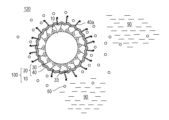
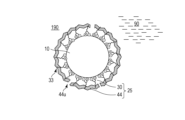
- FIG. 1 is a diagram showing a schematic configuration of an organic polymer portion according to a first embodiment
- FIG. FIG. 2 is a diagram showing a schematic configuration of a binding portion 60 according to a first reference embodiment that does not include shell-like ligands 20
- FIG. 2 shows a schematic configuration of a binding portion 60 according to a first reference embodiment that does not include shell-like ligands 20
- FIG. 4 is a diagram showing a schematic configuration of a binding portion according to a second reference embodiment that does not include shell-like ligands 20.
- FIG. 4 is a diagram showing a schematic configuration of a binding portion according to a second reference embodiment that does not include shell-like ligands 20.
- FIG. 10 is a diagram showing a dispersed state of an ink composition according to a fifth embodiment; It is a figure which shows schematic structure of the coupling
- FIG. 11 is a diagram showing a schematic configuration of an organic polymer portion according to a fifth embodiment; It is a figure which shows schematic structure of the photoresponsive material which concerns on 6th Embodiment. It is a figure which shows schematic structure of the photoresponsive material based on the modification of 6th Embodiment. It is a figure which shows schematic structure of the coupling
- FIG. 11 is a diagram showing a schematic configuration of a polymer section according to a sixth embodiment; FIG.
- FIG. 10 is a diagram showing a schematic configuration of a photoresponsive material according to a third reference embodiment that does not include shell-like ligands 20;
- FIG. 11 is a diagram showing a schematic structure of a photoresponsive composition according to a seventh embodiment; It is a figure which shows the schematic structure of the wavelength conversion layer which concerns on 8th Embodiment.
- the photoresponsive material 100 includes nanoparticles 10 having a photoresponsive perovskite crystal structure with surfaces coordinated by shell-like ligands 20, as shown in FIG. 1A.
- the shell-like ligand 20 includes a plurality of binding portions 30 containing structural units exhibiting ionicity, and a polymer portion 40 (organic polymer portion 40 ) and
- the nanocrystal has a perovskite-type crystal structure composed of A site (monovalent cation), B site (divalent cation), and X site (monovalent anion including halide anion).
- a semiconductor nanocrystal having a The perovskite-type crystal structure is also referred to as a perovskite-type structure, an ABX 3 -type crystal structure, or an ABX 3 -type structure.
- a double perovskite crystal structure represented by A 2 B 1 B 2 X 6 is also included in the perovskite crystal structure.
- a monovalent cation is employed for the A site.
- Monovalent cations employed at the A site include ammonium cations (NH 4 + ), alkylammonium cations having 6 or less carbon atoms, formamidinium cations (HC(NH 2 ) 2 + ), guanidinium cations (C (NH 2 ) 3 + ), imidazolium cations, pyridinium cations, pyrrolidinium cations and other nitrogen-containing organic compound cations, and lithium cations (Li + ), sodium cations (Na + ), potassium cations (K + ). , rubidium cations (Rb + ), and alkali metal cations such as cesium cations (Cs + ).
- the monovalent cations used in these A sites have a small ion diameter and are large enough to fit in the crystal lattice, so the perovskite compound can form a stable three-dimensional crystal.
- alkylammonium cations having 6 or less carbon atoms include methylammonium cation (CH 3 NH 3 + ), ethylammonium cation (C 2 H 5 NH 3 + ), and propylammonium cation (C 3 H 7 NH 3 + ). etc.
- At least one of methylammonium cations, formamidinium cations, and cesium cations is preferably used as the A site, and from the viewpoint of suppressing color change, cesium cations are preferably used as the A site. more preferred. Two or more kinds of monovalent cations employed in these A sites may be used in combination.
- a cesium salt can be used as a raw material for synthesizing a luminescent nanocrystal, which will be described later.
- Such cesium salts include cesium chloride, cesium bromide, cesium iodide, cesium hydroxide, cesium carbonate, cesium hydrogen carbonate, cesium bicarbonate, cesium formate, cesium acetate, cesium propionate, cesium pivalate, and cesium oxalate. Appropriately adopted.
- cesium salt candidates suitable ones can be used according to the synthesis method.
- a salt or the like in which the cesium element of the above-mentioned cesium compound is replaced with another alkali metal cation element can be used as a raw material.
- a site is a nitrogen-containing organic compound cation such as methylammonium cation
- a neutral compound other than a salt such as methylamine can be used as a raw material.
- These raw materials may be used in combination of two or more.
- the B site of the perovskite crystal structure employs divalent cations including divalent transition metal cations or divalent typical metal cations.
- Divalent transition metal cations include scandium cations (Sc 2+ ), titanium cations (Ti 2+ ), vanadium cations (V 2+ ), chromium cations (Cr 2+ ), manganese cations (Mn 2+ ), iron cations (Fe 2+ ). , cobalt cation (Co 2+ ), nickel cation (Ni 2+ ), copper cation (Cu 2+ ), palladium cation (Pd 2+ ), europium cation (Eu 2+ ), ytterbium cation (Yb 2+ ).
- Typical divalent metal cations include magnesium cation (Mg 2+ ), calcium cation (Ca 2+ ), strontium cation (Sr 2+ ), barium cation (Ba 2+ ), zinc cation (Zn 2+ ), cadmium cation (Cd 2+ ), Germanium cations (Ge 2+ ), tin cations (Sn 2+ ), lead cations (Pb 2+ ) can be employed.
- divalent typical metal cations are preferred from the viewpoint of growing stable three-dimensional crystals, tin cations or lead cations are more preferred, and lead cations are particularly preferred from the viewpoint of obtaining high emission intensity.
- Two or more of these divalent cations may be used in combination, and the perovskite crystal structure may be a so-called double perovskite type.
- a lead compound can be mentioned as a raw material for synthesizing the nanoparticles (luminescent nanocrystals) described below, and an appropriate one can be used depending on the synthesis method.
- Lead compounds include lead chloride, lead bromide, lead iodide, lead oxide, lead hydroxide, lead sulfide, lead carbonate, lead formate, lead acetate, lead 2-ethylhexanoate, lead oleate, and lead stearate. , lead naphthenate, lead citrate, lead maleate, lead acetylacetonate are employed.
- a salt or the like obtained by replacing the lead element of the above lead compound with another divalent metal cation element can be used as a raw material. These raw materials may be used in combination of two or more.
- Halide anions include fluoride anions (F ⁇ ), chloride anions (Cl ⁇ ), bromide anions (Br ⁇ ), iodide anions (I ⁇ ), and the like.
- a chloride anion, a bromide anion, or an iodide anion is preferable from the viewpoint of forming a stable three-dimensional crystal and exhibiting strong light emission in the visible light region.
- the emission color is blue when chloride anions are used, green when bromide anions are used, and red when iodide anions are used.
- Two or more halide anions may be used in combination.
- the emission wavelength of the luminescent nanocrystals can be adjusted to a desired wavelength depending on the content ratio of the anion species.
- chloride anions, bromide anions, and iodide anions are used in combination, light emission that covers almost the entire visible light range from blue to red while maintaining a narrow full width at half maximum, depending on the content ratio of the anion species. It is preferable because it can obtain a spectrum.
- the X site may contain monovalent anions other than halide anions.
- monovalent anions other than halide anions include pseudohalide anions such as cyanide anion (CN ⁇ ), thiocyanate anion (SCN ⁇ ) and isothiocyanate anion (CNS ⁇ ).
- pseudohalide anions such as cyanide anion (CN ⁇ ), thiocyanate anion (SCN ⁇ ) and isothiocyanate anion (CNS ⁇ ).
- Raw materials for synthesizing nanoparticles (luminescent nanocrystals) described later include salts with A-site and B-site as counter cations, such as cesium chloride and lead bromide, and salts with other cations. , an appropriate one can be selected according to the synthesis method.
- the nanoparticles (luminescent nanocrystals) in this embodiment can be produced by the following process. For example, a hot injection method in which a raw material solution is mixed at a high temperature, and then quenched after formation of fine particles to obtain a stable product; An assisted reprecipitation method is employed.
- a mixed solution of the raw material for A site and the raw material for B site, which is a non-halide containing no component for X site is mixed with the separately prepared raw material solution for X site.
- a room-temperature synthesis method for obtaining microparticles is also a manufacturing method that is employed.
- the photoresponsive material 100 includes nanoparticles 10 having a perovskite crystal structure and shell-like coordination that is coordinated by binding to the surface of the nanoparticles 10 at a plurality of locations.
- the shell-like ligand 20 includes a plurality of binding portions 30 including a betaine structure 30b, and an organic polymer portion 40 that binds to the nanoparticles 10 at a plurality of locations via the plurality of binding portions 30.
- the betaine structure 30b corresponds to one of the structural units that have positive and negative charges at positions that are not adjacent to each other in the same molecule, and that the molecule as a whole has no charge and exhibits zwitterionic properties. Therefore, the shell-like ligand 20 of the present embodiment is coordinated to the photoresponsive nanoparticles 10 via a plurality of bonding portions 30 having a structural unit exhibiting zwitterionicity and the plurality of bonding portions 30. In other words, it is a ligand having a polymer portion 40 that is present.
- the binding portion 30 includes a betaine structure 30b associated with bonding with the nanoparticles, and a connecting portion 30j including a bond 33 at the terminal end associated with bonding with the organic polymer portion 40 .
- photoresponsive material 100 is stably dispersed in solvent 90 .
- the luminescent nanoparticles 10 around which the shell-like ligands 20 are coordinated are dispersed in the solvent 90 and are protected from the solvent 90 by the shell-like ligands 20. It is The nanoparticles 10 may also be protected from attacks by dispersed components and dissolved components (not shown) dispersed or dissolved in the solvent 90 .
- a structure exhibiting zwitterionicity can be said to be one form of a form exhibiting ionicity in a part of structural units.
- the shell-like ligand 20 having a structural unit containing the betaine structure 30b can be strongly coordinated to the surface of the nanoparticle 10 (luminescent nanocrystal).
- the shell-like ligand 20 has a plurality of betaine structures 30b in the same molecule, even if some of the coordination deviates from the surface of the nanoparticle 10 due to some stimulus, it is easily coordinated again. be able to.
- the polymer chains provided in the organic polymer portion 40 exhibit a protective function as a shell for the core of the nanoparticles 10, so that the nanoparticles 10 are less susceptible to substances such as polar solvents.
- the binding between the binding portion 30 and the nanoparticles 10 corresponds to ionic binding due to electrostatic interaction.
- the bonding between the binding portion 30 and the nanoparticles 10 may be classified as a non-covalent bond as distinguished from a covalent bond.
- the betaine structure 30b as shown in FIGS. 1A to 1C and 2, a pair of positively and negatively polarized sites in the molecule are shown at the branched ends for the purpose of clearly showing the binding by electrostatic interaction.
- a pair of positively and negatively polarized intramolecular sites in the betaine structure 30b is located in a linear structure corresponding to one of the polarized sites in the structural units represented by formulas (1) to (3). It corresponds to the polarization region where
- the shell-like ligand 20 of this embodiment has at least a portion coordinated to the nanoparticles 10 .
- the shell-like ligand 20 of this embodiment is coordinated so that the organic polymer portion 40 covers the outer periphery of the nanoparticle 10 .
- the shell-like ligand 20 does not necessarily completely cover the outer circumference of the nanoparticle 10, that is, does not need to have a coverage rate of 100%.
- a form having a portion where the portions 40 are not connected to each other is also included.
- the number average molecular weight of the shell-like ligands 40 is preferably 1,000 or more and 50,000 or less.
- the shell-like ligand 20 preferably has a number average molecular weight of 2,000 or more and 30,000 or less.
- the ratio of the organic polymer portion 30 in the shell-like ligand 20 is dominant with respect to the ratio of the binding portion 30 in the shell-like ligand 20, the number average of the organic polymer portion 40
- the number average molecular weight of the shell-like ligand 20 may be substituted for the molecular weight.
- the binding portion 30 provided in the shell-like ligand 20 includes, as shown in FIG. including.
- the bond 33 is a portion related to bonding with the organic polymer portion 40, and corresponds to the bond 43 included in the organic polymer portion 40 shown in FIG. 1C.
- the connecting portion 30 has an organic group 30a at the connecting portion 30j.
- the organic group 30a is compatible with a polymerizable compound (not shown) present in the medium, and is responsible for the dispersion stability of the nanoparticles 10 coordinated with the shell-like ligand 20 in the medium.
- the binding portion 30 included in the shell-like ligand 20 has a structural unit represented by at least one of formulas (1) to (3).
- R 1 to R 5 and R 13 to R 15 each independently represent either a hydrogen atom or an alkyl group
- N represents a nitrogen atom
- a 1 to A 5 represents a linking group
- Y - represents a COO - group or SO 3 - group
- "*" represents a bond to the organic polymer portion.
- the shell-like ligand 20 is preferably a copolymer having a bond 30 represented by formulas (1) to (3).
- the alkyl group for R 1 to R 3 in formula (1), R 4 and R 5 in formula (2), and R 13 to R 15 in formula (3) is an alkyl group having 1 to 18 carbon atoms. preferable. Examples include methyl group, ethyl group, n-propyl group, isopropyl group, n-butyl group, n-octyl group, 2-ethylhexyl group, dodecyl group and octadecyl group. These alkyl groups may be further substituted, and may combine with each other to form a ring.
- A1 is a linking group that connects the polymer main chain and the phosphate moiety.
- the linking group A 1 includes a carbonyl group, an alkylene group, an arylene group and -COOR 20 - (with the proviso that the carbonyl group in -COOR 20 - is bonded to a site other than the phosphoric acid ester moiety, and R 20 has 1 to 4 carbon atoms. represents alkylene).
- the betaine structure 30b may be directly linked to the polymer main chain of the organic polymer portion 40 via a single bond.
- the alkylene group in the linking group A1 may be linear or branched, and is preferably an alkylene group having 1 to 4 carbon atoms.
- Examples of the alkylene group having 1 to 4 carbon atoms include methylene group, ethylene group, propylene group and various butylene groups.
- Examples of the arylene group in the linking group A1 include a 1,2-phenylene group, a 1,3-phenylene group, a 1,4-phenylene group, a naphthalene-1,4-diyl group, a naphthalene-1,5-diyl group, and naphthalene-2,6-diyl group.
- the carbonyl group in -COOR 20 - is bonded to a site other than the phosphate ester moiety, and R 20 is an alkylene having 1 to 4 carbon atoms.
- the alkylene may be linear or branched.
- linking groups A1 may be further substituted with other functional groups.
- the linking group A 1 is more preferably a carbonyl group or —COOR 20 — from the viewpoint of availability of raw materials and ease of production.
- A2 is a linking group that links the phosphate moiety and the quaternary ammonium moiety, and represents either an alkylene group or an arylene group.
- the alkylene group in the linking group A2 may be linear or branched, and is preferably an alkylene group having 1 to 4 carbon atoms.
- Examples include methylene group, ethylene group, propylene group, and various butylene groups.
- the arylene group in the linking group A2 includes, for example, a 1,2-phenylene group, a 1,3-phenylene group, a 1,4-phenylene group, a naphthalene-1,4-diyl group and a naphthalene-1,5-diyl group. , and naphthalene-2,6-diyl groups.
- linking groups may be further substituted.
- the linking group A2 is more preferably a methylene group or a simple alkylene group such as an ethylene group from the viewpoint of availability of raw materials and ease of production.
- A3 is a linking group that connects the polymer main chain and the quaternary ammonium site.
- the linking group A 3 includes an alkylene group, an arylene group, an aralkylene group, a-COOR 21 -b, a-CONHR 21 -b, a-OR 21 -b, and the like.
- a represents a bonding site other than the quaternary ammonium site
- b represents a bonding site with the quaternary ammonium site
- R 21 represents an alkylene group or an arylene group.
- the betaine moiety may be directly linked to the polymer main chain via a single bond.
- the alkylene group in the linking group A3 may be linear or branched, and is preferably an alkylene group having 1 to 4 carbon atoms. Examples include methylene group, ethylene group, propylene group, and various butylene groups.
- the arylene group in the linking group A3 includes, for example, a 1,2-phenylene group, a 1,3-phenylene group, a 1,4-phenylene group, a naphthalene-1,4-diyl group and a naphthalene-1,5-diyl group. , and naphthalene-2,6-diyl groups.
- the aralkylene group in the linking group A3 includes, for example, an aralkylene group having 7 to 15 carbon atoms.
- the alkylene group for R 21 may be linear or branched. , is preferably an alkylene group having 1 to 4 carbon atoms. Examples include methylene group, ethylene group, propylene group, and various butylene groups.
- a represents a bonding site other than the quaternary ammonium site
- b represents a bonding site with the quaternary ammonium site
- R7 represents an alkylene group or an arylene group.
- the arylene group for R 21 includes, for example, a 1,2-phenylene group, a 1,3-phenylene group, a 1,4-phenylene group, a naphthalene-1,4-diyl group and a naphthalene-1,5-diyl group. , and naphthalene-2,6-diyl groups.
- Linking group A3 may be further substituted.
- the linking group A 3 is more preferably a-COOR 21 -b or a-CONHR 21 -b from the viewpoint of raw material availability and production easiness.
- a 4 is a linking group that links the quaternary ammonium moiety and its counter anion moiety Y ⁇ , such as an alkylene group or an arylene group.
- A5 is a linking group that connects the polymer main chain and the betaine moiety.
- the linking group A 5 includes an alkylene group, an arylene group, an aralkylene group, a-COOR 22 -b, a-CONHR 22 -b, a-OR 22 -b, and the like.
- a represents a bonding site other than the betaine site
- b represents a bonding site with the betaine site
- R22 represents an alkylene group or an arylene group.
- the betaine moiety may be directly linked to the polymer main chain via a single bond.
- the alkylene group in the linking group A 4 may be linear or branched, and is preferably an alkylene group having 1 to 4 carbon atoms.
- Examples include methylene group, ethylene group, propylene group, and various butylene groups.
- the arylene group in the linking group A2 includes a 1,2-phenylene group, a 1,3-phenylene group, a 1,4-phenylene group, a naphthalene-1,4-diyl group, a naphthalene-1,5-diyl group, and A naphthalene-2,6-diyl group and the like are included.
- Linking group A4 may be further substituted.
- linking group A4 is not particularly limited as described above, it is more preferably a simple alkylene group such as a methylene group, an ethylene group or a propylene group from the viewpoint of raw material availability and ease of production. .
- Y 2 ⁇ is a counter anion of the quaternary ammonium site and is covalently bonded to the quaternary ammonium site via the linking group A 4 .
- Y - is a COO - group or an SO 3 - group.
- the polymer portion 40 provided in the shell-like ligand 20 is, as shown in FIG.
- the joint 43 is a part related to the joint with the joint 30 and corresponds to the joint 33 included in the joint 30 shown in FIG. 1C.
- the organic polymer portion 40 may have a plurality of bonds 33.
- the organic polymer portion 40 is folded with another adjacent organic polymer portion 40 to be entangled with each other to form an organic polymer network that constitutes the shell-like ligand 20 .
- the discontinuous portion 40d shown in FIG. 1B corresponds to the gap between the adjacent organic polymers 40 and corresponds to a slit type extending linearly and in a branched manner and the network of the organic polymer chains forming the shell structure. There may be multiple configurations, including independent open type and.
- the shell-like ligand 20 is preferably a copolymer having both the polymer portion 40 having the structural unit represented by formula (6) and the binding portion 30 .
- R16 represents either a hydrogen atom or an alkyl group
- R17 represents any one of an alkyl group, a carboxylic acid ester group, a carboxylic acid amide group, an alkoxy group and an aryl group.
- the alkyl group for R 16 is preferably an alkyl group having 1 to 4 carbon atoms. Examples include methyl group, ethyl group, n-propyl group, isopropyl group, and n-butyl group.
- R 16 is preferably a hydrogen atom or a methyl group from the viewpoint of copolymer production (polymerizability).
- the alkyl group for R 17 is preferably an alkyl group having 1 to 30 carbon atoms. Examples include methyl group, ethyl group, n-propyl group, n-butyl group, n-hexyl group, n-decyl group, n-hexadecyl group, octadecyl group, docosyl group and triacontyl group.
- the aryl group for R 17 includes aryl groups such as phenyl, 1-naphthyl and 2-naphthyl groups.
- —COOR 24 is exemplified as the carboxylic acid ester group in R 17 .
- R 24 represents any one of an alkyl group having 1 to 30 carbon atoms, a phenyl group and a hydroxyalkyl group having 1 to 30 carbon atoms.
- the carboxylic acid ester group for R 17 includes a methyl ester group, ethyl ester group, n-propyl ester group, isopropyl ester group, n-butyl ester group, tert-butyl ester group, octyl ester group, 2-ethylhexyl ester group, Ester groups of dodecyl ester group, octadecyl ester group, docosyl ester group, triacontyl ester group, phenyl ester group, and 2-hydroxyethyl ester group can be mentioned.
- the carboxylic acid amide group for R 17 includes —CO—NR 25 R 26 .
- R 25 and R 26 each independently represent hydrogen, an alkyl group having 1 to 30 carbon atoms, or a phenyl group.
- the carboxylic acid amide group for R 17 is an N-methylamide group, N,N-dimethylamide group, N,N-diethylamide group, N-isopropylamide group, N-tert-butylamide group, Nn-decylamide group, N - amide groups such as n-hexadecylamide, N-octadecylamide, N-docosylamide, N-triacontylamide, and N-phenylamide groups.
- the alkoxyl group for R 17 includes an alkoxy group having 1 to 30 carbon atoms and a hydroxyalkoxy group having 1 to 30 carbon atoms.
- Alkoxyl groups for R 17 include methoxy, ethoxy, n-propoxy, isopropoxy, n-butoxy, n-hexyloxy, cyclohexyloxy, n-octyloxy, 2-ethylhexyloxy, Alkoxy groups such as dodecyloxy, octadecyloxy, docosyloxy, triacontyloxy, and 2-hydroxyethoxy groups are included.
- the substituent of R 17 may be further substituted.
- the substituents that may be substituted include alkoxy groups such as methoxy group and ethoxy group, amino groups such as N-methylamino group and N,N-dimethylamino group, acyl groups such as acetyl group, and fluorine atom. , and halogen atoms such as chlorine atoms.
- R 16 and R 17 can be arbitrarily selected from the substituents listed above, and suitable substituents may be selected depending on the application. For example, when the photoresponsive material is used in a highly hydrophobic medium, it is preferable to select a substituent having a long-chain organic group in order to improve dispersibility and stability.
- the molar ratio of the structural unit represented by any one of formulas (1) to (3) to the structural unit represented by formula (6) in the copolymer is 2.0/98. More than 50/50 or less is preferable. Further, the molar ratio is more preferably 6/94 or more and 45/55 or less, and even more preferably 10/90 or more and 40/60 or less.
- the copolymerization composition ratio is within the above range, the coordination of the shell-like ligand to the nanoparticles is stabilized, and the composition and crystal structure of the luminescent nanocrystals are stabilized.
- the content of the shell-like ligand 20 in the photoresponsive material 100 is preferably 1 part by mass to 1000 parts by mass, preferably 5 parts by mass to 500 parts by mass, based on 100 parts by mass of the content of the luminescent nanocrystals. , more preferably 10 to 300 parts by mass. If the amount is less than 1 part by mass, the effect as a shell may not be sufficiently exhibited, and the stability may not be improved. If the amount is more than 1000 parts by mass, the solubility and dispersibility of the shell-like ligand in the medium may be lowered, and the stability of the photoresponsive material may not be improved.
- the content of the shell-like ligands 20 in the photoresponsive material 100 may be appropriately adjusted according to the types and applications of the nanoparticles 10 and the shell-like ligands 20 .
- the content of the shell-like ligand 20 in this embodiment is obtained by TG-DTA measurement of a mixture containing the nanoparticles 10 and the shell-like ligand 20.
- a mixture (not shown) composed of the nanoparticles 10 and the shell-like ligand 20 is obtained by adding a poor solvent of the above mixture to the ink composition, centrifuging the mixture to sediment it, and then drying it. Obtainable.
- the content of the organic component is separately measured, and the content of the shell-like ligand 20 can be obtained by subtracting it from the ratio of the ink composition 100. can.
- the case where the A site of the perovskite quantum dot is an organic compound is included in the case where the nanoparticles 10 contain an organic component.
- the number of mmoles of betaine groups per gram of luminescent nanocrystals is preferably 0.01 to 10, preferably 0.03 to 8, and preferably 0.1 to 6. more preferred.
- the number of mmoles of betaine groups per gram of luminescent nanocrystals is within the above range, strong coordination to the luminescent nanocrystals is achieved, resulting in improved stability. If it is less than 0.02, the effect as a shell may not be sufficiently exhibited, and the stability may not be improved. If it is more than 10, the solubility and dispersibility of the shell-like ligand in the medium may be lowered, and the stability of the photoresponsive material may not be improved. Moreover, viscosity may rise.
- the number of mmol corresponds to the content of betaine group contained in 1 g of the luminescent nanocrystal, and is a unit corresponding to ⁇ 10 ⁇ 3 mol.
- shell-like ligand The method for producing the above shell-like ligand and copolymer (hereinafter collectively referred to as shell-like ligand) will be described in detail below.
- the method for producing the shell-like ligand is not particularly limited as long as the above structure is obtained.
- the shell-like ligand is produced by the following methods (i) and (ii). be able to.
- the shell-like ligand can be produced by a method of producing a monomer containing at least a structure corresponding to any one of formulas (1) to (3), and then polymerizing the monomer. Furthermore, (ii) the shell-like ligand binds the zwitterionic site corresponding to any of the formulas (1) to (3) to the polymer main chain by a polymer reaction after synthesizing the polymer main chain. It can be manufactured by a method to do.
- the monomer for introducing the structural unit represented by formula (1) into the shell-like ligand 20 is a vinyl ether derivative, an acrylate derivative, a methacrylate derivative, an ⁇ -olefin derivative, an aromatic A vinyl derivative or the like is adopted.
- acrylate derivatives or methacrylate derivatives are preferably employed from the viewpoint of ease of production of the monomers.
- the corresponding acrylate derivative or methacrylate derivative can be produced by the method described in the literature below.
- Examples of the method for polymerizing the above monomers include radical polymerization and ionic polymerization, and living polymerization for the purpose of molecular weight distribution control and structure control can also be used. Industrially, it is preferable to use radical polymerization.
- Radical polymerization can be carried out by using a radical polymerization initiator, irradiation with light such as radiation or laser light, combined use of a photopolymerization initiator and light irradiation, heating, or the like.
- the radical polymerization initiator is selected from compounds that generate radicals by the action of heat, light, radiation, oxidation-reduction reactions, etc., as long as they can generate radicals and initiate a polymerization reaction.
- Radical polymerization initiators include azo compounds, organic peroxides, inorganic peroxides, organometallic compounds, and photopolymerization initiators.
- the radical polymerization initiator includes azo compounds such as 2,2'-azobisisobutyronitrile (AIBN), 2,2'-azobis(2,4-dimethylvaleronitrile), benzoyl peroxide (BPO), organic peroxides such as tert-butyl peroxypivalate and tert-butyl peroxyisopropyl carbonate, inorganic peroxides such as potassium persulfate and ammonium persulfate, hydrogen peroxide-iron (II) salt system, BPO-dimethylaniline, cerium (IV) salt-alcohol redox initiators, acetophenone, benzoin ether, ketal photopolymerization initiators. Two or more of these radical polymerization initiators may be used in combination.
- AIBN 2,2'-azobisisobutyronitrile
- BPO benzoyl peroxide
- organic peroxides such as tert-butyl peroxypivalate and tert-
- the preferred temperature range for the polymerization of the monomer varies depending on the type of the polymerization initiator used, and is not particularly limited, but the polymerization is generally carried out at a temperature of -30°C to 150°C, and a more preferred temperature range. is between 40°C and 120°C.
- the amount of the polymerization initiator used at this time is 0.1 parts by mass or more and 20 parts by mass or less with respect to 100 parts by mass of the above monomer so that a shell-like ligand with a target molecular weight distribution can be obtained. It is preferable to adjust the amount used.
- any method such as solution polymerization, suspension polymerization, emulsion polymerization, dispersion polymerization, precipitation polymerization, and bulk polymerization can be used, and is not particularly limited.
- the obtained shell-like ligand can be purified if necessary.
- the purification method is not particularly limited, and methods such as reprecipitation, dialysis, and column chromatography can be used.
- the method for producing the above copolymer is also not particularly limited as long as the one having the above structure can be obtained, and is the same as for the above shell-like ligand.
- a polymerizable monomer may be further added for polymerization. It is possible.
- the polymerizable compound is supplied with energy such as light, heat, electromagnetic waves, etc., and polymerizes itself to give viscosity to the liquid or paste intermediate to cure it.
- a polymerizable monomer can also be used as a medium to make the photoresponsive material 100 of the present embodiment a photoresponsive composition that cures in response to an external stimulus.
- Polymerizable monomers include UV-curable UV monomers, UV dimers, UV oligomers, thermally polymerizable monomers, thermally polymerizable dimers, thermally polymerizable oligomers, etc., which are respectively referred to as photopolymerizable compounds and thermally polymerizable compounds. may be
- the photoresponsive material 100 of the first embodiment has a form in which the entire sphere (corresponding to 4 ⁇ in solid angle) of the nanoparticles 10 is covered with the shell-like ligand 20 as shown in FIG. 1A.
- a mode in which the shell-like ligand 20 does not necessarily cover the entire nanoparticle 10 is also included in the present invention.
- FIG. 1B shows a schematic cross-section of a photoresponsive material 120 corresponding to a modification of the first embodiment.
- the photoresponsive material 120 according to this modification is different from the photoresponsive material 100 of the first embodiment in that it includes shell-like ligands 20 that do not partially cover the nanoparticles 10. .
- the organic polymer portion 40 is bonded to the nanoparticles 10 at a plurality of locations via a plurality of bonding portions 30, so that the shell-like ligands 20 are coordinated to the nanoparticles 10. is ranked.
- the shell-like ligand 20 of this modification has at least a portion coordinated to the nanoparticles 10 in the same manner as the shell-like ligand 20 of the first embodiment.
- a portion of the shell-like ligand 20 that does not partially cover the nanoparticles 10 corresponds to the discontinuous portion 40u.
- the photoresponsive material 100 of this embodiment may have non-shell-like ligands bound to the surface of the core containing semiconductor nanoparticles having a perovskite crystal structure.
- Non-shell ligands can sometimes further improve stability such as dispersion stability and spectral characteristics.
- the non-shell-like ligand includes at least one compound or ion selected from the group consisting of acids such as carboxylic acids, sulfonic acids and phosphonic acids, bases such as ammonia and amines, betaine groups, and salts or ions thereof. may contain. At least one compound or ion selected from the group consisting of organic acids, organic bases, salts or ions thereof, and betaine groups can be used as these non-shell-like ligands from the viewpoint of dispersion stability. preferable.
- organic acids examples include branched or linear fatty acids having 1 to 30 carbon atoms.
- Fatty acids may be either saturated or unsaturated. Among them, straight-chain fatty acids are preferred, and oleic acid is more preferred, from the viewpoint of solubility and stability in solvents.
- the salt component in the organic acid salt is not particularly limited as long as it is a metal cation.
- the salt component in the organic acid salt is preferably an alkali metal cation or an alkaline earth metal cation, more preferably an alkali metal cation.
- alkali metal cations sodium and potassium are preferred, and sodium is more preferred.
- organic bases examples include branched or linear organic bases having 1 to 30 carbon atoms.
- Organic bases may be either saturated or unsaturated. Among them, a straight-chain organic base is preferred, and oleylamine is more preferred, from the viewpoint of solubility and stability in a solvent.
- the betaine group is preferably a compound having a phosphobetaine group or a sulfobetaine group, from the viewpoint of solubility and stability in solvents containing compounds selected from the group of phosphobetaine group, sulfobetaine group, and carboxybetaine group.
- the non-shell ligands may be used singly or in combination of two or more.
- Polymerization initiator In the polymerization reaction, generally a polymerization initiator and a polymerizable compound are used together.
- the polymerization initiator is a compound that generates active species for initiating a polymerization reaction by irradiation with active energy rays or heat, and known polymerization initiators can be used.
- Main active species for initiating the polymerization reaction include radical polymerization initiators that generate radicals and cationic polymerization initiators that generate acids, and these may be used in combination.
- Photoradical polymerization initiators that generate radicals by active energy rays include, for example, diethoxyacetophenone, 2-hydroxy-2-methyl-1-phenylpropan-1-one, benzyl methyl ketal, 4-(2-hydroxyethoxy ) phenyl-(2-hydroxy-2-propyl) ketone, 1-hydroxycyclohexylphenyl ketone, 2-methyl-1-[4-(methylthio)phenyl]-2-morpholinopropan-1-one, 2-benzyl-2 -dimethylamino-1-(4-morpholinophenyl)butane, oligo[2-hydroxy-2-methyl-1-[4-(1-methylvinyl)phenyl]propanone], 2-hydroxy-1-[4-[ Acetophenones such as 4-(2-hydroxy-2-methylpropionyl)benzyl]phenyl]-2-methylpropan-1-one; Benzoins such as benzoin, benzoin methyl ether, benzoin eth
- acetophenones represented by aminoketones, phosphines, and oxime ester compounds are preferred. These may be used alone or in combination depending on the properties required for the cured product.
- the amount used is preferably 0.01 to 100 parts by mass, more preferably 0.1 to 50 parts by mass with respect to 100 parts by mass of the total solid content in the composition. .
- the polymerizable compound is a component that receives energy such as light, heat, etc. to promote polymerization, imparts viscosity to the photoresponsive composition, and cures the composition.
- a radically polymerizable compound or a cationic polymerizable compound can be used as the polymerizable compound. These may be used individually by 1 type, or may be used in combination of 2 or more types. Moreover, either a photopolymerizable compound or a thermally polymerizable compound can be used.
- radically polymerizable compounds examples include monofunctional (meth)acrylate compounds, difunctional (meth)acrylate compounds, trifunctional or higher (meth)acrylate compounds, hydroxyl group-containing (meth)acrylate compounds, and carboxy group-containing compounds.
- (Meth)acrylate compounds, vinyl compounds, and the like can be used.
- Examples of monofunctional (meth)acrylates include methyl (meth)acrylate, ethyl (meth)acrylate, propyl (meth)acrylate, isopropyl (meth)acrylate, butyl (meth)acrylate, hexyl (meth)acrylate, 2- Ethylhexyl (meth)acrylate, cyclohexyl (meth)acrylate, dicyclopentenyl (meth)acrylate, dicyclopentenyloxyethyl (meth)acrylate, benzyl (meth)acrylate, 3,3,5-trimethylcyclohexyl acrylate, tetrahydrofurfuryl ( meth) acrylate, phenoxyethyl (meth) acrylate, methoxyethyl (meth) acrylate, ethyl carbitol (meth) acrylate, isobornyl (meth) acrylate, methoxytriethylene glycol (meth)
- bifunctional (meth)acrylate compounds include 1,4-butanediol di(meth)acrylate, 1,6-hexanediol di(meth)acrylate, 1,9-nonanediol di(meth)acrylate, ethylene glycol di(meth)acrylate, diethylene glycol di(meth)acrylate, triethylene glycol di(meth)acrylate, tetraethylene glycol di(meth)acrylate, polyethylene glycol 200 di(meth)acrylate, polyethylene glycol 300 di(meth)acrylate, polyethylene glycol 400 di(meth)acrylate, polyethylene glycol 600 di(meth)acrylate, dipropylene glycol di(meth)acrylate, tripropylene glycol di(meth)acrylate, tetrapropylene glycol di(meth)acrylate, polypropylene glycol 400 di( meth)acrylate, polypropylene glycol 700 di(meth)acrylate, neopentyl glycol
- trifunctional or higher (meth)acrylate compounds include trimethylolpropane triacrylate, trimethylolpropane EO-modified tri(meth)acrylate, trimethylolpropane PO-modified tri(meth)acrylate, glycerin propoxy tri(meth)acrylate.
- pentaerythritol tri(meth)acrylate, tris(acryloxyethyl)isocyanurate, and EO-modified pentaerythritol tetraacrylate can be used.
- hydroxyl group-containing (meth)acrylate compounds include 2-hydroxyethyl (meth)acrylate, 2-hydroxypropyl (meth)acrylate, 2-hydroxybutyl (meth)acrylate, 4-hydroxybutyl (meth)acrylate, 6 - hydroxyalkyl (meth)acrylates such as hydroxyhexyl (meth)acrylate, 2-hydroxyethyl acryloyl phosphate, 2-(meth)acryloyloxyethyl-2-hydroxypropyl phthalate, caprolactone-modified 2-hydroxyethyl (meth)acrylate, Dipropylene glycol (meth)acrylate, fatty acid-modified glycidyl (meth)acrylate, polyethylene glycol mono(meth)acrylate, polypropylene glycol mono(meth)acrylate, 2-hydroxy-3-(meth)acryloyloxypropyl (meth)acrylate , glycerin di(meth)acrylate, 2-hydroxy-3-acryloyl
- carboxy group-containing (meth)acrylate compound for example, ⁇ -carboxyethyl (meth)acrylate, succinic acid mono(meth)acryloyloxyethyl ester, and ⁇ -carboxypolycaprolactone mono(meth)acrylate can be used.
- vinyl compounds for example, vinyl acetate, vinyl benzoate, vinyl pivalate, vinyl butyrate, vinyl methacrylate, and N-vinylpyrrolidone can be used.
- cationic polymerizable compound either a photopolymerizable compound or a thermal polymerizable compound can be used. These may be used alone or in combination of two or more.
- Typical cationic polymerizable compounds include, for example, epoxy compounds, oxacene compounds, and vinyl ether compounds.
- the amount of the polymerizable compound containing the radical polymerizable compound and the cationically polymerizable compound used is preferably 1 to 99 parts by mass, more preferably 5 to 95 parts by mass, and still more preferably 100 parts by mass of the ink composition. is 10 to 90 parts by mass.
- a polymerizable compound may also contain a solvent as needed.
- solvents include alkanes such as pentane and hexane; cycloalkanes such as cyclopentane and cyclohexane; esters such as ethyl acetate, butyl acetate and benzyl acetate; ethers such as diethyl ether and tetrahydrofuran; ketones, alcohols such as methanol, ethanol, isopropanol, butanol and hexanol can be used.
- monoacetate compounds such as diethylene glycol monoethyl ether acetate, ethylene glycol monoethyl ether acetate, diethylene glycol monobutyl ether acetate, and dipropylene glycol methyl ether acetate, and diacetate compounds such as 1,4-butanediol diacetate and propylene glycol diacetate.
- diacetate compounds such as , glyceryl triacetate can also be used.
- a boiling point of 300°C or less is adopted for the solvent because it is easy to remove the solvent before the polymerizable compound 50 is cured.
- a solvent may be rephrased as a solvent.
- the ink composition is optionally provided with an oxygen scavenger, an antioxidant, a scattering agent such as titanium oxide, a surfactant, an antifungal agent, a light stabilizer, and other various properties. It may be used by mixing with additives, diluents and the like.
- a photoresponsive composition 200 (ink composition 200) containing a co-dispersed photoresponsive material 100 and a polymerizable compound 50 shown in FIG. 3A is cured on a substrate. It is a member. Since the wavelength converting member takes the form of a layer supported by another member, it may be referred to as a wavelength converting layer 520 as shown in FIG. 4B. Support forms include layered forms, dispersed forms dispersed in a matrix material.
- the wavelength conversion layer 520 may be a film or sheet or a patterned pixel formed by coating the photoresponsive composition 200 on a support member (substrate) and curing it.
- the method of forming the wavelength conversion layer 520 is not particularly limited. A method of curing the film by irradiating energy rays can be mentioned.
- the thickness of the wavelength conversion layer after curing is preferably 0.1 to 200 ⁇ m, more preferably 1 to 100 ⁇ m.
- the active energy ray in the active energy ray irradiation is appropriately selected from electromagnetic waves such as heat rays, ultraviolet rays, visible rays, near-infrared rays, electron beams, etc., which reduce fluidity and accelerate curing by polymerization, cross-linking, drying, etc.
- a light source for applying active energy rays a light source having a dominant wavelength of light emission in the wavelength range of 100 to 450 nm is preferable.
- Examples of such light sources include ultra-high pressure mercury lamps, high pressure mercury lamps, medium pressure mercury lamps, mercury xenon lamps, metal halide lamps, high power metal halide lamps, xenon lamps, pulse emission xenon lamps, deuterium lamps, fluorescent lamps, ND-YAG triple wave laser, HE-CD laser, nitrogen laser, XE-Cl excimer laser, XE-F excimer laser, semiconductor excitation solid-state laser, and LED lamp light sources having emission wavelengths of 365 nm, 375 nm, 385 nm, 395 nm and 405 nm. mentioned.
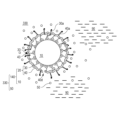
- FIG. 3A is a diagram showing the dispersed state of the photoresponsive composition 200 according to the second embodiment.
- the photoresponsive composition 200 changes its viscosity and cures due to the polymerization of the polymerizable compound it contains. Therefore, the photoresponsive composition 200 of FIG. 3A, which corresponds to the stage before curing, is in the form of ink having fluidity, so it may be rephrased as the ink composition 200 . Curing may be rephrased as solidifying.
- Luminescent material 200 includes photoresponsive material 100 and polymerizable compound 50 . The luminescent material 200 is in a state in which the photoresponsive material 100 and the polymerizable compound 50 are co-dispersed in the solvent 90 .
- the photoresponsive composition 200 of the present embodiment has a form in which the entire sphere (corresponding to 4 ⁇ in solid angle) of the nanoparticles 10 is covered with shell-like ligands 20 .
- the organic group 40 a that is compatible with the polymerizable compound 50 contained in the medium is part of the structure contained in the organic polymer portion 40 .
- the shell-like ligand 20 of this modified form has at least a portion coordinated to the nanoparticles 10 .
- the shell-like ligand 20 in the photoresponsive composition 200 has a discontinuous portion (not shown) that does not partially cover the nanoparticles 10 .
- a discontinuous portion (not shown) that does not partially cover the nanoparticles 10 is formed by overlapping the linear organic polymer portions 40 extending in different directions along the shell of the shell-like ligand 20. It contains a mesh of holes that
- a form including an organic group as part of the structure of the binding portion is also included as a modified form of this embodiment.
- the organic group protrudes toward the outside of the shell-like ligand through the mesh of the network structure constituted by the polymer portion.
- the photoresponsive composition 200 constitutes the film-like wavelength conversion part 526 by curing the polymerizable compound 50 by polymerization.
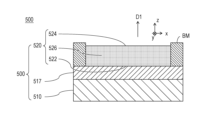
- FIG. 3B shows a cross-sectional structure of a display element 500 according to the third embodiment.
- the display element 500 has a light-emitting layer 510, a dielectric multilayer film 517, and a wavelength conversion layer 520 stacked in the stacking direction D1.
- the downstream side in the stacking direction D1 coincides with the side on which the user viewing the image drawn on the display element is positioned.
- the wavelength conversion layer 520 is separated from wavelength conversion layers corresponding to adjacent elements by a black matrix BM separating the pixels.
- the photoresponsive composition 200 is cured together with the polymerizable compound 50 by performing a polymerization treatment such as a photopolymerization treatment.
- the photoresponsive composition 200 is cured to form the wavelength conversion layer 520 of the display element 500 that satisfies predetermined dimensions. That is, the wavelength conversion layer 520 is a layer solidified by being cured together with the polymerizable compound 50 .
- the light-emitting layer 510 corresponds to a light source that emits the light L1 of the first wavelength ⁇ 1.
- the wavelength conversion layer 520 has an optical coupling surface 522 that optically couples with the light emitting layer 510 on the side of the light emitting layer 510, and is converted by the wavelength conversion layer 520 on the opposite side of the light emitting layer 510 to produce secondary light L2. It has an extraction surface 524 for extraction.
- the wavelength conversion layer 520 of this embodiment receives the primary light L1 of wavelength ⁇ 1 propagating through the dielectric multilayer film 917 .
- the dielectric multilayer film 517 gives the display element 500 the spectral transmission characteristics of the primary light from the light emitting layer 510 and the spectral reflection characteristics of the secondary light L2 of wavelength ⁇ 2 emitted from the wavelength conversion layer 520 .
- the wavelength ⁇ 2 of the secondary light L2 is longer than the wavelength ⁇ 1 of the primary light L1.
- the dielectric multilayer film 917 can be replaced with another optical member having optical transparency with respect to the first wavelength ⁇ 1 emitted by the light emitting layer 510 .
- another optical member (not shown) can be arranged in front of the extraction surface 524 (on the side opposite to the light emitting layer 510).
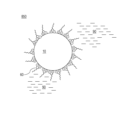
- FIG. 2 shows the dispersibility in the solvent 90 of the photoresponsive material 800 according to the first reference embodiment.
- the photoresponsive material 800 according to this reference embodiment has the betaine structure 30b, it does not have the shell-like ligand 20, and has a straight-chain or branched-chain skeleton, and substantially radially from the surface of the nanoparticles 10. Only the extended non-shell ligands 60 are coordinated to the surface of the luminescent nanoparticles 10 . That is, the photoresponsive material 800 according to the present embodiment includes the betaine structure 30b, which is a structure that exhibits zwitterionicity, but does not have the shell-like ligand 20, and only the non-shell-like ligand 60.
- the non-shell-like ligand 60 included in the photoresponsive material 800 according to the present embodiment has the betaine structure 30b, the shell-like ligand 20 surrounds the nanoparticles 10 in a shell-like manner and through a plurality of binding portions 30 The organic polymer 20 coordinated in parallel at a plurality of locations is not provided.
- the bond of ligands coordinated to the nanoparticles 10 is not as strong as in the photoresponsive material 100 according to the first embodiment.
- the luminescent nanoparticles 10 included in the photoresponsive material 800 according to the present embodiment are easily attacked by the solvent 90 containing polar molecules, and the semiconductor composition changes on a part of the surface of the nanoparticles 10. Or, it is presumed that defects occur in the perovskite crystal structure.
- Luminescent nanoparticles having a perovskite-type crystal structure are susceptible to deterioration in luminescence properties not only by polar solvents but also by light and heat. It is preferable to carry out in a refrigerator or a dark room. By doing so, deterioration due to light and heat during storage of the photoresponsive materials 100 and 200 according to the present embodiment can be reduced.
- the molecular weight distribution of the shell-like ligand can be calculated in terms of monodisperse polymethyl methacrylate by gel permeation chromatography (GPC). Measurement of molecular weight by GPC can be performed, for example, as shown below.
- the sample was added to the following eluent so that the sample concentration was 1% by mass, and the solution dissolved by standing at room temperature for 24 hours was filtered through a solvent-resistant membrane filter with a pore diameter of 0.45 ⁇ m. and measured under the following conditions.
- Apparatus Agilent 1260 infinity system (manufactured by Agilent Technologies) Column: PFG analytical linear M columns (manufactured by PSS) Eluent: 2,2,2-trifluoroethanol Flow rate: 0.2 ml/min Oven temperature: 40°C Sample injection volume: 20 ⁇ L
- a molecular weight calibration curve created with a standard polymethyl methacrylate resin (EasiVial PM Polymer Standard Kit manufactured by Agilent Technologies) is used.
- composition analysis Compositional analysis of shell ligands can be performed using nuclear magnetic resonance (NMR).
- NMR nuclear magnetic resonance
- ECA-600 600 MHz
- 13C-NMR spectra 13C-NMR spectra.
- the measurement is performed at 25° C. in a deuterated solvent containing tetramethylsilane as an internal standard substance.
- a chemical shift value is read as a ppm shift value ( ⁇ value) with tetramethylsilane, an internal standard, as 0.
- Crystal structure analysis and compositional analysis of nanoparticles 10 can be performed using X-ray photoelectron spectroscopy (XPS).
- XPS X-ray photoelectron spectroscopy
- the crystal structure can be analyzed by measuring the X-ray diffraction pattern using RINT 2100 (manufactured by Rigaku).
- compositional analysis of nanoparticles 10 can be performed using XPS and ICP emission spectroscopy.
- the molar ratio of A and B can be measured from the signal intensity of XPS, and the concentration of X can be measured from the emission intensity of ICP emission spectrometry (for example, CIROS CCD (manufactured by SPECTRO)).
- Infrared spectroscopy can be used to confirm whether the shell-like ligand 20 is coordinated to the nanoparticles 10 or not. If necessary, a poor solvent is added to the dispersion containing the nanoparticles 10 and the shell-like ligand 20, and the mixture is precipitated by centrifugation. After that, the supernatant is removed and the precipitate is dried. Shell ligands 20 not bound to nanoparticles 10 are removed together with the supernatant.
- the IR absorption spectrum of the obtained solid is measured, and if the signal of the bonding portion is observed, it can be confirmed that the shell-like ligand 20 is coordinated to the nanoparticles 10 . At that time, the signal at the binding site may shift by several nm due to coordination.
- Coordination can also be confirmed by transmission electron microscope (TEM) observation. Normally, photoresponsive nanoparticles with a perovskite crystal structure are observed in a regularly arranged form, but when shell-like ligands are coordinated, steric repulsion between shell-like ligands Due to the steric repulsion between the shell-like ligand and the substrate, the arrangement is observed to be disordered. Coordination can also be confirmed from this.
- TEM transmission electron microscope
- the content of photoresponsive nanoparticles in the photoresponsive material and photoresponsive composition can be measured using ICP emission spectrometry and NMR.
- the amount of Pb is measured from the emission intensity of ICP emission spectrometry
- the amount of ligand is measured from the signal intensity of NMR.
- the content of the photoresponsive nanoparticles can be measured from the composition information of the photoresponsive nanoparticles obtained by the above method.
- the content of the polymer compound in the photoresponsive material and photoresponsive composition can also be determined from the integrated intensity of NMR.
- the betaine group content in the polymer compound can be determined from the integrated intensity ratio of NMR between the betaine portion and other sites in the polymer compound.
- the number of mmoles of betaine groups per 1 g of photoresponsive nanoparticles is calculated from the content of photoresponsive nanoparticles obtained by the above method, the content of the polymer compound, and the content of betaine groups in the polymer compound. can do.
- the photoresponsive material 140 of the present embodiment differs from the photoresponsive material 100 of the first embodiment in that the structural unit exhibiting zwitterionicity provided in the plurality of bonding portions 30 is a quaternary ammonium salt. .
- the photoresponsive material 140 includes nanoparticles 10 having a perovskite crystal structure and shell-like ligands 20 bonded to the surfaces of the nanoparticles 10 at multiple locations.
- the shell-like ligand 20 includes a plurality of binding portions 30 and an organic polymer portion 40 that binds to the nanoparticles 10 at a plurality of locations via the plurality of binding portions 30 .
- the binding portion 30 includes a quaternary ammonium salt 30b associated with binding to the nanoparticles, and a connecting portion 30j including a bond 33 at the end associated with binding to the organic polymer portion 40.
- the quaternary ammonium salt 30b refers to a salt of a cation in which an ammonia molecule is tetrasubstituted with carbon-containing substituents and another anion.
- the shell-like ligand 20 having structural units containing the quaternary ammonium salt 30b can be strongly coordinated to the surface of the nanoparticles 10.
- the quaternary ammonium salt 30b is one of the structural units that have positive and negative charges at positions that are not adjacent to each other in the same molecule, and that the molecule as a whole has no charge and exhibits zwitterionic properties. Therefore, in the shell-like ligand 20 of the present embodiment, a structural unit exhibiting zwitterionicity is coordinated to the photoresponsive nanoparticle 10 via a plurality of bonding portions and a plurality of bonding portions 30. In other words, it is a ligand having a molecular portion 40.
- the shell-like ligand 20 has a plurality of quaternary ammonium salts 30b in the same molecule, even if some of the bonds are detached from the surface of the nanoparticles 10 due to some stimulus, they are easily rebonded. be able to.
- the polymer chains provided in the organic polymer portion 40 exhibit a protective function as a shell for the core of the nanoparticles 10, so that the nanoparticles 10 are less susceptible to substances such as polar solvents. Therefore, it is considered that the stability of the structure and composition of the nanoparticles 10 is improved, and the stability of the photoresponsiveness is improved.
- a structure exhibiting zwitterionicity can be said to be one form of a form exhibiting ionicity in a part of structural units.
- the shell-like ligand 20 of this embodiment has at least a portion bound to the nanoparticles 10 .
- the shell-like ligand 20 is bound so that the organic polymer portion 40 covers the outer periphery of the nanoparticle 10 .
- the shell-like ligand 20 does not necessarily completely cover the outer circumference of the nanoparticle 10, that is, it does not need to have a coverage rate of 100%.
- Forms having portions that are not connected to each other are also included. That is, it can be said that the shell-like ligand 20 also includes a coordination mode in which the organic polymer portions 40 are locally not connected to each other.
- the organic polymer portion 40 has a plurality of bonds 43 that bond with the nanoparticles 10 via the bonding portions 30 .
- the organic polymer part 40 may have an organic group 40a in a side chain.
- the organic groups 40 a exhibit dispersibility of the photoresponsive material 140 in the medium 90 .
- the weight average molecular weight of the shell-like ligands 20 is preferably 1,000 or more and 100,000 or less.
- the shell-like ligand 20 preferably has a weight average molecular weight of 2,000 or more and 50,000 or less.
- the weight average of the organic polymer portion 40 may be substituted for the molecular weight.
- the photoresponsive material 140 has the shell-like ligand 20 positioned between the perovskite-type nanoparticles 10 and the medium 90, so that the nanoparticles 10 are prevented from being affected by the medium 90. is protected.
- the binding portion 30 included in the shell-like ligand 20 has a structural unit represented by formula (4).
- R 6 to R 8 each independently represent an alkyl group or an aryl group
- N represents a nitrogen atom
- N represents a nitrogen atom
- a 6 is a linking group
- X ⁇ represents an anion
- “*” represents a bond to the polymer moiety.
- the shell-like ligand 20 is preferably a copolymer having a bond 30 represented by formula (4).
- a 6 is a linking group that connects the polymer chain and the quaternary ammonium moiety, and is an alkylene group, an arylene group, an aralkylene group, a-COOR 23 -b, a-CONHR 23 -b, or a -OR 23 -b and the like.
- a represents the bonding site with the organic polymer moiety
- b represents the bonding site with the quaternary ammonium moiety
- R 23 represents an alkylene group or an arylene group.
- the alkylene group in the linking group A6 may be either linear or branched, and is preferably an alkylene group having 1 to 4 carbon atoms. Examples include methylene group, ethylene group, propylene group, and butylene group.
- the arylene group in the linking group A6 includes, for example, a 1,2-phenylene group, a 1,3-phenylene group, a 1,4-phenylene group, a naphthalene-1,4-diyl group and a naphthalene-1,5-diyl group. , and naphthalene-2,6-diyl groups.
- the aralkylene group in the linking group A6 includes, for example, an aralkylene group having 7 to 15 carbon atoms.
- the alkylene group for R 23 may be linear or branched. , is preferably an alkylene group having 1 to 4 carbon atoms. Examples include methylene group, ethylene group, propylene group, and butylene group.
- a represents the bonding site with the organic polymer moiety
- b represents the bonding site with the quaternary ammonium moiety
- R23 represents an alkylene group or an arylene group.
- the arylene group for R 23 includes, for example, a 1,2-phenylene group, a 1,3-phenylene group, a 1,4-phenylene group, a naphthalene-1,4-diyl group and a naphthalene-1,5-diyl group. , and naphthalene-2,6-diyl groups.
- the linking group A6 may be further substituted, and the substitution is not particularly limited as long as the properties of the nanoparticles such as photoresponsivity and dispersion stability are not remarkably lowered.
- linking group A 6 is not particularly limited as described above, a-COOR 23 -b is more preferable from the viewpoint of availability of raw materials and ease of production.
- the binding portion 30 provided in the shell-like ligand 20 may have a structure in which it is bound to the polymer main chain via the linking group A7 , as represented by formula (5).
- R 9 to R 11 each independently represent an alkyl group or an aryl group
- R 12 represents either a hydrogen atom or an alkyl group
- N is a nitrogen atom
- a 7 represents a linking group
- X ⁇ represents an anion.
- the organic group for R 12 is preferably an alkyl group having 1 to 4 carbon atoms. Examples include methyl group, ethyl group, n-propyl group, isopropyl group, and n-butyl group.
- R 9 in formula (5) can be arbitrarily selected from the substituents listed above and a hydrogen atom, but is preferably a hydrogen atom or a methyl group from the viewpoint of production (polymerizability) of the polymer compound.
- the structural unit represented by the formula (6) is used as the organic polymer portion 40, together with the binding portion 30 It is preferably a copolymer having
- X - represents an anion
- X ⁇ includes halogen ions such as chloride ion, bromide ion, iodide ion and fluoride ion, anions containing COO ⁇ or SO 3 ⁇ in the structure, BF 4 ⁇ , PF 6 ⁇ , ClO 4 ⁇ , N 3 ⁇ , and other monovalent anions.
- anion having a COO 2 - group examples include acetate anion, propionate anion, and benzoate anion.
- Examples of anions containing SO 3 - in X- include methanesulfonate anion, trifluoromethanesulfonate anion, benzenesulfonate anion, p-toluenesulfonate anion, and methylsulfate anion.
- X 1 - may be used singly or in combination of two or more.
- the molar ratio of the structural unit represented by formula (4) or (5) and the structural unit represented by formula (6) in the copolymer is 0.01:99.99. 50:50 is preferable, and 1:99 to 30:70 is more preferable.
- the copolymer composition ratio is within the above range, the stability as a photoresponsive material is improved due to strong bonding to the nanoparticles.
- the content of the shell-like ligand 20 in the photoresponsive material 140 is preferably 1 part by mass to 1000 parts by mass, preferably 5 parts by mass to 500 parts by mass, with the content of the photoresponsive nanocrystals being 100 parts by mass. parts, more preferably 10 to 300 parts by mass. If the amount is less than 1 part by mass, the effect as a shell may not be sufficiently exhibited, and the stability may not be improved. If the amount is more than 1000 parts by mass, the solubility and dispersibility of the shell-like ligand in the medium may be lowered, and the stability of the photoresponsive material may not be improved.
- the content of the shell-like ligands 20 in the photoresponsive material 140 may be appropriately adjusted according to the types and applications of the nanoparticles 10 and the shell-like ligands 20 .
- the content of the shell-like ligand 20 in this embodiment is obtained by TG-DTA measurement of a mixture containing the nanoparticles 10 and the shell-like ligand 20.
- a mixture (not shown) composed of the nanoparticles 10 and the shell-like ligand 20 is prepared by adding a poor solvent to the mixture containing the nanoparticles to obtain a mixture composed of the nanoparticles 10 and the shell-like ligand 20. It can be obtained by drying after sedimentation by centrifugation.
- the method of coordinating the shell-like ligand 20 on the surface of the nanoparticles 10 includes a method of reacting the shell-like ligand 20 after the synthesis of the nanoparticles 10 and exchanging with a non-shell-like ligand described later; A method of bonding by coexisting the shell-like ligand 20 when synthesizing the particle 10 is included.
- the shell-like ligand 20 is bound by exchanging with the non-shell-like ligand as described above, extra free ligand can be removed by centrifugation.
- shell-like ligand The method for producing the above shell-like ligand and copolymer (hereinafter collectively referred to as shell-like ligand) will be described in detail below.
- the method for producing the shell-like ligand is not particularly limited as long as the one having the above structure can be obtained, but it can be produced, for example, by the following method.
- the shell-like ligand 20 can be produced by (i) a method of producing a monomer containing a structural unit corresponding to formula (4) or (5) and then polymerizing it.
- the shell-like ligand 20 can be produced by (ii) a method of synthesizing the shell-like ligand 20 having a polymer main chain and then binding or producing a quaternary ammonium salt through a polymer reaction. .
- vinyl ether derivatives acrylate derivatives, methacrylate derivatives, ⁇ -olefin derivatives, aromatic vinyl Derivatives and the like can be used.
- an acrylate derivative or a methacrylate derivative as the monomer for introducing the structural unit represented by formula (5) into the shell-like ligand. .
- the corresponding acrylate derivative or methacrylate derivative can be produced by the method described in the literature shown below.
- Examples of the method for polymerizing the above monomers include radical polymerization and ionic polymerization, and living polymerization for the purpose of molecular weight distribution control and structure control can also be used. Industrially, it is preferable to use radical polymerization.
- Radical polymerization can be carried out by using a radical polymerization initiator, irradiation with light such as radiation or laser light, combined use of a photopolymerization initiator and light irradiation, heating, or the like.
- the radical polymerization initiator is selected from compounds that generate radicals by the action of heat, light, radiation, oxidation-reduction reactions, etc., as long as they can generate radicals and initiate a polymerization reaction.
- Radical polymerization initiators include azo compounds, organic peroxides, inorganic peroxides, organometallic compounds, and photopolymerization initiators.
- the radical polymerization initiator includes azo compounds such as 2,2'-azobisisobutyronitrile (AIBN), 2,2'-azobis(2,4-dimethylvaleronitrile), benzoyl peroxide (BPO), organic peroxides such as tert-butyl peroxypivalate and tert-butyl peroxyisopropyl carbonate, inorganic peroxides such as potassium persulfate and ammonium persulfate, hydrogen peroxide-iron (II) salt system, BPO-dimethylaniline, cerium (IV) salt-alcohol redox initiators, acetophenone, benzoin ether, ketal photopolymerization initiators. Two or more of these radical polymerization initiators may be used in combination.
- AIBN 2,2'-azobisisobutyronitrile
- BPO benzoyl peroxide
- organic peroxides such as tert-butyl peroxypivalate and tert-
- the preferred temperature range for the polymerization of the monomer varies depending on the type of the polymerization initiator used, and is not particularly limited, but the polymerization is generally carried out at a temperature of -30°C to 150°C, and a more preferred temperature range. is between 40°C and 120°C.
- the amount of the polymerization initiator used at this time is 0.1 parts by mass or more and 20 parts by mass or less with respect to 100 parts by mass of the above monomer so that a shell-like ligand with a target molecular weight distribution can be obtained. It is preferable to adjust the amount used.
- any method such as solution polymerization, suspension polymerization, emulsion polymerization, dispersion polymerization, precipitation polymerization, and bulk polymerization can be used, and is not particularly limited.
- the obtained shell-like ligand can be purified if necessary.
- the purification method is not particularly limited, and methods such as reprecipitation, dialysis, and column chromatography can be used.
- the method for producing the above copolymer is also not particularly limited as long as the one having the above structure can be obtained, and is the same as for the above shell-like ligand.
- the photoresponsive material 140 of the fourth embodiment has a form in which the entire sphere of the nanoparticles 10 is covered with the shell-like ligand 20 as shown in FIG. 4A, but the shell-like ligand 20 is not necessarily Forms in which the nanoparticles 10 are not entirely covered are also included in embodiments of the present invention.
- the full sphere corresponds to 4 ⁇ in solid angles.
- FIG. 4B shows a schematic cross-section of a photo-responsive material 1600 corresponding to a modification of the fourth embodiment.
- the photoresponsive material 160 according to this modification is different from the photoresponsive material 100 of the fourth embodiment in that it includes shell-like ligands 25 that do not partially cover the nanoparticles 10. .
- the shell-like ligand 25 is coordinated to the nanoparticles 10 by bonding the organic polymer portion 44 to the nanoparticles 10 at a plurality of locations via a plurality of bonding portions 30 . is ranked.
- the shell-like ligand 25 of this modified form has at least a portion coordinated to the nanoparticles 10 in the same manner as the shell-like ligand 20 .
- FIG. 5 shows the dispersibility in the medium 90 of the photoresponsive material 850 according to the second reference embodiment.
- the photoresponsive material 850 according to this reference embodiment includes the ammonium salt 30b, it does not have the shell-like ligand 20, and has a straight-chain or branched-chain skeleton that extends substantially radially from the surface of the nanoparticles 10. Extending non-shell ligands 60 are coordinated to the surface of the luminescent nanoparticles 10 . That is, the photoresponsive material 850 according to the present embodiment includes the ammonium salt 30b having a zwitterionic structure, but does not have the shell-like ligand 20, and only the non-shell-like ligand 60.
- the non-shell-like ligand 60 included in the photoresponsive material 850 according to the present reference embodiment includes the ammonium salt 30b, the shell-like ligand 20 surrounds the nanoparticles 10 in a shell-like manner and through a plurality of binding portions 30 The organic polymer portion 40 coordinated in parallel at a plurality of locations is not provided.
- the bond of ligands coordinated to the nanoparticles 10 is not as strong as in the photoresponsive material 140 according to the fourth embodiment.
- the nanoparticles 10 included in the photoresponsive material 850 according to the present embodiment are easily attacked by the medium 90 containing polar molecules, and the semiconductor composition changes on a part of the surface of the nanoparticles 10. It is presumed that defects occur in the perovskite crystal structure.
- the polymerizable compound 50 can be dispersed or dissolved in the medium 90. can.
- the polymerizable compound 50 includes UV-curable UV monomers, UV dimers, UV oligomers, and the like, and may be referred to as photopolymerizable compounds.
- the ink composition 330 includes the photoresponsive nanoparticles 10 and the shell-like ligands 20 that are coordinated by bonding to the surfaces of the nanoparticles 10 at a plurality of locations. And prepare.
- the shell-like ligand 20 includes a plurality of binding portions 30 containing a quaternary ammonium salt 30b, and an organic polymer portion 40 that binds to the nanoparticles 10 at a plurality of locations via the plurality of binding portions 30 .
- the quaternary ammonium salt 30b refers to a salt of a cation in which an ammonia molecule is tetrasubstituted with a carbon-containing substituent and another anion.
- the binding portion 30 includes a quaternary ammonium salt 30b associated with binding to the nanoparticles 10, and a connecting portion 30j including a bond 33 at the end associated with binding to the organic polymer portion 40.
- at least one of the bonding portion 30 and the organic polymer portion 40 has organic groups 30a and 40a, as shown in FIGS. 6A to 6C.
- the organic group 30a extends outside the shell via a discontinuous portion 40d of the organic polymer portion 40 that constitutes the shell-like ligand 20.
- a discontinuous portion 40d As shown in FIG. A portion where the organic polymer portions 40 are not connected to each other is shown in FIG. 4B as a discontinuous portion 40d.
- the discontinuous portions 40d exist discretely in the form of mesh-like, linearly extending shell-like ligands 20, and as independent holes opened in a part of the two-dimensionally spreading organic polymer portion 40. Both form and are included.
- the ink composition 330 shown in FIG. 6A is formed in a medium containing the medium 90 and the polymerizable compound 50 by the organic groups 30a and 40a of the shell-like ligand 20 that is coordinated so as to cover the nanoparticles 10. Stable and distributed.
- the inventors of the present application presume that this is an effect brought about by the fact that the organic groups 30a and 40a have an appropriate affinity (miscibility) with the polymerizable compound 50 in the medium and are compatible with each other.
- the binding between the binding portion 30 and the nanoparticles 10 corresponds to ionic binding due to electrostatic interaction.
- the bonding between the binding portion 30 and the nanoparticles 10 may be classified as a non-covalent bond as distinguished from a covalent bond.
- the organic groups 30a, 40a extend to the outside of the shell-shaped organic polymer portion 40. This is presumed to be caused by the difference in polarity between the organic groups 30a, 40a and the quaternary ammonium salt 30b. .
- the bonding portion 30 is coordinated to the nanoparticles 10 by the quaternary ammonium salt 30b having a strong polarity, and the organic groups 30a and 40a having relatively low polarity are coordinated to the medium 90 and the polymerizable compound 50. It extends substantially radially toward the medium.
- the organic groups 30a and 40a extending from the shell-like ligand 20 are compatible with the polymerizable compound 50 in the medium, aggregation of the nanoparticles 10 is less likely to occur.
- the organic groups 30a and 40a extending from the shell-like ligand 20 are compatible with the polymerizable compound 50 in the medium, even if the polar molecules in the medium 90 and the polymerizable compound 50 are in close proximity, the nano Particles 10 are protected by shell-like ligands 20 .
- the organic groups 30a, 40a are That is, as shown in FIG.
- the photoresponsive nanoparticles 10 around which the shell-like ligands 20 are coordinated are dispersed in the medium 90 , and the shell-like ligands 20 cause the medium 90 and the later-described protected from polymerizable compounds that
- the nanoparticles 10 may also be protected from attack by dispersed components and dissolved components (not shown) dispersed or dissolved in the medium 90 .
- the shell-like ligand 20 having structural units containing the quaternary ammonium salt 30b can be strongly coordinated to the surface of the nanoparticles 10 (luminescent nanocrystals).
- the shell-like ligand 20 has a plurality of quaternary ammonium salts 30b in the same molecule, even if some of the coordination deviates from the surface of the nanoparticle 10 due to some stimulus, it can be easily re-coordinated. can rank.
- the polymer chains provided in the organic polymer portion 40 exhibit a protective function as a shell for the core of the nanoparticles 10, so that the nanoparticles 10 are less susceptible to substances such as polar solvents. Therefore, it is considered that the stability of the structure and composition of the nanoparticles 10, which are luminescent nanocrystals, is improved, and the stability of the luminescence properties is improved.
- (Polymerizable compound) Ink composition 330 includes polymerizable compound 50, as shown in FIGS. 6A-6C.
- the polymerizable compound 50 becomes a component that receives energy such as light, heat, or the like to promote polymerization, imparts viscosity to the ink composition, and cures the ink composition.
- a radically polymerizable compound or a cationic polymerizable compound can be used as the polymerizable compound 50 . These may be used individually by 1 type, or may be used in combination of 2 or more types. Moreover, either a photopolymerizable compound or a thermally polymerizable compound can be used.
- any of the polymerizable compound 50, the polymerization accelerator, the solvent, and other additives can be based on the ink composition 330 (photoresponsive composition) according to the second embodiment.
- the methods common to the first and second embodiments are also adopted in the fourth and fifth embodiments.
- radically polymerizable compounds examples include monofunctional (meth)acrylate compounds, difunctional (meth)acrylate compounds, trifunctional or higher (meth)acrylate compounds, hydroxyl group-containing (meth)acrylate compounds, and carboxy group-containing compounds.
- (Meth)acrylate compounds, vinyl compounds, and the like can be used.
- Examples of monofunctional (meth)acrylates include methyl (meth)acrylate, ethyl (meth)acrylate, propyl (meth)acrylate, isopropyl (meth)acrylate, butyl (meth)acrylate, hexyl (meth)acrylate, 2- Ethylhexyl (meth)acrylate, cyclohexyl (meth)acrylate, dicyclopentenyl (meth)acrylate, dicyclopentenyloxyethyl (meth)acrylate, benzyl (meth)acrylate, 3,3,5-trimethylcyclohexyl acrylate, tetrahydrofurfuryl ( meth) acrylate, phenoxyethyl (meth) acrylate, methoxyethyl (meth) acrylate, ethyl carbitol (meth) acrylate, isobornyl (meth) acrylate, methoxytriethylene glycol (meth)
- bifunctional (meth)acrylate compounds include 1,4-butanediol di(meth)acrylate, 1,6-hexanediol di(meth)acrylate, 1,9-nonanediol di(meth)acrylate, ethylene glycol di(meth)acrylate, diethylene glycol di(meth)acrylate, triethylene glycol di(meth)acrylate, tetraethylene glycol di(meth)acrylate, polyethylene glycol 200 di(meth)acrylate, polyethylene glycol 300 di(meth)acrylate, polyethylene glycol 400 di(meth)acrylate, polyethylene glycol 600 di(meth)acrylate, dipropylene glycol di(meth)acrylate, tripropylene glycol di(meth)acrylate, tetrapropylene glycol di(meth)acrylate, polypropylene glycol 400 di( meth)acrylate, polypropylene glycol 700 di(meth)acrylate, neopentyl glycol
- trifunctional or higher (meth)acrylate compounds include trimethylolpropane triacrylate, trimethylolpropane EO-modified tri(meth)acrylate, trimethylolpropane PO-modified tri(meth)acrylate, glycerin propoxy tri(meth)acrylate.
- pentaerythritol tri(meth)acrylate, tris(acryloxyethyl)isocyanurate, and EO-modified pentaerythritol tetraacrylate can be used.
- hydroxyl group-containing (meth)acrylate compounds include 2-hydroxyethyl (meth)acrylate, 2-hydroxypropyl (meth)acrylate, 2-hydroxybutyl (meth)acrylate, 4-hydroxybutyl (meth)acrylate, 6 - hydroxyalkyl (meth)acrylates such as hydroxyhexyl (meth)acrylate, 2-hydroxyethyl acryloyl phosphate, 2-(meth)acryloyloxyethyl-2-hydroxypropyl phthalate, caprolactone-modified 2-hydroxyethyl (meth)acrylate, Dipropylene glycol (meth)acrylate, fatty acid-modified glycidyl (meth)acrylate, polyethylene glycol mono(meth)acrylate, polypropylene glycol mono(meth)acrylate, 2-hydroxy-3-(meth)acryloyloxypropyl (meth)acrylate , glycerin di(meth)acrylate, 2-hydroxy-3-acryloyl
- carboxy group-containing (meth)acrylate compound for example, ⁇ -carboxyethyl (meth)acrylate, succinic acid mono(meth)acryloyloxyethyl ester, and ⁇ -carboxypolycaprolactone mono(meth)acrylate can be used.
- vinyl compounds for example, vinyl acetate, vinyl benzoate, vinyl pivalate, vinyl butyrate, vinyl methacrylate, and N-vinylpyrrolidone can be used.
- cationic polymerizable compound either a photopolymerizable compound or a thermal polymerizable compound can be used. These may be used alone or in combination of two or more.
- Typical cationic polymerizable compounds include, for example, epoxy compounds, oxacene compounds, and vinyl ether compounds.
- the amount of the polymerizable compound containing the radically polymerizable compound and the cationically polymerizable compound used is preferably 1 to 99 parts by mass, more preferably 3 to 90 parts by mass, with respect to 100 parts by mass of the ink composition 300. More preferably, it is 5 to 80 parts by mass.
- the ink composition 300 may optionally contain a solvent as a medium component.
- solvents include alkanes such as pentane and hexane; cycloalkanes such as cyclopentane and cyclohexane; esters such as ethyl acetate, butyl acetate and benzyl acetate; ethers such as diethyl ether and tetrahydrofuran; ketones, alcohols such as methanol, ethanol, isopropanol, butanol and hexanol can be used.
- monoacetate compounds such as diethylene glycol monoethyl ether acetate, ethylene glycol monoethyl ether acetate, diethylene glycol monobutyl ether acetate, and dipropylene glycol methyl ether acetate, and diacetate compounds such as 1,4-butanediol diacetate and propylene glycol diacetate.
- diacetate compounds such as , glyceryl triacetate can also be used.
- a solvent with a boiling point of 300°C or less is adopted because it is easy to remove the solvent before curing the polymerizable compound.
- a solvent may be rephrased as a solvent.
- the ink composition may optionally contain a polymerization initiator, an oxygen remover, an antioxidant, a scattering agent such as titanium oxide, a surfactant, an antifungal agent, a light stabilizer, and other various additives. It may be used by mixing with an additive that imparts properties, a diluent solvent, or the like.
- analysis of the anion species contained in the quaternary ammonium salt can be performed using combustion decomposition-ion chromatography. Anions are analyzed by combusting the sample in an oxygen-containing air stream, repairing the generated gas, and separating and quantifying the generated ions by ion chromatography.
- an automatic sample combustion device AQF-2100 manufactured by Mitsubishi Analytic
- an ion chromatograph IC-2010 manufactured by Tosoh
- the photoresponsive material 180 of the present embodiment has the organosilicon polymer portion 44 instead of the organic polymer portion 40.
- the photoresponsive material 100 according to the first to sixth embodiments, 120, 140, 160 are different.
- the photoresponsive materials 100 to 180 according to the first to sixth embodiments including this embodiment are photoresponsive nanoparticles at a plurality of locations via a plurality of binding portions 30 having zwitterionic structural units. 10 are common in that they have shell-like polymer portions 40 and 44 that are bonded to 10 .
- the organosilicon polymer portion 44 of the shell-like ligand 20 has a polymer chain forming a shell structure extending in a linear or branched manner, as shown in FIG. 7D. Such polymer chains are provided with bonds 43 .
- the joint 43 is a part related to the joint with the joint 30, and corresponds to the joint 33 included in the joint 30 shown in FIG. 7C.
- the shell-like ligand 20 having the organosilicon polymer portion 44 and the organosilicon polymer portion 44 may be referred to as the silica shell 44 in some cases.
- the organosilicon polymer portion 44 may have a plurality of bonds 33.
- the organosilicon polymer portion 44 is folded on another adjacent organosilicon polymer portion 44 to intertwine with each other to form an organic polymer network that constitutes the shell-like ligand 20 .
- the discontinuous portions 44u shown in FIG. 7B are gaps between the adjacent organosilicon polymer portions 44 and are slit-shaped and extend linearly and branchedly, and the network of the organic polymer chains forming the shell structure. There may be multiple forms, including corresponding independent opening types.
- the organosilicon polymer portion 44 contains a polysiloxane compound in which Si--O-- is linked to the main chain. Further, the organosilicon polymer portion 44 may employ a copolymer having a structural unit represented by at least one of the formulas (4) and (5). It preferably contains a copolymer having a structural unit represented by 5). The organosilicon polymer portion 44 may be called a polysiloxane compound portion 44 or an organosilicon compound portion 44 in other words.
- R 18 represents either a hydrogen atom or an alkyl group
- B represents a bond to the bond.
- R 19 represents an alkyl group
- B represents a bond to the bond.
- an alkyl group having 1 to 30 carbon atoms can be used, and an alkyl group having 1 to 4 carbon atoms is preferable. Examples include methyl group, ethyl group, n-propyl group, isopropyl group, and n-butyl group.
- R 18 can be arbitrarily selected from the above-listed substituents and hydrogen atoms, but is preferably a methyl group or an ethyl group from the viewpoint of copolymer production (polymerizability).
- the Si--OR 18 bond may be hydrolyzed to form a Si--O--Si bond.
- the Si—O—Si bond may be formed by an intermolecular condensation reaction or by an intramolecular condensation reaction.
- R 18 can be arbitrarily selected from the substituents listed above, and a suitable substituent may be selected depending on the application.
- alkyl group for R 19 an alkyl group having 1 to 30 carbon atoms can be used, and an alkyl group having 1 to 4 carbon atoms is preferable. Examples include methyl group, ethyl group, n-propyl group, isopropyl group, and n-butyl group.
- the photoresponsive material when used in a highly hydrophobic medium, it is preferable to select a substituent having a long alkyl chain in order to improve dispersibility and stability.
- the copolymerization ratio of the shell-like ligand 20 is the total number of moles M30 of the bonding portion 30 containing the structural unit represented by any one of the formulas (1) to (3) and the formula (7) or the formula ( It corresponds to the ratio M30/M44 of the total number of moles M44 of the organosilicon polymer portion 44 including the structural unit represented by 8).
- the copolymerization ratio of the shell-like ligand 20 is preferably 0.01/99.99 or more and 50/50 or less, more preferably 1/99 or more and 30/70 or less. When the copolymerization composition ratio is within the above range, the coordination of the shell-like ligands 20 to the nanoparticles 10 is strongly performed, thereby improving the stability of the photoresponsive material 100 .
- the content of the organosilicon polymer portion 44 may be appropriately adjusted according to the type and application of the nanoparticles 10 and the organosilicon polymer portion 44, but is 0.01% by weight with respect to the content of the nanoparticles 10. More than 10% by weight or less is adopted.
- the content of the organosilicon polymer portion 44 is preferably 0.05% by weight or more and 5% by weight or less, more preferably 0.1% by weight or more and 3% by weight or less. If the content of the organosilicon polymer portion 44 is less than 0.01% by weight, the effect as a shell may not be sufficiently exhibited, and the nanoparticles 10 may not maintain dispersion stability. If the content of the organosilicon polymer portion 44 is more than 10% by weight, the solubility and dispersibility of the organosilicon polymer portion in the medium may decrease, and the stability of the photoresponsive material may not be improved.
- the method of manufacturing the organosilicon polymer portion 44 is not particularly limited, but it can be manufactured, for example, by the following method.
- the organosilicon polymer portion 44 can be obtained by hydrolyzing betainesilane, in which an alkylsilane main chain is linked to a betaine structure, to generate Si--O--Si bonds.
- a silane compound containing a betaine structure 30b (hereinafter referred to as a betaine silane compound) is coordinated after the nanoparticles 10 are synthesized, and then hydrolyzed to form an organic compound. There is a method of forming the silicon polymer portion 44 .
- a silane compound containing a betaine structure 30b is allowed to coexist during the synthesis of the nanoparticles 10, and then hydrolyzed after purification. A method of forming the organosilicon polymeric portion is included.
- betainesilane compounds include sulfobetainesilane compounds in which the counter anion of the quaternary ammonium moiety is an SO 3 - group, carboxybetainesilane compounds in which the COO - group, and phosphobetainesilane compounds in which the counter anion is an HPO 3 - group. can be used.
- Sulfobetainesilane can be produced, for example, by the method described in the following document. Langmuir 30.38 (2014): 11386-11393.
- a sulfobetainesilane compound can be obtained by reacting an aminoalkylsilane with a sultone.
- [3-(N,N-dimethylamino)propyl]trimethoxysilane is preferably used as the aminoalkylsilane because it forms a quaternary ammonium.
- (N,N-dimethyl-3-aminopropyl)methyldimethoxysilane can be used.
- As the sultone a four- or five-membered ring sultone can be used.
- the number of carbon atoms in the alkylene group of the linking group A 2 or linking group A 4 connecting the quaternary ammonium moiety and its counter anion moiety Y ⁇ is 3 when a four-membered ring sultone is used, and when a five-membered ring sultone is used, If there is, it will be 4.
- a carboxybetainesilane compound can be produced, for example, by the method described in the following document. RSC advances 6.30 (2016): 24827-24834.
- a phosphobetainesilane compound can be produced, for example, by the method described in the following document. ACS applied materials & interfaces 2.10 (2010): 2781-2788.
- the structure of the manufactured organosilicon polymer portion and the raw material betainesilane compound can be identified using various instrumental analyses.
- Analytical instruments that can be used include nuclear magnetic resonance spectrometer (NMR), gel permeation chromatography (GPC), inductively coupled plasma atomic emission spectrometer (ICP-AES), and the like.
- a polymerizable monomer can also be used as a medium in order to make the photoresponsive material of the present embodiment into a photoresponsive material composition that cures in response to an external stimulus.
- the photoresponsive material 180 of the sixth embodiment has a form in which the entire sphere (corresponding to 4 ⁇ in solid angle) of the nanoparticles 10 is covered with the shell-like ligand 20 as shown in FIG. 9A.
- a mode in which the shell-like ligand 20 does not necessarily cover the entire nanoparticle 10 is also included in the present invention.
- FIG. 9B shows a schematic cross-section of a photoresponsive material 190 corresponding to a modification of the first embodiment.
- the photoresponsive material 190 according to this modification is different from the photoresponsive material 180 of the sixth embodiment in that it includes shell-like ligands 20 that do not partially cover the nanoparticles 10. .
- the organosilicon polymer portion 44 is bonded to the nanoparticles 10 at a plurality of locations via a plurality of bonding portions 30, so that the shell-like ligands 20 are attached to the nanoparticles 10. coordinated.
- the shell-like ligand 20 of this modification has at least a portion coordinated to the nanoparticles 10 in the same manner as the shell-like ligand 20 of the first embodiment.
- a portion of the shell-like ligand 20 that does not partially cover the nanoparticles 10 corresponds to the discontinuous portion 44u.
- the photoresponsive material 180 of this embodiment may have non-shell ligands bound to the surface of the core containing semiconductor nanoparticles having a perovskite crystal structure.
- Non-shell ligands can sometimes further improve stability such as dispersion stability and spectral characteristics.
- the non-shell-like ligand contains at least one compound or ion selected from the group consisting of acids such as carboxylic acids, sulfonic acids and phosphonic acids, bases such as ammonia and amines, and salts or ions thereof. good too. From the viewpoint of dispersion stability, these non-shell-like ligands are preferably at least one compound or ion selected from the group consisting of organic acids, organic bases, and salts or ions thereof.
- organic acids examples include branched or linear fatty acids having 1 to 30 carbon atoms.
- Fatty acids may be either saturated or unsaturated. Among them, straight-chain fatty acids are preferred, and oleic acid is more preferred, from the viewpoint of solubility and stability in solvents.
- the salt component in the organic acid salt is not particularly limited as long as it is a metal cation.
- the salt component in the organic acid salt is preferably an alkali metal cation or an alkaline earth metal cation, more preferably an alkali metal cation.
- alkali metal cations sodium and potassium are preferred, and sodium is more preferred.
- organic bases examples include branched or linear organic bases having 1 to 30 carbon atoms.
- Organic bases may be either saturated or unsaturated. Among them, a straight-chain organic base is preferred, and oleylamine is more preferred, from the viewpoint of solubility and stability in a solvent.
- the non-shell ligands may be used singly or in combination of two or more.
- Polymerization initiator In the polymerization reaction, generally a polymerization initiator and a polymerizable compound are used together.
- the polymerization initiator is a compound that generates active species for initiating a polymerization reaction by irradiation with active energy rays or heat, and known polymerization initiators can be used.
- Main active species for initiating the polymerization reaction include radical polymerization initiators that generate radicals and cationic polymerization initiators that generate acids, and these may be used in combination.
- Photoradical polymerization initiators that generate radicals by active energy rays include, for example, diethoxyacetophenone, 2-hydroxy-2-methyl-1-phenylpropan-1-one, benzyl methyl ketal, 4-(2-hydroxyethoxy ) phenyl-(2-hydroxy-2-propyl) ketone, 1-hydroxycyclohexylphenyl ketone, 2-methyl-1-[4-(methylthio)phenyl]-2-morpholinopropan-1-one, 2-benzyl-2 -dimethylamino-1-(4-morpholinophenyl)butane, oligo[2-hydroxy-2-methyl-1-[4-(1-methylvinyl)phenyl]propanone], 2-hydroxy-1-[4-[ Acetophenones such as 4-(2-hydroxy-2-methylpropionyl)benzyl]phenyl]-2-methylpropan-1-one; Benzoins such as benzoin, benzoin methyl ether, benzoin eth
- acetophenones represented by aminoketones, phosphines, and oxime ester compounds are preferred. These may be used alone or in combination depending on the properties required for the cured product.
- the amount used is preferably 0.01 to 100 parts by mass, more preferably 0.1 to 50 parts by mass with respect to 100 parts by mass of the total solid content in the composition. .
- Ink composition 200 includes polymerizable compound 50 .
- the polymerizable compound 50 becomes a component that receives energy such as light, heat, or the like, accelerates polymerization, imparts viscosity to the ink composition 200 , and cures the ink composition 200 .
- a radically polymerizable compound or a cationic polymerizable compound can be used as the polymerizable compound 50 . These may be used individually by 1 type, or may be used in combination of 2 or more types. Moreover, either a photopolymerizable compound or a thermally polymerizable compound can be used.
- radically polymerizable compounds examples include monofunctional (meth)acrylate compounds, difunctional (meth)acrylate compounds, trifunctional or higher (meth)acrylate compounds, hydroxyl group-containing (meth)acrylate compounds, and carboxy group-containing compounds.
- (Meth)acrylate compounds, vinyl compounds, and the like can be used.
- Examples of monofunctional (meth)acrylates include methyl (meth)acrylate, ethyl (meth)acrylate, propyl (meth)acrylate, isopropyl (meth)acrylate, butyl (meth)acrylate, hexyl (meth)acrylate, 2- Ethylhexyl (meth)acrylate, cyclohexyl (meth)acrylate, dicyclopentenyl (meth)acrylate, dicyclopentenyloxyethyl (meth)acrylate, benzyl (meth)acrylate, 3,3,5-trimethylcyclohexyl acrylate, tetrahydrofurfuryl ( meth) acrylate, phenoxyethyl (meth) acrylate, methoxyethyl (meth) acrylate, ethyl carbitol (meth) acrylate, isobornyl (meth) acrylate, methoxytriethylene glycol (meth)
- bifunctional (meth)acrylate compounds include 1,4-butanediol di(meth)acrylate, 1,6-hexanediol di(meth)acrylate, 1,9-nonanediol di(meth)acrylate, ethylene glycol di(meth)acrylate, diethylene glycol di(meth)acrylate, triethylene glycol di(meth)acrylate, tetraethylene glycol di(meth)acrylate, polyethylene glycol 200 di(meth)acrylate, polyethylene glycol 300 di(meth)acrylate, polyethylene glycol 400 di(meth)acrylate, polyethylene glycol 600 di(meth)acrylate, dipropylene glycol di(meth)acrylate, tripropylene glycol di(meth)acrylate, tetrapropylene glycol di(meth)acrylate, polypropylene glycol 400 di( meth)acrylate, polypropylene glycol 700 di(meth)acrylate, neopentyl glycol
- trifunctional or higher (meth)acrylate compounds include trimethylolpropane triacrylate, trimethylolpropane EO-modified tri(meth)acrylate, trimethylolpropane PO-modified tri(meth)acrylate, glycerin propoxy tri(meth)acrylate.
- pentaerythritol tri(meth)acrylate, tris(acryloxyethyl)isocyanurate, and EO-modified pentaerythritol tetraacrylate can be used.
- hydroxyl group-containing (meth)acrylate compounds include 2-hydroxyethyl (meth)acrylate, 2-hydroxypropyl (meth)acrylate, 2-hydroxybutyl (meth)acrylate, 4-hydroxybutyl (meth)acrylate, 6 - hydroxyalkyl (meth)acrylates such as hydroxyhexyl (meth)acrylate, 2-hydroxyethyl acryloyl phosphate, 2-(meth)acryloyloxyethyl-2-hydroxypropyl phthalate, caprolactone-modified 2-hydroxyethyl (meth)acrylate, Dipropylene glycol (meth)acrylate, fatty acid-modified glycidyl (meth)acrylate, polyethylene glycol mono(meth)acrylate, polypropylene glycol mono(meth)acrylate, 2-hydroxy-3-(meth)acryloyloxypropyl (meth)acrylate , glycerin di(meth)acrylate, 2-hydroxy-3-acryloyl
- carboxy group-containing (meth)acrylate compound for example, ⁇ -carboxyethyl (meth)acrylate, succinic acid mono(meth)acryloyloxyethyl ester, and ⁇ -carboxypolycaprolactone mono(meth)acrylate can be used.
- vinyl compounds for example, vinyl acetate, vinyl benzoate, vinyl pivalate, vinyl butyrate, vinyl methacrylate, and N-vinylpyrrolidone can be used.
- cationic polymerizable compound either a photopolymerizable compound or a thermal polymerizable compound can be used. These may be used alone or in combination of two or more.
- Typical cationic polymerizable compounds include, for example, epoxy compounds, oxacene compounds, and vinyl ether compounds.
- the amount of the polymerizable compound containing the radically polymerizable compound and the cationically polymerizable compound used is preferably 1 to 99 parts by mass, more preferably 3 to 90 parts by mass, and still more preferably 200 parts by mass of the ink composition. is 5 to 80 parts by mass.
- the ink composition 200 may optionally contain a solvent 90 .
- the solvent 90 include alkanes such as pentane and hexane, cycloalkanes such as cyclopentane and cyclohexane, esters such as ethyl acetate, butyl acetate, and benzyl acetate, ethers such as diethyl ether and tetrahydrofuran, cyclohexanone, and acetone. and alcohols such as methanol, ethanol, isopropanol, butanol, and hexanol.
- monoacetate compounds such as diethylene glycol monoethyl ether acetate, ethylene glycol monoethyl ether acetate, diethylene glycol monobutyl ether acetate, and dipropylene glycol methyl ether acetate, and diacetate compounds such as 1,4-butanediol diacetate and propylene glycol diacetate.
- diacetate compounds such as , glyceryl triacetate can also be used.
- a boiling point of 300° C. or less is adopted for the solvent 90 because the solvent can be easily removed before the polymerizable compound 50 is cured.
- the solvent 90 may be rephrased as the solvent 90 in some cases.
- the ink composition is optionally provided with an oxygen scavenger, an antioxidant, a scattering agent such as titanium oxide, a surfactant, an antifungal agent, a light stabilizer, and other various properties. It may be used by mixing with additives, diluents and the like.
- a photoresponsive composition 200 (ink composition 200) containing a co-dispersed photoresponsive material 100 and a polymerizable compound 50 shown in FIG. 3A is cured on a substrate. It is a member. Since the wavelength converting member takes the form of a layer supported by another member, it may be rephrased as a wavelength converting layer 520 as shown in FIG. 3B. Support forms include layered forms, dispersed forms dispersed in a matrix material.
- the wavelength conversion layer 520 may be a film or sheet or a patterned pixel formed by coating the photoresponsive composition 200 on a support member (substrate) and curing it.
- the photoresponsive composition 200 may be referred to as the ink composition 200 because it has fluidity before the polymerizable compound 50 is cured. Moreover, the photoresponsive composition 200 can be rephrased as the luminescent composition 200 in the form in which the photoresponsive material 100 contained therein is a material exhibiting luminescence.
- the method of forming the wavelength conversion layer 520 is not particularly limited. For example, after coating the photoresponsive material composition on the base material, pre-drying is performed as necessary, and heat treatment or heat treatment is performed as necessary. A method of curing the film by performing active energy ray irradiation can be mentioned.
- the thickness of the wavelength conversion layer after curing is preferably 0.1 to 200 ⁇ m, more preferably 1 to 100 ⁇ m.
- the active energy ray in the active energy ray irradiation is appropriately selected from electromagnetic waves such as heat rays, ultraviolet rays, visible rays, near-infrared rays, electron beams, etc., which reduce fluidity and accelerate curing by polymerization, cross-linking, drying, etc.
- a light source for applying active energy rays a light source having a dominant wavelength of light emission in the wavelength range of 100 to 450 nm is preferable.
- Examples of such light sources include ultra-high pressure mercury lamps, high pressure mercury lamps, medium pressure mercury lamps, mercury xenon lamps, metal halide lamps, high power metal halide lamps, xenon lamps, pulse emission xenon lamps, deuterium lamps, fluorescent lamps, ND-YAG triple wave laser, HE-CD laser, nitrogen laser, XE-Cl excimer laser, XE-F excimer laser, semiconductor excitation solid-state laser, and LED lamp light sources having emission wavelengths of 365 nm, 375 nm, 385 nm, 395 nm and 405 nm. mentioned.
- FIG. 9A is a diagram showing the dispersed state of the photoresponsive composition 400 (ink composition 400) according to the seventh embodiment.
- the photoresponsive composition 400 changes its viscosity and cures due to the polymerization of the polymerizable compound it contains. Therefore, the photoresponsive composition 400 in FIG. 9A, which corresponds to the stage before curing, is in the form of ink having fluidity, so it may be rephrased as the ink composition 400 . Curing may be rephrased as solidifying.
- Photoresponsive material 400 includes photoresponsive material 180 and polymerizable compound 50 . The photoresponsive material 400 is in a state in which the photoresponsive material 180 and the polymerizable compound 50 are co-dispersed in the solvent 90 .
- the photoresponsive composition 400 of the present embodiment has a form in which the entire sphere (corresponding to 4 ⁇ in solid angle) of the nanoparticles 10 is covered with the shell-like ligand 20 .
- the alkyl chain 40a compatible with the polymerizable compound 50 contained in the medium is part of the structure contained in the organosilicon polymer portion 44.
- the shell-like ligand 20 of this modified form has at least a portion coordinated to the nanoparticles 10 .
- the shell-like ligand 20 in the photoresponsive composition 400 has a discontinuous portion (not shown) that does not partially cover the nanoparticles 10 .
- a discontinuous portion (not shown) that does not partially cover the nanoparticles 10 is formed by overlapping linear organic silicon polymer portions 44 extending in different directions along the shell of the shell-like ligand 20. It includes a network of pores that are formed.
- a form including an alkyl chain as part of the structure of the binding portion is also included as a modified form of this embodiment.
- the alkyl chains protrude toward the outside of the shell-like ligand through the meshwork of the network structure that the macromolecular portion constitutes.
- the photoresponsive composition 400 constitutes the film-like wavelength conversion part 526 by curing the polymerizable compound 50 by polymerization.
- FIG. 9B shows a cross-sectional structure of a display element 500 according to the ninth embodiment.
- the display element 500 has a light-emitting layer 510, a dielectric multilayer film 517, and a wavelength conversion layer 520 stacked in the stacking direction D1.
- the downstream side in the stacking direction D1 coincides with the side on which the user viewing the image drawn on the display element is positioned.
- the wavelength conversion layer 520 is separated from wavelength conversion layers corresponding to adjacent elements by a black matrix BM separating the pixels.
- the photoresponsive composition 200 is cured together with the polymerizable compound 50 by performing a polymerization treatment such as a photopolymerization treatment.
- the photoresponsive composition 200 is cured to form the wavelength conversion layer 520 of the display element 500 that satisfies predetermined dimensions. That is, the wavelength conversion layer 520 is a layer solidified by being cured together with the polymerizable compound 50 .
- the light-emitting layer 510 corresponds to a light source that emits the light L1 of the first wavelength ⁇ 1.
- the wavelength conversion layer 520 has an optical coupling surface 522 that optically couples with the light emitting layer 510 on the side of the light emitting layer 510, and is converted by the wavelength conversion layer 520 on the opposite side of the light emitting layer 510 to produce secondary light L2. It has an extraction surface 524 for extraction.
- the wavelength conversion layer 520 of this embodiment receives the primary light L1 of wavelength ⁇ 1 propagating through the dielectric multilayer film 917 .
- the dielectric multilayer film 517 gives the display element 500 the spectral transmission characteristics of the primary light from the light emitting layer 510 and the spectral reflection characteristics of the secondary light L2 of wavelength ⁇ 2 emitted from the wavelength conversion layer 520 .
- the wavelength ⁇ 2 of the secondary light L2 is longer than the wavelength ⁇ 1 of the primary light L1.
- the dielectric multilayer film 917 can be replaced with another optical member having optical transparency with respect to the first wavelength ⁇ 1 emitted by the light emitting layer 510 .
- another optical member (not shown) can be arranged in front of the extraction surface 524 (on the side opposite to the light emitting layer 510).
- FIG. 8 shows the dispersibility in the solvent 90 of the photoresponsive material 900 according to the third embodiment.
- the photoresponsive material 900 according to the reference embodiment has the betaine structure 30b, it does not have the shell-like ligand 20, and extends substantially radially from the surface of the nanoparticles 10 with a linear or branched skeleton. Only non-shell ligands 60 are coordinated to the surface of the luminescent nanoparticles 10 .
- the non-shell-like ligand 60 included in the photoresponsive material 900 according to the present reference embodiment has the betaine structure 30b
- the shell-like ligand 20 surrounds the nanoparticles 10 in a shell-like manner and through a plurality of binding portions 30
- the organic polymer 20 coordinated in parallel at a plurality of locations is not provided.
- the bond of ligands coordinated to the nanoparticles 10 is not as strong as in the photoresponsive material 100 according to the first embodiment.
- the luminescent nanoparticles 10 included in the photoresponsive material 900 according to the present embodiment are easily attacked by the solvent 90 containing polar molecules, and the semiconductor composition changes on a part of the surface of the nanoparticles 10. Or, it is presumed that defects occur in the perovskite crystal structure.
- the photoresponsive composition 400 according to the eighth embodiment is the ink composition 330 (photoresponsive composition) can be adopted.
- the method common to the first, second, fourth, and fifth embodiments is also used in the sixth and seventh embodiments. It is also used in form.
- the resulting residue was dissolved in chloroform and purified by dialysis using a dialysis membrane (Spectra/Por7 MWCO 1 kDa manufactured by Spectrum Laboratories). After the solvent was distilled off under reduced pressure, the polymer compound 1-a was obtained by drying under reduced pressure at 50° C. and 0.1 kPa or less.
- the obtained polymer compound 1-a was analyzed by the above analysis method, and the weight average molecular weight (Mw) was 11800, and the structural unit represented by formula (2) was 21 mol in all monomer units. % content.
- the polymer compound 1-a may be rephrased as an intermediate raw material a or a precursor a of the shell-like ligand 20 coordinated to the particle surface of the nanoparticles 10 dispersed in the solvent 90.
- polymer compound 1-b 20.5 parts of 2-(methacryloyloxy)ethyl 2-(triethylammonio)ethyl phosphate was used instead of 2-(methacryloyloxy)ethyl 2-(trimethylammonio)ethyl phosphate. Otherwise, polymer compound 1-b was produced in the same manner as polymer compound 1-a.
- polymer compound 1-c 18.8 parts of 2-(methacryloyloxy)-1-methylethyl 2-(trimethylammonio)ethyl phosphate was used in place of 2-(methacryloyloxy)ethyl 2-(trimethylammonio)ethyl phosphate. Otherwise, polymer compound 1-c was produced in the same manner as polymer compound 1-a.
- polymer compound 1-d [Production of polymer compound 1-d] 19.6 parts of 2-(methacryloyloxy)ethyl phosphate 1,2-dimethyl-2-(trimethylammonio)ethyl phosphate was used instead of 2-(methacryloyloxy)ethyl 2-(trimethylammonio)ethyl phosphate . Otherwise, polymer compound 1-d was produced in the same manner as polymer compound 1-a.
- Polymer compound 1-e was produced in the same manner as polymer compound 1-a, except that 78.7 parts of octadecyl acrylate was used instead of octadecyl methacrylate.
- Polymer compound 1-f was produced in the same manner as polymer compound 1-a except that 48.1 parts of octyl methacrylate was used instead of octadecyl methacrylate.
- Polymer compound 1-g was produced in the same manner as polymer compound 1-a, except that 41.3 parts of hexyl methacrylate was used instead of octadecyl methacrylate.
- polymer compound 1-h A polymer compound 1-h was produced in the same manner as the shell-like ligand 1-a except that 34.5 parts of butyl methacrylate was used instead of octadecyl methacrylate.
- polymer compound 1-i 1.8 parts of 2-(methacryloyloxy)ethyl 2-(trimethylammonio)ethyl phosphate and 100.5 parts of octadecyl methacrylate. Otherwise, polymer compound 1-i was produced in the same manner as polymer compound 1-a.
- polymer compound 1-j 4.5 parts of 2-(methacryloyloxy)ethyl 2-(trimethylammonio)ethyl phosphate and 97.5 parts of octadecyl methacrylate. Otherwise, polymer compound 1-j was produced in the same manner as polymer compound 1-a.
- Table 1 shows the composition ratios and weight average molecular weights (Mw) of the polymer compounds 1-a to m produced as described above.
- X represents the binding site to the polymer main chain of the structural unit represented by formula (1)
- X' represents the bond to the phosphate ester site of the structural unit represented by formula (1).
- Y is the binding site to the phosphate ester site of the structural unit represented by formula (1)
- Y' is the binding site to the quaternary ammonium salt site of the structural unit represented by formula (1)
- Z is The binding sites of the structural units represented by formula (4) and the polymer main chain are shown.
- the resulting residue was dissolved in 2,2,2-trifluoroethanol and purified by dialysis using a dialysis membrane (Spectra/Por7 MWCO 1 kDa manufactured by Spectrum Laboratories). After distilling off the solvent under reduced pressure, the polymer compound 1-n was obtained by drying under reduced pressure at 50° C. and 0.1 kPa or less.
- polymer compound 1-p 22.8 parts of 2-[[2-(methacryloyloxy)ethyl]dimethylammonio]acetic acid instead of 3-[[2-(methacryloyloxy)ethyl]dimethylammonio]propane-1-sulfonic acid, methacrylic acid
- a polymer compound 1-p was produced in the same manner as the polymer compound 1-n except that 33.5 parts of hexyl was used.
- Table 2 shows the composition ratios and weight average molecular weights (Mw) of the polymer compounds 1-n to p produced as described above.
- X in Table 2 is the binding site with the polymer main chain of the structural unit represented by formula (2)
- X' is the binding site with the quaternary ammonium site of the structural unit represented by formula (2).
- Y is the binding site to the quaternary ammonium site of the structural unit represented by formula (2)
- Y' is the binding site to the Y-site of the structural unit represented by formula (2)
- Z is the site of formula ( 2) shows the bonding sites of the structural units with the polymer main chain.
- Example 1-1 [Preparation of polymer compound 1-solution] (Toluene solution of polymer compound 1-a) 1 part of polymer compound 1-a and 99 parts of toluene were introduced into a reaction vessel equipped with a stirrer, thermometer and reflux condenser, heated to 110° C., and heated for 5 minutes. After confirming that the polymer compound 1-a was completely dissolved, the mixture was cooled to room temperature to obtain a toluene solution of the polymer compound 1-a.
- Luminescent Nanocrystal Dispersion 1-a 10 parts of cesium carbonate, 27 parts of oleic acid, and 385 parts of 1-octadecene were placed in a flask, heated to 120° C., and deaerated for 30 minutes with a vacuum pump. Further, the solution was heated to a temperature of 150° C. under a stream of dry nitrogen and held for 30 minutes to obtain a cation raw material solution.
- Photoresponsive materials 1-2 to 1-10 were obtained in the same manner as in Example 1-1, except that shell-like ligands b to i were used instead of polymer compound 1-a.
- Luminescent Nanocrystal Dispersion 1-b [Production of Luminescent Nanocrystal Dispersion 1-b] In the same manner as in luminescent nanocrystal dispersion 1-a, except that 3.2 parts of lead (II) bromide and 9.3 parts of lead (II) iodide are used instead of 10 parts of lead (II) bromide. , a luminescent nanocrystal dispersion liquid 1-b having a perovskite crystal structure of CsPb(Br/I) 3 was obtained.
- Example 1-11 Luminescent nanocrystal dispersion 1-b instead of luminescent nanocrystal dispersion 1-a, 1 part of polymer compound 1-a, 0.8 parts of polymer compound 1-g instead of 99 parts of toluene, 99 parts of toluene.
- a photoresponsive material 1-11 was obtained in the same manner as in Example 1-1, except that 2 parts were used.
- Example 1-12 Luminescent nanocrystal dispersion 1-b instead of luminescent nanocrystal dispersion 1-a, 1 part of polymer compound 1-a, 0.8 parts of polymer compound 1-n instead of 99 parts of toluene, 99 parts of toluene.
- a photoresponsive material 1-12 was obtained in the same manner as in Example 1-1, except that 2 parts were used.
- Example 1-13 Luminescent nanocrystal dispersion 1-b instead of luminescent nanocrystal dispersion 1-a, 1 part of polymer compound 1-a, 0.8 parts of polymer compound 1-p instead of 99 parts of toluene, 99 parts of toluene.
- a photoresponsive material 1-13 was obtained in the same manner as in Example 1-1, except that 2 parts were used.
- Example 1-14 Luminescent nanocrystal dispersion 1-c instead of luminescent nanocrystal dispersion 1-a, 1 part of polymer compound 1-a, 0.8 parts of polymer compound 1-g instead of 99 parts of toluene, 99 parts of toluene.
- a photoresponsive material 1-14 was obtained in the same manner as in Example 1-1, except that 2 parts were used.
- Example 1-15 Luminescent nanocrystal dispersion liquid 1-c instead of luminescent nanocrystal dispersion liquid 1-a, 1 part of polymer compound 1-a, 0.8 parts of polymer compound 1-n instead of 99 parts of toluene, 99 parts of toluene.
- a photoresponsive material 1-15 was obtained in the same manner as in Example 1-1, except that 2 parts were used.
- Example 1-16 Luminescent nanocrystal dispersion 1-c instead of luminescent nanocrystal dispersion 1-a, 1 part of polymer compound 1-a, 0.8 parts of polymer compound 1-p instead of 99 parts of toluene, 99 parts of toluene.
- a photoresponsive material 1-16 was obtained in the same manner as in Example 1-1, except that 2 parts were used.
- Luminescent Nanocrystal Dispersion 1-d [Production of Luminescent Nanocrystal Dispersion 1-d] First, an oleate solution of methylamine acetate was synthesized as follows. 40 parts of methylamine acetate was mixed with 1290 parts of oleic acid in a flask, and the mixture was degassed at room temperature with a vacuum pump for 3 hours. Further, the liquid temperature was raised to 120° C. and degassed for 30 minutes to obtain an oleate solution of methylamine acetate.
- an oleate solution of formamidine acetate was synthesized as follows. 46 parts of formamidine acetate was mixed with 1290 parts of oleic acid in a flask, and the mixture was degassed at room temperature with a vacuum pump for 3 hours. Further, the temperature was raised to 120° C. and deaeration was performed for 30 minutes to obtain an oleate solution of formamidine acetate.
- Example 1-17 Luminescent nanocrystal dispersion 1-d instead of luminescent nanocrystal dispersion 1-a, 1 part of polymer compound 1-a, 0.5 parts of polymer compound 1-g instead of 99 parts of toluene, 99 parts of toluene.
- a photoresponsive material 1-17 was obtained in the same manner as in Example 1-1, except that 5 parts were used.
- Example 1-18 Luminescent nanocrystal dispersion 1-d instead of luminescent nanocrystal dispersion 1-a, 1 part of polymer compound 1-a, 0.5 parts of polymer compound 1-n instead of 99 parts of toluene, 99 parts of toluene.
- a photoresponsive material 1-18 was obtained in the same manner as in Example 1-1, except that 5 parts were used.
- Example 1-19 Luminescent nanocrystal dispersion 1-c instead of luminescent nanocrystal dispersion 1-a, 1 part of polymer compound 1-a, 0.8 parts of polymer compound 1-p instead of 99 parts of toluene, 99 parts of toluene.
- a photoresponsive material 1-19 was obtained in the same manner as in Example 1-1, except that 2 parts were used.
- Example 1-20 Photoresponsive material 1-20 in the same manner as in Example 1-1 except that 0.14 parts of polymer compound 1-l and 99.86 parts of toluene are used instead of 1 part of polymer compound 1-a and 99 parts of toluene. got
- Example 1-21 Photoresponsive material 1-21 in the same manner as in Example 1-1 except that 1 part of polymer compound 1-a and 0.020 parts of polymer compound 1-l and 99.980 parts of toluene are used instead of 99 parts of toluene. got
- Example 1-22 Photoresponsive material 1-22 in the same manner as in Example 1-1 except that 0.015 parts of polymer compound 1-l and 99.985 parts of toluene are used instead of 1 part of polymer compound 1-a and 99 parts of toluene. got
- Photoresponsive material 1-23 was obtained in the same manner as in Example 1-1, except that 1 part of polymer compound 1-j was used instead of 1 part of polymer compound 1-a.
- Example 1-24 Photoresponsive material 1-24 in the same manner as in Example 1-1 except that 1 part of polymer compound 1-a and 0.19 parts of polymer compound 1-g and 99.81 parts of toluene are used instead of 99 parts of toluene. got
- Example 1-25 Photoresponsive material 1-25 in the same manner as in Example 1-1 except that 1 part of the polymer compound 1-a and 0.3 parts of the polymer compound 1-k and 99.7 parts of toluene are used instead of 99 parts of toluene. got
- Photoresponsive material 1-26 was obtained in the same manner as in Example 1-1, except that 3 parts of polymer compound 1-i and 97 parts of toluene were used instead of 1 part of polymer compound 1-a and 99 parts of toluene.
- Photoresponsive material 1-27 was obtained in the same manner as in Example 1-1, except that 4 parts of polymer compound 1-o and 96 parts of toluene were used instead of 1 part of polymer compound 1-a and 99 parts of toluene.
- Photoresponsive material 1-28 was obtained in the same manner as in Example 1-1, except that 4 parts of polymer compound 1-n and 96 parts of toluene were used instead of 1 part of polymer compound 1-a and 99 parts of toluene.
- Example 1-29 A photoresponsive material 1-29 was obtained in the same manner as in Example 1-1, except that 5 parts of the polymer compound 1-j and 95 parts of toluene were used instead of 1 part of the polymer compound 1-a and 99 parts of toluene.
- Example 1-1 A photoresponsive material 1-30 was obtained in the same manner as in Example 1-1, except that 100 parts of toluene was used instead of 1 part of polymer compound 1-a and 99 parts of toluene.
- Photoresponsive material 1-31 was obtained in the same manner as in Example 1-1, except that polymer compound 1-m was used instead of polymer compound 1-a.
- Example 1-1 Comparative Example 1-4
- Example 1-1 except that the luminescent nanocrystal dispersion 1-b was used instead of the luminescent nanocrystal dispersion 1-a, 1 part of the polymer compound 1-a was used, and 100 parts of toluene was used instead of 99 parts of toluene.
- Photoresponsive material 1-33 was obtained in the same manner as above.
- Example 1-5 Same as Example 1-1, except that the luminescent nanocrystal dispersion 1-b is used instead of the luminescent nanocrystal dispersion 1-a, and the polymer compound 1-m is used instead of the polymer compound 1-a. Then, a photoresponsive material 1-34 was obtained.
- Luminescent nanocrystal dispersion 1-b instead of luminescent nanocrystal dispersion 1-a, 1 part of polymer compound 1-a, 0.2 parts of ligand 1-a instead of 99 parts of toluene, 99 parts of toluene.
- a photoresponsive material 1-35 was obtained in the same manner as in Example 1-1, except that 8 parts were used.
- Example 1-7 Example 1-1 except that the luminescent nanocrystal dispersion 1-c was used instead of the luminescent nanocrystal dispersion 1-a, 1 part of the polymer compound 1-a was used, and 100 parts of toluene was used instead of 99 parts of toluene.
- Photoresponsive material 1-36 was obtained in the same manner as above.
- Luminescent nanocrystal dispersion liquid 1-b instead of luminescent nanocrystal dispersion liquid 1-c, 1 part of polymer compound 1-a, 0.2 parts of ligand 1-a instead of 99 parts of toluene, 99 parts of toluene.
- a photoresponsive material 1-38 was obtained in the same manner as in Example 1-1, except that 8 parts were used.
- Example 1-1 Comparative Example 1-1 except that the luminescent nanocrystal dispersion 1-d was used instead of the luminescent nanocrystal dispersion 1-a, 1 part of the polymer compound 1-a was used, and 100 parts of toluene was used instead of 99 parts of toluene.
- Photoresponsive material 1-39 was obtained in the same manner as above.
- Example 1-11 Same as Example 1-1, except that the luminescent nanocrystal dispersion 1-d is used instead of the luminescent nanocrystal dispersion 1-a, and the polymer compound 1-m is used instead of the polymer compound 1-a. to obtain a photoresponsive material 1-40.
- Luminescent nanocrystal dispersion liquid 1-d instead of luminescent nanocrystal dispersion liquid 1-a, 1 part of polymer compound 1-a, 0.2 parts of ligand 1-a instead of 99 parts of toluene, 99 parts of toluene.
- a photoresponsive material 1-41 was obtained in the same manner as in Example 1-1, except that 8 parts were used.
- Table 3 shows the types and concentrations of luminescent nanocrystals, the types and concentrations of polymer compound 1- or ligands added, and the number of mmoles of betaine groups per gram of luminescent nanocrystals. shown in
- the emission peak wavelength and full width at half maximum are the values of the emission spectrum on which PLQY is calculated, and PLQY is the number of fluorescence emission photons when the number of excitation photons absorbed by the luminescent nanocrystal is taken as 1.
- Each photoresponsive material 1 was diluted with toluene so that the light absorptance at the excitation light wavelength was between 0.2 and 0.3, and then measured. Measurement conditions and evaluation criteria are shown below.
- Measuring device Absolute PL quantum yield measuring device C9920-03 (manufactured by Hamamatsu Photonics Co., Ltd.)
- Excitation light wavelength 460 nm
- Excitation light integration range Excitation light wavelength ⁇ 10 nm
- Emission integration range (excitation light wavelength + 20) nm ⁇ 770 nm
- the measured value of PLQY may fluctuate by several percent within the error range of the measurement system, and may slightly exceed the ideal rate of change change range of 0-100.
- the PLQY change rate was 100 or more, and this was evaluated as AA.
- the photoresponsive materials 1-1 to 1-29 according to Examples 1-1 to 29 exhibit a high PLQY and a low full width at half maximum (narrow full width at half maximum) immediately after preparation. Further, as can be read from the evaluation criteria P-1, the photoresponsive materials 1-1 to 1-29 according to Examples 1-1 to 29 maintain the PLQY value even when IPA, which is a polar solvent, is added. can be done. This is because the photoresponsive materials 1-1 to 29 according to Examples 1-1 to 29 protect the nanoparticles 10 with the shell-like ligands 20 having a specific structure, and the stability of the nanoparticles 10 is ensured. presumed to be
- the effect of stabilizing the nanoparticles 10 by the shell-like ligand does not depend on the composition of the A site and the X site in the luminescent nanocrystal, other luminescent materials having a perovskite crystal structure Valid for nanocrystals. Furthermore, as will be described later, the effect of stabilizing the nanoparticles 10 by the shell-like ligand was also confirmed as an improvement in resistance to heat and light.
- the photoresponsive material 1 that does not contain the shell-like ligand 20 has a wide full width at half maximum and a low PLQY immediately after preparation. . Furthermore, the light-responsive material 1, which did not contain the shell-like ligand 20 as in Comparative Examples 1-1, 4, 7, and 10, was found to lose its PLQY emission property when IPA was added.
- the photoresponsive material 1 containing a shell-like ligand that does not contain a betaine structure sometimes had a wide full width at half maximum. Furthermore, as in Comparative Examples 1-2, 5, 8, and 11, photoresponsive material 1 containing a shell-like ligand that does not contain a betaine structure was found to be inactivated in PLQY when IPA was added.
- photoresponsive composition 1- 20 parts of photoresponsive material 1-1, 76 parts of 3,3,5-trimethylcyclohexyl acrylate (manufactured by Osaka Organic Chemical Industry Co., Ltd., trade name Viscoat #196) as a polymerizable compound, and (1-hydroxycyclohexylphenyl ketone) as a polymerization initiator (IGM Resins, product name: Omnirad 184) and 4 parts of JR-603 (manufactured by Tayca) as a scattering agent were blended to obtain a photoresponsive composition 1-1.
- IGM Resins product name: Omnirad 184
- JR-603 manufactured by Tayca
- Photoresponsive compositions 1-2 to 1-10 were obtained in the same manner as in Example 1-30, except that photoresponsive materials 1-2 to 1-10 were used instead of photoresponsive material 1-1.
- Example 1-49 In the same manner as in Example 1-30, except that 11.4 parts of photoresponsive material 1-20 and 85 parts of polymerizable compound were used instead of 20 parts of photoresponsive material 1-1 and 76 parts of polymerizable compound. Thus, a photoresponsive composition 1-20 was obtained.
- Example 1-50 In the same manner as in Example 1-30, except that 10.20 parts of the photoresponsive material 1-21 and 86 parts of the polymerizable compound were used instead of 20 parts of the photoresponsive material 1-1 and 76 parts of the polymerizable compound. Thus, a photoresponsive composition 1-21 was obtained.
- Example 1-51 In the same manner as in Example 1-30, except that 10.15 parts of the photoresponsive material 1-22 and 86 parts of the polymerizable compound were used instead of 20 parts of the photoresponsive material 1-1 and 76 parts of the polymerizable compound. Thus, a photoresponsive composition 1-22 was obtained.
- Photoresponsive composition 1-23 was obtained in the same manner as in Example 1-30, except that photoresponsive material 1-23 was used instead of photoresponsive material 1-1.
- Example 1-53 In the same manner as in Example 1-30, except that 11.9 parts of photoresponsive material 1-24 and 84 parts of polymerizable compound were used instead of 20 parts of photoresponsive material 1-1 and 76 parts of polymerizable compound. Thus, a photoresponsive composition 1-24 was obtained.
- Example 1-54 In the same manner as in Example 1-30, except that 13 parts of photoresponsive material 1-25 and 83 parts of polymerizable compound were used instead of 20 parts of photoresponsive material 1-1 and 76 parts of polymerizable compound. A photoresponsive composition 1-25 was obtained.
- Example 1-55 In the same manner as in Example 1-30, except that 20 parts of the photoresponsive material 1-1 and 76 parts of the polymerizable compound were replaced with 40 parts of the photoresponsive material 1-26 and 56 parts of the polymerizable compound. A photoresponsive composition 1-26 was obtained.
- Photoresponsive compositions 1-27 to 1-28 were obtained in the same manner as in Example 1-30, except that photoresponsive materials 1-27 to 1-28 were used instead of photoresponsive material 1-1.
- Example 1-58 In the same manner as in Example 1-30, except that 24 parts of photoresponsive material 1-29 and 72 parts of polymerizable compound were used instead of 20 parts of photoresponsive material 1-1 and 76 parts of polymerizable compound. A photoresponsive composition 1-29 was obtained.
- Example 1-13 In the same manner as in Example 1-30, except that 20 parts of the photoresponsive material 1-1 and 76 parts of the polymerizable compound were replaced with 10 parts of the photoresponsive material 1-30 and 86 parts of the polymerizable compound. A photoresponsive composition 1-30 was obtained.
- Photoresponsive composition 1-31 was obtained in the same manner as in Example 1-30, except that photoresponsive material 1-31 was used instead of photoresponsive material 1-1.
- Photoresponsive composition 1-34 was obtained in the same manner as in Example 1-30, except that photoresponsive material 1-34 was used instead of photoresponsive material 1-1.
- Photoresponsive composition 1-37 was obtained in the same manner as in Example 1-30, except that photoresponsive material 1-37 was used instead of photoresponsive material 1-1.
- Example 1-22 (Comparative Example 1-22) In the same manner as in Example 1-30, except that 20 parts of the photoresponsive material 1-1 and 76 parts of the polymerizable compound were replaced with 10 parts of the photoresponsive material 1-39 and 86 parts of the polymerizable compound. A photoresponsive composition 1-39 was obtained.
- Photoresponsive composition 1-40 was obtained in the same manner as in Example 1-30, except that photoresponsive material 1-40 was used instead of photoresponsive material 1-1.
- Example 1-24 In the same manner as in Example 1-30, except that 20 parts of the photoresponsive material 1-1 and 76 parts of the polymerizable compound were replaced with 12 parts of the photoresponsive material 1-41 and 84 parts of the polymerizable compound. A photoresponsive composition 1-41 was obtained.
- Table 5 shows the type and concentration of the photoresponsive material 1-, the concentration of the polymerizable compound, the concentration of the polymerization initiator, and the concentration of the scattering agent for the photoresponsive compositions 1-1 to 1-41.
- a glass substrate (10 cm ⁇ 10 cm) was spin-coated.
- the glass substrate on which the spin-coated photoresponsive composition was formed was irradiated with ultraviolet rays so that the integrated light amount was 400 mJ/cm 2 using a belt conveyor type ultraviolet irradiation device (high pressure mercury lamp 120 W/cm 2 lamp).
- a cured film having a thickness of 10 ⁇ m was formed on the glass substrate by irradiation. After that, a barrier film was laminated on the surface of the cured film to obtain wavelength conversion members 1-1 to 1-41.
- the emission peak wavelength, the full width at half maximum, and the absolute emission quantum yield (hereinafter referred to as PLQY) were measured after being irradiated with blue light having a wavelength of 460 nm and an intensity of 12,500 cd/cm 2 for 16 hours.
- the measurement conditions are the same as when evaluating polar solvent resistance. Evaluation criteria are shown below.
- P-2 is 100 or more
- the measurement conditions are the same as when evaluating polar solvent resistance. Evaluation criteria are shown below.
- P-3 is 100 or more
- the photoresponsive materials 1-30 to 1-58 according to Examples 1-30 to 58 exhibited high PLQY and narrow full width at half maximum immediately after preparation, and also exhibited very strong blue light. , they can be maintained even when stimulated by heat for a long time. Moreover, since this effect does not depend on the composition of the A site and the X site in the luminescent nanocrystal, it is effective for luminescent nanocrystals with a wide range of compositions. These effects are due to the fact that the nanoparticles 10 are protected by the specific shell-like ligands 20 in the photoresponsive compositions 1-1 to 1-29 according to Examples 1-30 to 1-58. It is presumed that this is because stability is guaranteed.
- the photoresponsive material 1- which does not contain the shell-like ligand 20 as in Comparative Examples 1-13, 16, 19, and 22 may have a wide full width at half maximum or a low PLQY immediately after preparation. , and was deactivated by irradiation with blue light.
- the photoresponsive material 1 containing a shell-like ligand that does not contain a betaine structure may have a wide full width at half maximum. deactivated.
- the resulting residue was dissolved in chloroform and purified by dialysis using a dialysis membrane (Spectra/Por7 MWCO 1 kDa manufactured by Spectrum Laboratories). After distilling off the solvent under reduced pressure, the polymer compound 2-a was obtained by drying under reduced pressure at 50° C. and 0.1 kPa or less.
- the obtained polymer compound 2-a was analyzed by the above analysis method, and the weight average molecular weight (Mw) was 21,000, and the monomer containing the partial structure represented by formula (1) was completely It was confirmed that it contained 21 mol % in the monomer unit.
- a liquid prepared by dissolving 1.9 parts of sodium iodide in 2.0 parts of water was slowly added, and the mixture was stirred at room temperature for 2 hours.
- the resulting liquid was subjected to reprecipitation treatment with water, washed with methanol, and vacuum-dried at 50° C. for 2 hours to produce polymer compound 2-e.
- polymer compound 2-f A polymer compound 2-af was obtained in the same manner as the polymer compound 2-a, except that 48.1 parts of octyl methacrylate was used instead of 82.1 parts of octadecyl methacrylate. 5 parts of the resulting polymer compound 2-af dissolved in 95 parts of tetrahydrofuran was slowly added with a solution of 1.9 parts of sodium iodide dissolved in 2.0 parts of water, and the mixture was stirred at room temperature for 2 hours. bottom. The resulting liquid was subjected to reprecipitation treatment with water, washed with methanol, and vacuum-dried at 50° C. for 2 hours to produce polymer compound 2-f.
- Polymer compound 2-ag was obtained in the same manner as polymer compound 2-a, except that 41.3 parts of hexyl methacrylate was used instead of 82.1 parts of octadecyl methacrylate.
- a solution of 1.9 parts of sodium iodide dissolved in 2.0 parts of water was slowly added to a solution obtained by dissolving 5 parts of the polymer compound 2-ag thus obtained in 95 parts of tetrahydrofuran, followed by stirring at room temperature for 2 hours. Stirred.
- the resulting liquid was subjected to reprecipitation treatment with water, washed with methanol, and vacuum-dried at 50° C. for 2 hours to produce polymer compound 2-g.
- Polymer compound 2-ah was obtained in the same manner as polymer compound 2-a, except that 34.5 parts of butyl methacrylate was used instead of 82.1 parts of octadecyl methacrylate.
- a solution of 1.9 parts of sodium iodide dissolved in 2.0 parts of water was slowly added to a solution obtained by dissolving 5 parts of the polymer compound 2-ah thus obtained in 95 parts of tetrahydrofuran, followed by stirring at room temperature for 2 hours. Stirred.
- the resulting liquid was subjected to reprecipitation treatment with water, washed with methanol, and vacuum-dried at 50° C. for 2 hours to produce polymer compound 2-h.
- Table 8 shows the composition ratios and weight-average molecular weights (Mw) of the polymer compounds 2-a to 2-i produced as described above.
- a is the bonding site with the carbon atom to which R4 in formula (2) is bonded
- b is the bonding site with the quaternary ammonium site
- c is the bonding site with R5 in formula (3).
- Example 2-1 [Preparation of polymer compound 2-solution] (Toluene solution of polymer compound 2-a) 0.5 parts of polymer compound 2-a and 99.5 parts of toluene were charged into a reaction vessel equipped with a stirrer, thermometer and reflux condenser, heated to 110° C., and heated for 5 minutes. After confirming that the polymer compound 2-a was completely dissolved, the solution was cooled to room temperature to obtain a toluene solution of the polymer compound 2-a.
- Photoresponsive material 2-2 was obtained in the same manner as in Example 2-1, except that polymer compound 2-b was used instead of polymer compound 2-a.
- CsPb was prepared in the same manner as in nanoparticle dispersion 2-a, except that 3.2 parts of lead (II) bromide and 9.3 parts of lead (II) iodide were used instead of 10 parts of lead (II) bromide.
- Example 2-5 Photoresponsive material 2-5 was obtained in the same manner as in Example 2-1, except that nanoparticles 2-b were used instead of nanoparticle dispersion 2-a.
- Example 2-6 Photoresponse in the same manner as in Example 2-1, except that nanoparticles 2-b were used instead of nanoparticle dispersion 2-a, and polymer compound 2-b was used instead of polymer compound 2-a. A synthetic material 2-6 was obtained.
- Example 2-7 Photoresponse in the same manner as in Example 2-1, except that nanoparticles 2-b were used instead of nanoparticle dispersion 2-a, and polymer compound 2-c was used instead of polymer compound 2-a. A synthetic material 2-7 was obtained.
- Nanoparticles 2-b were used instead of nanoparticle dispersion 2-a, 0.5 parts of polymer compound 2-a, and 1 part of polymer compound 2-c and 99 parts of toluene were used instead of 99.5 parts of toluene.
- a photoresponsive material 2-8 was obtained in the same manner as in Example 2-1 except for the above.
- Example 2-9 Photoresponse in the same manner as in Example 2-1, except that nanoparticles 2-b were used instead of nanoparticle dispersion 2-a, and polymer compound 2-d was used instead of polymer compound 2-a. A synthetic material 2-9 was obtained.
- Example 2-10 Photoresponse in the same manner as in Example 2-1, except that nanoparticles 2-b were used instead of nanoparticle dispersion 2-a, and polymer compound 2-e was used instead of polymer compound 2-a. 2-10 was obtained.
- nanoparticle dispersion 2-c A nanoparticle dispersion having a perovskite crystal structure of CsPbI 3 in the same manner as nanoparticle dispersion 2-a, except that 12.5 parts of lead (II) iodide was used instead of 10 parts of lead (II) bromide. Liquid 2-c was obtained. The peak wavelength was 690 nm.
- Photoresponsive material 2-11 was obtained in the same manner as in Example 2-1, except that nanoparticles 2-c were used instead of nanoparticle dispersion 2-a.
- Example 2-12 Photoresponse in the same manner as in Example 2-1, except that nanoparticles 2-c were used instead of nanoparticle dispersion 2-a, and polymer compound 2-b was used instead of polymer compound 2-a. 2-12 was obtained.
- Example 2-13 Photoresponse in the same manner as in Example 2-1, except that nanoparticles 2-c were used instead of nanoparticle dispersion 2-a, and polymer compound 2-c was used instead of polymer compound 2-a. 2-13 was obtained.
- Photoresponsive material 2-14 was obtained in the same manner as in Example 2-1, except that 0.5 parts of polymer compound 2-a and 100 parts of toluene were used instead of 99.5 parts of toluene.
- Photoresponsive material 2-15 was obtained in the same manner as in Example 2-1, except that didodecyldimethylammonium bromide (manufactured by Tokyo Chemical Industry Co., Ltd.) was used instead of polymer compound 2-a.
- Table 9 shows the types and concentrations of nanoparticles and the types and concentrations of added polymer compounds 2a to d, 2-i or ligands for photoresponsive materials 2-1 to 2-16.
- DDAB didodecyldimethylammonium bromide (manufactured by Tokyo Chemical Industry Co., Ltd.)
- the emission peak wavelength and half width are the values of the emission spectrum on which PLQY is calculated, and PLQY is the number of fluorescence emission photons when the number of excitation photons absorbed by the luminescent nanocrystal is set to 1.
- Each photoresponsive material was diluted with toluene so that the light absorptance at the excitation light wavelength was between 0.2 and 0.3, and then measured. Measurement conditions and evaluation criteria are shown below.
- Measuring device Absolute PL quantum yield measuring device C9920-03 (manufactured by Hamamatsu Photonics Co., Ltd.)
- Excitation light wavelength 460 nm
- Excitation light integration range Excitation light wavelength ⁇ 10 nm
- Emission integration range (excitation light wavelength + 20) nm ⁇ 770 nm
- the photoresponsive materials 2-1 to 2-13 according to Examples 2-1 to 13 exhibited a high PLQY of 63% or more immediately after preparation, and when IPA, a polar solvent, was added. You can also keep them. This is because, in the photoresponsive materials 2-1 to 2-13 according to Examples 2-1 to 2-13, the nanoparticles 10 are protected by the shell-like ligands 20 having a specific structure. It is presumed that this is because stability is guaranteed.
- Example 2-14 [Preparation of polymer compound 2-solution] (Toluene solution of polymer compound 2-b) 1 part of polymer compound 2-b and 99 parts of toluene were introduced into a reactor equipped with a stirrer, thermometer and reflux condenser, heated to 110° C., and heated for 5 minutes. After confirming that the polymer compound 2-a was completely dissolved, the solution was cooled to room temperature to obtain a toluene solution of the polymer compound 2-b.
- ink composition 2-1 A stream of dry nitrogen was blown onto 500 parts of the nanoparticle dispersion 2-a to remove the solvent. 500 parts of a toluene solution of the polymer compound 2-b was added thereto and stirred for 3 hours. The solvent was removed by blowing a stream of dry nitrogen onto the stirred solution again. Then, after drying, 100 parts of 3,3,5-trimethylcyclohexyl acrylate (TMCHA) and 5 parts of 1-hydroxycyclohexylphenyl ketone (Omnirad 184) are added as polymerizable compounds to the solid component of the solution and stirred well to form an ink composition. I got product 2-1.
- TMCHA 3,3,5-trimethylcyclohexyl acrylate
- Omnirad 184 1-hydroxycyclohexylphenyl ketone
- Example 2-15 Ink composition 2-2 was obtained in the same manner as in Example 2-14, except that tetrahydrofurfuryl acrylate (THFA) was used instead of TMCHA.
- THFA tetrahydrofurfuryl acrylate
- Example 2-16 Ink composition 2-3 was obtained in the same manner as in Example 2-14, except that 1,6-hexanediol diacrylate (HDDA) was used instead of TMCHA.
- HDDA 1,6-hexanediol diacrylate
- Example 2-1-7 In the same manner as in Example 2-14, except that the nanoparticle dispersion 2-b was used instead of the nanoparticle dispersion 2-a, and the polymer compound 2-c was used instead of the polymer compound 2-b. Ink composition 2-4 was obtained.
- Example 2-18 Ink composition 2-5 was obtained in the same manner as in Example 2-15, except that tetrahydrofurfuryl acrylate (THFA) was used instead of TMCHA.
- THFA tetrahydrofurfuryl acrylate
- Example 2-19 Ink composition 2-6 was obtained in the same manner as in Example 2-16, except that 1,6-hexanediol diacrylate (HDDA) was used instead of TMCHA.
- HDDA 1,6-hexanediol diacrylate
- Example 2-20 In the same manner as in Example 2-14, except that the nanoparticle dispersion 2-c was used instead of the nanoparticle dispersion 2-a, and the polymer compound 2-c was used instead of the polymer compound 2-b. An ink composition 2-7 was obtained.
- Example 2-21 Ink composition 2-8 was obtained in the same manner as in Example 2-20, except that tetrahydrofurfuryl acrylate (THFA) was used instead of TMCHA.
- THFA tetrahydrofurfuryl acrylate
- Example 2-22 Ink composition 2-9 was obtained in the same manner as in Example 2-20, except that 1,6-hexanediol diacrylate (HDDA) was used instead of TMCHA.
- HDDA 1,6-hexanediol diacrylate
- Example 2-23 In the same manner as in Example 2-14, except that the nanoparticle dispersion 2-c was used instead of the nanoparticle dispersion 2-a, and the polymer compound 2-a was used instead of the polymer compound 2-b. An ink composition 2-10 was obtained.
- Example 2-24 Ink composition 2-11 was obtained in the same manner as in Example 2-17, except that cyclohexyl acrylate (CHA) was used instead of TMCHA.
- CHA cyclohexyl acrylate
- Example 2-25 Ink composition 2-12 was obtained in the same manner as in Example 2-17, except that 80 parts of TMCHA and 20 parts of HDDA were used instead of 100 parts of TMCHA.
- Example 2-26 Ink composition 2-13 was obtained in the same manner as in Example 2-17, except that polymer compound 2-f was used instead of polymer compound 2-c.
- Example 2-27 Ink composition 2-14 was obtained in the same manner as in Example 2-17, except that polymer compound 2-g was used instead of polymer compound 2-c.
- Example 2-278 Ink composition 2-15 was obtained in the same manner as in Example 2-17, except that polymer compound 2-h was used instead of polymer compound 2-c.
- Ink composition 2-17 was obtained in the same manner as in Example 2-17, except that didodecyldimethylammonium bromide (DDAB) was used instead of polymer compound 2-c.
- DDAB didodecyldimethylammonium bromide
- TMCHA 3,3,5-trimethylcyclohexyl acrylate (manufactured by Osaka Organic Chemical Industry Co., Ltd.)
- HDDA 1,6-hexanediol diacrylate (manufactured by Osaka Organic Chemical Industry Co., Ltd.)
- THFA Tetrahydrofurfuryl acrylate (manufactured by Osaka Organic Chemical Industry Co., Ltd.)
- CHA Cyclohexyl acrylate (manufactured by Osaka Organic Chemical Industry Co., Ltd.)
- DDAB didodecyldimethylammonium bromide (manufactured by Tokyo Chemical Industry Co., Ltd.)
- the obtained ink compositions 2-1 to 2-18 were measured for particle size distribution and absolute luminescence quantum yield (hereinafter referred to as PLQY) for initial evaluation.
- PLQY absolute luminescence quantum yield
- the same ink composition 2--composition was allowed to stand at 70% RH and 25° C. for 14 days using a constant temperature and constant humidity chamber, and then the particle size distribution and PLQY were measured and evaluated after aging.
- the particle size distribution was measured using Zetasizer Nano ZS (manufactured by Malvern), and the arithmetic mean diameter (number basis) of the particle size distribution was used as the measured value.
- the evaluation criteria were as follows.
- the particle size change is defined as the particle size after time/initial particle size.
- PLQY is the number of photons of fluorescence emission when the number of excitation photons absorbed by the luminescent nanocrystal is 1.
- Each photoresponsive material was diluted with toluene so that the light absorptance at the excitation light wavelength was between 0.2 and 0.3, and then measured. Measurement conditions and evaluation criteria are shown below.
- Measuring device Absolute PL quantum yield measuring device C9920-03 (manufactured by Hamamatsu Photonics Co., Ltd.)
- Excitation light wavelength 460 nm
- Excitation light integration range Excitation light wavelength ⁇ 10 nm
- Emission integration range (excitation light wavelength + 20) nm ⁇ 770 nm
- ⁇ PLQY evaluation criteria> Absolute value of PLQY change rate less than 10%
- B Absolute value of PLQY change rate 10% or more and less than 25%
- C Absolute value of PLQY change rate 25% or more and less than 40%
- D Absolute value of PLQY change rate 40% or more
- the ink compositions 2-1 to 2-15 according to Examples 2-14 to 28 of the present invention have a small initial particle size for a plurality of media, and the particle size change after time and PLQY change is also small. This is because the shell-like ligand 20 having the quaternary ammonium salt 30b in the binding portion 30 is strongly coordinated to the nanoparticles 10, and the organic group 30a or 40a is compatible with the polymerizable compound 50. It is presumed that this is because the responsive material 330 exhibits dispersion stability.
- the ink compositions 2-16 to 2-18 which do not contain the shell-like ligand 20 as in Comparative Examples 2-4 to 2-6, may have small changes in the initial particle size and PLQY, but all of them have a particle size over time. is assumed to be larger and constitute coarsened secondary particles.
- sulfobetainesilane compound [Production of sulfobetainesilane compound] 5 g of [3-(N,N-dimethylamino)propyl]trimethoxysilane and 3 g of 1,3-propanesultone were dissolved in 25 ml of acetone and stirred for 6 hours under nitrogen atmosphere. After washing with acetone and filtering, 3-(dimethyl(3-(trimethoxysilyl)propyl)ammonia)propane-1-sulfonate was obtained as a sulfobetainesilane compound.
- carboxybetainesilane compound 5 g of (N,N-dimethylaminopropyl)trimethoxysilane were mixed with 7 g of ethyl-4-bromobutyrate in 20 ml of acetonitrile. After reacting for 72 hours under reflux, 60 ml of ether was added and unreacted reactants were removed with a rotary evaporator to obtain a carboxybetainesilane compound.
- Example 3-1 [Preparation of sulfobetainesilane compound solution] (Toluene solution of sulfobetaine silane compound) 2.5 parts of a sulfobetainesilane compound and 97.5 parts of toluene were introduced into a reactor equipped with a stirrer, a thermometer and a reflux condenser, and heated to 110° C. for 30 minutes. After confirming that the sulfobetainesilane compound was dissolved, the mixture was cooled to room temperature to obtain a toluene solution of the sulfobetainesilane compound.
- Example 3-2 A photoresponsive material was prepared in the same manner as in Example 3-1 above, except that 2.5 parts of a sulfobetainesilane compound and 0.5 parts of a sulfobetainesilane compound and 99.5 parts of toluene were used instead of 97.5 parts of toluene. Got 3-2.
- Example 3-3 A luminescent material 3 was obtained in the same manner as in Example 3-1 except that 1 part of a sulfobetainesilane compound and 99 parts of toluene were used instead of 2.5 parts of a sulfobetainesilane compound and 97.5 parts of toluene.
- Photoresponsive material 3-4 was prepared in the same manner as in Example 3-1 above, except that 2.5 parts of the sulfobetainesilane compound and 97.5 parts of toluene were replaced with 5 parts of the sulfobetainesilane compound and 95 parts of toluene. Obtained.
- Example 3-5 A photoresponsive material 3-5 was obtained in the same manner as in Example 3-1 above, except that carboxybetaine was used instead of the sulfobetainesilane compound.
- Example 3-6 To 97 parts of the photoresponsive material 3-3 obtained in Example 3-3, 3 parts of tetraethoxysilane (TEOS) was gradually added over 3 hours, and further stirred for 2 hours to allow hydrolysis to proceed. After that, centrifugation was performed and the supernatant was removed. The obtained residue was dispersed in toluene to adjust the solid content concentration to 0.5% by weight to obtain a photoresponsive material 3-6.
- TEOS tetraethoxysilane
- CsPb was prepared in the same manner as in luminescent nanocrystal dispersion a, except that 3.3 parts of lead (II) bromide and 9.3 parts of lead (II) iodide were used instead of 10 parts of lead (II) bromide.
- Example 3--7 Luminescent nanocrystal dispersion b instead of luminescent nanocrystal dispersion a, 2.5 parts of sulfobetainesilane compound, 0.5 parts of sulfobetainesilane compound instead of 97.5 parts of toluene, and 99.5 parts of toluene
- a photoresponsive material 3-7 was obtained in the same manner as in Example 3-1 above, except for using .
- Luminescent nanocrystals having a perovskite crystal structure of CsPbI3 were prepared in the same manner as in luminescent nanocrystal dispersion a, except that 12.5 parts of lead(II) iodide were used instead of 10 parts of lead(II) bromide. A crystal dispersion c was obtained.
- Example 3-8 Luminescent nanocrystal dispersion c instead of luminescent nanocrystal dispersion a, 2.5 parts of sulfobetainesilane compound, 0.5 parts of sulfobetainesilane compound instead of 97.5 parts of toluene, and 99.5 parts of toluene
- a photoresponsive material 3-8 was obtained in the same manner as in Example 3-1 except for using .
- an oleate solution of methylamine acetate was synthesized as follows. 40 parts of methylamine acetate was mixed with 1290 parts of oleic acid in a flask, and the mixture was degassed at room temperature with a vacuum pump for 3 hours. Further, the liquid temperature was raised to 120° C. and degassed for 30 minutes to obtain an oleate solution of methylamine acetate.
- an oleate solution of formamidine acetate was synthesized as follows. 46 parts of formamidine acetate was mixed with 1290 parts of oleic acid in a flask, and the mixture was degassed at room temperature with a vacuum pump for 3 hours. Further, the temperature was raised to 120° C. and deaeration was performed for 30 minutes to obtain an oleate solution of formamidine acetate.
- Example 3-9 Luminescent nanocrystal dispersion d instead of luminescent nanocrystal dispersion a, 2.5 parts of sulfobetainesilane compound, 0.5 parts of sulfobetainesilane compound instead of 97.5 parts of toluene, and 99.5 parts of toluene A photoresponsive material 3-9 was obtained in the same manner as in Example 3-1 except for using .
- sulfobetainesilane compound b 5 g of (N,N-dimethyl-3-aminopropyl)methyldimethoxysilane and 3 g of 1,3-propanesultone were dissolved in 25 ml of acetone and stirred for 6 hours under nitrogen atmosphere. After washing with acetone and filtering, a sulfobetainesilane compound b was obtained.
- the sulfobetainesilane compound b is the case where R 7 is a methyl group in (Formula 4).
- Example 3-10 Photoresponse in the same manner as in Example 3-1 above, except that 2.5 parts of the sulfobetainesilane compound and 1.0 parts of the sulfobetainesilane compound b and 99.0 parts of toluene were used instead of 97.5 parts of toluene. 3-10 was obtained.
- Example 3-1 A photoresponsive material 3-11 was obtained in the same manner as in Example 3-1 except that 1 part of a sulfobetainesilane compound and 100 parts of toluene were used instead of 99 parts of toluene.
- Comparative Example 3-4 A photoresponsive material 3-14 was obtained in the same manner as in Comparative Example 3-3 except that the luminescent nanocrystal dispersion b was used instead of the luminescent nanocrystal dispersion a.
- Comparative Example 3-5 A photoresponsive material 3-15 was obtained in the same manner as in Comparative Example 3-3, except that the luminescent nanocrystal dispersion liquid c was used instead of the luminescent nanocrystal dispersion liquid a.
- Table 13 shows the types and concentrations of luminescent nanocrystals and the types and concentrations of added compounds for photoresponsive materials 3-1 to 3-16.
- the emission peak wavelength and full width at half maximum are the values of the emission spectrum on which PLQY is calculated, and PLQY is the number of fluorescence emission photons when the number of excitation photons absorbed by the luminescent nanocrystal is taken as 1.
- Each photoresponsive material was diluted with toluene so that the light absorptance at the excitation light wavelength was between 0.2 and 0.3, and then measured. Measurement conditions and evaluation criteria are shown below.
- Measuring device Absolute PL quantum yield measuring device C9920-03 (manufactured by Hamamatsu Photonics Co., Ltd.)
- Excitation light wavelength 460 nm
- Excitation light integration range Excitation light wavelength ⁇ 10 nm
- Emission integration range (excitation light wavelength + 20) nm ⁇ 770 nm
- PLQY after IPA addition was evaluated according to the following criteria.
- the photoresponsive material of this embodiment has a high PLQY and a narrow full width at half maximum immediately after preparation, and can maintain them even when IPA, a polar solvent, is added. can. This is because the photoresponsive materials 3-1 to 3-10 according to the present examples are protected by a silica shell of an organosilicon polymer moiety containing a betaine structure, and thus have excellent stability. It is assumed that there is.
- the protective material In order to protect the surface of perovskite quantum dots and stabilize them against the external atmosphere (oxygen, moisture) and solvents, first, the protective material is strongly and densely coordinated, and then coordinated. It is considered important to react the protective material to form a strong shell.
- a betaine ligand When a betaine ligand is used as in Comparative Example 3-3, it is strongly coordinated, but its function as a shell layer is weak, and its resistance to external environments such as solvents is weak.
- aminoalkylsilane which is a silane coupling agent having a coordinating amino group, is used, the bond between the quantum dot surface and the amino group is weak, and desorption is repeated. Conceivable.
- oleic acid coexists as a ligand and is considered to be coordinated to the quantum dots. Therefore, it is thought that there are portions where the density of the alkylsilane raw material is low in the vicinity of the quantum dot surface, and the silica shell formed by hydrolysis is partially sparse.
- the betaine structure first acts on the surface of the quantum dots, enabling strong and high-density coordination. Subsequently, the alkylsilane compound linked to the betaine structure is hydrolyzed into an organosilicon polymer portion to form a silica shell, whereby a high-density shell layer can be formed on the surface of the quantum dots.
- the PLQY was improved by relaxing the non-light-emitting sites associated with the defects on the quantum dot surface by the betaine structure and the silica shell, and the resistance to the external environment such as solvents was also improved. .
- Example 3-11 20 parts of the photoresponsive material 3-1, 76 parts of 3,3,5-trimethylcyclohexyl acrylate (manufactured by Osaka Organic Chemical Industry, trade name Viscoat #196) as a polymerizable compound, and (1-hydroxycyclohexylphenyl) as a polymerization initiator
- a photoresponsive composition was obtained by blending 4 parts of ketone (manufactured by IGM Resins, trade name Omnirad 184) and 4 parts of JR-603 (manufactured by Tayca) as a scattering agent.
- a glass substrate (10 cm ⁇ 10 cm) was spin-coated using the resulting photoresponsive composition.
- a belt-conveyor type ultraviolet irradiator high-pressure mercury lamp 120 W/cm2 lamp
- ultraviolet rays are irradiated so that the integrated light amount becomes 400 mJ/ cm2 , to form a cured film having a thickness of 10 ⁇ m on the glass substrate.
- a barrier film was laminated on the surface to obtain a wavelength conversion member 3-1.
- Wavelength conversion members 3-2 to 3-10 were obtained in the same manner as in Example 3-11, except that photoresponsive materials 3-2 to 3-10 were used instead of photoresponsive material 3-1.
- Wavelength conversion members 3-10 to 3-16 were obtained in the same manner as in Example 3-11, except that photoresponsive materials 3-11 to 3-16 were used instead of the photoresponsive material 3-1.
- the luminescence conversion members 1 to 10 according to Examples 3-11 to 3-20 exhibit a high PLQY and a narrow full width at half maximum immediately after production, and when stimulated for a long time with very strong blue light. You can also keep them. Moreover, since this effect does not depend on the composition of the A site and the X site in the luminescent nanocrystal, it is effective for luminescent nanocrystals with a wide range of compositions. These effects are presumed to be due to the fact that the nanoparticles 10 are protected by the specific shell-like ligands 20, thereby ensuring the stability of the nanoparticles 10.
- Example 3-21 10 parts of photoresponsive material 3-1, 100 parts of 3,3,5-trimethylcyclohexyl acrylate (manufactured by Osaka Organic Chemical Industry, trade name Viscoat #196) as a polymerizable compound, and (1-hydroxycyclohexylphenyl) as a polymerization initiator 5 parts of a ketone (manufactured by IGM Resins, trade name Omnirad 184) and 50 parts of toluene as a solvent were blended to obtain a photoresponsive material 3-composition 17.
- the particle size distribution and PLQY were measured for initial evaluation.Then, the same photoresponsive material 3-composition was allowed to stand for 14 days at 70% RH and 25° C. in a constant temperature and humidity chamber. , Particle size distribution and PLQY were measured and evaluated after the passage of time.PLQY was measured under the same conditions as above.Particle size distribution was measured using Zetasizer Nano ZS (manufactured by Malvern), and the measured value was The arithmetic mean diameter (number basis) of the particle size distribution was used.
- the photoresponsive material 3-7 of Example 3-7 has excellent stability because it is protected by a shell-like ligand containing an organosilicon polymer moiety. I understand.
- the invention according to each embodiment described in this specification includes the following first to fourteenth configurations.
- the first configuration includes nanoparticles having a perovskite crystal structure, a shell-like ligand having a plurality of binding sites containing structural units exhibiting ionicity; A photo-responsive material containing
- the structural unit exhibiting ionicity includes the photoresponsive material according to the first configuration including a structure exhibiting zwitterionicity.
- the zwitterionic structure includes the photoresponsive material according to the second configuration including a betaine structure.
- R 1 to R 5 and R 13 to R 15 each independently represent either a hydrogen atom or an alkyl group
- N represents a nitrogen atom
- a 1 to A 5 represents a linking group
- Y - represents a COO - group or SO 3 - group
- "*" represents a bond to the organic polymer portion
- R 6 to R 8 each independently represent an alkyl group or an aryl group
- N represents a nitrogen atom
- N represents a nitrogen atom
- a 6 is a linking group represents
- X - represents an anion
- "*" represents a bond to the polymer moiety
- R 9 to R 11 each independently represent an alkyl group or an aryl group
- R 12 represents either a hydrogen atom or an alkyl group
- N is a nitrogen atom
- a 7 represents a linking group
- X ⁇ represents an anion.
- a fifth configuration includes the photoresponsive material according to the fourth configuration, wherein the plurality of bonding portions include a structural unit represented by at least one of formulas (1) to (3) as a betaine portion. .
- a seventh configuration includes the photoresponsive material according to any one of the first to sixth configurations, wherein the shell-like ligand has at least a portion coordinated to the nanoparticles.
- the polymer portion comprises a photoresponsive material according to any one of the first to seventh configurations having a structural unit represented by any one of formulas (6) to (8). include.
- R16 represents either a hydrogen atom or an alkyl group
- R17 represents any one of an alkyl group, a carboxylic acid ester group, a carboxylic acid amide group, an alkoxy group and an aryl group
- R 18 represents either a hydrogen atom or an alkyl group
- B represents a bond to the bond
- R 19 represents an alkyl group
- B represents a bond to the bond.
- a ninth configuration includes the photoresponsive material according to any one of the first to eighth configurations, in which the shell-like ligands are coordinated so as to cover the outer periphery of the nanoparticles.
- a tenth configuration includes the photoresponsive material according to any one of the first to ninth configurations, wherein the shell-like ligand has a number average molecular weight of 1,000 or more and 50,000 or less.
- the eleventh configuration includes a photoresponsive composition containing the photoresponsive material according to any one of the first to tenth configurations and a polymerizable compound.
- a twelfth configuration includes a wavelength conversion member obtained by curing the photoresponsive composition according to the eleventh configuration together with the polymerizable compound.
- the wavelength conversion member according to the twelfth configuration includes a wavelength conversion layer having an optical coupling surface that optically couples with a light source that emits light of the first wavelength.
- a fourteenth configuration includes the wavelength conversion layer according to the thirteenth configuration, in which the photoresponsive material emits light of a second wavelength that is longer than the light of the first wavelength received through the optical coupling surface.
Landscapes
- Chemical & Material Sciences (AREA)
- Organic Chemistry (AREA)
- Engineering & Computer Science (AREA)
- Materials Engineering (AREA)
- Health & Medical Sciences (AREA)
- Chemical Kinetics & Catalysis (AREA)
- Medicinal Chemistry (AREA)
- Polymers & Plastics (AREA)
- Inorganic Chemistry (AREA)
- Nanotechnology (AREA)
- Physics & Mathematics (AREA)
- Crystallography & Structural Chemistry (AREA)
- General Physics & Mathematics (AREA)
- Condensed Matter Physics & Semiconductors (AREA)
- Composite Materials (AREA)
- Life Sciences & Earth Sciences (AREA)
- Biophysics (AREA)
- Optics & Photonics (AREA)
- Luminescent Compositions (AREA)
- Optical Filters (AREA)
- Organic Low-Molecular-Weight Compounds And Preparation Thereof (AREA)
- Led Device Packages (AREA)
- Electroluminescent Light Sources (AREA)
- Compositions Of Macromolecular Compounds (AREA)
- Addition Polymer Or Copolymer, Post-Treatments, Or Chemical Modifications (AREA)
Priority Applications (4)
| Application Number | Priority Date | Filing Date | Title |
|---|---|---|---|
| EP22901369.3A EP4435016A4 (en) | 2021-11-30 | 2022-11-30 | PHOTOSENSITIVE MATERIAL AND PHOTOSENSITIVE COMPOSITION |
| CN202280090406.6A CN118647688A (zh) | 2021-11-30 | 2022-11-30 | 光响应性材料和光响应性组合物 |
| KR1020247020782A KR20240110056A (ko) | 2021-11-30 | 2022-11-30 | 광 응답성 재료 및 광 응답성 조성물 |
| US18/678,353 US20240318071A1 (en) | 2021-11-30 | 2024-05-30 | Photoresponsive material and photoresponsive composition |
Applications Claiming Priority (14)
| Application Number | Priority Date | Filing Date | Title |
|---|---|---|---|
| JP2021194474 | 2021-11-30 | ||
| JP2021-194474 | 2021-11-30 | ||
| JP2021-194476 | 2021-11-30 | ||
| JP2021194476 | 2021-11-30 | ||
| JP2022-041491 | 2022-03-16 | ||
| JP2022041491 | 2022-03-16 | ||
| JP2022051869 | 2022-03-28 | ||
| JP2022-051869 | 2022-03-28 | ||
| JP2022-182323 | 2022-11-15 | ||
| JP2022182323 | 2022-11-15 | ||
| JP2022-182325 | 2022-11-15 | ||
| JP2022182325 | 2022-11-15 | ||
| JP2022-189339 | 2022-11-28 | ||
| JP2022189339A JP2023081338A (ja) | 2021-11-30 | 2022-11-28 | 光応答性材料および光応答性組成物 |
Related Child Applications (1)
| Application Number | Title | Priority Date | Filing Date |
|---|---|---|---|
| US18/678,353 Continuation US20240318071A1 (en) | 2021-11-30 | 2024-05-30 | Photoresponsive material and photoresponsive composition |
Publications (1)
| Publication Number | Publication Date |
|---|---|
| WO2023100937A1 true WO2023100937A1 (ja) | 2023-06-08 |
Family
ID=86612341
Family Applications (1)
| Application Number | Title | Priority Date | Filing Date |
|---|---|---|---|
| PCT/JP2022/044200 Ceased WO2023100937A1 (ja) | 2021-11-30 | 2022-11-30 | 光応答性材料および光応答性組成物 |
Country Status (5)
| Country | Link |
|---|---|
| US (1) | US20240318071A1 (https=) |
| EP (1) | EP4435016A4 (https=) |
| JP (2) | JP2023081338A (https=) |
| KR (1) | KR20240110056A (https=) |
| WO (1) | WO2023100937A1 (https=) |
Cited By (1)
| Publication number | Priority date | Publication date | Assignee | Title |
|---|---|---|---|---|
| WO2024203201A1 (ja) * | 2023-03-28 | 2024-10-03 | キヤノン株式会社 | 光応答性組成物 |
Families Citing this family (11)
| Publication number | Priority date | Publication date | Assignee | Title |
|---|---|---|---|---|
| JP2019072122A (ja) * | 2017-10-13 | 2019-05-16 | 株式会社三洋物産 | 遊技機 |
| JP2019072123A (ja) * | 2017-10-13 | 2019-05-16 | 株式会社三洋物産 | 遊技機 |
| JP2019072124A (ja) * | 2017-10-13 | 2019-05-16 | 株式会社三洋物産 | 遊技機 |
| JP2019136430A (ja) * | 2018-02-15 | 2019-08-22 | 株式会社三洋物産 | 遊技機 |
| JP2019136431A (ja) * | 2018-02-15 | 2019-08-22 | 株式会社三洋物産 | 遊技機 |
| JP2019136429A (ja) * | 2018-02-15 | 2019-08-22 | 株式会社三洋物産 | 遊技機 |
| JP7473060B2 (ja) * | 2021-12-18 | 2024-04-23 | 株式会社三洋物産 | 遊技機 |
| JP2023096065A (ja) * | 2022-06-30 | 2023-07-06 | 株式会社三洋物産 | 遊技機 |
| JP2023105292A (ja) * | 2022-07-21 | 2023-07-28 | 株式会社三洋物産 | 遊技機 |
| JP2023105293A (ja) * | 2022-07-21 | 2023-07-28 | 株式会社三洋物産 | 遊技機 |
| KR102849181B1 (ko) * | 2023-07-03 | 2025-08-21 | 전북대학교산학협력단 | 양쪽성 이온 고분자로 페로브스카이트 나노 결정 표면을 개질하는 방법 및 이에 의해 합성된 페로브스카이트 나노 결정 |
Citations (13)
| Publication number | Priority date | Publication date | Assignee | Title |
|---|---|---|---|---|
| JP2018197782A (ja) | 2017-05-23 | 2018-12-13 | Dic株式会社 | 光変換フィルムおよびそれを用いた液晶表示素子 |
| CN109180853A (zh) * | 2018-07-19 | 2019-01-11 | 京东方科技集团股份有限公司 | Tadf聚合物配体、量子点材料和其制备方法及应用 |
| JP2019108410A (ja) * | 2017-12-15 | 2019-07-04 | 東洋インキScホールディングス株式会社 | 半導体ナノ粒子、該粒子を含む分散液、半導体層、積層体の製造方法、および、電界発光素子 |
| JP2019526658A (ja) | 2016-08-11 | 2019-09-19 | アファンタマ アクチェンゲゼルシャフト | 固体ポリマー組成物 |
| JP2020522452A (ja) * | 2017-06-02 | 2020-07-30 | ネクスドット | 封入ナノ粒子を得るための方法 |
| JP2021194474A (ja) | 2020-06-18 | 2021-12-27 | 王子ホールディングス株式会社 | 吸収性物品 |
| JP2021194476A (ja) | 2020-06-18 | 2021-12-27 | パナソニックIpマネジメント株式会社 | 情報処理方法、情報処理システムおよびプログラム |
| JP2022041491A (ja) | 2020-09-01 | 2022-03-11 | 株式会社ディスコ | ウェーハの研削方法 |
| JP2022051869A (ja) | 2017-08-02 | 2022-04-01 | 株式会社ササクラ | 多重効用造水装置 |
| KR20220134911A (ko) * | 2021-03-29 | 2022-10-06 | 고려대학교 산학협력단 | 발광 나노입자 및 이를 포함하는 발광층 |
| JP2022182323A (ja) | 2021-05-28 | 2022-12-08 | 株式会社フェアワーク | 管理システム、及び管理プログラム |
| JP2022182325A (ja) | 2021-05-28 | 2022-12-08 | 株式会社東芝 | モニタリングシステム及び付加製造システム |
| JP2022189339A (ja) | 2021-06-11 | 2022-12-22 | テンパール工業株式会社 | 切替開閉器内蔵盤 |
Family Cites Families (1)
| Publication number | Priority date | Publication date | Assignee | Title |
|---|---|---|---|---|
| JP7647056B2 (ja) * | 2019-11-29 | 2025-03-18 | artience株式会社 | 発光材料、発光材料組成物、発光変換部材、バックライトユニット、及び液晶表示装置 |
-
2022
- 2022-11-28 JP JP2022189339A patent/JP2023081338A/ja active Pending
- 2022-11-30 EP EP22901369.3A patent/EP4435016A4/en active Pending
- 2022-11-30 KR KR1020247020782A patent/KR20240110056A/ko not_active Ceased
- 2022-11-30 WO PCT/JP2022/044200 patent/WO2023100937A1/ja not_active Ceased
-
2024
- 2024-05-30 US US18/678,353 patent/US20240318071A1/en active Pending
-
2025
- 2025-04-04 JP JP2025062472A patent/JP2025100589A/ja active Pending
Patent Citations (13)
| Publication number | Priority date | Publication date | Assignee | Title |
|---|---|---|---|---|
| JP2019526658A (ja) | 2016-08-11 | 2019-09-19 | アファンタマ アクチェンゲゼルシャフト | 固体ポリマー組成物 |
| JP2018197782A (ja) | 2017-05-23 | 2018-12-13 | Dic株式会社 | 光変換フィルムおよびそれを用いた液晶表示素子 |
| JP2020522452A (ja) * | 2017-06-02 | 2020-07-30 | ネクスドット | 封入ナノ粒子を得るための方法 |
| JP2022051869A (ja) | 2017-08-02 | 2022-04-01 | 株式会社ササクラ | 多重効用造水装置 |
| JP2019108410A (ja) * | 2017-12-15 | 2019-07-04 | 東洋インキScホールディングス株式会社 | 半導体ナノ粒子、該粒子を含む分散液、半導体層、積層体の製造方法、および、電界発光素子 |
| CN109180853A (zh) * | 2018-07-19 | 2019-01-11 | 京东方科技集团股份有限公司 | Tadf聚合物配体、量子点材料和其制备方法及应用 |
| JP2021194476A (ja) | 2020-06-18 | 2021-12-27 | パナソニックIpマネジメント株式会社 | 情報処理方法、情報処理システムおよびプログラム |
| JP2021194474A (ja) | 2020-06-18 | 2021-12-27 | 王子ホールディングス株式会社 | 吸収性物品 |
| JP2022041491A (ja) | 2020-09-01 | 2022-03-11 | 株式会社ディスコ | ウェーハの研削方法 |
| KR20220134911A (ko) * | 2021-03-29 | 2022-10-06 | 고려대학교 산학협력단 | 발광 나노입자 및 이를 포함하는 발광층 |
| JP2022182323A (ja) | 2021-05-28 | 2022-12-08 | 株式会社フェアワーク | 管理システム、及び管理プログラム |
| JP2022182325A (ja) | 2021-05-28 | 2022-12-08 | 株式会社東芝 | モニタリングシステム及び付加製造システム |
| JP2022189339A (ja) | 2021-06-11 | 2022-12-22 | テンパール工業株式会社 | 切替開閉器内蔵盤 |
Non-Patent Citations (9)
| Title |
|---|
| ACS APPLIED MATERIALS & INTERFACES, vol. 10, 2010, pages 2781 - 2788 |
| HYUNKI KIM; NICHOLAS HIGHT‐HUF; JI‐HWAN KANG; PHOEBE BISNOFF; SUVIN SUNDARARAJAN; THEO THOMPSON; MICHAEL BARNES; RYAN C. HAYWARD; : "Polymer Zwitterions for Stabilization of CsPbBr3 Perovskite Nanoparticles and Nanocomposite Films", ANGEWANDTE CHEMIE INTERNATIONAL EDITION, VERLAG CHEMIE, HOBOKEN, USA, vol. 59, no. 27, 20 April 2020 (2020-04-20), Hoboken, USA, pages 10802 - 10806, XP072102823, ISSN: 1433-7851, DOI: 10.1002/anie.201916492 * |
| JIANG GUOCAN, GUHRENZ CHRIS, KIRCH ANTON, SONNTAG LUISA, BAUER CHRISTOPH, FAN XUELIN, WANG JIN, REINEKE SEBASTIAN, GAPONIK NIKOLAI: "Highly Luminescent and Water-Resistant CsPbBr 3 –CsPb 2 Br 5 Perovskite Nanocrystals Coordinated with Partially Hydrolyzed Poly(methyl methacrylate) and Polyethylenimine", ACS NANO, AMERICAN CHEMICAL SOCIETY, US, vol. 13, no. 9, 24 September 2019 (2019-09-24), US , pages 10386 - 10396, XP093068801, ISSN: 1936-0851, DOI: 10.1021/acsnano.9b04179 * |
| K. ISHIHARA ET AL.: "Polymer Journal", JAPAN), THE SOCIETY OF POLYMER SCIENCE, vol. 22, 1990, pages 355 - 360 |
| LANGMUIR, vol. 38, 2014, pages 11386 - 11393 |
| RSC ADVANCES, vol. 30, 2016, pages 24827 - 24834 |
| See also references of EP4435016A4 |
| WANG SISI, DU LIANG, JIN ZHICHENG, XIN YAN, MATTOUSSI HEDI: "Enhanced Stabilization and Easy Phase Transfer of CsPbBr 3 Perovskite Quantum Dots Promoted by High-Affinity Polyzwitterionic Ligands", JOURNAL OF THE AMERICAN CHEMICAL SOCIETY, AMERICAN CHEMICAL SOCIETY, vol. 142, no. 29, 22 July 2020 (2020-07-22), pages 12669 - 12680, XP093068798, ISSN: 0002-7863, DOI: 10.1021/jacs.0c03682 * |
| XIAO HUI, WEI YI, DANG PEIPEI, LIANG SHUANG, CHENG ZIYONG, LI GUOGANG, LIN JUN: "Polymer ligands induced remarkable spectral shifts in all-inorganic lead halide perovskite nanocrystals", JOURNAL OF MATERIALS CHEMISTRY C, ROYAL SOCIETY OF CHEMISTRY, GB, vol. 8, no. 29, 30 July 2020 (2020-07-30), GB , pages 9968 - 9974, XP093068804, ISSN: 2050-7526, DOI: 10.1039/D0TC01822H * |
Cited By (1)
| Publication number | Priority date | Publication date | Assignee | Title |
|---|---|---|---|---|
| WO2024203201A1 (ja) * | 2023-03-28 | 2024-10-03 | キヤノン株式会社 | 光応答性組成物 |
Also Published As
| Publication number | Publication date |
|---|---|
| EP4435016A4 (en) | 2025-11-05 |
| JP2025100589A (ja) | 2025-07-03 |
| JP2023081338A (ja) | 2023-06-09 |
| US20240318071A1 (en) | 2024-09-26 |
| KR20240110056A (ko) | 2024-07-12 |
| EP4435016A1 (en) | 2024-09-25 |
Similar Documents
| Publication | Publication Date | Title |
|---|---|---|
| WO2023100937A1 (ja) | 光応答性材料および光応答性組成物 | |
| JP7631287B2 (ja) | インク組成物 | |
| Tao et al. | TiO 2 nanocomposites with high refractive index and transparency | |
| JP7574889B2 (ja) | 半導体ナノ粒子複合体、半導体ナノ粒子複合体分散液、半導体ナノ粒子複合体組成物および半導体ナノ粒子複合体硬化膜 | |
| CN114127229B (zh) | 半导体纳米粒子复合体、半导体纳米粒子复合体分散液、半导体纳米粒子复合体组合物和半导体纳米粒子复合体固化膜 | |
| JP2023153161A (ja) | 発光材料、発光材料組成物、発光変換部材、バックライトユニット、及び液晶表示装置 | |
| CN118647688A (zh) | 光响应性材料和光响应性组合物 | |
| EP1738897A1 (en) | Optical functional laminate | |
| JP7616535B2 (ja) | 半導体ナノ粒子複合体 | |
| WO2014138959A1 (en) | Polyelectrolyte polymers, their manufacture and use | |
| WO2024241903A1 (ja) | エネルギー応答性組成物の製造方法、エネルギー応答性組成物 | |
| WO2024241904A1 (ja) | ナノ粒子の精製方法、ナノ粒子組成物、および、ナノ粒子組成物の製造方法 | |
| US20260015542A1 (en) | Photoresponsive composition | |
| JP7824584B2 (ja) | 半導体ナノ粒子複合体、半導体ナノ粒子複合体分散液、半導体ナノ粒子複合体組成物および半導体ナノ粒子複合体硬化膜 | |
| WO2026088733A1 (ja) | 量子ドット体、量子ドット組成物及び波長変換材料並びにそれらの製造方法 |
Legal Events
| Date | Code | Title | Description |
|---|---|---|---|
| 121 | Ep: the epo has been informed by wipo that ep was designated in this application |
Ref document number: 22901369 Country of ref document: EP Kind code of ref document: A1 |
|
| WWE | Wipo information: entry into national phase |
Ref document number: 2022901369 Country of ref document: EP |
|
| ENP | Entry into the national phase |
Ref document number: 20247020782 Country of ref document: KR Kind code of ref document: A |
|
| WWE | Wipo information: entry into national phase |
Ref document number: 1020247020782 Country of ref document: KR |
|
| ENP | Entry into the national phase |
Ref document number: 2022901369 Country of ref document: EP Effective date: 20240620 |
|
| NENP | Non-entry into the national phase |
Ref country code: DE |
|
| WWE | Wipo information: entry into national phase |
Ref document number: 202280090406.6 Country of ref document: CN |
|
| WWR | Wipo information: refused in national office |
Ref document number: 1020247020782 Country of ref document: KR |