WO2023095415A1 - 温室効果ガス排出量の情報を扱う情報連携システム、情報処理装置及びプログラム - Google Patents
温室効果ガス排出量の情報を扱う情報連携システム、情報処理装置及びプログラム Download PDFInfo
- Publication number
- WO2023095415A1 WO2023095415A1 PCT/JP2022/033561 JP2022033561W WO2023095415A1 WO 2023095415 A1 WO2023095415 A1 WO 2023095415A1 JP 2022033561 W JP2022033561 W JP 2022033561W WO 2023095415 A1 WO2023095415 A1 WO 2023095415A1
- Authority
- WO
- WIPO (PCT)
- Prior art keywords
- company
- data
- activity data
- information
- business activity
- Prior art date
- Legal status (The legal status is an assumption and is not a legal conclusion. Google has not performed a legal analysis and makes no representation as to the accuracy of the status listed.)
- Ceased
Links
Images






















Classifications
-
- G—PHYSICS
- G06—COMPUTING OR CALCULATING; COUNTING
- G06Q—INFORMATION AND COMMUNICATION TECHNOLOGY [ICT] SPECIALLY ADAPTED FOR ADMINISTRATIVE, COMMERCIAL, FINANCIAL, MANAGERIAL OR SUPERVISORY PURPOSES; SYSTEMS OR METHODS SPECIALLY ADAPTED FOR ADMINISTRATIVE, COMMERCIAL, FINANCIAL, MANAGERIAL OR SUPERVISORY PURPOSES, NOT OTHERWISE PROVIDED FOR
- G06Q10/00—Administration; Management
- G06Q10/06—Resources, workflows, human or project management; Enterprise or organisation planning; Enterprise or organisation modelling
- G06Q10/063—Operations research, analysis or management
- G06Q10/0637—Strategic management or analysis, e.g. setting a goal or target of an organisation; Planning actions based on goals; Analysis or evaluation of effectiveness of goals
-
- G—PHYSICS
- G06—COMPUTING OR CALCULATING; COUNTING
- G06Q—INFORMATION AND COMMUNICATION TECHNOLOGY [ICT] SPECIALLY ADAPTED FOR ADMINISTRATIVE, COMMERCIAL, FINANCIAL, MANAGERIAL OR SUPERVISORY PURPOSES; SYSTEMS OR METHODS SPECIALLY ADAPTED FOR ADMINISTRATIVE, COMMERCIAL, FINANCIAL, MANAGERIAL OR SUPERVISORY PURPOSES, NOT OTHERWISE PROVIDED FOR
- G06Q10/00—Administration; Management
- G06Q10/06—Resources, workflows, human or project management; Enterprise or organisation planning; Enterprise or organisation modelling
- G06Q10/063—Operations research, analysis or management
- G06Q10/0631—Resource planning, allocation, distributing or scheduling for enterprises or organisations
-
- G—PHYSICS
- G06—COMPUTING OR CALCULATING; COUNTING
- G06Q—INFORMATION AND COMMUNICATION TECHNOLOGY [ICT] SPECIALLY ADAPTED FOR ADMINISTRATIVE, COMMERCIAL, FINANCIAL, MANAGERIAL OR SUPERVISORY PURPOSES; SYSTEMS OR METHODS SPECIALLY ADAPTED FOR ADMINISTRATIVE, COMMERCIAL, FINANCIAL, MANAGERIAL OR SUPERVISORY PURPOSES, NOT OTHERWISE PROVIDED FOR
- G06Q10/00—Administration; Management
- G06Q10/06—Resources, workflows, human or project management; Enterprise or organisation planning; Enterprise or organisation modelling
- G06Q10/063—Operations research, analysis or management
- G06Q10/0639—Performance analysis of employees; Performance analysis of enterprise or organisation operations
-
- G—PHYSICS
- G06—COMPUTING OR CALCULATING; COUNTING
- G06Q—INFORMATION AND COMMUNICATION TECHNOLOGY [ICT] SPECIALLY ADAPTED FOR ADMINISTRATIVE, COMMERCIAL, FINANCIAL, MANAGERIAL OR SUPERVISORY PURPOSES; SYSTEMS OR METHODS SPECIALLY ADAPTED FOR ADMINISTRATIVE, COMMERCIAL, FINANCIAL, MANAGERIAL OR SUPERVISORY PURPOSES, NOT OTHERWISE PROVIDED FOR
- G06Q30/00—Commerce
- G06Q30/018—Certifying business or products
-
- G—PHYSICS
- G06—COMPUTING OR CALCULATING; COUNTING
- G06Q—INFORMATION AND COMMUNICATION TECHNOLOGY [ICT] SPECIALLY ADAPTED FOR ADMINISTRATIVE, COMMERCIAL, FINANCIAL, MANAGERIAL OR SUPERVISORY PURPOSES; SYSTEMS OR METHODS SPECIALLY ADAPTED FOR ADMINISTRATIVE, COMMERCIAL, FINANCIAL, MANAGERIAL OR SUPERVISORY PURPOSES, NOT OTHERWISE PROVIDED FOR
- G06Q50/00—Information and communication technology [ICT] specially adapted for implementation of business processes of specific business sectors, e.g. utilities or tourism
- G06Q50/04—Manufacturing
Definitions
- the present invention relates to an information linkage system, an information processing device, and a program that handle information on greenhouse gas emissions.
- Patent Documents 1 and 2 Conventionally, there is known a technology that enables more transparent evaluation of environmental activities and reliable carbon trading by recording a company's carbon emissions on a blockchain (Patent Documents 1 and 2).
- Patent Document 1 discloses a system that acquires environmental information, such as the amount of fuel used by each company's activities, using a sensor device and records it in a distributed ledger, enabling companies to evaluate their environmental activities.
- Patent Literature 2 discloses that carbon behavior-related data of a plurality of targets (companies) is converted into respective carbon data (carbon emission reduction amount and carbon emission amount) and recorded in a blockchain.
- GSG greenhouse gas
- Supply chain emissions are the direct emissions (Scope 1) of greenhouse gases by the company itself (such as fuel combustion) and the indirect emissions (Scope 2) associated with the use of electricity, heat, and steam supplied by other companies. It is the sum of emissions and indirect emissions (Scope 3) other than Scopes 1 and 2, which are emissions of other companies related to corporate activities.
- Patent Document 3 corporate activity information including items and details and their costs is received, and GHG emissions etc. are calculated based on the business activity information and boundary information (information listing items or details corresponding to evaluation targets). technology is disclosed.
- the boundary information has criteria as to whether or not multiple evaluation indicators such as GHG emissions, CO2 reduction, LCA, and supply chain emission calculation (Scope 1 to 3) fall under evaluation targets. Therefore, it becomes possible to assess various emissions of the target company.
- Patent Document 3 it is not considered that various companies on the supply chain input corporate activities into the system. input yourself. In reality, companies transmit information for calculating Scope 3 emissions by e-mail, sealed letter, etc. on a company-by-company basis, and input the transmitted information into the system for each company that receives the information.
- Receiving and inputting data for calculating emissions from various companies in the supply chain is a complicated task, and reliability can be reduced due to erroneous input. It is also inefficient for multiple downstream companies to collect and input corporate activity data of companies located upstream in the supply chain that supplies parts as corporate activity information for their own use.
- the present invention has been made in view of the above problems, and its object is to facilitate the use of business activity data of other companies on the supply chain and the calculation of GHG emissions including indirect emissions. It is to realize the technology.
- the program of the present invention has the following configuration. i.e. One or more programs for causing a computer to function as each means of an information linkage system that handles information on greenhouse gas (GHG) emissions, the information linkage system comprising: recording means for recording in a storage first business activity data generated by a first company, the first business activity data relating to GHG emissions directly emitted by the first company; Second business activity data generated by another company and recorded in the storage, acquiring means for acquiring a part of the second business activity data relating to GHG emissions directly emitted by the other company.
- GHG greenhouse gas
- calculation means for calculating GHG emissions directly and indirectly emitted by the first company based on the first business activity data and part of the second business activity data, The calculation means calculates GHG emissions directly emitted by the first company based on the first business activity data, A program for calculating GHG emissions indirectly emitted by the first company based on the data.
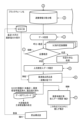
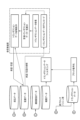
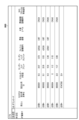
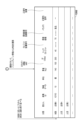
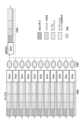
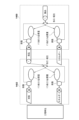
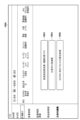
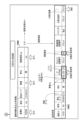
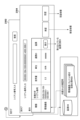
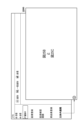
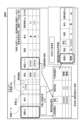
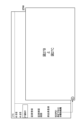
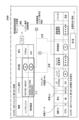
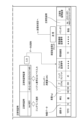
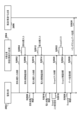
- FIG. 1 is a diagram explaining an overview of an information collaboration system according to an embodiment of the present invention. Diagram schematically showing the concept of emissions calculation by the system of this embodiment Block diagram showing a functional configuration example of an edge node and a blockchain node according to the present embodiment A diagram showing the hardware configuration of an edge node according to this embodiment.
- FIG. 4 is a diagram showing a logical module configuration example realized in the system according to the present embodiment;
- Diagram (1) showing processing and data elements implemented in the system according to the present embodiment
- Diagram (2) showing processing and data elements realized in the system according to the present embodiment
- Diagram (3) showing processing and data elements implemented in the system according to the present embodiment
- FIG. 1 (1) schematically showing operations related to data transmission/reception in the system according to the present embodiment
- FIG. 2 schematically shows operations related to data transmission/reception in the system according to the present embodiment (2)
- a diagram showing an example of a reception list screen according to the present embodiment A diagram showing an example of a transmission list screen according to the present embodiment
- a diagram showing an example of a dialog for specifying a destination of corporate activity data according to the present embodiment Diagram (1) showing an example of tracing and developing business activity data according to the present embodiment.
- Diagram (2) showing an example of tracing and developing business activity data according to the present embodiment A diagram for explaining coefficients according to the present embodiment.
- a diagram for explaining in detail the coefficients according to the present embodiment A diagram for explaining in detail the coefficients according to the present embodiment.
- a diagram for explaining processing using coefficients according to the present embodiment A diagram showing an example of a dialog for specifying a destination of corporate activity data according to the present embodiment.
- Diagram (1) showing an example of generating calculation results such as GHG emission amounts for products in shipment quantities according to the present embodiment
- Diagram (2) showing an example of generating calculation results such as GHG emission amounts for the shipment quantity of products according to the present embodiment
- Diagram (3) schematically showing the linking process between the manufacturing product bill of materials and the linkage ID according to the present embodiment
- Diagram (1) for explaining conversion processing using coefficients according to the present embodiment
- Diagram (2) for explaining conversion processing using coefficients according to the present embodiment
- Diagram (3) for explaining conversion processing using coefficients according to the present embodiment
- FIG. 1 (1) schematically showing allocation processing for SCOPE1 non-offset according to the present embodiment
- Diagram (2) schematically showing allocation processing for SCOPE1 non-offset portion according to the present embodiment
- Diagram (3) schematically showing allocation processing for SCOPE 1 non-offset portion according to the present embodiment
- FIG. 1 (1) for explaining the additional processing of correctness proof according to the present embodiment
- FIG. 3 (3) for explaining the additional processing of correctness proof according to the present embodiment
- Diagram for explaining component sharing according to the present embodiment Diagram for explaining component sharing according to the present embodiment
- the information linkage system according to this embodiment is a system for sharing corporate activity data among a plurality of companies and accurately calculating the GHG emissions of each company.
- the information linkage system for example, compared to the conventional Scope 3 emissions calculated based on the amount of activity and emission sources for each company, it is possible to ascertain highly accurate emissions that are close to actual measurements.
- corporate activity data is linked from upstream to downstream in the supply chain, it is possible to better understand the situation, such as where and how much GHG is emitted in the supply chain, or how much offsetting is being done. becomes easily comprehensible. A detailed description will be given below.
- terminals (102a, 102b, . ) Refer to the business activity data of other companies recorded on the blockchain, or record your own business activity data on the blockchain. It should be noted that the terminals of companies are simply referred to as terminals 102 when they are not distinguished from each other.
- an edge node group can be composed of one or more edge nodes, but for the sake of simplification, the following description is based on an example in which there is only one edge node. When the edge node group and the blockchain nodes are not distinguished, they are simply referred to as the edge node 104, the blockchain node 106, and the like.
- a company that uses the terminal 102 is a company that has its own business activities. For example, if the company (Company A) that uses the terminal 102a is the entity that calculates GHG emissions, each company that uses the terminals 102b to 102n has a Includes companies.
- the edge node 104 runs an application that enables each company to send and receive corporate activity data shared on the blockchain to and from other companies.
- a company's business activity data is recorded in the blockchain of the blockchain network 120 as a transaction.
- the business activity data is also simply referred to as transaction data for simplification of description.
- the government can use the terminal 108 to read necessary business activity data via the edge node 104 connected to the blockchain network 120 and use it for preparing government statistics, for example.
- the business activity data recorded in the blockchain network 120 includes, for example, carbon footprints (GHG emissions) and non-GHG energy consumption for each specific product.
- corporate activity data also includes carbon sink credit and environmental value information for each specific product, which indicates the amount of GHG emission reduction or absorption.
- the environmental value information is information indicating the source of renewable energy, and may include non-fossil value information, for example.
- the carbon sink credit and environmental value information may be a reference to the certificate or certificate rather than the information itself of the certificate supporting the carbon sink credit or environmental value and the certificate of compliance with the GHG emission protocol.
- Corporate activity data can be recorded and referenced at various levels of granularity, but it is desirable to have data from which product-specific emissions and activity data can be obtained as much as possible.
- the granularity of data is, for example, (1) company level data, (2) business unit level data, (3) facility level data, (4) activity level, process level or production line level, (5) product level. data, and so on.
- Company-level data is GHG emissions and/or activity data for the entire company, and is coarse-level data.
- Business unit level data is GHG emissions and/or activity data for the business unit that manufactures the product.
- Facility-level data is GHG emissions and/or activity data of a facility or business that manufactures products.
- Activity-level, process-level, or production line-level data is GHG emissions and/or activity data associated with an activity, process, or production line that manufactures a product.
- Product-level data is data on GHG emissions from the product's raw material extraction to the gate. In the present embodiment, by obtaining corporate activity data for each product, which is finer than for each company, it is possible to ascertain highly accurate emissions that are close to actual measurement values.
- FIG. 2 schematically shows the concept of emissions calculation by the information linkage system 100.
- companies 200, 202, and 204 each generate corporate activity data for calculating their own Scope 1 emissions, and each corporate activity data is interconnected with other companies and can be used. It shows how it is.
- the company 200 refers to data related to its own company among the business activity data of the companies 202 and 204, and calculates up to Scope 3 emissions (for example, emissions related to transportation of parts and disposal of products). can do.
- Scope 3 emissions for example, emissions related to transportation of parts and disposal of products.
- Each company can enter detailed data such as business unit level, facility level, product level, etc.
- Edge nodes and blockchain nodes are examples of information processing devices. Each block shown here can be realized by hardware such as a computer CPU, elements, circuits, and mechanical devices, and is realized by software such as a computer program. It depicts the functional blocks implemented by Therefore, these functional blocks can be realized in various forms by combining hardware and software. Also, each data shown here is temporarily or permanently stored in a memory or storage, which will be described later.
- the blockchain node 320 connected to the blockchain network 120 and the edge node 300 that operates the application operate in cooperation.
- the edge node 300 provides, for example, screen information (to be described later) to user terminals 350 used by users 352 in the company, and realizes the functions of multiple modules such as an inter-subject information transmission module (to be described later).
- Edge node 300 and blockchain node 320 correspond to edge node 104 and blockchain node 106 described above, respectively.
- the user terminal 350 corresponds to the terminal 102 within the company.
- the functional configuration example shown in FIG. 3A is not limited to this.
- any of the elements that make up the edge node 300 may operate on the third node (eg, any data of the edge node 300 may be held at the third node).
- FIG. 3A shows the case where the edge node 300 and the blockchain node 320 are separate nodes, they may be integrated.
- the edge node 300 includes, for example, a communication unit 302, a display control unit 304, an authority evaluation unit 306, a certificate management unit 308, a data linkage unit 310, an environmental value calculation unit 311, a parts management unit 313, an authority It includes data 312 , certificate data 314 , environmental value data 316 and parts data 318 .
- the blockchain node 320 includes, for example, an edge communication unit 322, a blockchain communication unit 324, a hash value calculation unit 326, an encryption processing unit 328, and transaction data 330.
- the communication unit 302 of the edge node 300 communicates with the user terminal 350 and the blockchain node 320 via the network.
- the communication unit 302 transmits display data generated by the display control unit 304 to the user terminal 350 and receives input data transmitted from the user terminal 350 .
- the received input data is provided to the evaluation data linkage unit 310, the environmental value calculation unit 311, or the like.
- the communication unit 302 communicates with the blockchain node 320 according to instructions from the data linking unit 310, etc., and transmits data to be written as transaction data and receives read transaction data. .
- the display control unit 304 generates display data for display on the user terminal 350 .
- the display control unit 304 converts transaction data into display data and structures them as screen elements.
- the authority evaluation unit 306 determines whether the request for transaction data is valid. For example, the authority evaluation unit 306 checks whether the destination and sender data stored in the transaction data match the authority data. Also, if an audit destination is set in the transaction data, the authority evaluation unit 306 also determines that this is valid only if the user is the auditor.
- the authority data 312 may include identification information of users or companies having access authority to transaction data, contents of each authority, and the like. Certificate data 314 includes certificate data for credits. The certificate data 314 may function as a certificate DB, which will be described later.
- the certificate management unit 308 stores and reads the certificate data 314 for the hash value of the requested certificate.
- the data linking unit 310 associates transaction data. Also, the data linkage unit 310 generates transaction data from the component data read by the component management unit 313 . At this time, the data linking unit 310 calculates a coefficient for calculating the emission amount and the environmental value from the relationship between the associated transaction data and the part, and sets the emission amount and the environmental value of the transaction data accordingly.
- the data linking unit 310 may cause the communication unit 302 to transmit the data in order to record the transaction data in the blockchain node 320 .
- the environmental value calculator 311 calculates the data written on the certificate as the environmental value balance and records it in the environmental value data 316 .
- the parts management unit 313 associates the company's product data with its constituent elements and holds them as parts data 318 .
- the component management unit 313 reads component data in response to a request from the data linking unit 310 .
- the certificate data 314 and the environmental value data 316 may be provided separately from the blockchain that stores the transaction data.
- Transaction data business activity data
- the load on the blockchain node 320 and the load when receiving transaction data can be reduced.
- the blockchain node 320 records transaction data (that is, business activity data) received from the edge node 300 on the blockchain and reads it from the blockchain. That is, the blockchain node 320 can function as means for recording business activity data through the operation of each unit.
- the edge communication unit 322 communicates with the edge node 300 to receive a transaction data addition request, and transmits transaction data in response to a transaction data acquisition request from the edge node 300 .
- the blockchain communication unit 324 connects to other blockchain nodes that make up the blockchain network 120 via the network, synchronizes transaction data, and transmits and receives hash values.
- the hash value calculation unit 326 is periodically activated to calculate the hash value for the block chain addition request. The computation is started all at once in sync with other blockchain nodes. This hash value is repeated until a specific solution is obtained, at which point it is declared to other blockchain nodes and the computation of the entire blockchain node is finished. Calculations are set to complete within a certain amount of time, so they are guaranteed to finish before the next startup.
- the encryption processing unit 328 In response to a transaction data addition request, the encryption processing unit 328 encrypts the transaction data, the hash value, and the hash value of the previous transaction data, and complements the transaction data. In addition, the encryption processing unit 328 decrypts transaction data in response to a transaction data acquisition request and acquires data under specific conditions.
- Transaction data 330 includes company a's business activity data relating to GHG emissions directly emitted by company a and company b's business activity data relating to GHG emissions directly emitted by company b. As described above, the corporate activity data includes information on GHG emissions, non-GHG energy consumption, carbon sink credits, and environmental value.
- the transaction data 330 is recorded on the blockchain and distributed and held by multiple blockchain nodes 320 . A more specific example of business activity data will be described later.
- Edge node 300 includes memory 360 , processor 362 , communication interface 364 , storage 366 and input interface 368 . Each of these elements are connected to bus 370 and communicate with each other via bus 370 .
- the memory 360 is a volatile storage medium for temporarily storing data and programs.
- the storage 366 is a non-volatile storage medium that permanently stores data and programs.
- the storage 366 stores the above-described data described in the functional configuration example.
- the processor 362 realizes various functions of the edge node 300 by deploying and executing programs stored in the storage 366 in the memory 360 .
- the communication interface 364 is an interface for transmitting and receiving data with the outside of the edge node 300 .
- the communication interface 364 is connected to a network and exchanges data with the user terminal 350 and the blockchain node 320 via the network.
- the input interface 368 is a device for receiving input from the administrator of the edge node 300, but may be omitted.
- the hardware configuration of the blockchain node 320 may be the same as the hardware configuration described for the edge node 300.
- the storage 366 of the blockchain node 320 stores the blockchain including the transaction data 330 described above.
- the information collaboration system 100 includes an inter-subject information transmission module 402 , an intra-subject process module 404 and a credit certificate/environmental value certificate subtraction module 406 .
- the logical modules shown in FIG. 4 are implemented by cooperation of the respective parts of the nodes shown in FIG. 3A. In other words, it is realized by linking elements, circuits, and mechanical devices such as a CPU of a computer with a computer program. Note that each module 402, 404 and 406 is similar to modules 412, 414 and 416, respectively.
- the inter-subject information transmission module 402 is a module for linking data from each company and sharing corporate activity data among specific companies from upstream to downstream in the supply chain.
- a dashed box 400 schematically illustrates the extent of modularity that a particular edge node 104 implements (via blockchain nodes).
- the lines connecting the modules indicate the block chains to which the modules are connected.
- the inter-subject information transmission module 402 and the inter-subject information transmission module 412 are connected by a block chain, and the intra-subject process module 404 and the intra-subject process module 414 also send data to the block chain. It is possible to write and read data from the blockchain.
- the internal process module 404 is a module that calculates the company's own GHG emissions using relevant parts of the corporate activity data of other companies.
- the main internal process module 404 can, for example, calculate the GHG emissions of the product based on the GHG emissions associated with the purchased parts and a factor representing the relationship between the purchased parts and the product.
- the credit certificate/environmental value certificate subtraction module 406 is a module that divides the offset by the credit certificate or the environmental value certificate into amounts for each product and allocates the divided offsets to each product.
- FIGS. 5A to 5C show detailed processing and data elements implemented in the data linkage system 100.
- FIG. These processes are realized by any one of the inter-subject information transmission module 402 , the intra-subject process module 404 and the credit certificate/environmental value certificate subtraction module 406 .
- Each process in FIGS. 5A to 5C will be described with appropriate reference to the description of each module below.
- inter-subject information transmission module 402 the intra-subject process module 404, and the credit certificate/environmental value certificate subtraction module 406, and the cooperative processing between these modules will be described below.
- these modules 402, 404 and 406 or the edge node 300 will be explained as the processing subject in order to prevent the explanation from becoming complicated.
- Blockchain data reading and writing are performed by the blockchain node 320, but for other processing, the processor of the edge node 300 executes programs to make each functional block function, unless otherwise specified. It is realized by In addition, in the following description, an example of displaying various display data will be described. Unless otherwise specified, the screen related to the description is transmitted from the edge node 300 to the user terminal 350 and displayed on the user terminal 350. . Also, an input received from a user is transmitted from the user terminal 350 and processed by the edge node 300 .
- the inter-subject information transfer module 402 shares data via blockchain among specific companies on the supply chain. Data that should be shared only between specific companies may or may not be encrypted.
- the process of sharing data with a specific company via blockchain is represented as data transmission/reception process. By doing so, the users of each company can share the company activity data between companies with an easy operational feeling similar to sending and receiving e-mails.
- FIGS. 6A and 6B schematically show how data is sent and received via blockchain between a sending company and a receiving company.
- a screen for performing various operations such as generation and display of transaction data (business activity data) is displayed as a sender screen on the sending side.
- the sender screen may include, for example, a screen for generating transaction data, a screen for editing transaction data, a screen for displaying a list of transaction data transmitted in the past, a screen for transmitting transaction data, and the like.
- the sender screen may also include a transaction upload screen for uploading data within the enterprise relating to transactions recorded, for example, in CSV format, to the system.
- the transaction data to be transmitted is data related to products
- the transaction data is composed of transaction data related to parts and coefficients (for example, obtained from the number of required parts and the purchase quantity of parts, etc.). generated based on
- a list of transaction data currently being edited may be displayed as a list of transmission transaction data.
- a screen for adding one transaction data may be displayed.
- enter information that identifies the business operator e.g., company name, business code, security code, company code, etc.
- the operator code may be, for example, the GS1 operator code
- the company code may be, for example, the TDB company code.
- a bar code for reading a cooperation ID which will be described later, may be displayed on the screen for adding a transaction.
- the edge node When editing transaction data, for example, it may be possible to edit various data such as information related to credit certificates and environmental value certificates included in the transaction data.
- the edge node When editing the transaction data, when the user designates the information of the credit certificate or the environmental value certificate in the transaction data by pressing the button or the like, the edge node newly displays a screen for selecting the certificate (certificate selection screen). You may do so.
- the certificate selection screen the user can select, for example, the data of a credit certificate or environmental value certificate recorded in the certificate data and associate it with the target transaction data.
- the certificate selection screen it may be possible to search for a desired certificate by entering a serial number. It may be possible to collectively import the transaction data recorded in the file in advance on the list screen of the transaction data being edited.
- the user After adding or editing the transaction data, the user can send the transaction data to a desired destination by operating a send button, for example.
- Recording a transaction on a blockchain may be a known general blockchain process. For example, processing such as hashing and consensus processing of transaction data is performed, and the transmitted transaction data is stored in the blockchain. At this time, some transactions are blocked and stored on the blockchain.
- the result of processing by the credit certificate/environmental value certificate subtraction module may be stored in the environmental value data.
- Transaction data transmitted in the past can be displayed on the transmission transaction data list display screen. Each transaction data may be displayed according to timestamp (eg, in reverse chronological order).
- the recipient screen is displayed, for example, on the user terminal 350 of the recipient company.
- the recipient screen includes a screen for performing various operations such as displaying a list of transaction data (corporate activity data) transmitted (stored) by other companies and displaying details of the transaction data.
- transaction data may be received when a received transaction data list display screen is displayed.
- data that can be viewed by the user is filtered according to authority data (that is, access authority to data) and received.
- authority data that is, access authority to data
- each transaction data may be displayed according to the timestamp of the blockchain (for example, in reverse chronological order).
- the displayed transaction data may be downloaded in a predetermined format (for example, CSV).
- a display button for example, a download button
- its upstream transaction data for example, transaction data of parts
- pressing a display button such as an expand button, may display upstream transactions on a separate screen.
- a transaction data detail display screen may be displayed in response to the selection of specific transaction data in the transaction data list display.
- the transaction data detail display screen displays various information included in the transaction data.
- the transaction data detail display screen may allow the user to set whether to approve or disapprove the certificate associated with the transaction data.
- the user may set whether to approve or deny the certificate on another screen, such as a certificate confirmation screen, which will be described later, which is different from the transaction data detail display screen. If set to deny, information about the denied certificate may not be included when downloading transaction data.
- the display data shown as screen display examples is generated by the display control unit 304 using the processing results of the data linking unit 310, the certificate management unit 308, the environmental value calculation unit 311, and the like.
- FIG. 7 shows a login screen 700 for logging into the service (CTS: CarbonTraceService) provided by the information collaboration system 100 .
- the login screen 700 accepts the user ID and password of the user 352 of company B.
- FIG. Biometric authentication may be performed instead of entering a password.
- FIG. 8 shows, for example, a reception list screen 800 displaying a list of business activity data received from company A on the user terminal of company B.
- a main menu such as "receiving”, “sending”, and “editing” is displayed.
- "Receive” is an element that displays a reception list screen 800
- "Send” is an element that displays a transmission list screen 900, which will be described later.
- "Editing” is an element that displays a list of items being edited.
- the main menu contains other elements for quick access to desired information by the user, such as "Certificate” for accessing certificate information and "Parts” for displaying part information. may be placed. In addition, it may be switched according to the displayed information, or other elements such as "intra-subject cooperation” described later may be displayed.
- the corporate activity data displayed on the reception list screen 800 includes identifiers indicating specific products, carbon footprints (GHG emissions), energy consumption other than GHG, carbon sink credits (and certificates thereof) corresponding to the products. number), and environmental value (and its certificate number).
- the download button is pressed, the displayed transaction data can be downloaded as a file in CSV format, for example.
- FIG. 9 shows, for example, a transmission list screen 900 displaying a list of company activity data transmitted to company A on the user terminal of company B.
- the corporate activity data displayed includes an identifier indicating a specific product, carbon footprint (GHG emissions), energy consumption other than GHG, carbon sink credit (and its certificate number), and environmental value (and its certificate number).
- FIG. 10 shows an example of a new edit screen 1002 for adding a new transaction on the user terminal of company B, for example.
- the new edit screen 1002 displays columns for entering each item of the business activity data for one case.
- the entered business activity data is registered in response to pressing of the registration button. Note that the example shown in FIG. 10 shows an example of registering one case of corporate activity data. You may register multiple corporate activity data at once.
- FIG. 11 shows an example of a dialog 1100 for specifying the destination of the data after registering the business activity data.
- the destination to be sent can be set by entering or searching for a company name, company code, or the like.
- edge node 300 sends the registered business activity data to the blockchain network (via blockchain node 320).
- the transaction data is recorded in the blockchain through consensus processing, etc., the transaction data record is notified to the sender, company B, and the receiver, company A.
- Figures 12A and 12B show an example in which the business activity data displayed on the reception list screen is developed by tracing the business activity data on the upstream side of the supply chain. This example shows how data received from company B is expanded on the reception list screen of company D, for example.
- the blockchain node 320 obtains business activity data (previously stored on the blockchain) of companies A and C, which are upstream companies of company B, from related information between transaction data stored in the transaction data. do.
- the acquired business activity data is displayed as display data via the display control unit 304 of the edge node 300 .
- the business activity data received from Company A includes business activity data related to the parts. That is, it includes GHG emissions directly emitted by company A for its parts, non-GHG energy consumption, carbon sink credits, and environmental value.
- the corporate activity data transmitted by Company B includes GHG emissions directly emitted by Company B for products, energy consumption other than GHG, carbon sink credits, and environmental value.
- the processing by the inter-subject information transmission module 402 described above includes the processing of receiving data from the cooperation information of the distributed ledger and expanding the SC transaction record, and the processing of data transmission to inter-subject cooperation.
- the processing of writing business activity data to the blockchain by BC conversion corresponds to the process of writing business activity data to the blockchain by BC conversion.
- the subject intraprocess module 404 generates its own business activity data based on the other company's business activity data received by the inter-subject information transfer module 402 .
- the intra-subject process module 404 associates the quantity of purchased parts with the number of parts required for the manufactured product, Calculate the ratio (coefficient) of the number of parts.
- a model for determining the ratio (coefficient) of the number of parts in a product to the quantity of purchased goods is also referred to as an input-coefficient-output model.
- FIG. 13 schematically illustrates an example of assigning business activity data for each purchase to business activity data for manufactured products 1304 by computing coefficients 1302 on business activity data for various purchases 1300 .
- Figures 14A and B are diagrams for explaining the input-coefficient-output model in more detail.
- Q is the physical quantity of purchased goods
- q is the quantity of parts per product.
- This model can be applied not only to the relationship between quantity purchased and products within the entity as a whole, but also to each specific process within the entity.
- the models in FIG. 14A can also be applied as models 1400 and 1402, respectively, in FIG. 14B.
- a similar model corresponding to the physical distribution may be inserted. In this way, by using coefficients in the input-coefficient-output model, it is possible to calculate the relationship between the activity data of purchased goods and the business activity data of products by simple calculation, while ensuring traceability. can be done.
- FIG. 15 shows an example of a bill of materials.
- parts “BBBB” to “HHHH” are associated with product "AA”. It also indicates that one part "BBBB” is required for one product "AA”.
- a bill of materials can be registered via the edge node 300 . The registration of the bill of materials corresponds to the process of registering the bill of materials 501 in the BOM DB in the example shown in FIGS. 5A to 5C.
- the edge node 300 may allow the user to register and view information on the parts bill through a screen displaying a parts list (parts list screen).
- a product or parts in the upper hierarchy
- an "Open Hierarchy” button It is possible to display the parts of the upper hierarchy and the parts of the lower hierarchy. Before the "Open Hierarchy" button is pressed, the parts in the lower hierarchy may be hidden and made invisible.
- the edge node 300 arranges an "addition button" on the parts list screen, and registers lower layer parts as components of a product (or higher layer parts) in response to pressing of the button. be able to.
- the edge node 300 arranges a search field on the parts list screen, searches for a target part from the bill of materials in response to input of part of a part code or part name in the search field, Search results may be displayed.
- Step 2 Edge node 300 generates transaction data (product transaction AA) for product "AA” and its own transaction data (own part transactions BBBB to HHHH) for parts "BBBB” to "HHHH".
- the generated transaction data has a relationship in which the product transaction AA is the parent element and the in-house part transactions BBBB to HHHH are the child elements.
- Step 3 The edge node 300 associates each of the own part transactions BBBB to HHHH with each of the upstream part transactions BBBB to HHHH. This association may be performed, for example, by the user selecting each own company part transaction on a user interface to associate with each received upstream part transaction.
- Step 4 The edge node 300 calculates the above-mentioned coefficient (ratio of the number of parts in the product to the physical quantity of purchased goods) in accordance with the association between the in-house parts transaction and the upstream parts transaction. Then, each data of the own company parts transaction is set from the coefficient and the upstream parts transaction data. That is, each information such as GHG emission amount, energy consumption amount, carbon sink credit, environmental value, etc. is set in the company parts transaction.
- Step 5 Further, the edge node 300 converts the transaction data of the product "AA" into the data of the self-parts transactions BBBB to HHHH in response to receiving an instruction to aggregate the part transactions, for example, for the transaction of the product "AA". set based on
- the edge node 300 can generate transaction data for the product "AA” to be further transmitted to other companies (that is, recorded in the blockchain).
- the edge node 300 may support the above registration processing via the parts list screen. For example, when the edge node 300 receives an instruction to create transmission data for a specified product on the parts list screen, the edge node 300 generates a product transaction including the relationship between the product and the parts (the above-mentioned product transaction). corresponding to in-house part transactions) may be generated. The instruction to create transmission data is given by displaying the product details screen in response to the product being specified on the parts list screen and pressing the "Create transmission data" button placed on the details screen. , is accepted. The edge node 300 may transition to the screen display during editing when the product transaction data (and in-house part transaction) is generated. In the screen display during editing, the product transaction (which is being edited) and the company parts transaction may be displayed in a list while maintaining the hierarchical structure.
- the edge node 300 When the edge node 300 receives an instruction to display a transaction selection screen for each in-house part transaction on the screen display being edited, the received transaction (for example, from an upstream company) is displayed in a selectable manner. When a specific received transaction is selected on the transaction selection screen, the edge node 300 assumes that the selected received transaction has been associated with the in-house part transaction (step 3 above), and performs the processing related to step 4 above. Calculate the coefficient and set the data of the in-house parts transaction.
- the edge node 300 accepts the display instruction of the detailed screen of the product transaction from the user on the screen display during editing.
- the edge node 300 arranges a "total button” for totalizing company part transactions on the product transaction detail screen.
- the process of step 5 is performed to set the product transaction data.
- FIGS. 16A-16B schematically illustrate another example 1600 for a user to associate product transaction data and parts transaction data via a user interface provided by edge node 300.
- FIG. The edge node 300 starts inputting product information and the like in response to pressing of the parts table registration button on the user interface.
- edge node 300 creates a parts configuration table in which product information 1602 and parts information 1604 are linked. 1606 is generated.
- the edge node 300 further associates the indirect discharge data for the product "AA".
- the edge node 300 may read indirect discharge data from a pre-registered table (not shown), or may receive input from a user.
- the edge node 300 also associates the energy consumption shown in the "Energy” row for the product "AA". Similarly, the edge node 300 may read the amount of energy consumption from a pre-registered table (not shown), or may receive an input from the user. This energy consumption is data for calculating the subject's Scope 2 emissions. In addition, the edge node 300 adds a column of “SCOPE registration” indicating which scope calculation each item linked to the product “AA” is used for. For example, the "Energy" row associated with the product "AA” is subject to Scope2, while the other rows are subject to Scope3. Furthermore, information indicating to which category of Scope 3 the item corresponds may be included.
- the parts transactions are aggregated into the product transactions as shown in FIG.
- the edge node 300 receives other company's transaction data (that is, upstream parts transactions) related to the purchased item, and calculates the coefficient for the physical quantity of the purchased item by the method described above with reference to FIGS. 14 and 15 .
- the respective coefficients for the multiple stocks associated with that particular product are calculated.
- the parts transaction data is then aggregated into transaction data for that specific product.
- FIG. 18 shows another example (user interface 1800) related to intra-subject collaboration processing executed in the intra-subject process module 404.
- the intra-subject linkage processing started from the user interface 1800 includes, for example, (1) manufacturing product bill of materials-linkage ID linkage processing, (2) intra-subject process calculation processing, and (3) assignment of SCOPE1 unoffset including processing.
- the "manufactured product parts table-linkage ID link" button 1802 is pressed, the edge node 300 starts the manufacturing product parts table-linkage ID linking process, which will be described later. is pressed, the intra-subject process calculation process is started.
- the edge node 300 receives the quantity of products actually shipped in the intra-subject process arithmetic processing, and receives energy consumption information, GHG emission amount (carbon footprint) information, credit and environmental information according to the product shipment amount. and offset information such as value.
- FIGS. 19A and 19B schematically show an example of generating a calculation result 1902 including GHG emissions and offset information for a shipping quantity of products by intra-subject process calculation processing.
- the edge node 300 receives user input for product shipping information 1900 in consideration of product shipping volume.
- the edge node 300 receives, for example, the cooperation ID, product quantity, and weight conversion value.
- the linkage ID is an identifier for linking the shipping quantity information with the certificate offset information or the like.
- the edge node 300 registers the input cooperation information in the conversion factor DB, and performs a linking operation between the cooperation information, the bill of materials, and the offset information.
- the edge node 300 automatically calculates information on GHG emissions, energy consumption, credits, and environmental value according to the shipment amount of products, and displays them as calculation results 1902 .
- the edge node 300 may output the calculation result 1902 to an external device as business activity data of the company. Note that the total value of Scope 1 to Scope 3 is included in the business activity data by the “manufactured product bill of materials-linked ID linking process” described later.
- processing described with reference to FIGS. 19A-19B corresponds to executing the intra-subject process calculation 503 based on the cooperation ID and shipment product/quantity input in the example shown in FIGS. 5A-5C.
- the credit certificate/environmental value certificate subtraction module 406 divides offsets related to credit certificates, environmental value certificates, etc. by product. Therefore, in order to realize offset allocation for each product, the module 406 performs subtraction processing of the environmental value, branch numbering processing, and registration in the linked record disclosure DB.
- FIG. 20 schematically shows a certificate registration screen 2000 for registering certificates acquired by a company.
- the type of signature to be registered can be selected from a predetermined certificate type list.
- Type list 2002 may include, for example, vitality value, source, non-fossil, green power, ISO14000, and the like.
- Certificate registration information includes certificate type, luminous entity, serial number, total amount of emissions to be reduced, level, balance of available emissions, and the like. Also, a certificate such as the invalidation notice 2400 can be further registered for confirmation of certificate acquisition.
- the edge node 300 can display a certificate list screen that displays a list of registered certificates. On the certificate list screen, registered certificates may be displayed in a list form. When the user selects information for a particular certificate, the edge node 300 can cause a detail screen to display detailed information for the selected certificate.
- the edge node 300 may place an "Add" button for registering a new certificate on the certificate list screen, and display the certificate registration screen in response to pressing of the add button. .
- the edge node 300 displays all fields blank when the certificate registration screen is first displayed.
- the registration information of the specified certificate such as the serial number and numerical data, is read and displayed on the screen.
- the edge node 300 sets the usable balance of the certificate to the total amount of the balance of the certificate when the certificate is added.
- the edge node 300 refers to the certificate when transaction data is created thereafter, and subtracts the balance by the numerical value used in the transaction in response to the transmission of the transaction.
- Figures 21A and 21B show another example of processing for a certificate.
- the edge node 300 acquires the balance (for example, 4000) of the certificate data stored in the environmental value DB, and the offset (for example, 0.3 ) is subtracted.
- the balance of the environmental certificate eg, 3999.7
- the edge node 300 may separately record the balance of the environmental value in a database, or may implement a branch numbering process. In the branched numbering process, a branched number (for example, "4000-3999.7”) is generated from the original serial number by the numerical value before subtraction and the numerical value after subtraction.
- the edge node 300 registers the serial number with the branch number in the DB for environmental value/credit linking record disclosure together with the environmental value and the usage amount.
- This environmental value/credit link record disclosure DB is disclosed so that it can be referenced from outside the information linkage system 100 as shown in FIGS. 5A to 5C.
- the offset division processing by the credit certificate/environmental value certificate subtraction module includes serial number serial number 506, appending the serial number serial number to the DB, and disclosing the environmental value/credit linking record.
- serial number serial number 506 appending the serial number serial number to the DB
- disclosing the environmental value/credit linking record Corresponds to DB creation 507 .
- the environmental value balance may be recorded by other methods as described above.
- the environmental value certificate was explained as an example, but the module 406 can perform similar processing not only for the environmental value but also for the carbon sink credit.
- the edge node 300 may display the certificate list screen described above, or may inspect the certificate information on the received list screen 2200 as shown in FIGS. 22A and 22B. For example, when the user selects one of the received business activity data (for example, by selecting a radio button), the edge node 300 displays the environmental value associated with the product of the selected business activity data. information 2202 is displayed.
- the environmental value information 2202 includes a cooperation ID, an assigned environmental value, an environmental value certificate number with a branch number, and the like.
- the edge node 300 may display the detailed information of the certificate on the certificate list screen as described above.
- the edge node 300 can display a certificate confirmation screen for confirming the certificate.
- the edge node 300 receives a certificate confirmation instruction on the main screen 2300 shown in FIGS. 23A and 23B, the edge node 300 displays a search screen 2302 for searching for a certificate.
- the edge node 300 searches for the certificate with the serial number entered on the search screen 2302 from the certificate DB (shown in FIGS. 5B to 5C) or the environmental value/credit linking record public DB, and finds a certificate that matches the serial number. If so, a confirmation screen 2304 is displayed.
- the edge node 300 displays the type of certificate, the serial number with branch number, the usage amount, the cooperation ID, etc. on the confirmation screen 2304 . Also, on the confirmation screen 2304, the user can set whether to approve or disapprove the certificate. The edge node 300 confirms acceptance of the certificate if the user chooses to approve, and does not accept the certificate if the user denies. Confirmation screen 2304 also includes a button or link for displaying the attached voucher.
- the edge node 300 downloads the target certificate when the approval button is pressed. On the other hand, if the denial button is pressed, the environmental value/carbon sink credits in the data to be downloaded are deleted.
- the process of accepting the environmental value certificate information and the carbon sink credit information calls up the certificate from the environmental value/credit record public web or the environmental value/credit record public DB, and confirms the certificate.
- the process of determining the upstream acceptance data in the selection of approval and disapproval at 508 corresponds to the process of determining the upstream acceptance data in the selection of approval and disapproval at 508 .
- the manufacturing product parts table-linkage ID linking process may be executed when the "manufacturing product parts table-linkage ID link" button 1802 shown in FIG. 18 is pressed.
- Figures 24A to 24C schematically show the manufacturing product bill of materials - linkage ID linking process.
- the edge node 300 receives the input of the product code of the manufactured product from the user (2402), and searches the parts configuration table DB for information on necessary parts.
- the edge node 300 displays cooperation ID linking information 2404 that allows a cooperation ID to be assigned to the data of the bill of materials.
- the edge node 300 receives an input of a linkage ID from the user and further receives a storage instruction
- the edge node 300 generates linkage data 2406, which is data in which part information and offset information are linked to one product, and displays it. Display as data.
- the edge node 300 searches for the federation ID of the certificate (displayed on the confirmation screen 2304 ) that matches the federation ID input for the federation ID linking information 2404 , for example.
- the edge node 300 generates the federation data 2406 by linking the federation ID linking information 2404 and the data of the certificate.
- the edge node 300 executes the conversion processing shown in FIGS. 25A to 25C. 25A to 25C, a conversion factor is calculated from the bill of materials and the link data 2406, and the value of the link data is updated. Specifically, the edge node 300 calculates the coefficients of the input-coefficient-output model based on the quantity data of the manufactured product (corresponding to the quantity and number of products) and the required number of parts in the bill of materials. Then, the energy consumption, GHG emissions (carbon footprint), sink credits, and environmental value included in the linked data 2406 are multiplied by the calculated coefficients to obtain the energy consumption and GHG emissions (carbon footprint) per product. , sink credits and environmental values are calculated and displayed (FIG. 25B). The edge node 300 calculates the coefficient for all the parts linked to the manufactured product (corresponding to calculation for each row of the linked data 2406).
- the edge node 300 when receiving an aggregation instruction from the user, the edge node 300 totals all energy consumption, GHG emissions, sink credits, and environmental values corresponding to Scope 1, Scope 2, and Scope 3 for each product code, Output the total value of each item as a total value for each product.
- the edge node 300 then activates the intra-subject process calculation to display the product shipping information 1900 for inputting the cooperation ID, quantity, and the like.
- FIG. 26 illustrates the process of reconstructing the conversion factor DB using the linkage ID and part code of the linkage data 2406 and the linkage ID of the product shipping information input in the intra-subject process calculation.
- the edge node 300 uses the collaboration ID and part code included in the collaboration data 2406 as the upstream collaboration ID and part code, respectively, and the collaboration ID of the product shipping information 1900 in FIG. to create The edge node 300 stores the created table in the coefficient DB.
- the manufacturing product parts table-linkage ID linking process described above includes the manufacturing product parts table-linkage ID linking 502, conversion factor calculation/accepted data conversion/aggregation 509, conversion factor Corresponds to DB formatting 510 and downstream linkage ID appending 511 .
- allocation processing for SCOPE 1 unoffset may be performed.
- the SCOPE1 non-offset allocation process may be executed, for example, when the "SCOPE1 non-offset allocation process" button 1806 shown in FIG. 18 is pressed.
- the processing of the environmental value certificate subtraction module described above is executed to generate a serial number with a branch number (a new number indicating the allotment).
- FIGS 27A to 27C schematically show allocation processing for SCOPE1 non-offset portions. Note that the values of the sync credit and environmental value of the linked data before executing this process are 35 and 50, respectively.
- the edge node 300 displays a credit/environmental value balance list when the "Scope 1 non-offset allocation process" button 1806 is pressed. For example, the edge node 300 reads certificate information stored in the certificate DB and displays the list. Information such as the type of certificate, issuer, serial number, and balance is displayed on the list.
- the edge node 300 performs the environment value subtraction process, branch numbering process, and storage process in the public DB shown in FIG. 21B.
- the edge node 300 adds a newly allocated allocation amount to the already allocated sink credit and environmental value (35 and 50, respectively), and performs branch numbering based on the new allocation amount.
- the values of sync credit and environment value of linked data after execution of processing are increased to 45 and 70, respectively. It should be noted that the offset described here is for the company's Scope 1 emissions.
- Scope 1 non-offset allocation processing described with reference to FIGS. Append serial number branch number to DB”.
- the edge node 300 When the edge node 300 receives a request for product shipping information from a user, the edge node 300 displays the product shipping information. When the user selects specific product shipping information, the edge node 300 displays the target linkage data. Furthermore, by filtering, only related certificates (certificates related to certification of accuracy) are acquired from the certificate DB and displayed.
- the edge node 300 when the edge node 300 receives the input of the serial number of the certificate for which accuracy is to be certified (among the displayed certificates), the edge node 300 adds the target of accuracy certification and the serial number of the accuracy certification to the target linked data. Tie By doing so, it is possible to add the data related to the proof of correctness to the data included in the linked data.
- the information collaboration system is the first business activity data generated by the first company (for example, the business activity data added in FIG. 10), and the GHG directly emitted by the first company It is now possible to record primary business activity data on emissions.
- the information linkage system is the second business activity data generated and recorded by another company (for example, the other company's business activity data shown in FIGS. 8 and 12A to 12B), and the other company directly We made it possible to obtain part of the second corporate activity data related to GHG emissions.
- the information collaboration system determines the amount of GHG emissions directly and indirectly emitted by the first company ( Figures 25A to 25C and 26 (for example, total GHG emissions for Scopes 1, 2, and 3).
- the GHG emissions directly emitted by the first company are calculated based on the first corporate activity data, and the first company based on the corporate activity data related to the first company in the second corporate activity data GHG emissions indirectly emitted by companies are calculated.
- the first company activity data is calculated at the product level of the first company. By doing so, the calculated GHG emissions can be refined. Furthermore, in this embodiment, in order to provide product-level business activity data, a coefficient representing the ratio of the number of parts in the product to the quantity of purchased goods is used. This can facilitate the calculation of upstream process emissions for manufactured products.
- the first business activity data includes offset information applied to GHG emissions by the first business. More specifically, the first company activity data includes GHG emissions and non-GHG energy consumption by the first company, as well as carbon sink credit information and environmental value information of the first company. As a result, by handling not only GHG emissions but also offset information (credits, environmental value, etc.) as an integrated unit, it is possible to trace the total emissions performance, including the reduction performance of GHG emissions, etc. Become.
- the case where business activity data is recorded in a blockchain has been described as an example. However, in embodiments described herein, business activity data may be recorded in other ways that provide tamper resistance and traceability, such as in a database.
- ⁇ Input support function> As described above, in the information collaboration system 100, a company that manufactures parts and a company that manufactures products using the parts each register their company activity data in the blockchain. Then, for example, a company that manufactures products (companies on the downstream side of the supply chain) uses business activity data of companies that manufacture parts (companies on the upstream side of the supply chain). Therefore, each business activity data is required to be accurate. On the other hand, corporate activity data may be entered manually or derived from manually entered data. Therefore, due to human error or the like, for example, a numerical value with a different unit or a different number of digits may be input, or may not be input at all. Moreover, some companies lack sufficient knowledge and experience in collecting and registering business activity data, and it may become a heavy burden to input their own business activity data accurately.
- the information collaboration system 100 of this embodiment further includes an input support function for reducing the burden of inputting business activity data.
- a company that uses corporate activity data i.e., a company that manufactures products on the downstream side of the supply chain
- a company that manufactures parts company on the upstream side of the supply chain
- companies that manufacture parts can reduce input errors in corporate activity data by entering only the data required by companies that use the company activity data. It is possible to reduce input burden.
- a company that audits the company's GHG emissions or calculates GHG emissions may ask the company that manufactures parts to conduct business activities. You may make it designate the required data as data.
- the company that manufactures the parts inputs business activity data according to the designation of the auditing company, and provides the business activity data to other companies after being verified by the auditing company.
- a company that manufactures parts can provide accurate business activity data to companies (companies that manufacture products) on the downstream side of the supply chain while reducing the input burden.
- a department such as an environmental management department of a company that manufactures products or parts may play the role of the audit company. In other words, the audit company need not be a separate company from the target company.
- the input support function of the information collaboration system 100 will be described in more detail with reference to FIG.
- the audit company assists the input of business activity data of a company that manufactures parts (here, it is also referred to as a target company in the sense of an audit target). That is, the auditing company designates necessary data from the business activity data for the target company, and verifies the entered business activity data.
- Such input support can also be applied when a company that manufactures products designates the necessary data in the corporate activity data for a company that manufactures parts, and uses the entered corporate activity data. is.
- FIG. 29 schematically shows exchanges between the auditing company, the target company (the company that manufactures parts), and the company that manufactures products (their user terminals 2902, 2904, and 2906).
- the user terminals of the auditing company, the target company, and the company that manufactures the product exchange data with the edge node 300, thereby making it appear as if each company's Functionality is implemented such that data is sent and received between user terminals.
- the edge node 300 when the user terminal 2902 of the auditing company requests the edge node 300 to display a screen (for example, a fuel consumption input request screen), the edge node 300 generates screen data for display and transmits it to the user terminal 2902 of the auditing company. .
- the user terminal 2902 of the auditing company causes the display screen received from the edge node 300 to be displayed on the display unit, and accepts input from the user.
- the user terminal 2902 of the auditing company receives a user operation on the display screen (for example, a fuel consumption input request)
- the user terminal 2902 transmits to the edge node 300 a request whose destination is the target company (for example, a fuel consumption input request). .
- the edge node 300 In response to this, the edge node 300 generates screen data for the target company's user terminal 2904 and transmits the screen data (for example, displays a fuel consumption input request on the recipient's screen).
- the exchange between companies shown in FIG. 29 is processed and implemented by the edge node 300.
- the edge node 300 separately designates necessary data out of the business activity data related to the parts manufactured by the target company and used to manufacture the product, and transmits the data to the user terminal of the target company. Inter-company interactions will be described below, but those skilled in the art will understand that the edge node 300 performs the same operations as above with each user terminal in each interaction.
- the auditing company is a company that audits the GHG emissions of the target company and calculates the emission amount on behalf of the target company, it obtains in advance information indicating which parts the target company will deliver to the trading partner, It is stored in the storage medium of the terminal 2902 .
- the user terminal 2902 of the audit company transmits a fuel consumption input request to the user terminal 2904 of the target company (S2902).
- the fuel consumption input request is a request to specify fuel consumption data in the business activity data of the target company and request data input by the target company.
- the fuel consumption data input here may be, for example, annual fuel consumption data. good too.
- the user terminal 2904 of the target company Upon receiving the fuel consumption input request, the user terminal 2904 of the target company receives, for example, input of fuel consumption data among the corporate activity data from the user of the target company (S2904).
- the fuel consumption data corresponds to the Scope 1 data of the target company.
- the same sequence can be applied to direct emissions of GHG in general, such as direct emissions of fluorocarbons in semiconductor manufacturing.
- the target company's user terminal 2904 transmits a fuel consumption verification request to the auditing company's user terminal 2902 (S2906).
- the fuel consumption verification request is a request to request the auditing company to verify the fuel consumption data entered by the target company.
- the user terminal 2902 of the audit company receives the fuel consumption verification request, for example, the user of the audit company verifies the fuel consumption data included in the fuel consumption verification request.
- the user terminal 2902 of the auditing company then receives an input of the verification result from the user of the auditing company (S2908). If there is no problem as a result of the verification, the content entered by the target company is confirmed.
- the user terminal 2902 of the auditing company sends a fuel consumption input request including a message indicating the pointed out item to the user terminal 2904 of the target company again. You may send.
- the user of the auditing company verifies the fuel consumption data included in the fuel consumption verification request.
- the fuel consumption data may be verified by executing a predetermined verification program that detects outliers such as numerical values.
- the user terminal 2902 of the auditing company next transmits a power consumption input request to the user terminal 2904 of the target company (S2910).
- the power consumption input request is a request for designating power consumption data in the business activity data of the target company and requesting the target company to input the data.
- the power consumption data input here may be, for example, annual power consumption data. good too.
- the power consumption data corresponds to the Scope 2 data of the target company.
- the user terminal 2904 of the target company Upon receiving the power consumption input request, the user terminal 2904 of the target company receives, for example, power consumption data input from the user of the target company (S2912).
- the user terminal 2904 of the target company transmits a power consumption verification request to the user terminal 2904 of the auditing company (S2914).
- the power consumption verification request is a request to request the auditing company to verify the power consumption data input by the target company.
- the user terminal 2902 of the auditing company receives the power consumption verification request, for example, the user of the auditing company verifies the power consumption data included in the power consumption verification request.
- the user terminal 2902 of the auditing company receives the input of the verification result from the user of the auditing company (S2916). If there is no problem as a result of the verification, the content entered by the target company is confirmed.
- the user terminal 2902 of the auditing company sends a power consumption input request including a message indicating the pointed out items to the user terminal 2904 of the target company again. You may send.
- the user of the auditing company verifies the power consumption data included in the power consumption verification request.
- the power consumption data may be verified by running a predetermined verification program that detects outliers such as numerical values.
- the user terminal 2902 of the audit company sets the input items of Scope 3 that the target company should enter (S2918).
- the user terminal 2902 of the auditing company transmits a Scope 3 input request to the user terminal 2904 of the target company (S2920).
- the Scope 3 input request is a request to request data input by the target company by designating the data related to Scope 3 set in S2918 among the business activity data of the target company.
- the Scope 3 data input here may be, for example, data aggregated over a year, but if the Scope 3 input request includes a specific period designation, it may be Scope 3 data for that period. .
- the user terminal 2904 of the target company receives, for example, input of Scope 3 data in the corporate activity data from the user of the target company (S2922).
- the target company's user terminal 2904 transmits a Scope 3 verification request to the auditing company's user terminal 2904 (S2924).
- the Scope 3 verification request is a request for requesting the auditing company to verify the Scope 3 data input at the target company.
- the user terminal 2902 of the auditing company receives the Scope3 verification request, for example, the user of the auditing company verifies the Scope3 data included in the Scope3 verification request. Then, the user terminal 2902 of the auditing company receives the input of the verification result from the user of the auditing company (S2926). If there is no problem as a result of the verification, the content entered by the target company is confirmed.
- the user terminal 2902 of the auditing company sends a Scope 3 input request including a message indicating the pointed out item to the user terminal 2904 of the target company again.
- the user of the auditing company verifies the data of Scope3 included in the Scope3 verification request.
- Scope 3 data may be verified by executing a predetermined verification program that detects an abnormal value of .
- the user terminal 2902 of the auditing company requests the user terminal 2904 of the target company to separately input, for example, information on Scopes 1 to 3 of the company activity data, so that the target company can step-by-step Business activity data can be entered in steps, and the input burden can be reduced.
- the data input by the target company is verified each time by the auditing company, the accuracy of the corporate activity data can be ensured.
- the edge node 300 sends and receives the above-described input request request and verification request request to each of the user terminals, so that, for example, the user terminal 2902 of the audit company and the user terminal 2904 of the target company It is possible to realize the exchange of requests between companies, promote the input of business activity data, and realize the accumulation of accurate business activity data.
- the user terminal 2902 of the audit company sends a data transmission request to the user terminal 2904 of the target company (S2928).
- the data transmission request is a request to the target company to transmit the business activity data of parts as transaction data to the user terminal 2906 of the company that manufactures the product.
- the user terminal 2904 of the target company in response to receiving the data transmission request or in response to receiving the user operation after receiving the data transmission request, performs the corporate activities including the verified Scope 1 to 3 data.
- the data (transaction data regarding parts) is transmitted to the user terminal 2906 of the company that manufactures the product (S2930).
- the following processing is performed for the user terminal 2904 of the target company to transmit the transaction data (for example, by the edge node 300).
- the edge node 300 divides the sum total of energy consumption and GHG emissions related to Scopes 1 and 2 by the ratio of the sales of the target company to the destination company (i.e., the company that manufactures the product) and the annual sales of the target company. and add it as an element of the transaction data.
- the edge node 300 calculates (in S2918) each input value for the input item of the specified Scope 3 on a basic unit basis, and calculates the GHG emission amount of each input value. Furthermore, the edge node 300 uses the sum of the calculated values as the energy consumption amount and the GHG emission amount in the transaction data. Transaction data including such calculated values is stored in the blockchain via the edge node 300 as described above, and the stored data is read out from the blockchain as if transaction data were transmitted and received. is realized as In the above calculation example, the ratio was calculated using sales, but instead of this, the total production volume of the target company (or factory, line, etc.) and the production volume to be delivered, or the production activity time of the target company You may calculate a ratio by the production activity time regarding the product to deliver.
- FIG. 30 shows how a request dialog 3006 is displayed when an add button 3004 is pressed on a request list screen 3002 displaying a list of requests sent and received with other companies.
- the request list screen 3002 displays, for example, a list of fuel consumption verification requests, power consumption verification requests, and Scope 3 data input requests that have been sent from the target company in the past.
- Request dialog 3006 includes request destination 3008 , request template 3010 , request content 3012 , Scope 3 data destination 3014 , input items 3016 , and send button 3018 .
- the target company is set in the request destination 3008.
- the request template 3010 may be able to set, for example, a fuel consumption input request, a power consumption input request, or a Scope 3 input request.
- the request content 3012 may be any text that can be input, and may be, for example, a text indicating a request item and its explanation from the audit company to the target company.
- Scope 3 data destination 3014 indicates the destination of data to be input.
- the data to be input is sent to the company that manufactures the product (the company on the downstream side of the supply chain), so for example, the name of the company is entered.
- the input item 3016 the item of the input item or the name of the group is input.
- an item to be input as a Scope3 input item can be added.
- items such as “polyester”, “acrylic”, “cotton” and “linen” can be set for the group “interior industry”.
- item settings it is possible to specify the category, unit, basic unit, etc. associated with each item. For example, for the item name “Polyester”, the category “3.1 Purchased Goods/Services” can be specified, with the unit being “sheets” and the basic unit being "0.003". You can set indicators for entering data. These will enable the target company to more accurately enter the data desired by the company viewing and using the data.
- the dialog closes and a Scope 3 input request is sent to the user terminal 2904 of the target company.
- the user terminal 2902 of the auditing company transmits a request for screen generation to the edge server 300, and the edge server 300 creates the display screen. It is realized by generating data and transmitting it to the user terminal 2902 .
- the case of sending the Scope 3 input request was explained as an example, but this example can also be used for the fuel consumption input request and the power consumption input request. be.
- a fuel consumption input request or a power consumption input request may be set in the request template 3010 of the request dialog.
- the above-mentioned input items 3016 have been explained with the items associated with Scope 3 as an example, these input items can be changed according to the set template (fuel consumption input request, power consumption input request, Scope 3 input request). The associated item becomes enterable.
- ⁇ Component information sharing function> In the above embodiment, for example, as a description related to FIG. 15, the process of generating the transaction data of the product by the edge node 300 using the bill of materials has been described.
- This embodiment further has a function of sharing the configuration information of a specific part in the parts configuration table with other companies or other departments.
- the shared parts can be displayed at the supply destination like the configuration information of the company's or own department's parts, and corporate activity data about the parts can be entered and transmitted as transaction data.
- a company that manufactures products can share parts with a company that manufactures parts (Company A).
- the parts configuration table of a company (company B) that manufactures products includes configuration information of "part a" and "part b" that make up "part A”.
- company B which manufactures products
- FIG. 31B shows another example in which a company that manufactures products (Company B) shares parts with a company that manufactures parts (Company A).
- a company (Company B) that manufactures a product can share information on "Part A", which is a shared part, with the company (Company A) that manufactures the part.
- Company A, which manufactures Part A can newly add information on "Part a" and "Part b" that make up "Part A", and calculate and input corporate activity data related to the added parts. can.
- the company (company B) that manufactures the product does not have the configuration information of the part A.
- the sharing of the part information described above is set using the user interface described below, and the process for sharing the part information is executed in the edge node 300 . That is, in response to a sharing request from the user terminal 2904, the edge node 300 causes the two companies to share the parts information by, for example, transferring the information of the corresponding part bill of materials. On the other hand, if the company that manufactures the product does not have the component configuration information shown in FIG. Sharing of part information is controlled so that part b") is not shared with companies that manufacture products.
- FIG. 32 when the user terminal of the company that manufactures the product displays the user interface 3200 showing the parts configuration, for example, when a share button (not shown) is pressed, the sharing button is displayed.
- a dialog 3202 is displayed. That is, the edge node 300 generates screen information including the sharing dialog 3202 and transmits it to the user terminal in response to pressing of the share button on the user terminal.
- the sharing dialog 3202 includes a user interface for adding company names with which part information is shared.
- the edge node 300 makes the company name or company code searchable, and searches for the company name or company code based on the input text or the like.
- the edge node 300 displays the selected company name or the like in the company name display 3206 of the sharing dialogue 3202 . At this time, the edge node 300 shares the part information to be shared with the selected company in accordance with the selection of a specific company name or company code.
- the upstream company can display part of the parts information of the downstream company as if it were the parts list of the upstream company.
- downstream companies in the supply chain can prompt upstream companies to enter specific information (that is, information on shared parts). It is possible to reduce situations where data is not entered when trying to use it, and to acquire necessary data more reliably. As a result, it becomes possible to reduce input errors in business activity data and lighten the input burden.
Landscapes
- Business, Economics & Management (AREA)
- Human Resources & Organizations (AREA)
- Engineering & Computer Science (AREA)
- Economics (AREA)
- Strategic Management (AREA)
- Entrepreneurship & Innovation (AREA)
- Marketing (AREA)
- Theoretical Computer Science (AREA)
- Physics & Mathematics (AREA)
- General Physics & Mathematics (AREA)
- General Business, Economics & Management (AREA)
- Development Economics (AREA)
- Educational Administration (AREA)
- Tourism & Hospitality (AREA)
- Quality & Reliability (AREA)
- Operations Research (AREA)
- Game Theory and Decision Science (AREA)
- Accounting & Taxation (AREA)
- Finance (AREA)
- Manufacturing & Machinery (AREA)
- Health & Medical Sciences (AREA)
- General Health & Medical Sciences (AREA)
- Primary Health Care (AREA)
- Management, Administration, Business Operations System, And Electronic Commerce (AREA)
Priority Applications (6)
| Application Number | Priority Date | Filing Date | Title |
|---|---|---|---|
| KR1020237041534A KR20240004853A (ko) | 2021-11-25 | 2022-09-07 | 온실 효과 가스 배출량의 정보를 취급하는 정보 제휴 시스템, 정보 처리 장치 및 프로그램 |
| US18/277,247 US20240177095A1 (en) | 2021-11-25 | 2022-09-07 | Information coordination system for handling information of greenhouse gas emissions, information processing apparatus, and program |
| CN202280016322.8A CN116830134A (zh) | 2021-11-25 | 2022-09-07 | 处理温室气体排放量信息的信息联合系统、信息处理装置以及程序 |
| EP22898200.5A EP4287087A4 (en) | 2021-11-25 | 2022-09-07 | INFORMATION COORDINATION SYSTEM FOR MANAGING INFORMATION ON GREENHOUSE GAS EMISSIONS, INFORMATION PROCESSING DEVICE, AND PROGRAM |
| JP2023532229A JP7505125B2 (ja) | 2021-11-25 | 2022-09-07 | 温室効果ガス排出量の情報を扱う情報連携システム、情報処理装置及びプログラム |
| JP2024094492A JP2024116300A (ja) | 2021-11-25 | 2024-06-11 | 温室効果ガス排出量の情報を扱う情報連携システム、情報処理装置及びプログラム |
Applications Claiming Priority (2)
| Application Number | Priority Date | Filing Date | Title |
|---|---|---|---|
| JP2021191405 | 2021-11-25 | ||
| JP2021-191405 | 2021-11-25 |
Publications (1)
| Publication Number | Publication Date |
|---|---|
| WO2023095415A1 true WO2023095415A1 (ja) | 2023-06-01 |
Family
ID=86539158
Family Applications (1)
| Application Number | Title | Priority Date | Filing Date |
|---|---|---|---|
| PCT/JP2022/033561 Ceased WO2023095415A1 (ja) | 2021-11-25 | 2022-09-07 | 温室効果ガス排出量の情報を扱う情報連携システム、情報処理装置及びプログラム |
Country Status (6)
| Country | Link |
|---|---|
| US (1) | US20240177095A1 (https=) |
| EP (1) | EP4287087A4 (https=) |
| JP (2) | JP7505125B2 (https=) |
| KR (1) | KR20240004853A (https=) |
| CN (1) | CN116830134A (https=) |
| WO (1) | WO2023095415A1 (https=) |
Cited By (9)
| Publication number | Priority date | Publication date | Assignee | Title |
|---|---|---|---|---|
| CN117114886A (zh) * | 2023-10-23 | 2023-11-24 | 北京邮电大学 | 一种基于双层共识机制的区块链碳交易方法及系统 |
| JP2024001945A (ja) * | 2022-06-23 | 2024-01-11 | 株式会社日立製作所 | 環境負荷情報収集装置及び環境負荷情報収集方法 |
| US20240177095A1 (en) * | 2021-11-25 | 2024-05-30 | Nomura Research Institute, Ltd. | Information coordination system for handling information of greenhouse gas emissions, information processing apparatus, and program |
| JP7575538B1 (ja) | 2023-07-24 | 2024-10-29 | 株式会社日立ハイテク | 温室効果ガス排出量算出装置、温室効果ガス排出量算出方法、温室効果ガス排出量算出プログラム |
| JP2024157973A (ja) * | 2023-04-26 | 2024-11-08 | booost technologies株式会社 | 管理装置、管理システム、管理方法および管理プログラム |
| CN119849840A (zh) * | 2024-12-26 | 2025-04-18 | 上海电力大学 | 考虑多主体间分布式电碳分配的方法 |
| JP2025088382A (ja) * | 2023-11-30 | 2025-06-11 | 株式会社ゼロボード | 情報処理システム、情報処理方法及びプログラム |
| JP2025104102A (ja) * | 2023-12-27 | 2025-07-09 | アスエネ株式会社 | 温室効果ガス排出量管理方法 |
| WO2025158799A1 (ja) * | 2024-01-26 | 2025-07-31 | 株式会社日立製作所 | 環境関連データを管理するシステムおよび方法 |
Families Citing this family (7)
| Publication number | Priority date | Publication date | Assignee | Title |
|---|---|---|---|---|
| JP7658346B2 (ja) * | 2022-08-04 | 2025-04-08 | トヨタ自動車株式会社 | 管理装置、管理方法、および、管理システム |
| JP2024024974A (ja) * | 2022-08-10 | 2024-02-26 | トヨタ自動車株式会社 | 管理装置、管理方法、および、管理システム |
| JP2025037212A (ja) * | 2023-09-05 | 2025-03-17 | 株式会社ゼロボード | 情報処理システム、情報処理方法及びプログラム |
| CN120952681A (zh) * | 2024-05-13 | 2025-11-14 | 新加坡商希达数位有限公司 | 自动化碳资产网络系统与碳资产管理方法 |
| JP7837582B1 (ja) | 2024-09-24 | 2026-03-31 | 株式会社ゼロボード | 情報処理システム、情報処理方法及びプログラム |
| KR102847930B1 (ko) | 2024-11-22 | 2025-08-20 | 이문수 | 딥러닝 기반의 복수개의 예측 모델들을 이용하여 기관의 유형별로 온실가스 배출량을 관리하기 위한 서버 및 그 동작 방법 |
| JP7834256B1 (ja) * | 2025-02-12 | 2026-03-24 | 将仁 黒瀬 | ローカルクレジットシステム、ローカルクレジット方法及びプログラム |
Citations (9)
| Publication number | Priority date | Publication date | Assignee | Title |
|---|---|---|---|---|
| JP2007018384A (ja) * | 2005-07-08 | 2007-01-25 | Toshiba Corp | 製品含有物質情報収集装置、製品含有物質情報収集方法、製品含有物質情報収集プログラム |
| US20110178938A1 (en) * | 2011-03-28 | 2011-07-21 | Climate Earth, Inc. | System and method for assessing environmental footprint |
| JP2012113512A (ja) * | 2010-11-25 | 2012-06-14 | Hitachi Ltd | 複数ユーザ共同使用プロセス上でライフサイクルを管理される製品の環境負荷決定システムおよび装置 |
| JP2013130971A (ja) * | 2011-12-20 | 2013-07-04 | Ricoh Co Ltd | 情報処理装置及びプログラム |
| JP2016126372A (ja) * | 2014-12-26 | 2016-07-11 | 日本電信電話株式会社 | 算定装置、算定方法および算定プログラム |
| WO2020084700A1 (ja) | 2018-10-24 | 2020-04-30 | 株式会社ウフル | 企業環境活動評価システム、企業環境活動評価方法、及びプログラム |
| JP2021510223A (ja) | 2018-01-10 | 2021-04-15 | ヴィチェーン グローバル テクノロジー エス・アー エール・エル | ブロックチェーンに基づく炭素記録および炭素取引のための方法、装置、ブロックチェーンノード、コンピュータ可読媒体およびシステム |
| JP6896315B1 (ja) | 2021-04-07 | 2021-06-30 | 株式会社バックキャストテクノロジー総合研究所 | 環境経営に取り組む企業活動評価システム、その方法及びプログラム |
| JP2021191405A (ja) | 2020-06-05 | 2021-12-16 | 康宏 前川 | 壁紙のジョイントカッター |
Family Cites Families (8)
| Publication number | Priority date | Publication date | Assignee | Title |
|---|---|---|---|---|
| US20090043687A1 (en) * | 2000-11-01 | 2009-02-12 | Van Soestbergen Mark | Method and System for Banking and Exchanging Emission Reduction Credits |
| SG191407A1 (en) * | 2011-01-04 | 2013-08-30 | Zik Energy Points Inc | Method and system for energy efficiency and sustainability management |
| US10282794B2 (en) * | 2013-08-28 | 2019-05-07 | Signify Holding B.V. | System and method for determining energy and greenhouse gas (GHG) apportionment |
| EP3983908A4 (en) * | 2019-06-14 | 2023-07-05 | Newlight Technologies, Inc. | Blockchain tracking of carbon credits for materials with sequestered carbon |
| CN112215621A (zh) * | 2019-07-12 | 2021-01-12 | 上海唯链信息科技有限公司 | 碳减排数据处理方法、设备和计算机可读存储介质 |
| US11763270B2 (en) * | 2020-05-14 | 2023-09-19 | RecycleGO Inc. | Systems and methods for facilitating generation of a carbon offset based on processing of a recyclable item |
| US20230049748A1 (en) * | 2020-10-19 | 2023-02-16 | Tergo, Llc | Systems, methods, and devices for generating cryptocurrency based on carbon dioxide emissions |
| WO2023095415A1 (ja) * | 2021-11-25 | 2023-06-01 | 株式会社野村総合研究所 | 温室効果ガス排出量の情報を扱う情報連携システム、情報処理装置及びプログラム |
-
2022
- 2022-09-07 WO PCT/JP2022/033561 patent/WO2023095415A1/ja not_active Ceased
- 2022-09-07 JP JP2023532229A patent/JP7505125B2/ja active Active
- 2022-09-07 EP EP22898200.5A patent/EP4287087A4/en not_active Withdrawn
- 2022-09-07 KR KR1020237041534A patent/KR20240004853A/ko active Pending
- 2022-09-07 US US18/277,247 patent/US20240177095A1/en not_active Abandoned
- 2022-09-07 CN CN202280016322.8A patent/CN116830134A/zh active Pending
-
2024
- 2024-06-11 JP JP2024094492A patent/JP2024116300A/ja active Pending
Patent Citations (9)
| Publication number | Priority date | Publication date | Assignee | Title |
|---|---|---|---|---|
| JP2007018384A (ja) * | 2005-07-08 | 2007-01-25 | Toshiba Corp | 製品含有物質情報収集装置、製品含有物質情報収集方法、製品含有物質情報収集プログラム |
| JP2012113512A (ja) * | 2010-11-25 | 2012-06-14 | Hitachi Ltd | 複数ユーザ共同使用プロセス上でライフサイクルを管理される製品の環境負荷決定システムおよび装置 |
| US20110178938A1 (en) * | 2011-03-28 | 2011-07-21 | Climate Earth, Inc. | System and method for assessing environmental footprint |
| JP2013130971A (ja) * | 2011-12-20 | 2013-07-04 | Ricoh Co Ltd | 情報処理装置及びプログラム |
| JP2016126372A (ja) * | 2014-12-26 | 2016-07-11 | 日本電信電話株式会社 | 算定装置、算定方法および算定プログラム |
| JP2021510223A (ja) | 2018-01-10 | 2021-04-15 | ヴィチェーン グローバル テクノロジー エス・アー エール・エル | ブロックチェーンに基づく炭素記録および炭素取引のための方法、装置、ブロックチェーンノード、コンピュータ可読媒体およびシステム |
| WO2020084700A1 (ja) | 2018-10-24 | 2020-04-30 | 株式会社ウフル | 企業環境活動評価システム、企業環境活動評価方法、及びプログラム |
| JP2021191405A (ja) | 2020-06-05 | 2021-12-16 | 康宏 前川 | 壁紙のジョイントカッター |
| JP6896315B1 (ja) | 2021-04-07 | 2021-06-30 | 株式会社バックキャストテクノロジー総合研究所 | 環境経営に取り組む企業活動評価システム、その方法及びプログラム |
Non-Patent Citations (2)
| Title |
|---|
| See also references of EP4287087A4 |
| UEMURA TETSUSHI, TAKAHIRO HYAKUTAKE, TSUYOSHI MINAMI, YOJI KOBAYASHI, SEISHU NEGISHI: "Impact of carbon neutrality in 2050 Necessity of a greenhouse gas emission and decarbonization degree tracing system that connects multiple entities for real decarbonization", INTELLECTUAL ASSET CREATION, vol. 29, no. 6, 20 May 2021 (2021-05-20), JP , pages 60 - 75, XP093073684, ISSN: 0919-7133 * |
Cited By (14)
| Publication number | Priority date | Publication date | Assignee | Title |
|---|---|---|---|---|
| US20240177095A1 (en) * | 2021-11-25 | 2024-05-30 | Nomura Research Institute, Ltd. | Information coordination system for handling information of greenhouse gas emissions, information processing apparatus, and program |
| JP2024001945A (ja) * | 2022-06-23 | 2024-01-11 | 株式会社日立製作所 | 環境負荷情報収集装置及び環境負荷情報収集方法 |
| JP7628983B2 (ja) | 2022-06-23 | 2025-02-12 | 株式会社日立製作所 | 環境負荷情報収集装置及び環境負荷情報収集方法 |
| JP7620942B2 (ja) | 2023-04-26 | 2025-01-24 | booost technologies株式会社 | 管理装置、管理システム、管理方法および管理プログラム |
| JP2024157973A (ja) * | 2023-04-26 | 2024-11-08 | booost technologies株式会社 | 管理装置、管理システム、管理方法および管理プログラム |
| JP7575538B1 (ja) | 2023-07-24 | 2024-10-29 | 株式会社日立ハイテク | 温室効果ガス排出量算出装置、温室効果ガス排出量算出方法、温室効果ガス排出量算出プログラム |
| JP2025016867A (ja) * | 2023-07-24 | 2025-02-05 | 株式会社日立ハイテク | 温室効果ガス排出量算出装置、温室効果ガス排出量算出方法、温室効果ガス排出量算出プログラム |
| CN117114886A (zh) * | 2023-10-23 | 2023-11-24 | 北京邮电大学 | 一种基于双层共识机制的区块链碳交易方法及系统 |
| CN117114886B (zh) * | 2023-10-23 | 2024-04-09 | 北京邮电大学 | 一种基于双层共识机制的区块链碳交易方法及系统 |
| JP2025088382A (ja) * | 2023-11-30 | 2025-06-11 | 株式会社ゼロボード | 情報処理システム、情報処理方法及びプログラム |
| JP7712700B2 (ja) | 2023-11-30 | 2025-07-24 | 株式会社ゼロボード | 情報処理システム、情報処理方法及びプログラム |
| JP2025104102A (ja) * | 2023-12-27 | 2025-07-09 | アスエネ株式会社 | 温室効果ガス排出量管理方法 |
| WO2025158799A1 (ja) * | 2024-01-26 | 2025-07-31 | 株式会社日立製作所 | 環境関連データを管理するシステムおよび方法 |
| CN119849840A (zh) * | 2024-12-26 | 2025-04-18 | 上海电力大学 | 考虑多主体间分布式电碳分配的方法 |
Also Published As
| Publication number | Publication date |
|---|---|
| US20240177095A1 (en) | 2024-05-30 |
| KR20240004853A (ko) | 2024-01-11 |
| EP4287087A1 (en) | 2023-12-06 |
| JP7505125B2 (ja) | 2024-06-24 |
| EP4287087A4 (en) | 2025-01-08 |
| JP2024116300A (ja) | 2024-08-27 |
| JPWO2023095415A1 (https=) | 2023-06-01 |
| CN116830134A (zh) | 2023-09-29 |
Similar Documents
| Publication | Publication Date | Title |
|---|---|---|
| WO2023095415A1 (ja) | 温室効果ガス排出量の情報を扱う情報連携システム、情報処理装置及びプログラム | |
| CN111897866B (zh) | 一种遥感监测图斑对接系统及其使用方法 | |
| WO2024180430A1 (en) | Server device, information processing method, and non-transitory storage medium | |
| JP7798053B2 (ja) | 情報処理装置、及び情報処理方法 | |
| JP7743850B2 (ja) | 情報処理装置、情報処理方法、及びシステム | |
| EP4414911A1 (en) | Information processing apparatus, information processing method, and non-transitory storage medium | |
| US20240275612A1 (en) | Information processing apparatus and information processing method | |
| JP7697993B2 (ja) | 情報処理装置、及び情報処理方法 | |
| US20240330953A1 (en) | Information processing device and information processing method | |
| JP7740291B2 (ja) | 情報処理装置、方法、及び、プログラム | |
| US20240257037A1 (en) | Information processing apparatus, information processing method, and non-transitory storage medium | |
| EP4655735B1 (en) | Server device, information processing method, and storage medium | |
| EP4655736B1 (en) | Server device, information processing method, and storage medium | |
| US12499188B2 (en) | Information processing apparatus, information processing method, and storage medium for traceability integration | |
| JP2024140512A (ja) | 情報処理装置、方法、及び、プログラム | |
| JP2024113686A (ja) | 情報処理装置、及び情報処理方法 | |
| CN118780812A (zh) | 信息处理装置、信息处理方法以及信息处理系统 | |
| CN118735589A (zh) | 信息处理装置、信息处理方法以及终端 | |
| WO2024157079A1 (en) | Server device, information processing method, and non-transitory storage medium | |
| JP2024114305A (ja) | 情報処理装置、情報処理方法、及びプログラム | |
| JP2024120839A (ja) | サーバ装置、情報処理方法、およびプログラム | |
| Ciobanu et al. | The EU-Services Directive: An e-Framework to optimize public administration | |
| Green et al. | Lab 2–RepairLink Prototype Product Specification |
Legal Events
| Date | Code | Title | Description |
|---|---|---|---|
| WWE | Wipo information: entry into national phase |
Ref document number: 2023532229 Country of ref document: JP |
|
| 121 | Ep: the epo has been informed by wipo that ep was designated in this application |
Ref document number: 22898200 Country of ref document: EP Kind code of ref document: A1 |
|
| WWE | Wipo information: entry into national phase |
Ref document number: 18277247 Country of ref document: US |
|
| WWE | Wipo information: entry into national phase |
Ref document number: 202280016322.8 Country of ref document: CN |
|
| WWE | Wipo information: entry into national phase |
Ref document number: 2022898200 Country of ref document: EP |
|
| ENP | Entry into the national phase |
Ref document number: 2022898200 Country of ref document: EP Effective date: 20230831 |
|
| WWE | Wipo information: entry into national phase |
Ref document number: 202347061535 Country of ref document: IN |
|
| ENP | Entry into the national phase |
Ref document number: 20237041534 Country of ref document: KR Kind code of ref document: A |
|
| WWE | Wipo information: entry into national phase |
Ref document number: 2301008221 Country of ref document: TH |
|
| NENP | Non-entry into the national phase |
Ref country code: DE |
|
| WWW | Wipo information: withdrawn in national office |
Ref document number: 1020237041534 Country of ref document: KR |
|
| WWW | Wipo information: withdrawn in national office |
Ref document number: 2022898200 Country of ref document: EP |