WO2023087697A1 - 用于监测睡眠状况的方法及装置、智能睡眠系统 - Google Patents
用于监测睡眠状况的方法及装置、智能睡眠系统 Download PDFInfo
- Publication number
- WO2023087697A1 WO2023087697A1 PCT/CN2022/099731 CN2022099731W WO2023087697A1 WO 2023087697 A1 WO2023087697 A1 WO 2023087697A1 CN 2022099731 W CN2022099731 W CN 2022099731W WO 2023087697 A1 WO2023087697 A1 WO 2023087697A1
- Authority
- WO
- WIPO (PCT)
- Prior art keywords
- sleep
- user
- abnormal
- stage
- sleep state
- Prior art date
- Legal status (The legal status is an assumption and is not a legal conclusion. Google has not performed a legal analysis and makes no representation as to the accuracy of the status listed.)
- Ceased
Links
Images

Classifications
-
- A—HUMAN NECESSITIES
- A61—MEDICAL OR VETERINARY SCIENCE; HYGIENE
- A61B—DIAGNOSIS; SURGERY; IDENTIFICATION
- A61B5/00—Measuring for diagnostic purposes; Identification of persons
- A61B5/48—Other medical applications
- A61B5/4806—Sleep evaluation
-
- A—HUMAN NECESSITIES
- A61—MEDICAL OR VETERINARY SCIENCE; HYGIENE
- A61B—DIAGNOSIS; SURGERY; IDENTIFICATION
- A61B5/00—Measuring for diagnostic purposes; Identification of persons
- A61B5/24—Detecting, measuring or recording bioelectric or biomagnetic signals of the body or parts thereof
- A61B5/316—Modalities, i.e. specific diagnostic methods
- A61B5/369—Electroencephalography [EEG]
-
- A—HUMAN NECESSITIES
- A61—MEDICAL OR VETERINARY SCIENCE; HYGIENE
- A61B—DIAGNOSIS; SURGERY; IDENTIFICATION
- A61B5/00—Measuring for diagnostic purposes; Identification of persons
- A61B5/24—Detecting, measuring or recording bioelectric or biomagnetic signals of the body or parts thereof
- A61B5/316—Modalities, i.e. specific diagnostic methods
- A61B5/369—Electroencephalography [EEG]
- A61B5/372—Analysis of electroencephalograms
- A61B5/374—Detecting the frequency distribution of signals, e.g. detecting delta, theta, alpha, beta or gamma waves
-
- A—HUMAN NECESSITIES
- A61—MEDICAL OR VETERINARY SCIENCE; HYGIENE
- A61B—DIAGNOSIS; SURGERY; IDENTIFICATION
- A61B5/00—Measuring for diagnostic purposes; Identification of persons
- A61B5/48—Other medical applications
- A61B5/4806—Sleep evaluation
- A61B5/4809—Sleep detection, i.e. determining whether a subject is asleep or not
-
- A—HUMAN NECESSITIES
- A61—MEDICAL OR VETERINARY SCIENCE; HYGIENE
- A61B—DIAGNOSIS; SURGERY; IDENTIFICATION
- A61B5/00—Measuring for diagnostic purposes; Identification of persons
- A61B5/48—Other medical applications
- A61B5/4806—Sleep evaluation
- A61B5/4812—Detecting sleep stages or cycles
-
- A—HUMAN NECESSITIES
- A61—MEDICAL OR VETERINARY SCIENCE; HYGIENE
- A61B—DIAGNOSIS; SURGERY; IDENTIFICATION
- A61B5/00—Measuring for diagnostic purposes; Identification of persons
- A61B5/48—Other medical applications
- A61B5/4806—Sleep evaluation
- A61B5/4818—Sleep apnoea
-
- A—HUMAN NECESSITIES
- A61—MEDICAL OR VETERINARY SCIENCE; HYGIENE
- A61B—DIAGNOSIS; SURGERY; IDENTIFICATION
- A61B5/00—Measuring for diagnostic purposes; Identification of persons
- A61B5/68—Arrangements of detecting, measuring or recording means, e.g. sensors, in relation to patient
- A61B5/6801—Arrangements of detecting, measuring or recording means, e.g. sensors, in relation to patient specially adapted to be attached to or worn on the body surface
- A61B5/6802—Sensor mounted on worn items
- A61B5/681—Wristwatch-type devices
-
- A—HUMAN NECESSITIES
- A61—MEDICAL OR VETERINARY SCIENCE; HYGIENE
- A61B—DIAGNOSIS; SURGERY; IDENTIFICATION
- A61B5/00—Measuring for diagnostic purposes; Identification of persons
- A61B5/74—Details of notification to user or communication with user or patient; User input means
- A61B5/7405—Details of notification to user or communication with user or patient; User input means using sound
-
- A—HUMAN NECESSITIES
- A61—MEDICAL OR VETERINARY SCIENCE; HYGIENE
- A61B—DIAGNOSIS; SURGERY; IDENTIFICATION
- A61B5/00—Measuring for diagnostic purposes; Identification of persons
- A61B5/74—Details of notification to user or communication with user or patient; User input means
- A61B5/746—Alarms related to a physiological condition, e.g. details of setting alarm thresholds or avoiding false alarms
-
- A—HUMAN NECESSITIES
- A61—MEDICAL OR VETERINARY SCIENCE; HYGIENE
- A61F—FILTERS IMPLANTABLE INTO BLOOD VESSELS; PROSTHESES; DEVICES PROVIDING PATENCY TO, OR PREVENTING COLLAPSING OF, TUBULAR STRUCTURES OF THE BODY, e.g. STENTS; ORTHOPAEDIC, NURSING OR CONTRACEPTIVE DEVICES; FOMENTATION; TREATMENT OR PROTECTION OF EYES OR EARS; BANDAGES, DRESSINGS OR ABSORBENT PADS; FIRST-AID KITS
- A61F5/00—Orthopaedic methods or devices for non-surgical treatment of bones or joints; Nursing devices ; Anti-rape devices
- A61F5/56—Devices for preventing snoring
-
- A—HUMAN NECESSITIES
- A61—MEDICAL OR VETERINARY SCIENCE; HYGIENE
- A61M—DEVICES FOR INTRODUCING MEDIA INTO, OR ONTO, THE BODY; DEVICES FOR TRANSDUCING BODY MEDIA OR FOR TAKING MEDIA FROM THE BODY; DEVICES FOR PRODUCING OR ENDING SLEEP OR STUPOR
- A61M21/00—Other devices or methods to cause a change in the state of consciousness; Devices for producing or ending sleep by mechanical, optical, or acoustical means, e.g. for hypnosis
-
- A—HUMAN NECESSITIES
- A61—MEDICAL OR VETERINARY SCIENCE; HYGIENE
- A61M—DEVICES FOR INTRODUCING MEDIA INTO, OR ONTO, THE BODY; DEVICES FOR TRANSDUCING BODY MEDIA OR FOR TAKING MEDIA FROM THE BODY; DEVICES FOR PRODUCING OR ENDING SLEEP OR STUPOR
- A61M21/00—Other devices or methods to cause a change in the state of consciousness; Devices for producing or ending sleep by mechanical, optical, or acoustical means, e.g. for hypnosis
- A61M2021/0005—Other devices or methods to cause a change in the state of consciousness; Devices for producing or ending sleep by mechanical, optical, or acoustical means, e.g. for hypnosis by the use of a particular sense, or stimulus
- A61M2021/0027—Other devices or methods to cause a change in the state of consciousness; Devices for producing or ending sleep by mechanical, optical, or acoustical means, e.g. for hypnosis by the use of a particular sense, or stimulus by the hearing sense
-
- A—HUMAN NECESSITIES
- A61—MEDICAL OR VETERINARY SCIENCE; HYGIENE
- A61M—DEVICES FOR INTRODUCING MEDIA INTO, OR ONTO, THE BODY; DEVICES FOR TRANSDUCING BODY MEDIA OR FOR TAKING MEDIA FROM THE BODY; DEVICES FOR PRODUCING OR ENDING SLEEP OR STUPOR
- A61M21/00—Other devices or methods to cause a change in the state of consciousness; Devices for producing or ending sleep by mechanical, optical, or acoustical means, e.g. for hypnosis
- A61M2021/0005—Other devices or methods to cause a change in the state of consciousness; Devices for producing or ending sleep by mechanical, optical, or acoustical means, e.g. for hypnosis by the use of a particular sense, or stimulus
- A61M2021/0083—Other devices or methods to cause a change in the state of consciousness; Devices for producing or ending sleep by mechanical, optical, or acoustical means, e.g. for hypnosis by the use of a particular sense, or stimulus especially for waking up
Definitions
- the present application relates to the field of smart home technology, for example, to a method and device for monitoring sleep conditions, a smart sleep system, and a storage medium.
- This method is not accurate enough for monitoring the user's abnormal sleep state. For example, for the monitoring when the user wakes up in the middle of the night, this method only detects changes in the captured images, and cannot distinguish the user's sleepwalking from waking up to go to the bathroom.
- Embodiments of the present disclosure provide a method and device for monitoring sleep conditions, an intelligent sleep system, and a storage medium, which can improve the accuracy of monitoring abnormal sleep conditions.
- the method includes:
- the current sleep stage obtain the abnormal sleep state that may occur under the current sleep stage
- the behavior information compare the characteristics with the benchmark behavior information in the abnormal sleep state to determine the user's current sleep state.
- the device includes: a processor and a memory storing program instructions, and the processor is configured to execute the above-mentioned method for monitoring sleep conditions when executing the program instructions.
- the intelligent sleep system includes:
- the data acquisition module is configured to acquire physiological parameters and behavioral information of the user during sleep
- Smart home which is configured to control the adjustment of operating parameters or status parameters to improve the user's sleep condition
- the above-mentioned device for monitoring sleep conditions is electrically connected with the data collection module and the smart home.
- the storage medium stores program instructions, and when the program instructions are executed, the above-mentioned method for monitoring sleep conditions is executed.
- the method and device for monitoring sleep conditions, the intelligent sleep system, and the storage medium provided by the embodiments of the present disclosure can achieve the following technical effects:
- the user's current sleep stage can be determined in real time by collecting the user's physiological parameters. Since various abnormal sleep states often occur in specific sleep stages, the embodiments of the present disclosure can comprehensively consider The user's physiological parameters and behavior information are used to determine the user's sleep status, thereby improving the accuracy of abnormal sleep status monitoring.
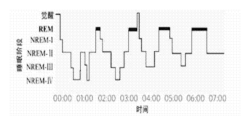
- FIG. 1 is a schematic diagram of a sleep structure provided by an embodiment of the present disclosure
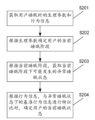
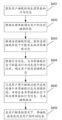
- FIG. 2 is a schematic diagram of a method for monitoring sleep conditions provided by an embodiment of the present disclosure
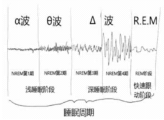
- Fig. 3 is a diagram of brain wave morphology of a sleep cycle provided by an embodiment of the present disclosure
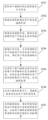
- Fig. 4 is a schematic diagram of another method for monitoring sleep conditions provided by an embodiment of the present disclosure.
- Fig. 5 is a schematic diagram of another method for monitoring sleep conditions provided by an embodiment of the present disclosure.
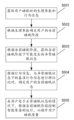
- Fig. 6 is a schematic diagram of another method for monitoring sleep conditions provided by an embodiment of the present disclosure.
- Fig. 7 is a schematic diagram of another method for monitoring sleep conditions provided by an embodiment of the present disclosure.
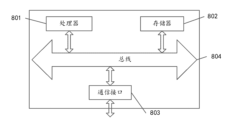
- Fig. 8 is a schematic diagram of a device for monitoring sleep conditions provided by an embodiment of the present disclosure.
- A/B means: A or B.
- a and/or B means: A or B, or, A and B, these three relationships.
- correspondence may refer to an association relationship or a binding relationship, and the correspondence between A and B means that there is an association relationship or a binding relationship between A and B.
- smart home refers to home products formed by introducing microprocessor, sensor technology, and network communication technology into home appliances, furniture, and home textiles. It has the characteristics of intelligent control, intelligent perception, and intelligent applications.
- the operation process of smart home It often relies on the application and processing of modern technologies such as the Internet of Things, the Internet, and electronic chips.
- smart homes can realize remote control and management of smart homes by users by connecting electronic devices.
- a terminal device refers to an electronic device with a wireless connection function.
- the terminal device can communicate with the above smart home by connecting to the Internet, or directly communicate with the above smart home through Bluetooth, wifi, etc. .
- the terminal device is, for example, a mobile device, a computer, or a vehicle-mounted device built into a hover vehicle, or any combination thereof.
- the mobile device may include, for example, a mobile phone, a smart home device, a wearable device, a smart mobile device, a virtual reality device, etc., or any combination thereof, wherein the wearable device includes, for example, a smart watch, a smart bracelet, a pedometer, and the like.
- one existing technology is to acquire the current captured image; according to the position changes of the target object in the current captured image and historical captured images, determine whether the target object has an abnormal sleep state.
- this method is not accurate enough for monitoring the abnormal sleep state of the user. For example, for the monitoring when the user wakes up in the middle of the night, this method only detects changes in the captured images, and cannot distinguish the user's sleepwalking from waking up to go to the toilet.
- the brain activity in the sleep state is not in a static state, but shows a series of periodic changes of active regulation.
- various physiological functions of the body such as sensory function, motor function and autonomic nervous function, also change with the depth of sleep.
- Regular activities are carried out to varying degrees.
- the international general method is to divide sleep into two different phases according to EEG performance, eye movement and muscle tension changes during sleep, namely non-rapid eye movement sleep (non-rapid eye movement sleep, NREM) and sleep. Rapid eye movement sleep (REM). NREM and REM appear alternately, and an alternation is called a sleep cycle. The two cycles go back and forth. There are usually 4 to 5 sleep cycles per night, and each cycle lasts 90 to 110 minutes.
- NREM NREM
- the first stage is the falling asleep stage
- the second stage is the light sleep stage
- the third stage is the moderate sleep stage
- the fourth stage is the deep sleep stage.
- the sensory function of the human body is further reduced, the muscles are more relaxed, and the tendon reflexes disappear.
- the blood pressure is higher than that during NREM, the breathing is slightly faster and irregular, and the body temperature and heart rate are also elevated.
- various metabolic functions in the body are significantly increased to ensure the synthesis of brain tissue proteins and the replenishment of consumed substances, to enable the normal development of the nervous system and to store energy for the next day's activities.
- sleepers are awakened at this stage, 74% to 95% report dreaming and can remember the dream content.
- NREM only a few reported dreaming.
- an embodiment of the present disclosure provides a schematic diagram of a sleep structure.
- Normal people's sleep first enters the NREM stage, and quickly enters the 2nd, 3rd, and 4th stages from the 1st stage and continues.
- the first REM stage appears after the NREM stage lasts for 80-120 minutes, and enters the next NREM stage after a few minutes, forming a cycle of NREM stage and REM stage.
- the REM stage occurs approximately every 90 minutes on average, and the duration of the REM stage gradually increases towards the later stage of sleep. It lasts for 10-30 minutes each time.
- an embodiment of the present disclosure provides a method for monitoring sleep conditions, including:
- the intelligent sleep system acquires physiological parameters and behavior information of the user during sleep.
- the intelligent sleep system determines the current sleep stage of the user according to physiological parameters.
- the intelligent sleep system acquires possible abnormal sleep states in the current sleep stage.
- the current sleep stage of the user can be judged in real time by collecting the physiological parameters of the user. Since various abnormal sleep states often occur in specific sleep stages, the embodiments of the present disclosure can comprehensively consider The user's physiological parameters and behavior information are used to determine the user's sleep status, thereby improving the accuracy of abnormal sleep status monitoring.
- the physiological parameters include part or all of heart rate, respiratory rate, eye movement rate, pulse, blood pressure, blood oxygen, brain wave, electromyographic signal, and electrodermal signal.
- the embodiments of the present disclosure can accurately determine the current sleep stage of the user by collecting the physiological parameters of the user.
- the behavior information includes part or all of sound information, body activity information, muscle action information, breathing information, and eye movement information.
- the embodiments of the present disclosure can improve the accuracy of monitoring the abnormal sleep state.
- the current sleep stage includes a light sleep stage, a deep sleep stage or a rapid eye movement stage.
- the light sleep stage corresponds to the 1st and 2nd stages of the NREM stage.
- the deep sleep stages correspond to NREM stages 3 and 4.
- the rapid eye movement phase corresponds to the REM phase.
- the abnormal sleep state includes one or more of snoring, bruxism, sleepwalking, sleep talking, sleep paralysis, rapid eye movement sleep behavior disorder, and sleep apnea.
- snoring bruxism
- sleepwalking sleep talking
- sleep paralysis rapid eye movement sleep behavior disorder
- sleep apnea sleep apnea
- the intelligent sleep system determining the user's current sleep stage according to the physiological parameters includes: the intelligent sleep system performs feature matching in the sleep cycle brain wave morphology map according to the acquired user's brain wave signal; if a brain wave segment with the same characteristics is matched , the intelligent sleep system determines the user's current sleep stage according to the brain wave fragment.
- the embodiment of the present disclosure determines the current sleep stage based on the user's brain wave signal, and can quickly and intuitively identify the user's current sleep stage by performing feature matching with the reference image. Therefore, it is beneficial to improve the accuracy of subsequent monitoring of abnormal sleep states.
- an embodiment of the present disclosure provides a sleep cycle brain wave morphology diagram.
- brain waves begin to change, their frequency gradually slows down, and their amplitude gradually decreases, mainly alpha waves at this time.
- the brain waves begin to change irregularly, with frequency and amplitude fluctuating, mainly theta waves, and occasionally high-frequency, large-amplitude brain waves called "sleep spindles", and " The low-frequency, large-amplitude brainwaves of the K-junction.
- the frequency of brain waves becomes lower, the amplitude increases, and delta waves begin to appear.
- NREM stage 4 most brain waves begin to show delta waves, which are larger in amplitude and lower in frequency.
- brain waves change rapidly, delta waves disappear, and high-frequency and low-amplitude brain waves appear.
- Brainwaves are similar to waking brainwaves, but with distinctive sawtooth waves.
- the user's eyes will be beating rapidly at this time, often accompanied by dreaming.
- the intelligent sleep system can quickly and intuitively determine the user's current sleep stage. It is conducive to improving the accuracy of subsequent monitoring of abnormal sleep states.
- this embodiment of the present disclosure may also combine other physiological parameters.
- other physiological parameters such as heart rate, respiratory rate, eye movement frequency, pulse, blood pressure, blood oxygen, electromyographic signal, electrodermal signal, etc. are not limited to the method of determining the sleep stage based on the user's brain wave signal.
- the embodiments of the present disclosure may further determine the sleep stage by using the rules that appear in the sleep cycle. For example, according to the rule that the deep sleep stage will not be entered immediately after the rapid eye movement stage, the embodiment of the present disclosure can realize the comprehensive judgment on the sleep stage more accurately.
- the intelligent sleep system obtains the abnormal sleep state that may occur in the current sleep stage, including: according to the current sleep stage, the intelligent sleep system searches for the corresponding abnormal sleep state from the first preset association relationship.
- various abnormal sleep states often occur under specific sleep stages. For example, sleep paralysis often occurs during rapid eye movement. Likewise, sleepwalking does not occur during rapid eye movement, but during deep sleep.
- the embodiment of the present disclosure combines the determination of the sleep stage, and can effectively distinguish the user's sleepwalking from getting up to go to the bathroom, so that the user's sleep state can be monitored more accurately.
- the first preset association relationship includes correspondences between one or more sleep stages and possible abnormal sleep states.
- Table 1 shows a corresponding relationship between a sleep stage and a possible abnormal sleep state, as shown in the following table:
- sleep stage Abnormal sleep states that may occur light sleep stage Teeth grinding, snoring, sleep apnea deep sleep stage Sleepwalking, sleep talking, snoring, sleep apnea rapid eye movement phase Sleep paralysis, REM sleep behavior disorder, snoring, sleep apnea
- abnormal sleep states may be introduced into the corresponding relationship, and are not limited to the above-mentioned several abnormal sleep states.
- Abnormal sleep states are associated and set according to objective laws, which will not be listed one by one here.
- the smart home can perform corresponding parameter adjustments to improve the user's sleep state.
- the intelligent sleep system determines the user's current sleep state by comparing the characteristics with the benchmark behavior information in the abnormal sleep state, including: the intelligent sleep system compares the user's behavior information one by one with the abnormal sleep state. Compare the features of the benchmark behavior information; if there is an abnormal sleep state with the same characteristics, the intelligent sleep system determines that the user's current sleep state is the abnormal sleep state; if there is no abnormal sleep state with the same characteristics, the intelligent sleep system The sleep system determines that the current sleep state of the user is a normal sleep state. In this way, by comparing the characteristics of the user's current behavior information with the preset benchmark behavior information, the intelligent sleep system can accurately determine whether the user has an abnormal sleep state, and the specific type of abnormal sleep state. At the same time, since the determination of sleep stages is added, the embodiments of the present disclosure can comprehensively consider the user's physiological parameters and behavior information to determine the user's sleep status, thereby improving the accuracy of monitoring abnormal sleep status.
- an embodiment of the present disclosure provides another method for monitoring sleep conditions, including:
- the intelligent sleep system acquires physiological parameters and behavior information of the user during sleep.
- the intelligent sleep system determines the current sleep stage of the user according to physiological parameters.
- the intelligent sleep system acquires possible abnormal sleep states in the current sleep stage.
- the smart sleep system controls the operation of the smart home according to the type of the abnormal sleep state, so as to alleviate the abnormal sleep phenomenon of the user.
- the current sleep stage of the user can be judged in real time by collecting the physiological parameters of the user. Since various abnormal sleep states often occur in specific sleep stages, the embodiments of the present disclosure can comprehensively consider The user's physiological parameters and behavior information are used to determine the user's sleep status, thereby improving the accuracy of abnormal sleep status monitoring. Further, according to the determined type of abnormal sleep state, the embodiment of the present disclosure can also control the smart home to adjust parameters. Thereby reasonably improving the sleep condition of the user and enhancing the user experience.
- the smart home includes some or all of smart air conditioners, smart pillows, smart mattresses, smart lamps, and smart speakers.
- the embodiments of the present disclosure can reasonably improve the sleep condition of the user and enhance the user experience.
- the smart sleep system controlling the operation of the smart home according to the type of the abnormal sleep state includes: according to the type of the abnormal sleep state, the smart sleep system searches for the corresponding smart home from the second preset association relationship; the smart sleep system controls the found The smart home adjusts the operating parameters or state parameters to alleviate the abnormal sleep of the user.
- the embodiments of the present disclosure can quickly control the smart home to adjust parameters when the user is in the abnormal sleep state.
- the abnormal sleep phenomenon of the user can be alleviated in time, which is conducive to improving the user experience.
- the second preset association relationship includes correspondences between one or more abnormal sleep states and smart homes that perform parameter adjustment.
- Table 2 shows a corresponding relationship between an abnormal sleep state and a smart home that performs parameter adjustment, as shown in the following table:
- abnormal sleep state Smart home that performs parameter adjustments snoring Smart Pillows, Smart Mattresses Teeth grinding Smart Pillows, Smart Mattresses sleepwalking Smart air conditioner, smart lighting, smart audio balderdash Smart pillows, smart mattresses, smart speakers sleep paralysis Smart air conditioner, smart pillow, smart mattress rapid eye movement sleep behavior disorder Smart lamps, smart pillows, smart mattresses sleep apnea Smart pillows, smart mattresses, smart lamps, smart speakers
- smart home can be imported into the corresponding relationship, not limited to the above-mentioned smart homes.
- Smart home can be associated with the settings according to the actual needs of users, not one by one here.
- the smart home can perform corresponding parameter adjustments to improve the user's sleep state.
- the adjustment of the parameters of the smart home is set according to the actual needs of the user.
- the parameter adjustment performed by the smart home in the embodiment of the present disclosure can be more in line with the user's personal habits and actual needs, which is conducive to more accurate improvement of user experience.
- the adjustment of the parameters of the smart home is set according to the severity of the abnormal sleep state.
- the embodiments of the present disclosure can select more smart homes for linkage control. So as to alleviate the abnormal sleep phenomenon of the user in a more comprehensive and detailed manner, and avoid the user from encountering danger to the greatest extent.
- the embodiment of the present disclosure can also increase the adjustment range of the smart home, thereby enhancing its auxiliary effect, so as to better improve the sleep condition of the user.
- the severity of the abnormal sleep state is quantified according to physiological parameters and/or behavior information of the user during sleep.
- the severity of snoring may be determined according to the frequency and/or amplitude of the snoring sound obtained after preprocessing the sound information.
- the severity of sleep apnea can be determined based on respiratory rate.
- the severity of other abnormal sleep states can also be determined according to the corresponding physiological parameters and/or behavioral information, which are not listed here.
- the user is in an abnormal sleep state of snoring.
- the intelligent sleep system can control the intelligent pillow to adjust the height and/or inclination.
- Embodiments of the present disclosure can correct the posture of the user's head and neck, thereby assisting the airway of the user's throat to become smooth and alleviating the user's shortness of breath.
- the user is in an abnormal sleep state of snoring.
- the intelligent sleep system can control the intelligent mattress to adjust the firmness and/or inclination.
- the embodiments of the present disclosure can correct the user's sleeping posture, thereby adjusting the state of the user's spine, balancing abdominal pressure and chest pressure, so as to alleviate the user's shortness of breath.
- the user is in an abnormal sleep state of snoring, and at this time the user's snoring sound has a relatively high frequency and a relatively large amplitude.
- the intelligent sleep system can control the intelligent pillow to adjust the height and/or inclination, and control the intelligent mattress to adjust the hardness and/or inclination.
- the embodiments of the present disclosure can alleviate the user's snoring phenomenon in a more comprehensive and detailed manner, so as to avoid the user from encountering danger to the greatest extent.
- the user is in an abnormal sleep state of sleepwalking, and at this time the high-definition camera detects that the user is going to perform dangerous behavior. Then the intelligent sleep system can control the intelligent air conditioner to adjust the indoor temperature, so as to prevent the user from catching a cold after getting up. At the same time, the intelligent sleep system can control the intelligent lamps to turn on at the maximum brightness, and control the intelligent audio to alarm at the maximum volume. Thereby waking up the user in time, so as to prevent the user from further encountering danger.
- the embodiments of the present disclosure can provide care and protection to the user when sleepwalking, thereby improving user experience.
- this application includes but is not limited to the adjustment of smart home parameters in the abnormal sleep state shown in the above embodiments.
- the corresponding smart home can also alleviate the abnormal sleep phenomenon of the user through the adjustment of the operating parameters or state parameters, thereby improving the sleep state of the user.
- the present invention is not limited thereto, and will not give examples one by one here.
- an embodiment of the present disclosure provides another method for monitoring sleep conditions, including:
- the intelligent sleep system acquires physiological parameters and behavior information of the user during sleep.
- the intelligent sleep system determines the current sleep stage of the user according to physiological parameters.
- the intelligent sleep system acquires possible abnormal sleep states in the current sleep stage.
- the intelligent sleep system determines the current sleep state of the user.
- the smart sleep system controls the operation of the smart home according to the current sleep stage, so as to improve the sleep quality of the user.
- the current sleep stage of the user can be judged in real time by collecting the physiological parameters of the user. Since various abnormal sleep states often occur in specific sleep stages, the embodiments of the present disclosure can comprehensively consider The user's physiological parameters and behavior information are used to determine the user's sleep status, thereby improving the accuracy of abnormal sleep status monitoring. Further, when the user is in a normal sleep state, embodiments of the present disclosure can also control the smart home to adjust parameters according to the current sleep stage. Thereby improving the sleep quality of the user to enhance the user experience.
- an embodiment of the present disclosure provides another method for monitoring sleep conditions, including:
- the intelligent sleep system acquires physiological parameters and behavior information of the user during sleep.
- the intelligent sleep system determines the current sleep stage of the user according to physiological parameters.
- the intelligent sleep system acquires possible abnormal sleep states in the current sleep stage.
- the intelligent sleep system determines the current sleep state of the user.
- the intelligent sleep system records each abnormal sleep state and duration during the user's entire sleep process, and generates a sleep report in combination with physiological parameters and behavior information in each abnormal sleep state.
- the intelligent sleep system when the user wakes up, sends a sleep report to the user's terminal device.
- the current sleep stage of the user can be judged in real time by collecting the physiological parameters of the user. Since various abnormal sleep states often occur in specific sleep stages, the embodiments of the present disclosure can comprehensively consider The user's physiological parameters and behavior information are used to determine the user's sleep status, thereby improving the accuracy of abnormal sleep status monitoring.
- the intelligent sleep system will record the abnormal sleep state and related information during the user's sleep, and analyze and generate a sleep report. When the user wakes up, he can receive the sleep report at the first time, and then know the specific sleep status of that night. Therefore, the embodiments of the present disclosure can better assist users in monitoring their sleep conditions, thereby improving user experience.
- an embodiment of the present disclosure provides another method for monitoring sleep conditions, including:
- the intelligent sleep system acquires physiological parameters and behavior information of the user during sleep.
- the intelligent sleep system determines the current sleep stage of the user according to the physiological parameters.
- the intelligent sleep system acquires possible abnormal sleep states in the current sleep stage.
- the intelligent sleep system determines the current sleep state of the user.
- the intelligent sleep system records each abnormal sleep state and duration during the user's entire sleep process, and generates a sleep report in combination with physiological parameters and behavior information in each abnormal sleep state.
- the intelligent sleep system when the user wakes up, sends a sleep report to the user's terminal device.
- the smart sleep system analyzes the sleep report, and determines the preset value of the operating parameter or state parameter of the smart home, so as to control the smart home to adjust the function according to the preset value before the user sleeps.
- the current sleep stage of the user can be judged in real time by collecting the physiological parameters of the user. Since various abnormal sleep states often occur in specific sleep stages, the embodiments of the present disclosure can comprehensively consider The user's physiological parameters and behavior information are used to determine the user's sleep status, thereby improving the accuracy of abnormal sleep status monitoring.
- the intelligent sleep system will record the abnormal sleep state and related information during the user's sleep, and analyze and generate a sleep report. When the user wakes up, he can receive the sleep report at the first time, and then know the specific sleep status of the night, so the embodiments of the present disclosure can better assist the user to monitor his own sleep status.
- the intelligent sleep system can also pre-adjust for the user's next sleep by analyzing the sleep report. Therefore, the user can fall asleep in a more comfortable environment or state, which is beneficial to improving the user experience.
- an embodiment of the present disclosure provides an apparatus for monitoring sleep conditions, including a processor (processor) 801 and a memory (memory) 802 .
- the device may further include a communication interface (Communication Interface) 803 and a bus 804.
- the processor 801 , the communication interface 803 , and the memory 802 may communicate with each other through the bus 804 .
- the communication interface 803 can be used for information transmission.
- the processor 801 may invoke logic instructions in the memory 802 to execute the method for monitoring sleep conditions in the above embodiments.
- logic instructions in the memory 802 may be implemented in the form of software function units and may be stored in a computer-readable storage medium when sold or used as an independent product.
- the memory 802 as a computer-readable storage medium, can be used to store software programs and computer-executable programs, such as program instructions/modules corresponding to the methods in the embodiments of the present disclosure.
- the processor 801 executes the program instructions/modules stored in the memory 802 to execute functional applications and data processing, that is, to implement the method for monitoring sleep conditions in the above-mentioned embodiments.
- the memory 802 may include a program storage area and a data storage area, wherein the program storage area may store an operating system and at least one application required by a function; the data storage area may store data created according to the use of the terminal device, and the like.
- the memory 802 may include a high-speed random access memory, and may also include a non-volatile memory.
- An embodiment of the present disclosure provides an intelligent sleep system, including a data collection module, a smart home, and the above-mentioned device for monitoring sleep conditions.
- the data acquisition module is configured to acquire physiological parameters and behavior information of the user during sleep.
- the smart home is configured to control the adjustment of operating parameters or status parameters to improve the user's sleep condition.
- the above-mentioned device for monitoring sleep conditions is electrically connected with the data acquisition module and the smart home.
- the smart home includes some or all of smart air conditioners, smart pillows, smart mattresses, smart lamps, and smart speakers.
- the data acquisition module includes a high-definition camera, sound sensor, motion sensor, heart rate sensor, respiration sensor, eye movement sensor, pulse sensor, blood pressure sensor, blood oxygen sensor, brain wave sensor, myoelectric sensor, and electrodermal sensor. some or all.
- the data collection module can be set on the wearable device.
- the data collection module can be set in a smart home.
- An embodiment of the present disclosure provides a storage medium storing computer-executable instructions.
- the computer-executable instructions When executed, the above-mentioned method for monitoring sleep conditions is executed.
- the above-mentioned storage medium may be a transitory computer-readable storage medium, or a non-transitory computer-readable storage medium.
- the technical solutions of the embodiments of the present disclosure can be embodied in the form of software products, which are stored in a storage medium and include one or more instructions to enable a computer device (which may be a personal computer, a server, or a network equipment, etc.) to perform all or part of the steps of the method described in the embodiments of the present disclosure.
- the aforementioned storage medium can be a non-transitory storage medium, including: U disk, mobile hard disk, read-only memory (ROM, Read-Only Memory), random access memory (RAM, Random Access Memory), magnetic disk or optical disc, etc.
- the term “and/or” as used in this application is meant to include any and all possible combinations of one or more of the associated listed ones.
- the term “comprise” and its variants “comprises” and/or comprising (comprising) etc. refer to stated features, integers, steps, operations, elements, and/or The presence of a component does not preclude the presence or addition of one or more other features, integers, steps, operations, elements, components and/or groupings of these.
- an element defined by the statement “comprising a " does not exclude the presence of additional identical elements in the process, method or apparatus comprising said element.
- the disclosed methods and products can be implemented in other ways.
- the device embodiments described above are only illustrative.
- the division of the units may only be a logical function division.
- multiple units or components may be combined Or it can be integrated into another system, or some features can be ignored, or not implemented.
- the mutual coupling or direct coupling or communication connection shown or discussed may be through some interfaces, and the indirect coupling or communication connection of devices or units may be in electrical, mechanical or other forms.
- each functional unit in the embodiments of the present disclosure may be integrated into one processing unit, each unit may exist separately physically, or two or more units may be integrated into one unit.
- each block in a flowchart or block diagram may represent a module, program segment, or part of code that includes one or more Executable instructions.
- the functions noted in the block may occur out of the order noted in the figures.
- two blocks in succession may, in fact, be executed substantially concurrently, or they may sometimes be executed in the reverse order, depending upon the functionality involved.
- the operations or steps corresponding to different blocks may also occur in a different order than that disclosed in the description, and sometimes there is no specific agreement between different operations or steps.
- each block in the block diagrams and/or flowcharts, and combinations of blocks in the block diagrams and/or flowcharts can be implemented by a dedicated hardware-based system that performs the specified function or action, or can be implemented by dedicated hardware implemented in combination with computer instructions.
Landscapes
- Health & Medical Sciences (AREA)
- Life Sciences & Earth Sciences (AREA)
- Public Health (AREA)
- Animal Behavior & Ethology (AREA)
- Engineering & Computer Science (AREA)
- Biomedical Technology (AREA)
- Heart & Thoracic Surgery (AREA)
- Veterinary Medicine (AREA)
- General Health & Medical Sciences (AREA)
- Physics & Mathematics (AREA)
- Medical Informatics (AREA)
- Biophysics (AREA)
- Molecular Biology (AREA)
- Pathology (AREA)
- Surgery (AREA)
- Psychology (AREA)
- Anesthesiology (AREA)
- Psychiatry (AREA)
- Nursing (AREA)
- Orthopedic Medicine & Surgery (AREA)
- Hematology (AREA)
- Pulmonology (AREA)
- Vascular Medicine (AREA)
- Otolaryngology (AREA)
- Acoustics & Sound (AREA)
- Physiology (AREA)
- Measurement Of The Respiration, Hearing Ability, Form, And Blood Characteristics Of Living Organisms (AREA)
Abstract
一种用于监测睡眠状况的方法,包括:获取用户睡眠时的生理参数和行为信息(S201、S401、S501、S601、S701);根据生理参数确定用户的当前睡眠阶段(S202、S402、S502、S603、S703);根据当前睡眠阶段,获取当前睡眠阶段下可能发生的异常睡眠状态(S203、S403、S503、S603、S703);根据行为信息,与异常睡眠状态下的基准行为信息进行特征比对,确定用户的当前睡眠状态(S204、S404、S504、S604、S704)。由于各种异常睡眠状态往往是发生于特定的睡眠阶段下的,通过生理参数确定睡眠阶段,并采集用户行为信息,与当前睡眠阶段下可能发生的异常睡眠状态进行特征比对。综合考虑到用户的生理参数和行为信息来确定用户的睡眠状况,能够提高对异常睡眠状态监测的准确性。还包括一种用于监测睡眠状况的装置及智能睡眠系统、存储介质。
Description
本申请基于申请号为202111369079.1、申请日为2021年11月18日的中国专利申请提出,并要求该中国专利申请的优先权,该中国专利申请的全部内容在此引入本申请作为参考。
本申请涉及智慧家庭技术领域,例如涉及一种用于监测睡眠状况的方法及装置、智能睡眠系统、存储介质。
睡眠在人们的日常生活中占有极其重要的地位,人一天中大约有1/3的时间都是在睡眠中度过,因此睡眠状况的好坏对人们生活质量具有很大影响。目前,随着生活节奏的加快,人们的压力、疲劳激增,许多人的睡眠质量都大打折扣。在睡眠过程中人们经常会出现打鼾、磨牙、说梦话甚至梦游等异常状况。为了监测睡眠状况,现有一种技术是获取当前拍摄图像;根据目标对象在当前拍摄图像和历史拍摄图像中的位置变化情况,确定目标对象是否出现睡眠异常状态。
在实现本公开实施例的过程中,发现相关技术中至少存在如下问题:
该方法对用户异常睡眠状态的监测不够准确。例如对于用户半夜起床时的监测,该方法仅检测拍摄图像的变化情况,不能将用户梦游与起床上厕所区分开来。
发明内容
为了对披露的实施例的一些方面有基本的理解,下面给出了简单的概括。所述概括不是泛泛评述,也不是要确定关键/重要组成元素或描绘这些实施例的保护范围,而是作为后面的详细说明的序言。
本公开实施例提供了一种用于监测睡眠状况的方法及装置、智能睡眠系统、存储介质,能够提高对异常睡眠状态监测的准确性。
在一些实施例中,所述方法包括:
获取用户睡眠时的生理参数和行为信息;
根据生理参数确定用户的当前睡眠阶段;
根据当前睡眠阶段,获取当前睡眠阶段下可能发生的异常睡眠状态;
根据行为信息,与异常睡眠状态下的基准行为信息进行特征比对,确定用户的当前睡眠状态。
在一些实施例中,所述装置包括:处理器和存储有程序指令的存储器,所述处理器被配置为在运行所述程序指令时,执行上述的用于监测睡眠状况的方法。
在一些实施例中,所述智能睡眠系统包括:
数据采集模块,被配置为获取用户睡眠时的生理参数和行为信息;
智能家居,被配置为受控调整运行参数或状态参数以改善用户睡眠状况;
上述的用于监测睡眠状况的装置,与所述数据采集模块和所述智能家居电连接。
在一些实施例中,所述存储介质,存储有程序指令,所述程序指令在运行时,执行上述的用于监测睡眠状况的方法。
本公开实施例提供的用于监测睡眠状况的方法及装置、智能睡眠系统、存储介质,可以实现以下技术效果:
本公开实施例,通过采集用户的生理参数可以实时判断出用户的当前睡眠阶段。由于各种异常睡眠状态往往是发生于特定的睡眠阶段下的,所以通过采集用户的行为信息,并与当前睡眠阶段下可能发生的异常睡眠状态进行特征比对,本公开实施例能够综合考虑到用户的生理参数和行为信息来确定用户的睡眠状况,从而提高对异常睡眠状态监测的准确性。
以上的总体描述和下文中的描述仅是示例性和解释性的,不用于限制本申请。
一个或多个实施例通过与之对应的附图进行示例性说明,这些示例性说明和附图并不构成对实施例的限定,附图中具有相同参考数字标号的元件示为类似的元件,附图不构成比例限制,并且其中:
图1是本公开实施例提供的一个睡眠结构示意图;
图2是本公开实施例提供的一个用于监测睡眠状况的方法的示意图;
图3是本公开实施例提供的一个睡眠周期脑电波形态图;
图4是本公开实施例提供的另一个用于监测睡眠状况的方法的示意图;
图5是本公开实施例提供的另一个用于监测睡眠状况的方法的示意图;
图6是本公开实施例提供的另一个用于监测睡眠状况的方法的示意图;
图7是本公开实施例提供的另一个用于监测睡眠状况的方法的示意图;
图8是本公开实施例提供的一个用于监测睡眠状况的装置的示意图。
为了能够更加详尽地了解本公开实施例的特点与技术内容,下面结合附图对本公开实施例的实现进行详细阐述,所附附图仅供参考说明之用,并非用来限定本公开实施例。在以下的技术描述中,为方便解释起见,通过多个细节以提供对所披露实施例的充分理解。然而,在没有这些细节的情况下,一个或多个实施例仍然可以实施。在其它情况下,为简化附图,熟知的结构和装置可以简化展示。
本公开实施例的说明书和权利要求书及上述附图中的术语“第一”、“第二”等是用于区别类似的对象,而不必用于描述特定的顺序或先后次序。应该理解这样使用的数据在适当情况下可以互换,以便这里描述的本公开实施例的实施例。此外,术语“包括”和“具有”以及他们的任何变形,意图在于覆盖不排他的包含。
除非另有说明,术语“多个”表示两个或两个以上。
本公开实施例中,字符“/”表示前后对象是一种“或”的关系。例如,A/B表示:A或B。
术语“和/或”是一种描述对象的关联关系,表示可以存在三种关系。例如,A和/或B,表示:A或B,或,A和B这三种关系。
术语“对应”可以指的是一种关联关系或绑定关系,A与B相对应指的是A与B之间是一种关联关系或绑定关系。
本公开实施例中,智能家居是指将微处理器、传感器技术、网络通信技术引入家电、家具和家纺后形成的家居产品,具有智能控制、智能感知及智能应用的特征,智能家居的运作过程往往依赖于物联网、互联网以及电子芯片等现代技术的应用和处理,例如智能家居可以通过连接电子设备,实现用户对智能家居的远程控制和管理。
公开实施例中,终端设备是指具有无线连接功能的电子设备,终端设备可以通过连接互联网,与如上的智能家居进行通信连接,也可以直接通过蓝牙、wifi等方式与如上的智能家居进行通信连接。在一些实施例中,终端设备例如为移动设备、电脑、或悬浮车中内置的车载设备等,或其任意组合。移动设备例如可以包括手机、智能家居设备、可穿戴设备、智能移动设备、虚拟现实设备等,或其任意组合,其中,可穿戴设备例如包括:智能手表、智能手环、计步器等。
睡眠在人们的日常生活中占有极其重要的地位,人一天中大约有1/3的时间都是在睡眠中度过,因此睡眠状况的好坏对人们生活质量具有很大影响。目前,随着生活节奏的加快,人们的压力、疲劳激增,许多人的睡眠质量都大打折扣。在睡眠过程中人们经常会出现打鼾、磨牙、说梦话甚至梦游等异常状况。为了监测睡眠状况,现有一种技术是获取当 前拍摄图像;根据目标对象在当前拍摄图像和历史拍摄图像中的位置变化情况,确定目标对象是否出现睡眠异常状态。但该方法对用户异常睡眠状态的监测不够准确。例如对于用户半夜起床时的监测,该方法仅检测拍摄图像的变化情况,不能将用户梦游与起床上厕所区分开来。
在描述本发明的技术方案之前,需要对睡眠阶段进行以下说明。在睡眠状态的脑活动并非处于静止状态,而是表现出一系列主动调节的周期性变化,此时机体的各种生理功能,如感觉功能,运动功能和自主神经功能也随着睡眠深度的变化在不同程度上进行着规律的活动。国际上通用的方法是根据睡眠过程中脑电表现,眼球运动情况和肌肉张力的变化将睡眠分为两种不同的时相,即非眼球快速运动睡眠(non-rapid eye movement sleep,NREM)和眼球快速运动睡眠(rapid eye movement sleep,REM)。NREM与REM交替出现,交替一次称为一个睡眠周期,两种循环往复,每夜通常有4~5个睡眠周期,每个周期90~110分钟。
其中,在NREM这个阶段中,人的呼吸变浅、变慢而均匀,心率变慢、血压下降,全身肌肉松弛(仍然能够保持一定姿势),无明显的眼球运动。在NREM这个阶段中,还可以分4期,第1期为入睡期,第2期为浅睡期,第3期为中度睡眠期,第4期为深度睡眠期。
而在REM这个阶段,人体的感觉功能进一步减退,肌肉也更加松弛,肌腱反射消失。这时的血压较NREM时升高,呼吸稍快且不规则,体温、心率也有所升高。REM阶段,体内各种代谢功能都显著增加,以保证大脑组织蛋白的合成和消耗物质的补充,使神经系统正常发育,并为第二天的活动积蓄能量。当睡眠者在这个阶段被唤醒,74%~95%的人诉说在做梦并能记起梦境内容。而在NREM期间,只有很少的人诉说在做梦。
结合图1所示,本公开实施例提供一种睡眠结构示意图。正常人睡眠首先进入NREM阶段,并迅速由1期依次进入2期,3期,4期并持续下去。在NREM阶段持续80~120分钟后出现第一次REM阶段,持续几分钟后进入下一次NREM阶段,形成NREM阶段与REM阶段循环周期。大概平均每90分钟出现一次REM阶段,越接近睡眠后期REM阶段持续时间逐渐延长。每次可持续10~30分钟。
结合图2所示,本公开实施例提供一种用于监测睡眠状况的方法,包括:
S201,智能睡眠系统获取用户睡眠时的生理参数和行为信息。
S202,智能睡眠系统根据生理参数确定用户的当前睡眠阶段。
S203,根据当前睡眠阶段,智能睡眠系统获取当前睡眠阶段下可能发生的异常睡眠状态。
S204,根据行为信息,与异常睡眠状态下的基准行为信息进行特征比对,智能睡眠系统确定用户的当前睡眠状态。
采用本公开实施例提供的用于监测睡眠状况的方法,通过采集用户的生理参数可以实时判断出用户的当前睡眠阶段。由于各种异常睡眠状态往往是发生于特定的睡眠阶段下的,所以通过采集用户的行为信息,并与当前睡眠阶段下可能发生的异常睡眠状态进行特征比对,本公开实施例能够综合考虑到用户的生理参数和行为信息来确定用户的睡眠状况,从而提高对异常睡眠状态监测的准确性。
可选地,生理参数包括心率、呼吸频率、眼动频率、脉搏、血压、血氧、脑电波、肌电信号、皮肤电信号中的部分或全部。通过采集用户的生理参数本公开实施例可以准确判断出用户的当前睡眠阶段。
可选地,行为信息包括声音信息、肢体活动信息、肌肉动作信息、呼吸信息、眼动信息中的部分或全部。通过采集用户的行为信息,并与当前睡眠阶段下可能发生的异常睡眠状态进行特征比对,本公开实施例能够提高对异常睡眠状态监测的准确性。
可选地,当前睡眠阶段包括浅睡眠阶段、深睡眠阶段或快速眼动阶段。其中,浅睡眠阶段对应NREM阶段第1期和第2期。深睡眠阶段对应NREM阶段第3期和第4期。快速眼动阶段对应REM阶段。由于增加睡眠阶段的判定,本公开实施例能够综合考虑到用户的生理参数和行为信息来确定用户的睡眠状况,从而提高对异常睡眠状态监测的准确性。
可选地,异常睡眠状态包括打鼾、夜磨牙、梦游、梦呓、睡眠麻痹、快动眼睡眠行为障碍、睡眠呼吸暂停中的一种或多种。通过对异常睡眠状态的监测,用户能够更加了解自己的睡眠状况,有利于用户后续调整睡眠计划。
可选地,智能睡眠系统根据生理参数确定用户的当前睡眠阶段包括:智能睡眠系统根据获取的用户脑电波信号,在睡眠周期脑电波形态图中进行特征匹配;若匹配到特征一致的脑电波片段,则智能睡眠系统根据脑电波片段确定用户的当前睡眠阶段。本公开实施例基于用户的脑电波信号来确定当前睡眠阶段,通过与基准图像进行特征匹配,能够快速且直观地识别出用户的当前睡眠阶段。从而有利于提高后续对异常睡眠状态监测的准确性。
可选地,结合图3所示,本公开实施例提供一种睡眠周期脑电波形态图。具体地,在NREM第1期,脑电波开始变化,其频率渐渐放缓,波幅逐渐变小,此时主要为α波。在NREM第2期,脑电波开始不规律变化,频率和幅度忽大忽小,主要为θ波,偶尔会出现被称为"睡眠锭"的高频、大波幅脑波,以及被称为“K结”的低频、很大波幅脑波。在NREM第3期,脑电波频率变得更低,波幅会增加,并且开始出现Δ波。在NREM第4期,大部 分脑电波开始显示Δ波,且波幅更大、频率更低。而在REM阶段,脑电波迅速改变,Δ波消失,出现高频和低波幅的脑电波。此时与清醒时的脑电波相似,但其中会有特点鲜明的锯齿状波。同时,除了脑电波的改变之外,此时用户的眼睛会呈现快速跳动现象,往往还会伴随做梦现象的发生。依据该睡眠周期脑电波形态图,通过比较脑电波信号的频率和/或波幅,智能睡眠系统能够快速且直观地确定出用户的当前睡眠阶段。有利于提高后续对异常睡眠状态监测的准确性。
可选地,本公开实施例除了可以利用用户脑电波信号来确定睡眠阶段外,还可以结合其他生理参数。例如心率、呼吸频率、眼动频率、脉搏、血压、血氧、肌电信号、皮肤电信号等其他生理参数,并不局限于根据用户脑电波信号来确定睡眠阶段这一种方式。
可选地,本公开实施例还可以利用睡眠周期中出现的规律来进一步确定睡眠阶段。例如,根据在快速眼动阶段之后不会马上进入深睡眠阶段等规律,本公开实施例能够更为准确地实现对睡眠阶段的综合判断。
可选地,根据当前睡眠阶段,智能睡眠系统获取当前睡眠阶段下可能发生的异常睡眠状态,包括:根据当前睡眠阶段,智能睡眠系统从第一预设关联关系中查找对应的异常睡眠状态。由于各种异常睡眠状态往往是发生于特定的睡眠阶段下的。例如,睡眠麻痹现象往往是发生于快速眼动阶段的。同样,梦游现象不会发生于快速眼动阶段,而是发生在深睡眠阶段。相较现有技术,本公开实施例结合了睡眠阶段的判定,能够有效地将用户梦游与起床上厕所区分开来,从而能够更准确地监测用户的睡眠状态。
可选地,第一预设关联关系中包括一个或多个睡眠阶段与可能发生的异常睡眠状态的对应关系。示例性的,表1示出了一种睡眠阶段与可能发生的异常睡眠状态的对应关系,如下表所示:
表1
| 睡眠阶段 | 可能发生的异常睡眠状态 |
| 浅睡眠阶段 | 夜磨牙、打鼾、睡眠呼吸暂停 |
| 深睡眠阶段 | 梦游、梦呓、打鼾、睡眠呼吸暂停 |
| 快速眼动阶段 | 睡眠麻痹、快动眼睡眠行为障碍、打鼾、睡眠呼吸暂停 |
可选地,该对应关系中还可以导入更多的异常睡眠状态,并不局限于上述的几种异常睡眠状态。异常睡眠状态依据客观规律进行关联设置,在此不一一例举。同时,基于上述的异常睡眠状态,智能家居可执行对应的参数调整,以改善用户的睡眠状况。
可选地,根据行为信息,与异常睡眠状态下的基准行为信息进行特征比对,智能睡眠系统确定用户的当前睡眠状态,包括:智能睡眠系统将用户的行为信息逐一与各异常睡眠 状态下的基准行为信息进行特征比对;在存在特征一致的异常睡眠状态的情况下,智能睡眠系统确定用户的当前睡眠状态为该种异常睡眠状态;在不存在特征一致的异常睡眠状态的情况下,智能睡眠系统确定用户的当前睡眠状态为正常睡眠状态。这样,通过将用户的当前行为信息与预设的基准行为信息进行特征比对,智能睡眠系统能够精确判断出用户是否存在异常睡眠状态,以及处于异常睡眠状态下的具体类型。同时,由于增加睡眠阶段的判定,本公开实施例能够综合考虑到用户的生理参数和行为信息来确定用户的睡眠状况,从而提高对异常睡眠状态监测的准确性。
结合图4所示,本公开实施例提供另一种用于监测睡眠状况的方法,包括:
S401,智能睡眠系统获取用户睡眠时的生理参数和行为信息。
S402,智能睡眠系统根据生理参数确定用户的当前睡眠阶段。
S403,根据当前睡眠阶段,智能睡眠系统获取当前睡眠阶段下可能发生的异常睡眠状态。
S404,根据行为信息,与异常睡眠状态下的基准行为信息进行特征比对,智能睡眠系统确定用户的当前睡眠状态。
S405,在用户处于异常睡眠状态的情况下,智能睡眠系统根据异常睡眠状态的类型控制智能家居的运行,以缓解用户的睡眠异常现象。
采用本公开实施例提供的用于监测睡眠状况的方法,通过采集用户的生理参数可以实时判断出用户的当前睡眠阶段。由于各种异常睡眠状态往往是发生于特定的睡眠阶段下的,所以通过采集用户的行为信息,并与当前睡眠阶段下可能发生的异常睡眠状态进行特征比对,本公开实施例能够综合考虑到用户的生理参数和行为信息来确定用户的睡眠状况,从而提高对异常睡眠状态监测的准确性。进一步地,根据确定的异常睡眠状态的类型,本公开实施例还能控制智能家居进行参数调整。从而合理地改善用户的睡眠状况,提升用户体验。
可选地,智能家居包括智能空调、智能枕头、智能床垫、智能灯具、智能音响中的部分或全部。通过控制智能家居进行参数调整,本公开实施例能够合理地改善用户的睡眠状况,提升用户体验。
可选地,智能睡眠系统根据异常睡眠状态的类型控制智能家居的运行包括:根据异常睡眠状态的类型,智能睡眠系统从第二预设关联关系中查找对应的智能家居;智能睡眠系统控制查找到的智能家居调整运行参数或状态参数,以缓解用户的睡眠异常现象。这样,通过构建异常睡眠状态与智能家居之间的关联关系,本公开实施例能够在用户处于异常睡眠状态的情况下快速控制智能家居进行参数调整。从而能够及时缓解用户的睡眠异常现 象,有利于提升用户体验。
可选地,第二预设关联关系中包括一个或多个异常睡眠状态与执行参数调整的智能家居的对应关系。示例性的,表2示出了一种异常睡眠状态与执行参数调整的智能家居的对应关系,如下表所示:
表2
| 异常睡眠状态 | 执行参数调整的智能家居 |
| 打鼾 | 智能枕头、智能床垫 |
| 夜磨牙 | 智能枕头、智能床垫 |
| 梦游 | 智能空调、智能灯具、智能音响 |
| 梦呓 | 智能枕头、智能床垫、智能音响 |
| 睡眠麻痹 | 智能空调、智能枕头、智能床垫 |
| 快动眼睡眠行为障碍 | 智能灯具、智能枕头、智能床垫 |
| 睡眠呼吸暂停 | 智能枕头、智能床垫、智能灯具、智能音响 |
可选地,该对应关系中还可以导入更多的智能家居,并不局限于上述的几种智能家居。智能家居可以根据用户实际需求进行关联设置,在此不一一例举。同时,基于上述的异常睡眠状态,智能家居可执行对应的参数调整,以改善用户的睡眠状况。
可选地,智能家居参数的调整根据用户实际需求来进行设置。这样,本公开实施例中智能家居执行的参数调整能够更加符合用户个人习惯及实际需求,有利于更精准地提升用户体验。
可选地,智能家居参数的调整根据异常睡眠状态的严重程度来进行设置。这样,对于严重危害用户身体健康乃至生命安全的异常睡眠状态,本公开实施例可以选择更多的智能家居来联动控制。从而更加全面细致地来缓解用户的睡眠异常现象,从最大程度避免用户遭遇危险。此外,本公开实施例也可以增加智能家居的调整幅度,从而提升其辅助效果,以更好地改善用户睡眠状况。
可选地,异常睡眠状态的严重程度根据用户睡眠时的生理参数和/或行为信息来量化。具体地,在一些实施例中,打鼾的严重程度可以根据将声音信息预处理后获得的鼾声的频率和/或幅度来判定。在另一些实施例中,睡眠呼吸暂停的严重程度可以根据呼吸频率来判定。其他异常睡眠状态的严重程度也可以依据对应的生理参数和/或行为信息来判定,在此不一一例举。
具体地,在一些实施例中,用户处于打鼾的异常睡眠状态。此时智能睡眠系统可以控制智能枕头调整高度和/或倾斜度。本公开实施例能够修正用户的头部和颈部姿态,从而辅 助用户咽喉部位的气道变得顺畅,缓解用户的呼吸不畅现象。
具体地,在一些实施例中,用户处于打鼾的异常睡眠状态。此时智能睡眠系统可以控制智能床垫调整硬度和/或倾斜度。本公开实施例能够修正用户的睡眠姿势,从而调整用户脊椎的状态,平衡腹压和胸压,以缓解用户的呼吸不畅现象。
具体地,在一些实施例中,用户处于打鼾的异常睡眠状态,且此时用户的鼾声频率较高、幅度较大。则智能睡眠系统可以控制智能枕头调整高度和/或倾斜度,并控制智能床垫调整硬度和/或倾斜度。这样,本公开实施例能够更加全面细致地来缓解用户的打鼾现象,从而最大程度地避免用户遭遇危险。
具体地,在一些实施例中,用户处于梦游的异常睡眠状态,且此时高清摄像头检测到用户将要进行危险行为。则智能睡眠系统可以控制智能空调调整室内温度,以避免用户起身后造成感冒。同时智能睡眠系统可以控制智能灯具以最大亮度开启,并控制智能音响以最大音量进行报警。从而及时唤醒用户,以避免用户进一步遭遇危险。本公开实施例能够在用户梦游时给予关怀及保护,从而能够提升用户的使用体验。
应当理解的是,本申请包括但不限于上述实施例中所示出的异常睡眠状态下的智能家居参数调整。当异常睡眠状态为其它类型时,对应的智能家居同样也能通过运行参数或状态参数的调整来缓解用户的睡眠异常现象,从而改善用户的睡眠状况。本发明不限于此,在此不一一例举。
结合图5所示,本公开实施例提供另一种用于监测睡眠状况的方法,包括:
S501,智能睡眠系统获取用户睡眠时的生理参数和行为信息。
S502,智能睡眠系统根据生理参数确定用户的当前睡眠阶段。
S503,根据当前睡眠阶段,智能睡眠系统获取当前睡眠阶段下可能发生的异常睡眠状态。
S504,根据行为信息,与异常睡眠状态下的基准行为信息进行特征比对,智能睡眠系统确定用户的当前睡眠状态。
S505,在用户处于正常睡眠状态的情况下,智能睡眠系统根据当前睡眠阶段控制智能家居的运行,以提升用户睡眠质量。
采用本公开实施例提供的用于监测睡眠状况的方法,通过采集用户的生理参数可以实时判断出用户的当前睡眠阶段。由于各种异常睡眠状态往往是发生于特定的睡眠阶段下的,所以通过采集用户的行为信息,并与当前睡眠阶段下可能发生的异常睡眠状态进行特征比对,本公开实施例能够综合考虑到用户的生理参数和行为信息来确定用户的睡眠状况,从而提高对异常睡眠状态监测的准确性。进一步地,当用户处于正常睡眠状态时,本 公开实施例还能控制智能家居根据当前睡眠阶段进行参数调整。从而提升用户的睡眠质量,以提升用户体验。
结合图6所示,本公开实施例提供另一种用于监测睡眠状况的方法,包括:
S601,智能睡眠系统获取用户睡眠时的生理参数和行为信息。
S602,智能睡眠系统根据生理参数确定用户的当前睡眠阶段。
S603,根据当前睡眠阶段,智能睡眠系统获取当前睡眠阶段下可能发生的异常睡眠状态。
S604,根据行为信息,与异常睡眠状态下的基准行为信息进行特征比对,智能睡眠系统确定用户的当前睡眠状态。
S605,智能睡眠系统记录用户整个睡眠过程中出现的每个异常睡眠状态及持续时段,并结合各异常睡眠状态下的生理参数和行为信息,生成睡眠报告。
S606,在用户醒来的情况下,智能睡眠系统将睡眠报告发送至用户的终端设备。
采用本公开实施例提供的用于监测睡眠状况的方法,通过采集用户的生理参数可以实时判断出用户的当前睡眠阶段。由于各种异常睡眠状态往往是发生于特定的睡眠阶段下的,所以通过采集用户的行为信息,并与当前睡眠阶段下可能发生的异常睡眠状态进行特征比对,本公开实施例能够综合考虑到用户的生理参数和行为信息来确定用户的睡眠状况,从而提高对异常睡眠状态监测的准确性。同时,智能睡眠系统会全程记录用户睡眠时出现的异常睡眠状态及其相关信息,并分析生成睡眠报告。用户在醒来时,能够第一时间接收到该份睡眠报告,进而了解到当夜的具体睡眠状况。故本公开实施例能够更好地辅助用户监测自身的睡眠状况,进而提升了用户的使用体验。
结合图7所示,本公开实施例提供另一种用于监测睡眠状况的方法,包括:
S701,智能睡眠系统获取用户睡眠时的生理参数和行为信息。
S702,智能睡眠系统根据生理参数确定用户的当前睡眠阶段。
S703,根据当前睡眠阶段,智能睡眠系统获取当前睡眠阶段下可能发生的异常睡眠状态。
S704,根据行为信息,与异常睡眠状态下的基准行为信息进行特征比对,智能睡眠系统确定用户的当前睡眠状态。
S705,智能睡眠系统记录用户整个睡眠过程中出现的每个异常睡眠状态及持续时段,并结合各异常睡眠状态下的生理参数和行为信息,生成睡眠报告。
S706,在用户醒来的情况下,智能睡眠系统将睡眠报告发送至用户的终端设备。
S707,智能睡眠系统分析睡眠报告,确定智能家居的运行参数或状态参数的预设值, 以在用户睡眠前控制智能家居按预设值进行功能调整。
采用本公开实施例提供的用于监测睡眠状况的方法,通过采集用户的生理参数可以实时判断出用户的当前睡眠阶段。由于各种异常睡眠状态往往是发生于特定的睡眠阶段下的,所以通过采集用户的行为信息,并与当前睡眠阶段下可能发生的异常睡眠状态进行特征比对,本公开实施例能够综合考虑到用户的生理参数和行为信息来确定用户的睡眠状况,从而提高对异常睡眠状态监测的准确性。同时,智能睡眠系统会全程记录用户睡眠时出现的异常睡眠状态及其相关信息,并分析生成睡眠报告。用户在醒来时,能够第一时间接收到该份睡眠报告,进而了解到当夜的具体睡眠状况,故本公开实施例能够更好地辅助用户监测自身的睡眠状况。此外,智能睡眠系统通过分析该份睡眠报告,还能为用户下一次睡眠进行预调整。从而使用户能够在更舒适的环境或状态下入睡,有利于提升用户的使用体验。
结合图8所示,本公开实施例提供一种用于监测睡眠状况的装置,包括处理器(processor)801和存储器(memory)802。可选地,该装置还可以包括通信接口(Communication Interface)803和总线804。其中,处理器801、通信接口803、存储器802可以通过总线804完成相互间的通信。通信接口803可以用于信息传输。处理器801可以调用存储器802中的逻辑指令,以执行上述实施例的用于监测睡眠状况的方法。
此外,上述的存储器802中的逻辑指令可以通过软件功能单元的形式实现并作为独立的产品销售或使用时,可以存储在一个计算机可读取存储介质中。
存储器802作为一种计算机可读存储介质,可用于存储软件程序、计算机可执行程序,如本公开实施例中的方法对应的程序指令/模块。处理器801通过运行存储在存储器802中的程序指令/模块,从而执行功能应用以及数据处理,即实现上述实施例中用于监测睡眠状况的方法。
存储器802可包括存储程序区和存储数据区,其中,存储程序区可存储操作系统、至少一个功能所需的应用程序;存储数据区可存储根据终端设备的使用所创建的数据等。此外,存储器802可以包括高速随机存取存储器,还可以包括非易失性存储器。
本公开实施例提供了一种智能睡眠系统,包含数据采集模块、智能家居和上述的用于监测睡眠状况的装置。其中,数据采集模块被配置为获取用户睡眠时的生理参数和行为信息。智能家居被配置为受控调整运行参数或状态参数以改善用户睡眠状况。上述的用于监测睡眠状况的装置,与数据采集模块和智能家居电连接。
可选地,智能家居包括智能空调、智能枕头、智能床垫、智能灯具、智能音响中的部分或全部。
可选地,数据采集模块包括高清摄像头、声音传感器、运动传感器、心率传感器、呼吸传感器、眼动传感器、脉搏传感器、血压传感器、血氧传感器、脑电波传感器、肌电传感器、皮电传感器中的部分或全部。
可选地,数据采集模块可设置于可穿戴设备。
可选地,数据采集模块可设置于智能家居。
本公开实施例提供了一种存储介质,存储有计算机可执行指令,所述计算机可执行指令在运行时,执行上述的用于监测睡眠状况的方法。
上述的存储介质可以是暂态计算机可读存储介质,也可以是非暂态计算机可读存储介质。
本公开实施例的技术方案可以以软件产品的形式体现出来,该计算机软件产品存储在一个存储介质中,包括一个或多个指令用以使得一台计算机设备(可以是个人计算机,服务器,或者网络设备等)执行本公开实施例所述方法的全部或部分步骤。而前述的存储介质可以是非暂态存储介质,包括:U盘、移动硬盘、只读存储器(ROM,Read-Only Memory)、随机存取存储器(RAM,Random Access Memory)、磁碟或者光盘等多种可以存储程序代码的介质,也可以是暂态存储介质。
以上描述和附图充分地示出了本公开的实施例,以使本领域的技术人员能够实践它们。其他实施例可以包括结构的、逻辑的、电气的、过程的以及其他的改变。实施例仅代表可能的变化。除非明确要求,否则单独的部件和功能是可选的,并且操作的顺序可以变化。一些实施例的部分和特征可以被包括在或替换其他实施例的部分和特征。而且,本申请中使用的用词仅用于描述实施例并且不用于限制权利要求。如在实施例以及权利要求的描述中使用的,除非上下文清楚地表明,否则单数形式的“一个”(a)、“一个”(an)和“所述”(the)旨在同样包括复数形式。类似地,如在本申请中所使用的术语“和/或”是指包含一个或一个以上相关联的列出的任何以及所有可能的组合。另外,当用于本申请中时,术语“包括”(comprise)及其变型“包括”(comprises)和/或包括(comprising)等指陈述的特征、整体、步骤、操作、元素,和/或组件的存在,但不排除一个或一个以上其它特征、整体、步骤、操作、元素、组件和/或这些的分组的存在或添加。在没有更多限制的情况下,由语句“包括一个…”限定的要素,并不排除在包括所述要素的过程、方法或者设备中还存在另外的相同要素。本文中,每个实施例重点说明的可以是与其他实施例的不同之处,各个实施例之间相同相似部分可以互相参见。对于实施例公开的方法、产品等而言,如果其与实施例公开的方法部分相对应,那么相关之处可以参见方法部分的描述。
本领域技术人员可以意识到,结合本文中所公开的实施例描述的各示例的单元及算法 步骤,能够以电子硬件、或者计算机软件和电子硬件的结合来实现。这些功能究竟以硬件还是软件方式来执行,可以取决于技术方案的特定应用和设计约束条件。所述技术人员可以对每个特定的应用来使用不同方法以实现所描述的功能,但是这种实现不应认为超出本公开实施例的范围。所述技术人员可以清楚地了解到,为描述的方便和简洁,上述描述的系统、装置和单元的具体工作过程,可以参考前述方法实施例中的对应过程,在此不再赘述。
本文所披露的实施例中,所揭露的方法、产品(包括但不限于装置、设备等),可以通过其它的方式实现。例如,以上所描述的装置实施例仅仅是示意性的,例如,所述单元的划分,可以仅仅为一种逻辑功能划分,实际实现时可以有另外的划分方式,例如多个单元或组件可以结合或者可以集成到另一个系统,或一些特征可以忽略,或不执行。另外,所显示或讨论的相互之间的耦合或直接耦合或通信连接可以是通过一些接口,装置或单元的间接耦合或通信连接,可以是电性,机械或其它的形式。所述作为分离部件说明的单元可以是或者也可以不是物理上分开的,作为单元显示的部件可以是或者也可以不是物理单元,即可以位于一个地方,或者也可以分布到多个网络单元上。可以根据实际的需要选择其中的部分或者全部单元来实现本实施例。另外,在本公开实施例中的各功能单元可以集成在一个处理单元中,也可以是各个单元单独物理存在,也可以两个或两个以上单元集成在一个单元中。
附图中的流程图和框图显示了根据本公开实施例的系统、方法和计算机程序产品的可能实现的体系架构、功能和操作。在这点上,流程图或框图中的每个方框可以代表一个模块、程序段或代码的一部分,所述模块、程序段或代码的一部分包含一个或多个用于实现规定的逻辑功能的可执行指令。在有些作为替换的实现中,方框中所标注的功能也可以以不同于附图中所标注的顺序发生。例如,两个连续的方框实际上可以基本并行地执行,它们有时也可以按相反的顺序执行,这可以依所涉及的功能而定。在附图中的流程图和框图所对应的描述中,不同的方框所对应的操作或步骤也可以以不同于描述中所披露的顺序发生,有时不同的操作或步骤之间不存在特定的顺序。例如,两个连续的操作或步骤实际上可以基本并行地执行,它们有时也可以按相反的顺序执行,这可以依所涉及的功能而定。框图和/或流程图中的每个方框、以及框图和/或流程图中的方框的组合,可以用执行规定的功能或动作的专用的基于硬件的系统来实现,或者可以用专用硬件与计算机指令的组合来实现。
Claims (11)
- 一种用于监测睡眠状况的方法,其特征在于,包括:获取用户睡眠时的生理参数和行为信息;根据生理参数确定用户的当前睡眠阶段;根据当前睡眠阶段,获取当前睡眠阶段下可能发生的异常睡眠状态;根据行为信息,与异常睡眠状态下的基准行为信息进行特征比对,确定用户的当前睡眠状态。
- 根据权利要求1所述的方法,其特征在于,所述根据当前睡眠阶段,获取当前睡眠阶段下可能发生的异常睡眠状态,包括:根据当前睡眠阶段,从第一预设关联关系中查找对应的异常睡眠状态。
- 根据权利要求1所述的方法,其特征在于,所述根据行为信息,与异常睡眠状态下的基准行为信息进行特征比对,确定用户的当前睡眠状态,包括:将用户的行为信息逐一与各异常睡眠状态下的基准行为信息进行特征比对;在存在特征一致的异常睡眠状态的情况下,确定用户的当前睡眠状态为所述异常睡眠状态;在不存在特征一致的异常睡眠状态的情况下,确定用户的当前睡眠状态为正常睡眠状态。
- 根据权利要求1所述的方法,其特征在于,所述生理参数包括心率、呼吸频率、眼动频率、脉搏、血压、血氧、脑电波、肌电信号、皮肤电信号中的部分或全部;所述行为信息包括声音信息、肢体活动信息、肌肉动作信息、呼吸信息、眼动信息中的部分或全部。
- 根据权利要求1所述的方法,其特征在于,所述当前睡眠阶段包括浅睡眠阶段、深睡眠阶段或快速眼动阶段;所述异常睡眠状态包括打鼾、夜磨牙、梦游、梦呓、睡眠麻痹、快动眼睡眠行为障碍、睡眠呼吸暂停中的一种或多种。
- 根据权利要求1至5任一项所述的方法,其特征在于,所述确定用户的当前睡眠状态之后,还包括:在用户处于异常睡眠状态的情况下,根据异常睡眠状态的类型控制智能家居的运行,以缓解用户的睡眠异常现象。
- 根据权利要求1至5任一项所述的方法,其特征在于,所述确定用户的当前睡眠状态之后,还包括:在用户处于正常睡眠状态的情况下,根据当前睡眠阶段控制智能家居的运行,以 提升用户睡眠质量。
- 一种用于监测睡眠状况的装置,包括处理器和存储有程序指令的存储器,其特征在于,所述处理器被配置为在运行所述程序指令时,执行如权利要求1至7任一项所述的用于监测睡眠状况的方法。
- 一种智能睡眠系统,其特征在于,包括:数据采集模块,被配置为获取用户睡眠时的生理参数和行为信息;智能家居,被配置为受控调整运行参数或状态参数以改善用户睡眠状况;如权利要求8所述的用于监测睡眠状况的装置,与所述数据采集模块和所述智能家居电连接。
- 根据权利要求9所述的智能睡眠系统,其特征在于,所述智能家居包括智能空调、智能枕头、智能床垫、智能灯具、智能音响中的部分或全部;所述数据采集模块包括高清摄像头、声音传感器、运动传感器、心率传感器、呼吸传感器、眼动传感器、脉搏传感器、血压传感器、血氧传感器、脑电波传感器、肌电传感器、皮电传感器中的部分或全部。
- 一种存储介质,存储有程序指令,其特征在于,所述程序指令在运行时,执行如权利要求1至7任一项所述的用于监测睡眠状况的方法。
Applications Claiming Priority (2)
| Application Number | Priority Date | Filing Date | Title |
|---|---|---|---|
| CN202111369079.1A CN114041752B (zh) | 2021-11-18 | 2021-11-18 | 用于监测睡眠状况的方法及装置、智能睡眠系统 |
| CN202111369079.1 | 2021-11-18 |
Publications (1)
| Publication Number | Publication Date |
|---|---|
| WO2023087697A1 true WO2023087697A1 (zh) | 2023-05-25 |
Family
ID=80210060
Family Applications (1)
| Application Number | Title | Priority Date | Filing Date |
|---|---|---|---|
| PCT/CN2022/099731 Ceased WO2023087697A1 (zh) | 2021-11-18 | 2022-06-20 | 用于监测睡眠状况的方法及装置、智能睡眠系统 |
Country Status (2)
| Country | Link |
|---|---|
| CN (1) | CN114041752B (zh) |
| WO (1) | WO2023087697A1 (zh) |
Cited By (7)
| Publication number | Priority date | Publication date | Assignee | Title |
|---|---|---|---|---|
| CN117085230A (zh) * | 2023-09-11 | 2023-11-21 | 青岛海享眠科技有限公司 | 用于睡眠干预的方法、装置及睡眠干预设备 |
| CN117271985A (zh) * | 2023-10-12 | 2023-12-22 | 北京捷通华声科技股份有限公司 | 梦境重构方法及装置 |
| CN118767293A (zh) * | 2024-08-14 | 2024-10-15 | 广州多少网络科技有限公司 | 一种智能睡眠引导系统 |
| CN119791610A (zh) * | 2025-03-12 | 2025-04-11 | 浙江普可医疗科技有限公司 | 一种睡眠监测方法及装置 |
| CN120241103A (zh) * | 2025-06-04 | 2025-07-04 | 松研科技(杭州)有限公司 | 一种基于脑电信号的睡眠分期分析方法与装置 |
| CN120893005A (zh) * | 2025-09-30 | 2025-11-04 | 浙江麒盛数据服务有限公司 | 一种智能床睡眠数据溯源方法及系统 |
| CN121541486A (zh) * | 2026-01-19 | 2026-02-17 | 西安市新希望医疗器械有限公司 | 基于物联网的助眠设备联动远程操控方法及装置 |
Families Citing this family (9)
| Publication number | Priority date | Publication date | Assignee | Title |
|---|---|---|---|---|
| CN114041752B (zh) * | 2021-11-18 | 2025-10-24 | 青岛海尔空调器有限总公司 | 用于监测睡眠状况的方法及装置、智能睡眠系统 |
| CN114305346B (zh) * | 2022-03-03 | 2022-05-24 | 深圳市心流科技有限公司 | 睡眠监测方法、装置、智能眼罩及存储介质 |
| CN114674069B (zh) * | 2022-03-14 | 2024-03-22 | 青岛海尔空调器有限总公司 | 用于空调器监控的方法及装置、空调器、存储介质 |
| CN114704945A (zh) * | 2022-03-25 | 2022-07-05 | 青岛海尔空调器有限总公司 | 用于空调控制的方法、装置、空调及存储介质 |
| CN115068774A (zh) * | 2022-06-17 | 2022-09-20 | 珠海格力电器股份有限公司 | 睡眠状态调整方法、系统及存储介质 |
| CN115798025A (zh) * | 2022-11-24 | 2023-03-14 | 乐视致新信息技术(武汉)有限公司 | 快速眼动睡眠期的眼动数据监测方法及系统 |
| CN115599224B (zh) * | 2022-12-14 | 2023-03-21 | 浙江强脑科技有限公司 | 一种基于用户行为的睡眠模式切换方法及相关设备 |
| CN116095922B (zh) * | 2023-03-13 | 2023-08-18 | 广州易而达科技股份有限公司 | 一种照明灯控制方法、装置、照明灯和存储介质 |
| CN119607363A (zh) * | 2024-12-10 | 2025-03-14 | 海创智能科技有限公司 | 一种基于智能戒指和智能枕头联动的睡眠管理方法 |
Citations (6)
| Publication number | Priority date | Publication date | Assignee | Title |
|---|---|---|---|---|
| US20110295083A1 (en) * | 2009-12-31 | 2011-12-01 | Doelling Eric N | Devices, systems, and methods for monitoring, analyzing, and/or adjusting sleep conditions |
| US20170135632A1 (en) * | 2015-11-16 | 2017-05-18 | Eight Sleep Inc. | Detecting sleeping disorders |
| CN106846735A (zh) * | 2017-04-12 | 2017-06-13 | 深圳市智化科技有限公司 | 一种智能床垫报警系统 |
| CN110072432A (zh) * | 2016-07-29 | 2019-07-30 | 布莱特有限公司 | 使用数据分析和学习技术以改善个人睡眠条件的自适应性睡眠系统 |
| US11147505B1 (en) * | 2015-06-01 | 2021-10-19 | Verily Life Sciences Llc | Methods, systems and devices for identifying an abnormal sleep condition |
| CN114041752A (zh) * | 2021-11-18 | 2022-02-15 | 青岛海尔空调器有限总公司 | 用于监测睡眠状况的方法及装置、智能睡眠系统 |
Family Cites Families (9)
| Publication number | Priority date | Publication date | Assignee | Title |
|---|---|---|---|---|
| US10791986B1 (en) * | 2012-04-05 | 2020-10-06 | Dp Technologies, Inc. | Sleep sound detection system and use |
| JP7083803B2 (ja) * | 2013-07-08 | 2022-06-13 | レスメッド センサー テクノロジーズ リミテッド | 睡眠管理の方法及びシステム |
| CN105997004B (zh) * | 2016-06-17 | 2019-03-22 | 美的集团股份有限公司 | 一种睡眠提醒的方法及睡眠监测装置 |
| CN106419841A (zh) * | 2016-09-13 | 2017-02-22 | 深圳市迈迪加科技发展有限公司 | 睡眠评估方法、装置及系统 |
| KR102403257B1 (ko) * | 2017-06-12 | 2022-05-30 | 삼성전자주식회사 | 홈 디바이스 제어 장치 및 동작 방법 |
| CN109186048A (zh) * | 2018-10-29 | 2019-01-11 | 珠海格力电器股份有限公司 | 一种家电控制方法、装置和介质 |
| KR102073296B1 (ko) * | 2019-07-24 | 2020-02-04 | 주식회사 퓨어렉스 | 코골이 방지 및 수면분석 기능을 갖는 베개 시스템 |
| KR102250606B1 (ko) * | 2019-08-23 | 2021-05-11 | 오당찬 | 스마트 매트리스 |
| KR102383921B1 (ko) * | 2019-08-29 | 2022-04-08 | 고려대학교 산학협력단 | 사용자 맞춤형 수면 관리 방법 및 시스템 |
-
2021
- 2021-11-18 CN CN202111369079.1A patent/CN114041752B/zh active Active
-
2022
- 2022-06-20 WO PCT/CN2022/099731 patent/WO2023087697A1/zh not_active Ceased
Patent Citations (6)
| Publication number | Priority date | Publication date | Assignee | Title |
|---|---|---|---|---|
| US20110295083A1 (en) * | 2009-12-31 | 2011-12-01 | Doelling Eric N | Devices, systems, and methods for monitoring, analyzing, and/or adjusting sleep conditions |
| US11147505B1 (en) * | 2015-06-01 | 2021-10-19 | Verily Life Sciences Llc | Methods, systems and devices for identifying an abnormal sleep condition |
| US20170135632A1 (en) * | 2015-11-16 | 2017-05-18 | Eight Sleep Inc. | Detecting sleeping disorders |
| CN110072432A (zh) * | 2016-07-29 | 2019-07-30 | 布莱特有限公司 | 使用数据分析和学习技术以改善个人睡眠条件的自适应性睡眠系统 |
| CN106846735A (zh) * | 2017-04-12 | 2017-06-13 | 深圳市智化科技有限公司 | 一种智能床垫报警系统 |
| CN114041752A (zh) * | 2021-11-18 | 2022-02-15 | 青岛海尔空调器有限总公司 | 用于监测睡眠状况的方法及装置、智能睡眠系统 |
Cited By (7)
| Publication number | Priority date | Publication date | Assignee | Title |
|---|---|---|---|---|
| CN117085230A (zh) * | 2023-09-11 | 2023-11-21 | 青岛海享眠科技有限公司 | 用于睡眠干预的方法、装置及睡眠干预设备 |
| CN117271985A (zh) * | 2023-10-12 | 2023-12-22 | 北京捷通华声科技股份有限公司 | 梦境重构方法及装置 |
| CN118767293A (zh) * | 2024-08-14 | 2024-10-15 | 广州多少网络科技有限公司 | 一种智能睡眠引导系统 |
| CN119791610A (zh) * | 2025-03-12 | 2025-04-11 | 浙江普可医疗科技有限公司 | 一种睡眠监测方法及装置 |
| CN120241103A (zh) * | 2025-06-04 | 2025-07-04 | 松研科技(杭州)有限公司 | 一种基于脑电信号的睡眠分期分析方法与装置 |
| CN120893005A (zh) * | 2025-09-30 | 2025-11-04 | 浙江麒盛数据服务有限公司 | 一种智能床睡眠数据溯源方法及系统 |
| CN121541486A (zh) * | 2026-01-19 | 2026-02-17 | 西安市新希望医疗器械有限公司 | 基于物联网的助眠设备联动远程操控方法及装置 |
Also Published As
| Publication number | Publication date |
|---|---|
| CN114041752B (zh) | 2025-10-24 |
| CN114041752A (zh) | 2022-02-15 |
Similar Documents
| Publication | Publication Date | Title |
|---|---|---|
| WO2023087697A1 (zh) | 用于监测睡眠状况的方法及装置、智能睡眠系统 | |
| KR102383921B1 (ko) | 사용자 맞춤형 수면 관리 방법 및 시스템 | |
| CN104780831B (zh) | 用于取决于睡眠阶段而控制装置的电子开关 | |
| AU2025213587A1 (en) | Sleep detection for sleep disordered breathing (SDB) care | |
| US11052222B2 (en) | Sleep induction device and method for inducting a change in a sleep state | |
| JP2022531411A (ja) | 閉ループフィードバックを使用して睡眠呼吸障害を改善するシステムおよび方法 | |
| US10939866B2 (en) | System and method for determining sleep onset latency | |
| US20230098416A1 (en) | Sleep Monitoring System with Multiple Vibration Sensors | |
| CN107875496A (zh) | 一种智能睡眠管理眼罩装置及其控制方法 | |
| KR101383199B1 (ko) | 웰빙 베개 시스템 | |
| US20200306496A1 (en) | Method and system for delivering sensory simulation to a user | |
| JP2022525985A (ja) | 前頭部脳活動モニタリングセンサからの情報に基づいた深い睡眠の強化 | |
| CN104636590B (zh) | 基于云端数据库的人体生理数据检测方法、装置及系统 | |
| CN106618040A (zh) | 枕头和睡眠干预方法 | |
| CN106039510A (zh) | 呼吸机安全控制的方法、呼吸机及云平台 | |
| JP2020515329A (ja) | 不動タイマーを備えた睡眠姿勢トレーナー | |
| KR20170020478A (ko) | 스마트 베개 | |
| CN119384243A (zh) | 智能床垫衬面系统及相关联方法 | |
| CN115154020A (zh) | 基于睡眠分期的自适应止鼾方法及止鼾系统 | |
| CN109567748B (zh) | 睡眠分期的确定方法、装置、计算机设备和存储介质 | |
| EP4582014A1 (en) | System and methods for improving sleep quality | |
| US20240041397A1 (en) | An apparatus and method of controlling a pain alleviating sleep assistance device | |
| CN104905791A (zh) | 基于聚类算法来提取呼吸信号的方法及系统 | |
| WO2026090665A1 (en) | A system and method for treating sleep disordered breathing | |
| CN121774447A (zh) | 睡眠监测方法、装置和系统 |
Legal Events
| Date | Code | Title | Description |
|---|---|---|---|
| 121 | Ep: the epo has been informed by wipo that ep was designated in this application |
Ref document number: 22894240 Country of ref document: EP Kind code of ref document: A1 |
|
| 122 | Ep: pct application non-entry in european phase |
Ref document number: 22894240 Country of ref document: EP Kind code of ref document: A1 |