WO2023074885A1 - 白色リグニン、白色リグニン-多糖複合体、及びそれらを製造する方法 - Google Patents
白色リグニン、白色リグニン-多糖複合体、及びそれらを製造する方法 Download PDFInfo
- Publication number
- WO2023074885A1 WO2023074885A1 PCT/JP2022/040569 JP2022040569W WO2023074885A1 WO 2023074885 A1 WO2023074885 A1 WO 2023074885A1 JP 2022040569 W JP2022040569 W JP 2022040569W WO 2023074885 A1 WO2023074885 A1 WO 2023074885A1
- Authority
- WO
- WIPO (PCT)
- Prior art keywords
- lignin
- white
- polysaccharide complex
- solution
- acid
- Prior art date
- Legal status (The legal status is an assumption and is not a legal conclusion. Google has not performed a legal analysis and makes no representation as to the accuracy of the status listed.)
- Ceased
Links
Images





Classifications
-
- C—CHEMISTRY; METALLURGY
- C08—ORGANIC MACROMOLECULAR COMPOUNDS; THEIR PREPARATION OR CHEMICAL WORKING-UP; COMPOSITIONS BASED THEREON
- C08H—DERIVATIVES OF NATURAL MACROMOLECULAR COMPOUNDS
- C08H8/00—Macromolecular compounds derived from lignocellulosic materials
-
- C—CHEMISTRY; METALLURGY
- C08—ORGANIC MACROMOLECULAR COMPOUNDS; THEIR PREPARATION OR CHEMICAL WORKING-UP; COMPOSITIONS BASED THEREON
- C08H—DERIVATIVES OF NATURAL MACROMOLECULAR COMPOUNDS
- C08H6/00—Macromolecular compounds derived from lignin, e.g. tannins, humic acids
-
- C—CHEMISTRY; METALLURGY
- C07—ORGANIC CHEMISTRY
- C07G—COMPOUNDS OF UNKNOWN CONSTITUTION
- C07G1/00—Low-molecular-weight derivatives of lignin
-
- C—CHEMISTRY; METALLURGY
- C08—ORGANIC MACROMOLECULAR COMPOUNDS; THEIR PREPARATION OR CHEMICAL WORKING-UP; COMPOSITIONS BASED THEREON
- C08B—POLYSACCHARIDES; DERIVATIVES THEREOF
- C08B37/00—Preparation of polysaccharides not provided for in groups C08B1/00 - C08B35/00; Derivatives thereof
- C08B37/0003—General processes for their isolation or fractionation, e.g. purification or extraction from biomass
-
- C—CHEMISTRY; METALLURGY
- C08—ORGANIC MACROMOLECULAR COMPOUNDS; THEIR PREPARATION OR CHEMICAL WORKING-UP; COMPOSITIONS BASED THEREON
- C08B—POLYSACCHARIDES; DERIVATIVES THEREOF
- C08B37/00—Preparation of polysaccharides not provided for in groups C08B1/00 - C08B35/00; Derivatives thereof
- C08B37/0006—Homoglycans, i.e. polysaccharides having a main chain consisting of one single sugar, e.g. colominic acid
- C08B37/0057—Homoglycans, i.e. polysaccharides having a main chain consisting of one single sugar, e.g. colominic acid beta-D-Xylans, i.e. xylosaccharide, e.g. arabinoxylan, arabinofuronan, pentosans; (beta-1,3)(beta-1,4)-D-Xylans, e.g. rhodymenans; Hemicellulose; Derivatives thereof
-
- C—CHEMISTRY; METALLURGY
- C08—ORGANIC MACROMOLECULAR COMPOUNDS; THEIR PREPARATION OR CHEMICAL WORKING-UP; COMPOSITIONS BASED THEREON
- C08J—WORKING-UP; GENERAL PROCESSES OF COMPOUNDING; AFTER-TREATMENT NOT COVERED BY SUBCLASSES C08B, C08C, C08F, C08G or C08H
- C08J3/00—Processes of treating or compounding macromolecular substances
- C08J3/28—Treatment by wave energy or particle radiation
-
- C—CHEMISTRY; METALLURGY
- C08—ORGANIC MACROMOLECULAR COMPOUNDS; THEIR PREPARATION OR CHEMICAL WORKING-UP; COMPOSITIONS BASED THEREON
- C08L—COMPOSITIONS OF MACROMOLECULAR COMPOUNDS
- C08L5/00—Compositions of polysaccharides or of their derivatives not provided for in groups C08L1/00 or C08L3/00
- C08L5/14—Hemicellulose; Derivatives thereof
-
- C—CHEMISTRY; METALLURGY
- C08—ORGANIC MACROMOLECULAR COMPOUNDS; THEIR PREPARATION OR CHEMICAL WORKING-UP; COMPOSITIONS BASED THEREON
- C08L—COMPOSITIONS OF MACROMOLECULAR COMPOUNDS
- C08L97/00—Compositions of lignin-containing materials
- C08L97/005—Lignin
-
- C—CHEMISTRY; METALLURGY
- C09—DYES; PAINTS; POLISHES; NATURAL RESINS; ADHESIVES; COMPOSITIONS NOT OTHERWISE PROVIDED FOR; APPLICATIONS OF MATERIALS NOT OTHERWISE PROVIDED FOR
- C09K—MATERIALS FOR MISCELLANEOUS APPLICATIONS, NOT PROVIDED FOR ELSEWHERE
- C09K11/00—Luminescent materials, e.g. electroluminescent or chemiluminescent
- C09K11/06—Luminescent materials, e.g. electroluminescent or chemiluminescent containing organic luminescent materials
-
- C—CHEMISTRY; METALLURGY
- C08—ORGANIC MACROMOLECULAR COMPOUNDS; THEIR PREPARATION OR CHEMICAL WORKING-UP; COMPOSITIONS BASED THEREON
- C08J—WORKING-UP; GENERAL PROCESSES OF COMPOUNDING; AFTER-TREATMENT NOT COVERED BY SUBCLASSES C08B, C08C, C08F, C08G or C08H
- C08J2397/00—Characterised by the use of lignin-containing materials
-
- C—CHEMISTRY; METALLURGY
- C09—DYES; PAINTS; POLISHES; NATURAL RESINS; ADHESIVES; COMPOSITIONS NOT OTHERWISE PROVIDED FOR; APPLICATIONS OF MATERIALS NOT OTHERWISE PROVIDED FOR
- C09K—MATERIALS FOR MISCELLANEOUS APPLICATIONS, NOT PROVIDED FOR ELSEWHERE
- C09K2211/00—Chemical nature of organic luminescent or tenebrescent compounds
- C09K2211/14—Macromolecular compounds
- C09K2211/1408—Carbocyclic compounds
- C09K2211/1425—Non-condensed systems
-
- C—CHEMISTRY; METALLURGY
- C09—DYES; PAINTS; POLISHES; NATURAL RESINS; ADHESIVES; COMPOSITIONS NOT OTHERWISE PROVIDED FOR; APPLICATIONS OF MATERIALS NOT OTHERWISE PROVIDED FOR
- C09K—MATERIALS FOR MISCELLANEOUS APPLICATIONS, NOT PROVIDED FOR ELSEWHERE
- C09K2211/00—Chemical nature of organic luminescent or tenebrescent compounds
- C09K2211/14—Macromolecular compounds
- C09K2211/1408—Carbocyclic compounds
- C09K2211/1433—Carbocyclic compounds bridged by heteroatoms, e.g. N, P, Si or B
-
- C—CHEMISTRY; METALLURGY
- C09—DYES; PAINTS; POLISHES; NATURAL RESINS; ADHESIVES; COMPOSITIONS NOT OTHERWISE PROVIDED FOR; APPLICATIONS OF MATERIALS NOT OTHERWISE PROVIDED FOR
- C09K—MATERIALS FOR MISCELLANEOUS APPLICATIONS, NOT PROVIDED FOR ELSEWHERE
- C09K2211/00—Chemical nature of organic luminescent or tenebrescent compounds
- C09K2211/14—Macromolecular compounds
- C09K2211/1441—Heterocyclic
- C09K2211/145—Heterocyclic containing oxygen as the only heteroatom
Definitions
- the present invention relates to white lignin, white lignin-polysaccharide complexes, and methods for producing them.
- Lignin along with polysaccharides (cellulose and hemicellulose), is a major component that makes up the plant cell wall of plants. Lignin has attracted attention as an aromatic polymer abundant in nature, but at present it is mainly obtained as a by-product of the paper pulp manufacturing process and the bioethanol manufacturing process. Since these isolated lignins are denatured, it is difficult to make them highly functional. Therefore, various methods have been proposed for isolating lignin while avoiding denaturation as much as possible (Patent Document 1).
- Patent Document 2 discloses a technique of decolorizing after purifying lignin. However, this technique involves complicated steps and causes conversion of the chemical structure of lignin.
- An object of the present invention is to provide white lignin, white lignin-polysaccharide complexes, and methods for producing them.
- the present inventor came up with the idea of extracting lignin in the reverse order of wood biosynthesis as a new method for isolating lignin. I found what I got. As a result of further research based on this finding, the present inventors found that (a) a step of contacting plant biomass with an alkaline solution to obtain an alkali-treated product, (b) washing the alkali-treated product with a liquid, It has been found that white lignin or white lignin-polysaccharide complex can be obtained by a method comprising the steps of obtaining a washed product and (c) contacting said washed product with a solution containing an organic acid.
- White lignin or white lignin-polysaccharide complex is a high-purity concentrate of a specific part that has not been known in the past, and has a very characteristic molecular structure, higher-order structure, light scattering properties, light transmission properties, and self-organization. It was found that it has the ability to The present inventor has advanced research based on the above knowledge and completed the present invention. That is, the present invention includes the following aspects.
- Section 1 (a) contacting plant biomass with an alkaline solution to obtain an alkali-treated product; (b) washing the alkali-treated product with a liquid to obtain a washed product; and (c) contacting the washed product with a solution containing an organic acid, and How to manufacture.
- Item 3. Item 3. The method according to Item 1 or 2, wherein the alkaline solution has a temperature of 70°C or less.
- Section 4. Item 4. The method according to any one of items 1 to 3, comprising irradiating the plant biomass with ultrasonic waves or microwaves in the step (a).
- Item 5. Item 5.
- Item 10 adding a second solvent to the white lignin and/or white lignin-polysaccharide complex-containing solution concentrate to extract white lignin.
- Item 10. The method according to any one of Items 1 to 9, wherein the white lignin and/or the white lignin-polysaccharide complex has a Hunter whiteness (W) of 60 or more.
- Item 11. The method according to any one of items 1 to 10, wherein the organic acid solution has a temperature of 100°C or less and comprises the step of obtaining a white lignin-containing solution.
- Item 12. Item 11.
- Item 13 White lignin having a Hunter whiteness (W) of 60 or more and a content of ⁇ -O-4 type ether structure of 50% or more.
- Item 14. White lignin obtainable by the method of Item 11.
- Hunter whiteness (W) is 60 or more, and at least one selected from the group consisting of ⁇ -ether bonds between lignin and polysaccharides, ⁇ -ester bonds between lignin and polysaccharides, and ⁇ -ester bonds between lignin and polysaccharides
- W Hunter whiteness
- Item 13 A white lignin-polysaccharide complex obtainable by the method according to item 12.
- Item 23. The self-assembled body according to Item 22, which is a hollow spherical particle.
- Item 23. The self-assembled product according to Item 22, which is a fine particle having an average particle size of 30 nm to 5000 nm, particularly a nanoparticle having an average particle size of 40 nm to 500 nm.
- Item 26. Item 24. Item 23.
- Fine particles which are the self-assembled product according to Item 22 and which have a zeta potential with a large absolute value (-20 mV or more, particularly -60 mV to -100 mV) that is dispersible in water.
- Item 27 White lignin, white lignin-polysaccharide complex, and self-assembled body that contribute to the use as ultraviolet rays reflecting, absorbing, and scattering agents.
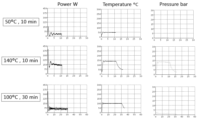
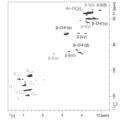
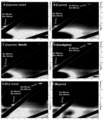
- Microwave irradiation conditions, output, temperature, pressure profile, and equipment specifications related to lignocellulose component separation are Initiator+ 60 microwave synthesis equipment manufactured by Biotage, stirring speed: 600 rp, Cooling: On, Absorption: High conditions. It is a two-dimensional NMR spectrum of low-denaturation, high-purity, ether-rich lignin. It is an analysis result of lignin isolated by the M-APA method (microwave 50°C, 10 minute treatment, acetic acid peracetic acid 1% condition) using eucalyptus as a starting material.
- DLS dynamic light scattering
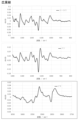
- the raw materials are A white lignin derived from coniferous cedar, B white lignin derived from coniferous cypress, C white lignin derived from broadleaf tree beech, D white lignin derived from broadleaf tree eucalyptus, E white lignin derived from herbaceous rice straw, and F white lignin derived from herbaceous sugarcane bagasse. Reflectance spectrum by diffuse reflectance method.
- the method for producing white lignin or white lignin-polysaccharide complex comprises the steps of: (a) contacting plant biomass with an alkaline solution to obtain an alkali-treated product; and (c) contacting the washed product with a solution containing an organic acid. It may be indicated as "the manufacturing method of the present invention”). This will be explained below.
- the plant biomass is not particularly limited as long as it contains lignin and/or lignin-polysaccharide complexes, and includes, for example, plant bodies themselves and mechanically processed plant bodies.
- Plant biomass usually contains at least one selected from the group consisting of hemicellulose and cellulose in addition to lignin and/or lignin-polysaccharide complex, preferably lignin, hemicellulose, lignin-polysaccharide complex and cellulose.
- - contains a hemicellulose complex and cellulose.
- Plants include, for example, conifers, broad-leaved trees, and non-woody materials. Specific examples include cedar, pine, Ezo spruce, larch, Japanese black pine, Sakhalin fir, Japanese white pine, yew, Nezuko, spruce fir, Japanese white fir, and dogwood.
- Examples of mechanically processed plant products include logs, square timbers, boards, solid wood, wood materials, laminated lumber, laminated veneer lumber, plywood, wood boards, particle boards, fiber boards, wood pieces, and particulate wood (chips, particles, wood flour, etc.), fibrous wood, pressed products, crushed products, and the like.
- the plant biomass can be wood flour.
- the volume average particle size of wood flour is, for example, 500 ⁇ m or less, 200 ⁇ m or less, or 100 ⁇ m or less.
- the lower limit of the average particle size is not particularly limited, and can be, for example, 1 ⁇ m, 2 ⁇ m, or 5 ⁇ m.
- Wood flour can be obtained by grinding plant biomass. Pulverization can be performed according to or according to a known method, and can be performed using various mills (eg, ball mill, mixer mill, etc.).
- the plant biomass can be of one type alone, or can be a combination of two or more types.
- step (a) plant biomass and an alkaline solution are brought into contact to obtain an alkali-treated product.
- the step (a) causes loosening of the plant cell wall structure (reduction of intermolecular interactions and breakage of hydrogen bonds) and breakage of intramolecular ester bonds, which can improve the yield. . Further, the combination of step (a) and step (b) described below can efficiently remove the coloring component of lignin.
- the alkaline solution is not particularly limited as long as it is an alkaline solution that can achieve the above purpose.
- the alkaline solution can be a pH 12-15 solution.
- the pH of the solution is preferably 13-14.
- the alkaline solution can be, for example, a solution containing 0.2 to 2% by mass (preferably 0.7 to 1.5% by mass) of an alkali metal hydroxide (eg, sodium hydroxide, potassium hydroxide, etc.).
- the concentration of the alkali metal hydroxide is preferably 0.1-0.3M.
- the amount of alkaline solution used is not particularly limited as long as it is an alkaline solution that can achieve the above purpose.
- the alkaline solution can be, for example, 3-20 mL, preferably 5-12 mL, per 1 g of plant biomass.
- the manner of contact between the plant biomass and the alkaline solution is not particularly limited, but from the viewpoint of treatment efficiency, it is preferable to immerse the plant biomass in the alkaline solution.
- the temperature of the alkaline solution is not particularly limited as long as it can achieve the above purpose.
- the temperature of the alkaline solution is preferably relatively low. Especially preferred is 30 to 50°C.
- the plant biomass with ultrasonic waves or microwaves in step (a).
- Conditions for the microwave treatment can be appropriately set, and for example, the treatment can be performed using a commercially available microwave synthesizer while stirring the solution.
- the conditions for ultrasonic treatment can be appropriately set, and for example, a commercially available ultrasonic irradiation device can be used.
- the microwave and ultrasonic wave output conditions can be set so that the temperature of the alkaline solution can be maintained at the above-described temperature.
- the processing time of step (a) is not particularly limited as long as it is enough time to achieve the above purpose.
- the treatment time is, for example, 5 to 100 minutes, preferably 15 to 70 minutes, more preferably 20 to 40 minutes.
- ultrasonic irradiation In order to effectively promote the penetration of the alkaline liquid into the plant cell structure and the dispersion and movement of the extracted components, ultrasonic irradiation, pressure change (pressurization, decompression and repetition), microwave irradiation, and nanobubbles are generated. Efficient short-term alkali swelling (cell wall swelling effect due to loosening packing between polymer chains in plant cell walls, partial cleavage of hydrogen bonds, partial cleavage of ester bonds) and extraction of coloring components. be done.
- Reducing the solid-liquid interfacial tension of the alkaline liquid and improving the wettability are also effective. It can be achieved by adding a hydrophilic organic solvent (eg, ethanol, etc.) or a surfactant.
- a hydrophilic organic solvent eg, ethanol, etc.
- step (b) After the contact treatment between the plant biomass and the alkaline solution, solid-liquid separation treatment (centrifugation, filtration, standing, etc.) is performed as necessary to obtain an insoluble part (alkaline-treated material).
- the alkali-treated product is supplied to step (b).
- step (b) the alkali-treated material is washed with a liquid to obtain a washed material.
- the liquid used for washing is not particularly limited as long as it contains a solvent capable of removing the coloring component of lignin.
- the liquid preferably contains water from the viewpoint of removal efficiency of the coloring component.
- the content of water in the liquid is preferably 20% by mass or more, more preferably 40% by mass or more, still more preferably 60% by mass or more, still more preferably 80% by mass or more, and particularly preferably 90% by mass or more.
- the liquid is particularly preferably water.
- the method of washing with liquid is not particularly limited.
- washing can be performed by mixing the alkali-treated material with a liquid, separating the solid from the liquid, and recovering the insoluble portion.
- the washing operation is preferably repeated multiple times. From the viewpoint of further increasing the whiteness of the obtained lignin and/or lignin-polysaccharide complex, it is preferable to wash until the washing waste liquid reaches a neutral range (for example, pH 6.5 to 8.0, preferably pH 6.5 to 7.5). .
- a neutral range for example, pH 6.5 to 8.0, preferably pH 6.5 to 7.5.
- step (c) The insoluble part (washed material) obtained after the washing operation is completed is subjected to step (c).
- step (c) a solution containing an organic acid is brought into contact with the washed material.
- the organic acid solution is a solution that contains an organic acid and is capable of extracting and solubilizing lignin and/or lignin-polysaccharide complexes, and is not particularly limited in this respect.
- Organic acids are not particularly limited, and examples include acetic acid, formic acid, glyoxylic acid, maleic acid, propionic acid, folic acid, isobutyric acid, valeric acid, isovaleric acid, pyruvic acid, oxalic acid, malonic acid, succinic acid, and glutaric acid.
- ketoglutaric acid, adipic acid lactic acid, tartaric acid, fumaric acid, oxaloacetic acid, malic acid, isocitric acid, citric acid, benzoic acid, phthalic acid, isophthalic acid, terephthalic acid, hemimellitic acid, trimellitic acid, trimesic acid, melophanic acid, Prenitic acid, pyromellitic acid, mellitic acid, methanesulfonic acid, benzenesulfonic acid, p-toluenesulfonic acid, camphorsulfonic acid, p-toluenesulfinic acid, benzenesulfinic acid and the like.
- acetic acid formic acid, glyoxylic acid, 3-oxopropanoic acid, 2-methyl-3-oxopropanoic acid and the like are preferred, acetic acid, formic acid, glyoxylic acid and the like are more preferred, and particularly preferred are Acetic acid can be mentioned.
- the organic acid can be of one type alone, or can be a combination of two or more types.
- the organic acid solution preferably contains peracid.
- the peracid is not particularly limited as long as it is an acid having a hydroperoxide group (-O-OH).
- examples include organic peroxyacids such as percarboxylic acid, persulfuric acid, percarbonic acid, perphosphoric acid, and subperhalogenic acid. I can give an example.
- percarboxylic acids include peracetic acid, performic acid, perbenzoic acid, meta-chloroperbenzoic acid, and examples of subperhalic acids include subperchloric acid, subperbromic acid, and subperiodic acid. can.
- peracids include hydrogen peroxide, lithium peroxide, sodium peroxide, potassium peroxide, sodium percarbonate, urea peroxide, sodium perborate, tert-butyl hydroperoxide, and cumene hydroperoxide. , di-tert-butyl peroxide, dimethyldioxirane, acetone peroxide, methyl ethyl ketone peroxide, hexamethylene triperoxide diamine and the like.
- organic peroxyacids, hydrogen peroxide, sodium percarbonate, urea peroxide, sodium perborate and the like are preferred, and percarboxylic acids (especially peracetic acid) and hydrogen peroxide are more preferred. Hydrogen peroxide is particularly preferred.
- the peracid can be used singly or in combination of two or more.
- the content of the organic acid in the organic acid solution is, for example, 5-30 mol/L, preferably 8-25 mol/L, more preferably 10-20 mol/L.
- the content of the organic acid in the organic acid solution is preferably 3 to 10 g, more preferably 4 to 8 g, still more preferably 5 to 7 g, per 1 g of the washed material to be brought into contact with the organic acid solution.
- the content of the organic acid in the organic acid solution is preferably 50-100 mass %.
- the content of the peracid in the organic acid solution is, for example, 0.05-3 mol/L, preferably 0.08-2.5 mol/L, more preferably 0.1-2 mol/L.
- the peracid content in the organic acid solution is preferably 0.03 to 0.10 g, more preferably 0.04 to 0.08 g, still more preferably 0.05 to 0.07 g, per 1 g of the washed material to be brought into contact with the organic acid solution.
- the content of the peracid in the organic acid solution is preferably 0.1-10%, more preferably 0.3-5%, and even more preferably 0.6-2%.
- the step (c) is performed in an atmosphere of an inert gas or a gas other than oxygen (that is, the gas in contact with the organic acid solution is an inert gas or is a gas other than oxygen).
- gases include nitrogen, rare gases, and hydrogen.
- the temperature of the organic acid solution is preferably 90°C or lower, more preferably 70°C or lower, and even more preferably 60°C or lower.
- the lower limit of the temperature is, for example, 15°C, preferably 30°C, more preferably 40°C.
- the temperature of the organic acid solution is preferably 160°C or lower, more preferably 150°C or lower.
- the lower limit of the temperature is, for example, 105°C, preferably 110°C, more preferably 115°C.
- step (c) is performed with an organic acid solution at 100°C or below to obtain white lignin from the resulting soluble portion, while the resulting insoluble portion is Step (c) can be performed in solution to obtain white lignin-polysaccharide complexes from the resulting soluble portion.
- the processing time of step (c) is not particularly limited as long as it is enough time to achieve the above purpose.
- the treatment time is, for example, 1 to 60 minutes, preferably 1 to 30 minutes, more preferably 5 to 20 minutes.
- the treatment time is relatively short, for example, 15 minutes or less, preferably 10 minutes or less, more preferably 5 minutes or less. can be higher.
- step (c) it is preferable to perform microwave treatment while the biomass is immersed in the above solution.
- This improves the yield of lignin and/or lignin-polysaccharide complex.
- Conditions for the microwave treatment can be appropriately set, and for example, the treatment can be performed using a commercially available microwave synthesizer while stirring the solution.
- the microwave treatment time can be, for example, 1 to 30 minutes, preferably about 10 minutes.
- irradiation for a relatively short period of time is sufficient. Therefore, it is easy to construct a continuous system as well as a batch system.
- step (c) it is preferable to irradiate the plant biomass with microwaves or ultrasonic waves from the viewpoint that the penetration of the solution into the inner pores of the plant cell wall can be promoted and the yield can be improved.
- the irradiation conditions are the same as above.
- the soluble part and the insoluble part are separated after adding a separation solvent as necessary.
- the method for separating the soluble portion and the insoluble portion is not particularly limited, and methods such as decantation, spin-down, and filtration can be employed.
- water content is, for example, 0 to 50% by mass, preferably 0 to 30% by mass, more preferably 0 to 20% by mass, more preferably 0-10% by mass, and particularly preferably 0-5% by mass of solvent
- the soluble part contains white lignin or white lignin-polysaccharide complex.
- a solvent with a relatively high water content as a separation solvent water content is, for example, more than 50 to 100% by mass, preferably 70 to 100% by mass, more preferably 80 to 100% by mass, more preferably 90 to 100% by mass, particularly preferably 95-100% by mass of solvent
- water content is, for example, more than 50 to 100% by mass, preferably 70 to 100% by mass, more preferably 80 to 100% by mass, more preferably 90 to 100% by mass, particularly preferably 95-100% by mass of solvent
- step (d) After step (c), it is preferable to include a step of adding a first solvent to obtain a solution containing white lignin and/or white lignin-polysaccharide complex.
- the first solvent is not particularly limited, and includes, for example, the separation solvent described above.
- the first solvent at least one solvent selected from the group consisting of ethanol, methanol, acetone, acetonitrile, propanol and water (particularly preferably ethanol) and a mixed solvent are preferable.
- the soluble part and the insoluble part are separated.
- the method for separating the soluble portion and the insoluble portion is not particularly limited, and methods such as decantation, spin-down, and filtration can be employed. is obtained.
- step (d) from the viewpoint of further increasing the whiteness of the resulting lignin and / or lignin-polysaccharide complex, (e) adding a second solvent to the concentrate containing the white lignin and/or the white lignin-polysaccharide complex to extract the white lignin and/or the white lignin-polysaccharide complex.
- the concentrate of white lignin and/or white lignin-polysaccharide complex-containing solution is not particularly limited as long as part or all of the solvent of white lignin and/or white lignin-polysaccharide complex-containing solution is distilled off. .
- the concentrate is preferably dry.
- the second solvent is not particularly limited, and includes, for example, the separation solvent described above.
- the second solvent is at least one selected from the group consisting of dioxane, acetone, acetonitrile, allyl alcohol, propanol, 1-butanol, 2-methyl-1-propanol, 2-butanol, ethyl acetate, and pyridine.
- a mixed solvent of an organic solvent (particularly preferably dioxane) and water is preferred.
- the content of the organic solvent in the mixed solvent is, for example, 60-95% by mass, preferably 70-90% by mass, more preferably 75-85% by mass.
- white lignin and/or white lignin-polysaccharide complex is extracted. After that, the resulting extract (soluble part) and insoluble part are separated.
- the method for separating the soluble portion and the insoluble portion is not particularly limited, and methods such as decantation, spin-down, and filtration can be employed.
- step (c) solid white lignin and/or white lignin-polysaccharide complex can be obtained by concentrating and drying the soluble portion obtained as described above.
- the production method of the present invention suppresses reactions that cause color development (lignin oxidation reaction, excessive decomposition, condensation, Maillard reaction, coloring reaction) in the process of extraction and separation, while suppressing decomposition and low molecular weight lignin. As a result, white lignin and/or white lignin-polysaccharide complex can be obtained.
- white lignin of the present invention in one aspect, it is characterized by having a Hunter whiteness (W) of 60 or more and a content of ⁇ -O-4 type ether structure of 50% or more. It is possible to obtain white lignin comprising at least:
- white lignin having at least the characteristics of a Hunter whiteness (W) of 60 or more and a ratio of oxidized lignin structures of 0.3 or less can be obtained. It is possible.
- the white lignin of the present invention has a Hunter whiteness (W) of 60 or more. Hunter whiteness is measured and calculated according to the method described in Test Examples 1-3 below.
- the Hunter whiteness (W) of the white lignin of the present invention is preferably 70 or higher, more preferably 75 or higher, even more preferably 80 or higher, and even more preferably 85 or higher.
- the upper limit of Hunter whiteness (W) is not particularly limited, and is 98, 95, or 92, for example.
- the whiteness of the present invention is derived from the total reflection of light, the dissolved state of the solution is transparent. In addition, it has the feature of being able to make a mixture with a transparent resin or paint transparent.
- the white lignin of the present invention is lignin isolated from biomass (including natural lignin).
- the binding modes of natural lignin are diverse. Typical bonding modes of natural lignin include the following.
- the content of the ⁇ -O-4 type ether structure is the highest among all bonding modes between monolignols. For example, in conifers, the content is said to be 40-60%.
- broad-leaved trees for example, eucalyptus is said to contain about 45%.
- the content of ⁇ -O-4 type ether type structure is 50% or more, preferably 60% or more, more preferably 65 to 85% in all bonding modes between monolignols. and more preferably 70 to 80%.
- the content rate (%) of the ⁇ -O-4 type ether type structure among all bonding modes between monolignols is x% in the lignin contained in the raw material biomass. Then, it is preferably 1.2x% or more, more preferably 1.4x% or more, and still more preferably 1.6x% or more. In the left, the upper limit is preferably 2x%.
- the content of ⁇ -O-4 type ether structure is specifically measured as follows. Samples are dissolved in deuterated dimethylsulfoxide (DMSO- d6 ) to 1-10 wt% and NMR spectra are acquired using a Bruker Avance III 600 MHz NMR instrumentation equipped with a cryoprobe. The content of the ⁇ -O-4 type ether structure can be estimated from the signal volume on the HSQC (Heteronuclear single-quantum correlation spectroscopy) spectrum. The calculation of the content rate is based on 100 lignin aromatic rings.
- DMSO- d6 deuterated dimethylsulfoxide
- HSQC Heteronuclear single-quantum correlation spectroscopy
- the aromatic nucleus is the sum of the signal integration values of S 2,6 (+S' 2,6 )/2 at positions 2 and 6 of the syringyl nucleus and G 2 (+G' 2 ) at position 2 of the guaiacyl nucleus. ), the ether-type structure can be calculated from the CH spin-bond signals at the ⁇ -(benzyl) and ⁇ -positions. Quantitation values in the two-dimensional NMR method are described in the literature (Okamura, H. Nishimura, T. Nagata, T. Kigawa, T. Watanabe and M. Katahira, Accurate and molecular-size-tolerant NMR quantitation of diverse components in solution, Scientific Reports, 6, 21742. 2016) to calculate the correct content rate.
- the white lignin of the present invention exhibits high solubility in acetic acid and ethanol, and the solubility in acetic acid is 50 or more, preferably 70, in the NMR-DMSO standard solubility index as defined herein (described below). As described above, it is more preferably 100 or more, and the solubility in ethanol is 30 or more, preferably 50 or more, more preferably 60 or more.
- the method for calculating the NMR-DMSO standard solubility index is as follows. 10 mg of lignin powder as a sample is weighed, dissolved in 0.5 mL of various deuterated solvents for NMR, and subjected to quantitative 1H-NMR measurement. DMSO-d6, heavy acetic acid-d4, heavy water, heavy ethanol d-6, etc. are used as heavy solvents. The integral value (6-8 ppm) of the aromatic region of the obtained spectrum was obtained, and the integral value obtained from the 1H NMR spectrum of DMSO-d6 dissolved lignin was defined as 100.
- the solubility in various solvents can be objectively and quantitatively calculated, and is defined as the DMSO standard solubility index.
- DSS (1 mM, chemical shift 0 ppm) can be used as a spectral internal standard for quantification.
- 1-3% heavy DMSO (chemical shift 39.6 ppm) can be added to each solvent for reference.
- the white lignin of the present invention preferably has a solubility of 2 w/v% or more in 60-80% ethanol at 25°C. Therefore, by using the white lignin of the present invention, a self-assembled body described later can be easily obtained, and a highly stable self-assembled body can be obtained.
- the solubility is preferably 4 w/v% or more, more preferably 5 w/v% or more, still more preferably 6 w/v% or more, and even more preferably 7 w/v% or more.
- the white lignin of the present invention preferably contains 5% or less of biphenyl-type lignin, which has a condensed structure.
- the white lignin of the present invention preferably has a number average molecular weight (Mn) of 0.7-9 kDa, more preferably 1-5 kDa, and even more preferably 1.5-4 kDa.
- the white lignin of the present invention preferably has a weight average molecular weight (Mw) of 1 to 10 kDa, more preferably 1.5 to 8 kDa, still more preferably 2 to 6 kDa.
- the number average molecular weight (Mn) and weight average molecular weight (Mw) of lignin are specifically measured as follows.
- the molecular weight of lignin can be determined by Size Exclusion Chromatography (SEC), so-called GPC (Gel Permeation Chromatography).
- SEC Size Exclusion Chromatography
- GPC Gel Permeation Chromatography
- the sample is dissolved in a solution of acetic anhydride and a base (such as pyridine) and allowed to react for 3-6 hours to obtain an acetylated form. This is dissolved in tetrahydrofuran (THF) to a concentration of 2.0 mg/mL and separated by high performance liquid chromatography.
- THF tetrahydrofuran
- a HZ-M column (Tosoh 150 mm ⁇ 4.6 mm id, 4 ⁇ m, 3 columns connected in series) is used. Analysis is performed by injecting a 10 ⁇ L sample, column temperature at 40°C, tetrahydrofuran (THF) as the mobile phase, and a flow rate of 0.35 mL/min.
- a mass calibration curve was generated using polystyrene standards, Tosoh PStQuickC (molecular weights (MW) of 2,110,000, 427,000, 37,900, and 5970), pinoresinol (MW 352), and vanillin (MW 152), and sample Find Mw, Mn of
- the white lignin of the present invention preferably has a polydispersity (Mw/Mn) of 2.5 or less, more preferably 2 or less.
- the white lignin of the present invention preferably has a lignin oxide ratio of 0.5 or less, more preferably 0.3 or less, and still more preferably 0.1 or less.
- Oxidized lignin is a ketone structure ( ⁇ -carbonyl structure ) is assumed to be formed. Oxidation of the benzylic position contributes to coloration because the conjugated system of the aromatic ring is extended to the ⁇ -position. Oxidation of lignin has been unavoidable due to artificial manipulations associated with the acquisition of lignin. Lignin is colored when it is oxidized by pulverization, high temperature and high pressure conditions, and strong acid conditions. We found that the ratio of lignin oxidants is an index of white lignin.
- the ratio of lignin oxidants can be calculated by the following.
- ⁇ Calculation method of lignin oxidant ratio Samples are dissolved in deuterated dimethyl sulfoxide (DMSO-d6) to 1-10 wt% and NMR spectra are acquired using a Bruker Avance III 600 MHz NMR instrument instrument equipped with a cryoprobe. HSQC (Heteronuclear single-quantum correlation spectroscopy) calculates the composition ratio of the lignin oxide from the signal volume on the spectrum. Bruker's Topspin 3.6 software is used for signal integration. Since the area to be integrated slightly shifts depending on the sample and measurement environment, the signal integration area is adjusted as appropriate during analysis (this point also applies to other measurement methods described herein).
- DMSO-d6 deuterated dimethyl sulfoxide
- HSQC Heteronuclear single-quantum correlation spectroscopy
- lignin oxidized ratio (S) [signal integral value of S' region] / [of region of S signal integral value]
- lignin oxidized product ratio (G) [signal integral value in the region of G']/[signal integral value in the region of G].
- the white lignin of the present invention can be used in healthcare, cosmetics, dyes, resins, composite materials, and the like.
- the white lignin of the present invention is suitable as a starting material for various biomass conversion studies and reaction design.
- the white lignin of the present invention can be colored in various colors (in particular, colors that cannot be expressed by mixing the original colors of lignin (brown, black)).
- the Hunter whiteness (W) is 60 or more, and ⁇ ether bonds between lignin and polysaccharides, ⁇ ester bonds between lignin and polysaccharides, and a ⁇ -ester bond between lignin and polysaccharide, a white lignin-polysaccharide complex can be obtained.
- the white lignin-polysaccharide complex of the present invention has a Hunter whiteness (W) of 60 or more. Hunter whiteness is measured and calculated according to the method described in Test Examples 1-3 below.
- the Hunter whiteness (W) of the white lignin-polysaccharide complex of the present invention is preferably 70 or higher, more preferably 75 or higher, even more preferably 80 or higher, and even more preferably 85 or higher.
- the upper limit of Hunter whiteness (W) is not particularly limited, and is 98, 95, or 92, for example.
- polysaccharides examples include xylan, mannan, glucomannan, galactoglucomannan, glucuronoxylan, arabinoglucuronoxylan, and the like.
- the main component of hemicellulose is glucomannan in conifers, glucuronoxylan in broadleaf trees, and arabinoxylan in herbs.
- monomers include xylose, arabinose, glucose, mannose, galactose and uronic acid.
- the side chain contains an acetyl group and a methoxy group.
- hemicellulose contains ferulic acid and diferulic acid bound to the arabinose side chain of arabinoxylan.
- the white lignin-polysaccharide complex of the present invention is a lignin-polysaccharide complex that can be uniformly dispersed in a separation solvent, and is characterized by a polymer structure in which lignin and polysaccharide are copolymerized through covalent bonds.
- the white lignin-polysaccharide complex of the present invention is isolated by hydrolyzing a small portion (less than 10% of the bonds) of the bonds of the hemicellulose main chain in the lignin-polysaccharide complex structure in the plant cell wall. . Excessive decomposition, side reactions, and molecular weight reduction can be suppressed by carrying out the hydrolysis reaction under mild conditions.
- the white lignin-polysaccharide complex of the present invention includes ⁇ ether bonds between lignin and polysaccharides (LC ⁇ ether bonds), ⁇ ester bonds between lignin and polysaccharides (LC ⁇ ester bonds), and ⁇ ester bonds between lignin and polysaccharides (LC ⁇ ester bond).
- the ⁇ ether bond (LC ⁇ ether) between lignin and polysaccharide, which is the copolymerization point is concentrated to 1.2 times or more compared to the original bond unit composition ratio of the raw biomass. It is preferable that
- lignin and polysaccharides are also bound by non-covalent bonds.
- Non-covalent bonding results from hydrophobic interactions, hydrogen bonding, electrostatic interactions, and entanglement of polymer chains. Therefore, in the lignin-polysaccharide complex, no clear evidence has been shown in previous studies that polymers with different properties, lignin and polysaccharide, form a copolymer through covalent bonding.
- the conventional method for the preparation of lignin-polysaccharide complexes is multi-step and results in low yields (less than 5%) or low purity (relative integral values of signals at ⁇ -positions of LC ⁇ ether bonds per 100 aromatic rings, respectively, less than 1.5).
- the white lignin-polysaccharide complex of the present invention preferably has a solubility of 2 w/v% or more in 60-80% ethanol at 25°C. Therefore, by using the white lignin-polysaccharide complex of the present invention, a self-assembled body described later can be easily obtained, and a highly stable self-assembled body can be obtained.
- the solubility is preferably 4 w/v% or more, more preferably 5 w/v% or more, still more preferably 6 w/v% or more, and even more preferably 7 w/v% or more.
- the white lignin-polysaccharide complex of the present invention exhibits high solubility in acetic acid and ethanol, and has a solubility in acetic acid of 50 or more according to the NMR-DMSO standard solubility index as defined herein (described below). , preferably 70 or more, more preferably 100 or more, and a solubility in ethanol of 30 or more, preferably 50 or more, more preferably 60 or more.
- the binding unit composition ratio of LC ⁇ ether and LC ⁇ ester, which are copolymerization points is preferably 2% or more, more preferably 5% or more, in terms of lignin aromatic ring ratio.
- the composition ratio of polysaccharide to lignin is preferably 0.1-2, more preferably 0.3-1.
- the white lignin-polysaccharide complex of the present invention preferably has a molecular weight (Mw) of 1-15 kDa, more preferably 2-7 kDa.
- Mw molecular weight
- the lignin-polysaccharide complex of the present invention preferably has a polydispersity (Mw/Mn) of 3.5 or less, more preferably 2.5 or less.
- the method for measuring each parameter described above is according to the method for measuring the white lignin of the present invention, the method for measuring the examples described later, or a known method.
- the self-assembled product of the present invention is the white lignin of the present invention and/or the self-assembled product of the white lignin-polysaccharide complex of the present invention, and is not particularly limited.
- the form of the self-assembled body includes fine particles including nanoparticles and microparticles, hollow spherical fine particles as capsules, and composite structure type fine particles. It also includes self-assembled bodies, thin films, and multi-core aggregates in which aromatic rings are stacked. Self-organization occurs easily, and the conditions for self-organization can be appropriately set. For example, nanoparticles and hollow spherical particles can be formed by self-organization in an aqueous solution in which the white lignin and/or white lignin-polysaccharide complex of the present invention is dispersed.
- lignin fine particles form a Pickering-type or O/W-type emulsion, which is effective as a dispersant or emulsifier. be.
- lignin commercially available industrial craft lignin
- ethanol or water mixed solvents which are hydrophilic solvents.
- the lignin-polysaccharide complex of the present invention exhibits dispersibility and solubility in hydrophilic solvents and water mixed solvents. Therefore, by using the white lignin and/or the white lignin-polysaccharide complex of the present invention, it is possible to obtain hollow spherical particles with higher safety to living organisms.
- the self-assembled white lignin and/or white lignin-polysaccharide complex of the present invention exhibit fluorescence in the long wavelength region. Specifically, it exhibits fluorescence in the wavelength region of 350 nm to 600 nm.
- fluorescence that is significantly shifted to a shorter wavelength than the excitation wavelength so-called anti-Stokes fluorescence, is observed. Anti-Stokes fluorescence is exhibited even with a weaker light source such as a xenon lamp as an excitation light source.
- the self-assembled product of the present invention can be used as an anti-Stokes fluorescent agent.
- the self-assembled product of the present invention can be used as an anti-Stokes fluorescent paint, ink, identification agent, up-conversion/wavelength-converting molecular material, and photoresponsive material.
- the self-assembled body of the present invention can stably disperse in an aqueous solution and maintain the above fluorescence even in a solid state after drying.
- the number average particle diameter of the fine particles which is one form of the self-assembled body of the present invention, is, for example, 100 ⁇ m or less.
- the microparticles of the present invention have the particle size of nanoparticles, microparticles, and form hollow spheres, porous, spongy, solid, or composite types.
- the number average particle size is, for example, 10 nm or more.
- the number average particle size is preferably 30 nm to 30 ⁇ m, more preferably 40 nm to 10 ⁇ m, even more preferably 50 nm to 800 nm, still more preferably 70 nm to 500 nm.
- the hollow spherical particles of the present invention can have a high lumen ratio.
- the lumen ratio of the hollow spherical particles of the present invention is, for example, 60% or higher, preferably 70% or higher, more preferably 75% or higher, and even more preferably 80% or higher.
- the lumen ratio is measured according to the following method.
- the hollow spherical particles and nanoparticles of the present invention can be used, for example, as carriers for transporting substances by containing active ingredients in the interior, hollow portion and shell structure portion (shell portion). In addition, this can impart solubility resistance, compatibility, light resistance, etc. to the active ingredient.
- active ingredients can be selected, such as agricultural chemicals, fertilizers, pharmaceuticals, cosmetic ingredients, fragrances, fluorescent agents, paints (e.g., vanillin, limonene, menthol, etc.), proteins, antibodies, nucleic acids (e.g., oligonucleotides such as DNA and RNA).
- vaccines peptides, lipids, hormones, sugars, glycosides, surfactants, UV absorbers, light scattering agents, adhesives, vitamins, coenzymes, minerals, cells, organelles, low-molecular-weight compounds (e.g., pheromones signaling substances such as; nitrogen-containing compounds such as alkaloids, monoterpenes and sesquiterpenes; isoprenoids such as terpenoids;
- the hollow spherical particles and nanoparticles of the present invention can be used as drug carriers (for DDS). More specifically, it can be used as an organic capsule or nanocarrier as a drug carrier. Since it is a natural product and is expected to be biocompatible, it is useful as a drug carrier. Furthermore, hollow spherical particles with an average particle size of 200 nm or less, preferably 100 nm or less, do not leak into normal tissues, and can be expected to have an EPR effect (Enhanced Permeation and Retention Effect) that reaches and accumulates in tumor tissues.
- EPR effect Enhanced Permeation and Retention Effect
- the hollow spherical particles and nanoparticles of the present invention can also be used as UV-absorbing capsules for the purpose of imparting light resistance to protect the encapsulating compound from UV rays. Since the absorption range includes the UV-A and UV-B wavelength regions, it is also useful as an ultraviolet absorbing material used in skin care products such as sunscreens. Such ultraviolet absorption effect is presumed to be due to intermolecular interactions such as ⁇ - ⁇ stacking of aromatic lignin. It can also be used as an ultraviolet scattering agent and a light reflecting material. It scatters ultraviolet rays (UV-A and UV-B regions) and transmits visible light, has a gentle reflection and absorption spectrum compared to inorganic scattering agents, and can be made transparent. You can avoid the white floating seen.
- the hollow spherical particles and nanoparticles of the present invention can have negative and positive charges as surface charge. As anionic nanoparticles, they have a large absolute negative charge and good dispersibility in water and under weakly basic conditions.
- the hollow spherical particles and nanoparticles of the present invention have a negative charge, such as a zeta potential of -5 to -150 mV, preferably -20 to -120 mV, more preferably -40 to -100 mV, and even more preferably -50 to -90 mV. can have
- the hollow spherical particles and nanoparticles of the present invention are negatively charged at neutral to basic pH, and by making the pH of the external environment acidic, the switching from negative charge to positive charge is achieved with little change in particle size. It has a function as a pH-responsive nanocarrier.
- the hollow spherical particles and nanoparticles of the present invention exhibit long wavelength fluorescence. It is caused by association between molecules of conjugated systems and intramolecular associations due to self-assembly of lignin, the formation of so-called J-aggregates, and long-wavelength fluorescence due to exciplex formation, preferably fluorescence at 400 nm or more, more preferably indicates fluorescence above 450 nm. Fluorescence in the long-wavelength region is useful for identification, and is suitable for selective optical detection without overlap with coexisting components, and for tracing and imaging pharmacokinetics in vivo.
- the hollow spherical particles and nanoparticles of the present invention are stable over time and their aggregation and aggregation are suppressed, and their particle diameters can be more stably maintained.
- Structural stability can also be evaluated by scanning electron microscopy. That is, the hollow spherical structure and fine particle structure are maintained even in a dried capsule and in a vacuum. It is also structurally stable after drug encapsulation. Such shape stability properties are suitable for efficient formulation, accumulation, transportation and storage applications of drug carriers.
- the particle size, surface charge, dispersibility, and encapsulation capacity of the above-mentioned active ingredients of the hollow spherical particles and nanoparticles of the present invention can be widely adapted depending on the plant species and part of the raw material biomass.
- This difference is due to the structural unit ratio of lignin in the lignin-polysaccharide complex (composition ratio of aromatic nucleus structure with phenylpropane unit as basic skeleton, guaiacyl lignin, syringyl lignin, p-hydroxyphenyl lignin, and flavonoid lignin) ) and the types of constituent polysaccharides.
- the particle size, surface charge, dispersibility, and encapsulation capacity of the above-mentioned active ingredient of the hollow spherical particles and nanoparticles of the present invention depend on the lignin-polysaccharide composition ratio (polysaccharide monomer unit number divided by the number of monomer units of lignin), and by separating the types of polysaccharides.
- Lignin-polysaccharide complexes with different lignin-polysaccharide composition ratios can be easily separated by differences in solubility in alcohol/water or dioxane/water. They can also be separated by hydrophobic interaction chromatography (method described in Nishimura et al., Direct evidence for ⁇ ether linkage between lignin and carbohydrates in wood cell walls, Sci Rep 2018, Toyopearl HW50 column).
- the polysaccharide component in the lignin-polysaccharide complex is hemicellulose. If the raw material is derived from broadleaf trees, it contains a large amount of acidic polysaccharides (glucuronoxylan) containing uronic acid, and if it is derived from coniferous trees, it contains a large amount of neutral polysaccharides (glucomannan). Separation focusing on the polysaccharide component of the lignin-polysaccharide complex is performed by the ion-exchange chromatography method described in the literature (Nishimura et al., Direct evidence for ⁇ ether linkage between lignin and carbohydrates in wood cell walls, Sci Rep 2018). can.
- the hollow spherical particles and nanoparticles of the present invention can be controlled in controlled release by the action of enzymes, which are biocatalysts.
- the drug can be released by causing polysaccharide-degrading enzyme to act to change the shape or collapse the hollow spherical microparticles carrying the drug.
- Enzymes have activity selective to substrate specificity, pH, and temperature conditions. ) can be achieved.
- Reference test example 1 From lignin, lignin-polysaccharide complex, hemicellulose, cellulose-hemicellulose complex and isolated biomass of cellulose, lignin, lignin-polysaccharide complex, hemicellulose by M-APA method, A-APA method or their condition examination method , a cellulose-hemicellulose complex and cellulose were isolated, yield measurement, physical property measurement of the isolate, and the like were performed.
- the isolation method of the present invention is a production method that enables highly efficient isolation of soluble lignin, lignin-polysaccharide complex, hemicellulose, cellulose-hemicellulose complex and cellulose from natural polymers in biomass.
- a step (A) of contacting a solution containing acid and peracid with plant biomass is included. Specifically, it was carried out as follows.
- ⁇ Reference test example 1-1 Preparation of finely pulverized wood flour> From broad-leaved trees (eucalyptus or beech), conifers (red pine, cedar, or cypress), or herbaceous (bagasse (sugar cane) or bamboo) wood powder, volume average particle size 10 ⁇ m (1-100 ⁇ m) by ball mill or bead mill method A fine powder (pulverized wood flour) was prepared.
- Moso bamboo powder Karlu, Fukuoka Prefecture, 3rd grade was used as the bamboo.
- a preparation method using a ball mill is shown.
- a planetary ball mill (P-6, Fritsch) was used. 2 g of wood powder and 100 g of ⁇ 3 mm zirconia beads were placed in an 80 cc agate container, which was sealed in a double overpot. After evacuating the overpot for 20 minutes, nitrogen gas, which is an inert gas, was injected. One cycle was set to milling for 1 minute and pause for 1 minute and 20 seconds, and 180 cycles (3 hours in total) were performed at 550 rpm. Under the above conditions, fine wood powder can be obtained while suppressing oxidation during pulverization and denaturation due to heating.
- the soluble part was separated by adding 10 mL of separation solvent (acetone) and spinning down (RCF 8000 xg, 5 min). The insoluble portion was extracted and washed three times with 10 mL of the separation solvent (acetone) and combined with the soluble portion.
- This soluble lignin is called peroxyacid lignin (APA lignin).
- the insoluble part As the second step, the same extraction operation was performed with the microwave heating conditions changed to 140°C.
- the soluble part is a lignin-hemicellulose copolymer. An insoluble portion containing cellulose as a main component was obtained.
- the soluble part and the insoluble part can be easily separated by decantation or spin down and filtration. Additional acetone (separating solvent) extraction was performed three times and combined with the soluble portion.
- lignin peroxyacid (APA lignin) and lignin-hemicellulose copolymer were obtained as soluble lignin by the same extraction method as the M-APA method of Reference Test Example 1-3. An insoluble portion containing cellulose as a main component was obtained.
- Molecular weight (Mn, Mw and polydispersity) measurement method The molecular weight was determined by Size Exclusion Chromatography (SEC), so-called GPC (Gel Permeation Chromatography). The sample was dissolved in a solution of acetic anhydride and a base (such as pyridine) and allowed to react for 3-6 hours to obtain an acetylated form. This was dissolved in tetrahydrofuran (THF) to a concentration of 2.0 mg/mL and separated by high-performance liquid chromatography (manufactured by Shimadzu Corporation, high-pressure gradient SEC analysis system).
- SEC Size Exclusion Chromatography
- GPC Gel Permeation Chromatography
- a HZ-M column (Tosoh 150 mm ⁇ 4.6 mm id, 4 ⁇ m, three columns connected in series) was used. The analysis was performed by injecting 10 ⁇ L sample, column temperature of 40° C., tetrahydrofuran (THF) as mobile phase, flow rate of 0.35 mL/min.
- a mass calibration curve was generated using polystyrene standards, Tosoh PStQuickC (molecular weights (MW) of 2,110,000, 427,000, 37,900, and 5970), pinoresinol (MW 352), and vanillin (MW 152), and sample The weight-average molecular weight Mw and number-average molecular weight Mn of were determined. Polydispersity was determined as Mw/Mn.
- Table 1 shows the peracid conditions in the two-step microwave extraction reaction of the M-APA method and the yield of each component of polymeric lignocellulose (% by weight, raw material biomass ratio, raw material is eucalyptus).
- Table 2 shows the yield (% by weight, raw material biomass ratio) of each component of high-molecular-weight lignocellulose of various biomass in the two-step microwave extraction reaction of the A-APA method.
- Table 3 shows the peracid conditions in the two-step microwave extraction reaction of the M-APA method and the molecular weights (acetyl GPC analysis values) of each component of high-molecular-weight lignocellulose.
- Table 4 shows the yield (% by weight, raw material biomass ratio) of each component of high-molecular-weight lignocellulose of various biomass in the two-stage microwave extraction reaction of the M-APA method.
- Table 6 shows the molecular weight (acetyl GPC analysis value) of each component of high-molecular lignocellulose obtained by the A-APA method of various biomass.
- the heating time by microwave irradiation should be 5-30 minutes, preferably 10 minutes.
- the net exposure time is short, see Figure 2 for microwave profile and temperature and pressure data.
- microwave heating has higher yield and selectivity than the external heating method under low temperature, short time, and low energy input conditions. That is, microwave effects such as local heating, internal heating, electron transfer, and drug permeation promoting effects were observed.
- lignin could be isolated from any of acetic acid, formic acid, and glyoxylic acid as organic acids, but acetic acid was the best from the standpoint of yield, purity, and industrial use.
- FIG. 3 shows the NMR results of Reference Test Examples 1-6-2 and 1-6-3.
- FIG. 3 shows the analysis results of lignin isolated by the M-APA method (microwave treatment at 50° C., 10 minutes, 1% acetic acid peracetic acid) using eucalyptus as a starting material.
- 99% of the signal was derived from lignin and 1% was derived from polysaccharide (hemicellulose).
- the breakdown of inter-lignin unit bonds was 81% ether-type ⁇ -O-4, 5% ⁇ -5, 11% ⁇ - ⁇ , 1% dibenzodioxocine, and 1% others. See FIG. 4 for partial chemical structures of lignin interunit bonds and lignin-hemicellulose covalent bonds.
- FIG. 5 shows the NMR results of Reference Test Example 1-6-4.
- FIG. 5 shows the analysis results of the lignin-hemicellulose copolymer isolated by the M-APA method (microwave treatment at 50° C., 10 minutes, 1% acetic acid peracetic acid) using each plant as a starting material.
- the LC bonds (ether type and ester type) indicated by circles in the figure are main branched structures that are present at a ratio equal to or higher than that of ⁇ -5 and ⁇ - ⁇ bonds, which are the main interunit bonds of lignin.
- the isolated lignin-hemicellulose copolymer is characterized in particular by having LC ⁇ -ester type linkages.
- PA PerAcetic acid
- HP Hydrogen Peroxide 50: MW50 ACTN
- High quality polymer lignin 140 MW50-Mw140 ACTN
- lignin hemicellulose copolymer A50 Acetic peracetic acid, HP PA1%AA Mw50
- Microwave 50°C high-quality polymeric lignin H50 Acetic acid-hydrogen peroxide, HP 1M hydrogen peroxide Mw50 ACN Microwave 50°C high-quality polymeric lignin.
- Test example 1 Production of white lignin1
- White lignin was produced by treating biomass with alkali, washing the resulting alkali-treated material with a liquid, and treating the washed material by the APA method. Specifically, it was carried out as follows.
- UV-2700 manufactured by Shimadzu Corporation
- a spectrometric black quartz cell optical path length: 10 mm
- No Light Path 10 x 10 mm was used.
- the lignin particulate sample was diluted with 30 v/v% EtOHaq to give a final lignin concentration of 0.005 w/v%.
- Wavelength scans 200-900 nm, 250-600 nm were performed.
- Fluorescence spectrum spectrofluorophotometer RF-6000 (manufactured by Shimadzu Corporation) Fluorescence measurement: A fully transparent synthetic quartz cell (optical path length: 10 mm) and a Starna triangular quartz cell SF3 were used. The lignin particulate sample was diluted with 30 v/v% EtOHaq to give a final lignin concentration of 0.005 w/v%.
- the 3D fluorescence spectrum is Excitation wavelength 240-650 nm Data interval 2 nm, Emission wavelength 240-650 nm Data interval 2 nm, Measurements were performed at a scan speed of 6000 nm/min, with an ultraviolet cut filter U310 attached on the excitation side to reduce the effects of scattered light and multi-order light.
- the bandwidth was 10 nm on the excitation side and 20 nm on the fluorescence side, and the sensitivity was set to Low.
- Fluorescence microscope measurement All-in-one fluorescence microscope BZ-X810 (manufactured by Keyence) was used.
- Particle size distribution (DLS) and zeta potential were measured using the _DLS dynamic light scattering nanoparticle measurement device SZ-100 (Horiba, Ltd.). A sample was placed in a particle size measurement cell and a zeta potential measurement cell (Horiba, Ltd.) and measured. The measurement was repeated 3-5 times and the average value was calculated.
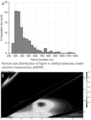
- Particle size distribution was measured by qNANO using the qNano Gold TRPS Measurement System (manufactured by Meiwafosis Izon Science). Measurement was performed by attaching Nanopore NP200 or NP400 and adding 35 ⁇ L of sample. Measurements were taken over 30 seconds and up to 500-1000 Particle Counts. The pore stretch was set to 37.00 mm, and the voltage was measured at a constant voltage of 2.0 V.
- Example 1-1 Preparation of wood flour> Hardwood (eucalyptus), coniferous (red pine, cedar or cypress) or herbaceous (bagasse (sugar cane) or bamboo) wood flour or wood chips (10 mm x 10 mm x 2 mm) are placed in two left and right pots of a mixer mill (MM301, manufactured by Retsch). 1 g of each was set, and pulverization was performed under the conditions of pulverization time: 5 minutes and frequency: 1/15 sec to obtain a powder (wood powder) having a volume average particle size of 0.1 mm.
- MM301 manufactured by Retsch
- Example 2 Alkali treatment, washing, APA method > (Example 1)
- 14.4 mL of 0.25 M sodium hydroxide aqueous solution was added to 1.8 g of eucalyptus wood powder obtained in Test Example 1-1.
- the container was immersed in a 60°C water bath and treated for 1 hour. After the hot water bath treatment, the soluble portion and the insoluble portion were separated by spinning down, and the insoluble portion was washed with water. Washing with water was continued until the washing waste liquid became neutral.
- the obtained washings (including 6.5 mL of water) and acetic acid-hydrogen peroxide solution (14.1 mL of acetic acid 99% (17.1 M) and 0.294 mL of 30% v/v hydrogen peroxide solution) were placed in an initiator vial. It was placed in a container and subjected to microwave irradiation for 10 minutes using an Initiator+ 60 microwave synthesizer manufactured by Biotage under the conditions of 50° C., initial power of 400 W, and stirring speed of 600 rpm. After irradiation, 14.4 mL of separation solvent 1 (70% ethanol aqueous solution) was added, mixed, and then spun down (RCF 10,000 xg, 5 min) to collect the soluble portion (supernatant).
- separation solvent 1 (70% ethanol aqueous solution
- Example 2 113 mg of white lignin powder was obtained in the same manner as in Example 1, except that ultrasonic treatment was performed in place of the hot water bath treatment in the alkali treatment.
- ultrasonic treatment 14.4 mL of 0.25 M sodium hydroxide solution was placed in a container for 1.8 g of eucalyptus wood powder obtained in Test Example 1-1, and an ultrasonic irradiation device (manufactured by AS ONE, product name: ULTRASONIC CLEANER Using MODEL VS-100 III), 28 kHz ultrasonic waves were intermittently irradiated for 30 minutes. During this time, the liquid temperature was 30-50°C.
- Example 3 In the same manner as in Example 1, except that a 0.1 M sodium hydroxide aqueous solution was used instead of the 0.25 M sodium hydroxide aqueous solution in the alkali treatment, and microwave treatment was performed instead of the hot water bath treatment in the alkali treatment, white lignin powder was obtained. 47 mg was obtained.
- the microwave treatment 14.4 mL of 0.25 M sodium hydroxide solution was added to 1.8 g of the eucalyptus wood powder obtained in Test Example 1-1, and 14.4 mL of 0.25 M sodium hydroxide solution was placed in an Initiator vial, and 40 minutes using an Initiator + 60 microwave synthesizer manufactured by Biotage. °C, initial power 400W, stirring speed 600rpm microwave irradiation for 30 minutes.
- Example 4 29 mg of white lignin powder was obtained in the same manner as in Example 2, except that cypress wood powder (Test Example 1-1) was used instead of eucalyptus wood powder.
- Example 5 Except for using a 0.1 M sodium hydroxide aqueous solution instead of the 0.25 M sodium hydroxide aqueous solution in the alkali treatment, and replacing the hot water bath treatment at 60 ° C. for 1 hour with the hot water bath treatment at 30 ° C. for 30 minutes in the alkaline treatment, The procedure was carried out in the same manner as in Example 1 to obtain 56 mg of white lignin powder.
- Example 6 63 mg of white lignin powder was obtained in the same manner as in Example 1, except that the hot water bath treatment at 30°C for 30 minutes was performed instead of the hot water bath treatment at 60°C for 1 hour in the alkali treatment.
- Example 7 47 mg of white lignin powder was obtained in the same manner as in Example 2, except that a 0.1 M sodium hydroxide aqueous solution was used in place of the 0.25 M sodium hydroxide aqueous solution in the alkali treatment.
- Example 8 80 mg of white lignin powder was obtained in the same manner as in Example 3, except that a 0.25 M sodium hydroxide aqueous solution was used in place of the 0.1 M sodium hydroxide aqueous solution in the alkali treatment.
- Example 9 46 mg of white lignin powder was obtained in the same manner as in Example 2, except that the acetic acid-hydrogen peroxide-containing solution was replaced with the acetic acid undiluted solution (17.5 M) in the APA method treatment.
- Example 12 Suction filtration was used instead of spin-down when separating the soluble and insoluble portions in the alkali treatment and APA treatment. Wash material (containing 1.9 mL of water) obtained after alkaline treatment and acetic acid-hydrogen peroxide solution (14.1 mL of acetic acid 99% (17.1 M), 0.29 mL of 30% v/v hydrogen peroxide solution) Other than that, the procedure was carried out in the same manner as in Example 2 to obtain 24 mg of white lignin powder.
- Example 13 51 mg of white lignin powder was obtained in the same manner as in Example 12, except that acetone was used instead of 70% ethanol aqueous solution as separation solvent 1 in the alkali treatment and APA treatment.
- Example 14 In place of the eucalyptus wood powder obtained in Test Example 1-1, Wiley mill-like (sawdust-like) eucalyptus wood powder was prepared on a scale of 1.8 g. got
- Example 15 76 mg of white lignin powder was obtained in the same manner as in Example 14, except that 2.0 g of Wiley mill-like (sawdust-like) cedar wood powder was used instead of the eucalyptus wood powder obtained in Test Example 1-1. .
- Example 16 In the APA treatment, after microwave irradiation, only the acetic acid-hydrogen peroxide-containing solution was recovered, neutralized by dialysis, desalted, and freeze-dried in the same manner as in Example 12 to obtain 22 mg of white lignin powder. .
- Example 17 The APA treatment was carried out in the same manner as in Example 12 except that the extraction vessel was replaced with nitrogen to obtain 51 mg of white lignin powder. Compared to Example 12, the whiteness (improved from 77.6 to 81.9) and the yield were improved under the same conditions and the same sample.
- Example 18 In place of the eucalyptus wood powder obtained in Test Example 1-1, Wiley mill-like (sawdust-like) beech wood powder was prepared on a scale of 2.0 g. mg was obtained.
- Example 19 In place of the eucalyptus wood powder obtained in Test Example 1-1, Wiley mill-like (sawdust-like) cypress wood powder was prepared on a scale of 2.0 g. mg was obtained.
- Example 20 In place of the eucalyptus wood powder obtained in Test Example 1-1, Wiley mill-like (sawdust-like) red pine wood powder was prepared on a scale of 2.0 g. mg was obtained.
- Example 21 In the same manner as in Example 12, except that instead of the eucalyptus wood powder obtained in Test Example 1-1, moso bamboo powder (Kyushu, Fukuoka prefecture, third grade) was prepared on a scale of 2.0 g, white lignin powder 67.9 mg was obtained.
- Example 22 In place of the eucalyptus wood powder obtained in Test Example 1-1, Willey mill-like (sawdust-like) rice straw powder was prepared on a scale of 2.0 g. got
- Example 23 In place of the eucalyptus wood powder obtained in Test Example 1-1, Wiley mill-like (sawdust-like) bagasse powder was prepared on a scale of 2.0 g. got
- Example 24 A white lignin powder of 51.1 mg was obtained in the same manner as in Example 20, except that in the APA method treatment, hot water bath treatment was used instead of microwave treatment, and heat treatment was performed for 15 minutes instead of heat treatment for 10 minutes. .
- Example 25 The procedure of Example 24 was repeated except that Willey-milled eucalyptus wood powder was used instead of Willey-milled (sawdust-shaped) red pine wood powder to obtain 64.9 mg of white lignin powder.
- Example 26 The eucalyptus wood powder obtained in Test Example 1-1 was prepared on a scale of 1.8 g, and after enclosing the sample in an initiator vial in the APA method treatment, air was introduced from the septum at the top of the vial with a syringe, and the container after enclosing The procedure was carried out in the same manner as in Example 25 except that the internal pressure was changed to 2.25 bar to obtain 42.18 mg of white lignin powder.
- the wood flour after APA treatment was placed in an Initiator vial together with the acetic acid-hydrogen peroxide-containing solution shown in Example 1, and heated for 10 minutes with a hot stirrer equipped with a heat block preheated to 140 ° C. bottom.
- the extraction operation was carried out in the same manner as in Example 1 to obtain 220.7 mg of white LCC powder.
- Example 27 In the alkaline treatment, instead of ultrasonic treatment at 30 to 50 ° C for 30 minutes, hot water treatment at 23.3 to 26.3 ° C for 10 minutes is performed, and instead of Wiley mill-like (sawdust-like) red pine wood powder, Willey mill-like (of Hinoki wood powder was prepared in a glass container on a scale of 50 g, and 0.01 M sodium hydroxide aqueous solution was used instead of 0.25 M sodium hydroxide aqueous solution in the alkali treatment, and acetic acid-hydrogen peroxide solution was replaced in the APA method treatment. Except for using acetic acid stock solution (17.5 M), the procedure was carried out in the same manner as in Example 24 to obtain 1224.9 mg of white lignin powder.
- Example 28 Instead of the eucalyptus wood powder obtained in Test Example 1-1, Wiley mill-like (sawdust-like) beech wood powder from which the extracted components of the raw material have been removed by degreasing and depectinization was prepared on a scale of 2.0 g. The procedure was carried out in the same manner as in Example 12 to obtain 72.5 mg of white lignin powder.
- Example 29 Instead of Wiley-milled (sawdust-shaped) red pine wood powder, Willey-milled eucalyptus wood powder was prepared in a scale of 100 g in a glass container, and in the APA method treatment, hot water bath treatment was used instead of microwave treatment, and it was heated for 15 minutes. The procedure of Example 24 was repeated except that the hot water bath treatment was replaced by a hot water bath treatment for 60 minutes and pressing was used to separate the treated solution from the wood flour, yielding 2183.3 mg of white lignin powder.
- Example 30 Instead of Wiley-milled (sawdust) red pine wood powder, moso bamboo powder (grown in Kyushu, Fukuoka Prefecture, 3rd grade) was prepared in a 100 g scale in a glass container and spindown was used to separate the treatment solution from the wood powder. 2092.6 mg of white lignin powder was obtained in the same manner as in Example 27 except that ⁇ Test example 1-3. Measurement of whiteness> The white lignin powders obtained in Examples 1 to 17 were measured for L*, a*, and b* using a spectrophotometer (Konica Minolta, CM-R5).
- the white lignin obtained in each example was obtained by a method applying the above Reference Test Examples 1 and 2, so except for the color, the lignin obtained in the above Reference Test Examples 1 and 2 , have similar physical properties, although there are some differences in solubility.
- ⁇ Test Example 1-4 Measurement of lignin oxidation type ratio and content of ⁇ -O-4 type ether type structure> With respect to the white lignin powder of Examples, the content of ⁇ -O-4 type ether structure was measured according to the method described in Reference Test Examples. In addition, the lignin oxidized ratio (ratio of oxidized lignin structure) was measured according to the method described in ⁇ Method for calculating oxidized lignin ratio> in the section “2. White lignin”. The results are shown in Table 10 together with the measurement results of the whiteness W (Test Example 1-3).
- M-APA lignin Eucalyptus wood flour is finely pulverized in a ball mill, treated with an acetic acid solution containing 3% peracetic acid in a microwave at 100°C for 10 minutes, and extracted lignin. Lignin is brown (whiteness is about 60 by color comparison).
- Ratio of oxidized form of white lignin and ether bond content (calculated per 100 lignin aromatic rings, calculated from the ratio of the corresponding part of the same spectrum in the 2D HSQC NMR spectrum).
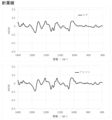
- Example 1-5 Measurement of Reflectance> The reflectance of the white lignin powder of Example 29 was measured by a diffuse reflection method using a spectrophotometer (Shimadzu Corporation, UV-2700) and an integrating sphere unit (Shimadzu Corporation, ISR-2600). A powdery sample was packed in a dedicated holder and measured. A baseline was obtained with barium sulfate (Nacalai Techs), and the scan speed was medium. The obtained reflectance spectrum is shown in FIG. 2) (white) and 4) (pale yellow) used in sunscreens have distinct absorption edges, and 2) absorbs light with a wavelength shorter than about 410 nm and 4) with a wavelength shorter than about 470 nm ( not reflective).
- White lignin powder has mild light absorption properties in the visible to UV-A region, and it can be used as a cosmetic material in that it does not cause users to notice unnatural whiteness, which is a problem with inorganic light scattering agents such as titanium oxide. useful.
- Example 1-6 Measurement of infrared absorption spectrum>
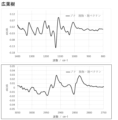
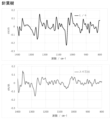
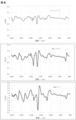
- an FT-IR apparatus Spectrum Two Diamond ATR manufactured by Perkin Elmer was used. The measurement range was 400 to 4000 cm -1 and the number of scans was 10. The absorbance at 1800 cm -1 was set to 0, and the absorbance at 619 cm -1 was normalized to 1, and then differentiated. The obtained differential spectra are shown in FIGS. 10-14.
- Test example 2 Production of white lignin and white lignin-polysaccharide complex Biomass is treated with alkali, the resulting alkali-treated material is washed with a liquid, and the washed material is treated by the APA method to produce white lignin and white lignin-polysaccharide complex. manufactured. Specifically, it was carried out as follows. ⁇ Test Example 2-1. Preparation of finely pulverized wood flour> For broad-leaved trees (Eucalyptus) and coniferous trees (Hinoki), wood chips were pulverized with a Wiley mill (Yoshida Seisakusho, Model 1029-D). For eucalyptus, the Willey mill powder was further pulverized with a mixer mill. Moso bamboo powder (Kyushu, Fukuoka Prefecture, 3rd grade) was used as the bamboo.
- ⁇ Test example 2-2 Preparation of wood flour> 1 g each of hardwood (eucalyptus) wood powder was set in two left and right pots of a mixer mill (MM301, manufactured by Retsch), and pulverization was performed under the conditions of pulverization time: 5 minutes and frequency: 1/15 second. A powder (wood powder) having a volume average particle size of 0.1 mm was obtained.
- the wood flour and the solution were separated by filtration, and the wood flour was washed three times with 14.4 mL of 70% (v/v) ethanol aqueous solution.
- the filtered solution and washings were combined and the solvent removed on a rotary evaporator.
- a 70% (v/v) ethanol aqueous solution was added to wash the product, and the solvent was evaporated using an evaporator to dry the product.
- the dried product obtained in this way is referred to as "white lignin”. If necessary, the dried product was dissolved in an 80% (v/v) dioxane aqueous solution (dioxane: manufactured by Fuji Film Wako Pure Chemical Industries, Ltd.), frozen with liquid nitrogen, and then freeze-dried.
- the atmosphere was normal pressure unless otherwise specified, and when pressurization was described, after the sample was sealed in the initiator vial, air was introduced from the septum at the top of the vial with a syringe.
- the pressure inside the container after sealing was 2.25 bar.
- heating was performed with a hot stirrer.
- the initiator vial containing the sample was placed in a heat block and the heat block was heated with a hot stirrer to obtain the required extraction temperature.
- the wood flour and the solution are separated by filtration, and the wood flour is washed three times with 14.4 mL of 70% (v/v) ethanol aqueous solution.
- the filtered solution and washings were combined and the solvent removed on a rotary evaporator.
- a 70% (v/v) ethanol aqueous solution was added and washed, and the solvent was evaporated to dryness using an evaporator.
- the dried product thus obtained is referred to as "white LCC". If necessary, the dried product was dissolved in an 80% (v/v) dioxane aqueous solution, frozen with liquid nitrogen, and then lyophilized.
- the atmosphere was the air unless otherwise specified, and when an argon atmosphere was described, the initiator vial containing the sample was purged with argon gas before the microwave treatment and sealed.
- heating was performed with a hot stirrer.
- the initiator vial containing the sample was placed in a heat block and the heat block was heated with a hot stirrer to obtain the required extraction temperature.
- Table 9 shows the whiteness of white lignin (Test Example 2-3) and the whiteness of white lignin-polysaccharide complex (white LCC: Test Example 2-4).
- the measurement method is as described in Test Example 1.
- Oxidized form ratio and ether type bond content of white lignin (converted per 100 lignin aromatic rings, calculated from the ratio of the corresponding part of the same spectrum in the 2D HSQC NMR spectrum.)
- Example 31 Example 9 was repeated except that filtration was used to separate the treatment solution from the wood flour, yielding 39.3 mg of white lignin powder.
- Example 26 the same procedure as in Example 26 was performed except that the AAPA-treated wood flour was treated at 140°C with an acetic acid stock solution (17.5 M) instead of the acetic acid-hydrogen peroxide-containing solution, resulting in white LCC. 279.2 mg of powder was obtained.
- Example 32 Example 31 except that in the APA treatment, an acetic acid-hydrogen peroxide-containing solution is used instead of the acetic acid stock solution (17.5 M), and instead of the microwave treatment at 140 ° C. for 10 minutes, the microwave treatment is performed at 140 ° C. for 1 minute. In this way, 51.3 mg of white lignin powder and 259.79 mg of white LCC powder were obtained.
- Example 33 Moso bamboo powder (grown in Kyushu, Fukuoka Prefecture, 3rd grade) was used instead of Willey mill-like (sawdust-like) eucalyptus wood powder, and in the APA treatment, the atmosphere was replaced with argon gas, and microwaved at 140°C for 10 minutes. Instead of , the procedure was carried out in the same manner as in Example 31 except that it was treated with microwaves at 120° C. for 1 minute, thereby obtaining 59.1 mg of white lignin powder and 49.9 mg of white LCC powder.
- Example 34 Using cypress wood powder instead of Willey mill-like (sawdust-like) eucalyptus wood powder, replacing the atmosphere with argon gas in the APA treatment, and using microwaves at 140°C for 10 minutes instead of microwaves at 130°C. , The same procedure as in Example 31 was performed except that the treatment was performed for 1 minute, thereby obtaining 67.7 mg of white lignin powder and 29.6 mg of white LCC powder.
- Test example 3 Preparation of self-assembled body (hollow spherical particles) A white lignin sample was dissolved in DMSO to make a 10 w/v % DMSO solution, and water, a poor solvent, was gradually added to prepare fine particles. Dispersion treatment was performed by ultrasonic irradiation for dissolution. DMSO- d6 :Ethanol- d6 : D2O was used as a solvent of 1:1:8 for the NMR measurement sample. In encapsulation experiments of drugs, pigments, etc., compounds to be encapsulated were preliminarily dissolved in DMSO or ethanol, mixed with white lignin or white LCC, and microparticles were produced by the same method as described above. Table 11 shows the measurement results of the particle size and the like.
- Test example 4 Measurement of solubility NMR-DMSO standard solubility index was calculated.
- a lignin sample is dissolved in DMSO-d6 at a concentration of 2 w/v%, quantitative 1H NMR measurement is performed, and the integral value (6-8 ppm) of the aromatic region of the NMR spectrum is normalized as 100. It was dissolved and measured under the same conditions.
- the index was calculated by normalizing the integrated values of the spectra of the samples dissolved in heavy acetic acid and heavy ethanol based on heavy DMSO conditions. The measurement temperature was 313K for heavy DMSO solvent and 298K for others.
- White lignin (from bamboo) has an index of 115 in deuterated acetic acid and an index of 68 in deuterated ethanol Met.
- White lignin (derived from eucalyptus) had an index of 104 in heavy acetic acid and an index of 60 or higher in heavy ethanol.
- eucalyptus MWL milled lignin
- Japanese cedar MWL milled lignin
Landscapes
- Chemical & Material Sciences (AREA)
- Organic Chemistry (AREA)
- Health & Medical Sciences (AREA)
- Medicinal Chemistry (AREA)
- Chemical Kinetics & Catalysis (AREA)
- Polymers & Plastics (AREA)
- Life Sciences & Earth Sciences (AREA)
- Materials Engineering (AREA)
- Engineering & Computer Science (AREA)
- Biochemistry (AREA)
- General Health & Medical Sciences (AREA)
- Molecular Biology (AREA)
- Sustainable Development (AREA)
- Compounds Of Unknown Constitution (AREA)
Priority Applications (5)
| Application Number | Priority Date | Filing Date | Title |
|---|---|---|---|
| CN202280086977.2A CN118488986A (zh) | 2021-10-29 | 2022-10-28 | 白色木质素、白色木质素-多糖复合物及其制造方法 |
| JP2023556695A JP7506445B2 (ja) | 2021-10-29 | 2022-10-28 | 白色リグニン、白色リグニン-多糖複合体、及びそれらを製造する方法 |
| CA3236541A CA3236541A1 (en) | 2021-10-29 | 2022-10-28 | White lignin, white lignin-polysaccharide complex, and method for producing same |
| US18/705,160 US20250002657A1 (en) | 2021-10-29 | 2022-10-28 | White lignin, white lignin-polysaccharide complex, and method for producing same |
| EP22887210.7A EP4424752A4 (en) | 2021-10-29 | 2022-10-28 | WHITE LIGNIN, WHITE LIGNIN-POLYSACCHARIDE COMPLEX AND PROCESS FOR PRODUCING THE SAME |
Applications Claiming Priority (2)
| Application Number | Priority Date | Filing Date | Title |
|---|---|---|---|
| JP2021-178335 | 2021-10-29 | ||
| JP2021178335 | 2021-10-29 |
Publications (1)
| Publication Number | Publication Date |
|---|---|
| WO2023074885A1 true WO2023074885A1 (ja) | 2023-05-04 |
Family
ID=86159500
Family Applications (1)
| Application Number | Title | Priority Date | Filing Date |
|---|---|---|---|
| PCT/JP2022/040569 Ceased WO2023074885A1 (ja) | 2021-10-29 | 2022-10-28 | 白色リグニン、白色リグニン-多糖複合体、及びそれらを製造する方法 |
Country Status (6)
| Country | Link |
|---|---|
| US (1) | US20250002657A1 (cg-RX-API-DMAC7.html) |
| EP (1) | EP4424752A4 (cg-RX-API-DMAC7.html) |
| JP (1) | JP7506445B2 (cg-RX-API-DMAC7.html) |
| CN (1) | CN118488986A (cg-RX-API-DMAC7.html) |
| CA (1) | CA3236541A1 (cg-RX-API-DMAC7.html) |
| WO (1) | WO2023074885A1 (cg-RX-API-DMAC7.html) |
Cited By (3)
| Publication number | Priority date | Publication date | Assignee | Title |
|---|---|---|---|---|
| WO2023238916A1 (ja) * | 2022-06-08 | 2023-12-14 | 国立大学法人京都大学 | 中空球状粒子 |
| WO2024225448A1 (ja) * | 2023-04-28 | 2024-10-31 | 国立大学法人京都大学 | 白色リグニン及び/又は白色リグニン-多糖共重合体の構造化物 |
| JP7862788B1 (ja) * | 2025-10-27 | 2026-05-20 | バイオサイエンステクノロジー株式会社 | 低濃度ナトリウムイオンのポリマー製造方法、ゲル状物質製造方法、及び低濃度ナトリウムイオンのポリマー |
Families Citing this family (1)
| Publication number | Priority date | Publication date | Assignee | Title |
|---|---|---|---|---|
| US20250221940A1 (en) * | 2022-04-04 | 2025-07-10 | Kyoto University | Hollow spherical particle |
Citations (4)
| Publication number | Priority date | Publication date | Assignee | Title |
|---|---|---|---|---|
| JP2014208803A (ja) * | 2013-03-29 | 2014-11-06 | ロイス・ドットコム株式会社 | リグニン回収方法 |
| US20190135845A1 (en) * | 2017-11-07 | 2019-05-09 | Ingevity South Carolina, Llc | Methods of making low color lignin |
| JP2021017582A (ja) * | 2019-07-16 | 2021-02-15 | 国立研究開発法人産業技術総合研究所 | リグニンの脱色方法、脱色リグニンの調製方法、リグニンの透明膜の製造方法、及び白色リグニン |
| JP2022103080A (ja) * | 2020-12-25 | 2022-07-07 | 国立研究開発法人産業技術総合研究所 | リグニンの脱色方法、及び脱色リグニンの調製方法 |
Family Cites Families (3)
| Publication number | Priority date | Publication date | Assignee | Title |
|---|---|---|---|---|
| JP6134132B2 (ja) | 2012-11-30 | 2017-05-24 | 株式会社吉野工業所 | Ptp包装シートの収納ケース |
| JP6182368B2 (ja) | 2013-06-24 | 2017-08-16 | 花王株式会社 | リグニン分解物の製造方法 |
| EP4257594A4 (en) * | 2020-12-04 | 2024-10-16 | Kyoto University | Method for isolating, from plant biomass, at least one selected from group consisting of lignin, hemicellulose, lignin-polysaccharide composite, cellulose, and hemicellulose-cellulose composite |
-
2022
- 2022-10-28 JP JP2023556695A patent/JP7506445B2/ja active Active
- 2022-10-28 CA CA3236541A patent/CA3236541A1/en active Pending
- 2022-10-28 CN CN202280086977.2A patent/CN118488986A/zh active Pending
- 2022-10-28 EP EP22887210.7A patent/EP4424752A4/en active Pending
- 2022-10-28 US US18/705,160 patent/US20250002657A1/en active Pending
- 2022-10-28 WO PCT/JP2022/040569 patent/WO2023074885A1/ja not_active Ceased
Patent Citations (4)
| Publication number | Priority date | Publication date | Assignee | Title |
|---|---|---|---|---|
| JP2014208803A (ja) * | 2013-03-29 | 2014-11-06 | ロイス・ドットコム株式会社 | リグニン回収方法 |
| US20190135845A1 (en) * | 2017-11-07 | 2019-05-09 | Ingevity South Carolina, Llc | Methods of making low color lignin |
| JP2021017582A (ja) * | 2019-07-16 | 2021-02-15 | 国立研究開発法人産業技術総合研究所 | リグニンの脱色方法、脱色リグニンの調製方法、リグニンの透明膜の製造方法、及び白色リグニン |
| JP2022103080A (ja) * | 2020-12-25 | 2022-07-07 | 国立研究開発法人産業技術総合研究所 | リグニンの脱色方法、及び脱色リグニンの調製方法 |
Non-Patent Citations (3)
| Title |
|---|
| NISHIMURA ET AL.: "Direct evidence for a ether linkage between lignin and carbohydrates in wood cell walls", SCI. REP, 2018 |
| NISHIMURA ET AL.: "Direct evidence for a ether linkage between lignin and carbohydrates in wood cell walls", SCI. REP., 2018 |
| See also references of EP4424752A4 |
Cited By (3)
| Publication number | Priority date | Publication date | Assignee | Title |
|---|---|---|---|---|
| WO2023238916A1 (ja) * | 2022-06-08 | 2023-12-14 | 国立大学法人京都大学 | 中空球状粒子 |
| WO2024225448A1 (ja) * | 2023-04-28 | 2024-10-31 | 国立大学法人京都大学 | 白色リグニン及び/又は白色リグニン-多糖共重合体の構造化物 |
| JP7862788B1 (ja) * | 2025-10-27 | 2026-05-20 | バイオサイエンステクノロジー株式会社 | 低濃度ナトリウムイオンのポリマー製造方法、ゲル状物質製造方法、及び低濃度ナトリウムイオンのポリマー |
Also Published As
| Publication number | Publication date |
|---|---|
| EP4424752A4 (en) | 2025-10-08 |
| CA3236541A1 (en) | 2023-05-04 |
| EP4424752A1 (en) | 2024-09-04 |
| JP7506445B2 (ja) | 2024-06-26 |
| JPWO2023074885A1 (cg-RX-API-DMAC7.html) | 2023-05-04 |
| US20250002657A1 (en) | 2025-01-02 |
| CN118488986A (zh) | 2024-08-13 |
Similar Documents
| Publication | Publication Date | Title |
|---|---|---|
| JP7506445B2 (ja) | 白色リグニン、白色リグニン-多糖複合体、及びそれらを製造する方法 | |
| Trevisan et al. | Pure, stable and highly antioxidant lignin nanoparticles from elephant grass | |
| Zhang et al. | High-value utilization of kraft lignin: Color reduction and evaluation as sunscreen ingredient | |
| Hu et al. | A novel polysaccharide from blueberry leaves: Extraction, structural characterization, hypolipidemic and hypoglycaemic potentials | |
| EP4257594A1 (en) | Method for isolating, from plant biomass, at least one selected from group consisting of lignin, hemicellulose, lignin-polysaccharide composite, cellulose, and hemicellulose-cellulose composite | |
| Valoppi et al. | Centrifugal fractionation of softwood extracts improves the biorefinery workflow and yields functional emulsifiers | |
| Zhao et al. | Physicochemical and emulsification properties of okara-derived soluble dietary fiber modified by steam explosion | |
| Fan et al. | Lignocellulosic biomass pretreatment with a lignin stabilization strategy and valorization toward multipurpose fractionation | |
| Juttuporn et al. | Ultrasound-assisted extraction of antioxidant and antibacterial phenolic compounds from steam-exploded sugarcane bagasse | |
| EP2213678A1 (en) | Production methods for solubilized lignin, saccharide raw material and monosaccharide raw material, and solubilized lignin | |
| CN112409608B (zh) | 一种羧基化木质素衍生物及其制备方法 | |
| Santos et al. | Bioplastics from orange processing byproducts by an ecoefficient hydrothermal approach | |
| Zhao et al. | Antioxidant activity and emulsifying properties of Dendrobium officinale polysaccharides with distinct structural characteristics | |
| Gordobil et al. | Surface chemistry and bioactivity of colloidal particles from industrial kraft lignins | |
| Chotirotsukon et al. | Effects of thermal and physical modification on functional properties of organosolv lignin from sugarcane bagasse and its application in cosmeceutical products | |
| del Amo-Mateos et al. | Recovering rhamnogalacturonan-I pectin from sugar beet pulp using a sequential ultrasound and microwave-assisted extraction: Study on extraction optimization and membrane purification | |
| WO2023195476A1 (ja) | 中空球状粒子 | |
| Troncoso et al. | Chemical and microstructural changes in Eucalyptus globulus fibers subjected to four different pretreatments and their influence on the enzymatic hydrolysis | |
| Xie et al. | Extraction of light-colored lignin nanoparticles from Radiata pine using ternary deep eutectic solvents | |
| WO2023238916A1 (ja) | 中空球状粒子 | |
| Tomaino | Innovative nano-biotechnology applications in pharmaceutical, cosmeceutical and advanced biomaterial sciences | |
| WO2024225448A1 (ja) | 白色リグニン及び/又は白色リグニン-多糖共重合体の構造化物 | |
| Meng | Valorisation of Citrus Fruit Peel Wastes and Blackcurrant Pomace via Acid-free Microwave Hydrothermal Processes | |
| Zongo et al. | Lignins and their potential for use as biopolymers in pharmaceutical engineering-a review | |
| Hurtgen et al. | Photochemical Properties and Activity of Water‐Soluble Polymer/C60 Nanohybrids for Photodynamic Therapy |
Legal Events
| Date | Code | Title | Description |
|---|---|---|---|
| 121 | Ep: the epo has been informed by wipo that ep was designated in this application |
Ref document number: 22887210 Country of ref document: EP Kind code of ref document: A1 |
|
| WWE | Wipo information: entry into national phase |
Ref document number: 2023556695 Country of ref document: JP |
|
| WWE | Wipo information: entry into national phase |
Ref document number: 3236541 Country of ref document: CA |
|
| WWE | Wipo information: entry into national phase |
Ref document number: 2022887210 Country of ref document: EP |
|
| NENP | Non-entry into the national phase |
Ref country code: DE |
|
| ENP | Entry into the national phase |
Ref document number: 2022887210 Country of ref document: EP Effective date: 20240529 |
|
| WWE | Wipo information: entry into national phase |
Ref document number: 202280086977.2 Country of ref document: CN |