WO2023074562A1 - 中空糸膜、中空糸膜モジュール、およびベシクル含有溶液 - Google Patents
中空糸膜、中空糸膜モジュール、およびベシクル含有溶液 Download PDFInfo
- Publication number
- WO2023074562A1 WO2023074562A1 PCT/JP2022/039278 JP2022039278W WO2023074562A1 WO 2023074562 A1 WO2023074562 A1 WO 2023074562A1 JP 2022039278 W JP2022039278 W JP 2022039278W WO 2023074562 A1 WO2023074562 A1 WO 2023074562A1
- Authority
- WO
- WIPO (PCT)
- Prior art keywords
- hollow fiber
- fiber membrane
- less
- membrane
- polymer
- Prior art date
- Legal status (The legal status is an assumption and is not a legal conclusion. Google has not performed a legal analysis and makes no representation as to the accuracy of the status listed.)
- Ceased
Links
Images



Classifications
-
- B—PERFORMING OPERATIONS; TRANSPORTING
- B01—PHYSICAL OR CHEMICAL PROCESSES OR APPARATUS IN GENERAL
- B01D—SEPARATION
- B01D69/00—Semi-permeable membranes for separation processes or apparatus characterised by their form, structure or properties; Manufacturing processes specially adapted therefor
- B01D69/02—Semi-permeable membranes for separation processes or apparatus characterised by their form, structure or properties; Manufacturing processes specially adapted therefor characterised by their properties
-
- A—HUMAN NECESSITIES
- A61—MEDICAL OR VETERINARY SCIENCE; HYGIENE
- A61M—DEVICES FOR INTRODUCING MEDIA INTO, OR ONTO, THE BODY; DEVICES FOR TRANSDUCING BODY MEDIA OR FOR TAKING MEDIA FROM THE BODY; DEVICES FOR PRODUCING OR ENDING SLEEP OR STUPOR
- A61M1/00—Suction or pumping devices for medical purposes; Devices for carrying-off, for treatment of, or for carrying-over, body-liquids; Drainage systems
- A61M1/34—Filtering material out of the blood by passing it through a membrane, i.e. hemofiltration or diafiltration
- A61M1/3496—Plasmapheresis; Leucopheresis; Lymphopheresis
-
- A—HUMAN NECESSITIES
- A61—MEDICAL OR VETERINARY SCIENCE; HYGIENE
- A61K—PREPARATIONS FOR MEDICAL, DENTAL OR TOILETRY PURPOSES
- A61K35/00—Medicinal preparations containing materials or reaction products thereof with undetermined constitution
- A61K35/12—Materials from mammals; Compositions comprising non-specified tissues or cells; Compositions comprising non-embryonic stem cells; Genetically modified cells
- A61K35/14—Blood; Artificial blood
- A61K35/16—Blood plasma; Blood serum
-
- A—HUMAN NECESSITIES
- A61—MEDICAL OR VETERINARY SCIENCE; HYGIENE
- A61P—SPECIFIC THERAPEUTIC ACTIVITY OF CHEMICAL COMPOUNDS OR MEDICINAL PREPARATIONS
- A61P7/00—Drugs for disorders of the blood or the extracellular fluid
-
- A—HUMAN NECESSITIES
- A61—MEDICAL OR VETERINARY SCIENCE; HYGIENE
- A61P—SPECIFIC THERAPEUTIC ACTIVITY OF CHEMICAL COMPOUNDS OR MEDICINAL PREPARATIONS
- A61P7/00—Drugs for disorders of the blood or the extracellular fluid
- A61P7/08—Plasma substitutes; Perfusion solutions; Dialytics or haemodialytics; Drugs for electrolytic or acid-base disorders, e.g. hypovolemic shock
-
- B—PERFORMING OPERATIONS; TRANSPORTING
- B01—PHYSICAL OR CHEMICAL PROCESSES OR APPARATUS IN GENERAL
- B01D—SEPARATION
- B01D67/00—Processes specially adapted for manufacturing semi-permeable membranes for separation processes or apparatus
- B01D67/0002—Organic membrane manufacture
- B01D67/0009—Organic membrane manufacture by phase separation, sol-gel transition, evaporation or solvent quenching
- B01D67/0016—Coagulation
-
- B—PERFORMING OPERATIONS; TRANSPORTING
- B01—PHYSICAL OR CHEMICAL PROCESSES OR APPARATUS IN GENERAL
- B01D—SEPARATION
- B01D67/00—Processes specially adapted for manufacturing semi-permeable membranes for separation processes or apparatus
- B01D67/0081—After-treatment of organic or inorganic membranes
- B01D67/0088—Physical treatment with compounds, e.g. swelling, coating or impregnation
-
- B—PERFORMING OPERATIONS; TRANSPORTING
- B01—PHYSICAL OR CHEMICAL PROCESSES OR APPARATUS IN GENERAL
- B01D—SEPARATION
- B01D69/00—Semi-permeable membranes for separation processes or apparatus characterised by their form, structure or properties; Manufacturing processes specially adapted therefor
- B01D69/08—Hollow fibre membranes
-
- B—PERFORMING OPERATIONS; TRANSPORTING
- B01—PHYSICAL OR CHEMICAL PROCESSES OR APPARATUS IN GENERAL
- B01D—SEPARATION
- B01D69/00—Semi-permeable membranes for separation processes or apparatus characterised by their form, structure or properties; Manufacturing processes specially adapted therefor
- B01D69/08—Hollow fibre membranes
- B01D69/087—Details relating to the spinning process
-
- B—PERFORMING OPERATIONS; TRANSPORTING
- B01—PHYSICAL OR CHEMICAL PROCESSES OR APPARATUS IN GENERAL
- B01D—SEPARATION
- B01D71/00—Semi-permeable membranes for separation processes or apparatus characterised by the material; Manufacturing processes specially adapted therefor
- B01D71/06—Organic material
- B01D71/48—Polyesters
-
- B—PERFORMING OPERATIONS; TRANSPORTING
- B01—PHYSICAL OR CHEMICAL PROCESSES OR APPARATUS IN GENERAL
- B01D—SEPARATION
- B01D71/00—Semi-permeable membranes for separation processes or apparatus characterised by the material; Manufacturing processes specially adapted therefor
- B01D71/06—Organic material
- B01D71/66—Polymers having sulfur in the main chain, with or without nitrogen, oxygen or carbon only
- B01D71/68—Polysulfones; Polyethersulfones
-
- D—TEXTILES; PAPER
- D01—NATURAL OR MAN-MADE THREADS OR FIBRES; SPINNING
- D01F—CHEMICAL FEATURES IN THE MANUFACTURE OF ARTIFICIAL FILAMENTS, THREADS, FIBRES, BRISTLES OR RIBBONS; APPARATUS SPECIALLY ADAPTED FOR THE MANUFACTURE OF CARBON FILAMENTS
- D01F6/00—Monocomponent artificial filaments or the like of synthetic polymers; Manufacture thereof
-
- D—TEXTILES; PAPER
- D01—NATURAL OR MAN-MADE THREADS OR FIBRES; SPINNING
- D01F—CHEMICAL FEATURES IN THE MANUFACTURE OF ARTIFICIAL FILAMENTS, THREADS, FIBRES, BRISTLES OR RIBBONS; APPARATUS SPECIALLY ADAPTED FOR THE MANUFACTURE OF CARBON FILAMENTS
- D01F6/00—Monocomponent artificial filaments or the like of synthetic polymers; Manufacture thereof
- D01F6/58—Monocomponent artificial filaments or the like of synthetic polymers; Manufacture thereof from homopolycondensation products
- D01F6/76—Monocomponent artificial filaments or the like of synthetic polymers; Manufacture thereof from homopolycondensation products from other polycondensation products
-
- B—PERFORMING OPERATIONS; TRANSPORTING
- B01—PHYSICAL OR CHEMICAL PROCESSES OR APPARATUS IN GENERAL
- B01D—SEPARATION
- B01D2323/00—Details relating to membrane preparation
- B01D2323/15—Use of additives
- B01D2323/218—Additive materials
- B01D2323/2182—Organic additives
- B01D2323/21839—Polymeric additives
- B01D2323/2187—Polyvinylpyrolidone
-
- B—PERFORMING OPERATIONS; TRANSPORTING
- B01—PHYSICAL OR CHEMICAL PROCESSES OR APPARATUS IN GENERAL
- B01D—SEPARATION
- B01D2325/00—Details relating to properties of membranes
- B01D2325/02—Details relating to pores or porosity of the membranes
- B01D2325/022—Asymmetric membranes
- B01D2325/0231—Dense layers being placed on the outer side of the cross-section
-
- B—PERFORMING OPERATIONS; TRANSPORTING
- B01—PHYSICAL OR CHEMICAL PROCESSES OR APPARATUS IN GENERAL
- B01D—SEPARATION
- B01D2325/00—Details relating to properties of membranes
- B01D2325/02—Details relating to pores or porosity of the membranes
- B01D2325/0283—Pore size
-
- B—PERFORMING OPERATIONS; TRANSPORTING
- B01—PHYSICAL OR CHEMICAL PROCESSES OR APPARATUS IN GENERAL
- B01D—SEPARATION
- B01D2325/00—Details relating to properties of membranes
- B01D2325/02—Details relating to pores or porosity of the membranes
- B01D2325/0283—Pore size
- B01D2325/02834—Pore size more than 0.1 and up to 1 µm
-
- B—PERFORMING OPERATIONS; TRANSPORTING
- B01—PHYSICAL OR CHEMICAL PROCESSES OR APPARATUS IN GENERAL
- B01D—SEPARATION
- B01D2325/00—Details relating to properties of membranes
- B01D2325/04—Characteristic thickness
-
- B—PERFORMING OPERATIONS; TRANSPORTING
- B01—PHYSICAL OR CHEMICAL PROCESSES OR APPARATUS IN GENERAL
- B01D—SEPARATION
- B01D2325/00—Details relating to properties of membranes
- B01D2325/20—Specific permeability or cut-off range
-
- B—PERFORMING OPERATIONS; TRANSPORTING
- B01—PHYSICAL OR CHEMICAL PROCESSES OR APPARATUS IN GENERAL
- B01D—SEPARATION
- B01D2325/00—Details relating to properties of membranes
- B01D2325/36—Hydrophilic membranes
Definitions
- the present invention relates to hollow fiber membranes, hollow fiber membrane modules, and vesicle-containing solutions suitable for blood purification such as plasma separation.
- Blood purification includes hemodialysis, plasmapheresis, adsorption therapy, and the like.
- Plasmapheresis separates blood into large cell components, such as white blood cells, red blood cells, and platelets, and a plasma component containing plasma and plasma proteins, and discards the separated plasma component and replaces it with an equal volume of fresh frozen plasma, or It is a treatment method in which the pathogenic substances are discarded by secondary processing and returned to the body.
- porous hollow fiber membranes are applied for plasma separation to separate plasma components from blood.
- the pore size and material permeability of the porous separation membrane for plasma separation are important in order to separate the blood cell components and the pathogenic substances contained in the plasma.
- platelets which are the smallest blood cell components and have a size of about 3 ⁇ m, do not permeate.
- lipoproteins such as LDL cholesterol.
- biocompatibility such as non-adsorption of proteins and blood cell components, and non-activation of complement.
- a porous separation membrane made of a hydrophobic polymer the surface of the membrane is coated with a hydrophilic polymer in order to impart hydrophilicity.
- vesicles extracellular vesicles produced in sepsis patients (hereinafter sometimes simply referred to as "vesicles”) are not mere blood markers, but also contain and transport messenger RNA (mRNA). Therefore, it is reported that extracellular vesicles may become a target for treatment and examination because they induce inflammation throughout the body.
- mRNA messenger RNA
- Patent Document 1 discloses a method for producing an asymmetric hollow fiber membrane made of polysulfone-based polymer as a plasma separation membrane.
- Patent Document 2 discloses a porous hollow fiber membrane for plasma separation, which is composed of a polyolefin-type resin having a porous structure formed by a melt-stretching pore-forming method and a higher fatty acid metal salt.
- Patent Document 3 discloses a method for removing extracellular vesicles from blood using a polyethersulfone hollow fiber membrane with high porosity.
- Patent Documents 1 and 2 only state that the pore size should be designed within a range in which blood cell components do not permeate, and there is no mention of removing extracellular vesicles and the like from blood. . Also, the pore size indicates the maximum pore size measured by the bubble point method, etc., and does not sufficiently indicate the permeability of particulate substances such as extracellular vesicles.
- Patent Document 3 discloses a method for removing extracellular vesicles having a size lower than the porosity of the hollow fiber membrane, and the fractionation performance of the hollow fiber membrane is different from the apparent pore size. It is shown that.
- porous membranes are sieved by the smaller of the pore sizes on the surface of the separation membrane, so the pore size observed with a scanning electron microscope (SEM) is used as an index of fractionation performance.
- SEM scanning electron microscope
- the pores inside the membrane may be smaller than the membrane surface, and sieving may occur at that portion. That is, the pore size of the separation membrane surface does not represent the fractionation performance of the separation membrane.
- the bubble point method is used as a method of expressing the pore size of a separation membrane, and the industrial standard (JIS) uses it as a method of evaluating the maximum pore size. Therefore, the pore size measured by this method also does not represent fractionation characteristics.
- the prior art does not disclose any hollow fiber membrane structure that efficiently removes extracellular vesicles (vesicles) with a size of about 40 nm to 1 ⁇ m present in the liquid.
- the object of the present invention is to provide a hollow fiber membrane capable of efficiently removing extracellular vesicles from liquid, especially blood.
- the present inventors have found that the above problems can be solved by focusing on the particle permeability and surface pore size of hollow fiber membranes and by using a predetermined hollow fiber membrane structure.
- the present invention is as follows.
- [1] A hollow fiber membrane having a permeability of 50% or more and 100% or less for particles having a particle diameter of 0.15 ⁇ m and an average pore diameter of 0.50 ⁇ m or more and 3.00 ⁇ m or less on the inner surface of the hollow fiber membrane.
- [2] The hollow fiber membrane according to [1] above, wherein the thickness of the dense layer in the cross section of the hollow fiber membrane is 1.0 ⁇ m or more and 10.0 ⁇ m or less.
- [3] The hollow fiber membrane according to [1] or [2] above, wherein the outer surface of the hollow fiber membrane has an average pore size of 0.50 ⁇ m or more and 10.00 ⁇ m or less.
- the composition according to any one of [1] to [5] above, which contains a hydrophilic polymer and the content of the hydrophilic polymer is 5.0% by mass or more and 15.0% by mass or less. hollow fiber membrane.
- the hollow fiber membrane of the present invention can efficiently remove extracellular vesicles (vesicles) in liquids, especially in blood.
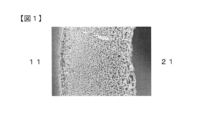
- FIG. 1 is a view of a cross section of a hollow fiber membrane produced by the method of Example 1, observed at 2000 times using a scanning electron microscope (SEM).
- FIG. 2 is a diagram after the SEM image of FIG. 1 is subjected to binarization processing;
- FIG. 3 is a diagram obtained by performing image analysis on FIG. 2 and removing holes having a diameter of 0.5 ⁇ m or less.
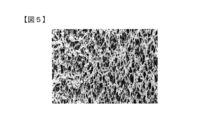
- 1 is a view of the inner surface of a hollow fiber membrane produced by the method of Example 1, observed with a SEM at a magnification of 1500.
- FIG. 1 is a view of the outer surface of a hollow fiber membrane produced by the method of Example 1, observed with a SEM at a magnification of 3000.
- FIG. FIG. 4 is a schematic diagram of vesicle permeability measurement.
- a first aspect of the hollow fiber membrane of the present invention (hereinafter sometimes simply referred to as "separation membrane") has a permeability of 50% or more and 100% or less for particles having a particle diameter of 0.15 ⁇ m, and the hollow fiber membrane The average pore size of the inner surface is 0.50 ⁇ m or more and 3.00 ⁇ m or less.
- polystyrene latex particles are used for the measurement of particle transmittance in the present specification as described in "(2) Measurement of particle transmittance" described later.
- the hollow fiber membrane of the present invention can selectively remove vesicles in blood by having a structure that allows vesicles to permeate but does not allow blood cell components to permeate.
- Vesicles have a distribution of diameters from 40 nm to 1 ⁇ m, but are flexible due to their lipid membrane structure. Therefore, for example, even a vesicle with a diameter of 1 ⁇ m can penetrate pores smaller than 1 ⁇ m.
- the present inventors have found that the permeability of particles with a rigid particle size of 0.15 ⁇ m is an effective indicator in designing hollow fiber membranes with desired vesicle permeability. That is, in order to obtain desired vesicle permeability, the first embodiment of the hollow fiber membrane of the present invention has a permeability of 50% or more and 100% or less for particles having a particle diameter of 0.15 ⁇ m.
- Examples of methods for adjusting the particle permeability within the above range include methods such as adjusting the surface pore size, film thickness, and thickness of the dense layer of the hollow fiber membrane.
- the vesicle-containing fluid usually contains vesicle-producing cells and/or blood cell components at the same time.
- the sizes of the blood cell components are respectively white blood cells (10 ⁇ m or more), red blood cells (about 7 ⁇ m), and platelets (about 3 ⁇ m). Since these blood cell components are soft and deformable, the particle size that can be blocked by the separation membrane is preferably smaller than 2 ⁇ m.
- extracellular vesicles present in blood include exosomes (40-120 nm), microvesicles (50-1000 nm), and apoptotic bodies (500-2000 nm).
- exosomes and microvesicles are said to be involved in intercellular communication, so removal of exosomes and microvesicles is required in pathological conditions such as sepsis.
- the separation membrane preferably has a particle permeability of 0.15 ⁇ m with a particle diameter of 70% or higher, more preferably 80% or higher, and further preferably 85% or higher.
- the particle transmittance with a particle diameter of 0.15 ⁇ m is 100% or less.
- the particle transmittance with a particle diameter of 0.15 ⁇ m means the rate of transmission of particles with a particle diameter of 0.15 ⁇ m.
- the transmittance of particles with a particle diameter of 0.20 ⁇ m is preferably 50% or higher, more preferably 55% or higher, and even more preferably 60% or higher.
- the particle transmittance with a particle diameter of 0.20 ⁇ m means the rate at which particles with a particle diameter of 0.20 ⁇ m pass through.
- the upper limit of the transmittance of particles with a particle diameter of 0.20 ⁇ m is not particularly limited, and a larger value is preferable.
- the average pore size of the hollow fiber membrane inner surface of the hollow fiber membrane of the first aspect of the present invention is 0.50 ⁇ m or more and 3.00 ⁇ m or less.
- the average pore size of the inner surface of the hollow fiber membrane is preferably 0.80 ⁇ m or more, more preferably 0.90 ⁇ m or more.
- the average pore size of the inner surface of the hollow fiber membrane is preferably 2.50 ⁇ m or less, more preferably 2.00 ⁇ m or less, from the viewpoint that the penetration of blood cell components can be further prevented and the strength of the hollow fiber membrane can be further increased. more preferred.
- Methods for adjusting the average pore diameter of the inner surface of the hollow fiber membrane to the above range include, for example, a method of adjusting the concentration of the main component (for example, polysulfone) constituting the hollow fiber membrane in the spinning stock solution at the time of spinning, and a method of adjusting the concentration of the hollow fiber membrane.
- a method of adjusting the coagulation value of the injection liquid (core liquid) for forming, and the like can be mentioned.
- the coagulation value represents the mass of the injected liquid added to 50 g of a solution in which the concentration of the main component constituting the hollow fiber membrane is 1% by mass, and when the inside of the system becomes cloudy.
- the average pore size of the outer surface of the hollow fiber membrane is preferably 0.50 ⁇ m or more and 10.00 ⁇ m or less. From the viewpoint of separation performance and water permeability, the average pore size of the outer surface of the hollow fiber membrane is more preferably 0.60 ⁇ m or more. From the viewpoint of the strength of the separation membrane, the average pore size of the outer surface of the hollow fiber membrane is more preferably 5.00 ⁇ m or less, still more preferably 3.00 ⁇ m or less, and particularly preferably 2.00 ⁇ m or less.
- Methods for adjusting the average pore diameter of the outer surface of the hollow fiber membrane to the above range include, for example, a method of adjusting the concentration of the poor solvent vapor with respect to the main component constituting the hollow fiber membrane in the dry section during spinning, which will be described later, and For example, a method of adjusting the nozzle temperature of the
- the average pore size of the outer surface of the hollow fiber membrane is smaller than the average pore size of the inner surface of the hollow fiber membrane from the viewpoint of ease of production of the separation membrane.
- the position of the dense layer in the hollow fiber membrane is arbitrary, and it may be on the inner surface or the outer surface.
- the thickness of the dense layer as used in the present invention refers to the thickness of a region in which no pores having a diameter of 0.5 ⁇ m or more are present when the cross section of the hollow fiber membrane is observed by the method described later.
- the surface of the hollow fiber membrane closer to the dense layer is referred to as "surface 1"
- the surface farther from it is referred to as "surface 2"
- the inner surface or the outer surface may be Apply observation methods.
- the pore diameters formed on the surface of the hollow fiber membrane can be measured from an image of the surface observed with a scanning electron microscope (SEM).
- SEM scanning electron microscope
- the surface (surface 1) on the side closer to the dense layer is observed at a magnification of 3000 times, and the area of all the holes within an arbitrary range of 20 ⁇ m ⁇ 20 ⁇ m is measured. If the total number of measured holes is less than 50, repeat the measurement in the range of 20 ⁇ m ⁇ 20 ⁇ m until the total number of measured holes reaches 50 or more, and add data.
- the area of all pores in an arbitrary range of 40 ⁇ m ⁇ 40 ⁇ m is measured for the pores that can be confirmed at a magnification of 1500 times. If the total number of measured holes is less than 50, repeat the measurement in the range of 40 ⁇ m ⁇ 40 ⁇ m until the total number of measured holes reaches 50 or more, and add data.
- the hollow fiber membrane of the present invention preferably has a dense layer.
- a dense layer By having a dense layer, there are a dense region (dense layer) that contributes to the separation of the substance to be removed and a coarse region (coarse layer) with low water permeation resistance and large pore diameters. Easy to combine performance.
- the dense layer may exist at any position in the cross section of the separation membrane. For example, the dense layer may exist at a position near the inner surface of the hollow fiber membrane, at a position near the outer surface, or at the central portion of the cross section. Further, the dense layer may exist continuously from the inner surface or the outer surface, or may exist in plural as described above.
- a polysulfone-based polymer it is preferable that there is a dense layer on the outer surface side from the viewpoint of ease of controlling the membrane structure.
- the thickness of the dense layer in the cross section of the hollow fiber membrane is preferably 1.0 ⁇ m or more and 10.0 ⁇ m or less.
- the thickness of the dense layer is within the above range, it is possible to achieve both high permeability and high separation function, and it is possible to suppress an increase in filtration pressure even if the amount of liquid to be treated is increased.
- the thickness of the dense layer is preferably 7.0 ⁇ m or less, more preferably 6.5 ⁇ m or less, even more preferably 6.0 ⁇ m or less, and particularly preferably 5.5 ⁇ m or less.
- the dense layer is a layer that has the effect of improving the separation function of the hollow fiber membrane, it preferably has a certain thickness or more. That is, the thickness of the dense layer is preferably 1.5 ⁇ m or more, more preferably 2.0 ⁇ m or more, and particularly preferably 2.5 ⁇ m or more.
- the thickness of the dense layer is determined by observing the cross section of the hollow fiber membrane, that is, the cross section perpendicular to the axial direction with a scanning electron microscope (SEM) at a magnification of 2000, and processing the captured image. It can be obtained by analyzing with software. Specifically, the photographed image is subjected to binarization processing by determining a threshold value so that the structure portion has bright luminance and the other portion has dark luminance. Then, in a straight line drawn perpendicular to the tangent to the inner surface and/or the outer surface of the hollow fiber membrane, assuming that the hole shape is a perfect circle, no dark luminance portion with an area of 0.2 ⁇ m 2 or more is observed.
- SEM scanning electron microscope
- a region that is, a region in which no pores having a pore diameter of 0.5 ⁇ m or more are observed is specified as the dense layer, and the average value of the thickness of the dense layer in the cross section is obtained. More specifically, the thickness is measured by the method described in "(10) Measurement of thickness of dense layer" in Examples described later.
- the image analysis may be performed with the portion other than the structure portion painted black. Also, as a method of erasing noise, the noise portion may be painted white.
- Examples of methods for controlling the thickness of the dense layer within the above range include a method of controlling the composition of the spinning stock solution and the temperature of the spinneret during spinning. More specifically, the viscosity is increased by increasing the content of the main component (e.g., polysulfone) constituting the hollow fiber membrane in the spinning dope or increasing the amount of high-molecular-weight polymer (e.g., polyvinylpyrrolidone) added.
- the main component e.g., polysulfone
- high-molecular-weight polymer e.g., polyvinylpyrrolidone
- the porosity of the surface farther from the dense layer (surface 2) is preferably 20% or more.
- the porosity of the surface closer to the dense layer is preferably 50% or less, more preferably 40% or less.
- the porosity of the surface farther from the dense layer is preferably 40% or less, more preferably 35% or less.
- the porosity of the surface of the hollow fiber membrane is calculated in the same manner as the pore size of the surface described above, calculated using the following formula, and rounded to the second decimal place to calculate the porosity.
- Porosity (%) S/A x 100
- A the area of the measurement range ( ⁇ m 2 )
- S the sum of the measured areas of the holes ( ⁇ m 2 ).
- the inner diameter of the hollow fiber membrane is preferably 150 ⁇ m or more and 500 ⁇ m or less. From the viewpoint of increasing a certain effective hollow fiber membrane area without increasing the number of hollow fiber membranes and from the viewpoint of reducing pressure loss during use, the inner diameter of the hollow fiber membrane is more preferably 200 ⁇ m or more, more preferably 250 ⁇ m or more, and 300 ⁇ m or more. is particularly preferred. On the other hand, if the inner diameter is too large, the module size increases and the capacity increases.
- a method of adjusting the inner diameter of the hollow fiber membrane within the above range includes, for example, a method of adjusting the discharge amount of the core liquid during spinning.
- the thickness of the hollow fiber membrane of the present invention is preferably 20 ⁇ m or more and 100 ⁇ m or less. From the viewpoint of hollow fiber membrane strength, the thickness of the hollow fiber membrane is more preferably 30 ⁇ m or more, further preferably 40 ⁇ m or more, and particularly preferably 50 ⁇ m or more. On the other hand, the thickness of the hollow fiber membrane is more preferably 90 ⁇ m or less, still more preferably 80 ⁇ m or less, and particularly preferably 70 ⁇ m or less, because the thickness portion becomes the permeation resistance of the substance.
- a method for adjusting the thickness of the hollow fiber membrane within the above range includes, for example, a method of adjusting the discharge amount of the spinning dope during spinning.
- the hollow fiber membrane of the present invention preferably has a three-dimensional network structure.
- the three-dimensional network structure refers to a structure in which the solid content spreads in a three-dimensional network.
- the three-dimensional network has pores that are partitioned by solids that form the network.
- Separation membranes used for blood processing applications are required to have high water permeability in order to suppress hemolysis and platelet activation due to loading of blood cell components. If the separation membrane has high water permeability, the pressure required for processing blood can be reduced, the load on blood can be reduced, and processing can be performed in a short time. From such a viewpoint, the water permeability of the separation membrane is preferably 16,000 mL/h/mmHg/m 2 or more, more preferably 17,000 mL/h/mmHg/m 2 or more.
- the water permeability is preferably 30,000 mL/h/mmHg/m 2 or less, and more preferably 25,000 mL/h/mmHg/m 2 or less. preferable. Water permeability is calculated by the method described in Examples.
- the hollow fiber membrane of the present invention preferably has an asymmetric structure.
- the separation membrane having the above particle permeability and water permeability preferably has an asymmetric structure in which the pore size on one surface side is larger or smaller than the pore size on the other surface side.
- an asymmetric structure means that the inner and outer surfaces of the membrane have different pore sizes.
- a hollow fiber membrane is used as the separation membrane in the present invention.
- hollow fiber membranes can increase the membrane area effective for filtration even in a module with a small volume, that is, the size of the module can be reduced.
- the cross-sectional shape of the hollow fiber membrane may be cross-shaped, star-shaped, or the like.
- the hollow fiber membrane of the present invention from the viewpoint of strength, it is preferable that no macrovoids, which are elliptical or teardrop-shaped void regions in which the actual portion of the membrane is missing, be observed in the cross section of the hollow fiber membrane.
- a second aspect of the hollow fiber membrane of the present invention is that the permeability of vesicles detectable by phosphatidylserine and CD9 antibodies is 50% or more and 100% or less, and is used to separate the vesicles from biological components.
- vesicles that can be detected by antibodies against phosphatidylserine and CD9 refer to vesicles that have phosphatidylserine and CD9 as surface markers.
- Methods for adjusting the permeability of vesicles that can be detected by phosphatidylserine and CD9 antibodies within the above range include, for example, adjusting the particle permeability of the hollow fiber membrane and the average pore size of the inner surface to the above values, and adjusting the pore size in the separation membrane. Examples include a method of adjusting the distribution and a method of adjusting the communication structure of pores in the separation membrane. This is because vesicles that can be detected by phosphatidylserine and CD9 antibodies are populations of exosomes and microvesicles distributed within a relatively narrow range of diameter and rigidity.
- a separation membrane whose particle permeability and average pore size of the inner surface are adjusted to the above values is preferable because it has excellent permeability of the vesicle in general.
- the pore size distribution in the hollow fiber membrane it is possible to clearly separate substances that permeate and substances that do not permeate. It is less likely to be occluded by large proteins, etc.) and can effectively permeate vesicles that can be detected by antibodies to phosphatidylserine and CD9.
- Vesicles that can be detected by phosphatidylserine and CD9 antibodies can be efficiently permeated by designing phase separation conditions so that there is no constriction in the permeation path of the vesicles as the communicating structure of the pores in the separation membrane. .
- the hollow fiber membrane of the present invention is preferably used for blood purification.
- blood purification is a treatment method by correcting body fluids and removing biological toxins.
- Blood purification includes hemodialysis, plasmapheresis, adsorption therapy, and the like.
- the average depth of pores on the inner surface is preferably 0.15 ⁇ m or more and 7.00 ⁇ m or less from the viewpoint of preventing platelet activation.
- increasing the pore size of the inner surface of the hollow fiber membrane tends to increase the depth of the inner surface pores, that is, the roughness of the surface, thereby increasing the stimulation of blood cells and facilitating the activation of platelets. Therefore, from the viewpoint of suppressing platelet activation, the average depth of pores on the inner surface is more preferably 6.00 ⁇ m or less, further preferably 5.00 ⁇ m or less, and particularly preferably 4.00 ⁇ m or less.
- the average depth of pores on the inner surface is more preferably 0.50 ⁇ m or more, still more preferably 1.00 ⁇ m or more, and particularly preferably 1.50 ⁇ m or more.
- Methods for controlling the average depth of pores on the inner surface include methods for adjusting the solidification value and viscosity of the injected liquid.
- the hollow fiber membrane of the present invention preferably contains a hydrophilic polymer.
- Methods for incorporating hydrophilic polymers into hollow fiber membranes include encapsulation in closed vesicle structures, adhesion (physical adsorption), and chemical immobilization. is preferred.
- adsorption of proteins in blood and clogging due to adsorption can be suppressed, protein permeability can be improved, and blood coagulation can be suppressed.
- a hydrophilic polymer refers to a water-soluble polymer, or a polymer that interacts with water molecules through electrostatic interaction or hydrogen bonding even if it is water-insoluble.
- the water-soluble polymer refers to a polymer that dissolves in pure water at 25° C. at a rate of 1000 ppm (0.1 g/mL) or more.
- Specific examples of water-soluble polymers include polyalkylene glycols such as polyethylene glycol or polypropylene glycol, polyvinyl alcohol, polyvinylpyrrolidone (hereinafter referred to as "PVP"), dextran sulfate, polyacrylic acid, polyethyleneimine, polyallylamine, and the like. and ionic hydrophilic polymers.
- Hydrophilic polymers that interact with water molecules through electrostatic interaction and hydrogen bonding even though they are water-insoluble include, for example, nonionic hydrophilic polymers such as polyvinyl acetate, polyvinylcaprolactam, hydroxyethyl methacrylate, and methyl methacrylate. A polymer etc. can be mentioned.
- hydrophilic polymer described above may be copolymerized with other monomers.
- the content of the hydrophilic polymer is preferably 5.0% by mass or more and 15.0% by mass or less.
- the hydrophilic polymer contained in the hollow fiber membrane improves the wettability of the hollow fiber membrane and improves the water permeability and permeability. 0% by mass or more is more preferable, 9.0% by mass or more is still more preferable, 11.0% by mass or more is even more preferable, and 12.0% by mass or more is particularly preferable.
- the smaller the content of the hydrophilic polymer in the hollow fiber membrane the more the elution during use can be suppressed, and the performance change of the hollow fiber membrane can be suppressed. Therefore, the content of the hydrophilic polymer is 14.5. % by mass or less is more preferable, and 14.0% by mass or less is particularly preferable.
- a part of the hydrophilic polymer is preferably insolubilized in the hollow fiber membrane. That is, the hollow fiber membrane of the present invention contains an insoluble component that does not dissolve in a good solvent for the main component of the hollow fiber membrane, the insoluble component contains the same hydrophilic unit as the hydrophilic polymer described above, A hollow fiber in which, when dissolved in N,N-dimethylacetamide (hereinafter referred to as "DMAc"), the ratio of the insoluble component to the dry weight of the hollow fiber membrane is 1% by mass or more and 45% by mass or less. It is preferably a membrane.
- DMAc N,N-dimethylacetamide
- the proportion of the insoluble component is more preferably 3% by mass or more, further preferably 5% by mass or more, particularly preferably 6% by mass or more, and 7% by mass.
- the above is most preferable.
- the lower the degree of cross-linking the higher the effect of suppressing adhesion of blood cell components, so it is more preferably 35% by mass or less, further preferably 25% by mass or less, particularly preferably 20% by mass or less, and most preferably 15% by mass or less. preferable.
- the hydrophilic polymer may be selected as appropriate depending on the material of the hollow fiber membrane and the affinity with the solvent. Although not particularly limited, in the case of polysulfone-based polymers, polyvinylpyrrolidone (PVP) is preferably used because of its high compatibility.
- PVP polyvinylpyrrolidone
- the hydrophilic high molecular weight of the surface (preferably the inner surface) that comes into contact with blood is important. If the hydrophilic high molecular weight of the surface is low, blood compatibility is deteriorated, and platelet aggregation, ie, blood coagulation, is likely to occur. Therefore, the hydrophilic high molecular weight of the surface that contacts blood is preferably 40% by mass or more, more preferably 45% by mass, and even more preferably 50% by mass or more.
- the hydrophilic high molecular weight on the surface is preferably 70% by mass or less, more preferably 60% by mass or less.
- the hydrophilic high molecular weight on the surface of the hollow fiber membrane can be measured using X-ray electron spectroscopy (XPS).
- the measurement angle is 90°.
- a measurement angle of 90° detects a region up to a depth of about 10 nm from the surface.
- the value uses the average value of three places.
- the hydrophobic polymer is polysulfone and the hydrophilic polymer is PVP
- PVP content (f) 100 x (d x 111) / (d x 111 + e x 442)
- the hollow fiber membrane of the present invention preferably contains multiple kinds of hydrophilic polymers.
- the hollow fiber membrane of the present invention is preferably a hollow fiber membrane containing a hydrophilic polymer and a biocompatible polymer.
- a biocompatible macromolecule refers to a macromolecule that has a platelet adhesion count of 50/10 3 ⁇ m 2 or less on its surface in a platelet adhesion test.
- the platelet adhesion test uses a resin made of a biocompatible polymer or a polymer film whose surface is modified with a biocompatible polymer, and is measured by the method described in "(12) Platelet adhesion test" in Examples described later. can.
- Hydrophilic polymers exhibiting biocompatibility are not particularly limited, but include hydrophilic polymers such as polyethylene glycol, polyethyleneimine, polyvinyl alcohol, PVP, derivatives thereof, 2-methacryloyloxy Ethylphosphorylcholine (MPC) and derivatives thereof, 2-methoxyethyl acrylate (PMEA) and derivatives thereof, and polymers containing ester groups to be described later can be mentioned.
- a biocompatible polymer containing an ester group is particularly preferred because of its chemical stability and little effect on pH.
- biocompatible polymers containing an ester group polymers containing a monocarboxylic acid vinyl ester unit are particularly preferred.
- at least one hydrophilic polymer is particularly preferably a hydrophilic polymer containing a monocarboxylic acid vinyl ester unit as a repeating unit.
- a monocarboxylic acid is a compound consisting of one carboxy group and a hydrocarbon group attached to the carbon atom of the carboxy group, i.e., "R-COOH" (R is hydrocarbon group).
- R is hydrocarbon group.
- the hydrocarbon group R may be either an aliphatic hydrocarbon group or an aromatic hydrocarbon group, but from the viewpoint of ease of synthesis, etc., an aliphatic hydrocarbon group is preferable, and a saturated aliphatic hydrocarbon group is more preferable. .
- saturated aliphatic hydrocarbon groups include those having a linear structure such as ethyl group, n-propyl group, n-butyl group, n-pentyl group and n-hexyl group, isopropyl group and tertiary butyl group. and those having a cyclic structure such as a cyclopropyl group and a cyclobutyl group.
- an ether bond, an ester bond, or the like may be included in the aliphatic chain.
- the saturated aliphatic hydrocarbon group preferably has a straight-chain structure or a branched structure, and more preferably has a straight-chain structure, from the viewpoint of the production cost of the carboxylic acid.
- Examples of monocarboxylic acids in which the hydrocarbon group R is an aromatic hydrocarbon group include benzoic acid and derivatives thereof.
- Examples of monocarboxylic acids in which the hydrocarbon group R is a saturated aliphatic hydrocarbon group include acetic acid, propanoic acid, and butyric acid.
- At least part of the hydrogen atoms in the hydrocarbon group R may be arbitrarily substituted.
- the substituent is preferably a non-polar group or a cationic functional group because protein denaturation due to contact and accompanying protein adsorption to the hollow fiber membrane surface are unlikely to occur.
- a small number of carbon atoms in the hydrocarbon group R is preferable in terms of lowering the hydrophobicity of the monocarboxylic acid, reducing hydrophobic interaction with proteins, and preventing adhesion. Therefore, when R is an aliphatic hydrocarbon group or an aromatic hydrocarbon group, the number of carbon atoms is preferably 20 or less, more preferably 9 or less, and even more preferably 5 or less. On the other hand, when R is an aliphatic hydrocarbon group or an aromatic hydrocarbon group, the number of carbon atoms is 1 or more. is preferred. When R is a saturated aliphatic hydrocarbon group, the compound having 1 carbon atom is acetic acid, and the compound having 2 carbon atoms is propanoic acid.
- unit refers to a repeating unit in a homopolymer or copolymer obtained by polymerizing a monomer
- carboxylic acid vinyl ester unit refers to the polymerization of a carboxylic acid vinyl ester monomer. , that is, a repeating unit represented by "--CH(OCO--R)--CH 2 --" (R is a hydrocarbon group). R is the same as described for the monocarboxylic acid above, and preferred examples are also the same as above.
- the "vinyl carboxylate unit” is preferably a "vinyl monocarboxylate unit” obtained by polymerizing a vinyl monocarboxylate monomer.
- monocarboxylic acid vinyl ester unit in which the hydrocarbon group R is saturated aliphatic examples include a vinyl propanoate unit, a vinyl pivalate unit, a vinyl decanoate unit, and a vinyl methoxyacetate unit.
- vinyl acetate unit R: CH 3
- vinyl propanoate unit R: CH 2 CH 3
- vinyl butyrate unit R: CH 2 CH 2 CH 3
- pentane A vinyl acid unit (R: CH 2 CH 2 CH 2 CH 3 ), a vinyl pivalate unit (R: C(CH 3 ) 3 ), and a vinyl hexanoate unit (R: CH 2 CH 2 CH 2 CH 3 ) are Preferred examples include: Specific examples of the monocarboxylic acid vinyl ester unit in which R is aromatic include a vinyl benzoate unit and a substituted product thereof.
- the case where the biocompatible polymer is a monocarboxylic acid vinyl ester unit is shown as an example.
- ion signals derived from the molecular structure unique to the biocompatible polymer used are analyzed by time-of-flight secondary ion mass spectrometry (hereinafter referred to as "TOF-SIMS"). (sometimes referred to as "”) and other measurement methods in combination as appropriate.
- TOF-SIMS time-of-flight secondary ion mass spectrometry
- pulsed ions primary ions
- secondary ions secondary ions
- time-of-flight mass spectrometer Each secondary ion accelerated with the same energy passes through the spectrometer at a velocity dependent on its mass, but since the distance to the detector is constant, the time it takes to reach the detector (time of flight) is the mass
- the conditions for ion signal measurement by the TOF-SIMS device are as follows.
- the measurement area is 100 ⁇ m ⁇ 100 ⁇ m
- the primary ion acceleration voltage is 30 kV
- the pulse width is 7.8 ns.
- the detection depth in this analysis method is several nanometers or less.
- the carbon peak derived from the ester group (COO) appears at +4.0 to 4.2 eV from the main peak of CHx and C-C (near 285 eV), so the above carboxylic acid is an ester bond. It can be seen that they are formed.
- the XPS measurement angle the value measured at 90° is used.
- the carbon peak derived from the ester group (COO) can be obtained by splitting the peak appearing at +4.0 to 4.2 eV from the main peak derived from CH and CC of C1s.
- the biocompatible polymer is preferably carried throughout the separation membrane.
- the amount of carbon (% by number of atoms) derived from the ester group is preferably 1% or more and preferably 10% or less on both the blood-contacting surface and the opposite surface.
- the weight-average molecular weight of the biocompatible polymer is preferably 1,000 or more, more preferably 5,000 or more, from the viewpoint of sufficiently suppressing protein adhesion and further improving protein permeability.
- the weight-average molecular weight of the biocompatible polymer is preferably 1,000,000 or less, more preferably 500,000 or less, even more preferably 100,000 or less, from the viewpoint of introduction efficiency into the separation membrane.
- the weight average molecular weight of the biocompatible polymer can be measured by gel permeation chromatography (GPC).
- a biocompatible polymer when supported on the entire separation membrane, it is preferable to have a molecular weight that is smaller than the pore size of the separation membrane and allows easy permeation.
- a biocompatible polymer particularly a polymer containing a monocarboxylic acid vinyl ester unit, may be a copolymer (hereinafter sometimes simply referred to as "copolymer") composed of a hydrophilic unit and a hydrophobic unit. More preferably, the hydrophobic unit contains a monocarboxylic acid vinyl ester unit.
- a hydrophilic polymer such as polyethylene glycol or polyvinyl alcohol
- the effect of suppressing adhesion of proteins and the like may be insufficient. This is probably because if the hydrophilicity of the separation membrane surface is too high, the structure of the protein is destabilized, and the adhesion of the protein cannot be sufficiently suppressed.
- Adsorbed water is a general term for water in a state also called “antifreeze water” or “intermediate water” (see, for example, Kobunshi Gakkai Journal, Vol. 63, August, 2014, p. 542). Therefore, when the states of the adsorbed water of the protein and the adsorbed water around the polymer are similar, the structure of the protein is not destabilized, and it is thought that the adhesion of the protein to the separation membrane surface can be suppressed.
- a copolymer consisting of a hydrophilic unit and a hydrophobic unit can control the state of adsorbed water around the polymer by selecting the hydrophilic group, hydrophobic group and copolymerization ratio to be used. It is thought that the effect of inhibiting protein adhesion can be further improved.
- the hydrophilic unit refers to a water-soluble polymer having a weight-average molecular weight of 10,000 to 1,000,000, which is a single monomer constituting the unit.
- “Soluble” refers to those having a solubility of greater than 0.1 g in 100 g of water at 20°C.
- a monomer with a solubility exceeding 10 g is more preferable as the monomer constituting the hydrophilic unit.
- examples of such monomers include vinyl alcohol monomers, acryloylmorpholine monomers, vinylpyridine-based monomers, vinylimidazole-based monomers, and vinylpyrrolidone monomers. You may use 2 or more types of these. Among them, monomers having an amide bond, an ether bond, or an ester bond are preferable because they are less hydrophilic than monomers having a carboxyl group or a sulfonic acid group and are easily balanced with a hydrophobic monomer. In particular, vinylacetamide monomers, vinylpyrrolidone monomers, and vinylcaprolactam monomers having an amide bond are more preferred.
- the vinylpyrrolidone monomer is more preferable because the toxicity of the polymer is low. Therefore, in a preferred embodiment of the present invention, the biocompatible polymer further contains a vinylpyrrolidone unit as a hydrophilic unit.
- Monomers that make up the hydrophobic unit include at least monocarboxylic acid vinyl esters, but also include acrylic acid esters, methacrylic acid esters, and vinyl- ⁇ -caprolactam.
- the molar fraction of the hydrophobic unit in the entire copolymer consisting of the hydrophilic unit and the hydrophobic unit is preferably 10% or more and 90% or less, and 20% or more and 80%. The following are more preferable, and 30% or more and 70% or less are even more preferable.
- the hydrophobic unit may be a monocarboxylic acid vinyl ester unit alone, or may contain other hydrophobic units.
- the molar fraction of the hydrophobic unit can be set to 10% or more, it is possible to suppress an increase in the hydrophilicity of the entire copolymer, avoid structural destabilization and denaturation of the protein, and further suppress adhesion.
- the above mole fraction can be calculated from the peak area of a nuclear magnetic resonance (NMR) measurement, for example.
- NMR nuclear magnetic resonance
- the above mole fraction may be calculated by elemental analysis.
- a copolymer consisting of a monocarboxylic acid vinyl ester unit and a vinylpyrrolidone unit is particularly preferable as a biocompatible polymer.
- the molar ratio of the vinylpyrrolidone unit and the monocarboxylic acid vinyl ester unit is preferably from 30:70 to 90:10, more preferably from 40:60 to 80:20, even more preferably from 50:50 to 70:30. .
- Examples of the arrangement of units in the above copolymer include block copolymers, alternating copolymers, and random copolymers.
- alternating copolymers and random copolymers are preferred because the distribution of hydrophilicity and hydrophobicity in the entire copolymer is small.
- random copolymers are more preferable because they are easy to synthesize.
- the biocompatible polymer is immobilized on the separation membrane by chemical bonding from the viewpoint of avoiding elution of the biocompatible polymer from the hollow fiber membrane during use for filtration. is preferred. A method for immobilization will be described later.
- a non-crystalline polymer is preferably used as the material for the main component of the hollow fiber membrane.
- a non-crystalline polymer is a polymer that does not crystallize and does not have an exothermic peak due to crystallization in measurement with a differential scanning calorimeter.
- Amorphous polymers are prone to structural deformation, so it is easy to control the structure in the film thickness direction.
- Hollow fiber membranes made from amorphous polymers are produced by removing the solvent component by inducing phase separation from the undiluted membrane solution prepared by dissolving the amorphous polymer in a solvent with heat or a poor solvent. can get.
- An amorphous polymer dissolved in a solvent has high mobility, aggregates during phase separation, and forms a dense structure with increased concentration. By changing the speed of phase separation in the film thickness direction, it is possible to obtain a film having an asymmetric structure with different pore sizes in the film thickness direction.
- non-crystalline polymers that are used as materials for hollow fiber membranes include acrylic polymers, vinyl acetate polymers, and polysulfone polymers. Among them, polysulfone-based polymers are preferably used because the pore size can be easily controlled. That is, the hollow fiber membrane of the present invention preferably contains a polysulfone-based polymer. Furthermore, the hollow fiber membrane of the present invention is more preferably a hollow fiber membrane containing polysulfone-based polymer as a main component.
- the term "main component" as used in the present invention means the most abundant component in the hollow fiber membrane on a mass basis.
- the polysulfone-based polymer referred to in the present invention has an aromatic ring, a sulfonyl group and an ether group in the main chain, and for example, polysulfone-based polymers represented by the following chemical formulas (1) and (2) are suitable. , but the present invention is not limited to these.
- a molecule or polymer may be grafted by introducing a sulfonic acid group into a part of the aromatic ring.
- n in the formula is an integer such as 50-80.
- polysulfones include polysulfones such as "Udel” (registered trademark) polysulfone P-1700, P-3500 (manufactured by Solvay), "Ultrason” (registered trademark) S3010, S6010 (manufactured by BASF).
- polysulfone used in the present invention a polymer consisting only of repeating units represented by the above formulas (1) and/or (2) is suitable. It may be copolymerized. Although not particularly limited, the amount of the other copolymerizable monomers is preferably 10% by mass or less.
- the hydrophilic polymer By adding a hydrophilic polymer to the membrane-forming stock solution, the hydrophilic polymer is contained in the hollow fiber membrane, improving water wettability and increasing water permeability. In addition, it is possible to adjust the viscosity of the membrane-forming stock solution, that is, to adjust the pore size.
- Methods for supporting a biocompatible polymer on a hollow fiber membrane include, for example, a method of adding a biocompatible polymer to the stock solution or core solution during membrane formation, and a method of adding a biocompatible polymer solution to the surface after membrane formation.
- a contact method and the like can be mentioned.
- the method of contacting the biocompatible polymer solution after film formation is preferable because it does not affect the film formation conditions.
- any method such as a method of immersing the hollow fiber membrane in a biocompatible polymer solution, a method of passing the solution, or a method of spraying, may be used.
- the method of passing a biocompatible polymer solution through the hollow fiber membrane is preferable because it is possible to apply the biocompatible polymer to the inside of the hollow fiber membrane.
- the concentration of the biocompatible polymer in the biocompatible polymer solution should be 10 ppm or more from the viewpoint of introducing the biocompatible polymer more efficiently.
- 100 ppm or more is more preferable, and 300 ppm or more is even more preferable.
- the concentration of the coating polymer in the aqueous solution is preferably 100,000 ppm or less, more preferably 10,000 ppm or less.
- Water is preferable as the solvent used to prepare the biocompatible polymer solution.
- an organic solvent that does not dissolve the hollow fiber membrane, or a mixed solvent of water and an organic solvent that is compatible with water and does not dissolve the hollow fiber membrane is highly biocompatible. Molecules may be dissolved.
- organic solvents that can be used in the above organic solvent or mixed solvent include, but are not limited to, alcoholic solvents such as methanol, ethanol, and propanol.
- the direction in which the biocompatible polymer solution is passed through the separation membrane may be either from the dense layer side to the coarse layer side of the hollow fiber membrane or from the coarse layer side to the dense layer side. From the viewpoint of imparting a flexible polymer, it is preferable to pass the liquid from the coarse layer side to the dense layer side.
- the size of the biocompatible polymer used is larger than the pore size of the dense layer, the biocompatible polymer does not pass through the pores when the liquid is passed from the dense layer side. It may be difficult to support biocompatible macromolecules.
- the biocompatible polymer is preferably immobilized on the separation membrane by chemical bonding.
- the method of immobilization by chemical bonding is not particularly limited, but a method of contacting the coating polymer and then irradiating it with radiation, a method of applying radiation to the surface of the coating polymer and the separation membrane to be immobilized, such as an amino group or a carboxyl group. and a method of introducing a reactive group of and condensing.
- a method for producing the hollow fiber membrane of the present invention for example, there is a method in which an injection liquid (core liquid) or an injection gas is allowed to flow through the inner circular tube of the double tube spinneret, and the undiluted membrane-forming solution is discharged from the outer slit. be done.
- the structure of the inner surface of the hollow fiber membrane can be controlled by changing the poor solvent concentration and temperature of the core liquid and by adding additives.
- the structure can be controlled by the atmospheric conditions of the dry part from the outlet to the coagulation bath and the composition of the coagulation bath. Since it is easier to control the structure on the inner surface of the hollow fiber membrane than on the outer surface, it is preferable to use a hollow fiber membrane having an asymmetric structure with a larger pore size on the inner surface side.
- a phase separation method is preferable as a method for forming the hollow fiber membrane.
- a phase separation method a method of inducing phase separation with a poor solvent (non-solvent induced separation method, NIPS), or a method of inducing phase separation by cooling a high-temperature raw membrane-forming solution using a solvent with relatively low solubility. (Thermal Induction Phase Separation Method, TIPS) and the like can be used, but film formation by a method of inducing phase separation with a poor solvent is particularly preferred.
- the undiluted membrane-forming solution containing polysulfone-based polymer is discharged from the outer cylinder, and the core liquid is discharged from the inner cylinder at the same time.
- a film-forming process in which the film is coagulated by immersion in a coagulation bath containing a solution and then washed with warm water is exemplified.
- the concentration of the polysulfone-based polymer contained in the membrane-forming stock solution is preferably 10 to 25% by mass, more preferably 10 to 20% by mass.
- the concentration of the polysulfone-based polymer greatly affects the porosity on the surface of the hollow fiber membrane. If the concentration of the polysulfone-based polymer is 25% by mass or less, the cohesive force between the polysulfone-based polymers becomes weak during the membrane formation process, making it difficult for the pressure to rise during the membrane formation process, thereby improving the porosity of the separation membrane surface. easier. On the other hand, when the concentration of the polysulfone-based polymer is 10% by mass or more, although the porosity is low, the strength of the hollow fiber membrane is improved and fiber breakage is less likely to occur.
- the pore-forming action is strengthened, the porosity is improved, and the water permeability of the hollow fiber membrane can be improved.
- the pore size is relatively small.
- a hydrophilic polymer with a relatively high molecular weight weight average molecular weight of 200,000 to 1,200,000
- the molecular chain is long and the interaction with the polysulfone polymer increases. It easily remains in the membrane and contributes to improving the hydrophilicity of the hollow fiber membrane.
- the pore size becomes relatively large.
- the hydrophilic polymer added to the membrane-forming stock solution may be used alone, or two or more of them may be mixed, or hydrophilic polymers with different molecular weights may be blended.
- the melting temperature is preferably 30°C or higher and 120°C or lower. However, these optimum ranges may vary depending on the type of polymer and additive used.
- the core liquid in the above membrane production process is a liquid present in the hollow portion formed by the hollow fiber membrane during the production process, and refers to a solution containing a good solvent for polysulfone-based polymers. Methylpyrrolidone, dimethylsulfoxide, glycerin or a mixed solvent thereof can be mentioned.
- PVP a copolymer containing vinylpyrrolidone, polyethylene glycol, polyvinyl alcohol, polyacrylic acid, polyethyleneimine, or the like may be added to the core liquid.
- the composition of the core liquid greatly affects the porosity, average pore size, pore shape, and hydrophilic polymer content on the surface of the hollow fiber membrane. If the concentration of the good solvent contained in the core liquid is increased, the aggregation of the polysulfone-based polymers can be alleviated, and a hollow fiber membrane having a high porosity on the surface of the hollow fiber membrane and a large pore diameter can be obtained.
- a hydrophilic polymer By adding a hydrophilic polymer to the core liquid, not only can the hydrophilic polymer be localized on the inner surface of the hollow fiber membrane, but the hydrophilic polymer serves as a nucleus to induce phase separation.
- a hollow fiber membrane having a high hydrophilic high molecular weight on the inner surface of the hollow fiber membrane and a high porosity can be obtained.
- the temperature of the core liquid in the above membrane formation process is preferably the same as or 5°C or more lower than the membrane formation liquid temperature, and more preferably 10°C or more lower, when the surface that comes into contact with blood is the inner surface.
- the dew point temperature of the dry part in the membrane production process has a great effect on the outer surface of the hollow fiber membrane in particular. Moisture can be supplied to the outer surface of the to form a dense layer. When the surface that comes into contact with blood is the inner surface, it is preferably conditioned to a dew point of 20 to 40°C.
- the length of the dry part in the above membrane production process determines the time from formation of pores on the surface of the hollow fiber membrane to solidification, and is preferably 10 to 250 mm.
- the length of the dry part is 10 mm or more, the average pore size on the surface of the hollow fiber membrane becomes large.
- the length of the dry part is 250 mm or less, the yarn is less likely to wobble and the yarn is less likely to break during the film forming process.
- the coagulating solution in the above film-forming process refers to a poor solvent for the polysulfone-based polymer, and includes, for example, alcohol, water, or glycerin, with water being preferred.
- the coagulation bath temperature in the above film-forming process is preferably 30-100°C, more preferably 60-90°C.
- the coagulation bath temperature greatly affects the average pore size on the surface of the hollow fiber membrane and the water permeability of the hollow fiber membrane.
- the coagulation bath temperature is 30° C. or higher, the pore size of the outer surface of the hollow fiber membrane is increased, the permeable particle size is increased, and the water permeability is improved.
- the coagulation bath temperature is 100° C. or less, the open area ratio on the surface of the hollow fiber membrane becomes low, and the strength of the hollow fiber membrane tends to be improved.
- a good solvent for the polysulfone-based polymer may be added at a rate of 1 to 10% by mass to the coagulation bath in the above film forming process.
- a good solvent By adding a good solvent, the diffusion rate of the coagulated solution during desolvation can be moderated, and the structure of the outer surface of the hollow fiber membrane can be made suitable.
- concentration of the good solvent is 1% by mass or more, it becomes easy to control the pore diameter of the outer surface of the hollow fiber membrane and the thickness of the dense layer.
- concentration of the good solvent is 10% by mass or less, desolvation of the hydrophilic polymer is moderately promoted, and the strength of the hollow fiber membrane tends to be improved.
- the hot water washing in the above membrane production process refers to immersing the hollow fiber membrane after being immersed in the coagulation bath in a warm water bath of 60°C or higher for 1 minute or more. Hot water washing removes excess solvent and hydrophilic polymer remaining on the hollow fiber membrane.
- a hydrophilic polymer is added to the core liquid
- the hollow fiber membrane after washing with warm water is wound up in order to effectively remove excess hydrophilic polymer and improve the water permeability of the hollow fiber membrane. is preferably cut into lengths and subdivided prior to additional hot water washing.
- the hollow fiber membrane after hot water washing is wound up, cut into 400 mm pieces, and the hollow fiber membrane bundles are wound with gauze and washed with hot water of 70 ° C.
- the hollow fiber membrane is in a wet state after being washed with warm water, it is preferable to carry out a drying process from the viewpoint of further stabilizing the water permeability of the hollow fiber membrane.
- the temperature of the drying step is preferably 100° C. or higher because the water is evaporated.
- the temperature in the drying process is preferably 180° C. or less so as not to exceed the glass transition point of the polysulfone-based polymer.
- hydrophilic polymers For separation membranes used for blood processing, it is important to suppress the elution of hydrophilic polymers. In order to suppress the elution of the hydrophilic polymer, it is preferable to subject the obtained hollow fiber membrane to thermal crosslinking and irradiation crosslinking.
- the hydrophilic polymers present in the hollow fiber membrane are cross-linked.
- the temperature of the heat-crosslinking is preferably 120 to 250°C, more preferably 130 to 200°C, because the decomposition reaction can be prevented while the hydrophilic polymers are crosslinked.
- the heat-crosslinking time is preferably 1 to 10 hours, more preferably 3 to 8 hours.
- the hydrophilic polymer or the biocompatible polymer described above is cross-linked with the polysulfone-based polymer.
- the irradiation dose for radiation cross-linking is preferably 5 to 75 kGy, more preferably 10 to 50 kGy, because the decomposition reaction can be made difficult to occur while the cross-linking reaction proceeds.
- ⁇ rays, ⁇ rays, ⁇ rays, X rays, ultraviolet rays, electron beams, or the like can be used.
- the hollow fiber membrane in the hollow fiber membrane module described later is brought into contact with a solution in which the biocompatible polymer is dissolved, or after the biocompatible polymer is introduced to the surface.
- radiation is applied.
- the hollow fiber membrane module can be sterilized at the same time as the biocompatible polymer is immobilized.
- the radiation has a relatively high substance permeability, and therefore, among the above radiation, ⁇ -rays, ⁇ -rays, X-rays, and electron beams are more preferable.
- an antioxidant may be used to suppress the cross-linking reaction of the biocompatible polymer due to irradiation of radiation.
- An antioxidant means a substance that has the property of easily donating electrons to other molecules. Examples of antioxidants include, but are not limited to, water-soluble vitamins such as vitamin C, polyphenols, and alcoholic solvents such as methanol, ethanol, and propanol. These antioxidants may be used alone or in combination of two or more. When it is necessary to consider safety, low toxicity antioxidants such as ethanol and propanol are preferably used.
- the hollow fiber membrane module of the present invention preferably contains the hollow fiber membrane of the present invention.
- Methods for modularizing hollow fiber membranes include a method of fixing them in a case while centrifuging them, and a method of making the hollow fiber membranes U-shaped and fixing only the opening side of the hollow fiber membranes in the case.
- an example is as follows. First, hollow fiber membranes are cut to a required length, and the required number of bundled bundles are put into a cylindrical case. After that, temporary caps are put on both ends of the hollow fiber membrane, and a potting material is put on both ends of the hollow fiber membrane. At this time, the method of inserting the potting material while rotating the module with a centrifuge is a preferable method because the potting material can be uniformly filled.
- a hollow fiber membrane module is obtained by attaching the inflow ports for the liquid to be treated (hereinafter referred to as "headers") to both ends of the case and plugging the nozzle portions of the headers and the case.
- the hollow fiber membranes are crimped because the liquid to be treated (blood, etc.) can be prevented from staying in the hollow fiber membrane module. That is, it is preferably a hollow fiber membrane module containing the crimped hollow fiber membrane of the present invention.
- the effective membrane area is preferably 0.1 m 2 or more and 3.0 m 2 or less. From the viewpoint of treatment capacity, the effective membrane area is more preferably 0.15 m 2 or more, still more preferably 0.2 m 2 or more, and particularly preferably 0.25 m 2 or more. On the other hand, the effective membrane area is more preferably 2.0 m 2 or less, still more preferably 1.5 m 2 or less, and particularly preferably 1.0 m 2 or less, because the module size can be reduced and handling is easy. .
- the inner diameter is preferably 1.0 cm or more and 9.0 cm or less, and 1.5 cm or more and 7.0 cm, from the above-mentioned preferable effective membrane area range and easy handling of the module.
- the following is more preferable, and 2.0 cm or more and 5.5 cm or less is even more preferable.
- the effective length of the hollow fiber membrane inside the hollow fiber membrane module is preferably 10.0 cm or more and 40.0 cm or less, and 15.0 cm or more and 35.0 cm or less, from the viewpoint of the effective membrane area range and the ease of handling the module. is more preferable, and 20.0 cm or more and 30.0 cm or less is even more preferable.
- the ratio of the volume of the hollow fiber membrane to the volume inside the module is preferably 30% or more and 70% or less from the viewpoint of the ease of flow of the liquid to be treated in the module and the effective use of the module volume. It is more preferably 35% or more and 65% or less, further preferably 40% or more and 60% or less, and particularly preferably 45% or more and 55% or less.
- the filling rate (%) can be obtained by the following formula.
- the hollow fiber membrane of the first aspect of the present invention has an average pore size of 0.50 ⁇ m or more and 3.00 ⁇ m or less on the inner surface, if the inner surface is a blood contact surface, the effect of suppressing platelet adhesion can be greatly enhanced. can be done. That is, the structure of the hollow fiber membrane module of the present invention has a liquid to be treated inlet and a filtrate outlet. Preferably, it is a hollow fiber membrane module configured to flow out.
- the average pore size of the inner surface is preferably 0.50 ⁇ m or more and 3.00 ⁇ m or less.
- the hollow fiber membrane of the present invention can be suitably used for blood purification. That is, it is preferably a hollow fiber membrane used for blood purification, and it is preferably a hollow fiber membrane module containing the hollow fiber membrane. This is because, as described above, the hollow fiber membrane of the present invention exhibits high blood compatibility due to its structure.
- the hollow fiber membrane module of the present invention may be a U-shaped module as described above. That is, one preferred embodiment is a U-shaped hollow fiber membrane module containing the hollow fiber membranes of the present invention.
- a U-shaped module is a module having a structure in which the hollow fiber membranes of the present invention are folded back in a U shape, both ends of the hollow fiber membrane bundle are adhered to a case with resin, and both ends of the hollow fiber membranes are open.
- the U-shaped module is easy to handle and is suitable for research, testing and inspection purposes.
- a method for producing a vesicle-containing solution is preferable, in which a vesicle-containing solution is obtained from a liquid to be treated by using the U-shaped hollow fiber membrane module.
- vesicles and vesicle-containing solution Although the type of vesicle in the present invention is not particularly limited, vesicles having at least one surface marker selected from phosphatidylserine, CD9, CD63 and CD81 as a surface marker are preferred.
- phosphatidylserine and CD9 are preferably used vesicle surface markers.
- Phosphatidylserine is a kind of phospholipid, and is present only inside the cell membrane, but is also present outside the vesicle.
- CD9 is one of four transmembrane proteins called tetraspanins.
- Vesicles in the measurement sample solution can be detected and quantified by the ELISA (Enzyme-Linked Immuno-Sorbent Assay) method using phosphatidylserine and CD9 as markers.
- ELISA Enzyme-Linked Immuno-Sorbent Assay
- CD9 CD9
- the vesicle-containing solution of the present invention is purified by the hollow fiber membrane module of the present invention.
- the solvent used for the vesicle-containing solution of the present invention is not particularly limited, but includes water, ethanol, dimethylsulfoxide and the like. A combination of these solvents may also be used. Moreover, since the vesicle is a biological sample, it is more preferable to use a buffer solution containing water as a main component as the solvent. Buffers include phosphate buffers, phosphate buffered saline, acetate buffers, Tris buffers, citrate buffers and the like.
- the vesicle-containing solution of the present invention preferably contains a vesicle stabilizer having a weight average molecular weight of 10,000 or more and 1,000,000 or less.
- the vesicle stabilizer in this case is a polymer of at least one unit selected from the group consisting of 2-methacryloyloxyethylphosphorylcholine, vinyl alcohol, vinylpyrrolidone, methoxyalkylene glycol monomethacrylate and 2-hydroxyethyl methacrylate.
- a polymer of 2-methacryloyloxyethylphosphorylcholine is particularly preferred.
- the size of the vesicles contained in the vesicle-containing solution of the present invention vesicles with a diameter of 300 nm or less are preferable because they are less likely to precipitate and the quality of the vesicle-containing solution containing them tends to be stable. That is, the vesicle-containing solution of the present invention contains vesicles having a size distribution, and is a vesicle-containing solution containing 99% or more of the vesicles having a diameter of 30 nm or more and 300 nm or less based on the number of the vesicles. is preferred. Furthermore, the content of vesicles with a diameter of 30 nm or more and 300 nm or less is more preferably 99.9% or more.
- the vesicle-containing solution of the present invention can be suitably used, for example, for examination, treatment, beauty care, anti-aging, and the like. Since vesicles contain signaling substances such as proteins and nucleic acids, they can provide a lot of information about the state of the body and can be an effective test subject. For example, cancer cells are known to release vesicles that act to weaken the attack against immune cells that try to attack themselves. The presence or absence of cancer can be tested. It can also be used therapeutically, since it is possible to change cell activity by means of signaling substances in vesicles. For example, contrary to the previous example, a method of causing immune cells to act with vesicles that instruct them to attack cancer cells is conceivable.
- signaling substances such as proteins and nucleic acids
- Suitable methods for administering the vesicle-containing solution include injection and drip infusion for treatment and anti-aging applications, and application as cosmetics for cosmetic applications.
- the particle permeability of the hollow fiber membrane was measured using commercially available polystyrene latex beads (hereinafter referred to as "LB") having an average particle size of 0.15 ⁇ m, 0.20 ⁇ m, and 1.00 ⁇ m ("Sulfate Latex Beads").
- LB polystyrene latex beads
- the relationship between the concentration and turbidity of the LB suspension was calculated in advance from the absorbance at a wavelength of 260 nm measured by ultraviolet-visible spectrometry.
- the turbidity of the filtrate filtered through the hollow fiber membrane was measured, and the particle permeability was obtained from the following formula.
- the liquid to be treated at this time was diluted with pure water to an LB concentration of 0.02% by mass (200 ppm).
- Particle transmittance (%) ⁇ (filtrate turbidity)/(turbidity before treatment) ⁇ x 100 (3) Measurement of Water Permeability
- the water permeability (UFR) was calculated by the following formula, and the value rounded to the first decimal place was used as the measurement data.
- UFR (mL/h/mmHg/ m2 ) Qw/(PxTxA)
- Qw filtration volume (mL)
- T outflow time (h)
- P pressure (mmHg)
- A internal surface area of hollow fiber membrane (m 2 ).
- the inner surface area A of the hollow fiber membrane was obtained by multiplying the inner diameter of the hollow fiber by the circumference ratio ⁇ and the length of the portion of the hollow fiber used for water permeability measurement that is effective for measurement.
- the hydrophilic polymer content in the hollow fiber membrane was calculated by measuring the nitrogen atom content of the hollow fiber membrane by elemental analysis. After the hollow fiber membrane was freeze-pulverized, it was dried under reduced pressure at room temperature (25° C.) for 2 hours to obtain a measurement sample. The measurement equipment and measurement conditions are as follows. In addition, the measurement was performed 3 times and the average value was made into the measured value.
- Measuring device Trace nitrogen analyzer ND-100 type (manufactured by Mitsubishi Chemical Corporation) Electric furnace temperature (horizontal reactor) Thermal decomposition part: 800°C Catalyst part: 900°C Main O2 flow rate: 300 mL/min Sub O2 flow rate: 300 mL/min Ar flow rate: 400 mL/min Sens. : Low
- the molar mass of the nitrogen atom is 14 g/mol and the molar mass of the repeating unit of PVP is 111 g/mol. Therefore, the hydrophilic polymer content (% by mass) is calculated by the following formula using the nitrogen atomic weight ( ⁇ g / g) contained in the hollow fiber membrane per unit mass obtained by elemental analysis, and the second decimal place is Rounded values were used.
- Hydrophilic polymer content nitrogen atomic weight contained in hollow fiber membrane x 111/14 x 100
- the main component of the hollow fiber membrane is polysulfone
- the hydrophilic polymer is PVP or a copolymer of PVP and vinyl propionate/vinylpyrrolidone. Accordingly, by appropriately changing the elements to be quantified by elemental analysis and the calculation formula, the hydrophilic polymer content can be obtained in the same manner.
- the ratio of insoluble components was measured as follows. About 1 g of the dried hollow fiber membrane was weighed into an Erlenmeyer flask, 40 mL of DMAc was added as a good solvent for the hollow fiber membrane, and the mixture was stirred at normal temperature (25° C.) with a stirrer for 2 hours. Next, centrifugation was performed at 2500 rpm to precipitate insoluble components and the supernatant was removed. A series of operations of adding 10 mL of DMAc to the obtained insoluble component, washing the mixture by stirring again with a stirrer, removing the supernatant after centrifugation, and removing the supernatant was repeated three times.
- the resulting insoluble components were freeze-dried.
- the mass of the insoluble component was measured, and the ratio of the insoluble component to the total mass of the hollow fiber membrane was calculated according to the following formula. A value obtained by rounding off to the second decimal place was used as the ratio of the insoluble component.
- Proportion of insoluble component mass of insoluble component/mass of hollow fiber membrane x 100
- the main component of the hollow fiber membrane is polysulfone
- the hydrophilic polymer is PVP or a copolymer of PVP and vinyl propionate/vinylpyrrolidone.
- the hollow fiber membrane was cut into a semicylindrical shape with a single-edged blade, and three different points on the inner surface or outer surface of the hollow fiber membrane were measured.
- the measurement sample was rinsed with ultrapure water, dried at room temperature at 0.5 Torr for 10 hours, and then subjected to measurement.
- the measuring device and conditions are as follows. Measuring device: TOF.
- SIMS 5 manufactured by ION-TOF
- Primary ion Bi 3++
- Primary ion acceleration voltage 30 kV
- Pulse width 5.9ns
- Secondary ion polarity negative Number of scans: 64 scan/cycle Cycle Time: 140 ⁇ s Measurement range: 200 ⁇ m ⁇ 200 ⁇ m Mass range (m/z): 0-1500.
- the inner diameter and thickness of the hollow fiber membrane were measured by the following methods. That is, the film thickness of 16 randomly selected hollow fiber membranes was measured with a 1000x lens of a microwatcher (VH-Z100; KEYENCE Co., Ltd.) to determine the average value a of the film thickness.
- the inner diameter of the hollow fiber membrane was calculated by the following formula.
- As the outer diameter of the hollow fiber membrane an average value obtained by measuring the outer diameter of 16 randomly selected hollow fiber membranes with a laser displacement meter (for example, LS5040T; KEYENCE Co., Ltd.) was used.
- Hollow fiber membrane inner diameter ( ⁇ m) average value of hollow fiber membrane outer diameter - (2 ⁇ average value of membrane thickness a) (8) Measurement of the average pore diameter and average pore depth of the surface of the hollow fiber membrane
- the hollow fiber membrane was cut into semi-cylindrical pieces so that the inner surface was exposed.
- the inner surface of the hollow fiber membrane was observed using a scanning electron microscope (SEM) (S-5500, manufactured by Hitachi High-Technology Co., Ltd.) at a magnification of 1500 and the outer surface at a magnification of 3000, and the images were imported into a computer.
- SEM scanning electron microscope
- the size of the captured image was 640 pixels by 480 pixels.
- image processing software (ImageJ (version 1.52), developed by the National Institutes of Health) for pores in the range of 40 ⁇ m ⁇ 40 ⁇ m on the inner surface of the hollow fiber membrane and pores in the range of 20 ⁇ m ⁇ 20 ⁇ m on the outer surface.
- the number of holes and the area of each hole were measured. Additional data was added by repeating measurements in areas of 40 ⁇ m ⁇ 40 ⁇ m or 20 ⁇ m ⁇ 20 ⁇ m until the total number of holes measured was 50 or more. When double holes were observed in the depth direction, the exposed portion of the deeper hole was measured. A hole was excluded if part of the hole was out of the measurement range (field of view of the SEM image).
- the SEM image was binarized to obtain an image in which the void portions were black and the structure portion was white. If it is not possible to clearly binarize the pores and structural parts due to the difference in contrast in the analysis image, the pores are blacked out, image processing is performed, the pores are fitted into a circular shape, and the pore diameter is measured. . At this time, holes with an area of 5 or less consecutive pixels were excluded from the data in order to cut noise.
- the average pore diameter was calculated using the following formula from the measurement results, and was calculated by rounding off to the third decimal place.
- Average pore diameter ( ⁇ m) ⁇ (S/a)/ ⁇ 1/2 ⁇ 2
- a the number of measured holes
- S the sum of the measured hole areas ( ⁇ m 2 )
- ⁇ the circular ratio
- the average depth of the pores on the inner surface of the hollow fiber membrane was measured as follows. The inner surface of the hollow fiber membrane with the inner surface exposed after being cut into a semi-cylindrical shape was observed at a magnification of 150 using a laser microscope (manufactured by Keyence Corporation, VK-9710). The average depth of the pores on the inner surface was calculated by analyzing the obtained results with the shape analysis software "VK ANALYZER" equipped with the laser microscope.
- the inner surface of the hollow fiber membrane is SEM (S-5500, manufactured by Hitachi High-Technologies Co., Ltd.) at a magnification of 1500 times and the outer surface at a magnification of 3000 times. Each was observed and the images were imported into a computer. The size of the captured image was 640 pixels by 480 pixels. The SEM image was cut into a range of 40 ⁇ m ⁇ 40 ⁇ m for the inner surface and 20 ⁇ m ⁇ 20 ⁇ m for the outer surface, and image analysis was performed using image processing software.
- a threshold value was determined so that the structure part was bright and the other part was dark, and an image was obtained in which the bright brightness part was white and the dark brightness part was black. If it is not possible to separate the structural part from the other part due to the difference in contrast in the image, the image is divided into parts with the same contrast, each is binarized, and then stitched back together to form a single image. back to the image.
- the image analysis may be performed by blacking out the portion other than the structure portion. An image contains noise, and a dark luminance portion in which the number of consecutive pixels is 5 or less is treated as a bright luminance portion as a structure because it is difficult to distinguish between noise and holes.
- a dark luminance portion with 5 or less consecutive pixels was excluded when measuring the number of pixels.
- the noise portion may be painted white.
- the number of pixels in the dark luminance portion was measured, and the percentage of the number of pixels in the dark luminance portion to the total number of pixels forming the analysis image was calculated as the aperture ratio. The same measurement was performed for five images, the average value was calculated, and the value rounded to the second decimal place was used.
- Porosity (%) S/A x 100 A: area of measurement range, S: sum of measured pore areas (10) Measurement of thickness of dense layer Wet the hollow fiber membrane by soaking it in water for 5 minutes, then freezing it with liquid nitrogen, folding it quickly, and freeze-drying. was used as an observation sample. The cross-section of the hollow fiber membrane was observed using an SEM (S-5500, manufactured by Hitachi High-Technologies Corporation) at a magnification of 2000, and the image was imported into a computer. The size of the captured image was 640 pixels by 480 pixels. When the cross-sectional pores were clogged by SEM observation, the preparation of the sample was repeated. Clogging of the pores may occur due to deformation of the hollow fiber membrane in the direction of stress during the cutting process.
- the obtained SEM image was subjected to image analysis using image processing software.
- the analysis range may be any length that covers the entire film thickness.
- Two or more SEM images were synthesized when the entire film thickness did not fit in the observation field of view at the measurement magnification.
- binarization processing a threshold value was determined so that the structure part was bright and the other part was dark, and an image was obtained in which the bright brightness part was white and the dark brightness part was black. If it is not possible to separate the structural part from the other part due to the difference in contrast in the image, the image is divided into parts with the same contrast, each is binarized, and then stitched back together to form a single image. back to the image.
- the image analysis may be performed by blacking out the portion other than the structure portion.
- Pore diameter ( ⁇ m) 2 ⁇ (pore area/ ⁇ ) 1/2
- pores with a pore diameter of 0.5 ⁇ m or more that is, pores with a pore area of 0.2 ⁇ m 2 or more are specified, and a vertical line is drawn from the outer surface to the inner surface of the hollow fiber membrane.
- the thickness of the dense layer was measured, with the thickest region of the layers with no observed pores having a pore area of 0.2 ⁇ m 2 or more as the dense layer.
- Ten measurements were made in the same image. Furthermore, the same measurement was performed on three images, and the average value of a total of 30 measurement data was calculated.
- the filtrate was returned to human serum pool 4.
- the circulation time was 120 minutes, and the human serum and filtrate in the container were sampled at appropriate times, and the vesicle concentration was measured by the sandwich ELISA method described below.
- the vesicle permeability was calculated by the following formula, and the value obtained by rounding off to the first decimal place was defined as the vesicle permeability.
- Vesicle permeability (%) (concentration of vesicles in filtrate/concentration of vesicles in human serum in vessel) x 100
- the vesicle concentration of human serum in the filtrate and in the container is measured using "CD9/CD63 Exosome ELISA Kit (trade name)" (manufactured by Cosmo Bio Co., Ltd.) when measuring vesicles having CD9 and CD63 as surface markers. was used.
- the sample liquid was put into the plate on which the anti-CD9 antibody of this kit was immobilized, and the CD9-positive vesicles were immobilized on the plate by standing reaction for 2 hours.
- an HRP-labeled anti-CD63 antibody detection antibody
- the substrate solution was added to each well and allowed to react for 20 minutes to develop color.
- the vesicle concentration was determined by measuring the absorbance of each well at a wavelength of 450 nm using a plate reader. At this time, the CD9/CD63 fusion protein attached to the kit was used as a standard substance for preparing a standard curve.
- Venous blood red blood cell count: 4.5 million to 5 million/mm 3
- platelet count: 200,000 to 500,000/mm 3 collected from a healthy human was added with heparin sodium at 50 U/mL.
- a test solution was prepared by adding After discarding the physiological saline in the cylindrical tube, 1.0 mL of the test solution was added to the cylindrical tube within 30 minutes after blood collection, and the tube was shaken at 37° C. for 1 hour at 700 rpm.
- the hollow fiber membrane was washed with 10 mL of physiological saline, and 2.5 vol % glutaraldehyde/physiological saline was added to immobilize adhered platelets on the hollow fiber membrane. After 1 hour or more, it was washed with 20 mL of distilled water. The washed hollow fiber membrane was dried under reduced pressure at normal temperature (25° C.) and 0.5 Torr for 10 hours. This hollow fiber membrane was attached to a sample table of a scanning electron microscope with a double-sided tape. After that, a Pt—Pd thin film was formed on the inner surface of the hollow fiber membrane by sputtering to obtain a platelet-adhered sample.
- Example 1 Polysulfone ("Udel” (registered trademark) P-3500 manufactured by SOLVAY) 13% by mass, PVP (Povidone (PLASDONE) K90 manufactured by ASHLAND LCC) 7.4% by mass, DMAc 76.6% by mass and water 3% by mass was added to the solvent and dissolved by heating at 90° C. for 14 hours to obtain a membrane-forming stock solution.
- This membrane-forming stock solution was discharged from an orifice type double cylindrical nozzle having an outer diameter of 1.0 mm and an inner diameter of 0.7 mm adjusted to 37°C.
- a liquid consisting of 92% by mass of DMAc and 8% by mass of water was discharged from the inner tube.
- the hollow fiber membrane After passing through a 70 mm long dry section set at a dew point of 28°C, it was coagulated by immersion in a coagulation bath containing water at 80°C. Further, the hollow fiber membrane was washed with warm water at 80° C. and wound up on a reel frame at a speed of 30 m/min to obtain a hollow fiber membrane in a wet state. At this time, the inner diameter of the hollow fiber membrane was 317 ⁇ m, and the membrane thickness was 50 ⁇ m.
- the resulting wet hollow fiber membrane was cut into 0.4 m lengths and subdivided, immersed in a hot water bath at 90°C for 3 hours to wash with warm water, and then dried at 100°C for 10 hours. Further, a heat cross-linking treatment was performed at 170° C. for 5 hours using a dry heat dryer to obtain a hollow fiber membrane 1 . Furthermore, a hollow fiber membrane module 1 was produced by the method (1) above. Table 1 shows the data obtained in the above measurements (2) to (11).
- FIG. 1 the inner surface SEM image is shown in FIG. 4
- FIG. 2 the outer surface SEM image is shown in FIG. It was an asymmetric three-dimensional network structure with a dense layer near the outer surface. That is, surface 1 is the outer surface and surface 2 is the inner surface. The dense layer thickness was 4.5 ⁇ m.
- FIG. 3 shows a diagram in which holes having a diameter of 0.5 ⁇ m or less are omitted.
- the vertical line on the left side is a tangent line 2 drawn on the outer surface of the hollow fiber membrane.
- the resulting hollow fiber membrane module 1 had a high particle permeability with a particle size of 0.15 ⁇ m and 0.20 ⁇ m, a small change in pressure due to clogging, and high vesicle permeation performance. 1 to 3, the outer surface sides 11, 12, and 13 of the hollow fiber membranes are on the left side of the images, and the inner surface sides 21, 22, and 23 are on the right side of the images.
- Example 2 A hollow fiber membrane 2 was obtained by conducting the same experiment as in Example 1 except that the temperature of the membrane-forming stock solution was set at 40°C and the temperature of the coagulation bath was set at 90°C. At this time, the inner diameter of the hollow fiber membrane was 313 ⁇ m, and the membrane thickness was 71 ⁇ m.
- a hollow fiber membrane module 2 was obtained in the same manner as in Example 1. Table 1 shows the data obtained in the above measurements (2) to (11).
- the hollow fiber membrane module 2 had high particle permeability with particle sizes of 0.15 ⁇ m and 0.20 ⁇ m, as in Example 1. The change in pressure due to clogging was small, and the membrane had high vesicle permeation performance.
- a hollow fiber membrane 3 was obtained by conducting the same experiment as in Example 1 except that the membrane-forming stock solution contained 15% by mass of polysulfone, 7% by mass of PVP, 75.4% by mass of DMAc, and 2.6% by mass of water. . At this time, the inner diameter of the hollow fiber membrane was 300 ⁇ m, and the membrane thickness was 80 ⁇ m.
- a hollow fiber membrane module 3 was obtained in the same manner as in Example 1. Table 1 shows the data obtained in the above measurements (2) to (11).
- the obtained hollow fiber membrane module 3 had a low permeability of particles with a particle diameter of 0.15 ⁇ m, a low permeability of vesicles, a large filtration pressure, and a negative pressure, and clogging was observed.
- Example 2 A hollow fiber membrane module 4 was obtained in the same manner as in Example 1 using a plasma separator "Plasmaflow" (registered trademark) manufactured by Asahi Kasei Medical Co., Ltd. with a nominal pore size of 0.3 ⁇ m. Table 1 shows the data obtained in the above measurements (2) to (11).
- the obtained hollow fiber membrane module 4 had a low particle permeability with a particle diameter of 0.15 ⁇ m.
- the permeability of the filter was low, the filtration pressure was large, and the pressure became negative, and clogging was observed.
- Example 3 The hollow fiber membrane module 1 obtained in Example 1 was added with a vinylpyrrolidone/vinyl propanoate random copolymer (molar fraction of vinyl propanoate unit: 40%, number average molecular weight: 16,500) at a concentration of 100 ppm and ethanol at a concentration of 1000 ppm.
- the aqueous solution was passed through the hollow fiber membrane from the inside to the outside to coat the entire membrane.
- a hollow fiber membrane module 5 was obtained by irradiating 25 kGy of ⁇ -rays. Table 1 shows the data obtained in the above measurements (2) to (11).
- the obtained hollow fiber membrane module 5 had a high particle permeability with a particle size of 0.15 ⁇ m and 0.20 ⁇ m, as in Example 1.
- clogging due to protein adhesion is suppressed by the protein adhesion inhibitory effect of the biocompatible polymer, and the change in pressure is the smallest (0.5 kPa or more in Examples 1 and 2).
- Example 3 had substantially no change) and had high vesicle permeation performance.
- the hollow fiber membrane module 5 was disassembled to obtain a hollow fiber membrane coated with vinylpyrrolidone/vinyl propanoate random copolymer.
- the average depth of pores on the inner surface of the resulting hollow fiber membrane was measured to be 1.62 ⁇ m. Further, when a platelet adhesion test was performed on the inner surface, the number of platelet adhesion was 7/5.2 ⁇ 10 3 ⁇ m 2 . It is considered that the fact that the average depth of the pores on the inner surface of the hollow fiber membrane is shallow is one of the reasons for such excellent blood compatibility.
- the difference in the permeability of vesicles having phosphatidylserine and CD9 as surface markers at a circulation time of 120 minutes between Example 2 and Comparative Example 2 (73%) is the permeability of vesicles having CD9 and CD63 as surface markers.
- the hollow fiber membrane of the present invention is particularly excellent in separating vesicles having phosphatidylserine and CD9 as surface markers. Although the reason why such a difference is caused by the surface marker used is not clear, it can be speculated. That is, as described above, the hollow fiber membrane of the present invention has a high permeability to particles of 0.20 ⁇ m, and is considered to be one of the reasons for its excellent permeability not only to exosomes but also to microvesicles.
- the average pore size of the inner surface of the hollow fiber membrane obtained by dismantling "Toraylite” (registered trademark) NV manufactured by Toray Industries, Inc. was 0.005 ⁇ m. Moreover, when the average depth of the pores on the inner surface was measured, it was 0.01 ⁇ m. When a platelet adhesion test was performed on the inner surface, the number of platelets adhered was 2/5.2 ⁇ 10 3 ⁇ m 2 . Further, a hollow fiber membrane module 6 was obtained by the method (1) above. A 0.04 ⁇ m particle permeability measurement was performed on the hollow fiber membrane module 6, but no permeation was observed. With such particle permeability, even particles with a particle diameter of 0.15 ⁇ m are not permeable. That is, the average depth of the pores on the inner surface of the hollow fiber membrane is shallow and the membrane is excellent in blood compatibility, but insufficient in particle permeability.
- the average pore size of the inner surface of the obtained hollow fiber membrane was 3.39 ⁇ m by dismantling the “Mascure” (registered trademark) ascitic fluid filtration filter manufactured by SB Kawasumi Co., Ltd. Also, when the average depth of the pores on the inner surface was measured, it was 7.08 ⁇ m. When a platelet adhesion test was performed on the inner surface, a large number of platelets adhered and could not be measured. It can be seen that when the average pore diameter of the inner surface is increased to 3.39 ⁇ m as in this comparative example, the average depth of the pores on the inner surface increases and the blood compatibility decreases. Therefore, it can be seen that it is preferable to control the average depth of the pores on the inner surface to be shallow.
- a hollow fiber membrane module 7 was obtained by the method (1) above.
- the permeability of 0.04 ⁇ m and 0.06 ⁇ m latex particles was measured for the hollow fiber membrane module 7, the permeability was 91% and 56%, respectively, and no permeation of particles with a particle diameter of 0.15 ⁇ m was observed.
- Vesicle permeability was measured using phosphatidylserine and CD9 as surface markers, and the vesicle permeability was 0.3%. That is, the hollow fiber membrane of this comparative example had insufficient vesicle permeability even though the surface pore size was large.
- Example 4 1056 hollow fiber membranes obtained in Example 2 were placed in a cylindrical case having an inner diameter of 2.1 cm and a length of 31 cm.
- the cylindrical case was provided with nozzles at positions 1.5 cm from each of its end faces with respect to the end face length.
- the cylindrical case was set in a centrifuge, and 5 mL of urethane resin (potting material) was injected into both ends from two nozzles and rotated at 60 G for 15 minutes to harden the potting material. After 15 minutes, 10 mL of the potting material was further injected from each of the two nozzles and rotated again at 60 G for 15 minutes to harden the potting material.
- urethane resin potting material
- the potting material on the end face of the case was cut, and the hollow fiber membrane module 8 was produced by attaching a nozzle.
- the effective length of the hollow fiber membranes was 29.0 cm, the membrane area was 0.3 m 2 , and the filling rate was 49.6%.
- the vesicle concentration in human serum before filtration and the vesicle concentration in the filtrate were each measured by the above-described method using PS/CD9 as a marker, and the vesicle permeability was measured from the obtained values. 99%.
- the time required for filtration was 38 minutes and 28 seconds.
- a module with the dimensions of the hollow fiber membrane module 8 also has a high function as a module for removing vesicles.
- a module of this size has sufficient capacity and is easy to handle for use in human therapy.
- Example 5 For the hollow fiber membrane module 8 produced in Example 4, the entire membrane was coated with a vinylpyrrolidone/vinyl propanoate random copolymer in the same manner as in Example 3, and 25 kGy of ⁇ -rays were irradiated to form the hollow fiber membrane. Module 9 was obtained. Using the hollow fiber membrane module 9, an experiment of constant pressure filtration of human serum was conducted in the same manner as in Example 4. The vesicle permeability was 99%, and the time required for filtration was 27 minutes and 42 seconds. rice field. Compared with Example 4, the time required for filtration was shortened by 28%.
Landscapes
- Health & Medical Sciences (AREA)
- Chemical & Material Sciences (AREA)
- Chemical Kinetics & Catalysis (AREA)
- Engineering & Computer Science (AREA)
- Life Sciences & Earth Sciences (AREA)
- Hematology (AREA)
- Veterinary Medicine (AREA)
- Animal Behavior & Ethology (AREA)
- General Health & Medical Sciences (AREA)
- Public Health (AREA)
- Heart & Thoracic Surgery (AREA)
- General Chemical & Material Sciences (AREA)
- Biomedical Technology (AREA)
- Pharmacology & Pharmacy (AREA)
- Medicinal Chemistry (AREA)
- Manufacturing & Machinery (AREA)
- Vascular Medicine (AREA)
- Anesthesiology (AREA)
- Bioinformatics & Cheminformatics (AREA)
- Cell Biology (AREA)
- Textile Engineering (AREA)
- Organic Chemistry (AREA)
- Nuclear Medicine, Radiotherapy & Molecular Imaging (AREA)
- Diabetes (AREA)
- Dispersion Chemistry (AREA)
- Inorganic Chemistry (AREA)
- Biotechnology (AREA)
- Epidemiology (AREA)
- Zoology (AREA)
- Virology (AREA)
- Immunology (AREA)
- Developmental Biology & Embryology (AREA)
- Separation Using Semi-Permeable Membranes (AREA)
Priority Applications (3)
| Application Number | Priority Date | Filing Date | Title |
|---|---|---|---|
| JP2022564735A JPWO2023074562A1 (https=) | 2021-10-28 | 2022-10-21 | |
| CN202280067411.5A CN118103085A (zh) | 2021-10-28 | 2022-10-21 | 中空纤维膜、中空纤维膜组件和含囊泡溶液 |
| US18/699,346 US20240408553A1 (en) | 2021-10-28 | 2022-10-21 | Hollow fiber membrane, hollow fiber membrane module and vesicle-containing solution |
Applications Claiming Priority (2)
| Application Number | Priority Date | Filing Date | Title |
|---|---|---|---|
| JP2021-176308 | 2021-10-28 | ||
| JP2021176308 | 2021-10-28 |
Publications (1)
| Publication Number | Publication Date |
|---|---|
| WO2023074562A1 true WO2023074562A1 (ja) | 2023-05-04 |
Family
ID=86159444
Family Applications (1)
| Application Number | Title | Priority Date | Filing Date |
|---|---|---|---|
| PCT/JP2022/039278 Ceased WO2023074562A1 (ja) | 2021-10-28 | 2022-10-21 | 中空糸膜、中空糸膜モジュール、およびベシクル含有溶液 |
Country Status (4)
| Country | Link |
|---|---|
| US (1) | US20240408553A1 (https=) |
| JP (1) | JPWO2023074562A1 (https=) |
| CN (1) | CN118103085A (https=) |
| WO (1) | WO2023074562A1 (https=) |
Cited By (1)
| Publication number | Priority date | Publication date | Assignee | Title |
|---|---|---|---|---|
| WO2025198037A1 (ja) * | 2024-03-21 | 2025-09-25 | 東レ株式会社 | 中空糸膜、中空糸膜モジュール、浄水器用カートリッジおよび浄水器 |
Citations (4)
| Publication number | Priority date | Publication date | Assignee | Title |
|---|---|---|---|---|
| US20170165334A1 (en) * | 2015-12-11 | 2017-06-15 | Tianxin Wang | Methods to Treat Diseases with Protein, Peptide, Antigen Modification and Hemopurification |
| JP2018057852A (ja) * | 2016-09-30 | 2018-04-12 | 東レ株式会社 | 血液処理装置 |
| WO2019225730A1 (ja) * | 2018-05-24 | 2019-11-28 | 東レ株式会社 | 多孔質中空糸膜 |
| JP2019215341A (ja) * | 2018-06-07 | 2019-12-19 | 株式会社Lsiメディエンス | ヒト血液からのマイクロベシクルの分離方法及び分析方法 |
-
2022
- 2022-10-21 WO PCT/JP2022/039278 patent/WO2023074562A1/ja not_active Ceased
- 2022-10-21 JP JP2022564735A patent/JPWO2023074562A1/ja active Pending
- 2022-10-21 US US18/699,346 patent/US20240408553A1/en active Pending
- 2022-10-21 CN CN202280067411.5A patent/CN118103085A/zh active Pending
Patent Citations (4)
| Publication number | Priority date | Publication date | Assignee | Title |
|---|---|---|---|---|
| US20170165334A1 (en) * | 2015-12-11 | 2017-06-15 | Tianxin Wang | Methods to Treat Diseases with Protein, Peptide, Antigen Modification and Hemopurification |
| JP2018057852A (ja) * | 2016-09-30 | 2018-04-12 | 東レ株式会社 | 血液処理装置 |
| WO2019225730A1 (ja) * | 2018-05-24 | 2019-11-28 | 東レ株式会社 | 多孔質中空糸膜 |
| JP2019215341A (ja) * | 2018-06-07 | 2019-12-19 | 株式会社Lsiメディエンス | ヒト血液からのマイクロベシクルの分離方法及び分析方法 |
Cited By (2)
| Publication number | Priority date | Publication date | Assignee | Title |
|---|---|---|---|---|
| WO2025198037A1 (ja) * | 2024-03-21 | 2025-09-25 | 東レ株式会社 | 中空糸膜、中空糸膜モジュール、浄水器用カートリッジおよび浄水器 |
| JP7764989B1 (ja) * | 2024-03-21 | 2025-11-06 | 東レ株式会社 | 中空糸膜、中空糸膜モジュール、浄水器用カートリッジおよび浄水器 |
Also Published As
| Publication number | Publication date |
|---|---|
| CN118103085A (zh) | 2024-05-28 |
| US20240408553A1 (en) | 2024-12-12 |
| JPWO2023074562A1 (https=) | 2023-05-04 |
Similar Documents
| Publication | Publication Date | Title |
|---|---|---|
| JP5664732B2 (ja) | 分離膜及び分離膜モジュール | |
| JP7314797B2 (ja) | 多孔質中空糸膜 | |
| US20080061002A1 (en) | Hydrophilic substance and a production method thereof | |
| RU2748752C2 (ru) | Материал медицинского назначения, разделительная мембрана медицинского назначения и устройство для очистки крови | |
| JP5338431B2 (ja) | ポリスルホン系分離膜およびポリスルホン系分離膜モジュールの製造方法 | |
| JP7013870B2 (ja) | 生体成分付着抑制材料 | |
| JP2015163398A (ja) | 分離膜および分離膜モジュール並びに分離膜の製造方法および分離膜モジュールの製造方法 | |
| JP7615684B2 (ja) | 多孔質分離膜 | |
| JP7035537B2 (ja) | 分離膜モジュール | |
| US20240408553A1 (en) | Hollow fiber membrane, hollow fiber membrane module and vesicle-containing solution | |
| JP2024137885A (ja) | 細胞外小胞分離装置、細胞外小胞含有溶液の分離方法及び細胞外小胞含有溶液 |
Legal Events
| Date | Code | Title | Description |
|---|---|---|---|
| WWE | Wipo information: entry into national phase |
Ref document number: 2022564735 Country of ref document: JP |
|
| 121 | Ep: the epo has been informed by wipo that ep was designated in this application |
Ref document number: 22886889 Country of ref document: EP Kind code of ref document: A1 |
|
| WWE | Wipo information: entry into national phase |
Ref document number: 202280067411.5 Country of ref document: CN |
|
| WWE | Wipo information: entry into national phase |
Ref document number: 18699346 Country of ref document: US |
|
| NENP | Non-entry into the national phase |
Ref country code: DE |
|
| 122 | Ep: pct application non-entry in european phase |
Ref document number: 22886889 Country of ref document: EP Kind code of ref document: A1 |