WO2023067975A1 - 異常検知装置、異常検知方法、及び、プログラム - Google Patents
異常検知装置、異常検知方法、及び、プログラム Download PDFInfo
- Publication number
- WO2023067975A1 WO2023067975A1 PCT/JP2022/035136 JP2022035136W WO2023067975A1 WO 2023067975 A1 WO2023067975 A1 WO 2023067975A1 JP 2022035136 W JP2022035136 W JP 2022035136W WO 2023067975 A1 WO2023067975 A1 WO 2023067975A1
- Authority
- WO
- WIPO (PCT)
- Prior art keywords
- sound
- abnormality
- welded portion
- detection device
- unit
- Prior art date
- Legal status (The legal status is an assumption and is not a legal conclusion. Google has not performed a legal analysis and makes no representation as to the accuracy of the status listed.)
- Ceased
Links
Images





Classifications
-
- G—PHYSICS
- G01—MEASURING; TESTING
- G01N—INVESTIGATING OR ANALYSING MATERIALS BY DETERMINING THEIR CHEMICAL OR PHYSICAL PROPERTIES
- G01N29/00—Investigating or analysing materials by the use of ultrasonic, sonic or infrasonic waves; Visualisation of the interior of objects by transmitting ultrasonic or sonic waves through the object
- G01N29/04—Analysing solids
-
- G—PHYSICS
- G01—MEASURING; TESTING
- G01N—INVESTIGATING OR ANALYSING MATERIALS BY DETERMINING THEIR CHEMICAL OR PHYSICAL PROPERTIES
- G01N29/00—Investigating or analysing materials by the use of ultrasonic, sonic or infrasonic waves; Visualisation of the interior of objects by transmitting ultrasonic or sonic waves through the object
- G01N29/04—Analysing solids
- G01N29/11—Analysing solids by measuring attenuation of acoustic waves
-
- G—PHYSICS
- G01—MEASURING; TESTING
- G01N—INVESTIGATING OR ANALYSING MATERIALS BY DETERMINING THEIR CHEMICAL OR PHYSICAL PROPERTIES
- G01N29/00—Investigating or analysing materials by the use of ultrasonic, sonic or infrasonic waves; Visualisation of the interior of objects by transmitting ultrasonic or sonic waves through the object
- G01N29/14—Investigating or analysing materials by the use of ultrasonic, sonic or infrasonic waves; Visualisation of the interior of objects by transmitting ultrasonic or sonic waves through the object using acoustic emission techniques
-
- G—PHYSICS
- G01—MEASURING; TESTING
- G01N—INVESTIGATING OR ANALYSING MATERIALS BY DETERMINING THEIR CHEMICAL OR PHYSICAL PROPERTIES
- G01N29/00—Investigating or analysing materials by the use of ultrasonic, sonic or infrasonic waves; Visualisation of the interior of objects by transmitting ultrasonic or sonic waves through the object
- G01N29/22—Details, e.g. general constructional or apparatus details
- G01N29/24—Probes
-
- G—PHYSICS
- G01—MEASURING; TESTING
- G01N—INVESTIGATING OR ANALYSING MATERIALS BY DETERMINING THEIR CHEMICAL OR PHYSICAL PROPERTIES
- G01N29/00—Investigating or analysing materials by the use of ultrasonic, sonic or infrasonic waves; Visualisation of the interior of objects by transmitting ultrasonic or sonic waves through the object
- G01N29/22—Details, e.g. general constructional or apparatus details
- G01N29/24—Probes
- G01N29/2418—Probes using optoacoustic interaction with the material, e.g. laser radiation, photoacoustics
-
- G—PHYSICS
- G08—SIGNALLING
- G08B—SIGNALLING SYSTEMS, e.g. PERSONAL CALLING SYSTEMS; ORDER TELEGRAPHS; ALARM SYSTEMS
- G08B21/00—Alarms responsive to a single specified undesired or abnormal condition and not otherwise provided for
- G08B21/18—Status alarms
- G08B21/187—Machine fault alarms
-
- H—ELECTRICITY
- H04—ELECTRIC COMMUNICATION TECHNIQUE
- H04R—LOUDSPEAKERS, MICROPHONES, GRAMOPHONE PICK-UPS OR LIKE ACOUSTIC ELECTROMECHANICAL TRANSDUCERS; ELECTRIC HEARING AIDS; PUBLIC ADDRESS SYSTEMS
- H04R23/00—Transducers other than those covered by groups H04R9/00 - H04R21/00
- H04R23/008—Transducers other than those covered by groups H04R9/00 - H04R21/00 using optical signals for detecting or generating sound
-
- G—PHYSICS
- G01—MEASURING; TESTING
- G01N—INVESTIGATING OR ANALYSING MATERIALS BY DETERMINING THEIR CHEMICAL OR PHYSICAL PROPERTIES
- G01N2291/00—Indexing codes associated with group G01N29/00
- G01N2291/02—Indexing codes associated with the analysed material
- G01N2291/023—Solids
-
- G—PHYSICS
- G01—MEASURING; TESTING
- G01N—INVESTIGATING OR ANALYSING MATERIALS BY DETERMINING THEIR CHEMICAL OR PHYSICAL PROPERTIES
- G01N2291/00—Indexing codes associated with group G01N29/00
- G01N2291/02—Indexing codes associated with the analysed material
- G01N2291/028—Material parameters
- G01N2291/0289—Internal structure, e.g. defects, grain size, texture
-
- G—PHYSICS
- G01—MEASURING; TESTING
- G01N—INVESTIGATING OR ANALYSING MATERIALS BY DETERMINING THEIR CHEMICAL OR PHYSICAL PROPERTIES
- G01N2291/00—Indexing codes associated with group G01N29/00
- G01N2291/26—Scanned objects
- G01N2291/267—Welds
Definitions
- the present disclosure relates to an anomaly detection device, an anomaly detection method, and a program.
- Patent Document 1 based on the signal level (in other words, sound pressure) of audible sound included in the sound generated at the welded portion during laser welding (hereinafter also referred to as welding sound), the welding state of the welded portion is evaluated.
- Techniques for detecting normality or failure hereinafter also referred to as abnormality have been disclosed.
- Patent Document 1 detects anomalies in welded parts based on audible sounds included in the welding sound, so it is susceptible to noise and some anomalies cannot be detected.
- the present disclosure provides an anomaly detection device, an anomaly detection method, and a program that can improve the detection accuracy of anomalies in welded portions.
- An abnormality detection device includes an acquisition unit that acquires a sound that is generated at a welded portion during laser welding and that is collected by a sound pickup unit; and the sound that is acquired by the acquisition unit. and a detection unit that detects an abnormality in the welded portion based on a decrease in the sound pressure of the inaudible sound included in the.
- an anomaly detection device it is possible to provide an anomaly detection device, an anomaly detection method, and a program that can improve the detection accuracy of anomalies in welded portions.
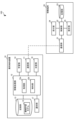
- FIG. 1 is a block diagram showing an example of a functional configuration of an anomaly detection system according to an embodiment.
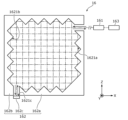
- FIG. 2 is a diagram illustrating an example of a configuration of a sound pickup unit;
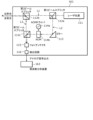
- FIG. 3 is a diagram for explaining an example of the configuration of the measurement unit shown in FIG. 2;
- FIG. 4 is a flow chart showing an example of the operation of the anomaly detection system according to the embodiment.
- FIG. 5 is a flow chart showing another example of the operation of the anomaly detection system according to the embodiment.
- FIG. 6 is a diagram for explaining a first example of the operation of the abnormality detection device in the detection step.
- FIG. 7 is a diagram for explaining a second example of the operation of the abnormality detection device in the detection step.
- FIG. 8 is a diagram for explaining the learning phase of the machine learning model and the inference phase using the machine learning model.
- FIG. 9 is a diagram for explaining a third example of the operation of the abnormality detection device in the detection step.
- FIG. 10 is a block diagram showing an example of a functional configuration of an anomaly detection system according to a modification of the embodiment;
- FIG. 11 is a diagram showing time waveforms of sounds picked up when welding is normally performed.
- FIG. 12 is a diagram showing time waveforms of sounds picked up when welding is performed under conditions where abnormalities are likely to occur.
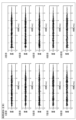
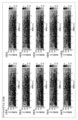
- FIG. 13 is a diagram showing a spectrogram of sounds picked up when welding is normally performed.
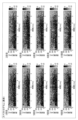
- FIG. 14 is a diagram showing a spectrogram of sound picked up when welding is performed under conditions where anomalies are likely to occur.
- FIG. 15 is a diagram showing feature amounts (acoustic feature amounts) of sound picked up when welding is normally performed.
- FIG. 16 is a diagram showing the feature quantity (acoustic feature quantity) of sound picked up when welding is performed under conditions where anomalies are likely to occur.
- An abnormality detection device includes an acquisition unit that acquires a sound that is generated at a welded portion during laser welding and that is collected by a sound pickup unit; and the sound that is acquired by the acquisition unit. and a detection unit that detects an abnormality of the welded portion based on a change in the inaudible sound included in the.
- the anomaly detection device detects an anomaly in the welded portion based on the non-audible sound contained in the sound generated at the welded portion during laser welding. It is less likely to be affected by sounds that become noise. In addition, since the band of non-audible sound is not easily affected by sound that becomes noise, when the non-audible sound changes (for example, when the sound pressure of the non-audible sound changes), the anomaly detection device change can be captured. Therefore, the abnormality detection device can improve the detection accuracy of the abnormality of the welded portion.
- the detection unit may detect the abnormality of the welded portion based on a decrease in sound pressure of non-audible sound included in the sound.
- the anomaly detection device detects an anomaly in the welded part based on the reduction in the sound pressure of the inaudible sound contained in the sound generated at the welded part during laser welding, so various sounds generated around the sound pickup part can be detected. It becomes less susceptible to audible sound, that is, sound that becomes noise. In addition, since the band of inaudible sound is less susceptible to sounds that become noise, when the sound pressure of the inaudible sound decreases, the anomaly detection device can detect changes in the decrease in sound pressure. Moreover, it is assumed that the sound pressure of the inaudible sound contained in the sound generated at the welded portion tends to decrease when an abnormality occurs at the welded portion. Therefore, the abnormality detection device can improve the detection accuracy of the abnormality of the welded portion.
- the anomaly detection device may further include a notification unit that notifies a user when the anomaly is detected by the detection unit.
- the anomaly detection device can notify the user that an anomaly has occurred in the welded portion, so the user can ascertain whether or not there is an anomaly in the welded portion.
- the sound pickup unit may be a laser microphone.
- the anomaly detection device uses a laser microphone as a sound pickup unit, so it can acquire a wider range of sound than when using a normal microphone, so the amount of information obtained increases. Therefore, the abnormality detection device can detect the abnormality of the welded portion based on more information. Therefore, since the abnormality detection device can extract more feature amounts, it is possible to improve the detection accuracy of the abnormality of the welded portion.
- a normal microphone for example, a microphone with a diaphragm
- the non-audible sound may be sound in a frequency band of 100 kHz or more and 200 kHz or less.
- the anomaly detection device can extract sounds in a specific frequency band from the inaudible sounds as feature quantities. Therefore, the abnormality detection device can accurately detect the abnormality of the welded portion based on the extracted feature amount.
- the detection unit may further detect the abnormality based on an increase in sound pressure of audible sound included in the sound.
- the abnormality detection device can improve the detection accuracy of the abnormality of the welded portion.
- the detection unit inputs the sound information about the sound acquired by the acquisition unit to a learned machine learning model, and based on an output result obtained from the anomaly may be detected.
- the abnormality detection device can automatically extract feature amounts from sound information by using a machine learning model, so it is possible to detect abnormalities in welded parts more easily.
- the sound information may include at least one of image data of the spectrogram of the sound, image data of the frequency characteristics of the sound, and time-series data of the sound. .
- the anomaly detection device can facilitate the extraction of data regularity (so-called feature values) by a machine learning model by using sound information that facilitates the extraction of data feature values.
- the time series data may be a time waveform of the sound.
- the anomaly detection device uses the time waveform of the sound as the time-series data of the sound, thereby facilitating the extraction of the feature quantity related to the volume (in other words, sound pressure) increase/decrease by the machine learning model. .
- the output result may be the presence or absence of an anomaly in the welded portion or the degree of anomaly.
- the anomaly detection device can detect an anomaly in the welded portion based on the presence or absence of an anomaly in the welded portion or the degree of anomaly.
- the sound is a sound generated at the welded portion when the welded portion is irradiated with a laser, and is generated when impurities are attached to the welded portion. May contain sound.
- the abnormality detection device can detect an abnormality in the welded part based on the sound.
- the abnormality may be at least one of spatter generation and crack generation in the welded portion.
- the anomaly detection device can detect not only an anomaly on the surface of the welded part, but also an anomaly occurring inside or on the back side of the object to be welded.
- an abnormality detection device includes a laser microphone that picks up sound generated in a welded portion during laser welding, and detects an abnormality in the welded portion based on the sound picked up by the laser microphone. and a detection unit that detects the
- the anomaly detection device can pick up sound even in environments where it is difficult to pick up sound with a normal microphone.
- normal microphones for example, microphones with a diaphragm
- laser microphones do not have diaphragms like normal microphones. Therefore, it is possible to pick up sound even in environments such as electromagnetic waves, high temperature, high heat, or metal pieces.
- an abnormality detection method includes a sound collecting step of obtaining a sound generated in a welded portion during laser welding and collected by a sound collecting unit; and a detection step of detecting an abnormality of the welded portion based on a change in inaudible sound included in the generated sound.
- the device that executes the abnormality detection method detects an abnormality in the welded portion based on the inaudible sound included in the sound generated at the welded portion during laser welding, various possible sounds generated around the sound collecting portion can be detected. It becomes less susceptible to hearing sounds, that is, sounds that become noise.
- the anomaly detection method is executed when the non-audible sound changes (for example, when the sound pressure of the non-audible sound changes). The device can capture that change. Therefore, the device that executes the abnormality detection method can improve the detection accuracy of the abnormality of the welded portion.
- the abnormality of the welded portion may be detected based on a decrease in sound pressure of non-audible sound included in the sound.
- the device that executes the abnormality detection method detects an abnormality in the welded portion 3c based on a decrease in the sound pressure of the inaudible sound contained in the sound 4 generated at the welded portion 3c during laser welding. It becomes less susceptible to various audible sounds generated around 16, that is, sounds that become noise. In addition, since the band of inaudible sound is less susceptible to sound that becomes noise, when the sound pressure of the inaudible sound decreases, the device that executes the anomaly detection method can detect changes in the decrease in sound pressure. can be done. Moreover, it is assumed that the sound pressure of the inaudible sound contained in the sound generated at the welded portion tends to decrease when an abnormality occurs at the welded portion. Therefore, the device that executes the abnormality detection method can improve the detection accuracy of the abnormality of the welded portion 3c.
- an abnormality detection method includes a sound collecting step of collecting the sound generated at a welded portion during laser welding with a laser microphone, and the sound collected by the laser microphone. and a detection step of detecting an abnormality in the welded portion based on the sound.
- the anomaly detection method uses a laser microphone, making it possible to pick up sound even in environments where it is difficult to pick up sound with a normal microphone.
- normal microphones for example, microphones with a diaphragm
- laser microphones do not have diaphragms like normal microphones. Therefore, it is possible to pick up sound even in environments such as electromagnetic waves, high temperature, high heat, or metal pieces.
- a program according to one aspect of the present disclosure is a program for causing a computer to execute any of the anomaly detection methods described above.
- a computer can be used to achieve the same effect as any of the above anomaly detection methods.
- FIG. 1 is a block diagram showing an example of a functional configuration of an anomaly detection system 100 according to an embodiment.
- the abnormality detection system 100 is, for example, a system that acquires a collected sound that is generated at a welded portion during laser welding and detects an abnormality of the welded portion from the acquired sound.
- the anomaly detection system 100 detects an anomaly of the welded portion based on changes in inaudible sounds included in the acquired sounds. More specifically, the anomaly detection system 100 may detect an anomaly of the welded part based on a decrease in the sound pressure of the non-audible sound, or the acquired Abnormality of the welded portion may be detected based on an increase in sound pressure of audible sound included in the sound. Further, when an abnormality is detected, the abnormality detection system 100 may notify the user to that effect.
- Inaudible sound is sound in a frequency band that cannot be detected by the human ear (in other words, it cannot be heard by the human ear), specifically, a frequency band of 20 kHz or higher (so-called ultrasonic band). Among them, it is a sound in a frequency band of 100 kHz or more and 200 kHz or less.
- Audible sound is sound in a frequency band that can be detected by the human ear (in other words, audible by the human ear), specifically, sound in a frequency band of 20 Hz or more and less than 20 kHz.
- the anomaly detection system 100 includes an anomaly detection device 10 and an information terminal 20, for example. Each configuration will be described below.
- the anomaly detection device 10 detects an anomaly of a welded portion based on a change in inaudible sound included in sound generated at the welded portion welded by laser welding. For example, the abnormality detection device 10 detects an abnormality in a welded portion based on a decrease in the sound pressure of non-audible sound included in the sound generated at the welded portion during laser welding. The abnormality detection device 10 may further detect an abnormality of the welded portion based on an increase in sound pressure of audible sound included in the sound generated at the welded portion.
- the abnormality detection device 10 detects an abnormality in the welded portion based on a decrease in sound pressure of non-audible sound contained in the sound generated at the welded portion during laser welding and an increase in sound pressure of audible sound. good too. As a result, since sound in a wide band ranging from audible sound to non-audible sound is sensed, the accuracy of detection of abnormalities in welded portions is improved.
- the anomaly detection device 10 includes, for example, a communication unit 11, an information processing unit 12, a storage unit 13, a learning unit 14, a sound pickup unit 16, and a notification unit 17. Each configuration will be described below.
- the communication unit 11 is a communication circuit (or communication module) for the abnormality detection device 10 to communicate with the information terminal 20 .
- the communication unit 11 includes a communication circuit (or communication module) for communicating via the local communication network, and a communication circuit (or communication module) for communicating via the wide area communication network. good too.
- the communication unit 11 is, for example, wireless communication that performs wireless communication, but may be a wired communication circuit that performs wired communication. Note that the communication standard for communication performed by the communication unit 11 is not particularly limited.
- the information processing section 12 acquires the sound picked up by the sound pickup section 16, and performs various information processing related to detection of an abnormality in the welded portion based on the sound information regarding the acquired sound.
- the information processing unit 12 specifically includes an acquisition unit 12a and a detection unit 12b.
- the functions of the acquisition unit 12 a and the detection unit 12 b are realized by executing a computer program stored in the storage unit 13 by the processor or microcomputer configuring the information processing unit 12 .
- the acquisition unit 12a acquires the sound (hereinafter also referred to as welding sound) picked up by the sound pickup unit 16 .
- a welding sound is a sound generated at a welded portion during laser welding.
- the detection unit 12b detects an abnormality of the welded portion based on a change in non-audible sound included in the sound acquired by the acquisition unit 12a.
- the detection unit 12b may detect an abnormality in the welded portion based on a decrease in the sound pressure of the inaudible sound included in the sound picked up by the sound pickup unit 16, or may Anomalies in the weld may be detected based on a decrease in the sound pressure of the non-audible sound and an increase in the sound pressure of the audible sound.
- the detection unit 12b detects an abnormality in the welded portion based on the output result obtained by inputting the sound information related to the sound picked up by the sound pickup unit 16 into the learned machine learning model 15.
- the sound information may include, for example, at least one of sound spectrogram image data, sound frequency characteristic image data, and sound time-series data.
- the time-series data of sound may be time-series numerical data of sound, or may be a time waveform of sound.
- the storage unit 13 is a storage device that stores a dedicated application program and the like for the information processing unit 12 to execute.
- the storage unit 13 is realized by, for example, an HDD (Hard Disk Drive), but may be realized by a semiconductor memory.
- a trained machine learning model 15 may be stored in the storage unit 13 . In this case, the machine learning model 15 is used for detecting abnormalities in welded portions.
- Machine learning model 15 may be, for example, a convolutional neural network (CNN), but is not so limited.
- machine learning model 15 may be a fully-connected neural network.
- the sound information is time-series numerical data (for example, a sound spectrogram or time-series numerical data of frequency characteristics)
- the machine learning model 15 is a recurrent neural network (RNN) model. good too. That is, the machine learning model 15 may be appropriately selected according to the format of the input data.
- the machine learning model 15 is obtained by learning by the learning unit 14 .
- the machine learning model 15 may be constructed, for example, by learning the relationship between the sound generated at the welded portion during laser welding (so-called welding sound) and the presence or absence of an abnormality in the welded portion.
- Welding sounds include inaudible sounds that are not detectable by the human ear and audible sounds that are detectable by the human ear.
- the learning unit 14 learns a machine learning model.
- the learning unit 14 may perform teacher learning.
- the learning unit 14 may learn the machine learning model using the teacher data, or may learn the machine learning model without using the teacher data.
- the teacher data consists of sound information about the sound generated in the welded part during laser welding and annotations indicating abnormalities in the welded part.
- the second data may include the first data, the sound information, and an annotation indicating that the welded portion is normal (that is, normal).
- the data used for learning is sound information related to the sound generated at the welded portion during laser welding.
- the sound pickup unit 16 picks up the sound generated at the welded portion during laser welding.
- the sound pickup unit 16 is, for example, a microphone, more specifically a laser microphone.
- FIG. 1 shows an example in which the abnormality detection device 10 includes one sound pickup unit 16 , it may include two or more sound pickup units 16 .
- each sound pickup unit 16 may pick up sounds generated at different welded portions.
- the sound pickup unit 16 converts the picked-up sound into an electric signal and outputs the electric signal to the information processing unit 12 .
- FIG. FIG. 2 is a diagram showing an example of the configuration of the sound pickup unit 16.
- the sound pickup unit 16 shown in FIG. 2 is a laser microphone.
- FIG. 3 is a diagram for explaining an example of the configuration of the measurement unit 161 shown in FIG. 2. As shown in FIG.
- the sound pickup section 16 includes, for example, a measurement section 161, a frame body section 162, and a calculation section 163. Each configuration will be described below.
- the frame body part 162 is composed of at least one reflecting member that encloses a predetermined space through which sound passes so as to intersect with the traveling direction of the sound.
- the sound pickup unit 16 measures sound traveling from the positive Y-axis direction toward the ZX plane in a predetermined space. Surrounding a predetermined space so as to intersect with the traveling direction of sound also includes surrounding part of the predetermined space with at least one reflecting member, rather than completely surrounding the predetermined space. Moreover, when a pair of reflecting members are arranged in parallel, it also includes sandwiching a predetermined space between the pair of reflecting members.
- the frame body part 162 is composed of, for example, two reflecting members 162a and 162b, and the two reflecting members 162a and 162b are spaced apart from each other.
- the frame portion 162 preferably has at least one gap between the two reflecting members 162a and 162b.
- At least one gap is, for example, a gap for allowing laser light to enter a predetermined space (hereinafter also referred to as an entrance) and a gap for adjusting the reflection angle of laser light and returning it to the entrance (hereinafter referred to as an entrance). It is also called an angle adjustment port).
- the frame body portion 162 may include an angle adjustment reflecting member 162c inside or outside the angle adjustment opening (Z-axis negative side).
- the angle adjusting reflecting member 162c has a reflecting surface 1621c, and is arranged so that the reflecting surface 1621c faces a predetermined space.
- the angle adjustment reflecting member 162c may be rotatably attached to a support shaft (not shown) fixed to the two reflecting members 162a and 162b, or may be tiltably supported by a piezoelectric body.
- the angle adjusting reflecting member 162c can adjust the reflection angle of the laser light with respect to the reflecting surface 1621c, so that the laser light can be returned to the measurement unit 161 with high accuracy.
- the shape of the frame body part 162 may be triangular, quadrangular, pentagonal, hexagonal, circular, or elliptical when viewed from the sound traveling direction.
- the shape of the frame portion 162 is square.
- the size of the frame body part 162 may be appropriately set according to the design. direction) may be 20 mm.
- Each of the two reflecting members 162a and 162b has at least one reflecting surface.
- the two reflecting members 162a and 162b have a plurality of reflecting surfaces 1621a and 1621b, respectively, and are arranged so that the plurality of reflecting surfaces 1621a and 1621b face a predetermined space.
- the two reflecting surfaces 1621a and 1621b are arranged so that when the predetermined space is viewed from the sound traveling direction (that is, the Y-axis direction), the laser beams intersect in the predetermined space and are reflected multiple times.
- the plurality of reflecting surfaces 1621a are each flat and formed in a series.
- the plurality of reflective surfaces 1621a have different orientations within a predetermined space.
- the multiple reflective surfaces 1621a may differ in shape and area.
- the shape of the reflective surface 1621a may be square, rectangular, or trapezoidal, and the area varies depending on the arrangement position (for example, corners and edges) of the reflective surface 1621a on the reflective member 162a. good too.
- the plurality of reflecting surfaces 1621a are formed in a series, they may not be formed in a series.
- the reflecting member 162a may be manufactured by attaching a reflecting plate on a plurality of surfaces that become the plurality of reflecting surfaces 1621a.
- the plurality of reflecting surfaces 1621b are similar to the plurality of reflecting surfaces 1621a.
- the measurement unit 161 emits a laser beam into a predetermined space, reflects the laser beam in a predetermined space surrounded by the reflecting members 162a and 162b, and returns to the measurement unit 161 (hereinafter also referred to as reflected light). to measure the sound pressure in a predetermined space.
- the measurement unit 161 is, for example, a laser Doppler vibrometer or a photodiode. When the measurement unit 161 is a laser Doppler vibrometer, the measurement unit 161 has the configuration shown in FIG. 3, for example.
- the measurement unit 161 has a laser light source 111 that emits laser light, and the laser light output from the laser light source 111 is split into two directions by the first beam splitter 112a.
- One of the laser beams L1 split into two directions (so-called emission light) is emitted through the second beam splitter 112b.
- the other laser beam L2 split by the first beam splitter 112a has its optical axis adjusted by a mirror 113 and enters an AOM (Acoust-Optic Modulator) driver 114a driven by an AOM 114b.
- a frequency-shifted reference light is output.
- the reference light is optically adjusted so as to pass through the third beam splitter 112c and irradiate the light receiving section 115 (for example, photodetector).
- the laser light L3 (so-called reflected light) that has returned after being reflected in a predetermined space is irradiated to the light receiving unit 115 via the second beam splitter 112b and the third beam splitter 112c, and is superimposed on the reference light. becomes interference light and is received by the light receiving unit 115 .
- the measurement unit 161 detects the phase fluctuation of the laser light caused by this lap interference with the detection circuit 116 and outputs it to the calculation unit 163 as an analog signal.
- the calculation unit 163 calculates the sound pressure within the predetermined space based on the signal output from the measurement unit 161 .
- the calculator 163 may be a frequency analyzer.
- the laser Doppler vibrometer has been described as an example in which the measurement unit 161 includes the laser light source 111 and the light receiving unit 115 in one housing, the present invention is not limited to this. Moreover, the measurement unit 161 may include the laser light source 111 and the light receiving unit 115 in separate housings. Moreover, not only the laser light source 111 and the light receiving unit 115, but also the first beam splitter 112a, the second beam splitter 112b, the third beam splitter 112c, the AOM 114b, the mirror 113, etc. may not be included in one housing.
- the laser light source 111 may be, for example, a He--Ne laser oscillator or a laser diode.
- the notification unit 17 notifies the user of notification information when, for example, the detection unit 12b detects an abnormality in the welded portion.
- the notification information is, for example, information regarding an abnormality in the welded portion.
- the information on the abnormality of the welded portion includes information indicating the presence or absence of abnormality of the welded portion, information indicating the degree of abnormality of the welded portion, and information on the type of abnormality of the welded portion (for example, occurrence of spatter or crack). At least one may be included.
- the degree of abnormality is a statistic indicating the degree of abnormality, and more specifically, it is a numerical value representing the possibility of occurrence of abnormality in the welded portion.
- the information terminal 20 is a portable information terminal such as a notebook computer, a smart phone, or a tablet terminal used by the user of the anomaly detection device 10, but may be a stationary computer device.
- the information terminal 20 includes a communication section 21 , a control section 22 , a storage section 23 , a reception section 24 and a presentation section 25 .
- the communication unit 21 is a communication circuit (or communication module) for connecting the information terminal 20 to the anomaly detection device 10 via the local communication network. , communication module).
- the communication performed by the communication unit 21 is wireless communication, but may be wired communication.
- the communication standard of communication performed by the communication unit 21 is not particularly limited either.
- Control unit 22 The control unit 22 performs various information processing related to the information terminal 20 based on the operation input received by the receiving unit 24 .
- the control unit 22 is implemented by, for example, a microcomputer, but may be implemented by a processor.
- the storage unit 23 is a storage device that stores a dedicated application program and the like for the control unit 22 to execute.
- the storage unit 23 is implemented by, for example, a semiconductor memory.
- the accepting unit 24 is an input interface that accepts operation input by the user using the information terminal 20 .
- the accepting unit 24 accepts a user's input operation for transmitting the notification information presentation method to the anomaly detection device 10 .
- the reception unit 24 is specifically realized by a touch panel display or the like.
- the reception section 24 is equipped with a touch panel display, the touch panel display functions as the presentation section 25 and the reception section 24 .
- the reception unit 24 is not limited to a touch panel display, and may be, for example, a keyboard, a pointing device (for example, a touch pen or mouse), hardware buttons, or the like.
- the receiving unit 24 may be a microphone when receiving an input by voice.
- the accepting unit 24 may be a camera when accepting an input by a gesture.
- the presentation unit 25 presents the notification information notified by the anomaly detection device 10 .
- the presentation unit 25 is, for example, a display device that displays image information including characters.
- the presentation unit 25 may include an audio output device that outputs audio information.
- the display device is, for example, a display including a liquid crystal (LC) panel or an organic EL (Electro Luminescence) panel as a display device.
- the audio output device is, for example, a speaker or an earphone.
- the presentation unit 25 may display image information on a display device, output audio information from an audio output device, or present both image information and audio information.
- FIG. 4 is a flow chart showing an example of the operation of the anomaly detection system 100 according to the embodiment.
- the control unit 22 of the information terminal 20 outputs the instruction to the abnormality detection device 10 via the communication unit 21 (unable to shown).
- the information processing unit 12 causes the sound pickup unit 16 to pick up the sound generated at the welded portion (not shown).
- the acquisition unit 12a of the abnormality detection device 10 acquires the sound generated in the welded part during laser welding and picked up by the sound pickup unit 16 (S01). More specifically, the acquisition unit 12 a acquires an electrical signal corresponding to the sound picked up by the sound pickup unit 16 . Then, the acquisition unit 12a outputs the acquired electrical signal to the detection unit 12b.
- the sound pickup unit 16 is, for example, a laser microphone. As a result, the sound pickup unit 16 can pick up sound in a wider band than a normal microphone. In addition, since the sound pickup unit 16 does not have a diaphragm like a normal microphone, it can pick up sound even in environments such as electromagnetic waves, high temperature, high heat, or metal pieces.
- the detection unit 12b of the abnormality detection device 10 detects an abnormality of the welded portion based on changes in the inaudible sound included in the sound acquired by the acquisition unit 12a in step S01 (S02).
- a change in non-audible sound is, for example, a change in sound pressure of the non-audible sound.
- the detection unit 12b detects an abnormality of the welded portion based on a decrease in the sound pressure of the inaudible sound included in the sound acquired by the acquisition unit 12a.
- the detection unit 12b detects an abnormality in the welded portion based on a decrease in the sound pressure of the sound in the frequency band of 100 kHz or more and 200 kHz or less among the inaudible sounds, for example.
- the notification unit 17 of the abnormality detection device 10 notifies the user when the detection unit 12b detects an abnormality in the welded portion in step S02 (S03). Specifically, the notification unit 17 notifies the user of notification information when the detection unit 12b detects an abnormality in the welded portion. Since the notification information has been described above, a description thereof will be omitted here.
- step S02 the detecting unit 12b detects an abnormality of the welded portion based on a decrease in the sound pressure of the non-audible sound contained in the sound generated at the welded portion.
- an abnormality in the welded portion may be detected based on an increase in the sound pressure of the audible sound included in the sound acquired by the acquisition unit 12a in step S01.
- FIG. 5 is a flow chart showing another example of the operation of the anomaly detection system 100 according to the embodiment. In FIGS. 4 and 5, the same step numbers are given to the same processes, and the explanations are omitted or simplified.
- the detection unit 12b reduces the sound pressure of the non-audible sound contained in the sound acquired in step S01 and increases the sound pressure of the audible sound contained in the acquired sound. is detected (S11).
- the detection unit 12b extracts a feature amount from the sound information about the sound acquired in step S01, and performs threshold processing on the extracted feature amount. Therefore, the presence or absence of abnormality in the welded portion may be detected.
- FIG. 6 is a diagram for explaining a first example of the operation of the abnormality detection device 10 in the detection step.
- a laser welding device (not shown) irradiates a laser beam 2 emitted from a laser scanner 1 to a welded portion 3 c of a welding target 3 .
- the objects 3 to be welded are two metal plates.
- the object 3 to be welded is irradiated with the laser beam 2 on the surface 3a side.
- the sound 4 is the sound generated at the welded portion 3c when the laser beam 2 is applied to the welded portion 3c. Including the sound generated in 3c.
- An abnormality of the welded portion 3c occurs, for example, when impurities adhere to the surface 3a of the welded portion 3c.
- the abnormalities of the welded portion 3c are the generation of spatter on the surface 3a of the welded portion 3c and the generation of cracks on the back surface 3b of the welded portion 3c.
- a sound pickup unit 16 (for example, a laser microphone) picks up the sound 4 generated at the welded portion 3c during laser welding.
- the sound pickup unit 16 (laser microphone) is a part of the sound (more specifically, the sound that is spherically propagated from the welded portion 3c) generated at the welded portion 3c during laser welding. Specifically, the sound that propagates in the direction of the sound pickup unit 16 (laser microphone)) is picked up, but all sounds may be picked up.
- the detection unit 12b of the anomaly detection device 10 extracts a feature amount from the sound information related to the sound picked up by the acquisition unit 12a.
- the detection unit 12b detects the sound pressure of non-audible sound (for example, sound in a frequency band of 100 kHz or more and 200 kHz or less) contained in the collected sound, and the sound pressure of audible sound (for example, a frequency of 1 kHz or more and less than 20 kHz). band sound) and extract the sound pressure.
- the detection unit 12b determines a decrease in the sound pressure of the inaudible sound and an increase in the sound pressure of the audible sound by threshold processing.
- the detection unit 12b detects whether there is an abnormality (normal or abnormal) in the welded portion 3c based on the determined decrease in the sound pressure of the non-audible sound and increase in the sound pressure of the audible sound.
- the abnormality detection device 10 includes one sound pickup unit 16, but is not particularly limited, and may include two or more sound pickup units 16. In this case, for example, the abnormality detection device 10 may use two or more sound pickup units 16 to collect all of the sounds generated at the welded portion 3c during welding, or some of the sounds ( More specifically, the sound propagating in each direction of two or more sound pickup units 16) may be picked up.
- FIG. 7 is a diagram for explaining a second example of the operation of the abnormality detection device 10 in the detection step.
- detection unit 12b detects the presence or absence of an abnormality in welded portion 3c by threshold processing. to detect whether or not there is an abnormality in the welded portion 3c.
- threshold processing to detect whether or not there is an abnormality in the welded portion 3c.
- the detection unit 12b of the abnormality detection device 10 detects an abnormality of the welded portion 3c based on the output result obtained by inputting the sound information related to the sound acquired by the acquisition unit 12a into the machine learning model 15.
- the machine learning model 15 indicates the relationship between the sound (so-called welding sound) generated at the welded portion 3c during laser welding and whether or not there is an abnormality in the welded portion 3c.
- the machine learning model 15 is, for example, a convolutional neural network (CNN), but is not limited to this.
- CNN convolutional neural network
- classification by the machine learning model 15 is performed.
- the output result is, for example, the presence or absence of abnormality in the welded portion 3c.
- the sound information input to the learned machine learning model 15 is, for example, image data of spectrogram of welding sound or image data of frequency characteristics.
- the information is, for example, image data in a format such as JPEG (Joint Photographic Experts Group) or BMP (Basic Multilingual Plane).
- FIG. 8 is a diagram for explaining a learning phase of the machine learning model 15 and a usage phase (also called an inference phase) using the machine learning model 15. As shown in FIG.
- the learning unit 14 of the anomaly detection device 10 learns a machine learning model using teacher data, for example.
- the storage unit 13 stores teaching data.
- the teaching data is, for example, first data composed of sound information about the sound generated at the welded portion 3c during laser welding, annotations indicating an abnormality of the welded portion 3c, the sound information, and no abnormality of the welded portion 3c. (that is, normal) and second data configured with an annotation indicating normal.
- the detection unit 12b of the anomaly detection device 10 uses a machine that has learned sound information about the sound picked up by the sound pickup unit 16 (for example, a spectrogram image or a frequency characteristic image of the picked sound). Input to the learning model 15 (so-called trained model). Then, the detection unit 12b performs inference processing based on the output result output from the machine learning model 15, and detects an abnormality in the welded portion 3c based on the output result of the inference processing (for example, presence or absence of abnormality).
- a machine that has learned sound information about the sound picked up by the sound pickup unit 16 (for example, a spectrogram image or a frequency characteristic image of the picked sound). Input to the learning model 15 (so-called trained model). Then, the detection unit 12b performs inference processing based on the output result output from the machine learning model 15, and detects an abnormality in the welded portion 3c based on the output result of the inference processing (for example, presence or absence of abnormality).
- FIG. 9 is a diagram for explaining a third example of the operation of the abnormality detection device 10 in the detection step.
- the learned machine learning model 15 is used to detect the presence or absence of an abnormality in the welded portion 3c.
- the abnormality of the welded portion 3c is detected based on the degree of abnormality of 3c.
- the points different from the second example will be mainly described, and descriptions of overlapping contents will be omitted or simplified.
- the detection unit 12b of the abnormality detection device 10 detects an abnormality of the welded portion 3c based on the output result obtained by inputting the sound information related to the sound acquired by the acquisition unit 12a into the machine learning model 15.
- the machine learning model 15 indicates the relationship between the sound (so-called welding sound) generated at the welded portion 3c during laser welding and whether or not there is an abnormality in the welded portion 3c.
- the machine learning model 15 is, for example, a convolutional neural network (CNN), but is not limited to this. In a third example, regression is performed using the machine learning model 15 .
- the output result is, for example, the degree of abnormality of the welded portion 3c.
- the degree of abnormality is a statistic indicating the degree of abnormality, and more specifically, it is a numerical value representing the possibility of occurrence of abnormality in the welded portion.
- the sound information input to the learned machine learning model 15 is, for example, time-series data of welding sounds.
- the time-series data is, for example, a time waveform of sound, and more specifically, the information is time-series numerical data in a format such as WAV (Waveform Audio File Format). , duration of sound, sound pressure and/or waveform.
- WAV Wideform Audio File Format
- the learning unit 14 of the abnormality detection device 10 learns a machine learning model using, for example, the waveform or spectrogram of a normal welding sound as input data.
- the storage unit 13 stores normal welding sound waveforms or spectrograms.
- Machine learning model 15 is, for example, an autoencoder.
- the detection unit 12b of the abnormality detection device 10 acquires sound information (for example, the waveform of the sound or spectrogram) to a trained machine learning model 15 (so-called trained model). Then, the detection unit 12b performs inference processing based on the output result (for example, the sound information encoded and decoded by the autoencoder) output from the machine learning model 15, and the output result of the inference processing (for example, the degree of abnormality ), the abnormality of the welded portion 3c is detected.
- sound information for example, the waveform of the sound or spectrogram
- the detection unit 12b performs inference processing based on the output result (for example, the sound information encoded and decoded by the autoencoder) output from the machine learning model 15, and the output result of the inference processing (for example, the degree of abnormality ), the abnormality of the welded portion 3c is detected.
- the abnormality detection device 10 includes the acquisition unit 12a that acquires the sound 4 that is generated at the welded portion 3c during laser welding and that is collected by the sound pickup unit 16, and a detection unit 12b that detects an abnormality of the welded portion 3c based on a change in the inaudible sound included in the sound 4 acquired by the acquisition unit 12a.
- the abnormality detection device 10 detects an abnormality of the welded portion 3c based on the inaudible sound included in the sound 4 generated at the welded portion 3c during laser welding. It becomes less susceptible to audible sound, that is, sound that becomes noise. In addition, since the band of non-audible sounds is less susceptible to sounds that become noise, when the non-audible sounds change (for example, when the sound pressure of the non-audible sounds changes), the abnormality detection device 10 You can catch the change. Therefore, the abnormality detection device 10 can improve the detection accuracy of the abnormality of the welded portion 3c.
- the detection unit 12b may detect an abnormality in the welded portion 3c based on a decrease in the sound pressure of the inaudible sound included in the sound 4.
- the abnormality detection device 10 detects an abnormality of the welded portion 3c based on a decrease in the sound pressure of the non-audible sound contained in the sound 4 generated at the welded portion 3c during laser welding. It is less susceptible to various audible sounds that occur in the In addition, since the band of inaudible sound is less susceptible to sounds that become noise, when the sound pressure of the inaudible sound decreases, the anomaly detection device can detect changes in the decrease in sound pressure. Further, it is assumed that the sound pressure of the inaudible sound included in the sound 4 generated at the welded portion 3c tends to decrease when an abnormality occurs at the welded portion 3c. Therefore, the abnormality detection device 10 can improve the detection accuracy of the abnormality of the welded portion 3c.
- the abnormality detection device 10 may further include a notification unit 17 that notifies the user when the detection unit 12b detects an abnormality in the welded portion 3c.
- the abnormality detection device 10 can notify the user that an abnormality has occurred in the welded portion 3c, so that the user can ascertain whether or not there is an abnormality in the welded portion 3c.
- the sound pickup unit 16 may be a laser microphone.
- the anomaly detection device 10 uses a laser microphone as the sound pickup unit 16, so that it is possible to acquire sound in a wider band than when a normal microphone is used, so the amount of information obtained is increased. Therefore, the abnormality detection device 10 can detect the abnormality of the welded portion based on more information. Therefore, since the abnormality detection device 10 can extract more feature amounts, the abnormality detection accuracy of the welded portion 3c can be improved.
- a normal microphone for example, a microphone having a diaphragm
- the non-audible sound may be sound in a frequency band of 100 kHz or more and 200 kHz or less.
- the anomaly detection device 10 can extract sound in a specific frequency band from the inaudible sound as a feature amount. Therefore, the abnormality detection device 10 can accurately detect the abnormality of the welded portion 3c based on the extracted feature amount.
- the detection unit 12b may further detect an abnormality in the welded portion 3c based on an increase in the sound pressure of the audible sound included in the sound 4.
- the anomaly detection device 10 can extract more feature quantities based on the inaudible and audible sounds included in the sound 4. Therefore, the abnormality detection device 10 can improve the detection accuracy of the abnormality of the welded portion 3c.
- the detection unit 12b inputs the sound information about the sound 4 acquired by the acquisition unit 12a to the learned machine learning model 15, and based on the output result obtained, the welding part is detected. Abnormality of 3c may be detected.
- the abnormality detection device 10 can automatically extract the feature amount from the sound information by using the machine learning model 15, so that the abnormality of the welded portion 3c can be detected more easily.
- the sound information may include at least one of image data of the spectrogram of the sound 4, image data of the frequency characteristics of the sound 4, and time-series data of the sound 4.
- the anomaly detection device 10 can facilitate the extraction of data regularity (so-called feature quantity) by the machine learning model 15 by using sound information that facilitates the extraction of the data feature quantity.
- the time-series data of Sound 4 may be the time waveform of Sound 4.
- the abnormality detection device 10 uses the time waveform of the sound 4 as the time-series data of the sound 4, thereby facilitating the extraction of the feature amount related to the volume (that is, sound pressure) increase/decrease by the machine learning model 15. be able to.
- the output result may be the presence or absence of an anomaly in the welded portion 3c or the degree of anomaly.
- the abnormality detection device 10 can detect the abnormality of the welded portion 3c based on the presence or absence of abnormality of the welded portion 3c or the degree of abnormality.
- the sound 4 is a sound generated at the welded portion 3c when the welded portion 3c is irradiated with a laser beam, and is generated when impurities adhere to the welded portion 3c. May contain sound.
- the abnormality detection device 10 can detect an abnormality of the welded portion 3c based on the sound 4.
- the abnormality of the welded portion 3c may be at least one of the generation of spatter and the generation of cracks in the welded portion 3c.
- the abnormality detection device 10 can detect not only an abnormality on the surface 3a of the welded portion 3c, but also an abnormality occurring inside or on the back surface 3b of the object 3 to be welded.
- the abnormality detection device 10 detects an abnormality in the welded portion 3c based on a laser microphone that picks up the sound 4 generated at the welded portion during laser welding and the sound 4 picked up by the laser microphone. and a detection unit 12b for detecting.
- the anomaly detection device 10 can pick up sound even in an environment where it is difficult to pick up sound with a normal microphone.
- normal microphones for example, microphones with a diaphragm
- laser microphones do not have diaphragms like normal microphones. Therefore, it is possible to pick up sound even in environments such as electromagnetic waves, high temperature, high heat, or metal pieces.
- the abnormality detection method includes a sound collection step (S01) of acquiring a sound 4 that is generated at the welded portion 3c during laser welding and is collected by the sound collection unit 16; and a detection step (S02) of detecting an abnormality in the welded portion 3c based on a change in the inaudible sound included in the sound 4 acquired in step (S01).
- the device that executes the abnormality detection method detects the abnormality of the welded portion 3c based on the inaudible sound included in the sound 4 generated at the welded portion 3c during laser welding. It becomes less susceptible to various audible sounds, that is, sounds that become noise. In addition, since the non-audible sound band is less susceptible to noise, the anomaly detection method is executed when the non-audible sound changes (for example, when the sound pressure of the non-audible sound changes). The device can capture that change. Therefore, the device that executes the abnormality detection method can improve the detection accuracy of the abnormality of the welded portion 3c.
- the abnormality of the welded portion 3c may be detected based on a decrease in the sound pressure of the inaudible sound included in the sound 4.
- the device that executes the abnormality detection method detects an abnormality in the welded portion 3c based on a decrease in the sound pressure of the inaudible sound contained in the sound 4 generated at the welded portion 3c during laser welding. It becomes less susceptible to various audible sounds generated around 16, that is, sounds that become noise. In addition, since the band of inaudible sound is less susceptible to sound that becomes noise, when the sound pressure of the inaudible sound decreases, the device that executes the anomaly detection method can detect changes in the decrease in sound pressure. can be done. Moreover, it is assumed that the sound pressure of the inaudible sound contained in the sound 3 generated at the welded portion 3c tends to decrease when an abnormality occurs at the welded portion 3c. Therefore, the device that executes the abnormality detection method can improve the detection accuracy of the abnormality of the welded portion 3c.
- the abnormality detection method includes a sound collection step of collecting the sound 4 generated at the welded portion 3c during laser welding with a laser microphone, and a sound collection step of collecting the sound 4 with the laser microphone. and a detection step of detecting an abnormality of the welded portion 3c based on.
- the anomaly detection method uses a laser microphone, making it possible to pick up sound even in environments where it is difficult to pick up sound with a normal microphone.
- normal microphones for example, microphones with a diaphragm
- laser microphones do not have diaphragms like normal microphones. Therefore, it is possible to pick up sound even in environments such as electromagnetic waves, high temperature, high heat, or metal pieces.
- FIG. 10 is a block diagram showing an example of the functional configuration of an anomaly detection system 100a according to the modification of the embodiment.
- the anomaly detection device 10 includes the sound pickup unit 16, but in the modification, the anomaly detection device 10a does not include the sound pickup unit 16, and the anomaly detection system 100a collects sound. It differs from the embodiment in that it includes a device 30 .
- the points different from the embodiment will be mainly described, and descriptions of overlapping contents will be simplified or omitted.
- the abnormality detection device 10 a acquires the sound collected by the sound collection device 30 .
- the anomaly detection device 10a includes, for example, a communication unit 11a, an information processing unit 12, a storage unit 13, a learning unit 14, and a notification unit 17.
- the configuration different from the abnormality detection device 10 according to the embodiment will be described below.
- the communication unit 11 a is a communication circuit (or communication module) for the abnormality detection device 10 a to communicate with the information terminal 20 and the sound collection device 30 .
- the communication unit 11a includes a communication circuit (or communication module) for communicating via the local communication network, and a communication circuit (or communication module) for communicating via the wide area communication network. good too.
- the communication unit 11a is, for example, wireless communication that performs wireless communication, but may be a wired communication circuit that performs wired communication. Note that the communication standard for communication performed by the communication unit 11a is not particularly limited.
- the sound collection device 30 includes, for example, a communication unit 31, a control unit 32, a storage unit 33, and a sound collection unit 16. Since the sound pickup unit 16 has been described in the embodiment, description thereof will be omitted here.
- the communication unit 31 is a communication circuit (or communication module) for the sound collection device 30 to communicate with the abnormality detection device 10 a and the information terminal 20 .
- the communication unit 31 includes a communication circuit (or communication module) for communicating via the local communication network, and a communication circuit (or communication module) for communicating via the wide area communication network. good too.
- the communication unit 31 is, for example, wireless communication that performs wireless communication, but may be a wired communication circuit that performs wired communication. Note that the communication standard for communication performed by the communication unit 31 is not particularly limited.
- Control unit 32 The control unit 32 performs various information processing regarding the sound collecting device 30 . Specifically, the control unit 32 transmits a control signal to the sound pickup unit 16 based on the setting information stored in the storage unit 33 .
- the control unit 32 is implemented by, for example, a microcomputer or processor.
- the functions of the control unit 32 are realized by, for example, executing a computer program stored in the storage unit 33 by a microcomputer, processor, or the like that constitutes the control unit 32 .
- the modification differs from the embodiment in that the sound pickup device 30 converts the sound picked up by the sound pickup unit 16 into an electric signal and outputs the electric signal to the abnormality detection device 10a. Description will be made centering on points different from the embodiment while referring to FIGS. 4 and 5 again.
- the control unit 22 of the information terminal 20 outputs the instruction to the abnormality detection device 10a via the communication unit 21 (unable to shown). Then, when acquiring the instruction, the abnormality detection device 10a outputs a sound collection start instruction to the sound collection device 30 (not shown).
- the information terminal 20 may output the instruction to the anomaly detection device 10 a and the sound pickup start instruction to the sound pickup device 30 .
- step S01 the communication unit 11a of the abnormality detection device 10a acquires the sound (more specifically, the electrical signal corresponding to the sound) picked up by the sound pickup unit 16 of the sound pickup device 30.
- the communication unit 11a may acquire the identification information of the sound collecting device 30 together with the electric signal corresponding to the sound.
- the detection unit 12b of the abnormality detection device 10a performs step S02 in FIG. 4 or step S11 in FIG. 5 to detect an abnormality in the welded portion.
- the notification unit 17 of the abnormality detection device 10a notifies the user to that effect when the detection unit 12b detects an abnormality in the welded portion in step S02 or step S11 (S03).
- the abnormality detection device 10a according to the modification is configured separately from the sound collection device 30, it is possible to appropriately change the installation position and the number of installations of the sound collection device 30 according to the design. It can be implemented in one integrated circuit.
- Example 1 and Comparative Example 1 show verification results when the sound information is a time waveform.
- Example 2 and Comparative Example 2 show verification results when the sound information is a spectrogram.
- Example 3 and Comparative Example 3 show verification results based on feature amounts of sound information (also referred to as acoustic feature amounts).
- Normal 10 times
- Abnormal 10 times
- 10 sounds generated at the welded portion when the welding was performed normally were collected.
- metal powder is applied to the surface of the object to be welded so that an abnormality occurs during welding, and the sound generated at the welded portion when welding is performed under conditions that easily generate an abnormality is measured by 10%. I heard a recovery sound.
- Laser microphone manufactured by Xarion, 1 channel, picks up sound in the frequency band from 10 kHz to 1 MHz) [Distance from welded part to microphone] 5cm
- FIG. 11 is a diagram showing time waveforms of sounds picked up when welding is normally performed. As shown in FIG. 11, there was no point where the amplitude increased in the time waveform of the welding sound when welding was normally performed. Therefore, it was confirmed that when no abnormality occurs during welding (that is, when welding is performed normally), the volume of sound (sound pressure) generated at the welded portion does not increase.
- FIG. 12 is a diagram showing time waveforms of sounds picked up when welding is performed under conditions where abnormalities are likely to occur. As shown in FIG. 12, in the time waveform of the sound when welding was performed under conditions where abnormalities were likely to occur, there were places where the amplitude increased (the places surrounded by solid lines). Therefore, when an abnormality occurs during welding, it is considered that the volume of sound (sound pressure) generated at the welded portion increases.
- FIG. 13 is a diagram showing a spectrogram of sounds picked up when welding is normally performed. As shown in FIG. 13, it was confirmed that sound in the frequency band of 100 kHz or less was generated at the welded portion during welding because the sound pressure of the sound in the frequency band of 100 kHz or less was large. It was also confirmed that sounds in frequency bands around 200 kHz and 250 kHz were intermittently generated.
- FIG. 14 is a diagram showing a spectrogram of sound picked up when welding is performed under conditions where anomalies are likely to occur. As shown in FIG. 14, there were places where the sound pressure level increased in the frequency band of 20 kHz or less. On the other hand, as compared with Example 2, there were places where the sound pressure level decreased in the frequency band from 100 kHz to 200 kHz. The time at which the sound pressure level decreased and the time at which the sound pressure level increased in the frequency band of 20 kHz or lower were approximately the same.
- Example 3 and Comparative Example 3 it was examined whether or not it would be possible to visually confirm the timing of occurrence of an abnormality by graphing the time fluctuations of (A) and (B) above.
- the solid line represents the value obtained by multiplying the value of the RMS (Root Mean Square) envelope of the waveform of (a) 1 kHz or more and 20 kHz or less corresponding to (A) above by 10, and the dashed line represents the value of (B ) corresponding to (b) 100 kHz or more and 200 kHz or less and the RMS envelope average of the waveform of 100 kHz or more and 200 kHz or less during normal welding is multiplied by 20.
- RMS Root Mean Square
- the difference between the RMS envelope of the waveform of 100 kHz or more and 200 kHz or less in (b) above and the RMS envelope average of the waveform of 100 kHz or more and 200 kHz or less during normal welding is calculated by the following formula.
- X envRMS represents the RMS envelope of the waveform.
- FIG. 15 is a diagram showing feature amounts (acoustic feature amounts) of sound picked up when welding is normally performed. As shown in FIG. 15, in (a) and (b) respectively, there was no place where the amplitude value increased or decreased.
- FIG. 16 is a diagram showing the feature quantity (acoustic feature quantity) of sound picked up when welding is performed under conditions where anomalies are likely to occur.
- the envelope value amplitude
- the difference in value between the sound in the frequency band of 100 kHz to 200 kHz and the RMS envelope average of the waveform of 100 kHz to 200 kHz during normal welding increases.
- the sound pressure of the non-audible sound generated in the welded part and included in the collected sound is reduced, and the sound pressure of the audible sound is reduced. Based on the increase, it was confirmed that it is possible to accurately detect an abnormality in the welded portion.
- the anomaly detection device may be configured from one system LSI (Large Scale Integration).
- the anomaly detection device may be composed of a system LSI having a sound pickup section, a detection section, and an output section. Note that the system LSI does not have to include the sound pickup unit.
- a system LSI is an ultra-multifunctional LSI manufactured by integrating multiple components on a single chip. Specifically, it includes a microprocessor, ROM (Read Only Memory), RAM (Random Access Memory), etc.
- a computer system comprising A computer program is stored in the ROM. The system LSI achieves its functions by the microprocessor operating according to the computer program.
- system LSI may also be called IC, LSI, super LSI, or ultra LSI depending on the degree of integration.
- the method of circuit integration is not limited to LSI, and may be realized by a dedicated circuit or a general-purpose processor.
- An FPGA Field Programmable Gate Array
- a reconfigurable processor that can reconfigure the connections and settings of the circuit cells inside the LSI may be used.
- one aspect of the present disclosure may be not only such an anomaly detection device but also an anomaly detection method having steps of characteristic components included in the device. Further, one aspect of the present disclosure may be a computer program that causes a computer to execute each characteristic step included in the anomaly detection method. Also, one aspect of the present disclosure may be a computer-readable non-transitory recording medium on which such a computer program is recorded.
- FIG. 1 an acquisition unit that acquires a sound that is generated at a welded part during laser welding and that is collected by a sound pickup unit; a detection unit that detects an abnormality in the welded portion based on a change in inaudible sound included in the sound acquired by the acquisition unit; comprising Anomaly detection device.
- the anomaly detection device detects an anomaly in the welded portion based on the non-audible sound contained in the sound generated at the welded portion during laser welding. It is less likely to be affected by sounds that become noise. In addition, since the band of non-audible sound is not easily affected by sound that becomes noise, when the non-audible sound changes (for example, when the sound pressure of the non-audible sound changes), the anomaly detection device change can be captured. Therefore, the abnormality detection device can improve the detection accuracy of the abnormality of the welded portion.
- the detection unit detects an abnormality of the welded portion based on a decrease in sound pressure of inaudible sound contained in the sound.
- the abnormality detection device according to Technique 1.
- the anomaly detection device detects an anomaly in the welded part based on the reduction in the sound pressure of the inaudible sound contained in the sound generated at the welded part during laser welding, so various sounds generated around the sound pickup part can be detected. It becomes less susceptible to audible sound, that is, sound that becomes noise. In addition, since the band of inaudible sound is less susceptible to sounds that become noise, when the sound pressure of the inaudible sound decreases, the anomaly detection device can detect changes in the decrease in sound pressure. Therefore, the abnormality detection device can improve the detection accuracy of the abnormality of the welded portion.
- the abnormality detection device can notify the user that an abnormality has occurred in the welded portion, so that the user can ascertain whether or not there is an abnormality in the welded portion.
- the sound pickup unit is a laser microphone, An abnormality detection device according to any one of Techniques 1 to 3.
- the anomaly detection device uses a laser microphone as a sound pickup unit, so that it can acquire sound in a wider band than when a normal microphone is used, so the amount of information that can be obtained increases. Therefore, the abnormality detection device can detect the abnormality of the welded portion based on more information. Therefore, since the abnormality detection device can extract more feature amounts, it is possible to improve the detection accuracy of the abnormality of the welded portion.
- a normal microphone for example, a microphone with a diaphragm
- the inaudible sound is sound in a frequency band of 100 kHz or more and 200 kHz or less.
- An abnormality detection device according to any one of Techniques 1 to 4.
- the anomaly detection device can extract sound in a specific frequency band from the inaudible sound as a feature amount. Therefore, the abnormality detection device can accurately detect the abnormality of the welded portion based on the extracted feature amount.
- the detection unit further detects the abnormality based on an increase in sound pressure of audible sound contained in the sound.
- An abnormality detection device according to any one of Techniques 1 to 5.
- the detection unit detects the abnormality based on an output result obtained by inputting the sound information related to the sound acquired by the acquisition unit into a learned machine learning model.
- An abnormality detection device according to any one of Techniques 1 to 6.
- the abnormality detection device can automatically extract the feature amount from the sound information by using the machine learning model, so that the abnormality of the welded portion can be detected more easily.
- the sound information includes at least one of image data of the spectrogram of the sound, image data of the frequency characteristics of the sound, and time-series data of the sound.
- the abnormality detection device according to Technique 7.
- the anomaly detection device can facilitate extraction of data regularity (so-called feature quantity) by a machine learning model by using sound information that facilitates extraction of data feature quantity.
- the time-series data is a time waveform of the sound, The abnormality detection device according to Technique 8.
- the anomaly detection device uses the time waveform of the sound as the sound time-series data, thereby facilitating the extraction of the feature amount related to the increase/decrease of the sound volume (that is, the sound pressure) by the machine learning model.
- the output result is the presence or absence of abnormality in the welded portion, or the degree of abnormality.
- An abnormality detection device according to any one of Techniques 7 to 9.
- the abnormality detection device can detect the abnormality of the welded portion based on the presence or absence of the abnormality of the welded portion or the degree of abnormality.
- the sound is a sound generated at the welded portion when the welded portion is irradiated with a laser beam, and includes a sound generated when impurities are attached to the welded portion.
- An abnormality detection device according to any one of Techniques 1 to 10.
- the abnormality detection device can detect the abnormality of the welded portion based on the sound.
- the abnormality is at least one of spatter generation and crack generation in the welded portion.
- An abnormality detection device according to any one of Techniques 1 to 11.
- the abnormality detection device can detect not only an abnormality on the surface of the welded portion, but also an abnormality occurring inside or on the back surface of the object to be welded.
- the abnormality detection device can detect an abnormality in the welded part based on the sound.
- a laser microphone that picks up the sound generated at the welded part during laser welding, a detection unit that detects an abnormality in the welded portion based on the sound picked up by the laser microphone; comprising Anomaly detection device.
- the anomaly detection device can pick up sound even in an environment where it is difficult to pick up sound with a normal microphone.
- normal microphones for example, microphones with a diaphragm
- laser microphones do not have diaphragms like normal microphones. Therefore, it is possible to pick up sound even in environments such as electromagnetic waves, high temperature, high heat, or metal pieces.
- the device that executes the abnormality detection method detects an abnormality in the welded portion based on the inaudible sound included in the sound generated at the welded portion during laser welding, various possible sounds generated around the sound collecting portion can be detected. It becomes less susceptible to hearing sounds, that is, sounds that become noise.
- the anomaly detection method is executed when the non-audible sound changes (for example, when the sound pressure of the non-audible sound changes). The device can capture that change. Therefore, the device that executes the abnormality detection method can improve the detection accuracy of the abnormality of the welded portion.
- the device that executes the anomaly detection method detects an anomaly in the welded portion based on a reduction in the sound pressure of the inaudible sound contained in the sound generated in the welded portion during laser welding. It becomes less susceptible to various audible sounds that occur, that is, sounds that become noise. In addition, since the band of inaudible sound is less susceptible to sound that becomes noise, when the sound pressure of the inaudible sound decreases, the device that executes the anomaly detection method can detect changes in the decrease in sound pressure. can be done. Moreover, it is assumed that the sound pressure of the inaudible sound contained in the sound generated at the welded portion tends to decrease when an abnormality occurs at the welded portion. Therefore, the device that executes the abnormality detection method can improve the detection accuracy of the abnormality of the welded portion.
- the device that executes the anomaly detection method can pick up sound even in an environment where it is difficult to pick up sound with a normal microphone.
- normal microphones for example, microphones with a diaphragm
- laser microphones do not have diaphragms like normal microphones. Therefore, it is possible to pick up sound even in environments such as electromagnetic waves, high temperature, high heat, or metal pieces.
- the anomaly detection device and anomaly detection method of the present disclosure can be used in environments where it is difficult to pick up sound with a normal microphone by picking up sound using a laser microphone. can pick up Therefore, the anomaly detection device and anomaly detection method of the present disclosure can be applied to objects that are difficult to visually determine an anomaly.
Landscapes
- Physics & Mathematics (AREA)
- General Physics & Mathematics (AREA)
- Biochemistry (AREA)
- General Health & Medical Sciences (AREA)
- Health & Medical Sciences (AREA)
- Life Sciences & Earth Sciences (AREA)
- Chemical & Material Sciences (AREA)
- Analytical Chemistry (AREA)
- Pathology (AREA)
- Immunology (AREA)
- Acoustics & Sound (AREA)
- Engineering & Computer Science (AREA)
- Signal Processing (AREA)
- Optics & Photonics (AREA)
- Business, Economics & Management (AREA)
- Emergency Management (AREA)
- Measurement Of Mechanical Vibrations Or Ultrasonic Waves (AREA)
Priority Applications (3)
| Application Number | Priority Date | Filing Date | Title |
|---|---|---|---|
| CN202280068139.2A CN118076889A (zh) | 2021-10-21 | 2022-09-21 | 异常检测装置、异常检测方法及程序 |
| JP2023555059A JPWO2023067975A1 (https=) | 2021-10-21 | 2022-09-21 | |
| US18/625,616 US20240248066A1 (en) | 2021-10-21 | 2024-04-03 | Anomaly detection device, anomaly detection method, and recording medium |
Applications Claiming Priority (2)
| Application Number | Priority Date | Filing Date | Title |
|---|---|---|---|
| JP2021-172687 | 2021-10-21 | ||
| JP2021172687 | 2021-10-21 |
Related Child Applications (1)
| Application Number | Title | Priority Date | Filing Date |
|---|---|---|---|
| US18/625,616 Continuation US20240248066A1 (en) | 2021-10-21 | 2024-04-03 | Anomaly detection device, anomaly detection method, and recording medium |
Publications (1)
| Publication Number | Publication Date |
|---|---|
| WO2023067975A1 true WO2023067975A1 (ja) | 2023-04-27 |
Family
ID=86059063
Family Applications (1)
| Application Number | Title | Priority Date | Filing Date |
|---|---|---|---|
| PCT/JP2022/035136 Ceased WO2023067975A1 (ja) | 2021-10-21 | 2022-09-21 | 異常検知装置、異常検知方法、及び、プログラム |
Country Status (4)
| Country | Link |
|---|---|
| US (1) | US20240248066A1 (https=) |
| JP (1) | JPWO2023067975A1 (https=) |
| CN (1) | CN118076889A (https=) |
| WO (1) | WO2023067975A1 (https=) |
Cited By (1)
| Publication number | Priority date | Publication date | Assignee | Title |
|---|---|---|---|---|
| TWI863341B (zh) * | 2023-06-09 | 2024-11-21 | 友達光電股份有限公司 | 分析方法及分析系統 |
Citations (6)
| Publication number | Priority date | Publication date | Assignee | Title |
|---|---|---|---|---|
| JP2010266404A (ja) * | 2009-05-18 | 2010-11-25 | Nippon Physical Acoustics Ltd | 溶接状態の異常判別装置 |
| US20140260527A1 (en) * | 2013-03-12 | 2014-09-18 | Brigham Young University | Method and system for structural integrity assessment |
| US20160011088A1 (en) * | 2014-07-09 | 2016-01-14 | Brigham Young University | Multichannel impact response for material characterization |
| JP2018001184A (ja) * | 2016-06-28 | 2018-01-11 | 株式会社日立製作所 | 溶接監視システム |
| JP2019188470A (ja) * | 2018-04-23 | 2019-10-31 | 株式会社日立製作所 | 溶接を監視するためのシステム |
| JP2020189305A (ja) * | 2019-05-20 | 2020-11-26 | パナソニックIpマネジメント株式会社 | レーザ加工システム、学習装置および学習装置の学習方法 |
-
2022
- 2022-09-21 JP JP2023555059A patent/JPWO2023067975A1/ja active Pending
- 2022-09-21 WO PCT/JP2022/035136 patent/WO2023067975A1/ja not_active Ceased
- 2022-09-21 CN CN202280068139.2A patent/CN118076889A/zh active Pending
-
2024
- 2024-04-03 US US18/625,616 patent/US20240248066A1/en active Pending
Patent Citations (6)
| Publication number | Priority date | Publication date | Assignee | Title |
|---|---|---|---|---|
| JP2010266404A (ja) * | 2009-05-18 | 2010-11-25 | Nippon Physical Acoustics Ltd | 溶接状態の異常判別装置 |
| US20140260527A1 (en) * | 2013-03-12 | 2014-09-18 | Brigham Young University | Method and system for structural integrity assessment |
| US20160011088A1 (en) * | 2014-07-09 | 2016-01-14 | Brigham Young University | Multichannel impact response for material characterization |
| JP2018001184A (ja) * | 2016-06-28 | 2018-01-11 | 株式会社日立製作所 | 溶接監視システム |
| JP2019188470A (ja) * | 2018-04-23 | 2019-10-31 | 株式会社日立製作所 | 溶接を監視するためのシステム |
| JP2020189305A (ja) * | 2019-05-20 | 2020-11-26 | パナソニックIpマネジメント株式会社 | レーザ加工システム、学習装置および学習装置の学習方法 |
Cited By (1)
| Publication number | Priority date | Publication date | Assignee | Title |
|---|---|---|---|---|
| TWI863341B (zh) * | 2023-06-09 | 2024-11-21 | 友達光電股份有限公司 | 分析方法及分析系統 |
Also Published As
| Publication number | Publication date |
|---|---|
| JPWO2023067975A1 (https=) | 2023-04-27 |
| CN118076889A (zh) | 2024-05-24 |
| US20240248066A1 (en) | 2024-07-25 |
Similar Documents
| Publication | Publication Date | Title |
|---|---|---|
| AU2021203409B2 (en) | Respiratory disease monitoring wearable apparatus | |
| KR101584822B1 (ko) | 동작 검출 시스템 및 방법 | |
| US20160007923A1 (en) | Biological sound collecting device and biological sound collecting method | |
| EP2931118B1 (en) | Method of generating information and sleep apnea diagnosis system using non-obtrusive audio analysis | |
| CN105043524B (zh) | 一种基于激光散斑离焦成像的振动检测方法 | |
| CN113496475B (zh) | 内窥镜摄像系统中的成像方法、装置及计算机设备 | |
| CN118371667A (zh) | 一种融合多模态的漏铝检测方法及相关装置 | |
| WO2023067975A1 (ja) | 異常検知装置、異常検知方法、及び、プログラム | |
| CN108968972A (zh) | 柔性疲劳检测装置以及信息处理方法及装置 | |
| CN102547526A (zh) | 传声器工作状态的实时监测方法及系统 | |
| CN115105039B (zh) | 用于估计生物信息的设备和方法 | |
| US20170007169A1 (en) | Bio-electrical signal monitor with two speakers | |
| CN114264365A (zh) | 风噪检测方法、装置、终端设备及存储介质 | |
| CN110579271A (zh) | 基于超声波的声学阻抗标定方法、超声波传感器、超声波指纹识别模组及电子设备 | |
| JP4567479B2 (ja) | 生体情報測定装置および生体情報測定方法 | |
| CN119676629A (zh) | 设备检测方法、装置、上位机及系统 | |
| CN116052721A (zh) | 设备检测方法、装置、系统、电子设备及存储介质 | |
| CN103557927B (zh) | 对由声音源发出的声音进行检测的声音检测设备 | |
| US20220130026A1 (en) | Wire non-attachment inspection system, wire non-attachment detection device, and wire non-attachment detection method | |
| CN115574932A (zh) | 检测方法、装置、存储介质及检测设备 | |
| KR102644641B1 (ko) | 레이저 용접에 대한 품질 모니터링 장치 및 방법 | |
| CN208091947U (zh) | 光学检查系统 | |
| CN119542188B (zh) | 缺陷偏移距离监测系统及方法、晶圆缺陷检测方法、设备、介质 | |
| CN116296126B (zh) | 用于检测半导体设备中的气体泄漏的装置、方法和计算机可读介质 | |
| JP2008096305A (ja) | 異常監視装置 |
Legal Events
| Date | Code | Title | Description |
|---|---|---|---|
| 121 | Ep: the epo has been informed by wipo that ep was designated in this application |
Ref document number: 22883285 Country of ref document: EP Kind code of ref document: A1 |
|
| ENP | Entry into the national phase |
Ref document number: 2023555059 Country of ref document: JP Kind code of ref document: A |
|
| WWE | Wipo information: entry into national phase |
Ref document number: 202280068139.2 Country of ref document: CN |
|
| NENP | Non-entry into the national phase |
Ref country code: DE |
|
| 122 | Ep: pct application non-entry in european phase |
Ref document number: 22883285 Country of ref document: EP Kind code of ref document: A1 |