WO2023063263A1 - 信号処理方法、信号処理装置、ジェスチャ認識システム及び信号処理プログラム - Google Patents
信号処理方法、信号処理装置、ジェスチャ認識システム及び信号処理プログラム Download PDFInfo
- Publication number
- WO2023063263A1 WO2023063263A1 PCT/JP2022/037667 JP2022037667W WO2023063263A1 WO 2023063263 A1 WO2023063263 A1 WO 2023063263A1 JP 2022037667 W JP2022037667 W JP 2022037667W WO 2023063263 A1 WO2023063263 A1 WO 2023063263A1
- Authority
- WO
- WIPO (PCT)
- Prior art keywords
- position information
- coordinates
- time
- signal processing
- gesture
- Prior art date
- Legal status (The legal status is an assumption and is not a legal conclusion. Google has not performed a legal analysis and makes no representation as to the accuracy of the status listed.)
- Ceased
Links
Images







Classifications
-
- G—PHYSICS
- G06—COMPUTING OR CALCULATING; COUNTING
- G06F—ELECTRIC DIGITAL DATA PROCESSING
- G06F3/00—Input arrangements for transferring data to be processed into a form capable of being handled by the computer; Output arrangements for transferring data from processing unit to output unit, e.g. interface arrangements
- G06F3/01—Input arrangements or combined input and output arrangements for interaction between user and computer
- G06F3/017—Gesture based interaction, e.g. based on a set of recognized hand gestures
-
- G—PHYSICS
- G01—MEASURING; TESTING
- G01S—RADIO DIRECTION-FINDING; RADIO NAVIGATION; DETERMINING DISTANCE OR VELOCITY BY USE OF RADIO WAVES; LOCATING OR PRESENCE-DETECTING BY USE OF THE REFLECTION OR RERADIATION OF RADIO WAVES; ANALOGOUS ARRANGEMENTS USING OTHER WAVES
- G01S13/00—Systems using the reflection or reradiation of radio waves, e.g. radar systems; Analogous systems using reflection or reradiation of waves whose nature or wavelength is irrelevant or unspecified
- G01S13/02—Systems using reflection of radio waves, e.g. primary radar systems; Analogous systems
- G01S13/06—Systems determining position data of a target
-
- G—PHYSICS
- G01—MEASURING; TESTING
- G01S—RADIO DIRECTION-FINDING; RADIO NAVIGATION; DETERMINING DISTANCE OR VELOCITY BY USE OF RADIO WAVES; LOCATING OR PRESENCE-DETECTING BY USE OF THE REFLECTION OR RERADIATION OF RADIO WAVES; ANALOGOUS ARRANGEMENTS USING OTHER WAVES
- G01S13/00—Systems using the reflection or reradiation of radio waves, e.g. radar systems; Analogous systems using reflection or reradiation of waves whose nature or wavelength is irrelevant or unspecified
- G01S13/02—Systems using reflection of radio waves, e.g. primary radar systems; Analogous systems
- G01S13/06—Systems determining position data of a target
- G01S13/08—Systems for measuring distance only
- G01S13/32—Systems for measuring distance only using transmission of continuous waves, whether amplitude-, frequency-, or phase-modulated, or unmodulated
- G01S13/34—Systems for measuring distance only using transmission of continuous waves, whether amplitude-, frequency-, or phase-modulated, or unmodulated using transmission of continuous, frequency-modulated waves while heterodyning the received signal, or a signal derived therefrom, with a locally-generated signal related to the contemporaneously transmitted signal
- G01S13/343—Systems for measuring distance only using transmission of continuous waves, whether amplitude-, frequency-, or phase-modulated, or unmodulated using transmission of continuous, frequency-modulated waves while heterodyning the received signal, or a signal derived therefrom, with a locally-generated signal related to the contemporaneously transmitted signal using sawtooth modulation
-
- G—PHYSICS
- G01—MEASURING; TESTING
- G01S—RADIO DIRECTION-FINDING; RADIO NAVIGATION; DETERMINING DISTANCE OR VELOCITY BY USE OF RADIO WAVES; LOCATING OR PRESENCE-DETECTING BY USE OF THE REFLECTION OR RERADIATION OF RADIO WAVES; ANALOGOUS ARRANGEMENTS USING OTHER WAVES
- G01S13/00—Systems using the reflection or reradiation of radio waves, e.g. radar systems; Analogous systems using reflection or reradiation of waves whose nature or wavelength is irrelevant or unspecified
- G01S13/02—Systems using reflection of radio waves, e.g. primary radar systems; Analogous systems
- G01S13/50—Systems of measurement based on relative movement of target
-
- G—PHYSICS
- G01—MEASURING; TESTING
- G01S—RADIO DIRECTION-FINDING; RADIO NAVIGATION; DETERMINING DISTANCE OR VELOCITY BY USE OF RADIO WAVES; LOCATING OR PRESENCE-DETECTING BY USE OF THE REFLECTION OR RERADIATION OF RADIO WAVES; ANALOGOUS ARRANGEMENTS USING OTHER WAVES
- G01S13/00—Systems using the reflection or reradiation of radio waves, e.g. radar systems; Analogous systems using reflection or reradiation of waves whose nature or wavelength is irrelevant or unspecified
- G01S13/02—Systems using reflection of radio waves, e.g. primary radar systems; Analogous systems
- G01S13/50—Systems of measurement based on relative movement of target
- G01S13/58—Velocity or trajectory determination systems; Sense-of-movement determination systems
- G01S13/588—Velocity or trajectory determination systems; Sense-of-movement determination systems deriving the velocity value from the range measurement
-
- G—PHYSICS
- G01—MEASURING; TESTING
- G01S—RADIO DIRECTION-FINDING; RADIO NAVIGATION; DETERMINING DISTANCE OR VELOCITY BY USE OF RADIO WAVES; LOCATING OR PRESENCE-DETECTING BY USE OF THE REFLECTION OR RERADIATION OF RADIO WAVES; ANALOGOUS ARRANGEMENTS USING OTHER WAVES
- G01S13/00—Systems using the reflection or reradiation of radio waves, e.g. radar systems; Analogous systems using reflection or reradiation of waves whose nature or wavelength is irrelevant or unspecified
- G01S13/66—Radar-tracking systems; Analogous systems
- G01S13/72—Radar-tracking systems; Analogous systems for two-dimensional [2D] tracking, e.g. combination of angle and range tracking, track-while-scan radar
- G01S13/723—Radar-tracking systems; Analogous systems for two-dimensional [2D] tracking, e.g. combination of angle and range tracking, track-while-scan radar by using numerical data
-
- G—PHYSICS
- G01—MEASURING; TESTING
- G01S—RADIO DIRECTION-FINDING; RADIO NAVIGATION; DETERMINING DISTANCE OR VELOCITY BY USE OF RADIO WAVES; LOCATING OR PRESENCE-DETECTING BY USE OF THE REFLECTION OR RERADIATION OF RADIO WAVES; ANALOGOUS ARRANGEMENTS USING OTHER WAVES
- G01S13/00—Systems using the reflection or reradiation of radio waves, e.g. radar systems; Analogous systems using reflection or reradiation of waves whose nature or wavelength is irrelevant or unspecified
- G01S13/88—Radar or analogous systems specially adapted for specific applications
- G01S13/89—Radar or analogous systems specially adapted for specific applications for mapping or imaging
-
- G—PHYSICS
- G01—MEASURING; TESTING
- G01S—RADIO DIRECTION-FINDING; RADIO NAVIGATION; DETERMINING DISTANCE OR VELOCITY BY USE OF RADIO WAVES; LOCATING OR PRESENCE-DETECTING BY USE OF THE REFLECTION OR RERADIATION OF RADIO WAVES; ANALOGOUS ARRANGEMENTS USING OTHER WAVES
- G01S7/00—Details of systems according to groups G01S13/00, G01S15/00, G01S17/00
- G01S7/02—Details of systems according to groups G01S13/00, G01S15/00, G01S17/00 of systems according to group G01S13/00
- G01S7/41—Details of systems according to groups G01S13/00, G01S15/00, G01S17/00 of systems according to group G01S13/00 using analysis of echo signal for target characterisation; Target signature; Target cross-section
- G01S7/414—Discriminating targets with respect to background clutter
-
- G—PHYSICS
- G01—MEASURING; TESTING
- G01S—RADIO DIRECTION-FINDING; RADIO NAVIGATION; DETERMINING DISTANCE OR VELOCITY BY USE OF RADIO WAVES; LOCATING OR PRESENCE-DETECTING BY USE OF THE REFLECTION OR RERADIATION OF RADIO WAVES; ANALOGOUS ARRANGEMENTS USING OTHER WAVES
- G01S7/00—Details of systems according to groups G01S13/00, G01S15/00, G01S17/00
- G01S7/02—Details of systems according to groups G01S13/00, G01S15/00, G01S17/00 of systems according to group G01S13/00
- G01S7/41—Details of systems according to groups G01S13/00, G01S15/00, G01S17/00 of systems according to group G01S13/00 using analysis of echo signal for target characterisation; Target signature; Target cross-section
- G01S7/415—Identification of targets based on measurements of movement associated with the target
-
- G—PHYSICS
- G06—COMPUTING OR CALCULATING; COUNTING
- G06F—ELECTRIC DIGITAL DATA PROCESSING
- G06F3/00—Input arrangements for transferring data to be processed into a form capable of being handled by the computer; Output arrangements for transferring data from processing unit to output unit, e.g. interface arrangements
- G06F3/01—Input arrangements or combined input and output arrangements for interaction between user and computer
Definitions
- the present disclosure relates to a signal processing method, a signal processing device, a gesture recognition system, and a signal processing program.
- a gesture recognition system that recognizes gestures using radio signals is known.
- the user can operate the device to be operated from a remote position without touching the device to be operated.
- One aspect is to improve the recognition accuracy of gestures.
- a signal processing method of one aspect has the following configuration. i.e. A signal processing method in a signal processing device that is connected to a radio wave device that transmits a radio wave of a predetermined cycle and receives a reflected wave and that processes a signal of the reflected wave, obtaining position information of a moving object at each time based on the reflected wave signal; a step of specifying, from among the acquired position information at each time, the coordinates of the axis in the transmission direction of the radio waves that satisfy a gesture termination condition; and extracting a continuous group of coordinates ending at the identified coordinates.
- FIG. 1 is a first diagram showing a usage example of a gesture recognition system.
- FIG. 2 is a diagram illustrating an example of a hardware configuration of a mobile terminal;
- FIG. 3 is a diagram showing a specific example of position information calculated by performing signal processing on received reflected waves.
- FIG. 4 is a first diagram illustrating an example of a functional configuration of a mobile terminal;
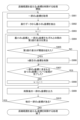
- FIG. 5 is a flow chart showing the flow of processing by the position information calculation unit.
- FIG. 6 is a diagram illustrating an example of information used in a position information calculation unit;
- FIG. 7 is a flow chart showing the flow of processing by the identifying unit.
- FIG. 8 is a diagram showing an example of information used in an identification unit.
- FIG. 9 is a flow chart showing the flow of processing by the distance range extraction unit.
- FIG. 1 is a first diagram showing a usage example of a gesture recognition system.
- FIG. 2 is a diagram illustrating an example of a hardware configuration of a mobile terminal;
- FIG. 10 is a diagram illustrating an example of information used in a distance range extraction unit
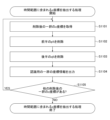
- FIG. 11 is a flow chart showing the flow of processing by the time range extraction unit.
- FIG. 12 is a diagram illustrating an example of information used in the time range extraction unit;
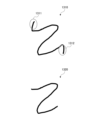
- FIG. 13 is a diagram illustrating an example of a recognized gesture based on a group of position information for recognition.
- FIG. 14 is a second diagram showing a usage example of the gesture recognition system.
- FIG. 15 is a second diagram illustrating an example of the functional configuration of the mobile terminal;
- FIG. 16 is a diagram showing an example of two types of radio wave signals.
- FIG. 1 is a first diagram showing a usage example of a gesture recognition system.
- the gesture recognition system is implemented by a mobile terminal 100.
- the gesture recognition system may be implemented by one or more devices other than the mobile terminal 100.
- the gesture recognition system may be realized by an AI (Artificial Intelligence) speaker with a display.
- the gesture recognition system may be realized by smart glasses, vehicle-mounted equipment (for example, equipment installed in the center console of the vehicle), or the like.
- the gesture recognition system may be realized by operating these devices as recognition devices, separately preparing a signal processing device (and radar device), and combining the recognition device and the signal processing device (and radar device). good.
- the mobile terminal 100 when the gesture recognition system is implemented by the mobile terminal 100, the mobile terminal 100 is placed, for example, on a table, and the user 110 moves in the direction in which the mobile terminal 100 transmits radio signals. Gesture with your hand. That is, in the present embodiment, the moving object for the gesture is the hand.
- the user 110 makes gestures in the following order. a) Put your hand out into the space in front of the mobile terminal 100 and in the direction in which the mobile terminal 100 transmits radio signals. b) Move the hand along a plane substantially perpendicular to the direction in which the mobile terminal 100 transmits radio signals. c) Withdraw your hand from the space in front of the mobile terminal 100 and positioned in the direction in which the mobile terminal 100 transmits radio signals.
- the portable terminal 100 recognizes the motion b) as a gesture.
- the axis in the transmission direction of the radio signal from the mobile terminal 100 is the z-axis
- the vertical axis of the two axes forming a plane substantially perpendicular to the z-axis direction is the y-axis.
- the horizontal axis (the axis in the depth direction of the paper surface) of the two axes forming a plane substantially orthogonal to the z-axis direction is the x-axis.
- the radio signal transmitted by the mobile terminal 100 is assumed to be a signal modulated by the FMCW (Frequency Modulated Continuous Wave Radar) modulation method.
- FMCW Frequency Modulated Continuous Wave Radar
- the mobile terminal 100 defines a detection range within a predetermined distance range from the own terminal, and the position of the hand closest to the mobile terminal 100 (for example, the position of the fingertip of the user 110) among the hands of the user 110 is detected. ) and performs signal processing. Thereby, the mobile terminal 100 calculates the position information (x-coordinate, y-coordinate, z-coordinate) of the position of the hand of the user 110 (that is, the position of the moving object).
- the mobile terminal 100 A reflected wave received before the user 110 makes a gesture, or a reflected wave received after the user 110 makes a gesture (for example, the reflected waves in a) and c) above), -Reflected waves from objects (for example, the body of the user 110, objects around the user 110, etc.) other than objects with movement for gestures (in this embodiment, the hand of the user 110); is deleted by signal processing (that is, after deleting unnecessary reflected signals for recognizing gestures by signal processing), gesture recognition processing is performed.
- signal processing that is, after deleting unnecessary reflected signals for recognizing gestures by signal processing
- FIG. 2 is a diagram illustrating an example of a hardware configuration of a mobile terminal
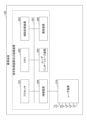
- the mobile terminal 100 has a processor 201, a memory 202, an auxiliary storage device 203, a connection device 204, a user interface device 205, a communication device 206, and a radar device 210.
- hardware from the processor 201 to the communication device 206 are interconnected via a bus 207, and these hardware operate as a signal processing device and a recognition device.
- the signal processing device and the recognition device may share hardware as shown in FIG. 2, or may be configured by separate hardware.
- the signal processing device may be configured as a separate device from the mobile terminal 100 together with the radar device 210 .
- the processor 201 has various computing devices such as a CPU (Central Processing Unit) and a GPU (Graphics Processing Unit).
- the processor 201 reads various programs (for example, a signal processing program, a gesture recognition program, etc., which will be described later) onto the memory 202 and executes them.
- programs for example, a signal processing program, a gesture recognition program, etc., which will be described later
- the memory 202 has main storage devices such as ROM (Read Only Memory) and RAM (Random Access Memory).
- the processor 201 and the memory 202 form a so-called computer, and the processor 201 executes various programs read onto the memory 202, thereby realizing various functions of the computer.
- the auxiliary storage device 203 stores various programs and various data used when the various programs are executed by the processor 201 .
- the connection device 204 is a connection device that connects with the radar device 210 .
- the user interface device 205 receives various operations on the mobile terminal 100 by the user 110 .
- the user interface device 205 also outputs the results of various processes performed by the mobile terminal 100 to the user 110 .
- a communication device 206 is a communication device for communicating with an external device (not shown) via a network.
- Various programs installed in the auxiliary storage device 203 are installed by being downloaded from a network via the communication device 206, for example.
- the radar device 210 is an example of a radio wave device, which transmits a radio wave signal modulated by the FMCW modulation method at a predetermined cycle and receives a reflected wave from the position closest to the transmission position.
- the example of FIG. 2 shows having one transmitter for transmitting radio signals and four receivers for receiving reflected waves.
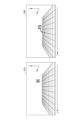
- FIG. 3 is a diagram showing a specific example of position information calculated by performing signal processing on received reflected waves.
- the white circle with reference numeral 310 indicates the positional information of the hand of the user 110 during the gesture in the three-dimensional space at each time.
- white circles with reference numeral 320 indicate the positional information of the hand of the user 110 within the three-dimensional space at each time including before, during and after the gesture.
- white circles positioned outside the rectangular area are position information that is unnecessary for recognizing gestures, and is position information that should be deleted by signal processing.
- FIG. 4 is a first diagram illustrating an example of a functional configuration of a mobile terminal;
- the mobile terminal 100 is installed with a signal processing program and a gesture recognition program.
- the mobile terminal 100 functions as a radar control unit 410, a reflected signal acquisition unit 420, a position information calculation unit 430, and a data extraction unit 440 by executing a signal processing program. Note that each of these units is a function realized by the signal processing device.
- the mobile terminal 100 also functions as a gesture processing unit 450 and a UI control unit 460 by executing a gesture recognition program. Note that each of these units is a function realized by the recognition device.
- the radar control unit 410 controls the operation of the radar device 210 so that the radar device 210 transmits radio signals at predetermined intervals and receives reflected waves from moving objects for gestures.
- the reflected signal acquisition unit 420 acquires, at predetermined intervals, a reflected signal generated by the radar device 210 receiving a reflected wave from a moving object for a gesture.
- the position information calculation unit 430 is an example of an acquisition unit, and based on the reflection signal acquired by the reflection signal acquisition unit 420, position information indicating the position of the moving object for the gesture in the three-dimensional space at each time. Calculate Further, the position information calculation unit 430 acquires the position information of the moving object at each time from the calculated position information at each time.
- the position information calculation unit 430 acquires position information whose difference from adjacent position information is equal to or greater than a threshold value as position information of a moving object at each time, and notifies the data extraction unit 440 of the position information.
- the data extraction unit 440 further has an identification unit 441 , a distance range extraction unit 442 and a time range extraction unit 443 .
- the identifying unit 441 is an example of a specifying unit and an extracting unit. From the position information at each time notified by the position information calculation unit 430, the z-coordinate that satisfies the gesture end condition (the user 110 is located in front of the mobile terminal). Specify the z coordinate) when the hand is pulled out of space. The identification unit 441 also extracts a group of continuous z-coordinates with the identified coordinates as the end point.
- a group of continuous z-coordinates refers to a collection of continuous z-coordinates in the time range after the user 110 holds out his hand and makes a gesture until he withdraws his hand.
- the identification unit 441 may extract a plurality of consecutive groups of z-coordinates from the position information of each time notified from the position information calculation unit 430, or may extract only one group.
- the distance range extraction unit 442 extracts the minimum z-coordinate from the group of continuous z-coordinates extracted by the identification unit 441 . Further, the distance range extraction unit 442 deletes z coordinates whose difference from the minimum z coordinate exceeds a predetermined distance range from the group of continuous z coordinates extracted by the identification unit 441, and The group of z-coordinates to be determined is notified to the time range extraction unit 443 .
- the time range extraction unit 443 extracts coordinates included in a predetermined time range from the group of continuous z-coordinates after deletion notified by the distance range extraction unit 442 . Specifically, the time range extracting unit 443 extracts the z-coordinates corresponding to p% of the early time in the first half and the z-coordinates corresponding to q% of the late time in the latter half of the group of consecutive z-coordinates after deletion. Extract the z-coordinates excluding and (arbitrary values are set to p and q).
- the user 110 holds out his hand and then makes a gesture. For this reason, in a group of consecutive z-coordinates after deletion, an action of holding out a hand appears early in the first half. Also, the user 110 withdraws the hand after performing the gesture. For this reason, in a group of consecutive z-coordinates after deletion, an action of pulling out the hand appears at a late time in the latter half.
- the time range extracting unit 443 pays attention to such an event, and treats the z-coordinates of the early time in the first half and the late time in the latter half included in the group of continuous z-coordinates after deletion as noise.
- the time range extraction unit 443 outputs the position information (x coordinate, y coordinate, z coordinate) corresponding to the z coordinate extracted from the group of continuous z coordinates after deletion as a group of position information for recognition. .
- the gesture processing unit 450 further has a recognition unit 451 and a processing unit 452 .
- the recognition unit 451 recognizes gestures based on a group of position information for recognition output from the time range extraction unit 443 . Also, the recognition unit 451 notifies the processing unit 452 of the recognition result.
- the processing unit 452 executes processing according to the recognition result notified by the recognition unit 451 . For example, when a predetermined character is notified as a recognition result, the processing unit 452 notifies the UI control unit 460 of the character so that the notified character is displayed on the user interface device 205 . Alternatively, when a predetermined operation instruction is notified as a recognition result, the processing unit 452 performs UI control so that the user interface device 205 performs an operation (for example, audio output) according to the notified operation instruction. The operation instruction is notified to the unit 460 .
- the UI control unit 460 controls the user interface device 205 according to the notification from the processing unit 452.
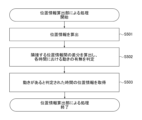
- FIG. 5 is a flow chart showing the flow of processing by the position information calculation unit.
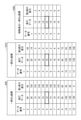
- FIG. 6 is a diagram illustrating an example of information used in a position information calculation unit;
- step S501 the position information calculation unit 430 calculates position information indicating the position of the hand of the user 110 in the three-dimensional space at each time based on the reflected signal.
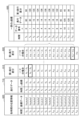
- the position information 600 includes "time” and "coordinate data” as information items.
- Time stores the time from when the radar device 210 started transmitting radio signals at a predetermined cycle.
- the "coordinate data" includes the x-coordinate, y-coordinate, and z-coordinate indicating the position of the hand of the user 110 in the three-dimensional space at each time, calculated based on the signal of the reflected wave received by the radar device 210. Stored.
- step S502 the position information calculation unit 430 calculates the difference between adjacent position information, and generates determination information for determining the presence or absence of hand movement of the user 110 at each time.
- the determination information 610 includes "time”, "adjacent difference data", and "movement" as information items.
- the “adjacent difference data” stores the calculation result of calculating the difference between adjacent position information.
- the calculation result stored in the "adjacent difference data” is equal to or greater than the threshold value, it is determined that there is movement in “movement”, and for example, "o” is stored.
- the calculation result stored in the "adjacent difference data" is less than the threshold, it is determined that there is no motion, and for example, "-" is stored.
- step S503 the position information calculation unit 430 acquires position information at the time when it is determined that there is movement.
- positional information 620 at each time of the hand of user 110 determined to be moving includes "time” and "coordinate data” as information items.
- Time stores the time at which the position information calculation unit 430 determined that there was movement, out of the time from when the radar device 210 started transmitting radio signals.
- the “coordinate data” stores position information at the time when the position information calculation unit 430 determines that there is movement.
- FIG. 7 is a flow chart showing the flow of processing by the identification unit, and is a flow chart showing the flow of processing for extracting a group of continuous coordinates.
- FIG. 8 is a diagram showing an example of information used in an identification unit.
- step S701 the identification unit 441 acquires the position information 620 of the hand of the user 110 determined to be moving by the position information calculation unit 430 at each time, and extracts the z coordinate (depth data). As shown in FIG. 8, the depth data 710 includes "time" and "z coordinate" as information items.
- Time stores the time at which the position information calculation unit 430 determined that there was movement, out of the time from when the radar device 210 started transmitting radio signals.
- z-coordinate stores the z-coordinate of the position information at the time when the position information calculation unit 430 determines that there is movement.
- step S702 the identification unit 441 inputs "2" to the counter i and "0" to the counter j.
- step S ⁇ b>703 the identification unit 441 determines the i-th z-coordinate among the z-coordinates included in the depth data 710 as an end point candidate.
- reference numeral 810 indicates that the second z-coordinate (“z 4 ”) among the z-coordinates included in the depth data 710 is used as an end point candidate.
- step S704 the identifying unit 441 calculates a first depth difference, which is the difference between the end point candidate and the z-coordinate j-th before the end point candidate.
- reference numeral 810 denotes the difference between the second z-coordinate (“z 4 ”), which is the end point candidate, and the z-coordinate 0 before the second z-coordinate (“z 4 ”), which is the end point candidate. is calculated as the first depth difference .
- step S705 the identifying unit 441 determines whether or not the number of times the first depth difference is equal to or greater than the threshold exceeds a certain number of times. If it is determined in step S705 that the predetermined number of times has not been exceeded (NO in step S705), the process proceeds to step S706. In step S706, the identification unit 441 increments the counter j.
- step S705 since the first depth difference 0th before is less than the threshold, the process proceeds from step S705 to step S706, and the counter j becomes "1".
- step S707 the identifying unit 441 determines whether or not there is a z-coordinate j ahead of the end point candidate. If it is determined in step S707 that there is a z-coordinate j ahead of the end point candidate (if YES in step S707), the process returns to step S704.
- step S704 the second z-coordinate (“z 4 ”) that is the end point candidate and the second z-coordinate (“z 4 ”) that is the end point candidate “z 4 ⁇ z 3 ”, which is the difference from the z coordinate of , is calculated as the first depth difference.
- the first depth difference is also less than the threshold when the counter j is "1" (NO in step S705), and the counter j becomes "2" (step S706).
- step S707 if it is determined in step S707 that there is no z-coordinate j ahead of the end point candidate (NO in step S707), the process proceeds to step S708.
- step S708 the identification unit 441 increments the counter i.
- the identification unit 441 resets the counter j to "0".
- step S707 the counter i is "2", and it is determined that there is no z-coordinate two positions before the second z-coordinate ("z 4 "), which is the end point candidate. , in step S708, the counter i becomes "3" and the counter j is reset to "0".
- step S709 the identification unit 441 determines whether or not there is an i-th z-coordinate (continuous z-coordinate). If it is determined in step S709 that there is the i-th z-coordinate (if YES in step S709), the process returns to step S703.
- the identification unit 441 repeats the processing from step S703 to step S709 as described above while sequentially incrementing the value of the counter i. While repeating this process, if it is determined in step S705 that the number of times the first depth difference is greater than or equal to the threshold exceeds a certain number of times (if YES in step S705), the gesture of the user 110 ends. It determines that it has done so, and proceeds to step S710.
- step S709 determines whether there is no i-th z-coordinate (NO in step S709). If it is determined in step S709 that there is no i-th z-coordinate (NO in step S709), the process proceeds to step S712.
- reference numeral 820 indicates a case where the counter i is "13" (that is, a case where the 13th z-coordinate ("z 15 ”) is an end point candidate) and the first depth difference is equal to or greater than the threshold. This shows a case where it is determined that the number of times exceeds a certain number of times.
- step S ⁇ b>710 the identifying unit 441 identifies the end point candidate when it is determined that the number of times the first depth difference is equal to or greater than the threshold exceeds a certain number of times as the end point.
- reference numeral 820 indicates that the 13th z-coordinate (“z 15 ”) is identified as the end point.
- step S711 the identification unit 441 extracts a group of continuous z-coordinates. Specifically, the identifying unit 441 extracts a group of continuous z-coordinates with the z-coordinate specified in step S710 as the end point.
- a group of consecutive extracted z-coordinates 830 includes “time”, “data number n”, “depth data”, and “first depth difference” as information items.
- the "time” is the time at which the position information calculation unit 430 determines that there is movement, and the end point specified by the identification unit 441, out of the time from when the radar device 210 starts transmitting the radio wave signal. Each time up to is stored.
- Data number n stores the numbers assigned to the z-coordinates extracted in step S711 in chronological order.
- Depth data stores the specific numerical value of the z-coordinate extracted in step S711.
- First depth difference stores a specific numerical value of the difference between the z-coordinate of the end point specified in step S710 and the z-coordinate extracted in step S711.
- step S709 if it is determined in step S709 that there is no i-th z-coordinate, it is determined that there is no next z-coordinate even though the end point has not been specified. It is determined that the gesture of 110 has not ended. In this case, the identification unit 441 proceeds to step S712 without extracting a group of continuous z-coordinates.
- step S712 the identification unit 441 extracts a group of continuous coordinates for all position information of the hand of the user 110 determined to be moving, notified by the position information calculation unit 430, at each time. Determine whether the process has been completed.
- step S712 If it is determined in step S712 that there is position information for which the processing for extracting a group of continuous coordinates has not been completed (NO in step S712), the process returns to step S701. On the other hand, if it is determined in step S712 that the processing for extracting a group of continuous coordinates has been completed for all the position information at each time of the hand of the user 110 determined to be moving (step S712 ), the process ends.
- step S712 it is determined that there is position information for which the process for extracting a group of continuous coordinates has not been completed, and the identification unit 441 returns to step S701.
- FIG. 9 is a flowchart showing the flow of processing by the distance range extraction unit, and is a flowchart showing the flow of processing for deleting z-coordinates exceeding the distance range.
- FIG. 10 is a diagram illustrating an example of information used in a distance range extraction unit;
- step S901 the distance range extraction unit 442 acquires a group of continuous z-coordinates 830 from the identification unit 441.
- a continuous group of z-coordinates 830 indicates a continuous group of z-coordinates acquired from the identifying unit 441 .
- step S902 the distance range extraction unit 442 extracts the minimum z-coordinate (depth data) from the group of continuous z-coordinates 830 obtained.
- the bold-boxed z-coordinate indicates the minimum z-coordinate.
- step S903 the distance range extraction unit 442 substitutes "1" for the counter k.
- step S904 the distance range extraction unit 442 calculates a difference (referred to as a second depth difference) between the extracted minimum z-coordinate and the k-th z-coordinate included in the continuous group of z-coordinates 830. .
- a group of continuous z-coordinates 1010 shows how the second depth difference is calculated.
- a continuous group of z-coordinates 1010 includes "data number n”, "depth data”, and "second depth difference" as information items.
- the "data number n” and “depth data” are the same as the “data number n” and “depth data” of the continuous group of z-coordinates 830, so their description is omitted here.
- step S905 the distance range extraction unit 442 determines whether the second depth difference exceeds a predetermined threshold. If it is determined in step S905 that the second depth difference has exceeded the predetermined threshold (YES in step S905), the process proceeds to step S906.
- step S906 the distance range extraction unit 442 deletes the k-th z-coordinate (depth data), and proceeds to step S907.
- step S905 determines whether the second depth difference exceed the predetermined threshold (NO in step S905). If it is determined in step S905 that the second depth difference does not exceed the predetermined threshold (NO in step S905), the process proceeds directly to step S907.
- step S907 the distance range extraction unit 442 determines whether or not the processing from steps S904 to S906 has been completed for all depth data included in the group of continuous z-coordinates 1010.
- step S907 If it is determined in step S907 that the process has not been completed (NO in step S907), the process proceeds to step S908.
- step S908 the distance range extraction unit 442 increments the counter k and returns to step S904.
- step S904 repeats the processing from step S904 to step S908 until the processing for all depth data included in the group of continuous z coordinates 1010 is completed. While repeating this process, if it is determined in step S907 that the process has been completed (if YES in step S907), the process proceeds to step S909.
- the threshold value is "15". Depth data is deleted.
- step S909 the distance range extraction unit 442 outputs a group of consecutive z-coordinates 1020 after deletion.
- a group of continuous z coordinates 1020 after deletion shows how z coordinates (depth data) whose second depth difference exceeds the threshold “15” are deleted from a group of continuous z coordinates 1010 .
- a continuous group of z-coordinates 1020 includes "data number n", "depth data”, and "second depth difference" as information items.
- step S910 the distance range extraction unit 442 determines whether there is another continuous group of z-coordinates. If it is determined in step S910 that there is another group of continuous z-coordinates (YES in step S910), the process returns to step S901. After that, the distance range extraction unit 442 executes the processing from step S901 to step S909 for another group of continuous z-coordinates.
- step S909 if it is determined in step S909 that there is no other continuous group of z-coordinates (NO in step S910), the process of deleting z-coordinates exceeding the distance range is terminated.
- FIG. 11 is a flow chart showing the flow of processing by the time range extraction unit, and is a flow chart showing the flow of processing for extracting z-coordinates included in the time range.
- FIG. 12 is a diagram illustrating an example of information used in the time range extraction unit;
- step S ⁇ b>1101 the time range extraction unit 443 acquires a group of continuous z-coordinates 1020 after deletion from the distance range extraction unit 442 .
- a group of continuous z-coordinates after deletion 1020 indicates a group of continuous z-coordinates after deletion acquired from the distance range extraction unit 442 .
- step S ⁇ b>1102 the time range extraction unit 443 extracts the z-coordinates of each time (each data number) included in the group of continuous z-coordinates 1020 after deletion acquired from the distance range extraction unit 442 . Delete p % of z-coordinates.
- step S ⁇ b>1103 the time range extraction unit 443 extracts the latter half of the z coordinates of each time (each data number) included in the group of continuous z coordinates 1020 after deletion acquired from the distance range extraction unit 442 . Delete q% of z-coordinates.
- step S1104 the time range extraction unit 443 outputs the position information corresponding to the z-coordinates included in the time range (20% to 80% range) as a group of position information 1230 for recognition.
- a group of position information 1230 for recognition includes "time” and "coordinate data” as information items.
- Time stores the time corresponding to "data number n" of the z-coordinate 1220 included in the time range.
- Coordinat data stores coordinate data corresponding to "time”.
- step S1105 the time range extraction unit 443 determines whether there is another group of continuous z-coordinates after deletion. If it is determined in step S1105 that there is another group of consecutive z-coordinates after deletion (YES in step S1105), the process returns to step S1101. After that, the time range extraction unit 443 executes the processing from step S1101 to step S1104 for another group of continuous z-coordinates after deletion.
- step S1105 determines that there is no other group of continuous z-coordinates after deletion (NO in step S1105). If it is determined in step S1105 that there is no other group of continuous z-coordinates after deletion (NO in step S1105), the process of extracting z-coordinates included in the time range ends. .
- FIG. 13 is a diagram illustrating an example of a recognized gesture based on a group of position information for recognition.
- the time range extraction unit 443 has deleted the z coordinates of the time range of 20% of the first and second half. On the other hand, if the time range extraction unit 443 did not delete the time range of 20% of the first and second halves, regions 1311 and 1312 would be included as indicated by reference numeral 1310 . On the other hand, the time range extraction unit 443 deletes the time range of 20% of the first and second halves.
- the recognition unit 451 can recognize the gesture based on the code 1320, and can recognize the alphabet "z" more correctly.
- the signal processing device included in the mobile terminal 100 is - It is connected to a radar device 210 that transmits a radio wave signal of a predetermined cycle and receives a reflected wave, and processes the signal of the reflected wave.
- a position information calculation unit 430 that acquires position information for each time of the hand of the user 110 determined to be moving based on the signal of the reflected wave.
- the mobile terminal 100 can improve the accuracy of gesture recognition by adopting a configuration in which the signal processing device deletes reflected signals that are unnecessary for recognizing gestures by signal processing.
- the detection range is within a predetermined distance from the mobile terminal 100 .
- the position of the torso of the user 110 is detected, and the detection range is calculated based on the detected position of the torso. This makes it possible to avoid erroneous inclusion of the position information of the torso portion in the group of position information for recognition, thereby further improving the gesture recognition accuracy.
- the second embodiment will be described below, focusing on differences from the first embodiment.
- FIG. 14 is a second diagram showing a usage example of the gesture recognition system.
- the portable terminal 100 detects not only the hand (first object) of the user 110 but also the body portion (second object) of the user 110.
- the portable terminal 100 detects not only the hand (first object) of the user 110 but also the body portion (second object) of the user 110.
- the user 110 makes a gesture with their hands, they generally extend their arms to a position a certain distance away from their body.
- the distance from the detected body position of the user 110 to the mobile terminal 100 (radar device 210) by a predetermined distance in the direction of the mobile terminal 100 (radar device 210) is detected. This is the point of the range.
- the radar device 210 of the mobile terminal 100 transmits a radio signal for detecting the position of the torso of the user 110 in addition to the radio signal for calculating the position information of the hands of the user 110. do.
- the torso portion of the user 110 can be detected in addition to the hands of the user 110 .
- FIG. 15 is a second diagram illustrating an example of the functional configuration of the mobile terminal; The difference from the functional configuration of the mobile terminal 100 in the first embodiment described with reference to FIG. It is a point to have.
- the radar control unit 1510 controls the operation of the radar device 210 so that the radar device 210 transmits radio signals at predetermined intervals and receives reflected waves from the body of the user 110 .
- the radio signal (second radio wave) is transmitted at a longer period (for example, twice the transmission period) than the period when the radar control unit 410 controls the radar device 210 to transmit the radio signal (first radio wave).
- the radar device 210 is controlled so as to do so.
- the radar control unit 410 controls the radar device 210 to transmit radio signals in an occupied bandwidth narrower than the occupied bandwidth of the radio signals transmitted.
- the reflected signal acquisition unit 1520 acquires, at a predetermined cycle, a reflected signal generated by the radar device 210 receiving a reflected wave from the body of the user 110 .
- the reflected signal acquisition unit 1520 • Acquire the reflected signal from a receiver different from the receiver from which the reflected signal acquisition unit 420 acquires the reflected signal. Acquire the reflected signal at a cycle longer than the cycle at which the reflected signal acquisition unit 420 acquires the reflected signal (for example, twice the transmission cycle).
- the position information calculation unit 1530 calculates position information indicating the position of the torso of the user 110 in the three-dimensional space at each time based on the reflected signal acquired by the reflected signal acquisition unit 1520 . In addition, position information calculation section 1530 notifies data extraction section 440 of the calculated position information at predetermined intervals.
- the data extraction unit 440 distinguishes between the position information of the hand of the user 110 at each time and the position information of the torso of the user 110 at each time. can be obtained.
- the data extraction unit 440 can set a detection range by setting a range to be excluded from detection with reference to the position of the body of the user 110 based on the position information of the body of the user 110 at each time. can. Thereby, the position information calculation unit 430 can specify the position information to be deleted as non-detection targets when acquiring the position information of the hand of the user 110 at each time.
- FIG. 16 is a diagram showing an example of two types of radio wave signals.
- Chirp1 represents a radio signal transmitted from the radar device 210 as the radar control unit 410 controls the radar device 210 .
- Chirp2 represents a radio signal transmitted from the radar device 210 as the radar control unit 1510 controls the radar device 210 .
- Chirp1 is controlled to widen the occupied bandwidth of the transmitted radio signal in order to detect the movement of the hand of the user 110 with higher distance resolution.
- Chirp2 is controlled so that the occupied bandwidth of the transmitted radio signal is narrowed in order to detect the torso of user 110 at a position farther than the position of the hands of user 110 .
- Chirp1 is controlled so that the transmission cycle of the radio signal is shortened in order to detect the movement of the hand of the user 110, which moves faster than the torso of the user 110, with higher time resolution.
- Chirp2 is controlled so that the transmission cycle of the radio signal becomes longer in order to detect the movement of the torso of the user 110, which moves slower than the hands of the user 110, with low time resolution.
- the signal processing device included in the mobile terminal 100 is A radio signal for detecting a moving object (first object) for a gesture, and an object other than the moving object for the gesture, which is at a greater distance than the moving object for the gesture. and a radio signal for detecting a distant object (second object).
- the radio signal for detecting the moving object for the gesture (first object) is an object other than the moving object for the gesture, and the distance is greater than the moving object for the gesture. It is transmitted at a period shorter than that of the radio signal for detecting an object (second object) at a distant position.
- the radio signal for detecting the moving object for the gesture is an object other than the moving object for the gesture, and the distance is greater than the moving object for the gesture. It is transmitted with a wider occupied bandwidth than the radio signal for detecting a distant object (second object).
- a receiver that receives a reflected wave from a moving object (first object) for the gesture, and an object other than the moving object for the gesture, which is more than the moving object for the gesture It is connected to a receiver that receives a reflected wave from an object (second object) at a distant position.
- an object other than the moving object (the first object) for the gesture which is located farther from the moving object for the gesture (the first object). 2 objects), and the detection range of the first object is from a position a predetermined distance away from the second object in the direction of the radar device to the radar device.
- the distance range extraction unit 442 determines whether the second depth difference exceeds the threshold value, and deletes the depth data when it determines that the second depth difference value has exceeded the threshold value. At that time, it was assumed that the threshold used for determination was fixed. However, the threshold used by the distance range extraction unit 442 when determining whether the second depth difference has exceeded may be dynamically changed according to the minimum z-coordinate, for example.
- the z-coordinate of the moving object for the gesture changes the detection accuracy of the moving object for the gesture, and if the threshold is small, there is a possibility that necessary depth data will be deleted.
- the distance range extraction unit 442 may, for example, increase the threshold when the minimum z-coordinate value is large, and decrease the threshold when the minimum z-coordinate value is small.
- the time range extracting unit 443 is described as having a fixed deletion ratio (p%, q%). may be changed according to the complexity of the trajectory of an object.
- the complexity of the trajectory of a moving object for a gesture is, for example, based on the position information (x coordinate, y coordinate) at each time, the motion at each time in a plane substantially orthogonal to the z-axis direction It can be obtained by summing the absolute values of the vectors (the amount of motion of the moving object for the gesture).
- the time range extracting unit 443 determines the deletion ratio (p%, q%) as Decrease (i.e. widen the time range to extract). Further, when the trajectory of the moving object for the gesture is simple (when the sum of the amount of motion of the object is small), the time range extracting unit 443 sets the deletion ratio (p%, q%) to Increase (that is, narrow the time range to extract).
- two types of radio signals are transmitted in order to detect the positions of the hands of the user 110 and the position of the trunk of the user 110, respectively.
- the configuration for detecting the positions of the hands of the user 110 and the position of the torso of the user 110 is not limited to this.
- a configuration is provided in which the difference is calculated as a result of weighted summation of coordinate data for the past m times using a parameter,
- the hand position of the user 110 i.e., the position of fast-moving objects
- the position of the torso portion of the user 110 i.e., the position of an object that moves slowly
- the near past weighting parameter is decreased and the far past weighting parameter is increased
- the positions of the hands of the user 110 and the positions of the torso of the user 110 may be detected.
- the moving object for gestures is the user's 110 hand, but the moving object for gestures is not limited to the user's 110 hand. It may be a part of the user 110 other than the hand, or an object held by the user 110 (for example, a baton or the like).
Landscapes
- Engineering & Computer Science (AREA)
- Remote Sensing (AREA)
- Radar, Positioning & Navigation (AREA)
- Physics & Mathematics (AREA)
- General Physics & Mathematics (AREA)
- Computer Networks & Wireless Communication (AREA)
- General Engineering & Computer Science (AREA)
- Theoretical Computer Science (AREA)
- Human Computer Interaction (AREA)
- Electromagnetism (AREA)
- User Interface Of Digital Computer (AREA)
Abstract
ジェスチャの認識精度を向上させる。信号処理方法は、所定周期の電波を送信し、反射波を受信する電波装置と接続され、前記反射波の信号を処理する信号処理装置における信号処理方法であって、前記反射波の信号に基づいて、動きのある物体の各時間の位置情報を取得する工程と、取得された各時間の位置情報の中から、前記電波の送信方向の軸の座標であって、ジェスチャの終了条件を満たす座標を特定する工程と、特定された座標を終点とした、連続する一群の座標を抽出する工程とを実行する。
Description
本開示は、信号処理方法、信号処理装置、ジェスチャ認識システム及び信号処理プログラムに関する。
電波信号を利用してジェスチャを認識するジェスチャ認識システムが知られている。当該ジェスチャ認識システムによれば、例えば、ユーザは、操作対象の装置に触れることなく、離れた位置から操作対象の装置を操作することができる。
しかしながら、上記ジェスチャ認識システムの場合、ジェスチャの認識に関わる動作以外の動作が反射波として検出されると(つまり、ジェスチャを認識するうえで不要となる反射信号が含まれていると)、ジェスチャの認識精度が低下する。
一つの側面では、ジェスチャの認識精度を向上させることを目的としている。
一態様の信号処理方法は、以下のような構成を有する。すなわち、
所定周期の電波を送信し、反射波を受信する電波装置と接続され、前記反射波の信号を処理する信号処理装置における信号処理方法であって、
前記反射波の信号に基づいて、動きのある物体の各時間の位置情報を取得する工程と、
取得された各時間の位置情報の中から、前記電波の送信方向の軸の座標であって、ジェスチャの終了条件を満たす座標を特定する工程と、
特定された座標を終点とした、連続する一群の座標を抽出する工程とを有する。
所定周期の電波を送信し、反射波を受信する電波装置と接続され、前記反射波の信号を処理する信号処理装置における信号処理方法であって、
前記反射波の信号に基づいて、動きのある物体の各時間の位置情報を取得する工程と、
取得された各時間の位置情報の中から、前記電波の送信方向の軸の座標であって、ジェスチャの終了条件を満たす座標を特定する工程と、
特定された座標を終点とした、連続する一群の座標を抽出する工程とを有する。
ジェスチャの認識精度を向上させることができる。
以下、各実施形態について添付の図面を参照しながら説明する。なお、本明細書及び図面において、実質的に同一の機能構成を有する構成要素については、同一の符号を付することにより重複した説明を省略する。
[第1の実施形態]
<ジェスチャ認識システムの利用例>
はじめに、ジェスチャ認識システムの利用例について説明する。図1は、ジェスチャ認識システムの利用例を示す第1の図である。図1に示すように、本実施形態では、ジェスチャ認識システムが、携帯端末100により実現される場合について説明するが、ジェスチャ認識システムは、携帯端末100以外の1または複数の装置により実現されてもよい。例えば、ジェスチャ認識システムは、ディスプレイ付きのAI(Artificial Intelligence)スピーカにより実現されてもよい。あるいは、ジェスチャ認識システムは、スマートグラス、車載器(例えば、車両のセンタコンソールに設置された機器)等により実現されてもよい。あるいは、ジェスチャ認識システムは、これらの機器を認識装置として動作させるとともに、別途信号処理装置(及びレーダ装置)を用意し、認識装置と信号処理装置(及びレーダ装置)との組み合わせにより実現されてもよい。
<ジェスチャ認識システムの利用例>
はじめに、ジェスチャ認識システムの利用例について説明する。図1は、ジェスチャ認識システムの利用例を示す第1の図である。図1に示すように、本実施形態では、ジェスチャ認識システムが、携帯端末100により実現される場合について説明するが、ジェスチャ認識システムは、携帯端末100以外の1または複数の装置により実現されてもよい。例えば、ジェスチャ認識システムは、ディスプレイ付きのAI(Artificial Intelligence)スピーカにより実現されてもよい。あるいは、ジェスチャ認識システムは、スマートグラス、車載器(例えば、車両のセンタコンソールに設置された機器)等により実現されてもよい。あるいは、ジェスチャ認識システムは、これらの機器を認識装置として動作させるとともに、別途信号処理装置(及びレーダ装置)を用意し、認識装置と信号処理装置(及びレーダ装置)との組み合わせにより実現されてもよい。
図1に示すように、携帯端末100によりジェスチャ認識システムが実現される場合、携帯端末100は、例えば、テーブル上に載置され、ユーザ110は、携帯端末100が電波信号を送信する方向において、手でジェスチャを行う。つまり、本実施形態においては、ジェスチャのための動きのある物体=手となる。
具体的には、ユーザ110は、以下の順序でジェスチャを行う。
a)携帯端末100の前方の空間であって、携帯端末100が電波信号を送信する方向に位置する空間に手を差し出す。
b)携帯端末100が電波信号を送信する方向と略直交する面に沿って手を動かす。
c)携帯端末100の前方の空間であって、携帯端末100が電波信号を送信する方向に位置する空間から手を引き抜く。
a)携帯端末100の前方の空間であって、携帯端末100が電波信号を送信する方向に位置する空間に手を差し出す。
b)携帯端末100が電波信号を送信する方向と略直交する面に沿って手を動かす。
c)携帯端末100の前方の空間であって、携帯端末100が電波信号を送信する方向に位置する空間から手を引き抜く。
上記a)~c)の動きをユーザ110が行うことで、携帯端末100では、b)の動きをジェスチャとして認識する。
なお、図1に示すように、本実施形態では、携帯端末100による電波信号の送信方向の軸をz軸、z軸方向に略直交する面を形成する2軸のうち垂直方向の軸をy軸とする。また、図1においては図示していないが、z軸方向に略直交する面を形成する2軸のうち水平方向の軸(紙面の奥行方向の軸)をx軸とする。
また、本実施形態において、携帯端末100が送信する電波信号は、FMCW(Frequency Modulated Continuous Wave Rader)変調方式により変調された信号であるとする。
また、本実施形態において、携帯端末100では、自端末から所定の距離範囲内を検出範囲とし、ユーザ110の手のうち、携帯端末100に最も近い手の位置(例えば、ユーザ110の指先の位置)からの反射波を受信し、信号処理を行う。これにより、携帯端末100は、ユーザ110の手の位置(つまり、動きのある物体の位置)の位置情報(x座標、y座標、z座標)を算出する。
なお、本実施形態において、携帯端末100では、
・ユーザ110がジェスチャを行う前に受信した反射波、あるいは、ジェスチャを行った後に受信した反射波(例えば、上記a)、c)のときの反射波)、
・ジェスチャのための動きのある物体(本実施形態では、ユーザ110の手)以外の物体(例えば、ユーザ110の胴体部分、ユーザ110周辺の物体等)からの反射波、
を信号処理により削除した上で(つまり、ジェスチャを認識するうえで不要な反射信号を信号処理により削除した上で)、ジェスチャの認識処理を行う。これにより、携帯端末100によれば、ジェスチャの認識精度を向上させることができる。
・ユーザ110がジェスチャを行う前に受信した反射波、あるいは、ジェスチャを行った後に受信した反射波(例えば、上記a)、c)のときの反射波)、
・ジェスチャのための動きのある物体(本実施形態では、ユーザ110の手)以外の物体(例えば、ユーザ110の胴体部分、ユーザ110周辺の物体等)からの反射波、
を信号処理により削除した上で(つまり、ジェスチャを認識するうえで不要な反射信号を信号処理により削除した上で)、ジェスチャの認識処理を行う。これにより、携帯端末100によれば、ジェスチャの認識精度を向上させることができる。
<携帯端末のハードウェア構成>
次に、携帯端末100のハードウェア構成について説明する。図2は、携帯端末のハードウェア構成の一例を示す図である。
次に、携帯端末100のハードウェア構成について説明する。図2は、携帯端末のハードウェア構成の一例を示す図である。
図2に示すように、携帯端末100は、プロセッサ201、メモリ202、補助記憶装置203、接続装置204、ユーザインタフェース装置205、通信装置206、レーダ装置210を有する。なお、携帯端末100において、プロセッサ201から通信装置206の各ハードウェアは、バス207を介して相互に接続されており、これらのハードウェアは、信号処理装置及び認識装置として動作する。ただし、信号処理装置と認識装置とは、図2に示すように、ハードウェアを共有してもよいし、別個のハードウェアによりそれぞれ構成されてもよい。あるいは、上述したように、信号処理装置は、レーダ装置210とともに、携帯端末100とは別体の装置として構成されてもよい。
プロセッサ201は、CPU(Central Processing Unit)、GPU(Graphics Processing Unit)等の各種演算デバイスを有する。プロセッサ201は、各種プログラム(例えば、後述する信号処理プログラム、ジェスチャ認識プログラム等)をメモリ202上に読み出して実行する。
メモリ202は、ROM(Read Only Memory)、RAM(Random Access Memory)等の主記憶デバイスを有する。プロセッサ201とメモリ202とは、いわゆるコンピュータを形成し、プロセッサ201が、メモリ202上に読み出した各種プログラムを実行することで、当該コンピュータは各種機能を実現する。
補助記憶装置203は、各種プログラムや、各種プログラムがプロセッサ201によって実行される際に用いられる各種データを格納する。
接続装置204は、レーダ装置210と接続する接続デバイスである。ユーザインタフェース装置205は、ユーザ110による携帯端末100に対する各種操作を受け付ける。また、ユーザインタフェース装置205は、携帯端末100による各種処理の結果を、ユーザ110に出力する。通信装置206は、ネットワークを介して外部装置(不図示)と通信するための通信デバイスである。なお、補助記憶装置203にインストールされる各種プログラムは、例えば、通信装置206を介してネットワークからダウンロードされることで、インストールされる。
レーダ装置210は電波装置の一例であり、FMCW変調方式で変調された電波信号を所定周期で送信し、送信位置に最も近い位置からの反射波を受信する。図2の例は、電波信号を送信する1つの送信器と、反射波を受信する4つの受信器とを有することを示している。
<位置情報の具体例>
次に、受信した反射波を信号処理することで算出されるユーザ110の手の位置情報について説明する。図3は、受信した反射波を信号処理することで算出される位置情報の具体例を示す図である。このうち、符号310の白丸は、ジェスチャ中のユーザ110の手の、各時間における3次元空間内の位置情報を示している。
次に、受信した反射波を信号処理することで算出されるユーザ110の手の位置情報について説明する。図3は、受信した反射波を信号処理することで算出される位置情報の具体例を示す図である。このうち、符号310の白丸は、ジェスチャ中のユーザ110の手の、各時間における3次元空間内の位置情報を示している。
また、符号320の白丸は、ジェスチャ前、ジェスチャ中、ジェスチャ後を含むユーザ110の手の、各時間における3次元空間内の位置情報を示している。符号320において、矩形領域以外に位置する白丸は、ジェスチャを認識するうえで不要となる位置情報であり、信号処理により削除されるべき位置情報である。
<携帯端末の機能構成>
次に、携帯端末100の機能構成について説明する。図4は、携帯端末の機能構成の一例を示す第1の図である。上述したように、携帯端末100には、信号処理プログラム及びジェスチャ認識プログラムがインストールされている。携帯端末100は、信号処理プログラムが実行されることで、レーダ制御部410、反射信号取得部420、位置情報算出部430、データ抽出部440として機能する。なお、これらの各部は、信号処理装置によって実現される機能である。また、携帯端末100は、ジェスチャ認識プログラムが実行されることで、ジェスチャ処理部450、UI制御部460として機能する。なお、これらの各部は、認識装置によって実現される機能である。
次に、携帯端末100の機能構成について説明する。図4は、携帯端末の機能構成の一例を示す第1の図である。上述したように、携帯端末100には、信号処理プログラム及びジェスチャ認識プログラムがインストールされている。携帯端末100は、信号処理プログラムが実行されることで、レーダ制御部410、反射信号取得部420、位置情報算出部430、データ抽出部440として機能する。なお、これらの各部は、信号処理装置によって実現される機能である。また、携帯端末100は、ジェスチャ認識プログラムが実行されることで、ジェスチャ処理部450、UI制御部460として機能する。なお、これらの各部は、認識装置によって実現される機能である。
レーダ制御部410は、レーダ装置210が所定周期で電波信号を送信し、ジェスチャのための動きのある物体からの反射波を受信するよう、レーダ装置210の動作を制御する。
反射信号取得部420は、レーダ装置210が、ジェスチャのための動きのある物体からの反射波を受信することで生成された反射信号を、所定周期で取得する。
位置情報算出部430は取得部の一例であり、反射信号取得部420が取得した反射信号に基づいて、ジェスチャのための動きのある物体の、各時間における3次元空間内の位置を示す位置情報を算出する。また、位置情報算出部430は、算出した各時間における位置情報から、動きのある物体の各時間の位置情報を取得する。
具体的には、位置情報算出部430は、隣接する位置情報との差分が閾値以上となる位置情報を、動きのある物体の各時間の位置情報として取得し、データ抽出部440に通知する。
データ抽出部440は、更に、識別部441、距離範囲抽出部442、時間範囲抽出部443を有する。識別部441は特定部及び抽出部の一例であり、位置情報算出部430より通知された、各時間の位置情報の中から、ジェスチャの終了条件を満たすz座標(ユーザ110が携帯端末の前方の空間から手を引き抜く動作が行われた際のz座標)を特定する。また、識別部441は、特定した座標を終点とした、連続する一群のz座標を抽出する。
なお、連続する一群のz座標とは、ユーザ110が手を差し出し、ジェスチャを行った後に、手を引き抜くまでの間の時間範囲における、連続するz座標の集まりを指す。識別部441は、位置情報算出部430より通知された、各時間の位置情報の中から、連続する一群のz座標を複数抽出してもよいし、1つのみ抽出してもよい。
距離範囲抽出部442は、識別部441により抽出された連続する一群のz座標の中から、最小のz座標を抽出する。また、距離範囲抽出部442は、識別部441により抽出された連続する一群のz座標の中から、最小のz座標との差分が所定の距離範囲を超えるz座標を削除し、削除後の連続する一群のz座標を、時間範囲抽出部443に通知する。
時間範囲抽出部443は、距離範囲抽出部442より通知された、削除後の連続する一群のz座標の中から、所定の時間範囲に含まれる座標を抽出する。具体的には、時間範囲抽出部443は、削除後の連続する一群のz座標のうち、前半の早い時間p%分に対応するz座標と、後半の遅い時間q%分に対応するz座標とを除いたz座標を抽出する(p、qには任意の値が設定される)。
上述したように、ユーザ110は、手を差し出してからジェスチャを行う。このため、削除後の連続する一群のz座標には、前半の早い時間に、手を差し出す動作が現れる。また、ユーザ110は、ジェスチャを行った後に手を引き抜く。このため、削除後の連続する一群のz座標には、後半の遅い時間に、手を引き抜く動作が現れる。時間範囲抽出部443では、このような事象に着目し、削除後の連続する一群のz座標に含まれる前半の早い時間及び後半の遅い時間のz座標をノイズとして扱う。
また、時間範囲抽出部443は、削除後の連続する一群のz座標から抽出したz座標に対応する位置情報(x座標、y座標、z座標)を、認識用の一群の位置情報として出力する。
ジェスチャ処理部450は、更に、認識部451、処理部452を有する。認識部451は、時間範囲抽出部443より出力された認識用の一群の位置情報に基づいて、ジェスチャを認識する。また、認識部451は、認識結果を処理部452に通知する。
処理部452は、認識部451により通知された認識結果に応じた処理を実行する。例えば、処理部452は、認識結果として所定の文字が通知された場合には、通知された文字を、ユーザインタフェース装置205に表示するよう、UI制御部460に文字を通知する。あるいは、処理部452は、認識結果として所定の操作指示が通知された場合には、ユーザインタフェース装置205が、通知された操作指示に応じた動作(例えば、音声出力等)を行うよう、UI制御部460に操作指示を通知する。
UI制御部460は、処理部452からの通知に応じて、ユーザインタフェース装置205を制御する。
<位置情報算出部による処理の流れ>
次に、位置情報算出部430による、処理の流れについて図5及び図6を用いて説明する。図5は、位置情報算出部による処理の流れを示すフローチャートである。図6は、位置情報算出部において用いられる情報の一例を示す図である。
次に、位置情報算出部430による、処理の流れについて図5及び図6を用いて説明する。図5は、位置情報算出部による処理の流れを示すフローチャートである。図6は、位置情報算出部において用いられる情報の一例を示す図である。
ステップS501において、位置情報算出部430は、反射信号に基づいて、ユーザ110の手の、各時間における3次元空間内の位置を示す位置情報を算出する。図6に示すように、位置情報600は、情報の項目として、"時間"と"座標データ"とを含む。
"時間"には、レーダ装置210による電波信号の送信が開始されてからの時間が、所定周期で格納される。
"座標データ"には、レーダ装置210が受信した反射波の信号に基づいて算出された、ユーザ110の手の、各時間における3次元空間内の位置を示すx座標、y座標、z座標が格納される。
ステップS502において、位置情報算出部430は、隣接する位置情報間の差分を算出し、各時間におけるユーザ110の手の動きの有無を判定するための判定情報を生成する。図6に示すように、判定情報610は、情報の項目として、"時間"と"隣接差分データ"と"動き"とを含む。
"時間"には、レーダ装置210による電波信号の送信が開始されてからの時間が、所定周期で格納される。"隣接差分データ"には、隣接する位置情報間の差分を算出した算出結果が格納される。"動き"には、"隣接差分データ"に格納された算出結果が閾値以上の場合に、動きがあると判定され、例えば"〇"が格納される。一方、"隣接差分データ"に格納された算出結果が閾値未満の場合に、動きなしと判定され、例えば"-"が格納される。
ステップS503において、位置情報算出部430は、動きがあると判定された時間の位置情報を取得する。図6に示すように、動きがあると判定されたユーザ110の手の、各時間の位置情報620は、情報の項目として、"時間"と"座標データ"とを含む。
"時間"には、レーダ装置210による電波信号の送信が開始されてからの時間のうち、位置情報算出部430により動きがあると判定された時間が格納される。"座標データ"には、位置情報算出部430により動きがあると判定された時間の位置情報が格納される。
<識別部による処理の流れ>
次に、識別部441による処理の流れについて、図7、図8を用いて説明する。図7は、識別部による処理の流れを示すフローチャートであり、連続する一群の座標を抽出する処理の流れを示すフローチャートである。図8は、識別部において用いられる情報の一例を示す図である。
次に、識別部441による処理の流れについて、図7、図8を用いて説明する。図7は、識別部による処理の流れを示すフローチャートであり、連続する一群の座標を抽出する処理の流れを示すフローチャートである。図8は、識別部において用いられる情報の一例を示す図である。
ステップS701において、識別部441は、位置情報算出部430より動きがあると判定されたユーザ110の手の、各時間の位置情報620を取得し、z座標(奥行データ)を抽出する。図8に示すように、奥行データ710は、情報の項目として、"時間"と"z座標"とを含む。
"時間"には、レーダ装置210による電波信号の送信が開始されてからの時間のうち、位置情報算出部430により動きがあると判定された時間が格納される。
"z座標"には、位置情報算出部430により動きがあると判定された時間の位置情報のうち、z座標が格納される。
ステップS702において、識別部441は、カウンタiに"2"を入力し、カウンタjに"0"を入力する。
ステップS703において、識別部441は、奥行データ710に含まれるz座標のうち、i番目のz座標を終点候補とする。図8において、符号810は、奥行データ710に含まれるz座標のうち、2番目のz座標("z4")を終点候補とした様子を示している。
ステップS704において、識別部441は、終点候補と終点候補よりj個前のz座標との間の差分である、第1奥行差分を算出する。図8において、符号810は、終点候補である2番目のz座標("z4")と、終点候補である2番目のz座標("z4")より0個前のz座標との差分である"z4-z4"が、第1奥行差分として算出された様子を示している。
ステップS705において、識別部441は、第1奥行差分が閾値以上となる回数が、一定回数を超えたか否かを判定する。ステップS705において、一定回数を超えていないと判定した場合には(ステップS705においてNOの場合には)、ステップS706に進む。ステップS706において、識別部441は、カウンタjをインクリメントする。
図8において、符号810の場合、0個前の第1奥行差分が閾値未満であるため、ステップS705からステップS706に進み、カウンタjが"1"となる。
ステップS707において、識別部441は、終点候補よりj個前のz座標があるか否かを判定する。ステップS707において、終点候補よりj個前のz座標があると判定した場合には(ステップS707においてYESの場合には)、ステップS704に戻る。
図8の符号810の場合、終点候補である2番目のz座標("z4")より1個前のz座標("z3")があるため、ステップS704に戻る。この場合、図8に示すように、ステップS704では、終点候補である2番目のz座標("z4")と、終点候補である2番目のz座標("z4")より1個前のz座標との差分である"z4-z3"が、第1奥行差分として算出される。なお、図8の符号810の場合、カウンタjが"1"の場合の第1奥行差分も閾値未満であるとし(ステップS705においてNO)、カウンタjは"2"となる(ステップS706)。
一方、ステップS707において、終点候補よりj個前のz座標がないと判定した場合には(ステップS707においてNOの場合には)、ステップS708に進む。ステップS708において、識別部441は、カウンタiをインクリメントする。加えて、識別部441は、カウンタjを"0"にリセットする。
図8の符号810の場合、ステップS707では、カウンタiが"2"であり、終点候補である2番目のz座標("z4")より2個前のz座標はないと判定されるため、ステップS708で、カウンタiは"3"となり、カウンタjは"0"にリセットされる。
ステップS709において、識別部441は、i番目のz座標(連続するz座標)があるか否かを判定する。ステップS709においてi番目のz座標があると判定した場合には(ステップS709においてYESの場合には)、ステップS703に戻る。
図8の符号810の場合、連続するz座標として、3番目のz座標("z5")があるため、ステップS703に戻る。
このように識別部441は、カウンタiの値を順番にインクリメントしながら、上述したように、ステップS703からステップS709までの処理を繰り返す。この処理を繰り返す中で、ステップS705において、第1奥行差分が閾値以上となる回数が、一定回数を超えたと判定した場合には(ステップS705においてYESの場合には)、ユーザ110のジェスチャが終了したと判定し、ステップS710に進む。
一方、ステップS709においてi番目のz座標がないと判定した場合には(ステップS709においてNOの場合には)、ステップS712に進む。
図8において符号820は、カウンタiが"13"の場合(つまり、13番目のz座標("z15")が終点候補となった場合)であって、第1奥行差分が閾値以上となる回数が一定回数を超えたと判定された場合を示している。
ステップS710において、識別部441は、第1奥行差分が閾値以上となる回数が一定回数を超えたと判定された際の終点候補を、終点として特定する。図8において、符号820は、13番目のz座標("z15")を終点として特定した様子を示している。
ステップS711において、識別部441は、連続する一群のz座標を抽出する。具体的には、識別部441は、ステップS710において特定したz座標を終点とした、連続する一群のz座標を抽出する。
図8の符号820の場合、時間="t3"のz座標="z3"から時間="t15"のz座標="z15"までが、連続する一群のz座標830として抽出される。図8に示すように、抽出された連続する一群のz座標830には、情報の項目として、"時間"、"データ番号n"、"奥行データ"、"第1奥行差分"が含まれる。
"時間"には、レーダ装置210による電波信号の送信が開始されてからの時間のうち、位置情報算出部430により動きがあると判定された時間であって、識別部441により特定された終点までの各時間が格納される。
"データ番号n"には、ステップS711において抽出されたz座標に対して、時間順に付された番号が格納される。
"奥行データ"には、ステップS711において抽出されたz座標の具体的な数値が格納される。
"第1奥行差分"には、ステップS710において特定された終点のz座標と、ステップS711において抽出されたz座標との差分の具体的な数値が格納される。
なお、ステップS709においてi番目のz座標がないと判定された場合は、終点が特定されなかったにも関わらず、次のz座標がないと判定された場合であり、識別部441では、ユーザ110のジェスチャが終了しなかったと判定する。この場合、識別部441では、連続する一群のz座標を抽出することなく、ステップS712に進む。
ステップS712において、識別部441は、位置情報算出部430より通知された、動きがあると判定されたユーザ110の手の、各時間の位置情報全てについて、連続する一群の座標を抽出するための処理を完了したか否かを判定する。
ステップS712において、連続する一群の座標を抽出するための処理を完了していない位置情報があると判定した場合には(ステップS712においてNOの場合には)、ステップS701に戻る。一方、ステップS712において、動きがあると判定されたユーザ110の手の、各時間の位置情報全てについて、連続する一群の座標を抽出するための処理を完了したと判定した場合には(ステップS712においてYESの場合には)、処理を終了する。
なお、上記説明では、判定情報610において、時間="t1"から"t17"の隣接差分データに基づいて、動きがあると判定されたユーザ110の手の、各時間の位置情報620を取得した場合について説明した。
一方で、時間="t17"より後の各時間の隣接差分データに基づいて、動きがあると判定されたユーザ110の手の、各時間の位置情報が取得されることも想定される。この場合、ステップS712では、連続する一群の座標を抽出するための処理を完了していない位置情報があると判定し、識別部441は、ステップS701に戻る。
これに対して、時間="t17"より後の各時間の隣接差分データに基づいて、動きがあると判定されたユーザ110の手の、各時間の位置情報が取得されていなかった場合には、上記のとおり、処理を終了する。
<距離範囲抽出部による処理の流れ>
次に、距離範囲抽出部442による処理の流れについて、図9、図10を用いて説明する。図9は、距離範囲抽出部による処理の流れを示すフローチャートであり、距離範囲を超えるz座標を削除する処理の流れを示すフローチャートである。図10は、距離範囲抽出部において用いられる情報の一例を示す図である。
次に、距離範囲抽出部442による処理の流れについて、図9、図10を用いて説明する。図9は、距離範囲抽出部による処理の流れを示すフローチャートであり、距離範囲を超えるz座標を削除する処理の流れを示すフローチャートである。図10は、距離範囲抽出部において用いられる情報の一例を示す図である。
ステップS901において、距離範囲抽出部442は、識別部441より連続する一群のz座標830を取得する。図10において、連続する一群のz座標830は、識別部441より取得した連続する一群のz座標を示している。
ステップS902において、距離範囲抽出部442は、取得した連続する一群のz座標830の中から、最小のz座標(奥行データ)を抽出する。図10の連続する一群のz座標830において、太枠で囲まれたz座標は、最小のz座標を示している。
ステップS903において、距離範囲抽出部442は、カウンタkに"1"を代入する。
ステップS904において、距離範囲抽出部442は、抽出した最小のz座標と、連続する一群のz座標830に含まれるk番目のz座標との間の差分(第2奥行差分と称す)を算出する。
図10において、連続する一群のz座標1010は、第2奥行差分が算出された様子を示している。図10に示すように、連続する一群のz座標1010には、情報の項目として、"データ番号n"と、"奥行データ"と、"第2奥行差分"とを含む。
このうち、"データ番号n"及び"奥行データ"は、連続する一群のz座標830の"データ番号n"、"奥行データ"と同じであるため、ここでは説明を省略する。一方、"第2奥行差分"には、最小のz座標である、データ番号n="5"の奥行データ(z座標="12")と、データ番号n="0"~"12"の奥行データ(z座標="60"、"50"、・・・"150")との差分が格納される。
ステップS905において、距離範囲抽出部442は、第2奥行差分が所定の閾値を超えたか否かを判定する。ステップS905において、第2奥行差分が所定の閾値を超えたと判定した場合には(ステップS905においてYESの場合には)、ステップS906に進む。
ステップS906において、距離範囲抽出部442は、k番目のz座標(奥行データ)を削除し、ステップS907に進む。
一方、ステップS905において、第2奥行差分が所定の閾値を超えていないと判定した場合には(ステップS905においてNOの場合には)、直接、ステップS907に進む。
ステップS907において、距離範囲抽出部442は、連続する一群のz座標1010に含まれる全ての奥行データについて、ステップS904からステップS906までの処理が完了したか否かを判定する。
ステップS907において、処理が完了していないと判定した場合には(ステップS907においてNOの場合には)、ステップS908に進む。
ステップS908において、距離範囲抽出部442は、カウンタkをインクリメントし、ステップS904に戻る。
以降、距離範囲抽出部442は、連続する一群のz座標1010に含まれる全ての奥行データについて処理が完了するまで、ステップS904からステップS908までの処理を繰り返す。この処理を繰り返す中で、ステップS907において、処理が完了したと判定した場合には(ステップS907においてYESの場合には)、ステップS909に進む。
なお、図10の連続する一群のz座標1010の場合、閾値が"15"であるため、この段階までの処理により、データ番号="0"、"1"、"9"~"12"の奥行データが削除される。
ステップS909において、距離範囲抽出部442は、削除後の連続する一群のz座標1020を出力する。図10において、削除後の連続する一群のz座標1020は、連続する一群のz座標1010から、第2奥行差分が閾値"15"を超えたz座標(奥行データ)が削除された様子を示している。図10に示すように、連続する一群のz座標1020には、情報の項目として、"データ番号n"と、"奥行データ"と、"第2奥行差分"とを含む。
ステップS910において、距離範囲抽出部442は、他の連続する一群のz座標があるか否かを判定する。ステップS910において、他の連続する一群のz座標があると判定した場合には(ステップS910においてYESの場合には)、ステップS901に戻る。以降、距離範囲抽出部442は、他の連続する一群のz座標について、ステップS901からステップS909までの処理を実行する。
一方、ステップS909において、他の連続する一群のz座標がないと判定した場合には(ステップS910においてNOの場合には)、距離範囲を超えるz座標を削除する処理を終了する。
<時間範囲抽出処理の流れ>
次に、時間範囲抽出部443による処理の流れについて、図11、図12を用いて説明する。図11は、時間範囲抽出部による処理の流れを示すフローチャートであり、時間範囲に含まれるz座標を抽出する処理の流れを示すフローチャートである。図12は、時間範囲抽出部において用いられる情報の一例を示す図である。
次に、時間範囲抽出部443による処理の流れについて、図11、図12を用いて説明する。図11は、時間範囲抽出部による処理の流れを示すフローチャートであり、時間範囲に含まれるz座標を抽出する処理の流れを示すフローチャートである。図12は、時間範囲抽出部において用いられる情報の一例を示す図である。
ステップS1101において、時間範囲抽出部443は、距離範囲抽出部442より削除後の連続する一群のz座標1020を取得する。図12において、削除後の連続する一群のz座標1020は、距離範囲抽出部442より取得した、削除後の連続する一群のz座標を示している。
ステップS1102において、時間範囲抽出部443は、距離範囲抽出部442より取得した、削除後の連続する一群のz座標1020に含まれる各時間(各データ番号)のz座標のうち、前半の早い時間p%分のz座標を削除する。
ステップS1103において、時間範囲抽出部443は、距離範囲抽出部442より取得した、削除後の連続する一群のz座標1020に含まれる各時間(各データ番号)のz座標のうち、後半の遅い時間q%分のz座標を削除する。
図12において、削除後の連続する一群のz座標1210は、ステップS1102において、前半の早い時間20%分(p=20)のz座標として、データ番号n="2"のz座標が特定された様子を示している。また、図12において、削除後の連続する一群のz座標1210は、ステップS1103において、後半の遅い時間20%分(q=20)のz座標として、データ番号n="8"のz座標が特定された様子を示している。
また、図12において、時間範囲に含まれるz座標1220は、削除後の連続する一群のz座標1210から、データ番号n="2"のz座標、データ番号="8"のz座標が削除され、時間範囲に含まれるz座標のみが抽出された様子を示している。
ステップS1104において、時間範囲抽出部443は、時間範囲(20%~80%の範囲)に含まれるz座標に対応する位置情報を、認識用の一群の位置情報1230として出力する。
図12に示すように、認識用の一群の位置情報1230は、情報の項目として、"時間"と、"座標データ"とを含む。
"時間"には、時間範囲に含まれるz座標1220の"データ番号n"に対応する時間が格納される。"座標データ"には、"時間"に対応する座標データが格納される。
ステップS1105において、時間範囲抽出部443は、他の削除後の連続する一群のz座標があるか否かを判定する。ステップS1105において、他の削除後の連続する一群のz座標があると判定した場合には(ステップS1105においてYESの場合には)、ステップS1101に戻る。以降、時間範囲抽出部443は、他の削除後の連続する一群のz座標について、ステップS1101からステップS1104までの処理を実行する。
一方、ステップS1105において、他の削除後の連続する一群のz座標がないと判定した場合には(ステップS1105においてNOの場合には)、時間範囲に含まれるz座標を抽出する処理を終了する。
<認識されたジェスチャの一例>
次に、認識用の一群の位置情報1230に基づいて認識部451により認識されたジェスチャの具体例について説明する。図13は、認識用の一群の位置情報に基づいて認識されたジェスチャの一例を示す図である。
次に、認識用の一群の位置情報1230に基づいて認識部451により認識されたジェスチャの具体例について説明する。図13は、認識用の一群の位置情報に基づいて認識されたジェスチャの一例を示す図である。
上述したように、認識用の一群の位置情報1230は、時間範囲抽出部443により、前後半の20%分の時間範囲のz座標が削除されている。一方で、仮に時間範囲抽出部443により、前後半の20%分の時間範囲が削除されていなければ、符号1310に示すように、領域1311、1312が含まれることになる。これに対して、時間範囲抽出部443により、前後半の20%分の時間範囲が削除されたことで、符号1320に示すように、領域1311、1312が含まれることがなくなる。
これにより、認識部451では、符号1320に基づいてジェスチャを認識することが可能となり、アルファベットの"z"をより正しく認識することができる。
<まとめ>
以上の説明から明らかなように、第1の実施形態における携帯端末100に含まれる信号処理装置は、
・所定周期の電波信号を送信し、反射波を受信するレーダ装置210と接続され、反射波の信号を処理する。
・反射波の信号に基づいて、動きがあると判定されたユーザ110の手の、各時間の位置情報を取得する位置情報算出部430を有する。
・取得された各時間の位置情報の中から、電波信号の送信方向を示すz軸の座標(z座標)であって、ジェスチャの終了条件を満たすz座標を特定し、特定したz座標を終点とした、連続する一群のz座標を抽出する識別部441を有する。
以上の説明から明らかなように、第1の実施形態における携帯端末100に含まれる信号処理装置は、
・所定周期の電波信号を送信し、反射波を受信するレーダ装置210と接続され、反射波の信号を処理する。
・反射波の信号に基づいて、動きがあると判定されたユーザ110の手の、各時間の位置情報を取得する位置情報算出部430を有する。
・取得された各時間の位置情報の中から、電波信号の送信方向を示すz軸の座標(z座標)であって、ジェスチャの終了条件を満たすz座標を特定し、特定したz座標を終点とした、連続する一群のz座標を抽出する識別部441を有する。
このように、ジェスチャを認識するうえで不要となる反射信号を信号処理装置が信号処理により削除する構成とすることで、携帯端末100では、ジェスチャの認識精度を向上させることができる。
[第2の実施形態]
上記第1の実施形態では、携帯端末100から所定の距離内を検出範囲とした。これに対して、第2の実施形態では、ユーザ110の胴体部分の位置を検出し、検出した胴体部分の位置に基づいて検出範囲を算出する。これにより、胴体部分の位置情報が誤って認識用の一群の位置情報に含まれることを回避することが可能となり、ジェスチャの認識精度をより向上させることができる。以下、第2の実施形態について、上記第1の実施形態との相違点を中心に説明する。
上記第1の実施形態では、携帯端末100から所定の距離内を検出範囲とした。これに対して、第2の実施形態では、ユーザ110の胴体部分の位置を検出し、検出した胴体部分の位置に基づいて検出範囲を算出する。これにより、胴体部分の位置情報が誤って認識用の一群の位置情報に含まれることを回避することが可能となり、ジェスチャの認識精度をより向上させることができる。以下、第2の実施形態について、上記第1の実施形態との相違点を中心に説明する。
<ジェスチャ認識システムの利用例>
はじめに、第2の実施形態におけるジェスチャ認識システムの利用例について説明する。図14は、ジェスチャ認識システムの利用例を示す第2の図である。図1との相違点は、図14の場合、携帯端末100が、ユーザ110の手(第1物体)だけでなくユーザ110の胴体部分(第2物体)の位置を検出している点である。また、図1との相違点は、図14の場合、ユーザ110は手を使ってジェスチャをする場合、胴体から一定の距離だけ離れた位置まで腕を伸ばした状態でジェスチャを行うことが一般的であることに鑑みて、検出したユーザ110の胴体部分の位置から携帯端末100(レーダ装置210)の方向に所定距離だけ離れた位置から、携帯端末100(レーダ装置210)までの間を、検出範囲としている点である。
はじめに、第2の実施形態におけるジェスチャ認識システムの利用例について説明する。図14は、ジェスチャ認識システムの利用例を示す第2の図である。図1との相違点は、図14の場合、携帯端末100が、ユーザ110の手(第1物体)だけでなくユーザ110の胴体部分(第2物体)の位置を検出している点である。また、図1との相違点は、図14の場合、ユーザ110は手を使ってジェスチャをする場合、胴体から一定の距離だけ離れた位置まで腕を伸ばした状態でジェスチャを行うことが一般的であることに鑑みて、検出したユーザ110の胴体部分の位置から携帯端末100(レーダ装置210)の方向に所定距離だけ離れた位置から、携帯端末100(レーダ装置210)までの間を、検出範囲としている点である。
このように、ユーザ110の胴体部分の位置を検出する構成とすることで、胴体部分の位置情報が認識用の一群の位置情報に含まれることを回避することが可能となる。この結果、第2の実施形態によれば、ジェスチャの認識精度をより向上させることができる。
なお、本実施形態において、携帯端末100のレーダ装置210は、ユーザ110の手の位置情報を算出するための電波信号に加えて、ユーザ110の胴体部分の位置を検出するための電波信号を送信する。これにより、第2の実施形態における携帯端末100によれば、ユーザ110の手に加えて、ユーザ110の胴体部分を検出することができる。
<携帯端末の機能構成>
次に、第2の実施形態における携帯端末100の機能構成について説明する。図15は、携帯端末の機能構成の一例を示す第2の図である。図4を用いて説明した第1の実施形態における携帯端末100の機能構成との相違点は、第2の実施形態の場合、レーダ制御部1510、反射信号取得部1520、位置情報算出部1530を有する点である。
次に、第2の実施形態における携帯端末100の機能構成について説明する。図15は、携帯端末の機能構成の一例を示す第2の図である。図4を用いて説明した第1の実施形態における携帯端末100の機能構成との相違点は、第2の実施形態の場合、レーダ制御部1510、反射信号取得部1520、位置情報算出部1530を有する点である。
レーダ制御部1510は、レーダ装置210が所定周期で電波信号を送信し、ユーザ110の胴体部分からの反射波を受信するよう、レーダ装置210の動作を制御する。具体的には、レーダ制御部1510は、
・レーダ制御部410がレーダ装置210を制御して電波信号(第1電波)を送信する際の周期よりも長い周期(例えば、2倍の送信周期)で、電波信号(第2電波)を送信するよう、レーダ装置210を制御する。
・レーダ制御部410がレーダ装置210を制御して送信する電波信号の占有帯域幅よりも狭い占有帯域幅で、電波信号を送信するよう、レーダ装置210を制御する。
・レーダ制御部410がレーダ装置210を制御して電波信号(第1電波)を送信する際の周期よりも長い周期(例えば、2倍の送信周期)で、電波信号(第2電波)を送信するよう、レーダ装置210を制御する。
・レーダ制御部410がレーダ装置210を制御して送信する電波信号の占有帯域幅よりも狭い占有帯域幅で、電波信号を送信するよう、レーダ装置210を制御する。
反射信号取得部1520は、レーダ装置210が、ユーザ110の胴体部分からの反射波を受信することで生成した反射信号を、所定周期で取得する。具体的には、反射信号取得部1520は、
・反射信号取得部420が反射信号を取得する受信器とは異なる受信器より、反射信号を取得する。
・反射信号取得部420が反射信号を取得する周期よりも長い周期(例えば、2倍の送信周期)で、反射信号を取得する。
・反射信号取得部420が反射信号を取得する受信器とは異なる受信器より、反射信号を取得する。
・反射信号取得部420が反射信号を取得する周期よりも長い周期(例えば、2倍の送信周期)で、反射信号を取得する。
位置情報算出部1530は、反射信号取得部1520が取得した反射信号に基づいて、ユーザ110の胴体部分の、各時間における3次元空間内の位置を示す位置情報を算出する。また、位置情報算出部1530は、算出した位置情報を、所定周期で、データ抽出部440に通知する。
これにより、データ抽出部440では、位置情報算出部1530より通知された位置情報に基づいて、ユーザ110の手の各時間の位置情報とユーザ110の胴体部分の各時間の位置情報とを区別して取得することができる。
また、データ抽出部440では、ユーザ110の胴体部分の各時間の位置情報に基づいて、ユーザ110の胴体部分の位置を基準として検出対象外とする範囲を設定して検出範囲を設定することができる。これにより、位置情報算出部430では、ユーザ110の手の各時間の位置情報を取得する際に、検出対象外として削除する位置情報を特定することができる。
<レーダ装置により送信される電波信号の具体例>
次に、レーダ制御部410及びレーダ制御部1510がそれぞれレーダ装置210を制御することで、レーダ装置210より送信される電波信号の具体例について説明する。図16は、2種類の電波信号の一例を示す図である。
次に、レーダ制御部410及びレーダ制御部1510がそれぞれレーダ装置210を制御することで、レーダ装置210より送信される電波信号の具体例について説明する。図16は、2種類の電波信号の一例を示す図である。
図16において、横軸は時間を、縦軸は周波数を表している。また、図16において、Chirp1は、レーダ制御部410がレーダ装置210を制御することで、レーダ装置210より送信される電波信号を表している。また、図16において、Chirp2は、レーダ制御部1510がレーダ装置210を制御することで、レーダ装置210より送信される電波信号を表している。
図16に示すように、Chirp1は、ユーザ110の手の動きをより高い距離分解能で検出するために、送信される電波信号の占有帯域幅が広くなるように制御される。一方、Chirp2は、ユーザ110の手の位置よりも距離が遠い位置にあるユーザ110の胴体部分を検出するために、送信される電波信号の占有帯域幅が狭くなるように制御される。
また、Chirp1は、ユーザ110の胴体部分よりも動きの速度が速い、ユーザ110の手の動きをより高い時間分解能で検出するために、電波信号の送信周期が短くなるように制御される。一方、Chirp2は、ユーザ110の手よりも動きの速度が遅い、ユーザ110の胴体部分の動きを低い時間分解能で検出するために、電波信号の送信周期が長くなるように制御される。
<まとめ>
以上の説明から明らかなように、第2の実施形態における携帯端末100に含まれる信号処理装置は、
・ジェスチャのための動きのある物体(第1物体)を検出するための電波信号と、ジェスチャのための動きのある物体以外の物体であって、ジェスチャのための動きのある物体よりも距離が遠い位置にある物体(第2物体)を検出するための電波信号とを送信する。
・ジェスチャのための動きのある物体(第1物体)を検出するための電波信号を、ジェスチャのための動きのある物体以外の物体であって、ジェスチャのための動きのある物体よりも距離が遠い位置にある物体(第2物体)を検出するための電波信号よりも短い周期で送信する。
・ジェスチャのための動きのある物体(第1物体)を検出するための電波信号を、ジェスチャのための動きのある物体以外の物体であって、ジェスチャのための動きのある物体よりも距離が遠い位置にある物体(第2物体)を検出するための電波信号よりも広い占有帯域幅で送信する。
・ジェスチャのための動きのある物体(第1物体)からの反射波を受信する受信器と、ジェスチャのための動きのある物体以外の物体であって、ジェスチャのための動きのある物体よりも距離が遠い位置にある物体(第2物体)からの反射波を受信する受信器とに接続される。
以上の説明から明らかなように、第2の実施形態における携帯端末100に含まれる信号処理装置は、
・ジェスチャのための動きのある物体(第1物体)を検出するための電波信号と、ジェスチャのための動きのある物体以外の物体であって、ジェスチャのための動きのある物体よりも距離が遠い位置にある物体(第2物体)を検出するための電波信号とを送信する。
・ジェスチャのための動きのある物体(第1物体)を検出するための電波信号を、ジェスチャのための動きのある物体以外の物体であって、ジェスチャのための動きのある物体よりも距離が遠い位置にある物体(第2物体)を検出するための電波信号よりも短い周期で送信する。
・ジェスチャのための動きのある物体(第1物体)を検出するための電波信号を、ジェスチャのための動きのある物体以外の物体であって、ジェスチャのための動きのある物体よりも距離が遠い位置にある物体(第2物体)を検出するための電波信号よりも広い占有帯域幅で送信する。
・ジェスチャのための動きのある物体(第1物体)からの反射波を受信する受信器と、ジェスチャのための動きのある物体以外の物体であって、ジェスチャのための動きのある物体よりも距離が遠い位置にある物体(第2物体)からの反射波を受信する受信器とに接続される。
このように、第2の実施形態では、ジェスチャのための動きのある物体(第1物体)以外の物体であって、ジェスチャのための動きのある物体よりも距離が遠い位置にある物体(第2物体)を検出可能な構成とし、第2物体からレーダ装置の方向に所定距離だけ離れた位置からレーダ装置までの間を、第1物体の検出範囲としている。これにより、第2の実施形態によれば、ジェスチャのための動きのある物体以外の物体の位置情報が認識用の一群の位置情報に含まれることを回避することが可能となり、ジェスチャの認識精度をより向上させることができる。
[第3の実施形態]
上記各実施形態においては、一定時間、反射信号を受信しなかった場合の処理について言及しなかったが、一定時間、反射信号を受信しなかった場合、例えば、識別部441は、ジェスチャが終了したと判定してもよい。
上記各実施形態においては、一定時間、反射信号を受信しなかった場合の処理について言及しなかったが、一定時間、反射信号を受信しなかった場合、例えば、識別部441は、ジェスチャが終了したと判定してもよい。
また、上記各実施形態において距離範囲抽出部442は、第2奥行差分が閾値を超えたか否かを判定し、超えたと判定した場合に、奥行データを削除するものとして説明した。その際、判定に用いる閾値は固定であるとした。しかしながら、第2奥行差分が超えたか否かを判定する際に距離範囲抽出部442が用いる閾値は、例えば、最小のz座標に応じて動的に変更してもよい。
一般に、電波信号は、レーダ装置210とジェスチャのための動きのある物体との間の距離が長くなるほど、電波強度が減衰し、反射信号の強度が下がる。このため、ジェスチャのための動きのある物体のz座標によって、ジェスチャのための動きのある物体の検出精度が変わり、閾値が小さい場合、必要な奥行データを削除してしまう可能性がある。
このようなことに鑑みて、距離範囲抽出部442は、例えば、最小のz座標の値が大きい場合、閾値を大きくし、最小のz座標の値が小さい場合、閾値を小さくしてもよい。
また、上記各実施形態において時間範囲抽出部443は、削除する割合(p%、q%)が固定であるとして説明したが、削除する割合(p%、q%)は、ジェスチャのための動きのある物体の軌跡の複雑さに応じて変更してもよい。ここで、ジェスチャのための動きのある物体の軌跡の複雑さは、例えば、各時間の位置情報(x座標、y座標)に基づいて、z軸方向に略直交する面での各時間の動きベクトルの絶対値(ジェスチャのための動きのある物体の動き量)を和算することで求めることができる。
そして、時間範囲抽出部443は、ジェスチャのための動きのある物体の軌跡が複雑であった場合(物体の動き量の和が大きい場合)には、削除する割合(p%、q%)を減らす(つまり、抽出する時間範囲を広くする)。また、時間範囲抽出部443は、ジェスチャのための動きのある物体の軌跡がシンプルであった場合(物体の動き量の和が小さい場合)には、削除する割合(p%、q%)を増やす(つまり、抽出する時間範囲を狭くする)。
また、上記第2の実施形態では、ユーザ110の手の位置と、ユーザ110の胴体部分の位置とをそれぞれ検出するために、2種類の電波信号を送信する構成とした。しかしながら、ユーザ110の手の位置と、ユーザ110の胴体部分の位置とをそれぞれ検出するための構成はこれに限定されない。例えば、物体の動きを検出するにあたり、隣接する座標データ間の差分を算出する代わりに、過去m回分の座標データをパラメータによって重み付け加算した結果の差分を算出するように構成したうえで、
・ユーザ110の手の位置(つまり、動きの速度が速い物体の位置)を検出する際には、近い過去の重み付けパラメータを大きくし、遠い過去の重み付けパラメータを小さくする、
・ユーザ110の胴体部分の位置(つまり、動きの速度が遅い物体の位置)を検出する際には、近い過去の重み付けパラメータを小さくし、遠い過去の重み付けパラメータを大きくする、
といった調整を行うことで、ユーザ110の手の位置と、ユーザ110の胴体部分の位置とをそれぞれ検出するように構成してもよい。
・ユーザ110の手の位置(つまり、動きの速度が速い物体の位置)を検出する際には、近い過去の重み付けパラメータを大きくし、遠い過去の重み付けパラメータを小さくする、
・ユーザ110の胴体部分の位置(つまり、動きの速度が遅い物体の位置)を検出する際には、近い過去の重み付けパラメータを小さくし、遠い過去の重み付けパラメータを大きくする、
といった調整を行うことで、ユーザ110の手の位置と、ユーザ110の胴体部分の位置とをそれぞれ検出するように構成してもよい。
ただし、かかる調整方法は一例であり、2つの動く物体として、近い距離に位置する速度の速い物体と、遠い距離に位置する速度の遅い物体とを区別して検出するための手法であれば、他の手法を用いてもよい。
また、上記各実施形態では、ジェスチャのための動きのある物体が、ユーザ110の手であるとして説明したが、ジェスチャのための動きのある物体は、ユーザ110の手に限定されない。ユーザ110の手以外の部位であってもよいし、ユーザ110が保持する物体(例えば、指揮棒等)であってもよい。
なお、上記実施形態に挙げた構成等に、その他の要素との組み合わせ等、ここで示した構成に本発明が限定されるものではない。これらの点に関しては、本発明の趣旨を逸脱しない範囲で変更することが可能であり、その応用形態に応じて適切に定めることができる。
本出願は、2021年10月14日に仮出願されたUS63/255,479に基づきその優先権を主張するものであり、同米国仮出願の全内容を参照することにより本願に援用する。
100 :携帯端末
210 :レーダ装置
410 :レーダ制御部
420 :反射信号取得部
430 :位置情報算出部
440 :データ抽出部
441 :識別部
442 :距離範囲抽出部
443 :時間範囲抽出部
450 :ジェスチャ処理部
451 :認識部
452 :処理部
460 :UI制御部
600 :位置情報
610 :判定情報
620 :各時間の位置情報
710 :奥行データ
830 :一群のz座標
1020 :削除後の連続する一群のz座標
1220 :時間範囲に含まれるz座標
1230 :認識用の一群の位置情報
1510 :レーダ制御部
1520 :反射信号取得部
1530 :位置情報算出部
210 :レーダ装置
410 :レーダ制御部
420 :反射信号取得部
430 :位置情報算出部
440 :データ抽出部
441 :識別部
442 :距離範囲抽出部
443 :時間範囲抽出部
450 :ジェスチャ処理部
451 :認識部
452 :処理部
460 :UI制御部
600 :位置情報
610 :判定情報
620 :各時間の位置情報
710 :奥行データ
830 :一群のz座標
1020 :削除後の連続する一群のz座標
1220 :時間範囲に含まれるz座標
1230 :認識用の一群の位置情報
1510 :レーダ制御部
1520 :反射信号取得部
1530 :位置情報算出部
Claims (22)
- 所定周期の電波を送信し、反射波を受信する電波装置と接続され、前記反射波の信号を処理する信号処理装置における信号処理方法であって、
前記反射波の信号に基づいて、動きのある物体の各時間の位置情報を取得する工程と、
取得された各時間の位置情報の中から、前記電波の送信方向の軸の座標であって、ジェスチャの終了条件を満たす座標を特定する工程と、
特定された座標を終点とした、連続する一群の座標を抽出する工程と
を有する信号処理方法。 - 前記動きのある物体の各時間の位置情報を取得する工程は、
前記反射波の信号に基づいて算出された、各時間の位置情報のうち、隣接する位置情報との差分が閾値以上となる位置情報を、前記動きのある物体の各時間の位置情報として取得する、請求項1に記載の信号処理方法。 - 前記ジェスチャの終了条件を満たす座標を特定する工程は、
取得された各時間の位置情報に含まれる、前記電波の送信方向の軸の座標それぞれを終点候補とした場合の、前記終点候補の座標と、前記終点候補の座標より前の各時間の座標との差分を算出し、
算出した差分が閾値以上となる回数が一定回数を超えた場合に、前記終点候補の座標を、前記ジェスチャの終了条件を満たす座標として特定する、請求項1に記載の信号処理方法。 - 前記抽出された一群の座標のうち、最小の座標との差分が所定の距離範囲を超える座標を、前記抽出された一群の座標から削除する工程を更に有する、請求項1に記載の信号処理方法。
- 削除後の前記一群の座標から、所定の時間範囲に含まれる座標を抽出し、対応する位置情報を、認識用の一群の位置情報として出力する工程を更に有する、請求項2に記載の信号処理方法。
- 前記認識用の一群の位置情報として出力する工程は、
削除後の前記一群の座標に対応する位置情報の中から、前記電波の送信方向の軸に略直交する面を形成する、水平方向の軸及び垂直方向の軸それぞれの座標を取得し、
取得した水平方向の軸及び垂直方向の軸それぞれの座標に基づいて、各時間における前記物体の水平方向及び垂直方向の動き量を和算し、
和算した動き量に基づいて、前記所定の時間範囲を変更する、請求項5に記載の信号処理方法。 - 前記和算した動き量が大きいほど、前記所定の時間範囲を広くし、前記和算した動き量が小さいほど、前記所定の時間範囲を狭くする、請求項6に記載の信号処理方法。
- 前記動きのある物体の各時間の位置情報を取得する工程は、
第1物体及び前記第1物体よりも前記電波装置からの距離が遠く、かつ、動きの速度が遅い第2物体それぞれの各時間の位置情報を区別して取得する、請求項1に記載の信号処理方法。 - 前記電波装置は、占有帯域幅と送信周期とが異なる第1電波及び第2電波を送信し、
前記動きのある物体の各時間の位置情報を取得する工程は、
前記第2電波よりも占有帯域幅が狭く、送信周期が短い前記第1電波に対応する反射波の信号に基づいて、前記第1物体の各時間の位置情報を取得し、
前記第1電波よりも占有帯域幅が広く、送信周期が長い前記第2電波に対応する反射波の信号に基づいて、前記第2物体の各時間の位置情報を取得する、請求項8に記載の信号処理方法。 - 前記動きのある物体の各時間の位置情報を取得する工程は、
前記反射波の信号を異なる重み付けパラメータにより処理することで、前記第1物体の各時間の位置情報と、前記第2物体の各時間の位置情報とを区別して取得する、請求項8に記載の信号処理方法。 - 前記動きのある物体の各時間の位置情報を取得する工程は、
前記第2物体の各時間の位置情報に基づいて、前記第1物体の各時間の位置情報を取得する際の、前記第1物体の前記電波の送信方向の検出範囲を算出する、請求項8に記載の信号処理方法。 - 前記動きのある物体の各時間の位置情報を取得する工程は、
前記第2物体の各時間の位置情報に基づいて検出対象外とする範囲が設定されることで、前記第1物体の各時間の位置情報を取得する際に、検出対象外として削除する位置情報を特定する、請求項8に記載の信号処理方法。 - 所定周期の電波を送信し、反射波を受信する電波装置と接続され、前記反射波の信号を処理する信号処理装置であって、
前記反射波の信号に基づいて、動きのある物体の各時間の位置情報を取得する取得部と、
取得された各時間の位置情報の中から、前記電波の送信方向の軸の座標であって、ジェスチャの終了条件を満たす座標を特定する特定部と、
特定された座標を終点とした、連続する一群の座標を抽出する抽出部と
を有する信号処理装置。 - 所定周期の電波を送信し、反射波を受信する電波装置と、
請求項13に記載の信号処理装置と、
前記信号処理装置により処理された信号に基づいてジェスチャを認識する認識装置と
を有するジェスチャ認識システム。 - 前記認識装置は、認識したジェスチャに応じた表示、または、認識したジェスチャに応じた動作を行う制御部を有する、請求項14に記載のジェスチャ認識システム。
- 前記動きのある物体の各時間の位置情報を取得する取得部は、
前記反射波の信号に基づいて算出された、各時間の位置情報のうち、隣接する位置情報との差分が閾値以上となる位置情報を、前記動きのある物体の各時間の位置情報として取得する、請求項14に記載のジェスチャ認識システム。 - 前記ジェスチャの終了条件を満たす座標を特定する特定部は、
取得された各時間の位置情報に含まれる、前記電波の送信方向の軸の座標それぞれを終点候補とした場合の、前記終点候補の座標と、前記終点候補の座標より前の各時間の座標との差分を算出し、
算出した差分が閾値以上となる回数が一定回数を超えた場合に、前記終点候補の座標を、前記ジェスチャの終了条件を満たす座標として特定する、請求項14に記載のジェスチャ認識システム。 - 前記抽出された一群の座標のうち、最小の座標との差分が所定の距離範囲を超える座標を、前記抽出された一群の座標から削除する、請求項14に記載のジェスチャ認識システム。
- 削除後の前記一群の座標から、所定の時間範囲に含まれる座標を抽出し、対応する位置情報を、認識用の一群の位置情報として出力する、請求項16に記載のジェスチャ認識システム。
- 前記動きのある物体の各時間の位置情報を取得する取得部は、
第1物体及び前記第1物体よりも前記電波装置からの距離が遠く、かつ、動きの速度が遅い第2物体それぞれの各時間の位置情報を区別して取得する、請求項14に記載のジェスチャ認識システム。 - 前記動きのある物体の各時間の位置情報を取得する取得部は、
前記第2物体の各時間の位置情報に基づいて検出対象外とする範囲が設定されることで、前記第1物体の各時間の位置情報を取得する際に、検出対象外として削除する位置情報を特定する、請求項20に記載のジェスチャ認識システム。 - 所定周期の電波を送信し、反射波を受信する電波装置と接続され、前記反射波の信号を処理する信号処理装置のコンピュータに、
前記反射波の信号に基づいて、動きのある物体の各時間の位置情報を取得する工程と、
取得された各時間の位置情報の中から、前記電波の送信方向の軸の座標であって、ジェスチャの終了条件を満たす座標を特定する工程と、
特定された座標を終点とした、連続する一群の座標を抽出する工程と
を実行させるための信号処理プログラム。
Priority Applications (2)
| Application Number | Priority Date | Filing Date | Title |
|---|---|---|---|
| JP2023554502A JPWO2023063263A1 (ja) | 2021-10-14 | 2022-10-07 | |
| US18/629,153 US20240256053A1 (en) | 2021-10-14 | 2024-04-08 | Signal processing method, signal processing device, gesture recognition system, and signal processing program |
Applications Claiming Priority (2)
| Application Number | Priority Date | Filing Date | Title |
|---|---|---|---|
| US202163255479P | 2021-10-14 | 2021-10-14 | |
| US63/255,479 | 2021-10-14 |
Related Child Applications (1)
| Application Number | Title | Priority Date | Filing Date |
|---|---|---|---|
| US18/629,153 Continuation US20240256053A1 (en) | 2021-10-14 | 2024-04-08 | Signal processing method, signal processing device, gesture recognition system, and signal processing program |
Publications (1)
| Publication Number | Publication Date |
|---|---|
| WO2023063263A1 true WO2023063263A1 (ja) | 2023-04-20 |
Family
ID=85987718
Family Applications (1)
| Application Number | Title | Priority Date | Filing Date |
|---|---|---|---|
| PCT/JP2022/037667 Ceased WO2023063263A1 (ja) | 2021-10-14 | 2022-10-07 | 信号処理方法、信号処理装置、ジェスチャ認識システム及び信号処理プログラム |
Country Status (3)
| Country | Link |
|---|---|
| US (1) | US20240256053A1 (ja) |
| JP (1) | JPWO2023063263A1 (ja) |
| WO (1) | WO2023063263A1 (ja) |
Citations (3)
| Publication number | Priority date | Publication date | Assignee | Title |
|---|---|---|---|---|
| JP2013003961A (ja) * | 2011-06-20 | 2013-01-07 | Konica Minolta Business Technologies Inc | 空間手書きシステム及び電子ペン |
| JP2016038621A (ja) * | 2014-08-05 | 2016-03-22 | アルパイン株式会社 | 空間入力システム |
| WO2019202670A1 (ja) * | 2018-04-17 | 2019-10-24 | 株式会社ソシオネクスト | ジェスチャ認識方法及びジェスチャ認識装置 |
Family Cites Families (3)
| Publication number | Priority date | Publication date | Assignee | Title |
|---|---|---|---|---|
| JP6155786B2 (ja) * | 2013-04-15 | 2017-07-05 | オムロン株式会社 | ジェスチャ認識装置、ジェスチャ認識方法、電子機器、制御プログラムおよび記録媒体 |
| EP3309708A4 (en) * | 2015-06-10 | 2019-03-06 | Vtouch Co., Ltd. | METHOD AND DEVICE FOR DETECTING GESTURES IN A USER-BASED SPATIAL COORDINATE SYSTEM |
| EP4004695A4 (en) * | 2019-09-18 | 2022-09-28 | Samsung Electronics Co., Ltd. | ELECTRONIC DEVICE AND CONTROL METHOD THEREOF |
-
2022
- 2022-10-07 JP JP2023554502A patent/JPWO2023063263A1/ja active Pending
- 2022-10-07 WO PCT/JP2022/037667 patent/WO2023063263A1/ja not_active Ceased
-
2024
- 2024-04-08 US US18/629,153 patent/US20240256053A1/en active Pending
Patent Citations (3)
| Publication number | Priority date | Publication date | Assignee | Title |
|---|---|---|---|---|
| JP2013003961A (ja) * | 2011-06-20 | 2013-01-07 | Konica Minolta Business Technologies Inc | 空間手書きシステム及び電子ペン |
| JP2016038621A (ja) * | 2014-08-05 | 2016-03-22 | アルパイン株式会社 | 空間入力システム |
| WO2019202670A1 (ja) * | 2018-04-17 | 2019-10-24 | 株式会社ソシオネクスト | ジェスチャ認識方法及びジェスチャ認識装置 |
Also Published As
| Publication number | Publication date |
|---|---|
| JPWO2023063263A1 (ja) | 2023-04-20 |
| US20240256053A1 (en) | 2024-08-01 |
Similar Documents
| Publication | Publication Date | Title |
|---|---|---|
| US20230067322A1 (en) | Gesture recognition method and related apparatus | |
| US12153743B2 (en) | Rendering device and rendering method | |
| US11797098B2 (en) | Methods for recognizing human hand and hand gesture from human, and display apparatus | |
| CN109313810A (zh) | 用于对环境进行测绘的系统和方法 | |
| JP2017166966A (ja) | 周辺環境推定装置及び周辺環境推定方法 | |
| CN110470308B (zh) | 一种避障系统及方法 | |
| CN114786569B (zh) | 体征检测方法、装置及设备 | |
| CN116414223B (zh) | 三维空间中的交互方法、装置、存储介质及电子装置 | |
| WO2017043056A1 (ja) | 運転支援方法およびそれを利用した運転支援装置とプログラム | |
| CN114820697A (zh) | 使用静止状态模型的交互多模型跟踪算法 | |
| US20210342970A1 (en) | Method and device for processing image, and storage medium | |
| WO2023063263A1 (ja) | 信号処理方法、信号処理装置、ジェスチャ認識システム及び信号処理プログラム | |
| CN112654883A (zh) | 一种雷达目标聚类方法及装置 | |
| CN113747401A (zh) | 一种车辆到车辆的非平稳信道建模方法及装置 | |
| JP4221330B2 (ja) | インタフェース方法、装置、およびプログラム | |
| CN117713963A (zh) | 一种利用无线射频信号识别连续手势行为的方法及系统 | |
| CN116593978A (zh) | 一种基于点云的手势检测方法、系统、存储介质 | |
| CN112905011B (zh) | 手势追踪方法、装置、电子设备和介质 | |
| TWI756122B (zh) | 距離都卜勒雷達角度感測方法及裝置 | |
| CN112180377A (zh) | 一种非接触式的人机交互定位方法、追踪方法、终端以及可读存储介质 | |
| CN106371570B (zh) | 交互方法、交互装置及柔性设备 | |
| CN113574496A (zh) | 识别操作终端设备的手势的方法和终端设备 | |
| CN115308733B (zh) | 距离多普勒雷达角度感测方法及装置 | |
| CN119625160B (zh) | 臂架的防碰撞检测方法、装置、设备及存储介质 | |
| CN106371735B (zh) | 交互方法、交互装置及柔性设备 |
Legal Events
| Date | Code | Title | Description |
|---|---|---|---|
| 121 | Ep: the epo has been informed by wipo that ep was designated in this application |
Ref document number: 22880958 Country of ref document: EP Kind code of ref document: A1 |
|
| ENP | Entry into the national phase |
Ref document number: 2023554502 Country of ref document: JP Kind code of ref document: A |
|
| NENP | Non-entry into the national phase |
Ref country code: DE |
|
| 122 | Ep: pct application non-entry in european phase |
Ref document number: 22880958 Country of ref document: EP Kind code of ref document: A1 |