WO2023058749A1 - 家事ポイントの算出方法、情報処理装置、及びプログラム - Google Patents
家事ポイントの算出方法、情報処理装置、及びプログラム Download PDFInfo
- Publication number
- WO2023058749A1 WO2023058749A1 PCT/JP2022/037583 JP2022037583W WO2023058749A1 WO 2023058749 A1 WO2023058749 A1 WO 2023058749A1 JP 2022037583 W JP2022037583 W JP 2022037583W WO 2023058749 A1 WO2023058749 A1 WO 2023058749A1
- Authority
- WO
- WIPO (PCT)
- Prior art keywords
- housework
- user
- coefficient
- attribute
- information
- Prior art date
- Legal status (The legal status is an assumption and is not a legal conclusion. Google has not performed a legal analysis and makes no representation as to the accuracy of the status listed.)
- Ceased
Links
Images







Classifications
-
- G—PHYSICS
- G06—COMPUTING OR CALCULATING; COUNTING
- G06Q—INFORMATION AND COMMUNICATION TECHNOLOGY [ICT] SPECIALLY ADAPTED FOR ADMINISTRATIVE, COMMERCIAL, FINANCIAL, MANAGERIAL OR SUPERVISORY PURPOSES; SYSTEMS OR METHODS SPECIALLY ADAPTED FOR ADMINISTRATIVE, COMMERCIAL, FINANCIAL, MANAGERIAL OR SUPERVISORY PURPOSES, NOT OTHERWISE PROVIDED FOR
- G06Q10/00—Administration; Management
- G06Q10/06—Resources, workflows, human or project management; Enterprise or organisation planning; Enterprise or organisation modelling
- G06Q10/063—Operations research, analysis or management
- G06Q10/0631—Resource planning, allocation, distributing or scheduling for enterprises or organisations
- G06Q10/06311—Scheduling, planning or task assignment for a person or group
- G06Q10/063114—Status monitoring or status determination for a person or group
-
- G—PHYSICS
- G06—COMPUTING OR CALCULATING; COUNTING
- G06Q—INFORMATION AND COMMUNICATION TECHNOLOGY [ICT] SPECIALLY ADAPTED FOR ADMINISTRATIVE, COMMERCIAL, FINANCIAL, MANAGERIAL OR SUPERVISORY PURPOSES; SYSTEMS OR METHODS SPECIALLY ADAPTED FOR ADMINISTRATIVE, COMMERCIAL, FINANCIAL, MANAGERIAL OR SUPERVISORY PURPOSES, NOT OTHERWISE PROVIDED FOR
- G06Q50/00—Information and communication technology [ICT] specially adapted for implementation of business processes of specific business sectors, e.g. utilities or tourism
- G06Q50/10—Services
Definitions
- the present disclosure relates to a method of calculating housework points, an information processing device, and a program.
- Patent Literature 1 discloses a user management method that quantifies the degree of mastery of a device and provides a user with a high degree of mastery of the device with a predetermined service, thereby giving the user an incentive to master the device. .
- Patent Literature 1 does not take into account the appropriate granting of housework points to each user according to the amount of housework done in order to give incentives for housework to the user.
- An object of the present disclosure is to obtain a housework point calculation method, an information processing device, and a program that can appropriately give each user housework points corresponding to the amount of housework work done by each user.
- an information processing apparatus acquires usage information indicating the usage status of a device or facility, and based on the usage information, calculates housework data for each user of a plurality of users.
- Usage information indicating the usage status of a device or facility
- User coefficient information indicating the user coefficient set for each user is obtained, and a housework point related to the amount of housework work for each user is calculated based on the housework data and the user coefficient information.
- an information processing device acquires usage information indicating the usage status of a device or facility, aggregates user's housework data based on the usage information, attribute coefficient information indicating an attribute coefficient set based on the attribute of , and calculates housework points related to the user's amount of housework work based on the housework data and the attribute coefficient information.
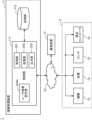
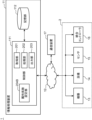
- FIG. 1 is a diagram showing a simplified overall configuration of a home control system according to a first embodiment of the present disclosure
- FIG. 4 is a flowchart schematically showing the flow of processing executed by a control unit; It is a figure which simplifies and shows an example of utilization information.
- FIG. 4 is a diagram showing simplified housework data according to the first example
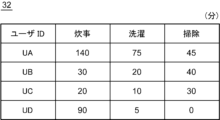
- FIG. 10 is a diagram showing simplified housework data according to a second example
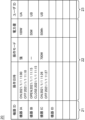
- FIG. 4 is a diagram showing in simplified form an example of housework point information generated based only on housework data
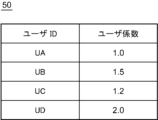
- FIG. 10 is a diagram simply showing an example of user coefficient information
- FIG. 4 is a diagram showing a simplified example of housework point information generated based on housework data and user coefficient information; 4 is a flowchart schematically showing the flow of processing executed by a control unit; It is a figure which shows in simplified form an example of an evaluation input screen.
- FIG. 10 is a diagram showing an example of management information that defines the relationship between the accumulated evaluation point number and the set value of the evaluation coefficient;
- FIG. 11 is a diagram showing a simplified overall configuration of a home control system according to a third embodiment of the present disclosure;
- FIG. 4 is a flowchart schematically showing the flow of processing executed by a control unit; It is a figure showing in simplified form an example of attribute coefficient information.
- FIG. 4 is a diagram showing a simplified example of housework point information generated based on housework data and attribute coefficient information;
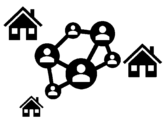
- FIG. 12 shows an overview of another aspect of the present disclosure;
- the present inventor aggregates housework data for each user based on usage information of equipment or facilities, and calculates housework points based on the housework data and a user coefficient preset for each user. By calculating , it is possible to appropriately give housework points to each user according to the amount of housework work done by each user, and came up with an aspect of the present disclosure.
- the present inventor uses user attributes to encourage multiple users with the same attributes who are expected to have similar environments to compete in the amount of housework. I found the need to provide information.
- Housework data for each user is aggregated based on the usage information of devices or facilities, and housework points are calculated based on the housework data and an attribute coefficient preset based on the attribute of the user. Based on the knowledge that it is possible to appropriately give each user housework points according to the amount of housework work done and the attributes of each user, the present inventors have come up with another aspect of the present disclosure.
- FIG. 16 is a diagram showing an overview of another aspect of the present disclosure.
- a region or community is configured by a plurality of users belonging to a plurality of families.
- a plurality of users are classified into a plurality of groups according to attributes such as gender and age.
- Attribute coefficients corresponding to attributes are set in advance, and housework points for each user are calculated based on each user's housework data and attribute coefficients.
- an information processing apparatus acquires usage information indicating the usage status of a device or facility, and based on the usage information, performs household chore data for each user of a plurality of users. are aggregated, user coefficient information indicating the user coefficient set for each user is obtained, and housework points related to the amount of housework work for each user are calculated based on the housework data and the user coefficient information.
- the first aspect it is preferable to further set the user coefficient of each user based on the housework data regarding the plurality of users within a predetermined period.
- the second aspect it is possible to appropriately set the user coefficient of each user according to the amount of housework work.
- the user coefficient in setting the user coefficient, it is preferable to set a larger user coefficient for a user who performs a greater amount of housework work within the predetermined period.
- the third aspect it is possible to improve the motivation of users who do a lot of housework.
- the user coefficient in setting the user coefficient, it is preferable to set a larger user coefficient for a user who does less amount of housework within the predetermined period.
- a housework point calculation method in any one of the first to fourth aspects, further includes: It is preferable to acquire from the user and change the user coefficient based on the change information.
- the fifth aspect it is possible for a specific user to arbitrarily change the user factor of each user.
- the method for calculating housework points according to the sixth aspect of the present disclosure, in the fifth aspect, may further include setting the specific user based on the housework data regarding the plurality of users within a predetermined period.
- the sixth aspect it is possible to give the authority to change the user coefficient to the user who performed the largest amount of housework within the predetermined period.
- a housework point calculation method in any one of the first to fourth aspects, further includes calculating a cumulative amount of housework performed by each user, and determining the cumulative amount of housework performed by each user. It is preferable to change the user factor based on the above.
- the seventh aspect it is possible to appropriately change the user coefficient of each user according to the cumulative amount of housework performed.
- the method for calculating housework points according to the eighth aspect of the present disclosure may further change the user coefficient according to the time zone in which the housework was performed.
- the eighth aspect it is possible to appropriately change the user coefficient of each user according to the time period during which housework was performed.
- a housework point calculation method is, in any one of the first to eighth aspects, wherein the usage information is the first usage related to the usage of the device or facility associated with performing housework. information and second usage information related to the use of the device or facility not associated with performing housework, and in the aggregation of the housework data, the housework data may be aggregated based on the first usage information.
- a housework point calculation method in any one of the first to ninth aspects, further includes evaluation coefficient information indicating an evaluation coefficient corresponding to an evaluation of the housework performed by each user. Further, in calculating the housework points, the housework points may be calculated based on the housework data, the user coefficient information, and the evaluation coefficient information.
- a housework point calculation method is such that an information processing device acquires usage information indicating the usage status of a device or facility, aggregates user's housework data based on the usage information, Attribute coefficient information indicating attribute coefficients set based on attributes of the user is obtained, and housework points related to the user's amount of housework work are calculated based on the housework data and the attribute coefficient information.
- the method for calculating housework points according to the twelfth aspect of the present disclosure is, in the eleventh aspect, further based on the housework data within a predetermined period regarding a plurality of users belonging to the same category among the plurality of categories included in the attribute , the attribute coefficient of each user of the plurality of users may be set.
- the attribute coefficient in the twelfth aspect, it is preferable to set a larger attribute coefficient for a user who has performed a larger amount of housework work within the predetermined period.
- the attribute coefficient in the 12th aspect, it is preferable to set a larger attribute coefficient for a user who has performed less amount of housework within the predetermined period.
- the 14th aspect it is possible to improve the motivation of users who do a small amount of housework.
- a housework point calculation method according to a fifteenth aspect of the present disclosure, in the eleventh aspect, further includes setting the attribute coefficient for each of a plurality of categories included in the attribute, and setting the attribute coefficient in the same category It is preferable to set a common attribute coefficient for a plurality of users belonging to the .
- the fifteenth aspect it is possible to have a plurality of categories included in the attribute compete for the amount of housework.
- a housework point calculation method is, in any one of the eleventh to fifteenth aspects, wherein the attribute coefficient information includes a plurality of attribute coefficients corresponding to a plurality of attributes of different types. good.
- the method for calculating housework points according to the 17th aspect of the present disclosure preferably uses a combination of two or more attribute coefficients among the plurality of attribute coefficients in calculating the housework points.
- the method for calculating housework points according to the eighteenth aspect of the present disclosure preferably uses one attribute coefficient selected from the plurality of attribute coefficients in calculating the housework points.
- the eighteenth aspect it is possible to set the attribute coefficient based on one optimum attribute.
- a housework point calculation method is, in any one of the eleventh to eighteenth aspects, further comprising: obtaining change information indicating a change in the attribute coefficient from a specific user; Preferably, the attribute coefficients are changed based on the information.
- the method for calculating housework points according to the twentieth aspect of the present disclosure may further include setting the specific user based on the housework data regarding a plurality of users within a predetermined period.
- the twentieth aspect it is possible to give the authority to change the attribute coefficient to the user who performed the largest amount of housework within the predetermined period.
- a housework point calculation method in any one of the 11th to 18th aspects, further includes: calculating an accumulated amount of housework performed by each user; It is preferable to change the attribute coefficient based on the above.
- the twenty-first aspect it is possible to appropriately change the attribute coefficient of each user according to the cumulative amount of housework performed.
- the method for calculating housework points according to the 22nd aspect of the present disclosure may further change the attribute coefficient according to the time zone in which the housework was performed.
- a housework point calculation method is, in any one of the 11th to 22nd aspects, wherein the usage information is a first usage related to usage of the device or facility associated with performing housework. information and second usage information related to the use of the device or facility not associated with performing housework, and in the aggregation of the housework data, the housework data may be aggregated based on the first usage information.
- An information processing apparatus includes an acquisition unit and a processing unit, wherein the acquisition unit acquires usage information indicating the usage status of a device or facility, and the processing unit acquires usage information indicating the usage Housework data for each user of a plurality of users is aggregated based on the information, the acquisition unit acquires user coefficient information indicating a user coefficient set for each user, and the processing unit collects the housework data and Based on the user coefficient information, a housework point related to the amount of housework work for each user is calculated.
- An information processing apparatus includes an acquisition unit and a processing unit, wherein the acquisition unit acquires usage information indicating the usage status of a device or facility, and the processing unit acquires usage information indicating the usage
- the user's housework data is aggregated based on the information
- the acquisition unit acquires attribute coefficient information indicating an attribute coefficient set based on the attribute of the user
- the processing unit acquires the housework data and the attribute
- a housework point related to the user's amount of housework work is calculated based on the coefficient information.
- a program according to a twenty-sixth aspect of the present disclosure is a program for causing an information processing apparatus to function as acquisition means and processing means, wherein the acquisition means acquires usage information indicating the usage status of a device or facility, and The processing means aggregates housework data for each user of a plurality of users based on the usage information, the acquisition means acquires user coefficient information indicating a user coefficient set for each user, and the processing means calculates a housework point related to the amount of housework work for each user based on the housework data and the user coefficient information.
- a program according to a twenty-seventh aspect of the present disclosure is a program for causing an information processing apparatus to function as acquisition means and processing means, wherein the acquisition means acquires usage information indicating the usage status of a device or facility, and The processing means aggregates the user's housework data based on the usage information, the acquisition means acquires attribute coefficient information indicating an attribute coefficient set based on the attributes of the user, and the processing means Based on the housework data and the attribute coefficient information, a housework point relating to the user's amount of housework work is calculated.
- the present disclosure can also be implemented as a program that causes a computer to execute each characteristic configuration included in such a method or apparatus, or as a system that operates with this program. It goes without saying that such a computer program can be distributed via a computer-readable non-temporary recording medium such as a CD-ROM or a communication network such as the Internet.
- FIG. 1 is a diagram showing a simplified overall configuration of a home control system 1 according to the first embodiment of the present disclosure.
- a home control system 1 includes a smart home 2 , a communication network 12 , an information processing device 11 and a communication device 17 .
- a plurality of smart homes 2 may be provided.
- the application target of the present disclosure is not limited to residences such as the smart home 2, and may be indoor facilities such as offices, restaurants, and commercial facilities.
- the space is not limited to an indoor facility, and may be a space including both an indoor space and an outdoor space.
- the smart home 2 has multiple spaces (rooms, bathrooms, toilets, entrances, corridors, etc.) in which multiple devices 13 and multiple facilities 14 are installed.
- the appliances 13 include cooking appliances, refrigerators, washing machines, toilet cleaners, and the like.
- the equipment 14 includes water equipment such as a faucet or a shower installed in a kitchen or a bathroom.
- a plurality of sensors 15 are installed in the smart home 2.
- Sensor 15 may include a microphone, infrared sensor, ultrasonic sensor, fingerprint sensor, iris sensor, or camera.
- the sensor 15 may be provided in the equipment 13 or the equipment 14 or may be provided separately from the equipment 13 or the equipment 14 .
- the sensor 15 detects the execution status of housework in the smart home 2 and transmits sensing information obtained by the detection to the information processing device 11 via the communication network 12 .
- the sensing information includes information for identifying the user using the device 13 or facility 14 .
- the sensing information includes image data of the user captured by the camera.
- the user identification processing based on the sensing information may be executed by the information processing device 11 or may be executed by the sensor 15 . Note that if the user information 23 is included in the operation information 22 (to be described later) by prior input of the user ID when using the device 13 or the facility 14, the acquisition of the sensing information from the sensor 15 may be omitted. good.
- the smart home 2 is provided with an integrated controller 16 for controlling the operation of the equipment 13 or equipment 14 to be controlled among the equipment 13 or equipment 14 .
- the integrated controller 16 can mutually perform data communication with the device 13 or facility 14 to be controlled via the communication network 12 or the wireless LAN in the smart home 2 .
- the communication device 17 includes a smartphone or the like possessed by each of multiple users living in the smart home 2 .
- the information processing device 11 is a cloud server, an edge server, or the like, and manages the home control system 1 as a whole.
- the information processing device 11 can mutually perform data communication with the communication device 17 , the integrated controller 16 , the device 13 , the equipment 14 , or the sensor 15 via the communication network 12 .
- the functions of the information processing device 11 may be implemented in the integrated controller 16 .
- the information processing device 11 includes a control section 111 and a storage section 112 .
- the control unit 111 includes a processor such as a CPU.
- the storage unit 112 is configured with an HDD, SSD, flash memory, or the like.
- the control unit 111 includes an acquisition unit 201, a processing unit 202, an output unit 203, and a user coefficient setting unit 204A as functions realized by the CPU executing a program read from the storage unit 112 to ROM, RAM, or the like. I have it.
- the program causes the information processing device 11 to function as an acquisition unit 201 (acquisition means), a processing unit 202 (processing means), an output unit 203 (processing means), and a user coefficient setting unit 204A (setting means). It is a program for
- FIG. 2 is a flowchart schematically showing the flow of processing executed by the control unit 111.
- FIG. 2 is a flowchart schematically showing the flow of processing executed by the control unit 111.
- the acquisition unit 201 acquires the usage information 20 indicating the usage status of the device 13 or facility 14 from the device 13 or facility 14 via the communication network 12.
- the usage information 20 may be acquired in real time or at regular time intervals.
- the acquisition unit 201 stores the acquired usage information 20 in the storage unit 112 .
- FIG. 3 is a diagram showing a simplified example of the usage information 20. As shown in FIG.
- the usage information 20 includes device information 21 , operating information 22 and user information 23 . Although FIG. 3 shows the usage information 20 about the device 13, the same applies to the equipment 14.
- FIG. 3 shows the usage information 20 about the device 13, the same applies to the equipment 14.
- the device information 21 includes device IDs and the like for individually identifying the plurality of devices 13 . Note that if there is only one device 13 to be managed, the device information 21 may be omitted.
- the operation information 22 includes operation date and time information, operation intensity information, setting information at the time of operation, and the like.
- the operating intensity information includes the degree of strength, power consumption, and the like.
- the control unit 111 may acquire the operating intensity information from the equipment 13 or the equipment 14 or may calculate the operating intensity information based on the information acquired from the equipment 13 or the equipment 14 . For example, the control unit 111 calculates power consumption based on the operating time and operating wattage.
- the setting information at the time of operation includes operation mode information and the like.
- the operation mode information includes housework mode information (first usage information) indicating a housework mode that is used for performing housework, and usage mode information (second usage information) that indicates a usage mode that is not used for performing housework. including.
- the use of the shower for cleaning the bathroom is the housework mode
- the use of the shower during bathing is the usage mode.
- Determination of the housework mode or the usage mode may be performed by receiving an input of mode setting from the user when using the device 13 or facility 14, or by the information processing device 11 automatically based on the time period information or the detection result of the sensor 15. You can In the process of generating the housework data 31 and 32, which will be described later, only the usage information 20 of the housework mode among the housework mode and the use mode is used for aggregation.
- the user information 23 includes user IDs and the like for individually identifying a plurality of users. Determination of the user performing housework may be performed by receiving an input of the user ID from the user when using the device 13 or the facility 14, or by automatically determining by the information processing apparatus 11 based on the detection result by the sensor 15. good. Alternatively, the input of the user ID may be accepted after the fact by text input, voice input, or the like using the communication device 17 or the integrated controller 16 .
- step SP102 the processing unit 202 performs user
- the household chores data 31 for each household is aggregated.
- FIG. 4 is a simplified diagram of the housework data 31 according to the first example.
- the amount of housework done by each user within a certain period of time (for example, one week, one month, or several months) is totaled as the number of times housework is performed.
- the processing unit 202 counts the number of times of one execution when the equipment 13 or the equipment 14 is not used for a predetermined time or more.
- the predetermined time is, for example, 10 minutes, 30 minutes, or 1 hour.
- the processing unit 202 may distribute the number of times housework is performed to the multiple users and count them. For example, when the processing unit 202 detects that the users UA and UB have performed one household chore in the morning using the same device 13 or facility 14, the processing unit 202 performs chores for each of the users UA and UB 1/2 times. Aggregates the number of executions of
- the number of cooking times may be counted for breakfast, lunch, and dinner based on time period information. Also, the number of times of cleaning may be counted for each room based on the positional information of the vacuum cleaner. Furthermore, when calculating the housework points based on the housework data in step SP104, which will be described later, a different coefficient may be multiplied for each time zone, or a different coefficient may be multiplied for each room. For example, a larger coefficient may be set for a time zone or a room in which housework is performed less frequently.
- FIG. 5 is a diagram showing simplified housework data 32 according to the second example.
- the amount of housework work for each user within a certain period is totaled as the execution time (minutes) of housework.
- FIG. 6 is a simplified diagram showing an example of the housework point information 41 generated based only on the housework data 31. As shown in FIG. In the housework point information 41, the housework points of each user are calculated by simply adding the number of times housework is performed included in the housework data 31 for each user.
- step SP103A the acquisition unit 201 acquires from the storage unit 112 the user coefficient information 50 indicating the user coefficient set for each user.
- FIG. 7 is a diagram showing a simplified example of the user coefficient information 50.
- FIG. 7 user coefficients "1.0", “1.5”, “1.2”, and “2.0” are set for users UA, UB, UC, and UD, respectively.
- User coefficient information 50 is set in advance by user coefficient setting section 204A.
- User coefficient setting unit 204A sets user coefficient information 50, for example, based on housework data 31 and 32 regarding a plurality of users within a predetermined period. As a first example, the user coefficient setting unit 204A may set a larger user coefficient according to the difference in the amount of housework for a user who has performed a larger amount of housework within the last month.
- the user coefficient setting unit 204A may set a larger user coefficient according to the difference in the amount of housework for a user who has performed less amount of housework within the last month. This makes it possible to improve the motivation of the user who has a small amount of housework. Note that the values of the user coefficients may be different for all users, or may be the same for some users.
- step SP104 the processing unit 202 generates housework point information 42 by calculating housework points related to the amount of housework work for each user based on the housework data 31 and the user coefficient information 50.
- FIG. 8 is a simplified diagram showing an example of housework point information 42A generated based on housework data 31 and user coefficient information 50.
- FIG. 8A each user's housework points are calculated by multiplying the housework points included in the housework point information 41 shown in FIG. 6 by the user coefficients shown in FIG.
- the output unit 203 outputs the housework point information 42A generated by the processing unit 202.
- the user can obtain the following benefits according to the housework points given.
- a user can download software from a home appliance manufacturer's website according to the housekeeping points that the user has, and by installing the software on a home appliance that has already been purchased, the user can use the home appliance.
- Functionality can be extended.
- the user can purchase a new software or hardware product prior to general sales according to the housekeeping points that the user has.
- the user can monitor and use new software or hardware products prior to general sales, depending on the housework points that the user has.
- the user factor may be determined or changed by a predetermined specific user.
- Acquisition unit 201 acquires change information via communication network 12 .
- User coefficient setting section 204 ⁇ /b>A changes the user coefficient based on the change information acquired by acquisition section 201 , and stores changed user coefficient information 50 in storage section 112 . Thereafter, the housework point calculation process is executed using the changed user coefficient information 50 .
- the above specific user may be able to change the user coefficient of each user unconditionally, or may be able to change it within a range in which the total value of the user coefficients or housework points of all users is equal to or less than the upper limit. For example, a larger user coefficient than normal may be set for a user who has performed housework in response to an irregular event such as a sudden visitor.
- the user coefficient setting unit 204A selects the user with the largest amount of housework work in the predetermined period based on the housework data 31 regarding the most recent predetermined period (for example, one week, one month, or several months). You can set it as a user.
- the information processing device 11 transmits a change notification to the communication device 17 owned by the target user whose user coefficient has been changed, so that a message that motivates the user for housework is sent to the communication device 17. You can display it on the screen.
- the user coefficient may be changed according to the cumulative value of the housework data 31,32.
- User coefficient setting unit 204A calculates the cumulative amount (number of times or time) of housework performed by each user based on housework data 31 and 32, and changes the user coefficient of each user based on the calculated cumulative amount performed. Further, user coefficient setting unit 204A stores changed user coefficient information 50 in storage unit 112, and thereafter, housework point calculation processing is executed using changed user coefficient information 50.
- the user coefficient setting unit 204A sets the user coefficient of the first value for housework data in which the cumulative amount of housework performed is less than a predetermined amount (for example, 10 times), A user factor having a second value that is greater than the first value may be set for the housework data. Conversely, user coefficient setting unit 204A sets the user coefficient of the first value for household chores data in which the cumulative amount of housework performed is less than the predetermined amount. The data may be set to a user coefficient of a second value smaller than the first value. One of the first value and the second value may be a common value among multiple users.
- the user coefficient may be changed according to the time period during which housework was performed.
- User coefficient setting unit 204A identifies the time period during which housework was performed based on the time period information included in usage information 20, and changes the user coefficient according to the time period.
- the user coefficient setting unit 204A sets the 24 hours of a day to a first time slot from 00:00 to 12:00, a second time slot from 12:00 to 18:00, and a second time slot from 18:00 to 24:00. It is classified into three time zones, and the user coefficient of each user is set to a different value for each time zone.
- the user coefficient may be set to have a large value in the order of the first time period, the second time period, and the third time period, or the user coefficient may be set to have a small value in the order of the first time period, the second time period, and the third time period.
- a user coefficient may be set.
- the user coefficient setting unit 204A may set the user coefficient to a different value depending on the number of users who are present in the smart home 2 for each time slot. For example, the smaller the number of users who are located, the larger the user coefficient may be set.
- the user coefficient may be changed according to the content of housework.
- the user coefficient setting unit 204A performs the household chores when the number of users who performed the chores is less than a predetermined value (so to speak, disliked household chores) during the period in which the most recent house chores data 31 is aggregated. Then, the user factor of the user who has been selected is increased by a predetermined value or a predetermined ratio.
- User coefficient setting unit 204 ⁇ /b>A stores changed user coefficient information 50 in storage unit 112 , and thereafter, housework point calculation processing is executed using changed user coefficient information 50 .
- FIG. 9 is a flowchart schematically showing the flow of processing executed by control unit 111 .
- the following description focuses on differences from the first embodiment.
- step SP101 the acquisition unit 201 acquires the usage information 20 from the device 13 or facility 14.
- step SP102 the processing unit 202 aggregates the housework data 31 for each user of a plurality of users.
- step SP103 the acquisition unit 201 acquires the user coefficient information 50 from the storage unit 112.
- step SP201 the acquisition unit 201 acquires evaluation coefficient information from the storage unit 112.
- An evaluation coefficient is a coefficient representing other users' evaluations of the housework performed by a certain user.
- FIG. 10 is a diagram showing a simplified example of the evaluation input screen 60.
- the information processing device 11 causes the communication device 17 possessed by another user to display the evaluation input screen 60 .
- FIG. 10 shows an example of an evaluation input screen 60 for cleaning the front door performed by the father.
- the evaluation input screen 60 displays, as the housework information performed by the father, the date and time of execution, the content, the image of the entrance after completion, the evaluation input items of three levels, and a send button.
- the image is taken by one of the sensors 15, the entrance camera.
- the send button When the user taps the send button after inputting evaluation into the evaluation input items, result information indicating the evaluation points is transmitted from the communication device 17 to the information processing device 11 via the communication network 12 .
- the processing unit 202 accumulates the number of evaluation points accumulated for each user during the collection period of the housework data 31 this time, and sets an evaluation coefficient according to the accumulated value for each user.
- the evaluation of housework performed by a user is not limited to manual input by another user.
- the processing unit 202 calculates the first cleanliness based on the image of the target area before cleaning, calculates the second cleanliness based on the image of the target area after cleaning, and calculates the first cleanliness
- the evaluation may be automatically input by calculating the difference value between the second cleanliness degree and the second cleanliness degree, and giving a higher evaluation as the difference value increases.
- FIG. 11 is a diagram showing an example of management information 70 that defines the relationship between the cumulative evaluation point number and the set value of the evaluation coefficient. For example, when the cumulative evaluation point value is "0", the evaluation coefficient value is "1.0", and when the cumulative evaluation point value is "1 to 10", the evaluation coefficient value is "1. 1”.
- the processing unit 202 generates evaluation coefficient information as table information describing evaluation coefficient setting values for each user, and stores the generated evaluation coefficient information in the storage unit 112 .
- step SP104 the processing unit 202 generates housework point information 42 by calculating housework points related to the amount of housework work for each user based on the housework data 31, the user coefficient information 50, and the evaluation coefficient information.
- FIG. 12 is a diagram showing a simplified overall configuration of the home control system 1 according to the third embodiment of the present disclosure.
- the control unit 111 includes an acquisition unit 201, a processing unit 202, an output unit 203, and an attribute coefficient setting unit 204B as functions realized by the CPU executing a program read from the storage unit 112 to ROM, RAM, or the like. I have it.
- the program causes the information processing device 11 to function as an acquisition unit 201 (acquisition means), a processing unit 202 (processing means), an output unit 203 (processing means), and an attribute coefficient setting unit 204B (setting means). It is a program for
- FIG. 13 is a flowchart schematically showing the flow of processing executed by the control unit 111.
- the acquisition unit 201 acquires usage information 20 indicating the usage status of the device 13 or facility 14 from the device 13 or facility 14 via the communication network 12, as in the first embodiment.
- An example of the usage information 20 is the same as in the first embodiment.
- step SP102 the processing unit 202 stores management information that defines the correspondence between the type of the device 13 or facility 14 and the content of the housework, and the usage information 20 acquired in step SP101, as in the first embodiment.
- Housework data 31 for each user of a plurality of users is aggregated based on .
- An example of the housework data 31 is the same as in the first embodiment.
- step SP103B the acquisition unit 201 acquires from the storage unit 112 the attribute coefficient information 51 indicating attribute coefficients set based on the attributes of the user.
- FIG. 14 is a diagram showing a simplified example of the attribute coefficient information 51.
- the attribute coefficient information 51 includes a plurality of attributes Z1 to Z5 of different types. Attributes Z1 to Z5 are prioritized. Types of attributes include gender, age, age group, weekly holiday system, family structure, hobbies, area of residence, and the like. For example, the type of attribute Z1 is age, and age includes a plurality of categories such as teens and under, 20s, 30s, 40s, 50s, and over 60s.
- FIG. 14 shows attribute coefficients for a plurality of users UA, UH, UI, UJ, and UK belonging to the same age category.
- attributes "1.5”, “1.5”, “1.2”, “2.0”, and "1.2” are assigned to users UA, UH, UI, UJ, and UK, respectively.
- Coefficient is set.
- the attribute coefficient information 51 is preset by the attribute coefficient setting unit 204B.
- the attribute coefficient setting unit 204B sets the attribute coefficient information 51, for example, based on the housework data 31, 32 regarding a plurality of users within a predetermined period.
- the attribute coefficient setting unit 204B may set a larger attribute coefficient according to the difference in the amount of housework for a user who has performed a larger amount of housework within the last month. This makes it possible to improve the motivation of the user who has a large amount of housework.
- the attribute coefficient setting unit 204B may set a larger attribute coefficient according to the difference in the amount of housework for a user who has performed less amount of housework within the last month. This makes it possible to improve the motivation of the user who has a small amount of housework.
- the attribute coefficient values may be different for all users, or may be the same for some users.
- the attribute coefficient setting unit 204B may set an attribute coefficient for each of multiple categories included in each attribute. In this case, the attribute coefficient setting unit 204B sets common attribute coefficients for multiple users belonging to the same category. For example, for the age attribute Z1, an attribute coefficient is set for each age, and a common attribute coefficient is set for a plurality of users belonging to the same age.
- the attribute coefficient setting unit 204B may set a larger attribute coefficient for an age group in which the average value of the amount of housework work within the aggregation period is larger, or may set a larger attribute coefficient for an age group in which the average value of the amount of housework work within the aggregation period is smaller. May be set.
- the attribute coefficient setting unit 204B Whether to adopt either the first method of setting different attribute coefficients among multiple users belonging to the same category or the second method of setting different attribute coefficients among multiple categories included in the attribute depends on the attribute is selected by the attribute coefficient setting unit 204B according to the type of , and the selection information is included in the attribute coefficient information 51.
- the first method is selected for the weekly holiday system, family structure, hobbies, etc.
- the second method is selected for gender, age, generation, area of residence, and the like.
- step SP104 the processing unit 202 generates housework point information 42B by calculating housework points related to the amount of housework work for each user based on the housework data 31 and the attribute coefficient information 51.
- the processing unit 202 may combine and use two or more attribute coefficients out of the plurality of attribute coefficients corresponding to the attributes Z1 to Z5 in the process of calculating housework points. For example, for the user UA, by multiplying the attribute coefficient "1.5" corresponding to the attribute Z1 with the first priority and the attribute coefficient "1.1" corresponding to the attribute Z2 with the second priority, An attribute factor of "1.65" may be used. When the number of users belonging to the same attribute group is equal to or greater than the allowable upper limit, the processing unit 202 increases the number of attribute coefficients to be combined in accordance with the order of priority, thereby limiting the number of users belonging to the same attribute group. can be done.
- the processing unit 202 may use one attribute coefficient selected from a plurality of attribute coefficients corresponding to the attributes Z1 to Z5 in the process of calculating housework points.
- the processing unit 202 uses the attribute coefficient corresponding to the attribute Z1 having the first priority. If it is more preferable to use the attribute coefficients corresponding to attributes Z2 to Z5 than the attribute coefficients corresponding to attribute Z1, the processing unit 202 selects the attribute coefficients corresponding to any one of attributes Z2 to Z5 according to the order of priority. to select.
- the processing unit 202 selects an attribute coefficient such that the amount of increase in housework points is greater than or equal to the second value.
- FIG. 15 is a diagram showing a simplified example of housework point information 42B generated based on housework data 31 and attribute coefficient information 51.
- FIG. in the housework point information 42B each user's housework points are calculated by multiplying the housework points included in the housework point information 41 shown in FIG. 6 by the attribute coefficients shown in FIG.
- the housework points of "36" are calculated by multiplying the housework points of "24" shown in FIG. 6 by the attribute coefficient "1.5" of the attribute Z1 shown in FIG. ing.
- the output unit 203 outputs the housework point information 42B generated by the processing unit 202.
- the user can obtain benefits similar to those in the first embodiment according to the assigned housework points.
- the present embodiment by calculating housework points based on the housework data 31 and the attribute coefficient information 51, it is possible to appropriately provide each user with housework points according to the amount of housework work and attributes of each user. It becomes possible.
- the attribute factor may be determined or changed by a predetermined specific user.
- Acquisition unit 201 acquires change information via communication network 12 .
- the attribute coefficient setting unit 204 ⁇ /b>B changes the attribute coefficient based on the change information acquired by the acquisition unit 201 and stores the changed attribute coefficient information 51 in the storage unit 112 . After that, calculation processing of housework points is executed using the changed attribute coefficient information 51 .
- the above-mentioned specific user may be able to change the attribute coefficient of each user unconditionally, or may be able to change it within a range in which the total value of the attribute coefficients or housework points of all users is equal to or less than the upper limit. For example, for a user who has performed housework in response to an irregular event such as a sudden visitor, a larger attribute coefficient than normal may be set.
- the attribute coefficient setting unit 204B selects the user with the largest amount of housework work in the predetermined period based on the housework data 31 regarding the most recent predetermined period (for example, one week, one month, or several months). You can set it as a user.
- the information processing device 11 transmits a change notification to the communication device 17 possessed by the target user whose attribute coefficient has been changed, thereby sending a message to the communication device 17 that motivates the user for housework. You can display it on the screen.
- the attribute coefficient may be changed according to the accumulated value of the housework data 31,32.
- the attribute coefficient setting unit 204B calculates the cumulative amount (number of times or time) of housework performed by each user based on the housework data 31 and 32, and changes the attribute coefficient of each user based on the calculated cumulative amount performed. Further, attribute coefficient setting unit 204B stores changed attribute coefficient information 51 in storage unit 112, and thereafter, housework point calculation processing is executed using changed attribute coefficient information 51.
- the attribute coefficient setting unit 204B sets the attribute coefficient of the first value to housework data in which the cumulative amount of housework performed is less than a predetermined amount (for example, 10 times), An attribute coefficient with a second value that is greater than the first value may be set for the housework data.
- the attribute coefficient setting unit 204B sets the attribute coefficient of the first value to the housework data in which the cumulative amount of housework performed is less than the predetermined amount.
- the data may have attribute coefficients with a second value that is smaller than the first value.
- One of the first value and the second value may be a common value among multiple users.
- the attribute coefficient may be changed according to the time period during which housework was performed.
- the attribute coefficient setting unit 204B identifies the time period during which the housework was performed based on the time period information included in the usage information 20, and changes the attribute coefficient according to the time period.
- the attribute coefficient setting unit 204B defines the 24 hours of a day as a first time slot from 00:00 to 12:00, a second time slot from 12:00 to 18:00, and a second time slot from 18:00 to 24:00.
- Each user's attribute coefficient is set to a different value for each time period. For example, it is possible to set the attribute coefficient with a large value in the order of the first time zone, the second time zone, and the third time zone, or set the attribute coefficient with the smallest value in the order of the first time zone, the second time zone, and the third time zone.
- An attribute coefficient may be set.
- the attribute coefficient setting unit 204B may set the attribute coefficients to different values according to the number of users who are present in the smart home 2 for each time zone. For example, the smaller the number of users who reside, the larger the attribute coefficient may be set.
- the attribute coefficient may be changed according to the content of the housework.
- the attribute coefficient setting unit 204B performs the housework when the number of users who have performed the housework is less than a predetermined value (so to speak, disliked housework) in the most recent collection period of the housework data 31.
- the attribute coefficient of the user who has been selected is greatly changed by a predetermined value or a predetermined ratio.
- the attribute coefficient setting unit 204B stores the changed attribute coefficient information 51 in the storage unit 112, and thereafter the housework point calculation processing is executed using the changed attribute coefficient information 51.
- (Fifth modification) Users are not limited to individuals, and may be groups such as families.
- the attribute coefficient setting unit 204B sets a common attribute coefficient for each group.
- the attribute type may include information on the user's ownership of the IoT device.
- the possession information may include the number of possessions, the type of device, or the like.
- the attribute coefficient setting unit 204B sets common attribute coefficients for a plurality of users having the same or similar number of owned IoT devices or device types.
- the present disclosure is particularly useful when applied to home control systems equipped with smart homes incorporating IoT technology.
Landscapes
- Business, Economics & Management (AREA)
- Human Resources & Organizations (AREA)
- Engineering & Computer Science (AREA)
- Economics (AREA)
- Strategic Management (AREA)
- Entrepreneurship & Innovation (AREA)
- Tourism & Hospitality (AREA)
- Theoretical Computer Science (AREA)
- General Physics & Mathematics (AREA)
- Marketing (AREA)
- General Business, Economics & Management (AREA)
- Physics & Mathematics (AREA)
- Educational Administration (AREA)
- Quality & Reliability (AREA)
- Operations Research (AREA)
- Game Theory and Decision Science (AREA)
- Development Economics (AREA)
- Health & Medical Sciences (AREA)
- General Health & Medical Sciences (AREA)
- Primary Health Care (AREA)
- Management, Administration, Business Operations System, And Electronic Commerce (AREA)
Priority Applications (3)
| Application Number | Priority Date | Filing Date | Title |
|---|---|---|---|
| CN202280067021.8A CN118056218A (zh) | 2021-10-07 | 2022-10-07 | 家务分数的算出方法、信息处理装置以及程序 |
| JP2023552961A JPWO2023058749A1 (https=) | 2021-10-07 | 2022-10-07 | |
| US18/626,943 US20240249217A1 (en) | 2021-10-07 | 2024-04-04 | Housework point calculation method, information processing device, and computer-readable recording medium recording a program |
Applications Claiming Priority (4)
| Application Number | Priority Date | Filing Date | Title |
|---|---|---|---|
| JP2021165640 | 2021-10-07 | ||
| JP2021-165640 | 2021-10-07 | ||
| JP2021165642 | 2021-10-07 | ||
| JP2021-165642 | 2021-10-07 |
Related Child Applications (1)
| Application Number | Title | Priority Date | Filing Date |
|---|---|---|---|
| US18/626,943 Continuation US20240249217A1 (en) | 2021-10-07 | 2024-04-04 | Housework point calculation method, information processing device, and computer-readable recording medium recording a program |
Publications (1)
| Publication Number | Publication Date |
|---|---|
| WO2023058749A1 true WO2023058749A1 (ja) | 2023-04-13 |
Family
ID=85804359
Family Applications (1)
| Application Number | Title | Priority Date | Filing Date |
|---|---|---|---|
| PCT/JP2022/037583 Ceased WO2023058749A1 (ja) | 2021-10-07 | 2022-10-07 | 家事ポイントの算出方法、情報処理装置、及びプログラム |
Country Status (3)
| Country | Link |
|---|---|
| US (1) | US20240249217A1 (https=) |
| JP (1) | JPWO2023058749A1 (https=) |
| WO (1) | WO2023058749A1 (https=) |
Citations (2)
| Publication number | Priority date | Publication date | Assignee | Title |
|---|---|---|---|---|
| JP2018005340A (ja) * | 2016-06-28 | 2018-01-11 | 兼松株式会社 | 電気料金割引サポートシステム |
| JP2021018507A (ja) * | 2019-07-18 | 2021-02-15 | シヤチハタ株式会社 | 家事労働の評価システム |
Family Cites Families (7)
| Publication number | Priority date | Publication date | Assignee | Title |
|---|---|---|---|---|
| JP5708037B2 (ja) * | 2011-03-01 | 2015-04-30 | オムロンヘルスケア株式会社 | 活動量計 |
| CA2953385C (en) * | 2014-06-30 | 2024-07-02 | Evolving Machine Intelligence Pty Ltd | SYSTEM AND METHOD FOR MODELING SYSTEM BEHAVIOR |
| US10154789B2 (en) * | 2014-09-02 | 2018-12-18 | Apple Inc. | Latent load calibration for calorimetry using sensor fusion |
| US10262423B2 (en) * | 2016-03-29 | 2019-04-16 | Verily Life Sciences Llc | Disease and fall risk assessment using depth mapping systems |
| US11350853B2 (en) * | 2018-10-02 | 2022-06-07 | Under Armour, Inc. | Gait coaching in fitness tracking systems |
| US11107568B2 (en) * | 2019-08-30 | 2021-08-31 | MyFitnessPal, Inc. | Versatile data structure for workout session templates and workout sessions |
| US12073296B2 (en) * | 2019-11-29 | 2024-08-27 | Kpn Innovations, Llc. | Methods and systems for generating physical activity sets for a human subject |
-
2022
- 2022-10-07 WO PCT/JP2022/037583 patent/WO2023058749A1/ja not_active Ceased
- 2022-10-07 JP JP2023552961A patent/JPWO2023058749A1/ja active Pending
-
2024
- 2024-04-04 US US18/626,943 patent/US20240249217A1/en active Pending
Patent Citations (2)
| Publication number | Priority date | Publication date | Assignee | Title |
|---|---|---|---|---|
| JP2018005340A (ja) * | 2016-06-28 | 2018-01-11 | 兼松株式会社 | 電気料金割引サポートシステム |
| JP2021018507A (ja) * | 2019-07-18 | 2021-02-15 | シヤチハタ株式会社 | 家事労働の評価システム |
Also Published As
| Publication number | Publication date |
|---|---|
| US20240249217A1 (en) | 2024-07-25 |
| JPWO2023058749A1 (https=) | 2023-04-13 |
Similar Documents
| Publication | Publication Date | Title |
|---|---|---|
| Hiller | Factors influencing residents’ energy use—A study of energy-related behaviour in 57 Swedish homes | |
| JP2018514835A (ja) | 建物内の環境管理システムを制御するための方法および装置 | |
| EP3079107A1 (en) | Lifestyle-services suggestion system | |
| JP7676607B2 (ja) | 情報提供方法 | |
| CN108351996A (zh) | 用于管理客房的方法和装置 | |
| JP2019040374A (ja) | リフォーム提案システム | |
| WO2016147298A1 (ja) | 推薦装置、推薦決定方法、およびコンピュータプログラム | |
| WO2023058749A1 (ja) | 家事ポイントの算出方法、情報処理装置、及びプログラム | |
| JP7382949B2 (ja) | 情報提供方法 | |
| WO2023058747A1 (ja) | 家事ポイントの算出方法、情報処理装置、及びプログラム | |
| Zaraket et al. | A Stochastic activity-based approach for forecasting occupant-related energy consumption in residential buildings | |
| CN118056218A (zh) | 家务分数的算出方法、信息处理装置以及程序 | |
| JP2015153156A (ja) | 消費電力量に基づく整合性のある生活状況の推定が可能な装置、プログラム及び方法 | |
| Ellegård et al. | VISUAL-TimePAcTS/energy use: a soft ware application for visualizing energy use from activities performed | |
| JP2023003143A (ja) | 補填案出力方法、補填案出力装置、及びプログラム | |
| CN115562051B (zh) | 流动方向的确定方法和装置、存储介质及电子装置 | |
| JP6497310B2 (ja) | 電力管理システム、電力管理方法及びプログラム | |
| Hatzi et al. | Identification of technology adoption paths for smart technologies | |
| Xu et al. | Privacy concerns and antecedents of building data sharing: A privacy calculus perspective | |
| JP2002099817A (ja) | 広告決定方法、提供情報決定システム、情報提供装置、及び記録媒体 | |
| JP7707373B2 (ja) | キッチン情報提示プログラム | |
| JP7703086B2 (ja) | 情報提供方法 | |
| JP7404110B2 (ja) | 住宅プラン提案システム | |
| Guo et al. | A novel machine learning approach for identifying the drivers of domestic electricity users’ price responsiveness | |
| Andersson et al. | Challenges in smart home usage: Focusing on end user experience and energy consumption |
Legal Events
| Date | Code | Title | Description |
|---|---|---|---|
| 121 | Ep: the epo has been informed by wipo that ep was designated in this application |
Ref document number: 22878616 Country of ref document: EP Kind code of ref document: A1 |
|
| WWE | Wipo information: entry into national phase |
Ref document number: 2023552961 Country of ref document: JP |
|
| WWE | Wipo information: entry into national phase |
Ref document number: 202280067021.8 Country of ref document: CN |
|
| NENP | Non-entry into the national phase |
Ref country code: DE |
|
| 122 | Ep: pct application non-entry in european phase |
Ref document number: 22878616 Country of ref document: EP Kind code of ref document: A1 |