WO2023054646A1 - 情報処理装置、情報処理方法及び情報処理プログラム - Google Patents
情報処理装置、情報処理方法及び情報処理プログラム Download PDFInfo
- Publication number
- WO2023054646A1 WO2023054646A1 PCT/JP2022/036598 JP2022036598W WO2023054646A1 WO 2023054646 A1 WO2023054646 A1 WO 2023054646A1 JP 2022036598 W JP2022036598 W JP 2022036598W WO 2023054646 A1 WO2023054646 A1 WO 2023054646A1
- Authority
- WO
- WIPO (PCT)
- Prior art keywords
- element information
- information processing
- information
- sentences
- sentence
- Prior art date
- Legal status (The legal status is an assumption and is not a legal conclusion. Google has not performed a legal analysis and makes no representation as to the accuracy of the status listed.)
- Ceased
Links
Images




Classifications
-
- G—PHYSICS
- G06—COMPUTING OR CALCULATING; COUNTING
- G06F—ELECTRIC DIGITAL DATA PROCESSING
- G06F40/00—Handling natural language data
- G06F40/10—Text processing
- G06F40/166—Editing, e.g. inserting or deleting
-
- G—PHYSICS
- G06—COMPUTING OR CALCULATING; COUNTING
- G06F—ELECTRIC DIGITAL DATA PROCESSING
- G06F40/00—Handling natural language data
- G06F40/10—Text processing
- G06F40/12—Use of codes for handling textual entities
- G06F40/126—Character encoding
- G06F40/129—Handling non-Latin characters, e.g. kana-to-kanji conversion
-
- G—PHYSICS
- G06—COMPUTING OR CALCULATING; COUNTING
- G06F—ELECTRIC DIGITAL DATA PROCESSING
- G06F40/00—Handling natural language data
- G06F40/10—Text processing
- G06F40/12—Use of codes for handling textual entities
- G06F40/151—Transformation
-
- G—PHYSICS
- G06—COMPUTING OR CALCULATING; COUNTING
- G06F—ELECTRIC DIGITAL DATA PROCESSING
- G06F40/00—Handling natural language data
- G06F40/40—Processing or translation of natural language
- G06F40/55—Rule-based translation
- G06F40/56—Natural language generation
-
- G—PHYSICS
- G16—INFORMATION AND COMMUNICATION TECHNOLOGY [ICT] SPECIALLY ADAPTED FOR SPECIFIC APPLICATION FIELDS
- G16H—HEALTHCARE INFORMATICS, i.e. INFORMATION AND COMMUNICATION TECHNOLOGY [ICT] SPECIALLY ADAPTED FOR THE HANDLING OR PROCESSING OF MEDICAL OR HEALTHCARE DATA
- G16H15/00—ICT specially adapted for medical reports, e.g. generation or transmission thereof
-
- G—PHYSICS
- G16—INFORMATION AND COMMUNICATION TECHNOLOGY [ICT] SPECIALLY ADAPTED FOR SPECIFIC APPLICATION FIELDS
- G16H—HEALTHCARE INFORMATICS, i.e. INFORMATION AND COMMUNICATION TECHNOLOGY [ICT] SPECIALLY ADAPTED FOR THE HANDLING OR PROCESSING OF MEDICAL OR HEALTHCARE DATA
- G16H30/00—ICT specially adapted for the handling or processing of medical images
- G16H30/20—ICT specially adapted for the handling or processing of medical images for handling medical images, e.g. DICOM, HL7 or PACS
-
- G—PHYSICS
- G16—INFORMATION AND COMMUNICATION TECHNOLOGY [ICT] SPECIALLY ADAPTED FOR SPECIFIC APPLICATION FIELDS
- G16H—HEALTHCARE INFORMATICS, i.e. INFORMATION AND COMMUNICATION TECHNOLOGY [ICT] SPECIALLY ADAPTED FOR THE HANDLING OR PROCESSING OF MEDICAL OR HEALTHCARE DATA
- G16H30/00—ICT specially adapted for the handling or processing of medical images
- G16H30/40—ICT specially adapted for the handling or processing of medical images for processing medical images, e.g. editing
-
- G—PHYSICS
- G16—INFORMATION AND COMMUNICATION TECHNOLOGY [ICT] SPECIALLY ADAPTED FOR SPECIFIC APPLICATION FIELDS
- G16H—HEALTHCARE INFORMATICS, i.e. INFORMATION AND COMMUNICATION TECHNOLOGY [ICT] SPECIALLY ADAPTED FOR THE HANDLING OR PROCESSING OF MEDICAL OR HEALTHCARE DATA
- G16H50/00—ICT specially adapted for medical diagnosis, medical simulation or medical data mining; ICT specially adapted for detecting, monitoring or modelling epidemics or pandemics
- G16H50/20—ICT specially adapted for medical diagnosis, medical simulation or medical data mining; ICT specially adapted for detecting, monitoring or modelling epidemics or pandemics for computer-aided diagnosis, e.g. based on medical expert systems
Definitions
- the present disclosure relates to an information processing device, an information processing method, and an information processing program.
- image diagnosis is performed using medical images obtained by imaging devices such as CT (Computed Tomography) devices and MRI (Magnetic Resonance Imaging) devices.
- medical images are analyzed by CAD (Computer Aided Detection/Diagnosis) using discriminators trained by deep learning, etc., and regions of interest including structures and lesions included in medical images are detected and / or Diagnosis is being made.
- the medical image and the CAD analysis result are transmitted to the terminal of a medical worker such as an interpreting doctor who interprets the medical image.
- a medical professional such as an interpreting doctor interprets the medical image by referring to the medical image and the analysis result using his/her own terminal, and creates an interpretation report.
- Japanese Patent Application Laid-Open No. 2019-153250 discloses a technique for creating a medical document such as an interpretation report based on a keyword input by an interpretation doctor and analysis results of a medical image.
- sentences to be described in an interpretation report are created using a recurrent neural network trained to generate sentences from input characters.
- Japanese Patent Application Laid-Open No. 2020-123109 describes a method of creating a template for a current medical report based on a medical report created in the past, and displaying an update target to be updated in the current report in an identifiable manner. discloses a technique for reducing the burden of creating a medical report.
- the present disclosure provides an information processing device, an information processing method, and an information processing program that can support creation of medical documents.
- a first aspect of the present disclosure is an information processing device comprising at least one processor, the processor generates a plurality of sentences based on a plurality of element information used for diagnosis, When part of the element information is changed, only the first sentence corresponding to the changed element information is corrected among the plurality of sentences.
- a second aspect of the present disclosure is the first aspect, wherein the processor classifies the plurality of sentences into a first sentence and a second sentence that does not correspond to the element information to be changed, and the element after the change Of the first sentence and the second sentence, only the first sentence may be modified based on the information.
- a third aspect of the present disclosure is the first aspect or the second aspect, wherein the element information includes the name, properties, measured values, position and estimated disease name related to the region of interest included in the medical image, and the imaging of the medical image.
- the information may indicate at least one of a shooting method, shooting conditions, and shooting date and time.
- the region of interest may be at least one of a structural region included in the medical image and an abnormal shadow region included in the medical image.
- the processor may perform control to display a plurality of sentences on the display device.
- the processor may perform control to group the plurality of sentences based on the element information corresponding to the sentences and display them on the display device. .
- the processor may perform control to highlight and display the corrected first sentence on the display device.
- the processor emphasizes the first sentence before correction and displays the may be controlled to be displayed on the
- the processor acquires a medical image and generates element information based on the acquired medical image. good.
- a tenth aspect of the present disclosure is any one of the first to ninth aspects, further comprising an input unit, wherein the processor inputs the element information based on the information input via the input unit. may be generated.
- the processor may acquire element information from an external device.
- a twelfth aspect of the present disclosure is an information processing method, wherein a plurality of sentences are generated based on a plurality of element information used for diagnosis, and a part of the element information is changed among the plurality of element information.
- it includes a process of correcting only the first sentence corresponding to the element information to be changed among the plurality of sentences.
- a thirteenth aspect of the present disclosure is an information processing program, which generates a plurality of sentences based on a plurality of element information used for diagnosis, and part of the element information is changed.
- the computer executes a process of correcting only the first sentence corresponding to the element information to be changed among the plurality of sentences.
- the information processing device, information processing method, and information processing program of the present disclosure can support creation of medical documents.
- FIG. 1 is a block diagram showing an example of a functional configuration of an information processing device;
- FIG. It is a figure which shows an example of the screen displayed on a display. It is a figure which shows an example of the screen displayed on a display. It is a figure which shows an example of the screen displayed on a display. It is a flow chart which shows an example of information processing. It is a figure which shows an example of the screen displayed on a display. It is a figure which shows an example of a graph structure.
- FIG. 1 is a diagram showing a schematic configuration of an information processing system 1.
- An information processing system 1 shown in FIG. 1 performs imaging of a subject's site to be examined based on an examination order from a doctor of a clinical department using a known ordering system, and stores medical images acquired by the imaging.
- an interpretation doctor performs interpretation of medical images and prepares an interpretation report, and the doctor of the department that requested the interpretation views the interpretation report.
- an information processing system 1 includes an imaging device 2, an image interpretation terminal (WorkStation) 3, a medical examination WS 4, an image server 5, an image DB (DataBase) 6, a report server 7, and a report DB 8. .
- the imaging device 2, interpretation WS 3, diagnosis WS 4, image server 5, image DB 6, report server 7, and report DB 8 are connected to each other via a wired or wireless network 9 so as to be able to communicate with each other.
- Each device is a computer installed with an application program for functioning as a component of the information processing system 1 .
- the application program may be recorded on a recording medium such as a DVD (Digital Versatile Disc) and a CD-ROM (Compact Disc Read Only Memory) for distribution, and may be installed in the computer from the recording medium.
- a recording medium such as a DVD (Digital Versatile Disc) and a CD-ROM (Compact Disc Read Only Memory) for distribution, and may be installed in the computer from the recording medium.
- a recording medium such as a DVD (Digital Versatile Disc) and a CD-ROM (Compact Disc Read Only Memory) for distribution, and may be installed in the computer from the recording medium.
- the imaging device 2 is a device (modality) that generates a medical image representing the diagnosis target region by imaging the diagnosis target region of the subject. Specifically, it is a simple X-ray imaging device, a CT device, an MRI device, a PET (Positron Emission Tomography) device, and the like. A medical image generated by the imaging device 2 is transmitted to the image server 5 and stored in the image DB 6 .
- the interpretation WS3 is a computer used by a medical professional such as an interpreting doctor in a radiology department to interpret medical images and create an interpretation report, and includes the information processing apparatus 10 according to this exemplary embodiment.
- the image interpretation WS 3 requests the image server 5 to view medical images, performs various image processing on the medical images received from the image server 5 , displays the medical images, and accepts input of sentences related to the medical images. Further, the interpretation WS 3 performs analysis processing for medical images, supports creation of interpretation reports based on the analysis results, requests registration and viewing of interpretation reports to the report server 7 , and displays interpretation reports received from the report server 7 . will be These processes are performed by the interpretation WS3 executing a software program for each process.
- the clinical WS 4 is a computer used by medical staff such as doctors in clinical departments for detailed observation of medical images, viewing of interpretation reports, and creation of electronic charts. and an input device such as a keyboard and mouse.
- medical care WS 4 a medical image viewing request to the image server 5, a medical image display received from the image server 5, an interpretation report viewing request to the report server 7, and an interpretation report received from the report server 7 are displayed. .
- These processes are performed by the clinical WS 4 executing a software program for each process.
- the image server 5 is a general-purpose computer installed with a software program that provides the functions of a database management system (DBMS).
- DBMS database management system
- the image server 5 is connected with the image DB 6 .
- the form of connection between the image server 5 and the image DB 6 is not particularly limited, and may be a form of connection via a data bus, or a form of connection via a network such as NAS (Network Attached Storage) or SAN (Storage Area Network). It may be in the form of
- the image DB 6 is realized by storage media such as HDD (Hard Disk Drive), SSD (Solid State Drive) and flash memory.
- HDD Hard Disk Drive
- SSD Solid State Drive
- flash memory In the image DB 6, the medical images acquired by the imaging device 2 and the incidental information attached to the medical images are registered in association with each other.
- the incidental information includes, for example, an image ID (identification) for identifying a medical image, a tomographic ID assigned to each tomographic image included in the medical image, a subject ID for identifying a subject, and a test identifying Identification information such as an examination ID for the purpose may be included.
- the incidental information may include, for example, information on imaging such as an imaging method, imaging conditions, and imaging date and time relating to imaging of medical images.
- the "imaging method” and “imaging conditions” are, for example, the type of imaging device 2, the imaging site, the imaging protocol, the imaging sequence, the imaging technique, the use or non-use of a contrast medium, and the like.
- the incidental information may include information about the subject such as the subject's name, age, and sex.
- the image server 5 when the image server 5 receives a registration request for a medical image from the imaging device 2 , the medical image is arranged in a database format and registered in the image DB 6 . In addition, upon receiving a viewing request from the interpretation WS3 and the medical care WS4, the image server 5 searches for medical images registered in the image DB 6, and transmits the retrieved medical images to the interpretation WS3 and the medical care WS4 that requested the viewing. do.
- the report server 7 is a general-purpose computer installed with a software program that provides the functions of a database management system.
- the report server 7 is connected with the report DB 8 .
- the form of connection between the report server 7 and the report DB 8 is not particularly limited, and may be a form of connection via a data bus or a form of connection via a network such as NAS or SAN.
- the report DB 8 is realized, for example, by storage media such as HDD, SSD and flash memory. An interpretation report created in the interpretation WS3 is registered in the report DB8.
- the report server 7 when the report server 7 receives an interpretation report registration request from the interpretation WS 3 , it formats the interpretation report into a database format and registers it in the report DB 8 . In addition, when the report server 7 receives a viewing request for an interpretation report from the interpretation WS3 and the medical treatment WS4, it searches for the interpretation report registered in the report DB8, and sends the retrieved interpretation report to the interpretation WS3 and the medical treatment Send to WS4.
- the network 9 is, for example, a LAN (Local Area Network) or a WAN (Wide Area Network).
- the imaging device 2, image interpretation WS 3, medical care WS 4, image server 5, image DB 6, report server 7, and report DB 8 included in the information processing system 1 may be located in the same medical institution, or may be located in different medical institutions. It may be placed in an institution or the like. Further, the number of each of the imaging device 2, interpretation WS 3, diagnosis WS 4, image server 5, image DB 6, report server 7 and report DB 8 is not limited to the number shown in FIG. It may consist of a single device.
- the information processing device 10 has a function of supporting the creation of medical documents such as interpretation reports based on medical images captured by the imaging device 2 .
- the information processing apparatus 10 is included in the interpretation WS3.
- the information processing apparatus 10 includes a CPU (Central Processing Unit) 21, a non-volatile storage section 22, and a memory 23 as a temporary storage area.
- the information processing apparatus 10 also includes a display 24 such as a liquid crystal display, an input unit 25 such as a keyboard and a mouse, and a network I/F (Interface) 26 .
- a network I/F 26 is connected to the network 9 and performs wired or wireless communication.
- the CPU 21, the storage unit 22, the memory 23, the display 24, the input unit 25, and the network I/F 26 are connected via a bus 28 such as a system bus and a control bus so that various information can be exchanged with each other.
- the display 24 is an example of the display device of the present disclosure.
- the storage unit 22 is realized by storage media such as HDD, SSD, and flash memory, for example.
- An information processing program 27 for the information processing apparatus 10 is stored in the storage unit 22 .
- the CPU 21 reads out the information processing program 27 from the storage unit 22 , expands it in the memory 23 , and executes the expanded information processing program 27 .
- CPU 21 is an example of a processor of the present disclosure.
- the information processing apparatus 10 includes an acquisition unit 30, a first generation unit 32, a second generation unit 34, a correction unit 36, and a control unit 38.
- the CPU 21 By executing the information processing program 27 by the CPU 21 , the CPU 21 functions as an acquisition unit 30 , a first generation unit 32 , a second generation unit 34 , a correction unit 36 and a control unit 38 .
- the acquisition unit 30 acquires from the image server 5 a medical image for which an interpretation report is to be created.
- a medical image is one example of an image of this disclosure. In the following description, an example will be described in which the medical image acquired by the acquiring unit 30 is a medical image relating to the lungs.
- the first generation unit 32 generates element information used for diagnosis based on the medical image acquired by the acquisition unit 30 . Specifically, the first generating unit 32 generates at least an area of structures (eg, organs and tissues) included in the medical image and an area of abnormal shadows (eg, shadows due to lesions such as nodules) included in the medical image. Extract a region of interest containing one. For extraction of the region of interest, for example, a trained model such as a CNN (Convolutional Neural Network), which is pre-learned such that a medical image is input and a region of interest extracted from the medical image is output, may be used. Further, the first generation unit 32 may extract a region in the medical image specified by the user via the input unit 25 as the region of interest.
- a trained model such as a CNN (Convolutional Neural Network)
- the first generation unit 32 generates element information related to the region of interest extracted from the medical image.
- a trained model such as CNN, which is pre-learned such that the region of interest in the medical image is input and the element information regarding the region of interest is output, may be used. good.
- the element information is, for example, information indicating at least one of the name (type), properties, measured values, position, and estimated disease name (including negative or positive evaluation results) regarding the region of interest included in the medical image.
- Names (types) are, for example, names of structures such as “lung field”, “bronchi” and “pleura”, and names of abnormal shadows such as “nodule”, “cavity” and “calcification”.
- the properties mainly mean the characteristics of abnormal shadows, for example, absorption values such as “solid type” and “frosted glass type”, “clear/unclear”, “smooth/irregular”, “spicular”, “divided”.
- a measured value is a value that can be quantitatively measured from a medical image, for example, the major axis, the CT value in units of HU, and the number and distance between regions of interest when there are multiple regions of interest.
- Location refers to a location in an image relative to a region of interest or a positional relationship to other regions of interest, such as "internal”, “marginal”, “surrounding” and "local”.
- the estimated disease name is an evaluation result estimated by the first generation unit 32 based on the abnormal shadow. This is the result.
- each medical image is attached with incidental information including information on imaging at the time it is registered in the image DB 6 . Therefore, the first generating unit 32 generates at least one of an imaging method, imaging conditions, and imaging date and time related to the imaging of medical images based on additional information attached to the medical images acquired by the acquisition unit 30 from the image server 5.
- the information shown may be generated as element information.
- the first generation unit 32 for example, from an external device such as the medical care WS 4, information included in the examination order and electronic medical record, information indicating various examination results such as blood tests and infectious disease examinations, and the results of health examinations may be obtained and generated as appropriate element information.
- the first generation unit 32 may generate element information based on information input via the input unit 25 .
- the first generation unit 32 may generate element information based on a keyword input by the user via the input unit 25 .
- the first generation unit 32 may present candidates for element information on the display 24 and accept designation of element information by the user.
- the second generation unit 34 generates a plurality of sentences based on the plurality of element information generated by the first generation unit 32 and used for diagnosis. Specifically, the second generation unit 34 inputs the element information generated by the first generation unit 32 to a trained model such as a CNN that has been trained in advance so that the input is element information and the output is sentences. You can generate sentences by doing
- the second generation unit 34 generates a plurality of sentences by reflecting the above rules.
- a trained model reflecting the rules can be obtained by previously reflecting the rules in teacher data used in the learning phase of the model.
- the second generation unit 34 groups a plurality of element information according to a predetermined rule, and inputs the element information to the learned model for each group, thereby generating sentences for each group.
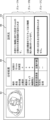
- FIG. 4 shows an example of a screen D1 displayed on the display 24 by the controller 38.
- the screen D1 includes an area 92 in which the medical image acquired by the acquisition unit 30 is displayed, an area 94 in which element information generated by the first generation unit 32 is displayed, and a second generation unit and a region 96 in which a plurality of sentences generated by 34 are displayed.
- control unit 38 may group a plurality of sentences based on the element information to which the sentences correspond and display them on the display 24 .
- Grouping is performed in the same manner as the rule regarding the order of describing the element information described above. In the example of FIG. 4, grouping is performed so that group A includes element information of high importance, group B includes element information about the peripheral portion, and group C includes element information about the interior.
- the control unit 38 accepts changes made by the user to the element information.
- the element information generated by the first generation unit 32 includes, for example, misdiagnosis by CAD, information that the user determines is not necessary to be described, and information that the user desires to be described but has not been generated. in order to obtain
- FIG. 5 shows an example of a screen D2 displayed on the display 24 by the control unit 38 for accepting changes in element information.
- Screen D2 includes, in addition to areas 92 to 96 similar to screen D1, an area 98 in which candidates for element information that can be changed for the selected element information (hereinafter referred to as "change candidates") are displayed.
- the user operates the cursor 99 on the screen D2 via the input unit 25 to select element information to be changed and change candidates.
- the element information of "bronchial fluoroscopic image +" in the area 94 is selected, and the change candidate of "description unnecessary" in the area 98 is selected.
- the control unit 38 When the element information in the area 94 is selected on the screen D2, the control unit 38 causes the area 98 to display change candidates for the selected element information. When the user selects one of the change candidates in the area 98, the control unit 38 changes the selected element information in the area 96 to the selected change candidate.
- the modifying unit 36 modifies, when part of the element information generated by the first generating unit 32 is to be modified, Modify only the first sentence corresponding to the element information. Specifically, the correction unit 36 divides the plurality of sentences generated by the second generation unit 34 into a first sentence corresponding to the element information to be changed, a second sentence not corresponding to the element information to be changed, classified into Further, the correction unit 36 instructs the second generation unit 34 to correct only the first sentence out of the first sentence and the second sentence based on the changed element information.
- the text corresponding to the elemental information of "bronchial fluoroscopic image +" to be changed is the text of group C in the third sentence.
- the correction unit 36 classifies the sentences in group C as first sentences corresponding to the element information to be changed, and the sentences in groups A and B as second sentences not corresponding to the element information to be changed. After that, the correction unit 36 instructs the second generation unit 34 to correct only the first sentence of the group C based on the element information changed to "bronchial fluoroscopic image - description unnecessary".
- the second generation unit 34 generates a sentence again based on the element information of group C after the change.
- FIG. 6 shows an example of a screen D3 including the corrected first sentence displayed on the display 24 by the control unit 38.
- the control unit 38 emphasizes the corrected first sentence (group C), which has been corrected based on the changed element information ("bronchial lucid image, description unnecessary") on the display 24. You may perform control to display.
- the post-change element information ("bronchial fluoroscopic image no need to describe") is highlighted. By highlighting only the corrected first sentence in this manner, it becomes easier for the user to confirm which sentence among the plurality of sentences has been corrected.
- the classification of the first sentence and the second sentence by the correction unit 36 may be performed in real time while the control unit 38 is accepting the user's change of the element information.
- the control unit 38 emphasizes the first sentence before correction, which corresponds to the element information to be changed, among the plurality of sentences displayed in the area 96, and displays it on the display 24. You may perform control to let you do it. By highlighting the first sentence during the change operation in this way, it becomes easier for the user to confirm which sentence among the plurality of sentences is affected when changing the element information.
- FIG. 7 the information processing shown in FIG. 7 is executed by the CPU 21 executing the information processing program 27.
- FIG. Information processing is executed, for example, when a user gives an instruction to start execution via the input unit 25 .
- step S ⁇ b>10 the acquisition unit 30 acquires medical images from the image server 5 .
- the first generation unit 32 generates a plurality of pieces of elemental information based on the medical image acquired at step S10. Further, the first generation unit 32 may generate element information based on information input by the user via the input unit 25 and information acquired from an external device.
- the second generation unit 34 generates a plurality of sentences based on the element information generated at step S12.
- the control unit 38 causes the display 24 to display a screen including the plurality of sentences generated at step S14.
- step S18 the control unit 38 accepts changes made by the user to the element information generated in step S12.
- step S20 the correction unit 36 divides the plurality of sentences generated in step S14 into a first sentence corresponding to the element information to be changed received in step S18 and a second sentence not corresponding to the element information to be changed. and classified into.
- step S22 the correction unit 36 instructs the second generation unit 34 to correct only the first sentence based on the changed element information, and the second generation unit 34 generates the second sentence based on the changed element information. Correct only one sentence.
- step S24 the control unit 38 causes the display 24 to display a screen including the first sentence corrected in step S22, and ends this information processing.
- FIG. 8 shows an example of a screen D4 that can be displayed on the display 24 when the entirety of a plurality of sentences has changed significantly.
- the user may have to check the entirety of the plurality of sentences again.
- the user cannot immediately identify the part that has been modified in response to the changed element information, and it is difficult to confirm.
- the information processing device 10 includes at least one processor, the processor generates a plurality of sentences based on a plurality of element information used for diagnosis, When part of the element information among the plurality of element information is changed, only the first sentence corresponding to the changed element information is corrected among the plurality of sentences.
- the information processing apparatus 10 by correcting only the sentences corresponding to the changed element information, the user can easily check the corrected parts, thereby supporting the creation of medical documents. can.
- the acquisition unit 30 when element information is generated in advance by an external device having a function similar to that of the first generation unit 32 that generates element information based on medical images, and an interpretation report is created, the acquisition unit 30 generates A form of acquiring the element information from the device may be adopted.
- the second generation unit 34 generates a plurality of sentences based on the element information, but the present invention is not limited to this.
- a plurality of pieces of element information can be represented by a graph structure represented by nodes indicating each of the plurality of pieces of element information and edges connecting nodes of related element information.
- FIG. 9 shows an example of a graph structure and sentences generated based on the graph structure.
- FIG. 9 is a so-called directed graph in which nodes are represented by circles and edges are represented by arrows. Nodes of related element information are connected by edges. Also, the meaning of edge is represented in italics.
- the second generation unit 34 may generate a plurality of sentences based on the graph structure as shown in FIG. Specifically, the second generation unit 34 generates a graph structure based on a plurality of pieces of element information regarding medical images generated by the first generation unit 32 . After that, the second generator 34 generates a plurality of sentences based on the generated graph structure. For example, a trained model such as a CNN, which is trained in advance so that the input is a graph structure and the output is a sentence, may be used to generate sentences based on the graph structure. The second generation unit 34 may generate sentences by inputting the generated graph structure into the learned model.
- a trained model such as a CNN, which is trained in advance so that the input is a graph structure and the output is a sentence
- the technique of the present disclosure can also target images other than medical images for diagnosis.
- the technology of the present disclosure can also be applied to the case where CT images taken in non-destructive inspection of structures, industrial products, pipes, etc. are diagnostic targets and reports are created.
- the hardware of a processing unit that executes various processes such as the acquisition unit 30, the first generation unit 32, the second generation unit 34, the correction unit 36, and the control unit 38
- the various processors include, in addition to the CPU, which is a general-purpose processor that executes software (programs) and functions as various processing units, circuits such as FPGAs (Field Programmable Gate Arrays), etc.
- Programmable Logic Device PLD which is a processor whose configuration can be changed, ASIC (Application Specific Integrated Circuit) etc. Circuits, etc. are included.
- One processing unit may be composed of one of these various processors, or a combination of two or more processors of the same type or different types (for example, a combination of multiple FPGAs, a combination of a CPU and an FPGA). combination). Also, a plurality of processing units may be configured by one processor.
- a single processor is configured by combining one or more CPUs and software.
- a processor functions as multiple processing units.
- SoC System on Chip
- the various processing units are configured using one or more of the above various processors as a hardware structure.
- the information processing program 27 is pre-stored (installed) in the storage unit 22, but the present invention is not limited to this.
- the information processing program 27 may be provided in a form recorded on a recording medium such as a CD-ROM (Compact Disc Read Only Memory), a DVD-ROM (Digital Versatile Disc Read Only Memory), and a USB (Universal Serial Bus) memory. good.
- the information processing program 27 may be downloaded from an external device via a network.
- the technology of the present disclosure extends to a storage medium that non-temporarily stores an information processing program in addition to the information processing program.
- the technology of the present disclosure can also appropriately combine the exemplary embodiments described above.
- the description and illustration shown above are detailed descriptions of the parts related to the technology of the present disclosure, and are merely examples of the technology of the present disclosure.
- the above descriptions of configurations, functions, actions, and effects are descriptions of examples of configurations, functions, actions, and effects of portions related to the technology of the present disclosure. Therefore, unnecessary parts may be deleted, new elements added, or replaced with respect to the above-described description and illustration without departing from the gist of the technology of the present disclosure. Needless to say.
Landscapes
- Engineering & Computer Science (AREA)
- Health & Medical Sciences (AREA)
- General Health & Medical Sciences (AREA)
- Theoretical Computer Science (AREA)
- Public Health (AREA)
- Medical Informatics (AREA)
- Primary Health Care (AREA)
- Epidemiology (AREA)
- Physics & Mathematics (AREA)
- Artificial Intelligence (AREA)
- Audiology, Speech & Language Pathology (AREA)
- Computational Linguistics (AREA)
- General Engineering & Computer Science (AREA)
- General Physics & Mathematics (AREA)
- Nuclear Medicine, Radiotherapy & Molecular Imaging (AREA)
- Radiology & Medical Imaging (AREA)
- Biomedical Technology (AREA)
- Databases & Information Systems (AREA)
- Data Mining & Analysis (AREA)
- Pathology (AREA)
- Medical Treatment And Welfare Office Work (AREA)
Priority Applications (2)
| Application Number | Priority Date | Filing Date | Title |
|---|---|---|---|
| JP2023551882A JPWO2023054646A1 (https=) | 2021-09-30 | 2022-09-29 | |
| US18/617,632 US20240266034A1 (en) | 2021-09-30 | 2024-03-26 | Information processing apparatus, information processing method, and information processing program |
Applications Claiming Priority (2)
| Application Number | Priority Date | Filing Date | Title |
|---|---|---|---|
| JP2021-162034 | 2021-09-30 | ||
| JP2021162034 | 2021-09-30 |
Related Child Applications (1)
| Application Number | Title | Priority Date | Filing Date |
|---|---|---|---|
| US18/617,632 Continuation US20240266034A1 (en) | 2021-09-30 | 2024-03-26 | Information processing apparatus, information processing method, and information processing program |
Publications (1)
| Publication Number | Publication Date |
|---|---|
| WO2023054646A1 true WO2023054646A1 (ja) | 2023-04-06 |
Family
ID=85782936
Family Applications (1)
| Application Number | Title | Priority Date | Filing Date |
|---|---|---|---|
| PCT/JP2022/036598 Ceased WO2023054646A1 (ja) | 2021-09-30 | 2022-09-29 | 情報処理装置、情報処理方法及び情報処理プログラム |
Country Status (3)
| Country | Link |
|---|---|
| US (1) | US20240266034A1 (https=) |
| JP (1) | JPWO2023054646A1 (https=) |
| WO (1) | WO2023054646A1 (https=) |
Citations (1)
| Publication number | Priority date | Publication date | Assignee | Title |
|---|---|---|---|---|
| WO2020129385A1 (ja) * | 2018-12-19 | 2020-06-25 | 富士フイルム株式会社 | 医療文書作成支援装置、方法およびプログラム |
Family Cites Families (3)
| Publication number | Priority date | Publication date | Assignee | Title |
|---|---|---|---|---|
| JP5967968B2 (ja) * | 2012-02-14 | 2016-08-10 | キヤノン株式会社 | 医療診断支援システム、医療診断支援装置、情報処理方法、及びプログラム |
| JP2020077290A (ja) * | 2018-11-09 | 2020-05-21 | 富士通株式会社 | 要約作成プログラム、要約作成方法、および情報処理システム |
| EA202192026A1 (ru) * | 2019-02-27 | 2021-11-12 | Эли Лилли Энд Компани | Устройство для доставки лекарственного препарата с измерительной системой |
-
2022
- 2022-09-29 WO PCT/JP2022/036598 patent/WO2023054646A1/ja not_active Ceased
- 2022-09-29 JP JP2023551882A patent/JPWO2023054646A1/ja active Pending
-
2024
- 2024-03-26 US US18/617,632 patent/US20240266034A1/en active Pending
Patent Citations (1)
| Publication number | Priority date | Publication date | Assignee | Title |
|---|---|---|---|---|
| WO2020129385A1 (ja) * | 2018-12-19 | 2020-06-25 | 富士フイルム株式会社 | 医療文書作成支援装置、方法およびプログラム |
Also Published As
| Publication number | Publication date |
|---|---|
| JPWO2023054646A1 (https=) | 2023-04-06 |
| US20240266034A1 (en) | 2024-08-08 |
Similar Documents
| Publication | Publication Date | Title |
|---|---|---|
| US11093699B2 (en) | Medical image processing apparatus, medical image processing method, and medical image processing program | |
| WO2022215530A1 (ja) | 医用画像装置、医用画像方法、及び医用画像プログラム | |
| US20230005580A1 (en) | Document creation support apparatus, method, and program | |
| JP7504987B2 (ja) | 情報処理装置、情報処理方法及び情報処理プログラム | |
| WO2022070528A1 (ja) | 医用画像処理装置、方法およびプログラム | |
| US20230281810A1 (en) | Image display apparatus, method, and program | |
| US20220028510A1 (en) | Medical document creation apparatus, method, and program | |
| US20230360213A1 (en) | Information processing apparatus, method, and program | |
| US12211600B2 (en) | Information processing apparatus, information processing method, and information processing program | |
| WO2021107098A1 (ja) | 文書作成支援装置、文書作成支援方法及び文書作成支援プログラム | |
| JP2024009342A (ja) | 文書作成支援装置、方法およびプログラム | |
| WO2022064794A1 (ja) | 画像表示装置、方法およびプログラム | |
| JPWO2019193982A1 (ja) | 医療文書作成支援装置、医療文書作成支援方法、及び医療文書作成支援プログラム | |
| US20240266056A1 (en) | Information processing apparatus, information processing method, and information processing program | |
| JP7007469B2 (ja) | 医療文書作成支援装置、方法およびプログラム、学習済みモデル、並びに学習装置、方法およびプログラム | |
| WO2020202822A1 (ja) | 医療文書作成支援装置、方法およびプログラム | |
| WO2021193548A1 (ja) | 文書作成支援装置、方法およびプログラム | |
| JP7420914B2 (ja) | 情報処理装置、情報処理方法及び情報処理プログラム | |
| WO2022196105A1 (ja) | 情報管理装置、方法およびプログラム、並びに情報処理装置、方法およびプログラム | |
| WO2023199957A1 (ja) | 情報処理装置、情報処理方法及び情報処理プログラム | |
| JP2023067186A (ja) | 情報処理装置、情報処理方法及び情報処理プログラム | |
| WO2023054646A1 (ja) | 情報処理装置、情報処理方法及び情報処理プログラム | |
| WO2020105415A1 (ja) | 医療情報表示装置、方法およびプログラム、並びに医療情報を表示するためのグラフィックユーザインターフェース | |
| JP7368592B2 (ja) | 文書作成支援装置、方法およびプログラム | |
| JPWO2020105416A1 (ja) | 医療情報表示装置、方法およびプログラム、並びに医療情報を表示するためのグラフィックユーザインターフェース |
Legal Events
| Date | Code | Title | Description |
|---|---|---|---|
| 121 | Ep: the epo has been informed by wipo that ep was designated in this application |
Ref document number: 22876509 Country of ref document: EP Kind code of ref document: A1 |
|
| WWE | Wipo information: entry into national phase |
Ref document number: 2023551882 Country of ref document: JP |
|
| NENP | Non-entry into the national phase |
Ref country code: DE |
|
| 122 | Ep: pct application non-entry in european phase |
Ref document number: 22876509 Country of ref document: EP Kind code of ref document: A1 |