WO2023053176A1 - 学習装置、行動推薦装置、学習方法、行動推薦方法及び記憶媒体 - Google Patents
学習装置、行動推薦装置、学習方法、行動推薦方法及び記憶媒体 Download PDFInfo
- Publication number
- WO2023053176A1 WO2023053176A1 PCT/JP2021/035571 JP2021035571W WO2023053176A1 WO 2023053176 A1 WO2023053176 A1 WO 2023053176A1 JP 2021035571 W JP2021035571 W JP 2021035571W WO 2023053176 A1 WO2023053176 A1 WO 2023053176A1
- Authority
- WO
- WIPO (PCT)
- Prior art keywords
- action
- subject
- information
- recommended
- history
- Prior art date
- Legal status (The legal status is an assumption and is not a legal conclusion. Google has not performed a legal analysis and makes no representation as to the accuracy of the status listed.)
- Ceased
Links
Images







Classifications
-
- G—PHYSICS
- G16—INFORMATION AND COMMUNICATION TECHNOLOGY [ICT] SPECIALLY ADAPTED FOR SPECIFIC APPLICATION FIELDS
- G16H—HEALTHCARE INFORMATICS, i.e. INFORMATION AND COMMUNICATION TECHNOLOGY [ICT] SPECIALLY ADAPTED FOR THE HANDLING OR PROCESSING OF MEDICAL OR HEALTHCARE DATA
- G16H50/00—ICT specially adapted for medical diagnosis, medical simulation or medical data mining; ICT specially adapted for detecting, monitoring or modelling epidemics or pandemics
- G16H50/30—ICT specially adapted for medical diagnosis, medical simulation or medical data mining; ICT specially adapted for detecting, monitoring or modelling epidemics or pandemics for calculating health indices; for individual health risk assessment
-
- G—PHYSICS
- G16—INFORMATION AND COMMUNICATION TECHNOLOGY [ICT] SPECIALLY ADAPTED FOR SPECIFIC APPLICATION FIELDS
- G16H—HEALTHCARE INFORMATICS, i.e. INFORMATION AND COMMUNICATION TECHNOLOGY [ICT] SPECIALLY ADAPTED FOR THE HANDLING OR PROCESSING OF MEDICAL OR HEALTHCARE DATA
- G16H20/00—ICT specially adapted for therapies or health-improving plans, e.g. for handling prescriptions, for steering therapy or for monitoring patient compliance
-
- G—PHYSICS
- G16—INFORMATION AND COMMUNICATION TECHNOLOGY [ICT] SPECIALLY ADAPTED FOR SPECIFIC APPLICATION FIELDS
- G16H—HEALTHCARE INFORMATICS, i.e. INFORMATION AND COMMUNICATION TECHNOLOGY [ICT] SPECIALLY ADAPTED FOR THE HANDLING OR PROCESSING OF MEDICAL OR HEALTHCARE DATA
- G16H20/00—ICT specially adapted for therapies or health-improving plans, e.g. for handling prescriptions, for steering therapy or for monitoring patient compliance
- G16H20/30—ICT specially adapted for therapies or health-improving plans, e.g. for handling prescriptions, for steering therapy or for monitoring patient compliance relating to physical therapies or activities, e.g. physiotherapy, acupressure or exercising
-
- G—PHYSICS
- G16—INFORMATION AND COMMUNICATION TECHNOLOGY [ICT] SPECIALLY ADAPTED FOR SPECIFIC APPLICATION FIELDS
- G16H—HEALTHCARE INFORMATICS, i.e. INFORMATION AND COMMUNICATION TECHNOLOGY [ICT] SPECIALLY ADAPTED FOR THE HANDLING OR PROCESSING OF MEDICAL OR HEALTHCARE DATA
- G16H20/00—ICT specially adapted for therapies or health-improving plans, e.g. for handling prescriptions, for steering therapy or for monitoring patient compliance
- G16H20/60—ICT specially adapted for therapies or health-improving plans, e.g. for handling prescriptions, for steering therapy or for monitoring patient compliance relating to nutrition control, e.g. diets
-
- G—PHYSICS
- G16—INFORMATION AND COMMUNICATION TECHNOLOGY [ICT] SPECIALLY ADAPTED FOR SPECIFIC APPLICATION FIELDS
- G16H—HEALTHCARE INFORMATICS, i.e. INFORMATION AND COMMUNICATION TECHNOLOGY [ICT] SPECIALLY ADAPTED FOR THE HANDLING OR PROCESSING OF MEDICAL OR HEALTHCARE DATA
- G16H20/00—ICT specially adapted for therapies or health-improving plans, e.g. for handling prescriptions, for steering therapy or for monitoring patient compliance
- G16H20/70—ICT specially adapted for therapies or health-improving plans, e.g. for handling prescriptions, for steering therapy or for monitoring patient compliance relating to mental therapies, e.g. psychological therapy or autogenous training
-
- G—PHYSICS
- G16—INFORMATION AND COMMUNICATION TECHNOLOGY [ICT] SPECIALLY ADAPTED FOR SPECIFIC APPLICATION FIELDS
- G16H—HEALTHCARE INFORMATICS, i.e. INFORMATION AND COMMUNICATION TECHNOLOGY [ICT] SPECIALLY ADAPTED FOR THE HANDLING OR PROCESSING OF MEDICAL OR HEALTHCARE DATA
- G16H50/00—ICT specially adapted for medical diagnosis, medical simulation or medical data mining; ICT specially adapted for detecting, monitoring or modelling epidemics or pandemics
- G16H50/20—ICT specially adapted for medical diagnosis, medical simulation or medical data mining; ICT specially adapted for detecting, monitoring or modelling epidemics or pandemics for computer-aided diagnosis, e.g. based on medical expert systems
-
- G—PHYSICS
- G16—INFORMATION AND COMMUNICATION TECHNOLOGY [ICT] SPECIALLY ADAPTED FOR SPECIFIC APPLICATION FIELDS
- G16H—HEALTHCARE INFORMATICS, i.e. INFORMATION AND COMMUNICATION TECHNOLOGY [ICT] SPECIALLY ADAPTED FOR THE HANDLING OR PROCESSING OF MEDICAL OR HEALTHCARE DATA
- G16H50/00—ICT specially adapted for medical diagnosis, medical simulation or medical data mining; ICT specially adapted for detecting, monitoring or modelling epidemics or pandemics
- G16H50/70—ICT specially adapted for medical diagnosis, medical simulation or medical data mining; ICT specially adapted for detecting, monitoring or modelling epidemics or pandemics for mining of medical data, e.g. analysing previous cases of other patients
Definitions
- the present disclosure relates to the technical field of a learning device, a behavior recommendation device, a learning method, a behavior recommendation method, and a storage medium that perform processing related to recommendation of behavior for changing a subject's health condition.
- Patent Document 1 by collecting basic information, physical information, and behavioral information of a user whose health condition has been determined to have improved, and analyzing the conditions under which a certain behavior contributes to improving the health condition, A system is disclosed for presenting a user with a success story according to the person's physical function and lifestyle. Further, Patent Literature 2 discloses a system that provides a subject with an improvement behavior portfolio that encourages behavioral change for improving the health condition, etc., based on data of health checkup results and the like.
- Patent Literature 1 and Patent Literature 2 do not disclose the point of determining an action to be recommended in consideration of both the subject's past behavior and health condition.
- one object of the present disclosure is to provide a learning device, a behavior recommendation device, a learning method, a behavior recommendation method, and a storage medium capable of suitably determining behavior to recommend to a subject. do.
- One aspect of the learning device includes: History information representing a history of a subject's health condition and behavior that contributes to a change in the subject's health condition; success/failure information indicating whether or not the behavior contributed to a change in the subject's health condition; an acquisition means for acquiring Recommend action to be recommended to improve the health condition of the subject when the history information representing the history of the behavior and the health condition of the subject is input based on the history information and the success/failure information a learning means for learning a model that outputs information; is a learning device having
- One aspect of the action recommendation device is history information acquisition means for acquiring history information representing a history of a subject's health condition and actions that contribute to changes in the subject's health condition; recommended action determination means for determining a recommended action, which is an action to be recommended to the target person, based on the history information and the recommendation model; output means for outputting information about the recommended action; has
- the recommendation model is based on history information representing a history of the health conditions of the plurality of persons and actions that contribute to changes in the health conditions of the plurality of persons.
- One aspect of the learning method comprises: the computer History information representing a history of a subject's health condition and behavior that contributes to a change in the subject's health condition; success/failure information indicating whether or not the behavior contributed to a change in the subject's health condition; and get Information on a recommended action to be recommended for improving the health condition of the subject when the history information representing the history of the behavior and health status of the subject is input based on the history information and the success/failure information. train a model that outputs It's a learning method.
- the "computer” includes any electronic device (it may be a processor included in the electronic device), and may be composed of a plurality of electronic devices.
- Another aspect of the action recommendation method is the computer Acquiring history information representing a history of a subject's health condition and behavior that contributes to a change in the subject's health condition; determining a recommended action, which is an action to be recommended to the target person, based on the history information and the recommendation model; An action recommendation method for outputting information about the recommended action,
- the recommendation model is based on history information representing a history of the health conditions of the plurality of persons and actions that contribute to changes in the health conditions of the plurality of persons.
- History information representing a history of a subject's health condition and behavior that contributes to a change in the subject's health condition
- success/failure information indicating whether or not the behavior contributed to a change in the subject's health condition
- Another aspect of the storage medium is Acquiring history information representing a history of a subject's health condition and behavior that contributes to a change in the subject's health condition; determining a recommended action, which is an action to be recommended to the target person, based on the history information and the recommendation model; cause a computer to execute a process of outputting information about the recommended action;
- the recommendation model is based on history information representing a history of the health conditions of the plurality of persons and actions that contribute to changes in the health conditions of the plurality of persons.
- This is a storage medium storing a program that is a model that has learned the relationship between recommended actions recommended to improve each individual's health condition.
- FIG. 1 shows a schematic configuration of an action recommendation system according to a first embodiment
- (A) shows the hardware configuration of the learning device
- (B) shows the hardware configuration of the action recommendation device
- FIG. 10 is a diagram schematically showing the operation of generating a recommendation model in the SAiL method
- FIG. 4 is a diagram schematically showing an operation for optimizing a behavior mimicker
- FIG. 4 is a diagram schematically showing learning of a recommendation model and calculation of a recommended action using the recommendation model; It is an example of the flowchart showing the learning process of the recommendation model which a learning apparatus performs. It is an example of a functional block of an action recommendation device.
- FIG. 1 shows a schematic configuration of an action recommendation system according to a second embodiment
- FIG. 11 is a block diagram of a learning device in a third embodiment
- FIG. 11 is an example of a flowchart executed by a learning device in the third embodiment
- FIG. It is a block diagram of the action recommendation device in 4th Embodiment. It is an example of a flow chart which an action recommendation device performs in a 4th embodiment.
- FIG. 1 shows a schematic configuration of an action recommendation system 100 according to the first embodiment.
- the action recommendation system 100 is a system related to health management of a subject, and learns a recommendation model that recommends the next action to be performed from the history of the subject's behavior and health condition, and the action using the learned recommendation model. recommend and do.
- the recommendation model is a model that has learned the relationship between history information representing the history of actions and the health condition of the person who performed the action, and actions recommended to the person who performed the action.
- a "subject” is a person whose behavior is recommended by the behavior recommendation system 100, and may be a person whose behavior is managed by an organization, or an individual user.
- the above-mentioned “health management” includes diet support for the purpose of improving body weight and body fat percentage, etc., general health management such as health promotion for the purpose of improving blood sugar levels and other test items, It also includes maintaining the condition of special workers such as athletes and managing the rehabilitation of patients who require rehabilitation.
- “behavior” includes any behavior that affects the health of the subject, and includes not only active behavior performed by oneself, but also passive behavior such as receiving a massage or treatment.
- the action recommendation system 100 mainly includes a learning device 1, an action recommendation device 2, a storage device 3, an input device 4, an output device 5, and a sensor 6.
- the learning device 1 and the storage device 3, and the action recommendation device 2 and the storage device 3 perform data communication via a communication network or by direct wireless or wired communication.
- the action recommendation device 2 and the input device 4, the action recommendation device 2 and the output device 5, and the action recommendation device 2 and the sensor 6 perform data communication via a communication network or direct wireless or wired communication.
- the learning device 1 performs machine learning of a recommendation model, which is a learning device, based on the training data stored in the training data storage unit 32 of the storage device 3, and stores the parameters of the recommendation model obtained by the machine learning in the storage device 3.
- the recommendation model uses, as input data, information representing the history of the subject's behavior and health condition (also referred to as "behavior/state history information"), and actions to be recommended to the subject (also referred to as "recommended action”). ) as an inference result.
- the aforementioned recommendation model is learned based on the SAiL (Skill Acquisition Learning) method. The details of the learning of the recommendation model will be described later.
- the behavior recommendation device 2 constructs a recommendation model based on the parameters stored in the model information storage unit 31 of the storage device 3, and stores the constructed recommendation model and the behavior/state history representing the history of the subject's most recent behavior and health condition. Based on the information, a recommended action to be recommended to the target person is determined.
- the action recommendation device 2 is based on the input signal "S1" supplied from the input device 4, the sensor (detection) signal "S3" supplied from the sensor 6, or/and the information stored in the storage device 3. , to acquire action/state history information representing the history of the subject's most recent actions and health conditions. Then, the action recommendation device 2 outputs information on the determined recommended action through the output device 5 . In this case, the behavior recommendation device 2 generates an output signal “S2” related to the recommended behavior to be recommended to the target person, and supplies the generated output signal S2 to the output device 5 .
- the input device 4 is an interface that accepts manual input (external input) of information about each subject.
- the user who inputs information using the input device 4 may be the subject himself/herself, or may be a person who manages or supervises the activity of the subject.
- the input device 4 may be, for example, various user input interfaces such as a touch panel, buttons, keyboard, mouse, and voice input device.
- the input device 4 supplies the generated input signal S ⁇ b>1 to the action recommendation device 2 .
- the output device 5 displays or outputs predetermined information based on the output signal S2 supplied from the action recommendation device 2 .
- the output device 5 is, for example, a display, a projector, a speaker, or the like.
- the sensor 6 measures the subject's biological signal and the like, and supplies the measured biological signal and the like to the action recommendation device 2 as a sensor signal S3.
- the sensor signal S3 is an arbitrary biological signal such as the subject's heartbeat, brain wave, pulse wave, perspiration (electrodermal activity), hormone secretion, cerebral blood flow, blood pressure, body temperature, myoelectricity, respiration rate, acceleration, etc. It may be a signal (including vital information).
- the sensor 6 may be a device that analyzes the blood sampled from the subject and outputs a sensor signal S3 indicating the analysis result.
- the senor 6 may be a wearable terminal worn by the subject, a camera for photographing the subject, a microphone for generating an audio signal of the subject's speech, or a personal device operated by the subject.
- a terminal such as a computer or a smartphone may be used.
- the wearable terminal described above includes, for example, a GNSS (Global Navigation Satellite System) receiver, an acceleration sensor, and other sensors that detect biological signals, and outputs the output signal of each of these sensors as a sensor signal S3.
- the sensor 6 may supply the action recommendation device 2 with information corresponding to the operation amount of a personal computer, a smartphone, or the like as the sensor signal S3.
- the sensor 6 may output a sensor signal S3 representing biometric data (including sleeping time) from the subject while the subject is sleeping.
- the storage device 3 is a memory that stores various types of information necessary for the processing executed by the learning device 1 and the action recommendation device 2.
- the storage device 3 may be an external storage device such as a hard disk connected to or built into either the learning device 1 and the action recommendation device 2, or a storage medium such as a portable flash memory.
- the storage device 3 may be a server device that performs data communication with the learning device 1 and the action recommendation device 2 .
- the storage device 3 may be composed of a plurality of devices.
- the storage device 3 functionally has a model information storage unit 31 and a training data storage unit 32 .
- the model information storage unit 31 stores the parameters of the recommendation model that the learning device 1 learns.
- the recommendation model is learned to output, as an inference result, a recommended action to be recommended to the target person, using as input data action/state history information representing the history of previous actions and health conditions relating to the target person.
- the parameters of the recommendation model use the behavior/state history information as input data, and the behavior/state history information represents the history of the behavior/health status of a successful case (that is, a positive example), or the behavior/state history information of a failure case. It is generated by machine learning using a teacher label (also referred to as “success/failure information”) that indicates whether it represents a history of health conditions (that is, negative examples).
- KPI It is determined before learning based on Key Performance Indicator.
- a KPI is an example of a "reference index.”
- the model information storage unit 31 stores the layer structure adopted in the model, the neuron structure of each layer, the number of filters in each layer, and the number of filters. Information is stored for various parameters such as the size as well as the weight of each element of each filter. The parameters stored in the model information storage unit 31 are generated and updated by the learning device 1 .
- the training data storage unit 32 stores training data (learning data) that is data for learning (training) used for learning by the learning device 1 .
- the training data is a set of behavior/state history information representing the behavior and health status of a subject for training data generation (also referred to as a “training subject”) and a positive/negative label for the behavior/state history information. contains multiple sets of
- the configuration of the action recommendation system 100 shown in FIG. 1 is an example, and various changes may be made to the configuration.
- the learning device 1 and the action recommendation device 2 may each be composed of a plurality of devices.
- the plurality of devices that constitute the learning device 1 and the plurality of devices that constitute the action recommendation device 2 exchange information necessary for executing pre-assigned processing by direct wired or wireless communication. Alternatively, it is performed between devices by communication via a network.
- the learning device 1 functions as a learning system
- the behavior recommendation device 2 functions as a behavior recommendation system.
- the input device 4 and the output device 5 may be integrally constructed.
- the input device 4 and the output device 5 may be configured as tablet terminals that are integrated with or separate from the action recommendation device 2 .
- the input device 4 and the sensor 6 may be integrated.
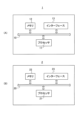
- FIG. 2A shows the hardware configuration of the learning device 1.
- the learning device 1 includes a processor 11, a memory 12, and an interface 13 as hardware.
- Processor 11 , memory 12 and interface 13 are connected via data bus 10 .
- the processor 11 functions as a controller (arithmetic device) that controls the entire learning device 1 by executing programs stored in the memory 12 .
- the processor 11 is, for example, a CPU (Central Processing Unit), a GPU (Graphics Processing Unit), or a TPU (Tensor Processing Unit).
- Processor 11 may be composed of a plurality of processors.
- Processor 11 is an example of a computer.
- the memory 12 is composed of various volatile and nonvolatile memories such as RAM (Random Access Memory), ROM (Read Only Memory), and flash memory.
- the memory 12 also stores a program for executing the processing that the learning device 1 executes. Part of the information stored in the memory 12 may be stored in one or more external storage devices that can communicate with the learning device 1, or may be stored in a storage medium that is detachable from the learning device 1. good.
- the interface 13 is an interface for electrically connecting the learning device 1 and other devices.
- These interfaces may be wireless interfaces such as network adapters for wirelessly transmitting and receiving data to and from other devices, or hardware interfaces for connecting to other devices via cables or the like.
- the hardware configuration of the learning device 1 is not limited to the configuration shown in FIG. 2(A).
- the learning device 1 may further include a display section such as a display, an input section such as a keyboard and a mouse, and a sound output section such as a speaker.
- FIG. 2(B) shows an example of the hardware configuration of the action recommendation device 2.
- the action recommendation device 2 includes a processor 21, a memory 22, and an interface 23 as hardware.
- Processor 21 , memory 22 and interface 23 are connected via data bus 20 .
- the processor 21 functions as a controller (arithmetic device) that performs overall control of the action recommendation device 2 by executing programs stored in the memory 22 .
- the processor 21 is, for example, a processor such as a CPU, GPU, TPU, or quantum processor.
- Processor 21 may be composed of a plurality of processors.
- Processor 21 is an example of a computer.
- the memory 22 is composed of various volatile and nonvolatile memories such as RAM, ROM, and flash memory. Further, the memory 22 stores a program for executing the process executed by the action recommendation device 2 . Part of the information stored in the memory 22 may be stored in an external storage device such as the storage device 3 that can communicate with the action recommendation device 2, or may be stored in a storage medium that is detachable from the action recommendation device 2. may be Alternatively, the memory 22 may store information stored by the storage device 3 .
- the interface 23 is an interface for electrically connecting the action recommendation device 2 and other devices. These interfaces may be wireless interfaces such as network adapters for wirelessly transmitting and receiving data to and from other devices, or hardware interfaces for connecting to other devices via cables or the like.
- the hardware configuration of the action recommendation device 2 is not limited to the configuration shown in FIG. 2(B).
- the action recommendation device 2 may incorporate any of these.
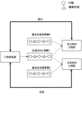
- FIG. 3 is a diagram schematically showing the operation of generating a recommendation model in the SAiL method.
- the recommendation model includes a behavioral policy selector and a plurality of behavioral imitators (behavioral imitator A, behavioral imitator B, . . . ).
- the circle (o) represents the behavior taken by the training subject
- the triangle ( ⁇ ) represents the health condition of the training subject.
- the action imitator is a model that, when a certain past case is input, outputs a recommended action case by adding recommended actions to the input past case.
- a past case A is used, which shows a history of five elements in which actions and health conditions occurring as a result of the actions are alternately shown in chronological order.
- the past case A is input to each behavior mimicker as a history of four elements excluding the last behavior.
- each behavior imitator infers a recommended action based on the input four elements of the past case A, and outputs a recommended action B in which the recommended action is added to the input four elements of the past case A.
- the action recommendation example B is a history of a total of five elements of actions and health conditions, including inferred recommended actions.
- the arrow 90 shown below the past case A on the left side indicates the input to the action mimicker of past case A for four elements excluding the last action, and the arrow 91 below the action recommendation case B indicates the action 4 shows the output from the behavioral mimicker for recommendation case B;
- the action policy selector compares the input (that is, past example A for five elements) and the inference result, and based on the accuracy of the inference Choose the best behavioral mimic.
- An arrow 92 between the past case A and the action recommendation case B in FIG. 3 indicates a comparison between the five elements of the past case A, which is an input, and the action recommendation case B, which is an inference result.
- An arrow 93 from the arrow 92 to the behavioral course selector and an arrow 94 from the arrow 92 to the behavioral mimicker indicate that the comparison results are input to the behavioral policy selector and the behavioral mimicker.
- the learning device 1 generates a recommendation model by simultaneously learning the action policy selector and the action imitator based on the comparison result of the input and the inference result.
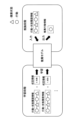
- FIG. 4 is a diagram schematically showing the operation of optimizing the behavior mimicker.
- the learning device 1 generates a behavior imitator by the ACIL (Adversarial Cooperative Imitation Learning) method.
- the learning device 1 compares the cases generated by the behavior mimicker with the past success cases in the success case classifier, which is a part of the action policy selector. Further, the learning device 1 compares the cases generated by the behavior mimicker with past failure cases in the failure case classifier, which is a part of the action policy selector.
- a past success case X in FIG. 4 is input data used as a positive example.
- the past failure case Z is input data used as a negative example. Whether a past case is a positive example or a negative example is identified by referring to the corresponding success/failure information.
- Generated case Y is data generated by the behavior mimicker based on the input data.
- the successful case classifier performs the operation of distinguishing (or classifying) past successful cases and cases generated by the behavior mimicker. Therefore, the behavior imitator and the successful case classifier learn (select the optimal behavior imitator) while opposing each other, with the behavior imitator trying to approximate past successful cases and the successful case classifier trying to distinguish them. proceed.
- ⁇ Proceeding with learning while being hostile'' means that the behavior mimicker tries to generate cases with small differences from the successful cases, while the successful case classifier tries to further identify small differences, so that the input data This is the process of proceeding with learning so as to reduce the difference between the successful cases, which are the inference results, and the generated cases, which are the inference results.
- the failure case classifier distinguishes (or classifies) the past failure cases and the cases generated by the behavior mimicker. Therefore, the behavior imitator and the failure case classifier advance learning while cooperating with the behavior imitator that tries to keep away from past failure cases and the success case classifier that tries to distinguish them.
- ⁇ Proceeding learning while cooperating'' means that the behavior mimicker tries to generate cases with a large difference from the failure case, while the failure case classifier tries to select cases with a larger difference. It refers to the process of proceeding with learning so that the difference between the failure case, which is the input data, and the generated case, which is the inference result, becomes large. In this way, the learning device 1 performs machine learning using both hostility and cooperation, thereby obtaining a recommendation model capable of performing highly accurate inference without fatal failure. .
- the learning device 1 performs machine learning using training data of positive examples and negative examples to generate a recommendation model.
- a recommendation model may be generated by performing machine learning using only data.
- the behavior/state history information indicates a history that alternately indicates the behavior and health status of the subject or training subject.
- information representing actions at a certain point in time that is, actions corresponding to one circle (o) in FIGS. 3 and 4
- action element information information representing actions at a certain point in time
- the above-mentioned "point of time” may have a temporal width (for example, a temporal width of several hours to several days).
- state element information information representing a health state at a certain point in time (that is, a health state corresponding to one circle ( ⁇ ) in FIGS. 3 and 4) is called “state element information”.
- the action indicated by the action element information is an action that can be detected by the sensor 6 or the like in terms of the timing at which the action was performed (time period, date and time, when the target person's state reaches a predetermined state, etc.) and the content of the action. Alternatively, it is an action that can be recorded as a history by manual input to the input device 4 or the like. Examples of such behavior include exercise-related behavior (walking, jogging, weight training, stretching, exercise content such as various sports, exercise frequency, amount of exercise, etc.), meal-related behavior (intake, intake limit, meal time period, etc.) , etc.), behavior related to sleep (for example, sleep time and time zone), treatment (including bodywork treatment and medication treatment), massage treatment, and the like.
- the action element information may include information representing the type of action, or may be information including a combination of the type of action and the degree of action (amount of action).
- the action element information represents a combination of "type of action” and "degree of action”
- the “degree of activity” is the number of steps or walking distance.
- the “degree of action” is distance, load, action time, and the like.
- the “degree of activity” is the amount of calorie intake or the amount of calorie reduction compared to normal times.
- the "behavior type” is the type of dietary behavior (carbohydrate intake/restriction, protein intake/restriction, other nutrient intake/restriction)
- the “degree of behavior” is the intake of the target nutrient. Alternatively, it is an amount of reduction compared to normal, or an index value (for example, GI (Glycemic Index) value) related to dietary intake.
- the behavior element information does not have to include information about the degree of behavior. In this case, the behavioral element information represents the type of behavior that affects the health condition (for example, training, carbohydrate restriction, etc.).
- the information on the recommended action output by the recommendation model (also referred to as “recommended action information”) represents the type of action or a combination of the type of action and the degree of action, similar to the action element information.
- the recommended action information output by the recommendation model has the same data format as the action element information included in the action/state history information used for learning.
- the state element information is information representing a health condition that can be detected by the sensor 6 or the like, or a health condition that can be acquired as a history by manual input to the input device 4 or the like, and includes one or more health-related index values.
- Health-related index values include, for example, blood sugar, triglyceride, and cholesterol values that can be obtained by blood tests, body weight, BMI, body fat percentage, blood pressure, heart rate, and the like.
- the state element information includes at least a health condition index value used to calculate a KPI, which is a key index in determining whether a case is a success or a failure.
- the index value of the health condition used for calculation of the above-mentioned KPI is also called "KPI-related index value.”
- the KPI-related index value may be the KPI itself.
- the state element information may include any index value that is not directly used for KPI calculation, in addition to the index value required for KPI calculation.
- an index value related to the health condition that is not directly used for KPI calculation is also referred to as a "KPI peripheral index value.”
- KPI peripheral index value an index value related to the health condition that is not directly used for KPI calculation.
- the KPI-related index values are weight and height
- the KPI peripheral index values are blood pressure, heart rate, blood sugar level, and the like.
- success/failure information used as a teacher label in learning a recommendation model is information indicating whether the action/state history information paired in the learning of the recommendation model is a success case (that is, a positive example) or a failure case (that is, a negative example), and is stored in the training data storage unit 32. remembered.
- the success/failure information is, for example, when the KPI calculated from the state element information representing the latest health state among the state element information included in the action/state history information belongs to a predetermined preferable value range, the corresponding action • State history information is generated to indicate that it is positive. In addition, if the KPI calculated by the state element information representing the latest health state among the state element information included in the action/state history information is outside the above-described value range, the success/failure information is the corresponding action/state history information. Information is generated to indicate that it is a negative example.
- the success/failure information would be generated to indicate that it is positive if the body weight decreased after a series of actions or after a certain period of time; Generated to indicate a negative case if the weight after the period did not decrease.
- the determination of positive or negative cases is not limited to being determined based only on the latest (final) health status, and may be performed in consideration of the health status in the process of reaching the latest health status. .
- success/failure information indicating that the action/state history information satisfying those conditions is a positive example is given. good.
- the success/failure information may be generated based on any rule or personal method other than the generation examples described above.
- FIG. 5 is an example of functional blocks of the learning apparatus 1 .
- the processor 11 of the learning device 1 functionally has an acquisition unit 15 and a learning unit 16 .
- the acquisition unit 15 acquires a set of action/state history information and success/failure information that has not yet been used for learning of the recommendation model from the training data storage unit 32 via the interface 13, and acquires the acquired action/state history information and success/failure information. are supplied to the learning unit 16 . Then, the acquisition unit 15 waits until the learning unit 16 finishes learning the recommendation model, or acquires all sets of action/state history information and success/failure information stored in the training data storage unit 32. It acquires a set of status history information and success/failure information and supplies it to the learning unit 16 .
- the learning unit 16 learns a recommendation model based on the set of action/state history information and success/failure information supplied from the acquisition unit 15 . Specifically, the learning unit 16 determines whether the action/state history information is a success case or a failure case based on the success/failure information. A behavioral policy selector (including a success case classifier and a failure case classifier) and a behavior imitator are trained so as to output an inference result close to a case and far from a failure case. Then, the learning unit 16 updates each parameter of the action guideline selector and the action mimicker by a parameter determination algorithm such as the gradient descent method or the error backpropagation method, and stores the updated parameters in the model information storage unit 31 .
- a parameter determination algorithm such as the gradient descent method or the error backpropagation method
- the learning unit 16 ends the learning of the recommendation model when a predetermined learning end condition is satisfied. For example, the learning unit 16 completes learning for a predetermined number of pairs of action/state history information and success/failure information, detects a user input indicating that learning should be terminated, or/and detects an error. When it becomes equal to or less than a predetermined threshold value, it is determined that the end condition of learning is satisfied.
- each component of the acquisition unit 15 and the learning unit 16 can be implemented by the processor 11 executing a program, for example. Further, each component may be realized by recording necessary programs in an arbitrary nonvolatile storage medium and installing them as necessary. Note that at least part of each of these components may be realized by any combination of hardware, firmware, and software, without being limited to being implemented by program software. Also, at least part of each of these components may be implemented using a user-programmable integrated circuit, such as an FPGA (Field-Programmable Gate Array) or a microcontroller. Also, at least part of each component may be configured by an ASSP (Application Specific Standard Produce), an ASIC (Application Specific Integrated Circuit), or a quantum processor (quantum computer control chip). Thus, each component may be realized by various hardware. The above also applies to other embodiments described later. Furthermore, each of these components may be realized by cooperation of a plurality of computers using, for example, cloud computing technology.
- FIG. 6 is a diagram schematically showing learning of a recommendation model and calculation of a recommended action using the recommendation model.
- the learning unit 16 learns a recommendation model by inputting a set of action/state history information and success/failure information into the recommendation model in the learning stage.
- the learning unit 16 uses the action/state history information of the failure case (here, the success/failure information is “0”) and the action/state history information of the success case (here, the success/failure information is “1”).
- Train a recommendation model is composed of a total of four elements of behavior and health condition, but is not limited to this, and may have a variable length.
- the behavior/state history information used for learning may include, for example, a total of two elements (that is, one set of behavior and health condition) of behavior/state history information, or a total of six or more elements of behavior/state history information. Information may be included.
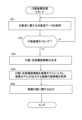
- FIG. 7 is an example of a flowchart showing the recommendation model learning process executed by the learning device 1 .
- the learning device 1 acquires a set of action/state history information and success/failure information from the training data storage unit 32 (step S11). Then, the learning device 1 learns a recommendation model based on the set of the action/state history information and the success/failure information acquired in step S11 (step S12). In this case, the learning device 1 updates the parameters of the recommendation model based on the set of the action/state history information and the success/failure information acquired in step S11, and stores the updated parameters in the model information storage unit 31.
- step S13 determines whether or not the learning has ended.
- step S13 determines that the learning has ended (step S13; YES)
- step S13; NO the processing of the flowchart ends.
- step S13; NO the process returns to step S11.
- FIG. 8 shows an example of functional blocks of the action recommendation device 2 .
- the processor 21 of the behavior recommendation device 2 functionally includes a subject data acquisition unit 25 , a history information generation unit 26 , a recommended behavior determination unit 27 , and an output control unit 28 .
- the blocks that exchange data are connected by solid lines, but the combination of blocks that exchange data is not limited to this. The same applies to other functional block diagrams to be described later.
- the target person data acquisition unit 25 acquires data related to the target person (also referred to as “subject data”) necessary for generating the behavior/state history information (that is, behavior element information and state element information) of the target person through the interface 23 . to get through.
- the subject data acquisition unit 25 acquires the input signal S1 generated by the input device 4 and/or the sensor signal S3 generated by the sensor 6 .
- the subject data acquisition unit 25 or the The history information generation unit 26 may acquire from the storage device 3 the subject's attribute information necessary for generating behavior/state history information.
- the target person data acquired by the target person data acquisition unit 25 is stored in the storage device 3 or the memory 22 in association with, for example, the date and time of acquisition acquired by the target person data acquisition unit 25 or the date and time designated by the user. may
- the history information generation unit 26 extracts the time-series behavior and health condition of the subject from the time-series subject data acquired by the subject data acquisition unit 25, and calculates the time-series behavior based on the extraction result. Generate element information and state element information. Then, the history information generation unit 26 supplies the action/state history information, which is time-series data of the generated action element information and state element information, to the recommended action determination unit 27 .
- the history information generation unit 26 performs predetermined feature extraction processing on the sensor signal S3 to obtain an index (KPI-related indicators and KPI peripheral indicators).
- the sensor signal S3 is biometric data such as heartbeat and perspiration
- the history information generation unit 26 performs predetermined feature extraction processing on the biometric data and stress estimation processing based on the extracted feature amount. , a stress value that is a KPI-related index or a KPI-related index is calculated.
- Various techniques have been proposed for estimating the degree of stress from biometric data.
- the history information generation unit 26 counts the number of steps in the predetermined period from the sensor signal S3 acquired in the predetermined period. Then, action element information representing the number of steps in a predetermined period is generated based on the count result.
- the history information generation unit 26 performs feature extraction processing (including feature extraction technology using a learning model using a neural network, etc.) and the like so that the data format matches the input format of the recommendation model. , converts the subject data into action element information and state element information. Then, the history information generation unit 26 supplies the action/state history information including the generated time-series action element information and state element information to the recommended action determination unit 27 .
- the action/state history information is represented by, for example, a tensor in a predetermined format.
- the history information generation unit 26 sets an observation period for an action to be included in each action element information included in the action/state history information, and based on the sensor signal S3 etc. obtained for each set observation period, the observation period Generate action element information representing actions for each.
- the history information generation unit 26 determines the observation timing of the target health condition in each state element information to be included in the action/state history information, and determines the subject's health condition based on the sensor signal S3 etc. obtained at the observation timing. Generates state element information representing a state of health.
- the health condition observation timing is set, for example, immediately after the observation period of each action or between the observation periods of each action.
- the history information generation unit 26 generates action/state history information including a predetermined number of the most recently generated time-series action element information and state element information, and uses the generated action/state history information to determine a recommended action. 27.
- the recommended action determination unit 27 acquires the parameters of the recommended model from the model information storage unit 31, inputs the action/state history information supplied from the history information generation unit 26 to the recommended model configured based on the parameters, Acquire recommended action information representing recommended actions output by the recommendation model based on the input action/state history information.
- the recommended action determining unit 27 can acquire ground information that serves as a basis for determining the recommended action together with the recommended action information.
- the basis information includes the past recommended behavior of a person whose behavior/state history information is similar to the behavior/state history information of the target person or a person whose attributes are similar to those of the target person, and the state reached by the recommended action. including.
- the recommended action determination unit 27 when the recommended action determination unit 27 generates the recommended action information for the target person with the content of "walking for one hour a day", "Mr. AA, a person similar to the target person's health condition, Information such as ⁇ My health condition has improved by walking for one hour a day'' is generated as the basis information.
- the target person can work on the recommended action with a sense of convincing, so that the probability of working on the recommended action can be improved.
- the basis information may be generated using a recommendation model by another component instead of the recommended action determination unit 27 .
- the processing of the recommended action determination unit 27 will be supplemented with reference to FIG. 6 again.
- the recommended action determination unit 27 inputs action/state history information having four elements of action, health condition, action, and health condition into the recommendation model, and determines the recommended action output from the recommendation model as a result. Representing recommended action information is acquired. The recommended action determination unit 27 then supplies the acquired recommended action information to the output control unit 28 .
- the action/state history information to be input to the recommendation model need not represent a history with the action as the first element and the health condition as the last element, as shown in FIG. , or may represent a history with an action as the last element.
- the processing of the output control unit 28 will be described with reference to FIG.
- the output control unit 28 outputs information about the determined recommended action by controlling the output device 5 based on the recommended action information supplied from the recommended action determination unit 27 .
- the recommended action determining unit 27 generates image information, text information, or audio information (collectively referred to as “recommended action promotion information”) that prompts the recommended action as the output signal S2, and controls the output.
- the unit 28 causes the output device 5 to execute image information, text information, or audio information that prompts the user to perform the recommended action.
- the output control unit 28 based on the recommended behavior promotion information, "reduce the calorie intake (or fat or sugar) by Z (Z is a positive number)", “reduce the number of steps by V (V is a positive number) The user is notified of text information such as "Please increase by the number)".
- the output control unit 28 can suitably recommend the action that the subject should take next.
- the output control unit 28 may store the recommended action information or the recommended action promotion information in the storage device 3 or the memory 22 instead of generating the recommended action promotion information as the output signal S2. You may transmit to the external device which communicates.
- each component of the subject data acquisition unit 25, the history information generation unit 26, the recommended action determination unit 27, and the output control unit 28 can be realized by the processor 21 executing a program, for example. Further, each component may be realized by recording necessary programs in an arbitrary nonvolatile storage medium and installing them as necessary. Note that at least part of each of these components may be realized by any combination of hardware, firmware, and software, without being limited to being implemented by program software. Also, at least a portion of each of these components may be implemented using user-programmable integrated circuits, such as FPGAs or microcontrollers. Also, at least part of each component may be configured by an ASSP, an ASIC, or a quantum processor (quantum computer control chip). Thus, each component may be realized by various hardware. The above also applies to other embodiments described later. Furthermore, each of these components may be realized by cooperation of a plurality of computers using, for example, cloud computing technology.
- FIG. 9 is an example of a flowchart of action recommendation processing by the action recommendation device 2 .
- the action recommendation device 2 acquires target person data about the target person from at least one of the input device 4, the sensor 6, and the storage device 3 (step S21). Then, the behavior recommendation device 2 determines whether or not it is time to recommend behavior (step S22). For example, when the action recommendation device 2 receives an input signal S1 requesting action recommendation from the input device 4, or when a predetermined date and time for action recommendation is reached, or when other predetermined action recommendation When the execution condition is met, it is determined that it is time to recommend an action. In this case, the action recommendation execution condition may be determined based on the subject's health condition.
- the action recommendation device 2 determines that other actions need to be recommended. When the health condition is detected, it may be determined that the action recommendation execution condition is satisfied. In step S22, the processor 21 of the action recommendation device 2 functions as "determination means".
- step S22 determines that it is not the timing for action recommendation
- step S21 the action recommendation device 2 continues the process of acquiring the target person data in step S21.
- step S22 when the action recommendation device 2 determines that it is time to recommend actions (step S22; Yes), action/state history information is generated based on the subject data acquired in step S21 (step S23). Then, the action recommendation device 2 inputs the action/state history information generated in step S23 to the recommendation model configured by referring to the model information storage unit 31, and outputs recommended action information representing the recommended action output by the recommendation model. Acquire (step S24). Then, based on the recommended action information acquired in step S24, the action recommendation device 2 uses the output device 5 to output the recommended action to be recommended to the target person (step S25).
- the target person is a person undergoing a health checkup
- the action recommendation device 2 recommends the action that the target person should take based on the diagnostic data of the health checkup that is regularly performed on an annual or monthly basis.
- the diagnostic data is the diagnostic results or measurement results of each diagnostic item such as height, weight, blood test results, urine test results, X-ray test results, electrocardiogram, etc. These diagnostic data are stored in the storage device 3. ing.
- step S22 of FIG. when it is time to recommend an action in step S22 of FIG. generates state element information representing the state of health at the time of consultation.
- the learning device 1 generates behavioral element information representing the behavior before receiving the health checkup based on the subject data observed before the health checkup in the same manner as in the above-described embodiment, and the generated behavioral element information and the health Action/state history information including state element information based on the diagnosis is generated in step S23.
- the learning device 1 acquires recommended action information output by the recommendation model by inputting the action/state history information to the recommendation model in step S24, and outputs the recommended action in step S25.
- the learning device 1 can suitably recommend to the subject, who is the subject of the health checkup, the action that the subject should take based on the diagnostic data of the health checkup.
- the learning device 1 expresses the subject's health condition by using both the diagnostic data of the physical examination and the sensor signal S3 output by the sensor 6 provided in the wearable terminal or mobile terminal owned by the subject. State element information may be generated.
- the learning device 1 learns a recommendation model for each attribute classification of the training subject, and the action recommendation device 2 uses a recommendation model for determining a recommended action based on the subject's attribute. may be selected.
- the training subjects are classified into a plurality of groups based on predetermined attributes (eg, age, gender, race, etc.), and the learning device 1 corresponds to the training subjects divided for each group.
- a recommendation model is learned for each group based on the training data, and the parameters of the recommendation model for each group obtained by the learning are stored in the model information storage unit 31 .
- the action recommendation device 2 determines the recommended action of the target person
- the target person's attribute information is stored in the storage device 3, or the signal acquired from the input device 4 or the sensor 6. and recognize groups into which the subject is classified based on the attributes of the recognized subject.
- the storage device 3 extracts the parameters of the recommendation model corresponding to the group into which the subject is classified from the model information storage unit 31, configures the recommendation model, and determines the recommended behavior of the subject using the recommendation model. do.
- the action recommendation system 100 learns the action that the subject should take based on the training data acquired from the training subject whose attributes are similar to the subject, and It becomes possible to recommend the desired action to the target person.
- FIG. 10 shows a schematic configuration of an action recommendation system 100A in the second embodiment.
- a behavior recommendation system 100A according to the second embodiment is a server-client model system, and a behavior recommendation device 2A functioning as a server device performs processing of the learning device 1 and the behavior recommendation device 2 in the first embodiment.
- symbol is attached suitably, and the description is abbreviate
- a behavior recommendation system 100A mainly includes a behavior recommendation device 2A functioning as a server, a storage device 3 storing data similar to that of the first embodiment, and a terminal device 8 functioning as a client.
- the action recommendation device 2 ⁇ /b>A and the terminal device 8 perform data communication via the network 7 .
- the terminal device 8 is a terminal having an input function, a display function, and a communication function, and functions as the input device 4 and the output device 5 shown in FIG.
- the terminal device 8 may be, for example, a personal computer, a tablet terminal, a PDA (Personal Digital Assistant), or the like.
- the terminal device 8 transmits a biological signal output by the sensor 6, an input signal based on a user input, or the like to the action recommendation device 2A.
- the action recommendation device 2A has the hardware configuration shown in FIG. 2(A) or FIG. 2(B) and the functional block configurations shown in FIGS. 5 and 8, respectively. Then, the action recommendation device 2A, after executing the recommendation model learning process shown in the flowchart of FIG. 7 as target person data from the terminal device 8, and based on the received target person data, action recommendation processing shown in the flowchart of FIG. 9 or the like is executed. In this case, the action recommendation device 2A (specifically, the output control unit 28 in FIG. 8) sends an output signal related to the recommended action determined by the action recommendation process to the terminal device 8 via the network 7 based on the request from the terminal device 8. Send to device 8 . In this case, the terminal device 8 functions as the output device 5 in the first embodiment.
- the behavior recommendation device 2A can suitably present information regarding recommended behavior determined based on the history of the behavior and health condition of the user of the terminal device 8 to the user of the terminal device 8. can be done.
- a device other than the action recommendation device 2A may perform the learning process of the recommendation model.
- FIG. 11 is a block diagram of a learning device 1X according to the third embodiment.
- the learning device 1X mainly has an acquisition means 15X and a learning means 16X. Note that the learning device 1X may be composed of a plurality of devices.
- Acquisition means 15X obtains history information indicating the history of the subject's health condition and behavior that contributes to the change in the subject's health condition, and success/failure indicating whether or not the behavior contributed to the change in the subject's health condition. Get information and
- the acquisition unit 15X can be, for example, the acquisition unit 15 of the learning device 1 in the first embodiment or the acquisition unit 15 of the action recommendation device 2A in the second embodiment.
- the learning means 16X recommends actions to be recommended to improve the health condition of the subject when the history information representing the history of the subject's behavior and health condition is input. Train a model that outputs information about .
- the learning unit 16X can be, for example, the learning unit 16 of the learning device 1 in the first embodiment or the learning unit 16 of the action recommendation device 2A in the second embodiment.
- FIG. 12 is an example of a flowchart executed by the learning device 1X in the third embodiment.
- Acquisition means 15X of learning device 1X acquires history information indicating the history of the subject's health condition and behavior that contributes to the change in the subject's health condition, and whether or not the behavior has contributed to the change in the subject's health condition. Acquire success/failure information indicating whether or not (step S31). Then, the learning means 16X of the learning device 1X improves the subject's health condition based on the history information and the success/failure information, when the history information representing the history of the behavior and health condition of the subject is input. It learns a model that outputs information about recommended actions to be recommended (step S32).
- the third embodiment it is possible to learn a model that can determine a recommended action to be recommended to a subject in consideration of the history of the subject's behavior and health condition.
- FIG. 13 is a block diagram of an action recommendation device 2X according to the fourth embodiment.
- the action recommendation device 2X mainly includes history information acquisition means 26X, recommended action determination means 27X, and output means 28X.
- the action recommendation device 2Y may be composed of a plurality of devices.
- the history information acquisition means 26X acquires history information representing the history of the subject's health condition and actions that contribute to changes in the subject's health condition.
- the history information acquisition unit 26X can be the history information generation unit 26 of the behavior recommendation device 2 in the first embodiment or the history information generation unit 26 of the behavior recommendation device 2A in the second embodiment.
- the recommended action determination means 27X determines recommended actions, which are actions to be recommended to the target person, based on the history information and the recommendation model.
- the recommendation model is based on the history information representing the history of the health conditions of the plurality of persons and the history of actions that contribute to changes in the health conditions of the plurality of persons. It is a model that has learned the relationship between the recommended action recommended to improve each person's health condition.
- the recommended action determination unit 27X can be the recommended action determination unit 27 of the action recommendation device 2 in the first embodiment or the recommended action determination unit 27 of the action recommendation device 2A in the second embodiment.
- the output means 28X outputs information on recommended actions.
- the output means 28X may display and/or output information on the recommended action to an output device connected to the action recommendation device 2X by wire or wirelessly or built in the action recommendation device 2X, and may output the information by voice.
- Information on the recommended action may be transmitted to an external device connected to the device 2X by wire or wirelessly, and the recommended action is stored in a storage device connected to the action recommendation device 2X by wire or wirelessly or built into the action recommendation device 2X. may store information about
- the output means 28X can be the output control unit 28 of the action recommendation device 2 in the first embodiment or the output control unit 28 of the action recommendation device 2A in the second embodiment.
- FIG. 14 is an example of a flowchart executed by the action recommendation device 2X in the fourth embodiment.
- the history information acquisition unit 26X of the behavior recommendation device 2X acquires history information representing the history of the subject's health condition and behaviors that contribute to changes in the subject's health condition (step S41).
- the recommended action determination means 27X of the action recommendation device 2X determines a recommended action, which is an action to be recommended to the target person, based on the history information and the recommendation model (step S42).
- the recommendation model is based on the history information representing the history of the health conditions of the plurality of persons and the history of actions that contribute to changes in the health conditions of the plurality of persons. It is a model that has learned the relationship between recommended actions recommended to improve the health condition of the patient.
- the output means 28X of the action recommendation device 2X outputs information on the recommended action (step S43).
- the behavior recommendation device 2X can accurately determine and output the recommended behavior to be recommended to the target person, taking into consideration the history of the target person's behavior and health condition.
- Non-transitory computer readable media include various types of tangible storage media.
- Examples of non-transitory computer-readable media include magnetic storage media (e.g., floppy disks, magnetic tapes, hard disk drives), magneto-optical storage media (e.g., magneto-optical discs), CD-ROMs (Read Only Memory), CD-Rs, CD-R/W, semiconductor memory (eg mask ROM, PROM (Programmable ROM), EPROM (Erasable PROM), flash ROM, RAM (Random Access Memory)).
- the program may also be delivered to the computer on various types of transitory computer readable medium.
- Examples of transitory computer-readable media include electrical signals, optical signals, and electromagnetic waves.
- Transitory computer-readable media can deliver the program to the computer via wired channels, such as wires and optical fibers, or wireless channels.
- the learning device according to appendix 1 or 2, wherein the history information includes information about the type of action and the degree of the action as the history of the action.
- the history information includes, as the history of the health condition, at least an index related to the health condition used for calculating a reference index serving as a reference for determining whether the history is the successful case. or the learning device according to claim 1.
- history information acquisition means for acquiring history information representing a history of a subject's health condition and actions that contribute to changes in the subject's health condition; recommended action determination means for determining a recommended action, which is an action to be recommended to the target person, based on the history information and the recommendation model; output means for outputting information about the recommended action; has The recommendation model is based on history information representing a history of the health conditions of the plurality of persons and actions that contribute to changes in the health conditions of the plurality of persons. A model that has learned the relationship between recommended actions recommended to improve each health condition, Action recommender.
- the recommended action determining means generates recommended action promotion information to be notified to the target person based on the recommended action, 6.
- the action recommendation device according to appendix 5, wherein the output means further outputs the recommended action promotion information.
- Appendix 7 further comprising a basis information generating means for generating basis information relating to the basis for determining the recommended action; 7.
- the action recommendation device according to appendix 5 or 6, wherein the output means outputs the basis information.
- Appendix 8 Further comprising determination means for determining whether or not it is time to recommend actions to the target person, 8.
- the action recommendation device according to any one of appendices 5 to 7, wherein the output means outputs information about the recommended action when it is determined that the timing is reached.
- Appendix 9 further comprising subject data acquisition means for acquiring subject data, which is data relating to the subject; 9.
- the action recommendation device according to any one of appendices 5 to 8, wherein the history information acquisition means generates the history information based on the subject data.
- the action recommendation device according to appendix 9, wherein the target person data includes a signal output by a sensor that observes the target person.
- the subject data acquisition means acquires the subject data from a terminal device used by the subject, 11.
- the action recommendation device according to appendix 9 or 10, wherein the output control means transmits information about the recommended action to the terminal device.
- Appendix 12 12.
- the behavior recommendation device according to any one of appendices 9 to 11, wherein the history information acquisition means generates the history information based on diagnosis data of a physical examination received by the subject.
- the recommendation model is based on history information representing a history of the health conditions of the plurality of persons and actions that contribute to changes in the health conditions of the plurality of persons.
- History information representing a history of a subject's health condition and behavior that contributes to a change in the subject's health condition ; success/failure information indicating whether or not the behavior contributed to a change in the subject's health condition; and get Information on a recommended action to be recommended for improving the health condition of the subject when the history information representing the history of the behavior and health status of the subject is input based on the history information and the success/failure information.
- [Appendix 16] Acquiring history information representing a history of a subject's health condition and behavior that contributes to a change in the subject's health condition; determining a recommended action, which is an action to be recommended to the target person, based on the history information and the recommendation model; cause a computer to execute a process of outputting information about the recommended action;
- the recommendation model is based on history information representing a history of the health conditions of the plurality of persons and actions that contribute to changes in the health conditions of the plurality of persons.
- a model that has learned the relationship between recommended actions recommended to improve each health condition, A storage medium in which programs are stored.
- the learning system according to appendix 17 or 18, wherein the history information includes information about the type of action and the degree of the action as the action history.
- Appendix 20 Any one of Appendices 17 to 19, wherein the history information includes, as the history of the health condition, at least an index related to the health condition used for calculating a reference index serving as a reference for determining whether the history is the successful case. 1.
- the learning system according to 1.
- history information acquisition means for acquiring history information representing a history of a subject's health condition and actions that contribute to changes in the subject's health condition; recommended action determination means for determining a recommended action, which is an action to be recommended to the target person, based on the history information and the recommendation model; output means for outputting information about the recommended action; has The recommendation model is based on history information representing a history of the health conditions of the plurality of persons and actions that contribute to changes in the health conditions of the plurality of persons. A model that has learned the relationship between recommended actions recommended to improve each health condition, action recommendation system.
- the recommended action determining means generates recommended action promotion information to be notified to the target person based on the recommended action, 22.
- Appendix 23 further comprising a basis information generating means for generating basis information relating to the basis for determining the recommended action; 23.
- Appendix 24 Further comprising determination means for determining whether or not it is time to recommend actions to the target person, 24.
- Appendix 25 further comprising subject data acquisition means for acquiring subject data, which is data relating to the subject; 25.
- the action recommendation system according to any one of appendices 21 to 24, wherein the history information acquisition means generates the history information based on the subject data.
- the subject data acquisition means acquires the subject data from a terminal device used by the subject, 27.
- the action recommendation system according to appendix 25 or 26, wherein the output control means transmits information about the recommended action to the terminal device.
- [Appendix 28] 28 28.
- the action recommendation system according to any one of appendices 25 to 27, wherein the history information acquisition means generates the history information based on diagnostic data of a physical examination received by the subject.
- Used for services related to health management such as diet support, health promotion, athlete health management, and patient rehabilitation management.
Landscapes
- Health & Medical Sciences (AREA)
- Engineering & Computer Science (AREA)
- Medical Informatics (AREA)
- Public Health (AREA)
- Epidemiology (AREA)
- General Health & Medical Sciences (AREA)
- Primary Health Care (AREA)
- Biomedical Technology (AREA)
- Data Mining & Analysis (AREA)
- Pathology (AREA)
- Databases & Information Systems (AREA)
- Child & Adolescent Psychology (AREA)
- Hospice & Palliative Care (AREA)
- Psychiatry (AREA)
- Psychology (AREA)
- Social Psychology (AREA)
- Developmental Disabilities (AREA)
- Physical Education & Sports Medicine (AREA)
- Biophysics (AREA)
- Life Sciences & Earth Sciences (AREA)
- Nutrition Science (AREA)
- Medical Treatment And Welfare Office Work (AREA)
Priority Applications (3)
| Application Number | Priority Date | Filing Date | Title |
|---|---|---|---|
| US18/692,894 US20250132001A1 (en) | 2021-09-28 | 2021-09-28 | Learning device, action recommendation device, learning method, action recommendation method, and storage medium |
| PCT/JP2021/035571 WO2023053176A1 (ja) | 2021-09-28 | 2021-09-28 | 学習装置、行動推薦装置、学習方法、行動推薦方法及び記憶媒体 |
| JP2023550765A JP7754179B2 (ja) | 2021-09-28 | 2021-09-28 | 学習装置、行動推薦装置、学習方法、行動推薦方法及びプログラム |
Applications Claiming Priority (1)
| Application Number | Priority Date | Filing Date | Title |
|---|---|---|---|
| PCT/JP2021/035571 WO2023053176A1 (ja) | 2021-09-28 | 2021-09-28 | 学習装置、行動推薦装置、学習方法、行動推薦方法及び記憶媒体 |
Publications (1)
| Publication Number | Publication Date |
|---|---|
| WO2023053176A1 true WO2023053176A1 (ja) | 2023-04-06 |
Family
ID=85781471
Family Applications (1)
| Application Number | Title | Priority Date | Filing Date |
|---|---|---|---|
| PCT/JP2021/035571 Ceased WO2023053176A1 (ja) | 2021-09-28 | 2021-09-28 | 学習装置、行動推薦装置、学習方法、行動推薦方法及び記憶媒体 |
Country Status (3)
| Country | Link |
|---|---|
| US (1) | US20250132001A1 (https=) |
| JP (1) | JP7754179B2 (https=) |
| WO (1) | WO2023053176A1 (https=) |
Citations (3)
| Publication number | Priority date | Publication date | Assignee | Title |
|---|---|---|---|---|
| JP2006190127A (ja) * | 2005-01-07 | 2006-07-20 | Sony Corp | 情報処理装置および方法、並びにプログラム |
| JP2018190409A (ja) * | 2017-04-28 | 2018-11-29 | 国立大学法人北見工業大学 | 推薦装置、推薦方法、及びプログラム |
| WO2021100880A1 (ja) * | 2019-11-19 | 2021-05-27 | 株式会社Aventino | 提案システム、提案方法及びプログラム |
-
2021
- 2021-09-28 US US18/692,894 patent/US20250132001A1/en active Pending
- 2021-09-28 WO PCT/JP2021/035571 patent/WO2023053176A1/ja not_active Ceased
- 2021-09-28 JP JP2023550765A patent/JP7754179B2/ja active Active
Patent Citations (3)
| Publication number | Priority date | Publication date | Assignee | Title |
|---|---|---|---|---|
| JP2006190127A (ja) * | 2005-01-07 | 2006-07-20 | Sony Corp | 情報処理装置および方法、並びにプログラム |
| JP2018190409A (ja) * | 2017-04-28 | 2018-11-29 | 国立大学法人北見工業大学 | 推薦装置、推薦方法、及びプログラム |
| WO2021100880A1 (ja) * | 2019-11-19 | 2021-05-27 | 株式会社Aventino | 提案システム、提案方法及びプログラム |
Also Published As
| Publication number | Publication date |
|---|---|
| US20250132001A1 (en) | 2025-04-24 |
| JP7754179B2 (ja) | 2025-10-15 |
| JPWO2023053176A1 (https=) | 2023-04-06 |
Similar Documents
| Publication | Publication Date | Title |
|---|---|---|
| Jeddi et al. | Remote patient monitoring using artificial intelligence | |
| US20230082019A1 (en) | Systems and methods for monitoring brain health status | |
| US10299735B2 (en) | Automated diagnosis based at least in part on pulse waveforms | |
| US12097049B2 (en) | Methods, apparatus and systems for adaptable presentation of sensor data | |
| US20220254492A1 (en) | System and method for automated detection of clinical outcome measures | |
| WO2017040331A1 (en) | Determining sleep stages and sleep events using sensor data | |
| US20240404659A1 (en) | Integrative System and Method for Performing Medical Diagnosis Using Artificial Intelligence | |
| CN113905663A (zh) | 监测注意力缺陷伴多动障碍的诊断和有效性 | |
| US20240032852A1 (en) | Cognitive function estimation device, cognitive function estimation method, and storage medium | |
| WO2023214957A1 (en) | Machine learning models for estimating physiological biomarkers | |
| Abirami | AI clinical decision support system (AI-CDSS) for cardiovascular diseases | |
| EP4388985A1 (en) | System for estimating uncertainty of overnight sleep parameters through a stochastic neural network | |
| Ramathulasi et al. | Patient monitoring through artificial intelligence | |
| JP7754179B2 (ja) | 学習装置、行動推薦装置、学習方法、行動推薦方法及びプログラム | |
| US20240307651A1 (en) | Devices, Systems, and Methods for Monitoring and Managing Resilience | |
| US20240285205A1 (en) | Devices, Systems, and Methods for Mental Health Assessment | |
| Thomas et al. | IoT Wearable Devices to Detect and Monitor Mental Health and Stress | |
| Poomari Durga | Intelligent Support for Cardiovascular Diagnosis | |
| US20230290506A1 (en) | Systems and methods for rapidly screening for signs and symptoms of disorders | |
| WO2023214956A1 (en) | Systems, devices, and methods for biomarker detection and tracking | |
| EP4385402A1 (en) | Hypnodensity-based sleep apnea monitoring system and method of operation thereof | |
| Dai | Smart sensing and clinical predictions with wearables: from physiological signals to mental health | |
| Puttanapura et al. | Developed Convolutional Neural Network for Mental Health Evaluation using Wearable Devices on WESAD Dataset | |
| WO2025097242A1 (en) | System and method for remote data collection and outcome prediction | |
| Srivardhani et al. | Wearable Device for Personalized Healthcare Monitoring for Sleep Monitoring and Analysis |
Legal Events
| Date | Code | Title | Description |
|---|---|---|---|
| 121 | Ep: the epo has been informed by wipo that ep was designated in this application |
Ref document number: 21959228 Country of ref document: EP Kind code of ref document: A1 |
|
| WWE | Wipo information: entry into national phase |
Ref document number: 18692894 Country of ref document: US |
|
| WWE | Wipo information: entry into national phase |
Ref document number: 2023550765 Country of ref document: JP |
|
| NENP | Non-entry into the national phase |
Ref country code: DE |
|
| 122 | Ep: pct application non-entry in european phase |
Ref document number: 21959228 Country of ref document: EP Kind code of ref document: A1 |
|
| WWP | Wipo information: published in national office |
Ref document number: 18692894 Country of ref document: US |