WO2023032157A1 - 情報処理システム、情報処理装置、情報処理方法、及び記録媒体 - Google Patents
情報処理システム、情報処理装置、情報処理方法、及び記録媒体 Download PDFInfo
- Publication number
- WO2023032157A1 WO2023032157A1 PCT/JP2021/032448 JP2021032448W WO2023032157A1 WO 2023032157 A1 WO2023032157 A1 WO 2023032157A1 JP 2021032448 W JP2021032448 W JP 2021032448W WO 2023032157 A1 WO2023032157 A1 WO 2023032157A1
- Authority
- WO
- WIPO (PCT)
- Prior art keywords
- registration
- image
- registered
- condition
- target
- Prior art date
- Legal status (The legal status is an assumption and is not a legal conclusion. Google has not performed a legal analysis and makes no representation as to the accuracy of the status listed.)
- Ceased
Links
Images










Classifications
-
- G—PHYSICS
- G06—COMPUTING OR CALCULATING; COUNTING
- G06V—IMAGE OR VIDEO RECOGNITION OR UNDERSTANDING
- G06V10/00—Arrangements for image or video recognition or understanding
- G06V10/70—Arrangements for image or video recognition or understanding using pattern recognition or machine learning
- G06V10/74—Image or video pattern matching; Proximity measures in feature spaces
- G06V10/761—Proximity, similarity or dissimilarity measures
-
- G—PHYSICS
- G06—COMPUTING OR CALCULATING; COUNTING
- G06T—IMAGE DATA PROCESSING OR GENERATION, IN GENERAL
- G06T7/00—Image analysis
Definitions
- This disclosure relates to the technical fields of information processing systems, information processing apparatuses, information processing methods, and recording media.
- Patent Literature 1 discloses a technique of synthesizing a face image and synthetic parts (such as eyeglass parts) and registering them as a synthetic image to be used for face matching.
- Japanese Patent Application Laid-Open No. 2002-200001 discloses a technique of determining whether or not glasses are present in a registered face image and changing a matching threshold according to the determination result.
- Patent Document 3 discloses a technique of extracting and additionally registering an image of an unregistered face when a registered face and an unregistered face are extracted from one matching image.
- Patent Document 4 discloses a technique of associating image data of a non-matching image with an already registered master when the match rate of the non-matching image that does not match the characteristics of the master is equal to or higher than a threshold.
- Patent Document 5 discloses a technique for registering a face image when the face image satisfies predetermined conditions (size of outline, orientation of face, number of pixels with gradation equal to or higher than a threshold value, etc.).
- the purpose of this disclosure is to improve the technology disclosed in prior art documents.
- One aspect of the information processing system disclosed herein is acquisition means for acquiring an image of a target; registration means for associating and registering the image of the target and a registration condition including a condition relating to the decoration of the target; and output means for outputting information about the registration conditions that are not registered in the registration means among the registration conditions registered for the object.
- One aspect of the information processing apparatus disclosed herein is acquisition means for acquiring an image of a target; registration means for associating and registering the image of the target and a registration condition including a condition relating to the decoration of the target; and output means for outputting information about the registration conditions that are not registered in the registration means among the registration conditions registered for the object.
- One aspect of the information processing method of this disclosure is an information processing method executed by at least one computer, in which an image of a target is acquired, and registration conditions including conditions related to the image of the target and the decoration of the target are obtained. and are registered in association with each other, and among the registration conditions to be registered for the object, information regarding the registration conditions that are not registered in the registration means is output.
- One aspect of the recording medium of this disclosure acquires an image of a target in at least one computer, associates and registers the image of the target and a registration condition including a condition related to the decoration of the target, and registers the A computer program for executing an information processing method for outputting information on the registration conditions that are not registered in the registration means among the registration conditions to be registered for the object is recorded.
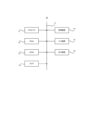
- FIG. 2 is a block diagram showing the hardware configuration of the information processing system according to the first embodiment
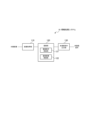
- FIG. 1 is a block diagram showing a functional configuration of an information processing system according to a first embodiment
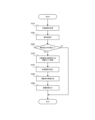
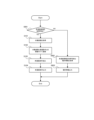
- FIG. 4 is a flow chart showing the flow of operations by the information processing system according to the first embodiment
- 4 is a table showing an example of unregistered conditions output by the information processing system according to the first embodiment
- 4 is a table showing an example of unregistered conditions and registered conditions output by the information processing system according to the first embodiment
- It is a block diagram which shows the functional structure of the information processing system which concerns on 2nd Embodiment
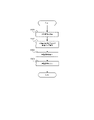
- 9 is a flow chart showing the flow of operations by the information processing system according to the second embodiment
- FIG. 9 is a flow chart showing the flow of operations by the information processing system according to the second embodiment
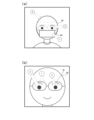
- FIG. 11 is a plan view showing a display example (part 1) by the information processing system according to the second embodiment;
- FIG. 11 is a plan view showing a display example (part 2) by the information processing system according to the second embodiment;
- FIG. 11 is a block diagram showing a functional configuration of an information processing system according to a third embodiment;
- FIG. 10 is a flow chart showing the flow of operations by an information processing system according to the third embodiment;
- FIG. 11 is a plan view showing a display example (part 1) by the information processing system according to the third embodiment;
- FIG. 12 is a plan view showing a display example (part 2) by the information processing system according to the third embodiment;
- FIG. 12 is a block diagram showing a functional configuration of an information processing system according to a fourth embodiment;
- FIG. 14 is a flow chart showing the flow of operations by an information processing system according to the fourth embodiment;
- FIG. It is a table
- FIG. 12 is a block diagram showing a functional configuration of an information processing system according to a fifth embodiment;
- FIG. 14 is a flow chart showing the flow of operations by the information processing system according to the fifth embodiment;
- FIG. 16 is a table showing an example of priority setting in the information processing system according to the fifth embodiment;
- FIG. FIG. 21 is a plan view (Part 1) showing a display example according to the priority by the information processing system according to the fifth embodiment;
- FIG. 21 is a plan view (part 2) showing a display example according to the priority by the information processing system according to the fifth embodiment;
- FIG. 12 is a block diagram showing a functional configuration of an information processing system according to a sixth embodiment;
- FIG. FIG. 16 is a flow chart showing the flow of operations by an information processing system according to the sixth embodiment;
- FIG. 21 is a plan view showing a display example of location information by the information processing system according to the sixth embodiment;
- FIG. 22 is a block diagram showing a functional configuration of an information processing system according to a seventh embodiment;
- FIG. FIG. 14 is a flow chart showing the flow of operations by an information processing system according to the seventh embodiment;
- FIG. FIG. 21 is a conceptual diagram showing an example of changing the output order of unregistered conditions by the information processing system according to the seventh embodiment;
- FIG. 21 is a table showing setting examples of required times for actions of objects in the information processing system according to the seventh embodiment;
- FIG. 21 is a table showing setting examples of required times for actions
- FIG. 1 An information processing system according to the first embodiment will be described with reference to FIGS. 1 to 5.
- FIG. 1 An information processing system according to the first embodiment will be described with reference to FIGS. 1 to 5.
- FIG. 1 is a block diagram showing the hardware configuration of an information processing system according to the first embodiment.
- an information processing system 10 includes a processor 11, a RAM (Random Access Memory) 12, a ROM (Read Only Memory) 13, and a storage device .
- Information processing system 10 may further include an input device 15 and an output device 16 .
- the information processing system 10 may also include a camera 18 .
- the processor 11 , RAM 12 , ROM 13 , storage device 14 , input device 15 , output device 16 and camera 18 are connected via a data bus 17 .
- the processor 11 reads a computer program.
- processor 11 is configured to read a computer program stored in at least one of RAM 12, ROM 13 and storage device .
- the processor 11 may read a computer program stored in a computer-readable recording medium using a recording medium reader (not shown).
- the processor 11 may acquire (that is, read) a computer program from a device (not shown) arranged outside the information processing system 10 via a network interface.
- the processor 11 controls the RAM 12, the storage device 14, the input device 15 and the output device 16 by executing the read computer program.
- a functional block for acquiring and registering an image and a functional block for outputting unregistered conditions are realized in the processor 11 .
- the processor 11 may be configured as, for example, a CPU (Central Processing Unit), GPU (Graphics Processing Unit), FPGA (Field-Programmable Gate Array), DSP (Demand-Side Platform), and ASIC (Application Specific Integrate).
- the processor 11 may be configured with one of these, or may be configured to use a plurality of them in parallel.
- the RAM 12 temporarily stores computer programs executed by the processor 11.
- the RAM 12 temporarily stores data temporarily used by the processor 11 while the processor 11 is executing the computer program.
- the RAM 12 may be, for example, a D-RAM (Dynamic RAM).
- the ROM 13 stores computer programs executed by the processor 11 .
- the ROM 13 may also store other fixed data.
- the ROM 13 may be, for example, a P-ROM (Programmable ROM).
- the storage device 14 stores data that the information processing system 10 saves for a long period of time.
- Storage device 14 may act as a temporary storage device for processor 11 .
- the storage device 14 may include, for example, at least one of a hard disk device, a magneto-optical disk device, an SSD (Solid State Drive), and a disk array device.
- the input device 15 is a device that receives input instructions from the user of the information processing system 10 .
- Input device 15 may include, for example, at least one of a keyboard, mouse, and touch panel.
- the input device 15 may be configured as a mobile terminal such as a smart phone or a tablet.
- the output device 16 is a device that outputs information about the information processing system 10 to the outside.
- the output device 16 may be a display device (eg, display) capable of displaying information regarding the information processing system 10 .
- the output device 16 may be a speaker or the like capable of outputting information about the information processing system 10 by voice.
- the output device 16 may be configured as a mobile terminal such as a smart phone or a tablet.
- the camera 18 is a camera installed at a location where an image of the target (for example, an image including the face of the target) can be captured.
- the camera 18 may be a camera mounted on a terminal (for example, smart phone) owned by the subject.
- the target here is not limited to humans, and may include animals such as dogs and snakes, robots, and the like.
- the camera 20 may be a camera that captures still images, or may be a camera that captures moving images.
- the camera 20 may be configured as a visible light camera or as a near-infrared camera.
- FIG. 1 illustrates an example of the information processing system 10 including a plurality of devices, but all or part of these functions may be realized by one device (information processing device).
- This information processing apparatus is configured with, for example, only the processor 11, RAM 12, and ROM 13 described above, and the other components (that is, the storage device 14, the input device 15, the output device 16, and the camera 18) include, for example, information
- An external device connected to the processing device may be provided.
- the information processing device may implement a part of the arithmetic function by an external device (for example, an external server, a cloud, etc.).
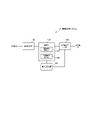
- FIG. 2 is a block diagram showing the functional configuration of the information processing system according to the first embodiment.
- the information processing system 10 includes an image acquisition unit 110, a registration unit 120, and an unregistered condition output unit 130 as components for realizing its functions. configured with.
- Each of the image acquiring unit 110, the registering unit 120, and the unregistered condition output unit 130 may be processing blocks realized by, for example, the above-described processor 11 (see FIG. 1).
- the registration unit 120 may implement the function of storing information to be registered by the storage device 14 .
- the image acquisition unit 110 is configured to be able to acquire a target image.
- the image acquisition unit 110 may be configured to directly acquire an image of a target captured by the camera 18, or may be configured to acquire an image stored in a storage or the like. Further, the image acquisition unit 110 may be configured to be capable of executing various types of processing on the acquired target image. For example, the image acquisition unit 110 may be configured to be capable of executing processing for detecting a part of a target living body (for example, a face, an iris, etc.) from an image. In addition, the image acquisition unit 110 may be configured to be able to execute processing for detecting an ornament worn by a subject.
- the registration unit 120 is configured to associate and register the target image acquired by the image acquisition unit 110 and the registration condition including the condition regarding the target decoration. That is, the registration unit 120 is configured to be able to associate and register a condition corresponding to an image of a target (for example, a condition related to an ornament worn by the target in the image).
- the registration condition may include a plurality of conditions.
- the registration conditions include, in addition to the above-described conditions related to the ornaments, conditions related to the line of sight and face direction of the target, and conditions related to the environment when the image is captured (eg, conditions related to brightness, resolution, etc.). you can stay
- the registration unit 120 includes a registration condition storage unit 121 and a registered image storage unit 122 for storing the target image and the registration condition in association with each other.
- the registration condition storage unit 121 is configured to be able to store registration conditions to be registered in association with the target image.
- the registration condition may be set in advance according to the intended use of the target image and stored in the registration condition storage unit 121 .
- the registration condition may be set as a face authentication registration condition that is a condition related to an ornament that affects face authentication.
- decorations that affect face authentication include glasses, masks, hats, and the like.
- the registration condition may be set as an iris authentication registration condition that is a condition related to an ornament that affects iris authentication. In this way, the registration condition may be set for each modal (for example, body part) for authentication.
- Specific examples of ornaments that affect iris authentication include eyeglasses, sunglasses, contact lenses, and false eyelashes.
- the registered image storage unit 122 is configured to be able to store the target image and the registration condition in a mutually associated state.
- the target image stored in the registered image storage unit 122 is appropriately referred to as a "registered image".
- the registered image may be subjected to, for example, an authentication process using the image.
- the registered image may be used for matching with an image newly acquired from the subject, for example, when performing face authentication or iris authentication of the subject.
- the registered image storage unit 122 stores a plurality of types of registered images according to the registration conditions. These multiple types of registered images may be appropriately used according to the state of the authentication target. For example, if the target wears eyeglasses during the authentication process, matching with a registered image stored in association with the registration condition "with eyeglasses" may be performed.
- the registration unit 120 may have a function of determining whether or not the target image acquired by the image acquisition unit 110 is an image that can be registered without any problem. In this case, the registration unit 120 may determine whether or not there is a problem with the image, based on the imaging quality of the image, for example. Specifically, if the imaging quality is sufficiently high, the registration unit 120 may register the image and determine that it is an image with no problem. Conversely, if the imaging quality is low, the registration unit 120 may determine that the image has a problem. It should be noted that the determination criteria here may be set in advance according to the use of the target image. The registration unit 120 may be configured to register only images that have been determined to have no problem in registration as a result of the determination described above.
- the unregistered condition output unit 130 is configured to be capable of outputting information on registration conditions not registered in the registration unit 120 (hereinafter referred to as "unregistered conditions" as appropriate) among the registration conditions registered for the target.
- the unregistered condition output unit 130 may have a function of extracting unregistered conditions based on information stored in the registered image storage unit 122 .
- the unregistered condition output unit 130 may have a function of determining which conditions have been registered and which conditions have not been registered among a plurality of registered conditions.
- the unregistered condition output unit 130 may display, for example, information about the unregistered condition as an image or characters on a display or the like.
- the unregistered condition output unit 130 may output information about the unregistered condition by voice through a speaker or the like.
- the unregistered condition output unit 130 may be configured to be capable of outputting other information in addition to conditions relating to unregistered conditions. A specific output example by the unregistered condition output unit will be described later in detail.
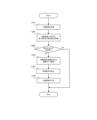
- FIG. 3 is a flow chart showing the operation flow of the information processing system according to the first embodiment.
- the image acquisition unit 110 first acquires a target image (step S101).
- processing for specifying the target may be executed before the image of the target is acquired.
- an individual ID may be acquired from the target, and an image may be acquired in a state in which the target is specified.
- the personal ID may be obtained from an ID card, passport, or the like, or may be input by the subject.
- the registration unit 120 associates the target image acquired by the image acquisition unit 110 with the registration condition read from the registration condition storage unit 121 (specifically, the registration condition corresponding to the target image). It is registered (stored) in the registered image storage unit 122 (step S102). It should be noted that when acquiring and registering the target image (that is, during execution of steps S101 and S102 described above), in order to prevent fraud such as spoofing, a display indicating that registration is in progress, lighting of a lamp, etc., is performed. may be performed.
- the unregistered condition output unit 130 extracts unregistered conditions that are not registered in the registration unit 120 (step S103). Then, the unregistered condition output unit 130 outputs information on the extracted unregistered condition (step S104).
- the image is first registered and then the information about the unregistered condition is output, but the information about the unregistered condition may be output before the image is registered. That is, steps S101 and S102 may be omitted, and steps S103 and S104 may be executed.
- the series of processes described above may be repeatedly executed until there are no more unregistered conditions (that is, until images corresponding to all registered conditions are registered). For example, if two unregistered conditions remain, information on the first unregistered condition is first output to prompt the target to register an image corresponding to the first unregistered condition. Then, when the image corresponding to the first unregistered condition is registered, the information regarding the second unregistered condition is output to prompt the user to register the image corresponding to the second unregistered condition. Then, when the image related to the second unregistered condition is registered, it is determined that there are no unregistered conditions, and the process is terminated. In addition, if images corresponding to all unregistered conditions cannot be registered (for example, if there are not enough decorations in possession, etc.), the registration of images corresponding to the registration conditions is omitted. good too.
- FIG. 4 is a table showing an example of unregistered conditions output by the information processing system according to the first embodiment.
- FIG. 5 is a table showing an example of unregistered conditions and registered conditions output by the information processing system according to the first embodiment.
- the unregistered condition output unit 130 may output the remaining two unregistered conditions, “with mask” and “with glasses/mask”.
- the unregistered condition output unit 130 may output information on unregistered conditions in a list format, as shown in FIG. When such a list is displayed as an image, for example, it may be displayed alone on the display, or it may be displayed together with other information (for example, an image of the object).
- the unregistered condition output unit 130 displays the conditions registered in the registration unit 120 (hereinafter referred to as "registered conditions” as appropriate) in addition to the information on the unregistered conditions. Specifically, among the registration conditions of "no wearables”, “with glasses”, “with mask”, and “with glasses and mask”, “no wearables” and “with glasses” are registered conditions (corresponding to " ⁇ ” in the figure). In addition, “with mask” and “with glasses/mask” are indicated as unregistered conditions (corresponding to "x” in the figure). In this way, the unregistered condition output unit 130 may display other information in addition to conditions related to unregistered conditions.
- unregistered conditions may be displayed separately one by one.
- the unregistered conditions may be output as an image diagram corresponding to each condition (for example, if "mask is present", an image of the mask, etc.).
- a message may be output to the target in order to prompt the target to register an image corresponding to the unregistered condition. For example, if an image corresponding to the registration condition of "with a mask" is not registered, a message such as "There are no images with a mask registered. Please take an image with a mask on at your convenience.” A message may be displayed.
- the registration conditions are conditions related to the target decoration, but as already explained, the registration conditions may include multiple types of conditions.
- a display example in such a case will be described in detail in another embodiment described later.
- target images are registered in association with registration conditions, and information on unregistered conditions is output.
- information on unregistered conditions is output.
- FIG. 6 to 9 An information processing system 10 according to the second embodiment will be described with reference to FIGS. 6 to 9.
- FIG. The second embodiment may differ from the above-described first embodiment only in a part of configuration and operation, and the other parts may be the same as those of the first embodiment. Therefore, in the following, portions different from the already described first embodiment will be described in detail, and descriptions of other overlapping portions will be omitted as appropriate.
- FIG. 6 is a block diagram showing the functional configuration of an information processing system according to the second embodiment.
- symbol is attached
- the information processing system 10 includes an image acquisition unit 110, a registration unit 120, an unregistered condition output unit 130, a condition and a determination unit 140 . That is, the information processing system 10 according to the second embodiment further includes a condition determination section 140 in addition to the configuration of the first embodiment (see FIG. 2).
- the condition determination unit 140 may be, for example, a processing block implemented by the above-described processor 11 (see FIG. 1).
- the unregistered condition output unit 130 according to the second embodiment includes a first superimposed display unit 131 .
- the condition determination unit 140 is configured to be able to determine registration conditions that can be acquired from the target. That is, the condition determination unit 140 is configured to be able to determine which image corresponding to which registration condition can be acquired.
- the condition determination unit 140 may determine an obtainable registration condition, for example, based on the target image. For example, if the target in the image wears a mask, the condition determination unit 140 may determine that an image corresponding to the registration condition "mask present" can be acquired. Alternatively, the condition determination unit 140 may determine an obtainable registration condition based on an operation input by the target. For example, when information indicating that the target has a mask is input, the condition determination unit 140 may determine that an image corresponding to the registration condition "mask present" can be acquired.
- the first superimposed display section 131 is configured to be able to display information indicating whether the registration condition has been registered or not, based on the determination result of the condition determination section 140 . More specifically, the first superimposed display unit 131 superimposes information indicating whether the registration condition is registered or unregistered at a location corresponding to the obtainable registration condition in the target image and outputs the superimposed information. configured as possible. For example, if an image corresponding to the registration condition “with mask” has already been registered, the first superimposed display unit 131 displays the portion of the mask worn by the subject (or around the mouth where the mask is to be worn). part), information indicating that it has been registered is displayed. A specific display example by the first superimposed display unit 131 will be described later in detail.
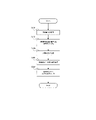
- FIG. 7 is a flow chart showing the operation flow of the information processing system according to the second embodiment.
- the same reference numerals are assigned to the same processes as those described in FIG.
- the image acquisition unit 110 first acquires a target image (step S101). Then, the registration unit 120 associates the target image acquired by the image acquisition unit 110 with the registration condition read out from the registration condition storage unit 121, and registers them in the registration image storage unit 122 (step S102). After that, the unregistered condition output unit 130 extracts unregistered conditions that are not registered in the registration unit 120 (step S103).
- the condition determination unit 140 determines the registration conditions that can be acquired from the target (step S201).
- the determination processing by the condition determination unit 140 may be executed in parallel with the processing of steps S101 to S103 described above, or may be executed in parallel.
- the determination process by the condition determination unit 140 may be performed immediately after the target image is acquired (that is, immediately after step S101).
- the first superimposed display unit 131 generates superimposed information (specifically, information indicating whether the registration condition is registered or unregistered) based on the determination result of the condition determination unit 140. (step S202). Then, the first superimposed display unit 131 superimposes and displays the information generated in step S202 on a portion corresponding to the registration condition in the target image (for example, the image displayed toward the target on the display) (step S203).
- the information to be superimposed may be newly generated according to the subsequent registration status. For example, even if the information indicating that the image is not registered is superimposed at first, if the corresponding image is registered by the subsequent operation, the information indicating that the image is registered should be displayed. may That is, the content to be superimposed and displayed may be changed according to changes in the registration status.
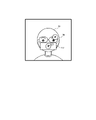
- FIG. 8 is a plan view showing a display example (Part 1) by the information processing system according to the second embodiment.
- FIG. 9 is a plan view showing a display example (No. 2) by the information processing system according to the second embodiment.
- the mark “not yet” is displayed superimposed on the mask 60 worn by the subject 50.
- other marks eg, "x” mark, etc.
- the superimposed information may be words or sentences. For example, the word “unregistered” may be displayed in the masked portion, or the text "this condition is unregistered” may be displayed.
- the mask 60 worn by the subject 50 is superimposed with the mark "not", while the glasses 70 worn by the subject 50 are displayed.
- a mark of "Done” is superimposed on . This indicates that the image corresponding to the registration condition of "with mask” has not been registered, while the image corresponding to the registration condition of "with glasses” has been registered.
- registered conditions may also be superimposed.
- the "done” mark is superimposed on the glasses 70 here, other marks (for example, "o” mark, etc.) may be displayed.
- the superimposed information may be words or sentences. For example, the word “registered” may be displayed in the masked portion, or the text "this condition has been registered” may be displayed.
- the configuration in which the information on the unregistered conditions is output only by superimposed display was given, but in addition to the superimposed display, the information on the unregistered conditions may be displayed in other ways.
- the information on the unregistered conditions may be displayed in other ways.
- information related to unregistered conditions in the list format shown in FIGS. 4 and 5 may be displayed.
- information regarding unregistered conditions and information regarding registered conditions are superimposed and displayed on corresponding portions of the target.
- FIG. 10 An information processing system 10 according to the third embodiment will be described with reference to FIGS. 10 to 13.
- FIG. 10 It should be noted that the third embodiment may partially differ from the first and second embodiments described above in terms of configuration and operation, and may be the same as the first and second embodiments in other respects. Therefore, in the following, portions different from the already described embodiments will be described in detail, and descriptions of other overlapping portions will be omitted as appropriate.
- FIG. 10 is a block diagram showing the functional configuration of an information processing system according to the third embodiment.
- symbol is attached
- the information processing system 10 according to the third embodiment includes an image acquisition unit 110, a registration unit 120, and an unregistered condition output unit 130 as constituent elements for realizing its functions. and a degree calculation unit 150 . That is, the information processing system 10 according to the third embodiment further includes a similarity calculation unit 150 in addition to the configuration of the first embodiment (see FIG. 2).
- the similarity calculation unit 150 may be, for example, a processing block implemented by the above-described processor 11 (see FIG. 1).
- the unregistered condition output unit 130 according to the third embodiment also includes a second superimposed display unit 132 .
- the similarity calculation unit 150 is configured to be able to calculate the similarity between the target image acquired by the image acquisition unit 110 and the registered image registered by the registration unit 120 .
- the similarity calculation unit 150 calculates the similarity for each of the multiple registered images. It is preferable that the similarity is calculated for all registered images. Alternatively, some images may be selected from the registered images, and the similarity may be calculated only for the selected images.
- the similarity calculated by the similarity calculation unit 150 is a value indicating how similar the target image acquired by the image acquisition unit 110 and the registered image are.
- the method of calculating the similarity by the similarity calculating unit 150 is not particularly limited. For example, pattern matching may be used, or a feature amount may be extracted from each image and the matching rate of the feature amount may be calculated. good.
- Information about the degree of similarity calculated by the degree of similarity calculation section 150 is configured to be output to the registration section 120 .
- the registration unit 120 has a function of determining whether or not the similarity calculated by the similarity calculation unit 150 is equal to or greater than a predetermined value.
- the “predetermined value” here is set in advance as a threshold for determining that the degree of similarity is high enough to determine that it is meaningless to newly register the image. For example, if the similarity is very high, even if the image is newly registered, the registered image with the high similarity that was originally registered can perform the same function, so there is little significance in registering a new image. I can judge.
- the registration unit 120 is configured to register the target image acquired by the image acquisition unit 110 when there is no registered image for which the degree of similarity calculated by the similarity calculation unit 150 is equal to or greater than a predetermined value. there is In other words, if there is even one registered image for which the similarity calculated by the similarity calculation unit 150 is equal to or greater than a predetermined value, the registration unit 120 registers the target image acquired by the image acquisition unit 110. Images may not be registered. More specifically, even if the image acquired by the image acquisition unit 110 is an image corresponding to the unregistered condition, if there is a registered image whose similarity is equal to or higher than a predetermined value, the registration unit 120 may not register the target image acquired by the image acquisition unit 110 .
- the second superimposed display unit 132 is configured to be able to display information indicating that the registration condition has been newly registered when registration is performed based on the calculation result of the similarity calculation unit 150 . More specifically, the second superimposed display unit 132 is configured to be able to superimpose and output information indicating that the registration condition has been newly registered at a location corresponding to the registration condition of the newly registered image. It is For example, when an image corresponding to the registration condition “with mask” is newly registered as a result of determination using the degree of similarity, the second superimposed display unit 132 adds a new mask to the mask worn by the target. Display information indicating that you have registered with A specific display example by the second superimposed display unit 132 will be described later in detail.
- FIG. 11 is a flow chart showing the operation flow of the information processing system according to the third embodiment.
- symbol is attached
- the image acquisition unit 110 first acquires a target image (step S101). After that, the similarity calculation unit 150 calculates the similarity between the target image acquired by the image acquisition unit 110 and the registered image (step S301).
- the registration unit 120 determines whether or not there is a registered image whose similarity calculated by the similarity calculation unit 150 is equal to or greater than a predetermined value (step S302). Note that if there is a registered image with a degree of similarity greater than or equal to a predetermined value (step S302: NO), subsequent processing may be omitted. In other words, the operation may end without registering the image acquired by the image acquisition unit 110 .
- step S302 if there is no registered image with a degree of similarity greater than or equal to the predetermined value (step S302: YES), the registration unit 120 reads out the target image acquired by the image acquisition unit 110 and the registration condition storage unit 121. are associated with each other and registered in the registration image storage unit 122 (step S102). Then, the unregistered condition output unit 130 extracts unregistered conditions that are not registered in the registration unit 120 (step S103).
- the second superimposed display unit 132 superimposes and displays the registration condition newly registered by the registration unit 120 (specifically, information indicating that the registration condition is newly registered). ) is generated (step S303). Then, the second superimposed display unit 132 superimposes and displays the information generated in step S303 on a portion corresponding to the registration condition in the target image (for example, the self image displayed for the target on the display). (step S304).
- FIG. 12 is a plan view showing a display example (Part 1) by the information processing system according to the third embodiment.
- FIG. 13 is a plan view showing a display example (part 2) by the information processing system according to the third embodiment.
- a "done” mark is displayed superimposed on the mask 60 worn by the subject 50. This indicates that an image related to the registration condition of "with mask” has been newly registered in this process.
- the "done” mark is superimposed on the mask 60 here, other marks (for example, "o” mark, etc.) may be displayed.
- the superimposed information may be words or sentences. For example, the word “new registration” may be displayed in the masked portion, or the text "this condition has been newly registered” may be displayed.
- the "done” mark is superimposed on both the mask 60 and the glasses 70 worn by the subject 50.
- the "completed” mark superimposed on the mask 60 is labeled "NEW”. This is because the image related to the registration condition of "with mask” was newly registered in this process, and the image related to the registration condition of "with glasses” was not newly registered in this process. (that is, it has already been registered in past processing).
- the indication "NEW” here is given to distinguish whether the conditions are newly registered or those which have been registered in the past.
- the designation “NEW” may be replaced by other designations that are known to be new (eg, "new", etc.).
- the degree of similarity between a newly acquired image and registered images is calculated, and images having a degree of similarity equal to or greater than a predetermined value are calculated. If it does not exist, the image is newly registered. In this way, if the image has already been registered with a high degree of similarity, a new image is not registered, so the capacity for storing the registered image can be reduced. Further, in the third embodiment, information indicating that the registration condition of the newly registered image has been newly registered is superimposed and displayed. In this way, it is possible to notify the target in an easy-to-understand manner that the image acquired this time has been successfully registered.
- FIG. 14 to 16 An information processing system 10 according to the fourth embodiment will be described with reference to FIGS. 14 to 16.
- FIG. It should be noted that the fourth embodiment may differ from the above-described first to third embodiments only in a part of configuration and operation, and other parts may be the same as those of the first to third embodiments. Therefore, in the following, portions different from the already described embodiments will be described in detail, and descriptions of other overlapping portions will be omitted as appropriate.
- FIG. 14 is a block diagram showing a functional configuration of an information processing system according to the fourth embodiment.
- symbol is attached
- the information processing system 10 includes an image acquisition unit 110, a registration unit 120, and an unregistered condition output unit 130 as components for realizing its functions. configured with.
- the registration unit 120 according to the fourth embodiment includes a combination determination unit 123 in addition to the registration condition storage unit 121 and the registered image storage unit 122 .
- the combination determination unit 123 is configured to be able to determine whether or not a combination of multiple conditions included in the registration conditions has already been registered.
- the registration conditions according to the fourth embodiment include a first condition regarding the object to be worn and a second condition regarding at least one of the direction of the line of sight and the direction of the face of the target.
- the combination determination unit 123 is configured to be able to determine whether the combination of the first condition and the second condition has already been registered (in other words, whether there is a registered image corresponding to the combination).
- there is A combination example of the first condition and the second condition will be described later in detail.
- the combination determining unit 123 may be capable of determining a combination of three or more conditions.
- the combination determination unit 123 may be configured to determine whether or not the combination of the first condition, the second condition, and the third condition has already been registered.
- the registration unit 120 is configured to register the target image acquired by the image acquisition unit 110 when the combination of the first condition and the second condition is not registered. For example, even if there is a registered image with the same first condition as the image acquired this time, if one of the images has a different second condition, the registration unit 120 newly registers the image acquired this time. do. Similarly, even if there is a registered image with the same second condition as the image acquired this time, if one of the images has a different first condition, the registration unit 120 newly registers the image acquired this time. register. As described above, the registration unit 120 according to the third embodiment newly registers an image that does not have all the conditions in common, even if there are registered images that have some conditions in common. can be
- FIG. 15 is a flow chart showing the operation flow of the information processing system according to the fourth embodiment.
- the same reference numerals are given to the same processes as those shown in FIG.
- the image acquisition unit 110 first acquires a target image (step S101).
- the combination determination unit 123 acquires the first condition and the second condition corresponding to the target image from the registration condition storage unit 121 (step S401).
- the combination determination unit 123 determines whether or not the combination of the first condition and the second condition is unregistered (step S402). Note that if it is determined that the combination of the first condition and the second condition is not unregistered (already registered) (step S402: NO), subsequent processing may be omitted. That is, the operation may end without newly registering the image. However, even if the image is not newly registered, the process of outputting the unregistered condition may be executed. That is, the processes of steps S103 and S104 may be executed.
- the registration unit 120 registers the target image acquired by the image acquisition unit 110 and the registration condition (specifically (a combination of the first condition and the second condition) are associated with each other and registered in the registered image storage unit 122 (step S102).
- the unregistered condition output unit 130 extracts unregistered conditions that are not registered in the registration unit 120 (step S103). Then, the unregistered condition output unit 130 outputs the extracted unregistered conditions (step S104).
- FIG. 16 is a table showing an example of combinations of first conditions and second conditions and their registration states in the information processing system according to the fourth embodiment.
- the second condition may be a condition other than the line-of-sight direction.
- the second condition may be a face orientation condition.
- the second condition may include a plurality of conditions such as line-of-sight direction+face orientation.
- a target image is newly registered when the combination of the first condition and the second condition has not been registered. In this way, even if some conditions are common, images with other conditions are registered, so that it is possible to further increase the variation of registered images.
- FIG. 17 to 21 An information processing system 10 according to the fifth embodiment will be described with reference to FIGS. 17 to 21.
- FIG. It should be noted that the fifth embodiment may differ from the above-described first to fourth embodiments only in a part of configuration and operation, and other parts may be the same as those of the first to fourth embodiments. Therefore, in the following, portions different from the already described embodiments will be described in detail, and descriptions of other overlapping portions will be omitted as appropriate.
- FIG. 17 is a block diagram showing the functional configuration of an information processing system according to the fifth embodiment.
- symbol is attached
- the information processing system 10 includes an image acquisition unit 110, a registration unit 120, an unregistered condition output unit 130, a priority and a power setting unit 160 . That is, the information processing system 10 according to the fifth embodiment further includes a priority setting unit 160 in addition to the configuration of the first embodiment (see FIG. 2).
- the priority setting unit 160 may be, for example, a processing block realized by the processor 11 (see FIG. 1) described above.
- the priority setting unit 160 is configured to be able to set a priority for each of a plurality of registration conditions.
- the priority is a parameter indicating how much priority should be given to outputting the registered condition as an unregistered condition.
- the priority setting section 160 sets the priority according to the type (use) of the target image. For example, the priority setting unit 160 may set different priorities depending on whether the target image is used for face authentication or for iris authentication.
- the priority setting criteria may be set in advance according to the type of image. It should be noted that the priority may be stored in association with each registration condition in advance without setting the priority each time. In this case, instead of the priority setting section 160, a priority storage section that stores the priority corresponding to each registration condition may be provided.
- the unregistered condition output unit 130 is configured to output information regarding unregistered conditions according to the priority set by the priority setting unit 160.
- FIG. 18 is a flow chart showing the operation flow of the information processing system according to the fifth embodiment.
- the same reference numerals are given to the same processes as those shown in FIG.
- the image acquisition unit 110 first acquires a target image (step S101). After that, the registration unit 120 associates the target image acquired by the image acquisition unit 110 with the corresponding registration condition and registers them in the registered image storage unit 122 (step S102). Then, the unregistered condition output unit 130 extracts unregistered conditions that are not registered in the registration unit 120 (step S103).
- the unregistered condition output unit 130 acquires the priority corresponding to the extracted unregistered condition (step S501). That is, the unregistered condition output section 130 acquires the priority set by the priority setting section 160 . Then, the unregistered condition output unit 130 outputs information about the unregistered condition according to the obtained priority (step S502).
- FIG. 19 is a table showing an example of priority setting in the information processing system according to the fifth embodiment.
- priorities are set for a face image (that is, an image used for face authentication) and an iris image (that is, an image used for iris authentication). be done.
- priority 1, priority 2, and priority 3 are given in descending order of priority.
- priority levels up to 3 are shown, but priority levels 4 and higher may also be set.
- priority 1 is “mask”
- priority 2 is “glasses”
- priority 3 is “hat”. This is because a mask, glasses, and a hat are worn to cover a part of the face of the subject, and thus greatly affect the recognition accuracy of face recognition using a face image.
- the priority 1 is “glasses”
- the priority 2 is “sunglasses”
- the priority 3 is “contact lenses”. This is because spectacles, sunglasses, and contact lenses are worn so as to cover part of the eye, which greatly affects the authentication accuracy of iris authentication using iris images.
- the priority shown in FIG. 19 is merely an example, and different priorities may be set according to the type of image.
- the priority may be set according to the use of the image instead of the image type. For example, when face authentication is performed using images, priority may be given to items such as “mask”, “glasses”, and “hat” that greatly affect the accuracy of face authentication. When performing iris authentication using an image, the priority may be set to be high for “glasses”, “sunglasses”, “contact lenses”, etc., which greatly affect the accuracy of iris authentication.
- FIG. 20 is a plan view (Part 1) showing a display example according to the priority by the information processing system according to the fifth embodiment.
- FIG. 21 is a plan view (Part 2) showing a display example according to the priority by the information processing system according to the fifth embodiment.
- the unregistered condition output unit 130 may output information on unregistered conditions in the form of a list arranged in order of priority.
- a list of unregistered conditions may be displayed with the target image.
- unregistered conditions such as a mask, glasses, and a hat are displayed in a priority order list format.
- three unregistered conditions are displayed here, a smaller number of unregistered conditions may be displayed, or a larger number of unregistered conditions may be displayed.
- the unregistered condition output unit 130 may display only one of the unregistered conditions with the highest priority.
- the unregistered condition output unit 130 may output information about unregistered conditions as arrows and numbers indicating priority.
- the image shown in FIG. 21( a ) is a display example when face authentication is performed, and the mask 60 is displayed so that an arrow extends from “1” indicating priority 1 . This indicates that the priority of the mask is 1 (that is, the mask has the highest priority) when performing face authentication. Also, an arrow extending from "2" indicating priority 2 is displayed with respect to the dashed line indicating the glasses. This indicates that the priority of eyeglasses is 2 (that is, the priority of eyeglasses is the second highest) when performing face authentication.
- an arrow extending from "3" indicating priority 3 is displayed for the broken line indicating the hat. This indicates that the priority of the hat is 3 (that is, the priority of the hat is the third highest) when face authentication is performed.
- virtual attachments may be displayed at the positions where the decorations are to be worn by dashed lines or the like.
- the image shown in FIG. 21B is a display example when iris authentication is performed, and is displayed on the glasses 70 so that an arrow extends from "1" indicating priority 1. In FIG. This indicates that the priority of the spectacles 70 is 1 (that is, the priority of the spectacles 70 is the highest) when iris authentication is performed.
- an arrow extending from "2" indicating priority 2 is displayed with respect to the dashed line indicating the contact lens. This indicates that the contact lens has a priority of 2 (that is, the contact lens has the second highest priority) when iris authentication is performed. Further, the broken line indicating the false eyelashes is displayed so that an arrow extends from "3" indicating priority 3. This indicates that the priority of false eyelashes is 3 (that is, the priority of false eyelashes is the third highest) when performing iris authentication.
- the priority may be displayed instead of the priority.
- the priority may be displayed as a numerical score in the range of 0 to 100 (the higher the priority, the higher the priority).
- information regarding unregistered conditions is output according to priority.
- priority that is, the condition that should be preferentially registered
- the priority is set according to the type (use) of the image, it is possible to appropriately determine which condition should be preferentially registered according to the type of image to be registered.
- FIG. 22 to 24 An information processing system 10 according to the sixth embodiment will be described with reference to FIGS. 22 to 24.
- FIG. It should be noted that the sixth embodiment may differ from the first to fifth embodiments described above only in part in configuration and operation, and may be the same as the first to fifth embodiments in other respects. Therefore, in the following, portions different from the already described embodiments will be described in detail, and descriptions of other overlapping portions will be omitted as appropriate.
- FIG. 22 is a block diagram showing the functional configuration of an information processing system according to the sixth embodiment.
- symbol is attached
- the information processing system 10 includes an image acquisition unit 110, a registration unit 120, an unregistered condition output unit 130, an acquisition It is configured with a availability determination unit 170 and a location information output unit 180 . That is, the information processing system 10 according to the fifth embodiment further includes an obtainability determination unit 170 and a location information output unit 180 in addition to the configuration of the first embodiment (see FIG. 2). there is Note that each of the obtainability determination unit 170 and the location information output unit 180 may be a processing block realized by, for example, the above-described processor 11 (see FIG. 1).
- Acquisition availability determination unit 170 is configured to be able to determine whether an image corresponding to an unregistered condition that is not registered in registration unit 120 (hereinafter referred to as an “unregistered image” as appropriate) can be acquired at the current location. It is Whether or not an unregistered image can be acquired may be determined based on the environmental information of the current location. For example, whether or not an unregistered image can be acquired may be determined based on whether or not the current imaging environment satisfies the imaging conditions for the unregistered image. More specifically, the obtainability determination unit 170 may determine whether or not the unregistered image can be obtained according to the specifications of the camera, the brightness of the location where the image is captured, and the like. The determination result of the obtainability determination unit 170 is configured to be output to the location information output unit 180 .
- the location information output unit 180 is configured to be capable of outputting information about the location where the unregistered image can be obtained when it is determined that the unregistered image cannot be obtained at the current location. That is, the location information output unit 180 is configured to be capable of outputting information for guiding the target to a location where an unregistered image can be registered.
- the location information output unit 180 may have a function of associating and storing information indicating what kind of images can be acquired at the location together with the location information. In this case, the location information output unit 180 may read and output location information from which an unregistered image can be obtained from the stored location information.
- the location information output unit 180 may retrieve location information from which an unregistered image can be acquired from an external database or the like, and output the acquired information.
- the location information output unit 180 may display location information (for example, map information) on a display, for example.
- the location information output unit 180 may output the location information (for example, address, directions, etc.) by voice, for example, through a speaker. A specific output example of the location information will be described in detail later.
- FIG. 23 is a flow chart showing the operation flow of the information processing system according to the sixth embodiment.
- the same reference numerals are given to the same processes as those shown in FIG. 23.
- the obtainability determination unit 170 determines whether or not an unregistered image can be obtained at the current location (step S601).
- the image acquisition unit 110 acquires the target image (step S101). After that, the registration unit 120 associates the target image acquired by the image acquisition unit 110 with the corresponding registration condition and registers them in the registered image storage unit 122 (step S102). Then, the unregistered condition output unit 130 extracts unregistered conditions that are not registered in the registration unit 120 (step S103), and outputs information about the unregistered conditions (step S104).
- step S601 determines that the unregistered image cannot be acquired at the current location (step S601: NO)
- the location information output unit 180 acquires information on locations where the unregistered image can be acquired (step S602). Then, the location information output unit 180 outputs information on locations where the acquired unregistered images can be acquired (step S603).
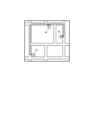
- FIG. 24 is a plan view showing a display example of location information by the information processing system according to the sixth embodiment.
- the location information where unregistered images can be obtained may be displayed as map information.
- map information may be displayed on a display as a user interface (UI) provided by the system, or may be displayed on a display of a terminal (for example, a smartphone or the like) owned by the target. If it is displayed on a terminal owned by the target, the display can be confirmed while the target is moving.
- UI user interface
- a "current" mark indicating the position of the current location A1 a "rainbow” mark indicating the location A2 where an iris image (for example, a relatively high-resolution near-infrared image) can be captured, and the current location A “bright” mark is displayed on the map to indicate the position of a location A3 where a brighter image can be captured.
- the location information output unit 180 may display route information from the current location to a location where an unregistered image can be obtained. Also, when it is necessary to visit multiple places, a route for efficiently visiting them (for example, a route with the shortest travel distance) may be displayed.
- the shortest route from the current location A1 to a place A2 where an iris image can be taken and the shortest route from the place A2 where an iris image can be taken to a place A3 where a bright image can be taken are displayed.
- the congestion status of each place may be displayed.
- the information processing system 10 in addition to information on unregistered conditions, information on places where images corresponding to unregistered conditions can be obtained is output. .
- the target can be guided to a location where the unregistered image can be acquired, and the unregistered image can be appropriately acquired.
- the technical effects of the present embodiment are significantly exhibited when it is difficult to acquire all images corresponding to each registration condition at one location (for example, when imaging in different environments is required).
- FIG. 25 to 28 An information processing system 10 according to the seventh embodiment will be described with reference to FIGS. 25 to 28.
- FIG. It should be noted that the seventh embodiment may differ from the first to sixth embodiments described above only in a part of configuration and operation, and other parts may be the same as those of the first to sixth embodiments. Therefore, in the following, portions different from the already described embodiments will be described in detail, and descriptions of other overlapping portions will be omitted as appropriate.
- FIG. 25 is a block diagram showing the functional configuration of an information processing system according to the seventh embodiment.
- the same reference numerals are given to the same elements as those shown in FIG. 25.
- the information processing system 10 according to the seventh embodiment includes an image acquisition unit 110, a registration unit 120, an unregistered condition output unit 130, a state and a detection unit 190 . That is, the information processing system 10 according to the seventh embodiment further includes a state detection unit 190 in addition to the configuration of the first embodiment (see FIG. 2).
- the state detection unit 190 may be, for example, a processing block implemented by the above-described processor 11 (see FIG. 1).
- the unregistered condition output unit 130 according to the seventh embodiment particularly includes an order change unit 133 .
- the state detection unit 190 is configured to be able to detect the current state of the target (hereinafter referred to as "target state” as appropriate).
- the target condition may relate to wearing of an ornament, for example. More specifically, the target state may be information indicating whether the target is currently wearing a mask or glasses.
- the state detection section 190 may be configured to detect the target state from the target image acquired by the image acquisition section 110 .
- the target state detected by the state detection unit 190 is configured to be output to the order change unit 133 .
- the order changing unit 133 may be configured to be able to change the order (output order) of information related to unregistered conditions output by the unregistered condition output unit 130 based on the target state detected by the state detecting unit 190 .
- the unregistered condition output unit 133 according to the seventh embodiment is configured to sequentially output the unregistered conditions one by one when there are a plurality of unregistered conditions.
- the unregistered condition output unit 133 outputs information about unregistered conditions in order of priority, for example, as described in the fifth embodiment. In this way, although the output order of the unregistered conditions is predetermined, the order changing unit 133 may be configured to be able to change the order. A specific example of changing the order by the order changing unit 133 will be described later in detail.
- FIG. 26 is a flow chart showing the flow of anonymized portion changing operation by the information processing system according to the seventh embodiment.
- the same reference numerals are given to the same processes as those shown in FIG.
- the image acquisition unit 110 first acquires a target image (step S101). After that, the registration unit 120 associates the target image acquired by the image acquisition unit 110 with the corresponding registration condition and registers them in the registered image storage unit 122 (step S102). Then, the unregistered condition output unit 130 extracts unregistered conditions that are not registered in the registration unit 120 (step S103).
- the state detection unit 190 detects the target state from the target image (step S701). Note that the process of detecting the target state may be executed immediately after the target image is obtained (that is, immediately after step S101).
- the order changing unit 133 executes processing for changing the output order of the unregistered conditions based on the target state detected by the state detecting unit 190 (step S702). Then, the unregistered condition output unit 130 outputs information about the unregistered conditions in the changed output order (step S703).
- FIG. 27 is a conceptual diagram showing an example of changing the output order of unregistered conditions by the information processing system according to the seventh embodiment.
- the order of output in the initial state is "no attachment", “with glasses”, “with mask”, and “with glasses & mask”.
- register an image corresponding to "no wearables” as the first sheet register an image corresponding to "with glasses” as the second sheet, and register an image corresponding to "with a mask” as the third sheet.
- an image corresponding to "with glasses and with mask” is to be registered in the fourth sheet.
- the order changing unit 133 changes the output order to “with mask”, “with glasses & mask”, “with glasses”, “without wearing object”. ” order.
- register the image corresponding to "with mask” as the first sheet register the image corresponding to "with glasses and mask” as the second sheet, and register the image corresponding to "with glasses” as the third sheet.
- the fourth image is changed to register an image corresponding to "no attachment".
- the first image corresponding to "with mask” can be captured with the subject as it is (that is, with the mask on).
- the second image corresponding to "with glasses and with mask” can be captured only by further wearing the glasses.
- the third image corresponding to "with glasses” can be captured simply by removing the mask.
- the fourth image corresponding to "no attachment” can be captured simply by removing the glasses.
- FIG. 28 is a table showing setting examples of required times for target actions in the information processing system according to the seventh embodiment.
- the effort required to attach and detach each ornament may be quantified as the required time.
- the required time for putting on the glasses is set to 5 seconds
- the required time for taking off the glasses is set to 6 seconds
- the required time for putting on the mask is set to 8 seconds
- the required time for removing the mask is set to 10 seconds. ing.
- the required time is an example, and an optimum value may be set as appropriate.
- the order changing unit 133 may change the order using the above-described required time so that the total required time to register all images is the shortest. In this way, it is possible to quantitatively grasp the effort of the target and appropriately minimize the effort.
- the difference in the required time for each action is only a few seconds. may be required to capture images while undressed. In this case, it takes a long time to put on and take off the clothes, and the required time varies greatly depending on the order in which the unregistered conditions are output.
- the order of outputting information regarding unregistered conditions is changed based on the state of the object. By doing so, it is possible to prevent an increase in the time and effort (for example, the time and effort of attaching and detaching the ornament) when capturing images corresponding to a plurality of registration conditions.
- a processing method of recording a program for operating the configuration of each embodiment so as to realize the functions of each embodiment described above on a recording medium, reading the program recorded on the recording medium as a code, and executing it on a computer is also implemented. Included in the category of form. That is, a computer-readable recording medium is also included in the scope of each embodiment. In addition to the recording medium on which the above program is recorded, the program itself is also included in each embodiment.
- a floppy (registered trademark) disk, hard disk, optical disk, magneto-optical disk, CD-ROM, magnetic tape, non-volatile memory card, and ROM can be used as recording media.
- the program recorded on the recording medium alone executes the process, but also the one that operates on the OS and executes the process in cooperation with other software and functions of the expansion board. included in the category of Furthermore, the program itself may be stored on the server, and part or all of the program may be downloaded from the server to the user terminal.
- the information processing system includes acquisition means for acquiring an image of a target, registration means for associating and registering the image of the target and a registration condition including a condition related to the decoration of the target, and the target and output means for outputting information on the registration conditions that are not registered in the registration means, among the registration conditions registered for the information processing system.
- the information processing system according to Supplementary Note 2 further includes determination means for determining the registration condition that can be acquired from the target, and the output means determines the registration condition of the target based on the determination result of the determination unit. 1.
- the information processing system further comprises calculating means for calculating a degree of similarity between the target image and the registered image registered in the registration means, and the registration means determines that the similarity is When there is no registered image having a value equal to or greater than a predetermined value, the image of the target is newly registered in association with the registration condition, and the output means outputs an image of the target corresponding to the newly registered registration condition. 3.
- the information processing system according to appendix 1 or 2, wherein information indicating that the registration condition has been newly registered is superimposed and output.
- the registration conditions include a first condition related to the object to be worn and a second condition related to at least one of the target's line-of-sight direction and face direction, 4.
- the information processing system according to appendix 6 can acquire the unregistered image when the unregistered image, which is the target image corresponding to the registration condition that is not registered in the registration means, cannot be acquired at the current location. 6.
- the information processing system further includes detecting means for detecting a state related to the registration condition of the target from the image of the target, and the output means detects the registration condition based on the detection result of the detecting means. 7.
- the information processing system according to any one of appendices 1 to 6, wherein the order of outputting the information on the registration conditions that are not registered in the means is changed.
- the information processing apparatus includes acquisition means for acquiring an image of a target, registration means for associating and registering the image of the target and a registration condition including a condition related to the decoration of the target, and the target and output means for outputting information relating to the registration conditions that are not registered in the registration means among the registration conditions to be registered.
- the information processing method according to appendix 9 is an information processing method executed by at least one computer, in which an image of a target is acquired, the image of the target, a registration condition including a condition related to the ornament of the target, and outputting information about the registration conditions that are not registered in the registration means among the registration conditions registered for the object.
- the recording medium according to appendix 10 obtains an image of a target in at least one computer, associates and registers the image of the target with registration conditions including conditions related to the decoration of the target,
- the recording medium stores a computer program for executing an information processing method for outputting information about the registration conditions that are not registered in the registration means among the registration conditions to be registered.
- the computer program according to Supplementary Note 11 obtains an image of a target in at least one computer, associates and registers the image of the target and a registration condition including a condition regarding the decoration of the target, It is a computer program for executing an information processing method for outputting information about the registration conditions that are not registered in the registration means among the registration conditions to be registered.
Landscapes
- Engineering & Computer Science (AREA)
- Theoretical Computer Science (AREA)
- Computer Vision & Pattern Recognition (AREA)
- General Physics & Mathematics (AREA)
- Physics & Mathematics (AREA)
- Computing Systems (AREA)
- Evolutionary Computation (AREA)
- General Health & Medical Sciences (AREA)
- Medical Informatics (AREA)
- Software Systems (AREA)
- Databases & Information Systems (AREA)
- Artificial Intelligence (AREA)
- Health & Medical Sciences (AREA)
- Multimedia (AREA)
- Processing Or Creating Images (AREA)
- Collating Specific Patterns (AREA)
Priority Applications (3)
| Application Number | Priority Date | Filing Date | Title |
|---|---|---|---|
| JP2023544938A JPWO2023032157A1 (https=) | 2021-09-03 | 2021-09-03 | |
| PCT/JP2021/032448 WO2023032157A1 (ja) | 2021-09-03 | 2021-09-03 | 情報処理システム、情報処理装置、情報処理方法、及び記録媒体 |
| US17/775,617 US12482223B2 (en) | 2021-09-03 | 2021-09-03 | Information processing system, information processing apparatus, information processing method, and recording medium |
Applications Claiming Priority (1)
| Application Number | Priority Date | Filing Date | Title |
|---|---|---|---|
| PCT/JP2021/032448 WO2023032157A1 (ja) | 2021-09-03 | 2021-09-03 | 情報処理システム、情報処理装置、情報処理方法、及び記録媒体 |
Publications (1)
| Publication Number | Publication Date |
|---|---|
| WO2023032157A1 true WO2023032157A1 (ja) | 2023-03-09 |
Family
ID=85412383
Family Applications (1)
| Application Number | Title | Priority Date | Filing Date |
|---|---|---|---|
| PCT/JP2021/032448 Ceased WO2023032157A1 (ja) | 2021-09-03 | 2021-09-03 | 情報処理システム、情報処理装置、情報処理方法、及び記録媒体 |
Country Status (3)
| Country | Link |
|---|---|
| US (1) | US12482223B2 (https=) |
| JP (1) | JPWO2023032157A1 (https=) |
| WO (1) | WO2023032157A1 (https=) |
Citations (3)
| Publication number | Priority date | Publication date | Assignee | Title |
|---|---|---|---|---|
| JP2007080184A (ja) * | 2005-09-16 | 2007-03-29 | Canon Inc | 画像処理装置及び方法 |
| JP2007249588A (ja) * | 2006-03-15 | 2007-09-27 | Omron Corp | 顔画像登録装置、顔画像登録方法、顔画像登録プログラム、および記録媒体 |
| JP2016192070A (ja) * | 2015-03-31 | 2016-11-10 | キヤノンマーケティングジャパン株式会社 | 情報処理装置と、その処理方法及びプログラム |
Family Cites Families (6)
| Publication number | Priority date | Publication date | Assignee | Title |
|---|---|---|---|---|
| JP2004240741A (ja) | 2003-02-06 | 2004-08-26 | Toshiba Corp | 顔照合装置 |
| JP5730044B2 (ja) | 2011-01-31 | 2015-06-03 | セコム株式会社 | 顔画像認証装置 |
| JP5783009B2 (ja) | 2011-11-25 | 2015-09-24 | 富士通株式会社 | 認証プログラム,認証装置および認証方法 |
| JP6432634B2 (ja) | 2017-03-29 | 2018-12-05 | 日本電気株式会社 | 認証装置、認証方法、及びプログラム |
| JP2019028959A (ja) | 2017-08-04 | 2019-02-21 | パナソニックIpマネジメント株式会社 | 画像登録装置、画像登録システムおよび画像登録方法 |
| JP7257765B2 (ja) * | 2018-09-27 | 2023-04-14 | キヤノン株式会社 | 情報処理装置、認証システムおよびそれらの制御方法、プログラム |
-
2021
- 2021-09-03 JP JP2023544938A patent/JPWO2023032157A1/ja active Pending
- 2021-09-03 WO PCT/JP2021/032448 patent/WO2023032157A1/ja not_active Ceased
- 2021-09-03 US US17/775,617 patent/US12482223B2/en active Active
Patent Citations (3)
| Publication number | Priority date | Publication date | Assignee | Title |
|---|---|---|---|---|
| JP2007080184A (ja) * | 2005-09-16 | 2007-03-29 | Canon Inc | 画像処理装置及び方法 |
| JP2007249588A (ja) * | 2006-03-15 | 2007-09-27 | Omron Corp | 顔画像登録装置、顔画像登録方法、顔画像登録プログラム、および記録媒体 |
| JP2016192070A (ja) * | 2015-03-31 | 2016-11-10 | キヤノンマーケティングジャパン株式会社 | 情報処理装置と、その処理方法及びプログラム |
Also Published As
| Publication number | Publication date |
|---|---|
| US20240153237A1 (en) | 2024-05-09 |
| JPWO2023032157A1 (https=) | 2023-03-09 |
| US12482223B2 (en) | 2025-11-25 |
Similar Documents
| Publication | Publication Date | Title |
|---|---|---|
| US12020390B2 (en) | Virtual content generation | |
| CN105874528B (zh) | 信息显示终端、信息显示系统以及信息显示方法 | |
| KR102560689B1 (ko) | Ar 객체를 표시하기 위한 장치 및 방법 | |
| JP5741160B2 (ja) | 表示制御装置、表示制御方法、およびプログラム | |
| CN114175113B (zh) | 提供头像的电子装置及其操作方法 | |
| US9934754B2 (en) | Dynamic sensor array for augmented reality system | |
| US11682045B2 (en) | Augmented reality advertisements on objects | |
| CN103262127B (zh) | 物体显示装置、以及物体显示方法 | |
| KR102570009B1 (ko) | Ar 객체 생성 방법 및 전자 장치 | |
| KR102646344B1 (ko) | 이미지를 합성하기 위한 전자 장치 및 그의 동작 방법 | |
| TW201324435A (zh) | 資訊處理裝置,資訊處理方法及程式 | |
| JP2016540267A (ja) | 画像キャプチャ入力および投影出力 | |
| WO2011160114A1 (en) | Augmented reality | |
| JP7419003B2 (ja) | 情報表示装置、情報表示方法及び情報表示システム | |
| JP5685436B2 (ja) | 拡張現実提供装置、拡張現実提供システム、拡張現実提供方法及びプログラム | |
| JP2022102907A (ja) | システム、管理装置、プログラム、及び管理方法 | |
| CN112288883A (zh) | 作业指导信息的提示方法、装置、电子设备及存储介质 | |
| WO2023032157A1 (ja) | 情報処理システム、情報処理装置、情報処理方法、及び記録媒体 | |
| US20180150957A1 (en) | Multi-spectrum segmentation for computer vision | |
| JP2022041765A (ja) | 眼鏡型デバイス、プログラム、及び表示制御装置 | |
| KR102166697B1 (ko) | 머리 착용형 표시 장치에서 사용자 인증을 수행하는 방법 및 그 전자 장치 | |
| JP2018152673A (ja) | 化粧支援プログラム、化粧支援装置、及び化粧支援方法 | |
| JP2022102902A (ja) | 管理装置、プログラム、システム、及び管理方法 | |
| JP7194158B2 (ja) | 情報処理装置及びプログラム | |
| CN111796663A (zh) | 场景识别模型更新方法、装置、存储介质及电子设备 |
Legal Events
| Date | Code | Title | Description |
|---|---|---|---|
| WWE | Wipo information: entry into national phase |
Ref document number: 17775617 Country of ref document: US |
|
| 121 | Ep: the epo has been informed by wipo that ep was designated in this application |
Ref document number: 21956045 Country of ref document: EP Kind code of ref document: A1 |
|
| WWE | Wipo information: entry into national phase |
Ref document number: 2023544938 Country of ref document: JP |
|
| NENP | Non-entry into the national phase |
Ref country code: DE |
|
| 122 | Ep: pct application non-entry in european phase |
Ref document number: 21956045 Country of ref document: EP Kind code of ref document: A1 |
|
| WWG | Wipo information: grant in national office |
Ref document number: 17775617 Country of ref document: US |