WO2023013062A1 - 情報処理システム、情報処理装置、情報処理方法、及び記録媒体 - Google Patents
情報処理システム、情報処理装置、情報処理方法、及び記録媒体 Download PDFInfo
- Publication number
- WO2023013062A1 WO2023013062A1 PCT/JP2021/029416 JP2021029416W WO2023013062A1 WO 2023013062 A1 WO2023013062 A1 WO 2023013062A1 JP 2021029416 W JP2021029416 W JP 2021029416W WO 2023013062 A1 WO2023013062 A1 WO 2023013062A1
- Authority
- WO
- WIPO (PCT)
- Prior art keywords
- information
- anonymization
- conversation data
- anonymized
- information processing
- Prior art date
- Legal status (The legal status is an assumption and is not a legal conclusion. Google has not performed a legal analysis and makes no representation as to the accuracy of the status listed.)
- Ceased
Links
Images













Classifications
-
- G—PHYSICS
- G06—COMPUTING OR CALCULATING; COUNTING
- G06F—ELECTRIC DIGITAL DATA PROCESSING
- G06F21/00—Security arrangements for protecting computers, components thereof, programs or data against unauthorised activity
- G06F21/60—Protecting data
- G06F21/62—Protecting access to data via a platform, e.g. using keys or access control rules
- G06F21/6218—Protecting access to data via a platform, e.g. using keys or access control rules to a system of files or objects, e.g. local or distributed file system or database
- G06F21/6245—Protecting personal data, e.g. for financial or medical purposes
- G06F21/6254—Protecting personal data, e.g. for financial or medical purposes by anonymising data, e.g. decorrelating personal data from the owner's identification
-
- G—PHYSICS
- G06—COMPUTING OR CALCULATING; COUNTING
- G06F—ELECTRIC DIGITAL DATA PROCESSING
- G06F21/00—Security arrangements for protecting computers, components thereof, programs or data against unauthorised activity
- G06F21/30—Authentication, i.e. establishing the identity or authorisation of security principals
- G06F21/31—User authentication
- G06F21/32—User authentication using biometric data, e.g. fingerprints, iris scans or voiceprints
-
- G—PHYSICS
- G06—COMPUTING OR CALCULATING; COUNTING
- G06F—ELECTRIC DIGITAL DATA PROCESSING
- G06F21/00—Security arrangements for protecting computers, components thereof, programs or data against unauthorised activity
- G06F21/60—Protecting data
- G06F21/62—Protecting access to data via a platform, e.g. using keys or access control rules
- G06F21/6218—Protecting access to data via a platform, e.g. using keys or access control rules to a system of files or objects, e.g. local or distributed file system or database
- G06F21/6245—Protecting personal data, e.g. for financial or medical purposes
-
- G—PHYSICS
- G10—MUSICAL INSTRUMENTS; ACOUSTICS
- G10L—SPEECH ANALYSIS TECHNIQUES OR SPEECH SYNTHESIS; SPEECH RECOGNITION; SPEECH OR VOICE PROCESSING TECHNIQUES; SPEECH OR AUDIO CODING OR DECODING
- G10L15/00—Speech recognition
- G10L15/22—Procedures used during a speech recognition process, e.g. man-machine dialogue
-
- G—PHYSICS
- G10—MUSICAL INSTRUMENTS; ACOUSTICS
- G10L—SPEECH ANALYSIS TECHNIQUES OR SPEECH SYNTHESIS; SPEECH RECOGNITION; SPEECH OR VOICE PROCESSING TECHNIQUES; SPEECH OR AUDIO CODING OR DECODING
- G10L15/00—Speech recognition
- G10L15/26—Speech to text systems
-
- G—PHYSICS
- G10—MUSICAL INSTRUMENTS; ACOUSTICS
- G10L—SPEECH ANALYSIS TECHNIQUES OR SPEECH SYNTHESIS; SPEECH RECOGNITION; SPEECH OR VOICE PROCESSING TECHNIQUES; SPEECH OR AUDIO CODING OR DECODING
- G10L17/00—Speaker identification or verification techniques
Definitions
- This disclosure relates to the technical fields of information processing systems, information processing apparatuses, information processing methods, and recording media.
- Patent Literature 1 discloses a technique for encrypting audio data input from a microphone.
- Patent Document 2 discloses a technique of encrypting input audio data with an encryption key to generate an encrypted audio file.
- Patent Literature 3 discloses a technique for masking a specified portion of audio data.
- the purpose of this disclosure is to improve the technology disclosed in prior art documents.
- One aspect of the information processing system disclosed herein is an acquisition unit that acquires conversation data including voice information of a plurality of persons, a text conversion unit that converts the voice information of the conversation data into text, and a confidential data contained in the conversation data.
- Anonymization means for anonymizing part of the text of the conversation data based on the information about the anonymization target.
- One aspect of the information processing apparatus disclosed herein includes acquisition means for acquiring conversation data including voice information of a plurality of people, text conversion means for converting the voice information of the conversation data into text, and confidential data contained in the conversation data.
- Anonymization means for anonymizing part of the text of the conversation data based on the information about the anonymization target.
- One aspect of the information processing method of this disclosure is an information processing method executed by at least one computer, which acquires conversation data including voice information of a plurality of people, converts the voice information of the conversation data into text, Information about an anonymization target included in conversation data is acquired, and part of the text of the conversation data is anonymized based on the information about the anonymization target.
- At least one computer acquires conversation data including voice information of a plurality of people, converts the voice information of the conversation data into text, and converts the voice information of the conversation data into text. and anonymize a part of the text of the conversation data based on the information about the anonymization target.
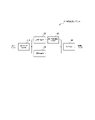
- FIG. 2 is a block diagram showing the hardware configuration of the information processing system according to the first embodiment
- FIG. 1 is a block diagram showing a functional configuration of an information processing system according to a first embodiment
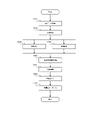
- FIG. 4 is a flow chart showing the flow of anonymizing operation by the information processing system according to the first embodiment
- It is a block diagram which shows the functional structure of the information processing system which concerns on 2nd Embodiment.
- 9 is a flow chart showing the flow of anonymizing operation by the information processing system according to the second embodiment
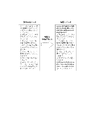
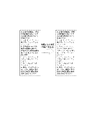
- FIG. 11 is a conceptual diagram showing a specific example of speaker classification by the information processing system according to the second embodiment
- FIG. 11 is a conceptual diagram showing a specific example of anonymization by the information processing system according to the second embodiment
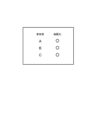
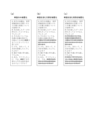
- FIG. 11 is a plan view showing a first display example when setting an anonymization target by the information processing system according to the third embodiment
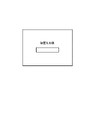
- FIG. 16 is a plan view showing a second display example when setting an anonymization target by the information processing system according to the third embodiment
- FIG. 14 is a plan view showing a third display example when setting an anonymization target by the information processing system according to the third embodiment
- FIG. 12 is a block diagram showing a functional configuration of an information processing system according to a fourth embodiment
- FIG. FIG. 16 is a flow chart showing the flow of anonymization operation by the information processing system according to the fourth embodiment
- FIG. FIG. 16 is a flow chart showing the flow of anonymization canceling operation by the information processing system according to the fourth embodiment
- FIG. 12 is a block diagram showing a functional configuration of an information processing system according to a fifth embodiment
- FIG. FIG. 16 is a flow chart showing the flow of anonymization canceling operation by the information processing system according to the fifth embodiment
- FIG. FIG. 14 is a table showing correspondence relationships between anonymization levels and browsing levels in an information processing system according to a fifth embodiment
- FIG. FIG. 21 is a plan view showing a display example when setting an anonymization level by the information processing system according to the fifth embodiment
- FIG. 12 is a block diagram showing a functional configuration of an information processing system according to a sixth embodiment
- FIG. FIG. 16 is a flow chart showing the flow of anonymization operation by the information processing system according to the sixth embodiment
- FIG. 20 is a conceptual diagram showing a specific example of anonymization by the information processing system according to the sixth embodiment
- FIG. 22 is a block diagram showing a functional configuration of an information processing system according to a seventh embodiment
- FIG. It is a flow chart which shows a flow of secrecy object information acquisition operation by an information processing system concerning a 7th embodiment.
- FIG. 22 is a block diagram showing a functional configuration of an information processing system according to an eighth embodiment;
- FIG. It is a flow chart which shows a flow of secrecy object information acquisition operation by an information processing system concerning an 8th embodiment.
- FIG. 21 is a plan view showing a display example of an operation terminal by an information processing system according to an eighth embodiment;
- FIG. 22 is a block diagram showing a functional configuration of an information processing system according to a ninth embodiment;
- FIG. 22 is a flow chart showing the flow of anonymized portion changing operation by the information processing system according to the ninth embodiment;
- FIG. 21 is a conceptual diagram (part 1) showing an example of changing the display mode by the information processing system according to the ninth embodiment;
- FIG. 21 is a conceptual diagram (part 2) showing an example of changing the display mode by the information processing system according to the ninth embodiment;
- FIG. 22 is a block diagram showing a functional configuration of an information processing system according to a tenth embodiment;
- FIG. FIG. 21 is a block diagram showing the functional configuration of an information processing system according to an eleventh embodiment;
- FIG. 22 is a block diagram showing a functional configuration of an information processing system according to a twelfth embodiment;
- FIG. 1 is a block diagram showing the hardware configuration of an information processing system according to the first embodiment.
- an information processing system 10 includes a processor 11, a RAM (Random Access Memory) 12, a ROM (Read Only Memory) 13, and a storage device .
- Information processing system 10 may further include an input device 15 and an output device 16 .
- the processor 11 , RAM 12 , ROM 13 , storage device 14 , input device 15 and output device 16 are connected via a data bus 17 .
- the processor 11 reads a computer program.
- processor 11 is configured to read a computer program stored in at least one of RAM 12, ROM 13 and storage device .
- the processor 11 may read a computer program stored in a computer-readable recording medium using a recording medium reader (not shown).
- the processor 11 may acquire (that is, read) a computer program from a device (not shown) arranged outside the information processing system 10 via a network interface.
- the processor 11 controls the RAM 12, the storage device 14, the input device 15 and the output device 16 by executing the read computer program.
- a functional block for concealing part of the conversation data is realized in the processor 11 .
- the processor 11 may be configured as, for example, a CPU (Central Processing Unit), GPU (Graphics Processing Unit), FPGA (Field-Programmable Gate Array), DSP (Demand-Side Platform), and ASIC (Application Specific Integrate).
- the processor 11 may be configured with one of these, or may be configured to use a plurality of them in parallel.
- the RAM 12 temporarily stores computer programs executed by the processor 11.
- the RAM 12 temporarily stores data temporarily used by the processor 11 while the processor 11 is executing the computer program.
- the RAM 12 may be, for example, a D-RAM (Dynamic RAM).
- the ROM 13 stores computer programs executed by the processor 11 .
- the ROM 13 may also store other fixed data.
- the ROM 13 may be, for example, a P-ROM (Programmable ROM).
- the storage device 14 stores data that the information processing system 10 saves for a long period of time.
- Storage device 14 may act as a temporary storage device for processor 11 .
- the storage device 14 may include, for example, at least one of a hard disk device, a magneto-optical disk device, an SSD (Solid State Drive), and a disk array device.
- the input device 15 is a device that receives input instructions from the user of the information processing system 10 .
- Input device 15 may include, for example, at least one of a keyboard, mouse, and touch panel.
- the input device 15 may be configured as a mobile terminal such as a smart phone or a tablet.
- the output device 16 is a device that outputs information about the information processing system 10 to the outside.
- the output device 16 may be a display device (eg, display) capable of displaying information regarding the information processing system 10 .
- the output device 16 may be a speaker or the like capable of outputting information about the information processing system 10 by voice.
- the output device 16 may be configured as a mobile terminal such as a smart phone or a tablet.
- FIG. 1 illustrates an example of the information processing system 10 including a plurality of devices, but all or part of these functions may be realized by one device (information processing device).
- This information processing apparatus is configured with, for example, only the processor 11, RAM 12, and ROM 13 described above, and the other components (that is, the storage device 14, the input device 15, and the output device 16) are It may be provided in an external device to be connected. Also, the information processing device may implement a part of the arithmetic function by an external device (for example, an external server, a cloud, etc.).
- an external device for example, an external server, a cloud, etc.
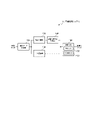
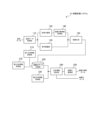
- FIG. 2 is a block diagram showing the functional configuration of the information processing system according to the first embodiment.
- the information processing system 10 includes a conversation data acquisition unit 110, a voice recognition unit 130, and a confidential information acquisition unit 140 as components for realizing its functions. , and an anonymization unit 150 .
- Each of the conversation data acquisition unit 110, the voice recognition unit 130, the anonymization target information acquisition unit 140, and the anonymization unit 150 may be processing blocks implemented by the above-described processor 11 (see FIG. 1), for example.
- the conversation data acquisition unit 110 acquires conversation data including voice information of multiple people.
- Conversation data acquisition unit 110 may acquire, for example, direct sound conversation data from a microphone or the like, or may acquire conversation data generated by another device or the like.
- An example of conversation data is conference data obtained by recording conference voices.
- the conversation data acquisition unit 110 may be configured to be able to execute various processes on the acquired conversation data.
- the conversation data acquisition unit 110 may be configured to be able to execute processing such as detecting a section in conversation data in which a speaker is speaking.
- the speech recognition unit 130 converts speech information of conversation data into text (hereinafter referred to as "speech recognition processing" as appropriate).
- the speech recognition process may be a process that is executed immediately after an utterance (for example, a process that outputs text following the utterance), or a process that is collectively executed after the end of the utterance (for example, past processing performed on recorded data).
- an existing technique can be appropriately adopted, so a detailed description thereof will be omitted here.
- the anonymization target information acquisition unit 140 is configured to be able to acquire information about an anonymization target contained in conversation data (hereinafter referred to as "anonymization target information" as appropriate).
- the anonymization target information is information indicating a part of conversation data to be anonymized.
- the anonymization target information may include, for example, information for specifying a person (ie, speaker) whose conversation is to be anonymized. Further, the anonymization target information may include information or the like for specifying words, sentences, or the like to be anonymized. A specific acquisition method of the information to be anonymized will be described in detail in another embodiment described later.
- the anonymizing unit 150 can execute a process of anonymizing a part of the text of the conversation data based on the anonymization target information acquired by the anonymization target information acquisition unit 140 (hereinafter referred to as “anonymization processing” as appropriate). is configured to Specifically, the anonymization unit 150 performs a process of making the part to be anonymized indicated by the anonymization target information unreadable. A specific aspect of the anonymization process will be described later in detail.
- the anonymization unit 150 may have a function of outputting text data obtained by anonymizing part of the conversation data (hereinafter referred to as “anonymization data” as appropriate). For example, the anonymizing unit 150 may display the anonymized data on a display or the like.
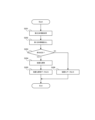
- FIG. 3 is a flow chart showing the flow of anonymizing operation by the information processing system according to the first embodiment.
- the conversation data acquisition unit 110 first acquires conversation data including voice information of a plurality of people (step S101). Then, the conversation data acquisition unit 110 executes processing for detecting a section in which the speaker is speaking in the conversation data (hereinafter referred to as "section detection processing" as appropriate) (step S102).
- section detection processing may be, for example, a process of detecting and trimming silent sections.
- the speech recognition unit 130 performs speech recognition processing on the conversation data on which the section detection processing has been performed (step S104).
- the anonymization target information acquisition unit 140 acquires anonymization target information (step S105). Then, the anonymization unit 150 anonymizes a part of the text-converted conversation data based on the anonymization target information acquired by the anonymization target information acquisition unit 140 (step S106). After that, the anonymization unit 150 outputs the anonymization data (step S107).
- the acquisition of confidential information may be acquired at any timing: when starting a conversation, during the conversation, or when the conversation ends.
- the anonymization unit 150 may perform anonymization processing on the content of the conversation after acquiring the anonymization target information.
- the anonymization unit 150 may execute the anonymization processing retroactively before acquiring the anonymization target information (for example, from the timing when the conversation is started).
- part of text-converted conversation data is anonymized.
- part of the information included in the conversation data can be appropriately anonymized. Therefore, it is possible to disclose part of the conversation data (that is, the part that may be known) while keeping the other part (that is, the part that is not desired to be known) confidential. As a result, it is possible to appropriately prevent information leakage from conversation data. Note that the above-described technical effect is remarkably exhibited, for example, when keeping a record of a highly confidential internal meeting or the like.
- FIG. 4 to 7 An information processing system 10 according to the second embodiment will be described with reference to FIGS. 4 to 7.
- FIG. The second embodiment may differ from the above-described first embodiment only in a part of configuration and operation, and the other parts may be the same as those of the first embodiment. Therefore, in the following, portions different from the already described first embodiment will be described in detail, and descriptions of other overlapping portions will be omitted as appropriate.
- FIG. 4 is a block diagram showing the functional configuration of an information processing system according to the second embodiment.
- symbol is attached
- the information processing system 10 includes a conversation data acquisition unit 110, a speaker classification unit 120, a speech recognition unit 130, and It is configured to include an anonymization target information acquisition unit 140 and an anonymization unit 150 . That is, the information processing system 10 according to the second embodiment further includes a speaker classifier 120 in addition to the configuration of the first embodiment (see FIG. 2).
- the speaker classification unit 120 may be a processing block implemented by, for example, the above-described processor 11 (see FIG. 1).
- the speaker classification unit 120 is configured to be able to execute processing for classifying voice information of conversation data for each speaker (hereinafter referred to as "speaker classification processing" as appropriate).
- the speaker classification process may be, for example, a process of assigning a label according to the speaker to each section of conversation data. It should be noted that existing techniques can be appropriately adopted for a specific method of the speaker classification processing, so detailed description thereof will be omitted here.
- FIG. 5 is a flow chart showing the flow of anonymizing operation by the information processing system according to the second embodiment.
- the same reference numerals are assigned to the same processes as those shown in FIG.
- the conversation data acquisition unit 110 first acquires conversation data including voice information of a plurality of people (step S101). Conversation data acquisition unit 110 then executes a section detection process for detecting a section in which the speaker is speaking in the conversation data (step S102).
- the speaker classification unit 120 performs speaker classification processing on the conversation data (that is, the voice information of the utterance segment) on which the segment detection processing has been performed (step S103).
- the speech recognition unit 130 performs speech recognition processing on the conversation data on which the section detection processing has been performed (step S104). Note that the speech recognition processing and the speaker classification processing described above may be executed in parallel or in sequence.
- the anonymization target information acquisition unit 140 acquires anonymization target information (step S105). Then, the anonymization unit 150 anonymizes a part of the text-converted conversation data based on the anonymization target information acquired by the anonymization target information acquisition unit 140 (step S106). After that, the anonymization unit 150 outputs the anonymization data (step S107).
- FIG. 6 is a conceptual diagram showing a specific example of speaker classification by the information processing system according to the second embodiment.
- FIG. 7 is a conceptual diagram showing a specific example of anonymization by the information processing system according to the second embodiment.
- the speaker classification unit 120 may perform speaker classification by assigning a label corresponding to the speaker to each section of the speech recognition data.
- labels corresponding to speaker A, speaker B, and speaker C are assigned to each section of the speech recognition data. This makes it possible to recognize which section was spoken by which speaker.
- speaker classification data that is, speaker-classified data
- speaker A is identified as the anonymization target from the anonymization target information.
- the anonymization section 150 executes anonymization processing for the utterance content of speaker A in the speaker classification data. That is, the anonymity providing unit 150 changes the content of the statement made by speaker A to a state in which viewing is prohibited.
- the number of speakers to be anonymized here is only one, a plurality of speakers may be anonymized.
- speaker B may be anonymized.
- the anonymity providing unit 150 may change the content of the statements made by speaker A and speaker B so that they cannot be viewed.
- the portion to be anonymized is drawn with a double line. state).
- the anonymized portion may be hidden.
- the hidden portion may be left blank, or may be filled with blanks.
- all the utterance contents of the speaker to be anonymized are anonymized, but only part of the utterance contents of the anonymization target speaker may be anonymized.
- the information to be anonymized may include information to specify the part to be anonymized in addition to the information to specify the speaker to be anonymized.
- part of text-converted conversation data is anonymized for each speaker.
- part of the information included in the conversation data can be appropriately anonymized. Therefore, it is possible to disclose part of the conversation data (that is, the part uttered by the speaker who is not to be anonymized) while anonymizing the other part (that is, the part that is to be anonymized). becomes. As a result, it is possible to appropriately prevent information leakage from conversation data.
- the configuration including the speaker classification unit 120 described in the second embodiment is assumed, but as described in the first embodiment, the speaker classification unit 120 is an essential configuration. not an element. That is, even if the speaker classification unit 120 is not provided, the technical effects of each embodiment are exhibited.
- FIG. 8 to 10 An information processing system 10 according to the third embodiment will be described with reference to FIGS. 8 to 10.
- FIG. The third embodiment specifically describes a display example when setting an anonymization target. good. Therefore, in the following, portions different from the already described first embodiment will be described in detail, and descriptions of other overlapping portions will be omitted as appropriate.
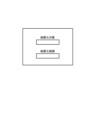
- FIG. 8 is a plan view showing a first display example when setting an anonymization target by the information processing system according to the third embodiment.
- the anonymization target can be set by selecting the radio button of the speaker to be anonymized. For example, when the radio button for speaker A is selected (turned on), speaker A is targeted for anonymization.
- multiple anonymization targets may be set by selecting multiple radio buttons. For example, when radio buttons for speaker A and speaker B are selected (turned on), speaker A and speaker B may be targeted for anonymization.
- the display mode for selecting anonymization targets is not limited to radio buttons.
- a display for selecting anonymization/non-anonymization from a pull-down menu may be provided for each speaker.
- FIG. 9 is a plan view showing a second display example when setting an anonymization target by the information processing system according to the third embodiment.
- a box for entering a word to be anonymized is displayed.
- an anonymization target can be set by entering a word in the box. For example, if the word "meeting" is entered in the box, the word “meeting" included in the conversation data will be anonymized.
- FIG. 10 is a plan view showing a third display example when setting anonymization targets by the information processing system according to the third embodiment.
- an anonymization range for example, whether to anonymize only the word, whether to anonymize the word, A box will appear for you to enter the phrases, sentences, paragraphs containing
- an anonymization target can be set by entering a word in the upper box
- an anonymization range can be set by entering a range to be anonymized in the lower box. For example, if the word "meeting" is entered in the upper box and the word "sentence” is entered in the lower box, sentences containing "meeting" in the conversation data are set to be anonymized. It should be noted that the scope of rights will be described in detail in another embodiment described later.
- the first display example and the second or third display example described above may be displayed in combination.
- the portion corresponding to the first display example and the portion corresponding to the second display example (or the third display example) may be displayed on the same screen.
- the speaker to be anonymized is selected in the portion corresponding to the first display example, and the words to be anonymized and the anonymization range are set in the portion corresponding to the second display example or the third display example. You may make it
- a display for setting anonymization targets is output to the user. In this way, the user can easily set the anonymization target.
- FIG. 11 to 13 An information processing system 10 according to the fourth embodiment will be described with reference to FIGS. 11 to 13.
- FIG. It should be noted that the fourth embodiment may differ from the first to third embodiments described above only in a part of configuration and operation, and other parts may be the same as those of the first embodiment. Therefore, in the following, portions different from the already described first embodiment will be described in detail, and descriptions of other overlapping portions will be omitted as appropriate.
- FIG. 11 is a block diagram showing the functional configuration of an information processing system according to the fourth embodiment.
- symbol is attached
- the information processing system 10 includes a conversation data acquisition unit 110, a speaker classification unit 120, a speech recognition unit 130, and Anonymization target information acquisition unit 140, anonymization unit 150, first biometric information acquisition unit 210, anonymization data storage unit 220, second biometric information acquisition unit 230, biometric information collation unit 240, and anonymization cancellation and a part 250 . That is, in addition to the configuration of the second embodiment (see FIG. 4), the information processing system 10 according to the fourth embodiment includes a first biometric information acquisition unit 210, an anonymized data storage unit 220, and a second biometric information It further includes an acquisition unit 230 , a biometric information matching unit 240 , and an anonymization canceling unit 250 .
- each of the first biometric information acquiring unit 210, the second biometric information acquiring unit 230, the biometric information matching unit 240, and the anonymization canceling unit 250 is a processing block realized by, for example, the above-described processor 11 (see FIG. 1).
- the anonymized data storage unit 220 may be implemented by, for example, the above-described storage device 14 (see FIG. 1).
- the first biometric information acquisition unit 210 is configured to be able to acquire the biometric information of the speaker who participated in the conversation (hereinafter referred to as "first biometric information" as appropriate).
- the first biometric information is information from which the speaker can be identified.
- the type of the first biometric information is not particularly limited. Also, the first biometric information may include multiple types of biometric information.
- the first biometric information may be, for example, a feature amount related to the speaker's voice.
- the first biometric information may be obtained from conversation data. More specifically, the first biometric information acquisition unit 210 may perform voice analysis processing on voice information included in conversation data, for example, to acquire feature amounts related to the voice of the speaker.
- the first biometric information may be a feature amount related to the speaker's face or a feature amount related to the iris. In this case, the first biometric information may be obtained from an image of the speaker taken during the conference.
- the first biometric information acquiring unit 210 obtains information about the speakers during the meeting from, for example, a camera installed in the room in which the speaker is having a conversation, a camera provided in a terminal used by each speaker, or the like. may be acquired, and image analysis processing may be performed on the image to acquire feature amounts related to the face and iris. Furthermore, the first biometric information may be a feature amount related to the speaker's fingerprint. In this case, the first biometric information may be acquired from a fingerprint authentication terminal installed in the room where the conversation takes place. Although the example in which the first biometric information is acquired during conversation is given here, the first biometric information may be acquired at other timings. For example, the first biometric information may be biometric information of each speaker registered in advance before the start of the conversation. Alternatively, the first biometric information may be biometric information of each speaker separately acquired after the end of the conversation.
- the anonymized data storage unit 220 is configured to associate and store anonymized data (that is, partially anonymized text data) and the first biometric information acquired by the first biometric information acquisition unit 210. It is for example, the anonymized data storage unit 220 stores the anonymized data of the conversation data of speaker A, speaker B, and speaker C in the first biometric information of speaker A, the first biometric information of speaker B, and The first biometric information of speaker C may be associated and stored. Note that the anonymized data storage unit 220 does not need to associate and store the first biometric information of all the speakers who have participated in the conversation. That is, the anonymized data storage unit 220 may associate and store only the first biometric information of some of the speakers who participated in the conversation.
- the anonymized data storage unit 220 stores only the first biometric information of speaker A and the first biometric information of speaker B in the anonymized data of the conversation data of speaker A, speaker B, and speaker C. may be associated and stored, and the first biometric information of speaker C may not be associated and stored.
- the anonymized data storage unit 220 described above is not an essential component of this embodiment. If the anonymized data storage unit 220 is not provided, the anonymized data may be treated as one data file to which the first biometric information is added. Specifically, a data file may be generated in which the anonymized conversation data and the first biometric information are linked.
- the second biometric information acquisition unit 230 is configured to be able to acquire the biometric information of the user who uses the conversation data (hereinafter appropriately referred to as "second biometric information").
- the second biometric information like the first biometric information, is information from which the speaker can be specified.
- the second biometric information is the same kind of biometric information as the first biometric information stored in the anonymized data storage unit 220 .
- the first biometric information is stored as a feature amount related to voice
- the second biometric information is a feature amount related to voice.
- the second biometric information may be acquired as information including at least one of the biometric information.
- the second biometric information may be acquired using a terminal used by the user, a device installed in the room where the user is, or the like.
- the second biometric information acquiring unit 230 acquires the user's voice from the microphone provided in the terminal owned by the user, and acquires the second biometric information from the voice. You can In this case, the second biometric information acquisition unit 230 may perform display prompting the user to speak.
- the biometric information matching unit 240 is configured to be able to match the first biometric information stored in association with the conversation data (anonymized data) used by the user and the second biometric information obtained from the user. In other words, the biometric information matching unit 240 is configured to be able to determine whether or not the speaker of the conversation data and the user using the conversation data are the same person.
- the matching method here is not particularly limited, but for example, the biometric information matching unit 240 may calculate the degree of matching between the first biometric information and the second biometric information and perform matching. More specifically, when the degree of matching between the first biometric information and the second biometric information exceeds a predetermined threshold, the biometric information matching unit 240 identifies the speaker of the conversation data and the user who uses the conversation data.
- the biometric information matching unit 240 outputs an instruction to the second biometric information acquisition unit 230 to reacquire the second biometric information. may Then, using the reacquired second biometric information, the same collation may be performed again.
- the anonymization release unit 250 is configured to be able to release the anonymization of the anonymization data based on the matching result of the biometric information matching unit 240 . For example, if the anonymization canceling unit 250 can determine that the speaker of the conversation data and the user using the conversation data are the same person by matching the first biometric information and the second biometric information, the anonymization canceling unit 250 Data anonymization may be released. Note that the anonymization canceling unit 250 may cancel the anonymization of all the anonymization data, or may cancel the anonymization of a part of the anonymization data.
- the anonymization release unit 250 may cancel the anonymization of both speaker A and speaker B, Anonymization for either speaker A or speaker B may be canceled. Cancellation of partial anonymization will also be specifically described in other embodiments described later.
- the anonymization release unit 250 may have a function of outputting the anonymization-released data (hereinafter, appropriately referred to as “anonymization release data”).
- the anonymization release unit 250 may display the anonymization release data on a display or the like.
- FIG. 12 is a flow chart showing the flow of anonymizing operation by the information processing system according to the fourth embodiment.
- the same reference numerals are assigned to the same processes as those described in FIG.
- the conversation data acquisition unit 110 first acquires conversation data including voice information of a plurality of people (step S101). Then, conversation data acquisition section 110 executes section detection processing on the conversation data (step S102).
- the speaker classification unit 120 performs speaker classification processing on the conversation data on which the section detection processing has been performed (step S103).
- the speech recognition unit 130 performs speech recognition processing on the conversation data on which the section detection processing has been performed (step S104). Note that the speech recognition processing and the speaker classification processing described above may be executed in parallel or in sequence.
- the anonymization target information acquisition unit 140 acquires anonymization target information (step S105). Then, the anonymization unit 150 anonymizes a part of the text-converted conversation data based on the anonymization target information acquired by the anonymization target information acquisition unit 140 (step S106). Here, particularly in the fourth embodiment, the anonymization unit 150 outputs the anonymization data to the anonymization data storage unit 220 .
- the first biometric information acquisition unit 210 acquires the first biometric information of the speaker participating in the conversation (step S151).
- the first biometric information may be executed in parallel with the processing of steps S101 to S106 described above, or may be sequentially executed in succession.
- the anonymized data storage unit 220 associates and stores the anonymized data output from the anonymization unit 150 and the first biometric information acquired by the first biometric information acquisition unit 210 (step S152).
- FIG. 13 is a flow chart showing the flow of anonymization canceling operation by the information processing system according to the fourth embodiment.
- the second biometric information acquisition unit 230 acquires the second biometric information of the user who uses the conversation data (step S201).
- the second biometric information acquisition unit 230 may acquire the second biometric information, for example, at the timing when the user uses the conversation data (for example, at the timing when the file of the conversation data is opened).
- the second biometric information acquired by the second biometric information acquiring section 230 is output to the biometric information matching section 240 .
- the biometric information matching unit 240 reads the first biometric information stored in association with the conversation data (secret data) used by the user from the anonymized data storage unit 220 (step S202). Then, the second biometric information acquired by the second biometric information acquiring unit 230 is collated with the read first biometric information (step S203).
- step S203 When the verification by the biometric information verification unit 240 is successful (step S203: YES), the anonymization canceling unit 250 cancels the anonymization of the anonymized data (step S204). Then, the anonymization canceling unit 250 outputs the anonymization canceling data (step S205). On the other hand, if the matching by the biometric information matching unit 240 is not successful (step S203: NO), the anonymization canceling unit 250 The anonymization of the anonymized data is not released (that is, the process of step S204 is not executed). In this case, the anonymization release unit 250 outputs the anonymization data (step S206).
- FIG. 14 to 17 An information processing system 10 according to the fifth embodiment will be described with reference to FIGS. 14 to 17.
- FIG. It should be noted that the fifth embodiment may partially differ from the first to fourth embodiments described above in terms of configuration and operation, and other parts may be the same as those in the first to fourth embodiments. Therefore, in the following, portions different from the already described embodiments will be described in detail, and descriptions of other overlapping portions will be omitted as appropriate.
- FIG. 14 is a block diagram showing the functional configuration of an information processing system according to the fifth embodiment.
- symbol is attached
- the information processing system 10 includes a conversation data acquisition unit 110, a speaker classification unit 120, a speech recognition unit 130, and Anonymization target information acquisition unit 140, anonymization unit 150, first biometric information acquisition unit 210, anonymization data storage unit 220, second biometric information acquisition unit 230, biometric information collation unit 240, and anonymization cancellation It is configured to include a section 250 and a reading level acquisition section 260 . That is, the information processing system 10 according to the fifth embodiment further includes a reading level acquisition unit 260 in addition to the configuration of the fourth embodiment (see FIG. 11). Note that the reading level acquisition unit 260 may be a processing block implemented by the processor 11 (see FIG. 1) described above, for example. Also, the anonymization unit 150 according to the fifth embodiment includes an anonymization level setting unit 151 .
- the anonymization level setting unit 151 is configured to be able to set an anonymization level at an anonymized location in the anonymization data.
- the anonymization level may be set as one level common to the entire anonymization data, or may be set separately for each anonymized portion.
- the “anonymization level” here is a level set according to how strictly the portion to be anonymized is to be anonymized.
- the anonymization level setting unit 151 may set a high anonymization level for information with relatively high confidentiality and a low anonymization level for information with relatively low confidentiality.
- the anonymization level may be represented by a number, for example, and more specifically, anonymization level 1, anonymization level 2, anonymization level 3, . . . may be set to increase in level.
- the anonymization level may be set according to a target to be concealed (that is, a target whose information to be anonymized should not be known).
- the anonymization level setting unit 151 sets the anonymization level A for an object to be anonymized to a user belonging to department A, and sets an anonymization level B to an object to be anonymized to a user belonging to department B. can be set.
- the anonymization level setting unit 151 may set anonymization level C for a target to be anonymized to both users belonging to department A and users belonging to department B.
- the reading level acquisition unit 260 is configured to be able to acquire the reading level of the user who uses the conversation data.
- the “browsing level” here is a level corresponding to the above-described anonymization level, and indicates to which anonymization level the user can cancel the anonymization.
- the user may be able to cancel the anonymization of the anonymization level of the anonymization level corresponding to the user's own browsing level. For example, anonymization with a higher anonymization level may be released as the browsing level is higher.
- the viewing level should be set in advance for each user.
- the reading level may be set according to, for example, the department to which the user belongs, the position, or the like. Specifically, a user who belongs to a department that needs to know anonymized information is set to a high reading level, and a user who belongs to a department that does not need to know anonymized information has a reading level of may be set low. Also, the higher the position of the user, the higher the related level may be set. For example, a general manager may be set to "reading level 3", a section manager to "reading level 2", and a position lower than that to "reading level 1".
- the reading level acquisition unit 260 may acquire the reading level by reading the ID card held by the user, for example.
- the reading level acquisition unit 260 may perform user authentication processing (that is, processing for specifying the user) to acquire the reading level.
- biometric information may be used for user authentication, and the second biometric information acquired by the second biometric information acquisition unit 230 may be used.
- FIG. 15 is a flow chart showing the flow of anonymization cancellation operation by the information processing system according to the fifth embodiment.
- the same reference numerals are given to the same processes as those shown in FIG.
- the second biometric information acquiring unit 230 acquires the second biometric information of the user who uses the conversation data (step S201).
- the conversation data used by the user is set with an anonymization level. That is, it is assumed that the anonymization level setting unit 151 sets an anonymization level for each anonymized portion.
- the biometric information matching unit 240 reads the first biometric information stored in association with the conversation data (secret data) used by the user from the anonymized data storage unit 220 (step S202). Then, the second biometric information acquired by the second biometric information acquiring unit 230 is collated with the read first biometric information (step S203).
- step S301 When the verification by the biometric information verification unit 240 is successful (step S203: YES), the viewing level acquisition unit 260 acquires the user's viewing level (step S301). Note that the processing of step S301 may be executed in parallel with the processing of steps S201 to S203 described above, or may be sequentially executed in succession.
- the anonymization canceling unit 250 cancels the anonymization of the anonymization data based on the anonymization level and the viewing level (step S302). Then, the anonymization canceling unit 250 outputs the anonymization canceling data (step S205).
- step S203 if the biometric information matching unit 240 does not succeed in matching (step S203: NO), the anonymization canceling unit 250 The anonymization of the anonymized data is not released (that is, the process of step S204 is not executed). In this case, the anonymization release unit 250 outputs the anonymization data (step S206).
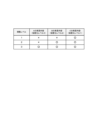
- FIG. 16 is a table showing correspondence relationships between anonymization levels and browsing levels in the information processing system according to the fifth embodiment.
- anonymization levels are set in three stages (from the lowest, anonymization level 1, anonymization level 2, and anonymization level 3).
- the browsing level is set in three stages (from the lowest one, browsing level 1, browsing level 2, and browsing level 3).
- the number of anonymization levels and the number of browsing levels are the same here, the number of anonymization levels and the number of browsing levels do not necessarily have to match.
- the anonymization level is set in three stages, the browsing level may be set in four stages.
- the anonymization level may be set according to who said what.
- the utterance content of speaker A is set to "anonymization level 3”
- the utterance content of speaker B is set to "anonymization level 2”
- the utterance content of speaker C is set to "anonymization level 1.” ing. That is, the utterance content of speaker A has the highest confidentiality, the utterance content of speaker B has medium confidentiality, and the utterance content of speaker C has the lowest confidentiality.
- the anonymization level may be set according to, for example, the department to which each speaker belongs, the position, etc., in the same way as the browsing level.
- the anonymization level may be set according to the viewing level. For example, anonymization level 3 is set for the utterance content of the speaker with reading level 3, anonymization level 2 is set for the utterance content of the speaker with reading level 2, and anonymization level 2 is set for the utterance content of the speaker with reading level 1. may be set to anonymization level 1.
- anonymization can be canceled if the anonymization level is equal to or lower than the user's browsing level.
- a user with a reading level of 1 can cancel the utterances of speaker C with anonymization level 1, while the utterances of speaker B with anonymization level 2 and speaker A with anonymization level 3 can be canceled. cannot be canceled.
- a user at browsing level 2 can cancel the utterances of speaker C with anonymization level 1 and speaker B with anonymization level 2, but can cancel the utterances of speaker A with anonymization level 3. cannot be released.
- a user at viewing level 3 can cancel the utterances of speaker C at anonymization level 1, speaker B at anonymization level 2, and speaker A at anonymization level 3.
- a complete anonymization level (for example, anonymization level 4) may be set so that anonymization cannot be canceled regardless of the viewing level.
- the complete masking level basically users cannot release masking. For example, only system administrators or users with special authorization can release masking. may be
- FIG. 17 is a plan view showing a display example when setting the anonymization level by the information processing system according to the fifth embodiment.
- the anonymization level for each speaker can be set by entering an anonymization level (for example, a numerical value) in the box.
- the anonymization level may be selectable using a radio button, a pull-down menu, or the like.
- the anonymization level may be selectable from numerical values indicating the level (e.g., level 1, level 2, level 3, etc.), or may be browsed (e.g., same section, same department, etc.). , same position, company-wide, etc.).
- the anonymization level for each word may be anonymized.
- the anonymization level for each word can be set on a screen other than the screen for setting the anonymization level for each speaker (for example, the screen for setting words to be anonymized as described in FIGS. 9 and 10). may be assumed.
- the anonymization level of words may be set for each speaker. For example, the word “meeting" uttered by speaker A is set to be anonymized, and the word “save” uttered by speaker A is not set to be anonymized. The word “meeting” may not be anonymized, and the word “save” uttered by speaker B may be anonymized.
- anonymization is canceled according to the anonymization level and the viewing level.
- information can be appropriately protected according to the confidentiality of the anonymized information and the authority of the user who uses the conversation data.
- FIG. 18 An information processing system 10 according to the sixth embodiment will be described with reference to FIGS. 18 to 20.
- FIG. It should be noted that the sixth embodiment may differ from the first to fifth embodiments described above only in part in configuration and operation, and may be the same as the first to fifth embodiments in other respects. Therefore, in the following, portions different from the already described embodiments will be described in detail, and descriptions of other overlapping portions will be omitted as appropriate.
- FIG. 18 is a block diagram showing the functional configuration of an information processing system according to the sixth embodiment.
- symbol is attached
- the information processing system 10 includes a conversation data acquisition unit 110, a speaker classification unit 120, a speech recognition unit 130, and It is configured to include an anonymization target information acquisition unit 140 and an anonymization unit 150 .
- the anonymization target information acquisition unit 140 is configured to be able to acquire information specifying a word to be anonymized as the anonymization target information.
- the anonymization unit 150 according to the sixth embodiment particularly includes information to be anonymized and a word anonymization unit 153 .
- the information to be anonymized is configured so that words specified by the information to be anonymized (that is, words to be anonymized) can be searched from textual conversation data. If a speaker to be anonymized is set, the information to be anonymized may be searched for words only for the utterances of that speaker. In other words, it is not necessary to search for the utterances of speakers who are not subject to confidentiality.
- the words to be kept confidential may be specified by, for example, the speaker who participated in the conversation. Specifically, when the speaker inputs the word "meeting”, "meeting” may be set as a confidential word. In this case, the speaker who designates a word to be kept confidential may make an input by speech recognition by uttering the word. Also, the word to be kept confidential may be automatically determined according to the importance of the word. For example, words of high importance may be stored in advance in a database and set as confidential words.
- the word anonymization unit 153 is configured to be able to anonymize part of the textualized conversation data according to the search result of the information to be anonymized. That is, the word anonymization unit 153 is configured to be able to anonymize a word found by searching for information to be anonymized. Note that the word anonymization unit 153 may anonymize only words, or may anonymize descriptions related to words (for example, descriptions around the words). A specific example of concealing descriptions related to such words will be described later in detail.
- FIG. 19 is a flow chart showing the flow of anonymizing operation by the information processing system according to the sixth embodiment.
- the conversation data acquisition unit 110 first acquires conversation data including voice information of a plurality of people (step S101). Then, conversation data acquisition section 110 executes a section detection process (step S102).
- the speaker classification unit 120 performs speaker classification processing on the conversation data on which the section detection processing has been performed (step S103).
- the speech recognition unit 130 performs speech recognition processing on the conversation data on which the section detection processing has been performed (step S104). Note that the speech recognition processing and the speaker classification processing described above may be executed in parallel or in sequence.
- the anonymization target information acquisition unit 140 acquires anonymization target information (step S105). Then, the conversation data converted into text is searched for the word specified by the confidential information (step S401).
- the word anonymization unit 153 anonymizes the word based on the search result by the word search unit 152 (step S402). Thereafter, the anonymization unit 150 outputs the anonymized anonymized data (step S107).
- FIG. 20 is a conceptual diagram showing a specific example of anonymization by the information processing system according to the sixth embodiment.
- the word anonymization unit 153 may anonymize only the words searched by the word search unit 152 .
- the word “save” is set as the word to be anonymized, only the word “save” in the text data is anonymized.
- a plurality of words may be set as the anonymized word.
- the word anonymization unit 153 may anonymize a clause containing the word searched by the word search unit 152.
- the word “save” is set as a word to be anonymized
- clauses containing "save” in the text data are anonymized.
- the method of judging phrases containing words to be concealed is not particularly limited. For example, phrases may be judged based on the position of punctuation marks. Specifically, the punctuation mark immediately before the word to be concealed and the punctuation mark immediately after the word to be concealed may be determined as one clause.
- the word anonymization unit 153 may anonymize a paragraph containing the word searched by the word search unit 152.
- the paragraph containing "save” in the text data is anonymized.
- the method of determining a paragraph containing a confidential word is not particularly limited, for example, a paragraph may be determined according to the start and end of an utterance by one speaker. Specifically, a section from the start of an utterance by one speaker to the end of the utterance may be determined as one paragraph.
- FIG. 21 An information processing system 10 according to the seventh embodiment will be described with reference to FIGS. 21 and 22.
- FIG. It should be noted that the seventh embodiment may differ from the first to sixth embodiments described above only in a part of configuration and operation, and other parts may be the same as those of the first to sixth embodiments. Therefore, in the following, portions different from the already described embodiments will be described in detail, and descriptions of other overlapping portions will be omitted as appropriate.
- FIG. 21 is a block diagram showing the functional configuration of an information processing system according to the seventh embodiment.
- symbol is attached
- the information processing system 10 includes a conversation data acquisition unit 110, a speaker classification unit 120, a speech recognition unit 130, and It is configured to include an anonymization target information acquisition unit 140 , anonymization unit 150 , a proposal information presentation unit 161 and an input reception unit 162 . That is, the information processing system 10 according to the seventh embodiment further includes a proposal information presentation unit 161 and an input reception unit 162 in addition to the configuration of the second embodiment (see FIG. 4). .
- the proposal information presenting unit 161 may be implemented by, for example, the output device 16 (see FIG. 1) described above.
- the input reception unit 162 may be implemented by, for example, the above-described input device 15 (see FIG. 1).
- the proposed information presenting unit 161 is configured to be able to present, after the conversation ends, information prompting at least one of the speakers who have participated in the conversation to enter confidential information (hereinafter referred to as "proposal information" as appropriate). It is The suggested information presenting unit 161 may display the suggested information using a display. More specifically, the suggested information presenting unit 161 may display a pop-up message such as "Please enter an anonymization target" on the display of the terminal used by the speaker. Alternatively, the suggested information presenting unit 161 may output the suggested information by voice from a speaker. More specifically, the proposed information presenting unit 161 may output a message such as "Please input an anonymization target" from a speaker.
- the input reception unit 162 receives input of information to be anonymized by participating speakers. That is, the input reception unit 162 receives the confidential information input by the speaker as a result of being prompted by the proposal information presented by the proposal information presentation unit 161 .
- the input reception unit 162 may receive information to be anonymized by operating a keyboard, mouse, touch panel, or the like, for example.
- the input reception unit 162 may receive information to be anonymized by speech recognition of voice acquired by a microphone (that is, speech by a speaker). For example, when the speaker utters "Mr. A, budget", the input reception unit may set the word "budget" in the content of speaker A's utterance to be anonymized.
- FIG. 22 is a flow chart showing the flow of the confidential information acquisition operation by the information processing system according to the seventh embodiment.
- the proposal information presentation unit 161 presents the proposal information (step S502 ).
- Proposed information presenting unit 161 may present the proposed information immediately after the conversation ends, or may present the proposed information after a predetermined period of time has elapsed since the conversation ended.
- the end of the conversation may be determined automatically from the voice or the like, or may be determined by the speaker's operation (for example, operation of the conversation end button, etc.).
- the input receiving unit 162 starts receiving input of information to be anonymized by the speaker (step S503). After that, when the speaker makes an input, the input reception unit 162 generates anonymization target information according to the input content (step S504). Then, the input reception unit 162 outputs the generated anonymization target information to the anonymization target information acquisition unit 140 (step S140).
- proposal information is presented after the end of the conversation, and confidential information is acquired according to the subsequent input content by the speaker. .
- the speaker decides the anonymization target compared to the case where the anonymization target is decided before the conversation starts or during the conversation. Cheap. For example, after the end of the conversation, the speaker can see the whole picture of the conversation, and can appropriately determine which statement should be made anonymous.
- FIG. 23 to 25 An information processing system 10 according to the eighth embodiment will be described with reference to FIGS. 23 to 25.
- FIG. It should be noted that the eighth embodiment may differ from the above-described first to seventh embodiments only in a part of configuration and operation, and other parts may be the same as those of the first to seventh embodiments. Therefore, in the following, portions different from the already described embodiments will be described in detail, and descriptions of other overlapping portions will be omitted as appropriate.
- FIG. 23 is a block diagram showing a functional configuration of an information processing system according to the eighth embodiment.
- the same reference numerals are given to the same elements as those shown in FIG. 23.
- the information processing system 10 includes a conversation data acquisition unit 110, a speaker classification unit 120, a speech recognition unit 130, and It is composed of an anonymization target information acquisition unit 140 , anonymization unit 150 , an operation input unit 171 , and an anonymization part setting unit 172 . That is, the information processing system 10 according to the eighth embodiment further includes an operation input unit 171 and a hidden part setting unit 172 in addition to the configuration of the first embodiment (see FIG. 7). .
- the operation input unit 171 may be implemented by, for example, the above-described input device 15 (see FIG. 1).
- the hidden part setting unit 172 may be implemented by, for example, the above-described processor 11 (see FIG. 1).
- the operation input unit 171 is configured so as to be able to accept the operations of the speakers participating in the conversation. More specifically, the operation input unit 171 is configured to be able to receive an operation by the speaker to set the hidden part.
- the operation input unit 171 may receive input from the speaker by operating a keyboard, mouse, touch panel, or the like, for example.
- the input reception unit 162 may receive input from the speaker through speech recognition using a microphone.
- the operation input unit 171 may have a function of displaying conversation data converted into text in order to assist the speaker's input.
- the hidden part setting unit 172 is configured to be able to set the hidden part in the conversation data according to the operation content accepted by the operation input unit 171 .
- the secrecy part setting unit 172 is configured to be capable of generating secrecy target information for specifying the secrecy part and outputting it to the secrecy target information acquisition unit 140 .
- FIG. 24 is a flow chart showing the flow of the confidential information acquisition operation by the information processing system according to the eighth embodiment.
- step S601 in the operation of acquiring information to be concealed by the information processing system 10 according to the eighth embodiment, when there is an operation input by the speaker through the operation input unit 171 (step S601: YES), the concealed part setting unit 172 However, the part to be concealed is set according to the contents of the operation (step S602).
- the concealed portion setting unit 172 generates concealment target information for specifying the concealed portion (step S603). Then, the concealment part setting unit 172 outputs the generated concealment target information to the concealment target information acquisition unit 140 (step S604).
- FIG. 25 is a plan view showing a display example of the operation terminal by the information processing system according to the eighth embodiment.
- the operating terminal is configured as a terminal having a touch panel display.
- a text display area and an operation area may be set on the display of the operation terminal.
- the text display area displays textual conversation data.
- the textualized conversation data may be displayed sequentially so as to follow the conversation.
- the operation area may display buttons or the like for receiving operations by the speaker. Note that the text display area and the operation area may be displayed in separate windows. Also, the text display area and the operation area may be displayed on separate screens.
- an anonymization start button B1 and an anonymization end button B2 are displayed in the operation area.
- the speech contents after that are sequentially set as portions to be anonymized.
- the anonymization end button B2 the speech content up to that point is determined as the portion to be anonymized.
- an example is given in which two buttons, the anonymization start button B1 and the anonymization end button B2, are displayed, but they may be displayed as one common button.
- the button is pressed for the first time, the speech contents after that are successively set as portions to be anonymized.
- the content of the statement while the button is pressed for a long time may be set as the portion to be anonymized.
- the setting of the hidden part by the speaker may be possible only for the content of his/her own statement, or may be possible for all the speakers participating in the conversation.
- a speaker who can set a hidden part may be set for each speaker. For example, speaker A can set hidden parts for speaker B and speaker C, speaker B can set hidden parts for speaker C, and speaker C can set hidden parts for other speakers. setting of the hidden part may be disabled.
- the keywords included in that part are extracted, and frequently occurring keywords extracted a predetermined number of times or more are automatically set as hidden parts without any operation by the speaker.
- the frequent keyword may be presented to the speaker as a hidden part candidate, and the speaker may be allowed to select whether or not to set it as a hidden part.
- the hidden part is set according to the operation of the speaker.
- the speaker can freely set the part to be concealed, and the information can be protected more appropriately.
- FIG. 9 An information processing system 10 according to the ninth embodiment will be described with reference to FIGS. 26 to 29.
- FIG. The ninth embodiment may differ from the first to eighth embodiments described above only in part in configuration and operation, and may be the same as the first to eighth embodiments in other respects. Therefore, in the following, portions different from the already described embodiments will be described in detail, and descriptions of other overlapping portions will be omitted as appropriate.
- FIG. 26 is a block diagram showing the functional configuration of an information processing system according to the ninth embodiment.
- symbol is attached
- the information processing system 10 includes a conversation data acquisition unit 110, a speaker classification unit 120, a speech recognition unit 130, and An anonymization target information acquisition unit 140 , anonymization unit 150 , a text display unit 181 , a display control unit 182 , and an anonymization part change unit 183 are provided. That is, the information processing system 10 according to the ninth embodiment includes a text display unit 181, a display control unit 182, and an anonymized part changing unit 183 in addition to the configuration of the second embodiment (see FIG. 4). It is further provided with.
- the text display unit 181 may be implemented by, for example, the output device 16 (see FIG. 1) described above.
- Each of the display control unit 182 and the anonymized portion changing unit 183 may be implemented by, for example, the above-described processor 11 (see FIG. 1).
- the text display unit 181 is configured to be able to display textualized conversation data.
- the text display unit 181 may be configured to display text so as to follow the conversation.
- the text display unit 181 may be configured to be able to display texts corresponding to past conversations going back in time.
- the display of the text display section 181 is configured to be controlled by a display control section 182 which will be described later.
- the display control unit 182 separates a portion to be anonymized (hereinafter referred to as an “anonymized portion” as appropriate) and a portion not to be anonymized (hereinafter referred to as an “anonymized portion” as appropriate) in the textualized conversation data.
- the display means can be controlled so as to display in different modes.
- the display mode of the anonymized portion and the non-anonymized portion is not particularly limited. good.
- the anonymized portion changing unit 183 is configured to be able to detect an operation using the input device 15, for example.
- the anonymized portion changing unit 183 is configured to be able to change the anonymized portion to a non-anonymized portion according to the operation content of the speaker participating in the conversation. That is, the anonymized portion changing unit 183 can change the portion that should have been anonymized as it is so that it is not anonymized.
- the anonymized portion changing unit 183 may detect, for example, an operation of touching an anonymized portion and a non-anonymized portion, an operation of dragging, or the like as a change operation. Further, the anonymized portion changing unit 183 may be configured to be able to change the non-anonymized portion to an anonymized portion.
- the change by the anonymization part changing unit 183 is reflected in the anonymization target information, and is also reflected in the anonymization processing by the anonymization unit 150 . Further, the change made by the anonymized portion changing unit 183 is also output to the display control unit 182, and the display mode by the text display unit 181 is also changed.
- FIG. 27 is a flow chart showing the flow of anonymized portion changing operation by the information processing system according to the ninth embodiment.
- the display control unit 182 first identifies the anonymized portion and the non-anonymized portion based on the information to be anonymized. (Step S701). Then, the display control unit 182 controls the text display unit 181 to display the identified anonymized portion and the identified non-anonymized portion in different display modes (step S702).
- the anonymized portion changing unit 183 determines whether an operation to change the anonymized portion and the non-anonymized portion has been performed (step S703). Note that if an operation to change the anonymized portion and the non-anonymized portion has not been performed (step S703: NO), the subsequent processing may be omitted and the series of operations may end.
- the anonymized portion changing unit 183 changes the anonymized portion and the non-anonymized portion according to the content of the operation. (step S704).
- the change of the anonymized portion and the non-anonymized portion by the anonymized portion changing unit 183 is reflected in the anonymization target information (step S705).
- the change of the anonymized portion and the non-anonymized portion by the anonymized portion changing unit 183 is also reflected in the display mode of the text on the text display unit 181 by the display control unit 182 (step S706).
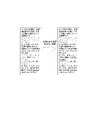
- FIG. 28 is a conceptual diagram (Part 1) showing an example of changing the display mode by the information processing system according to the ninth embodiment.
- FIG. 29 is a conceptual diagram (Part 2) showing an example of changing the display mode by the information processing system according to the ninth embodiment.
- the anonymized portion is displayed in bold and the non-anonymized portion is displayed in thin.
- the utterance content of speaker A is specified as the anonymized portion
- the utterance content of speaker B and speaker C is specified as the non-anonymized portion.
- part of the anonymized part is changed to a non-anonymized part.
- the second utterance by speaker A is changed from an anonymized portion to a non-anonymized portion.
- the second utterance by speaker A which has been displayed in bold up to this point, is now displayed in thin characters.
- the portion where the anonymized portion and the non-anonymized portion have been changed may be displayed in the same display manner as the portion that was originally the anonymized portion or the non-anonymized portion.
- the anonymized portion is displayed in bold and the non-anonymized portion is displayed in thin.
- the utterance content of speaker A is identified as the anonymized portion
- the utterance content of speaker B and speaker C is identified as the non-anonymized portion.
- part of the non-anonymized part is changed to an anonymized part.
- the utterance by speaker C is changed from a non-anonymized portion to an anonymized portion.
- the utterance by speaker C which has been displayed in fine letters, is now displayed in bold letters and underlined letters.
- the part where the anonymized part and the non-anonymized part are changed is displayed in a display mode in which the difference can be understood compared to the part that was originally an anonymized part or the non-anonymized part good.
- the information processing system 10 according to the ninth embodiment can change the anonymized part and the anonymized part according to the speaker's operation. By doing so, it is possible to suppress the anonymization of portions that do not need to be anonymized. In addition, it is possible to prevent portions that require anonymization from being left unanonymized.
- ⁇ Tenth Embodiment> An information processing system 10 according to the tenth embodiment will be described with reference to FIG.
- the tenth embodiment may differ from the above-described first to ninth embodiments only in a part of configuration and operation, and may be the same as the first to ninth embodiments in other respects. Therefore, in the following, portions different from the already described embodiments will be described in detail, and descriptions of other overlapping portions will be omitted as appropriate.
- FIG. 30 is a block diagram showing the functional configuration of the information processing system according to the tenth embodiment.
- symbol is attached
- the information processing system 10 includes a conversation data acquisition unit 110, a speaker classification unit 120, a speech recognition unit 130, and It is configured to include an anonymization target information acquisition unit 140 and an anonymization unit 150 .
- the anonymizing section 150 according to the tenth embodiment particularly includes a voice anonymizing section 154 .
- the voice anonymizing unit 154 is configured to be able to anonymize part of the voice information of the conversation data. More specifically, the voice anonymizing unit 154 may be configured to add noise or the like to part of the voice information of the conversation data based on the information to be anonymized so that it cannot be heard normally. .
- the anonymized data includes anonymized voice data in addition to anonymized text data.
- each of the above-described embodiments can also be applied to concealed voice information.
- anonymized voice information may be made unanonymized by matching biometric information.
- the information processing system 10 As described with reference to FIG. 30, according to the information processing system 10 according to the tenth embodiment, it is possible to anonymize the original conversation data (that is, voice information) in addition to textual conversation data. is.
- the eleventh embodiment may differ from the first to tenth embodiments described above only partially in configuration and operation, and may be the same as the first to tenth embodiments in other respects. Therefore, in the following, portions different from the already described embodiments will be described in detail, and descriptions of other overlapping portions will be omitted as appropriate.
- FIG. 31 is a block diagram showing the functional configuration of an information processing system according to the eleventh embodiment.
- symbol is attached
- the information processing system 10 includes a conversation data acquisition unit 110, a speaker classification unit 120, a speech recognition unit 130, and It is configured to include an anonymization target information acquisition unit 140 , an anonymization unit 150 , and an anonymization part learning unit 190 . That is, the information processing system 10 according to the eleventh embodiment further includes a hidden part learning section 190 in addition to the configuration of the second embodiment (see FIG. 4).
- the hidden part learning unit 190 may be implemented by, for example, the above-described processor 11 (see FIG. 1).
- the hidden part learning unit 190 is configured to be able to learn about the hidden part using the anonymized data (or information to be anonymized) that has been anonymized in the past as training data.
- the concealed part learning unit 190 is configured to be able to execute learning for automatically determining what kind of statement content should be concealed.
- the hidden place learning unit 190 may be configured including a neural network.
- the learning result of the hidden part learning unit 190 is used in the concealing operation after learning.
- the learned model generated by the learning of the hidden part learning unit 190 may be used to automatically generate information to be anonymized from textual conversation data.
- ⁇ Twelfth Embodiment> An information processing system 10 according to the twelfth embodiment will be described with reference to FIG.
- the twelfth embodiment may differ from the above-described first to eleventh embodiments only in a part of configuration and operation, and other parts may be the same as those of the first to eleventh embodiments. Therefore, in the following, portions different from the already described embodiments will be described in detail, and descriptions of other overlapping portions will be omitted as appropriate.
- FIG. 32 is a block diagram showing the functional configuration of an information processing system according to the twelfth embodiment.
- symbol is attached
- the information processing system 10 includes a conversation data acquisition unit 110, a speaker classification unit 120, a speech recognition unit 130, and Anonymization target information acquisition unit 140, anonymization unit 150, first biometric information acquisition unit 210, anonymization data storage unit 220, second biometric information acquisition unit 230, biometric information collation unit 240, and anonymization cancellation It is configured to include a unit 250 and a third biometric information acquisition unit 270 . That is, the information processing system 10 according to the twelfth embodiment further includes a third biometric information acquisition section 270 in addition to the configuration of the fourth embodiment (see FIG. 11).
- the third biometric information acquisition unit 270 may be implemented by, for example, the above-described processor 11 (see FIG. 1).
- the third biometric information acquisition unit 270 is configured to be able to acquire biometric information of users other than the speaker participating in the conversation (hereinafter referred to as "third biometric information" as appropriate).
- the third biometric information is substantially the same type of biometric information as the first biometric information, except that the acquisition target is different.
- the third biometric information is acquired as biometric information of a user other than the speaker whose anonymization is to be released.
- the third biometric information acquisition section 270 outputs the acquired third biometric information to the anonymized data storage section 220 .
- the anonymized data storage unit 220 stores the conversation data (anonymized data) anonymized by the anonymization unit 150 in association with the third biometric information acquired by the third biometric information acquisition unit 270 . That is, the anonymized data is stored in association with the third biometric information acquired by the third biometric information acquisition unit 270 in addition to the first biometric information acquired by the first biometric information acquisition unit 210 .
- the third biometric information stored in the anonymized data storage unit 220 can be read by the biometric information matching unit 240 . That is, the third biometric information is stored to be used for matching with the second biometric information, like the first biometric information.
- the biometric information matching unit 240 may perform matching between the third biometric information and the second biometric information when the matching between the first biometric information and the second biometric information fails. Then, when the third biometric information and the second biometric information are successfully matched, the anonymization may be released by the anonymization release unit 250 .
- the third biometric information is acquired from users other than the speaker who participated in the conversation. In this way, even a user other than the speaker who participated in the conversation can cancel the anonymization by matching using the third biometric information.
- a processing method is also implemented in which a program for operating the configuration of each embodiment is recorded on a recording medium so as to realize the functions of each embodiment described above, the program recorded on the recording medium is read as code, and executed by a computer. Included in the category of form. That is, a computer-readable recording medium is also included in the scope of each embodiment. In addition to the recording medium on which the above program is recorded, the program itself is also included in each embodiment.
- a floppy (registered trademark) disk, hard disk, optical disk, magneto-optical disk, CD-ROM, magnetic tape, nonvolatile memory card, and ROM can be used as the recording medium.
- the program recorded on the recording medium alone executes the process, but also the one that operates on the OS and executes the process in cooperation with other software and functions of the expansion board. included in the category of Furthermore, the program itself may be stored on the server, and part or all of the program may be downloaded from the server to the user terminal.
- the information processing system includes acquisition means for acquiring conversation data including voice information of a plurality of people, text conversion means for converting the voice information of the conversation data into text, and a confidentiality target included in the conversation data.
- An information processing system comprising confidential information acquisition means for acquiring information and anonymization means for anonymizing a part of text of the conversation data based on the information about the anonymization target.
- the information processing system includes: a first biometric information acquiring means for acquiring first biometric information, which is biometric information of the plurality of people during the speech of the plurality of people, which is the basis of the conversation data; A second biometric information acquiring means for acquiring second biometric information that is biometric information of a user who uses the data, and collating the first biometric information and the second biometric information, and anonymizing the data based on the result of the collation.
- the information processing system according to appendix 1, further comprising a release means for releasing the.
- an anonymization level is set for the anonymized portion of the conversation data
- a viewing level is set for a user who uses the conversation data
- the canceling means is the information processing system according to supplementary note 2, wherein the anonymization of the portion having the anonymization level corresponding to the browsing level of the user who uses the conversation data is cancelled.
- the information processing system according to appendix 4 further comprises classification means for classifying the voice information of the conversation data for each speaker, the information regarding the confidentiality target includes information indicating the word that is the confidentiality target, 4.
- the information about the anonymization target includes information indicating the anonymization target word
- the anonymization means includes the anonymization target word included in the conversation data. 5.
- the information processing system according to appendix 6 further comprises presenting means for presenting information prompting at least one of the plurality of persons to input information regarding the confidentiality target after the conversation between the plurality of persons ends, 6.
- the information processing system according to any one of Appendices 1 to 5, wherein the confidential information acquisition means acquires content input by at least one of the plurality of people as the information regarding the confidentiality target.
- the information processing system according to Supplementary Note 7 further comprises setting means for setting a part of the conversation data to be anonymized according to an operation content of at least one of the plurality of persons, and the confidential information acquisition means is configured to: 7.
- the information processing system according to any one of appendices 1 to 6, wherein information indicating the location set by the setting means is acquired as the information about the anonymization target.
- the information processing system includes display means for following the conversation of the plurality of people and displaying the conversation data as text, an anonymization portion for anonymization by the anonymization means, and anonymization by the anonymization means.
- display control means for controlling the display means so as to display the non-anonymized portion and the non-anonymized portion in mutually different manners; 8.
- the information processing system according to any one of Appendices 1 to 7, further comprising changing means for changing to a modified portion.
- the information processing apparatus includes acquisition means for acquiring conversation data including voice information of a plurality of people, text conversion means for converting the voice information of the conversation data into text, and a confidentiality target included in the conversation data.
- An information processing apparatus comprising: confidential information acquisition means for acquiring information; and anonymization means for anonymizing part of the text of the conversation data based on the information about the anonymization target.
- the information processing method according to appendix 10 is an information processing method executed by at least one computer, wherein conversation data including speech information of a plurality of people is acquired, the speech information of the conversation data is converted into text, and the conversation data is is an information processing method that acquires information about an object to be anonymized included in the information, and anonymizes a part of the text of the conversation data based on the information about the anonymization object.
- At least one computer acquires conversation data including voice information of a plurality of people, converts the voice information of the conversation data into text, and acquires information regarding a confidentiality target included in the conversation data. and a computer program for executing an information processing method for anonymizing a part of the text of the conversation data based on the information about the object to be anonymized.
- the computer program according to Supplementary Note 12 acquires conversation data including voice information of a plurality of people in at least one computer, converts the voice information of the conversation data into text, and acquires information about a confidentiality target included in the conversation data. and an information processing method for anonymizing a part of the text of the conversation data based on the information about the anonymization target.
Landscapes
- Engineering & Computer Science (AREA)
- Theoretical Computer Science (AREA)
- Health & Medical Sciences (AREA)
- Physics & Mathematics (AREA)
- Computer Security & Cryptography (AREA)
- General Health & Medical Sciences (AREA)
- Bioethics (AREA)
- General Physics & Mathematics (AREA)
- Computer Hardware Design (AREA)
- Software Systems (AREA)
- General Engineering & Computer Science (AREA)
- Human Computer Interaction (AREA)
- Acoustics & Sound (AREA)
- Audiology, Speech & Language Pathology (AREA)
- Multimedia (AREA)
- Computational Linguistics (AREA)
- Medical Informatics (AREA)
- Databases & Information Systems (AREA)
- Telephonic Communication Services (AREA)
- Storage Device Security (AREA)
Priority Applications (3)
| Application Number | Priority Date | Filing Date | Title |
|---|---|---|---|
| PCT/JP2021/029416 WO2023013062A1 (ja) | 2021-08-06 | 2021-08-06 | 情報処理システム、情報処理装置、情報処理方法、及び記録媒体 |
| US18/292,546 US20240256710A1 (en) | 2021-08-06 | 2021-08-06 | Information processing system, information processing apparatus, information processing method, and recording medium |
| JP2023539573A JP7775885B2 (ja) | 2021-08-06 | 2021-08-06 | 情報処理システム、情報処理装置、情報処理方法、及びコンピュータプログラム |
Applications Claiming Priority (1)
| Application Number | Priority Date | Filing Date | Title |
|---|---|---|---|
| PCT/JP2021/029416 WO2023013062A1 (ja) | 2021-08-06 | 2021-08-06 | 情報処理システム、情報処理装置、情報処理方法、及び記録媒体 |
Publications (1)
| Publication Number | Publication Date |
|---|---|
| WO2023013062A1 true WO2023013062A1 (ja) | 2023-02-09 |
Family
ID=85155467
Family Applications (1)
| Application Number | Title | Priority Date | Filing Date |
|---|---|---|---|
| PCT/JP2021/029416 Ceased WO2023013062A1 (ja) | 2021-08-06 | 2021-08-06 | 情報処理システム、情報処理装置、情報処理方法、及び記録媒体 |
Country Status (3)
| Country | Link |
|---|---|
| US (1) | US20240256710A1 (https=) |
| JP (1) | JP7775885B2 (https=) |
| WO (1) | WO2023013062A1 (https=) |
Cited By (1)
| Publication number | Priority date | Publication date | Assignee | Title |
|---|---|---|---|---|
| JP7734810B1 (ja) * | 2024-08-29 | 2025-09-05 | 三菱電機デジタルイノベーション株式会社 | 情報処理システム、情報処理装置、情報処理方法、およびプログラム |
Citations (4)
| Publication number | Priority date | Publication date | Assignee | Title |
|---|---|---|---|---|
| JP2006178203A (ja) * | 2004-12-22 | 2006-07-06 | Nec Corp | 音声情報加工システム、音声情報加工方法及び音声情報加工プログラム |
| JP2015200913A (ja) * | 2015-07-09 | 2015-11-12 | 株式会社東芝 | 話者分類装置、話者分類方法および話者分類プログラム |
| JP2016029466A (ja) * | 2014-07-16 | 2016-03-03 | パナソニック インテレクチュアル プロパティ コーポレーション オブアメリカPanasonic Intellectual Property Corporation of America | 音声認識テキスト化システムの制御方法および携帯端末の制御方法 |
| WO2020189441A1 (ja) * | 2019-03-15 | 2020-09-24 | エヌ・ティ・ティ・コミュニケーションズ株式会社 | 情報処理装置、情報処理方法およびプログラム |
-
2021
- 2021-08-06 JP JP2023539573A patent/JP7775885B2/ja active Active
- 2021-08-06 US US18/292,546 patent/US20240256710A1/en active Pending
- 2021-08-06 WO PCT/JP2021/029416 patent/WO2023013062A1/ja not_active Ceased
Patent Citations (4)
| Publication number | Priority date | Publication date | Assignee | Title |
|---|---|---|---|---|
| JP2006178203A (ja) * | 2004-12-22 | 2006-07-06 | Nec Corp | 音声情報加工システム、音声情報加工方法及び音声情報加工プログラム |
| JP2016029466A (ja) * | 2014-07-16 | 2016-03-03 | パナソニック インテレクチュアル プロパティ コーポレーション オブアメリカPanasonic Intellectual Property Corporation of America | 音声認識テキスト化システムの制御方法および携帯端末の制御方法 |
| JP2015200913A (ja) * | 2015-07-09 | 2015-11-12 | 株式会社東芝 | 話者分類装置、話者分類方法および話者分類プログラム |
| WO2020189441A1 (ja) * | 2019-03-15 | 2020-09-24 | エヌ・ティ・ティ・コミュニケーションズ株式会社 | 情報処理装置、情報処理方法およびプログラム |
Cited By (1)
| Publication number | Priority date | Publication date | Assignee | Title |
|---|---|---|---|---|
| JP7734810B1 (ja) * | 2024-08-29 | 2025-09-05 | 三菱電機デジタルイノベーション株式会社 | 情報処理システム、情報処理装置、情報処理方法、およびプログラム |
Also Published As
| Publication number | Publication date |
|---|---|
| JPWO2023013062A1 (https=) | 2023-02-09 |
| JP7775885B2 (ja) | 2025-11-26 |
| US20240256710A1 (en) | 2024-08-01 |
Similar Documents
| Publication | Publication Date | Title |
|---|---|---|
| US20260073919A1 (en) | Information processing device | |
| US10540521B2 (en) | Selective enforcement of privacy and confidentiality for optimization of voice applications | |
| US20200342881A1 (en) | Selective enrollment with an automated assistant | |
| JP6202858B2 (ja) | 機密情報の音声入力のための方法、コンピュータ・プログラム、およびシステム | |
| CN112654991A (zh) | 信息处理装置、信息处理方法及程序 | |
| KR102222637B1 (ko) | 감성 분석 장치, 이를 포함하는 대화형 에이전트 시스템, 감성 분석을 수행하기 위한 단말 장치 및 감성 분석 방법 | |
| JP2012170024A (ja) | 情報処理装置 | |
| CN112885371B (zh) | 音频脱敏的方法、装置、电子设备以及可读存储介质 | |
| JP7775885B2 (ja) | 情報処理システム、情報処理装置、情報処理方法、及びコンピュータプログラム | |
| Kang et al. | Anonymization of voices in spaces for civic dialogue: Measuring impact on empathy, trust, and feeling heard | |
| CN105718781A (zh) | 基于声纹识别的操作终端设备的方法及终端设备 | |
| JP6004039B2 (ja) | 情報処理装置 | |
| Abbott et al. | Identifying an aurally distinct phrase set for text entry techniques | |
| JPWO2023013062A5 (https=) | ||
| JP6332369B2 (ja) | 情報処理装置及びプログラム | |
| WO2023013060A1 (ja) | 情報処理システム、情報処理装置、情報処理方法、及び記録媒体 | |
| JP2018156670A (ja) | 情報処理装置及びプログラム | |
| JP2022168256A (ja) | 情報処理装置 | |
| Zhang et al. | “A natural language interface for everyday life”: The social and political functions of AI capabilities discourses | |
| Ross et al. | The Sound of Silencing: Identities and Ideologies in Commercial Text-To-Speech | |
| WO2022215120A1 (ja) | 情報処理装置、情報処理方法、情報処理プログラム | |
| Ahmed | Trustworthy User-Machine Interactions | |
| JP2022169564A (ja) | 情報処理装置及び電子機器 | |
| Andolsen | Can you understand me now? | |
| Mustika | AAVE Use by White American in 8 Mile Movie |
Legal Events
| Date | Code | Title | Description |
|---|---|---|---|
| 121 | Ep: the epo has been informed by wipo that ep was designated in this application |
Ref document number: 21952885 Country of ref document: EP Kind code of ref document: A1 |
|
| WWE | Wipo information: entry into national phase |
Ref document number: 2023539573 Country of ref document: JP |
|
| WWE | Wipo information: entry into national phase |
Ref document number: 18292546 Country of ref document: US |
|
| NENP | Non-entry into the national phase |
Ref country code: DE |
|
| 122 | Ep: pct application non-entry in european phase |
Ref document number: 21952885 Country of ref document: EP Kind code of ref document: A1 |