WO2023000271A1 - 水合氯醛在制备抑制苯丙胺类中枢神经兴奋剂复吸和依赖的药物中的应用 - Google Patents
水合氯醛在制备抑制苯丙胺类中枢神经兴奋剂复吸和依赖的药物中的应用 Download PDFInfo
- Publication number
- WO2023000271A1 WO2023000271A1 PCT/CN2021/107945 CN2021107945W WO2023000271A1 WO 2023000271 A1 WO2023000271 A1 WO 2023000271A1 CN 2021107945 W CN2021107945 W CN 2021107945W WO 2023000271 A1 WO2023000271 A1 WO 2023000271A1
- Authority
- WO
- WIPO (PCT)
- Prior art keywords
- chloral hydrate
- amphetamine
- central nervous
- drug
- stimulants
- Prior art date
- Legal status (The legal status is an assumption and is not a legal conclusion. Google has not performed a legal analysis and makes no representation as to the accuracy of the status listed.)
- Ceased
Links
Images

Classifications
-
- A—HUMAN NECESSITIES
- A61—MEDICAL OR VETERINARY SCIENCE; HYGIENE
- A61K—PREPARATIONS FOR MEDICAL, DENTAL OR TOILETRY PURPOSES
- A61K31/00—Medicinal preparations containing organic active ingredients
- A61K31/11—Aldehydes
-
- A—HUMAN NECESSITIES
- A61—MEDICAL OR VETERINARY SCIENCE; HYGIENE
- A61P—SPECIFIC THERAPEUTIC ACTIVITY OF CHEMICAL COMPOUNDS OR MEDICINAL PREPARATIONS
- A61P25/00—Drugs for disorders of the nervous system
- A61P25/30—Drugs for disorders of the nervous system for treating abuse or dependence
Definitions
- the invention belongs to the field of medicines, and in particular relates to the application of chloral hydrate in the preparation of medicines for inhibiting the relapse and dependence of amphetamine central nervous stimulants.
- Drug addiction is a chronic relapsing brain disease.
- Long-term use of ephedrines such as ephedrine hydrochloride and methamphetamine (also known as methamphetamine) can lead to dependence and addiction.
- methamphetamine also known as methamphetamine
- Methamphetamine is a new type of synthetic psychoactive drug. According to the "China Narcotics Control Report" in recent years, the number of methamphetamine abusers in China is on the rise, surpassing the number of traditional amphetamine drug abusers.
- Methamphetamine is highly stimulant and highly addictive after use, and can have permanent effects on the central nervous system.
- Methamphetamine is a lipophilic molecule that can promote the release of monoamine neurotransmitters in the central nervous system.
- a structural analogue of monoamine neurotransmitters it can inhibit the normal function of such transmitter transporters to a certain extent. It leads to abnormal transmission of synaptic transmitter information, which has complex effects on individual reward behavior, learning, memory and cognitive functions.
- methamphetamine addicts Long-term use of methamphetamine by individuals can lead to sharp weight loss, "meth mouth", anxiety, irritability, tachycardia, loss of appetite, hallucinations, and aggressive behavior after short-term withdrawal. Overdose can cause central nervous system acute Or chronic poisoning, resulting in critical illnesses such as hematogenous cerebral edema, and even death. In addition, smoking more than five times a month for more than two years will cause the smoker to have obvious symptoms of a mental patient, and these symptoms are difficult to cure once they occur. Methamphetamine addicts not only lose their ability to work, but also have aggressive behaviors against family members and others, and the probability of criminal cases among drug addicts is on the rise every year.
- methamphetamine also imposes a heavy burden on the national economy.
- RAND Corporation of the United States calculated that the economic burden caused by the use of methamphetamine in the United States in 2005 was about 23.4 billion US dollars.
- meth addiction and abuse has become a burden on society and families.
- Chloral hydrate is commonly used clinically for anesthesia and sedation, and is one of the commonly used anesthetics in animal experiments. Clinically, the combination of chloral hydrate and clonidine can treat the withdrawal syndrome of newborns. In morphine-dependent rats, a single chloral hydrate pretreatment transiently suppressed the expression of naloxone-mediated withdrawal symptoms.
- the inventor's published research results show that before the morphine conditioned place preference (conditioned place preference, CPP) is established, rats are given intraperitoneal injections of medium doses of chloral hydrate for 6 consecutive days, and the morphine CPP in rats cannot be established. The above results indicate that chloral hydrate can inhibit withdrawal symptoms and disrupt the acquisition of morphine reward memory. There is no report on the effect of chloral hydrate in the treatment of different stages of methamphetamine addiction.
- the invention provides the application of chloral hydrate in the treatment of central psychostimulant dependence and relapse.
- the present invention provides the following technical solutions.
- the invention provides the application of chloral hydrate in treating relapse of amphetamine-type central nervous stimulants.
- the present invention provides the following technical solutions.
- One aspect of the present invention provides a method for inhibiting relapse of amphetamine-type central nervous stimulants in a subject and reducing dependence on amphetamine-type central nervous stimulants in a subject, which includes administering a therapeutically effective amount of chloral hydrate.
- Another aspect of the present invention provides a method for inhibiting conditioned place preference or habitual drug-seeking caused by amphetamine-type central nervous system stimulants, which comprises administering a therapeutically effective amount of chloral hydrate.
- the method is for non-diagnostic and therapeutic purposes.
- the dose of chloral hydrate administered in the method is 20-500mg/kg, such as 30mg/kg, 40mg/kg, 50mg/kg, 60mg/kg, 70mg/kg, 80mg/kg , 90mg/kg, 100mg/kg, 150mg/kg, 200mg/kg, 250mg/kg, 300mg/kg, 350mg/kg, 400mg/kg, 450mg/kg, 500mg/kg.
- the time of giving chloral hydrate in the described method is while giving the amphetamine central nervous stimulant, and after drug withdrawal, or give after amphetamine central nervous stimulant addiction and drug withdrawal .
- Another aspect of the present invention provides the use of chloral hydrate in the preparation of drugs for inhibiting the relapse of amphetamine-type central nervous stimulants and reducing the dependence of subjects on amphetamine-type central nervous stimulants.
- Another aspect of the present invention provides the use of chloral hydrate in the preparation of drugs for inhibiting conditioned place preference or habitual drug-seeking caused by amphetamine-type central nervous system stimulants.
- Another aspect of the present invention provides a pharmaceutical composition for inhibiting relapse or dependence on amphetamine-type central nervous stimulants, wherein chloral hydrate is the only active ingredient in the pharmaceutical composition.
- the amphetamine central nervous system stimulant is selected from: methamphetamine, methylenedioxymethamphetamine, 3,4-methylenedioxyamphetamine and its stereoisomers, polymorphs , metabolites, prodrugs, hydrates, pharmaceutically acceptable salts and mixtures.
- the pharmaceutical composition further includes a pharmaceutically acceptable carrier.
- the dosage form of the pharmaceutical composition is selected from the group consisting of oral agents, injections, and sprays.
- the dosage form of the pharmaceutical composition can be administered by a route selected from the following group: oral administration, injection (subcutaneous, intramuscular, intravenous), mucosal administration, transdermal administration and intraperitoneal administration medicine.
- the subject is a mammal, such as a human, a macaque, a rat or a mouse.
- the present invention proves that chloral hydrate can effectively reduce the conditioned position preference of amphetamine-type central nervous stimulants, reduce habitual drug seeking and relapse after withdrawal, thereby proving that chloral hydrate can treat relapse caused by amphetamine-type central nervous stimulants. Inhalation, and can reduce dependence on amphetamine-type central nervous system stimulants.
- Chloral hydrate is currently widely used clinically, especially in pediatric sedation. Low-dose chloral hydrate has little clinical side effects and is safe and reliable. Because chloral hydrate has been clinically used as a drug, it is safe and reliable, so once animal experiments confirm its effectiveness, it can be directly used in the treatment of addicted patients.
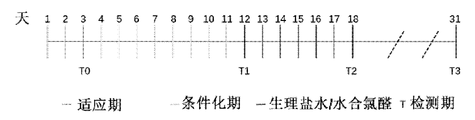
- FIG. 1 is a schematic diagram of the treatment of rat methamphetamine CPP and chloral hydrate in Example 1.
- CPP is divided into three stages: adaptation period (pre-conditioning), conditioning period (conditioning) and detection period (test).
- T1 Baseline level CPP test.
- T1 CPP test after establishment of methamphetamine preference.
- T2 CPP test after the chloral hydrate administration period.
- T3 After the end of the chloral hydrate administration cycle, the CPP test was performed again after 14 days.
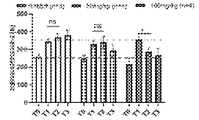
- Fig. 2 is the result figure of embodiment 1, high dose chloral hydrate (100mg/kg) significantly reduces the maintenance of rat METH CPP.
- Normal saline and 50mg/kg chloral hydrate had no significant effect on the CPP score at T2, that is, the scene preference level of rats paired with methamphetamine did not change; while 100mg/kg chloral hydrate significantly reduced T2
- the CPP scores of rats showed significantly lower levels of scene preference for methamphetamine pairings. And low CPP scores can be maintained until T3.
- ns no significant difference; *, p ⁇ 0.05.
- T0 the residence time of the rats in the dosing chamber at baseline
- T1 the residence time of the rats in the dosing chamber after the methamphetamine preference was established.
- T2 After the chloral hydrate administration period, the rats stay in the dosing room.
- T3 14 days after the administration of chloral hydrate, the residence time of the rats in the dosing chamber.
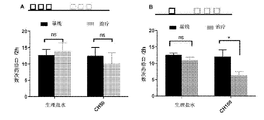
- Fig. 3 is the result graph of embodiment 2, chloral hydrate significantly reduces the self-administration frequency of methamphetamine in rats.
- A Continuous administration of 50mg/kg dose of chloral hydrate to rats for 3 days reduced the number of drug seeking but did not reach statistical significance;
- B Continuous administration of 100mg/kg dose of chloral hydrate to rats for 3 days significantly reduced drug-seeking times in rats. ns, no significant difference; *, p ⁇ 0.05.
- Fig. 4 is the result graph of embodiment 3, chloral hydrate significantly reduces the relapse of methamphetamine in rats.
- the normal saline group which significantly increased the number of active hole touches (active poke)
- the number of touches in the active hole was related to the regression of the last day. ratio did not change significantly.
- Extinction represents the data of the last day of the extinction phase.
- amphetamine-type central nervous system stimulant refers to a class of pharmaceutical compounds or pharmaceutical compositions that contain an amphetamine structure or amphetamine-like structural core and are converted from amphetamine, including but not limited to methamphetamine , Amphetamine, Methylenedioxymethamphetamine, 3,4-Methylenedioxyamphetamine and its stereoisomers, polymorphs, solvates, hydrates, metabolites, prodrugs, pharmaceutically acceptable salt and mix.
- terapéuticaally effective amount means an amount, as defined below, sufficient for the treatment to be effective when administered to a mammal in need of such treatment.
- active ingredient refers to a compound in a pharmaceutical composition that has a pharmacological effect when administered to an organism (such as a mammal), and is intended to cover not only the compound, but also pharmaceutically acceptable salts, pharmaceutically acceptable Accepted salts or esters, hydrates, polymorphs and prodrugs.
- prodrug refers to a compound comprising a chemical group that can be transformed in vivo and/or isolated from the remainder of the molecule to provide the active drug, a pharmaceutically acceptable salt thereof, or a biologically active metabolite thereof.
- polymorphs refers to different crystal structures of a crystalline compound. Different polymorphs may result, for example, from the presence of different crystal packing structures (packing polymorphs) or from the presence of different conformers of the same molecule (conformational polymorphs).
- combination dosage form refers to a unit dosage form (such as a single drug, tablet, capsule, ampule, suppository or other unit dosage form).
- solvate refers to a complex formed by combining a compound with a solvent.
- hydrate refers to a complex formed by combining a compound with water.
- pharmaceutically acceptable salt of a given compound refers to salts that retain the biological effectiveness and properties of the given compound.
- the term "pharmaceutically acceptable carrier” includes any and all solvents, dispersion media, coatings, antibacterial and antifungal agents, isotonic and absorption delaying agents, and the like.
- the use of such media and agents for pharmaceutically active substances is well known in the art. Unless any conventional media or agents are incompatible with the active ingredients, they are contemplated for use in therapeutic compositions. Supplementary active ingredients can also be incorporated into the compositions.
- the "inhibiting the relapse of amphetamine-type central nervous system stimulants” refers to reducing the driving force of a subject who becomes addicted to amphetamine-type central nervous system stimulants and becomes addicted again after drug withdrawal. Said inhibition refers to the ability to reduce any of the above-mentioned driving forces.
- the "reducing or inhibiting dependence on amphetamine-type central nervous system stimulants” refers to reducing the habitual drug-seeking behavior of a subject after becoming addicted to amphetamine-type central nervous system stimulants.
- the inhibition or reduction refers to reducing the frequency of habitual drug-seeking or prolonging the interval of drug-seeking.
- the animals used in this experiment were 6-14 week old male SD rats.
- the animals were 6 weeks old when they arrived in the animal room, and were paired and divided into 2 per cage according to their body weight.
- the conditional place preference equipment consists of four self-designed three-box behavior boxes of the same size and a camera (produced by Luo Ri, model LRCP0680_1080P) located at 1.5 meters on the top of the box.
- the black polyethylene behavior box (length ⁇ width ⁇ height, 70cm ⁇ 25cm ⁇ 30cm) is divided into a side box (length ⁇ width ⁇ height, 30cm ⁇ 25cm ⁇ 30cm) and a middle box ( length x width x height, 30cm x 25cm x 30cm).
- the two side boxes have different visual (different wallpaper on the side walls) and tactile cues (fine grid polyethylene baseboard on one side, rough black sandpaper on the other); the black middle box has a black glossy baseboard.
- the animal self-administration equipment is 8 self-administration boxes (Anlai Software Technology Co., Ltd., Ningbo, China). There are two nasal contact holes on the movable panel on one side of the box, one of which is the active hole. When the animal triggers this hole, there will be 70 ⁇ L 0.2 mg/mL of METH was injected into the vein of the rat and there were 20s of drug administration cues (sound and light), and the other was an inactive hole, and there was no drug administration or drug administration cues when touching this hole. In order to prevent the animals from overdosing, there was a 20s blank period (time out) after each administration, during which the rats did not receive any administration from the active hole in their nose.
- the water supply port in the center of the panel is opened.
- 70 ⁇ L of 5% sucrose water will flow out from the water outlet, but there is no such reaction in the inactive well.
- the animal's nose touch behavior will be transmitted to the software system on the computer in real time (Anlai Software Technology Company, Ningbo, China).
- CPP is divided into three stages (Figure 1): adaptation period (pre-conditioning), conditioning period (conditioning) and detection period (test).
- Adaptation period (days 1-3): remove the doors on both sides, and allow the rats to freely explore the three boxes for 15 minutes after intraperitoneal injection of normal saline, and the rats are on the non-preferred side of the box on the third day (that is, the side where the METH box is set).
- the data of staying on one side) was used as the reference value (T0), wherein the box on the preferred side of the rat was set as the normal saline box, and the non-preferred side was set as the METH box.
- Conditioning period (days 4-11): On the 4th day, 0.25 mg/kg or 0.5 mg/kg methamphetamine was injected intraperitoneally, and the rats were confined in a METH box for 45 minutes. After 24 hours, intraperitoneal injection of normal saline, and then confined in the normal saline box for 45min. This is done 4 times.
- Test period (Day 12, 18, 31): On the day of the test, the doors on both sides were removed, and the rats were allowed to freely explore the entire CPP box for 15 minutes after intraperitoneal injection of saline. On the 12th, 18th and 31st days, the test was carried out to detect the data of staying on the side of the non-preferred box (that is, the side where the METH box was set), and recorded as T1, T2 and T3.
- Chloral hydrate/normal saline treatment the animals were randomly divided into three groups: normal saline group, chloral hydrate 50 mg/kg and chloral hydrate 100 mg/kg. On days 13-18, three groups of animals were injected with normal saline and chloral hydrate each day.
- the self-administration sugar water training was carried out when the rats were 12 weeks old.
- the specific steps of the training were as follows: when the rat touched the active hole, there was 70 ⁇ L of 5% sucrose water as a reward, accompanied by 20 seconds of sound and a cage light as a clue to the sugar water; while touching the inactive hole, there was no response. Train 2 hours a day for 6 consecutive days. Afterwards, the rats were anesthetized with 3% pentobarbital sodium and carried out self-administration catheterization surgery.
- the silicone tube inner diameter 0.32mm, outer diameter 0.64mm, Dow, the United States
- METH self-administration training is carried out.
- the training program is FR1 (fixed ratio 1), and the time out time is 20s.
- the rat’s nose touches the active hole once to receive an intravenous injection of METH (0.2mg/mL) 70 ⁇ L, and the administration is accompanied by sound and light cues, no drug administration nor sound and light cues when nasal touches the inactive orifice.
- the self-administered METH number of animals reaches a stable value after continuous training for 6 days (the change of the number of administrations per day is not more than 10%), the animals are randomly divided into three groups and given to the animals respectively after the 6-10 day self-administration training Inject physiological saline, 50 mg/kg chloral hydrate or 100 mg/kg chloral hydrate intraperitoneally, record and analyze whether there is a significant difference in the self-administration times of the three groups of animals.
- the rats After the accidental use of addictive substances, due to the rewarding effect of drugs and the negative reinforcement effect after withdrawal, some individuals will form habitual use of drugs. In order to make the individual quickly form a habitual drug-seeking behavior, the rats first received 6 days of self-supply sugar water behavioral training to learn that touching the active hole by nose can get rewards, and then self-supply METH training.
- This part includes three parts: learned drug seeking, extinction and relapse.
- 13-week-old rats underwent self-administration catheterization surgery and recovered for 3-5 days after surgery. Afterwards, the rats carried out Meth self-administration training (FR1, time out 20s) for 12 days, training for 2 hours every day. Rats that achieved self-feeding more than 10 times per day for the last three days were subjected to extinction training. During the extinction training, there was no clue of drug administration and accompanying medicine when the animal touched any hole with its nose, and the training was carried out for 1 hour every day. When the standard of no more than 10 active holes is reached for three consecutive days, the rebreathing test will be carried out.
- rats were given intraperitoneal injection of different doses of chloral hydrate or normal saline for 5 consecutive days.
- rats will get a conditioned cue (light and sound) immediately after entering the self-medication box, and the subsequent nasal touch only activates the conditioned cue but does not trigger the drug pump, and the test lasts for 1 hour.
- Drug addiction is divided into different phases: incidental use in the initial phase, habitual drug seeking (dependence) and relapse after withdrawal. Among them, relapse is divided into conditioned cues and relapse caused by the drug itself. These different stages can be simulated by animal models.
- the present invention simulates methamphetamine dependence and relapse stages by using the habitual place preference and self-administration model of methamphetamine in rats, and proves that giving rats different concentrations of chloral hydrate in these stages can reduce the effect of amphetamine-type central nervous system stimulants.
- Dependence reduce relapse after withdrawal.
Landscapes
- Health & Medical Sciences (AREA)
- Veterinary Medicine (AREA)
- Chemical & Material Sciences (AREA)
- Medicinal Chemistry (AREA)
- Pharmacology & Pharmacy (AREA)
- Life Sciences & Earth Sciences (AREA)
- Animal Behavior & Ethology (AREA)
- General Health & Medical Sciences (AREA)
- Public Health (AREA)
- Addiction (AREA)
- Epidemiology (AREA)
- Psychiatry (AREA)
- Engineering & Computer Science (AREA)
- Bioinformatics & Cheminformatics (AREA)
- Biomedical Technology (AREA)
- Neurology (AREA)
- Neurosurgery (AREA)
- Chemical Kinetics & Catalysis (AREA)
- General Chemical & Material Sciences (AREA)
- Nuclear Medicine, Radiotherapy & Molecular Imaging (AREA)
- Organic Chemistry (AREA)
- Acyclic And Carbocyclic Compounds In Medicinal Compositions (AREA)
Abstract
Description
Claims (10)
- 一种用于抑制受试者苯丙胺类中枢神经兴奋剂复吸、降低受试者对苯丙胺类中枢神经兴奋剂依赖的方法,其特征在于,其包括施用治疗有效量的水合氯醛。
- 一种用于抑制苯丙胺类中枢神经兴奋剂引起条件性位置偏好或习惯性觅药的方法,其特征在于,其包括施用治疗有效量的水合氯醛。
- 根据权利要求1或2所述的方法,其特征在于,所述的方法中给予水合氯醛的时间为给予苯丙胺类中枢神经兴奋剂的同时,以及停药以后,或者在苯丙胺类中枢神经兴奋剂成瘾并停药后给予。
- 根据权利要求1或2所述的方法,其特征在于,所述的方法中给予水合氯醛的剂量为20-500mg/kg。
- 水合氯醛在制备抑制苯丙胺类中枢神经兴奋剂引起的条件性位置偏好或习惯性觅药的药物中的用途。
- 水合氯醛在制备抑制苯丙胺类中枢神经兴奋剂复吸、降低受试者对苯丙胺类中枢神经兴奋剂依赖的药物中的用途。
- 抑制苯丙胺类中枢神经兴奋剂复吸或依赖的药物组合物,其特征在于,其中水合氯醛作为药物组合物中的唯一活性成分。
- 根据权利要求1所述的药物组合物,其特征在于,所述药物组合物还包括药学上可接受的载体。
- 根据权利要求1所述的药物组合物,其特征在于,所述药物组合物的剂型选自下组:口服剂、注射剂、喷雾剂
- 根据权利要求1-4任一项所述的方法,或根据权利要求5-6任一项所述的用途,或根据权利要求7-9任一项所述的药物组合物,其特征在于,苯丙胺类中枢神经兴奋剂选自:甲基苯丙胺、亚甲二氧甲基苯丙胺、3,4-亚甲二氧基苯丙胺和其立体异构体、多晶型物、代谢 物、前药、水合物、药学上可接受的盐和混合物。
Priority Applications (1)
| Application Number | Priority Date | Filing Date | Title |
|---|---|---|---|
| PCT/CN2021/107945 WO2023000271A1 (zh) | 2021-07-22 | 2021-07-22 | 水合氯醛在制备抑制苯丙胺类中枢神经兴奋剂复吸和依赖的药物中的应用 |
Applications Claiming Priority (1)
| Application Number | Priority Date | Filing Date | Title |
|---|---|---|---|
| PCT/CN2021/107945 WO2023000271A1 (zh) | 2021-07-22 | 2021-07-22 | 水合氯醛在制备抑制苯丙胺类中枢神经兴奋剂复吸和依赖的药物中的应用 |
Publications (1)
| Publication Number | Publication Date |
|---|---|
| WO2023000271A1 true WO2023000271A1 (zh) | 2023-01-26 |
Family
ID=84980293
Family Applications (1)
| Application Number | Title | Priority Date | Filing Date |
|---|---|---|---|
| PCT/CN2021/107945 Ceased WO2023000271A1 (zh) | 2021-07-22 | 2021-07-22 | 水合氯醛在制备抑制苯丙胺类中枢神经兴奋剂复吸和依赖的药物中的应用 |
Country Status (1)
| Country | Link |
|---|---|
| WO (1) | WO2023000271A1 (zh) |
Citations (3)
| Publication number | Priority date | Publication date | Assignee | Title |
|---|---|---|---|---|
| US20180200522A1 (en) * | 2015-09-11 | 2018-07-19 | Arturo C. Taca, JR. | Treatment of addiction and dependency |
| CN108403673A (zh) * | 2018-05-07 | 2018-08-17 | 南京医科大学 | 水合氯醛在制备代谢调节剂中的应用 |
| CN112009875A (zh) * | 2019-05-30 | 2020-12-01 | 特丰制药有限公司 | 含有水合氯醛的药盒及其用途 |
-
2021
- 2021-07-22 WO PCT/CN2021/107945 patent/WO2023000271A1/zh not_active Ceased
Patent Citations (3)
| Publication number | Priority date | Publication date | Assignee | Title |
|---|---|---|---|---|
| US20180200522A1 (en) * | 2015-09-11 | 2018-07-19 | Arturo C. Taca, JR. | Treatment of addiction and dependency |
| CN108403673A (zh) * | 2018-05-07 | 2018-08-17 | 南京医科大学 | 水合氯醛在制备代谢调节剂中的应用 |
| CN112009875A (zh) * | 2019-05-30 | 2020-12-01 | 特丰制药有限公司 | 含有水合氯醛的药盒及其用途 |
Non-Patent Citations (3)
| Title |
|---|
| SONG YONGXI, LI LIYING, LI QIANMEI: "Preparation and Stability Prediction of Chloral Hydrate Mucilage", TIANJIN YAOXUE =TIANJIN PHARMACY, TIANJIN YAOXUE, CHINA, vol. 14, no. 2, 30 April 2002 (2002-04-30), China , pages 48 - 48, XP093026703, ISSN: 1006-5687 * |
| STREEL EMMANUEL, BREDAS PHILIPPE, DAN BERNARD, HANAK CATHERINE, PELC ISY, VERBANCK PAUL: "Previous anesthesia can temporarily overshadow the expression of a withdrawal syndrome in opiate dependent rats", LIFE SCIENCE, PERGAMON PRESS, OXFORD, GB, vol. 67, no. 23, 1 October 2000 (2000-10-01), GB , pages 2883 - 2887, XP093026701, ISSN: 0024-3205, DOI: 10.1016/S0024-3205(00)00867-5 * |
| SUN YONGMEI, ZONG WEI, ZHOU MURU, MA YUANYE, WANG JIANHONG: "Pre-conditioned place preference treatment of chloral hydrate interrupts the rewarding effect of morphine", PHARMACOLOGY BIOCHEMISTRY AND BEHAVIOR., ELSEVIER., US, vol. 135, 1 August 2015 (2015-08-01), US , pages 60 - 63, XP093026704, ISSN: 0091-3057, DOI: 10.1016/j.pbb.2015.05.010 * |
Similar Documents
| Publication | Publication Date | Title |
|---|---|---|
| Urits et al. | Emergence delirium in perioperative pediatric care: a review of current evidence and new directions | |
| Fragale et al. | Intermittent self‐administration of fentanyl induces a multifaceted addiction state associated with persistent changes in the orexin system | |
| Liang et al. | Efficacy and safety of ciprofol vs. propofol for the induction and maintenance of general anaesthesia: a multicentre, single-blind, randomised, parallel-group, phase 3 clinical trial | |
| McDonnell et al. | Sugammadex in the management of rocuronium-induced anaphylaxis | |
| Tirault et al. | The effect of nefopam on morphine overconsumption induced by large-dose remifentanil during propofol anesthesia for major abdominal surgery | |
| AU2909800A (en) | Gabapentin derivative for preventing and treating visceral pain | |
| Mazanikov et al. | Dexmedetomidine impairs success of patient-controlled sedation in alcoholics during ERCP: a randomized, double-blind, placebo-controlled study | |
| CN106999467A (zh) | 治疗认知减退的方法 | |
| Vested et al. | A blinded randomized study comparing intubating conditions after either rocuronium 0.6 mg· kg− 1 or remifentanil 2 µg· kg− 1 in elderly patients | |
| Liu et al. | Comparative efficacy and safety of ciprofol, propofol, and propofol and etomidate mixture, and ciprofol and etomidate mixture in patients undergoing painless gastroscopy: A randomized, double-blind controlled clinical trial | |
| Kwon et al. | Incidence of propofol injection pain and effect of lidocaine pretreatment during upper gastrointestinal endoscopy | |
| Chu et al. | Intraoperative administration of tramadol for postoperative nurse-controlled analgesia resulted in earlier awakening and less sedation than morphine in children after cardiac surgery | |
| KR20010021897A (ko) | 건망증의 예방 또는 치료약 | |
| WO2023000271A1 (zh) | 水合氯醛在制备抑制苯丙胺类中枢神经兴奋剂复吸和依赖的药物中的应用 | |
| CN115671082A (zh) | 水合氯醛在制备抑制苯丙胺类中枢神经兴奋剂复吸和依赖的药物中的应用 | |
| Aoki et al. | Comparative study of the effects of antitussive drugs in a canine acute cough model | |
| Hur et al. | Antitussive effect of a magnesium infusion during anesthetic emergence in patients with double-lumen endotracheal tube: a randomized controlled trial | |
| White et al. | Does small‐dose fentanyl improve perioperative outcomes in the ambulatory setting? A randomized, double‐blind, placebo‐controlled study | |
| Kim et al. | Effect of tracheal lidocaine on intubating conditions during propofol-remifentanil target-controlled infusion without neuromuscular blockade in day-case anesthesia | |
| US20060154951A1 (en) | Quaternary antimuscarinic compounds for the treatment of bladder diseases | |
| WO2019100057A1 (en) | Use of morphinans for treating cocaine addiction, pruritis, and seizure disorders | |
| Dhunputh et al. | Monitoring of Neuromuscular block during emergency abdominal surgery | |
| Hadimioglu et al. | The comparative effect of single dose mivacurium during sevoflurane or propofol anesthesia in children | |
| Sakai et al. | Confirmation of the antispasmodic effect of shakuyaku-kanzo-to (TJ-68), a Chinese herbal medicine, on the duodenal wall by direct spraying during endoscopic retrograde cholangiopancreatography | |
| CN102453080A (zh) | 一种修饰后的短肽及其应用 |
Legal Events
| Date | Code | Title | Description |
|---|---|---|---|
| 121 | Ep: the epo has been informed by wipo that ep was designated in this application |
Ref document number: 21950522 Country of ref document: EP Kind code of ref document: A1 |
|
| NENP | Non-entry into the national phase |
Ref country code: DE |
|
| 122 | Ep: pct application non-entry in european phase |
Ref document number: 21950522 Country of ref document: EP Kind code of ref document: A1 |
|
| 122 | Ep: pct application non-entry in european phase |
Ref document number: 21950522 Country of ref document: EP Kind code of ref document: A1 |
|
| 32PN | Ep: public notification in the ep bulletin as address of the adressee cannot be established |
Free format text: NOTING OF LOSS OF RIGHTS PURSUANT TO RULE 112(1) EPC (EPO FORM 1205A DATED 21/01/2025) |