WO2022254740A1 - 情報処理方法、情報処理装置及び情報処理プログラム - Google Patents
情報処理方法、情報処理装置及び情報処理プログラム Download PDFInfo
- Publication number
- WO2022254740A1 WO2022254740A1 PCT/JP2021/038439 JP2021038439W WO2022254740A1 WO 2022254740 A1 WO2022254740 A1 WO 2022254740A1 JP 2021038439 W JP2021038439 W JP 2021038439W WO 2022254740 A1 WO2022254740 A1 WO 2022254740A1
- Authority
- WO
- WIPO (PCT)
- Prior art keywords
- user
- alert information
- data
- indicating
- predetermined period
- Prior art date
- Legal status (The legal status is an assumption and is not a legal conclusion. Google has not performed a legal analysis and makes no representation as to the accuracy of the status listed.)
- Ceased
Links
Images





Classifications
-
- A—HUMAN NECESSITIES
- A61—MEDICAL OR VETERINARY SCIENCE; HYGIENE
- A61B—DIAGNOSIS; SURGERY; IDENTIFICATION
- A61B10/00—Instruments for taking body samples for diagnostic purposes; Other methods or instruments for diagnosis, e.g. for vaccination diagnosis, sex determination or ovulation-period determination; Throat striking implements
- A61B10/0038—Devices for taking faeces samples; Faecal examination devices
-
- A—HUMAN NECESSITIES
- A61—MEDICAL OR VETERINARY SCIENCE; HYGIENE
- A61B—DIAGNOSIS; SURGERY; IDENTIFICATION
- A61B10/00—Instruments for taking body samples for diagnostic purposes; Other methods or instruments for diagnosis, e.g. for vaccination diagnosis, sex determination or ovulation-period determination; Throat striking implements
- A61B10/0045—Devices for taking samples of body liquids
- A61B10/007—Devices for taking samples of body liquids for taking urine samples
-
- A—HUMAN NECESSITIES
- A61—MEDICAL OR VETERINARY SCIENCE; HYGIENE
- A61B—DIAGNOSIS; SURGERY; IDENTIFICATION
- A61B5/00—Measuring for diagnostic purposes; Identification of persons
- A61B5/74—Details of notification to user or communication with user or patient; User input means
- A61B5/746—Alarms related to a physiological condition, e.g. details of setting alarm thresholds or avoiding false alarms
-
- G—PHYSICS
- G16—INFORMATION AND COMMUNICATION TECHNOLOGY [ICT] SPECIALLY ADAPTED FOR SPECIFIC APPLICATION FIELDS
- G16H—HEALTHCARE INFORMATICS, i.e. INFORMATION AND COMMUNICATION TECHNOLOGY [ICT] SPECIALLY ADAPTED FOR THE HANDLING OR PROCESSING OF MEDICAL OR HEALTHCARE DATA
- G16H50/00—ICT specially adapted for medical diagnosis, medical simulation or medical data mining; ICT specially adapted for detecting, monitoring or modelling epidemics or pandemics
- G16H50/30—ICT specially adapted for medical diagnosis, medical simulation or medical data mining; ICT specially adapted for detecting, monitoring or modelling epidemics or pandemics for calculating health indices; for individual health risk assessment
Definitions
- the present disclosure relates to technology for outputting alert information to users.
- a biometric data acquisition device identifies a user, acquires biometric data of the user from excrement excreted by the user in a toilet, and transmits any analysis processing device in association with the user. It is disclosed that a destination associated with an identified user is acquired from a storage unit that stores the destination, and biometric data is transmitted to the acquired destination. Further, in Patent Document 1, an analysis processing device transmits the main analysis result obtained by analyzing the biological data acquired from the biological data acquisition device to the biological data acquisition device, and the biological data acquisition device transmits the analysis processing device and presenting the analysis results to the user.
- the present disclosure has been made to solve the above problems, and aims to provide a technology capable of outputting alert information according to changes in the user's personal health condition.
- a computer associates a user's excretion-related data acquired by a sensor installed in a toilet with a user ID for identifying the user during a first predetermined period. data is acquired, and based on the acquired first data, a reference database indicating the excretion tendency of the user is generated; Acquiring second data that associates excretion-related data with the user ID, generates alert information for the user based on the reference database and the second data, and outputs the generated alert information.
- changes in the user's own excretion tendency can be detected, and alert information can be output according to changes in the user's personal health condition.
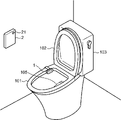
- FIG. 4 is a diagram for explaining arrangement positions of an excretion sensor and an excretion determination device according to the embodiment of the present disclosure; It is a block diagram showing an example of a configuration of a server according to an embodiment of the present disclosure.
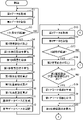
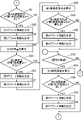
- 4 is a first flowchart showing an example of server processing according to an embodiment of the present disclosure; 9 is a second flowchart showing an example of server processing according to the embodiment of the present disclosure; 9 is a third flowchart showing an example of server processing according to the embodiment of the present disclosure;
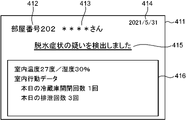
- It is a figure which shows an example of the display screen of the 4th alert information displayed on a display apparatus. It is a figure which shows an example of the display screen of the 7th alert information displayed on a display apparatus. It is a figure which shows an example of the display screen of the 8th alert information displayed on a display apparatus.
- an information processing method is provided by a computer in which, in a first predetermined period, a user's excretion-related data acquired by a sensor installed in a toilet and the user's Acquiring first data associated with a user ID for identification, generating a reference database showing the excretion tendency of the user based on the acquired first data, and installing the reference database in the toilet for a second predetermined period acquiring second data that associates the user's excretion-related data acquired by the sensor with the user ID, and alert information to the user based on the reference database and the second data; and outputs the generated alert information.
- the first data that associates the user's excretion-related data acquired by the sensor installed in the toilet with the user ID for identifying the user is acquired.
- a reference database indicating the user's excretion tendency is generated.
- second data is acquired in which the user's excretion-related data acquired by the sensor installed in the toilet and the user ID are associated with each other.
- alert information is generated for the user, and the generated alert information is output.
- the user's past excretion tendency during the first predetermined period and the user's current excretion tendency during the second predetermined period are compared. Since the trends are compared, changes in the user's own excretion tendencies can be detected, and alert information corresponding to changes in the user's personal health condition can be output.
- the excretion-related data includes stool shape data indicating whether the shape of excreted stool is hard stool, normal stool, or watery stool
- the reference database includes: including a first percentage of hard stools indicating the percentage of hard stools out of all the stools in the first predetermined period;
- a second ratio of hard stools is calculated to indicate the ratio of hard stools excreted, and when the second ratio of hard stools is higher than the first ratio of hard stools, a second ratio indicates that the user is highly likely to be constipated. 1 alert information may be generated.
- the excretion-related data includes stool shape data indicating whether the shape of excreted stool is hard stool, normal stool, or watery stool
- the reference database includes: including a first watery stool ratio indicating a ratio of the watery stools out of all the stools in the first predetermined period of time; a second watery stool ratio indicating the ratio of the watery stools excreted, and if the second watery stool ratio is higher than the first watery stool ratio, there is a possibility that the user has diarrhea may generate second alert information indicating that the is high.
- the excretion-related data includes fecal volume data indicating an amount of defecation
- the reference database includes a first defecation volume indicating an average amount of defecation during the first predetermined period.
- the first defecation volume indicating the average amount of defecation per time during the first predetermined period and the second defecation amount indicating the average amount of defecation per time during the second predetermined period are compared. , according to the change in the amount of defecation of the individual user, it is possible to output the third alert information indicating that there is a high possibility that the amount of food intake of the user is insufficient.
- the excretion-related data includes excrement color data indicating the color of excreted feces
- the reference database stores the color of a predetermined color of all the excretion during the first predetermined period.
- a first stool color ratio indicating the ratio of excretion of stool
- a second ratio indicating the ratio of excretion of stool of the predetermined color among all the stools during the second predetermined period of time.
- a stool color ratio may be calculated, and if the first stool color ratio and the second stool color ratio are different, fourth alert information indicating that the user's stool color has changed may be generated.
- the first stool color ratio indicating the ratio of stool of a predetermined color out of all the stools excreted during the first predetermined period, and the predetermined color of all the stools in the second predetermined period. is compared with the second stool color ratio indicating the ratio of excreted feces, outputting fourth alert information indicating that the color of the user's stool has changed according to the change in the color of the user's individual stool. can do.
- the excretion-related data includes excrement type data indicating that the excretion of the user is urine
- the reference database stores an average amount of urination per day during the first predetermined period.
- a second urination frequency indicating an average number of urinations per day during the second predetermined period is calculated, and the second urination frequency is equal to the first urination frequency. If the number is greater than , fifth alert information may be generated indicating that the user has a tendency to urinate frequently.
- the first number of times of urination indicating the average number of times of urination per day in the first predetermined period and the second number of times of urination indicating the average number of times of urination per day in the second predetermined period are compared.
- Fifth alert information indicating that the user tends to urinate frequently can be output according to the change in the number of urinations of the individual.
- the excretion-related data includes excrement type data indicating that the excretion of the user is urine
- the reference database stores an average amount of urination per day during the first predetermined period.
- a second urination frequency indicating an average number of urinations per day during the second predetermined period is calculated, and the second urination frequency is equal to the first urination frequency. If less, sixth alert information may be generated indicating that the user's water intake is likely to be insufficient.
- the first number of times of urination indicating the average number of times of urination per day in the first predetermined period and the second number of times of urination indicating the average number of times of urination per day in the second predetermined period are compared.
- Sixth alert information indicating that there is a high possibility that the user's water intake is insufficient can be output according to the change in the number of urinations of the individual.
- the excretion-related data includes urine specific gravity data indicating whether or not the specific gravity of the urine of the user is higher than a predetermined range
- the reference database stores the specific gravity of urine in the first predetermined period. including a first specific gravity ratio indicating a ratio of the specific gravity of the urine out of all urination being heavier than the predetermined range, and in generating the alert information, the urine out of all the urination in the second predetermined period is higher than the predetermined range, and if the second specific gravity ratio is higher than the first specific gravity ratio, the possibility that the user is dehydrated is high. You may generate
- the first specific gravity ratio indicating the ratio of the specific gravity of urine out of all urination during the first predetermined period to be higher than the predetermined range, and the ratio of urine out of all urination during the second predetermined period. Since the comparison is made with the second specific gravity ratio indicating the ratio of the specific gravity being higher than the predetermined range, the seventh specific gravity ratio indicating that the user is highly likely to be dehydrated according to the change in the urine specific gravity of the individual user. Alert information can be output.
- the excretion-related data includes bleeding data indicating that the user bleeds during defecation or urination
- the reference database includes a first data indicating the number of times of bleeding during the first predetermined period. Including the number of times of bleeding and generating the alert information, calculating a second number of times of bleeding indicating the number of times of bleeding in the second predetermined period, wherein the first number of times of bleeding is less than the predetermined number of times and the second number of times of bleeding is a predetermined number of times If it is equal to or greater than the number of times, eighth alert information may be generated indicating that there is a high possibility that the user is bleeding during defecation or urination.
- the first number of bleeding times indicating the number of times of bleeding in the first predetermined period and the second number of times of bleeding indicating the number of times of bleeding in the second predetermined period are each compared with the predetermined number of times.
- Eighth alert information indicating that the user is likely to be bleeding during defecation or urination can be output according to the change in the number of times.
- the excretion-related data includes excretion-related data related to the user's defecation and urination-related data related to the user's urination.
- the second predetermined period may be longer than the second predetermined period for acquiring the urination-related data.
- the period for obtaining the required number of samples is longer for the defecation-related data than for the urination-related data. also longer. Since the second predetermined period for acquiring the defecation-related data is longer than the second predetermined period for acquiring the urination-related data, it is possible to acquire the number of samples required for determination.
- related data related to the generated alert information may be further acquired, and in outputting the alert information, the related data may be output together with the alert information. good.
- the related data related to the alert information is output together with the alert information, so a person who sees the alert information can analyze the factors for the output of the alert information based on the related data.
- the related data may include the type of medicine taken by the user.
- the type of medicine taken by the user is output together with the alert information
- a person who sees the alert information can analyze the factors for the output of the alert information based on the type of medicine taken by the user. can be done.
- the related data may include at least one of the user's meal content, the environment in the user's residence, and the user's activity level.
- At least one of the content of the user's meal, the environment in the user's residence, and the amount of activity of the user is output together with the alert information.
- At least one of the environment in the user's residence and the amount of activity of the user can be analyzed as a factor for outputting the alert information.
- the present disclosure can be realized not only as an information processing method that executes the characteristic processing as described above, but also as an information processing method having a characteristic configuration corresponding to the characteristic method executed by the information processing method. It can also be implemented as a device or the like. Moreover, it can also be realized as a computer program that causes a computer to execute characteristic processing included in such an information processing method. Therefore, the following other aspects can also achieve the same effect as the information processing method described above.
- An information processing apparatus relates, in a first predetermined period, a user's excretion-related data acquired by a sensor installed in a toilet and a user ID for identifying the user.
- a first data acquisition unit that acquires one data
- a reference database generation unit that generates a reference database indicating the user's excretion tendency based on the acquired first data
- a second data acquisition unit that acquires second data that associates the user's excretion-related data acquired by the installed sensor with the user ID; and based on the reference database and the second data.
- an alert information generating unit for generating alert information for the user
- an output unit for outputting the generated alert information.
- An information processing program relates, in a first predetermined period, a user's excretion-related data acquired by a sensor installed in a toilet and a user ID for identifying the user. 1 data is acquired, based on the acquired first data, a reference database indicating the user's excretion tendency is generated, and the user's tendency acquired by the sensor installed in the toilet during a second predetermined period Acquiring second data that associates the excretion-related data with the user ID, generates alert information for the user based on the reference database and the second data, and outputs the generated alert information Make your computer work like that.
- FIG. 1 is a diagram showing the configuration of an excretion management system according to an embodiment of the present disclosure.
- FIG. 2 is a diagram for explaining the arrangement positions of the excretion sensor 1 and the excrement determination device 2 in the embodiment of the present disclosure.
- the excretion management system is a system that is installed in facilities such as nursing homes and hospitals. It manages the state of the excretion of users who use the facility and presents various alert information to the administrator.
- the users are, for example, care recipients receiving care in nursing homes and patients receiving treatment in hospitals.
- the administrator is, for example, a care recipient's caregiver, a care manager, a doctor in charge of patient treatment, a nurse, or the like.
- the excrement determination device 2, server 3, and display device 5 are connected via a network 6 so as to be able to communicate with each other.
- the network 6 is a wide area communication network including, for example, the Internet communication network and a mobile phone communication network.
- the excrement determination device 2 is installed, for example, on the wall surface inside the toilet.
- the excretion sensor 1 is communicably connected to the excretion determining device 2 via a communication path 7 .
- the communication path 7 is a communication path for short-range wireless communication such as Bluetooth (registered trademark), infrared communication, and NFC (Near Field Communication). Note that the communication path 7 may be a wired communication path.
- the external sensor 4 is communicably connected to the excrement determining device 2 via a communication path 7 .
- the excretion sensor 1 is arranged inside the toilet bowl 101 . As shown in FIG. 2, the excretion sensor 1 is hung on the edge of an opening formed in the upper portion of a toilet bowl 101 for receiving feces and urine.
- a water reservoir 105 is provided at the bottom of the toilet bowl 101 .
- the water storage part 105 is connected to a drainage channel (not shown) for discharging feces and urine from the toilet bowl 101 . Feces and urine excreted in the toilet bowl 101 are flushed through the drainage channel.
- a toilet seat 102 is provided on the upper portion of the toilet bowl 101 for the user to sit on. The toilet seat 102 rotates up and down. The user sits down with the toilet seat 102 lowered on the toilet bowl 101 .
- a water storage tank 103 for storing water for flushing feces and urine is provided behind the toilet bowl 101 .
- the excretion sensor 1 includes a camera.
- the camera is installed in the toilet bowl 101 so that the inside of the toilet bowl 101 can be photographed.
- the camera is, for example, a high-sensitivity wide-angle camera capable of capturing a color image having three color components of R (red) component, G (green) component, and B (blue).
- R (red) component red
- G (green) component green
- B blue
- the camera consists of a high sensitivity camera with 1/4 inch CMOS.
- the camera is a wide-angle camera having a horizontal angle of view of 120 degrees and a vertical angle of view of 100 degrees. Note that the numerical values of the number of inches and the number of angles of view are merely examples, and other values may be adopted.
- the camera captures an image of the interior of the toilet bowl 101 at a predetermined frame rate, includes time information indicating the time of capturing in the obtained image data, and transmits the image data containing the time information to the excrement determination device 2 .
- the time information is information including year, month, day, hour, minute, and second, such as April 1, 2021, 15:00:00. However, this is just an example, and the time information may be information including hours, minutes, and seconds.
- the external sensors 4 include an environment sensor that measures the temperature and humidity of the room where the user mainly lives, an open/close sensor that detects opening and closing of the refrigerator door, and an activity meter that measures the amount of activity of the user, such as a pedometer. .
- the external sensor 4 transmits sensing data to the excrement determination device 2 .
- the excrement determination device 2 includes a camera 21 , a processor 22 , a memory 23 and a communication section 24 .
- the camera 21 takes an image of the user's face.
- the camera 21 is arranged at a position capable of capturing an image of the face of the user seated on the toilet seat 102 .
- the memory 23 is, for example, a RAM (Random Access Memory), SSD (Solid State Drive), flash memory, or other storage device capable of storing various information.
- the memory 23 associates and stores a user's face image and a user ID for identifying the user.
- the communication unit 24 receives image data of the interior of the toilet bowl 101 transmitted by the excretion sensor 1 .
- the processor 22 is, for example, a central processing unit (CPU).
- a user authentication unit 221 , a data acquisition unit 222 , an excrement determination unit 223 and a data output unit 224 are implemented by the processor 22 .
- the user authentication unit 221 acquires from the memory 23 the user ID associated with the face image captured by the camera 21 .
- the camera 21 may capture an image of a barcode or two-dimensional code in which the user ID is stored.
- the user authentication unit 221 may read the user ID from a bar code or two-dimensional code captured by the camera 21 .
- the excrement determination device 2 may be equipped with an IC card reader instead of the camera 21.
- the IC card reader uses NFC to read information stored in the IC card in a contactless manner.
- the IC card stores in advance a user ID for identifying the user.
- a user brings an IC card storing his/her own user ID close to an IC card reader. Thereby, the IC card reader acquires the user ID from the nearby IC card.
- a user authentication unit 221 acquires a user ID from an IC card reader.
- the excrement determination device 2 may be provided with a microphone instead of the camera 21.
- the user authentication unit 221 may acquire the user's voice through a microphone and acquire the user ID associated with the acquired voice from the memory 23 .
- the data acquisition unit 222 acquires image data captured by the excretion sensor 1 .
- the data acquisition section 222 acquires image data from the communication section 24 .
- the excrement determination unit 223 performs image recognition on the image data acquired by the data acquisition unit 222 to determine the type of excrement indicating whether the excrement is stool or urine, the shape of excreted stool, and the excretion data. The amount of stool passed, the color of the stool voided, the amount of urine voided, the specific gravity of the voided urine and bleeding are determined.
- the type of excrement indicates whether the excrement is stool or urine. Determination of the type of excrement by the excrement determination unit 223 will now be described.
- the excrement determination unit 223 calculates the difference between the image data acquired by the data acquisition unit 222 and the reference image data stored in the memory 23 .
- the reference image data is generated, for example, based on a plurality of color image data obtained by the excretion sensor 1 capturing the state inside the toilet bowl 101 in which defecation and urination are not performed a plurality of times. That is, the reference image data is color image data of the default state in the toilet bowl 101 in which defecation and urination are not performed. Therefore, by calculating the difference between the image data captured during defecation or urination and the reference image data, image data indicating defecation or urination is extracted.
- the excrement determination unit 223 calculates the RGB ratio of the R component, the G component, and the B component of each pixel included in the calculated difference image data.
- the excrement determination unit 223 calculates the total number of pixels whose calculated RGB ratio falls within a predetermined defecation reference ratio range.
- the RGB ratio is, for example, the ratio of the luminance value of the R component, the luminance value of the G component, and the luminance value of the B component of each pixel in the differential image data.
- the defecation reference ratio range is a range of typical defecation RGB ratios calculated by analyzing multiple image data containing various defecation images.
- the excrement determination unit 223 determines that the image data captured by the excretion sensor 1 does not include a defecation image. It is determined that the excrement is stool.
- the excrement determination unit 223 may determine whether or not the urination image is included in the image data by performing the same processing as the defecation image. That is, the excrement determination unit 223 calculates the total number of pixels whose RGB ratio of each pixel included in the difference image falls within a predetermined urination reference ratio range. If the total number of pixels whose calculated RGB ratio falls within the predetermined urination reference ratio range is greater than or equal to the threshold value, the excrement determining unit 223 determines that the image data captured by the excretion sensor 1 includes an urination image. It suffices to determine that the object is urine.
- the shape of excreted stool indicates whether the excreted stool is hard stool, normal stool, or watery stool.
- the excrement determination unit 223 performs image recognition on the image data acquired by the data acquisition unit 222 to determine whether the excreted stool is hard stool, normal stool, or watery stool. determine whether
- the amount of excreted stool indicates the area of excreted stool.
- the excrement determination unit 223 performs image recognition on the image data acquired by the data acquisition unit 222 to determine the area of excreted stool as the amount of excreted stool.
- the color of excreted stool indicates whether the color of excreted stool is black, white, or green.
- the excrement determination unit 223 performs image recognition on the image data acquired by the data acquisition unit 222 to determine whether the color of the excreted stool is black, white, or green. judge.
- the stool color may change.
- black stool is stool that may be excreted when sodium ferrous citrate or the like is taken.
- the excrement determination unit 223 calculates the G/R value and B/R value based on the R value, G value and B value included in the image data.
- the excrement determination unit 223 sets a detection area in the image data acquired by the data acquisition unit 222, and calculates the G/R value and the B/R value for each of the plurality of pixel data constituting the detection area. calculate.
- the G/R value is a value obtained by dividing the G value by the R value and showing it in %.
- the B/R value is a value obtained by dividing the B value by the R value and expressed in %.
- the R value is the tone value of the R (red) component of the pixel data
- the G value is the tone value of the G (green) component of the pixel data
- the B value is the B (blue) component of the pixel data.
- the R value, G value, and B value are, for example, 8-bit (0 to 255) values. However, this is just an example, and the R value, G value, and B value may be expressed by other numbers of bits.
- the detection area is a rectangular area including the water storage portion 105 of the toilet bowl 101 .
- the excrement determination unit 223 determines that the image data contains an image of black stool.
- the black stool condition is that the G/R value is within a first range, the B/R value is within a second range, and each of the R, G, and B values is within a third range. It is a condition.
- Black stool conditions are conditions where the G/R value is D1% or more and D2% or less, the B/R value is D3% or more and D4% or less, and each of the R value, G value, and B value is 0 or more and E or less.
- the R value, G value, and B value each take a value of 0 to 255, so E is 0 or more and 255 or less.
- D1 is, for example, 85 or more and 95 or less, preferably 88 or more and 92 or less.
- D2 is, for example, 105 or more and 115 or less, preferably 108 or more and 112 or less.
- D3 is, for example, 55 or more and 65 or less, preferably 58 or more and 62 or less.
- D4 is, for example, 105 or more and 115 or less, preferably 108 or more and 112 or less.
- E is, for example, 85 or more and 95 or less, preferably 88 or more and 92 or less.
- E is, for example, 33% or more and 37% or less, preferably 34% or more and 36% or less.
- the excrement determination unit 223 determines that the color of excreted feces is black when there are a predetermined number of pixels or more of pixel data satisfying the black stool condition in the image data.
- the predetermined number of pixels is a preset number of pixels that indicates that the pixel data that satisfies the black stool condition is not noise but black stool pixel data.
- the excrement determination unit 223 determines the white stool condition. , it may be determined that the image data includes an image of white stool. Further, when the calculated G/R value and B/R value and each of the R value, G value and B value included in the image data satisfy a predetermined green stool condition, the excrement determining unit 223 It may be determined that the image data includes an image of green stool.
- the amount of excreted urine indicates the area of excreted urine.
- the excrement determination unit 223 performs image recognition on the image data acquired by the data acquisition unit 222 to determine the area of excreted urine as the amount of excreted urine.
- the specific gravity of excreted urine indicates whether the specific gravity of excreted urine is greater than a predetermined range.
- the predetermined range is a range of typical normal values, eg, a range of 1.010-1.030. If the specific gravity of excreted urine is within the range of normal values, the urine will diffuse into the reservoir 105 without accumulating at the bottom of the reservoir 105 . Therefore, the number of pixels representing urine increases from the start of urination to the end of urination, and is maintained at a high value even after the end of urination. On the other hand, when the specific gravity of excreted urine is higher than the normal value range, the urine sinks to the bottom of the pooled water portion 105 .
- Excrement determination unit 223 determines that the specific gravity of excreted urine is greater than the range of normal values when the number of pixels representing urine in the detection area after urination is completed is less than the threshold.
- the detection area is a rectangular area including the water storage portion 105 of the toilet bowl 101 .
- the determination of bleeding indicates whether or not the excrement contains blood.
- the excrement determination unit 223 extracts blood images representing blood from the plurality of images acquired by the data acquisition unit 222 .
- the excrement determination unit 223 may extract, as a blood image, a region in which a predetermined number or more of pixels having predetermined RGB values indicating blood are continuous in the specific area of the plurality of images.
- a “pixel having a predetermined RGB value indicating blood” refers to, for example, a pixel having an RGB value within a predetermined range with respect to a predetermined RGB value indicating blood.
- the predetermined range refers to a predetermined range of RGB values that can be regarded as blood.
- a plurality of blood images may be extracted from one image.
- the excrement determination unit 223 may determine the excretion start timing based on time information corresponding to the extracted defecation image or urination image.
- the excretion start timing refers to time information included in the image from which the defecation image or the urination image is extracted.
- the excrement determination unit 223 determines the bleeding start timing based on the time information corresponding to the extracted blood image, and determines the blood size indicating the size of the blood based on the blood image. may decide.
- the bleeding start timing refers to time information included in the image from which the blood image was extracted.
- the data output unit 224 generates excretion-related data related to the user's excretion based on the determination result of the excrement determination unit 223 .
- the excretion-related data includes time stamps including excretion start date and excretion end date and time, excrement type data indicating whether the excretion is stool or urine, and the shape of excreted stool is hard stool, normal stool, or watery stool. stool shape data indicating whether the stool is like or not, stool amount data indicating the amount of stool excreted, stool color data indicating the color of excreted stool, urine volume data indicating the amount of urination, specific gravity of user's urine within a predetermined range and bleeding data indicating that the user bled during defecation or urination.
- the time stamp, excrement type data indicating that the excrement is feces, stool shape data, feces volume data, feces color data, and bleeding data are defecation-related data related to the user's defecation.
- the time stamp, the excrement type data indicating that the excrement is urine, the urine volume data, the urine specific gravity data, and the bleeding data are urination-related data related to the user's urination.
- the data output unit 224 assigns a user ID to the excretion-related data and outputs the excretion-related data to which the user ID has been assigned to the communication unit 24 .
- the communication unit 24 transmits data in which the excretion-related data and the user ID are associated to the server 3 .
- the data output unit 224 adds a user ID and a time stamp to the sensing data received from the external sensor 4, and outputs the sensing data to which the user ID and time stamp are added to the communication unit 24.
- the sensing data includes environment information indicating the temperature and humidity of the room where the user mainly lives, refrigerator opening/closing information indicating opening/closing of the refrigerator door, and activity amount information indicating the amount of activity of the user.
- the time stamp includes the date and time when the sensing data was measured or the date and time when the sensing data was received.
- the communication unit 24 transmits the sensing data to which the user ID and time stamp are added to the server 3 .
- the server 3 is, for example, a cloud server containing one or more computers.
- FIG. 3 is a block diagram showing an example of the configuration of the server 3 according to the embodiment of the present disclosure.
- the server 3 shown in FIG. 3 includes a communication unit 31, a processor 32 and a memory 33.
- the communication unit 31 receives data that associates the excretion-related data and the user ID transmitted by the excrement determination device 2 .
- the processor 32 is, for example, a CPU.
- the processor 32 implements a first data acquisition unit 321 , a reference database generation unit 322 , a second data acquisition unit 323 , an alert information generation unit 324 and an alert information output unit 325 .
- the memory 33 is, for example, a storage device such as a RAM, SSD, or flash memory that can store various information.
- the memory 33 implements an excretion history data storage unit 331 , a user information storage unit 332 and a reference database storage unit 333 .
- the first data acquisition unit 321 acquires first data in which the user's excretion-related data acquired by the excretion sensor 1 installed in the toilet and the user ID for identifying the user are associated with each other during the first predetermined period. do.
- the first predetermined period is, for example, one month.
- the first data acquisition unit 321 acquires the first data in which the excretion-related data and the user ID are associated with each other from the excretion determination device 2 in the first predetermined period, and stores the acquired first data in the excretion history data storage unit 331.
- the excretion history data storage unit 331 is a database that stores data that associates excretion-related data with user IDs as excretion history data.
- the user information storage unit 332 is a database that stores user information including a user ID, medication information, meal information, environment information, refrigerator open/close information, and activity amount information.
- the medication information includes the type of medication taken by the user and the medication date and time.
- the meal information includes the content of the meal eaten by the user and the date and time of the meal.
- Environmental information includes the temperature and humidity of the room where the user mainly lives.
- the refrigerator opening/closing information includes the number of times the refrigerator door has been opened/closed in one day.
- the activity amount information includes the amount of activity such as the number of steps of the user per day.
- the communication unit 31 receives medication information and meal information transmitted by another personal computer (not shown).
- the processor 32 stores the medication information and meal information received by the communication unit 31 in the user information storage unit 332 .
- the other personal computer accepts input of medication information and meal information by a caregiver or a nurse, and transmits the entered medication information and meal information to the server 3 .
- the communication unit 31 also receives the sensing data transmitted by the excrement determination device 2 .
- the processor 32 stores environment information, refrigerator opening/closing information, and activity amount information in the user information storage unit 332 based on the sensing data received by the communication unit 31 .
- the reference database generation unit 322 generates a reference database indicating the user's excretion tendency based on the first data acquired by the first data acquisition unit 321 during the first predetermined period.
- the reference database generation unit 322 reads the first data acquired during the first predetermined period from the excretion history data storage unit 331, and generates the reference database based on the read first data.
- the reference database generation unit 322 uses the stool shape data in the first predetermined period to calculate a first hard stool percentage that indicates the percentage of hard stools out of all the stools in the first predetermined period. In addition, the reference database generation unit 322 uses the stool shape data in the first predetermined period to calculate the first watery stool ratio indicating the ratio of watery stools out of all the stools in the first predetermined period. do. In addition, the reference database generation unit 322 uses the fecal volume data for the first predetermined period to calculate the first fecal volume, which indicates the average amount of feces per feces during the first predetermined period.
- the reference database generating unit 322 uses the stool color data in the first predetermined period to generate a first stool color ratio indicating the ratio of stool of a predetermined color out of all the stools in the first predetermined period. calculate.
- Predetermined colors are, for example, black, white or green.
- the reference database generator 322 uses the excrement type data in the first predetermined period to calculate the first number of urinations, which indicates the average number of times of urination per day in the first predetermined period.
- the reference database generation unit 322 uses the urine specific gravity data in the first predetermined period to generate a first specific gravity ratio indicating the proportion of all urination in the first predetermined period in which the specific gravity of urine is heavier than the predetermined range.
- the reference database generator 322 uses the bleeding data in the first predetermined period to calculate the first number of times of bleeding, which indicates the number of times of bleeding in the first predetermined period.
- the reference database generation unit 322 is a reference database including the first ratio of hard stools, the first ratio of watery stools, the first stool amount, the first ratio of color of stools, the first frequency of urination, the first ratio of specific gravity, and the first frequency of bleeding. is generated, and the generated reference database is stored in the reference database storage unit 333 in association with the user ID.
- the reference database storage unit 333 stores the reference database generated by the reference database generation unit 322.
- the second data acquisition unit 323 acquires second data that associates the user's excretion-related data acquired by the excretion sensor 1 installed in the toilet with the user ID during the second predetermined period.
- the second predetermined period is shorter than the first predetermined period.
- the second predetermined period is, for example, two weeks, one week, or three days.
- the second data acquisition unit 323 acquires the second data in which the excretion-related data and the user ID are associated with each other from the excretion determination device 2 during the second predetermined period, and stores the acquired second data in the excretion history data storage unit 331.
- the excretion-related data includes defecation-related data related to the user's defecation and urination-related data related to the user's urination.
- the second predetermined period for acquiring the defecation-related data is, for example, two weeks, and the second predetermined period for acquiring the urination-related data is, for example, one week.
- bowel movements occur 1-3 times a day and urination occurs 7-8 times per day.
- the second predetermined period for acquiring the defecation-related data is preferably longer than the second predetermined period for acquiring the urination-related data.
- the second predetermined period may be determined according to the generated alert information.
- the alert information generation unit 324 generates alert information for the user based on the reference database stored in the reference database storage unit 333 and the second data stored in the excretion history data storage unit 331.
- the alert information generation unit 324 uses the stool shape data in the second predetermined period to calculate a second hard stool percentage that indicates the percentage of hard stools out of all the stools in the second predetermined period.
- the second predetermined period is, for example, two weeks. Then, when the second percentage of hard stools is greater than the first percentage of hard stools included in the reference database, the alert information generation unit 324 generates first alert information indicating that the user is likely to be constipated. .
- the alert information generation unit 324 uses the stool shape data in the second predetermined period to calculate a second watery stool ratio indicating the ratio of watery stools out of all the stools in the second predetermined period. do.
- the second predetermined period is, for example, two weeks. Then, if the second watery stool percentage is higher than the first watery stool percentage included in the reference database, the alert information generation unit 324 generates second alert information indicating that the user is likely to have diarrhea. Generate.
- the alert information generation unit 324 uses the fecal volume data for the second predetermined period to calculate a second fecal volume that indicates the average amount of defecation per time during the second predetermined period.
- the second predetermined period is, for example, two weeks.
- the alert information generation unit 324 generates third alert information indicating that there is a high possibility that the user's dietary intake is insufficient. to generate
- the alert information generation unit 324 may generate the third alert information when the second feces volume is decreased by a predetermined rate from the first feces volume.
- the predetermined percentage is, for example, 20 percent. The predetermined percentage may be manually adjusted by an administrator in response to the user's medical history and changing conditions (eg, diaper wear).
- the alert information generation unit 324 uses the stool color data for the second predetermined period to generate a second stool color ratio that indicates the ratio of stools of a predetermined color out of all the stools that were excreted during the second predetermined period. calculate.
- the second predetermined period is, for example, two weeks.
- the alert information generation unit 324 generates fourth alert information indicating that the color of the user's feces has changed.
- the alert information generating unit 324 may calculate the second stool color ratio for each stool color, and determines whether or not the first stool color ratio and the second stool color ratio are different for each stool color. You may
- the alert information generation unit 324 uses the excrement type data in the second predetermined period to calculate the second urination frequency indicating the average number of urinations per day in the second predetermined period.
- the second predetermined period is, for example, one week. Then, when the number of times of second urination is greater than the number of times of first urination contained in the reference database, the alert information generation unit 324 generates fifth alert information indicating that the user tends to urinate frequently.
- the alert information generation unit 324 may generate the fifth alert information when the second urination number of times increases by a predetermined ratio as compared with the first urination number of times.
- the predetermined percentage is, for example, 20 percent.
- the predetermined percentage may be manually adjusted by an administrator in response to the user's medical history and changing conditions (eg, diaper wear).
- the reference database generation unit 322 uses the urination amount data in the first predetermined period to calculate the first urination small amount ratio indicating the ratio of the urination amount less than the predetermined amount in all the urination in the first predetermined period.
- the alert information generation unit 324 uses the urine volume data in the second predetermined period to calculate a second small urine volume ratio indicating the percentage of the total urine volume in the second predetermined period in which the urine volume was less than the predetermined amount. good too. Then, the alert information generation unit 324 may generate fifth alert information when the second urination frequency is greater than the first urination frequency and the second urination small amount ratio is greater than the first urination small amount ratio.
- the predetermined amount may be manually adjusted by an administrator according to the user's medical history, changing conditions (eg, wearing diapers), and season.
- the reference database generation unit 322 may calculate the first number of nocturnal urinations that indicates the average number of nighttime urinations per day in the first predetermined period.
- the alert information generator 324 may calculate a second nocturnal urination frequency indicating the average number of nighttime urinations per day during the second predetermined period. Then, if the number of times of second nocturnal urination is greater than the number of times of first nocturnal urination contained in the reference database, the alert information generation unit 324 may generate alert information indicating that the user tends to urinate frequently at night. good.
- the alert information generation unit 324 may generate alert information indicating that the user has a tendency to urinate frequently at night when the number of times of second nocturnal urination increases by a predetermined rate compared to the number of times of first nocturnal urination.
- the predetermined percentage is, for example, 20 percent. The predetermined percentage may be manually adjusted by an administrator in response to the user's medical history and changing conditions (eg, diaper wear).
- the alert information generating unit 324 determines that the user tends to urinate frequently at night when the second nocturnal urination frequency is greater than the first nocturnal urination frequency and the second ratio of small amount of urination is higher than the first ratio of small amount of urination. You may generate
- the alert information generation unit 324 uses the excrement type data in the second predetermined period to calculate the second urination frequency indicating the average number of urinations per day in the second predetermined period.
- the second predetermined period is, for example, one week. Then, when the number of times of second urination is less than the number of times of first urination contained in the reference database, the alert information generation unit 324 generates sixth alert information indicating that there is a high possibility that the user's fluid intake is insufficient. to generate
- the alert information generation unit 324 may generate the sixth alert information when the second urination frequency is less than the first urination frequency by a predetermined percentage.
- the predetermined percentage is, for example, 20 percent.
- the predetermined percentage may be manually adjusted by an administrator in response to the user's medical history and changing conditions (eg, diaper wear).
- the reference database generation unit 322 uses the urination amount data in the first predetermined period to calculate the first urination small amount ratio indicating the ratio of the urination amount less than the predetermined amount in all the urination in the first predetermined period.
- the alert information generation unit 324 uses the urine volume data in the second predetermined period to calculate a second small urine volume ratio indicating the percentage of the total urine volume in the second predetermined period in which the urine volume was less than the predetermined amount. good too. Then, the alert information generation unit 324 may generate sixth alert information when the second urination frequency is smaller than the first urination frequency and the second ratio of small amount of urine is higher than the first ratio of small amount of urine.
- the predetermined amount may be manually adjusted by an administrator according to the user's medical history, changing conditions (eg, diaper wear), and season.
- the alert information generating unit 324 uses the urine specific gravity data in the second predetermined period to generate a second specific gravity ratio indicating the ratio of urine having a higher specific gravity than a predetermined range in all urination in the second predetermined period.
- the second predetermined period is, for example, the most recent three days.
- the alert information generation unit 324 generates seventh alert information indicating that the user is likely to be dehydrated. Dehydration can result from an imbalance in daily fluid intake, sweating and excretion. Since dehydration is physically dangerous, the second predetermined period for generating the seventh alert information is shorter than the second predetermined period for generating the fifth and sixth alert information. is preferred.
- the alert information generation unit 324 may generate the seventh alert information when the second specific gravity ratio is increased by a predetermined ratio from the first specific gravity ratio.
- the predetermined percentage is, for example, 20 percent.
- the predetermined percentage may be manually adjusted by an administrator in response to the user's medical history and changing conditions (eg, diaper wear).
- the alert information generation unit 324 uses the bleeding data in the second predetermined period to calculate the second number of times of bleeding, which indicates the number of times of bleeding in the second predetermined period.
- the second predetermined period is, for example, the most recent three days. If the number of first bleeding times included in the reference database is less than the predetermined number of times and the number of second bleedings is equal to or greater than the predetermined number of times, the alert information generation unit 324 may determine that the user is bleeding during defecation or urination. It generates the eighth alert information indicating that the probability is high.
- the alert information generation unit 324 detects that the number of times of bleeding included in the reference database is 0 and the number of times of the second bleeding is 1 or more. Generate eighth alert information indicating that there is a high possibility that
- the reference database generation unit 322 may use the bleeding data in the first predetermined period to calculate a first bleeding ratio that indicates the ratio of bleeding to all defecation and urination in the first predetermined period.
- the alert information generation unit 324 may use the bleeding data in the second predetermined period to calculate a second bleeding rate that indicates the rate of bleeding in all defecation and urination in the second predetermined period. Then, the alert information generator 324 may generate eighth alert information when the second bleeding percentage is higher than the first bleeding percentage included in the reference database.
- the alert information output unit 325 outputs the alert information generated by the alert information generation unit 324.
- the alert information output unit 325 outputs the generated alert information among the first to eighth alert information to the display device 5 .
- the communication unit 31 transmits the alert information output by the alert information output unit 325 to the display device 5 .
- the alert information generation unit 324 may further acquire related data related to the generated alert information.
- the alert information output unit 325 may output related data along with the alert information.
- the alert information generation unit 324 acquires related data related to alert information from the user information storage unit 332 .
- the relevant data includes the type of medication taken by the user.
- the alert information generator 324 may acquire the type of medicine taken by the user as related data.
- the related data to be acquired is predetermined for the alert information.
- the related data may include at least one of the user's meal information, the environment information in the user's residence, and the user's activity level information.
- the alert information generation unit 324 When the alert information generation unit 324 generates the third alert information, the sixth alert information, or the seventh alert information, at least one of the user's meal information, the user's environment information in the user's residence, and the user's activity amount information may be acquired as related data.
- the display device 5 is, for example, a computer owned by an administrator.
- the display device 5 may be, for example, a stationary computer, a smart phone, or a tablet computer.
- the display device 5 includes a communication unit, processor, memory, display, and operation unit.
- the communication unit connects the display device 5 to the network 6 .
- the communication unit receives alert information from the server 3 .
- the processor is composed of, for example, a CPU, acquires the alert information transmitted by the server 3 using the communication unit, generates a display image based on the acquired alert information, and displays the generated display image on the display. This allows the administrator to check the alert information for the user.
- the memory is composed of a non-volatile rewritable storage device such as flash memory.
- the display is composed of a display device such as a liquid crystal display panel and an organic EL panel, for example.
- the operation unit includes a keyboard, mouse, touch panel, etc., and receives instructions from the administrator.
- FIG. 4 is a first flowchart showing an example of processing of the server 3 according to the embodiment of the present disclosure
- FIG. 5 is a second flowchart showing an example of processing of the server 3 according to the embodiment of the present disclosure.
- FIG. 6 is a third flowchart showing an example of the processing of the server 3 in the embodiment of the present disclosure.
- step S1 the first data acquisition unit 321 acquires first data that associates the excretion-related data with the user ID.
- the first data is acquired each time the user defecates or urinates.
- step S ⁇ b>2 the first data acquisition section 321 stores the acquired first data in the excretion history data storage section 331 .
- step S3 the first data acquisition unit 321 determines whether or not one month has passed since the acquisition of the first data was started. Here, if it is determined that one month has not passed since acquisition of the first data was started (NO in step S3), the process returns to step S1.
- step S4 the reference database generation unit 322 generates the stool shapes acquired during one month.
- the data are used to calculate the first percentage of hard stools, which indicates the percentage of hard stools excreted in one month.
- step S5 the reference database generation unit 322 calculates the first watery stool percentage indicating the percentage of watery stools excreted in one month using the stool shape data acquired in one month. do.
- step S6 the reference database generation unit 322 uses the defecation amount data acquired in one month to calculate the first defecation amount that indicates the average amount of defecation per time in one month.
- step S7 the reference database generation unit 322 uses the stool color data acquired in one month to generate a first stool color ratio indicating the ratio of excretion of a predetermined color of stool in one month. calculate.
- the predetermined color is black, for example.
- step S8 the reference database generation unit 322 uses the excrement type data acquired in one month to calculate the first number of urinations, which indicates the average number of urinations per day in one month.
- step S9 the reference database generation unit 322 uses the urine specific gravity data acquired in one month to generate a first specific gravity ratio indicating the ratio of urine specific gravity heavier than a predetermined range in one month.
- step S10 the reference database generation unit 322 uses the bleeding data acquired in one month to calculate the first number of bleeding times, which indicates the number of bleeding times in one month.
- the reference database generation unit 322 generates a first percentage of hard stools, a first percentage of watery stools, a first amount of feces, a first percentage of color of feces, a first frequency of urination, a first ratio of specific gravity, and a Create a reference database containing one bleed number.
- the reference database generation unit 322 stores the generated reference database in the reference database storage unit 333 in association with the user ID.
- step S13 the second data acquisition unit 323 acquires second data that associates the excretion-related data with the user ID.
- step S ⁇ b>14 the second data acquisition section 323 stores the acquired second data in the excretion history data storage section 331 .
- step S15 the second data acquisition unit 323 determines whether or not two weeks have passed since the previous time when it was determined that two weeks had passed. Here, if it is determined that two weeks have not passed since the last time when it was determined that two weeks had passed (NO in step S15), the process proceeds to step S32.
- step S16 the alert information generation unit 324 generates the stool shape acquired in the last two weeks.
- the data are used to calculate the secondary hard stool percentage, which indicates the percentage of excreted hard stools over the two-week period.
- step S17 the alert information generation unit 324 determines whether or not the second percentage of hard stools is greater than the first percentage of hard stools included in the reference database. Here, if it is determined that the second percentage of hard stools is less than or equal to the first percentage of hard stools (NO in step S17), the process proceeds to step S20.
- step S18 the alert information generation unit 324 indicates that the user is likely to be constipated. Generate first alert information.
- step S ⁇ b>19 the alert information output unit 325 outputs the first alert information generated by the alert information generation unit 324 to the display device 5 .
- the communication unit 31 transmits the first alert information output by the alert information output unit 325 to the display device 5 .
- the display device 5 receives the first alert information and displays the received first alert information.
- step S20 the alert information generation unit 324 uses the stool shape data acquired in two weeks to calculate a second watery stool ratio that indicates the ratio of watery stools excreted in two weeks.
- step S21 the alert information generation unit 324 determines whether or not the second watery stool percentage is greater than the first watery stool percentage included in the reference database. Here, if it is determined that the second watery feces proportion is equal to or less than the first watery feces proportion (NO in step S21), the process proceeds to step S24.
- step S22 second alert information indicating that the user is likely to have diarrhea is displayed. Generate.
- step S23 the alert information output unit 325 outputs the second alert information generated by the alert information generation unit 324 to the display device 5.
- the communication unit 31 transmits the second alert information output by the alert information output unit 325 to the display device 5 .
- the display device 5 receives the second alert information and displays the received second alert information.
- step S24 the alert information generation unit 324 uses the data of the amount of defecation acquired in two weeks to calculate a second amount of defecation that indicates the average amount of defecation per time in two weeks.
- step S25 the alert information generator 324 determines whether or not the second feces volume is less than the first feces volume included in the reference database. Here, if it is determined that the second fecal volume is greater than or equal to the first fecal volume (NO in step S25), the process proceeds to step S28.
- step S26 the alert information generation unit 324 determines that the user's dietary intake is likely to be insufficient. 3rd alert information which shows that is produced
- step S27 the alert information output unit 325 outputs the third alert information generated by the alert information generation unit 324 to the display device 5.
- the communication unit 31 transmits the third alert information output by the alert information output unit 325 to the display device 5 .
- the display device 5 receives the third alert information and displays the received third alert information.
- step S28 the alert information generation unit 324 uses the stool color data acquired in 2 weeks to calculate a second stool color ratio indicating the ratio of excretion of stool of a predetermined color in 2 weeks.
- the predetermined color is black, for example.
- step S29 the alert information generation unit 324 determines whether or not the first feces color ratio and the second feces color ratio included in the reference database are different.
- the process proceeds to step S32.
- step S30 the alert information generation unit 324 indicates that the color of the user's feces has changed. Generate fourth alert information.
- step S31 the alert information output unit 325 outputs the fourth alert information generated by the alert information generation unit 324 to the display device 5.
- the communication unit 31 transmits the fourth alert information output by the alert information output unit 325 to the display device 5 .
- the display device 5 receives the fourth alert information and displays the received fourth alert information.
- step S32 the second data acquisition unit 323 determines whether or not one week has passed since the last time when it was determined that one week had passed. Here, if it is determined that one week has not passed since the previous determination that one week has passed (NO in step S32), the process proceeds to step S44.
- step S33 the alert information generation unit 324 generates excrement acquired in one week. Using the type data, a second urination frequency indicating the average number of urinations per day for one week is calculated.
- step S34 the alert information generator 324 determines whether or not the second urination frequency is greater than the first urination frequency included in the reference database. Here, if it is determined that the second urination frequency is less than or equal to the first urination frequency (NO in step S34), the process proceeds to step S37.
- step S35 the alert information generation unit 324 generates fifth alert information indicating that the user has a tendency to urinate frequently. to generate
- step S36 the alert information output unit 325 outputs the fifth alert information generated by the alert information generation unit 324 to the display device 5.
- the communication unit 31 transmits the fifth alert information output by the alert information output unit 325 to the display device 5 .
- the display device 5 receives the fifth alert information and displays the received fifth alert information.
- step S37 the alert information generator 324 determines whether or not the second urination frequency is less than the first urination frequency included in the reference database. Here, if it is determined that the second number of urinations is greater than or equal to the first number of urinations (NO in step S37), the process proceeds to step S40.
- step S38 the alert information generation unit 324 determines that the user's fluid intake is likely to be insufficient.
- the sixth alert information indicating that is generated.
- step S39 the alert information output unit 325 outputs the sixth alert information generated by the alert information generation unit 324 to the display device 5.
- the communication unit 31 transmits the sixth alert information output by the alert information output unit 325 to the display device 5 .
- the display device 5 receives the sixth alert information and displays the received sixth alert information.
- step S40 the alert information generation unit 324 uses the bleeding data acquired in one week to calculate the second number of times of bleeding, which indicates the number of times of bleeding in one week.
- step S41 the alert information generation unit 324 determines whether or not the first number of bleedings included in the reference database is 0 and the second number of bleedings is one or more. Here, if it is determined that the number of times of first bleeding is not 0 or the number of times of second bleeding is not one or more (NO in step S41), the process proceeds to step S44.
- step S42 alert information generation unit 324 Alternatively, eighth alert information indicating that there is a high possibility of bleeding during urination is generated.
- step S43 the alert information output unit 325 outputs the eighth alert information generated by the alert information generation unit 324 to the display device 5.
- the communication unit 31 transmits the eighth alert information output by the alert information output unit 325 to the display device 5 .
- the display device 5 receives the eighth alert information and displays the received eighth alert information.
- step S44 the second data acquisition unit 323 determines whether or not three days have passed since the previous time when it was determined that three days had passed. Here, if it is determined that three days have not passed since the previous determination that three days have passed (NO in step S44), the process returns to step S13.
- step S45 the alert information generation unit 324 generates the urine specific gravity acquired during the three days. Using the data, a second specific gravity percentage is calculated that indicates the percentage of urine specific gravity greater than a predetermined range over the three days.
- step S46 the alert information generation unit 324 determines whether or not the second specific gravity ratio is greater than the first specific gravity ratio contained in the reference database. Here, if it is determined that the second specific gravity ratio is less than or equal to the first specific gravity ratio (NO in step S46), the process returns to step S13.
- step S47 the alert information generation unit 324 generates a second specific gravity ratio indicating that the user is likely to be dehydrated. 7 Generate alert information.
- step S48 the alert information output unit 325 outputs the seventh alert information generated by the alert information generation unit 324 to the display device 5.
- the communication unit 31 transmits the seventh alert information output by the alert information output unit 325 to the display device 5 .
- the display device 5 receives the seventh alert information and displays the received seventh alert information.
- the first data is acquired in which the user's excretion-related data acquired by the excretion sensor 1 installed in the toilet is associated with the user ID for identifying the user. .
- a reference database indicating the user's excretion tendency is generated.
- the user's excretion-related data acquired by the excretion sensor 1 installed in the toilet and the second data in which the user ID is associated with each other are acquired.
- alert information is generated for the user, and the generated alert information is output.
- the user's past excretion tendency during the first predetermined period and the user's current excretion tendency during the second predetermined period are compared. Since the trends are compared, changes in the user's own excretion tendencies can be detected, and alert information corresponding to changes in the user's personal health condition can be output.
- the alert information output unit 325 outputs each of the first to eighth alert information each time each of the first to eighth alert information is generated. It is not particularly limited to this, and the generated first to eighth alert information may be collectively output.
- FIG. 7 is a diagram showing an example of the display screen 401 of the fourth alert information displayed on the display device 5.
- FIG. 7 is a diagram showing an example of the display screen 401 of the fourth alert information displayed on the display device 5.
- the display screen 401 includes display fields 402-406.
- a display column 402 displays the room number of the corresponding user. Since the user resides in the facility, the room number is displayed in the display column 402 .
- a display field 403 displays the name of the corresponding user.
- a display column 404 displays the date and time when the alert information was output.
- a display field 405 displays the fourth alert information indicating detection of non-standard colored stool (black).
- the display field 406 displays related data related to the fourth alert information. Here, the type of medicine taken by the user is displayed as related data.
- FIG. 8 is a diagram showing an example of the display screen 411 of the seventh alert information displayed on the display device 5.
- the display screen 411 includes display fields 412-416.
- a display column 412 displays the room number of the corresponding user. Since the user resides in the facility, the room number is displayed in the display column 412 .
- a display column 413 displays the name of the corresponding user.
- a display column 414 displays the date and time when the alert information was output.
- the display field 415 displays seventh alert information indicating that dehydration is suspected.
- the display column 416 displays related data related to the seventh alert information. Here, the temperature and humidity of the room where the user mainly lives, the number of times the refrigerator is opened and closed today, and the number of excretion times of the user today are displayed as related data.
- FIG. 9 is a diagram showing an example of the display screen 421 of the eighth alert information displayed on the display device 5.
- FIG. 9 is a diagram showing an example of the display screen 421 of the eighth alert information displayed on the display device 5.
- the display screen 421 includes display fields 422-426.
- a display column 422 displays the room number of the corresponding user. Since the user resides in the facility, the room number is displayed in the display field 422 .
- a display column 423 displays the name of the corresponding user.
- a display column 424 displays the date and time when the alert information was output.
- the display column 425 displays eighth alert information indicating that suspicion of bleeding has been detected.
- the display column 426 displays related data related to the eighth alert information.
- image data acquired when bleeding was detected and bleeding start timing are displayed as related data.
- the bleeding start timing indicates whether bleeding was detected before, during, or after defecation, before, during, or after urination.
- the reference database generation unit 322 may periodically update the reference database after generating the reference database using the excretion-related data for one month. For example, the reference database generator 322 may update the reference database using the excretion-related data for one month on a monthly basis. Further, for example, after generating the reference database using the excretion-related data for one month, the reference database generation unit 322 uses the excretion-related data for three months every three months longer than one month. The reference database may be updated.
- each component may be implemented by dedicated hardware or by executing a software program suitable for each component.
- Each component may be realized by reading and executing a software program recorded in a recording medium such as a hard disk or a semiconductor memory by a program execution unit such as a CPU or processor.
- the program may be executed by another independent computer system by recording the program on a recording medium and transferring it, or by transferring the program via a network.
- LSI Large Scale Integration
- circuit integration is not limited to LSIs, and may be realized by dedicated circuits or general-purpose processors.
- An FPGA Field Programmable Gate Array
- reconfigurable processor that can reconfigure the connections and settings of the circuit cells inside the LSI may be used.
- a processor such as a CPU executing a program.
- each step shown in the above flowchart is executed is for illustrative purposes in order to specifically describe the present disclosure, and may be an order other than the above as long as the same effect can be obtained. . Also, some of the above steps may be executed concurrently (in parallel) with other steps.
- the technology according to the present disclosure can output alert information according to changes in the user's personal health condition, and is therefore useful as a technology for outputting alert information to the user.
Landscapes
- Health & Medical Sciences (AREA)
- Life Sciences & Earth Sciences (AREA)
- Engineering & Computer Science (AREA)
- Medical Informatics (AREA)
- Public Health (AREA)
- General Health & Medical Sciences (AREA)
- Biomedical Technology (AREA)
- Pathology (AREA)
- Heart & Thoracic Surgery (AREA)
- Molecular Biology (AREA)
- Veterinary Medicine (AREA)
- Animal Behavior & Ethology (AREA)
- Surgery (AREA)
- Physics & Mathematics (AREA)
- Biophysics (AREA)
- Physiology (AREA)
- Hematology (AREA)
- Data Mining & Analysis (AREA)
- Databases & Information Systems (AREA)
- Epidemiology (AREA)
- Primary Health Care (AREA)
- Measuring And Recording Apparatus For Diagnosis (AREA)
- Medical Treatment And Welfare Office Work (AREA)
Priority Applications (4)
| Application Number | Priority Date | Filing Date | Title |
|---|---|---|---|
| CN202180098871.XA CN117396981A (zh) | 2021-06-01 | 2021-10-18 | 信息处理方法、信息处理装置以及信息处理程序 |
| JP2023525352A JP7787173B2 (ja) | 2021-06-01 | 2021-10-18 | 情報処理方法、情報処理装置及び情報処理プログラム |
| US18/525,223 US20240090879A1 (en) | 2021-06-01 | 2023-11-30 | Information processing method, information processing device, and non-transitory computer readable recording medium storing information processing program |
| JP2025230645A JP2026026335A (ja) | 2021-06-01 | 2025-12-04 | 情報処理方法、情報処理装置、及び情報処理プログラム |
Applications Claiming Priority (4)
| Application Number | Priority Date | Filing Date | Title |
|---|---|---|---|
| US202163195403P | 2021-06-01 | 2021-06-01 | |
| US63/195,403 | 2021-06-01 | ||
| JP2021164550 | 2021-10-06 | ||
| JP2021-164550 | 2021-10-06 |
Related Child Applications (1)
| Application Number | Title | Priority Date | Filing Date |
|---|---|---|---|
| US18/525,223 Continuation US20240090879A1 (en) | 2021-06-01 | 2023-11-30 | Information processing method, information processing device, and non-transitory computer readable recording medium storing information processing program |
Publications (1)
| Publication Number | Publication Date |
|---|---|
| WO2022254740A1 true WO2022254740A1 (ja) | 2022-12-08 |
Family
ID=84323008
Family Applications (1)
| Application Number | Title | Priority Date | Filing Date |
|---|---|---|---|
| PCT/JP2021/038439 Ceased WO2022254740A1 (ja) | 2021-06-01 | 2021-10-18 | 情報処理方法、情報処理装置及び情報処理プログラム |
Country Status (3)
| Country | Link |
|---|---|
| US (1) | US20240090879A1 (https=) |
| JP (2) | JP7787173B2 (https=) |
| WO (1) | WO2022254740A1 (https=) |
Families Citing this family (2)
| Publication number | Priority date | Publication date | Assignee | Title |
|---|---|---|---|---|
| CN108652678B (zh) * | 2018-03-13 | 2024-05-17 | 上海科勒电子科技有限公司 | 一种自动跟踪尿液的方法及装置 |
| US20250040769A1 (en) * | 2023-07-31 | 2025-02-06 | Kohler Co. | User position sensor and user profiles for toilet |
Citations (5)
| Publication number | Priority date | Publication date | Assignee | Title |
|---|---|---|---|---|
| WO2004114181A1 (ja) * | 2003-06-18 | 2004-12-29 | Matsushita Electric Industrial Co., Ltd. | 生体情報活用システム、生体情報活用方法、プログラムおよび記録媒体 |
| JP2017042354A (ja) * | 2015-08-26 | 2017-03-02 | シャープ株式会社 | 尿情報処理装置 |
| JP2018113071A (ja) * | 2012-09-28 | 2018-07-19 | パナソニック インテレクチュアル プロパティ コーポレーション オブ アメリカPanasonic Intellectual Property Corporation of America | 情報処理方法、情報処理装置及び情報処理プログラム |
| JP2019071894A (ja) * | 2017-08-29 | 2019-05-16 | 株式会社ハチたま | 動物用健康管理システム、ペットの健康管理システム、携帯端末、及び携帯端末のプログラム |
| US20210076950A1 (en) * | 2019-09-16 | 2021-03-18 | Hall Labs Llc | Health and Wellness Monitoring System for Multiple Users |
Family Cites Families (2)
| Publication number | Priority date | Publication date | Assignee | Title |
|---|---|---|---|---|
| JP2017189444A (ja) | 2016-04-14 | 2017-10-19 | Toto株式会社 | 生体情報測定システム |
| JP7122616B2 (ja) | 2019-03-20 | 2022-08-22 | パナソニックIpマネジメント株式会社 | 水廻りユニット |
-
2021
- 2021-10-18 JP JP2023525352A patent/JP7787173B2/ja active Active
- 2021-10-18 WO PCT/JP2021/038439 patent/WO2022254740A1/ja not_active Ceased
-
2023
- 2023-11-30 US US18/525,223 patent/US20240090879A1/en active Pending
-
2025
- 2025-12-04 JP JP2025230645A patent/JP2026026335A/ja active Pending
Patent Citations (5)
| Publication number | Priority date | Publication date | Assignee | Title |
|---|---|---|---|---|
| WO2004114181A1 (ja) * | 2003-06-18 | 2004-12-29 | Matsushita Electric Industrial Co., Ltd. | 生体情報活用システム、生体情報活用方法、プログラムおよび記録媒体 |
| JP2018113071A (ja) * | 2012-09-28 | 2018-07-19 | パナソニック インテレクチュアル プロパティ コーポレーション オブ アメリカPanasonic Intellectual Property Corporation of America | 情報処理方法、情報処理装置及び情報処理プログラム |
| JP2017042354A (ja) * | 2015-08-26 | 2017-03-02 | シャープ株式会社 | 尿情報処理装置 |
| JP2019071894A (ja) * | 2017-08-29 | 2019-05-16 | 株式会社ハチたま | 動物用健康管理システム、ペットの健康管理システム、携帯端末、及び携帯端末のプログラム |
| US20210076950A1 (en) * | 2019-09-16 | 2021-03-18 | Hall Labs Llc | Health and Wellness Monitoring System for Multiple Users |
Also Published As
| Publication number | Publication date |
|---|---|
| US20240090879A1 (en) | 2024-03-21 |
| JPWO2022254740A1 (https=) | 2022-12-08 |
| JP7787173B2 (ja) | 2025-12-16 |
| JP2026026335A (ja) | 2026-02-16 |
Similar Documents
| Publication | Publication Date | Title |
|---|---|---|
| US11540760B1 (en) | Retrofittable and portable commode and systems for detecting, tracking, and alerting health changes | |
| JP2026026335A (ja) | 情報処理方法、情報処理装置、及び情報処理プログラム | |
| EP3399310B1 (en) | Health monitoring system, health monitoring method, and health monitoring program | |
| CN109729710A (zh) | 猫用厕所使用状况管理系统以及猫用厕所 | |
| CN108257673A (zh) | 患病风险值预测方法及电子设备 | |
| US20250283870A1 (en) | Excrement determination method, excrement determination device, and non-transitory computer readable recording medium | |
| CN107045590A (zh) | 用于监测吸收剂产品的使用情况的方法和计算机程序 | |
| JP2018109597A (ja) | 健康モニタリングシステム、健康モニタリング方法および健康モニタリングプログラム | |
| JP2019120553A (ja) | 健康モニタリングシステム、健康モニタリング方法および健康モニタリングプログラム | |
| JPWO2022254740A5 (https=) | ||
| KR100680678B1 (ko) | 배설물측정장치 | |
| CN117396981A (zh) | 信息处理方法、信息处理装置以及信息处理程序 | |
| CN115210819A (zh) | 信息处理方法、信息处理装置以及信息处理程序 | |
| WO2018203565A1 (ja) | 健康モニタリングシステム、健康モニタリング方法および健康モニタリングプログラム | |
| JP2021018211A (ja) | 健康モニタリングシステム、健康モニタリング方法および健康モニタリングプログラム | |
| JP7398849B1 (ja) | プログラム、方法、情報処理システム、および排便シート | |
| JP7761069B2 (ja) | 健康状態表示システム | |
| TW202429479A (zh) | 排泄困難度算出系統 | |
| KR20120094591A (ko) | 좌변기를 이용한 유-헬스 건강진단 시스템 및 방법 | |
| JP2025091541A (ja) | 排泄管理システム | |
| JP2025155588A (ja) | 健康管理システム | |
| JP2025110214A (ja) | 健康状態表示システム | |
| TW202546843A (zh) | 健康等級計算系統 | |
| TW202601672A (zh) | 廁所系統 | |
| JP2025110252A (ja) | 健康状態表示システム |
Legal Events
| Date | Code | Title | Description |
|---|---|---|---|
| 121 | Ep: the epo has been informed by wipo that ep was designated in this application |
Ref document number: 21944232 Country of ref document: EP Kind code of ref document: A1 |
|
| WWE | Wipo information: entry into national phase |
Ref document number: 2023525352 Country of ref document: JP |
|
| WWE | Wipo information: entry into national phase |
Ref document number: 202180098871.X Country of ref document: CN |
|
| NENP | Non-entry into the national phase |
Ref country code: DE |
|
| 122 | Ep: pct application non-entry in european phase |
Ref document number: 21944232 Country of ref document: EP Kind code of ref document: A1 |