WO2022244787A1 - 情報処理方法、プログラム及び情報処理装置 - Google Patents
情報処理方法、プログラム及び情報処理装置 Download PDFInfo
- Publication number
- WO2022244787A1 WO2022244787A1 PCT/JP2022/020593 JP2022020593W WO2022244787A1 WO 2022244787 A1 WO2022244787 A1 WO 2022244787A1 JP 2022020593 W JP2022020593 W JP 2022020593W WO 2022244787 A1 WO2022244787 A1 WO 2022244787A1
- Authority
- WO
- WIPO (PCT)
- Prior art keywords
- image
- learning
- evaluation
- control unit
- information processing
- Prior art date
- Legal status (The legal status is an assumption and is not a legal conclusion. Google has not performed a legal analysis and makes no representation as to the accuracy of the status listed.)
- Ceased
Links
Images



Classifications
-
- G—PHYSICS
- G06—COMPUTING OR CALCULATING; COUNTING
- G06V—IMAGE OR VIDEO RECOGNITION OR UNDERSTANDING
- G06V10/00—Arrangements for image or video recognition or understanding
- G06V10/70—Arrangements for image or video recognition or understanding using pattern recognition or machine learning
- G06V10/82—Arrangements for image or video recognition or understanding using pattern recognition or machine learning using neural networks
-
- G—PHYSICS
- G06—COMPUTING OR CALCULATING; COUNTING
- G06T—IMAGE DATA PROCESSING OR GENERATION, IN GENERAL
- G06T11/00—Two-dimensional [2D] image generation
- G06T11/60—Creating or editing images; Combining images with text
-
- G—PHYSICS
- G06—COMPUTING OR CALCULATING; COUNTING
- G06N—COMPUTING ARRANGEMENTS BASED ON SPECIFIC COMPUTATIONAL MODELS
- G06N20/00—Machine learning
-
- G—PHYSICS
- G06—COMPUTING OR CALCULATING; COUNTING
- G06T—IMAGE DATA PROCESSING OR GENERATION, IN GENERAL
- G06T5/00—Image enhancement or restoration
- G06T5/50—Image enhancement or restoration using two or more images, e.g. averaging or subtraction
-
- G—PHYSICS
- G06—COMPUTING OR CALCULATING; COUNTING
- G06V—IMAGE OR VIDEO RECOGNITION OR UNDERSTANDING
- G06V10/00—Arrangements for image or video recognition or understanding
- G06V10/40—Extraction of image or video features
- G06V10/44—Local feature extraction by analysis of parts of the pattern, e.g. by detecting edges, contours, loops, corners, strokes or intersections; Connectivity analysis, e.g. of connected components
-
- G—PHYSICS
- G06—COMPUTING OR CALCULATING; COUNTING
- G06V—IMAGE OR VIDEO RECOGNITION OR UNDERSTANDING
- G06V10/00—Arrangements for image or video recognition or understanding
- G06V10/70—Arrangements for image or video recognition or understanding using pattern recognition or machine learning
- G06V10/77—Processing image or video features in feature spaces; using data integration or data reduction, e.g. principal component analysis [PCA] or independent component analysis [ICA] or self-organising maps [SOM]; Blind source separation
- G06V10/774—Generating sets of training patterns; Bootstrap methods, e.g. bagging or boosting
-
- G—PHYSICS
- G06—COMPUTING OR CALCULATING; COUNTING
- G06V—IMAGE OR VIDEO RECOGNITION OR UNDERSTANDING
- G06V10/00—Arrangements for image or video recognition or understanding
- G06V10/70—Arrangements for image or video recognition or understanding using pattern recognition or machine learning
- G06V10/77—Processing image or video features in feature spaces; using data integration or data reduction, e.g. principal component analysis [PCA] or independent component analysis [ICA] or self-organising maps [SOM]; Blind source separation
- G06V10/776—Validation; Performance evaluation
-
- G—PHYSICS
- G06—COMPUTING OR CALCULATING; COUNTING
- G06T—IMAGE DATA PROCESSING OR GENERATION, IN GENERAL
- G06T2207/00—Indexing scheme for image analysis or image enhancement
- G06T2207/20—Special algorithmic details
- G06T2207/20212—Image combination
- G06T2207/20221—Image fusion; Image merging
Definitions
- the present disclosure relates to an information processing method, a program, and an information processing device.
- Patent Document 1 describes generating a plurality of collective images for learning including one or more products by randomly arranging individual images.
- Patent Literature 1 describes that a plurality of training set images to be generated includes learning set images in which individual images are at least partially overlapped.
- Patent Document 2 a background image and a patch image of a target object are synthesized based on probabilities set in a created target object existence probability map to create a synthesized image that serves as teacher data used for machine learning. described to be created.
- An information processing method includes First evaluation data including data of at least one first evaluation image and correct data for the first evaluation image determines whether the estimation result of the learning model for the first evaluation image is correct or incorrect. obtaining an evaluation result indicating and executing, based on the evaluation result, an identification process for identifying an image feature that is highly likely to result in an incorrect estimation result of the learning model.
- a program is to the computer, First evaluation data including data of at least one first evaluation image and correct data for the first evaluation image determines whether the estimation result of the learning model for the first evaluation image is correct or incorrect. obtaining an evaluation result indicating and executing, based on the evaluation result, an identification process for identifying an image feature that is highly likely to result in an incorrect estimation result of the learning model.
- First evaluation data including data of at least one first evaluation image and correct data for the first evaluation image determines whether the estimation result of the learning model for the first evaluation image is correct or incorrect.
- a control unit that acquires an evaluation result indicating Based on the evaluation results, the control unit executes identification processing for identifying image features that are highly likely to result in an incorrect estimation result of the learning model.
- FIG. 1 is a diagram showing a schematic configuration of a settlement system according to an embodiment of the present disclosure
- FIG. 2 is an external view showing the configuration of the information processing system shown in FIG. 1
- FIG. 3 is a functional block diagram showing the configuration of the information processing apparatus shown in FIG. 2
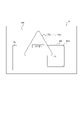
- FIG. FIG. 4 is a diagram showing an example of a first evaluation image according to an embodiment of the present disclosure
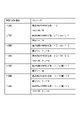
- FIG. FIG. 4 is a diagram illustrating an example of setting parameters according to an embodiment of the present disclosure
- FIG. 5 is a diagram showing another example of setting parameters according to an embodiment of the present disclosure
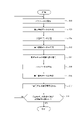
- 2 is a flow chart showing operation of a learning support process executed by the information processing system shown in FIG. 1
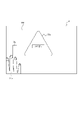
- FIG. 10 is a diagram showing another example of a first evaluation image according to an embodiment of the present disclosure
- a settlement system 1 as shown in FIG. 1 is configured as a POS (Point Of Sales) system.
- the settlement system 1 includes at least one information processing system 3 and a server 4 .
- the settlement system 1 includes a plurality of information processing systems 3 .
- Network 2 may be any network, including the Internet and the like.
- the information processing system 3 may be installed in any store.
- the store where the information processing system 3 is installed is, for example, a store, a restaurant, or the like.
- the information processing system 3 is configured as a cash register terminal of the POS system.
- the information processing system 3 captures an image of the product that the customer places on the cash register terminal.
- the information processing system 3 performs object recognition on the captured and generated image, and estimates which product in the store the object included in the image is.
- "an object contained in an image” means an object that is drawn within an image.
- a portion drawn as an object in an image i.e., a portion in which an object is drawn in an image, is also referred to as an "object image.”
- the billing amount to be billed to the customer can be calculated.
- the information processing system 3 transmits to the server 4 via the network 2 an estimation result indicating which product in the store the placed object is.
- the server 4 receives from the information processing system 3 via the network 2 an estimation result indicating which product in the store the placed object is.
- the server 4 manages the inventory status of the store where the information processing system 3 is provided based on the estimation result.
- the information processing system 3 includes an imaging unit 12 and an information processing device 20 .
- the information processing system 3 may further include a mounting table 10 , a support column 11 and a display device 13 .
- the mounting table 10 includes an upper surface 10s. At the time of checkout, the customer places the desired product on the upper surface 10s.
- the upper surface 10s is substantially rectangular.
- the top surface 10s may have any shape.
- the support column 11 supports the imaging unit 12.
- the support column 11 extends from the side portion of the mounting table 10 toward the upper side of the upper surface 10s.
- the imaging unit 12 generates an image signal corresponding to an image by imaging.
- the imaging unit 12 is fixed so as to be able to image at least part of the surface of the mounting table 10 .
- the imaging unit 12 may be fixed so that the optical axis is perpendicular to the upper surface 10s.
- the imaging unit 12 can image the entire surface of the top surface 10s of the mounting table 10, and is fixed, for example, to the tip of the support column 11 so that the optical axis of the imaging unit 12 is perpendicular to the top surface 10s.
- the imaging unit 12 may continuously perform imaging at an arbitrary frame rate.
- the display device 13 may be any display.
- the display device 13 displays an image corresponding to the image signal transmitted from the information processing device 20 .
- the display device 13 may function as a touch screen.
- the information processing device 20 includes a communication section 21, an input section 22, a storage section 23, and a control section 24.
- the information processing device 20 is configured as a device separate from the imaging unit 12 and the display device 13 .
- the information processing device 20 may be configured integrally with at least one of the imaging unit 12, the support column 11, the mounting table 10, and the display device 13, for example.
- the communication unit 21 includes at least one communication module connectable to the network 2.
- the communication module is, for example, a communication module conforming to a standard such as wired LAN (Local Area Network) or wireless LAN.
- the communication unit 21 is connected to the network 2 via a wired LAN or wireless LAN by a communication module.
- the communication unit 21 includes a communication module capable of communicating with the imaging unit 12 and the display device 13 via communication lines.
- the communication module is a communication module conforming to the communication line standard.
- the communication line includes at least one of wired and wireless.
- the input unit 22 can accept input from the user.
- the input unit 22 includes at least one input interface capable of accepting input from the user.
- the input interface is, for example, a physical key, a capacitive key, a pointing device, a touch screen provided integrally with the display, or a microphone.
- the input unit 22 is a touch screen provided integrally with the display device 13 .
- the storage unit 23 includes at least one semiconductor memory, at least one magnetic memory, at least one optical memory, or a combination of at least two of them.
- the semiconductor memory is, for example, RAM (Random Access Memory) or ROM (Read Only Memory).
- the RAM is, for example, SRAM (Static Random Access Memory) or DRAM (Dynamic Random Access Memory).
- the ROM is, for example, EEPROM (Electrically Erasable Programmable Read Only Memory) or the like.
- the storage unit 23 may function as a main storage device, an auxiliary storage device, or a cache memory.
- the storage unit 23 stores data used for the operation of the information processing device 20 and data obtained by the operation of the information processing device 20 .
- the storage unit 23 stores system programs, application programs, embedded software, and the like.
- the storage unit 23 stores learning models.
- the control unit 24 includes at least one processor, at least one dedicated circuit, or a combination thereof.
- the processor is a general-purpose processor such as a CPU (Central Processing Unit) or a GPU (Graphics Processing Unit), or a dedicated processor specialized for specific processing.
- the dedicated circuit is, for example, FPGA (Field-Programmable Gate Array) or ASIC (Application Specific Integrated Circuit).
- the control unit 24 executes processing related to the operation of the information processing device 20 while controlling each unit of the information processing device 20 .
- the control unit 24 receives the image signal from the imaging unit 12 through the communication unit 21 .
- the control unit 24 acquires an image corresponding to the image signal by receiving the image signal.
- the control unit 24 obtains an estimation result indicating which product in the store the object included in the image is by object recognition using the learning model.
- the learning model is generated by machine learning such as deep learning so that an estimation result is output when image data is input.
- the learning model may give confidence to the estimation result.
- the reliability is an index indicating the reliability of the estimation result. The higher the reliability, the higher the reliability of the estimation result.
- the control unit 24 inputs the image data to the learning model and obtains the estimation result output from the learning model.
- the control unit 24 calculates the billing amount to be billed to the customer based on the obtained estimation result.
- the control unit 24 transmits a signal indicating the information of the billed amount to the display device 13 through the communication unit 21 and causes the display device 13 to display the information of the billed amount.
- the control unit 24 identifies weak points in object recognition of the learning model at arbitrary timing such as before the information processing device 20 is operated or after the information processing device 20 is operated. By identifying weaknesses in object recognition of the learning model, the learning model can be efficiently relearned or trained. To identify weak points in object recognition of the learning model, the control unit 24 executes identification processing of identifying image features that are likely to result in an incorrect estimation result of the learning model. An example of this processing will be described below.
- the control unit 24 generates first evaluation data.
- the first evaluation data includes data of at least one first evaluation image and correct data corresponding to the first evaluation image.
- the correct data is, for example, data indicating which product in the store the object in the first evaluation image is.
- the first evaluation data may include data of a plurality of first evaluation images and correct data corresponding to each of the plurality of first evaluation images.
- the control unit 24 sets parameters and generates at least one first evaluation image based on the set parameters.
- the control unit 24 may generate a plurality of first evaluation images.
- the parameters are for setting the elements that make up the image.
- the parameters correspond to the difficulty of estimating objects in the image.
- the control unit 24 sets the difficulty level by setting parameters.
- the control unit 24 may set the parameters based on the amount of learning data already learned by the learning model. For example, the control unit 24 sets parameters such that the greater the amount of learning data already learned by the learning model, the higher the difficulty level.
- the control unit 24 may generate the first evaluation image based on the parameters set in the first process.
- parameter setting may be performed as appropriate depending on what is adopted as the parameter.
- parameter setting may be setting of set values such as numerical values, or may be setting of levels.
- the parameters may include at least one of those set for the object in the image and those set for the environment of the object in the image. Any combination of multiple parameters may be employed. For example, the following parameters can be adopted.
- the parameter may be the number of objects to be detected in the image.
- Objects to be detected are, for example, products in stores. The smaller the number of objects to be detected, the lower the difficulty of estimating the objects in the image. As the number of objects to be detected increases, the difficulty of estimating the objects in the image increases.
- the number of objects that are not subject to detection may be used as the parameter.
- An object not to be detected is, for example, an object other than merchandise in a store.
- an object not to be detected is a customer's finger, a mobile phone, a key, or the like.
- the smaller the number of objects not to be detected the lower the difficulty of estimating the objects in the image. As the number of non-detection objects increases, the difficulty of estimating the objects in the image increases.
- the degree of reflected light may be adopted as a parameter. Reflected light is one of the parameters set for objects in an image. The smaller the degree of reflected light, the lower the difficulty of estimating the object for which the reflected light is set. As the degree of reflected light increases, the difficulty of estimating the object for which the reflected light is set increases.
- the overlapping rate may be adopted as a parameter.
- Overlap rate is one of the parameters set for objects in an image.
- Overlap ratios may be set for two or more objects in the image. The overlap ratio indicates the degree of overlap of two or more object images in the image. The smaller the overlap rate, the lower the difficulty of estimating the object for which the overlap rate is set. As the overlap rate increases, the difficulty of estimating the object for which the overlap rate is set increases.
- the overlap rate is the ratio of the area of the part where the upper object image of the lower object image overlaps to the area of the lower object image in two or more object images that overlap vertically in the image. It's okay.
- the overlap ratio is the ratio of the area of the part of the object image 30b where the object image 30a overlaps with respect to the area of the object image 30b. becomes.
- the overlap rate is the area of the upper object image in the detection frame of the lower object image with respect to the area of the detection frame of the lower object image in two or more object images that overlap vertically in the image. may be the area of the portion where the detection frames overlap.
- the overlap rate is the ratio of the area of the part of the detection frame 30b1 where the detection frame 30a1 overlaps to the area of the detection frame 30b1.
- the detection frame 30a1 is a detection frame for the object image 30a.
- a detection frame 30b1 is a detection frame for the object image 30b.
- the hue of the background image may be adopted as the parameter.
- the hue of the background image is one of the parameters set for the environment of the object in the image. The farther the hue of the background image is from the hue of the object, the less difficult it is to estimate the object in the image. The closer the hue of the background image is to the hue of the object, the more difficult it is to estimate the object in the image.
- the pattern of the background image may be adopted as the parameter.
- the texture of the background image is one of the parameters set for the environment of the object in the image. The simpler the pattern of the background image, the lower the difficulty of estimating the object in the image. The more complicated the pattern of the background image, the more difficult it is to estimate the object in the image.
- the hue of the illumination light may be adopted as the parameter.
- the hue of the illumination light is one of the parameters set for the environment of the object in the image. The closer the hue of the illumination light is to white or warmer hues, the less difficult it is to estimate the object in the image. The further away the hue of the illumination light is from the white and warm hues, the more difficult it is to estimate objects in the image.
- the illuminance of the illumination light may be adopted as the parameter.
- the illuminance of the illumination light is one of the parameters set for the environment of the object in the image. As the illuminance of the illumination light deviates from the set range, the difficulty of estimating the object in the image increases.
- the setting range may be appropriately set based on the band of electromagnetic waves that can be imaged by the imaging unit 12, or the like.
- the control unit 24 generates the first evaluation image by, for example, adjusting the object image, the background image, etc. based on the set parameters.
- the control unit 24 may generate the first evaluation image by using a cut-and-paste method for an existing image.
- the cut-and-paste method is a method of generating an image by cutting an object image from an existing image and pasting it onto a background image or the like.
- An existing image may be an image containing an object image.
- An object image contained in an existing image may be labeled to indicate what the object corresponding to the object image is.
- the control unit 24 cuts out the object image according to the label from the existing image.
- the control unit 24 generates a first evaluation image by adjusting the object image, the background image, etc. based on the parameters while pasting the cut object image onto the background image.
- the control unit 24 generates a first evaluation image 30 as shown in FIG.
- the first evaluation image 30 includes an object image 30a corresponding to rice balls, an object image 30b corresponding to butter, an object image 30c corresponding to chocolate, and a background image 30d.
- Rice balls, butter, and chocolate are store items or objects to be detected.
- the number of objects to be detected, the overlap rate, and the illuminance of illumination light are used as parameters.
- control unit 24 sets the number of objects to be detected as a parameter to three.
- the control unit 24 randomly determines each of the three objects to be detected as rice balls, butter, and chocolate.
- the control unit 24 sets the overlap rate as a parameter to 40%.
- the control unit 24 randomly selects rice balls and butter as the two objects for which the overlapping rate of 40% is set.
- the control unit 24 determines that the object image 30b should be on the lower side of the object image 30a and the object image 30b.
- control unit 24 hard sets the illuminance of illumination light as a parameter. Setting the illuminance of the illumination light to hard indicates that the illuminance of the illumination light is higher than the setting range.
- the control unit 24 generates the first evaluation image 30 by using the cut-and-paste method. For example, the control unit 24 cuts out each of the object images 30a, 30b, and 30c from different existing images or the same existing image. The control unit 24 pastes each of the cut-out object images 30a, 30b, and 30c onto the background image 30d. At this time, the control unit 24 adjusts the overlapping ratio of the object image 30a and the object image 30b to 40%.
- the control unit 24 acquires the evaluation result of the learning model using the first evaluation data.
- the evaluation result indicates whether the estimation result of the learning model for the first evaluation image is correct or incorrect.
- the control unit 24 inputs the data of the first evaluation image to the learning model and acquires the estimation result of the learning model.
- the control unit 24 generates and acquires an evaluation result by comparing the acquired estimation result with the correct data corresponding to the first evaluation image.
- the control unit 24 Based on the evaluation results, the control unit 24 identifies image features that are highly likely to result in an incorrect estimation result of the learning model. In the present embodiment, the control unit 24 acquires, based on the evaluation results, feature information indicating the features of an image for which the estimation result of the learning model is highly likely to be incorrect, thereby specifying the features of the image. . Based on the evaluation results, the control unit 24 sets the parameters set for the incorrect object and the environment of the incorrect object among the parameters set in the generation of the first evaluation image. At least one of the parameters may be acquired as feature information.
- the control unit 24 inputs the data of the first evaluation image 30 as shown in FIG. 4 into the learning model.
- the control unit 24 estimates that the object corresponding to the object image 30a is bread, the estimation result that the object corresponding to the object image 30b is cheese, and the object image 30c.
- the control unit 24 outputs, as evaluation results, an evaluation result that the estimation result for the object image 30a is incorrect, an evaluation result that the estimation result for the object image 30b is incorrect, and an estimation result for the object image 30c. is correct.
- the control unit 24 acquires, as feature information, the parameter set for the incorrect object, that is, the 40% overlap rate set for the rice ball and butter.
- control unit 24 acquires the parameter set for the environment of the incorrect object, that is, the illuminance setting of the hardware illumination light.
- the control unit 24 acquires the parameter set for the environment of the incorrect object, that is, the illuminance setting of the hardware illumination light.
- the control unit 24 may generate a signal indicating the feature information.
- the control unit 24 may transmit the generated signal to the display device 13 through the communication unit 21 and cause the display device 13 to display the characteristic information.
- the control unit 24 may cause the display device 13 to display the characteristic information in language.
- the control unit 24 defines the feature information as "in an image in which the illuminance of the illumination light is hard and the overlap rate between the rice ball and the butter is 40% or more, the estimation result of the learning model for the rice ball and the butter is invalid.” There is a high possibility that you will get the correct answer.” is displayed on the display device 13.
- the operator of the information processing device 20 can grasp the weaknesses of the learning model in object recognition.
- the operator can prepare learning data suitable for the learning model by grasping the weaknesses of the learning model in object recognition.
- the control unit 24 may generate the first learning data.
- the first learning data is data that the learning model is made to learn in order to eliminate the weak points of the learning model in object recognition.
- the first training data includes data of at least one first training image and correct data corresponding to the first training image.
- the correct data is, for example, data indicating which product in the store the object in the first learning image is.
- the first learning data may include data of a plurality of first learning images and correct data corresponding to each of the plurality of first learning images.
- the control unit 24 may generate at least one first learning image of the first learning data based on the feature information.
- the control unit 24 may generate a plurality of first learning images of the first learning data.
- the control unit 24 may generate the first learning image using the object image corresponding to the incorrect object and the acquired parameter.
- the control unit 24 acquires the 40% overlap rate set for the rice ball and butter and the setting of the illuminance of the illumination light for the hardware as the characteristic information.
- the control unit 24 adjusts the overlapping ratio of the object images 30a and 30b as shown in FIG. Generate an image.
- the control unit 24 may generate the first training image by using a cut-and-paste method on existing images.
- the control unit 24 may cause the learning model to learn using the generated first learning data. With such a configuration, it is possible to eliminate the weaknesses of the learning model in object recognition.
- the control unit 24 may execute the specific process in parallel with the preset learning process. By executing the identifying process in parallel with the learning process, it is possible to identify, as weak points in the object recognition of the learning model, points where the learning model could not sufficiently learn in the learning process.
- the learning data used for the learning process executed in parallel with the specific process is also referred to as "second learning data”.
- control unit 24 executes specific processing in parallel with learning processing in curriculum learning.
- Curriculum learning is a learning method that gradually raises the difficulty of questions to be learned by a learning model from low to high. Processing of curriculum learning according to the present embodiment will be described below.
- the control unit 24 repeatedly executes learning processing in curriculum learning.
- the learning process that is repeatedly executed includes a first process, a second process, and a third process.
- the first process is a process of setting parameters corresponding to the difficulty level as described above.
- the control unit 24 sets the parameter so that, in the learning process that is repeatedly executed, the difficulty level in the latest first process is at least one step higher than the difficulty level corresponding to the parameter set in the previous first process. .
- the degree of difficulty set as a parameter in the first process increases step by step as the learning process is repeatedly executed.
- the control unit 24 sets the number of objects to be detected. For example, in the first process of the first learning process, the control unit 24 sets the number of objects to be detected to one. In the first process of the second learning process, the control unit 24 sets the number of objects to be detected within a range from 2 to (2/M). ⁇ is the maximum number of objects to be detected that can be set in one image. In the first process of the third learning process, the control unit 24 sets the number of objects to be detected within a range from (2/ ⁇ ) to ⁇ . In this example, instead of the number of detection target objects, the number of objects including detection target objects and non-detection target objects may be used as the parameter.
- control section 24 may combine a plurality of arbitrary parameters.
- control unit 24 sets the parameters in the first process so that the difficulty level of the combined parameters increases stepwise as a whole.
- a combination of the number of objects to be detected and the illuminance of illumination light is adopted as a combination of multiple parameters.
- the learning process is repeated six times.
- the control unit 24 controls so that the difficulty level set by the number of objects to be detected and the illuminance of the illumination light increases step by step as a whole.
- the number of objects to be detected and the illuminance of illumination light are set.
- the control unit 24 sets the number of objects to be detected to 1 and sets the illuminance of the illumination light to normal.
- Setting the illuminance of the illumination light to normal indicates that the illuminance of the illumination light is within the above set range.
- the control unit 24 sets the number of objects to be detected to 1 and sets the illuminance of the illumination light to hardware.
- Setting the illuminance of the illumination light to hard indicates that the illuminance of the illumination light is higher than the setting range, as described above.
- the control unit 24 sets the number of objects to be detected to two, and sets the illuminance of the illumination light to normal.
- the control unit 24 sets the number of objects to be detected to two, and sets the illuminance of the illumination light to hardware.
- control unit 24 sets the number of objects to be detected to three, and sets the illuminance of the illumination light to normal. In the first process of the sixth learning process, the control unit 24 sets the number of objects to be detected to three, and sets the illuminance of the illumination light to hardware.
- a combination of the number of objects to be detected and the overlap ratio is adopted as a combination of multiple parameters.
- the learning process is repeated seven times.
- the control unit 24 controls the first In the process, the number of objects to be detected and the overlapping ratio are set.
- the control unit 24 sets the number of objects to be detected to 1 and sets the overlapping rate to none.
- the control unit 24 sets the number of objects to be detected within a range from 2 to ( ⁇ /2), and sets the overlapping rate to none.
- ⁇ is the maximum number of objects to be detected that can be set in one image, as described above.
- the control unit 24 sets the number of objects to be detected within a range from 2 to ( ⁇ /2), and sets the overlapping rate to a small level.
- the small level of overlap ratio is the lowest level when the overlap ratio is defined in three levels.
- the control unit 24 sets the number of objects to be detected within a range from 2 to ( ⁇ /2), and sets the overlapping rate to a medium level.
- the middle level of the overlapping rate is the intermediate level when the overlapping rate is defined by three levels.
- the control unit 24 sets the number of objects to be detected within a range from ( ⁇ /2) to ⁇ , and sets the overlapping rate to none.
- the control unit 24 sets the number of objects to be detected within a range from ( ⁇ /2) to ⁇ , and sets the overlap rate to a small level.
- the control unit 24 sets the number of objects to be detected within a range from ( ⁇ /2) to ⁇ , and sets the overlapping rate to a medium level.
- the number of objects including detection target objects and non-detection target objects may be used as the parameter. That is, in this example, as a combination of a plurality of parameters, a combination of the number of objects including objects to be detected and objects not to be detected and the overlapping rate may be employed.
- the second process is a process of generating second learning data based on the parameters set in the first process.
- the second learning data includes data of at least one second learning image and correct data corresponding to the second learning image.
- the correct data is, for example, data indicating which product in the store the object in the second learning image is.
- the second learning data may include data of a plurality of second learning images and correct data corresponding to each of the plurality of second learning images.
- the control unit 24 may generate at least one second training image based on the parameters set in the first process, in the same or similar manner as the generation of the first evaluation images.
- the control unit 24 may generate a plurality of second learning images.
- the control unit 24 may generate a second training image by using a cut-and-paste method on existing images, in the same or similar manner as generating the first evaluation image.
- control unit 24 may generate the second learning image based on the parameters newly set in the latest first process. With such a configuration, as the learning process is repeatedly executed, the difficulty of the second learning image generated in the second process increases step by step.
- the third process is a process of learning the learning model using the second learning data generated in the second process.
- control unit 24 may repeatedly execute the learning process until the estimation accuracy of the learning model satisfies the set conditions.
- the control unit 24 may acquire the estimation accuracy of the learning model used to determine whether the set condition is satisfied from the second evaluation data.
- the second evaluation data is evaluation data different from the first evaluation data.
- the second evaluation data includes data of at least one second evaluation image and correct data corresponding to the second evaluation image.
- the correct data is, for example, data indicating which product in the store the object in the second evaluation image is.
- the second evaluation data may include data of a plurality of second evaluation images and correct data corresponding to each of the plurality of second evaluation images.
- the second evaluation image may be an image that is actually captured and generated. By using an image that is actually captured and generated as the second evaluation data, the estimation accuracy of the learning model can be measured with higher accuracy.
- the control unit 24 may acquire mAP (mean Average Precision) as the estimation accuracy of the learning model.
- the setting condition may be the first condition that the first matching rate exceeds the first threshold.
- the first precision may be the estimation accuracy of the learning model calculated based on the estimation result given the highest reliability.
- the first relevance rate may be mAP@1, which will be described later.
- the first threshold may be set based on the estimation accuracy of the learning model targeted by the information processing system 3 .
- the setting condition may be a second condition that the second matching rate exceeds the second threshold.
- the second precision may be the estimation accuracy of the learning model calculated based on the estimation result with the highest reliability and the estimation result with the second highest reliability.
- the second precision may be mAP@2, which will be described later.
- the second threshold may be set based on the estimation accuracy of the learning model required for operation of the information processing device 20 .
- the second threshold is, for example, 100%.
- the control unit 24 calculates mAP@1 and mAP@2 by the following equation (1).
- mAP@n is the average value of AP@n.
- AP@n is the average value of the accuracy rate of the estimation results that are correct among the estimation results to which reliability is assigned up to the n-th (n is an integer equal to or greater than 1).
- AP@n is described as "AP(q)@n". The order of reliability shall be counted from the highest.
- the control unit 24 calculates AP@n by the following formula (2).
- the number of questions Q is the number of questions with the second learning image.
- Equation (2) the number of questions GTP is the number of questions that are correct in the estimation results to which reliability is assigned up to n.
- the accuracy rate P@k is the number of estimation results that are correct among the estimation results to which the k-th reliability is assigned with respect to the number of problems in the estimation results to which the k-th reliability is assigned.
- the coefficient rel@k becomes 1 when the estimation result given the k-th reliability is correct.
- the coefficient rel@k becomes 0 when the estimation result given the k-th reliability is incorrect.
- the set conditions are not limited to the first and second conditions.
- the setting condition may be a condition that either one of the first condition and the second condition is satisfied, or a condition that both the first condition and the second condition are satisfied. good.
- FIG. 7 is a flow chart showing the operation of the learning support process executed by the information processing system 3 shown in FIG. This operation corresponds to an example of the information processing method according to this embodiment.
- the control unit 24 may execute the learning support process at any timing. For example, the control unit 24 may execute the learning support processing before the information processing device 20 is operated, or may execute the learning support processing after the information processing device 20 is operated.
- the control unit 24 sets parameters (step S10).
- the process of step S10 corresponds to the first process.
- the control unit 24 sets the parameters to initial values.
- the initial values of the parameters may be set based on the amount of learning data already learned by the learning model. If the process of step S10 has already been executed, the control unit 24 sets the parameter so that the difficulty level is at least one step higher than the difficulty level corresponding to the parameter set in the previous process of step S10.
- the control unit 24 generates second learning data based on the parameters set in the process of step S10 (step S11).
- the process of step S11 corresponds to the second process.
- the control unit 24 generates a second learning image based on the parameters set in the process of step S10.
- the control unit 24 causes the learning model to learn using the second learning data generated in the process of step S11 (step S12).
- the process of step S12 corresponds to the third process. If the process of step S16, which will be described later, has been executed, in the process of step S12, the control unit 24 uses the first learning data generated in the process of step S16 and the second learning data generated in the process of step S11 to , train the learning model.
- the control unit 24 generates first evaluation data based on the parameters set in the process of step S10 (step S13).
- the control unit 24 generates the first evaluation image based on the parameters set in the process of step S10.
- the control unit 24 acquires the evaluation result of the learning model based on the first evaluation data generated in step S13 (step S14).
- the control unit 24 sets at least one of the parameters set for the object for which the estimation result of the learning model is incorrect and the parameters set for the environment of the object. (step S15). That is, of the plurality of parameters set in the process of step S10, the control unit 24 sets the parameter set for the object for which the estimation result of the learning model is incorrect and the parameter set for the environment of the object. Get at least one.
- the control unit 24 generates first learning data based on the parameters acquired in the process of step S15 (step S16).
- the control unit 24 generates the first learning image based on the parameters acquired in the process of step S15.
- the first learning data generated in the process of step S16 is used for learning the learning model in the next process of step S12.
- the control unit 24 acquires the estimation accuracy of the learning model, which is used to determine whether the set condition is satisfied, from the second evaluation data (step S17).
- the control unit 24 determines whether or not the estimation accuracy of the learning model acquired in the process of step S17 satisfies the set conditions (step S18). When determining that the estimation accuracy of the learning model satisfies the setting condition (step S18: YES), the control unit 24 ends the learning support process. On the other hand, when the control unit 24 does not determine that the estimation accuracy of the learning model satisfies the set condition (step S8: NO), the process returns to step S10.
- the control unit 24 may set the parameters so that the difficulty level is higher than the difficulty level corresponding to the parameter set in the previous process of step S10 by multiple steps.
- the control unit 24 selects at least one of the parameter set for the object for which the estimation result of the learning model is incorrect and the parameter set for the environment of the object. can be specified.
- the control unit 24 may specify the parameter range, which is the range from the setting value in the previous step S10 to the latest setting value in the process of step S10, of the parameter whose type is specified.
- the control unit 24 may generate the first learning image based on at least a portion included in the parameter range.
- control unit 24 sets the overlap rate to 40% in the previous process of step S10, and sets the overlap rate to 50% in the latest process of step S10. Furthermore, in the process of step S15, the control unit 24 specifies the overlap rate as the type of parameter set for the object for which the estimation result of the learning model is incorrect. In this case, in the process of step S16, the control unit 24 specifies a range of 40% to 50% of the overlap rate as the parameter range. Furthermore, the control unit 26 generates the first learning image based on at least a portion of the overlapping rate within the range of 40% to 50%.
- the control unit 24 identifies image features that are likely to result in an incorrect estimation result of the learning model, based on the evaluation results.
- weak points in object recognition of the learning model can be identified.
- the weak point in object recognition of the learning model it is possible to efficiently generate learning data for eliminating the weak point in object recognition of the learning model. Therefore, the learning model can be learned efficiently.
- the control unit 24 identifies image features that are likely to result in an incorrect estimation result of the learning model. Weaknesses in object recognition can be identified. With such a configuration, it is possible to eliminate the weak points in image recognition of the learning model without having the learning model learn with learning data including a large amount of data of images for learning. Therefore, in this embodiment, the possibility that the amount of work such as annotation will increase is reduced.
- control unit 24 may generate the first learning data based on the feature information. With such a configuration, it is possible to automatically generate the first learning data for eliminating weaknesses in object recognition of the learning model. Also, the control unit 24 may cause the learning model to learn using the first learning data. With such a configuration, it is possible to automatically eliminate weak points in object recognition of the learning model.
- control unit 24 may set parameters and generate the first evaluation image based on the set parameters.
- the control unit 24 may acquire, as feature information, at least one of the parameters set for the object for which the estimation result of the learning model is incorrect and the parameters set for the environment of the object.
- control unit 24 may execute preset learning processing and specific processing in parallel.
- the control unit 24 may generate the first evaluation image based on the parameters set in the first process of the learning process. That is, in the information processing method according to the present embodiment, generating the first evaluation image may include generating the first evaluation image based on the parameters set in the first process. For example, in the process of step S13, the control unit 24 generates the first evaluation image based on the parameters set in step S10 as the first process. By generating the first evaluation image based on the parameters set in the first process in this way, the weak points in object recognition of the learning model that the learning model was unable to sufficiently learn with the second learning data in the third process can be eliminated. can be specified as For example, the control unit 24 can acquire, as a parameter in the process of step S15, the fact that the learning model was not sufficiently learned by the second learning data in the process of step S12 as the third process.
- control unit 24 may repeatedly execute the learning process.
- the control unit 24 sets the parameters so that the difficulty level in the latest first process is at least one level higher than the difficulty level corresponding to the parameter set in the previous first process. good.
- the control unit 24 sets the parameter so that the difficulty level is at least one step higher than the difficulty corresponding to the parameter set in the previous step S10.
- the difficulty level of the questions using the second learning image increases step by step.
- the processing of steps S10 to S18 is repeatedly executed, the difficulty level corresponding to the parameters set in the processing of step S10 increases step by step, and the second learning image generated in the processing of step S11 The difficulty level of the questions increases step by step.
- control unit 24 may generate the first evaluation image based on the parameters newly set in the latest first processing. That is, in the information processing method according to the present embodiment, generating the first evaluation image may include generating the first evaluation image based on parameters newly set in the latest first processing. For example, in the process of step 13, the control unit 24 generates the first evaluation image based on the parameters newly set in the process of step S10 as the latest first process. With such a configuration, the first evaluation image is generated based on the same parameters as the second learning image in the repeatedly executed learning process. For example, the first evaluation image generated in the process of step S13 is generated based on the parameters newly set in the latest process of step S10, like the second learning image generated in the process of step S11. .
- the first evaluation image is generated based on the same parameters as the second learning image, even if the difficulty of the second learning image increases step by step as the learning process is repeatedly executed, the first evaluation image
- the difficulty level of the question with the evaluation image becomes the same as the difficulty level of the question with the second learning image.
- control unit 24 may cause the learning model to learn using the first learning data in the learning process that is repeatedly executed. That is, the information processing method according to the present embodiment may include learning the learning model using the first learning data in the learning process that is repeatedly executed. For example, when repeatedly executing the processes of steps S10 to S18, the control unit 24 causes the learning model to learn in the process of step S12 using the first learning data generated in the process of step S16.
- the control unit 24 controls at least one of the parameters set for the object for which the estimation result of the learning model is incorrect and the parameters set for the environment of the object, among the plurality of newly set parameters. may be acquired as feature information.
- obtaining a parameter as feature information means that, among a plurality of newly set parameters, parameters set for an object for which the estimation result of the learning model is incorrect.
- acquiring parameters as feature information means that among a plurality of newly set parameters, an environment of an object for which the estimation result of the learning model is an incorrect answer.
- obtaining parameters for the For example, in the process of step S15, the control unit 24 acquires the parameter or the like set for the object for which the estimation result of the learning model is incorrect among the plurality of parameters set in the process of step S10. .
- control unit 24 sets parameters such that, in the learning process that is repeatedly executed, the difficulty level in the latest first process is higher than the difficulty level corresponding to the parameter set in the previous first process by a plurality of steps.
- the control unit 24 may specify at least one type of parameters set for the object for which the estimation result of the learning model is incorrect and parameters set for the environment of the object.
- the control unit 24 may specify the parameter range, which is the range from the setting value in the previous first process to the setting value in the latest first process, for the parameter whose type is specified.
- the control unit 24 may generate the first learning image based on at least a portion included in the parameter range.
- the control unit 24 sets the parameter so that the difficulty level is higher than the difficulty level corresponding to the parameter set in the previous process of step S10 by multiple steps.
- the control unit 24 may specify the type of parameter or the like set for the object for which the estimation result of the learning model is incorrect.
- the control unit 24 may specify the parameter range and generate the first learning image based on at least a portion included in the parameter range.
- the first learning image can be generated based on at least some of the parameters included in the specified parameter range.
- the first learning data can compensate for the fact that the learning model cannot sufficiently learn in the curriculum learning.
- control unit 24 may repeatedly execute the learning process until the estimation accuracy of the learning model satisfies the set conditions. With such a configuration, the learning process can be terminated at an appropriate timing.
- control unit 24 may generate the first evaluation image by using a cut-and-paste method for an existing image. That is, in the information processing method according to the present embodiment, generating the first evaluation image may include using a cut-and-paste method for an existing image.
- generating the first evaluation image from an existing image it is possible to reduce the time and cost required to identify weak points in object recognition of the learning model, compared to the case where the first evaluation image is actually captured and generated. .
- by generating the first evaluation images from existing images it is possible to easily generate more first evaluation images than when the first evaluation images are actually captured and generated. By using more first evaluation images, weak points in object recognition of the learning model can be identified with higher accuracy.
- control unit 24 may generate the first learning image by using a cut-and-paste method for an existing image. That is, in the information processing method according to the present embodiment, generating the first training image may include using a cut-and-paste method for existing images.
- generating the first learning images from existing images it is possible to reduce the time and cost required to generate the first learning data.
- By reducing the time and cost required to generate the first learning data it is possible to reduce the time and cost required to eliminate weak points in object recognition of the learning model.
- control unit 24 may generate the second learning image by using a cut-and-paste method for existing images. That is, in the information processing method according to the present embodiment, generating the second training image may include using the cut-and-paste method for the existing image.
- generating the second learning images from existing images it is possible to reduce the time and cost required for curriculum learning using the second learning data compared to the case where the second learning images are actually captured and generated. . Further, by generating the second learning images from existing images, it is possible to easily generate a larger number of second learning images than when actually capturing and generating the second learning images. Also, even if curriculum learning is performed using second learning data including data of second learning images generated from existing images, in the present embodiment, weak points in object recognition of the learning model can be identified.
- the control unit 24 cuts and pastes an existing image including the image of the new product to obtain the first image. 1 evaluation image, the first training image and the second training image can be easily generated. That is, it is possible to easily prepare many first evaluation images, first learning images, and second learning images including new products. Moreover, by preparing the first evaluation image, the first learning image, and the second learning image including the image of the new product, the control unit 24 can execute the learning support process at any timing. Therefore, even after the information processing system 3 is put into operation, the learning model can learn new products.
- the operator may want the learning model to learn images according to the usage pattern of the store where the information processing system 3 is installed.
- the operator can cause the information processing device 20 to generate an image according to the usage pattern of the store.
- the control unit 24 can cause the learning model to learn an image corresponding to the usage pattern of the store through the above-described processing.
- the first evaluation image 31 includes an object image 30a corresponding to rice balls, an object image 30c corresponding to chocolate, an object image 31a corresponding to hands, and a background image 30d.
- the operator causes the imaging unit 12 to capture and generate an image including the object image 31a.
- the control unit 24 generates the first evaluation image 31 by using the cut-and-paste method for an image including the object image 31a generated by the imaging unit 12 and the like. In the same or similar manner as generating the first evaluation image 31, the control unit 24 can generate a first training image and a second training image including the object image 31a.
- the control unit 24 can perform curriculum learning and specific processing using these images. With such a configuration, it is possible to cause the learning model to learn images according to the usage pattern of the store in which the information processing system 3 is provided.
- the control unit 24 causes the learning model to learn using the first learning data generated in the process of step S16 and the second learning data generated in the process of step S11. described as a thing.
- the process of learning the learning model using the first learning data and the process of learning the learning model using the second learning data may be performed as separate processes.
- the control unit 24 may cause the learning model to learn using the first learning data generated in the process of step S16 immediately after executing the process of step S16.
- the information processing method according to this embodiment has been described as being executed by the information processing device 20 .
- the device that executes the information processing method according to this embodiment is not limited to the information processing device 20 .
- the information processing method according to this embodiment may be executed by any device.
- the information processing method according to this embodiment is executed by an image generation device, a learning support device, the server 4, or the like.
- the information processing method according to the present embodiment may be executed as an image generation method, or may be executed as a learning support method.
- a general-purpose computer functions as the information processing device 20 according to this embodiment.
- a program describing the processing details for realizing each function of the information processing apparatus 20 according to this embodiment is stored in the memory of a general-purpose computer, and the program is read and executed by the processor. Therefore, the configuration according to this embodiment can also be implemented as a program executable by a processor or a non-transitory computer-readable medium that stores the program.
- Descriptions such as “first” and “second” in this disclosure are identifiers for distinguishing the configurations. Configurations that are differentiated in descriptions such as “first” and “second” in this disclosure may interchange the numbers in that configuration. For example, a first evaluation image can exchange identifiers “first” and “second” with a second evaluation image. The exchange of identifiers is done simultaneously. After the exchange of identifiers, the configurations are still distinct. Identifiers may be deleted. Configurations from which identifiers have been deleted are distinguished by codes. The description of identifiers such as “first” and “second” in this disclosure should not be used as a basis for interpreting the ordering of such configurations and the existence of lower numbered identifiers.
Landscapes
- Engineering & Computer Science (AREA)
- Theoretical Computer Science (AREA)
- Physics & Mathematics (AREA)
- General Physics & Mathematics (AREA)
- Computer Vision & Pattern Recognition (AREA)
- Evolutionary Computation (AREA)
- Software Systems (AREA)
- Multimedia (AREA)
- Medical Informatics (AREA)
- Computing Systems (AREA)
- Artificial Intelligence (AREA)
- Health & Medical Sciences (AREA)
- Databases & Information Systems (AREA)
- General Health & Medical Sciences (AREA)
- General Engineering & Computer Science (AREA)
- Data Mining & Analysis (AREA)
- Mathematical Physics (AREA)
- Image Analysis (AREA)
Priority Applications (4)
| Application Number | Priority Date | Filing Date | Title |
|---|---|---|---|
| JP2023522685A JPWO2022244787A1 (https=) | 2021-05-19 | 2022-05-17 | |
| CN202280036368.6A CN117396919A (zh) | 2021-05-19 | 2022-05-17 | 信息处理方法、程序及信息处理装置 |
| EP22804698.3A EP4343690A1 (en) | 2021-05-19 | 2022-05-17 | Information processing method, program, and information processing device |
| US18/561,877 US20240242410A1 (en) | 2021-05-19 | 2022-05-17 | Information processing method, program, and information processing device |
Applications Claiming Priority (2)
| Application Number | Priority Date | Filing Date | Title |
|---|---|---|---|
| JP2021084954 | 2021-05-19 | ||
| JP2021-084954 | 2021-05-19 |
Publications (1)
| Publication Number | Publication Date |
|---|---|
| WO2022244787A1 true WO2022244787A1 (ja) | 2022-11-24 |
Family
ID=84141361
Family Applications (1)
| Application Number | Title | Priority Date | Filing Date |
|---|---|---|---|
| PCT/JP2022/020593 Ceased WO2022244787A1 (ja) | 2021-05-19 | 2022-05-17 | 情報処理方法、プログラム及び情報処理装置 |
Country Status (5)
| Country | Link |
|---|---|
| US (1) | US20240242410A1 (https=) |
| EP (1) | EP4343690A1 (https=) |
| JP (1) | JPWO2022244787A1 (https=) |
| CN (1) | CN117396919A (https=) |
| WO (1) | WO2022244787A1 (https=) |
Cited By (1)
| Publication number | Priority date | Publication date | Assignee | Title |
|---|---|---|---|---|
| WO2024157332A1 (ja) * | 2023-01-23 | 2024-08-02 | 日本電気株式会社 | 指標算出装置、指標算出方法、およびプログラム |
Families Citing this family (1)
| Publication number | Priority date | Publication date | Assignee | Title |
|---|---|---|---|---|
| JP2024048123A (ja) * | 2022-09-27 | 2024-04-08 | キヤノン株式会社 | 評価方法 |
Citations (3)
| Publication number | Priority date | Publication date | Assignee | Title |
|---|---|---|---|---|
| JP2016099668A (ja) * | 2014-11-18 | 2016-05-30 | キヤノン株式会社 | 学習方法、学習装置、画像認識方法、画像認識装置及びプログラム |
| JP2018088223A (ja) | 2016-11-30 | 2018-06-07 | キヤノンマーケティングジャパン株式会社 | 情報処理装置、情報処理方法、プログラム |
| JP2020080003A (ja) | 2018-11-12 | 2020-05-28 | 株式会社イシダ | 教師データ生成方法、教師データ生成プログラム、教師データ生成装置、及び商品識別装置 |
-
2022
- 2022-05-17 EP EP22804698.3A patent/EP4343690A1/en not_active Withdrawn
- 2022-05-17 US US18/561,877 patent/US20240242410A1/en active Pending
- 2022-05-17 WO PCT/JP2022/020593 patent/WO2022244787A1/ja not_active Ceased
- 2022-05-17 CN CN202280036368.6A patent/CN117396919A/zh active Pending
- 2022-05-17 JP JP2023522685A patent/JPWO2022244787A1/ja active Pending
Patent Citations (3)
| Publication number | Priority date | Publication date | Assignee | Title |
|---|---|---|---|---|
| JP2016099668A (ja) * | 2014-11-18 | 2016-05-30 | キヤノン株式会社 | 学習方法、学習装置、画像認識方法、画像認識装置及びプログラム |
| JP2018088223A (ja) | 2016-11-30 | 2018-06-07 | キヤノンマーケティングジャパン株式会社 | 情報処理装置、情報処理方法、プログラム |
| JP2020080003A (ja) | 2018-11-12 | 2020-05-28 | 株式会社イシダ | 教師データ生成方法、教師データ生成プログラム、教師データ生成装置、及び商品識別装置 |
Cited By (1)
| Publication number | Priority date | Publication date | Assignee | Title |
|---|---|---|---|---|
| WO2024157332A1 (ja) * | 2023-01-23 | 2024-08-02 | 日本電気株式会社 | 指標算出装置、指標算出方法、およびプログラム |
Also Published As
| Publication number | Publication date |
|---|---|
| EP4343690A1 (en) | 2024-03-27 |
| US20240242410A1 (en) | 2024-07-18 |
| CN117396919A (zh) | 2024-01-12 |
| JPWO2022244787A1 (https=) | 2022-11-24 |
Similar Documents
| Publication | Publication Date | Title |
|---|---|---|
| EP3968217A1 (en) | Article identification method and device, and computer readable storage medium | |
| CN109165645B (zh) | 一种图像处理方法、装置以及相关设备 | |
| US20250095199A1 (en) | Information processing apparatus, control method, and non-transitory storage medium | |
| WO2020103417A1 (zh) | 一种bmi评测方法、装置及计算机可读存储介质 | |
| CN109685199A (zh) | 创建包含关于池化类型的信息的表的方法和装置及使用其的测试方法和测试装置 | |
| CN108596052B (zh) | 一种物品查找方法、系统及终端设备 | |
| WO2022244787A1 (ja) | 情報処理方法、プログラム及び情報処理装置 | |
| CN113780201A (zh) | 手部图像的处理方法及装置、设备和介质 | |
| US10860176B2 (en) | Image control method and device | |
| CN114782769B (zh) | 训练样本的生成方法、装置、系统及目标对象的检测方法 | |
| CN109863530A (zh) | 确定谷穗的谷粒重量 | |
| US20150262370A1 (en) | Image processing device, image processing method, and image processing program | |
| CA3097029A1 (en) | Self-service kiosk for determining glove size | |
| US12175779B2 (en) | Information processing device and information processing method to evaluate a person in charge of labeling | |
| CN109859216B (zh) | 基于深度学习的测距方法、装置、设备及存储介质 | |
| WO2022230639A1 (ja) | 情報処理装置、情報処理方法、及び、プログラム | |
| JP2020024665A (ja) | 情報処理方法、及び情報処理システム | |
| CN111259805A (zh) | 肉类检测方法、装置、设备和存储介质 | |
| EP4607477A1 (en) | Determination of gaze position on multiple screens using a monocular camera | |
| EP4303800A1 (en) | Method, computer, and system | |
| CN113743169B (zh) | 手掌平面检测方法、装置、电子设备及存储介质 | |
| JP2023115687A (ja) | データ処理方法、プログラム及びデータ処理装置 | |
| CN114817664A (zh) | 基于大数据的数据展示方法及相关设备 | |
| CN112784644A (zh) | 多设备同步显示方法、装置、设备及计算机可读存储介质 | |
| CN116912848B (zh) | 答案匹配处理方法、装置、电子设备及存储介质 |
Legal Events
| Date | Code | Title | Description |
|---|---|---|---|
| 121 | Ep: the epo has been informed by wipo that ep was designated in this application |
Ref document number: 22804698 Country of ref document: EP Kind code of ref document: A1 |
|
| WWE | Wipo information: entry into national phase |
Ref document number: 2023522685 Country of ref document: JP |
|
| WWE | Wipo information: entry into national phase |
Ref document number: 18561877 Country of ref document: US |
|
| WWE | Wipo information: entry into national phase |
Ref document number: 202280036368.6 Country of ref document: CN |
|
| WWE | Wipo information: entry into national phase |
Ref document number: 2022804698 Country of ref document: EP |
|
| NENP | Non-entry into the national phase |
Ref country code: DE |
|
| ENP | Entry into the national phase |
Ref document number: 2022804698 Country of ref document: EP Effective date: 20231219 |
|
| WWW | Wipo information: withdrawn in national office |
Ref document number: 2022804698 Country of ref document: EP |