WO2022208916A1 - 無線通信システム、無線通信方法、無線通信プログラム - Google Patents
無線通信システム、無線通信方法、無線通信プログラム Download PDFInfo
- Publication number
- WO2022208916A1 WO2022208916A1 PCT/JP2021/023559 JP2021023559W WO2022208916A1 WO 2022208916 A1 WO2022208916 A1 WO 2022208916A1 JP 2021023559 W JP2021023559 W JP 2021023559W WO 2022208916 A1 WO2022208916 A1 WO 2022208916A1
- Authority
- WO
- WIPO (PCT)
- Prior art keywords
- communication
- wireless communication
- priority
- network
- communication network
- Prior art date
- Legal status (The legal status is an assumption and is not a legal conclusion. Google has not performed a legal analysis and makes no representation as to the accuracy of the status listed.)
- Ceased
Links
Images



Classifications
-
- H—ELECTRICITY
- H04—ELECTRIC COMMUNICATION TECHNIQUE
- H04W—WIRELESS COMMUNICATION NETWORKS
- H04W48/00—Access restriction; Network selection; Access point selection
- H04W48/18—Selecting a network or a communication service
-
- H—ELECTRICITY
- H04—ELECTRIC COMMUNICATION TECHNIQUE
- H04W—WIRELESS COMMUNICATION NETWORKS
- H04W76/00—Connection management
- H04W76/50—Connection management for emergency connections
-
- H—ELECTRICITY
- H04—ELECTRIC COMMUNICATION TECHNIQUE
- H04W—WIRELESS COMMUNICATION NETWORKS
- H04W24/00—Supervisory, monitoring or testing arrangements
- H04W24/08—Testing, supervising or monitoring using real traffic
-
- H—ELECTRICITY
- H04—ELECTRIC COMMUNICATION TECHNIQUE
- H04W—WIRELESS COMMUNICATION NETWORKS
- H04W4/00—Services specially adapted for wireless communication networks; Facilities therefor
- H04W4/90—Services for handling of emergency or hazardous situations, e.g. earthquake and tsunami warning systems [ETWS]
-
- H—ELECTRICITY
- H04—ELECTRIC COMMUNICATION TECHNIQUE
- H04W—WIRELESS COMMUNICATION NETWORKS
- H04W64/00—Locating users or terminals or network equipment for network management purposes, e.g. mobility management
-
- H—ELECTRICITY
- H04—ELECTRIC COMMUNICATION TECHNIQUE
- H04W—WIRELESS COMMUNICATION NETWORKS
- H04W8/00—Network data management
- H04W8/02—Processing of mobility data, e.g. registration information at HLR [Home Location Register] or VLR [Visitor Location Register]; Transfer of mobility data, e.g. between HLR, VLR or external networks
-
- H—ELECTRICITY
- H04—ELECTRIC COMMUNICATION TECHNIQUE
- H04W—WIRELESS COMMUNICATION NETWORKS
- H04W88/00—Devices specially adapted for wireless communication networks, e.g. terminals, base stations or access point devices
- H04W88/14—Backbone network devices
-
- H—ELECTRICITY
- H04—ELECTRIC COMMUNICATION TECHNIQUE
- H04W—WIRELESS COMMUNICATION NETWORKS
- H04W88/00—Devices specially adapted for wireless communication networks, e.g. terminals, base stations or access point devices
- H04W88/02—Terminal devices
- H04W88/06—Terminal devices adapted for operation in multiple networks or having at least two operational modes, e.g. multi-mode terminals
Definitions
- the present invention relates to wireless communication technology.
- the home network When making an emergency call to an emergency phone number using a communication device such as a smartphone, if there is a problem with communication via the contracted wireless communication network (hereinafter also referred to as the home network), another wireless communication network ( (hereinafter also referred to as a roaming network) to make an emergency call or the like.
- a roaming network By switching the connection destination of the communication device to the roaming network, emergency calls can be made even when the home network cannot be used. However, since emergency calls and the like are executed outside the home network, the home network cannot obtain sufficient information regarding the emergency calls and the like.
- the present invention has been made in view of this situation, and its object is to provide a wireless communication system capable of collecting information on priority communications performed outside the contracted wireless communication network.
- a wireless communication system provides a priority communication detection unit that detects priority communication from a communication device that performs wireless communication, and a communication device that has detected priority communication.
- a connection unit that connects to a second wireless communication network different from the first wireless communication network, and a recording unit that records priority communication-related information about priority communication performed by the communication device on the second wireless communication network.
- the recording unit can collect information about the priority communication performed in the second wireless communication network (roaming network) outside the contracted first wireless communication network (home network).
- Another aspect of the present invention is a wireless communication method.
- This method comprises a priority communication detection step of detecting priority communication from a communication device performing wireless communication, and connecting the communication device in which the priority communication is detected to a second wireless communication network different from the contracted first wireless communication network. a connecting step; and a recording step of recording preferred communication-related information relating to the preferred communication performed by the communicator on the second wireless communication network.
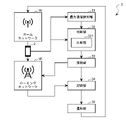
- FIG. 1 schematically shows an overview of a radio communication network in a radio communication system
- Fig. 3 illustrates a roaming aspect of a communicator
- 1 is a functional block diagram of a priority communication processing device implemented in a wireless communication system
- FIG. 4 shows a processing example of a priority communication processing device
- FIG. 1 schematically shows an overview of a wireless communication network 1 in a wireless communication system according to an embodiment of the present invention.
- a wireless communication network 1 serves as a home network for a communication device 2 that has a contract with the business operator's communication service, and a communication device 2 that has not contracted with the business operator's communication service but is capable of roaming through a tie-up between the business operators.
- a roaming network for Wireless communication network 1 uses NR (New Radio) or 5G NR (Fifth Generation New Radio) as a radio access technology (RAT: Radio Access Technology), and uses 5GC (Fifth Generation Core) as a core network.
- NR New Radio
- 5G NR Fifth Generation New Radio
- 5GC Fifth Generation Core
- 5G wireless communication network 11 that conforms to the 5th generation mobile communication system (5G), LTE (Long Term Evolution) and LTE-Advanced as radio access technology, and EPC (Evolved Packet Core) as the core network. It includes a 4G wireless communication network 12 compliant with the Fourth Generation Mobile Communication System (4G).
- the wireless communication network 1 may include a wireless communication network of generations before 4G, may include a wireless communication network of generations after 5G, Wi-Fi (registered trademark), etc. may include any wireless communication network not associated with the generation of
- the 5G wireless communication network 11 includes a plurality of 5G base stations 111A capable of communicating with communication devices 2A, 2B, and 2C (hereinafter collectively referred to as communication devices 2) such as smartphones, also called UE (User Equipment), by 5G NR. , 111B, and 111C (hereinafter sometimes collectively referred to as 5G base stations 111).
- a base station 111 in 5G is also called a gNodeB (gNB).
- the coverage or support area of each 5G base station 111A, 111B, 111C is referred to as a cell and is illustrated as 112A, 112B, 112C, respectively (hereinafter collectively referred to as cell 112).
- the size of the cell 112 of each 5G base station 111 is arbitrary, but typically ranges from several meters to tens of kilometers in radius. Although there is no established definition, cells with radii of a few meters to tens of meters are called femtocells, cells with radii of tens of meters to tens of meters are called picocells, and cells with radii of tens of meters to hundreds of meters are called microcells. A cell with a radius exceeding several hundred meters is sometimes called a macrocell. In 5G, high-frequency radio waves such as millimeter waves are often used, and because of their high linearity, radio waves are blocked by obstacles, shortening the communication range. For this reason, 5G tends to use smaller cells more often than 4G and earlier generations.
- communication device 2B in cells 112A and 112B can communicate with both 5G base stations 111A and 111B by 5G NR.
- the communication device 2C in the cell 112C can communicate with the 5G base station 111C by 5G NR. Since the communication device 2A is outside all of the 5G cells 112A, 112B, and 112C, it is in a state where it cannot communicate by 5G NR.
- 5G communication by 5G NR between each communication device 2 and each 5G base station 111 is managed by 5GC, which is a core network.
- the 5GC exchanges data with each 5G base station 111, exchanges data with external networks such as the EPC and the Internet, manages movement of the communication device 2, and the like.
- the 4G wireless communication network 12 includes a plurality of 4G base stations 121 (only one is shown in FIG. 1) capable of communicating with the communication device 2 by LTE or LTE-Advanced.
- the base station 121 in 4G is also called eNodeB (eNB). Similar to each 5G base station 111 , the coverage or support area of each 4G base station 121 is also referred to as a cell and illustrated as 122 .
- the communication devices 2A and 2B in the cell 122 can communicate with the 4G base station 121 by LTE or LTE-Advanced. Since the communication device 2C is outside the cell 122, it is in a state where communication by LTE or LTE-Advanced cannot be performed.
- 4G communication by LTE or LTE-Advanced between each communication device 2 and each 4G base station 121 is managed by EPC, which is a core network.
- EPC exchanges data with each 4G base station 121, exchanges data with external networks such as 5GC and the Internet, manages movement of the communication device 2, and the like.
- the communication device 2 can communicate on the wireless communication network 1 as long as it is inside at least one of the plurality of cells 112A, 112B, 112C, and 122 of the wireless communication network 1.
- the communication device 2A in the cell 122 is in a state capable of 4G communication with the 4G base station 121
- the communication devices 2B in the cells 112A, 112B, and 122 are in the 5G base station 111A, 5G communication with 111B and 4G communication with 4G base station 121 are possible
- communication device 2C in cell 112C is in a state where 5G communication with 5G base station 111C is possible.
- base stations 111A, 111B, 121 that can communicate like the communication device 2B, the one that is determined to be optimal from the viewpoint of communication quality, etc. under the management of the core network 5GC and/or EPC One base station is selected to communicate with the communication device 2B.
- FIG. 2 shows the roaming mode of the communication device 2.
- the home network 1H is the first wireless communication network to which the communication device 2 has a contract for communication service
- the roaming network 1R is a roaming network for which the communication device 2 has not contracted for a communication service but can be roamed by cooperation between operators.
- the home network 1H and the roaming network 1R are each configured similarly to the wireless communication network 1 shown in FIG. It may include any one of them, or any wireless communication network different from any of them.
- FIG. 3 is a functional block diagram of the priority communication processing device 3 implemented in the wireless communication system.
- the priority communication processing device 3 includes a priority communication detection unit 31 , a determination unit 32 , a connection unit 33 , a recording unit 34 and a notification unit 35 .
- These functional blocks are realized through cooperation between hardware resources such as the computer's central processing unit, memory, input device, output device, and peripheral devices connected to the computer, and software executed using them. .
- hardware resources such as the computer's central processing unit, memory, input device, output device, and peripheral devices connected to the computer, and software executed using them.
- each of the above functional blocks may be implemented using the hardware resources of a single computer, or may be implemented by combining hardware resources distributed among multiple computers. .
- some or all of the functional blocks described above are the communication device 2, the base stations 111 and 121 and the core network in the home network 1H, the base stations 111 and 121 and the core network in the roaming network 1R, and the wireless communication system. other components in the operating system, etc., and any communication device capable of communicating with the wireless communication system.
- FIG. 3 shows both the home network 1H and the roaming network 1R with the communication device 2 interposed therebetween, as shown in FIG. may be outside the Conversely, as will be described later, when the communication device 2 connected to the home network 1H notifies the home network 1H through the notification unit 35, the communication device 2 may be outside the service provision range of the roaming network 1R. .
- the priority communication detection unit 31 detects priority communication from the wireless communication device 2.
- the function of the priority communication detection unit 31 can be realized by the communication device 2, but if the communication device 2 is connected to the home network 1H at the time of starting the priority communication, it may be realized by the home network 1H or the priority communication. may be implemented in the roaming network 1R if the communication device 2 is connected to the roaming network 1R at the time of starting.
- Priority communications are communications or telephone calls that have been set or given a higher priority, importance, urgency, etc. than normal communications, and include, for example, calls to emergency telephone numbers.
- the number 110 is assigned to emergency calls to the police
- the number 119 is assigned to emergency calls to the fire department
- the number 118 is assigned to emergency calls to the Japan Coast Guard.
- Emergency calls by eCall which is an emergency call system for automobile accidents in Europe, are also an example of priority communication.
- ES-FB Emergency Services Fallback
- EPS Fallback Evolved Packet System Fallback
- the determination unit 32 determines whether priority communication can be executed in the home network 1H. As shown in FIG. 2A, when the communication device 2 is outside the service provision range of the home network 1H, priority communication cannot be performed on the home network 1H, so the determination unit 32 performs priority communication on the home network 1H. decide not to. As shown in FIG. 2B, when the communication device 2 is within the service provision range of the home network 1H, the determination unit 32 executes priority communication on the home network 1H based on the communication quality of the home network 1H. Judging whether to accept or not.
- the comparison unit 321 provided in the determination unit 32 compares the communication quality of the roaming network 1R in which the communication device 2 can roam with the communication quality of the home network 1H.
- An index for comparing communication quality is arbitrary, but the communication quality of each wireless communication network can be evaluated based on, for example, signal strength, throughput, delay time, packet loss rate, packet error rate, and the like. If the comparing unit 321 obtains a comparison result that the communication quality of the roaming network 1R is superior to the communication quality of the home network 1H, the determining unit 32 determines not to execute priority communication on the home network 1H.
- the determining unit 32 decides to execute priority communication on the home network 1H.
- the connection unit 33 transfers the communication device 2 for which the priority communication is detected by the priority communication detection unit 31 to the contracted home network 1H according to the determination result of the determination unit 32 that the priority communication is not executed on the home network 1H. connect to a different roaming network 1R. As a result, the priority communication detected by the priority communication detector 31 is executed on the roaming network 1R.
- the recording unit 34 records priority communication-related information regarding the priority communication executed by the communication device 2 in the roaming network 1R.
- the priority communication-related information includes at least one of the position of the communication device 2 during priority communication, the time of priority communication and other statistical information, the identification information of the roaming network 1R, and the identification information of the priority communication partner.
- the position of the communication device 2 during priority communication can be calculated by the communication device 2 based on radio waves received from GPS (Global Positioning System) satellites, for example.
- the priority communication time is, for example, the start time of the priority communication, the end time of the priority communication, and the duration of the priority communication.
- the identification information of the roaming network 1R is, for example, a PLMN (Public Land Mobile Network) number.
- the PLMN number is an identification number for the wireless communication network 1, and is composed of a combination of MCC (Mobile Country Code) representing a country or region and MNC (Mobile Network Code) representing an operator.
- MCC Mobile Country Code
- MNC Mobile Network Code
- the identification information of the priority communication partner is, for example, IMEI (International Mobile Equipment Identifier) or terminal identification number of the priority communication partner, IP (Internet Protocol) address of the priority communication partner, telephone number of the priority communication partner is.
- the notification unit 35 notifies the priority communication-related information recorded by the recording unit 34 to the home network 1H.
- the recording unit 34 and the notification unit 35 are provided in the communication device 2, for example, and the communication device 2 reconnected to the home network 1H after priority communication in the roaming network 1R notifies the recorded priority communication related information to the home network 1H.
- the recording unit 34 and the notification unit 35 may be provided in the roaming network 1R, and the core network of the roaming network 1R notifies the recorded priority communication-related information to the core network of the home network 1H via the Internet or the like.
- FIG. 4 shows a processing example of the priority communication processing device 3.
- the recording unit 34 and the notification unit 35 are provided in the communication device 2 .
- "S" means step or process.
- the communication device 2 UE
- the home network 1H NW#1
- the communication device 2 starts priority communication
- the priority communication detection unit 31 realized by the communication device 2 and the home network 1H detects priority communication.
- the determination unit 32 determines the network on which priority communication is to be performed. As described above, when the communication device 2 is outside the service provision range of the home network 1H (FIG. 2A), or when the communication quality of the roaming network 1R is superior to that of the home network 1H (FIG.
- the determination unit 32 determines to execute priority communication on the roaming network 1R. Conversely, when the communication quality of the home network 1H is superior to that of the roaming network 1R, or when there is no roaming network 1R in which the communication device 2 can roam, the determination unit 32 determines to execute priority communication on the home network 1H. do. A case where the roaming network 1R is selected as the network for executing priority communication in S3 will be described below.
- the radio access technology (RAT) and the public land mobile network (PLMN) are transferred to the home network 1H in preparation for connecting the communication device 2 to the roaming network 1R for priority communication according to the determination result in S3. (NW#1) to roaming network 1R (NW#2).
- the radio access technology is changed from NR in 5G or 5G NR to LTE in 4G or LTE-Advanced in 4G.
- the connection unit 33 connects the communication device 2 to the roaming network 1R. In this way, priority communication with high priority can be executed in the roaming network 1R with high communication quality.
- the recording unit 34 provided in the communication device 2 stores priority communication-related information (position of the communication device 2 during priority communication, time of priority communication, other statistical information, identification information of the roaming network 1R, identification information of the priority communication partner, etc.).
- the priority communication on the roaming network 1R ends, and at S8, the communication device 2 reconnects to the home network 1H. If the communication device 2 is outside the service provision range of the home network 1H at the time of S7 (FIG. 2A), the processing of S8 is executed when the communication device 2 returns to the inside of the service provision range of the home network 1H. be.
- the notification unit 35 of the communication device 2 reconnected to the home network 1H in S8 notifies the priority communication-related information recorded in S6 to the home network 1H.
- This notification from the communication device 2 is on the access stratum (AS: Access Stratum) and the non-access stratum (NAS: Non-Access Stratum), which are functional layers in the Universal Mobile Telecommunications System (UMTS) protocol stack. message to the home network 1H.
- AS Access Stratum
- NAS Non-Access Stratum
- the recording unit 34 can record the information regarding the priority communication performed in the roaming network 1R outside the home network 1H, and the notification unit 35 can notify the home network 1H. Therefore, the home network 1H can obtain sufficient information regarding priority communications such as emergency calls made in the roaming network 1R.
- the priority communication-related information shared by the home network 1H suggests that the communication quality of the roaming network 1R is superior to that of the home network 1H in executing the priority communication. Therefore, the operator of the home network 1H analyzes the priority communication-related information notified from the notification unit 35, and uses the roaming network 1R as a benchmark to identify places and time periods where there is room for improvement in communication quality in the home network 1H. can be identified.
- the operator of the home network 1H can recognize whether or not the roaming network 1R can be used for priority communication in a specific place or time period based on the priority communication-related information notified from the notification unit 35. For example, information that not only the home network 1H but also the roaming network 1R cannot be used in a certain place or time zone is a high-priority issue to be addressed early on, such as expanding one's own home network 1H or partnering with a new roaming network 1R. This is extremely valuable information for network management and business operations, as it serves as an opportunity to promote
- each device described in the embodiments can be realized by hardware resources or software resources, or by cooperation between hardware resources and software resources.
- Processors, ROMs, RAMs, and other LSIs can be used as hardware resources.
- Programs such as operating systems and applications can be used as software resources.
- the present invention relates to wireless communication technology.
Landscapes
- Engineering & Computer Science (AREA)
- Computer Networks & Wireless Communication (AREA)
- Signal Processing (AREA)
- Business, Economics & Management (AREA)
- Health & Medical Sciences (AREA)
- Emergency Management (AREA)
- Environmental & Geological Engineering (AREA)
- Public Health (AREA)
- Computer Security & Cryptography (AREA)
- Databases & Information Systems (AREA)
- Mobile Radio Communication Systems (AREA)
Priority Applications (5)
| Application Number | Priority Date | Filing Date | Title |
|---|---|---|---|
| CN202180096319.7A CN117121631A (zh) | 2021-03-31 | 2021-06-22 | 无线通信系统、无线通信方法、无线通信程序 |
| KR1020237037494A KR20230165298A (ko) | 2021-03-31 | 2021-06-22 | 무선 통신 시스템, 무선 통신 방법, 무선 통신 프로그램 |
| US17/759,622 US12593374B2 (en) | 2021-03-31 | 2021-06-22 | Recording of priority communication related information |
| JP2023510178A JP7662769B2 (ja) | 2021-03-31 | 2021-06-22 | 無線通信システム、無線通信方法、無線通信プログラム |
| EP21935076.6A EP4319473A4 (en) | 2021-03-31 | 2021-06-22 | WIRELESS COMMUNICATIONS SYSTEM, WIRELESS COMMUNICATIONS METHOD AND WIRELESS COMMUNICATIONS PROGRAM |
Applications Claiming Priority (2)
| Application Number | Priority Date | Filing Date | Title |
|---|---|---|---|
| JP2021-059615 | 2021-03-31 | ||
| JP2021059615 | 2021-03-31 |
Publications (1)
| Publication Number | Publication Date |
|---|---|
| WO2022208916A1 true WO2022208916A1 (ja) | 2022-10-06 |
Family
ID=83457565
Family Applications (1)
| Application Number | Title | Priority Date | Filing Date |
|---|---|---|---|
| PCT/JP2021/023559 Ceased WO2022208916A1 (ja) | 2021-03-31 | 2021-06-22 | 無線通信システム、無線通信方法、無線通信プログラム |
Country Status (6)
| Country | Link |
|---|---|
| US (1) | US12593374B2 (https=) |
| EP (1) | EP4319473A4 (https=) |
| JP (1) | JP7662769B2 (https=) |
| KR (1) | KR20230165298A (https=) |
| CN (1) | CN117121631A (https=) |
| WO (1) | WO2022208916A1 (https=) |
Families Citing this family (1)
| Publication number | Priority date | Publication date | Assignee | Title |
|---|---|---|---|---|
| US20220386230A1 (en) * | 2021-05-27 | 2022-12-01 | Apple Inc. | Radio Access Technology Prioritization |
Citations (6)
| Publication number | Priority date | Publication date | Assignee | Title |
|---|---|---|---|---|
| JP2003109160A (ja) * | 2001-09-29 | 2003-04-11 | Toshiba Corp | 緊急救助支援システム、緊急救助機能付き携帯端末、緊急救助情報受信無線端末及び緊急救助支援方法 |
| JP2008289051A (ja) * | 2007-05-21 | 2008-11-27 | Fujitsu Ltd | 緊急呼の接続制御方法および装置並びに移動無線ネットワーク |
| US20160295386A1 (en) * | 2015-04-03 | 2016-10-06 | Qualcomm Incorporated | Techniques to support emergency services |
| JP2017017666A (ja) * | 2015-06-30 | 2017-01-19 | パナソニックIpマネジメント株式会社 | 無線基地局装置、サーバ、無線通信システム、及び無線通信方法 |
| WO2020145300A1 (ja) * | 2019-01-09 | 2020-07-16 | 株式会社Nttドコモ | ユーザ装置、ネットワークノード及び通信システム |
| JP2021503199A (ja) | 2018-10-05 | 2021-02-04 | 株式会社Nttドコモ | 通信端末、接続を要求する方法、ネットワーク構成要素および通信端末にサービスを提供する方法 |
Family Cites Families (14)
| Publication number | Priority date | Publication date | Assignee | Title |
|---|---|---|---|---|
| CA2535032A1 (en) * | 2003-08-08 | 2005-02-17 | Networks In Motion, Inc. | Method and system for collecting synchronizing and reporting telecommunication call events and work flow related information |
| US20090063174A1 (en) * | 2007-08-30 | 2009-03-05 | International Business Machines Corporation | Optimized Wireless Network Coverage |
| US9572002B2 (en) * | 2013-10-22 | 2017-02-14 | Patrocinium Systems LLC | Interactive emergency information and identification systems and methods |
| US9374697B2 (en) | 2014-04-01 | 2016-06-21 | Mediatek Inc. | Method of selecting an active SIM for an emergency service and multi-SIM device utilizing the same |
| US10111078B2 (en) * | 2014-12-18 | 2018-10-23 | Qualcomm Incorporated | Techniques to support emergency calls with over-the-top service provider |
| GB2536025B (en) * | 2015-03-05 | 2021-03-03 | Nokia Technologies Oy | Video streaming method |
| US9769639B2 (en) * | 2015-07-18 | 2017-09-19 | Digital Management, Llc | Secure emergency response technology |
| US9877224B2 (en) * | 2015-10-05 | 2018-01-23 | Blackberry Limited | Establishing a voice call |
| JP6990157B2 (ja) | 2018-09-04 | 2022-01-12 | 株式会社Nttドコモ | 通信制御装置 |
| US20200252781A1 (en) * | 2019-02-04 | 2020-08-06 | Qualcomm Incorporated | Systems and methods for supporting location based routing of emergency services calls |
| WO2020213816A1 (ko) * | 2019-04-17 | 2020-10-22 | 엘지전자 주식회사 | 네트워크 장애를 대처하기 위한 방안 |
| US11805459B2 (en) * | 2019-11-19 | 2023-10-31 | Qualcomm Incorporated | Techniques for radio access technology (RAT) fallback in wireless communications |
| US20230284108A1 (en) * | 2020-08-05 | 2023-09-07 | Telefonaktiebolaget Lm Ericsson (Publ) | Network nodes, and methods performed in a wireless communication network |
| DE102022102843A1 (de) * | 2022-02-08 | 2023-08-10 | Audi Aktiengesellschaft | Verfahren und Gerät zum Absetzen eines Fahrzeugnotrufs |
-
2021
- 2021-06-22 CN CN202180096319.7A patent/CN117121631A/zh active Pending
- 2021-06-22 US US17/759,622 patent/US12593374B2/en active Active
- 2021-06-22 KR KR1020237037494A patent/KR20230165298A/ko active Pending
- 2021-06-22 JP JP2023510178A patent/JP7662769B2/ja active Active
- 2021-06-22 EP EP21935076.6A patent/EP4319473A4/en active Pending
- 2021-06-22 WO PCT/JP2021/023559 patent/WO2022208916A1/ja not_active Ceased
Patent Citations (6)
| Publication number | Priority date | Publication date | Assignee | Title |
|---|---|---|---|---|
| JP2003109160A (ja) * | 2001-09-29 | 2003-04-11 | Toshiba Corp | 緊急救助支援システム、緊急救助機能付き携帯端末、緊急救助情報受信無線端末及び緊急救助支援方法 |
| JP2008289051A (ja) * | 2007-05-21 | 2008-11-27 | Fujitsu Ltd | 緊急呼の接続制御方法および装置並びに移動無線ネットワーク |
| US20160295386A1 (en) * | 2015-04-03 | 2016-10-06 | Qualcomm Incorporated | Techniques to support emergency services |
| JP2017017666A (ja) * | 2015-06-30 | 2017-01-19 | パナソニックIpマネジメント株式会社 | 無線基地局装置、サーバ、無線通信システム、及び無線通信方法 |
| JP2021503199A (ja) | 2018-10-05 | 2021-02-04 | 株式会社Nttドコモ | 通信端末、接続を要求する方法、ネットワーク構成要素および通信端末にサービスを提供する方法 |
| WO2020145300A1 (ja) * | 2019-01-09 | 2020-07-16 | 株式会社Nttドコモ | ユーザ装置、ネットワークノード及び通信システム |
Non-Patent Citations (1)
| Title |
|---|
| See also references of EP4319473A4 |
Also Published As
| Publication number | Publication date |
|---|---|
| EP4319473A1 (en) | 2024-02-07 |
| US20240188187A1 (en) | 2024-06-06 |
| US12593374B2 (en) | 2026-03-31 |
| CN117121631A (zh) | 2023-11-24 |
| KR20230165298A (ko) | 2023-12-05 |
| JP7662769B2 (ja) | 2025-04-15 |
| JPWO2022208916A1 (https=) | 2022-10-06 |
| EP4319473A4 (en) | 2025-03-19 |
Similar Documents
| Publication | Publication Date | Title |
|---|---|---|
| US11523268B2 (en) | Communications method and apparatus | |
| KR102242297B1 (ko) | 무선 통신 시스템에서 네트워크 슬라이스 기반 nr을 위한 셀 특정 절차를 수행하는 방법 및 장치 | |
| US8537751B2 (en) | Minimizing tracking area updates in heterogeneous radio access network | |
| CN113207191B (zh) | 基于网络切片的会话建立方法、装置、设备及存储介质 | |
| US10616817B2 (en) | Terminal, base station, cell access method, and data transmission method for reconfiguring a wireless connection to communicate with a secondary cell | |
| US20160095046A1 (en) | Method and Apparatus for Use in Network Selection | |
| US9402195B2 (en) | Operation of base station in a cellular communications network | |
| EP3378254B1 (en) | Network node, radio access node and methods performed therein | |
| EP4149172B1 (en) | Slice selection method, and terminal device | |
| US20170303186A1 (en) | Managing overload in at least one core network | |
| CN113455027A (zh) | 用于移动漫游服务的方法和装置 | |
| US20250119723A1 (en) | Method for relay communications | |
| CN111050332B (zh) | 通信方法、辅网络节点和终端 | |
| EP4044639B1 (en) | Communication method and apparatus | |
| EP3198927B1 (en) | Managing overload in at least one core network | |
| US8958791B2 (en) | System to communicate between a femtocell base station and mobile devices | |
| US11910472B2 (en) | Systems and methods for cell selection and reselection based on user equipment (“UE”) access level | |
| JP7662769B2 (ja) | 無線通信システム、無線通信方法、無線通信プログラム | |
| JP7573728B2 (ja) | 無線通信システム、無線通信方法、無線通信プログラム | |
| US20230269713A1 (en) | UE Migration Between Networks In Response To Spectrum Grant Suspension | |
| EP4654619A1 (en) | Positioning processing method, and apparatus | |
| WO2023061048A1 (zh) | 一种通信方法、装置及设备 | |
| EP2378831B1 (en) | Deactivating packet data protocol context | |
| CN115209572A (zh) | 方法、装置和计算机程序 | |
| US20250280382A1 (en) | Communication method and communication apparatus |
Legal Events
| Date | Code | Title | Description |
|---|---|---|---|
| WWE | Wipo information: entry into national phase |
Ref document number: 17759622 Country of ref document: US |
|
| 121 | Ep: the epo has been informed by wipo that ep was designated in this application |
Ref document number: 21935076 Country of ref document: EP Kind code of ref document: A1 |
|
| WWE | Wipo information: entry into national phase |
Ref document number: 2023510178 Country of ref document: JP |
|
| ENP | Entry into the national phase |
Ref document number: 20237037494 Country of ref document: KR Kind code of ref document: A |
|
| WWE | Wipo information: entry into national phase |
Ref document number: 202317074244 Country of ref document: IN Ref document number: 2021935076 Country of ref document: EP |
|
| ENP | Entry into the national phase |
Ref document number: 2021935076 Country of ref document: EP Effective date: 20231031 |
|
| NENP | Non-entry into the national phase |
Ref country code: DE |
|
| WWG | Wipo information: grant in national office |
Ref document number: 17759622 Country of ref document: US |