WO2022208874A1 - 学習装置、ストレス推定装置、学習方法、ストレス推定方法及び記憶媒体 - Google Patents
学習装置、ストレス推定装置、学習方法、ストレス推定方法及び記憶媒体 Download PDFInfo
- Publication number
- WO2022208874A1 WO2022208874A1 PCT/JP2021/014357 JP2021014357W WO2022208874A1 WO 2022208874 A1 WO2022208874 A1 WO 2022208874A1 JP 2021014357 W JP2021014357 W JP 2021014357W WO 2022208874 A1 WO2022208874 A1 WO 2022208874A1
- Authority
- WO
- WIPO (PCT)
- Prior art keywords
- stress
- estimation
- stress estimation
- feature amount
- feature
- Prior art date
- Legal status (The legal status is an assumption and is not a legal conclusion. Google has not performed a legal analysis and makes no representation as to the accuracy of the status listed.)
- Ceased
Links
Images







Classifications
-
- G—PHYSICS
- G06—COMPUTING OR CALCULATING; COUNTING
- G06N—COMPUTING ARRANGEMENTS BASED ON SPECIFIC COMPUTATIONAL MODELS
- G06N20/00—Machine learning
-
- G—PHYSICS
- G06—COMPUTING OR CALCULATING; COUNTING
- G06Q—INFORMATION AND COMMUNICATION TECHNOLOGY [ICT] SPECIALLY ADAPTED FOR ADMINISTRATIVE, COMMERCIAL, FINANCIAL, MANAGERIAL OR SUPERVISORY PURPOSES; SYSTEMS OR METHODS SPECIALLY ADAPTED FOR ADMINISTRATIVE, COMMERCIAL, FINANCIAL, MANAGERIAL OR SUPERVISORY PURPOSES, NOT OTHERWISE PROVIDED FOR
- G06Q10/00—Administration; Management
- G06Q10/04—Forecasting or optimisation specially adapted for administrative or management purposes, e.g. linear programming or "cutting stock problem"
-
- G—PHYSICS
- G06—COMPUTING OR CALCULATING; COUNTING
- G06Q—INFORMATION AND COMMUNICATION TECHNOLOGY [ICT] SPECIALLY ADAPTED FOR ADMINISTRATIVE, COMMERCIAL, FINANCIAL, MANAGERIAL OR SUPERVISORY PURPOSES; SYSTEMS OR METHODS SPECIALLY ADAPTED FOR ADMINISTRATIVE, COMMERCIAL, FINANCIAL, MANAGERIAL OR SUPERVISORY PURPOSES, NOT OTHERWISE PROVIDED FOR
- G06Q10/00—Administration; Management
- G06Q10/10—Office automation; Time management
Definitions
- the present disclosure relates to the technical field of a learning device, a stress estimation device, a learning method, a stress estimation method, and a storage medium that perform processing related to stress state estimation.
- Patent Literature 1 discloses a portable stress measuring device that determines the degree of temporary stress of an estimated subject each day based on the biometric data of the estimated subject.
- one object of the present disclosure is to provide a learning device, a stress estimation device, a learning method, a stress estimation method, and a storage medium that perform processing for obtaining stress estimation results with stable estimation accuracy. do.
- One aspect of the learning device includes: a first dividing means for performing a first division of dividing an observed feature amount of a subject based on at least one of the subject's attribute or environment; a second dividing means for performing a second division of dividing the observed feature amount based on at least one of an observation target of the observed feature amount or an activity state of the target person; Feature quantity selection means for selecting a stress estimation feature quantity, which is a feature quantity used for stress estimation, from the observed feature quantity divided based on the first division and the second division; learning means for learning a stress estimation model for each group divided by at least the first division based on the stress estimation feature amount and the correct stress value corresponding to the stress estimation feature amount; is a learning device having
- One aspect of the stress estimator comprises: Classification means for classifying observation feature values of an estimation target person whose stress is to be estimated based on at least one of the estimation target person's attributes or environment; Feature quantity selection means for selecting a stress estimation feature quantity, which is a feature quantity used for stress estimation, from the observed feature quantity based on the classification; stress estimation means for estimating the stress value of the person to be estimated by selecting a stress estimation model based on the classification and inputting the stress estimation feature quantity into the selected stress estimation model; is a stress estimator having
- One aspect of the learning method comprises: the computer Performing a first division for dividing the observed feature amount of the subject based on at least one of the subject's attribute or environment, performing a second division of dividing the observation feature value based on at least one of an observation target of the observation feature value or an activity state of the target person; Selecting a stress estimation feature value that is a feature value used for stress estimation from the observed feature values divided based on the first division and the second division, Based on the stress estimation feature amount and the correct stress value corresponding to the stress estimation feature amount, learning a stress estimation model for each group divided by at least the first division, It's a learning method.
- the "computer” includes any electronic device (it may be a processor included in the electronic device), and may be composed of a plurality of electronic devices.
- One aspect of the stress estimation method comprises: the computer Classifying the observation feature of the estimation target person to be the target of stress estimation based on at least one of the attribute or the environment of the estimation target person, Based on the classification, select a stress estimation feature amount that is a feature amount used for stress estimation from the observed feature amount, Estimate the stress value of the person to be estimated by selecting a stress estimation model based on the classification and inputting the stress estimation feature quantity into the selected stress estimation model; It is a stress estimation method.
- One aspect of the storage medium is Performing a first division for dividing the observed feature amount of the subject based on at least one of the subject's attribute or environment, performing a second division of dividing the observation feature value based on at least one of an observation target of the observation feature value or an activity state of the target person; Selecting a stress estimation feature value that is a feature value used for stress estimation from the observed feature values divided based on the first division and the second division,
- a program for causing a computer to execute a process of learning a stress estimation model for each group divided by at least the first division based on the stress estimation feature amount and the correct stress value corresponding to the stress estimation feature amount. is a storage medium in which is stored.
- One aspect of the storage medium is Classifying the observation feature of the estimation target person to be the target of stress estimation based on at least one of the attribute or the environment of the estimation target person, Based on the classification, select a stress estimation feature amount that is a feature amount used for stress estimation from the observed feature amount, A program for causing a computer to execute a process of estimating the stress value of the person to be estimated by selecting a stress estimation model based on the classification and inputting the stress estimation feature quantity into the selected stress estimation model is stored. storage medium.
- FIG. 10 is a diagram clearly showing the timing of a stress questionnaire for measuring the PSS value during the observation data measurement period of a certain sample subject.
- 6 is an example of a flowchart showing a procedure of learning processing executed by the information processing apparatus in the learning phase in the first embodiment; It is an example of the functional block in the estimation phase of the information processing apparatus according to the first embodiment.
- FIG. 7 is an example of a flow chart showing a procedure of stress estimation processing executed in an estimation phase by the information processing device in the first embodiment
- 1 shows a schematic configuration of a stress estimation system according to a second embodiment
- FIG. 11 is a block diagram of a learning device in a third embodiment
- FIG. 11 is an example of a flowchart executed by a learning device in the third embodiment
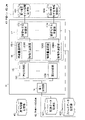
- FIG. 1 shows a schematic configuration of a stress estimation system 100 according to the first embodiment.
- the stress estimation system 100 learns a model for estimating human stress (also referred to as a “stress estimation model”), and performs stress estimation based on the learned estimation model.
- the person whose stress is to be estimated is referred to as the "estimated subject”
- the person who is measured in generating the training data (learning sample) necessary for learning the stress estimation model is also referred to as the "sample subject”.
- the presumed target person and the sample target person are not particularly distinguished, they are simply referred to as "subjects”.
- the "estimated target” may be an athlete or an employee whose stress state is managed by an organization, or may be an individual user.
- the stress estimation system 100 mainly includes an information processing device 1, an input device 2, a display device 3, a storage device 4, and a sensor 5.
- the information processing device 1 performs data communication with the input device 2, the display device 3, and the sensor 5 via a communication network or by direct wireless or wired communication. Then, the information processing device 1 learns the stress estimation model or the estimation target person using the stress estimation model based on the input signal "S1" supplied from the input device 2 and the sensor signal "S3" supplied from the sensor 5. Information necessary for estimating the stress of , and the collected information is stored in the storage device 4 . Further, the information processing device 1 generates a display signal "S2" based on the estimation result of the stress state of the person to be estimated (specifically, a stress value representing the degree of stress), and displays the generated display signal S2 on the display device. 3. Note that the stress estimated by the information processing apparatus 1 in the present embodiment is chronic stress, which is stress from a long-term (chronic) perspective over several days to weeks or months.
- the input device 2 is an interface that accepts user input (manual input) of information on each presumed target person.
- the user who inputs information using the input device 2 may be the presumed subject himself/herself, or may be a person who manages or supervises the activities of the presumed subject.
- the input device 2 may be, for example, various user input interfaces such as a touch panel, buttons, keyboard, mouse, and voice input device.
- the input device 2 supplies an input signal S1 generated based on user's input to the information processing device 1 .
- the display device 3 displays predetermined information based on the display signal S ⁇ b>2 supplied from the information processing device 1 .
- the display device 3 is, for example, a display or a projector.
- the sensor 5 measures the biological signal and the like of the person to be presumed, and supplies the measured biological signal and the like to the information processing device 1 as a sensor signal S3.
- the sensor signal S3 is any biological signal (vital information including).
- the sensor 5 may be a device that analyzes the blood sampled from the presumed subject and outputs a sensor signal S3 indicating the analysis result.
- the sensor 5 may be a wearable terminal worn by the estimation target person, a camera that photographs the estimation target person, a microphone that generates an audio signal of the estimation target person's speech, or the like. It may be a terminal such as a personal computer or a smart phone operated by.
- the senor 5 may supply information corresponding to the amount of operation of a personal computer, smartphone, or the like to the information processing apparatus 1 as the sensor signal S3. Further, the sensor 5 may output the position information output by a GPS receiver or the like incorporated in the wearable terminal or the like as the sensor signal S3.
- the sensor signal S3 is used to generate a feature quantity (also referred to as an "observed feature quantity") representing the observed features of the observed subject.
- the storage device 4 is a memory that stores various information necessary for estimating the stress state.
- the storage device 4 may be an external storage device such as a hard disk connected to or built into the information processing device 1, or may be a storage medium such as a flash memory. Further, the storage device 4 may be a server device that performs data communication with the information processing device 1 . Also, the storage device 4 may be composed of a plurality of devices.
- the storage device 4 functionally includes an attribute information storage unit 40, an observation data storage unit 41, a training data storage unit 42, and a learning parameter storage unit 43.
- the attribute information storage unit 40 stores attribute information regarding the attributes of the subject.
- the "attribute" corresponds to, for example, the subject's character, stress tolerance, gender, occupation, age, cognitive tendency, or a combination thereof.
- the attribute information may be generated by the information processing device 1 and stored in the storage device 4, or may be generated in advance by a device other than the information processing device 1 and stored in the storage device 4. good too.
- the attribute information may include information generated based on the results of questionnaire responses by the subject. For example, as a questionnaire for measuring the personality of a subject, there is a Big 5 personality test.
- the attribute information is stored in the attribute information storage unit 40 in association with the subject's identification information.
- the observation data storage unit 41 stores observation data generated based on the sensor signal S3 and the like acquired by the information processing device 1 from the sensor 5 .
- the observation data includes, for example, an observation feature amount, environmental information indicating the environment such as the date and time or place of observation, and the subject's activity state (for example, physical activity) at the time of observation. activity intensity, mental activity intensity such as mental workload, sitting/walking/running status, waking/sleeping status, etc.) and the identification information of the subject. Information.
- the observation data storage unit 41 stores the observation data of the estimation target
- the training data storage unit 42 stores the observation data of the sample target.
- the observation feature quantity is an arbitrary feature quantity that represents the characteristics of the data observed from the subject, and may be a feature quantity based on biological characteristics such as perspiration, acceleration, skin temperature, and pulse wave. It may be a feature quantity based on a behavioral feature based on the subject's behavior, such as quantity.
- the processing of converting the sensor signal S3 into the observed feature quantity may be executed by the information processing device 1 or may be executed by a device other than the information processing device 1 .
- the observed feature amount may be generated from the sensor signal S3 based on any method of calculating the feature amount from the biological signal or any other feature amount calculation method.
- the environmental information is generated by the information processing device 1 or another device based on, for example, date and time information, position information, temperature and humidity information, carbon dioxide concentration information, illuminance information, environmental sound information, etc. included in the sensor signal S3, and activity information is generated by the information processing device 1 or another device based on the position information, acceleration, etc. included in the sensor signal S3, for example.
- the training data storage unit 42 stores training data used for learning the stress estimation model.
- the training data is data generated for a plurality of sample subjects, and includes a plurality of sets of observation data of the sample subjects and correct stress values based on answers to questionnaires by the sample subjects.
- a PSS Perceived Stress Scale
- the PSS value is calculated from the answers to a PSS questionnaire that can measure dynamic stress that changes over time.
- the learned parameter storage unit 43 stores parameters learned by the information processing device 1 .
- the parameters stored in the learning parameter storage unit 43 include parameters necessary for constructing the stress estimation model.
- the stress estimation model is a model that has been trained to output an estimated stress value of a subject when a specific set of observed feature values (feature vector) of the subject is input.
- the stress estimation model may be any machine learning model (including statistical model) such as neural network and support vector machine.
- the stress estimation model is learned for each classification based on the subject's attributes and the like. In this case, each stress estimation model may have an architecture suitable for its respective classification.
- the learning parameter storage unit 43 stores parameter information necessary for constructing these stress estimation models.
- the learning parameter storage unit 43 stores the layer structure, the neuron structure of each layer, the number and size of filters in each layer, and each element of each filter. Stores information on various parameters such as weights.
- the configuration of the stress estimation system 100 shown in FIG. 1 is an example, and various changes may be made to the configuration.
- the input device 2 and the display device 3 may be configured integrally.
- the input device 2 and the display device 3 may be configured as a tablet terminal integrated with or separate from the information processing device 1 .
- the input device 2 and the sensor 5 may be configured integrally.
- the information processing device 1 may be composed of a plurality of devices. In this case, the plurality of devices that constitute the information processing device 1 exchange information necessary for executing previously assigned processing among the plurality of devices. In this case, the information processing device 1 functions as an information processing system.
- FIG. 2 shows the hardware configuration of the information processing apparatus 1.
- the information processing device 1 includes a processor 11, a memory 12, and an interface 13 as hardware.
- Processor 11 , memory 12 and interface 13 are connected via data bus 90 .
- the processor 11 functions as a controller (arithmetic device) that controls the entire information processing device 1 by executing programs stored in the memory 12 .
- the processor 11 is, for example, a CPU (Central Processing Unit), a GPU (Graphics Processing Unit), or a TPU (Tensor Processing Unit).
- Processor 11 may be composed of a plurality of processors.
- Processor 11 is an example of a computer.
- the memory 12 is composed of various volatile and nonvolatile memories such as RAM (Random Access Memory), ROM (Read Only Memory), and flash memory.
- the memory 12 stores programs for executing processes executed by the information processing apparatus 1 .
- part of the information stored in the memory 12 may be stored in one or a plurality of external storage devices that can communicate with the information processing apparatus 1, or may be stored in a storage medium that is detachable from the information processing apparatus 1. may
- the interface 13 is an interface for electrically connecting the information processing device 1 and other devices.
- These interfaces may be wireless interfaces such as network adapters for wirelessly transmitting and receiving data to and from other devices, or hardware interfaces for connecting to other devices via cables or the like.
- the hardware configuration of the information processing device 1 is not limited to the configuration shown in FIG.
- the information processing device 1 may include at least one of the input device 2 and the display device 3 .
- the information processing device 1 may be connected to or built in a sound output device such as a speaker.
- the information processing apparatus 1 learns an estimation model for each classification based on the attributes of the subject.
- the information processing apparatus 1 converts the observation feature amount included in the training data into a cluster (collection) with bias in stress tendency and biological information based on the environment information of the observation feature amount such as the attributes of the corresponding sample subject. split into Then, the information processing device 1 selects an observed feature value (also referred to as a "stress estimation feature value") to be used as an input to the stress estimation model based on the correlation between the clusters of the divided observation feature values and the correct stress value. do.
- an observed feature value also referred to as a "stress estimation feature value”
- the information processing device 1 selects an observed feature value that is highly correlated with stress data as a stress estimation feature value, and learns a stress estimation model that is specialized for each cluster that has a bias in stress tendencies and biological information. I do. As a result, the information processing apparatus 1 acquires a stress estimation model capable of highly accurately estimating stress on unknown data that is not used for learning.
- FIG. 3 is an example of functional blocks of the information processing device 1 .
- the processor 11 of the information processing device 1 functionally includes a first dividing unit 14, "N" (N is an integer equal to or greater than 2) second dividing units 15 (151 to 15N), It has “M” (M is an integer equal to or greater than 2) feature quantity selection units 16 (1611 to 16NM) and N estimation model learning units 17 (171 to 17N).
- N is an integer equal to or greater than 2
- M M is an integer equal to or greater than 2
- feature quantity selection units 16 (1611 to 16NM) and N estimation model learning units 17 (171 to 17N.
- FIG. 3 the blocks that exchange data are connected by solid lines, but the combinations of blocks that exchange data are not limited to those shown in FIG. The same applies to other functional block diagrams to be described later.
- the training data storage unit 42 functionally has an observation data storage unit 421 and a stress data storage unit 422 .
- the learning parameter storage unit 43 functionally has a first estimation model information storage unit 431 to an N
- the first dividing unit 14 extracts observation feature values for learning from the observation data storage unit 421, and divides the extracted observation feature values into N pieces based on at least one of corresponding attribute information or environment information (for example, date and time information). Perform the first division to divide into . As a result, clusters of N observed feature quantities having biased stress, biometric features, and the like are formed. Note that the first dividing unit 14 extracts attribute information from the attribute information storage unit 40 and environment information from the observation data storage unit 421 .
- division based on attribute information is, for example, division based on personality, gender, occupation, race, age, height, weight, muscle mass, lifestyle habits, exercise habits, or a combination thereof.
- the division based on environmental information is division based on the season at the time of inspection, division based on the time period, division based on the location (outdoors or indoors, etc.), or division based on a combination thereof.
- the first division unit 14 supplies the clusters of the observed feature amounts divided based on the first division to the respective second division units 15 (151 to 15N) associated in advance for each cluster classification.
- the first division is not limited to an aspect in which one observation feature value is exclusively sorted into any one cluster, and may be an aspect in which it is redundantly sorted into two or more clusters.
- the first division when performing the first division based on the observed season, there will be overlapping period assignments between clusters, such as "cluster corresponding to April to June” and "cluster corresponding to June to September". There may be clusters that are done. This also applies to the second division, which will be described later.
- the first dividing unit 14 preferably performs a process of generating pseudo data by extending the training data.
- the generation of pseudo data will be described in detail in the section “(3-3) Expansion of training data”.
- the second dividing unit 15 divides the observation feature amount for each cluster supplied from the first dividing unit 14 into M clusters based on the observation target of the observation feature amount or the activity state of the target person at the time of observation. A second division into (sub-clusters) is performed. As a result, the first dividing unit 14 further divides the observed feature quantities that should be treated differently in stress estimation. Then, each of the second division units 151 to 15N supplies M sub-clusters of the observed feature amounts divided based on the second division to the feature amount selection unit 16 (1611 to 16NM).
- the "observation target” is the observation target of the raw data used when the observation feature value is calculated, and includes various biological features such as perspiration, acceleration, skin temperature, and pulse wave. Therefore, the “division based on the observation target” is, for example, in the case of the observation feature amount based on the biological characteristics, the observation feature amount related to perspiration, the observation feature amount related to acceleration, the observation feature amount related to skin temperature, the observation feature amount related to pulse wave, etc. It is to divide into quantities, etc. Also, “division based on activity state” is, for example, division according to the exercise intensity level (for example, stationary state, walking state, running state) at the time of observation of the subject. Information indicating the observation target and the activity state corresponding to each observation feature is stored in association with the observation feature in the observation data storage unit 421, for example.
- the feature value selection unit 16 (1611 to 16NM) selects N ⁇ M subclusters of observed feature values divided based on the first division and the second division, based on the correlation with the correct stress data, stress estimation. Select the stress estimation feature that is the observed feature to be input to the model.
- the feature amount selection unit 16 selects an observed feature amount of "R" (R is an integer equal to or greater than 0) as the stress estimation feature amount. Details of the processing of the feature amount selection unit 16 will be described later.
- the number of feature quantity selection units 16 may be an appropriate number for each cluster of the first division, instead of uniformly providing M for each cluster of the first division.
- the value of R may also differ for each feature amount selection unit 16 .
- the estimation model learning unit 17 (171 to 17N) is based on the stress estimation feature amount selected by the feature amount selection unit 16 and the stress data referred to from the stress data storage unit 422. For each cluster divided by the first division unit 14 training of the stress estimation model prepared in In this case, each estimation model learning unit 17 uses the M ⁇ R stress estimation feature amounts supplied from the M feature amount selection units 16 as input data to the stress estimation model, and refers to the stress data storage unit 422. A plurality of sets having corresponding stress data as correct data are obtained. Then, each estimation model learning unit 17 learns a corresponding stress estimation model based on a plurality of sets of input data and correct answer data.
- the estimation model learning unit 17 sequentially extracts pairs of the above-described input data and correct data, and updates the parameters of the stress estimation model.
- the parameters of the stress estimation model are adjusted so that the error (loss) between the estimation results output by the stress estimation model when the input data is input and the stress value (here, the PSS value), which is the correct data, is minimized.
- the algorithm for determining the above parameters to minimize loss may be any learning algorithm used in machine learning, such as gradient descent or error backpropagation.
- each estimation model learning unit 17 stores the learned parameters of each stress estimation model in the first estimation model information storage unit 431 to the Nth estimation model information storage unit 43N, respectively.
- each component of the first dividing unit 14, the second dividing unit 15, the feature amount selecting unit 16, and the estimation model learning unit 17 described in FIG. 3 can be realized by the processor 11 executing a program, for example. Further, each component may be realized by recording necessary programs in an arbitrary nonvolatile storage medium and installing them as necessary. Note that at least part of each of these components may be realized by any combination of hardware, firmware, and software, without being limited to being implemented by program software. Also, at least part of each of these components may be implemented using a user-programmable integrated circuit, such as an FPGA (Field-Programmable Gate Array) or a microcontroller. In this case, this integrated circuit may be used to implement a program composed of the above components.
- FPGA Field-Programmable Gate Array
- each component may be configured by an ASSP (Application Specific Standard Produce), an ASIC (Application Specific Integrated Circuit), or a quantum processor (quantum computer control chip).
- ASSP Application Specific Standard Produce
- ASIC Application Specific Integrated Circuit
- quantum processor quantum computer control chip
- FIG. 4 is an example of functional blocks of a certain feature quantity selection unit 16nm (“n” and “m” are integers satisfying 1 ⁇ n ⁇ N and 1 ⁇ m ⁇ M).
- the feature amount selection unit 16 nm functionally includes a group generation unit 50 , a correlation calculation unit 51 , a ranking unit 52 and a selection unit 53 .
- the feature amount selection unit 16nm acquires the observed feature amount “F p,q ” from the second dividing unit 15n, and selects the correct stress value (PSS value) corresponding to the observed feature amount F p,q from the stress data storage unit 422.
- PSS value the correct stress value
- "p” indicates the index of the sample subject (1 ⁇ p ⁇ P, P is an integer of 2 or more)
- "q” is the index of the type of observation feature (1 ⁇ q ⁇ Q, Q is an integer that satisfies “Q ⁇ R”). Note that there are generally a large number (for example, tens of thousands) of types of observed feature values. Various indicators of perspiration, such as volume, are relevant.
- the group generation unit 50 randomly extracts a predetermined number of observation feature quantities F p, q (L is an integer equal to or greater than 1) times, and combines the extracted predetermined number of observation feature quantities F p,q into one Generate L groups as groups. In this case, for example, when there are 100 sample subjects, the group generation unit 50 randomly extracts 50 sample subjects L times, and the observed characteristics of the sample subjects extracted in each trial Form the quantities F p,q as a group. Then, the group generation unit 50 supplies each group of the observed feature quantities F p and q to the correlation calculation units 511 to 51L, respectively.
- the correlation calculator 51 calculates the correlation (correlation coefficient ) is calculated for each type q of the observed feature quantity F p,q .
- the correlation coefficient may be any one of Pearson's product-moment correlation coefficient, Spearman's rank correlation coefficient, Kendall's rank correlation coefficient, or an average of a plurality of correlation coefficients.
- the correlation calculation unit 51 calculates the correlation between the observed feature values F p ,q and the stress value Sp for each group generated by the group generation unit 50 and for each type q of the observed feature values F p ,q. calculate.
- the ranking unit 52 ranks the types q of the observed feature quantities F p,q based on the calculation results of the L correlation calculation units 511 to 51L.
- the ranking unit 52 calculates a score (also referred to as a “correlation score”) based on the calculation results of the L correlation calculation units 511 to 51L for each type q of the observed feature quantities F p, q , The higher the score, the higher the ranking.
- the ranking unit 52 calculates a correlation score based on a statistical value such as an average correlation between groups and a degree of sign inversion, which will be described later. A method of calculating the correlation score will be described later.
- the selection unit 53 selects the observed feature quantities F p,q corresponding to the top R types in the ranking formed by the ranking unit 52 as stress estimation feature quantities.
- the selection unit 53 stores information (also referred to as “feature amount selection information Ifs”) indicating the type of observation feature amount selected as the stress estimation feature amount in the learning parameter storage unit 43 .
- the feature amount selection information Ifs is used in the process of selecting the stress estimation feature amount to be input to the stress estimation model from the observed feature amount obtained by acquiring the stress estimation feature amount to be input to the stress estimation model in the estimation phase. be done.
- FIG. 5 shows a histogram obtained by summarizing the correlations for the type q for which the correlation score is to be calculated, based on the calculation results of the correlation calculators 511 to 51L. Although histograms are shown here for convenience of explanation, generation of histograms is not an essential process for calculating correlation scores.
- ⁇ (1-degree of sign inversion) In the example of FIG. 5, the correlation score of type q is 0.105 (
- the method of calculating the correlation score is not limited to the above formula, and any formula or look that defines the correlation score so as to have a positive correlation with the average correlation and a negative correlation with the degree of sign inversion.
- An up table may be used.
- the feature amount selection unit 16nm has a functional configuration as shown in FIG. 4, so that it can suitably select an observed feature amount that has a stable correlation with the stress value regardless of individual differences as the stress estimation feature amount. can be done.
- FIG. 6 is a diagram clearly showing the timing of the stress questionnaire for measuring the PSS value during the observation data measurement period for a certain sample subject.
- measurement of observation data of sample subjects is started at date and time “t1”, and the first stress questionnaire is conducted.
- the second to fourth stress questionnaires were conducted on dates "t2" to "t4", respectively.
- a stress questionnaire is conducted, for example, once a month.
- the PSS values actually measured PSS values
- each measured PSS value measured from time t1 to time t4 actually corresponds to the stress value in the period targeted in the questionnaire, for example, questionnaires conducted at intervals of one month. , it corresponds to the stress value for one month.
- the first division unit 14 generates PSS values (interpolated PSS values) interpolated (for example, linearly interpolated) using the actually measured PSS values at regular intervals in the period between measurements of the actually measured PSS values.
- the first dividing unit 14 generates two interpolated PSS values for each of the period from date t2 to date t3 and the period from date t3 to date t4. Then, the first dividing unit 14 regards these interpolated PSS values as the correct stress value data for a predetermined period corresponding to the questionnaire implementation interval.
- the observation data is continuously measured regardless of the questionnaire implementation interval or the like, and the observation data corresponding to these interpolated PSS values is generated between times t1 to t4.
- the first division unit 14 generates an interpolated PSS value considering that chronic stress does not change rapidly.
- the substantial amount of training data can be increased, and the training data necessary for learning the stress estimation model can be suitably secured.
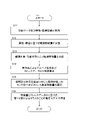
- FIG. 7 is an example of a flowchart showing the procedure of learning processing executed by the information processing apparatus 1 in the learning phase in the first embodiment.
- the information processing device 1 acquires training data used for learning a stress estimation model, and attribute information and/or environment information of sample subjects corresponding to the training data (step S11).
- the information processing device 1 acquires training data and environment information from the training data storage unit 42 and acquires attribute information from the attribute information storage unit 40 .
- the first dividing unit 14 of the information processing device 1 is based on at least one of the attributes of the sample subject indicated by the attribute information, or the environment at the time of measurement indicated by the environment information such as date and time information (for example, the season), A first division is performed to divide the observed feature amount of the training data (step S12). Thereby, the first dividing unit 14 divides the observed feature amount so as to generate N clusters.
- the second dividing unit 15 of the information processing device 1 divides the observed feature amount based on the second division based on the observation target of the observed feature amount and the activity state during observation of the corresponding sample subject (step S13 ). In this case, for example, the second dividing unit 15 divides each of the N clusters of observed feature values into M Generate subclusters of observed features.
- the feature quantity selection unit 16 of the information processing device 1 randomly generates a group for each subcluster, and in the generated group, for each type of observation feature quantity, stress data included in the training data.
- a correlation is calculated (step S14).
- the feature amount selection unit 16 ranks the types of observed feature amounts according to the correlation and the degree of sign inversion for each subcluster, and selects the top number R types of observed feature amounts as stress estimation feature amounts. (step S15).
- the estimation model learning unit 17 of the information processing device 1 based on the stress estimation feature amount and the stress data indicating the corresponding correct stress value included in the training data, for each cluster divided by the first division A stress estimation model is learned (step S16). Then, the information processing device 1 outputs the feature amount selection information Ifs related to the stress estimation feature amount selected in step S15 and the parameters of the stress estimation model learned in step S16 as learning results. Specifically, the information processing device 1 causes the learning parameter storage unit 43 to store the feature amount selection information Ifs and the parameters of the stress estimation model. Thereby, the information processing device 1 can store necessary information in the storage device 4 in the estimation phase.
- the information processing device 1 estimates the stress value of the person to be estimated based on the stress estimation model learned in the learning phase.
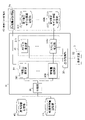
- FIG. 8 is an example of functional blocks in the estimation phase of the information processing device 1 .
- the processor 11 of the information processing device 1 functionally includes a classification unit 34, N feature quantity selection units 36 (361 to 36N), and N stress estimation units 37 (371 to 37N). and
- the first estimation model information storage unit 431 to the Nth estimation model information storage unit 43N included in the learning parameter storage unit 43 store the parameters of the N stress estimation models that have already been trained in the learning phase. ing.
- the classification unit 34 extracts the observation feature of the person to be estimated from the observation data storage unit 41, and uses the extracted observation feature on the basis of at least one of the corresponding attribute information and environmental information. (estimation model to N-th estimation model).
- the classification method of the observed feature quantity by the classification unit 34 is the same as the cluster generation method performed in the first division by the first division unit 14 . Therefore, the observed feature amount of the estimation target person corresponding to the attribute information or environment information of the same classification as the cluster supplied by the first dividing unit 14 to the second dividing unit 15n (n is an arbitrary integer from 1 to N) is the feature It is supplied to the quantity selector 36n.
- the second division unit 15n and the feature amount selection unit 36n handle observation feature amounts of the same classification.
- classification unit 34 is not limited to the mode of classifying the observation feature of the person to be estimated so as to assign it to any one of the stress estimation models. can be classified.
- the feature amount selection unit 36 (361 to 36N) selects the stress estimation feature amount from the observed feature amount supplied from the classification unit 34 based on the feature amount selection information Ifs stored in the learning parameter storage unit 43.
- the feature amount selection unit 36n (n is an arbitrary integer from 1 to N) selects the feature amount generated by the feature amount selection unit 16n1 to the feature amount selection unit 16nM from the observed feature amount supplied by the classification unit 34.
- An observed feature amount of the same type as the stress estimation feature amount indicated by the selection information Ifs is extracted as the stress estimation feature amount. Then, the feature amount selection unit 36n supplies the extracted stress estimation feature amount to the corresponding stress estimation unit 37n.
- the stress estimation unit 37 (371 to 37N) estimates the stress value of the person to be estimated based on the stress estimation model.
- the stress estimator 37n (where n is an arbitrary integer from 1 to N) configures the corresponding n-th estimated model by referring to the corresponding n-th estimated model information storage 43n. Then, the stress estimating unit 37n inputs the estimated stress feature amount supplied from the corresponding feature amount selecting unit 36n to the configured n-th estimation model, and calculates the stress value of the person to be estimated output by the n-th estimation model. to get Then, the stress estimator 37n supplies the stress value output by the n-th estimation model to the output controller 38 .
- the output control unit 38 performs output based on the estimated stress value (estimated stress value) of the person to be estimated. For example, the output control unit 38 generates a display signal S2 for displaying information about the estimated stress value, and supplies the display signal S2 to the display device 3 to display the information about the estimated stress value on the display device 3.
- the output control unit 38 represents the average value, median value, maximum value, and other representative statistical values of the acquired plurality of stress values. The statistical value is displayed on the display device 3 as the estimated stress value of the person to be estimated.
- the output control unit 38 instead of performing control to display the estimated stress value itself, or in addition to this, provides information regarding the level of stress determined based on the comparison between the estimated stress value and a predetermined threshold, or/ Further, control may be performed to display information regarding advice according to the level. It should be noted that the viewer of the display device 3 in this case may be, for example, the person to be presumed, or a person who manages or supervises the person to be presumed. In addition, the output control unit 38 may output the information about the estimated stress value by means of a sound output device (not shown).
- FIG. 9 is an example of a flowchart showing the procedure of stress estimation processing executed by the information processing device 1 in the estimation phase.
- the timing for performing the stress estimation process may be the timing requested by the user based on the input signal S1, or may be the predetermined timing.
- the information processing device 1 acquires the observation feature amount of the estimation target and the attribute information and/or environment information of the estimation target (step S21).
- the information processing device 1 acquires the observed feature amount and the environment information from the observation data storage unit 41 and acquires the attribute information from the attribute information storage unit 40 .
- the classification unit 34 of the information processing device 1 observes based on at least one of the attributes of the estimation target indicated by the attribute information, or the environment at the time of measurement indicated by the environment information such as date and time information (for example, the season).
- the feature amount is classified (step S22).
- the classification unit 34 classifies the observed feature quantity into at least one of the first to N-th estimation models.
- the observed feature amount may be redundantly classified into a plurality of stress estimation models.
- the feature amount selection unit 36 of the information processing device 1 selects the observed feature amount to be input to the target stress estimation model (step S23).
- the feature amount selection unit 36 receives the observation feature amount from the classification unit 34, the feature amount selection unit 36 refers to the corresponding feature amount selection information Ifs, and stress estimation feature amount which is the observation feature amount to be input to the stress estimation model. to select.
- the stress estimation unit 37 of the information processing device 1 calculates an estimated stress value based on the target stress estimation model (step S24).
- the stress estimation unit 37 configures the corresponding stress estimation model by referring to the learning parameter storage unit 43, and the configured stress estimation model A stress estimation value is calculated by inputting the stress estimation feature value.
- the information processing device 1 determines a stress estimation value that integrates the estimation results of these stress estimation models.
- the output control unit 38 of the information processing device 1 outputs information about the estimated stress value (step S25).
- a stress estimation model may be provided for each sub-cluster formed by the first division and the second division instead of being provided for each cluster formed by the first division.
- the information processing apparatus 1 provides a stress estimation model corresponding to each of the N ⁇ M feature amount selection units 1611 to 16NM, and the feature amount selection unit 16 corresponding to these stress estimation models. is used as input data, and the stress value indicated by the corresponding stress data is used as correct data for learning.
- the estimation phase there are N ⁇ M feature quantity selection units 36 in the same manner as the feature quantity selection units 16 in the learning phase, and each stress estimation unit 37 has the corresponding M feature quantity selection units 36
- Each output stress estimation feature value is input to the corresponding M stress estimation models.
- the stress estimator 37 acquires M stress values and determines a stress estimation value that integrates the M stress values.
- the information processing apparatus 1 accurately estimates the stress state of the person to be estimated from the observed feature values not used for learning, based on the stress estimation model learned for each cluster having a biased stress tendency. can be estimated to
- the stress estimated by the information processing device 1 is not limited to chronic stress, and may be short-term stress, which is relatively short-term stress (several minutes to a day).
- FIG. 10 shows a schematic configuration of a stress estimation system 100A in the second embodiment.
- the stress estimation system 100A according to the second embodiment includes the stress estimation device 1A that performs the estimation phase processing of the information processing device 1 of the first embodiment and the learning phase processing of the information processing device 1 of the first embodiment. It has a learning device 1B, and a terminal device 8 and a sensor 5 used by the person to be presumed.
- symbol is attached suitably, and the description is abbreviate
- the stress estimation system 100A mainly has a stress estimation device 1A functioning as a server, a storage device 4, and a terminal device 8 functioning as a client.
- the stress estimation device 1A and the terminal device 8 perform data communication via the network 7.
- the learning device 1B has the same hardware configuration as the information processing device 1 shown in FIG. 2, and the processor 11 of the learning device 1B has the functional blocks shown in FIG. Based on the information stored in the storage device 4, the learning device 1B performs learning processing such as updating the parameters of the stress estimation model and generating feature selection information Ifs.
- the terminal device 8 is a terminal used by a user (user) who is an estimation target, has an input function, a display function, and a communication function, and functions as the input device 2 and the display device 3 shown in FIG. do.
- the terminal device 8 may be, for example, a personal computer, a tablet terminal such as a smartphone, or a PDA (Personal Digital Assistant).
- the terminal device 8 is electrically connected to a sensor 5 such as a wearable sensor worn by the user, and the biological signal of the person to be presumed output by the sensor 5 (that is, information corresponding to the sensor signal S3 in FIG. 1). , through the network 7 to the stress estimating device 1A.
- the terminal device 8 accepts user input regarding responses to questionnaires, and transmits information generated by the user input (information corresponding to the input signal S1 in FIG. 1) to the stress estimation device 1A.
- the stress estimation device 1A has the same hardware configuration as the information processing device 1 shown in FIG. 2, and the processor 11 of the stress estimation device 1A has the functional blocks shown in FIG. Then, the stress estimation device 1A receives information corresponding to the input signal S1 and the sensor signal S3 in FIG. Then, the stress estimation device 1A refers to the parameters of the stress estimation model learned by the learning device 1B and the feature amount selection information Ifs, and executes stress estimation processing of the person to be estimated. Moreover, the stress estimation device 1A transmits an output signal for outputting the stress estimation result to the terminal device 8 via the network 7 based on the display request from the terminal device 8 .
- the learning phase and the estimation phase are performed by separate devices, and the learning of the stress estimation model and the stress estimation using the stress estimation model are performed in the same manner as in the first embodiment. You can do the same.
- the stress estimation device 1A estimates the stress state of the person to be estimated based on the biological signals of the person to be estimated received from the terminal used by the person to be estimated, and sends the estimation result to the person to be estimated. can be preferably presented on the terminal.
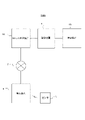
- FIG. 11 is a block diagram of a learning device 1BX according to the third embodiment.
- the information processing apparatus 1X mainly includes a first dividing means 14X, a second dividing means 15X, a feature selection means 16X, and a learning means 17X.
- the learning device 1BX may be composed of a plurality of devices.
- the first dividing means 14X performs the first division of the subject's observation feature amount based on at least one of the subject's attribute or environment.
- the first dividing means 14X can be, for example, the first dividing section 14 in the first embodiment (including modifications, the same applies hereinafter) or the second embodiment.
- the second dividing means 15X performs a second division that divides the observed feature amount based on at least one of the observation target of the observation feature amount and the activity state of the target person.
- the second dividing means 15X can be, for example, the second dividing section 15 in the first embodiment or the second embodiment.
- the feature amount selection means 16X selects a stress estimation feature amount, which is a feature amount used for stress estimation, from the observed feature amounts divided based on the first division and the second division.
- the feature amount selection means 16X can be, for example, the feature amount selection section 16 in the first embodiment or the second embodiment.
- the learning means 17X learns a stress estimation model for each group divided by at least the first division based on the stress estimation feature amount and the correct stress value corresponding to the stress estimation feature amount.
- the learning means 17X can be, for example, the estimation model learning section 17 in the first embodiment or the second embodiment.
- FIG. 12 is an example of a flowchart executed by the learning device 1BX in the third embodiment.
- the first dividing unit 14X performs a first division of the subject's observed feature quantity based on at least one of the subject's attribute or environment (step S31).
- the second dividing means 15X performs a second division for dividing the observed feature amount based on at least one of the observation target of the observed feature amount and the activity state of the target person (step S32).
- the feature amount selection means 16X selects a stress estimation feature amount, which is a feature amount used for stress estimation, from the observed feature amounts divided based on the first division and the second division (step S33).
- the learning means 17X learns the stress estimation model at least for each group divided by the first division based on the stress estimation feature amount and the correct stress value corresponding to the stress estimation feature amount (step S34).
- the learning device 1BX can learn a stress estimation model for each group in which the stress tendency is biased, and can learn a stress estimation model that can perform stress estimation with high accuracy.
- Non-transitory computer readable media include various types of tangible storage media.
- Examples of non-transitory computer-readable media include magnetic storage media (e.g., floppy disks, magnetic tapes, hard disk drives), magneto-optical storage media (e.g., magneto-optical discs), CD-ROMs (Read Only Memory), CD-Rs, CD-R/W, semiconductor memory (eg mask ROM, PROM (Programmable ROM), EPROM (Erasable PROM), flash ROM, RAM (Random Access Memory)).
- the program may also be delivered to the computer on various types of transitory computer readable medium.
- Examples of transitory computer-readable media include electrical signals, optical signals, and electromagnetic waves.
- Transitory computer-readable media can deliver the program to the computer via wired channels, such as wires and optical fibers, or wireless channels.
- the feature amount selection means forms a plurality of groups by random sampling from the observed feature amounts divided based on the first division and the second division, and all of the plurality of groups related to the correlation calculated for each group 3.
- [Appendix 5] The learning device according to supplementary note 1, wherein the learning means learns the stress estimation model for each group divided by the first division and the second division.
- [Appendix 9] Classification means for classifying observation feature values of an estimation target person whose stress is to be estimated based on at least one of the estimation target person's attributes or environment; Feature quantity selection means for selecting a stress estimation feature quantity, which is a feature quantity used for stress estimation, from the observed feature quantity based on the classification; stress estimation means for estimating the stress value of the person to be estimated by selecting a stress estimation model based on the classification and inputting the stress estimation feature quantity into the selected stress estimation model; A stress estimator having [Appendix 10] The stress estimating device according to appendix 9, wherein the stress estimating means estimates the stress value based on the stress estimating model learned by the learning device according to any one of appendices 1 to 8.
- the feature quantity selection means selects, as the stress estimation feature quantity, an observation feature quantity of the same type as the stress estimation feature quantity selected by the learning device according to any one of Appendices 1 to 8, Supplementary Note 9 or 11.
- the stress estimation device according to 10.
- the classification means classifies the observed feature quantity into a plurality of types,
- the stress estimation means estimates the stress value by integrating estimation results output by a plurality of stress estimation models selected based on the plurality of classifications, according to any one of attachments 9 to 11. Stress estimator.
- Appendix 15 Performing a first division for dividing the observed feature amount of the subject based on at least one of the subject's attribute or environment, performing a second division of dividing the observation feature value based on at least one of an observation target of the observation feature value or an activity state of the target person; Selecting a stress estimation feature value that is a feature value used for stress estimation from the observed feature values divided based on the first division and the second division,
- a storage medium in which is stored.
- [Appendix 16] Classifying the observation feature of the estimation target person to be the target of stress estimation based on at least one of the attribute or the environment of the estimation target person, Based on the classification, select a stress estimation feature amount that is a feature amount used for stress estimation from the observed feature amount, A program for causing a computer to execute a process of estimating the stress value of the person to be estimated by selecting a stress estimation model based on the classification and inputting the stress estimation feature quantity into the selected stress estimation model is stored. storage medium.
Landscapes
- Engineering & Computer Science (AREA)
- Theoretical Computer Science (AREA)
- Business, Economics & Management (AREA)
- Software Systems (AREA)
- Physics & Mathematics (AREA)
- General Physics & Mathematics (AREA)
- Strategic Management (AREA)
- Human Resources & Organizations (AREA)
- Data Mining & Analysis (AREA)
- Entrepreneurship & Innovation (AREA)
- Economics (AREA)
- General Engineering & Computer Science (AREA)
- Computer Vision & Pattern Recognition (AREA)
- Artificial Intelligence (AREA)
- Mathematical Physics (AREA)
- Evolutionary Computation (AREA)
- Computing Systems (AREA)
- Medical Informatics (AREA)
- Marketing (AREA)
- Operations Research (AREA)
- Quality & Reliability (AREA)
- Tourism & Hospitality (AREA)
- General Business, Economics & Management (AREA)
- Development Economics (AREA)
- Game Theory and Decision Science (AREA)
- Measurement Of The Respiration, Hearing Ability, Form, And Blood Characteristics Of Living Organisms (AREA)
Priority Applications (3)
| Application Number | Priority Date | Filing Date | Title |
|---|---|---|---|
| PCT/JP2021/014357 WO2022208874A1 (ja) | 2021-04-02 | 2021-04-02 | 学習装置、ストレス推定装置、学習方法、ストレス推定方法及び記憶媒体 |
| US18/284,929 US20240185124A1 (en) | 2021-04-02 | 2021-04-02 | Learning device, stress estimation device, learning method, stress estimation method, and storage medium |
| JP2023510140A JP7605293B2 (ja) | 2021-04-02 | 2021-04-02 | 学習装置、ストレス推定装置、学習方法、ストレス推定方法及びプログラム |
Applications Claiming Priority (1)
| Application Number | Priority Date | Filing Date | Title |
|---|---|---|---|
| PCT/JP2021/014357 WO2022208874A1 (ja) | 2021-04-02 | 2021-04-02 | 学習装置、ストレス推定装置、学習方法、ストレス推定方法及び記憶媒体 |
Publications (1)
| Publication Number | Publication Date |
|---|---|
| WO2022208874A1 true WO2022208874A1 (ja) | 2022-10-06 |
Family
ID=83457387
Family Applications (1)
| Application Number | Title | Priority Date | Filing Date |
|---|---|---|---|
| PCT/JP2021/014357 Ceased WO2022208874A1 (ja) | 2021-04-02 | 2021-04-02 | 学習装置、ストレス推定装置、学習方法、ストレス推定方法及び記憶媒体 |
Country Status (3)
| Country | Link |
|---|---|
| US (1) | US20240185124A1 (https=) |
| JP (1) | JP7605293B2 (https=) |
| WO (1) | WO2022208874A1 (https=) |
Cited By (2)
| Publication number | Priority date | Publication date | Assignee | Title |
|---|---|---|---|---|
| JP2024099355A (ja) * | 2023-01-12 | 2024-07-25 | 株式会社日立製作所 | 情報分析支援方法及び情報分析支援システム |
| US20240298944A1 (en) * | 2023-03-07 | 2024-09-12 | Electronics And Telecommunications Research Institute | System, apparatus, and method for determining stress |
Citations (6)
| Publication number | Priority date | Publication date | Assignee | Title |
|---|---|---|---|---|
| JP2012075708A (ja) * | 2010-10-01 | 2012-04-19 | Sharp Corp | ストレス状態推定装置、ストレス状態推定方法、プログラム、および記録媒体 |
| JP2013027570A (ja) * | 2011-07-28 | 2013-02-07 | Panasonic Corp | 心理状態評価装置、心理状態評価システム、心理状態評価方法およびプログラム |
| JP2018011720A (ja) * | 2016-07-20 | 2018-01-25 | 日本電気株式会社 | ストレス判定装置、ストレス判定方法、及び、ストレス判定プログラム |
| WO2019069417A1 (ja) * | 2017-10-05 | 2019-04-11 | 日本電気株式会社 | 生体情報処理装置、生体情報処理システム、生体情報処理方法、および記憶媒体 |
| WO2019159252A1 (ja) * | 2018-02-14 | 2019-08-22 | 日本電気株式会社 | 生体信号を用いるストレス推定装置およびストレス推定方法 |
| JP2019202031A (ja) * | 2018-05-25 | 2019-11-28 | 国立大学法人広島大学 | 感性評価装置、感性評価方法および感性多軸モデル構築方法 |
Family Cites Families (2)
| Publication number | Priority date | Publication date | Assignee | Title |
|---|---|---|---|---|
| EP3594854B1 (en) * | 2018-07-09 | 2025-12-31 | Tata Consultancy Services Limited | METHOD AND SYSTEM FOR GROUPING USERS USING A COGNITIVE STRESS REPORT THAT ALLOWS FOR THE CLASSIFICATION OF STRESS LEVELS |
| JP2020190936A (ja) * | 2019-05-22 | 2020-11-26 | 株式会社Nttドコモ | 情報処理装置、低次メンタル状態推定システム、及び低次メンタル状態推定方法 |
-
2021
- 2021-04-02 US US18/284,929 patent/US20240185124A1/en active Pending
- 2021-04-02 WO PCT/JP2021/014357 patent/WO2022208874A1/ja not_active Ceased
- 2021-04-02 JP JP2023510140A patent/JP7605293B2/ja active Active
Patent Citations (6)
| Publication number | Priority date | Publication date | Assignee | Title |
|---|---|---|---|---|
| JP2012075708A (ja) * | 2010-10-01 | 2012-04-19 | Sharp Corp | ストレス状態推定装置、ストレス状態推定方法、プログラム、および記録媒体 |
| JP2013027570A (ja) * | 2011-07-28 | 2013-02-07 | Panasonic Corp | 心理状態評価装置、心理状態評価システム、心理状態評価方法およびプログラム |
| JP2018011720A (ja) * | 2016-07-20 | 2018-01-25 | 日本電気株式会社 | ストレス判定装置、ストレス判定方法、及び、ストレス判定プログラム |
| WO2019069417A1 (ja) * | 2017-10-05 | 2019-04-11 | 日本電気株式会社 | 生体情報処理装置、生体情報処理システム、生体情報処理方法、および記憶媒体 |
| WO2019159252A1 (ja) * | 2018-02-14 | 2019-08-22 | 日本電気株式会社 | 生体信号を用いるストレス推定装置およびストレス推定方法 |
| JP2019202031A (ja) * | 2018-05-25 | 2019-11-28 | 国立大学法人広島大学 | 感性評価装置、感性評価方法および感性多軸モデル構築方法 |
Cited By (2)
| Publication number | Priority date | Publication date | Assignee | Title |
|---|---|---|---|---|
| JP2024099355A (ja) * | 2023-01-12 | 2024-07-25 | 株式会社日立製作所 | 情報分析支援方法及び情報分析支援システム |
| US20240298944A1 (en) * | 2023-03-07 | 2024-09-12 | Electronics And Telecommunications Research Institute | System, apparatus, and method for determining stress |
Also Published As
| Publication number | Publication date |
|---|---|
| JPWO2022208874A1 (https=) | 2022-10-06 |
| US20240185124A1 (en) | 2024-06-06 |
| JP7605293B2 (ja) | 2024-12-24 |
Similar Documents
| Publication | Publication Date | Title |
|---|---|---|
| US20190365332A1 (en) | Determining wellness using activity data | |
| US20190117143A1 (en) | Methods and Apparatus for Assessing Depression | |
| EP3346428A1 (en) | Sensor design support apparatus, sensor design support method and computer program | |
| CN107203700B (zh) | 一种基于连续血糖监测的方法及装置 | |
| JP2022544916A (ja) | 自動化された健康データの獲得、処理、および通信システム、ならびに方法 | |
| US20120030696A1 (en) | Spatially Constrained Biosensory Measurements Used to Decode Specific Physiological States and User Responses Induced by Marketing Media and Interactive Experiences | |
| US20190141418A1 (en) | A system and method for generating one or more statements | |
| US20210296001A1 (en) | Dementia risk presentation system and method | |
| CN109447324A (zh) | 行为活动预测方法、装置、设备及情绪预测方法 | |
| JP7605293B2 (ja) | 学習装置、ストレス推定装置、学習方法、ストレス推定方法及びプログラム | |
| CN111341416B (zh) | 一种心理压力评估模型处理方法以及相关设备 | |
| WO2023275975A1 (ja) | 認知機能推定装置、認知機能推定方法及び記憶媒体 | |
| WO2020211702A1 (zh) | 压力评估校准方法、装置及存储介质 | |
| US20210406928A1 (en) | Information processing device, information processing method, and recording medium | |
| Johnson et al. | Effects of simplifying choice tasks on estimates of taste heterogeneity in stated-choice surveys | |
| Matabuena et al. | Predicting distributions of physical activity profiles in the National Health and Nutrition Examination Survey database using a partially linear Fréchet single index model | |
| CN118078285B (zh) | 学生心理健康评测方法、装置、设备及存储介质 | |
| WO2022208873A1 (ja) | ストレス推定装置、ストレス推定方法及び記憶媒体 | |
| KR102640995B1 (ko) | 혈당 데이터를 이용한 인공지능 기반의 체중 변화 예측 방법 및 장치 | |
| WO2023119562A1 (ja) | 学習装置、ストレス推定装置、学習方法、ストレス推定方法及び記憶媒体 | |
| Yik et al. | Who thrives in a public health crisis? | |
| US20220040532A1 (en) | Utilizing machine learning and cognitive state analysis to track user performance | |
| JP2023115687A (ja) | データ処理方法、プログラム及びデータ処理装置 | |
| WO2022113276A1 (ja) | 情報処理装置、制御方法及び記憶媒体 | |
| JP7426015B1 (ja) | ヘルスケア用データ解析システム |
Legal Events
| Date | Code | Title | Description |
|---|---|---|---|
| 121 | Ep: the epo has been informed by wipo that ep was designated in this application |
Ref document number: 21935035 Country of ref document: EP Kind code of ref document: A1 |
|
| WWE | Wipo information: entry into national phase |
Ref document number: 2023510140 Country of ref document: JP |
|
| WWE | Wipo information: entry into national phase |
Ref document number: 18284929 Country of ref document: US |
|
| NENP | Non-entry into the national phase |
Ref country code: DE |
|
| 122 | Ep: pct application non-entry in european phase |
Ref document number: 21935035 Country of ref document: EP Kind code of ref document: A1 |