WO2022201410A1 - 信号処理装置、信号処理方法、信号処理プログラム、及び衛星通信システム - Google Patents
信号処理装置、信号処理方法、信号処理プログラム、及び衛星通信システム Download PDFInfo
- Publication number
- WO2022201410A1 WO2022201410A1 PCT/JP2021/012485 JP2021012485W WO2022201410A1 WO 2022201410 A1 WO2022201410 A1 WO 2022201410A1 JP 2021012485 W JP2021012485 W JP 2021012485W WO 2022201410 A1 WO2022201410 A1 WO 2022201410A1
- Authority
- WO
- WIPO (PCT)
- Prior art keywords
- priority
- frame
- low
- unit
- frames
- Prior art date
- Legal status (The legal status is an assumption and is not a legal conclusion. Google has not performed a legal analysis and makes no representation as to the accuracy of the status listed.)
- Ceased
Links
Images


Classifications
-
- H—ELECTRICITY
- H04—ELECTRIC COMMUNICATION TECHNIQUE
- H04L—TRANSMISSION OF DIGITAL INFORMATION, e.g. TELEGRAPHIC COMMUNICATION
- H04L47/00—Traffic control in data switching networks
- H04L47/10—Flow control; Congestion control
- H04L47/24—Traffic characterised by specific attributes, e.g. priority or QoS
- H04L47/2475—Traffic characterised by specific attributes, e.g. priority or QoS for supporting traffic characterised by the type of applications
-
- H—ELECTRICITY
- H04—ELECTRIC COMMUNICATION TECHNIQUE
- H04L—TRANSMISSION OF DIGITAL INFORMATION, e.g. TELEGRAPHIC COMMUNICATION
- H04L12/00—Data switching networks
- H04L12/28—Data switching networks characterised by path configuration, e.g. LAN [Local Area Networks] or WAN [Wide Area Networks]
-
- H—ELECTRICITY
- H04—ELECTRIC COMMUNICATION TECHNIQUE
- H04M—TELEPHONIC COMMUNICATION
- H04M11/00—Telephonic communication systems specially adapted for combination with other electrical systems
Definitions
- the present invention relates to a signal processing device, a signal processing method, a signal processing program, and a satellite communication system.
- Satellite communication systems using communication satellites are known as systems that enable telephone services and data communication via data-based networks using VoIP (Voice over IP) technology.
- VoIP Voice over IP
- Non-Patent Document 1 discloses a data fragmentation function that divides data packets on the transmitting side in VoIP, a voice priority control function, and a technique for improving voice quality using a delay fluctuation absorption buffer.
- processing may be delayed when the line speed is low, such as when IP telephony and data communication are performed via a communication satellite.
- the VoIP frame is output until the output of the data communication frame currently being processed is completed. not. Also, the amount of delay of a VoIP frame varies depending on the timing at which data arrives. Therefore, delay fluctuation also occurs.
- the present invention has been made in view of the above-described problems, and provides a signal processing apparatus, a signal processing method, and a signal processing method capable of suppressing a decrease in communication efficiency without increasing the delay amount and delay fluctuation amount of high-priority frames.
- An object of the present invention is to provide a signal processing program and a satellite communication system.
- a signal processing apparatus includes: a distribution unit that distributes input high priority frames and low priority frames according to priority; a transfer unit that processes and transfers low-priority frames, an accumulation unit that accumulates high-priority frames and low-priority frames transferred by the transfer unit; a reading unit for sequentially reading and outputting priority frames according to priority;
- the transfer unit is set to divide the low-priority frame into predetermined sizes and transfer them, the high-priority frame is not input to the distribution unit, and the storage unit stores the high-priority frame and a setting unit for setting the transfer unit to transfer the low-priority frame without dividing it when the frame is not stored.
- a signal processing method includes a sorting step of sorting input high priority frames and low priority frames according to priority; a transfer step of respectively processing and transferring frames; an accumulation step of accumulating the transferred high-priority frames and low-priority frames in an accumulation unit; and high-priority frames and low-priority frames accumulated by the accumulation unit are sequentially read and output according to priority; If setting is made to divide a frame into a predetermined size and transfer the low priority frame, and if no high priority frame is input and the storage unit does not store the high priority frame, the low priority frame is not divided. and a setting step of setting to transfer.
- a satellite communication system is a satellite communication system including a signal processing device that outputs high-priority frames and low-priority frames to an earth station communicating via a communication satellite.
- a distributing unit for distributing input high priority frames and low priority frames according to priority, and a high priority frame and a low priority frame distributed by the distributing unit, respectively a transfer unit for processing and transferring; an accumulation unit for accumulating the high priority frames and the low priority frames transferred by the transfer unit; and the high priority frames and the low priority frames accumulated by the accumulation unit.
- a reading unit for sequentially reading and outputting according to the priority
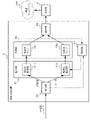
- FIG. 1 is a block diagram illustrating functions of a signal processing device according to an embodiment and peripherals of the signal processing device;
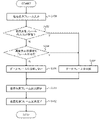
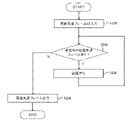
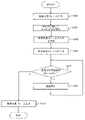
- FIG. 7 is a flowchart showing an operation example of the signal processing device when a low-priority frame is input; 7 is a flowchart showing an operation example of the signal processing device when a high-priority frame is input;
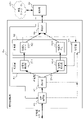
- It is a block diagram which illustrates the function which the modification of a signal processing apparatus has, and the periphery of a modification of a signal processing apparatus.
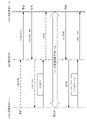
- FIG. 4 is a diagram illustrating an example of a SIP message to be confirmed between a VoIP telephone terminal and a VoIP telephone terminal by a SIP confirmation unit;
- FIG. 4 is a diagram illustrating an example of a SIP message to be confirmed between a VoIP telephone terminal and a VoIP telephone terminal by a SIP confirmation unit;
- FIG. 11 is a flowchart showing an operation example of a modification of the signal processing device when a low-priority frame is input;
- FIG. 11 is a flowchart showing an operation example of a modification of the signal processing device when a high-priority frame is input;
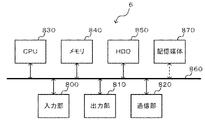
- FIG. It is a figure which shows the hardware structural example of the signal processing apparatus concerning one Embodiment.
- FIG. 4 is a diagram schematically showing transmission processing of a VoIP frame and a data communication frame in a satellite communication system of a comparative example;
- FIG. 10 is a diagram schematically showing transmission processing of a VoIP frame and a data communication frame by fragmentation in a satellite communication system of a comparative example;
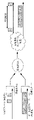
- FIG. 10 is a diagram illustrating a decrease in frame efficiency due to fragmentation;
- FIG. 10 is a diagram schematically showing transmission processing of VoIP frames (voice communication) and data communication frames (data communication) in the satellite communication system of the comparative example. It is assumed that each frame is an Ethernet (registered trademark) Ether frame.
- IP telephony is affected by delays and fluctuations in quality, it is common to implement priority control.
- a VoIP frame (call data frame), which is a high-priority frame, is preferentially processed over a data communication frame, which is a low-priority frame.
- the data communication frame is output first.
- the high-priority frame will not be output until the output of the low-priority frame currently being processed is completed. That is, in the satellite communication system of the comparative example, even if priority control is performed to give priority to VoIP frames, the processing of VoIP frames may be delayed.
- VoIP frames have a maximum processing delay of 190 ms, and the maximum delay fluctuation is 190 ms. This amount of delay and delay fluctuation degrades the quality of IP telephones that normally transmit frames at regular intervals of 20 ms.
- VoIP frames it is important to reduce the effects of processing delays in order to suppress delay amounts and delay fluctuations even in an environment where priority control is performed.
- a method of reducing the processing delay for example, there is a method called fragmentation in which a signal processing device divides an input VoIP frame into appropriate frame lengths and transmits the divided VoIP frames.
- FIG. 11 is a diagram schematically showing transmission processing of VoIP frames and data communication frames by fragmentation in the satellite communication system of the comparative example.
- fragmentation low-priority data communication frames are divided. Since the VoIP frame can be interrupted between divided data communication frames, the amount of delay and the amount of delay fluctuation can be suppressed.
- division size of fragmentation is fixedly set by MTU (Maximum Transmission Unit), MSS (Maximum Segment Size), and the like.
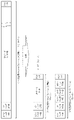
- FIG. 12 is a diagram illustrating a decrease in frame efficiency due to fragmentation.
- G.I The frame length (78 bytes) of the VoIP frame encoded by G.729a and the frame length of the data communication frame are made the same length.
- the frame efficiency before fragmentation is about 97.5%
- the frame efficiency after fragmentation is about 51.3%.
- the frame efficiency is largely reduced to about half.
- Fragmentation is necessary to reduce the delay amount and delay fluctuation amount of IP phones using VoIP technology.
- IP phones are not always in communication. Therefore, the communication efficiency (frame efficiency) of the IP phone is greatly reduced due to fragmentation during periods when the IP phone is not in use.
- a satellite communication system can be used even if a communication satellite network using communication satellites is shared by high-priority frames such as IP telephony and low-priority frames such as data communication. It is configured such that it is possible to suppress a decrease in communication efficiency without increasing the delay amount and the delay fluctuation amount of each frame.
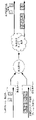
- FIG. 1 is a diagram showing a configuration example of a satellite communication system 1 according to one embodiment.
- a satellite communication system 1 is configured such that earth stations 2-1 and 2-2 communicate with each other via a communication satellite 3, for example.
- a VoIP telephone terminal 4-1 and a data communication terminal 5-1 are connected to the earth station 2-1 via a signal processing device 6-1.
- the signal processing device 6-1 performs predetermined processing on the VoIP frame, which is a high-priority frame output from the VoIP telephone terminal 4-1, for example, and outputs it to the earth station 2-1. Further, the signal processing device 6-1 performs predetermined processing on a data communication frame, which is a low-priority frame output from the data communication terminal 5-1, for example, and outputs the processed data communication frame to the earth station 2-1.
- a VoIP telephone terminal 4-2 and a data communication terminal 5-2, for example, are connected to the earth station 2-2 via a signal processing device 6-2.
- the signal processing device 6-2 performs predetermined processing on the VoIP frame, which is a high-priority frame output from the VoIP telephone terminal 4-2, and outputs the processed VoIP frame to the earth station 2-2. Further, the signal processing device 6-2 performs predetermined processing on the data communication frame, which is a low-priority frame output from the data communication terminal 5-2, for example, and outputs it to the earth station 2-2.
- the VoIP telephone terminal 4-1 makes an IP telephone call with the VoIP telephone terminal 4-2 via the communication satellite 3.
- the data communication terminal 5-1 performs mutual data communication with the data communication terminal 5-2 via the communication satellite 3.
- signal processing devices 6-1 and 6-2 when any one of a plurality of configurations is not specified, such as signal processing devices 6-1 and 6-2, they are simply abbreviated as signal processing device 6 or the like.
- FIG. 2 is a block diagram illustrating the functions of the signal processing device 6 and the periphery of the signal processing device 6 according to one embodiment.
- the signal processing device 6 has, for example, a distribution unit 60, a transfer unit 61, an accumulation unit 62, a reading unit 63, and a setting unit 64.
- the satellite network 300 is a network configured by the communication satellite 3 shown in FIG. 1 and the like.
- the distribution unit 60 distributes input high-priority frames (IP telephone) and low-priority frames (data) according to priority, and outputs them to the transfer unit 61 . Further, the distribution unit 60 has a function of notifying the setting unit 64 when a high-priority frame is input.
- the transfer unit 61 has a high-priority transfer unit 611 and a low-priority transfer unit 612 , and processes the high-priority frames and low-priority frames distributed by the distribution unit 60 and transfers them to the storage unit 62 .
- the high-priority transfer unit 611 processes the high-priority frames output by the distribution unit 60 and transfers them to the storage unit 62 .
- the low-priority transfer unit 612 processes the low-priority frames output from the distribution unit 60 and transfers them to the storage unit 62 .
- the low-priority transfer unit 612 divides a low-priority frame based on division size setting information, which will be described later, and transfers the divided low-priority frame to the storage unit 62 .
- the accumulation unit 62 has a high-priority queue 621 and a low-priority queue 622, and accumulates high-priority frames and low-priority frames transferred by the transfer unit 61, respectively.
- the high-priority queue 621 stores high-priority frames transferred by the high-priority transfer unit 611 .
- the high priority queue 621 also has a function of notifying the setting unit 64 of the number of high priority frames that have been stored, for example, when high priority frames are stored.
- the low-priority queue 622 accumulates the low-priority frames transferred by the low-priority transfer unit 612 .
- the reading unit 63 sequentially reads the high-priority frames accumulated in the high-priority queue 621 and the low-priority frames accumulated in the low-priority queue 622 according to their respective priorities, and outputs them to the earth station 2 .
- a setting is made so that the low-priority transfer unit 612 divides the low-priority frame into predetermined sizes and transfers them.
- the setting unit 64 outputs, to the low-priority transfer unit 612, the division size setting information for setting the division size according to the number of high-priority frames notified from the high-priority queue 621. Sets the split size for low priority frames.
- the setting unit 64 sets the low priority transfer unit 612 to the low priority frame. Settings are made so that the frame is transferred without being divided (or after being divided into predetermined division sizes).
- the signal processing device 6 performs fragmentation according to the settings made by the setting unit 64 .
- the signal processing device 6 is configured such that the setting unit 64 sets the low priority transfer unit 612 based on the notification from the distribution unit 60 and the notification from the high priority queue 621. , but not limited to.
- the signal processing device 6 includes a determination unit that performs determination based on notifications from the distribution unit 60 and the high-priority queue 621, and the setting unit 64 performs similar processing for the low-priority transfer unit 612 according to the determination result of the determination unit. It may be configured to configure.
- FIG. 2 shows the function of the signal processing device 6 to transmit frames
- the signal processing device 6 may have a function of performing defragmentation when receiving frames.
- FIG. 3 is a flow chart showing an operation example of the signal processing device 6 when a low priority frame is input.
- the signal processing device 6 determines whether or not there is a high-priority frame input (S102). If the signal processing device 6 determines that there is no high-priority frame input (S102: No), it proceeds to the process of S104, and if it determines that there is a high-priority frame input ( If S102: Yes), the process proceeds to S108.
- the signal processing device 6 determines whether or not a high-priority transmission waiting frame exists (S104). If it is determined that it exists (S104: Yes), the process proceeds to S108.
- the signal processing device 6 causes the setting unit 64 to set the low-priority transfer unit 612 not to divide the data frame.
- the signal processing device 6 causes the setting unit 64 to set the low-priority transfer unit 612 to divide the data frame.
- the reading unit 63 of the signal processing device 6 reads the low-priority frames from the low-priority queue 622 and starts outputting them.
- the reading unit 63 of the signal processing device 6 finishes reading the low-priority frames from the low-priority queue 622 and completes the output. It should be noted that the signal processing device 6 requires a maximum of 190 ms, for example, when transmitting a low-priority frame that is not divided.
- FIG. 4 is a flowchart showing an operation example of the signal processing device 6 when a high priority frame is input.
- the signal processing device 6 determines whether or not there is a low-priority frame being transmitted (S202). If the signal processing device 6 determines that there is a low-priority frame being transmitted (S202: Yes), it proceeds to the processing of S204, and if it determines that there is no low-priority frame being transmitted (S202: No). , the process proceeds to S206.
- the high-priority frame is a call data frame for IP telephony, and is input at intervals of 20 ms.
- step 204 the signal processing device 6 waits for transmission of the high-priority frame, and returns to the processing of S202.
- the reading unit 63 of the signal processing device 6 reads the high priority frame from the high priority queue 621 and outputs it.
- the signal processing device 6 transfers a high-priority frame when a high-priority frame is input to the distribution unit 60 or when the storage unit 62 stores a high-priority frame.
- the unit 61 is set to divide the low-priority frames into predetermined sizes and transfer them, no high-priority frames are input to the distribution unit 60, and the accumulation unit 62 does not accumulate high-priority frames.
- the transfer unit 61 is set so as to transfer the low-priority frame without dividing it, so that the decrease in communication efficiency can be suppressed without increasing the delay amount and the delay fluctuation amount of the high-priority frame. can.
- the signal processing device 6 may receive a high priority frame at the beginning of a call by the VoIP telephone terminal 4 (see FIG. 1) while a low priority frame is being input. In this case, delay fluctuation may occur because the low-priority frame is not divided.
- FIG. 5 is a block diagram illustrating the functions of a modification (signal processing device 6a) of the signal processing device 6 and the periphery of the modification of the signal processing device.
- the signal processing device 6a has, for example, a distribution unit 60, a transfer unit 61, a storage unit 62, a reading unit 63, a setting unit 64, and a SIP (Session Initiation Protocol) confirmation unit 65. It is assumed that the earth station 2a has a function to mediate SIP messages.
- the same reference numerals are given to the substantially same configuration as the configuration of the signal processing device 6 shown in FIG.
- the SIP confirmation unit 65 has a function of confirming the content of the SIP message, and sends the high priority frame (IP phone) and low priority frame (data) input to the signal processing device 6a to the distribution unit 60. Output. Also, the SIP confirmation unit 65 may have a function as a SIP server for confirming the message type and user address information.
- the SIP confirmation unit 65 confirms establishment of a session for a high-priority frame input to the signal processing device 6a, or confirms termination of a session for a high-priority frame, it indicates that fact.
- a notification is output to the setting unit 64 .
- the low-priority transfer unit 612 transfers the low-priority frame. is divided into a predetermined size and transferred.
- the setting unit 64 receives a notification from the SIP confirmation unit 65 indicating that the end of the session for the high-priority frame has been confirmed, and the high-priority queue 621 accumulates the high-priority frames. If not, the low-priority transfer unit 612 has a function of setting to transfer the low-priority frame without dividing it (or by dividing it into a predetermined division size).
- FIG. 6 is a diagram exemplifying a SIP message that the SIP confirmation unit 65 confirms between the VoIP telephone terminal 4-1 and the VoIP telephone terminal 4-2.
- the SIP confirmation unit 65 confirms the reception of the INVITE (invitation) message followed by the ACK response (acknowledgment of session establishment), a call state using the voice frame of the IP telephone is established, and the signal processing device 6a receives the low-priority frame. Divide and output.
- the signal processing device 6a transmits the low-priority frame without dividing it.
- the communication satellite 3 (see FIG. 1) is a geostationary satellite, the transmission and reception of SIP messages are delayed by 250 ms or more in the satellite section.
- the signal processing device 6a has a delay (time lag) of 250 ms or more from the reception of the SIP message to the start of IP telephone frame transmission.
- the signal processing device 6a can change the division size of the low-priority frame before sending the first high-priority frame (IP telephone voice frame).
- FIG. 7 is a flow chart showing an operation example of the signal processing device 6a when a low-priority frame is input.
- the signal processing device 6a determines whether or not ACK reception has been confirmed following INVITE (S302). If the signal processing device 6a determines that reception of ACK following INVITE has not been confirmed (S302: No), it proceeds to processing of S304, and if it determines that reception of ACK following INVITE has been confirmed ( If S302: Yes), the process proceeds to S310.
- the signal processing device 6a determines whether reception of 200 OK following BYE has been confirmed (S304). If the signal processing device 6a determines that reception of 200 OK following BYE has been confirmed (S304: Yes), it proceeds to the process of S306, and if it determines that reception of 200 OK following BYE has not been confirmed ( If S304: No), the process proceeds to S310.
- the signal processing device 6a also determines whether or not there is a high-priority transmission waiting frame (S306). If the signal processing device 6a determines that there is no high-priority transmission waiting frame (S306: No), it proceeds to the processing of S308, and if it determines that there is a high-priority transmission waiting frame (S306: Yes), The process proceeds to S310.
- the signal processing device 6a sets the setting unit 64 (see FIG. 5) to the low-priority transfer unit 612 so as not to divide the data frame.
- the signal processing device 6a causes the setting unit 64 to set the low-priority transfer unit 612 to divide the data frame.
- the reading unit 63 of the signal processing device 6a reads the low-priority frames from the low-priority queue 622 and starts outputting them.
- the reading unit 63 of the signal processing device 6a finishes reading the low-priority frames from the low-priority queue 622 and completes the output. It should be noted that the signal processing device 6a requires, for example, 190 ms at maximum when transmitting a low-priority frame that is not divided.
- FIG. 8 is a flowchart showing an operation example of the signal processing device 6a when a high priority frame is input.
- the signal processing device 6a receives a high-priority frame (S300) and, upon confirming receipt of INVITE and subsequent ACK (S400), predicts that a high-priority frame will be input. (S402).
- the signal processing device 6a determines whether or not there is a low-priority frame being transmitted (S406). If the signal processing device 6a determines that there is a low-priority frame being transmitted (S406: Yes), it proceeds to the processing of S408, and if it determines that there is no low-priority frame being transmitted (S406: No). , the process proceeds to S410.
- the high-priority frame is a call data frame for IP telephony, and is input at intervals of 20 ms.
- step 408 the signal processing device 6a waits for transmission of the high-priority frame, and returns to the processing of S406.
- the reading unit 63 of the signal processing device 6a reads the high priority frame from the high priority queue 621 and outputs it.
- the transfer unit 61 divides the low-priority frame into predetermined sizes.
- the SIP confirmation unit 65 confirms the end of the session for the high priority frame, and the storage unit 62 does not store the high priority frame, the transfer unit 61 selects the low priority frame. Since the frames are set so as to be transferred without being divided, it is possible to suppress a decrease in communication efficiency without increasing the delay amount and delay fluctuation amount of the high-priority frames.
- the signal processing device 6 described above does not predict that an IP telephone frame will be input, if a high priority frame is input while the first low priority frame is input, the low priority frame is input. degree frame may not be split. However, the signal processing device 6 does not need a function for checking SIP messages.
- the above-described signal processing device 6a can predict input of an IP telephone frame more than 250 ms in advance using a SIP message, so that the data communication frame can be optimally divided before the IP telephone frame arrives. can do.
- the signal processing device 6a needs to have a function for confirming transmission/reception of SIP messages.
- each function of the signal processing device 6 and the signal processing device 6a may be partially or wholly configured by hardware such as a PLD (Programmable Logic Device) or an FPGA (Field Programmable Gate Array). It may be configured as a program executed by a processor such as.
- hardware such as a PLD (Programmable Logic Device) or an FPGA (Field Programmable Gate Array). It may be configured as a program executed by a processor such as.
- the signal processing device 6 and the signal processing device 6a can be realized using a computer and a program, and the program can be recorded on a storage medium or provided through a network.
- FIG. 9 is a diagram showing a hardware configuration example of the signal processing device 6 (or the signal processing device 6a) according to one embodiment.
- the signal processing device 6 has an input section 800, an output section 810, a communication section 820, a CPU 830, a memory 840, and an HDD 850 connected via a bus 860, and functions as a computer.
- the signal processing device 6 can input/output data to/from a computer-readable storage medium 870 .
- the input unit 800 is, for example, a keyboard and a mouse.
- the output unit 810 is, for example, a display device such as a display.
- the communication unit 820 is, for example, a network interface.
- the CPU 830 controls each unit that configures the signal processing device 6 and performs predetermined processing.
- the memory 840 and HDD 850 are storage units that store data and the like.
- the storage medium 870 is capable of storing programs and the like that cause the functions of the signal processing device 6 to be executed. Note that the architecture configuring the signal processing device 6 is not limited to the example shown in FIG.
Landscapes
- Engineering & Computer Science (AREA)
- Signal Processing (AREA)
- Computer Networks & Wireless Communication (AREA)
- Data Exchanges In Wide-Area Networks (AREA)
- Small-Scale Networks (AREA)
- Telephonic Communication Services (AREA)
- Radio Relay Systems (AREA)
Abstract
Description
Claims (8)
- 入力される高優先度フレーム及び低優先度フレームを優先度に応じて振分ける振分部と、
前記振分部が振分けた高優先度フレーム及び低優先度フレームをそれぞれ処理して転送する転送部と、
前記転送部が転送した高優先度フレーム及び低優先度フレームをそれぞれ蓄積する蓄積部と、
前記蓄積部が蓄積した高優先度フレーム及び低優先度フレームそれぞれを優先度に応じて順次に読出して出力する読出部と、
前記振分部に高優先度フレームが入力された場合、又は、前記蓄積部が高優先度フレームを蓄積している場合には、前記転送部が低優先度フレームを所定サイズに分割して転送するように設定し、前記振分部に高優先度フレームが入力されず、且つ、前記蓄積部が高優先度フレームを蓄積していない場合には、前記転送部が低優先度フレームを分割することなく転送するように設定する設定部と
を有することを特徴とする信号処理装置。 - SIPメッセージの内容を確認するSIP確認部
をさらに有し、
前記設定部は、
前記SIP確認部が高優先度フレームに対するセッションの確立を確認した場合には、前記転送部が低優先度フレームを所定サイズに分割して転送するように設定し、前記SIP確認部が高優先度フレームに対するセッションの終了を確認し、且つ、前記蓄積部が高優先度フレームを蓄積していない場合には、前記転送部が低優先度フレームを分割することなく転送するように設定すること
を特徴とする請求項1に記載の信号処理装置。 - 高優先度フレームは、
IP電話の通話データフレームであること
を特徴とする請求項1又は2に記載の信号処理装置。 - 入力される高優先度フレーム及び低優先度フレームを優先度に応じて振分ける振分工程と、
振分けた高優先度フレーム及び低優先度フレームをそれぞれ処理して転送する転送工程と、
転送した高優先度フレーム及び低優先度フレームをそれぞれ蓄積部が蓄積する蓄積工程と、
前記蓄積部が蓄積した高優先度フレーム及び低優先度フレームそれぞれを優先度に応じて順次に読出して出力する読出工程と、
高優先度フレームが入力された場合、又は、前記蓄積部が高優先度フレームを蓄積している場合には、低優先度フレームを所定サイズに分割して転送するように設定し、高優先度フレームが入力されず、且つ、前記蓄積部が高優先度フレームを蓄積していない場合には、低優先度フレームを分割することなく転送するように設定する設定工程と
を含むことを特徴とする信号処理方法。 - SIPメッセージの内容を確認するSIP確認工程
をさらに含み、
前記設定工程では、
高優先度フレームに対するセッションの確立を確認した場合には、低優先度フレームを所定サイズに分割して転送するように設定し、高優先度フレームに対するセッションの終了を確認し、且つ、前記蓄積部が高優先度フレームを蓄積していない場合には、低優先度フレームを分割することなく転送するように設定すること
を特徴とする請求項4に記載の信号処理方法。 - 高優先度フレームは、
IP電話の通話データフレームであること
を特徴とする請求項4又は5に記載の信号処理方法。 - 請求項1~3のいずれか1項に記載の信号処理装置の各部としてコンピュータを機能させるための信号処理プログラム。
- 通信衛星を介して通信を行う地球局に対して高優先度フレーム及び低優先度フレームを出力する信号処理装置を備えた衛星通信システムにおいて、
前記信号処理装置は、
入力される高優先度フレーム及び低優先度フレームを優先度に応じて振分ける振分部と、
前記振分部が振分けた高優先度フレーム及び低優先度フレームをそれぞれ処理して転送する転送部と、
前記転送部が転送した高優先度フレーム及び低優先度フレームをそれぞれ蓄積する蓄積部と、
前記蓄積部が蓄積した高優先度フレーム及び低優先度フレームそれぞれを優先度に応じて順次に読出して出力する読出部と、
前記振分部に高優先度フレームが入力された場合、又は、前記蓄積部が高優先度フレームを蓄積している場合には、前記転送部が低優先度フレームを所定サイズに分割して転送するように設定し、前記振分部に高優先度フレームが入力されず、且つ、前記蓄積部が高優先度フレームを蓄積していない場合には、前記転送部が低優先度フレームを分割することなく転送するように設定する設定部と
を有することを特徴とする衛星通信システム。
Priority Applications (3)
| Application Number | Priority Date | Filing Date | Title |
|---|---|---|---|
| US18/280,944 US20240146662A1 (en) | 2021-03-25 | 2021-03-25 | Signal processing equipment, signal processing methods, signal processing programs, and satellite communication systems |
| PCT/JP2021/012485 WO2022201410A1 (ja) | 2021-03-25 | 2021-03-25 | 信号処理装置、信号処理方法、信号処理プログラム、及び衛星通信システム |
| JP2023508300A JP7578185B2 (ja) | 2021-03-25 | 2021-03-25 | 信号処理装置、信号処理方法、信号処理プログラム、及び衛星通信システム |
Applications Claiming Priority (1)
| Application Number | Priority Date | Filing Date | Title |
|---|---|---|---|
| PCT/JP2021/012485 WO2022201410A1 (ja) | 2021-03-25 | 2021-03-25 | 信号処理装置、信号処理方法、信号処理プログラム、及び衛星通信システム |
Publications (1)
| Publication Number | Publication Date |
|---|---|
| WO2022201410A1 true WO2022201410A1 (ja) | 2022-09-29 |
Family
ID=83395439
Family Applications (1)
| Application Number | Title | Priority Date | Filing Date |
|---|---|---|---|
| PCT/JP2021/012485 Ceased WO2022201410A1 (ja) | 2021-03-25 | 2021-03-25 | 信号処理装置、信号処理方法、信号処理プログラム、及び衛星通信システム |
Country Status (3)
| Country | Link |
|---|---|
| US (1) | US20240146662A1 (ja) |
| JP (1) | JP7578185B2 (ja) |
| WO (1) | WO2022201410A1 (ja) |
Citations (5)
| Publication number | Priority date | Publication date | Assignee | Title |
|---|---|---|---|---|
| JP2002158702A (ja) * | 2000-11-22 | 2002-05-31 | Matsushita Electric Ind Co Ltd | パケット分割方法、それを実行するゲートウェイ装置及びルータ装置 |
| JP2004253952A (ja) * | 2003-02-19 | 2004-09-09 | Nakayo Telecommun Inc | IPv6通信におけるパケット分割方法およびIPv6通信のパケット分割を可能としたルータ |
| JP2007288491A (ja) * | 2006-04-17 | 2007-11-01 | Nippon Telegr & Teleph Corp <Ntt> | フレームの分割回路、該分割回路を用いた伝送システム及び方法 |
| JP2018157280A (ja) * | 2017-03-15 | 2018-10-04 | 西日本電信電話株式会社 | 情報処理装置、情報処理方法、及びプログラム |
| WO2018235784A1 (ja) * | 2017-06-23 | 2018-12-27 | ソフトバンク株式会社 | 通信装置、プログラム及び通信システム |
-
2021
- 2021-03-25 US US18/280,944 patent/US20240146662A1/en not_active Abandoned
- 2021-03-25 WO PCT/JP2021/012485 patent/WO2022201410A1/ja not_active Ceased
- 2021-03-25 JP JP2023508300A patent/JP7578185B2/ja active Active
Patent Citations (5)
| Publication number | Priority date | Publication date | Assignee | Title |
|---|---|---|---|---|
| JP2002158702A (ja) * | 2000-11-22 | 2002-05-31 | Matsushita Electric Ind Co Ltd | パケット分割方法、それを実行するゲートウェイ装置及びルータ装置 |
| JP2004253952A (ja) * | 2003-02-19 | 2004-09-09 | Nakayo Telecommun Inc | IPv6通信におけるパケット分割方法およびIPv6通信のパケット分割を可能としたルータ |
| JP2007288491A (ja) * | 2006-04-17 | 2007-11-01 | Nippon Telegr & Teleph Corp <Ntt> | フレームの分割回路、該分割回路を用いた伝送システム及び方法 |
| JP2018157280A (ja) * | 2017-03-15 | 2018-10-04 | 西日本電信電話株式会社 | 情報処理装置、情報処理方法、及びプログラム |
| WO2018235784A1 (ja) * | 2017-06-23 | 2018-12-27 | ソフトバンク株式会社 | 通信装置、プログラム及び通信システム |
Also Published As
| Publication number | Publication date |
|---|---|
| JP7578185B2 (ja) | 2024-11-06 |
| US20240146662A1 (en) | 2024-05-02 |
| JPWO2022201410A1 (ja) | 2022-09-29 |
Similar Documents
| Publication | Publication Date | Title |
|---|---|---|
| EP1535419B1 (en) | Method and devices for controlling retransmissions in data streaming | |
| CN108540380B (zh) | 多子流网络传输方法及装置 | |
| US20090290579A1 (en) | Method and Apparatus for Controlling the Quality of Service of Voice and Data Services Over Variable Bandwidth Access Networks | |
| WO2018113373A1 (zh) | 一种数据传输方法及装置 | |
| CN113938945A (zh) | 数据包发送的方法、装置 | |
| CN103338184A (zh) | 数据发送方法及装置、数据接收装置以及数据传输系统 | |
| JP2015057890A (ja) | コンテンツ配信システム、コンテンツ配信方法及びプログラム | |
| CN101388846B (zh) | 用于传输数据的方法和装置 | |
| CN100505608C (zh) | 一种适合卫星网络的自适应拥塞控制方法及系统 | |
| US20020114313A1 (en) | Method and system for providing efficient data transmission based upon a contention protocol | |
| CN118338351A (zh) | 拥塞控制方法、装置、终端及存储介质 | |
| CN111131179A (zh) | 业务处理方法、装置、网络设备及存储介质 | |
| CN114286447A (zh) | 调度优先级的调整方法、设备及存储介质 | |
| WO2021101640A1 (en) | Method and apparatus of packet wash for in-time packet delivery | |
| US7742491B2 (en) | DSP voice buffersize negotiation between DSPs for voice packet end devices | |
| CN113014498A (zh) | 一种收发数据的方法及装置 | |
| WO2022201410A1 (ja) | 信号処理装置、信号処理方法、信号処理プログラム、及び衛星通信システム | |
| EP1340344B1 (en) | Latency management for a network | |
| CN116346955B (zh) | 不对称卫星网络的tcp报文传输性能增强方法和系统 | |
| CN118802770A (zh) | 传输时延界限确定方法、装置、设备及可读存储介质 | |
| CN118842769A (zh) | 一种数据传输方法、装置、系统、设备及介质 | |
| CN112994848B (zh) | Mcs的调整方法、装置、存储介质及无线节点 | |
| CN106506434B (zh) | 业务数据传输方法及装置 | |
| CN114765593B (zh) | 数据传输方法、通信设备及系统 | |
| JP2001007862A (ja) | 通信負荷分散方法 |
Legal Events
| Date | Code | Title | Description |
|---|---|---|---|
| 121 | Ep: the epo has been informed by wipo that ep was designated in this application |
Ref document number: 21933020 Country of ref document: EP Kind code of ref document: A1 |
|
| WWE | Wipo information: entry into national phase |
Ref document number: 2023508300 Country of ref document: JP |
|
| WWE | Wipo information: entry into national phase |
Ref document number: 18280944 Country of ref document: US |
|
| NENP | Non-entry into the national phase |
Ref country code: DE |
|
| 122 | Ep: pct application non-entry in european phase |
Ref document number: 21933020 Country of ref document: EP Kind code of ref document: A1 |