WO2022178199A1 - Lipid nanoparticle compositions and methods of formulating the same - Google Patents

Lipid nanoparticle compositions and methods of formulating the same Download PDF

Info

Publication number
WO2022178199A1
WO2022178199A1 PCT/US2022/016902 US2022016902W WO2022178199A1 WO 2022178199 A1 WO2022178199 A1 WO 2022178199A1 US 2022016902 W US2022016902 W US 2022016902W WO 2022178199 A1 WO2022178199 A1 WO 2022178199A1
Authority
WO
WIPO (PCT)
Prior art keywords
polynucleotide
lipid
less
ppm
composition
Prior art date
Legal status (The legal status is an assumption and is not a legal conclusion. Google has not performed a legal analysis and makes no representation as to the accuracy of the status listed.)
Ceased
Application number
PCT/US2022/016902
Other languages
French (fr)
Inventor
Meredith PACKER
Dipendra Gyawali
Serenus Hua
Gabor Butora
Gregory John MERCER
Current Assignee (The listed assignees may be inaccurate. Google has not performed a legal analysis and makes no representation or warranty as to the accuracy of the list.)
ModernaTx Inc
Original Assignee
ModernaTx Inc
Priority date (The priority date is an assumption and is not a legal conclusion. Google has not performed a legal analysis and makes no representation as to the accuracy of the date listed.)
Filing date
Publication date
Application filed by ModernaTx Inc filed Critical ModernaTx Inc
Priority to CA3208661A priority Critical patent/CA3208661A1/en
Priority to AU2022223428A priority patent/AU2022223428A1/en
Priority to JP2023550103A priority patent/JP2024510096A/en
Priority to US18/277,346 priority patent/US20240189242A1/en
Publication of WO2022178199A1 publication Critical patent/WO2022178199A1/en
Anticipated expiration legal-status Critical
Ceased legal-status Critical Current

Links

Classifications

    • AHUMAN NECESSITIES
    • A61MEDICAL OR VETERINARY SCIENCE; HYGIENE
    • A61KPREPARATIONS FOR MEDICAL, DENTAL OR TOILETRY PURPOSES
    • A61K9/00Medicinal preparations characterised by special physical form
    • A61K9/48Preparations in capsules, e.g. of gelatin, of chocolate
    • A61K9/50Microcapsules having a gas, liquid or semi-solid filling; Solid microparticles or pellets surrounded by a distinct coating layer, e.g. coated microspheres, coated drug crystals
    • A61K9/51Nanocapsules; Nanoparticles
    • A61K9/5107Excipients; Inactive ingredients
    • A61K9/5123Organic compounds, e.g. fats, sugars
    • AHUMAN NECESSITIES
    • A61MEDICAL OR VETERINARY SCIENCE; HYGIENE
    • A61KPREPARATIONS FOR MEDICAL, DENTAL OR TOILETRY PURPOSES
    • A61K31/00Medicinal preparations containing organic active ingredients
    • A61K31/70Carbohydrates; Sugars; Derivatives thereof
    • A61K31/7088Compounds having three or more nucleosides or nucleotides
    • A61K31/7105Natural ribonucleic acids, i.e. containing only riboses attached to adenine, guanine, cytosine or uracil and having 3'-5' phosphodiester links
    • AHUMAN NECESSITIES
    • A61MEDICAL OR VETERINARY SCIENCE; HYGIENE
    • A61KPREPARATIONS FOR MEDICAL, DENTAL OR TOILETRY PURPOSES
    • A61K47/00Medicinal preparations characterised by the non-active ingredients used, e.g. carriers or inert additives; Targeting or modifying agents chemically bound to the active ingredient
    • A61K47/06Organic compounds, e.g. natural or synthetic hydrocarbons, polyolefins, mineral oil, petrolatum or ozokerite
    • A61K47/16Organic compounds, e.g. natural or synthetic hydrocarbons, polyolefins, mineral oil, petrolatum or ozokerite containing nitrogen, e.g. nitro-, nitroso-, azo-compounds, nitriles, cyanates
    • A61K47/18Amines; Amides; Ureas; Quaternary ammonium compounds; Amino acids; Oligopeptides having up to five amino acids
    • AHUMAN NECESSITIES
    • A61MEDICAL OR VETERINARY SCIENCE; HYGIENE
    • A61KPREPARATIONS FOR MEDICAL, DENTAL OR TOILETRY PURPOSES
    • A61K47/00Medicinal preparations characterised by the non-active ingredients used, e.g. carriers or inert additives; Targeting or modifying agents chemically bound to the active ingredient
    • A61K47/06Organic compounds, e.g. natural or synthetic hydrocarbons, polyolefins, mineral oil, petrolatum or ozokerite
    • A61K47/26Carbohydrates, e.g. sugar alcohols, amino sugars, nucleic acids, mono-, di- or oligo-saccharides; Derivatives thereof, e.g. polysorbates, sorbitan fatty acid esters or glycyrrhizin
    • AHUMAN NECESSITIES
    • A61MEDICAL OR VETERINARY SCIENCE; HYGIENE
    • A61KPREPARATIONS FOR MEDICAL, DENTAL OR TOILETRY PURPOSES
    • A61K9/00Medicinal preparations characterised by special physical form
    • A61K9/14Particulate form, e.g. powders, Processes for size reducing of pure drugs or the resulting products, Pure drug nanoparticles
    • A61K9/16Agglomerates; Granulates; Microbeadlets ; Microspheres; Pellets; Solid products obtained by spray drying, spray freeze drying, spray congealing,(multiple) emulsion solvent evaporation or extraction
    • A61K9/1605Excipients; Inactive ingredients
    • A61K9/1617Organic compounds, e.g. phospholipids, fats
    • AHUMAN NECESSITIES
    • A61MEDICAL OR VETERINARY SCIENCE; HYGIENE
    • A61KPREPARATIONS FOR MEDICAL, DENTAL OR TOILETRY PURPOSES
    • A61K9/00Medicinal preparations characterised by special physical form
    • A61K9/14Particulate form, e.g. powders, Processes for size reducing of pure drugs or the resulting products, Pure drug nanoparticles
    • A61K9/16Agglomerates; Granulates; Microbeadlets ; Microspheres; Pellets; Solid products obtained by spray drying, spray freeze drying, spray congealing,(multiple) emulsion solvent evaporation or extraction
    • A61K9/1605Excipients; Inactive ingredients
    • A61K9/1629Organic macromolecular compounds
    • A61K9/1641Organic macromolecular compounds obtained otherwise than by reactions only involving carbon-to-carbon unsaturated bonds, e.g. polyethylene glycol, poloxamers
    • CCHEMISTRY; METALLURGY
    • C12BIOCHEMISTRY; BEER; SPIRITS; WINE; VINEGAR; MICROBIOLOGY; ENZYMOLOGY; MUTATION OR GENETIC ENGINEERING
    • C12NMICROORGANISMS OR ENZYMES; COMPOSITIONS THEREOF; PROPAGATING, PRESERVING, OR MAINTAINING MICROORGANISMS; MUTATION OR GENETIC ENGINEERING; CULTURE MEDIA
    • C12N15/00Mutation or genetic engineering; DNA or RNA concerning genetic engineering, vectors, e.g. plasmids, or their isolation, preparation or purification; Use of hosts therefor
    • C12N15/09Recombinant DNA-technology
    • C12N15/87Introduction of foreign genetic material using processes not otherwise provided for, e.g. co-transformation
    • C12N15/88Introduction of foreign genetic material using processes not otherwise provided for, e.g. co-transformation using microencapsulation, e.g. using amphiphile liposome vesicle
    • AHUMAN NECESSITIES
    • A61MEDICAL OR VETERINARY SCIENCE; HYGIENE
    • A61KPREPARATIONS FOR MEDICAL, DENTAL OR TOILETRY PURPOSES
    • A61K48/00Medicinal preparations containing genetic material which is inserted into cells of the living body to treat genetic diseases; Gene therapy
    • A61K48/0008Medicinal preparations containing genetic material which is inserted into cells of the living body to treat genetic diseases; Gene therapy characterised by an aspect of the 'non-active' part of the composition delivered, e.g. wherein such 'non-active' part is not delivered simultaneously with the 'active' part of the composition
    • A61K48/0025Medicinal preparations containing genetic material which is inserted into cells of the living body to treat genetic diseases; Gene therapy characterised by an aspect of the 'non-active' part of the composition delivered, e.g. wherein such 'non-active' part is not delivered simultaneously with the 'active' part of the composition wherein the non-active part clearly interacts with the delivered nucleic acid
    • A61K48/0041Medicinal preparations containing genetic material which is inserted into cells of the living body to treat genetic diseases; Gene therapy characterised by an aspect of the 'non-active' part of the composition delivered, e.g. wherein such 'non-active' part is not delivered simultaneously with the 'active' part of the composition wherein the non-active part clearly interacts with the delivered nucleic acid the non-active part being polymeric

Definitions

  • compositions and methods of formulating lipid nanoparticles encapsulating polynucleotides More specifically, provided herein are methods of reducing adduct formation in lipid compositions comprising a polynucleotide, such as mRNA, and an ionizable lipid; also disclosed are lipid- polynucleotide compositions having a reduced adduct content; isolated adducts, and methods of detecting the adducts disclosed herein.
  • mRNA reactivity can lead to loss in potency through the formation of lipid-mRNA adducts. There is a need to control the unwanted reactions, e.g., on the level of the raw material, formulation process, and final drug product, to control such adduct formation.
  • the disclosure provides a lipid nanoparticle (LNP) composition
  • a lipid nanoparticle (LNP) composition comprising a polynucleotide, such as mRNA, and an ionizable lipid, such as an ionizable lipid comprising a tertiary amine group that can decompose into a secondary amine and/or a reactive aldehyde species capable of interacting with the polynucleotide to form an ionizable lipid-polynucleotide adduct impurity, wherein the composition comprises less than about 10% of an ionizable lipid- polynucleotide adduct impurity relative to the amount of the polynucleotide as measured by HPLC.
  • LNP lipid nanoparticle
  • a composition provided herein may comprise a lipid nanoparticle comprising a polynucleotide and an ionizable lipid comprising an amine group, wherein less than about 10%, less than about 5%, or less than about 1% of the polynucleotide is in the form of an ionizable lipid- polynucleotide adduct impurity.
  • the ionizable lipid of the composition forms a secondary amine and/or a reactive aldehyde species when decomposed.
  • the ionizable lipid-polynucleotide adduct impurity comprises an aldehyde- polynucleotide adduct impurity.
  • an amount of lipid aldehydes in the composition is less than about 50 ppm.
  • the ionizable lipid is selected from:
  • an amount of the ionizable lipid-polynucleotide adduct impurity in the composition increases at an average rate of less than about 2% per day when stored at a temperature at about 25 °C or below, or increases at an average rate of less than about 0.5% per day when stored at a temperature at about 5 °C or below, or increases at an average rate of less than about 0.5% per day when stored at a refrigerated temperature, optionally wherein the refrigerated temperature is about 5 °C.
  • the lipid nanoparticle may further comprise a phospholipid, a cholesterol, and a PEG-lipid.
  • the composition may further comprise a buffer, such as sodium phosphate, sodium citrate, sodium succinate, histidine, histidine-HCl, sodium malate, sodium carbonate, or TRIS (tris(hydroxymethyl)aminom ethane).
  • a buffer such as sodium phosphate, sodium citrate, sodium succinate, histidine, histidine-HCl, sodium malate, sodium carbonate, or TRIS (tris(hydroxymethyl)aminom ethane).
  • the composition may further comprise a cryoprotectant, such as mannitol, sucrose, trehalose, lactose, glycerol, dextrose, and combinations thereof.
  • a cryoprotectant such as mannitol, sucrose, trehalose, lactose, glycerol, dextrose, and combinations thereof.
  • the composition may further comprise a free reducing agent, such as may be selected from potassium metabi sulfite, sodium thioglycolate, TCEP, sodium thiosulfate, N-acetyl cysteine, glutathione, DTT, cystamine, DTE, DDT, homocysteine, and lipoic acid.
  • a free reducing agent such as may be selected from potassium metabi sulfite, sodium thioglycolate, TCEP, sodium thiosulfate, N-acetyl cysteine, glutathione, DTT, cystamine, DTE, DDT, homocysteine, and lipoic acid.
  • the amount of transition metals, such as Fe, in the composition is less than about 50 ppm. In accordance with any of the foregoing embodiments, the amount of N-oxide compounds in the composition is less than about 50 ppm. In accordance with any of the foregoing embodiments, the amount of lipid aldehydes in the composition is less than about 50 ppm.
  • the disclosure provides a method for preparing a composition comprising an ionizable lipid and a polynucleotide, including a lipid nanoparticle composition, comprising: combining the ionizable lipid and the polynucleotide to provide the composition, and then treating the composition to reduce adduct formation.
  • the disclosure provides a method for inhibiting formation of one or both of N- oxides and aldehydes in a composition comprising an ionizable lipid and a polynucleotide, including a lipid nanoparticle composition, wherein the ionizable lipid comprises a tertiary amine group and can decompose into a secondary amine and/or a reactive aldehyde species capable of interacting with the polynucleotide to form an ionizable lipid-polynucleotide adduct impurity, wherein the method comprises treating the composition to reduce formation of ionizable lipid- polynucleotide adduct, wherein less than about 10% of the polynucleotide is in the form of ionizable lipid-polynucleotide adduct impurity.
  • the treating may comprise one or more of treating the composition with a reducing agent; treating the composition with a chelating agent; adjusting the pH of the composition; adjusting the temperature of the composition; and adjusting the buffer in the composition.
  • the disclosure provides a method for preparing a composition comprising an ionizable lipid and a polynucleotide, including a lipid nanoparticle composition, the method comprising one or more of:
  • the method may comprise performing one or more of the following steps before combining the ionizable lipid and the polynucleotide:
  • Such methods may further comprise combining the ionizable lipid and the polynucleotide.
  • a method for preparing a lipid nanoparticle composition comprising an ionizable lipid and a polynucleotide, comprises one or more, or any combination, of:
  • the disclosure provides a method for preparing a lipid nanoparticle composition comprising a polynucleotide and an ionizable lipid, wherein the composition comprises a reduced amount of an ionizable lipid-polynucleotide adduct impurity as compared to a control composition, the method comprising combining a first preparation comprising the ionizable lipid and a second preparation comprising the polynucleotide, wherein one or both of the preparations has been treated with a reducing agent, a chelating agent, or a combination thereof, wherein in the control composition neither the first nor second preparation has been treated with a reducing agent or a chelating agent.
  • the scavenging agent, reductive treatment agent, and/or reducing agent may be an agent that reacts with aldehyde, ketone, anhydride and/or diene compounds.
  • the scavenging agent may comprise one or more selected from (0-(2,3,4,5,6-Pentafluorobenzyl)hydroxylamine hydrochloride) (PFBHA), methoxyamine (e.g., methoxyamine hydrochloride), benzyloxyamine (e.g., benzyloxyamine hydrochloride), ethoxyamine (e.g., ethoxyamine hydrochloride), 4-[2- (aminooxy)ethyl]morpholine dihydrochloride, butoxyamine (e.g., tert-butoxyamine hydrochloride), 4-Dimethylaminopyridine (DMAP), l,4-diazabicyclo[2.2.2
  • PFBHA (0-(2,3,4,5,6-Pentafluorobenzy
  • the reductive treatment agent may comprise a boron compound (e.g., sodium borohydride and/or bis(pinacolato)diboron).
  • the chelating agent may comprise immobilized iminodiacetic acid.
  • the reducing agent may comprise an immobilized reducing agent, such as immobilized diphenylphosphine on silica (Si-DPP), immobilized thiol on agarose (Ag-Thiol), immobilized cysteine on silica (Si-Cysteine), immobilized thiol on silica (Si-Thiol), or a combination thereof.
  • an immobilized reducing agent such as immobilized diphenylphosphine on silica (Si-DPP), immobilized thiol on agarose (Ag-Thiol), immobilized cysteine on silica (Si-Cysteine), immobilized thiol on silica (Si-Thiol), or a combination thereof.
  • the reducing agent may comprise a free reducing agent, such as potassium metabi sulfite, sodium thioglycolate, tris(2-carboxyethyl)phosphine (TCEP), sodium thiosulfate, N-acetyl cysteine, glutathione, dithiothreitol (DTT), cystamine, dithioerythritol (DTE), dichlorodiphenyltrichloroethane (DDT), homocysteine, lipoic acid, or a combination thereof.
  • TCEP tris(2-carboxyethyl)phosphine
  • DTT dithiothreitol
  • cystamine cystamine
  • DTE dithioerythritol
  • DDT dichlorodiphenyltrichloroethane
  • homocysteine lipoic acid, or a combination thereof.
  • the pH may be, or adjusted to be, a pH of from about 7 to about 9.
  • a buffer may be, or adjusted to be, from about 20 mM to about 150 mM TRIS.
  • the temperature of the composition may be, or adjusted to be, 25 °C or less.
  • the method may inhibit the formation of adduct impurity or reduce the amount of adduct impurity as compared to a control composition. In accordance with any of the foregoing embodiments of methods, the method inhibit the formation of one or both of N-oxides and aldehydes in the composition.
  • a lipid nanoparticle composition prepared by a method as described herein.
  • an isolated ionizable lipid-polynucleotide adduct formed from a polynucleotide and an ionizable lipid comprising a tertiary amine group by a process comprising decomposition of the tertiary amine group of the ionizable lipid into a secondary amine or reactive aldehyde species, and interaction of the secondary amine or reactive aldehyde species with the polynucleotide.
  • Also provided is a method for detecting ionizable lipid-polynucleotide adduct in a composition comprising a polynucleotide and an ionizable lipid, wherein the ionizable lipid comprises a tertiary amine group that can decompose into a secondary amine or reactive aldehyde species capable of interacting with the polynucleotide to form ionizable lipid-polynucleotide adduct, the method comprising subjecting a sample of the composition to reverse-phase ion pair HPLC (RP IP HPLC), and, optionally, detecting a main peak characteristic of the polynucleotide and a late-eluting peak characteristic of the adduct.
  • RP IP HPLC reverse-phase ion pair HPLC
  • FIG. 1A is a schematic diagram of an exemplary oxidation and degradation pathway that leads to formation of the mRNA-aldehyde (branched or unbranched) adduct species.
  • FIG. IB depicts chemical structures of oxidized Compound III (herein referred to as “Compound III-N-oxide”), secondary amines, and aldehydes.
  • FIG. 2 is a schematic diagram of how a heterogeneous impurity group (IG) as described herein can be isolated and detected from compositions comprising mRNA.
  • IG heterogeneous impurity group
  • FIG. 3 shows overlaid chromatograms of compositions comprising Compound III or Compound III-N-oxide analyzed by reversed phase HPLC with charged aerosol detection (CAD).
  • FIG. 4 shows overlaid chromatograms of compositions containing synthesized Compound III-N- oxide either in neutral buffer (*) or in acidic buffer (**) analyzed by reversed phase HPLC with charged aerosol detection (CAD).
  • FIG. 5 shows overlaid HPLC chromatograms of compositions comprising mRNA and Compound III (*) and of compositions comprising mRNA, Compound III, and aminooxy-PEG (**); (1) main peak; (2) IG.
  • FIG. 6A shows overlaid HPLC chromatograms of compositions comprising mRNA alone (*) and of compositions comprising mRNA and synthesized Compound III-N-oxide (**).
  • FIG. 6B shows overlaid HPLC chromatograms of compositions comprising mRNA, Compound III, and straight chain aldehyde; compositions with lowest to highest amounts of straight chain aldehyde are marked by arrows as follows: 0 percent (*), 0.03 percent (**), 0.10 percent (***), 0.50 percent (****), and 2 percent (*****)
  • FIG. 6C is a graph showing results of percentage IG detected in compositions comprising mRNA, Compound III, and various concentrations (0% (-), 0.03% ( ⁇ ), 0.10% ( ⁇ ), 0.50% (A), or 2% ( ⁇ )) of straight chain aldehyde.
  • FIG. 7 is a graph showing percentage of IG detected in compositions comprising mRNA and synthesized Compound III-N-oxide ( ⁇ ) or comprising mRNA with Compound III (A).
  • FIG. 8 is a graph showing percentage of IG detected in lipid nanoparticle (LNP) compositions comprising mRNA and Compound III ( ⁇ ) or comprising mRNA and Compound III that was purified chromatographically to greater than 99 percent with no detectable Compound III-N-oxide component (A).
  • LNP lipid nanoparticle
  • FIG. 9 is a gel showing protein content separated by electrophoresis from cell-free translation reactions comprising non-translating control (1), deformulated LNPs that had comprised mRNA and Compound III (2), main peak isolated by HPLC from formulated LNPs comprising mRNA and Compound III (3), or IG isolated by HPLC from formulated LNPs comprising mRNA and Compound III (4).
  • FIGS. 10A-10B are bar graphs showing results of fluorescent activated cell sorting (FACs) with cells transfected either with unmodified RNA (1), main peak isolated by HPLC from LNPs comprising mRNA and MC3 (3), or IG isolated by HPLC from LNPs comprising mRNA and MC3 (2).
  • FIG. 10A percent positive; FIG. 10B: mean fluorescence intensity).
  • FIG. 11 is a graph showing percentage of IG detected in LNP compositions comprising mRNA and Compound III ( ⁇ ) or comprising mRNA and Compound III that was pre-treated prior to formulation with select immobilized reducing agents - e.g. Si-DPP ( ⁇ ), Ag-Thiol ( ⁇ ), Si-Cysteine (-), or Si-Thiol ( ⁇ ).
  • select immobilized reducing agents e.g. Si-DPP ( ⁇ ), Ag-Thiol ( ⁇ ), Si-Cysteine (-), or Si-Thiol (
  • FIGS. 12A-12B are overlaid HPLC chromatograms of LNP compositions comprising mRNA and Compound III for which no components (bottom curve) or at least one component (Compound III (“lipids”): top curve; mRNA: middle curve) was pre-treated prior to formulation with Chelex-100 resin containing immobilized iminodiacetic acid.
  • Fig. 12B is an expanded portion of the chromatogram in Fig. 12A.
  • FIG. 13 is a graph showing percentage of IG detected in LNP compositions comprising mRNA and Compound III for which no components or at least one component was pre-treated prior to formulation with Chelex-100 resin containing immobilized iminodiacetic acid; only mRNA pre treated (A); only Compound III (’’lipids”) pre-treated ( ⁇ ); both mRNA and Compound III pre treated ( ⁇ ); neither mRNA nor Compound III pre-treated (“control”) ( ⁇ ).
  • FIG. 14 is a graph showing percentage of IG detected in LNP compositions comprising mRNA and Compound III or comprising mRNA, Compound III, and ImM of select anti-oxidants - e.g. ascorbic acid, L-cysteine, BHA, methionine, lipoic acid, homo cysteine, DDT, DTE, cystamine, DTT, glutathione, N-acetyl cysteine, sodium borohydrate, sodium thiosulfate, TCEP, or sodium thioglycolate, or potassium metabisulfite.
  • select anti-oxidants e.g. ascorbic acid, L-cysteine, BHA, methionine, lipoic acid, homo cysteine, DDT, DTE, cystamine, DTT, glutathione, N-acetyl cysteine, sodium borohydrate, sodium thiosulfate, TCEP, or sodium thioglycolate, or potassium metabisulfite.
  • FIG. 15 is a graph showing percentage of IG detected in LNP compositions comprising mRNA and Compound III ( ⁇ ) or comprising mRNA, Compound III, and 5 mM of select reducing agents
  • potassium metabisulfite A
  • sodium metabisulfite
  • N-acetylcysteine
  • FIG. 16 is a graph showing percentage of IG detected in LNP compositions comprising mRNA and Compound III prepared with select concentrations of sodium metabisulfite (KDS) prior to formulation and for which KDS was removed following formulation by dialysis with 20 mM Tris.
  • FIG. 17 is a graph showing percentage of IG detected in LNP compositions comprising mRNA and Compound VI ( ⁇ ) or comprising mRNA, Compound VI, and 5 mM of select reducing agents
  • FIG. 18 is a graph showing percentage of IG detected in LNP compositions comprising mRNA (formulated at two different concentrations), Compound III, and either PBS and stored at 5 °C ( ⁇ ) or Tris and stored at 5 °C ( ⁇ ), or at -20 °C ( A).
  • FIG. 19 is a graph showing percentage of IG detected in LNP compositions comprising mRNA and Compound VI either in IX PBS or in 100 mM Tris.
  • FIG. 20 is a graph showing percentage of IG detected over time in LNP compositions comprising mRNA and Compound III stored at select temperatures (40 °C: ( ⁇ ); 25 °C: ( A); 4 °C: ( ⁇ ); -20 °C: ( ⁇ )) ⁇
  • FIG. 21 is a schematic diagram of how mRNA-aldehyde adduct impurity species can be detected by enzymatic digestion to nucleosides and LC-MS/MS analysis.
  • FIG. 22 shows overlaid HPLC chromatograms of compositions comprising mRNA and Compound III (Blue) alone, Compound III with Methoxyamine hydrochloride (green), and Compound III with PFBHA hydrochloride.
  • FIG. 23 shows overlaid mRNA purity profile (RPIP, top panel), Lipid purity profile (CAD, mid panel), and PFBHA profile (UV@280 nm, bottom panel) of compositions comprising mRNA and Compound III extracted with n-heptane (black) and Compound III treated with PFBHA hydrochloride and extracted with n-Heptane (blue (bottom line in top and bottom figure).
  • RPIP mRNA purity profile
  • CAD Lipid purity profile
  • PFBHA profile UV@280 nm, bottom panel
  • FIG. 24A-24E show identification of a late-eluting peak (LP) in formulated mRNA-LNPs by RP IP.
  • FIG. 24A shows that RP-IP HPLC provides high resolution mRNA length-based separations to assess content and quality of mRNA products, as shown by the separation of 6 mRNAs of different lengths (659, 785, 914, 1106, 2498, and 2993 nucleotides) across retention times of 9.5- 15 minutes.
  • FIG. 24B shows the RP-IP analysis of pure mRNA (blue) yields a single main peak (retention time 15 min), with shorter degradation products and impurities eluting prior (retention time 10 - 14.5 min), while mRNA extracted from an mRNA-LNP formulation (black) yields an additional late-eluting peak (retention time 19-21 min); the UV spectrum at each peak apex obtained from an on-line 3D UV detector shows an identical profile with maximum absorbance of 260 nm (inset).
  • FIG. 24C shows that CE analysis of the same extract mRNA as FIG. 24B shows a single peak, with no additional late-eluting species.
  • FIG. 24C shows that CE analysis of the same extract mRNA as FIG. 24B shows a single peak, with no additional late-eluting species.
  • FIG. 24D shows LP species in mRNA extracted from an mRNA-LNP formulation can be further resolved with adjusted gradient conditions and show a polydisperse fingerprint of species.
  • FIG. 24E provides a graphical representation of data from experiments in which an mRNA-LNP formulation was held for three months at four different storage temperatures, and sampled at 1, 2, and 3 months for analysis by RP-IP; each data point is a single incubation condition run in a single RP-IP assay (40 °C: ( ⁇ ); 25 °C: ( ⁇ );5 °C: ( ⁇ ); -20 °C: ( ⁇ )).
  • FIG. 25A-25C show second dimension intact analysis of isolated main peak (MP) and LP.
  • FIG. 25A shows a RP-IP chromatogram of mRNA extracted from the mRNA-LNP (black) (middle curve) overlaid with RP-IP re-analysis of isolated MP (blue) (top curve of first peak, bottom curve of second peak) and LP (red) (bottom curve of first peak; top curve of second peak), showing preserved retention time of each isolated region.
  • FIG. 25B shows the CE electropherogram of mRNA extracted from the mRNA-LNP (black) (top curve) overlaid with electropherograms of the isolate MP (blue) (middle curve) and LP (red) (bottom curve), showing no different in migration time.
  • FIG. 25A shows a RP-IP chromatogram of mRNA extracted from the mRNA-LNP (black) (middle curve) overlaid with RP-IP re-analysis of isolated MP (blue) (top curve of
  • 25C shows the SEC chromatograms of mRNA extracted from the mRNA-LNP (black) (bottom curve) overlaid with the SEC chromatograms of isolated MP (blue) (middle curve) and LP (red) (top curve), showing no presence of aggregation in either fraction.
  • FIG. 26A-26B show identification of single modified mucleosides by LC/MS/MS.
  • FIG. 26 A shows that isolated MP and LP were subjected to enzymatic degradation to single nucleosides and analyzed by LC/MS/MS; extracted ion chromatograms (EIC) of selected m/z corresponding to various unmodified nucleosides, lipid-modified nucleosides, and carry-over lipid in LP (red) and MP mRNA (blue) fractions are overlaid.
  • EIC extracted ion chromatograms
  • the selected m/z for EICs include unmodified nucleosides (cytidine [C; 2.3 min], Nl-methylpseudouridine (NI-MbY; 3 min], adenosine [A; 5 min], guanosine [G; 6 min], lipid (11.9 min), and several lipid-modified nucleosides (9.5 and 11 min) observed in LP mRNA fractions.
  • FIG. 26B shows the precursor ion at m/z 526.30 is isolated and subjected to collision-induced dissociation. Based on fragmentation pattern, the original nucleoside was determined to be cytidine.
  • FIG. 27A-27G shows contribution of mRNA and lipid to adduct formation.
  • FIG. 27A provides a lipid component deconvolution that shows that combinations including ionizable lipid resulted in significant adduct formation with mRNA by RP-IP.
  • FIG. 27B shows that RP-IP adduct profiles of mRNA extracted from a binary system (black) (bottom curve) and mRNA-LNP (blue) (top curve) with the corresponding ionizable lipid show the same qualitative peak profile.
  • FIG. 27C shows that seven different ionizable lipids were prepared in binaries with mRNA, yielding a variety of peak profiles and abundances of adduct species in the overlaid RP-IP chromatograms.
  • FIG. 27D shows that adduct formation in a binary reaction with a highly reactive lipid was evaluated by RP- IP at 1 day (black) (top curve in first peak of inset), 2 days (blue) (middle curve in first peak of inset), and 7 days (red) (bottom curve in first peak of inset).
  • the discrete peak at 1 day likely corresponds to a single modification
  • the broad peak at 7 days likely corresponds to the accumulation of multiple modifications per mRNA molecule.
  • FIG. 27E shows that adduct formation in binary reactions was evaluated with mRNA molecules of different lengths by RP-IP at equivalent mRNA masses. An increase in LP with length is consistent with a constant rate of modification on the single nucleotide level.
  • FIG. 27F shows that RP-IP chromatographs of 659 (red) (first peak; bottom curve of first peak of inset), 1106 (black) (second peak; middle curve of first peak of inset), and 2498- nucleotide (blue) (third peak; top curve of first peak of inset) mRNAs show an increase and left shift of each adduct peak with increasing mRNA length.
  • FIG. 27G shows adduct formation as a function of mRNA length was assessed by RP-IP for mRNA-LNP and corresponding binaries. A positive correlation was observed, with more adduct at longer mRNA lengths.
  • FIG. 28A-28H showN-oxide as a driver of adduct formation, via driving aldehyde generation that contributes to adduct formation.
  • FIG. 28A shows tertiary-amine containing ionizable lipids currently used in RNA LNP products.
  • FIG. 28B shows how N-oxide can form through oxidation of the tertiary amine and can further undergo acid/base-catalyzed hydrolysis at the amine to generate aldehydes and secondary amines.
  • FIG. 28C shows that N-oxide acid hydrolysis products were detected by RP-UPLC-CAD MS/MS.
  • a CAD chromatogram shows the N-oxide standard (brown) (top curve), acid-precipitated N-oxide standard with (pink) (second curve) and without (blue) (third curve) aminooxy-PEG label, and a buffer baseline (black) (bottom curve).
  • Secondary amines from the hydrolysis of N-oxide eluted at 8.7, 10.3, and 25 minutes.
  • Corresponding aminooxy-PEG-derivatized aldehydes eluted at 9.5 and 16 minutes, with the third likely in the column void.
  • FIG. 28D shows that binary reactions of mRNA with pure N-oxide result in high LP.
  • FIGS. 28E and 28F show that binary reactions spiked with pure 17-carbon aldehyde (28E) and pure 25-carbon aldehyde (28F) result in high levels of mRNA modification.
  • RP-IP chromatograms of the extracted mRNA are shown with no spike (black) (bottom curve of inset), 0.5% (red) (middle curve of inset in FIG 28E; initially top curve of inset in FIG. 28F), and 2% (green) (top curve of inset in FIG 28E; initially middle curve of inset in FIG. 28F).
  • N-Oxide degradation pathway and Lipid-mRNA adduct work demonstrated here is based on heptadecan-9-yl 8-((2-hydroxyethyl)(6-oxo-6- (undecyloxy)hexyl)amino)octanoate as a representative ionizable lipid system.
  • FIG. 29A-29B show that mRNA adduction reduces protein expression.
  • FIG. 29A shows that isolated MP and LP alongside control mRNA-LNP and an assay positive control were tested for in vitro protein expression in BJ fibroblasts after 48 hours.
  • RNA was extracted from two hEPO- LNP formulations by isopropanol precipitation and purified by RP-IP to generate MP and LP prior to transfection.
  • the assay control was a pure hEPO mRNA standard, the control sample was mRNA extracted from each formulation prior to RP-IP separation, and the MP and LP were isolated fractions.
  • FIG. 29B shows that five different mRNA-LNP samples were incubated under stress conditions to generate varying levels of adduct and degradation.
  • RNA was extracted from the mRNA-LNP by isopropanol precipitation and evaluated by RP-IP, CE, and in vitro protein expression as measured by mean fluorescence intensity. Relative expression as a percentage of the neat mRNA expression was plotted versus relative integrity as a percentage of the neat mRNA integrity by CE and RP-IP HPLC.
  • novel lipid nanoparticle (LNP) compositions encapsulating polynucleotides that have enhanced stability over time, and methods of preparing these compositions.
  • LNP compositions encapsulating polynucleotides e.g., mRNA
  • the compositions have higher amounts of translation competent mRNA per LNP.
  • methods of formulating the aforementioned compositions can have higher therapeutic potential as these formulations can deliver higher amounts of stable and biologically active (e.g. translation competency for mRNA) to target cells per LNP administered.
  • Some embodiments relate to the identification of a heterogeneous impurity group (IG) species present in LNP formulations, also referred to herein as ionizable lipid-polynucleotide adduct.
  • IG impurity group
  • Analytical chemistry techniques such as high performance liquid chromatography (HPLC) and mass spectrometry (MS) identified the IG as a complex mixture of mRNA-aldehyde (unbranched and branched) adduct species.
  • Biochemical characterization with cell-free translation systems, fluorescently activated cell sorting (FACs) assays, and ribosomal-profiling of reporter mRNAs revealed that the IG species have low translation competency.
  • Such reduced translation competency is likely due to the chemical modifications, mRNA-aldehyde (unbranched and branched) adduct species, formed across the length of the mRNA.
  • Chemical characterization of the lipid molecules utilized as components of the LNP revealed that the lipids can decompose into secondary amine and reactive aldehyde species. The decomposition can be accelerated by low pH conditions and presence of trace metals, and can be inhibited by anti-oxidant agents, or by reducing agents, or removal of trace metals.
  • the aforementioned reactive aldehyde species are believed to react with polynucleotides (e.g., mRNA) to generate the IGs.
  • FIG. 1A and IB An exemplary IG formation pathway is shown in Figures 1A and IB.
  • process steps are disclosed that minimize IG formation, including one or more of pre-treatment of polynucleotide (e.g., mRNA) and/or lipids with reducing or anti oxidant agents, pre-treatment of polynucleotide (e.g., mRNA) and/or lipids with immobilized resins that remove trace metals or contain reducing agents, addition of excipients or buffering components, and LNP storage conditions (e.g. temperature, pressure, lyophilization).
  • LNP storage conditions e.g. temperature, pressure, lyophilization.
  • isolated ionizable lipid-polynucleotide adduct species as described herein, and methods of detecting ionizable lipid-polynucleotide adducts.
  • Some embodiments relate to a lipid nanoparticle composition
  • a lipid nanoparticle composition comprising a polynucleotide and an ionizable lipid, wherein the composition comprises less than about 10% of an ionizable lipid- polynucleotide adduct impurity relative to a total amount of the polynucleotide as measured by HPLC.
  • Some embodiments relate to a lipid nanoparticle composition
  • a lipid nanoparticle composition comprising polynucleotides and ionizable lipids, wherein the composition comprises less than about 10% of an ionizable lipid- polynucleotide adduct impurity relative to a total amount of polynucleotides as measured by HPLC, wherein the adduct impurity comprises one or more of the polynucleotides which is/are modified to include one or more covalently-appended lipid groups derived from the ionizable lipids.
  • the composition comprises less than about 5%, less than about 3%, less than about 2%, or less than about 1% of ionizable lipid-polynucleotide adduct impurity relative to the total amount of polynucleotides. In some embodiments, the composition is substantially free of ionizable lipid-polynucleotide adduct impurity.
  • adduct or “adduct impurity” refers to the covalent addition of a lipid or other entity (e.g., hydrophobic entity) or polymer chain to a polynucleotide, such as mRNA.
  • An “ionizable lipid-polynucleotide adduct impurity” (also referred to as “impurity group” or “IG”) is a type of adduct that comprises the covalent modification of a polynucleotide (e.g., in a LNP) with an ionizable lipid or a derivative thereof (such as a secondary amine or reactive aldehyde produced from decomposed ionizable lipids).
  • adduct impurities can lead to low translation competency of the polynucleotide of the adduct impurity.
  • an adduct includes covalent modification of the mRNA in such a way as to prevent translation of the mRNA.
  • the low translation competency of adduct impurity polynucleotides may be due to chemical modifications across the length of the polynucleotide in the form of the polynucleotide-aldehyde (unbranched and/or branched) adduct species.
  • Translation competency may be determined by assays known in the art and described herein (see, e.g., the working examples below).
  • translation competency may be determined by biochemical characterization with cell-free translation systems, fluorescently activated cell sorting (FACs) assays, and/or ribosomal-profiling of reporter mRNAs comprising adduct impurities.
  • FACs fluorescently activated cell sorting
  • adduct impurities are formed as a result of the reaction between (i) polynucleotides and (ii) secondary amine and/or reactive aldehyde species produced from decomposed ionizable lipids. See Figures 1 A and IB for an exemplary adduct impurity formation pathway.
  • the amount of ionizable lipid-polynucleotide adduct impurity in a composition may be measured by assays known in the art, such as high performance liquid chromatography (HPLC), mass spectrometry (including MS/MS), reverse phase ion pair chromatography (RP-IP), capillary electrophoresis, size exclusion chromatography, positive mode LC-MS/MS, ultra-high- performance liquid chromatography (e.g ., RP-UPLC-CAD), or any combination thereof.
  • HPLC high performance liquid chromatography
  • mass spectrometry including MS/MS
  • RP-IP reverse phase ion pair chromatography
  • capillary electrophoresis capillary electrophoresis
  • size exclusion chromatography size exclusion chromatography
  • positive mode LC-MS/MS positive mode LC-MS/MS
  • ultra-high- performance liquid chromatography e.g ., RP-UPLC-CAD
  • the presence and amount of ionizable lipid-polynucleotide adduct impurity in an LNP composition comprising polynucleotides may be detected and/or quantified by: (i) extracting the polynucleotides from the LNP composition; (ii) assessing the integrity of the extracted polynucleotides; and (iii) analyzing the extracted polynucleotides by HPLC. Extraction of the polynucleotide molecules from the LNP compositions may be performed by methods known in the art, such as precipitation and liquiddiquid extraction (see Example 1 below).
  • the purity and/or length of the extracted polynucleotides may be used to characterize the integrity of the extracted polynucleotides.
  • Assays such as fragment analyzer capillary electrophoresis and gel electrophoresis (see Example 1 below) may be used to assess the integrity of the extracted polynucleotides.
  • HPLC analysis may be performed.
  • an ion pair reversed phase purity HPLC method may be performed on an appropriate column (e.g., on a Thermo DNApac RP 100x2. lmm column) at an appropriate temperature (e.g., at 65 °C), with mobile phases (e.g.
  • RNA separation primarily driven by mRNA length and sensitive to any added hydrophobic elements The appearance of two prominent peaks on the HPLC chromatogram can be indicative of the presence of an IG (see, e.g., Example 1, Figure 2, below): a “main peak” and an “impurity group (IG)” peak.
  • IG impurity group
  • the main peak is believed to comprise non-adduct mRNA from the LNP composition
  • the IG peak comprises mRNA from the LNP composition having one or more covalent modifications.
  • the percentage of IG in the composition can be calculated as the mass fraction of RNA containing at least one lipid adduct, and it can determined by integrating the area under the curve (AUC) of all RNA peaks (including products shorter than the full-length product, the full-length product, and the adduct RNA) and taking the late-eluting region as an area percent of the total peak.
  • the adduct impurity may comprise carbon chains covalently appended to the polynucleotides.
  • the carbon chains which are believed to be derived from the ionizable lipids, may be saturated or unsaturated and of various lengths.
  • the carbon chain is a C6-30 carbon chain.
  • one or more covalently-appended lipids or derivatives thereof in the adduct impurity comprises a C6-30 saturated carbon chain.
  • one or more covalently- appended lipids or derivatives thereof in the adduct impurity comprises a C6-30 unsaturated carbon chain.
  • one or more covalently-appended lipids or derivatives thereof in the adduct impurity comprises a carbon chain interrupted by a non-carbon group. In some embodiments, the carbon chain of an adduct impurity is interrupted by a -C(0)0- ester group. In some embodiments, one or more covalently-appended lipids or derivatives thereof in the adduct impurity comprises a C6-30 saturated carbon chain interrupted by a -C(0)0- ester group. In some embodiments, one or more covalently-appended lipids or derivatives thereof in the adduct impurity comprises a C6-30 unsaturated carbon chain interrupted by a -C(0)0- ester group.
  • one or more covalently-appended lipids or derivatives thereof in the adduct impurity is attached to a nucleobase.
  • exemplary nucleobases include, but are not limited to, guanosine, cytidine, and methyl pseudouridine.
  • a lipid nanoparticle composition comprises less than about 10%, less than about 5%, less than about 3%, less than about 2%, or less than about 1% of ionizable lipid- polynucleotide adduct impurity relative to the total amount of polynucleotides. In some embodiments, the composition comprises less than 10%, less than 5%, less than 3%, less than 2%, or less than 1% of ionizable lipid-polynucleotide adduct impurity relative to the total amount of polynucleotides.
  • the composition comprises less than about 10% of ionizable lipid-polynucleotide adduct impurity relative to the amount of polynucleotides. In some embodiments, the composition comprises less than about 5% of ionizable lipid-polynucleotide adduct impurity relative to the total amount of polynucleotides. In some embodiments, the composition comprises less than about 3% of ionizable lipid-polynucleotide adduct impurity relative to the total amount of polynucleotides.
  • the composition comprises less than about 2% of ionizable lipid-polynucleotide adduct impurity relative to the total amount of polynucleotides. In some embodiments, the composition comprises less than about 1% of ionizable lipid-polynucleotide adduct impurity relative to the total amount of polynucleotides. In some embodiments, the composition is substantially free of ionizable lipid-polynucleotide adduct impurity.
  • a composition is “substantially free” of ionizable lipid- polynucleotide adduct impurity when the percent of adduct impurity in the composition relative to the total amount of polynucleotides is less than 0.5%, including less than 0.4%, less than 0.3%, less than 0.2%, less than 0.1%, less than 0.05%, less than 0.01%, or less than 0.001%.
  • the composition is free of ionizable lipid-polynucleotide adduct impurity.
  • the composition comprises between 0% and 10%, between 1% and 9%, between 2% and 8%, between 3% and 7%, or between 4% and 6% of ionizable lipid- polynucleotide adduct impurity relative to the total amount of polynucleotides. In some embodiments, the composition comprises between 1% and 10%, between 1% and 7%, between 1% and 5%, or between 1% and 3% or between 4% and 6% of ionizable lipid-polynucleotide adduct impurity relative to the total amount of polynucleotides.
  • the LNP compositions described herein can also be advantageous in that the amount of adduct impurity in the composition does not increase substantially over time or under different storage conditions.
  • the amount of adduct impurity in an LNP composition increases at an average rate of less than about 2%, less than about 1%, less than about 0.5%, or less than about 0.2% per day when stored at a temperature at about 40 °C or below (such as when stored at a temperature of about 25 °C, about 20 °C, about 15 °C, about 10 °C, about 8 °C, about 5 °C, about 2 °C, about 0 °C, about -10 °C, or about -20 °C).
  • the amount of adduct impurity in an LNP composition increases at an average rate of less than 2%, less than 1%, less than 0.5%, or less than 0.2% per day when stored at a temperature at about 25 °C or below. In some embodiments, the amount of adduct does not substantially increase when stored at a temperature at about 25 °C or below (e.g., does not increase by more than 0.05%, more than 0.01%, more than 0.005%, or more than 0.001%).
  • the average rate of increase of adduct impurity group at various temperatures can be measured over a period of time, e.g., 2-10 consecutive dates, 2-5 consecutive days, 5-7 consecutive days, or
  • the lipid nanoparticle composition was formed.
  • the average rate of increase of adduct impurity is measured over 2-5 consecutive days starting on the day the lipid nanoparticle composition was formed. In some embodiments, the average rate of increase of adduct impurity is measured over 2-5 consecutive days starting on one day after the lipid nanoparticle composition was formed. In some embodiments, the average rate of increase of adduct impurity is measured over 7-10 consecutive days starting on the day the lipid nanoparticle composition was formed. In some embodiments, the average rate of increase of adduct impurity is measured over 7-10 consecutive days starting on one day after the lipid nanoparticle composition was formed.
  • Some embodiments comprise adjusting the buffer or pH of the composition to reduce the amount of adduct impurity formed in the LNP composition (e.g, to inhibit ionizable lipid decomposition).
  • some embodiments comprise a composition with a TRIS (tris(hydroxymethyl)aminomethane) buffer at a concentration of about 10 mM or more, such as a concentration of about 20 mM, about 30 mM, about 50 mM, about 60 mM, about 75 mM, about 100 mM, about 120 mM, or about 150 mM TRIS buffer.
  • TRIS tris(hydroxymethyl)aminomethane
  • the composition comprises from about 10 mM to about 150 mM TRIS, such as from about 15 mM to about 120 mM TRIS or about 20 mM to about 100 mM TRIS. In some embodiments, the composition does not contain a PBS buffer.
  • the composition is at a pH of from about 6.5 to about 9.0, such as about 7-8, about 7-7.5, about 7.4, or about 7.5.
  • the composition may also comprise a free reducing agent or antioxidant.
  • free reducing agents or antioxidants include, but are not limited to, potassium metabi sulfite, sodium thioglycolate, tris(2-carboxyethyl)phosphine (TCEP), sodium thiosulfate, N-acetyl cysteine, glutathione, dithiothreitol (DTT), cystamine, dithioerythritol (DTE), dichlorodiphenyltrichloroethane (DDT), homocysteine, and lipoic acid.
  • TCEP tris(2-carboxyethyl)phosphine
  • DTT dithiothreitol
  • cystamine cystamine
  • DTE dithioerythritol
  • DDT dichlorodiphenyltrichloroethane
  • homocysteine and lipoic acid.
  • Some embodiments comprise reducing the presence of trace metals in the composition (e.g, to inhibit ionizable lipid decomposition).
  • the amount of transition metals in the LNP composition may be modified to reduce the amount of adduct impurity formed in the LNP composition.
  • the LNP composition comprises an amount of transition metals that is less than about 500 ppm, less than about 250 ppm, less than about 100 ppm, or less than about 50 ppm. In some embodiments, the LNP composition comprises an amount of transition metals that is less than 500 ppm, less than 250 ppm, less than 100 ppm, or less than 50 ppm.
  • the LNP composition comprises an amount of transition metals that is between 5 ppm and 500 ppm, between 25 ppm and 250 ppm, or between 50 and 100 ppm. In some embodiments, the LNP composition comprises an amount of transition metals that is between 0 ppm and 50 ppm, between 50 ppm and 100 ppm, between 100 ppm and 200 ppm, between 200 ppm and 300 ppm, between 300 ppm and 400 ppm, or between 400 ppm and 500 ppm.
  • the composition is substantially free of transition metals (e.g., the amount of transition metals is less than 5 ppm, less than 4 ppm, less than 3 ppm less than 2 ppm, less than 1 ppm, less than 0.1 ppm, less than 0.05 ppm, or less than 0.01 ppm).
  • transition metals include, but are not limited to, Pd, Cu, Fe, Ni, Pb, and Mn.
  • the composition comprises Fe.
  • the Fe has an oxidation state of 2+.
  • Some embodiments comprise reducing the presence of N-oxide compounds in the composition.
  • the N-oxide compound is an ionizable lipid in the LNP which has been oxidized to form an N-oxide group.
  • the amount of N-oxide compound in the LNP composition may be modified to reduce the amount of adduct impurity formed in the LNP composition.
  • the LNP composition comprises an amount of N-oxide compound that is less than about 500 ppm, less than about 250 ppm, less than about 100 ppm, or less than about 50 ppm.
  • the LNP composition comprises an amount of N- oxide compound that is less than 500 ppm, less than 250 ppm, less than 100 ppm, or less than 50 ppm. In some embodiments, the LNP composition comprises an amount of N-oxide compound that is between 5 ppm and 500 ppm, between 25 ppm and 250 ppm, or between 50 and 100 ppm. In some embodiments, the LNP composition comprises an amount of N-oxide compound that is between 0 ppm and 50 ppm, between 50 ppm and 100 ppm, between 100 ppm and 200 ppm, between 200 ppm and 300 ppm, between 300 ppm and 400 ppm, or between 400 ppm and 500 ppm.
  • the composition is substantially free of N-oxide compounds (e.g., the amount of N-oxide compound is less than 5 ppm, less than 4 ppm, less than 3 ppm less than 2 ppm, less than 1 ppm, less than 0.1 ppm, less than 0.05 ppm, or less than 0.01 ppm).
  • the amount of N-oxide compound is less than 5 ppm, less than 4 ppm, less than 3 ppm less than 2 ppm, less than 1 ppm, less than 0.1 ppm, less than 0.05 ppm, or less than 0.01 ppm).
  • the LNP composition comprises an amount of lipid aldehyde that is less than about 500 ppm, less than about 250 ppm, less than about 100 ppm, or less than about 50 ppm. In some embodiments, the LNP composition comprises an amount of lipid aldehyde that is less than 500 ppm, less than 250 ppm, less than 100 ppm, or less than 50 ppm. In some embodiments, the LNP composition comprises an amount of lipid aldehyde that is between 5 ppm and 500 ppm, between 25 ppm and 250 ppm, or between 50 and 100 ppm.
  • the LNP composition comprises an amount of lipid aldehyde that is between 0 ppm and 50 ppm, between 50 ppm and 100 ppm, between 100 ppm and 200 ppm, between 200 ppm and 300 ppm, between 300 ppm and 400 ppm, or between 400 ppm and 500 ppm.
  • the composition is substantially free of lipid aldehyde (e.g., the amount of lipid aldehyde is less than 5 ppm, less than 4 ppm, less than 3 ppm less than 2 ppm, less than 1 ppm, less than 0.1 ppm, less than 0.05 ppm, or less than 0.01 ppm).
  • the LNP composition comprises an amount of alkyl halide compounds that is less than about 500 ppm, less than about 250 ppm, less than about 100 ppm, or less than about 50 ppm. In some embodiments, the LNP composition comprises an amount of alkyl halide compounds that is less than 500 ppm, less than 250 ppm, less than 100 ppm, or less than 50 ppm. In some embodiments, the LNP composition comprises an amount of alkyl halide compounds that is between 5 ppm and 500 ppm, between 25 ppm and 250 ppm, or between 50 and 100 ppm.
  • the LNP composition comprises an amount of alkyl halide compounds that is between 0 ppm and 50 ppm, between 50 ppm and 100 ppm, between 100 ppm and 200 ppm, between 200 ppm and 300 ppm, between 300 ppm and 400 ppm, or between 400 ppm and 500 ppm.
  • the composition is substantially free of alkyl halide compounds (e.g., the amount of alkyl halide compound is less than 5 ppm, less than 4 ppm, less than 3 ppm less than 2 ppm, less than 1 ppm, less than 0.1 ppm, less than 0.05 ppm, or less than 0.01 ppm).
  • the alkyl halide compound comprises one or more selected from alkyl iodide compounds and alkyl bromide compounds.
  • the LNP composition comprises an amount of anhydride compounds that is less than about 500 ppm, less than about 250 ppm, less than about 100 ppm, or less than about 50 ppm. In some embodiments, the LNP composition comprises an amount of anhydride compounds that is less than 500 ppm, less than 250 ppm, less than 100 ppm, or less than 50 ppm. In some embodiments, the LNP composition comprises an amount of anhydride compounds that is between 5 ppm and 500 ppm, between 25 ppm and 250 ppm, or between 50 and 100 ppm.
  • the LNP composition comprises an amount of anhydride compounds that is between 0 ppm and 50 ppm, between 50 ppm and 100 ppm, between 100 ppm and 200 ppm, between 200 ppm and 300 ppm, between 300 ppm and 400 ppm, or between 400 ppm and 500 ppm.
  • the composition is substantially free of anhydride compounds (e.g., the amount of anhydride compounds is less than 5 ppm, less than 4 ppm, less than 3 ppm less than 2 ppm, less than 1 ppm, less than 0.1 ppm, less than 0.05 ppm, or less than 0.01 ppm).
  • the LNP composition comprises an amount of ketone compounds that is less than about 500 ppm, less than about 250 ppm, less than about 100 ppm, or less than about 50 ppm. In some embodiments, the LNP composition comprises an amount of ketone compounds that is less than 500 ppm, less than 250 ppm, less than 100 ppm, or less than 50 ppm. In some embodiments, the LNP composition comprises an amount of ketone compounds that is between 5 ppm and 500 ppm, between 25 ppm and 250 ppm, or between 50 and 100 ppm.
  • the LNP composition comprises an amount of ketone compounds that is between 0 ppm and 50 ppm, between 50 ppm and 100 ppm, between 100 ppm and 200 ppm, between 200 ppm and 300 ppm, between 300 ppm and 400 ppm, or between 400 ppm and 500 ppm.
  • the composition is substantially free of ketone compounds (e.g., the amount of alkyl ketone compounds is less than 5 ppm, less than 4 ppm, less than 3 ppm less than 2 ppm, less than 1 ppm, less than 0.1 ppm, less than 0.05 ppm, or less than 0.01 ppm).
  • the LNP composition comprises an amount of conjugated diene compounds that is less than about 500 ppm, less than about 250 ppm, less than about 100 ppm, or less than about 50 ppm. In some embodiments, the LNP composition comprises an amount of conjugated diene compounds that is less than 500 ppm, less than 250 ppm, less than 100 ppm, or less than 50 ppm. In some embodiments, the LNP composition comprises an amount of conjugated diene compounds that is between 5 ppm and 500 ppm, between 25 ppm and 250 ppm, or between 50 and 100 ppm.
  • the LNP composition comprises an amount of conjugated diene compounds that is between 0 ppm and 50 ppm, between 50 ppm and 100 ppm, between 100 ppm and 200 ppm, between 200 ppm and 300 ppm, between 300 ppm and 400 ppm, or between 400 ppm and 500 ppm.
  • the composition is substantially free of conjugated diene compounds (e.g., the amount of conjugated diene compounds is less than 5 ppm, less than 4 ppm, less than 3 ppm less than 2 ppm, less than 1 ppm, less than 0.1 ppm, less than 0.05 ppm, or less than 0.01 ppm).
  • the LNP composition is in liquid form. a. Lipid Nanoparticles
  • Lipid nanoparticles typically comprise one or more lipids and a nucleic acid cargo (i.e., polynucleotide) of interest.
  • the lipid is an ionizable lipid (e.g., an ionizable amino lipid), sometimes referred to in the art as an “ionizable cationic lipid”.
  • lipid nanoparticles further comprise other components, including one or more of a phospholipid, a structural lipid, and a molecule capable of reducing particle aggregation, for example a PEG or PEG-modified lipid.
  • the lipid nanoparticle comprises at least one ionizable cationic lipid, at least one non-cationic lipid, at least one sterol, and/or at least one polyethylene glycol (PEG)-modified lipid.
  • the lipid nanoparticles can be generated using components, compositions, and methods as are generally known in the art, see for example PCT/US2016/052352; PCT/US2016/068300; PCT/US2017/037551; PCT/US2015/027400; PCT/US2016/047406; PCT/US2016000129; PCT/US2016/014280; PCT/US2016/014280; PCT/US2017/038426; PCT/US2014/027077; PCT/US2014/055394; PCT/US2016/52117; PCT/US2012/069610; PCT/US2017/027492; PCT/US2016/059575 and PCT/US2016/069491 all of which are incorporated by reference
  • the lipid nanoparticle is a lipid nanoparticle described in Inti. Pub. Nos. WO2013123523, W02012170930, WO2011127255, W02008103276; or U.S. Pub. No. US20130171646, each of which is herein incorporated by reference in its entirety.
  • the lipid nanoparticle comprises a molar ratio of 20-60% ionizable cationic lipid, based on the lipid components, e.g., not including the nucleotide cargo.
  • the lipid nanoparticle may comprise a molar ratio of 20-50%, 20-40%, 20-30%, 30-60%, 30-50%, 30- 40%, 40-60%, 40-50%, or 50-60% ionizable cationic lipid.
  • the lipid nanoparticle comprises a molar ratio of 20%, 30%, 40%, 50, or 60% ionizable cationic lipid.
  • the lipid nanoparticle comprises a molar ratio of 5-25% non-cationic lipid, based on the lipid components, e.g., not including the nucleotide cargo.
  • the lipid nanoparticle may comprise a molar ratio of 5-20%, 5-15%, 5-10%, 10-25%, 10-20%, 10-25%, 15- 25%, 15-20%, or 20-25% non-cationic lipid.
  • the lipid nanoparticle comprises a molar ratio of 5%, 10%, 15%, 20%, or 25% non-cationic lipid.
  • the lipid nanoparticle comprises a molar ratio of 25-55% sterol, based on the lipid components, e.g., not including the nucleotide cargo.
  • the lipid nanoparticle may comprise a molar ratio of 25-50%, 25-45%, 25-40%, 25-35%, 25-30%, 30-55%, 30-50%, 30- 45%, 30-40%, 30-35%, 35-55%, 35-50%, 35-45%, 35-40%, 40-55%, 40-50%, 40-45%, 45-55%, 45-50%, or 50-55% sterol.
  • the lipid nanoparticle comprises a molar ratio of 25%, 30%, 35%, 40%, 45%, 50%, or 55% sterol.
  • the lipid nanoparticle comprises a molar ratio of 0.5-15% PEG-modified lipid, based on the lipid components, e.g., not including the nucleotide cargo.
  • the lipid nanoparticle may comprise a molar ratio of 0.5-10%, 0.5-5%, 1-15%, 1-10%, 1-5%, 2-15%, 2-10%, 2-5%, 5-15%, 5-10%, or 10-15%.
  • the lipid nanoparticle comprises a molar ratio of 0.5%, 1%, 2%, 3%, 4%, 5%, 6%, 7%, 8%, 9%, 10%, 11%, 12%, 13%, 14%, or 15% PEG-modified lipid.
  • the lipid nanoparticle comprises a molar ratio of 20-60% ionizable cationic lipid, 5-25% non-cationic lipid, 25-55% sterol, and 0.5-15% PEG-modified lipid, based on the lipid components, e.g., not including the nucleotide cargo.
  • the lipid nanoparticles described herein have a diameter from about 1 nm to about 100 nm such as, but not limited to, from about 1 nm to about 20 nm, from about 1 nm to about 30 nm, from about 1 nm to about 40 nm, from about 1 nm to about 50 nm, from about 1 nm to about 60 nm, from about 1 nm to about 70 nm, from about 1 nm to about 80 nm, from about 1 nm to about 90 nm, from about 5 nm to about from 100 nm, from about 5 nm to about 10 nm, about 5 nm to about 20 nm, from about 5 nm to about 30 nm, from about 5 nm to about 40 nm, from about 5 nm to about 50 nm, from about 5 nm to about 60 nm, from about 5 nm to about 70 nm, from about 5 nm to about
  • the lipid nanoparticles described herein have a diameter from about 10 to 500 nm.
  • the lipid nanoparticle can have a diameter greater than 100 nm, greater than 150 nm, greater than 200 nm, greater than 250 nm, greater than 300 nm, greater than 350 nm, greater than 400 nm, greater than 450 nm, greater than 500 nm, greater than 550 nm, greater than 600 nm, greater than 650 nm, greater than 700 nm, greater than 750 nm, greater than 800 nm, greater than 850 nm, greater than 900 nm, greater than 950 nm or greater than 1000 nm.
  • the ratio between the lipid components of the LNP composition and the polynucleotide cargo can be from about 10:1 to about 60:1 (wt/wt).
  • the ratio between the lipid components and the polynucleotide e.g., mRNA
  • the ratio between the lipid components and the polynucleotide can be about 10:1, 11:1, 12:1, 13:1, 14:1, 15:1, 16:1, 17:1, 18:1, 19:1, 20:1, 21:1, 22:1, 23:1, 24:1, 25:1, 26:1, 27:1, 28:1, 29:1, 30:1, 31:1, 32:1, 33:1, 34:1, 35:1, 36:1, 37:1, 38:1, 39:1, 40:1, 41:1, 42:1, 43:1, 44:1, 45:1, 46:1, 47:1, 48:1, 49:1, 50:1, 51:1, 52:1, 53:1, 54:1, 55:1, 56:1, 57:1, 58:1, 59:1 or 60:1 (wt/wt).
  • the lipid nanoparticles described herein can comprise polynucleotides (e.g., mRNA) in a lipid:polynucleotide weight ratio of 5:1, 10:1, 15:1, 20:1, 25:1, 30:1, 35:1, 40:1, 45:1, 50:1, 55:1, 60:1 or 70:1, or a range or any of these ratios such as, but not limited to, 5:1 to about 10:1, from about 5:1 to about 15:1, from about 5:1 to about 20:1, from about 5:1 to about 25:1, from about 5:1 to about 30:1, from about 5:1 to about 35:1, from about 5:1 to about 40:1, from about 5:1 to about 45:1, from about 5:1 to about 50:1, from about 5:1 to about 55:1, from about 5: 1 to about 60: 1, from about 5: 1 to about 70: 1, from about 10: 1 to about 15:1, from about 10: 1 to about 20: 1, from about 10: 1 to about 25:1, from about
  • the lipid nanoparticles described herein can comprise the polynucleotide in a concentration from approximately 0.1 mg/ml to 2 mg/ml such as, but not limited to, 0.1 mg/ml, 0.2 mg/ml, 0.3 mg/ml, 0.4 mg/ml, 0.5 mg/ml, 0.6 mg/ml, 0.7 mg/ml, 0.8 mg/ml, 0.9 mg/ml, 1.0 mg/ml, 1.1 mg/ml, 1.2 mg/ml, 1.3 mg/ml, 1.4 mg/ml, 1.5 mg/ml, 1.6 mg/ml, 1.7 mg/ml, 1.8 mg/ml, 1.9 mg/ml, 2.0 mg/ml or greater than 2.0 mg/ml.
  • the composition or pharmaceutical composition disclosed herein can contain more than one polynucleotide.
  • a composition or pharmaceutical composition disclosed herein can contain two or more polynucleotides (e.g., RNA, e.g., mRNA) formulated in the same lipid nanoparticle.
  • a single LNP can contain two or more polynucleotides.
  • a composition or pharmaceutical composition disclosed herein can comprise a mixture of LNPs, each containing one or more polynucleotides, which may be the same or different.
  • LNP1 can contain polynucleotide A
  • LNP2 can contain polynucleotides B and C
  • LNP3 can contain polynucleotides D, E, and F
  • LNP4 can contain polynucleotides E, F, and G, etc.
  • the lipid nanoparticles described herein can be geometrically engineered to modulate macrophage and/or the immune response.
  • the geometrically engineered particles can have varied shapes, sizes and/or surface charges to incorporate the polynucleotides described herein for targeted delivery such as, but not limited to, pulmonary delivery (see, e.g., Inti. Pub. No. WO 2013/082111, herein incorporated by reference in its entirety).
  • Other physical features the geometrically engineering particles can include are, but are not limited to, fenestrations, angled arms, asymmetry and surface roughness, and charge that can alter the interactions with cells and tissues.
  • the lipid nanoparticles described herein are stealth nanoparticles or target- specific stealth nanoparticles such as, but not limited to, those described in U.S. Pub. No.
  • the stealth or target-specific stealth nanoparticles can comprise a polymeric matrix, which can comprise two or more polymers such as, but not limited to, polyethylenes, polycarbonates, polyanhydrides, polyhydroxyacids, polypropylfumerates, polycaprolactones, polyamides, polyacetals, polyethers, polyesters, poly(orthoesters), polycyanoacrylates, polyvinyl alcohols, polyurethanes, polyphosphazenes, polyacrylates, polymethacrylates, polycyanoacrylates, polyureas, polystyrenes, polyamines, polyesters, polyanhydrides, polyethers, polyurethanes, polymethacrylates, polyacrylates, polycyanoacrylates, or combinations thereof.
  • polymers such as, but not limited to, polyethylenes, polycarbonates, polyanhydrides, polyhydroxyacids, polypropylfumerates, polycaprolactones, polyamides, polyacetals, polyethers, polyester
  • the LNPs can be prepared using microfluidic mixers or micromixers.
  • Exemplary microfluidic mixers can include, but are not limited to, a slit interdigital micromixer including, but not limited to those manufactured by Microinnova (Allerheiligen bei Wildon, Austria) and/or a staggered herringbone micromixer (SHM) (see Zhigaltsevet ah, “Bottom-up design and synthesis of limit size lipid nanoparticle systems with aqueous and triglyceride cores using millisecond microfluidic mixing,” Langmuir 28:3633-40 (2012); Belliveau et ah, “Microfluidic synthesis of highly potent limit-size lipid nanoparticles for in vivo delivery of siRNA,” Molecular Therapy-Nucleic Acids.
  • SHM herringbone micromixer
  • micromixers include Slit Interdigital Microstructured Mixer (SIMM-V2) or a Standard Slit Interdigital Micro Mixer (SSIMM) or Caterpillar (CPMM) or Impinging-jet (IJMM,) from the Institut fur Mikrotechnik Mainz GmbH, Mainz Germany.
  • methods of making LNP using SHM further comprise mixing at least two input streams wherein mixing occurs by microstructure- induced chaotic advection (MICA).
  • MICA microstructure- induced chaotic advection
  • fluid streams flow through channels present in a herringbone pattern causing rotational flow and folding the fluids around each other.
  • This method can also comprise a surface for fluid mixing wherein the surface changes orientations during fluid cycling.
  • Methods of generating LNPs using SHM include those disclosed in U.S. Pub. Nos. US20040262223 and US20120276209, each of which is incorporated herein by reference in their entirety.
  • the polynucleotides described herein can be formulated in lipid nanoparticles using microfluidic technology (see Whitesides, George M., “The Origins and the Future of Microfluidics,” Nature 442: 368-373 (2006); and Abraham et ah, “Chaotic Mixer for Microchannels,” Science 295: 647-651 (2002); each of which is herein incorporated by reference in its entirety).
  • the polynucleotides can be formulated in lipid nanoparticles using a micromixer chip such as, but not limited to, those from Harvard Apparatus (Holliston, MA) or Dolomite Microfluidics (Royston, UK).
  • a micromixer chip can be used for rapid mixing of two or more fluid streams with a split and recombine mechanism.
  • ionizable lipid has its ordinary meaning in the art and may refer to a lipid comprising one or more charged moieties.
  • an ionizable lipid may be positively charged or negatively charged.
  • An ionizable lipid may be positively charged, in which case it can be referred to as “cationic lipid”.
  • an ionizable lipid molecule may comprise an amine group, and can be referred to as an ionizable amino lipid.
  • a “charged moiety” is a chemical moiety that carries a formal electronic charge, e.g., monovalent (+1, or -1), divalent (+2, or -2), trivalent (+3, or -3), etc.
  • the charged moiety may be anionic (i.e., negatively charged) or cationic (i.e., positively charged).
  • positively-charged moieties include amine groups (e.g., primary, secondary, and/or tertiary amines), ammonium groups, pyridinium group, guanidine groups, and imidizolium groups.
  • the charged moieties comprise amine groups.
  • negatively charged groups or precursors thereof include carboxylate groups, sulfonate groups, sulfate groups, phosphonate groups, phosphate groups, hydroxyl groups, and the like.
  • the charge of the charged moiety may vary, in some cases, with the environmental conditions, for example, changes in pH may alter the charge of the moiety, and/or cause the moiety to become charged or uncharged. In general, the charge density of the molecule may be selected as desired.
  • charge does not refer to a “partial negative charge” or “partial positive charge” on a molecule.
  • the terms “partial negative charge” and “partial positive charge” are given its ordinary meaning in the art.
  • a “partial negative charge” may result when a functional group comprises a bond that becomes polarized such that electron density is pulled toward one atom of the bond, creating a partial negative charge on the atom.
  • the ionizable lipid is an ionizable amino lipid, sometimes referred to in the art as an “ionizable cationic lipid”.
  • the ionizable amino lipid may have a positively charged hydrophilic head and a hydrophobic tail that are connected via a linker structure.
  • an ionizable lipid may also be a lipid including a cyclic amine group.
  • the ionizable lipid may be selected from, but not limited to, a ionizable lipid described in International Publication Nos. WO2013086354 and WO2013116126; each of which is herein incorporated by reference in its entirety.
  • the ionizable lipid may be selected from, but not limited to, formula CLI-CLXXXII of US Patent No. 7,404,969; which is herein incorporated by reference in its entirety.
  • the lipid may be a cleavable lipid such as those described in International Publication No. WO2012170889, herein incorporated by reference in its entirety.
  • the lipid may be synthesized by methods known in the art and/or as described in International Publication No. WO2013086354; each of which is herein incorporated by reference in its entirety.
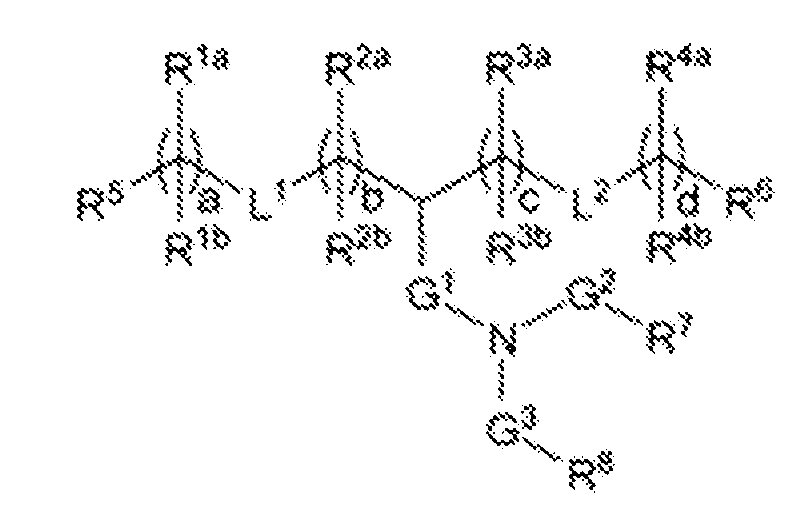
  • the lipid comprises at least one tertiary amino group, wherein at least one of the three groups of the tertiary amino group comprises a C6-30 saturated or unsaturated carbon chain optionally interrupted by an -C(0)0- ester group.
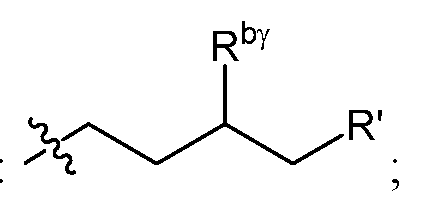
  • the disclosure relates to a compound of Formula (I): or its N-oxide, or a salt or isomer thereof, wherein R’ a is R’ branchcd ; wherein
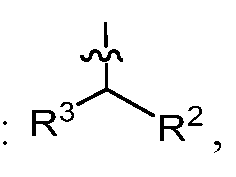
  • R’ branched is. wherein denotes a point of attachment; wherein R a ⁇ , R a ⁇ , R a ⁇ , and R a ⁇ are each independently selected from the group consisting of H, C2-12 alkyl, and C2-12 alkenyl;
  • R 2 and R 3 are each independently selected from the group consisting of Ci-14 alkyl and C2-14 alkenyl;
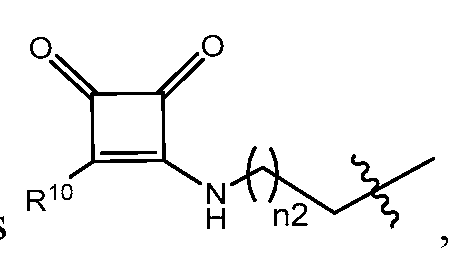
  • R 4 is selected from the group consisting of -(CH2)nOH, wherein n is selected from the group consisting wherein ? denotes a point of attachment;
  • R 10 is N(R)2; each R is independently selected from the group consisting of Ci-6 alkyl, C2-3 alkenyl, and H; and n2 is selected from the group consisting of 1, 2, 3, 4, 5, 6, 7, 8, 9, and 10; each R 5 is independently selected from the group consisting of C1-3 alkyl,
  • each R 6 is independently selected from the group consisting of C1-3 alkyl,
  • M and M’ are each independently selected from the group consisting of -C(0)0- and
  • R’ is a Ci-12 alkyl or C2-12 alkenyl
  • 1 is selected from the group consisting of 1, 2, 3, 4, and 5; and m is selected from the group consisting of 5, 6, 7, 8, 9, 10, 11, 12, and 13.
  • R’ a is R’ b,anchcd ;
  • R’ b,anchcd is denotes a point of attachment;
  • R a ⁇ , R a ⁇ , R a ⁇ , and R a ⁇ are each H;
  • R 2 and R 3 are each Ci-14 alkyl;
  • R 4 is -(CH2)nOH; n is 2;
  • each R 5 is H;
  • each R 6 is H;
  • M and M’ are each -C(0)0-;
  • R’ is a Ci-12 alkyl; 1 is 5; and m is 7.
  • R’ a is R’ branched ;
  • R’ branched is denotes a point of attachment;
  • R a ⁇ , R a ⁇ , R a ⁇ , and R a ⁇ are each H;
  • R 2 and R 3 are each Ci-14 alkyl;
  • R 4 is -(CH2)nOH; n is 2;
  • each R 5 is H;
  • each R 6 is H;
  • M and M’ are each -C(0)0-;
  • R’ is a Ci-12 alkyl; 1 is 3; and m is 7.
  • R’ a is R ’branched. ⁇ ’branched ;
  • R aa is C2-12 alkyl
  • R ⁇ , R ⁇ , and R a ⁇ are
  • each H; R 2 and R 3 are each Ci-14 alkyl; R 4 is R 10 NH(CI-6 alkyl); n2 is 2; R 5 is H; each R 6 is H; M and M’ are each -C(O)O-; R’ is a Ci-12 alkyl; 1 is 5; and m is 7.
  • R’ a is R’ branched ;
  • R’ branched is denotes a point of attachment;
  • R a ⁇ , R ⁇ , and R ⁇ are each H;
  • R ⁇ is C2-12 alkyl;
  • R 2 and R 3 are each Ci-14 alkyl;
  • R 4 is -(CH2)nOH; n is 2;
  • each R 5 is H;
  • each R 6 is H;
  • M and M’ are each -C(0)0-;
  • R’ is a Ci-12 alkyl; 1 is 5; and m is 7.
  • the compound of Formula (I) is selected from: and
  • the compound of Formula (I) is:
  • the compound of Formula (I) is:
  • the compound of Formula (I) is:
  • the compound of Formula (I) is:
  • the disclosure relates to a compound of Formula (la): (la) or its N-oxide, or a salt or isomer thereof, wherein R’ a is R’ branchcd ; wherein
  • R’branched is. wherein denotes a point of attachment; wherein R ⁇ , R a ⁇ , and R a ⁇ are each independently selected from the group consisting of H, C2-12 alkyl, and C2-12 alkenyl; R 2 and R 3 are each independently selected from the group consisting of Ci-14 alkyl and C2-14 alkenyl;
  • R 4 is selected from the group consisting of -(CH2)nOH wherein n is selected from the group consisting of 1, 2, 3, 4, and 5, and wherein denotes a point of attachment;
  • R 10 is N(R)2; each R is independently selected from the group consisting of Ci-6 alkyl, C2-3 alkenyl, and H; and n2 is selected from the group consisting of 1, 2, 3, 4, 5, 6, 7, 8, 9, and 10; each R 5 is independently selected from the group consisting of C1-3 alkyl,
  • each R 6 is independently selected from the group consisting of C1-3 alkyl,
  • M and M’ are each independently selected from the group consisting of -C(0)0- and -OC(O)-;
  • R’ is a Ci-12 alkyl or C2-12 alkenyl
  • 1 is selected from the group consisting of 1, 2, 3, 4, and 5; and m is selected from the group consisting of 5, 6, 7, 8, 9, 10, 11, 12, and 13.
  • the disclosure relates to a compound of Formula (lb): or its N-oxide, or a salt or isomer thereof, wherein R’ a is R’ b,anchcd ; wherein
  • R’ branched is wherein denotes a point of attachment; wherein R a ⁇ , R a ⁇ , R a ⁇ , and R a ⁇ are each independently selected from the group consisting of H, C2-12 alkyl, and C2-12 alkenyl;
  • R 2 and R 3 are each independently selected from the group consisting of Ci-14 alkyl and C2-14 alkenyl;
  • R 4 is -(CH 2 )nOH, wherein n is selected from the group consisting of 1, 2, 3, 4, and 5;
  • each R 5 is independently selected from the group consisting of C1-3 alkyl,
  • each R 6 is independently selected from the group consisting of C1- 3 alkyl,
  • M and M’ are each independently selected from the group consisting of -C(0)0- and -OC(O)-;
  • R’ is a Ci-12 alkyl or C2-12 alkenyl
  • 1 is selected from the group consisting of 1, 2, 3, 4, and 5; and m is selected from the group consisting of 5, 6, 7, 8, 9, 10, 11, 12, and 13.
  • R’ a is R’ branchcd ;
  • R’ branched is denotes a point of attachment;
  • R a ⁇ , R a ⁇ , and R a ⁇ are each H;
  • R 2 and R 3 are each Ci-14 alkyl;
  • R 4 is -(CH2)nOH; n is 2;
  • each R 5 is H;
  • each R 6 is H;
  • M and M’ are each -C(0)0-;
  • R’ is a Ci-12 alkyl; 1 is 5; and m is 7.
  • R’ a is R’ branched ;
  • R’ branched is denotes a point of attachment;
  • R a ⁇ , R a ⁇ , and R a ⁇ are each H;
  • R 2 and R 3 are each Ci-14 alkyl;
  • R 4 is -(CH2)nOH; n is 2; each R 5 is H; each R 6 is H; M and M’ are each -C(0)0-; R’ is a Ci-12 alkyl; 1 is 3; and m is 7.
  • R’ a is R’ branched ;
  • R’ branched is denotes a point of attachment;
  • R a ⁇ and R a ⁇ are each H;
  • R a ⁇ is C2-12 alkyl;
  • R 2 and R 3 are each Ci-14 alkyl;
  • R 4 is -(CH2)nOH; n is 2;
  • each R 5 is H;
  • each R 6 is H;
  • M and M’ are each -C(0)0-;
  • R’ is a Ci-12 alkyl; 1 is 5; and m is 7.
  • the disclosure relates to a compound of Formula (Ic): or its N-oxide, or a salt or isomer thereof, wherein R’ a is R’ branchcd ; wherein
  • R' branched wherein denotes a point of attachment; wherein R a ⁇ , R a ⁇ , R a ⁇ , and R a ⁇ are each independently selected from the group consisting of H,
  • R 2 and R 3 are each independently selected from the group consisting of Ci-14 alkyl and C2-14 alkenyl; wherein denotes a point of attachment; wherein
  • R 10 is N(R)2; each R is independently selected from the group consisting of Ci-6 alkyl, C2-3 alkenyl, and H; n2 is selected from the group consisting of 1, 2, 3, 4, 5, 6, 7, 8, 9, and 10; each R 5 is independently selected from the group consisting of C1-3 alkyl,
  • each R 6 is independently selected from the group consisting of C1-3 alkyl,
  • M and M’ are each independently selected from the group consisting of -C(0)0- and -OC(O)-;
  • R’ is a Ci-12 alkyl or C2-12 alkenyl
  • R’ a is R’ bianched ;
  • R’ branclied is denotes a point of attachment;
  • R a ⁇ , R a ⁇ , and R a ⁇ are each H;
  • R aa is C2-12 alkyl;
  • R 2 and R 3 are each Ci-14 alkyl;
  • R 4 is denotes a point of attachment;
  • R 10 is NH(CI-6 alkyl);
  • n2 is 2; each R 5 is H; each R 6 is H; M and M’ are each -C(0)0-;
  • R’ is a Ci-12 alkyl; 1 is 5; and m is 7.
  • the compound of Formula (Ic) is:
  • the disclosure relates to a compound of Formula (II): or its N-oxide, or a salt or isomer thereof, wherein R’ a is R ,branched or R' cyclic ; wherein
  • R' branched is. and R ,cyclic is: and wherein denotes a point of attachment;
  • R a ⁇ and R a ⁇ are each independently selected from the group consisting of H, Ci-12 alkyl, and C2-12 alkenyl, wherein at least one of R a ⁇ and R a ⁇ is selected from the group consisting of Ci-12 alkyl and C2-12 alkenyl;
  • R b ⁇ and R b ⁇ are each independently selected from the group consisting of H, Ci-12 alkyl, and C2-12 alkenyl, wherein at least one of R b ⁇ and R b ⁇ is selected from the group consisting of Ci-12 alkyl and C2-12 alkenyl;
  • R 2 and R 3 are each independently selected from the group consisting of Ci-14 alkyl and C2-14 alkenyl;
  • R 4 is selected from the group consisting of -(CH2)nOH wherein n is selected from the group consisting of 1, 2, 3, 4, and 5, and wherein denotes a point of attachment;
  • R 10 is N(R)2; each R is independently selected from the group consisting of Ci-6 alkyl, C2-3 alkenyl, and H; and n2 is selected from the group consisting of 1, 2, 3, 4, 5, 6, 7, 8, 9, and 10; each R’ independently is a Ci-12 alkyl or C2-12 alkenyl;
  • Y a is a C3-6 carbocycle
  • R*” a is selected from the group consisting of Ci-15 alkyl and C2-15 alkenyl; and s is 2 or 3; m is selected from 1, 2, 3, 4, 5, 6, 7, 8, and 9;
  • 1 is selected from 1, 2, 3, 4, 5, 6, 7, 8, and 9.
  • the disclosure relates to a compound of Formula (Il-a): or its N-oxide, or a salt or isomer thereof, wherein R' is R’ branchcd or R’ cyclic ; wherein
  • R' branched is. and R’ b is: or wherein denotes a point of attachment;
  • R ay and R a5 are each independently selected from the group consisting of H, Ci-12 alkyl, and C2-12 alkenyl, wherein at least one of R ay and R a5 is selected from the group consisting of Ci-12 alkyl and C2-12 alkenyl;
  • R by and R b5 are each independently selected from the group consisting of H, Ci-12 alkyl, and C2-12 alkenyl, wherein at least one of R by and R b5 is selected from the group consisting of Ci-12 alkyl and C2-12 alkenyl;
  • R 2 and R 3 are each independently selected from the group consisting of Ci-14 alkyl and C2-14 alkenyl;
  • R 4 is selected from the group consisting of -(CH2)nOH wherein n is selected from the group consisting of 1, 2, 3, 4, and 5, and wherein ? denotes a point of attachment;
  • R 10 is N(R)2; each R is independently selected from the group consisting of Ci-6 alkyl, C2-3 alkenyl, and H; and n2 is selected from the group consisting of 1, 2, 3, 4, 5, 6, 7, 8, 9, and 10; each R’ independently is a Ci-12 alkyl or C2-12 alkenyl; m is selected from 1, 2, 3, 4, 5, 6, 7, 8, and 9;
  • 1 is selected from 1, 2, 3, 4, 5, 6, 7, 8, and 9.
  • the disclosure relates to a compound of Formula (Il-b): or its N-oxide, or a salt or isomer thereof, wherein R' is R’ branchcd or R’ cyclic ; wherein
  • R' branched is and R’ b is: wherein denotes a point of attachment
  • R a ⁇ and R b ⁇ are each independently selected from the group consisting of Ci-12 alkyl and C2-12 alkenyl;
  • R 2 and R 3 are each independently selected from the group consisting of Ci-14 alkyl and C2-14 alkenyl;
  • R 4 is selected from the group consisting of -(CH2)nOH wherein n is selected from the group consisting of 1, 2, 3, 4, and 5, and wherein denotes a point of attachment;
  • R 10 is N(R)2; each R is independently selected from the group consisting of Ci- 6 alkyl, C2-3 alkenyl, and H; and n2 is selected from the group consisting of 1, 2, 3, 4, 5, 6, 7, 8, 9, and 10; each R’ independently is a Ci-12 alkyl or C2-12 alkenyl; m is selected from 1, 2, 3, 4, 5, 6, 7, 8, and 9; 1 is selected from 1, 2, 3, 4, 5, 6, 7, 8, and 9.
  • the disclosure relates to a compound of Formula (II-c): or its N-oxide, or a salt or isomer thereof, wherein R' is R’ branchcd or R’ cydlc ; wherein
  • R ’branched jg. and R’ b is: wherein denotes a point of attachment; wherein R ay is selected from the group consisting of Ci-12 alkyl and C2-12 alkenyl;
  • R 2 and R 3 are each independently selected from the group consisting of Ci-14 alkyl and C2-14 alkenyl;
  • R 4 is selected from the group consisting of -(CH2)nOH wherein n is selected from the group consisting of 1, 2, 3, 4, and 5, and wherein denotes a point of attachment; wherein R 10 is N(R)2; each R is independently selected from the group consisting of Ci-6 alkyl, C2-3 alkenyl, and H; and n2 is selected from the group consisting of 1, 2, 3, 4, 5, 6, 7, 8, 9, and 10; R’ is a Ci-12 alkyl or C2-12 alkenyl; m is selected from 1, 2, 3, 4, 5, 6, 7, 8, and 9; 1 is selected from 1, 2, 3, 4, 5, 6, 7, 8, and 9.
  • the disclosure relates to a compound of Formula (Il-d): or its N-oxide, or a salt or isomer thereof, wherein R' is R’ branchcd or R’ cydlc ; wherein wherein denotes a point of attachment; wherein R ay and R by are each independently selected from the group consisting of Ci-12 alkyl and C2-12 alkenyl;
  • R 4 is selected from the group consisting of -(CH2)nOH wherein n is selected from the group consisting of 1, 2, 3, 4, and 5, and wherein denotes a point of attachment;
  • R 10 is N(R)2; each R is independently selected from the group consisting of Ci-6 alkyl, C2-3 alkenyl, and H; and n2 is selected from the group consisting of 1, 2, 3, 4, 5, 6, 7, 8, 9, and 10; each R’ independently is a Ci-12 alkyl or C2-12 alkenyl; m is selected from 1, 2, 3, 4, 5, 6, 7, 8, and 9; 1 is selected from 1, 2, 3, 4, 5, 6, 7, 8, and 9.
  • the disclosure relates to a compound of Formula (Il-e): wherein denotes a point of attachment; wherein R ay is selected from the group consisting of Ci-12 alkyl and C2-12 alkenyl;
  • R 2 and R 3 are each independently selected from the group consisting of Ci-14 alkyl and C2-14 alkenyl;
  • R 4 is -(CH 2 )nOH wherein n is selected from the group consisting of 1, 2, 3, 4, and 5;
  • R’ is a Ci-12 alkyl or C2-12 alkenyl; m is selected from 1, 2, 3, 4, 5, 6, 7, 8, and 9;
  • 1 is selected from 1, 2, 3, 4, 5, 6, 7, 8, and 9.
  • m and 1 are each independently selected from 4, 5, and 6. In some embodiments of the compound of Formula (II), (Il-a), (Il-b), (II-c), (Il-d), or (II-e), m and 1 are each 5.
  • each R’ independently is a Ci-12 alkyl. In some embodiments of the compound of Formula (II), (Il-a), (Il-b), (II-c), (Il-d), or (II-e), each R’ independently is a C2-5 alkyl.
  • R’ b is: and R 2 and R 3 are each independently a Ci-14 alkyl.
  • R’ b is: and R 3 are each independently a C6-10 alkyl.
  • R’ b In some embodiments of the compound of Formula (II), (Il-a), (Il-b), (II-c), (Il-d), or (II-e), R’ b In some embodiments of the compound of Formula (II), (Il-a), (Il-b), (II-c), (Il-d), or (Il-e),
  • R 'branched and R’b R a y is a C1-12 alkyl and R 2 and R 3 are each independently a C6-10 alkyl.
  • R e branched and R’b R a ⁇ is a C 2-6 alky and R 2 and R 3 are each l independently a C6-10 alkyl.
  • R ’branched is; and R ’b is; R a ⁇ is a C2-6 alkyl, and R 2 and R 3 are each a
  • R 'branched R’ b is: and R a ⁇ and R b ⁇ are each a Ci- 12 alkyl.
  • R 'branched R’ b is: and R a ⁇ and R b ⁇ are each a C 2-6 alkyl.
  • m and 1 are each independently selected from 4, 5, and 6 and each R’ independently is a Ci-12 alkyl.
  • m and 1 are each 5 and each R’ independently is a C2-5 alkyl.
  • R ebranched R’ b is : m and 1 are each independently selected from 4, 5, and 6, each R’ independently is a Ci-12 alkyl, and R a ⁇ and R b ⁇ are each a Ci-12 alkyl.
  • R ebranched R’ b is : m and 1 are each independently selected from 4, 5, and 6, each R’ independently is a Ci-12 alkyl, and R a ⁇ and R b ⁇ are each a Ci-12 alkyl.
  • R' branched , R’ b is : m and 1 are each 5, each R’ independently is a C2-5 alkyl, and R a ⁇ and R b ⁇ are each a C2-6 alkyl.
  • R ’branched IS and R’ b is' m and 1 are each independently selected from 4, 5, and 6, R’ is a Ci-12 alkyl, R ay is a Ci-12 alkyl and R 2 and R 3 are each independently a C6-10 alkyl.
  • R' b is m and 1 are 5
  • R' is a C 2-5 alky1
  • R a ⁇ is a C2-6 alkyl
  • R 2 and R 3 are each a C8 alkyl.
  • R 4 is wherein R 10 is NH(CI-6 alkyl) and n2 is 2.
  • R 4 is wherein R 10 is NH(CH3) and n2 is 2. In some embodiments of the compound of Formula (II), (Il-a), (Il-b), (II-c), (Il-d), or (Il-e),
  • R’branched is: R' b is: m and 1 are each independently selected from 4, 5, and 6, each R’ independently is a Ci-12 alkyl, R a ⁇ and R b ⁇ are each a Ci-12 alkyl, and R is wherein R is NH(C1-6 alkyl), and n2 is 2.
  • R is NH(C1-6 alkyl), and n2 is 2.
  • R’branched is.
  • R' b is: m and 1 are each 5, each R’ independently is a C2-5 alkyl, R ay and R by are each a C2-6 alkyl, and R 4 is wherein R 10 is NH(CH3) and n2 is 2.
  • R 10 is NH(CH3) and n2 is 2.
  • R ’branched is. and R’ b is' m and 1 are each independently selected from 4, 5, and 6, R’ is a Ci-12 alkyl, R 2 and R 3 are each independently a C6-10 alkyl, R ay is a Ci-12 alkyl, and R 4 is wherein R 10 is NH(C 1-6 alkyl) and n2 is 2.
  • R' branched is : and R' b is: m and 1 are each 5, R’ is a C2-5 alkyl, R ay is a C2-6 alkyl, R 2 and R 3 are each a Cs alkyl, and R 4 is wherein R 10 is NH(CH 3 ) and n2 is 2.
  • R 4 is -(CH 2 )nOH and n is 2, 3, or 4. In some embodiments of the compound of Formula (II), (Il-a), (II- b), (II-c), (Il-d), or (Il-e), R 4 is -(CH2)n0H and n is 2.
  • R’branched is.
  • R’b IS m and 1 are each independently selected from 4, 5, and 6, each R’ independently is a Ci-12 alkyl, R a ⁇ and R b ⁇ are each a Ci-12 alkyl, R 4 is -(CH2)nOH, and n is 2, 3, or 4.
  • R’b IS m and 1 are each independently selected from 4, 5, and 6, each R’ independently is a Ci-12 alkyl, R a ⁇ and R b ⁇ are each a Ci-12 alkyl, R 4 is -(CH2)nOH, and n is 2, 3, or 4.
  • R ebranched R’ b i s: m and 1 are each 5, each R’ independently is a C2-5 alkyl, R a ⁇ and R b ⁇ are each a C2-6 alkyl, R 4 is -(CH2)h0H, and n is 2.
  • the disclosure relates to a compound of Formula (Il-f): or its N-oxide, or a salt or isomer thereof,
  • R ’branched is. and R’ b is: wherein denotes a point of attachment;
  • R ay is a Ci-12 alkyl
  • R 2 and R 3 are each independently a Ci-14 alkyl
  • R 4 is -(CH 2 )nOH wherein n is selected from the group consisting of 1, 2, 3, 4, and 5;
  • R’ is a Ci-12 alkyl; m is selected from 4, 5, and 6; and 1 is selected from 4, 5, and 6.
  • m and 1 are each 5, and n is 2, 3, or 4.
  • R’ is a C2-5 alkyl
  • R ay is a C2-6 alkyl
  • R 2 and R 3 are each a C6-10 alkyl.
  • m and 1 are each 5, n is 2, 3, or 4, R’ is a C2-5 alkyl, R ay is a C2-6 alkyl, and R 2 and R 3 are each a C6-10 alkyl.
  • the disclosure relates to a compound of Formula (Il-g): wherein R ay is a C2-6 alkyl;
  • R’ is a C2-5 alkyl
  • R 4 is selected from the group consisting of -(CH2)nOH wherein n is selected from the group consisting of 3, 4, and 5, and
  • R 10 is NH(Ci-e alkyl), and n2 is selected from the group consisting of 1, 2, and 3.
  • the disclosure relates to a compound of Formula (Il-h): wherein
  • R a ⁇ and R b ⁇ are each independently a C2-6 alkyl
  • each R’ independently is a C2-5 alkyl
  • R 4 is selected from the group consisting of -(CH2)nOH wherein n is selected from the group consisting of 3, 4, and 5, and wherein denotes a point of attachment, R 10 is NH(C1-6 alkyl), and n2 is selected from the group consisting of 1, 2, and 3.
  • R 4 is wherein
  • R 10 is NH(CH 3 ) and n2 is 2.
  • R 4 is -(CH2)2OH.
  • the disclosure relates to a compound having the Formula (III): or a salt or isomer thereof, wherein
  • Ri, R2, R3, R4, and Rs are independently selected from the group consisting of C5-20 alkyl, C5-20 alkenyl, -R”MR’, -R*YR”, -YR”, and -R*OR”; each M is independently selected from the group consisting of -C(0)0-, -OC(O)-, -0C(0)0-, -C(0)N(R’)-, -N(R’)C(0)-, -C(0)-, -C(S)-, -C(S)S-, -SC(S)-, -CH(OH)-, -P(0)(0R’)0-, -S(0)2-, an aryl group, and a heteroaryl group;
  • X 1 , X 2 , and X 3 are independently selected from the group consisting of a bond, -CH2-,
  • Ri, R2, R3, R4, and Rs are each C5-20 alkyl; X 1 is -CH2-; and X 2 and X 3 are each -C(O)-.
  • the compound of Formula (III) is:
  • the ionizable lipids are one or more of the compounds described in WO/2020/146805; WO/2020/081938; WO/2020/214946; WO/2019/036030; WO/2019/036000; W 0/2019/036028, WO/2019/036008; WO/2018/200943; WO/2018/191657; WO/2017/117528, WO/2017/075531; WO/2017/004143; WO/2015/199952; and WO/2015/074085; each of which is incorporated herein in its entirety.
  • the ionizable lipids are one or more of the compounds described in WO/2020/146805 having structure: or a pharmaceutically acceptable salt, tautomer, or stereoisomer thereof, wherein: R 1 is optionally substituted C1-C24 alkyl or optionally substituted C2-C24 alkenyl;
  • R 2 and R 3 are each independently optionally substituted C1-C36 alkyl
  • R 4 and R 5 are each independently optionally substituted C1-C6 alkyl, or R 4 and R 5 join, along with the N to which they are attached, to form a heterocyclyl or heteroaryl;
  • L 1 , L 2 , and L 3 are each independently optionally substituted C1-C18 alkylene;
  • the ionizable lipids are one or more of the compounds described in WO/2020/081938 having structure: or a pharmaceutically acceptable salt, tautomer or stereoisomer thereof, wherein: G 1 is -N(R 3 )R 4 or -OR 5 ; R 1 is optionally substituted branched, saturated or unsaturated C12-C 36 alkyl;
  • R 3 and R 4 are each independently H, optionally substituted branched or unbranched, saturated or unsaturated C1-C6 alkyl; or R 3 and R 4 are each independently optionally substituted branched or unbranched, saturated or unsaturated Ci-Ce alkyl when L is C6-C12 alkylene, C6-C12 alkenylene, or C2-C 6 alkynylene; or R 3 and R 4 , together with the nitrogen to which they are attached, join to form a heterocyclyl;
  • R 5 is H or optionally substituted Ci-Ce alkyl
  • the ionizable lipids are one or more of the compounds described in WO/2020/214946 having structure: or a pharmaceutically acceptable salt thereof, wherein each R 1a is independently hydrogen, R 1c , or R 3d ; each R 1b is independently R lc or R ld ; each R 1c is Independently -(CH)2C(O)X 1 R 3 ; each R 1d is independently -C(0)R 4 ; each R 2 is independently -[C(R 2a )2] c ;R 2b ; each R 2a is independently hydrogen or lower alkyl (e.g., Ci-C6alkyl); R 2b is -N(L I -B) 2 , -(OCH 2 CH 2 ) 6 OH; or -(0CH 2 CH 2 ) 6 OCH3; each R 3 and R 4 is independently aliphatic (e.g., C6-C30 aliphatic); each L 1 is independently alkylene (e.
  • the ionizable lipids are one or more of the compounds described in WO/2019/036030 having the structure: or a pharmaceutically acceptable salt, prodrug or stereoisomer thereof, wherein:
  • X is N, and Y is absent; or X is CR, and Y is NR;
  • G 1 and G 2 are each independently C2-CJ2 alkylene or C2-C12 alkenylene;
  • G 3 is C1-C24 alkylene, C2-C24 alkenylene, C1-C24 heteroalkylene or C2-C24 heteroalkenylene when X is CR, and Y is NR; and G 3 is C1-C24 heteroalkylene or C2-C24 heteroalkenylene when X is N, and Y is absent;
  • R a , R b , R d and R e are each independently H or C1-C12 alkyl or C1-C12 alkenyl;
  • R c and R f are each independently C1-C12 alkyl or C2-C12 alkenyl; each R is independently H or C1-C12 alkyl,
  • R 1 , R 2 and R 3 are each independently C1-C24 alkyl or C2-C24 alkenyl; and x is 0, 1 or 2, and wherein each alkyl, alkenyl, alkylene, alkenylene, heteroalkylene and heteroalkenylene is independently substituted or unsubstituted unless otherwise specified.
  • the ionizable lipids are one or more of the compounds described in WO/2019/036000 having the structure:
  • G 3 is C1-C6 alkylene
  • R a is H or C1-C12 alkyl
  • R la and R lb are, at each occurrence, independently either: (a) H or C1-C12 alkyl; or (b) R 1a is H or C1-C12 alkyl, and R 1b together with the carbon atom to which it is bound is taken together with an adjacent R 1b and the carbon atom to which it is bound to form a carbon-carbon double bond;
  • R 2a and R 2b are, at each occurrence, independently either: (a) H or C1-C12 alkyl, or (b) R 2a is H or C1-C12 alkyl, and R 2b together with the carbon atom to which it is bound is taken together with an adjacent R 2b and the carbon atom to which it is bound to form a carbon-carbon double bond;
  • R 3a and R 3b are, at each occurrence, independently either (a): H or C1-C12 alkyl; or (b) R 3a is H or Ci-Ci2 alkyl, and R 3b together with the carbon atom to which it is bound is taken together with an adjacent R 3b and the carbon atom to which it is bound to form a carbon-carbon double bond,
  • R 4a and R 4b are, at each occurrence, independently either: (a) H or C1-C12 alkyl; or (b) R 4a is H or C1-C12 alkyl, and R 4b together with the carbon atom to which it is bound is taken together with an adjacent R 4b and the carbon atom to which it is bound to form a carbon-carbon double bond;
  • R 5 and R 6 are each independently H or methyl
  • R 8 is H or C1-C20 alkyl
  • R 9 and R 10 are each independently H or Cj-Ci2 alkyl;
  • R 11 is aralkyl;
  • a, b, c and d are each independently an integer from 1 to 24; and
  • x is 0, 1 or 2, wherein each alkyl, alkylene and aralkyl is optionally substituted.
  • the ionizable lipids are one or more of the compounds described in WO/2019/036028 having the structure: or a pharmaceutically acceptable salt, prodrug or stereoisomer thereof, wherein:
  • X and X’ are each independently N or CR;
  • G 1 , G 1’ , G 2 and G 2’ are each independently C2-C12 alkylene or C2-C12 alkenylene;
  • G 3 is C2-C24 heteroalkyl ene or C2-C24 heteroalkenyl ene
  • R a , R b , R d and R e are, at each occurrence, independently H, C1-C12 alkyl or C2-C12 alkenyl;
  • R c and R f are, at each occurrence, independently C1-C12 alkyl or C2-C12 alkenyl;
  • R is, at each occurrence, independently H or C1-C12 alkyl
  • R 1 and R 2 are, at each occurrence, independently branched C6-C24 alkyl or branched C6-C24 alkenyl; z is 0, 1 or 2, and wherein each alkyl, alkenyl, alkylene, alkenylene, heteroalky lene and heteroalkenyl ene is independently substituted or unsubstituted unless otherwise specified.
  • the ionizable lipids are one or more of the compounds described in WO/2019/036008 have the structure: or a pharmaceutically acceptable salt, prodrug or stereoisomer thereof, wherein:
  • G 1 and G 2 are each independently C2-C12 alkylene or C2-C12 alkenyl ene;
  • G 3 is C1-C24 alkylene, C2-C24 alkenylene, C3-C8 cycloalkylene or C3-C8 cycloalkenylene;
  • R a , R b , R d and R e are each independently H or C1-C12 alkyl or C1-C12 alkenyl
  • R c and R f are each independently C1-C12 alkyl or C2-C12 alkenyl
  • R 1 and R 2 are each independently branched C6-C24 alkyl or branched C6-C2.4 alkenyl
  • R 3 is -N(R 4 )R 5 ;
  • R 4 is C1-C12 alkyl
  • R 5 is substituted C1-C12 alkyl, and x is 0, 1 or 2, and wherein each alkyl, alkenyl, alkylene, alkenylene, cycloalkylene, cycloalkenylene, aryl and aralkyl is independently substituted or unsubstituted unless otherwise specified.
  • the ionizable lipids are one or more of the compound s described in WO 2018/200943 having the structure: or a pharmaceutically acceptable salt, prodrug or stereoisomer thereof, wherein:
  • G 1a and G 2a are each independently C2-C12 alkylene or C2-C12 alkenylene;
  • G lb and G 2b are each independently C1-C12 alkylene or C2-C12 alkenylene;
  • G 3 is C1-C24 alkylene, C2-C24 alkenylene, CB-CB cycloalkylene or CB-CB cycloalkenylene;
  • R a , R b , R d and R e are each independently H or C1-C12 alkyl or C2-C12 alkenyl
  • R c and R f are each independently C1-C12 alkyl or C2-CJ2 alkenyl
  • R 1 and R 2 are each independently branched C6-C24 alkyl or branched C6-C24 alkenyl
  • R 4a is C1-C12 alkyl
  • R 4b is H, C1-C12 alkyl or C2-C12 alkenyl
  • R 5a is H, Ci-Cg alkyl or Cr-Cg alkenyl
  • R 3b is C2-C12 alkyl or C2-C12 alkenyl when R 4b is H; or R 5b is C1-C12 alky l or C2-C12 alkenyl when R 4a is C1-C12 alkyl or C2-C12 alkenyl;
  • R 6 is H, aryl or aralkyl; and x is 0, 1 or 2, and wherein each alkyl, alkenyl, alkylene, alkenylene, cycloalkylene, cycloalkenylene, aryl, and aralkyl is independently substituted or unsubstituted.
  • the ionizable lipids are one or more of the compounds described in WO/2018/191657 having the structure
  • R 1 and R 2 are each independently optionally substituted branched, saturated or unsaturated C12-C36 alkyl
  • R 3 and R 4 are each independently H or optionally substituted straight or branched, saturated or unsaturated C1-C6 alkyl; R 5 is optionally substituted straight or branched, saturated or un saturated C1-C6 alkyl; and n is an integer from 2 to 6.
  • -X(R a )C( O)-.
  • Z is alkyl, cycloalkyl or a monovalent moiety comprising at least one polar functional group when n is 1; or Z is alkylene, cycloalkylene or a polyvalent moiety comprising at least one polar functional group when n is greater than 1; R a is, at each occurrence, independently H, C1-C12 alkyl, C1-C12 hydroxylalkyl,
  • R is, at each occurrence, independently either: (a) H or C1-C12 alkyl; or (b) R together with the carbon atom to which it is bound is taken together with an adjacent R and the carbon atom to which it is bound to form a carbon-carbon double bond;
  • R 1 and R 2 have, at each occurrence, the following structure, respectively: a 1 and a 2 are, at each occurrence, independently an integer from 3 to 12; b 1 and b 2 are, at each occurrence, independently 0 or 1; c 1 and c 2 are, at each occurrence, independently an integer from 5 to 10, d l and d 2 are, at each occurrence, independently an integer from 5 to 10; y is, at each occurrence, independently an integer from 0 to 2; and n is an integer from 1 to 6, wherein each alkyl, alkyl ene, hydroxylalkyl, aminoalkyl, alkylaminylalkyl, alkoxyalkyl, alkoxycarbonyl, alkylcarbonyloxy, alkylcarbonyloxyalkyl and alkylcarbonyl is optionally substituted with one or more substituent.
  • G 1 and G 2 are each independently unsubstituted C1-C12 alkylene or C1-C12 alkenylene;
  • G 3 is C1-C24 alkylene, C1-C24 alkenylene, C3-C8 cycloalkylene, C3-C8 cycloalkenylene;
  • R 3 a is H or C1-C12 alkyl
  • R 1 and R 2 are each independently C6-C24 alkyl or C6-C24 alkenyl
  • R 4 is C1-C12 alkyl
  • R 5 is H or C1-C6 alkyl; and x is 0, 1 or 2.
  • the ionizable lipids are one or more of the compounds described in WO 2017/004143 having the structure: or a pharmaceutically acceptable salt, tautomer, prodrug or stereoisomer thereof, wherein:
  • G 3 is C1-C6 alkyl ene
  • R a is H or C1-C12 alkyl
  • R la and R 1b are, at each occurrence, independently either: (a) H or C1-C12 alkyl; or (h) R 1a is H or C1-C12 alkyl, and R 1b together with the carbon atom to which it is bound is taken together with an adjacent R lb and the carbon atom to which it is bound to form a carbon-carbon double bond,
  • R 2a and R 2b are, at each occurrence, independently either: (a) H or C1-C12 alkyl; or (b) R 2a is H or C1-C12 alkyl, and R 2b together with the carbon atom to which it is bound is taken together with an adjacent R 2b and the carbon atom to which it is bound to form a carbon-carbon double bond;
  • R 3a and R 3b are, at each occurrence, independently either (a): H or Cj-Ci2 alkyl; or (b) R 3a is H or C1-C12 alkyl, and R 3b together with the carbon atom to which it is bound is taken together with an adjacent R 3b and the carbon atom to which it is bound to form a carbon-carbon double bond;
  • R 4a and R 4b are, at each occurrence, independently either: (a) H or C1-C12 alkyl; or (b) R 4a is H or C1-C12 alkyl, and R 4b together with the carbon atom to which it is bound is taken together with an adjacent R 4b and the carbon atom to which it is bound to form a carbon-carbon double bond,
  • R 3 and R 6 are each independently H or methyl
  • R 7 is C4-C20 alkyl
  • R 8 and R 9 are each independently C1-C12 alkyl; or R 8 and R 9 , together with the nitrogen atom to which they are attached, form a 5, 6 or 7-membered heterocyclic ring; a, b, c and d are each independently an integer from 1 to 24; and x is 0, 1 or 2.
  • R 1a and R 1b are, at each occurrence, independently either (a) H or C1-C12 alkyl, or (b) R 1a is H or C1-C12 alkyl, and R 1b together with the carbon atom to which it is bound is taken together with an adjacent R ib and the carbon atom to which it is bound to form a carbon-carbon double bond:
  • R 2a and R 2b are, at each occurrence, independently either (a) H or C1-C12 alkyl, or (b) R 2a is H or C1-C12 alkyl, and R 2b together with the carbon atom to which it is bound is taken together with an adjacent R 2b and the carbon atom to which it is bound to form a carbon-carbon double bond,
  • R 3a and R 1b are, at each occurrence, independently either (a) H or C 1 -C12 alkyl, or (b) R 3a is H or C1-C12 alkyl, and R 3b together with the carbon atom to which it is bound is taken together with an adjacent R 3b and the carbon atom to which it is bound to form a carbon-carbon double bond;
  • R 4a and R 4b are, at each occurrence, independently either (a) H or C1-C12 alkyl, or (b) R 4a is H or C1-C12 alkyl, and R 4b together with the carbon atom to which it is bound is taken together with an adjacent R 4b and the carbon atom to which it is bound to form a carbon-carbon double bond;
  • R 5 and R 6 are each independently methyl or cycloalkyl
  • R 7 is, at each occurrence, independently H or C1-C12 alkyl
  • R 1a and R 1b are not isopropyl when a is 6 or n-buty1 when a is 8,
  • the ionizable lipids are one or more of the compounds described in WO/2015/074085 having the structure:
  • Ri and R2 are the same or different, each a linear or branched alkyl with 1-9 carbons, or an alkenyl or alkynyl with 2 to 11 carbon atoms, Li and L2 are the same or different, each a linear alkyl having 5 to 18 carbon atoms, or form a heterocycle with N,
  • Xi is a bond, or is -CO-O- whereby L2-CO-O-R2 is formed X2 is S or O,
  • L3 is a bond or a lower alkyl, or form a heterocycle with N, R3 is a lower alkyl, and
  • R4 and R5 are the same or different, each a lower alkyl; or a pharmaceutically acceptable salt thereof.
  • the ionizable lipids are one or more of the compounds described in Buschmann, M. D. et al., Vaccines, 2021, 9, 65, which incorporated herein in its entirety (the structures provided below include their theoretical pKas):
  • the ionizable lipid is selected from Compound II, Compound III, Compound VI, Compound Al, and Compound A2:
  • Polynucleotides for use in accordance with the present disclosure include, but are not limited to, one or more of DNA, RNA including messenger RNA (mRNA), hybrids thereof, RNAi-inducing agents, RNAi agents, siRNAs, shRNAs, miRNAs, antisense RNAs, ribozymes, catalytic DNA, RNAs that induce triple helix formation, aptamers, vectors, etc., described in detail herein.
  • mRNA messenger RNA
  • the polynucleotide is RNA. In some embodiments, the polynucleotide is mRNA.
  • the polynucleotide (e.g., a RNA, e.g., an mRNA) of the lipid nanoparticle comprises from about 900 to about 100,000 nucleotides (e.g., from 900 to 1,000, from 900 to 1,100, from 900 to 1,200, from 900 to 1,300, from 900 to 1,400, from 900 to 1,500, from 1,000 to 1,100, from 1,000 to 1,100, from 1,000 to 1,200, from 1,000 to 1,300, from 1,000 to 1,400, from 1,000 to 1,500, from 1,187 to 1,200, from 1,187 to 1,400, from 1,187 to 1,600, from 1,187 to 1,800, from 1,187 to 2,000, from 1,187 to 3,000, from 1,187 to 5,000, from 1,187 to 7,000, from 1,187 to 10,000, from 1,187 to 25,000, from 1,187 to 50,000, from 1,187 to 70,000, or from 1,187 to 100,000 nucleotides).
  • nucleotides e.g., from 900 to 1,000, from 900 to 1,100,
  • the polynucleotide (e.g., a RNA, e.g., an mRNA) of the lipid nanoparticle comprises a nucleotide sequence (e.g., an open reading frame (ORF)) encoding a polypeptide, wherein the length of the nucleotide sequence (e.g., an ORF) is at least 500 nucleotides in length, e.g., at least about 500, 600, 700, 80, 900, 1,000, 1,050, 1,100, 1,187, 1,200, 1,300, 1,400, 1,500,
  • a nucleotide sequence e.g., an open reading frame (ORF)
  • ORF open reading frame
  • the length is up to and including 100,000 nucleotides.
  • the polynucleotide of the composition that comprises a nucleotide sequence e.g., an ORF
  • a nucleotide sequence e.g., an ORF
  • the polynucleotide of the composition is RNA.
  • the polynucleotide is, or functions as, an mRNA.
  • the mRNA comprises a nucleotide sequence (e.g., an ORF) that encodes at least one polypeptide, and is capable of being translated to produce the encoded polypeptide in vitro , in vivo , in situ or ex vivo.
  • the polynucleotide (e.g., a RNA, e.g., an mRNA) of the lipid nanoparticle comprises a nucleotide sequence (e.g., an ORF) encoding a polypeptide and further comprises at least one nucleic acid sequence that is noncoding, e.g., a microRNA binding site, e.g., a miRNA binding site that binds to miR-142 and/or a miRNA binding site that binds to miR-126.
  • a nucleotide sequence e.g., an ORF
  • the polynucleotide (e.g., a RNA, e.g., an mRNA) of the lipid nanoparticle comprises a 5'-UTR and a 3'UTR.
  • the polynucleotide (e.g., a RNA, e.g., an mRNA) of the lipid nanoparticle comprises a 5' terminal cap.
  • 5' terminal caps include CapO, Capl, ARC A, inosine, Nl-methyl-guanosine, 2'-fluoro-guanosine, 7-deaza-guanosine, 8-oxo-guanosine, 2- amino-guanosine, LNA-guanosine, 2-azidoguanosine, Cap2, Cap4, 5' methylG cap, or an analog thereof.
  • the polynucleotide (e.g., a RNA, e.g., an mRNA) of the lipid nanoparticle comprises a poly-A-tail.
  • the polyA tail is about 100 nucleotides in length. In some instances, the poly A tail is 100 nucleotides in length. In some instances, the poly A tail is 50-150, 75-150, 85-150, 90-150, 90-120, 90-130, or 90-150 nucleotides in length.
  • the polynucleotides can also comprise nucleotide sequences that encode additional features that facilitate trafficking of the encoded polypeptides to therapeutically relevant sites.
  • One such feature that aids in protein trafficking is the signal sequence, or targeting sequence.
  • the peptides encoded by these signal sequences are known by a variety of names, including targeting peptides, transit peptides, and signal peptides.
  • the polynucleotide (e.g., a RNA, e.g., an mRNA) comprises a nucleotide sequence (e.g., an ORF) that encodes a signal peptide operably linked to a nucleotide sequence that encodes a polypeptide of interest, such as a therapeutic polypeptide,.
  • a nucleotide sequence e.g., an ORF
  • the “signal sequence” or “signal peptide” is a polynucleotide or polypeptide, respectively, which is from about 30-210, e.g., about 45-80 or 15-60 nucleotides (e.g., about 20, 30, 40, 50, 60, or 70 amino acids) in length that, optionally, is incorporated at the 5' (or N-terminus) of the coding region or the polypeptide, respectively. Addition of these sequences results in trafficking the encoded polypeptide to a desired site, such as the endoplasmic reticulum or the mitochondria through one or more targeting pathways. Some signal peptides are cleaved from the protein, for example by a signal peptidase after the proteins are transported to the desired site.
  • the polynucleotide (e.g., a RNA, e.g., an mRNA) is sequence optimized.
  • the polynucleotide (e.g., a RNA, e.g., an mRNA) comprises a 5' cap, a 5'-UTR, a nucleotide sequence (e.g., an ORF, e.g., a sequence optimized ORF) encoding a polypeptide, a 3'-UTR, and a poly A tail, or any combination thereof, the 5' UTR or 3' UTR optionally comprising at least one microRNA binding site.
  • an ORF e.g., a sequence optimized ORF
  • a sequence-optimized nucleotide sequence e.g., a codon-optimized mRNA sequence encoding a polypeptide, is a sequence comprising at least one synonymous nucleobase substitution with respect to a reference sequence (e.g., a wild type nucleotide sequence encoding the polypeptide).
  • a sequence-optimized nucleotide sequence can be partially or completely different in sequence from the reference sequence.
  • a reference sequence encoding polyserine uniformly encoded by UCU codons can be sequence-optimized by having 100% of its nucleobases substituted (for each codon, U in position 1 replaced by A, C in position 2 replaced by G, and U in position 3 replaced by C) to yield a sequence encoding polyserine which would be uniformly encoded by AGC codons.
  • the percentage of sequence identity obtained from a global pairwise alignment between the reference polyserine nucleic acid sequence and the sequence-optimized polyserine nucleic acid sequence would be 0%.
  • the protein products from both sequences would be 100% identical.
  • sequence optimization also sometimes referred to codon optimization
  • results can include, e.g., matching codon frequencies in certain tissue targets and/or host organisms to ensure proper folding; biasing G/C content to increase mRNA stability or reduce secondary structures; minimizing tandem repeat codons or base runs that can impair gene construction or expression; customizing transcriptional and translational control regions; inserting or removing protein trafficking sequences; removing/adding post translation modification sites in an encoded protein (e.g., glycosylation sites); adding, removing or shuffling protein domains; inserting or deleting restriction sites; modifying ribosome binding sites and mRNA degradation sites; adjusting translational rates to allow the various domains of the protein to fold properly; and/or reducing or eliminating problem secondary structures within the polynucleotide.
  • Sequence optimization tools, algorithms and services are known in the art, non-limiting examples include services from GeneArt (Life Technologies), DNA2.0 (
  • the sequence optimization method is multiparametric and comprises one, two, three, four, or more methods disclosed herein and/or other optimization methods known in the art.
  • a polynucleotide (e.g., a RNA, e.g., an mRNA) of the composition comprises a sequence-optimized nucleotide sequence (e.g., an ORF) encoding a polypeptide, wherein the polypeptide encoded by the sequence-optimized nucleotide sequence has improved properties (e.g., compared to the polypeptide as encoded by a reference nucleotide sequence that is not sequence optimized), e.g., improved properties related to expression efficacy after administration in vivo.
  • a sequence-optimized nucleotide sequence e.g., an ORF
  • Such properties include, but are not limited to, improving nucleic acid stability (e.g., mRNA stability), increasing translation efficacy in the target tissue, reducing the number of truncated proteins expressed, improving the folding or preventing misfolding of the expressed proteins, reducing toxicity of the expressed products, reducing cell death caused by the expressed products, increasing and/or decreasing protein aggregation.
  • nucleic acid stability e.g., mRNA stability
  • increasing translation efficacy in the target tissue reducing the number of truncated proteins expressed, improving the folding or preventing misfolding of the expressed proteins, reducing toxicity of the expressed products, reducing cell death caused by the expressed products, increasing and/or decreasing protein aggregation.
  • sequence-optimized nucleotide sequence (e.g., an ORF) is codon optimized for expression in human subjects, having structural and/or chemical features that avoid one or more of the problems in the art, for example, features which are useful for optimizing formulation and delivery of nucleic acid-based therapeutics while retaining structural and functional integrity; overcoming a threshold of expression; improving expression rates; half-life and/or protein concentrations; optimizing protein localization; and avoiding deleterious bio responses such as the immune response and/or degradation pathways.
  • an ORF codon optimized for expression in human subjects, having structural and/or chemical features that avoid one or more of the problems in the art, for example, features which are useful for optimizing formulation and delivery of nucleic acid-based therapeutics while retaining structural and functional integrity; overcoming a threshold of expression; improving expression rates; half-life and/or protein concentrations; optimizing protein localization; and avoiding deleterious bio responses such as the immune response and/or degradation pathways.
  • an ORF of any one or more of the sequences provided herein may be codon optimized.
  • Codon optimization in some embodiments, may be used to match codon frequencies in target and host organisms to ensure proper folding; bias GC content to increase mRNA stability or reduce secondary structures; minimize tandem repeat codons or base runs that may impair gene construction or expression; customize transcriptional and translational control regions; insert or remove protein trafficking sequences; remove/add post translation modification sites in encoded protein (e.g., glycosylation sites); add, remove or shuffle protein domains; insert or delete restriction sites; modify ribosome binding sites and mRNA degradation sites; adjust translational rates to allow the various domains of the protein to fold properly; or reduce or eliminate problem secondary structures within the polynucleotide.
  • Codon optimization tools, algorithms and services are known in the art - non limiting examples include services from GeneArt (Life Technologies), DNA2.0 (Menlo Park CA) and/or are proprietary methods.
  • the open reading frame (ORF) sequence is optimized using optimization algorithms.
  • regions of the polynucleotide can be encoded by or within regions of the polynucleotide and such regions can be upstream (5') to, downstream (3') to, or within the region that encodes the polypeptide. These regions can be incorporated into the polynucleotide before and/or after sequence-optimization of the protein encoding region or open reading frame (ORF). Examples of such features include, but are not limited to, untranslated regions (UTRs), microRNA sequences, Kozak sequences, oligo(dT) sequences, poly-A tail, and detectable tags and can include multiple cloning sites that can have Xbal recognition.
  • UTRs untranslated regions
  • microRNA sequences microRNA sequences
  • Kozak sequences oligo(dT) sequences
  • poly-A tail poly-A tail
  • detectable tags can include multiple cloning sites that can have Xbal recognition.
  • the polynucleotide comprises a 5' UTR, a 3' UTR and/or a microRNA binding site. In some embodiments, the polynucleotide comprises two or more 5' UTRs and/or 3' UTRs, which can be the same or different sequences. In some embodiments, the polynucleotide comprises two or more microRNA binding sites, which can be the same or different sequences. Any portion of the 5' UTR, 3' UTR, and/or microRNA binding site, including none, can be sequence-optimized and can independently contain one or more different structural or chemical modifications, before and/or after sequence optimization. In some embodiments, the polynucleotides of the compositions are modified.
  • modified polynucleotides can be chemically modified and/or structurally modified.
  • modified polynucleotides can be referred to as “modified polynucleotides.”
  • RNA polynucleotides such as mRNA polynucleotides
  • a “nucleoside” refers to a compound containing a sugar molecule (e.g., a pentose or ribose) or a derivative thereof in combination with an organic base (e.g., a purine or pyrimidine) or a derivative thereof (also referred to herein as “nucleobase”).
  • a “nucleotide” refers to a nucleoside including a phosphate group.
  • Modified nucleotides can be synthesized by any useful method, such as, for example, chemically, enzymatically, or recombinantly, to include one or more modified or non-natural nucleosides.
  • Polynucleotides can comprise a region or regions of linked nucleosides. Such regions can have variable backbone linkages. The linkages can be standard phosphodiester linkages, in which case the polynucleotides would comprise regions of nucleotides.
  • modified polynucleotides disclosed herein can comprise various distinct modifications.
  • the modified polynucleotides contain one, two, or more (optionally different) nucleoside or nucleotide modifications.
  • a modified polynucleotide, introduced to a cell can exhibit one or more desirable properties, e.g., improved protein expression, reduced immunogenicity, or reduced degradation in the cell, as compared to an unmodified polynucleotide.
  • a polynucleotide of the lipid nanoparticles are structurally modified.
  • a “structural” modification is one in which two or more linked nucleosides are inserted, deleted, duplicated, inverted or randomized in a polynucleotide without significant chemical modification to the nucleotides themselves. Because chemical bonds will necessarily be broken and reformed to effect a structural modification, structural modifications are of a chemical nature and hence are chemical modifications. However, structural modifications will result in a different sequence of nucleotides. For example, the polynucleotide “ATCG” can be chemically modified to “AT-5meC-G”.
  • Therapeutic lipid nanoparticles comprise, in some embodiments, at least one nucleic acid (e.g., RNA), wherein the nucleic acid comprises nucleotides and/or nucleosides that can be standard (unmodified) or modified as is known in the art.
  • nucleotides and nucleosides comprise modified nucleotides or nucleosides.
  • modified nucleotides and nucleosides can be naturally-occurring modified nucleotides and nucleosides or non-naturally occurring modified nucleotides and nucleosides. Such modifications can include those at the sugar, backbone, or nucleobase portion of the nucleotide and/or nucleoside as are recognized in the art.
  • a naturally-occurring modified nucleotide or nucleoside is one as is generally known or recognized in the art.
  • Non-limiting examples of such naturally occurring modified nucleotides and nucleosides can be found, inter alia, in the MODOMICS database.
  • a non-naturally occurring modified nucleotide or nucleoside is one as is generally known or recognized in the art.
  • Non-limiting examples of such non-naturally occurring modified nucleotides and nucleosides can be found, inter alia, in published International Patent Application Nos. PCT/US2012/058519; PCT/US2013/075177; PCT/US2014/058897;
  • PCT/US2014/058891 PCT/US2014/070413
  • PCT/US2015/36773 PCT/US2015/36759
  • PCT/US2015/36771 PCT/IB2017/051367, each of which is incorporated by reference herein in its entirety.
  • RNA e.g., mRNA
  • nucleotides and nucleosides comprise standard nucleoside residues such as those present in transcribed RNA (e.g. A, G, C, or U).
  • nucleotides and nucleosides comprise standard deoxyribonucleosides such as those present in DNA (e.g. dA, dG, dC, or dT).
  • nucleic acids e.g., DNA nucleic acids and RNA nucleic acids, such as mRNA nucleic acids
  • nucleic acids can comprise standard nucleotides and nucleosides, naturally-occurring nucleotides and nucleosides, non-naturally-occurring nucleotides and nucleosides, or any combination thereof.
  • Nucleic acids e.g., DNA nucleic acids and RNA nucleic acids, such as mRNA nucleic acids
  • Nucleic acids comprise various (more than one) different types of standard and/or modified nucleotides and nucleosides.
  • a particular region of a nucleic acid contains one, two or more (optionally different) types of standard and/or modified nucleotides and nucleosides.
  • a modified RNA nucleic acid e.g., a modified mRNA nucleic acid
  • introduced to a cell or organism exhibits reduced degradation in the cell or organism, respectively, relative to an unmodified nucleic acid comprising standard nucleotides and nucleosides.
  • a modified RNA nucleic acid (e.g., a modified mRNA nucleic acid), introduced into a cell or organism, may exhibit reduced immunogenicity in the cell or organism, respectively (e.g., a reduced innate response) relative to an unmodified nucleic acid comprising standard nucleotides and nucleosides.
  • Nucleic acids e.g., RNA nucleic acids, such as mRNA nucleic acids
  • Nucleic acids in some embodiments, comprise non-natural modified nucleotides that are introduced during synthesis or post-synthesis of the nucleic acids to achieve desired functions or properties.
  • the modifications may be present on internucleotide linkages, purine or pyrimidine bases, or sugars.
  • the modification may be introduced with chemical synthesis or with a polymerase enzyme at the terminus of a chain or anywhere else in the chain. Any of the regions of a nucleic acid may be chemically modified.
  • Modified nucleotide base pairing encompasses not only the standard adenosine-thymine, adenosine-uracil, or guanosine-cytosine base pairs, but also base pairs formed between nucleotides and/or modified nucleotides comprising non-standard or modified bases, wherein the arrangement of hydrogen bond donors and hydrogen bond acceptors permits hydrogen bonding between a non standard base and a standard base or between two complementary non-standard base structures, such as in those nucleic acids having at least one chemical modification.
  • non-standard base pairing is the base pairing between the modified nucleotide inosine and adenine, cytosine or uracil. Any combination of base/sugar or linker may be incorporated into nucleic acids.
  • modified nucleobases in nucleic acids comprise N1 -methyl-pseudouridine (m 1 y), 1 -ethyl-pseudouridine (e l y), 5- methoxy-uridine (mo5U), 5-methyl-cytidine (m5C), and/or pseudouridine (y).
  • modified nucleobases in nucleic acids comprise 5-methoxymethyl uridine, 5-methylthio uridine, 1-methoxymethyl pseudouridine, 5-methyl cytidine, and/or 5-methoxy cytidine.
  • the polyribonucleotide includes a combination of at least two (e.g., 2, 3, 4 or more) of any of the aforementioned modified nucleobases, including but not limited to chemical modifications.
  • nucleic acids e.g., RNA nucleic acids, such as mRNA nucleic acids
  • RNA nucleic acids are uniformly modified (e.g., fully modified, modified throughout the entire sequence) for a particular modification.
  • a nucleic acid can be uniformly modified with N1 -methyl- pseudouridine, meaning that all uridine residues in the mRNA sequence are replaced with Nl- methyl-pseudouridine.
  • a nucleic acid can be uniformly modified for any type of nucleoside residue present in the sequence by replacement with a modified residue such as those set forth above.
  • the nucleic acids may be partially or fully modified along the entire length of the molecule.
  • one or more or all or a given type of nucleotide e.g., purine or pyrimidine, or any one or more or all of A, G, U, C
  • all nucleotides X in a nucleic acid are modified nucleotides, wherein X may be any one of nucleotides A, G, U, C, or any one of the combinations A+G, A+U, A+C, G+U, G+C, U+C, A+G+U, A+G+C, G+U+C or A+G+C.
  • the nucleic acid may contain from about 1% to about 100% modified nucleotides (either in relation to overall nucleotide content, or in relation to one or more types of nucleotide, i.e., any one or more of A, G, U or C) or any intervening percentage (e.g., from 1% to 20%, from 1% to 25%, from 1% to 50%, from 1% to 60%, from 1% to 70%, from 1% to 80%, from 1% to 90%, from 1% to 95%, from 10% to 20%, from 10% to 25%, from 10% to 50%, from 10% to 60%, from 10% to 70%, from 10% to 80%, from 10% to 90%, from 10% to 95%, from 10% to 100%, from 20% to 25%, from 20% to 50%, from 20% to 60%, from 20% to 70%, from 20% to 80%, from from 20% to 80%, from from from 10% to 95%, from 10% to 100%, from 20% to 25%, from 20% to 50%, from 20% to 60%, from 20% to 70%, from 20% to 80%, from from from from 20% to
  • 20% to 90% from 20% to 95%, from 20% to 100%, from 50% to 60%, from 50% to 70%, from
  • the nucleic acids may contain at a minimum 1% and at maximum 100% modified nucleotides, or any intervening percentage, such as at least 5% modified nucleotides, at least 10% modified nucleotides, at least 25% modified nucleotides, at least 50% modified nucleotides, at least 80% modified nucleotides, or at least 90% modified nucleotides.
  • the nucleic acids may contain a modified pyrimidine such as a modified uracil or cytosine.
  • At least 5%, at least 10%, at least 25%, at least 50%, at least 80%, at least 90% or 100% of the uracil in the nucleic acid is replaced with a modified uracil (e.g., a 5-substituted uracil).
  • the modified uracil can be replaced by a compound having a single unique structure, or can be replaced by a plurality of compounds having different structures (e.g., 2, 3, 4 or more unique structures).
  • cytosine in the nucleic acid is replaced with a modified cytosine (e.g., a 5-substituted cytosine).
  • the modified cytosine can be replaced by a compound having a single unique structure, or can be replaced by a plurality of compounds having different structures (e.g., 2, 3, 4 or more unique structures).
  • the polynucleotides of the lipid nanoparticles can be generated using components, compositions, and methods as are generally known in the art, see, e.g., International Patent Application Publication Nos. WO 2015/051173, WO 2017/049286, WO 2016/100812, WO 2016/014846, WO 2016/011226, WO 2016/011222, WO 2016/011306, WO 2015/196128, WO 2013/151736, WO
  • a polynucleotide e.g., a RNA, e.g., an mRNA
  • IVT in vitro transcription
  • a polynucleotide e.g., a RNA, e.g., an mRNA
  • IVT in vitro transcription
  • a polynucleotide e.g., a RNA, e.g., an mRNA
  • a polynucleotide disclosed herein is made by using a host cell.
  • a polynucleotide (e.g., a RNA, e.g., an mRNA) disclosed herein is made by one or more combination of the IVT, chemical synthesis, host cell expression, or any other methods known in the art.
  • Naturally occurring nucleosides, non-naturally occurring nucleosides, or combinations thereof, can totally or partially naturally replace occurring nucleosides present in the candidate nucleotide sequence and can be incorporated into a sequence-optimized nucleotide sequence (e.g., a RNA, e.g., an mRNA).
  • a sequence-optimized nucleotide sequence e.g., a RNA, e.g., an mRNA.
  • the resultant polynucleotides, e.g., mRNAs can then be examined for their ability to produce protein and/or produce a therapeutic outcome.
  • the polynucleotides can be purified prior to their inclusion in the lipid nanoparticles. Purification of the polynucleotides described herein can include, but is not limited to, polynucleotide clean-up, quality assurance and quality control.
  • Clean-up can be performed by methods known in the arts such as, but not limited to, AGENCOURT® beads (Beckman Coulter Genomics, Danvers, MA), poly-T beads, LNATM oligo-T capture probes (EXIQON® Inc., Vedbaek, Denmark) or HPLC based purification methods such as, but not limited to, strong anion exchange HPLC, weak anion exchange HPLC, reverse phase HPLC (RP-HPLC), and hydrophobic interaction HPLC (HIC- HPLC).
  • AGENCOURT® beads Beckman Coulter Genomics, Danvers, MA
  • poly-T beads poly-T beads
  • LNATM oligo-T capture probes EXIQON® Inc., Vedbaek, Denmark
  • HPLC based purification methods such as, but not limited to, strong anion exchange HPLC, weak anion exchange HPLC, reverse phase HPLC (RP-HPLC), and hydrophobic interaction HPLC (HIC- HPLC).
  • purification of a polynucleotide removes impurities that can reduce or remove an unwanted immune response, e.g., reducing cytokine activity.
  • the polynucleotide is purified prior to inclusion in a lipid nanoparticle using column chromatography (e.g., strong anion exchange HPLC, weak anion exchange HPLC, reverse phase HPLC (RP-HPLC), and hydrophobic interaction HPLC (HIC-HPLC), or (LCMS)).
  • column chromatography e.g., strong anion exchange HPLC, weak anion exchange HPLC, reverse phase HPLC (RP-HPLC), and hydrophobic interaction HPLC (HIC-HPLC), or (LCMS)
  • the purified polynucleotide is at least about 80% pure, at least about 85% pure, at least about 90% pure, at least about 95% pure, at least about 96% pure, at least about 97% pure, at least about 98% pure, at least about 99% pure, or about 100% pure prior to inclusion in a lipid nanoparticle.
  • a quality assurance and/or quality control check can be conducted using methods such as, but not limited to, gel electrophoresis, UV absorbance, or analytical HPLC.
  • the polynucleotide can be sequenced by methods including, but not limited to reverse-transcriptase- PCR. 2) Quantification of Polynucleotides
  • the polynucleotides, their expression products, as well as degradation products and metabolites can be quantified according to methods known in the art.
  • the polynucleotide can be quantified using methods such as, but not limited to, ultraviolet visible spectroscopy (UV/Vis).
  • UV/Vis ultraviolet visible spectroscopy
  • a non-limiting example of a UV/Vis spectrometer is a NANODROP® spectrometer (Therm oFisher, Waltham, MA).
  • the quantified polynucleotide can be analyzed in order to determine if the polynucleotide can be of proper size, or to check that no degradation of the polynucleotide has occurred.
  • Degradation of the polynucleotide can be checked by methods (such as, but not limited to, agarose gel electrophoresis, HPLC based purification methods such as, but not limited to, strong anion exchange HPLC, weak anion exchange HPLC, reverse phase HPLC (RP-HPLC), and hydrophobic interaction HPLC (HIC- HPLC), liquid chromatography-mass spectrometry (LCMS), capillary electrophoresis (CE), capillary gel electrophoresis (CGE)); and UPLC (e.g., RP-UPLC).
  • HPLC based purification methods such as, but not limited to, strong anion exchange HPLC, weak anion exchange HPLC, reverse phase HPLC (RP-HPLC), and hydrophobic interaction HPLC (HIC- HPLC), liquid chromatography-mass spectrometry (LCMS), capillary electrophoresis (CE), capillary gel electrophoresis (CGE)); and UPLC (e.g., RP-UP
  • the lipid composition of a lipid nanoparticle disclosed herein can include one or more components in addition to the lipid components described above (e.g., in addition to the ionizable cationic lipid, non-cationic lipid, sterol, and PEG-modified lipid).
  • the lipid composition can include one or more permeability enhancer molecules, carbohydrates, polymers, surface altering agents (e.g., surfactants), or other components.
  • a permeability enhancer molecule can be a molecule described by U.S. Patent Application Publication No. 2005/0222064.
  • Carbohydrates can include simple sugars (e.g., glucose) and polysaccharides (e.g., glycogen and derivatives and analogs thereof).
  • a polymer can be included in and/or used to encapsulate or partially encapsulate a composition disclosed herein (e.g., an LNP composition).
  • a polymer can be biodegradable and/or biocompatible.
  • a polymer can be selected from, but is not limited to, polyamines, polyethers, polyamides, polyesters, polycarbamates, polyureas, polycarbonates, polystyrenes, polyimides, polysulfones, polyurethanes, polyacetylenes, polyethylenes, polyethyleneimines, polyisocyanates, polyacrylates, polymethacrylates, polyacrylonitriles, and polyarylates.
  • the LNP can further contain a phosphate conjugate.
  • the phosphate conjugate can increase in vivo circulation times and/or increase the targeted delivery of the nanoparticle.
  • Phosphate conjugates can be made by the methods described in, e.g., Inti. Pub. No. WO2013033438 or U.S. Pub. No. US20130196948.
  • the LNP can also contain a polymer conjugate (e.g., a water soluble conjugate) as described in, e.g., U.S. Pub. Nos. US20130059360, US20130196948, and US20130072709. Each of the references is herein incorporated by reference in its entirety.
  • the LNPs can comprise a conjugate to enhance the delivery of nanoparticles in a subject. Further, the conjugate can inhibit phagocytic clearance of the nanoparticles in a subject.
  • the conjugate can be a “self’ peptide designed from the human membrane protein CD47 (e.g., the “self’ particles described by Rodriguez et al, Science 2013 339, 971-975, herein incorporated by reference in its entirety). As shown by Rodriguez et al. the self peptides delayed macrophage-mediated clearance of nanoparticles which enhanced delivery of the nanoparticles.
  • the LNPs can comprise a carbohydrate carrier.
  • the carbohydrate carrier can include, but is not limited to, an anhydride-modified phytoglycogen or glycogen-type material, phytoglycogen octenyl succinate, phytoglycogen beta-dextrin, anhydride-modified phytoglycogen beta-dextrin (e.g., Inti. Pub. No. W02012109121, herein incorporated by reference in its entirety).
  • the LNPs can be coated with a surfactant or polymer to improve the delivery of the particle.
  • the LNP can be coated with a hydrophilic coating such as, but not limited to, PEG coatings and/or coatings that have a neutral surface charge as described in U.S. Pub. No. US20130183244, herein incorporated by reference in its entirety.
  • the LNPs can be engineered to alter the surface properties of particles so that the lipid nanoparticles can penetrate the mucosal barrier as described in U.S. Pat. No. 8,241,670 or Inti. Pub. No. WO2013110028, each of which is herein incorporated by reference in its entirety.
  • the LNPs engineered to penetrate mucus can comprise a polymeric material (e.g., a polymeric core) and/or a polymer-vitamin conjugate and/or a tri-block co-polymer.
  • the polymeric material can include, but is not limited to, polyamines, polyethers, polyamides, polyesters, polycarbamates, polyureas, polycarbonates, poly(styrenes), polyimides, polysulfones, polyurethanes, polyacetylenes, polyethylenes, polyethyeneimines, polyisocyanates, polyacrylates, polymethacrylates, polyacrylonitriles, and polyarylates.
  • LNPs engineered to penetrate mucus can also include surface altering agents such as, but not limited to, polynucleotides, anionic proteins (e.g., bovine serum albumin), surfactants (e.g., cationic surfactants such as for example dimethyldioctadecyl-ammonium bromide), sugars or sugar derivatives (e.g., cyclodextrin), nucleic acids, polymers (e.g., heparin, polyethylene glycol and poloxamer), mucolytic agents (e.g., N-acetylcysteine, mugwort, bromelain, papain, clerodendrum, acetylcysteine, bromhexine, carbocisteine, eprazinone, mesna, ambroxol, sobrerol, domiodol, letosteine, stepronin, tiopronin, gelsolin, thymosin b4
  • the mucus penetrating LNP can be a hypotonic formulation comprising a mucosal penetration enhancing coating.
  • the formulation can be hypotonic for the epithelium to which it is being delivered.
  • hypotonic formulations can be found in, e.g., Inti. Pub. No. WO2013110028, herein incorporated by reference in its entirety.
  • the lipid composition of a lipid nanoparticle disclosed herein can comprise one or more phospholipids, for example, one or more saturated or (poly)unsaturated phospholipids or a combination thereof.
  • phospholipids comprise a phospholipid moiety and one or more fatty acid moieties.
  • a phospholipid moiety can be selected, for example, from the non-limiting group consisting of phosphatidyl choline, phosphatidyl ethanolamine, phosphatidyl glycerol, phosphatidyl serine, phosphatidic acid, 2-lysophosphatidyl choline, and a sphingomyelin.
  • a fatty acid moiety can be selected, for example, from the non-limiting group consisting of lauric acid, myristic acid, myristoleic acid, palmitic acid, palmitoleic acid, stearic acid, oleic acid, linoleic acid, alpha-linolenic acid, erucic acid, phytanoic acid, arachidic acid, arachidonic acid, eicosapentaenoic acid, behenic acid, docosapentaenoic acid, and docosahexaenoic acid.
  • Particular phospholipids can facilitate fusion to a membrane.
  • a cationic phospholipid can interact with one or more negatively charged phospholipids of a membrane (e.g., a cellular or intracellular membrane). Fusion of a phospholipid to a membrane can allow one or more elements (e.g., a therapeutic agent) of a lipid-containing composition (e.g., LNPs) to pass through the membrane permitting, e.g., delivery of the one or more elements to a target tissue.
  • elements e.g., a therapeutic agent
  • a lipid-containing composition e.g., LNPs
  • Non-natural phospholipid species including natural species with modifications and substitutions including branching, oxidation, cyclization, and alkynes are also contemplated.
  • a phospholipid can be functionalized with or cross-linked to one or more alkynes (e.g., an alkenyl group in which one or more double bonds is replaced with a triple bond).
  • alkynes e.g., an alkenyl group in which one or more double bonds is replaced with a triple bond.
  • an alkyne group can undergo a copper-catalyzed cycloaddition upon exposure to an azide.
  • Such reactions can be useful in functionalizing a lipid bilayer of a nanoparticle composition to facilitate membrane permeation or cellular recognition or in conjugating a nanoparticle composition to a useful component such as a targeting or imaging moiety (e.g., a dye).
  • Phospholipids include, but are not limited to, glycerophospholipids such as phosphatidylcholines, phosphatidylethanolamines, phosphatidylserines, phosphatidylinositols, phosphatidy glycerols, and phosphatidic acids. Phospholipids also include phosphosphingolipid, such as sphingomyelin.
  • a phospholipid comprises l,2-distearoyl-sn-glycero-3-phosphocholine (DSPC), l,2-dioleoyl-sn-glycero-3-phosphoethanolamine (DOPE), l,2-dilinoleoyl-sn-glycero-3- phosphocholine (DLPC), 1,2-dimyristoyl-sn-gly cero-phosphocholine (DMPC), 1,2-dioleoyl-sn- glycero-3-phosphocholine (DOPC), l,2-dipalmitoyl-sn-glycero-3-phosphocholine (DPPC), 1,2- diundecanoyl-sn-gly cero-phosphocholine (DUPC), 1 -palmitoyl-2-oleoyl-sn-glycero-3 - phosphocholine (POPC), l,2-di-0-octadecenyl-sn
  • a phospholipid useful or potentially useful in the present disclosure is an analog or variant of DSPC.
  • a phospholipid useful or potentially useful in the present disclosure is a compound of Formula (IV): or a salt thereof, wherein: each R 1 is independently optionally substituted alkyl; or optionally two R 1 are joined together with the intervening atoms to form optionally substituted monocyclic carbocyclyl or optionally substituted monocyclic heterocyclyl; or optionally three R 1 are joined together with the intervening atoms to form optionally substituted bicyclic carbocyclyl or optionally substitute bicyclic heterocyclyl; n is 1, 2, 3, 4, 5, 6, 7, 8, 9, or 10; m is 0, 1, 2, 3, 4, 5, 6, 7, 8, 9, or 10; each instance of L 2 is independently a bond or optionally substituted C1-6 alkylene, wherein one methylene unit of the optionally substituted Ci-6 alkylene is optionally replaced with O, N(R n ),
  • each instance of R 2 is independently optionally substituted Ci-30 alkyl, optionally substituted Ci-30 alkenyl, or optionally substituted Ci-30 alkynyl; optionally wherein one or more methylene units of R 2 are independently replaced with optionally substituted carbocyclylene, optionally substituted heterocyclylene, optionally substituted arylene, optionally substituted heteroaryl ene,
  • the phospholipids may be one or more of the phospholipids described in PCT/US2018/037922 (published as WO 2018232357).
  • a phospholipid useful or potentially useful in the present disclosure comprises a modified phospholipid head (e.g ., a modified choline group).
  • a phospholipid with a modified head is DSPC, or analog thereof, with a modified quaternary amine.
  • at least one of R 1 is not methyl.
  • at least one of R 1 is not hydrogen or methyl.
  • the compound of Formula (IV) is of one of the following formulae: or a salt thereof, wherein: each t is independently 1, 2, 3, 4, 5, 6, 7, 8, 9, or 10; each u is independently 0, 1, 2, 3, 4, 5, 6, 7, 8, 9, or 10; and each v is independently 1, 2, or 3.
  • a compound of Formula (IV) is of Formula (IV-a): or a salt thereof.
  • a phospholipid useful or potentially useful in the present disclosure comprises a cyclic moiety in place of the glyceride moiety.
  • a phospholipid useful in the present disclosure is DSPC, or analog thereof, with a cyclic moiety in place of the glyceride moiety.
  • the compound of Formula (IV) is of Formula (IV-b): or a salt thereof.
  • a phospholipid useful or potentially useful in the present disclosure comprises a modified tail.
  • a phospholipid useful or potentially useful in the present disclosure is DSPC, or analog thereof, with a modified tail.
  • a “modified tail” may be a tail with shorter or longer aliphatic chains, aliphatic chains with branching introduced, aliphatic chains with substituents introduced, aliphatic chains wherein one or more methylenes are replaced by cyclic or heteroatom groups, or any combination thereof.
  • a phospholipid useful or potentially useful in the present disclosure comprises a modified phosphocholine moiety, wherein the alkyl chain linking the quaternary amine to the phosphoryl group is not ethylene (e.g., n is not 2). Therefore, in certain embodiments, a phospholipid useful or potentially useful in the present disclosure is a compound of Formula (IV), wherein n is 1, 3, 4, 5, 6, 7, 8, 9, or 10. For example, in certain embodiments, a compound of Formula (IV) is of one of the following formulae: or a salt thereof. b) Alternative Lipids
  • a phospholipid useful or potentially useful in the present disclosure comprises a modified phosphocholine moiety, wherein the alkyl chain linking the quaternary amine to the phosphoryl group is not ethylene (e.g., n is not 2). Therefore, in certain embodiments, a phospholipid useful.
  • an alternative lipid is used in place of a phospholipid.
  • an alternative lipid is oleic acid.
  • the alternative lipid is one of the following:
  • the lipid composition of a lipid nanoparticle disclosed herein can comprise one or more structural lipids.
  • structural lipid refers to sterols and also to lipids containing sterol moieties.
  • Structural lipids can be selected from the group including but not limited to, cholesterol, fecosterol, sitosterol, ergosterol, campesterol, stigmasterol, brassicasterol, tomatidine, tomatine, ursolic acid, alpha-tocopherol, hopanoids, phytosterols, steroids, and mixtures thereof.
  • the structural lipid is a sterol.
  • “sterols” are a subgroup of steroids consisting of steroid alcohols.
  • the structural lipid is a steroid.
  • the structural lipid is cholesterol.
  • the structural lipid is an analog of cholesterol.
  • the structural lipid is alpha-tocopherol.
  • the structural lipids may be one or more of the structural lipids described in PCT/US2018/037922 (published as WO2018232357).
  • the structural lipid is cholesterol. In some embodiments, the amount of the structural lipids (e.g., cholesterol) in the lipid composition ranges from about 20 mol% to about 60 mol%. d) Polyethylene Glycol (PEG)-Lipids
  • the lipid composition of a lipid nanoparticle disclosed herein can comprise one or more polyethylene glycol (PEG) lipids.
  • PEG polyethylene glycol
  • PEG-lipid refers to polyethylene glycol (PEG)-modified lipids.
  • PEG-lipids include PEG-modified phosphatidylethanolamine and phosphatidic acid, PEG-ceramide conjugates (e.g., PEG-CerC14 or PEG-CerC20), PEG-modified dialkylamines and PEG-modified l,2-diacyloxypropan-3-amines.
  • PEGylated lipids PEGylated lipids.
  • a PEG lipid can be PEG-c-DOMG, PEG-DMG, PEG-DLPE, PEG-DMPE, PEG-DPPC, or a PEG-DSPE lipid.
  • the PEG-lipid includes, but is not limited to 1,2-dimyristoyl-sn-glycerol methoxypolyethylene glycol (PEG-DMG), l,2-distearoyl-sn-glycero-3-phosphoethanolamine-N- [amino(polyethylene glycol)] (PEG-DSPE), PEG-disteryl glycerol (PEG-DSG), PEG- dipalmetoleyl, PEG-dioleyl, PEG-distearyl, PEG-diacylglycamide (PEG-DAG), PEG-dipalmitoyl phosphatidylethanolamine (PEG-DPPE), or PEG-1, 2-dimyristyloxlpropyl-3-amine (PEG-c- DMA).
  • PEG-DMG 1,2-dimyristoyl-sn-glycerol methoxypolyethylene glycol
  • PEG-DSPE l,2-distearoyl
  • the PEG-lipid is selected from the group consisting of a PEG-modified phosphatidylethanolamine, a PEG-modified phosphatidic acid, a PEG-modified ceramide, a PEG- modified dialkylamine, a PEG-modified diacylglycerol, a PEG-modified dialkylglycerol, and mixtures thereof.
  • the lipid moiety of the PEG-lipids includes those having lengths of from about Ci4 to about C22, preferably from about C14 to about Ci6.
  • a PEG moiety for example an mPEG-NEb, has a size of about 1000, 2000, 5000, 10,000, 15,000 or 20,000 daltons.
  • the PEG-lipid is PEG2k-DMG.
  • the lipid nanoparticles described herein can comprise a PEG lipid which is a non-diffusible PEG.
  • PEG lipid which is a non-diffusible PEG.
  • Non-limiting examples of non-diffusible PEGs include PEG-DSG and PEG- DSPE.
  • PEG-lipids are known in the art, such as those described in U.S. Patent No. 8158601 and International Publ. No. WO 2015/130584 A2, which are incorporated herein by reference in their entirety.
  • lipid components e.g., PEG lipids
  • PEG lipids lipid components of various formulae, described herein may be synthesized as described International Patent Application No. PCT/US2016/000129, filed December 10, 2016, entitled “Compositions and Methods for Delivery of Therapeutic Agents,” which is incorporated by reference in its entirety.
  • the lipid component of a lipid nanoparticle composition may include one or more molecules comprising polyethylene glycol, such as PEG or PEG-modified lipids. Such species may be alternately referred to as PEGylated lipids.
  • a PEG lipid is a lipid modified with polyethylene glycol.
  • a PEG lipid may be selected from the non-limiting group including PEG-modified phosphatidylethanolamines, PEG-modified phosphatidic acids, PEG-modified ceramides, PEG- modified dialkylamines, PEG-modified diacylglycerols, PEG-modified dialkylglycerols, and mixtures thereof.
  • a PEG lipid may be PEG-c-DOMG, PEG-DMG, PEG-DLPE, PEG-DMPE, PEG-DPPC, or a PEG-DSPE lipid.
  • PEG-modified lipids are a modified form of PEGDMG.
  • PEG-DMG has the following structure:
  • PEG lipids useful in the present disclosure can be PEGylated lipids described in International Publication No. WO2012099755, which is herein incorporated by reference in its entirety. Any of these exemplary PEG lipids described herein may be modified to comprise a hydroxyl group on the PEG chain.
  • the PEG lipid is a PEG- OH lipid.
  • a “PEG-OH lipid” (also referred to herein as “hydroxy- PEGylated lipid”) is a PEGylated lipid having one or more hydroxyl (-OH) groups on the lipid.
  • the PEG-OH lipid includes one or more hydroxyl groups on the PEG chain.
  • a PEG-OH or hydroxy-PEGylated lipid comprises an -OH group at the terminus of the PEG chain.
  • a PEG lipid useful in the present disclosure is a compound of Formula (V).
  • R 3 is -OR 0 ;
  • is hydrogen, optionally substituted alkyl, or an oxygen protecting group; r is an integer between 1 and 100, inclusive;
  • L 1 is optionally substituted Ci-io alkylene, wherein at least one methylene of the optionally substituted Ci-io alkylene is independently replaced with optionally substituted carbocyclylene, optionally substituted heterocyclylene, optionally substituted arylene, optionally substituted heteroaryl ene, O, N(R n ), S, C(0), C(0)N(R n ), NR N C(0), C(0)0, 0C(0), 0C(0)0, -OC(0)N(R n ), NR N C(0)0, orNR N C(0)N(R N );
  • D is a moiety obtained by click chemistry or a moiety cleavable under physiological conditions; m is 0, 1, 2, 3, 4, 5, 6, 7, 8, 9, or 10; each instance of L 2 is independently a bond or optionally substituted Ci-6 alkylene, wherein one methylene unit of the optionally substituted Ci-6 alkylene is optionally replaced with O, N(R n ),
  • each instance of R 2 is independently optionally substituted Ci-30 alkyl, optionally substituted Ci-30 alkenyl, or optionally substituted Ci-30 alkynyl; optionally wherein one or more methylene units of R 2 are independently replaced with optionally substituted carbocyclylene, optionally substituted heterocyclylene, optionally substituted arylene, optionally substituted heteroaryl ene,
  • Ring B is optionally substituted carbocyclyl, optionally substituted heterocyclyl, optionally substituted aryl, or optionally substituted heteroaryl; and p is 1 or 2.
  • the compound of Fomula (V) is a PEG-OH lipid (i.e., R 3 is -OR 0 , and R° is hydrogen).
  • the compound of Formula (V) is of Formula (V-OH): (V-OH), or a salt thereof.
  • a PEG lipid useful in the present disclosure is a PEGylated fatty acid.
  • a PEG lipid useful in the present disclosure is a compound of Formula (VI).
  • R 3 is-OR°
  • is hydrogen, optionally substituted alkyl or an oxygen protecting group; r is an integer between 1 and 100, inclusive;
  • the compound of Formula (VI) is of Formula (VI-OH): or a salt thereof. In some embodiments, r is 45.
  • the compound of Formula (VI) is: or a salt thereof.
  • the compound of Formula (VI) is in some aspects, the lipid composition of the pharmaceutical compositions disclosed herein does not comprise a PEG-lipid.
  • the PEG-lipids may be one or more of the PEG lipids described in PCT/US2018/037922 (published as WO 2018232357).
  • a PEG lipid comprises a PEG-modified phosphatidylethanolamine, a PEG- modified phosphatidic acid, a PEG-modified ceramide, a PEG-modified dialkylamine, a PEG- modified diacylglycerol, a PEG-modified dialkylglycerol, and/or mixtures thereof.
  • the PEG-modified lipid is PEG-DMG, PEG-c-DOMG (also referred to as PEG-DOMG), PEG-DSG and/or PEG-DPG.
  • a LNP comprises an ionizable cationic lipid of any of Formula I, II or III, a phospholipid comprising DSPC, a structural lipid, and a PEG lipid comprising PEG-DMG.
  • a LNP comprises an ionizable cationic lipid of any of Formula I, II or III, a phospholipid comprising DSPC, a structural lipid, and a PEG lipid comprising a compound having Formula VI.
  • a LNP comprises an ionizable cationic lipid of any of Formula I, II or III, a phospholipid comprising a compound having Formula IV, a structural lipid, and the PEG lipid comprising a compound having Formula V.
  • a LNP comprises an ionizable cationic lipid of any of Formula I, II or III, a phospholipid comprising a compound having Formula IV, a structural lipid, and the PEG lipid comprising a compound having Formula VI.
  • a LNP comprises an ionizable cationic lipid of any of Formula I, II or III, a phospholipid comprising a compound having Formula IV, a structural lipid, and a PEG lipid comprising a compound having Formula V or VI.
  • a LNP comprises an ionizable cationic lipid of and a PEG lipid comprising Formula VI.
  • a LNP comprises an ionizable cationic lipid of and an alternative lipid comprising oleic acid.
  • a LNP comprises an ionizable cationic lipid of an alternative lipid comprising oleic acid, a structural lipid comprising cholesterol, and a PEG lipid comprising a compound having Formula VI.
  • a LNP comprises an ionizable cationic lipid of a phospholipid comprising DOPE, a structural lipid comprising cholesterol, and a PEG lipid comprising a compound having Formula VI.
  • a LNP comprises an ionizable cationic lipid of a phospholipid comprising DOPE, a structural lipid comprising cholesterol, and a PEG lipid comprising a compound having Formula VII.
  • a LNP comprises an N:P ratio of from about 2: 1 to about 30: 1.
  • a LNP comprises an N:P ratio of about 6:1.
  • a LNP comprises an N :P ratio of about 3: 1.
  • a LNP comprises a wt/wt ratio of the ionizable cationic lipid component to the RNA of from about 10:1 to about 100:1.
  • a LNP comprises a wt/wt ratio of the ionizable cationic lipid component to the RNA of about 20: 1.
  • a LNP comprises a wt/wt ratio of the ionizable cationic lipid component to the RNA of about 10:1.
  • the disclosure has a mean diameter from about 50nm to about 150nm.
  • a LNP has a mean diameter from about 70nm to about 120nm.
  • the LNP compositions may also be formulated as pharmaceutical compositions.
  • Pharmaceutical compositions can optionally comprise one or more additional active substances, e.g., therapeutically and/or prophylactically active substances.
  • Pharmaceutical compositions can be sterile and/or pyrogen-free. General considerations in the formulation and/or manufacture of pharmaceutical agents can be found, for example, in Remington: The Science and Practice of Pharmacy 21st ed., Lippincott Williams & Wilkins, 2005 (incorporated herein by reference in its entirety).
  • compositions are administered to humans, human patients or subjects.
  • active ingredient generally refers to polynucleotides to be delivered as described herein.
  • Formulations and pharmaceutical compositions described herein can be prepared by any method known or hereafter developed in the art of pharmacology, based on the disclosure and guidance provided herein.
  • such preparatory methods include the step of associating the active ingredient with an excipient and/or one or more other accessory ingredients, and then, if necessary and/or desirable, dividing, shaping and/or packaging the product into a desired single- or multi dose unit.
  • a pharmaceutical composition in accordance with the present disclosure can be prepared, packaged, and/or sold in bulk, as a single unit dose, and/or as a plurality of single unit doses.
  • a “unit dose” refers to a discrete amount of the pharmaceutical composition comprising a predetermined amount of the active ingredient.
  • the amount of the active ingredient is generally equal to the dosage of the active ingredient that would be administered to a subject and/or a convenient fraction of such a dosage such as, for example, one-half or one-third of such a dosage.
  • Relative amounts of the active ingredient, the pharmaceutically acceptable excipient, and/or any additional ingredients in a pharmaceutical composition in accordance with the present disclosure can vary, depending upon the identity, size, and/or condition of the subject being treated and further depending upon the route by which the composition is to be administered.
  • compositions and formulations described herein can contain at least one LNP.
  • the composition can contain 1, 2, 3, 4 or 5 LNPs.
  • the compositions described herein can comprise more than one type of LNP.
  • each LNP may comprise the same or different lipid components and/or the same or different polynucleotide cargo.
  • compositions and formulations are principally directed to pharmaceutical compositions and formulations that are suitable for administration to humans, it will be understood by the skilled artisan that such compositions are generally suitable for administration to any other animal, e.g., to non-human animals, e.g. non human mammals.
  • compositions, pharmaceutical compositions, and pharmaceutical formulations that comprise an LNP described herein.
  • the LNPs described herein can be formulated using one or more excipients to: (1) increase stability; (2) increase cell transfection; (3) permit the sustained or delayed release (e.g., from a depot formulation of the polynucleotide); (4) alter the biodistribution (e.g., target the LNP to specific tissues or cell types); (5) increase the translation of encoded protein in vivo; and/or (6) alter the release profile of encoded protein in vivo.
  • a pharmaceutically acceptable excipient includes, but is not limited to, any and all solvents, dispersion media, or other liquid vehicles, dispersion or suspension aids, diluents, granulating and/or dispersing agents, surface active agents, isotonic agents, thickening or emulsifying agents, preservatives, binders, lubricants or oil, coloring, sweetening or flavoring agents, stabilizers, antioxidants, antimicrobial or antifungal agents, osmolality adjusting agents, pH adjusting agents, buffers, chelants, cyoprotectants, and/or bulking agents, as suited to the particular dosage form desired.
  • Exemplary diluents include, but are not limited to, calcium or sodium carbonate, calcium phosphate, calcium hydrogen phosphate, sodium phosphate, lactose, sucrose, cellulose, microcrystalline cellulose, kaolin, mannitol, sorbitol, etc., and/or combinations thereof.
  • Exemplary granulating and/or dispersing agents include, but are not limited to, starches, pregelatinized starches, or microcrystalline starch, alginic acid, guar gum, agar, polyvinyl pyrrolidone), (providone), cross-linked poly(vinyl-pyrrolidone) (crospovidone), cellulose, methylcellulose, carboxymethyl cellulose, cross-linked sodium carboxymethyl cellulose (croscarmellose), magnesium aluminum silicate (VEEGUM®), sodium lauryl sulfate, etc., and/or combinations thereof.
  • Exemplary surface active agents and/or emulsifiers include, but are not limited to, natural emulsifiers (e.g., acacia, agar, alginic acid, sodium alginate, tragacanth, chondrux, cholesterol, xanthan, pectin, gelatin, egg yolk, casein, wool fat, cholesterol, wax, and lecithin), sorbitan fatty acid esters (e.g., polyoxyethylene sorbitan monooleate [TWEEN®80], sorbitan monopalmitate [SPAN®40], glyceryl monooleate, polyoxyethylene esters, polyethylene glycol fatty acid esters (e.g., CREMOPHOR®), polyoxyethylene ethers (e.g., polyoxyethylene lauryl ether [BRIJ®30]), PLUORINC®F 68, POLOXAMER®188, etc., and/or combinations thereof.
  • natural emulsifiers e.g.,
  • Exemplary binding agents include, but are not limited to, starch, gelatin, sugars (e.g., sucrose, glucose, dextrose, dextrin, molasses, lactose, lactitol, mannitol), amino acids (e.g., glycine), natural and synthetic gums (e.g., acacia, sodium alginate), ethylcellulose, hydroxyethylcellulose, hydroxypropyl methylcellulose, etc., and combinations thereof.
  • sugars e.g., sucrose, glucose, dextrose, dextrin, molasses, lactose, lactitol, mannitol
  • amino acids e.g., glycine
  • natural and synthetic gums e.g., acacia, sodium alginate
  • ethylcellulose hydroxyethylcellulose, hydroxypropyl methylcellulose, etc., and combinations thereof.
  • antioxidants include, but are not limited to, alpha tocopherol, ascorbic acid, ascorbyl palmitate, benzyl alcohol, butylated hydroxyanisole, m-cresol, methionine, butylated hydroxytoluene, monothioglycerol, sodium or potassium metabi sulfite, propionic acid, propyl gallate, sodium ascorbate, etc., and combinations thereof.
  • Exemplary chelating agents include, but are not limited to, ethylenediaminetetraacetic acid (EDTA), citric acid monohydrate, disodium edetate, fumaric acid, malic acid, phosphoric acid, sodium edetate, tartaric acid, trisodium edetate, etc., and combinations thereof.
  • Exemplary antimicrobial or antifungal agents include, but are not limited to, benzalkonium chloride, benzethonium chloride, methyl paraben, ethyl paraben, propyl paraben, butyl paraben, benzoic acid, hydroxybenzoic acid, potassium or sodium benzoate, potassium or sodium sorbate, sodium propionate, sorbic acid, etc., and combinations thereof.
  • Exemplary preservatives include, but are not limited to, vitamin A, vitamin C, vitamin E, beta- carotene, citric acid, ascorbic acid, butylated hydroxyanisol, ethylenediamine, sodium lauryl sulfate (SLS), sodium lauryl ether sulfate (SLES), etc., and combinations thereof.
  • the pH of polynucleotide solutions is maintained between pH 5 and pH 8 to improve stability.
  • exemplary buffers to control pH can include, but are not limited to sodium phosphate, sodium citrate, sodium succinate, histidine (or histidine-HCl), sodium malate, sodium carbonate, etc., and/or combinations thereof.
  • Exemplary lubricating agents include, but are not limited to, magnesium stearate, calcium stearate, stearic acid, silica, talc, malt, hydrogenated vegetable oils, polyethylene glycol, sodium benzoate, sodium or magnesium lauryl sulfate, etc., and combinations thereof.
  • composition or pharmaceutical composition described herein can contain a cryoprotectant to stabilize a polynucleotide described herein during freezing.
  • cryoprotectants include, but are not limited to mannitol, sucrose, trehalose, lactose, glycerol, dextrose, etc., and combinations thereof.
  • the pharmaceutical composition described herein can contain a bulking agent in lyophilized polynucleotide formulations to yield a “pharmaceutically elegant” cake, stabilize the lyophilized polynucleotides during long term (e.g., 36 month) storage.
  • exemplary bulking agents can include, but are not limited to sucrose, trehalose, mannitol, glycine, lactose, raffmose, and combinations thereof.
  • compositions described above can be administered by any route that results in a therapeutically effective outcome. These include, but are not limited to oral, pulmonary, rectal, parenteral, transdermal, subcutaneous, intravenous, intramuscular, intraperitoneal, inhalational, buccal, sublingual, intrapleural, intrathecal, intranasal, and the like. Examples of routes of administration include parenteral, e.g., intravenous, intradermal, subcutaneous, oral (e.g., inhalation), transdermal (topical), and transmucosal administration. In some embodiments, compositions can be administered in a way that allows them cross the blood-brain barrier, vascular barrier, or other epithelial barrier. In some embodiments, a formulation for a route of administration can include at least one inactive ingredient.
  • compositions can be formulated using the methods described herein.
  • the compositions can contain polynucleotides that can be modified and/or unmodified.
  • the compositions can further include, but are not limited to, cell penetration agents, a pharmaceutically acceptable carrier, a delivery agent, a bioerodible or biocompatible polymer, a solvent, and a sustained-release delivery depot.
  • the compositions can be delivered to the cell using routes of administration known in the art and described herein.
  • a pharmaceutical composition for parenteral administration can comprise at least one inactive ingredient. Any or none of the inactive ingredients used can have been approved by the US Food and Drug Administration (FDA).
  • FDA US Food and Drug Administration
  • a non-exhaustive list of inactive ingredients for use in pharmaceutical compositions for parenteral administration includes hydrochloric acid, mannitol, nitrogen, sodium acetate, sodium chloride, and sodium hydroxide.
  • Injectable preparations for example, sterile injectable aqueous or oleaginous suspensions, can be formulated according to the known art using suitable dispersing agents, wetting agents, and/or suspending agents.
  • Sterile injectable preparations can be sterile injectable solutions, suspensions, and/or emulsions in nontoxic parenterally acceptable diluents and/or solvents, for example, as a solution in 1,3-butanediol.
  • acceptable vehicles and solvents that can be employed are water, Ringer's solution, U.S.P., and isotonic sodium chloride solution.
  • Sterile, fixed oils are conventionally employed as a solvent or suspending medium.
  • any bland fixed oil can be employed including synthetic mono- or di glycerides.
  • Fatty acids such as oleic acid can be used in the preparation of injectables.
  • the sterile formulation can also comprise adjuvants such as local anesthetics, preservatives, and buffering agents.
  • Injectable formulations can be sterilized, for example, by filtration through a bacterial -retaining filter, and/or by incorporating sterilizing agents in the form of sterile solid compositions that can be dissolved or dispersed in sterile water or other sterile injectable medium prior to use.
  • Injectable formulations can be for direct injection into a region of a tissue, organ and/or subject.
  • a tissue, organ and/or subject can be directly injected a formulation by intramyocardial injection into the ischemic region. (See, e.g., Zangi et al. Nature Biotechnology 2013, which is herein incorporated by reference in its entirety).
  • reduced-adduct LNP compositions and methods for preparing such compositions.
  • the methods for preparing the lipid nanoparticle compositions disclosed herein advantageously minimize the amount of adduct impurity present in the lipid nanoparticle composition, e.g., by preventing or reducing the reaction between decomposed ionizable lipid and polynucleotide.
  • some embodiments comprise monitoring and controlling the level of the raw material, formulation process, and final drug product to prevent or reduce such adduct formation and ensure the quality and potency of LNP-formulated nucleic acid products.
  • an LNP composition as described herein comprises low amounts of one or more or all of N-oxide compounds, lipid aldehyde compounds, alkyl halide compounds, anhydride compounds, ketone compounds, and conjugated diene compounds, or is free or substantially free or one or more or all of such compounds, as discussed above.
  • the process comprises performing one or more of the following steps before combining the ionizable lipid and the polynucleotide: (a) producing the ionizable lipid in the presence of a scavenging agent; (b) producing the ionizable lipid in the presence of a reductive treatment agent; (c) treating the ionizable lipid with a reducing agent; (d) treating the ionizable lipid with a chelating agent; (e) treating the polynucleotide with a reducing agent; and (f) treating the polynucleotide with a chelating agent. Some embodiments comprise then combining the ionizable lipid with the polynucleotide.
  • the steps performed before combining the ionizable lipid and polynucleotide can include any one of the steps or a combination of any of the steps described above, e.g., the combination can include two, three, four, or five of the steps described above. Additionally or alternatively, some embodiments comprise a process for preparing a lipid nanoparticle composition comprising an ionizable lipid and a polynucleotide, wherein the process comprises combining the ionizable lipid and the polynucleotide to provide a lipid nanoparticle composition, and then treating the composition to reduce adduct formation.
  • the treating comprises one or more of: (a) treating the composition with a reducing agent; (b) treating the composition with a chelating agent; (c) adjusting the pH of the composition; (d) adjusting the temperature of the composition; and (e) adjusting the buffer in the composition.
  • the treating can include any one of the steps or a combination of any one of the steps described above, e.g., the combination can include two, three, four, or five of the steps described above.
  • Some embodiments provide a process for preparing a lipid nanoparticle composition comprising a polynucleotide and an ionizable lipid, wherein the composition comprises a reduced amount of an ionizable lipid-polynucleotide adduct impurity as compared to a control composition, the process comprising combining a first preparation comprising the ionizable lipid and a second preparation comprising the polynucleotide, wherein one or both of the preparations has been treated with a reducing agent, a chelating agent, or a combination thereof, wherein in the control composition neither the first nor second preparation has been treated with a reducing agent or a chelating agent.
  • ionizable lipid-polynucleotide adduct can be detected by subjecting a sample of a composition comprising a polynucleotide and an ionizable lipid to reverse-phase ion pair HPLC (RP IP HPLC), and, optionally, detecting a main peak characteristic of the polynucleotide and a late-eluting peak characteristic of the adduct.
  • RP IP HPLC reverse-phase ion pair HPLC
  • Some embodiments comprise removing impurities (e.g., electrophilic impurities) from an ionizable lipid.
  • electrophilic impurities are removed from an ionizable lipid prior to formation of an LNP, e.g., during production of the ionizable lipid.
  • Exemplary electrophilic impurities include aldehydes, ketones, anhydrides, dienes, halides, or any combination thereof.
  • Some embodiments comprise exposing an ionizable lipid, or intermediate or precursor thereof (e.g, during formation of the lipid), to a scavenging agent and/or a reductive treatment agent — e.g, during formation of the lipid — to remove electrophilic impurities.
  • the scavenging agent can be any agent that lowers the amount of electrophilic impurities in a sample, for instance by reacting with aldehydes, ketones, anhydrides, dienes, or any combination thereof in the sample.
  • Exemplary scavenging agents include aminooxy compounds.
  • the scavenging agent is selected from (0-(2,3,4,5,6- Pentafluorobenzyl)hydroxylamine hydrochloride) (PFBHA), methoxyamine (e.g., methoxyamine hydrochloride), benzyloxyamine (e.g, benzyloxyamine hydrochloride), ethoxyamine (e.g, ethoxyamine hydrochloride), 4-[2-(aminooxy)ethyl]morpholine dihydrochloride, butoxyamine (e.g, fe/V-butoxy amine hydrochloride), 4-Dimethylaminopyridine (DMAP), 1,4- diazabicyclo[2.2.2]octane (DABCO), Triethylamine (TEA), Piperidine 4-carboxylate (BPPC), and combinations thereof.
  • PFBHA (0-(2,3,4,5,6- Pentafluorobenzyl)hydroxylamine hydrochloride)
  • methoxyamine e.g.
  • Some embodiments comprise contacting an ionizable lipid solution, or intermediate or precursor thereof (e.g, during formation of the lipid) with a reductive treatment agent.
  • the reductive treatment agent comprises a boron compound, such as a boron compound selected from sodium borohydride, bis(pinacolato)diboron, lithium borohydride; sodium cyano borohydride, polymer-supported borohydride, sodium triacetoxyborohydride, and combinations thereof.
  • the reductive treatment agent comprises Si-DPP (immobilized diphenylphosphine on silica, from Silicycle (product name SiliaBond Diphenylphosphine)), Ag- Thiol (immobilized thiol on agarose, from Pierce (product name Reduce-Imm Immobilized Reductant Columns)), Si-Cysteine (immobilized cysteine on silica, from Silicycle (product name SiliaMetS Cysteine)), Si-Thiol (immobilized thiol on silica, from Silicycle (product name SiliaMetS Thiol), potassium metabi sulfite, sodium thioglycolate, TCEP, sodium thiosulfate, sodium hypodi sulfite, N-acetyl cysteine, glutathione, DTT, cystamine, DTE, DDT, homocysteine, lipoic acid, or a combination thereof.
  • Si-DPP immobilized diphenylpho
  • Some embodiments comprise treating the lipid, or an intermediate or precursor thereof, with both (i) one or more aminooxy compounds and (ii) one or more boron compounds (e.g, simultaneously or sequentially). Some embodiments comprise treating the lipid, or an intermediate or precursor thereof, with both (i) one or more aminooxy compounds and (ii) one or more DMAP, DABCO, BPPC and TEA compounds (e.g., simultaneously or sequentially).
  • the reductive treatment agent is in a polar solvent, such as acetonitrile, propionitrile, water, acetic acid, methanol, ethanol, propanol, isopropyl alcohol, butanol. cyclopentyl methyl ether, diethyl ether, tetrahydrofuran, methyl tetrahydrofuran, or combinations thereof.
  • a polar solvent such as acetonitrile, propionitrile, water, acetic acid, methanol, ethanol, propanol, isopropyl alcohol, butanol.
  • the reductive treatment involves reducing the amount of transition metals in the preparation to less than about 500 ppm or to less than about 250 ppm or to less than about 100 ppm, or to less than about 50 ppm. In some embodiments, the method further involves reducing the amount of transition metals in the preparation to less than 500 ppm, less than 250 ppm, less than 100 ppm, or less than 50 ppm. In some embodiments, the method further involves reducing the amount of transition metals in the preparation to between 5 ppm and 500 ppm, between 25 ppm and 250 ppm, or between 50 and 100 ppm.
  • the method further involves reducing the amount of transition metals in the preparation between 0 ppm and 50 ppm, between 50 ppm and 100 ppm, between 100 ppm and 200 ppm, between 200 ppm and 300 ppm, between 300 ppm and 400 ppm, or between 400 ppm and 500 ppm.
  • each ionizable lipid comprises at least one tertiary amino group that is capable of being oxidized.
  • Exemplary transition metals include, but are not limited to, Pd, Cu, Fe, Ni, Pb, and Mn.
  • an ionizable lipid solution comprises less than 5 mol% aldehydes, such as less than 4 mol%, less than 3 mol%, less than 2 mol%, less than 1 mol%, less than 0.75 mol%, less than 0.5 mol%, less than 0.7 mol%, less than 0.6 mol%, less than 0.5 mol%, less than 0.4 mol%, less than 0.3 mol%, less than 0.2 mol%, less than 0.1 mol%, less than 0.05 mol%, less than 0.04 mol%, less than 0.03 mol%, less than 0.02 mol%, less than 0.01 mol%, or less than 0.005 mol% aldehydes (e.g., as measured by LC-UV).
  • the ionizable lipid solution is substantially free (e.g., below the detection limit) of aldehydes.
  • the ionizable lipid solution comprises about 500 ppm or less of aldehydes, such as about 400 ppm or less, about 300 ppm or less, about 200 ppm or less, about 150 ppm or less, about 100 ppm or less, about 75 ppm or less, about 50 ppm or less, about 25 ppm or less, or about 10 ppm or less of aldehydes.
  • an ionizable lipid solution comprises less than 5 mol% ketones, such as less than 4 mol%, less than 3 mol%, less than 2 mol%, less than 1 mol%, less than 0.75 mol%, less than 0.5 mol%, less than 0.7 mol%, less than 0.6 mol%, less than 0.5 mol%, less than 0.4 mol%, less than 0.3 mol%, less than 0.2 mol%, less than 0.1 mol%, less than 0.05 mol%, less than 0.04 mol%, less than 0.03 mol%, less than 0.02 mol%, less than 0.01 mol%, or less than 0.005 mol% ketones (e.g., as measured by LC-UV).
  • ketones e.g., as measured by LC-UV.
  • the ionizable lipid solution is substantially free (e.g., below the detection limit) of ketones.
  • the ionizable lipid solution comprises about 500 ppm or less of ketones, such as about 400 ppm or less, about 300 ppm or less, about 200 ppm or less, about 150 ppm or less, about 100 ppm or less, about 75 ppm or less, about 50 ppm or less, about 25 ppm or less, or about 10 ppm or less of ketones.
  • an ionizable lipid solution comprises less than 5 mol% anhydrides, such as less than 4 mol%, less than 3 mol%, less than 2 mol%, less than 1 mol%, less than 0.75 mol%, less than 0.5 mol%, less than 0.7 mol%, less than 0.6 mol%, less than 0.5 mol%, less than 0.4 mol%, less than 0.3 mol%, less than 0.2 mol%, less than 0.1 mol%, less than 0.05 mol%, less than 0.04 mol%, less than 0.03 mol%, less than 0.02 mol%, less than 0.01 mol%, or less than 0.005 mol% anhydrides (e.g., as measured by LC-UV).
  • anhydrides e.g., as measured by LC-UV.
  • the ionizable lipid solution is substantially free (e.g, below the detection limit) of anhydrides.
  • the ionizable lipid solution comprises about 500 ppm or less of anhydrides, such as about 400 ppm or less, about 300 ppm or less, about 200 ppm or less, about 150 ppm or less, about 100 ppm or less, about 75 ppm or less, about 50 ppm or less, about 25 ppm or less, or about 10 ppm or less of anhydrides.
  • an ionizable lipid solution comprises less than 5 mol% dienes, such as less than 4 mol%, less than 3 mol%, less than 2 mol%, less than 1 mol%, less than 0.75 mol%, less than 0.5 mol%, less than 0.7 mol%, less than 0.6 mol%, less than 0.5 mol%, less than 0.4 mol%, less than 0.3 mol%, less than 0.2 mol%, less than 0.1 mol%, less than 0.05 mol%, less than 0.04 mol%, less than 0.03 mol%, less than 0.02 mol%, less than 0.01 mol%, or less than 0.005 mol% dienes (e.g., as measured by LC-UV).
  • the ionizable lipid solution is substantially free (e.g, below the detection limit) of dienes.
  • the ionizable lipid solution comprises about 500 ppm or less of dienes, such as about 400 ppm or less, about 300 ppm or less, about 200 ppm or less, about 150 ppm or less, about 100 ppm or less, about 75 ppm or less, about 50 ppm or less, about 25 ppm or less, or about 10 ppm or less of dienes.
  • an ionizable lipid solution comprises less than 5 mol% alkyl halides, such as less than 4 mol%, less than 3 mol%, less than 2 mol%, less than 1 mol%, less than 0.75 mol%, less than 0.5 mol%, less than 0.7 mol%, less than 0.6 mol%, less than 0.5 mol%, less than 0.4 mol%, less than 0.3 mol%, less than 0.2 mol%, less than 0.1 mol%, less than 0.05 mol%, less than 0.04 mol%, less than 0.03 mol%, less than 0.02 mol%, less than 0.01 mol%, or less than 0.005 mol% alkyl halides (e.g., as measured by LC-UV).
  • the ionizable lipid solution is substantially free (e.g., below the detection limit) of alkyl halides.
  • the ionizable lipid solution comprises about 500 ppm or less of halides, such as about 400 ppm or less, about 300 ppm or less, about 200 ppm or less, about 150 ppm or less, about 100 ppm or less, about 75 ppm or less, about 50 ppm or less, about 25 ppm or less, or about 10 ppm or less of alkyl halides.
  • the alkyl halide compound comprises one or more selected from alkyl iodide compounds and alkyl bromide compounds.
  • a lipid solution is treated with at least .005 mol% of a scavenging agent and/or reductive treatment agent, such as O.Ol mol%, 0.05 mol%, 0.1 mol%, 0.15 mol%, 0.2 mol%, 0.3 mol%, 0.5 mol%, 0.75 mol%, 1 mol%, 1.25 mol%, 1.3 mol%, 1.5 mol%, 1.75 mol% 2 mol%, 2.5 mol%, 3 mol%, 3.5 mol%, 3.9 mol%, 4 mol%, 4.5 mol%, or 5 mol% or more of a scavenging agent and/or reductive treatment agent.
  • a scavenging agent and/or reductive treatment agent such as O.Ol mol%, 0.05 mol%, 0.1 mol%, 0.15 mol%, 0.2 mol%, 0.3 mol%, 0.5 mol%, 0.75 mol%, 1 mol%, 1.25
  • scavenging agent and/or reductive treatment agent can be independently applied to each scavenging agent and/or reductive treatment agent or can represent a total amount of scavenging and and/or reductive agent used.
  • the lipid solution is exposed to the reductive treatment agent for a period of time effective to allow removal of one or more electrophiles, such as for a period of 5 minutes or more, such as 10 min, 15 min, 20 min, 30 min, 60 min, 90 min, 120 min, 240 min, 480 min, 960 min, 1,020 min, 1,080 min, 1,140 min, 1,200 min, 1,260 min, 1,320 min, 1,400 min, 1,440 min, 2,000 min, 2,500 min, 3,000 min, or more.
  • one or more electrophiles such as for a period of 5 minutes or more, such as 10 min, 15 min, 20 min, 30 min, 60 min, 90 min, 120 min, 240 min, 480 min, 960 min, 1,020 min, 1,080 min, 1,140 min, 1,200 min, 1,260 min, 1,320 min, 1,400 min, 1,440 min, 2,000 min, 2,500 min, 3,000 min, or more.
  • Some embodiments comprise removing the scavenging agent and/or reductive treatment agents from the lipid solution, e.g, via chromatography (such as wet chromatography, e.g, normal phase silica gel chromatography). In some embodiments, substantially all of the reductive treatment agent is removed from the lipid solution. In some embodiments, the lipid solution contains trace amounts of reductive treatment agent. In some embodiments, the lipid solution contains 1 ppm of reductive treatment agent (e.g, boron) or more, such as 2 ppm, 3 ppm, 4 ppm, 5 ppm, 6 ppm, 7 ppm. 8 ppm, 9 ppm or 10 ppm of reductive treatment agent.
  • chromatography such as wet chromatography, e.g, normal phase silica gel chromatography.
  • the lipid solution and or lipid nanoparticle contains substantially no ethyl ester impurities formed during the reductive treatment process.
  • the lipid solution or lipid nanoparticle composition comprises 5% or less, such as 4%, 3%, 2%, or 1% or less ethyl ester impurities formed during the reductive treatment process.
  • ionizable lipid Compound III is produced with a reductive treatment process.
  • some embodiments comprise methods of making Compound III, comprising: reacting Compounds 10D and 10G (see Example 10) in an alkylation reaction to produce a crude Compound III; treating the crude Compound III with a first reductive treatment agent in an alcohol and isolating Compound III in hydrocarbon solvent; treating isolated Compound III in hydrocarbon solvent with a second reductive treatment agent; washing Compound III in heptane with bicarbonate solution; and purifying Compound III with chromatography.
  • the first reductive treatment agent is NaBFE, LiAlFE or DIB AH
  • the alcohol is ethanol.
  • the hydrocarbon solvent is n-pentane, n-hexane or n-heptane.
  • the second reductive treatment agent is bis(pinacolato)diborane.
  • Some embodiments comprise combining a first preparation and a second preparation to form a lipid nanoparticle composition, wherein the first preparation comprises ionizable lipids and the second preparation comprises polynucleotides, wherein one or both of the ionizable lipid and polynucleotide preparations has been treated with a reducing agent, a chelating agent, or a combination thereof prior to the combining step.
  • some embodiments comprise a preparation comprising ionizable lipids (optionally without the presence of a polynucleotide) and a reducing agent, a chelating agent, or a combination thereof.
  • Some embodiments comprise a preparation comprising a polynucleotide (optionally without the presence of an ionizable lipid) and a reducing agent, a chelating agent, or a combination thereof. Some embodiments comprise a composition comprising an ionizable lipid, a polynucleotide, and a reducing agent, a chelating agent, or a combination thereof. Some embodiments comprise treating a lipid nanoparticle composition with a reducing agent, a chelating agent, or a combination thereof.
  • Some embodiments comprise both (i) treating one or both of a lipid preparation and a polynucleotide composition with a reducing agent, a chelating agent, or a combination thereof prior to lipid nanoparticle formation, and then (ii) treating the lipid nanoparticle composition with a reducing agent, a chelating agent, and a combination thereof.
  • Exemplary chelating agents include, but are not limited to, immobilized iminodiacetic acid.
  • Reducing agents can be immobilized or free reducing agents.
  • exemplary immobilized reducing agents include, but are not limited to Si-DPP (immobilized diphenylphosphine on silica, from Silicycle (product name SiliaBond Diphenylphosphine)), Ag-Thiol (immobilized thiol on agarose, from Pierce (product name Reduce-Imm Immobilized Reductant Columns)), Si-Cysteine (immobilized cysteine on silica, from Silicycle (product name SiliaMetS Cysteine)), and Si-Thiol (immobilized thiol on silica, from Silicycle (product name SiliaMetS Thiol).
  • Exemplary free reducing agents include, but are not limited to, potassium metabi sulfite, sodium thioglycolate, TCEP, sodium thiosulfate, N-acetyl cysteine, glutathione, DTT, cystamine, DTE, DDT, homocysteine, and lipoic acid.
  • Some embodiments comprise limiting the amount of time the polynucleotide, lipid, and/or lipid nanoparticle is exposed to an acidic environment (e.g ., a pH of 7 or less, such as a pH of 6 or less, 5 or less, or 4 or less).
  • an acidic environment e.g ., a pH of 7 or less, such as a pH of 6 or less, 5 or less, or 4 or less.
  • the polynucleotide, lipid, and/or lipid nanoparticle is exposed to an acidic environment for a period of 5 minutes or less, such as 4 minutes or less, 3 minutes or less, 2 minutes or less, 1 minute or less, 45 seconds or less, 30 seconds or less, 25 seconds or less, 20 seconds or less, 15 seconds or less, 10 seconds or less, or 5 seconds or less.
  • mRNA is loaded into a lipid nanoparticle using a post-hoc loading process, e.g., as disclosed in WO/2020/160397, which is incorporated herein by reference in its entirety.
  • the mRNA is exposed to an acidic environment (e.g, pH ⁇ pKa of ionizable lipid) for about 5 minutes or less, such as 4 minutes or less, 3 minutes or less, 2 minutes or less, 1 minute or less, 45 seconds or less, 30 seconds or less, 25 seconds or less, 20 seconds or less, 15 seconds or less, 10 seconds or less, or 5 seconds or less before neutralization. 10 seconds is the minimum.
  • the mRNA is exposed to an acidic environment for at least 10 seconds, such as from 10 seconds to 5 minutes, 10 seconds to 2 minutes, 10 seconds to 1 minute, or 10 seconds to 30 seconds.
  • Some embodiments comprise adjusting the pH of a lipid nanoparticle composition to about 7.0 to about 9.0, such as about 7.4 or 7.5 Some embodiments include treating mixtures of ionizable lipids and polynucleotides with TRIS (tris(hydroxymethyl)aminomethane) buffer at a pH of between about 7.0 and 9.0 or at about 7.4 or at about 7.5. Thus, some embodiments comprise a LNP composition at a pH of about 7.0 to about 9.0, e.g., in a TRIS buffer at a pH of 7.4 or 7.5.
  • TRIS tris(hydroxymethyl)aminomethane
  • the method further involves reducing the amount of transition metals in the preparation to less than about 500 ppm or to less than about 250 ppm or to less than about 100 ppm, or to less than about 50 ppm. In some embodiments, the method further involves reducing the amount of transition metals in the preparation to less than 500 ppm, less than 250 ppm, less than 100 ppm, or less than 50 ppm. In some embodiments, the method further involves reducing the amount of transition metals in the preparation to between 5 ppm and 500 ppm, between 25 ppm and 250 ppm, or between 50 and 100 ppm.
  • the method further involves reducing the amount of transition metals in the preparation between 0 ppm and 50 ppm, between 50 ppm and 100 ppm, between 100 ppm and 200 ppm, between 200 ppm and 300 ppm, between 300 ppm and 400 ppm, or between 400 ppm and 500 ppm.
  • each ionizable lipid comprises at least one tertiary amino group that is capable of being oxidized.
  • Exemplary transition metals include, but are not limited to, Pd, Cu, Fe, Ni, Pb, and Mn.
  • the method further involves storing the lipid nanoparticle composition at a temperature at about 25 °C or below, or at about 5 °C or below, or at about -20 °C or below.
  • the lipid nanoparticle composition is stored at a temperature at about 25 °C or below, or at about 5 °C or below, or at about -20 °C or below.
  • the composition is stored for at least 1 day, 2 days, 3 days, 4 days, 5 days, 6 days, 1 week, 2 weeks, 3 weeks, 1 month, 2 months, 3 months, or indefinitely.
  • Some embodiments comprise a composition that has a 5% or less increase in ionizable lipid- polynucleotide adduct impurity (e.g, 4%, 3%, 2%, 1%, or 0.5% or less) at storage for a period of 1 month or more (e.g, 2 months, 3 months, 4 months, 5 months, 6 months, 9 months, or 12 months or more).
  • the storage is at a temperature of about 0 °C or more, such as 2
  • the composition has 1% or less increase in ionizable lipid-polynucleotide adduct impurity after storage for 3 months or more at 5 °C.
  • compositions comprising ionizible lipids and polynucleotides
  • the disclosed methods also pertain to other compositions comprising ionizible lipids and polynucleotides, including liposome compositions and lipoplex compositions
  • the present disclosure includes liposome-containing polynucleotide compositions and lipoplex-containing polynucleotide compositions having a reduced amount of ionizible lipid-polynucleotide adduct, and methods of making such compositions.
  • the methods and/or compositions are useful for inhibiting the formation of N-oxides in a preparation of ionizable lipids and/or lipid nanoparticles.
  • the N-oxide is an N-oxide of the ionizable lipid.
  • the methods and/or compositions are useful for inhibiting the formation of lipid aldehydes in a preparation of ionizable lipids and/or lipid nanoparticles.
  • the lipid aldehydes comprise one or more compounds having an aldehyde group and a straight or branched C6-30 saturated or unsaturated carbon chain optionally interrupted by one or more -C(0)0- ester groups.
  • the methods and/or compositions are useful for inhibiting reaction of lipid aldehydes with polynucleotides in a mixture of ionizable lipids and polynucleotides. In some embodiments, the methods and/or compositions are useful for inhibiting adduct impurity or reduces the amount of adduct impurity as compared to a control composition (e.g., where in the control composition neither the first nor second preparation has been treated with a reducing agent or a chelating agent).
  • polynucleotides, pharmaceutical compositions and formulations described herein are used in the preparation, manufacture and therapeutic use to treat and/or prevent a disease or condition.
  • some embodiments include methods of treating and/or preventing a disease or condition, comprising administering to a subject in need thereof an LNP composition disclosed herein.
  • the LNP compositions are particularly well suited for the treatment of a disease or condition in a subject in which the disease or condition is associated with a mutant or aberrantly expressed mRNA.
  • the LNP composition used in the method of treatment or prevention comprises a functional version of the mRNA and administration of the LNP composition to the subject allows for the intracellular deliver of the mRNA followed by de novo synthesis of functional polypeptide encoded by the mRNA within target cells.
  • a method of treating and/or preventing a disease or condition comprising administering to a subject in need thereof a therapeutically effective amount of an LNP composition described herein, wherein the disease or condition is associated with a mutant or aberrantly expressed mRNA, and wherein the LNP composition comprises a functional version of the mRNA.
  • a “functional mRNA” is an mRNA that is expressed in a cell and is translated to produce a functional polypeptide.
  • the disclosure includes embodiments in which exactly one member of the group is present in, employed in, or otherwise relevant to a given product or process.
  • the disclosure includes embodiments in which more than one, or all of the group members are present in, employed in, or otherwise relevant to a given product or process.
  • B (alone).
  • the term “and/or” as used in a phrase such as “A, B, and/or C” is intended to encompass each of the following aspects: A, B, and C; A, B, or C; A or C; A or B; B or C; A and C; A and B; B and C; A (alone); B (alone); and C (alone).
  • Nucleotides are referred to by their commonly accepted single-letter codes. Unless otherwise indicated, nucleic acids are written left to right in 5' to 3' orientation. Nucleobases are referred to herein by their commonly known one-letter symbols recommended by the IUPAC-IUB Biochemical Nomenclature Commission. Accordingly, A represents adenine, C represents cytosine, G represents guanine, T represents thymine, U represents uracil.
  • alkyl As used herein, the term “alkyl”, “alkyl group”, or “alkylene” means a linear or branched, saturated hydrocarbon including one or more carbon atoms (e.g., one, two, three, four, five, six, seven, eight, nine, ten, eleven, twelve, thirteen, fourteen, fifteen, sixteen, seventeen, eighteen, nineteen, twenty, or more carbon atoms), which is optionally substituted.
  • the notation “Ci-14 alkyl” means an optionally substituted linear or branched, saturated hydrocarbon including 1-14 carbon atoms. Unless otherwise specified, an alkyl group described herein refers to both unsubstituted and substituted alkyl groups.
  • alkenyl means a linear or branched hydrocarbon including two or more carbon atoms (e.g., two, three, four, five, six, seven, eight, nine, ten, eleven, twelve, thirteen, fourteen, fifteen, sixteen, seventeen, eighteen, nineteen, twenty, or more carbon atoms) and at least one double bond, which is optionally substituted.
  • C2-14 alkenyl means an optionally substituted linear or branched hydrocarbon including 2-14 carbon atoms and at least one carbon-carbon double bond.
  • An alkenyl group may include one, two, three, four, or more carbon-carbon double bonds.
  • C18 alkenyl may include one or more double bonds.
  • a Cl 8 alkenyl group including two double bonds may be a linoleyl group.
  • an alkenyl group described herein refers to both unsubstituted and substituted alkenyl groups.
  • alkynyl As used herein, the term “alkynyl”, “alkynyl group”, or “alkynylene” means a linear or branched hydrocarbon including two or more carbon atoms (e.g., two, three, four, five, six, seven, eight, nine, ten, eleven, twelve, thirteen, fourteen, fifteen, sixteen, seventeen, eighteen, nineteen, twenty, or more carbon atoms) and at least one carbon-carbon triple bond, which is optionally substituted.
  • the notation “C2-14 alkynyl” means an optionally substituted linear or branched hydrocarbon including 2-14 carbon atoms and at least one carbon-carbon triple bond.
  • An alkynyl group may include one, two, three, four, or more carbon-carbon triple bonds.
  • C18 alkynyl may include one or more carbon-carbon triple bonds.
  • an alkynyl group described herein refers to both unsubstituted and substituted alkynyl groups.
  • the term “carbocycle” or “carbocyclic group” means an optionally substituted mono- or multi-cyclic system including one or more rings of carbon atoms. Rings may be three, four, five, six, seven, eight, nine, ten, eleven, twelve, thirteen, fourteen, fifteen, sixteen, seventeen, eighteen, nineteen, or twenty membered rings.
  • the notation “C3-6 carbocycle” means a carbocycle including a single ring having 3-6 carbon atoms. Carbocycles may include one or more carbon- carbon double or triple bonds and may be non-aromatic or aromatic (e.g., cycloalkyl or aryl groups).
  • carbocycles include cyclopropyl, cyclopentyl, cyclohexyl, phenyl, naphthyl, and 1,2 dihydronaphthyl groups.
  • cycloalkyl as used herein means a non-aromatic carbocycle and may or may not include any double or triple bond.
  • carbocycles described herein refers to both unsubstituted and substituted carbocycle groups, i.e., optionally substituted carbocycles.
  • heterocycle or “heterocyclic group” means an optionally substituted mono- or multi-cyclic system including one or more rings, where at least one ring includes at least one heteroatom.
  • Heteroatoms may be, for example, nitrogen, oxygen, or sulfur atoms. Rings may be three, four, five, six, seven, eight, nine, ten, eleven, twelve, thirteen, or fourteen membered rings.
  • Heterocycles may include one or more double or triple bonds and may be non-aromatic or aromatic (e.g., heterocycloalkyl or heteroaryl groups).
  • heterocycles include imidazolyl, imidazolidinyl, oxazolyl, oxazolidinyl, thiazolyl, thiazolidinyl, pyrazolidinyl, pyrazolyl, isoxazolidinyl, isoxazolyl, isothiazolidinyl, isothiazolyl, morpholinyl, pyrrolyl, pyrrolidinyl, furyl, tetrahydrofuryl, thiophenyl, pyridinyl, piperidinyl, quinolyl, and isoquinolyl groups.
  • heterocycloalkyl as used herein means a non-aromatic heterocycle and may or may not include any double or triple bond. Unless otherwise specified, heterocycles described herein refers to both unsubstituted and substituted heterocycle groups, i.e., optionally substituted heterocycles.
  • heteroalkyl refers respectively to an alkyl, alkenyl, alkynyl group, as defined herein, which further comprises one or more (e.g., 1, 2, 3, or 4) heteroatoms (e.g., oxygen, sulfur, nitrogen, boron, silicon, phosphorus) wherein the one or more heteroatoms is inserted between adjacent carbon atoms within the parent carbon chain and/or one or more heteroatoms is inserted between a carbon atom and the parent molecule, i.e., between the point of attachment.
  • heteroatoms e.g., oxygen, sulfur, nitrogen, boron, silicon, phosphorus
  • heteroalkyls, heteroalkenyls, or heteroalkynyls described herein refers to both unsubstituted and substituted heteroalkyls, heteroalkenyls, or heteroalkynyls, i.e., optionally substituted heteroalkyls, heteroalkenyls, or heteroalkynyls.
  • a “biodegradable group” is a group that may facilitate faster metabolism of a lipid in a mammalian entity.
  • a biodegradable group may be selected from the group consisting of, but is not limited to, -C(0)0-, -OC(O)-, -C(0)N(R')-, -N(R')C(0)-, -C(O)-, -C(S)-, -C(S)S-, -SC(S)-, -CH(OH)-, -P(0)(0R)0-, -S(0)2-, an aryl group, and a heteroaryl group.
  • an “aryl group” is an optionally substituted carbocyclic group including one or more aromatic rings.
  • aryl groups include phenyl and naphthyl groups.
  • a “heteroaryl group” is an optionally substituted heterocyclic group including one or more aromatic rings.
  • heteroaryl groups include pyrrolyl, furyl, thiophenyl, imidazolyl, oxazolyl, and thiazolyl. Both aryl and heteroaryl groups may be optionally substituted.
  • M and M 1 can be selected from the non-limiting group consisting of optionally substituted phenyl, oxazole, and thiazole.
  • M and M 1 can be independently selected from the list of biodegradable groups above.
  • aryl or heteroaryl groups described herein refers to both unsubstituted and substituted groups, i.e., optionally substituted aryl or heteroaryl groups.
  • Alkyl, alkenyl, and cyclyl (e.g., carbocyclyl and heterocyclyl) groups may be optionally substituted unless otherwise specified.
  • R is an alkyl or alkenyl group, as defined herein.
  • the substituent groups themselves may be further substituted with, for example, one, two, three, four, five, or six substituents as defined herein.
  • a Ci-6 alkyl group may be further substituted with one, two, three, four, five, or six substituents as described herein.
  • animal refers to any member of the animal kingdom. In some embodiments, “animal” refers to humans at any stage of development. In some embodiments, “animal” refers to non-human animals at any stage of development. In certain embodiments, the non-human animal is a mammal (e.g., a rodent, a mouse, a rat, a rabbit, a monkey, a dog, a cat, a sheep, cattle, a primate, or a pig). In some embodiments, animals include, but are not limited to, mammals, birds, reptiles, amphibians, fish, and worms. In some embodiments, the animal is a transgenic animal, genetically-engineered animal, or a clone.
  • mammal e.g., a rodent, a mouse, a rat, a rabbit, a monkey, a dog, a cat, a sheep, cattle, a primate, or a pig.
  • animals include, but are not limited to, mammals,
  • the term “approximately,” as applied to one or more values of interest, refers to a value that is similar to a stated reference value. In certain embodiments, the term “approximately” refers to a range of values that fall within 25%, 20%, 19%, 18%, 17%, 16%, 15%, 14%, 13%, 12%, 11%, 10%, 9%, 8%, 7%, 6%, 5%, 4%, 3%, 2%, 1%, or less in either direction (greater than or less than) of the stated reference value unless otherwise stated or otherwise evident from the context (except where such number would exceed 100% of a possible value).
  • the terms “linked” and “attached,” when used with respect to two or more moieties, means that the moieties are physically associated or connected with one another, either directly or via one or more additional moieties that serves as a linking agent, to form a structure that is sufficiently stable so that the moieties remain physically associated under the conditions in which the structure is used, e.g., physiological conditions.
  • An “association” need not be strictly through direct covalent chemical bonding. It can also suggest ionic or hydrogen bonding or a hybridization based connectivity sufficiently stable such that the “associated” entities remain physically associated.
  • Biocompatible As used herein, the term “biocompatible” means compatible with living cells, tissues, organs or systems posing little to no risk of injury, toxicity or rejection by the immune system.
  • Biodegradable As used herein, the term “biodegradable” means capable of being broken down into innocuous products by the action of living things.
  • biologically active refers to a characteristic of any substance that has activity in a biological system and/or organism. For instance, a substance that, when administered to an organism, has a biological effect on that organism, is considered to be biologically active.
  • a polynucleotide can be considered biologically active if even a portion of the polynucleotide is biologically active or mimics an activity considered biologically relevant.
  • Sequence optimization refers to a process or series of processes by which nucleobases in a reference nucleic acid sequence are replaced with alternative nucleobases, resulting in a nucleic acid sequence with improved properties, e.g., improved protein expression or decreased immunogenicity.
  • the goal in sequence optimization is to produce a synonymous nucleotide sequence than encodes the same polypeptide sequence encoded by the reference nucleotide sequence.
  • Codon substitution refers to replacing a codon present in a reference nucleic acid sequence with another codon.
  • a codon can be substituted in a reference nucleic acid sequence, for example, via chemical peptide synthesis or through recombinant methods known in the art. Accordingly, references to a “substitution” or “replacement” at a certain location in a nucleic acid sequence (e.g., an mRNA) or within a certain region or subsequence of a nucleic acid sequence (e.g., an mRNA) refer to the substitution of a codon at such location or region with an alternative codon.
  • the terms “coding region” and “region encoding” and grammatical variants thereof refer to an Open Reading Frame (ORF) in a polynucleotide that upon expression yields a polypeptide or protein.
  • ORF Open Reading Frame
  • stereoisomer means any geometric isomer (e.g., cis- and trans- isomer), enantiomer, or diastereomer of a compound.
  • stereomerically pure forms e.g., geometrically pure, enantiomerically pure, or diastereomerically pure
  • enantiomeric and stereoisomeric mixtures e.g., racemates.
  • isotopes refers to atoms having the same atomic number but different mass numbers resulting from a different number of neutrons in the nuclei.
  • isotopes of hydrogen include tritium and deuterium.
  • a compound, salt, or complex can be prepared in combination with solvent or water molecules to form solvates and hydrates by routine methods.
  • contacting means establishing a physical connection between two or more entities.
  • contacting a mammalian cell with a nanoparticle composition means that the mammalian cell and a nanoparticle are made to share a physical connection.
  • Methods of contacting cells with external entities both in vivo and ex vivo are well known in the biological arts.
  • contacting a nanoparticle composition and a mammalian cell disposed within a mammal can be performed by varied routes of administration (e.g., intravenous, intramuscular, intradermal, and subcutaneous) and can involve varied amounts of nanoparticle compositions.
  • routes of administration e.g., intravenous, intramuscular, intradermal, and subcutaneous
  • more than one mammalian cell can be contacted by a nanoparticle composition.
  • Cyclic or Cyclized refers to the presence of a continuous loop. Cyclic molecules need not be circular, only joined to form an unbroken chain of subunits. Cyclic molecules such as the engineered RNA or mRNA can be single units or multimers or comprise one or more components of a complex or higher order structure.
  • Delivering means providing an entity to a destination.
  • delivering a polynucleotide to a subject can involve administering a nanoparticle composition including the polynucleotide to the subject (e.g., by an intravenous, intramuscular, intradermal, or subcutaneous route).
  • Administration of a nanoparticle composition to a mammal or mammalian cell can involve contacting one or more cells with the nanoparticle composition.
  • delivery agent refers to any substance that facilitates, at least in part, the in vivo, in vitro, or ex vivo delivery of a polynucleotide to targeted cells.
  • Diastereomer As used herein, the term “diastereomer,” means stereoisomers that are not mirror images of one another and are non-superimposable on one another.
  • Digest means to break apart into smaller pieces or components. When referring to polypeptides or proteins, digestion results in the production of peptides or polypeptide fragments.
  • domain refers to a motif of a polypeptide having one or more identifiable structural or functional characteristics or properties (e.g., binding capacity, serving as a site for protein-protein interactions).
  • Enantiomer means each individual optically active form of a compound, having an optical purity or enantiomeric excess (as determined by methods standard in the art) of at least 80% (i.e., at least 90% of one enantiomer and at most 10% of the other enantiomer), at least 90%, or at least 98%.
  • Encapsulate As used herein, the term “encapsulate” means to enclose, surround or encase.
  • embodiments are “engineered” when they are designed to have a feature or property, whether structural or chemical, that varies from a starting point, wild type or native molecule.
  • expression of a nucleic acid sequence refers to one or more of the following events: (1) production of an mRNA template from a DNA sequence (e.g., by transcription); (2) processing of an mRNA transcript (e.g., by splicing, editing, 5' cap formation, and/or 3' end processing); (3) translation of an mRNA into a polypeptide or protein; and (4) post- translational modification of a polypeptide or protein.
  • ex vivo refers to events that occur outside of an organism (e.g., animal, plant, or microbe or cell or tissue thereof). Ex vivo events can take place in an environment minimally altered from a natural (e.g., in vivo) environment.
  • Feature refers to a characteristic, a property, or a distinctive element.
  • features are defined as distinct amino acid sequence-based components of a molecule.
  • Features of the polypeptides encoded by the polynucleotides include surface manifestations, local conformational shape, folds, loops, half-loops, domains, half domains, sites, termini or any combination thereof.
  • a “formulation” includes at least a polynucleotide and one or more of a carrier, an excipient, and a delivery agent.
  • fragments of proteins can comprise polypeptides obtained by digesting full-length protein isolated from cultured cells.
  • a fragment is a subsequences of a full length protein wherein N-terminal, and/or C-terminal, and/or internal subsequences have been deleted.
  • the fragments of a protein are functional fragments.
  • a “functional” biological molecule is a biological molecule in a form in which it exhibits a property and/or activity by which it is characterized.
  • a functional fragment of a polynucleotide is a polynucleotide capable of expressing a functional protein fragment.
  • Immune response refers to the action of, for example, lymphocytes, antigen presenting cells, phagocytic cells, granulocytes, and soluble macromolecules produced by the above cells or the liver (including antibodies, cytokines, and complement) that results in selective damage to, destruction of, or elimination from the human body of invading pathogens, cells or tissues infected with pathogens, cancerous cells, or, in cases of autoimmunity or pathological inflammation, normal human cells or tissues.
  • the administration of a nanoparticle comprising a lipid component and an encapsulated therapeutic agent can trigger an immune response, which can be caused by (i) the encapsulated therapeutic agent (e.g., an mRNA), (ii) the expression product of such encapsulated therapeutic agent (e.g., a polypeptide encoded by the mRNA), (iii) the lipid component of the nanoparticle, or (iv) a combination thereof.
  • the encapsulated therapeutic agent e.g., an mRNA
  • the expression product of such encapsulated therapeutic agent e.g., a polypeptide encoded by the mRNA
  • the lipid component of the nanoparticle e.g., a combination thereof.
  • in vitro refers to events that occur in an artificial environment, e.g., in a test tube or reaction vessel, in cell culture, in a Petri dish, etc., rather than within an organism (e.g., animal, plant, or microbe).
  • an artificial environment e.g., in a test tube or reaction vessel, in cell culture, in a Petri dish, etc., rather than within an organism (e.g., animal, plant, or microbe).
  • in vivo refers to events that occur within an organism (e.g., animal, plant, or microbe or cell or tissue thereof).
  • Ionizable amino lipid includes those lipids having one, two, three, or more fatty acid or fatty alkyl chains and a pH-titratable amino head group (e.g., an alkylamino or dialkylamino head group).
  • An ionizable amino lipid is typically protonated (i.e., positively charged) at a pH below the pKa of the amino head group and is substantially not charged at a pH above the pKa.
  • Such ionizable amino lipids include, but are not limited to DLin-MC3- DMA (MC3) and (13Z,165Z)-N,N-dimethyl-3-nonydocosa-l 3-16-dien-l -amine (L608).
  • Isolated refers to a substance or entity that has been separated from at least some of the components with which it was associated (whether in nature or in an experimental setting). Isolated substances (e.g., polynucleotides or polypeptides) can have varying levels of purity in reference to the substances from which they have been isolated. Isolated substances and/or entities can be separated from at least about 10%, about 20%, about 30%, about 40%, about 50%, about 60%, about 70%, about 80%, about 90%, or more of the other components with which they were initially associated.
  • Isolated substances e.g., polynucleotides or polypeptides
  • Isolated substances and/or entities can be separated from at least about 10%, about 20%, about 30%, about 40%, about 50%, about 60%, about 70%, about 80%, about 90%, or more of the other components with which they were initially associated.
  • isolated substances are more than about 80%, about 85%, about 90%, about 91%, about 92%, about 93%, about 94%, about 95%, about 96%, about 97%, about 98%, about 99%, or more than about 99% pure.
  • a substance is “pure” if it is substantially free of other components.
  • a polynucleotide, vector, polypeptide, cell, or any composition disclosed herein which is “isolated” is a polynucleotide, vector, polypeptide, cell, or composition which is in a form not found in nature.
  • Isolated polynucleotides, vectors, polypeptides, or compositions include those which have been purified to a degree that they are no longer in a form in which they are found in nature.
  • a polynucleotide, vector, polypeptide, or composition which is isolated is substantially pure.
  • the term “isomer” means any tautomer, stereoisomer, enantiomer, or diastereomer of any compound of the disclosure. It is recognized that the compounds can have one or more chiral centers and/or double bonds and, therefore, exist as stereoisomers, such as double bond isomers (i.e., geometric E/Z isomers) or diastereomers (e.g., enantiomers (i.e., (+) or (-)) or cis/trans isomers).
  • the chemical structures depicted herein, and therefore the compounds of the disclosure encompass all of the corresponding stereoisomers, that is, both the stereomerically pure form (e.g., geometrically pure, enantiomerically pure, or diastereomerically pure) and enantiomeric and stereoisomeric mixtures, e.g., racemates.
  • Enantiomeric and stereoisomeric mixtures of compounds of the disclosure can typically be resolved into their component enantiomers or stereoisomers by well-known methods, such as chiral-phase gas chromatography, chiral-phase high performance liquid chromatography, crystallizing the compound as a chiral salt complex, or crystallizing the compound in a chiral solvent.
  • Enantiomers and stereoisomers can also be obtained from stereomerically or enantiomerically pure intermediates, reagents, and catalysts by well-known asymmetric synthetic methods.
  • Linker refers to a group of atoms, e.g., 10-1,000 atoms, and can be comprised of the atoms or groups such as, but not limited to, carbon, amino, alkylamino, oxygen, sulfur, sulfoxide, sulfonyl, carbonyl, and imine.
  • the linker can be attached to a modified nucleoside or nucleotide on the nucleobase or sugar moiety at a first end, and to a payload, e.g., a detectable or therapeutic agent, at a second end.
  • the linker can be of sufficient length as to not interfere with incorporation into a nucleic acid sequence.
  • the linker can be used for any useful purpose, such as to form polynucleotide multimers (e.g., through linkage of two or more chimeric polynucleotides molecules or IVT polynucleotides) or polynucleotides conjugates, as well as to administer a payload, as described herein.
  • Examples of chemical groups that can be incorporated into the linker include, but are not limited to, alkyl, alkenyl, alkynyl, amido, amino, ether, thioether, ester, alkylene, heteroalkylene, aryl, or heterocyclyl, each of which can be optionally substituted, as described herein.
  • linkers include, but are not limited to, unsaturated alkanes, polyethylene glycols (e.g., ethylene or propylene glycol monomeric units, e.g., diethylene glycol, dipropylene glycol, triethylene glycol, tripropylene glycol, tetraethylene glycol, or tetraethylene glycol), and dextran polymers and derivatives thereof.
  • Non-limiting examples of a selectively cleavable bond include an amido bond can be cleaved for example by the use of tris(2-carboxyethyl)phosphine (TCEP), or other reducing agents, and/or photolysis, as well as an ester bond can be cleaved for example by acidic or basic hydrolysis.
  • TCEP tris(2-carboxyethyl)phosphine
  • Lipid refers to a small molecule that has hydrophobic or amphiphilic properties. Lipids may be naturally occurring or synthetic. Examples of classes of lipids include, but are not limited to, fats, waxes, sterol-containing metabolites, vitamins, fatty acids, glycerolipids, glycerophospholipids, sphingolipids, saccharolipids, polyketides, and prenol lipids. In some instances, the amphiphilic properties of some lipids leads them to form liposomes, vesicles, or membranes in aqueous media.
  • Methods of Administration can include intravenous, intramuscular, intradermal, subcutaneous, or other methods of delivering a composition to a subject.
  • a method of administration can be selected to target delivery (e.g., to specifically deliver) to a specific region or system of a body.
  • Modified refers to a changed state or structure of a molecule. Molecules can be modified in many ways including chemically, structurally, and functionally. In some embodiments, the mRNA molecules are modified by the introduction of non-natural nucleosides and/or nucleotides, e.g., as it relates to the natural ribonucleotides A, U, G, and C. Noncanonical nucleotides such as the cap structures are not considered “modified” although they differ from the chemical structure of the A, C, G, U ribonucleotides. Mucus: As used herein, “mucus” refers to the natural substance that is viscous and comprises mucin glycoproteins.
  • Naturally occurring means existing in nature without artificial aid.
  • Nucleic acid sequence The terms “nucleic acid sequence,” “nucleotide sequence,” or “polynucleotide sequence” are used interchangeably and refer to a contiguous nucleic acid sequence. The sequence can be either single stranded or double stranded DNA or RNA, e.g., an mRNA.
  • nucleic acid in its broadest sense, includes any compound and/or substance that comprises a polymer of nucleotides. These polymers are often referred to as polynucleotides.
  • Exemplary nucleic acids or polynucleotides include, but are not limited to, ribonucleic acids (RNAs), deoxyribonucleic acids (DNAs), threose nucleic acids (TNAs), glycol nucleic acids (GNAs), peptide nucleic acids (PNAs), locked nucleic acids (LNAs, including LNA having a b- D-ribo configuration, a-LNA having an a-L-ribo configuration (a diastereomer of LNA), 2'- amino-LNA having a 2'-amino functionalization, and 2'-amino- a-LNA having a 2'-amino functionalization), ethylene nucleic acids (ENA), cyclohexenyl nucleic acids (Ce
  • nucleotide sequence encoding refers to the nucleic acid (e.g., an mRNA or DNA molecule) coding sequence which encodes a polypeptide.
  • the coding sequence can further include initiation and termination signals operably linked to regulatory elements including a promoter and polyadenylation signal capable of directing expression in the cells of an individual or mammal to which the nucleic acid is administered.
  • the coding sequence can further include sequences that encode signal peptides.
  • Open reading frame As used herein, “open reading frame” or “ORF” refers to a sequence which does not contain a stop codon in a given reading frame.
  • operably linked refers to a functional connection between two or more molecules, constructs, transcripts, entities, moieties or the like.
  • optionally substituted e.g., optionally substituted alkyl
  • X optionally substituted
  • alkyl wherein said alkyl is optionally substituted
  • Part As used herein, a “part” or “region” of a polynucleotide is defined as any portion of the polynucleotide that is less than the entire length of the polynucleotide.
  • pharmaceutically acceptable is employed herein to refer to those compounds, materials, compositions, and/or dosage forms that are, within the scope of sound medical judgment, suitable for use in contact with the tissues of human beings and animals without excessive toxicity, irritation, allergic response, or other problem or complication, commensurate with a reasonable benefit/risk ratio.
  • pharmaceutically acceptable excipients refers any ingredient other than the compounds described herein (for example, a vehicle capable of suspending or dissolving the active compound) and having the properties of being substantially nontoxic and non-inflammatory in a patient.
  • Excipients can include, for example: anti adherents, antioxidants, binders, coatings, compression aids, disintegrants, dyes (colors), emollients, emulsifiers, fillers (diluents), film formers or coatings, flavors, fragrances, glidants (flow enhancers), lubricants, preservatives, printing inks, sorbents, suspensing or dispersing agents, sweeteners, and waters of hydration.
  • excipients include, but are not limited to: butylated hydroxytoluene (BHT), calcium carbonate, calcium phosphate (dibasic), calcium stearate, croscarmellose, crosslinked polyvinyl pyrrolidone, citric acid, crospovidone, cysteine, ethylcellulose, gelatin, hydroxypropyl cellulose, hydroxypropyl methylcellulose, lactose, magnesium stearate, maltitol, mannitol, methionine, methylcellulose, methyl paraben, microcrystalline cellulose, polyethylene glycol, polyvinyl pyrrolidone, povidone, pregelatinized starch, propyl paraben, retinyl palmitate, shellac, silicon dioxide, sodium carboxymethyl cellulose, sodium citrate, sodium starch glycolate, sorbitol, starch (corn), stearic acid, sucrose, talc, titanium dioxide, vitamin A, vitamin E, vitamin C,
  • Polynucleotide refers to polymers of nucleotides of any length, including ribonucleotides, deoxyribonucleotides, analogs thereof, or mixtures thereof. This term refers to the primary structure of the molecule. Thus, the term includes triple-, double- and single-stranded deoxyribonucleic acid (“DNA”), as well as triple-, double- and single-stranded ribonucleic acid (“RNA”). It also includes modified, for example by alkylation, and/or by capping, and unmodified forms of the polynucleotide.
  • DNA triple-, double- and single-stranded deoxyribonucleic acid
  • RNA triple-, double- and single-stranded ribonucleic acid
  • polynucleotide includes polydeoxyribonucleotides (containing 2-deoxy-D-ribose), polyribonucleotides (containing D- ribose), including tRNA, rRNA, hRNA, siRNA and mRNA, whether spliced or unspliced, any other type of polynucleotide which is an N- or C-glycoside of a purine or pyrimidine base, and other polymers containing normucleotidic backbones, for example, polyamide (e.g., peptide nucleic acids “PNAs”) and polymorpholino polymers, and other synthetic sequence-specific nucleic acid polymers providing that the polymers contain nucleobases in a configuration which allows for base pairing and base stacking, such as is found in DNA and RNA.
  • PNAs peptide nucleic acids
  • the polynucleotide comprises an mRNA.
  • the mRNA is a synthetic mRNA.
  • the synthetic mRNA comprises at least one unnatural nucleobase.
  • all nucleobases of a certain class have been replaced with unnatural nucleobases (e.g., all uridines in a polynucleotide disclosed herein can be replaced with an unnatural nucleobase, e.g., 5- methoxyuridine).
  • the polynucleotide (e.g., a synthetic RNA or a synthetic DNA) comprises only natural nucleobases, i.e., A (adenosine), G (guanosine), C (cytidine), and T (thymidine) in the case of a synthetic DNA, or A, C, G, and U (uridine) in the case of a synthetic RNA.
  • A adenosine
  • G guanosine
  • C cytidine
  • T thymidine
  • A, C, G, and U uridine
  • Polypeptide The terms “polypeptide,” “peptide,” and “protein” are used interchangeably herein to refer to polymers of amino acids of any length.
  • the polymer can comprise modified amino acids.
  • the terms also encompass an amino acid polymer that has been modified naturally or by intervention; for example, disulfide bond formation, glycosylation, lipidation, acetylation, phosphorylation, or any other manipulation or modification, such as conjugation with a labeling component.
  • polypeptides containing one or more analogs of an amino acid including, for example, unnatural amino acids such as homocysteine, ornithine, p-acetylphenylalanine, D-amino acids, and creatine), as well as other modifications known in the art.
  • polypeptide refers to proteins, polypeptides, and peptides of any size, structure, or function. Polypeptides include encoded polynucleotide products, naturally occurring polypeptides, synthetic polypeptides, homologs, orthologs, paralogs, fragments and other equivalents, variants, and analogs of the foregoing.
  • a polypeptide can be a monomer or can be a multi-molecular complex such as a dimer, trimer or tetramer. They can also comprise single chain or multichain polypeptides. Most commonly disulfide linkages are found in multichain polypeptides.
  • polypeptide can also apply to amino acid polymers in which one or more amino acid residues are an artificial chemical analogue of a corresponding naturally occurring amino acid.
  • a “peptide” can be less than or equal to 50 amino acids long, e.g., about 5, 10, 15, 20, 25, 30, 35, 40, 45, or 50 amino acids long.
  • pseudouridine As used herein, pseudouridine (y) refers to the C-glycoside isomer of the nucleoside uridine.
  • a “pseudouridine analog” is any modification, variant, isoform or derivative of pseudouridine.
  • pseudouridine analogs include but are not limited to 1- carboxymethyl-pseudouridine, 1-propynyl-pseudouridine, 1-taurinom ethyl-pseudouridine, 1- taurinomethyl-4-thio-pseudouridine, 1-methylpseudouridine (hi ⁇ y) (also known as N1 -methyl- pseudouridine), l-methyl-4-thio-pseudouridine (m 1 s4 ⁇
  • purify means to make substantially pure or clear from unwanted components, material defilement, admixture or imperfection.
  • purified is used in relation to a polynucleotide such as a “purified polynucleotide” refers to one that is separated from at least one contaminant.
  • a “contaminant” is any substance that makes another unfit, impure or inferior.
  • a purified polynucleotide e.g., DNA and RNA
  • reference nucleic acid sequence refers to a starting nucleic acid sequence (e.g., a RNA, e.g., an mRNA sequence) that can be sequence optimized.
  • the reference nucleic acid sequence is a wild type nucleic acid sequence, a fragment or a variant thereof.
  • the reference nucleic acid sequence is a previously sequence optimized nucleic acid sequence.
  • the pharmaceutical composition disclosed herein comprises salts of some of the lipid constituents.
  • the term “salt” includes any anionic and cationic complex.
  • anions include inorganic and organic anions, e.g., fluoride, chloride, bromide, iodide, oxalate (e.g., hemioxalate), phosphate, phosphonate, hydrogen phosphate, dihydrogen phosphate, oxide, carbonate, bicarbonate, nitrate, nitrite, nitride, bisulfite, sulfide, sulfite, bisulfate, sulfate, thiosulfate, hydrogen sulfate, borate, formate, acetate, benzoate, citrate, tartrate, lactate, acrylate, polyacrylate, fumarate, maleate, itaconate, glycolate, gluconate, malate, mandelate, tiglate, ascorbate,
  • sample refers to a subset of its tissues, cells or component parts (e.g., body fluids, including but not limited to blood, mucus, lymphatic fluid, synovial fluid, cerebrospinal fluid, saliva, amniotic fluid, amniotic cord blood, urine, vaginal fluid and semen).
  • body fluids including but not limited to blood, mucus, lymphatic fluid, synovial fluid, cerebrospinal fluid, saliva, amniotic fluid, amniotic cord blood, urine, vaginal fluid and semen).
  • a sample further can include a homogenate, lysate or extract prepared from a whole organism or a subset of its tissues, cells or component parts, or a fraction or portion thereof, including but not limited to, for example, plasma, serum, spinal fluid, lymph fluid, the external sections of the skin, respiratory, intestinal, and genitourinary tracts, tears, saliva, milk, blood cells, tumors, organs.
  • a sample further refers to a medium, such as a nutrient broth or gel, which can contain cellular components, such as proteins or nucleic acid molecule.
  • Single unit dose is a dose of any therapeutic administered in one dose/at one time/single route/single point of contact, i.e., single administration event.
  • Stable refers to a compound that is sufficiently robust to survive isolation to a useful degree of purity from a reaction mixture, and in some cases capable of formulation into an efficacious therapeutic agent.
  • Stabilized As used herein, the term “stabilize,” “stabilized,” “stabilized region” means to make or become stable.
  • Subject By “subject” or “individual” or “animal” or “patient” or “mammal,” is meant any subject, particularly a mammalian subject, for whom diagnosis, prognosis, or therapy is desired.
  • Mammalian subjects include, but are not limited to, humans, domestic animals, farm animals, zoo animals, sport animals, pet animals such as dogs, cats, guinea pigs, rabbits, rats, mice, horses, cattle, cows; primates such as apes, monkeys, orangutans, and chimpanzees; canids such as dogs and wolves; felids such as cats, lions, and tigers; equids such as horses, donkeys, and zebras; bears, food animals such as cows, pigs, and sheep; ungulates such as deer and giraffes; rodents such as mice, rats, hamsters and guinea pigs; and so on.
  • the mammal is
  • the term “substantially” refers to the qualitative condition of exhibiting total or near-total extent or degree of a characteristic or property of interest.
  • One of ordinary skill in the biological arts will understand that biological and chemical characteristics rarely, if ever, go to completion and/or proceed to completeness or achieve or avoid an absolute result.
  • the term “substantially” is therefore used herein to capture the potential lack of completeness inherent in many biological and chemical characteristics.
  • Synthetic means produced, prepared, and/or manufactured by the hand of man. Synthesis of polynucleotides or other molecules can be chemical or enzymatic.
  • Targeted cells refers to any one or more cells of interest.
  • the cells can be found in vitro, in vivo, in situ or in the tissue or organ of an organism.
  • the organism can be an animal, for example a mammal, a human, a subject or a patient.
  • Target tissue refers to any one or more tissue types of interest in which the delivery of a polynucleotide would result in a desired biological and/or pharmacological effect.
  • target tissues of interest include specific tissues, organs, and systems or groups thereof.
  • a target tissue can be a liver, a kidney, a lung, a spleen, or a vascular endothelium in vessels (e.g., intra-coronary or intra-femoral).
  • An “off-target tissue” refers to any one or more tissue types in which the expression of the encoded protein does not result in a desired biological and/or pharmacological effect.
  • Terminus refers to an extremity of a peptide or polypeptide. Such extremity is not limited only to the first or final site of the peptide or polypeptide but can include additional amino acids in the terminal regions.
  • the polypeptide based molecules can be characterized as having both an N-terminus (terminated by an amino acid with a free amino group (NH2)) and a C-terminus (terminated by an amino acid with a free carboxyl group (COOH)). Proteins are in some cases made up of multiple polypeptide chains brought together by disulfide bonds or by non-covalent forces (multimers, oligomers). These sorts of proteins will have multiple N- and C-termini. Alternatively, the termini of the polypeptides can be modified such that they begin or end, as the case can be, with a non polypeptide based moiety such as an organic conjugate.
  • therapeutically effective outcome means an outcome that is sufficient in a subject suffering from or susceptible to an infection, disease, disorder, and/or condition, to treat, improve symptoms of, diagnose, prevent, and/or delay the onset of the infection, disease, disorder, and/or condition.
  • Transcription refers to methods to produce mRNA (e.g., an mRNA sequence or template) from DNA (e.g., a DNA template or sequence)
  • transfection refers to the introduction of a polynucleotide (e.g., exogenous nucleic acids) into a cell wherein a polypeptide encoded by the polynucleotide is expressed (e.g., mRNA) or the polypeptide modulates a cellular function (e.g., siRNA, miRNA).
  • expression of a nucleic acid sequence refers to translation of a polynucleotide (e.g., an mRNA) into a polypeptide or protein and/or post-translational modification of a polypeptide or protein. Methods of transfection include, but are not limited to, chemical methods, physical treatments and cationic lipids or mixtures.
  • Unmodified refers to any substance, compound or molecule prior to being changed in some way. Unmodified can, but does not always, refer to the wild type or native form of a biomolecule. Molecules can undergo a series of modifications whereby each modified molecule can serve as the “unmodified” starting molecule for a subsequent modification.
  • variant refers to both natural variants (e.g., polymorphisms, isoforms, etc.), and artificial variants in which at least one amino acid residue in a native or starting sequence (e.g., a wild type sequence) has been removed and a different amino acid inserted in its place at the same position.
  • substitutional variants The substitutions can be single, where only one amino acid in the molecule has been substituted, or they can be multiple, where two or more amino acids have been substituted in the same molecule. If amino acids are inserted or deleted, the resulting variant would be an “insertional variant” or a “deletional variant” respectively.
  • any particular embodiment of the present disclosure that falls within the prior art can be explicitly excluded from any one or more of the claims. Since such embodiments are deemed to be known to one of ordinary skill in the art, they can be excluded even if the exclusion is not set forth explicitly herein. Any particular embodiment of the compositions of the disclosure (e.g., any nucleic acid or protein encoded thereby; any method of production; any method of use; etc.) can be excluded from any one or more claims, for any reason, whether or not related to the existence of prior art.
  • Example 1 Detection of mRNA-aldehyde (branched or unbranched) adduct impurity species by HPLC
  • a protocol was developed (Figure 2) that included (1) extraction of the polynucleotide molecules (e.g. precipitation, liquid: liquid extraction); (2) assessment of integrity (e.g. purity, length) of the isolated polynucleotides by known methods (e.g. fragment analyzer, gel electrophoresis); and (3) analysis of the isolated polynucleotides by HPLC. Representative data generated by this protocol is displayed in Figure 2.
  • RNA was extracted from the LNP formulation by precipitation in ammonium acetate in isopropanol; resuspended in water to target a final RNA concentration of 0.1 mg/mL; and assessed by fragment analyzer capillary electrophoresis and ion pair reversed phase HPLC (performed on a Thermo DNApac RP 100x2. lmm column at 65 °C, with mobile phases containing 50 mM dibutylammonium acetate and 100 mM triethylammonium acetate in water and acetonitrile). Elution with an acetonitrile gradient provided an RNA separation primarily driven by mRNA length and sensitive to any added hydrophobic elements.
  • RNA containing at least one lipid adduct was determined by integrating the area under the curve (AUC) of all RNA peaks (including products shorter than the full-length product, the full-length product, and the hydrophobic modified RNA) and taking the late-eluting region as an area percent of the total peak area.
  • AUC area under the curve
  • Compound III raw material was assessed by reversed phase HPLC with charged aerosol detection (CAD). The separation was performed on a Thermo Acclaim C30 150 x 3mm column at 40 °C.
  • Figure 3 shows baseline resolution of Compound III and its N-oxide standard, along with other in-process impurities.
  • Figure 4 the decomposition of Compound III-N-oxide into three secondary amines was observed by HPLC-CAD when prepared in aqueous, acidic conditions. The identity of the corresponding aldehydes was confirmed upon labeling with aminooxy-PEG.
  • Compound III was dissolved in ethanol at a concentration of 4 mg/mL, and the RNA diluted in sodium acetate buffer pH 5.5; the RNA and lipids were then mixed in 25% ethanol. Samples were held at 25 °C, and the RNA was periodically extracted by precipitation in isopropanol and analyzed by ion pair reversed phase ( Figures 5 and 6A, data marked by *).
  • IG formation can be driven by Compound III-N-oxide reacting with RNA.
  • binary mixtures of synthesized Compound III-N-oxide and RNA were prepared and analyzed by the protocol described in Example 1 to quantify IG.
  • IG was detected in the aforementioned binary mixtures and, further, the amount of IG detected in those mixtures containing synthesized Compound III- N-oxide was higher than the amount of IG detected in binary mixtures of Compound III and RNA ( Figure 6 and Figure 7).
  • an IG involving a branched aldehyde produced by the decomposition of Compound III-N-oxide with mRNA resulted in one peak, consistent with one of the retention times observed in the Compound III IG profile.
  • a spike series of the straight chain aldehyde results in the increase in the earliest-eluting IG peak, confirming its identity. Peak tailing at the highest spiked level is likely due to the accumulation of multiple modifications per mRNA molecule.
  • a binary mixture of pure Compound III-N-oxide with mRNA results in dramatically higher IG than Compound III itself, suggesting N-oxide as a key reactive impurity.
  • Example 4 Isolated Impurity Group has low competency as a translation template
  • IG is an adequate translation template
  • cell-free translation assays and in vitro expression assays were performed with different templates and the amount of protein translated from the templates was quantified by gel electrophoresis and fluorescent activated cell sorting.
  • the templates tested included non-translating control, deformulated LNPs that had comprised mRNA and Compound III, main peak isolated by HPLC from formulated LNPs comprising mRNA and Compound III, and IG isolated by HPLC from formulated LNPs comprising mRNA and Compound III.
  • RNA was extracted from lipid nanoparticles by precipitation in isopropanol as described in Example 1.
  • RNA population and impurity group population were isolated by ion pair reversed phase HPLC and exchanged into water by ultrafiltration with 30 kDa cutoff filters.
  • the initial extracted RNA and two separated fractions were then normalized to 0.1 mg/mL in water and analyzed by cell-free translation ( Figure 9) and in vitro expression in cells ( Figure 10)
  • RNA and Compound III binary mixtures of RNA and Compound III that was pre-treated with select reducing agents were prepared and the percentage of IG was quantified according to the protocol detailed in Example 1.
  • packed beds of silica- and agarose-based immobilized reducing agents were prepared in spin columns; reducing agents were selected from the group including Si-DPP, Ag-Thiol, Si-Cysteine, or Si-Thiol.
  • the resins were first treated with a reducing solution of lOmM DTT and lOmM EDTA in lOmM TrisHCl pH7.5, followed by ethanol to remove residual water.
  • binary mixtures were prepared with RNA and Compound III in which one or both components were pre-treated with Chelex-100 resin and the percentage of IG was quantified according to the protocol detailed in Example 1.
  • packed beds of molecular biology grade Chelex-100 resin containing immobilized iminodiacetic acid that chelates trace metals Bio-Rad Inc.
  • the Chelex-100 resin was washed with sodium acetate pH 5.5 until the pH of the eluent was stable at below-neutral.
  • RNA was diluted in sodium acetate pH 5.5 and applied to the bed, which was suspended into a slurry and allowed to incubate.
  • the buffered resin was then washed with at least 4 column volumes of neat ethanol to prevent the introduction of water to the lipid sample, and the lipid solution was then applied and similarly allowed to incubate. Both resins were then eluted by centrifugation, and the resulting solution used to prepare binary mixtures as described in Example 3. Samples were stored at 25 °C and the percentage of IG was quantified by HPLC over time ( Figure 12A-12B and Figure 13).
  • Control binary mixtures of RNA and Compound III contained IG at ⁇ 15 percent after 1 day, ⁇ 35 percent after 3 days, and ⁇ 40 percent after 7 days.
  • binary mixtures of RNA and Compound III in which the RNA or both the RNA and Compound III were pre-treated with Chelex-100 resin exhibited reduced levels of IG compared to control binary mixtures ( Figure 13).
  • Treatment of the aqueous RNA solution resulted in a significant reduction in IG, and an additional benefit was seen by also treating the lipids.
  • binary mixtures were prepared with RNA and Compound III in which the RNA component was prepared with select reducing agents or anti-oxidants and the percentage of IG in the resulting binary mixtures was quantified according to the protocol detailed in Example 1.
  • the reducing agents and anti-oxidants tested included ascorbic acid, L-cysteine, BHA, methionine, lipoic acid, homo cysteine, DDT, DTE, cystamine, DTT, glutathione, N-acetyl cysteine, sodium borohydrate, sodium thiosulfate, TCEP, and sodium thioglycolate, potassium metabi sulfite, and sodium metabisulfite.
  • reducing agent and antioxidant stock solutions were freshly prepared in water at concentrations of 0.25 M to 1 M, with the exception of lipoic acid and L-cysteine which were prepared in ethanol.
  • RNA was prepared in sodium acetate pH 5.5 and aliquoted into individual vials, then spiked with each of the prepared antioxidant or reducing agent stocks to a concentration of 1.33 mM. Addition of 4 mg/mL Compound III in ethanol to 25% of the total volume then resulted in a 1 mM final reducing agent or antioxidant concentration in each. Samples were held at 25 °C and the percentage of IG was quantified by HPLC after 18 hours ( Figure 14). For the data in Figure 15, a similar protocol was followed with one exception being the reducing agents were at 5 mM concentration.
  • Figure 16 is a graph showing percentage of IG detected in LNP compositions comprising mRNA and Compound III prepared with select concentrations of sodium metabisulfite (KDS) prior to formulation and for which KDS was removed following formulation by dialysis with 20 mM Tris.
  • KDS sodium metabisulfite
  • binary mixtures were prepared with RNA and Compound VI in which the RNA component was prepared with select reducing agents at 5 mM concentration and the percentage of IG in the resulting binary mixtures was quantified according to the protocol detailed in Example 1.
  • the control binary mixtures of RNA and Compound VI contained IG at ⁇ 55 percent after 1 day, ⁇ 70 percent after 2 days, and ⁇ 80 percent after 13 days.
  • treatment of binary mixtures of RNA and Compound VI with select reducing agents conferred IG at ⁇ 45 percent after 1 day, -55% after 2 days, and -60-70% after 13 days ( Figure 17).
  • Example 8 Determination of how different buffering agents and pH of RNA and/or lipids prior to LNP formulation conferred alterations to the percentage of Impurity Group formed in LNP
  • binary mixtures were prepared with RNA and Compound III and buffered with PBS or Tris at and the percentage of IG in the resulting binary mixtures was quantified according to the protocol detailed in Example 1.
  • a single batch of LNPs was split mid-process into four aliquots, two of which were prepared in a final buffer of lxPBS and the other two of which were prepared in a final buffer of 100 mM Tris-HCl pH 7.4.
  • One of each buffer condition was prepared at a final RNA concentration of 1.27 mg/mL, and the other diluted to 0.98 mg/mL.
  • the PBS lots were stored at 5 °C, and the two Tris-buffered lots were further split for two storage conditions each, 5 °C and -20 °C.
  • the percentage of IG is lower in binary mixtures buffered with Tris compared to binary mixtures buffered with PBS ( Figure 18). Notably, the percentage of IG is relatively similar over time, around 10 percent, in binary mixtures buffered with Tris and stored either at 5 °C or 20 °C.
  • FIG. 19 shows a series of sequential batches of the same RNA formulated in Compound VI LNPs, and stored at 5 °C in either PBS (lx PBS, pH 7.2) or Tris final buffers (20 mM Tris, 8% sucrose, pH 8). The percentage of IG is lower in binary mixtures buffered with Tris compared to binary mixtures buffered with PBS
  • Example 9 Detection of mRNA-aldehyde adduct (IG group) species by enzymatic digestion to nucleosides and LC-MS/MS analysis
  • RNA extracted from LNP formulations or lipid:RNA binaries was subjected to an enzymatic digestion to single nucleosides, using SI nuclease and benzonase. This digest was then analyzed by reversed phase HPLC-MS to identify the later-eluting hydrophobic modified nucleosides.
  • differential analysis was performed to identify all species unique to the impurity group.
  • Example 10 Production of Compound III Compound III was produced in accordance with the following scheme:
  • the Compound 10A alcohol was coupled with a Compound 10B acid by Steglich esterification using 4-(dimethylamino) pyridine (DMAP), N-ethyl-N'-(3-dimethylaminopropyl)carbodiimide hydrochloride (EDC) in dichloromethane (DCM) to produce intermediate ester Compound IOC.
  • DMAP 4-(dimethylamino) pyridine
  • EDC N-ethyl-N'-(3-dimethylaminopropyl)carbodiimide hydrochloride
  • DCM dichloromethane
  • Compound 10E was esterified with Compound 10F using DMAP, EDC in DCM under Steglich conditions at 10°C- 25°C. Following isolation of the crude, silica gel plug purification and solvent removal were executed to produce intermediate Compound 10G.
  • Coupling was performed by an alkylation reaction of Compound 10D and Compound 10G using potassium carbonate and potassium iodide in cyclopentyl-methyl ether (CPME) and acetonitrile (ACN) at elevated temperature to produce Compound IP.
  • CPME cyclopentyl-methyl ether
  • ACN acetonitrile
  • Potassium carbonate was added to the reactor, followed by the addition of potassium iodide.
  • the reactor was charged with ACN.
  • the first starting material, Compound 10G solid was added to the reactor as a slurry.
  • a CPME solution of the second starting material, Compound 10D was added to the reactor.
  • the mixture was stirred and heated to ⁇ 80°C for more than 20 hours.
  • the reaction was then cooled to 20 - 25°C then the heterogeneous solution was filtered and washed in n-heptane.
  • the crude product was concentrated at ⁇ 40°C in vacuo resulting in an oil.
  • Crude Compound III was transferred as an ethanol solution to a reactor (if necessary) and concentrated in vacuo at ⁇ 40 °C to perform azeotropic distillation with ethanol.
  • the crude product was dissolved in ethanol and treated with less than a molar equivalent of NaBFE at ambient temperature.
  • the reaction was quenched with acetone and workup with n-heptane and 5% NaHCCh aqueous solution twice.
  • the organic layer was concentrated at ⁇ 40 °C in vacuo resulting in an oil.
  • Crude Compound III was dissolved in n-heptane and treated with f Pim at ambient temperature. This mixture was extracted with a 5% NaHCCh aqueous solution and brine solution to remove leftover reagent.
  • Example 11 Pre-treatment of Compound III with Aminooxy functionality containing agents
  • RNA and Compound III Binary mixtures of RNA and Compound III that was pre-treated with selected Aminoxy functionality containing agents were prepared and the percentage of IG was quantified according to the protocol detailed in Example 1.
  • 0-(2,3,4,5,6-Pentafluorobenzyl)hydroxylamine hydrochloride (PFBHA) and Methoxyamine hydrochloride were used as representative Aminoxy functionality containing agents.
  • Aminoxy functionality containing agents stock solutions were freshly prepared in ethanol at concentrations of 100 mM.
  • Compound III in ethanol was spiked with 10 ul of Aminoxy functionality containing agents stock solutions (100 mM).
  • Figure 23 is an overlay chromatograph showing overall mRNA profile detected in binary compositions comprising mRNA and Compound III prepared with select concentrations of PFBHA prior to binary mix with mRNA solution and for which PFBHA was removed following extraction of Compound III with n-heptane solvent.
  • n-heptane extracted Compound III treated with PFBHA similar showed similar IG reduction (data not shown).
  • Example 12 Production of LNP delivery systems with reduced adduct impurities
  • Lipid nanoparticles are prepared using a variety of ionizable lipids and mRNA molecules.
  • the lipid nanoparticles are prepared using any 1, 2, 3, 4, 5, 6, 7, or all of the following processes for inhibiting or reducing ionizable lipid-polynucleotide adduct impurities:
  • Example 13 A novel mechanism for the loss in mRNA activity in LNP delivery systems Methods - Experiments were performed using the following methods:
  • RNA extraction from mRNA-LNPs mRNA was extracted from mRNA-LNP formulations or lipid binary mixtures by isopropanol precipitation. Precipitation was performed with a lOx dilution of mRNA-LNP in 60 mM ammonium acetate in isopropanol, vortexing, then centrifugation at 4 °C. Supernatant was discarded. The pellet was washed with neat isopropanol, vortexted and centrifuged again at 4 °C, then dried in vacuo and resuspended in RNase-free water. Reverse phase ion pair chromatography (RP-IP)
  • Separation was accomplished by step-gradient with an initial 1.5-minute hold at 25% B, a 3.0-minute gradient from 25 - 50% B, a 14.5-minute gradient from 50 - 56% B, and a 0.5-minute gradient and hold at 100% B.
  • Modified gradient conditions for LP resolution were performed with an initial 1.5-minute hold at 25% B, a 1-minute gradient from 25 - 45% B, a 12.5-minute gradient from 45 - 100% B, and a 0.5-minute gradient and hold at 100% B.
  • Approximately 2 pg of mRNA were injected. mRNA was detected by UV at 260 nm.
  • LP was quantified as the relative percent of the total chromatographic peak area.
  • RNA separation gel was mixed with an intercalating dye (AATI) at a v/v ratio of 10,000:1 for use as the separation matrix.
  • AATI intercalating dye
  • RNA was denatured at 70 °C for 2 minutes and cooled on ice prior to analysis. Denatured RNA samples were electrokinetically injected at 5 kV for 6 seconds, and electrophoresis was performed for 40 minutes at 8 kV.
  • An RNA ladder (AATI) was similarly analyzed as a calibrator for nucleotide sizing. Results were analyzed using PROSize 2.0 software.
  • Binary model preparation mRNA-lipid binaries were formed by mixture of mRNA and ionizable lipid. Unless otherwise noted, a standard 2,000-nucleotide mRNA was prepared at 0.135 mg/mL in 37.5 mM sodium acetate pH 5.3 (Sigma Aldrich) and mixed at a 3 : 1 ratio with an ionizable lipid solution at 4 mg/mL in ethanol, followed by incubation at room temperature for 24 hours. Isopropanol precipitation as described above was performed to isolate the RNA prior to further analysis.
  • Nucleosides were separated in an increasing water/acetonitrile gradient containing 0.1% formic acid at 0.4 mL/minute on an Accucore C30 column with 2.6 pm particles and dimensions of 2.1 x 250 mm (Thermo Scientific) at 50 °C. Ultraviolet detection of mRNA was monitored at 260 nm. Mass spectral data were acquired on an Agilent 6530 QTOF (Agilent Technologies) in positive electrospray ionization (ESI) mode. The mass range was 100 - 2000 m/z, drying gas temperature was 290°C at a flow rate of 11 L/min, and the nebulizer gas pressure was 35 psi.
  • the capillary, fragmentor, and octupole voltage were set at 3500, 100 and 750 V, respectively. External calibration was used for accurate mass measurement.
  • MS/MS tandem mass spectrometry
  • precursor ions were subjected to collision induced dissociation and MS/MS fragmentation analysis.
  • MS/MS experiments using CID were performed following RP-HPLC separation. Acquisition of a full mass scan was followed by targeted MS/MS scans of precursor ions of interest. Data were acquired on an Agilent 6530 QTOF (Agilent Technologies) for MS/MS analysis. Normalized collision energy for ion activation was 30 arbitrary units. Narrow ion isolation width (-1.3 m/z) was used for isolation.
  • N-oxide standard of ionizable lipid was generated.
  • the N-oxide compound was dissolved in ethanol at 4 mg/mL.
  • One milliliter of the N-oxide solution was added dropwise to 3 mL of 37.5 mM sodium acetate pH 5.3 (Sigma Aldrich), followed by incubation at room temperature for 24 hours.
  • 1 mM of aminooxy-PEG was used as a labeling agent to detect and identify aldehydes present in the system. Aldehyde spike study
  • Synthetic aldehyde standards corresponding to the 17-carbon linear chain and 25-carbon branched chain of a cationic lipid were generated.
  • Aldehyde solutions were individually prepared at 4 mg/mL in ethanol and mixed with a 4 mg/mL ionizable lipid solution in ethanol to various target compositions, listed in % w/w of the aldehyde to ionizable lipid.
  • Binary preparations, intact mRNA HPLC analyses, and digested nucleoside LC/MS analyses were then performed as described above.
  • LNP formulations were diluted in ethanol and the supernatant was analyzed. Lipid standards were separately diluted and analyzed to identify and quantify lipid components.
  • RP-UPLC separation was performed on an ACE Excel 2 Super Cl 8 column (Advanced Chromatography Technologies) with 2.1 x 150 mm dimensions heated to 60 °C.
  • Mobile phase A consisted of 0.1% trifluoroacetic acid (TFA) (Thermo Fisher Scientific) in water and mobile phase B consisted of 60/40/0.1% isopropyl alcohol/tetrahydrofuran/TFA (Thermo Fisher Scientific).
  • Lipids were eluted by step-gradient with an initial 1.5-minute hold at 5% B, a 4.5-minutegradient from 5 - 48% B and 4-minute hold, a 1-minute gradient from 48 - 56% B and 12-minute hold, and an 8-minute gradient from 56 - 96% B and 2-minute hold. Lipids were detected by CAD using an evaporator temperature of 35 °C and analytical gas regulation mode. in vitro expression.
  • mRNA stability is a key activity in the development of mRNA-based vaccines and therapeutic products due to the relatively labile nature of RNA molecules, and mRNA degradation is typically a shelf-life limiting parameter.
  • Reverse phase ion pair high performance liquid chromatography (RP-IP HPLC) and agarose or polyacrylamide gel or capillary electrophoresis (CE) are powerful tools to assess mRNA integrity.
  • RP-IP HPLC the separation can be driven by hydrophobic interactions between the analyte and stationary phase; however since the phosphodiester mRNA backbone is highly polar, high salt concentrations can be used to neutralize the negative charge and allow retention based on the hydrophobicity of the aromatic nucleobases.
  • Alkylammonium salts can increase the hydrophobic interactions, driving selectivity based on the number of charges conferred by the length of the sequence and enabling high resolution size-based separations (Figure 24A). This can provide a similar separation to CE, which is driven by size and charge; however, based on the ion pair system used, RP-IP can retain some selectivity to variations in mRNA hydrophobicity due to sequence, since nucleobase hydrophobicity increases from cytosine as the least hydrophobic to adenine as the most, or chemical modifications.
  • Nucleoside profiling was performed by enzymatic digestion of the LP and MP fractions and analysis using positive mode LC-MS/MS. While the UV and total ion-current chromatograms showed identical composition of the four unmodified nucleobases for the MP and LP fractions, differential analysis revealed several abundant mass-to-charge (m/z) values that were exclusively found in the isolated LP, with abundances of less than 1% relative to total unmodified nucleosides ( Figure 26A).
  • N-oxide was identified as leading to high levels of LP, with almost complete conversion of the mRNA to LP within 3 days in the binary system ( Figure 28D). N-oxide formation is a degradation pathway for tertiary -amine -containing molecules under oxidative stress. Although relatively stable, N-oxide can further hydrolyze to secondary amines and aldehyde counterparts, as shown in Figure 28A, possibly typically through metal catalysis. The relevance of N-oxide hydrolysis in the absence of metal catalysts was evaluated.
  • N-oxide standard was generated from a representative ionizable lipid, precipitated in acidic buffer, and analyzed by reverse phase ultra-high-performance liquid chromatography with charged aerosol detection (RP- UPLC-CAD) and MS/MS detection (Figure 28C). Three peaks generated under these conditions at retention time 8.7, 10.3, and 25 minutes were identified by MS/MS as the three secondary amines resulting from hydrolysis of the N-oxide. To detect the residual mass, the degraded N-oxide solution was derivatized with an aminooxy-PEG to label all aldehyde functionalities.
  • MP and LP fractions were isolated by RP-IP from two mRNA formulations in which the mRNA encoded the human erythropoietin (hEPO) protein and analyzed in vitro in BJ fibroblasts for protein expression.
  • the isolated MP showed comparable expression to the unfractionated extracted mRNA and hEPO assay control, whereas the isolated LP showed almost no protein production (Figure 29A).
  • five LNP formulations were incubated to various levels of degradation, after which the mRNA was extracted from the LNP and analyzed by RP-IP, CE, and in vitro protein expression (Figure 29B).
  • RNA-lipid adduct Given the impact of RNA-lipid adduct on protein expression, the thorough characterization and control of adduct levels must be a critical activity throughout the research, development, and manufacture of mRNA-LNP products to ensure mRNA activity. The potential impact to refrigerated vaccine stability was assessed. Two vaccine formulations utilizing the same mRNA sequence and lipid system are shown, with proper adduct controls in place for Vaccine B and poor control in Vaccine A. An initial delta in 15% indicates rapid adduct formation in processing or prior to product testing, followed by loss in almost 50% of mRNA integrity to adduct formation over 3 months at 5C. By contrast, Vaccine B demonstrates comparatively low levels of adduct with a negligible increase over time.
  • RP-IP HPLC provides remarkable specificity and sensitivity to detect adducted mRNA molecules, which are otherwise difficult to identify due to the low rate of modification. Indeed, the data suggests that even single adduct events are detected on the intact mRNA by RP-IP HPLC, whereas even purified LP is not distinguished by CE methodology typically employed. Because of the impact to protein translation, these species represent a variable affecting product activity that is hidden to certain analytical techniques traditionally utilized to assess mRNA integrity in mRNA-LNP such as CE.
  • mRNA-lipid adducts can be evaluated starting from formulation design into clinical evaluation and through to commercialization by using appropriate RP-IP HPLC methodologies.
  • the hydrolysis of N-oxide to aldehydes is broadly relevant to tertiary amines used in the LNP formulation of siRNA and mRNA. It is highly probable therefore that formation of this class of adducts has hitherto been missed by historically applied analytical technologies such as CE, and subsequently an important critical quality attribute of mRNA-LNP has not been addressed. This represents a gap in control of mRNA-LNP’ s particularly as it pertains to consistency and control of manufacture and activity of the resultant drug product.
  • the pathway reported herein generates an important class of previously un-reported impurities that may be present in lipid-based mRNA formulations. These reactions can be mitigated through raw material control, manufacturing process parameters, formulation design, and LNP storage conditions. In the research, development, and manufacture of LNP-formulated nucleic acid products it is critical to monitor and control lipid adduct formation to ensure the quality, consistency, and activity of the pharmaceutical product.

Landscapes

  • Health & Medical Sciences (AREA)
  • Life Sciences & Earth Sciences (AREA)
  • Chemical & Material Sciences (AREA)
  • Engineering & Computer Science (AREA)
  • Bioinformatics & Cheminformatics (AREA)
  • General Health & Medical Sciences (AREA)
  • Public Health (AREA)
  • Animal Behavior & Ethology (AREA)
  • Epidemiology (AREA)
  • Pharmacology & Pharmacy (AREA)
  • Medicinal Chemistry (AREA)
  • Veterinary Medicine (AREA)
  • Molecular Biology (AREA)
  • Biomedical Technology (AREA)
  • Genetics & Genomics (AREA)
  • Biochemistry (AREA)
  • Chemical Kinetics & Catalysis (AREA)
  • Oil, Petroleum & Natural Gas (AREA)
  • General Chemical & Material Sciences (AREA)
  • Physics & Mathematics (AREA)
  • Biophysics (AREA)
  • Nanotechnology (AREA)
  • Proteomics, Peptides & Aminoacids (AREA)
  • Optics & Photonics (AREA)
  • Wood Science & Technology (AREA)
  • Zoology (AREA)
  • Organic Chemistry (AREA)
  • Biotechnology (AREA)
  • General Engineering & Computer Science (AREA)
  • Microbiology (AREA)
  • Plant Pathology (AREA)
  • Measuring Or Testing Involving Enzymes Or Micro-Organisms (AREA)
  • Saccharide Compounds (AREA)
  • Medicinal Preparation (AREA)
  • Pharmaceuticals Containing Other Organic And Inorganic Compounds (AREA)

Abstract

Provided herein are methods of reducing adduct formation in lipid nanoparticle compositions comprising a polynucleotide, such as mRNA, and an ionizable lipid; also disclosed are lipid nanoparticle compositions having a reduced adduct content, and methods of detecting the adducts.

Description

LIPID NANOPARTICLE COMPOSITIONS AND METHODS OF FORMULATING THE SAME
CROSS-REFERENCE TO RELATED APPLICATIONS
This application claims priority under 35 U.S.C. § 119(e) to U.S. Provisional Applications 63/151,523, filed February 19, 2021; 63/182,428, filed April 30, 2021, and 63/191,655, filed May 21, 2021.
TECHNICAL FIELD
Provided are compositions and methods of formulating lipid nanoparticles encapsulating polynucleotides. More specifically, provided herein are methods of reducing adduct formation in lipid compositions comprising a polynucleotide, such as mRNA, and an ionizable lipid; also disclosed are lipid- polynucleotide compositions having a reduced adduct content; isolated adducts, and methods of detecting the adducts disclosed herein.
BACKGROUND
The degradability of mRNA makes it an appealing target from a safety and pharmacokinetic perspective; however, this same instability is a significant hurdle both in preserving potency in storage and effective delivery through various in vivo routes of administration. mRNA reactivity can lead to loss in potency through the formation of lipid-mRNA adducts. There is a need to control the unwanted reactions, e.g., on the level of the raw material, formulation process, and final drug product, to control such adduct formation.
SUMMARY
In some aspects, the disclosure provides a lipid nanoparticle (LNP) composition comprising a polynucleotide, such as mRNA, and an ionizable lipid, such as an ionizable lipid comprising a tertiary amine group that can decompose into a secondary amine and/or a reactive aldehyde species capable of interacting with the polynucleotide to form an ionizable lipid-polynucleotide adduct impurity, wherein the composition comprises less than about 10% of an ionizable lipid- polynucleotide adduct impurity relative to the amount of the polynucleotide as measured by HPLC. Thus, a composition provided herein may comprise a lipid nanoparticle comprising a polynucleotide and an ionizable lipid comprising an amine group, wherein less than about 10%, less than about 5%, or less than about 1% of the polynucleotide is in the form of an ionizable lipid- polynucleotide adduct impurity. In some embodiments, the ionizable lipid of the composition forms a secondary amine and/or a reactive aldehyde species when decomposed. In some embodiments, the ionizable lipid-polynucleotide adduct impurity comprises an aldehyde- polynucleotide adduct impurity. In some embodiments, an amount of lipid aldehydes in the composition is less than about 50 ppm.
In some embodiments, the ionizable lipid is selected from:
Figure imgf000004_0001
(Compound VI),
Figure imgf000005_0001
(Compound A2). In some embodiments, an amount of the ionizable lipid-polynucleotide adduct impurity in the composition increases at an average rate of less than about 2% per day when stored at a temperature at about 25 °C or below, or increases at an average rate of less than about 0.5% per day when stored at a temperature at about 5 °C or below, or increases at an average rate of less than about 0.5% per day when stored at a refrigerated temperature, optionally wherein the refrigerated temperature is about 5 °C.
In accordance with any of the foregoing embodiments, the lipid nanoparticle may further comprise a phospholipid, a cholesterol, and a PEG-lipid.
In accordance with any of the foregoing embodiments, the composition may further comprise a buffer, such as sodium phosphate, sodium citrate, sodium succinate, histidine, histidine-HCl, sodium malate, sodium carbonate, or TRIS (tris(hydroxymethyl)aminom ethane).
In accordance with any of the foregoing embodiments, the composition may further comprise a cryoprotectant, such as mannitol, sucrose, trehalose, lactose, glycerol, dextrose, and combinations thereof.
In accordance with any of the foregoing embodiments, the composition may further comprise a free reducing agent, such as may be selected from potassium metabi sulfite, sodium thioglycolate, TCEP, sodium thiosulfate, N-acetyl cysteine, glutathione, DTT, cystamine, DTE, DDT, homocysteine, and lipoic acid.
In accordance with any of the foregoing embodiments, the amount of transition metals, such as Fe, in the composition is less than about 50 ppm. In accordance with any of the foregoing embodiments, the amount of N-oxide compounds in the composition is less than about 50 ppm. In accordance with any of the foregoing embodiments, the amount of lipid aldehydes in the composition is less than about 50 ppm.
In some aspects, the disclosure provides a method for preparing a composition comprising an ionizable lipid and a polynucleotide, including a lipid nanoparticle composition, comprising: combining the ionizable lipid and the polynucleotide to provide the composition, and then treating the composition to reduce adduct formation.
In some aspects, the disclosure provides a method for inhibiting formation of one or both of N- oxides and aldehydes in a composition comprising an ionizable lipid and a polynucleotide, including a lipid nanoparticle composition, wherein the ionizable lipid comprises a tertiary amine group and can decompose into a secondary amine and/or a reactive aldehyde species capable of interacting with the polynucleotide to form an ionizable lipid-polynucleotide adduct impurity, wherein the method comprises treating the composition to reduce formation of ionizable lipid- polynucleotide adduct, wherein less than about 10% of the polynucleotide is in the form of ionizable lipid-polynucleotide adduct impurity. In accordance with any of the foregoing embodiments, the treating may comprise one or more of treating the composition with a reducing agent; treating the composition with a chelating agent; adjusting the pH of the composition; adjusting the temperature of the composition; and adjusting the buffer in the composition.
In some aspects, the disclosure provides a method for preparing a composition comprising an ionizable lipid and a polynucleotide, including a lipid nanoparticle composition, the method comprising one or more of:
(a) treating the ionizable lipid with a reductive treatment agent;
(b) treating the ionizable lipid with a reducing agent;
(c) treating the ionizable lipid with a chelating agent; (d) treating the polynucleotide with a reducing agent; and
(e) treating the polynucleotide with a chelating agent; and then combining the ionizable lipid with the polynucleotide.
Additionally or alternatively, the method may comprise performing one or more of the following steps before combining the ionizable lipid and the polynucleotide:
(a) treating the ionizable lipid with a scavenging agent;
(b) treating the ionizable lipid with a reductive treatment agent;
(c) treating the ionizable lipid with a reducing agent;
(d) treating the ionizable lipid with a chelating agent;
(e) treating the polynucleotide with a reducing agent; and
(f) treating the polynucleotide with a chelating agent.
Such methods may further comprise combining the ionizable lipid and the polynucleotide.
In some embodiments, a method for preparing a lipid nanoparticle composition comprising an ionizable lipid and a polynucleotide, comprises one or more, or any combination, of:
(a) treating the ionizable lipid with a scavenging agent;
(b) treating the ionizable lipid with a reductive treatment agent;
(c) treating the ionizable lipid with a reducing agent;
(d) treating the ionizable lipid with a chelating agent;
(e) treating the polynucleotide with a reducing agent; and
(f) treating the polynucleotide with a chelating agent; and then combining the ionizable lipid with the polynucleotide.
In some aspects, the disclosure provides a method for preparing a lipid nanoparticle composition comprising a polynucleotide and an ionizable lipid, wherein the composition comprises a reduced amount of an ionizable lipid-polynucleotide adduct impurity as compared to a control composition, the method comprising combining a first preparation comprising the ionizable lipid and a second preparation comprising the polynucleotide, wherein one or both of the preparations has been treated with a reducing agent, a chelating agent, or a combination thereof, wherein in the control composition neither the first nor second preparation has been treated with a reducing agent or a chelating agent. In accordance with any of the foregoing embodiments, the scavenging agent, reductive treatment agent, and/or reducing agent may be an agent that reacts with aldehyde, ketone, anhydride and/or diene compounds. In accordance with any of the foregoing embodiments, the scavenging agent may comprise one or more selected from (0-(2,3,4,5,6-Pentafluorobenzyl)hydroxylamine hydrochloride) (PFBHA), methoxyamine (e.g., methoxyamine hydrochloride), benzyloxyamine (e.g., benzyloxyamine hydrochloride), ethoxyamine (e.g., ethoxyamine hydrochloride), 4-[2- (aminooxy)ethyl]morpholine dihydrochloride, butoxyamine (e.g., tert-butoxyamine hydrochloride), 4-Dimethylaminopyridine (DMAP), l,4-diazabicyclo[2.2.2]octane (DABCO), Triethylamine (TEA), Piperidine 4-carboxylate (BPPC), and combinations thereof. In accordance with any of the foregoing embodiments, the reductive treatment agent may comprise a boron compound (e.g., sodium borohydride and/or bis(pinacolato)diboron). In accordance with any of the foregoing embodiments, the chelating agent may comprise immobilized iminodiacetic acid. In accordance with any of the foregoing embodiments, the reducing agent may comprise an immobilized reducing agent, such as immobilized diphenylphosphine on silica (Si-DPP), immobilized thiol on agarose (Ag-Thiol), immobilized cysteine on silica (Si-Cysteine), immobilized thiol on silica (Si-Thiol), or a combination thereof. In accordance with any of the foregoing embodiments, the reducing agent may comprise a free reducing agent, such as potassium metabi sulfite, sodium thioglycolate, tris(2-carboxyethyl)phosphine (TCEP), sodium thiosulfate, N-acetyl cysteine, glutathione, dithiothreitol (DTT), cystamine, dithioerythritol (DTE), dichlorodiphenyltrichloroethane (DDT), homocysteine, lipoic acid, or a combination thereof.
In accordance with any of the foregoing embodiments of compositions and methods, the pH may be, or adjusted to be, a pH of from about 7 to about 9.
In accordance with any of the foregoing embodiments of compositions and methods, a buffer may be, or adjusted to be, from about 20 mM to about 150 mM TRIS.
In accordance with any of the foregoing embodiments of compositions and methods, the temperature of the composition may be, or adjusted to be, 25 °C or less.
In accordance with any of the foregoing embodiments of methods, the method may inhibit the formation of adduct impurity or reduce the amount of adduct impurity as compared to a control composition. In accordance with any of the foregoing embodiments of methods, the method inhibit the formation of one or both of N-oxides and aldehydes in the composition. In some aspects, provided herein is a lipid nanoparticle composition prepared by a method as described herein.
Also provided is an isolated ionizable lipid-polynucleotide adduct formed from a polynucleotide and an ionizable lipid comprising a tertiary amine group by a process comprising decomposition of the tertiary amine group of the ionizable lipid into a secondary amine or reactive aldehyde species, and interaction of the secondary amine or reactive aldehyde species with the polynucleotide.
Also provided is an isolated ionizable lipid-polynucleotide adduct formed from a polynucleotide and an ionizable lipid comprising a tertiary amine group, wherein the adduct is an adduct of an aldehyde of the ionizable lipid and the polynucleotide, an adduct of an alkyl halide of the ionizable lipid and the polynucleotide, an adduct of an anhydride of the ionizable lipid and the polynucleotide, or an adduct of an alkyl conjugated diene of the ionizable lipid and the polynucleotide.
Also provided is a method for detecting ionizable lipid-polynucleotide adduct in a composition comprising a polynucleotide and an ionizable lipid, wherein the ionizable lipid comprises a tertiary amine group that can decompose into a secondary amine or reactive aldehyde species capable of interacting with the polynucleotide to form ionizable lipid-polynucleotide adduct, the method comprising subjecting a sample of the composition to reverse-phase ion pair HPLC (RP IP HPLC), and, optionally, detecting a main peak characteristic of the polynucleotide and a late-eluting peak characteristic of the adduct.
BRIEF DESCRIPTION OF THE DRAWINGS FIG. 1A is a schematic diagram of an exemplary oxidation and degradation pathway that leads to formation of the mRNA-aldehyde (branched or unbranched) adduct species.
FIG. IB depicts chemical structures of oxidized Compound III (herein referred to as “Compound III-N-oxide”), secondary amines, and aldehydes.
FIG. 2 is a schematic diagram of how a heterogeneous impurity group (IG) as described herein can be isolated and detected from compositions comprising mRNA.
FIG. 3 shows overlaid chromatograms of compositions comprising Compound III or Compound III-N-oxide analyzed by reversed phase HPLC with charged aerosol detection (CAD). FIG. 4 shows overlaid chromatograms of compositions containing synthesized Compound III-N- oxide either in neutral buffer (*) or in acidic buffer (**) analyzed by reversed phase HPLC with charged aerosol detection (CAD).
FIG. 5 shows overlaid HPLC chromatograms of compositions comprising mRNA and Compound III (*) and of compositions comprising mRNA, Compound III, and aminooxy-PEG (**); (1) main peak; (2) IG.
FIG. 6A shows overlaid HPLC chromatograms of compositions comprising mRNA alone (*) and of compositions comprising mRNA and synthesized Compound III-N-oxide (**).
FIG. 6B shows overlaid HPLC chromatograms of compositions comprising mRNA, Compound III, and straight chain aldehyde; compositions with lowest to highest amounts of straight chain aldehyde are marked by arrows as follows: 0 percent (*), 0.03 percent (**), 0.10 percent (***), 0.50 percent (****), and 2 percent (*****)
FIG. 6C is a graph showing results of percentage IG detected in compositions comprising mRNA, Compound III, and various concentrations (0% (-), 0.03% (¨), 0.10% (■), 0.50% (A), or 2% (·)) of straight chain aldehyde.
FIG. 7 is a graph showing percentage of IG detected in compositions comprising mRNA and synthesized Compound III-N-oxide (■) or comprising mRNA with Compound III (A).
FIG. 8 is a graph showing percentage of IG detected in lipid nanoparticle (LNP) compositions comprising mRNA and Compound III (·) or comprising mRNA and Compound III that was purified chromatographically to greater than 99 percent with no detectable Compound III-N-oxide component (A).
FIG. 9 is a gel showing protein content separated by electrophoresis from cell-free translation reactions comprising non-translating control (1), deformulated LNPs that had comprised mRNA and Compound III (2), main peak isolated by HPLC from formulated LNPs comprising mRNA and Compound III (3), or IG isolated by HPLC from formulated LNPs comprising mRNA and Compound III (4).
FIGS. 10A-10B are bar graphs showing results of fluorescent activated cell sorting (FACs) with cells transfected either with unmodified RNA (1), main peak isolated by HPLC from LNPs comprising mRNA and MC3 (3), or IG isolated by HPLC from LNPs comprising mRNA and MC3 (2). (FIG. 10A: percent positive; FIG. 10B: mean fluorescence intensity). FIG. 11 is a graph showing percentage of IG detected in LNP compositions comprising mRNA and Compound III (·) or comprising mRNA and Compound III that was pre-treated prior to formulation with select immobilized reducing agents - e.g. Si-DPP (■), Ag-Thiol ( ▲ ), Si-Cysteine (-), or Si-Thiol (¨).
FIGS. 12A-12B are overlaid HPLC chromatograms of LNP compositions comprising mRNA and Compound III for which no components (bottom curve) or at least one component (Compound III (“lipids”): top curve; mRNA: middle curve) was pre-treated prior to formulation with Chelex-100 resin containing immobilized iminodiacetic acid. Fig. 12B is an expanded portion of the chromatogram in Fig. 12A.
FIG. 13 is a graph showing percentage of IG detected in LNP compositions comprising mRNA and Compound III for which no components or at least one component was pre-treated prior to formulation with Chelex-100 resin containing immobilized iminodiacetic acid; only mRNA pre treated (A); only Compound III (’’lipids”) pre-treated (¨); both mRNA and Compound III pre treated (■); neither mRNA nor Compound III pre-treated (“control”) (·).
FIG. 14 is a graph showing percentage of IG detected in LNP compositions comprising mRNA and Compound III or comprising mRNA, Compound III, and ImM of select anti-oxidants - e.g. ascorbic acid, L-cysteine, BHA, methionine, lipoic acid, homo cysteine, DDT, DTE, cystamine, DTT, glutathione, N-acetyl cysteine, sodium borohydrate, sodium thiosulfate, TCEP, or sodium thioglycolate, or potassium metabisulfite.
FIG. 15 is a graph showing percentage of IG detected in LNP compositions comprising mRNA and Compound III (·) or comprising mRNA, Compound III, and 5 mM of select reducing agents
- e.g. potassium metabisulfite (A), sodium metabisulfite (¨), or N-acetylcysteine (■).
FIG. 16 is a graph showing percentage of IG detected in LNP compositions comprising mRNA and Compound III prepared with select concentrations of sodium metabisulfite (KDS) prior to formulation and for which KDS was removed following formulation by dialysis with 20 mM Tris. FIG. 17 is a graph showing percentage of IG detected in LNP compositions comprising mRNA and Compound VI (·) or comprising mRNA, Compound VI, and 5 mM of select reducing agents
- e.g. potassium metabisulfite(·), or N-acetylcysteine (A). FIG. 18 is a graph showing percentage of IG detected in LNP compositions comprising mRNA (formulated at two different concentrations), Compound III, and either PBS and stored at 5 °C (·) or Tris and stored at 5 °C (), or at -20 °C ( A).
FIG. 19 is a graph showing percentage of IG detected in LNP compositions comprising mRNA and Compound VI either in IX PBS or in 100 mM Tris.
FIG. 20 is a graph showing percentage of IG detected over time in LNP compositions comprising mRNA and Compound III stored at select temperatures (40 °C: (¨); 25 °C: ( A); 4 °C: (); -20 °C: (·))·
FIG. 21 is a schematic diagram of how mRNA-aldehyde adduct impurity species can be detected by enzymatic digestion to nucleosides and LC-MS/MS analysis.
FIG. 22 shows overlaid HPLC chromatograms of compositions comprising mRNA and Compound III (Blue) alone, Compound III with Methoxyamine hydrochloride (green), and Compound III with PFBHA hydrochloride.
FIG. 23 shows overlaid mRNA purity profile (RPIP, top panel), Lipid purity profile (CAD, mid panel), and PFBHA profile (UV@280 nm, bottom panel) of compositions comprising mRNA and Compound III extracted with n-heptane (black) and Compound III treated with PFBHA hydrochloride and extracted with n-Heptane (blue (bottom line in top and bottom figure).
FIG. 24A-24E show identification of a late-eluting peak (LP) in formulated mRNA-LNPs by RP IP. FIG. 24A shows that RP-IP HPLC provides high resolution mRNA length-based separations to assess content and quality of mRNA products, as shown by the separation of 6 mRNAs of different lengths (659, 785, 914, 1106, 2498, and 2993 nucleotides) across retention times of 9.5- 15 minutes. FIG. 24B shows the RP-IP analysis of pure mRNA (blue) yields a single main peak (retention time 15 min), with shorter degradation products and impurities eluting prior (retention time 10 - 14.5 min), while mRNA extracted from an mRNA-LNP formulation (black) yields an additional late-eluting peak (retention time 19-21 min); the UV spectrum at each peak apex obtained from an on-line 3D UV detector shows an identical profile with maximum absorbance of 260 nm (inset). FIG. 24C shows that CE analysis of the same extract mRNA as FIG. 24B shows a single peak, with no additional late-eluting species. FIG. 24D shows LP species in mRNA extracted from an mRNA-LNP formulation can be further resolved with adjusted gradient conditions and show a polydisperse fingerprint of species. FIG. 24E provides a graphical representation of data from experiments in which an mRNA-LNP formulation was held for three months at four different storage temperatures, and sampled at 1, 2, and 3 months for analysis by RP-IP; each data point is a single incubation condition run in a single RP-IP assay (40 °C: (▼); 25 °C: (♦);5 °C: (■); -20 °C: (·)).
FIG. 25A-25C show second dimension intact analysis of isolated main peak (MP) and LP. FIG. 25A shows a RP-IP chromatogram of mRNA extracted from the mRNA-LNP (black) (middle curve) overlaid with RP-IP re-analysis of isolated MP (blue) (top curve of first peak, bottom curve of second peak) and LP (red) (bottom curve of first peak; top curve of second peak), showing preserved retention time of each isolated region. FIG. 25B shows the CE electropherogram of mRNA extracted from the mRNA-LNP (black) (top curve) overlaid with electropherograms of the isolate MP (blue) (middle curve) and LP (red) (bottom curve), showing no different in migration time. FIG. 25C shows the SEC chromatograms of mRNA extracted from the mRNA-LNP (black) (bottom curve) overlaid with the SEC chromatograms of isolated MP (blue) (middle curve) and LP (red) (top curve), showing no presence of aggregation in either fraction.
FIG. 26A-26B show identification of single modified mucleosides by LC/MS/MS. FIG. 26 A shows that isolated MP and LP were subjected to enzymatic degradation to single nucleosides and analyzed by LC/MS/MS; extracted ion chromatograms (EIC) of selected m/z corresponding to various unmodified nucleosides, lipid-modified nucleosides, and carry-over lipid in LP (red) and MP mRNA (blue) fractions are overlaid. The selected m/z for EICs include unmodified nucleosides (cytidine [C; 2.3 min], Nl-methylpseudouridine (NI-MbY; 3 min], adenosine [A; 5 min], guanosine [G; 6 min], lipid (11.9 min), and several lipid-modified nucleosides (9.5 and 11 min) observed in LP mRNA fractions. FIG. 26B shows the precursor ion at m/z 526.30 is isolated and subjected to collision-induced dissociation. Based on fragmentation pattern, the original nucleoside was determined to be cytidine. The fragment ion of m/z 112.05 corresponds to the exact mass of protonated cytosine (nucleobase). The characteristic neutral mass loss of 132 Da corresponds to the monoisotopic residue mass of ribose. MS/MS fragmentation pattern of lipid modified cytidine is provided as an example, but similar characteristic neutral mass losses (132.05 Da) and their corresponding base fragments were observed for other lipid-modified nucleosides as well. FIG. 27A-27G shows contribution of mRNA and lipid to adduct formation. FIG. 27A provides a lipid component deconvolution that shows that combinations including ionizable lipid resulted in significant adduct formation with mRNA by RP-IP. FIG. 27B shows that RP-IP adduct profiles of mRNA extracted from a binary system (black) (bottom curve) and mRNA-LNP (blue) (top curve) with the corresponding ionizable lipid show the same qualitative peak profile. FIG. 27C shows that seven different ionizable lipids were prepared in binaries with mRNA, yielding a variety of peak profiles and abundances of adduct species in the overlaid RP-IP chromatograms. FIG. 27D shows that adduct formation in a binary reaction with a highly reactive lipid was evaluated by RP- IP at 1 day (black) (top curve in first peak of inset), 2 days (blue) (middle curve in first peak of inset), and 7 days (red) (bottom curve in first peak of inset). The discrete peak at 1 day likely corresponds to a single modification, and the broad peak at 7 days likely corresponds to the accumulation of multiple modifications per mRNA molecule. FIG. 27E shows that adduct formation in binary reactions was evaluated with mRNA molecules of different lengths by RP-IP at equivalent mRNA masses. An increase in LP with length is consistent with a constant rate of modification on the single nucleotide level. FIG. 27F shows that RP-IP chromatographs of 659 (red) (first peak; bottom curve of first peak of inset), 1106 (black) (second peak; middle curve of first peak of inset), and 2498- nucleotide (blue) (third peak; top curve of first peak of inset) mRNAs show an increase and left shift of each adduct peak with increasing mRNA length. FIG. 27G shows adduct formation as a function of mRNA length was assessed by RP-IP for mRNA-LNP and corresponding binaries. A positive correlation was observed, with more adduct at longer mRNA lengths.
FIG. 28A-28H showN-oxide as a driver of adduct formation, via driving aldehyde generation that contributes to adduct formation. FIG. 28A shows tertiary-amine containing ionizable lipids currently used in RNA LNP products. FIG. 28B shows how N-oxide can form through oxidation of the tertiary amine and can further undergo acid/base-catalyzed hydrolysis at the amine to generate aldehydes and secondary amines. FIG. 28C shows that N-oxide acid hydrolysis products were detected by RP-UPLC-CAD MS/MS. A CAD chromatogram shows the N-oxide standard (brown) (top curve), acid-precipitated N-oxide standard with (pink) (second curve) and without (blue) (third curve) aminooxy-PEG label, and a buffer baseline (black) (bottom curve). Secondary amines from the hydrolysis of N-oxide eluted at 8.7, 10.3, and 25 minutes. Corresponding aminooxy-PEG-derivatized aldehydes eluted at 9.5 and 16 minutes, with the third likely in the column void. FIG. 28D shows that binary reactions of mRNA with pure N-oxide result in high LP. RP-IP analysis of mRNA extracted from the binary is shown at 3 hours (black) (bottom curve), 1 day (blue) (middle curve), and 3 days (red) (top curve). FIGS. 28E and 28F show that binary reactions spiked with pure 17-carbon aldehyde (28E) and pure 25-carbon aldehyde (28F) result in high levels of mRNA modification. RP-IP chromatograms of the extracted mRNA are shown with no spike (black) (bottom curve of inset), 0.5% (red) (middle curve of inset in FIG 28E; initially top curve of inset in FIG. 28F), and 2% (green) (top curve of inset in FIG 28E; initially middle curve of inset in FIG. 28F). FIGS. 28Gand 28H show that binary reactions with the pure 17-carbon aldehyde were analyzed for single nucleoside modifications. Binaries were prepared with no spike (black) (bottom curve), 0.5% (red) (second-from-bottom curve), 1% (blue) (third-from-bottom curve), and 2% (green) (top curve) spike. mRNA was enzyme-digested following extraction and analyzed by LC-MS/MS. The m/z corresponding to aldehyde-cytidine adducts (m/z 526.3 and 540.3) increased with aldehyde spike level. N-Oxide degradation pathway and Lipid-mRNA adduct work demonstrated here is based on heptadecan-9-yl 8-((2-hydroxyethyl)(6-oxo-6- (undecyloxy)hexyl)amino)octanoate as a representative ionizable lipid system.
FIG. 29A-29B show that mRNA adduction reduces protein expression. FIG. 29A shows that isolated MP and LP alongside control mRNA-LNP and an assay positive control were tested for in vitro protein expression in BJ fibroblasts after 48 hours. RNA was extracted from two hEPO- LNP formulations by isopropanol precipitation and purified by RP-IP to generate MP and LP prior to transfection. The assay control was a pure hEPO mRNA standard, the control sample was mRNA extracted from each formulation prior to RP-IP separation, and the MP and LP were isolated fractions. FIG. 29B shows that five different mRNA-LNP samples were incubated under stress conditions to generate varying levels of adduct and degradation. RNA was extracted from the mRNA-LNP by isopropanol precipitation and evaluated by RP-IP, CE, and in vitro protein expression as measured by mean fluorescence intensity. Relative expression as a percentage of the neat mRNA expression was plotted versus relative integrity as a percentage of the neat mRNA integrity by CE and RP-IP HPLC.
DETAILED DESCRIPTION
Provided are novel lipid nanoparticle (LNP) compositions encapsulating polynucleotides (e.g., mRNA) that have enhanced stability over time, and methods of preparing these compositions. Specifically, in the context of LNP compositions encapsulating mRNA, the compositions have higher amounts of translation competent mRNA per LNP. Additionally provided are methods of formulating the aforementioned compositions. Overall, the provided LNPs encapsulating polynucleotides (e.g., mRNAs) can have higher therapeutic potential as these formulations can deliver higher amounts of stable and biologically active (e.g. translation competency for mRNA) to target cells per LNP administered. Some embodiments relate to the identification of a heterogeneous impurity group (IG) species present in LNP formulations, also referred to herein as ionizable lipid-polynucleotide adduct. Analytical chemistry techniques such as high performance liquid chromatography (HPLC) and mass spectrometry (MS) identified the IG as a complex mixture of mRNA-aldehyde (unbranched and branched) adduct species. Biochemical characterization with cell-free translation systems, fluorescently activated cell sorting (FACs) assays, and ribosomal-profiling of reporter mRNAs revealed that the IG species have low translation competency. Such reduced translation competency, without being bound by theory, is likely due to the chemical modifications, mRNA-aldehyde (unbranched and branched) adduct species, formed across the length of the mRNA. Chemical characterization of the lipid molecules utilized as components of the LNP revealed that the lipids can decompose into secondary amine and reactive aldehyde species. The decomposition can be accelerated by low pH conditions and presence of trace metals, and can be inhibited by anti-oxidant agents, or by reducing agents, or removal of trace metals. The aforementioned reactive aldehyde species are believed to react with polynucleotides (e.g., mRNA) to generate the IGs. An exemplary IG formation pathway is shown in Figures 1A and IB. Herein, process steps are disclosed that minimize IG formation, including one or more of pre-treatment of polynucleotide (e.g., mRNA) and/or lipids with reducing or anti oxidant agents, pre-treatment of polynucleotide (e.g., mRNA) and/or lipids with immobilized resins that remove trace metals or contain reducing agents, addition of excipients or buffering components, and LNP storage conditions (e.g. temperature, pressure, lyophilization). Also provided are isolated ionizable lipid-polynucleotide adduct species as described herein, and methods of detecting ionizable lipid-polynucleotide adducts.
1. Lipid Nanoparticle Compositions
Some embodiments relate to a lipid nanoparticle composition comprising a polynucleotide and an ionizable lipid, wherein the composition comprises less than about 10% of an ionizable lipid- polynucleotide adduct impurity relative to a total amount of the polynucleotide as measured by HPLC. Some embodiments relate to a lipid nanoparticle composition comprising polynucleotides and ionizable lipids, wherein the composition comprises less than about 10% of an ionizable lipid- polynucleotide adduct impurity relative to a total amount of polynucleotides as measured by HPLC, wherein the adduct impurity comprises one or more of the polynucleotides which is/are modified to include one or more covalently-appended lipid groups derived from the ionizable lipids. In some embodiments, the composition comprises less than about 5%, less than about 3%, less than about 2%, or less than about 1% of ionizable lipid-polynucleotide adduct impurity relative to the total amount of polynucleotides. In some embodiments, the composition is substantially free of ionizable lipid-polynucleotide adduct impurity.
The term “adduct” or “adduct impurity” refers to the covalent addition of a lipid or other entity (e.g., hydrophobic entity) or polymer chain to a polynucleotide, such as mRNA. An “ionizable lipid-polynucleotide adduct impurity” (also referred to as “impurity group” or “IG”) is a type of adduct that comprises the covalent modification of a polynucleotide (e.g., in a LNP) with an ionizable lipid or a derivative thereof (such as a secondary amine or reactive aldehyde produced from decomposed ionizable lipids).
The presence of adduct impurities can lead to low translation competency of the polynucleotide of the adduct impurity. For instance, in the context of mRNA, an adduct includes covalent modification of the mRNA in such a way as to prevent translation of the mRNA. Without being bound by any particular theory, the low translation competency of adduct impurity polynucleotides may be due to chemical modifications across the length of the polynucleotide in the form of the polynucleotide-aldehyde (unbranched and/or branched) adduct species. Translation competency may be determined by assays known in the art and described herein (see, e.g., the working examples below). For example, translation competency may be determined by biochemical characterization with cell-free translation systems, fluorescently activated cell sorting (FACs) assays, and/or ribosomal-profiling of reporter mRNAs comprising adduct impurities.
In some embodiments, adduct impurities are formed as a result of the reaction between (i) polynucleotides and (ii) secondary amine and/or reactive aldehyde species produced from decomposed ionizable lipids. See Figures 1 A and IB for an exemplary adduct impurity formation pathway. The amount of ionizable lipid-polynucleotide adduct impurity in a composition may be measured by assays known in the art, such as high performance liquid chromatography (HPLC), mass spectrometry (including MS/MS), reverse phase ion pair chromatography (RP-IP), capillary electrophoresis, size exclusion chromatography, positive mode LC-MS/MS, ultra-high- performance liquid chromatography ( e.g ., RP-UPLC-CAD), or any combination thereof.
For instance, the presence and amount of ionizable lipid-polynucleotide adduct impurity in an LNP composition comprising polynucleotides may be detected and/or quantified by: (i) extracting the polynucleotides from the LNP composition; (ii) assessing the integrity of the extracted polynucleotides; and (iii) analyzing the extracted polynucleotides by HPLC. Extraction of the polynucleotide molecules from the LNP compositions may be performed by methods known in the art, such as precipitation and liquiddiquid extraction (see Example 1 below). The purity and/or length of the extracted polynucleotides may be used to characterize the integrity of the extracted polynucleotides. Assays such as fragment analyzer capillary electrophoresis and gel electrophoresis (see Example 1 below) may be used to assess the integrity of the extracted polynucleotides. Finally, HPLC analysis may be performed. For the HPLC analysis, an ion pair reversed phase purity HPLC method may be performed on an appropriate column (e.g., on a Thermo DNApac RP 100x2. lmm column) at an appropriate temperature (e.g., at 65 °C), with mobile phases (e.g. containing dibutylammonium acetate (e.g., 50 mM) and trietyhlammonium acetate (e.g., 100 mM) in water and acetonitrile). Elution with the acetonitrile gradient provides an RNA separation primarily driven by mRNA length and sensitive to any added hydrophobic elements. The appearance of two prominent peaks on the HPLC chromatogram can be indicative of the presence of an IG (see, e.g., Example 1, Figure 2, below): a “main peak” and an “impurity group (IG)” peak. Without being bound by any particular theory, the main peak is believed to comprise non-adduct mRNA from the LNP composition, and the IG peak comprises mRNA from the LNP composition having one or more covalent modifications. The percentage of IG in the composition can be calculated as the mass fraction of RNA containing at least one lipid adduct, and it can determined by integrating the area under the curve (AUC) of all RNA peaks (including products shorter than the full-length product, the full-length product, and the adduct RNA) and taking the late-eluting region as an area percent of the total peak. The adduct impurity may comprise carbon chains covalently appended to the polynucleotides. The carbon chains, which are believed to be derived from the ionizable lipids, may be saturated or unsaturated and of various lengths. In some embodiments, the carbon chain is a C6-30 carbon chain. In some embodiments, one or more covalently-appended lipids or derivatives thereof in the adduct impurity comprises a C6-30 saturated carbon chain. In some embodiments, one or more covalently- appended lipids or derivatives thereof in the adduct impurity comprises a C6-30 unsaturated carbon chain.
In some embodiments, one or more covalently-appended lipids or derivatives thereof in the adduct impurity comprises a carbon chain interrupted by a non-carbon group. In some embodiments, the carbon chain of an adduct impurity is interrupted by a -C(0)0- ester group. In some embodiments, one or more covalently-appended lipids or derivatives thereof in the adduct impurity comprises a C6-30 saturated carbon chain interrupted by a -C(0)0- ester group. In some embodiments, one or more covalently-appended lipids or derivatives thereof in the adduct impurity comprises a C6-30 unsaturated carbon chain interrupted by a -C(0)0- ester group.
In some embodiments, one or more covalently-appended lipids or derivatives thereof in the adduct impurity is attached to a nucleobase. Exemplary nucleobases include, but are not limited to, guanosine, cytidine, and methyl pseudouridine.
In some embodiments, a lipid nanoparticle composition comprises less than about 10%, less than about 5%, less than about 3%, less than about 2%, or less than about 1% of ionizable lipid- polynucleotide adduct impurity relative to the total amount of polynucleotides. In some embodiments, the composition comprises less than 10%, less than 5%, less than 3%, less than 2%, or less than 1% of ionizable lipid-polynucleotide adduct impurity relative to the total amount of polynucleotides. In some embodiments, the composition comprises less than about 10% of ionizable lipid-polynucleotide adduct impurity relative to the amount of polynucleotides. In some embodiments, the composition comprises less than about 5% of ionizable lipid-polynucleotide adduct impurity relative to the total amount of polynucleotides. In some embodiments, the composition comprises less than about 3% of ionizable lipid-polynucleotide adduct impurity relative to the total amount of polynucleotides. In some embodiments, the composition comprises less than about 2% of ionizable lipid-polynucleotide adduct impurity relative to the total amount of polynucleotides. In some embodiments, the composition comprises less than about 1% of ionizable lipid-polynucleotide adduct impurity relative to the total amount of polynucleotides. In some embodiments, the composition is substantially free of ionizable lipid-polynucleotide adduct impurity. In some embodiments, a composition is “substantially free” of ionizable lipid- polynucleotide adduct impurity when the percent of adduct impurity in the composition relative to the total amount of polynucleotides is less than 0.5%, including less than 0.4%, less than 0.3%, less than 0.2%, less than 0.1%, less than 0.05%, less than 0.01%, or less than 0.001%. In some embodiments, the composition is free of ionizable lipid-polynucleotide adduct impurity.
In some embodiments, the composition comprises between 0% and 10%, between 1% and 9%, between 2% and 8%, between 3% and 7%, or between 4% and 6% of ionizable lipid- polynucleotide adduct impurity relative to the total amount of polynucleotides. In some embodiments, the composition comprises between 1% and 10%, between 1% and 7%, between 1% and 5%, or between 1% and 3% or between 4% and 6% of ionizable lipid-polynucleotide adduct impurity relative to the total amount of polynucleotides.
The LNP compositions described herein can also be advantageous in that the amount of adduct impurity in the composition does not increase substantially over time or under different storage conditions. For example, in some embodiments, the amount of adduct impurity in an LNP composition increases at an average rate of less than about 2%, less than about 1%, less than about 0.5%, or less than about 0.2% per day when stored at a temperature at about 40 °C or below (such as when stored at a temperature of about 25 °C, about 20 °C, about 15 °C, about 10 °C, about 8 °C, about 5 °C, about 2 °C, about 0 °C, about -10 °C, or about -20 °C).
In some embodiments, the amount of adduct impurity in an LNP composition increases at an average rate of less than 2%, less than 1%, less than 0.5%, or less than 0.2% per day when stored at a temperature at about 25 °C or below. In some embodiments, the amount of adduct does not substantially increase when stored at a temperature at about 25 °C or below (e.g., does not increase by more than 0.05%, more than 0.01%, more than 0.005%, or more than 0.001%).
The average rate of increase of adduct impurity group at various temperatures can be measured over a period of time, e.g., 2-10 consecutive dates, 2-5 consecutive days, 5-7 consecutive days, or
7-10 consecutive days, starting on the day (t=0), or one day after (t=l), the lipid nanoparticle composition was formed. In some embodiments, the average rate of increase of adduct impurity is measured over 2-5 consecutive days starting on the day the lipid nanoparticle composition was formed. In some embodiments, the average rate of increase of adduct impurity is measured over 2-5 consecutive days starting on one day after the lipid nanoparticle composition was formed. In some embodiments, the average rate of increase of adduct impurity is measured over 7-10 consecutive days starting on the day the lipid nanoparticle composition was formed. In some embodiments, the average rate of increase of adduct impurity is measured over 7-10 consecutive days starting on one day after the lipid nanoparticle composition was formed.
Some embodiments comprise adjusting the buffer or pH of the composition to reduce the amount of adduct impurity formed in the LNP composition (e.g, to inhibit ionizable lipid decomposition). For example, some embodiments comprise a composition with a TRIS (tris(hydroxymethyl)aminomethane) buffer at a concentration of about 10 mM or more, such as a concentration of about 20 mM, about 30 mM, about 50 mM, about 60 mM, about 75 mM, about 100 mM, about 120 mM, or about 150 mM TRIS buffer. In some embodiments, the composition comprises from about 10 mM to about 150 mM TRIS, such as from about 15 mM to about 120 mM TRIS or about 20 mM to about 100 mM TRIS. In some embodiments, the composition does not contain a PBS buffer.
In some embodiments, the composition is at a pH of from about 6.5 to about 9.0, such as about 7-8, about 7-7.5, about 7.4, or about 7.5.
The composition may also comprise a free reducing agent or antioxidant. Exemplary free reducing agents or antioxidants include, but are not limited to, potassium metabi sulfite, sodium thioglycolate, tris(2-carboxyethyl)phosphine (TCEP), sodium thiosulfate, N-acetyl cysteine, glutathione, dithiothreitol (DTT), cystamine, dithioerythritol (DTE), dichlorodiphenyltrichloroethane (DDT), homocysteine, and lipoic acid.
Some embodiments comprise reducing the presence of trace metals in the composition (e.g, to inhibit ionizable lipid decomposition). Thus, the amount of transition metals in the LNP composition may be modified to reduce the amount of adduct impurity formed in the LNP composition. In some embodiments, the LNP composition comprises an amount of transition metals that is less than about 500 ppm, less than about 250 ppm, less than about 100 ppm, or less than about 50 ppm. In some embodiments, the LNP composition comprises an amount of transition metals that is less than 500 ppm, less than 250 ppm, less than 100 ppm, or less than 50 ppm. In some embodiments, the LNP composition comprises an amount of transition metals that is between 5 ppm and 500 ppm, between 25 ppm and 250 ppm, or between 50 and 100 ppm. In some embodiments, the LNP composition comprises an amount of transition metals that is between 0 ppm and 50 ppm, between 50 ppm and 100 ppm, between 100 ppm and 200 ppm, between 200 ppm and 300 ppm, between 300 ppm and 400 ppm, or between 400 ppm and 500 ppm. In some embodiments, the composition is substantially free of transition metals (e.g., the amount of transition metals is less than 5 ppm, less than 4 ppm, less than 3 ppm less than 2 ppm, less than 1 ppm, less than 0.1 ppm, less than 0.05 ppm, or less than 0.01 ppm). Exemplary transition metals include, but are not limited to, Pd, Cu, Fe, Ni, Pb, and Mn. In some embodiments, the composition comprises Fe. In some embodiments, the Fe has an oxidation state of 2+.
Some embodiments comprise reducing the presence of N-oxide compounds in the composition. In some embodiments, the N-oxide compound is an ionizable lipid in the LNP which has been oxidized to form an N-oxide group. Thus, the amount of N-oxide compound in the LNP composition may be modified to reduce the amount of adduct impurity formed in the LNP composition. In some embodiments, the LNP composition comprises an amount of N-oxide compound that is less than about 500 ppm, less than about 250 ppm, less than about 100 ppm, or less than about 50 ppm. In some embodiments, the LNP composition comprises an amount of N- oxide compound that is less than 500 ppm, less than 250 ppm, less than 100 ppm, or less than 50 ppm. In some embodiments, the LNP composition comprises an amount of N-oxide compound that is between 5 ppm and 500 ppm, between 25 ppm and 250 ppm, or between 50 and 100 ppm. In some embodiments, the LNP composition comprises an amount of N-oxide compound that is between 0 ppm and 50 ppm, between 50 ppm and 100 ppm, between 100 ppm and 200 ppm, between 200 ppm and 300 ppm, between 300 ppm and 400 ppm, or between 400 ppm and 500 ppm. In some embodiments, the composition is substantially free of N-oxide compounds (e.g., the amount of N-oxide compound is less than 5 ppm, less than 4 ppm, less than 3 ppm less than 2 ppm, less than 1 ppm, less than 0.1 ppm, less than 0.05 ppm, or less than 0.01 ppm).
In some embodiments, the LNP composition comprises an amount of lipid aldehyde that is less than about 500 ppm, less than about 250 ppm, less than about 100 ppm, or less than about 50 ppm. In some embodiments, the LNP composition comprises an amount of lipid aldehyde that is less than 500 ppm, less than 250 ppm, less than 100 ppm, or less than 50 ppm. In some embodiments, the LNP composition comprises an amount of lipid aldehyde that is between 5 ppm and 500 ppm, between 25 ppm and 250 ppm, or between 50 and 100 ppm. In some embodiments, the LNP composition comprises an amount of lipid aldehyde that is between 0 ppm and 50 ppm, between 50 ppm and 100 ppm, between 100 ppm and 200 ppm, between 200 ppm and 300 ppm, between 300 ppm and 400 ppm, or between 400 ppm and 500 ppm. In some embodiments, the composition is substantially free of lipid aldehyde (e.g., the amount of lipid aldehyde is less than 5 ppm, less than 4 ppm, less than 3 ppm less than 2 ppm, less than 1 ppm, less than 0.1 ppm, less than 0.05 ppm, or less than 0.01 ppm).
In some embodiments, the LNP composition comprises an amount of alkyl halide compounds that is less than about 500 ppm, less than about 250 ppm, less than about 100 ppm, or less than about 50 ppm. In some embodiments, the LNP composition comprises an amount of alkyl halide compounds that is less than 500 ppm, less than 250 ppm, less than 100 ppm, or less than 50 ppm. In some embodiments, the LNP composition comprises an amount of alkyl halide compounds that is between 5 ppm and 500 ppm, between 25 ppm and 250 ppm, or between 50 and 100 ppm. In some embodiments, the LNP composition comprises an amount of alkyl halide compounds that is between 0 ppm and 50 ppm, between 50 ppm and 100 ppm, between 100 ppm and 200 ppm, between 200 ppm and 300 ppm, between 300 ppm and 400 ppm, or between 400 ppm and 500 ppm. In some embodiments, the composition is substantially free of alkyl halide compounds (e.g., the amount of alkyl halide compound is less than 5 ppm, less than 4 ppm, less than 3 ppm less than 2 ppm, less than 1 ppm, less than 0.1 ppm, less than 0.05 ppm, or less than 0.01 ppm). In some embodiments, the alkyl halide compound comprises one or more selected from alkyl iodide compounds and alkyl bromide compounds.
In some embodiments, the LNP composition comprises an amount of anhydride compounds that is less than about 500 ppm, less than about 250 ppm, less than about 100 ppm, or less than about 50 ppm. In some embodiments, the LNP composition comprises an amount of anhydride compounds that is less than 500 ppm, less than 250 ppm, less than 100 ppm, or less than 50 ppm. In some embodiments, the LNP composition comprises an amount of anhydride compounds that is between 5 ppm and 500 ppm, between 25 ppm and 250 ppm, or between 50 and 100 ppm. In some embodiments, the LNP composition comprises an amount of anhydride compounds that is between 0 ppm and 50 ppm, between 50 ppm and 100 ppm, between 100 ppm and 200 ppm, between 200 ppm and 300 ppm, between 300 ppm and 400 ppm, or between 400 ppm and 500 ppm. In some embodiments, the composition is substantially free of anhydride compounds (e.g., the amount of anhydride compounds is less than 5 ppm, less than 4 ppm, less than 3 ppm less than 2 ppm, less than 1 ppm, less than 0.1 ppm, less than 0.05 ppm, or less than 0.01 ppm).
In some embodiments, the LNP composition comprises an amount of ketone compounds that is less than about 500 ppm, less than about 250 ppm, less than about 100 ppm, or less than about 50 ppm. In some embodiments, the LNP composition comprises an amount of ketone compounds that is less than 500 ppm, less than 250 ppm, less than 100 ppm, or less than 50 ppm. In some embodiments, the LNP composition comprises an amount of ketone compounds that is between 5 ppm and 500 ppm, between 25 ppm and 250 ppm, or between 50 and 100 ppm. In some embodiments, the LNP composition comprises an amount of ketone compounds that is between 0 ppm and 50 ppm, between 50 ppm and 100 ppm, between 100 ppm and 200 ppm, between 200 ppm and 300 ppm, between 300 ppm and 400 ppm, or between 400 ppm and 500 ppm. In some embodiments, the composition is substantially free of ketone compounds (e.g., the amount of alkyl ketone compounds is less than 5 ppm, less than 4 ppm, less than 3 ppm less than 2 ppm, less than 1 ppm, less than 0.1 ppm, less than 0.05 ppm, or less than 0.01 ppm).
In some embodiments, the LNP composition comprises an amount of conjugated diene compounds that is less than about 500 ppm, less than about 250 ppm, less than about 100 ppm, or less than about 50 ppm. In some embodiments, the LNP composition comprises an amount of conjugated diene compounds that is less than 500 ppm, less than 250 ppm, less than 100 ppm, or less than 50 ppm. In some embodiments, the LNP composition comprises an amount of conjugated diene compounds that is between 5 ppm and 500 ppm, between 25 ppm and 250 ppm, or between 50 and 100 ppm. In some embodiments, the LNP composition comprises an amount of conjugated diene compounds that is between 0 ppm and 50 ppm, between 50 ppm and 100 ppm, between 100 ppm and 200 ppm, between 200 ppm and 300 ppm, between 300 ppm and 400 ppm, or between 400 ppm and 500 ppm. In some embodiments, the composition is substantially free of conjugated diene compounds (e.g., the amount of conjugated diene compounds is less than 5 ppm, less than 4 ppm, less than 3 ppm less than 2 ppm, less than 1 ppm, less than 0.1 ppm, less than 0.05 ppm, or less than 0.01 ppm).
In some embodiments, the LNP composition is in liquid form. a. Lipid Nanoparticles
Lipid nanoparticles (LNPs) typically comprise one or more lipids and a nucleic acid cargo (i.e., polynucleotide) of interest. In some embodiments, the lipid is an ionizable lipid (e.g., an ionizable amino lipid), sometimes referred to in the art as an “ionizable cationic lipid”. In some embodiments, lipid nanoparticles further comprise other components, including one or more of a phospholipid, a structural lipid, and a molecule capable of reducing particle aggregation, for example a PEG or PEG-modified lipid. In some embodiments, the lipid nanoparticle comprises at least one ionizable cationic lipid, at least one non-cationic lipid, at least one sterol, and/or at least one polyethylene glycol (PEG)-modified lipid. The lipid nanoparticles can be generated using components, compositions, and methods as are generally known in the art, see for example PCT/US2016/052352; PCT/US2016/068300; PCT/US2017/037551; PCT/US2015/027400; PCT/US2016/047406; PCT/US2016000129; PCT/US2016/014280; PCT/US2016/014280; PCT/US2017/038426; PCT/US2014/027077; PCT/US2014/055394; PCT/US2016/52117; PCT/US2012/069610; PCT/US2017/027492; PCT/US2016/059575 and PCT/US2016/069491 all of which are incorporated by reference herein in their entireties.
In some embodiments, the lipid nanoparticle is a lipid nanoparticle described in Inti. Pub. Nos. WO2013123523, W02012170930, WO2011127255, W02008103276; or U.S. Pub. No. US20130171646, each of which is herein incorporated by reference in its entirety.
In some embodiments, the lipid nanoparticle comprises a molar ratio of 20-60% ionizable cationic lipid, based on the lipid components, e.g., not including the nucleotide cargo. For example, the lipid nanoparticle may comprise a molar ratio of 20-50%, 20-40%, 20-30%, 30-60%, 30-50%, 30- 40%, 40-60%, 40-50%, or 50-60% ionizable cationic lipid. In some embodiments, the lipid nanoparticle comprises a molar ratio of 20%, 30%, 40%, 50, or 60% ionizable cationic lipid.
In some embodiments, the lipid nanoparticle comprises a molar ratio of 5-25% non-cationic lipid, based on the lipid components, e.g., not including the nucleotide cargo. For example, the lipid nanoparticle may comprise a molar ratio of 5-20%, 5-15%, 5-10%, 10-25%, 10-20%, 10-25%, 15- 25%, 15-20%, or 20-25% non-cationic lipid. In some embodiments, the lipid nanoparticle comprises a molar ratio of 5%, 10%, 15%, 20%, or 25% non-cationic lipid.
In some embodiments, the lipid nanoparticle comprises a molar ratio of 25-55% sterol, based on the lipid components, e.g., not including the nucleotide cargo. For example, the lipid nanoparticle may comprise a molar ratio of 25-50%, 25-45%, 25-40%, 25-35%, 25-30%, 30-55%, 30-50%, 30- 45%, 30-40%, 30-35%, 35-55%, 35-50%, 35-45%, 35-40%, 40-55%, 40-50%, 40-45%, 45-55%, 45-50%, or 50-55% sterol. In some embodiments, the lipid nanoparticle comprises a molar ratio of 25%, 30%, 35%, 40%, 45%, 50%, or 55% sterol.
In some embodiments, the lipid nanoparticle comprises a molar ratio of 0.5-15% PEG-modified lipid, based on the lipid components, e.g., not including the nucleotide cargo. For example, the lipid nanoparticle may comprise a molar ratio of 0.5-10%, 0.5-5%, 1-15%, 1-10%, 1-5%, 2-15%, 2-10%, 2-5%, 5-15%, 5-10%, or 10-15%. In some embodiments, the lipid nanoparticle comprises a molar ratio of 0.5%, 1%, 2%, 3%, 4%, 5%, 6%, 7%, 8%, 9%, 10%, 11%, 12%, 13%, 14%, or 15% PEG-modified lipid.
In some embodiments, the lipid nanoparticle comprises a molar ratio of 20-60% ionizable cationic lipid, 5-25% non-cationic lipid, 25-55% sterol, and 0.5-15% PEG-modified lipid, based on the lipid components, e.g., not including the nucleotide cargo.
In some embodiments, the lipid nanoparticles described herein have a diameter from about 1 nm to about 100 nm such as, but not limited to, from about 1 nm to about 20 nm, from about 1 nm to about 30 nm, from about 1 nm to about 40 nm, from about 1 nm to about 50 nm, from about 1 nm to about 60 nm, from about 1 nm to about 70 nm, from about 1 nm to about 80 nm, from about 1 nm to about 90 nm, from about 5 nm to about from 100 nm, from about 5 nm to about 10 nm, about 5 nm to about 20 nm, from about 5 nm to about 30 nm, from about 5 nm to about 40 nm, from about 5 nm to about 50 nm, from about 5 nm to about 60 nm, from about 5 nm to about 70 nm, from about 5 nm to about 80 nm, from about 5 nm to about 90 nm, about 10 to about 20 nm, about 10 to about 30 nm, about 10 to about 40 nm, about 10 to about 50 nm, about 10 to about 60 nm, about 10 to about 70 nm, about 10 to about 80 nm, about 10 to about 90 nm, about 20 to about 30 nm, about 20 to about 40 nm, about 20 to about 50 nm, about 20 to about 60 nm, about 20 to about 70 nm, about 20 to about 80 nm, about 20 to about 90 nm, about 20 to about 100 nm, about 30 to about 40 nm, about 30 to about 50 nm, about 30 to about 60 nm, about 30 to about 70 nm, about 30 to about 80 nm, about 30 to about 90 nm, about 30 to about 100 nm, about 40 to about 50 nm, about 40 to about 60 nm, about 40 to about 70 nm, about 40 to about 80 nm, about 40 to about 90 nm, about 40 to about 100 nm, about 50 to about 60 nm, about 50 to about 70 nm about 50 to about 80 nm, about 50 to about 90 nm, about 50 to about 100 nm, about 60 to about 70 nm, about 60 to about 80 nm, about 60 to about 90 nm, about 60 to about 100 nm, about 70 to about 80 nm, about 70 to about 90 nm, about 70 to about 100 nm, about 80 to about 90 nm, about 80 to about 100 nm and/or about 90 to about 100 nm.
In some embodiments, the lipid nanoparticles described herein have a diameter from about 10 to 500 nm. In some embodiments, the lipid nanoparticle can have a diameter greater than 100 nm, greater than 150 nm, greater than 200 nm, greater than 250 nm, greater than 300 nm, greater than 350 nm, greater than 400 nm, greater than 450 nm, greater than 500 nm, greater than 550 nm, greater than 600 nm, greater than 650 nm, greater than 700 nm, greater than 750 nm, greater than 800 nm, greater than 850 nm, greater than 900 nm, greater than 950 nm or greater than 1000 nm.
The ratio between the lipid components of the LNP composition and the polynucleotide cargo can be from about 10:1 to about 60:1 (wt/wt). In some embodiments, the ratio between the lipid components and the polynucleotide (e.g., mRNA) can be about 10:1, 11:1, 12:1, 13:1, 14:1, 15:1, 16:1, 17:1, 18:1, 19:1, 20:1, 21:1, 22:1, 23:1, 24:1, 25:1, 26:1, 27:1, 28:1, 29:1, 30:1, 31:1, 32:1, 33:1, 34:1, 35:1, 36:1, 37:1, 38:1, 39:1, 40:1, 41:1, 42:1, 43:1, 44:1, 45:1, 46:1, 47:1, 48:1, 49:1, 50:1, 51:1, 52:1, 53:1, 54:1, 55:1, 56:1, 57:1, 58:1, 59:1 or 60:1 (wt/wt). In some embodiments, the wt/wt ratio of the lipid components of the LNP composition to the polynucleotide (such as a polynucleotide encoding a therapeutic agent) is about 20:1 or about 15:1.
In some embodiments, the lipid nanoparticles described herein can comprise polynucleotides (e.g., mRNA) in a lipid:polynucleotide weight ratio of 5:1, 10:1, 15:1, 20:1, 25:1, 30:1, 35:1, 40:1, 45:1, 50:1, 55:1, 60:1 or 70:1, or a range or any of these ratios such as, but not limited to, 5:1 to about 10:1, from about 5:1 to about 15:1, from about 5:1 to about 20:1, from about 5:1 to about 25:1, from about 5:1 to about 30:1, from about 5:1 to about 35:1, from about 5:1 to about 40:1, from about 5:1 to about 45:1, from about 5:1 to about 50:1, from about 5:1 to about 55:1, from about 5: 1 to about 60: 1, from about 5: 1 to about 70: 1, from about 10: 1 to about 15:1, from about 10: 1 to about 20: 1, from about 10: 1 to about 25: 1, from about 10: 1 to about 30:1, from about 10: 1 to about 35:1, from about 10:1 to about 40:1, from about 10:1 to about 45:1, from about 10:1 to about 50:1, from about 10:1 to about 55:1, from about 10:1 to about 60:1, from about 10:1 to about 70:1, from about 15 : 1 to about 20:1, from about 15 : 1 to about 25:1 ,from about 15 : 1 to about 30:1, from about 15:1 to about 35:1, from about 15:1 to about 40:1, from about 15:1 to about 45:1, from about 15:1 to about 50:1, from about 15:1 to about 55:1, from about 15:1 to about 60:1 or from about 15:1 to about 70:1.
In some embodiments, the lipid nanoparticles described herein can comprise the polynucleotide in a concentration from approximately 0.1 mg/ml to 2 mg/ml such as, but not limited to, 0.1 mg/ml, 0.2 mg/ml, 0.3 mg/ml, 0.4 mg/ml, 0.5 mg/ml, 0.6 mg/ml, 0.7 mg/ml, 0.8 mg/ml, 0.9 mg/ml, 1.0 mg/ml, 1.1 mg/ml, 1.2 mg/ml, 1.3 mg/ml, 1.4 mg/ml, 1.5 mg/ml, 1.6 mg/ml, 1.7 mg/ml, 1.8 mg/ml, 1.9 mg/ml, 2.0 mg/ml or greater than 2.0 mg/ml.
In some embodiments, the composition or pharmaceutical composition disclosed herein can contain more than one polynucleotide. For example, a composition or pharmaceutical composition disclosed herein can contain two or more polynucleotides (e.g., RNA, e.g., mRNA) formulated in the same lipid nanoparticle. A single LNP can contain two or more polynucleotides. Additionally or alternatively, a composition or pharmaceutical composition disclosed herein can comprise a mixture of LNPs, each containing one or more polynucleotides, which may be the same or different. For example LNP1 can contain polynucleotide A; LNP2 can contain polynucleotides B and C; LNP3 can contain polynucleotides D, E, and F; LNP4 can contain polynucleotides E, F, and G, etc.
The lipid nanoparticles described herein can be geometrically engineered to modulate macrophage and/or the immune response. The geometrically engineered particles can have varied shapes, sizes and/or surface charges to incorporate the polynucleotides described herein for targeted delivery such as, but not limited to, pulmonary delivery (see, e.g., Inti. Pub. No. WO 2013/082111, herein incorporated by reference in its entirety). Other physical features the geometrically engineering particles can include are, but are not limited to, fenestrations, angled arms, asymmetry and surface roughness, and charge that can alter the interactions with cells and tissues.
In some embodiments, the lipid nanoparticles described herein are stealth nanoparticles or target- specific stealth nanoparticles such as, but not limited to, those described in U.S. Pub. No.
US20130172406, herein incorporated by reference in its entirety. The stealth or target-specific stealth nanoparticles can comprise a polymeric matrix, which can comprise two or more polymers such as, but not limited to, polyethylenes, polycarbonates, polyanhydrides, polyhydroxyacids, polypropylfumerates, polycaprolactones, polyamides, polyacetals, polyethers, polyesters, poly(orthoesters), polycyanoacrylates, polyvinyl alcohols, polyurethanes, polyphosphazenes, polyacrylates, polymethacrylates, polycyanoacrylates, polyureas, polystyrenes, polyamines, polyesters, polyanhydrides, polyethers, polyurethanes, polymethacrylates, polyacrylates, polycyanoacrylates, or combinations thereof.
The LNPs can be prepared using microfluidic mixers or micromixers. Exemplary microfluidic mixers can include, but are not limited to, a slit interdigital micromixer including, but not limited to those manufactured by Microinnova (Allerheiligen bei Wildon, Austria) and/or a staggered herringbone micromixer (SHM) (see Zhigaltsevet ah, “Bottom-up design and synthesis of limit size lipid nanoparticle systems with aqueous and triglyceride cores using millisecond microfluidic mixing,” Langmuir 28:3633-40 (2012); Belliveau et ah, “Microfluidic synthesis of highly potent limit-size lipid nanoparticles for in vivo delivery of siRNA,” Molecular Therapy-Nucleic Acids. I:e37 (2012); Chen et ah, “Rapid discovery of potent siRNA-containing lipid nanoparticles enabled by controlled microfluidic formulation,” J. Am. Chem. Soc. 134(16):6948-51 (2012); each of which is herein incorporated by reference in its entirety). Exemplary micromixers include Slit Interdigital Microstructured Mixer (SIMM-V2) or a Standard Slit Interdigital Micro Mixer (SSIMM) or Caterpillar (CPMM) or Impinging-jet (IJMM,) from the Institut fur Mikrotechnik Mainz GmbH, Mainz Germany. In some embodiments, methods of making LNP using SHM further comprise mixing at least two input streams wherein mixing occurs by microstructure- induced chaotic advection (MICA). According to this method, fluid streams flow through channels present in a herringbone pattern causing rotational flow and folding the fluids around each other. This method can also comprise a surface for fluid mixing wherein the surface changes orientations during fluid cycling. Methods of generating LNPs using SHM include those disclosed in U.S. Pub. Nos. US20040262223 and US20120276209, each of which is incorporated herein by reference in their entirety.
In some embodiments, the polynucleotides described herein can be formulated in lipid nanoparticles using microfluidic technology (see Whitesides, George M., “The Origins and the Future of Microfluidics,” Nature 442: 368-373 (2006); and Abraham et ah, “Chaotic Mixer for Microchannels,” Science 295: 647-651 (2002); each of which is herein incorporated by reference in its entirety). In some embodiments, the polynucleotides can be formulated in lipid nanoparticles using a micromixer chip such as, but not limited to, those from Harvard Apparatus (Holliston, MA) or Dolomite Microfluidics (Royston, UK). A micromixer chip can be used for rapid mixing of two or more fluid streams with a split and recombine mechanism.
I. Ionizable Lipids
The lipid nanoparticles described herein comprise ionizable lipids. As used herein, the term “ionizable lipid” has its ordinary meaning in the art and may refer to a lipid comprising one or more charged moieties. In some embodiments, an ionizable lipid may be positively charged or negatively charged. An ionizable lipid may be positively charged, in which case it can be referred to as “cationic lipid”. In certain embodiments, an ionizable lipid molecule may comprise an amine group, and can be referred to as an ionizable amino lipid. As used herein, a “charged moiety” is a chemical moiety that carries a formal electronic charge, e.g., monovalent (+1, or -1), divalent (+2, or -2), trivalent (+3, or -3), etc. The charged moiety may be anionic (i.e., negatively charged) or cationic (i.e., positively charged). Examples of positively-charged moieties include amine groups (e.g., primary, secondary, and/or tertiary amines), ammonium groups, pyridinium group, guanidine groups, and imidizolium groups. In some embodiments, the charged moieties comprise amine groups. Examples of negatively charged groups or precursors thereof include carboxylate groups, sulfonate groups, sulfate groups, phosphonate groups, phosphate groups, hydroxyl groups, and the like. The charge of the charged moiety may vary, in some cases, with the environmental conditions, for example, changes in pH may alter the charge of the moiety, and/or cause the moiety to become charged or uncharged. In general, the charge density of the molecule may be selected as desired.
It should be understood that the terms “charged” or “charged moiety” does not refer to a “partial negative charge” or “partial positive charge” on a molecule. The terms “partial negative charge” and “partial positive charge” are given its ordinary meaning in the art. A “partial negative charge” may result when a functional group comprises a bond that becomes polarized such that electron density is pulled toward one atom of the bond, creating a partial negative charge on the atom. Those of ordinary skill in the art will, in general, recognize bonds that can become polarized in this way.
In some embodiments, the ionizable lipid is an ionizable amino lipid, sometimes referred to in the art as an “ionizable cationic lipid”. In some embodiments, the ionizable amino lipid may have a positively charged hydrophilic head and a hydrophobic tail that are connected via a linker structure.
In addition to these, an ionizable lipid may also be a lipid including a cyclic amine group. In some embodiments, the ionizable lipid may be selected from, but not limited to, a ionizable lipid described in International Publication Nos. WO2013086354 and WO2013116126; each of which is herein incorporated by reference in its entirety.
In some embodiments, the ionizable lipid may be selected from, but not limited to, formula CLI-CLXXXXII of US Patent No. 7,404,969; which is herein incorporated by reference in its entirety.
In some embodiments, the lipid may be a cleavable lipid such as those described in International Publication No. WO2012170889, herein incorporated by reference in its entirety. In some embodiments, the lipid may be synthesized by methods known in the art and/or as described in International Publication No. WO2013086354; each of which is herein incorporated by reference in its entirety.
In some aspects, the lipid comprises at least one tertiary amino group, wherein at least one of the three groups of the tertiary amino group comprises a C6-30 saturated or unsaturated carbon chain optionally interrupted by an -C(0)0- ester group.
In some aspects, the disclosure relates to a compound of Formula (I): or its N-oxide, or a salt or isomer thereof,
Figure imgf000031_0001
wherein R’a is R’branchcd; wherein
R’branched is. wherein
Figure imgf000031_0003
denotes a point of attachment;
Figure imgf000031_0002
wherein R, R, R, and R are each independently selected from the group consisting of H, C2-12 alkyl, and C2-12 alkenyl;
R2 and R3 are each independently selected from the group consisting of Ci-14 alkyl and C2-14 alkenyl; R4 is selected from the group consisting of -(CH2)nOH, wherein n is selected from the group consisting
Figure imgf000032_0001
wherein ? denotes a point of attachment; wherein
R10 is N(R)2; each R is independently selected from the group consisting of Ci-6 alkyl, C2-3 alkenyl, and H; and n2 is selected from the group consisting of 1, 2, 3, 4, 5, 6, 7, 8, 9, and 10; each R5 is independently selected from the group consisting of C1-3 alkyl,
C2-3 alkenyl, and H; each R6 is independently selected from the group consisting of C1-3 alkyl,
C2-3 alkenyl, and H;
M and M’ are each independently selected from the group consisting of -C(0)0- and
-OC(O)-;
R’ is a Ci-12 alkyl or C2-12 alkenyl;
1 is selected from the group consisting of 1, 2, 3, 4, and 5; and m is selected from the group consisting of 5, 6, 7, 8, 9, 10, 11, 12, and 13.
In some embodiments of the compounds of Formula (I), R’a is R’b,anchcd; R’b,anchcd is
Figure imgf000032_0002
denotes a point of attachment; R, R, R, and R are each H; R2 and R3 are each Ci-14 alkyl; R4 is -(CH2)nOH; n is 2; each R5 is H; each R6 is H; M and M’ are each -C(0)0-; R’ is a Ci-12 alkyl; 1 is 5; and m is 7.
In some embodiments of the compounds of Formula (I), R’a is R’branched; R’branched is
Figure imgf000032_0003
denotes a point of attachment; R, R, R, and R are each H; R2 and R3 are each Ci-14 alkyl; R4 is -(CH2)nOH; n is 2; each R5 is H; each R6 is H; M and M’ are each -C(0)0-; R’ is a Ci-12 alkyl; 1 is 3; and m is 7. In some embodiments of the compounds of Formula (I), R’a is R ’branched. ^’branched ;
5 IS
Figure imgf000033_0002
denotes a point of attachment; Raa is C2-12 alkyl; Rαβ, Rαγ, and R are
Figure imgf000033_0001
. each H; R2 and R3 are each Ci-14 alkyl; R4 is R10 NH(CI-6 alkyl); n2 is 2; R
Figure imgf000033_0003
5 is H; each R6 is H; M and M’ are each -C(O)O-; R’ is a Ci-12 alkyl; 1 is 5; and m is 7. In some embodiments of the compounds of Formula (I), R’a is R’branched; R’branched is
Figure imgf000033_0004
denotes a point of attachment; R, Rαβ , and Rαδ are each H; Rαγ is C2-12
Figure imgf000033_0005
alkyl; R2 and R3 are each Ci-14 alkyl; R4 is -(CH2)nOH; n is 2; each R5 is H; each R6 is H; M and M’ are each -C(0)0-; R’ is a Ci-12 alkyl; 1 is 5; and m is 7.
In some embodiments, the compound of Formula (I) is selected from:
Figure imgf000033_0006
Figure imgf000033_0007
Figure imgf000033_0008
and
Figure imgf000033_0009
In some embodiments, the compound of Formula (I) is:
Figure imgf000034_0001
In some embodiments, the compound of Formula (I) is:
Figure imgf000034_0002
In some embodiments, the compound of Formula (I) is:
Figure imgf000034_0003
In some embodiments, the compound of Formula (I) is:
Figure imgf000034_0004
In some aspects, the disclosure relates to a compound of Formula (la):
Figure imgf000034_0005
(la) or its N-oxide, or a salt or isomer thereof, wherein R’a is R’branchcd; wherein
R’branched is. wherein denotes a point of attachment;
Figure imgf000034_0006
Figure imgf000034_0007
wherein Rαβ, R, and R are each independently selected from the group consisting of H, C2-12 alkyl, and C2-12 alkenyl; R2 and R3 are each independently selected from the group consisting of Ci-14 alkyl and C2-14 alkenyl;
R4 is selected from the group consisting of -(CH2)nOH wherein n is selected from the group consisting of 1, 2, 3, 4, and 5, and
Figure imgf000035_0004
wherein
Figure imgf000035_0005
denotes a point of attachment; wherein
R10 is N(R)2; each R is independently selected from the group consisting of Ci-6 alkyl, C2-3 alkenyl, and H; and n2 is selected from the group consisting of 1, 2, 3, 4, 5, 6, 7, 8, 9, and 10; each R5 is independently selected from the group consisting of C1-3 alkyl,
C2-3 alkenyl, and H; each R6 is independently selected from the group consisting of C1-3 alkyl,
C2-3 alkenyl, and H;
M and M’ are each independently selected from the group consisting of -C(0)0- and -OC(O)-;
R’ is a Ci-12 alkyl or C2-12 alkenyl;
1 is selected from the group consisting of 1, 2, 3, 4, and 5; and m is selected from the group consisting of 5, 6, 7, 8, 9, 10, 11, 12, and 13.
In some aspects, the disclosure relates to a compound of Formula (lb): or its N-oxide, or a salt or isomer thereof,
Figure imgf000035_0001
wherein R’a is R’b,anchcd; wherein
R’branched is wherein denotes a point of attachment;
Figure imgf000035_0002
Figure imgf000035_0003
wherein R, R, R, and R are each independently selected from the group consisting of H, C2-12 alkyl, and C2-12 alkenyl;
R2 and R3 are each independently selected from the group consisting of Ci-14 alkyl and C2-14 alkenyl; R4 is -(CH2)nOH, wherein n is selected from the group consisting of 1, 2, 3, 4, and 5; each R5 is independently selected from the group consisting of C1-3 alkyl,
C2-3 alkenyl, and H; each R6 is independently selected from the group consisting of C1-3 alkyl,
C2-3 alkenyl, and H;
M and M’ are each independently selected from the group consisting of -C(0)0- and -OC(O)-;
R’ is a Ci-12 alkyl or C2-12 alkenyl;
1 is selected from the group consisting of 1, 2, 3, 4, and 5; and m is selected from the group consisting of 5, 6, 7, 8, 9, 10, 11, 12, and 13.
In some embodiments of Formula (I) or (lb), R’a is R’branchcd; R’branched is
Figure imgf000036_0001
Figure imgf000036_0002
denotes a point of attachment; R, R, and R are each H; R2 and R3 are each Ci-14 alkyl; R4 is -(CH2)nOH; n is 2; each R5 is H; each R6 is H; M and M’ are each -C(0)0-; R’ is a Ci-12 alkyl; 1 is 5; and m is 7.
In some embodiments of Formula (I) or (lb), R’a is R’branched; R’branched is
Figure imgf000036_0003
Figure imgf000036_0004
denotes a point of attachment; R, R, and R are each H; R2 and R3 are each Ci-14 alkyl;
R4 is -(CH2)nOH; n is 2; each R5 is H; each R6 is H; M and M’ are each -C(0)0-; R’ is a Ci-12 alkyl; 1 is 3; and m is 7.
In some embodiments of Formula (I) or (lb), R’a is R’branched; R’branched is
Figure imgf000036_0005
Figure imgf000036_0006
denotes a point of attachment; R and R are each H; R is C2-12 alkyl; R2 and R3 are each Ci-14 alkyl; R4 is -(CH2)nOH; n is 2; each R5 is H; each R6 is H; M and M’ are each -C(0)0-; R’ is a Ci-12 alkyl; 1 is 5; and m is 7.
In some aspects, the disclosure relates to a compound of Formula (Ic): or its N-oxide, or a salt or isomer thereof,
Figure imgf000037_0001
wherein R’a is R’branchcd; wherein
R'branched wherein
Figure imgf000037_0003
denotes a point of attachment;
Figure imgf000037_0002
wherein R, R, R, and R are each independently selected from the group consisting of H,
C2-12 alkyl, and C2-12 alkenyl;
R2 and R3 are each independently selected from the group consisting of Ci-14 alkyl and C2-14 alkenyl;
Figure imgf000037_0004
wherein
Figure imgf000037_0005
denotes a point of attachment; wherein
R10 is N(R)2; each R is independently selected from the group consisting of Ci-6 alkyl, C2-3 alkenyl, and H; n2 is selected from the group consisting of 1, 2, 3, 4, 5, 6, 7, 8, 9, and 10; each R5 is independently selected from the group consisting of C1-3 alkyl,
C2-3 alkenyl, and H; each R6 is independently selected from the group consisting of C1-3 alkyl,
C2-3 alkenyl, and H;
M and M’ are each independently selected from the group consisting of -C(0)0- and -OC(O)-;
R’ is a Ci-12 alkyl or C2-12 alkenyl;
1 is selected from the group consisting of 1, 2, 3, 4, and 5; and m is selected from the group consisting of 5, 6, 7, 8, 9, 10, 11, 12, and 13. In some embodiments, R’a is R’bianched; R’branclied is
Figure imgf000038_0002
denotes a point of
Figure imgf000038_0001
attachment; R, R, and R are each H; Raa is C2-12 alkyl; R2 and R3 are each Ci-14 alkyl; R4 is denotes a point of attachment; R10 is NH(CI-6 alkyl); n2 is 2; each
Figure imgf000038_0003
Figure imgf000038_0004
R5 is H; each R6 is H; M and M’ are each -C(0)0-; R’ is a Ci-12 alkyl; 1 is 5; and m is 7.
In some embodiments, the compound of Formula (Ic) is:
Figure imgf000038_0005
In some aspects, the disclosure relates to a compound of Formula (II): or its N-oxide, or a salt or isomer thereof,
Figure imgf000038_0006
wherein R’a is R,branched or R'cyclic; wherein
R'branched is.
Figure imgf000038_0007
and R,cyclic is:
Figure imgf000038_0008
and
Figure imgf000038_0009
Figure imgf000038_0010
wherein
Figure imgf000038_0011
denotes a point of attachment;
R and R are each independently selected from the group consisting of H, Ci-12 alkyl, and C2-12 alkenyl, wherein at least one of R and R is selected from the group consisting of Ci-12 alkyl and C2-12 alkenyl; R and R are each independently selected from the group consisting of H, Ci-12 alkyl, and C2-12 alkenyl, wherein at least one of R and R is selected from the group consisting of Ci-12 alkyl and C2-12 alkenyl;
R2 and R3 are each independently selected from the group consisting of Ci-14 alkyl and C2-14 alkenyl;
R4 is selected from the group consisting of -(CH2)nOH wherein n is selected from the group consisting of 1, 2, 3, 4, and 5, and
Figure imgf000039_0001
wherein
Figure imgf000039_0002
denotes a point of attachment; wherein
R10 is N(R)2; each R is independently selected from the group consisting of Ci-6 alkyl, C2-3 alkenyl, and H; and n2 is selected from the group consisting of 1, 2, 3, 4, 5, 6, 7, 8, 9, and 10; each R’ independently is a Ci-12 alkyl or C2-12 alkenyl;
Ya is a C3-6 carbocycle;
R*”a is selected from the group consisting of Ci-15 alkyl and C2-15 alkenyl; and s is 2 or 3; m is selected from 1, 2, 3, 4, 5, 6, 7, 8, and 9;
1 is selected from 1, 2, 3, 4, 5, 6, 7, 8, and 9.
In some aspects, the disclosure relates to a compound of Formula (Il-a): or its N-oxide, or a salt or isomer thereof,
Figure imgf000039_0003
wherein R' is R’branchcd or R’cyclic; wherein
R'branched is. and R’b is: or
Figure imgf000039_0004
Figure imgf000039_0005
Figure imgf000039_0006
wherein
Figure imgf000039_0007
denotes a point of attachment; Ray and Ra5 are each independently selected from the group consisting of H, Ci-12 alkyl, and C2-12 alkenyl, wherein at least one of Ray and Ra5 is selected from the group consisting of Ci-12 alkyl and C2-12 alkenyl;
Rby and Rb5 are each independently selected from the group consisting of H, Ci-12 alkyl, and C2-12 alkenyl, wherein at least one of Rby and Rb5 is selected from the group consisting of Ci-12 alkyl and C2-12 alkenyl;
R2 and R3 are each independently selected from the group consisting of Ci-14 alkyl and C2-14 alkenyl;
R4 is selected from the group consisting of -(CH2)nOH wherein n is selected from the group consisting of 1, 2, 3, 4, and 5, and
Figure imgf000040_0001
wherein ? denotes a point of attachment; wherein
R10 is N(R)2; each R is independently selected from the group consisting of Ci-6 alkyl, C2-3 alkenyl, and H; and n2 is selected from the group consisting of 1, 2, 3, 4, 5, 6, 7, 8, 9, and 10; each R’ independently is a Ci-12 alkyl or C2-12 alkenyl; m is selected from 1, 2, 3, 4, 5, 6, 7, 8, and 9;
1 is selected from 1, 2, 3, 4, 5, 6, 7, 8, and 9.
In some aspects, the disclosure relates to a compound of Formula (Il-b): or its N-oxide, or a salt or isomer thereof,
Figure imgf000040_0002
wherein R' is R’branchcd or R’cyclic; wherein
R'branched is
Figure imgf000040_0004
and R’b is:
Figure imgf000040_0003
wherein
Figure imgf000040_0005
denotes a point of attachment;
R and R are each independently selected from the group consisting of Ci-12 alkyl and C2-12 alkenyl; R2 and R3 are each independently selected from the group consisting of Ci-14 alkyl and C2-14 alkenyl;
R4 is selected from the group consisting of -(CH2)nOH wherein n is selected from the group consisting of 1, 2, 3, 4, and 5, and
Figure imgf000041_0001
wherein
Figure imgf000041_0002
denotes a point of attachment; wherein
R10 is N(R)2; each R is independently selected from the group consisting of Ci-6 alkyl, C2-3 alkenyl, and H; and n2 is selected from the group consisting of 1, 2, 3, 4, 5, 6, 7, 8, 9, and 10; each R’ independently is a Ci-12 alkyl or C2-12 alkenyl; m is selected from 1, 2, 3, 4, 5, 6, 7, 8, and 9; 1 is selected from 1, 2, 3, 4, 5, 6, 7, 8, and 9.
In some aspects, the disclosure relates to a compound of Formula (II-c): or its N-oxide, or a salt or isomer thereof,
Figure imgf000041_0003
wherein R' is R’branchcd or R’cydlc; wherein
R ’branched jg.
Figure imgf000041_0005
and R’b is:
Figure imgf000041_0004
wherein
Figure imgf000041_0006
denotes a point of attachment; wherein Ray is selected from the group consisting of Ci-12 alkyl and C2-12 alkenyl;
R2 and R3 are each independently selected from the group consisting of Ci-14 alkyl and C2-14 alkenyl;
R4 is selected from the group consisting of -(CH2)nOH wherein n is selected from the group consisting of 1, 2, 3, 4, and 5, and
Figure imgf000041_0007
wherein
Figure imgf000041_0008
denotes a point of attachment; wherein R10 is N(R)2; each R is independently selected from the group consisting of Ci-6 alkyl, C2-3 alkenyl, and H; and n2 is selected from the group consisting of 1, 2, 3, 4, 5, 6, 7, 8, 9, and 10; R’ is a Ci-12 alkyl or C2-12 alkenyl; m is selected from 1, 2, 3, 4, 5, 6, 7, 8, and 9; 1 is selected from 1, 2, 3, 4, 5, 6, 7, 8, and 9.
In some aspects, the disclosure relates to a compound of Formula (Il-d): or its N-oxide, or a salt or isomer thereof,
Figure imgf000042_0001
wherein R' is R’branchcd or R’cydlc; wherein
Figure imgf000042_0003
Figure imgf000042_0002
wherein
Figure imgf000042_0004
denotes a point of attachment; wherein Ray and Rby are each independently selected from the group consisting of Ci-12 alkyl and C2-12 alkenyl;
R4 is selected from the group consisting of -(CH2)nOH wherein n is selected from the group consisting of 1, 2, 3, 4, and 5, and
Figure imgf000042_0005
wherein
Figure imgf000042_0006
denotes a point of attachment; wherein
R10 is N(R)2; each R is independently selected from the group consisting of Ci-6 alkyl, C2-3 alkenyl, and H; and n2 is selected from the group consisting of 1, 2, 3, 4, 5, 6, 7, 8, 9, and 10; each R’ independently is a Ci-12 alkyl or C2-12 alkenyl; m is selected from 1, 2, 3, 4, 5, 6, 7, 8, and 9; 1 is selected from 1, 2, 3, 4, 5, 6, 7, 8, and 9.
In some aspects, the disclosure relates to a compound of Formula (Il-e):
Figure imgf000043_0004
wherein denotes a point of attachment; wherein Ray is selected from the group consisting of Ci-12 alkyl and C2-12 alkenyl;
R2 and R3 are each independently selected from the group consisting of Ci-14 alkyl and C2-14 alkenyl;
R4 is -(CH2)nOH wherein n is selected from the group consisting of 1, 2, 3, 4, and 5;
R’ is a Ci-12 alkyl or C2-12 alkenyl; m is selected from 1, 2, 3, 4, 5, 6, 7, 8, and 9;
1 is selected from 1, 2, 3, 4, 5, 6, 7, 8, and 9.
In some embodiments of the compound of Formula (II), (Il-a), (Il-b), (II-c), (Il-d), or (II-e), m and 1 are each independently selected from 4, 5, and 6. In some embodiments of the compound of Formula (II), (Il-a), (Il-b), (II-c), (Il-d), or (II-e), m and 1 are each 5.
In some embodiments of the compound of Formula (II), (Il-a), (Il-b), (II-c), (Il-d), or (II-e), each R’ independently is a Ci-12 alkyl. In some embodiments of the compound of Formula (II), (Il-a), (Il-b), (II-c), (Il-d), or (II-e), each R’ independently is a C2-5 alkyl.
In some embodiments of the compound of Formula (II), (Il-a), (Il-b), (II-c), (Il-d), or (II-e), R’b is:
Figure imgf000043_0001
and R2 and R3 are each independently a Ci-14 alkyl.
In some embodiments of the compound of Formula (II), (Il-a), (Il-b), (II-c), (Il-d), or (II-e), R’b is:
Figure imgf000043_0002
and R3 are each independently a C6-10 alkyl.
In some embodiments of the compound of Formula (II), (Il-a), (Il-b), (II-c), (Il-d), or (II-e), R’b
Figure imgf000043_0003
In some embodiments of the compound of Formula (II), (Il-a), (Il-b), (II-c), (Il-d), or (Il-e),
R'branched
Figure imgf000044_0001
and R’b Ra y is a C1-12 alkyl and R2 and R3 are each
Figure imgf000044_0002
independently a C6-10 alkyl.
In some embodiments of the compound of Formula (II), (Il-a), (Il-b), (II-c), (Il-d), or (Il-e),
Rebranched and R’b R is a C2-6 alky and R2 and R3 are each
Figure imgf000044_0003
Figure imgf000044_0004
l independently a C6-10 alkyl.
In some embodiments of the compound of Formula (II), (Il-a), (Il-b), (II-c), (Il-d), or (Il-e),
R ’branched is; and R’b is;
Figure imgf000044_0005
R is a C2-6 alkyl, and R2 and R3 are each a
Figure imgf000044_0006
C8 alkyl.
In some embodiments of the compound of Formula (II), (Il-a), (Il-b), (II-c), (Il-d), or (Il-e),
R'branched R’b is: and R and R are each a Ci-12 alkyl.
Figure imgf000044_0007
Figure imgf000044_0008
In some embodiments of the compound of Formula (II), (Il-a), (Il-b), (II-c), (Il-d), or (Il-e),
R'branched R’b is:
Figure imgf000044_0010
and R and R are each a C2-6 alkyl.
Figure imgf000044_0009
In some embodiments of the compound of Formula (II), (Il-a), (Il-b), (II-c), (Il-d), or (Il-e), m and 1 are each independently selected from 4, 5, and 6 and each R’ independently is a Ci-12 alkyl.
In some embodiments of the compound of Formula (II), (Il-a), (Il-b), (II-c), (Il-d), or (Il-e), m and 1 are each 5 and each R’ independently is a C2-5 alkyl.
In some embodiments of the compound of Formula (II), (Il-a), (Il-b), (II-c), (Il-d), or (Il-e),
Rebranched R’b is: m and 1 are each independently
Figure imgf000044_0011
Figure imgf000044_0012
selected from 4, 5, and 6, each R’ independently is a Ci-12 alkyl, and R and R are each a Ci-12 alkyl. In some embodiments of the compound of Formula (II), (Il-a), (Il-b), (II-c), (Il-d), or (Il-e),
R'branched , R’b is: m and 1 are each 5, each R’
Figure imgf000045_0001
Figure imgf000045_0002
independently is a C2-5 alkyl, and R and R are each a C2-6 alkyl.
In some embodiments of the compound of Formula (II), (Il-a), (Il-b), (II-c), (Il-d), or (Il-e), R ’branched IS : and R’b is' m and 1 are each independently selected
Figure imgf000045_0003
Figure imgf000045_0004
from 4, 5, and 6, R’ is a Ci-12 alkyl, Ray is a Ci-12 alkyl and R2 and R3 are each independently a C6-10 alkyl.
In some embodiments of the compound of Formula (II), (Il-a), (Il-b), (II-c), (Il-d), or (Il-e),
^’branched and R'b is m and 1 are 5, R' is a C2-5 alky1, R is
Figure imgf000045_0005
Figure imgf000045_0006
a C2-6 alkyl, and R2 and R3 are each a C8 alkyl.
In some embodiments of the compound of Formula (II), (Il-a), (Il-b), (II-c), (Il-d), or (Il-e), R4 is
Figure imgf000045_0007
wherein R10 is NH(CI-6 alkyl) and n2 is 2.
In some embodiments of the compound of Formula (II), (Il-a), (Il-b), (II-c), (Il-d), or (Il-e), R4 is wherein R10 is NH(CH3) and n2 is 2.
Figure imgf000045_0008
In some embodiments of the compound of Formula (II), (Il-a), (Il-b), (II-c), (Il-d), or (Il-e),
R’branched is:
Figure imgf000045_0010
R'b is: m and 1 are each independently
Figure imgf000045_0009
selected from 4, 5, and 6, each R’ independently is a Ci-12 alkyl, R and R are each a Ci-12 alkyl, and R is wherein R is NH(C1-6 alkyl), and n2 is 2.
Figure imgf000045_0011
In some embodiments of the compound of Formula (II), (Il-a), (Il-b), (II-c), (Il-d), or (Il-e),
R’branched is. R'b is: m and 1 are each 5, each R’
Figure imgf000046_0001
Figure imgf000046_0002
independently is a C2-5 alkyl, Ray and Rby are each a C2-6 alkyl, and R4 is
Figure imgf000046_0003
wherein R10 is NH(CH3) and n2 is 2. In some embodiments of the compound of Formula (II), (Il-a), (Il-b), (II-c), (Il-d), or (Il-e),
R ’branched is.
Figure imgf000046_0004
and R’b is'
Figure imgf000046_0005
m and 1 are each independently selected from 4, 5, and 6, R’ is a Ci-12 alkyl, R2 and R3 are each independently a C6-10 alkyl, Ray is a Ci-12 alkyl, and R4 is
Figure imgf000046_0006
wherein R10 is NH(C1-6 alkyl) and n2 is 2.
In some embodiments of the compound of Formula (II), (Il-a), (Il-b), (II-c), (Il-d), or (Il-e),
R'branched is :
Figure imgf000046_0007
and R'b is:
Figure imgf000046_0008
m and 1 are each 5, R’ is a C2-5 alkyl, Ray is a C2-6 alkyl, R2 and R3 are each a Cs alkyl, and R4 is
Figure imgf000046_0009
wherein R10 is NH(CH3) and n2 is 2.
In some embodiments of the compound of Formula (II), (Il-a), (Il-b), (II-c), (Il-d), or (Il-e), R4 is -(CH2)nOH and n is 2, 3, or 4. In some embodiments of the compound of Formula (II), (Il-a), (II- b), (II-c), (Il-d), or (Il-e), R4 is -(CH2)n0H and n is 2.
In some embodiments of the compound of Formula (II), (Il-a), (Il-b), (II-c), (Il-d), or (Il-e),
R’branched is. R’b ;
Figure imgf000046_0010
IS m and 1 are each independently
Figure imgf000046_0011
selected from 4, 5, and 6, each R’ independently is a Ci-12 alkyl, R and R are each a Ci-12 alkyl, R4 is -(CH2)nOH, and n is 2, 3, or 4. In some embodiments of the compound of Formula (II), (Il-a), (Il-b), (II-c), (Il-d), or (Il-e),
Rebranched
Figure imgf000047_0001
R’b is:
Figure imgf000047_0002
m and 1 are each 5, each R’ independently is a C2-5 alkyl, R and R are each a C2-6 alkyl, R4 is -(CH2)h0H, and n is 2. In some aspects, the disclosure relates to a compound of Formula (Il-f): or its N-oxide, or a salt or isomer thereof,
Figure imgf000047_0003
’ a i s branched Qr R’cyclic. wherein
R ’branched is.
Figure imgf000047_0005
and R’b is:
Figure imgf000047_0004
wherein
Figure imgf000047_0006
denotes a point of attachment;
Ray is a Ci-12 alkyl;
R2 and R3 are each independently a Ci-14 alkyl;
R4 is -(CH2)nOH wherein n is selected from the group consisting of 1, 2, 3, 4, and 5;
R’ is a Ci-12 alkyl; m is selected from 4, 5, and 6; and 1 is selected from 4, 5, and 6.
In some embodiments of the compound of Formula (Il-f), m and 1 are each 5, and n is 2, 3, or 4. In some embodiments of the compound of Formula (Il-f) R’ is a C2-5 alkyl, Ray is a C2-6 alkyl, and R2 and R3 are each a C6-10 alkyl.
In some embodiments of the compound of Formula (Il-f), m and 1 are each 5, n is 2, 3, or 4, R’ is a C2-5 alkyl, Ray is a C2-6 alkyl, and R2 and R3 are each a C6-10 alkyl.
In some aspects, the disclosure relates to a compound of Formula (Il-g):
Figure imgf000047_0007
wherein Rayis a C2-6 alkyl;
R’ is a C2-5 alkyl; and
R4 is selected from the group consisting of -(CH2)nOH wherein n is selected from the group consisting of 3, 4, and 5, and
Figure imgf000048_0001
5 wherein
Figure imgf000048_0002
denotes a point of attachment, R10 is NH(Ci-e alkyl), and n2 is selected from the group consisting of 1, 2, and 3.
In some aspects, the disclosure relates to a compound of Formula (Il-h): wherein
Figure imgf000048_0003
R and R are each independently a C2-6 alkyl;
10 each R’ independently is a C2-5 alkyl; and
R4 is selected from the group consisting of -(CH2)nOH wherein n is selected from the group consisting of 3, 4, and 5, and
Figure imgf000048_0004
wherein
Figure imgf000048_0005
denotes a point of attachment, R10 is NH(C1-6 alkyl), and n2 is selected from the group consisting of 1, 2, and 3.
15 In some embodiments of the compound of Formula (Il-g) or (Il-h), R4 is
Figure imgf000048_0006
wherein
R10 is NH(CH3) and n2 is 2.
In some embodiments of the compound of Formula (Il-g) or (Il-h), R4 is -(CH2)2OH.
In some aspects, the disclosure relates to a compound having the Formula (III):
Figure imgf000049_0001
or a salt or isomer thereof, wherein
Ri, R2, R3, R4, and Rs are independently selected from the group consisting of C5-20 alkyl, C5-20 alkenyl, -R”MR’, -R*YR”, -YR”, and -R*OR”; each M is independently selected from the group consisting of -C(0)0-, -OC(O)-, -0C(0)0-, -C(0)N(R’)-, -N(R’)C(0)-, -C(0)-, -C(S)-, -C(S)S-, -SC(S)-, -CH(OH)-, -P(0)(0R’)0-, -S(0)2-, an aryl group, and a heteroaryl group;
X1, X2, and X3 are independently selected from the group consisting of a bond, -CH2-,
-(CH2)2-, -CHR-, -CHY-, -C(0)-, -C(0)0-, -0C(0)-, -C(0)-CH2-, -CH2-C(0)-,
-C(0)0-CH2-, -0C(0)-CH2-, -CH2-C(0)0-, -CH2-0C(0)-, -CH(OH)-, -CCS)-, and -CH(SH)-; each Y is independently a C3-6 carbocycle; each R* is independently selected from the group consisting of Ci-12 alkyl and C2-12 alkenyl; each R is independently selected from the group consisting of C1-3 alkyl and a C3-6 carbocycle; each R’ is independently selected from the group consisting of Ci-12 alkyl, C2-12 alkenyl, and H; and each R” is independently selected from the group consisting of C3-12 alkyl and C3-12 alkenyl, and wherein: i) at least one of X1, X2, and X3 is not -CH2-; and/or ii) at least one of Ri, R2, R3, R4, and Rs is -R”MR’ .
In some embodiments, Ri, R2, R3, R4, and Rs are each C5-20 alkyl; X1 is -CH2-; and X2 and X3 are each -C(O)-.
In some embodiments, the compound of Formula (III) is:
Figure imgf000049_0002
In some embodiments, the ionizable lipids are one or more of the compounds described in WO/2020/146805; WO/2020/081938; WO/2020/214946; WO/2019/036030; WO/2019/036000; W 0/2019/036028, WO/2019/036008; WO/2018/200943; WO/2018/191657; WO/2017/117528, WO/2017/075531; WO/2017/004143; WO/2015/199952; and WO/2015/074085; each of which is incorporated herein in its entirety.
In some embodiments, the ionizable lipids are one or more of the compounds described in WO/2020/146805 having structure:
Figure imgf000050_0001
or a pharmaceutically acceptable salt, tautomer, or stereoisomer thereof, wherein: R1 is optionally substituted C1-C24 alkyl or optionally substituted C2-C24 alkenyl;
R2 and R3 are each independently optionally substituted C1-C36 alkyl;
R4 and R5 are each independently optionally substituted C1-C6 alkyl, or R4 and R5 join, along with the N to which they are attached, to form a heterocyclyl or heteroaryl;
L1, L2, and L3 are each independently optionally substituted C1-C18 alkylene; G1 is a direct bond, -(CH2)n0(C=0)-, -(CH2)n(C=0)0-, or -(C=)-;
G2 and G3 are each independently ~(C=O)O- or -Q(C= O)-, and n is an integer greater than 0. In some embodiments, the ionizable lipids are one or more of the compounds described in WO/2020/081938 having structure:
Figure imgf000050_0002
or a pharmaceutically acceptable salt, tautomer or stereoisomer thereof, wherein: G1 is -N(R3)R4 or -OR5; R1 is optionally substituted branched, saturated or unsaturated C12-C 36 alkyl;
R2 is optionally substituted branched or unbranched, saturated or unsaturated C12-C36 alkyl when L is -C(=0)-; or R2 is optionally substituted branched or unbranched, saturated or unsaturated C4-C36 alkyl when L is C6-C12 alkylene, C6-C12 alkenylene, or C2-C6 alkynylene;
R3 and R4 are each independently H, optionally substituted branched or unbranched, saturated or unsaturated C1-C6 alkyl; or R3and R4 are each independently optionally substituted branched or unbranched, saturated or unsaturated Ci-Ce alkyl when L is C6-C12 alkylene, C6-C12 alkenylene, or C2-C6 alkynylene; or R3 and R4, together with the nitrogen to which they are attached, join to form a heterocyclyl;
R5 is H or optionally substituted Ci-Ce alkyl,
L is -C(=O)-, C6-C 12 alkylene, C6-C 12 alkenylene, or C2-C12alkynylene (e.g., C2-C6 alkynylene); and n is an integer from 1 to 12.
In some embodiments, the ionizable lipids are one or more of the compounds described in WO/2020/214946 having structure:
Figure imgf000051_0001
or a pharmaceutically acceptable salt thereof, wherein each R1ais independently hydrogen, R1c, or R3d; each R1b is independently Rlc or Rld; each R1cis Independently -(CH)2C(O)X1R3; each R1dis independently -C(0)R4; each R2is independently -[C(R2a)2]c;R2b; each R2ais independently hydrogen or lower alkyl (e.g., Ci-C6alkyl); R2bis -N(LI-B)2, -(OCH2CH2)6OH; or -(0CH2CH2)6OCH3; each R3and R4 is independently aliphatic (e.g., C6-C30 aliphatic); each L1 is independently alkylene (e.g., C1-C10 alkylene); each B is independently hydrogen or an ionizable nitrogen-containing group; each X1 is independently a covalent bond or O; each a is independently an integer (e.g., 1-10); each b is independently an integer (e.g., 1-10); and each c is independently an integer (e.g., 1-10).
In some embodiments, the ionizable lipids are one or more of the compounds described in WO/2019/036030 having the structure:
Figure imgf000052_0001
or a pharmaceutically acceptable salt, prodrug or stereoisomer thereof, wherein:
X is N, and Y is absent; or X is CR, and Y is NR;
L1 is -O(C=O)R1. -(C=O)OR1, -C(=O)R1, -OR1, S(O)xR1, -S-SR1, -C(=O)SR1, -SC(=O)R1 -NRaC(=0)R1, -C(=O)NRbRc, -NRaC (=O)NRbRc, -OC(=O)NRbRc or -NRaC(=O)OR1;
L2 is -O(C=O)R 1, -(C=O)OR2, -C(=O)R2, -OR2, -S(O)xR2. -S-SR2, -C(=O)SR2, -SC(=O)R2, -NRdC(=O)R2, -C(=O)NReRf, -NRdC(=O)NReRf, -OC(=0)NReRf; -NRdC(=0)OR2 or a direct bond to R2;
L3 is -O(C=O)R 3 or -(C=O)OR3 ·
G1 and G2 are each independently C2-CJ2 alkylene or C2-C12 alkenylene;
G3 is C1-C24 alkylene, C2-C24 alkenylene, C1-C24 heteroalkylene or C2-C24 heteroalkenylene when X is CR, and Y is NR; and G3 is C1-C24 heteroalkylene or C2-C24 heteroalkenylene when X is N, and Y is absent;
Ra, Rb, Rd and Re are each independently H or C1-C12 alkyl or C1-C12 alkenyl;
Rc and Rf are each independently C1-C12 alkyl or C2-C12 alkenyl; each R is independently H or C1-C12 alkyl,
R1, R2 and R3 are each independently C1-C24 alkyl or C2-C24 alkenyl; and x is 0, 1 or 2, and wherein each alkyl, alkenyl, alkylene, alkenylene, heteroalkylene and heteroalkenylene is independently substituted or unsubstituted unless otherwise specified.
In some embodiments, the ionizable lipids are one or more of the compounds described in WO/2019/036000 having the structure:
Figure imgf000053_0001
or a pharmaceutically acceptable salt, tautomer, prodrug or stereoisomer thereof, wherein:
L1 and L2 are each independently -0(C=O)-, -(C=O)O-, -C(=O)-, -O-, -S(O)x-, -S-S-, -C(=O)S-, -SC(=O)-, -NRaC(=O)-, -C(=O)NRa-, -NRaC (=O)NRa-, -OC(=O)NRS -NRaC(=O)0- or a direct bond;
G1 is C1-C2 alkylene, -(OO)-, -O(C=O)-, -SC(=O)-, -NRaC(=O)- or a direct bond;
G2 is -C (=O)-, -(C=O)O-, -C(=O)S-, -C(=0)NRa- or a direct bond;
G3 is C1-C6 alkylene;
Ra is H or C1-C12 alkyl;
Rla and Rlb are, at each occurrence, independently either: (a) H or C1-C12 alkyl; or (b) R1a is H or C1-C12 alkyl, and R1b together with the carbon atom to which it is bound is taken together with an adjacent R1b and the carbon atom to which it is bound to form a carbon-carbon double bond;
R2a and R2b are, at each occurrence, independently either: (a) H or C1-C12 alkyl, or (b) R2a is H or C1-C12 alkyl, and R2b together with the carbon atom to which it is bound is taken together with an adjacent R2b and the carbon atom to which it is bound to form a carbon-carbon double bond;
R3a and R3b are, at each occurrence, independently either (a): H or C1-C12 alkyl; or (b) R3a is H or Ci-Ci2 alkyl, and R3b together with the carbon atom to which it is bound is taken together with an adjacent R3b and the carbon atom to which it is bound to form a carbon-carbon double bond,
R4a and R4b are, at each occurrence, independently either: (a) H or C1-C12 alkyl; or (b) R4a is H or C1-C12 alkyl, and R4b together with the carbon atom to which it is bound is taken together with an adjacent R4b and the carbon atom to which it is bound to form a carbon-carbon double bond;
R5 and R6 are each independently H or methyl;
R8 is H or C1-C20 alkyl;
R8 is OH, -N(R9)(C=O)Ri0, -(C=0)NR9R10, -NR9R10, -(C=0)0R11 or -0(C=0)Rn, provided that G3 is C4-C6 alkylene when R8 is -NR9R10,
R9 and R10 are each independently H or Cj-Ci2 alkyl; R11 is aralkyl; a, b, c and d are each independently an integer from 1 to 24; and x is 0, 1 or 2, wherein each alkyl, alkylene and aralkyl is optionally substituted.
In some embodiments, the ionizable lipids are one or more of the compounds described in WO/2019/036028 having the structure:
Figure imgf000054_0001
or a pharmaceutically acceptable salt, prodrug or stereoisomer thereof, wherein:
X and X’ are each independently N or CR;
Y and Y’ are each independently absent, -O(C=O)~, -(C=O)0- or NR, provided that: a) Y is absent when X is N; b) Y’ is absent when X’ is N; e) Y is -0(C=0)-, -(C= O)O- or NR when X is CR; and d) Y’ is -()((' ()}-. -(C=0)0- or NR when X’ is CR,
L1 and L1' are each independently -0(C=O)R1, -(C=O)OR1 , -C(=Q)R1, -QR1, -S(O)zR1 -S-SR1, -C(=O)SR1, -SC(=O)R1, -NRaC(=O)R1, -C(=O)NRbRc, -NRaC(=O)NRbRc, -OC(=O)NRbRc or -NRaC(=0)0R1;
L2 and L2 are each independently -O(C=O)R2, -(C=O)OR2, -C(=O)R2, -OR2, -S(O)zR2, -S-SR2,
-C(=O)SR2, -SC(=O)R2, -NRdC(=O)R2, -C(=O)NReRf, -NRdC(=O)NReRf, -OC(=O)NReRf; -NRdC(=O)OR2 or a direct bond to R2;
G1, G1’, G2 and G2’ are each independently C2-C12 alkylene or C2-C12 alkenylene;
G3 is C2-C24 heteroalkyl ene or C2-C24 heteroalkenyl ene;
Ra, Rb, Rd and Re are, at each occurrence, independently H, C1-C12 alkyl or C2-C12 alkenyl;
Rc and Rf are, at each occurrence, independently C1-C12 alkyl or C2-C12 alkenyl;
R is, at each occurrence, independently H or C1-C12 alkyl;
R1 and R2 are, at each occurrence, independently branched C6-C24 alkyl or branched C6-C24 alkenyl; z is 0, 1 or 2, and wherein each alkyl, alkenyl, alkylene, alkenylene, heteroalky lene and heteroalkenyl ene is independently substituted or unsubstituted unless otherwise specified.
In some embodiments, the ionizable lipids are one or more of the compounds described in WO/2019/036008 have the structure:
Figure imgf000055_0001
or a pharmaceutically acceptable salt, prodrug or stereoisomer thereof, wherein:
L1 is -0(C=0)R1, -(C=O)OR1, -C(=0)R1 -OR1, -S(O)xR1, -S-SR1, - C(=O)SR1, -SC (=O)R1, -NRaC(=O)R1 , -C(=O)NRbRc , -NRaC(=0)NRbRc, -0C(=0)NRbRc or -NRaC(=0)0R1;
L2 is -0(C=0)R2, -(C=O)OR2, -C(=O)R2, -OR2, -S(O)xR2, -S-SR2, - C(=O)SR2, -SC (=0)R2, -NRdC(=O)R2, -C(=O)NReRf , -NRdC(=O)NReRf, -0C(=O)NReRf or -NRdC(=O)0R2 or a direct bond to R2;
G1 and G2 are each independently C2-C12 alkylene or C2-C12 alkenyl ene;
G3 is C1-C24 alkylene, C2-C24 alkenylene, C3-C8 cycloalkylene or C3-C8 cycloalkenylene;
Ra, Rb, Rd and Re are each independently H or C1-C12 alkyl or C1-C12 alkenyl,
Rc and Rf are each independently C1-C12 alkyl or C2-C12 alkenyl;
R1 and R2 are each independently branched C6-C24 alkyl or branched C6-C2.4 alkenyl;
R3 is -N(R4)R5;
R4 is C1-C12 alkyl;
R5 is substituted C1-C12 alkyl, and x is 0, 1 or 2, and wherein each alkyl, alkenyl, alkylene, alkenylene, cycloalkylene, cycloalkenylene, aryl and aralkyl is independently substituted or unsubstituted unless otherwise specified.
In some embodiments, the ionizable lipids are one or more of the compound s described in WO 2018/200943 having the structure:
Figure imgf000056_0001
or a pharmaceutically acceptable salt, prodrug or stereoisomer thereof, wherein:
L1 is -0(C=0)R1, -(C=O)OR1, -C(=O)R1, -OR1, -S(O)xRl, -S-SR1, - C(C=O)R1, -SC(=O)R1, -NRaC(=0)R1, -C(=O)NRbRc , -NRaC(=O)NRbRc, -OC (C=O)NRbRc or -NRaC(=0)0R1;
L2 is -0(C=0)R2, -(C=0)0R2, -C(=0)R2, -OR2, -S(0)xR2, -S-SR2, -C(=0)SR2, -SC (=0)R2, -NRdC(=O)R2, -C(=0)NReRf , -NRdC(=0)NReRf, -0C(=0)NReRf; -NRdC(=O)OR2 or a direct bond to R2;
G1a and G2a are each independently C2-C12 alkylene or C2-C12 alkenylene;
Glb and G2b are each independently C1-C12 alkylene or C2-C12 alkenylene;
G3 is C1-C24 alkylene, C2-C24 alkenylene, CB-CB cycloalkylene or CB-CB cycloalkenylene;
Ra, Rb, Rd and Re are each independently H or C1-C12 alkyl or C2-C12 alkenyl,
Rc and Rf are each independently C1-C12 alkyl or C2-CJ2 alkenyl;
R1 and R2 are each independently branched C6-C24 alkyl or branched C6-C24 alkenyl;
R3a is -C(=0)N(R4a)R5a or -C(=0)0R6;
R3b is -NR4b C(=O)R5b;
R4a is C1-C12 alkyl;
R4b is H, C1-C12 alkyl or C2-C12 alkenyl;
R5a is H, Ci-Cg alkyl or Cr-Cg alkenyl;
R3b is C2-C12 alkyl or C2-C12 alkenyl when R4b is H; or R5b is C1-C12 alky l or C2-C12 alkenyl when R4a is C1-C12 alkyl or C2-C12 alkenyl;
R6 is H, aryl or aralkyl; and x is 0, 1 or 2, and wherein each alkyl, alkenyl, alkylene, alkenylene, cycloalkylene, cycloalkenylene, aryl, and aralkyl is independently substituted or unsubstituted.
In some embodiments, the ionizable lipids are one or more of the compounds described in WO/2018/191657 having the structure
Figure imgf000057_0002
or a pharmaceutically acceptable salt, prodrug or stereoisomer thereof, wherein:
G1 is -OH, -NR3R4, -(C=O)NR5 or -NR3(C=O)R5;
G2 is -CH2- or -(C=0)-; R is, at each occurrence, independently H or OH,
R1 and R2 are each independently optionally substituted branched, saturated or unsaturated C12-C36 alkyl;
R3 and R4 are each independently H or optionally substituted straight or branched, saturated or unsaturated C1-C6 alkyl; R5 is optionally substituted straight or branched, saturated or un saturated C1-C6 alkyl; and n is an integer from 2 to 6.
In some embodiments, the ionizable lipids are one or more of the compounds described in WO/2017/117528 having the structure:
Figure imgf000057_0001
or a pharmaceutically acceptable salt, prodrug or stereoisomer thereof, wherein: one of G1 or G2 is, at each occurrence, -O(C=O)-, -(C=O)O-, -C(=O)-, -O-, -S(O)y, -S-S-, -C(=O)S-, SC (=O)-. -N(Ra)C(=O)-, -C(=O)N(Ra)-, -N(Ra)C(=O)N(Ra)-, -0C(=0)N(Ra)- or -N(Ra)C(=O)O-, and the other of G1 or G2 is, at each occurrence, -O(C=O)-, -(C=O)O-, -C(=O)-, -0-, ~S(O)y, -S-S-, -C(=0)S-, -SC(=O)-. -X(Ra)C(=O)-. -C(=0)N(Ra)-, -N(Ra)C(=0)N(Ra)-, -0C(=0)N(Ra)- or -N(Ra)C(=0)0- or a direct bond;
L is, at each occurrence, ~0(C=0)-, wherein ~ represents a covalent bond to X; X is CRa;
Z is alkyl, cycloalkyl or a monovalent moiety comprising at least one polar functional group when n is 1; or Z is alkylene, cycloalkylene or a polyvalent moiety comprising at least one polar functional group when n is greater than 1; Ra is, at each occurrence, independently H, C1-C12 alkyl, C1-C12 hydroxylalkyl,
C1-C12 aminoalkyl, C1-C12 alkylaminylalkyl, C1-C12 alkoxyalkyl, C1-C12 alkoxycarbonyl,
C1-C12 alkylcarbonyloxy, C1-C12 alkylcarbonyloxyalkyl or C1-C12 alkylcarbonyl;
R is, at each occurrence, independently either: (a) H or C1-C12 alkyl; or (b) R together with the carbon atom to which it is bound is taken together with an adjacent R and the carbon atom to which it is bound to form a carbon-carbon double bond;
R1 and R2 have, at each occurrence, the following structure, respectively:
Figure imgf000058_0001
a1 and a2 are, at each occurrence, independently an integer from 3 to 12; b1 and b2 are, at each occurrence, independently 0 or 1; c1 and c2 are, at each occurrence, independently an integer from 5 to 10, dl and d2 are, at each occurrence, independently an integer from 5 to 10; y is, at each occurrence, independently an integer from 0 to 2; and n is an integer from 1 to 6, wherein each alkyl, alkyl ene, hydroxylalkyl, aminoalkyl, alkylaminylalkyl, alkoxyalkyl, alkoxycarbonyl, alkylcarbonyloxy, alkylcarbonyloxyalkyl and alkylcarbonyl is optionally substituted with one or more substituent.
In some embodiments, the ionizable lipids are one or more of the compounds described in WO 2017/075531 having the structure:
Figure imgf000059_0001
or a pharmaceutically acceptable salt, prodrug or stereoisomer thereof, wherein: one of L1 or L2 is -O(C=O)-, -(C=0)0-, -C(=0)-, -0-, -S(0)x-, -S-S-, -C(=0)S-,
-SC( =O)-, -NRaC( =O)-, -C(=O)NRa-, NRaC(=O)NRa-, -OC(=O)NRa- or -NRaC(=O)O-, and the other of L1 or L2 is -0(C=O)-, -(C=O)0-, -C(=O)-, -O-, -S(O)x-, -S-S-, -C(=0)S-, SC(=0)-, -NRaC(=O)-, -C(=O)NRa-, XRaC(=O) NRa-, -OC(=O)NRa- or -NRaC(=O)O- or a direct bond;
G1 and G2 are each independently unsubstituted C1-C12 alkylene or C1-C12 alkenylene;
G3 is C1-C24 alkylene, C1-C24 alkenylene, C3-C8 cycloalkylene, C3-C8 cycloalkenylene;
R3 a is H or C1-C12 alkyl;
R1 and R2 are each independently C6-C24 alkyl or C6-C24 alkenyl;
R3 is H, OR5, CN, -C(=0)0R4, -0C(=0)R4 or -NR5C(=0)R4;
R4 is C1-C12 alkyl;
R5 is H or C1-C6 alkyl; and x is 0, 1 or 2.
In some embodiments, the ionizable lipids are one or more of the compounds described in WO 2017/004143 having the structure:
Figure imgf000059_0002
or a pharmaceutically acceptable salt, tautomer, prodrug or stereoisomer thereof, wherein:
L1 and L2 are each independently -O(C=O)-, -(C=O)0-, -C(=O))-, -0-, -S(O)x-, -S-S-, -C(=O)S-, -SC(=0)-, -NRaC(=O)-, -C(=O)NRa-, -NRaC(=O)NRa-, -0C(=O)NRa-, -NRaC(=O)O- or a direct bond; G1 is C1-C2 alkyl ene, -(C=0)-, -0(C=0)-, -SC(=0)-, -NRaC(=0)- or a direct bond; direct bond;
Figure imgf000060_0001
G3 is C1-C6 alkyl ene;
Ra is H or C1-C12 alkyl;
Rla and R1b are, at each occurrence, independently either: (a) H or C1-C12 alkyl; or (h) R1a is H or C1-C12 alkyl, and R1b together with the carbon atom to which it is bound is taken together with an adjacent Rlb and the carbon atom to which it is bound to form a carbon-carbon double bond,
R2a and R2b are, at each occurrence, independently either: (a) H or C1-C12 alkyl; or (b) R2a is H or C1-C12 alkyl, and R2b together with the carbon atom to which it is bound is taken together with an adjacent R2b and the carbon atom to which it is bound to form a carbon-carbon double bond;
R3a and R3b are, at each occurrence, independently either (a): H or Cj-Ci2 alkyl; or (b) R3a is H or C1-C12 alkyl, and R3b together with the carbon atom to which it is bound is taken together with an adjacent R3b and the carbon atom to which it is bound to form a carbon-carbon double bond;
R4a and R4b are, at each occurrence, independently either: (a) H or C1-C12 alkyl; or (b) R4a is H or C1-C12 alkyl, and R4b together with the carbon atom to which it is bound is taken together with an adjacent R4b and the carbon atom to which it is bound to form a carbon-carbon double bond,
R3 and R6 are each independently H or methyl;
R7 is C4-C20 alkyl;
R8 and R9 are each independently C1-C12 alkyl; or R8 and R9, together with the nitrogen atom to which they are attached, form a 5, 6 or 7-membered heterocyclic ring; a, b, c and d are each independently an integer from 1 to 24; and x is 0, 1 or 2.
In some embodiments, the ionizable lipids are one or more of the compounds described in WO 2015/199952 having the structure:
Figure imgf000060_0002
or a pharmaceutically acceptable salt, tautomer, prodrug or stereoisomer thereof, wherein: L1 and L2 are each independently -0(C=0)-, -(C=0)0- or a carbon-carbon double bond;
R1a and R1b are, at each occurrence, independently either (a) H or C1-C12 alkyl, or (b) R1a is H or C1-C12 alkyl, and R1b together with the carbon atom to which it is bound is taken together with an adjacent Rib and the carbon atom to which it is bound to form a carbon-carbon double bond:
R2a and R2b are, at each occurrence, independently either (a) H or C1-C12 alkyl, or (b) R2a is H or C1-C12 alkyl, and R2b together with the carbon atom to which it is bound is taken together with an adjacent R2b and the carbon atom to which it is bound to form a carbon-carbon double bond,
R3a and R1b are, at each occurrence, independently either (a) H or C1-C12 alkyl, or (b) R3a is H or C1-C12 alkyl, and R3b together with the carbon atom to which it is bound is taken together with an adjacent R3b and the carbon atom to which it is bound to form a carbon-carbon double bond;
R4a and R4b are, at each occurrence, independently either (a) H or C1-C12 alkyl, or (b) R4a is H or C1-C12 alkyl, and R4b together with the carbon atom to which it is bound is taken together with an adjacent R4b and the carbon atom to which it is bound to form a carbon-carbon double bond;
R5 and R6 are each independently methyl or cycloalkyl;
R7 is, at each occurrence, independently H or C1-C12 alkyl;
R8 and R9 are each independently unsubstituted C1-C12 alkyl, or R8 and R9, together with the nitrogen atom to which they are attached, form a 5, 6 or 7- membered heterocyclic ring comprising one nitrogen atom; a and d are each independently an integer from 0 to 24; b and e are each independently an integer from 1 to 24; and e is 1 or 2, provided that: at least one of Ria, R2a, R3a or R4a is C1-C12 alkyl, or at least one of L1 or L2 is -0(C=0)- or -(C=O)O-; and
R1a and R1b are not isopropyl when a is 6 or n-buty1 when a is 8,
In some embodiments, the ionizable lipids are one or more of the compounds described in WO/2015/074085 having the structure:
Figure imgf000062_0001
wherein
Ri and R2 are the same or different, each a linear or branched alkyl with 1-9 carbons, or an alkenyl or alkynyl with 2 to 11 carbon atoms, Li and L2 are the same or different, each a linear alkyl having 5 to 18 carbon atoms, or form a heterocycle with N,
Xi is a bond, or is -CO-O- whereby L2-CO-O-R2 is formed X2 is S or O,
L3 is a bond or a lower alkyl, or form a heterocycle with N, R3 is a lower alkyl, and
R4 and R5 are the same or different, each a lower alkyl; or a pharmaceutically acceptable salt thereof.
In some embodiments, the ionizable lipids are one or more of the compounds described in Buschmann, M. D. et al., Vaccines, 2021, 9, 65, which incorporated herein in its entirety (the structures provided below include their theoretical pKas):
Figure imgf000062_0002
Figure imgf000063_0001
In some embodiments, the ionizable lipid is selected from Compound II, Compound III, Compound VI, Compound Al, and Compound A2:
Figure imgf000065_0001
Compound A2
II. Polynucleotides
Polynucleotides for use in accordance with the present disclosure include, but are not limited to, one or more of DNA, RNA including messenger RNA (mRNA), hybrids thereof, RNAi-inducing agents, RNAi agents, siRNAs, shRNAs, miRNAs, antisense RNAs, ribozymes, catalytic DNA, RNAs that induce triple helix formation, aptamers, vectors, etc., described in detail herein.
In some embodiments, the polynucleotide is RNA. In some embodiments, the polynucleotide is mRNA.
In some embodiments, the polynucleotide (e.g., a RNA, e.g., an mRNA) of the lipid nanoparticle comprises from about 900 to about 100,000 nucleotides (e.g., from 900 to 1,000, from 900 to 1,100, from 900 to 1,200, from 900 to 1,300, from 900 to 1,400, from 900 to 1,500, from 1,000 to 1,100, from 1,000 to 1,100, from 1,000 to 1,200, from 1,000 to 1,300, from 1,000 to 1,400, from 1,000 to 1,500, from 1,187 to 1,200, from 1,187 to 1,400, from 1,187 to 1,600, from 1,187 to 1,800, from 1,187 to 2,000, from 1,187 to 3,000, from 1,187 to 5,000, from 1,187 to 7,000, from 1,187 to 10,000, from 1,187 to 25,000, from 1,187 to 50,000, from 1,187 to 70,000, or from 1,187 to 100,000 nucleotides).
In some embodiments, the polynucleotide (e.g., a RNA, e.g., an mRNA) of the lipid nanoparticle comprises a nucleotide sequence (e.g., an open reading frame (ORF)) encoding a polypeptide, wherein the length of the nucleotide sequence (e.g., an ORF) is at least 500 nucleotides in length, e.g., at least about 500, 600, 700, 80, 900, 1,000, 1,050, 1,100, 1,187, 1,200, 1,300, 1,400, 1,500,
1,600, 1,700, 1,800, 1,900, 2,000, 2,100, 2,200, 2,300, 2,400, 2,500, 2,600, 2,700, 2,800, 2,900,
3,000, 3,100, 3,200, 3,300, 3,400, 3,500, 3,600, 3,700, 3,800, 3,900, 4,000, 4,100, 4,200, 4,300,
4,400, 4,500, 4,600, 4,700, 4,800, 4,900, 5,000, 5,100, 5,200, 5,300, 5,400, 5,500, 5,600, 5,700,
5,800, 5,900, 6,000, 7,000, 8,000, 9,000, 10,000, 20,000, 30,000, 40,000, 50,000, 60,000, 70,000, 80,000, or 90,000 nucleotides. In some embodiments, the length is up to and including 100,000 nucleotides.
In some embodiments, the polynucleotide of the composition that comprises a nucleotide sequence (e.g., an ORF) encoding a polypeptide is DNA.
In some embodiments, the polynucleotide of the composition is RNA. In some embodiments, the polynucleotide is, or functions as, an mRNA. In some embodiments, the mRNA comprises a nucleotide sequence (e.g., an ORF) that encodes at least one polypeptide, and is capable of being translated to produce the encoded polypeptide in vitro , in vivo , in situ or ex vivo.
In some embodiments, the polynucleotide (e.g., a RNA, e.g., an mRNA) of the lipid nanoparticle comprises a nucleotide sequence (e.g., an ORF) encoding a polypeptide and further comprises at least one nucleic acid sequence that is noncoding, e.g., a microRNA binding site, e.g., a miRNA binding site that binds to miR-142 and/or a miRNA binding site that binds to miR-126.
In some embodiments, the polynucleotide (e.g., a RNA, e.g., an mRNA) of the lipid nanoparticle comprises a 5'-UTR and a 3'UTR.
In some embodiments, the polynucleotide (e.g., a RNA, e.g., an mRNA) of the lipid nanoparticle comprises a 5' terminal cap. Nonlimiting examples of 5' terminal caps include CapO, Capl, ARC A, inosine, Nl-methyl-guanosine, 2'-fluoro-guanosine, 7-deaza-guanosine, 8-oxo-guanosine, 2- amino-guanosine, LNA-guanosine, 2-azidoguanosine, Cap2, Cap4, 5' methylG cap, or an analog thereof.
In some embodiments, the polynucleotide (e.g., a RNA, e.g., an mRNA) of the lipid nanoparticle comprises a poly-A-tail. In some embodiments, the polyA tail is about 100 nucleotides in length. In some instances, the poly A tail is 100 nucleotides in length. In some instances, the poly A tail is 50-150, 75-150, 85-150, 90-150, 90-120, 90-130, or 90-150 nucleotides in length.
The polynucleotides (e.g., a RNA, e.g., an mRNA) can also comprise nucleotide sequences that encode additional features that facilitate trafficking of the encoded polypeptides to therapeutically relevant sites. One such feature that aids in protein trafficking is the signal sequence, or targeting sequence. The peptides encoded by these signal sequences are known by a variety of names, including targeting peptides, transit peptides, and signal peptides. In some embodiments, the polynucleotide (e.g., a RNA, e.g., an mRNA) comprises a nucleotide sequence (e.g., an ORF) that encodes a signal peptide operably linked to a nucleotide sequence that encodes a polypeptide of interest, such as a therapeutic polypeptide,.
In some embodiments, the “signal sequence” or “signal peptide” is a polynucleotide or polypeptide, respectively, which is from about 30-210, e.g., about 45-80 or 15-60 nucleotides (e.g., about 20, 30, 40, 50, 60, or 70 amino acids) in length that, optionally, is incorporated at the 5' (or N-terminus) of the coding region or the polypeptide, respectively. Addition of these sequences results in trafficking the encoded polypeptide to a desired site, such as the endoplasmic reticulum or the mitochondria through one or more targeting pathways. Some signal peptides are cleaved from the protein, for example by a signal peptidase after the proteins are transported to the desired site.
In some embodiments, the polynucleotide (e.g., a RNA, e.g., an mRNA) is sequence optimized. In some embodiments, the polynucleotide (e.g., a RNA, e.g., an mRNA) comprises a 5' cap, a 5'-UTR, a nucleotide sequence (e.g., an ORF, e.g., a sequence optimized ORF) encoding a polypeptide, a 3'-UTR, and a poly A tail, or any combination thereof, the 5' UTR or 3' UTR optionally comprising at least one microRNA binding site.
A sequence-optimized nucleotide sequence, e.g., a codon-optimized mRNA sequence encoding a polypeptide, is a sequence comprising at least one synonymous nucleobase substitution with respect to a reference sequence (e.g., a wild type nucleotide sequence encoding the polypeptide).
A sequence-optimized nucleotide sequence can be partially or completely different in sequence from the reference sequence. For example, a reference sequence encoding polyserine uniformly encoded by UCU codons can be sequence-optimized by having 100% of its nucleobases substituted (for each codon, U in position 1 replaced by A, C in position 2 replaced by G, and U in position 3 replaced by C) to yield a sequence encoding polyserine which would be uniformly encoded by AGC codons. The percentage of sequence identity obtained from a global pairwise alignment between the reference polyserine nucleic acid sequence and the sequence-optimized polyserine nucleic acid sequence would be 0%. However, the protein products from both sequences would be 100% identical.
Some sequence optimization (also sometimes referred to codon optimization) methods are known in the art (and discussed in more detail below) and can be useful to achieve one or more desired results. These results can include, e.g., matching codon frequencies in certain tissue targets and/or host organisms to ensure proper folding; biasing G/C content to increase mRNA stability or reduce secondary structures; minimizing tandem repeat codons or base runs that can impair gene construction or expression; customizing transcriptional and translational control regions; inserting or removing protein trafficking sequences; removing/adding post translation modification sites in an encoded protein (e.g., glycosylation sites); adding, removing or shuffling protein domains; inserting or deleting restriction sites; modifying ribosome binding sites and mRNA degradation sites; adjusting translational rates to allow the various domains of the protein to fold properly; and/or reducing or eliminating problem secondary structures within the polynucleotide. Sequence optimization tools, algorithms and services are known in the art, non-limiting examples include services from GeneArt (Life Technologies), DNA2.0 (Menlo Park CA) and/or are proprietary methods.
In some embodiments, the sequence optimization method is multiparametric and comprises one, two, three, four, or more methods disclosed herein and/or other optimization methods known in the art.
In some embodiments, a polynucleotide (e.g., a RNA, e.g., an mRNA) of the composition comprises a sequence-optimized nucleotide sequence (e.g., an ORF) encoding a polypeptide, wherein the polypeptide encoded by the sequence-optimized nucleotide sequence has improved properties (e.g., compared to the polypeptide as encoded by a reference nucleotide sequence that is not sequence optimized), e.g., improved properties related to expression efficacy after administration in vivo. Such properties include, but are not limited to, improving nucleic acid stability (e.g., mRNA stability), increasing translation efficacy in the target tissue, reducing the number of truncated proteins expressed, improving the folding or preventing misfolding of the expressed proteins, reducing toxicity of the expressed products, reducing cell death caused by the expressed products, increasing and/or decreasing protein aggregation.
In some embodiments, the sequence-optimized nucleotide sequence (e.g., an ORF) is codon optimized for expression in human subjects, having structural and/or chemical features that avoid one or more of the problems in the art, for example, features which are useful for optimizing formulation and delivery of nucleic acid-based therapeutics while retaining structural and functional integrity; overcoming a threshold of expression; improving expression rates; half-life and/or protein concentrations; optimizing protein localization; and avoiding deleterious bio responses such as the immune response and/or degradation pathways.
Methods for optimizing codon usage are known in the art. For example, an ORF of any one or more of the sequences provided herein may be codon optimized. Codon optimization, in some embodiments, may be used to match codon frequencies in target and host organisms to ensure proper folding; bias GC content to increase mRNA stability or reduce secondary structures; minimize tandem repeat codons or base runs that may impair gene construction or expression; customize transcriptional and translational control regions; insert or remove protein trafficking sequences; remove/add post translation modification sites in encoded protein (e.g., glycosylation sites); add, remove or shuffle protein domains; insert or delete restriction sites; modify ribosome binding sites and mRNA degradation sites; adjust translational rates to allow the various domains of the protein to fold properly; or reduce or eliminate problem secondary structures within the polynucleotide. Codon optimization tools, algorithms and services are known in the art - non limiting examples include services from GeneArt (Life Technologies), DNA2.0 (Menlo Park CA) and/or are proprietary methods. In some embodiments, the open reading frame (ORF) sequence is optimized using optimization algorithms.
Features, which can be considered beneficial in some embodiments, can be encoded by or within regions of the polynucleotide and such regions can be upstream (5') to, downstream (3') to, or within the region that encodes the polypeptide. These regions can be incorporated into the polynucleotide before and/or after sequence-optimization of the protein encoding region or open reading frame (ORF). Examples of such features include, but are not limited to, untranslated regions (UTRs), microRNA sequences, Kozak sequences, oligo(dT) sequences, poly-A tail, and detectable tags and can include multiple cloning sites that can have Xbal recognition.
In some embodiments, the polynucleotide comprises a 5' UTR, a 3' UTR and/or a microRNA binding site. In some embodiments, the polynucleotide comprises two or more 5' UTRs and/or 3' UTRs, which can be the same or different sequences. In some embodiments, the polynucleotide comprises two or more microRNA binding sites, which can be the same or different sequences. Any portion of the 5' UTR, 3' UTR, and/or microRNA binding site, including none, can be sequence-optimized and can independently contain one or more different structural or chemical modifications, before and/or after sequence optimization. In some embodiments, the polynucleotides of the compositions are modified. The modified polynucleotides can be chemically modified and/or structurally modified. When the polynucleotides of the compositions are chemically and/or structurally modified the polynucleotides can be referred to as “modified polynucleotides.”
The present disclosure provides for modified nucleosides and modified nucleotides of a polynucleotide (e.g., RNA polynucleotides, such as mRNA polynucleotides). A “nucleoside” refers to a compound containing a sugar molecule (e.g., a pentose or ribose) or a derivative thereof in combination with an organic base (e.g., a purine or pyrimidine) or a derivative thereof (also referred to herein as “nucleobase”). A “nucleotide” refers to a nucleoside including a phosphate group. Modified nucleotides can be synthesized by any useful method, such as, for example, chemically, enzymatically, or recombinantly, to include one or more modified or non-natural nucleosides. Polynucleotides can comprise a region or regions of linked nucleosides. Such regions can have variable backbone linkages. The linkages can be standard phosphodiester linkages, in which case the polynucleotides would comprise regions of nucleotides.
The modified polynucleotides disclosed herein can comprise various distinct modifications. In some embodiments, the modified polynucleotides contain one, two, or more (optionally different) nucleoside or nucleotide modifications. In some embodiments, a modified polynucleotide, introduced to a cell, can exhibit one or more desirable properties, e.g., improved protein expression, reduced immunogenicity, or reduced degradation in the cell, as compared to an unmodified polynucleotide.
In some embodiments, a polynucleotide of the lipid nanoparticles are structurally modified. As used herein, a “structural” modification is one in which two or more linked nucleosides are inserted, deleted, duplicated, inverted or randomized in a polynucleotide without significant chemical modification to the nucleotides themselves. Because chemical bonds will necessarily be broken and reformed to effect a structural modification, structural modifications are of a chemical nature and hence are chemical modifications. However, structural modifications will result in a different sequence of nucleotides. For example, the polynucleotide “ATCG” can be chemically modified to “AT-5meC-G”. The same polynucleotide can be structurally modified from “ATCG” to “ATCCCG”. Here, the dinucleotide “CC” has been inserted, resulting in a structural modification to the polynucleotide. Therapeutic lipid nanoparticles comprise, in some embodiments, at least one nucleic acid (e.g., RNA), wherein the nucleic acid comprises nucleotides and/or nucleosides that can be standard (unmodified) or modified as is known in the art. In some embodiments, nucleotides and nucleosides comprise modified nucleotides or nucleosides. Such modified nucleotides and nucleosides can be naturally-occurring modified nucleotides and nucleosides or non-naturally occurring modified nucleotides and nucleosides. Such modifications can include those at the sugar, backbone, or nucleobase portion of the nucleotide and/or nucleoside as are recognized in the art.
In some embodiments, a naturally-occurring modified nucleotide or nucleoside is one as is generally known or recognized in the art. Non-limiting examples of such naturally occurring modified nucleotides and nucleosides can be found, inter alia, in the MODOMICS database.
In some embodiments, a non-naturally occurring modified nucleotide or nucleoside is one as is generally known or recognized in the art. Non-limiting examples of such non-naturally occurring modified nucleotides and nucleosides can be found, inter alia, in published International Patent Application Nos. PCT/US2012/058519; PCT/US2013/075177; PCT/US2014/058897;
PCT/US2014/058891; PCT/US2014/070413; PCT/US2015/36773; PCT/US2015/36759; PCT/US2015/36771; or PCT/IB2017/051367, each of which is incorporated by reference herein in its entirety.
In some embodiments, at least one RNA (e.g., mRNA) is not chemically modified and comprises the standard ribonucleotides consisting of adenosine, guanosine, cytosine and uridine. In some embodiments, nucleotides and nucleosides comprise standard nucleoside residues such as those present in transcribed RNA (e.g. A, G, C, or U). In some embodiments, nucleotides and nucleosides comprise standard deoxyribonucleosides such as those present in DNA (e.g. dA, dG, dC, or dT).
Hence, nucleic acids (e.g., DNA nucleic acids and RNA nucleic acids, such as mRNA nucleic acids) can comprise standard nucleotides and nucleosides, naturally-occurring nucleotides and nucleosides, non-naturally-occurring nucleotides and nucleosides, or any combination thereof.
Nucleic acids (e.g., DNA nucleic acids and RNA nucleic acids, such as mRNA nucleic acids), in some embodiments, comprise various (more than one) different types of standard and/or modified nucleotides and nucleosides. In some embodiments, a particular region of a nucleic acid contains one, two or more (optionally different) types of standard and/or modified nucleotides and nucleosides.
In some embodiments, a modified RNA nucleic acid (e.g., a modified mRNA nucleic acid), introduced to a cell or organism, exhibits reduced degradation in the cell or organism, respectively, relative to an unmodified nucleic acid comprising standard nucleotides and nucleosides.
In some embodiments, a modified RNA nucleic acid (e.g., a modified mRNA nucleic acid), introduced into a cell or organism, may exhibit reduced immunogenicity in the cell or organism, respectively (e.g., a reduced innate response) relative to an unmodified nucleic acid comprising standard nucleotides and nucleosides.
Nucleic acids (e.g., RNA nucleic acids, such as mRNA nucleic acids), in some embodiments, comprise non-natural modified nucleotides that are introduced during synthesis or post-synthesis of the nucleic acids to achieve desired functions or properties. The modifications may be present on internucleotide linkages, purine or pyrimidine bases, or sugars. The modification may be introduced with chemical synthesis or with a polymerase enzyme at the terminus of a chain or anywhere else in the chain. Any of the regions of a nucleic acid may be chemically modified.
Modified nucleotide base pairing encompasses not only the standard adenosine-thymine, adenosine-uracil, or guanosine-cytosine base pairs, but also base pairs formed between nucleotides and/or modified nucleotides comprising non-standard or modified bases, wherein the arrangement of hydrogen bond donors and hydrogen bond acceptors permits hydrogen bonding between a non standard base and a standard base or between two complementary non-standard base structures, such as in those nucleic acids having at least one chemical modification. One example of such non-standard base pairing is the base pairing between the modified nucleotide inosine and adenine, cytosine or uracil. Any combination of base/sugar or linker may be incorporated into nucleic acids.
In some embodiments, modified nucleobases in nucleic acids (e.g., RNA nucleic acids, such as mRNA nucleic acids) comprise N1 -methyl-pseudouridine (m 1 y), 1 -ethyl-pseudouridine (e l y), 5- methoxy-uridine (mo5U), 5-methyl-cytidine (m5C), and/or pseudouridine (y). In some embodiments, modified nucleobases in nucleic acids (e.g., RNA nucleic acids, such as mRNA nucleic acids) comprise 5-methoxymethyl uridine, 5-methylthio uridine, 1-methoxymethyl pseudouridine, 5-methyl cytidine, and/or 5-methoxy cytidine. In some embodiments, the polyribonucleotide includes a combination of at least two (e.g., 2, 3, 4 or more) of any of the aforementioned modified nucleobases, including but not limited to chemical modifications.
In some embodiments, nucleic acids (e.g., RNA nucleic acids, such as mRNA nucleic acids) are uniformly modified (e.g., fully modified, modified throughout the entire sequence) for a particular modification. For example, a nucleic acid can be uniformly modified with N1 -methyl- pseudouridine, meaning that all uridine residues in the mRNA sequence are replaced with Nl- methyl-pseudouridine. Similarly, a nucleic acid can be uniformly modified for any type of nucleoside residue present in the sequence by replacement with a modified residue such as those set forth above.
The nucleic acids may be partially or fully modified along the entire length of the molecule. For example, one or more or all or a given type of nucleotide (e.g., purine or pyrimidine, or any one or more or all of A, G, U, C) may be uniformly modified in a nucleic acid, or in a predetermined sequence region thereof (e.g., in the mRNA including or excluding the polyA tail). In some embodiments, all nucleotides X in a nucleic acid (or in a sequence region thereof) are modified nucleotides, wherein X may be any one of nucleotides A, G, U, C, or any one of the combinations A+G, A+U, A+C, G+U, G+C, U+C, A+G+U, A+G+C, G+U+C or A+G+C.
The nucleic acid may contain from about 1% to about 100% modified nucleotides (either in relation to overall nucleotide content, or in relation to one or more types of nucleotide, i.e., any one or more of A, G, U or C) or any intervening percentage (e.g., from 1% to 20%, from 1% to 25%, from 1% to 50%, from 1% to 60%, from 1% to 70%, from 1% to 80%, from 1% to 90%, from 1% to 95%, from 10% to 20%, from 10% to 25%, from 10% to 50%, from 10% to 60%, from 10% to 70%, from 10% to 80%, from 10% to 90%, from 10% to 95%, from 10% to 100%, from 20% to 25%, from 20% to 50%, from 20% to 60%, from 20% to 70%, from 20% to 80%, from
20% to 90%, from 20% to 95%, from 20% to 100%, from 50% to 60%, from 50% to 70%, from
50% to 80%, from 50% to 90%, from 50% to 95%, from 50% to 100%, from 70% to 80%, from
70% to 90%, from 70% to 95%, from 70% to 100%, from 80% to 90%, from 80% to 95%, from
80% to 100%, from 90% to 95%, from 90% to 100%, and from 95% to 100%). It will be understood that any remaining percentage is accounted for by the presence of unmodified A, G, U, or C. The nucleic acids may contain at a minimum 1% and at maximum 100% modified nucleotides, or any intervening percentage, such as at least 5% modified nucleotides, at least 10% modified nucleotides, at least 25% modified nucleotides, at least 50% modified nucleotides, at least 80% modified nucleotides, or at least 90% modified nucleotides. For example, the nucleic acids may contain a modified pyrimidine such as a modified uracil or cytosine. In some embodiments, at least 5%, at least 10%, at least 25%, at least 50%, at least 80%, at least 90% or 100% of the uracil in the nucleic acid is replaced with a modified uracil (e.g., a 5-substituted uracil). The modified uracil can be replaced by a compound having a single unique structure, or can be replaced by a plurality of compounds having different structures (e.g., 2, 3, 4 or more unique structures). In some embodiments, at least 5%, at least 10%, at least 25%, at least 50%, at least 80%, at least 90% or 100% of the cytosine in the nucleic acid is replaced with a modified cytosine (e.g., a 5-substituted cytosine). The modified cytosine can be replaced by a compound having a single unique structure, or can be replaced by a plurality of compounds having different structures (e.g., 2, 3, 4 or more unique structures).
The polynucleotides of the lipid nanoparticles can be generated using components, compositions, and methods as are generally known in the art, see, e.g., International Patent Application Publication Nos. WO 2015/051173, WO 2017/049286, WO 2016/100812, WO 2016/014846, WO 2016/011226, WO 2016/011222, WO 2016/011306, WO 2015/196128, WO 2013/151736, WO
2013/151672, WO 2013/151671, WO 2013/151670, WO 2013/151669, WO 2013/151668, WO
2013/151666, WO 2013/151667, WO 2013/151665, WO 2013/151664, WO 2013/151663, WO
2013/151736, WO 2013/151668, WO 2013/151666, WO 2013/151665, WO 2013/151670, WO
2013/151672, WO 2015/089511, WO 2015/051173, WO 2015/051169, each of which is incorporated by reference herein in its entirety.
In some aspects, a polynucleotide (e.g., a RNA, e.g., an mRNA) disclosed herein can be constructed using in vitro transcription (IVT). In other aspects, a polynucleotide (e.g., a RNA, e.g., an mRNA) disclosed herein can be constructed by chemical synthesis using an oligonucleotide synthesizer.
In other aspects, a polynucleotide (e.g., a RNA, e.g., an mRNA) disclosed herein is made by using a host cell. In certain aspects, a polynucleotide (e.g., a RNA, e.g., an mRNA) disclosed herein is made by one or more combination of the IVT, chemical synthesis, host cell expression, or any other methods known in the art.
Naturally occurring nucleosides, non-naturally occurring nucleosides, or combinations thereof, can totally or partially naturally replace occurring nucleosides present in the candidate nucleotide sequence and can be incorporated into a sequence-optimized nucleotide sequence (e.g., a RNA, e.g., an mRNA). The resultant polynucleotides, e.g., mRNAs, can then be examined for their ability to produce protein and/or produce a therapeutic outcome.
1) Purification of Polynucleotides
The polynucleotides can be purified prior to their inclusion in the lipid nanoparticles. Purification of the polynucleotides described herein can include, but is not limited to, polynucleotide clean-up, quality assurance and quality control. Clean-up can be performed by methods known in the arts such as, but not limited to, AGENCOURT® beads (Beckman Coulter Genomics, Danvers, MA), poly-T beads, LNATM oligo-T capture probes (EXIQON® Inc., Vedbaek, Denmark) or HPLC based purification methods such as, but not limited to, strong anion exchange HPLC, weak anion exchange HPLC, reverse phase HPLC (RP-HPLC), and hydrophobic interaction HPLC (HIC- HPLC).
In some embodiments, purification of a polynucleotide removes impurities that can reduce or remove an unwanted immune response, e.g., reducing cytokine activity.
In some embodiments, the polynucleotide is purified prior to inclusion in a lipid nanoparticle using column chromatography (e.g., strong anion exchange HPLC, weak anion exchange HPLC, reverse phase HPLC (RP-HPLC), and hydrophobic interaction HPLC (HIC-HPLC), or (LCMS)).
In some embodiments, the purified polynucleotide is at least about 80% pure, at least about 85% pure, at least about 90% pure, at least about 95% pure, at least about 96% pure, at least about 97% pure, at least about 98% pure, at least about 99% pure, or about 100% pure prior to inclusion in a lipid nanoparticle.
A quality assurance and/or quality control check can be conducted using methods such as, but not limited to, gel electrophoresis, UV absorbance, or analytical HPLC. In another embodiment, the polynucleotide can be sequenced by methods including, but not limited to reverse-transcriptase- PCR. 2) Quantification of Polynucleotides
In some embodiments, the polynucleotides, their expression products, as well as degradation products and metabolites can be quantified according to methods known in the art.
In some embodiments, the polynucleotide can be quantified using methods such as, but not limited to, ultraviolet visible spectroscopy (UV/Vis). A non-limiting example of a UV/Vis spectrometer is a NANODROP® spectrometer (Therm oFisher, Waltham, MA). The quantified polynucleotide can be analyzed in order to determine if the polynucleotide can be of proper size, or to check that no degradation of the polynucleotide has occurred. Degradation of the polynucleotide can be checked by methods (such as, but not limited to, agarose gel electrophoresis, HPLC based purification methods such as, but not limited to, strong anion exchange HPLC, weak anion exchange HPLC, reverse phase HPLC (RP-HPLC), and hydrophobic interaction HPLC (HIC- HPLC), liquid chromatography-mass spectrometry (LCMS), capillary electrophoresis (CE), capillary gel electrophoresis (CGE)); and UPLC (e.g., RP-UPLC).
II. Other Lipid Nanoparticle Components
The lipid composition of a lipid nanoparticle disclosed herein can include one or more components in addition to the lipid components described above (e.g., in addition to the ionizable cationic lipid, non-cationic lipid, sterol, and PEG-modified lipid). For example, the lipid composition can include one or more permeability enhancer molecules, carbohydrates, polymers, surface altering agents (e.g., surfactants), or other components. For example, a permeability enhancer molecule can be a molecule described by U.S. Patent Application Publication No. 2005/0222064. Carbohydrates can include simple sugars (e.g., glucose) and polysaccharides (e.g., glycogen and derivatives and analogs thereof). A polymer can be included in and/or used to encapsulate or partially encapsulate a composition disclosed herein (e.g., an LNP composition). A polymer can be biodegradable and/or biocompatible. A polymer can be selected from, but is not limited to, polyamines, polyethers, polyamides, polyesters, polycarbamates, polyureas, polycarbonates, polystyrenes, polyimides, polysulfones, polyurethanes, polyacetylenes, polyethylenes, polyethyleneimines, polyisocyanates, polyacrylates, polymethacrylates, polyacrylonitriles, and polyarylates.
The LNP can further contain a phosphate conjugate. The phosphate conjugate can increase in vivo circulation times and/or increase the targeted delivery of the nanoparticle. Phosphate conjugates can be made by the methods described in, e.g., Inti. Pub. No. WO2013033438 or U.S. Pub. No. US20130196948. The LNP can also contain a polymer conjugate (e.g., a water soluble conjugate) as described in, e.g., U.S. Pub. Nos. US20130059360, US20130196948, and US20130072709. Each of the references is herein incorporated by reference in its entirety.
The LNPs can comprise a conjugate to enhance the delivery of nanoparticles in a subject. Further, the conjugate can inhibit phagocytic clearance of the nanoparticles in a subject. In some embodiments, the conjugate can be a “self’ peptide designed from the human membrane protein CD47 (e.g., the “self’ particles described by Rodriguez et al, Science 2013 339, 971-975, herein incorporated by reference in its entirety). As shown by Rodriguez et al. the self peptides delayed macrophage-mediated clearance of nanoparticles which enhanced delivery of the nanoparticles. The LNPs can comprise a carbohydrate carrier. As a non-limiting example, the carbohydrate carrier can include, but is not limited to, an anhydride-modified phytoglycogen or glycogen-type material, phytoglycogen octenyl succinate, phytoglycogen beta-dextrin, anhydride-modified phytoglycogen beta-dextrin (e.g., Inti. Pub. No. W02012109121, herein incorporated by reference in its entirety). The LNPs can be coated with a surfactant or polymer to improve the delivery of the particle. In some embodiments, the LNP can be coated with a hydrophilic coating such as, but not limited to, PEG coatings and/or coatings that have a neutral surface charge as described in U.S. Pub. No. US20130183244, herein incorporated by reference in its entirety.
The LNPs can be engineered to alter the surface properties of particles so that the lipid nanoparticles can penetrate the mucosal barrier as described in U.S. Pat. No. 8,241,670 or Inti. Pub. No. WO2013110028, each of which is herein incorporated by reference in its entirety.
The LNPs engineered to penetrate mucus can comprise a polymeric material (e.g., a polymeric core) and/or a polymer-vitamin conjugate and/or a tri-block co-polymer. The polymeric material can include, but is not limited to, polyamines, polyethers, polyamides, polyesters, polycarbamates, polyureas, polycarbonates, poly(styrenes), polyimides, polysulfones, polyurethanes, polyacetylenes, polyethylenes, polyethyeneimines, polyisocyanates, polyacrylates, polymethacrylates, polyacrylonitriles, and polyarylates.
LNPs engineered to penetrate mucus can also include surface altering agents such as, but not limited to, polynucleotides, anionic proteins (e.g., bovine serum albumin), surfactants (e.g., cationic surfactants such as for example dimethyldioctadecyl-ammonium bromide), sugars or sugar derivatives (e.g., cyclodextrin), nucleic acids, polymers (e.g., heparin, polyethylene glycol and poloxamer), mucolytic agents (e.g., N-acetylcysteine, mugwort, bromelain, papain, clerodendrum, acetylcysteine, bromhexine, carbocisteine, eprazinone, mesna, ambroxol, sobrerol, domiodol, letosteine, stepronin, tiopronin, gelsolin, thymosin b4 domase alfa, neltenexine, erdosteine) and various DNases including rhDNase.
In some embodiments, the mucus penetrating LNP can be a hypotonic formulation comprising a mucosal penetration enhancing coating. The formulation can be hypotonic for the epithelium to which it is being delivered. Non-limiting examples of hypotonic formulations can be found in, e.g., Inti. Pub. No. WO2013110028, herein incorporated by reference in its entirety.
1) Other Lipids a) Phospholipids
The lipid composition of a lipid nanoparticle disclosed herein can comprise one or more phospholipids, for example, one or more saturated or (poly)unsaturated phospholipids or a combination thereof. In general, phospholipids comprise a phospholipid moiety and one or more fatty acid moieties.
A phospholipid moiety can be selected, for example, from the non-limiting group consisting of phosphatidyl choline, phosphatidyl ethanolamine, phosphatidyl glycerol, phosphatidyl serine, phosphatidic acid, 2-lysophosphatidyl choline, and a sphingomyelin.
A fatty acid moiety can be selected, for example, from the non-limiting group consisting of lauric acid, myristic acid, myristoleic acid, palmitic acid, palmitoleic acid, stearic acid, oleic acid, linoleic acid, alpha-linolenic acid, erucic acid, phytanoic acid, arachidic acid, arachidonic acid, eicosapentaenoic acid, behenic acid, docosapentaenoic acid, and docosahexaenoic acid.
Particular phospholipids can facilitate fusion to a membrane. For example, a cationic phospholipid can interact with one or more negatively charged phospholipids of a membrane (e.g., a cellular or intracellular membrane). Fusion of a phospholipid to a membrane can allow one or more elements (e.g., a therapeutic agent) of a lipid-containing composition (e.g., LNPs) to pass through the membrane permitting, e.g., delivery of the one or more elements to a target tissue. Non-natural phospholipid species including natural species with modifications and substitutions including branching, oxidation, cyclization, and alkynes are also contemplated. For example, a phospholipid can be functionalized with or cross-linked to one or more alkynes (e.g., an alkenyl group in which one or more double bonds is replaced with a triple bond). Under appropriate reaction conditions, an alkyne group can undergo a copper-catalyzed cycloaddition upon exposure to an azide. Such reactions can be useful in functionalizing a lipid bilayer of a nanoparticle composition to facilitate membrane permeation or cellular recognition or in conjugating a nanoparticle composition to a useful component such as a targeting or imaging moiety (e.g., a dye).
Phospholipids include, but are not limited to, glycerophospholipids such as phosphatidylcholines, phosphatidylethanolamines, phosphatidylserines, phosphatidylinositols, phosphatidy glycerols, and phosphatidic acids. Phospholipids also include phosphosphingolipid, such as sphingomyelin.
In some embodiments, a phospholipid comprises l,2-distearoyl-sn-glycero-3-phosphocholine (DSPC), l,2-dioleoyl-sn-glycero-3-phosphoethanolamine (DOPE), l,2-dilinoleoyl-sn-glycero-3- phosphocholine (DLPC), 1,2-dimyristoyl-sn-gly cero-phosphocholine (DMPC), 1,2-dioleoyl-sn- glycero-3-phosphocholine (DOPC), l,2-dipalmitoyl-sn-glycero-3-phosphocholine (DPPC), 1,2- diundecanoyl-sn-gly cero-phosphocholine (DUPC), 1 -palmitoyl-2-oleoyl-sn-glycero-3 - phosphocholine (POPC), l,2-di-0-octadecenyl-sn-glycero-3-phosphocholine (18:0 Diether PC), l-oleoyl-2 cholesterylhemisuccinoyl-sn-glycero-3-phosphocholine (OChemsPC), 1-hexadecyl- sn-glycero-3 -phosphocholine (Cl 6 Lyso PC), l,2-dilinolenoyl-sn-glycero-3 -phosphocholine, 1,2- diarachidonoyl-sn-glycero-3 -phosphocholine, l,2-didocosahexaenoyl-sn-glycero-3- phosphocholine, l,2-diphytanoyl-sn-glycero-3-phosphoethanolamine (ME 16.0 PE), 1,2- distearoyl-sn-glycero-3-phosphoethanolamine, l,2-dilinoleoyl-sn-glycero-3- phosphoethanolamine, l,2-dilinolenoyl-sn-glycero-3-phosphoethanolamine, 1,2-diarachidonoyl- sn-glycero-3-phosphoethanolamine, l,2-didocosahexaenoyl-sn-glycero-3-phosphoethanolamine, l,2-dioleoyl-sn-glycero-3-phospho-rac-(l-glycerol) sodium salt (DOPG), sphingomyelin, or mixtures thereof.
In certain embodiments, a phospholipid useful or potentially useful in the present disclosure is an analog or variant of DSPC. In certain embodiments, a phospholipid useful or potentially useful in the present disclosure is a compound of Formula (IV):
Figure imgf000080_0001
or a salt thereof, wherein: each R1 is independently optionally substituted alkyl; or optionally two R1 are joined together with the intervening atoms to form optionally substituted monocyclic carbocyclyl or optionally substituted monocyclic heterocyclyl; or optionally three R1 are joined together with the intervening atoms to form optionally substituted bicyclic carbocyclyl or optionally substitute bicyclic heterocyclyl; n is 1, 2, 3, 4, 5, 6, 7, 8, 9, or 10; m is 0, 1, 2, 3, 4, 5, 6, 7, 8, 9, or 10;
Figure imgf000080_0002
each instance of L2 is independently a bond or optionally substituted C1-6 alkylene, wherein one methylene unit of the optionally substituted Ci-6 alkylene is optionally replaced with O, N(Rn),
S, C(O), C(0)N(Rn), NRNC(O), C(0)0, OC(O), 0C(0)0, 0C(0)N(Rn), NRNC(O)O, or -NRNC(0)N(Rn); each instance of R2 is independently optionally substituted Ci-30 alkyl, optionally substituted Ci-30 alkenyl, or optionally substituted Ci-30 alkynyl; optionally wherein one or more methylene units of R2 are independently replaced with optionally substituted carbocyclylene, optionally substituted heterocyclylene, optionally substituted arylene, optionally substituted heteroaryl ene,
N(Rn), O, S, CIO), C(0)N(Rn), NRNC(O),) NRNC(0)N(Rn), C(0)0, 0C(0),
0C(0)0, -OC(0)N(Rn), NRNC(0)0, C(0)S, sect)), C(=NRn), C(=NRN)N(Rn), NRNC(=NRn), NRNC(=NRN)N(Rn), C(S), C(S)N(Rn), NRNC(S), NRNC(S)N(Rn), S(O), 0S(0), S(0)0, -0S(0)0, OS(0)2, S(0)20, 0S(0)20, N(RN)S(0), S(0)N(Rn), N(RN)S(0)N(Rn), OS(0)N(Rn), N(RN)S(0)0, S(0)2, N(RN)S(0)2, S(0)2N(Rn), N(RN)S(0)2N(Rn), OS(0)2N(Rn), or -N(RN)S(0)20; each instance of RN is independently hydrogen, optionally substituted alkyl, or a nitrogen protecting group; Ring B is optionally substituted carbocyclyl, optionally substituted heterocyclyl, optionally substituted aryl, or optionally substituted heteroaryl; and p is 1 or 2; provided that the compound is not of the formula:
Figure imgf000081_0001
wherein each instance of R2 is independently unsubstituted alkyl, unsubstituted alkenyl, or unsubstituted alkynyl.
In some embodiments, the phospholipids may be one or more of the phospholipids described in PCT/US2018/037922 (published as WO 2018232357).
A ) Phospholipid Head Modifications
In certain embodiments, a phospholipid useful or potentially useful in the present disclosure comprises a modified phospholipid head ( e.g ., a modified choline group). In certain embodiments, a phospholipid with a modified head is DSPC, or analog thereof, with a modified quaternary amine. For example, in embodiments of Formula (IV), at least one of R1 is not methyl. In certain embodiments, at least one of R1 is not hydrogen or methyl. In certain embodiments, the compound of Formula (IV) is of one of the following formulae:
Figure imgf000081_0002
or a salt thereof, wherein: each t is independently 1, 2, 3, 4, 5, 6, 7, 8, 9, or 10; each u is independently 0, 1, 2, 3, 4, 5, 6, 7, 8, 9, or 10; and each v is independently 1, 2, or 3.
In certain embodiments, a compound of Formula (IV) is of Formula (IV-a):
Figure imgf000082_0002
or a salt thereof.
In certain embodiments, a phospholipid useful or potentially useful in the present disclosure comprises a cyclic moiety in place of the glyceride moiety. In certain embodiments, a phospholipid useful in the present disclosure is DSPC, or analog thereof, with a cyclic moiety in place of the glyceride moiety. In certain embodiments, the compound of Formula (IV) is of Formula (IV-b): or a salt thereof.
Figure imgf000082_0001
B) Phospholipid Tail Modifications
In certain embodiments, a phospholipid useful or potentially useful in the present disclosure comprises a modified tail. In certain embodiments, a phospholipid useful or potentially useful in the present disclosure is DSPC, or analog thereof, with a modified tail. As described herein, a “modified tail” may be a tail with shorter or longer aliphatic chains, aliphatic chains with branching introduced, aliphatic chains with substituents introduced, aliphatic chains wherein one or more methylenes are replaced by cyclic or heteroatom groups, or any combination thereof. For example, in certain embodiments, the compound of (IV) is of Formula (IV-a), or a salt thereof, wherein at least one instance of R2 is each instance of R2 is optionally substituted Ci-30 alkyl, wherein one or more methylene units of R2 are independently replaced with optionally substituted carbocyclylene, optionally substituted heterocyclylene, optionally substituted arylene, optionally substituted heteroaryl ene, N(Rn), O, S, C(0), C(0)N(Rn), NRNC(0), NRNC(0)N(Rn), C(0)0, 0C(0), - 0C(0)0, 0C(0)N(Rn), NRNC(0)0, C(0)S, SC(0), C(=NRn), C(=NRN)N(Rn), NRNC(=NRn), - NRNC(=NRN)N(Rn), C(S), C(S)N(Rn), NRNC(S), NRNC(S)N(Rn), Sic»), 0S(0), S(0)0, 0S(0)0, 0S(0)2, S(0)20, 0S(0)20, N(RN)S(0), S(0)N(Rn), N(RN)S(0)N(Rn),
-0S(0)N(Rn), N(RN)S(0)0, S(0)2, N(RN)S(0)2, S(0)2N(Rn), N(RN)S(0)2N(Rn), 0S(0)2N(Rn), or N(RN)S(0)20.
In certain embodiments, the compound of Formula (IV) is of Formula (IV-c):
Figure imgf000083_0001
or a salt thereof, wherein: each x is independently an integer between 0-30, inclusive; and each instance is G is independently selected from the group consisting of optionally substituted carbocyclylene, optionally substituted heterocyclylene, optionally substituted arylene, optionally substituted heteroaryl ene, N(Rn), O, S, C(0), C(0)N(Rn), NRNC(0), NRNC(0)N(Rn), C(0)0, OC(O), 0C(0)0, 0C(0)N(Rn), NRNC(0)0, C(0)S, SC(0), C(=NRn), C(=NRN)N(Rn), - NRNC(=NRn), NRNC(=NRN)N(Rn), C(S), C(S)N(Rn), NRNC(S), NRNC(S)N(Rn), Bio), 0S(0), S(0)0, 0S(0)0, 0S(0)2, S(0)20, 0S(0)20, N(RN)S(0), S(0)N(Rn), N(RN)S(0)N(Rn), - 0S(0)N(Rn), N(RN)S(0)0, S(0)2, N(RN)S(0)2, S(0)2N(Rn), N(RN)S(0)2N(Rn), 0S(0)2N(Rn), or N(RN)S(0)20. Each possibility represents separate embodiments.
In certain embodiments, a phospholipid useful or potentially useful in the present disclosure comprises a modified phosphocholine moiety, wherein the alkyl chain linking the quaternary amine to the phosphoryl group is not ethylene (e.g., n is not 2). Therefore, in certain embodiments, a phospholipid useful or potentially useful in the present disclosure is a compound of Formula (IV), wherein n is 1, 3, 4, 5, 6, 7, 8, 9, or 10. For example, in certain embodiments, a compound of Formula (IV) is of one of the following formulae: or a salt thereof.
Figure imgf000083_0002
Figure imgf000083_0003
b) Alternative Lipids
In certain embodiments, a phospholipid useful or potentially useful in the present disclosure comprises a modified phosphocholine moiety, wherein the alkyl chain linking the quaternary amine to the phosphoryl group is not ethylene (e.g., n is not 2). Therefore, in certain embodiments, a phospholipid useful.
In certain embodiments, an alternative lipid is used in place of a phospholipid.
In certain embodiments, an alternative lipid is oleic acid. In certain embodiments, the alternative lipid is one of the following:
Figure imgf000084_0001
Figure imgf000085_0001
The lipid composition of a lipid nanoparticle disclosed herein can comprise one or more structural lipids. As used herein, the term “structural lipid” refers to sterols and also to lipids containing sterol moieties.
Incorporation of structural lipids in the lipid nanoparticle may help mitigate aggregation of other lipids in the particle. Structural lipids can be selected from the group including but not limited to, cholesterol, fecosterol, sitosterol, ergosterol, campesterol, stigmasterol, brassicasterol, tomatidine, tomatine, ursolic acid, alpha-tocopherol, hopanoids, phytosterols, steroids, and mixtures thereof. In some embodiments, the structural lipid is a sterol. As defined herein, “sterols” are a subgroup of steroids consisting of steroid alcohols. In certain embodiments, the structural lipid is a steroid. In certain embodiments, the structural lipid is cholesterol. In certain embodiments, the structural lipid is an analog of cholesterol. In certain embodiments, the structural lipid is alpha-tocopherol.
In some embodiments, the structural lipids may be one or more of the structural lipids described in PCT/US2018/037922 (published as WO2018232357).
In some embodiments, the structural lipid is cholesterol. In some embodiments, the amount of the structural lipids (e.g., cholesterol) in the lipid composition ranges from about 20 mol% to about 60 mol%. d) Polyethylene Glycol (PEG)-Lipids
The lipid composition of a lipid nanoparticle disclosed herein can comprise one or more polyethylene glycol (PEG) lipids.
As used herein, the term “PEG-lipid” refers to polyethylene glycol (PEG)-modified lipids. Non limiting examples of PEG-lipids include PEG-modified phosphatidylethanolamine and phosphatidic acid, PEG-ceramide conjugates (e.g., PEG-CerC14 or PEG-CerC20), PEG-modified dialkylamines and PEG-modified l,2-diacyloxypropan-3-amines. Such lipids are also referred to as PEGylated lipids. For example, a PEG lipid can be PEG-c-DOMG, PEG-DMG, PEG-DLPE, PEG-DMPE, PEG-DPPC, or a PEG-DSPE lipid.
In some embodiments, the PEG-lipid includes, but is not limited to 1,2-dimyristoyl-sn-glycerol methoxypolyethylene glycol (PEG-DMG), l,2-distearoyl-sn-glycero-3-phosphoethanolamine-N- [amino(polyethylene glycol)] (PEG-DSPE), PEG-disteryl glycerol (PEG-DSG), PEG- dipalmetoleyl, PEG-dioleyl, PEG-distearyl, PEG-diacylglycamide (PEG-DAG), PEG-dipalmitoyl phosphatidylethanolamine (PEG-DPPE), or PEG-1, 2-dimyristyloxlpropyl-3-amine (PEG-c- DMA).
In some embodiments, the PEG-lipid is selected from the group consisting of a PEG-modified phosphatidylethanolamine, a PEG-modified phosphatidic acid, a PEG-modified ceramide, a PEG- modified dialkylamine, a PEG-modified diacylglycerol, a PEG-modified dialkylglycerol, and mixtures thereof.
In some embodiments, the lipid moiety of the PEG-lipids includes those having lengths of from about Ci4 to about C22, preferably from about C14 to about Ci6. In some embodiments, a PEG moiety, for example an mPEG-NEb, has a size of about 1000, 2000, 5000, 10,000, 15,000 or 20,000 daltons. In some embodiments, the PEG-lipid is PEG2k-DMG.
In some embodiments, the lipid nanoparticles described herein can comprise a PEG lipid which is a non-diffusible PEG. Non-limiting examples of non-diffusible PEGs include PEG-DSG and PEG- DSPE. PEG-lipids are known in the art, such as those described in U.S. Patent No. 8158601 and International Publ. No. WO 2015/130584 A2, which are incorporated herein by reference in their entirety.
In general, some of the other lipid components (e.g., PEG lipids) of various formulae, described herein may be synthesized as described International Patent Application No. PCT/US2016/000129, filed December 10, 2016, entitled “Compositions and Methods for Delivery of Therapeutic Agents,” which is incorporated by reference in its entirety.
Thus, the lipid component of a lipid nanoparticle composition may include one or more molecules comprising polyethylene glycol, such as PEG or PEG-modified lipids. Such species may be alternately referred to as PEGylated lipids. A PEG lipid is a lipid modified with polyethylene glycol. A PEG lipid may be selected from the non-limiting group including PEG-modified phosphatidylethanolamines, PEG-modified phosphatidic acids, PEG-modified ceramides, PEG- modified dialkylamines, PEG-modified diacylglycerols, PEG-modified dialkylglycerols, and mixtures thereof. For example, a PEG lipid may be PEG-c-DOMG, PEG-DMG, PEG-DLPE, PEG-DMPE, PEG-DPPC, or a PEG-DSPE lipid.
As noted above, in some embodiments the PEG-modified lipids are a modified form of PEGDMG. PEG-DMG has the following structure:
Figure imgf000087_0001
In some embodiments, PEG lipids useful in the present disclosure can be PEGylated lipids described in International Publication No. WO2012099755, which is herein incorporated by reference in its entirety. Any of these exemplary PEG lipids described herein may be modified to comprise a hydroxyl group on the PEG chain. In certain embodiments, the PEG lipid is a PEG- OH lipid. As generally defined herein, a “PEG-OH lipid” (also referred to herein as “hydroxy- PEGylated lipid”) is a PEGylated lipid having one or more hydroxyl (-OH) groups on the lipid. In certain embodiments, the PEG-OH lipid includes one or more hydroxyl groups on the PEG chain. In certain embodiments, a PEG-OH or hydroxy-PEGylated lipid comprises an -OH group at the terminus of the PEG chain. Each possibility represents separate embodiments.
In certain embodiments, a PEG lipid useful in the present disclosure is a compound of Formula (V). Provided herein are compounds of Formula (V):
Figure imgf000087_0002
or salts thereof, wherein:
R3 is -OR0;
R° is hydrogen, optionally substituted alkyl, or an oxygen protecting group; r is an integer between 1 and 100, inclusive;
L1 is optionally substituted Ci-io alkylene, wherein at least one methylene of the optionally substituted Ci-io alkylene is independently replaced with optionally substituted carbocyclylene, optionally substituted heterocyclylene, optionally substituted arylene, optionally substituted heteroaryl ene, O, N(Rn), S, C(0), C(0)N(Rn), NRNC(0), C(0)0, 0C(0), 0C(0)0, -OC(0)N(Rn), NRNC(0)0, orNRNC(0)N(RN);
D is a moiety obtained by click chemistry or a moiety cleavable under physiological conditions; m is 0, 1, 2, 3, 4, 5, 6, 7, 8, 9, or 10;
Figure imgf000088_0001
Figure imgf000088_0002
each instance of L2 is independently a bond or optionally substituted Ci-6 alkylene, wherein one methylene unit of the optionally substituted Ci-6 alkylene is optionally replaced with O, N(Rn),
S, C(O), C(0)N(Rn), NRNC(0), C(0)0, 0C(0), 0C(0)0, 0C(0)N(Rn), NRNC(0)0, or -NRNC(0)N(Rn); each instance of R2 is independently optionally substituted Ci-30 alkyl, optionally substituted Ci-30 alkenyl, or optionally substituted Ci-30 alkynyl; optionally wherein one or more methylene units of R2 are independently replaced with optionally substituted carbocyclylene, optionally substituted heterocyclylene, optionally substituted arylene, optionally substituted heteroaryl ene,
N(Rn), O, S, etc)), C(0)N(Rn), NRNC(0), NRNC(0)N(Rn), C(0)0, 0C(0), 0C(0)0,
-OC(0)N(Rn), NRNC(0)0, C(0)S, SC(0), C(=NRn), C(=NRN)N(Rn), NRNC(=NRn), -NRNC(=NRN)N(Rn), C(S), C(S)N(Rn), NRNC(S), NRNC(S)N(Rn), Sic) , OS(O), S(0)0, -0S(0)0, OS(0)2, S(0)20, 0S(0)20, N(RN)S(0), S(0)N(Rn), N(RN)S(0)N(Rn), OS(0)N(Rn), N(RN)S(0)0, S(0)2, N(RN)S(0)2, S(0)2N(Rn), N(RN)S(0)2N(Rn), OS(0)2N(Rn), or -N(RN)S(0)20; each instance of RN is independently hydrogen, optionally substituted alkyl, or a nitrogen protecting group;
Ring B is optionally substituted carbocyclyl, optionally substituted heterocyclyl, optionally substituted aryl, or optionally substituted heteroaryl; and p is 1 or 2.
In certain embodiments, the compound of Fomula (V) is a PEG-OH lipid (i.e., R3 is -OR0, and R° is hydrogen). In certain embodiments, the compound of Formula (V) is of Formula (V-OH):
Figure imgf000088_0003
(V-OH), or a salt thereof. In certain embodiments, a PEG lipid useful in the present disclosure is a PEGylated fatty acid. In certain embodiments, a PEG lipid useful in the present disclosure is a compound of Formula (VI). Provided herein are compounds of Formula (VI):
Figure imgf000089_0001
or a salts thereof, wherein:
R3 is-OR°;
R° is hydrogen, optionally substituted alkyl or an oxygen protecting group; r is an integer between 1 and 100, inclusive;
R5 is optionally substituted Cio-40 alkyl, optionally substituted Cio-40 alkenyl, or optionally substituted Cio-40 alkynyl; and optionally one or more methylene groups of R5 are replaced with optionally substituted carbocyclylene, optionally substituted heterocyclylene, optionally substituted arylene, optionally substituted heteroaryl ene, N(Rn), O, S, C(0), C(0)N(Rn), -NRNC(0), NRNC(0)N(Rn), C(0)0, 0C(0), 0C(0)0, OC(0)N(Rn), NRNC(0)0, C(0)S, -SC(O), C(=NRn), C(=NRN)N(Rn), NRNC(=NRn), NRNC(=NRN)N(Rn), C(S), C(S)N(Rn), -NRNC(S), NRNC(S)N(Rn), Bio), 0S(0), S(0)0, 0S(0)0, OS(0)2, S(0)20, 0S(0)20, -N(RN)S(0), S(0)N(Rn), N(RN)S(0)N(Rn), OS(0)N(Rn), N(RN)S(0)0, S(0)2, N(RN)S(0)2, -S(0)2N(Rn), N(RN)S(0)2N(Rn), OS(0)2N(Rn), or N(RN)S(0)20; and each instance of RN is independently hydrogen, optionally substituted alkyl, or a nitrogen protecting group.
In certain embodiments, the compound of Formula (VI) is of Formula (VI-OH): or a salt thereof. In some embodiments, r is 45.
Figure imgf000089_0002
In yet other embodiments the compound of Formula (VI) is: or a salt thereof.
Figure imgf000089_0003
In some embodiments, the compound of Formula (VI) is
Figure imgf000089_0004
In some aspects, the lipid composition of the pharmaceutical compositions disclosed herein does not comprise a PEG-lipid.
In some embodiments, the PEG-lipids may be one or more of the PEG lipids described in PCT/US2018/037922 (published as WO 2018232357).
In some embodiments, a PEG lipid comprises a PEG-modified phosphatidylethanolamine, a PEG- modified phosphatidic acid, a PEG-modified ceramide, a PEG-modified dialkylamine, a PEG- modified diacylglycerol, a PEG-modified dialkylglycerol, and/or mixtures thereof. In some embodiments, the PEG-modified lipid is PEG-DMG, PEG-c-DOMG (also referred to as PEG-DOMG), PEG-DSG and/or PEG-DPG.
In some embodiments, a LNP comprises an ionizable cationic lipid of any of Formula I, II or III, a phospholipid comprising DSPC, a structural lipid, and a PEG lipid comprising PEG-DMG.
In some embodiments, a LNP comprises an ionizable cationic lipid of any of Formula I, II or III, a phospholipid comprising DSPC, a structural lipid, and a PEG lipid comprising a compound having Formula VI.
In some embodiments, a LNP comprises an ionizable cationic lipid of any of Formula I, II or III, a phospholipid comprising a compound having Formula IV, a structural lipid, and the PEG lipid comprising a compound having Formula V.
In some embodiments, a LNP comprises an ionizable cationic lipid of any of Formula I, II or III, a phospholipid comprising a compound having Formula IV, a structural lipid, and the PEG lipid comprising a compound having Formula VI.
In some embodiments, a LNP comprises an ionizable cationic lipid of any of Formula I, II or III, a phospholipid comprising a compound having Formula IV, a structural lipid, and a PEG lipid comprising a compound having Formula V or VI.
In some embodiments, a LNP comprises an ionizable cationic lipid of
Figure imgf000090_0001
and a PEG lipid comprising Formula VI.
In some embodiments, a LNP comprises an ionizable cationic lipid of
Figure imgf000091_0001
and an alternative lipid comprising oleic acid.
In some embodiments, a LNP comprises an ionizable cationic lipid of
Figure imgf000091_0002
an alternative lipid comprising oleic acid, a structural lipid comprising cholesterol, and a PEG lipid comprising a compound having Formula VI.
In some embodiments, a LNP comprises an ionizable cationic lipid of
Figure imgf000091_0003
a phospholipid comprising DOPE, a structural lipid comprising cholesterol, and a PEG lipid comprising a compound having Formula VI.
In some embodiments, a LNP comprises an ionizable cationic lipid of
Figure imgf000091_0004
a phospholipid comprising DOPE, a structural lipid comprising cholesterol, and a PEG lipid comprising a compound having Formula VII.
In some embodiments, a LNP comprises an N:P ratio of from about 2: 1 to about 30: 1.
In some embodiments, a LNP comprises an N:P ratio of about 6:1.
In some embodiments, a LNP comprises an N :P ratio of about 3: 1.
89
INCORPORATED BY REFERENCE (RULE 20.6) In some embodiments, a LNP comprises a wt/wt ratio of the ionizable cationic lipid component to the RNA of from about 10:1 to about 100:1.
In some embodiments, a LNP comprises a wt/wt ratio of the ionizable cationic lipid component to the RNA of about 20: 1.
In some embodiments, a LNP comprises a wt/wt ratio of the ionizable cationic lipid component to the RNA of about 10:1. the disclosure has a mean diameter from about 50nm to about 150nm.
In some embodiments, a LNP has a mean diameter from about 70nm to about 120nm.
2. Pharmaceutical Compositions
The LNP compositions may also be formulated as pharmaceutical compositions. Pharmaceutical compositions can optionally comprise one or more additional active substances, e.g., therapeutically and/or prophylactically active substances. Pharmaceutical compositions can be sterile and/or pyrogen-free. General considerations in the formulation and/or manufacture of pharmaceutical agents can be found, for example, in Remington: The Science and Practice of Pharmacy 21st ed., Lippincott Williams & Wilkins, 2005 (incorporated herein by reference in its entirety). In some embodiments, compositions are administered to humans, human patients or subjects. The phrase “active ingredient” generally refers to polynucleotides to be delivered as described herein.
Formulations and pharmaceutical compositions described herein can be prepared by any method known or hereafter developed in the art of pharmacology, based on the disclosure and guidance provided herein. In general, such preparatory methods include the step of associating the active ingredient with an excipient and/or one or more other accessory ingredients, and then, if necessary and/or desirable, dividing, shaping and/or packaging the product into a desired single- or multi dose unit.
A pharmaceutical composition in accordance with the present disclosure can be prepared, packaged, and/or sold in bulk, as a single unit dose, and/or as a plurality of single unit doses. As used herein, a “unit dose” refers to a discrete amount of the pharmaceutical composition comprising a predetermined amount of the active ingredient. The amount of the active ingredient is generally equal to the dosage of the active ingredient that would be administered to a subject and/or a convenient fraction of such a dosage such as, for example, one-half or one-third of such a dosage. Relative amounts of the active ingredient, the pharmaceutically acceptable excipient, and/or any additional ingredients in a pharmaceutical composition in accordance with the present disclosure can vary, depending upon the identity, size, and/or condition of the subject being treated and further depending upon the route by which the composition is to be administered.
In some embodiments, the compositions and formulations described herein can contain at least one LNP. As a non-limiting example, the composition can contain 1, 2, 3, 4 or 5 LNPs. In some embodiments, the compositions described herein can comprise more than one type of LNP. In this context, each LNP may comprise the same or different lipid components and/or the same or different polynucleotide cargo.
Although the descriptions of pharmaceutical compositions and formulations provided herein are principally directed to pharmaceutical compositions and formulations that are suitable for administration to humans, it will be understood by the skilled artisan that such compositions are generally suitable for administration to any other animal, e.g., to non-human animals, e.g. non human mammals.
The present disclosure provides compositions, pharmaceutical compositions, and pharmaceutical formulations that comprise an LNP described herein. The LNPs described herein can be formulated using one or more excipients to: (1) increase stability; (2) increase cell transfection; (3) permit the sustained or delayed release (e.g., from a depot formulation of the polynucleotide); (4) alter the biodistribution (e.g., target the LNP to specific tissues or cell types); (5) increase the translation of encoded protein in vivo; and/or (6) alter the release profile of encoded protein in vivo.
A pharmaceutically acceptable excipient, as used herein, includes, but is not limited to, any and all solvents, dispersion media, or other liquid vehicles, dispersion or suspension aids, diluents, granulating and/or dispersing agents, surface active agents, isotonic agents, thickening or emulsifying agents, preservatives, binders, lubricants or oil, coloring, sweetening or flavoring agents, stabilizers, antioxidants, antimicrobial or antifungal agents, osmolality adjusting agents, pH adjusting agents, buffers, chelants, cyoprotectants, and/or bulking agents, as suited to the particular dosage form desired. Various excipients for formulating pharmaceutical compositions and techniques for preparing the composition are known in the art (see Remington: The Science and Practice of Pharmacy, 21st Edition, A. R. Gennaro (Lippincott, Williams & Wilkins, Baltimore, MD, 2006; incorporated herein by reference in its entirety).
Exemplary diluents include, but are not limited to, calcium or sodium carbonate, calcium phosphate, calcium hydrogen phosphate, sodium phosphate, lactose, sucrose, cellulose, microcrystalline cellulose, kaolin, mannitol, sorbitol, etc., and/or combinations thereof.
Exemplary granulating and/or dispersing agents include, but are not limited to, starches, pregelatinized starches, or microcrystalline starch, alginic acid, guar gum, agar, polyvinyl pyrrolidone), (providone), cross-linked poly(vinyl-pyrrolidone) (crospovidone), cellulose, methylcellulose, carboxymethyl cellulose, cross-linked sodium carboxymethyl cellulose (croscarmellose), magnesium aluminum silicate (VEEGUM®), sodium lauryl sulfate, etc., and/or combinations thereof.
Exemplary surface active agents and/or emulsifiers include, but are not limited to, natural emulsifiers (e.g., acacia, agar, alginic acid, sodium alginate, tragacanth, chondrux, cholesterol, xanthan, pectin, gelatin, egg yolk, casein, wool fat, cholesterol, wax, and lecithin), sorbitan fatty acid esters (e.g., polyoxyethylene sorbitan monooleate [TWEEN®80], sorbitan monopalmitate [SPAN®40], glyceryl monooleate, polyoxyethylene esters, polyethylene glycol fatty acid esters (e.g., CREMOPHOR®), polyoxyethylene ethers (e.g., polyoxyethylene lauryl ether [BRIJ®30]), PLUORINC®F 68, POLOXAMER®188, etc., and/or combinations thereof.
Exemplary binding agents include, but are not limited to, starch, gelatin, sugars (e.g., sucrose, glucose, dextrose, dextrin, molasses, lactose, lactitol, mannitol), amino acids (e.g., glycine), natural and synthetic gums (e.g., acacia, sodium alginate), ethylcellulose, hydroxyethylcellulose, hydroxypropyl methylcellulose, etc., and combinations thereof.
Exemplary antioxidants include, but are not limited to, alpha tocopherol, ascorbic acid, ascorbyl palmitate, benzyl alcohol, butylated hydroxyanisole, m-cresol, methionine, butylated hydroxytoluene, monothioglycerol, sodium or potassium metabi sulfite, propionic acid, propyl gallate, sodium ascorbate, etc., and combinations thereof.
Exemplary chelating agents include, but are not limited to, ethylenediaminetetraacetic acid (EDTA), citric acid monohydrate, disodium edetate, fumaric acid, malic acid, phosphoric acid, sodium edetate, tartaric acid, trisodium edetate, etc., and combinations thereof. Exemplary antimicrobial or antifungal agents include, but are not limited to, benzalkonium chloride, benzethonium chloride, methyl paraben, ethyl paraben, propyl paraben, butyl paraben, benzoic acid, hydroxybenzoic acid, potassium or sodium benzoate, potassium or sodium sorbate, sodium propionate, sorbic acid, etc., and combinations thereof.
Exemplary preservatives include, but are not limited to, vitamin A, vitamin C, vitamin E, beta- carotene, citric acid, ascorbic acid, butylated hydroxyanisol, ethylenediamine, sodium lauryl sulfate (SLS), sodium lauryl ether sulfate (SLES), etc., and combinations thereof.
In some embodiments, the pH of polynucleotide solutions is maintained between pH 5 and pH 8 to improve stability. Exemplary buffers to control pH can include, but are not limited to sodium phosphate, sodium citrate, sodium succinate, histidine (or histidine-HCl), sodium malate, sodium carbonate, etc., and/or combinations thereof.
Exemplary lubricating agents include, but are not limited to, magnesium stearate, calcium stearate, stearic acid, silica, talc, malt, hydrogenated vegetable oils, polyethylene glycol, sodium benzoate, sodium or magnesium lauryl sulfate, etc., and combinations thereof.
The composition or pharmaceutical composition described herein can contain a cryoprotectant to stabilize a polynucleotide described herein during freezing. Exemplary cryoprotectants include, but are not limited to mannitol, sucrose, trehalose, lactose, glycerol, dextrose, etc., and combinations thereof.
The pharmaceutical composition described herein can contain a bulking agent in lyophilized polynucleotide formulations to yield a “pharmaceutically elegant” cake, stabilize the lyophilized polynucleotides during long term (e.g., 36 month) storage. Exemplary bulking agents can include, but are not limited to sucrose, trehalose, mannitol, glycine, lactose, raffmose, and combinations thereof.
3. Forms of Administration
The compositions described above can be administered by any route that results in a therapeutically effective outcome. These include, but are not limited to oral, pulmonary, rectal, parenteral, transdermal, subcutaneous, intravenous, intramuscular, intraperitoneal, inhalational, buccal, sublingual, intrapleural, intrathecal, intranasal, and the like. Examples of routes of administration include parenteral, e.g., intravenous, intradermal, subcutaneous, oral (e.g., inhalation), transdermal (topical), and transmucosal administration. In some embodiments, compositions can be administered in a way that allows them cross the blood-brain barrier, vascular barrier, or other epithelial barrier. In some embodiments, a formulation for a route of administration can include at least one inactive ingredient.
The compositions can be formulated using the methods described herein. The compositions can contain polynucleotides that can be modified and/or unmodified. The compositions can further include, but are not limited to, cell penetration agents, a pharmaceutically acceptable carrier, a delivery agent, a bioerodible or biocompatible polymer, a solvent, and a sustained-release delivery depot. The compositions can be delivered to the cell using routes of administration known in the art and described herein.
A pharmaceutical composition for parenteral administration can comprise at least one inactive ingredient. Any or none of the inactive ingredients used can have been approved by the US Food and Drug Administration (FDA). A non-exhaustive list of inactive ingredients for use in pharmaceutical compositions for parenteral administration includes hydrochloric acid, mannitol, nitrogen, sodium acetate, sodium chloride, and sodium hydroxide.
Injectable preparations, for example, sterile injectable aqueous or oleaginous suspensions, can be formulated according to the known art using suitable dispersing agents, wetting agents, and/or suspending agents. Sterile injectable preparations can be sterile injectable solutions, suspensions, and/or emulsions in nontoxic parenterally acceptable diluents and/or solvents, for example, as a solution in 1,3-butanediol. Among the acceptable vehicles and solvents that can be employed are water, Ringer's solution, U.S.P., and isotonic sodium chloride solution. Sterile, fixed oils are conventionally employed as a solvent or suspending medium. For this purpose, any bland fixed oil can be employed including synthetic mono- or di glycerides. Fatty acids such as oleic acid can be used in the preparation of injectables. The sterile formulation can also comprise adjuvants such as local anesthetics, preservatives, and buffering agents.
Injectable formulations can be sterilized, for example, by filtration through a bacterial -retaining filter, and/or by incorporating sterilizing agents in the form of sterile solid compositions that can be dissolved or dispersed in sterile water or other sterile injectable medium prior to use. Injectable formulations can be for direct injection into a region of a tissue, organ and/or subject. As a non-limiting example, a tissue, organ and/or subject can be directly injected a formulation by intramyocardial injection into the ischemic region. (See, e.g., Zangi et al. Nature Biotechnology 2013, which is herein incorporated by reference in its entirety).
4. Methods and Reduced-Adduct Compositions
Also provided are reduced-adduct LNP compositions and methods for preparing such compositions. The methods for preparing the lipid nanoparticle compositions disclosed herein advantageously minimize the amount of adduct impurity present in the lipid nanoparticle composition, e.g., by preventing or reducing the reaction between decomposed ionizable lipid and polynucleotide.
Without being bound by theory, it is believed that degradation pathways can result in loss in mRNA potency. For instance, electrophilic impurities such as aldehydes, ketones, anhydrides, dienes, or any combination thereof can result in mRNA degradation, e.g, via the formation of adduct impurities. Thus, some embodiments comprise monitoring and controlling the level of the raw material, formulation process, and final drug product to prevent or reduce such adduct formation and ensure the quality and potency of LNP-formulated nucleic acid products. As disclosed above, in some embodiments, an LNP composition as described herein comprises low amounts of one or more or all of N-oxide compounds, lipid aldehyde compounds, alkyl halide compounds, anhydride compounds, ketone compounds, and conjugated diene compounds, or is free or substantially free or one or more or all of such compounds, as discussed above.
In some embodiments, the process comprises performing one or more of the following steps before combining the ionizable lipid and the polynucleotide: (a) producing the ionizable lipid in the presence of a scavenging agent; (b) producing the ionizable lipid in the presence of a reductive treatment agent; (c) treating the ionizable lipid with a reducing agent; (d) treating the ionizable lipid with a chelating agent; (e) treating the polynucleotide with a reducing agent; and (f) treating the polynucleotide with a chelating agent. Some embodiments comprise then combining the ionizable lipid with the polynucleotide. The steps performed before combining the ionizable lipid and polynucleotide can include any one of the steps or a combination of any of the steps described above, e.g., the combination can include two, three, four, or five of the steps described above. Additionally or alternatively, some embodiments comprise a process for preparing a lipid nanoparticle composition comprising an ionizable lipid and a polynucleotide, wherein the process comprises combining the ionizable lipid and the polynucleotide to provide a lipid nanoparticle composition, and then treating the composition to reduce adduct formation. In some embodiments, the treating comprises one or more of: (a) treating the composition with a reducing agent; (b) treating the composition with a chelating agent; (c) adjusting the pH of the composition; (d) adjusting the temperature of the composition; and (e) adjusting the buffer in the composition. The treating can include any one of the steps or a combination of any one of the steps described above, e.g., the combination can include two, three, four, or five of the steps described above.
Some embodiments provide a process for preparing a lipid nanoparticle composition comprising a polynucleotide and an ionizable lipid, wherein the composition comprises a reduced amount of an ionizable lipid-polynucleotide adduct impurity as compared to a control composition, the process comprising combining a first preparation comprising the ionizable lipid and a second preparation comprising the polynucleotide, wherein one or both of the preparations has been treated with a reducing agent, a chelating agent, or a combination thereof, wherein in the control composition neither the first nor second preparation has been treated with a reducing agent or a chelating agent.
As illustrated in the examples below, ionizable lipid-polynucleotide adduct can be detected by subjecting a sample of a composition comprising a polynucleotide and an ionizable lipid to reverse-phase ion pair HPLC (RP IP HPLC), and, optionally, detecting a main peak characteristic of the polynucleotide and a late-eluting peak characteristic of the adduct. a. Reductive Treatment of Lipids
Some embodiments comprise removing impurities (e.g., electrophilic impurities) from an ionizable lipid. In some embodiments, electrophilic impurities are removed from an ionizable lipid prior to formation of an LNP, e.g., during production of the ionizable lipid. Exemplary electrophilic impurities include aldehydes, ketones, anhydrides, dienes, halides, or any combination thereof.
Some embodiments comprise exposing an ionizable lipid, or intermediate or precursor thereof (e.g, during formation of the lipid), to a scavenging agent and/or a reductive treatment agent — e.g, during formation of the lipid — to remove electrophilic impurities. The scavenging agent can be any agent that lowers the amount of electrophilic impurities in a sample, for instance by reacting with aldehydes, ketones, anhydrides, dienes, or any combination thereof in the sample. Exemplary scavenging agents include aminooxy compounds. In some embodiments, the scavenging agent is selected from (0-(2,3,4,5,6- Pentafluorobenzyl)hydroxylamine hydrochloride) (PFBHA), methoxyamine (e.g., methoxyamine hydrochloride), benzyloxyamine (e.g, benzyloxyamine hydrochloride), ethoxyamine (e.g, ethoxyamine hydrochloride), 4-[2-(aminooxy)ethyl]morpholine dihydrochloride, butoxyamine (e.g, fe/V-butoxy amine hydrochloride), 4-Dimethylaminopyridine (DMAP), 1,4- diazabicyclo[2.2.2]octane (DABCO), Triethylamine (TEA), Piperidine 4-carboxylate (BPPC), and combinations thereof.
Some embodiments comprise contacting an ionizable lipid solution, or intermediate or precursor thereof (e.g, during formation of the lipid) with a reductive treatment agent. In some embodiments, the reductive treatment agent comprises a boron compound, such as a boron compound selected from sodium borohydride, bis(pinacolato)diboron, lithium borohydride; sodium cyano borohydride, polymer-supported borohydride, sodium triacetoxyborohydride, and combinations thereof. In some embodiments, the reductive treatment agent comprises Si-DPP (immobilized diphenylphosphine on silica, from Silicycle (product name SiliaBond Diphenylphosphine)), Ag- Thiol (immobilized thiol on agarose, from Pierce (product name Reduce-Imm Immobilized Reductant Columns)), Si-Cysteine (immobilized cysteine on silica, from Silicycle (product name SiliaMetS Cysteine)), Si-Thiol (immobilized thiol on silica, from Silicycle (product name SiliaMetS Thiol), potassium metabi sulfite, sodium thioglycolate, TCEP, sodium thiosulfate, sodium hypodi sulfite, N-acetyl cysteine, glutathione, DTT, cystamine, DTE, DDT, homocysteine, lipoic acid, or a combination thereof.
Some embodiments comprise treating the lipid, or an intermediate or precursor thereof, with both (i) one or more aminooxy compounds and (ii) one or more boron compounds (e.g, simultaneously or sequentially). Some embodiments comprise treating the lipid, or an intermediate or precursor thereof, with both (i) one or more aminooxy compounds and (ii) one or more DMAP, DABCO, BPPC and TEA compounds (e.g., simultaneously or sequentially).
In some embodiments, the reductive treatment agent is in a polar solvent, such as acetonitrile, propionitrile, water, acetic acid, methanol, ethanol, propanol, isopropyl alcohol, butanol. cyclopentyl methyl ether, diethyl ether, tetrahydrofuran, methyl tetrahydrofuran, or combinations thereof.
In some embodiments, the reductive treatment involves reducing the amount of transition metals in the preparation to less than about 500 ppm or to less than about 250 ppm or to less than about 100 ppm, or to less than about 50 ppm. In some embodiments, the method further involves reducing the amount of transition metals in the preparation to less than 500 ppm, less than 250 ppm, less than 100 ppm, or less than 50 ppm. In some embodiments, the method further involves reducing the amount of transition metals in the preparation to between 5 ppm and 500 ppm, between 25 ppm and 250 ppm, or between 50 and 100 ppm. In some embodiments, the method further involves reducing the amount of transition metals in the preparation between 0 ppm and 50 ppm, between 50 ppm and 100 ppm, between 100 ppm and 200 ppm, between 200 ppm and 300 ppm, between 300 ppm and 400 ppm, or between 400 ppm and 500 ppm. In some embodiments, each ionizable lipid comprises at least one tertiary amino group that is capable of being oxidized. Exemplary transition metals include, but are not limited to, Pd, Cu, Fe, Ni, Pb, and Mn.
In some embodiments, an ionizable lipid solution comprises less than 5 mol% aldehydes, such as less than 4 mol%, less than 3 mol%, less than 2 mol%, less than 1 mol%, less than 0.75 mol%, less than 0.5 mol%, less than 0.7 mol%, less than 0.6 mol%, less than 0.5 mol%, less than 0.4 mol%, less than 0.3 mol%, less than 0.2 mol%, less than 0.1 mol%, less than 0.05 mol%, less than 0.04 mol%, less than 0.03 mol%, less than 0.02 mol%, less than 0.01 mol%, or less than 0.005 mol% aldehydes (e.g., as measured by LC-UV). In some embodiments, the ionizable lipid solution is substantially free (e.g., below the detection limit) of aldehydes. In some embodiments, the ionizable lipid solution comprises about 500 ppm or less of aldehydes, such as about 400 ppm or less, about 300 ppm or less, about 200 ppm or less, about 150 ppm or less, about 100 ppm or less, about 75 ppm or less, about 50 ppm or less, about 25 ppm or less, or about 10 ppm or less of aldehydes.
In some embodiments, an ionizable lipid solution comprises less than 5 mol% ketones, such as less than 4 mol%, less than 3 mol%, less than 2 mol%, less than 1 mol%, less than 0.75 mol%, less than 0.5 mol%, less than 0.7 mol%, less than 0.6 mol%, less than 0.5 mol%, less than 0.4 mol%, less than 0.3 mol%, less than 0.2 mol%, less than 0.1 mol%, less than 0.05 mol%, less than 0.04 mol%, less than 0.03 mol%, less than 0.02 mol%, less than 0.01 mol%, or less than 0.005 mol% ketones (e.g., as measured by LC-UV). In some embodiments, the ionizable lipid solution is substantially free (e.g., below the detection limit) of ketones. In some embodiments, the ionizable lipid solution comprises about 500 ppm or less of ketones, such as about 400 ppm or less, about 300 ppm or less, about 200 ppm or less, about 150 ppm or less, about 100 ppm or less, about 75 ppm or less, about 50 ppm or less, about 25 ppm or less, or about 10 ppm or less of ketones.
In some embodiments, an ionizable lipid solution comprises less than 5 mol% anhydrides, such as less than 4 mol%, less than 3 mol%, less than 2 mol%, less than 1 mol%, less than 0.75 mol%, less than 0.5 mol%, less than 0.7 mol%, less than 0.6 mol%, less than 0.5 mol%, less than 0.4 mol%, less than 0.3 mol%, less than 0.2 mol%, less than 0.1 mol%, less than 0.05 mol%, less than 0.04 mol%, less than 0.03 mol%, less than 0.02 mol%, less than 0.01 mol%, or less than 0.005 mol% anhydrides (e.g., as measured by LC-UV). In some embodiments, the ionizable lipid solution is substantially free (e.g, below the detection limit) of anhydrides. In some embodiments, the ionizable lipid solution comprises about 500 ppm or less of anhydrides, such as about 400 ppm or less, about 300 ppm or less, about 200 ppm or less, about 150 ppm or less, about 100 ppm or less, about 75 ppm or less, about 50 ppm or less, about 25 ppm or less, or about 10 ppm or less of anhydrides.
In some embodiments, an ionizable lipid solution comprises less than 5 mol% dienes, such as less than 4 mol%, less than 3 mol%, less than 2 mol%, less than 1 mol%, less than 0.75 mol%, less than 0.5 mol%, less than 0.7 mol%, less than 0.6 mol%, less than 0.5 mol%, less than 0.4 mol%, less than 0.3 mol%, less than 0.2 mol%, less than 0.1 mol%, less than 0.05 mol%, less than 0.04 mol%, less than 0.03 mol%, less than 0.02 mol%, less than 0.01 mol%, or less than 0.005 mol% dienes (e.g., as measured by LC-UV). In some embodiments, the ionizable lipid solution is substantially free (e.g, below the detection limit) of dienes. In some embodiments, the ionizable lipid solution comprises about 500 ppm or less of dienes, such as about 400 ppm or less, about 300 ppm or less, about 200 ppm or less, about 150 ppm or less, about 100 ppm or less, about 75 ppm or less, about 50 ppm or less, about 25 ppm or less, or about 10 ppm or less of dienes.
In some embodiments, an ionizable lipid solution comprises less than 5 mol% alkyl halides, such as less than 4 mol%, less than 3 mol%, less than 2 mol%, less than 1 mol%, less than 0.75 mol%, less than 0.5 mol%, less than 0.7 mol%, less than 0.6 mol%, less than 0.5 mol%, less than 0.4 mol%, less than 0.3 mol%, less than 0.2 mol%, less than 0.1 mol%, less than 0.05 mol%, less than 0.04 mol%, less than 0.03 mol%, less than 0.02 mol%, less than 0.01 mol%, or less than 0.005 mol% alkyl halides (e.g., as measured by LC-UV). In some embodiments, the ionizable lipid solution is substantially free (e.g., below the detection limit) of alkyl halides. In some embodiments, the ionizable lipid solution comprises about 500 ppm or less of halides, such as about 400 ppm or less, about 300 ppm or less, about 200 ppm or less, about 150 ppm or less, about 100 ppm or less, about 75 ppm or less, about 50 ppm or less, about 25 ppm or less, or about 10 ppm or less of alkyl halides. In some embodiments, the alkyl halide compound comprises one or more selected from alkyl iodide compounds and alkyl bromide compounds.
In some embodiments, a lipid solution is treated with at least .005 mol% of a scavenging agent and/or reductive treatment agent, such as O.Ol mol%, 0.05 mol%, 0.1 mol%, 0.15 mol%, 0.2 mol%, 0.3 mol%, 0.5 mol%, 0.75 mol%, 1 mol%, 1.25 mol%, 1.3 mol%, 1.5 mol%, 1.75 mol% 2 mol%, 2.5 mol%, 3 mol%, 3.5 mol%, 3.9 mol%, 4 mol%, 4.5 mol%, or 5 mol% or more of a scavenging agent and/or reductive treatment agent. In embodiments where more than one scavenging agent and/or reductive treatment agent is used, such amounts can be independently applied to each scavenging agent and/or reductive treatment agent or can represent a total amount of scavenging and and/or reductive agent used.
In some embodiments, the lipid solution is exposed to the reductive treatment agent for a period of time effective to allow removal of one or more electrophiles, such as for a period of 5 minutes or more, such as 10 min, 15 min, 20 min, 30 min, 60 min, 90 min, 120 min, 240 min, 480 min, 960 min, 1,020 min, 1,080 min, 1,140 min, 1,200 min, 1,260 min, 1,320 min, 1,400 min, 1,440 min, 2,000 min, 2,500 min, 3,000 min, or more.
Some embodiments comprise removing the scavenging agent and/or reductive treatment agents from the lipid solution, e.g, via chromatography (such as wet chromatography, e.g, normal phase silica gel chromatography). In some embodiments, substantially all of the reductive treatment agent is removed from the lipid solution. In some embodiments, the lipid solution contains trace amounts of reductive treatment agent. In some embodiments, the lipid solution contains 1 ppm of reductive treatment agent (e.g, boron) or more, such as 2 ppm, 3 ppm, 4 ppm, 5 ppm, 6 ppm, 7 ppm. 8 ppm, 9 ppm or 10 ppm of reductive treatment agent.
Some embodiments comprise removing impurities formed during the reductive treatment process
(e.g, ethyl ester impurities). Thus, in some embodiments the lipid solution and or lipid nanoparticle contains substantially no ethyl ester impurities formed during the reductive treatment process. In some embodiments, the lipid solution or lipid nanoparticle composition comprises 5% or less, such as 4%, 3%, 2%, or 1% or less ethyl ester impurities formed during the reductive treatment process.
In exemplary embodiments, ionizable lipid Compound III is produced with a reductive treatment process. For instance, some embodiments comprise methods of making Compound III, comprising: reacting Compounds 10D and 10G (see Example 10) in an alkylation reaction to produce a crude Compound III; treating the crude Compound III with a first reductive treatment agent in an alcohol and isolating Compound III in hydrocarbon solvent; treating isolated Compound III in hydrocarbon solvent with a second reductive treatment agent; washing Compound III in heptane with bicarbonate solution; and purifying Compound III with chromatography. In some embodiments, the first reductive treatment agent is NaBFE, LiAlFE or DIB AH, and the alcohol is ethanol. In some embodiments, the hydrocarbon solvent is n-pentane, n-hexane or n-heptane. In some embodiments, the second reductive treatment agent is bis(pinacolato)diborane. b. Nanoparticle Formation / Adduct Inhibition Also provided are methods for inhibiting the formation of ionizable lipid-polynucleotide adduct impurity in a composition of lipid nanoparticles, said composition comprising ionizable lipids and polynucleotides.
Some embodiments comprise combining a first preparation and a second preparation to form a lipid nanoparticle composition, wherein the first preparation comprises ionizable lipids and the second preparation comprises polynucleotides, wherein one or both of the ionizable lipid and polynucleotide preparations has been treated with a reducing agent, a chelating agent, or a combination thereof prior to the combining step. Thus, some embodiments comprise a preparation comprising ionizable lipids (optionally without the presence of a polynucleotide) and a reducing agent, a chelating agent, or a combination thereof. Some embodiments comprise a preparation comprising a polynucleotide (optionally without the presence of an ionizable lipid) and a reducing agent, a chelating agent, or a combination thereof. Some embodiments comprise a composition comprising an ionizable lipid, a polynucleotide, and a reducing agent, a chelating agent, or a combination thereof. Some embodiments comprise treating a lipid nanoparticle composition with a reducing agent, a chelating agent, or a combination thereof.
Some embodiments comprise both (i) treating one or both of a lipid preparation and a polynucleotide composition with a reducing agent, a chelating agent, or a combination thereof prior to lipid nanoparticle formation, and then (ii) treating the lipid nanoparticle composition with a reducing agent, a chelating agent, and a combination thereof.
Exemplary chelating agents include, but are not limited to, immobilized iminodiacetic acid.
Reducing agents can be immobilized or free reducing agents. Exemplary immobilized reducing agents include, but are not limited to Si-DPP (immobilized diphenylphosphine on silica, from Silicycle (product name SiliaBond Diphenylphosphine)), Ag-Thiol (immobilized thiol on agarose, from Pierce (product name Reduce-Imm Immobilized Reductant Columns)), Si-Cysteine (immobilized cysteine on silica, from Silicycle (product name SiliaMetS Cysteine)), and Si-Thiol (immobilized thiol on silica, from Silicycle (product name SiliaMetS Thiol).
Exemplary free reducing agents (which includes free antioxidants) include, but are not limited to, potassium metabi sulfite, sodium thioglycolate, TCEP, sodium thiosulfate, N-acetyl cysteine, glutathione, DTT, cystamine, DTE, DDT, homocysteine, and lipoic acid.
Some embodiments comprise limiting the amount of time the polynucleotide, lipid, and/or lipid nanoparticle is exposed to an acidic environment ( e.g ., a pH of 7 or less, such as a pH of 6 or less, 5 or less, or 4 or less). In some embodiments, the polynucleotide, lipid, and/or lipid nanoparticle is exposed to an acidic environment for a period of 5 minutes or less, such as 4 minutes or less, 3 minutes or less, 2 minutes or less, 1 minute or less, 45 seconds or less, 30 seconds or less, 25 seconds or less, 20 seconds or less, 15 seconds or less, 10 seconds or less, or 5 seconds or less.
In some embodiments, mRNA is loaded into a lipid nanoparticle using a post-hoc loading process, e.g., as disclosed in WO/2020/160397, which is incorporated herein by reference in its entirety. In some embodiments, the mRNA is exposed to an acidic environment (e.g, pH<pKa of ionizable lipid) for about 5 minutes or less, such as 4 minutes or less, 3 minutes or less, 2 minutes or less, 1 minute or less, 45 seconds or less, 30 seconds or less, 25 seconds or less, 20 seconds or less, 15 seconds or less, 10 seconds or less, or 5 seconds or less before neutralization. 10 seconds is the minimum. In some embodiments, the mRNA is exposed to an acidic environment for at least 10 seconds, such as from 10 seconds to 5 minutes, 10 seconds to 2 minutes, 10 seconds to 1 minute, or 10 seconds to 30 seconds.
Some embodiments comprise adjusting the pH of a lipid nanoparticle composition to about 7.0 to about 9.0, such as about 7.4 or 7.5 Some embodiments include treating mixtures of ionizable lipids and polynucleotides with TRIS (tris(hydroxymethyl)aminomethane) buffer at a pH of between about 7.0 and 9.0 or at about 7.4 or at about 7.5. Thus, some embodiments comprise a LNP composition at a pH of about 7.0 to about 9.0, e.g., in a TRIS buffer at a pH of 7.4 or 7.5.
In some embodiments, the method further involves reducing the amount of transition metals in the preparation to less than about 500 ppm or to less than about 250 ppm or to less than about 100 ppm, or to less than about 50 ppm. In some embodiments, the method further involves reducing the amount of transition metals in the preparation to less than 500 ppm, less than 250 ppm, less than 100 ppm, or less than 50 ppm. In some embodiments, the method further involves reducing the amount of transition metals in the preparation to between 5 ppm and 500 ppm, between 25 ppm and 250 ppm, or between 50 and 100 ppm. In some embodiments, the method further involves reducing the amount of transition metals in the preparation between 0 ppm and 50 ppm, between 50 ppm and 100 ppm, between 100 ppm and 200 ppm, between 200 ppm and 300 ppm, between 300 ppm and 400 ppm, or between 400 ppm and 500 ppm. In some embodiments, each ionizable lipid comprises at least one tertiary amino group that is capable of being oxidized. Exemplary transition metals include, but are not limited to, Pd, Cu, Fe, Ni, Pb, and Mn.
In some embodiments, the method further involves storing the lipid nanoparticle composition at a temperature at about 25 °C or below, or at about 5 °C or below, or at about -20 °C or below. In some embodiments, the lipid nanoparticle composition is stored at a temperature at about 25 °C or below, or at about 5 °C or below, or at about -20 °C or below. In some embodiments, the composition is stored for at least 1 day, 2 days, 3 days, 4 days, 5 days, 6 days, 1 week, 2 weeks, 3 weeks, 1 month, 2 months, 3 months, or indefinitely.
Some embodiments comprise a composition that has a 5% or less increase in ionizable lipid- polynucleotide adduct impurity (e.g, 4%, 3%, 2%, 1%, or 0.5% or less) at storage for a period of 1 month or more (e.g, 2 months, 3 months, 4 months, 5 months, 6 months, 9 months, or 12 months or more). In some embodiments, the storage is at a temperature of about 0 °C or more, such as 2
°C, 5 °C, 8 °C, 10 °C, 15 °C, 20 °C, or 25 °C (see, e.g., Figure 20, showing experimental results demonstrating stability). In some embodiments the composition has 1% or less increase in ionizable lipid-polynucleotide adduct impurity after storage for 3 months or more at 5 °C.
To the extent the foregoing discussion has been made in the context of lipid nanoparticle compositions comprising ionizible lipids and polynucleotides, it will be understood that the disclosed methods also pertain to other compositions comprising ionizible lipids and polynucleotides, including liposome compositions and lipoplex compositions, and that the present disclosure includes liposome-containing polynucleotide compositions and lipoplex-containing polynucleotide compositions having a reduced amount of ionizible lipid-polynucleotide adduct, and methods of making such compositions.
In some embodiments, the methods and/or compositions are useful for inhibiting the formation of N-oxides in a preparation of ionizable lipids and/or lipid nanoparticles. In some embodiments, the N-oxide is an N-oxide of the ionizable lipid.
In some embodiments, the methods and/or compositions are useful for inhibiting the formation of lipid aldehydes in a preparation of ionizable lipids and/or lipid nanoparticles. In some embodiments, the lipid aldehydes comprise one or more compounds having an aldehyde group and a straight or branched C6-30 saturated or unsaturated carbon chain optionally interrupted by one or more -C(0)0- ester groups.
In some embodiments, the methods and/or compositions are useful for inhibiting reaction of lipid aldehydes with polynucleotides in a mixture of ionizable lipids and polynucleotides. In some embodiments, the methods and/or compositions are useful for inhibiting adduct impurity or reduces the amount of adduct impurity as compared to a control composition (e.g., where in the control composition neither the first nor second preparation has been treated with a reducing agent or a chelating agent).
4. Methods of Use
The polynucleotides, pharmaceutical compositions and formulations described herein are used in the preparation, manufacture and therapeutic use to treat and/or prevent a disease or condition. Thus, some embodiments include methods of treating and/or preventing a disease or condition, comprising administering to a subject in need thereof an LNP composition disclosed herein. The LNP compositions are particularly well suited for the treatment of a disease or condition in a subject in which the disease or condition is associated with a mutant or aberrantly expressed mRNA. In this regard, the LNP composition used in the method of treatment or prevention comprises a functional version of the mRNA and administration of the LNP composition to the subject allows for the intracellular deliver of the mRNA followed by de novo synthesis of functional polypeptide encoded by the mRNA within target cells. Thus, provided herein is a method of treating and/or preventing a disease or condition, comprising administering to a subject in need thereof a therapeutically effective amount of an LNP composition described herein, wherein the disease or condition is associated with a mutant or aberrantly expressed mRNA, and wherein the LNP composition comprises a functional version of the mRNA. The skilled artisan will understand that a “functional mRNA” is an mRNA that is expressed in a cell and is translated to produce a functional polypeptide.
5. Definitions
In order that the present disclosure can be more readily understood, certain terms are defined. As used in this application, except as otherwise expressly provided herein, each of the following terms shall have the meaning set forth below. Additional definitions are set forth throughout the application.
The disclosure includes embodiments in which exactly one member of the group is present in, employed in, or otherwise relevant to a given product or process. The disclosure includes embodiments in which more than one, or all of the group members are present in, employed in, or otherwise relevant to a given product or process.
In this specification and the appended claims, the singular forms “a”, “an” and “the” include plural referents unless the context clearly dictates otherwise. The terms “a” (or “an”), as well as the terms “one or more,” and “at least one” can be used interchangeably herein. In certain aspects, the term “a” or “an” means “single.” In other aspects, the term “a” or “an” includes “two or more” or “multiple.”
Furthermore, “and/or” where used herein is to be taken as specific disclosure of each of the two specified features or components with or without the other. Thus, the term “and/or” as used in a phrase such as “A and/or B” herein is intended to include “A and B,” “A or B,” “A” (alone), and
“B” (alone). Likewise, the term “and/or” as used in a phrase such as “A, B, and/or C” is intended to encompass each of the following aspects: A, B, and C; A, B, or C; A or C; A or B; B or C; A and C; A and B; B and C; A (alone); B (alone); and C (alone).
Unless defined otherwise, all technical and scientific terms used herein have the same meaning as commonly understood by one of ordinary skill in the art to which this disclosure is related. For example, the Concise Dictionary of Biomedicine and Molecular Biology, Juo, Pei-Show, 2nd ed., 2002, CRC Press; The Dictionary of Cell and Molecular Biology, 3rd ed., 1999, Academic Press; and the Oxford Dictionary Of Biochemistry And Molecular Biology, Revised, 2000, Oxford University Press, provide one of skill with a general dictionary of many of the terms used in this disclosure.
Wherever aspects are described herein with the language “comprising,” otherwise analogous aspects described in terms of “consisting of’ and/or “consisting essentially of’ are also provided.
Units, prefixes, and symbols are denoted in their Systeme International de Unites (SI) accepted form. Numeric ranges are inclusive of the numbers defining the range. Where a range of values is disclosed, it is to be understood that each intervening integer value, and each fraction thereof, between the disclosed upper and lower limits of that range is also specifically disclosed, along with each subrange between such values. The upper and lower limits of any range can independently be included in or excluded from the range, and each range where either, neither or both limits are included is also encompassed within the disclosure. Where a value is explicitly disclosed, it is to be understood that values, which are about the same quantity or amount as the disclosed value are also within the scope of the disclosure. Where a combination is disclosed, each subcombination of the elements of that combination is also specifically disclosed and is within the scope of the disclosure. Conversely, where different elements or groups of elements are individually disclosed, combinations thereof are also disclosed. Where any element is disclosed as having a plurality of alternatives, examples of that disclosure in which each alternative is excluded singly or in any combination with the other alternatives are also hereby disclosed; more than one element of a disclosure can have such exclusions, and all combinations of elements having such exclusions are hereby disclosed.
Nucleotides are referred to by their commonly accepted single-letter codes. Unless otherwise indicated, nucleic acids are written left to right in 5' to 3' orientation. Nucleobases are referred to herein by their commonly known one-letter symbols recommended by the IUPAC-IUB Biochemical Nomenclature Commission. Accordingly, A represents adenine, C represents cytosine, G represents guanine, T represents thymine, U represents uracil.
About: The term “about” as used in connection with a numerical value throughout the specification and the claims denotes an interval of accuracy, familiar and acceptable to a person skilled in the art. Unless otherwise understood in the art, such interval of accuracy is ± 10 %.
As used herein, the term “alkyl”, “alkyl group”, or “alkylene” means a linear or branched, saturated hydrocarbon including one or more carbon atoms (e.g., one, two, three, four, five, six, seven, eight, nine, ten, eleven, twelve, thirteen, fourteen, fifteen, sixteen, seventeen, eighteen, nineteen, twenty, or more carbon atoms), which is optionally substituted. The notation “Ci-14 alkyl” means an optionally substituted linear or branched, saturated hydrocarbon including 1-14 carbon atoms. Unless otherwise specified, an alkyl group described herein refers to both unsubstituted and substituted alkyl groups.
As used herein, the term “alkenyl”, “alkenyl group”, or “alkenylene” means a linear or branched hydrocarbon including two or more carbon atoms (e.g., two, three, four, five, six, seven, eight, nine, ten, eleven, twelve, thirteen, fourteen, fifteen, sixteen, seventeen, eighteen, nineteen, twenty, or more carbon atoms) and at least one double bond, which is optionally substituted. The notation “C2-14 alkenyl” means an optionally substituted linear or branched hydrocarbon including 2-14 carbon atoms and at least one carbon-carbon double bond. An alkenyl group may include one, two, three, four, or more carbon-carbon double bonds. For example, C18 alkenyl may include one or more double bonds. A Cl 8 alkenyl group including two double bonds may be a linoleyl group. Unless otherwise specified, an alkenyl group described herein refers to both unsubstituted and substituted alkenyl groups.
As used herein, the term “alkynyl”, “alkynyl group”, or “alkynylene” means a linear or branched hydrocarbon including two or more carbon atoms (e.g., two, three, four, five, six, seven, eight, nine, ten, eleven, twelve, thirteen, fourteen, fifteen, sixteen, seventeen, eighteen, nineteen, twenty, or more carbon atoms) and at least one carbon-carbon triple bond, which is optionally substituted. The notation “C2-14 alkynyl” means an optionally substituted linear or branched hydrocarbon including 2-14 carbon atoms and at least one carbon-carbon triple bond. An alkynyl group may include one, two, three, four, or more carbon-carbon triple bonds. For example, C18 alkynyl may include one or more carbon-carbon triple bonds. Unless otherwise specified, an alkynyl group described herein refers to both unsubstituted and substituted alkynyl groups.
As used herein, the term “carbocycle” or “carbocyclic group” means an optionally substituted mono- or multi-cyclic system including one or more rings of carbon atoms. Rings may be three, four, five, six, seven, eight, nine, ten, eleven, twelve, thirteen, fourteen, fifteen, sixteen, seventeen, eighteen, nineteen, or twenty membered rings. The notation “C3-6 carbocycle” means a carbocycle including a single ring having 3-6 carbon atoms. Carbocycles may include one or more carbon- carbon double or triple bonds and may be non-aromatic or aromatic (e.g., cycloalkyl or aryl groups). Examples of carbocycles include cyclopropyl, cyclopentyl, cyclohexyl, phenyl, naphthyl, and 1,2 dihydronaphthyl groups. The term “cycloalkyl” as used herein means a non-aromatic carbocycle and may or may not include any double or triple bond. Unless otherwise specified, carbocycles described herein refers to both unsubstituted and substituted carbocycle groups, i.e., optionally substituted carbocycles.
As used herein, the term “heterocycle” or “heterocyclic group” means an optionally substituted mono- or multi-cyclic system including one or more rings, where at least one ring includes at least one heteroatom. Heteroatoms may be, for example, nitrogen, oxygen, or sulfur atoms. Rings may be three, four, five, six, seven, eight, nine, ten, eleven, twelve, thirteen, or fourteen membered rings. Heterocycles may include one or more double or triple bonds and may be non-aromatic or aromatic (e.g., heterocycloalkyl or heteroaryl groups). Examples of heterocycles include imidazolyl, imidazolidinyl, oxazolyl, oxazolidinyl, thiazolyl, thiazolidinyl, pyrazolidinyl, pyrazolyl, isoxazolidinyl, isoxazolyl, isothiazolidinyl, isothiazolyl, morpholinyl, pyrrolyl, pyrrolidinyl, furyl, tetrahydrofuryl, thiophenyl, pyridinyl, piperidinyl, quinolyl, and isoquinolyl groups. The term “heterocycloalkyl” as used herein means a non-aromatic heterocycle and may or may not include any double or triple bond. Unless otherwise specified, heterocycles described herein refers to both unsubstituted and substituted heterocycle groups, i.e., optionally substituted heterocycles.
As used herein, the term “heteroalkyl”, “heteroalkenyl”, or “heteroalkynyl”, refers respectively to an alkyl, alkenyl, alkynyl group, as defined herein, which further comprises one or more (e.g., 1, 2, 3, or 4) heteroatoms (e.g., oxygen, sulfur, nitrogen, boron, silicon, phosphorus) wherein the one or more heteroatoms is inserted between adjacent carbon atoms within the parent carbon chain and/or one or more heteroatoms is inserted between a carbon atom and the parent molecule, i.e., between the point of attachment. Unless otherwise specified, heteroalkyls, heteroalkenyls, or heteroalkynyls described herein refers to both unsubstituted and substituted heteroalkyls, heteroalkenyls, or heteroalkynyls, i.e., optionally substituted heteroalkyls, heteroalkenyls, or heteroalkynyls.
As used herein, a “biodegradable group” is a group that may facilitate faster metabolism of a lipid in a mammalian entity. A biodegradable group may be selected from the group consisting of, but is not limited to, -C(0)0-, -OC(O)-, -C(0)N(R')-, -N(R')C(0)-, -C(O)-, -C(S)-, -C(S)S-, -SC(S)-, -CH(OH)-, -P(0)(0R)0-, -S(0)2-, an aryl group, and a heteroaryl group. As used herein, an “aryl group” is an optionally substituted carbocyclic group including one or more aromatic rings. Examples of aryl groups include phenyl and naphthyl groups. As used herein, a “heteroaryl group” is an optionally substituted heterocyclic group including one or more aromatic rings. Examples of heteroaryl groups include pyrrolyl, furyl, thiophenyl, imidazolyl, oxazolyl, and thiazolyl. Both aryl and heteroaryl groups may be optionally substituted. For example, M and M1 can be selected from the non-limiting group consisting of optionally substituted phenyl, oxazole, and thiazole. In the formulas herein, M and M1 can be independently selected from the list of biodegradable groups above. Unless otherwise specified, aryl or heteroaryl groups described herein refers to both unsubstituted and substituted groups, i.e., optionally substituted aryl or heteroaryl groups.
Alkyl, alkenyl, and cyclyl (e.g., carbocyclyl and heterocyclyl) groups may be optionally substituted unless otherwise specified. Optional substituents may be selected from the group consisting of, but are not limited to, a halogen atom (e.g., a chloride, bromide, fluoride, or iodide group), a carboxylic acid (e.g., C(O)OH), an alcohol (e.g., a hydroxyl, OH), an ester (e.g., C(0)OR, OC(O)R), an aldehyde (e.g., C(O)H), a carbonyl (e.g., C(0)R, alternatively represented by C=0), an acyl halide (e.g., C(0)X, in which X is a halide selected from bromide, fluoride, chloride, and iodide), a carbonate (e.g., OC(O)OR), an alkoxy (e.g., OR), an acetal (e.g., C(OR)2R”, in which each OR are alkoxy groups that can be the same or different and R” is an alkyl or alkenyl group), a phosphate (e.g., P(0)43 ), a thiol (e.g., SH), a sulfoxide (e.g., S(O)R), a sulfmic acid (e.g., S(O)OH), a sulfonic acid (e.g., S(0)20H), a thial (e.g., C(S)H), a sulfate (e.g., S(0)42 ), a sulfonyl (e.g., S(0)2 ), an amide (e.g., C(0)NR2, or N(R)C(0)R), an azido (e.g., N3), a nitro (e.g., NO2), a cyano (e.g., CN), an isocyano (e.g., NC), an acyloxy (e.g., OC(O)R), an amino (e.g., NR2, NRH, or NH2), a carbamoyl (e.g., 0C(0)NR2, 0C(0)NRH, or 0C(0)NH2), a sulfonamide (e.g., S(0)2NR2, S(0)2NRH, S(0)2NH2, N(R)S(0)2R, N(H)S(0)2R, N(R)S(0)2H, or N(H)S(0)2H), an alkyl group, an alkenyl group, and a cyclyl (e.g., carbocyclyl or heterocyclyl) group. In any of the preceding, R is an alkyl or alkenyl group, as defined herein. In some embodiments, the substituent groups themselves may be further substituted with, for example, one, two, three, four, five, or six substituents as defined herein. For example, a Ci-6 alkyl group may be further substituted with one, two, three, four, five, or six substituents as described herein.
Animal: As used herein, the term “animal” refers to any member of the animal kingdom. In some embodiments, “animal” refers to humans at any stage of development. In some embodiments, “animal” refers to non-human animals at any stage of development. In certain embodiments, the non-human animal is a mammal (e.g., a rodent, a mouse, a rat, a rabbit, a monkey, a dog, a cat, a sheep, cattle, a primate, or a pig). In some embodiments, animals include, but are not limited to, mammals, birds, reptiles, amphibians, fish, and worms. In some embodiments, the animal is a transgenic animal, genetically-engineered animal, or a clone.
Approximately: As used herein, the term “approximately,” as applied to one or more values of interest, refers to a value that is similar to a stated reference value. In certain embodiments, the term “approximately” refers to a range of values that fall within 25%, 20%, 19%, 18%, 17%, 16%, 15%, 14%, 13%, 12%, 11%, 10%, 9%, 8%, 7%, 6%, 5%, 4%, 3%, 2%, 1%, or less in either direction (greater than or less than) of the stated reference value unless otherwise stated or otherwise evident from the context (except where such number would exceed 100% of a possible value).
When used with respect to two or more moieties, the terms “linked” and “attached,” when used with respect to two or more moieties, means that the moieties are physically associated or connected with one another, either directly or via one or more additional moieties that serves as a linking agent, to form a structure that is sufficiently stable so that the moieties remain physically associated under the conditions in which the structure is used, e.g., physiological conditions. An “association” need not be strictly through direct covalent chemical bonding. It can also suggest ionic or hydrogen bonding or a hybridization based connectivity sufficiently stable such that the “associated” entities remain physically associated. Biocompatible: As used herein, the term “biocompatible” means compatible with living cells, tissues, organs or systems posing little to no risk of injury, toxicity or rejection by the immune system.
Biodegradable: As used herein, the term “biodegradable” means capable of being broken down into innocuous products by the action of living things.
Biologically active: As used herein, the phrase “biologically active” refers to a characteristic of any substance that has activity in a biological system and/or organism. For instance, a substance that, when administered to an organism, has a biological effect on that organism, is considered to be biologically active. In particular embodiments, a polynucleotide can be considered biologically active if even a portion of the polynucleotide is biologically active or mimics an activity considered biologically relevant.
Sequence Optimization: The term “sequence optimization” refers to a process or series of processes by which nucleobases in a reference nucleic acid sequence are replaced with alternative nucleobases, resulting in a nucleic acid sequence with improved properties, e.g., improved protein expression or decreased immunogenicity.
In general, the goal in sequence optimization is to produce a synonymous nucleotide sequence than encodes the same polypeptide sequence encoded by the reference nucleotide sequence. Thus, there are no amino acid substitutions (as a result of codon optimization) in the polypeptide encoded by the codon optimized nucleotide sequence with respect to the polypeptide encoded by the reference nucleotide sequence.
Codon substitution: The terms “codon substitution” or “codon replacement” in the context of sequence optimization refer to replacing a codon present in a reference nucleic acid sequence with another codon. A codon can be substituted in a reference nucleic acid sequence, for example, via chemical peptide synthesis or through recombinant methods known in the art. Accordingly, references to a “substitution” or “replacement” at a certain location in a nucleic acid sequence (e.g., an mRNA) or within a certain region or subsequence of a nucleic acid sequence (e.g., an mRNA) refer to the substitution of a codon at such location or region with an alternative codon. As used herein, the terms “coding region” and “region encoding” and grammatical variants thereof, refer to an Open Reading Frame (ORF) in a polynucleotide that upon expression yields a polypeptide or protein.
Compound: As used herein, the term “compound,” is meant to include all stereoisomers and isotopes of the structure depicted. As used herein, the term “stereoisomer” means any geometric isomer (e.g., cis- and trans- isomer), enantiomer, or diastereomer of a compound. The present disclosure encompasses any and all stereoisomers of the compounds described herein, including stereomerically pure forms (e.g., geometrically pure, enantiomerically pure, or diastereomerically pure) and enantiomeric and stereoisomeric mixtures, e.g., racemates. Enantiomeric and stereomeric mixtures of compounds and means of resolving them into their component enantiomers or stereoisomers are well-known. “Isotopes” refers to atoms having the same atomic number but different mass numbers resulting from a different number of neutrons in the nuclei. For example, isotopes of hydrogen include tritium and deuterium. Further, a compound, salt, or complex can be prepared in combination with solvent or water molecules to form solvates and hydrates by routine methods.
Contacting: As used herein, the term “contacting” means establishing a physical connection between two or more entities. For example, contacting a mammalian cell with a nanoparticle composition means that the mammalian cell and a nanoparticle are made to share a physical connection. Methods of contacting cells with external entities both in vivo and ex vivo are well known in the biological arts. For example, contacting a nanoparticle composition and a mammalian cell disposed within a mammal can be performed by varied routes of administration (e.g., intravenous, intramuscular, intradermal, and subcutaneous) and can involve varied amounts of nanoparticle compositions. Moreover, more than one mammalian cell can be contacted by a nanoparticle composition.
Cyclic or Cyclized: As used herein, the term “cyclic” refers to the presence of a continuous loop. Cyclic molecules need not be circular, only joined to form an unbroken chain of subunits. Cyclic molecules such as the engineered RNA or mRNA can be single units or multimers or comprise one or more components of a complex or higher order structure.
Delivering: As used herein, the term “delivering” means providing an entity to a destination. For example, delivering a polynucleotide to a subject can involve administering a nanoparticle composition including the polynucleotide to the subject (e.g., by an intravenous, intramuscular, intradermal, or subcutaneous route). Administration of a nanoparticle composition to a mammal or mammalian cell can involve contacting one or more cells with the nanoparticle composition.
Delivery Agent: As used herein, “delivery agent” refers to any substance that facilitates, at least in part, the in vivo, in vitro, or ex vivo delivery of a polynucleotide to targeted cells.
Diastereomer: As used herein, the term “diastereomer,” means stereoisomers that are not mirror images of one another and are non-superimposable on one another.
Digest: As used herein, the term “digest” means to break apart into smaller pieces or components. When referring to polypeptides or proteins, digestion results in the production of peptides or polypeptide fragments.
Domain: As used herein, when referring to polypeptides, the term “domain” refers to a motif of a polypeptide having one or more identifiable structural or functional characteristics or properties (e.g., binding capacity, serving as a site for protein-protein interactions).
Enantiomer: As used herein, the term “enantiomer” means each individual optically active form of a compound, having an optical purity or enantiomeric excess (as determined by methods standard in the art) of at least 80% (i.e., at least 90% of one enantiomer and at most 10% of the other enantiomer), at least 90%, or at least 98%.
Encapsulate: As used herein, the term “encapsulate” means to enclose, surround or encase.
Engineered: As used herein, embodiments are “engineered” when they are designed to have a feature or property, whether structural or chemical, that varies from a starting point, wild type or native molecule.
Expression: As used herein, “expression” of a nucleic acid sequence refers to one or more of the following events: (1) production of an mRNA template from a DNA sequence (e.g., by transcription); (2) processing of an mRNA transcript (e.g., by splicing, editing, 5' cap formation, and/or 3' end processing); (3) translation of an mRNA into a polypeptide or protein; and (4) post- translational modification of a polypeptide or protein. Ex Vivo: As used herein, the term “ex vivo” refers to events that occur outside of an organism (e.g., animal, plant, or microbe or cell or tissue thereof). Ex vivo events can take place in an environment minimally altered from a natural (e.g., in vivo) environment.
Feature: As used herein, a “feature” refers to a characteristic, a property, or a distinctive element. When referring to polypeptides, “features” are defined as distinct amino acid sequence-based components of a molecule. Features of the polypeptides encoded by the polynucleotides include surface manifestations, local conformational shape, folds, loops, half-loops, domains, half domains, sites, termini or any combination thereof.
Formulation: As used herein, a “formulation” includes at least a polynucleotide and one or more of a carrier, an excipient, and a delivery agent.
Fragment: A “fragment,” as used herein, refers to a portion. For example, fragments of proteins can comprise polypeptides obtained by digesting full-length protein isolated from cultured cells. In some embodiments, a fragment is a subsequences of a full length protein wherein N-terminal, and/or C-terminal, and/or internal subsequences have been deleted. In some preferred aspects, the fragments of a protein are functional fragments.
Functional: As used herein, a “functional” biological molecule is a biological molecule in a form in which it exhibits a property and/or activity by which it is characterized. Thus, a functional fragment of a polynucleotide is a polynucleotide capable of expressing a functional protein fragment.
Immune response: The term “immune response” refers to the action of, for example, lymphocytes, antigen presenting cells, phagocytic cells, granulocytes, and soluble macromolecules produced by the above cells or the liver (including antibodies, cytokines, and complement) that results in selective damage to, destruction of, or elimination from the human body of invading pathogens, cells or tissues infected with pathogens, cancerous cells, or, in cases of autoimmunity or pathological inflammation, normal human cells or tissues. In some cases, the administration of a nanoparticle comprising a lipid component and an encapsulated therapeutic agent can trigger an immune response, which can be caused by (i) the encapsulated therapeutic agent (e.g., an mRNA), (ii) the expression product of such encapsulated therapeutic agent (e.g., a polypeptide encoded by the mRNA), (iii) the lipid component of the nanoparticle, or (iv) a combination thereof. In vitro: As used herein, the term “in vitro” refers to events that occur in an artificial environment, e.g., in a test tube or reaction vessel, in cell culture, in a Petri dish, etc., rather than within an organism (e.g., animal, plant, or microbe).
In vivo: As used herein, the term “in vivo” refers to events that occur within an organism (e.g., animal, plant, or microbe or cell or tissue thereof).
Ionizable amino lipid: The term “ionizable amino lipid” includes those lipids having one, two, three, or more fatty acid or fatty alkyl chains and a pH-titratable amino head group (e.g., an alkylamino or dialkylamino head group). An ionizable amino lipid is typically protonated (i.e., positively charged) at a pH below the pKa of the amino head group and is substantially not charged at a pH above the pKa. Such ionizable amino lipids include, but are not limited to DLin-MC3- DMA (MC3) and (13Z,165Z)-N,N-dimethyl-3-nonydocosa-l 3-16-dien-l -amine (L608).
Isolated: As used herein, the term “isolated” refers to a substance or entity that has been separated from at least some of the components with which it was associated (whether in nature or in an experimental setting). Isolated substances (e.g., polynucleotides or polypeptides) can have varying levels of purity in reference to the substances from which they have been isolated. Isolated substances and/or entities can be separated from at least about 10%, about 20%, about 30%, about 40%, about 50%, about 60%, about 70%, about 80%, about 90%, or more of the other components with which they were initially associated. In some embodiments, isolated substances are more than about 80%, about 85%, about 90%, about 91%, about 92%, about 93%, about 94%, about 95%, about 96%, about 97%, about 98%, about 99%, or more than about 99% pure. As used herein, a substance is “pure” if it is substantially free of other components.
A polynucleotide, vector, polypeptide, cell, or any composition disclosed herein which is “isolated” is a polynucleotide, vector, polypeptide, cell, or composition which is in a form not found in nature. Isolated polynucleotides, vectors, polypeptides, or compositions include those which have been purified to a degree that they are no longer in a form in which they are found in nature. In some aspects, a polynucleotide, vector, polypeptide, or composition which is isolated is substantially pure.
Isomer: As used herein, the term “isomer” means any tautomer, stereoisomer, enantiomer, or diastereomer of any compound of the disclosure. It is recognized that the compounds can have one or more chiral centers and/or double bonds and, therefore, exist as stereoisomers, such as double bond isomers (i.e., geometric E/Z isomers) or diastereomers (e.g., enantiomers (i.e., (+) or (-)) or cis/trans isomers). According to the disclosure, the chemical structures depicted herein, and therefore the compounds of the disclosure, encompass all of the corresponding stereoisomers, that is, both the stereomerically pure form (e.g., geometrically pure, enantiomerically pure, or diastereomerically pure) and enantiomeric and stereoisomeric mixtures, e.g., racemates. Enantiomeric and stereoisomeric mixtures of compounds of the disclosure can typically be resolved into their component enantiomers or stereoisomers by well-known methods, such as chiral-phase gas chromatography, chiral-phase high performance liquid chromatography, crystallizing the compound as a chiral salt complex, or crystallizing the compound in a chiral solvent. Enantiomers and stereoisomers can also be obtained from stereomerically or enantiomerically pure intermediates, reagents, and catalysts by well-known asymmetric synthetic methods.
Linker: As used herein, a “linker” refers to a group of atoms, e.g., 10-1,000 atoms, and can be comprised of the atoms or groups such as, but not limited to, carbon, amino, alkylamino, oxygen, sulfur, sulfoxide, sulfonyl, carbonyl, and imine. The linker can be attached to a modified nucleoside or nucleotide on the nucleobase or sugar moiety at a first end, and to a payload, e.g., a detectable or therapeutic agent, at a second end. The linker can be of sufficient length as to not interfere with incorporation into a nucleic acid sequence. The linker can be used for any useful purpose, such as to form polynucleotide multimers (e.g., through linkage of two or more chimeric polynucleotides molecules or IVT polynucleotides) or polynucleotides conjugates, as well as to administer a payload, as described herein. Examples of chemical groups that can be incorporated into the linker include, but are not limited to, alkyl, alkenyl, alkynyl, amido, amino, ether, thioether, ester, alkylene, heteroalkylene, aryl, or heterocyclyl, each of which can be optionally substituted, as described herein. Examples of linkers include, but are not limited to, unsaturated alkanes, polyethylene glycols (e.g., ethylene or propylene glycol monomeric units, e.g., diethylene glycol, dipropylene glycol, triethylene glycol, tripropylene glycol, tetraethylene glycol, or tetraethylene glycol), and dextran polymers and derivatives thereof., Other examples include, but are not limited to, cleavable moieties within the linker, such as, for example, a disulfide bond (-S-S-) or an azo bond (-N=N-), which can be cleaved using a reducing agent or photolysis. Non-limiting examples of a selectively cleavable bond include an amido bond can be cleaved for example by the use of tris(2-carboxyethyl)phosphine (TCEP), or other reducing agents, and/or photolysis, as well as an ester bond can be cleaved for example by acidic or basic hydrolysis.
Lipid: As generally defined herein, the term “lipid” refers to a small molecule that has hydrophobic or amphiphilic properties. Lipids may be naturally occurring or synthetic. Examples of classes of lipids include, but are not limited to, fats, waxes, sterol-containing metabolites, vitamins, fatty acids, glycerolipids, glycerophospholipids, sphingolipids, saccharolipids, polyketides, and prenol lipids. In some instances, the amphiphilic properties of some lipids leads them to form liposomes, vesicles, or membranes in aqueous media. Methods of Administration: As used herein, “methods of administration” can include intravenous, intramuscular, intradermal, subcutaneous, or other methods of delivering a composition to a subject. A method of administration can be selected to target delivery (e.g., to specifically deliver) to a specific region or system of a body.
Modified: As used herein “modified” refers to a changed state or structure of a molecule. Molecules can be modified in many ways including chemically, structurally, and functionally. In some embodiments, the mRNA molecules are modified by the introduction of non-natural nucleosides and/or nucleotides, e.g., as it relates to the natural ribonucleotides A, U, G, and C. Noncanonical nucleotides such as the cap structures are not considered “modified” although they differ from the chemical structure of the A, C, G, U ribonucleotides. Mucus: As used herein, “mucus” refers to the natural substance that is viscous and comprises mucin glycoproteins.
Naturally occurring: As used herein, “naturally occurring” means existing in nature without artificial aid.
Nucleic acid sequence: The terms “nucleic acid sequence,” “nucleotide sequence,” or “polynucleotide sequence” are used interchangeably and refer to a contiguous nucleic acid sequence. The sequence can be either single stranded or double stranded DNA or RNA, e.g., an mRNA.
The term “nucleic acid,” in its broadest sense, includes any compound and/or substance that comprises a polymer of nucleotides. These polymers are often referred to as polynucleotides. Exemplary nucleic acids or polynucleotides include, but are not limited to, ribonucleic acids (RNAs), deoxyribonucleic acids (DNAs), threose nucleic acids (TNAs), glycol nucleic acids (GNAs), peptide nucleic acids (PNAs), locked nucleic acids (LNAs, including LNA having a b- D-ribo configuration, a-LNA having an a-L-ribo configuration (a diastereomer of LNA), 2'- amino-LNA having a 2'-amino functionalization, and 2'-amino- a-LNA having a 2'-amino functionalization), ethylene nucleic acids (ENA), cyclohexenyl nucleic acids (CeNA) or hybrids or combinations thereof.
The phrase “nucleotide sequence encoding” refers to the nucleic acid (e.g., an mRNA or DNA molecule) coding sequence which encodes a polypeptide. The coding sequence can further include initiation and termination signals operably linked to regulatory elements including a promoter and polyadenylation signal capable of directing expression in the cells of an individual or mammal to which the nucleic acid is administered. The coding sequence can further include sequences that encode signal peptides.
Open reading frame: As used herein, “open reading frame” or “ORF” refers to a sequence which does not contain a stop codon in a given reading frame.
Operably linked: As used herein, the phrase “operably linked” refers to a functional connection between two or more molecules, constructs, transcripts, entities, moieties or the like.
Optionally substituted: Herein a phrase of the form “optionally substituted X” (e.g., optionally substituted alkyl) is intended to be equivalent to “X, wherein X is optionally substituted” (e.g., “alkyl, wherein said alkyl is optionally substituted”). It is not intended to mean that the feature “X” (e.g., alkyl) per se is optional.
Part: As used herein, a “part” or “region” of a polynucleotide is defined as any portion of the polynucleotide that is less than the entire length of the polynucleotide.
Pharmaceutically acceptable: The phrase “pharmaceutically acceptable” is employed herein to refer to those compounds, materials, compositions, and/or dosage forms that are, within the scope of sound medical judgment, suitable for use in contact with the tissues of human beings and animals without excessive toxicity, irritation, allergic response, or other problem or complication, commensurate with a reasonable benefit/risk ratio. Pharmaceutically acceptable excipients: The phrase “pharmaceutically acceptable excipient,” as used herein, refers any ingredient other than the compounds described herein (for example, a vehicle capable of suspending or dissolving the active compound) and having the properties of being substantially nontoxic and non-inflammatory in a patient. Excipients can include, for example: anti adherents, antioxidants, binders, coatings, compression aids, disintegrants, dyes (colors), emollients, emulsifiers, fillers (diluents), film formers or coatings, flavors, fragrances, glidants (flow enhancers), lubricants, preservatives, printing inks, sorbents, suspensing or dispersing agents, sweeteners, and waters of hydration. Exemplary excipients include, but are not limited to: butylated hydroxytoluene (BHT), calcium carbonate, calcium phosphate (dibasic), calcium stearate, croscarmellose, crosslinked polyvinyl pyrrolidone, citric acid, crospovidone, cysteine, ethylcellulose, gelatin, hydroxypropyl cellulose, hydroxypropyl methylcellulose, lactose, magnesium stearate, maltitol, mannitol, methionine, methylcellulose, methyl paraben, microcrystalline cellulose, polyethylene glycol, polyvinyl pyrrolidone, povidone, pregelatinized starch, propyl paraben, retinyl palmitate, shellac, silicon dioxide, sodium carboxymethyl cellulose, sodium citrate, sodium starch glycolate, sorbitol, starch (corn), stearic acid, sucrose, talc, titanium dioxide, vitamin A, vitamin E, vitamin C, and xylitol.
Polynucleotide: The term “polynucleotide” as used herein refers to polymers of nucleotides of any length, including ribonucleotides, deoxyribonucleotides, analogs thereof, or mixtures thereof. This term refers to the primary structure of the molecule. Thus, the term includes triple-, double- and single-stranded deoxyribonucleic acid (“DNA”), as well as triple-, double- and single-stranded ribonucleic acid (“RNA”). It also includes modified, for example by alkylation, and/or by capping, and unmodified forms of the polynucleotide. More particularly, the term “polynucleotide” includes polydeoxyribonucleotides (containing 2-deoxy-D-ribose), polyribonucleotides (containing D- ribose), including tRNA, rRNA, hRNA, siRNA and mRNA, whether spliced or unspliced, any other type of polynucleotide which is an N- or C-glycoside of a purine or pyrimidine base, and other polymers containing normucleotidic backbones, for example, polyamide (e.g., peptide nucleic acids “PNAs”) and polymorpholino polymers, and other synthetic sequence-specific nucleic acid polymers providing that the polymers contain nucleobases in a configuration which allows for base pairing and base stacking, such as is found in DNA and RNA. In particular aspects, the polynucleotide comprises an mRNA. In other aspect, the mRNA is a synthetic mRNA. In some aspects, the synthetic mRNA comprises at least one unnatural nucleobase. In some aspects, all nucleobases of a certain class have been replaced with unnatural nucleobases (e.g., all uridines in a polynucleotide disclosed herein can be replaced with an unnatural nucleobase, e.g., 5- methoxyuridine). In some aspects, the polynucleotide (e.g., a synthetic RNA or a synthetic DNA) comprises only natural nucleobases, i.e., A (adenosine), G (guanosine), C (cytidine), and T (thymidine) in the case of a synthetic DNA, or A, C, G, and U (uridine) in the case of a synthetic RNA.
Polypeptide: The terms “polypeptide,” “peptide,” and “protein” are used interchangeably herein to refer to polymers of amino acids of any length. The polymer can comprise modified amino acids. The terms also encompass an amino acid polymer that has been modified naturally or by intervention; for example, disulfide bond formation, glycosylation, lipidation, acetylation, phosphorylation, or any other manipulation or modification, such as conjugation with a labeling component. Also included within the definition are, for example, polypeptides containing one or more analogs of an amino acid (including, for example, unnatural amino acids such as homocysteine, ornithine, p-acetylphenylalanine, D-amino acids, and creatine), as well as other modifications known in the art.
The term “polypeptide”, as used herein, refers to proteins, polypeptides, and peptides of any size, structure, or function. Polypeptides include encoded polynucleotide products, naturally occurring polypeptides, synthetic polypeptides, homologs, orthologs, paralogs, fragments and other equivalents, variants, and analogs of the foregoing. A polypeptide can be a monomer or can be a multi-molecular complex such as a dimer, trimer or tetramer. They can also comprise single chain or multichain polypeptides. Most commonly disulfide linkages are found in multichain polypeptides. The term polypeptide can also apply to amino acid polymers in which one or more amino acid residues are an artificial chemical analogue of a corresponding naturally occurring amino acid. In some embodiments, a “peptide” can be less than or equal to 50 amino acids long, e.g., about 5, 10, 15, 20, 25, 30, 35, 40, 45, or 50 amino acids long.
Pseudouridine: As used herein, pseudouridine (y) refers to the C-glycoside isomer of the nucleoside uridine. A “pseudouridine analog” is any modification, variant, isoform or derivative of pseudouridine. For example, pseudouridine analogs include but are not limited to 1- carboxymethyl-pseudouridine, 1-propynyl-pseudouridine, 1-taurinom ethyl-pseudouridine, 1- taurinomethyl-4-thio-pseudouridine, 1-methylpseudouridine (hiΐy) (also known as N1 -methyl- pseudouridine), l-methyl-4-thio-pseudouridine (m 1 s4\|/), 4-thio-l-methyl-pseudouridine, 3- methyl-pseudouridine (m3\[/), 2-thio-l -methyl-pseudouridine, 1 -methyl- 1-deaza-pseudouri dine, 2-thio-l -methyl- 1-deaza-pseudouri dine, dihydropseudouridine, 2-thio-dihydropseudouridine, 2- methoxyuridine, 2-methoxy-4-thio-uridine, 4-methoxy-pseudouridine, 4-methoxy-2-thio- pseudouridine, 1 -methyl-3 -(3 -amino-3 -carboxypropyl)pseudouri dine (acp3 y), and 2'-0-methyl- pseudouridine (ym).
Purified: As used herein, “purify,” “purified,” “purification” means to make substantially pure or clear from unwanted components, material defilement, admixture or imperfection. When “purified” is used in relation to a polynucleotide such as a “purified polynucleotide” refers to one that is separated from at least one contaminant. As used herein, a “contaminant” is any substance that makes another unfit, impure or inferior. Thus, a purified polynucleotide (e.g., DNA and RNA) is present in a form or setting different from that in which it is found in nature, or a form or setting different from that which existed prior to subjecting it to a treatment or purification method.
Reference Nucleic Acid Sequence: The term “reference nucleic acid sequence” or “reference nucleic acid” or “reference nucleotide sequence” or “reference sequence” refers to a starting nucleic acid sequence (e.g., a RNA, e.g., an mRNA sequence) that can be sequence optimized. In some embodiments, the reference nucleic acid sequence is a wild type nucleic acid sequence, a fragment or a variant thereof. In some embodiments, the reference nucleic acid sequence is a previously sequence optimized nucleic acid sequence.
Salts: In some aspects, the pharmaceutical composition disclosed herein comprises salts of some of the lipid constituents. The term “salt” includes any anionic and cationic complex. Non-limiting examples of anions include inorganic and organic anions, e.g., fluoride, chloride, bromide, iodide, oxalate (e.g., hemioxalate), phosphate, phosphonate, hydrogen phosphate, dihydrogen phosphate, oxide, carbonate, bicarbonate, nitrate, nitrite, nitride, bisulfite, sulfide, sulfite, bisulfate, sulfate, thiosulfate, hydrogen sulfate, borate, formate, acetate, benzoate, citrate, tartrate, lactate, acrylate, polyacrylate, fumarate, maleate, itaconate, glycolate, gluconate, malate, mandelate, tiglate, ascorbate, salicylate, polymethacrylate, perchlorate, chlorate, chlorite, hypochlorite, bromate, hypobromite, iodate, an alkyl sulfonate, an aryl sulfonate, arsenate, arsenite, chromate, dichromate, cyanide, cyanate, thiocyanate, hydroxide, peroxide, permanganate, and mixtures thereof. Sample: As used herein, the term “sample” or “biological sample” refers to a subset of its tissues, cells or component parts (e.g., body fluids, including but not limited to blood, mucus, lymphatic fluid, synovial fluid, cerebrospinal fluid, saliva, amniotic fluid, amniotic cord blood, urine, vaginal fluid and semen). A sample further can include a homogenate, lysate or extract prepared from a whole organism or a subset of its tissues, cells or component parts, or a fraction or portion thereof, including but not limited to, for example, plasma, serum, spinal fluid, lymph fluid, the external sections of the skin, respiratory, intestinal, and genitourinary tracts, tears, saliva, milk, blood cells, tumors, organs. A sample further refers to a medium, such as a nutrient broth or gel, which can contain cellular components, such as proteins or nucleic acid molecule.
Single unit dose: As used herein, a “single unit dose” is a dose of any therapeutic administered in one dose/at one time/single route/single point of contact, i.e., single administration event.
Stable: As used herein “stable” refers to a compound that is sufficiently robust to survive isolation to a useful degree of purity from a reaction mixture, and in some cases capable of formulation into an efficacious therapeutic agent.
Stabilized: As used herein, the term “stabilize,” “stabilized,” “stabilized region” means to make or become stable.
Subject: By “subject” or “individual” or “animal” or “patient” or “mammal,” is meant any subject, particularly a mammalian subject, for whom diagnosis, prognosis, or therapy is desired. Mammalian subjects include, but are not limited to, humans, domestic animals, farm animals, zoo animals, sport animals, pet animals such as dogs, cats, guinea pigs, rabbits, rats, mice, horses, cattle, cows; primates such as apes, monkeys, orangutans, and chimpanzees; canids such as dogs and wolves; felids such as cats, lions, and tigers; equids such as horses, donkeys, and zebras; bears, food animals such as cows, pigs, and sheep; ungulates such as deer and giraffes; rodents such as mice, rats, hamsters and guinea pigs; and so on. In certain embodiments, the mammal is a human subject. In other embodiments, a subject is a human patient. In a particular embodiment, a subject is a human patient in need of treatment.
Substantially: As used herein, the term “substantially” refers to the qualitative condition of exhibiting total or near-total extent or degree of a characteristic or property of interest. One of ordinary skill in the biological arts will understand that biological and chemical characteristics rarely, if ever, go to completion and/or proceed to completeness or achieve or avoid an absolute result. The term “substantially” is therefore used herein to capture the potential lack of completeness inherent in many biological and chemical characteristics.
Synthetic: The term “synthetic” means produced, prepared, and/or manufactured by the hand of man. Synthesis of polynucleotides or other molecules can be chemical or enzymatic.
Targeted Cells: As used herein, “targeted cells” refers to any one or more cells of interest. The cells can be found in vitro, in vivo, in situ or in the tissue or organ of an organism. The organism can be an animal, for example a mammal, a human, a subject or a patient.
Target tissue: As used herein “target tissue” refers to any one or more tissue types of interest in which the delivery of a polynucleotide would result in a desired biological and/or pharmacological effect. Examples of target tissues of interest include specific tissues, organs, and systems or groups thereof. In particular applications, a target tissue can be a liver, a kidney, a lung, a spleen, or a vascular endothelium in vessels (e.g., intra-coronary or intra-femoral). An “off-target tissue” refers to any one or more tissue types in which the expression of the encoded protein does not result in a desired biological and/or pharmacological effect.
Terminus: As used herein the terms “termini” or “terminus,” when referring to polypeptides, refers to an extremity of a peptide or polypeptide. Such extremity is not limited only to the first or final site of the peptide or polypeptide but can include additional amino acids in the terminal regions. The polypeptide based molecules can be characterized as having both an N-terminus (terminated by an amino acid with a free amino group (NH2)) and a C-terminus (terminated by an amino acid with a free carboxyl group (COOH)). Proteins are in some cases made up of multiple polypeptide chains brought together by disulfide bonds or by non-covalent forces (multimers, oligomers). These sorts of proteins will have multiple N- and C-termini. Alternatively, the termini of the polypeptides can be modified such that they begin or end, as the case can be, with a non polypeptide based moiety such as an organic conjugate.
Therapeutically effective outcome: As used herein, the term “therapeutically effective outcome” means an outcome that is sufficient in a subject suffering from or susceptible to an infection, disease, disorder, and/or condition, to treat, improve symptoms of, diagnose, prevent, and/or delay the onset of the infection, disease, disorder, and/or condition. Transcription: As used herein, the term “transcription” refers to methods to produce mRNA (e.g., an mRNA sequence or template) from DNA (e.g., a DNA template or sequence)
Transfection: As used herein, “transfection” refers to the introduction of a polynucleotide (e.g., exogenous nucleic acids) into a cell wherein a polypeptide encoded by the polynucleotide is expressed (e.g., mRNA) or the polypeptide modulates a cellular function (e.g., siRNA, miRNA). As used herein, “expression” of a nucleic acid sequence refers to translation of a polynucleotide (e.g., an mRNA) into a polypeptide or protein and/or post-translational modification of a polypeptide or protein. Methods of transfection include, but are not limited to, chemical methods, physical treatments and cationic lipids or mixtures.
Unmodified: As used herein, “unmodified” refers to any substance, compound or molecule prior to being changed in some way. Unmodified can, but does not always, refer to the wild type or native form of a biomolecule. Molecules can undergo a series of modifications whereby each modified molecule can serve as the “unmodified” starting molecule for a subsequent modification.
Variant: The term variant as used in present disclosure refers to both natural variants (e.g., polymorphisms, isoforms, etc.), and artificial variants in which at least one amino acid residue in a native or starting sequence (e.g., a wild type sequence) has been removed and a different amino acid inserted in its place at the same position. These variants can be described as “substitutional variants.” The substitutions can be single, where only one amino acid in the molecule has been substituted, or they can be multiple, where two or more amino acids have been substituted in the same molecule. If amino acids are inserted or deleted, the resulting variant would be an “insertional variant” or a “deletional variant” respectively.
6. Equivalents and Scope
Those skilled in the art will recognize, or be able to ascertain using no more than routine experimentation, many equivalents to the specific embodiments in accordance with the disclosure described herein. The scope of the present disclosure is not intended to be limited to the above description.
In addition, it is to be understood that any particular embodiment of the present disclosure that falls within the prior art can be explicitly excluded from any one or more of the claims. Since such embodiments are deemed to be known to one of ordinary skill in the art, they can be excluded even if the exclusion is not set forth explicitly herein. Any particular embodiment of the compositions of the disclosure (e.g., any nucleic acid or protein encoded thereby; any method of production; any method of use; etc.) can be excluded from any one or more claims, for any reason, whether or not related to the existence of prior art.
All cited sources, for example, references, publications, databases, database entries, and art cited herein, are incorporated into this application by reference in their entireties, even if not expressly stated in the citation. In case of conflicting statements of a cited source and the instant application, the statement in the instant application shall control.
Section and table headings are not intended to be limiting.
EXAMPLES
Example 1. Detection of mRNA-aldehyde (branched or unbranched) adduct impurity species by HPLC
To detect and quantify the amount of IG present in LNP formulations comprising polynucleotides and lipid, a protocol was developed (Figure 2) that included (1) extraction of the polynucleotide molecules (e.g. precipitation, liquid: liquid extraction); (2) assessment of integrity (e.g. purity, length) of the isolated polynucleotides by known methods (e.g. fragment analyzer, gel electrophoresis); and (3) analysis of the isolated polynucleotides by HPLC. Representative data generated by this protocol is displayed in Figure 2.
RNA was extracted from the LNP formulation by precipitation in ammonium acetate in isopropanol; resuspended in water to target a final RNA concentration of 0.1 mg/mL; and assessed by fragment analyzer capillary electrophoresis and ion pair reversed phase HPLC (performed on a Thermo DNApac RP 100x2. lmm column at 65 °C, with mobile phases containing 50 mM dibutylammonium acetate and 100 mM triethylammonium acetate in water and acetonitrile). Elution with an acetonitrile gradient provided an RNA separation primarily driven by mRNA length and sensitive to any added hydrophobic elements. Two prominent peaks were apparent on the HPLC chromatogram (Figure 2), including a “main peak” comprising non-adduct mRNA and an “IG” peak comprising mRNA with one or more covalent modifications. The mass fraction of RNA containing at least one lipid adduct was determined by integrating the area under the curve (AUC) of all RNA peaks (including products shorter than the full-length product, the full-length product, and the hydrophobic modified RNA) and taking the late-eluting region as an area percent of the total peak area.
Example 2. Decomposition of Compound III-N-oxide species into secondary amines and reactive aldehydes
Compound III raw material was assessed by reversed phase HPLC with charged aerosol detection (CAD). The separation was performed on a Thermo Acclaim C30 150 x 3mm column at 40 °C. Figure 3 shows baseline resolution of Compound III and its N-oxide standard, along with other in-process impurities. In Figure 4, the decomposition of Compound III-N-oxide into three secondary amines was observed by HPLC-CAD when prepared in aqueous, acidic conditions. The identity of the corresponding aldehydes was confirmed upon labeling with aminooxy-PEG.
Example 3. Formation of IG in mixtures comprising Compound III and mRNA
Compound III was dissolved in ethanol at a concentration of 4 mg/mL, and the RNA diluted in sodium acetate buffer pH 5.5; the RNA and lipids were then mixed in 25% ethanol. Samples were held at 25 °C, and the RNA was periodically extracted by precipitation in isopropanol and analyzed by ion pair reversed phase (Figures 5 and 6A, data marked by *).
In subsequent experiments the lipid was prepared with amino-oxy PEG as an aldehyde and ketone scavenger prior to mixing with the RNA, which resulted in dramatically less IG formation and the complete elimination of some IG species (Figure 5, data marked by **).
Without wishing to be bound to a particular theory, applicants propose that IG formation can be driven by Compound III-N-oxide reacting with RNA. Towards testing this theory, binary mixtures of synthesized Compound III-N-oxide and RNA were prepared and analyzed by the protocol described in Example 1 to quantify IG. IG was detected in the aforementioned binary mixtures and, further, the amount of IG detected in those mixtures containing synthesized Compound III- N-oxide was higher than the amount of IG detected in binary mixtures of Compound III and RNA (Figure 6 and Figure 7). In Figure 6A, an IG involving a branched aldehyde produced by the decomposition of Compound III-N-oxide with mRNA resulted in one peak, consistent with one of the retention times observed in the Compound III IG profile. In Figure 6B-C, a spike series of the straight chain aldehyde results in the increase in the earliest-eluting IG peak, confirming its identity. Peak tailing at the highest spiked level is likely due to the accumulation of multiple modifications per mRNA molecule. In Figure 7, a binary mixture of pure Compound III-N-oxide with mRNA results in dramatically higher IG than Compound III itself, suggesting N-oxide as a key reactive impurity. Additionally, the percentage of IG increased over time in binary mixtures containing Compound III and RNA and in binary mixtures containing Compound III-N-oxide and RNA. Together, this data is consistent with IG formation driven and caused by reaction of Compound III-N-oxide with RNA. Notably, binary mixtures prepared with chromatographically purified Compound III (up to 99% purity with no detectable Compound III-N-oxide) and RNA still formed IG over time (Figure 8). The latter result suggests that Compound III can decompose into Compound III-N-oxide over time and Compound III-N-oxide can react with RNA to form IG.
Example 4. Isolated Impurity Group has low competency as a translation template
To assess whether or not (and to what extent) IG is an adequate translation template, cell-free translation assays and in vitro expression assays were performed with different templates and the amount of protein translated from the templates was quantified by gel electrophoresis and fluorescent activated cell sorting. The templates tested included non-translating control, deformulated LNPs that had comprised mRNA and Compound III, main peak isolated by HPLC from formulated LNPs comprising mRNA and Compound III, and IG isolated by HPLC from formulated LNPs comprising mRNA and Compound III. In brief, RNA was extracted from lipid nanoparticles by precipitation in isopropanol as described in Example 1. The unmodified RNA population and impurity group population were isolated by ion pair reversed phase HPLC and exchanged into water by ultrafiltration with 30 kDa cutoff filters. The initial extracted RNA and two separated fractions were then normalized to 0.1 mg/mL in water and analyzed by cell-free translation (Figure 9) and in vitro expression in cells (Figure 10)
Cell-free translation assays were performed in wheat germ extract with incorporation of the methionine analogue azidohomoalanine (AHA), which was then fluorescently labeled by a click reaction with dibenzocyclooctyne IRDye 800CW (DBCO). Briefly, the extracted, diluted RNA was denatured and then combined with a master mix containing the wheat germ extract in potassium acetate and an amino acid mix with AHA in place of methionine. The plate was incubated at room temperature protected from light, and then the click reaction was performed by adding DBCO and incubating for an additional hour at room temperature. The resulting reaction was analyzed by SDS Page gel with fluorescent detection. A clear full-length protein band was present in lane 2 (the extracted mRNA) and lane 3 (the isolated main peak), but almost entirely absent in lane 4 (the isolated IG). See Figure 9.
In vitro expression of the extracted sample and two isolated peaks were performed in human cervical cancer HeLa cells with lipofectamine as a transfection agent. Expression of the 6-point dose curve was evaluated at 18 hours by FACS (Figure 10). Fluorescence levels were comparable in cells transfected with unmodified RNA (data marked as “1”) and in cells transfected with main peak isolated by HPLC from LNPs comprising mRNA and MC3 (data marked as “3”). In contrast, fluorescence levels were reduced in cells transfected with IG isolated by HPLC from LNPs comprising mRNA and MC3 (Figure 9). Additionally, the isolated impurity group transfection (data marked as “2”) showed very low signal for total expression (Figure 10B) compared to the extracted mRNA (data marked as “1”) and main peak (data marked as “3”). The residual expression is again likely due to the residual intact RNA. Together the data in Figure 9 and Figure 10 indicate that IG is a poor template for translation compared to unmodified RNA and RNA formulated for short times with un-treated lipid.
Example 5. Pre-treatment of Compound III with immobilized reducing agents
To determine if treatment of Compound III with reducing agents can confer reduced percentage of IG formed in binary mixtures of RNA and Compound III, binary mixtures of RNA and Compound III that was pre-treated with select reducing agents were prepared and the percentage of IG was quantified according to the protocol detailed in Example 1. In brief, packed beds of silica- and agarose-based immobilized reducing agents were prepared in spin columns; reducing agents were selected from the group including Si-DPP, Ag-Thiol, Si-Cysteine, or Si-Thiol. The resins were first treated with a reducing solution of lOmM DTT and lOmM EDTA in lOmM TrisHCl pH7.5, followed by ethanol to remove residual water. A solution of Compound III was then applied to the resin, agitated by inversion to create a slurry, and allowed to incubate. The lipids were recovered from the resin by centrifugation. Control binary mixtures of RNA and Compound III contained IG at ~10 percent after 0 days, ~40 percent after 5 days, and ~45 percent after 25 days (Figure 11). In contrast, the binary mixtures of RNA and Compound III that were pre-treated with either Ag- Thiol, Si-Cysteine, or Si-Thiol exhibited reduced levels of IG compared to control binary mixtures (Figure 11). A significant decrease in the initial rate of IG formation was observed, pointing to the elimination of reactive species by the immobilized reducing agents.
Example 6. Removal of trace metals from Compound III, mRNA, or both by pre-treatment with Chelex-100 resin
To determine if removal of trace metals from Compound III and/or RNA confers reductions in the percentage of IG formed in binary mixtures of RNA and Compound III, binary mixtures were prepared with RNA and Compound III in which one or both components were pre-treated with Chelex-100 resin and the percentage of IG was quantified according to the protocol detailed in Example 1. In brief, packed beds of molecular biology grade Chelex-100 resin containing immobilized iminodiacetic acid that chelates trace metals (Bio-Rad Inc.) were prepared in 2 mL spin columns. The Chelex-100 resin was washed with sodium acetate pH 5.5 until the pH of the eluent was stable at below-neutral. For the aqueous RNA purification, RNA was diluted in sodium acetate pH 5.5 and applied to the bed, which was suspended into a slurry and allowed to incubate. For the lipid purification, the buffered resin was then washed with at least 4 column volumes of neat ethanol to prevent the introduction of water to the lipid sample, and the lipid solution was then applied and similarly allowed to incubate. Both resins were then eluted by centrifugation, and the resulting solution used to prepare binary mixtures as described in Example 3. Samples were stored at 25 °C and the percentage of IG was quantified by HPLC over time (Figure 12A-12B and Figure 13). Control binary mixtures of RNA and Compound III contained IG at ~15 percent after 1 day, ~35 percent after 3 days, and ~40 percent after 7 days. In contrast, binary mixtures of RNA and Compound III in which the RNA or both the RNA and Compound III were pre-treated with Chelex-100 resin exhibited reduced levels of IG compared to control binary mixtures (Figure 13). Treatment of the aqueous RNA solution resulted in a significant reduction in IG, and an additional benefit was seen by also treating the lipids.
Example 7. Treatment of RNA and/or lipids with select anti-oxidants and reducing agents conferred alterations to the percentage of Impurity Group formed
To determine if treatment with reducing agents or anti-oxidants confers reductions in the percentage of IG formed in binary mixtures of RNA and Compound III, binary mixtures were prepared with RNA and Compound III in which the RNA component was prepared with select reducing agents or anti-oxidants and the percentage of IG in the resulting binary mixtures was quantified according to the protocol detailed in Example 1. The reducing agents and anti-oxidants tested included ascorbic acid, L-cysteine, BHA, methionine, lipoic acid, homo cysteine, DDT, DTE, cystamine, DTT, glutathione, N-acetyl cysteine, sodium borohydrate, sodium thiosulfate, TCEP, and sodium thioglycolate, potassium metabi sulfite, and sodium metabisulfite. In brief, reducing agent and antioxidant stock solutions were freshly prepared in water at concentrations of 0.25 M to 1 M, with the exception of lipoic acid and L-cysteine which were prepared in ethanol. For the data shown in Figure 14, RNA was prepared in sodium acetate pH 5.5 and aliquoted into individual vials, then spiked with each of the prepared antioxidant or reducing agent stocks to a concentration of 1.33 mM. Addition of 4 mg/mL Compound III in ethanol to 25% of the total volume then resulted in a 1 mM final reducing agent or antioxidant concentration in each. Samples were held at 25 °C and the percentage of IG was quantified by HPLC after 18 hours (Figure 14). For the data in Figure 15, a similar protocol was followed with one exception being the reducing agents were at 5 mM concentration. Notably, treatment with lipoic acid, homo cysteine, DDT, DTE, cystamine, DTT, glutathione, N-acetyl cysteine, sodium borohydrate, sodium thiosulfate, TCEP, sodium thioglycolate, and potassium metabisulfite conferred reduced levels of IG in the binary mixtures of RNA and Compound III after 18 hours (Figure 14) with the latter six compounds conferring less than 10 percent IG detected after 18 hours compared to ~35 percent IG detected in control binary mixtures (Figure 14). For the majority of the reducing agents and antioxidants tested, some reduction in IG formation was seen, most effectively for the strong and thiol-based reducing agents such as TCEP, thioglycolate, and metabisulfite. Notably, treatment with 5 mM potassium metabisulfite or 5 mM sodium metabisulfite or 5 mM acetyl cysteine conferred reduced levels of IG in binary mixtures of RNA and Compound III with less than 10 percent IG detected after 13 days of incubation at 25 °C compared to ~45 percent IG detected in control binary mixtures (Figure 15). In Figure 15, potassium metabi sulfite, sodium metabi sulfite, and N-acetyl cysteine were all effective at eliminating the fast initial rate of IG formation in Compound III binaries.
Figure 16 is a graph showing percentage of IG detected in LNP compositions comprising mRNA and Compound III prepared with select concentrations of sodium metabisulfite (KDS) prior to formulation and for which KDS was removed following formulation by dialysis with 20 mM Tris. The percentage IG detected in binary mixtures of mRNA and Compound III was reduced when treated with higher concentrations after formulation (t=0h) and following 24 hours (Figure 16).
To determine if treatment with reducing agents or anti-oxidants confers reductions in the percentage of IG formed in binary mixtures of RNA and Compound VI, binary mixtures were prepared with RNA and Compound VI in which the RNA component was prepared with select reducing agents at 5 mM concentration and the percentage of IG in the resulting binary mixtures was quantified according to the protocol detailed in Example 1. The control binary mixtures of RNA and Compound VI contained IG at ~55 percent after 1 day, ~70 percent after 2 days, and ~80 percent after 13 days. In contrast, treatment of binary mixtures of RNA and Compound VI with select reducing agents conferred IG at ~45 percent after 1 day, -55% after 2 days, and -60-70% after 13 days (Figure 17).
Example 8. Determination of how different buffering agents and pH of RNA and/or lipids prior to LNP formulation conferred alterations to the percentage of Impurity Group formed in LNP
To determine if different buffering conditions confer reductions in the percentage of IG formed in binary mixtures of RNA and Compound III, binary mixtures were prepared with RNA and Compound III and buffered with PBS or Tris at and the percentage of IG in the resulting binary mixtures was quantified according to the protocol detailed in Example 1. In brief, a single batch of LNPs was split mid-process into four aliquots, two of which were prepared in a final buffer of lxPBS and the other two of which were prepared in a final buffer of 100 mM Tris-HCl pH 7.4. One of each buffer condition was prepared at a final RNA concentration of 1.27 mg/mL, and the other diluted to 0.98 mg/mL. The PBS lots were stored at 5 °C, and the two Tris-buffered lots were further split for two storage conditions each, 5 °C and -20 °C. The percentage of IG is lower in binary mixtures buffered with Tris compared to binary mixtures buffered with PBS (Figure 18). Notably, the percentage of IG is relatively similar over time, around 10 percent, in binary mixtures buffered with Tris and stored either at 5 °C or 20 °C.
To determine if different buffering conditions confer reductions in the percentage of IG formed in binary mixtures of RNA and Compound VI, binary mixtures were prepared with RNA and
Compound VI and buffered PBS or Tris at and the percentage of IG in the resulting binary mixtures was quantified according to the protocol detailed in Example 1. Figure 19 shows a series of sequential batches of the same RNA formulated in Compound VI LNPs, and stored at 5 °C in either PBS (lx PBS, pH 7.2) or Tris final buffers (20 mM Tris, 8% sucrose, pH 8). The percentage of IG is lower in binary mixtures buffered with Tris compared to binary mixtures buffered with PBS
(Figure 19). In both lipid systems, storage in Tris buffers results in significantly less IG formation.
Example 9. Detection of mRNA-aldehyde adduct (IG group) species by enzymatic digestion to nucleosides and LC-MS/MS analysis
To detect the lipid adduct species on the single nucleoside level an enzymatic digestion and LC- MS/MS analysis method was developed (see schematic in Figure 21). In brief, the RNA extracted from LNP formulations or lipid:RNA binaries was subjected to an enzymatic digestion to single nucleosides, using SI nuclease and benzonase. This digest was then analyzed by reversed phase HPLC-MS to identify the later-eluting hydrophobic modified nucleosides. By first isolating the unmodified main peak and adduct peak, or extracting multiple timepoints to obtain a low-IG and high-IG samples, differential analysis was performed to identify all species unique to the impurity group. One observed reaction specific to the straight chain aldehyde is shown here (Figure 21). For mRNAs of approximately 2000 nt in length, these late-eluting peaks have been observed on the level of three orders of magnitude below the four unmodified nucleosides, consistent with very few or even single modifications per mRNA molecule.
Example 10: Production of Compound III Compound III was produced in accordance with the following scheme:
Figure imgf000135_0001
Step 1: Synthesis of Compound 10 A
A Grignard addition of n-octylmagnesium chloride to ethyl formate in tetrahydrofuran was performed with temperature control (-20°C to -10°C) during reagent addition and exothermic reaction progress. The crude material was isolated and purified by recrystallization from a mixture of acetone and water to produce an intermediate Compound 10 A.
Step 2: Synthesis of Compound IOC
The Compound 10A alcohol was coupled with a Compound 10B acid by Steglich esterification using 4-(dimethylamino) pyridine (DMAP), N-ethyl-N'-(3-dimethylaminopropyl)carbodiimide hydrochloride (EDC) in dichloromethane (DCM) to produce intermediate ester Compound IOC. Step 3: Synthesis of Compound 10D
An alkylation reaction of Compound IOC was performed with excess ethanolamine in ethanol by stirring at 60°C - 70°C for several hours followed by oxalate salt formation, and purification by recrystallization to produce Compound 10D.
Step 4: Synthesis of Compound 10G
Compound 10E was esterified with Compound 10F using DMAP, EDC in DCM under Steglich conditions at 10°C- 25°C. Following isolation of the crude, silica gel plug purification and solvent removal were executed to produce intermediate Compound 10G.
Step 5-1: Synthesis of Crude Compound III
Coupling was performed by an alkylation reaction of Compound 10D and Compound 10G using potassium carbonate and potassium iodide in cyclopentyl-methyl ether (CPME) and acetonitrile (ACN) at elevated temperature to produce Compound IP.
Potassium carbonate was added to the reactor, followed by the addition of potassium iodide. The reactor was charged with ACN. The first starting material, Compound 10G solid was added to the reactor as a slurry. Next, a CPME solution of the second starting material, Compound 10D, was added to the reactor. The mixture was stirred and heated to ~80°C for more than 20 hours. The reaction was then cooled to 20 - 25°C then the heterogeneous solution was filtered and washed in n-heptane. The crude product was concentrated at < 40°C in vacuo resulting in an oil.
Step 5-2: Reductive Treatment of Crude Compound III
Crude Compound III was transferred as an ethanol solution to a reactor (if necessary) and concentrated in vacuo at < 40 °C to perform azeotropic distillation with ethanol. The crude product was dissolved in ethanol and treated with less than a molar equivalent of NaBFE at ambient temperature. The reaction was quenched with acetone and workup with n-heptane and 5% NaHCCh aqueous solution twice. The organic layer was concentrated at < 40 °C in vacuo resulting in an oil. Crude Compound III was dissolved in n-heptane and treated with f Pim at ambient temperature. This mixture was extracted with a 5% NaHCCh aqueous solution and brine solution to remove leftover reagent. Crude Compound III was concentrated at < 40 °C in vacuo resulting in an oil. The resulting oil was resuspended into a 40- 60%w/w n-heptane solution. Step 5-3: Purification of Crude Compound III
Reduced Crude Compound III was loaded onto a stainless-steel column, which was packed with silica gel as a slurry in toluene. It was first eluted with by a gradient of n-heptane and increasing level of isopropyl acetate. The eluate was transferred to a rotary evaporator flask through a filter. The solvent obtained was completely evaporated under vacuum (referred to as the degassing step) to yield Purified Compound III.
Example 11: Pre-treatment of Compound III with Aminooxy functionality containing agents
Binary mixtures of RNA and Compound III that was pre-treated with selected Aminoxy functionality containing agents were prepared and the percentage of IG was quantified according to the protocol detailed in Example 1. 0-(2,3,4,5,6-Pentafluorobenzyl)hydroxylamine hydrochloride (PFBHA) and Methoxyamine hydrochloride were used as representative Aminoxy functionality containing agents. In brief, Aminoxy functionality containing agents stock solutions were freshly prepared in ethanol at concentrations of 100 mM. For the data shown in Figure 22, 4 mg/mL Compound III in ethanol was spiked with 10 ul of Aminoxy functionality containing agents stock solutions (100 mM). 1 : 3 ratios of this solution to RNA in sodium acetate (pH 5.5) was mixed in individual vials. Sample vials were held at 25 °C and the percentage of IG was quantified by HPLC after 18 hours (Figure 22). Notably, treatment with PFBHA and Methoxyamine conferred reduced levels of IG in the binary mixtures of RNA and Compound III after 18 hours, conferring less than 1 percent IG detected after 18 hours compared to ~20 percent IG detected in control binary mixtures. Figure 23 is an overlay chromatograph showing overall mRNA profile detected in binary compositions comprising mRNA and Compound III prepared with select concentrations of PFBHA prior to binary mix with mRNA solution and for which PFBHA was removed following extraction of Compound III with n-heptane solvent. When compared with compositions before n- heptane extraction, n-heptane extracted Compound III treated with PFBHA similar showed similar IG reduction (data not shown). Example 12: Production of LNP delivery systems with reduced adduct impurities
Lipid nanoparticles are prepared using a variety of ionizable lipids and mRNA molecules. The lipid nanoparticles are prepared using any 1, 2, 3, 4, 5, 6, 7, or all of the following processes for inhibiting or reducing ionizable lipid-polynucleotide adduct impurities:
1. Treatment of crude ionizable lipid with a scavenging agent
2. Treatment of crude ionizable lipid with a reductive treatment agent
3. Treatment of ionizable lipid with a reducing agent
4. Treatment of ionizable lipid with a chelating agent
5. Treatment of mRNA with a reducing agent
6. Treatment of mRNA with a chelating agent
7. Treatment of LNP with a reducing agent
8. Treatment of LNP with a chelating agent
The experiments are performed with each of the following ionizable lipids:
Figure imgf000138_0001
Figure imgf000139_0004
Figure imgf000139_0003
Figure imgf000139_0002
Figure imgf000139_0001
Figure imgf000140_0001
The experiments result in formation of LNPs with reduced adduct impurities.
Example 13: A novel mechanism for the loss in mRNA activity in LNP delivery systems Methods - Experiments were performed using the following methods:
RNA extraction from mRNA-LNPs mRNA was extracted from mRNA-LNP formulations or lipid binary mixtures by isopropanol precipitation. Precipitation was performed with a lOx dilution of mRNA-LNP in 60 mM ammonium acetate in isopropanol, vortexing, then centrifugation at 4 °C. Supernatant was discarded. The pellet was washed with neat isopropanol, vortexted and centrifuged again at 4 °C, then dried in vacuo and resuspended in RNase-free water. Reverse phase ion pair chromatography (RP-IP)
Separation was performed on a DNAPac RP column with 4-pm particles and dimensions of 2.1 x 100 mm (Thermo Fisher Scientific) at a flow rate of 0.35 mL/minute and column temperature of 65 °C. Mobile phase A had 50 mM dibutylammonium acetate (TCI America), 100 mM triethylammonium acetate (Sigma-Aldrich) and mobile phase B had 50% acetonitrile (Sigma- Aldrich), 50 mM dibutylammonium acetate, and 100 mM triethylammonium. Separation was accomplished by step-gradient with an initial 1.5-minute hold at 25% B, a 3.0-minute gradient from 25 - 50% B, a 14.5-minute gradient from 50 - 56% B, and a 0.5-minute gradient and hold at 100% B. Modified gradient conditions for LP resolution were performed with an initial 1.5-minute hold at 25% B, a 1-minute gradient from 25 - 45% B, a 12.5-minute gradient from 45 - 100% B, and a 0.5-minute gradient and hold at 100% B. Approximately 2 pg of mRNA were injected. mRNA was detected by UV at 260 nm. LP was quantified as the relative percent of the total chromatographic peak area.
Capillary electrophoresis
Separation was performed on a Fragment Analyzer (Agilent Technologies), an automated multiplexed CE system equipped with an LED light source and CCD detector. RNA Analysis Kit (Agilent Technologies DNF-489-0500) was used. The RNA separation gel was mixed with an intercalating dye (AATI) at a v/v ratio of 10,000:1 for use as the separation matrix. RNA was denatured at 70 °C for 2 minutes and cooled on ice prior to analysis. Denatured RNA samples were electrokinetically injected at 5 kV for 6 seconds, and electrophoresis was performed for 40 minutes at 8 kV. An RNA ladder (AATI) was similarly analyzed as a calibrator for nucleotide sizing. Results were analyzed using PROSize 2.0 software.
Size exclusion chromatography
Separation was performed on a Zenix SEC-300 150 x 4.6 mm protein SEC column (Sepax) on a Waters H-Class UPLC (Waters). The mobile phase condition was 100 mM Tris acetate/2.5 mM EDTA pH 8 with an isocratic flow of 0.25 mL/minute and UV detection at 260 nm.
Binary model preparation mRNA-lipid binaries were formed by mixture of mRNA and ionizable lipid. Unless otherwise noted, a standard 2,000-nucleotide mRNA was prepared at 0.135 mg/mL in 37.5 mM sodium acetate pH 5.3 (Sigma Aldrich) and mixed at a 3 : 1 ratio with an ionizable lipid solution at 4 mg/mL in ethanol, followed by incubation at room temperature for 24 hours. Isopropanol precipitation as described above was performed to isolate the RNA prior to further analysis.
Enzymatic digestion of mRNA to ribonucleosides
Total nuclease digestion was performed. mRNA was incubated with 15 units of benzonase (Millipore), 2 units of phosphodiesterase I (Sigma- Aldrich), and 1.3 units of quick calf intestinal alkaline phosphatase (New England Biolabs) in buffer containing Tris-HCl (Invitrogen), NaCl, and MgCh (Invitrogen) at 37°C for 2 hours.
Positive mode LC-MS/MS
Nucleosides were separated in an increasing water/acetonitrile gradient containing 0.1% formic acid at 0.4 mL/minute on an Accucore C30 column with 2.6 pm particles and dimensions of 2.1 x 250 mm (Thermo Scientific) at 50 °C. Ultraviolet detection of mRNA was monitored at 260 nm. Mass spectral data were acquired on an Agilent 6530 QTOF (Agilent Technologies) in positive electrospray ionization (ESI) mode. The mass range was 100 - 2000 m/z, drying gas temperature was 290°C at a flow rate of 11 L/min, and the nebulizer gas pressure was 35 psi. The capillary, fragmentor, and octupole voltage were set at 3500, 100 and 750 V, respectively. External calibration was used for accurate mass measurement. For tandem mass spectrometry (MS/MS), precursor ions were subjected to collision induced dissociation and MS/MS fragmentation analysis.
Tandem mass spectrometry (MS/MS)
MS/MS experiments using CID were performed following RP-HPLC separation. Acquisition of a full mass scan was followed by targeted MS/MS scans of precursor ions of interest. Data were acquired on an Agilent 6530 QTOF (Agilent Technologies) for MS/MS analysis. Normalized collision energy for ion activation was 30 arbitrary units. Narrow ion isolation width (-1.3 m/z) was used for isolation.
N-oxide precipitation and labeling
An N-oxide standard of ionizable lipid was generated. The N-oxide compound was dissolved in ethanol at 4 mg/mL. One milliliter of the N-oxide solution was added dropwise to 3 mL of 37.5 mM sodium acetate pH 5.3 (Sigma Aldrich), followed by incubation at room temperature for 24 hours. Prior to LC-CAD-MS analysis, 1 mM of aminooxy-PEG (Thermo Fisher) was used as a labeling agent to detect and identify aldehydes present in the system. Aldehyde spike study
Synthetic aldehyde standards corresponding to the 17-carbon linear chain and 25-carbon branched chain of a cationic lipid were generated. Aldehyde solutions were individually prepared at 4 mg/mL in ethanol and mixed with a 4 mg/mL ionizable lipid solution in ethanol to various target compositions, listed in % w/w of the aldehyde to ionizable lipid. Binary preparations, intact mRNA HPLC analyses, and digested nucleoside LC/MS analyses were then performed as described above.
Reverse phase ultra performance liquid chromatography with charged aerosol detection (RP- UPLC-CAD)
LNP formulations were diluted in ethanol and the supernatant was analyzed. Lipid standards were separately diluted and analyzed to identify and quantify lipid components. RP-UPLC separation was performed on an ACE Excel 2 Super Cl 8 column (Advanced Chromatography Technologies) with 2.1 x 150 mm dimensions heated to 60 °C. Mobile phase A consisted of 0.1% trifluoroacetic acid (TFA) (Thermo Fisher Scientific) in water and mobile phase B consisted of 60/40/0.1% isopropyl alcohol/tetrahydrofuran/TFA (Thermo Fisher Scientific). Lipids were eluted by step-gradient with an initial 1.5-minute hold at 5% B, a 4.5-minutegradient from 5 - 48% B and 4-minute hold, a 1-minute gradient from 48 - 56% B and 12-minute hold, and an 8-minute gradient from 56 - 96% B and 2-minute hold. Lipids were detected by CAD using an evaporator temperature of 35 °C and analytical gas regulation mode. in vitro expression.
Expression in BJ fibroblasts
In vitro expression in BJ fibroblasts was performed as previously described in Nelson J, Sorensen E, et al, Impact of mRNA chemistry and manufacturing process on innate immune activation, Science Advances, 24 June 2020, Vol 6 no 26. Extracted mRNA was transfected with lipofectamine. An hEPO mRNA standard was included as an assay control.
Expression by flow cytometry
In vitro expression was performed in HeLa cells (ATCC, catalog #CCL-2). Cells were seeded in MEM with 10% FBS, IX Glutamax, and IX sodium pyruvate at 37 °C at 15,000 cells in a total volume of 100 pL per well and grown for 24 hours. Extracted mRNA was transfected with lipofectamine L2000 (Life Technologies, catalog # 11668019) at 1,333 ng of mRNA per well and incubated for 18 - 20 hours at 37 °C. Cells were treated with Cytoxfix/Cytoperm buffer (BD Biosciences catalog #554714) and primary antibody prior to FACS analysis on a Becton Dickinson Fortessa and data analysis using FlowJow software.
Discovery of novel lipid-modified mRNA species in formulated mRNA-LNP system using above methods
The assessment of mRNA stability is a key activity in the development of mRNA-based vaccines and therapeutic products due to the relatively labile nature of RNA molecules, and mRNA degradation is typically a shelf-life limiting parameter. Reverse phase ion pair high performance liquid chromatography (RP-IP HPLC) and agarose or polyacrylamide gel or capillary electrophoresis (CE) are powerful tools to assess mRNA integrity. In RP-IP HPLC, the separation can be driven by hydrophobic interactions between the analyte and stationary phase; however since the phosphodiester mRNA backbone is highly polar, high salt concentrations can be used to neutralize the negative charge and allow retention based on the hydrophobicity of the aromatic nucleobases. Alkylammonium salts can increase the hydrophobic interactions, driving selectivity based on the number of charges conferred by the length of the sequence and enabling high resolution size-based separations (Figure 24A). This can provide a similar separation to CE, which is driven by size and charge; however, based on the ion pair system used, RP-IP can retain some selectivity to variations in mRNA hydrophobicity due to sequence, since nucleobase hydrophobicity increases from cytosine as the least hydrophobic to adenine as the most, or chemical modifications.
When RP-IP HPLC mRNA integrity analysis was applied to mRNA extracted from an mRNA- LNP, a late-eluting peak (LP) was detected by HPLC (Figure 24B) that was not observed by CE (Figure 24C). In Figure 24B, the LP elutes at a retention time (RT) of 21 minutes, substantially resolved from the mRNA elution region of 10-16 minutes. The UV spectrum of the LP had the same maximum absorbance at 260 nm as the mRNA main peak (MP), confirming it as an RNA- related population (Figure 24B, inset). Equivalent levels of the LP were observed under various analytical conditions, including modified RNA extraction, RP-IP mobile phase conditions, and stationary phase selection and temperature, suggesting it was not a separation artifact.
Since the LP eluted substantially later than mRNAs of all lengths, modified gradient conditions were applied, under which it was apparent that the LP is not a single homogenous species but rather a heterogenous mixture of resolved, well-defined peaks (Figure 24D). These conditions generate a characteristic fingerprint, with the relative retention driven by the hydrophobicity of the species. Significantly, when mRNA-LNP formulations were monitored over time at elevated temperatures, levels of the LP increased with increasing storage temperature (Figure 24E).
Characterization of the modified mRNA fraction mRNA was extracted from LNPs and fractionated by RP-IP to generate purified MP and LP fractions. Upon reanalysis by RP-IP, separation of the MP and LP was preserved (Figure 25A); however, by CE, no difference in migration time between MP and LP was observed (Figure 25B). Size exclusion chromatography (SEC) at ambient conditions was applied to the MP and LP to investigate the role of tertiary structure. Typical mRNA molecules are extensively structured, with intra- and inter-molecular structures generated through hydrogen bonding, Coulombic interactions, and hydrophobic effects. These interactions lead to a sequence-, salt-, and temperature-dependent ensemble of structures typically denatured under RP or CE conditions but which can be resolved by native SEC. The SEC profiles of the MP and LP fractions were identical to mRNA extracted from the LNP, with a dominantly monomeric profile (Figure 25C). Together, these results strongly implicated additional hydrophobicity as the origin of the LP.
Compositional analysis was pursued to differentiate the LP and MP. Bulk chemical measurements such as UV in Figure 24B did not distinguish the LP from the MP. Fourier-transform infrared spectroscopy (FT-IR) revealed minor differences that may be consistent with chemical modification (data not shown). Next generation sequencing (NGS) and digest-based mass spectrometry (MS) approaches, including a) RNA oligonucleotide mapping, b) nucleotide profiling, and c) nucleoside profiling, were pursued to elucidate molecular differences. These bottom-up MS approaches cleave or digest the mRNA to oligonucleotides or nucleotide/nucleosides that can be analyzed by liquid chromatography (LC)-MS and further studied by tandem mass spectrometry (MS/MS) approaches. Both NGS and RNA oligonucleotide mapping showed an identical profile between the MP and LP, suggesting low abundance of non site-specific modifications. Nucleotide profiling by LC-UV showed an identical composition of nucleobases, and MS analysis failed to identify modifications in the LP, possibly due to poor ionization of the lipid modified nucleotide species in negative electrospray ionization mode. Identification of lipid-modified nucleosides
Nucleoside profiling was performed by enzymatic digestion of the LP and MP fractions and analysis using positive mode LC-MS/MS. While the UV and total ion-current chromatograms showed identical composition of the four unmodified nucleobases for the MP and LP fractions, differential analysis revealed several abundant mass-to-charge (m/z) values that were exclusively found in the isolated LP, with abundances of less than 1% relative to total unmodified nucleosides (Figure 26A). Under the LC conditions used, these unique masses eluted significantly later (9.5 - 11 minutes) than the unmodified nucleosides (2 - 8 minutes) but not as late as the ionizable lipid eluting at 12 minutes, indicating that they had an intermediate hydrophobicity between nucleoside and ionizable lipid.
For structural elucidation of each detected reacted nucleoside, elemental composition was assigned based on high-resolution MS data. Further MS/MS analyses across the reacted nucleosides showed covalent addition of additional mass via the nucleobase, as exemplified by the fragmentation pattern of ion of m/z 526.30 in Figure 26B. The presence of a fragment ion at m/z 112.05 corresponds to the protonated monoisotopic mass of cytosine. The neutral mass loss of 132.05 Da corresponds to the monoisotopic residue mass of ribose, indicating that ribose is in a terminal position. Across several lipid systems studied, a variety of lipid adducts were observed, with reactions across all four mRNA nucleobases demonstrated in model systems.
Reaction modeling to identify contributors to adduct formation To investigate the source of reactions, combinations of mRNA with the individual LNP components (ionizable cationic lipid, PEG lipid, sterol, and phosphocholine) were studied. LP was observed in preparations with the ionizable lipid component (Figure 27A). When the RP-IP chromatogram of a binary combination of mRNA and ionizable lipid was compared to that of mRNA-LNP formulated with the same ionizable lipid, an identical LP peak profile was observed by RP-IP (Figure 27B), suggesting the same reactions are occurring in this simplified system. Over 100 different ionizable lipid chemistries were evaluated, all of which generated quantifiable levels of mRNA lipid adduct, demonstrating a broad class effect. The RP-IP profile of these adduct species varied in LP abundance and retention times across different chemistries (data not shown), as the hydrophobicity of the resulting modification varied with the lipid structure. Across different lots of a given ionizable lipid tested in the binary system, the relevant abundance of a consistent set of LP species varied significantly (Figure 27C), suggesting that these reactions are driven by impurities of the ionizable lipid rather than chemical reactivity of the lipid per se. To provide insight into the chromatographic behavior of the intact adducted mRNA, a highly reactive ionizable lipid from the chemistry screen was studied in this system (Figure 27D). At 1 day, a discrete shift in retention produced LP peaks at 10-12 minutes, then as the reaction progressed, increased tailing from 12.5 - 22.5 minutes was observed as the MP was depleted. This behavior is indicative that a single adduct event results in the shift to 10 minutes, and accumulation of multiple adducts per mRNA molecule drives the further increase in retention time.
The binary system was used to study contributions from the mRNA molecule as well. A series of mRNA sequences varying from 700 to over 4000 nucleotides in length was prepared at equivalent masses in individual binary reactions, resulting in increasing LP with mRNA length (Figure 27E). Since the relative UV intensity of the LP peak in the RP-IP assay is correlated with relative mass, this observation is consistent with a constant rate of reaction on the single base level, each of which has an increased impact and shifts more mass to LP as sequence length increases. This correlation highlights the relevance of these reactions for mRNA as a high molecular weight nucleic acid polymer. Looking at the chromatographic profile, the same adduct peaks can be observed across mRNAs of different lengths in Figure 27F, with a decrease in retention time of each LP region with increasing mRNA length. Considering the average hydrophobicity of the adducted mRNA sequence: as sequence length increases, the same modification makes of less of the total molecule and has less impact on retention. Figure 27G shows a positive correlation between adduct formation and mRNA length, with more adduct at longer mRNA lengths.
Oxidative impurities of ionizable lipid as driver of adducts formation
Having implicated impurities of the ionizable lipid as the driver of adduct formation (Figures 28A- 28C), impurities and degradants that are common among but unique to the ionizable amino-lipid family were considered. N-oxide was identified as leading to high levels of LP, with almost complete conversion of the mRNA to LP within 3 days in the binary system (Figure 28D). N-oxide formation is a degradation pathway for tertiary -amine -containing molecules under oxidative stress. Although relatively stable, N-oxide can further hydrolyze to secondary amines and aldehyde counterparts, as shown in Figure 28A, possibly typically through metal catalysis. The relevance of N-oxide hydrolysis in the absence of metal catalysts was evaluated. N-oxide standard was generated from a representative ionizable lipid, precipitated in acidic buffer, and analyzed by reverse phase ultra-high-performance liquid chromatography with charged aerosol detection (RP- UPLC-CAD) and MS/MS detection (Figure 28C). Three peaks generated under these conditions at retention time 8.7, 10.3, and 25 minutes were identified by MS/MS as the three secondary amines resulting from hydrolysis of the N-oxide. To detect the residual mass, the degraded N-oxide solution was derivatized with an aminooxy-PEG to label all aldehyde functionalities. Unique peaks at 9.5 minutes and 16 minutes were detected by CAD corresponding to the aldehyde products of N-oxide hydrolysis; the third, small aldehyde, likely elutes in the column void. These studies demonstrate that even in relatively mild acidic conditions, N-oxide hydrolysis can generate secondary amines and aldehydes without the use of metallic catalysts.
Investigation of mRNA adduction by aldehydes
Two representative aldehydes from the N-oxide degradation pathway of an ionizable lipid were studied: a linear, 17-carbon chain, and a branched, 25-carbon chain. The aldehydes were individually spiked into the ionizable lipid as impurities prior to precipitation in binary reactions. Significant increases in lipid-mRNA adduct levels were observed with increasing spike concentration for both aldehydes. By RP-IP, peaks corresponding to mRNA adducts with the smaller linear aldehyde elute at 7.5 minutes (Figure 28D), while peaks corresponding to reactions with the larger branched aldehyde elute later at 8 - 10 minutes (Figure 28E). The resolution between these species, differing by 8 carbons, highlights the remarkable selectivity of the RP-IP method to minute differences on the intact mRNA molecule. The increase in tailing at the highest spike concentration may be due to the accumulation of multiple lipid adducts per mRNA strand, in contrast to the initial discrete shift that occurs for each aldehyde with a single addition. These reactions were further confirmed on the single nucleoside level through enzymatic digestion and positive mode LC-MS/MS analysis. Using cytidine as an example, when the aldehyde in Figure 28E was prepared at various concentrations in the binary, there was a corresponding increase in two resulting nucleoside masses (m/z 526.3 and 540.3), which were further elucidated by MS/MS as the products of aldehyde addition (Figure 28F). When mRNA from the linear aldehyde binary was subjected to enzymatic digestion and positive mode LC-MS/MS analysis, there was a corresponding increase in 2 resulting nucleoside masses of m/z 526.3 (Figure 28G) and 540.3 (Figure 28H) which were further elucidated by MS/MS as being products of aldehyde addition to cytidine (see Figure 26B). While hydrolysis of N-oxide is one pathway for the generation of aldehydes in the LNP system, similar species may be present as lipid raw material impurities or oxidative degradants, generating the diversity of adduct species observed on the intact mRNA and single nucleoside level.
Impact of Upid-mRNA adduct on protein expression and product shelf life
MP and LP fractions were isolated by RP-IP from two mRNA formulations in which the mRNA encoded the human erythropoietin (hEPO) protein and analyzed in vitro in BJ fibroblasts for protein expression. The isolated MP showed comparable expression to the unfractionated extracted mRNA and hEPO assay control, whereas the isolated LP showed almost no protein production (Figure 29A). In a separate study, five LNP formulations were incubated to various levels of degradation, after which the mRNA was extracted from the LNP and analyzed by RP-IP, CE, and in vitro protein expression (Figure 29B). The relative mRNA purity by RP-IP (including adduct as an impurity) had a strong correlation with protein expression, whereas a comparatively poor correlation between mRNA integrity measured by CE and protein expression results, with all samples within 20% relative purity by CE. Extrapolating the correlation, a total loss in protein production would occur while the CE electropherogram suggests that mRNA purity remains greater than 60%. These data demonstrate the potential of these adduct reactions to reduce activity of mRNA-LNP products, and the inadequacy of CE to determine mRNA quality in LNP formulations.
Given the impact of RNA-lipid adduct on protein expression, the thorough characterization and control of adduct levels must be a critical activity throughout the research, development, and manufacture of mRNA-LNP products to ensure mRNA activity. The potential impact to refrigerated vaccine stability was assessed. Two vaccine formulations utilizing the same mRNA sequence and lipid system are shown, with proper adduct controls in place for Vaccine B and poor control in Vaccine A. An initial delta in 15% indicates rapid adduct formation in processing or prior to product testing, followed by loss in almost 50% of mRNA integrity to adduct formation over 3 months at 5C. By contrast, Vaccine B demonstrates comparatively low levels of adduct with a negligible increase over time. Conclusions
A novel lipid-modified class of mRNA impurities generated by electrophilic degradants and impurities originating in the ionizable lipid which disrupt mRNA translation was identified, which impacts the activity of LNP-formulated mRNA products. RP-IP HPLC provides remarkable specificity and sensitivity to detect adducted mRNA molecules, which are otherwise difficult to identify due to the low rate of modification. Indeed, the data suggests that even single adduct events are detected on the intact mRNA by RP-IP HPLC, whereas even purified LP is not distinguished by CE methodology typically employed. Because of the impact to protein translation, these species represent a variable affecting product activity that is hidden to certain analytical techniques traditionally utilized to assess mRNA integrity in mRNA-LNP such as CE.
Furthermore, the formation of these mRNA-lipid adducts can be evaluated starting from formulation design into clinical evaluation and through to commercialization by using appropriate RP-IP HPLC methodologies.
As one mechanism, the hydrolysis of N-oxide to aldehydes is broadly relevant to tertiary amines used in the LNP formulation of siRNA and mRNA. It is highly probable therefore that formation of this class of adducts has hitherto been missed by historically applied analytical technologies such as CE, and subsequently an important critical quality attribute of mRNA-LNP has not been addressed. This represents a gap in control of mRNA-LNP’ s particularly as it pertains to consistency and control of manufacture and activity of the resultant drug product. The pathway reported herein generates an important class of previously un-reported impurities that may be present in lipid-based mRNA formulations. These reactions can be mitigated through raw material control, manufacturing process parameters, formulation design, and LNP storage conditions. In the research, development, and manufacture of LNP-formulated nucleic acid products it is critical to monitor and control lipid adduct formation to ensure the quality, consistency, and activity of the pharmaceutical product.

Claims

WHAT IS CLAIMED IS:
1. A composition comprising a lipid nanoparticle comprising a polynucleotide and an ionizable lipid, wherein the ionizable lipid comprises a tertiary amine group and can decompose into a secondary amine and/or a reactive aldehyde species capable of interacting with the polynucleotide to form an ionizable lipid-polynucleotide adduct impurity, wherein less than about 10% of the polynucleotide is in the form of an ionizable lipid- polynucleotide adduct impurity.
2. A composition according to claim 1, wherein the polynucleotide is mRNA.
3. A composition according to claim 1 or claim 2, wherein the lipid nanoparticle further comprises a phospholipid, a cholesterol, and a PEG-lipid.
4. A composition according to any one of claims 1-3, wherein less than about 5% of the polynucleotide is in the form of an ionizable lipid-polynucleotide adduct impurity.
5. A composition according to any one of claims claim 1-4, wherein less than about 1% of the polynucleotide is in the form of an ionizable lipid-polynucleotide adduct impurity.
6. A composition according to any one of claims 1-5, wherein the ionizable lipid is selected from:
Figure imgf000151_0001
Figure imgf000152_0001
7. A composition according to any one of claims 1-6, wherein an amount of the ionizable lipid-polynucleotide adduct impurity increases at an average rate of less than about 2% per day when stored at a temperature at about 25 °C or below, or increases at an average rate of less than about 0.5% per day when stored at a temperature at about 5 °C or below, or increases at an average rate of less than about 0.5% per day when stored at a refrigerated temperature, optionally wherein the refrigerated temperature is about 5 °C.
8. A composition according to of any one of claims 1-7, further comprising a buffer selected from sodium phosphate, sodium citrate, sodium succinate, histidine, histidine-HCl, sodium malate, sodium carbonate, and TRIS (tris(hydroxymethyl)aminom ethane).
9. A composition according to of any one of claims 1-8, further comprising a cryoprotectant, optionally wherein the cryoprotectant is selected from mannitol, sucrose, trehalose, lactose, glycerol, dextrose, and combinations thereof.
10. A composition according to any one of claims 1-9, wherein the ionizable lipid- polynucleotide adduct impurity comprises an aldehyde-polynucleotide adduct impurity.
11. A composition according to any one of claims 1-10, wherein an amount of lipid aldehydes in the composition is less than about 50 ppm.
12. A method for preparing a lipid nanoparticle composition according to any one of claims 1-11, comprising combining the ionizable lipid and the polynucleotide to provide the lipid nanoparticle composition, and then treating the composition to reduce formation of ionizable lipid-polynucleotide adduct.
13. A method of inhibiting formation of one or both of N-oxides and aldehydes in a composition comprising an ionizable lipid and a polynucleotide, wherein the ionizable lipid comprises a tertiary amine group and can decompose into a secondary amine and/or a reactive aldehyde species capable of interacting with the polynucleotide to form an ionizable lipid- polynucleotide adduct impurity, wherein the method comprises treating the composition to reduce formation of ionizable lipid-polynucleotide adduct, wherein less than about 10% of the polynucleotide is in the form of ionizable lipid-polynucleotide adduct impurity.
14. A method according to claim 12 or claim 13, wherein the treating comprises one or more of: treating the composition with a reducing agent; treating the composition with a chelating agent; adjusting the pH of the composition; adjusting the temperature of the composition; and adjusting the buffer in the composition.
15. A method according to any one of claims 12-14, further comprising performing one or more of the following steps before combining the ionizable lipid and the polynucleotide: treating the ionizable lipid with a scavenging agent; treating the ionizable lipid with a reductive treatment agent; treating the ionizable lipid with a reducing agent; treating the ionizable lipid with a chelating agent; treating the polynucleotide with a reducing agent; and treating the polynucleotide with a chelating agent.
16. A method for preparing a lipid nanoparticle composition according to any one of claims 1-11, comprising: performing one or more of the following steps before combining the ionizable lipid and the polynucleotide: treating the ionizable lipid with a scavenging agent; treating the ionizable lipid with a reductive treatment agent; treating the ionizable lipid with a reducing agent; treating the ionizable lipid with a chelating agent; treating the polynucleotide with a reducing agent; and treating the polynucleotide with a chelating agent; and then combining the ionizable lipid with the polynucleotide.
17. A method according to any one of claims 12-16, wherein the composition comprises a reduced amount of ionizable lipid-polynucleotide adduct impurity as compared to a control composition, wherein in the control composition neither the first nor second preparation nor the composition has been treated with a reducing agent or a chelating agent.
18. A method according to any one of claims 15-16, wherein the scavenging agent comprises one or more selected from (0-(2,3,4,5,6-Pentafluorobenzyl)hydroxylamine hydrochloride) (PFBHA), methoxyamine ( e.g ., methoxyamine hydrochloride), benzyloxyamine ( e.g ., benzyloxyamine hydrochloride), ethoxyamine (e.g., ethoxyamine hydrochloride), 4-[2- (aminooxy)ethyl]morpholine dihydrochloride, butoxyamine (e.g, /er/-butoxyamine hydrochloride), 4-Dimethylaminopyridine (DMAP), l,4-diazabicyclo[2.2.2]octane (DABCO), Triethylamine (TEA), Piperidine 4-carboxylate (BPPC), and combinations thereof.
19. A method according to any one of claims 15-16, wherein the reductive treatment agent comprises a boron compound, optionally wherein the boron compound is selected from sodium borohydride and bis(pinacolato)diboron).
20. A method according to any one of claims 14-16, wherein the chelating agent comprises immobilized iminodiacetic acid.
21. A method according to any one of claims 14-16, wherein the reducing agent comprises an immobilized reducing agent, optionally wherein the immobilized reducing agent is selected from immobilized diphenylphosphine on silica (Si-DPP), immobilized thiol on agarose (Ag-Thiol), immobilized cysteine on silica (Si-Cysteine), immobilized thiol on silica (Si-Thiol), and combinations thereof.
22. A method according to any one of claims 14-16, wherein the reducing agent comprises a free reducing agent, optionally wherein the free reducing agent is selected from potassium metabi sulfite, sodium thioglycolate, tris(2-carboxyethyl)phosphine (TCEP), sodium thiosulfate, N-acetyl cysteine, glutathione, dithiothreitol (DTT), cystamine, dithioerythritol (DTE), dichlorodiphenyltrichloroethane (DDT), homocysteine, lipoic acid, and combinations thereof.
23. A method according to any one of claims 12-22, wherein the pH of the composition is adjusted to a pH of from about 7 to about 9.
24. A method according to any one of claims 12-23, wherein the temperature of the composition is adjusted to be 25 °C or less.
25. A method according to any one of claims 12-24, wherein the method inhibits the formation of one or both of N-oxides and aldehydes in the composition.
26. A method according to any one of claims 12-24, wherein the method inhibits the formation of one or both of N-oxides and aldehydes in the composition.
27. An isolated ionizable lipid-polynucleotide adduct formed from a polynucleotide and an ionizable lipid comprising a tertiary amine group by a process comprising decomposition of the tertiary amine group of the ionizable lipid into a secondary amine or reactive aldehyde species, and interaction of the secondary amine or reactive aldehyde species with the polynucleotide.
28. An isolated ionizable lipid-polynucleotide adduct formed from a polynucleotide and an ionizable lipid comprising a tertiary amine group, wherein the adduct is one or more selected from an adduct of an aldehyde of the ionizable lipid and the polynucleotide; an adduct of an alkyl halide of the ionizable lipid and the polynucleotide; an adduct of an anhydride of the ionizable lipid and the polynucleotide; and an adduct of an alkyl conjugated diene of the ionizable lipid and the polynucleotide.
29. A method for detecting ionizable lipid-polynucleotide adduct in a composition comprising a polynucleotide and an ionizable lipid, wherein the ionizable lipid comprises a tertiary amine group that can decompose into a secondary amine or reactive aldehyde species capable of interacting with the polynucleotide to form ionizable lipid-polynucleotide adduct, the method comprising subjecting a sample of the composition to reverse-phase ion pair HPLC (RP IP HPLC), and optionally detecting a main peak characteristic of the polynucleotide and a late- eluting peak characteristic of the adduct.
PCT/US2022/016902 2021-02-19 2022-02-18 Lipid nanoparticle compositions and methods of formulating the same Ceased WO2022178199A1 (en)

Priority Applications (4)

Application Number Priority Date Filing Date Title
CA3208661A CA3208661A1 (en) 2021-02-19 2022-02-18 Lipid nanoparticle compositions and methods of formulating the same
AU2022223428A AU2022223428A1 (en) 2021-02-19 2022-02-18 Lipid nanoparticle compositions and methods of formulating the same
JP2023550103A JP2024510096A (en) 2021-02-19 2022-02-18 Lipid nanoparticle composition and method for preparing the composition
US18/277,346 US20240189242A1 (en) 2021-02-19 2022-02-18 Lipid nanoparticle compositions and methods of formulating the same

Applications Claiming Priority (6)

Application Number Priority Date Filing Date Title
US202163151523P 2021-02-19 2021-02-19
US63/151,523 2021-02-19
US202163182428P 2021-04-30 2021-04-30
US63/182,428 2021-04-30
US202163191655P 2021-05-21 2021-05-21
US63/191,655 2021-05-21

Publications (1)

Publication Number Publication Date
WO2022178199A1 true WO2022178199A1 (en) 2022-08-25

Family

ID=80035023

Family Applications (1)

Application Number Title Priority Date Filing Date
PCT/US2022/016902 Ceased WO2022178199A1 (en) 2021-02-19 2022-02-18 Lipid nanoparticle compositions and methods of formulating the same

Country Status (7)

Country Link
US (4) US11524023B2 (en)
EP (1) EP4046629A1 (en)
JP (1) JP2024510096A (en)
AU (1) AU2022223428A1 (en)
CA (1) CA3208661A1 (en)
TW (1) TW202245841A (en)
WO (1) WO2022178199A1 (en)

Cited By (1)

* Cited by examiner, † Cited by third party
Publication number Priority date Publication date Assignee Title
WO2024044147A1 (en) * 2022-08-23 2024-02-29 Modernatx, Inc. Methods for purification of ionizable lipids

Families Citing this family (10)

* Cited by examiner, † Cited by third party
Publication number Priority date Publication date Assignee Title
CZ310613B6 (en) 2020-09-23 2026-01-28 Ústav organické chemie a biochemie AV ČR, v. v. i. Lipidoids for the transfection of nucleic acids and their use
CZ310443B6 (en) 2021-07-19 2025-06-25 Ústav organické chemie a biochemie AV ČR, v. v. i. Cyclohexane lipidoids for nucleic acid transfection and their use
US20250206699A1 (en) * 2022-03-15 2025-06-26 Broadpharm Inc. Lipid compounds and lipid nanoparticles
WO2024160936A1 (en) * 2023-02-03 2024-08-08 Glaxosmithkline Biologicals Sa Rna formulation
GB202302092D0 (en) * 2023-02-14 2023-03-29 Glaxosmithkline Biologicals Sa Analytical method
CN121487722A (en) * 2023-04-14 2026-02-06 北京剂泰生命科技有限公司 Lipid nanoparticles targeting the spleen
US20250144237A1 (en) * 2023-11-07 2025-05-08 Cila Therapeutics Inc. Agents, compositions and methods for enhanced delivery of nucleic acids to the cells within the respiratory system
WO2025160177A1 (en) * 2024-01-22 2025-07-31 The Board Of Regents Of The University Of Texas System Compositions and methods for organ and cell targeted delivery
WO2025165882A1 (en) * 2024-02-01 2025-08-07 Agilent Technologies, Inc. High-performance liquid chromatography/mass spectrometry (hplczms)-based apparatus and method for monitoring of lipid stability in messenger ribonucleic acid (mrna) encapsulated lipid nanoparticles (lnps) under different storage conditions
CN121099987A (en) * 2024-04-08 2025-12-09 苏州艾博生物科技有限公司 Lipid nanoparticle formulations and methods of making the same

Citations (4)

* Cited by examiner, † Cited by third party
Publication number Priority date Publication date Assignee Title
WO2018089540A1 (en) * 2016-11-08 2018-05-17 Modernatx, Inc. Stabilized formulations of lipid nanoparticles
WO2019226650A1 (en) * 2018-05-23 2019-11-28 Modernatx, Inc. Delivery of dna
US10646549B2 (en) * 2016-05-18 2020-05-12 Modernatx, Inc. Polynucleotides encoding interleukin-12 (IL12) and uses thereof
CA3128215A1 (en) * 2019-01-31 2020-08-06 Modernatx, Inc. Methods of preparing lipid nanoparticles

Family Cites Families (287)

* Cited by examiner, † Cited by third party
Publication number Priority date Publication date Assignee Title
US5681702A (en) 1994-08-30 1997-10-28 Chiron Corporation Reduction of nonspecific hybridization by using novel base-pairing schemes
US5795587A (en) 1995-01-23 1998-08-18 University Of Pittsburgh Stable lipid-comprising drug delivery complexes and methods for their production
US7288266B2 (en) 1996-08-19 2007-10-30 United States Of America As Represented By The Secretary, Department Of Health And Human Services Liposome complexes for increased systemic delivery
US20030083272A1 (en) 1997-09-19 2003-05-01 Lahive & Cockfield, Llp Sense mrna therapy
ATE550042T1 (en) 1997-11-20 2012-04-15 Vical Inc TREATMENT OF CANCER USING CYTOKINE-EXPRESSING POLYNUCLEOTIDES AND COMPOSITIONS THEREOF
US6432925B1 (en) 1998-04-16 2002-08-13 John Wayne Cancer Institute RNA cancer vaccine and methods for its use
EP1156781B1 (en) 1999-02-26 2005-06-08 Chiron Corporation Microemulsions with adsorbed macromolecules and microparticles
AU7725500A (en) 1999-09-30 2001-04-30 National Jewish Medical And Research Center Method for inhibition of pathogenic microorganisms
US7060291B1 (en) 1999-11-24 2006-06-13 Transave, Inc. Modular targeted liposomal delivery system
US20040142474A1 (en) 2000-09-14 2004-07-22 Expression Genetics, Inc. Novel cationic lipopolymer as a biocompatible gene delivery agent
US6696038B1 (en) 2000-09-14 2004-02-24 Expression Genetics, Inc. Cationic lipopolymer as biocompatible gene delivery agent
US7708915B2 (en) 2004-05-06 2010-05-04 Castor Trevor P Polymer microspheres/nanospheres and encapsulating therapeutic proteins therein
US6652886B2 (en) 2001-02-16 2003-11-25 Expression Genetics Biodegradable cationic copolymers of poly (alkylenimine) and poly (ethylene glycol) for the delivery of bioactive agents
DE10109897A1 (en) 2001-02-21 2002-11-07 Novosom Ag Optional cationic liposomes and their use
RU2294192C2 (en) 2001-05-30 2007-02-27 Дзе Скриппс Рисерч Инститьют Nucleic acid delivery system
EP1412065A2 (en) 2001-07-27 2004-04-28 President And Fellows Of Harvard College Laminar mixing apparatus and methods
US6627602B2 (en) 2001-11-13 2003-09-30 Duke University Preventing desensitization of receptors
DE10207178A1 (en) 2002-02-19 2003-09-04 Novosom Ag Components for the production of amphoteric liposomes
US20050222064A1 (en) 2002-02-20 2005-10-06 Sirna Therapeutics, Inc. Polycationic compositions for cellular delivery of polynucleotides
US20050152980A1 (en) 2002-03-13 2005-07-14 Michael Ausborn Pharmeutical microparticles
EP1519714B1 (en) 2002-06-28 2010-10-20 Protiva Biotherapeutics Inc. Method and apparatus for producing liposomes
CA2542099A1 (en) 2003-10-11 2005-04-21 Inex Pharmaceuticals Corporation Methods and compositions for enhancing innate immunity and antibody dependent cellular cytotoxicity
US20050143336A1 (en) 2003-12-30 2005-06-30 Board Of Regents, The University Of Texas System Methods and compositions for improved non-viral gene therapy
CA2563533C (en) 2004-04-15 2013-10-01 Shmuel A. Ben-Sasson Compositions capable of facilitating penetration across a biological barrier
US20080287400A1 (en) 2004-05-24 2008-11-20 Richard John Dansereau Low Dosage Forms Of Risedronate Or Its Salts
JP4764426B2 (en) 2004-06-07 2011-09-07 プロチバ バイオセラピューティクス インコーポレイティッド Cationic lipids and methods of use
CA2569664C (en) 2004-06-07 2013-07-16 Protiva Biotherapeutics, Inc. Lipid encapsulated interfering rna
CA2571292C (en) 2004-06-30 2013-05-21 Nektar Therapeutics Al, Corporation Polymer-factor ix moiety conjugates
US7404969B2 (en) 2005-02-14 2008-07-29 Sirna Therapeutics, Inc. Lipid nanoparticle based compositions and methods for the delivery of biologically active molecules
WO2006110776A2 (en) 2005-04-12 2006-10-19 Nektar Therapeutics Al, Corporation Polyethylene glycol cojugates of antimicrobial agents
US20120021042A1 (en) 2005-09-15 2012-01-26 Steffen Panzner Efficient Method For Loading Amphoteric Liposomes With Nucleic Acid Active Substances
US8309680B2 (en) 2006-02-21 2012-11-13 Nektar Therapeutics Segmented degradable polymers and conjugates made therefrom
EP2012751A4 (en) 2006-03-21 2010-11-24 Morehouse School Of Medicine NEW NANOPARTICLES FOR THE DELIVERY OF ACTIVE AGENTS
CA2648099C (en) 2006-03-31 2012-05-29 The Brigham And Women's Hospital, Inc System for targeted delivery of therapeutic agents
JP5630998B2 (en) 2006-05-15 2014-11-26 マサチューセッツ インスティテュート オブ テクノロジー Polymers for functional particles
CA2927045A1 (en) 2006-10-03 2008-04-10 Muthiah Manoharan Lipid containing formulations
US8313777B2 (en) 2006-10-05 2012-11-20 The Johns Hopkins University Water-dispersible oral, parenteral, and topical formulations for poorly water soluble drugs using smart polymeric nanoparticles
CA2689042A1 (en) 2007-02-16 2008-08-28 Merck & Co., Inc. Compositions and methods for potentiated activity of biologicaly active molecules
WO2008109712A2 (en) 2007-03-05 2008-09-12 Washington University Nanoparticle delivery systems for membrane-integrating peptides
HUE040417T2 (en) 2007-05-04 2019-03-28 Marina Biotech Inc Amino acid lipids and uses thereof
US20090042825A1 (en) 2007-08-06 2009-02-12 Majed Matar Composition, method of preparation & application of concentrated formulations of condensed nucleic acids with a cationic lipopolymer
US9144546B2 (en) 2007-08-06 2015-09-29 Clsn Laboratories, Inc. Nucleic acid-lipopolymer compositions
CA2695420A1 (en) 2007-08-23 2009-02-26 Novartis Ag Methods for detecting oligonucleotides
EP2436376B1 (en) 2007-09-28 2014-07-09 BIND Therapeutics, Inc. Cancer cell targeting using nanoparticles
JP2011500569A (en) 2007-10-12 2011-01-06 マサチューセッツ インスティテュート オブ テクノロジー Vaccine nanotechnology
CA2721333C (en) 2008-04-15 2020-12-01 Protiva Biotherapeutics, Inc. Novel lipid formulations for nucleic acid delivery
US8697098B2 (en) 2011-02-25 2014-04-15 South Dakota State University Polymer conjugated protein micelles
EA020954B1 (en) 2008-06-16 2015-03-31 Бинд Терапьютикс, Инк. POLYMERIC NANOPARTICLES, PHARMACEUTICAL COMPOSITION AND CANCER TREATMENT
JP2011525180A (en) 2008-06-16 2011-09-15 バインド バイオサイエンシズ インコーポレイテッド Method for the manufacture of targeted drugs functionalized with diblock copolymers for use in the production of therapeutically targeted nanoparticles
CA2740000C (en) 2008-10-09 2017-12-12 Tekmira Pharmaceuticals Corporation Improved amino lipids and methods for the delivery of nucleic acids
EP3269395A1 (en) 2008-11-07 2018-01-17 Massachusetts Institute Of Technology Aminoalcohol lipidoids and uses thereof
CN111808084A (en) 2008-11-10 2020-10-23 阿布特斯生物制药公司 Novel lipids and compositions for delivery of therapeutic agents
US8563041B2 (en) 2008-12-12 2013-10-22 Bind Therapeutics, Inc. Therapeutic particles suitable for parenteral administration and methods of making and using same
JP2012512175A (en) 2008-12-15 2012-05-31 バインド バイオサイエンシズ インコーポレイテッド Long-circulating nanoparticles for sustained release of therapeutic agents
EP3243504A1 (en) 2009-01-29 2017-11-15 Arbutus Biopharma Corporation Improved lipid formulation
US20140141089A1 (en) 2009-02-11 2014-05-22 Colorado School Of Mines Nanoparticles, Compositions Thereof, and Methods of Use, and Methods of Making the Same
US8460696B2 (en) 2009-03-20 2013-06-11 Egen, Inc. Polyamine derivatives
US8715736B2 (en) 2009-04-30 2014-05-06 Florida Agricultural And Mechanical University Nanoparticle formulations for skin delivery
SG10201911942UA (en) 2009-05-05 2020-02-27 Muthiah Manoharan Lipid compositions
KR101766408B1 (en) 2009-06-10 2017-08-10 알닐람 파마슈티칼스 인코포레이티드 Improved lipid formulation
US8353800B2 (en) 2009-06-12 2013-01-15 Eaton Corporation Limited slip differential using face gears and a pinion housing
JP5894913B2 (en) 2009-06-15 2016-03-30 アルナイラム ファーマシューティカルズ, インコーポレイテッドAlnylam Pharmaceuticals, Inc. DSRNA formulated with lipids targeting the PCSK9 gene
WO2011001710A1 (en) 2009-06-29 2011-01-06 シャープ株式会社 Polishing apparatus and polishing method
WO2011000107A1 (en) 2009-07-01 2011-01-06 Protiva Biotherapeutics, Inc. Novel lipid formulations for delivery of therapeutic agents to solid tumors
US8569256B2 (en) 2009-07-01 2013-10-29 Protiva Biotherapeutics, Inc. Cationic lipids and methods for the delivery of therapeutic agents
ES2605625T3 (en) 2009-07-27 2017-03-15 Auspex Pharmaceuticals, Inc. P2Y12 receptor cyclopropyl modulators
US20120157500A1 (en) 2009-08-24 2012-06-21 Weikang Tao Jak inhibition blocks rna interference associated toxicities
CN107028886A (en) 2009-11-04 2017-08-11 不列颠哥伦比亚大学 Lipid particle and related methods containing nucleic acid
EP3318248B1 (en) 2009-12-01 2019-04-10 Translate Bio, Inc. Delivery of mrna for the augmentation of proteins and enzymes in human genetic diseases
EP3296398A1 (en) 2009-12-07 2018-03-21 Arbutus Biopharma Corporation Compositions for nucleic acid delivery
DK2509634T3 (en) 2009-12-11 2019-04-23 Pfizer Stable formulations for lyophilization of therapeutic particles
EP3494963A1 (en) 2009-12-18 2019-06-12 The University of British Columbia Methods and compositions for delivery of nucleic acids
CA3009891C (en) 2009-12-23 2020-09-15 Novartis Ag Lipids, lipid compositions, and methods of using them
US9149432B2 (en) 2010-03-19 2015-10-06 Massachusetts Institute Of Technology Lipid vesicle compositions and methods of use
WO2011119262A1 (en) 2010-03-26 2011-09-29 Cerulean Pharma Inc. Methods and systems for generating nanoparticles
US20130037977A1 (en) 2010-04-08 2013-02-14 Paul A. Burke Preparation of Lipid Nanoparticles
US20130156845A1 (en) 2010-04-29 2013-06-20 Alnylam Pharmaceuticals, Inc. Lipid formulated single stranded rna
WO2011143230A1 (en) 2010-05-10 2011-11-17 Alnylam Pharmaceuticals Methods and compositions for delivery of active agents
WO2011141704A1 (en) 2010-05-12 2011-11-17 Protiva Biotherapeutics, Inc Novel cyclic cationic lipids and methods of use
US20130123338A1 (en) 2010-05-12 2013-05-16 Protiva Biotherapeutics, Inc. Novel cationic lipids and methods of use thereof
US8802863B2 (en) 2010-05-24 2014-08-12 Sirna Therapeutics, Inc. Amino alcohol cationic lipids for oligonucleotide delivery
DK2575767T3 (en) 2010-06-04 2017-03-13 Sirna Therapeutics Inc HOWEVER UNKNOWN LOW MOLECULAR CATIONIC LIPIDS TO PROCESS OIGONUCLEOTIDES
WO2011163483A2 (en) 2010-06-25 2011-12-29 Massachusetts Institute Of Technology Polymers for biomaterials and therapeutics
JP5635690B2 (en) 2010-07-01 2014-12-03 ポステック アカデミー‐インダストリー ファウンデーション Cancer treatment and diagnosis method using bacteria-derived microvesicles
US9192661B2 (en) 2010-07-06 2015-11-24 Novartis Ag Delivery of self-replicating RNA using biodegradable polymer particles
MX342608B (en) 2010-07-06 2016-10-06 Novartis Ag * Virion-like delivery particles for self-replicating rna molecules.
ES2557382T3 (en) 2010-07-06 2016-01-25 Glaxosmithkline Biologicals Sa Liposomes with lipids that have an advantageous pKa value for RNA delivery
WO2012019168A2 (en) 2010-08-06 2012-02-09 Moderna Therapeutics, Inc. Engineered nucleic acids and methods of use thereof
WO2012021516A2 (en) 2010-08-09 2012-02-16 The Trustees Of The University Of Pennsylvania Nanoparticle-oligonucletide hybrid structures and methods of use thereof
EP2608536B1 (en) 2010-08-17 2017-05-03 LG Electronics Inc. Method for counting objects and apparatus using a plurality of sensors
MX2013002332A (en) 2010-08-31 2013-03-18 Novartis Ag Lipids suitable for liposomal delivery of protein-coding rna.
SI4043040T1 (en) 2010-08-31 2023-04-28 Glaxosmithkline Biologicals Sa Small liposomes for delivery of immunogen-encoding rna
LT4226941T (en) 2010-08-31 2025-01-10 Glaxosmithkline Biologicals Sa Pegylated liposomes for delivery of immunogen-encoding rna
US9549901B2 (en) 2010-09-03 2017-01-24 The Brigham And Women's Hospital, Inc. Lipid-polymer hybrid particles
US10307372B2 (en) 2010-09-10 2019-06-04 The Johns Hopkins University Rapid diffusion of large polymeric nanoparticles in the mammalian brain
US8466122B2 (en) 2010-09-17 2013-06-18 Protiva Biotherapeutics, Inc. Trialkyl cationic lipids and methods of use thereof
CA2809858C (en) 2010-09-20 2019-11-12 Sirna Therapeutics, Inc. Novel low molecular weight cationic lipids for oligonucleotide delivery
CA2811430A1 (en) 2010-09-30 2012-04-05 Merck Sharp & Dohme Corp. Low molecular weight cationic lipids for oligonucleotide delivery
EP2625189B1 (en) 2010-10-01 2018-06-27 ModernaTX, Inc. Engineered nucleic acids and methods of use thereof
EP3485913A1 (en) 2010-10-21 2019-05-22 Sirna Therapeutics, Inc. Low molecular weight cationic lipids for oligonucleotide delivery
RU2578485C2 (en) 2010-12-20 2016-03-27 ДСМ АйПи АССЕТС Б.В. Application of nitroxy-organic molecules in forage to reduce release of methane by ruminants and/or to increase productivity in ruminants
CA2824526C (en) 2011-01-11 2020-07-07 Alnylam Pharmaceuticals, Inc. Pegylated lipids and their use for drug delivery
US20140065172A1 (en) 2011-01-26 2014-03-06 Cenix Bioscience Gmbh Delivery system and conjugates for compound delivery via naturally occurring intracellular transport routes
US10363309B2 (en) 2011-02-04 2019-07-30 Case Western Reserve University Targeted nanoparticle conjugates
WO2012109121A1 (en) 2011-02-07 2012-08-16 Purdue Research Foundation Carbohydrate nanoparticles for prolonged efficacy of antimicrobial peptide
WO2012116715A1 (en) 2011-03-02 2012-09-07 Curevac Gmbh Vaccination in newborns and infants
WO2012112730A2 (en) 2011-02-15 2012-08-23 Merrimack Pharmaceuticals, Inc. Compositions and methods for delivering nucleic acid to a cell
WO2012116714A1 (en) 2011-03-02 2012-09-07 Curevac Gmbh Vaccination in elderly patients
WO2012129483A1 (en) 2011-03-24 2012-09-27 Novartis Ag Adjuvant nanoemulsions with phospholipids
AU2012236099A1 (en) 2011-03-31 2013-10-03 Moderna Therapeutics, Inc. Delivery and formulation of engineered nucleic acids
WO2013158127A1 (en) 2012-04-16 2013-10-24 Molecular Transfer, Inc. Agents for improved delivery of nucleic acids to eukaryotic cells
MX374963B (en) 2011-04-29 2025-03-06 Selecta Biosciences Inc SYNTHETIC TOLEROGENETIC NANOCARRIERS TO REDUCE ANTIBODY RESPONSES.
ES2762224T3 (en) 2011-05-12 2020-05-22 Yissum Res Dev Co Of Hebrew Univ Jerusalem Ltd Liposomes Comprising Polymer Conjugated Lipids and Related Uses
CA2835428A1 (en) 2011-05-17 2012-11-22 Moderna Therapeutics, Inc. Engineered nucleic acids and methods of use thereof for non-human vertebrates
US8691750B2 (en) 2011-05-17 2014-04-08 Axolabs Gmbh Lipids and compositions for intracellular delivery of biologically active compounds
EP2714017B1 (en) 2011-06-02 2018-08-01 The Regents of The University of California Membrane encapsulated nanoparticles and method of use
ES2795110T3 (en) 2011-06-08 2020-11-20 Translate Bio Inc Cleavable lipids
RU2013154295A (en) 2011-06-08 2015-07-20 Шир Хьюман Дженетик Терапис, Инк. COMPOSITIONS OF LIPID NANOPARTICLES AND METHODS FOR DELIVERY OF mRNA
CN102813929B (en) 2011-06-09 2014-04-09 沈阳药科大学 Low-concentration polyethylene glycol-lipid (PEG-lipid) derivative and application thereof
JP6059220B2 (en) 2011-07-06 2017-01-18 ノバルティス アーゲー Oil-in-water emulsion containing nucleic acid
EP2729165B1 (en) 2011-07-06 2017-11-08 GlaxoSmithKline Biologicals SA Immunogenic combination compositions and uses thereof
MX350258B (en) 2011-07-06 2017-08-31 Novartis Ag Cationic oil-in-water emulsions.
CA2841047A1 (en) 2011-07-06 2013-01-10 Novartis Ag Immunogenic compositions and uses thereof
EP4115875A1 (en) 2011-07-06 2023-01-11 GlaxoSmithKline Biologicals S.A. Liposomes having useful n:p ratio for delivery of rna molecules
US9357482B2 (en) 2011-07-13 2016-05-31 Alcatel Lucent Method and system for dynamic power control for base stations
US20130031583A1 (en) 2011-07-28 2013-01-31 Keisuke Morohashi Electronic apparatus, control method of electronic apparatus and non-transitory computer-readable medium storing computer executable control program of electronic apparatus
MX366055B (en) 2011-08-31 2019-06-26 Novartis Ag Pegylated liposomes for delivery of immunogen-encoding rna.
JP2014527071A (en) 2011-08-31 2014-10-09 マリンクロッド エルエルシー Modification of nanoparticle PEG with H-phosphonate
US9126966B2 (en) 2011-08-31 2015-09-08 Protiva Biotherapeutics, Inc. Cationic lipids and methods of use thereof
JP5809493B2 (en) 2011-09-09 2015-11-11 東芝ライテック株式会社 Lighting device
US9464124B2 (en) 2011-09-12 2016-10-11 Moderna Therapeutics, Inc. Engineered nucleic acids and methods of use thereof
WO2013039861A2 (en) 2011-09-12 2013-03-21 modeRNA Therapeutics Engineered nucleic acids and methods of use thereof
EP3456317B1 (en) 2011-09-27 2025-09-24 Alnylam Pharmaceuticals, Inc. Di-aliphatic substituted pegylated lipids
EP2765997A4 (en) 2011-10-14 2015-06-24 Stc Unm POROUS NANOPARTICLE-SUPPORTED LIPIDIC BILCHES (PROTOCELLS) FOR TARGETED DELIVERY, COMPRISING TRANSDERMAL DELIVERY OF CARGO MOLECULE, AND ASSOCIATED METHODS
CN107266391B (en) 2011-10-18 2020-04-17 迪克纳制药公司 Amine cationic lipids and uses thereof
EP2768528A1 (en) 2011-10-20 2014-08-27 Novartis AG Adjuvanted influenza b virus vaccines for pediatric priming
WO2013059922A1 (en) 2011-10-25 2013-05-02 The University Of British Columbia Limit size lipid nanoparticles and related methods
CN104023793B (en) 2011-10-31 2017-11-24 马林克罗特有限公司 Joint liposome composition for treating cancer
EP3485875A1 (en) 2011-11-04 2019-05-22 Nitto Denko Corporation Single use system for sterelily producing lipid-nucleic acid particles
US9872870B2 (en) 2011-11-04 2018-01-23 University Of Notre Dame Du Lac Multifunctional micellar nanoparticle-based drug and targeting agent system
US9579338B2 (en) 2011-11-04 2017-02-28 Nitto Denko Corporation Method of producing lipid nanoparticles for drug delivery
WO2013082111A2 (en) 2011-11-29 2013-06-06 The University Of North Carolina At Chapel Hill Geometrically engineered particles and methods for modulating macrophage or immune responses
JP2015500241A (en) 2011-12-02 2015-01-05 ペガサス ラボラトリーズ インコーポレイテッド Sustained release composition based on amphiphilic lipids
AU2012347605B2 (en) 2011-12-07 2017-09-21 Alnylam Pharmaceuticals, Inc. Branched alkyl and cycloalkyl terminated biodegradable lipids for the delivery of active agents
WO2013086354A1 (en) 2011-12-07 2013-06-13 Alnylam Pharmaceuticals, Inc. Biodegradable lipids for the delivery of active agents
WO2013086373A1 (en) 2011-12-07 2013-06-13 Alnylam Pharmaceuticals, Inc. Lipids for the delivery of active agents
EP2787977A4 (en) 2011-12-09 2015-05-06 Univ California LIPOSOMAL ENCAPSULATION OF MEDICAMENTS
JP6182457B2 (en) 2011-12-12 2017-08-16 協和発酵キリン株式会社 Lipid nanoparticles for drug delivery systems containing cationic lipids
KR20140111272A (en) 2011-12-12 2014-09-18 교와 핫꼬 기린 가부시키가이샤 Lipid nano particles comprising combination of cationic lipids
US9203609B2 (en) 2011-12-12 2015-12-01 Nokia Technologies Oy Method and apparatus for implementing key stream hierarchy
WO2013130161A1 (en) 2011-12-14 2013-09-06 modeRNA Therapeutics Methods of responding to a biothreat
WO2013090186A1 (en) 2011-12-14 2013-06-20 modeRNA Therapeutics Modified nucleic acids, and acute care uses thereof
WO2013087083A1 (en) 2011-12-15 2013-06-20 Biontech Ag Particles comprising single stranded rna and double stranded rna for immunomodulation
CA3018046A1 (en) 2011-12-16 2013-06-20 Moderna Therapeutics, Inc. Modified nucleoside, nucleotide, and nucleic acid compositions
EP2804632B1 (en) 2012-01-19 2019-09-18 The Johns Hopkins University Nanoparticle formulations with enhanced mucosal penetration
WO2013116126A1 (en) 2012-02-01 2013-08-08 Merck Sharp & Dohme Corp. Novel low molecular weight, biodegradable cationic lipids for oligonucleotide delivery
CN104245745B (en) 2012-02-09 2017-03-29 生命技术公司 Hydrophilic polymer particle and its preparation method
WO2013123523A1 (en) 2012-02-19 2013-08-22 Nvigen, Inc. Uses of porous nanostructure in delivery
US20130243867A1 (en) 2012-02-23 2013-09-19 University Of South Florida (A Florida Non-Profit Corporation) Micelle compositions and methods for their use
US10322089B2 (en) 2012-03-14 2019-06-18 The Board Of Trustees Of The Leland Stanford Junior University Nanoparticles, nanoparticle delivery methods, and systems of delivery
AU2013231638B2 (en) 2012-03-16 2017-10-12 Merck Patent Gmbh Targeting aminoacid lipids
US9717685B2 (en) 2012-03-26 2017-08-01 President And Fellows Of Harvard College Lipid-coated nucleic acid nanostructures of defined shape
WO2013143555A1 (en) 2012-03-26 2013-10-03 Biontech Ag Rna formulation for immunotherapy
AU2013240051B2 (en) 2012-03-27 2017-11-30 Sirna Therapeutics, Inc. Diether based biodegradable cationic lipids for siRNA delivery
AU2013237874B2 (en) 2012-03-29 2018-01-18 Translate Bio, Inc. Lipid-derived neutral nanoparticles
CN104411338A (en) 2012-04-02 2015-03-11 现代治疗公司 Modified polynucleotides for the production of biologics and proteins associated with human disease
US10501513B2 (en) 2012-04-02 2019-12-10 Modernatx, Inc. Modified polynucleotides for the production of oncology-related proteins and peptides
WO2013151665A2 (en) 2012-04-02 2013-10-10 modeRNA Therapeutics Modified polynucleotides for the production of proteins associated with human disease
US9254311B2 (en) 2012-04-02 2016-02-09 Moderna Therapeutics, Inc. Modified polynucleotides for the production of proteins
AU2013249548A1 (en) 2012-04-19 2014-11-06 Sirna Therapeutics, Inc. Novel diester and triester based low molecular weight, biodegradable cationic lipids for oligonucleotide delivery
AU2013256008B2 (en) 2012-05-04 2016-02-25 The Johns Hopkins University Lipid-based drug carriers for rapid penetration through mucus linings
WO2013173693A1 (en) 2012-05-18 2013-11-21 The United States Of America, As Represented By The Secretary, Department Of Health And Human Services Nanoparticles with enhanced entry into cancer cells
HRP20181855T1 (en) 2012-06-08 2018-12-28 Nitto Denko Corporation LIPIDES FOR THE FORMULATION INTENDED FOR THE THERAPY
EP2858679B2 (en) 2012-06-08 2024-06-05 Translate Bio, Inc. Pulmonary delivery of mrna to non-lung target cells
WO2014008334A1 (en) 2012-07-06 2014-01-09 Alnylam Pharmaceuticals, Inc. Stable non-aggregating nucleic acid lipid particle formulations
WO2014028487A1 (en) 2012-08-13 2014-02-20 Massachusetts Institute Of Technology Amine-containing lipidoids and uses thereof
CA2881605A1 (en) 2012-08-14 2014-02-20 Aaron FROESE Internal structured self assembling liposomes
WO2014028429A2 (en) 2012-08-14 2014-02-20 Moderna Therapeutics, Inc. Enzymes and polymerases for the synthesis of rna
WO2014093924A1 (en) 2012-12-13 2014-06-19 Moderna Therapeutics, Inc. Modified nucleic acid molecules and uses thereof
US20150202153A1 (en) 2012-10-04 2015-07-23 University Of The Witwatersrand, Johannesburg Liposomal drug delivery system
WO2014071072A2 (en) 2012-11-02 2014-05-08 Pungente Michael D Novel cationic carotenoid-based lipids for cellular nucleic acid uptake
US9669104B2 (en) 2012-11-07 2017-06-06 Council Of Scientific And Industrial Research Nanocomplex containing amphipathic peptide useful for efficient transfection of biomolecules
PL2922554T3 (en) 2012-11-26 2022-06-20 Modernatx, Inc. Terminally modified rna
WO2014093574A1 (en) 2012-12-13 2014-06-19 Moderna Therapeutics, Inc. Modified polynucleotides for altering cell phenotype
WO2014152211A1 (en) 2013-03-14 2014-09-25 Moderna Therapeutics, Inc. Formulation and delivery of modified nucleoside, nucleotide, and nucleic acid compositions
BR112015022855A2 (en) 2013-03-14 2017-11-07 Shire Human Genetic Therapies compositions and method for producing an in vitro antibody
US20160032316A1 (en) 2013-03-14 2016-02-04 The Trustees Of The University Of Pennsylvania Purification and Purity Assessment of RNA Molecules Synthesized with Modified Nucleosides
US10590161B2 (en) 2013-03-15 2020-03-17 Modernatx, Inc. Ion exchange purification of mRNA
WO2014144039A1 (en) 2013-03-15 2014-09-18 Moderna Therapeutics, Inc. Characterization of mrna molecules
CN105143456A (en) 2013-03-15 2015-12-09 不列颠哥伦比亚大学 Lipid nanoparticles for transfection and related methods
EP3388834B1 (en) 2013-03-15 2020-04-15 Translate Bio, Inc. Synergistic enhancement of the delivery of nucleic acids via blended formulations
WO2014182661A2 (en) 2013-05-06 2014-11-13 Alnylam Pharmaceuticals, Inc Dosages and methods for delivering lipid formulated nucleic acid molecules
WO2014210356A1 (en) 2013-06-26 2014-12-31 Massachusetts Institute Of Technology Multi-tailed lipids and uses thereof
EP3052511A4 (en) 2013-10-02 2017-05-31 Moderna Therapeutics, Inc. Polynucleotide molecules and uses thereof
EP3052479A4 (en) 2013-10-02 2017-10-25 Moderna Therapeutics, Inc. Polynucleotide molecules and uses thereof
AU2014348212C1 (en) 2013-11-18 2018-11-29 Arcturus Therapeutics, Inc. Ionizable cationic lipid for RNA delivery
EP3053585A1 (en) 2013-12-13 2016-08-10 Moderna Therapeutics, Inc. Alternative nucleic acid molecules and uses thereof
EP3083556B1 (en) 2013-12-19 2019-12-25 Novartis AG Lipids and lipid compositions for the delivery of active agents
US10821175B2 (en) 2014-02-25 2020-11-03 Merck Sharp & Dohme Corp. Lipid nanoparticle vaccine adjuvants and antigen delivery systems
US20170143848A1 (en) 2014-03-24 2017-05-25 Shire Human Genetic Therapies, Inc. Mrna therapy for the treatment of ocular diseases
PL4023249T3 (en) 2014-04-23 2025-03-10 Modernatx, Inc. Nucleic acid vaccines
WO2015164786A1 (en) 2014-04-25 2015-10-29 University Of Massachusetts Recombinant aav vectors useful for reducing immunity against transgene products
WO2015196128A2 (en) 2014-06-19 2015-12-23 Moderna Therapeutics, Inc. Alternative nucleic acid molecules and uses thereof
HUE060907T2 (en) 2014-06-25 2023-04-28 Acuitas Therapeutics Inc Novel lipids and lipid nanoparticle formulations for delivery of nucleic acids
US20170204152A1 (en) 2014-07-16 2017-07-20 Moderna Therapeutics, Inc. Chimeric polynucleotides
US10407683B2 (en) 2014-07-16 2019-09-10 Modernatx, Inc. Circular polynucleotides
CA2955375A1 (en) 2014-07-17 2016-01-21 Modernatx, Inc. Terminal modifications of polynucleotides
EP3171895A1 (en) 2014-07-23 2017-05-31 Modernatx, Inc. Modified polynucleotides for the production of intrabodies
US10125092B2 (en) 2014-09-05 2018-11-13 Novartis Ag Lipids and lipid compositions for the delivery of active agents
CN104644555A (en) 2014-11-18 2015-05-27 中国科学院过程工程研究所 Long-circulating liposome capable of avoiding accelerated blood clearance (ABC) phenomenon, and preparation method and application thereof
EP3233132A4 (en) 2014-12-19 2018-06-27 Modernatx, Inc. Terminal modifications of polynucleotides
US11191727B2 (en) 2014-12-31 2021-12-07 The United States Of America, As Represented By The Secretary, Department Of Health And Human Services Multivalent nanoparticle-based vaccines
EP3247363A4 (en) 2015-01-21 2018-10-03 Moderna Therapeutics, Inc. Lipid nanoparticle compositions
EP3247398A4 (en) 2015-01-23 2018-09-26 Moderna Therapeutics, Inc. Lipid nanoparticle compositions
WO2016164762A1 (en) 2015-04-08 2016-10-13 Moderna Therapeutics, Inc. Polynucleotides encoding low density lipoprotein receptor egf-a and intracellular domain mutants and methods of using the same
WO2016201377A1 (en) 2015-06-10 2016-12-15 Moderna Therapeutics, Inc. Targeted adaptive vaccines
PT3313829T (en) 2015-06-29 2024-07-08 Acuitas Therapeutics Inc Lipids and lipid nanoparticle formulations for delivery of nucleic acids
WO2017015457A1 (en) 2015-07-21 2017-01-26 Modernatx, Inc. Ebola vaccine
PT3419699T (en) 2015-07-21 2023-09-04 Biocorp Production SA Dose control system for injectable-drug delivery devices and associated methods of use
MA42502A (en) 2015-07-21 2018-05-30 Modernatx Inc VACCINES AGAINST INFECTIOUS DISEASE
US20190008887A1 (en) 2015-07-30 2019-01-10 ModernaTX Inc. Multimeric mrna
MA42543A (en) 2015-07-30 2018-06-06 Modernatx Inc CONCATEMERIC PEPTIDIC EPITOPE RNA
WO2017031241A1 (en) 2015-08-17 2017-02-23 Modernatx, Inc. Rna mapping/fingerprinting
US11564893B2 (en) 2015-08-17 2023-01-31 Modernatx, Inc. Methods for preparing particles and related compositions
WO2017049286A1 (en) 2015-09-17 2017-03-23 Moderna Therapeutics, Inc. Polynucleotides containing a morpholino linker
JP6948313B6 (en) 2015-09-17 2022-01-14 モデルナティエックス インコーポレイテッド Compounds and compositions for intracellular delivery of therapeutic agents
EP3359670B2 (en) 2015-10-05 2024-02-14 ModernaTX, Inc. Methods for therapeutic administration of messenger ribonucleic acid drugs
WO2017066789A1 (en) 2015-10-16 2017-04-20 Modernatx, Inc. Mrna cap analogs with modified sugar
WO2017070624A1 (en) 2015-10-22 2017-04-27 Modernatx, Inc. Tropical disease vaccines
EP3365009A4 (en) 2015-10-22 2019-07-03 ModernaTX, Inc. Herpes simplex virus vaccine
AU2016341309A1 (en) 2015-10-22 2018-06-07 Modernatx, Inc. Cancer vaccines
JP7384512B2 (en) 2015-10-22 2023-11-21 モデルナティエックス インコーポレイテッド Broad-spectrum influenza virus vaccine
EP4011451A1 (en) 2015-10-22 2022-06-15 ModernaTX, Inc. Metapneumovirus mrna vaccines
AU2016342376A1 (en) 2015-10-22 2018-06-07 Modernatx, Inc. Sexually transmitted disease vaccines
AU2016342045A1 (en) 2015-10-22 2018-06-07 Modernatx, Inc. Human cytomegalovirus vaccine
EA201891000A1 (en) 2015-10-22 2018-12-28 МОДЕРНАТиЭкс, ИНК. VACCINE AGAINST RESPIRATORY-SYNCTIAL VIRUS
WO2017070601A1 (en) 2015-10-22 2017-04-27 Modernatx, Inc. Nucleic acid vaccines for varicella zoster virus (vzv)
HRP20230209T1 (en) 2015-10-28 2023-04-14 Acuitas Therapeutics Inc. Novel lipids and lipid nanoparticle formulations for delivery of nucleic acids
PL3386484T3 (en) 2015-12-10 2022-07-25 Modernatx, Inc. Compositions and methods for delivery of therapeutic agents
WO2017117528A1 (en) 2015-12-30 2017-07-06 Acuitas Therapeutics, Inc. Lipids and lipid nanoparticle formulations for delivery of nucleic acids
US10548259B2 (en) 2016-05-06 2020-02-04 Cote Ag Technologies, Llc Seed meter assembly
US12123030B2 (en) 2016-05-18 2024-10-22 Modernatx, Inc. Polynucleotides encoding lipoprotein lipase for the treatment of hyperlipidemia
WO2017201342A1 (en) 2016-05-18 2017-11-23 Modernatx, Inc. Polynucleotides encoding jagged1 for the treatment of alagille syndrome
EP3458108A4 (en) 2016-05-18 2020-04-22 ModernaTX, Inc. POLYNUCLEOTIDES FOR CODING THE TRANSMEMBRANE CONDUCTIVE REGULATOR OF CYSTIC FIBROSE FOR TREATING CYSTIC FIBROSE
IL263079B2 (en) 2016-05-18 2024-05-01 Modernatx Inc Relaxin-encoding polynucleotides
CA3036831A1 (en) 2016-09-14 2018-03-22 Modernatx, Inc. High purity rna compositions and methods for preparation thereof
EP3528821A4 (en) 2016-10-21 2020-07-01 ModernaTX, Inc. VACCINE AGAINST THE HUMANE CYTOMEGALOVIRUS
WO2018081462A1 (en) 2016-10-26 2018-05-03 Modernatx, Inc. Methods and compositions for rna mapping
CN110402145A (en) 2016-10-26 2019-11-01 莫得纳特斯公司 For enhancing the messenger RNA and its application method of immune response
US11371893B2 (en) 2016-11-10 2022-06-28 Ryan Seeley Optical sensor and systems and methods
MA46766A (en) 2016-11-11 2019-09-18 Modernatx Inc INFLUENZA VACCINE
WO2018107088A2 (en) 2016-12-08 2018-06-14 Modernatx, Inc. Respiratory virus nucleic acid vaccines
US11384352B2 (en) 2016-12-13 2022-07-12 Modernatx, Inc. RNA affinity purification
US20180243225A1 (en) 2017-01-25 2018-08-30 Modernatx, Inc. Ebola/marburg vaccines
US20190351040A1 (en) 2017-02-01 2019-11-21 Modernatx, Inc. Rna cancer vaccines
EP3577221A4 (en) 2017-02-01 2020-12-23 ModernaTX, Inc. SECONDARY POLYNUCLEOTIDE STRUCTURE
MA47515A (en) 2017-02-16 2019-12-25 Modernatx Inc VERY POWERFUL IMMUNOGENIC COMPOSITIONS
WO2018170270A1 (en) 2017-03-15 2018-09-20 Modernatx, Inc. Varicella zoster virus (vzv) vaccine
EP3595713A4 (en) 2017-03-15 2021-01-13 ModernaTX, Inc. RESPIRATORY SYNCYTIAL VIRUS VACCINE
WO2018170245A1 (en) 2017-03-15 2018-09-20 Modernatx, Inc. Broad spectrum influenza virus vaccine
WO2018170256A1 (en) 2017-03-15 2018-09-20 Modernatx, Inc. Herpes simplex virus vaccine
EP3595676A4 (en) 2017-03-17 2021-05-05 Modernatx, Inc. RNA-BASED VACCINES AGAINST ZOONOTIC DISEASES
WO2018175783A1 (en) 2017-03-22 2018-09-27 Modernatx, Inc. Rna bacterial vaccines
US11905525B2 (en) 2017-04-05 2024-02-20 Modernatx, Inc. Reduction of elimination of immune responses to non-intravenous, e.g., subcutaneously administered therapeutic proteins
WO2018191657A1 (en) 2017-04-13 2018-10-18 Acuitas Therapeutics, Inc. Lipids for delivery of active agents
WO2018200737A1 (en) 2017-04-26 2018-11-01 Modernatx, Inc. Herpes simplex virus vaccine
CN110799492B (en) 2017-04-28 2023-06-27 爱康泰生治疗公司 Novel carbonyl lipid and lipid nanoparticle formulations for nucleic acid delivery
MA49421A (en) 2017-06-15 2020-04-22 Modernatx Inc RNA FORMULATIONS
WO2018232355A1 (en) 2017-06-15 2018-12-20 Modernatx, Inc. Rna antibodies
CA3073020A1 (en) 2017-08-16 2019-02-21 Acuitas Therapeutics, Inc. Lipids for use in lipid nanoparticle formulations
WO2019036030A1 (en) 2017-08-17 2019-02-21 Acuitas Therapeutics, Inc. Lipids for use in lipid nanoparticle formulations
WO2019036028A1 (en) 2017-08-17 2019-02-21 Acuitas Therapeutics, Inc. Lipids for use in lipid nanoparticle formulations
EP4501322A3 (en) 2017-08-17 2025-04-16 Acuitas Therapeutics, Inc. Lipids for use in lipid nanoparticle formulations
US20200254086A1 (en) 2017-08-18 2020-08-13 Moderna TX, Inc. Efficacious mrna vaccines
WO2019036682A1 (en) 2017-08-18 2019-02-21 Modernatx, Inc. Rna polymerase variants
EP3668979A4 (en) 2017-08-18 2021-06-02 Modernatx, Inc. PROCESSES FOR HPLC ANALYSIS
MA49914A (en) 2017-08-18 2021-04-21 Modernatx Inc HPLC ANALYTICAL PROCESSES
WO2019193183A2 (en) * 2018-04-05 2019-10-10 Curevac Ag Novel yellow fever nucleic acid molecules for vaccination
WO2020061457A1 (en) * 2018-09-20 2020-03-26 Modernatx, Inc. Preparation of lipid nanoparticles and methods of administration thereof
CA3116576A1 (en) 2018-10-18 2020-04-23 Acuitas Therapeutics, Inc. Lipids for lipid nanoparticle delivery of active agents
PT3908568T (en) 2019-01-11 2024-09-30 Acuitas Therapeutics Inc Lipids for lipid nanoparticle delivery of active agents
US20220177423A1 (en) 2019-04-18 2022-06-09 Translate Bio, Inc. Cystine cationic lipids
BR112022015565A2 (en) * 2020-02-07 2022-09-27 Modernatx Inc MRNA DOMAIN VACCINES FOR SARS-COV-2
WO2021211343A1 (en) * 2020-04-13 2021-10-21 Modernatx, Inc. Zika virus mrna vaccines
WO2021159130A2 (en) * 2020-05-15 2021-08-12 Modernatx, Inc. Coronavirus rna vaccines and methods of use
KR20230034333A (en) * 2020-07-02 2023-03-09 라이프 테크놀로지스 코포레이션 Trinucleotide Cap Analogues, Preparation and Uses Thereof
WO2022101486A1 (en) * 2020-11-16 2022-05-19 BioNTech SE Pharmaceutical compositions comprising particles and mrna and methods for preparing and storing the same

Patent Citations (4)

* Cited by examiner, † Cited by third party
Publication number Priority date Publication date Assignee Title
US10646549B2 (en) * 2016-05-18 2020-05-12 Modernatx, Inc. Polynucleotides encoding interleukin-12 (IL12) and uses thereof
WO2018089540A1 (en) * 2016-11-08 2018-05-17 Modernatx, Inc. Stabilized formulations of lipid nanoparticles
WO2019226650A1 (en) * 2018-05-23 2019-11-28 Modernatx, Inc. Delivery of dna
CA3128215A1 (en) * 2019-01-31 2020-08-06 Modernatx, Inc. Methods of preparing lipid nanoparticles

Cited By (1)

* Cited by examiner, † Cited by third party
Publication number Priority date Publication date Assignee Title
WO2024044147A1 (en) * 2022-08-23 2024-02-29 Modernatx, Inc. Methods for purification of ionizable lipids

Also Published As

Publication number Publication date
JP2024510096A (en) 2024-03-06
US11524023B2 (en) 2022-12-13
US11622972B2 (en) 2023-04-11
US20240016827A1 (en) 2024-01-18
US20240189242A1 (en) 2024-06-13
US20220273693A1 (en) 2022-09-01
TW202245841A (en) 2022-12-01
US20220339185A1 (en) 2022-10-27
EP4046629A1 (en) 2022-08-24
CA3208661A1 (en) 2022-08-25
AU2022223428A1 (en) 2023-09-21
US12508278B2 (en) 2025-12-30

Similar Documents

Publication Publication Date Title
EP4046629A1 (en) Lipid nanoparticle compositions and methods of formulating the same
US20240238211A1 (en) Isoquinoline-stabilized lipid nanoparticle formulations
US12351834B2 (en) Compositions and methods for the treatment of ornithine transcarbamylase deficiency
EP4153238A1 (en) Methylene blue stabilized mrna compositions
EP4381059A1 (en) Extraction-less reverse phase (rp) chromatography of mrna encapsulated in lipid nanoparticles for mrna purity assessment
EP4149484A1 (en) Rna formulations for high volume distribution
KR20220101076A (en) Carbonate-Containing Lipid Compounds and Compositions for Intracellular Delivery of Therapeutic Agents
WO2023056401A1 (en) Rna formulations for high volume distribution, and methods of using the same for treating a disease or condition caused by or associated with human cytomegalovirus
EP3059244A1 (en) C-met protein agonist
JP2017520563A (en) Stereochemically enriched compositions for delivery of nucleic acids
WO2024030369A1 (en) Extraction-less reverse phase (rp) chromatography for mrna purity assessment
EP4048316A1 (en) Compositions, methods and uses of messenger rna
EP4622956A1 (en) Ionizable lipids and lipid nanoparticles containing thereof
TW201625310A (en) Ckap5-gene-silencing rnai pharmaceutical composition
WO2023183550A2 (en) Messenger ribonucleic acids with extended half-life
HK40078397A (en) Lipid nanoparticle compositions and methods of formulating the same
US20220370354A1 (en) Polynucleotides encoding methylmalonyl-coa mutase for the treatment of methylmalonic acidemia
EP4577519A1 (en) Methods for purification of ionizable lipids
AU2020283751A1 (en) Compositions and methods for treatment of hemochromatosis
WO2025157953A1 (en) Ionizable lipids and lipid nanoparticles containing thereof
WO2025256311A1 (en) Ionizable lipid compound and use thereof
WO2024197307A1 (en) Peg targeting compounds for delivery of therapeutics
WO2017038760A1 (en) Artificial catalyst system for selective acylation of chromosomal protein

Legal Events

Date Code Title Description
121 Ep: the epo has been informed by wipo that ep was designated in this application

Ref document number: 22724949

Country of ref document: EP

Kind code of ref document: A1

WWE Wipo information: entry into national phase

Ref document number: 3208661

Country of ref document: CA

WWE Wipo information: entry into national phase

Ref document number: 2023550103

Country of ref document: JP

WWE Wipo information: entry into national phase

Ref document number: 2022223428

Country of ref document: AU

NENP Non-entry into the national phase

Ref country code: DE

ENP Entry into the national phase

Ref document number: 2022223428

Country of ref document: AU

Date of ref document: 20220218

Kind code of ref document: A

122 Ep: pct application non-entry in european phase

Ref document number: 22724949

Country of ref document: EP

Kind code of ref document: A1