WO2022173044A1 - 情報処理装置 - Google Patents
情報処理装置 Download PDFInfo
- Publication number
- WO2022173044A1 WO2022173044A1 PCT/JP2022/005719 JP2022005719W WO2022173044A1 WO 2022173044 A1 WO2022173044 A1 WO 2022173044A1 JP 2022005719 W JP2022005719 W JP 2022005719W WO 2022173044 A1 WO2022173044 A1 WO 2022173044A1
- Authority
- WO
- WIPO (PCT)
- Prior art keywords
- information
- theme
- predetermined
- unit
- specifying
- Prior art date
- Legal status (The legal status is an assumption and is not a legal conclusion. Google has not performed a legal analysis and makes no representation as to the accuracy of the status listed.)
- Ceased
Links
Images



Classifications
-
- G—PHYSICS
- G06—COMPUTING OR CALCULATING; COUNTING
- G06Q—INFORMATION AND COMMUNICATION TECHNOLOGY [ICT] SPECIALLY ADAPTED FOR ADMINISTRATIVE, COMMERCIAL, FINANCIAL, MANAGERIAL OR SUPERVISORY PURPOSES; SYSTEMS OR METHODS SPECIALLY ADAPTED FOR ADMINISTRATIVE, COMMERCIAL, FINANCIAL, MANAGERIAL OR SUPERVISORY PURPOSES, NOT OTHERWISE PROVIDED FOR
- G06Q10/00—Administration; Management
- G06Q10/10—Office automation; Time management
-
- G—PHYSICS
- G06—COMPUTING OR CALCULATING; COUNTING
- G06Q—INFORMATION AND COMMUNICATION TECHNOLOGY [ICT] SPECIALLY ADAPTED FOR ADMINISTRATIVE, COMMERCIAL, FINANCIAL, MANAGERIAL OR SUPERVISORY PURPOSES; SYSTEMS OR METHODS SPECIALLY ADAPTED FOR ADMINISTRATIVE, COMMERCIAL, FINANCIAL, MANAGERIAL OR SUPERVISORY PURPOSES, NOT OTHERWISE PROVIDED FOR
- G06Q50/00—Information and communication technology [ICT] specially adapted for implementation of business processes of specific business sectors, e.g. utilities or tourism
- G06Q50/10—Services
- G06Q50/18—Legal services
Definitions
- the present invention relates to an information processing device.
- Patent Literature 1 proposes a technique for making proposals for attendees of a newly held conference based on the contents of remarks of attendees at the held conference and the theme of the newly held conference. ing.
- the present invention was made in view of this situation, and aims to streamline the process from discovering inventions to filing patent applications by revitalizing conferences on discovering inventions.
- an information processing device includes: theme acquisition means for acquiring, as theme information, information indicating a theme for realizing a predetermined target; theme analysis means for analyzing the theme information; function presenting means for presenting candidates for one or more functional elements that may be necessary for realizing the predetermined object, based on the results of the analysis; Prepare.
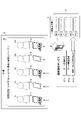
- FIG. 1 is a diagram showing an overview of this service that can be realized by an information processing system to which a server according to an embodiment of the invention is applied;
- FIG. FIG. 2 is a diagram showing an overview of a function presentation service among the services;
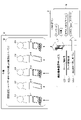
- FIG. 4 is a diagram showing an outline of an extraction condition presentation service among the services; It is a figure which shows the outline
- FIG. 2 is a diagram showing an outline of a person-in-charge allocation service among these services; It is a figure showing an example of composition of an information processing system to which a server concerning one embodiment of the present invention is applied.
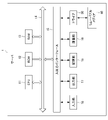
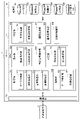
- FIG. 8 is a block diagram showing an example of a hardware configuration of a server in the information processing system shown in FIG. 7; FIG. Of the functional configuration of the server shown in FIG. 8 that constitutes the information processing system shown in FIG. It is a functional block diagram which shows an example of the functional structure for execution.
- this service a service (hereinafter referred to as "this service") that can be realized by an information processing system (see FIG. 7 described later) to which a server 1 according to an embodiment of the present invention is applied. (called) will be described.
- FIGS. 1 to 6 are diagrams showing an overview of this service that can be realized by an information processing system to which a server according to one embodiment of the present invention is applied.
- FIG. 1 shows a so-called remote development meeting M held at a certain company K.
- the development meeting M is an in-house meeting that is held periodically in order to realize the provision of a new service (hereinafter referred to as "new service") that has never existed before.
- new service a new service
- discovery of the invention I related to the new service and examination of obtaining the right (acquisition of the patent right) of the discovered invention I are conducted.
- attendees A1 to An use information processing devices 2-1 to 2-n such as personal computers (hereinafter referred to as "attendee terminals"). 2-1 through 2-n”).
- attendee terminals such as personal computers
- FIG. 1 it is assumed that attendees A1 to A5 are participating in a development conference M while operating attendee terminals 2-1 to 2-5, respectively.
- Attendees A1 to A5 are those who are directly or indirectly involved in the development of new services. Applicable.
- Dedicated application software for users of this service can be installed on each of the attendee terminals 2-1 to 2-5.
- attendees A1 to A5 can use this service by using attendee terminals 2-1 to 2-5 in which this application software is installed.
- Each of attendees A1 to A5 can also use this service by accessing a dedicated website for users of this service, which is displayed by the browser function of each of attendee terminals 2-1 to 2-5. can be used.
- attendee terminals 2 When there is no need to distinguish between the attendee terminals 2-1 to 2-n, they will be collectively referred to as "attendee terminals 2".
- the attendees A1 to An are collectively called "attendee A”.
- This service includes a function presentation service, an extraction condition presentation service, a question generation service, a contribution rate calculation service, and a person in charge assignment service.
- “Function presentation service” refers to a service that presents attendee A with candidates for one or more functions (hereinafter referred to as “functional elements") that can be elements for realizing the theme of development meeting M.
- “Extraction condition presentation service” is a service for presenting attendee A with information (hereinafter referred to as “extraction condition information”) for extracting information indicating prior art that may be related to the theme of development meeting M.
- extraction condition information information for extracting information indicating prior art that may be related to the theme of development meeting M.
- “Question generation service” refers to a service for generating questions for obtaining invention specifying information that is additionally required to specify inventions related to the theme of development meeting M.
- the “contribution rate calculation service” is a service for calculating the contribution rate of each speaker identified from the voice data of the development meeting M to the creation of invention I.
- Personnel allocation service refers to a service for allocating processes to persons in charge necessary for realizing the theme of the development meeting M according to the progress of the development meeting M.
- FIG. 2 shows an outline of the function presentation service among these services.
- the function presentation service candidates for one or more functional elements required to realize the theme of the development meeting M are presented. That is, during the progress of the development meeting M, candidates for one or more functional elements required to implement the new service of the company K are presented to the attendees A1 to A5 in real time.
- theme information information (hereinafter referred to as "theme information") indicating the theme of the development meeting M (the new service of the company K in the example of FIG. 2) is obtained (step S11).
- the format of theme information is not particularly limited, and keywords, sentences, categories, and the like can be used as theme information.
- keywords such as "MaaS”
- sentences such as “services that can be realized by using automobiles other than transportation”
- categories such as “transportation”, “general vehicles”, and “services”
- Examples include classification standards used for technical classification by public institutions.
- the theme information is acquired by being input to the attendee terminal 2 .
- the acquired theme information is analyzed (step S12).
- the method of analysis is not limited to time, and text mining or the like is performed for literature related to the acquired theme information, for example.
- Examples of “documents” include documents in which the contents of patent applications and utility model registration applications are published.
- the method of extracting the functional element F is not particularly limited.
- Redundancy refers to an index that indicates the amount of commonalities between two pieces of information that face each other. The greater the amount of commonalities, the higher the degree of redundancy, and the lesser the amount of commonalities, the lower the degree of redundancy.
- the method of presenting the candidates for the extracted functional element F is not particularly limited.
- a candidate for the functional element F may be presented together with the score obtained by normalizing the "redundancy” described above. Values such as “90%”, “88%”, and “65%” shown in FIG. 2 are all examples of scores.
- the attendees A1 to A5 of the development meeting M can dig deeper into each of the presented one or more functional elements, so it is easy to discover inventions that will realize the new service of the company K. become. As a result, it is possible to contribute to the efficiency of the process from discovering inventions to filing patent applications.
- one or more functional elements are classified according to their content, stored in a database together with various information, and presented in real time. Specifically, for example, although not illustrated, functional elements extracted (scraped) from technologies described in published patent publications obtained as a result of prior art searches are visualized in the form of a so-called patent map. etc. are presented. These pieces of information are utilized as useful information when the attendees A1 to A5 of the development meeting M examine whether or not the invention to be discovered has a right (for example, a patent right).
- the attendee A inputs a character string "automatic driving" to the attendee terminal 2 as the theme information of the development meeting M.
- FIG. As a result, in step S ⁇ b>11 , the server 1 acquires the theme information of the development meeting M “automatic driving” from the attendee terminal 2 .
- step S12 the server 1 searches for patent documents based on the theme information of the development meeting M ("automatic driving"). Specifically, for example, the server 1 searches for patent documents using the keyword “automatic driving” in a predetermined database containing patent document data. Further, for example, the server 1 searches for patent documents in a predetermined database containing patent document data using patent classification codes (for example, FI/F terms) related to "automatic driving”. Then, the server 1 performs text mining processing on the patent documents extracted by the search.
- patent classification codes for example, FI/F terms
- the server 1 extracts words corresponding to functional elements from the words extracted as a result of the text mining process. Specifically, for example, as a result of the text mining process, one or more words integrated using a predetermined database (for example, a thesaurus or a thesaurus in which the relationships between superordinate concepts and subordinate concepts are organized). extracted. Note that this integration may be performed as part of the text mining process. Then, the server 1 extracts words and phrases used as functions and means for realizing automatic driving in the patent document, and assumes that they correspond to functional elements.
- a predetermined database for example, a thesaurus or a thesaurus in which the relationships between superordinate concepts and subordinate concepts are organized.
- the server 1 generates indices such as the number of appearances and the degree of importance for each of these functional elements by a predetermined method based on a plurality of patent documents extracted by searching. That is, for example, as the number of appearances, the sum of the number of appearances of the functional element in a plurality of patent documents may be employed. Further, for example, the number of patent documents in which the functional element appears may be used as the number of appearances. Further, for example, the degree of importance may be based on the number of appearances. Also, for example, if each functional element is a special technical feature in the patent document, the importance may be highly evaluated. Note that the number of appearances and the degree of importance may be generated (calculated) by a predetermined function combining the above examples. Also, the number of appearances and the degree of importance may be generated using an AI or the like learned by a predetermined learning algorithm.
- functional elements and their appearance counts and degrees of importance may be generated as a patent map. That is, for example, based on patent documents extracted by searching, a bubble chart of F-terms assigned to the patent documents is generated as a patent map.
- the server 1 presents the extracted functional elements to attendee A in the meeting in real time.
- the server 1 can simultaneously present the generated number of occurrences and importance as described above.
- the server 1 can preferentially present a functional element having a high number of appearances or a high degree of importance.
- a bubble chart of F-term assigned to the patent document is generated as a patent map based on the patent document extracted by the search, the attendant A is presented with the patent map.
- attendee A can grasp the degree of importance of each of the plurality of functional elements (percentage, etc., of which consideration is given in the literature).
- the server 1 can present functional elements to the attendee A in real time (during the meeting) based on the theme information of the development meeting M input to the attendee A during the meeting. That is, the attendee A is presented with the functional elements without spending time for the attendee A to search for documents or check the documents. This allows attendee A to go deeper into the functional elements during the meeting.
- FIG. 3 shows an outline of the extraction condition presentation service among these services.
- extraction condition information information (hereinafter referred to as "extraction condition information") for extracting information indicating prior art that may be related to the theme of the development meeting M is generated and presented.
- extraction condition information include keywords, search formulas, categories (for example, classification criteria used for technical classification by public institutions), and the like.
- extraction condition information for extracting information indicating prior art that may be related to the new service of the company K is generated.
- the theme information of the development meeting M is acquired (step S21). Specifically, information about the new service of company K is acquired as the theme information.
- the theme information is acquired by being input to the attendee terminal 2 .
- the acquired theme information is analyzed (step S22).
- the method of analysis is not particularly limited, and is the same as in the example of FIG. 2. For example, text mining of related documents is performed.
- extraction condition information Ip information Ip (hereinafter referred to as "extraction condition information Ip") indicating conditions for extracting information indicating prior art that may be related to the new service of Company K is generated. , is presented to attendees A1 to A5 in real time (step S23).
- the method of generating the extraction condition information Ip is not particularly limited.
- search expressions associated with various functional elements F are stored in advance in a predetermined database (for example, the extraction condition DB 185 in FIG. 9), and extracted from there.
- the search formula may be used as the extraction condition information Ip.
- the method of presenting the generated extraction condition information Ip to attendees A1 to A5 is not particularly limited.
- a search formula such as a combination of keywords and categories, that can be immediately searched in patent databases generally provided by government offices can be presented.
- the extraction condition information Ip can be generated and presented for each of the one or more extracted functional elements F. Specifically, for example, when four types of functional elements F are extracted, four types of extraction condition information Ip can be generated for each of the four types of functional elements F. .
- attendees A1 to A5 of the development meeting M can extract information indicating prior art based on the presented extraction condition information Ip.
- the extraction condition information Ip can also be presented as part of the results of the prior art search.
- step S ⁇ b>21 the server 1 acquires the theme information of the development meeting M, for example, “automatic driving” from the attendee terminal 2 .
- the method of acquiring the theme information of the development meeting M in the process of step S21 or step S11 of FIG. 2 may be as follows. That is, for example, the server 1 can acquire theme information based on information shared in the conference. That is, for example, the server 1 can analyze the data of materials shared in advance in the conference and acquire the theme information by text mining or the like.
- step S22 the server 1 analyzes the theme information. Analysis of the theme information may be the same as the process of step S12 in FIG. 2, or may be realized by other processes.
- step S23 the server 1 sets the extraction condition information Ip based on the analysis result in the process of step S22. That is, for example, the server 1 extracts a plurality of first document groups in the process of step S22.
- the server 1 sets extraction condition information Ip based on a plurality of first document groups. Specifically, for example, the server 1 employs words and phrases used in a plurality of first document groups as keywords included in the extraction condition Ip. Further, for example, the server 1 creates a ranking of the number of assigned patent classification codes (IPC, F-term, FI, etc.) assigned to each of a plurality of first document groups, and ranks the top patent classification codes in the ranking. It is adopted as a category (patent classification code) included in the extraction condition information Ip.
- IPC patent classification code
- the server 1 can set cited documents described in each of a plurality of first document groups and documents cited during substantive examination as a plurality of second document groups.
- the server 1 can set the extraction condition information Ip based on the first document group and the second document group.
- the server 1 may present the attendee A with the first document group and the second document group.
- the attendee A selects the third document group, which is considered appropriate as a search target from among the presented first document group and second document group, that is, is considered useful for examining theme information.
- the result of the selection by the attendee A is acquired by the server 1 via the attendee terminal 2 .
- the server 1 sets the extraction condition information Ip based on the third document group. As a result, more appropriate extraction condition information Ip is set.
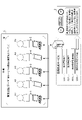
- FIG. 4 shows an outline of the question generation service among the services.
- the question generation service generates one or more questions to obtain additional information needed to identify inventions on the theme of development meeting M.
- one or more pieces of information hereinafter referred to as "invention specifying information" necessary for specifying an invention that realizes a new service of company K during the progress of the development meeting M. is extracted.
- one or more questions are generated for obtaining information additionally required for specifying the invention. be done.
- the information about the invention that realizes the new service of the company K is obtained as the invention information (step S31).
- the invention information is acquired by being input to the attendee terminal 2 .
- the acquired invention information is analyzed (step S32).
- the analysis method is not particularly limited, and for example, the presence or absence of information to be input to the attendee terminal 2 and the size of the information input to the attendee terminal 2 are analyzed.
- one or more invention specifying information necessary for specifying an invention that realizes the new service of the company K is extracted from the invention information (step S33).
- the method of determining whether or not the extracted invention specifying information can specify an invention that realizes the new service of the company K is not limited to time.
- a score hereinafter referred to as an "invention identification score" representing a degree of perfection as to whether an invention can be identified as a percentage may be calculated.
- the invention specifying score is "0 (zero)%". Also, if information is input to the attendee terminal 2 but the amount of information is insufficient, the invention specifying score will be "1 to 99%” depending on the contents of the shortage. Further, when a sufficient amount of information for specifying the invention is input to the attendee terminal 2, the invention specifying score is "100%".
- the invention specifying score is calculated as "80%".
- what kind of information is lacking is specified, and a message prompting the input of the lacking information is notified.
- the invention identification score is 80%.
- the missing information is the effect of the invention.
- a message such as "Invention identification score will be 100% when additionally inputting 'Invention effect'" is notified.
- attendee A can easily know what kind of information should be considered and input in order to specify the invention. It is possible to conduct a hearing about the information that is lacking because of this.
- the hearing is conducted in the form of questions.
- a question such as "What effect can you expect?" is generated.
- the question is displayed on the attendee terminal 2 .
- the contents of the questions displayed on the attendee terminals 2 may be generated in advance from expected questions and answers. Further, for example, a patent document search may be performed based on the content of the generated question.
- the index of the amount of information used in the question generation service can be changed according to the purpose of the development meeting M.
- the purpose of the development meeting M is standardization (for example, formulating specifications as standards such as ISO and JIS)
- it may be a score (indicator).
- a score indicator
- the following items are adopted as information used for calculating the score (indicator) at such a stage. That is, for example, items related to awareness, relationship with business plans, internal preparations, achievements, and industry and abandonment are adopted as information used to calculate the score (indicator).
- the server 1 by collecting this information, it is possible to request expert support for necessary items in the standardization of the person (for example, the company to which Participant A belongs) who is trying to standardize it. It becomes possible.
- the server 1 generates the following questions, for example, when the information regarding the recognition level item is insufficient. For example, “Have you ever used a plan?", “Have you ever created a plan?”, “Have you grasped the standards related to your business?” A question such as "Is there any?" is generated. By answering the questions generated by the server 1 in this way, the information on the above items is collected. Such questions and answers are repeated for each item, and when the score (indicator) reaches 100%, it is possible to appropriately determine what kind of support is required for standardization.
- the score (indicator) item may be set based on the know-how of an experienced salesperson.
- the questions generated by the question generation service are presented only to those of the participants A of the conference who sell to other participants.
- the participant A who is in charge of sales, asks the other participants A questions that should be asked by a veteran sales person, thereby making it possible to conduct sales activities like a veteran.
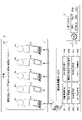
- FIG. 5 shows an outline of the contribution ratio calculation service of this service.
- the contribution rate calculation service includes a service of specifying a speaker from the speech data of the development meeting M and calculating the contribution rate of the speech in the meeting for each speaker (attendee A). That is, as shown in FIG. 5A, speech data is acquired at the development meeting M (step S41). Then, the speaker (attendee A) of the speech included in the obtained voice data is identified (step S42). Then, information indicating the attendee A identified as the speaker (hereinafter referred to as "speaker information"), theme information, and information indicating the contents of statements made by the speaker in the conference (hereinafter referred to as "speech information").
- step S43 the contribution rate of the speech in the conference is calculated for each speaker (attendee A) (step S43). Thereby, the contribution ratio of each inventor to the discovered invention is automatically calculated. As a result, it is possible to contribute to the efficiency of the process from discovering inventions to filing patent applications.
- the contribution rate calculation service can share ideas input to each of a plurality of attendee terminals 2 at a development meeting M among a plurality of attendees A.
- FIG. 5B attendee A writes his/her own electronic sticky note E displayed on the screen of attendee terminal 2 (smartphone in the example of FIG. 5B). Write (input) your idea.
- Attendee A performs an operation of swiping electronic sticky note E so as to fade it out from the screen of attendee terminal 2 .
- a predetermined display device H for example, a display device having a whiteboard function
- the electronic sticky notes E on which ideas are written are arranged and displayed on the display device H.
- FIG. As a result, all attendees A can see the content written on the electronic sticky note E. As a result, the progress of the conference can be made more efficient, and so-called online conferences can be handled.
- the content of the idea written on the electronic sticky note E is converted into data and managed in association with information (for example, an ID) that can uniquely identify the attendee A.
- the method of associating the attendee A with the electronic sticky note E is not particularly limited, and the attendee A may be specified from the attendee terminal 2 that sent the electronic sticky note E, for example. Alternatively, the attendee A may be identified by image recognition of the name written on the electronic sticky note E.
- FIG. 6 shows an overview of the person-in-charge allocation service of this service.
- the person-in-charge allocation service is a service that judges the progress of the development meeting M and allocates persons in charge who may be necessary for realizing a theme for realizing a new service of the company K.
- FIG. 6 shows an overview of the person-in-charge allocation service of this service.
- the person-in-charge allocation service is a service that judges the progress of the development meeting M and allocates persons in charge who may be necessary for realizing a theme for realizing a new service of the company K.
- step S51 information about the development meeting M is acquired as meeting information (step S51). Also, the data of the voice of the development meeting M is acquired as voice information (step S52). Then, each speaker (attendee A) of each predetermined unit of speech included in the acquired voice information is identified (step S53). Next, the progress of the development meeting M is determined based on the acquired meeting information, the information indicating the specified speaker, and the information indicating the content of the speaker's speech (step S54). Then, based on the results of the determination of the progress of the development meeting M, allocation of persons in charge (for example, persons suitable as persons in charge of the remaining tasks) who may be necessary for realizing the theme for realizing the new service of the company K. is done. (Step S55).
- persons in charge for example, persons suitable as persons in charge of the remaining tasks
- the results of assigning personnel are then presented to the target person. If consent is obtained for the presentation, the result of the allocation is reflected, and if consent is not obtained, input of predetermined information for correcting the allocation result is accepted (step S56). . Specifically, for example, as a result of the determination of the progress of the development meeting M, if the information about the embodiment for specifying the invention is insufficient, the amount of remarks at the development meeting M may be reduced. Allocation is performed with attendee A having the largest number of attendees as the person in charge.
- the member of the intellectual property department who was in charge of the prior art search or the expert knowledge on intellectual property is assigned to the person in charge.
- the person in charge executes the assigned process, the contents thereof are recorded as meeting information as needed, and the progress of the development meeting M is determined (step S57).
- alert information is notified to the person in charge of processing related to that item (step S58).
- the person-in-charge allocation service even if a person does not attend the development meeting M, the content of the development meeting M, the materials showing the details of the ideas submitted at the development meeting M, and the attendance at the development meeting M Based on the information indicating the contents of remarks of person A, the search history, the development status, etc., it is possible to grasp how far the examination of the invention has progressed. Then, according to the progress of the project, it indicates what kind of personnel should be placed where.
- attendee A can easily grasp the difference between the state that should be reached in order to file a patent application for a certain invention and the current state.
- FIG. 7 is a diagram showing an example configuration of an information processing system to which a server according to an embodiment of the present invention is applied.
- the information processing system shown in FIG. 7 is configured to include a server 1 and attendee terminals 2 .
- the server 1 and attendee terminals 2 are connected to each other via a predetermined network NW such as the Internet or LAN (Local Area Network).
- NW such as the Internet or LAN (Local Area Network).
- the server 1 is an information processing device managed by a service provider (not shown). The server 1 performs various processes for realizing this service while appropriately communicating with the attendee terminals 2 .
- the attendee terminal 2 is an information processing device operated by the attendee A who attends the development meeting M remotely.
- the attendee terminal 2 is composed of a smartphone, tablet, personal computer, or the like. Although only one attendee terminal 2 is drawn in FIG. 7, this is simplified to aid understanding of the explanation. In other words, there may actually be as many attendee terminals 2 as there are attendees A who attend the development meeting M remotely.
- FIG. 8 is a block diagram showing an example of the hardware configuration of the server in the information processing system shown in FIG.
- the server 1 includes a CPU (Central Processing Unit) 11, a ROM (Read Only Memory) 12, a RAM (Random Access Memory) 13, a bus 14, an input/output interface 15, an input section 16, and an output section 17. , a storage unit 18 , a communication unit 19 and a drive 20 .
- CPU Central Processing Unit
- ROM Read Only Memory
- RAM Random Access Memory
- the CPU 11 executes various processes according to programs recorded in the ROM 12 or programs loaded from the storage unit 18 to the RAM 13 .
- the RAM 13 also stores data necessary for the CPU 11 to execute various processes.
- the CPU 11, ROM 12 and RAM 13 are interconnected via a bus 14.
- An input/output interface 15 is also connected to this bus 14 .
- An input unit 16 , an output unit 17 , a storage unit 18 , a communication unit 19 and a drive 20 are connected to the input/output interface 15 .
- the input unit 16 is composed of, for example, a keyboard or the like, and inputs various information.
- the output unit 17 includes a display such as a liquid crystal display, a speaker, and the like, and outputs various information as images and sounds.
- the storage unit 18 is composed of a DRAM (Dynamic Random Access Memory) or the like, and stores various data.
- the communication unit 19 communicates with another device (for example, the attendee terminal 2 in FIG. 7) via a network NW including the Internet.
- a removable medium 40 such as a magnetic disk, an optical disk, a magneto-optical disk, or a semiconductor memory is mounted in the drive 20 as appropriate.
- a program read from the removable medium 40 by the drive 20 is installed in the storage section 18 as necessary.
- the removable medium 40 can also store various data stored in the storage unit 18 in the same manner as the storage unit 18 .
- the attendee terminal 2 in FIG. 7 can also have a configuration basically similar to the hardware configuration shown in FIG. Therefore, description of the hardware configuration of the attendee terminal 2 is omitted.
- “Function presentation processing” is a process of analyzing theme information indicating a theme for realizing a predetermined target and presenting candidates for one or more functional elements that may be necessary for realizing the predetermined target.
- “Extraction condition presentation processing” analyzes theme information indicating a theme for realizing a predetermined target, and generates and presents information for extracting information indicating prior art that may be related to the predetermined target.
- invention specification determination process refers to a process of extracting invention specification information for a given invention from invention information and determining whether or not the invention specification information can specify a given invention.
- Question generation processing is a process of identifying invention specifying information that is additionally required to specify a given invention and generating a given question for acquiring the missing invention specifying information. That's what I mean.
- the “contribution rate calculation process” is a process of specifying speakers from voice data of a conference on a predetermined theme and calculating the contribution rate of speech in the conference for each speaker.
- Personnel allocation processing refers to a process of judging the progress of a conference on a given theme and allocating personnel who may be necessary to realize the theme.
- FIG. 9 shows, of the functional configuration of the server in FIG. 8 that constitutes the information processing system in FIG.
- FIG. 4 is a functional block diagram showing an example of a functional configuration for executing person allocation processing
- the CPU 11 when the server 1 in FIG. 8 executes candidate proposal processing, the CPU 11 includes an acquisition unit 101, an analysis unit 102, a presentation unit 103, a specific information extraction unit 104, a determination unit 105, a specification unit 106, a question generation unit 107, a contribution calculation unit 108, and a person-in-charge allocation unit 109 function.
- a theme DB 181, an invention DB 182, a meeting DB 183, a personnel DB 184, and an extraction condition DB 185 are provided.
- the theme DB 181 stores theme information.
- the invention DB 182 stores invention information.
- the conference DB 183 stores conference information and audio information.
- Personnel information is stored in the personnel DB 184 .
- the personnel information stores information about the executives and employees of the company K, including the attendees of the development meeting M.
- the extraction condition DB 185 stores search formulas associated with functional elements F.
- the acquisition unit 101 acquires various types of information.
- theme acquisition section 111 In acquisition section 101, theme acquisition section 111, invention acquisition section 112, voice acquisition section 113, and conference acquisition section 114 function.
- the theme acquisition unit 111 acquires information indicating a theme for realizing a new service of company K as theme information.
- the theme information acquired by the theme acquisition unit 111 is stored and managed in the theme DB 181 .
- the invention acquisition unit 112 acquires information about a given invention as invention information.
- the invention information acquired by the invention acquisition unit 112 is stored and managed in the invention DB 182 .
- the audio acquisition unit 113 acquires the audio data of the conference with the theme of realizing the new service of company K as audio information.
- the meeting acquisition unit 114 acquires as meeting information related to a meeting whose theme is to realize a new service of company K.
- the analysis unit 102 analyzes various types of information.
- a theme analysis section 121 and an invention analysis section 122 function.
- the theme analysis unit 121 analyzes the theme information acquired by the theme acquisition unit 111.
- the invention analysis unit 122 analyzes the invention information acquired by the invention acquisition unit 112 .
- the presentation unit 103 presents various types of information.
- function presentation unit 131 and extraction condition presentation unit 132 function.
- the function presentation unit 131 presents candidates for one or more functional elements F that are required to realize the new service of the company K based on the analysis results of the theme analysis unit 121 .
- the extraction condition presentation unit 132 generates and presents extraction condition information Ip indicating prior art that may be related to the new service of company K, based on the analysis results of the theme analysis unit 121 .
- the extraction condition information Ip generated by the extraction condition presentation unit 132 is stored and managed in the extraction condition DB 185 .
- the identification information extraction unit 104 extracts the invention identification information from the invention information of the predetermined invention.
- the determination unit 105 makes various determinations. In determination unit 105, specific determination unit 151 and situation determination unit 152 function.
- the identification determination unit 151 determines whether or not the invention identification information extracted by the identification information extraction unit 104 can identify a given invention.
- the situation determination unit 152 determines whether the development meeting M determine the progress of
- the identification unit 106 performs various identifications.
- a shortage identification unit 161 and a speaker identification unit 162 function.
- the lack identification unit 161 identifies invention identification information that is additionally required to identify a given invention.
- the speaker identification unit 162 identifies the speaker of each predetermined unit of speech included in the audio information acquired by the audio acquisition unit 113 .
- the question generation unit 107 generates a predetermined question for acquiring the invention specifying information specified by the shortage specifying unit 161.
- Contribution rate calculation section 108 performs a conference based on speaker information indicating the speaker identified by speaker identification section 162, theme information indicating the theme of the conference, and statement information indicating the content of the statement of the speaker. Calculate the contribution rate of the utterance in each utterance.
- the person-in-charge allocation unit 109 allocates persons in charge who may be necessary for realizing the theme for realizing the new service of company K, based on the determination result of the situation determination unit 152 .
- the information processing apparatus of FIG. 8 having the functional configuration of FIG. 9 executes function presentation processing, extraction condition presentation processing, invention specification determination processing, question generation processing, contribution rate calculation processing, and person in charge assignment processing. can be done. This makes it easier to discover inventions based on the theme of realizing new services for company K. As a result, it is possible to contribute to the efficiency of the process from discovering inventions to filing patent applications. Also, at the development meeting M, it is possible to conduct a thorough prior art search. Also, at the development meeting M, it becomes easy to grasp the difference between the state to be reached in order to file a patent application and the current state. Also, at the development meeting, it is possible to ask about information that is lacking in order to specify the invention. In addition, the inventor's contribution rate to the discovered invention is automatically calculated. In addition, it becomes easier to allocate the personnel necessary for efficiently filing patent applications. As a result, it is possible to contribute to the efficiency of the process from discovering inventions to filing patent applications.
- the remote format is adopted as the format of the development meeting M of the company K, but it is not limited to this. good.
- a microphone device (not shown) capable of recording the voice of the attendee A is installed in a conference room or the like where the development conference M is held. Data of the recorded voice is acquired by the server 1 as voice information.
- the format of the development meeting M can be arbitrarily selected according to the individual situation of the attendee A (for example, commuting to work or working from home).
- each of the services (functions) described above is also useful in a video conference between a sales representative and a sales partner. Further, for example, each of the services (functions) described above may be adopted as one service (function) of a practice system imitating a remote-type video call system.
- Participant A assumes that there is another Participant A, and uses the practice system to give sales talks. At this time, for example, the participant A can practice sales talk by using the score (index) of the question generation service described above.
- system configuration shown in FIG. 7 and the hardware configuration of the server 1 shown in FIG. 8 are merely examples for achieving the object of the present invention, and are not particularly limited.
- the functional block diagram shown in FIG. 9 is merely an example and is not particularly limited. That is, the information processing system of FIG. 7 is provided with a function capable of executing the function presentation process, the extraction condition presentation process, the invention specification determination process, the question generation process, the contribution rate calculation process, and the person-in-charge allocation process as a whole. is sufficient, and what kind of functional blocks and database are used to realize this function are not particularly limited to the example in FIG.
- the locations of the functional blocks and the database are not limited to those shown in FIG. 9, and may be arbitrary.
- the function presentation process, the extraction condition presentation process, the invention specification determination process, the question generation process, the contribution rate calculation process, and the person in charge allocation process are carried out by the server in FIG. 8 that constitutes the information processing system in FIG. Although it is configured to be performed under the control of the CPU 11 of No. 1, it is not limited to this.
- at least part of the functional blocks and database arranged on the server 1 side may be provided on the attendee terminal 2 side or another information processing device (not shown).
- a program constituting the software is installed in a computer or the like from a network or a recording medium.
- the computer may be a computer built into dedicated hardware. Also, the computer may be a computer capable of executing various functions by installing various programs, such as a server, a general-purpose smart phone, or a personal computer.
- a recording medium containing such a program not only consists of a removable medium (not shown) that is distributed separately from the main body of the device in order to provide the program to the user, but also is preinstalled in the main body of the device and is delivered to the user. It consists of a provided recording medium, etc.
- the steps of writing a program recorded on a recording medium are not necessarily processed chronologically according to the order, but may be executed in parallel or individually. It also includes the processing to be executed.
- an information processing apparatus for example, the server 1 in FIG. 9) to which the present invention is applied is theme acquisition means (for example, the theme acquisition unit 111 in FIG. 9) for acquiring information indicating a theme for realizing a predetermined target (for example, the new service in FIG. 2) as theme information (for example, the theme information in FIG. 2); theme analysis means for analyzing the theme information (for example, the theme analysis unit 121 in FIG. 9); A function presenting means (for example, a function presenting section in FIG. 9) that presents candidates for one or more functional elements (for example, functional element F in FIG. 2) that may be necessary for realizing the predetermined object based on the result of the analysis. 131) and Prepare.
- theme acquisition means for example, the theme acquisition unit 111 in FIG. 9 for acquiring information indicating a theme for realizing a predetermined target (for example, the new service in FIG. 2) as theme information (for example, the theme information in FIG. 2); theme analysis means for analyzing the theme information (for example, the theme analysis unit 121 in
- an information processing device to which the present invention is applied is theme acquisition means (for example, the theme acquisition unit 111 in FIG. 9) for acquiring, as theme information, information indicating a theme for realizing a predetermined target; theme analysis means for analyzing the theme information (for example, the theme analysis unit 121 in FIG. 9); Extraction condition presenting means (for example, the extraction conditions in FIG. 9) for generating and presenting information for extracting prior art (for example, the extraction condition information Ip in FIG. 2) that may be related to the predetermined target based on the results of the analysis a presentation unit 132); Prepare.
- theme acquisition means for example, the theme acquisition unit 111 in FIG. 9 for acquiring, as theme information, information indicating a theme for realizing a predetermined target
- theme analysis means for analyzing the theme information (for example, the theme analysis unit 121 in FIG. 9)
- Extraction condition presenting means for example, the extraction conditions in FIG. 9) for generating and presenting information for extracting prior art (for example, the extraction condition information Ip
- an information processing device to which the present invention is applied is invention acquisition means (for example, invention acquisition unit 112 in FIG. 9) for acquiring information about a given invention as invention information (for example, invention information in FIG. 2); Invention analysis means for analyzing the invention information (for example, invention analysis unit 122 in FIG. 9); Specific information extraction for extracting one or more pieces of information necessary for specifying the invention from the invention information as invention specifying information (for example, invention specifying information in FIG. 2) based on the result of the analysis by the invention analyzing means. means (for example, the specific information extraction unit 104 in FIG. 9); determination means (for example, the identification determination unit 151 in FIG. 9) for determining whether or not the predetermined invention can be identified by the extracted invention identification information; Prepare.
- invention acquisition means for example, invention acquisition unit 112 in FIG. 9 for acquiring information about a given invention as invention information (for example, invention information in FIG. 2);
- Invention analysis means for analyzing the invention information (for example, invention analysis unit 122 in FIG. 9); Specific information
- the acquired invention information is analyzed. Then, based on the result of the analysis, one or more pieces of information necessary for specifying a predetermined invention are extracted as invention specifying information from among the acquired invention information. Then, it is determined whether or not the invention specifying information can specify a given invention. This makes it easier to grasp the difference between the state to be reached in order to file a patent application and the current state at the development meeting. As a result, it is possible to contribute to the efficiency of the process from discovering inventions to filing patent applications.
- the invention specifying information that is additionally required to specify the specified invention is specified based on the result of determination as to whether or not the extracted invention specifying information can specify the specified invention. Then, a predetermined question is generated for obtaining the specified invention specifying information. As a result, it becomes possible to ask about information that is lacking in order to specify the invention at the development meeting. As a result, it is possible to contribute to the efficiency of the process from discovering inventions to filing patent applications.
- an information processing device to which the present invention is applied is voice acquisition means (for example, the voice acquisition unit 113 in FIG. 9) that acquires voice data of a conference on a predetermined theme as voice information (for example, voice information in FIG. 2); speaker identification means (for example, speaker identification unit 162 in FIG. 9) for identifying each speaker of a predetermined unit of speech included in the acquired voice information; Information indicating the speaker identified by the speaker identification means (e.g., speaker information in FIG. 2), information indicating the theme of the conference (e.g., theme information in FIG. 2), and information indicating the content of the speech (for example, the statement information in FIG. 2), a contribution rate calculation means (for example, the contribution rate calculation unit 108 in FIG. 9) that calculates the contribution rate of the statement in the conference for each speaker; Prepare.
- voice acquisition means for example, the voice acquisition unit 113 in FIG. 9
- speaker identification means for example, speaker identification unit 162 in FIG. 9 for identifying each speaker of a predetermined unit of speech included in the acquired
- each speaker of a predetermined unit of speech included in the acquired voice information is identified. Then, based on the information indicating the person specified as the speaker, the information indicating the theme of the conference, and the information indicating the content of the speech of the speaker in the conference, the contribution rate of the speech in the conference is calculated for each speaker. be done. Thereby, the inventor's contribution rate to the discovered invention is automatically calculated. As a result, it is possible to contribute to the efficiency of the process from discovering inventions to filing patent applications.
- an information processing device to which the present invention is applied is meeting acquisition means (for example, the meeting acquisition unit 114 in FIG. 9) that acquires information about a meeting with a predetermined theme as meeting information (for example, meeting information in FIG. 2); voice acquisition means (for example, the voice acquisition unit 113 in FIG. 9) for acquiring voice data of the held conference as voice information; speaker identification means (for example, speaker identification unit 162 in FIG. 9) for identifying each speaker of a predetermined unit of speech included in the acquired voice information; Based on the acquired conference information, information indicating the specified speaker (for example, speaker information in FIG. 2), and information indicating content of the speech (for example, speech information in FIG. 2), the conference A situation determination means (for example, the situation determination unit 152 in FIG. 9) for determining the progress of a responsible allocation means (for example, a responsible person allocation unit 109 in FIG. 9) that allocates a responsible person who may be necessary for realizing the theme based on the result of the determination by the situation determining means; Prepare.
- information about a meeting with a predetermined theme is acquired as meeting information.
- audio data of the held conference is acquired as audio information.
- the speaker of each predetermined unit of speech included in the acquired voice information is specified.
- the progress of the conference is determined based on the acquired conference information, the information indicating the specified speaker, and the information indicating the content of the speech of the speaker.
- the person in charge who may be necessary for realizing the theme is assigned. This facilitates the placement of the personnel required to efficiently file patent applications. As a result, it is possible to contribute to the efficiency of the process from discovering inventions to filing patent applications.
Landscapes
- Business, Economics & Management (AREA)
- Engineering & Computer Science (AREA)
- Strategic Management (AREA)
- Tourism & Hospitality (AREA)
- Human Resources & Organizations (AREA)
- Economics (AREA)
- General Business, Economics & Management (AREA)
- Entrepreneurship & Innovation (AREA)
- Marketing (AREA)
- Theoretical Computer Science (AREA)
- General Physics & Mathematics (AREA)
- Physics & Mathematics (AREA)
- Primary Health Care (AREA)
- Technology Law (AREA)
- General Health & Medical Sciences (AREA)
- Data Mining & Analysis (AREA)
- Health & Medical Sciences (AREA)
- Operations Research (AREA)
- Quality & Reliability (AREA)
- Management, Administration, Business Operations System, And Electronic Commerce (AREA)
Priority Applications (4)
| Application Number | Priority Date | Filing Date | Title |
|---|---|---|---|
| JP2022580710A JP7837284B2 (ja) | 2021-02-12 | 2022-02-14 | 情報処理装置 |
| JP2025281918A JP2026040683A (ja) | 2021-02-12 | 2025-12-25 | 情報処理装置 |
| JP2025281920A JP2026053626A (ja) | 2021-02-12 | 2025-12-25 | 情報処理装置 |
| JP2025281919A JP2026053625A (ja) | 2021-02-12 | 2025-12-25 | 情報処理装置 |
Applications Claiming Priority (2)
| Application Number | Priority Date | Filing Date | Title |
|---|---|---|---|
| JP2021020563 | 2021-02-12 | ||
| JP2021-020563 | 2021-02-12 |
Publications (1)
| Publication Number | Publication Date |
|---|---|
| WO2022173044A1 true WO2022173044A1 (ja) | 2022-08-18 |
Family
ID=82838370
Family Applications (1)
| Application Number | Title | Priority Date | Filing Date |
|---|---|---|---|
| PCT/JP2022/005719 Ceased WO2022173044A1 (ja) | 2021-02-12 | 2022-02-14 | 情報処理装置 |
Country Status (2)
| Country | Link |
|---|---|
| JP (4) | JP7837284B2 (https=) |
| WO (1) | WO2022173044A1 (https=) |
Cited By (2)
| Publication number | Priority date | Publication date | Assignee | Title |
|---|---|---|---|---|
| JP7576811B1 (ja) | 2024-01-09 | 2024-11-01 | 株式会社Toreru | 商標質問生成システム、商標質問生成装置、商標質問生成方法及び商標質問生成プログラム |
| JP2025183093A (ja) * | 2024-06-04 | 2025-12-16 | Dmg森精機株式会社 | 管理装置、管理システム、管理方法、および管理プログラム |
Citations (5)
| Publication number | Priority date | Publication date | Assignee | Title |
|---|---|---|---|---|
| JP2011066794A (ja) * | 2009-09-18 | 2011-03-31 | Sharp Corp | 会議管理装置及び会議管理方法 |
| JP2019061594A (ja) * | 2017-09-28 | 2019-04-18 | 株式会社野村総合研究所 | 会議支援システムおよび会議支援プログラム |
| WO2019111545A1 (ja) * | 2017-12-06 | 2019-06-13 | 株式会社 AI Samurai | 知的財産システム、知的財産支援方法および知的財産支援プログラム |
| WO2019188428A1 (ja) * | 2018-03-30 | 2019-10-03 | 株式会社 AI Samurai | 情報処理装置、情報処理方法及び情報処理プログラム |
| WO2019187397A1 (ja) * | 2018-03-29 | 2019-10-03 | 京セラドキュメントソリューションズ株式会社 | 情報処理装置 |
-
2022
- 2022-02-14 JP JP2022580710A patent/JP7837284B2/ja active Active
- 2022-02-14 WO PCT/JP2022/005719 patent/WO2022173044A1/ja not_active Ceased
-
2025
- 2025-12-25 JP JP2025281919A patent/JP2026053625A/ja active Pending
- 2025-12-25 JP JP2025281920A patent/JP2026053626A/ja active Pending
- 2025-12-25 JP JP2025281918A patent/JP2026040683A/ja active Pending
Patent Citations (5)
| Publication number | Priority date | Publication date | Assignee | Title |
|---|---|---|---|---|
| JP2011066794A (ja) * | 2009-09-18 | 2011-03-31 | Sharp Corp | 会議管理装置及び会議管理方法 |
| JP2019061594A (ja) * | 2017-09-28 | 2019-04-18 | 株式会社野村総合研究所 | 会議支援システムおよび会議支援プログラム |
| WO2019111545A1 (ja) * | 2017-12-06 | 2019-06-13 | 株式会社 AI Samurai | 知的財産システム、知的財産支援方法および知的財産支援プログラム |
| WO2019187397A1 (ja) * | 2018-03-29 | 2019-10-03 | 京セラドキュメントソリューションズ株式会社 | 情報処理装置 |
| WO2019188428A1 (ja) * | 2018-03-30 | 2019-10-03 | 株式会社 AI Samurai | 情報処理装置、情報処理方法及び情報処理プログラム |
Cited By (4)
| Publication number | Priority date | Publication date | Assignee | Title |
|---|---|---|---|---|
| JP7576811B1 (ja) | 2024-01-09 | 2024-11-01 | 株式会社Toreru | 商標質問生成システム、商標質問生成装置、商標質問生成方法及び商標質問生成プログラム |
| JP2025107689A (ja) * | 2024-01-09 | 2025-07-22 | 株式会社Toreru | 商標質問生成システム、商標質問生成装置、商標質問生成方法及び商標質問生成プログラム |
| JP2025183093A (ja) * | 2024-06-04 | 2025-12-16 | Dmg森精機株式会社 | 管理装置、管理システム、管理方法、および管理プログラム |
| JP7818651B2 (ja) | 2024-06-04 | 2026-02-20 | Dmg森精機株式会社 | 管理装置、管理システム、管理方法、および管理プログラム |
Also Published As
| Publication number | Publication date |
|---|---|
| JP2026040683A (ja) | 2026-03-09 |
| JP7837284B2 (ja) | 2026-03-30 |
| JPWO2022173044A1 (https=) | 2022-08-18 |
| JP2026053626A (ja) | 2026-03-25 |
| JP2026053625A (ja) | 2026-03-25 |
Similar Documents
| Publication | Publication Date | Title |
|---|---|---|
| JP6481723B2 (ja) | 人工知能及び会議ルールテンプレートを用いる電子会議の管理 | |
| US10510051B2 (en) | Real-time (intra-meeting) processing using artificial intelligence | |
| Anderson et al. | Entrepreneurial social capital: Conceptualizing social capital in new high-tech firms | |
| US10860985B2 (en) | Post-meeting processing using artificial intelligence | |
| JP6304345B2 (ja) | 電子会議システム | |
| US8266534B2 (en) | Collaborative generation of meeting minutes and agenda confirmation | |
| US11188879B2 (en) | Systems and methods for presenting information extracted from one or more data sources to event participants | |
| CN115619360A (zh) | 基于人工智能的人才选拔招聘系统及方法 | |
| JP2018170009A (ja) | 電子会議システム | |
| JP2026053626A (ja) | 情報処理装置 | |
| US20240104509A1 (en) | System and method for generating interview insights in an interviewing process | |
| US20230075137A1 (en) | Profile service management | |
| CN111461636A (zh) | 基于虚拟机器人的政务服务平台及应用 | |
| CN113761127A (zh) | 一种任务处理方法、装置、电子设备和存储介质 | |
| Fulton et al. | Observing civic engagement: Using systematic social observation to study civil society organization convenings | |
| Rains et al. | The implications of communication technologies for supportive conversations: A dynamic dyadic systems approach examining turn transitions | |
| Harirchian et al. | AI-enabled exploration of Instagram profiles predicts soft skills and personality traits to empower hiring decisions | |
| JP2016091227A (ja) | サポート装置、サポート方法及びサポートプログラム | |
| Parasa et al. | Exploring the role of artificial intelligence in enhancing chatbot functionality | |
| JP2025013259A (ja) | 情報処理装置、情報処理装置の制御方法及びプログラム | |
| David et al. | 14 Power Relations and Migrant Entrepreneurs in Local Ecosystems–A German Example | |
| CN118708808A (zh) | 基于大模型的推荐方法、装置、设备以及存储介质 | |
| WO2022044813A1 (ja) | コミュニケーション装置、コミュニケーション方法、及びプログラム | |
| JP7845733B1 (ja) | 支援装置、支援方法、支援システムおよび支援プログラム | |
| CN118037222B (zh) | 一种券商机构的数据交互系统及方法 |
Legal Events
| Date | Code | Title | Description |
|---|---|---|---|
| 121 | Ep: the epo has been informed by wipo that ep was designated in this application |
Ref document number: 22752866 Country of ref document: EP Kind code of ref document: A1 |
|
| WWE | Wipo information: entry into national phase |
Ref document number: 2022580710 Country of ref document: JP |
|
| NENP | Non-entry into the national phase |
Ref country code: DE |
|
| 122 | Ep: pct application non-entry in european phase |
Ref document number: 22752866 Country of ref document: EP Kind code of ref document: A1 |