WO2022173006A1 - 難吸収性薬物の吸収性が改善された組成物 - Google Patents
難吸収性薬物の吸収性が改善された組成物 Download PDFInfo
- Publication number
- WO2022173006A1 WO2022173006A1 PCT/JP2022/005412 JP2022005412W WO2022173006A1 WO 2022173006 A1 WO2022173006 A1 WO 2022173006A1 JP 2022005412 W JP2022005412 W JP 2022005412W WO 2022173006 A1 WO2022173006 A1 WO 2022173006A1
- Authority
- WO
- WIPO (PCT)
- Prior art keywords
- drug
- formulation
- ionic liquid
- acid
- poorly
- Prior art date
- Legal status (The legal status is an assumption and is not a legal conclusion. Google has not performed a legal analysis and makes no representation as to the accuracy of the status listed.)
- Ceased
Links
Images




Classifications
-
- A—HUMAN NECESSITIES
- A61—MEDICAL OR VETERINARY SCIENCE; HYGIENE
- A61K—PREPARATIONS FOR MEDICAL, DENTAL OR TOILETRY PURPOSES
- A61K47/00—Medicinal preparations characterised by the non-active ingredients used, e.g. carriers or inert additives; Targeting or modifying agents chemically bound to the active ingredient
- A61K47/06—Organic compounds, e.g. natural or synthetic hydrocarbons, polyolefins, mineral oil, petrolatum or ozokerite
- A61K47/08—Organic compounds, e.g. natural or synthetic hydrocarbons, polyolefins, mineral oil, petrolatum or ozokerite containing oxygen, e.g. ethers, acetals, ketones, quinones, aldehydes, peroxides
- A61K47/12—Carboxylic acids; Salts or anhydrides thereof
-
- A—HUMAN NECESSITIES
- A61—MEDICAL OR VETERINARY SCIENCE; HYGIENE
- A61K—PREPARATIONS FOR MEDICAL, DENTAL OR TOILETRY PURPOSES
- A61K38/00—Medicinal preparations containing peptides
- A61K38/16—Peptides having more than 20 amino acids; Gastrins; Somatostatins; Melanotropins; Derivatives thereof
- A61K38/17—Peptides having more than 20 amino acids; Gastrins; Somatostatins; Melanotropins; Derivatives thereof from animals; from humans
- A61K38/22—Hormones
- A61K38/26—Glucagons
-
- A—HUMAN NECESSITIES
- A61—MEDICAL OR VETERINARY SCIENCE; HYGIENE
- A61K—PREPARATIONS FOR MEDICAL, DENTAL OR TOILETRY PURPOSES
- A61K47/00—Medicinal preparations characterised by the non-active ingredients used, e.g. carriers or inert additives; Targeting or modifying agents chemically bound to the active ingredient
- A61K47/06—Organic compounds, e.g. natural or synthetic hydrocarbons, polyolefins, mineral oil, petrolatum or ozokerite
- A61K47/16—Organic compounds, e.g. natural or synthetic hydrocarbons, polyolefins, mineral oil, petrolatum or ozokerite containing nitrogen, e.g. nitro-, nitroso-, azo-compounds, nitriles, cyanates
- A61K47/18—Amines; Amides; Ureas; Quaternary ammonium compounds; Amino acids; Oligopeptides having up to five amino acids
-
- A—HUMAN NECESSITIES
- A61—MEDICAL OR VETERINARY SCIENCE; HYGIENE
- A61K—PREPARATIONS FOR MEDICAL, DENTAL OR TOILETRY PURPOSES
- A61K47/00—Medicinal preparations characterised by the non-active ingredients used, e.g. carriers or inert additives; Targeting or modifying agents chemically bound to the active ingredient
- A61K47/30—Macromolecular organic or inorganic compounds, e.g. inorganic polyphosphates
- A61K47/32—Macromolecular compounds obtained by reactions only involving carbon-to-carbon unsaturated bonds, e.g. carbomers, poly(meth)acrylates, or polyvinyl pyrrolidone
-
- A—HUMAN NECESSITIES
- A61—MEDICAL OR VETERINARY SCIENCE; HYGIENE
- A61K—PREPARATIONS FOR MEDICAL, DENTAL OR TOILETRY PURPOSES
- A61K47/00—Medicinal preparations characterised by the non-active ingredients used, e.g. carriers or inert additives; Targeting or modifying agents chemically bound to the active ingredient
- A61K47/30—Macromolecular organic or inorganic compounds, e.g. inorganic polyphosphates
- A61K47/36—Polysaccharides; Derivatives thereof, e.g. gums, starch, alginate, dextrin, hyaluronic acid, chitosan, inulin, agar or pectin
- A61K47/38—Cellulose; Derivatives thereof
-
- A—HUMAN NECESSITIES
- A61—MEDICAL OR VETERINARY SCIENCE; HYGIENE
- A61K—PREPARATIONS FOR MEDICAL, DENTAL OR TOILETRY PURPOSES
- A61K9/00—Medicinal preparations characterised by special physical form
- A61K9/0087—Galenical forms not covered by A61K9/02 - A61K9/7023
- A61K9/0095—Drinks; Beverages; Syrups; Compositions for reconstitution thereof, e.g. powders or tablets to be dispersed in a glass of water; Veterinary drenches
-
- A—HUMAN NECESSITIES
- A61—MEDICAL OR VETERINARY SCIENCE; HYGIENE
- A61K—PREPARATIONS FOR MEDICAL, DENTAL OR TOILETRY PURPOSES
- A61K9/00—Medicinal preparations characterised by special physical form
- A61K9/08—Solutions
-
- A—HUMAN NECESSITIES
- A61—MEDICAL OR VETERINARY SCIENCE; HYGIENE
- A61K—PREPARATIONS FOR MEDICAL, DENTAL OR TOILETRY PURPOSES
- A61K38/00—Medicinal preparations containing peptides
Definitions
- the present invention relates to a composition with improved absorbability of poorly absorbable drugs. Specifically, the present invention relates to a composition containing a poorly absorbable drug and an ionic liquid, and remarkably improving gastrointestinal absorbability of the poorly absorbable drug.
- Oral administration of drugs is non-invasive, easy to take and drink, mild in action and efficacy, and low in cost.
- oral formulations are the most acceptable administration method for patients and are the most widely used in recent years.
- Oral administration can be severely limited by chemical and physical barriers imposed by the body. There are chemical and physical barriers such as excessive pH changes in the gastrointestinal tract, strong digestive enzymes, and the inability of active agents to penetrate the gastrointestinal tract.
- Biopharmaceuticals such as calcitonin and insulin are often difficult to use for oral administration due to their low gastrointestinal absorbability even if they exhibit efficacy.
- Most of these indigestible tract absorbable compounds have been developed as injections, but injections place a greater physical and mental burden on patients than oral administration.
- DDS technology is needed to avoid degradation by gastrointestinal enzymes and pass through the gastrointestinal epithelial cells to reach the systemic circulation.
- Use is mandatory.
- An absorption enhancer is a compound that directly acts on the mucous membrane to cause changes in its structure and promote drug absorption.
- As absorption enhancers a large number of compounds, including surfactants, bile salts, bacterial toxins, chelating agents, and medium-chain fatty acids, have been shown to exhibit biomembrane permeability using in vitro and in vivo tests.
- CAGE-insulin which is a mixture of insulin and an ionic liquid consisting of co-crystals of cationic choline and anionic geranate, and examined whether or not it would be absorbed in the intestine and exert a hypoglycemic effect when administered orally. It is On the other hand, it is considered that there are problems in using the ionic liquid for drugs other than insulin.
- ionic liquids which are salts composed of organic anions and organic cations and which are liquid at room temperature.
- ILs ionic liquids
- transdermal absorption and intestinal absorption are significantly different in drug absorption mechanism, and even if the ionic liquid for transdermal absorption is used as it is, no improvement in absorption can be expected.
- ionic liquid for gastrointestinal absorption it is necessary to design a new formulation from the beginning regarding the type and composition of the ionic liquid.
- the purpose of the present invention is to develop a composition that remarkably improves the absorbability of poorly absorbable drugs.
- the present inventors investigated a new ionic liquid composition for promoting the intestinal absorption effect of poorly absorbable drugs, that is, the passive diffusion action of drugs.
- GLP-1 agonist A glucagon-like peptide-1 (GLP-1) agonist, which is a therapeutic drug for type 2 diabetes, was used as a model compound of a poorly absorbed drug. Since most GLP-1 agonists are used as subcutaneous injection preparations, low medication compliance is a problem. In contrast, oral formulations have the advantages of ease of administration, non-invasiveness, and high safety, and if oral administration can be realized, high drug compliance can be achieved. GLP-1 agonists are water-soluble compounds with low absorption from the gastrointestinal tract, but it was expected that the absorption in the intestinal tract would be enhanced by using ionic liquids (ILs) as an oral base.
- ILs ionic liquids
- GLP-1 receptor agonist lixisenatide (hereinafter sometimes referred to as "Lix.”) (molecular weight 4858.49 (4.86 KDa) and semaglutide (hereinafter sometimes referred to as “Sem.”) (molecular weight 4111 ( 4.11KDa)
- Lix. molecular weight 4858.49 (4.86 KDa)
- Sem. semaglutide
- the absorbability in the intestinal tract when mixed with ionic liquids was evaluated for formulations containing various ionic liquids.
- a model compound a water-soluble polymer compound, mainly cell Using FITC-labeled dextran (molecular weight about 3000-40000), which is absorbed through the interstitial pathway, we selected ionic liquids that promote intestinal absorption.As a result, we found that anion, which is an organic acid with 3-7 carbon atoms, arginine,
- the present inventors have found that the absorption of poorly absorbable drugs is remarkably improved by using
- a composition characterized in that it is selected from the group consisting of [Item 2] The composition according to Item 1, wherein the poorly absorbable drug is a water-soluble compound having a molecular weight of 3,000 to 20,000.
- the poorly absorbed drug is a GLP-1 agonist.
- Items 1 to 3 wherein the organic acid is one or more organic acids selected from the group consisting of lactic acid, citric acid, tartaric acid, malic acid, succinic acid, and benzoic acid.
- Items 1 to 4 The composition according to any one of Items 1 to 4, further comprising one or more water-soluble polymers selected from the group consisting of hydroxypropylcellulose, hydroxypropylmethylcellulose, and polyvinylpyrrolidone. thing.
- An oral preparation comprising the composition according to any one of items 1 to 5.
- a composition containing a poorly absorbable drug is blended with an ionic liquid comprising an anion of an organic acid having 3 to 7 carbon atoms and a cation selected from the group consisting of arginine, meglumine, trometamol and diethanolamine.
- a method for improving gastrointestinal absorbability of a poorly absorbable drug is provided.
- a poorly absorbable drug that is difficult to administer orally can be prepared as an oral preparation by significantly improving its absorbability.
- FIG. 1 shows changes over time in the blood concentration (pg/mL) of lixisenatide in oral administration of Formulation Examples 1, 4 and 5 and subcutaneous administration in Comparative Example 1, using lixisenatide as a poorly absorbed drug.
- FIG. 2 shows changes over time in the blood concentration (pg/mL) of lixisenatide in enteral administration of Formulation Example 1 and subcutaneous administration of Comparative Example 1 using lixisenatide as a poorly absorbed drug.
- FIG. 3-1 shows blood concentrations (pg/mL) of lixisenatide 1 hour after enteral administration of Formulation Examples 1 to 8 and Comparative Example 1 using lixisenatide as a poorly absorbed drug.
- FIG. 1 shows changes over time in the blood concentration (pg/mL) of lixisenatide in oral administration of Formulation Examples 1, 4 and 5 and subcutaneous administration in Comparative Example 1, using lixisenatide as a poorly absorbed drug.
- FIG. 2 shows changes over time in the blood concentration (p
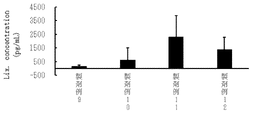
- FIG. 3-2 shows blood concentrations (pg/mL) of lixisenatide one hour after enteral administration of Formulation Examples 9 to 12 using lixisenatide as a poorly absorbed drug.
- FIG. 3-3 shows blood concentrations (pg/mL) of lixisenatide one hour after enteral administration of Formulation Examples 13 to 21 using lixisenatide as a poorly absorbed drug.
- FIG. 4 shows blood levels of semaglutide (pg/mL) one hour after enteral administration of Formulation Examples 1 to 3 and 22 to 23 using semaglutide as a poorly absorbed drug.
- FIG. 5 shows the fluorescence intensity of FITC-labeled dextran in serum after oral administration of Formulation Examples 1-5 and 24-26 using FTIC-labeled dextran as a poorly absorbed drug.
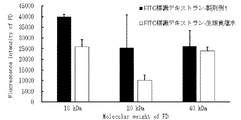
- FIG. 6 shows the fluorescence intensity of FITC-labeled dextrans in serum after oral administration of each Formulation Example 1 using three types of FTIC-labeled dextrans (10 kDa, 20 kDa and 40 kDa) with different average molecular weights as poorly absorbed drugs.
- the bar on the left indicates Formulation Example 1 and the bar on the right indicates the control.
- the present invention relates to a composition containing a poorly absorbable drug and an ionic liquid, and significantly improving the gastrointestinal absorbability of the poorly absorbable drug.
- the term "poorly-absorbable drug” refers to a drug with low biomembrane permeability, for example, a drug that is difficult to absorb from the gastrointestinal tract due to poor permeability of the mucus layer present on the gastrointestinal mucosa, and a drug that is present in the mucus layer.
- drugs that are difficult to be absorbed due to interactions with substances that are absorbed by the gastrointestinal tract drugs that are difficult to be absorbed from the gastrointestinal tract due to poor permeability through the gastrointestinal mucosa, drugs that are difficult to be absorbed orally because the gastrointestinal mucus layer interacts with the mucous membrane, or bile Examples include drugs that exhibit poor absorbability by forming an insoluble complex with an acid. In general, it refers to drugs that are difficult to deliver by oral administration.
- Poorly absorbable drugs used in the present invention include, for example, peptides, proteins, nucleic acids and derivatives thereof.
- examples thereof include insulin, calcitonin, GLP-1 agonists, angiotensin, vasopressin, desmopressin, LH-RH (luteinizing hormone releasing hormone), somatostatin, glucagon, oxytocin, gastrin, cyclosporin, somatomedin, secretin, h-ANP.
- the peptides and proteins include not only those of natural origin, but also pharmacologically active derivatives and analogues thereof.
- calcitonin targeted by the present invention includes not only naturally occurring products such as salmon calcitonin, human calcitonin, porcine calcitonin, eel calcitonin, and chicken calcitonin, but also analogs such as genetically modified products thereof.
- insulin includes not only human insulin, porcine insulin and bovine insulin, but also analogues thereof such as genetically modified products thereof.
- Nucleic acids are macromolecules and have a polyanion structure in which negatively charged phosphodiester structures are continuous, so that they are characterized by being difficult to permeate hydrophobic cell membranes.
- the nucleic acids include, for example, antisense nucleic acids such as fomivirsen, mipomersen, eteplirsen, nusinersen, RNA aptamer-PEGylated Macugen, SiRNA, decoy nucleic acids, CpG oligos, and derivatives thereof.
- GLP-1 agonists are analogs of glucagon-like peptide-1 (GLP-1), an incretin hormone secreted in the body, and act via the GLP-1 receptor to increase cAMP and glucose. Promotes insulin secretion in a dose-dependent manner.
- GLP-1 agonists include, for example, analogs such as semaglutide, dulaglutide, lixisenatide, exenatide, liraglutide, and genetically modified versions thereof. Poorly absorbable drugs also include compounds other than peptides, proteins, and nucleic acids that are difficult to administer orally, such as vancomycin, gentamicin, and remdesivir.
- the level of oral absorbability of the poorly absorbable drug according to the present invention should not be particularly limited. Drugs that do not exhibit sufficient pharmacological effects when administered orally due to low absorbability in the gastrointestinal tract can achieve expected pharmacological effects by increasing oral absorbability. In addition, for drugs that exhibit sufficient pharmacological effects when administered orally despite having low absorption in the gastrointestinal tract, increasing oral absorption can reduce the dosage of the drug and reduce side effects. can be reduced.
- the term "ionic liquid” refers to a room-temperature viscous liquid Bronsted salt formed from an anion and a cation and having a melting point of 100°C or less.
- Anions and cations can be prepared by mixing an equimolar amount or an excess amount of an organic anion such as an organic acid and an organic cation at room temperature or with heating. The excess amount of organic anion/or organic cation is preferably within 10-fold molar amount.
- organic acid is a general term for organic compounds exhibiting acidity.
- the carbon chains in organic acids may be straight or branched, saturated or unsaturated. Although those containing carboxylic acid are preferable, they may contain carboxyl groups, and may contain hydroxy groups in addition to carboxyl groups.
- Examples of organic acids include organic acids having 3 to 7 carbon atoms, and lactic acid, citric acid, tartaric acid, succinic acid, malic acid, and benzoic acid are preferred.
- a "cation” is a cationic organic compound, and examples thereof include organic amines, organic quaternary ammonium cations, basic amino acids, amino sugars and the like.
- organic cations include organic amines having 4 to 12 carbon atoms, preferably diethanolamine, triethanolamine, arginine, lysine, asparagine, meglumine, and trometamol. Diethanolamine, arginine, meglumine, and trometamol are particularly preferred.
- the ionic liquid of the present invention comprises a combination of the above organic anions and organic cations, but may be used as a mixed ionic liquid of two or more types (including ionic liquids where only the organic acid or organic amine compound is different). . Also, the ionic liquid may contain, for example, 1 to 10 times the equivalent amount of water.
- composition (formulation) of the present invention may be used in combination with a pharmaceutically acceptable carrier.
- carriers include excipients, coating agents, binders, extenders, disintegrants, surfactants, lubricants, diluents, dispersants, buffers, osmotic pressure adjusters, pH adjusters, emulsifiers, Preservatives, stabilizers, antioxidants, colorants, ultraviolet absorbers, moisturizers, thickeners, activity enhancers, corrigents, corrigents and the like.
- carriers include excipients, coating agents, binders, extenders, disintegrants, surfactants, lubricants, diluents, dispersants, buffers, osmotic pressure adjusters, pH adjusters, emulsifiers, Preservatives, stabilizers, antioxidants, colorants, ultraviolet absorbers, moisturizers, thickeners, activity enhancers, corrigents, corrigents and the like.
- Each of these carriers may be used alone
- oral pharmaceuticals can be obtained by using formulation techniques that deliver the drugs to the lower digestive tract, such as the jejunum, ileum, colon, and large intestine, without being degraded by digestive enzymes.
- a composition can be provided.
- formulation techniques include sustained release formulations, colonic release formulations, timed or pulsed release formulations, solid dosage forms such as tablets, coated tablets, granules, powders, capsules, as well as elixirs, syrups and suspensions. Liquid dosage forms such as suspensions are included.
- composition of the present invention can be in the form of a capsule having a water-soluble encapsulating agent.
- the water-soluble enveloping agent serves as a film of the capsule, and by sealing the liquid content with this water-soluble enveloping agent, the content can be formed into capsules by preventing the content liquid from being oxidized and maintaining its quality.
- a water-soluble polymer such as hydroxypropylcellulose, hydroxypropylmethylcellulose, and polyvinylpyrrolidone may be used.
- Lactic Acid Japanese Pharmacopoeia: Kenei Pharmaceutical Co., Ltd.
- Oleic acid Croda Japan Co., Ltd.
- Purified water Otsuka Pharmaceutical Factory Co., Ltd. Meglumine: Tokyo Chemical Industry Co., Ltd.
- Example 1 Preparation of formulation containing ionic liquid Each component was weighed so as to have the content (molar ratio) shown in Table 1 below, and mixed to prepare an ionic liquid formulation. Next, ionic liquid formulations of Formulation Examples 1 to 21 were prepared by dissolving a poorly absorbable drug in the prepared ionic liquid formulation. In addition, Comparative Example 1 was prepared by dissolving a poorly absorbable drug in physiological saline.
- ILs (A) is an ionic liquid with high water solubility
- ILs (B) is an ionic liquid with a higher fat solubility than ILs (A). Numbers in parentheses indicate the molar ratio of each reagent.
- Formulation Examples 1, 4 and 5 containing lixisenatide as a sparingly soluble drug were prepared. Specifically, each component was mixed at the content (molar ratio) shown in Table 1 above to prepare an ionic liquid formulation, 1.4 mg of lixisenatide was added to 0.5 mL of the prepared ionic liquid formulation, and the temperature was 65 ° C. Each formulation was prepared by heating at rt for 10 minutes to dissolve. When lixisenatide was mixed with the ionic liquid and confirmed under a microscope, the crystals of lixisenatide disappeared upon heating, and it was determined that lixisenatide was dissolved. As a comparative example, Comparative Example 1 was prepared by dissolving lixisenatide in physiological saline.
- the formulations of Formulation Examples 1, 4 and 5 were orally administered, and the blood concentration of lixisenatide was measured. Taking the AUC of the blood concentration curve of Comparative Example 1 as 100%, the relative BA (0-4h) of each formulation example was calculated. The results are shown in FIG. According to FIG. 1, in Formulation Examples 1 and 5, the blood concentration was high after 1 hour, indicating that lixisenatide was transferred to the blood by oral administration-ionic liquid. However, the blood transfer concentration of Formulation Example 4 was low. Due to the decomposition of lixisenatide in the stomach, the BA values were as low as Formulation Example 1 (0.046%), Formulation Example 4 (0.032%), and Formulation Example 5 (0.058%).
- Example 3 Evaluation of Blood Concentration in Enteral Administration of Poorly Absorbable Drugs
- BALB/c mice 5 weeks old, male (purchased from Japan SLC (Shizuoka, Japan)) were used. Specifically, after the BALB/c mice were fasted overnight, the abdomen was incised and lixisenatide was contained as a poorly soluble drug in the intestine between the duodenum and the jejunum, and the amount of lixisenatide was adjusted. 1 mg/kg, 10-fold dilution of the ionic liquid of Formulation Example 1) was administered enterally, and Comparative Example 1 containing lixisenatide as a sparingly soluble drug (10 ⁇ g/kg of lixisenatide) was administered subcutaneously.
- Example 4 Evaluation of blood migration in enteral administration of a poorly absorbable drug (1)
- Formulation Examples 1 to 21 containing lixisenatide as a sparingly soluble drug were prepared. Specifically, each component was mixed at the content (molar ratio) shown in Table 1 above to prepare an ionic liquid formulation, 1.4 mg of lixisenatide was added to 0.5 mL, and dissolved by heating at 65 ° C. for 10 minutes.
- Each formulation was prepared by Using the prepared formulations of Formulation Examples 1 to 21, the blood penetration of lixisenatide in enteral administration was comparatively examined.
- ICR mice 8-9 weeks old, male) (purchased from Japan SLC (Shizuoka, Japan)) were used.
- Formulation Examples 13 and 14 containing benzoic acid showed good blood penetration
- Formulation Examples 17 and 18 containing succinic acid also showed good results.
- the blood penetration of Formulation Example 4 consisting of only oleic acid was low. Based on the above results, enteral administration using an ionic liquid containing a certain amount of an organic acid significantly increased the blood concentration of poorly absorbable lixisenatide. Suggested to promote absorption.
- Example 5 Evaluation of blood migration in enteral administration of a poorly absorbable drug (2)
- semaglutide purchased from Scrum Co., Ltd.
- the blood penetration of the drug was evaluated according to the following method.
- Formulation Examples 1-3 and 22-23 containing lixisenatide as a sparingly soluble drug were prepared. Specifically, each component was mixed at the content (molar ratio) shown in Table 2 below to prepare an ionic liquid formulation, 1.44 mg of semaglutide was added to 0.5 mL of the prepared ionic liquid formulation, and the temperature was 65 ° C. Each formulation was prepared by heating at rt for 10 minutes to dissolve. When semaglutide was mixed with an ionic liquid and confirmed under a microscope, the crystals of semaglutide disappeared by heating, so it was determined that semaglutide was dissolved.
- ICR mice 8-9 weeks old, male (purchased from Japan SLC (Shizuoka, Japan)) were used. Specifically, after ICR mice were fasted overnight, their abdomens were incised, and preparation examples 1 to 3 and 22 to 23 in which the amount of semaglutide was adjusted were injected into the intestine between the duodenum and the jejunum (the amount of semaglutide was 0.00). 4 mg/kg) was administered enterally. One hour after administration, blood was collected from the inferior vena cava, added to an EDTA-containing tube and mixed well. Plasma was collected after centrifugation (4°C, 10 min, 3,000 xg) and stored frozen at -80°C. This plasma was quantified using the Semaglutide EIA Kit (Peninsula Laboratories International Inc., CA, USA).
- Example 6 Evaluation of blood migration in oral administration of a poorly absorbable drug (1)
- dextran which is a compound with low intestinal absorbability
- Dextran was purchased from Sigma-Aldrich (MO, USA) as FITC-labeled dextran (average molecular weight: 3000-5000).
- Formulation Examples 1-5 and 24-26 containing FITC-labeled dextran as a sparingly soluble drug were prepared. Specifically, each component is mixed at the content (molar ratio) shown in Table 3 below to prepare an ionic liquid formulation, and 2.5 mg of FITC-labeled dextran is added to 1 mL of the prepared ionic liquid formulation and dissolved. Thus, each formulation was prepared.
- BALB/c mice 7 weeks old, male (purchased from Japan SLC (Shizuoka, Japan)) were used. Specifically, BALB/c mice were fasted overnight, and then orally administered Formulation Examples 1 to 5 and 24 to 26 with adjusted amounts of FITC-labeled dextran (12.5 mg/kg as the amount of FITC-labeled dextran).
- FITC-labeled dextran 12.5 mg/kg as the amount of FITC-labeled dextran.
- blood was collected from the inferior vena cava, allowed to stand at room temperature for about 30 minutes, centrifuged (4°C, 15 min, 1,500 xg) to collect serum, and stored frozen at -80°C.
- the fluorescence intensity of FITC-labeled dextrans in serum was measured with a microplate reader (Tecan Infinite F200 pro, Tecan, Mannedorf, Switzerland) (excitation wavelength: 485 nm, fluorescence wavelength: 535 nm).
- Example 6 Evaluation of blood migration in oral administration of a poorly absorbable drug (2)
- three types of dextran having different average molecular weights were used to examine the blood penetration of the drug according to the following method.
- Dextrans with average molecular weights of 10,000 (10 kDa), 20,000 (20 kDa) and 40,000 (40 kDa) were purchased from Sigma-Aldrich (MO, USA).
- Formulation Example 1 was prepared containing dextran having an average molecular weight of 10 kDa, 20 kDa or 40 kDa as a sparingly soluble drug. Specifically, each component was mixed at the content (molar ratio) shown in Table 3 below to prepare an ionic liquid formulation, and FITC-labeled dextran was added to the prepared ionic liquid formulation to adjust the concentration to 0.125 M / Each formulation was prepared by adjusting to mL and dissolving by heating at 65° C. for 10 minutes. As a control, a preparation in which each dextran was dissolved in physiological saline was used.
- mice (7 weeks old, male) (purchased from Japan SLC (Shizuoka, Japan)) were used as experimental animals, and the fluorescence intensity of serum FITC-labeled dextran was measured according to the test method described in Example 5. did.
- a poorly absorbable drug that is difficult to administer orally can be prepared as an oral preparation by significantly improving its absorbability.
Landscapes
- Health & Medical Sciences (AREA)
- Chemical & Material Sciences (AREA)
- Life Sciences & Earth Sciences (AREA)
- Medicinal Chemistry (AREA)
- Pharmacology & Pharmacy (AREA)
- Epidemiology (AREA)
- Animal Behavior & Ethology (AREA)
- General Health & Medical Sciences (AREA)
- Public Health (AREA)
- Veterinary Medicine (AREA)
- Engineering & Computer Science (AREA)
- Chemical Kinetics & Catalysis (AREA)
- General Chemical & Material Sciences (AREA)
- Oil, Petroleum & Natural Gas (AREA)
- Inorganic Chemistry (AREA)
- Proteomics, Peptides & Aminoacids (AREA)
- Endocrinology (AREA)
- Zoology (AREA)
- Gastroenterology & Hepatology (AREA)
- Bioinformatics & Cheminformatics (AREA)
- Immunology (AREA)
- Pharmaceuticals Containing Other Organic And Inorganic Compounds (AREA)
- Medicinal Preparation (AREA)
Priority Applications (4)
| Application Number | Priority Date | Filing Date | Title |
|---|---|---|---|
| EP22752828.8A EP4292583A4 (en) | 2021-02-12 | 2022-02-10 | COMPOSITION WITH IMPROVED ABSORBABILITY OF A POORLY ABSORBABLE MEDICINAL PRODUCT |
| JP2022580687A JPWO2022173006A1 (https=) | 2021-02-12 | 2022-02-10 | |
| US18/276,937 US20240108578A1 (en) | 2021-02-12 | 2022-02-10 | Composition in which absorbability of poorly absorbable drug is improved |
| CN202280014688.1A CN116887815A (zh) | 2021-02-12 | 2022-02-10 | 难吸收性药物的吸收性得到改善的组合物 |
Applications Claiming Priority (2)
| Application Number | Priority Date | Filing Date | Title |
|---|---|---|---|
| JP2021021288 | 2021-02-12 | ||
| JP2021-021288 | 2021-02-12 |
Publications (1)
| Publication Number | Publication Date |
|---|---|
| WO2022173006A1 true WO2022173006A1 (ja) | 2022-08-18 |
Family
ID=82838345
Family Applications (1)
| Application Number | Title | Priority Date | Filing Date |
|---|---|---|---|
| PCT/JP2022/005412 Ceased WO2022173006A1 (ja) | 2021-02-12 | 2022-02-10 | 難吸収性薬物の吸収性が改善された組成物 |
Country Status (5)
| Country | Link |
|---|---|
| US (1) | US20240108578A1 (https=) |
| EP (1) | EP4292583A4 (https=) |
| JP (1) | JPWO2022173006A1 (https=) |
| CN (1) | CN116887815A (https=) |
| WO (1) | WO2022173006A1 (https=) |
Citations (6)
| Publication number | Priority date | Publication date | Assignee | Title |
|---|---|---|---|---|
| JP2007077170A (ja) | 1995-03-31 | 2007-03-29 | Emisphere Technolgies Inc | 活性剤デリバリー用化合物および組成物 |
| WO2008093686A1 (ja) * | 2007-01-29 | 2008-08-07 | Medrx Co., Ltd. | 非ステロイド系抗炎症薬と有機アミン化合物との塩とその用途 |
| JP2008184402A (ja) * | 2007-01-29 | 2008-08-14 | Medorekkusu:Kk | 外用剤用の低刺激性溶解助剤 |
| WO2014024896A1 (ja) * | 2012-08-08 | 2014-02-13 | 株式会社メドレックス | アゴメラチンを含有する貼付剤組成物 |
| WO2019009983A1 (en) | 2017-07-03 | 2019-01-10 | Qualcomm Incorporated | INTER-CHANNEL PREDICTION IN THE TIME DOMAIN |
| JP2020169246A (ja) * | 2019-04-02 | 2020-10-15 | 旭化成株式会社 | 高分子組成物 |
Family Cites Families (8)
| Publication number | Priority date | Publication date | Assignee | Title |
|---|---|---|---|---|
| US6743771B2 (en) * | 1995-12-29 | 2004-06-01 | Novactyl, Inc. | Methods and compositions for controlling protein assembly or aggregation |
| CN102046208B (zh) * | 2008-03-28 | 2014-07-02 | 安琪士摩奇株式会社 | 包含转录因子诱饵作为活性成分的用于外部应用的组合物 |
| JP5681883B2 (ja) * | 2009-03-27 | 2015-03-11 | 株式会社 メドレックス | 核酸を有効成分とする外用剤組成物 |
| CN102363633B (zh) * | 2011-11-16 | 2013-11-20 | 天津拓飞生物科技有限公司 | 胰高血糖素样肽-1突变体多肽及其制备方法、药物组合物和其应用 |
| HUE045479T2 (hu) * | 2012-06-20 | 2019-12-30 | Medrx Co Ltd | Tapadó preparátum készítmény, amely elõállítható gyógyszerhatóanyag, szerves oldószer, lipofil kenõcsalap és por összekeverésével |
| JP5550056B2 (ja) * | 2012-09-05 | 2014-07-16 | 株式会社 メドレックス | 外用剤用の低刺激性溶解助剤 |
| JP5816881B2 (ja) * | 2014-05-21 | 2015-11-18 | 株式会社 メドレックス | 核酸を有効成分とする外用剤組成物 |
| US11446253B2 (en) * | 2017-11-17 | 2022-09-20 | President And Fellows Of Harvard College | Ionic liquids for internal delivery |
-
2022
- 2022-02-10 EP EP22752828.8A patent/EP4292583A4/en active Pending
- 2022-02-10 WO PCT/JP2022/005412 patent/WO2022173006A1/ja not_active Ceased
- 2022-02-10 US US18/276,937 patent/US20240108578A1/en active Pending
- 2022-02-10 CN CN202280014688.1A patent/CN116887815A/zh active Pending
- 2022-02-10 JP JP2022580687A patent/JPWO2022173006A1/ja active Pending
Patent Citations (6)
| Publication number | Priority date | Publication date | Assignee | Title |
|---|---|---|---|---|
| JP2007077170A (ja) | 1995-03-31 | 2007-03-29 | Emisphere Technolgies Inc | 活性剤デリバリー用化合物および組成物 |
| WO2008093686A1 (ja) * | 2007-01-29 | 2008-08-07 | Medrx Co., Ltd. | 非ステロイド系抗炎症薬と有機アミン化合物との塩とその用途 |
| JP2008184402A (ja) * | 2007-01-29 | 2008-08-14 | Medorekkusu:Kk | 外用剤用の低刺激性溶解助剤 |
| WO2014024896A1 (ja) * | 2012-08-08 | 2014-02-13 | 株式会社メドレックス | アゴメラチンを含有する貼付剤組成物 |
| WO2019009983A1 (en) | 2017-07-03 | 2019-01-10 | Qualcomm Incorporated | INTER-CHANNEL PREDICTION IN THE TIME DOMAIN |
| JP2020169246A (ja) * | 2019-04-02 | 2020-10-15 | 旭化成株式会社 | 高分子組成物 |
Non-Patent Citations (2)
| Title |
|---|
| ANONYMOUS: "Medicinal product addition agent, liquid base and skin absorbability improvement of topical agent, public welfare corporation, general medical product", 3RD ANNUAL SURVEY REPORT, 8 January 2019 (2019-01-08), XP055958709, Retrieved from the Internet <URL:https://www.otc-spf.jp/wp-content/uploads/2021/01/h30b_06.pdf> [retrieved on 20220907] * |
| MAHER S ET AL., PHARMACEUTICS, vol. 11, 2019, pages 41 |
Also Published As
| Publication number | Publication date |
|---|---|
| US20240108578A1 (en) | 2024-04-04 |
| CN116887815A (zh) | 2023-10-13 |
| EP4292583A1 (en) | 2023-12-20 |
| EP4292583A4 (en) | 2024-12-18 |
| JPWO2022173006A1 (https=) | 2022-08-18 |
Similar Documents
| Publication | Publication Date | Title |
|---|---|---|
| US10335489B2 (en) | Injectable solution at pH 7 comprising at least one basal insulin the pi of which is between 5.8 and 8.5 and a substituted co-polyamino acid | |
| US8840915B2 (en) | Pharmaceutical compositions for sustained release delivery of peptides | |
| EP0944396B1 (en) | Compositions and methods for enhancing intestinal function | |
| EP2059260B1 (en) | Pharmaceutical compositions comprising hGH for oral delivery | |
| CN101912600B (zh) | 改善胰岛素在溶液中稳定性的方法 | |
| JP5675799B2 (ja) | 遅効性インスリン製剤 | |
| US20180271792A1 (en) | Oral delivery of physiologically active substances | |
| TW200936168A (en) | Compositions for sustained release delivery of proteins or peptides | |
| WO2018060735A1 (en) | Novel formulations | |
| US20130157939A1 (en) | Compositions for gastric delivery of active agents | |
| CN112771073A (zh) | 胰高血糖素样肽2(glp-2)类似物的制剂 | |
| EP4026566B1 (en) | Oral pharmaceutical composition comprising teriparatide and method for preparing same | |
| WO2020208541A1 (en) | Composition comprising glp-1 analogue | |
| JP2024525779A (ja) | Glp-1類似体を含有する経口投与剤形組成物 | |
| WO2022173006A1 (ja) | 難吸収性薬物の吸収性が改善された組成物 | |
| US20240148678A1 (en) | Sustained release injectable therapeutic formulations using aprotic polar solvents | |
| AU2013368990A1 (en) | Pharmaceutical composition | |
| Saha et al. | Hundred Years of Insulin: The Possibility of Development of Oral Dosage Form | |
| HK40123413A (zh) | 在非质子极性溶剂中的稳定的左甲状腺素组合物 | |
| WO2021198694A1 (en) | Novel formulations | |
| AU2011294739A1 (en) | Compositions for gastric delivery of active agents |
Legal Events
| Date | Code | Title | Description |
|---|---|---|---|
| 121 | Ep: the epo has been informed by wipo that ep was designated in this application |
Ref document number: 22752828 Country of ref document: EP Kind code of ref document: A1 |
|
| WWE | Wipo information: entry into national phase |
Ref document number: 2022580687 Country of ref document: JP |
|
| WWE | Wipo information: entry into national phase |
Ref document number: 18276937 Country of ref document: US Ref document number: 202280014688.1 Country of ref document: CN |
|
| WWE | Wipo information: entry into national phase |
Ref document number: 2022752828 Country of ref document: EP |
|
| NENP | Non-entry into the national phase |
Ref country code: DE |
|
| ENP | Entry into the national phase |
Ref document number: 2022752828 Country of ref document: EP Effective date: 20230912 |