WO2022168155A1 - トラヒックエンジニアリング装置、トラヒックエンジニアリング方法およびトラヒックエンジニアリングプログラム - Google Patents
トラヒックエンジニアリング装置、トラヒックエンジニアリング方法およびトラヒックエンジニアリングプログラム Download PDFInfo
- Publication number
- WO2022168155A1 WO2022168155A1 PCT/JP2021/003716 JP2021003716W WO2022168155A1 WO 2022168155 A1 WO2022168155 A1 WO 2022168155A1 JP 2021003716 W JP2021003716 W JP 2021003716W WO 2022168155 A1 WO2022168155 A1 WO 2022168155A1
- Authority
- WO
- WIPO (PCT)
- Prior art keywords
- traffic engineering
- flows
- information
- tunnel
- header
- Prior art date
- Legal status (The legal status is an assumption and is not a legal conclusion. Google has not performed a legal analysis and makes no representation as to the accuracy of the status listed.)
- Ceased
Links
Images



Classifications
-
- H—ELECTRICITY
- H04—ELECTRIC COMMUNICATION TECHNIQUE
- H04L—TRANSMISSION OF DIGITAL INFORMATION, e.g. TELEGRAPHIC COMMUNICATION
- H04L47/00—Traffic control in data switching networks
- H04L47/10—Flow control; Congestion control
- H04L47/12—Avoiding congestion; Recovering from congestion
- H04L47/125—Avoiding congestion; Recovering from congestion by balancing the load, e.g. traffic engineering
Definitions
- the present invention relates to a traffic engineering device, a traffic engineering method and a traffic engineering program.
- TE traffic engineering
- TE is not performed based on information acquired by the device IF at the congestion point in the core network.
- the present invention has been made in view of the above, and aims to efficiently solve congestion by suppressing the impact on users in the TE of the tunnel.
- a traffic engineering device extracts predetermined information from the outer header and inner header of tunneled packets passing through a network device in which congestion has occurred.
- FIG. 1 is a schematic diagram illustrating a schematic configuration of a TE device.
- FIG. 2 is a diagram for explaining the processing of the TE equipment.
- FIG. 3 is a diagram for explaining the processing of the evaluation unit;
- FIG. 4 is a diagram for explaining the processing of the evaluation unit;
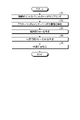
- FIG. 5 is a flow chart showing the TE processing procedure.
- FIG. 6 is a diagram illustrating a computer that executes the TE program.
- FIG. 1 is a schematic diagram illustrating a schematic configuration of a TE device 10. As shown in FIG. Also, FIG. 2 is a diagram for explaining the processing of the TE device.
- the TE device 10 is implemented by a general-purpose computer such as a personal computer, and includes a communication control section 13 , a storage section 14 and a control section 15 .
- the communication control unit 13 is realized by a NIC (Network Interface Card) or the like, and controls communication between an external device such as a server and the control unit 15 via a network.
- the communication control unit 13 includes network devices such as a core router (CR) in the core network, an edge router (ER) that performs tunneling processing, and other operation systems (OpS) such as a server that manages user contract information. and controls communication with the control unit 15 .
- CR core router
- ER edge router
- OpS operation systems
- the storage unit 14 is realized by semiconductor memory devices such as RAM (Random Access Memory) and flash memory, or storage devices such as hard disks and optical disks, and stores packet headers and attributes used in the TE processing described later.
- Information 14a, a TE execution order flow list 14b generated by TE processing, and the like are stored.
- the storage unit 14 may be configured to communicate with the control unit 15 via the communication control unit 13 .
- the control unit 15 is implemented using a CPU (Central Processing Unit), NP (Network Processor), FPGA (Field Programmable Gate Array), etc., and executes a processing program stored in memory. Thereby, the control unit 15 functions as an acquisition unit 15a, an extraction unit 15b, an evaluation unit 15c, and an instruction unit 15d, as illustrated in FIG. Note that these functional units may be implemented in different hardware.
- the extraction unit 15b may be implemented in the format conversion device
- the evaluation unit 15c may be implemented in the collector
- the instruction unit 15d may be implemented in the controller.
- the control unit 15 may include other functional units.
- the acquisition unit 15a performs packet header sampling from CR1 where congestion occurs. Specifically, as shown in FIG. 2, the acquisition unit 15a acquires an outer header, an inner header, and an ether header from which the payload of the packet is removed.
- the acquisition unit 15a acquires the attribute information 14a from other OpS 3 such as the user contract information management server and stores it in the storage unit 14.
- the attribute information 14a includes, for example, communication bandwidth information, quality request information such as port numbers, ToS (Type of Service) values, CoS (Class of Service) values, destination SIDs of important users, and VPN label values. and other important communications.
- a port number can identify whether a flow is delay sensitive or not. Also, it is possible to identify whether the QoS is high or not by the ToS value and the CoS value.
- the instruction unit 15d which will be described later, periodically monitors congestion in the device IF of CR1 by telemetry or the like.
- the TE device 10 performs processing on CR1 where congestion has occurred.
- the extraction unit 15b extracts predetermined information from the outer header and inner header of the tunneled packet passing through CR1 in which congestion has occurred. For example, the extraction unit 15b extracts information including the 5-tuple of the outer header and the 5-tuple of the inner header of the packet passing through the device IF of CR1 in which congestion has occurred. Specifically, the extraction unit 15b converts the format of the sampled headers and extracts the 5-tuple of the outer header and the 5-tuple of the inner header of the tunnel according to the flow statistics (NetFlow).
- NetworkFlow flow statistics
- the evaluation unit 15c evaluates the order of TE targets based on the attribute information 14a of the subdivided flows in the tunnel with reference to the extracted predetermined information. For example, the evaluation unit 15c, based on the attribute information 14a including one or more of communication bandwidth information, information indicating quality requirements, and information indicating important communication, TE of fine-grained flows subdivided Evaluate execution order.
- the evaluation unit 15c also generates a TE execution order flow list 14b in which the evaluated fine-grained flows are arranged in the order of TE targets.
- the evaluation unit 15c subdivides the flow in the tunnel, for example, in units of 5-tuple of the outer header and 5-tuple of the inner header.
- fine-grained flow for example, for each destination IP unit of the inner header or each 5-tuple unit of the outer header, candidate flows for TE processing to be described later (hereinafter, TE target (referred to as a flow candidate).
- the evaluation unit 15c refers to the attribute information 14a, evaluates the TE target flow candidate from a plurality of viewpoints such as the size of the communication band, the level of quality requirements, and whether or not it is important communication, and determines the TE execution order flow list. 14b.
- the larger the band the fewer times it is possible to terminate the TE.
- the larger the number of fine-grained flows with low quality requirements such as applications that are not delay-sensitive and services that do not have high QoS, the more fine-grained flows with high quality requirements less likely to influence.
- the impact will be small.
- the evaluation unit 15c determines the TE execution order for the TE target flow candidates by considering these multiple viewpoints in a predetermined order of priority.
- FIGS. 3 and 4 are diagrams for explaining the processing of the evaluation unit.
- FIG. 3 illustrates an algorithm for generating a TE execution order flow list of candidate TE target flows using a multi-objective optimization technique.
- the evaluation unit 15c outputs a TE execution order flow list L when a set S of TE target flow candidates is input as a viewpoint key with priority among a plurality of viewpoints. Specifically, Pareto solutions for a plurality of viewpoints are calculated, and TE target flow candidates are selected from a set S of Pareto solutions according to a priority viewpoint, thereby generating a TE execution order flow list.
- FIG. 4 exemplifies a method of determining the TE execution order using the Pareto solution of the multi-objective optimization method for the two viewpoints of bandwidth and quality requirements.
- the larger the band the fewer times the TE can be terminated.
- the more fine-grained flows included in the TE target flow candidates the more fine-grained flows with low quality requirements, the less likely it is to affect the fine-grained flows with high quality requirements.
- TE should be executed in the order of points 1 ⁇ 2 ⁇ 3 ⁇ 4 ⁇ 5 ⁇ 6 ⁇ 7 that represent the evaluation values of the TE target flow candidates. I understand. On the other hand, it can be seen that TE should be executed in the order of points 3 ⁇ 2 ⁇ 1 ⁇ 5 ⁇ 4 ⁇ 7 ⁇ 6 when priority is given to the viewpoint of quality requirements.
- the evaluation unit 15c uses the multi-objective optimization method to determine the TE execution order from multiple points of view. Therefore, the TE device 10 can generate the TE execution order flow list 14b according to the operational policy.
- the instruction unit 15d instructs ER2 to execute TE for each fine-grained flow in the order of the TE execution order flow list 14b until the congestion of CR1 is resolved. Specifically, the instruction unit 15d monitors congestion in the device IF of CR1 by telemetry or the like. Then, until the congestion of CR1 is resolved, the instruction to ER2 of TE for the TE target flow candidate is repeated in the order of the TE execution order flow list 14b. As a result, the TE device 10 can reduce the impact on the user and efficiently solve the congestion at an early stage.
- FIG. 5 is a flow chart showing the TE processing procedure. The flowchart of FIG. 5 is started, for example, when the TE device 10 detects CR congestion.
- the acquisition unit 15a performs packet header sampling from CR1 in which congestion occurs, and acquires an outer header and an inner header (step S1).
- the extraction unit 15b extracts information including the 5-tuple of the outer header and the 5-tuple of the inner header (step S2).
- the evaluation unit 15c evaluates the order in which the fine-grained flows in the tunnel subdivided by referring to the extracted information are targeted for TE based on the attribute information 14a of the fine-grained flows (Step S3). .
- the evaluation unit 15c also generates a TE execution order flow list 14b in which the evaluated fine-grained flows are arranged in the order of TE targets (step S4).
- the evaluation unit 15c subdivides the flow in the tunnel in units of 5-tuple of the outer header and 5-tuple of the inner header. Also, the evaluation unit 15c collects the subdivided fine-grained flows, for example, in units of destination IPs in the inner header or in units of 5 tuples in the outer header, and sets them as TE target flow candidates.
- the evaluation unit 15c refers to the attribute information 14a and evaluates the TE execution order of the TE target flow candidates from multiple viewpoints such as the size of the communication band, the level of quality requirements, and whether or not the communication is important. Then, the evaluation unit 15c determines the TE execution order for the TE target flow candidates, and generates the TE execution order flow list 14b.
- the instruction unit 15d instructs ER2 to execute TE for each fine-grained flow in the order of the TE execution order flow list 14b until the congestion of CR1 is resolved (step S5). This completes a series of TE processing.
- the extraction unit 15b extracts predetermined information from the outer header and inner header of the tunneled packet passing through CR1 in which congestion has occurred.
- the evaluation unit 15c evaluates the order in which the fine-grained flows in the tunnel subdivided by referring to the extracted predetermined information are targeted for traffic engineering based on the attribute information 14a of the fine-grained flows.
- the evaluation unit 15c generates a TE execution order flow list 14b in which the evaluated fine-grained flows are arranged in the order of TE targets. Further, the instruction unit 15d instructs ER2 to execute TE for each fine-grained flow in the order of the TE execution order flow list 14b until the congestion of CR1 is resolved.
- the TE device 10 can preferentially target fine-grained flows that have a small impact on users, fine-grained flows that have a large bandwidth, and the like among fine-grained flows obtained by subdividing a tunnel. Become. Therefore, according to the TE device 10, it is possible to suppress the impact on the user in the TE of the tunnel and to solve the congestion efficiently and early.
- the extraction unit 15b also extracts information including the 5-tuple of the outer header and the 5-tuple of the inner header.
- the evaluation unit 15c subdivides the flow in the tunnel in units of 5-tuple of the outer header and 5-tuple of the inner header. This enables the TE device 10 to effectively segment flows in the tunnel and extract TE target flow candidates.
- the evaluation unit 15c evaluates the fine-grained flow based on the attribute information 14a including two or more of communication band information, information indicating quality requirements, and information indicating important communication.
- the TE device 10 can preferentially target fine-grained flows that do not include fine-grained flows with large bandwidths, fine-grained flows with high quality requirements, and fine-grained flows of important users as targets for TE. .
- the TE device 10 it is possible to efficiently execute TE according to the operational policy.
- the TE device 10 can be implemented by installing a TE program that executes the above-described TE processing as package software or online software on a desired computer.
- the information processing device can function as the TE device 10 by causing the information processing device to execute the TE program.
- information processing devices include mobile communication terminals such as smartphones, mobile phones and PHS (Personal Handyphone Systems), and slate terminals such as PDAs (Personal Digital Assistants).
- the functions of the TE device 10 may be implemented in a cloud server.
- FIG. 6 is a diagram showing an example of a computer that executes the TE program.
- Computer 1000 includes, for example, memory 1010 , CPU 1020 , hard disk drive interface 1030 , disk drive interface 1040 , serial port interface 1050 , video adapter 1060 and network interface 1070 . These units are connected by a bus 1080 .
- the memory 1010 includes a ROM (Read Only Memory) 1011 and a RAM 1012 .
- the ROM 1011 stores a boot program such as BIOS (Basic Input Output System).
- BIOS Basic Input Output System
- Hard disk drive interface 1030 is connected to hard disk drive 1031 .
- Disk drive interface 1040 is connected to disk drive 1041 .
- a removable storage medium such as a magnetic disk or an optical disk is inserted into the disk drive 1041, for example.
- a mouse 1051 and a keyboard 1052 are connected to the serial port interface 1050, for example.
- a display 1061 is connected to the video adapter 1060 .
- the hard disk drive 1031 stores an OS 1091, application programs 1092, program modules 1093 and program data 1094, for example. Each piece of information described in the above embodiment is stored in the hard disk drive 1031 or the memory 1010, for example.
- the TE program is stored in the hard disk drive 1031 as a program module 1093 in which commands to be executed by the computer 1000 are written, for example.
- the hard disk drive 1031 stores a program module 1093 that describes each process executed by the TE device 10 described in the above embodiment.
- Data used for information processing by the TE program is stored as program data 1094 in the hard disk drive 1031, for example. Then, the CPU 1020 reads out the program module 1093 and the program data 1094 stored in the hard disk drive 1031 to the RAM 1012 as necessary, and executes each procedure described above.
- program module 1093 and program data 1094 related to the TE program are not limited to being stored in the hard disk drive 1031. For example, they are stored in a removable storage medium and read by the CPU 1020 via the disk drive 1041 or the like. may be Alternatively, the program module 1093 and program data 1094 related to the TE program are stored in another computer connected via a network such as LAN (Local Area Network) or WAN (Wide Area Network), and via network interface 1070 It may be read by CPU 1020 .
- LAN Local Area Network
- WAN Wide Area Network
Landscapes
- Engineering & Computer Science (AREA)
- Computer Networks & Wireless Communication (AREA)
- Signal Processing (AREA)
- Data Exchanges In Wide-Area Networks (AREA)
Priority Applications (3)
| Application Number | Priority Date | Filing Date | Title |
|---|---|---|---|
| PCT/JP2021/003716 WO2022168155A1 (ja) | 2021-02-02 | 2021-02-02 | トラヒックエンジニアリング装置、トラヒックエンジニアリング方法およびトラヒックエンジニアリングプログラム |
| US18/273,242 US20240121193A1 (en) | 2021-02-02 | 2021-02-02 | Traffic engineering device, traffic engineering method, and traffic engineering program |
| JP2022579177A JP7548339B2 (ja) | 2021-02-02 | 2021-02-02 | トラヒックエンジニアリング装置、トラヒックエンジニアリング方法およびトラヒックエンジニアリングプログラム |
Applications Claiming Priority (1)
| Application Number | Priority Date | Filing Date | Title |
|---|---|---|---|
| PCT/JP2021/003716 WO2022168155A1 (ja) | 2021-02-02 | 2021-02-02 | トラヒックエンジニアリング装置、トラヒックエンジニアリング方法およびトラヒックエンジニアリングプログラム |
Publications (1)
| Publication Number | Publication Date |
|---|---|
| WO2022168155A1 true WO2022168155A1 (ja) | 2022-08-11 |
Family
ID=82741239
Family Applications (1)
| Application Number | Title | Priority Date | Filing Date |
|---|---|---|---|
| PCT/JP2021/003716 Ceased WO2022168155A1 (ja) | 2021-02-02 | 2021-02-02 | トラヒックエンジニアリング装置、トラヒックエンジニアリング方法およびトラヒックエンジニアリングプログラム |
Country Status (3)
| Country | Link |
|---|---|
| US (1) | US20240121193A1 (https=) |
| JP (1) | JP7548339B2 (https=) |
| WO (1) | WO2022168155A1 (https=) |
Families Citing this family (1)
| Publication number | Priority date | Publication date | Assignee | Title |
|---|---|---|---|---|
| JP7605231B2 (ja) * | 2021-02-12 | 2024-12-24 | 日本電信電話株式会社 | 設計装置、設計方法及び設計プログラム |
Citations (4)
| Publication number | Priority date | Publication date | Assignee | Title |
|---|---|---|---|---|
| JP2013179491A (ja) * | 2012-02-28 | 2013-09-09 | Nippon Telegr & Teleph Corp <Ntt> | ネットワーク品質監視装置及びネットワーク品質監視方法 |
| JP2017143410A (ja) * | 2016-02-10 | 2017-08-17 | 池上通信機株式会社 | 通信経路制御装置、通信経路制御方法及び通信経路制御プログラム |
| JP2019186714A (ja) * | 2018-04-09 | 2019-10-24 | 防衛装備庁長官 | Sdn用統制装置、通信システム、プログラム、及び輻輳対処方法 |
| JP2020174257A (ja) * | 2019-04-09 | 2020-10-22 | 日本電信電話株式会社 | 登録システム、登録方法及び登録プログラム |
Family Cites Families (21)
| Publication number | Priority date | Publication date | Assignee | Title |
|---|---|---|---|---|
| US6788686B1 (en) * | 1999-11-30 | 2004-09-07 | Lucent Technologies Inc. | Method of maintaining packet order in multipath transmission systems having non-uniform traffic splitting |
| JP2003319009A (ja) * | 2002-04-24 | 2003-11-07 | Communication Research Laboratory | データ通信制御方法、データ通信制御システム、データ送出機構、データ通信制御プログラム、およびデータ通信制御プログラム記録媒体 |
| US7206861B1 (en) * | 2002-07-29 | 2007-04-17 | Juniper Networks, Inc. | Network traffic distribution across parallel paths |
| US20080291919A1 (en) * | 2007-05-25 | 2008-11-27 | Futurewei Technologies, Inc. | Traffic Distribution and Bandwidth Management for Link Aggregation |
| US8189479B1 (en) * | 2008-05-30 | 2012-05-29 | Dust Networks, Inc. | Congestion control for wireless sensor networks |
| US9008082B2 (en) * | 2009-12-07 | 2015-04-14 | Telefonaktiebolaget L M Ericsson (Publ) | Handling data packets received at a routing node |
| US9632977B2 (en) * | 2013-03-13 | 2017-04-25 | Nxp Usa, Inc. | System and method for ordering packet transfers in a data processor |
| US9515933B2 (en) * | 2014-05-30 | 2016-12-06 | International Business Machines Corporation | Virtual network data control with network interface card |
| KR20160091118A (ko) * | 2015-01-23 | 2016-08-02 | 한국전자통신연구원 | 멀티 호밍 기반의 네트워크를 통한 패킷 전송 장치 및 방법 |
| WO2016129078A1 (ja) * | 2015-02-12 | 2016-08-18 | 三菱電機株式会社 | 経路選択装置及び経路選択プログラム |
| US10291680B2 (en) * | 2015-12-23 | 2019-05-14 | Board Of Trustees Of Michigan State University | Streaming media using erasable packets within internet queues |
| US10498654B2 (en) * | 2015-12-28 | 2019-12-03 | Amazon Technologies, Inc. | Multi-path transport design |
| US10666458B2 (en) * | 2016-09-30 | 2020-05-26 | Huawei Technologies Co., Ltd | Method and apparatus for data transmission involving tunneling in wireless communication networks |
| US10812385B2 (en) * | 2017-01-26 | 2020-10-20 | Hitachi, Ltd. | User-driven network traffic shaping |
| DE112020002491T5 (de) * | 2019-05-23 | 2022-04-28 | Hewlett Packard Enterprise Development Lp | System und verfahren zur erleichterung der dynamischen befehlsverwaltung in einer netzwerkschnittstellensteuerung (nic) |
| US11201839B2 (en) * | 2019-10-17 | 2021-12-14 | Charter Communications Operating, Llc | Method and apparatus for transporting data traffic using classifications |
| US11641305B2 (en) * | 2019-12-16 | 2023-05-02 | Vmware, Inc. | Network diagnosis in software-defined networking (SDN) environments |
| CN111416779B (zh) * | 2020-03-27 | 2022-04-19 | 西安电子科技大学 | 基于时限的互联网业务队列调度方法 |
| WO2021244743A1 (en) * | 2020-06-04 | 2021-12-09 | Telefonaktiebolaget Lm Ericsson (Publ) | Methods, apparatus and machine-readable media related to routing in a communication network |
| US11564123B2 (en) * | 2020-09-30 | 2023-01-24 | Kabushiki Kaisha Toshiba | Virtual time-sensitive networking bridge over a 5G wireless system |
| US11736413B2 (en) * | 2021-01-15 | 2023-08-22 | Vmware, Inc. | Programmable virtual network interface controller (VNIC) |
-
2021
- 2021-02-02 JP JP2022579177A patent/JP7548339B2/ja active Active
- 2021-02-02 US US18/273,242 patent/US20240121193A1/en not_active Abandoned
- 2021-02-02 WO PCT/JP2021/003716 patent/WO2022168155A1/ja not_active Ceased
Patent Citations (4)
| Publication number | Priority date | Publication date | Assignee | Title |
|---|---|---|---|---|
| JP2013179491A (ja) * | 2012-02-28 | 2013-09-09 | Nippon Telegr & Teleph Corp <Ntt> | ネットワーク品質監視装置及びネットワーク品質監視方法 |
| JP2017143410A (ja) * | 2016-02-10 | 2017-08-17 | 池上通信機株式会社 | 通信経路制御装置、通信経路制御方法及び通信経路制御プログラム |
| JP2019186714A (ja) * | 2018-04-09 | 2019-10-24 | 防衛装備庁長官 | Sdn用統制装置、通信システム、プログラム、及び輻輳対処方法 |
| JP2020174257A (ja) * | 2019-04-09 | 2020-10-22 | 日本電信電話株式会社 | 登録システム、登録方法及び登録プログラム |
Also Published As
| Publication number | Publication date |
|---|---|
| JP7548339B2 (ja) | 2024-09-10 |
| US20240121193A1 (en) | 2024-04-11 |
| JPWO2022168155A1 (https=) | 2022-08-11 |
Similar Documents
| Publication | Publication Date | Title |
|---|---|---|
| US9967188B2 (en) | Network traffic flow management using machine learning | |
| JP5943331B2 (ja) | サービスプロセス制御方法およびネットワークデバイス | |
| US20150156086A1 (en) | Behavioral network intelligence system and method thereof | |
| EP2820808B1 (en) | Compound masking and entropy for data packet classification using tree-based binary pattern matching | |
| WO2012127894A1 (ja) | ネットワークシステム、及びスイッチ方法 | |
| US20180123911A1 (en) | Verify service level agreement compliance of network function chains based on a stateful forwarding graph | |
| US12021755B2 (en) | Classification and forwarding of network traffic flows | |
| JP6290849B2 (ja) | トラフィック解析システムおよびトラフィック解析方法 | |
| US11115427B2 (en) | Monitoring device, monitoring method, and monitoring program | |
| CN111953552B (zh) | 数据流的分类方法和报文转发设备 | |
| WO2017133587A1 (zh) | 用于通信网络中的流量工程的方法和控制器 | |
| US20110110220A1 (en) | System, apparatus and method for removing unwanted information from captured data packets | |
| Jia et al. | Reducing and balancing flow table entries in software-defined networks | |
| WO2016169121A1 (zh) | 一种链路分析的方法、设备及系统 | |
| KR101984478B1 (ko) | Sdn 기반의 동적 네트워크 트래픽 분석을 통한 데이터 전송 경로 결정 방법 및 장치 | |
| JP7548339B2 (ja) | トラヒックエンジニアリング装置、トラヒックエンジニアリング方法およびトラヒックエンジニアリングプログラム | |
| CN109361547A (zh) | 一种网络切片链路部署方法与装置 | |
| Zhang et al. | INT-balance: In-band network-wide telemetry with balanced monitoring path planning | |
| CN104009943B (zh) | Lldp报文传输方法及dcb设备 | |
| CN116781498A (zh) | 一种流量分析系统、方法以及相关设备 | |
| US11184282B1 (en) | Packet forwarding in a network device | |
| CN120166074A (zh) | 流量调度方法、装置、电子设备及程序产品 | |
| Novianto et al. | Comparative Analysis of Performance Between Ecmp and Nth Methods in Implementation of Microtic-Based Dual Link Load Balancing Techniques | |
| JP6407092B2 (ja) | 負荷分散装置、負荷分散方法及びプログラム | |
| CN119300115A (zh) | 基于Wifi-Direct网络的数据传输方法及相关设备 |
Legal Events
| Date | Code | Title | Description |
|---|---|---|---|
| ENP | Entry into the national phase |
Ref document number: 2022579177 Country of ref document: JP Kind code of ref document: A |
|
| WWE | Wipo information: entry into national phase |
Ref document number: 18273242 Country of ref document: US |
|
| NENP | Non-entry into the national phase |
Ref country code: DE |
|
| 122 | Ep: pct application non-entry in european phase |
Ref document number: 21924552 Country of ref document: EP Kind code of ref document: A1 |