WO2022157873A1 - 情報処理装置、情報処理方法及び情報処理プログラム - Google Patents
情報処理装置、情報処理方法及び情報処理プログラム Download PDFInfo
- Publication number
- WO2022157873A1 WO2022157873A1 PCT/JP2021/001949 JP2021001949W WO2022157873A1 WO 2022157873 A1 WO2022157873 A1 WO 2022157873A1 JP 2021001949 W JP2021001949 W JP 2021001949W WO 2022157873 A1 WO2022157873 A1 WO 2022157873A1
- Authority
- WO
- WIPO (PCT)
- Prior art keywords
- user
- solution
- knowledge
- unit
- concept
- Prior art date
- Legal status (The legal status is an assumption and is not a legal conclusion. Google has not performed a legal analysis and makes no representation as to the accuracy of the status listed.)
- Ceased
Links
Images








Classifications
-
- G—PHYSICS
- G06—COMPUTING OR CALCULATING; COUNTING
- G06Q—INFORMATION AND COMMUNICATION TECHNOLOGY [ICT] SPECIALLY ADAPTED FOR ADMINISTRATIVE, COMMERCIAL, FINANCIAL, MANAGERIAL OR SUPERVISORY PURPOSES; SYSTEMS OR METHODS SPECIALLY ADAPTED FOR ADMINISTRATIVE, COMMERCIAL, FINANCIAL, MANAGERIAL OR SUPERVISORY PURPOSES, NOT OTHERWISE PROVIDED FOR
- G06Q10/00—Administration; Management
- G06Q10/06—Resources, workflows, human or project management; Enterprise or organisation planning; Enterprise or organisation modelling
- G06Q10/063—Operations research, analysis or management
- G06Q10/0637—Strategic management or analysis, e.g. setting a goal or target of an organisation; Planning actions based on goals; Analysis or evaluation of effectiveness of goals
-
- G—PHYSICS
- G06—COMPUTING OR CALCULATING; COUNTING
- G06F—ELECTRIC DIGITAL DATA PROCESSING
- G06F16/00—Information retrieval; Database structures therefor; File system structures therefor
- G06F16/90—Details of database functions independent of the retrieved data types
- G06F16/903—Querying
- G06F16/9035—Filtering based on additional data, e.g. user or group profiles
-
- G—PHYSICS
- G06—COMPUTING OR CALCULATING; COUNTING
- G06F—ELECTRIC DIGITAL DATA PROCESSING
- G06F16/00—Information retrieval; Database structures therefor; File system structures therefor
- G06F16/90—Details of database functions independent of the retrieved data types
- G06F16/903—Querying
- G06F16/9038—Presentation of query results
-
- G—PHYSICS
- G06—COMPUTING OR CALCULATING; COUNTING
- G06Q—INFORMATION AND COMMUNICATION TECHNOLOGY [ICT] SPECIALLY ADAPTED FOR ADMINISTRATIVE, COMMERCIAL, FINANCIAL, MANAGERIAL OR SUPERVISORY PURPOSES; SYSTEMS OR METHODS SPECIALLY ADAPTED FOR ADMINISTRATIVE, COMMERCIAL, FINANCIAL, MANAGERIAL OR SUPERVISORY PURPOSES, NOT OTHERWISE PROVIDED FOR
- G06Q10/00—Administration; Management
- G06Q10/06—Resources, workflows, human or project management; Enterprise or organisation planning; Enterprise or organisation modelling
-
- G—PHYSICS
- G06—COMPUTING OR CALCULATING; COUNTING
- G06Q—INFORMATION AND COMMUNICATION TECHNOLOGY [ICT] SPECIALLY ADAPTED FOR ADMINISTRATIVE, COMMERCIAL, FINANCIAL, MANAGERIAL OR SUPERVISORY PURPOSES; SYSTEMS OR METHODS SPECIALLY ADAPTED FOR ADMINISTRATIVE, COMMERCIAL, FINANCIAL, MANAGERIAL OR SUPERVISORY PURPOSES, NOT OTHERWISE PROVIDED FOR
- G06Q30/00—Commerce
- G06Q30/02—Marketing; Price estimation or determination; Fundraising
Definitions
- the present disclosure relates to techniques for managing devices and solutions provided by the devices.
- Devices such as consumer electronics are typically dedicated devices that provide a specific solution. Many such devices are equipped with sensors and/or actuators. Such devices use sensors to measure the state of the real environment, and use actuators to interact with the real environment. Sensors perceive the real environment, and actuators control the real environment. Therefore, the application of sensors and actuators is not limited to any particular solution.
- infrared sensors mounted on air conditioners are used to measure temperature.
- the infrared sensor also functions as a human sensor, the infrared sensor can be used for solutions such as intrusion detection and monitoring.
- IoT Internet of Things
- devices are interconnected and share sensor values. Therefore, it is desirable that the device provides a universal solution.
- Patent Document 1 in order to recommend a solution, an ontology is used to define a data structure for user values (purposes, happy things, unhappy things) and requirements (manufacturer's point of view, user's point of view, etc.). A method is disclosed for recommending a solution through the data structure from attribute information, etc., and explaining the solution.
- Patent Document 1 recommends a solution by semantically linking the user's value to the solution.
- the technology described in Patent Document 1 does not take into consideration the device used by the user and the solution provided by the device in making the recommendation. For this reason, the technique disclosed in Patent Document 1 cannot recommend devices and/or solutions related to the device used by the user. Or there is a problem that a solution cannot be recommended.
- the main purpose of this disclosure is to solve such problems. Specifically, the main purpose of the present disclosure is to search for equipment and/or solutions related to the equipment used by the user and/or the solutions provided by the equipment used by the user. .
- the information processing device is A plurality of devices, a plurality of solutions provided by the plurality of devices, and a plurality of linkage concepts that are a plurality of concepts that link the plurality of devices and the plurality of solutions are shown, and each device has one or more a definition information management unit that manages definition information associated with the linkage concept of the solution, and in which each solution is associated with one or more linkage concepts; Any device indicated in the definition information, wherein the device used by the user is indicated as the user device, and any solution indicated in the definition information, wherein the solution provided by the user device is A user who manages user information which is indicated as a user equipment solution and which is any of the linkage concepts indicated in the definition information, wherein the linkage concept for linking the user equipment and the user equipment solution is indicated as the user equipment linkage concept.
- Information Management Department At least one of a device other than the user device associated with the user device linkage concept in the definition information and a solution other than the user device solution associated with the user device linkage concept in the definition information
- the present disclosure it is possible to search for at least one device and/or solution related to at least one of the device used by the user and the solution provided by the device used by the user.
- at least one of the device and/or the solution related to the device used by the user and/or the solution provided by the device used by the user can be recommended to the user.
- FIG. 2 is a diagram showing a functional configuration example of a recommendation device according to Embodiment 1;
- FIG. FIG. 2 is a diagram showing a hardware configuration example of a recommendation device according to Embodiment 1;
- FIG. FIG. 4 is a diagram showing an example of a conceptual hierarchy according to the first embodiment;
- FIG. 4 is a diagram showing an example of generating a domain name list according to the first embodiment;
- FIG. 4A and 4B are diagrams showing an example of filtering processing according to the first embodiment;
- FIG. 4A and 4B are views showing an example of pruning processing according to the first embodiment;
- FIG. 4A and 4B are diagrams showing an example of combining processing according to the first embodiment;
- FIG. 4 is a flowchart showing an example of operation of the recommendation device according to Embodiment 1; 4 is a flowchart showing details of a recommendation process according to Embodiment 1;
- FIG. 5 is a diagram showing an example of recommendation processing according to the first embodiment;
- FIG. FIG. 10 is a diagram for explaining Modification 1;
- FIG. 10 is a diagram for explaining Modification 2;
- FIG. 11 is a diagram for explaining Modification 3;
- FIG. 11 is a diagram showing an example of the functional configuration of a recommendation device according to Embodiment 2;
- FIG. FIG. 10 is a diagram showing a conceptual hierarchy and purchase results according to the second embodiment;
- FIG. FIG. 11 is a diagram showing an example of the functional configuration of a recommendation device according to Embodiment 3;
- FIG. 12 is a diagram showing an example of generality scores according to Embodiment 3;
- FIG. 12 is a diagram showing an example of usefulness scores according to the third embodiment;
- FIG. 12 is a diagram showing an example of generality score update according to the third embodiment;
- FIG. 11 is a diagram showing an example of the functional configuration of a recommendation device according to Embodiment 4;
- FIG. 11 is a diagram showing an example of spelling variation candidates according to the fourth embodiment;
- Embodiment 1 ***Overview***
- an abstract concept is used to associate a device with a solution provided by the device.
- a device is a machine, instrument, or the like that is used by a user and brings about a useful effect.
- Equipment includes home appliances, information equipment, communication equipment, office equipment, machine tools, and the like.
- a solution is an effect, utility, function, solution, service, etc., provided by a device.
- An abstraction is a linking concept that links devices and solutions.
- platform knowledge represents the devices, the solutions that the devices provide, and the abstractions that make the devices and the solutions work together.
- each device is associated with one or more abstract concepts, and each solution is associated with one or more abstract knowledge.
- Platform knowledge is information that defines the relationship between devices, solutions, and abstract knowledge, and corresponds to definition information.
- user knowledge is used.
- User knowledge is an abstract concept that links devices used by users (hereinafter referred to as user devices), solutions provided by user devices (hereinafter referred to as user device solutions), and user devices and user device solutions. (hereinafter also referred to as user equipment abstraction) is shown.
- the user equipment abstract concept corresponds to the user equipment linkage concept.
- the user equipment indicated in the user knowledge is any equipment indicated in the platform knowledge.
- the user equipment solution indicated in the user knowledge is any solution indicated in the platform knowledge.
- the user equipment abstraction indicated in the user knowledge is any abstraction indicated in the platform knowledge.
- User knowledge is information that defines the relationship between user equipment, user equipment solutions and user equipment abstractions, and corresponds to user information.
- the recommendation device 1 which will be described later, uses a device other than the user device associated with the user device abstract concept in the platform knowledge, and a user device associated with the user device abstract concept in the platform knowledge. Explore at least one with non-solutions. Then, the recommendation device 1 presents the device and/or solution obtained by the search to the user.
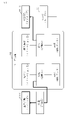
- FIG. 1 shows a functional configuration example of a recommendation device 1 according to this embodiment.
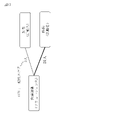
- FIG. 2 shows a hardware configuration example of the recommendation device 1 according to the present embodiment.
- the recommendation device 1 is a computer.
- the recommendation device 1 may be a server computer in cloud computing or a server computer in edge computing.
- the recommendation device 1 corresponds to an information processing device.
- the operation procedure of the recommendation device 1 corresponds to an information processing method.
- a program that implements the operation of the recommendation device 1 corresponds to an information processing program.
- the recommendation device 1 includes a platform knowledge management unit 11, a user knowledge management unit 12, a filtering unit 13, a pruning unit 14, a combining unit 15, and a recommendation unit 16 as functional configurations. Also, as shown in FIG. 2, the recommendation device 1 includes a processor 901, a main storage device 902, an auxiliary storage device 903, and an input/output device 904 as a hardware configuration.
- the auxiliary storage device 903 stores programs for realizing the functions of the platform knowledge management unit 11, the user knowledge management unit 12, the filtering unit 13, the pruning unit 14, the combining unit 15, and the recommendation unit 16. FIG. These programs are loaded from the auxiliary storage device 903 to the main storage device 902 .
- FIG. 2 schematically shows a state in which the processor 901 is executing a program that implements the functions of the platform knowledge management unit 11, the user knowledge management unit 12, the filtering unit 13, the pruning unit 14, the combining unit 15, and the recommendation unit 16. represent.
- the platform knowledge manager 11 manages platform knowledge 110 . Also, the platform knowledge management unit 11 outputs the platform knowledge 101 to the filtering unit 13 . Platform knowledge 101 is copy data of platform knowledge 110 .
- the platform knowledge manager 11 corresponds to the definition information manager. Processing performed by the platform knowledge management unit 11 corresponds to definition information management processing.
- the user knowledge manager 12 manages user knowledge 120 .
- User knowledge 120 is composed of multiple user knowledge 104 for each user.
- the user knowledge management unit 12 is notified of the user ID 3 from the filtering unit 13 and outputs the domain name list 102 corresponding to the user ID 3 to the filtering unit 13 .
- the user knowledge management unit 12 is notified of the user ID 3 from each of the pruning unit 14, the combining unit 15, and the recommending unit 16, and the user knowledge 104 corresponding to the user ID 3 is transferred to the pruning unit 14, the combining unit 15, and the recommending unit 16. output to each of Details of the domain name list 102 and the user knowledge 104 will be described later.
- the user knowledge manager 12 corresponds to a user information manager. Processing performed by the user knowledge management unit 12 corresponds to user information management processing.
- Filtering unit 13 acquires user ID 3 from user 2 . Also, the filtering unit 13 acquires the platform knowledge 101 from the platform knowledge management unit 11 . Also, the filtering unit 13 acquires the domain name list 102 from the user knowledge management unit 12 based on the user ID3. Then, the filtering unit 13 performs filtering processing. Specifically, the filtering unit 13 compares the platform knowledge 101 and the domain name list 102 and deletes unnecessary solutions, abstract concepts, devices, etc. from the platform knowledge 101 . Furthermore, the filtering unit 13 outputs the platform knowledge 101 after removing unnecessary solutions, abstract concepts, devices, etc. to the pruning unit 14 as filtered knowledge 103 . The filtering unit 13 also outputs the user ID 3 to the pruning unit 14 .
- the pruning unit 14 acquires the filtered knowledge 103 and the user ID 3 from the filtering unit 13 . Also, the pruning unit 14 acquires the user knowledge 104 from the user knowledge management unit 12 based on the user ID3. Then, the pruning unit 14 performs pruning processing. Specifically, the pruning unit 14 compares the filtered knowledge 103 and the user knowledge 104, and removes unnecessary solutions, devices, and the like. Furthermore, the pruning unit 14 outputs the filtered knowledge 103 after deleting unnecessary solutions, devices, etc. to the combining unit 15 as the pruned knowledge 105 . The pruning unit 14 also outputs the user ID 3 to the combining unit 15 .
- the combining unit 15 acquires the pruned knowledge 105 and the user ID 3 from the pruning unit 14 . Also, the combining unit 15 acquires the user knowledge 104 from the user knowledge management unit 12 based on the user ID3. Then, the combining unit 15 performs a combining process. Specifically, the combining unit 15 compares the pruned knowledge 105 and the user knowledge 104, and combines the pruned knowledge 105 and the user knowledge 104 with a common concept between the pruned knowledge 105 and the user knowledge 104. . Furthermore, the combining unit 15 outputs the combined pruned knowledge 105 and the user knowledge 104 as combined knowledge 106 to the recommendation unit 16 . The combining unit 15 also outputs the user ID 3 to the recommendation unit 16 .
- the recommendation unit 16 acquires the combined knowledge 106 and the user ID 3 from the combiner 15 . Also, the recommendation unit 16 acquires the user knowledge 104 from the user knowledge management unit 12 based on the user ID3. Then, the recommendation unit 16 performs a recommendation process. Specifically, the recommendation unit 16 searches the combined knowledge 106 for devices and/or solutions to be recommended to the user 2 that are related to the user device and/or the user device solution. Furthermore, the recommendation unit 16 presents the devices and/or solutions obtained by the search to the user 2 as a recommendation set 4 .
- the filtering unit 13, the pruning unit 14, the combining unit 15, and the recommending unit 16 correspond to the search unit 10. Also, the processing performed by the search unit 10 (the filtering unit 13, the pruning unit 14, the combining unit 15, and the recommendation unit 16) corresponds to search processing.
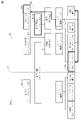
- FIG. 3 shows an example concept hierarchy 1001 .
- platform knowledge 110 and user knowledge 120 define solutions, devices, and abstract concepts (coordination concepts) based on a conceptual hierarchy 1001 illustrated in FIG.
- the concept layer 1001 consists of a solution layer 1002, an abstract concept layer 1003 and a device layer 1004.
- a solution name 1010 and an interpretation set 1013 which will be described later, are associated with arbitrary layers of abstract concepts defined in the abstract concept layer 1003, thereby representing semantic connections between solutions and devices. can be done.
- Solution layer 1002 includes one or more solution names 1010 .
- Solution name 1010 is used to identify the solution provided by the device.
- the solution name 1010 includes, for example, "monitoring”, “intrusion detection”, and “comfort control”.
- the solution name 1010 is connected to an arbitrary hierarchy of the abstract concept layer 1003 by a link 2001 .
- Solution name 1010 is connected to sensor (actuator) type name 1015 via link 2001 , abstraction layer 1003 , link 2003 , interpretation set 1013 and link 2004 .
- the solution indicated by the solution name 1010 is associated with the sensor that perceives the real environment and/or the actuator that controls the real environment.
- the solution name 1010 may be expressed hierarchically using a synonym dictionary such as a thesaurus.
- the abstraction layer 1003 contains one or more abstractions.
- each of the one or more domain names 1011 and the one or more activity names 1012 is an abstract concept.
- the abstract concept layer 1003 also includes links 2002 connecting abstract concepts.
- a link 2002 connects, for example, the domain name 1011 and the activity name 1012 and the activity name 1012 and the activity name 1012 . Connections by links 2002 represent relationships between abstract concepts.
- the domain name 1011 is the highest concept in the abstract concept layer 1003 and is the superordinate concept of the activity name 1012 .
- the domain name 1011 is used to identify the type of activity name 1012 that is linked as a subordinate concept.
- the domain name 1011 may describe human activities or device operations. For example, as human activities, "life activities", “crime prevention activities", “childcare activities”, etc. may be described.
- the activity name 1012 is hierarchically described as a subordinate concept of the domain name 1011 as shown in FIG.
- Instrument layer 1004 includes one or more interpretation sets 1013 .
- Each interpretation set 1013 is connected to one or more equipment category names 1014 , one or more sensor (actuator) type names 1015 , and one or more signal (control) names 1016 by links 2004 .
- the interpretation set 1013 corresponds to a superordinate concept that puts together the equipment category name 1014, the sensor (actuator) type name 1015, and the signal (control) name 1016.
- the device category name 1014 is used to identify the type of device.
- the device category name 1014 describes, for example, “air conditioner”, “refrigerator”, “rice cooker”, and the like.
- the sensor (actuator) type name 1015 is used to identify the type of sensor (actuator).
- the sensor (actuator) type name 1015 describes, for example, “infrared sensor”, “temperature sensor”, “motor”, and the like.
- the signal (control) name 1016 is used to identify the type of signal (control) output by the sensor (actuator).
- the signal (control) name 1016 describes, for example, “ON/OFF”, “distance”, “temperature”, “rotation”, and the like.
- the solution name 1010, domain name 1011, activity name 1012, interpretation set 1013, device category name 1014, sensor (actuator) type name 1015, and signal (control) name 1016 are also collectively referred to as nodes below.
- the solution name 1010, domain name 1011, activity name 1012, etc. included in the platform knowledge 110 are collectively referred to as nodes
- the solution name 1010, domain name 1011, activity name 1012, etc. included in the user knowledge 120 are also collectively referred to as nodes. called a node.
- the solution described in the solution name 1010 of the user knowledge 120 or user knowledge 104 is the user device solution.
- the abstract concept described in the domain name 1011 and activity name 1012 of the user knowledge 120 or user knowledge 104 is the user device abstract concept.
- a device described in the device category name 1014 of the user knowledge 120 or user knowledge 104 is a user device.
- FIG. 8 is a flowchart showing an operation example of the recommendation device 1 according to this embodiment.
- the filtering unit 13 acquires the user ID 3 from the user 2 (step S10).
- the user 2 inputs the user ID 3 using the input/output device 904 of FIG.
- the user knowledge management unit 12 generates the domain name list 102 (step S20). Specifically, the filtering unit 13 notifies the user knowledge management unit 12 of the user ID 3 acquired from the user 2 . The user knowledge management unit 12 identifies the user knowledge 104 corresponding to the user ID 3 notified from the filtering unit 13 . Next, the user knowledge management unit 12 acquires one or more domain names 1011 from the identified user knowledge 104, lists the acquired domain names 1011, and generates the domain name list 102. FIG. At this time, if the domain name 1011 does not exist in the user knowledge 104, the route of the activity name 1012 is traced to acquire the domain name 1011. FIG. FIG. 4 shows an example of the domain name list 102 generated by the user knowledge management unit 12. As shown in FIG.
- user ID 31 of user A is acquired as user ID 3 .
- user knowledge 104 corresponding to user ID 31 does not include domain name 1011 . Therefore, the user knowledge management unit 12 acquires the domain name “life activity” 10111 associated with the activity name 1012 “cooking rice” in the platform knowledge 110 . Furthermore, the user knowledge management unit 12 acquires the domain name “crime prevention activity” 10112 associated with the activity name “intrusion” in the platform knowledge 110 . Then, the user knowledge management unit 12 generates a domain name list 102 in which the acquired "life activity" 10111 and "crime prevention activity" 10112 are indicated. User knowledge management unit 12 outputs generated domain name list 102 to filtering unit 13 .
- the filtering unit 13 performs filtering (step S30). Specifically, the filtering unit 13 performs filtering processing as follows.
- the filtering section 13 acquires the domain name list 102 from the user knowledge management section 12 . Also, the filtering unit 13 acquires the platform knowledge 101 from the platform knowledge management unit 11 . As described above, platform knowledge 101 is copy data of platform knowledge 110 . Then, the filtering unit 13 deletes from the platform knowledge 101 the concept hierarchy 1001 including the domain name 1011 different from the domain name 1011 shown in the domain name list 102 .
- FIG. 5 shows an example of filtering processing by the filtering unit 13 .
- the domain name list 102 includes "life activity" 10111 and "crime prevention activity” 10112.
- the platform knowledge 101 includes a concept hierarchy 1001a, a concept hierarchy 1001b and a concept hierarchy 1001c.
- the filtering unit 13 deletes the concept hierarchy 1001c that includes the “childcare activity” 10113 that does not match the “life activity” 10111 and the “crime prevention activity” 10112 in the domain name list 102 .
- "parenting activity” 10113 is not associated with any user equipment or user equipment solutions. Therefore, the filtering unit 13 determines that it is not necessary to recommend the device and solution associated with the "childcare activity” 10113 to the user 2. delete. In this way, the filtering unit 13 excludes devices and solutions associated with abstract concepts other than the user device abstract concept in the platform knowledge 101 from search targets.
- the filtering unit 13 After the filtering process, the filtering unit 13 outputs the filtered platform knowledge 101 as the filtered knowledge 103 to the pruning unit 14 .
- the filtering unit 13 also outputs the user ID 3 to the pruning unit 14 .
- the pruning unit 14 performs pruning processing (step S40). Specifically, the pruning unit 14 performs pruning processing as follows.
- the pruning process is a process of generating a user-dedicated concept hierarchy 1001 .
- the pruning unit 14 acquires the filtered knowledge 103 and the user ID 3 from the filtering unit 13 . Also, the pruning unit 14 notifies the user ID 3 to the user knowledge management unit 12 and acquires the user knowledge 104 corresponding to the user ID 3 from the user knowledge management unit 12 .
- the pruning unit 14 uses the user knowledge 104 to delete the solution layer 1002 and device layer 1004 unnecessary for recommendation from the filtered knowledge 103 . Specifically, the pruning unit 14 removes the solution layer 1002 describing the same solution as the user equipment solution included in the user knowledge 104 from the filtered knowledge 103, and removes the solution layer 1002 and the abstract concept layer 1003 from the filtered knowledge 103. Delete the device layer 1004 connected via the .
- FIG. 6 shows an example of pruning processing by the pruning unit 14 .
- the user knowledge 104 includes the domain name “life activities” 10111 and the solution name “watch” 10101 .
- the domain name list 102 includes "life activities" 10111 and "crime prevention activities” 10112.
- FIG. 6 shows the user knowledge 104 in FIG. 6 includes the domain name “life activity” 10111 as well as “crime prevention activity” 10112, although illustration is omitted.
- the platform knowledge 101 of FIG. therefore, although not shown, the filtered knowledge 103 of FIG. 6 also includes a conceptual hierarchy 1001b for "crime prevention activities" 10112.
- FIG. 6 for drawing reasons, only the nodes associated with the domain name “life activity” 10111 are shown. Also, in the following description, only the domain name "life activity” 10111 will be described for the sake of simplification of description.
- the pruning unit 14 extracts the same domain name “life activity” 10111 as the domain name “life activity” 10111 included in the user knowledge 104 in the filtered knowledge 103 . Then, the pruning unit 14 extracts the same solution name "watching" 10101 as the solution name "watching” 10101 included in the user knowledge 104 from among the solution names 1010 connected to the extracted domain name "life activity” 10111. . In addition, the pruning unit 14 connects the device layer 1004 (“setA” 1031, “setB” 1032, “setC” 1033 , “rice cooker”, “washing machine” and “refrigerator”). Then, the pruning unit 14 deletes the extracted solution name “watching” 10101 and the device layer 1004 from the filtered knowledge 103 .
- the pruning unit 14 deletes the range enclosed by the dashed line in FIG. 6 from the filtered knowledge 103 .
- the solution name "watching" 10101 is a solution already recognized by the user 2 .
- the device layer 1004 in the range surrounded by the dashed line in FIG. 6 is the device layer 1004 for the devices related to the solution ("watching") that the user 2 has already recognized. Therefore, the pruning unit 14 determines that it is not necessary to newly recommend these solutions and devices to the user 2, and excludes them from the targets of recommendation. 6, the sensor (actuator) type name 1015 and the signal (control) name 1016 shown in FIG. 3 are omitted for the sake of simplicity.
- the pruning unit 14 also deletes these sensor (actuator) type names 1015 and signal (control) names 1016 .
- the pruning unit 14 extracts the activity name "movement” connected to the domain name "life activity” 10111 of the filtered knowledge 103, the interpretation set “setB" connected to the activity name "movement", the device category Do not delete the name "air conditioner” and the solution name "comfort control”.
- the pruning unit 14 extracts the user device solution (“watching” 10101) associated with the user device abstract concept (“life activity” 10111) in the filtered knowledge 103 and the user device abstract concept (“life activity” 10111). 10111) to the user device solution ("watching" 10101) are excluded from the search targets.
- the pruning unit 14 After the pruning process, the pruning unit 14 outputs the filtered knowledge 103 after the pruning process to the combining unit 15 as the pruned knowledge 105 .
- the pruning unit 14 also outputs the user ID 3 to the combining unit 15 .
- the combining unit 15 performs a combining process (step S50). Specifically, the combining unit 15 performs the combining process as follows.
- the combining unit 15 acquires the pruned knowledge 105 and the user ID 3 from the pruning unit 14 .
- the combining unit 15 also notifies the user knowledge management unit 12 of the user ID 3 and acquires the user knowledge 104 corresponding to the user ID 3 from the user knowledge management unit 12 .
- the combiner 15 performs an additive operation on the user knowledge 104 and the pruned knowledge 105 .
- the combining unit 15 combines the user knowledge 104 and the pruned knowledge 105 using the user equipment abstraction included in the user knowledge 104 and the same abstraction as the user equipment abstraction.
- FIG. 7 shows an example of combining processing by the combining unit 15 .
- the user knowledge 104 shown in FIG. 7 is the same as the user knowledge 104 shown in FIG. As described with reference to FIG. 6, the user knowledge 104 includes the domain name "life activities" 10111 as well as "crime prevention activities" 10112. For simplicity of explanation, the domain name "life activities" Only 10111 is illustrated.
- the combining unit 15 combines the domain name “life activity” 10111, which is the user device abstract concept of the user knowledge 104, and the domain name “life activity” 10111 included in the pruned knowledge 105, and combines the user knowledge 104 and the pruned knowledge. Combine knowledge 105 .
- the combining unit 15 outputs the combined user knowledge 104 and the pruned knowledge 105 as combined knowledge 106 to the recommendation unit 16 .
- the combining unit 15 also outputs the user ID 3 to the recommendation unit 16 .
- the recommendation unit 16 performs recommendation processing (step S60). Specifically, the recommendation unit 16 performs recommendation processing as follows.
- the recommendation unit 16 acquires the combined knowledge 106 and the user ID 3 from the combining unit 15 . Also, the recommendation unit 16 notifies the user ID 3 to the user knowledge management unit 12 and acquires the user knowledge 104 corresponding to the user ID 3 from the user knowledge management unit 12 . Next, the recommendation unit 16 compares the user knowledge 104 and the combined knowledge 106 . For example, the recommendation unit 16 searches for devices other than the user device associated with the user device abstraction in the combined knowledge 106 . The recommendation unit 16 also searches for solutions other than the user equipment solution associated with the user equipment abstraction in the combined knowledge 106, for example.
- FIG. 9 shows details of the recommendation process (step S60) by the recommendation unit 16.
- FIG. 10 shows a specific example of recommendation processing by the recommendation unit 16 . The flow of FIG. 9 will be described below with reference to the specific example of FIG.
- the recommendation unit 16 searches for the abstract concept 1003 on the user knowledge 104 side that can be traced from the solution name 1010 on the user knowledge 104 side of the combined knowledge 106 (step S61).
- the recommendation unit 16 obtains the domain name “life activity” 10111 connected to the solution name “watching” 10101 on the user knowledge 104 side of the combined knowledge 106 as a result of the search.
- the recommendation unit 16 searches for an abstract concept to which the abstract concept obtained by the search in step S61 is combined (step S62).
- the abstract concept to be combined is the abstract concept on the pruned knowledge 105 side that is combined with the abstract concept obtained by the search in step S61.
- the domain name "life activities" 10111 corresponds to the abstract concept on the pruned knowledge 105 side.
- the recommendation unit 16 searches for the solution name 1010 that can be traced from the abstract concept obtained by the search in step S62 (step S63).
- the recommendation unit 16 obtains the solution name “comfort control” 10102 that can be traced from the domain name “life activity” 10111 via the activity name “movement” 10121 as a result of the search.
- Inference 201 in FIG. 10 shows the result of the search in steps S61 to S63.
- the recommendation unit 16 searches for an interpretation set 1013 that can be traced from the solution name 1010 obtained by the search in step S63 (step S64).
- the recommendation unit 16 obtains an interpretation set “setB” 10132 that can be traced from the solution name “comfort control” 10102 via the activity name “movement” 10121 .
- the recommendation unit 16 searches for the device category name 1014 that can be traced from the interpretation set 1013 obtained by the search in step S64 (step S65).
- the recommendation unit 16 obtains the device category name “air conditioner” 10141 that can be traced from the interpretation set “setB” 10132 .
- Inference 202 in FIG. 10 shows the result of the search in steps S64 to S65.
- the recommendation unit 16 determines whether or not results have been obtained in each of the search in step S63 and the search in step S65 (step S66). If results are obtained in each of the search in step S63 and the search in step S65, the process proceeds to step S67. On the other hand, if at least one of the search in step S63 and the search in step S65 does not yield a result, the process proceeds to step S68.
- step S ⁇ b>67 the recommendation unit 16 designates a set of the result of the search in step S ⁇ b>63 (solution name 1010 ) and the result of the search in step S ⁇ b>65 (device category name 1014 ) as the recommendation set 4 .
- the recommendation unit 16 designates a set of the solution name “comfort control” 10102 and the device category name “air conditioner” 10141 as the recommendation set 4 .
- step S68 the recommendation unit 16 determines whether or not there is a result of step S62 that is a lower concept than the result of step S61. That is, the recommendation unit 16 determines whether or not the abstract concept on the pruned knowledge 105 side includes an abstract concept that is lower than the abstract concept obtained by the search in step S61. If the pruned knowledge 105 side has an abstract concept of a lower level concept, the process proceeds to step S69. On the other hand, if the pruned knowledge 105 side does not have an abstract concept of a lower level concept, the flow of FIG. 9 ends. In the example of FIG. 10, the abstract concept obtained in step S61 is "life activity".
- step S68 the recommendation unit 16 determines whether or not the new knowledge (especially equipment) obtained through the pruning process can be utilized in the solutions already provided to the user.
- "air conditioner” is obtained as a new device.
- the abstract concept associated with “air conditioner” is “movement”.
- “Movement” can be interpreted as "life activity” when abstracted (“movement” is a subordinate concept of "life activity”).
- Watching which is a solution already provided to users, is a solution that requires "life activity”.
- the recommendation unit 16 determines that the newly obtained "air conditioner” can be used for the solution "watching".
- the pruning process we have excluded devices that are linked to abstract concepts that have already been sensed, but “movement” clears the minimum level of abstraction required by “watching over” and is more specific than “life activity”. Since such information can be notified to the user, recommendation is made in step S69.
- step S69 the recommendation unit 16 designates, as the recommendation set 4, a set of the solution name 1010 on the user knowledge 104 side and the device category name 1014 that can be traced from the abstract concept obtained in step S68.
- the recommendation unit 16 designates a set of the solution name “watching over” 10101 and the device category name “air conditioner” 10141 as the recommendation set 4 .
- step S70 of FIG. 8 the recommendation unit 16 outputs the recommendation set 4 specified in step S67 and/or step S69 of FIG. Present.
- the recommendation unit 16 presents a set of solutions and devices as the recommendation set 4 .
- the recommendation unit 16 may present only either the solution or the device.
- the recommendation unit 16 may present only the solution name “comfort control” 10102 as a solution that can be realized by the user device together with the solution name “monitoring” 10101 that is the user device solution.
- the recommendation unit 16 may present only the device category name "air conditioner" 10141 as a device other than the user device that can be utilized for the solution name "monitoring" 10101 that is the user device solution.
- the recommendation apparatus 1 uses the information on the installed solution and the information on the device held by the user knowledge 104 with the abstract concept layer 1003 as the axis, and based on the platform knowledge 101, extracts unnecessary search space for recommendation.
- the level of abstraction (intention) of the real environment that the solution attempts to sense or act upon can be expressed. You can control the accuracy of recommendations.
- filtering unit 13 acquires domain name list 102 from user knowledge management unit 12 . Additionally, the filtering unit 13 may obtain the domain name list 102 from the user 2 . The domain name list 102 obtained from the user 2 indicates an abstract concept (corresponding to a user-specified linkage concept) specified by the user 2 that is not included in the domain name list 102 provided by the user knowledge management unit 12 . In Modification 1, the filtering unit 13 functions as an acquisition unit. In the first embodiment, the recommendation unit 16 can only include in the recommendation set 4 solution names 1010 and device category names 1014 traced from domain names 1011 included in the user knowledge 104 .
- the recommendation unit 16 traces the solution name 1010 and the device category name 1014 starting from the domain name 1011 specified by the user 2, thereby finding the solution name 1010 that cannot be traced from the domain name 1011 included in the user knowledge 104. and equipment category name 1014 can be included in recommendation set 4.
- the filtering unit 13 acquires the domain name list 102 in which "crime prevention activity" 10112 is specified by the user 2.
- FIG. 11 the recommendation unit 16 can make an inference 203 that utilizes "air conditioner 10141" in another domain "crime prevention activity” 10112.
- the recommendation unit 16 can recommend the solution name "intrusion detection" 10103, which was not obtained in the example of FIG.
- the recommendation process of the recommendation unit 16 in Modification 1 uses the domain name 1011 specified by the user 2 instead of the domain name 1011 obtained by the search in step S62 of FIG. is realized by
- the pruning unit 14 may determine the competitive relationship of the solution names 1010 and delete the solution names 1010, the interpretation sets 1013, the device category names 1014, etc. that are unnecessary for recommendation.
- a competitive relationship here means a relationship in which two or more solutions cannot be executed at the same time because the devices corresponding to the two or more solutions are the same. That is, when the pruning unit 14 searches for solutions other than the user device solution associated with the user device abstract concept in the platform knowledge 101 in step S40 of FIG. 8, two or more solutions are obtained. Next, find the device that is associated with each of the two or more solutions via the user device abstraction. Then, if the devices obtained by searching are the same device, the pruning unit 14 determines that two or more solutions are in a competitive relationship. Then, the pruning unit 14 deletes one or more of the two or more competing solutions.
- the recommendation unit 16 may determine the competitive relationship of the recommendation sets 4 and determine the final recommendation set 4 .
- a competitive relationship here means a relationship in which two or more solutions included in two or more recommendation sets 4 cannot be executed simultaneously because two or more devices included in two or more recommendation sets 4 are the same. do.
- the recommendation unit 16 obtains two or more recommendation sets 4 when searching for the recommendation sets 4 in step S60 of FIG. If so, it is determined that two or more recommendation sets 4, in other words, two or more solutions and two or more devices included in the two or more recommendation sets 4 are in a competitive relationship. Then, the recommendation unit 16 deletes one or more of the two or more competing recommendation sets 4 .
- FIG. 12 shows an operation example of the pruning unit 14 and the recommendation unit 16 in Modification 2.
- person types (“resident” 10171 and “suspicious person” 10172) are added to the abstract concept layer 1003 .
- the person type then connects to any solution name 1010 .
- the person type “Resident” 10171 connects to the solution name “Watch” 10101 .
- the person type “suspicious person” 10172 is connected to the solution name “intrusion detection” 10103 .
- the pruning unit 14 determines the competitive relationship between two or more solutions, thereby reducing the search space compared to the first embodiment and making recommendations in a shorter time. Further, according to the modification 2, the recommendation unit 16 determines the competitive relationship between two or more recommendation sets 4, thereby improving the accuracy of recommendation compared to the first embodiment.
- the pruning unit 14 may determine the place of use of the device and the specification of the device, and delete the solution name 1010, the interpretation set 1013, the device category name 1014, etc., which are unnecessary for recommendation.
- the platform knowledge 101 indicates the usage location of each device.
- the place of use of the user equipment is indicated as the place of use of the user equipment.
- the user equipment usage location is any usage location among the usage locations indicated in the platform knowledge 101 .
- the pruning unit 14 deletes the device category name 1014 of the device whose usage location indicated in the platform knowledge 101 does not match the user device usage location.
- the platform knowledge 101 indicates the specifications of each device. Also, in the user knowledge 104, the specifications of the user equipment are indicated as the user equipment specifications. A user equipment specification is any one of the specifications shown in platform knowledge 101 . Then, in step S40 of FIG. 8, the pruning unit 14 deletes the device category names 1014 of devices whose specifications shown in the platform knowledge 101 do not match the user device specifications.
- the recommendation unit 16 may also select the recommendation set 4 by determining the location of use of the device and the specifications of the device. That is, in step S65 of FIG. 9, the recommendation unit 16 searches the combined knowledge 106 for a device corresponding to the solution obtained in the search in step S63 and whose place of use matches the place of use of the user device. The equipment selected may be included in the recommendation set 4. In addition, in step S65 of FIG. 9, the recommendation unit 16 searches the combined knowledge 106 for a device whose specifications match the user device specifications, corresponding to the solution obtained in the search in step S63. Devices may be included in recommendation set 4 .
- FIG. 13 shows an operation example of the pruning unit 14 and the recommendation unit 16 in Modification 3.
- a location type (“kitchen” 10181) indicating the place of use is added to the top of the solution.
- a location type (“kitchen” 10181) is also added to the abstraction layer 1003.
- the location type "kitchen” 10181 is connected above the "watching” 10101 as a place where "watching” is realized.
- the location type "kitchen” 10181 is connected to the "rice cooker".
- the location type “kitchen” 10181 is connected above “comfort control” as a place where "comfort control” is realized. Furthermore, the location type “kitchen” 10181 is connected to the "air conditioner” 10141 as the place of use of the "air conditioner”.
- the device category name “air conditioner” 10141 is extracted from the solution name “monitoring” 10101 by the inference 206 .
- the pruning unit 14 determines whether the location type "kitchen” 10181 connected to the "rice cooker” subordinate to the "monitoring” 10101 is also connected to the device category name "air conditioner” 10141.
- the pruning unit 14 deletes the equipment category name “air conditioner” 10141 .
- the solution name "comfort control” is obtained in step S63 of FIG. It is determined whether or not the "kitchen” 10181 is connected.
- the device category name “air conditioner” 10141 is included in the recommendation set 4 .
- the pruning unit 14 determines whether or not the same node as the “specification type” connected to the “rice cooker” is also connected to the device category name “air conditioner” 10141 . If the device category name “air conditioner” 10141 is not connected to the same node as the “specification type”, the pruning unit 14 deletes the device category name “air conditioner” 10141 . The recommendation unit 16 also determines whether or not the same node as the “specification type” connected to the “rice cooker” is also connected to the device category name “air conditioner” 10141 . When the device category name “air conditioner” 10141 is connected to the same node as the “specification type”, the pruning unit 14 includes the device category name “air conditioner” 10141 in the recommendation set 4 .
- the pruning unit 14 can delete the solution name 1010 and/or the device category name 1014 that cannot satisfy the request of the user 2 .
- the recommendation unit 16 can present to the user 2 the solution name 1010 and/or the device category name 1014 that cannot satisfy the user 2's request.
- the search space is reduced and the search time is shorter than in the first embodiment. can be recommended.
- the accuracy of recommendation by the recommendation unit 16 is improved as compared with the first embodiment by comparing the places of use and/or specifications.
- the recommendation device 1 is not concerned with whether or not the user has purchased the recommended device (that is, whether or not the user is using the recommended device). For this reason, when the recommendation device 1 re-recommends a user to whom the recommendation was made in the past, the same device is recommended again even though the user has purchased the device recommended at the time of the previous recommendation. can occur.
- the recommendation device 1 makes a recommendation based on past recommendation contents when making a recommendation to a specific user multiple times over a long period of time. In order to make such a recommendation, the recommendation device 1 according to the present embodiment performs difference determination using device purchase records and concept hierarchy version information. In this embodiment, differences from the first embodiment will be mainly described. Matters not described below are the same as those in the first embodiment.
- a cache knowledge management unit 17 and a difference determination unit 18 are added as compared with FIG.
- the cache knowledge management unit 17 holds the combined knowledge 106 and the user ID 3 as cache knowledge 170 for a certain period of time.
- the difference determination unit 18 compares the version of the platform knowledge 110 and the version of the combined knowledge 106 of the cache knowledge 170 . Further, the difference determination unit 18 compares the solutions and devices included in the combined knowledge 106 of the cache knowledge 170 with the solutions and devices indicated in the purchase record 109 .
- the purchase record 109 indicates the device purchased by the user 2 (that is, the device used by the user 2) and the solutions provided by the device.
- the user knowledge management unit 12 updates the user knowledge 120 .
- the user knowledge management unit 12 determines that the device presented to the user 2 by the recommendation unit 16 (hereinafter also referred to as the presented device) has been purchased by the user 2 ( That is, when it is found that the presentation device is used by the user 2, the presentation device is added to the user knowledge 120 as a new user device.
- the user knowledge management unit 12 also adds the solutions provided by the presentation devices to the user knowledge 120 as new user device solutions.
- the user knowledge manager 12 adds to the user knowledge 120 an abstraction that links the new user equipment and the new user equipment solution as a new abstraction.
- the concept hierarchy 1001 is associated with version information 1081 .
- the version information 1081 is information indicating the version of the concept hierarchy 1001 .
- the version information 1081 is also associated with the linked knowledge 106 .
- the version information 1081 is associated with the platform knowledge 101 acquired by the filtering unit 13 .
- the filtered knowledge 103 output by the filtering unit 13 also inherits the version information 1081 for each concept hierarchy 1001 .
- version information 1081 is associated with each of the concept hierarchy 1001a and the concept hierarchy 1001b.
- the pruned knowledge 105 that is the output of the pruning unit 14 also inherits the version information 1081 for each concept hierarchy 1001 .
- the version information 1081 is linked to each concept hierarchy 1001 inherited by the combined knowledge 106 that is the output of the combining unit 15 .
- the user ID 32 is associated with the purchase record 109 .
- the purchase record 109 indicates the device category name 1014 purchased by the user and the solution name 1010 realized by the device category name 1014 .
- the purchase record 109 stores the device category name 1014 purchased by the user and the solution name 1010 realized by the device category name 1014, including the past purchase history.
- the purchase record 109 is, for example, a list showing the device category name 1014, the solution name 1010, the date and time of purchase, and the like.
- the purchase record 109 may be updated by the user himself, or may be updated by the system of the mail-order site or the system of the home appliance mass retailer.
- the cache knowledge manager 17 acquires the combined knowledge 106 and the user ID 3 from the combiner 15 . Then, the cache knowledge management unit 17 associates the combined knowledge 106 with the user ID 3 and retains it as the cache knowledge 170 for a certain period of time.
- the version information 1081 is also associated with the linked knowledge 106 held by the cache knowledge management unit 17 .
- the difference determination unit 18 compares the version information 1081 linked to the platform knowledge 110 and the version information 1081 linked to the combined knowledge 106 of the cache knowledge 170 . Further, the difference determination unit 18 compares the solutions and devices included in the combined knowledge 106 of the cache knowledge 170 with the solutions and devices indicated in the purchase record 109 . Specifically, the difference determination unit 18 first acquires the user ID 3 from the user 2 .
- the difference determination unit 18 acquires the cache knowledge 107 corresponding to the user ID 3 from the cache knowledge 170 . Furthermore, the difference determination unit 18 acquires the purchase record 109 corresponding to the user ID 3 from the user knowledge 120 . Next, the difference determination unit 18 acquires version information 108 linked to the platform knowledge 101 from the platform knowledge 110 . Here, the difference determination unit 18 acquires only the version information 108 of the concept hierarchy 1001 included in the combined knowledge 106 of the cache knowledge 170 . The difference determination unit 18 then compares the version information 1081 linked to the platform knowledge 110 and the version information 1081 linked to the combined knowledge 106 of the cache knowledge 170 .
- the difference determination unit 18 compares the solution and equipment included in the combined knowledge 106 of the cache knowledge 170 with the solution and equipment indicated in the purchase record 109 .
- the difference determination unit 18 determines that there is no difference when the version information 1081 matches and all the solutions and devices included in the combined knowledge 106 are included in the purchase record 109 . If all the solutions and devices included in the combined knowledge 106 are included in the purchase record 109, the user 2 has purchased the device (presented device) presented to the user 2 by the recommendation unit 16 (the presented device is used by user 2).
- the difference determination unit 18 outputs the cached knowledge 107 to the user knowledge management unit 12 as the difference-determined knowledge 180 .
- the user knowledge management unit 12 updates the user knowledge 104 corresponding to the user ID 3 included in the cache knowledge 107 with the combined knowledge 106 included in the difference-determined knowledge 180 . That is, the user knowledge management unit 12 converts the solution and device newly added to the purchase record 109 and the abstract concept linking the solution and the device to the new user device, the new user device solution, and the new abstraction. Add to user knowledge 104 as a concept. Therefore, when making a recommendation to the same user again, the pruning unit 14 can delete from the filtered knowledge 103 solutions, devices, etc. that have already been recommended to the user.
- the recommendation device 1 according to Embodiment 2 updates the user knowledge 120 by comparing past recommended content with the latest information (version information 1081 and purchase history 109). Therefore, when recommending a specific user a plurality of times over a long period of time, it is possible to make a recommendation that reflects the past recommendation content and is in line with the reality, thereby improving the accuracy of the recommendation. In other words, the recommendation device 1 according to the present embodiment saves the content of recommendation to the user in the cache knowledge, and determines whether or not to update the user knowledge using the purchase record when updating the user knowledge is requested.
- the recommendation device 1 uses version information to suppress a large discrepancy in the content of the linkage between the platform knowledge and the user knowledge. For example, as shown in FIG. 6 and the like, in the platform knowledge 110 and the user knowledge 120, the interpretation set "setA" is associated with the domain name "life activity". However, if, for example, the connection between “setA” and life activity disappears in the platform knowledge 110 due to the circumstances of the device manufacturer, the connection between the platform knowledge 110 and the user knowledge 120 will be different. By comparing the version information 1081, it is possible to extract such a difference in linking and to eliminate such a difference. Also, the pruning unit 14 can delete from the filtered knowledge 103 solutions, devices, etc. that have already been recommended to the user. Therefore, the search space is reduced, and the recommendation time can be shortened.
- the difference determination unit 18 may output the difference-determined knowledge 180 to the recommendation unit 16 when determining that there is a difference in the difference determination described in the second embodiment. For example, the version information 1081 linked to the cache knowledge 107 and the version information 108 acquired from the platform knowledge 110 match, but the solution name 1010 and device category name 1014 included in the cache knowledge 107 are not included in the purchase record 109. If the device (presentation device) presented by the recommendation unit 16 is not used by the user 2 , the difference determination unit 18 outputs the cached knowledge 107 to the recommendation unit 16 as difference-determined knowledge 180 .
- the recommendation unit 16 can A solution name 1010 and a device category name 1014 can be recommended by using the difference-determined knowledge 180 . That is, the recommendation unit 16 can present to the user 2 again the device (presentation device) presented to the user 2 in the past and the solution thereof. As a result, the recommendation time can be shortened.
- Embodiment 3 In this embodiment, it is assumed that an unspecified number of users update the platform knowledge 110 .
- each of links 2001 and 2003 is given a score to express the generality and/or usefulness of the relationships between nodes in platform knowledge 101 .
- differences from the first embodiment will be mainly described. Matters not described below are the same as those in the first embodiment.
- FIG. 16 shows a functional configuration example of the recommendation device 1 according to this embodiment.
- an updating unit 19 is added as compared with FIG.
- the updating unit 19 updates the generality score indicating the generality of the link 2001 indicating the correspondence between the solution and the abstract concept. Also, the updating unit 19 updates the usefulness score indicating the usefulness of the link 2001 . The updating unit 19 also updates the generality score indicating the generality of the link 2003 indicating the correspondence between the abstract concept and the device. Also, the updating unit 19 updates the usefulness score indicating the usefulness of the link 2003 . Further, the updating unit 19 updates the user equipment and the user indicated in the user knowledge 104 when the platform knowledge 110 does not indicate the correspondence between the user equipment, the user equipment abstraction, and the user equipment solution indicated in the user knowledge 104 . Add a mapping between the device abstraction and the user device solution to the platform knowledge 110 .
- the pruning unit 14 uses the generality score and the usefulness score for the pruning process.
- the recommendation unit 16 also uses the generality score and the usefulness score for recommendation processing.
- generality score 1121 illustrated in FIG. 17 and usefulness score 1122 illustrated in FIG. 18 are set for link 2001 and link 2003 .
- Generality score 1121 expresses the generality of the correspondence represented by link 2001 or link 2003 .
- a usefulness score 1122 expresses the usefulness of the correspondence represented by the link 2001 or the link 2003 .
- the generality score 1121 is calculated, for example, based on the number of users adopting the target correspondence relationship (the relationship between the solution and the abstract concept, the relationship between the abstract concept and the device). Also, the generality score 1121 may be calculated based on a binary flag indicating whether there is a platform administrator's recommendation.
- the usefulness score 1122 is calculated based on the accuracy obtained from, for example, a learning model corresponding to the link 2003 . Also, the usefulness score 1122 may be calculated based on a binary flag indicating whether there is a platform administrator's recommendation.
- a generality score 1121 and a usefulness score 1122 are also set for the links 2001 and 2003 of the platform knowledge 101 that the filtering unit 13 acquires from the platform knowledge management unit 11 .
- filtered knowledge 103, pruned knowledge 105 and combined knowledge 106 also inherit generality score 1121 and usefulness score 1122 at link 2001 and link 2003, respectively. Therefore, the pruning unit 14 can use the generality score 1121 and usefulness score 1122 of the filtered knowledge 103 for the pruning process.
- the recommendation unit 16 can use the generality score 1121 and usefulness score 1122 of the combined knowledge 106 for recommendation processing.
- the updating unit 19 updates the platform knowledge 110 based on the user knowledge 120.
- FIG. The updating unit 19 first acquires the user ID 3 from the user 2 . Then, the update unit 19 acquires the user knowledge 104 corresponding to the user ID 3 from the user knowledge 120 . Furthermore, the updating unit 19 acquires platform knowledge 101 from the platform knowledge managing unit 11 . Then, the updating unit 19 updates the generality score 1121 and/or the usefulness score 1122 of the platform knowledge 101 using the user knowledge 104 . If the platform knowledge 101 does not include the correspondence between the user equipment solution and the user equipment abstract concept and/or the correspondence between the user equipment abstract concept and the user equipment, the updating unit 19 , to the platform knowledge 101, add correspondences that are not included. Finally, the update unit 19 outputs the platform knowledge 101 after the above processing to the platform knowledge management unit 11 as updated knowledge 111 . The platform knowledge management unit 11 manages updated knowledge 111 as new platform knowledge 110 .
- the updating unit 19 calculates the average value of the usefulness score 1122 between the matching relationships in the platform knowledge 101 and the user knowledge 104. is calculated, and the usefulness score 1122 is updated with the average value. For example, assume that the platform knowledge 101 has a usefulness score of 70% for “setA” and “eating and drinking”, and the user knowledge 104 has a usefulness score of 60% for the same combination.
- the updating unit 19 updates the usefulness scores of "setA” and “eating and drinking” of the platform knowledge 101 to the average value of 65%.
- the updating unit 19 uses the utility scores for the pieces of user knowledge 104 to calculate an average value.
- the updating unit 19 also updates other generality scores 1121 and usefulness scores 1122 in the platform knowledge 101 that have not been updated in the above process, and the updated generality scores 1121 and usefulness scores 1122 are associated with abstract scores. Update using a hierarchical structure of concepts. For example, as shown in FIG.
- the updating unit 19 updates the generality score 1121 and the usefulness score 1122 by inheriting, adding, or averaging the updated generality score 1121 and the updated usefulness score 1122. conduct.
- “20 persons” is obtained as the generality score 1121 for "watching over” and “cooking”.
- "10 persons” is obtained as the generality score 1121 for "watching over” and “moving”.
- generality scores for "watching over” and “life activities” are not obtained.
- Life activity is a superordinate concept of "cooking” and "moving”.
- the updating unit 19 adds the generality score 1121 of “watching over” and “cooking” of “20 people” and the generality score 1121 of “watching over” and “moving” of “10 people”. Therefore, "30 people” can be set as the generality score 1121 for "monitoring” and "life activity”.
- the pruning unit 14 uses the generality score 1121 and the usefulness score 1122 to perform the pruning process in step S40 of FIG. For example, the pruning unit 14 uses the generality score 1121 and the usefulness score 1122 to rank pairs of solution names and device category names. Then, the pruning unit 14 deletes from the filtered knowledge 103 pairs of solution names and device category names with lower rankings.
- the recommendation unit 16 uses the generality score 1121 and the usefulness score 1122 to perform the recommendation process in step S60 of FIG. For example, the recommendation unit 16 uses the generality score 1121 and the usefulness score 1122 to rank pairs of solution names and device category names. Then, the recommendation unit 16 designates the combination of the solution name and the device category name with the highest ranking as the recommendation set 4 .
- the recommendation device 1 assigns a generality score and/or a usefulness score to the link 2001 and/or the link 2003 . Therefore, according to this embodiment, in a situation where an unspecified number of users update the platform knowledge 110, solutions and devices with low generality scores or usefulness scores can be removed from the recommendation set. Also, according to the present embodiment, the accuracy of recommendation is improved.
- the pruning unit 14 refers to the generality score or usefulness score, thereby reducing the search space and shortening the time required for recommendation.
- Embodiment 4 each user directly updates his/her own user knowledge 104 in user knowledge 120 . Then, in this embodiment, in order to suppress notation variations between the platform knowledge 110 and the user knowledge 104, the notation is normalized using vocabulary knowledge. In this embodiment, differences from the first embodiment will be mainly described. Matters not described below are the same as those in the first embodiment.
- FIG. 20 shows a functional configuration example of the recommendation device 1 according to this embodiment.
- lexical knowledge 20 and normalization section 21 are added as compared with FIG.
- the vocabulary knowledge 20 holds one or more word vectors 112.
- the word vector 112 is, for example, a result obtained by subjecting arbitrary text data to morphological analysis and word embedding processing such as Word2Vec.
- Vocabulary knowledge 20 outputs word vectors 112 to normalization unit 21 .
- the normalization unit 21 extracts notation variation between the platform knowledge 110 and the user knowledge 120 and normalizes the notation using the word vector 112 . That is, if the notation of at least one of the user equipment, the user equipment abstraction, and the user equipment solution in the user knowledge 104 is similar to the corresponding notation in the platform knowledge 110 but does not match, the normalization unit 21 , changes the user knowledge 104 notation to match the platform knowledge 110 notation.
- the normalization unit 21 first acquires the user ID 3 from the user 2 . Then, the normalization section 21 acquires the user knowledge 104 corresponding to the user ID 3 from the user knowledge management section 12 . Furthermore, the normalization unit 21 acquires the platform knowledge 101 from the platform knowledge 110 and acquires the word vectors 112 from the vocabulary knowledge 20 . Next, as illustrated in FIG. 21 , the normalization unit 21 extracts inconsistent spellings as spelling variation candidates 1123 from the platform knowledge 101 and the user knowledge 104 . For example, the normalization unit 21 compares the notation of the platform knowledge 101 and the notation of the user knowledge 104 in units of two or more interconnected nodes in the concept hierarchy 1001 and extracts notation variation candidates 1123 . In the example of FIG.
- the normalization unit 21 compares the notation of the platform knowledge 101 and the notation of the user knowledge 104 in the domain names, activity names, and activity names that are interconnected.
- the domain name "life activity” and the activity name "cooking rice” have the same notation.
- the activity name “cooking” 10122 and the activity name “cooking” 10123 do not match in notation. Therefore, the normalization unit 21 extracts the activity name “cooking” 10122 and the activity name “cooking” 10123 as spelling variation candidates 1123 .
- the normalization unit 21 uses the word vector 112 to calculate the degree of similarity between the spelling variation candidate 1123 of the platform knowledge 101 and the spelling variation candidate 1123 of the user knowledge 104 .
- the normalization unit 21 calculates similarity using cosine similarity or the like.
- the normalization unit 21 changes the notation of the notation variation candidate 1123 of the user knowledge 104 to the notation of the notation variation candidate 1123 of the platform knowledge 101 .
- the normalization unit 21 performs the above processing on all expressions in the user knowledge 104 , and outputs the user knowledge 104 for which the above processing has been completed to the user knowledge management unit 12 as normalized knowledge 113 .
- the user knowledge management unit 12 manages the normalized knowledge 113 as new user knowledge 120.
- the recommendation device 1 corrects spelling variations of nodes in the user knowledge 104 . Therefore, according to the present embodiment, in a situation where each user directly updates his/her own user knowledge 104 in the user knowledge 120, it is possible to suppress notation variations. As a result, according to the present embodiment, in the processing of the pruning unit 14 or the recommendation unit 16, it is possible to prevent a situation in which the same concept is recognized as a different concept due to the difference in notation, and the processing intended by the user is not performed. can. And according to this Embodiment, the precision of recommendation improves.
- Embodiments 1 to 4 and Modifications 1 to 4 have been described above, two or more of these embodiments and modifications may be combined for implementation. Alternatively, one of these embodiments and modifications may be partially implemented. Alternatively, two or more of the modified examples of these embodiments may be partially combined and implemented. Also, the configurations and procedures described in these embodiments and modifications may be changed as necessary.
- a processor 901 shown in FIG. 2 is an IC (Integrated Circuit) that performs processing.
- the processor 901 is a CPU (Central Processing Unit), a DSP (Digital Signal Processor), or the like.
- the main memory device 902 shown in FIG. 2 is a RAM (Random Access Memory).
- the auxiliary storage device 903 shown in FIG. 2 is a ROM (Read Only Memory), flash memory, HDD (Hard Disk Drive), or the like.
- the input/output device 904 shown in FIG. 2 is, for example, a mouse, keyboard, display, or the like.
- the auxiliary storage device 903 also stores an OS (Operating System). At least part of the OS is executed by the processor 901 . While the processor 901 executes at least a part of the OS, the platform knowledge management unit 11, the user knowledge management unit 12, the filtering unit 13, the pruning unit 14, the combining unit 15, the recommendation unit 16, the cache knowledge management unit 17, and the difference judgment unit 18. Execute a program that realizes the functions of the updating unit 19 and the normalizing unit 21 . Task management, memory management, file management, communication control, and the like are performed by the processor 901 executing the OS.
- OS Operating System
- the platform knowledge management unit 11, the user knowledge management unit 12, the filtering unit 13, the pruning unit 14, the combining unit 15, the recommendation unit 16, the cache knowledge management unit 17, the difference determination unit 18, the update unit 19, and the normalization unit 21 At least one of information, data, signal values, and variable values indicating the result of processing is stored in at least one of the main memory device 902, the auxiliary memory device 903, the registers in the processor 901, and the cache memory.
- the platform knowledge management unit 11, the user knowledge management unit 12, the filtering unit 13, the pruning unit 14, the combining unit 15, the recommendation unit 16, the cache knowledge management unit 17, the difference determination unit 18, the update unit 19, and the normalization unit 21 Programs that implement functions may be stored in portable recording media such as magnetic disks, flexible disks, optical disks, compact disks, Blu-ray (registered trademark) disks, and DVDs.
- a portable recording medium in which a program for realizing functions is stored may be distributed.
- the platform knowledge management unit 11, the user knowledge management unit 12, the filtering unit 13, the pruning unit 14, the combining unit 15, the recommendation unit 16, the cache knowledge management unit 17, the difference determination unit 18, the update unit 19, and the normalization unit 21 "Unit” may be read as “circuit” or “process” or “procedure” or “processing” or “circuitry”.
- the recommendation device 1 may be realized by a processing circuit.
- the processing circuits are, for example, logic ICs (Integrated Circuits), GAs (Gate Arrays), ASICs (Application Specific Integrated Circuits), and FPGAs (Field-Programmable Gate Arrays).
- the platform knowledge management unit 11, the user knowledge management unit 12, the filtering unit 13, the pruning unit 14, the combining unit 15, the recommendation unit 16, the cache knowledge management unit 17, the difference determination unit 18, the update unit 19, and the normalization unit 21 are each implemented as part of a processing circuit.
- the general concept of processors and processing circuits is referred to as "processing circuitry.”
- processors and processing circuitry are each examples of "processing circuitry.”
Landscapes
- Engineering & Computer Science (AREA)
- Business, Economics & Management (AREA)
- Human Resources & Organizations (AREA)
- Theoretical Computer Science (AREA)
- Economics (AREA)
- Entrepreneurship & Innovation (AREA)
- Strategic Management (AREA)
- Educational Administration (AREA)
- Physics & Mathematics (AREA)
- General Physics & Mathematics (AREA)
- Databases & Information Systems (AREA)
- Game Theory and Decision Science (AREA)
- Development Economics (AREA)
- Quality & Reliability (AREA)
- General Business, Economics & Management (AREA)
- Operations Research (AREA)
- Marketing (AREA)
- Tourism & Hospitality (AREA)
- Computational Linguistics (AREA)
- Data Mining & Analysis (AREA)
- General Engineering & Computer Science (AREA)
- Information Retrieval, Db Structures And Fs Structures Therefor (AREA)
- Management, Administration, Business Operations System, And Electronic Commerce (AREA)
- User Interface Of Digital Computer (AREA)
- Medical Treatment And Welfare Office Work (AREA)
Priority Applications (5)
| Application Number | Priority Date | Filing Date | Title |
|---|---|---|---|
| PCT/JP2021/001949 WO2022157873A1 (ja) | 2021-01-21 | 2021-01-21 | 情報処理装置、情報処理方法及び情報処理プログラム |
| JP2022573602A JP7262688B2 (ja) | 2021-01-21 | 2021-01-21 | 情報処理装置、情報処理方法及び情報処理プログラム |
| CN202180089950.4A CN116685991A (zh) | 2021-01-21 | 2021-01-21 | 信息处理装置、信息处理方法和信息处理程序 |
| EP21920986.3A EP4266223A4 (en) | 2021-01-21 | 2021-01-21 | INFORMATION PROCESSING APPARATUS, INFORMATION PROCESSING METHOD AND INFORMATION PROCESSING PROGRAM |
| US18/200,916 US20230297919A1 (en) | 2021-01-21 | 2023-05-23 | Information processing apparatus, information processing method, and computer readable medium |
Applications Claiming Priority (1)
| Application Number | Priority Date | Filing Date | Title |
|---|---|---|---|
| PCT/JP2021/001949 WO2022157873A1 (ja) | 2021-01-21 | 2021-01-21 | 情報処理装置、情報処理方法及び情報処理プログラム |
Related Child Applications (1)
| Application Number | Title | Priority Date | Filing Date |
|---|---|---|---|
| US18/200,916 Continuation US20230297919A1 (en) | 2021-01-21 | 2023-05-23 | Information processing apparatus, information processing method, and computer readable medium |
Publications (1)
| Publication Number | Publication Date |
|---|---|
| WO2022157873A1 true WO2022157873A1 (ja) | 2022-07-28 |
Family
ID=82548597
Family Applications (1)
| Application Number | Title | Priority Date | Filing Date |
|---|---|---|---|
| PCT/JP2021/001949 Ceased WO2022157873A1 (ja) | 2021-01-21 | 2021-01-21 | 情報処理装置、情報処理方法及び情報処理プログラム |
Country Status (5)
| Country | Link |
|---|---|
| US (1) | US20230297919A1 (https=) |
| EP (1) | EP4266223A4 (https=) |
| JP (1) | JP7262688B2 (https=) |
| CN (1) | CN116685991A (https=) |
| WO (1) | WO2022157873A1 (https=) |
Citations (4)
| Publication number | Priority date | Publication date | Assignee | Title |
|---|---|---|---|---|
| JP2006268405A (ja) | 2005-03-24 | 2006-10-05 | Hitachi Ltd | 顧客価値生成シナリオ作成支援装置、システムおよび方法 |
| JP5445722B1 (ja) * | 2012-09-12 | 2014-03-19 | オムロン株式会社 | データフロー制御指令発生装置およびセンサ管理装置 |
| JP2018081377A (ja) * | 2016-11-14 | 2018-05-24 | オムロン株式会社 | マッチング装置、マッチング方法及びプログラム |
| WO2020136790A1 (ja) * | 2018-12-27 | 2020-07-02 | 三菱電機株式会社 | エッジシステム、情報処理方法及び情報処理プログラム |
Family Cites Families (10)
| Publication number | Priority date | Publication date | Assignee | Title |
|---|---|---|---|---|
| US20060041476A1 (en) * | 2004-08-17 | 2006-02-23 | Zhiliang Zheng | System and method for providing an expert platform |
| US20090163183A1 (en) * | 2007-10-04 | 2009-06-25 | O'donoghue Hugh | Recommendation generation systems, apparatus and methods |
| US8478812B2 (en) * | 2009-09-29 | 2013-07-02 | Core Wireless S.A.R.L. | Method and apparatus for providing device compatibility information |
| KR20110047349A (ko) * | 2009-10-30 | 2011-05-09 | 주식회사 팬택 | 휴대용 단말기에서 터치와 가압을 이용하는 사용자 인터페이스 장치 및 방법 |
| US20110208759A1 (en) * | 2010-02-23 | 2011-08-25 | Paul Zellweger | Method, Apparatus, and Interface For Creating A Chain of Binary Attribute Relations |
| JP5822050B1 (ja) * | 2014-02-26 | 2015-11-24 | オムロン株式会社 | デバイス情報提供システム、デバイス情報提供方法 |
| US11070568B2 (en) * | 2017-09-27 | 2021-07-20 | Palo Alto Networks, Inc. | IoT device management visualization |
| JP7105113B2 (ja) * | 2018-06-18 | 2022-07-22 | オリンパス株式会社 | サーバ、情報提供方法およびプログラム |
| US11108583B2 (en) * | 2018-11-19 | 2021-08-31 | International Business Machines Corporation | Collaborative learning and enabling skills among smart devices within a closed social network group |
| US11422911B2 (en) * | 2019-03-14 | 2022-08-23 | International Business Machines Corporation | Assisted smart device context performance information retrieval |
-
2021
- 2021-01-21 JP JP2022573602A patent/JP7262688B2/ja active Active
- 2021-01-21 CN CN202180089950.4A patent/CN116685991A/zh active Pending
- 2021-01-21 WO PCT/JP2021/001949 patent/WO2022157873A1/ja not_active Ceased
- 2021-01-21 EP EP21920986.3A patent/EP4266223A4/en not_active Withdrawn
-
2023
- 2023-05-23 US US18/200,916 patent/US20230297919A1/en active Pending
Patent Citations (4)
| Publication number | Priority date | Publication date | Assignee | Title |
|---|---|---|---|---|
| JP2006268405A (ja) | 2005-03-24 | 2006-10-05 | Hitachi Ltd | 顧客価値生成シナリオ作成支援装置、システムおよび方法 |
| JP5445722B1 (ja) * | 2012-09-12 | 2014-03-19 | オムロン株式会社 | データフロー制御指令発生装置およびセンサ管理装置 |
| JP2018081377A (ja) * | 2016-11-14 | 2018-05-24 | オムロン株式会社 | マッチング装置、マッチング方法及びプログラム |
| WO2020136790A1 (ja) * | 2018-12-27 | 2020-07-02 | 三菱電機株式会社 | エッジシステム、情報処理方法及び情報処理プログラム |
Non-Patent Citations (1)
| Title |
|---|
| See also references of EP4266223A4 |
Also Published As
| Publication number | Publication date |
|---|---|
| JP7262688B2 (ja) | 2023-04-21 |
| JPWO2022157873A1 (https=) | 2022-07-28 |
| EP4266223A4 (en) | 2024-02-28 |
| CN116685991A (zh) | 2023-09-01 |
| US20230297919A1 (en) | 2023-09-21 |
| EP4266223A1 (en) | 2023-10-25 |
Similar Documents
| Publication | Publication Date | Title |
|---|---|---|
| US10740704B2 (en) | User-centric browser location | |
| US11720633B2 (en) | Aggregating personalized suggestions from multiple sources | |
| US9208435B2 (en) | Dynamic creation of topical keyword taxonomies | |
| US7769771B2 (en) | Searching a document using relevance feedback | |
| US9201931B2 (en) | Method for obtaining search suggestions from fuzzy score matching and population frequencies | |
| US10019538B2 (en) | Knowledge representation on action graph database | |
| CN112262380B (zh) | 提供查询推荐 | |
| US20050149538A1 (en) | Systems and methods for creating and publishing relational data bases | |
| CN113039539A (zh) | 使用ai模型推荐来扩展搜索引擎能力 | |
| Gonçalves et al. | Automated expertise retrieval: A taxonomy-based survey and open issues | |
| US10229187B2 (en) | System for determination of automated response follow-up | |
| US10229189B2 (en) | System for generation of automated response follow-up | |
| US10198497B2 (en) | Search term clustering | |
| KR101955244B1 (ko) | 논문 평가 방법 및 전문가 추천 방법 | |
| US20250061139A1 (en) | Systems and methods for semantic search scoping | |
| US11108802B2 (en) | Method of and system for identifying abnormal site visits | |
| Zhang | Improving personalised query reformulation with embeddings | |
| Mao et al. | Hetfs: a method for fast similarity search with ad-hoc meta-paths on heterogeneous information networks | |
| Jimmy et al. | Payoffs and pitfalls in using knowledge-bases for consumer health search | |
| JP7262688B2 (ja) | 情報処理装置、情報処理方法及び情報処理プログラム | |
| KR20200014237A (ko) | 저장 시스템에 대한 인공 지능 기반의 검색 | |
| Duraj et al. | A Chain-of-Thought Approach to Semantic Query Categorization in e-Commerce Taxonomies | |
| Heath et al. | Alexandria: Extensible framework for rapid exploration of social media | |
| JP7012916B2 (ja) | 推論装置、設定方法、及び設定プログラム | |
| Surendar et al. | RETRACTED ARTICLE: FFcPsA: a fast finite conventional state using prefix pattern gene search algorithm for large sequence identification: A. Surendar et al. |
Legal Events
| Date | Code | Title | Description |
|---|---|---|---|
| 121 | Ep: the epo has been informed by wipo that ep was designated in this application |
Ref document number: 21920986 Country of ref document: EP Kind code of ref document: A1 |
|
| ENP | Entry into the national phase |
Ref document number: 2022573602 Country of ref document: JP Kind code of ref document: A |
|
| WWE | Wipo information: entry into national phase |
Ref document number: 202180089950.4 Country of ref document: CN |
|
| ENP | Entry into the national phase |
Ref document number: 2021920986 Country of ref document: EP Effective date: 20230719 |
|
| NENP | Non-entry into the national phase |
Ref country code: DE |