WO2022138759A1 - 酸化セルロース及びナノセルロースの製造方法 - Google Patents
酸化セルロース及びナノセルロースの製造方法 Download PDFInfo
- Publication number
- WO2022138759A1 WO2022138759A1 PCT/JP2021/047683 JP2021047683W WO2022138759A1 WO 2022138759 A1 WO2022138759 A1 WO 2022138759A1 JP 2021047683 W JP2021047683 W JP 2021047683W WO 2022138759 A1 WO2022138759 A1 WO 2022138759A1
- Authority
- WO
- WIPO (PCT)
- Prior art keywords
- cellulose
- oxide
- less
- oxidized cellulose
- nanocellulose
- Prior art date
- Legal status (The legal status is an assumption and is not a legal conclusion. Google has not performed a legal analysis and makes no representation as to the accuracy of the status listed.)
- Ceased
Links
Images
Classifications
-
- C—CHEMISTRY; METALLURGY
- C08—ORGANIC MACROMOLECULAR COMPOUNDS; THEIR PREPARATION OR CHEMICAL WORKING-UP; COMPOSITIONS BASED THEREON
- C08B—POLYSACCHARIDES; DERIVATIVES THEREOF
- C08B15/00—Preparation of other cellulose derivatives or modified cellulose, e.g. complexes
- C08B15/02—Oxycellulose; Hydrocellulose; Cellulosehydrate, e.g. microcrystalline cellulose
- C08B15/04—Carboxycellulose, e.g. prepared by oxidation with nitrogen dioxide
-
- C—CHEMISTRY; METALLURGY
- C08—ORGANIC MACROMOLECULAR COMPOUNDS; THEIR PREPARATION OR CHEMICAL WORKING-UP; COMPOSITIONS BASED THEREON
- C08B—POLYSACCHARIDES; DERIVATIVES THEREOF
- C08B15/00—Preparation of other cellulose derivatives or modified cellulose, e.g. complexes
- C08B15/02—Oxycellulose; Hydrocellulose; Cellulosehydrate, e.g. microcrystalline cellulose
-
- A—HUMAN NECESSITIES
- A61—MEDICAL OR VETERINARY SCIENCE; HYGIENE
- A61K—PREPARATIONS FOR MEDICAL, DENTAL OR TOILETRY PURPOSES
- A61K8/00—Cosmetics or similar toiletry preparations
- A61K8/02—Cosmetics or similar toiletry preparations characterised by special physical form
- A61K8/0241—Containing particulates characterized by their shape and/or structure
- A61K8/027—Fibers; Fibrils
-
- A—HUMAN NECESSITIES
- A61—MEDICAL OR VETERINARY SCIENCE; HYGIENE
- A61K—PREPARATIONS FOR MEDICAL, DENTAL OR TOILETRY PURPOSES
- A61K8/00—Cosmetics or similar toiletry preparations
- A61K8/18—Cosmetics or similar toiletry preparations characterised by the composition
- A61K8/72—Cosmetics or similar toiletry preparations characterised by the composition containing organic macromolecular compounds
- A61K8/73—Polysaccharides
- A61K8/731—Cellulose; Quaternized cellulose derivatives
-
- A—HUMAN NECESSITIES
- A61—MEDICAL OR VETERINARY SCIENCE; HYGIENE
- A61Q—SPECIFIC USE OF COSMETICS OR SIMILAR TOILETRY PREPARATIONS
- A61Q19/00—Preparations for care of the skin
-
- C—CHEMISTRY; METALLURGY
- C08—ORGANIC MACROMOLECULAR COMPOUNDS; THEIR PREPARATION OR CHEMICAL WORKING-UP; COMPOSITIONS BASED THEREON
- C08L—COMPOSITIONS OF MACROMOLECULAR COMPOUNDS
- C08L1/00—Compositions of cellulose, modified cellulose or cellulose derivatives
- C08L1/02—Cellulose; Modified cellulose
- C08L1/04—Oxycellulose; Hydrocellulose, e.g. microcrystalline cellulose
-
- D—TEXTILES; PAPER
- D21—PAPER-MAKING; PRODUCTION OF CELLULOSE
- D21C—PRODUCTION OF CELLULOSE BY REMOVING NON-CELLULOSE SUBSTANCES FROM CELLULOSE-CONTAINING MATERIALS; REGENERATION OF PULPING LIQUORS; APPARATUS THEREFOR
- D21C9/00—After-treatment of cellulose pulp, e.g. of wood pulp, or cotton linters ; Treatment of dilute or dewatered pulp or process improvement taking place after obtaining the raw cellulosic material and not provided for elsewhere
- D21C9/001—Modification of pulp properties
- D21C9/002—Modification of pulp properties by chemical means; preparation of dewatered pulp, e.g. in sheet or bulk form, containing special additives
- D21C9/004—Modification of pulp properties by chemical means; preparation of dewatered pulp, e.g. in sheet or bulk form, containing special additives inorganic compounds
-
- D—TEXTILES; PAPER
- D21—PAPER-MAKING; PRODUCTION OF CELLULOSE
- D21H—PULP COMPOSITIONS; PREPARATION THEREOF NOT COVERED BY SUBCLASSES D21C OR D21D; IMPREGNATING OR COATING OF PAPER; TREATMENT OF FINISHED PAPER NOT COVERED BY CLASS B31 OR SUBCLASS D21G; PAPER NOT OTHERWISE PROVIDED FOR
- D21H11/00—Pulp or paper, comprising cellulose or lignocellulose fibres of natural origin only
- D21H11/16—Pulp or paper, comprising cellulose or lignocellulose fibres of natural origin only modified by a particular after-treatment
- D21H11/18—Highly hydrated, swollen or fibrillatable fibres
-
- D—TEXTILES; PAPER
- D21—PAPER-MAKING; PRODUCTION OF CELLULOSE
- D21H—PULP COMPOSITIONS; PREPARATION THEREOF NOT COVERED BY SUBCLASSES D21C OR D21D; IMPREGNATING OR COATING OF PAPER; TREATMENT OF FINISHED PAPER NOT COVERED BY CLASS B31 OR SUBCLASS D21G; PAPER NOT OTHERWISE PROVIDED FOR
- D21H11/00—Pulp or paper, comprising cellulose or lignocellulose fibres of natural origin only
- D21H11/16—Pulp or paper, comprising cellulose or lignocellulose fibres of natural origin only modified by a particular after-treatment
- D21H11/20—Chemically or biochemically modified fibres
-
- A—HUMAN NECESSITIES
- A61—MEDICAL OR VETERINARY SCIENCE; HYGIENE
- A61K—PREPARATIONS FOR MEDICAL, DENTAL OR TOILETRY PURPOSES
- A61K2800/00—Properties of cosmetic compositions or active ingredients thereof or formulation aids used therein and process related aspects
- A61K2800/10—General cosmetic use
-
- A—HUMAN NECESSITIES
- A61—MEDICAL OR VETERINARY SCIENCE; HYGIENE
- A61K—PREPARATIONS FOR MEDICAL, DENTAL OR TOILETRY PURPOSES
- A61K2800/00—Properties of cosmetic compositions or active ingredients thereof or formulation aids used therein and process related aspects
- A61K2800/40—Chemical, physico-chemical or functional or structural properties of particular ingredients
- A61K2800/41—Particular ingredients further characterized by their size
- A61K2800/413—Nanosized, i.e. having sizes below 100 nm
Definitions
- the present invention relates to a method for producing oxidized cellulose and nanocellulose.
- CNF cellulose nanofibers
- hypochlorous acid or a salt thereof is used as an oxidizing agent, and a cellulosic raw material is oxidized to obtain an oxidized cellulose fiber under a high concentration condition in which the effective chlorine concentration in the reaction system is 14 to 43% by mass.
- hypochlorous acid or a salt thereof is used as an oxidizing agent, the effective chlorine concentration in the reaction system is 6 to 14% by mass, and the pH is adjusted to 5.0 to 14.0 as a cellulosic raw material.
- the N-oxyl compound is used because the oxidation treatment is performed without using an N-oxyl compound such as 2,2,6,6-tetramethyl-1-piperidin-N-oxyradic (TEMPO) as a catalyst. Since it does not remain in the cellulose fiber, it is possible to produce the nanocellulose material while reducing the influence on the environment and the like.
- TEMPO 2,2,6,6-tetramethyl-1-piperidin-N-oxyradic
- Patent Document 1 and Patent Document 2 as a specific example of producing a nanocellulose material by refining cellulose oxide, an example in which a nanocellulose material is obtained through a defibration step by mechanical treatment using an ultrasonic homogenizer. Is disclosed. However, the above treatment has room for further improvement in terms of energy required for defibration. In the production of nanocellulose materials, from the viewpoint of production cost, oxidized cellulose having easy defibration ability that can be defibrated even under mild treatment conditions is required.
- the state before the nanocellulose material is defibrated. It is required that the defibration property of the oxidized cellulose is good.
- Patent Document 1 and Patent Document 2 hundreds of milligrams of cellulosic raw material is used, and hypochlorous acid or a salt thereof having an effective chlorine concentration of 6 to 43% by mass in the reaction system is allowed to act on the oxidized cellulose and nano. It is specifically described that a cellulose material can be obtained. However, in such a method, the amounts of the target cellulose oxide and nanocellulose material are limited, and a method capable of stably and efficiently supplying the oxidized cellulose fiber having excellent defibration property is required.
- the present invention has been made in view of the above circumstances, and a main object thereof is to stably and efficiently provide oxidized cellulose having excellent defibration properties.
- hypochlorous acid or a salt thereof is used to oxidize a cellulosic raw material to obtain oxidized cellulose.
- hypochlorous acid or a salt thereof is used to oxidize a cellulosic raw material.
- An example is disclosed in which a cellulosic oxide is solid-liquid separated by filtration to obtain oxidized cellulose.
- the above-mentioned solid-liquid separation treatment has room for further improvement in terms of the yield of the obtained cellulose oxide.
- the present invention has been made in view of the above circumstances, and a main object of the present invention is to provide a production method capable of obtaining high yield of oxidized cellulose.
- an oxide dispersion containing a cellulose-based oxide and a dispersion medium is solid-liquid separated to obtain oxidized cellulose, and the pH of the oxide dispersion is 4.0 or less.
- the oxide dispersion does not substantially contain the N-oxyl compound, or the cellulose-based raw material is oxidized with a predetermined range amount of hypochlorous acid or a salt thereof to obtain the above-mentioned cellulose-based oxide. It has been found that high yield of oxidized cellulose can be obtained by further including the step of obtaining the oxide dispersion and the pH of the oxide dispersion is 4.0 or less, and the present invention has been completed.
- a method for producing oxidized cellulose which contains an oxide of a cellulosic raw material due to hypochlorous acid or a salt thereof, does not substantially contain an N-oxyl compound, and has a degree of polymerization of 600 or less.
- the viscosity of the slurry of the cellulosic raw material having the same concentration as that at the time of the oxidation is in the range of 1000 Pa ⁇ s or less under the measurement conditions of 100 rpm rotation speed and 30 ° C. or 40 ° C.
- [5] The production method according to any one of [1] to [3], wherein the effective chlorine concentration in the reaction system of hypochlorous acid or a salt thereof is less than 14% by mass.
- [6] The production method according to any one of [1] to [5], wherein the oxidation reaction temperature is 30 ° C. or higher.
- [8] The production method according to any one of [1] to [7], wherein the pH of the reaction system is less than 11.
- Manufacturing method of nanocellulose [11] A step of solid-liquid separation of an oxide dispersion containing a cellulosic oxide and a dispersion medium to obtain oxidized cellulose is included. The pH of the oxide dispersion is 4.0 or less, and the oxide dispersion does not substantially contain an N-oxyl compound. Method for producing cellulose oxide. [12] The production method according to [11], further comprising a step of oxidizing a cellulosic raw material with hypochlorous acid or a salt thereof to obtain the cellulosic oxide.
- a step of solid-liquid separation of an oxide dispersion containing the cellulosic oxide and a dispersion medium to obtain oxidized cellulose is included.
- the pH of the oxide dispersion is 4.0 or less.
- Method for producing cellulose oxide [14] The production method according to [12] or [13], further comprising a step of treating the hypochlorous acid or a salt thereof in the oxide dispersion.
- ⁇ Effect of the first invention> According to the production method of the present invention, it is possible to stably and efficiently obtain oxidized cellulose having excellent defibration properties.
- the oxidized cellulose according to the present invention can be uniformly refined even when the defibration treatment is performed under mild conditions, and is excellent in defibration.
- ⁇ Effect of the second invention> According to the method for producing cellulose oxide of the present invention, cellulose oxide can be obtained in a high yield.
- the production method of the present invention is excellent in production efficiency because clogging can be suppressed when solid-liquid separation is performed by filtration.
- the first invention mainly focuses on obtaining oxidized cellulose by oxidizing a cellulosic raw material.
- the second invention mainly focuses on post-treatment of oxidized cellulose obtained by oxidation of a cellulosic raw material.
- the first invention and the second invention will be described separately for each item, but the specific embodiment of the first invention may be referred to in the second invention, and the specific of the second invention. Form may be referred to in the first invention.
- a method may be obtained in which the first invention and the second invention are combined to include a step of oxidizing a cellulosic raw material to obtain oxidized cellulose and a step of post-treating the oxidized cellulose.
- the production method of the present invention is a method for producing oxidized cellulose, which contains an oxide of a cellulosic raw material due to hypochlorous acid or a salt thereof, does not substantially contain an N-oxyl compound, and has a degree of polymerization of 600 or less. ..
- the production method of the present invention includes a step of obtaining oxidized cellulose by oxidizing a cellulosic raw material using hypochlorous acid or a salt thereof. Further, the viscosity of the cellulosic raw material slurry having the same concentration as that at the time of the oxidation is measured under 100 rpm rotation speed, 30 ° C. or 40 ° C. using a viscometer equipped with an SPP rotor (hereinafter, “measurement conditions”). A ”) is in the range of 1000 Pa ⁇ s or less.
- a method for producing oxidized cellulose which contains an oxide of a cellulosic raw material due to hypochlorous acid or a salt thereof, does not substantially contain an N-oxyl compound, and has a degree of polymerization of 600 or less.
- a reaction system containing hypochlorous acid or a salt thereof and a cellulosic raw material a step of obtaining oxidized cellulose by oxidizing the cellulosic raw material is included.
- the reaction system contains the cellulose raw material at a predetermined concentration, and the reaction system contains the cellulose raw material.
- the predetermined concentration is a case where a slurry consisting of only the cellulosic raw material and water and containing the cellulosic raw material at the predetermined concentration is prepared and its viscosity is measured under the measurement condition A.
- the above-mentioned manufacturing method of the present invention can be further paraphrased as follows.
- the "initial viscosity of the reaction system” below is the viscosity of the reaction system at the start of the reaction.
- a method for producing oxidized cellulose which contains an oxide of a cellulosic raw material due to hypochlorous acid or a salt thereof, does not substantially contain an N-oxyl compound, and has a degree of polymerization of 600 or less.
- a step of obtaining oxidized cellulose by oxidizing the cellulosic raw material is included.
- a production method in which the initial viscosity of the reaction system is 1000 Pa ⁇ s or less under the measurement condition A.
- the time at the start of the reaction is preferably within 10 minutes, more preferably within 5 minutes, and further preferably within 1 minute after the components constituting the reaction system have been charged into the system. preferable.
- the start of the reaction is preferably within 10 minutes after the cellulosic raw material has been added to the system containing hypochlorous acid or a salt thereof, preferably within 5 minutes. Is more preferable, and it is more preferably within 1 minute.
- the conventional method for producing oxidized cellulose has a problem that the amount of raw material cellulose to be subjected to the oxidation reaction is small, the amount of obtained oxidized cellulose is limited, and the productivity of the target oxidized cellulose cannot be improved.
- As one of the methods for increasing the productivity of cellulosic oxide there is a method of increasing the scale of the reaction and increasing the concentration of the cellulosic raw material in the reaction system.
- hypochlorous acid or a salt thereof it is desired to sufficiently supply hypochlorous acid or a salt thereof to the surface of the raw material cellulose, and the amount of the raw material cellulose is adjusted.
- the present inventors control the viscosity of the reaction system, specifically, the cellulosic raw material having the same concentration as that at the time of oxidation (that is, the concentration of the cellulosic raw material at the time of preparation at the time of performing the oxidation reaction).
- oxidation is performed at a concentration of a cellulosic raw material such that the concentration is 1000 Pa ⁇ s or less at 30 ° C. or 40 ° C.
- concentration 1000 Pa ⁇ s or less at 30 ° C. or 40 ° C.
- reaction system having a concentration of a cellulosic raw material such that the viscosity is 1000 Pa ⁇ s or less
- the reaction system can be made uniform by using a stirrer or a kneader described later.
- the reaction system in the present invention refers to a mixture of constituents (including a dispersion medium) during an oxidation reaction (hereinafter, also referred to as a reaction mixture).
- the slurry viscosity or the initial viscosity of the reaction system in the present invention is preferably 30 Pa ⁇ s or less, more preferably 20 Pa ⁇ s or less, still more preferably 10 Pa ⁇ s or less, from the viewpoint of facilitating the work of stirring and kneading. , More preferably 5 Pa ⁇ s or less.
- the lower limit of the slurry viscosity or the initial viscosity of the reaction system is preferably as low as possible from the viewpoint of making the reaction system uniform, and the lower limit is not particularly limited, but may exceed 0 Pa ⁇ s and may be 0.01 Pa ⁇ s or more. It may be 0.1 Pa ⁇ s or more, or 0.3 Pa ⁇ s or more.
- the range of slurry viscosity or initial viscosity of the reaction system is, for example, 0 Pa ⁇ s excess 30 Pa ⁇ s or less, 0.01 Pa ⁇ s or more and 20 Pa ⁇ s or less, 0.1 Pa ⁇ s or more and 10 Pa ⁇ s or less, 0.3 Pa ⁇ s. It may be 5 Pa ⁇ s or less.
- Examples of the method for controlling the slurry viscosity or the initial viscosity of the reaction system include a method for adjusting the concentration of the cellulosic raw material and the temperature. Specifically, the slurry viscosity or the initial viscosity of the reaction system is controlled to increase as the concentration of the cellulosic raw material increases. Further, the higher the temperature at the time of oxidation, the higher the slurry viscosity or the initial viscosity of the reaction system is controlled.
- the slurry viscosity is measured using a cellulosic raw material slurry.
- the viscosity measured from the slurry reproduces the initial viscosity of the reaction system (mixture of constituents during the oxidation reaction).
- the slurry viscosity is measured by preparing the slurry of the cellulosic raw material to the same concentration as when oxidizing it, setting it to 30 ° C or 40 ° C, and stirring it at a rotation speed of 100 rpm using a viscometer equipped with an SPP rotor. do.
- the initial viscosity of the reaction system can be measured by the method described in Examples.
- the viscosity of the reaction system tends to decrease.
- the viscosity of the reaction system tends to be highest at the start of the reaction. It can be said that the slurry viscosity is equivalent to the viscosity of the reaction system at the start of the reaction (that is, the initial viscosity of the reaction system).
- the cellulosic raw material used in the present invention is not particularly limited as long as it is a material mainly composed of cellulose, and for example, pulp, natural cellulose, regenerated cellulose, fine cellulose depolymerized by mechanically treating cellulose, and the like can be used. Can be mentioned.
- cellulose-based raw material a commercially available product such as crystalline cellulose made from pulp can be used as it is.
- unused biomass containing a large amount of cellulose components such as okara and soybean skin may be used as a raw material.
- cotton or sea squirt can also be used.
- the type of pulp is not particularly limited, and examples thereof include conifers, conifers, hardwoods, bamboos, straws, bagasses, hemp, kenaf and the like. These pulps may be used alone or in combination of two or more.
- the cellulosic raw material may be treated with an appropriate concentration of alkali in advance.
- the pulp for example, mechanical pulp, chemical mechanical pulp, semi-chemical pulp, chemical pulp (craft pulp, sulfite pulp, alkaline pulp) can be used.
- fine cellulose obtained by mechanically or chemically treating cellulose may be used as a cellulose-based raw material.
- powdered pulp can be preferably mentioned. By using powdered pulp, miniaturization progresses more and nanocellulose tends to be efficiently obtained.
- the particle size of the powdered pulp is usually in the range of 1 to 1000 ⁇ m, preferably in the range of 1 to 500 ⁇ m, and more preferably in the range of 1 to 100 ⁇ m.
- the particle size referred to here is an average particle size, and means a value when the volume accumulation distribution is 50% when the particle size distribution is expressed as a volume accumulation distribution by using the laser scattering method as a measurement principle. ..
- the range of crystallinity of the cellulosic raw material is not limited as long as nanocellulose can be obtained, and is usually in the range of 10 to 90%.
- the crystallinity is preferably in the range of 20-80%, more preferably in the range of 30-70%.
- the crystallinity can be calculated from the ratio of the crystalline portion and the amorphous portion by performing solid 13 C-NMR measurement on the cellulosic raw material. Specifically, the crystallinity can be calculated by the method described in Examples.
- hypochlorous acid or a salt thereof used for oxidation of cellulose-based raw materials examples include hypochlorous acid water, sodium hypochlorite, potassium hypochlorite, calcium hypochlorite, and ammonium hypochlorite. Can be mentioned. Of these, sodium hypochlorite is preferable from the viewpoint of ease of handling.
- Examples of the method for producing oxidized cellulose by oxidizing a cellulosic raw material include a method of mixing a cellulosic raw material with a reaction solution containing hypochlorous acid or a salt thereof.
- the solvent contained in the reaction solution is preferably water because it is easy to handle and side reactions are unlikely to occur.
- the amount of hypochlorous acid or a salt thereof used is not particularly limited, but it is preferable to use hypochlorous acid or a salt thereof having an effective chlorine concentration of 6% by mass or more and 43% by mass or less.
- hypochloric acid or a salt thereof having an effective chlorine concentration of 6% by mass or more and 43% by mass or less, the amount of carboxy groups in the oxidized cellulose can be sufficiently increased, and the miniaturization proceeds sufficiently, and after the oxidation reaction.
- the mechanical defibration process can be omitted.
- the effective chlorine concentration of hypochlorous acid or a salt thereof in the reaction solution (reaction system) is also preferably in the range of 6 to 43% by mass.
- the lower limit of the effective chlorine concentration is more preferably 7% by mass or more, further preferably 8% by mass or more, still more preferably 8.5% by mass or more, and further. More preferably, it is 9% by mass or more.
- the effective chlorine concentration of the reaction solution is more preferably 40% by mass or less, still more preferably 38% by mass or less.
- the range of the effective chlorine concentration of the reaction solution can be appropriately combined with the above-mentioned lower limit and upper limit.
- the range of the effective chlorine concentration is more preferably 7 to 43% by mass, still more preferably 8 to 43% by mass.
- the upper limit of the effective chlorine concentration is preferably less than 14% by mass, more preferably 13% by mass or less, still more preferably 12% by mass or less, still more preferably 11% by mass or less.
- the range of the effective chlorine concentration is preferably 6% by mass or more and less than 14% by mass, more preferably 7% by mass or more and less than 14% by mass, from the viewpoint of promoting the miniaturization of the oxidized cellulose more smoothly and improving the productivity. It is more preferably 7% by mass or more and 13% by mass or less, and even more preferably 8% by mass or more and 13% by mass or less.
- hypochlorous acid is a weak acid that exists as an aqueous solution
- hypochlorite is a compound in which hydrogen of hypochlorous acid is replaced with another cation.
- sodium hypochlorite which is a hypochlorite
- the concentration is measured not as the concentration of sodium hypochlorite but as the amount of effective chlorine in the solution. ..
- sodium hypochlorite since the oxidizing power of the divalent oxygen atom generated by the decomposition of sodium hypochlorite corresponds to the diatomic equivalent of monovalent chlorine, sodium hypochlorite is used.
- the sample is precisely weighed, water, potassium iodide and acetic acid are added and left to stand, and the free iodine is titrated with a sodium thiosulfate solution using an aqueous starch solution as an indicator to measure the effective chlorine concentration. do.
- the presence or absence of pH adjustment and the pH range are arbitrary, but it is preferable to adjust the pH to 5.0 or more.
- the oxidation reaction of the cellulosic raw material can be sufficiently advanced, the amount of carboxy groups in the oxidized cellulose is sufficiently large, and the miniaturization by stirring tends to proceed easily.
- the pH of the reaction system is more preferably 7.0 or more, still more preferably 8.0 or more, still more preferably 8.5 or more, still more preferably 9.0 or more, still more preferably 9.5 or more.
- the upper limit of the pH of the reaction system is not particularly limited, and is preferably 14.5 or less, more preferably 14.0 or less, still more preferably 13.0 or less, still more preferably 12.5 or less, and even more. It is preferably 12.0 or less, more preferably 11.5 or less.
- the pH range of the reaction system is more preferably 7.0 to 14.0, still more preferably 8.0 to 13.5, and even more preferably 8.5 to 13.0.
- the viscosity of the reaction system becomes high, and it tends to be difficult to sufficiently supply hypochlorous acid or a salt thereof to the surface of the raw material cellulose.
- the effective chlorine concentration low, for example, by setting the effective chlorine concentration to less than 14% by mass, the progress of the oxidation reaction becomes insufficient, which may lead to a decrease in the defibration property of the oxidized cellulose.
- the pH of the reaction system is preferably less than 11, more preferably 10.7 or less, still more preferably 10.7 or less, from the viewpoint of enhancing the oxidizing action of hypochlorous acid or a salt thereof on the surface of the raw material cellulose while suppressing the effective chlorine concentration. It is 10.5 or less.
- the lower limit of the pH of the reaction system is not particularly limited, but is usually 5.0 or more, preferably 6.0 or more, more preferably 7.0 or more, still more preferably 8.0 or more, still more preferably 9. It is 0 or more, and more preferably 9.0 or more.
- the pH range of the reaction system may be an appropriate combination of the above upper limit value and the lower limit value.
- the pH of the reaction system is preferably 5.0 or more and less than 11, more preferably 6.0 or more and less than 11, still more preferably 7.0 or more and less than 11, still more preferably 8.0 or more and less than 11, and even more preferably. It is 8.0 or more and 10.7 or less, more preferably 9.0 or more and 10.7 or less, further preferably 9.0 or more and 10.5 or less, and even more preferably 9.0 or more and 10.5 or less. ..
- an alkaline agent for example, sodium hydroxide or the like
- an acid for example, hydrochloric acid or the like
- hypochlorite sodium hypochlorite is used as hypochlorous acid or a salt thereof.
- the reaction solution is preferably an aqueous solution of sodium hypochlorite.
- the target concentration for example, the target concentration: in the range of 6% by mass to 43% by mass
- the hypochlorite concentration lower than the target concentration is lower than the target concentration.
- Examples thereof include a method of dissolving in a solvent.
- adjusting the concentration of effective chlorine as an oxidizing agent by a method of diluting an aqueous solution of sodium hypochlorite or a method of dissolving sodium hypochlorite crystals in a solvent has less self-decomposition (that is, that is). There is little decrease in the effective chlorine concentration), and it is preferable because it is easy to adjust the effective chlorine concentration.
- the method of mixing the cellulosic raw material and the sodium hypochlorite aqueous solution is not particularly limited, but from the viewpoint of ease of operation, it is preferable to add the cellulosic raw material to the sodium hypochlorite aqueous solution and mix them.
- the stirring method include a stirrer with a stirring blade, a homomixer, a dispenser type mixer, a homogenizer, and external circulation stirring.
- shear stirrers such as homomixers and homogenizers, stirrers with stirring blades, and stirrers with stirring blades are available because the oxidation reaction of the cellulosic raw material proceeds smoothly and the degree of polymerization of the oxidized cellulose can be easily adjusted to a predetermined value or less.
- a method using one or more of the disper type mixers is preferable, and a method using a stirrer with a stirring blade is particularly preferable.
- the stirrer includes propeller blades, paddle blades, turbine blades, swept blades, anchor blades, gate blades, max blend blades, full zone blades, helical ribbon blades, screw blades (with draft tube, etc.).
- a device equipped with a known stirring blade can be used.
- a multi-screw kneader such as a single-screw kneader or a twin-screw kneader can also be used.
- the reaction temperature in the oxidation reaction is usually in the range of 15 ° C to 100 ° C. From the viewpoint of further enhancing the progress of the oxidation reaction, the reaction temperature is preferably 30 ° C. or higher, more preferably 30 ° C. or higher, still more preferably 31 ° C. or higher, still more preferably 35 ° C. or higher. The higher the reaction temperature, the higher the viscosity, and the uniformity of the reaction system tends to decrease. From the viewpoint of increasing the uniformity of the reaction system and improving the productivity, the reaction temperature is preferably 60 ° C. or lower, more preferably 55 ° C. or lower, still more preferably 40 ° C. or lower. The reaction temperature referred to here is a temperature measured by measuring the temperature of the reaction mixture.
- the reaction time of the oxidation reaction can be set according to the degree of progress of oxidation, but is usually about 15 minutes to 50 hours. From the viewpoint of further enhancing the progress of the oxidation reaction, the reaction time is preferably 2 hours or more, more preferably 2 hours or more, still more preferably 3 hours or more.
- the upper limit of the reaction time is not particularly limited, but is preferably 20 hours or less, more preferably 15 hours or less, still more preferably 12 hours or less.
- the concentration of the cellulose-based raw material should be in the range of 1000 Pa ⁇ s or less for the slurry viscosity or the initial viscosity of the reaction system, and from the viewpoint of improving workability such as facilitating stirring during the oxidation reaction, the total amount of the reaction mixture at the start of the oxidation reaction ( That is, it is preferably 35% by mass or less, more preferably 20% by mass or less, still more preferably 15% by mass or less, still more preferably 10% by mass or less, based on the total amount of the reaction system).
- the lower limit of the concentration of the cellulosic raw material is usually 0.1% by mass or more, preferably more than 6.5% by mass, more preferably 6.6% by mass or more, still more preferably, from the viewpoint of improving productivity.
- the concentration of the cellulosic raw material is preferably in the range of 6.5% by mass or more and 35% by mass or less, more preferably in the range of 6.5% by mass or more and 20% by mass or less, and further preferably 6.5% by mass.
- the excess is in the range of 15% by mass or less, more preferably 6.5% by mass or more and 10% by mass or less.
- concentration of the cellulosic raw material at the time of the oxidation reaction referred to here is the concentration of the cellulosic raw material at the time of charging.
- the pressure at the time of carrying out the reaction is not particularly limited, but is usually in the range of normal pressure or more and 1.0 MPaG or less (gauge pressure, the same applies hereinafter).
- the normal pressure is a pressure amount equal to the atmospheric pressure.
- the pressure is preferably 0.1 MPaG or more and 1.0 MPaG or less.
- the effective chlorine concentration of hypochlorous acid or a salt thereof may be more than 0% by mass and 43% by mass or less, and is preferably 0.1% by mass or more and 20% by mass or less from the viewpoint of improving efficiency. , More preferably 1.0% by mass or more and 15% by mass or less, and further preferably 1.0% by mass or more and 10% by mass or less.
- a treatment for stopping the oxidation reaction may be performed. That is, a step of treating hypochlorous acid or a salt thereof used in the oxidation step (hereinafter, also referred to as “treatment step”) can be further included.
- the method for treating hypochlorous acid or a salt thereof is not particularly limited and may be treated by self-decomposition under ultraviolet irradiation or high temperature conditions, but a method of reducing hypochlorous acid or a salt thereof is preferable. Listed in.
- a method of adding a reducing agent such as sulfites, sulfamic acid or a salt thereof, thiosulfate, hydrogen peroxide, oxalic acid or a salt thereof, formic acid or a salt thereof, hypophosphite and the like, nickel oxide and the like.
- a method of adding a decomposition catalyst of the above can be mentioned.
- the sulfites include sulfites, hydrogen sulfites, pyrosulfites, hyposulfites and the like, and these may be hydrates.
- Specific examples of the above sulfites include sodium hydrogen sulfite, potassium hydrogen sulfite, ammonium hydrogen sulfite, calcium hydrogen sulfite, sodium sulfite, potassium sulfite, ammonium sulfite, zinc sulfite, ammonium sulfite, sodium hyposulfite, potassium hyposulfite, and the like.
- Calcium hyposulfite, sodium pyrosulfite, potassium pyrosulfite, magnesium pyrosulfite, calcium pyrosulfite, ammonium pyrosulfite and the like can be mentioned, and among these, sodium sulfite is preferable.
- sulfamic acid is preferable.
- the sulfamate include sodium sulfamate, potassium sulfamate, calcium sulfamate, nickel sulfamate and the like.
- Specific examples of the thiosulfate salt include sodium thiosulfate, potassium thiosulfate, ammonium thiosulfate and the like.
- Specific examples of the oxalate include sodium oxalate, potassium oxalate and the like.
- Specific examples of the formate include sodium formate, potassium formate and the like.
- the hypophosphate include sodium hypophosphite and the like.
- reducing agents may be used alone or in combination of two or more.
- the amount of the reducing agent added may be appropriately adjusted according to the amount of hypochlorous acid or a salt thereof (effective chlorine concentration).
- a method of adding an acid or a metal catalyst to stop the reaction of oxidizing the cellulosic raw material may be used in combination.
- a known isolation treatment such as centrifugation or filtration is performed, and further purification is performed as necessary to obtain a cellulosic raw material using hypochlorous acid or a salt thereof.
- Oxidized cellulose can be obtained as an oxide of. Further, the solution containing the oxidized cellulose obtained by the above reaction may be directly applied to the next step.
- [Cellulose oxide] In the production method of the present invention, hypochlorous acid or a salt thereof is used to oxidize a cellulosic raw material, whereby oxidized cellulose can be obtained.
- the cellulose oxide is preferably in the form of a slurry.
- the slurry referred to here is a suspension containing cellulose oxide.
- the slurry may contain the solvent used for oxidation. Further, a dispersion medium may be appropriately added to form a slurry. Since the cellulose oxide is a slurry, it is easy to handle and miniaturization tends to proceed easily.
- the amount of cellulose oxide is usually in the range of 0.1% by mass or more and 95% by mass or less, preferably 1% by mass or more, when the total amount of the slurry is 100% by mass. It is 50% by mass or less, more preferably 1% by mass or more and 30% by mass or less.
- the oxidized cellulose in the present invention contains fibrous cellulose obtained by oxidizing a cellulosic raw material with hypochlorous acid or a salt thereof.
- the cellulose oxide in the present invention is also referred to as a cellulose oxide fiber. That is, the oxidized cellulose in the present invention contains an oxide of a cellulosic raw material by hypochlorous acid or a salt thereof.
- the main component of the plant is cellulose, and a bundle of cellulose molecules is called a cellulose microfibril. Cellulose in cellulosic raw materials is also contained in the form of cellulosic microfibrils.
- the degree of polymerization of cellulose oxide in the present invention is 600 or less.
- the degree of polymerization of cellulose oxide exceeds 600, it tends to require a large amount of energy for defibration, and it tends to be impossible to exhibit sufficient defibration.
- the degree of polymerization of cellulose oxide is 600 or less, it can be finely divided under mild conditions, and can be finely divided by ordinary stirring or kneading, and nanocellulose tends to be efficiently obtained.
- the lower limit of the degree of polymerization of the oxidized cellulose is not particularly set.
- the degree of polymerization of the oxidized cellulose is less than 30, the proportion of particulate cellulose rather than fibrous is increased, the quality of the slurry containing the oxidized cellulose becomes non-uniform, and the viscosity becomes unstable.
- the degree of polymerization of cellulose oxide is preferably 30 to 600.
- the degree of polymerization is more preferably 580 or less, still more preferably 560 or less, even more preferably 550 or less, still more preferably 500 or less, even more preferably 450 or less, and even more preferably. It is 400 or less.
- the lower limit of the degree of polymerization is more preferably 50 or more, still more preferably 60 or more, still more preferably 80 or more, still more preferably 90 or more, from the viewpoint of improving the viscosity stability of the slurry. It is even more preferably 100 or more, and particularly preferably 110 or more.
- the preferable range of the degree of polymerization can be determined by appropriately combining the above-mentioned upper limit and lower limit.
- the degree of polymerization of cellulose oxide is more preferably 50 to 600, still more preferably 60 to 600, still more preferably 80 to 600, still more preferably 80 to 550, and even more preferably 80 to 80. It is 500, more preferably 80 to 450, and particularly preferably 80 to 400.
- the degree of polymerization of cellulose oxide can be 600 or less so that hypochlorous acid or a salt thereof becomes sufficiently uniform in the reaction system by setting the slurry viscosity or the initial viscosity of the reaction system to 1000 Pa ⁇ s or less. .. Further, the degree of polymerization of cellulose oxide can be adjusted, for example, by changing the reaction time during the oxidation reaction, the reaction temperature, the pH, the effective chlorine concentration of the hypochloric acid or a salt thereof, and the like. Specifically, since the degree of polymerization tends to decrease as the degree of oxidation increases, for example, a method of increasing the reaction time and / or the reaction temperature of oxidation can be mentioned in order to reduce the degree of polymerization.
- the degree of polymerization of cellulose oxide can be adjusted by adjusting the stirring conditions of the reaction system at the time of the oxidation reaction. For example, under conditions in which the reaction system is sufficiently homogenized using a stirring blade or the like, the oxidation reaction proceeds smoothly and the degree of polymerization tends to decrease. On the other hand, under conditions such as stirring with a stirrer where stirring of the reaction system tends to be insufficient, the reaction tends to be non-uniform, and it is difficult to sufficiently reduce the degree of polymerization of cellulose oxide. In addition, the degree of polymerization of cellulose oxide tends to vary depending on the selection of the raw material cellulose.
- the degree of polymerization of oxidized cellulose can be adjusted by selecting a cellulosic raw material.
- the degree of polymerization of cellulose oxide is the average degree of polymerization (viscosity average degree of polymerization) measured by the viscosity method. Specifically, the degree of polymerization of cellulose oxide can be measured by the method described in Examples.
- the amount of carboxy group of cellulose oxide is preferably 0.30 to 2.0 mmol / g.
- the amount of the carboxy group is 0.30 mmol / g or more, sufficient friability can be imparted to the oxidized cellulose. As a result, it can be miniaturized under mild conditions, and tends to be miniaturized by ordinary stirring or kneading.
- the amount of carboxy group is 2.0 mmol / g or less, it is possible to suppress excessive decomposition of oxidized cellulose when blended with other components, the ratio of particulate cellulose is small, and the quality of nanocellulose is uniform. Can be obtained.
- the carboxy group amount of the oxidized cellulose is more preferably 0.35 mmol / g or more, further preferably 0.40 mmol / g or more, still more preferably 0.42 mmol / g or more, and further. It is more preferably 0.50 mmol / g or more, further preferably 0.50 mmol / g or more, and even more preferably 0.55 mmol / g or more.
- the upper limit of the amount of carboxy group is more preferably 1.5 mmol / g or less, further preferably 1.2 mmol / g or less, still more preferably 1.0 mmol / g or less, and even more preferably 0. It is 9.9 mmol / g.
- the preferable range of the amount of carboxy group can be determined by appropriately combining the above-mentioned upper limit and lower limit.
- the amount of carboxy group of cellulose oxide is more preferably 0.35 to 2.0 mmol / g, still more preferably 0.35 to 1.5 mmol / g, and even more preferably 0.40 to 1.5 mmol / g. It is g, more preferably 0.50 to 1.2 mmol / g, even more preferably more than 0.50 to 1.2 mmol / g, and even more preferably 0.55 to 1.0 mmol / g. be.
- the amount of carboxy groups (mmol / g) in cellulose oxide is adjusted to pH 2.5 by adding a 0.1 mol / L hydrochloric acid aqueous solution to an aqueous solution of cellulose oxide mixed with water, and then a 0.05 N sodium hydroxide aqueous solution.
- the electric conductivity was measured until the pH reached 11.0, and the amount of sodium hydroxide (a) consumed in the neutralization step of the weak acid in which the change in the electric conductivity was moderate was used from the amount of sodium hydroxide (a) using the following formula. It is a calculated value.
- the amount of carboxy group can be measured according to the following procedure.
- a 0.1 M hydrochloric acid aqueous solution was added to 60 ml of an aqueous dispersion of cellulose oxide having an adjusted cellulose oxide concentration of 0.5% by mass to adjust the pH to 2.5, and then a 0.05 N sodium hydroxide aqueous solution was added dropwise to obtain a pH.
- the electric conductivity is measured until becomes 11.0, and the amount of sodium hydroxide (a) consumed in the neutralization step of the weak acid in which the change in the electric conductivity is gentle is based on the amount of carboxy group (mmol) using the above formula. / G) is calculated.
- the cellulose oxide in the present invention is nanocellulose obtained by defibrating a water dispersion having a concentration of 0.1% by mass of the oxidized cellulose with a rotation revolution stirring machine at a revolution speed of 2000 rpm and a rotation speed of 800 rpm for 10 minutes. It is preferable that the light transmittance of the aqueous dispersion shows a value of 60% or more.
- the light transmittance of this nanocellulose aqueous dispersion is more preferably 70% or more, further preferably 75% or more, still more preferably 80% or more.
- the light transmittance is a value measured by a spectrophotometer at a wavelength of 660 nm.
- the cellulose oxide in the present invention is excellent in defibration (particularly easy defibration) and gives a high quality slurry, the following can be generally considered.
- Defibering proceeds by breaking hydrogen bonds between cellulose microfibrils.
- the degree of polymerization of microfibrils decreases (that is, the cellulose molecular chain is shortened) as the oxidation progresses.
- the number of hydrogen bonds to be cleaved by defibration in each microfibril by oxidation treatment is small, and the amount of carboxy group increases as the oxidation progresses, so that the repulsive force between the microfibrils is increased. It is considered that the defibration property of the oxidized cellulose was improved.
- the oxidized cellulose in the present invention is obtained by oxidation using hypochloric acid or a salt thereof, and the oxidized cellulose thus obtained preferably contains at least two of the hydroxyl groups of the glucopyranose ring constituting the cellulose. It has an oxidized structure, and more specifically, it has a structure in which the hydroxyl groups at the 2- and 3-positions of the glucopyranose ring are oxidized and a carboxy group is introduced. Further, it is preferable that the hydroxyl group at the 6-position of the glucopyranose ring in the nanocellulose or oxidized cellulose is not oxidized and remains as a hydroxyl group.
- the position of the carboxy group in the glucopyranose ring can be analyzed by comparing the solution NMR spectrum using rayon oxide as a model molecule and the solid 13 C-NMR spectrum of cellulose oxide.
- Rayon has the same chemical structure as cellulose, and its oxide (rayon oxide) is water-soluble.
- rayon oxide By dissolving rayon oxide in heavy water and performing one-dimensional 13 C-NMR measurement of the solution, a peak of carbon attributed to the carboxy group is observed at 165 to 185 ppm.
- the oxidized cellulose or nanocellulose used in the present invention obtained by oxidizing the raw material cellulose with hypochlorous acid or a salt thereof, two signals appear in this chemical shift range. Further, by solution two-dimensional NMR measurement, it can be determined that the carboxy group is introduced at the 2-position and the 3-position.
- the carboxy group is introduced at the 2-position and the 3-position by evaluating the spread of the peak appearing at 165 to 185 ppm. That is, two peak area values obtained by vertically dividing the area value at the peak top after drawing a baseline on the peak in the range of 165 ppm to 185 ppm in the solid 13 C-NMR spectrum to obtain the total area value. A ratio (large area value / small area value) is obtained, and if the ratio of the peak area values is 1.2 or more, it can be said that the peak is broad.
- the presence or absence of the broad peak can be determined by the ratio of the baseline length L in the range of 165 ppm to 185 ppm and the perpendicular length L'from the peak top to the baseline. That is, if the ratio L'/ L is 0.1 or more, it can be determined that a broad peak exists.
- the ratio L'/ L may be 0.2 or more, 0.3 or more, 0.4 or more, or 0.5 or more.
- the upper limit of the ratio L'/ L is not particularly limited, but usually it may be 3.0 or less, 2.0 or less, or 1.0 or less.
- the structure of the glucopyranose ring can also be determined by analysis according to the method described in Sustainable Chem. Eng. 2020, 8, 48, 17800-17806.
- the cellulose oxide in the present invention is prepared without the need to use an N-oxyl compound such as TEMPO. Therefore, the oxidized cellulose and nanocellulose in the present invention are substantially free of N-oxyl compounds.
- substantially free of N-oxyl compound means that the oxidized cellulose or nanocellulose does not contain any N-oxyl compound, or N.
- -It means that the content of the oxyl compound is 2.0 mass ppm or less with respect to the total amount of oxidized cellulose or nanocellulose, and is preferably 1.0 mass ppm or less.
- N-oxyl compound is substantially contained. It means "not included”. Since the N-oxyl compound is not substantially contained, it is possible to suppress the residual of the N-oxyl compound, which is concerned about the influence on the environment and the human body, in the oxidized cellulose or the nanocellulose.
- the content of the N-oxyl compound can be measured by a known means. As a known means, a method using a trace total nitrogen analyzer can be mentioned.
- the nitrogen component derived from the N-oxyl compound in the oxidized cellulose or nanocellulose is the amount of nitrogen using a trace total nitrogen analyzer (for example, manufactured by Mitsubishi Chemical Analytech Co., Ltd., device name: TN-2100H, etc.). Can be measured as.
- a trace total nitrogen analyzer for example, manufactured by Mitsubishi Chemical Analytech Co., Ltd., device name: TN-2100H, etc.
- the oxidized cellulose in the present invention may be refined into nanocellulose.
- One of the present invention is a method for producing nanocellulose, which comprises a step of obtaining nanocellulose by defibrating the oxidized cellulose obtained by the production method of the present invention. That is, the method for producing nanocellulose of the present invention is a step of obtaining oxidized cellulose by oxidizing a cellulosic raw material using hypochlorous acid or a salt thereof, and a step of defibrating the oxidized cellulose to produce nanocellulose.
- the said cellulose oxide contains an oxide of a cellulosic raw material by hypochlorous acid or a salt thereof, substantially contains no N-oxyl compound, has a degree of polymerization of 600 or less, and has a slurry viscosity or a reaction.
- the initial viscosity of the system is in the range of 1000 Pa ⁇ s or less.
- the oxidized cellulose in the present invention may be used by blending itself with other components. That is, it is possible to obtain a nanocellulose-containing composition containing nanocellulose and at least one other component by blending with other components without making the particles finer and stirring the oxidized cellulose by appropriate stirring or the like. can. Further, the cellulose oxide in the present invention can be made into nanocellulose by the user of the oxidized cellulose by himself / herself at the time of use.
- the nanocellulose in the present invention is derived from the oxidized cellulose obtained by the production method of the present invention, and the oxidized cellulose is deflated and refined. Nanocellulose contains fine cellulose fibers.
- the average fiber length of nanocellulose in the present invention is preferably 50 nm or more and 800 nm or less.
- the average fiber length is 50 nm or more, the quality of nanocellulose tends to be uniform.
- the lower limit of the average fiber length is more preferably 100 nm or more, still more preferably 150 nm or more.
- the average fiber length is 800 nm or less, the proportion of coarse cellulose fibers is suppressed, and the generation of nanocellulose precipitation tends to be suppressed.
- the upper limit of the average fiber length is more preferably 700 nm or less, still more preferably 600 nm or less.
- the average fiber length is more preferably 50 nm or more and 700 nm or less, further preferably 100 nm or more and 700 nm or less, and further preferably 100 nm or more and 600 nm or less.
- the average fiber width of nanocellulose in the present invention is preferably 1 nm or more and 100 nm or less.
- the average fiber width is 1 nm or more, the quality of nanocellulose tends to be uniform.
- the lower limit of the average fiber width is more preferably 2 nm or more, still more preferably 3 nm or more.
- the average fiber width is 100 nm or less, the proportion of coarse nanocellulose is suppressed, and the generation of nanocellulose precipitation tends to be suppressed.
- the average fiber width is more preferably 50 nm or less, still more preferably 30 nm or less.
- the average fiber width is more preferably 2 nm or more and 50 nm or less, and further preferably 3 nm or more and 30 nm or less.
- the aspect ratio (average fiber length / average fiber width) represented by the ratio of the average fiber width to the average fiber length is preferably 20 or more and 200 or less.
- the aspect ratio is more preferably 190 or less, still more preferably 180 or less.
- the aspect ratio is preferably 20 or more, more preferably 30 or more, and further preferably 40 or more.
- the average fiber width and average fiber length are such that nanocellulose and water are mixed so that the concentration of nanocellulose is approximately 1 to 10 ppm, and a sufficiently diluted cellulose aqueous dispersion is naturally dried on a mica substrate.
- the range of the difference between the values depending on the conditions is preferably within the range of ⁇ 100 nm for the average fiber length.
- the range of the difference in values depending on the conditions is preferably within the range of ⁇ 10 nm for the average fiber width.
- nanocellulose When measuring various physical properties of nanocellulose in the present invention, nanocellulose may be used as a measurement sample or a nanocellulose-containing composition may be used as a measurement sample. ) And nanocellulose after separation may be used as a measurement sample.
- the nanocellulose in the present invention can be characterized by an average fiber width, an average fiber length, or an aspect ratio, but in another embodiment, it has a predetermined zeta potential and light transmittance. May be.
- the nanocellulose in the present invention preferably has a zeta potential of ⁇ 30 mV or less.
- the zeta potential is -30 mV or less (that is, the absolute value is 30 mV or more)
- repulsion between microfibrils is sufficiently obtained, and nanocellulose having a high surface charge density is likely to be generated.
- the dispersion stability of nanocellulose is improved, and the viscosity stability and handleability of the slurry can be improved.
- the lower limit of the zeta potential is not particularly limited.
- the zeta potential when the zeta potential is -100 mV or more (that is, the absolute value is 100 mV or less), oxidative cleavage in the fiber direction with the progress of oxidation tends to be suppressed, so that nanocellulose having a uniform size can be obtained. Tend to be able to.
- the zeta potential for example, one or more of the reaction time, the reaction temperature, and the stirring condition of the oxidation should be set (for example, the reaction time should be lengthened) on the side where the oxidation is further promoted (that is, the side where the degree of oxidation is increased). Tends to be higher.
- the zeta potential can be suitably controlled by performing oxidation using hypochlorous acid or a salt thereof.
- the zeta potential of the nanocellulose in the present invention is more preferably ⁇ 35 mV or less, further preferably ⁇ 40 mV or less, still more preferably ⁇ 50 mV or less.
- the lower limit of the zeta potential is preferably ⁇ 90 mV or higher, more preferably ⁇ 85 mV or higher, still more preferably ⁇ 80 mV or higher, and even more preferably ⁇ 77 mV or higher.
- the range of the zeta potential can be appropriately combined with the above-mentioned lower limit and upper limit.
- the zeta potential is preferably ⁇ 90 mV or more and ⁇ 35 mV or less, more preferably ⁇ 85 mV or more and ⁇ 40 mV or less, and further preferably ⁇ 80 mV or more and ⁇ 50 mV or less.
- the zeta potential is measured under the conditions of pH 8.0 and 20 ° C. for a cellulose aqueous dispersion in which nanocellulose and water in the present invention are mixed and the concentration of nanocellulose is 0.1% by mass. It is the value that was set.
- the zeta potential can be measured in detail according to the following method. Pure water is added to the nanocellulose and diluted so that the concentration of the nanocellulose becomes about 0.1%. To the diluted nanocellulose aqueous dispersion, add 0.05 mol / L sodium hydroxide aqueous solution to adjust the pH to about 8.0, and use a zeta potential meter (ELSZ-1000) manufactured by Otsuka Electronics Co., Ltd., for example. The potential is measured at 20 ° C.
- the nanocellulose dispersion in which nanocellulose is dispersed in a dispersion medium in the present invention can exhibit high light transmittance with less light scattering of cellulose fibers.
- the nanocellulose in the present invention has a light transmittance of 95% or more in a mixed solution having a solid content concentration of 0.1% by mass mixed with water.
- the light transmittance is more preferably 96% or more, further preferably 97% or more, still more preferably 99% or more.
- the light transmittance is a value measured by a spectrophotometer at a wavelength of 660 nm.
- the light transmittance can be measured, for example, by placing an aqueous dispersion of nanocellulose in a quartz cell having a thickness of 10 mm and using a spectrophotometer (JASCO V-550).
- Nanocellulose in the present invention is an aggregate of fibers in units of one.
- a carboxy group is introduced into the nanocellulose in the present invention, it suffices to contain at least one carboxylated nanocellulose (also referred to as carboxylated CNF), and the carboxylated nanocellulose is the main component.
- carboxylated CNF carboxylated nanocellulose
- the main component of the carboxylated CNF is that the ratio of the carboxylated CNF to the total amount of fine cellulose is more than 50% by mass, preferably more than 70% by mass, and more preferably more than 80% by mass. Refers to something.
- the upper limit of the above ratio is 100% by mass, but it may be 98% by mass or 95% by mass.
- the method for defibrating oxidized cellulose is not particularly limited as long as it is an operation capable of dispersing nanocellulose.
- nanocellulose is a general term for finely divided cellulose, and includes cellulose nanofibers, cellulose nanocrystals, and the like.
- a liquid disperser can be preferably used for such a dispersion operation.
- the liquid disperser is not particularly limited, and for example, a homomixer, a magnetic stirrer, a stirring rod, a stirrer with a stirring blade, a disper type mixer, a homogenizer, an external circulation stirrer, a rotating / revolving stirrer, a vibrating stirrer, and the like.
- a method using an ultrasonic disperser or the like can be mentioned.
- liquid disperser in addition to the above-mentioned apparatus, a rotary shear type agitator, a colloidal mill, a roll mill, a pressure homogenizer, a container-driven mill, a medium agitation mill and the like can be mentioned. Further, a kneader can be used as the liquid disperser.
- the rotary shear type agitator is a device that disperses by passing an object to be agitated through the gap between the rotary blade and the outer cylinder, and disperses by the shear flow in the gap and the strong velocity fluctuation before and after.
- a colloid mill is a device that disperses by shear flow in the gap between a rotating disc and a fixed disc.
- the roll mill disperses by shearing force and compressive force utilizing the gap between a plurality of rotating rolls.
- the pressure homogenizer is used as a disperser that discharges a slurry or the like from a pore at a high pressure, and is also called a pressure injection disperser.
- a high pressure homogenizer is preferable.
- the high-pressure homogenizer refers to a homogenizer having an ability to discharge a slurry at a pressure of, for example, 10 MPa or more, preferably 100 MPa or more.
- Examples of the high-pressure homogenizer include a counter-collision type high-pressure homogenizer such as a microfluidizer and a wet jet mill.
- the container-driven mill is a device that disperses by collision and friction of a medium such as a ball in the container, and specifically, there are a rotary mill, a vibration mill, a planetary mill, and the like.
- the medium stirring mill is a device that uses a medium such as a ball or a bead and disperses it by the impact force and the shearing force of the medium. Specific examples thereof include an attritor and a bead mill (sand mill).
- a kneader is a device that wets powder or the like with a liquid (also called kneading or kneading).
- kneader (biaxial in two semi-cylindrical containers).
- a device that disperses by a mixing blade a mixing blade
- a Banbury mixer a closed system, a device that disperses under pressure
- an extrusion type kneader such as a screw extruder, a conider, and an extruder
- Examples of the defibration method include a screw type mixer, a paddle mixer, a disper type mixer, a turbine type mixer, a homomixer under high speed rotation, a high pressure homogenizer, an ultrahigh pressure homogenizer, a double cylindrical homogenizer, an ultrasonic homogenizer, and a water flow.
- Various mixing and stirring devices such as counter-collision type disperser, beater, disc type refiner, conical type refiner, double disc type refiner, grinder, single-screw or multi-screw kneader, rotation / revolution stirrer, vibration type stirrer, etc. Can be mentioned.
- the device used for defibration can be used alone or in combination of two or more types.
- a method using an ultra-high pressure homogenizer may be used in that nanocellulose with more advanced defibration can be produced.
- the pressure during the defibration treatment is preferably 100 MPa or more, more preferably 120 MPa or more, still more preferably 150 MPa or more.
- the number of times of defibration treatment is not particularly limited, but is preferably 2 times or more, more preferably 3 times or more, from the viewpoint of sufficiently advancing defibration.
- cellulose oxide is excellent in defibration, it can be sufficiently defibrated even when mild stirring by, for example, a rotation / revolution stirrer or a vibration type stirrer is applied as a defibration method, and homogenized nanocellulose can be obtained. Obtainable.
- the rotation / revolution stirrer is a device that mixes the materials in the container by rotating and revolving the container into which the material is charged. According to the planetary rotation mixer, stirring is performed without using a stirring blade, so that milder stirring can be realized.
- the revolution speed and the rotation speed at the time of stirring by the rotation revolution stirrer can be appropriately set. For example, the revolution speed can be set to 400 to 3000 rpm and the rotation speed can be set to 200 to 1500 rpm.
- the defibration process is performed under the conditions of stirring at a revolution speed of 1200 to 2500 rpm and a rotation speed of 600 to 1000 rpm for 3 to 15 minutes from the viewpoint of ensuring gentle quality stirring while achieving mild stirring.
- the revolution speed is more preferably 1500 to 2300 rpm, and the rotation speed is more preferably 700 to 950 rpm.
- the concentration of the aqueous dispersion of cellulose oxide as a material is, for example, 0.01 to 1.0% by mass, preferably 0.1 to 0.5. It is mass%.
- vibration type agitator examples include a vortex mixer (touch mixer).
- a vortex mixer stirring is performed by forming a vortex in the liquid material in the container.
- agitation is performed without using a stirring blade, so that milder agitation can be realized.
- mild agitation can be realized by simple equipment, which is excellent in terms of production equipment and production cost.
- the rotation speed of the vortex mixer is, for example, 600 to 3000 rpm, and it is preferable to perform the defibration treatment under the condition of stirring for 3 to 15 minutes.
- the concentration of the aqueous dispersion of cellulose oxide as a material is, for example, 0.01 to 1.0% by mass, preferably 0.1 to 0.5% by mass. Is.
- the defibration treatment is preferably carried out in a state where cellulose oxide is mixed with a dispersion medium.
- the dispersion medium is not particularly limited and may be appropriately selected depending on the intended purpose. Specific examples of the dispersion medium include water, alcohols, ethers, ketones, N, N-dimethylformamide, N, N-dimethylacetamide, dimethylsulfoxide and the like. As the solvent, one of these may be used alone, or two or more of them may be used in combination.
- alcohols include methanol, ethanol, isopropanol, isobutanol, sec-butyl alcohol, tert-butyl alcohol, methyl cellosolve, ethylene glycol, glycerin and the like.
- ethers include ethylene glycol dimethyl ether, 1,4-dioxane and tetrahydrofuran.
- ketone include acetone, methyl ethyl ketone and the like.
- an organic solvent as a dispersion medium during the defibration treatment, it becomes easy to isolate the oxidized cellulose and the nanocellulose obtained by defibrating the oxidized cellulose. Further, since nanocellulose dispersed in an organic solvent can be obtained, it becomes easy to mix with a resin that dissolves in the organic solvent, a resin raw material monomer, or the like.
- the nanocellulose dispersion obtained by dispersing the nanocellulose obtained by defibration in a dispersion medium of water and / or an organic solvent can be used for mixing with various components such as resin, rubber, and solid particles. ..
- the oxidized cellulose and nanocellulose obtained by the production method of the present invention can be applied to various uses. Specifically, for example, it may be used as various materials (for example, resin, fiber, rubber, etc.), or may be used in various uses (for example, food, cosmetics, medical products, paints, inks, etc.). .. Further, the nanocellulose-containing composition can be formed into a film and used as various sheets or films.
- the field to which the nanocellulose-containing composition is applied is not particularly limited, and is used in the manufacture of products in various fields such as automobile parts, mechanical parts, electrical appliances, electronic devices, cosmetics, medical products, building materials, daily necessities, stationery, etc. can do.
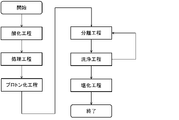
- the method for producing oxidized cellulose of the present invention includes a step of solid-liquid separating an oxide dispersion containing a cellulosic oxide and a dispersion medium to obtain oxidized cellulose (hereinafter, also referred to as a “separation step”).
- the pH of the oxide dispersion is 4.0 or less.
- the oxide dispersion does not substantially contain the N-oxyl compound, or the cellulosic raw material is oxidized with a predetermined range amount of hypochlorous acid or a salt thereof to obtain the cellulosic oxide. Further includes steps.
- cellulose oxide can be obtained in high yield.
- This factor is inferred as follows (however, the factor is not limited to this).
- the cellulosic oxide obtained by oxidizing a cellulosic raw material using hypochloric acid or a salt thereof is dispersed in a dispersion medium and solid-liquid separated, the cellulosic oxide becomes finer in the dispersion medium. And a part of it is transferred from the solid phase to the liquid phase, so that the yield of the obtained oxidized cellulose is reduced.
- the filter cloth may be clogged and the solid-liquid separation itself may become difficult.
- the method for producing oxidized cellulose of the present invention mainly because the pH of the oxide dispersion is 4.0 or less, it is possible to prevent the cellulose-based oxide from being refined in the dispersion medium. , The yield of oxidized cellulose recovered by solid-liquid separation is improved. In particular, when the solid-liquid separation is performed by filtration, the filter cloth is not clogged, the operability of the solid-liquid separation is improved, and it is easy to wash the oxidized cellulose on the filter cloth after that. be.
- the production method of the present invention can include a step of oxidizing a cellulosic raw material to obtain a cellulosic oxide (hereinafter referred to as "oxidation step") in order to prepare a cellulosic oxide to be used in the separation step.
- oxidation step an oxidizing agent can be used to oxidize the cellulosic raw material, and it is particularly preferable to use hypochlorous acid or a salt thereof.
- hypochlorous acid or a salt thereof are as described in relation to the above ⁇ mode for carrying out the first invention >>.
- the cellulosic oxide means a cellulosic-based material containing a carboxy group. In the separation step described later, it is preferable to use the cellulosic oxide obtained in the oxidation step, but it is not particularly limited.
- the oxide dispersion means one containing a cellulosic oxide and a dispersion medium and having a pH of 4.0 or less.
- the oxidized cellulose means a component which can be contained in the solid phase in the dispersion among the materials mainly composed of cellulose containing a carboxy group.
- the components are extracted as a solid phase without being dissolved in the dispersion medium in the dispersion because the degree of polymerization is more than a predetermined value and the water solubility is less than a predetermined value. ..
- the pH in the present specification can be measured by a pH meter equipped with a pH electrode. It is also possible to control the pH range using a pH controller with a pH electrode.
- Examples of the method for obtaining a cellulosic oxide by oxidizing a cellulosic raw material include a method of mixing a cellulosic raw material with a reaction solution containing hypochlorous acid or a salt thereof.
- the solvent contained in the reaction solution is preferably water because it is easy to handle and side reactions are unlikely to occur.
- hypochlorous acid or a salt thereof is not particularly limited, but is preferably 0.2 or more, more preferably 0.5 or more, and further preferably 1. It is 0 or more. Within this range, the amount of carboxy groups in the obtained cellulosic oxide and oxidized cellulose can be sufficiently increased, and the miniaturization tends to proceed sufficiently during defibration, which will be described later.
- the upper limit of the mass ratio is not particularly limited, and is preferably 20 or less, more preferably 10 or less, and further preferably 5.0 or less. As the range of the mass ratio, the upper limit value and the lower limit value may be appropriately combined, and may be, for example, 0.2 or more and 20 or less, 0.5 or more and 10 or less, or 1.0 or more and 5.0 or less.
- Cellulose oxide can be obtained, for example, by oxidizing a cellulose-based raw material under the above-mentioned mass ratio conditions and undergoing a separation step described later, and also using the above-mentioned mass ratio, pH at the time of reaction, reaction temperature and other reaction conditions. It can also be manufactured by appropriate control.
- the structure of the oxidized cellulose thus obtained (oxidized state of the hydroxyl group) is as described in relation to the above ⁇ mode for carrying out the first invention >>.
- the presence or absence of pH adjustment and the pH range are arbitrary.
- the preferable pH value and the method for adjusting the pH are as described in relation to the above ⁇ embodiment for carrying out the first invention >>.
- the production method of the present invention can further include a step of treating the hypochlorite or a salt thereof used in the oxidation step (hereinafter, also referred to as a “treatment step”).
- a treatment step By including the treatment step, the reaction of oxidizing the cellulosic raw material can be stopped.
- Specific examples of the treatment step are as described in relation to the above ⁇ mode for carrying out the first invention >>.
- the production method of the present invention is a step of adding an acid to prepare an oxide dispersion having a pH of 4.0 or less in order to prepare an oxide dispersion used in the separation step (hereinafter, "protonation step”). Also called) can be further included.
- the cellulosic oxide contained in the oxide dispersion contains a carboxy group, and in the protonation step, at least a part of the carboxy group is salted (-COO-X +: X + is sodium). It is a step to change from a cation such as (referring to a cation such as) to a proton type (-COO-H +).
- the acid used in the protonation step is not particularly limited as long as it can prepare an oxide dispersion having a pH of 4.0 or less, and examples thereof include inorganic acids and organic acids. Among these, inorganic acids, particularly hydrochloric acid, are preferable from the viewpoint of ease of handling. Further, a proton exchange resin may be used in the protonation step.
- the cation exchange resin either a strongly acidic ion exchange resin or a weakly acidic ion exchange resin can be used as long as the counter ion is H +, and among these, a strongly acidic ion exchange resin is preferable.
- the strongly acidic ion exchange resin and the weakly acidic ion exchange resin include those in which a sulfonic acid group or a carboxy group is introduced into a styrene resin or an acrylic resin.
- the shape of the cation exchange resin is not particularly limited, and various shapes such as fine particles (granular), film-like, and fibers can be used.
- granules are preferable from the viewpoint of efficiently desalting the carboxylated cellulose nanofiber salt and facilitating separation after the desalting treatment.
- Commercially available products can be used as such cation exchange resins. Examples of commercially available products include Amber Jet 1020, 1024, 1060, 1220 (above, manufactured by Organo Corporation), Amberlite IR-200C, IR-120B (above, manufactured by Tokyo Organic Chemical Corporation), Revachit SP112, and the like. Examples thereof include S100 (above, manufactured by Bayer), GELCK08P (manufactured by Mitsubishi Chemical Corporation), Dowex50W-X8 (manufactured by Dow Chemical Corporation), and the like. After protonation using the cation exchange resin, the cation exchange resin may be removed by filtering with a metal mesh or the like.
- the dispersion medium used in the protonation step is not particularly limited, and it is preferable to use the solvent contained in the above acid as it is. Further, depending on the purpose, a dispersion medium not contained in the acid can be appropriately used in combination, or the solvent contained in the acid can be replaced with another dispersion medium. Specific examples of the dispersion medium include those described as the dispersion liquid during the defibration treatment in the above ⁇ embodiment for carrying out the first invention >>.
- the pH of the oxide dispersion is preferably 4.0 or less, more preferably 3.0 or less, and even more preferably 2.5 or less.
- the lower limit of the pH of the oxide dispersion is not particularly limited, and is usually 1.0 or more, preferably 1.5 or more, and more preferably 2.0 or more.
- the above upper limit value and the lower limit value may be appropriately combined, and for example, 1.0 or more and 4.0 or less, 1.5 or more and 3.0 or less, or 2.0 or more and 2 It may be 5.5 or less.
- the protonation step may be performed before the separation step, preferably after the oxidation step, but may be performed at the same time as a part of the oxidation step.
- the cellulosic oxide may be used in the separation step by further purifying it before, after, or between the protonation steps as necessary. Further, the solution containing the cellulosic oxide obtained in the oxidation step may be directly used in the separation step.
- the method for producing oxidized cellulose of the present invention includes a step (separation step) of solid-liquid separating an oxide dispersion containing a cellulosic oxide and a dispersion medium to obtain oxidized cellulose.
- the pH of the oxide dispersion is 4.0 or less.
- the method for solid-liquid separation of the oxide dispersion is not particularly limited, and examples thereof include a method of removing the liquid phase by a known isolation treatment such as centrifugation or filtration to obtain oxidized cellulose contained in a solid phase. .. Among these, solid-liquid separation by filtering the oxide dispersion is preferable from the viewpoint of operability.
- the pH of the oxide dispersion in the separation step is the same as the pH of the oxide dispersion prepared in the protonation step, and the specific values are as described above.
- the dispersion medium used in the separation step is the same as the dispersion medium used in the protonation step, and it is preferable to use the dispersion medium used there as it is. Specific examples of the dispersion medium are the same as those of the dispersion medium used in the protonation step.
- the method for producing cellulose oxide of the present invention can further include a step of washing the oxide dispersion or the cellulose oxide with an acidic cleaning liquid (hereinafter, also referred to as “cleaning step”).
- a solution containing the acid and the dispersion medium used in the protonation step can be used, but is not particularly limited.
- the pH of the acidic cleaning solution is the same as the pH of the oxide dispersion described above, and the specific values are as described above.
- the cleaning step may be performed before, after, or at the same time as the separation step, and the separation step and the cleaning step may be repeated as described later in Examples.
- the production method of the present invention is a step of adding a base to adjust the pH of the oxidized cellulose dispersion containing the oxidized cellulose obtained in the separation step and the dispersion medium to more than 4.0 (hereinafter, also referred to as “chloride step”). Further, the chloride step may be further included (also referred to as a "neutralization step”).
- the oxidized cellulose contained in the oxidized cellulose dispersion contains a carboxy group, and in the chloride step, at least a part of the carboxy group is changed from a proton type (-COO-H +) to a salt type (-COO-).
- X + refers to cations such as sodium and lithium).
- the base used in the chloride step is not particularly limited as long as the pH of the oxidized cellulose dispersion can be adjusted to more than 4.0, and examples thereof include inorganic bases and organic bases. Among these, inorganic bases, particularly sodium hydroxide, are preferable from the viewpoint of ease of handling. Further, as the base, an amine can also be used. The amine may be a primary amine, a secondary amine, a tertiary amine, or a quaternary amine.
- the pH of the oxidized cellulose dispersion is preferably 5.0 or higher, more preferably 6.0 or higher, and even more preferably 7.0 or higher.
- the upper limit of pH is not particularly limited, but is preferably 14.5 or less, more preferably 14.0 or less, still more preferably 12.0 or less, still more preferably 10.0 or less, still more preferably 9.0 or less. Particularly preferably, it is 8.0 or less.
- the upper limit value and the lower limit value may be appropriately combined in the pH range, for example, 5.0 or more and 14.5 or less, 5.0 or more and 14.0 or less, 6.0 or more and 12.0 or less, 6.0. It may be 10.0 or more, 7.0 or more and 9.0 or less, or 7.0 or more and 8.0 or less.
- the dispersion medium used in the chloride step is not particularly limited, and it is preferable to use the solvent contained in the above base as it is. Further, depending on the purpose, a dispersion medium not contained in the base can be appropriately used in combination, or the solvent contained in the base can be replaced with another dispersion medium. Specific examples of the dispersion medium are the same as those of the dispersion medium used in the protonation step. However, water and / or an organic solvent is preferable because nanocellulose can be easily isolated in the defibration step described later.
- the chloride step may be after the separation step and may be before, after, or at the same time as the washing step.
- the cellulose oxide of the present invention is the cellulose oxide obtained by the production method of the present invention. Specifically, cellulose oxide is a component derived from the oxide dispersion used in the separation step and extracted as a solid phase by a solid-liquid separation operation.
- Oxidized cellulose is preferably in the form of a slurry.
- the slurry referred to here is a suspension containing cellulose oxide.
- the slurry may contain the dispersion medium used in the separation step. Further, a dispersion medium may be appropriately added to form a slurry. Since the cellulose oxide is a slurry, it is easy to handle and miniaturization tends to proceed easily.
- Oxidized cellulose contains fibrous cellulose obtained by oxidizing a cellulosic raw material with hypochlorous acid or a salt thereof.
- the cellulose oxide in the present invention is also referred to as a cellulose oxide fiber. That is, the oxidized cellulose in the present invention contains an oxide of a cellulosic raw material by hypochlorous acid or a salt thereof.
- the preferred degree of polymerization of cellulose oxide, the method for adjusting the degree of polymerization, and the method for measuring the degree of polymerization are as described in relation to the above ⁇ Embodiment for carrying out the first invention >>.
- the oxidized cellulose of the present invention may be used by blending itself with other components. That is, it is possible to obtain a nanocellulose-containing composition containing nanocellulose and at least one other component by blending with other components without making them finer and stirring the oxidized cellulose by appropriate stirring or the like. can. Further, the cellulose oxide in the present invention can be made into nanocellulose by the user of the oxidized cellulose by himself / herself at the time of use.
- the method for producing nanocellulose of the present invention includes a step of defibrating the oxidized cellulose obtained by the method for producing oxidized cellulose of the present invention to obtain nanocellulose.
- the method of defibrating is not particularly limited as long as it is a method of refining the oxidized cellulose, but it is preferably carried out in a state where the oxidized cellulose is mixed with the dispersion medium.
- the specific defibration method is as described in relation to the above ⁇ embodiment for carrying out the first invention >>.
- the dispersion medium used in the defibration step is the same as the dispersion medium used in the chloride step, and it is preferable to use the dispersion medium used there as it is.
- Specific examples of the dispersion medium are the same as those of the dispersion medium used in the protonation step.
- water and / or an organic solvent is preferred because it facilitates the isolation of nanocellulose.
- nanocellulose dispersed in an organic solvent can be obtained, it becomes easy to mix with a resin that dissolves in the organic solvent, a resin raw material monomer, or the like.
- the nanocellulose dispersion obtained by dispersing the nanocellulose obtained by defibration in a dispersion medium of water and / or an organic solvent can be used for mixing with various components such as resin, rubber, and solid particles. ..
- the nanocellulose of the present invention is nanocellulose obtained by the method for producing nanocellulose of the present invention, and refers to the one derived from the oxidized cellulose of the present invention, in which the oxidized cellulose is defibrated and refined.
- nanocellulose is a general term for finely divided cellulose, and includes fine cellulose fibers, cellulose nanocrystals, and the like. Fine cellulose fibers are also referred to as cellulose nanofibers (also referred to as CNF).
- the average fiber length, average fiber width, their measuring method, and aspect ratio (average fiber length / average fiber width) of nanocellulose are described in relation to the above ⁇ embodiment for carrying out the first invention >>. As you did.
- the light transmittance of the aqueous dispersion of nanocellulose shows a value of 60% or more.
- the light transmittance of this nanocellulose aqueous dispersion is more preferably 70% or more, further preferably 75% or more, still more preferably 80% or more. A specific method for measuring the light transmittance will be described in Examples described later.
- a method may be obtained by combining the first invention and the second invention to include a step of oxidizing a cellulosic raw material to obtain oxidized cellulose and a step of post-treating the oxidized cellulose.
- the following method can be mentioned, but the present invention is not limited thereto, and the specific embodiment of the above-mentioned first invention and the specific embodiment of the second invention can be appropriately combined.
- a step of obtaining a first oxidized cellulose by oxidizing a cellulosic raw material using hypochloric acid or a salt thereof (here, the viscosity of the cellulosic raw material slurry having the same concentration as that at the time of performing the oxidation is SPP.
- the range is 1000 Pa ⁇ s or less under the measurement conditions of 100 rpm and 30 ° C. or 40 ° C.) [Part 1 of the first invention].
- first oxidized cellulose and the “second oxidized cellulose” in the above [part of the second invention] are "cellulose-based oxidation” in the above ⁇ embodiment for carrying out the second invention >>, respectively.
- first oxidized cellulose and the “second oxidized cellulose” in the above [part of the second invention] are "cellulose-based oxidation” in the above ⁇ embodiment for carrying out the second invention >>, respectively.
- the viscosities of the 7% by mass, 15% by mass, and 20% by mass slurries at 40 ° C. were 1.00 Pa ⁇ s or less, 2.32 Pa ⁇ s, and 11.91 Pa ⁇ s, respectively.
- Crystallinity of cellulosic raw materials The crystallinity was calculated from the peak of the 4th carbon position (hereinafter also referred to as C4) of cellulose by solid 13 C-NMR measurement of the freeze-dried cellulosic raw material.
- the C4 peak appears in the range of about 80 to 95 ppm in the form of overlapping the peaks of the crystalline part (high ppm side, about 85 to 95 ppm) and the amorphous part (low ppm side), and is divided into each peak area by the vertical division method.
- Crystal part: SC, Amorphous part: SA The crystallinity was calculated by the following formula.
- Example 1A 780 g of sodium hypochlorite pentahydrate crystals having an effective chlorine concentration of 42% by mass were placed in a glass container with a 2L baffle with a jacket, pure water was added, and the mixture was stirred to bring the effective chlorine concentration to 21% by mass. .. To this, 35% by mass hydrochloric acid was added and stirred to obtain an aqueous sodium hypochlorite solution having a pH of 11. While stirring the above sodium hypochlorite aqueous solution at 300 rpm with a stirrer (Three-One Motor, BL600) manufactured by Shinto Kagaku Co., Ltd.
- the viscosity of the reaction system was 1.00 Pa ⁇ s based on the viscosity measured according to the above [Viscosity measurement of the reaction system]. It was assumed that it was as follows. After completion of the reaction, the oxidized cellulose was recovered by repeating centrifugation (1000 G, 10 minutes), decantation, and addition of pure water in an amount corresponding to the removed liquid. Water was added to adjust the concentration of oxidized cellulose to 1%, and the mixture was defibrated with a homomixer at 10,000 rpm for 10 minutes under the conditions of dispersion treatment to obtain an aqueous dispersion of nanocellulose. As a result of analyzing the aqueous dispersion, it was nanocellulose having an average fiber length of 165 nm and an average fiber width of 3.2 nm. The degree of polymerization of cellulose oxide was 96.
- the effective chlorine concentration in the sodium hypochlorite aqueous solution was measured by the following method. (Measurement of effective chlorine concentration in sodium hypochlorite aqueous solution) Precisely weigh 0.582 g of an aqueous solution of sodium hypochlorite pentahydrate crystals in pure water, add 50 ml of pure water, add 2 g of potassium iodide and 10 ml of acetic acid, immediately seal and place in the dark for 15 minutes. I left it. After standing for 15 minutes, the free iodine was titrated with a 0.1 mol / L sodium thiosulfate solution (indicator starch test solution), and the titration amount was 34.55 ml.
- the solid 13 C-NMR of the sample left at 23 ° C. and 50% RH for 24 hours or more was measured. It was confirmed that the hydroxyl group at the 3-position was oxidized to have a structure in which a carboxy group was introduced.
- the measurement conditions for solid 13 C-NMR are shown below.
- Example 2A The conditions were the same as in Example 1A except that the amount of powdered pulp was changed to 275 g. Since the initial concentration of the cellulosic raw material in the slurry during the reaction was 15% by mass, the viscosity of the reaction system was set to 1.91 Pa ⁇ s based on the viscosity measured according to the above [Viscosity measurement of the reaction system]. And said. No problem was found in the stirring of the reaction system, and the analysis of the aqueous dispersion of nanocellulose obtained by defibration under the same conditions revealed nanocellulose with an average fiber length of 168 nm and an average fiber width of 3.4 nm. .. The degree of polymerization of cellulose oxide was 105.
- Example 3A 780 g of sodium hypochlorite pentahydrate crystals having an effective chlorine concentration of 42% by mass were placed in a glass container with a 4L baffle with a jacket, pure water was added, and the mixture was stirred to bring the effective chlorine concentration to 13% by mass. .. To this, 35% by mass hydrochloric acid was added and stirred to obtain an aqueous sodium hypochlorite solution having a pH of 10. While stirring the above sodium hypochlorite aqueous solution at 300 rpm with a stirrer (Three-One Motor, BL600) manufactured by Shinto Kagaku Co., Ltd. using three swept blades, 40 ° C water is circulated through the jacket and added to 40 ° C.
- a stirrer Three swept blades
- the viscosity of the reaction system was 1.00 Pa ⁇ s or less from the viscosity measured according to the above [Viscosity measurement of the reaction system]. It was said that.
- the oxidized cellulose was recovered by repeating centrifugation (1000 G, 10 minutes), decantation, and addition of pure water in an amount corresponding to the removed liquid. Water was added to adjust the concentration of oxidized cellulose to 1%, and the mixture was defibrated with a homomixer at 10,000 rpm for 10 minutes under the conditions of dispersion treatment to obtain an aqueous dispersion of nanocellulose.
- the aqueous dispersion it was nanocellulose having an average fiber length of 174 nm and an average fiber width of 4.2 nm.
- the degree of polymerization of cellulose oxide was 101.
- Example 4A The conditions were the same as in Example 3A except that the amount of powdered pulp was changed to 445 g. Since the initial concentration of the cellulosic raw material in the slurry during the reaction was 15% by mass, the viscosity of the reaction system was 2.32 Pa ⁇ s based on the viscosity measured according to the above [Viscosity measurement of the reaction system]. And said. No problem was found in the stirring of the reaction system, and as a result of analyzing the aqueous dispersion of nanocellulose obtained by defibration under the same conditions as in Example 3A, the nanocellulose with an average fiber length of 181 nm and an average fiber width of 4.5 nm was analyzed. It was cellulose. The degree of polymerization of cellulose oxide was 114.
- Example 5A The same procedure as in Example 1A was carried out except that the concentration of the cellulosic raw material in the reaction system was 20% by mass with respect to the total amount of the reaction system.
- the viscosity of the reaction system based on the viscosity measured according to the above [Viscosity measurement of the reaction system] was 9.11 Pa ⁇ s. Although the progress of the oxidation reaction could be confirmed because the viscosity gradually decreased, it was difficult to stir the reaction system.
- Example 6A The same procedure as in Example 3A was carried out except that the concentration of the cellulosic raw material in the reaction system was 20% by mass with respect to the total amount of the reaction system.
- the viscosity of the reaction system based on the viscosity measured according to the above [Viscosity measurement of the reaction system] was 11.91 Pa ⁇ s. Although the progress of the oxidation reaction could be confirmed because the viscosity gradually decreased, it was difficult to stir the reaction system.
- Example 1B (Oxidation process) 350 g of sodium hypochlorite pentahydrate crystals having an effective chlorine concentration of 42% by mass was placed in a beaker, pure water was added, and the mixture was stirred to bring the effective chlorine concentration to 21% by mass. To this, 35% by mass hydrochloric acid was added and stirred to obtain an aqueous sodium hypochlorite solution having a pH of 11. The above sodium hypochlorite aqueous solution is heated to 30 ° C.
- hydrochloric acid was added to change the carboxy group of the cellulosic oxide from the salt type (-COO-Na +) to the proton type (-COO-H +) to obtain an aqueous dispersion having a pH of 2.5.
- the pH in this example was controlled by using a pH controller (Tokyo Glass Instruments Co., Ltd., FD-02).
- the light transmittance of CNF is higher than that of Comparative Example 1B described later, and one of the factors is that the protonation step removes the component that interferes with the defibration of the oxidized cellulose in the defibration step. It is presumed that this is the case.
- Example 2B In the protonation step, instead of the aqueous dispersion having a pH of 2.5, hydrochloric acid was added to make an aqueous dispersion having a pH of 3.5, and in the chloride step, the pH was 7.5. In place of obtaining the aqueous dispersion of 7.3, sodium hydroxide was added in an amount approximately equal to the amount of the introduced carboxy group to obtain an aqueous dispersion having a pH of 7.3. Oxidized cellulose and nanocellulose were obtained in the same manner as in Example 1B.
- the mass yield of the obtained oxidized cellulose was 46%.
- the content concentration of cellulose oxide after the chlorination step was 11% by mass, and the degree of polymerization of cellulose oxide was 95.
- the average fiber length was 210 nm, the average fiber width was 3 nm, and the light transmittance of the aqueous dispersion having a solid content concentration of 0.1% by mass was 95%.
- Example 3B Instead of repeating the operation of removing the supernatant by centrifugation (1000 G, 10 minutes) and decanting, adding the amount of pure water equivalent to the removed amount, and stirring sufficiently with a spoon to make it uniform, pressure filtration ( It was separated into solid and liquid by 0.2 MPa, air permeability of the filter cloth 0.3 cc / cm2 / sec), the filtrate which was the liquid phase was removed, and the separated solid phase was washed with pure water of pH 6.8.
- the filter cloth was not clogged, and the filter cloth could be subsequently washed with pure water having a pH of 6.8.
- a slight cloudiness was confirmed in the filtrate when washed with pure water.
- the cloudiness is a part, and by washing with pure water having a pH of 6.8, the carboxylic acid group is dissociated from the proton type (-COO-H +) to the salt type (-COO-Na +), and cellulose is used. It is presumed that a part of the system oxide was redistributed from the separated solid phase into the liquid phase, causing the filtrate to become cloudy.
- the mass yield of the obtained oxidized cellulose was 67%.
- the content concentration of cellulose oxide after the chlorination step was 12% by mass, and the degree of polymerization of cellulose oxide was 92.
- the average fiber length was 190 nm
- the average fiber width was 3 nm
- the light transmittance of the aqueous dispersion having a solid content concentration of 0.1% by mass was 95%.
- Example 4B Example 3B except that the separated solid phase was washed with pure water having a pH of 6.8 and the separated solid phase was washed with water adjusted to pH 2.5 by adding hydrochloric acid to the pure water. Oxidized cellulose and nanocellulose were obtained in the same manner as above.
- Example 3B Similar to the result of Example 3B, the filter cloth was not clogged during the pressure filtration, and the filter cloth could be subsequently washed with pure water. However, no cloudiness was confirmed in the filtrate at the time of washing.
- the mass yield of the obtained oxidized cellulose was 69%.
- the content concentration of cellulose oxide after the chlorination step was 12% by mass, and the degree of polymerization of cellulose oxide was 91.
- the average fiber length was 185 nm
- the average fiber width was 3 nm
- the light transmittance of the aqueous dispersion having a solid content concentration of 0.1% by mass was 95%.
- the mass yield of cellulose oxide is higher than that of Example 3B, and the cause is that the separated solid phase is washed with water adjusted to pH 2.5, so that the carboxylic acid group is proton-type ( It is presumed that it was not dissociated from -COO-H +) to the salt type (-COO-Na +), and it suppressed the redispersion of a part of the cellulosic oxide from the separated solid phase to the liquid phase. To. From the viewpoint of treating the filtrate, it is preferable that the filtrate does not become cloudy from the viewpoint of treating the filtrate.
- Example 5B In a glass container with a jacket, put 500 g of an aqueous solution of sodium hypochlorite having a pH of 12.6 and an effective chlorine concentration of 12% by mass, and use a stirrer (Three-One Motor, BL600) manufactured by Shinto Kagaku Co., Ltd. to make three swept blades. After heating to 30 ° C. with stirring at 300 rpm, 40 g of powdered pulp (KC Flock W-100GK, crystallinity: 38%) manufactured by Nippon Paper Co., Ltd. was added as a cellulosic raw material.
- the mixture After supplying the cellulosic raw material, the mixture is stirred until the pH drops to 10.3 while keeping the temperature at 30 ° C., and then the pH during the reaction is adjusted to 10.3 by adding a 25% by mass sodium hydroxide aqueous solution. After the cellulose-based raw material was added, stirring was carried out under the same conditions for a total of 7 hours. After completion of the reaction, a hydrogen peroxide aqueous solution was added to the remaining sodium hypochlorite to inactivate it while checking the value of the redox potential.
- hydrochloric acid was added to change the carboxy group of the oxidized cellulose from the salt type (-COO-Na +) to the proton type (-COO-H +) to obtain an aqueous dispersion having a pH of 2.5. It was separated into solid and liquid by pressure filtration at 0.2 MPa, and then washed with hydrochloric acid water having a pH of 2.5. Sodium hydroxide is added to the obtained proton-type oxidized cellulose to change the carboxylic acid group from the proton-type (-COO-H +) to the salt-type (-COO-Na +), and the pH is 6.8. An aqueous dispersion was obtained. When the amount of carboxy group was measured, it was 0.73 mmol / g and the degree of polymerization was 100.
- Example 6B Oxidized cellulose and nanocellulose were obtained in the same manner as in Example 1B except that an ashes-free filter paper made of cotton (Advantech Toyo, crystallinity 59%) was used as the cellulose-based raw material.
- the mass yield of the obtained oxidized cellulose was 65%.
- the content concentration of cellulose oxide after the chlorination step was 10% by mass, and the degree of polymerization of cellulose oxide was 90.
- the average fiber length was 160 nm
- the average fiber width was 10 nm
- the light transmittance of the aqueous dispersion having a solid content concentration of 0.1% by mass was 90%.
- Example 7B was carried out with reference to Japanese Patent Application Laid-Open No. 2017-218470. Further, with reference to Japanese Patent Application Laid-Open No. 2008-231258, which describes the use of Maboya skin sac as a raw material for a cellulosic material, oxidized cellulose and nanocellulose were produced using Maboya skin sac as a cellulosic raw material.
- the sea pineapple sac was immersed in 0.2% NaOH at room temperature and then refined with a mixer. It was immersed in 5% NaOH overnight at room temperature and then washed with water, and the treatment at 60 ° C. for 2 hours was repeated 3 times in a 0.3% aqueous sodium chlorite solution to remove non-cellulose components.
- Oxidized cellulose and nanocellulose were obtained in the same manner as in Example 1B except that the above-mentioned ascidian skin sac cellulose was used as the cellulose-based raw material.
- the mass yield of the obtained oxidized cellulose was 70%.
- the content concentration of cellulose oxide after the chlorination step was 8% by mass, and the degree of polymerization of cellulose oxide was 110.
- the average fiber length was 230 nm
- the average fiber width was 12 nm
- the light transmittance of the aqueous dispersion having a solid content concentration of 0.1% by mass was 85%.
- the mass yield of the obtained oxidized cellulose was 18%.
- the content concentration of cellulose oxide after the chlorination step was 11% by mass, and the degree of polymerization of cellulose oxide was 98.
- the average fiber length was 210 nm
- the average fiber width was 3 nm
- the light transmittance of the aqueous dispersion having a solid content concentration of 0.1% by mass was 91%.
- the mass yield of cellulose oxide is significantly lower than that of Example 1B, and the reason for this is that part of the cellulose-based oxide is defibrated during the operation of stirring with a spoon in the separation step. It is presumed that the nanocellulose was formed and moved to the supernatant side where it was removed.
- Example 3B Unlike the result of Example 3B, the filter cloth was clogged during the pressure filtration, so that the discharge rate of the filtrate was considerably reduced, and the filter cloth could be continuously washed with pure water. could not.
- the production method of the present invention can provide nanocellulose used in various materials (eg, resin, fiber, rubber, etc.) and various uses (eg, food, cosmetics, medical products, paints, inks, etc.). , Automotive parts, mechanical parts, electrical appliances, electronic devices, cosmetics, medical products, building materials, daily necessities, stationery, etc.
Landscapes
- Chemical & Material Sciences (AREA)
- Life Sciences & Earth Sciences (AREA)
- Health & Medical Sciences (AREA)
- Chemical Kinetics & Catalysis (AREA)
- Engineering & Computer Science (AREA)
- Biochemistry (AREA)
- Medicinal Chemistry (AREA)
- Polymers & Plastics (AREA)
- Organic Chemistry (AREA)
- Materials Engineering (AREA)
- Veterinary Medicine (AREA)
- Animal Behavior & Ethology (AREA)
- General Health & Medical Sciences (AREA)
- Public Health (AREA)
- Epidemiology (AREA)
- Birds (AREA)
- Inorganic Chemistry (AREA)
- General Chemical & Material Sciences (AREA)
- Wood Science & Technology (AREA)
- Dermatology (AREA)
- Polysaccharides And Polysaccharide Derivatives (AREA)
Priority Applications (5)
| Application Number | Priority Date | Filing Date | Title |
|---|---|---|---|
| US18/269,320 US20240076413A1 (en) | 2020-12-24 | 2021-12-22 | Method of producing oxidized cellulose and nanocellulose |
| JP2022571582A JP7769306B2 (ja) | 2020-12-24 | 2021-12-22 | 酸化セルロース及びナノセルロースの製造方法 |
| EP21910899.0A EP4269448A4 (en) | 2020-12-24 | 2021-12-22 | MANUFACTURING PROCESS FOR OXIDIZED CELLULOSE AND NANOCELLULOSE |
| CN202180087358.0A CN116783222B (zh) | 2020-12-24 | 2021-12-22 | 氧化纤维素和纳米纤维素的制造方法 |
| JP2025183025A JP2026021436A (ja) | 2020-12-24 | 2025-10-30 | 酸化セルロース及びナノセルロースの製造方法 |
Applications Claiming Priority (4)
| Application Number | Priority Date | Filing Date | Title |
|---|---|---|---|
| JP2020-215842 | 2020-12-24 | ||
| JP2020215842 | 2020-12-24 | ||
| JP2021-024322 | 2021-02-18 | ||
| JP2021024322 | 2021-02-18 |
Publications (1)
| Publication Number | Publication Date |
|---|---|
| WO2022138759A1 true WO2022138759A1 (ja) | 2022-06-30 |
Family
ID=82157008
Family Applications (1)
| Application Number | Title | Priority Date | Filing Date |
|---|---|---|---|
| PCT/JP2021/047683 Ceased WO2022138759A1 (ja) | 2020-12-24 | 2021-12-22 | 酸化セルロース及びナノセルロースの製造方法 |
Country Status (5)
| Country | Link |
|---|---|
| US (1) | US20240076413A1 (https=) |
| EP (1) | EP4269448A4 (https=) |
| JP (2) | JP7769306B2 (https=) |
| CN (1) | CN116783222B (https=) |
| WO (1) | WO2022138759A1 (https=) |
Cited By (1)
| Publication number | Priority date | Publication date | Assignee | Title |
|---|---|---|---|---|
| WO2025126825A1 (ja) * | 2023-12-11 | 2025-06-19 | 東亞合成株式会社 | 樹脂組成物及びその成形体 |
Families Citing this family (1)
| Publication number | Priority date | Publication date | Assignee | Title |
|---|---|---|---|---|
| WO2022009980A1 (ja) * | 2020-07-09 | 2022-01-13 | 東亞合成株式会社 | ナノセルロース及びその分散液 |
Citations (7)
| Publication number | Priority date | Publication date | Assignee | Title |
|---|---|---|---|---|
| JPS4934989A (https=) * | 1972-08-07 | 1974-03-30 | ||
| JP2008231258A (ja) | 2007-03-20 | 2008-10-02 | Univ Of Tokyo | セルロースエアロゲル及びその製造方法 |
| JP2017193814A (ja) * | 2016-04-13 | 2017-10-26 | 関東電化工業株式会社 | セルロースナノファイバーの分散液およびその製造方法 |
| JP2017218470A (ja) | 2016-06-03 | 2017-12-14 | 学校法人立教学院 | セルロースナノファイバー複合膜およびその製造方法 |
| WO2018230354A1 (ja) | 2017-06-16 | 2018-12-20 | 東亞合成株式会社 | セルロースナノファイバーの製造方法 |
| WO2020027307A1 (ja) | 2018-08-03 | 2020-02-06 | 東亞合成株式会社 | 酸化セルロース、酸化セルロースおよびナノセルロースの製造方法ならびにナノセルロース分散液 |
| WO2020184177A1 (ja) * | 2019-03-12 | 2020-09-17 | 東亞合成株式会社 | 樹脂改質剤の製造方法、樹脂改質剤及び複合材料 |
Family Cites Families (6)
| Publication number | Priority date | Publication date | Assignee | Title |
|---|---|---|---|---|
| AU2012201106A1 (en) * | 2005-05-02 | 2012-03-15 | International Paper Company | Ligno cellulosic materials and the products made therefrom |
| WO2013047218A1 (ja) * | 2011-09-30 | 2013-04-04 | 日本製紙株式会社 | セルロースナノファイバーの製造方法 |
| FI127002B (en) * | 2013-07-29 | 2017-09-15 | Upm Kymmene Corp | A process for the catalytic oxidation of cellulose and a process for preparing a cellulose product |
| CN104558205B (zh) * | 2014-12-19 | 2017-06-13 | 西安北方惠安化学工业有限公司 | 一种低粘度羧甲基纤维素钠的制备方法 |
| JP6755639B2 (ja) * | 2015-02-04 | 2020-09-16 | 日本ゼオン株式会社 | 含金属酸化セルロースナノファイバー分散液およびその製造方法 |
| EP4180462A4 (en) * | 2020-07-09 | 2024-05-29 | Toagosei Co., Ltd. | OXIDIZED CELLULOSE, NANOCELLULOSE AND DISPERSIONS THEREOF |
-
2021
- 2021-12-22 WO PCT/JP2021/047683 patent/WO2022138759A1/ja not_active Ceased
- 2021-12-22 US US18/269,320 patent/US20240076413A1/en active Pending
- 2021-12-22 CN CN202180087358.0A patent/CN116783222B/zh active Active
- 2021-12-22 EP EP21910899.0A patent/EP4269448A4/en not_active Withdrawn
- 2021-12-22 JP JP2022571582A patent/JP7769306B2/ja active Active
-
2025
- 2025-10-30 JP JP2025183025A patent/JP2026021436A/ja active Pending
Patent Citations (7)
| Publication number | Priority date | Publication date | Assignee | Title |
|---|---|---|---|---|
| JPS4934989A (https=) * | 1972-08-07 | 1974-03-30 | ||
| JP2008231258A (ja) | 2007-03-20 | 2008-10-02 | Univ Of Tokyo | セルロースエアロゲル及びその製造方法 |
| JP2017193814A (ja) * | 2016-04-13 | 2017-10-26 | 関東電化工業株式会社 | セルロースナノファイバーの分散液およびその製造方法 |
| JP2017218470A (ja) | 2016-06-03 | 2017-12-14 | 学校法人立教学院 | セルロースナノファイバー複合膜およびその製造方法 |
| WO2018230354A1 (ja) | 2017-06-16 | 2018-12-20 | 東亞合成株式会社 | セルロースナノファイバーの製造方法 |
| WO2020027307A1 (ja) | 2018-08-03 | 2020-02-06 | 東亞合成株式会社 | 酸化セルロース、酸化セルロースおよびナノセルロースの製造方法ならびにナノセルロース分散液 |
| WO2020184177A1 (ja) * | 2019-03-12 | 2020-09-17 | 東亞合成株式会社 | 樹脂改質剤の製造方法、樹脂改質剤及び複合材料 |
Non-Patent Citations (3)
| Title |
|---|
| ARAKI, AMIO: "Oxidizing Agent Production of Microcrystalline Cellulose by Oxidation Method", POLYMER CHEMISTRY, vol. 29, no. 239, 1 January 1972 (1972-01-01), JP , pages 652 - 656, XP009537819, ISSN: 0023-2564 * |
| See also references of EP4269448A4 |
| SUSTAINABLE CHEM. ENG., vol. 8, no. 48, 2020, pages 17800 - 17806 |
Cited By (1)
| Publication number | Priority date | Publication date | Assignee | Title |
|---|---|---|---|---|
| WO2025126825A1 (ja) * | 2023-12-11 | 2025-06-19 | 東亞合成株式会社 | 樹脂組成物及びその成形体 |
Also Published As
| Publication number | Publication date |
|---|---|
| CN116783222A (zh) | 2023-09-19 |
| JPWO2022138759A1 (https=) | 2022-06-30 |
| EP4269448A1 (en) | 2023-11-01 |
| JP7769306B2 (ja) | 2025-11-13 |
| US20240076413A1 (en) | 2024-03-07 |
| JP2026021436A (ja) | 2026-02-10 |
| EP4269448A4 (en) | 2025-02-19 |
| CN116783222B (zh) | 2025-11-18 |
Similar Documents
| Publication | Publication Date | Title |
|---|---|---|
| US11919974B2 (en) | Oxidized cellulose, method of producing oxidized cellulose and nanocellulose, and nanocellulose dispersion | |
| JP7231893B2 (ja) | 酸化セルロース、ナノセルロース及びそれらの分散液 | |
| CN101772517B (zh) | 轻度氧化的纤维素的纳米粒子 | |
| JP7778290B2 (ja) | ナノセルロース含有組成物の製造方法 | |
| JP2026021436A (ja) | 酸化セルロース及びナノセルロースの製造方法 | |
| JP7842980B2 (ja) | ナノセルロース及びその分散液 | |
| JP2023084702A (ja) | ナノセルロースの乾燥物及びナノセルロース分散液 | |
| JP7787489B2 (ja) | ナノセルロースの製造方法 | |
| JP2023013727A (ja) | 酸化セルロース、ナノセルロース及びそれらの分散液 | |
| WO2022118792A1 (ja) | 塩化ビニル樹脂組成物及びその製造方法、並びに成形体 | |
| JP7746674B2 (ja) | 酸化セルロース及びナノセルロースの製造方法、並びに、酸化剤 | |
| JP7649459B2 (ja) | ナノセルロース及びその分散液並びにその製造方法 | |
| JP2023084701A (ja) | 酸化セルロースの乾燥物、酸化セルロースの分散液、及びナノセルロース |
Legal Events
| Date | Code | Title | Description |
|---|---|---|---|
| 121 | Ep: the epo has been informed by wipo that ep was designated in this application |
Ref document number: 21910899 Country of ref document: EP Kind code of ref document: A1 |
|
| ENP | Entry into the national phase |
Ref document number: 2022571582 Country of ref document: JP Kind code of ref document: A |
|
| WWE | Wipo information: entry into national phase |
Ref document number: 18269320 Country of ref document: US |
|
| WWE | Wipo information: entry into national phase |
Ref document number: 202180087358.0 Country of ref document: CN |
|
| NENP | Non-entry into the national phase |
Ref country code: DE |
|
| ENP | Entry into the national phase |
Ref document number: 2021910899 Country of ref document: EP Effective date: 20230724 |
|
| WWW | Wipo information: withdrawn in national office |
Ref document number: 2021910899 Country of ref document: EP |