WO2022138232A1 - 通信装置、通信方法、および通信システム - Google Patents
通信装置、通信方法、および通信システム Download PDFInfo
- Publication number
- WO2022138232A1 WO2022138232A1 PCT/JP2021/045511 JP2021045511W WO2022138232A1 WO 2022138232 A1 WO2022138232 A1 WO 2022138232A1 JP 2021045511 W JP2021045511 W JP 2021045511W WO 2022138232 A1 WO2022138232 A1 WO 2022138232A1
- Authority
- WO
- WIPO (PCT)
- Prior art keywords
- communication
- calculation
- information
- information processing
- calculations
- Prior art date
- Legal status (The legal status is an assumption and is not a legal conclusion. Google has not performed a legal analysis and makes no representation as to the accuracy of the status listed.)
- Ceased
Links
Images







Classifications
-
- G—PHYSICS
- G06—COMPUTING OR CALCULATING; COUNTING
- G06N—COMPUTING ARRANGEMENTS BASED ON SPECIFIC COMPUTATIONAL MODELS
- G06N3/00—Computing arrangements based on biological models
- G06N3/02—Neural networks
- G06N3/04—Architecture, e.g. interconnection topology
- G06N3/045—Combinations of networks
-
- H—ELECTRICITY
- H04—ELECTRIC COMMUNICATION TECHNIQUE
- H04L—TRANSMISSION OF DIGITAL INFORMATION, e.g. TELEGRAPHIC COMMUNICATION
- H04L25/00—Baseband systems
- H04L25/02—Details ; arrangements for supplying electrical power along data transmission lines
- H04L25/0202—Channel estimation
- H04L25/024—Channel estimation channel estimation algorithms
- H04L25/0254—Channel estimation channel estimation algorithms using neural network algorithms
-
- G—PHYSICS
- G06—COMPUTING OR CALCULATING; COUNTING
- G06F—ELECTRIC DIGITAL DATA PROCESSING
- G06F9/00—Arrangements for program control, e.g. control units
- G06F9/06—Arrangements for program control, e.g. control units using stored programs, i.e. using an internal store of processing equipment to receive or retain programs
- G06F9/46—Multiprogramming arrangements
- G06F9/50—Allocation of resources, e.g. of the central processing unit [CPU]
-
- G—PHYSICS
- G06—COMPUTING OR CALCULATING; COUNTING
- G06N—COMPUTING ARRANGEMENTS BASED ON SPECIFIC COMPUTATIONAL MODELS
- G06N3/00—Computing arrangements based on biological models
- G06N3/02—Neural networks
- G06N3/04—Architecture, e.g. interconnection topology
- G06N3/0464—Convolutional networks [CNN, ConvNet]
-
- G—PHYSICS
- G06—COMPUTING OR CALCULATING; COUNTING
- G06N—COMPUTING ARRANGEMENTS BASED ON SPECIFIC COMPUTATIONAL MODELS
- G06N3/00—Computing arrangements based on biological models
- G06N3/02—Neural networks
- G06N3/08—Learning methods
- G06N3/098—Distributed learning, e.g. federated learning
-
- H—ELECTRICITY
- H04—ELECTRIC COMMUNICATION TECHNIQUE
- H04W—WIRELESS COMMUNICATION NETWORKS
- H04W28/00—Network traffic management; Network resource management
- H04W28/16—Central resource management; Negotiation of resources or communication parameters, e.g. negotiating bandwidth or QoS [Quality of Service]
- H04W28/18—Negotiating wireless communication parameters
- H04W28/20—Negotiating bandwidth
-
- H—ELECTRICITY
- H04—ELECTRIC COMMUNICATION TECHNIQUE
- H04W—WIRELESS COMMUNICATION NETWORKS
- H04W40/00—Communication routing or communication path finding
- H04W40/02—Communication route or path selection, e.g. power-based or shortest path routing
-
- H—ELECTRICITY
- H04—ELECTRIC COMMUNICATION TECHNIQUE
- H04W—WIRELESS COMMUNICATION NETWORKS
- H04W40/00—Communication routing or communication path finding
- H04W40/02—Communication route or path selection, e.g. power-based or shortest path routing
- H04W40/12—Communication route or path selection, e.g. power-based or shortest path routing based on transmission quality or channel quality
-
- H—ELECTRICITY
- H04—ELECTRIC COMMUNICATION TECHNIQUE
- H04W—WIRELESS COMMUNICATION NETWORKS
- H04W84/00—Network topologies
- H04W84/18—Self-organising networks, e.g. ad-hoc networks or sensor networks
Definitions
- This disclosure relates to communication devices, communication methods, and communication systems.
- the application mainly performs calculations based on a neural network (DNN: Deep Neural Network) having multiple layers whose internal parameters are optimized by machine learning.
- the calculation is more expensive than other common applications. Therefore, when the application is executed on a general-purpose wireless communication terminal such as a smartphone, there arises a problem that calculation time, power consumption, and the like increase.
- a method in which the cloud server acts for the calculation is also conceivable.
- the wireless communication terminal transmits the information necessary for the calculation to the cloud server and receives the calculation result from the cloud server, so that the amount of communication increases. Further, in the case of wireless communication, delay is likely to occur because the communication quality is unstable. Therefore, this method may exceed the amount of delay that the application can tolerate.
- distributed learning distributed Learning that distributes DNN calculations to both communication terminals and cloud servers is considered. ing. That is, it is being considered that the communication terminal is in charge of a part of the DNN calculation, and the cloud server is in charge of the rest of the DNN calculation.
- the communication network that relays the communication between the communication terminal and the cloud server shares a part of the DNN calculation. That is, at least one of the plurality of communication nodes constituting the communication network may be responsible for a part of the DNN calculation. However, in this case, which communication node is in charge of the calculation becomes a problem, and the situation may worsen depending on the selection of the communication node.
- the communication node Since the communication node is closer to the communication terminal than the cloud server, it is expected that the communication time will be shorter than when the communication node is not in charge of part of the DNN calculation. However, if the communication node connected to the communication link with poor communication quality is in charge of the calculation, the communication time may not be shorter than expected.
- the computing power of the communication node is assumed to be lower than that of the cloud server, and the calculation time by the communication node is increased, and the total time is increased as compared with the case where the communication node is not responsible for a part of the DNN calculation. There is also a risk that it will end up.
- the present disclosure provides an information processing device and the like for comfortably operating an application that executes a calculation based on DNN in a communication environment by using distributed learning.
- One of the information processing devices includes a communication terminal that transmits an input to a deep neural network or is in charge of at least a part of a series of calculations of the deep neural network and transmits the result of the calculation. Receives information about the resources of the communication network that relays communication with the server that may be responsible for at least part of the sequence of calculations. Based on the information about the resource, the entity that shares the series of calculations is determined from the communication terminal, the server, and the communication node in the communication network.
- the information processing apparatus may determine at least one of the communication nodes as the person in charge of calculation.
- the information processing apparatus may determine the calculation range in charge of the calculation person based on the information about the resource.
- the information processing apparatus may determine at least one of the communication nodes existing on the communication route between the communication terminal and the server as the person in charge of calculation.
- the resource includes the communication capacity or communication quality of the communication link in the communication network
- the information processing apparatus uses at least one of the communication nodes based on the communication capacity or the communication quality. You may decide as the person in charge of calculation.
- the information processing apparatus estimates a communication time in which the result of calculation by the communication node is transmitted via the communication link based on the communication capacity or the communication quality, and the communication node is based on the communication time. At least one of the above may be determined as the person in charge of the calculation.
- the resource includes the calculation reserve of the communication node
- the information processing apparatus may determine at least one of the communication nodes as the person in charge of calculation based on the calculation reserve of the communication node.
- the information processing apparatus estimates the calculation time required for the calculation by the communication node based on the calculation reserve capacity of the communication node, and determines at least one of the communication nodes as the person in charge of the calculation based on the calculation time. You may.
- the resource includes the communication capacity or communication quality of the communication link in the communication network and the calculation capacity of the communication node, and the information processing apparatus is based on the communication capacity or the communication quality.
- the communication time in which the result of the calculation by the communication node is transmitted via the communication link is estimated, and the calculation time required for the calculation by the communication node is estimated based on the calculation reserve capacity of the communication node.
- At least one of the communication nodes may be determined as the person in charge of calculation based on the condition that the sum of the calculation times does not exceed a predetermined threshold.
- the information processing apparatus may further receive information regarding the position of the communication terminal, and may change the person in charge of calculation according to the change of the communication route due to the movement of the communication terminal.
- the information processing apparatus may further receive information regarding the topology of the communication network, and may change the person in charge of calculation according to the change of the communication route due to the change of the topology.
- the information processing apparatus determines the calculation range to be in charge of the calculation person by selecting one of the proposals in charge showing the calculation range to be in charge of the calculation person based on the resource. You may.
- the resource includes the position of the communication terminal, and the information processing apparatus is in charge of the information processing device when a predetermined communication node no longer exists on the communication route changed by the movement of the communication terminal. You may recreate the plan.
- the information processing apparatus may change the calculation range in charge of the calculation person by increasing or decreasing the calculation range in charge of the calculation person based on the fluctuation of the resource.
- the information processing apparatus may transmit the calculation range to the communication node determined to be in charge of the calculation.
- the information processing apparatus determines a set value for improving the quality of the wireless communication link on the communication route, and for the communication node existing on the communication route, the quality of the wireless communication link on the communication route. You may send a setting value that improves.
- another information processing apparatus receives a part of a series of calculations based on the deep neural network as a calculation range in charge, calculates the calculation range, and specifies the calculation result of the calculation range. To acquire information on the calculation capacity or the communication capacity or communication quality of the communication link to which the calculation result is transmitted, and transmit the acquired information to the instruction source of the calculation range to the instruction source. Receives the change in the calculation range from.
- the calculation result when the calculation result satisfies the condition for the intermediate termination of the series of calculations, the calculation result is not the designated destination but the final calculation of the series of calculations. It may be sent to the recipient of the result.
- the information regarding the change of the calculation range may be information indicating one of a plurality of splitting modes.
- An information processing method is a communication terminal that transmits an input to a deep neural network or is in charge of at least a part of a series of calculations of the deep neural network and transmits the result of the calculation. And the step of receiving information about the resources of the communication network that relays the communication with the server that can be responsible for at least a part of the series of calculations, and based on the information about the resources, the communication terminal, the server, and so on. It includes a communication node in the communication network and a step of determining a plurality of entities that share the series of calculations.
- a communication system is a communication terminal that transmits an input to a deep neural network or is in charge of at least a part of a series of calculations of the deep neural network and transmits the result of the calculation.
- a plurality of communication nodes belonging to a communication network that relays communication with a server that may be responsible for at least a part of the series of calculations, and the plurality of communication nodes provide information on the resources of the communication network. Transmission to a predetermined communication node among the communication nodes of the above, the predetermined communication node receives information about the resource, and based on the information about the resource, the communication terminal, the server, the communication node, and the communication node. From among them, a plurality of entities that share the series of calculations are determined.
- Another information processing method of the present disclosure is a step of determining a first range of calculation in a series of calculations of a deep neural network, a step of executing a calculation of the first range of responsibility, and a step of performing the calculation of the first range of responsibility.
- the step of transmitting the first information including the identification information and the output value of the node included in the last layer of the first range of responsibility, the step of receiving the first information, and the step of receiving the first information are included in the first information.
- the deep by inputting the output value included in the first information into the identified node and the step of identifying the node to which the output value included in the first information should be input based on the identification information. It comprises a step of performing the rest of the calculation of the neural network or the calculation of the second area of responsibility.
- the other information processing method further comprises a step of returning the result of the remaining calculation of the deep neural network or the calculation of the second area of responsibility to the sender of the calculation result of the first area of responsibility. May be good.
- the other information processing method further includes a step of receiving a condition for determining the first range of responsibility, and the first range of responsibility may be determined based on the condition.
- the condition of the other information processing method may include a calculation capacity of the entity that calculates the first range of responsibility.
- the conditions of the other information processing method may include those relating to the communication quality between the entity that calculates the first range of responsibility and the predetermined entity.
- the communication quality of the other information processing method may be calculated based on at least one of delay time, data rate, and channel occupancy.
- the entity that executes the remaining calculation of the deep neural network or the calculation of the second area of responsibility and the entity that transmits the condition for determining the first area of responsibility are different. You may be.
- Yet another third information processing apparatus of the present disclosure is for executing an application utilizing the deep neural network and determining the first range of responsibility for a series of calculations of the deep neural network and the first range of responsibility. Determined based on the conditions, the calculation of the first coverage is performed, and as a result of the calculation of the first coverage, the identification information and the output value of the node included in the last layer of the first coverage are included. The first information is transmitted.
- the third information processing apparatus transmits the first information to an entity that performs a series of calculations of the deep neural network next, and obtains the result of the remaining calculation of the deep neural network or the calculation of the second range. , May be received as a reply to the first information.
- the conditions used by the third information processing apparatus include those related to its own calculation reserve, and the first range of responsibility may be determined according to the calculation reserve.
- the conditions used by the third information processing apparatus include those relating to the communication quality between itself and a predetermined entity, and the first range of responsibility is determined according to the communication quality. May be good.
- the communication quality under the conditions used by the third information processing apparatus may be calculated based on at least one of a delay time, a data rate, and a channel occupancy rate.
- Yet another fourth information processing apparatus of the present disclosure is the identification information and output of the nodes included in the last layer of the first coverage as a result of the calculation of the first coverage of a series of calculations of the deep neural network.
- the first information including the value is received, the node to which the output value included in the first information is to be input is identified based on the identification information included in the first information, and the identified node is given the first information.
- the remaining calculation of the deep neural network or the calculation of the second range is executed.
- the fourth information processing apparatus may return the result of the remaining calculation of the deep neural network or the calculation of the second range of responsibility to the sender of the calculation result of the first range of responsibility.
- the second range of responsibility of the fourth information processing apparatus is determined based on a condition for determining the second range of responsibility, and the condition used by the fourth information processing apparatus relates to its own calculation capacity. Things may be included.
- the second range of responsibility of the fourth information processing apparatus is determined based on the conditions for determining the second range of responsibility, and the conditions used by the fourth information processing apparatus include themselves and predetermined. It may include things related to the quality of communication with the entity.
- the communication quality under the conditions used by the fourth information processing apparatus may be calculated based on at least one of a delay time, a data rate, and a channel occupancy rate.
- the figure explaining DNN The figure explaining the variance of the calculation of DNN.
- the figure which shows the example of the architecture of the IAB network The figure which shows the effect of the variance of the calculation of DNN.
- the schematic sequence diagram which showed the flow of the whole processing of this embodiment.
- the figure explaining the splitting mode The figure explaining the Splitting mode set for each communication route.
- Sequence diagram before and after the calculation charge is switched.
- FIG. 1 is a diagram showing a configuration example of an information processing system according to an embodiment of the present disclosure.
- the information processing system 1 includes a communication terminal 11, a cloud system (Cloud) 12, and a communication network 13.
- a communication terminal 11 a cloud system (Cloud) 12
- a communication network 13 a communication network 13
- 11A and 11B shown in FIG. 1 the same number is assigned to the same kind of individual, and each individual is distinguished by the alphabet. Further, in this description, if it is not necessary to distinguish between individuals, the alphabet of the code is not described.
- the information processing system 1 is a system for operating an application using a deep neural network (DNN: Deep Neural Network) learned by machine learning (ML: Machine Learning).
- DNN Deep Neural Network
- ML Machine Learning
- the application will be referred to as an ML application.
- the communication terminal 11 is also an information processing device capable of activating an ML application, and corresponds to a smartphone, a laptop, or the like.
- the ML application is installed on the smartphone and the ML application is started by the user of the smartphone.
- a robot whose operation is controlled by an ML application also corresponds to the communication terminal 11.
- the cloud system 12 includes one or more information processing devices called a cloud server, which have higher performance than the communication terminal 11, and provides services available by the communication terminal 11.
- the communication network 13 is composed of a plurality of communication nodes and relays communication between the communication terminal 11 and the cloud system 12.
- the communication node is also referred to as a communication base station.
- FIG. 1 shows an example in which the communication network 13 includes a wireless communication network.
- an example using an IAB (Integrated Access and Backhaul) network used for wireless communication of a 5th generation mobile communication system (5G) is shown, and a communication terminal 11 is shown as a wireless communication terminal.
- the communication network 13 is a wireless communication node 131 capable of wireless communication connection with the communication terminal 11, a donor node 132 which is an upper node of one or more wireless communication nodes 131, and wired communication between the donor node 132 and the cloud system 12. It is composed of a core network 133 that performs the above. As shown in FIG.
- the communication network 13 includes a wireless communication network whose communication quality is unstable as compared with the wired communication because the effect described later is larger than that of the conventional one.
- all the communication of the information processing system 1 may be wired communication, and the wireless communication network that can be included in the communication network 13 is not limited to the IAB network.
- FIG. 2 is a diagram illustrating DNN.
- the network surrounded by the dotted line frame 2 in FIG. 2 corresponds to DNN.
- the DNN is composed of a plurality of nodes 21 and a link 22 connecting the nodes 21 to each other. Further, as shown in FIG. 2, the plurality of nodes 21 are divided into a node group arranged in a vertical row, and the node group is referred to as a layer (hierarchy). In the example of FIG. 2, the DNN has seven layers, but the DNN may have three or more layers.
- the DNN calculation is performed for each node 21. For example, in FIG. 2, image information is input to each node 21 of the first layer called an input layer, and calculation is performed at each node 21 of the first layer.
- FIG. 2 shows an example of image recognition
- the application of the ML application is not particularly limited.
- AR Augmented Reality
- automatic driving robotics
- voice recognition and the like
- DNN DNN
- Smartphones and the like corresponding to the communication terminal 11 generally have lower specifications than cloud servers. Therefore, when all the processing of the ML application, particularly the calculation of DNN, is performed by the communication terminal 11 as it is (In device learning), the calculation time until completion becomes long. In other words, there is a large calculation delay. However, due to the specifications of the ML application, it may be required to keep the time required to execute the ML application within a predetermined allowable limit, and if the communication terminal 11 is entrusted with all the DNN calculations, the calculation delay limits the allowable limit. There is a risk of exceeding it.
- the DNN calculation is executed by the cloud system 12 instead of the communication terminal 11 (Cloud learning)
- the time required for communication in other words, the communication delay becomes a problem.
- a cloud server is made to execute a calculation that consumes excessive power to reduce the power consumption.
- this data transmission may put pressure on the bandwidth and affect other communications.
- the information processing system 1 determines a plurality of calculation personnel from the communication terminal 11, the cloud system 12, and the communication network 13, and distributes a series of calculations based on the DNN to the plurality of calculation personnel. Let it be processed. Such processing is also referred to as distributed learning.
- the person in charge of calculation refers to the entity responsible for at least a part of the calculation of DNN.
- FIG. 3 is a diagram illustrating the variance of the DNN calculation.
- 3 (A) and 3 (B) show an example of integrated learning (Federated Learning) which is not distributed learning
- FIG. 3 (C) shows an example of distributed learning.
- the person in charge of calculation is only the communication terminal 11, and the communication terminal 11 calculates the DNN (In device learning).
- the DNN In device learning
- the communication terminal 11 transmits the information necessary for the calculation to the cloud system 12, and the calculation result is sent to the cloud system 12. Receive from.
- the computing power of the communication terminal 11 is not required so much, and the calculation delay in the cloud system 12 is small, which is an advantage, but the communication delay between the communication terminal 11 and the cloud system 12 becomes a problem.
- the communication terminal 11, the cloud system 12, and the communication network 13 are each in charge of a part of the DNN calculation.
- the communication network 13 also provides computational power for the ML application executed in the communication terminal 11. Since the cloud server having high computing power of the cloud system 12 is in charge of a part of the DNN calculation, the calculation delay can be suppressed as compared with the case where only the communication terminal 11 performs the DNN calculation. Further, in the example of FIG. 3C, the transmission data from the communication terminal 11 is received by the communication network 13, processed, and then transmitted to the cloud system 12.
- the communication time will be shorter, so that the calculation is performed only by the cloud system 12 as compared with the case of FIG. 3 (B).
- the communication delay which is the time required for each communication charge to calculate the DNN
- the communication delay which is the time required for each communication charge to communicate the information required for the DNN calculation
- the time required to execute the ML application by processing a series of DNN calculations in a distributed manner, the time required to execute the ML application, more specifically, the output from the DNN after the input to the DNN is performed is output. Keep the time to obtain within a predetermined allowable limit.
- the time required to execute the ML application will be referred to as an execution delay.
- one or more communication nodes in the communication network 13 are further determined to be in charge of calculation.
- the wireless communication node 131 and the donor node 132 described above correspond to communication nodes.
- a communication node also exists in the core network 133, and the communication node of the core network 133 can also be selected as the person in charge of calculation.
- the DNN in FIG. 2 has seven layers, the first and second layers are in charge of the communication terminal 11, the third and fourth layers are in charge of the wireless communication node 131, and the fifth to the fifth layers.
- the cloud system 12 is in charge of the 7 layers.
- the communication terminal 11 transmits the calculation result in the second layer to the wireless communication node 131, and the wireless communication node 131 calculates the third layer and the fourth layer from the calculation result in the second layer.
- the calculation result of the four layers is transmitted to the cloud system 12, and the cloud system 12 performs the calculation of the fifth layer to the seventh layer from the calculation result in the fourth layer.
- the cloud system 12 may return the calculation result of the 7th layer to the communication terminal 11, and the communication terminal 11 may determine that the input is an image cat based on the calculation result of the 7th layer. Alternatively, the cloud system 12 may determine that the input is an image cat based on the calculation result of the seventh layer, and return the determination result to the communication terminal 11.
- DNNs convolutional neural networks
- CNNs convolutional neural networks
- the DNN parameter may or may not be updated. That is, the DNN may have already completed the learning, and the parameters of the DNN may not be updated.
- the correct answer may be received from the user of the communication terminal 11 via the ML application, and learning may be executed based on the correct answer.
- the updated new DNN shall be distributed to the calculator in order to prevent the situation where the DNN used differs depending on the calculator.
- the infrastructure for communication within the communication node may actually perform the calculation.
- a server that executes calculations may be provided in the communication node.
- An information processing device that acts as a substitute for a part of the cloud service from a place closer to the user (also referred to as an edge) than the cloud service such as a communication node is generally called an edge server.
- the DNN calculation is not always distributed to each of the communication terminal 11, the cloud system 12, and the communication network 13. Depending on the application, it is also possible to complete the DNN calculation in the communication network 13 without using the cloud system 12. In this case, since the total distance of the communication route is shortened, the communication delay can be further reduced. Further, the communication terminal 11 does not calculate the DNN, and the calculation of the DNN may be distributed to the cloud system 12 and the communication network 13. Alternatively, if a communication terminal 11 that is connected to the communication network 13 and has a large calculation capacity is found separately from the communication terminal 11 that has executed the ML application, it is found after obtaining the consent of the found communication terminal 11. The communication terminal 11 may be in charge of a part of the DNN calculation. Further, it may be decided in advance that at least one of the communication nodes existing between the communication routes between the communication terminal 11 and the cloud system 12 is in charge of calculation.
- the cloud system 12 is not always the last person in charge of calculation. In some cases, the cloud system 12 may perform the calculation first, and the communication network 13 may take over the calculation of the cloud system 12.
- the splitting point is set between the second layer and the third layer and between the fourth layer and the fifth layer, and separates the DNN into three ranges.
- FIG. 4 is a diagram for explaining the difference in delay and output data amount according to the splitting point.
- the bar graph of the dot pattern in FIG. 4 shows the amount of data to be output when the calculation from the input layer to the layer corresponding to the bar graph is performed. According to FIG. 4, it can be seen that the amount of data output from each layer is not uniform, and it is preferable not to separate the DNN in the layer that outputs a large amount of data because the communication delay does not increase.
- the white bar graph in FIG. 4 shows the calculation delay in the layer corresponding to the bar graph. For example, since the white bar graph corresponding to the layer named "fc6" is high, it can be seen that the calculation of the layer of fc6 takes time. Therefore, it can be seen that it is preferable to have a device having high computing power take charge of the calculation of the layer of fc6.
- the calculation delay and communication delay vary depending on the range of responsibility. Therefore, when determining the person in charge of calculation, it is preferable to determine the range of responsibility of each person in charge of calculation.
- the delay may increase due to a change in the situation of the information processing system 1.
- the calculation delay is variable because the calculation capacity of the person in charge of calculation is not always constant.
- the wireless communication network is included in the communication network 13
- the quality of the wireless communication link fluctuates frequently, so that the communication delay tends to fluctuate.
- the communication terminal 11 is portable, the communication route and the like are changed by the movement of the communication terminal 11. There may also be fluctuations in the network topology. Due to these changes in circumstances, it is possible that the execution delay of an application may exceed the permissible limit even though it was initially within the permissible limit.
- the above-mentioned IAB network aims at integrating the backhaul link and the access link, and not only the access link but also the backhaul link is a wireless line. Therefore, the status of the communication link is likely to change. Therefore, when the IAB network is included in the communication network 13 of the present embodiment, the communication delay is liable to fluctuate, and if the initial calculation charge and the range of responsibility are left as they are, the execution is performed as compared with the case where the DNN calculation is not distributed. Delays may be exacerbated.
- the distribution is dynamically changed based on the situation of the information processing system 1. More specifically, the calculation charge, the range of charge, the communication route between the calculation charge, and the like are changed based on the status of the calculation charge candidate who can be the calculation charge and the communication link status between the calculation charge candidates.
- the communication nodes in the network perform relay communication. This makes it possible to secure a communicable area (coverage) even in millimeter-wave communication.
- TDM Time Division Multiplexing
- FDM Frequency Division Multiplexing
- SDM Space Division Multiplexing
- Efficient communication can be performed as compared with relay communication in a high-target communication layer.
- communication using millimeter waves is assumed in particular, and the coverage problem in millimeter wave communication can be improved by using relay communication such as the IAB network, and the expansion of coverage is also efficient. You will be able to do it.
- Multi-hop communication is also envisioned in the IAB network, and expansion to the mesh type is also envisioned in the future.
- the IAB network is not limited to millimeter-wave communication.
- it can be applied to Vehicle tethering equipped with an IAB node in a car, Moving cell mounted in a train, Drone cell mounted in a drone, and the like.
- IoT Internet of things
- wearable tethering communication that connects a smartphone and a wearable device.
- it can be applied to areas such as medical care and factory automation. The same applies to the case where the IAB network is applied to the present embodiment.
- the architecture of the IAB network may be a known one.
- FIG. 5 is a diagram showing an example of the architecture of the IAB network.
- the IAB-donor corresponding to the donor node 132 is assumed to be a communication node such as gNB (Next Generation Node B).
- gNB Next Generation Node B
- IAB-node which corresponds to the wireless communication node 131 and is a relay node, and these are connected wirelessly while forming a plurality of multi-hops.
- Each IAB-node connects a UE (User Equipment) corresponding to the communication terminal 11 with an access link.
- IAB-nodes may connect to multiple IAB-nodes to improve backhaul link redundancy.
- the IAB-node includes a function as a UE (MT) and a function as a communication node (DU). That is, using the backhaul link, it operates as an MT when receiving a downlink (DL) and transmitting an uplink (UL), and operates as a DU when performing DL transmission and UL reception. Since the IAB-node looks like a normal base station to the UE, even if the UE is a legacy terminal, it is possible to connect to the IAB network as shown in FIG. 5 (B).
- the combination of MT and DU is not limited, and a combination of MT and MT may be used.
- FIG. 6 is a diagram showing the effect of dispersion of DNN calculation.
- the bar graph in (1) shows the execution delay when the DNN calculation is executed by the communication terminal 11 alone.
- the bar graph in (2) shows the execution delay when the DNN calculation is executed by the communication terminal 11 and the cloud server in the cloud system 12.
- the bar graph in (3) shows the execution delay when the DNN calculation is executed by the communication terminal 11 and the MEC (Multi-access Edge computing) server which is a kind of edge server possessed by the communication node in the communication network 13. Is shown.
- the bar graph in (4) shows the execution delay when the DNN calculation is executed by the communication terminal 11, the MEC server, and the cloud server.
- the dot pattern portion of the bar graph represents the calculation delay
- the white portion represents the communication delay.
- the communication terminal 11 uses a commercially available laptop
- the MEC server uses a 3800X CPU (Central Processing Unit) of Ryzen (registered trademark) and a memory of 32GB (Gigabyte)
- the cloud server uses a cloud server.
- the CPU is Intel (registered trademark) Core i9-9900 and the memory is 128GB, so that the cloud server has less calculation delay than the MEC server.
- the communication capacity between the communication terminal 11 and the MEC server is set to 100 Mbps (Mega bit per second), and the communication capacity between the MEC server and the cloud server is set to 30 Mbps.
- ResNet Residual Network 18 which is a kind of convolutional neural network, was used.
- the execution delay is the largest at 212 ms (millisecond).
- the communication delay becomes large.
- the communication delay is suppressed because the MEC server is close to the communication terminal 11, but the calculation delay is large because the MEC server has a lower computing power than the cloud server, and therefore the execution delay is ( It is larger than the case of 2).
- the calculation delay is larger than when the cloud server executes all the DNN calculations, and the communication delay is larger than when the MEC server executes all the DNN calculations.
- the calculation delay is smaller than when the server performs all of the DNN calculations, and the communication delay is smaller than when the cloud server performs all of the DNN calculations.
- the execution delay is as small as 53 ms.
- the execution delay can be reduced by using the communication node in the communication network 13 for the distribution of the DNN calculation.
- the simulation result of FIG. 6 may also change depending on the range of responsibility. That is, depending on the range of responsibility, the execution delay in the case of (4) above may be larger than in the cases of (1) to (3) above, but by appropriately determining the range of responsibility, the above (4) It is possible to make the execution delay in the case of (1) to (3) smaller than in the above cases.
- FIG. 7 shows a diagram of the network topology in the IAB network used in the simulation.
- the network in the example of FIG. 7 is composed of 10 nodes, which are the wireless communication nodes 131A to 131F of the IAB network, the donor node 132 of the IAB network, the communication node 1331A of the core network 133, and the communication node 1331A of the core network 133.
- the 1331B and the cloud server 121 The specifications of the wireless communication nodes 131A to 131F are the same as those of the MEC server used when showing the effect of the distribution of the DNN calculation in the example of FIG.
- the specifications of the cloud server 121 and the cloud server 121 are the same as those of the cloud server used when the effect of the dispersion of the DNN calculation is shown. Further, the access link and the backhaul link of the IAB network shall share a communication capacity of 4 Gbps (Gigabit per second).
- the communication link between the donor node 132 and the communication node 1331A is a 1 Gbps wired link
- the communication link between the communication nodes 1331A and 1331B is a 400 Mbps wired link
- the communication link between the communication node 1331B and the cloud server 121 is a 100 Mbps wired link.
- the communication terminal 11 uses the above-mentioned commercially available laptop and has been moved as shown by the arrow in FIG.
- the communication terminal 11 first connects to the nearest wireless communication node 131F, but the wireless communication node 131 connected with the movement is switched. Therefore, the communication route to the cloud server 121 is also switched. Therefore, each time the communication route is switched, the person in charge of calculation and the range of charge are determined, and the calculation of DNN is executed.
- FIG. 8 is a diagram showing fluctuations in communication capacity for simulation.
- FIG. 8A shows changes in the communication capacity of the access link between the communication terminal 11 of FIG. 7 and the wireless communication node 131.
- FIG. 8B shows fluctuations in communication capacity between the wireless communication nodes 131 of FIG. 7.
- the communication capacity fluctuates from 200 Mbps to 800 Mbps with the passage of time. Using this link variation, the effect of delay due to the variation of the wireless communication link was simulated.
- FIG. 9 is a diagram showing the influence of the resources of the communication network 13 on the execution delay.
- FIG. 9A shows the relationship between the communication capacity and the execution delay between the communication terminal 11 and the IAB node.
- the bar graph in FIG. 9A shows the execution delay, and the bar graph on the left side, which has a large communication capacity of the wireless communication link, is smaller. That is, as the communication capacity of the wireless communication link increases, the execution delay is improved. Conversely, if the quality of the wireless communication link deteriorates and the communication capacity decreases, the execution delay also increases at the same time. Since the quality of the wireless communication link is liable to fluctuate, when distributing the DNN calculation, it is necessary to change the setting for distribution in consideration of the quality of the wireless communication link. Further, FIG.
- FIG. 9B shows the relationship between the calculation reserve of the IAB node in charge of calculation and the execution delay. Also in FIG. 9B, the bar graph on the left side, which has a large computational capacity, is smaller, and the higher the computational capacity of the IAB node, the reduction in the delay amount can be expected. Further, as shown in FIG. 9, since the calculation delay in each layer of the DNN is also different, it is necessary to determine the range of responsibility according to the fluctuation of the calculation reserve capacity of the IAB node.
- the dispersion of the DNN calculation is dynamically changed according to these fluctuations. That is, it is preferable to dynamically change the calculation charge, the range of charge, the communication route, etc. in consideration of the quality of the communication link and the situation of the calculation reserve capacity of each calculation charge.
- KPIs Key Performance Indicators
- control targets control targets
- information to be used when performing DNN distribution are shown below.
- the KPI is the execution delay of the ML application.
- the execution delay of the ML application includes at least a calculation delay in each calculation charge and a communication delay between each calculation charge.
- the sum of each calculation delay and each communication delay is calculated without considering the delay due to the processing performed from receiving the calculation result from the previous calculation manager to the start of the calculation of the range in charge of oneself. It may be regarded as an execution delay.
- the control target is assumed to be routing, DL or UL setting (DL / UL configuration) at each communication node, DNN splitting point, and the like.
- the information to be used is assumed to be the processing capacity of each candidate in charge of calculation, the status of each wireless communication link, the required specifications of the ML application, the required specifications of the communication network 13, the mobility of the communication terminal 11, and the like.
- the candidate in charge of calculation is a communication node in the communication terminal 11, the cloud system 12, and the communication network 13, but it may be decided in advance whether or not the communication terminal 11 and the cloud system 12 are in charge of calculation. , In that case, it may be excluded from the candidates in charge of calculation.
- the calculation capacity Capacity
- the current calculation capacity etc.
- the calculation capacity is assumed. For example, at first, among the calculation charge candidates belonging to the communication network 13, the calculation charge is appointed as the calculation charge candidate having the most calculation capacity, and when the calculation capacity of the calculation charge decreases to a predetermined threshold value or less, the calculation capacity is used. You may change the charge to another candidate in charge of calculation that you have enough. In this way, the calculation charge may be changed based on the calculation capacity of the calculation charge.
- Communication capacity, communication quality, etc. can be considered as the status of the communication link. If it is an IAB network, the status of the backhaul link and the access link is included.
- the allowable limit of the execution delay of the ML application in other words, the upper limit of the execution delay allowed by the ML application is assumed. Further, the upper limit values individually allowed for the communication delay and the calculation delay may be set.
- the upper limit of traffic on each link is assumed. Further, an upper limit value of traffic on the route set between the communication terminal 11 and the cloud system 12 may be set. These upper limits may be determined based on the required specifications of the ML application and the Splitting point of the DNN.
- the movement status of the communication terminal 11 may be any information regarding movement such as movement speed, movement direction, and movement pattern.
- the person in charge of calculation and the range of responsibility may be determined by any device belonging to the information processing system 1, and is not particularly limited. That is, the person in charge of calculation and the entity that determines the range of responsibility can be appropriately determined.
- the devices belonging to the information processing system 1, such as the communication terminal 11, the communication node, and the cloud server are not distinguished, these are described as an entity, and the subject who is in charge of calculation and determines the range of responsibility is described as a logical entity. ..
- a communication node of the communication network 13 or a server that makes the decision may be implemented in the cloud system 12 to be a logical entity, or the infrastructure for communication in the communication node may be in charge of calculation and the scope of responsibility. It may be a logical entity by implementing a module that controls the decision of.
- the device existing at a position suitable for communication for that purpose is a logical entity. ..
- one logical entity may determine both the person in charge of calculation and the range of responsibility, or may be divided into a logical entity that determines the person in charge of calculation and a logical entity that determines the range of responsibility.
- the resources of the information processing system 1 include the calculation capacity of the candidate in charge of calculation belonging to the information processing system 1, the communication capacity of the communication link in the communication network 13, and the communication quality.
- FIG. 10 is a schematic sequence diagram showing the flow of the entire processing of the present embodiment.
- the communication node and the cloud server are shown as a set.
- the entity of the information processing system 1 is not shown, it is assumed that the entity is composed of components in charge of each process.
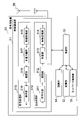
- the logical entity includes a receiving unit, a transmitting unit, and a determining unit.
- the calculation candidate such as the communication terminal 11, the communication node, and the cloud server includes a receiving unit, a transmitting unit, an acquisition unit (measurement unit), a setting unit, and a calculation unit.
- the main body of each process in FIG. 10 is the above-mentioned component.
- the transmission unit of the logical entity transmits the settings related to the acquisition and transmission of information such as the resources of the information processing system 1 used for the determination of the person in charge of calculation to each entity such as the communication terminal 11, the communication node, and the cloud server (T101, Measurement configuration).
- the receiving part of each entity receives the acquisition setting from the logical entity (T102), the acquiring part of each entity acquires the information about the resource based on the setting (T103), and the transmitting part of each entity is set to the setting.
- Information about the resource acquired based on is transmitted to the logical entity (T104).
- the receiving part of the logical entity receives the information about the resource from each entity (T105), and the determining part of the logical entity determines the control content of each entity so as to keep the execution delay of the ML application within the allowable limit (T105). T106). As will be described later, whether or not to be appointed as the person in charge of calculation is determined as the content of this control. Further, the determination unit of the logical entity determines the value of the parameter set in the communication terminal 11 and the communication node, in other words, the set value in order to realize the determined control content (T107, Parameter configuration). The determined setting value is transmitted to the communication terminal 11 and the communication node by the transmission unit of the logical entity (T108).
- the receiving unit of each entity receives the set value from the logical entity (T109), and the setting unit of each entity sets the parameter for operating each entity to the set value (T110).
- T109 the set value from the logical entity
- T110 the setting unit of each entity sets the parameter for operating each entity to the set value (T110).
- the ML application is executed on the communication terminal 11 (T111).
- the calculation unit of the communication terminal 11 calculates the calculation range in charge.
- the transmission unit of the communication terminal 11 transmits information necessary for DNN calculation to the designated destination (T112). If the communication terminal 11 is designated as the person in charge of calculation, the calculation result up to the middle of a series of calculations of DNN is included in the information, and if the communication terminal 11 is not designated as the person in charge of calculation, input to the DNN. Is included in the information.
- the designated destination is in charge of the following calculations.
- the receiving unit in charge of the next calculation receives the information necessary for the calculation of DNN (T113), the calculation unit in charge of the next calculation performs the calculation of its own range (T114), and the transmitting unit in charge of the next calculation
- the calculation result is further transmitted to the next person in charge of calculation (T115).
- the processing of T113 to T115 is performed by each person in charge of calculation.
- the entity not designated as the person in charge of calculation does not calculate DNN.
- the transmission unit in charge of the final calculation returns the calculation result to the communication terminal 11.
- the receiving unit of the communication terminal 11 receives the final calculation result of the DNN (T116), and the processing of the ML application is executed based on the final calculation result (T117). In this way, the processing of the ML application is completed.
- each entity acquires and sends the resource based on the acquisition setting, and each time the logical entity receives the resource, whether or not the execution delay exceeds the allowable upper limit. If it is determined that the control content is exceeded, the control content may be changed. In this way, the ML application may be prepared in case it is executed again. It should be noted that the acquisition and transmission of resources may be resumed when the acquisition and transmission of resources are stopped and the start of the ML application is detected.
- the information instructed to acquire from the logical entity may be information related to computational power.
- Information on the computational power includes, for example, the maximum computational capacity (Capability), the computational capacity, the computational load (computational amount), and the computational delay amount expected from the computational load.
- the number of GPUs (Graphical Processor Units) included in each entity may be used as the maximum computing power. Further, the number of currently unused GPUs may be used as the calculation capacity.
- the information may be information regarding the status of the connected communication link.
- information on wireless communication link connection such as Radiolink failure may be used, or information on communication quality of wireless communication link such as RSRP (Reference Signal Received Power), RSRQ (Reference Signal Received Quality), RSSI (Reference Signal Strength Indication), etc. But it may be. You may also use information about the throughput and delay of the communication link.
- RSRP Reference Signal Received Power
- RSRQ Reference Signal Received Quality
- RSSI Reference Signal Strength Indication
- the information may be information related to the required specifications of the ML application. For example, there is an upper limit of the delay allowed by the ML application.
- the required specifications of the ML application may differ for each communication terminal 11.
- the information may be information related to the traffic of the communication network 13. For example, the upper limit of traffic, the buffer status of traffic, etc. can be raised. It should be noted that an estimated value may be used instead of the measured value of the actual traffic.
- the information may be information related to the movement (mobility) of the communication terminal 11.
- the communication terminal 11 may move while the ML application is being executed. Since the movement affects the communication quality, information such as the movement speed and the movement direction may be acquired.
- the information may be information related to the calculation of DNN.
- each entity may be made to estimate the calculation delay for each layer of DNN.
- a plurality of charge range candidates may be determined in advance, and the logical entity may instruct each entity to estimate the calculation delay of each charge range candidate.
- the load calculated by DNN for example, GPU usage rate
- the calculation delay may be calculated based on the past calculation history, or is calculated as the theoretical time when the data size shown in FIG. 4 is calculated assuming that the current calculation capacity continues. May be good.
- the entity may actually measure the instructed information and send the measured value to the logical entity.
- a future estimate calculated based on the measured value may be sent to the logical entity. For example, if the scheduled execution time of the ML application is 10 seconds later, the predicted position of the communication terminal 11 after 10 seconds may be transmitted to the logical entity. Further, the communication terminal 11 and the communication node may quantize the measured value, determine which of the predetermined classification items the measured value corresponds to, and use the information of the classified classification item as a logical entity. You may send it. The estimation may be made based on the records so far.
- a known technique may be used as a method for acquiring information on resources. For example, information on the performance of an entity such as computing power and remaining computing power may be acquired by using a function such as a tool provided by an OS (operating system) installed in the entity. Further, information on the quality of the communication link, for example, the communication quality such as RSRQ may be confirmed by using a known technique.
- a communication node that behaves as a representative, such as collecting information transmitted to a logical entity and transmitting it to the logical entity on behalf of the information.
- information such as the traffic of each link and the movement of the communication terminal 11 may be transmitted to the logical entity after the information from the plurality of communication nodes is added up.
- the timing of information acquisition may be specified. Periodic acquisition (Periodical measurement) may be instructed.
- the logical entity may determine the acquisition start time, the acquisition end time, and the acquisition period and instruct each entity, and each entity may perform the acquisition according to the instruction.
- the number of acquisitions, the repeat waiting period, and the like may be instructed.
- dynamic acquisition Trigger based measurement
- the trigger condition for each entity to dynamically start the acquisition may be set as appropriate. For example, acquisition may be started when a failure of the wireless communication link is detected. Alternatively, acquisition may be started when the processing load of the node, the delay of the ML application, the communication delay, or the like exceeds a predetermined threshold value. It should be noted that these thresholds may be adjusted by the logical entity. Alternatively, the acquisition may be started when the acquisition request is received. The request may be sent from a logical entity, or may be sent from a higher-level node other than the logical entity.
- the RSRQ of the backhaul link is measured periodically in a period of 10 ms, for example, at 100 ms intervals.
- the transmission of this information to the logical entity may be performed as appropriate, and the transmission timing and the format of the data to be transmitted are not particularly limited.
- the transmission when instructed to acquire information on a regular basis, the transmission may be performed on a regular basis. Alternatively, it may be performed when conditions such as when the RSRQ value of the communication link becomes equal to or less than a predetermined threshold value, when the processing load of the node becomes equal to or more than a predetermined threshold value, and the like are satisfied.
- the transmission may be performed immediately after the acquisition, or may be transmitted after the offset time from the acquisition has elapsed. Further, it may be transmitted when the acquired value satisfies the condition. For example, if there is a change to the extent that it is necessary to change the person in charge of calculation, the range of responsibility, etc., the report may be performed, and if not, the report may not be performed.
- each entity does not have to send all the acquired information to the logical entity.
- information may be acquired with fine particle size, and only information that satisfies a predetermined condition, such as information with a large fluctuation or information exceeding a threshold value, may be transmitted to a logical entity. That is, the logical entity may separately instruct the information to be acquired and the information to be reported.
- the acquired information may be appropriately processed for reporting to the logical entity.
- the setting may be different for each entity. For example, since it is assumed that the communication link connected to the cloud system 12 is wired and stable, the cloud system 12 may not need to acquire information about the communication link.
- control contents to be determined include those related to communication links and wireless communication parameters.
- the person in charge of calculation and the range of responsibility are also determined.
- a control related to a communication link there is a determination of a communication route.
- the communication network 13 includes a relay type network such as an IAB network
- the relay route is determined. Even if an attempt is made to select a person in charge of calculation from a communication node on the communication route between the communication terminal 11 and the cloud system 12, it cannot be selected unless there is a communication node having a calculation capacity on the communication route. Therefore, the logical entity may determine the communication route by using not only the quality of the communication link but also the computing power and the computing power of the communication node. Further, the IAB node via the IAB node and the number of hops may be changed in the same manner.
- the logical entity transmits a set value that increases the strength (transmission power) of the radio wave to be transmitted to the radio communication node 131 on the communication route. Further, the communication capacity of the wireless communication link not on the communication route may be reduced for the wireless communication node 131 so that interference does not occur. In this way, the setting value that improves the quality of the communication link may be determined.
- the correspondence between the downlink (DL) and the uplink (UL) in the wireless communication link may be changed.
- the wireless communication link it is possible to make adjustments such as increasing the communication band of one of DL and UL and decreasing the communication band of the other. Therefore, the correspondence between DL and UL may be adjusted so that the communication delay is reduced.
- the communication delay may be calculated from the size of the transmitted data and the communication capacity of the communication link through which the data flows. Delays due to communication quality may also be considered.
- the calculation charge and the charge range are determined in consideration of the calculation capacity of each wireless communication node 131, the amount of data output in each charge range, the quality of the communication link on the communication route, and the like. At the very least, the wireless communication node 131, which becomes a delay bottleneck, should not be in charge of calculation.
- FIG. 11 is a diagram illustrating the splitting mode.
- FIG. 11 shows four splitting modes.
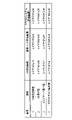
- a table showing a plurality of splitting modes as shown in FIG. 11 is also referred to as a splitting mode table.
- the range of responsibility for each calculation is determined by selecting the Splitting mode that minimizes the execution delay of the ML application from the four Splitting modes.
- the communication terminal 11, the communication node in the communication network 13, and the cloud system 12 are in charge of calculation, but a splitting mode in which the calculation charge is different may be prepared. Further, for example, a specific Splitting mode may be selected by default at the beginning of execution of the ML application, and then switched to another Splitting mode.
- the splitting mode on the second line in which the calculation charge other than the communication terminal 11 is small, is selected to load the communication terminal 11. It is conceivable to have them take over. In this way, when there is a load on a specific person in charge of calculation, improvement can be easily performed by switching to the splitting mode in which the range of person in charge of the calculation is small. It should be noted that the examination of whether to switch the splitting mode may be executed periodically or dynamically.
- splitting mode can be quickly switched without performing the process of selecting an appropriate splitting mode when it is determined that the requirements of the ML application cannot be satisfied.
- the content of Splitting mode that is, the range of responsibility for each calculation may be updated by the logical entity as appropriate.
- the updated Splitting mode is sequentially notified to each entity so that each person in charge of calculation does not perform the calculation based on the Splitting mode before the update.
- FIG. 12 is a diagram illustrating a splitting mode set for each communication route.
- FIG. 12 shows three communication routes, Route_A, Route_B, and Route_C. For each of these three communication routes, a plurality of splitting modes as shown in FIG. 11 are set.
- the communication node of the core network 133, the donor node 132, the wireless communication node 131C, the wireless communication node 131A, and the communication terminal 11A existing on the communication route Route_A are used.
- a DNN layer is assigned to these calculation candidates to create a splitting mode table.
- candidates in charge of calculation are selected and a Splitting mode table is created.
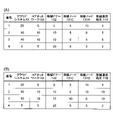
- FIG. 13 is a diagram showing an example of a splitting mode for each communication route.
- FIG. 13 (A) shows the Splitting mode table of the communication route Route_A
- FIG. 13 (B) shows the Splitting mode table of the communication route Route_B.
- the number of layers of DNN is assumed to be 40
- the numerical value of each cell of the Splitting mode table indicates the number of layers in charge of the corresponding calculation candidate. If "0" is described in the cell, it means that there is no layer in charge of the corresponding calculation candidate. In other words, it means that you are not in charge of calculation.
- the logical entity determines the range of responsibility, that is, Splitting mode, but the logical entity creates a Splitting mode table and sends the Splitting mode table to the calculation staff, and the calculation staff splits.
- the communication terminal 11 selects the splitting mode from the splitting mode table of the changed communication route, and selects the selected splitting mode. It is also possible to reset the Splitting mode by notifying each person in charge of calculation.
- the range of responsibility for calculation using a wired link may be fixed.
- the cloud system 12 and the edge server of the core network 133 do not perform wireless communication, it is considered that the status of the communication link does not change much.
- the range of responsibility of the person in charge of calculation that exists in a place where the communication environment does not fluctuate much in this way it is possible to reduce the variation of Splitting mode.
- the Splitting mode of the communication route Route_A shown in FIG. 13A includes seven calculation candidates, but by setting it, it is possible to assign the semi-optimal Splitting mode.
- the number of variations of the splitting mode can be reduced.
- the logical entity may change the Splitting mode table based on the anchor point.
- the anchor point is a communication node that always exists on the communication route set in the communication terminal 11 as long as the communication terminal 11 is within the assumed movement area.
- the anchor point is a communication node common to all communication routes that can be set in the assumed movement area of the communication terminal 11. For example, in the example of FIG. 12, if the communication terminal 11 wirelessly connects to any of the wireless communication nodes 131A to 131D, the donor node 132 is always present on the communication route with the cloud system 12. Therefore, in the example of FIG. 12, the donor node 132 is an anchor point.
- the logical entity determines the Splitting mode from the Splitting mode table unless the anchor point disappears from the communication route, and when it detects that the anchor point has disappeared from the communication route, the Splitting mode table itself is re-established. You may make settings. In this way, when the predetermined communication node no longer exists on the communication route, the Splitting mode table may be recreated.
- the person in charge of calculation is supposed to send the calculation result to the person in charge of the next calculation after the calculation of the DNN in the range in charge is completed, but the calculation result is not transmitted to the person in charge of the next calculation but is transmitted to the communication terminal 11.
- the person in charge of calculation confirms whether the calculation result meets the condition for the halfway termination of a series of DNN calculations notified in advance, and if the condition is not satisfied, the person in charge of calculation confirms the calculation result to the next person in charge of calculation. Is transmitted, and if the condition is satisfied, the calculation result may be transmitted to the communication terminal 11, that is, the calculation result in the middle of a series of DNN calculations. In this way, breaking out in the middle without processing all the layers of DNN to the end is called Early exiting.
- the ML application performs the processing intended by the ML application based on the calculation result of the DNN, in other words, the output from the output layer.
- a series of DNN calculations are performed to improve the accuracy of this target process, but even if the target process is performed based on the result in the middle of the DNN calculation, the accuracy may be sufficiently high. .. Therefore, if it is determined that the reliability of the target process is above a certain level even if the calculation results up to the intermediate layer are used by satisfying the predetermined end condition, the DNN calculation may be rounded up.
- the end conditions may be set as appropriate, and may be distributed to each person in charge of calculation in the same way as the Splitting mode table. For example, it may be determined whether or not to perform an Early exit using the output result using the softmax function which is an activation function or the value of the cross entropy.
- the output value of the softmax function is When the value is equal to or higher than a predetermined threshold value, the DNN process may be terminated at that layer and an Early exit may be performed.
- the calculation may be completed even in the middle of the range of responsibility. For example, when the third layer and the fourth layer are in charge, it may be determined whether the calculation result of the third layer satisfies the end condition. In this way, it may be determined whether or not to end for each layer of DNN.
- the logical entity may specify the layer on which the termination determination is performed. The layer that executes the end determination is also referred to as an Early exiting point.
- the logical entity may change the range of responsibility for each calculation on a layer-by-layer basis. For example, if the load of the communication terminal 11 increases a little after the range of responsibility of the communication terminal 11 is determined to be layers 1 to 4, the range of responsibility of the communication terminal 11 is changed from layers 1 to 3 and the range of responsibility is out of the range of responsibility. Adjustments may be made such that the next layer 4 is in charge of the next calculation person. In this case, the control is finer than the Splitting mode level, which increases the load on the logical entity, but can reduce the risk of not satisfying the requirements of the ML application.
- the communication terminal 11 and the communication node update the values of the parameters related to the communication link, the range in charge, and the like according to the contents determined by the logical entity.
- the instruction for setting the parameter may be directly instructed from the logical entity, or may be indirectly instructed via a representative wireless communication node 131 that bundles a plurality of wireless communication nodes 131.
- the notification method is not particularly limited, and may be a signaling notification in the application layer or a signaling notification in the physical layer. It may be a quasi-static notification such as RRC (Radio Resource control) signaling, or a dynamic notification such as DCI (Downlink control information) or UCI (Uplink control information).
- FIG. 14 is a sequence diagram before and after the person in charge of calculation is switched.
- a reference numeral of the process shown in FIG. 10 is described in the block of FIG.
- FIG. 14 a case where a logical entity is implemented in the donor node 132 is shown.
- the communication terminal 11, the wireless communication node 131A, the wireless communication node 131C, and the cloud system 12 were in charge of calculation, but the quality of the backhole link between the wireless communication node 131A and the wireless communication node 131C deteriorated.
- the range of responsibility is switched. It is assumed that the processing up to the parameter setting (T110) shown in FIG. 10 has been executed, and the processing up to the processing of T111 is shown.
- the ML application of the communication terminal 11 is executed (T111), and the communication terminal 11 transmits the information necessary for the calculation of DNN to the next person in charge of calculation (T112).
- the next wireless communication node 131A in charge of calculation receives the information (T113), calculates its own range (T114), and transmits the calculation result to the next wireless communication node 131C in charge of calculation (T113). T115).
- the wireless communication node 131C also executes the processing of T113 to T115, and the calculation result of the wireless communication node 131C is transmitted to the cloud system 12 which is in charge of the next calculation.
- the cloud system 12 which is in charge of the next calculation also executes the processing of T113 to T115, and since the cloud system 12 is in charge of the final calculation, the final calculation result of the DNN is transmitted from the cloud system 12 to the communication terminal 11. Will be done.
- periodic resource acquisition (T103) is executed in each entity, and the wireless communication node 131A that detects the problem reports to the donor node 132, which is a logical entity (T104).
- T104 periodic resource acquisition
- the core network 133 and the cloud system 12 are set not to report to the logical entity, and the core network 133 and the cloud system 12 do not show the block of T104.
- the other entities are also set not to report to the logical entity if deterioration is not detected. Therefore, the block of T104 is not shown because the entity other than the wireless communication node 131A that detected the problem does not report.
- each entity makes a measurement for the backhaul link. Then, it is assumed that the wireless communication node 131A detects that the RSRQ value of the backhaul link with the wireless communication node 131C is equal to or less than a predetermined value and transmits it to the logical entity.
- the donor node 132 which is a logical entity, receives the report of the wireless communication node 131A, determines from the reporting result that it is not enough to increase the bandwidth of the backhaul link in question, and makes new settings such as a change in charge of calculation. Is determined and sent to each entity (T105 to T108). In the example of FIG. 14, since the logical entity transmits the setting only to the entity that requires new setting, the arrow indicating the transmission is not shown in the core network 133 and the cloud system 12. The settings may be sent to the entity that does not require new settings.
- the logical entity may request each entity for an additional report. For example, when a report that there is a problem with the backhaul link is received from the wireless communication node 131A, the communication nodes around the wireless communication node 131A are examined in order to examine whether the bandwidth of the backhaul link can be increased. May be requested to send a report such as a traffic buffer.
- Each entity that receives the new setting from the logical entity receives the new setting and sets it in the parameter (T109, T110).
- the backhaul link from the wireless communication node 131A to the wireless communication node 131C disappears and the backhaul link from the wireless communication node 131A to the wireless communication node 131D is newly established.
- the communication route is changed, the wireless communication node 131C that is not on the communication route is removed from the calculation charge, and the wireless communication node 131D is added to the calculation charge.
- the ML application is executed again (T111), and the communication terminal 11 transmits the information necessary for the DNN calculation to the next wireless communication node 131A in charge of calculation (T112).
- the wireless communication node 131A receives the information (T113) and calculates its own range (T114) as in the previous time, but the calculation result is not the wireless communication node 131C but a new person in charge of the next calculation. It is transmitted to the wireless communication node 131D (T115). As a result, unlike the previous time, the processing of T113 to T115 is not executed in the wireless communication node 131C.
- the wireless communication node 131D also executes the processing of T113 to T115, and the calculation result of the wireless communication node 131D is transmitted to the cloud system 12 which is in charge of the next calculation.
- the cloud system 12 which is in charge of the next calculation also executes the processing of T113 to T115, and since the cloud system 12 is in charge of the final calculation, the final calculation result of the DNN is transmitted from the cloud system 12 to the communication terminal 11. Will be done.
- the range of responsibility of the node 131A may be increased from layer 20 of DNN to layer 29, and the range of responsibility of the wireless communication node 131D may be changed from layer 30 to layer 40 of DNN. In this way, the wireless communication node 131C may continue to be in charge of calculation.
- the range of responsibility may be changed even when the person in charge of calculation is changed as in the example of FIG.
- the information processing system 1 includes a communication terminal 11, a communication network 13, and a cloud system 12, but in reality, it is assumed that their owners are different. Further, it is assumed that the owners of the network for accessing the communication terminal 11 such as the IAB network and the core network 133 are also different. Therefore, the range that can be instructed and set by the logical entity may be a part of the information processing system 1. For example, when the logical entity is a communication node in the IAB network, the logical entity may not change the calculation range of the cloud system 12, and may only set the communication node in the IAB network.
- the time required to execute the ML application exceeds the upper limit due to the fluctuation of the resources of the information processing system 1, the person in charge of calculation, the range of responsibility, the communication capacity of the communication link, and the communication Execute setting changes such as routes. This makes it possible to suppress the influence of the fluctuation and operate the ML application comfortably.
- the input to the DNN is transmitted from the communication terminal 11 to the external device.
- the communication terminal 11 When all the DNN calculations are delegated to an external device such as a cloud server, the input to the DNN is transmitted from the communication terminal 11 to the external device.
- input data composed of values such as input 1, input 2, ..., Input m is transmitted to the outside of the communication terminal 11.
- this is a problem from the perspective of privacy and information leakage. Therefore, if the communication terminal 11 is in charge of at least the calculation from the beginning to the middle of the series of DNN calculations so that the input data itself is not transmitted to the outside, such a problem can be alleviated.
- the entity in charge of calculation and the entity that determines the range of responsibility is described as a logical entity, and the logical entity is in charge of the communication node of the communication network 13, the cloud server, or the like.
- a device suitable for grasping the resource status may be a logical entity so that the calculation charge and the range of charge can be determined according to the resource status of the information processing system 1. ..
- a device that gives an instruction to improve the quality of the communication link to the wireless communication node 131 on the communication route is regarded as a logical entity.
- the communication terminal 11 can also be a logical entity. In other words, the communication terminal 11 may determine the person in charge of calculation and the range of responsibility.
- each entity such as the communication terminal 11 periodically sends a resource to the logical entity, and the logical entity is in charge of calculation and charge based on the resource of each entity.
- the range was decided and each calculation person was notified. Therefore, when the communication terminal 11 starts the ML application or when the ML application executes the DNN calculation, the person in charge of calculation and the range of responsibility have already been determined.
- the communication terminal 11 it is also possible for the communication terminal 11 to determine its own range of responsibility by notifying the communication terminal 11 of the conditions for determining the range of responsibility in advance from a logical entity or the like.
- the communication terminal 11 confirms items such as its own calculation capacity and delay time with the cloud system 12 when executing the ML application, and determines to which layer of the DNN the calculation is performed according to the items. You may.
- the communication terminal 11 may be notified of the minimum range of responsibility to be calculated, and the communication terminal 11 may expand the range of responsibility according to the matter.
- the communication terminal 11 is notified of the range of responsibility (in other words, the upper limit of the range of responsibility) that may be executed, and the communication terminal 11 logically responds to the matter. The range of responsibility notified by the entity may be reduced.
- the communication terminal 11 When the communication terminal 11 holds the condition for determining the range of responsibility of the communication terminal 11 and the communication terminal 11 dynamically determines the range of responsibility, the time when the communication terminal 11 starts the ML application or the ML application.
- the scope of responsibility can be determined based on the resources at the time when the DNN calculation is performed. Therefore, the range of responsibility of the communication terminal 11 can be set according to the state of the communication terminal 11. Further, in this case, it is possible to suppress the number of periodic transmissions of resources from the communication terminal 11 to the logical entity and notification of the change in the range of responsibility from the logical entity to the communication terminal 11, and the processing load of each entity and the use of communication resources can be suppressed. Can be mitigated.
- FIG. 15 is a diagram showing an example of conditions for determining the range of responsibility of the communication terminal 11.
- a condition for determining the calculation range of DNN based on the calculation remaining capacity of the communication terminal 11 is shown.
- the range of responsibility is shown as n, which means that the calculation from the first layer to the nth layer of the DNN is performed by the communication terminal. Shows that 11 is in charge.
- n is an integer of 10 or more.
- the nth layer may be the final layer of the DNN, or may be the final layer of the range in charge notified by the logical entity.
- the range of responsibility decreases as the calculation capacity decreases.
- the range of responsibility is shown to be up to the 4n / 5th layer, which is lower than when the calculation reserve is 90% or more. ing.
- the range of responsibility is shown to be up to the 3n / 5 layer, and when the calculation reserve is less than 60% and 40% or more, the range of responsibility is the first. It is shown to be up to the 2n / 5 layer, and when the calculation reserve is less than 40% and 20% or more, the range of responsibility is shown to be up to the n / 5th layer.
- the range of responsibility of the communication terminal 11 may be determined. Further, when the calculation reserve is other than that, that is, less than 20%, the range of responsibility is limited to the first layer, which means that the communication terminal 11 does not execute the DNN calculation. That is, even when the communication terminal 11 is designated as the person in charge of calculation, the communication terminal 11 may reject the calculation.
- FLOPS the product of the clock frequency and the number of operations per clock
- FLOPS which is an absolute quantity
- the range of responsibility is determined as in FIG. 15 (A), but the condition is based on the delay time.
- the delay time with which communication destination may be determined in advance, and is not particularly limited. It may be in charge of the next calculation, it may be a logical entity, or it may be a wireless communication node to which the communication terminal 11 is wirelessly connected. Alternatively, since the main factor of the delay time is the wireless processing performed by each entity, the time related to the wireless processing may be regarded as the delay time without considering the propagation delay in the wireless (radio wave) and the wired. In the example of FIG.
- the delay time when the delay time is 500 ms or more, it is shown that the communication terminal 11 is in charge of the calculation from the first layer to the nth layer of the DNN.
- the range of responsibility is shown to be up to the 4n / 5 layer, and when the delay time is less than 250 ms and 100 ms or more, the range of responsibility is up to the 3rd n / 5 layer.
- the delay time is less than 100 s and 50 ms or more
- the range of responsibility is up to the 3n / 5 layer
- the delay time is less than 50 ms and 10 ms or more
- the range of responsibility is the second n. It is shown to be up to / 5 layers, and it is shown that the communication terminal 11 does not execute the DNN calculation in other cases, that is, when the delay time is less than 10 ms.
- the range of responsibility of the communication terminal 11 increases uniformly as the delay time increases, but it is not necessary to increase the range of responsibility uniformly.
- the data size of the calculation result does not decrease uniformly as the DNN calculation proceeds. Therefore, the combination of the delay time and the range in charge may be determined by referring to the data as shown in FIG. 4 and considering the data size of the calculation result in each layer.
- such conditions may be appropriately set according to the specifications of the embodiment, and are not particularly limited.
- the conditions can be changed for each type of ML application. Further, it may be changed when a plurality of conditions are provided and all of them are satisfied, or it may be changed according to the condition having the highest predetermined priority among the satisfied conditions.
- the confidentiality level is set in advance for each type of ML application, and when the confidentiality level of the executed ML application is equal to or higher than a predetermined threshold value, the range in charge of the communication terminal 11 is set to the first layer to the second layer or higher. You may do it. By doing so, the communication terminal 11 does not transmit the input data of the DNN to the outside. As a result, it is possible to reduce the risk that highly confidential information is leaked to other than the communication terminal 11.
- the communication terminal 11 determines its own range of responsibility, the next person in charge of calculation cannot recognize from which layer of the DNN the calculation should be started. Therefore, for example, when the logical entity has notified each calculation person of the range of responsibility, but the communication terminal 11 changes the range of responsibility notified by the logical entity, the communication terminal 11 is in charge of the next calculation. There is a possibility that the calculation result from the communication terminal 11 may be input to each node of the first layer of the planned range of responsibility without knowing that the change has been made. Therefore, when the communication terminal 11 determines or changes its own range of responsibility, the communication terminal 11 needs to notify not only the calculation result but also information for identifying the node from which the next calculation person starts the calculation. ..
- the information may be, for example, information indicating the last layer of the range in charge of the communication terminal 11, information indicating the first layer of the range in charge of the next calculation, or information indicating the node that outputs the calculation result. It may be information indicating the node to which the calculation result should be input.
- the communication terminal 11 may directly transmit the information to the next calculation person, or may send the information to the next calculation person via the logical entity.
- FIG. 16 is a diagram showing an example of a calculation result transmitted from the communication terminal 11 when the communication terminal 11 determines its own range of responsibility.
- the output value of each node, which is the calculation result, and the identification information for identifying the node that outputs the output value are included.
- the node identification information (identifier) is described as "node3_4", but the number at the end indicates the number of the layer including the node, which is after "node”.
- the numbers indicate the number of the node in the layer. That is, "node3_4" indicates the third node included in the fourth layer.
- output 3 described in the same line as “node 3_4" indicates the output value by the third node included in the fourth layer. Which node the output of each node is input to can be recognized from the structure of DNN and the like. The next person in charge of calculation who has received the information as shown in FIG. 16 may recognize the node to which the received output value should be input from the structure of the DNN or the like and start the calculation.
- the person in charge of calculation performs the calculation set for each node in the range of responsibility and sends the output value of the node belonging to the last layer of the range of responsibility to the next person in charge of calculation.
- a plurality of calculations are set in the DNN node. Therefore, the person in charge of calculation may perform a part of the plurality of calculations set in the node, and the rest of the calculation may be performed by the next person in charge of calculation.
- each input data input to the node is multiplied by a weighting coefficient set for the link through which each input data has passed, and then added. Further, the bias value set for each node is added to the added value.
- the addition value is input to a predetermined activation function, and the output from the activation function becomes the output value of the node. Therefore, for example, it may be decided in advance that the person in charge of calculation performs the calculation of the addition value and the person in charge of the next calculation starts from the calculation of the activation function, and the calculation may be shared in that way.
- the link connected to the node is also called an edge.
- FIG. 17 is a schematic sequence diagram showing the flow of the entire process when the communication terminal 11 determines its own range of responsibility.
- the cloud system 12 manages the structure of the DNN used by the ML application, the conditions for determining the range of responsibility for the series of calculations of the DNN, and the like.
- the DNN calculation charge is the communication terminal 11 and the cloud system 12, but the communication terminal 11 and the communication node may be in charge of the calculation.
- the function of the core network 133 can be implemented in the cloud system 12. That is, the core network 133 can also manage the above-mentioned conditions.
- the cloud system 12 transmits information such as the DNN used by the ML application, the setting of the DNN, and the conditions for determining the range of responsibility (T201).
- the information is transferred via the communication node of the communication network 13, the communication terminal 11 receives the information (T202), and sets the ML application such as DNN to be used based on the information. (T203).
- the communication node is a 5QI (5G QoS Identifier) or S-NSSAI included in a connection request of the communication terminal 11, for example, a service request (Service Request) or a PDU (Protocol Data Unit) session establishment request (PDU Session Establishment Request). It is possible to detect that the communication terminal 11 has started the ML application based on (Single-Network Slice Selection Assistance Information) or the like. Therefore, the communication node may detect the activation of the ML application on the communication terminal 11, notify the cloud system 12 of the detection, and extract the DNN to be used by the detected ML application.
- the communication terminal 11 determines the execution of the ML application (T204). At that time, the communication terminal 11 confirms the processing capacity of the communication terminal 11 itself (T205), and determines the range of responsibility of the communication terminal 11 based on the conditions and the processing capacity for determining the range of responsibility for the DNN calculation (T205). T206). For example, when the condition for determining the range in charge of the DNN is the example shown in FIG. 15 (A) and the DNN is composed of 10 layers (when n is 10), the calculation reserve capacity is 50. If it is%, the communication terminal 11 determines the layer that divides the DNN as the fourth layer. Then, the communication terminal 11 executes the ML application and calculates the range in charge of the communication terminal 11 (T207). In the above example, the calculation from the first layer to the fourth layer of DNN is performed.
- the range of responsibility may be expanded again. For example, after the calculation of the range in charge is completed, it may be confirmed whether or not the predetermined condition is satisfied, and based on the confirmation result, it may be determined whether or not the calculation in the next layer is continued.
- whether or not the predetermined condition is satisfied may be determined based on the calculation capacity, the delay time, the degree of confidentiality, and the like. In this way, the range of responsibility may be determined a plurality of times.
- the communication terminal 11 After calculating the range of responsibility of the communication terminal 11, the communication terminal 11 transmits information indicating the range of responsibility of the communication terminal 11 and the calculation result as shown in FIG. 16 to the cloud system 12 via the communication node (T208). ..
- the cloud system 12 receives the information via the communication node (T209).
- the cloud system 12 identifies the node that inputs the received output value based on the identification information of each received node, that is, each node of the layer next to the last layer of the range in charge of the communication terminal 11, and the cloud.
- the range of responsibility of the system 12 is calculated (T210). Then, after the calculation is completed, the cloud system 12 returns the calculation result of the range in charge of the cloud system 12 to the communication terminal 11 (T211).
- the scope of responsibility of the cloud system 12 assumes the calculation of all the rest of the DNN, but it does not have to be the calculation of all the rest of the DNN.
- the communication terminal 11 may receive the calculation result of the cloud system 12 and further calculate the remaining DNN.
- the communication terminal 11 receives the calculation result of the cloud system 12 via the communication node (T212). Then, the processing of the ML application is executed based on the final calculation result (T213). In this way, the processing of the ML application is completed. It should be noted that an entity other than the communication terminal 11 such as the cloud system 12 may calculate up to the processing result of the ML application.
- the communication terminal holds the condition for determining the range of responsibility of DNN, and the communication terminal determines its own range of responsibility. It is possible to more appropriately disperse according to the situation of. Further, by causing the communication terminal to calculate the DNN at least up to the second layer according to the confidentiality of the ML application, it is possible to prevent a situation such as leakage of input data.
- CNN convolutional neural networks
- RNN Recurrent Neural Network
- LSTM Long Short-Term Memory
- the hidden layer is composed of each layer called a convolution layer and a pooling layer.
- the convolution layer filtering is performed by the convolution operation, and data called a feature map is extracted.
- the pooling layer the feature map information output from the convolutional layer is compressed and downsampling is performed.
- the RNN has a network structure in which the value of the hidden layer is recursively input to the hidden layer, and for example, short-term time series data is processed.
- the influence of the output in the distant past can be maintained by introducing a parameter called a memory cell for holding the state of the middle layer with respect to the output of the middle layer of the RNN. That is, the LSTM processes time-series data for a longer period than the RNN.
- image recognition is used for applications such as tagging and automatic driving of people on SNS (Social Network Service). Speech recognition is applied to smart speakers and the like.
- Natural language processing has been applied to browser searches and automatic translation. Anomaly detection by robots is used at airports, railways, manufacturing sites, and the like.
- the communication node is referred to as a communication base station (also simply referred to as a base station), and includes an infrastructure for performing communication, and the infrastructure is also referred to as a base station device.
- a base station device is a kind of communication device and can be said to be an information processing device.
- the base station device may be a device for functioning a communication node as a wireless base station (Base Station, Node B, eNB, gNB, etc.), a wireless access point (Access Point), or the like.
- the base station device may be a device that functions a communication node as a donor station or a relay station.
- the base station device may be an optical overhanging device called RRH (Remote Radio Head). Further, the base station device may be a device that causes the communication node to function as a receiving station such as an FPU (Field Pickup Unit). Further, the base station device is an IAB (Integrated Access and Backhaul) donor node that provides a wireless access line and a wireless backhaul line by time division multiplexing, frequency division multiplexing, or spatial division multiplexing, or a communication node as an IAB relay node. It may be a device for functioning. Further, the base station device may be composed of a plurality of devices, and may be, for example, a combination of an antenna installed in a structure such as a building and a signal processing device connected to the antenna.
- RRH Remote Radio Head
- the base station device may be a device that causes the communication node to function as a receiving station such as an FPU (Field Pickup Unit).
- the base station device is an IAB (Integrated Access and Backhaul) donor node
- the wireless access technique used by the base station device may be a cellular communication technique or a wireless LAN technique.
- the wireless access technique used by the base station apparatus is not limited to these, and may be another wireless access technique.
- the wireless access technique used by the base station apparatus may be LPWA (Low Power Wide Area) communication technique.
- the wireless communication used by the base station apparatus may be wireless communication using millimeter waves.
- the wireless communication used by the base station device may be wireless communication using radio waves, or wireless communication using infrared rays or visible light (optical radio).
- the base station device may be capable of NOMA (Non-Orthogonal Multiple Access) communication with the communication terminal 11.
- NOMA communication is communication using non-orthogonal resources (transmission, reception, or both).
- the base station device may be capable of NOMA communication with another base station device.
- the base station devices may be able to communicate with each other via an interface between the base station and the core network (for example, S1 Interface, etc.). This interface may be wired or wireless. Further, the base station devices may be able to communicate with each other via an interface between base stations (for example, X2 Interface, S1 Interface, etc.). This interface may be wired or wireless.
- the base station devices may be able to communicate with each other via an interface between the base station and the core network (for example, NG Interface, S1 Interface, etc.). This interface may be wired or wireless. Further, the base station devices may be able to communicate with each other via an interface between base stations (for example, Xn Interface, X2 Interface, etc.). This interface may be wired or wireless.
- base station may mean a structure having the function of a base station.
- the structure is not particularly limited.
- buildings such as high-rise buildings, houses, steel towers, station facilities, airport facilities, port facilities, office buildings, school buildings, hospitals, factories, commercial facilities, and stadiums are also included in the structures.
- non-building structures such as tunnels, bridges, dams, walls, and iron pillars, and equipment such as cranes, gates, and wind turbines are also included in the structures.
- the place where the structure is installed is not particularly limited. That is, not only structures on land (ground in a narrow sense) or in the ground, but also structures on the water such as piers and mega floats, and structures underwater such as ocean observation equipment are structures having the function of a base station. Can be.
- the base station may be a fixed station or a mobile station.
- the base station By installing the base station device on the mobile body, the base station may become a mobile station.
- the base station apparatus may have mobility, and the base station apparatus itself may move to become a mobile station.
- UAVs Unmanned Aerial Vehicles
- UAVs Unmanned Aerial Vehicles
- devices that move by being carried by a mobile body, such as smartphones, and that are equipped with base station functions (at least part of the base station functions) are also mobile station base station devices. It can be said that.
- the mobile body constituting the mobile station may be a mobile body (for example, a vehicle such as a car, a bicycle, a bus, a truck, a motorcycle, a train, a linear motor car, etc.) that moves on land (ground in a narrow sense).
- a mobile body for example, a vehicle such as a car, a bicycle, a bus, a truck, a motorcycle, a train, a linear motor car, etc.
- it may be a moving body (for example, a subway) that moves in the ground (for example, in a tunnel), or it may be a moving body (for example, a passenger ship, a cargo ship, a hovercraft, etc.) that moves on the water.
- It may be a moving object that moves underwater (for example, a submersible such as a submersible, a submersible, or an unmanned submersible), or it may be a moving object that moves in the air such as in the atmosphere (for example, an aircraft, an airship, or a drone).
- It may be an aircraft (such as an aircraft), or in other words, a moving body capable of floating in space (for example, an artificial celestial body such as an artificial satellite, a spacecraft, a space station, or a spacecraft).
- a base station floating outside the atmosphere is also called a satellite station.
- a base station located closer to the earth than outside the atmosphere is also called a ground station.
- a base station that floats in the atmosphere, such as an aircraft is also referred to as an aircraft station.
- the satellites that serve as satellite stations are low orbit (LEO: Low Earth Orbiting) satellites, medium orbit (MEO: Medium Earth Orbiting) satellites, stationary (GEO: Geostationary Earth Orbiting) satellites, and high elliptical orbit (HEO: Highly Elliptical Orbiting) satellites. ) It may be any of the satellites.
- unmanned aerial vehicle control systems include unmanned aerial vehicle systems (UAS: Unmanned Aircraft Systems), tethered UAS, LTA (Lighter than Air UAS), HTA (Heavier than Air UAS) HAPs (High Altitude UAS Platforms). However, these control systems may control the flight of the aircraft station.
- UAS Unmanned Aircraft Systems
- LTA Lighter than Air UAS
- HTA Heavier than Air UAS
- HAPs High Altitude UAS Platforms
- the size of the coverage of the base station device is not particularly limited, and may be a large one such as a macro cell, a small one such as a pico cell, or an extremely small one such as a femto cell.
- the base station apparatus may have beamforming capability. In this case, the base station apparatus may form a cell or a service area for each beam. Therefore, the base station apparatus may be equipped with an antenna array composed of a plurality of antenna elements to provide Advanced Antenna Technology represented by MIMO (Multiple Input Multiple Output) and beamforming. ..
- MIMO Multiple Input Multiple Output
- FIG. 18 is a diagram showing a configuration example of a base station device.
- the base station apparatus 50 shown in FIG. 18 is assumed to perform wireless communication, and includes a wireless communication unit 51, a storage unit 52, a control unit 53, a calculation unit 54, a network communication unit 55, and the like.
- the antenna 56 is provided.
- the configuration shown in FIG. 18 is a functional configuration and may be different from the hardware configuration. Further, the constituent elements of FIG. 18 may be further dispersed or aggregated with other constituent elements. Further, the constituent elements of FIG. 18 may exist independently as a device separate from the base station device 50, and the function of the base station device 50 may be realized by a plurality of devices.
- the wireless communication unit 51 performs signal processing for wireless communication with another wireless communication device (for example, a communication terminal 11).
- the wireless communication unit 51 operates according to the control of the control unit 53.
- the wireless communication unit 51 corresponds to one or a plurality of wireless access methods.
- the wireless communication unit 51 corresponds to both NR (New Radio) and LTE (Long Term Evolution).
- the wireless communication unit 51 may support W-CDMA (Wideband Code Division Multiple Access) or CDMA2000 (Code Division Multiple Access 2000) in addition to NR and LTE.
- the wireless communication unit 51 may be compatible with an automatic retransmission technique such as HARQ (Hybrid Automatic Repeat reQuest).
- HARQ Hybrid Automatic Repeat reQuest
- the wireless communication unit 51 includes a transmission processing unit 510 and a reception processing unit 515.
- the wireless communication unit 51 may include a plurality of transmission processing units 510 and a plurality of reception processing units 515, respectively.
- each component of the wireless communication unit 51 may be individually configured for each wireless access method.
- the transmission processing unit 510 and the reception processing unit 515 may be individually configured by LTE and NR.
- the antenna 56 may be one or more, and may be composed of a plurality of antenna elements (for example, a plurality of patch antennas).
- the wireless communication unit 51 may be configured to enable beamforming.
- the wireless communication unit 51 may be configured to enable polarization beamforming using vertically polarized waves (V polarization) and horizontally polarized waves (H polarization).
- the transmission processing unit 510 performs downlink control information and downlink data transmission processing.
- the coding unit 511 of the transmission processing unit 510 encodes the downlink control information and the downlink data input from the control unit 53 by using a coding method such as block coding, convolutional coding, or turbo coding.
- the coding may be performed by a polar code (Polar code) or an LDPC code (Low Density Parity Check Code).
- the modulation unit 512 of the transmission processing unit 510 modulates the coding bit by a predetermined modulation method such as BPSK (Binary Phase Shift Keying), QPSK (Quadrature Phase shift Keying), 16QAM (Quadrature Amplitude Modulation), 64QAM, 256QAM and the like. do.
- BPSK Binary Phase Shift Keying
- QPSK Quadrature Phase shift Keying
- 16QAM Quadrature Amplitude Modulation
- 64QAM Quadrature Amplitude Modulation
- 64QAM Quadrature Amplitude Modulation
- 256QAM Quadrature Amplitude Modulation
- the signal points on the constellation of the modulation scheme do not necessarily have to be equidistant.
- the constellation may be a non-uniform constellation (NUC: Non Uniform Constellation).
- the multiplexing unit 513 of the transmission processing unit 510 multiplexes the modulation symbol of each channel used for transmission and the downlink reference signal, and arranges them in a predetermined resource element.
- the transmission processing unit 510 performs various signal processing on the multiplexed signal.
- the radio transmission unit 514 of the transmission processing unit 510 converts to a frequency domain by fast Fourier transform, adds a guard interval (cyclic prefix), generates a baseband digital signal, converts to an analog signal, and orthogonally modulates. Performs processing such as up-conversion, removal of excess frequency components, and power amplification.
- the signal generated by the radio transmission unit 514 is transmitted from the antenna 56.
- the reception processing unit 515 processes the uplink signal received via the antenna 56.
- the radio reception unit 516 of the reception processing unit 515 down-converts the uplink signal, removes unnecessary frequency components, controls the amplification level, orthogonal demodulates, converts to a digital signal, and guards intervals (cyclic prefixes). ) Is removed, and the frequency domain signal is extracted by the fast Fourier transform.
- the multiplex separation unit 517 of the reception processing unit 515 refers to the uplink channel such as PUSCH (Physical Uplink Shared Channel), PUCCH (Physical Uplink Control Channel), and the uplink from the signal processed by the wireless reception unit 516. Separate the signal.
- PUSCH Physical Uplink Shared Channel
- PUCCH Physical Uplink Control Channel
- the demodulation unit 518 of the reception processing unit 515 demodulates the received signal for the modulation symbol of the uplink channel using a modulation method such as BPSK or QPSK.
- the modulation scheme used for demodulation may be 16QAM, 64QAM, or 256QAM.
- the signal points on the constellation do not necessarily have to be equidistant.
- the constellation may be a non-uniform constellation (NUC).
- the decoding unit 519 of the reception processing unit 515 performs decoding processing on the coded bits of the demodulated uplink channel.
- the decoded uplink data and uplink control information are output to the control unit 53.
- the antenna 56 mutually converts current and radio waves.
- the antenna 56 may be composed of one antenna element (for example, one patch antenna) or may be composed of a plurality of antenna elements (for example, a plurality of patch antennas).
- the wireless communication unit 51 may be configured to enable beamforming.
- the wireless communication unit 51 may be configured to generate a directivity beam by controlling the directivity of a radio signal using a plurality of antenna elements.
- the antenna 56 may be a dual polarization antenna.
- the wireless communication unit 51 may use vertical polarization (V polarization) and horizontal polarization (H polarization) in transmitting the radio signal. Then, the radio communication unit 51 may control the directivity of the radio signal transmitted by using the vertically polarized wave and the horizontally polarized wave.
- the storage unit 52 stores information, processing results, and the like necessary for processing the base station device 50 as a storage means for the base station device 50. For example, various programs for processing the base station apparatus 50 may be stored.
- the control unit 53 controls each unit of the base station device 50. For example, the control unit 53 obtains information related to the DNN used from a logical entity or the like, conditions for determining a range of responsibility for a series of DNN calculations, and the like from the outside via the wireless communication unit 51 or the network communication unit 55. Perform the necessary controls to do so.
- the calculation unit 54 performs the calculation necessary for the processing of the base station device 50 according to the instruction of the control unit 53.
- the calculation unit 54 may take over a part of the processing performed by the transmission processing unit 510 or the reception processing unit 515, for example, a high-load operation.
- the calculation of the range in charge of the base station apparatus may be performed by the calculation unit 54.
- the calculation unit 54 may perform processing executed by the logical entity, for example, determination of a person in charge of calculation based on resources, determination of a range of responsibility, and the like.
- the network communication unit 55 performs signal processing for wired communication with another communication device (for example, cloud system 12).
- the network communication unit 55 is connected to an AMF (Access and Mobility Management Function) or UPF (User Plane Function) of the core network to exchange information and signaling.
- AMF Access and Mobility Management Function
- UPF User Plane Function
- the base station device may be composed of a plurality of physical or logical devices.
- the base station device may be classified into a plurality of devices such as BBU (Baseband Unit) and RU (Radio Unit).
- the base station device may be interpreted as an aggregate of these plurality of devices, in other words, a base station system.
- the base station apparatus may be either BBU or RU, or both.
- BBU and RU may be connected by a predetermined interface such as eCPRI (enhanced Common Public Radio Interface).
- RU may be paraphrased as RRU (Remote Radio Unit) or RD (Radio DoT).
- the RU may correspond to gNB-DU (gNB Distributed Unit) described later.
- the BBU may be compatible with gNB-CU (gNB Central Unit), which will be described later.
- the RU may be a device integrally formed with the antenna.
- the antenna of the base station device (for example, the antenna integrally formed with the RU) may adopt the Advanced Antenna System and support MIMO (for example, FD-MIMO) or beamforming.
- the antenna included in the base station may include, for example, 64 transmitting antenna ports and 64 receiving antenna ports.
- the number of antennas attached to the RU may be one or more, and the antenna may be an antenna panel composed of one or more antenna elements.
- the RU is an antenna panel containing two types of horizontally polarized antenna panels and vertically polarized antenna panels, or an antenna including two types of right-handed circularly polarized antenna panels and left-handed circularly polarized antenna panels.
- a panel may be mounted.
- the RU may form and control an independent beam for each antenna panel.
- a radio access network (RAN: Radio Access Network) base station may be referred to as a RAN node, and an AN (Access Network) base station may be referred to as an AN node.
- RAN in LTE may be called E-UTRAN (Enhanced Universal Terrestrial RAN).
- RAN in NR is sometimes called NG-RAN.
- RAN in W-CDMA (UMTS) may be referred to as UTRAN.
- the LTE base station is also referred to as an eNodeB (Evolved Node B) or an eNB, and at this time, it can be said that the E-UTRAN includes one or a plurality of eNodeBs (eNBs).
- the base station of NR is also referred to as gNodeB or gNB, and at this time, it can be said that NG-RAN includes one or more gNBs.
- the E-UTRAN may include a gNB (en-gNB) connected to a core network (EPC) in an LTE communication system (EPS).
- EPC LTE communication system
- NG-RAN may include an ng-eNB connected to the core network 5GC in a 5G communication system (5GS).
- the base station When the base station is eNB, gNB, etc., the base station may be referred to as 3GPP access (3GPP Access). Further, when the base station is a wireless access point (Access Point), the base station may be referred to as non-3GPP access (Non-3GPP Access).
- the base station When the base station is gNB, the base station may be a combination of the above-mentioned gNB-CU and gNB-DU, or may be one of gNB-CU and gNB-DU. You may.
- the gNB-CU hosts a plurality of higher layers (for example, RRC, SDAP, PDCP) among the access layers (Access Stratum) for communication with the UE.
- the gNB-DU hosts a plurality of lower layers (for example, RLC, MAC, PHY) in the access layer (Access Stratum). That is, among messages or information such as RRC signaling, MAC CE (MAC Control Element), and DCI, RRC signaling (quasi-static notification) is generated by gNB-CU, while MAC CE and DCI (dynamic notification). May be generated by gNB-DU.
- RRC configurations quadsi-static notifications
- IE: cellGroupConfig some of the RRC configurations (quasi-static notifications), such as IE: cellGroupConfig, are generated by gNB-DU, and the remaining configurations are generated by gNB-CU. May be good.
- These configurations may be transmitted and received by the F1 interface described later.
- the base station may be configured to be able to communicate with other base stations.
- the base stations may be connected by an X2 interface.
- the devices may be connected by an Xn interface.
- the devices may be connected by the F1 interface described above.
- Messages or information such as RRC signaling, MAC CE, DCI may be transmitted between a plurality of base stations, for example, via an X2 interface, an Xn interface, or an F1 interface.
- the cell provided by the base station may be called a serving cell.
- the concept of serving cell includes PCell (Primary Cell) and SCell (Secondary Cell).
- PCell Primary Cell
- SCell Secondary Cell
- the PCell provided by the MN (Master Node) and zero or more SCells may be referred to as the Master Cell Group.
- E-UTRA-E-UTRA Dual Connectivity E-UTRA-NR Dual Connectivity
- E-UTRA-NR Dual Connectivity with 5GC E-E-UTRA Dual Connectivity
- NEDC NR-E-UTRA Dual Connectivity
- the serving cell may include a PSCell (Primary Secondary Cell or Primary SCG Cell).
- PSCell Primary Secondary Cell or Primary SCG Cell
- the PSCell provided by the SN (Secondary Node) and zero or more SCells may be referred to as SCG (Secondary Cell Group).
- SCG Secondary Cell Group
- PUCCH physical uplink control channel
- the physical uplink control channel (PUCCH) is transmitted by PCell and PSCell, but not by SCell.
- radio link failure is also detected in PCell and PSCell, but not in SCell (it does not have to be detected).
- PCell and PSCell have a special role in the serving cell, and therefore are also called SpCell (Special Cell).
- One downlink component carrier and one uplink component carrier may be associated with one cell.
- the system bandwidth corresponding to one cell may be divided into a plurality of BWPs (Bandwidth Part).
- one or a plurality of BWPs may be set in the UE, and one BWP portion may be used in the UE as an active BWP (Active BWP).
- the radio resources for example, frequency band, numerology (subcarrier spacing), slot format (Slot configuration) that can be used by the UE may be different for each cell, each component carrier, or each BWP.
- the communication terminal 11 may be moved by being installed on the mobile body, or may be the mobile body itself.
- the communication terminal 11 is mounted on a vehicle (Vehicle) such as an automobile, a bus, a truck, or a motorcycle, a vehicle moving on a rail installed on a track of a train, or the vehicle. It may be a wireless communication device.
- the mobile body may be a mobile terminal, or may be a mobile body that moves on land (ground in a narrow sense), in the ground, on the water, or in the water.
- the moving body may be a moving body that moves in the atmosphere such as a drone or a helicopter, or may be a moving body that moves outside the atmosphere such as an artificial satellite.
- the communication terminal 11 is not limited in its main use as long as it is equipped with an information processing function and a communication function and can carry out the processing of the present disclosure.
- it may be a device such as a professional camera equipped with an information processing function and a communication function, or a communication device such as an FPU (Field Pickup Unit).
- the communication terminal 11 may be an M2M (Machine to Machine) device or an IoT (Internet of Things) device.
- the communication terminal 11 may be capable of NOMA communication with the base station. Further, the communication terminal 11 may be able to use an automatic retransmission technique such as HARQ when communicating with the base station.
- the communication terminal 11 may be capable of side-link communication with another communication terminal 11.
- the communication terminal 11 may be able to use an automatic retransmission technique such as HARQ even when performing side link communication.
- the communication terminal 11 may also be capable of NOMA communication in communication (side link) with another communication terminal 11.
- the communication terminal 11 may be capable of LPWA communication with another communication device (for example, a base station or another communication terminal 11).
- the wireless communication used by the communication terminal 11 may be wireless communication using millimeter waves.
- the wireless communication (including side link communication) used by the communication terminal 11 may be wireless communication using radio waves, or wireless communication using infrared rays or visible light (optical wireless). ..
- the communication terminal 11 may be a communication device installed on a mobile body, or may be a communication device having a mobile ability.
- the moving body on which the communication terminal 11 is installed may be a vehicle moving on a road such as an automobile, a bus, a truck, or a motorcycle, or a vehicle moving on a rail installed on a track such as a train. May be good.
- the place where the moving body moves is not particularly limited. Therefore, the moving body may be a moving body that moves on land (ground in a narrow sense), in the ground, on the water, or in the water. Further, the moving body may be a moving body that moves in the atmosphere such as a drone or a helicopter, or may be a moving body that moves outside the atmosphere such as an artificial satellite.
- the communication terminal 11 may be connected to a plurality of base stations or a plurality of cells at the same time to perform communication.
- a plurality of cells for example, pCell, sCell
- CA Carrier Aggregation
- DC Dual Connectivity
- the multi-connectivity (MC) technique makes it possible to bundle these plurality of cells and communicate with the base station and the communication terminal 11.
- the communication terminal 11 and a plurality of these base stations to communicate with each other by means of coordinated transmission / reception (CoMP: Coordinated Multi-Point Transmission and Reception) technology via cells of different base stations.
- CoMP Coordinated Multi-Point Transmission and Reception
- FIG. 19 is a diagram showing a configuration example of the communication terminal 11.
- FIG. 19 is a configuration example in which wireless communication is performed, and the communication terminal 11 includes a wireless communication unit 111, a storage unit 112, a control unit 113, a calculation unit 114, and an antenna 115.
- the configuration shown in FIG. 19 is a functional configuration and may be different from the hardware configuration. Further, the function of the communication terminal 11 may be distributed and implemented in a plurality of physically separated components.
- the wireless communication unit 111 performs signal processing for wireless communication with other wireless communication devices (for example, a base station, a relay station, a wireless communication node 131, a donor node 132, another communication terminal 11, etc.).
- the wireless communication unit 111 operates according to the control of the control unit 113.
- the wireless communication unit 111 includes a transmission processing unit 1110 and a reception processing unit 1115.
- the components related to the wireless communication of the communication terminal 11 may be the same as the corresponding components related to the wireless communication of the base station apparatus 50. That is, the configuration of the wireless communication unit 111, its internal components, and the antenna 115 may be the same as those of the wireless communication unit 51 of the base station apparatus 50, its internal components, and the antenna 56, respectively. Further, the wireless communication unit 111 may be configured to enable beamforming, similarly to the wireless communication unit 51 of the base station apparatus 50.
- the storage unit 112 stores information, processing results, and the like necessary for processing of the communication terminal 11 as a storage means of the communication terminal 11. For example, various programs for processing the communication terminal 11 may be stored.
- the control unit 113 controls each unit of the communication terminal 11. For example, the control unit 113 is necessary to acquire information related to the DNN used from a logical entity or the like, conditions for determining the range of responsibility for a series of DNN calculations, and the like from the outside via the wireless communication unit 111. Take control.
- the calculation unit 114 performs the calculation necessary for the processing of the communication terminal 11 according to the instruction of the control unit 113.
- the calculation unit 114 may take over a part of the processing performed by the transmission processing unit 1110 or the reception processing unit 1115, for example, a high-load operation. Further, for example, the calculation required for the ML application executed by the communication terminal 11 such as the calculation of DNN is performed.
- FIG. 20 is a diagram showing a configuration example of a 5GS (5G System) network architecture including a core network 133.
- the 5GS is composed of a communication terminal 11 (described as UE in FIG. 20), a RAN 134, and a core network 133.
- the RAN 134 provides a network function (NF; Network Function) like the wireless communication node 131 and the donor node 132 in FIG.
- the core network 133 in 5GS is referred to as NGC (Next Generation Core), 5GC (5G Core), or the like.
- NGC Next Generation Core
- 5G Core 5G Core
- the control plane functions of the core network 133 are AMF (Access and Mobility Management Function) 601, NEF (Network Exposure Function) 602, NRF (Network Repository Function) 603, and NSSF (Network). Slice Selection Function) 604, PCF (Policy Control Function) 605, SMF (Session Management Function) 606, UDM (Unified Data Management) 607, AF (Application Function) 608, AUSF (Authentication Server Function) 609 , UCMF (UE radio Capability Management Function) 610, and a plurality of NFs.
- AMF Access and Mobility Management Function
- NEF Network Exposure Function
- NRF Network Repository Function
- NSSF Network.
- Slice Selection Function 604
- PCF Policy Control Function
- SMF Session Management Function
- UDM Unified Data Management
- AF Application Function
- AUSF Authentication Server Function
- UCMF UE radio Capability Management Function
- UDM607 retains, manages, and processes subscriber information.
- the execution unit for holding and managing the subscriber information is also referred to as UDR (Unified Data Library), and may be separated from the FE (Front End) which is the execution unit for processing the subscriber information.
- AMF601 manages mobility.
- SMF606 manages the session.
- the UCMF610 holds UE radio capability information (UE Radio Capability Information) corresponding to all UE radio capability IDs (UE Radio Capability IDs) in PLMN (Public Land Mobile Network).
- the UCMF610 is responsible for assigning each PLMN-assigned UE Radio Capability ID (PLMN-assigned UE Radio Capability ID).
- FIG. 20 shows an NF service-based interface.
- Namf is a service-based interface provided by AMF601
- Nsmf is a service-based interface provided by SMF606
- Nnef is a service-based interface provided by NEF602
- Npcf is a service-based interface provided by PCF605.
- Nudm is a service-based interface provided by UDM607
- Naf is a service-based interface provided by AF608
- Nnrf is a service-based interface provided by NRF603
- Nnssf is a service-based interface provided by NSSF604.
- An interface, Nausf is a service-based interface provided by AUSF609.
- Each NF exchanges information with other NFs via each service-based interface.
- UPF User Plane Function
- DN Data Network
- MNO Mobile Network Operator
- the RAN 134 makes a communication connection with the core network 133, the communication terminal 11, and the like. It should be noted that a communication connection with another communication network (for example, AN (Access Network)) not shown may be made.
- RAN134 includes a base station called gNB or ng-eNB. RAN may be referred to as NG (Next Generation) -RAN.
- Information is exchanged between the UE 10 and the AMF 601 via the reference point N1.
- Information is exchanged between RAN134 and AMF601 via the reference point N2.
- Information is exchanged between SMF606 and UPF630 via the reference point N4.
- the communication quality may be indicated by, for example, a delay time in transmission / reception, a data rate, a channel occupancy rate (ChannelOccupancyRatio), or the like.
- the channel occupancy rate may be expressed by CBR (Channel Busy Ratio), resource utilization rate, or congestion degree.
- CBR may be expressed as the ratio of radio resources used to all available radio resources.
- the degree of congestion may be indicated by the ratio of RRSI (Received Signal Strength Indicator), which is the total received power in the band, to RSRP (Reference Signal Received Power), which is the reception strength of the reference signal (Reference Signal).
- RRSI Receiveived Signal Strength Indicator
- RSRP Reference Signal Received Power
- the degree of congestion may be indicated by the reciprocal of RSRQ (Reference Signal Received Quality), which is the reception quality of the reference signal.
- the processing procedure described in the present disclosure may be regarded as a method having these series of procedures. Alternatively, it may be regarded as a program for causing a computer to perform these series of procedures, or as a recording medium for storing the program. Further, the processing in charge of the logical entity and the calculation described above is executed by a processor such as a CPU of a computer. Further, the type of recording medium is not particularly limited as it does not affect the embodiments of the present disclosure.
- each component shown in FIGS. 18 to 20 shown in the present disclosure may be realized by software or hardware.
- each component may be a software module realized by software such as a microprogram, and each component may be realized by the processor executing the software module.
- each component may be realized by a circuit block on a semiconductor chip (die), for example, an integrated circuit such as an ASIC (Application Specific Integrated Circuit) or an FPGA (Field Programmable Gate Array).
- ASIC Application Specific Integrated Circuit
- FPGA Field Programmable Gate Array
- the number of components and the number of hardware that implements the components do not have to match.
- one processor or circuit may implement multiple components.
- one component may be realized by a plurality of processors or circuits.
- processors described in this disclosure are not limited. For example, it may be a CPU, an MPU (MicroProcessingUnit), a GPU (GraphicsProcessingUnit), or the like.
- the components for storing data such as the storage unit 52 of the base station device 50 and the storage unit 112 of the communication terminal 11 may be realized by a device capable of reading and writing data, and the device is appropriately selected. good.
- the device may be a DRAM, SRAM, flash memory, hard disk, or the like.
- a communication terminal that sends input to a deep neural network or is responsible for at least part of a series of calculations in the deep neural network and sends the results of the calculations, and may be responsible for at least part of the series of calculations.
- Receives information about the resources of the communication network that relays communication with the server Based on the information about the resource, the entity that shares the series of calculations is determined from the communication terminal, the server, and the communication node in the communication network.
- Information processing equipment [2] Determine at least one of the communication nodes as an entity that shares the series of calculations. The information processing apparatus according to [1]. [3] Based on the information about the resource, the calculation range in charge of the entity that shares the series of calculations is determined.
- the information processing apparatus according to [1] or [2].
- At least one of the communication nodes existing on the communication route of the communication terminal and the server is determined as an entity that shares the series of calculations.
- the information processing apparatus according to [2] or [3], which is subordinate to [2].
- the resource includes the communication capacity or quality of the communication link in the communication network. Based on the communication capacity or the communication quality, at least one of the communication nodes is determined as an entity that shares the series of calculations.
- the information processing apparatus according to any one of [2] to [4].
- [6] Based on the communication capacity or the communication quality the result of calculation by the communication node is estimated to be the communication time transmitted through the communication link, and at least one of the communication nodes is set to the series based on the communication time.
- the resource includes the computational power of the communication node. Based on the computational capacity of the communication node, at least one of the communication nodes is determined as an entity that shares the series of calculations. The information processing apparatus according to any one of [2] to [6]. [8] The calculation time required for the calculation by the communication node is estimated based on the calculation reserve capacity of the communication node, and at least one of the communication nodes is determined as an entity that shares the series of calculations based on the calculation time. The information processing apparatus according to [7]. [9] The resource includes the communication capacity or communication quality of the communication link in the communication network and the calculation capacity of the communication node.
- the communication time in which the result of the calculation by the communication node is transmitted via the communication link is estimated.
- the calculation time required for the calculation by the communication node is estimated.
- at least one of the communication nodes is determined as an entity that shares the series of calculations.
- the information processing apparatus according to any one of [2] to [8]. [10] Further receiving information regarding the position of the communication terminal, One of [4] or [5] to [9] subordinate to [4], which changes the entity that shares the series of calculations according to the change of the communication route due to the movement of the communication terminal.
- the resource includes the location of the communication terminal.
- the information processing apparatus according to [12], wherein the splitting mode is recreated when a predetermined communication node no longer exists on the communication route changed by the movement of the communication terminal.
- the information processing apparatus which transmits a set value for improving the quality of a wireless communication link on the communication route to the communication node existing on the communication route.
- [17] Receive a part of a series of calculations based on a deep neural network as the calculation range in charge, Calculate the calculation range and Send the calculation result of the above calculation range to the specified destination, Obtain information on the calculation capacity or the communication capacity or communication quality of the communication link to which the calculation result is transmitted.
- the acquired information is transmitted to the indication source of the calculation range, and the acquired information is transmitted.
- the information regarding the change of the calculation range is information indicating one of a plurality of splitting modes.
- the information processing apparatus according to [17].
- a communication terminal that sends input to a deep neural network or is responsible for at least part of a series of calculations in the deep neural network and sends the results of the calculations, and may be responsible for at least part of the series of calculations. Steps to receive information about the resources of the communication network that relays communication with the server, A step of determining a plurality of entities that share the series of calculations from the communication terminal, the server, and the communication node in the communication network based on the information about the resource. Information processing method.
- a communication terminal that sends an input to a deep neural network or is responsible for at least a part of a series of calculations of the deep neural network and transmits the result of the calculation, and may be responsible for at least a part of the series of calculations. It has multiple communication nodes belonging to the communication network that relays communication with the server. The plurality of communication nodes transmit information about the resources of the communication network to a predetermined communication node among the plurality of communication nodes. The predetermined communication node is Received information about the resource Based on the information about the resource, a plurality of entities that share the series of calculations are determined from the communication terminal, the server, and the communication node. Information processing system.
- Steps to determine the first scope of a series of calculations in a deep neural network The step of executing the calculation of the first range of responsibility, As a result of the calculation of the first responsible range, a step of transmitting the first information including the identification information and the output value of the node included in the last layer of the first responsible range, and The step of receiving the first information and A step of identifying a node to which the output value included in the first information should be input based on the identification information included in the first information, and By inputting the output value included in the first information to the identified node, a step of performing the remaining calculation of the deep neural network or the calculation of the second range of responsibility, and Information processing method.
- the conditions include those relating to the computational power of the entity that calculates the first scope of responsibility.
- the conditions include those relating to the communication quality between the entity that calculates the first scope of responsibility and the predetermined entity.
- the communication quality is calculated based on at least one of delay time, data rate, and channel occupancy.
- the information processing method according to [26].
- the entity that performs the remaining calculations of the deep neural network or the calculation of the second coverage is different from the entity that sends the conditions for determining the first coverage.
- the information processing method according to any one of [24] to [27].
- Run an application that utilizes a deep neural network The first range of calculation of the series of calculations of the deep neural network is determined based on the conditions for determining the first range of responsibility. Execute the calculation of the first range of responsibility, As a result of the calculation of the range of responsibility, the first information including the identification information and the output value of the node included in the last layer of the first range of responsibility is transmitted.
- Information processing equipment is configured to determine whether the identification information is transmitted.
- the first information is transmitted to the entity that performs a series of calculations of the deep neural network next.
- the result of the remaining calculation of the deep neural network or the calculation of the second area of responsibility is received as a reply of the first information.
- the information processing apparatus according to [29]. [31] The above conditions include those related to their own calculation capacity.
- the first range of responsibility is determined according to the calculation reserve.
- the above conditions include those relating to the quality of communication between itself and a given entity.
- the first range of responsibility is determined according to the communication quality.
- the information processing apparatus according to any one of [29] to [31].
- the communication quality is calculated based on at least one of delay time, data rate, and channel occupancy.
- the information processing apparatus As a result of the calculation of the first coverage of the series of calculations of the deep neural network, the first information including the identification information and the output value of the node included in the last layer of the first coverage is received. Based on the identification information included in the first information, the node to which the output value included in the first information should be input is identified. By inputting the output value included in the first information to the identified node, the remaining calculation of the deep neural network or the calculation of the second range is executed. Information processing equipment. [35] The result of the remaining calculation of the deep neural network or the calculation of the second area of responsibility is returned to the sender of the calculation result of the first area of responsibility. The information processing apparatus according to [34].
- the second range of responsibility is determined based on the conditions for determining the second range of responsibility.
- the above conditions include those related to own calculation capacity.
- the second range of responsibility is determined based on the conditions for determining the second range of responsibility.
- the above conditions include those relating to the quality of communication between itself and a given entity.
- the communication quality is calculated based on at least one of delay time, data rate, and channel occupancy.
- 11 Information processing system
- 11 Communication terminal (UE)
- 111 Wireless communication unit
- 1110 Transmission processing unit
- 1112 Modulation unit
- 1114 Wireless transmission unit
- 1115 Reception processing unit
- 1116 wireless reception unit
- 1117 multiplex separation unit
- 1118 demodulation unit
- 1119 decoding unit
- 112 storage unit
- 113 control unit
- 114 arithmetic unit
- 1141 condition setting unit
- 1142 arithmetic unit.
Landscapes
- Engineering & Computer Science (AREA)
- Theoretical Computer Science (AREA)
- Physics & Mathematics (AREA)
- Software Systems (AREA)
- Signal Processing (AREA)
- Computer Networks & Wireless Communication (AREA)
- Artificial Intelligence (AREA)
- Evolutionary Computation (AREA)
- General Physics & Mathematics (AREA)
- General Engineering & Computer Science (AREA)
- General Health & Medical Sciences (AREA)
- Molecular Biology (AREA)
- Computing Systems (AREA)
- Data Mining & Analysis (AREA)
- Computational Linguistics (AREA)
- Mathematical Physics (AREA)
- Biophysics (AREA)
- Biomedical Technology (AREA)
- Life Sciences & Earth Sciences (AREA)
- Health & Medical Sciences (AREA)
- Power Engineering (AREA)
- Quality & Reliability (AREA)
- Mobile Radio Communication Systems (AREA)
Priority Applications (3)
| Application Number | Priority Date | Filing Date | Title |
|---|---|---|---|
| CN202180085291.7A CN116648957A (zh) | 2020-12-23 | 2021-12-10 | 通信设备,通信方法和通信系统 |
| JP2022572140A JPWO2022138232A1 (https=) | 2020-12-23 | 2021-12-10 | |
| US18/257,881 US20240015052A1 (en) | 2020-12-23 | 2021-12-10 | Communication device, communication method, and communication system |
Applications Claiming Priority (4)
| Application Number | Priority Date | Filing Date | Title |
|---|---|---|---|
| JP2020-213902 | 2020-12-23 | ||
| JP2020213902 | 2020-12-23 | ||
| JP2021-047806 | 2021-03-22 | ||
| JP2021047806 | 2021-03-22 |
Publications (1)
| Publication Number | Publication Date |
|---|---|
| WO2022138232A1 true WO2022138232A1 (ja) | 2022-06-30 |
Family
ID=82157833
Family Applications (1)
| Application Number | Title | Priority Date | Filing Date |
|---|---|---|---|
| PCT/JP2021/045511 Ceased WO2022138232A1 (ja) | 2020-12-23 | 2021-12-10 | 通信装置、通信方法、および通信システム |
Country Status (3)
| Country | Link |
|---|---|
| US (1) | US20240015052A1 (https=) |
| JP (1) | JPWO2022138232A1 (https=) |
| WO (1) | WO2022138232A1 (https=) |
Cited By (2)
| Publication number | Priority date | Publication date | Assignee | Title |
|---|---|---|---|---|
| WO2024024051A1 (ja) * | 2022-07-28 | 2024-02-01 | 日本電信電話株式会社 | 無線通信システム、通信経路制御装置、通信経路制御方法および通信経路制御用プログラム |
| JP2025500722A (ja) * | 2022-12-01 | 2025-01-15 | 株式会社Nttドコモ | 通信およびコンピューティング・サービス・セッションを提供する方法 |
Families Citing this family (2)
| Publication number | Priority date | Publication date | Assignee | Title |
|---|---|---|---|---|
| CN118555592B (zh) * | 2024-07-30 | 2024-10-11 | 合肥工业大学 | 面向soa车联网系统中通信质量瞬时波动的响应方法 |
| CN119233227B (zh) * | 2024-12-02 | 2025-03-18 | 南京信息职业技术学院 | 一种基于5g多接入边缘计算的车联网多参数监测方法及系统 |
Citations (8)
| Publication number | Priority date | Publication date | Assignee | Title |
|---|---|---|---|---|
| JP2016171543A (ja) * | 2015-03-16 | 2016-09-23 | 富士通株式会社 | 通信装置、通信システム、通信方法、および、通信プログラム |
| WO2019111411A1 (ja) * | 2017-12-08 | 2019-06-13 | 株式会社ウフル | 協調分散システム、協調分散管理装置、協調分散方法、及びプログラム |
| JP2019135578A (ja) * | 2018-02-05 | 2019-08-15 | 株式会社東芝 | クラウドシステム、クラウドサーバ、エッジサーバおよびユーザ装置 |
| JP2019144864A (ja) * | 2018-02-21 | 2019-08-29 | 日本電気株式会社 | エッジコンピューティングシステム、エッジサーバ、システム制御方法、及びプログラム |
| WO2020026741A1 (ja) * | 2018-08-03 | 2020-02-06 | ソニー株式会社 | 情報処理方法、情報処理装置及び情報処理プログラム |
| WO2020129432A1 (ja) * | 2018-12-21 | 2020-06-25 | 日本電信電話株式会社 | 分散処理支援装置、分散処理支援方法およびプログラム |
| CN111522657A (zh) * | 2020-04-14 | 2020-08-11 | 北京航空航天大学 | 一种分散设备协同深度学习推理方法 |
| WO2020166461A1 (ja) * | 2019-02-15 | 2020-08-20 | ソニー株式会社 | 情報処理装置、移動体装置、情報処理方法、及び情報処理プログラム |
Family Cites Families (5)
| Publication number | Priority date | Publication date | Assignee | Title |
|---|---|---|---|---|
| US10133329B2 (en) * | 2012-11-19 | 2018-11-20 | Qualcomm Incorporated | Sequential feature computation for power efficient classification |
| CN106528280B (zh) * | 2015-09-15 | 2019-10-29 | 阿里巴巴集团控股有限公司 | 一种任务分配方法和系统 |
| US11196623B2 (en) * | 2016-12-30 | 2021-12-07 | Intel Corporation | Data packaging protocols for communications between IoT devices |
| US11270201B2 (en) * | 2017-12-29 | 2022-03-08 | Intel Corporation | Communication optimizations for distributed machine learning |
| US20200175361A1 (en) * | 2018-11-30 | 2020-06-04 | Alibaba Group Holding Limited | Partitioning of deep learning inference with dynamic offloading |
-
2021
- 2021-12-10 WO PCT/JP2021/045511 patent/WO2022138232A1/ja not_active Ceased
- 2021-12-10 US US18/257,881 patent/US20240015052A1/en active Pending
- 2021-12-10 JP JP2022572140A patent/JPWO2022138232A1/ja active Pending
Patent Citations (8)
| Publication number | Priority date | Publication date | Assignee | Title |
|---|---|---|---|---|
| JP2016171543A (ja) * | 2015-03-16 | 2016-09-23 | 富士通株式会社 | 通信装置、通信システム、通信方法、および、通信プログラム |
| WO2019111411A1 (ja) * | 2017-12-08 | 2019-06-13 | 株式会社ウフル | 協調分散システム、協調分散管理装置、協調分散方法、及びプログラム |
| JP2019135578A (ja) * | 2018-02-05 | 2019-08-15 | 株式会社東芝 | クラウドシステム、クラウドサーバ、エッジサーバおよびユーザ装置 |
| JP2019144864A (ja) * | 2018-02-21 | 2019-08-29 | 日本電気株式会社 | エッジコンピューティングシステム、エッジサーバ、システム制御方法、及びプログラム |
| WO2020026741A1 (ja) * | 2018-08-03 | 2020-02-06 | ソニー株式会社 | 情報処理方法、情報処理装置及び情報処理プログラム |
| WO2020129432A1 (ja) * | 2018-12-21 | 2020-06-25 | 日本電信電話株式会社 | 分散処理支援装置、分散処理支援方法およびプログラム |
| WO2020166461A1 (ja) * | 2019-02-15 | 2020-08-20 | ソニー株式会社 | 情報処理装置、移動体装置、情報処理方法、及び情報処理プログラム |
| CN111522657A (zh) * | 2020-04-14 | 2020-08-11 | 北京航空航天大学 | 一种分散设备协同深度学习推理方法 |
Non-Patent Citations (2)
| Title |
|---|
| EDA TAKEHARU: "High-efficiency event-driven inference that supports Al services in the IOWN era", NTT TECHNICAL JOURNAL, vol. 32, no. 12, 1 December 2020 (2020-12-01), JP , pages 16 - 22, XP055945823, ISSN: 0915-2318 * |
| TEERAPITTAYANON SURAT; MCDANEL BRADLEY; KUNG H.T.: "Distributed Deep Neural Networks Over the Cloud, the Edge and End Devices", PROCEEDINGS OF THE INTERNATIONAL CONFERENCE ON DISTRIBUTED COMPUTING SYSTEMS, 5 June 2017 (2017-06-05), US , pages 328 - 339, XP033122945, ISSN: 1063-6927, DOI: 10.1109/ICDCS.2017.226 * |
Cited By (5)
| Publication number | Priority date | Publication date | Assignee | Title |
|---|---|---|---|---|
| WO2024024051A1 (ja) * | 2022-07-28 | 2024-02-01 | 日本電信電話株式会社 | 無線通信システム、通信経路制御装置、通信経路制御方法および通信経路制御用プログラム |
| JPWO2024024051A1 (https=) * | 2022-07-28 | 2024-02-01 | ||
| JP7809815B2 (ja) | 2022-07-28 | 2026-02-02 | Ntt株式会社 | 無線通信システム、通信経路制御装置、通信経路制御方法および通信経路制御用プログラム |
| JP2025500722A (ja) * | 2022-12-01 | 2025-01-15 | 株式会社Nttドコモ | 通信およびコンピューティング・サービス・セッションを提供する方法 |
| JP7721697B2 (ja) | 2022-12-01 | 2025-08-12 | 株式会社Nttドコモ | 通信およびコンピューティング・サービス・セッションを提供する方法 |
Also Published As
| Publication number | Publication date |
|---|---|
| JPWO2022138232A1 (https=) | 2022-06-30 |
| US20240015052A1 (en) | 2024-01-11 |
Similar Documents
| Publication | Publication Date | Title |
|---|---|---|
| US11785479B2 (en) | Terminal device and communication method | |
| US12395894B2 (en) | Information processing device, information processing method, terminal device, base station device, and program | |
| EP4365773A1 (en) | Communication device, communication method, and communication system | |
| WO2022138232A1 (ja) | 通信装置、通信方法、および通信システム | |
| KR102925544B1 (ko) | 정보 처리 장치, 이동체 장치, 정보 처리 방법 및 컴퓨터 판독가능한 기록 매체에 저장된 정보 처리 프로그램 | |
| JP7571727B2 (ja) | 通信制御装置、通信制御方法および通信制御プログラム | |
| WO2023085092A1 (ja) | 情報処理方法、情報処理装置、及び情報処理システム | |
| WO2022131100A1 (ja) | 通信装置、及び通信方法 | |
| CN116648957A (zh) | 通信设备,通信方法和通信系统 | |
| WO2022113808A1 (ja) | 通信装置、通信方法、及び通信システム | |
| US20230017527A1 (en) | Terminal device, management device, and communication method | |
| WO2021111751A1 (ja) | 制御装置、基地局装置、制御方法および接続方法 | |
| US20260082234A1 (en) | Information processor and information processing method | |
| CN119631558A (zh) | 信息处理设备和信息处理方法 | |
| US20250392975A1 (en) | Terminal device, information processing device, and communication method | |
| WO2024225113A1 (en) | Terminal device, base station, and communication method | |
| EP4672813A1 (en) | COMMUNICATION DEVICE, INFORMATION PROCESSING DEVICE, COMMUNICATION METHOD AND INFORMATION PROCESSING METHOD | |
| WO2025182537A1 (ja) | 情報処理装置及び情報処理方法 | |
| WO2025197602A1 (ja) | 情報処理装置、基地局、情報処理方法、通信方法、及び通信システム | |
| WO2026014284A1 (ja) | 情報処理装置、通信装置、通信システム、情報処理方法、及びプログラム | |
| WO2025239245A1 (ja) | 情報処理装置、通信装置、情報処理方法、通信方法、及び通信システム |
Legal Events
| Date | Code | Title | Description |
|---|---|---|---|
| 121 | Ep: the epo has been informed by wipo that ep was designated in this application |
Ref document number: 21910381 Country of ref document: EP Kind code of ref document: A1 |
|
| ENP | Entry into the national phase |
Ref document number: 2022572140 Country of ref document: JP Kind code of ref document: A |
|
| WWE | Wipo information: entry into national phase |
Ref document number: 202180085291.7 Country of ref document: CN Ref document number: 18257881 Country of ref document: US |
|
| NENP | Non-entry into the national phase |
Ref country code: DE |
|
| 122 | Ep: pct application non-entry in european phase |
Ref document number: 21910381 Country of ref document: EP Kind code of ref document: A1 |