WO2022130640A1 - 学習装置、推論装置、診断システム、モデル生成方法及びプログラム - Google Patents
学習装置、推論装置、診断システム、モデル生成方法及びプログラム Download PDFInfo
- Publication number
- WO2022130640A1 WO2022130640A1 PCT/JP2020/047532 JP2020047532W WO2022130640A1 WO 2022130640 A1 WO2022130640 A1 WO 2022130640A1 JP 2020047532 W JP2020047532 W JP 2020047532W WO 2022130640 A1 WO2022130640 A1 WO 2022130640A1
- Authority
- WO
- WIPO (PCT)
- Prior art keywords
- data
- production equipment
- learning
- inference
- distance
- Prior art date
- Legal status (The legal status is an assumption and is not a legal conclusion. Google has not performed a legal analysis and makes no representation as to the accuracy of the status listed.)
- Ceased
Links
Images




Classifications
-
- B—PERFORMING OPERATIONS; TRANSPORTING
- B25—HAND TOOLS; PORTABLE POWER-DRIVEN TOOLS; MANIPULATORS
- B25J—MANIPULATORS; CHAMBERS PROVIDED WITH MANIPULATION DEVICES
- B25J9/00—Program-controlled manipulators
- B25J9/16—Program controls
- B25J9/1694—Program controls characterised by use of sensors other than normal servo-feedback from position, speed or acceleration sensors, perception control, multi-sensor controlled systems, sensor fusion
- B25J9/1697—Vision controlled systems
-
- B—PERFORMING OPERATIONS; TRANSPORTING
- B25—HAND TOOLS; PORTABLE POWER-DRIVEN TOOLS; MANIPULATORS
- B25J—MANIPULATORS; CHAMBERS PROVIDED WITH MANIPULATION DEVICES
- B25J9/00—Program-controlled manipulators
- B25J9/16—Program controls
- B25J9/1628—Program controls characterised by the control loop
- B25J9/163—Program controls characterised by the control loop learning, adaptive, model based, rule based expert control
-
- B—PERFORMING OPERATIONS; TRANSPORTING
- B25—HAND TOOLS; PORTABLE POWER-DRIVEN TOOLS; MANIPULATORS
- B25J—MANIPULATORS; CHAMBERS PROVIDED WITH MANIPULATION DEVICES
- B25J9/00—Program-controlled manipulators
- B25J9/16—Program controls
- B25J9/1612—Program controls characterised by the hand, wrist, grip control
-
- G—PHYSICS
- G01—MEASURING; TESTING
- G01K—MEASURING TEMPERATURE; MEASURING QUANTITY OF HEAT; THERMALLY-SENSITIVE ELEMENTS NOT OTHERWISE PROVIDED FOR
- G01K1/00—Details of thermometers not specially adapted for particular types of thermometer
- G01K1/14—Supports; Fastening devices; Arrangements for mounting thermometers in particular locations
- G01K1/143—Supports; Fastening devices; Arrangements for mounting thermometers in particular locations for measuring surface temperatures
-
- G—PHYSICS
- G05—CONTROLLING; REGULATING
- G05B—CONTROL OR REGULATING SYSTEMS IN GENERAL; FUNCTIONAL ELEMENTS OF SUCH SYSTEMS; MONITORING OR TESTING ARRANGEMENTS FOR SUCH SYSTEMS OR ELEMENTS
- G05B23/00—Testing or monitoring of control systems or parts thereof
- G05B23/02—Electric testing or monitoring
- G05B23/0205—Electric testing or monitoring by means of a monitoring system capable of detecting and responding to faults
- G05B23/0218—Electric testing or monitoring by means of a monitoring system capable of detecting and responding to faults characterised by the fault detection method dealing with either existing or incipient faults
- G05B23/0224—Process history based detection method, e.g. whereby history implies the availability of large amounts of data
- G05B23/024—Quantitative history assessment, e.g. mathematical relationships between available data; Functions therefor; Principal component analysis [PCA]; Partial least square [PLS]; Statistical classifiers, e.g. Bayesian networks, linear regression or correlation analysis; Neural networks
-
- G—PHYSICS
- G06—COMPUTING OR CALCULATING; COUNTING
- G06T—IMAGE DATA PROCESSING OR GENERATION, IN GENERAL
- G06T7/00—Image analysis
- G06T7/0002—Inspection of images, e.g. flaw detection
- G06T7/0004—Industrial image inspection
- G06T7/0008—Industrial image inspection checking presence/absence
-
- G—PHYSICS
- G06—COMPUTING OR CALCULATING; COUNTING
- G06V—IMAGE OR VIDEO RECOGNITION OR UNDERSTANDING
- G06V10/00—Arrangements for image or video recognition or understanding
- G06V10/70—Arrangements for image or video recognition or understanding using pattern recognition or machine learning
-
- G—PHYSICS
- G01—MEASURING; TESTING
- G01J—MEASUREMENT OF INTENSITY, VELOCITY, SPECTRAL CONTENT, POLARISATION, PHASE OR PULSE CHARACTERISTICS OF INFRARED, VISIBLE OR ULTRAVIOLET LIGHT; COLORIMETRY; RADIATION PYROMETRY
- G01J5/00—Radiation pyrometry, e.g. infrared or optical thermometry
- G01J2005/0077—Imaging
-
- G—PHYSICS
- G05—CONTROLLING; REGULATING
- G05B—CONTROL OR REGULATING SYSTEMS IN GENERAL; FUNCTIONAL ELEMENTS OF SUCH SYSTEMS; MONITORING OR TESTING ARRANGEMENTS FOR SUCH SYSTEMS OR ELEMENTS
- G05B2219/00—Program-control systems
- G05B2219/30—Nc systems
- G05B2219/40—Robotics, robotics mapping to robotics vision
- G05B2219/40607—Fixed camera to observe workspace, object, workpiece, global
-
- G—PHYSICS
- G06—COMPUTING OR CALCULATING; COUNTING
- G06V—IMAGE OR VIDEO RECOGNITION OR UNDERSTANDING
- G06V2201/00—Indexing scheme relating to image or video recognition or understanding
- G06V2201/06—Recognition of objects for industrial automation
-
- Y—GENERAL TAGGING OF NEW TECHNOLOGICAL DEVELOPMENTS; GENERAL TAGGING OF CROSS-SECTIONAL TECHNOLOGIES SPANNING OVER SEVERAL SECTIONS OF THE IPC; TECHNICAL SUBJECTS COVERED BY FORMER USPC CROSS-REFERENCE ART COLLECTIONS [XRACs] AND DIGESTS
- Y02—TECHNOLOGIES OR APPLICATIONS FOR MITIGATION OR ADAPTATION AGAINST CLIMATE CHANGE
- Y02P—CLIMATE CHANGE MITIGATION TECHNOLOGIES IN THE PRODUCTION OR PROCESSING OF GOODS
- Y02P90/00—Enabling technologies with a potential contribution to greenhouse gas [GHG] emissions mitigation
- Y02P90/02—Total factory control, e.g. smart factories, flexible manufacturing systems [FMS] or integrated manufacturing systems [IMS]
Definitions
- This disclosure relates to a learning device, an inference device, a diagnostic system, a model generation method, and a program.
- production equipment such as robot arms and belt conveyors process and transport the work to handle the work, and the product is produced.
- a learning model is generated based on the state of the manufacturing machine, the state of the environment around the manufacturing machine, and the inspection result of the manufactured product, and the learning generated when a defective product occurs.
- Techniques for identifying anomalous related variables based on the model are disclosed. By identifying the variable related to the abnormality, for example, the control of the manufacturing machine can be changed based on the variable, and the occurrence of defective products can be suppressed.
- the technique of Patent Document 1 does not use the information obtained by externally observing the manufacturing machine, it may not be possible to accurately identify the variables related to the abnormality. For example, when both the arm and the sensor included in the manufacturing machine are misaligned, the technique of Patent Document 1 may not be able to accurately identify the variable related to the abnormality. That is, the technique of Patent Document 1 has a problem in accuracy in terms of diagnosis of production equipment.
- the purpose of the present disclosure is to provide a learning device or the like that enables accurate diagnosis of production equipment in view of the above circumstances.
- the learning device is Setting data showing the settings of the production equipment, image data showing the captured image obtained by imaging the production equipment with the image pickup device, temperature data showing the surface temperature of the production equipment measured by the temperature sensor, and a distance sensor.
- a learning data acquisition means for acquiring learning data including distance data indicating the distance from the distance sensor to the production equipment and quality data indicating the quality of the work handled by the production equipment.
- a model generation means for generating a learning model for inferring the quality of the work handled in the production equipment based on the learning data, and To prepare for.
- the production equipment can be diagnosed with high accuracy.
- the figure which shows the whole structure of the diagnostic system which concerns on Embodiment 1 of this disclosure The figure which shows an example when the arm of the production equipment which concerns on Embodiment 1 of this disclosure rubs a work. The figure which shows an example of performing sensing from multiple directions to the production equipment which concerns on Embodiment 1 of this disclosure.
- the figure which shows the functional structure of the inference apparatus which concerns on Embodiment 1 of this disclosure The figure which shows an example of the hardware composition of the learning apparatus and the inference apparatus which concerns on Embodiment 1 of this disclosure.
- a flowchart showing an example of the operation of model generation by the learning device according to the first embodiment of the present disclosure A flowchart showing an example of the operation of inference by the inference device according to the first embodiment of the present disclosure.
- the diagnostic system 1 is a diagnostic system for diagnosing the production equipment 2 installed at the production site F.
- the diagnostic system 1 includes a production facility 2, a camera 4, a temperature sensor 5, a distance sensor 6, an inspection device 7, a learning device 10, an inference device 20, and a data server 30.
- the production equipment 2, the camera 4, the temperature sensor 5, the distance sensor 6, the inspection device 7, the learning device 10, and the inference device 20 are each communicably connected to the data server 30.
- the diagnostic system 1 is an example of the diagnostic system according to the present disclosure.
- the learning device 10, the inference device 20, and the data server 30 are installed, for example, in a control room provided in a factory where the production site F is located. Further, the production equipment 2, the camera 4, the temperature sensor 5, the distance sensor 6, the inspection device 7, and the data server 30 are connected by, for example, an in-factory network. The learning device 10, the inference device 20, and the data server 30 are connected, for example, by a local network in the management room.
- the production facility 2 is a production facility installed at the production site F and handles the work 3 for the production of the product. It should be noted that the production equipment 2 processes the work 3, transports the work 3, and the like are collectively expressed as "the production equipment 2 handles the work 3."
- the production equipment 2 includes production machines such as a robot arm, a processing machine, and a belt conveyor. Further, the production equipment 2 is communicably connected to the data server 30, and the setting data of the production equipment 2 is transmitted to the data server 30 as needed.
- the setting data is, for example, data indicating parameter settings of sensors and actuators included in the production equipment 2.
- the production equipment 2 is an example of the production equipment according to the present disclosure.
- the production equipment 2 includes a robot arm and can grab and carry the work 3.
- the production equipment 2 can grip the work 3 from the side surface by a movable hand portion provided at the tip of the robot arm. More specifically, the production equipment 2 can grab the work 3 by lowering the hand portion to the side surface of the work 3 with the hand portion wider than the width of the work and then closing the hand portion.
- Camera 4 is a camera installed at the production site F.
- the camera 4 takes an image of the production equipment 2 and transmits image data indicating the captured image obtained by taking the image to the data server 30.
- the camera 4 is, for example, a digital camera including a lens and an image pickup device.
- the camera 4 is an example of the image pickup apparatus according to the present disclosure.
- the temperature sensor 5 is a temperature sensor installed at the production site F.
- the temperature sensor 5 measures the surface temperature of the production equipment 2 and transmits temperature data indicating the surface temperature to the data server 30.
- the temperature sensor 5 is a thermal image sensor capable of obtaining a thermal image of the production equipment 2 by receiving, for example, infrared rays.
- the thermal image of the production equipment 2 shows the surface temperature distribution of the production equipment 2, so that the temperature data is the data showing the surface temperature distribution of the production equipment 2.
- the temperature sensor 5 is an example of the temperature sensor according to the present disclosure.
- the distance sensor 6 is a distance sensor installed at the production site F.
- the distance sensor 6 measures the distance from the distance sensor 6 itself to the production equipment 2, and transmits the distance data indicating the distance to the data server 30.
- the distance sensor 6 emits laser light, for example, receives the reflected light of the emitted laser light, and can measure the distance from the distance sensor 6 to each part of the production equipment 2 based on the received reflected light.
- DetectionAndRanging DetectionAndRanging
- the distance data is data showing a depth image of the production equipment 2.
- the distance sensor 6 is an example of the distance sensor according to the present disclosure.
- FIG. 1 shows one camera 4, one temperature sensor 5, and one distance sensor 6, as shown in FIG. 3, a plurality of sets of cameras 4, temperature sensor 5, and distance sensor 6 are installed at the production site F. It is preferable to sense the production equipment 2 from multiple directions by a plurality of sets of cameras 4, a temperature sensor 5, and a distance sensor 6. By sensing the production equipment 2 from multiple directions, the accuracy of the model generated by the model generation described later is improved, and the accuracy of the diagnosis is also improved.
- the temperature sensor 5, and the distance sensor 6 transmit image data, temperature data, and distance data to the data server 30, they also transmit data indicating the date and time when these data were acquired to the data server 30.
- the inspection device 7 is a device that extracts and inspects a part of the work 3 among the work 3 handled by the production equipment 2.
- the inspection device 7 extracts and inspects one work 3 every time 20 works 3 are handled by, for example, the production equipment 2.
- the inspection device 7 inspects the work 3 to inspect the quality of the work 3, and transmits quality data indicating the quality of the work 3 to the data server 30.
- the inspection device 7 inspects the work 3 by, for example, taking an image of the extracted work 3 and comparing the captured image of the work 3 obtained by the image pickup with a non-defective image prepared in advance.
- the quality data indicating the quality of the work may be simply binary data indicating whether the work 3 is good or bad, or may be data including data that is the basis for determining whether the work 3 is good or bad. ..
- the quality data may be simply data indicating that the work 3 is defective, or the work is scratched. It may be data showing that, or it may be data showing specifically a scratched part.
- the inspection device 7 transmits the quality data to the data server 30, the inspection device 7 also transmits data indicating the date and time when the inspected work 3 was handled by the production equipment 2 to the data server 30. This is to identify at what point in time the good / bad data is for the work 3.
- the data server 30 stores the setting data received from the production equipment 2, the image data received from the camera 4, the temperature data received from the temperature sensor 5, the distance data received from the distance sensor 6, and the quality data received from the inspection device 7. do.
- the data server 30 also stores the above-mentioned time-related data transmitted together with these data.
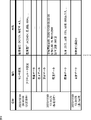
- the data stored in the data server 30 is, for example, as shown in FIG.
- the data server 30 also stores the learning model described later generated by the learning device 10.
- the data server 30 transmits the stored learning model to the inference device 20.
- the data server 30 transmits training data including setting data, image data, temperature data, distance data, and quality data to the learning device 10.
- the data server 30 transmits inference data including setting data, image data, temperature data, and distance data to the inference device 20. Details of learning and reasoning will be described later.
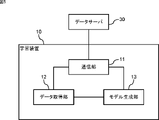
- the learning device 10 infers the quality of the work 3 handled by the production facility 2 based on the learning data including the setting data, the image data, the temperature data, the distance data, and the quality data received from the data server 30. It is a learning device that generates a learning model of. In particular, the learning device 10 generates a learning model based on image data, temperature data, and distance data, which are data obtained by externally observing the production equipment 2, so that a learning model with high accuracy can be generated. The learning device 10 transmits the generated learning model to the data server 30 and stores it. The functional configuration of the learning device 10 will be described later.
- the learning device 10 is an example of the learning device according to the present disclosure.
- the abnormality since there is an abnormality that the hand portion does not spread in FIG. 2, the abnormality also occurs in the image data showing the image captured by the camera 4 and the distance data indicating the distance measured by the distance sensor 6. It can be reflected data. Therefore, a learning model with high accuracy can be obtained by generating a learning model using the data obtained by externally observing the production equipment 2.
- the inference device 20 is handled by the production facility 2 based on the inference data including the setting data, the image data, the temperature data and the distance data received from the data server 30 and the learning model generated by the learning device 10. It is an inference device that infers the quality of the work 3. When it is inferred that the work is defective, it is presumed that the production equipment 2 has an abnormality. Unlike the training data, the inference data does not include the pass / fail data. Therefore, the inference device 20 can infer the quality of the work 3 which is not the target of inspection by the inspection device 7. The functional configuration of the inference device 20 will be described later.
- the inference device 20 is an example of the inference device according to the present disclosure.
- the learning device 10 includes a communication unit 11, a data acquisition unit 12, and a model generation unit 13.
- the communication unit 11 communicates with the data server 30.
- the communication unit 11 receives the learning data from the data server 30 and transmits it to the data acquisition unit 12, and receives the learning model from the model generation unit 13 and transmits it to the data server 30.
- the communication unit 11 is a network interface corresponding to, for example, a factory network and a local network.
- the data acquisition unit 12 acquires learning data including setting data, image data, temperature data, distance data, and quality data from the data server 30 via the communication unit 11.
- learning data including setting data, image data, temperature data, distance data, and quality data from the data server 30 via the communication unit 11.
- the acquisition date and time associated with the image data, the temperature data, and the distance data coincide with the handling date and time associated with the good / bad data.
- image data, temperature data, distance data and quality data are included.
- Such learning data is data related to when one work 3 is handled.
- the data acquisition unit 12 is an example of the learning data acquisition means according to the present disclosure.
- the model generation unit 13 generates a learning model for inferring the quality of the work 3 handled by the production equipment 2 based on the learning data acquired by the data acquisition unit 12. Further, the model generation unit 13 transmits and stores the generated learning model to the data server 30 via the communication unit 11.
- the model generation unit 13 is an example of the model generation means according to the present disclosure.
- the model generation unit 13 generates a learning model by machine learning.
- machine learning methods various learning methods such as supervised learning, unsupervised learning, reinforcement learning, and semi-supervised learning can be adopted.
- supervised learning when supervised learning is adopted, the model generation unit 13 inputs setting data, image data, temperature data, and distance data, and performs learning by using pass / fail data as output, so that the work 3 handled by the production equipment 2 is handled. It is possible to generate a learning model for inferring the quality of.
- the model generation unit 13 clusters the learning data by performing learning by inputting all the learning data including the quality data, and the work 3 handled by the production facility 2. It is possible to generate a learning model for inferring the quality of.
- deep learning may be used together.
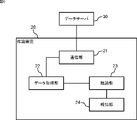
- the inference device 20 includes a communication unit 21, a data acquisition unit 22, an inference unit 23, and a notification unit 24.
- the communication unit 21 communicates with the data server 30.
- the communication unit 21 receives inference data and a learning model from the data server 30 and transmits them to the data acquisition unit 22.
- the communication unit 21 is a network interface corresponding to, for example, a factory network and a local network.
- the data acquisition unit 22 acquires inference data including setting data, image data, temperature data, and distance data from the data server 30 via the communication unit 21. As mentioned above, the inference data does not include pass / fail data. Further, the data acquisition unit 22 acquires a learning model from the data server 30 via the communication unit 21.
- the data acquisition unit 22 is an example of the inference data acquisition means according to the present disclosure.
- the inference unit 23 infers the quality of the work 3 handled by the production equipment 2 based on the inference data acquired by the data acquisition unit 22 and the learning model.
- the inference unit 23 controls the notification unit 24 based on the inference result, and notifies the user of the diagnosis result of the production equipment 2.
- the user is, for example, an administrator of the diagnostic system 1.
- the inference unit 23 controls the notification unit 24 to diagnose that the production equipment 2 has no abnormality or has an abnormality. Notify the user of the result.
- the inference unit 23 performs the production equipment 2 only when, for example, the number of the works 3 determined to be defective exceeds a certain level. The user may be notified of the diagnosis result that is abnormal.
- the inference unit 23 is an example of the inference means according to the present disclosure.
- the notification unit 24 notifies the user of the diagnosis result of the production equipment 2 based on the control of the inference unit 23.
- the notification unit 24 is, for example, a display. In this case, the notification unit 24 notifies the diagnosis result by displaying characters, icons, and the like on the display.
- the notification unit 24 may include a green lamp and a red lamp. In this case, the notification unit 24 notifies the diagnosis result by turning on the green lamp when the diagnosis result is normal and turning on the red lamp when the diagnosis result is abnormal.
- the learning device 10 and the inference device 20 shown in FIG. 7 are realized by a computer such as a personal computer or a microcontroller.
- the learning device 10 and the inference device 20 include a processor 1001, a memory 1002, an interface 1003, and a secondary storage device 1004, which are connected to each other via a bus 1000.
- the processor 1001 is, for example, a CPU (Central Processing Unit). Each function of the learning device 10 and the inference device 20 is realized by the processor 1001 reading the operation program stored in the secondary storage device 1004 into the memory 1002 and executing the program.
- CPU Central Processing Unit
- the memory 1002 is, for example, a main storage device configured by a RAM (RandomAccessMemory).
- the memory 1002 stores an operation program read from the secondary storage device 1004 by the processor 1001. Further, the memory 1002 functions as a work memory when the processor 1001 executes an operation program.
- the interface 1003 is an I / O (Input / Output) interface such as a serial port, a USB (Universal Serial Bus) port, and a network interface.
- the functions of the communication unit 11 and the communication unit 21 are realized by the interface 1003. Further, by connecting a display, a lamp, or the like to the interface 1003, the function of the notification unit 24 is realized.
- the secondary storage device 1004 is, for example, a flash memory, an HDD (Hard Disk Drive), or an SSD (Solid State Drive).
- the secondary storage device 1004 stores an operation program executed by the processor 1001.
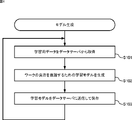
- the operation shown in the learning device 10 is started, for example, when the learning device 10 is started.
- the data acquisition unit 12 of the learning device 10 acquires learning data from the data server 30 (step S101).
- the data acquisition unit 12 waits until sufficient learning data is added to the data server 30. Since the inspection device 7 inspects only a part of the work 3 handled by the production equipment 2, there is a possibility that the quality data is not sufficiently stored in the data server 30.
- the model generation unit 13 of the learning device 10 generates a learning model for inferring the quality of the work based on the learning data acquired in step S101 (step S102).
- the model generation unit 13 transmits the learning model generated in step S102 to the data server 30 and saves it (step S103). Then, the operation from step S101 is repeated.
- the operation shown in the inference device 20 is started, for example, when the inference device 20 is started.
- the data acquisition unit 22 of the inference device 20 acquires inference data from the data server 30 (step S201). Subsequently, the data acquisition unit 22 acquires the learning model stored in the data server 30 by the learning device 10 (step S202).
- the inference unit 23 of the inference device 20 infers the quality of the work 3 handled by the production equipment 2 based on the inference data acquired in step S201 and the learning model acquired in step S202 (step). S203).
- the inference unit 23 controls the notification unit 24 based on the inference result in step S203 to notify the user of the diagnosis result (step S204). Then, the operation from step S201 is repeated.
- the training data is generated based on the training data including the image data, the temperature data, and the distance data, which are the data obtained by externally observing the production equipment 2, and thus the production. It is possible to accurately generate a learning model for inferring the quality of the work 3 handled by the equipment 2. Then, the inference device 20 accurately determines the quality of the work 3 handled by the production equipment 2 based on the inference data including the data obtained by externally observing the production equipment 2 and the learning model generated with high accuracy. I can reason well. Since the quality of the work 3 and the normality / abnormality of the production equipment 2 can be associated with each other, the production equipment 2 can be accurately diagnosed according to the diagnostic system 1 according to the first embodiment.
- the diagnostic system 1 according to the second embodiment diagnoses the production equipment 2 by inferring the deterioration state of the production equipment 2 in addition to inferring the quality of the work 3 handled by the production equipment 2. It is different from the first embodiment.
- the first embodiment is that the production equipment 2 further transmits the history data indicating the operation history of the production equipment 2 and the environmental data indicating the installation environment of the production equipment 2 to the data server 30 in addition to the setting data.
- the data stored in the data server 30 is, for example, as shown in FIG.
- the learning data and the inference data further include historical data and environmental data.
- the model generation unit 13 of the learning device 10 generates a learning model for inferring the deterioration state of the production equipment 2 in addition to the learning model for inferring the quality of the work 3.
- the model generation unit 13 according to the second embodiment is a learning model clustered according to the deterioration state of the production equipment 2 by learning learning data including, for example, historical data and environmental data by unsupervised learning. Can be generated. This is because there is a correlation between the deterioration state of the production equipment 2, the operation history, and the installation environment.
- the production equipment 2 includes life parts such as bearings and rubber
- the operation of the production equipment 2 is deviated when the life parts are worn. This deviation is reflected in the image data and the distance data.
- the life component is worn, energy loss increases and the temperature of the production equipment 2 rises. This temperature rise is reflected in the temperature data. Therefore, there is a correlation between the deterioration state of the production equipment 2 and the image data, the temperature data, and the distance data.
- the susceptibility to deterioration of the production equipment 2 changes depending on the operating condition and the installation environment of the production equipment 2. Therefore, by generating a learning model based on learning data including image data, temperature data, distance data, history data, and environmental data, it is possible to generate a learning model for inferring the deterioration state of the production equipment 2. can.
- the training data includes the setting data, the image data, the temperature data, the distance data, and the quality data, so that the learning model is simply generated based only on the historical data and the environmental data. Can also generate accurate models.
- the inference unit 23 of the inference device 20 is based on inference data including historical data and environment data, and a learning model for inferring the deterioration state of the production equipment 2 generated by the learning device 10. Further, it is different from the first embodiment in that the deterioration state of the production equipment 2 is also inferred.
- the inference unit 23 of the inference device 20 controls the notification unit 24 to notify the user of information indicating the deterioration state of the production equipment 2 as a diagnosis result.
- the diagnostic system 1 according to the second embodiment has been described above.
- the learning data and the inference data further include the historical data and the environmental data, so that the production equipment 2 is deteriorated in the same configuration as that of the first embodiment.
- the condition can be diagnosed accurately.
- the data server 30 is not essential.
- the diagnostic system 1 does not include a data server 30, and setting data, image data, temperature data, distance data, and pass / fail data are directly transmitted to the learning device 10 and the inference device 20, and the learning model is transmitted from the learning device 10 to the inference device 20. It may be sent directly to.
- the learning device 10, the inference device 20, and the data server 30 are present on the same network, but they may be present on different networks.
- the learning device 10 and the inference device 20 may exist on the factory network
- the data server 30 may exist on the Internet.
- the learning device 10 and the inference device 20 include a secondary storage device 1004.
- the present invention is not limited to this, and the secondary storage device 1004 is provided outside the learning device 10 or the inference device 20, and the learning device 10 or the inference device 20 and the secondary storage device 1004 are connected via the interface 1003. May be good.
- removable media such as a USB flash drive and a memory card can also be used as the secondary storage device 1004.
- the learning device 10 and the inference device 20 are configured by a dedicated circuit using an ASIC (Application Specific Integrated Circuit), an FPGA (Field Programmable Gate Array), or the like. You may. Further, in the hardware configuration shown in FIG. 7, a part of the functions of the learning device 10 and the inference device 20 may be realized by, for example, a dedicated circuit connected to the interface 1003.
- ASIC Application Specific Integrated Circuit
- FPGA Field Programmable Gate Array
- the programs used in the learning device 10 and the inference device 20 are stored in a computer-readable recording medium such as a CD-ROM (Compact Disc Read Only Memory), a DVD (Digital Versatile Disc), a USB flash drive, a memory card, or an HDD. It is possible to distribute it. Then, by installing such a program on a specific or general-purpose computer, it is possible to make the computer function as the learning device 10 and the inference device 20.
- a computer-readable recording medium such as a CD-ROM (Compact Disc Read Only Memory), a DVD (Digital Versatile Disc), a USB flash drive, a memory card, or an HDD. It is possible to distribute it. Then, by installing such a program on a specific or general-purpose computer, it is possible to make the computer function as the learning device 10 and the inference device 20.
- the above-mentioned program may be stored in a storage device of another server on the Internet so that the above-mentioned program can be downloaded from the server.
- 1 Diagnostic system 1 Diagnostic system, 2 Production equipment, 3 Work, 4 Camera, 5 Temperature sensor, 6 Distance sensor, 7 Inspection device, 10 Learning device, 11 Communication unit, 12 Data acquisition unit, 13 Model generation unit, 20 Inference device, 21 Communication Department, 22 data acquisition unit, 23 inference unit, 24 notification unit, 30 data server, 1000 bus, 1001 processor, 1002 memory, 1003 interface, 1004 secondary storage device, F production site.
Landscapes
- Engineering & Computer Science (AREA)
- Physics & Mathematics (AREA)
- General Physics & Mathematics (AREA)
- Robotics (AREA)
- Mechanical Engineering (AREA)
- Theoretical Computer Science (AREA)
- Evolutionary Computation (AREA)
- Artificial Intelligence (AREA)
- Health & Medical Sciences (AREA)
- Computer Vision & Pattern Recognition (AREA)
- General Health & Medical Sciences (AREA)
- Automation & Control Theory (AREA)
- Mathematical Physics (AREA)
- Quality & Reliability (AREA)
- Orthopedic Medicine & Surgery (AREA)
- Computing Systems (AREA)
- Databases & Information Systems (AREA)
- Medical Informatics (AREA)
- Software Systems (AREA)
- Multimedia (AREA)
- General Factory Administration (AREA)
- Testing And Monitoring For Control Systems (AREA)
Abstract
Description
生産設備の設定を示す設定データと、撮像装置により前記生産設備を撮像して得られる撮像画像を示す画像データと、温度センサにより測定された前記生産設備の表面温度を示す温度データと、距離センサにより測定された、前記距離センサから前記生産設備までの距離を示す距離データと、前記生産設備にて扱われるワークの良否を示す良否データとを含む学習用データを取得する学習用データ取得手段と、
前記生産設備にて扱われるワークの良否を推論するための学習モデルを、前記学習用データに基づいて生成するモデル生成手段と、
を備える。
図1を参照しながら、実施の形態1に係る診断システム1を説明する。診断システム1は、生産現場Fに設置された生産設備2を診断する診断システムである。診断システム1は、生産設備2とカメラ4と温度センサ5と距離センサ6と検品装置7と学習装置10と推論装置20とデータサーバ30とを備える。生産設備2、カメラ4、温度センサ5、距離センサ6、検品装置7、学習装置10及び推論装置20は、それぞれデータサーバ30に通信可能に接続されている。診断システム1は、本開示に係る診断システムの一例である。
以下、実施の形態2に係る診断システム1を説明する。実施の形態2に係る診断システム1は、生産設備2にて扱われるワーク3の良否を推論するのに加えて、さらに生産設備2の劣化状態を推論することにより生産設備2を診断する点が実施の形態1と異なる。
上記の各実施の形態では、各種データはデータサーバ30に送信され保存されるものとした。しかし、データサーバ30は必須ではない。例えば、診断システム1はデータサーバ30を備えず、設定データ、画像データ、温度データ、距離データ及び良否データは学習装置10及び推論装置20に直接送信され、学習モデルは学習装置10から推論装置20に直接送信されるものであってもよい。
Claims (9)
- 生産設備の設定を示す設定データと、撮像装置により前記生産設備を撮像して得られる撮像画像を示す画像データと、温度センサにより測定された前記生産設備の表面温度を示す温度データと、距離センサにより測定された、前記距離センサから前記生産設備までの距離を示す距離データと、前記生産設備にて扱われるワークの良否を示す良否データとを含む学習用データを取得する学習用データ取得手段と、
前記生産設備にて扱われるワークの良否を推論するための学習モデルを、前記学習用データに基づいて生成するモデル生成手段と、
を備える学習装置。 - 前記学習用データ取得手段が取得する前記学習用データはさらに、前記生産設備の稼働履歴を示す履歴データと、前記生産設備の設置環境を示す環境データとを含み、
前記モデル生成手段はさらに、前記生産設備の劣化状態を推論するための学習モデルを、前記学習用データに基づいて生成する、
請求項1に記載の学習装置。 - 生産設備の設定を示す設定データと、撮像装置により前記生産設備を撮像して得られる撮像画像を示す画像データと、温度センサにより測定された前記生産設備の表面温度を示す温度データと、距離センサにより測定された、前記距離センサから前記生産設備までの距離を示す距離データとを含む推論用データを取得する推論用データ取得手段と、
請求項1に記載の学習装置の前記モデル生成手段により生成された前記学習モデルと前記推論用データとに基づいて、前記生産設備にて扱われるワークの良否を推論する推論手段と、
を備える推論装置。 - 前記推論用データはさらに、前記生産設備の稼働履歴を示す履歴データと、前記生産設備の設置環境を示す環境データとを含み、
前記推論手段はさらに、請求項2に記載の学習装置の前記モデル生成手段により生成された前記学習モデルと前記推論用データとに基づいて、前記生産設備の劣化状態を推論する、
請求項3に記載の推論装置。 - 請求項1に記載の学習装置と、
請求項3に記載の推論装置と、
を備える診断システム。 - 生産設備の設定を示す設定データと、撮像装置により前記生産設備を撮像して得られる撮像画像を示す画像データと、温度センサにより測定された前記生産設備の表面温度を示す温度データと、距離センサにより測定された、前記距離センサから前記生産設備までの距離を示す距離データと、前記生産設備にて扱われるワークの良否を示す良否データとを含む学習用データを取得し、
前記生産設備にて扱われるワークの良否を推論するための学習モデルを、前記学習用データに基づいて生成する、
モデル生成方法。 - 前記学習用データはさらに、前記生産設備の稼働履歴を示す履歴データと、前記生産設備の設置環境を示す環境データとを含み、
前記生産設備の劣化状態を推論するための学習モデルを、前記学習用データに基づいて生成する、
請求項6に記載のモデル生成方法。 - コンピュータに、
生産設備の設定を示す設定データと、撮像装置により前記生産設備を撮像して得られる撮像画像を示す画像データと、温度センサにより測定された前記生産設備の表面温度を示す温度データと、距離センサにより測定された、前記距離センサから前記生産設備までの距離を示す距離データと、前記生産設備にて扱われるワークの良否を示す良否データとを含む学習用データを取得させ、
前記生産設備にて扱われるワークの良否を推論するための学習モデルを、前記学習用データに基づいて生成させる、
プログラム。 - 前記学習用データはさらに、前記生産設備の稼働履歴を示す履歴データと、前記生産設備の設置環境を示す環境データとを含み、
前記生産設備の劣化状態を推論するための学習モデルを、前記学習用データに基づいて生成させる、
請求項8に記載のプログラム。
Priority Applications (4)
| Application Number | Priority Date | Filing Date | Title |
|---|---|---|---|
| JP2021559582A JP7055258B1 (ja) | 2020-12-18 | 2020-12-18 | 学習装置、推論装置、診断システム、モデル生成方法及びプログラム |
| PCT/JP2020/047532 WO2022130640A1 (ja) | 2020-12-18 | 2020-12-18 | 学習装置、推論装置、診断システム、モデル生成方法及びプログラム |
| US17/915,112 US12397417B2 (en) | 2020-12-18 | 2020-12-18 | Learning device, diagnostic system, and model generation method to diagnose abnormality based on temperature measurement in a production facility |
| CN202080099225.0A CN116457736A (zh) | 2020-12-18 | 2020-12-18 | 学习装置、推断装置、诊断系统、模型生成方法及程序 |
Applications Claiming Priority (1)
| Application Number | Priority Date | Filing Date | Title |
|---|---|---|---|
| PCT/JP2020/047532 WO2022130640A1 (ja) | 2020-12-18 | 2020-12-18 | 学習装置、推論装置、診断システム、モデル生成方法及びプログラム |
Publications (1)
| Publication Number | Publication Date |
|---|---|
| WO2022130640A1 true WO2022130640A1 (ja) | 2022-06-23 |
Family
ID=81289243
Family Applications (1)
| Application Number | Title | Priority Date | Filing Date |
|---|---|---|---|
| PCT/JP2020/047532 Ceased WO2022130640A1 (ja) | 2020-12-18 | 2020-12-18 | 学習装置、推論装置、診断システム、モデル生成方法及びプログラム |
Country Status (4)
| Country | Link |
|---|---|
| US (1) | US12397417B2 (ja) |
| JP (1) | JP7055258B1 (ja) |
| CN (1) | CN116457736A (ja) |
| WO (1) | WO2022130640A1 (ja) |
Families Citing this family (3)
| Publication number | Priority date | Publication date | Assignee | Title |
|---|---|---|---|---|
| TWI888681B (zh) * | 2020-12-25 | 2025-07-01 | 日商發那科股份有限公司 | 機械學習裝置、及機械學習方法 |
| WO2022259380A1 (ja) * | 2021-06-08 | 2022-12-15 | 三菱電機株式会社 | 点検支援装置、点検支援システム、点検支援方法および点検支援プログラム |
| JP7797966B2 (ja) * | 2022-06-16 | 2026-01-14 | オムロン株式会社 | 異常判定装置、異常判定方法、及び異常判定プログラム |
Citations (6)
| Publication number | Priority date | Publication date | Assignee | Title |
|---|---|---|---|---|
| JP2017021567A (ja) * | 2015-07-10 | 2017-01-26 | 日本信号株式会社 | 保守管理システム |
| JP2017167847A (ja) * | 2016-03-16 | 2017-09-21 | 株式会社東芝 | 運用計画案作成装置、運用計画案作成方法、プログラムおよび運用計画案作成システム |
| WO2018105296A1 (ja) * | 2016-12-07 | 2018-06-14 | 株式会社日立製作所 | 品質管理装置及び品質管理方法 |
| WO2019187228A1 (ja) * | 2018-03-26 | 2019-10-03 | 株式会社 東芝 | 品質監視システム |
| WO2019239606A1 (ja) * | 2018-06-15 | 2019-12-19 | 三菱電機株式会社 | 工作機械の加工寸法予測装置、工作機械の加工寸法予測システム、工作機械の設備異常判定装置、工作機械の加工寸法予測方法及びプログラム |
| JP2020140365A (ja) * | 2019-02-27 | 2020-09-03 | トヨタ自動車株式会社 | 製品品質不良予測システム |
Family Cites Families (13)
| Publication number | Priority date | Publication date | Assignee | Title |
|---|---|---|---|---|
| CN2652590Y (zh) * | 2003-10-10 | 2004-11-03 | 华南理工大学 | 刀具高速旋转时测温装置 |
| US9092698B2 (en) * | 2012-06-21 | 2015-07-28 | Rethink Robotics, Inc. | Vision-guided robots and methods of training them |
| US9199376B2 (en) * | 2013-03-14 | 2015-12-01 | GM Global Technology Operations LLC | Intuitive grasp control of a multi-axis robotic gripper |
| JP6453805B2 (ja) | 2016-04-25 | 2019-01-16 | ファナック株式会社 | 製品の異常に関連する変数の判定値を設定する生産システム |
| CN106078357A (zh) * | 2016-05-27 | 2016-11-09 | 广西大学 | 一种切削热在线监测及调控装置 |
| CN206215938U (zh) * | 2016-11-22 | 2017-06-06 | 三星智能科技盐城有限公司 | 一种刀具磨损自检测装置数控车床 |
| JP2018116545A (ja) | 2017-01-19 | 2018-07-26 | オムロン株式会社 | 予測モデル作成装置、生産設備監視システム、及び生産設備監視方法 |
| US10682774B2 (en) * | 2017-12-12 | 2020-06-16 | X Development Llc | Sensorized robotic gripping device |
| US10789705B2 (en) * | 2018-03-26 | 2020-09-29 | Kabushiki Kaisha Toshiba | Quality monitoring system |
| JP2019213130A (ja) * | 2018-06-07 | 2019-12-12 | オリンパス株式会社 | 撮像装置、学習装置、撮像方法、学習方法、画像データ作成方法およびプログラム |
| CN113316501B (zh) * | 2019-05-31 | 2022-02-18 | 乐恩吉室株式会社 | 以危险度判断为基础的机器人移动控制方法及利用其的移动机器人装置 |
| JP7239399B2 (ja) * | 2019-06-19 | 2023-03-14 | ファナック株式会社 | 調整支援装置 |
| WO2021151066A1 (en) * | 2020-01-24 | 2021-07-29 | The Cleveland Clinic Foundation | Compliance correction in a robotic system |
-
2020
- 2020-12-18 US US17/915,112 patent/US12397417B2/en active Active
- 2020-12-18 JP JP2021559582A patent/JP7055258B1/ja active Active
- 2020-12-18 CN CN202080099225.0A patent/CN116457736A/zh active Pending
- 2020-12-18 WO PCT/JP2020/047532 patent/WO2022130640A1/ja not_active Ceased
Patent Citations (6)
| Publication number | Priority date | Publication date | Assignee | Title |
|---|---|---|---|---|
| JP2017021567A (ja) * | 2015-07-10 | 2017-01-26 | 日本信号株式会社 | 保守管理システム |
| JP2017167847A (ja) * | 2016-03-16 | 2017-09-21 | 株式会社東芝 | 運用計画案作成装置、運用計画案作成方法、プログラムおよび運用計画案作成システム |
| WO2018105296A1 (ja) * | 2016-12-07 | 2018-06-14 | 株式会社日立製作所 | 品質管理装置及び品質管理方法 |
| WO2019187228A1 (ja) * | 2018-03-26 | 2019-10-03 | 株式会社 東芝 | 品質監視システム |
| WO2019239606A1 (ja) * | 2018-06-15 | 2019-12-19 | 三菱電機株式会社 | 工作機械の加工寸法予測装置、工作機械の加工寸法予測システム、工作機械の設備異常判定装置、工作機械の加工寸法予測方法及びプログラム |
| JP2020140365A (ja) * | 2019-02-27 | 2020-09-03 | トヨタ自動車株式会社 | 製品品質不良予測システム |
Also Published As
| Publication number | Publication date |
|---|---|
| CN116457736A (zh) | 2023-07-18 |
| JP7055258B1 (ja) | 2022-04-15 |
| US20230153983A1 (en) | 2023-05-18 |
| US12397417B2 (en) | 2025-08-26 |
| JPWO2022130640A1 (ja) | 2022-06-23 |
Similar Documents
| Publication | Publication Date | Title |
|---|---|---|
| JP7055258B1 (ja) | 学習装置、推論装置、診断システム、モデル生成方法及びプログラム | |
| JP6999635B2 (ja) | 画像ベースのメンテナンス予測および動作エラーの検出 | |
| CN110244666B (zh) | 生产线监视装置、生产线监视系统、生产线监视方法 | |
| CN119375643B (zh) | 一种绝缘检测功能的检测方法及系统 | |
| US11521120B2 (en) | Inspection apparatus and machine learning method | |
| JP2007328645A (ja) | 故障診断システム、画像形成装置および故障診断プログラム | |
| TWI672571B (zh) | 用於監測一晶圓檢驗配方隨著時間經過之穩定性之方法,系統及非暫態電腦可讀媒體 | |
| US11598738B2 (en) | Apparatus and method for detecting defective component using infrared camera | |
| KR102891794B1 (ko) | 반도체 디바이스들에서 잠재적 신뢰성 결함들을 식별하기 위한 시스템 및 방법 | |
| EP4285196A1 (en) | Process abnormality identification using measurement violation analysis | |
| CN114077919A (zh) | 用于预测加工异常的系统 | |
| JP2025517109A (ja) | データ駆動型アプローチを通したセンサ故障のリアルタイム検出、予測、及び修復 | |
| JP2018063528A (ja) | 対象物の出荷時検査情報と稼働時アラーム情報の相関関係を学習する機械学習装置および機械学習方法 | |
| CN115587959A (zh) | 异常检测系统及异常检测方法 | |
| TWI637250B (zh) | 智慧加工調變系統及方法 | |
| TW202424831A (zh) | 在使用機器學習的製造系統處的裝備參數管理 | |
| CN118278653B (zh) | 一种基于视觉机器人的设备缺陷检测系统 | |
| CN116360384B (zh) | 用于诊断和监控信息物理系统中的异常的系统和方法 | |
| CN117663353A (zh) | 核电通风空调系统的故障检测与诊断方法 | |
| JP7332028B2 (ja) | アイテムの検査を実行するための方法、装置、コンピュータプログラムおよびコンピュータ命令を含む媒体 | |
| Kumar et al. | Multimodal Fault Analysis of AC Motors Using Multi-sensor Data and ML | |
| Bauer et al. | Continuous adaptation of deep learning models for optical quality monitoring tasks | |
| Chung et al. | Real-time prognostics of the positioning-shift failure for wafer-handling robot arms using stacked LSTM deep-learning model and IoT edge computing | |
| JP2019175302A (ja) | 機器制御装置、及び機器制御方法 | |
| KR20260053326A (ko) | 이미지 기반 센서 트레이스 분석을 위한 방법 |
Legal Events
| Date | Code | Title | Description |
|---|---|---|---|
| ENP | Entry into the national phase |
Ref document number: 2021559582 Country of ref document: JP Kind code of ref document: A |
|
| 121 | Ep: the epo has been informed by wipo that ep was designated in this application |
Ref document number: 20966026 Country of ref document: EP Kind code of ref document: A1 |
|
| WWE | Wipo information: entry into national phase |
Ref document number: 202080099225.0 Country of ref document: CN |
|
| NENP | Non-entry into the national phase |
Ref country code: DE |
|
| 122 | Ep: pct application non-entry in european phase |
Ref document number: 20966026 Country of ref document: EP Kind code of ref document: A1 |
|
| WWG | Wipo information: grant in national office |
Ref document number: 17915112 Country of ref document: US |