WO2022130623A1 - トラヒック制御装置、トラヒック制御方法、通信システムおよびプログラム - Google Patents
トラヒック制御装置、トラヒック制御方法、通信システムおよびプログラム Download PDFInfo
- Publication number
- WO2022130623A1 WO2022130623A1 PCT/JP2020/047473 JP2020047473W WO2022130623A1 WO 2022130623 A1 WO2022130623 A1 WO 2022130623A1 JP 2020047473 W JP2020047473 W JP 2020047473W WO 2022130623 A1 WO2022130623 A1 WO 2022130623A1
- Authority
- WO
- WIPO (PCT)
- Prior art keywords
- traffic
- traffic control
- application
- type
- inflow
- Prior art date
- Legal status (The legal status is an assumption and is not a legal conclusion. Google has not performed a legal analysis and makes no representation as to the accuracy of the status listed.)
- Ceased
Links
Images





Definitions
- This disclosure relates to traffic control in a communication network.
- Non-Patent Document 1 By giving preferential / non-preferred treatment to specific applications by bandwidth control and priority control for traffic identification and identified traffic flow by DPI, various QoE (Quality of Experience) is provided to users and communication services are differentiated. be able to.
- DPI Deep Packet Injection
- Patent Document 1 proposes a method of automatically adjusting the band when the traffic fluctuates suddenly with respect to the applied traffic control. Using this method, it is possible to automatically adjust the control band for the traffic flow of the application.
- the application side has been dealing with the quality of the network, and the mechanism for estimating the network status and dynamically changing the method of sending the traffic flow (in this specification, it is described as "network status estimation function").
- network status estimation function the mechanism for estimating the network status and dynamically changing the method of sending the traffic flow.
- the performance of the application may be lowered, the bandwidth may be lowered, and the QoE of the user may be lowered.
- the application performance may be maintained and the bandwidth may be increased.
- the bandwidth may be compressed, resulting in affecting other traffic.
- the present invention provides a traffic control device, a traffic control method, a communication system, and a program that can obtain a desired QoE even if an application having a network condition estimation function exists. With the goal.
- the traffic control device acquires the change in the traffic situation before and after performing the traffic control for each application, classifies each application, and is based on the application classification and the policy. Therefore, it was decided for each application whether or not to actually perform traffic control.
- the traffic control device is a traffic control device that performs traffic control in a network for each application.
- a traffic control device that performs traffic control in a network for each application.
- each of the applications is classified according to the presence or absence of fluctuations in the average rate and the instantaneous rate of the inflow traffic, and the classification of the application and the policy set for each of the applications are referred to.
- a control determination unit for determining the applicability of the traffic control is provided.
- the traffic control method according to the present invention is a traffic control method for performing traffic control in a network for each application.
- Pre-set policies for each of the above applications To compare the situation of inflow traffic flowing into the network before and after the traffic control for each application.
- each of the applications is classified according to the presence or absence of fluctuations in the average rate and the instantaneous rate of the inflow traffic, and the applicability of the traffic control is applicable with reference to the classification of the application and the policy. It is characterized by determining.
- the communication system includes the traffic control device.
- the inflow traffic situation before applying the traffic control and the inflow traffic situation after applying the traffic control are compared, and how the application operates by the traffic control (the network condition is estimated and the traffic is sent). Estimate how to change it) and optimize it based on the traffic control policy set for each application (presence or absence of estimation on the network, in that case, whether to prioritize application operation or NW load reduction, etc.) Search for and determine a unique traffic control method.
- the present invention can provide a traffic control device, a traffic control method, and a communication system that can obtain a desired QoE even in the presence of an application having a network condition estimation function.
- the traffic control device applies the application.
- Type 1 where the average rate of the inflow traffic does not change and the instantaneous rate does not change
- Type 2 where the average rate of inflow traffic does not change and the instantaneous rate rises
- Type 3 in which the average rate of the inflow traffic does not change and the instantaneous rate decreases
- Type 4 in which the average rate of the inflow traffic decreases and the instantaneous rate decreases.
- the traffic control is performed for the type 1 and type 3 applications, the traffic control is not performed for the type 2 application, and the type 4 application is not performed. If the policy gives priority to application operation, it is determined that the traffic control is not performed, and if the policy gives priority to load reduction, the traffic control is performed.
- the present invention is a program for operating a computer as the traffic control device.
- the data acquisition device of the present invention can also be realized by a computer and a program, and the program can be recorded on a recording medium or provided through a network.
- the present invention can provide a traffic control device, a traffic control method, a communication system, and a program that can obtain a desired QoE even in the presence of an application having a network condition estimation function.
- FIG. 1 is a diagram illustrating a communication system of the present embodiment.
- This communication system is a communication system that connects the terminal 11 and the Internet 14, and has an access network 12 and an ISP network 13.
- the access network 12 is an optical access network such as NGN (Next Generation Network) or a mobile access network such as LTE (Long Term Evolution).
- the ISP network 13 is a network provided by an Internet service provider.
- the ISP network 13 has a traffic control device 13a.
- the traffic control device 13a is, for example, a device that identifies a traffic flow application by DPI and performs traffic control such as bandwidth control on the identified traffic flow.
- the traffic control device 13a is a traffic control device that performs traffic control in the ISP network 13 for each application. To compare the situation of inflow traffic flowing into the ISP network 13 before and after the traffic control for each application. As a result of comparing the situation of the inflow traffic, each of the applications is classified according to the presence or absence of fluctuations in the average rate and the instantaneous rate of the inflow traffic, and the classification of the application and the policy set for each of the applications are referred to. , It has a function of determining the applicability of the traffic control.
- the traffic control device 13b described here is a conventional device that is not the traffic control device 13a according to the present invention.
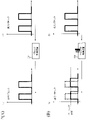
- FIG. 2 is a diagram illustrating a traffic situation when the application does not have a network condition estimation function (type 1).
- FIG. 2A is a diagram illustrating the traffic of a certain application before the traffic control device 13b performs the traffic control.
- (A) is the situation of the inflow traffic flowing into the ISP network 13
- (b) is the situation of the output traffic output from the traffic control device 13b.
- FIG. 2B is a diagram illustrating the traffic of a certain application after the traffic control device 13b performs the traffic control.
- (A) is the situation of the inflow traffic flowing into the ISP network 13
- (b) is the situation of the output traffic output from the traffic control device 13b.
- the traffic control device 13b reduces the burst property of the traffic by pacing while maintaining the behavior of the application by performing the traffic control, and reduces the load of the ISP network 13. (While maintaining the desired traffic amount, the traffic output time is extended to suppress the peak of the traffic amount).
- the traffic control device 13b performs the traffic control, the application does not have the network condition estimation function, so that the traffic transmission method is not changed.
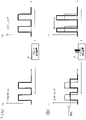
- FIG. 3 is a diagram illustrating a traffic situation when the application has a network condition estimation function (a function of increasing the rate according to congestion in order to obtain a desired band) (type 2).
- FIG. 3A is a diagram illustrating the traffic of a certain application before the traffic control device 13b performs the traffic control, as in the case of FIG. 2A.
- FIG. 3B is also a diagram illustrating the traffic of a certain application after the traffic control device 13b performs the traffic control, as in the case of FIG. 2B.
- the traffic control device 13b reduces the burst property of the traffic by pacing while maintaining the behavior of the application by performing the traffic control, and reduces the load of the ISP network 13. (While maintaining the desired traffic amount, the traffic output time is extended to suppress the peak of the traffic amount).
- the traffic control device 13b performs the traffic control as shown in FIGS. 3B and 3B
- the application of this example presumes that the network is congested due to the delay fluctuation generated by the pacing. Then, the application of this example enhances the burst property of traffic so that a desired band can be obtained even if congestion occurs. As a result, the load on the ISP network 13 increases, and the quality of other traffic deteriorates.
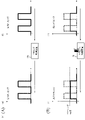
- FIG. 4 is a diagram illustrating a traffic situation when the application has a network condition estimation function (a function of lowering the rate according to congestion) (type 3).
- FIG. 5A is a diagram illustrating the traffic of a certain application before the traffic control device 13b performs the traffic control, as in the case of FIG. 2A.
- FIG. 5B is also a diagram illustrating the traffic of a certain application after the traffic control device 13b performs the traffic control, as in the case of FIG. 2B.
- the traffic control device 13b when the traffic control device 13b performs traffic control, it is presumed that the application of this example also congests the network due to the delay fluctuation generated by the pacing. Then, the application of this example changes the way of sending the packet by itself so that the delay fluctuation does not occur, and prevents the burst transmission. Therefore, the traffic control device 13b stops the traffic control and outputs the traffic transmitted by the application as it is, as shown in FIGS. 4B and 4A.
- FIG. 5 is a diagram illustrating a traffic situation when the application has a network status estimation function (a function of changing only burst transmission according to congestion) (type 4).
- FIG. 5A is a diagram illustrating the traffic of a certain application before the traffic control device 13b performs the traffic control, as in the case of FIG. 2A.
- FIG. 5B is also a diagram illustrating the traffic of a certain application after the traffic control device 13b performs the traffic control, as in the case of FIG. 2B.
- the traffic control device 13b when the traffic control device 13b performs traffic control, it is presumed that the application of this example also congests the network due to the delay fluctuation generated by pacing. Then, the application of this example lowers the traffic band until the delay fluctuation does not occur. Therefore, the traffic control device 13b stops the traffic control and outputs the traffic transmitted by the application as it is, as shown in FIGS. 5B and 5A. In this way, lowering the traffic band is, for example, a process of lowering the coding rate of the video, and as a result, the QoE of the user is lowered.
- the traffic control device 13a determines the type of each application. Specifically, steps S01 to S04 of FIG. 6 are performed.
- step S01 the traffic control device 13a measures the inflow traffic state before the traffic control is applied for each application. As a measurement method, measurement can be exemplified by packet capture or flow rate analysis using the packet capture.
- step S02 the traffic control device 13a applies the traffic control.
- step S03 the traffic control device 13a measures the inflow traffic status after the traffic control is applied for each application. The measurement method is as described above.
- the traffic control device 13a compares the measurement result of step S01 with the measurement result of step S03, and classifies each application type based on the list of FIG.
- the "average rate” means the amount of traffic in a long section (about 5 minutes)
- the "instantaneous rate” means the amount of momentary traffic.
- Type 1 where the average rate of the inflow traffic does not change and the instantaneous rate does not change
- Type 2 where the average rate of inflow traffic does not change and the instantaneous rate rises
- Type 3 in which the average rate of the inflow traffic does not change and the instantaneous rate decreases
- Type 4 in which the average rate of the inflow traffic decreases and the instantaneous rate decreases.
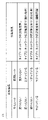
- step S05 the traffic control device 13a determines the handling of the traffic control applied in step S02 for each application according to the rules shown in the table of FIG. 8 (that is, control for each application and each type of traffic control). Decide whether to do or not.).
- the "policy for the application” is a policy set in advance for each application.
- this policy may be in the form of having a value. For example, if the instantaneous rate is within 100 Mbps, the application operation may be prioritized, and if not, the NW load reduction may be prioritized. It is preferable to set the policy in advance.
- FIG. 8 it will be as follows.
- the application is type 1
- the application is type 2
- the application of the traffic control of the traffic control device 13a increases the load on the network, so it is decided not to apply any policy (even if the application operation is prioritized).
- the application is type 3
- the network status estimation only changes the transmission and does not affect the operation of the application. Therefore, it is decided to "apply” in any policy.
- traffic control may change the behavior of the application due to network status estimation. Therefore, “apply” or “not apply” is determined for each policy.
- the traffic control device 13a is The traffic control is performed for the type 1 and type 3 applications, the traffic control is not performed for the type 2 application, and the policy gives priority to the application operation for the type 4 application. If so, it is determined that the traffic control is not performed, and if the policy is load reduction priority, the traffic control is performed.
- the traffic control device 13a since the traffic control device 13a performs the traffic control method as described above, the communication system such as the ISP can apply the desired traffic control without affecting the QoE of the application. Make it possible.
- the traffic control device 13a described in the first embodiment can be realized by a computer and a program, and the program can be recorded on a recording medium or provided through a network.
- FIG. 9 shows a block diagram of the system 100.
- the system 100 includes a computer 105 connected to the network 135.
- Network 135 is a data communication network.
- the network 135 may be a private network or a public network, for example, (a) a personal area network covering a room, (b) a local area network covering, for example, a building, (c), for example.
- a campus area network that covers a campus (d) a metropolitan area network that covers, for example, a city, (e) a wide area that covers areas that connect, for example, across urban, local, or national boundaries. It can include any or all of the area network, or (f) the Internet. Communication is carried out by electronic signals and optical signals via the network 135.
- the computer 105 includes a processor 110 and a memory 115 connected to the processor 110.
- the computer 105 is represented herein as a stand-alone device, but is not so limited, but rather may be connected to other devices not shown in the distributed processing system.
- the processor 110 is an electronic device composed of a logic circuit that responds to an instruction and executes an instruction.
- the memory 115 is a readable storage medium for a tangible computer in which a computer program is encoded.
- the memory 115 stores data and instructions readable and executable by the processor 110, i.e., program code, to control the operation of the processor 110.
- the memory 115 can be realized by a random access memory (RAM), a hard drive, a read-only memory (ROM), or a combination thereof.
- One of the components of the memory 115 is the program module 120.
- the program module 120 includes instructions for controlling the processor 110 to perform the processes described herein. Although the operations are described herein as being performed by the computer 105 or a method or process or a subordinate process thereof, those operations are actually performed by the processor 110.
- module is used herein to refer to a functional operation that can be embodied as either a stand-alone component or an integrated configuration consisting of multiple subordinate components. Therefore, the program module 120 can be realized as a single module or as a plurality of modules operating in cooperation with each other. Further, the program module 120 is described herein as being installed in memory 115 and thus implemented in software, but of hardware (eg, electronic circuits), firmware, software, or a combination thereof. It can be realized by either.
- the storage device 140 is a readable storage medium for a tangible computer that stores the program module 120. Examples of storage devices 140 include compact disks, magnetic tapes, read-only memories, optical storage media, memory units consisting of hard drives or multiple parallel hard drives, and universal serial bus (USB) flash drives. Be done. Alternatively, the storage device 140 may be a random access memory or other type of electronic storage device located in a remote storage system (not shown) and connected to the computer 105 via the network 135.
- the system 100 is collectively referred to herein as the data source 150, and further includes a data source 150A and a data source 150B that are communicably connected to the network 135.
- the data source 150 can include any number of data sources, i.e. one or more data sources.
- the data source 150 contains unorganized data and can include social media.
- the system 100 further includes a user device 130 operated by the user 101 and connected to the computer 105 via the network 135.
- User devices 130 include input devices such as keyboards or voice recognition subsystems that allow the user 101 to convey information and command selections to the processor 110.
- the user device 130 further includes an output device such as a display device or a printer or a speech synthesizer.
- a cursor control unit such as a mouse, trackball, or touch-sensitive screen, allows the user 101 to manipulate the cursor on the display device to convey further information and command selections to the processor 110.
- the processor 110 outputs the execution result 122 of the program module 120 to the user device 130.
- the processor 110 can bring the output to a storage device 125, such as a database or memory, or to a remote device (not shown) via the network 135.
- the program that performs the flowchart of FIG. 6 may be the program module 120.
- the system 100 can be operated as the traffic control device 13a.
- the present invention is not limited to the above embodiment, and can be variously modified and implemented without departing from the gist of the present invention.
- the present invention is not limited to the higher-level embodiment as it is, and at the implementation stage, the components can be modified and embodied within a range that does not deviate from the gist thereof.
- inventions can be formed by appropriately combining a plurality of components disclosed in the above embodiment. For example, some components may be removed from all the components shown in the embodiments. Furthermore, components over different embodiments may be combined as appropriate.
- Terminal 12 Access network 13: ISP network 13a: Traffic control device 14: Internet 100: System 101: User 105: Computer 110: Processor 115: Memory 120: Program module 122: Result 125: Storage device 130: User device 135 : Network 140: Storage device 150: Data source
Landscapes
- Data Exchanges In Wide-Area Networks (AREA)
Abstract
ネットワーク状況推定機能を有するアプリケーションが存在しても所望のQoEを得ることができるトラヒック制御装置等を提供することを目的とする。 本発明においては、トラヒック制御を適用する前の流入トラヒック状況と適用する後の流入トラヒック状況を比較し、トラヒック制御によってアプリケーションがどのように動作するのか(ネットワーク状況を推定してトラヒックの送り方をどのように変更するのか)を推定し、アプリケーション毎に設定されたトラヒック制御ポリシー(ネットワーク上の推定の有無、その場合にアプリ動作を優先させるかNW負荷低減を優先させるか等)に基づき、最適なトラヒック制御方法を探索して決定する。
Description
本開示は、通信ネットワークにおけるトラヒック制御に関する。
近年、アプリケーションのQoEを高めるために、Deep Packet Inspection(DPI)等を用いてトラヒックフローのアプリケーションを識別し、識別したトラヒックフローを制御する仕組みがISPなどの通信事業者で導入されている(例えば、非特許文献1を参照。)。DPIによるトラヒック識別と識別したトラヒックフローに対する帯域制御や優先制御によって、特定のアプリケーションを優遇/非優遇することで、ユーザに様々なQoE(Quality of Experience)を提供し、通信サービスの差別化を行うことができる。
一方で、アプリケーションのトラヒックフローに対してどのようなトラヒック制御を行えばよいかは事業者のノウハウにゆだねられている。特許文献1では、適用したトラヒック制御に対して、急激にトラヒックが変動した場合に帯域を自動的に調整する方法が提案されている。本方法を用いてアプリケーションのトラヒックフローに対する制御帯域を自動的に調整することが可能である。
"DPI(Deep Packet Inspection)入門," Net One Systems、(https://www.netone.co.jp/knowledge-center/blog-column/knowledge_takumi_050/index.html)、2020年12月11日検索
一方、近年はアプリケーション側でもネットワークの品質に対する対処が進んでおり、ネットワークの状況を推定してトラヒックフローの送り方を動的に変更する仕組み(本明細書では、「ネットワーク状況推定機能」と記載する。)が導入され始めている。ところが、アプリケーション側でネットワーク状況推定機能を有している場合、ネットワーク側で行った制御によって、アプリケーションの動作が変わってしまいQoEが結果的に所望の状態とならないことがある。
具体的には、あるアプリケーションのトラヒックフローについて、帯域のペーシングを行った際に、ペーシングにより発生した遅延揺らぎによって、アプリケーション側でネットワークが混雑したと誤推定することがある。この結果、アプリケーションの性能を落として帯域を下げ、ユーザのQoEが下がるという事態が発生することがある。
また、アプリケーションによってはネットワークが混雑したという誤推定の結果、誤り訂正能力や遅延揺らぎ耐性を上げるためにアプリケーションの性能をそのままに、より帯域を上げて送信することもある。この場合、帯域が圧迫され結果的に他のトラヒックに影響を与えるという事態につながることもある。
このように、通信システムにおいて、ネットワーク状況推定機能を有するアプリケーションが存在する場合、所望のQoEを得ることが困難という課題があった。
そこで、本発明は、上記課題を解決するために、ネットワーク状況推定機能を有するアプリケーションが存在しても所望のQoEを得ることができるトラヒック制御装置、トラヒック制御方法、通信システムおよびプログラムを提供することを目的とする。
そこで、本発明は、上記課題を解決するために、ネットワーク状況推定機能を有するアプリケーションが存在しても所望のQoEを得ることができるトラヒック制御装置、トラヒック制御方法、通信システムおよびプログラムを提供することを目的とする。
上記目的を達成するために、本発明に係るトラヒック制御装置は、トラヒック制御を行った前後でのトラヒック状況の変化をアプリケーション毎に取得し、各アプリケーションを分類しておき、アプリケーション分類とポリシーに基づいて実際のトラヒック制御を行うか否かをアプリケーション毎に決定することとした。
具体的には、本発明に係るトラヒック制御装置は、アプリケーション毎にネットワーク内のトラヒック制御を行うトラヒック制御装置であって、
前記アプリケーション毎に、前記トラヒック制御の前後で前記ネットワークに流入する流入トラヒックの状況を比較すること、
前記流入トラヒックの状況を比較した結果、前記流入トラヒックの平均レートと瞬間レートの変動有無で前記アプリケーションのそれぞれを分類すること、及び
前記アプリケーションの分類と前記アプリケーションのそれぞれに設定されたポリシーを参照し、前記トラヒック制御の適用可否を決定する制御判断部を備えることを特徴とする。
前記アプリケーション毎に、前記トラヒック制御の前後で前記ネットワークに流入する流入トラヒックの状況を比較すること、
前記流入トラヒックの状況を比較した結果、前記流入トラヒックの平均レートと瞬間レートの変動有無で前記アプリケーションのそれぞれを分類すること、及び
前記アプリケーションの分類と前記アプリケーションのそれぞれに設定されたポリシーを参照し、前記トラヒック制御の適用可否を決定する制御判断部を備えることを特徴とする。
また、本発明に係るトラヒック制御方法は、アプリケーション毎にネットワーク内のトラヒック制御を行うトラヒック制御方法であって、
前記アプリケーションのそれぞれにポリシーを予め設定しておくこと、
前記アプリケーション毎に、前記トラヒック制御の前後で前記ネットワークに流入する流入トラヒックの状況を比較すること、
前記流入トラヒックの状況を比較した結果、前記流入トラヒックの平均レートと瞬間レートの変動有無で前記アプリケーションのそれぞれを分類すること、及び
前記アプリケーションの分類と前記ポリシーを参照し、前記トラヒック制御の適用可否を決定することを特徴とする。
前記アプリケーションのそれぞれにポリシーを予め設定しておくこと、
前記アプリケーション毎に、前記トラヒック制御の前後で前記ネットワークに流入する流入トラヒックの状況を比較すること、
前記流入トラヒックの状況を比較した結果、前記流入トラヒックの平均レートと瞬間レートの変動有無で前記アプリケーションのそれぞれを分類すること、及び
前記アプリケーションの分類と前記ポリシーを参照し、前記トラヒック制御の適用可否を決定することを特徴とする。
さらに、本発明に係る通信システムは、前記トラヒック制御装置を備える。
本発明においては、トラヒック制御を適用する前の流入トラヒック状況と適用する後の流入トラヒック状況を比較し、トラヒック制御によってアプリケーションがどのように動作するのか(ネットワーク状況を推定してトラヒックの送り方をどのように変更するのか)を推定し、アプリケーション毎に設定されたトラヒック制御ポリシー(ネットワーク上の推定の有無、その場合にアプリ動作を優先させるかNW負荷低減を優先させるか等)に基づき、最適なトラヒック制御方法を探索して決定する。
つまり、トラフィック制御を、アプリケーションのネットワーク状況推定機能に任せるべきか、通信システム側で行うのか、双方で行うのかをアプリケーション毎に判断する。従って、本発明は、ネットワーク状況推定機能を有するアプリケーションが存在しても所望のQoEを得ることができるトラヒック制御装置、トラヒック制御方法、及び通信システムを提供することができる。
より具体的には、前記トラヒック制御装置は、前記アプリケーションを、
前記流入トラヒックの平均レートが変わらない且つ瞬間レートが変わらないタイプ1、
前記流入トラヒックの平均レートが変わらない且つ瞬間レートが上がるタイプ2、
前記流入トラヒックの平均レートが変わらない且つ瞬間レートが下がるタイプ3、又は
前記流入トラヒックの平均レートが下がる且つ瞬間レートが下がるタイプ4
に分類すること、並びに
タイプ1とタイプ3の前記アプリケーションに対しては前記トラヒック制御を行う、タイプ2の前記アプリケーションに対しては前記トラヒック制御を行わない、及びタイプ4の前記アプリケーションに対しては前記ポリシーがアプリ動作優先であれば前記トラヒック制御を行わない、前記ポリシーが負荷低減優先であれば前記トラヒック制御を行うことを決定する。
前記流入トラヒックの平均レートが変わらない且つ瞬間レートが変わらないタイプ1、
前記流入トラヒックの平均レートが変わらない且つ瞬間レートが上がるタイプ2、
前記流入トラヒックの平均レートが変わらない且つ瞬間レートが下がるタイプ3、又は
前記流入トラヒックの平均レートが下がる且つ瞬間レートが下がるタイプ4
に分類すること、並びに
タイプ1とタイプ3の前記アプリケーションに対しては前記トラヒック制御を行う、タイプ2の前記アプリケーションに対しては前記トラヒック制御を行わない、及びタイプ4の前記アプリケーションに対しては前記ポリシーがアプリ動作優先であれば前記トラヒック制御を行わない、前記ポリシーが負荷低減優先であれば前記トラヒック制御を行うことを決定する。
本発明は、前記トラヒック制御装置としてコンピュータを機能させるためのプログラムである。本発明のデータ収集装置はコンピュータとプログラムによっても実現でき、プログラムを記録媒体に記録することも、ネットワークを通して提供することも可能である。
なお、上記各発明は、可能な限り組み合わせることができる。
本発明は、ネットワーク状況推定機能を有するアプリケーションが存在しても所望のQoEを得ることができるトラヒック制御装置、トラヒック制御方法、通信システムおよびプログラムを提供することができる。
添付の図面を参照して本発明の実施形態を説明する。以下に説明する実施形態は本発明の実施例であり、本発明は、以下の実施形態に制限されるものではない。なお、本明細書及び図面において符号が同じ構成要素は、相互に同一のものを示すものとする。
(実施形態1)
図1は、本実施形態の通信システムを説明する図である。本通信システムは、端末11とインターネット14とを接続する通信システムであって、アクセスネットワーク12とISPネットワーク13を有する。アクセスネットワーク12は、NGN(Next Generation Network:次世代ネットワーク)のような光アクセスネットワーク、あるいはLTE(Long Term Evolution)のようなモバイルアクセスネットワークである。
図1は、本実施形態の通信システムを説明する図である。本通信システムは、端末11とインターネット14とを接続する通信システムであって、アクセスネットワーク12とISPネットワーク13を有する。アクセスネットワーク12は、NGN(Next Generation Network:次世代ネットワーク)のような光アクセスネットワーク、あるいはLTE(Long Term Evolution)のようなモバイルアクセスネットワークである。
ISPネットワーク13は、インターネットサービスプロバイダーが提供するネットワークである。ISPネットワーク13は、トラヒック制御装置13aを有する。トラヒック制御装置13aは、例えば、DPIによりトラヒックフローのアプリケーションを識別し、識別したトラヒックフローに帯域制御などのトラヒック制御を行う装置である。
トラヒック制御装置13aは、アプリケーション毎にISPネットワーク13内のトラヒック制御を行うトラヒック制御装置であって、
前記アプリケーション毎に、前記トラヒック制御の前後でISPネットワーク13に流入する流入トラヒックの状況を比較すること、
前記流入トラヒックの状況を比較した結果、前記流入トラヒックの平均レートと瞬間レートの変動有無で前記アプリケーションのそれぞれを分類すること、及び
前記アプリケーションの分類と前記アプリケーションのそれぞれに設定されたポリシーを参照し、前記トラヒック制御の適用可否を決定する機能を備える。
前記アプリケーション毎に、前記トラヒック制御の前後でISPネットワーク13に流入する流入トラヒックの状況を比較すること、
前記流入トラヒックの状況を比較した結果、前記流入トラヒックの平均レートと瞬間レートの変動有無で前記アプリケーションのそれぞれを分類すること、及び
前記アプリケーションの分類と前記アプリケーションのそれぞれに設定されたポリシーを参照し、前記トラヒック制御の適用可否を決定する機能を備える。
まず、図2から図5でアプリケーションのタイプについて説明する。アプリケーションには4つのタイプがある。ここで説明するトラヒック制御装置13bは、本発明に係るトラヒック制御装置13aではない従前の装置である。
図2は、アプリケーションがネットワーク状況推定機能を持たない(タイプ1)場合のトラヒックの状況を説明する図である。図2(A)は、トラヒック制御装置13bがトラヒック制御を行う前のあるアプリケーションのトラヒックを説明する図である。(a)はISPネットワーク13に流入する流入トラヒックの状況であり、(b)はトラヒック制御装置13bから出力される出力トラヒックの状況である。
トラヒック制御を行っていないので、流入トラヒックと出力トラヒックの状況は同じである。
一方、図2(B)は、トラヒック制御装置13bがトラヒック制御を行った後のあるアプリケーションのトラヒックを説明する図である。(a)はISPネットワーク13に流入する流入トラヒックの状況であり、(b)はトラヒック制御装置13bから出力される出力トラヒックの状況である。
図2(B)(a)のように、トラヒック制御装置13bは、トラヒック制御を行うことで、当該アプリケーションの挙動をそのままに、ペーシングによりトラヒックのバースト性を低減し、ISPネットワーク13の負荷を低減することができる(所望のトラヒック量を維持しつつ、トラヒック出力時間を拡大してトラヒック量のピークを抑える。)。一方、図2(B)(b)のように、トラヒック制御装置13bがトラヒック制御を行ったとしてもアプリケーションはネットワーク状況推定機能を持たないのでトラヒックの送り方を変えない。
図3は、アプリケーションがネットワーク状況推定機能(所望の帯域を得るために混雑に応じてレートを上げる機能)を持つ(タイプ2)場合のトラヒックの状況を説明する図である。図3(A)は、図2(A)と同じく、トラヒック制御装置13bがトラヒック制御を行う前のあるアプリケーションのトラヒックを説明する図である。図3(B)も、図2(B)と同じく、トラヒック制御装置13bがトラヒック制御を行った後のあるアプリケーションのトラヒックを説明する図である。
図3(B)(a)のように、トラヒック制御装置13bは、トラヒック制御を行うことで、当該アプリケーションの挙動をそのままに、ペーシングによりトラヒックのバースト性を低減し、ISPネットワーク13の負荷を低減することができる(所望のトラヒック量を維持しつつ、トラヒック出力時間を拡大してトラヒック量のピークを抑える。)。一方、図3(B)(b)のように、トラヒック制御装置13bがトラヒック制御を行った場合、本例のアプリケーションは、ペーシングによって発生する遅延揺らぎによりネットワークが輻輳したと推定する。そして、本例のアプリケーションは、輻輳が発生しても所望の帯域が得られるようにトラヒックのバースト性を高める。その結果、ISPネットワーク13の負荷が高まり、他のトラヒックの品質を下げることになる。
図4は、アプリケーションがネットワーク状況推定機能(混雑に応じてレートを下げる機能)を持つ(タイプ3)場合のトラヒックの状況を説明する図である。図5(A)は、図2(A)と同じく、トラヒック制御装置13bがトラヒック制御を行う前のあるアプリケーションのトラヒックを説明する図である。図5(B)も、図2(B)と同じく、トラヒック制御装置13bがトラヒック制御を行った後のあるアプリケーションのトラヒックを説明する図である。
図4(B)(b)のように、トラヒック制御装置13bがトラヒック制御を行った場合、本例のアプリケーションも、ペーシングによって発生する遅延揺らぎによりネットワークが輻輳したと推定する。そして、本例のアプリケーションは、遅延揺らぎが発生しないように自身がパケットの送り方を変化させ、バースト送出をしないようにする。このため、トラヒック制御装置13bは、トラヒック制御を中止し、図4(B)(a)のように、アプリケーションが送出したトラヒックをそのまま出力する。
図5は、アプリケーションがネットワーク状況推定機能(混雑に応じてバースト送出だけを変化させる機能)を持つ(タイプ4)場合のトラヒックの状況を説明する図である。図5(A)は、図2(A)と同じく、トラヒック制御装置13bがトラヒック制御を行う前のあるアプリケーションのトラヒックを説明する図である。図5(B)も、図2(B)と同じく、トラヒック制御装置13bがトラヒック制御を行った後のあるアプリケーションのトラヒックを説明する図である。
図5(B)(b)のように、トラヒック制御装置13bがトラヒック制御を行った場合、本例のアプリケーションも、ペーシングによって発生する遅延揺らぎによりネットワークが輻輳したと推定する。そして、本例のアプリケーションは、遅延揺らぎが発生しないまでトラヒックの帯域を下げる。このため、トラヒック制御装置13bは、トラヒック制御を中止し、図5(B)(a)のように、アプリケーションが送出したトラヒックをそのまま出力する。このように、トラヒックの帯域を下げることは、例えば、映像の符号化レートを下げる等の処理であるため、結果的にユーザのQoEが下がることになる。
本発明に係るトラヒック制御装置13aは、各アプリケーションのタイプを判定する。具体的には、図6のステップS01からS04を行う。
ステップS01で、トラヒック制御装置13aは、アプリケーション毎にトラヒック制御適用前の流入トラヒック状況を測定する。測定手法としては、パケットキャプチャやこれを用いた流量分析によって測定することが例示できる。
ステップS02で、トラヒック制御装置13aは、トラヒック制御を適用する。
ステップS03で、トラヒック制御装置13aは、アプリケーション毎にトラヒック制御適用後の流入トラヒック状況を測定する。測定手法は前述のとおりである。
ステップS04で、トラヒック制御装置13aは、ステップS01の測定結果とステップS03の測定結果を比較し、図7のリストに基づいて各アプリケーションのタイプを分類する。ここで、「平均レート」とは長区間(5分程度)のトラヒック量、「瞬間レート」とは瞬間的なトラヒック量を意味する。
ステップS01で、トラヒック制御装置13aは、アプリケーション毎にトラヒック制御適用前の流入トラヒック状況を測定する。測定手法としては、パケットキャプチャやこれを用いた流量分析によって測定することが例示できる。
ステップS02で、トラヒック制御装置13aは、トラヒック制御を適用する。
ステップS03で、トラヒック制御装置13aは、アプリケーション毎にトラヒック制御適用後の流入トラヒック状況を測定する。測定手法は前述のとおりである。
ステップS04で、トラヒック制御装置13aは、ステップS01の測定結果とステップS03の測定結果を比較し、図7のリストに基づいて各アプリケーションのタイプを分類する。ここで、「平均レート」とは長区間(5分程度)のトラヒック量、「瞬間レート」とは瞬間的なトラヒック量を意味する。
つまり、トラヒック制御装置13aは、前記アプリケーションを、
前記流入トラヒックの平均レートが変わらない且つ瞬間レートが変わらないタイプ1、
前記流入トラヒックの平均レートが変わらない且つ瞬間レートが上がるタイプ2、
前記流入トラヒックの平均レートが変わらない且つ瞬間レートが下がるタイプ3、又は
前記流入トラヒックの平均レートが下がる且つ瞬間レートが下がるタイプ4
に分類する。
前記流入トラヒックの平均レートが変わらない且つ瞬間レートが変わらないタイプ1、
前記流入トラヒックの平均レートが変わらない且つ瞬間レートが上がるタイプ2、
前記流入トラヒックの平均レートが変わらない且つ瞬間レートが下がるタイプ3、又は
前記流入トラヒックの平均レートが下がる且つ瞬間レートが下がるタイプ4
に分類する。
続いて、ステップS05で、トラヒック制御装置13aは、図8の表に示すルールに従い、ステップS02で適用したトラヒック制御の扱いをアプリケーション毎に決定する(つまり、アプリケーション毎且つトラヒック制御の種類毎に制御をするかしないかを決定する。)。
なお、図8の表において、「アプリケーションに対するポリシー」とは、アプリケーションごとに予め設定しておくポリシーのことである。具体的には、
(a)アプリ動作優先であれば、アプリ動作に変化を与えるようなトラヒック制御を実施しないようにする。
(b)NW負荷低減優先であれば、トラヒック量がより少なくなるようにトラヒック制御を実施するようにする。
なお、このポリシーは、値を伴うような形態でもよい。例えば、瞬間レート100Mbps以内であればアプリ動作を優先し、そうでなければNW負荷低減優先とする、というようなポリシーでもよい。当該ポリシーは、予め設定しておくことが好ましい。
(a)アプリ動作優先であれば、アプリ動作に変化を与えるようなトラヒック制御を実施しないようにする。
(b)NW負荷低減優先であれば、トラヒック量がより少なくなるようにトラヒック制御を実施するようにする。
なお、このポリシーは、値を伴うような形態でもよい。例えば、瞬間レート100Mbps以内であればアプリ動作を優先し、そうでなければNW負荷低減優先とする、というようなポリシーでもよい。当該ポリシーは、予め設定しておくことが好ましい。
図8をより詳細に説明すれば、次のようになる。
アプリケーションがタイプ1の場合、ネットワーク状況推定がないため、トラヒック制御装置13aのトラヒック制御を適用してネットワーク負荷を下げる必要がある。従って、いずれのポリシーでも「適用する」と決定する。
アプリケーションがタイプ2の場合、トラヒック制御装置13aのトラヒック制御の適用がネットワークにとってかえって負荷を高めてしまうため、いずれのポリシーでも(アプリ動作優先であったとしても)「適用しない」と決定する。
アプリケーションがタイプ3の場合、ネットワーク状況推定によって行われるのは送出変更がなされるだけでアプリ動作に影響がない。従って、いずれのポリシーでも「適用する」と決定する。
アプリケーションがタイプ4の場合、ネットワーク状況推定によってトラヒック制御がアプリの動作を変化させてしまう恐れがある。従って、ポリシーごとに「適用する」、「適用しない」を決定する。
アプリケーションがタイプ1の場合、ネットワーク状況推定がないため、トラヒック制御装置13aのトラヒック制御を適用してネットワーク負荷を下げる必要がある。従って、いずれのポリシーでも「適用する」と決定する。
アプリケーションがタイプ2の場合、トラヒック制御装置13aのトラヒック制御の適用がネットワークにとってかえって負荷を高めてしまうため、いずれのポリシーでも(アプリ動作優先であったとしても)「適用しない」と決定する。
アプリケーションがタイプ3の場合、ネットワーク状況推定によって行われるのは送出変更がなされるだけでアプリ動作に影響がない。従って、いずれのポリシーでも「適用する」と決定する。
アプリケーションがタイプ4の場合、ネットワーク状況推定によってトラヒック制御がアプリの動作を変化させてしまう恐れがある。従って、ポリシーごとに「適用する」、「適用しない」を決定する。
つまり、トラヒック制御装置13aは、
タイプ1とタイプ3の前記アプリケーションに対しては前記トラヒック制御を行う、タイプ2の前記アプリケーションに対しては前記トラヒック制御を行わない、及びタイプ4の前記アプリケーションに対しては前記ポリシーがアプリ動作優先であれば前記トラヒック制御を行わない、前記ポリシーが負荷低減優先であれば前記トラヒック制御を行うことを決定する。
タイプ1とタイプ3の前記アプリケーションに対しては前記トラヒック制御を行う、タイプ2の前記アプリケーションに対しては前記トラヒック制御を行わない、及びタイプ4の前記アプリケーションに対しては前記ポリシーがアプリ動作優先であれば前記トラヒック制御を行わない、前記ポリシーが負荷低減優先であれば前記トラヒック制御を行うことを決定する。
本実施形態の通信システムは、トラヒック制御装置13aが上記のようなトラヒック制御方法を行うので、ISP等の通信事業者がアプリケーションのQoEに影響を与えることなく、所望のトラヒック制御を適用することを可能とする。
(実施形態2)
実施形態1で説明したトラヒック制御装置13aはコンピュータとプログラムによっても実現でき、プログラムを記録媒体に記録することも、ネットワークを通して提供することも可能である。
図9は、システム100のブロック図を示している。システム100は、ネットワーク135へと接続されたコンピュータ105を含む。
実施形態1で説明したトラヒック制御装置13aはコンピュータとプログラムによっても実現でき、プログラムを記録媒体に記録することも、ネットワークを通して提供することも可能である。
図9は、システム100のブロック図を示している。システム100は、ネットワーク135へと接続されたコンピュータ105を含む。
ネットワーク135は、データ通信ネットワークである。ネットワーク135は、プライベートネットワーク又はパブリックネットワークであってよく、(a)例えば或る部屋をカバーするパーソナル・エリア・ネットワーク、(b)例えば或る建物をカバーするローカル・エリア・ネットワーク、(c)例えば或るキャンパスをカバーするキャンパス・エリア・ネットワーク、(d)例えば或る都市をカバーするメトロポリタン・エリア・ネットワーク、(e)例えば都市、地方、又は国家の境界をまたいでつながる領域をカバーするワイド・エリア・ネットワーク、又は(f)インターネット、のいずれか又はすべてを含むことができる。通信は、ネットワーク135を介して電子信号及び光信号によって行われる。
コンピュータ105は、プロセッサ110、及びプロセッサ110に接続されたメモリ115を含む。コンピュータ105が、本明細書においてはスタンドアロンのデバイスとして表されているが、そのように限定されるわけではなく、むしろ分散処理システムにおいて図示されていない他のデバイスへと接続されてよい。
プロセッサ110は、命令に応答し且つ命令を実行する論理回路で構成される電子デバイスである。
メモリ115は、コンピュータプログラムがエンコードされた有形のコンピュータにとって読み取り可能な記憶媒体である。この点に関し、メモリ115は、プロセッサ110の動作を制御するためにプロセッサ110によって読み取り可能及び実行可能なデータ及び命令、すなわちプログラムコードを記憶する。メモリ115を、ランダムアクセスメモリ(RAM)、ハードドライブ、読み出し専用メモリ(ROM)、又はこれらの組み合わせにて実現することができる。メモリ115の構成要素の1つは、プログラムモジュール120である。
プログラムモジュール120は、本明細書に記載のプロセスを実行するようにプロセッサ110を制御するための命令を含む。本明細書において、動作がコンピュータ105或いは方法又はプロセス若しくはその下位プロセスによって実行されると説明されるが、それらの動作は、実際にはプロセッサ110によって実行される。
用語「モジュール」は、本明細書において、スタンドアロンの構成要素又は複数の下位の構成要素からなる統合された構成のいずれかとして具現化され得る機能的動作を指して使用される。したがって、プログラムモジュール120は、単一のモジュールとして、或いは互いに協調して動作する複数のモジュールとして実現され得る。さらに、プログラムモジュール120は、本明細書において、メモリ115にインストールされ、したがってソフトウェアにて実現されるものとして説明されるが、ハードウェア(例えば、電子回路)、ファームウェア、ソフトウェア、又はこれらの組み合わせのいずれかにて実現することが可能である。
プログラムモジュール120は、すでにメモリ115へとロードされているものとして示されているが、メモリ115へと後にロードされるように記憶装置140上に位置するように構成されてもよい。記憶装置140は、プログラムモジュール120を記憶する有形のコンピュータにとって読み取り可能な記憶媒体である。記憶装置140の例として、コンパクトディスク、磁気テープ、読み出し専用メモリ、光記憶媒体、ハードドライブ又は複数の並列なハードドライブで構成されるメモリユニット、並びにユニバーサル・シリアル・バス(USB)フラッシュドライブが挙げられる。あるいは、記憶装置140は、ランダムアクセスメモリ、或いは図示されていない遠隔のストレージシステムに位置し、且つネットワーク135を介してコンピュータ105へと接続される他の種類の電子記憶デバイスであってよい。
システム100は、本明細書においてまとめてデータソース150と称され、且つネットワーク135へと通信可能に接続されるデータソース150A及びデータソース150Bを更に含む。実際には、データソース150は、任意の数のデータソース、すなわち1つ以上のデータソースを含むことができる。データソース150は、体系化されていないデータを含み、ソーシャルメディアを含むことができる。
システム100は、ユーザ101によって操作され、且つネットワーク135を介してコンピュータ105へと接続されるユーザデバイス130を更に含む。ユーザデバイス130として、ユーザ101が情報及びコマンドの選択をプロセッサ110へと伝えることを可能にするためのキーボード又は音声認識サブシステムなどの入力デバイスが挙げられる。ユーザデバイス130は、表示装置又はプリンタ或いは音声合成装置などの出力デバイスを更に含む。マウス、トラックボール、又はタッチ感応式画面などのカーソル制御部が、さらなる情報及びコマンドの選択をプロセッサ110へと伝えるために表示装置上でカーソルを操作することをユーザ101にとって可能にする。
プロセッサ110は、プログラムモジュール120の実行の結果122をユーザデバイス130へと出力する。あるいは、プロセッサ110は、出力を例えばデータベース又はメモリなどの記憶装置125へともたらすことができ、或いはネットワーク135を介して図示されていない遠隔のデバイスへともたらすことができる。
例えば、図6のフローチャートを行うプログラムをプログラムモジュール120としてもよい。システム100をトラヒック制御装置13aとして動作させることができる。
用語「・・・を備える」又は「・・・を備えている」は、そこで述べられている特徴、完全体、工程、又は構成要素が存在することを指定しているが、1つ以上の他の特徴、完全体、工程、又は構成要素、或いはそれらのグループの存在を排除してはいないと、解釈されるべきである。用語「a」及び「an」は、不定冠詞であり、したがって、それを複数有する実施形態を排除するものではない。
(他の実施形態)
なお、この発明は上記実施形態に限定されるものではなく、この発明の要旨を逸脱しない範囲で種々変形して実施可能である。要するにこの発明は、上位実施形態そのままに限定されるものではなく、実施段階ではその要旨を逸脱しない範囲で構成要素を変形して具体化できる。
なお、この発明は上記実施形態に限定されるものではなく、この発明の要旨を逸脱しない範囲で種々変形して実施可能である。要するにこの発明は、上位実施形態そのままに限定されるものではなく、実施段階ではその要旨を逸脱しない範囲で構成要素を変形して具体化できる。
また、上記実施形態に開示されている複数の構成要素を適宜な組み合わせにより種々の発明を形成できる。例えば、実施形態に示される全構成要素から幾つかの構成要素を削除してもよい。さらに、異なる実施形態に亘る構成要素を適宜組み合わせてもよい。
11:端末
12:アクセスネットワーク
13:ISPネットワーク
13a:トラヒック制御装置
14:インターネット
100:システム
101:ユーザ
105:コンピュータ
110:プロセッサ
115:メモリ
120:プログラムモジュール
122:結果
125:記憶装置
130:ユーザデバイス
135:ネットワーク
140:記憶装置
150:データソース
12:アクセスネットワーク
13:ISPネットワーク
13a:トラヒック制御装置
14:インターネット
100:システム
101:ユーザ
105:コンピュータ
110:プロセッサ
115:メモリ
120:プログラムモジュール
122:結果
125:記憶装置
130:ユーザデバイス
135:ネットワーク
140:記憶装置
150:データソース
Claims (6)
- アプリケーション毎にネットワーク内のトラヒック制御を行うトラヒック制御装置であって、
前記アプリケーション毎に、前記トラヒック制御の前後で前記ネットワークに流入する流入トラヒックの状況を比較すること、
前記流入トラヒックの状況を比較した結果、前記流入トラヒックの平均レートと瞬間レートの変動有無で前記アプリケーションのそれぞれを分類すること、及び
前記アプリケーションの分類と前記アプリケーションのそれぞれに設定されたポリシーを参照し、前記トラヒック制御の適用可否を決定すること、
を行う制御判断部を備えることを特徴とするトラヒック制御装置。 - 前記制御判断部は、
前記アプリケーションを、
前記流入トラヒックの平均レートが変わらない且つ瞬間レートが変わらないタイプ1、
前記流入トラヒックの平均レートが変わらない且つ瞬間レートが上がるタイプ2、
前記流入トラヒックの平均レートが変わらない且つ瞬間レートが下がるタイプ3、又は
前記流入トラヒックの平均レートが下がる且つ瞬間レートが下がるタイプ4
に分類すること、並びに
タイプ1とタイプ3の前記アプリケーションに対しては前記トラヒック制御を行う、タイプ2の前記アプリケーションに対しては前記トラヒック制御を行わない、及びタイプ4の前記アプリケーションに対しては前記ポリシーがアプリ動作優先であれば前記トラヒック制御を行わない、前記ポリシーが負荷低減優先であれば前記トラヒック制御を行うことを決定することを特徴とする請求項1に記載のトラヒック制御装置。 - アプリケーション毎にネットワーク内のトラヒック制御を行うトラヒック制御方法であって、
前記アプリケーションのそれぞれにポリシーを予め設定しておくこと、
前記アプリケーション毎に、前記トラヒック制御の前後で前記ネットワークに流入する流入トラヒックの状況を比較すること、
前記流入トラヒックの状況を比較した結果、前記流入トラヒックの平均レートと瞬間レートの変動有無で前記アプリケーションのそれぞれを分類すること、及び
前記アプリケーションの分類と前記ポリシーを参照し、前記トラヒック制御の適用可否を決定することを特徴とするトラヒック制御方法。 - 前記アプリケーションを、
前記流入トラヒックの平均レートが変わらない且つ瞬間レートが変わらないタイプ1、
前記流入トラヒックの平均レートが変わらない且つ瞬間レートが上がるタイプ2、
前記流入トラヒックの平均レートが変わらない且つ瞬間レートが下がるタイプ3、又は
前記流入トラヒックの平均レートが下がる且つ瞬間レートが下がるタイプ4
に分類すること、並びに
タイプ1とタイプ3の前記アプリケーションに対しては前記トラヒック制御を行う、タイプ2の前記アプリケーションに対しては前記トラヒック制御を行わない、及びタイプ4の前記アプリケーションに対しては前記ポリシーがアプリ動作優先であれば前記トラヒック制御を行わない、前記ポリシーが負荷低減優先であれば前記トラヒック制御を行うことを決定することを特徴とする請求項3に記載のトラヒック制御方法。 - 請求項1又は2に記載のトラヒック制御装置を備える通信システム。
- 請求項1又は2に記載のトラヒック制御装置としてコンピュータを機能させるためのプログラム。
Priority Applications (2)
| Application Number | Priority Date | Filing Date | Title |
|---|---|---|---|
| JP2022569667A JP7480866B2 (ja) | 2020-12-18 | 2020-12-18 | トラヒック制御装置、トラヒック制御方法、通信システムおよびプログラム |
| PCT/JP2020/047473 WO2022130623A1 (ja) | 2020-12-18 | 2020-12-18 | トラヒック制御装置、トラヒック制御方法、通信システムおよびプログラム |
Applications Claiming Priority (1)
| Application Number | Priority Date | Filing Date | Title |
|---|---|---|---|
| PCT/JP2020/047473 WO2022130623A1 (ja) | 2020-12-18 | 2020-12-18 | トラヒック制御装置、トラヒック制御方法、通信システムおよびプログラム |
Publications (1)
| Publication Number | Publication Date |
|---|---|
| WO2022130623A1 true WO2022130623A1 (ja) | 2022-06-23 |
Family
ID=82059359
Family Applications (1)
| Application Number | Title | Priority Date | Filing Date |
|---|---|---|---|
| PCT/JP2020/047473 Ceased WO2022130623A1 (ja) | 2020-12-18 | 2020-12-18 | トラヒック制御装置、トラヒック制御方法、通信システムおよびプログラム |
Country Status (2)
| Country | Link |
|---|---|
| JP (1) | JP7480866B2 (ja) |
| WO (1) | WO2022130623A1 (ja) |
Citations (2)
| Publication number | Priority date | Publication date | Assignee | Title |
|---|---|---|---|---|
| JPH11177573A (ja) * | 1997-12-08 | 1999-07-02 | Nec Corp | 輻輳回避システム |
| JP2000295276A (ja) * | 1999-04-02 | 2000-10-20 | Hitachi Ltd | 通信制御システム |
Family Cites Families (5)
| Publication number | Priority date | Publication date | Assignee | Title |
|---|---|---|---|---|
| JP2000049788A (ja) * | 1998-05-27 | 2000-02-18 | Matsushita Electric Ind Co Ltd | フロ―制御方法ならびにそれを実行する通信要素および通信端末 |
| JP3712196B2 (ja) * | 2002-02-25 | 2005-11-02 | 日本電信電話株式会社 | パケット転送制御システムと方法およびそのプログラムと記録媒体ならびに通信装置 |
| JP2016066945A (ja) * | 2014-09-25 | 2016-04-28 | 株式会社日立製作所 | 管理装置、ネットワーク装置の管理方法及びプログラム |
| CN106533804A (zh) * | 2016-12-22 | 2017-03-22 | 成都西加云杉科技有限公司 | 一种网络运营支撑系统 |
| US12244507B2 (en) * | 2020-09-25 | 2025-03-04 | Intel Corporation | Intelligent data forwarding in edge networks |
-
2020
- 2020-12-18 JP JP2022569667A patent/JP7480866B2/ja active Active
- 2020-12-18 WO PCT/JP2020/047473 patent/WO2022130623A1/ja not_active Ceased
Patent Citations (2)
| Publication number | Priority date | Publication date | Assignee | Title |
|---|---|---|---|---|
| JPH11177573A (ja) * | 1997-12-08 | 1999-07-02 | Nec Corp | 輻輳回避システム |
| JP2000295276A (ja) * | 1999-04-02 | 2000-10-20 | Hitachi Ltd | 通信制御システム |
Also Published As
| Publication number | Publication date |
|---|---|
| JPWO2022130623A1 (ja) | 2022-06-23 |
| JP7480866B2 (ja) | 2024-05-10 |
Similar Documents
| Publication | Publication Date | Title |
|---|---|---|
| US11151272B2 (en) | Monitoring usage of an application to identify characteristics and trigger security control | |
| CN118102318B (zh) | 一种基于5g技术的数据传输系统 | |
| CN105723656B (zh) | 针对通信会话的服务策略的系统和方法 | |
| CN109586991B (zh) | 通信网络中的自适应情境感知功能链业务方法和系统 | |
| US20210336889A1 (en) | Artificial-intelligence-driven quality-of-service engine | |
| US9438498B2 (en) | Resource optimization method, IP network system and resource optimization program | |
| CN109039937A (zh) | 动态限流方法、装置、计算机设备和存储介质 | |
| Hanczewski et al. | Modelling of the access part of a multi-service mobile network with service priorities | |
| CN112868265A (zh) | 网络资源的管理方法、管理装置、电子设备及存储介质 | |
| US20200136926A1 (en) | Dynamic adaptive network | |
| EP3318040B1 (en) | Notification for a prioritized media path for a communication session | |
| CN104219165A (zh) | 业务带宽控制方法和装置 | |
| JP2009508374A (ja) | 複数のインタフェイスを備える端末におけるリソースの最適化された管理方法 | |
| Lim et al. | Efficient implementation techniques of an svm-based speech/music classifier in smv | |
| JP7480866B2 (ja) | トラヒック制御装置、トラヒック制御方法、通信システムおよびプログラム | |
| CN117389714A (zh) | 应用程序性能保障方法、设备、网络设备及存储介质 | |
| CN114554136A (zh) | 视频会议实现方法、多点控制单元、设备及可读存储介质 | |
| EP3391589B1 (en) | Autonomic method for managing a computing system | |
| CN113852551A (zh) | 一种报文处理方法及装置 | |
| CN119583991A (zh) | 一种光网络中时变业务的通信路径分配方法及相关设备 | |
| JP2026505579A (ja) | 発話分類器のロバストな処理のための方法およびシステム | |
| US20150200830A1 (en) | Bandwidth-sensitive content sharing system | |
| JP7652258B2 (ja) | 通信装置、スケジューリング方法、及びプログラム | |
| CN112462924A (zh) | 一种时钟频率调整方法、装置及电子设备和存储介质 | |
| US20240323101A1 (en) | System, method, and computer program for a tosca modeling optimization for 5g network orchestration |
Legal Events
| Date | Code | Title | Description |
|---|---|---|---|
| ENP | Entry into the national phase |
Ref document number: 2022569667 Country of ref document: JP Kind code of ref document: A |
|
| NENP | Non-entry into the national phase |
Ref country code: DE |
|
| 122 | Ep: pct application non-entry in european phase |
Ref document number: 20966010 Country of ref document: EP Kind code of ref document: A1 |