WO2022118973A1 - 遺伝子スイッチを選抜する方法 - Google Patents
遺伝子スイッチを選抜する方法 Download PDFInfo
- Publication number
- WO2022118973A1 WO2022118973A1 PCT/JP2021/044574 JP2021044574W WO2022118973A1 WO 2022118973 A1 WO2022118973 A1 WO 2022118973A1 JP 2021044574 W JP2021044574 W JP 2021044574W WO 2022118973 A1 WO2022118973 A1 WO 2022118973A1
- Authority
- WO
- WIPO (PCT)
- Prior art keywords
- gene
- transcriptional
- cell
- expression
- cells
- Prior art date
- Legal status (The legal status is an assumption and is not a legal conclusion. Google has not performed a legal analysis and makes no representation as to the accuracy of the status listed.)
- Ceased
Links
Images





Classifications
-
- C—CHEMISTRY; METALLURGY
- C12—BIOCHEMISTRY; BEER; SPIRITS; WINE; VINEGAR; MICROBIOLOGY; ENZYMOLOGY; MUTATION OR GENETIC ENGINEERING
- C12N—MICROORGANISMS OR ENZYMES; COMPOSITIONS THEREOF; PROPAGATING, PRESERVING, OR MAINTAINING MICROORGANISMS; MUTATION OR GENETIC ENGINEERING; CULTURE MEDIA
- C12N15/00—Mutation or genetic engineering; DNA or RNA concerning genetic engineering, vectors, e.g. plasmids, or their isolation, preparation or purification; Use of hosts therefor
- C12N15/09—Recombinant DNA-technology
-
- C—CHEMISTRY; METALLURGY
- C12—BIOCHEMISTRY; BEER; SPIRITS; WINE; VINEGAR; MICROBIOLOGY; ENZYMOLOGY; MUTATION OR GENETIC ENGINEERING
- C12N—MICROORGANISMS OR ENZYMES; COMPOSITIONS THEREOF; PROPAGATING, PRESERVING, OR MAINTAINING MICROORGANISMS; MUTATION OR GENETIC ENGINEERING; CULTURE MEDIA
- C12N15/00—Mutation or genetic engineering; DNA or RNA concerning genetic engineering, vectors, e.g. plasmids, or their isolation, preparation or purification; Use of hosts therefor
- C12N15/09—Recombinant DNA-technology
- C12N15/63—Introduction of foreign genetic material using vectors; Vectors; Use of hosts therefor; Regulation of expression
- C12N15/79—Vectors or expression systems specially adapted for eukaryotic hosts
- C12N15/80—Vectors or expression systems specially adapted for eukaryotic hosts for fungi
- C12N15/81—Vectors or expression systems specially adapted for eukaryotic hosts for fungi for yeasts
-
- C—CHEMISTRY; METALLURGY
- C12—BIOCHEMISTRY; BEER; SPIRITS; WINE; VINEGAR; MICROBIOLOGY; ENZYMOLOGY; MUTATION OR GENETIC ENGINEERING
- C12Q—MEASURING OR TESTING PROCESSES INVOLVING ENZYMES, NUCLEIC ACIDS OR MICROORGANISMS; COMPOSITIONS OR TEST PAPERS THEREFOR; PROCESSES OF PREPARING SUCH COMPOSITIONS; CONDITION-RESPONSIVE CONTROL IN MICROBIOLOGICAL OR ENZYMOLOGICAL PROCESSES
- C12Q1/00—Measuring or testing processes involving enzymes, nucleic acids or microorganisms; Compositions therefor; Processes of preparing such compositions
- C12Q1/68—Measuring or testing processes involving enzymes, nucleic acids or microorganisms; Compositions therefor; Processes of preparing such compositions involving nucleic acids
-
- C—CHEMISTRY; METALLURGY
- C40—COMBINATORIAL TECHNOLOGY
- C40B—COMBINATORIAL CHEMISTRY; LIBRARIES, e.g. CHEMICAL LIBRARIES
- C40B40/00—Libraries per se, e.g. arrays, mixtures
- C40B40/04—Libraries containing only organic compounds
- C40B40/06—Libraries containing nucleotides or polynucleotides, or derivatives thereof
Definitions
- This disclosure relates to a method for selecting or producing a gene switch. More specifically, the present disclosure relates to an efficient selection method that can dramatically enhance the performance of conventional early gene switch sensors.
- gene switch sensors that respond to compounds such as metabolites have been attracting attention, and their development is being promoted especially for bacteria such as Escherichia coli.
- mutants whose gene expression is in an activated state under the condition that gene expression should be ON and / or in a suppressed state under the condition that the gene expression should be OFF are expressed. It is essential to select for the amount (ON selection / OFF selection), but it is important to carry out selection under appropriate conditions in both of these two states.
- the selection conditions can be changed, only one condition can be examined at a time. In addition, it is difficult to change the selection conditions in the selection technique using a drug.
- the present disclosure provides an efficient method that can dramatically improve the performance of an early-type gene switch sensor constructed in eukaryotes, especially yeast, and a gene switch system using the same.
- the present disclosure provides: (Item X1) A method for selecting transcriptional regulators in an organism, wherein (A) a plurality of nucleic acid molecules having introduced random mutations into a promoter to which a gene switch expression sequence and / or a transcriptional regulator encoded by the gene switch expression sequence binds. A step of providing a DNA library containing the above, (B) a step of introducing the library into a host cell, and (C) the host cell under OFF conditions for killing a cell expressing a gene whose expression is regulated by the promoter. And / or the purpose of not expressing the gene whose expression is regulated by the promoter in the steps (D) and (C) of exposing the surviving cells (cells surviving under OFF conditions).
- the step of selecting a living cell by exposing it to an ON condition that kills a cell that has not reached the expression level of the above, and the live contained in the living cell (the cell that survives under the ON condition) in (E) and (D).
- a method comprising the step of selecting a nucleic acid molecule having the same nucleic acid sequence as that contained in the rally as a transcriptional regulator.
- Item X3 The method according to any one of the above items, wherein the gene used under the ON condition does not have catalytic activity for the toxic substance.
- (Item X4) The method according to any one of the above items, wherein the gene used under the ON condition produces a gene product that stoichiometrically attenuates the toxicity of the toxic substance with respect to the amount of the gene product.
- (Item X5) The method according to any one of the above items, wherein the gene used for the ON condition contains a mutation that weakens the binding property to the toxic substance.
- (Item X6) The method according to any one of the above items, wherein the gene used for the ON condition comprises a gene sequence encoding a bleomycin resistant protein (Ble), and the mutation comprises a D25A mutation.
- (Item X6A) The method according to any one of the above items, wherein the bleomycin resistant protein (Ble) is derived from Streptoalloteichus hindustanus.
- (Item X7) The method according to any one of the above items, wherein the gene whose expression is regulated by the promoter is a fusion gene in which a plurality of genes are fused.
- (Item X8) The method according to any one of the above items, wherein the host cell comprises an expression vector having the gene switch expression sequence and the gene sequence whose expression is regulated by the promoter.
- the ON condition comprises incubation in the presence of an inducing factor that binds to the transcriptional activator and in the presence of the toxic substance.
- the method described in any one of the items. (Item X12) Any of the above items, wherein when the transcriptional regulator is a transcriptional inhibitor, the ON condition comprises incubation in the absence of an inducing factor that binds to the transcriptional inhibitor and in the presence of the toxic substance. The method described in item 1.
- the transcriptional regulator is a transcriptional repressor
- the OFF condition is in the presence of an inducing factor that binds to the transcriptional repressor, and the presence of an inhibitor of the de novo synthesis pathway of deoxythymidine triphosphate (dTTP).
- dTTP deoxythymidine triphosphate
- (Item X14A) The method according to any one of the above items, wherein the gene whose expression is regulated by the promoter comprises a gene sequence encoding a human herpesvirus-derived thymidine kinase.
- the inhibitor of the denov synthesis pathway of deoxythymidine triphosphate (dTTP) is 5-fluoro-2'-deoxyuridine (5FdU) or a derivative thereof.
- the toxic substance comprises an antibiotic.
- (Item X17) The method according to any one of the above items, wherein the organism is a eukaryote.
- (Item X21A) The method according to any one of the above items, wherein the arbitrary sequence comprises an ARG4 sequence.
- (Item X22) The method according to any one of the above items, wherein the promoter comprises an operator array of a plurality of copies.
- (Item X22A) A gene switch library containing a gene switch selected by the method according to any one of the above items.
- (Item Y1) A combination for screening a transcriptional regulatory factor from a gene sequence encoding a transcriptional regulatory factor, wherein the toxic precursor is expressed by a cell, a toxic precursor, a toxic substance, and the cell.
- a combination comprising a toxicity-imparting-enhancing gene that is converted to impart or enhance toxicity to a cell, a resistance-imparting enhancing gene that imparts or enhances resistance to the toxic substance to the cell by being expressed, and a marker gene.
- the combination according to any one of the above items, wherein the resistance-imparting enhanced gene produces a gene product that stoichiometrically attenuates the toxicity of the toxic substance with respect to the amount of the gene product.
- the resistance-imparting enhancing gene contains a mutation that weakens the binding property to the toxic substance.
- the resistance-imparting-enhancing gene comprises a gene sequence encoding a bleomycin resistance protein (Ble), and the mutation comprises a D25A mutation.
- (Item Y6A) The combination according to any one of the above items, wherein the bleomycin resistant protein (Ble) is derived from Streptoalloteichus hindustanus.
- (Item Y7) The combination according to any one of the above items, further comprising an inhibitor of the de novo synthetic pathway of deoxythymidine triphosphate (dTTP).
- (Item Y8) The combination according to any one of the above items, further comprising an inducing factor that binds to the transcriptional regulator.
- the toxicity-imparting enhancing gene comprises a gene sequence encoding a herpesvirus-derived thymidine kinase.
- the toxicity-imparting enhancing gene comprises a gene sequence encoding a human herpesvirus-derived thymidine kinase.
- the inhibitor of the denov synthesis pathway of deoxythymidine triphosphate (dTTP) is 5-fluoro-2'-deoxyuridine (5FdU) or a derivative thereof.
- the toxic substance comprises an antibiotic.
- (Item Z1) It is a method for selecting a transcriptional regulatory factor in an organism, and is a step of introducing an expression vector containing a gene sequence encoding a candidate transcriptional regulatory factor into a cell, (B) a toxicity-imparting enhancing gene, and a resistance-imparting enhancing gene. Toxicity is imparted by the step of operably linking the fusion gene containing the marker gene with the promoter that binds to the candidate transcriptional regulator and introducing it into the cell, and (C) the gene product of the toxicity-imparting-enhancing gene.
- a step of placing the cell in the presence of a concentration of at least one of the enhanced toxic precursors and selecting a surviving cell, and (D) a toxic substance exhibiting toxicity to the cell Alternatively, a step of placing the cell in the presence of a concentration of at least one of the enhanced toxic precursors and selecting a surviving cell, and (D) a toxic substance exhibiting toxicity to the cell.
- the resistance-imparting enhancing gene produces a gene product that attenuates the toxicity of the toxic substance by binding to the toxic substance.
- (Item Z3) The method according to any one of the above items, wherein the resistance-imparting enhanced gene does not have catalytic activity for the toxic substance.
- (Item Z4) The method according to any one of the above items, wherein the resistance-imparting enhanced gene produces a gene product that stoichiometrically attenuates the toxicity of the toxic substance with respect to the amount of the gene product.
- (Item Z5) The method according to any one of the above items, wherein the resistance-imparting enhancing gene contains a mutation that weakens the binding property to the toxic substance.
- the resistance-imparting gene comprises a gene sequence encoding a bleomycin resistance protein (Ble), and the mutation comprises a D25A mutation.
- the bleomycin resistant protein (Ble) is derived from Streptoalloteichus hindustanus.
- the gene whose expression is regulated by the promoter is a fusion gene in which a plurality of genes are fused.
- the arrangement in (C) is in the absence of an inducing factor that binds to the transcriptional activator, and deoxythymidine triphosphate (dTT).
- the method according to any one of the above items which comprises incubation in the presence of an inhibitor of the de novo synthetic pathway of P).
- the arrangement in (D) comprises incubation in the presence of an inducing factor that binds to the transcriptional activator and in the presence of the toxic substance. The method described in any one of the above items.
- the arrangement in (D) comprises incubation in the absence of an inducing factor that binds to the transcriptional repressor and in the presence of the toxic substance.
- the arrangement in (C) inhibits the de novo synthesis pathway of deoxythymidine triphosphate (dTTP) in the presence of an inducing factor that binds to the transcriptional repressor.
- the toxicity-imparting enhancing gene comprises a gene sequence encoding a herpesvirus-derived thymidine kinase.
- the toxicity-imparting enhancing gene comprises a gene sequence encoding a human herpesvirus-derived thymidine kinase.
- the inhibitor of the denov synthesis pathway of deoxythymidine triphosphate (dTTP) is 5-fluoro-2'-deoxyuridine (5FdU) or a derivative thereof.
- (Item Z18A) The method according to any one of the above items, wherein the arbitrary sequence comprises an ARG4 sequence.
- (Item Z19) The method according to any one of the above items, wherein the promoter comprises an operator array of a plurality of copies.
- (Item Z19A) A gene switch library containing a transcriptional regulator selected by the method according to any one of the above items.
- (Item A1) A system for selecting transcriptional regulators in living organisms, in which (A) multiple nucleic acid molecules with random mutations introduced into the promoter to which the gene switch expression sequence and / or the transcriptional regulator encoded by the gene switch expression sequence binds.
- the host cell is exposed to a DNA library containing the above, (B) a means for introducing the library into the host cell, and (C) an OFF condition that kills the cell expressing the gene whose expression is regulated by the promoter.
- Means for selecting viable cells and, in (D) and (C), the surviving cells (cells that survive under OFF conditions) do not express the gene whose expression is regulated by the promoter, and / or reach the desired expression level. It is contained in a means for selecting a surviving cell by exposing it to an ON condition that kills a cell that has not been reached, and in the library contained in the surviving cell (cell that survives in the ON condition) in (E) and (D).
- a system comprising a means of selecting a nucleic acid molecule having the same nucleic acid sequence as the one that had it as a transcriptional regulator.
- (Item A1A) A system for selecting transcriptional regulators in living organisms, the system in which random mutations are introduced into the promoter to which the gene switch expression sequence and / or the transcriptional regulator encoded by the gene switch expression sequence binds. The gene switch is selected from a DNA library containing a molecule, and the system expresses (B) a means for introducing the library into a host cell and (C) a gene whose expression is regulated by the promoter.
- the means for exposing the host cell to the OFF condition for killing the cell and selecting a surviving cell, and the expression of the surviving cell (the cell surviving under the OFF condition) in (D) and (C) are regulated by the promoter.
- a system comprising a means of selecting a nucleic acid molecule having the same nucleic acid sequence as that contained in the library as a transcriptional regulator.
- (Item A2) The system according to the above item, wherein the gene used in the ON condition produces a gene product that attenuates the toxicity of the toxic substance by binding to the toxic substance that is toxic to the cell.
- (Item A3) The system according to any one of the above items, wherein the gene used for the ON condition does not have catalytic activity for the toxic substance.
- (Item A4) The system according to any one of the above items, wherein the gene used in the ON condition produces a gene product that stoichiometrically attenuates the toxicity of the toxic substance with respect to the amount of the gene product.
- (Item A5) The system according to any one of the above items, wherein the gene used for the ON condition contains a mutation that weakens the binding property to the toxic substance.
- the bleomycin resistant protein (Ble) is derived from Streptoalloteichus hindustanus.
- the gene whose expression is regulated by the promoter is a fusion gene in which a plurality of genes are fused.
- the host cell comprises an expression vector having the gene switch expression sequence and the gene sequence whose expression is regulated by the promoter.
- the gene whose expression is regulated by the promoter is described in any one of the above items, wherein the expression is regulated by binding the complex of the transcriptional regulator and the inducing factor to the operator sequence of the promoter. system.
- the transcriptional regulator is a transcriptional activator
- the OFF condition is in the absence of an inducing factor that binds to the transcriptional activator, and inhibition of the de novo synthesis pathway of deoxythymidine triphosphate (dTTP).
- the ON condition comprises incubation in the presence of an inducing factor that binds to the transcriptional activator and in the presence of the toxic substance.
- the ON condition comprises incubation in the absence of an inducing factor that binds to the transcriptional inhibitor and in the presence of the toxic substance. Or the system described in paragraph 1.
- the transcriptional regulator is a transcriptional repressor
- the OFF condition is in the presence of an inducing factor that binds to the transcriptional repressor, and the presence of an inhibitor of the de novo synthesis pathway of deoxythymidine triphosphate (dTTP).
- dTTP deoxythymidine triphosphate
- (Item A14A) The system according to any one of the above items, wherein the gene whose expression is regulated by the promoter comprises a gene sequence encoding a human herpesvirus-derived thymidine kinase.
- the inhibitor of the de novo synthetic pathway of deoxythymidine triphosphate (dTTP) is 5-fluoro-2'-deoxyuridine (5FdU) or a derivative thereof.
- the toxic substance comprises an antibiotic.
- (Item A17) The system according to any one of the above items, wherein the organism is a eukaryote.
- (Item A22) The system according to any one of the above items, wherein the promoter comprises an operator array of a plurality of copies.
- (Item B1) It is a system for selecting transcriptional regulators in living organisms, and is a means for introducing (A) an expression vector containing a gene sequence encoding a candidate transcriptional regulator into cells, (B) a toxicity-imparting-enhancing gene, and a resistance-imparting enhancing gene. Toxicity is imparted by means of operably linking the fusion gene containing the marker gene with the promoter that binds to the candidate transcriptional regulator and introducing it into the cell, and (C) the gene product of the toxicity-imparting-enhancing gene.
- a means for arranging the cell in the presence of a concentration of at least one of the enhanced toxic precursors and selecting a surviving cell, and (D) a toxic substance exhibiting toxicity to the cell Means for arranging the cells and selecting surviving cells in the presence of at least one concentration of a toxic substance conferred or enhanced by the gene product of the resistance-imparting-enhancing gene, (E) (C) and ( A system comprising the means of selecting surviving cells in D) and selecting the gene sequence encoding the included candidate transcriptional regulator as the transcriptional regulator.
- the resistance-imparting enhancing gene produces a gene product that attenuates the toxicity of the toxic substance by binding to the toxic substance.
- (Item B3) The system according to any one of the above items, wherein the resistance-imparting enhanced gene does not have catalytic activity for the toxic substance.
- (Item B4) The system according to any one of the above items, wherein the resistance-imparting enhanced gene produces a gene product that stoichiometrically attenuates the toxicity of the toxic substance with respect to the amount of the gene product.
- (Item B5) The system according to any one of the above items, wherein the resistance-imparting enhancing gene contains a mutation that weakens the binding property to the toxic substance.
- the resistance-imparting gene comprises a gene sequence encoding a bleomycin resistance protein (Ble), and the mutation comprises a D25A mutation.
- the bleomycin resistant protein (Ble) is derived from Streptoalloteichus hindustanus.
- the gene whose expression is regulated by the promoter is a fusion gene in which a plurality of genes are fused.
- the arrangement in (C) is in the absence of an inducing factor that binds to the transcriptional activator, and deoxythymidine triphosphate (dTT).
- dTT deoxythymidine triphosphate
- the arrangement in (D) comprises incubation in the presence of an inducing factor that binds to the transcriptional activator and in the presence of the toxic substance. The system described in any one of the above items.
- the arrangement in (D) comprises incubation in the absence of an inducing factor that binds to the transcriptional repressor and in the presence of the toxic substance.
- the arrangement in (C) inhibits the de novo synthesis pathway of deoxythymidine triphosphate (dTTP) in the presence of an inducing factor that binds to the transcriptional repressor.
- dTTP deoxythymidine triphosphate
- (Item B12) The system according to any one of the above items, wherein the toxicity-imparting enhancing gene comprises a gene sequence encoding a herpesvirus-derived thymidine kinase.
- (Item B12A) The system according to any one of the above items, wherein the toxicity-imparting enhancing gene comprises a gene sequence encoding a human herpesvirus-derived thymidine kinase.
- (Item B13) The system according to any one of the above items, wherein the inhibitor of the de novo synthetic pathway of deoxythymidine triphosphate (dTTP) is 5-fluoro-2'-deoxyuridine (5FdU) or a derivative thereof.
- dTTP de novo synthetic pathway of deoxythymidine triphosphate
- 5FdU 5-fluoro-2'-deoxyuridine
- (Item B19) The system according to any one of the above items, wherein the promoter comprises an operator array of a plurality of copies.
- (Item C1) A method for breeding an organism or cell having a desired property, wherein the method is A) a method for selecting a transcriptional regulator according to any one of the above items, and the transcriptional regulator having a desired activity. And the process of providing B) A step of modifying one or more genes involved in imparting the desired property by using the transcription factor to have the desired transcription property.
- C) A step of introducing a gene having the desired transcriptional properties modified in step B into a target cell, and a step of introducing the gene.
- D) A method comprising the step of selecting cells having desired characteristics from the cells obtained in step C.
- (Item C2) A method for breeding an organism or cell having desired properties, wherein the method is A) a step of providing the gene switch library according to any one of the above items, wherein the library is desired. A step that is configured to have a transcriptional regulator with activity, and B) A step of modifying one or more genes involved in imparting the desired property by using the transcription factor to have the desired transcription property. C) A step of introducing a gene having the desired transcriptional properties modified in step B into a target cell, and a step of introducing the gene. D) A method comprising the step of selecting cells having desired characteristics from the cells obtained in step C.
- (Item C3) A method for breeding an organism or cell that produces a desired substance, wherein the method is A) a method for selecting a transcriptional regulatory factor according to any one of the above items, and a transcriptional regulatory having a desired activity. The process of providing the factor and B) A step of modifying one or more genes involved in the biosynthesis of the substance using the transcriptional regulator to have desired transcriptional properties. C) A step of introducing a gene having a desired transcriptional property modified in step B into a target cell, and a step of introducing the gene. D) A method comprising the step of selecting cells having desired characteristics from the cells obtained in step C.
- a method for producing a desired promoter which comprises a step of selecting the transcriptional regulatory factor according to any one of the above items, and which has a desired activity in the selection of the gene switch is selected. A method that embraces that.
- a method for producing a desired promoter which comprises a step of performing a method for selecting a transcriptional regulator according to any one of the above items, which has activity in a desired cell in the selection of the transcriptional regulator.
- Item C6 A method of selecting an organism or cell having the desired properties.
- the cell is a cell derived from eukaryote.
- the cells contain yeast.
- Item C9 The method according to any one of the above items, wherein the cell is a cell derived from a prokaryote.
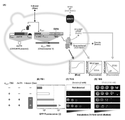
- FIG. 1 is a schematic diagram illustrating a workflow of a method of creating a gene switch sensor according to an embodiment of the present disclosure.
- FIG. 1A shows a synthetic promoter (synP) in which a core promoter and an operator sequence are fused.
- FIG. 1B shows a method for selecting a gene switch having a desired property from a gene switch library.
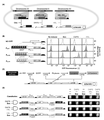
- FIG. 2 is a schematic diagram showing the results of evaluating the performance of TB D25AG used in one embodiment of the present disclosure.
- (A) A schematic diagram of TB D25AG gene expression controlled by Tet-ON is shown. Nucleosides (5FdU or dP) are integrated via hENT1 and toxinized by the kinase activity of TB D25AG .
- FIG. 3 shows the improved S / N ratio of the Tet-ON type gene switch in one embodiment of the present disclosure.
- FIG. 4 shows mutation sites of various gene switches developed in one embodiment of the present disclosure and their S / N ratios.
- FIG. 5 is a schematic diagram showing flux control from FPP to ⁇ -carotene using the gene switch developed in one embodiment of the present disclosure.
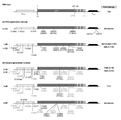
- FIG. 6 shows nucleotide and amino acid (AA, shown in parentheses) mutations found in the rPhlTA expression cassette of the DAPG-ON switch evolved in one embodiment of the present disclosure.
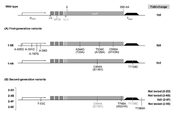
- FIG. 7 shows mutations in nucleotides and amino acids (AA, shown in parentheses) found in the LuxTA expression cassette of the HSL-ON switch evolved in one embodiment of the present disclosure.
- FIG. 8 is a schematic diagram of a gene switch in Pichia yeast developed in one embodiment of the present disclosure.
- FIG. 9 is a graph showing the relationship between the change in the number of copies of phlO and the change in the expression level in the gene switch of Pichia yeast in one embodiment of the present disclosure.
- a “gene switch” or “gene switch sensor” is a factor that is interchangeably used and contains a transcriptional regulatory domain (eg, a molecule, a complex thereof, or a fusion thereof, etc.).
- a transcriptional regulatory domain eg, a molecule, a complex thereof, or a fusion thereof, etc.
- the "gene switch” may be referred to as a "transcription factor” and can be used interchangeably.
- the activity of such factors is regulated by the interaction (eg, binding or dissociation) of the inducing substance (activator, or inducing factor), and its function can be changed.
- the interaction (eg, binding) of an inducing substance (activator, or inducing factor) with a gene switch changes the degree or state of its interaction (eg, binding) with the target sequence of the gene switch.
- the expression of the gene of interest is suppressed or induced.
- the "gene switch" in the present specification is a molecule containing a transcriptional activation domain, and a site to which a substance capable of activating the molecule by binding (for example, an activating substance or an inducing factor) binds. Examples thereof include molecules having the above, and binding or dissociation to the target sequence due to the binding of the substance.
- the “gene switch system” refers to the entire system using the gene switch as described above, that is, a transcription factor and its binding sequence (expression control sequence, regulatory DNA element, etc.), and further downstream thereof. Refers to the whole including the promoter of.
- the "gene switch expression sequence” means a nucleic acid sequence encoding the gene switch when the gene switch (transcriptional regulator) is a protein or polypeptide.
- a “gene switch activator” activates a gene switch or alters its function by interacting with (eg, binding to) a gene switch (transcriptional regulator), resulting in.
- a substance that directly or indirectly induces the regulation of the expression of one or more genes for example, such a compound.
- the "activating substance” may be referred to as an "inducing factor” or an “inducing substance” and can be used interchangeably.
- the activator can also be different for each gene switch (transcription factor). Examples of the combination of the gene switch and the activating substance include rtetTA and Dox, CamTA and D-Camphor, PhlTA and DAPG, LuxTA and HSL, and the like.
- a "gene switch target sequence” is a nucleic acid sequence located 5'upstream of a gene encoding a gene of interest, and refers to a nucleic acid sequence or regulatory DNA element that controls transcription of the target gene. It may preferably be an artificial promotor having a promotor activity and having a promotor arrangement or a fusion of an operator arrangement and a core promotor.
- the enhancer can also act indirectly or directly on the target sequence of the gene switch (transcription factor).
- the action of a gene switch (transcriptional regulator) on a target sequence can be regulated by the addition of an inducer, thereby controlling the expression of the target gene, unless the gene switch (transcriptional regulator) acts on the target sequence.
- the target gene is not expressed.
- the gene switch rtetTA acts on its target sequence teO promoter (artificial promoter containing teto) by the addition of its activator Dox, and promotes transcription of the target gene located downstream of the promoter.
- the term "promotor” refers to a region on DNA that controls the initiation of transcription of a gene and directly regulates the degree of transcription thereof, and refers to a nucleic acid sequence that initiates transcription by binding to RNA polymerase. ..
- the promoter can be appropriately selected and used depending on the type of host cell used. When yeast is used as a host, the promoter is not particularly limited as long as it can be expressed in a host cell such as yeast, and any of them may be used.
- examples of the promoter include a GAL1 promoter, a GAL10 promoter, a heat shock protein promoter, an MF ⁇ 1 promoter, a PHO5 promoter, a PGK promoter, a GAP promoter, an ADH promoter, a TDH promoter, a DAS1 promoter, and an AOX1 promoter.
- gene switches those that are in the activated state under the condition that gene expression should be ON (ON selection) and / or those that are in the suppressed state under the condition that the gene expression should be OFF are selected.
- ON selection a gene switch having arbitrary output characteristics can be obtained.
- OFF selection a gene switch having arbitrary output characteristics can be obtained.
- the term "ON selection” or "ON condition” refers to selecting a gene that is in an activated state under conditions where gene expression should be ON, or the condition thereof, for example, a gene switch (transcription factor). ) Is ON (activated state), a gene switch (transcription factor) whose gene expression is OFF (suppressed state), and / or a gene switch in an activated state that has not reached the target activation level. It can be referred to as selection by removing (transcription factor).
- the ON condition includes a condition that kills a cell that does not express a gene whose expression is regulated by a promoter and / or does not express a target amount.
- the host cell cannot survive unless it is expressed" and / or "the host cell must be expressed in the target amount".
- a gene switch transcription factor that cannot express downstream genes without being activated under the condition that the gene switch is ON (activated state), and / or a gene switch that is in an activated state that has not reached the target activation level. (Transcription factor) can be removed by killing the cells into which it has been introduced.
- ON selection cell death can be avoided by expressing a gene whose expression is regulated by the action of a gene switch (transcription factor) and / or by expressing only a target amount.
- OFF selection refers to selecting a gene that is in a suppressive state under conditions where gene expression should be OFF, or the condition thereof, for example, a gene switch (transcriptional regulator). ) Is OFF (suppressed state), by removing the gene switch (transcriptional regulator) in which the downstream gene is expressed, that is, the gene switch (transcriptional regulator) with leak expression (leak expression). You can say selection.
- the OFF condition includes a condition for killing a cell expressing a gene whose expression is regulated by a promoter.
- a method of arranging a gene that "causes cell death of a host cell when expressed” can be mentioned under the control of a gene switch (transcriptional regulator) to be selected.
- a gene switch transcriptional regulator
- the gene switch transcriptional regulator
- the gene switch transcriptional regulator that expresses the downstream gene (causes leak expression) is the cell that introduced it. It can be removed by dying.
- cell death can be avoided when the expression of a gene whose expression is regulated by the action of a gene switch (transcription factor) is OFF (attenuation or disappearance).
- transcriptional regulator refers to a protein that acts on a regulatory DNA element such as a promoter.
- Transcription regulators are broadly divided into transcriptional repressors (repressors) and transcriptional activators (activators).
- Transcription suppressors can act on regulatory DNA elements to suppress gene transcription and reduce gene expression.
- Transcriptional activators can act on regulatory DNA elements to promote gene transcription and increase gene expression.
- known factors can be used as the transcriptional repressor and the transcriptional activator. The expression of a gene sequence located downstream of a regulatory DNA element on which a transcriptional regulator acts is suppressed or promoted by the action of the transcriptional regulator.
- Gene expression means a series of processes in which gene information is transcribed into mRNA and further translated as an amino acid sequence of a protein encoded by the gene. If expression is promoted, a gene-encoded protein is produced and its amount increases, and if expression is suppressed, a gene-encoded protein is not produced and its amount decreases.
- the "candidate transcription factor” is a factor that can be a candidate for a transcription factor.
- inducing factor As used herein, the term “inducing factor”, “inducing substance” or “inducing agent” is used to activate, inactivate, or change the function of a transcriptional regulator by binding to the transcriptional regulator. As a result, a factor capable of regulating the direct or indirect expression of one or more genes.
- a "DNA library” is a nucleic acid library containing a nucleic acid sequence isolated from nature or a synthetic nucleic acid sequence. Sources of naturally isolated nucleic acid sequences include, but are not limited to, eukaryotic cells, prokaryotic cells, or virally derived genomic or cDNA sequences. A library in which an arbitrary sequence (eg, signal, tag, etc.) is added to a sequence isolated from nature is also included in the DNA library of the present disclosure.
- an arbitrary sequence eg, signal, tag, etc.
- the term "host cell” refers to a cell into which a heterologous (eg, exogenous) nucleic acid or protein has been introduced.
- the host cell can include not only a specific target cell but also a progeny of the cell.
- Host cells include prokaryotic or eukaryotic cells and are any cells that have the appropriate traits to receive and produce heterologous nucleic acids or proteins. Includes, for example, prokaryotic and eukaryotic cells, bacterial cells, mycobacterial cells, fungal cells, yeast cells, plant cells, insect cells, non-human animal cells, human cells, or cell fusions such as hybridoma or quadroma. Is done.
- the term "expression vector” refers to a vector DNA that carries an external gene to a host cell and is capable of expressing the target gene in the host cell.
- the vector DNA is not particularly limited as long as it can be replicated in the host, and can be appropriately selected depending on the type of host and the purpose of use.
- the vector DNA may be a vector DNA obtained by extracting a naturally occurring DNA, or a vector DNA in which a part of the DNA other than the part necessary for replication is missing.
- Representative vector DNAs include, for example, plasmids, bacteriophages, and virus-derived vector DNAs.
- plasmid DNA a plasmid derived from Escherichia coli, a plasmid derived from Bacillus subtilis, a plasmid derived from yeast, or the like can be used.
- bacteriophage DNA include ⁇ phage and the like.
- virus-derived vector DNA include vectors derived from animal viruses such as retrovirus, vaccinia virus, adenovirus, papovavirus, SV40, chicken pox virus, and pseudomad dog disease virus, and vectors derived from insect viruses such as baculovirus. be able to.
- vector DNA derived from a transposon, an insertion element, a yeast chromosomal element, and the like can be mentioned.
- a vector DNA prepared by combining these for example, a vector DNA prepared by combining genetic elements of a plasmid and a bacteriophage (such as cosmid and phagemid) can be mentioned. It is necessary to incorporate the target gene into the vector DNA so that the target gene is expressed, and at least the target gene and a regulatory DNA element, for example, a promoter are included in the vector DNA. In addition to these elements, if desired, gene sequences carrying information on replication and regulation can be combined and incorporated into vector DNA by known techniques.
- Such gene sequences include, for example, ribosome binding sequences, terminators, signal sequences, cis-elements such as enhancers, splicing signals, and selectable markers (dihydrofolate reductase gene, ampicillin resistance gene, neomycin resistance gene, etc.). can. One or more gene sequences selected from these can be integrated into the vector DNA.
- fusion gene refers to a new gene that is generated by artificially or naturally linking multiple genes, and is the result of recombination such as chromosomal translocation, insertion, or inversion. Things are also included.
- the fusion gene may also encode a fusion protein.
- the number of genes linked in the fusion gene is not particularly limited as long as it can give rise to a protein that is functional as a fusion gene.
- the orientation of each gene in the fusion gene is also not particularly limited, and all are forward (original transcription orientation), all are reverse (opposite to the original transcription orientation), and any combination of forward and reverse. May be good. Further, in the fusion gene, each gene may be linked at any position.
- the "fusion gene” in the present specification includes not only a gene in which different genes are linked but also a gene in which the same gene is linked.
- operably linked means that a polypeptide encoded by a nucleic acid is linked to an element such that it is expressed in a state that exhibits the biological activity of the polypeptide under the control of an element such as a promoter. It means that it has been done.
- an "operably linked” sequence is an expression control sequence or regulatory DNA element flanking the gene of interest, and expression that acts trans or at a distance to control the gene of interest. Includes either regulatory sequences or regulatory DNA elements.
- random mutation refers to the random inclusion of mutations in a nucleic acid sequence and such mutations, where the number of mutations may be one or two or more. There may be. Mutations in random mutations may be artificially introduced or may be naturally occurring mutations.
- the term "toxic substance” has the property of harming (including killing) the survival or proliferation of a target such as a cell, or suppressing the survival or proliferation of the target.
- a substance which may be an antibiotic.
- the term "toxic precursor" is not toxic by itself, or even if it is, it does not harm the survival or proliferation of a target such as a cell. , A substance that changes to a toxic substance due to internal or external factors such as binding to other substances or phosphorylation.
- toxicity-imparting-enhancing gene refers to a nucleic acid sequence or nucleic acid molecule that, upon expression, transforms the toxicity precursor to impart or enhance toxicity to the cell.
- the term "resistance-imparting-enhancing gene” refers to a nucleic acid sequence or nucleic acid molecule that imparts or enhances resistance to the toxic substance to the cell by being expressed.
- it may produce a gene product that attenuates the toxicity of the toxic substance by binding to the toxic substance.
- the resistance-imparting enhancing gene does not have catalytic activity for toxic substances or does not express a gene having catalytic activity for toxic substances.
- it may produce a gene product that stoichiometrically attenuates the toxicity of the toxic substance with respect to the amount of the gene product.
- it may contain, for example, a mutation that weakens the binding to a toxic substance.
- the term "marker gene” refers to a gene encoding an arbitrary protein that is translated intracellularly, functions as a marker, and enables discrimination of a cell type that meets specific conditions.
- the protein is not particularly limited as long as it is a protein that can be translated intracellularly and functions as a marker.
- a protein that exhibits fluorescence, luminescence, or coloration, or by assisting fluorescence, luminescence, or coloration, etc. Contains proteins that can be visualized and quantified.
- the fluorescent protein examples include blue fluorescent proteins such as Siris and EBFP; cyanofluorescent proteins such as mTurquoise, TagCFP, AmCyan, mTFP1, MidoriishiCyan and CFP; TurboGFP, AcGFP, TagGFP, Azami-Green (eg, h Green fluorescent protein such as EGFP, GFP2, HyPer, mUkG (Umikinoko Green); Yellow fluorescent protein such as TagYFP, EYFP, Venus, YFP, PhiYFP, PhiYFP-m, TurboYFP, ZsYellow, mBana, etc.
- blue fluorescent proteins such as Siris and EBFP
- cyanofluorescent proteins such as mTurquoise, TagCFP, AmCyan, mTFP1, MidoriishiCyan and CFP
- TurboGFP AcGFP
- TagGFP Azami-Green
- Yellow fluorescent protein such as TagYFP, EYFP, Venus, YFP, PhiYFP,
- Orange fluorescent protein such as TurboRFP, DsRed-Express, DsRed2, TagRFP, DsRed-Monomer, AsRed2, mStrawbury, etc .; Red fluorescent protein such as TurboFP602, mRFP1, JRed, KillerRed, , MPlum and other near-infrared fluorescent proteins, but are not limited thereto.
- the term "combination" refers to a combination of factors such as cells, compounds, or genes, and the combination can include any factor.
- the combination does not necessarily have to be in the form of a composition or the like, and each factor constituting the combination may exist as a separate substance, and may include, for example, a kit.
- the "gene” refers to a factor that defines a genetic trait, and the “gene” may refer to a "polynucleotide", an “oligonucleotide”, and a “nucleic acid”.
- a method for selecting a gene switch (transcriptional regulator) in an organism wherein (A) a promoter to which a gene switch expression sequence and / or a transcriptional regulator encoded by the gene switch expression sequence is bound.
- the DNA library used here has various performances.
- a gene switch transcriptional regulator
- a gene switch system using the gene switch can be applied to mass production of useful proteins, and in protein production, for example, heterologous to a host cell such as Escherichia coli.
- a technique for forcibly expressing a target protein obtained from an organism is used.
- the gene switch according to one embodiment of the present disclosure has a sufficiently low basal expression level at the time of non-induction (that is, low leakage expression), and when expression is induced (ON). Sufficient gene expression is performed (that is, the expression level ratio at ON / OFF is large).
- the gene switch (transcriptional regulator) of the present disclosure can regulate the expression of a downstream gene with high sensitivity even when the concentration of the inducing factor is low.
- the gene switch and the gene switch system utilizing the gene switch can be used as a means of metabolic engineering.
- metabolic engineering multiple enzyme genes are simultaneously expressed in one host cell to construct a biosynthetic pathway for a certain target substance.
- the expression levels of individual genes should be detailed and independently. It needs to be adjusted. Therefore, in one embodiment of the present disclosure, when the expression of a plurality of genes is regulated simultaneously in one cell, the inducer of one gene switch (transcription factor) has the desired ON / OFF switching characteristics.
- a gene switch transcriptional regulator
- a gene switch capable of continuously regulating the expression level of each gene switch (transcriptional regulator) without malfunctioning another gene switch and the gene switch system using the same. can do.
- the gene switch sensor of the present disclosure and the gene switch system using the same can easily and quickly produce a target metabolite by GFP or the like without using an analysis method such as HPLC or GCMS. (Concentration) can be measured.
- the gene switch sensor of the present disclosure and the gene switch system using the same are used as a metabolite sensor, the production amount is increased by using the highly sensitive gene switch sensor and the gene switch system using the same.
- a DNA library can be made using a variety of known methods and to a promoter to which a gene switch expression sequence and / or a transcriptional regulator encoded by the gene switch expression sequence binds. It is not particularly limited as long as it has a random mutation introduced.
- such a DNA library can be introduced into a host cell by introducing an expression vector into the host cell.
- the expression cassette (fragment) can also be integrated into the genome.
- the "expression vector" is a vector DNA that carries an external gene to a host cell and can express the target gene in the host cell.
- the vector DNA is not particularly limited as long as it can be replicated in the host, and can be appropriately selected depending on the type of host and the purpose of use.
- the vector DNA may be a vector DNA obtained by extracting a naturally occurring DNA, or a vector DNA in which a part of the DNA other than the part necessary for replication is missing.
- Representative vector DNAs include, for example, plasmids, bacteriophages, and virus-derived vector DNAs.
- plasmid DNA a plasmid derived from Escherichia coli, a plasmid derived from Bacillus subtilis, a plasmid derived from yeast, or the like can be used.
- the bacteriophage DNA include ⁇ phage and the like.
- virus-derived vector DNA examples include vectors derived from animal viruses such as retrovirus, vaccinia virus, adenovirus, papovavirus, SV40, chicken pox virus, and pseudomad dog disease virus, and vectors derived from insect viruses such as baculovirus. be able to.
- vector DNA derived from a transposon, an insertion element, a yeast chromosomal element, and the like can be mentioned.
- a vector DNA prepared by combining these for example, a vector DNA prepared by combining genetic elements of a plasmid and a bacteriophage (such as cosmid and phagemid) can be mentioned.
- target gene it is necessary to incorporate the target gene into the vector DNA so that the target gene is expressed, and at least the target gene and a regulatory DNA element, for example, a promoter are included in the vector DNA.
- a regulatory DNA element for example, a promoter
- gene sequences carrying information on replication and regulation can be combined and incorporated into vector DNA by known techniques.
- Such gene sequences include, for example, ribosome binding sequences, terminators, signal sequences, cis-elements such as enhancers, splicing signals, and selectable markers (dihydrofolate reductase gene, ampicillin resistance gene, neomycin resistance gene, etc.). can.
- One or more gene sequences selected from these can be integrated into the vector DNA.
- a known genetic engineering technique can be applied to the method of incorporating the target gene into the vector DNA.
- a method can be used in which the gene of interest is treated with an appropriate restriction enzyme, cleaved at a specific site, then mixed with the similarly treated vector DNA, and recombined with ligase.
- the desired vector DNA can also be obtained by ligating an appropriate linker to the target gene and inserting it into the multicloning site of the vector suitable for the target.
- the method for introducing the expression vector into the host cell is not particularly limited as long as it is an introduction method capable of introducing the vector DNA into the host cell to express the target gene in the host cell, and is known as appropriately selected depending on the species of the host cell. Any of the methods may be used. For example, a lithium acetate method, an electroporation method, a calcium phosphate method, a lipofection method and the like can be mentioned.
- the OFF condition for killing a cell expressing a gene whose expression is regulated by a promoter and / or the ON condition for killing a cell not expressing a gene whose expression is regulated by a promoter are, for example, artificial or artificial.
- Downstream of the natural promoter thymidin kinase (eg, hsvTK), a gene product-producing gene that attenuates the toxicity of the toxic substance by binding to it (eg, ble (breomycin-resistant protein)), and a fluorescent protein-producing gene.
- An expression cassette operably linked with a reporter gene fused with (for example, GFP (green fluorescent protein)) can be introduced into cells.
- hsvTK phosphorylates an artificial nucleic acid such as 5FdU or dP to impart cytotoxicity
- cells transformed with an expression vector containing the gene cassette express hsvTK in the presence of the artificial nucleic acid such as 5FdU or dP. Then it dies (OFF selection).
- cells transformed with the above expression vector can acquire resistance to zeocin and survive by expressing ble, even in the presence of the antibiotic zeocin as a toxic substance, for example (). ON selection).
- the expression sequence and the gene switch in the same expression vector, and the expression vector containing the expression sequence of the fusion reporter gene and the gene switch (transcriptional regulator). It can also be carried out by co-transforming an expression vector containing the above into the same cell.
- the gene sequence encoding thymidine kinase is not particularly limited, and gene sequences encoding thymidine kinase derived from mammalian cells or viruses can be mentioned, and thymidine kinase derived from human herpes virus, A gene sequence encoding a thymidine kinase derived from Escherichia coli and a nucleoside kinase derived from Drospophila can also be used. More preferably, a gene sequence encoding thymidine kinase (hsvTK) derived from human herpesvirus can be used.
- hsvTK thymidine kinase
- wild-type thymidine kinase In addition to the gene sequence of wild-type thymidine kinase, one or more, for example, 1 to about 100, preferably 1 to about 30, more preferably 1 to about 20, and even more preferably 1 to about 1 in the gene sequence.
- the kinase activity of the mutant is preferably comparable or higher than that of wild-type kinase.
- the degree of mutation and their positions in the gene sequence encoding the mutant are particularly limited as long as the gene sequence having the mutation is a gene sequence encoding a protein exhibiting kinase activity equivalent to that of wild-type thymidin kinase. Not done.
- the means for introducing the mutation is known, and for example, a site-specific mutagenesis method, a gene homologous recombination method, a primer extension method, a polymerase chain reaction, or the like can be used alone or in combination as appropriate.
- Thymidine kinase is an enzyme that catalyzes the phosphorylation reaction of deoxythymidine and plays an important role as a regulator of DNA synthesis.
- the artificial nucleic acids 5FdU and dP like other nucleosides, are incorporated into the genome via the salvage pathway of thymidine.
- 5FdU and dP are mutagenic nucleosides that are incorporated into the genome and frequently cause gene mutations. Therefore, in cells expressing thymidine kinase, cell death is induced by the addition of 5FdU or dP, but in cells not expressing thymidine kinase, cell death is not induced by the addition of 5FdU or dP.
- the mutagenic nucleoside is not particularly limited as long as it mutates the gene and induces cell death when incorporated into the gene, and is a naturally occurring mutagenic nucleoside. It may be present or it may be artificially created.
- the concentration of mutable nucleoside is not particularly limited as long as it is a concentration that causes mutation in the gene and induces cell death when incorporated into the gene, and can be determined by a simple repeated experiment.
- dP is used at a concentration of 50 nM to 1 ⁇ M, more preferably 100 nM.
- the incubation time between the mutagenic nucleoside and the cells is not particularly limited as long as the time at which cell death occurs, and can be determined by a simple repeated experiment.
- the incubation between dP and cells may be any time as long as it is the time during which cell death due to the mutation caused by the mutagenic nucleoside is induced, for example, about 5 minutes to about 24 hours, preferably about 15 hours to about. It can be 24 hours.
- an inhibitor of the de novo synthesis pathway of deoxythymidine triphosphate can be further included.
- the inhibitor of the de novo synthesis pathway of deoxythymidine triphosphate (dTTP) is not particularly limited as long as it is a compound capable of inhibiting the de novo synthesis pathway and inhibiting the production of dTTP, and examples thereof include 5-fluorouracil and its derivatives. be able to. More specifically, 5-fluoro-2'-deoxyuridine (5FdU) can be mentioned. The concentration of 5-fluorouracil and its derivative may be determined by a simple repeated experiment as long as it can inhibit the de novo synthesis pathway of dTTP.
- 5FdU can be used at a concentration of 50 nM to 1 ⁇ M, preferably 100 nM.
- the incubation time between the inhibitor of the de novo synthesis pathway of dTTP and the cells is not particularly limited as long as the time at which cell death occurs, and can be determined by a simple repeated experiment.
- a broad substrate nucleoside transporter (equilibrium nucleoside transporter 1 (ENT1)) (eg, human equilibrium nucleoside transporter 1 (eg, human equilibrium nucleoside transporter 1)) is used to allow cells to incorporate artificial nucleic acids such as dP and 5FdU.
- ENT1 Equilibrium nucleoside transporter 1
- human equilibrium nucleoside transporter 1 eg, human equilibrium nucleoside transporter 1
- the gene encoding hENT1) can also be cloned and integrated into the chromosome. For example, since natural yeast cells cannot take up these artificial nucleic acids, incorporating such a transporter can promote the uptake of nucleotides.
- such transporters may clone only one copy, or may clone multiple transporters such as 2 copies, 3 copies, 5 copies, 7 copies, 10 copies.
- multiple copies are cloned, the advantage of increasing screening efficiency (eliminating escaping cells) can also be expected.
- the gene product that attenuates the toxicity of the toxic substance by binding to the toxic substance may be any as long as it can reduce the toxicity of the toxic substance such as an antibiotic to cells.
- ble bleomycin resistant protein
- the range value of the reporter expression intensity to be selected can be changed depending on the difference in drug concentration, and mutations that weaken the binding property can be included, for example, ble.
- the selection sensitivity can be adjusted by adding a mutation such as D25A.
- hsvTK is preferred for OFF selection and ble is preferred for ON selection, but any other reporter gene may be used as long as it exerts the desired effect shown in the present disclosure. can.
- a fusion protein (hsvTK-Ble-GFP (TBG)) can be used as the fusion reporter.
- TBG hsvTK-Ble-GFP
- a zeocin resistance gene derived from Streptalloteichus hindustanus as a selector in the ON state ( ble) is included.
- This protein is widely used as a positive selection marker for plasmid maintenance and recombination in yeast.
- the ble dimer binds and sequesters antibiotics in a 1: 1 molar ratio. Therefore, it can be said that the zeocin resistance of the cell directly reflects the expression level of Bl. With this selection mechanism, it is possible to switch by simply changing the amount of zeocin.
- the output (TBG expression) selection threshold can be freely set.
- a promoter sequence operably linked to the reporter gene sequence upstream of the reporter gene sequence for ON or OFF selection expresses these reporter genes.
- the promoter sequence is not particularly limited as long as it has a function of causing the gene switch (transcriptional regulator) to be tested and the gene product of the gene switch (transcription factor) to be tested acts on it, and a known promoter sequence can be used.
- a gene switch transcriptional regulator
- a gene switch transcriptional regulator
- Expression vectors used for screening can be prepared.
- such an expression vector further contains a gene sequence encoding a fluorescent protein in addition to these sequences.
- a gene sequence encoding a fluorescent protein in addition to these sequences.
- the gene sequence encoding the fluorescent protein is not particularly limited as long as it encodes a protein that can emit fluorescence in the cell, but green fluorescent protein (Green Fluorescence Protein, GFP), yellow fluorescent protein (Yellow Fluorescence Protein, YFP).
- Cyan Fluorescence Protein CFP
- Blue Fluorescence Protein CFP
- variants of these fluorescent proteins such as UV-optimized Green Fluorescence rotein, GFPuv, Enhanced Green Fluorescence Protein, EGFP, Enhanced Yellow Fluorescence Protein, EYFP, Enhanced Cyan Fluorescence Protein, ECFP, and Enhanced Blue Fluorescence Protein, ECFP.
- a gene sequence encoding a thymidine kinase as described above a gene sequence encoding a gene product that attenuates the toxicity of the toxic substance by binding to the toxic substance, and a gene encoding a fluorescent protein.
- a plasmid containing these gene sequences can also be used. In other practice systems, these gene sequences can also be introduced into an expression vector as a fusion reporter gene.
- cell death or cell death means a state in which a function as a cell such as proliferative ability is lost.
- a function as a cell such as proliferative ability is lost.
- cells such as yeast are cultured on a solid medium, the ability to grow from a single cell and form a cell colony (colony) of a certain size or larger that can be visually counted is lost. ..
- cell death and cell death are caused by active cell death (apsorption) and external factors that actively remove unnecessary cells, damaged cells, etc. caused by physiological or pathological factors. Passive cell death (necrosis) due to reaction to is also possible.
- budding yeast fission yeast and the like can be used as the yeast.
- Saccharomyces genus Saccharomyces cerevisiae, etc.
- Zygosaccharomyces genus Zygosaccharomyces rouxii, etc.
- Pichia yeast Komagataella phaffii, Komagataella pastoris, Komagataella pseudopastoris
- methanol-utilizing yeast for example.
- Ogataea minuta, Ogataea angusta Pichia meethanolica, Ogataea parapolymorpha, etc.
- a methanol-utilizing yeast is defined as a yeast cell that can be cultivated using methanol as the sole carbon source. Originally, it was a methanol-utilizing yeast cell, but it was artificially modified. Alternatively, yeast cells that have lost their methanol assimilation performance due to mutation are also included in the methanol-utilizing yeast cells.
- Pichia yeast has the property of assimilating methanol and is widely used industrially mainly in protein production.
- the AOX1 promoter is widely used as a methanol induction system.
- the expression level of this AOX1 promoter is very strong, and it is said that 5% of the total mRNA amount is derived from AOX1p in cells grown under methanol, and its expression can be strictly controlled by methanol.
- rPhlTA which is an artificial transcription activator
- DAPG DAPG
- a gene sequence encoding a transcriptional regulatory factor is a combination for screening a gene switch (transcriptional regulatory factor) from among the cells, a toxic precursor, and a toxic substance.
- a combination comprising a marker gene is provided.
- the resistance-imparting enhanced gene produces a gene product that attenuates the toxicity of the toxic substance by binding to the toxic substance, and preferably has no catalytic activity against the toxic substance. It is a thing.
- ble bleomycin resistant protein
- ON selection in liquid culture is possible, the range value of the reporter expression intensity to be selected can be changed depending on the difference in drug concentration, and mutations that weaken the binding property can be included, for example, ble. In this case, the selection sensitivity can be adjusted by adding a mutation such as D25A.
- the resistance-imparting enhanced gene produces a gene product that stoichiometrically attenuates the toxicity of the toxic substance with respect to the amount of the gene product, for example, the Bre dimer is an antibiotic.
- Zeosin can be inactivated by binding and sequestering substances in a 1: 1 molar ratio. Therefore, it can be said that cell zeocin resistance directly reflects the expression level of Bl.
- inducing factor that binds to a transcriptional regulator.
- Inducing factors also called activators, activate gene switches (transcriptional regulators) by binding to gene switches (transcriptional regulators) or alter their function, resulting in one or more genes. It can induce direct or indirect regulation of expression. It can be different for each gene switch (transcription factor), and the combination of the gene switch (transcription factor) and the inducing factor is, for example, rtetTA and Dox, CamTA and D-Camphor, PhlTA and DAPG, LuxTA. And HSL.
- a method for selecting a gene switch (transcriptional regulator) in an organism wherein (A) an expression vector containing a gene sequence encoding a candidate transcriptional regulator is introduced into a cell, and ( B) A step of operably linking a fusion gene containing a toxicity-imparting enhancing gene, a resistance-imparting enhancing gene, and a marker gene to a promoter that binds to the candidate transcriptional regulatory factor and introducing it into the cell, and (C). A step of arranging the cell in the presence of at least one concentration of a toxic precursor whose toxicity is imparted or enhanced by the gene product of the gene for enhancing the toxicity, and selecting a surviving cell, and (D) for the cell.
- the cells are placed in the presence of at least one concentration of a toxic substance that is toxic and the resistance is conferred or enhanced by the gene product of the resistance-imparting-enhancing gene, and the surviving cells are selected.
- a method comprising the steps of selecting surviving cells in (E), (C) and (D) and selecting the gene sequence encoding the included candidate transcriptional regulator as a gene switch (transcriptional regulator). Will be done.
- the transcriptional regulator when the transcriptional regulator is a transcriptional activator, the de novo synthetic pathway of deoxythymidine triphosphate (dTTP) in the absence of an inducing factor that binds to the transcriptional activator.
- OFF selection can be performed by incubation in the presence of an inhibitor.
- ON selection can be performed by incubation in the presence of an inducing factor that binds to the transcriptional activator and in the presence of a toxic substance. can.
- the transcriptional regulator when the transcriptional regulator is a transcriptional inhibitor, incubation is performed in the absence of an inducing factor that binds to the transcriptional inhibitor and in the presence of the toxic substance. OFF selection can be done.
- incubation in the presence of an inducing factor that binds to the transcriptional inhibitor and in the presence of an inhibitor of the de novo synthetic pathway of deoxythymidine triphosphate (dTTP). By doing, ON selection can be done.
- a method for simply and dramatically improving the response performance to a compound by using a transcription factor corresponding to a DNA sequence in which an operator sequence and a core promoter region are fused as a component of an early type switch sensor can be provided.
- HSV-TK thymidine kinase
- Bre bleomycin-resistant protein
- HSV-TK thymidine kinase
- Bl breomycin-resistant protein
- the flow cytometer After culturing under various OFF and ON selection conditions in which the concentration of the selected drug (OFF selection: 5FdU, dP, etc., ON selection: Zeocin, etc.) and the concentration of the inducer are changed, the flow cytometer The concentration status of the mutant is confirmed from the fluorescence distribution of GFP, colonies are isolated from the mutant population selected under more desirable conditions, and the GFP fluorescence intensity and the mutant sequence in both ON / OFF states of each colony are determined. be able to.
- gene switch sensors transcriptional regulators
- HSL homoserine lactone
- 2,4-diacetylfluorolog An improved version of lucinol (DAPG) responsive type, etc.
- DAPG lucinol
- the gene switch system can be used as an inducible promoter, and there is a high need for a high-performance artificial gene switch system that overcomes the drawbacks of the natural inducible promoter, which has characteristics that are difficult to use.
- the gene switch system can perform simple indirect quantitative evaluation of products and regulation of gene expression, the need for its use has been increasing in recent years.
- yeast which is also useful as an industrial microorganism, if a high-performance gene switch sensor and / or a gene switch system using it can be easily produced by this method, the time for strain construction can be overwhelmingly shortened. It can perform advanced metabolism and gene network control. Therefore, industrial application is expected especially in the fields of metabolic engineering and synthetic biology.
- the gene switch of the present disclosure can be used for mass production of useful proteins, control of expression of proteins showing toxicity, simple concentration measurement of metabolic compounds, and the like.
- an inducible promoter can be utilized for inducible expression (secretion or intracellular production) of a protein.
- Tet-ON, DAPG-ON, and HSL-ON having an excellent S / N ratio can be assumed to be used for controlling the expression of metabolic enzymes.
- it may be used for an enzyme that branches a metabolic pathway.
- the production amount of squalene can be increased by turning off the enzyme in the downstream ergosterol pathway that consumes squalene only at the timing of high production of squalene.
- useful proteins that are highly toxic to cells, such as antibody proteins can be mentioned as candidates.
- the expression level of antibody proteins is directly proportional to the production amount, unlike the metabolic engineering that constructs the conversion process of chemical reactions. Therefore, it is necessary to increase the expression level to the limit, but if the S / N ratio of the expression induction system is low, expression leakage occurs, and it is impossible to obtain a yeast strain due to cytotoxicity due to overexpression of protein. be. Due to its high signal-to-noise ratio, DAPG-ON, Tet-ON, and HSL-ON switches are expected to produce high toxic proteins.
- the gene switch system can be used to turn ON / OFF the expression of genes that are particularly toxic to cells.
- Intrayeast expression of antibody proteins expected to be used as pharmaceuticals or heterologous enzyme genes responsible for the synthesis of plant metabolites often show cytotoxicity when overexpressed. However, even if a gene is toxic during the cell proliferation phase, its toxicity may be alleviated if the expression is induced after the proliferation is completed. Therefore, by using a gene switch system to turn off the expression of the toxic gene during the growth phase and turn it on after the growth is completed, cytotoxicity due to overexpression of the heterologous gene can be avoided.
- the gene switch system is also attracting attention in the field of biocomputing.
- a "gene circuit" composed of a combination of a plurality of gene switch systems can be interpreted as an analogy of an "electronic circuit” that processes external information given to a cell.
- ON / OFF switching of gene switches is analog, so the number of combinations of gene circuits is limited to a few, limiting their expandability. There is a possibility that such a weak point of the gene circuit can be solved by a gene switch having an excellent ratio of OFF and ON.
- the present disclosure is for creating a high-performance new gene switch system or metabolite sensor in various species such as yeast as a main component, other eukaryotes, and prokaryotes containing Escherichia coli. Method can be used. You can also sell the switch sensor you create as part of a license or kit, or develop a switch sensor on a contract basis.
- the created gene switch system can be used as a promoter for inducing new protein production that is safe, inexpensive, and easy to use (for example, no explosion-proof equipment is required, carbon sources are not limited, etc.), and gene expression in metabolic pathways is strictly expressed.
- the developed metabolite sensor is used to easily quantify the production volume of target products and by-products instead of HPLC and GCMS, accelerating the development speed of high-performance (high-production) substance production strains. You can also let it.
- a gene switch using a cheaper and safer compound as an inducer, and / or a gene switch system using the same, has been developed and licensed or used as a part of a kit. Can be sold. Transcription factors possessed by various species will be screened using the physical properties of the inducer as an index, and a gene switch (transcriptional regulator) using this and / or a prototype of a gene switch system using it will be prototyped. Random gene mutations are introduced into the components of the prototype prototype. OFF / ON selection is performed on the gene switch library thus prepared.
- gene expression is induced by culturing a yeast strain carrying a gene switch library in the presence of 100 nM of 5 FdU and then transferring it to a medium containing an inducer. ON selection is performed by transferring the culture medium to a medium containing 1 to 3 mM Zeocin and an inducer.
- the gene switch (transcription factor) mutant that responds to the lower concentration inducer is also isolated (higher sensitivity).
- the developed gene switch (transcriptional regulator) and / or the gene switch system using it is used to control the expression of metabolic enzymes that are the key to substance production and to induce the production of proteins that have a heavy load on cells.
- it is a system for selecting a gene switch (transcriptional regulator) in an organism, and is a promoter to which (A) a gene switch expression sequence and / or a transcriptional regulator encoded by the gene switch expression sequence is bound.
- a DNA library containing multiple nucleic acid molecules into which random mutations have been introduced (B) means for introducing the library into host cells, and (C) killing cells expressing genes whose expression is regulated by the promoter.
- a system includes a means of selecting a nucleic acid molecule having the same nucleic acid sequence as that contained in the library contained in a cell) as a gene switch (transcriptional regulator).
- a system for selecting a gene switch (transcriptional regulator) in an organism which is a promoter to which a gene switch expression sequence and / or a transcriptional regulator encoded by the gene switch expression sequence is bound.
- the gene switch (transcriptional regulator) is selected from a DNA library containing a plurality of nucleic acid molecules into which random mutations have been introduced, and the system is (B) a means for introducing the library into a host cell.
- (C) A means for selecting a surviving cell by exposing the host cell to an OFF condition that kills a cell expressing a gene whose expression is regulated by the promoter, and (D) (C) the surviving cell ( Means that expose cells that survive under OFF conditions to ON conditions that kill cells that do not express the gene whose expression is regulated by the promoter and / or have not reached the desired expression level, (E) (D).
- a system comprising a means for selecting as a gene switch (transcriptional regulator) a nucleic acid molecule having the same nucleic acid sequence as that contained in the library contained in the surviving cell (cell surviving under ON conditions). ..
- the DNA library can be made using a variety of known methods, to which a gene switch expression sequence and / or a transcriptional regulator encoded by the gene switch expression sequence binds. It is not particularly limited as long as a random mutation is introduced into the promoter.
- means for introducing the library into a host cell include various molecular biological instruments capable of introducing an expression vector into the host cell or incorporating an expression cassette (fragment) into the genome. can.
- (C) means for exposing the host cell to an OFF condition that kills cells expressing a gene whose expression is regulated by the promoter and selecting surviving cells, and (D) regulation of expression by the promoter.
- a means for selecting a surviving cell by exposing it to an ON condition that kills a cell that does not express the gene to be expressed and / or has not reached the desired expression level for example, various conditions are set and the cell under the condition is set. Examples thereof include an incubator capable of culturing, and the present invention is not particularly limited as long as the cells can be cultured under predetermined conditions.
- a nucleic acid molecule having the same nucleic acid sequence as that contained in the library contained in the living cells (cells living under ON conditions) in (E) and (D) is genetically switched (transcriptional regulation).
- the means selected as the factor) is not particularly limited as long as it is possible to extract a nucleic acid molecule contained in the cell from a cell that survives under predetermined conditions and determine the nucleic acid sequence thereof. , Sequencer, etc. can be included.
- individual cultured cells provide information on each nucleic acid molecule in the DNA library to ensure that the nucleic acid molecules contained in the surviving cells have the same nucleic acid sequences as those contained in the library. It may be a device that can be linked to and cultured.
- Gene switch library and the breeding of organisms or cells by it
- a gene switch transcriptional regulator
- a promoter having a variation in expression intensity and transcription property depending on a target compound or metabolite is libraryed.
- a method for breeding an organism or cell having a desired characteristic A) a method for selecting a gene switch (transcriptional regulator) of the present disclosure, has a desired activity. A step of providing a gene switch (transcriptional regulator) and B) using the gene switch (transcriptional regulator) to obtain the desired transcriptional properties of one or more genes involved in imparting the desired properties. From the steps of modifying to have, C) the step of introducing the gene having the desired transcriptional properties modified in step B into the target cells, and D) the cells obtained in step C, the desired properties.
- a method is provided that comprises the step of selecting cells having.
- a method for breeding an organism or cell having a desired characteristic A) a step of providing the gene switch library of the present disclosure, wherein the library is a gene having a desired activity.
- a step configured to have a switch (transcriptional regulator) and B) the gene switch (transcriptional regulator) is used to obtain one or more genes involved in imparting the desired properties.
- From the steps of modifying the cells to have the transcriptional properties of, C) introducing the gene having the desired transcriptional properties modified in step B into the target cells, and D) the cells obtained in step C. A method comprising the step of selecting cells having the desired properties is provided.
- a method of breeding an organism or cell that produces the desired substance A) a gene switch having the desired activity using the method of selecting the gene switch (transcriptional regulator) of the present disclosure.
- the steps of providing (transcriptional regulator) and B) the gene switch (transcriptional regulator) are used to modify one or more genes involved in the biosynthesis of the substance to have the desired transcriptional properties. From the steps, C) the step of introducing the gene having the desired transcriptional properties modified in step B into the target cells, and D) the cells obtained in step C, cells having the desired properties are selected.
- a method is provided that includes a step of selection.
- the gene switch transcriptional regulatory factor selection method disclosed in the present disclosure and the gene switch library using the gene switch, based on cells expressing a gene switch capable of controlling transcription in response to a target metabolic compound. It is also possible to construct a library (type of gene to be introduced, type of organism species from which it is derived, expression level of each gene, etc.) and select cells having desired characteristics from the library. Therefore, in another aspect of the present disclosure, a method of selecting an organism or cell having a desired characteristic, A) a step of providing the gene switch library of the present disclosure, wherein the library is of interest.
- a method comprising the step of selecting cells having desired properties from among them.
- the desired substances include, for example, an enzyme for synthesizing a useful substance such as an amino acid or polylactic acid, an enzyme for decomposing a target compound (for example, a persistent compound such as PET), and an antibiotic.
- a target compound for example, a persistent compound such as PET
- an antibiotic for example, an enzyme for synthesizing antibacterial substances such as substances, and antibody proteins that specifically interact with target proteins.
- the organism or cell to be bred may include eukaryotes and prokaryotes, and may be any cell, and for example, yeast (Pikia yeast, budding yeast). , Escherichia coli, yeast, lactic acid bacteria, corine bacteria, filamentous fungi, microalgae and the like.
- a promoter having a desired activity can be selected, thereby producing a desired promoter. Can be provided. At this time, it is also possible to select cells having activity in the desired cells as described above.
- the method of selecting a genetic switch (transcriptional regulator) of the present disclosure and the products and processed products such as the switch obtained thereby are high in the so-called DBTL (design, build, test, learn) cycle. It is possible to rapidly create high-producing strains of functional biological substances (for example, antibodies, metabolites, other various substances such as proteins, lipids, sugars, organellas, etc.).
- DBTL design, build, test, learn
- the arrangement, structure, and modified cell design of biological substances are assumed.
- biological substances for example, antibodies
- the products and workpieces such as switches obtained thereby can be utilized.
- the method for selecting the gene switch (transcriptional regulator) of the present disclosure by combining the method for selecting the gene switch (transcriptional regulator) of the present disclosure and the products and processed products such as the switch obtained by the method, it is possible to improve the biopharmaceutical fed batch production technique by microorganisms. It is also possible to improve the fed batch production technology suitable for producing varieties.
- Another example is the production of biopharmacy by microorganisms, which can be improved by combining the methods of selecting gene switches (transcriptional regulators) of the present disclosure with products and processed products such as switches obtained thereby. can.
- gene synthesis and fragment synthesis services such as GeneArt, GenScript, Integrated DNA Technologies (IDT) can also be used, and others, for example, Gait. , M. J. (1985). Oligonicleotide Synthesis: A Practical Approach, IRL Press; Gait, M. Gait. J. (1990). Oligonucleotide Synthesis: A Practical Approach, IRL Press; Eckstein, F.M. (1991). Oligonucleotides and Analogues: A Practical Approach, IRL Press; Adams, R.M. L. et al. (1992). The Biochemistry of the Nucleic Acids, Chapman &Hall; Shabarova, Z.
- Example 1 Construction of fusion reporter gene
- a fusion protein with three functions simple herpesvirus thymidine kinase (hsvTK) as a protein for OFF selection, zeosin-resistant protein (Ble) as a protein for ON selection, and a fluorescent reporter (green fluorescent protein, GFP)
- hsvTK-Ble-GFP TBG
- a synthetic promoter in which a core promoter and an operator sequence were fused was constructed.
- the synthetic transcription activator sTA
- sTA binds to the inducing factor in a positive or negative reaction and activates the transcription of the downstream gene encoding the fusion protein (hsvTK-Ble-GFP (TBG)) which is the output of the gene switch.
- TBG fusion protein
- the desired gene switch variants were then enriched by various OFF / ON selections.
- inappropriate switch output that is, variants with hsvTK expression are 5-fluoro-2'-deoxyuridine (5FdU) or 6- ( ⁇ -D-2-deoxyribofuranosyl)- Phosphorylates 3,4-dihydro-8H-pyrimid [4,5-c] [1,2] oxadin-7-one (dP) and is subsequently killed by the toxic effects of nucleoside monophosphates (5FdUMP and dPMP). I let you. For ON selection, mutants with insufficient switch output (Ble expression) were killed with zeocin.
- yeast cells were first transformed with a gene switch library consisting of randomly mutated components (eg, an expression cassette encoding sTA), followed by OFF selection with 5FdU or dP.
- a gene switch library consisting of randomly mutated components (eg, an expression cassette encoding sTA), followed by OFF selection with 5FdU or dP.
- different concentrations of inducers were added to the obtained cell pool, and ON selection was performed using various concentrations of zeocin.
- the resulting cell populations were evaluated for inducer-dependent fluorescence shifts using flow cytometry and screened for enriched populations for the desired switch variants.
- mutants with the best performance were isolated by evaluating the GFP fluorescence of individual cells in both the OFF and ON states.
- Example 2 Selection of gene switch
- the gene encoding TGB constructed as in Example 1 was described in S.I.
- An E. coli tet operator (tetO) fused to the cerevisiae GAL1 core promoter (p GAL1-c ) was placed downstream of synP (p tetO7 ) with 7 copies connected (FIG. 2A).
- the construct encoding the TGB is S.I. It was integrated into chromosome V of the cerevisiae genome.
- RTetTA also referred to as sTA, rtTA2 S -M2
- sTA reverse bacterial transcription inhibitor
- rTetR reverse bacterial transcription inhibitor
- 3 copies of the virus transcription activation motif 3 ⁇ VP16, VP48
- hsvTK includes 6- ( ⁇ -D-2-deoxyribofuranosyl) -3,4-dihydro-8H-pyrimid [4,5-c] [1,2] oxazine-7-one (dP) and 5-fluoro. It has been shown to be an excellent kinase for -2'-deoxyuridine (5FdU) and is used as a negative selection marker for E. coli. Before evaluating the TBG gene as an OFF selector, yeast cells need to be modified for efficient OFF selection.
- the gene encoding the broad substrate nucleoside transporter (human equilibrium nucleoside transporter 1 (hENT1)) was cloned and integrated into the yeast chromosome to promote the uptake of nucleoside by cells. Since the cytotoxicity of dP is very high in TBG-expressing cells, the survival rate of yeast cells expressing ptetO7 -TBG is reduced even with a low concentration (up to 50 nM) of dP without adding Dox or rTetTA. did. Although TBG / dP is suitable for selecting very rigorous gene switches that exhibit near-zero leakage expression, most existing induction systems exhibit some degree of leakage expression.
- 5FdU As shown in FIG. 2D, as a result of using 5FdU, 5FdU showed a dose-dependent effect, and when 100 nM of 5FdU was added to the medium, yeast having rTetTA did not survive in the presence of Dox (high). Mode), on the other hand, the cells had reduced viability in the absence of Dox (low mode). This reflects the TBG expression due to leakage (non-induction) observed in fluorescence, as shown in FIG. 2C.
- the resulting transformants ( ⁇ 105 unique clones) were cultured in Dox-free 5FdU -containing liquid medium to remove leaking (ie, Dox-independent) mutants with TBG expression. Then, OFF selection was performed. Next, ON selection was performed under various conditions to remove non-functional variants and thereby concentrate good switches. Specifically, the pool of OFF-selected cells was dispensed into 14 tubes containing various combinations of Dox (0.01-10 ⁇ g / mL) and zeocin (1 or 2 mM), and a sample was dispensed. It was shaken in the evening.
- 93 clones were randomly selected from the two selected pools and subjected to fluorescence screening on 96-well plates (FIG. 3B).
- a total of 48% (45/93) of the clones tested showed more than 5-fold induction with Dox (10 ⁇ g / mL), with the highest rTetTA mutants (rTetTA K8N, L131L ) at 0.3 and 10 ⁇ g / mL.
- rTetTA K8N, L131L the highest rTetTA mutants
- Fig. 3C In the presence of Dox, 8-fold and 11-fold induction was shown, respectively.
- a random mutation was introduced into the expression cassette encoding rTetTA of the Tet-ON switch, and the obtained library was subjected to OFF / ON selection in parallel under different selection conditions.
- the resulting cell population was evaluated for Dox-dependent fluorescence shift.
- the regions shown in green and blue show undesired behavior: variants with leaking expression (cells with 104 or more GFP fluorescence in the absence of Dox) and inactive variants (in the presence of 10 ⁇ g / mL Dox). Each relative amount ( %) of (cells with GFP fluorescence less than 104) is shown.
- the relative quantity (%) of the switching variant was obtained by subtracting both of these two numbers from 100%.
- the dashed line shows a histogram obtained from a yeast strain having a plasmid that does not contain rTetTA.
- FIG. 3B shows the results of fluorescence screening on a 96-well plate of the Tet-ON variant.
- FIG. 3C shows the transfer function of the selected mutant. Error bars represent the mean ⁇ SD of three independent experiments.
- the 50% effective concentration (EC 50 ) value was calculated from a dose-response curve adapted to the Hill equation by the least squares method.
- the upper panel shows fluorescence images of yeast strain cell pellets with wild-type and evolved Tet-ON switches (rTetTA K8N, L13L ) incubated with and without 10 ⁇ g / mL Dox.
- rTetTA K8N, L13L wild-type and evolved Tet-ON switches
- Dox 10 ⁇ g / mL Dox.
- Any transcription factor can be used as a component of the eukaryotic transcription switch according to the protocol for developing the Tet-ON system.
- different transcription factors are obtained because they differ in stability, DNA binding affinity, and how their function changes when fused with other proteins or domains to produce sTA. Switch performance is unpredictable.
- the switching behavior of sTA is highly dependent on various factors (expression level, promoter position and number of copies, and strain type). In reality, new systems need to be re-evolved to ensure proper performance under each condition.
- DAPG 2,4-Diacetylfluorologsinol
- DAPG-OFF D-Camphor-repressible
- Camphor-OFF D-Camphor-repressible switch
- DAPG and CamR D-Camphor responsive bacterial repressors
- NLS nuclear localization signal
- FIG. 4 shows a schematic diagram showing the production and evolution method of the yeast transfer switch (evaluated by S / N ratio, sensitivity, and behavior type).
- FIG. 4A shows the yeast gene switch developed in the present disclosure. The plasmid expression of the identified sTA mutant expressed a dose-dependent activation gene placed under the control of pphrO1 , pcamO1 , or pluxO1 in the host cell.
- 4B-4F show parent and variant transfers of DAPG-OFF switch (FIG. 4B), Camphor-OFF switch (FIG. 4C), DAPG-ON switch (FIG. 4D), and HSL-ON switch (FIG. 4F). Shown the function. GFP fluorescence from TBG was plotted as a function of each inducer concentration.
- the error bars shown represent the mean ⁇ SD of the three independent experiments.
- the concentration of the inducer added during the OFF / ON selection is indicated by an arrow and a broken line.
- the EC50 value was calculated from a dose-response curve adapted to the Hill equation by the least squares method and expressed in micromolar units.
- 4E and 4G show the structural mapping of mutations in PhlF and LuxR that invert / sensitize PhlTA and sensitize LuxTA, respectively.
- the structures of PhlF and LuxR were modeled using the Swiss-Model server based on the crystal structures of the TetR family transcription factor SCO0332 (PDB: 2ZB9) and the quorum sensor protein TraR (PDB: 1L3L), respectively.
- the DNA structure is taken from the corresponding reference crystal structure.
- Example 7 Conversion from DAPG-OFF system to DAPG-ON system
- Mutations allow the emergence of transcription factors with novel switching behavior. Repressors of various bacteria are known to reverse their ligand response by causing several mutations. Therefore, it was confirmed whether or not the construct can be converted into the DAPG-ON switch by inducing a mutation in the gene encoding the DAPG-OFF switch described above.
- the same PhlTA library used to isolate the DAPG-OFF switch was subjected to OFF selection in the absence of DAPG and then ON selection in the presence of this compound (5 ⁇ M).
- DAPG-ON variants (1-11E, 1-11G) were isolated and showed an 8-fold increase in DAPG-dependent fluorescence.
- FIG. 4D FIG. 6A.
- Mutation analysis of this variant revealed the existence of three novel mutations. One of them (Q117R) is essential for the functional reversal of PhlTA (rPhlTA) and the other two mutations (E143K and / or K86T) are the responsiveness of the inverted switch (both sensitivity and multiple change). It was essential for the improvement of (Fig. 4E).
- FIG. 6 shows nucleotide and amino acid (AA, shown in parentheses) mutations found in the rPhlTA expression cassette of the evolved DAPG-ON switch. Found in first-generation (FIG. 6A) and second-generation (FIG. 6B) rPhlTA expression cassettes, with the exception of the second-generation mutant, which was also found in the parental (1-11E) mutant. The mutations that have been made are shown by the red line. Fold change was calculated from the data shown in FIG. 4D as the average ⁇ SD ratio of fluorescence intensity in the presence and absence of 10 ⁇ M DAPG.
- coli RNA polymerase significantly reduced expression from the lux promoter in E. coli.
- the W201R substitution is thought to have a negative effect on the function of LuxR as a recruiter for RNA polymerase, in order to find the LuxR mutation that this mutation has so far sensitized to proteins for activation by HSL. It could be the reason why it was overlooked in the screening.
- yeast HSL-ON switches the role of LuxR is to promote HSL-induced DNA binding. Therefore, it is considered that this sensitizing mutation can be identified only by the yeast gene switch.
- FIG. 7 shows mutations in nucleotides and amino acids (AA, shown in parentheses) found in the LuxTA expression cassette of the evolved HSL-ON switch. Except for the 2nd generation mutant in which the mutation was also found in the parental (1-4A) mutant, it was found in the 1st generation (FIG. 7A) and 2nd generation (FIG. 7B) LuxTA expression cassettes. The mutations made are shown by the red line. Fold change was calculated from the data shown in FIG. 4F as the average ⁇ SD ratio of fluorescence intensity in the presence and absence of 100 ⁇ M HSL (3 ⁇ M for 2-4F).
- Example 9 Integration of yeast switch mutant into AND gate ⁇ -carotene biosynthetic pathway
- yeast Since yeast has developed a series of gene switches with improved signal-to-noise ratio, we tried to apply these structures to pathway flux control.
- Three isolated sTAs (DAPG-ON 2-1E , HSL-ON 2-4F , and Tet-ON 1-11F ) were integrated into different yeast chromosomes (FIG. 5A).
- the resulting strain was transformed with plasmids (p tetO7 , pflO6 , and pluxO5 ) in which the gfp gene was cloned downstream of each synP.
- the potential promoter sequence contained in the vector sequence 500 or more upstream of synP was deleted, and the number of repetitions of phlO and luxO was increased.
- the GFP fluorescence of the resulting cells was induced only in the presence of their cognate inducers and by more than 102 factors (FIG. 5B). All of these synthetic promoters were stringent, i.e., showed low basal TBG expression in the absence of inducers.
- the yeast When the yeast was transformed under the control of a promoter constructing a plasmid expressing all three genes (BTS1, crtYB, and crtI), the yeast produced ⁇ -carotene with or without an inducer (Fig. 5D).
- the promoters of BTS1 and crtYB were replaced with pflO6 and ptetO7 , respectively. Since all three of these genes needed to be expressed, ⁇ -carotene production was expected only in the presence of both DAPG and Dox (AND-gate control). However, leaked expression by the ptetO7 promoter was found to be non-negligible, probably due to the strong catalytic activity of CrtYB, resulting in significant false pigmentation in the absence of Dox.
- This leakage expression is alleviated by converting the gene switch used to control crtYB from ptetO7 to plusO5 , and the ⁇ -carotene biosynthetic pathway is placed under AND gate control by a combination of HSL and DAPG. rice field. In this strain, the expected AND gate behavior was observed, with ⁇ -carotene biosynthesis only seen in the presence of both DAPG and HSL. A similar strategy was adopted in the construction of strains in which the ⁇ -carotene biosynthetic pathway was placed under the AND gate.
- FIG. 5 shows flux control from FPP to ⁇ -carotene using a newly developed gene switch.
- FIG. 5A shows a yeast strain used for AND gate control of carotenoid biosynthesis. Three plasmids expressing sTA for use with the DAPG-ON 2-1E , HSL-ON 2-4F , and Tet-ON K8N, L131L switches were chromosomally integrated. The genes downstream of each synP ( pflO6 , ptetO7 , and plusO5 ) were expressed only in the presence of the corresponding inducers (DAPG, Dox, and HSL, respectively).
- FIG. 5B shows the results of flow cytometric measurement of orthogonal GFP expression control using Dox, DAPG, and HSL.
- FIG. 5C shows the synthetic route to ⁇ -carotene.
- FPP stands for farnesyl diphosphate
- GGPP stands for geranylgeranyl diphosphate.
- FIG. 5D shows a schematic diagram of steady ⁇ -carotene biosynthesis and ⁇ -carotene biosynthesis by AND gate control.
- Cell pellets of yeast strains (FIG. 5D right panel) expressing (BTS1, crtYB, and crtI) under the control of a constitutive promoter or synP ( pphrO6 , ptetO7 , and luxO5 ) in the combination shown in the left panel of FIG. 5D. Is shown.
- Example 10 Development of gene switch in Pichia yeast
- a gene switch was developed using Pichia yeast. Specifically, as shown in FIG. 8A, a DAPG-responsive bacterial repressor (PhlF) is fused with a VP48 activation domain and a nuclear localization signal (NLS) to generate an artificial transcriptional activator (rPhlTA).
- a DAPG-responsive bacterial repressor PhlF
- NLS nuclear localization signal
- Gene switches for yeast can reverse the mode of control by fusing not only artificial transcriptional activators but also transcriptional repressive motifs such as Mxi1 (transcriptional repressor) instead of VP16. ..
- gene expression can be controlled more efficiently by using AOX1 core or DAS1 core than by using GAL1 core derived from Saccharomyces cerevisiae as an artificial promoter.
- the artificial promoter using GAL1core has extremely low activity, and when it is turned on (gene expression induction) by changing to a core promoter such as AOX1 or DAS1 (strong methanol-inducing promoter) or GAP derived from Pichia yeast. The value will be extremely large.
- ARG4 is placed upstream of the operator sequence instead of the phlO tandem copy (48 copies), the leakage expression is similarly extremely small. It is considered that ARG4 is functioning as an insulator. Even if ARG4 is cut down to about 1000bp, it functions as an insulator. Even with phlO1, an S / N ratio of about 600 times can be achieved (FIGS. 8C and 8D). Even if the number of copies of the operator is increased and the sequence is lengthened, the leakage occurrence is similarly reduced, so it is considered that the length of the distance from the upstream has an effect.
- a high-performance gene switch sensor can be easily produced in yeast which is also useful as an industrial microorganism, mass production of useful proteins, expression control of proteins showing toxicity, and simple metabolic compounds. It can be used for concentration measurement, etc.
- the productivity of biopharmacy and industrial enzymes can be greatly increased, the time for strain construction can be overwhelmingly shortened, and advanced metabolism and gene network control can be performed. Therefore, industrial application is expected especially in the fields of metabolic engineering and synthetic biology.
Landscapes
- Life Sciences & Earth Sciences (AREA)
- Health & Medical Sciences (AREA)
- Chemical & Material Sciences (AREA)
- Organic Chemistry (AREA)
- Genetics & Genomics (AREA)
- Engineering & Computer Science (AREA)
- Zoology (AREA)
- Wood Science & Technology (AREA)
- General Engineering & Computer Science (AREA)
- Biotechnology (AREA)
- Bioinformatics & Cheminformatics (AREA)
- Biomedical Technology (AREA)
- Molecular Biology (AREA)
- Biochemistry (AREA)
- General Health & Medical Sciences (AREA)
- Biophysics (AREA)
- Physics & Mathematics (AREA)
- Microbiology (AREA)
- Plant Pathology (AREA)
- Mycology (AREA)
- Proteomics, Peptides & Aminoacids (AREA)
- Medicinal Chemistry (AREA)
- Analytical Chemistry (AREA)
- General Chemical & Material Sciences (AREA)
- Immunology (AREA)
- Chemical Kinetics & Catalysis (AREA)
- Measuring Or Testing Involving Enzymes Or Micro-Organisms (AREA)
- Micro-Organisms Or Cultivation Processes Thereof (AREA)
Priority Applications (1)
| Application Number | Priority Date | Filing Date | Title |
|---|---|---|---|
| JP2022567014A JPWO2022118973A1 (https=) | 2020-12-04 | 2021-12-03 |
Applications Claiming Priority (2)
| Application Number | Priority Date | Filing Date | Title |
|---|---|---|---|
| JP2020-202233 | 2020-12-04 | ||
| JP2020202233 | 2020-12-04 |
Publications (1)
| Publication Number | Publication Date |
|---|---|
| WO2022118973A1 true WO2022118973A1 (ja) | 2022-06-09 |
Family
ID=81853357
Family Applications (1)
| Application Number | Title | Priority Date | Filing Date |
|---|---|---|---|
| PCT/JP2021/044574 Ceased WO2022118973A1 (ja) | 2020-12-04 | 2021-12-03 | 遺伝子スイッチを選抜する方法 |
Country Status (2)
| Country | Link |
|---|---|
| JP (1) | JPWO2022118973A1 (https=) |
| WO (1) | WO2022118973A1 (https=) |
Citations (2)
| Publication number | Priority date | Publication date | Assignee | Title |
|---|---|---|---|---|
| JP2011125333A (ja) * | 2009-11-18 | 2011-06-30 | Chiba Univ | 遺伝子スイッチおよび遺伝子回路の選択方法 |
| WO2012060407A1 (ja) * | 2010-11-02 | 2012-05-10 | 国立大学法人 千葉大学 | 遺伝子スイッチおよび遺伝子回路の高速開発方法 |
-
2021
- 2021-12-03 WO PCT/JP2021/044574 patent/WO2022118973A1/ja not_active Ceased
- 2021-12-03 JP JP2022567014A patent/JPWO2022118973A1/ja active Pending
Patent Citations (2)
| Publication number | Priority date | Publication date | Assignee | Title |
|---|---|---|---|---|
| JP2011125333A (ja) * | 2009-11-18 | 2011-06-30 | Chiba Univ | 遺伝子スイッチおよび遺伝子回路の選択方法 |
| WO2012060407A1 (ja) * | 2010-11-02 | 2012-05-10 | 国立大学法人 千葉大学 | 遺伝子スイッチおよび遺伝子回路の高速開発方法 |
Non-Patent Citations (3)
| Title |
|---|
| KENTA NOZAKI, MASAHIRO TOMINAGA, TASUKE UMENO, AKIHIKO KONDO, JUN ISHII: "05: Systematic development of yeast gene switch using a novel trifunctional fusion marker", JAPAN SOCIETY FOR BIOSCIENCE AND BIOTECHNOLOGY KANSAI BRANCH BRANCH REGULAR MEETING (511TH LECTURE), vol. 511, 7 December 2019 (2019-12-07) - 7 December 2019 (2019-12-07), JP, pages 10, XP009536982 * |
| TASHIRO YOHEI, FUKUTOMI HIROKI, TERAKUBO KEI, SAITO KYOICHI, UMENO DAISUKE: "A nucleoside kinase as a dual selector for genetic switches and circuits", NUCLEIC ACIDS RESEARCH, OXFORD UNIVERSITY PRESS, GB, vol. 39, no. 3, 1 February 2011 (2011-02-01), GB , pages e12 - e12, XP055936170, ISSN: 0305-1048, DOI: 10.1093/nar/gkq1070 * |
| TOMINAGA MASAHIRO, NOZAKI KENTA, UMENO DAISUKE, ISHII JUN, KONDO AKIHIKO: "Robust and flexible platform for directed evolution of yeast genetic switches", NATURE COMMUNICATIONS, vol. 12, no. 1, 1 December 2021 (2021-12-01), XP055936172, DOI: 10.1038/s41467-021-22134-y * |
Also Published As
| Publication number | Publication date |
|---|---|
| JPWO2022118973A1 (https=) | 2022-06-09 |
Similar Documents
| Publication | Publication Date | Title |
|---|---|---|
| Guet et al. | Combinatorial synthesis of genetic networks | |
| Basgall et al. | Gene drive inhibition by the anti-CRISPR proteins AcrIIA2 and AcrIIA4 in Saccharomyces cerevisiae | |
| Stanton et al. | Systematic transfer of prokaryotic sensors and circuits to mammalian cells | |
| Tominaga et al. | Robust and flexible platform for directed evolution of yeast genetic switches | |
| Schwartz et al. | Post-translational enzyme activation in an animal via optimized conditional protein splicing | |
| Sparks et al. | Establishment of expression in the SHORTROOT-SCARECROW transcriptional cascade through opposing activities of both activators and repressors | |
| Immethun et al. | Physical, chemical, and metabolic state sensors expand the synthetic biology toolbox for Synechocystis sp. PCC 6803 | |
| WO2018145068A1 (en) | An integrated system for programmable dna methylation | |
| Williams et al. | Positive-feedback, ratiometric biosensor expression improves high-throughput metabolite-producer screening efficiency in yeast | |
| Ji et al. | Synthetic inducible regulatory systems optimized for the modulation of secondary metabolite production in Streptomyces | |
| WO2008134593A1 (en) | Molecular circuits | |
| Cuperus et al. | A tetO toolkit to alter expression of genes in Saccharomyces cerevisiae | |
| Harada et al. | Functional evolution of duplicated odorant-binding protein genes, Obp57d and Obp57e, in Drosophila | |
| Ikushima et al. | New orthogonal transcriptional switches derived from Tet repressor homologues for Saccharomyces cerevisiae regulated by 2, 4-diacetylphloroglucinol and other ligands | |
| Gaikani et al. | From beer to breadboards: yeast as a force for biological innovation | |
| Sano et al. | Plasmid copy number underlies adaptive mutability in bacteria | |
| Windhagauer et al. | Characterisation of novel regulatory sequences compatible with modular assembly in the diatom Phaeodactylum tricornutum | |
| Hummel et al. | Systematic identification of transcriptional activation domains from non-transcription factor proteins in plants and yeast | |
| Carroll et al. | Sign epistasis limits evolutionary trade-offs at the confluence of single-and multi-carbon metabolism in Methylobacterium extorquens AM1 | |
| Shrivastava et al. | The Adr1 transcription factor directs regulation of the ergosterol pathway and azole resistance in C. albicans | |
| Tominaga et al. | Rapid and liquid-based selection of genetic switches using nucleoside kinase fused with aminoglycoside phosphotransferase | |
| WO2022118973A1 (ja) | 遺伝子スイッチを選抜する方法 | |
| JP5757608B2 (ja) | 遺伝子スイッチおよび遺伝子回路の選択方法 | |
| Hosoda et al. | Adaptation of a cyanobacterium to a biochemically rich environment in experimental evolution as an initial step toward a chloroplast-like state | |
| Hebra et al. | POMBOX: A fission yeast cloning toolkit for molecular and synthetic biology |
Legal Events
| Date | Code | Title | Description |
|---|---|---|---|
| 121 | Ep: the epo has been informed by wipo that ep was designated in this application |
Ref document number: 21900722 Country of ref document: EP Kind code of ref document: A1 |
|
| ENP | Entry into the national phase |
Ref document number: 2022567014 Country of ref document: JP Kind code of ref document: A |
|
| NENP | Non-entry into the national phase |
Ref country code: DE |
|
| 122 | Ep: pct application non-entry in european phase |
Ref document number: 21900722 Country of ref document: EP Kind code of ref document: A1 |