WO2022118869A1 - 情報処理方法、情報処理装置、情報処理システム及びコンピュータプログラム - Google Patents
情報処理方法、情報処理装置、情報処理システム及びコンピュータプログラム Download PDFInfo
- Publication number
- WO2022118869A1 WO2022118869A1 PCT/JP2021/044021 JP2021044021W WO2022118869A1 WO 2022118869 A1 WO2022118869 A1 WO 2022118869A1 JP 2021044021 W JP2021044021 W JP 2021044021W WO 2022118869 A1 WO2022118869 A1 WO 2022118869A1
- Authority
- WO
- WIPO (PCT)
- Prior art keywords
- sentence
- model
- user
- conversation
- input
- Prior art date
- Legal status (The legal status is an assumption and is not a legal conclusion. Google has not performed a legal analysis and makes no representation as to the accuracy of the status listed.)
- Ceased
Links
Images





Classifications
-
- G—PHYSICS
- G06—COMPUTING OR CALCULATING; COUNTING
- G06F—ELECTRIC DIGITAL DATA PROCESSING
- G06F16/00—Information retrieval; Database structures therefor; File system structures therefor
- G06F16/90—Details of database functions independent of the retrieved data types
-
- G—PHYSICS
- G06—COMPUTING OR CALCULATING; COUNTING
- G06F—ELECTRIC DIGITAL DATA PROCESSING
- G06F16/00—Information retrieval; Database structures therefor; File system structures therefor
- G06F16/90—Details of database functions independent of the retrieved data types
- G06F16/903—Querying
- G06F16/9035—Filtering based on additional data, e.g. user or group profiles
Definitions
- the present invention relates to an information processing method, an information processing device, an information processing system, and a computer program in an artificial intelligence agent that talks with a human.
- AI Artificial Intelligence
- Such an agent is used as a search for FAQ (Frequently Asked Questions) related to a specific service and as a chatbot related to these (Patent Document 1 and the like).
- the artificial intelligence agent is expected to be learned to have characteristics by the attributes of the corpus based on learning, but it is difficult for the operator to arbitrarily control the characteristics.
- the artificial intelligence agent used as a chatbot such as FAQ talks with an unspecified number of people and is passive, the artificial intelligence agent side can accumulate useful information for conversation with a specific user. difficult.
- the present invention has been made in view of such circumstances, and is an information processing method, an information processing apparatus, and an information processing method for improving a conversation between a user and an artificial intelligence agent so as to be a natural conversation in consideration of each other's characteristics.
- the purpose is to provide an information processing system and a computer program.
- the information processing method of the embodiment of the present disclosure includes a conversation model learned to output a model answer sentence when an input sentence from a user is input, and a database storing conversation rules related to the conversation model.
- the computer accepts the input sentence from the user and inputs the accepted input sentence into the conversation model, the model answer sentence is acquired, and the accepted input sentence or the acquired model answer sentence is stored in the database.
- the model answer sentence is acquired, and the accepted input sentence or the acquired model answer sentence is stored in the database.
- a rule answer sentence based on the conversation rule corresponding to the above is created, and the model answer sentence or the rule answer sentence is output.
- the information processing method of the present disclosure relates to an agent system in which a conversation with a user in natural language is carried out by using a conversation model learned by machine learning.
- the model answer sentence from the conversation model is used for at least one of the input sentence input by the user and the model answer sentence output when the input sentence is input to the conversation model. Determine if to use.
- the computer creates a rule-based rule answer when it does not use the model answer.
- conversations based on the model learned by deep learning are not all, but are controlled to be rule-based conversations when some are necessary.
- the quality of the conversation with the artificial intelligence agent is improved so that the conversation is based on the user's profile and the conversation is natural in consideration of each other's characteristics.
- FIG. 1 is a schematic diagram showing a configuration example of the agent system 100.
- the agent system 100 includes a server 1, an intermediate server 2, a plurality of terminals 3, 3, 3 ...
- Each device is communicated and connected via a network N such as the Internet.
- Server 1 is a server computer capable of various information processing and transmission / reception of information.
- the server 1 learns to output a response sentence from the agent to the input sentence when the input sentence (spoken sentence) from the user is input by learning the predetermined training data.
- a completed machine learning model (conversation model 50 described later) has been generated.
- the server 1 inputs an input sentence from the user to the model, generates an answer sentence, and outputs the answer sentence.
- the terminal 3 is an information processing terminal used by each user (user of the agent system 100), and is, for example, a smartphone, a personal computer, a tablet terminal, or the like.
- the terminal 3 displays an image of a character (two-dimensional or three-dimensional animation set as a conversation partner of the user) corresponding to the agent, and accepts input of an input sentence from the user.
- the server 1 generates a response sentence to the input sentence input to the terminal 3, outputs the answer sentence to the terminal 3, and displays it as a response by the character.
- the intermediate server 2 is a server computer located between the server 1 and the terminal 3, and transmits the input text input to the terminal 3 to the server 1 and the response text generated by the server 1 to the terminal 3. ..
- the intermediate server 2 outputs an answer sentence by combining not only a machine learning model but also a rule-based conversation in order to improve the quality of the conversation.
- server 1 and the intermediate server 2 will be described as different devices, but each function may be realized in one device.
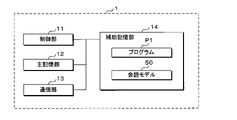
- FIG. 2 is a block diagram showing a configuration example of the server 1.
- the server 1 includes a control unit 11, a main storage unit 12, a communication unit 13, and an auxiliary storage unit 14.
- the control unit 11 has one or more CPUs (Central Processing Units), MPUs (Micro-Processing Units), GPUs (Graphics Processing Units), and other arithmetic processing units, and stores the program P1 stored in the auxiliary storage unit 14. By reading and executing, various information processing, control processing, etc. are performed.
- the main storage unit 12 is a temporary storage area for SRAM (Static Random Access Memory), DRAM (Dynamic Random Access Memory), flash memory, etc., and temporarily stores data necessary for the control unit 11 to execute arithmetic processing.
- the communication unit 13 is a communication module for performing processing related to communication, and transmits / receives information to / from the outside.
- the auxiliary storage unit 14 is a non-volatile storage area such as a large-capacity memory or a hard disk, and stores the program P1 and other data necessary for the control unit 11 to execute processing. Further, the auxiliary storage unit 14 stores the conversation model 50.
- the conversation model 50 is a machine learning model in which predetermined training data has been learned, and is a model that is learned to output an answer sentence to the input sentence when an input sentence from the user is input.
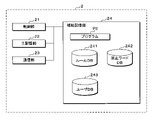
- FIG. 3 is a block diagram showing a configuration example of the intermediate server 2.
- the intermediate server 2 includes a control unit 21, a main storage unit 22, a communication unit 23, and an auxiliary storage unit 24.
- the control unit 21 is an arithmetic processing device such as a CPU, and performs various information processing, control processing, and the like by reading and executing the program P2 stored in the auxiliary storage unit 24.
- the main storage unit 22 is a temporary storage area such as a RAM, and temporarily stores data necessary for the control unit 21 to execute arithmetic processing.
- the communication unit 23 is a communication module for performing processing related to communication, and transmits / receives information to / from the outside.
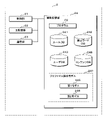
- the auxiliary storage unit 24 is a non-volatile storage area such as a large-capacity memory or a hard disk, and stores the program P2 and other data necessary for the control unit 21 to execute processing. Further, the auxiliary storage unit 24 stores the rule DB 241 and the prohibited word DB 242 and the user DB 243.
- the rule DB 241 is a database for storing conversation rules related to the conversation model 50.
- the prohibited word DB 242 is a database for storing words prohibited in conversation.
- the user DB 243 is a database that stores user information including user profiles (attributes including names, families, fields of interest, hobbies, etc.) in association with user IDs.
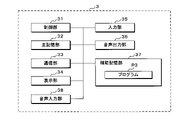
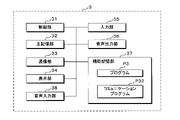
- FIG. 4 is a block diagram showing a configuration example of the terminal 3.
- the terminal 3 includes a control unit 31, a main storage unit 32, a communication unit 33, a display unit 34, an input unit 35, a voice output unit 36, an auxiliary storage unit 37, and a voice input unit 38.
- the control unit 31 is an arithmetic processing device such as a CPU, and performs various information processing, control processing, and the like by reading and executing the program P3 stored in the auxiliary storage unit 37.
- the main storage unit 32 is a temporary storage area such as a RAM, and temporarily stores data necessary for the control unit 31 to execute arithmetic processing.
- the communication unit 33 is a communication module for performing processing related to communication, and transmits / receives information to / from the outside.
- the display unit 34 is a display screen such as a liquid crystal display and displays an image.
- the input unit 35 is an operation interface such as a mechanical key, and receives an operation input from the user.
- the voice output unit 36 is a speaker that outputs voice, and outputs the voice given by the control unit 31.
- the voice input unit 38 is a microphone for inputting voice, and inputs voice spoken by the user to perform voice recognition.
- the control unit 31 receives the result of voice recognition from the voice input unit 38 and can acquire it as a text (or a phonetic symbol).
- the auxiliary storage unit 37 is a non-volatile storage device such as a hard disk and a large-capacity memory, and stores the program P3 and other data necessary for the control unit 31 to execute processing.
- the server 1 generates the conversation model 50 based on the training data (corpus) which is a pair of the input sentence and the answer sentence, and inputs the input sentence to the conversation model 50 to generate the answer sentence. ..
- the training data (corpus) which is a pair of the input sentence and the answer sentence
- the conversation model 50 produces inappropriate answer sentences (for example, answer sentences contrary to public order and morals, answer sentences contrary to the purpose of conversation, answer sentences contrary to the setting on the character side, etc.) depending on the learned training data and input sentences. There is a risk of generating it.
- the intermediate server 2 determines whether or not a rule-based conversation (answer) should be performed instead of a machine learning model conversation according to the input sentence from the user and / or the response sentence from the conversation model 50. ..
- the intermediate server 2 defines in the rule DB 241 and the prohibited word DB 242 an input sentence to be answered on a rule basis, an inappropriate word as an answer sentence, and the like, and compares with those rules to answer on a rule basis. Judge whether or not it is possible.
- the intermediate server 2 outputs the answer sentence according to the conversation rule of the predetermined rule DB 241 regardless of the answer sentence obtained from the conversation model 50.
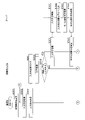
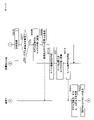
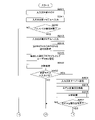
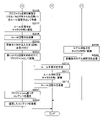
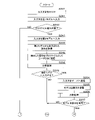
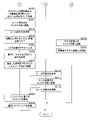
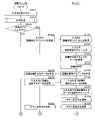
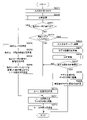
- 5 and 6 are flowcharts showing an example of the processing procedure in the agent system 100.
- the user activates the program P3 using the terminal 3
- the following processing is started and repeatedly executed as long as the input from the user continues.
- the control unit 31 of the terminal 3 causes the display unit 34 to display the character set as the conversation partner of the user based on the program P3 (step S301).
- the control unit 31 of the terminal 3 acquires an input sentence that is the result of voice recognition for the voice input by the voice input unit 38 (step S302).
- the voice input unit 38 recognizes, for example, the voice picked up by the microphone during the period when the key included in the input unit 35 of the terminal 3 is pressed.
- the voice input unit 38 may recognize the subsequent voice when the voice including a specific keyword is input.
- the voice input unit 38 may recognize only the voice of a specific user (owner of the terminal 3) by using the voiceprint information.
- the control unit 31 transmits an input sentence including a text or a phonetic symbol to the intermediate server 2 (step S303).
- control unit 21 of the intermediate server 2 receives the input sentence (step S201)
- the control unit 21 executes an analysis process of comparing the received input sentence with the DB group including the rule DB 241 and the prohibited word DB 242 (step S202). The details of the analysis process will be described later.
- the control unit 21 determines whether or not to input the received input sentence into the conversation model 50 based on the result of the analysis process (step S203).
- control unit 21 transmits the accepted input sentence to the server 1 (step S204).
- the server 1 receives the input sentence (step S101), the control unit 11 inputs the received input sentence to the conversation model 50 (step S102), and acquires the model answer sentence output from the conversation model 50 (step). S103). The server 1 transmits the acquired model response text to the intermediate server 2 as a response to step S101 (step S104).
- the control unit 21 of the intermediate server 2 receives the model response statement transmitted from the server 1 (step S205), and executes an analysis process of comparing the model response statement with the DB group including the rule DB 241 and the prohibited word DB 242. (Step S206). The details of the analysis process will be described later.
- the control unit 21 determines whether or not to use the model answer sentence obtained from the conversation model 50 based on the result of the analysis process (step S207).
- the control unit 21 converts the model answer sentence obtained from the conversation model 50 into the dialogue of the character (step S208), and the converted model answer sentence. Is transmitted to the terminal 3 (step S209).
- the conversion in step S208 may be performed for each character by conversion to a polite word, addition of a predetermined flexion, or conversion to a predetermined phrase, or may be performed through a character-by-character dialogue conversion model.
- step S203 When it is determined in step S203 that the input to the conversation model 50 is not performed (S203: NO), or when it is determined in step S207 that the model answer statement is not used (S207: NO), the control unit 21 sends the rule DB 241 to the rule DB 241. Based on this, a rule answer sentence corresponding to the input sentence is created (step S210).
- a rule answer sentence may be created by exchanging a specific word from the model answer sentence, or a fixed phrase preset for the input sentence defined in the rule DB 241 may be used as the rule answer sentence. May be created as.
- the control unit 21 converts the created rule answer sentence into a character line (step S211) and transmits it to the terminal 3 (step S212).
- the terminal 3 receives the model answer sentence or the rule answer sentence transmitted from the intermediate server 2 (step S304), and the control unit 31 displays a line on the character to the display unit 34 or the voice output unit 36 according to the received answer sentence. Output (step S305).
- the control unit 31 returns the process to step S302 and accepts an input statement from the user until the program P3 ends.
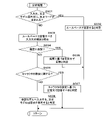
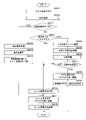
- FIG. 7 is a flowchart showing an example of the analysis processing procedure.
- the flowchart of FIG. 6 corresponds to the details of the processing of steps S202 and S206 by the intermediate server 2 in FIGS. 5 and 6.
- the control unit 21 of the intermediate server 2 determines whether or not the received input statement (S201) or model response statement (S205) includes the prohibited word stored in the prohibited word DB 242 (step S601). ..
- the prohibited word includes a word relating to a violation of public order and morals and a word judged to be a discriminatory expression, and is stored in the prohibited word DB 242.
- the prohibited words may also include words that are judged to be political or violent expressions.
- control unit 21 determines that the answer should be made on a rule basis (step S602), and returns the process to the next step S203 or step S207.
- the control unit 21 collates the received input sentence with the rule of the input sentence to be answered based on the rule stored in advance in the rule DB 241. (Step S603). As a result of the collation, the control unit 21 determines whether or not the rule-based input sentence to be answered is met (step S604), and if it is determined to match (S604: YES), the control unit 21 determines. It is determined that the answer should be made in a fixed phrase based on the rule (step S605), and the process is returned to the next step S203 or step S207.
- Step S603 may be replaced with a process in which the control unit 21 calculates a value indicating consistency (similarity) between the received input statement and the rule DB 241.
- the control unit 21 may determine whether or not the calculated value conforms to the regulation depending on whether or not the calculated value is equal to or greater than a predetermined value, and determine whether or not to use the model answer statement. ..
- step S604 when the field to be set is medical care, the control unit 21 determines that the input sentence or the model answer sentence regarding the health of the user and the user's family conforms to the regulation.
- the control unit 21 determines that the input sentence or the model answer sentence regarding the schedule, the technique, and the tool conforms to the regulation.
- the control unit 21 determines whether the input sentence or the model answer sentence is related to the setting of the character set as the conversation partner. (Step S606). In step S606, when a plurality of characters are set, the control unit 21 may determine that they do not match when the input statement is related to the setting data of any of the characters. This is to answer with a rule answer sentence that does not contradict the character settings (attributes).
- step S606 When it is determined in step S606 that the setting data is related (S606: YES), the control unit 21 determines that a fixed phrase based on the character setting should be answered (step S607), and processes the next step S203 or step S207. Return to.
- step S606 When it is determined in step S606 that the setting data is not related (S606: NO), the control unit 21 determines that the input is input to the conversation model 50 or determines that the model answer sentence is used (step S608). The control unit 21 returns the process to the next step S203 or step S207.
- step S606 the control unit 21 calculates the consistency between the input statement or the model answer statement and the character setting in the rule DB 241 as a numerical value to determine whether or not it is related to the character setting, and the calculated value is predetermined. It may be determined whether or not it is equal to or greater than the value. In this case, if it is determined that the consistency is high, the control unit 21 determines that the input is input to the conversation model 50, or determines that the model answer sentence from the conversation model 50 is used.
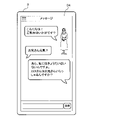
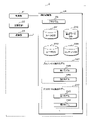
- FIG. 8 is an explanatory diagram showing an example of conversation in the agent system 100.
- FIG. 8 shows an example of a screen displayed on the display unit 34 of the terminal 3.
- a text conversation that is, a conversation with an agent as a chatbot is executed.
- the text of the input sentence input by the user is displayed as a balloon-shaped image from the left side, and the text of the answer sentence (or the utterance sentence) from the character set as the conversation partner is a balloon from the right side. It is displayed as a balloon image.
- the input sentence input by the user is "How are you?".
- the control unit 21 of the intermediate server 2 determines in step S606 of the analysis process that the setting of the character set as the conversation partner is related, and in the rule answer sentence. Judge to answer.
- a setting such as “race” “human” corresponding to a type such as “race”, “gender”, “age”, “origin”, “family”, “school”, etc. is set. May include.
- the rule DB 241 includes a "word” for determining that the setting is related to the type.
- the rule DB 241 includes, for example, “father,” “mother,” “brother,” “sister,” “sister,” “younger brother,” and the like as terms for determining that the type is "family.”
- the rule DB 241 includes, for example, "hometown”, “home country”, “hometown”, “parent's home”, etc. in association with the type "origin”.
- step S606 the control unit 21 can recognize that the input sentence from the user is an input sentence including a character setting, particularly a term related to "family".
- the control unit 21 "does not have a sibling. ⁇ User>” due to the character setting data "no siblings (brothers / sisters)" included in the rule DB 241 when it is determined to be "related to the character setting". Do you have a ⁇ sibling word>? ”
- the contents of the parentheses should include the word or its type that was the basis for judging that the input sentence was related to the setting.
- the control unit 21 puts the word “brother” in parentheses in the rule answer sentence. Is converted based on the character settings and answered.
- the agent system 100 it is determined whether or not to use the model answer sentence for the input sentence from the user, and if it is determined not to use the model answer sentence, the rule answer sentence corresponding to the input sentence is generated. It is output. For example, if the input sentence contains a prohibited word, an inappropriate answer sentence may be output unintentionally, so it is determined that the model answer sentence is not used and the rule answer sentence is used. .. On the other hand, other than such a case, it is determined that the model answer sentence is used. That is, instead of using the model answer sentence uniformly, the pattern of answering with the rule answer sentence and the pattern of answering with the model answer sentence are used properly.
- the model answer sentence from the conversation model 50 is appropriate while avoiding the inconsistency in the character setting and preventing the answer sentence from the agent from becoming violent or discriminatory answer sentence. It becomes possible to realize a more natural conversation by using it.
- the agent system 100 stores the user's data as a profile in the user DB 243 in order to understand the user based on a natural conversation with the agent, that is, in a natural manner.
- the agent system 100 executes a conversation including the profile stored in the user DB 243.
- the rule DB 241 also includes a rule that when the input sentence relates to the user's profile, it is used as the rule answer sentence.
- the configuration of the agent system 100 of the second embodiment is the same as the configuration of the agent system 100 of the first embodiment except that the details of the processing in the intermediate server 2 are different, the same reference numerals are given to the common configurations. A detailed explanation will be omitted.
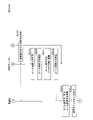
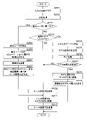
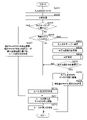
- FIGS. 9 to 11 are flowcharts showing an example of the processing procedure in the agent system 100 of the second embodiment.
- the procedures common to the procedures shown in the flowcharts of FIGS. 5 and 6 are assigned the same step numbers and detailed description thereof will be omitted.
- the control unit 21 of the intermediate server 2 accepts an input statement (S201).
- the control unit 21 of the intermediate server 2 of the second embodiment receives the user ID from the terminal 3 together with the input text.
- the control unit 21 determines whether or not the received input sentence is the extraction target of the user's profile (step S221).
- step S221 the control unit 21 analyzes the input sentence from the user in a morphological manner, and if the subject is the first person, it can be inferred that the user is speaking, so it is determined that the profile of the user can be extracted.
- the control unit 21 determines that the user's profile is related to each type such as "gender”, “age”, “house”, “origin”, “habit”, “family”, “school”, “hobby”, etc. You may execute the process of S221 using the "word” for doing so.
- Rule DB 241 includes "father,” “mother,” “brother,” “sister,” “sister,” “younger brother,” and the like as terms for determining that the term is related to "family.”
- the rule DB 241 includes, for example, “breakfast”, “breakfast”, “lunch”, “snack”, etc. in association with “habit”.
- the rule DB 241 includes, for example, “cooking”, “music”, “sports (type)", “game”, etc. in association with "hobbies”.
- the control unit 21 Can determine if the user's profile can be extracted.
- the control unit 21 determines whether or not the profile is to be extracted by determining whether or not the conversation (conversation set) is such that the profile can be extracted by pattern analysis after language processing. You may.
- control unit 21 extracts data related to the user's profile from the received input sentence (step S222).
- step S222 the control unit 21 extracts the "word" that is the basis for determining that the profile can be extracted as data related to the profile.
- the control unit 21 may use all the input statements as data related to the profile.
- step S222 for example, when the input sentence includes "(I) breakfast” and “eat”, the control unit 21 extracts "breakfast” as data related to the type "habit” in the user's profile.
- the control unit 21 extracts "jogging” as data related to the type "hobby” in the user's profile.
- the control unit 21 may store the term as data related to the type "habit” in the user's profile.
- the control unit 21 extracts the "younger brother” as data relating to the type "family” in the user's profile.
- the control unit 21 stores the extracted data in the user DB 243 in association with the user ID (step S223), and proceeds to the process in step S202.
- the control unit 21 stores, for example, "eating (yes)" "breakfast” in association with the type of "habit”. In the case of "habit", the control unit 21 may store the dates in association with each other.
- the user profile is created by increasing the data stored in the user DB 243 by step S223.
- step S221 If it is determined in step S221 that extraction is not possible (S221: NO), the control unit 21 proceeds to step S202 as it is.
- the correction process for correcting the model response sentence to the user is further executed based on the user profile created as described above.
- the control unit 21 determines that the model answer statement is to be used (S207: YES)
- the control unit 21 corrects the model answer statement based on the user profile stored in the user DB 243 (step S224).
- the control unit 21 converts the corrected model answer sentence for a character (step S225).
- step S224 for example, when the model answer sentence is the phrase "I want to play sports", "sports" is stored in the type "hobby" in the user's profile, and the item “jogging" is stored.
- the "sports" part in the answer sentence can be corrected to "jogging”.
- the model answer is corrected to "I want to go jogging".
- the control unit 21 can correct the answer sentence to be more sympathetic to "I want to do” mo "jogging”.
- the correction of the rule answer sentence is also executed.
- the control unit 21 corrects the rule answer sentence based on the user profile stored in the user DB 243 (step S226), converts it into a character line (S211), and then converts it into a character line (S211). It is transmitted to the terminal 3 (S212).
- the control unit 21 corrects the rule answer sentence by using the terms stored in the user DB 243 as the types “hobbies”, “habits”, etc. in the user profile, as in step S224.
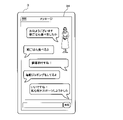
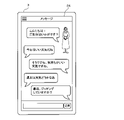
- 12 and 13 are explanatory views showing an example of conversation in the agent system 100 of the second embodiment.
- 12 and 13 are screen examples displayed on the display unit 34 of the terminal 3, similar to the screen example shown in FIG. 8 of the first embodiment, and a text conversation is executed.
- an input sentence (utterance sentence) that the character throws "Good morning / Have you eaten breakfast?" Is input.
- the control unit 21 of the intermediate server 2 associates this input statement with the type of "habit” and " "Breakfast” is stored in the user DB 243.
- an input sentence "I am also jogging every morning” is input from the user.
- the control unit 21 determines that the profile can be extracted from the fact that the input sentence includes the word "every morning” indicating “cycle” and the word “jogging” "sports”, and determines the profile "every morning” and “jogging”. It is stored in the user DB 243.
- the screen example of FIG. 13 shows a conversation made after the conversation shown in the screen example of FIG.
- an input sentence is input from the user during a conversation between the user and the character set as the conversation partner, saying "I wonder if the weather is on the weekend".
- input sentences asking the weather such as "Is it sunny tomorrow?" And “How is the weather on the weekend?" are input, and the type "hobby" in the user's profile is to be carried out outdoors (camping, If the conditions that barbecue, golf, jogging, walking, soccer, baseball, train, etc. are registered, "Recently ⁇ word of" hobby ">? May be included.
- control unit 21 determines that the answer is based on the rule by the analysis process of step S202 (S602), and then "recently ⁇ the word of" hobby ">? Is created (S210), the registered word of "hobby” is read from the user profile of the user DB 243, and the rule answer sentence is corrected as "Recently jogging?" (S225). In the example of FIG. 13, it is converted into a polite language sentence according to the character setting (S211), and "Are you jogging recently?" Is output. In this way, it becomes possible to use the previously extracted user profile in the response from the agent (character).
- the accumulation of the user's profile in the user DB 243 by the conversation makes the conversation between the user and the agent (character) more natural.
- the agent character
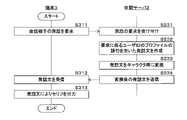
- FIG. 14 is a flowchart showing an example of a processing procedure for carrying out a conversation starting from an agent.
- the control unit 31 of the terminal 3 starts the following processing at the timing determined to be the utterance timing based on the program P3. Whether or not it is an utterance timing can be determined by whether or not it is a set time (alarm), whether or not a predetermined time has passed since the end of the previous conversation, and the like.
- the control unit 31 of the terminal 3 requests the intermediate server 2 to speak a character set as a conversation partner of the user (step S311). In step S311 the control unit 31 also transmits the user ID of the user.
- the control unit 21 of the intermediate server 2 receives the utterance request (step S231) and creates an utterance sentence using the words and phrases of the profile associated with the user ID of the user DB 243 (step S232).
- the control unit 21 selects, for example, the phrase “meal”, for example, “eating breakfast” from the profile type “habit” based on the time. If the habit of "eating breakfast” is stored as a user profile, the control unit 21 generates an utterance sentence "Did you eat breakfast?" In step S232.
- control unit 21 may receive the position information of the terminal 3 together and create an utterance sentence based on the time and the position information.
- the control unit 21 may acquire the weather information from an external server via the network N and create a call regarding the weather as an utterance sentence.
- the control unit 21 converts the created utterance sentence into a character line (step S233), and transmits the converted utterance sentence to the terminal 3 (step S234). In this case, the conversation model 50 does not have to be used.
- the intermediate server 2 executes the process of steps S231-S234 each time it receives an utterance request.
- the control unit 31 of the terminal 3 receives the utterance sentence (step S312), and causes the character to output the dialogue to the display unit 34 or the voice output unit 36 according to the received utterance sentence (step S313). After that, the agent system 100 executes the processing procedure shown in the flowchart of FIGS. 9 to 11.
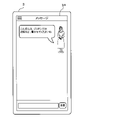
- FIG. 15 is an explanatory diagram showing an example of conversation based on a profile in the agent system 100 of the second embodiment.
- FIG. 15 is a screen example displayed on the display unit 34 of the terminal 3, similar to the screen example shown in FIG. 8 of the first embodiment, and a text conversation is executed.
- the utterance is started from the agent side, that is, the call is made to the user.
- the agent side it is possible for the agent side to actively make a call that reflects not only the information temporarily obtained in the flow of conversation but also the background profile of the user. This makes it possible to realize more realistic (more natural) communication between the user and the agent (character).
- FIG. 16 is a block diagram showing a configuration example of the intermediate server 2 of the third embodiment.
- the content DB 248 is stored in the auxiliary storage unit 24 of the intermediate server 2.
- the content DB 238 stores questionnaires for users, advertising contents for users, and the like. Each content is associated with a corresponding type, for example, tags such as "meal”, “habit”, “health”, and "hobby", and is searchable.
- the auxiliary storage unit 24 of the intermediate server 2 of the third embodiment stores the first model 245 and the second model 246 for profile extraction (the profile extraction model 247 is configured by the two models).
- the first model 245 is an opportunity learning model that is learned to output a vector that quantifies the content and meaning of the input sentence when the input sentence received from the user is input.
- the first model 245 has been trained to output a vector expressing the content / meaning of the input sentence as a numerical value.
- the first model 245 may be configured to use the output from a natural language processing model such as BERT as a vector, for example.
- the first model 245 is learned to output similar vectors for sentences with similar contents / meanings and different vectors for sentences with different contents / meanings, and the first model 245 outputs data related to the user profile in advance. Vectorize the sentences that can be extracted.
- the intermediate server 2 has a similarity between the vector of the sentence that can extract the data related to the user's profile prepared in advance and the vector output from the first model 245 when the input sentence is input to the first model 245. , Whether or not the profile can be extracted from the input sentence can be determined depending on whether or not the value is equal to or greater than a predetermined value.
- the configuration of the first model 245 is not limited to the above model. For example, even if the first model 245 is trained to combine classifiers and output the possibility that the data related to the user's profile can be extracted (similarity with the extractable sentence). good.
- the second model 246 is a machine learning model that has been trained to extract words related to a profile from an input sentence when an input sentence is input.
- the second model 246 is learned to output data indicating a preset word / phrase to be extracted, the type of the word / phrase, and an appearance position in the input sentence when an input sentence is input.
- the intermediate server 2 inputs an input sentence determined to be an extraction target to the second model 246, and acquires words and phrases output from the second model 246 based on the data.
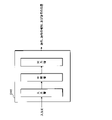
- FIG. 17 is a schematic diagram of the second model 246.
- the second model 246 includes an input layer that accepts an input sentence, an intermediate layer that performs an operation, and an output layer that outputs data indicating a phrase, a phrase type, and an appearance position in the input sentence.
- the configuration of the agent system 100 of the third embodiment is the same as the configuration of the agent system 100 of the first embodiment. Is. Among the configurations of the agent system 100 of the third embodiment, the configurations common to those of the first embodiment are designated by the same reference numerals and detailed description thereof will be omitted.
- FIGS. 18 and 19 are flowcharts showing an example of a processing procedure during a conversation by the intermediate server 2 of the third embodiment.
- the processing procedure in the terminal 3 and the server 1 is omitted, but the processing in the terminal 3 and the server 1 is the same as the procedure shown in the flowcharts of FIGS. 5 and 6 of the first embodiment. be.
- the procedures common to the processing procedure of the intermediate server 2 shown in the flowcharts of FIGS. 5 and 6 are given the same step numbers, and detailed description thereof will be omitted.
- the control unit 21 of the intermediate server 2 accepts an input statement (S201).
- the control unit 21 of the intermediate server 2 of the second embodiment receives the user ID from the terminal 3 together with the input text.
- the control unit 21 inputs the received input sentence to the first model 245 of the profile extraction model 247 (step S241).
- the control unit 21 determines whether or not the input statement is the target for extracting the user's profile depending on whether or not the similarity output from the first model 245 is equal to or higher than a predetermined value (the input statement extracts data related to the user's profile). (Whether or not the sentence is possible) is determined (step S242).
- control unit 21 When it is determined to be the extraction target (S242: YES), the control unit 21 inputs the received input sentence to the second model 246 (step S243), and acquires the phrase output from the second model 246 (step S243). Step S244).
- the control unit 21 stores the acquired words and phrases in association with the user ID in the user DB 243 (step S245), and proceeds to the process in step S202.
- step S245 the profile of the user who input the input sentence is created and updated.
- step S242 When it is determined in step S242 that it is not the extraction target (S242: NO), the control unit 21 is an answer sentence to the input sentence and an utterance sentence of the content asking the profile (a question answered by YES / NO). Create as a rule answer sentence (step S246). Prior to the process of step S246, the control unit 21 determines whether or not the input statement contains a prohibited word, and if it is determined that the input statement contains a prohibited word, a rule answer based on the rule base. You may create a statement.
- step S246 the control unit 21 creates an utterance sentence of a question (closed question) that can be answered with YES / NO as a rule answer sentence.
- the control unit 21 gives rule answer sentences such as "Do you eat breakfast every day?" "Did you sleep well last night?” "Do you like dogs?" "Do you like cats?" "Do you live in Tokyo?” create.
- the sentences asking these profiles are stored in the rule DB 241 in advance, and the control unit 21 creates a rule answer sentence by selecting one of them.
- the control unit 21 converts the created rule answer sentence for a character (step S247), and transmits the converted rule answer sentence to the terminal 3 (step S248).
- the control unit 21 receives an input sentence (response sentence) from the user for the reply sentence transmitted in step S212 (step S249).
- the input sentence received in step S249 is an answer to the effect of YES or NO.
- the control unit 21 stores the content of the input sentence (response result of YES or NO) in the user DB 243 together with the content of the response sentence asked to the user in step S246 as a profile (step S250).
- the control unit 21 selects content (content to be provided to the user) from the content DB 248 based on the profile stored in step S250 (step S251). As described above, the content is a Web-based content for conducting a questionnaire survey for users, a video related to advertising, or the like.
- the control unit 21 transmits the selected content to the terminal 3 (step S252), and ends the process.
- the content selected by the intermediate server 2 is output to the display unit 34 of the terminal 3, and the content is executed (reproduced) by the user.
- FIGS. 20 and 21 are flowcharts showing another example of the processing procedure using the first model 245 and the second model 246.
- the same step numbers are assigned to the procedures common to the processing procedures shown in the flowcharts of FIGS. 18 and 19, and detailed description thereof will be omitted.
- step S242 when the control unit 21 of the intermediate server 2 determines in step S242 that it is not the extraction target (S242: NO), the content of asking the user for the profile (cannot answer YES / NO, asks the target itself).
- the utterance sentence of the question (open question)) is created as a rule answer sentence to the input sentence (step S256).
- step S256 is, for example, a sentence such as "Do you miss breakfast or dinner every day?” "Which do you like dogs or cats?" "What are your hobbies?"
- the utterance sentences asking these profiles are stored in the rule DB 241 in advance, and the control unit 21 creates a rule answer sentence by selecting one of them.
- the control unit 21 transmits the rule answer sentence asking the user to the terminal 3 after conversion (S247, S248), and when the input sentence which is the answer is received (S249), the input sentence is input to the second model 246 (step). S257).
- the control unit 21 acquires a phrase output from the second model 246 (step S258).
- the control unit 21 stores the acquired words and phrases in association with the user ID in the user DB 243 (step S259), and proceeds to the process in step S251.
- FIG. 22 is a block diagram showing a configuration example of the intermediate server 2 of the modified example. As shown in FIG. 22, the intermediate server 2 stores a plurality of profile extraction models 247 that are different from each other. Each profile extraction model 247 is learned with different training data depending on the purpose, such as whether it is a conversation that asks for a hobby or a conversation that asks for a physical condition.
- the intermediate server 2 of the modified example selects the profile extraction model 247 according to the purpose of the input sentence received from the terminal 3 in step S201 or S249, and then performs the subsequent processing (S241, S243, S257, etc.). Run.
- the user profile can be acquired in a more natural conversation. Therefore, as an application of the agent system 100, it is possible to narrow down the field of the profile to be extracted. For example, when using the agent system 100 that enables natural conversation for the medical / long-term care field, a type that can determine whether or not it is a target for extracting a profile related to the health of the user and the user's family and its "words and phrases”. May be set. For example, "body temperature”, “blood pressure”, “pulse” and the like may be set as words and phrases of the type "health state”.
- the agent system 100 when using the agent system 100 that enables natural conversation for business support, it is possible to determine whether or not the user's business-related profile is to be extracted, such as schedule and technical field. And its "words” may be set. For example, “body temperature”, “blood pressure”, “pulse” and the like may be set as words and phrases of the type "health state”.
- the profile extraction model 247 has been described as a configuration for storing in the intermediate server 2.
- the profile extraction model 247 may be stored in the server 1 and used by the intermediate server 2.
- FIG. 23 is a block diagram showing a configuration example of the server 1 of the fourth embodiment.
- the configurations common to those of the first embodiment are designated by the same reference numerals and detailed description thereof will be omitted.
- the auxiliary storage unit 14 of the server 1 of the fourth embodiment stores the topic determination model 51 in addition to the conversation model 50.
- the topic determination model 51 is a machine learning model in which predetermined training data for determining a topic has been learned.
- the topic determination model 51 is a model that outputs data for determining a topic at that time each time an input sentence from a user and an answer sentence of an agent are input in order.
- the predetermined training data learned by the topic determination model 51 is a set of an input sentence or an answer sentence and data for identifying a known topic.
- the data for identifying a topic may be a topic tag, or each has a preset topic tag as a dimension, and a numerical value of the dimension corresponding to each topic tag indicates which topic is the conversation. It may be a vector represented by height.
- the topic determined by the topic determination model 51 may include identification data of words that do not appear in the input sentence and the answer sentence.
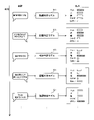
- FIG. 24 is a schematic diagram of the topic determination model 51.
- the topic determination model 51 outputs data for determining what the topic is at that time each time an input sentence or a conversational sentence is input.
- the topic determination model 51 outputs data as a vector indicating a topic.
- a vector indicating a topic is represented by the length of a bar graph with respect to identification data (for example, a keyword) for identifying the topic, and the height of the possibility of the topic (the height of a numerical value of a dimension).
- FIG. 24 shows how the probability of each topic's identification data changes as the conversation progresses.
- the conversation model 50 of the fourth embodiment is learned to output a model answer sentence when the topic of the conversation is input together with the input sentence. Topics may be identified by identification data.
- the conversation model 50 of the fourth embodiment has already learned training data including an input sentence and identification data output when the input sentence is input to the topic determination model 51.
- FIGS. 25 and 26 are flowcharts showing an example of the processing procedure of the intermediate server 2 and the server 1 of the fourth embodiment.
- the processing procedure in the terminal 3 is omitted in the flowcharts of FIGS. 25 and 26, the processing in the terminal 3 is the same as the procedure shown in the flowcharts of FIGS. 5 and 6 of the first embodiment.
- the same step number is assigned to the procedure common to the processing procedure of the intermediate server 2 shown in the flowcharts of FIGS. 5 and 6, and detailed description thereof will be omitted.
- control unit 21 of the intermediate server 2 accepts the input sentence (S201) and determines that the input sentence is input to the conversation model 50 as a result of the analysis process (S202) (S203: YES), the control unit 21 sends a request for topic determination together with the input sentence to the server. It is transmitted to 1 (step S264).
- the server 1 receives the input sentence and the topic determination request (step S161), and the control unit 11 inputs the received input sentence to the topic determination model 51 (step S162).
- the topic determination model 51 outputs data for determining what the topic is in response to the input of the input sentence, and the control unit 11 acquires the data output from the topic determination model 51 (step S163).
- the control unit 11 determines a topic based on the data obtained in step S163 (step S164), and transmits data for identifying the determined topic to the intermediate server 2 (step S165).
- the intermediate server 2 When the intermediate server 2 receives the data for identifying the topic (step S265), the intermediate server 2 transmits the input sentence and the topic identification data to the server 1 (step S266).
- the server 1 receives the input sentence and the topic identification data (step S166), and the control unit 11 inputs the received input sentence and the topic identification data into the conversation model 50 (step S167).
- the server 1 acquires the model answer sentence output from the conversation model 50 (S103), and transmits the acquired model answer sentence to the intermediate server 2 (S104).
- the control unit 21 uses the model answer statement received in step S205. Notify the server 1 (step S267).
- the control unit 21 may transmit the model answer sentence itself.
- the control unit 21 advances the process to step S208 and transmits the model answer sentence to the terminal 3.
- the server 1 After transmitting the model response text (S104), the server 1 determines whether or not the notification of using the transmitted model response text has been received from the intermediate server 2 (step S168). When it is determined that the message has been received (S168: YES), the control unit 11 inputs the model answer sentence from the conversation model 50 into the topic determination model 51 (step S169), and regarding one set of the input sentence and the answer sentence. Ends the processing of. It is preferable to input the two-way conversation into the topic determination model 51 one after another to obtain a determination.
- step S207: NO the control unit 21 of the intermediate server 2 determines that the model answer statement is not used
- the rule answer statement created in step S210 is input to the server 1.
- Step S268 the control unit 21 advances the process to step S211. If it is determined in step S203 that the input to the conversation model 50 is not performed due to reasons such as offensive to public order and morals (S203: NO), the control unit 21 may skip the process of step S268. In addition, if the control unit 21 has not transmitted the input sentence from the user, the control unit 21 may transmit the input sentence and the rule answer sentence to be input to the topic determination model 51 at this point.
- the topic determination model 51 By using the topic determination model 51 in this way, it is possible to have a conversation along the flow of the topic, improve the quality of the conversation, and realize a more natural conversation.
- the topic determination model 51 has been described as a type in which conversations following a time series are continuously input as shown in FIG. 24. However, it may be a type that determines a topic at each time point. In this case, the processing of steps S168-S171 of the server 1 and the processing of steps S267 and S268 of the intermediate server 2 may not be executed.
- the agent system 100 functions as a user concierge.
- the configuration of the agent system 100 of the fifth embodiment is the same as the configuration of the agent system 100 of the first embodiment except for the details of the processing procedure of the intermediate server 2 described below. Therefore, in the description of the fifth embodiment, the same reference numerals are given to the configurations common to the configurations of the first embodiment, and detailed description thereof will be omitted.
- FIG. 27 is a flowchart showing an example of a processing procedure during a conversation by the intermediate server 2 of the fifth embodiment.
- the processing procedure in the terminal 3 and the server 1 is omitted in the flowchart of FIG. 27, the processing in the terminal 3 and the server 1 is the same as the procedure shown in the flowcharts of FIGS. 5 and 6 of the first embodiment. Further, in the flowchart of FIG. 27, the same step number is assigned to the procedure common to the processing procedure of the intermediate server 2 shown in the flowcharts of FIGS. 5 and 6, and detailed description thereof will be omitted.
- control unit 21 determines whether or not to execute the search based on the input statement from the user (step S271).
- the control unit 21 may determine whether or not the input sentence is a "question form” or a "question”.
- the control unit 21 may determine whether or not the input sentence is a "statement asking about matters related to weather or season”.
- the control unit 21 may create and use a model for determining whether or not it is an input sentence to be searched by machine learning, as in the profile extraction model 247 of the third embodiment.
- the control unit 21 When it is determined that the search should be executed (S271: YES), the control unit 21 creates a search term based on the received input sentence and the user's profile (step S272).
- the control unit 21 may use the input sentence as a search term as it is. For example, when the input sentence is "Is it sunny on the weekend?", The control unit 21 uses the word “Is it sunny on the weekend?" It may be created as a search term.
- the control unit 21 When the input sentence is "greeting of the time”, the control unit 21 may create “weather”, "news”, etc. as search terms depending on the date.
- the control unit 21 may create a search term such as "sports" of the user's "hobby" from the user profile of the user DB 243 together with the wording of "news”.
- the control unit 21 executes a search using the created search term (step S273), creates a rule answer sentence using the search result (step S274), and proceeds to the process in step S211.
- the control unit 21 may execute a search using the search engine and the dictionary provided in the intermediate server 2, or may perform an external search service, a map information providing service, a weather information providing service, and a public service via the network N.
- the search may be executed using a transportation information providing service or the like.
- the control unit 21 states that "the weather in (the user's" residence "district) is ". ”, Etc. and create a rule answer sentence.
- control unit 21 advances the process to step S203.
- the agent system 100 can exert a function as a concierge for individual users, such as guessing what the user wants to know on behalf of the user and executing a search by using an input sentence.
- the processing procedure of FIG. 27 can also be combined with the processing procedure of the second to fourth embodiments.
- the agent system 100 of the sixth embodiment makes the agent system 100 function as a user concierge as in the fifth embodiment.
- a concierge secretary
- it is used not only as a one-to-one conversation between the terminal 3 of each user and the agent, but also as a system that supports communication with other users. can.
- the number of characters is not limited to one, and a plurality of characters may be set.
- the intermediate server 2 stores the conversation history with the agent (character) in the user DB 243 in association with the user ID for each user.
- the intermediate server 2 may refer to the past conversation history and reflect it in the conversation.
- FIG. 28 is a block diagram showing a configuration example of the terminal 3 of the sixth embodiment.
- the auxiliary storage unit 37 of the terminal 3 stores the communication program P32 for sharing messages, schedules, data, etc. between users in addition to the program P3.
- the communication program P32 is an application program capable of communicating between a user and another user.
- the communication program P32 is a message exchange application program, a chat program, a video call program, and the like.
- the intermediate server 2 can cooperate with the communication program P32 by transmitting the control statement to the communication program P32 of the terminal 3.
- FIG. 29 is a flowchart showing an example of a processing procedure during a conversation by the intermediate server 2 of the sixth embodiment.
- the processing procedure in the terminal 3 and the server 1 is omitted in the flowchart of FIG. 29, the processing in the terminal 3 and the server 1 is the same as the procedure shown in the flowcharts of FIGS. 5 and 6 of the first embodiment. Further, in the flowchart of FIG. 29, the same step number is assigned to the procedure common to the processing procedure of the intermediate server 2 shown in the flowcharts of FIGS. 5 and 6, and detailed description thereof will be omitted.
- the control unit 21 determines whether or not the input sentence from the received user relates to another user (whether or not the content relates to another user) (step S281).
- the control unit 21 may determine, for example, whether or not the name (nickname) of another user registered in the user DB 243 and associated with the user is included.
- the input texts are "What is the schedule for next week for ⁇ other user's name>?”, "Is ⁇ other user's name> fine?”, "This story is more detailed for ⁇ other user's name>”.
- the control unit 21 can determine that it is related to another user depending on whether or not it conforms to a predetermined rule defined by the rule DB 241.
- control unit 21 identifies the user ID of the other user (step S282).
- the control unit 21 activates the communication program P32 addressed to the user corresponding to the user ID specified in step S282, creates a control statement regarding communication with another user (step S283), and inputs the input statement to the terminal of the user. It is transmitted to 3 (step S284). As a result, the communication program P32 is activated on the terminal 3 of the user, and communication with another user can be executed.
- the control statement created in step S283 may be for reserving a video call with another user in the communication program P32.
- the control statement created in step S283 is a message (message) that reports an input statement from the user to another user, saying, "Mr. A said,'Is ⁇ other user's name> how are you?'" The sentence) may be transmitted to the communication program P32.
- the control statement created in step S284 sends a chat to the communication program P32 inquiring that "Mr. A wants to know if the schedule for X month and Y day of ⁇ other user's name> is free.” It may be something to make.
- the control statement may be one that causes the communication program P32 to send a message asking the profile of another user, such as "Do you know the hobby of ⁇ other user's name>?".
- the control statement may cause the communication program P32 to send a message that " ⁇ the name of another user> seems to be familiar with Z.”
- control unit 21 After the processing of step S283 and step S284, the control unit 21 creates a rule answer sentence based on the profile stored in the user DB 243 in association with the specified user ID or the conversation history (step S285).
- step S285 for example, the control unit 21 reports a recent conversation based on the conversation history between another user and the agent, and creates a sentence reporting the message as a rule answer sentence.
- the control unit 21 may create a sentence that only reports that the message has been sent as a rule answer sentence.
- the control unit 21 advances the process to step S211, converts the created rule answer sentence for the character (S211), and transmits the converted rule answer sentence to the terminal 3 (S212).
- control unit 21 sends an input sentence to the server 1 (S204) instead of step S283 and step S284 and determines that the model answer sentence from the conversation model 50 is used (S207: YES), the said person concerned.
- the model answer sentence may be corrected based on the profile or conversation history stored in the user DB 243 in association with the user ID of another user.
- control unit 21 advances the process to step S203.
- Modification 1 of the sixth embodiment In the first modification, instead of invoking the communication program P32, a one-to-many relationship with another user of the agent system 100 is used.
- FIG. 30 is a flowchart showing an example of a processing procedure during a conversation by the intermediate server 2 in the modification 1 of the sixth embodiment. Since the flowchart of FIG. 30 is the same as the flowchart of FIG. 29 except that steps S293 and S294 shown below are different, the common procedure is given the same step number and detailed description thereof will be omitted.
- the control unit 21 of the intermediate server 2 creates an utterance sentence addressed to the user (other user) corresponding to the user ID specified in step S282 (step S293), and the created utterance sentence is used as the other user. (Specifically, to the terminal 3 used by the other user) is transmitted toward (step S294). As a result, the notification from the agent system 100 is output to the terminal 3 of another user.
- the utterance sentence in step S293 may be simply a sentence (message sentence) that reports an input sentence from the user, saying, "Mr. A said,'Is (another user) how are you?'".
- the utterance sentence of step S293 may be a sentence inquiring "Mr. A wants to know whether the schedule of Mr. (other user)'s X month and Y day is free".
- the control unit 21 creates a rule reply sentence for reporting to the user that a message has been sent to another user (step S295).
- the control unit 21 may create a rule answer sentence together with a report of a recent conversation based on, for example, the conversation history of another user.
- agent system 100 can take over the communication between users, for example, in a situation where direct communication between users feels a wall. In this way, the agent system 100 can function as a concierge (secretary) for each user.
- the agent system 100 uses a one-to-many relationship with another user, and when the character of the conversation partner is set for each user, asks the character corresponding to the other user.
- the process may be executed so as to cope with this. That is, communication between users is established through communication between concierges of each user.
- FIG. 31 is a flowchart showing an example of a processing procedure during a conversation by the intermediate server 2 in the second modification of the sixth embodiment. Since the flowchart of FIG. 31 is the same as the flowchart of FIG. 29 except that steps S296-S298 shown below are different, the common procedure is given the same step number and detailed description thereof will be omitted.
- control unit 21 determines whether or not the input sentence from the received user relates to another character different from the character set as the conversation partner of the user (other character). (Whether or not the content is related to) is determined (step S296).
- control unit 21 determines the rule based on the conversation history between the other character and the user and the conversation history between the other character and the other user. Create an answer sentence (step S297).
- control unit 21 may create, for example, a rule answer statement explaining the setting based on the setting data of another target character stored in the rule DB 241.
- the control unit 21 may create a sentence that reports a recent conversation between another user and another character based on the conversation history between the other target character and the other user.
- the control unit 21 advances the process to step S211, converts the created rule answer sentence for the character (S211), and transmits the converted rule answer sentence to the terminal 3 (S212).
- control unit 21 sends an input sentence to the server 1 (S204) instead of step S297 and determines that the model answer sentence from the conversation model 50 is used (S207: YES), the other character.
- the model answer sentence may be corrected based on the setting data of.
- step S296 If it is determined in step S296 that the input sentence is not related to another character (S296: NO), the process proceeds to step S203.
Landscapes
- Engineering & Computer Science (AREA)
- Databases & Information Systems (AREA)
- Theoretical Computer Science (AREA)
- Data Mining & Analysis (AREA)
- Physics & Mathematics (AREA)
- General Engineering & Computer Science (AREA)
- General Physics & Mathematics (AREA)
- Computational Linguistics (AREA)
- Machine Translation (AREA)
Priority Applications (1)
| Application Number | Priority Date | Filing Date | Title |
|---|---|---|---|
| JP2022566952A JPWO2022118869A1 (cg-RX-API-DMAC7.html) | 2020-12-02 | 2021-12-01 |
Applications Claiming Priority (2)
| Application Number | Priority Date | Filing Date | Title |
|---|---|---|---|
| US202063120358P | 2020-12-02 | 2020-12-02 | |
| US63/120,358 | 2020-12-02 |
Publications (1)
| Publication Number | Publication Date |
|---|---|
| WO2022118869A1 true WO2022118869A1 (ja) | 2022-06-09 |
Family
ID=81853199
Family Applications (1)
| Application Number | Title | Priority Date | Filing Date |
|---|---|---|---|
| PCT/JP2021/044021 Ceased WO2022118869A1 (ja) | 2020-12-02 | 2021-12-01 | 情報処理方法、情報処理装置、情報処理システム及びコンピュータプログラム |
Country Status (2)
| Country | Link |
|---|---|
| JP (1) | JPWO2022118869A1 (cg-RX-API-DMAC7.html) |
| WO (1) | WO2022118869A1 (cg-RX-API-DMAC7.html) |
Cited By (5)
| Publication number | Priority date | Publication date | Assignee | Title |
|---|---|---|---|---|
| JP2025048829A (ja) * | 2023-09-20 | 2025-04-03 | ソフトバンクグループ株式会社 | システム |
| JP7671045B1 (ja) | 2024-01-19 | 2025-05-01 | Aiq株式会社 | 情報処理装置及びプログラム |
| JP2025112632A (ja) * | 2024-01-19 | 2025-08-01 | Lineヤフー株式会社 | 情報処理装置、情報処理方法、および情報処理プログラム |
| WO2026058701A1 (ja) * | 2024-09-10 | 2026-03-19 | 株式会社セガ | 情報処理システム、情報処理装置、及びプログラム |
| WO2026058700A1 (ja) * | 2024-09-10 | 2026-03-19 | 株式会社セガ | 情報処理システム、情報処理装置、及びプログラム |
Citations (2)
| Publication number | Priority date | Publication date | Assignee | Title |
|---|---|---|---|---|
| JP2020038510A (ja) * | 2018-09-04 | 2020-03-12 | 株式会社セントメディア | 情報処理装置及びプログラム |
| JP2020118842A (ja) * | 2019-01-23 | 2020-08-06 | 株式会社日立製作所 | 対話装置及び対話方法 |
Family Cites Families (2)
| Publication number | Priority date | Publication date | Assignee | Title |
|---|---|---|---|---|
| CN111183441A (zh) * | 2017-09-28 | 2020-05-19 | 连股份有限公司 | 信息处理方法、信息处理装置及信息处理程序 |
| JP7073839B2 (ja) * | 2018-03-27 | 2022-05-24 | 日本電信電話株式会社 | 応答文生成装置、応答文生成方法、およびプログラム |
-
2021
- 2021-12-01 JP JP2022566952A patent/JPWO2022118869A1/ja active Pending
- 2021-12-01 WO PCT/JP2021/044021 patent/WO2022118869A1/ja not_active Ceased
Patent Citations (2)
| Publication number | Priority date | Publication date | Assignee | Title |
|---|---|---|---|---|
| JP2020038510A (ja) * | 2018-09-04 | 2020-03-12 | 株式会社セントメディア | 情報処理装置及びプログラム |
| JP2020118842A (ja) * | 2019-01-23 | 2020-08-06 | 株式会社日立製作所 | 対話装置及び対話方法 |
Non-Patent Citations (1)
| Title |
|---|
| KURACHI YOICHI, SHINJI IKUKAWA, HIDEKI HARA: "AI chatbot that realizes advanced customer contact", FUJITSU/FUJITSU SCIENCE REVIEW, KAMIKODANAKA , KANAGAWA, JP, vol. 69, no. 1, 1 January 2018 (2018-01-01), JP , pages 16 - 22, XP055937083, ISSN: 0016-2515 * |
Cited By (20)
| Publication number | Priority date | Publication date | Assignee | Title |
|---|---|---|---|---|
| JP2025048829A (ja) * | 2023-09-20 | 2025-04-03 | ソフトバンクグループ株式会社 | システム |
| JP7671045B1 (ja) | 2024-01-19 | 2025-05-01 | Aiq株式会社 | 情報処理装置及びプログラム |
| JP7706725B1 (ja) | 2024-01-19 | 2025-07-14 | Aiq株式会社 | 情報処理装置及びプログラム |
| JP7706724B1 (ja) | 2024-01-19 | 2025-07-14 | Aiq株式会社 | 情報処理装置及びプログラム |
| JP7706726B1 (ja) | 2024-01-19 | 2025-07-14 | Aiq株式会社 | 情報処理装置及びプログラム |
| JP7706727B1 (ja) | 2024-01-19 | 2025-07-14 | Aiq株式会社 | 情報処理装置及びプログラム |
| JP2025113103A (ja) * | 2024-01-19 | 2025-08-01 | Aiq株式会社 | 情報処理装置及びプログラム |
| JP2025113100A (ja) * | 2024-01-19 | 2025-08-01 | Aiq株式会社 | 情報処理装置及びプログラム |
| JP2025113098A (ja) * | 2024-01-19 | 2025-08-01 | Aiq株式会社 | 情報処理装置及びプログラム |
| JP2025113101A (ja) * | 2024-01-19 | 2025-08-01 | Aiq株式会社 | 情報処理装置及びプログラム |
| JP2025112632A (ja) * | 2024-01-19 | 2025-08-01 | Lineヤフー株式会社 | 情報処理装置、情報処理方法、および情報処理プログラム |
| JP2025113102A (ja) * | 2024-01-19 | 2025-08-01 | Aiq株式会社 | 情報処理装置及びプログラム |
| JP2025112333A (ja) * | 2024-01-19 | 2025-08-01 | Aiq株式会社 | 情報処理装置及びプログラム |
| JP2025113099A (ja) * | 2024-01-19 | 2025-08-01 | Aiq株式会社 | 情報処理装置及びプログラム |
| WO2026058701A1 (ja) * | 2024-09-10 | 2026-03-19 | 株式会社セガ | 情報処理システム、情報処理装置、及びプログラム |
| WO2026058700A1 (ja) * | 2024-09-10 | 2026-03-19 | 株式会社セガ | 情報処理システム、情報処理装置、及びプログラム |
| JP2026051963A (ja) * | 2024-09-10 | 2026-03-23 | 株式会社セガ | 情報処理システム、情報処理装置、及びプログラム |
| JP2026051962A (ja) * | 2024-09-10 | 2026-03-23 | 株式会社セガ | 情報処理システム、情報処理装置、及びプログラム |
| JP7896664B2 (ja) | 2024-09-10 | 2026-07-29 | 株式会社セガ | 情報処理システム、情報処理装置、及びプログラム |
| JP7896663B2 (ja) | 2024-09-10 | 2026-07-29 | 株式会社セガ | 情報処理システム、情報処理装置、及びプログラム |
Also Published As
| Publication number | Publication date |
|---|---|
| JPWO2022118869A1 (cg-RX-API-DMAC7.html) | 2022-06-09 |
Similar Documents
| Publication | Publication Date | Title |
|---|---|---|
| Lee et al. | Visualizing a disembodied agent: Young EFL learners’ perceptions of voice-controlled conversational agents as language partners | |
| KR102709455B1 (ko) | 감정적 기계를 정의하는 방법 및 시스템 | |
| JP6753707B2 (ja) | コミュニケーションを支援する人工知能システム | |
| US12456454B2 (en) | System and method for a personalized dialogue system using knowledge-based entity services | |
| CN111831798B (zh) | 信息处理方法、装置、电子设备及计算机可读存储介质 | |
| CN107846350B (zh) | 一种语境感知网络聊天的方法、计算机可读介质和系统 | |
| CN109690526B (zh) | 用于智能自动聊天的方法、装置和系统 | |
| US9213940B2 (en) | Cyberpersonalities in artificial reality | |
| KR101797856B1 (ko) | 메신저 서비스를 이용한 인공지능 학습 방법 및 시스템, 그리고 인공지능을 이용한 답변 중계 방법 및 시스템 | |
| WO2020147428A1 (zh) | 交互内容生成方法、装置、计算机设备及存储介质 | |
| WO2020177282A1 (zh) | 一种机器对话方法、装置、计算机设备及存储介质 | |
| KR20220018886A (ko) | 신경망에 기반한 휴먼 머신 인터랙티브 방법, 장치 및 매체 | |
| JP2017153078A (ja) | 人工知能学習方法、人工知能学習システムおよび返答中継方法 | |
| CN117251552A (zh) | 基于大型语言模型的对话处理方法、装置及电子设备 | |
| US12530529B2 (en) | Domain-specific named entity recognition via graph neural networks | |
| Ismail et al. | Review of personalized language learning systems | |
| CN119316389B (zh) | 一种对话方法、装置、设备和介质 | |
| Wu et al. | Interactive question-posing system for robot-assisted reminiscence from personal photographs | |
| JP7395976B2 (ja) | 情報提示装置、情報提示方法 | |
| CN113806620B (zh) | 内容推荐方法、设备、系统及存储介质 | |
| Franzoni et al. | Emotion recognition for self-aid in addiction treatment, psychotherapy, and nonviolent communication | |
| Wilks et al. | A prototype for a conversational companion for reminiscing about images | |
| JP7720673B1 (ja) | プログラム、方法、情報処理装置、システム | |
| JP7651099B1 (ja) | プログラム、方法、情報処理装置、システム | |
| CN120687551A (zh) | 信息回复方法及相关装置 |
Legal Events
| Date | Code | Title | Description |
|---|---|---|---|
| 121 | Ep: the epo has been informed by wipo that ep was designated in this application |
Ref document number: 21900620 Country of ref document: EP Kind code of ref document: A1 |
|
| ENP | Entry into the national phase |
Ref document number: 2022566952 Country of ref document: JP Kind code of ref document: A |
|
| NENP | Non-entry into the national phase |
Ref country code: DE |
|
| 122 | Ep: pct application non-entry in european phase |
Ref document number: 21900620 Country of ref document: EP Kind code of ref document: A1 |