WO2022102270A1 - 基地局及びユーザ機器 - Google Patents
基地局及びユーザ機器 Download PDFInfo
- Publication number
- WO2022102270A1 WO2022102270A1 PCT/JP2021/036016 JP2021036016W WO2022102270A1 WO 2022102270 A1 WO2022102270 A1 WO 2022102270A1 JP 2021036016 W JP2021036016 W JP 2021036016W WO 2022102270 A1 WO2022102270 A1 WO 2022102270A1
- Authority
- WO
- WIPO (PCT)
- Prior art keywords
- information
- sib1
- base station
- ssb
- frequency
- Prior art date
- Legal status (The legal status is an assumption and is not a legal conclusion. Google has not performed a legal analysis and makes no representation as to the accuracy of the status listed.)
- Ceased
Links
Images


Classifications
-
- H—ELECTRICITY
- H04—ELECTRIC COMMUNICATION TECHNIQUE
- H04L—TRANSMISSION OF DIGITAL INFORMATION, e.g. TELEGRAPHIC COMMUNICATION
- H04L5/00—Arrangements affording multiple use of the transmission path
- H04L5/003—Arrangements for allocating sub-channels of the transmission path
- H04L5/0053—Allocation of signalling, i.e. of overhead other than pilot signals
-
- H—ELECTRICITY
- H04—ELECTRIC COMMUNICATION TECHNIQUE
- H04B—TRANSMISSION
- H04B17/00—Monitoring; Testing
- H04B17/30—Monitoring; Testing of propagation channels
- H04B17/309—Measuring or estimating channel quality parameters
- H04B17/318—Received signal strength
- H04B17/328—Reference signal received power [RSRP]; Reference signal received quality [RSRQ]
-
- H—ELECTRICITY
- H04—ELECTRIC COMMUNICATION TECHNIQUE
- H04L—TRANSMISSION OF DIGITAL INFORMATION, e.g. TELEGRAPHIC COMMUNICATION
- H04L5/00—Arrangements affording multiple use of the transmission path
- H04L5/003—Arrangements for allocating sub-channels of the transmission path
- H04L5/0048—Allocation of pilot signals, i.e. of signals known to the receiver
- H04L5/005—Allocation of pilot signals, i.e. of signals known to the receiver of common pilots, i.e. pilots destined for multiple users or terminals
-
- H—ELECTRICITY
- H04—ELECTRIC COMMUNICATION TECHNIQUE
- H04L—TRANSMISSION OF DIGITAL INFORMATION, e.g. TELEGRAPHIC COMMUNICATION
- H04L5/00—Arrangements affording multiple use of the transmission path
- H04L5/0091—Signalling for the administration of the divided path, e.g. signalling of configuration information
- H04L5/0092—Indication of how the channel is divided
-
- H—ELECTRICITY
- H04—ELECTRIC COMMUNICATION TECHNIQUE
- H04W—WIRELESS COMMUNICATION NETWORKS
- H04W24/00—Supervisory, monitoring or testing arrangements
- H04W24/10—Scheduling measurement reports ; Arrangements for measurement reports
-
- H—ELECTRICITY
- H04—ELECTRIC COMMUNICATION TECHNIQUE
- H04W—WIRELESS COMMUNICATION NETWORKS
- H04W48/00—Access restriction; Network selection; Access point selection
- H04W48/08—Access restriction or access information delivery, e.g. discovery data delivery
- H04W48/12—Access restriction or access information delivery, e.g. discovery data delivery using downlink control channel
-
- H—ELECTRICITY
- H04—ELECTRIC COMMUNICATION TECHNIQUE
- H04W—WIRELESS COMMUNICATION NETWORKS
- H04W56/00—Synchronisation arrangements
- H04W56/001—Synchronization between nodes
- H04W56/0015—Synchronization between nodes one node acting as a reference for the others
Definitions
- This disclosure relates to base stations and user equipment.
- the base station notifies the system information (System Information), and the user device (User Equipment: UE) receives the system information.
- the system information includes a master information block (Master Information: MIB), a system information block 1 (System Information Block 1: SIB1), and other SIBs.
- SSBs Synchronization Signal / Physical Broadcast Channel blocks
- Non-Patent Document 3 UEs having reduced capabilities are being studied. For example, reduction of UE complexity such as reduction of the number of antennas and reduction of bandwidth has begun to be studied.
- 3GPP TS 38.331 V16.2.0 (2020-09) "3rd Generation Partnership Project; Technical Specification Group Radio Access Network; NR; Radio Resource Control (RRC) protocol specification (Release 16)” 3GPP TS 38.300 V16.3.0 (2020-09) "3rd Generation Partnership Project; Technical Specification Group Radio Access Network; NR; NR and NG-RAN Overall Description; Stage 2 (Release 16)" 3GPP TSG RAN Meeting # 89e, Electronic Meeting, September 14-18, 2020, RP-201677, Ericsson, "Revised SID on Study on support of reduced capability NR devices"
- the MIB includes a controlResourceSetZero that determines the control resource set (Core Resource Set: CORESET) # 0 in which the PDCCH (Physical Downlink Control Channel) for SIB1 is arranged.
- SIB1 includes a parameter set (that is, generic parameters) for the initial partial band (Bandwidth Part: BWP).
- controlResourceSetZero and genericParamators are information common to all UEs, so CORESET # 0 and the initial BWP have been reduced as described in Non-Patent Document 3. It has been found that it can be unsuitable for UEs with capabilities in terms of bandwidth.
- Non-Patent Document 2 the inventor transmits a plurality of SSBs in the carrier, and the SSBs contained in the plurality of SSBs are used for a UE having a reduced capability.
- the UE with the reduced capability is to receive the desired SSB among the plurality of SSBs (that is, the SSB for the UE with the reduced capability). The problem was found that many frequency searches would be performed and it could take a long time.
- An object of the present disclosure is to provide a base station and user equipment that enable a user equipment to receive a desired SSB more quickly.
- the base station includes an information acquisition unit that acquires the system information block 1 (SIB1) and a communication processing unit that transmits the SIB1.
- SIB1 includes frequency information indicating a frequency at which an SS / PBCH block (SSB) for a user device having a limited bandwidth capability is transmitted within a carrier.
- SSB SS / PBCH block
- the user equipment is a system information block 1 (SSB) including frequency information indicating a frequency at which an SS / PBCH block (SSB) for a user equipment having a limited bandwidth capability is transmitted in a carrier. It includes a communication processing unit that receives SIB1) and an information acquisition unit that acquires the frequency information included in the SIB1.
- SSB system information block 1
- the user equipment can receive the desired SSB more quickly. It should be noted that, according to the present disclosure, other effects may be produced in place of or in combination with the effect.
- system 1 includes base station 100 and user equipment (UE) 200.
- UE user equipment
- system 1 is a system that conforms to the 3GPP technical specifications (TS). More specifically, for example, the system 1 is a 5G or NR (New Radio) TS compliant system. Of course, system 1 is not limited to this example.
- the base station 100 is a node of a radio access network (RAN) and communicates with a UE (for example, UE 200) located in the coverage area 10 of the base station 100.
- RAN radio access network
- base station 100 communicates with a UE (eg, UE 200) using the RAN protocol stack.
- the protocol stack includes an RRC (Radio Resource Control) layer, a SDAP (Service Data Adaptation Protocol) layer, a PDCP (Packet Data Convergence Protocol) layer, an RLC (Radio Link Control) layer, a MAC (Medium Access Control) layer, and physical. Includes (Physical: PHY) layer.
- the protocol stack may not include all of these layers, but may include some of these layers.
- the base station 100 is gNB.
- the gNB is a node that provides the NR user plane and control plane protocol termination (NR user plane and control plane protocol terminations towards the UE) for the UE, and is connected to the 5GC (5G Core Network) via the NG interface.
- the base station 100 may be an en-gNB.
- the base station 100 may include a plurality of nodes.
- the plurality of nodes may include a first node that hosts a higher layer included in the protocol stack and a second node that hosts a lower layer included in the protocol stack. good.
- the upper layer may include an RRC layer, a SDAP layer and a PDCP layer, and the lower layer may include an RLC layer, a MAC layer and a PHY layer.
- the first node may be a CU (central unit), and the second node may be a DU (Distributed Unit).
- the plurality of nodes may include a third node that performs processing lower than the PHY layer, and the second node may perform processing higher than the PHY layer.
- the third node may be a RU (Radio Unit).
- the base station 100 may be one of the plurality of nodes, or may be connected to another unit of the plurality of nodes.
- the base station 100 may be an IAB (Integrated Access and Backhaul) donor or an IAB node.
- IAB Integrated Access and Backhaul
- the UE 200 communicates with the base station.
- the UE 200 communicates with the base station 100 when it is located within the coverage area 10 of the base station 100.
- the UE 200 communicates with a base station (for example, base station 100) using the protocol stack.
- a base station for example, base station 100
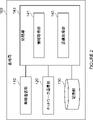
- the base station 100 includes a wireless communication unit 110, a network communication unit 120, a storage unit 130, and a processing unit 140.
- the wireless communication unit 110 wirelessly transmits and receives signals. For example, the wireless communication unit 110 receives a signal from the UE and transmits a signal to the UE.
- the network communication unit 120 receives a signal from the network and transmits the signal to the network.
- the storage unit 130 stores various information.
- the processing unit 140 provides various functions of the base station 100.
- the processing unit 140 includes an information acquisition unit 141 and a communication processing unit 143.
- the processing unit 140 may further include other components other than these components. That is, the processing unit 140 may perform operations other than the operations of these components.
- the specific operations of the information acquisition unit 141 and the communication processing unit 143 will be described in detail later.
- the processing unit 140 communicates with the UE (for example, UE 200) via the wireless communication unit 110.
- the processing unit 140 communicates with another node (for example, a node in the core network or another base station) via the network communication unit 120.
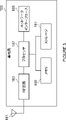
- the base station 100 includes an antenna 181, an RF circuit 183, a network interface 185, a processor 187, a memory 189 and a storage 191.
- Antenna 181 converts the signal into radio waves and radiates the radio waves into space. Further, the antenna 181 receives a radio wave in space and converts the radio wave into a signal.
- the antenna 181 may include a transmitting antenna and a receiving antenna, or may be a single antenna for transmission and reception.
- the antenna 181 may be a directional antenna or may include a plurality of antenna elements.
- the RF circuit 183 performs analog processing of signals transmitted and received via the antenna 181.
- the RF circuit 183 may include a high frequency filter, an amplifier, a modulator, a low pass filter and the like.
- the network interface 185 is, for example, a network adapter, which transmits a signal to the network and receives a signal from the network.
- the processor 187 digitally processes signals transmitted and received via the antenna 181 and the RF circuit 183.
- the digital processing includes processing of the RAN protocol stack.
- the processor 187 also processes signals transmitted and received via the network interface 185.
- the processor 187 may include a plurality of processors or may be a single processor.
- the plurality of processors may include a baseband processor that performs the digital processing and one or more processors that perform other processing.
- the memory 189 stores a program executed by the processor 187, parameters related to the program, and data related to the program.
- the memory 189 may include at least one of a ROM (Read Only Memory), an EPROM (Erasable Programmable Read Only Memory), an EEPROM (Electrically Erasable Programmable Read Only Memory), a RAM (Random Access Memory), and a flash memory. All or part of the memory 189 may be contained within the processor 187.
- Storage 191 stores various information.
- the storage 191 may include at least one of an SSD (Solid State Drive) and an HDD (Hard Disc Drive).
- the wireless communication unit 110 may be mounted by the antenna 181 and the RF circuit 183.
- the network communication unit 120 may be implemented by the network interface 185.
- the storage unit 130 may be implemented by the storage 191.
- the processing unit 140 may be implemented by the processor 187 and the memory 189.
- a part or all of the processing unit 140 may be virtualized. In other words, a part or all of the processing unit 140 may be implemented as a virtual machine. In this case, a part or all of the processing unit 140 may operate as a virtual machine on a physical machine (that is, hardware) including a processor, a memory, and the like and a hypervisor.
- a physical machine that is, hardware
- the base station 100 may include a memory for storing a program (that is, memory 189) and one or more processors (that is, a processor 187) capable of executing the program.
- the one or more processors may execute the above program to operate the processing unit 140.
- the above program may be a program for causing the processor to execute the operation of the processing unit 140.
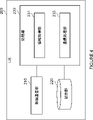
- the UE 200 includes a wireless communication unit 210, a storage unit 220, and a processing unit 230.
- the wireless communication unit 210 wirelessly transmits and receives signals. For example, the wireless communication unit 210 receives a signal from the base station and transmits a signal to the base station. For example, the wireless communication unit 210 receives a signal from another UE and transmits a signal to the other UE.
- the storage unit 220 stores various information.
- the processing unit 230 provides various functions of the UE 200.
- the processing unit 230 includes an information acquisition unit 231 and a communication processing unit 233.
- the processing unit 230 may further include other components other than these components. That is, the processing unit 230 may perform operations other than the operations of these components.
- the specific operations of the information acquisition unit 231 and the communication processing unit 233 will be described in detail later.
- the processing unit 230 communicates with a base station (for example, base station 100) or another UE via the wireless communication unit 210.
- a base station for example, base station 100
- another UE via the wireless communication unit 210.
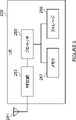
- the UE 200 includes an antenna 281, an RF circuit 283, a processor 285, a memory 287 and a storage 289.
- Antenna 281 converts the signal into radio waves and radiates the radio waves into space. Further, the antenna 281 receives a radio wave in space and converts the radio wave into a signal.
- the antenna 281 may include a transmitting antenna and a receiving antenna, or may be a single antenna for transmission and reception.
- the antenna 281 may be a directional antenna or may include a plurality of antenna elements.
- the RF circuit 283 performs analog processing of signals transmitted and received via the antenna 281.
- the RF circuit 283 may include a high frequency filter, an amplifier, a modulator, a low pass filter and the like.
- the processor 285 digitally processes signals transmitted and received via the antenna 281 and the RF circuit 283.
- the digital processing includes processing of the RAN protocol stack.
- the processor 285 may include a plurality of processors or may be a single processor.
- the plurality of processors may include a baseband processor that performs the digital processing and one or more processors that perform other processing.
- the memory 287 stores a program executed by the processor 285, parameters related to the program, and data related to the program.
- the memory 287 may include at least one of ROM, EPROM, EEPROM, RAM and flash memory. All or part of the memory 287 may be contained within the processor 285.
- the storage 289 stores various information.
- the storage 289 may include at least one of SSD and HDD.
- the wireless communication unit 210 may be mounted by the antenna 281 and the RF circuit 283.
- the storage unit 220 may be implemented by the storage 289.
- the processing unit 230 may be implemented by the processor 285 and the memory 287.
- the processing unit 230 may be implemented by a SoC (System on Chip) including a processor 285 and a memory 287.
- the SoC may include an RF circuit 283, and the wireless communication unit 210 may also be implemented by the SoC.
- the UE 200 may include a memory for storing a program (that is, memory 287) and one or more processors (that is, a processor 285) capable of executing the program.
- One or more processors may execute the above program to operate the processing unit 230.
- the above program may be a program for causing the processor to execute the operation of the processing unit 230.
- a UE with a limited bandwidth capability has a narrower maximum bandwidth than a normal UE.
- the limited bandwidth capability may be referred to as a reduced bandwidth capability, or may be referred to as a narrow bandwidth capability.
- the UE having a limited bandwidth capability may also have other restricted capabilities, simply a UE with a limited capability (or reduced capability), or RedCap (Reduced). Capability) It may be called UE.
- the other limited capabilities may include a limited number of antennas, and a UE with a limited capability may have fewer antennas than a normal UE.
- the other limited capabilities may include the limited duplex capability, and a UE with the limited capability may only communicate with half-duplex. May be good.
- the half-duplex communication may be FDD (Frequency Division Duplex) half-duplex-FDD.
- the UE having a limited bandwidth capability may have a relaxed capability.
- the mitigated capabilities may include mitigated processing capabilities, and the UE with limited bandwidth capabilities may have lower processing performance than a normal UE. ..
- RedCap UE UE with limited bandwidth capability
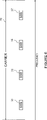
- the base station 100 (communication processing unit 143) transmits a plurality of SSBs at different frequencies in the carrier.
- transmitting SSB at a frequency means, for example, transmitting the SSB with the frequency as the center frequency of the SSB.
- the PBCH of each SSB contains a MIB.
- the MIB in the SSB contains CORESET information about CORESET.
- the CORESET is a CORESET for Type0-PDCCH (Physical Downlink Control Channel) CSS (Common Search Space) set. In other words, the CORESET is CORESET # 0.
- PDCCH for SIB1 is arranged.
- the CORESET information is controlResourceSetZero.
- the plurality of SSBs include SSBs for RedCap UE.
- the MIB in the SSB contains CORESET information (ie, controlResourceSetZero) regarding CORESET for RedCap UE.
- CORESET information ie, controlResourceSetZero
- the bandwidth of the CORESET is narrower than the bandwidth of the CORESET for a normal UE.
- the SSB 31 is an SSB for a normal UE, and the MIB in the SSB 31 contains CORESET information about CORESET for a normal UE.
- the SSB35 is an SSB for the RedCap UE, and the MIB in the SSB35 includes the CORESET information regarding the CORESET for the RedCap UE.
- the bandwidth of the CORESET for the RedCap UE is narrower than the bandwidth of the CORESET for a normal UE.
- SSB33 or SSB37 may be an SSB for RedCap UE.
- CORESET # 0 for a normal UE and CORESET # 0 for a RedCap UE can be used.
- the base station 100 (information acquisition unit 141) acquires a plurality of SIB1s corresponding to the plurality of SSBs.
- the base station 100 (communication processing unit 143) transmits the plurality of SIB1s.
- the base station 100 (communication processing unit 143) also transmits the plurality of SIB1s within the carrier.
- the base station 100 (information acquisition unit 141) transmits SIB1 corresponding to each of SSB31, SSB33, SSB35 and SSB37.
- the transmission base station 100 (information acquisition unit 141) of SIB1 for a normal UE acquires SIB1.
- the base station 100 (communication processing unit 143) transmits the SIB1.
- the SIB1 is an SIB1 corresponding to an SSB for a normal UE (that is, a SIB1 for a normal UE).
- the plurality of SIB1s include the SIB1.
- the SIB1 is a SIB1 corresponding to the SSB31. That is, the PDCCH for the SIB1 is transmitted in the CORESET determined by the CORESET information contained in the MIB in the SSB31.
- the SIB1 includes frequency information indicating the frequency at which the SSB for the RedCap UE is transmitted within the carrier.
- the frequency is an SSB frequency, and specifically, it is the 0th resource element (that is, the 0th subcarrier) in the 10th resource block in the 20RB resource block constituting the SSB. ..
- the frequency is indicated by the frequency information as ARFCN (Absolute Radio Frequency Channel Number) of the frequency.
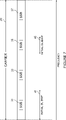
- the SIB1 corresponding to the SSB31 contains frequency information indicating the frequency at which the SSB35 is transmitted in the carrier 20.
- the UE 200 allows, for example, the UE 200 to receive the desired SSB more quickly. More specifically, for example, when the UE 200 is a RedCap UE, it becomes possible to receive the SSB for the RedCap UE more quickly. That is, even if the UE 200 receives the SSB for the normal UE and receives the SIB1 for the normal UE, it is possible to know the frequency of the SSB for the RedCap UE from the frequency information included in the SIB1. can. Therefore, the UE 200 does not need to continue searching for the frequency repeatedly, and can quickly receive the SSB for the RedCap UE.
- the SIB1 may include the frequency information for each of the two or more SSBs. This allows, for example, the UE 200 to select one SSB from two or more SSBs.
- the SIB1 includes measurement information for the SSB-based measurement for the RedCap UE.
- SIB1 corresponding to SSB31 contains measurement information for measurement based on SSB35.
- the above measurement information includes information regarding the timing of measurement. More specifically, for example, the information regarding the timing of measurement is information on the measurement timing configuration (MTC) for inter-frequency measurement. In other words, the information regarding the timing of measurement is information on the timing opportunity for the UE to measure SSB.
- MTC measurement timing configuration
- the above information regarding the timing of measurement is, for example, SSB-MTC defined in 3GPP TS 38.331 V16.2.0.
- the SIB1 does not include the above information regarding the timing of measurement, the UE assumes that the periodicity of the SSB is a predetermined period (for example, 5 ms).
- the above measurement information includes information about a block to be measured. More specifically, for example, the information about the block to be measured is the information of a set of SS (synchronization signal) blocks measured within the duration of SSB-MTC. In other words, the information about the block to be measured is the information of the SSB pattern.
- the above information regarding the block to be measured is, for example, SSB-ToMeasure defined in 3GPP TS 38.331 V16.2.0. If the SIB1 does not contain the above information about the block to be measured, the UE measures at all SSBs.
- the above measurement information includes information related to RSSI (Reference Signal Strength Indicator) measurement. More specifically, for example, the information regarding the measurement of RSSI is the information of the configuration used for the measurement of RSSI.
- the above information regarding the measurement of RSSI is, for example, SS-RSSI-Measurement defined in 3GPP TS 38.331 V16.2.0.
- the SIB1 does not include the above information regarding the measurement of RSSI, the same value as the value indicated by SS-RSSI-Measurement in SIB2 is applied.
- the measurement information includes information regarding the derivation of the SSB index transmitted by the adjacent cell.
- the UE assumes an alignment of SFNs (System Frame Numbers) and frame boundaries across cells of adjacent frequencies. More specifically, for example, the information is the same information as the drySSB-IndexFromCell defined as an information element in SIB2 in 3GPP TS 38.331 V16.2.0.
- the SIB1 does not include the above information, the UE applies the same value as indicated by the deliverSSB-IndexFromCell in the SIB2.
- the UE 200 can perform measurement based on the SSB for the RedCap UE.
- the SIB1 may include the measurement information for each of the two or more SSBs. This allows, for example, the UE 200 to make measurements based on each of two or more SSBs. Therefore, for example, the UE 200 can select an SSB having a good measurement result from the two or more SSBs.
- the SIB1 explicitly or implicitly indicates whether to allow or prohibit access to the RedCap UE.
- the SIB1 for a normal UE explicitly or implicitly indicates that the access is prohibited.
- SIB1 corresponding to SSB31 ie, SSB for normal UE
- SIB1 for normal UE explicitly or implicitly prohibits access of RedCap UE.
- the SIB1 does not include an information element indicating that the RedCap UE is allowed to access, and as a result, implicitly indicates that the access of the RedCap UE is prohibited.
- the SIB1 may include an information element indicating that the RedCap UE is prohibited from accessing (bar), and as a result, explicitly indicating that the RedCap UE is prohibited from accessing. May be good.
- the SIB1 may include an information element indicating whether the RedCap UE is allowed (allowed) or prohibited (bar) to access.
- the information element may indicate that the RedCap UE is prohibited from accessing, and as a result, the SIB1 may explicitly indicate that the RedCap UE is prohibited from accessing.
- the UE 200 can be triggered to receive the SSB for the RedCap UE based on the above frequency information.
- the transmission base station 100 (information acquisition unit 141) of the SIB1 for the RedCap UE acquires the SIB1 corresponding to the SSB for the RedCap UE (that is, the SIB1 for the RedCap UE).
- the base station 100 (communication processing unit 143) transmits the SIB1.
- the plurality of SIB1s include the SIB1.
- the SIB1 includes information on the initial downlink BWP for the RedCap UE and information on the initial uplink BWP for the RedCap UE.
- the SIB1 corresponding to the SSB35 contains information about the initial downlink BWP45 for the RedCap UE.
- the SIB1 corresponding to the SSB31 contains information about the initial downlink BWP41 for a normal UE.
- the bandwidth of the initial downlink BWP45 for RedCap UE is narrower than the bandwidth of the initial downlink BWP41 for normal UE.
- an example of the initial downlink BWP has been described, but the same applies to the initial uplink BWP.
- the initial BWP for a normal UE and the initial BWP for a RedCap UE can be used.
- SIB1 for RedCap UE may explicitly or implicitly indicate that access to a normal UE is prohibited.
- the SIB1 may include barring information that explicitly indicates that access to a normal UE is prohibited. Thereby, for example, an initial BWP dedicated to the RedCap UE can be realized.
- the UE 200 (communication processing unit 233) receives the SSB transmitted by the base station 100 in the carrier.
- the UE 200 receives one of a plurality of SSBs transmitted at different frequencies in the carrier.
- each of the plurality of SSBs is an SSB for a normal UE or an SSB for a RedCap UE.
- the UE 200 (communication processing unit 233) first receives an SSB for a normal UE.
- the UE 200 (communication processing unit 233) first receives the SSB 31 for a normal UE.
- the UE 200 receives the SIB1 corresponding to the received SSB.
- the UE 200 receives the PDCCH for SIB1 and receives the SIB1 in the CORESET determined by the CORESET information included in the MIB in the SSB.
- the UE 200 receives the SIB1 corresponding to the SSB for a normal UE (that is, the SIB1 for a normal UE), and the SIB1 includes the frequency information.
- the UE 200 (information acquisition unit 231) acquires the frequency information included in the SIB1.
- the UE 200 receives the SIB1 corresponding to the SSB31 for a normal UE.
- the SIB1 includes frequency information indicating the frequency at which the SSB35 is transmitted in the carrier 20. This allows, for example, the UE 200 to receive the SSB for the RedCap UE more quickly.
- the SIB1 also includes the measurement information
- the UE 200 information acquisition unit 231 also acquires the measurement information included in the SIB1.
- the SIB1 includes the frequency information and the measurement information for each of the two or more SSBs for the RedCap UE
- the UE 200 (communication processing unit 233) has the two or more SSBs based on the measurement information. Measurements may be made based on each of the above.
- the UE 200 (communication processing unit 233) may select one of the above two or more SSBs according to the result of the measurement. This allows, for example, the UE 200 to select an SSB with good measurement results.
- the above SIB1 explicitly or implicitly indicates that access to the RedCap UE is prohibited.
- the SIB1 indicates that the SIB1 is a SIB1 for a normal UE, not a SIB1 for a RedCap UE.
- the frequency information indicates the frequency at which the SSB for the RedCap UE is transmitted within the carrier.
- the UE 200 is a RedCap UE.
- the UE 200 (communication processing unit 233) receives the SSB for the RedCap UE based on the frequency information. Therefore, for example, the UE 200 can receive the SSB more quickly.
- the SIB1 corresponding to the SSB31 for a normal UE includes frequency information, and the frequency information indicates the frequency at which the SSB35 for the RedCap UE is transmitted in the carrier 20.
- the UE 200 (communication processing unit 233) receives the SSB35 transmitted at the frequency based on the frequency information.
- the MIB in the above SSB for the RedCap UE contains the CORESET information (ie, controlResourceSetZero) regarding the CORESET for the RedCap UE. This makes it possible, for example, for the UE 200 to use CORESET # 0 for the RedCap UE.
- the UE 200 receives the SIB1 corresponding to the SSB for the RedCap UE.
- the UE 200 receives the PDCCH for SIB1 and receives the SIB1 in the CORESET determined by the CORESET information included in the MIB in the SSB.
- the SIB1 is a SIB1 for a RedCap UE.
- the UE 200 receives the SIB1 corresponding to the SSB35 for the RedCap UE.
- the received SIB1 includes information on the initial downlink BWP for the RedCap UE and information on the initial uplink BWP for the RedCap UE. This allows, for example, the UE 200 to use the initial BWP for the RedCap UE.
- the base station 100 transmits an SSB for a normal UE in the carrier (S310).
- the SSB includes a MIB for a normal UE.
- the UE 200 receives the SSB for a normal UE and acquires the MIB for a normal UE.
- the base station 100 acquires and transmits SIB1 (that is, SIB1 for a normal UE) corresponding to the SSB for a normal UE (S320).
- SIB1 includes frequency information indicating the frequency at which the SSB for the RedCap UE is transmitted in the carrier.
- the UE 200 receives the SIB1 and acquires the frequency information included in the SIB1.
- Base station 100 transmits SSB for RedCap UE at the above frequency in the carrier (S330).
- the SSB includes a MIB for RedCap UE.
- the UE 200 receives the SSB for the RedCap UE and acquires the MIB for the RedCap UE based on the frequency information.
- the UE 200 acquires the CORESET information included in the MIB.
- the CORESET information is information about CORESET for RedCap UE.
- the base station 100 acquires and transmits SIB1 corresponding to the SSB for RedCap UE (that is, SIB1 for RedCap UE) (S340).
- the UE 200 receives the SIB1.
- the SIB1 includes information on the initial downlink BWP for the RedCap UE and information on the initial uplink BWP for the RedCap UE.
- two or more SSBs for RedCap UE may be transmitted in the carrier at different frequencies in the carrier.
- the SIB1 may include the frequency information for each of the two or more SSBs.
- the UE 200 (communication processing unit 233) receives the SSB determined according to the identification information for the UE 200 among the above two or more SSBs for the RedCap UE. good.
- the identification information may be any UE ID.
- the above identification information may be a UE ID defined in 3GPP TS 38.304 V16.2.0 (2020-09), or may be 5G-S-TMSI (Temporary Mobile Subscriber Identity).
- the UE 200 is among the above two or more SSBs for the RedCap UE according to the result of the modulo operation using the number of SSBs included in the above two or more SSBs for the RedCap UE and the above UE ID. You may select one SSB for RedCap UE from.
- the result of the modulo operation may be 0 to N-1, and the UE 200 may select the SSB corresponding to the result from the N SSBs. good.
- the smaller the calculation result the lower the frequency at which the selected SSB may be transmitted.
- the SSB transmitted at the lowest frequency among the N SSBs may be selected, and when the calculation result is N-1, N SSBs may be selected. Of the SSBs, the SSB transmitted at the highest frequency may be selected.
- UEs can be dispersed in two or more CORESET # 0s for RedCap UEs corresponding to the two or more SSBs, respectively. Further, UEs can be distributed among two or more initial BWPs for RedCap UEs corresponding to the two or more CORESET # 0s, respectively. Therefore, concentration of UEs in a specific band can be avoided.
- the SIB1 for a normal UE includes the above frequency information.
- SIB1 for RedCap UE may also include frequency information.
- the frequency information may indicate the frequency at which another SSB for the RedCap UE is transmitted within the carrier.
- RedCap UE This allows, for example, a RedCap UE to quickly receive another SSB for a RedCap UE.
- the second modification may be combined with the first modification. This makes it possible, for example, to further disperse UEs among two or more SSBs for RedCap UEs.
- the plurality of SSBs transmitted at different frequencies in the carrier are transmitted by the base station 100.
- the base station 100 may transmit the plurality of SSBs using two or more nodes.
- the base station 100 may transmit the plurality of SSBs by using two or more DUs.
- SSB31, SSB33, SSB35 and SSB37 may be transmitted by different DUs.
- two of SSB31, SSB33, SSB35 and SSB37 may be transmitted by the first DU, and the other two may be transmitted by the second DU.
- the base station 100 may be a gNB including the above two or more DUs.
- the base station 100 may be a CU connected to the above two or more DUs.
- the base station 100 may transmit the plurality of SSBs by using two or more RUs.
- SSB31, SSB33, SSB35 and SSB37 may be transmitted by different RUs.
- two of SSB31, SSB33, SSB35 and SSB37 may be transmitted by the first RU, and the other two may be transmitted by the second RU.
- the base station 100 may be a gNB including the above two or more RUs.
- the base station 100 may be a DU connected to the above two or more RUs, or may be a CU connected to the DU.
- the plurality of SSBs transmitted at different frequencies in the carrier are transmitted by the base station 100.
- the embodiments of the present disclosure are not limited to this example.
- the plurality of SSBs transmitted at different frequencies in the carrier may be transmitted by the base station 100 and another base station.
- base station 100 may transmit SSB31 and other base stations may transmit SSB35.
- each of SSB33 and SSB37 may be transmitted by the base station 100, may be transmitted by the other base station, or may be transmitted by another base station.
- Each of the base station 100 and the above other base stations may be gNB.
- each of the base station 100 and the other base stations may be a DU or a RU.
- the system 1 is a system compliant with TS of 5G or NR.
- the system 1 according to the embodiment of the present disclosure is not limited to this example.
- System 1 may be a system compliant with other TSs of 3GPP.
- the system 1 may be an LTE (Long Term Evolution), LTE-A (LTE Advanced) or 4G TS compliant system, and the base station 100 may be an eNB (evolved Node B). good.
- the system 1 may be a 3G TS-compliant system, and the base station 100 may be a NodeB.
- the system 1 may be a next-generation (eg, 6G) TS-compliant system.
- system 1 may be a system compliant with the TS of another standardization body for mobile communication.
- the steps in the process described herein do not necessarily have to be performed in chronological order in the order described in the flowchart or sequence diagram.
- the steps in the process may be executed in a different order from the order described in the flowchart or the sequence diagram, or may be executed in parallel.
- some of the steps in the process may be deleted, and additional steps may be added to the process.
- a method including the operation of one or more components of the apparatus described herein may be provided, or a program for causing a computer to perform the operation of the above components may be provided.
- a non-transitional substantive recording medium that can be read by the computer on which the program is recorded may be provided.
- such methods, programs, and computer-readable non-transitory tangible computer-readable storage medium are also included in the present disclosure.
- the user device is a mobile station, a mobile terminal, a mobile device, a mobile unit, a subscriber station, a subscriber terminal, a subscriber device, a subscriber unit, and wireless. It may be referred to by another name such as a station, a wireless terminal, a wireless device, a wireless unit, a remote station, a remote terminal, a remote device, or a remote unit.
- “transmit” may mean processing at least one layer in the protocol stack used for transmission, or the signal may be physically transmitted wirelessly or by wire. It may mean to send to.
- “transmitting” may mean a combination of processing the at least one layer and physically transmitting the signal wirelessly or by wire.
- “receive” may mean processing at least one layer in the protocol stack used for reception, or physically receive the signal wirelessly or by wire. It may mean that.
- “receive” may mean a combination of performing the processing of at least one layer and physically receiving the signal wirelessly or by wire.
- "obtain / acquire” may mean to acquire information from stored information, and to acquire information from information received from another node. It may mean that the information is acquired, or it may mean that the information is acquired by generating the information.
- the information acquisition unit (141) that acquires the system information block 1 (System Information Block 1: SIB1), and The communication processing unit (143) that transmits the SIB1 and Equipped with The SIB1 is frequency information indicating the frequency at which the SS / PBCH (Synchronization Signal / Physical Broadcast Channel) block (SSB) (35) for a user device having a limited bandwidth capability is transmitted in the carrier (20). including, Base station (100).
- Feature 2 The base station according to feature 1, wherein the SSB is one of a plurality of SSBs transmitted at different frequencies in the carrier.
- Feature 3 The base station according to feature 1 or 2, wherein the SIB 1 contains the frequency information for each of the two or more SSBs for a user device having a limited bandwidth capability.
- Feature 4 The base station according to any one of features 1 to 3, wherein the frequency information is an ARFCN (Absolute Radio Frequency Channel Number) of the frequency.
- ARFCN Absolute Radio Frequency Channel Number
- Feature 5 The base station according to any one of features 1 to 4, wherein the SIB 1 includes measurement information for measurement based on the SSB.
- the measurement information includes at least information on measurement timing, information on blocks to be measured, information on RSSI (Reference Signal Strength Indicator) measurement, and information on derivation of SSB index transmitted by adjacent cells.
- Feature 7 The base station according to feature 5 or 6, wherein the SIB 1 contains the measurement information for each of two or more SSBs for a user device having a limited bandwidth capability.
- Feature 8 The base station according to any one of features 1 to 7, wherein the SIB1 explicitly or implicitly indicates whether to allow or prohibit access to a user device having a limited bandwidth capability. ..
- Feature 10 The base station according to any one of features 1 to 9, wherein the SIB1 is an SIB1 corresponding to another SSB (31) transmitted at another frequency in the carrier.
- the Master Information Block (MIB) in the SSB is any of the features 1 to 10 including information on a control resource set (CORESET) for a user device having a limited bandwidth capability.
- CORESET control resource set
- the other SIB1 corresponding to the SSB has information on the initial downlink partial bandwidth (BWP) (45) for a user device having a limited bandwidth capability, and the limited bandwidth capability.
- BWP initial downlink partial bandwidth
- the base station according to any one of features 1 to 11, which includes information about an initial uplink BWP for user equipment.
- the communication processing unit transmits a plurality of SSBs at different frequencies in the carrier, respectively.
- the plurality of SSBs include said SSBs for user equipment with limited bandwidth capabilities.
- the base station according to any one of the features 1 to 12.
- the information acquisition unit acquires a plurality of SIB1s corresponding to the plurality of SSBs, respectively.
- the communication processing unit transmits the plurality of SIB1s, and the communication processing unit transmits the plurality of SIB1s.
- the plurality of SIB1s include the SIB1.
- the base station according to feature 13.
- System information including frequency information indicating the frequency at which the SS / PBCH (Synchronization Signal / Physical Broadcast Channel) block (SSB) (35) for user equipment with limited bandwidth capabilities is transmitted within the carrier (20).
- a communication processing unit (233) that receives block 1 (System Information Block 1: SIB1), and An information acquisition unit (231) for acquiring the frequency information included in the SIB1 and (200).
- SIB1 Sending the SIB1 and Including
- the SIB1 is frequency information indicating the frequency at which the SS / PBCH (Synchronization Signal / Physical Broadcast Channel) block (SSB) (35) for a user device having a limited bandwidth capability is transmitted in the carrier (20). including, Method.
- SSB Synchronization Signal / Physical Broadcast Channel
- System information including frequency information indicating the frequency at which the SS / PBCH (Synchronization Signal / Physical Broadcast Channel) block (SSB) (35) for user equipment with limited bandwidth capabilities is transmitted within the carrier (20).
- SSB Synchronization Signal / Physical Broadcast Channel
- SIB1 System Information Block 1: SIB1
- SIB1 Acquiring the frequency information included in the SIB1 and How to include.
- SIB1 Sending the SIB1 and Is a program to make a computer execute
- the SIB1 is frequency information indicating the frequency at which the SS / PBCH (Synchronization Signal / Physical Broadcast Channel) block (SSB) (35) for a user device having a limited bandwidth capability is transmitted in the carrier (20). including, program.
- SSB Synchronization Signal / Physical Broadcast Channel
- System information including frequency information indicating the frequency at which the SS / PBCH (Synchronization Signal / Physical Broadcast Channel) block (SSB) (35) for user equipment with limited bandwidth capabilities is transmitted within the carrier (20).
- SSB Synchronization Signal / Physical Broadcast Channel
- SIB1 System Information Block 1: SIB1
- SIB1 Acquiring the frequency information included in the SIB1 and A program that lets your computer run.
- SIB1 Sending the SIB1 and It is a non-transitional substantive recording medium that can be read by a computer that records a program for making a computer execute.
- the SIB1 is frequency information indicating the frequency at which the SS / PBCH (Synchronization Signal / Physical Broadcast Channel) block (SSB) (35) for a user device having a limited bandwidth capability is transmitted in the carrier (20).
- SSB Synchronation Signal / Physical Broadcast Channel
- System information including frequency information indicating the frequency at which the SS / PBCH (Synchronization Signal / Physical Broadcast Channel) block (SSB) (35) for user equipment with limited bandwidth capabilities is transmitted within the carrier (20).
- SSB Synchronization Signal / Physical Broadcast Channel
- Receiving Block 1 System Information Block 1: SIB1
Landscapes
- Engineering & Computer Science (AREA)
- Signal Processing (AREA)
- Computer Networks & Wireless Communication (AREA)
- Quality & Reliability (AREA)
- Physics & Mathematics (AREA)
- Electromagnetism (AREA)
- Computer Security & Cryptography (AREA)
- Mobile Radio Communication Systems (AREA)
Priority Applications (4)
| Application Number | Priority Date | Filing Date | Title |
|---|---|---|---|
| CN202180075348.5A CN116648958B (zh) | 2020-11-11 | 2021-09-29 | 基站以及用户设备 |
| EP21891517.1A EP4247080A4 (en) | 2020-11-11 | 2021-09-29 | BASE STATION AND USER DEVICE |
| US18/314,731 US12581438B2 (en) | 2020-11-11 | 2023-05-09 | Base station and user equipment |
| US19/530,466 US20260172999A1 (en) | 2020-11-11 | 2026-02-05 | Base station and user equipment |
Applications Claiming Priority (2)
| Application Number | Priority Date | Filing Date | Title |
|---|---|---|---|
| JP2020-188299 | 2020-11-11 | ||
| JP2020188299A JP7557346B2 (ja) | 2020-11-11 | 2020-11-11 | 基地局及びユーザ機器 |
Related Child Applications (1)
| Application Number | Title | Priority Date | Filing Date |
|---|---|---|---|
| US18/314,731 Continuation US12581438B2 (en) | 2020-11-11 | 2023-05-09 | Base station and user equipment |
Publications (1)
| Publication Number | Publication Date |
|---|---|
| WO2022102270A1 true WO2022102270A1 (ja) | 2022-05-19 |
Family
ID=81601133
Family Applications (1)
| Application Number | Title | Priority Date | Filing Date |
|---|---|---|---|
| PCT/JP2021/036016 Ceased WO2022102270A1 (ja) | 2020-11-11 | 2021-09-29 | 基地局及びユーザ機器 |
Country Status (5)
| Country | Link |
|---|---|
| US (2) | US12581438B2 (enExample) |
| EP (1) | EP4247080A4 (enExample) |
| JP (1) | JP7557346B2 (enExample) |
| CN (1) | CN116648958B (enExample) |
| WO (1) | WO2022102270A1 (enExample) |
Families Citing this family (4)
| Publication number | Priority date | Publication date | Assignee | Title |
|---|---|---|---|---|
| JP7714333B2 (ja) | 2020-11-10 | 2025-07-29 | 株式会社デンソー | 基地局及びユーザ機器 |
| DE112021008059T5 (de) * | 2021-08-04 | 2024-07-04 | Apple Inc. | Messungspriorisierung einer funkressourcenverwaltung für benutzergerät mit eingeschränkten funktionen |
| CN117295104A (zh) * | 2022-06-24 | 2023-12-26 | 苹果公司 | 用于自主服务小区测量的技术 |
| US20240314711A1 (en) * | 2023-03-15 | 2024-09-19 | Qualcomm Incorporated | Techniques for determining a common resource block grid with frequency multiplexed synchronization signal blocks |
Citations (3)
| Publication number | Priority date | Publication date | Assignee | Title |
|---|---|---|---|---|
| WO2019214739A1 (zh) * | 2018-05-11 | 2019-11-14 | 华为技术有限公司 | 通信方法和装置 |
| JP2020504971A (ja) * | 2017-01-04 | 2020-02-13 | サムスン エレクトロニクス カンパニー リミテッド | 無線通信システムにおけるシステム情報伝達のための装置及び方法 |
| WO2020166411A1 (ja) * | 2019-02-12 | 2020-08-20 | 三菱電機株式会社 | 通信システム、通信端末および基地局 |
Family Cites Families (12)
| Publication number | Priority date | Publication date | Assignee | Title |
|---|---|---|---|---|
| JP6765369B2 (ja) | 2015-05-15 | 2020-10-07 | シャープ株式会社 | 端末装置、基地局装置および方法 |
| EP4701119A3 (en) | 2017-01-06 | 2026-04-22 | Panasonic Intellectual Property Corporation of America | Transmission of control information |
| CN110475251A (zh) | 2018-05-09 | 2019-11-19 | 中兴通讯股份有限公司 | 一种信息获取的方法、装置、设备及计算机存储介质 |
| US11277737B2 (en) * | 2019-01-16 | 2022-03-15 | Qualcomm Incorporated | Control resource set for UEs having different bandwidth capabilities |
| WO2020167232A1 (en) * | 2019-02-13 | 2020-08-20 | Telefonaktiebolaget Lm Ericsson (Publ) | Synchronization signal and broadcast channel block in a wireless communication system |
| CN111726821B (zh) * | 2019-03-21 | 2022-04-26 | 华为技术有限公司 | 一种通信方法及设备 |
| US11082900B1 (en) * | 2020-01-28 | 2021-08-03 | PanPsy Technologies, LLC | Wireless device and wireless network processes based on wireless device type |
| WO2021155495A1 (en) * | 2020-02-04 | 2021-08-12 | Qualcomm Incorporated | Capability configurations for new radio redcap devices |
| US12610306B2 (en) * | 2020-04-08 | 2026-04-21 | Beijing Xiaomi Mobile Software Co., Ltd. | Configuration information transmission method, communication device |
| US11601986B2 (en) * | 2020-10-14 | 2023-03-07 | Lg Electronics Inc. | Method and apparatus for transmitting/receiving wireless signal in wireless communication system |
| JP7578465B2 (ja) | 2020-11-10 | 2024-11-06 | 株式会社デンソー | 基地局及びユーザ機器 |
| JP7714333B2 (ja) | 2020-11-10 | 2025-07-29 | 株式会社デンソー | 基地局及びユーザ機器 |
-
2020
- 2020-11-11 JP JP2020188299A patent/JP7557346B2/ja active Active
-
2021
- 2021-09-29 EP EP21891517.1A patent/EP4247080A4/en active Pending
- 2021-09-29 WO PCT/JP2021/036016 patent/WO2022102270A1/ja not_active Ceased
- 2021-09-29 CN CN202180075348.5A patent/CN116648958B/zh active Active
-
2023
- 2023-05-09 US US18/314,731 patent/US12581438B2/en active Active
-
2026
- 2026-02-05 US US19/530,466 patent/US20260172999A1/en active Pending
Patent Citations (3)
| Publication number | Priority date | Publication date | Assignee | Title |
|---|---|---|---|---|
| JP2020504971A (ja) * | 2017-01-04 | 2020-02-13 | サムスン エレクトロニクス カンパニー リミテッド | 無線通信システムにおけるシステム情報伝達のための装置及び方法 |
| WO2019214739A1 (zh) * | 2018-05-11 | 2019-11-14 | 华为技术有限公司 | 通信方法和装置 |
| WO2020166411A1 (ja) * | 2019-02-12 | 2020-08-20 | 三菱電機株式会社 | 通信システム、通信端末および基地局 |
Non-Patent Citations (9)
| Title |
|---|
| "3rd Generation Partnership Project; Technical Specification Group Radio Access Network; NR; NR and NG-RAN Overall Description; Stage 2 (Release 16", 3GPP TS 38.300, September 2020 (2020-09-01) |
| "3rd Generation Partnership Project; Technical Specification Group Radio Access Network; NR; Radio Resource Control (RRC) protocol specification (Release 16", 3GPP TS 38.331, September 2020 (2020-09-01) |
| 3GPP TS 38.304, September 2020 (2020-09-01) |
| 3GPP TS 38.331 |
| ERICSSON: "Revised SID on Study on support of reduced capability NR devices", 3GPP TSG RAN MEETING #89E, ELECTRONIC MEETING, 14 September 2020 (2020-09-14) |
| LENOVO, MOTOROLA MOBILITY: "Framework and Principles for RedCap", 3GPP DRAFT; R1-2008296, 3RD GENERATION PARTNERSHIP PROJECT (3GPP), MOBILE COMPETENCE CENTRE ; 650, ROUTE DES LUCIOLES ; F-06921 SOPHIA-ANTIPOLIS CEDEX ; FRANCE, vol. RAN WG1, no. E-meeting; 20201026 - 20201113, 16 October 2020 (2020-10-16), Mobile Competence Centre ; 650, route des Lucioles ; F-06921 Sophia-Antipolis Cedex ; France , XP051939524 * |
| NOKIA, NOKIA SHANGHAI BELL: "Initial access for REDCAP UEs", 3GPP DRAFT; R1-2008072, 3RD GENERATION PARTNERSHIP PROJECT (3GPP), MOBILE COMPETENCE CENTRE ; 650, ROUTE DES LUCIOLES ; F-06921 SOPHIA-ANTIPOLIS CEDEX ; FRANCE, vol. RAN WG1, no. e-Meeting; 20201026 - 20201113, 16 October 2020 (2020-10-16), Mobile Competence Centre ; 650, route des Lucioles ; F-06921 Sophia-Antipolis Cedex ; France , XP051939452 * |
| QUALCOMM INCORPORATED: "UE Complexity Reduction for NR RedCap Devices", 3GPP DRAFT; R1-2008620, 3RD GENERATION PARTNERSHIP PROJECT (3GPP), MOBILE COMPETENCE CENTRE ; 650, ROUTE DES LUCIOLES ; F-06921 SOPHIA-ANTIPOLIS CEDEX ; FRANCE, vol. RAN WG1, no. e-Meeting; 20201026 - 20201113, 17 October 2020 (2020-10-17), Mobile Competence Centre ; 650, route des Lucioles ; F-06921 Sophia-Antipolis Cedex ; France , XP051940246 * |
| See also references of EP4247080A4 |
Also Published As
| Publication number | Publication date |
|---|---|
| US20230284160A1 (en) | 2023-09-07 |
| CN116648958B (zh) | 2026-05-29 |
| JP7557346B2 (ja) | 2024-09-27 |
| JP2022077435A (ja) | 2022-05-23 |
| US12581438B2 (en) | 2026-03-17 |
| EP4247080A4 (en) | 2024-05-15 |
| EP4247080A1 (en) | 2023-09-20 |
| US20260172999A1 (en) | 2026-06-18 |
| CN116648958A (zh) | 2023-08-25 |
Similar Documents
| Publication | Publication Date | Title |
|---|---|---|
| US11057892B2 (en) | Beam configuration method and apparatus | |
| JP7557346B2 (ja) | 基地局及びユーザ機器 | |
| JP2020536429A (ja) | 通信方法及び通信装置 | |
| US20240422038A1 (en) | Resource mapping method for reference signal, terminal device, and network device | |
| EP3961961A1 (en) | Uplink data transmission method and related devices | |
| KR20210056947A (ko) | 디폴트 pucch 및 srs 빔 결정 | |
| CN110831020A (zh) | 检测dci的方法、配置pdcch的方法和通信装置 | |
| JP7714333B2 (ja) | 基地局及びユーザ機器 | |
| CN116584137B (zh) | 基站以及用户设备 | |
| KR20230006834A (ko) | 물리적 제어 채널 신뢰성 향상을 위한 제어 시그널링 | |
| CN109392138B (zh) | 一种数据传输的方法、设备和系统 | |
| WO2022153748A1 (ja) | ユーザ機器及び基地局 | |
| JP7698053B2 (ja) | 通信装置、基地局、及び通信方法 | |
| US12193034B2 (en) | Terminal and base station | |
| US20250142423A1 (en) | Wireless communication method, user equipment, and network device | |
| CN111034242B (zh) | 一种发送小区配置信息的方法及装置 | |
| US20240179773A1 (en) | Apparatus, base station, and method | |
| JP7184433B2 (ja) | 無線通信装置、方法、プログラム、及び記録媒体 | |
| WO2023013737A1 (ja) | 装置及び方法 | |
| JP6814636B2 (ja) | 端末装置、集積回路、および、通信方法 | |
| KR20180136757A (ko) | 무선 통신 시스템에서 초기 접속을 위한 장치 및 방법 | |
| KR20220054845A (ko) | 멀티-dci 기반 송신들에 대한 무선 링크 모니터링 | |
| WO2025050408A1 (zh) | 卫星通信方法及装置、通信设备、通信系统、存储介质 | |
| WO2024234154A1 (zh) | 波束管理方法及装置、通信设备、通信系统、存储介质 | |
| JP2025128427A (ja) | 装置および方法 |
Legal Events
| Date | Code | Title | Description |
|---|---|---|---|
| 121 | Ep: the epo has been informed by wipo that ep was designated in this application |
Ref document number: 21891517 Country of ref document: EP Kind code of ref document: A1 |
|
| WWE | Wipo information: entry into national phase |
Ref document number: 202180075348.5 Country of ref document: CN |
|
| WWE | Wipo information: entry into national phase |
Ref document number: 202317033590 Country of ref document: IN |
|
| REG | Reference to national code |
Ref country code: BR Ref legal event code: B01A Ref document number: 112023008898 Country of ref document: BR |
|
| NENP | Non-entry into the national phase |
Ref country code: DE |
|
| ENP | Entry into the national phase |
Ref document number: 2021891517 Country of ref document: EP Effective date: 20230612 |
|
| ENP | Entry into the national phase |
Ref document number: 112023008898 Country of ref document: BR Kind code of ref document: A2 Effective date: 20230509 |