WO2022101968A1 - 信号処理装置、信号処理システム、及び信号処理方法 - Google Patents
信号処理装置、信号処理システム、及び信号処理方法 Download PDFInfo
- Publication number
- WO2022101968A1 WO2022101968A1 PCT/JP2020/041883 JP2020041883W WO2022101968A1 WO 2022101968 A1 WO2022101968 A1 WO 2022101968A1 JP 2020041883 W JP2020041883 W JP 2020041883W WO 2022101968 A1 WO2022101968 A1 WO 2022101968A1
- Authority
- WO
- WIPO (PCT)
- Prior art keywords
- time
- data
- series data
- signal processing
- unit
- Prior art date
- Legal status (The legal status is an assumption and is not a legal conclusion. Google has not performed a legal analysis and makes no representation as to the accuracy of the status listed.)
- Ceased
Links
Images



Classifications
-
- G—PHYSICS
- G10—MUSICAL INSTRUMENTS; ACOUSTICS
- G10G—REPRESENTATION OF MUSIC; RECORDING MUSIC IN NOTATION FORM; ACCESSORIES FOR MUSIC OR MUSICAL INSTRUMENTS NOT OTHERWISE PROVIDED FOR, e.g. SUPPORTS
- G10G7/00—Other auxiliary devices or accessories, e.g. conductors' batons or separate holders for resin or strings
-
- G—PHYSICS
- G10—MUSICAL INSTRUMENTS; ACOUSTICS
- G10G—REPRESENTATION OF MUSIC; RECORDING MUSIC IN NOTATION FORM; ACCESSORIES FOR MUSIC OR MUSICAL INSTRUMENTS NOT OTHERWISE PROVIDED FOR, e.g. SUPPORTS
- G10G1/00—Means for the representation of music
-
- G—PHYSICS
- G10—MUSICAL INSTRUMENTS; ACOUSTICS
- G10H—ELECTROPHONIC MUSICAL INSTRUMENTS; INSTRUMENTS IN WHICH THE TONES ARE GENERATED BY ELECTROMECHANICAL MEANS OR ELECTRONIC GENERATORS, OR IN WHICH THE TONES ARE SYNTHESISED FROM A DATA STORE
- G10H1/00—Details of electrophonic musical instruments
- G10H1/0008—Associated control or indicating means
-
- G—PHYSICS
- G10—MUSICAL INSTRUMENTS; ACOUSTICS
- G10H—ELECTROPHONIC MUSICAL INSTRUMENTS; INSTRUMENTS IN WHICH THE TONES ARE GENERATED BY ELECTROMECHANICAL MEANS OR ELECTRONIC GENERATORS, OR IN WHICH THE TONES ARE SYNTHESISED FROM A DATA STORE
- G10H1/00—Details of electrophonic musical instruments
- G10H1/36—Accompaniment arrangements
- G10H1/361—Recording/reproducing of accompaniment for use with an external source, e.g. karaoke systems
- G10H1/368—Recording/reproducing of accompaniment for use with an external source, e.g. karaoke systems displaying animated or moving pictures synchronized with the music or audio part
-
- G—PHYSICS
- G10—MUSICAL INSTRUMENTS; ACOUSTICS
- G10H—ELECTROPHONIC MUSICAL INSTRUMENTS; INSTRUMENTS IN WHICH THE TONES ARE GENERATED BY ELECTROMECHANICAL MEANS OR ELECTRONIC GENERATORS, OR IN WHICH THE TONES ARE SYNTHESISED FROM A DATA STORE
- G10H1/00—Details of electrophonic musical instruments
- G10H1/36—Accompaniment arrangements
- G10H1/40—Rhythm
-
- G—PHYSICS
- G10—MUSICAL INSTRUMENTS; ACOUSTICS
- G10H—ELECTROPHONIC MUSICAL INSTRUMENTS; INSTRUMENTS IN WHICH THE TONES ARE GENERATED BY ELECTROMECHANICAL MEANS OR ELECTRONIC GENERATORS, OR IN WHICH THE TONES ARE SYNTHESISED FROM A DATA STORE
- G10H2210/00—Aspects or methods of musical processing having intrinsic musical character, i.e. involving musical theory or musical parameters or relying on musical knowledge, as applied in electrophonic musical tools or instruments
- G10H2210/031—Musical analysis, i.e. isolation, extraction or identification of musical elements or musical parameters from a raw acoustic signal or from an encoded audio signal
- G10H2210/076—Musical analysis, i.e. isolation, extraction or identification of musical elements or musical parameters from a raw acoustic signal or from an encoded audio signal for extraction of timing, tempo; Beat detection
-
- G—PHYSICS
- G10—MUSICAL INSTRUMENTS; ACOUSTICS
- G10H—ELECTROPHONIC MUSICAL INSTRUMENTS; INSTRUMENTS IN WHICH THE TONES ARE GENERATED BY ELECTROMECHANICAL MEANS OR ELECTRONIC GENERATORS, OR IN WHICH THE TONES ARE SYNTHESISED FROM A DATA STORE
- G10H2220/00—Input/output interfacing specifically adapted for electrophonic musical tools or instruments
- G10H2220/005—Non-interactive screen display of musical or status data
Definitions
- the present invention relates to a signal processing device, a signal processing system, and a signal processing method.
- the user may perform an operation such as playing an instrument to perform an ensemble according to time-series data such as performance data. Further, a technique for efficiently performing such an ensemble is known (see, for example, Patent Document 1).
- time-series data such as performance data
- the present invention has been made to solve the above problems, and an object thereof is to provide a signal processing device, a signal processing system, and a signal processing method capable of appropriately performing an operation according to a target timing by a user. To do.
- one aspect of the present invention includes at least a first time-series data including sound data and data generated based on the first time-series data and indicating a person's operation timing.
- a receiving unit that receives the second time-series data, a generation unit that generates a third time-series data that informs the operation timing based on the second time-series data, and the first time-series data.
- the output signal based on the first time-series data and the output based on the third time-series data so that the operation timing in the above and the operation timing notified by the third time-series data match.
- It is a signal processing device including a processing unit that outputs in synchronization with a signal.
- the user can appropriately perform the operation according to the target timing.
- FIG. 1 is a block diagram showing a signal processing system 1 according to the present embodiment.
- the signal processing system 1 includes a signal processing device 10 and a transmission device 20.
- the signal processing device 10 and the transmitting device 20 can be connected to each other via the network NW1.
- the transmission device 20 generates second time-series data including at least data indicating the operation timing of a person based on the first time-series data including sound data, and the first time-series data and the second time.
- Send with series data The first time-series data is, for example, performance data such as performance, video data of gymnastics and dance, and the like. In this embodiment, a case where the first time-series data is performance data will be described.
- the second time-series data is data generated based on the first time-series data.
- the second time-series data is, for example, beat data including time information of beat points of performance data, and is time-series data having a smaller amount of data than the first time-series data.
- the motion timing of a person is an motion performed by the user U1 (for example, playing a musical instrument or singing) in accordance with an output signal based on the first time-series data (for example, a sound signal of a performance based on performance data). It shows the timing of actions such as singing.
- the operation timing includes, for example, the start timing of the performance (the start of the whole performance, the start of the solo part, etc.), the end timing of the performance, and the like.
- the transmission device 20 includes a NW (network) communication unit 21, an input unit 22, a display unit 23, a storage unit 24, and a control unit 40.
- NW communication unit 21 is an interface unit that can be connected to the network NW1 and communicates with the signal processing device 10 via the network NW1.
- the input unit 22 is, for example, an input device such as a keyboard, a mouse, or a touch panel, and receives various inputs from the user.
- the input unit 22 is used for various operations when using the transmission device 20, such as selection and designation of performance data.
- the display unit 23 is, for example, a display device such as a liquid crystal display, and displays a video of performance data, beat data, images of various operation screens, and the like.
- the storage unit 24 stores various information used by the transmission device 20.
- the storage unit 24 includes a performance data storage unit 241 and a beat data storage unit 242.
- the performance data storage unit 241 stores performance data that is the original data for generating beat data.
- the performance data is, for example, sound data such as a musical instrument performance or a singing voice.
- the beat data storage unit 242 stores beat data indicating the time of the beat point of the performance data.
- the beat data is data corresponding to the performance data.
- the beat data may include data indicating the strength of the movement (for example, the strength of the performance).
- the control unit 40 is, for example, a processor including a CPU (Central Processing Unit) and the like, and controls the transmission device 20.
- the control unit 40 includes a beat data generation unit 41 and a transmission processing unit 42.
- the beat data generation unit 41 generates beat data based on the performance data.
- the beat data generation unit 41 stores the generated beat data in the beat data storage unit 242.
- the beat data can also be said to be compressed data generated based on the performance data.
- the transmission processing unit 42 transmits the performance data and the beat data to the signal processing device 10.
- the transmission processing unit 42 transmits performance data and beat data to the signal processing device 10 via, for example, the NW communication unit 21 and the network.
- the transmission processing unit 42 includes a performance data transmission unit 421 and a beat data transmission unit 422.
- the performance data transmission unit 421 transmits the performance data to the signal processing device 10 via the NW communication unit 21.
- the beat data transmission unit 422 transmits the beat data to the signal processing device 10 via the NW communication unit 21.
- the signal processing device 10 is a receiving device that can be connected to the network NW1 and communicate with the transmitting device 20.
- the signal processing device 10 receives the first time-series data and the second time-series data from the transmission device 20 via the network NW1.
- the signal processing device 10 generates a third time-series data that informs the operation timing based on the second time-series data.
- the signal processing device 10 has an output signal based on the first time-series data and a third time-series data so that the operation timing of the first time-series data and the operation timing of the third time-series data match. It outputs in synchronization with the output signal based on. In this embodiment, a case where the third time series data is video data will be described.
- the signal processing device 10 receives performance data and beat data.
- the signal processing device 10 generates video data showing the conductor's image based on the beat data, and outputs the conductor's image in accordance with the sound signal based on the performance data.
- the signal processing device 10 includes a NW communication unit 11, an input unit 12, a display unit 13, a speaker 14, a storage unit 15, and a control unit 30.
- the NW communication unit 11 has the same configuration and function as the NW communication unit 21.
- the NW communication unit 11 communicates with the transmission device 20 via the network NW1.
- the input unit 12 and the display unit 13 have the same configurations and functions as the input unit 22 and the display unit 23.
- the input unit 12 is used for various operations when using the signal processing device 10, such as selection and designation of various settings for generating video data of the conductor.
- the display unit 13 displays, for example, a video of the conductor, images of various operation screens, and the like.
- the speaker 14 outputs various sound signals used by the signal processing device 10.
- the speaker 14 outputs, for example, a sound signal based on performance data.
- the storage unit 15 stores various information used by the signal processing device 10.
- the storage unit 15 includes a performance data storage unit 151, a beat data storage unit 152, a generation information storage unit 153, and a video data storage unit 154.
- the performance data storage unit 151 stores the performance data received from the transmission device 20.
- the beat data storage unit 152 stores the beat data received from the transmission device 20.
- the generation information storage unit 153 stores data used when generating video data.
- the generation information storage unit 153 for example, has a learned model which is a learning result constructed in advance by using machine learning in order to generate video data showing a video of a conductor, and various types when generating video data. Stores setting information and so on.
- the trained model is a model that outputs the third time-series data when the input is the second time-series data.
- the trained model is a model that outputs video data showing a conductor's video when beat data is input.
- the video data storage unit 154 stores video data that informs the operation timing of a performance or the like. Further, the conductor's video data may include the conductor's video actually captured, or may be an illustration or an animation by computer graphics. Further, the video data of the conductor may be such that the movements of the baton and the hand are displayed.
- the control unit 30 is, for example, a processor including a CPU and the like, and controls the signal processing device 10.
- the control unit 30 includes a reception processing unit 31, a video data generation unit 32, and an output processing unit 33.
- the reception processing unit 31 is an example of a reception unit.
- the reception processing unit 31 receives performance data and beat data from the transmission device 20 via the network NW1 and the NW communication unit 11.
- the reception processing unit 31 includes a performance data reception unit 311 and a beat data reception unit 312.
- the performance data receiving unit 311 receives the performance data transmitted from the transmitting device 20 via the network NW1.
- the performance data receiving unit 311 stores the received performance data in the performance data storage unit 151.
- the beat data receiving unit 312 receives the beat data transmitted from the transmitting device 20 via the network NW1.
- the beat data receiving unit 312 stores the received beat data in the beat data storage unit 152.
- the video data generation unit 32 is an example of the generation unit.
- the video data generation unit 32 generates video data of the conductor informing the operation timing based on the beat data.
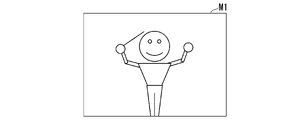
- the video data generation unit 32 acquires the beat data stored in the beat data storage unit 152, and based on the acquired beat data and the data stored in the generation information storage unit 153, the video M1 as shown in FIG. Generate video data of the conductor of.
- the video data generation unit 32 generates video data of the conductor based on the beat data by machine learning using the learning model information stored in the generation information storage unit 153.
- the video data generation unit 32 When the beat data includes data indicating the strength of the movement (for example, the strength of the performance), the video data generation unit 32 generates video data of the conductor including data indicating the strength of the movement. The video data generation unit 32 stores the generated video data of the conductor in the video data storage unit 154.
- the output processing unit 33 is an example of the processing unit.
- the output processing unit 33 includes a performance sound signal based on the performance data and a video signal of the conductor based on the video data of the conductor so that the operation timing in the performance data and the operation timing in the video data of the conductor match. Is synchronized and output.
- the output processing unit 33 outputs a performance sound signal based on the performance data from the speaker 14, synchronizes with the sound signal, and outputs the video signal of the conductor from the display unit 13 (the video M1 of the conductor in FIG. 2). See).
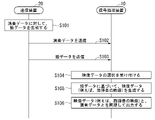
- FIG. 3 is a diagram showing an example of the operation of the signal processing system 1 according to the present embodiment.
- the transmission device 20 generates beat data for the performance data (step S101).
- the beat data generation unit 41 acquires the performance data designated by the operation of the input unit 22 from the performance data storage unit 241.
- the beat data generation unit 41 generates beat data including time information of beat points based on the performance data.
- the beat data generation unit 41 stores the generated beat data in the beat data storage unit 242.
- the beat data generation unit 41 displays the performance data and the generated beat data on the display unit 23 so that the user of the transmission device 20 can observe the performance data and confirms the beat data, and instructs the user.
- the beat data may be adjusted or modified based on the above.
- the transmission device 20 transmits the performance data to the signal processing device 10 (step S102).
- the performance data transmission unit 421 transmits the performance data acquired from the performance data storage unit 241 to the signal processing device 10.
- the performance data receiving unit 311 receives the performance data from the transmission device 20, and stores the received performance data in the performance data storage unit 151.
- the transmission device 20 transmits the beat data to the signal processing device 10 (step S103).
- the beat data transmission unit 422 transmits the beat data to the signal processing device 10.
- the beat data receiving unit 312 receives the beat data from the transmitting device 20, and stores the received beat data in the beat data storage unit 152.
- the signal processing device 10 accepts the selection of video data (step S104).
- the video data generation unit 32 receives the selection of video data (designation of settings, etc.) by the user U1 via the input unit 12.
- the signal processing device 10 may accept, for example, the designation of the conductor's video data corresponding only to the timing of the performance, the designation of the conductor's video data including the instruction of the strength of the operation, and the like.
- the signal processing device 10 generates video data showing the conductor's video based on the beat data (step S105).
- the video data generation unit 32 is based on the selection of video data (setting designation, etc.) by the user U1 from the beat data and the trained model which is the learning result of the machine learning stored in the generation information storage unit 153. Generate video data.
- the video data generation unit 32 stores the generated video data in the video data storage unit 154.
- the signal processing device 10 synchronizes the video data with the performance data and outputs the data (step S106).
- the output processing unit 33 outputs a sound signal based on the performance data from the speaker 14. Further, the output processing unit 33 outputs the conductor's video signal based on the video data, such as the video M1 in FIG. 2, from the display unit 13 in synchronization with the sound signal.
- the user U1 performs an operation such as playing a musical instrument or singing a song according to the image of the conductor output by the signal processing device 10. As a result, the user U1 can appropriately perform an operation such as playing a musical instrument according to the sound signal based on the performance data.
- the signal processing device 10 generates video data indicating the conductor corresponding to the beat data in step S105, and outputs a video signal of the conductor based on the video data in step S106. There is. This can be achieved in a variety of ways.
- the signal processing device 10 may perform step S106 once for the entire beat data, for example. Further, the signal processing device 10 may be realized by repeating the processes of steps S105 and S106.
- the signal processing device 10 includes a reception processing unit 31, a video data generation unit 32, and an output processing unit 33.
- the reception processing unit 31 receives the first time-series data including the sound data and the second time-series data generated based on the first time-series data and including at least the data indicating the operation timing of the person. ..
- the video data generation unit 32 generates a third time-series data that informs the operation timing based on the second time-series data.
- the output processing unit 33 has an output signal based on the first time-series data and a third so that the operation timing in the first time-series data and the operation timing informed by the third time-series data match. It outputs in synchronization with the output signal based on the time series data of.
- the output signal based on the third time-series data and the output signal based on the first time-series data are output in synchronization, so that the user U1 operates.
- the timing can be recognized appropriately, and the operation can be performed according to the desired timing.
- the signal processing device 10 since the signal processing device 10 according to the present embodiment receives beat data having a smaller amount of data than the first time-series data from the transmission device 20, the amount of communication data can be reduced, and the third time-series data can be used. Based on this, the delay of the output signal can be reduced.
- the first time-series data is performance data
- the operation timing includes the operation start timing
- the second time-series data is beat data indicating beats including at least the operation start timing.
- the video data generation unit 32 generates video data as a third time-series data based on the beat data.
- the output processing unit 33 outputs the video signal based on the video data in synchronization with the output signal based on the performance data.
- the user U1 can appropriately recognize, for example, the start timing of the performance. Therefore, the user U1 can appropriately play a musical instrument, sing a song, or the like by adjusting the timing to the output signal based on the performance data.
- the video data of the third time series data is the video data of the conductor. Since the conductor has a role of transmitting various operation timings, it is possible to make it easier to recognize that it is the start timing of the operation by using the image of the conductor. Therefore, the user U1 can appropriately play a musical instrument or the like in accordance with the timing of the performance data received from the transmission device 20 by visually recognizing the video signal based on the video data of the conductor.
- the video data generation unit 32 generates video data of the conductor based on the beat data by machine learning. Thereby, the signal processing device 10 according to the present embodiment can easily create the video data of the conductor from the beat data.
- the reception processing unit 31 receives the second time-series data whose amount of data is smaller than that of the first time-series data.
- the video data generation unit 32 decodes the second time-series data and generates the third time-series data.
- the signal processing device 10 receives the second time-series data whose data amount is smaller than that of the first time-series data, so that the amount of communication data is small and the first time-series data is output.
- the third time series data Prior to, the third time series data is generated and output. Therefore, the signal based on the third time-series data can be output without delaying the output of the sound signal based on the first time-series data.
- the second time-series data includes beat point data indicating the beat of the movement and data indicating the strength of the movement.
- the video data generation unit 32 generates a third time-series data including data indicating the strength of the operation.
- the user U1 can recognize the timing of the strength of the operation, and the user U1 performs a more appropriate operation including the strength of the operation according to the first time series data. It can be carried out. That is, in the signal processing device 10 according to the present embodiment, the user U1 can perform, for example, a performance with rich expressive power including strength and weakness in accordance with the output of performance data.
- the signal processing system 1 generates a second time-series data including at least data indicating the operation timing of a person based on the first time-series data including the data, and the first time-series. It includes a transmission device 20 for transmitting data and second time-series data, and a signal processing device 10. As a result, the signal processing system 1 according to the present embodiment has the same effect as the signal processing device 10, and the user U1 can appropriately operate in accordance with a target timing.
- FIG. 4 is a block diagram showing an example of the signal processing system 1a according to the present embodiment.
- the signal processing system 1a includes a plurality of signal processing devices 10a (10a-1, 10a-2, ...) And a transmission device 20a.
- the plurality of signal processing devices 10a and the transmission device 20a can be connected via the network NW1.
- the transmission device 20a transmits beat data to a plurality of signal processing devices 10a, and each of the plurality of signal processing devices 10a outputs a video of the commander based on the beat data, whereby a plurality of users.
- An example of performing an ensemble between the two will be described.
- FIG. 4 the same reference numerals are given to the same configurations as those in FIG. 1, and the description thereof will be omitted.
- each of the signal processing device 10a-1, the signal processing device 10a-2, ... Has the same configuration, and shows an arbitrary signal processing device included in the signal processing system 1a, or When not particularly distinguished, it will be described as a signal processing device 10a.
- the transmission device 20a has the same basic functions as the transmission device 20, but is different from the first embodiment in that the performance data is not transmitted to the signal processing device 10a. In the present embodiment, it is assumed that the music of the performance data is shared between the transmission device 20a and the signal processing device 10a.
- the transmission device 20a includes a NW communication unit 21, an input unit 22, a display unit 23, a storage unit 24, and a control unit 40a.
- the control unit 40a has the same basic configuration and functions as the control unit 40.
- the control unit 40a includes a beat data generation unit 41 and a transmission processing unit 42a.
- the transmission processing unit 42a is different from the transmission processing unit 42 in that it includes a beat data transmission unit 422 and does not include the performance data transmission unit 421 described above.
- the transmission processing unit 42a transmits beat data generated based on performance data of playing a predetermined musical piece to a plurality of signal processing devices 10a.
- the signal processing device 10a has the same basic functions as the signal processing device 10a, but has a point that performance data is not received from the transmission device 20a and a function for performing an ensemble between a plurality of signal processing devices 10a. The point that is done is different.
- the signal processing device 10a includes a NW communication unit 11, an input unit 12, a display unit 13, a speaker 14, a storage unit 15a, a microphone 16, and a control unit 30.
- the user U1 is a user of the signal processing device 10a-1, and the user U2 corresponds to the user of the signal processing device 10a-2.
- the storage unit 15a is different from the storage unit 15 in that the storage unit 15a includes a beat data storage unit 152, a generation information storage unit 153, and a video data storage unit 154, and does not include a performance data storage unit 151.
- the microphone 16 picks up the sound around the signal processing device 10a and outputs the picked up sound signal. At the time of ensemble, the microphone 16 outputs a sound signal picked up by the user's performance to the control unit 30a.
- the control unit 30a has the same basic configuration and functions as the control unit 30.
- the control unit 30a includes a reception processing unit 31a, a video data generation unit 32, an output processing unit 33a, and an ensemble processing unit 34.
- the reception processing unit 31a is different from the reception processing unit 31 in that the reception processing unit 31a includes the beat data reception unit 312 and does not include the performance data reception unit 311 described above.
- the output processing unit 33a outputs a video signal based on the conductor's video data generated by the video data generation unit 32 so that the timing of the performance can be visually recognized.
- the ensemble processing unit 34 receives a performance sound signal from another device (for example, another signal processing device 10a, etc.) via the NW communication unit 11 and the network NW1, and the received performance sound signal is transmitted to the speaker 14. Output. Further, the ensemble processing unit 34 transmits the performance sound signal picked up by the microphone 16 to another device (for example, another signal processing device 10a or the like) via the NW communication unit 11 and the network NW1.
- another device for example, another signal processing device 10a, etc.
- FIG. 5 describes an example of an operation in which the user U1 and the user U2 perform an ensemble using the beat data transmitted from the transmission device 20a.
- step S201 the process of step S201 is the same as the process of step S101 shown in FIG. 3, and therefore the description thereof will be omitted here.
- the transmission device 20a transmits the beat data to each signal processing device 10a (10a-1, 10a-2) (step S202).
- the beat data transmission unit 422 transmits the beat data to each signal processing device 10a.
- the beat data receiving unit 312 of the signal processing device 10a receives the beat data from the transmitting device 20a, and stores the received beat data in the beat data storage unit 152.
- step S203 Since the subsequent processing of step S203 by the signal processing device 10a-1 and the processing of step S205 by the signal processing device 10a-2 are the same as the processing of step S105 shown in FIG. 3, the description thereof is omitted here. ..
- step S204 the signal processing device 10a-1 collects the performance of the user U1 who has output the image of the conductor from the microphone 16.
- the output processing unit 33a outputs a video signal based on the conductor's video data stored by the video data storage unit 154, such as the video M1 in FIG. 2, from the display unit 13.
- the ensemble processing unit 34 acquires the sound signal (performance sound signal) of the performance of the user U1 collected by the microphone 16.
- step S206 the signal processing device 10a-2 collects the performance of the user U2, which outputs the image of the conductor, from the microphone 16.
- the output processing unit 33a outputs a video signal based on the conductor's video data stored by the video data storage unit 154, such as the video M1 in FIG. 2, from the display unit 13.
- the ensemble processing unit 34 acquires the performance sound signal of the user U2 collected by the microphone 16.
- the signal processing device 10a-1 and the signal processing device 10a-2 transmit each other's performance sound signals to execute the ensemble processing (step S207).
- the ensemble processing unit 34 of the signal processing device 10a-1 transmits the performance sound signal of the user U1 to the signal processing device 10a-2, receives the performance sound signal of the user U2 from the signal processing device 10a-2, and receives the performance sound signal of the user U2.
- the performance sound signal of the user U1 is output to the speaker 14 of the signal processing device 10a-1.
- the ensemble processing unit 34 of the signal processing device 10a-2 transmits the performance sound signal of the user U2 to the signal processing device 10a-1, and receives the performance sound signal of the user U1 from the signal processing device 10a-1. Then, the performance sound signal of the user U1 is output to the speaker 14 of the signal processing device 10a-2.
- an ensemble can be performed among a plurality of users at remote locations.
- the signal processing device 10a includes a reception processing unit 31a (reception unit), a video data generation unit 32 (generation unit), and an output processing unit 33a (processing unit).
- the reception processing unit 31a is a second time-series data (for example, a beat) that includes at least data indicating the timing of the performance, which is generated based on the performance data (first time-series data) of playing a predetermined music. Data) is received.
- the video data generation unit 32 has a third time-series data (for example, for example) that makes it possible to visually recognize the timing of the performance based on the second time-series data (for example, beat data) received by the reception processing unit 31a. (Video data of the conductor) is generated.
- the output processing unit 33a outputs an output signal (for example, a video signal) based on the third time series data (for example, the video data of the conductor) so that the timing of the performance is visually recognized.
- the signal processing device 10a and the signal processing system 1a according to the present embodiment can be appropriately played by the user in accordance with the desired timing.
- the transmission device 20a transmits beat data to the plurality of signal processing devices 10a, so that the signal processing device 10a and the signal processing system 1a according to the present embodiment can be, for example, among a plurality of users at remote locations.
- the timing of the performance can be adjusted and the ensemble can be performed without meeting in person.
- the second time series data has been described as beat data, but is not limited thereto.
- the second time-series data may be data indicating position reference information.
- the position reference information include beat point data (including advance notice), measure boundary time, measure number, time signature, rehearsal mark, movement number, and movement name. Further, it may be data indicating other information in addition to the position reference information.
- Other information includes standard tempo, speed symbol, speed change symbol, strength, strength change, idea symbol, articulation, conductor facial expression, conductor gesture information, conductor dialogue, phrase start for each part, phrase end for each part. , The start of the solo part, the end of the solo part and the end signal.
- the third time series data may include sound data in addition to the video data.
- sound data is the sound of a metronome that synchronizes with the conductor's video.
- the video data may be a metronome video instead of the conductor video, or may show a metronome video in addition to the conductor video.
- the signal processing system 1 (1a) is used for playing a musical instrument has been described, but the present invention is not limited to this, and the operation performed by the user is other than playing the musical instrument.
- it may be applied to dance, gymnastics, reading of poems according to BGM, broadcast drama, and the like.
- the present invention is not limited to this, and for example, the first time-series data is gymnastics or the like.
- the third time-series data is a signal indicating the start timing of dance or gymnastics or sound data of dialogue (for example, a shout or signal such as "loud! Or "slowly!). Or, it may be video data of an instructor (for example, a video showing facial expressions and gestures).
- beat data may be transmitted to a plurality of signal processing devices 10 to perform an ensemble or the like.
- the signal processing device 10 may include the above-mentioned ensemble processing unit 34.
- the signal processing device 10 when the signal processing device 10 outputs the output signal based on the third time-series data in synchronization with the output signal based on the first time-series data, a predetermined shift is made.
- the width may be set.
- the signal processing device 10 may be capable of shifting, pausing, or the like of the synchronized output.
- the signal processing device 10 (10a) may have the main part changed in the video of the conductor.
- the main part may be a bass instrument or a rhythm instrument.
- each configuration included in the above-mentioned signal processing system 1 (1a) has a computer system inside.
- the processing process of each configuration included in the signal processing system 1 (1a) described above is stored in a computer-readable recording medium in the form of a program, and the computer reads and executes this program to perform the processing. Is done.
- the computer-readable recording medium means a magnetic disk, a magneto-optical disk, a CD-ROM, a DVD-ROM, a semiconductor memory, or the like.
- the computer program may be distributed to the computer via a communication line, and the computer receiving the distribution may execute the program.
Landscapes
- Physics & Mathematics (AREA)
- Engineering & Computer Science (AREA)
- Acoustics & Sound (AREA)
- Multimedia (AREA)
- Electrophonic Musical Instruments (AREA)
- Auxiliary Devices For Music (AREA)
- Two-Way Televisions, Distribution Of Moving Picture Or The Like (AREA)
- Telephone Function (AREA)
- Mobile Radio Communication Systems (AREA)
Abstract
Description
図1は、本実施形態による信号処理システム1を示すブロック図である。
信号処理システム1は、信号処理装置10と、送信装置20とを備える。
信号処理装置10と送信装置20とは、ネットワークNW1を介して接続可能である。
また、人の動作タイミングとは、第1の時系列データに基づく出力信号(例えば、演奏データに基づく演奏の音信号)に合わせて、利用者U1が行う動作(例えば、楽器の演奏や歌を歌うなどの動作)のタイミングを示している。動作タイミングには、例えば、演奏の開始タイミング(全体の開始、ソロパートの開始、等)、演奏の終了タイミングなどが含まれる。
NW通信部21は、ネットワークNW1に接続可能なインターフェース部であり、ネットワークNW1を介して信号処理装置10との間の通信を行う。
表示部23は、例えば、液晶ディスプレイなどの表示装置であり、演奏データの映像や拍データ、各種操作画面の画像などを表示する。
拍データ送信部422は、拍データを、NW通信部21を介して、信号処理装置10に送信する。
信号処理装置10は、演奏データ及び拍データを受信する。信号処理装置10は、拍データに基づいて、指揮者の映像を示す映像データを生成し、演奏データに基づく音信号に合わせて、指揮者の映像を出力する。
信号処理装置10は、NW通信部11と、入力部12と、表示部13と、スピーカ14と、記憶部15と、制御部30とを備える。
拍データ記憶部152は、送信装置20から受信した拍データを記憶する。
映像データ生成部32は、生成した指揮者の映像データを、映像データ記憶部154に記憶させる。
図3は、本実施形態による信号処理システム1の動作の一例を示す図である。
まず、送信装置20は、演奏データに対して、拍データを生成する(ステップS101)。拍データ生成部41は、入力部22の操作によって指定された演奏データを、演奏データ記憶部241から取得する。拍データ生成部41は、演奏データに基づいて、拍点の時刻情報を含む拍データを生成する。拍データ生成部41は、生成した拍データを、拍データ記憶部242に記憶させる。
指揮者は種々の動作タイミングを伝える役割を有していることから、指揮者の映像を用いることで、動作の開始タイミングであることをより認識し易くすることができる。よって、利用者U1は、指揮者の映像データに基づく映像信号を視認することで、送信装置20から受信した演奏データのタイミングに合わせて、適切に、楽器などの演奏を行うことができる。
これにより、本実施形態による信号処理装置10は、拍データから、指揮者の映像データを容易に作成することができる。
これにより、本実施形態による信号処理システム1は、信号処理装置10と同様の効果を奏し、利用者U1が目的のタイミングに合わせて適切に動作を行うことができる。
次に、図面を参照して、第2の実施形態による信号処理システム1a及び信号処理装置10aについて説明する。
信号処理システム1aは、複数の信号処理装置10a(10a-1、10a-2、・・・)と、送信装置20aとを備える。複数の信号処理装置10aと送信装置20aとは、ネットワークNW1を介して接続可能である。
なお、図4において、図1と同一の構成には同一の符号を付与して、その説明を省略する。また、図4において、信号処理装置10a-1、信号処理装置10a-2、・・・のそれぞれは、同様の構成であり、信号処理システム1aが備える任意の信号処理装置を示す場合、又は、特に区別しない場合には、信号処理装置10aとして説明する。
送信装置20aは、NW通信部21と、入力部22と、表示部23と、記憶部24と、制御部40aとを備える。
送信処理部42aは、拍データ送信部422を備え、上述した演奏データ送信部421を備えない点が、送信処理部42と異なる。送信処理部42aは、予め定められた楽曲を演奏した演奏データに基づいて生成された拍データを、複数の信号処理装置10aに送信する。
信号処理装置10aは、NW通信部11と、入力部12と、表示部13と、スピーカ14と、記憶部15aと、マイク16と、制御部30とを備える。
なお、本実施形態において、利用者U1は、信号処理装置10a-1の利用者であり、利用者U2は、信号処理装置10a-2の利用者に対応する。
マイク16は、信号処理装置10aの周辺の音を収音して、収音した音信号を出力する。マイク16は、合奏の際に、利用者の演奏を収音した音信号を制御部30aに出力する。
出力処理部33aは、演奏のタイミングが視覚的に認識されるように、映像データ生成部32が生成した指揮者の映像データに基づく映像信号を出力させる。
図5では、送信装置20aから送信された拍データを利用して、利用者U1と利用者U2とで合奏を行う動作の一例について説明する。
次に、送信装置20aは、拍データを各信号処理装置10a(10a-1、10a―2)に送信する(ステップS202)。拍データ送信部422は、拍データを各信号処理装置10aに送信する。これにより、信号処理装置10aの拍データ受信部312は、送信装置20aから拍データを受信し、受信した拍データを、拍データ記憶部152に記憶させる。
このように、本実施形態による信号処理システム1aでは、離れた場所にいる複数の利用者の間で合奏を行うことができる。
第2の時系列データは、拍データとして説明したが、これに限定されない。第2の時系列データは、位置の基準情報を示すデータであってもよい。位置の基準情報としては、拍点の時刻(事前予告含む)拍点データ、小節境界の時刻、小節番号、拍子、リハーサルマーク、楽章番号及び楽章名称などがあげられる。また、位置の基準情報に加えて他の情報を示すデータであってもよい。他の情報としては、標準テンポ、速度記号、速度変化記号、強弱、強弱変化、発想記号、アーティキュレーション、指揮者表情、指揮者身振り情報、指揮者セリフ、パートごとフレーズ開始、パートごとフレーズ終了、ソロパートの開始、ソロパートの終了及び終了合図などがあげられる。
例えば、上記の各実施形態において、信号処理システム1(1a)を楽器の演奏に利用する例を説明したが、これに限定されるものではなく、利用者が行う動作は、楽器の演奏の他に、ダンスや体操、BGMに合わせた詩の朗読、放送劇などに適用してもよい。
Claims (9)
- 音データを含む第1の時系列データと、前記第1の時系列データに基づいて生成され、人の動作タイミングを示すデータを少なくとも含む第2の時系列データとを受信する受信部と、
前記第2の時系列データに基づいて、前記動作タイミングを知らせる第3の時系列データを生成する生成部と、
前記第1の時系列データにおける前記動作タイミングと、前記第3の時系列データで知らされる前記動作タイミングとが一致するように、前記第1の時系列データに基づく出力信号と、前記第3の時系列データに基づく出力信号とを同期させて出力する処理部と
を備える信号処理装置。 - 前記第1の時系列データは、演奏データであり、
前記動作タイミングには、動作開始タイミングが含まれ、
前記第2の時系列データは、前記動作開始タイミングを少なくとも含む拍を示す拍データであり、
前記生成部は、前記拍データに基づいて、映像データを、前記第3の時系列データとして生成し、
前記処理部は、前記映像データに基づく映像信号を、前記演奏データに基づく出力信号に同期させて出力する
請求項1に記載の信号処理装置。 - 前記映像データは、指揮者の映像データである
請求項2に記載の信号処理装置。 - 前記生成部は、機械学習により、前記拍データに基づいて、前記指揮者の映像データを生成する
請求項3に記載の信号処理装置。 - 前記受信部は、前記第1の時系列データよりデータ量が小さい前記第2の時系列データを受信し、前記生成部は、前記第2の時系列データをデコードして、前記第3の時系列データを生成する
請求項1から請求項4のいずれか一項に記載の信号処理装置。 - 前記第2の時系列データには、動作の拍を示す拍点データと、前記動作の強弱を示すデータとが含まれ、
前記生成部は、前記動作の強弱を指示するデータを含む前記第3の時系列データを生成する
請求項1から請求項5のいずれか一項に記載の信号処理装置。 - 予め定められた楽曲を演奏した第1の時系列データに基づいて生成された、前記演奏のタイミングを示すデータを少なくとも含む第2の時系列データを受信する受信部と、
前記受信部が受信した前記第2の時系列データに基づいて、前記演奏のタイミングを視覚的に認識可能にする第3の時系列データを生成する生成部と、
前記演奏のタイミングが視覚的に認識されるように、前記第3の時系列データに基づく出力信号を出力させる処理部と
を備える信号処理装置。 - 音データを含む第1の時系列データに基づいて、人の動作タイミングを示すデータを少なくとも含む第2の時系列データを生成し、前記第1の時系列データと前記第2の時系列データとを送信する送信装置と、信号処理装置とを備え、
前記信号処理装置は、
前記送信装置から、前記第1の時系列データと、前記第2の時系列データとを受信する受信部と、
前記第2の時系列データに基づいて、前記動作タイミングを知らせる第3の時系列データを生成する生成部と、
前記第1の時系列データにおける前記動作タイミングと、前記第3の時系列データで知らされる前記動作タイミングとが一致するように、前記第1の時系列データに基づく出力信号と、前記第3の時系列データに基づく出力信号とを同期させて出力する処理部と
を備える、信号処理システム。 - 受信部が、音データを含む第1の時系列データと、前記第1の時系列データに基づいて生成され、人の動作タイミングを示すデータを少なくとも含む第2の時系列データとを受信し、
生成部が、前記第2の時系列データに基づいて、前記動作タイミングを知らせる第3の時系列データを生成し、
処理部が、前記第1の時系列データにおける前記動作タイミングと、前記第3の時系列データで知らされる前記動作タイミングとが一致するように、前記第1の時系列データに基づく出力信号と、前記第3の時系列データに基づく出力信号とを同期させて出力する
信号処理方法。
Priority Applications (5)
| Application Number | Priority Date | Filing Date | Title |
|---|---|---|---|
| PCT/JP2020/041883 WO2022101968A1 (ja) | 2020-11-10 | 2020-11-10 | 信号処理装置、信号処理システム、及び信号処理方法 |
| JP2022561714A JP7544141B2 (ja) | 2020-11-10 | 2020-11-10 | 信号処理装置、信号処理システム、及び信号処理方法 |
| CN202080105789.0A CN116235243B (zh) | 2020-11-10 | 2020-11-10 | 信号处理装置、信号处理系统以及信号处理方法 |
| US18/311,822 US12462778B2 (en) | 2020-11-10 | 2023-05-03 | Signal processing device, signal processing system, and signal processing method |
| JP2024140863A JP7845424B2 (ja) | 2020-11-10 | 2024-08-22 | 信号処理装置、信号処理システム、及び信号処理方法 |
Applications Claiming Priority (1)
| Application Number | Priority Date | Filing Date | Title |
|---|---|---|---|
| PCT/JP2020/041883 WO2022101968A1 (ja) | 2020-11-10 | 2020-11-10 | 信号処理装置、信号処理システム、及び信号処理方法 |
Related Child Applications (1)
| Application Number | Title | Priority Date | Filing Date |
|---|---|---|---|
| US18/311,822 Continuation US12462778B2 (en) | 2020-11-10 | 2023-05-03 | Signal processing device, signal processing system, and signal processing method |
Publications (1)
| Publication Number | Publication Date |
|---|---|
| WO2022101968A1 true WO2022101968A1 (ja) | 2022-05-19 |
Family
ID=81600913
Family Applications (1)
| Application Number | Title | Priority Date | Filing Date |
|---|---|---|---|
| PCT/JP2020/041883 Ceased WO2022101968A1 (ja) | 2020-11-10 | 2020-11-10 | 信号処理装置、信号処理システム、及び信号処理方法 |
Country Status (4)
| Country | Link |
|---|---|
| US (1) | US12462778B2 (ja) |
| JP (2) | JP7544141B2 (ja) |
| CN (1) | CN116235243B (ja) |
| WO (1) | WO2022101968A1 (ja) |
Families Citing this family (1)
| Publication number | Priority date | Publication date | Assignee | Title |
|---|---|---|---|---|
| CN116235243B (zh) * | 2020-11-10 | 2025-05-13 | 雅马哈株式会社 | 信号处理装置、信号处理系统以及信号处理方法 |
Citations (2)
| Publication number | Priority date | Publication date | Assignee | Title |
|---|---|---|---|---|
| JPH06110476A (ja) * | 1992-09-25 | 1994-04-22 | Yamaha Corp | カラオケ装置 |
| JP2001175257A (ja) * | 1999-12-15 | 2001-06-29 | Kawai Musical Instr Mfg Co Ltd | 電子楽器及び記憶媒体 |
Family Cites Families (15)
| Publication number | Priority date | Publication date | Assignee | Title |
|---|---|---|---|---|
| JP3384314B2 (ja) * | 1997-12-02 | 2003-03-10 | ヤマハ株式会社 | 楽音応答画像生成システム、方法、装置、及び、そのための記録媒体 |
| JP2001134273A (ja) | 1999-11-05 | 2001-05-18 | Matsushita Electric Ind Co Ltd | カラオケ装置 |
| JP2004145221A (ja) | 2002-10-28 | 2004-05-20 | T Tone:Kk | 電子楽譜表示システム及び音楽教育支援システム |
| JP4314964B2 (ja) | 2003-10-24 | 2009-08-19 | ヤマハ株式会社 | 合奏システム |
| JP4940588B2 (ja) * | 2005-07-27 | 2012-05-30 | ソニー株式会社 | ビート抽出装置および方法、音楽同期画像表示装置および方法、テンポ値検出装置および方法、リズムトラッキング装置および方法、音楽同期表示装置および方法 |
| JP2008089849A (ja) | 2006-09-29 | 2008-04-17 | Yamaha Corp | リモート演奏システム |
| JP2008134295A (ja) | 2006-11-27 | 2008-06-12 | Megachips Lsi Solutions Inc | 合奏システム |
| US20090183623A1 (en) | 2008-01-17 | 2009-07-23 | Daniel Mueller | Band manager |
| JP4407757B2 (ja) * | 2008-02-12 | 2010-02-03 | ヤマハ株式会社 | 演奏処理装置 |
| RU2544749C1 (ru) * | 2011-01-07 | 2015-03-20 | Ямаха Корпорейшн | Устройство автоматического музыкального исполнения |
| JP6736934B2 (ja) | 2016-03-24 | 2020-08-05 | ヤマハ株式会社 | 楽曲再生装置及びプログラム |
| JP6729539B2 (ja) * | 2017-11-29 | 2020-07-22 | ヤマハ株式会社 | 音声合成方法、音声合成システムおよびプログラム |
| JP6733644B2 (ja) * | 2017-11-29 | 2020-08-05 | ヤマハ株式会社 | 音声合成方法、音声合成システムおよびプログラム |
| CN116235243B (zh) * | 2020-11-10 | 2025-05-13 | 雅马哈株式会社 | 信号处理装置、信号处理系统以及信号处理方法 |
| JP7726105B2 (ja) * | 2022-03-25 | 2025-08-20 | ヤマハ株式会社 | データ出力方法、プログラム、データ出力装置および電子楽器 |
-
2020
- 2020-11-10 CN CN202080105789.0A patent/CN116235243B/zh active Active
- 2020-11-10 WO PCT/JP2020/041883 patent/WO2022101968A1/ja not_active Ceased
- 2020-11-10 JP JP2022561714A patent/JP7544141B2/ja active Active
-
2023
- 2023-05-03 US US18/311,822 patent/US12462778B2/en active Active
-
2024
- 2024-08-22 JP JP2024140863A patent/JP7845424B2/ja active Active
Patent Citations (2)
| Publication number | Priority date | Publication date | Assignee | Title |
|---|---|---|---|---|
| JPH06110476A (ja) * | 1992-09-25 | 1994-04-22 | Yamaha Corp | カラオケ装置 |
| JP2001175257A (ja) * | 1999-12-15 | 2001-06-29 | Kawai Musical Instr Mfg Co Ltd | 電子楽器及び記憶媒体 |
Also Published As
| Publication number | Publication date |
|---|---|
| CN116235243A (zh) | 2023-06-06 |
| JP7544141B2 (ja) | 2024-09-03 |
| JP7845424B2 (ja) | 2026-04-14 |
| JPWO2022101968A1 (ja) | 2022-05-19 |
| CN116235243B (zh) | 2025-05-13 |
| JP2024152933A (ja) | 2024-10-25 |
| US12462778B2 (en) | 2025-11-04 |
| US20230274722A1 (en) | 2023-08-31 |
Similar Documents
| Publication | Publication Date | Title |
|---|---|---|
| JP6344578B2 (ja) | 電子楽器を演奏する方法 | |
| US11557269B2 (en) | Information processing method | |
| JP6457326B2 (ja) | 歌唱音声の伝送遅延に対応したカラオケシステム | |
| JP7845424B2 (ja) | 信号処理装置、信号処理システム、及び信号処理方法 | |
| KR20010016009A (ko) | 디지털 음악 파일을 악기별로 연주가 가능한 연주용파일로 변환하는 방법 및 그를 이용한 음악 연주시스템 | |
| JPH11296168A (ja) | 演奏情報評価装置、演奏情報評価方法及び記録媒体 | |
| JP2016031394A (ja) | リファレンス表示装置およびプログラム | |
| WO2023003817A1 (en) | Gesture-enabled interfaces, systems, methods, and applications for generating digital music compositions | |
| KR102087491B1 (ko) | 반주기와 연결되는 악보영상출력장치 및 이를 이용한 악보영상출력방법 | |
| CN115774539B (zh) | 和声处理方法、装置、设备及介质 | |
| JP2007093820A (ja) | 合奏システム | |
| JP5969421B2 (ja) | 楽器音出力装置及び楽器音出力プログラム | |
| JP2015138160A (ja) | キャラクタ演奏画像生成装置、キャラクタ演奏画像生成方法、キャラクタ演奏システム及びキャラクタ演奏方法 | |
| JP6073618B2 (ja) | カラオケ装置 | |
| JP5847048B2 (ja) | ピアノロール型譜表示装置、ピアノロール型譜表示プログラム、及びピアノロール型譜表示方法 | |
| JP2018063315A (ja) | 演奏システムおよび自動演奏方法 | |
| JP2006201654A (ja) | 伴奏追従システム | |
| JP2002366142A (ja) | 演奏支援装置 | |
| JP5173725B2 (ja) | 電子楽器及び楽譜情報処理プログラム | |
| JP2013068899A (ja) | 楽音再生装置及び情報処理装置、並びにプログラム | |
| KR101694365B1 (ko) | 피아노 연주 보조 방법 및 이를 실행하는 피아노 연주 보조 장치 | |
| Ignoto | Development and implementation of a vibrotactile click track to assist contemporary music conducting | |
| JP2024148186A (ja) | 表示方法、電子絵本システム及び情報処理装置 | |
| Angell | Combining Acoustic Percussion Performance with Gesture Control Electronics | |
| JP5747974B2 (ja) | 情報処理装置及びプログラム |
Legal Events
| Date | Code | Title | Description |
|---|---|---|---|
| 121 | Ep: the epo has been informed by wipo that ep was designated in this application |
Ref document number: 20961496 Country of ref document: EP Kind code of ref document: A1 |
|
| ENP | Entry into the national phase |
Ref document number: 2022561714 Country of ref document: JP Kind code of ref document: A |
|
| NENP | Non-entry into the national phase |
Ref country code: DE |
|
| 122 | Ep: pct application non-entry in european phase |
Ref document number: 20961496 Country of ref document: EP Kind code of ref document: A1 |
|
| WWG | Wipo information: grant in national office |
Ref document number: 202080105789.0 Country of ref document: CN |