WO2022097375A1 - 通信装置、制御方法、およびプログラム - Google Patents
通信装置、制御方法、およびプログラム Download PDFInfo
- Publication number
- WO2022097375A1 WO2022097375A1 PCT/JP2021/034045 JP2021034045W WO2022097375A1 WO 2022097375 A1 WO2022097375 A1 WO 2022097375A1 JP 2021034045 W JP2021034045 W JP 2021034045W WO 2022097375 A1 WO2022097375 A1 WO 2022097375A1
- Authority
- WO
- WIPO (PCT)
- Prior art keywords
- frame
- link
- transmission
- communication device
- communication
- Prior art date
- Legal status (The legal status is an assumption and is not a legal conclusion. Google has not performed a legal analysis and makes no representation as to the accuracy of the status listed.)
- Ceased
Links
Images




Classifications
-
- H—ELECTRICITY
- H04—ELECTRIC COMMUNICATION TECHNIQUE
- H04L—TRANSMISSION OF DIGITAL INFORMATION, e.g. TELEGRAPHIC COMMUNICATION
- H04L1/00—Arrangements for detecting or preventing errors in the information received
- H04L1/0078—Avoidance of errors by organising the transmitted data in a format specifically designed to deal with errors, e.g. location
- H04L1/0083—Formatting with frames or packets; Protocol or part of protocol for error control
-
- H—ELECTRICITY
- H04—ELECTRIC COMMUNICATION TECHNIQUE
- H04W—WIRELESS COMMUNICATION NETWORKS
- H04W56/00—Synchronisation arrangements
- H04W56/001—Synchronization between nodes
-
- H—ELECTRICITY
- H04—ELECTRIC COMMUNICATION TECHNIQUE
- H04W—WIRELESS COMMUNICATION NETWORKS
- H04W74/00—Wireless channel access
- H04W74/08—Non-scheduled access, e.g. ALOHA
- H04W74/0808—Non-scheduled access, e.g. ALOHA using carrier sensing, e.g. carrier sense multiple access [CSMA]
- H04W74/0816—Non-scheduled access, e.g. ALOHA using carrier sensing, e.g. carrier sense multiple access [CSMA] with collision avoidance
-
- H—ELECTRICITY
- H04—ELECTRIC COMMUNICATION TECHNIQUE
- H04L—TRANSMISSION OF DIGITAL INFORMATION, e.g. TELEGRAPHIC COMMUNICATION
- H04L1/00—Arrangements for detecting or preventing errors in the information received
- H04L1/0001—Systems modifying transmission characteristics according to link quality, e.g. power backoff
- H04L1/0006—Systems modifying transmission characteristics according to link quality, e.g. power backoff by adapting the transmission format
- H04L1/0007—Systems modifying transmission characteristics according to link quality, e.g. power backoff by adapting the transmission format by modifying the frame length
- H04L1/0008—Systems modifying transmission characteristics according to link quality, e.g. power backoff by adapting the transmission format by modifying the frame length by supplementing frame payload, e.g. with padding bits
-
- H—ELECTRICITY
- H04—ELECTRIC COMMUNICATION TECHNIQUE
- H04L—TRANSMISSION OF DIGITAL INFORMATION, e.g. TELEGRAPHIC COMMUNICATION
- H04L1/00—Arrangements for detecting or preventing errors in the information received
- H04L1/12—Arrangements for detecting or preventing errors in the information received by using return channel
- H04L1/16—Arrangements for detecting or preventing errors in the information received by using return channel in which the return channel carries supervisory signals, e.g. repetition request signals
- H04L1/18—Automatic repetition systems, e.g. Van Duuren systems
- H04L1/1867—Arrangements specially adapted for the transmitter end
- H04L1/1887—Scheduling and prioritising arrangements
-
- H—ELECTRICITY
- H04—ELECTRIC COMMUNICATION TECHNIQUE
- H04L—TRANSMISSION OF DIGITAL INFORMATION, e.g. TELEGRAPHIC COMMUNICATION
- H04L5/00—Arrangements affording multiple use of the transmission path
- H04L5/003—Arrangements for allocating sub-channels of the transmission path
- H04L5/0048—Allocation of pilot signals, i.e. of signals known to the receiver
-
- H—ELECTRICITY
- H04—ELECTRIC COMMUNICATION TECHNIQUE
- H04W—WIRELESS COMMUNICATION NETWORKS
- H04W76/00—Connection management
- H04W76/10—Connection setup
- H04W76/15—Setup of multiple wireless link connections
-
- H—ELECTRICITY
- H04—ELECTRIC COMMUNICATION TECHNIQUE
- H04W—WIRELESS COMMUNICATION NETWORKS
- H04W88/00—Devices specially adapted for wireless communication networks, e.g. terminals, base stations or access point devices
- H04W88/02—Terminal devices
- H04W88/06—Terminal devices adapted for operation in multiple networks or having at least two operational modes, e.g. multi-mode terminals
-
- H—ELECTRICITY
- H04—ELECTRIC COMMUNICATION TECHNIQUE
- H04L—TRANSMISSION OF DIGITAL INFORMATION, e.g. TELEGRAPHIC COMMUNICATION
- H04L1/00—Arrangements for detecting or preventing errors in the information received
- H04L1/12—Arrangements for detecting or preventing errors in the information received by using return channel
- H04L1/16—Arrangements for detecting or preventing errors in the information received by using return channel in which the return channel carries supervisory signals, e.g. repetition request signals
- H04L1/1607—Details of the supervisory signal
- H04L1/1614—Details of the supervisory signal using bitmaps
-
- H—ELECTRICITY
- H04—ELECTRIC COMMUNICATION TECHNIQUE
- H04L—TRANSMISSION OF DIGITAL INFORMATION, e.g. TELEGRAPHIC COMMUNICATION
- H04L5/00—Arrangements affording multiple use of the transmission path
- H04L5/0001—Arrangements for dividing the transmission path
- H04L5/0014—Three-dimensional division
- H04L5/0023—Time-frequency-space
-
- H—ELECTRICITY
- H04—ELECTRIC COMMUNICATION TECHNIQUE
- H04W—WIRELESS COMMUNICATION NETWORKS
- H04W84/00—Network topologies
- H04W84/02—Hierarchically pre-organised networks, e.g. paging networks, cellular networks, WLAN [Wireless Local Area Network] or WLL [Wireless Local Loop]
- H04W84/10—Small scale networks; Flat hierarchical networks
- H04W84/12—WLAN [Wireless Local Area Networks]
Definitions
- the IEEE 802.11 standard is known as a communication standard related to wireless LAN (Wireless Local Area Network).
- the IEEE802.11 standard is a series of standards including the IEEE802.11a / b / g / n / ac / ax standard.
- Patent Document 1 describes that communication using OFDMA (Orthogonal Frequency Division Multiple Access) is performed in the IEEE802.11ax standard. According to the wireless communication by OFDMA, a high peak throughput can be realized, and a sufficient communication speed can be secured in a congested situation.
- OFDMA Orthogonal Frequency Division Multiple Access
- the IEEE802.11be standard is being formulated as a new standard in the IEEE802.11 standard series.
- multi-link communication is being considered in which one access point (AP) establishes and communicates with one station (STA) in one or more frequency bands by establishing multiple wireless links.
- the AP establishes a connection with the STA using multiple frequency channels in at least one of the 2.4 GHz, 5 GHz, or 6 GHz frequency bands and communicates in parallel on each frequency channel. do.
- multi-link communication is possible due to the hardware restrictions of the device, there may be APs and STAs that cannot execute the reception operation on the other link while the transmission operation is being executed on the predetermined link. ..
- APs that perform multi-link communication need to periodically transmit beacons on each link. However, if the AP is a device that cannot receive on the other link while transmitting on a given link, the AP will transmit a beacon on the other link while receiving some data on the given link. Can not do it. In addition to the beacon, the AP may need to transmit group address frames that collectively transmit information to multiple devices, but such frames may not be able to be transmitted for the same reason. sell. Further, even if the timing at which the AP transmits a beacon on a predetermined link is predetermined, the timing at which the beacon is transmitted may be different depending on the degree of congestion of the link. Even in such a case, the AP operates under the constraint that the reception operation cannot be performed on the other link while the transmission operation is performed on the predetermined link.
- the present invention provides a communication control technique for preventing transmission and reception from being performed in parallel in a communication device.
- the communication device is a communication means for communicating with a partner device in accordance with the 802.11 standard series using a plurality of wireless links, and a group of the first wireless link among the plurality of wireless links.
- a predetermined frame which is an address frame
- the frame addressed to the communication device does not arrive at the second wireless link different from the first wireless link among the plurality of wireless links. It has a control means for controlling the communication means.
- FIG. 1 is a diagram showing a configuration example of a wireless communication system.
- FIG. 2 is a diagram showing an example of hardware configuration of a communication device.
- FIG. 3 is a diagram showing a functional configuration example of the communication device.
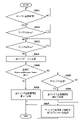
- FIG. 4A is a diagram showing an example of a processing flow executed by the access point.
- FIG. 4B is a diagram showing an example of a processing flow executed by the access point.
- FIG. 5 is a diagram showing an example of a communication flow in a wireless communication system.
- FIG. 6 is a diagram showing an example of a processing flow executed by the access point.
- FIG. 1 is a diagram showing a configuration example of a wireless communication system.
- FIG. 2 is a diagram showing an example of hardware configuration of a communication device.
- FIG. 3 is a diagram showing a functional configuration example of the communication device.
- FIG. 4A is a diagram showing an example of a processing flow executed by the access point.
- FIG. 4B is a diagram showing an example
- FIG. 1 shows a configuration example of the wireless communication system of the present embodiment.
- a wireless communication system includes a plurality of communication devices, and these communication devices transmit and receive wireless signals to and from each other to perform communication.
- an access point (AP102) constitutes a network 101
- a station (STA103) participates in the network 101.
- the STA 103 can participate in the network 101 and communicate with the AP 102.
- FIG. 1 shows a situation in which an STA 106 that does not participate in the network 101 exists. It is assumed that the STA 106 cannot communicate with the AP102, but is affected by the interference caused by the signal from the AP102, and is present at a position where the transmitted signal interferes with the communication of the AP102.
- AP102 and STA103 are configured to be capable of executing wireless communication conforming to the IEEE (Institute of Electrical and Electronics Engineers) 802.11be (EHT) standard, respectively.
- AP102 and STA103 may support the legacy standard, which is a standard prior to the IEEE802.11be standard.
- AP102 and STA103 may be configured to support at least one of the IEEE802.11a / b / g / n / ac / ax standards.
- AP102 and STA103 may support other communication standards such as Bluetooth®, NFC, UWB, ZigBee, and MBOA.
- NFC, UWB, and MBOA are acronyms for Near Field Communication, Ultra Wide Band, and Multi Band OFDM Alliance, respectively.
- UWB includes wireless USB, wireless 1394, WiNET and the like.
- AP102 and STA103 may support a communication standard for wired communication such as a wired LAN.
- the AP102 may be, for example, a wireless LAN router, a personal computer (PC), or the like, but is not limited thereto.
- the AP102 may be an information processing device such as a wireless chip capable of executing wireless communication conforming to the IEEE802.11be standard.
- the STA 103 may be, for example, a camera, a tablet, a smartphone, a PC, a mobile phone, a video camera, a headset, or the like, but is not limited thereto. Further, the STA 103 may be an information processing device such as a wireless chip capable of executing wireless communication conforming to the IEEE802.11be standard.
- AP102 and STA103 can communicate in, for example, the 2.4 Hz band, the 5 GHz band, and the 6 GHz band. Note that these frequency bands are an example, and AP102 and STA103 may be able to use frequency bands other than these, such as the 60 GHz band. In addition, AP102 and STA103 can communicate using any bandwidth of 20 MHz, 40 MHz, 80 MHz, 160 MHz, or 320 MHz. Note that this is only an example, and the AP102 and STA103 may be configured to be communicable using different bandwidths such as 240 MHz and 4 MHz.
- AP102 and STA103 can execute multi-user (MU) communication in which signals of a plurality of users are multiplexed by executing OFDMA (Orthogonal Frequency Division Multiple Access) communication conforming to the IEEE802.11be standard.
- OFDMA Orthogonal Frequency Division Multiple Access
- the usable frequency band is divided into RUs (Resource Units), and frequency resources that do not overlap are assigned to each STA in units of RUs.
- the subcarrier in the RU is configured to be orthogonal to the subcarrier in another RU. This allows the AP 102 to communicate in parallel with the plurality of STAs within the defined bandwidth.
- links established in different frequency bands may be used, or at least a part of the plurality of links may be established in a common frequency band.
- one link may be established between AP102 and STA103 in each of the 2.4 GHz band, the 5 GHz band, and the 6 GHz band, and multi-link communication may be performed.
- separate links may be established between AP102 and STA103 for 1ch and 6ch in the 2.4 GHz band, and multi-link communication may be performed using those links.
- two or more links are established between AP102 and STA103 in the 2.4 GHz band, and one or more links are established in the 5 GHz band and 6 GHz band, and multilinks are established using these links. Communication may take place.
- a link is established by using two or more of a plurality of frequency channels defined in a plurality of frequency bands, but the frequency channels of the two or more links do not overlap each other. It can be optional as long as it is.
- AP102 and STA103 can continue communication in another frequency band even when one frequency band is congested, so that the throughput is reduced. And communication delay can be prevented.
- the STA 106 can be any device that operates on a particular link among the links established between the AP 102 and the STA 103 without considering other links.
- the STA 106 does not participate in the network 101, but may participate in the network 101.
- the STA 106 may be an STA that is not compliant with IEEE802.11be, for example, only compliant with IEEE802.11b.
- the STA 106 can establish a link with the AP 102 on 6ch in the 2.4 GHz band.
- the STA 106 may be a wireless communication device that does not conform to the IEEE802.11 standard series, or a noise generation source that generates radio wave noise that is not a communication device such as a microwave oven.
- the storage unit 201 is configured to include one or more memories such as ROM and RAM, and stores various information such as a computer program for performing various operations described later and communication parameters for wireless communication.
- ROM is an acronym for Read Only Memory
- RAM is an acronym for Random Access Memory.
- the storage unit 201 is a flexible disk, a hard disk, an optical disk, a magneto-optical disk, a CD-ROM, a CD-R, a magnetic tape, a non-volatile memory card, in addition to or instead of a memory such as a ROM or a RAM.
- a storage medium such as a DVD may be included.
- the storage unit 201 may include a plurality of memories and the like.
- the control unit 202 is composed of one or more processors such as a CPU and an MPU, and controls the entire AP 102 by executing a computer program stored in the storage unit 201, for example.
- the CPU is an acronym for Central Processing Unit
- MPU is an acronym for Micro Processing Unit.
- the control unit 202 may be configured to execute a process of generating data or a signal (wireless frame) to be transmitted in communication with another communication device (for example, STA103), in addition to controlling the entire AP 102.
- the control unit 202 may be configured to execute processing such as overall control of the AP 102 by the cooperation of the computer program stored in the storage unit 201 and the OS (Operating System), for example.
- control unit 202 may include a plurality of processors such as a multi-core processor, and the plurality of processors may execute processing such as overall control of the AP 102. Further, the control unit 202 may be configured by an ASIC (integrated circuit for a specific application), a DSP (digital signal processor), an FPGA (field programmable gate array), or the like.
- ASIC integrated circuit for a specific application
- DSP digital signal processor
- FPGA field programmable gate array
- control unit 202 controls the function unit 203 to execute predetermined processing such as imaging, printing, and projection.
- the functional unit 203 is hardware for the AP 102 to execute a predetermined process.
- the functional unit 203 is an imaging unit and performs an imaging process.
- the functional unit 203 is a printing unit and performs printing processing.
- the functional unit 203 is a projection unit and performs projection processing.
- the data processed by the functional unit 203 may be data stored in the storage unit 201, or may be data communicated with another communication device (for example, STA103) via the communication unit 206 described later. ..
- the communication unit 206 controls wireless communication and IP communication in accordance with the 802.11 standard series.
- the communication unit 206 is configured to specifically control wireless communication in accordance with the IEEE802.11be standard.
- the communication unit 206 controls the antenna 207 to transmit and receive a signal for wireless communication generated by, for example, the control unit 202.
- the communication unit 206 can also control wireless communication conforming to these communication standards.
- the communication unit 206 and the antenna 207 corresponding to each communication standard may be individually prepared.
- Antenna 207 is an antenna capable of communication in the sub GHz band, 2.4 GHz band, 5 GHz band, and 6 GHz band.
- the AP 102 may have a multi-band antenna as the antenna 207, or may have a plurality of antennas corresponding to each frequency band for each frequency band. Further, when the AP 102 has a plurality of antennas 207, the AP 102 may have one communication unit 206 for the plurality of antennas, or may have a plurality of communication units 206 corresponding to each of the plurality of antennas 207. You may.
- the antenna 207 may be a single antenna or an antenna array. That is, the antenna 207 may have a plurality of antenna elements and may be configured to be capable of executing multi-antenna communication such as MIMO.
- FIG. 3 shows an example of the functional configuration of AP102.
- the STA 103 may also have a similar functional configuration.
- Each functional unit shown in FIG. 3 includes a wireless LAN control unit 301, a frame generation unit 302, a transmission time control unit 303, a beacon control unit 304, a UI control unit 305, and a storage control unit 306.
- the frame generation unit 302 generates a wireless control frame to be transmitted to another device under the control of the wireless LAN control unit 301.
- the content of the radio control frame generated by the frame generation unit 302 may be restricted based on the setting information held in the storage unit 201. Further, the content of the wireless control frame generated by the frame generation unit 302 may be changed by the user setting accepted via the UI control unit 305.
- the generated wireless control frame is transmitted to the other device via the communication unit 206 under the control of the wireless LAN control unit 301.
- the beacon control unit 304 outputs instructions regarding the timing of transmitting the beacon and information to be included in the beacon to the frame generation unit 302 and the transmission time control unit 303.
- the beacon control unit 304 When the AP 102 starts operating as an AP, the beacon control unit 304 outputs time interval setting information for periodically transmitting the beacon to the transmission time control unit 303.
- the transmission time control unit 303 can output a beacon transmission instruction to the wireless LAN control unit 301 at a time interval based on the setting information.
- the beacon control unit 304 outputs an instruction regarding information to be included in the beacon to the frame generation unit 302 as the transmission time control unit 303 outputs a beacon transmission instruction. Based on this instruction, the frame generation unit 302 acquires information from the storage unit 201 via the storage control unit 306, and generates a beacon based on the acquired information.
- the UI control unit 305 controls the input unit 204 in order to receive an operation on the AP 102 by a user (not shown), and displays the output unit 205 in order to present information such as display of an image or audio output to the user.
- the storage control unit 306 executes control processing such as storing data in the storage unit 201 and reading out the data stored in the storage unit 201.
- the group address frame is a frame mainly used when simultaneously transmitted to a plurality of STAs.
- an address with a Group Bit of 1 is set in the Destination Address (DA) or the MAC Address included in the A1 field.
- the beacon is a frame to be broadcasted, and the Group Bit is set to 1 at that time. Therefore, the beacon is a group address frame.
- the multicast address is also a group address frame because the Group Bit is set to 1 in the same manner.
- the AP 102 cannot receive the signal on the other while transmitting the signal on either the link 104 or the link 105.
- the AP102 needs to transmit a beacon in each frequency channel (each link). Therefore, in each of the following processes, while AP102 transmits a beacon (group address frame) on one link, signals addressed to AP102 from surrounding STAs or other APs are not transmitted on the frequency channel of another link.
- a beacon group address frame
- the following processing can be applied to a case where a predetermined signal whose transmission timing is predetermined, such as a predetermined cycle, should be transmitted. That is, the following processing can be applied when any predetermined frame (which may be a unicast frame) whose transmission timing is determined in advance exists in any of the links.
- the AP102 may execute the following processing on two or more links that are a part of the plurality of established links. For example, such processing may be performed when it is necessary to transmit a group address frame such as a beacon only in a part of the links and such a transmission is not necessary in other frames. In that case, AP102 may ignore frames arriving at other links, for example, while transmitting frames at some links.
- the beacon in the following description may be replaced with a FILS Discovery frame or an Integrated Probe Response frame.
- the FILS Discovery frame is a frame transmitted between the beacons and the beacon at intervals of 20 TU.
- TU is an acronym for Time Unit
- 1 TU is 1024 microseconds.
- the beacon in the following description may be replaced by another management frame such as a Probe Response frame or an Action frame.
- FIGS. 4A and 4B show an example of the flow of processing executed by AP102 in the first processing example.
- the processing of FIGS. 4A and 4B is started, for example, in response to the start of the operation of the AP 102 as an AP.
- the processing of FIGS. 4A and 4B can be realized by the control unit 202 of the AP 102 executing the program stored in the storage unit 201 of the AP 102.
- the present invention is not limited to this, and for example, a part or all of the processes of FIGS. 4A and 4B may be realized by dedicated hardware.
- the processes of FIGS. 4A and 4B are examples, and the order of each process may be changed, a part of the processes may be omitted, or other similar processes may be omitted unless the salary is reduced. May be replaced with processing.
- the AP102 first waits until the timing at which the beacon should be transmitted (hereinafter referred to as the beacon transmission time) (S401).
- the beacon transmission time can be specified, for example, based on the transmission interval setting value stored in the storage unit 201.
- the AP102 executes the beacon transmission process in all of the plurality of established links (S402).
- the above-mentioned beacon transmission time may be a predetermined timing prior to the timing at which the beacon should actually be transmitted (Target Beacon Transition Time, TBTT). Then, the AP 102 may start the preparation for transmission of the beacon at the predetermined timing, and execute the process so that the transmission of the beacon can be started in the TBTT.
- AP102 attempts to transmit the beacon at all the links at the timing when the beacon should be transmitted while observing the status of the links. Then, the AP 102 determines whether or not the beacon cannot be transmitted in any of the plurality of established links, for example, because the channel is congested (S403).
- the AP 102 is, for example, a beacon on the link of the frequency channel when the STA 106 is transmitting data to another AP on the same frequency channel as the link 104 or the link 105 and the TBTT arrives during the period during which the data is being transmitted. Is determined to be unable to be transmitted. In such a situation, the AP102 transmits the beacon at a different timing.
- the AP102 may prevent the transmission of the signal addressed to the AP102 on the first link from occurring even during the transmission of the group address frame on the second link.
- the AP102 performs a process of transmitting an additional group address frame to be transmitted by the next beacon on another link in accordance with the transmission period of the additional group address frame transmitted on the predetermined link. You may go. Further, in the adjustment process, the AP102 may transmit a frame obtained by duplicating the additional group address frame on another link in accordance with the transmission period of the additional group address frame transmitted on the predetermined link. ..
- the AP102 may secure a transmission opportunity (TXOP, Transition Opportunity) on another link during the period when the beacon or an additional group address frame is transmitted on the predetermined link.
- TXOP Transmission Opportunity
- the AP102 can secure TXOP, for example, by sending a CTS (Clear-To-Send) -to-self on another link.
- CTS-to-self is a CTS transmitted to the sender itself.
- the STA and other APs around the AP 102 cannot transmit the frame in the period specified by the CTS-to-self. This can prevent other devices from transmitting data to the AP102 while the AP102 is transmitting additional group address frames if the AP102 is unable to transmit and receive in parallel. ..
- the AP102 executes a process for aligning the transmission end times in all the links. (S407).
- the AP 102 may transmit a frame similar to the additional group address frame, or an empty group address frame, on a link other than the link on which the additional group address frame is to be transmitted.
- AP102 may transmit CTS-to-self to ensure TXOP on a link that is not scheduled to transmit additional group address frames, as described in connection with S406.
- the AP102 may transmit, for example, a unicast frame in which the MAC address of the own device or the source MAC address on another link is set as the destination. Further, the AP 102 may execute the processing of S407 by transmitting a management frame, a trigger frame, a control frame including an Ack frame, an action frame, and a data frame related to the connection. At this time, by specifying the value of the Duration field in the frame to be transmitted, TXOP can be secured only for the specified period. However, this is only an example, and TXOP may be secured by using another field or subfield different from the Duration field. Note that the AP102 may reserve TXOP in advance by using an RTS frame or a CTS-to-self frame, for example, before transmitting a beacon, not when transmitting an additional group address frame.
- S404 when AP102 determines that an additional group address frame does not exist (NO in S404), when transmitting a beacon on a link whose beacon transmission timing is deviated, a frame is transmitted on another link as well. (S408).
- the AP102 does not have to transmit the frame when the other link that does not transmit the beacon is in the NAV (Network Allocation Vector) period.
- NAV Network Allocation Vector
- a unicast frame, a group address frame, an RTS (Request-To-Send) frame, a FILS Discovery frame, etc. to be transmitted to the connected STA can be transmitted.
- empty empty data may be transmitted, or a unicast frame whose destination is set to the MAC address of AP102 itself or the source MAC address in the link may be transmitted.
- the AP102 determines whether to transmit an additional group address frame (S409).
- the AP102 determines that the additional group address frame is not transmitted (NO in S409), the AP102 transmits a beacon with the same transmission period at each link (S413), and ends the process.
- the AP102 determines whether to transmit the additional group address frame in all links (S410).
- the AP102 determines that the additional group address frame is transmitted in all the links (YES in S410)
- the AP102 transmits the additional group address frame in the same transmission period in each link (S412).
- the AP102 secures TXOP on the link that does not transmit the group address frame (S411). This allows the AP102 to prevent signals destined for the AP102 from being transmitted from multiple devices on another link while additional group address frames are transmitted on one link.
- FIG. 5 shows an example of the communication flow when the AP102 operates based on the processes of FIGS. 4A and 4B.
- the AP 102 transmits an additional group address frame following the beacon on both the link 104 and the link 105.
- the transmission timing of the beacon at the link 105 is shifted due to the congestion of the channel.
- the timing 531 after the AP 102 receives the frame from the STA 103 in the period 511 is the timing at which the beacon should be transmitted. At this time, it is assumed that the AP 102 was able to transmit the beacon 512 on the link 104 as scheduled.
- the link 105 has a NAV period 521 because, for example, the STA 106 is transmitting a data frame to another AP.
- AP102 will also be able to transmit Beacon 522 at Link 105 at timing 532 after the end of its NAV period.
- the AP 102 transmits an additional group address frame 513 after transmitting the beacon 512 on the link 104, and the link 104 and the link 105 are in a state of transmitting the frame in parallel.
- the AP 102 then transmits an additional group address frame 523 after transmitting the beacon 522 on the link 105.
- the AP 102 secures the TXOP 514 at the link 104 by, for example, any of the above-mentioned methods, in accordance with the end timing 533 of the group address frame 523 of the link 105 whose transmission end timing is later.
- the AP102 secures the transmission right for all the links, it is possible to prevent the AP102 from having to transmit the frame on one link and receive the frame on another link.
- the AP102 can transmit data to a specific STA at the time when the TXOP is secured. Therefore, the AP102 can prevent transmission and reception from occurring at the same time while efficiently utilizing the frequency resource. Further, the AP102 can select an available link and transmit a beacon even if some of the links cannot be used for reasons unrelated to wireless communication such as interference waves from a microwave oven. ..
- the transmission opportunity of the next beacon after the deviated beacon is transmitted is based on the timing and cycle in which the beacon should be transmitted. Can be determined. For example, it is assumed that the transmission cycle of the beacon is 100 TU, the beacon is first transmitted at the time of 0 TU, and then the beacon is transmitted at the time of 110 TU at a different timing. In this case, the transmission timing of the next beacon can be determined to be the time point of 200 TU with respect to the time point of 100 TU, which is the original transmission timing. Note that this is an example, and the beacon transmission timing may be determined based on another standard. For example, in the above example, it may be determined that the next beacon is transmitted at the time of 210TU based on the timing after the deviation.
- FIG. 6 shows an example of the flow of processing executed by AP102 in the second processing example.
- the process of FIG. 6 is started, for example, in response to the start of the operation of the AP 102 as an AP.
- the process of FIG. 6 can be realized by the control unit 202 of the AP 102 executing the program stored in the storage unit 201 of the AP 102.
- the present invention is not limited to this, and for example, a part or all of the processing of FIG. 6 may be realized by dedicated hardware.
- the process of FIG. 6 is an example, and the order of each process may be changed, a part of the process may be omitted, or the process may be replaced with another similar process, unless the salary is reduced. May be done.
- AP102 first waits until the timing of transmitting the beacon (S601), and when the timing of transmitting the beacon is reached (YES in S601), confirms that each link is not Busy (S602, S603). ..
- the AP102 determines that it is Busy when data is transmitted on the frequency channel used by another wireless communication device in the link, or when TXOP is secured and the NAV state is set.
- the AP102 determines that all the links are not Busy (NO in S602, NO in S603), the AP102 transmits a beacon in all of those links (S604).
- FIG. 7 shows an example of the communication flow when the AP102 operates based on the process of FIG.
- an example in which an additional group address frame is transmitted after the transmission of the beacon will be described for all the links.
- the TXOP711 by the STA 103 is terminated at the link 104, which is not Busy.
- the link 105 is Busy with a NAV period 721 set, for example because a frequency channel is used for communication by another STA 106. Therefore, since the AP 102 cannot transmit the beacon at the same time on the link 104 and the link 105, the AP 102 stands by without transmitting the beacon on both links.
- the AP102 since the AP102 transmits frames on all links, it is possible to prevent a situation in which a frame is transmitted on one link and a frame is received on another link. According to this processing example, it is possible to deal with the case where the beacon transmission timing arrives while data is being received from another STA on the link 105. That is, the AP 102 can prevent the reception of the frame at the link 105 and the transmission of the beacon at the link 104 from occurring at the same time by the same processing as the above processing.
- the above processing example is an example, and a processing different from the above processing may be performed.
- the transmission timing of the beacon of the link 104 is changed based on the NAV period at the link 105, but the present invention is not limited to this.
- the AP 102 may set the link 104 as the primary link and the link 105 as the sub-link, and execute the control of shifting the beacon transmission timing as described above only when the beacon transmission timing is shifted in the primary link. That is, when the beacon transmission timing arrives during the NAV period of the link 104, the AP 102 shifts the timing of transmitting the beacon at both the link 104 and the link 105.
- AP102 may require connection to, for example, a primary link, and allow only a communication device capable of multi-link communication to connect to a sublink.
- the AP 102 can operate as an AP for multi-link communication while considering the operation of a communication device that does not support multi-link communication operating on the link 104.
- the AP 102 does not need to transmit the beacon at the link 105 when the beacon cannot be transmitted at the beacon transmission timing, such as when the beacon transmission timing is the NAV period.
- each STA connected to the AP 102 can maintain synchronization with the AP 102 even when the beacon is received only on the link 104.
- the AP102 since there are operations that need to be executed for each link, such as a recovery operation from the power saving mode and a time blur correction operation, the AP102 transmits a beacon at a timing that can be transmitted at each link. Will be.
- the AP 102 attempts to transmit the beacon at different timings (at a timing when the transmission periods do not overlap each other) at the link 104 and the link 105. It should be noted that the AP 102 does not necessarily have to transmit the beacon so that the transmission periods of the link 104 and the link 105 do not overlap, and at least a part of the transmission periods of the beacons of the link 104 and the link 105 are allowed to overlap. It is assumed that there is.
- AP102 first waits until the beacon transmission time (S801). Then, when transmitting the beacon, the AP102 confirms the state of another link other than the link that transmits the beacon.
- the order of the confirmation procedures of different links in the following description is an example, and the order of these procedures may be interchanged.
- the AP102 first determines, for example, whether a frame is being transmitted by another link (S802). Then, when the AP102 is also transmitting a frame on another link (YES in S802), the AP102 transmits a beacon or an additional group address frame in combination with the transmission time of this other link (S810).
- various frames may be transmitted by another link, and for example, a management frame including a beacon frame, a data frame of a unicast frame, and a control frame including a trigger frame may be transmitted. Further, another link may transmit a group address frame, an action frame, or the like addressed to a multicast address or a broadcast address.
- the AP102 determines whether or not the NAV period is in the other link (NO). S803). If AP102 determines that it is not a NAV period on another link (NO in S803), until the end of the beacon transmission period (and the transmission period of that frame if there is an additional group address frame associated with the beacon). Secure TXOP (S809). By ensuring the transmission right on another link in this way, the AP102 can prevent the signal from being received on the other link during the beacon transmission period (and the transmission period of the additional group address frame). .. Since the method for securing TXOP is as described above, the description is not repeated here, and the same applies to the following.
- AP102 determines whether the NAV period of another link expires during the transmission period of the beacon (and the transmission period of the additional group address frame associated with the beacon, if any) (S805). ..
- the AP102 transmits a beacon independently on each link, it is possible to prevent a frame addressed to its own device from arriving at another link while transmitting a beacon or the like on one link.
- FIG. 9 shows an example of the communication flow when the AP102 operates based on the processes of FIGS. 8A and 8B.
- FIG. 9 shows an example of a communication flow when the NAV period expires during transmission of a beacon and an additional group address frame associated therewith.
- the NAV period 921 is set for the link 105, for example, because the frequency channel is used for communication by another STA 106.
- the link 104 when the transmission of the beacon is started at the transmission timing 931, the transmission of a series of frames is completed at the timing 933.
- the AP 102 secures the TXOP 922 at the link 105 in the period from the timing 923 to the timing 933 when the transmission right can be secured.
- the AP102 may transmit some frame in the TXOP922. In this way, the AP 102 can prevent the frame destined for its own device from arriving at the link 105 during the transmission period of the beacon 912 and the additional group address frame 913 at the link 104.
- FIG. 10 shows another example of the communication flow when the AP102 operates based on the processes of FIGS. 8A and 8B.
- FIG. 10 shows an example in which the AP 102 is receiving a data frame from the STA 103 on the link 105 at the beacon transmission time on the link 104. That is, in the example of FIG. 10, at the beacon transmission timing 1031, the TXOP1011 by the STA 103 has ended at the link 104, but the TXOP1021 by the STA103 continues at the link 105, and the AP102 receives the frame. Therefore, the AP 102 waits without transmitting the beacon until the TXOP 1021 by the STA 103 of the link 105 is completed.
- FIG. 10 shows an example in which the AP 102 is receiving a data frame from the STA 103 on the link 105 at the beacon transmission time on the link 104. That is, in the example of FIG. 10, at the beacon transmission timing 1031, the TXOP1011 by the STA 103 has ended at the link
- the STA 103 is an STA that operates in multi-link, it may be a communication device that does not support multi-link communication.
- the AP 102 starts transmitting the beacon 1012 and the additional group address frame 1013 on the link 104 at the timing 1032 when the reception of the frame from the STA 103 is completed and the transmission right can be secured on the link 105.
- the AP 102 secures the TXOP 1022 at the link 105 so that the frame addressed to the own device does not arrive.
- TXOP1022 a period until the completion of transmission of the beacon 1012 and the additional group address frame 1013 (and the frame if an additional frame is transmitted) is set on the link 104. That is, in the example of FIG.
- TXOP1022 is secured at the link 105 until the transmission completion timing 1033 of the additional group address frame 1013 at the link 104.
- the reception confirmation response of the frame can be transmitted in the TXOP1022.
- the AP 102 can prevent the frame destined for its own device from arriving at the link 105 during the transmission period of the beacon 1012 and the additional group address frame 1013 at the link 104.
- the AP102 can perform communication (beacon transmission, etc.) on another link even in an environment where interference not derived from communication such as a microwave oven exists on one link. Further, when the AP 102 is receiving data on the link on the side that does not transmit the beacon, the AP 102 can prevent the transmission and the reception from occurring at the same time by suspending the transmission. Since the timing of transmitting the beacon is different for each link as in this processing example, the degree of freedom of communication on each link can be improved. On the other hand, as in the above-mentioned processing examples 1 and 2, by aligning the beacon transmission timings, it is not necessary to secure TXOP on the other link while the beacon is being transmitted on one link. Overhead can be reduced.
- processing example 1 and processing example 3 are used when there is interference not caused by communication such as a NAV period or a microwave oven, while processing example 2 is used when a frame is received by a link on the side where a beacon is not transmitted. Can be used. This makes it possible to prevent transmission and reception from occurring in parallel in the AP 102 while effectively utilizing the advantages of each of the above-mentioned processing examples.
- AP102 and STA103 are described on the premise of channel access by EDCA (Enhanced Distributed channel Access).
- the present invention is not limited to this, and for example, the AP 102 may allow only communication based on the trigger frame for UL (uplink) communication from the connected STA.
- AP102 allocates a channel so that UL communication is not performed on another link at the timing of transmitting the beacon on one link. This makes it possible to prevent the arrival of a frame addressed to the own device from the STA during the beacon transmission period.
- the AP102 has described a method of preventing data addressed to the own device from being generated by the own device acquiring a transmission right or the like at a link that does not transmit a beacon.
- the AP 102 may operate in place of or in addition to this so as to reduce the probability that data addressed to the own device will be generated.
- the AP 102 may receive an RTS frame requesting data transmission from an STA connected to its own device.
- the AP102 identifies the period of TXOP to be secured by the STA of the source of the RTS from the value indicated in the Duration field of the RTS, and the period overlaps with the beacon transmission period on another link. Determine if you want to.
- the AP102 transmits the RTS by not transmitting the CTS which is a response to the received RTS. I can refuse. As a result, the STA cannot secure the TXOP, and the probability that the frame addressed to the AP 102 is transmitted during the beacon transmission period of the AP 102 can be reduced.
- the present invention supplies a program that realizes one or more functions of the above-described embodiment to a system or device via a network or storage medium, and one or more processors in the computer of the system or device reads and executes the program. It can also be realized by the processing to be performed. It can also be realized by a circuit (for example, ASIC) that realizes one or more functions.
- a circuit for example, ASIC
Landscapes
- Engineering & Computer Science (AREA)
- Signal Processing (AREA)
- Computer Networks & Wireless Communication (AREA)
- Quality & Reliability (AREA)
- Mobile Radio Communication Systems (AREA)
Priority Applications (4)
| Application Number | Priority Date | Filing Date | Title |
|---|---|---|---|
| KR1020237017207A KR20230093013A (ko) | 2020-11-04 | 2021-09-16 | 통신 장치, 제어 방법 및 기억 매체 |
| CN202180073337.3A CN116368878A (zh) | 2020-11-04 | 2021-09-16 | 通信装置、控制方法和程序 |
| EP21888928.5A EP4243519A4 (en) | 2020-11-04 | 2021-09-16 | COMMUNICATION DEVICE, CONTROL METHOD AND PROGRAM |
| US18/309,664 US20230269027A1 (en) | 2020-11-04 | 2023-04-28 | Communication apparatus, control method, and computer-readable storage medium |
Applications Claiming Priority (2)
| Application Number | Priority Date | Filing Date | Title |
|---|---|---|---|
| JP2020-184644 | 2020-11-04 | ||
| JP2020184644A JP7668632B2 (ja) | 2020-11-04 | 2020-11-04 | 通信装置、制御方法、およびプログラム |
Related Child Applications (1)
| Application Number | Title | Priority Date | Filing Date |
|---|---|---|---|
| US18/309,664 Continuation US20230269027A1 (en) | 2020-11-04 | 2023-04-28 | Communication apparatus, control method, and computer-readable storage medium |
Publications (1)
| Publication Number | Publication Date |
|---|---|
| WO2022097375A1 true WO2022097375A1 (ja) | 2022-05-12 |
Family
ID=81457834
Family Applications (1)
| Application Number | Title | Priority Date | Filing Date |
|---|---|---|---|
| PCT/JP2021/034045 Ceased WO2022097375A1 (ja) | 2020-11-04 | 2021-09-16 | 通信装置、制御方法、およびプログラム |
Country Status (6)
| Country | Link |
|---|---|
| US (1) | US20230269027A1 (enExample) |
| EP (1) | EP4243519A4 (enExample) |
| JP (2) | JP7668632B2 (enExample) |
| KR (1) | KR20230093013A (enExample) |
| CN (1) | CN116368878A (enExample) |
| WO (1) | WO2022097375A1 (enExample) |
Families Citing this family (2)
| Publication number | Priority date | Publication date | Assignee | Title |
|---|---|---|---|---|
| JP2024075812A (ja) * | 2021-04-01 | 2024-06-05 | シャープ株式会社 | アクセスポイント装置、ステーション装置および通信方法 |
| WO2025079211A1 (ja) * | 2023-10-12 | 2025-04-17 | 日本電信電話株式会社 | アクセスポイント及び端末装置 |
Citations (2)
| Publication number | Priority date | Publication date | Assignee | Title |
|---|---|---|---|---|
| JP2018050133A (ja) | 2016-09-20 | 2018-03-29 | キヤノン株式会社 | 通信装置、制御方法、及びプログラム |
| JP2020184644A (ja) | 2020-07-21 | 2020-11-12 | 農工大ティー・エル・オー株式会社 | 太陽電池および太陽電池の製造方法 |
Family Cites Families (2)
| Publication number | Priority date | Publication date | Assignee | Title |
|---|---|---|---|---|
| US10856203B2 (en) * | 2017-01-19 | 2020-12-01 | Qualcomm Incorporated | Signaling for link aggregation setup and reconfiguration |
| KR20240005948A (ko) * | 2021-06-10 | 2024-01-12 | 주식회사 윌러스표준기술연구소 | 멀티 링크를 사용하는 무선 통신 방법 및 이를 사용하는무선 통신 단말 |
-
2020
- 2020-11-04 JP JP2020184644A patent/JP7668632B2/ja active Active
-
2021
- 2021-09-16 WO PCT/JP2021/034045 patent/WO2022097375A1/ja not_active Ceased
- 2021-09-16 EP EP21888928.5A patent/EP4243519A4/en active Pending
- 2021-09-16 CN CN202180073337.3A patent/CN116368878A/zh active Pending
- 2021-09-16 KR KR1020237017207A patent/KR20230093013A/ko active Pending
-
2023
- 2023-04-28 US US18/309,664 patent/US20230269027A1/en active Pending
-
2025
- 2025-04-15 JP JP2025067033A patent/JP2025114588A/ja active Pending
Patent Citations (2)
| Publication number | Priority date | Publication date | Assignee | Title |
|---|---|---|---|---|
| JP2018050133A (ja) | 2016-09-20 | 2018-03-29 | キヤノン株式会社 | 通信装置、制御方法、及びプログラム |
| JP2020184644A (ja) | 2020-07-21 | 2020-11-12 | 農工大ティー・エル・オー株式会社 | 太陽電池および太陽電池の製造方法 |
Non-Patent Citations (2)
| Title |
|---|
| AU EDWARD: "Compendium of straw polls and potential changes to the Specification Framework Document ", IEEE 802.11-20/0566R87, 3 November 2020 (2020-11-03), XP055927427 * |
| See also references of EP4243519A4 |
Also Published As
| Publication number | Publication date |
|---|---|
| JP7668632B2 (ja) | 2025-04-25 |
| EP4243519A1 (en) | 2023-09-13 |
| JP2025114588A (ja) | 2025-08-05 |
| KR20230093013A (ko) | 2023-06-26 |
| EP4243519A4 (en) | 2024-10-02 |
| JP2022074532A (ja) | 2022-05-18 |
| CN116368878A (zh) | 2023-06-30 |
| US20230269027A1 (en) | 2023-08-24 |
Similar Documents
| Publication | Publication Date | Title |
|---|---|---|
| KR102402450B1 (ko) | 하위 대역 시그널링에 의한 스케줄링되고 트리거링된 mmW 발견 지원 | |
| JP7673265B2 (ja) | 通信装置、通信方法、およびプログラム | |
| JP7538636B2 (ja) | 制御装置とその制御方法、通信装置とその通信方法、およびプログラム | |
| JP7672539B2 (ja) | ステーション装置、通信方法、及び、プログラム | |
| JP2025114588A (ja) | 通信装置、制御方法、およびプログラム | |
| TW202236885A (zh) | 用於低潛時應用的無線網路配置 | |
| JP2025107418A (ja) | 通信装置、通信方法、及び、プログラム | |
| US20230209632A1 (en) | Communication apparatus, control method, and storage medium | |
| JP2025166236A (ja) | 通信装置、制御方法、およびプログラム | |
| US20230262789A1 (en) | Communication apparatus, control method, and program | |
| WO2024080230A1 (ja) | 通信装置、通信方法、およびプログラム | |
| JP7682663B2 (ja) | 通信装置、通信方法、およびプログラム | |
| WO2023221921A1 (zh) | 通信方法、装置及系统 | |
| JP2022185446A (ja) | 通信装置、制御方法、及び、プログラム | |
| EP4510768A1 (en) | Communication device and control method for same | |
| JP7638103B2 (ja) | 通信装置、通信装置の制御方法、およびプログラム | |
| US20250374204A1 (en) | Communication devices, information processing device, control methods, and non-transitory computer readable storage medium | |
| WO2024202920A1 (ja) | 通信装置、通信方法、およびプログラム |
Legal Events
| Date | Code | Title | Description |
|---|---|---|---|
| 121 | Ep: the epo has been informed by wipo that ep was designated in this application |
Ref document number: 21888928 Country of ref document: EP Kind code of ref document: A1 |
|
| ENP | Entry into the national phase |
Ref document number: 20237017207 Country of ref document: KR Kind code of ref document: A |
|
| NENP | Non-entry into the national phase |
Ref country code: DE |
|
| ENP | Entry into the national phase |
Ref document number: 2021888928 Country of ref document: EP Effective date: 20230605 |