WO2022085130A1 - シリンダヘッド粗材及びシリンダヘッドの製造方法 - Google Patents
シリンダヘッド粗材及びシリンダヘッドの製造方法 Download PDFInfo
- Publication number
- WO2022085130A1 WO2022085130A1 PCT/JP2020/039607 JP2020039607W WO2022085130A1 WO 2022085130 A1 WO2022085130 A1 WO 2022085130A1 JP 2020039607 W JP2020039607 W JP 2020039607W WO 2022085130 A1 WO2022085130 A1 WO 2022085130A1
- Authority
- WO
- WIPO (PCT)
- Prior art keywords
- film
- cylinder head
- valve seat
- side surfaces
- pair
- Prior art date
- Legal status (The legal status is an assumption and is not a legal conclusion. Google has not performed a legal analysis and makes no representation as to the accuracy of the status listed.)
- Ceased
Links
Images







Classifications
-
- F—MECHANICAL ENGINEERING; LIGHTING; HEATING; WEAPONS; BLASTING
- F01—MACHINES OR ENGINES IN GENERAL; ENGINE PLANTS IN GENERAL; STEAM ENGINES
- F01L—CYCLICALLY OPERATING VALVES FOR MACHINES OR ENGINES
- F01L3/00—Lift-valve, i.e. cut-off apparatus with closure members having at least a component of their opening and closing motion perpendicular to the closing faces; Parts or accessories thereof
- F01L3/02—Selecting particular materials for valve-members or valve-seats; Valve-members or valve-seats composed of two or more materials
-
- B—PERFORMING OPERATIONS; TRANSPORTING
- B22—CASTING; POWDER METALLURGY
- B22F—WORKING METALLIC POWDER; MANUFACTURE OF ARTICLES FROM METALLIC POWDER; MAKING METALLIC POWDER; APPARATUS OR DEVICES SPECIALLY ADAPTED FOR METALLIC POWDER
- B22F5/00—Manufacture of workpieces or articles from metallic powder characterised by the special shape of the product
- B22F5/008—Manufacture of workpieces or articles from metallic powder characterised by the special shape of the product of engine cylinder parts or of piston parts other than piston rings
-
- C—CHEMISTRY; METALLURGY
- C23—COATING METALLIC MATERIAL; COATING MATERIAL WITH METALLIC MATERIAL; CHEMICAL SURFACE TREATMENT; DIFFUSION TREATMENT OF METALLIC MATERIAL; COATING BY VACUUM EVAPORATION, BY SPUTTERING, BY ION IMPLANTATION OR BY CHEMICAL VAPOUR DEPOSITION, IN GENERAL; INHIBITING CORROSION OF METALLIC MATERIAL OR INCRUSTATION IN GENERAL
- C23C—COATING METALLIC MATERIAL; COATING MATERIAL WITH METALLIC MATERIAL; SURFACE TREATMENT OF METALLIC MATERIAL BY DIFFUSION INTO THE SURFACE, BY CHEMICAL CONVERSION OR SUBSTITUTION; COATING BY VACUUM EVAPORATION, BY SPUTTERING, BY ION IMPLANTATION OR BY CHEMICAL VAPOUR DEPOSITION, IN GENERAL
- C23C24/00—Coating starting from inorganic powder
- C23C24/02—Coating starting from inorganic powder by application of pressure only
- C23C24/04—Impact or kinetic deposition of particles
-
- F—MECHANICAL ENGINEERING; LIGHTING; HEATING; WEAPONS; BLASTING
- F01—MACHINES OR ENGINES IN GENERAL; ENGINE PLANTS IN GENERAL; STEAM ENGINES
- F01L—CYCLICALLY OPERATING VALVES FOR MACHINES OR ENGINES
- F01L3/00—Lift-valve, i.e. cut-off apparatus with closure members having at least a component of their opening and closing motion perpendicular to the closing faces; Parts or accessories thereof
- F01L3/02—Selecting particular materials for valve-members or valve-seats; Valve-members or valve-seats composed of two or more materials
- F01L3/04—Coated valve members or valve-seats
-
- F—MECHANICAL ENGINEERING; LIGHTING; HEATING; WEAPONS; BLASTING
- F01—MACHINES OR ENGINES IN GENERAL; ENGINE PLANTS IN GENERAL; STEAM ENGINES
- F01L—CYCLICALLY OPERATING VALVES FOR MACHINES OR ENGINES
- F01L2303/00—Manufacturing of components used in valve arrangements
Definitions
- the present invention relates to a cylinder head rough material used in an internal combustion engine and a method for manufacturing a cylinder head.
- Patent Document 1 A method for manufacturing a sliding member for forming a valve seat having excellent high temperature wear resistance by spraying a raw material powder such as metal onto a seated portion of an engine valve by a cold spray method is known (Patent Document 1). ).
- valve seat of an engine there is a problem that the valve seat film formed by the cold spray method is cracked or peeled off due to the impact caused by the tapping input of the intake / exhaust valve and the wear caused by repeated collisions.
- An object to be solved by the present invention is to provide a cylinder head rough material and a method for manufacturing a cylinder head having a valve seat film having excellent adhesion and high strength.
- a cross section along the radial direction of a portion to be filmed which is formed by injecting raw material powder by a cold spray method, is formed into a groove shape including a flat bottom surface and a pair of side surfaces adjacent to the bottom surface.
- the compressive residual stress of the metal film formed on the film-deposited portion by the cold spray method acts on a pair of side surfaces of the groove shape of the film-deposited portion, so that high strength with excellent adhesion can be obtained.
- a cylinder head having a metal film can be manufactured.
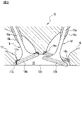
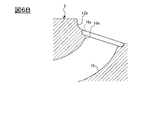
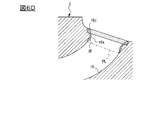
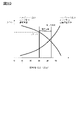
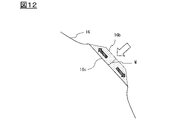
- FIG. 6 It is sectional drawing which shows the structure of the internal combustion engine which uses the cylinder head rough material which concerns on this invention, and has the cylinder head manufactured by the manufacturing method which concerns on this invention. It is an enlarged sectional view around the valve of FIG. It is a block diagram of the cold spray apparatus used in the manufacturing method of the cylinder head which concerns on this invention. It is a process drawing which shows the procedure of manufacturing the cylinder head which concerns on this invention. It is a perspective view which shows the structure of the cylinder head rough material which concerns on this invention. It is sectional drawing which shows the intake port along the VI-VI line of FIG. 6 is a cross-sectional view showing a state in which an annular valve seat portion is formed in the intake port of FIG. 6A in a cutting process.
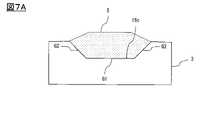
- FIG. 1 is an enlarged cross-sectional view (No. 1) showing an annular valve seat portion along the line VII-VII of FIG. 6F.
- FIG. 2 is an enlarged cross-sectional view (No. 2) showing an annular valve seat portion along the line VII-VII of FIG. 6F.
- FIG. 6 is an enlarged cross-sectional view showing an annular valve seat portion along the line VII-VII of FIG.
- FIG. 6F is a sectional view illustrating a dihedral angle (groove angle) in the groove shape of the annular valve seat portion. It is an enlarged sectional view which shows the part VIII of FIG. 6E which shows the film formation state of the valve seat film of the cylinder head rough material which concerns on this invention. It is an enlarged sectional view which shows the film formation state of the valve seat film of the cylinder head rough material which concerns on a comparative example. It is a graph which shows the relationship between the stress acting on the valve seat film of the cylinder head rough material which concerns on this invention, and the dihedral angle (groove angle) in the groove shape of an annular valve seat part.
- FIG. 1 is a cross-sectional view of an internal combustion engine 1 and mainly shows a configuration around a cylinder head.
- the internal combustion engine 1 includes a cylinder block 11 and a cylinder head 12 assembled on the upper part of the cylinder block 11.
- the internal combustion engine 1 is, for example, an in-line 4-cylinder gasoline engine, and the cylinder block 11 has four cylinders 11a arranged in the depth direction of the drawing.
- Each cylinder 11a accommodates a piston 13 that reciprocates in the vertical direction in the drawing, and each piston 13 is connected to a crankshaft 14 extending in the depth direction of the drawing via a connecting rod 13a.
- the combustion chamber 15 is a space for burning a mixture of fuel and intake air, and is composed of a recess 12b of the cylinder head 12, a top surface 13b of the piston 13, and an inner peripheral surface of the cylinder 11a.
- the cylinder head 12 includes an intake port 16 that communicates the combustion chamber 15 with one side surface 12c of the cylinder head 12.
- the intake port 16 has a substantially cylindrical shape that is bent, and guides intake air from an intake manifold (not shown) connected to the side surface 12c into the combustion chamber 15.
- the cylinder head 12 includes an exhaust port 17 that communicates the combustion chamber 15 with the other side surface 12d of the cylinder head 12.
- the exhaust port 17 has a substantially cylindrical shape that is bent like the intake port 16, and exhausts the exhaust generated in the combustion chamber 15 to an exhaust manifold (not shown) connected to the side surface 12d.
- the internal combustion engine 1 of the present embodiment includes two intake ports 16 and two exhaust ports 17 for one cylinder 11a.
- the cylinder head 12 includes an intake valve 18 that opens and closes the intake port 16 with respect to the combustion chamber 15, and an exhaust valve 19 that opens and closes the exhaust port 17 with respect to the combustion chamber 15.
- Each of the intake valve 18 and the exhaust valve 19 includes round bar-shaped valve stems 18a and 19a, and disk-shaped valve heads 18b and 19b provided at the tips of the valve stems 18a and 19a.
- the valve stems 18a and 19a are slidably inserted into the substantially cylindrical valve guides 18c and 19c assembled to the cylinder head 12. As a result, each of the intake valve 18 and the exhaust valve 19 can move with respect to the combustion chamber 15 along the axial direction of the valve stems 18a and 19a.
- FIG. 2 shows an enlarged view of the communication portion between the combustion chamber 15 and the intake port 16 and the exhaust port 17.
- the intake port 16 is provided with a substantially circular opening 16a in a portion communicating with the combustion chamber 15.
- An annular valve seat film 16b that abuts on the valve head 18b of the intake valve 18 is formed at the annular edge portion (seat portion of the valve) of the opening 16a. Then, when the intake valve 18 moves upward along the axial direction of the valve stem 18a, the upper surface of the valve head 18b abuts on the valve seat film 16b and closes the intake port 16. On the contrary, when the intake valve 18 moves downward along the axial direction of the valve stem 18a, a gap is formed between the upper surface of the valve head 18b and the valve seat film 16b to open the intake port 16.
- the exhaust port 17 is provided with a substantially circular opening 17a in a portion communicating with the combustion chamber 15, and the valve head of the exhaust valve 19 is provided at the annular edge portion (seat portion of the valve) of the opening 17a.
- An annular valve seat film 17b that abuts on 19b is formed. Then, when the exhaust valve 19 moves upward along the axial direction of the valve stem 19a, the upper surface of the valve head 19b abuts on the valve seat membrane 17b and closes the exhaust port 17. On the contrary, when the exhaust valve 19 moves downward along the axial direction of the valve stem 19a, a gap is formed between the upper surface of the valve head 19b and the valve seat membrane 17b to open the exhaust port 17.
- the diameter of the opening 16a of the intake port 16 is set to be larger than the diameter of the opening 17a of the exhaust port 17.
- the valve seat films 16b and 17b are formed directly on the annular edges of the openings 16a and 17a of the cylinder head 12, that is, the seating portion of the valve by the cold spray method.
- a working gas whose temperature is lower than the melting point or softening point of the raw material powder is used as a supersonic flow, and the raw material powder conveyed by the conveyed gas is charged into the working gas and injected from the tip of the nozzle to form a solid phase.
- the film is formed by colliding with the base material in the state as it is and by plastic deformation of the raw material powder.
- this cold spray method can obtain a dense film without oxidation in the atmosphere and has less thermal effect on the material particles, so that thermal deterioration is suppressed and the film is formed. It has the characteristics that the film speed is high, the film can be thickened, and the adhesion efficiency is high. In particular, since the film formation speed is high and a thick film can be formed, it is suitable for use as a structural material such as valve seat films 16b and 17b of an internal combustion engine 1.
- FIG. 3 is a diagram schematically showing a cold spray device 2 used for forming the valve seat films 16b and 17b.
- the gas supply unit 21 for supplying the working gas and the transport gas, the raw material powder supply unit 22 for supplying the raw material powders of the valve seat films 16b and 17b, and the raw material powder are operated below the melting point. It includes a spray gun 23 that injects gas as a supersonic flow, and a refrigerant circulation circuit 27 that cools the nozzle 23d.
- the gas supply unit 21 includes a compressed gas cylinder 21a, a working gas line 21b, and a transport gas line 21c.
- the working gas line 21b and the transport gas line 21c are provided with a pressure regulator 21d, a flow rate control valve 21e, a flow meter 21f, and a pressure gauge 21g, respectively.
- the pressure regulator 21d, the flow rate control valve 21e, the flow meter 21f, and the pressure gauge 21g are used to adjust the respective pressures and flow rates of the working gas and the transport gas from the compressed gas cylinder 21a.
- a heater 21i such as a tape heater is installed in the working gas line 21b, and the heater 21i heats the working gas line 21b by supplying electric power from the power source 21h via the power supply lines 21j and 21j. ..
- the working gas is heated to a temperature lower than the melting point or softening point of the raw material powder by the heater 21i, and then introduced into the chamber 23a of the spray gun 23.
- a pressure gauge 23b and a thermometer 23c are installed in the chamber 23a, and the pressure value and the temperature value detected via the respective signal lines 23g and 23h are output to a controller (not shown) to control the pressure and temperature feedback. It is offered to.
- the raw material powder supply unit 22 includes a raw material powder supply device 22a, a measuring instrument 22b attached to the device, and a raw material powder supply line 22c.
- the transport gas from the compressed gas cylinder 21a passes through the transport gas line 21c and is introduced into the raw material powder supply device 22a.
- the predetermined amount of raw material powder measured by the measuring instrument 22b is conveyed into the chamber 23a via the raw material powder supply line 22c.
- the spray gun 23 injects the raw material powder P transported into the chamber 23a by the transport gas from the tip of the nozzle 23d as a supersonic flow by the working gas, and causes the raw material powder P to collide with the base material 4 in a solid phase state or a solid-liquid coexistence state.
- the cylinder head 12 is applied as the base material 4, and the raw material powder P is sprayed onto the annular edges of the openings 16a and 17a of the cylinder head 12 by the cold spray method to form the valve seat as the metal film 5.
- the films 16b and 17b are formed.
- the nozzle 23d is provided with a flow path (not shown) through which a refrigerant such as water flows.
- the nozzle 23d is provided with a refrigerant introduction unit 23e for introducing a refrigerant into the flow path at its tip, and a refrigerant discharge unit 23f for discharging the refrigerant in the flow path at its base end.
- the nozzle 23d cools the nozzle 23d by introducing the refrigerant into the flow path from the refrigerant introduction section 23e, flowing the refrigerant into the flow path, and discharging the refrigerant from the refrigerant discharge section 23f.
- the refrigerant circulation circuit 27 that circulates the refrigerant in the flow path of the nozzle 23d is connected to the tank 271 that stores the refrigerant, the introduction pipe 274 connected to the above-mentioned refrigerant introduction unit 23e, and the introduction pipe 274, and is connected to the tank 271 and the nozzle.
- a pump 272 for flowing the refrigerant between the 23d and the refrigerant, a cooler 273 for cooling the refrigerant, and a discharge pipe 275 connected to the refrigerant discharge unit 23f are provided.
- the cooler 273 is composed of, for example, a heat exchanger or the like, and cools the refrigerant by exchanging heat between the refrigerant whose temperature has risen by cooling the nozzle 23d and the refrigerant such as air, water, and gas.
- the refrigerant circulation circuit 27 sucks the refrigerant stored in the tank 271 by the pump 272 and supplies the refrigerant to the refrigerant introduction unit 23e via the cooler 273.
- the refrigerant supplied to the refrigerant introduction unit 23e flows through the flow path in the nozzle 23d from the front end side to the rear end side, and during that time, heat exchanges with the nozzle 23d to cool the nozzle 23d.
- the refrigerant that has flowed to the rear end side of the flow path is discharged from the refrigerant discharge unit 23f to the discharge pipe 275 and returns to the tank 271. In this way, since the refrigerant circulation circuit 27 circulates the refrigerant while cooling it to cool the nozzle 23d, it is possible to suppress the adhesion of the raw material powder P to the injection passage of the nozzle 23d.
- the valve seat of the cylinder head 12 is required to have high heat resistance and wear resistance that can withstand the tapping input from the valve in the combustion chamber 15, and high thermal conductivity for cooling the combustion chamber 15.
- the valve seat films 16b and 17b formed of a precipitation-hardened copper alloy powder are harder than the cylinder head 12 formed of an aluminum alloy for casting, and have heat resistance and abrasion resistance. An excellent valve seat can be obtained.
- valve seat films 16b and 17b are formed directly on the cylinder head 12, higher thermal conductivity can be obtained as compared with the conventional valve seat formed by press-fitting a seat ring of another component into the port opening. Can be done. Furthermore, compared to the case of using a separate seat ring, it is possible to make it closer to the water jacket for cooling, expand the throat diameter of the intake port 16 and exhaust port 17, and optimize the port shape. Secondary effects such as promotion of tumble flow can also be obtained.
- the raw material powder P used for forming the valve seat films 16b and 17b is preferably a metal that is harder than the aluminum alloy for casting and has the heat resistance, abrasion resistance and thermal conductivity required for the valve seat.
- a metal that is harder than the aluminum alloy for casting and has the heat resistance, abrasion resistance and thermal conductivity required for the valve seat.
- the precipitation-curable copper alloy a Corson alloy containing nickel and silicon, chromium copper containing chromium, zirconium copper containing zirconium, and the like may be used.
- a precipitation hardening type copper alloy containing nickel, silicon and chromium containing nickel, silicon and chromium
- a precipitation hardening type copper alloy containing nickel, silicon and zirconium containing nickel, silicon, chromium and zirconium
- precipitation hardening type alloy containing nickel, silicon, chromium and zirconium containing nickel, silicon, chromium and zirconium
- precipitation containing chromium and zirconium precipitation containing chromium and zirconium.
- a hardened copper alloy or the like can also be applied.
- a plurality of types of raw material powders for example, a first raw material powder and a second raw material powder may be mixed to form valve seat films 16b and 17b.
- a metal as the first raw material powder, which is harder than the aluminum alloy for casting and which can obtain the heat resistance, abrasion resistance and thermal conductivity required for the valve seat, for example, as described above. It is preferable to use a precipitation hardening type copper alloy.
- the second raw material powder it is preferable to use a metal that is harder than the first raw material powder.
- an alloy such as an iron-based alloy, a cobalt-based alloy, a chromium-based alloy, a nickel-based alloy, a molybdenum-based alloy, or ceramics may be applied.
- an alloy such as an iron-based alloy, a cobalt-based alloy, a chromium-based alloy, a nickel-based alloy, a molybdenum-based alloy, or ceramics may be applied.
- one of these metals may be used alone, or two or more thereof may be used in combination as appropriate.
- the valve seat film formed by mixing the first raw material powder and the second raw material powder that is harder than the first raw material powder has superior heat resistance to the valve seat film formed only of precipitation hardening copper alloy. Properties and wear resistance can be obtained. Such an effect is obtained by removing the oxide film existing on the surface of the cylinder head 12 by the second raw material powder to form an exposed new interface, and improving the adhesion between the cylinder head 12 and the metal film. It is thought that this is to be done. It is also considered that the adhesion between the cylinder head 12 and the metal film is improved due to the anchor effect caused by the second raw material powder digging into the cylinder head 12.
- the first raw material powder collides with the second raw material powder, a part of the kinetic energy is converted into thermal energy, or a part of the first raw material powder is plastically deformed. It is also considered that the heat causes precipitation hardening in a part of the precipitation hardening type copper alloy used as the first raw material powder to be further promoted.
- the cylinder head 12 on which the valve seat films 16b and 17b are formed is fixed to the base 45, while the tip of the nozzle 23d of the spray gun 23 is fixed to the opening 16a of the cylinder head 12.
- the raw material powder is sprayed by rotating along the annular edge of 17a. Since the cylinder head 12 is not rotated, a large occupied space is not required, and the spray gun 23 has a smaller moment of inertia than the cylinder head 12, so that it is excellent in rotational transient characteristics and responsiveness.
- the nozzle 23d of the spray gun 23 is fixed, while the nozzle 23d is fixed.
- the cylinder head 12 may be rotated and swung, or the cylinder head 12 may be rotated and swung together with the nozzle 23d of the spray gun 23.
- FIG. 4 is a process diagram showing a processing process of a valve portion in the method of manufacturing the cylinder head 12 of the present embodiment.
- the method for manufacturing the cylinder head 12 of the present embodiment includes a casting process S1, a cutting process S2, a coating process S3, and a finishing process S4.
- the processing steps other than the valve portion are omitted for the sake of simplification of the description.
- an aluminum alloy for casting is poured into a mold in which a sand core is set, and a cylinder head rough material 3 having an intake port 16 and an exhaust port 17 formed in the main body is cast and molded.
- the cylinder head rough material 3 refers to a semi-finished product that is in the process of being manufactured before being processed into the cylinder head 12 as a final product.
- the intake port 16 and the exhaust port 17 are formed of sand cores, and the recess 12b is formed of a mold.
- FIG. 5 is a perspective view of the cylinder head rough material 3 cast and molded in the casting step S1 as viewed from the mounting surface 12a side to the cylinder block 11.
- the cylinder head rough material 3 includes four recesses 12b, and two intake ports 16 and two exhaust ports 17 provided in each recess 12b.
- the two intake ports 16 and the two exhaust ports 17 of each recess 12b are gathered together in the cylinder head rough material 3 and communicate with the openings provided on both side surfaces of the cylinder head rough material 3.
- FIG. 6A is a cross-sectional view of the cylinder head rough material 3 along the VI-VI line of FIG. 5, and shows an intake port 16.
- the intake port 16 is provided with a circular opening 16a exposed in the recess 12b of the cylinder head rough material 3.
- FIG. 6B is a cross-sectional view showing a state in which an annular valve seat portion is formed in the intake port of FIG. 6A in a cutting process.
- the annular valve seat portion 16c is an annular groove that forms the base shape of the valve seat membrane 16b, and is formed on the outer periphery of the opening 16a. In the present embodiment, the annular valve seat portion 16c is applied as the film-formed portion.
- the raw material powder P is sprayed along the annular valve seat portion 16c by the cold spray method to form a film, and this film is used as a base. And process it into the valve seat film 16b. Therefore, the annular valve seat portion 16c is formed to be one size larger than the valve seat membrane 16b.
- the valve seat formed by the cold spray method has excellent heat resistance and abrasion resistance, and has the advantages of being able to obtain high thermal conductivity, while being able to withstand the tapping input from the intake / exhaust valve in the combustion chamber 15. Adhesion and high strength are required. Therefore, in the method for manufacturing the cylinder head 12 according to the present embodiment, as shown in FIG. 6C, the annular valve seat portion 16c facing the nozzle 23d of the spray gun 23 of the cold spray device 2 has a cross section along the radial direction. It is formed so as to have a groove shape.
- FIG. 7A to 7C are enlarged cross-sectional views of the cross-sectional shape of the annular valve seat portion 16c along the radial direction.
- the radial direction of the annular valve seat portion is a direction orthogonal to the edge portion of the annular valve seat portion 16c formed along the circumferential direction of the opening 16a of the intake port 16, and the cross-sectional shape along the radial direction is Specifically, it is a cross-sectional shape along the line VII-VII shown in FIG. 6F.
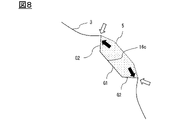
- the cross-sectional shape of the annular valve seat portion 16c along the radial direction is machined so as to form a recess with respect to the cylinder head rough material 3. More specifically, the portion of the spray gun 23 of the cold spray device 2 facing the nozzle 23d is formed in a groove shape composed of a flat bottom surface G1 and a pair of adjacent side surface G2s. As a result, the compressive residual stress of the metal film 5 formed by the cold spray method acts on the pair of groove-shaped side surfaces G2, so that the cylinder head 12 provided with the valve seat film 16b having excellent adhesion and high strength can be obtained. Can be manufactured.
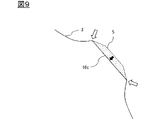
- the portion of the spray gun 23 of the cold spray device 2 facing the nozzle 23d is a flatly formed annular valve seat portion 16c
- the metal film 5 remains compressed.
- the stress (black arrow) acts toward the bottom surface of the metal film 5.
- the impact load (white arrow) due to the tapping input from the valve is concentrated on the edge portion of the valve seat film 16b. Therefore, a crack is generated near the edge portion of the valve seat film 16b, and the valve seat film 16b is peeled off as the wear progresses.
- the impact load (white arrow) from the valve concentrated on the edge portion of the valve seat film 16b is applied.
- the compressive residual stress (black arrow) of the metal film 5 fitted in the groove shape acts on the side surfaces G2 and G2 of the groove shape. Since the compressive residual stress of the metal film 5 acting on the groove-shaped side surfaces G2 and G2 of the annular valve seat portion 16c opposes the impact load due to the tapping input from the valve, the impact load concentrated on the edge portion of the valve seat film 16b. It is possible to prevent the valve seat film 16b from being cracked or peeled off.
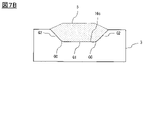
- FIG. 7B is an enlarged cross-sectional view showing another embodiment of the cross-sectional shape of the annular valve seat portion 16c along the radial direction.
- the boundary surface GC of the flat bottom surface G1 and the adjacent side surfaces G2 and G2 in the groove shape of the annular valve seat portion 16c is formed so as to have a gentle arc shape.
- the boundary surface GC between the flat bottom surface G1 and the side surface G2 and G2 has a sharp shape, the impact load due to the tapping input from the valve is concentrated on the ridgeline of the flat bottom surface G1 and the side surface G2 and G2.
- the boundary surface GC between the flat bottom surface G1 and the side surface G2 and G2 has a gentle arc shape, so that the impact load due to the tapping input from the valve is dispersed on the curved surface and the stress concentration is relaxed. Therefore, it is possible to form the valve seat film 16b having higher strength.
- the boundary surface GC between the flat bottom surface G1 and the side surfaces G2 and G2 in the groove shape of the annular valve seat portion 16c is formed into a gentle arc shape, so that the raw material powder P injected by the cold spray method is the boundary surface GC. It adheres evenly to the surface of. This makes it possible to improve the adhesion of the valve seat film 16b formed on the annular valve seat portion 16c.
- FIG. 7C is a cross-sectional view showing the groove angle G ⁇ in the groove shape of the annular valve seat portion 16c
- FIG. 10 is a graph showing the relationship between the stress acting on the valve seat membrane 16b and the groove angle G ⁇ .
- the groove angle G ⁇ refers to the acute angle side of the dihedral angle formed by the flat bottom surface G1 in the groove shape of the annular valve seat portion 16c and the one side surface G2.
- the groove angle G ⁇ ⁇ 30 ° the valve seat film 16b is cracked, so that the groove angle of the annular valve seat portion 16c for forming the valve seat that guarantees the performance as an engine finished product is As the threshold value, it is preferable that the groove angle G ⁇ ⁇ 30 °.
- the compressive residual stress acting on the edge portion of the sheet film 16b becomes large.
- the larger the groove angle G ⁇ the better the adhesion of the valve seat film 16b.
- a ball end mill is inserted into the intake port 16 in the finishing step S4 described later to form an opening. Finishing is performed to cut the inner peripheral surface on the 16a side.
- the groove angle G ⁇ > 45 ° there is a problem that the edge portion of the valve seat film 16b and the ball end mill interfere with each other and machining cannot be performed. Therefore, it is preferable that the groove angle of the annular valve seat portion 16c, which is not restricted by finishing, is the groove angle G ⁇ ⁇ 45 °.
- the valve seat film 16b is not restricted in the manufacturing process after film formation. It is possible to suppress the generation of cracks due to the concentration of the impact load on the edge portion, and it is possible to form the valve seat film 16b having higher strength.
- the groove angle G ⁇ in this groove shape needs to be 30 ° ⁇ groove angle G ⁇ ⁇ 45 ° only on one side in the radial direction of the tool, and the other side is restricted during machining. It does not matter if it is outside this range because it does not receive.
- the raw material powder P is sprayed onto the annular valve seat portion 16c of the cylinder head rough material 3 using the cold spray device 2 of the present embodiment to form the valve seat film 16b. More specifically, in this coating step S3, as shown in FIG. 6C, the raw material powder P is an annular valve seat while keeping the annular valve seat portion 16c and the nozzle 23d of the spray gun 23 at a constant distance in the same posture. While fixing the cylinder head rough material 3 so that it can be sprayed on the entire circumference of the portion 16c, the spray gun 23 is rotated.
- FIG. 6C is a cross-sectional view showing a state in which the valve seat film 16b is formed in the intake port 16 of FIG. 6B.
- the tip of the nozzle 23d of the spray gun 23 is held by the hand of the industrial robot above the cylinder head 12 fixed to the base.
- the base or the industrial robot sets the position of the cylinder head 12 or the spray gun 23 so that the central axis Z of the intake port 16 on which the valve seat film 16b is formed is vertical and overlaps with the rotation axis of the spray gun 23. do.
- the spray gun 23 is rotated around the axis of rotation while spraying the raw material powder P from the nozzle 23d onto the annular valve seat portion 16c to form a film on the entire circumference of the annular valve seat portion 16c.
- the nozzle 23d introduces the refrigerant supplied from the refrigerant circulation circuit 27 into the flow path from the refrigerant introduction unit 23e.
- the refrigerant cools the nozzle 23d while flowing from the front end side to the rear end side of the flow path formed inside the nozzle 23d.
- the refrigerant that has flowed to the rear end side of the flow path is discharged from the flow path by the refrigerant discharge unit 23f and is recovered.
- valve seat films 16b and 17b are formed on all the intake ports 16 and the exhaust ports 17 of the cylinder head rough material 3.
- FIG. 11 is a cross-sectional view showing the relationship between the film thickness of the valve seat film 16b of the cylinder head 12 according to the present invention and the shearing force due to the combustion pressure of the engine.
- the shearing force (diagonal arrow) due to the combustion pressure (white arrow) generated by the combustion chamber 15 acts toward the outside of the valve seat film 16b, and the stress is concentrated on the edge portion.
- the annular valve seat portion 16c has a groove shape and, as a result, the film thickness W of the valve seat film 16b is large
- the shearing force due to the combustion pressure is mainly the annular valve seat portion 16c. It acts on the side surfaces G2 and G2 of the groove shape.
- the groove-shaped side surfaces G2 and G2 cause this. Can receive.
- the film thickness W of the valve seat film 16b is not particularly limited, but the film thickness W suitable for the groove shape of the annular valve seat portion 16c according to the present embodiment is preferably formed to be 300 ⁇ m to 1500 ⁇ m.
- valve seat films 16b and 17b, and the intake port 16 and the exhaust port 17 are finished.
- the surfaces of the valve seat films 16b and 17b are cut by milling using a ball end mill to shape the valve seat films 16b into a predetermined shape.
- a ball end mill is inserted into the intake port 16 from the opening 16a, and the inner peripheral surface of the intake port 16 on the opening 16a side is cut along the processing line PL shown in FIG. 6D. ..
- FIG. 6D is a cross-sectional view showing an intake port in which the valve seat membrane 16b is formed.
- the processing line PL has a range in which the excess film SF to which the raw material powder P is scattered and adhered to the intake port 16 is formed relatively thick, and more specifically, the excess film SF affects the intake performance of the intake port 16. It is a range that is formed thick enough to exert.
- FIG. 6E is a cross-sectional view showing the intake port 16 after the finishing process of FIG.
- the exhaust port 17 is formed by casting to form a small diameter portion in the exhaust port 17, cutting to form an annular valve seat portion, cold spraying the annular valve seat portion, and finishing. After that, the valve seat film 17b is formed. Therefore, detailed description of the procedure for forming the valve seat membrane 17b for the exhaust port 17 will be omitted.
- the cross-sectional shape of the annular valve seat portion 16c along the radial direction includes a flat bottom surface G1 and a pair of adjacent side surfaces G2. Since it is formed in a groove shape and the compressive residual stress of the metal film 5 acts on the pair of side surfaces G2 of the groove shape, it is possible to manufacture a cylinder head 12 having a valve seat film 16b having excellent adhesion and high strength. can.
- the compressive residual stress of the metal film 5 acting on the groove-shaped side surfaces G2 and G2 of the annular valve seat portion 16c is due to the tapping input from the valve. Since it opposes the impact load, the impact load concentrated on the edge portion of the valve seat film 16b is reduced, and it is possible to prevent the valve seat film 16b from cracking or peeling off.
- the boundary surface GC between the flat bottom surface G1 and the side surface G2 and G2 in the groove shape of the annular valve seat portion 16c is formed into a gentle arc shape.
- the boundary surface GC between the flat bottom surface G1 and the side surface G2 and G2 in the groove shape of the annular valve seat portion 16c is formed into a gentle arc shape.
- the raw material powder P sprayed by the cold spray method adheres uniformly to the surface of the boundary surface GC, so that the adhesion of the valve seat film 16b formed on the annular valve seat portion 16c can be improved.
- the groove angle G ⁇ in this groove shape needs to be 30 ° ⁇ groove angle G ⁇ ⁇ 45 ° only on one side in the radial direction of the tool, and the other side is restricted during machining. It does not matter if it is outside this range because it does not receive.
- the thickness W of the valve seat film 16b is formed to be 300 ⁇ m to 1500 ⁇ m, and the combustion pressure tends to concentrate on the edge portion of the valve seat film 16b. Since the shearing force can be received by the groove-shaped side surfaces G2 and G2, it is possible to manufacture a cylinder head having a valve seat film 16b having higher strength.
- Gas supply unit 21a Compressed gas cylinder 21b ... Working gas line 21c ... Conveyed gas line 21d ... Pressure regulator 21e ... Flow control valve 21f ... Flow meter 21g ... Pressure gauge 21h ... Power source 21i ... Heater 22 ... Raw material powder supply unit 22a, 221a, 222a ... Raw material powder supply device 22b ... Measuring instrument 22c, 221c, 222c ... Raw material powder supply line 22d ... Partition 23 ... Spray gun 23a ... Chamber 23b ... Pressure gauge 23c ... Thermometer 23d ... Nozzle 23e ... Refrigerator introduction part 23f ... Refrigerator discharge part 23g, 23h ... Signal line 27 ... Refrigerator circulation circuit 271 ...
- Tank 272 Pump 273 ... Cooler 274 ... Introduction pipe 275 ... Discharge pipe 3 ... Cylinder head rough material 4 ... Base material 5 ... Metal film G1 ... Bottom surface G2 ... Side surface GC ... Boundary surface G ⁇ ... Groove angle P ... Raw material powder SF ... Excess film
Landscapes
- Engineering & Computer Science (AREA)
- Mechanical Engineering (AREA)
- General Engineering & Computer Science (AREA)
- Chemical & Material Sciences (AREA)
- Manufacturing & Machinery (AREA)
- Chemical Kinetics & Catalysis (AREA)
- Materials Engineering (AREA)
- Metallurgy (AREA)
- Organic Chemistry (AREA)
- Cylinder Crankcases Of Internal Combustion Engines (AREA)
Priority Applications (5)
| Application Number | Priority Date | Filing Date | Title |
|---|---|---|---|
| PCT/JP2020/039607 WO2022085130A1 (ja) | 2020-10-21 | 2020-10-21 | シリンダヘッド粗材及びシリンダヘッドの製造方法 |
| CN202080106455.5A CN116324133B (zh) | 2020-10-21 | 2020-10-21 | 气缸盖毛坯和气缸盖的制造方法 |
| JP2022556309A JPWO2022085130A1 (https=) | 2020-10-21 | 2020-10-21 | |
| EP20958682.5A EP4234896A4 (en) | 2020-10-21 | 2020-10-21 | CYLINDER HEAD BLANK AND CYLINDER HEAD MANUFACTURING PROCESS |
| US18/032,772 US12276216B2 (en) | 2020-10-21 | 2020-10-21 | Cylinder head blank and cylinder head manufacturing method |
Applications Claiming Priority (1)
| Application Number | Priority Date | Filing Date | Title |
|---|---|---|---|
| PCT/JP2020/039607 WO2022085130A1 (ja) | 2020-10-21 | 2020-10-21 | シリンダヘッド粗材及びシリンダヘッドの製造方法 |
Publications (1)
| Publication Number | Publication Date |
|---|---|
| WO2022085130A1 true WO2022085130A1 (ja) | 2022-04-28 |
Family
ID=81289840
Family Applications (1)
| Application Number | Title | Priority Date | Filing Date |
|---|---|---|---|
| PCT/JP2020/039607 Ceased WO2022085130A1 (ja) | 2020-10-21 | 2020-10-21 | シリンダヘッド粗材及びシリンダヘッドの製造方法 |
Country Status (5)
| Country | Link |
|---|---|
| US (1) | US12276216B2 (https=) |
| EP (1) | EP4234896A4 (https=) |
| JP (1) | JPWO2022085130A1 (https=) |
| CN (1) | CN116324133B (https=) |
| WO (1) | WO2022085130A1 (https=) |
Citations (6)
| Publication number | Priority date | Publication date | Assignee | Title |
|---|---|---|---|---|
| JPS58146805U (ja) * | 1982-03-29 | 1983-10-03 | 帝国ピストンリング株式会社 | バルブシ−トリング |
| JP2009197276A (ja) * | 2008-02-21 | 2009-09-03 | Aisan Ind Co Ltd | 硬質皮膜の形成方法 |
| JP2010223013A (ja) * | 2009-03-19 | 2010-10-07 | Honda Motor Co Ltd | シリンダヘッドの製造方法 |
| WO2017022505A1 (ja) | 2015-08-06 | 2017-02-09 | 日産自動車株式会社 | 摺動部材及びその製造方法 |
| JP2018123401A (ja) * | 2017-02-03 | 2018-08-09 | 日産自動車株式会社 | 摺動部材、内燃機関の摺動部材、及び摺動部材の製造方法 |
| WO2020059003A1 (ja) * | 2018-09-18 | 2020-03-26 | 日産自動車株式会社 | 成膜方法 |
Family Cites Families (12)
| Publication number | Priority date | Publication date | Assignee | Title |
|---|---|---|---|---|
| JPS62150014A (ja) * | 1985-12-25 | 1987-07-04 | Toyota Motor Corp | アルミニウム合金製バルブシ−トレスシリンダヘツド |
| JPH07138736A (ja) * | 1993-11-19 | 1995-05-30 | Mitsubishi Electric Corp | 加工用部材およびその製造方法 |
| JP3394363B2 (ja) * | 1995-06-28 | 2003-04-07 | ヤマハ発動機株式会社 | エンジン用シリンダヘッド |
| US5778531A (en) * | 1995-09-14 | 1998-07-14 | Yamaha Hatsudoki Kabushiki Kaisha | Method of manufacturing cylinder head for engine |
| US6017591A (en) * | 1996-11-14 | 2000-01-25 | Ford Global Technologies, Inc. | Method of making adherently sprayed valve seats |
| JP3859559B2 (ja) * | 2002-07-08 | 2006-12-20 | 本田技研工業株式会社 | 接合継手の製造方法、接合継手、摩擦撹拌接合法、接合装置及び平削り用バイト |
| WO2005031126A1 (ja) * | 2003-09-30 | 2005-04-07 | Mitsubishi Materials Pmg Corporation | エンジン用バルブシート並びにその製造方法及びエンジン用シリンダヘッド |
| DK177960B1 (en) * | 2014-04-08 | 2015-02-02 | Man Diesel & Turbo Deutschland | An exhaust valve for an internal combustion engine |
| JP6729461B2 (ja) * | 2017-03-22 | 2020-07-22 | トヨタ自動車株式会社 | 肉盛層の製造方法及びその製造装置 |
| JP6867496B2 (ja) * | 2017-08-25 | 2021-04-28 | 株式会社Kokusai Electric | 基板処理装置、反応管、基板処理方法、および、半導体装置の製造方法 |
| JP7116360B2 (ja) * | 2018-07-20 | 2022-08-10 | 日産自動車株式会社 | 摺動部材 |
| JP7255291B2 (ja) * | 2019-03-29 | 2023-04-11 | 日産自動車株式会社 | 成膜方法 |
-
2020
- 2020-10-21 JP JP2022556309A patent/JPWO2022085130A1/ja active Pending
- 2020-10-21 CN CN202080106455.5A patent/CN116324133B/zh active Active
- 2020-10-21 EP EP20958682.5A patent/EP4234896A4/en active Pending
- 2020-10-21 WO PCT/JP2020/039607 patent/WO2022085130A1/ja not_active Ceased
- 2020-10-21 US US18/032,772 patent/US12276216B2/en active Active
Patent Citations (6)
| Publication number | Priority date | Publication date | Assignee | Title |
|---|---|---|---|---|
| JPS58146805U (ja) * | 1982-03-29 | 1983-10-03 | 帝国ピストンリング株式会社 | バルブシ−トリング |
| JP2009197276A (ja) * | 2008-02-21 | 2009-09-03 | Aisan Ind Co Ltd | 硬質皮膜の形成方法 |
| JP2010223013A (ja) * | 2009-03-19 | 2010-10-07 | Honda Motor Co Ltd | シリンダヘッドの製造方法 |
| WO2017022505A1 (ja) | 2015-08-06 | 2017-02-09 | 日産自動車株式会社 | 摺動部材及びその製造方法 |
| JP2018123401A (ja) * | 2017-02-03 | 2018-08-09 | 日産自動車株式会社 | 摺動部材、内燃機関の摺動部材、及び摺動部材の製造方法 |
| WO2020059003A1 (ja) * | 2018-09-18 | 2020-03-26 | 日産自動車株式会社 | 成膜方法 |
Non-Patent Citations (1)
| Title |
|---|
| See also references of EP4234896A4 |
Also Published As
| Publication number | Publication date |
|---|---|
| JPWO2022085130A1 (https=) | 2022-04-28 |
| EP4234896A4 (en) | 2023-12-20 |
| CN116324133B (zh) | 2025-08-08 |
| CN116324133A (zh) | 2023-06-23 |
| EP4234896A1 (en) | 2023-08-30 |
| US20230399961A1 (en) | 2023-12-14 |
| US12276216B2 (en) | 2025-04-15 |
Similar Documents
| Publication | Publication Date | Title |
|---|---|---|
| JP6977892B2 (ja) | 成膜方法 | |
| CN113631757B (zh) | 冷喷装置 | |
| US20210164108A1 (en) | Cold spray nozzle and cold spray device | |
| JP7375868B2 (ja) | 成膜方法 | |
| WO2022085130A1 (ja) | シリンダヘッド粗材及びシリンダヘッドの製造方法 | |
| JP7010378B2 (ja) | シリンダヘッドの製造方法及びシリンダヘッド粗材 | |
| JP7480660B2 (ja) | 成膜方法 | |
| JP7255291B2 (ja) | 成膜方法 | |
| JP7098504B2 (ja) | コールドスプレー用ノズル及びコールドスプレー装置 | |
| JP7136338B2 (ja) | 成膜方法 | |
| JP7631727B2 (ja) | 金属膜及びその成膜方法 | |
| WO2020059002A1 (ja) | コールドスプレー方法、コールドスプレー用ノズル及びコールドスプレー装置 | |
| JP7452238B2 (ja) | 成膜方法 |
Legal Events
| Date | Code | Title | Description |
|---|---|---|---|
| 121 | Ep: the epo has been informed by wipo that ep was designated in this application |
Ref document number: 20958682 Country of ref document: EP Kind code of ref document: A1 |
|
| ENP | Entry into the national phase |
Ref document number: 2022556309 Country of ref document: JP Kind code of ref document: A |
|
| NENP | Non-entry into the national phase |
Ref country code: DE |
|
| ENP | Entry into the national phase |
Ref document number: 2020958682 Country of ref document: EP Effective date: 20230522 |
|
| WWG | Wipo information: grant in national office |
Ref document number: 18032772 Country of ref document: US |
|
| WWG | Wipo information: grant in national office |
Ref document number: 202080106455.5 Country of ref document: CN |