WO2022080389A1 - 観測値の確からしさを評価する方法、及びプログラム - Google Patents
観測値の確からしさを評価する方法、及びプログラム Download PDFInfo
- Publication number
- WO2022080389A1 WO2022080389A1 PCT/JP2021/037799 JP2021037799W WO2022080389A1 WO 2022080389 A1 WO2022080389 A1 WO 2022080389A1 JP 2021037799 W JP2021037799 W JP 2021037799W WO 2022080389 A1 WO2022080389 A1 WO 2022080389A1
- Authority
- WO
- WIPO (PCT)
- Prior art keywords
- score
- class
- likelihood
- subject
- target
- Prior art date
- Legal status (The legal status is an assumption and is not a legal conclusion. Google has not performed a legal analysis and makes no representation as to the accuracy of the status listed.)
- Ceased
Links
Images

Classifications
-
- G—PHYSICS
- G06—COMPUTING OR CALCULATING; COUNTING
- G06F—ELECTRIC DIGITAL DATA PROCESSING
- G06F18/00—Pattern recognition
- G06F18/20—Analysing
- G06F18/24—Classification techniques
- G06F18/241—Classification techniques relating to the classification model, e.g. parametric or non-parametric approaches
- G06F18/2415—Classification techniques relating to the classification model, e.g. parametric or non-parametric approaches based on parametric or probabilistic models, e.g. based on likelihood ratio or false acceptance rate versus a false rejection rate
-
- G—PHYSICS
- G16—INFORMATION AND COMMUNICATION TECHNOLOGY [ICT] SPECIALLY ADAPTED FOR SPECIFIC APPLICATION FIELDS
- G16H—HEALTHCARE INFORMATICS, i.e. INFORMATION AND COMMUNICATION TECHNOLOGY [ICT] SPECIALLY ADAPTED FOR THE HANDLING OR PROCESSING OF MEDICAL OR HEALTHCARE DATA
- G16H50/00—ICT specially adapted for medical diagnosis, medical simulation or medical data mining; ICT specially adapted for detecting, monitoring or modelling epidemics or pandemics
- G16H50/30—ICT specially adapted for medical diagnosis, medical simulation or medical data mining; ICT specially adapted for detecting, monitoring or modelling epidemics or pandemics for calculating health indices; for individual health risk assessment
-
- G—PHYSICS
- G16—INFORMATION AND COMMUNICATION TECHNOLOGY [ICT] SPECIALLY ADAPTED FOR SPECIFIC APPLICATION FIELDS
- G16H—HEALTHCARE INFORMATICS, i.e. INFORMATION AND COMMUNICATION TECHNOLOGY [ICT] SPECIALLY ADAPTED FOR THE HANDLING OR PROCESSING OF MEDICAL OR HEALTHCARE DATA
- G16H10/00—ICT specially adapted for the handling or processing of patient-related medical or healthcare data
- G16H10/20—ICT specially adapted for the handling or processing of patient-related medical or healthcare data for electronic clinical trials or questionnaires
-
- G—PHYSICS
- G16—INFORMATION AND COMMUNICATION TECHNOLOGY [ICT] SPECIALLY ADAPTED FOR SPECIFIC APPLICATION FIELDS
- G16H—HEALTHCARE INFORMATICS, i.e. INFORMATION AND COMMUNICATION TECHNOLOGY [ICT] SPECIALLY ADAPTED FOR THE HANDLING OR PROCESSING OF MEDICAL OR HEALTHCARE DATA
- G16H10/00—ICT specially adapted for the handling or processing of patient-related medical or healthcare data
- G16H10/40—ICT specially adapted for the handling or processing of patient-related medical or healthcare data for data related to laboratory analysis, e.g. patient specimen analysis
-
- G—PHYSICS
- G16—INFORMATION AND COMMUNICATION TECHNOLOGY [ICT] SPECIALLY ADAPTED FOR SPECIFIC APPLICATION FIELDS
- G16Y—INFORMATION AND COMMUNICATION TECHNOLOGY SPECIALLY ADAPTED FOR THE INTERNET OF THINGS [IoT]
- G16Y20/00—Information sensed or collected by the things
- G16Y20/20—Information sensed or collected by the things relating to the thing itself
-
- G—PHYSICS
- G16—INFORMATION AND COMMUNICATION TECHNOLOGY [ICT] SPECIALLY ADAPTED FOR SPECIFIC APPLICATION FIELDS
- G16Y—INFORMATION AND COMMUNICATION TECHNOLOGY SPECIALLY ADAPTED FOR THE INTERNET OF THINGS [IoT]
- G16Y40/00—IoT characterised by the purpose of the information processing
- G16Y40/20—Analytics; Diagnosis
-
- C—CHEMISTRY; METALLURGY
- C12—BIOCHEMISTRY; BEER; SPIRITS; WINE; VINEGAR; MICROBIOLOGY; ENZYMOLOGY; MUTATION OR GENETIC ENGINEERING
- C12Q—MEASURING OR TESTING PROCESSES INVOLVING ENZYMES, NUCLEIC ACIDS OR MICROORGANISMS; COMPOSITIONS OR TEST PAPERS THEREFOR; PROCESSES OF PREPARING SUCH COMPOSITIONS; CONDITION-RESPONSIVE CONTROL IN MICROBIOLOGICAL OR ENZYMOLOGICAL PROCESSES
- C12Q1/00—Measuring or testing processes involving enzymes, nucleic acids or microorganisms; Compositions therefor; Processes of preparing such compositions
- C12Q1/68—Measuring or testing processes involving enzymes, nucleic acids or microorganisms; Compositions therefor; Processes of preparing such compositions involving nucleic acids
-
- G—PHYSICS
- G16—INFORMATION AND COMMUNICATION TECHNOLOGY [ICT] SPECIALLY ADAPTED FOR SPECIFIC APPLICATION FIELDS
- G16H—HEALTHCARE INFORMATICS, i.e. INFORMATION AND COMMUNICATION TECHNOLOGY [ICT] SPECIALLY ADAPTED FOR THE HANDLING OR PROCESSING OF MEDICAL OR HEALTHCARE DATA
- G16H30/00—ICT specially adapted for the handling or processing of medical images
- G16H30/40—ICT specially adapted for the handling or processing of medical images for processing medical images, e.g. editing
-
- G—PHYSICS
- G16—INFORMATION AND COMMUNICATION TECHNOLOGY [ICT] SPECIALLY ADAPTED FOR SPECIFIC APPLICATION FIELDS
- G16H—HEALTHCARE INFORMATICS, i.e. INFORMATION AND COMMUNICATION TECHNOLOGY [ICT] SPECIALLY ADAPTED FOR THE HANDLING OR PROCESSING OF MEDICAL OR HEALTHCARE DATA
- G16H50/00—ICT specially adapted for medical diagnosis, medical simulation or medical data mining; ICT specially adapted for detecting, monitoring or modelling epidemics or pandemics
- G16H50/20—ICT specially adapted for medical diagnosis, medical simulation or medical data mining; ICT specially adapted for detecting, monitoring or modelling epidemics or pandemics for computer-aided diagnosis, e.g. based on medical expert systems
Definitions
- This disclosure relates to methods, programs and systems for assessing the certainty of observed values.
- the test results have been judged whether the subject is positive or negative in light of the ROC curve. This had a unique point on the ROC curve (the point closest to the left corner, the point defined by Youden Index) as the cutoff point. Generally, if the observed value is higher than the cutoff point, a positive result is returned, and if it is lower, a negative result is returned. Based on that cutoff point, the positive predictive value (PPV) has been calculated. However, this positive predictive value is a value peculiar to the ROC curve, and is only a value for evaluating the evaluation system.
- the subject should evaluate whether he / she is positive or negative from the test result, that is, the subject's result more appropriately.
- a novel method for evaluating the likelihood (probability) of a target belonging to a certain group may comprise receiving a subject score for the subject's observations.
- the method uses a relational expression established between sensitivity and specificity with the score for the observed value as the parameter, and the target score is the parameter of the target score. It may be provided to acquire sensitivity and specificity.
- the method may comprise obtaining prior probabilities for the attributes of interest.
- the method may comprise acquiring the likelihood of belonging to a subject-specific classification attribute based on the subject's sensitivity, specificity, and prior probabilities.
- a flowchart showing an evaluation method according to an embodiment of the present disclosure is shown.
- the block diagram which shows the computer control system which concerns on one Embodiment of this disclosure is shown.
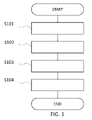
- FIG. 1 shows a flowchart of a novel method for evaluating the likelihood (probability) belonging to a certain group according to an embodiment of the present disclosure.
- step S101 the target score for the target observation value is received.
- step S102 the sensitivity and specificity of the target score when the target score is used as the parameter using the relational expression established between the sensitivity and the specificity of the observed value as the parameter. And get.
- step S103 the prior probability of the target attribute is acquired.
- step S104 the likelihood belonging to the classification attribute peculiar to the target is acquired based on the sensitivity, specificity, and prior probability of the target.
- observation used in the present disclosure is not limited to “observing” in a narrow sense, and generally includes observation, measurement, analysis, etc. in biology, medicine, pharmacy, biochemistry, physics, chemistry, electricity, and optics. As expected.
- the observation may be a clinical test.
- Laboratory tests include specimen tests, biopsy, diagnostic imaging, pathological diagnosis, physical tests, psychological tests, and other tests aimed at or without the presence or absence of illness to obtain relevant information.
- Specimen tests include biochemical tests, hematological tests, urine / feces tests, immunological tests, microbiological tests, etc.
- the body fluid used for the test means a body fluid obtained from the subject or a sample derived from the body fluid.
- the body fluid may be, but is not limited to, blood, serum, plasma, lymph, tissue fluid such as interstitial fluid, interstitial fluid, interstitial fluid, and cerebrospinal fluid, synovial fluid, pleural fluid, etc. It may be abdominal fluid, pericardial fluid, cerebrospinal fluid (cerebrospinal fluid), joint fluid (synovial fluid), or interstitial fluid (interstitial fluid).
- the body fluid may be digestive juice such as saliva, gastric juice, bile, pancreatic juice, and intestinal juice, and may be sweat, tears, runny nose, urine, semen, vaginal juice, amniotic fluid, and milk.
- the body fluid may be an animal body fluid or a human body fluid.
- Biopsy includes respiratory and circulatory function tests, ultrasonography, monitoring device tests, brain wave tests, nerve / muscle tests, otolaryngology tests, ophthalmologic tests, dermatological tests, clinical psychology / neuropsychiatric tests, Includes examinations using radioisotopes, endoscopy, etc., such as load tests.
- the biopsy may be a liquid biopsy.
- the observed value may be an amount, frequency or other test value associated with gene expression in a genetic test.
- the gene may be a nucleic acid (at least one of DNA and RNA).
- the RNA may be messenger RNA (mRNA), transfer RNA (tRNA), liposome RNA (rRNA), microRNA (miRNA), or the like.
- the body fluid blood, saliva, urine, etc.
- the predetermined or arbitrary amount of nucleic acid may be measured.
- Nucleic acid may be amplified.
- Nucleic acid may be measured using a genetic analysis device such as a DNA chip (also referred to as a microarray) or a sequencer.
- Genetic testing may include testing for genetic mutations. As a gene mutation, changes in the number of copies may be measured. Changes in the number and expression level of single nucleotide polymorphisms (SNPs) may be measured.
- the fusion gene may be measured. For example, it may be determined whether or not fusion occurs at a predetermined gene or base site. The number of fusion genes may be measured.
- Chromosomal abnormalities may be measured. The presence or absence of chromosomal abnormalities, the amount or frequency within the predetermined region, and the like may be measured. Chromosomal abnormalities may be structural changes, changes in the number of chromosomes, or both.
- Tumor gene variation TMB
- TMG score may be measured.
- the amount of epigenetic changes such as methylation (number of sites, frequency at a given site), acetylation, etc. may be measured.
- the number of sites where these mutations have occurred or the amount of change at a predetermined site may be measured.
- Microsatellite instability (MSI) analysis or testing may be performed.
- the number or frequency of altered bases in the microsatellite region may be measured.
- Splicing anomalies may be measured.
- the presence or absence of the abnormality may be measured, and the number (number or number of bases), absolute number, frequency, etc. of the location may be measured.
- the score may be the observed value or a value converted from the observed value. If the observation does not give a numerical value, the score may be obtained by quantifying the observation result by an evaluation method.
- the score may be the value of the inspection result itself or a processed value.
- the score may be a normalized value.
- the score may be calculated based on the value or evaluation of the test result.
- the score may be calculated based on the results of multiple tests. In some embodiments, they may be combined and used in software such as machine learning to calculate the score.
- the score may be continuous or discontinuous (discrete number, eg binary 0/1).
- the amount of a given gene (eg, RNA) in body fluid in a genetic test may be used as the score, or the score determined from the gene expression profile may be utilized.
- the methods of the present disclosure may comprise providing a binary classification based on the score associated with the observed value. In some embodiments, the methods of the present disclosure may comprise providing multivalued classification based on scores associated with observations.
- Binary (or multi-valued) classifications may be prepared or provided in advance or independently of the subject's observations.
- a predetermined classification may be obtained for the score of the observed value.
- a relational expression with a score as a parameter may be used.
- the parametric variable may be referred to as a threshold or cutoff point.
- a relational expression between the value for one of the binary classifications and the value for the other may be used.
- the binary classification is one of TPR (true positive rate) and FNR (false positive rate), and one of FPR (false positive rate) and TNR (true positive rate).
- You may use the relational expression between.
- one of the relational expression between TPR and FPR; the relational expression between TPR and TNR; the relational expression between FNR and FPR; and the relational expression between FNR and TNR may be used.
- a relational expression between sensitivity (TPR) and specificity (1-FPR) may be used.
- the relational expression may be represented by a ROC (Recipient Operating Characteristics, Receiver Operating Characteristics) or by a ROC curve.
- the evaluation value obtained from it uses the observed value of the target as the evaluation, not the value for evaluating the statistical system. be able to.
- Prior probabilities in Bayesian statistics may be investigated prior to the observation of the subject.
- the prior probabilities may be obtained after the observation of the subject, i.e., they may be used as prior probabilities.
- prior probabilities may be made, for example, objectively, after observations about the subject. The prior probabilities obtained after the observation may be used to calculate the likelihood, or the new prior probabilities may be used to recalculate the previously obtained observations.
- the likelihood that the observed value is positive may be expressed as a conditional probability of a positive predicted value.
- the probability (likelihood) that a subject actually belongs to a group (class) may be calculated using Bayesian statistics.
- Likelihoods may be calculated using conditional probability formulas in Bayesian statistics, including prior probabilities.
- the sensitivity and specificity shown in the present disclosure are not values specific to the ROC curve (the closest point from the left corner on the ROC curve, the Youden index, etc.). They are the sensitivity (target sensitivity) and specificity (target specificity) calculated from the values on the ROC curve corresponding to the score of the observed value of the subject. Therefore, since the above formula is different from the classical meaning, it can be referred to as modP (with disease
- the likelihood may be represented by one function or by multiple functions.
- the total of a plurality of functions may be called one function.
- a plurality of functions may be used in combination.
- multiple functions may be defined depending on the range of scores.
- PPV and NPV may be adapted depending on the range of scores.
- PPV may be used for scores higher than a certain value
- NPV may be used for scores lower than that value.
- a likelihood ratio such as a positive likelihood ratio, a negative likelihood ratio, etc. may be used.
- ⁇ Multi-value classification> the likelihood of a subject belonging to each of the classes defined in the multivalued classification may also be evaluated.
- a one-to-one model may be used.
- a one-versus-rest model may be used.
- a value (modPPV) in which the target score is substituted may be adopted as the likelihood.
- the likelihood (true class 1 predictive value) for which it is true that the test result is "class 1" is as follows, based on a pair of other models and Bayesian statistics. Can be represented:
- the likelihood that the test result is false (ie, "false class 1") to be "class 1" can be expressed as:
- the likelihood that the test result is true to be class i (true class i accuracy rate) can be expressed as follows. :
- the likelihood that the test result is false (ie, "false class i") to be "class i" can be expressed as:
- Example> An embodiment of the present disclosure was used to assess whether a subject had cancer based on RNA expression. The results will be described below.
- Table 2 shows the scores obtained by a certain lung cancer biomarker test method for each subject (A to D) and their evaluation values.
- the ROC curve between the lung cancer test result and the test result (score) was obtained in advance.
- Subjects A and B have the same attributes as a male in his twenties.
- Subjects C and D have the same attributes as a male in his 50s. Prevalence is determined by the attributes of the subject. The prevalence of men in their twenties is 0.00055%. The prevalence of men in their 50s is 0.06260%.
- subject A had a relatively high score value (0.62), and subject B had a relatively low score value (0.02). It was shown to be doing.
- subject C was shown to have a relatively high score value (0.54), and subject D was shown to have a relatively low score value (0.12). Was done.
- a score close to zero means a value close to the threshold (subjects B and D).
- a score far from zero means a value far from the threshold.
- scores far from zero to positive suggest a high probability of being positive (subjects A and C).
- PPV positive predictive value
- the conventional PPV As long as the score is larger than the threshold value, it is judged to be positive (subjects A and B of males in their 20s or subjects C and D of males in their 50s). This result does not depend on the magnitude of the score as a test result. Further, if the conventional PPV calculation formula is used at that time, the same PPV value is given in each case. This is because PPV is a parameter that represents the characteristics of the ROC curve. Conventional methods have not been able to represent differences in test scores. Conventional methods have not been able to individually express the likelihood that they have the disease.
- the evaluation value according to the embodiment of the present disclosure uses the sensitivity and specificity when the score is used as a parameter of the ROC curve.
- Subjects A to D each have different scores and therefore also differ in sensitivity and specificity (Table 2).
- the evaluation value was obtained by substituting these sensitivities and specificities and the prevalence into a general PPV calculation formula. Therefore, it is different from the conventional PPV.
- subjects A to D were given different evaluation values (0.3808%, 0.0044%, 18.2769%, 0.9295%, respectively).
- Subjects A and B having the same attribute have different evaluation values.
- subjects C and D having the same attribute have different evaluation values.
- a plurality of subjects having the same attributes but different scores can be given an evaluation value which is a likelihood of having a disease, reflecting the level and prevalence of the score.
- subject D obtained a higher score than subject A, but obtained a lower evaluation value.
- comparable evaluation values eg, likelihood of having a disease
- the method of the present disclosure can be applied to clinical examinations, but is not limited to this, and can be applied to other evaluations.
- the observation may be diagnostic imaging.
- Some embodiments of the present disclosure may also be applied to medical imaging (imaging, image-based disease diagnosis).
- Images include, for example, but not limited to, optical images, ultrasonic images, X-ray images, magnetic resonance imaging (MRI), and radioisotope (RI) images.
- the medical image diagnosis may be referred to as a general radiography examination (generally also referred to as an X-ray examination). For example, it may be a simple X-ray imaging diagnosis or a dental panoramic X-ray imaging diagnosis.
- Medical imaging may be a breast X-ray (mammography) examination, a computer tomography (CT) examination, a gastrointestinal angiography examination (barium examination), an interventional radiology (IVR), or the like.
- the score in diagnostic imaging may be determined based on the continuous certainty method.
- the score may be determined based on a calculation method or algorithm such as artificial intelligence or software.
- Some embodiments of the present disclosure may be applied to various evaluations other than clinical tests or similar tests.
- Biometric authentication includes, for example, non-limiting fingerprint authentication, finger joint print authentication, vein authentication (on fingers, palm, back of hand, etc.), palm (hand phase) authentication, iris authentication, two-dimensional / three-dimensional face authentication, and optical. Or it includes X-ray tooth image authentication, voice print authentication, handwriting authentication and the like. Images, sound waveforms and other data can be used as observations.
- Some embodiments of the present disclosure provide applications for meteorological prediction.
- the likelihood that certain weather will occur may be assessed.
- the probability of precipitation, the amount of solar radiation, the wind speed, etc. may be predicted based on various meteorological data (pressure distribution, humidity, temperature, wind speed, wind direction, jet stream state, seawater temperature, tidal current, topography, etc.).
- the likelihood of a natural disaster may be assessed.
- the likelihood of natural disasters such as heavy rains, floods, landslides, wildfires, earthquakes, and eruptions may be evaluated based on various geological data, meteorological data, radiation data, planetary data, and the like.
- Some embodiments of the present disclosure provide applications for problem occurrence prediction in production lines in industrial fields such as machinery, electricity, chemistry, and chemicals.
- the likelihood that a problem may occur may be evaluated. For example, industrial production of machine tools, electrical systems, chemical reactions, etc. based on various operation data and abnormal signals (machine vibration, sound, current, temperature, product characteristics, and other equipment state changes). The likelihood of occurrence of the above problem may be evaluated.
- Some embodiments of the present disclosure provide applications for forecasting fluctuations in stock prices, national or regional growth rates, inflation rates, and interest rates. Some embodiments of the present disclosure provide applications for predicting horse racing outcomes. The disclosure is not limited to the applications described herein. The present disclosure may be applied to other than.
- the disclosure also provides a computer control system configured in a program or other way to implement the methods provided herein, such as a method of assessing the likelihood of belonging to a group of objects. do.
- FIG. 2 shows an embodiment of a computer system 101 connected to a network 130 for executing the evaluation method of the present disclosure.
- the computer system 101 shown in FIG. 2 is communicably connected to the network 130 and can communicate with the user interface 140 via the network 130.
- the whole functions as a network system 100.
- the computer system 101 is for communicating with a central processing unit (CPU, "processor” and “computer processor” in this specification) 105, a memory or memory location 110, an electronic storage unit 115, one or more other systems. It includes a communication interface 120 and peripheral devices 125.
- CPU central processing unit
- processor central processing unit
- computer processor computer processor
- the CPU 105 can be a single-core or multi-core processor, or a plurality of processors for parallel processing.
- the CPU may be a GPU.
- the memory 110 may be, for example, non-limitingly random access memory, read-only memory, or flash memory.
- the storage unit 115 can be a data storage unit (or data repository) for storing data.
- the storage unit 115 may be, for example, a hard disk, a magnetic tape, or the like, without limitation.
- the communication interface 120 may be, for example, a network adapter or the like without limitation.
- the communication interface 120 can communicate with the user interface 140 via the network 130.
- Peripheral devices may be, for example, but not limited to, caches, other memories, data storage, and / or electronic display adapters and the like.
- a plurality of user interfaces 135 may be communicably connected to the network 130.
- the user interface 135 may be arranged or connected within the computer system 101.
- the memory 110, the storage unit 115, the interface 120, and the peripheral device 125 communicate with the CPU 105 via a communication bus (solid line) such as a motherboard.
- a communication bus solid line
- One or more components of system 101 may communicate in other forms.
- One or more components of the system 101 may be located at substantially the same location and may be communicably connected via, for example, network 130.
- the computer system 101 of FIG. 1 can be operably coupled to a computer network (“network”) 130 using the communication interface 120.
- the network 130 can be the Internet, an intranet and / or an extranet, or an intranet and / or an extranet communicating with the Internet.
- the network 130 is a telecommunications and / or data network.
- the network 130 can include one or more computer servers that can enable distributed computing such as cloud computing.
- the network 130 can, in some cases, implement a peer-to-peer network that can allow a device coupled to the computer system 101 to act as a client or server with the help of the computer system 101.
- the CPU 105 can execute a series of machine-readable instructions that can be executed by a program or software.
- the instruction may be stored in a memory location such as memory 110. Instructions may be directed to the CPU 105 and then the CPU 105 may be programmed or otherwise configured to implement the methods of the present disclosure. Examples of operations performed by the CPU 105 may include fetch, decode, execute, and write back.
- the CPU 105 can be a part of a circuit such as an integrated circuit.
- One or more other components of system 101 may be included in the circuit.
- the circuit is an application specific integrated circuit (ASIC).
- the storage unit 115 can store files such as drivers, libraries, and saved programs.
- the storage unit 115 can store user data such as user preferences and user programs, for example.
- the computer system 101 may be located on a remote server that communicates with the computer system 101 via an intranet or the Internet, and may have one or more additional data storage units outside the computer system 101. Can include.
- the computer system 101 can communicate with one or more remote computer systems via the network 130.
- the method described herein can be implemented, for example, by a machine (eg, computer processor) executable code stored in an electronic storage location of a computer system 101 such as a memory 110 or an electronic storage unit 115.
- machine-readable code can be provided in the form of software.
- the code can be executed by processor 105.
- the code can be retrieved from storage 115 and stored in memory 110 for immediate access by processor 105.
- the electronic storage device 115 can be excluded and the machine executable instructions are stored in memory 110.
- the code can be precompiled and configured for use on a machine with a processor configured to execute the code, or it can be compiled at run time.
- the code may be provided in a programming language that can be selected to execute the code in pre-compiled or pre-compiled form.
- the likelihood that the target belongs to a certain group (class) can be evaluated based on the observation result of the target.
- observation-related information such as the observed value and the information related to the object is sent to the user interface 135 passively by the operator or the like, or automatically from another device connected communicably or based on the command such as the operator. Entered.
- the input information related to the observation is input by the user interface 140, is transmitted to the computer system 101 via the network 130, and is received by the communication interface 120.
- the information received by the communication interface 120 is temporarily stored in the memory 110.
- the data already obtained in connection with the observation is stored in the storage 115.
- information about the attributes of the target information about observations such as inspections, values and data obtained by observations, scores related to observed values, statistical information such as their raw data and statistical values, classifier algorithms, and after classification.
- Statistical data data expressed in binary or polynomial classifications, information related to Bayesian statistics such as parameters between classes such as thresholds, sensitivity and singularity, relational expressions between them such as ROC curves, etc. are stored in Storage 115. It is stored in.
- the CPU 105 accesses the storage 115 based on the received information on the target attribute, and provides information related to multi-value classification such as the prior probability (prevalence in the case of a disease test) associated with the target attribute and the ROC curve. , And the evaluation formula of the probability.
- the acquired information is temporarily stored in the memory 110.
- the CPU 105 calculates or evaluates the likelihood of belonging to a certain group (class) of the target by using the acquired relational expression, parameter, and target information.
- the CPU 105 may convey the result of the likelihood evaluation to the peripheral device 125 and display it on the display device, or may convey the result of the likelihood evaluation from the communication interface 120 to another device such as the user interface 140 via the network 130. You may.
- the CPU 105 may store information about the target in the storage 115 as a result of the likelihood evaluation.
- the data newly stored in the storage 115 may be incorporated into the population and used in the next evaluation.
- the computer system 101 is programmed or otherwise configured to adjust one or more parameters to assess the likelihood that the object belongs to a group (class) based on the observations of the object. can.
- aspects of the systems and methods provided herein, such as computer system 101 can be embodied by programming.
- Various aspects of the technique can be thought of as "products” or “manufacturings”, typically in the form of machine (or processor) executable code and / or related data held or embedded in a type of machine-readable medium.
- Machine executable code can be stored in memory (eg, read-only memory, random access memory, flash memory) or electronic storage units such as hard disks.
- “Storage” type media shall provide any or all of tangible memory such as computers and processors, or anytime non-temporary storage for software programming such as various semiconductor memories, tape drives, disk drives, etc. Can include those related modules.
- All or part of the software may be communicated, in particular, through the Internet or various other communication networks. Such communication may allow the software to be loaded, for example, from one computer or processor to another computer, for example, from the management server or host computer to the computer platform of the application server. Therefore, another type of medium that can carry the software element is such that it is used throughout the physical interface between local devices over wired and optical terrestrial networks and over various airlinks. Includes light, electricity and electromagnetic waves. Physical elements that carry such waves, such as wired or wireless links, optical links, can also be considered as the medium carrying the software. As used herein, terms such as computer or machine "readable media" are involved in providing instructions to a processor for execution, unless limited to non-temporary, tangible “storage” media. Refers to any medium to do.
- machine-readable media such as computer executable codes can take many forms including, but not limited to, tangible storage media, carrier media, or physical transmission media.
- Non-volatile storage media include optical discs or magnetic disks, such as any storage device, such as any computer, which may be used, for example, to implement the databases shown in the drawings.
- Volatile storage media include dynamic memory such as the main memory of computer platforms.
- Tangible transmission media include coaxial cables, copper wires, optical fibers, and wires that make up buses in computer systems.
- the carrier transmission medium may take the form of an electrical or electromagnetic signal, or an acoustic or optical wave as produced during radio frequency (RF) and infrared (IR) data communication.
- RF radio frequency
- IR infrared
- common formats of computer readable media are, for example, floppy disks, flexible disks, hard disks, magnetic tapes, other magnetic media; CD-ROMs, DVDs or DVD-ROMs, other optical media; punch cards, paper tapes, etc.
- Other physical storage media with a pattern of holes RAM, ROM, PROM and EPROM, FLASH®-EPROM, other memory chips or cartridges; carriers that carry data or instructions, such carriers. Cables or links; or other media from which the computer can read programming codes and data.
- Many of these forms of computer-readable media may be involved in delivering one or more sequences of one or more instructions to a processor for execution.
- the computer system 101 can include or communicate with, for example, an electronic display 125 including a user interface (UI) 140 for providing signals from the chip over time.
- UIs include, but are not limited to, graphical user interfaces (GUIs) and web-based user interfaces.
- the methods and systems of the present disclosure can be implemented by one or more algorithms.
- the algorithm can be implemented by software at run time by the central processing unit 105.
- the present disclosure provides software for causing a computer or the like to execute the method of the present disclosure, and a storage medium for storing the software.
- A101 It is a method to evaluate the likelihood (probability) of a classification attribute having a binary classification to belong to a certain group. Receiving the target score for the target observations and Using the relational expression (already) established between the sensitivity and the specificity with the score related to the observed value as the parameter, the sensitivity of the target score and the sensitivity when the target score is used as the parameter. To obtain the specificity and Obtaining the prior probabilities of the above-mentioned target attributes To acquire the likelihood belonging to the classification attribute peculiar to the object based on the sensitivity, the specificity, and the prior probability of the object. How to prepare.
- A102 Obtaining a positive or negative likelihood for the subject comprises obtaining a modified positive predictive value or a modified negative predictive value for the subject score, respectively.
- A201 A method for evaluating the likelihood (probability) that a subject is positive or negative for a clinical test having a binary classification. Receiving a target score for a subject's clinical test and From the relational expression established between the sensitivity and specificity using the score score for the clinical test as a parameter, the sensitivity and specificity of the target score when the target score is used as the parameter. And to get Obtaining the prevalence of the above-mentioned target attribute and Obtaining a positive or negative likelihood of the subject based on the sensitivity, specificity and prevalence of the subject. How to prepare.
- A202 Obtaining a positive or negative likelihood for the subject comprises obtaining a modified positive predictive value or a modified negative predictive value for the subject score, respectively.
- A211 The clinical test is a biopsy.
- A212 The clinical test is liquid biopsy, The method according to any one of embodiments A201 to A211.
- A213 The liquid biopsy is a urine test or a blood test.
- A221 The clinical test is a genetic test, The method according to any one of embodiments A201 to A213.
- A222 The genetic test is an RNA test.
- A223 The genetic test comprises testing for genes derived from urine.
- the genetic test comprises testing nucleic acids contained within exosomes.
- A225 The exosomes are derived from urine, The method according to embodiment A224.
- A301 It is a method of evaluating the likelihood (probability) of a class belonging to a certain class for a classification attribute having an N (N is a natural number) term classification. Receiving the target score for the target observations and In the N-term classification obtained for the score related to the observed value, the probability (true “class i” rate) and class that the class i (1 ⁇ i ⁇ N, i is a natural number) with the score as a parameter is true.
- A303 Obtaining the likelihood belonging to class i, which is specific to the object, based on the true "class i" rate, the false "class i" rate, and the prior probability of the object is true for the object score. Equipped to obtain a class i-likelihood rate or a fake class i-likelihood rate, The method according to embodiment A301.
- B101 A program for causing a computer to execute the method according to any one of embodiments A101 to A303.
- C101 A computer-readable storage medium for storing the program according to the embodiment B101.
- Network system 101
- Computer system 105
- Central processing unit 110
- Memory 115
- Storage unit 120
- Communication interface 125
- Peripheral device 130
- User interface 120
Landscapes
- Engineering & Computer Science (AREA)
- Health & Medical Sciences (AREA)
- Public Health (AREA)
- Medical Informatics (AREA)
- General Health & Medical Sciences (AREA)
- Data Mining & Analysis (AREA)
- Primary Health Care (AREA)
- Epidemiology (AREA)
- Theoretical Computer Science (AREA)
- Physics & Mathematics (AREA)
- Computing Systems (AREA)
- Biomedical Technology (AREA)
- Bioinformatics & Cheminformatics (AREA)
- General Physics & Mathematics (AREA)
- General Engineering & Computer Science (AREA)
- Evolutionary Computation (AREA)
- Evolutionary Biology (AREA)
- Computer Vision & Pattern Recognition (AREA)
- Bioinformatics & Computational Biology (AREA)
- Artificial Intelligence (AREA)
- Life Sciences & Earth Sciences (AREA)
- Probability & Statistics with Applications (AREA)
- Databases & Information Systems (AREA)
- Pathology (AREA)
- Investigating Or Analysing Biological Materials (AREA)
Priority Applications (4)
| Application Number | Priority Date | Filing Date | Title |
|---|---|---|---|
| CN202180069638.9A CN116323967A (zh) | 2020-10-14 | 2021-10-13 | 评价观测值的准确性的方法及程序 |
| JP2022557019A JPWO2022080389A1 (https=) | 2020-10-14 | 2021-10-13 | |
| US18/248,781 US20230359707A1 (en) | 2020-10-14 | 2021-10-13 | Method for evaluating likelihood of observation value and program |
| EP21880127.2A EP4230745A4 (en) | 2020-10-14 | 2021-10-13 | METHOD FOR EVALUATING THE PROBABILITY OF AN OBSERVATION VALUE AND PROGRAM |
Applications Claiming Priority (2)
| Application Number | Priority Date | Filing Date | Title |
|---|---|---|---|
| JP2020-172934 | 2020-10-14 | ||
| JP2020172934 | 2020-10-14 |
Publications (1)
| Publication Number | Publication Date |
|---|---|
| WO2022080389A1 true WO2022080389A1 (ja) | 2022-04-21 |
Family
ID=81208232
Family Applications (1)
| Application Number | Title | Priority Date | Filing Date |
|---|---|---|---|
| PCT/JP2021/037799 Ceased WO2022080389A1 (ja) | 2020-10-14 | 2021-10-13 | 観測値の確からしさを評価する方法、及びプログラム |
Country Status (5)
| Country | Link |
|---|---|
| US (1) | US20230359707A1 (https=) |
| EP (1) | EP4230745A4 (https=) |
| JP (1) | JPWO2022080389A1 (https=) |
| CN (1) | CN116323967A (https=) |
| WO (1) | WO2022080389A1 (https=) |
Citations (1)
| Publication number | Priority date | Publication date | Assignee | Title |
|---|---|---|---|---|
| JP2007529714A (ja) * | 2004-03-05 | 2007-10-25 | パーレジェン サイエンス インク. | 遺伝子分析のための方法 |
-
2021
- 2021-10-13 US US18/248,781 patent/US20230359707A1/en active Pending
- 2021-10-13 CN CN202180069638.9A patent/CN116323967A/zh active Pending
- 2021-10-13 JP JP2022557019A patent/JPWO2022080389A1/ja active Pending
- 2021-10-13 EP EP21880127.2A patent/EP4230745A4/en active Pending
- 2021-10-13 WO PCT/JP2021/037799 patent/WO2022080389A1/ja not_active Ceased
Patent Citations (1)
| Publication number | Priority date | Publication date | Assignee | Title |
|---|---|---|---|---|
| JP2007529714A (ja) * | 2004-03-05 | 2007-10-25 | パーレジェン サイエンス インク. | 遺伝子分析のための方法 |
Non-Patent Citations (3)
| Title |
|---|
| FISCHER FELIX: "Using Bayes theorem to estimate positive and negative predictive values for continuously and ordinally scaled diagnostic tests", INTERNATIONAL JOURNAL OF METHODS IN PSYCHIATRIC RESEARCH, vol. 30, no. 2, 1 June 2021 (2021-06-01), pages 1 - 6, XP055922059, ISSN: 1049-8931, DOI: 10.1002/mpr.1868 * |
| MOSKOWITZ C. S., PEPE M. S.: "Quantifying and comparing the predictive accuracy of continuous prognostic factors for binary outcomes", BIOSTATISTICS, OXFORD UNIVERSITY PRESS , OXFORD, GB, vol. 5, no. 1, 1 January 2004 (2004-01-01), GB , pages 113 - 127, XP055922057, ISSN: 1465-4644, DOI: 10.1093/biostatistics/5.1.113 * |
| See also references of EP4230745A4 * |
Also Published As
| Publication number | Publication date |
|---|---|
| EP4230745A4 (en) | 2024-08-28 |
| US20230359707A1 (en) | 2023-11-09 |
| CN116323967A (zh) | 2023-06-23 |
| JPWO2022080389A1 (https=) | 2022-04-21 |
| EP4230745A1 (en) | 2023-08-23 |
Similar Documents
| Publication | Publication Date | Title |
|---|---|---|
| Singh et al. | An information fusion based method for liver classification using texture analysis of ultrasound images | |
| US12027267B2 (en) | Information processing apparatus, information processing system, information processing method, and non-transitory computer-readable storage medium for computer-aided diagnosis | |
| US20240282407A1 (en) | Electronic variant classification | |
| JP6818424B2 (ja) | 診断支援装置、情報処理方法、診断支援システム及びプログラム | |
| US20200251215A1 (en) | Information processing device, diagnosis support system, and recording medium | |
| JP7600138B2 (ja) | 病状によって影響を受ける可能性がある被験者を識別するための方法およびシステム | |
| US9514529B2 (en) | Diagnostic reading request system, diagnostic reading request intermediary device, control program, and diagnostic reading result evaluation method | |
| Kwon et al. | Deep learning algorithms for detecting and visualising intussusception on plain abdominal radiography in children: a retrospective multicenter study | |
| US12511738B2 (en) | Method for providing information about diagnosis of gallbladder polyp and device for providing information about diagnosis of gallbladder polyp using same | |
| Dow et al. | A deep-learning algorithm to predict short-term progression to geographic atrophy on spectral-domain optical coherence tomography | |
| EP4071768A1 (en) | Cad device and method for analysing medical images | |
| Cappello et al. | Artificial intelligence in oncologic imaging | |
| Danala et al. | Applying quantitative radiographic image markers to predict clinical complications after aneurysmal subarachnoid hemorrhage: A pilot study | |
| Al Mansour et al. | Enhanced detection of female breast cancer from digital mammography employing transfer deep learning neural networks | |
| Ning et al. | A novel assessment of whole-mount Gleason grading in prostate cancer to identify candidates for radical prostatectomy: a machine learning-based multiomics study | |
| CN111192660A (zh) | 一种影像报告分析方法、设备及计算机存储介质 | |
| Can et al. | Can deep learning replace histopathological examinations in the differential diagnosis of cervical lymphadenopathy? | |
| Tamo et al. | Heterogeneous treatment effects of spinal fusion surgery for adolescent idiopathic scoliosis patients | |
| Hasan et al. | A computer vision algorithm to classify pneumatization of the mastoid process on temporal bone computed tomography scans | |
| EP4141886A1 (en) | Method and system and apparatus for quantifying uncertainty for medical image assessment | |
| JP6738163B2 (ja) | 診断支援装置、診断支援装置が実行する方法及びプログラム | |
| WO2022091868A1 (ja) | 情報処理装置、情報表示装置、情報処理方法、情報処理システム及びプログラム | |
| CN109597989A (zh) | 诊断词归一方法及装置、存储介质、电子设备 | |
| Lin et al. | Transfer learning and multi-feature fusion-based deep learning model for idiopathic macular hole diagnosis and grading from optical coherence tomography images | |
| WO2022080389A1 (ja) | 観測値の確からしさを評価する方法、及びプログラム |
Legal Events
| Date | Code | Title | Description |
|---|---|---|---|
| 121 | Ep: the epo has been informed by wipo that ep was designated in this application |
Ref document number: 21880127 Country of ref document: EP Kind code of ref document: A1 |
|
| ENP | Entry into the national phase |
Ref document number: 2022557019 Country of ref document: JP Kind code of ref document: A |
|
| NENP | Non-entry into the national phase |
Ref country code: DE |
|
| ENP | Entry into the national phase |
Ref document number: 2021880127 Country of ref document: EP Effective date: 20230515 |