WO2022079761A1 - パラメータ調整装置およびパラメータ調整方法 - Google Patents
パラメータ調整装置およびパラメータ調整方法 Download PDFInfo
- Publication number
- WO2022079761A1 WO2022079761A1 PCT/JP2020/038475 JP2020038475W WO2022079761A1 WO 2022079761 A1 WO2022079761 A1 WO 2022079761A1 JP 2020038475 W JP2020038475 W JP 2020038475W WO 2022079761 A1 WO2022079761 A1 WO 2022079761A1
- Authority
- WO
- WIPO (PCT)
- Prior art keywords
- parameter
- control
- adjustment
- unit
- learning
- Prior art date
- Legal status (The legal status is an assumption and is not a legal conclusion. Google has not performed a legal analysis and makes no representation as to the accuracy of the status listed.)
- Ceased
Links
Images




Classifications
-
- G—PHYSICS
- G05—CONTROLLING; REGULATING
- G05B—CONTROL OR REGULATING SYSTEMS IN GENERAL; FUNCTIONAL ELEMENTS OF SUCH SYSTEMS; MONITORING OR TESTING ARRANGEMENTS FOR SUCH SYSTEMS OR ELEMENTS
- G05B13/00—Adaptive control systems, i.e. systems automatically adjusting themselves to have a performance which is optimum according to some preassigned criterion
- G05B13/02—Adaptive control systems, i.e. systems automatically adjusting themselves to have a performance which is optimum according to some preassigned criterion electric
- G05B13/04—Adaptive control systems, i.e. systems automatically adjusting themselves to have a performance which is optimum according to some preassigned criterion electric involving the use of models or simulators
- G05B13/042—Adaptive control systems, i.e. systems automatically adjusting themselves to have a performance which is optimum according to some preassigned criterion electric involving the use of models or simulators in which a parameter or coefficient is automatically adjusted to optimise the performance
-
- G—PHYSICS
- G05—CONTROLLING; REGULATING
- G05B—CONTROL OR REGULATING SYSTEMS IN GENERAL; FUNCTIONAL ELEMENTS OF SUCH SYSTEMS; MONITORING OR TESTING ARRANGEMENTS FOR SUCH SYSTEMS OR ELEMENTS
- G05B13/00—Adaptive control systems, i.e. systems automatically adjusting themselves to have a performance which is optimum according to some preassigned criterion
- G05B13/02—Adaptive control systems, i.e. systems automatically adjusting themselves to have a performance which is optimum according to some preassigned criterion electric
- G05B13/0265—Adaptive control systems, i.e. systems automatically adjusting themselves to have a performance which is optimum according to some preassigned criterion electric the criterion being a learning criterion
- G05B13/027—Adaptive control systems, i.e. systems automatically adjusting themselves to have a performance which is optimum according to some preassigned criterion electric the criterion being a learning criterion using neural networks only
Definitions
- the present disclosure relates to a parameter adjusting device and a parameter adjusting method for adjusting control parameters when controlling mechanical systems such as robots, industrial machines, machine tools, elevators, and transportation machines.
- control parameters set in the control device that controls the mechanical system are adjusted for the purpose of improving performance such as shortening the operating time and improving accuracy. .. Since it is difficult to realize a simulator that reproduces the behavior of the mechanical system in detail, the control parameters are adjusted by actually operating the mechanical system, collecting necessary data, and based on the collected data. In order to achieve high performance, it is necessary to individually adjust the control parameters for each operating condition determined by the position, speed, acceleration, etc. of the drive mechanism.
- Patent Document 1 discloses a conventional method for adjusting control parameters.
- the simulation is repeated while changing the value of the control parameter in the first range, and the candidate of the optimum value of the control parameter is extracted.
- the optimum value of the control parameter is determined based on the result obtained by repeatedly operating the actual machine within the second range near each of the extracted candidates.
- the number of trials for adjustment on the actual machine for each operating condition can be reduced, but the number of operating conditions to be adjusted on the actual machine cannot be reduced.
- the number of operating conditions to be adjusted on the actual machine cannot be reduced.
- the present disclosure has been made in view of the above, and an object thereof is to obtain a parameter adjusting device capable of reducing the number of operating conditions for adjusting control parameters in an actual machine.
- the present disclosure is a parameter adjusting device that adjusts the control parameters used when the control device controls the actual machine, and is based on the simulation result of the behavior of the actual machine. It includes a first parameter adjusting unit that adjusts control parameters, and a second parameter adjusting unit that adjusts control parameters based on the behavior of the actual machine.
- the parameter adjusting device is at least the first adjustment of the first adjustment result which is the adjustment result of the control parameter by the first parameter adjustment unit and the second adjustment result which is the adjustment result of the control parameter by the second parameter adjustment unit. Learning is performed using the results, and a learning model used in the control parameter determination process is generated.
- the parameter adjusting device has the effect of reducing the number of operating conditions for adjusting control parameters in an actual machine.
- the figure which shows the configuration example of the parameter conversion relation learning part A flowchart showing an example of an operation in which the parameter adjusting device according to the first embodiment adjusts a control parameter.
- the figure which shows the other configuration example of the parameter conversion relation learning part The figure which shows the structural example of the parameter adjustment apparatus which concerns on Embodiment 2.
- the figure which shows the configuration example of the parameter relation learning part A flowchart showing an example of an operation in which the parameter adjusting device according to the second embodiment adjusts a control parameter.
- the figure which shows the other configuration example of the parameter relation learning part The figure which shows the structural example of the parameter adjustment apparatus which concerns on Embodiment 3.
- the figure which shows the configuration example of the specification conversion relation learning part The figure which shows the configuration example of the specification conversion function learning part A flowchart showing an example of an operation in which the parameter adjusting device according to the third embodiment adjusts a control parameter.
- the figure which shows the configuration example of the correction model learning part A flowchart showing an example of an operation in which the parameter adjusting device according to the fourth embodiment adjusts a control parameter.
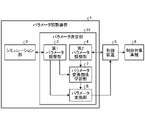
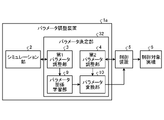
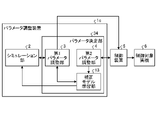
- FIG. 1 is a diagram showing a configuration example of the parameter adjusting device according to the first embodiment.
- the parameter adjustment device 1 according to the present embodiment includes a simulation unit 2, a first parameter adjustment unit 3, a second parameter adjustment unit 4, a parameter conversion relationship learning unit 7, and a parameter conversion unit 8.
- the first parameter adjusting unit 3, the second parameter adjusting unit 4, the parameter conversion relationship learning unit 7, and the parameter conversion unit 8 constitute a parameter determining unit 31.
- the parameter adjusting device 1 is a device that adjusts the control parameters of the control device 5 that controls the controlled target actual machine 6.
- the control target actual machine 6 is a mechanical system controlled by the control device 5, and is an industrial robot, an industrial machine, a machine tool, an elevator, or the like.
- the parameter adjusting device 1 is constructed on a personal computer or a server external to the control device 5, but the present invention is not limited to this.
- the parameter adjusting device 1 may be configured inside the control device 5 or may be configured on the cloud.
- the simulation unit 2 is a simulator that reproduces the behavior of the actual controlled device 6 when combined with the control device 5 in a virtual environment such as a personal computer.
- the first parameter adjusting unit 3 and the second parameter adjusting unit 4 adjust the control parameters of the control device 5.
- control parameters are feedback gain, feedforward control parameters, filter parameters, command parameters, and the like of the motor that controls the drive shaft of the mechanical system that is the actual machine to be controlled 6.
- the first parameter adjusting unit 3 and the second parameter adjusting unit 4 perform adjustment of at least one of these control parameters.
- the first parameter adjustment unit 3 adjusts the control parameters for the simulation unit 2. Specifically, the first parameter adjusting unit 3 causes the simulation unit 2 to execute a simulation that reproduces the behavior of the actual device 6 to be controlled, and adjusts the control parameters based on the result of the simulation.
- the second parameter adjusting unit 4 adjusts the control parameters for the control device 5 and the controlled target actual machine 6. Specifically, the second parameter adjusting unit 4 actually operates the controlled target actual machine 6 via the control device 5, and adjusts the control parameters based on the operation result.
- the first parameter adjusting unit 3 and the second parameter adjusting unit 4 change the values of the control parameters to be adjusted by trial and error, respectively, and search for the values of the control parameters that satisfy the target specifications such as shortening the positioning time and improving the trajectory accuracy. do.
- the first parameter adjusting unit 3 and the second parameter adjusting unit 4 search for the value of the control parameter that most satisfies the target specification when there are a plurality of values of the control parameter that satisfy the target specification. "Satisfying the target specification most" means that the evaluation function determined according to the target specification is minimized. For example, when the target specification is the shortening of the positioning time, the first parameter adjusting unit 3 and the second parameter adjusting unit 4 search for the control parameter having the shortest positioning time.
- the methods for searching the control parameter values by the first parameter adjustment unit 3 and the second parameter adjustment unit 4 include reinforcement learning, PSO (Particle Swarm Optimization) called particle swarm optimization, Bayesian optimization, grid search, and genetic algorithm. GA (Genetic Algorithm), which is called, is applied.
- the first parameter adjustment unit 3 When the adjustment of the control parameters is completed, the first parameter adjustment unit 3 outputs a part of the plurality of adjustment results obtained in the control parameter adjustment process to the parameter conversion relation learning unit 7, and outputs the rest to the parameter conversion unit 8. do.
- the second parameter adjustment unit 4 When the adjustment of the control parameter is completed, the second parameter adjustment unit 4 outputs the adjustment result to the parameter conversion relationship learning unit 7 and the control device 5.
- the adjustment result output by the first parameter adjustment unit 3 is the first adjustment result
- the adjustment result output by the second parameter adjustment unit 4 is the second adjustment result.
- the parameter conversion relationship learning unit 7 learns the relationship between the adjusted control parameters obtained by adjusting the control parameters by the first parameter adjusting unit 3 and the second parameter adjusting unit 4 under the same specific operating conditions. , A learning model for converting the control parameters adjusted by the first parameter adjusting unit 3 into the control parameters of the control device 5 is generated.
- There is one operating condition such as the position of the tip of the mechanical system at the operation start point and operation end point, the position of each axis constituting the mechanical system at the operation start point and operation end point, the set maximum speed, etc. It is determined by the above operating parameters.
- the operating conditions are changed by changing the values of each of these operating parameters.
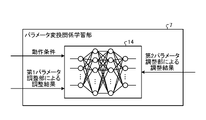
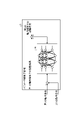
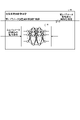
- FIG. 2 is a diagram showing a configuration example of the parameter conversion relationship learning unit 7. As shown in FIG. 2, the parameter conversion relation learning unit 7 includes a neural network 14.
- the operating conditions when the first parameter adjusting unit 3 adjusts the parameters (hereinafter referred to as learning operating conditions) and the first parameter adjusting unit 3 under the learning operating conditions are used.
- the adjustment result that is, the control parameter after adjustment
- the adjustment result that is, the control parameter after adjustment by the second parameter adjustment unit 4 under the learning operation condition are input to the neural network 14.
- the learning operating condition is a part of the operating conditions among various operating conditions used when adjusting the control parameters.
- Examples of adjustment results by the first parameter adjustment unit 3 and the second parameter adjustment unit 4 are feedback gains such as proportional gain, integral gain, and differential gain, feedforward parameters, filter parameters applied to commands, acceleration / deceleration time, and the like. ..
- the control parameters adjusted by the first parameter adjusting unit 3 and the second parameter adjusting unit 4 are feedback gains such as proportional gain, integral gain and differential gain, feedforward parameters, filter parameters applied to commands, acceleration / deceleration time, and the like. And so on.
- the trained neural network 14 is output from the parameter conversion relation learning unit 7 to the parameter conversion unit 8 as a learning model.
- the parameter conversion unit 8 receives and holds the learning model (learned neural network 14) generated by the parameter conversion relation learning unit 7.
- the parameter conversion unit 8 uses the neural network held to control the adjusted control parameters output from the first parameter adjustment unit 3 to be actually used by the control device 5 in the control of the actual control target machine 6. Convert to a parameter.
- the parameter conversion unit 8 outputs the operating conditions when the first parameter adjustment unit 3 adjusts the control parameters and the control parameter adjustment result (adjusted control parameters) from the first parameter adjustment unit 3. Then, these are received, the received operating conditions and adjustment results are input to the holding neural network, and the output of the neural network at this time is controlled by the operating conditions received from the first parameter adjusting unit 3 6. Is output to the control device 5 as a control parameter when controlling.
- the control parameters output by the parameter conversion unit 8 are the same as the control parameters adjusted by the second parameter adjustment unit 4 by operating the actual device 6 to be controlled.
- the first parameter adjustment unit 3 adjusts the control parameters.
- the control parameters are determined for each operating condition.
- the result of the first parameter adjusting unit 3 adjusting the control parameters under the specific operating conditions corresponds to the first information
- the second parameter adjusting unit 4 adjusts the control parameters under the specific operating conditions. The result corresponds to the second information above.
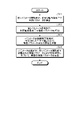
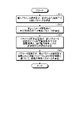
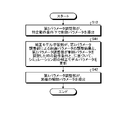
- FIG. 3 is a flowchart showing an example of an operation in which the parameter adjusting device 1 according to the first embodiment adjusts a control parameter.
- the first parameter adjusting unit 3 first executes the first parameter adjusting step of deriving the control parameters under various operating conditions (step S11). That is, the first parameter adjusting unit 3 causes the simulation unit 2 to repeatedly execute the simulation while changing the operating conditions, and updates the control parameters based on the simulation results, so that the actual machine to be controlled is controlled under each operating condition. Appropriate control parameters for operating 6 are derived for each operating condition.
- the first parameter adjusting unit 3 searches for the value of the control parameter that minimizes the evaluation function composed of the control specifications such as the overshoot amount and the settling time by using methods such as PSO, Bayesian optimization, and reinforcement learning. ..
- the second parameter adjusting unit 4 executes the second parameter adjusting step of deriving the control parameter under specific operating conditions (step S12). That is, the second parameter adjusting unit 4 uses a specific operating condition which is a part of the various operating conditions used when the first parameter adjusting unit 3 derives the control parameter in the above step S11. Then, the actual device 6 to be controlled is repeatedly operated via the control device 5. Then, the second parameter adjusting unit 4 updates the control parameters based on the operation result of the controlled target actual machine 6, and obtains appropriate control parameters when operating the controlled target actual machine 6 under each specific operating condition. Derived for each specific operating condition.
- the second parameter adjustment unit 4 uses methods such as PSO, Bayesian optimization, and reinforcement learning to generate an evaluation function composed of control specifications such as overshoot amount and settling time. Search for the minimum control parameter value.
- the specific operating conditions correspond to the above-mentioned learning operating conditions.
- the parameter conversion relationship learning unit 7 executes a learning model generation step of learning the relationship between the control parameters derived under specific operating conditions and generating a learning model (step S13). That is, the parameter conversion-related learning unit 7 has an operating condition (specific operating condition) when the second parameter adjusting unit 4 derives the control parameter in step S12, and a control parameter derived by the second parameter adjusting unit 4 in step S12. And, among the control parameters derived by the first parameter adjusting unit 3 in step S11, by learning the relationship with the control parameters derived under specific operating conditions, it is used in the control parameter determination process by the parameter determining unit 31. Generate a learning model to do.
- the control parameters derived by the first parameter adjustment unit 3 and the operating conditions when the first parameter adjustment unit 3 derives the control parameters are input to the neural network 14. Then, the neural network 14 is made to perform learning so as to output the same control parameters as the control parameters derived by the second parameter adjustment unit 4 under the input operating conditions. When the learning of the neural network 14 is completed, the parameter conversion-related learning unit 7 outputs the learned neural network 14 as a learning model to the parameter conversion unit 8.
- the parameter conversion unit 8 executes a parameter conversion step of deriving the control parameters of the actual machine based on the control parameters adjusted by the first parameter adjustment unit 3 and the learning result (step S14). That is, the parameter conversion unit 8 receives the adjusted control parameter and the operating condition used at the time of adjusting the control parameter from the first parameter adjusting unit 3, and receives the received control parameter and the operating condition from the parameter conversion relation learning unit 7. Input to the trained neural network 14. Then, the parameter conversion unit 8 outputs the control parameters output from the learned neural network 14 to the control device 5 as control parameters of the actual machine which are control parameters when the control device 5 controls the control target actual machine 6. do.
- the first parameter adjusting unit 3 adjusts the control parameters by simulation using the simulation unit 2, and the parameter conversion unit 8 converts the adjusted control parameters into the control parameters of the actual machine. Therefore, in the parameter adjusting device 1, the second parameter adjusting unit 4 that operates the controlled target actual machine 6 to adjust the control parameters is a part of the operating conditions among various operating conditions necessary for adjusting the control parameters. For the remaining operating conditions, the parameter conversion unit 8 converts the control parameters derived by the first parameter adjustment unit 3 by simulation, so that the control device 5 controls the control target actual machine 6. Derivation of control parameters. As a result, it is possible to reduce the number of times that the control target actual machine 6 is operated and the control parameters are derived while changing the operating conditions.
- the time required for adjusting the control parameters can be reduced.
- the parameter conversion unit 8 converts the control parameters derived by the first parameter adjustment unit 3 by simulation, thereby deriving the control parameters when the control device 5 controls the control target actual machine 6. It doesn't matter.
- the parameter conversion-related learning unit 7 shown in FIG. 2 is obtained by the neural network 14 adjusting the control parameters of the first parameter adjusting unit 3 and the second parameter adjusting unit 4 under specific operating conditions (learning operating conditions). Although it is a configuration for learning the relationship between the adjustment results to be performed, the configuration shown in FIG. 4 may be used.
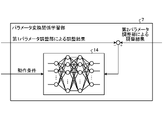
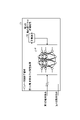
- FIG. 4 is a diagram showing another configuration example of the parameter conversion relation learning unit 7.
- the parameter conversion-related learning unit 7 shown in FIG. 4 is the adjustment result by the second parameter adjustment unit 4 and the first when the first parameter adjustment unit 3 and the second parameter adjustment unit 4 adjust the control parameters under the same operating conditions.
- the neural network 14 learns the difference in the adjustment results of the parameter adjustment unit 3. As shown in FIG. 4, the difference between the adjustment result by the second parameter adjustment unit 4 and the adjustment result by the first parameter adjustment unit 3 is input to the neural network 14, and the first parameter adjustment unit 3 and the second parameter are input.
- the operating conditions when the adjusting unit 4 adjusts the control parameters are input. When the operating conditions are input, the neural network 14 has the adjustment result by the second parameter adjusting unit 4 when the first parameter adjusting unit 3 and the second parameter adjusting unit 4 adjust the control parameters under the input operating conditions. Learning is performed so as to output the difference in the adjustment result by the first parameter adjustment unit 3.
- the parameter conversion relationship learning unit 7 having the configuration shown in FIG. 4 outputs the trained neural network 14 as a learning model to the parameter conversion unit 8 in the same manner as the parameter conversion relation learning unit 7 having the configuration shown in FIG.
- the parameter conversion unit 8 receives from the first parameter adjustment unit 3 the operating conditions when the first parameter adjustment unit 3 adjusts the control parameters and the adjustment result of the control parameters (control parameters after adjustment).
- the parameter conversion unit 8 inputs the received operating conditions to the holding neural network, and adds the output of the neural network at this time to the adjusted control parameters received from the first parameter adjustment unit 3.
- a control parameter for controlling the controlled target actual machine 6 is generated.
- the parameter conversion unit 8 outputs the generated control parameter to the control device 5.
- the parameter adjusting device 1 may be applied to either the parameter conversion relation learning unit 7 having the configuration shown in FIG. 2 or the parameter conversion relation learning unit 7 having the configuration shown in FIG.
- the adjusted control parameters which are the adjustment results obtained by adjusting the control parameters by the second parameter adjusting unit 4 under the specific operating conditions, are transmitted to the control device 5 as they are.
- the control parameters under the operating conditions in which the second parameter adjusting unit 4 does not adjust the control parameters are obtained by adjusting the control parameters by the first parameter adjusting unit 3 under the operating conditions other than the specific operating conditions.
- the adjustment result is derived by the parameter conversion unit 8 by converting using the neural network learned by the parameter conversion relation learning unit 7.
- the parameter conversion unit 8 transmits the derived control parameter to the control device 5.
- the parameter adjusting device 1 learns the relationship between the adjustment result of the control parameter by the simulation and the adjustment result of the control parameter in the actual machine, and is controlled based on the learning result and the adjustment result of the control parameter by the simulation.
- the control parameters of the operating conditions other than the specific operating conditions for adjusting the control parameters by operating the actual machine 6 are determined. Therefore, it is possible to reduce the number of operating conditions that require the actual machine to be operated and adjust the control parameters, and it is possible to reduce the time required for adjusting the control parameters. Further, the parameter adjusting device 1 can adjust the control parameters of the operating conditions other than the specific operating conditions for adjusting the control parameters by operating the actual machine to appropriate values by simulation.
- FIG. 5 is a diagram showing a configuration example of the parameter adjusting device according to the second embodiment.
- the same reference numerals are given to the components common to the parameter adjusting device 1 (see FIG. 1) described in the first embodiment.
- the control device 5 and the control target actual machine 6 shown in FIG. 5 are the same as the control device 5 and the control target actual machine 6 shown in FIG. 1, the description thereof will be omitted.
- the components and operations different from those in the first embodiment will be mainly described.
- the parameter adjusting device 1a replaces the parameter determining unit 31 of the parameter adjusting device 1 according to the first embodiment with the parameter determining unit 32.
- the parameter determination unit 32 includes a first parameter adjustment unit 3, a second parameter adjustment unit 4, a parameter relationship learning unit 9, and a parameter conversion unit 10.
- the first parameter adjusting unit 3 adjusts the control parameters of the control device 5 for each of the plurality of operating conditions, as in the first embodiment.
- the plurality of operating conditions include the first operating condition, which is a reference operating condition.
- the operating conditions other than the first operating condition are the second operating conditions.
- the first parameter adjusting unit 3 outputs the adjustment result to the parameter relation learning unit 9.
- the second parameter adjusting unit 4 adjusts the control parameters under the first operating condition, and outputs the adjustment result to the control device 5 and the parameter conversion unit 10.
- the parameter relationship learning unit 9 learns the relationship between the adjustment result under the first operating condition and the adjustment result under the second operating condition based on the adjustment result of the control parameter by the first parameter adjusting unit 3.
- the parameter-related learning unit 9 is a learning model for deriving the adjustment result of the control parameter under the second operating condition from the result of the second parameter adjusting unit 4 adjusting the control parameter under the first operating condition. To generate.
- FIG. 6 is a diagram showing a configuration example of the parameter relationship learning unit 9.
- the parameter relationship learning unit 9 includes the neural network 14 as in the parameter conversion relationship learning unit 7 described in the first embodiment.
- the difference in the adjustment result under the operating conditions of is input to the neural network 14.
- the neural network 14 outputs the difference between the adjustment result under the second operating condition and the adjustment result under the first operating condition.
- the trained neural network 14 is output from the parameter relationship learning unit 9 to the parameter conversion unit 10 as a learning model.
- the parameter conversion unit 10 receives and holds the learning model (learned neural network 14) generated by the parameter relationship learning unit 9. Using the neural network held by the parameter conversion unit 10, the control device 5 controls the actual machine 6 to control the adjustment result of the control parameter in the first operating condition, which is output from the second parameter adjustment unit 4. Convert to the control parameters actually used in the control. Specifically, the parameter conversion unit 10 inputs the difference between the second operating condition and the first operating condition into the holding neural network, and the output of the neural network at this time is the second parameter adjusting unit. It is added to the adjustment result of the control parameter in the first operating condition input from 4, and the added result is output to the control device 5 as a control parameter when controlling the controlled target actual machine 6 in the second operating condition. do.
- the control parameters output by the parameter conversion unit 10 are the same as the control parameters adjusted by the second parameter adjusting unit 4 operating the controlled target actual machine 6 under the second operating condition.
- the second operating condition (specific operating condition) in which only the first parameter adjusting unit 3 adjusts the control parameter is the first used when the parameter determining unit 32 determines the control parameter.
- the first operating condition (operating condition that does not correspond to the specific operating condition) in which the second parameter adjusting unit 4 adjusts the control parameter is the second information used when the parameter determining unit 32 determines the control parameter.
- FIG. 7 is a flowchart showing an example of an operation in which the parameter adjusting device 1a according to the second embodiment adjusts a control parameter.
- step S11 When the parameter adjusting device 1a adjusts the control parameters of the control device 5, the first parameter adjusting unit 3 first derives the control parameters under various operating conditions (step S11). This process is the same as step S11 in FIG. 3 described in the first embodiment.
- step S12 the second parameter adjusting unit 4 derives a control parameter under specific operating conditions.
- the specific operating condition in step S12 is the above-mentioned first operating condition. That is, the second parameter adjusting unit 4 sets the first operating condition, which is the reference operating condition among the various operating conditions used when the first parameter adjusting unit 3 derives the control parameter in step S11 above.
- the actual device 6 to be controlled is repeatedly operated via the control device 5.
- the second parameter adjusting unit 4 updates the control parameters based on the operation result of the controlled target actual machine 6, so that appropriate control parameters for operating the controlled target actual machine 6 under the first operating condition can be obtained.
- the specific operating condition which is the first operating condition, may be arbitrarily selected from various operating conditions.
- the parameter relationship learning unit 9 learns the relationship between the adjustment result under the specific operation condition by the first parameter adjustment unit 3 and the adjustment result under other operation conditions, and generates a learning model.
- the generation step is executed (step S21). Specifically, the parameter-related learning unit 9 describes the difference between the operating conditions and the specific operating conditions other than the specific operating conditions when the first parameter adjusting unit 3 adjusts the parameters, and the specific operation by the first parameter adjusting unit 3.
- the learning model used in the control parameter determination process by the parameter determination unit 32 can be obtained. Generate.
- the parameter relationship learning unit 9 inputs the difference between the operating conditions other than the specific operating conditions and the specific operating conditions when the first parameter adjusting unit 3 adjusts the control parameters into the neural network 14.
- the neural network 14 is made to perform learning so as to output the difference between the adjustment result of the control parameter under the operation condition other than the specific operation condition and the adjustment result of the control parameter under the specific operation condition by the first parameter adjustment unit 3.
- the parameter relation learning unit 9 outputs the learned neural network 14 as a learning model to the parameter conversion unit 10.
- the parameter conversion unit 10 executes a parameter conversion step of deriving the control parameters of the actual machine based on the control parameters adjusted by the second parameter adjustment unit 4 and the learning result (step S22). That is, the parameter conversion unit 10 receives the adjusted control parameter and the specific operating condition used at the time of adjusting the control parameter from the second parameter adjusting unit 4, and the difference between the received specific operating condition and the operating condition other than the specific operating condition. Is input to the trained neural network 14 received from the parameter relationship learning unit 9. Then, the parameter conversion unit 10 adds the output of the trained neural network 14 to the adjustment result of the control parameter output from the second parameter adjustment unit 4, and the control device 5 controls the actual machine 6 with the added result. Is output to the control device 5 as a control parameter of the actual machine, which is a control parameter for controlling the above.
- the first parameter adjusting unit 3 adjusts the control parameters by simulation using the simulation unit 2, and the parameter conversion unit 10 converts the adjusted control parameters into the control parameters of the actual machine. Therefore, in the parameter adjusting device 1a, the second parameter adjusting unit 4 that operates the controlled target actual machine 6 to adjust the control parameters is a part of the operating conditions among various operating conditions necessary for adjusting the control parameters.
- the control parameter is derived for the first operating condition
- the parameter conversion unit 8 converts the control parameter derived by the simulation by the first parameter adjusting unit 3 for the second operating condition, which is the remaining operating condition.
- the control parameters when the control device 5 controls the controlled target actual machine 6 are derived.
- the time required for adjusting the control parameters can be reduced.
- the neural network 14 has the adjustment result by the first parameter adjusting unit 3 in the second operating condition among the plurality of operating conditions and the first parameter in the first operating condition.
- the configuration shown in FIG. 8 may be used.
- FIG. 8 is a diagram showing another configuration example of the parameter relationship learning unit 9.
- the parameter relationship learning unit 9 shown in FIG. 8 is a division that calculates the ratio of the adjustment result by the first parameter adjustment unit 3 under the first operating condition and the adjustment result by the first parameter adjusting unit 3 under the second operating condition.
- a unit 18 and a neural network 14 for learning the ratio calculated by the division unit 18 are provided.
- the difference between the second operating condition and the first operating condition is input to the neural network 14, and the adjustment result by the first parameter adjusting unit 3 under the first operating condition and the first
- the ratio of the adjustment result by the first parameter adjusting unit 3 under the operating condition of 2 is input.
- the adjustment result of the control parameter in the first operating condition and the adjustment result of the control parameter in the second operating condition are obtained. Learn to output the ratio.
- the parameter relationship learning unit 9 having the configuration shown in FIG. 8 outputs the trained neural network 14 as a learning model to the parameter conversion unit 10 in the same manner as the parameter relationship learning unit 9 having the configuration shown in FIG.
- the parameter conversion unit 10 When the parameter conversion unit 10 receives the result of adjusting the control parameters under the first operating condition by the second parameter adjusting unit 4 from the second parameter adjusting unit 4, the parameter conversion unit 10 determines the difference between the first operating condition and the second operating condition. , Input to the holding neural network, multiply the output of the neural network at this time by the adjusted control parameter received from the second parameter adjustment unit 4, and control the control parameter when controlling the actual device 6 to be controlled. To generate. The parameter conversion unit 10 outputs the generated control parameter to the control device 5.
- the parameter adjusting device 1a is the second when either the parameter relation learning unit 9 having the configuration shown in FIG. 6 or the parameter relation learning unit 9 having the configuration shown in FIG. 8 is applied.
- the adjusted control parameters which are the adjustment results obtained by adjusting the control parameters under the first operating condition, are transmitted to the control device 5 as they are.
- the control parameters under the second operating condition in which the second parameter adjusting unit 4 does not adjust the control parameters are obtained by adjusting the control parameters by the first parameter adjusting unit 3 under the second operating condition.
- the adjustment result is derived by the parameter conversion unit 10 by converting using the neural network learned by the parameter relationship learning unit 9.
- the parameter conversion unit 10 transmits the derived control parameter to the control device 5.
- the parameter adjusting device 1a has the adjustment result of the control parameter by the simulation under the first operating condition, which is the reference operating condition, and the adjusting result of the control parameter by the simulation under the second operating condition.
- the relationship is learned, and the control parameter of the second operating condition is determined based on the learning result and the adjustment result of the control parameter by the actual machine under the first operating condition. Therefore, it is possible to reduce the number of operating conditions that need to be adjusted in the actual machine and reduce the time required for adjusting the control parameters.
- the parameter adjusting device 1a can adjust the control parameters of the second operating condition other than the first operating condition for adjusting the control parameters by operating the actual machine to appropriate values by simulation.
- FIG. 9 is a diagram showing a configuration example of the parameter adjusting device according to the third embodiment.
- the same reference numerals are given to the components common to the parameter adjusting device 1 (see FIG. 1) described in the first embodiment.
- the control device 5 and the control target actual machine 6 shown in FIG. 9 are the same as the control device 5 and the control target actual machine 6 shown in FIG. 1, the description thereof will be omitted.
- the components and operations different from those in the first embodiment will be mainly described.
- the parameter adjusting device 1b replaces the parameter determining unit 31 of the parameter adjusting device 1 according to the first embodiment with the parameter determining unit 33.
- the parameter determination unit 33 includes a first parameter adjustment unit 3, a second parameter adjustment unit 4, a specification conversion relationship learning unit 11, and a specification conversion unit 12.
- the first parameter adjusting unit 3 adjusts the control parameters of the control device 5 for each of the plurality of operating conditions, as in the first embodiment.
- the first parameter adjusting unit 3 outputs the adjusted control parameters to the control device 5.
- the first parameter adjusting unit 3 adjusts the control parameters in a state where the control specifications are adjusted to appropriate values by the specification conversion unit 12.
- the control specification is a value that serves as a guideline for adjusting control parameters such as the settling time and the overshoot amount.
- the specification conversion unit 12 is based on the learning model generated by the specification conversion-related learning unit 11 and the operating conditions used by the first parameter adjustment unit 3 for adjusting the control parameters. Generates the adjusted control specifications used by the parameter adjustment unit 3.
- the second parameter adjusting unit 4 adjusts the control parameters using the actual machine for some of the operating conditions among the plurality of operating conditions.
- the second parameter adjustment unit 4 outputs the adjustment result of the control parameters, the operating conditions used in the adjustment, and the control specifications to the specification conversion-related learning unit 11.
- the second parameter adjusting unit 4 outputs the adjustment result of the control parameter to the control device 5 in addition to the specification conversion-related learning unit 11.
- the specification conversion relationship learning unit 11 learns the relationship between the control specifications when the first parameter adjusting unit 3 adjusts the control parameters and the control specifications when the second parameter adjusting unit 4 adjusts the control parameters. Specifically, the specification conversion-related learning unit 11 is the first parameter adjustment unit 3 when the results of adjusting the control parameters by the first parameter adjustment unit 3 and the second parameter adjustment unit 4 are the same under the same operating conditions. Learn the relationship between the control specifications and the control specifications of the second parameter adjustment unit 4. In the learning operation, the specification conversion-related learning unit 11 generates a learning model for deriving the control specifications of the first parameter adjustment unit 3 from the control specifications of the second parameter adjustment unit 4.
- FIG. 10 is a diagram showing a configuration example of the specification conversion-related learning unit 11. As shown in FIG. 10, the specification conversion-related learning unit 11 includes a control specification value learning unit 15 and a specification conversion function learning unit 16.
- the control specification value learning unit 15 adjusts the value of the control specification (hereinafter referred to as the control specification value) used when the first parameter adjustment unit 3 adjusts the control parameter.
- the control specification value learning unit 15 has a first parameter adjustment unit so that the adjustment result of the control parameter by the first parameter adjustment unit 3 and the adjustment result of the control parameter by the second parameter adjustment unit 4 are equivalent. Adjust the control specification value used by 3.
- the control specification value learning unit 15 adjusts the control specification value used by the first parameter adjustment unit 3 as follows. First, the control specification value learning unit 15 first uses the control specification value used by the second parameter adjustment unit 4 for adjusting the control parameter, that is, the control specification value output from the second parameter adjustment unit 4, as the initial value. Output to the parameter adjustment unit 3.
- the first parameter adjusting unit 3 adjusts the control parameters using the control specification values input from the control specification value learning unit 15, and outputs the adjustment result to the control specification value learning unit 15.
- the control specification value learning unit 15 compares the adjustment result output from the first parameter adjustment unit 3 with the adjustment result by the second parameter adjustment unit 4, and the adjustment result by the first parameter adjustment unit 3 and the first. 2
- the control specification value output to the first parameter adjustment unit 3 is updated so that the difference in the adjustment result by the parameter adjustment unit 4 becomes small.
- the control specification value learning unit 15 updates the control specification value by using PSO, GA, Bayesian optimization, or the like.
- the updated control specification value is output to the first parameter adjustment unit 3, and the first parameter adjustment unit 3 adjusts the control parameter again using the updated control specification value and outputs the adjustment result to the control specification value learning unit 15.
- the control specification value learning unit 15 repeatedly executes such an operation, and if the difference between the adjustment result by the first parameter adjustment unit 3 and the adjustment result by the second parameter adjustment unit 4 is equal to or less than the defined specified value, learning is performed. It is output to the specification conversion function learning unit 16 as the control specification value of the first parameter adjustment unit 3 that has been completed and learned.
- FIG. 11 is a diagram showing a configuration example of the specification conversion function learning unit 16.
- the specification conversion function learning unit 16 includes a neural network 14.
- the difference between the control specification value of the first parameter adjustment unit 3 and the control specification value of the second parameter adjustment unit 4 and the operating condition of the second parameter adjustment unit 4 are input to the neural network 14. do.
- the neural network 14 learns to output the difference between the control specification value of the first parameter adjustment unit 3 and the control specification value of the second parameter adjustment unit 4.
- the trained neural network 14 is output from the specification conversion-related learning unit 11 to the specification conversion unit 12 as a learning model.
- the specification conversion unit 12 receives and holds the learning model (learned neural network 14) generated by the specification conversion-related learning unit 11. Further, the operation conditions and control specification values used when the first parameter adjustment unit 3 adjusts the control parameters are input to the specification conversion unit 12.
- the specification conversion unit 12 uses the holding neural network to obtain the first parameter from the input operating condition and the control specification value.
- the adjustment unit 3 generates an adjusted control specification value used when adjusting the control parameter.
- the specification conversion unit 12 inputs the operating conditions to the holding neural network, and adds the output of the neural network at this time to the control specification value input from the first parameter adjustment unit 3. Then, the adjusted control specification value is generated.
- the specification conversion unit 12 outputs the adjusted control specification value to the first parameter adjustment unit 3.
- the first parameter adjusting unit 3 adjusts the control parameters using the adjusted control specification values input from the specification conversion unit 12, and transmits the adjusted control parameters to the control device 5.
- control specification value of the first parameter adjusting unit 3 corresponds to the first information used when the parameter determining unit 33 determines the control parameter, and the control of the second parameter adjusting unit 4 is performed.
- the specification value corresponds to the second information used by the parameter determination unit 33 when determining the control parameter.
- FIG. 12 is a flowchart showing an example of an operation in which the parameter adjusting device 1b according to the third embodiment adjusts a control parameter.
- step S12 When the parameter adjusting device 1b adjusts the control parameters of the control device 5, the second parameter adjusting unit 4 first derives the control parameters under specific operating conditions (step S12). This process is the same as step S12 of FIG. 3 described in the first embodiment.
- the specification conversion-related learning unit 11 determines the control specification value of the first parameter adjustment unit 3 based on the control specification value of the second parameter adjustment unit 4 and the adjustment result of the control parameter by the second parameter adjustment unit 4. Is derived (step S31). Specifically, the control specification value learning unit 15 of the specification conversion-related learning unit 11 sets the first parameter under the same operating conditions as the specific operating conditions when the second parameter adjusting unit 4 derives the control parameter in step S12. By causing the adjustment unit 3 to repeatedly adjust the control parameters and updating the control specification values so that the adjustment result by the first parameter adjustment unit 3 approaches the adjustment result by the second parameter adjustment unit 4, specific operating conditions can be obtained. The control specification value of the corresponding first parameter adjusting unit 3 is derived.
- the control specification value of the first parameter adjusting unit 3 corresponding to the specific operating condition is a control specification value used when the first parameter adjusting unit 3 adjusts the control parameter under the specific operating condition.
- the control specification value learning unit 15 uses PSO, GA, Bayesian optimization, etc. for updating the control specification value.
- the specification conversion relationship learning unit 11 learns the relationship between the operating conditions, the control specification value of the first parameter adjustment unit 3, and the control specification value of the second parameter adjustment unit 4, and generates a learning model.
- the model generation step is executed (step S32).
- the control specification value of the first parameter adjusting unit 3 here is the control specification value derived in step S31.
- the specification conversion function learning unit 16 of the specification conversion-related learning unit 11 determines the operating conditions of the second parameter adjustment unit 4, the control specification value of the first parameter adjustment unit 3, and the second parameter adjustment. By learning the relationship with the difference in the control specification values of the unit 4, a learning model used in the control parameter determination process by the parameter determination unit 33 is generated.
- the specification conversion function learning unit 16 when the operating condition is input to the neural network 14, the specification conversion function learning unit 16 outputs the difference between the control specification value of the first parameter adjustment unit 3 and the control specification value of the second parameter adjustment unit 4. Let the neural network 14 perform the training so as to do so. When the learning of the neural network 14 by the specification conversion function learning unit 16 is completed, the specification conversion-related learning unit 11 outputs the trained neural network 14 to the specification conversion unit 12 as a learning model.
- the specification conversion unit 12 executes a specification conversion step of deriving the control specification value of the first parameter adjustment unit 3 based on the learning result by the specification conversion-related learning unit 11 (step S33). Specifically, the specification conversion unit 12 acquires the operating conditions for adjusting the control parameters in the first parameter adjusting unit 3, and receives the acquired operating conditions from the specification conversion-related learning unit 11 for the trained neural network 14. Enter in. Then, the specification conversion unit 12 adds the output of the trained neural network 14 to the corresponding control specification value of the second parameter adjustment unit 4, and the addition result is the first control specification value of the first parameter adjustment unit 3. Output to the parameter adjustment unit 3. Here, the user specifies the operating conditions to be input to the trained neural network 14.
- the specification conversion unit 12 accepts the designation of the operating condition from the user, and inputs the accepted operating condition to the trained neural network 14.
- the operating condition for accepting the designation from the user corresponds to the specific operating condition from which the second parameter adjusting unit 4 derives the control parameter in the above step S12 among the plurality of operating conditions used when adjusting the control parameter. It is an operating condition that does not.
- the corresponding control specification value of the second parameter adjusting unit 4 is the second parameter adjusting unit 4 when the second parameter adjusting unit 4 adjusts the control parameter under the operating conditions input to the trained neural network 14. This is the control specification value to be used.
- This control specification value may be acquired by the specification conversion unit 12 receiving an input from the user, or the specification conversion unit 12 may acquire the corresponding control specification value from the second parameter adjustment unit 4.
- the first parameter adjusting unit 3 executes a control parameter generation step of deriving the control parameters of the actual machine using the control specification values derived by the specification conversion unit 12 (step S34). That is, the first parameter adjusting unit 3 derives the control parameter based on the result of the simulation unit 2 executing the simulation using the control specification value derived by the specification conversion unit 12.
- the adjusted control parameters which are the adjustment results obtained by adjusting the control parameters by the second parameter adjusting unit 4 under the specific operating conditions, are the same. It is transmitted to the control device 5 as it is.
- the control specification values of the first parameter adjusting unit 3 and the control specification values of the second parameter adjusting unit 4 are used.
- the first parameter adjusting unit 3 adjusts using the control specification value derived based on the result of learning the relationship with the condition.
- the adjusted control parameter which is the adjustment result obtained by the second parameter adjusting unit 4 adjusting the control parameter under the specific operating conditions
- the control device 5 is transmitted to the control device 5 as it is has been described.
- the specific operating condition adjusted by the second parameter adjusting unit 4 the result of learning the relationship between the control specification value of the first parameter adjusting unit 3, the control specification value of the second parameter adjusting unit 4, and the operating condition is obtained.
- the first parameter adjusting unit 3 may make adjustments using the control specification values derived based on the above.
- the parameter adjusting device 1b learns the specification conversion relationship for converting the control specification value so that the difference between the control parameter adjustment result in the actual machine and the control parameter adjustment result by simulation is equal to or less than the specified value. Since the control specification value used for the adjustment of the control parameter by the simulation is derived based on the learning result, the adjustment result equivalent to the adjustment result of the control parameter in the actual machine can be obtained by the adjustment operation by the simulation. In addition, the number of operating conditions that need to be adjusted in the actual machine can be reduced, and the time required for adjusting the control parameters can be reduced.
- FIG. 13 is a diagram showing a configuration example of the parameter adjusting device according to the fourth embodiment.
- the same reference numerals are given to the components common to the parameter adjusting device 1 (see FIG. 1) described in the first embodiment.
- the control device 5 and the control target actual machine 6 shown in FIG. 13 are the same as the control device 5 and the control target actual machine 6 shown in FIG. 1, the description thereof will be omitted.
- the components and operations different from those in the first embodiment will be mainly described.
- the parameter adjusting device 1c replaces the parameter determining unit 31 of the parameter adjusting device 1 according to the first embodiment with the parameter determining unit 34.
- the parameter determination unit 34 includes a first parameter adjustment unit 3, a second parameter adjustment unit 4, and a correction model learning unit 13.
- the simulator constituting the simulation unit 2 internally includes a correction model for reducing the difference between the adjustment result of the first parameter adjustment unit 3 and the adjustment result of the second parameter adjustment unit 4. do.
- the first parameter adjusting unit 3 adjusts the control parameters of the control device 5 for each of the plurality of operating conditions, as in the first embodiment.
- the correction model included in the simulation unit 2 used by the first parameter adjustment unit 3 to adjust the control parameters is generated by the correction model learning unit 13.
- the first parameter adjusting unit 3 obtains the adjustment result (adjusted control parameter) of the control parameter until the learning for the correction model learning unit 13 to create the correction model is completed. It is output to the correction model learning unit 13. After the learning for the correction model learning unit 13 to create the correction model is completed, the first parameter adjustment unit 3 outputs the adjustment result of the control parameters for each of the plurality of operating conditions to the control device 5.
- the second parameter adjusting unit 4 adjusts the control parameters using the actual machine for some of the operating conditions among the plurality of operating conditions.
- the second parameter adjustment unit 4 outputs the adjustment result of the control parameter and the operating condition used in the adjustment to the correction model learning unit 13.
- the second parameter adjusting unit 4 outputs the adjustment result of the control parameter to the control device 5 in addition to the correction model learning unit 13.
- the correction model learning unit 13 learns the relationship between the control parameter adjustment result by the first parameter adjustment unit 3 and the control parameter adjustment result by the second parameter adjustment unit 4, and generates a correction model constituting the simulation unit 2. do.
- FIG. 14 is a diagram showing a configuration example of the correction model learning unit 13. As shown in FIG. 13, the correction model learning unit 13 includes a correction model parameter learning unit 17.
- the correction model parameter learning unit 17 internally stores the initial values of the correction model parameters (hereinafter referred to as correction model parameters), and generates the correction model by the procedure shown below. First, the correction model parameter learning unit 17 outputs the operating conditions used when the second parameter adjustment unit 4 adjusts the control parameters to the first parameter adjustment unit 3, instructs the adjustment of the control parameters, and stores them. The initial value of the corrected model parameter is output to the simulation unit 2. The first parameter adjustment unit 3 adjusts the control parameters using each of the operating conditions input from the correction model parameter learning unit 17, and outputs the adjustment result to the correction model parameter learning unit 17.
- correction model parameters hereinafter referred to as correction model parameters
- the correction model parameter learning unit 17 simulates so that the difference between the adjustment result by the second parameter adjustment unit 4 and the adjustment result by the first parameter adjustment unit 3 becomes small. Update the correction model parameters to be transmitted to unit 2.
- the correction model parameter learning unit 17 updates the correction model parameters using PSO, GA, Bayesian optimization, and the like.
- the correction model parameter learning unit 17 transmits the updated correction model parameter to the simulation unit 2, and instructs the first parameter adjustment unit 3 to readjust the control parameter.
- the first parameter adjustment unit 3 re-adjusts the control parameters and outputs the adjustment result to the correction model parameter learning unit 17.
- the correction model parameter learning unit 17 repeatedly executes such an operation, and if the difference between the adjustment result by the first parameter adjustment unit 3 and the adjustment result by the second parameter adjustment unit 4 is equal to or less than a predetermined value, learning is performed. When completed, the correction model parameter at that time is output to the simulation unit 2 as the final correction model parameter.
- the result of adjusting the control parameters by the first parameter adjusting unit 3 under the specific operating conditions corresponds to the first information used when the parameter determining unit 34 determines the control parameters.
- the result of adjusting the control parameters by the parameter adjusting unit 4 under the specific operating conditions corresponds to the second information used when the parameter determining unit 34 determines the control parameters.
- FIG. 15 is a flowchart showing an example of an operation in which the parameter adjusting device 1c according to the fourth embodiment adjusts a control parameter.
- step S12 When the parameter adjusting device 1c adjusts the control parameters of the control device 5, the second parameter adjusting unit 4 first derives the control parameters under specific operating conditions (step S12). This process is the same as step S12 of FIG. 3 described in the first embodiment.
- step S41 is a learning model generation step. That is, in the correction model learning unit 13, the difference between the control parameter adjustment result by the first parameter adjustment unit 3 and the control parameter adjustment result by the second parameter adjustment unit 4 under the same operating conditions is equal to or less than the specified value.
- the correction model parameter of the simulation unit 2 is searched and determined.
- the correction model parameter learning unit 17 described above searches for the correction model parameters.
- the first parameter adjusting unit 3 executes a control parameter generation step for deriving the control parameters of the actual machine (step S42). That is, the first parameter adjusting unit 3 causes the simulation unit 2 in the state where the parameters of the internal correction model are updated in step S41 to execute the simulation under various operating conditions, and adjusts the control parameters based on the simulation results. do. When the adjustment of the control parameter is completed, the first parameter adjustment unit 3 outputs the adjustment result to the control device 5.
- the adjusted control parameters which are the adjustment results obtained by adjusting the control parameters by the second parameter adjusting unit 4 under the specific operating conditions, are the same. It is transmitted to the control device 5 as it is.
- the first parameter adjusting unit 3 determines the difference between the control parameter adjustment result by the actual machine and the control parameter adjustment result by the simulation.
- the parameters are adjusted based on the simulation results in the simulation unit 2 provided with the trained correction model so that
- the adjusted control parameter which is the adjustment result obtained by the second parameter adjusting unit 4 adjusting the control parameter under the specific operating conditions
- the first parameter adjustment unit 3 has learned the parameters so that the difference between the control parameter adjustment result by the actual machine and the control parameter adjustment result by the simulation becomes small. Adjustments may be made based on the simulation results of the simulation unit 2 provided with the correction model of.
- the parameter adjusting device 1c performs a simulation using a correction model in which the parameters are adjusted so that the adjustment result of the control parameter in the actual machine and the adjustment result of the control parameter by the simulation are equal to or less than the specified value. Since the control parameters can be adjusted based on the simulation results, the effect of reducing the number of operating conditions that need to be adjusted in the actual machine and reducing the time required for adjusting the control parameters can be obtained. Further, the parameter adjusting device 1c can adjust the control parameters of the operating conditions other than the specific operating conditions for adjusting the control parameters by operating the actual machine to appropriate values by simulation.
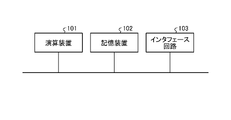
- FIG. 16 is a diagram showing an example of hardware that realizes the parameter adjusting device 1.
- the parameter adjusting device 1 can be realized by the arithmetic unit 101, the storage device 102, and the interface circuit 103.
- the arithmetic unit 101 include a CPU (Central Processing Unit, central processing unit, processing unit, arithmetic unit, microprocessor, microcomputer, DSP (Digital Signal Processor)), system LSI (Large Scale Integration), and the like.
- An example of the storage device 102 is a RAM (Random Access Memory), a ROM (Read Only Memory), a hard disk drive, an SSD (Solid State Drive), a detachable memory device, or a combination thereof.
- the arithmetic unit 101 has a program for operating as each of these units. It is realized by executing.
- the program for operating as the simulation unit 2, the first parameter adjustment unit 3, the second parameter adjustment unit 4, the parameter conversion relationship learning unit 7, and the parameter conversion unit 8 is stored in advance in the storage device 102.
- the arithmetic unit 101 reads the above program from the storage device 102 and executes it as a simulation unit 2, a first parameter adjustment unit 3, a second parameter adjustment unit 4, a parameter conversion relationship learning unit 7, and a parameter conversion unit 8. Operate.
- the storage device 102 holds the above program and is also used as a temporary memory when the arithmetic unit 101 executes various processes.
- the interface circuit 103 is used when the parameter adjusting device 1 transmits / receives data to / from the control device 5.
- the above program for operating as each part of the parameter adjusting device 1 is assumed to be stored in the storage device 102 in advance, but the present invention is not limited to this.
- the above program may be supplied to the user in a state of being written on a recording medium such as a CD (Compact Disc) -ROM or a DVD (Digital Versatile Disc) -ROM, and may be installed by the user in the storage device 102. .. Further, the above program may be provided to the user via a network such as the Internet.
- the second parameter adjusting unit 4 adjusts the control parameters for the specific operating conditions that are a part of the plurality of operating conditions for which the control parameters need to be adjusted, and the remaining operating conditions.
- the control parameters are adjusted by the first parameter adjusting unit 3
- the first parameter adjusting unit 3 may adjust the control parameters for all the operating conditions. That is, the adjustment result of the control parameter for the specific operation condition by the second parameter adjustment unit 4 may be used only in the learning operation for generating the learning model described in each embodiment.
- the configuration shown in the above embodiments is an example, and can be combined with another known technique, can be combined with each other, and does not deviate from the gist. It is also possible to omit or change a part of the configuration.
Landscapes
- Engineering & Computer Science (AREA)
- Artificial Intelligence (AREA)
- Evolutionary Computation (AREA)
- Health & Medical Sciences (AREA)
- Computer Vision & Pattern Recognition (AREA)
- Medical Informatics (AREA)
- Software Systems (AREA)
- Physics & Mathematics (AREA)
- General Physics & Mathematics (AREA)
- Automation & Control Theory (AREA)
- Feedback Control In General (AREA)
Priority Applications (4)
| Application Number | Priority Date | Filing Date | Title |
|---|---|---|---|
| DE112020007693.8T DE112020007693T5 (de) | 2020-10-12 | 2020-10-12 | Parameteranpassungsvorrichtung und parameteranpassungsverfahren |
| PCT/JP2020/038475 WO2022079761A1 (ja) | 2020-10-12 | 2020-10-12 | パラメータ調整装置およびパラメータ調整方法 |
| JP2022557233A JP7305061B2 (ja) | 2020-10-12 | 2020-10-12 | パラメータ調整装置およびパラメータ調整方法 |
| CN202080103542.5A CN116075782B (zh) | 2020-10-12 | 2020-10-12 | 参数调整装置及参数调整方法 |
Applications Claiming Priority (1)
| Application Number | Priority Date | Filing Date | Title |
|---|---|---|---|
| PCT/JP2020/038475 WO2022079761A1 (ja) | 2020-10-12 | 2020-10-12 | パラメータ調整装置およびパラメータ調整方法 |
Publications (1)
| Publication Number | Publication Date |
|---|---|
| WO2022079761A1 true WO2022079761A1 (ja) | 2022-04-21 |
Family
ID=81207767
Family Applications (1)
| Application Number | Title | Priority Date | Filing Date |
|---|---|---|---|
| PCT/JP2020/038475 Ceased WO2022079761A1 (ja) | 2020-10-12 | 2020-10-12 | パラメータ調整装置およびパラメータ調整方法 |
Country Status (4)
| Country | Link |
|---|---|
| JP (1) | JP7305061B2 (cg-RX-API-DMAC7.html) |
| CN (1) | CN116075782B (cg-RX-API-DMAC7.html) |
| DE (1) | DE112020007693T5 (cg-RX-API-DMAC7.html) |
| WO (1) | WO2022079761A1 (cg-RX-API-DMAC7.html) |
Cited By (1)
| Publication number | Priority date | Publication date | Assignee | Title |
|---|---|---|---|---|
| WO2024106150A1 (ja) * | 2022-11-15 | 2024-05-23 | パナソニックIpマネジメント株式会社 | パラメータ調整方法、およびパラメータ調整システム |
Citations (2)
| Publication number | Priority date | Publication date | Assignee | Title |
|---|---|---|---|---|
| JP2017157112A (ja) * | 2016-03-03 | 2017-09-07 | 三菱日立パワーシステムズ株式会社 | 制御パラメータ自動調整装置、制御パラメータ自動調整方法、及び制御パラメータ自動調整装置ネットワーク |
| JP2020095352A (ja) * | 2018-12-10 | 2020-06-18 | 富士電機株式会社 | 制御装置、制御方法及びプログラム |
Family Cites Families (8)
| Publication number | Priority date | Publication date | Assignee | Title |
|---|---|---|---|---|
| JP4698656B2 (ja) * | 2007-11-12 | 2011-06-08 | 三菱電機株式会社 | 制御システムおよび制御支援装置 |
| JP5312688B2 (ja) * | 2010-04-26 | 2013-10-09 | 三菱電機株式会社 | サーボ制御装置 |
| CN103528294B (zh) * | 2013-09-27 | 2015-09-16 | 王慧文 | 一种制冷系统的能效处理方法及系统 |
| CN103832504B (zh) * | 2014-02-26 | 2017-01-25 | 南京航空航天大学 | 仿生足式机器人综合仿真方法 |
| JP2017102619A (ja) * | 2015-11-30 | 2017-06-08 | オムロン株式会社 | 制御パラメータ調整装置、制御パラメータ調整方法、制御パラメータ調整プログラム |
| JP2020003893A (ja) * | 2018-06-26 | 2020-01-09 | ファナック株式会社 | ロバスト調整装置及びモデル作成方法 |
| JP6849643B2 (ja) * | 2018-11-09 | 2021-03-24 | ファナック株式会社 | 出力装置、制御装置、及び評価関数と機械学習結果の出力方法 |
| WO2020246005A1 (ja) * | 2019-06-06 | 2020-12-10 | 三菱電機株式会社 | パラメータ算出装置、ロボット制御システム、ロボットシステム |
-
2020
- 2020-10-12 CN CN202080103542.5A patent/CN116075782B/zh active Active
- 2020-10-12 WO PCT/JP2020/038475 patent/WO2022079761A1/ja not_active Ceased
- 2020-10-12 JP JP2022557233A patent/JP7305061B2/ja active Active
- 2020-10-12 DE DE112020007693.8T patent/DE112020007693T5/de active Pending
Patent Citations (2)
| Publication number | Priority date | Publication date | Assignee | Title |
|---|---|---|---|---|
| JP2017157112A (ja) * | 2016-03-03 | 2017-09-07 | 三菱日立パワーシステムズ株式会社 | 制御パラメータ自動調整装置、制御パラメータ自動調整方法、及び制御パラメータ自動調整装置ネットワーク |
| JP2020095352A (ja) * | 2018-12-10 | 2020-06-18 | 富士電機株式会社 | 制御装置、制御方法及びプログラム |
Cited By (1)
| Publication number | Priority date | Publication date | Assignee | Title |
|---|---|---|---|---|
| WO2024106150A1 (ja) * | 2022-11-15 | 2024-05-23 | パナソニックIpマネジメント株式会社 | パラメータ調整方法、およびパラメータ調整システム |
Also Published As
| Publication number | Publication date |
|---|---|
| CN116075782B (zh) | 2025-10-17 |
| DE112020007693T5 (de) | 2023-08-10 |
| CN116075782A (zh) | 2023-05-05 |
| JPWO2022079761A1 (cg-RX-API-DMAC7.html) | 2022-04-21 |
| JP7305061B2 (ja) | 2023-07-07 |
Similar Documents
| Publication | Publication Date | Title |
|---|---|---|
| CN108628355B (zh) | 伺服控制装置及系统、机器学习装置及方法 | |
| US10824121B2 (en) | Machine learning device, servo motor controller, servo motor control system, and machine learning method | |
| US10418921B2 (en) | Machine learning device, servo motor control device, servo motor control system, and machine learning method | |
| US11023827B2 (en) | Machine learning device, servo control device, servo control system, and machine learning method for suppressing variation in position error using feedforward control | |
| JP6774637B2 (ja) | 制御装置及び制御方法 | |
| CN110376965B (zh) | 机器学习装置、控制装置以及机器学习方法 | |
| US10935939B2 (en) | Machine learning device, servo control apparatus, servo control system, and machine learning method | |
| US10747193B2 (en) | Machine learning apparatus, servo control apparatus, servo control system, and machine learning method | |
| JP2018173777A (ja) | 機械学習装置、サーボ制御装置、サーボ制御システム、及び機械学習方法 | |
| KR101849464B1 (ko) | Pid 게인 자동 튜닝 방법 | |
| JP6740279B2 (ja) | 調整装置及び調整方法 | |
| KR102520280B1 (ko) | 최적의 제어 정책, 트레이닝 시스템, 제어 시스템, 컴퓨터 프로그램 및 기계 판독가능한 저장 매체를 마련하기 위한 방법 | |
| TWI733738B (zh) | 結合多致動器的比例積分微分控制方法與系統 | |
| WO2022030346A1 (ja) | 制御支援装置、制御システム及び制御支援方法 | |
| JP6740263B2 (ja) | 機械学習装置、サーボモータ制御装置、サーボモータ制御システム、及び機械学習方法 | |
| JP7305061B2 (ja) | パラメータ調整装置およびパラメータ調整方法 | |
| CN110727242B (zh) | 机器学习装置、控制装置、以及机器学习方法 | |
| WO2021210483A1 (ja) | 機械学習装置、制御装置及び機械学習方法 | |
| JP2025095227A (ja) | 制御システム、システム設計ツール、制御方法、および、コンピュータプログラム | |
| JP6800384B1 (ja) | 位置決め制御装置および位置決め方法 | |
| JP2020046965A (ja) | モータ制御装置のフィードフォワード制御器導出装置、モータ制御装置、制御装置、及びフィードフォワード制御器導出方法 | |
| JP7741190B2 (ja) | 安定余裕の設定支援装置、制御システム及び設定支援方法 | |
| CN121841207A (zh) | 参数预测系统、参数预测装置及参数预测方法 | |
| JP2006042473A (ja) | 電動機制御システムの自律設計方法 | |
| CN120697042A (zh) | 一种基于神经网络的机械臂自适应轨迹控制系统及方法 |
Legal Events
| Date | Code | Title | Description |
|---|---|---|---|
| 121 | Ep: the epo has been informed by wipo that ep was designated in this application |
Ref document number: 20957590 Country of ref document: EP Kind code of ref document: A1 |
|
| ENP | Entry into the national phase |
Ref document number: 2022557233 Country of ref document: JP Kind code of ref document: A |
|
| 122 | Ep: pct application non-entry in european phase |
Ref document number: 20957590 Country of ref document: EP Kind code of ref document: A1 |
|
| WWG | Wipo information: grant in national office |
Ref document number: 202080103542.5 Country of ref document: CN |