WO2022059143A1 - 判定装置 - Google Patents
判定装置 Download PDFInfo
- Publication number
- WO2022059143A1 WO2022059143A1 PCT/JP2020/035295 JP2020035295W WO2022059143A1 WO 2022059143 A1 WO2022059143 A1 WO 2022059143A1 JP 2020035295 W JP2020035295 W JP 2020035295W WO 2022059143 A1 WO2022059143 A1 WO 2022059143A1
- Authority
- WO
- WIPO (PCT)
- Prior art keywords
- determination
- information
- determination unit
- state
- situation
- Prior art date
- Legal status (The legal status is an assumption and is not a legal conclusion. Google has not performed a legal analysis and makes no representation as to the accuracy of the status listed.)
- Ceased
Links
Images





Classifications
-
- G—PHYSICS
- G16—INFORMATION AND COMMUNICATION TECHNOLOGY [ICT] SPECIALLY ADAPTED FOR SPECIFIC APPLICATION FIELDS
- G16H—HEALTHCARE INFORMATICS, i.e. INFORMATION AND COMMUNICATION TECHNOLOGY [ICT] SPECIALLY ADAPTED FOR THE HANDLING OR PROCESSING OF MEDICAL OR HEALTHCARE DATA
- G16H50/00—ICT specially adapted for medical diagnosis, medical simulation or medical data mining; ICT specially adapted for detecting, monitoring or modelling epidemics or pandemics
- G16H50/20—ICT specially adapted for medical diagnosis, medical simulation or medical data mining; ICT specially adapted for detecting, monitoring or modelling epidemics or pandemics for computer-aided diagnosis, e.g. based on medical expert systems
-
- A—HUMAN NECESSITIES
- A61—MEDICAL OR VETERINARY SCIENCE; HYGIENE
- A61B—DIAGNOSIS; SURGERY; IDENTIFICATION
- A61B5/00—Measuring for diagnostic purposes; Identification of persons
- A61B5/01—Measuring temperature of body parts ; Diagnostic temperature sensing, e.g. for malignant or inflamed tissue
-
- A—HUMAN NECESSITIES
- A61—MEDICAL OR VETERINARY SCIENCE; HYGIENE
- A61B—DIAGNOSIS; SURGERY; IDENTIFICATION
- A61B5/00—Measuring for diagnostic purposes; Identification of persons
- A61B5/02—Detecting, measuring or recording for evaluating the cardiovascular system, e.g. pulse, heart rate, blood pressure or blood flow
- A61B5/0205—Simultaneously evaluating both cardiovascular conditions and different types of body conditions, e.g. heart and respiratory condition
- A61B5/02055—Simultaneously evaluating both cardiovascular condition and temperature
-
- A—HUMAN NECESSITIES
- A61—MEDICAL OR VETERINARY SCIENCE; HYGIENE
- A61B—DIAGNOSIS; SURGERY; IDENTIFICATION
- A61B5/00—Measuring for diagnostic purposes; Identification of persons
- A61B5/02—Detecting, measuring or recording for evaluating the cardiovascular system, e.g. pulse, heart rate, blood pressure or blood flow
- A61B5/024—Measuring pulse rate or heart rate
- A61B5/02438—Measuring pulse rate or heart rate with portable devices, e.g. worn by the patient
-
- A—HUMAN NECESSITIES
- A61—MEDICAL OR VETERINARY SCIENCE; HYGIENE
- A61B—DIAGNOSIS; SURGERY; IDENTIFICATION
- A61B5/00—Measuring for diagnostic purposes; Identification of persons
- A61B5/103—Measuring devices for testing the shape, pattern, colour, size or movement of the body or parts thereof, for diagnostic purposes
- A61B5/11—Measuring movement of the entire body or parts thereof, e.g. head or hand tremor or mobility of a limb
- A61B5/1113—Local tracking of patients, e.g. in a hospital or private home
- A61B5/1115—Monitoring leaving of a patient support, e.g. a bed or a wheelchair
-
- A—HUMAN NECESSITIES
- A61—MEDICAL OR VETERINARY SCIENCE; HYGIENE
- A61B—DIAGNOSIS; SURGERY; IDENTIFICATION
- A61B5/00—Measuring for diagnostic purposes; Identification of persons
- A61B5/103—Measuring devices for testing the shape, pattern, colour, size or movement of the body or parts thereof, for diagnostic purposes
- A61B5/11—Measuring movement of the entire body or parts thereof, e.g. head or hand tremor or mobility of a limb
- A61B5/1118—Determining activity level
-
- A—HUMAN NECESSITIES
- A61—MEDICAL OR VETERINARY SCIENCE; HYGIENE
- A61B—DIAGNOSIS; SURGERY; IDENTIFICATION
- A61B5/00—Measuring for diagnostic purposes; Identification of persons
- A61B5/103—Measuring devices for testing the shape, pattern, colour, size or movement of the body or parts thereof, for diagnostic purposes
- A61B5/11—Measuring movement of the entire body or parts thereof, e.g. head or hand tremor or mobility of a limb
- A61B5/1126—Measuring movement of the entire body or parts thereof, e.g. head or hand tremor or mobility of a limb using a particular sensing technique
-
- A—HUMAN NECESSITIES
- A61—MEDICAL OR VETERINARY SCIENCE; HYGIENE
- A61B—DIAGNOSIS; SURGERY; IDENTIFICATION
- A61B5/00—Measuring for diagnostic purposes; Identification of persons
- A61B5/72—Signal processing specially adapted for physiological signals or for diagnostic purposes
- A61B5/7235—Details of waveform analysis
- A61B5/7264—Classification of physiological signals or data, e.g. using neural networks, statistical classifiers, expert systems or fuzzy systems
- A61B5/7267—Classification of physiological signals or data, e.g. using neural networks, statistical classifiers, expert systems or fuzzy systems involving training the classification device
-
- G—PHYSICS
- G16—INFORMATION AND COMMUNICATION TECHNOLOGY [ICT] SPECIALLY ADAPTED FOR SPECIFIC APPLICATION FIELDS
- G16H—HEALTHCARE INFORMATICS, i.e. INFORMATION AND COMMUNICATION TECHNOLOGY [ICT] SPECIALLY ADAPTED FOR THE HANDLING OR PROCESSING OF MEDICAL OR HEALTHCARE DATA
- G16H50/00—ICT specially adapted for medical diagnosis, medical simulation or medical data mining; ICT specially adapted for detecting, monitoring or modelling epidemics or pandemics
- G16H50/30—ICT specially adapted for medical diagnosis, medical simulation or medical data mining; ICT specially adapted for detecting, monitoring or modelling epidemics or pandemics for calculating health indices; for individual health risk assessment
-
- A—HUMAN NECESSITIES
- A61—MEDICAL OR VETERINARY SCIENCE; HYGIENE
- A61B—DIAGNOSIS; SURGERY; IDENTIFICATION
- A61B2505/00—Evaluating, monitoring or diagnosing in the context of a particular type of medical care
-
- A—HUMAN NECESSITIES
- A61—MEDICAL OR VETERINARY SCIENCE; HYGIENE
- A61B—DIAGNOSIS; SURGERY; IDENTIFICATION
- A61B2562/00—Details of sensors; Constructional details of sensor housings or probes; Accessories for sensors
- A61B2562/02—Details of sensors specially adapted for in-vivo measurements
- A61B2562/0219—Inertial sensors, e.g. accelerometers, gyroscopes, tilt switches
-
- A—HUMAN NECESSITIES
- A61—MEDICAL OR VETERINARY SCIENCE; HYGIENE
- A61B—DIAGNOSIS; SURGERY; IDENTIFICATION
- A61B5/00—Measuring for diagnostic purposes; Identification of persons
- A61B5/0002—Remote monitoring of patients using telemetry, e.g. transmission of vital signals via a communication network
- A61B5/0004—Remote monitoring of patients using telemetry, e.g. transmission of vital signals via a communication network characterised by the type of physiological signal transmitted
- A61B5/0008—Temperature signals
-
- A—HUMAN NECESSITIES
- A61—MEDICAL OR VETERINARY SCIENCE; HYGIENE
- A61B—DIAGNOSIS; SURGERY; IDENTIFICATION
- A61B5/00—Measuring for diagnostic purposes; Identification of persons
- A61B5/02—Detecting, measuring or recording for evaluating the cardiovascular system, e.g. pulse, heart rate, blood pressure or blood flow
- A61B5/021—Measuring pressure in heart or blood vessels
-
- A—HUMAN NECESSITIES
- A61—MEDICAL OR VETERINARY SCIENCE; HYGIENE
- A61B—DIAGNOSIS; SURGERY; IDENTIFICATION
- A61B5/00—Measuring for diagnostic purposes; Identification of persons
- A61B5/103—Measuring devices for testing the shape, pattern, colour, size or movement of the body or parts thereof, for diagnostic purposes
- A61B5/11—Measuring movement of the entire body or parts thereof, e.g. head or hand tremor or mobility of a limb
- A61B5/1113—Local tracking of patients, e.g. in a hospital or private home
- A61B5/1114—Tracking parts of the body
-
- A—HUMAN NECESSITIES
- A61—MEDICAL OR VETERINARY SCIENCE; HYGIENE
- A61B—DIAGNOSIS; SURGERY; IDENTIFICATION
- A61B5/00—Measuring for diagnostic purposes; Identification of persons
- A61B5/103—Measuring devices for testing the shape, pattern, colour, size or movement of the body or parts thereof, for diagnostic purposes
- A61B5/11—Measuring movement of the entire body or parts thereof, e.g. head or hand tremor or mobility of a limb
- A61B5/1126—Measuring movement of the entire body or parts thereof, e.g. head or hand tremor or mobility of a limb using a particular sensing technique
- A61B5/1128—Measuring movement of the entire body or parts thereof, e.g. head or hand tremor or mobility of a limb using a particular sensing technique using image analysis
Definitions
- the present invention relates to a determination device, a determination method, and a recording medium.
- Patent Document 1 is known as a document describing a technique for determining a sign of unrest.
- Patent Document 1 describes a biometric information processing system including a determination unit and an estimation unit.
- the determination unit determines identification information indicating whether or not the patient's condition has changed compared to the normal state, based on the feature amount of the patient's biological information.
- the estimation unit estimates the coping information for the patient based on the identification information determined by the determination unit and the coping prediction parameters learned in advance.
- Patent Document 1 discloses heart rate and the like as an example of biological information, and discloses a restlessness score indicating the possibility that a patient is in a restless state as an example of identification information.
- an object of the present invention is to provide a determination device, a determination method, and a recording medium that solve the problem that it is difficult to appropriately determine the patient's condition.
- the determination device which is one form of the present disclosure in order to achieve such an object, is Based on the acquired information, the restless state determination unit that determines the disturbing state of the subject, A situation judgment unit that judges the situation of the target person based on the acquired information, A determination unit that determines whether to execute the determination process performed by the disturbing state determination unit or the determination process performed by the status determination unit according to the information acquisition status. It takes the configuration of having.
- the determination method which is another form of the present disclosure, is The computer Get information, It is configured to determine whether to execute the determination process for determining the disturbed state of the target person or the determination process for determining the situation of the target person according to the information acquisition status.
- the recording medium which is another form of the present disclosure is On the computer Get information, A record that records a program for realizing a process for determining whether to execute a determination process for determining the disturbed state of the target person or a determination process for determining the situation of the target person according to the information acquisition status. It is a medium.
- the patient condition can be appropriately determined.
- FIG. 1st Embodiment of this disclosure It is a figure which shows the whole configuration example of the determination system in 1st Embodiment of this disclosure. It is a block diagram which shows the structural example of the sensor apparatus shown in FIG. It is a block diagram which shows the structural example of the bed terminal shown in FIG. It is a block diagram which shows the structural example of the relay apparatus shown in FIG. It is a block diagram which shows the structural example of the determination apparatus shown in FIG. It is a figure which shows an example of the information which a storage part stores. It is a figure which shows an example of the vital data included in the sensing data shown in FIG. It is a figure which shows an example of the vital score included in the score information shown in FIG. It is a figure for demonstrating the processing example of the restless state determination part.
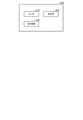
- FIG. 1 is a diagram showing an overall configuration example of the determination system 100.
- FIG. 2 is a block diagram showing a configuration example of the sensor device 200.
- FIG. 3 is a block diagram showing a configuration example of the bed terminal 300.
- FIG. 4 is a block diagram showing a configuration example of the relay device 400.
- FIG. 5 is a block diagram showing a configuration example of the determination device 500.
- FIG. 6 is a diagram showing an example of information stored in the storage unit 540.
- FIG. 7 is a diagram showing an example of vital data.
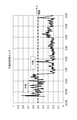
- FIG. 8 is a diagram showing an example of the vital score included in the score information 544.
- FIG. 9 is a diagram for explaining a processing example of the restless state determination unit 554.
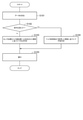
- FIG. 10 is a flowchart showing an operation example of the determination device 500.
- FIG. 11 is a block diagram showing another configuration example of the determination device 500.
- the determination system 100 in the present embodiment includes a restless state determination unit 554 for determining the restless state of the patient and a situation determination unit 555 for determining the patient's situation.
- the determination process and the situation determination unit 555 performed by the restless state determination unit 554 according to the acquisition status of the information used when the disturbing state determination unit 554 and the situation determination unit 555 perform the determination process. Determines which of the determination processes to be performed by. By performing the determination process according to such a determination, it is possible to make an appropriate determination according to whether or not the patient has left a predetermined place.
- the determination system 100 described in the present embodiment can be used, for example, in situations such as an acute care hospital, a convalescent hospital, a long-term care facility, and watching over at home.
- the determination system 100 may be used in situations other than those illustrated above.
- restlessness is a state in which the patient is restless and excited. Confusion may be caused by delirium or the like.
- the restless state also indicates a state related to the patient's restlessness.
- the state of restlessness indicates, for example, whether or not the patient is disturbed and whether or not the patient has a sign of restlessness.
- the restless state may include other indicators of the patient's potential for restlessness. If the patient is disturbed, he or she may experience behavioral problems such as bed falls, intubation removal, screaming, and violence.
- the patient's situation determined by the situation determination unit 555 is, for example, a broader concept than the restless state.
- a patient's situation may include at least one of a positional state, an operating state, a vital state, a problem state, and the like.
- the position state indicates a state according to the position where the patient stays, such as the patient being in an unauthorized place or heading in an unauthorized direction.
- the motion state indicates a state according to the patient's movement, such as the patient standing or walking.
- the vital state indicates a state according to the patient's vitals, such as the patient's heart rate and respiratory rate, and whether or not there is a problem with the heart rate or respiratory rate.
- the problem state indicates a state depending on whether or not the patient has a problem, such as the patient lying down, wandering, heading in an abnormal direction, or wandering.
- the problem state may be determined based on at least one of a position state, an operating state, and a vital state.
- a problematic state of having a problem with a patient is determined based on the vital state of the patient's abnormal heart rate.
- the patient is determined based on the position state in which the patient is in a predetermined place where the patient is not permitted, the operating state in which the patient is stationary, and the vital state in which the patient's heart rate is abnormal.
- the detailed problem state of being collapsed at the location of is determined.
- the position state, operation state, vital state, and problem state may be other than those illustrated above.
- the patient's situation may or may not include a disturbing state.
- FIG. 1 shows a configuration example of the determination system 100.
- the determination system 100 includes, for example, a sensor device 200, a bed terminal 300, a relay device 400, and a determination device 500.
- the sensor device 200 and the bed terminal 300, the sensor device 200 and the relay device 400, the bed terminal 300 and the relay device 400, and the relay device 400 and the determination device 500 can communicate with each other wirelessly or by wire, respectively. It is connected to the.
- the connection between the sensor device 200 and the bed terminal 300 is realized by a power-saving method as compared with the connection between the bed terminal 300 and the relay device 400.
- the sensor device 200 and the bed terminal 300 are connected by using power-saving wireless communication such as Bluetooth (registered trademark), and the bed terminal 300 and the relay device 400 are connected by Wi-Fi (registered trademark) or the like. Connected using wireless communication.
- the connection between the sensor device 200 and the relay device 400 is realized by a method capable of communicating over a longer distance than the connection between the sensor device 200 and the bed terminal 300.
- the sensor device 200 and the bed terminal 300 are connected by using power-saving wireless communication such as Bluetooth, and the sensor device 200 and the relay device 400 are connected by using wireless communication such as Wi-Fi. ..
- the sensor device 200 and the relay device 400 do not have to be connected so as to always be able to communicate with each other. In other words, the sensor device 200 and the relay device 400 may be connected so that they can communicate with each other as needed, such as when the connection between the sensor device 200 and the bed terminal 300 is cut off.
- the number of sensor devices 200, the number of bed terminals 300, the number of relay devices 400, and the number of judgment devices 500 included in the determination system 100 are not limited to the cases illustrated in FIG.
- the determination system 100 can have a plurality of sensor devices 200, a bed terminal 300, a relay device 400, and a determination device 500.
- the sensor device 200 measures information necessary for determination processing such as restlessness determination and situation determination, such as vital data and position data of the patient who is the target person. Further, the sensor device 200 can transmit the information acquired by the measurement to the determination device 500 by a plurality of routes (that is, different routes).
- the sensor device 200 is a wearable sensor such as a smart watch worn on a patient.
- the sensor device 200 is not limited to a wearable sensor, and may be a camera installed in a predetermined place, a fixed sensor fixed to a bed, an installed sensor installed near the bed, or the like.
- FIG. 2 shows a configuration example of the sensor device 200.
- the sensor device 200 includes, for example, a sensor 210, a determination unit 220, and a transmission / reception unit 230.
- the sensor device 200 can realize each of the above processing units by hardware.
- the sensor device 200 may realize each of the above processing units by executing a program stored in the storage device by an arithmetic unit such as a CPU.
- the sensor 210 is a device that acquires information for grasping the patient's condition / situation and operation.
- the sensor 210 is, for example, at least one of a vital sensor, a body motion sensor, a GPS (Global Positioning System) sensor, a camera, and the like.
- the vital sensor is, for example, at least one of a heart rate sensor, a respiratory rate sensor, a blood pressure sensor, a body temperature sensor, a blood oxygen saturation sensor, and the like.
- the body motion sensor is at least one of a speed sensor, a gyro sensor (angular velocity sensor), an angle sensor, a microphone, and the like.
- the sensor 210 acquires information for grasping the patient's condition / situation and operation by using the configuration as illustrated above.
- the information for grasping the state / situation and movement of the patient includes at least one of vital data, body movement data, and position information indicating the position of the patient.
- Vital data is a physical quantity that changes with the life activity of the patient.
- vital data includes a patient's heart rate, respiratory rate, blood pressure, body temperature, skin temperature, blood flow, blood oxygen saturation, and the like.
- the body movement data is a physical quantity related to the movement of the patient's body.
- the body movement data includes acceleration, angular velocity, angle, vocalization volume, etc. of a predetermined part such as the patient's arm, body, and foot.
- the sensor 210 is a camera, images and images are acquired as information for grasping the patient's state / situation and movement, and at least one of vital data, body movement data, and position information is obtained from the images and images. You may get it.
- the determination unit 220 determines the device to which the information acquired by the sensor 210 is transmitted. That is, the determination unit 220 determines the route used when transmitting information to the determination device 500. For example, the determination unit 220 determines which of the bed terminal 300 and the relay device 400 is to transmit the information acquired by the sensor 210.
- the determination unit 220 determines that information is transmitted to the bed terminal 300 while the connection with the bed terminal 300 by power-saving wireless communication is established.
- the determination unit 220 may determine that the information is transmitted to the bed terminal 300 and the information is not transmitted to the relay device 400 while the communication with the bed terminal 300 is established. .. Further, the determination unit 220 determines that information is transmitted to the relay device 400 using wireless communication when the connection with the bed terminal 300 by power-saving wireless communication is disconnected. When the connection with the bed terminal 300 by the power-saving wireless communication is disconnected, the determination unit 220 establishes the connection with the relay device 400 and transmits information to the relay device 400 using the wireless communication. May be determined to be performed.
- the determination unit 220 determines which of the bed terminal 300 and the relay device 400 is to transmit information based on the communication status between the bed terminal 300 and the bed terminal 300. ..
- the determination unit 220 transmits information to the bed terminal 300 and transmits information to the relay device 400 while the connection with the bed terminal 300 is established by power-saving wireless communication. You may decide to do it.
- the determination process by the determination unit 220 is not limited to the above example.
- the determination unit 220 can perform the above determination using the position information acquired by the sensor 210.
- the determination unit 220 confirms whether or not the patient has left the predetermined location based on the position information.
- the predetermined place is a place where the patient should stay or a place where the patient mainly stays, for example, on the bed of the patient. Then, when it is determined that the patient is not away from the predetermined location, the determination unit 220 determines that the data is transmitted to the bed terminal 300. On the other hand, when it is determined that the patient is away from the predetermined location, the determination unit 220 determines that the data is transmitted to the relay device 400.
- the determination unit 220 may be configured to make a determination based on the position information.
- the determination as to whether or not the patient has left the predetermined location may be determined by whether or not the patient stays within a predetermined range from the predetermined location.
- the range within a predetermined range from a predetermined location is, for example, around a bed, a hospital room, or the like.
- the determination unit 220 may make a determination by combining the communication status with the bed terminal 300 and the position information.
- the determination unit 220 may make a determination using a method other than those exemplified above.
- the determination unit 220 may determine the device to which the information is transmitted and select the information to be transmitted. For example, the determination unit 220 can select the information to be transmitted according to the device of the determination information transmission destination. For example, when the determination unit 220 determines that information is to be transmitted to the bed terminal 300, the determination unit 220 is used to perform a disturbing determination among the information for grasping the patient's state / situation and operation acquired by the sensor 210. Select the required information. Specifically, the determination unit 220 selects as information for transmitting vital data and body movement data among the information for grasping the patient's state / situation and operation acquired by the sensor 210.
- the determination unit 220 determines that the information is transmitted to the relay device 400
- the determination unit 220 is used to determine the situation among the information acquired by the sensor 210 for grasping the state / situation and operation of the patient. Select the required information.
- the determination unit 220 selects as information for transmitting position information and the like among the information for grasping the patient's state / situation and operation acquired by the sensor 210.
- the determination unit 220 can select the information to be transmitted according to the transmission destination. According to such a configuration, necessary information can be accurately transmitted at each timing. Moreover, since unnecessary information is not transmitted, power consumption can be suppressed.
- the determination unit 220 may make selections other than those exemplified above, such as selecting information for transmitting vital data or the like even when it is determined that information is to be transmitted to the relay device 400. Further, when transmitting vital data or the like to the relay device 400, the determination unit 220 processes the information acquired by the sensor 210 by thinning out the vital data or the like acquired by the sensor 210 at predetermined time intervals. You may decide to send the information. That is, the determination unit 220 may determine that the information transmitted to the relay device 400 is processed so as to have a smaller capacity than the information transmitted to the bed terminal 300. By transmitting such processed information, it is possible to suppress an increase in power consumption during Wi-Fi connection. The determination unit 220 may be configured to always make a determination to thin out the information to be transmitted to the relay device 400.
- the transmission / reception unit 230 has an antenna and the like.
- the transmission / reception unit 230 transmits / receives information to / from the bed terminal 300 and the relay device 400 according to the result of the determination by the determination unit 220. That is, the transmission / reception unit 230 transmits the information acquired by the sensor device 200 or the like to the information transmission destination determined by the determination unit 220.
- the transmission / reception unit 230 transmits the information selected by the determination unit 220 to the information transmission destination determined by the determination unit 220.
- the transmission / reception unit 230 is selected by the information acquired by the sensor 210 or the determination unit 220 with respect to the bed terminal 300. Information, identification information of the sensor device 200, and the like are transmitted. Further, when the determination unit 220 determines that the determination unit 220 transmits information to the relay device 400, the transmission / reception unit 230 is selected by the information acquired by the sensor 210 or the determination unit 220 with respect to the relay device 400. Information, identification information of the sensor device 200, and the like are transmitted.
- the transmission / reception unit 230 transmits information according to the selection result by the determination unit 220 to the transmission destination according to the determination by the determination unit 220.
- the determination unit 220 may determine that the information is not transmitted to the relay device 400 while the communication with the bed terminal 300 is established.
- the transmission / reception unit 230 transmits information only to either the bed terminal 300 or the relay device 400. That is, it can be said that the transmission / reception unit 230 may be configured to transmit information only to either the bed terminal 300 or the relay device 400.
- the above is a configuration example of the sensor device 200.
- the sensor device 200 may be composed of one device or a plurality of devices.
- the sensor device 200 can be composed of one device having functions such as a vital sensor and a body motion sensor.
- the sensor device 200 communicates with each other a plurality of devices such as a device having a function as a vital sensor, a device having a function as a body motion sensor, and a device having a function as a transmission / reception unit 230 and a determination unit 240. It may be realized by connecting as much as possible.
- each of the plurality of devices may have a transmission / reception unit.
- the bed terminal 300 is an information processing device installed in advance at a predetermined place such as near the bed where the patient stays.
- the bed terminal 300 transfers data, for example.
- the bed terminal 300 is a smartphone or the like and has a screen display function.
- the bed terminal 300 may be other than a smartphone.
- the bed terminal 300 is a terminal installed at a predetermined place where the patient should stay or a predetermined place which serves as a reference for determining the range in which the patient should stay, and is not limited to the terminal installed near the bed.
- FIG. 3 shows a configuration example of the bed terminal 300.
- the bed terminal 300 has, for example, a transmission / reception unit 310 and a screen display unit 320.
- the bed terminal 300 can realize each of the above processing units by hardware.
- the bed terminal 300 may realize each of the above processing units by executing a program stored in the storage device by an arithmetic unit such as a CPU.
- the transmission / reception unit 310 has an antenna or the like, and transmits / receives data using power-saving wireless communication to / from the sensor device 200, and also transmits / receives data to / from the relay device 400 using wireless communication. conduct.
- the transmission / reception unit 310 receives the information transmitted by the sensor device 200. Then, the transmission / reception unit 310 transmits information and the like received from the sensor device 200 to the relay device 400.
- the transmission / reception unit 310 can transmit information according to the communication status with the sensor device 200 to the relay device 400.
- the transmission / reception unit 310 transmits information according to the communication status, such as communication established with the sensor device 200 or disconnection with the sensor device 200, to the relay device 400. Can be done.
- the transmission / reception unit 310 can receive information indicating the result of the unrest determination or the situation determination from the determination device 500 via the relay device 400.
- the screen display unit 320 displays on the screen the information received from the sensor device 200 by the transmission / reception unit 310, the information indicating the result of the disturbing determination or the situation determination received from the determination device 500 via the relay device 400, and the like.
- the relay device 400 is a device that transfers data.
- the relay device 400 is installed in advance, for example, around the installation location of the determination device 500 or at a position where data can be received from the plurality of bed terminals 300.
- the relay device 400 is a radio base station or the like.
- the relay device 400 may be other than a radio base station.
- the relay device 400 and the determination device 500 may be realized by the same terminal. That is, the configuration of the relay device 400 and the configuration of the determination device 500 may be realized in the same device.
- the determination system 100 does not have to have the relay device 400. That is, information may be directly transmitted / received between the bed terminal 300 and the determination device 500, and between the sensor device 200 and the determination device 500. At this time, the bed terminal 300 may realize the configuration of the determination device 500.
- FIG. 4 shows a configuration example of the relay device 400.
- the relay device 400 has, for example, a transmission / reception unit 410.
- the relay device 400 can realize each of the above processing units by hardware.
- the relay device 400 may realize each of the above processing units by executing a program stored in the storage device by an arithmetic unit such as a CPU.
- the transmission / reception unit 410 has an antenna or the like, and transmits / receives data using wireless communication with the sensor device 200, the bed terminal 300, the determination device 500, and the like. For example, the transmission / reception unit 410 receives information transmitted by the sensor device 200 or the bed terminal 300. Then, the transmission / reception unit 410 transmits the information received from the sensor device 200 and the bed terminal 300 to the determination device 500 together with the information indicating the transmission source of the information. That is, the transmission / reception unit 410 transmits the received information to the determination device 500 so that it can be identified whether the information is received from the sensor device 200 or the bed terminal 300. do.
- the transmission / reception unit 410 receives information indicating the result of the disturbing determination or the situation determination from the determination device 500. Then, the transmission / reception unit 410 transmits the information received from the determination device 500 to the bed terminal 300 or the like.
- the determination device 500 is an information processing device that makes a disturbing determination or a status determination according to the information acquisition status.
- the determination device 500 is installed at a predetermined location such as a nurse station.
- the determination device 500 is an information processing device such as a personal computer or tablet used by a medical worker such as a doctor or a nurse, a smartphone, an on-premises server installed in a hospital, or a cloud server.
- the determination device 500 may be a combination of an information processing device such as a personal computer, a tablet, or a smartphone and a server or the like.
- the determination device 500 is a combination of an on-premises server in the hospital and a smartphone, and the on-premises server makes a determination based on body movement data and vital data, and displays and notifies the result to the smartphone used by the medical staff.
- the determination device 500 may be other than those illustrated above.
- FIG. 5 shows a configuration example of the determination device 500.
- the determination device 500 has, as main components, for example, an operation input unit 510, a screen display unit 520, a communication I / F unit 530, a storage unit 540, an arithmetic processing unit 550, and the like. have.
- the operation input unit 510 includes an operation input device such as a keyboard and a mouse.
- the operation input unit 510 detects an operation of a medical worker or the like who operates the determination device 500 and outputs the operation to the arithmetic processing unit 550.
- the screen display unit 520 is composed of a screen display device such as an LCD (Liquid Crystal Display).
- the screen display unit 520 can display various information stored in the storage unit 540 such as sensing data 543, score information 544, and result information 545 on the screen in response to an instruction from the arithmetic processing unit 550.
- the screen display unit 520 may be installed at a place distant from the place where the arithmetic processing unit 550 or the like is installed. For example, of each configuration of the determination device 500, only the screen display unit 520 may be installed in the nurse station. In this case, the arithmetic processing unit 550 or the like may be installed in a place different from the screen display unit 520 such as the server room.
- the communication I / F unit 530 is composed of a data communication circuit.
- the communication I / F unit 530 performs data communication with an external device such as a relay device 400 connected by wireless communication or a mobile terminal carried by a medical worker.
- the storage unit 540 is a storage device such as a hard disk or a memory.
- FIG. 6 shows an example of information stored in the storage unit 540.
- the storage unit 540 stores processing information and a program 546 required for various processes in the arithmetic processing unit 550.
- the program 546 realizes various processing units by being read and executed by the arithmetic processing unit 550.
- the program 546 is read in advance from an external device or a recording medium via a data input / output function such as the communication I / F unit 530, and is stored in the storage unit 540.
- the main information stored in the storage unit 540 includes, for example, a restlessness determination model 541, a situation determination model 542, sensing data 543, score information 544, result information 545, and the like.
- the restlessness determination model 541 is a model for calculating the restlessness determination score based on the information acquired by the sensor 210.
- the disturbing determination model 541 is used when calculating the disturbing determination score based on the information acquired via the bed terminal 300.
- the unrest determination model 541 may be used when calculating the unrest determination score based on the information acquired by other routes.
- the restlessness determination model 541 outputs the restlessness determination score by inputting the information corresponding to at least one of the vital data and the body movement data.
- the restlessness determination model 541 is a trained model generated in advance by performing machine learning using a support vector machine (SVM), a neural network, or the like in, for example, an external device.
- SVM support vector machine
- the unrest determination model 541 is acquired from an external device or the like via the communication I / F unit 530 or the like, and is stored in the storage unit 540.
- the disturbing determination model 541 may include a plurality of types of models according to the type of data.
- the restlessness determination model 541 may include a vital model for inputting vital data and a body movement model for inputting body movement data.
- the restlessness determination model 541 may include a plurality of models according to the types of vital data and body movement data such as acceleration and vocalization amount.
- the restlessness determination score output by the restlessness determination model 541 is an index for determining whether or not the patient is disturbed.
- the restlessness determination score is, for example, a value of 0 or more and 1 or less.
- the restlessness determination score indicates that the closer to 1 the patient is more likely to be disturbed, and the closer it is to 0, the more likely the patient is not disturbed.
- the unrest determination score may be an index expressed by two values, 1 indicating that it is disturbing and 0 indicating that it is not disturbing.
- the unrest determination score may be an index expressing the degree of strength, for example, strong unrest is 2 and weak unrest is 1.
- the data to be input to the restlessness determination model 541 may be vital data or body movement data itself, and feature quantification processing such as averaging or differentiation processing is performed on the time-series vital data or body movement data. It may be various feature quantities calculated by performing. Further, the restlessness determination model 541 may be configured to input one type of vital data or body movement data, or may be configured to input a plurality of types of vital data or body movement data.
- the situation determination model 542 is a model that determines the situation based on the information acquired by the sensor 210.
- the situation determination model 542 is used when the situation determination is performed based on the information acquired (that is, directly transmitted from the sensor device 200 to the relay device 400) without going through the bed terminal 300.
- the situation determination model 542 inputs time-series position information, vital data, body movement data, and the like, and outputs information indicating at least one of a position state, an operation state, a vital state, and a problem state.
- the situation determination model 542 is a trained model generated in advance by performing machine learning using a support vector machine (SVM), a neural network, or the like in, for example, an external device.
- SVM support vector machine
- the status determination model 542 is acquired from an external device or the like via the communication I / F unit 530 or the like, and is stored in the storage unit 540.
- the information input to the situation determination model 542 is not limited to the position information.
- the situation determination model 542 may be a model in which vital data or body movement data is input and information indicating at least one of a position state, an operation state, a vital state, a problem state, and the like is output.
- the vital data and body movement data input here may be those obtained by thinning out the vital data and body movement data acquired by the sensor 210 at predetermined time intervals. Such a model can also be generated in advance by using the same method as described above.
- the situation determination model 542 may be configured to input a combination of the above-exemplified ones.
- the sensing data 543 includes information acquired by the sensor 210 of the sensor device 200.
- information acquired by the sensor 210 of the sensor device 200 For example, in the sensing data 543, at least one of vital data, body movement data, position information, and the like acquired by the sensor 210 is stored for each identification information of the sensor device 200.
- the information acquired by the sensor 210 can be stored so that the information acquisition route can be determined.
- FIG. 7 shows an example of time-series data of heart rate, which is a kind of vital data.
- the x-axis shows the time and the y-axis shows the heart rate.
- the score information 544 includes a restlessness determination score, which is an index for determining whether or not the patient is disturbed.
- a restlessness determination score which is an index for determining whether or not the patient is disturbed.
- the identification information of the sensor device 200 and the unrest determination score are associated with each other.
- FIG. 8 shows an example of a restlessness determination score calculated by the score calculation unit 553 based on the vital data shown in FIG. 7.
- the x-axis shows the time and the y-axis shows the restlessness determination score.
- the restlessness determination score is represented by, for example, a value of 0 or more and 1 or less. The restlessness determination score indicates that the closer to 1 the patient is more likely to be disturbed, and the closer it is to 0, the more likely the patient is not disturbed.
- the result information 545 includes information indicating the result of determination by the restless state determination unit 554 based on the score information 544, information indicating the determination result by the situation determination unit 555, and the like.
- the result information 545 includes identification information of the sensor device 200 and information indicating the result of the unrest determination and the result of the situation determination.
- the arithmetic processing unit 550 has a microprocessor such as an MPU and its peripheral circuits.
- the arithmetic processing unit 550 reads the program 546 from the storage unit 540 and executes it, thereby realizing various processing units in cooperation with the hardware and the program 546.
- the main processing units realized by the calculation processing unit 550 include, for example, a data acquisition unit 551, a determination unit 552, a score calculation unit 553, a restless state determination unit 554, and a situation determination unit 555.
- the data acquisition unit 551 acquires body motion data, vital data, position information, identification information of the sensor device 200, etc. transmitted by the relay device 400 via the communication I / F unit 530. Then, the data acquisition unit 551 stores the acquired body movement data, vital data, and position information in the storage unit 540 as sensing data 543 for each identification information of the sensor device 200.
- the determination unit 552 determines which of the determination process, the unrest determination by the score calculation unit 555 and the unrest state determination unit 554, and the situation determination by the situation determination unit 555, is to be performed. For example, the determination unit 552 determines which determination process, the restlessness determination or the situation determination, is to be performed, depending on whether or not the information acquisition status satisfies a predetermined condition. For example, the determination unit 552 determines that the score calculation unit 553 and the unrest state determination unit 554 perform the unrest determination while the data acquisition unit 551 is acquiring the information necessary for the unrest determination.
- the determination unit 552 determines that the situation determination unit 555 performs the situation determination. According to such a configuration, depending on the result of the determination by the determination unit 552, the unrest determination by the unrest state determination unit 554 and the determination by the situation determination unit 555 are switched.
- the determination unit 552 makes the above-mentioned determination based on the data included in the sensing data 543. For example, the determination unit 552 compares the time stamp of the information acquired via the bed terminal 300, such as vital data and body movement data, with the current time among the information included in the sensing data 543. Then, while the time difference between the time stamp and the current time satisfies a predetermined condition such as 30 seconds, it is determined that the score calculation unit 553 and the restless state determination unit 554 perform the restlessness determination. On the other hand, while the time difference between the time stamp and the current time exceeds a predetermined condition, the determination unit 552 determines that the situation determination unit 555 performs the situation determination.
- a predetermined condition such as 30 seconds
- the determination unit 552 determines the determination process to be executed according to the information acquisition status, such as whether or not the information is normally acquired via the bed terminal 300.
- the determination unit 552 determines the situation by the situation determination unit 555, or instead of the situation determination, the score calculation unit. It may be determined that the disturbing determination is performed by the 553 and the disturbing state determination unit 554.
- the determination unit 552 makes the above-mentioned determination based on whether or not the information acquired via the bed terminal 300, such as vital data and body movement data included in the sensing data 543, satisfies a predetermined condition. Can be done. For example, the determination unit 552 determines that the situation determination unit 555 determines the situation when a predetermined condition such as the heart rate is no longer measured is satisfied. On the other hand, until the above-mentioned predetermined condition is satisfied, the determination unit 552 determines that the score calculation unit 553 and the restless state determination unit 554 perform the restlessness determination.
- a predetermined condition such as the heart rate is no longer measured
- the determination unit 552 may make the above-mentioned determination based on whether or not the information according to the communication status received from the bed terminal 300 or the like via the relay device 400 satisfies a predetermined condition. For example, the determination unit 552 determines the status by the status determination unit 555 while it is determined that the power-saving wireless communication between the sensor device 200 and the bed terminal 300 is cut off based on the information according to the communication status. Judge to do. On the other hand, the determination unit 552 is in a disturbed state with the score calculation unit 553 while it is determined that the power-saving wireless communication between the sensor device 200 and the bed terminal 300 is established based on the information according to the communication status. It is determined that the determination unit 554 makes a disturbing determination.
- the determination unit 552 may determine which determination process, the restlessness determination or the situation determination, is to be performed according to the condition according to the condition of the patient or the acquisition status of the information indicating the condition. That is, the determination unit 552 may determine which of the unrest determination and the situation determination is to be performed based on the result of the unrest determination or the situation determination at the time of the determination of the determination process. For example, when the patient is standing in the toilet and the determination device 500 outputs the result of the situation determination, the determination unit 552 is disturbed when the predetermined situation that the patient has returned to the bed is acquired as information. It may be determined to make a determination.
- the determination unit 552 determines the determination process to be executed based on the information acquisition status and the like.
- the information acquisition status changes depending on whether or not the patient is staying within the range in which power-saving wireless communication can be performed with the bed terminal 300. Therefore, the determination unit 552 can also switch the determination process depending on whether or not the patient has left (leaved) the bed in which the bed terminal 300 is installed.
- the determination unit 552 may determine which of the disturbing determination and the situation determination is to be performed, using a method other than the information acquisition status. For example, the determination unit 552 may determine which determination process, the restlessness determination or the situation determination, is to be performed based on the position information included in the acquired information. For example, when the determination unit 552 determines that the patient is not away from the bed based on the location information, the determination unit 552 determines that the patient is not away from the bed, while the determination unit 552 determines that the patient is away from the bed based on the location information. It may be determined that the situation is determined. Further, the determination unit 552 may be configured to make a determination by combining some of the plurality of conditions described above.
- the score calculation unit 553 calculates the restlessness determination score using the restlessness determination model 541.
- the score calculation unit 553 refers to the sensing data 543 and acquires the information acquired via the bed terminal 300.
- the score calculation unit 553 acquires vital data including time-series data of heart rate as shown in FIG. 7. Further, the score calculation unit 553 inputs the acquired data into the restlessness determination model 541 and calculates the restlessness determination score at each time as shown in FIG. After that, the score calculation unit 553 stores the calculated information indicating the restlessness determination score in the storage unit 540 as the score information 544.
- the score calculation unit 553 may obtain vital data, body movement data, or the like without going through the bed terminal 300.
- the restlessness determination score may be calculated based on.
- the score calculation unit 553 may input the time series data itself into the model 541 for disturbing determination, and various features calculated by performing feature quantification processing such as averaging and differentiation processing on the time series data. The amount may be input to the disturbing determination model 541.
- the restless state determination unit 554 determines whether or not the patient is in a restless state based on the restlessness determination score included in the score information 544. Then, the restless state determination unit 554 stores the determination result as the result information 545 in the storage unit 540. For example, the restless state determination unit 554 stores information indicating the result of the determination that the patient is disturbed as the result information 545 in the storage unit 540.
- the restless state determination unit 554 has a restlessness determination threshold value for comparison with the restlessness determination score in advance. Then, the restless state determination unit 554 makes a determination based on the restlessness determination score and the disturbing determination threshold value. For example, the restless state determination unit 554 determines that the patient is disturbed when the restlessness determination score is equal to or higher than the restlessness determination threshold value. On the other hand, the restless state determination unit 554 determines that the patient is not disturbed when the restlessness determination score is less than the restlessness determination threshold value.
- the restless state determination unit 554 determines that the patient is restless during the above time.
- FIG. 9 illustrates the case where the restlessness determination threshold value is 0.5.
- the restlessness determination threshold value may be other than 0.5.
- the value of the restlessness determination threshold value may be set arbitrarily.
- the restlessness determination threshold value may be appropriately determined according to the attribute information of the patient described later.
- the situation determination unit 555 estimates the patient's condition using the situation determination model 542.
- the situation determination unit 555 refers to the sensing data 543 and acquires the information directly transmitted from the sensor device 200 to the relay device 400.
- the situation determination unit 555 inputs the acquired information to the situation determination model 542, and outputs information indicating at least one of a position state, an operation state, a vital state, and a problem state. After that, the situation determination unit 555 stores the output information as the result information 545 in the storage unit 540.
- the situation determination unit 555 acquires at least one of position information, vital data, and body movement data. For example, the situation determination unit 555 acquires the position data of the time series data. The situation determination unit 555 inputs the acquired position information to the situation determination model 542 and outputs information indicating the position state of the patient. Further, for example, the situation determination unit 555 acquires vital data and body movement data. The situation determination unit 555 inputs vital data and body movement data into the situation determination model 542, and outputs information indicating the patient's operating state, vital state, and problem state.
- the vital data and body movement data may be information obtained by thinning out the vital data and body movement data used for the disturb determination at predetermined time intervals.
- the situation determination unit 555 may output information indicating the vital state by inputting vital data into the situation determination model 542, or input vital data and body movement data into the situation determination model 542. By doing so, information indicating a more detailed operating state or problem state may be output. In this way, the situation determination unit 555 may appropriately change the determination situation according to the acquired information.
- the situation determination unit 555 may input the time series data itself into the situation determination model 542, and various features calculated by performing feature quantification processing such as averaging and differentiation processing on the time series data. The amount may be input to the situation determination model 542.
- the situation determination unit 555 may be configured to perform determination using a device other than the model. For example, the situation determination unit 555 can determine whether or not the patient has a problem based on the staying time or the like determined based on the position information. For example, the situation determination unit 555 can determine that the patient has a problem if the patient does not move from the predetermined position for a predetermined time based on the position information. Further, the situation determination unit 555 may make a determination based on the position information, such as the patient is in an unauthorized room or is heading in an unauthorized direction. Further, the situation determination unit 555 may make the above-mentioned determination based on the movement locus of the patient generated based on the position information. Further, the situation determination unit 555 may be configured to output information indicating the position state itself according to the position of the patient, such as information indicating the position of the patient.
- the notification unit 556 determines the restlessness when the patient is determined to be disturbed by the disturbing state determination unit 554, or when the status determination unit 555 outputs a position state, an operating state, a vital state, a problem state, or the like. And the result of the situation judgment are output to an external device.
- the notification unit 556 can display information on the screen display unit 520 together with the identification information of the sensor device 200, such as the fact that the patient is in a disturbed state and the information according to the output by the situation determination unit 555.
- the notification unit 556 is in charge of the bed terminal 300 related to the patient and the patient, such as information corresponding to the fact that the patient is in a disturbed state and the output by the situation determination unit 555, and the identification information of the sensor device 200. It can be transmitted to an external device such as a mobile terminal carried by a medical worker who is carrying the information.
- the notification unit 556 may give notifications other than those exemplified above, such as turning on the lamp at the entrance of the room where the patient is hospitalized
- the notification unit 556 may change the notification method depending on whether the disturbing state determination unit 554 makes a disturbing determination or the situation determination unit 555 makes a situation determination. For example, the notification unit 556 determines the type of alert depending on whether the patient is determined to be disturbed by the restless state determination unit 554 or the patient is determined to have a problem by the situation determination unit 555. You can change it.
- the above is a configuration example of the determination system 100. Subsequently, an operation example of the determination device 500 will be described with reference to FIG.
- the order of operations of the determination device 500 shown in FIG. 10 is an example, and is not limited thereto.
- the data acquisition unit 551 acquires at least one of the body motion data, vital data, position information, identification information of the sensor device 200, etc. transmitted by the relay device 400 via the communication I / F unit 530 ( Step S101).
- the determination unit 552 determines which of the disturbing determination and the status determination is to be performed, based on whether or not the information according to the information acquisition status and the communication status satisfies a predetermined condition (step S102). ).
- the determination unit 552 determines that the status determination unit 555 performs a status determination based on the information transmitted from the sensor device 200 to the relay device 400.
- the situation determination unit 555 determines the patient's condition based on the information transmitted from the sensor device 200 to the relay device 400 (step S103). If possible, the situation determination unit 555 may make a disturbing determination together with the situation determination.
- the determination unit 552 determines the unrest by the score calculation unit 553 and the restless state determination unit 554 based on the information transmitted via the bed terminal 300. Judge to do.
- the score calculation unit 553 and the restless state determination unit 554 determine the patient's restlessness based on vital data, body movement data, and the like acquired via the bed terminal 300 (step S104).
- the notification unit 556 outputs the result of the restlessness determination or the result of the situation determination when the patient is determined to be disturbed by the disturbing state determination unit 554 or when the output is performed by the situation determination unit 555 (step). S105).
- the notification unit 556 may change the notification method depending on whether the patient is determined to be disturbed by the restless state determination unit 554 or when the status determination unit 555 outputs the output.
- the determination device 500 has a determination unit 552, a restless state determination unit 554, and a situation determination unit 555.
- the determination unit 552 is either a restlessness determination by the score calculation unit 553 and the disturbing state determination unit 554 or a situation determination by the situation determination unit 555 based on the sensing data 543 or the like. It is possible to determine whether to perform the determination process. As a result, the restless state determination unit 554 and the situation determination unit 555 can make a determination based on the result of the determination by the determination unit 552. This makes it possible to make an appropriate determination according to the place where the patient stays.
- the position information may be acquired by using a device other than the sensor device 200.
- the position information may be acquired by the relay device 400 using a beacon, radio strength, or the like. That is, the relay device 400 may be configured to acquire the position information of the sensor device 200 while the relay device 400 and the sensor device 200 are communicating with each other.
- the determination system 100 may allow the sensor device 200 to acquire vital data and body movement data, and the relay device 400 to acquire position information.
- FIG. 11 shows another configuration example of the determination device 500.
- the arithmetic processing unit 550 of the determination device 500 can have, for example, an attribute information acquisition unit 557.
- the attribute information acquisition unit 557 acquires the attribute information of the target person.
- the attribute information acquisition unit 557 acquires the medical record information of the target person from an external device or the like, and acquires the attribute information such as age, gender, and paralyzed state.
- the attribute information acquired by the attribute information acquisition unit 557 can be used, for example, when adjusting the restlessness determination threshold value, when performing a state determination by the situation determination unit 555, and the like.
- the situation determination unit 555 can adjust the time until it is determined that a problem has occurred, depending on the presence or absence of hemiplegia of the patient.
- the attribute information acquired by the attribute information acquisition unit 557 may be utilized in addition to the above examples.
- FIGS. 5 and 11 illustrate the case where the function as the determination device 500 is realized by one information processing device.
- the function as the determination device 500 may be realized by, for example, a plurality of information processing devices connected via a network.
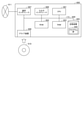
- FIG. 12 shows a hardware configuration example of the determination device 600.
- the determination device 600 has the following hardware configuration as an example.
- -CPU Central Processing Unit
- -ROM Read Only Memory
- RAM Random Access Memory
- -Program group 604 loaded in RAM 603
- a storage device 605 for storing the program group 604.
- -Drive device 606 that reads and writes the recording medium 610 external to the information processing device.
- -Communication interface 607 that connects to the communication network 611 outside the information processing device.
- the determination device 600 can realize the functions as the restless state determination unit 621, the situation determination unit 622, and the determination unit 623 shown in FIG. 13 by the CPU 601 acquiring the program group 604 and executing the program group 601.
- the program group 604 is stored in, for example, a storage device 605 or a ROM 602 in advance, and the CPU 601 loads the program group 604 into a RAM 603 or the like and executes the program group 604 as needed.
- the program group 604 may be supplied to the CPU 601 via the communication network 611, or may be stored in the recording medium 610 in advance, and the drive device 606 may read the program and supply the program to the CPU 601.
- FIG. 12 shows an example of the hardware configuration of the determination device 600.
- the hardware configuration of the determination device 600 is not limited to the above case.
- the determination device 600 may be configured from a part of the above-mentioned configuration, such as not having the drive device 606.
- the restless state determination unit 621 determines the restless state of the target person based on the acquired information.
- the situation determination unit 622 determines the situation of the target person based on the acquired information.
- the determination unit 623 determines whether to execute the determination process performed by the restless state determination unit 621 or the determination process performed by the situation determination unit 622 according to the information acquisition status.
- the determination device 600 has a disturbing state determination unit 621, a situation determination unit 622, and a determination unit 623.
- the determination unit 623 can determine whether to execute the determination process performed by the restless state determination unit 621 or the determination process performed by the situation determination unit 622 according to the information acquisition status. .. As a result, it becomes possible to make an appropriate determination according to whether or not the patient has left the predetermined place.
- the above-mentioned determination device 600 can be realized by incorporating a predetermined program into the determination device 600.
- the program which is another embodiment of the present invention, acquires information from a computer and determines the disturbing state of the subject according to the acquisition status of the information, and determines the situation of the subject.
- the computer acquires information and determines the disturbing state of the target person according to the acquisition status of the information, and determines the situation of the target person. It is a method of determining which of the determination processes is to be executed.
- the determination unit determines that when the disturbing state determination unit has not acquired the data used for determining the disturbing state for a predetermined time, the determination unit executes a determination process for determining the disturbing state.
- the determination unit is a determination device that determines a determination process to be executed according to the communication status of a sensor that acquires information and a communication device that communicates with the sensor.
- the determination unit executes either a determination process in which the disturbing state determination unit makes a determination or a determination process in which the situation determination unit makes a determination, depending on whether or not the target person has moved away from a predetermined location.
- the determination device to judge whether.
- the restless state determination unit is a determination device that performs determination processing based on at least one of the subject's vital data and body movement data.
- the determination device according to any one of Supplementary note 1 to Supplementary note 6.
- the situation is a determination device including any one of an operating state, a vital state, a position state according to the position information of the target person, and a problem state indicating whether or not a problem has occurred in the target person.
- the determination device according to any one of Supplementary note 1 to Supplementary note 7.
- the situation determination unit is a determination device that performs determination processing based on position information indicating the position of the target person.
- the determination device according to any one of Supplementary note 1 to Supplementary note 8.
- the situation determination unit is a determination device that performs determination processing based on information obtained by thinning out vital data or body movement data of a subject at predetermined time intervals.
- the computer Get information A determination method for determining whether to execute a determination process for determining the disturbed state of the target person or a determination process for determining the status of the target person according to the information acquisition status.
- the program described in each of the above embodiments and appendices may be stored in a storage device or recorded in a computer-readable recording medium.
- the recording medium is a portable medium such as a flexible disk, an optical disk, a magneto-optical disk, and a semiconductor memory.
Landscapes
- Health & Medical Sciences (AREA)
- Life Sciences & Earth Sciences (AREA)
- Engineering & Computer Science (AREA)
- Public Health (AREA)
- Medical Informatics (AREA)
- Biomedical Technology (AREA)
- General Health & Medical Sciences (AREA)
- Pathology (AREA)
- Physiology (AREA)
- Physics & Mathematics (AREA)
- Cardiology (AREA)
- Veterinary Medicine (AREA)
- Animal Behavior & Ethology (AREA)
- Molecular Biology (AREA)
- Heart & Thoracic Surgery (AREA)
- Biophysics (AREA)
- Surgery (AREA)
- Data Mining & Analysis (AREA)
- Primary Health Care (AREA)
- Epidemiology (AREA)
- Databases & Information Systems (AREA)
- Dentistry (AREA)
- Oral & Maxillofacial Surgery (AREA)
- Artificial Intelligence (AREA)
- Pulmonology (AREA)
- Fuzzy Systems (AREA)
- Mathematical Physics (AREA)
- Computer Vision & Pattern Recognition (AREA)
- Psychiatry (AREA)
- Signal Processing (AREA)
- Evolutionary Computation (AREA)
- Measuring And Recording Apparatus For Diagnosis (AREA)
- Measurement Of The Respiration, Hearing Ability, Form, And Blood Characteristics Of Living Organisms (AREA)
Priority Applications (3)
| Application Number | Priority Date | Filing Date | Title |
|---|---|---|---|
| PCT/JP2020/035295 WO2022059143A1 (ja) | 2020-09-17 | 2020-09-17 | 判定装置 |
| US18/025,466 US20240013914A1 (en) | 2020-09-17 | 2020-09-17 | Determination apparatus |
| JP2022550270A JP7635785B2 (ja) | 2020-09-17 | 2020-09-17 | 判定装置 |
Applications Claiming Priority (1)
| Application Number | Priority Date | Filing Date | Title |
|---|---|---|---|
| PCT/JP2020/035295 WO2022059143A1 (ja) | 2020-09-17 | 2020-09-17 | 判定装置 |
Publications (1)
| Publication Number | Publication Date |
|---|---|
| WO2022059143A1 true WO2022059143A1 (ja) | 2022-03-24 |
Family
ID=80776567
Family Applications (1)
| Application Number | Title | Priority Date | Filing Date |
|---|---|---|---|
| PCT/JP2020/035295 Ceased WO2022059143A1 (ja) | 2020-09-17 | 2020-09-17 | 判定装置 |
Country Status (3)
| Country | Link |
|---|---|
| US (1) | US20240013914A1 (https=) |
| JP (1) | JP7635785B2 (https=) |
| WO (1) | WO2022059143A1 (https=) |
Cited By (1)
| Publication number | Priority date | Publication date | Assignee | Title |
|---|---|---|---|---|
| KR20240025317A (ko) * | 2022-08-18 | 2024-02-27 | 주식회사 뷰노 | 심장 나이를 예측하는 방법 |
Citations (4)
| Publication number | Priority date | Publication date | Assignee | Title |
|---|---|---|---|---|
| JP2007229218A (ja) * | 2006-03-01 | 2007-09-13 | Toyota Motor Corp | 覚醒度推定装置及びシステム並びに方法 |
| JP2011172674A (ja) * | 2010-02-23 | 2011-09-08 | Vitas:Kk | 患者状態情報管理システム |
| JP2017205358A (ja) * | 2016-05-19 | 2017-11-24 | サクラ精機株式会社 | 医療用機器のデータ通信システム |
| WO2019073927A1 (ja) * | 2017-10-10 | 2019-04-18 | 日本電気株式会社 | 生体情報処理システム、生体情報処理方法、および生体情報処理プログラム記録媒体 |
-
2020
- 2020-09-17 US US18/025,466 patent/US20240013914A1/en not_active Abandoned
- 2020-09-17 JP JP2022550270A patent/JP7635785B2/ja active Active
- 2020-09-17 WO PCT/JP2020/035295 patent/WO2022059143A1/ja not_active Ceased
Patent Citations (4)
| Publication number | Priority date | Publication date | Assignee | Title |
|---|---|---|---|---|
| JP2007229218A (ja) * | 2006-03-01 | 2007-09-13 | Toyota Motor Corp | 覚醒度推定装置及びシステム並びに方法 |
| JP2011172674A (ja) * | 2010-02-23 | 2011-09-08 | Vitas:Kk | 患者状態情報管理システム |
| JP2017205358A (ja) * | 2016-05-19 | 2017-11-24 | サクラ精機株式会社 | 医療用機器のデータ通信システム |
| WO2019073927A1 (ja) * | 2017-10-10 | 2019-04-18 | 日本電気株式会社 | 生体情報処理システム、生体情報処理方法、および生体情報処理プログラム記録媒体 |
Cited By (4)
| Publication number | Priority date | Publication date | Assignee | Title |
|---|---|---|---|---|
| KR20240025317A (ko) * | 2022-08-18 | 2024-02-27 | 주식회사 뷰노 | 심장 나이를 예측하는 방법 |
| JP2024028195A (ja) * | 2022-08-18 | 2024-03-01 | ビュノ インコーポレイテッド | 心臓年齢を予測する方法 |
| JP7759034B2 (ja) | 2022-08-18 | 2025-10-23 | ビュノ インコーポレイテッド | 心臓年齢を予測する方法 |
| KR102918760B1 (ko) * | 2022-08-18 | 2026-01-27 | 주식회사 뷰노 | 심장 나이를 예측하는 방법 |
Also Published As
| Publication number | Publication date |
|---|---|
| US20240013914A1 (en) | 2024-01-11 |
| JPWO2022059143A1 (https=) | 2022-03-24 |
| JP7635785B2 (ja) | 2025-02-26 |
Similar Documents
| Publication | Publication Date | Title |
|---|---|---|
| US10687193B2 (en) | Assist device and system | |
| US10051410B2 (en) | Assist device and system | |
| US11270793B2 (en) | Method and system for determining patient status | |
| US11029743B2 (en) | Information processing device and information processing method | |
| KR20170114356A (ko) | 전자 장치 및 그 제어 방법 | |
| JP7027752B2 (ja) | 情報処理装置、情報処理方法、プログラム、及び情報処理システム | |
| JP2016126473A (ja) | 看護支援端末装置、看護支援システム、ならびに、看護支援方法およびプログラム | |
| KR102510180B1 (ko) | 사용자 맞춤형 건강 관리 장치 및 방법 | |
| WO2020028157A1 (en) | Assist device and system | |
| WO2022059143A1 (ja) | 判定装置 | |
| JP7601104B2 (ja) | 教師データ生成装置 | |
| JP7088397B1 (ja) | データ収集システム、データ収集装置、データ取得装置及びデータ収集方法 | |
| US20230140019A1 (en) | Data collection device, data acquisition device, and data collection method | |
| US20230109079A1 (en) | Data collection system, data collection method. and data collection device | |
| WO2022059144A1 (ja) | 判定装置 | |
| JP7563465B2 (ja) | 判定装置 | |
| JP6404710B2 (ja) | 看護支援端末装置、看護支援システム、ならびに、看護支援方法およびプログラム | |
| EP4400038A1 (en) | Obtaining blood pressure measurements | |
| KR102868498B1 (ko) | 생체정보 관리 방법 및 기록매체 | |
| TWI714084B (zh) | 睡眠品質以及健康狀況分析系統 | |
| JP2023077288A (ja) | データ収集装置、データ収集方法、端末機器 | |
| KR20220017295A (ko) | 행동 인지(activity recognition, AR)를 이용한 로케이션 히스토리 결정 장치 및 방법 | |
| KR20240123642A (ko) | 개인 응급 응답 장치 및 방법 |
Legal Events
| Date | Code | Title | Description |
|---|---|---|---|
| 121 | Ep: the epo has been informed by wipo that ep was designated in this application |
Ref document number: 20954128 Country of ref document: EP Kind code of ref document: A1 |
|
| WWE | Wipo information: entry into national phase |
Ref document number: 18025466 Country of ref document: US |
|
| ENP | Entry into the national phase |
Ref document number: 2022550270 Country of ref document: JP Kind code of ref document: A |
|
| NENP | Non-entry into the national phase |
Ref country code: DE |
|
| 122 | Ep: pct application non-entry in european phase |
Ref document number: 20954128 Country of ref document: EP Kind code of ref document: A1 |