WO2022059135A1 - エラー要因の推定装置及び推定方法 - Google Patents
エラー要因の推定装置及び推定方法 Download PDFInfo
- Publication number
- WO2022059135A1 WO2022059135A1 PCT/JP2020/035274 JP2020035274W WO2022059135A1 WO 2022059135 A1 WO2022059135 A1 WO 2022059135A1 JP 2020035274 W JP2020035274 W JP 2020035274W WO 2022059135 A1 WO2022059135 A1 WO 2022059135A1
- Authority
- WO
- WIPO (PCT)
- Prior art keywords
- model
- error detection
- data
- error
- factor
- Prior art date
- Legal status (The legal status is an assumption and is not a legal conclusion. Google has not performed a legal analysis and makes no representation as to the accuracy of the status listed.)
- Ceased
Links
Images




Classifications
-
- G—PHYSICS
- G06—COMPUTING OR CALCULATING; COUNTING
- G06F—ELECTRIC DIGITAL DATA PROCESSING
- G06F16/00—Information retrieval; Database structures therefor; File system structures therefor
- G06F16/20—Information retrieval; Database structures therefor; File system structures therefor of structured data, e.g. relational data
- G06F16/28—Databases characterised by their database models, e.g. relational or object models
- G06F16/284—Relational databases
- G06F16/285—Clustering or classification
-
- G—PHYSICS
- G06—COMPUTING OR CALCULATING; COUNTING
- G06N—COMPUTING ARRANGEMENTS BASED ON SPECIFIC COMPUTATIONAL MODELS
- G06N20/00—Machine learning
-
- G—PHYSICS
- G06—COMPUTING OR CALCULATING; COUNTING
- G06F—ELECTRIC DIGITAL DATA PROCESSING
- G06F16/00—Information retrieval; Database structures therefor; File system structures therefor
- G06F16/20—Information retrieval; Database structures therefor; File system structures therefor of structured data, e.g. relational data
- G06F16/22—Indexing; Data structures therefor; Storage structures
- G06F16/2228—Indexing structures
- G06F16/2246—Trees, e.g. B+trees
-
- G—PHYSICS
- G06—COMPUTING OR CALCULATING; COUNTING
- G06N—COMPUTING ARRANGEMENTS BASED ON SPECIFIC COMPUTATIONAL MODELS
- G06N3/00—Computing arrangements based on biological models
- G06N3/02—Neural networks
- G06N3/04—Architecture, e.g. interconnection topology
- G06N3/047—Probabilistic or stochastic networks
-
- G—PHYSICS
- G06—COMPUTING OR CALCULATING; COUNTING
- G06N—COMPUTING ARRANGEMENTS BASED ON SPECIFIC COMPUTATIONAL MODELS
- G06N7/00—Computing arrangements based on specific mathematical models
- G06N7/01—Probabilistic graphical models, e.g. probabilistic networks
Definitions
- the present invention relates to an error factor estimation device and an estimation method.
- the semiconductor measuring device and the semiconductor inspection device carry out an inspection operation and a measurement operation for each inspection point on the surface of the semiconductor wafer according to a setting parameter called a recipe.
- a recipe error an error caused by the contents of the recipe.
- Patent Document 1 describes the inspection target pattern of an electronic device for the purpose of shortening the learning time by eliminating the trouble of creating the true value of the learning data and reducing the amount of the learning data.
- An image selection unit (learning data selection unit) in a pattern inspection system that inspects an image of an inspection target pattern using a classifier configured by machine learning based on an image and data used to manufacture the inspection target pattern. Is to select a learning pattern image to be used for machine learning from a plurality of pattern images based on the pattern data and the pattern image stored in the storage unit, and a plurality of position coordinates in which the isomorphic pattern stored for each pattern exists. It is disclosed that the data of the above is clustered and divided into one or more classes.
- the learning data selection unit of the pattern inspection system described in Patent Document 1 clusters data of a plurality of position coordinates based on the same shape pattern. However, this learning data selection unit is not based on the contribution of each parameter to the error, and it is considered that there is room for improvement.
- An object of the present invention is to generate a learning model that detects an error for each of various types of errors that occur without prior labeling of error factors. Furthermore, it is an object of the present invention to reduce the number of labeling processes.
- the error factor estimation device of the present invention has a data preprocessing unit that generates training data having a format suitable for input to a machine learning model using the processing target data, and a learning model that detects an error by inputting the training data. It is provided with a model tree generator that generates an error detection model, and generates a model tree that expresses the relationship between the error detection models by a tree structure with the error detection model as a node.
- the present invention it is possible to generate a learning model that detects an error for each of various types of errors that occur without prior labeling of error factors. Further, according to the present invention, the number of labeling processes can be reduced.
- the error factor estimation device includes a data preprocessing unit and a model tree generation unit.
- the model tree generator takes the data that has not been clustered out of the training data as input, learns the error detection rule from the difference in the tendency between the normal data and the error data, and generates the error detection model for clustering.
- the model generation unit the model analysis unit that calculates the sensitivity value that indicates how much the feature amount input as training data contributed to the output of the error detection model, and the data based on the feature amount and sensitivity value.
- the data clustering unit for clustering, the clustering completion determination unit for determining whether to complete clustering for the clustered data, and the data for which clustering has been completed are input, and error detection is performed based on the difference in tendency between normal data and error data.
- Error detection for clustering by connecting the error detection model generator for clustering and the error detection model for clustering and the error detection model for factorization based on the flow of data clustering, which learns the rules and generates the error detection model for each factor. It is desirable to have a model connection part that generates a model tree that is a phylogenetic tree with a model and an error detection model for each factor as nodes.
- the error detection model for clustering has a simpler model structure than the error detection model by factor.
- the error factor estimation device further includes an error factor estimation unit, and the error factor estimation unit is a format suitable for inputting to a machine learning model using the data preprocessing unit for the data for which the error factor is to be estimated among the data to be processed.
- the model evaluation unit and the model that evaluate the performance of the generated factor-based error detection model (pre-generated and accumulated factor-based error detection model) by inputting the error factor estimation target data generated as data having
- the model selection unit that selects one or more factor-specific error detection models with high performance evaluation values in the evaluation unit and the branch in the model tree where the selected factor-specific error detection models are located are extracted and this. It is desirable to have a correlation parameter extraction unit that extracts the correlation parameters of the error detection model included in the branch.
- the error factor estimation unit further has an error factor probability calculation unit that calculates the probability of error factor candidates by inputting the correlation parameters extracted by the correlation parameter extraction unit.
- the model evaluation unit obtains the above probabilities obtained based on each of the factor-specific error detection models. It is desirable to correct with the model evaluation value.
- the error factor estimation device further includes an error detection model for clustering, an error detection model for each factor, and a model database that stores information about these models in association with each other.
- the user models the model in the model tree using the terminal. It is desirable that it is configured so that it can be replaced with another model stored in the database.
- the data to be processed is at least one of the setting parameters and measurement results of the object.
- the error factor estimation device it is desirable to display the above probabilities before and after the correction on the terminal.
- the user selects the error detection model included in the model tree via the terminal, and the information associated with the selected error detection model is displayed. Is desirable.
- the error factor estimation method is a data preprocessing process that generates training data having a format suitable for input to a machine learning model using the processing target data, and a learning model that detects an error by using the training data as an input. It has a model tree generation step of generating an error detection model and generating a model tree expressing the relationship between the error detection models by a tree structure having the error detection model as a node.
- the data for which clustering has not been completed is input from the training data, and the error detection rule is learned from the difference in the tendency between the normal data and the error data, and the error detection model for clustering is generated.
- the model generation process the model analysis process that calculates the sensitivity value that indicates how much the feature amount input as training data contributed to the output of the error detection model, and the data based on the feature amount and sensitivity value.
- the data clustering process for clustering, the clustering completion determination process for determining whether to complete clustering for the clustered data, and the data for which clustering has been completed are input, and error detection is performed based on the difference in tendency between normal data and error data.
- Error detection for clustering by connecting the error detection model generation process for factoring, which learns the rules and generates the error detection model for each factor, and the error detection model for clustering and the error detection model for factorization based on the flow of data clustering. It is desirable to have a model connection process that generates a model tree that is a phylogenetic tree with a model and an error detection model for each factor as nodes.
- the "semiconductor inspection apparatus” is an apparatus for measuring the dimensions of a pattern formed on the surface of a semiconductor wafer, an apparatus for inspecting the presence or absence of defects in a pattern formed on the surface of a semiconductor wafer, or a pattern. It includes a device for inspecting the presence or absence of defects in a bare wafer on which a wafer is not formed, and also includes a composite device in which a plurality of these devices are combined.
- inspection shall be used in the sense of measurement or inspection
- inspection operation shall be used in the sense of measurement operation or inspection operation, and shall be referred to as "inspection target”.
- inspection target refers to the wafer to be measured or inspected, or the area to be measured or inspected on the wafer.
- FIG. 1 shows an example of an information processing system including an error factor estimation device according to an embodiment.
- the semiconductor inspection device 1 is connected to the database 2 and the error factor estimation device 3 (error factor estimation device) via the network 101.
- the error factor estimation device 3 is connected to the terminal 4.
- the error factor estimation device 3 estimates the cause of the error in the inspection operation performed by the semiconductor inspection device 1.
- the data sent from the semiconductor inspection device 1 includes, for example, device data, a measurement recipe (hereinafter, may be simply referred to as a “recipe”), a measurement result, and an error result.
- the recipe may include the number of measurement points, the coordinate information of the measurement points (Evaluation Point: EP), the imaging conditions for imaging an image, the imaging sequence, and the like.
- the recipe may include the coordinates of the image acquired in the preparatory stage for measuring the measurement point together with the measurement point, the imaging conditions, and the like.
- the device data includes device-specific parameters, device difference correction data, and observation condition parameters.
- the device-specific parameter is a correction parameter used to operate the semiconductor inspection device 1 according to the specified specifications.
- the device / machine difference correction data is a parameter used to correct the machine difference between semiconductor inspection devices.
- the observation condition parameter is a parameter that defines the observation condition of the scanning electron microscope (SEM) such as the acceleration voltage of the electron optical system.
- the recipe includes wafer map, alignment parameter, addressing parameter and length measurement parameter as recipe parameters.
- a wafer map is a coordinate map of the surface of a semiconductor wafer (for example, the coordinates of a pattern).
- the alignment parameter is, for example, a parameter used for correcting the deviation between the coordinate system on the surface of the semiconductor wafer and the coordinate system inside the semiconductor inspection device 1.
- the addressing parameter is, for example, information for identifying a characteristic pattern existing in the inspection target region among the patterns formed on the surface of the semiconductor wafer.
- the length measurement parameter is a parameter that describes the conditions for measuring the length, and is, for example, a parameter that specifies which part of the pattern is to be measured.
- the measurement result includes the length measurement result, image data and operation log.
- the length measurement result describes the result of measuring the length of the pattern on the surface of the semiconductor wafer.
- the image data is an observation image of the semiconductor wafer.
- the operation log is data describing the internal state of the semiconductor inspection device 1 in each operation process of alignment, addressing, and length measurement. For example, the operating voltage of each component, the coordinates of the observation field, and the like can be mentioned.
- the error result is a parameter indicating which of the alignment, addressing, and length measurement operation processes, when an error occurs, is the error.
- Data such as these device data, recipes, measurement results, error results, etc. are accumulated in the database 2 via the network 101.
- the accumulated data is analyzed by the error factor estimation device 3.
- the analysis result is displayed in a format that can be read by the user on the terminal 4 (GUI).
- the error factor estimation device 3 has a data preprocessing unit 11, a model tree generation unit 12, an error factor estimation unit 13, a model database 14 (model DB), and a model tree 15.
- the data preprocessing unit 11 formats the raw data (processing target data) such as device data, recipes, and measurement results sent from the database 2 into a format suitable for the machine learning model, and outputs it as training data.
- data shaping is machine learning such as processing missing values, deleting unnecessary variables, scaling data, encoding categorical variables, and creating complex features by combining multiple data such as interaction features. Includes pretreatment.
- the model tree generation unit 12 generates a layered tree structure (hereinafter referred to as "model tree") of a learning model that detects an error by inputting training data.
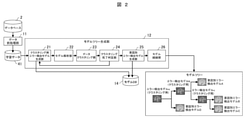
- FIG. 2 shows the configuration of the model tree generation unit 12 of FIG.
- the model tree generation unit 12 includes a clustering error detection model generation unit 21, a model analysis unit 22, a data clustering unit 23, a clustering completion determination unit 24, a factor-specific error detection model generation unit 25, and a model connection unit 26. ..
- the data sent from the database 2 is processed by the data preprocessing unit 11 and output as learning data 41.
- the training data 41 is sent to the clustering error detection model generation unit 21.
- the model tree generation unit 12 the learning data 41 includes a clustering error detection model generation unit 21, a model analysis unit 22, a data clustering unit 23, a clustering completion determination unit 24, a factor-specific error detection model generation unit 25, and a model connection. It is processed in the order of part 26 and output as a model tree.
- the clustering completion determination unit 24 determines the clustering state, and in some cases, returns the data to the clustering error detection model generation unit 21.
- the clustering error detection model generation unit 21 and the factor-specific error detection model generation unit 25 appropriately send data to the model database 14.
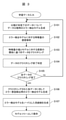
- FIG. 3 shows a processing process in the components in the model tree generation unit 12 of FIG.
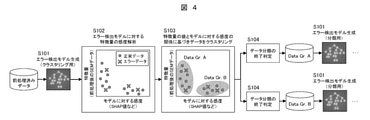
- step S101 the error detection model generation unit 21 for clustering learns the error detection rule from the difference in the tendency between the normal data and the error data by inputting the training data 41 for which clustering is not completed, and the error detection model for clustering. To generate.
- This error detection model may be generated by using an algorithm based on a decision tree such as Random Forest or XGBoost, or any machine learning algorithm such as Neural Network.
- each feature amount in the input training data 41 is a model output for the error prediction result.
- step S103 in the data clustering unit 23, data is clustered into two or more based on the relationship between the feature amount and the sensitivity to the model.
- this clustering method unsupervised learning such as k-means clustering or mixed Gaussian model can be used.
- step S104 the clustering completion determination unit 24 determines whether to complete the clustering for the data clustered by the data clustering unit 23.
- the clustered data is further divided into training data and test data, and if the accuracy of the error detection model generated using the training data is equal to or higher than the threshold value for the test data, the clustering is completed. Can be determined. A flag of clustering completion is added to the data determined to be clustering completed.
- step S105 it is determined whether or not the clustering completion flag is attached to all the data, and if there is data without the flag, the processes from step S101 to step S104 are repeated again for that data.
- FIG. 4 schematically shows the processes from step S101 to step S104 in FIG.
- the data obtained in each step is clarified by expressing it in a graph or the like.
- data is clustered into, for example, group A (Gr.A) and group B (Gr.B) as shown in FIG. 4 by using unsupervised learning. These processes are repeated until the clustering completion flag is set for all the data.
- the error detection model generation unit 25 for each factor generates an error detection model for learning the error detection rule from the difference in the tendency between the normal data and the error data for each clustered data. Similar to the above-mentioned error detection model generation unit 21 for clustering, the factor-based error detection model generation unit 25 uses an algorithm based on a decision tree such as Random Forest or XGBoost, or any machine learning algorithm such as Neural Network. May be generated. However, different model parameter values can be used between the clustering error detection model generation unit 21 and the factor-specific error detection model generation unit 25.
- Model parameters include hyperparameters that determine the complexity of the model, such as the number of trees and the depth of trees in a tree-structured model.
- parameters such as the number of trees and the depth of trees related to the complexity of the model can be easily analyzed by the model analysis unit 22 and clustering using the analysis results. Can be set to a smaller value than the model generated by the factor-based error detection model generation unit 25.
- the factor-based error detection model generation unit 25 can set model parameter values tuned to improve the error detection accuracy in order to improve the reliability of the generated model.
- the error detection model for clustering has a simpler model structure than the error detection model by factor. In FIG. 2, such a model structure is represented as a difference between the error detection model for clustering and the error detection model by factor, that is, the difference in the number of branches.
- the error detection model generated by the error detection model generation unit 21 for clustering and the error detection model generation unit 25 for each factor that is, the error detection model for clustering and the error detection model for each factor are stored in the model database 14.
- step S107 in the model connection unit 26, the error detection model is used as a node by connecting the models generated by the error detection model generation unit 21 for clustering and the error detection model generation unit 25 for each factor based on the flow of clustering. Generate a model tree that is a phylogenetic tree. In other words, the model tree expresses the relationship between error detection models by means of a tree structure.
- a learning model that distinguishes between normal data and error data is generated, and by analyzing this model, the difference between normal data and error data is quantified.
- clustering data for each error that shows similar differences and generating a learning model with them as the same factor a learning model that detects each of the various types of errors that occur without prior labeling of the error factors. Can be generated.
- FIG. 5 is a configuration diagram showing the error factor estimation unit 13 of FIG.
- the data preprocessing unit 11 shapes the data for which the error factor is to be estimated from the raw data such as the device data, the recipe, and the measurement result sent from the database 2 into a format suitable for the machine learning model, and estimates the error factor. It is output as the target data 42.
- the error factor estimation unit 13 inputs the error factor estimation target data 42 and calculates the probability of the error factor candidate.
- the error factor estimation unit 13 has a model evaluation unit 31, a model selection unit 32, a correlation parameter extraction unit 33, and an error factor probability calculation unit 34.
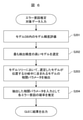
- FIG. 6 shows the processing steps of the components in the error factor estimation unit 13.
- step S201 the model evaluation unit 31 evaluates the performance of the error detection model for each factor stored in the model database 14 for the error factor estimation target data 42.
- the performance evaluation is obtained by comparing the error prediction result, which is the output of the error detection model, with the true error in the input error data.
- accuracy, recall, precision, F1 value, AUC and the like can be used as the performance evaluation index.
- the F1 value is the harmonic mean of the precision rate and the recall rate.
- AUC is an abbreviation for Area Under the Curve.
- FIG. 5 shows an example in which accuracy is used as an evaluation index of performance.
- step S202 the model selection unit 32 selects one or more error detection models for each factor for which the performance evaluation value is high in the model evaluation unit 31 as a model suitable for the input error data.
- a selection method there are a method of selecting a high-ranking model having a high evaluation value and a method of selecting a model having an evaluation value of a predetermined threshold value or more.
- step S203 the correlation parameter extraction unit 33 extracts a branch in the model tree in which the error detection model for each selected factor is located, and extracts the correlation parameter of the error detection model included in this branch.
- the correlation parameter As a method for extracting this correlation parameter, it is possible to select a high-sensitivity high-level feature amount calculated by the model analysis unit 22 of the model tree generation unit 12.
- the most accurate model for the error data input as an example is the "factor-based error detection model B", and this "factor-based error detection model B" is branching and branching located in the model tree.
- the models included in are shown by thick lines.
- the "matching score” (the degree of matching between the registered pattern and the captured image), "contrast”, “pattern detection magnification”, and “pattern detection coordinates” calculated as features when the sensitivity is high ] And other correlation parameters are obtained.
- step S204 the error factor probability calculation unit 34 calculates the probability of each error factor (error factor probability) by inputting the extracted correlation parameter, and presents the result to the user as certainty via the terminal 4.
- the probability of "coordinate deviation" is the highest, and the user can determine that the error factor is highly likely to be "coordinate deviation".
- a neural network model or the like can be used to calculate this error factor probability. To learn this error factor probability model, it is necessary to label the error factors for the combination of correlation parameters. However, since this labeling is performed in clustered data units, the occurrence error 1 which is a conventional method is used. Compared with labeling for each case, the number of processes can be significantly reduced.
- FIG. 7 shows a configuration in which error factor probabilities obtained by analyzing a plurality of error detection models are combined and visualized.
- each model is located in the model tree in the correlation parameter extraction unit 33. Branches in the model tree are extracted, and "correlation parameter A” and “correlation parameter B” are extracted as correlation parameters of the error detection model included in the branch.
- the "correlation parameter A” and “correlation parameter B” are input to the error factor probability calculation unit 34, and the error factor probabilities obtained from each are calculated.
- the calculated error factor probability is corrected by the model evaluation value obtained by the model evaluation unit 31.
- the simplest is to multiply the error factor probabilities by the accuracy of each model and normalize. By summing the corrected error factor probabilities, it is possible to show the user the combined error factor probabilities from a plurality of models.
- FIG. 8 shows an example in which the error factor probabilities combined from a plurality of models are displayed on the screen.
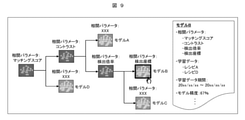
- the model selected by the user via the terminal 4 is stored. Can display information about.
- FIG. 9 shows an example of this display image.
- the information about the model includes, for example, a high-sensitivity high-level feature amount (correlation parameter) calculated by the model analysis unit 22 (FIG. 2), a recipe name included in the training data, and training data. Collection period, model accuracy, etc.
- the user stores the model in the model tree in the model database 14 via the terminal 4. It can be replaced with a new model.
- FIG. 10 shows this operation image.
- the user interactively updates the model in the model tree. be able to.
- the content of the present disclosure is not limited to this, and the parameters defining the operation of the device and the parameters thereof are adopted. It can also be applied to generate a model or model tree as to whether or not an error occurs. That is, the contents of the present disclosure can be applied to devices other than the semiconductor inspection device.
- 1 Semiconductor inspection device, 2: Database, 3: Error factor estimation device, 4: Terminal, 11: Data preprocessing section, 12: Model tree generation section, 13: Error factor estimation section, 14: Model database, 15: Model Tree, 21: Error detection model generation unit for clustering, 22: Model analysis unit, 23: Data clustering unit, 24: Clustering completion determination unit, 25: Error detection model generation unit by factor, 26: Model connection unit, 31: Model Evaluation unit, 32: model selection unit, 33: correlation parameter extraction unit, 34: error factor probability calculation unit, 41: training data, 42: error factor estimation target data.
Landscapes
- Engineering & Computer Science (AREA)
- Theoretical Computer Science (AREA)
- Physics & Mathematics (AREA)
- General Physics & Mathematics (AREA)
- Software Systems (AREA)
- Data Mining & Analysis (AREA)
- General Engineering & Computer Science (AREA)
- Databases & Information Systems (AREA)
- Evolutionary Computation (AREA)
- Artificial Intelligence (AREA)
- Computing Systems (AREA)
- Mathematical Physics (AREA)
- Probability & Statistics with Applications (AREA)
- Medical Informatics (AREA)
- Computer Vision & Pattern Recognition (AREA)
- Pure & Applied Mathematics (AREA)
- Mathematical Analysis (AREA)
- Mathematical Optimization (AREA)
- General Health & Medical Sciences (AREA)
- Health & Medical Sciences (AREA)
- Biophysics (AREA)
- Computational Linguistics (AREA)
- Life Sciences & Earth Sciences (AREA)
- Molecular Biology (AREA)
- Biomedical Technology (AREA)
- Algebra (AREA)
- Computational Mathematics (AREA)
- Image Analysis (AREA)
- Testing And Monitoring For Control Systems (AREA)
- Detection And Prevention Of Errors In Transmission (AREA)
- Radio Transmission System (AREA)
- Radar Systems Or Details Thereof (AREA)
Priority Applications (6)
| Application Number | Priority Date | Filing Date | Title |
|---|---|---|---|
| CN202080103853.1A CN116057546B (zh) | 2020-09-17 | 2020-09-17 | 错误原因的推断装置和推断方法 |
| KR1020237006915A KR20230046308A (ko) | 2020-09-17 | 2020-09-17 | 에러 요인의 추정 장치 및 추정 방법 |
| PCT/JP2020/035274 WO2022059135A1 (ja) | 2020-09-17 | 2020-09-17 | エラー要因の推定装置及び推定方法 |
| JP2022550264A JP7430271B2 (ja) | 2020-09-17 | 2020-09-17 | エラー要因の推定装置及び推定方法 |
| US18/024,930 US12141173B2 (en) | 2020-09-17 | 2020-09-17 | Error factor estimation device and error factor estimation method |
| TW110130606A TWI801973B (zh) | 2020-09-17 | 2021-08-19 | 錯誤因素之推定裝置及推定方法 |
Applications Claiming Priority (1)
| Application Number | Priority Date | Filing Date | Title |
|---|---|---|---|
| PCT/JP2020/035274 WO2022059135A1 (ja) | 2020-09-17 | 2020-09-17 | エラー要因の推定装置及び推定方法 |
Publications (1)
| Publication Number | Publication Date |
|---|---|
| WO2022059135A1 true WO2022059135A1 (ja) | 2022-03-24 |
Family
ID=80776554
Family Applications (1)
| Application Number | Title | Priority Date | Filing Date |
|---|---|---|---|
| PCT/JP2020/035274 Ceased WO2022059135A1 (ja) | 2020-09-17 | 2020-09-17 | エラー要因の推定装置及び推定方法 |
Country Status (6)
| Country | Link |
|---|---|
| US (1) | US12141173B2 (cg-RX-API-DMAC7.html) |
| JP (1) | JP7430271B2 (cg-RX-API-DMAC7.html) |
| KR (1) | KR20230046308A (cg-RX-API-DMAC7.html) |
| CN (1) | CN116057546B (cg-RX-API-DMAC7.html) |
| TW (1) | TWI801973B (cg-RX-API-DMAC7.html) |
| WO (1) | WO2022059135A1 (cg-RX-API-DMAC7.html) |
Families Citing this family (4)
| Publication number | Priority date | Publication date | Assignee | Title |
|---|---|---|---|---|
| JP7354421B2 (ja) * | 2020-03-31 | 2023-10-02 | 株式会社日立ハイテク | エラー要因の推定装置及び推定方法 |
| JP7629832B2 (ja) * | 2021-09-28 | 2025-02-14 | 株式会社日立ハイテク | 特徴量間相互作用演算方法及び特徴量間相互作用演算システム |
| US12260543B2 (en) * | 2022-03-28 | 2025-03-25 | Applied Materials Israel Ltd. | Machine learning based examination of a semiconductor specimen and training thereof |
| CN119577387B (zh) * | 2025-02-10 | 2025-04-29 | 清华大学 | 平动轴角度误差测量方法及装置 |
Family Cites Families (14)
| Publication number | Priority date | Publication date | Assignee | Title |
|---|---|---|---|---|
| GB9902115D0 (en) | 1999-02-01 | 1999-03-24 | Axeon Limited | Neural networks |
| US11047806B2 (en) | 2016-11-30 | 2021-06-29 | Kla-Tencor Corporation | Defect discovery and recipe optimization for inspection of three-dimensional semiconductor structures |
| CN108205570B (zh) * | 2016-12-19 | 2021-06-29 | 华为技术有限公司 | 一种数据检测方法和装置 |
| US10699926B2 (en) | 2017-08-30 | 2020-06-30 | Kla-Tencor Corp. | Identifying nuisances and defects of interest in defects detected on a wafer |
| JP7063022B2 (ja) * | 2018-03-14 | 2022-05-09 | オムロン株式会社 | 異常検知システム、サポート装置およびモデル生成方法 |
| JP7144244B2 (ja) | 2018-08-31 | 2022-09-29 | 株式会社日立ハイテク | パターン検査システム |
| US11093683B2 (en) * | 2018-10-31 | 2021-08-17 | Taiwan Semiconductor Manufacturing Co., Ltd. | Test pattern generation systems and methods |
| CN112334917A (zh) * | 2018-12-31 | 2021-02-05 | 英特尔公司 | 对采用人工智能的系统进行防护 |
| US11263737B2 (en) | 2019-01-10 | 2022-03-01 | Lam Research Corporation | Defect classification and source analysis for semiconductor equipment |
| US11379967B2 (en) | 2019-01-18 | 2022-07-05 | Kla Corporation | Methods and systems for inspection of semiconductor structures with automatically generated defect features |
| KR102243372B1 (ko) * | 2019-01-30 | 2021-04-22 | 경기대학교 산학협력단 | 설비 오류 발생 패턴 추출 장치 및 방법 |
| US10885259B2 (en) | 2019-08-30 | 2021-01-05 | Intel Corporation | Random forest model for prediction of chip layout attributes |
| JP7354421B2 (ja) * | 2020-03-31 | 2023-10-02 | 株式会社日立ハイテク | エラー要因の推定装置及び推定方法 |
| JP7829415B2 (ja) * | 2022-06-13 | 2026-03-13 | 株式会社日立ハイテク | 欠陥検査装置 |
-
2020
- 2020-09-17 JP JP2022550264A patent/JP7430271B2/ja active Active
- 2020-09-17 CN CN202080103853.1A patent/CN116057546B/zh active Active
- 2020-09-17 US US18/024,930 patent/US12141173B2/en active Active
- 2020-09-17 KR KR1020237006915A patent/KR20230046308A/ko active Pending
- 2020-09-17 WO PCT/JP2020/035274 patent/WO2022059135A1/ja not_active Ceased
-
2021
- 2021-08-19 TW TW110130606A patent/TWI801973B/zh active
Non-Patent Citations (3)
| Title |
|---|
| "SETO, YOICHI et al.", 25 July 2016, JAPAN INDUSTRIAL PUBLISHING CO.,, Tokyo, ISBN: 978-4-8190- 2808-0, pages: 68 - 83 * |
| HAYASHI, HIROTOMO ET AL.: "A Fast Algorithm for Inducing Neural Network Trees", IPSJ JOURNAL, vol. 49, no. 8, 15 August 2008 (2008-08-15), pages 2878 - 2889, ISSN: 1882-7837 * |
| HIROTOMO HAYASHI ; QIANGFU ZHAO: "Model reduction of neural network trees based on dimensionality reduction", NEURAL NETWORKS, 2009. IJCNN 2009. INTERNATIONAL JOINT CONFERENCE ON, IEEE, PISCATAWAY, NJ, USA, 14 June 2009 (2009-06-14), Piscataway, NJ, USA , pages 1171 - 1176, XP031498245, ISBN: 978-1-4244-3548-7 * |
Also Published As
| Publication number | Publication date |
|---|---|
| US12141173B2 (en) | 2024-11-12 |
| TW202213191A (zh) | 2022-04-01 |
| JPWO2022059135A1 (cg-RX-API-DMAC7.html) | 2022-03-24 |
| US20230325413A1 (en) | 2023-10-12 |
| JP7430271B2 (ja) | 2024-02-09 |
| CN116057546A (zh) | 2023-05-02 |
| KR20230046308A (ko) | 2023-04-05 |
| CN116057546B (zh) | 2026-05-12 |
| TWI801973B (zh) | 2023-05-11 |
Similar Documents
| Publication | Publication Date | Title |
|---|---|---|
| JP7354421B2 (ja) | エラー要因の推定装置及び推定方法 | |
| US12007335B2 (en) | Automatic optimization of an examination recipe | |
| JP7430271B2 (ja) | エラー要因の推定装置及び推定方法 | |
| TW201944298A (zh) | 加工配方生成裝置 | |
| CN112805719B (zh) | 分类半导体样本中的缺陷 | |
| US20240177286A1 (en) | Modeling for indexing and semiconductor defect image retrieval | |
| TW201921542A (zh) | 識別在一晶圓上偵測到之缺陷中之損害及所關注缺陷 | |
| CN109285791B (zh) | 设计布局为主的快速在线缺陷诊断、分类及取样方法及系统 | |
| JP7610028B2 (ja) | エラー要因推定装置、エラー要因推定方法及びコンピュータ可読媒体 | |
| KR102685359B1 (ko) | 시편들을 검사하는 방법 및 그의 시스템 | |
| TWI908645B (zh) | 缺陷檢測裝置、缺陷檢測方法 | |
| CN117313899B (zh) | 用于数据处理的方法、设备和介质 | |
| CN115510939B (zh) | 图像识别系统 | |
| CN117529803A (zh) | 用于主动良率管理的制造指纹 | |
| JP5566616B2 (ja) | 特性解析装置、特性解析方法をコンピュータに実行させるためのプログラム、上記プログラムを記録したコンピュータ読み取り可能な記録媒体 | |
| JP7821323B2 (ja) | エラー要因解析装置、および、エラー要因解析方法 | |
| CN117829821B (zh) | 一种基于云平台的复合材料设备维护管理方法 | |
| CN117313900B (zh) | 用于数据处理的方法、设备和介质 |
Legal Events
| Date | Code | Title | Description |
|---|---|---|---|
| 121 | Ep: the epo has been informed by wipo that ep was designated in this application |
Ref document number: 20954120 Country of ref document: EP Kind code of ref document: A1 |
|
| ENP | Entry into the national phase |
Ref document number: 2022550264 Country of ref document: JP Kind code of ref document: A |
|
| ENP | Entry into the national phase |
Ref document number: 20237006915 Country of ref document: KR Kind code of ref document: A |
|
| NENP | Non-entry into the national phase |
Ref country code: DE |
|
| 122 | Ep: pct application non-entry in european phase |
Ref document number: 20954120 Country of ref document: EP Kind code of ref document: A1 |