WO2022049657A1 - 学習システム、学習方法、及びコンピュータプログラム - Google Patents
学習システム、学習方法、及びコンピュータプログラム Download PDFInfo
- Publication number
- WO2022049657A1 WO2022049657A1 PCT/JP2020/033195 JP2020033195W WO2022049657A1 WO 2022049657 A1 WO2022049657 A1 WO 2022049657A1 JP 2020033195 W JP2020033195 W JP 2020033195W WO 2022049657 A1 WO2022049657 A1 WO 2022049657A1
- Authority
- WO
- WIPO (PCT)
- Prior art keywords
- layout
- learning
- training data
- learning system
- constrained
- Prior art date
- Legal status (The legal status is an assumption and is not a legal conclusion. Google has not performed a legal analysis and makes no representation as to the accuracy of the status listed.)
- Ceased
Links
Images




Classifications
-
- G—PHYSICS
- G06—COMPUTING OR CALCULATING; COUNTING
- G06N—COMPUTING ARRANGEMENTS BASED ON SPECIFIC COMPUTATIONAL MODELS
- G06N3/00—Computing arrangements based on biological models
- G06N3/02—Neural networks
- G06N3/08—Learning methods
- G06N3/094—Adversarial learning
-
- G—PHYSICS
- G06—COMPUTING OR CALCULATING; COUNTING
- G06F—ELECTRIC DIGITAL DATA PROCESSING
- G06F40/00—Handling natural language data
- G06F40/10—Text processing
- G06F40/103—Formatting, i.e. changing of presentation of documents
-
- G—PHYSICS
- G06—COMPUTING OR CALCULATING; COUNTING
- G06N—COMPUTING ARRANGEMENTS BASED ON SPECIFIC COMPUTATIONAL MODELS
- G06N3/00—Computing arrangements based on biological models
- G06N3/02—Neural networks
- G06N3/04—Architecture, e.g. interconnection topology
- G06N3/045—Combinations of networks
-
- G—PHYSICS
- G06—COMPUTING OR CALCULATING; COUNTING
- G06N—COMPUTING ARRANGEMENTS BASED ON SPECIFIC COMPUTATIONAL MODELS
- G06N3/00—Computing arrangements based on biological models
- G06N3/02—Neural networks
- G06N3/04—Architecture, e.g. interconnection topology
- G06N3/0475—Generative networks
-
- G—PHYSICS
- G06—COMPUTING OR CALCULATING; COUNTING
- G06N—COMPUTING ARRANGEMENTS BASED ON SPECIFIC COMPUTATIONAL MODELS
- G06N3/00—Computing arrangements based on biological models
- G06N3/02—Neural networks
- G06N3/08—Learning methods
- G06N3/084—Backpropagation, e.g. using gradient descent
-
- G—PHYSICS
- G06—COMPUTING OR CALCULATING; COUNTING
- G06T—IMAGE DATA PROCESSING OR GENERATION, IN GENERAL
- G06T11/00—Two-dimensional [2D] image generation
- G06T11/60—Creating or editing images; Combining images with text
-
- H—ELECTRICITY
- H04—ELECTRIC COMMUNICATION TECHNIQUE
- H04N—PICTORIAL COMMUNICATION, e.g. TELEVISION
- H04N1/00—Scanning, transmission or reproduction of documents or the like, e.g. facsimile transmission; Details thereof
- H04N1/387—Composing, repositioning or otherwise geometrically modifying originals
Definitions
- This disclosure relates to the technical fields of learning systems, learning methods, and computer programs that perform layout learning.
- Patent Document 1 discloses a technique for generating a layout using a reference layout registered in the past.
- Patent Document 2 discloses a technique for generating a layout with reference to a layout pattern actually used.
- Patent Document 3 discloses a technique of storing template data in association with attributes and presenting a layout according to the attributes of the article to be produced.
- Patent Document 4 discloses a technique for generating a layout by arranging a plurality of contents in a predetermined area.
- Japanese Unexamined Patent Publication No. 2001-109745 Japanese Patent No. 556176 Japanese Unexamined Patent Publication No. 2018-067151 Japanese Unexamined Patent Publication No. 2020-057381
- the subject of this disclosure is to provide a learning system, a learning method, and a computer program capable of solving the above-mentioned problems.
- One aspect of the learning system of this disclosure is a training data generating means that extracts the constraints of the input layout and generates constrained training data, a layout generating means that generates a generated layout using random numbers, and a layout generating means.
- the layout identification means for discriminating the generated layout and the constrained training data is provided with a learning means for learning by a hostile generated network.
- One aspect of the learning method of this disclosure is a layout generating means that extracts the constraints of the input layout, generates constrained training data, and generates a generated layout using random numbers, and the generated layout and the above.
- the layout identification means for distinguishing from the constrained training data is learned by the hostile generation network.
- One aspect of the computer program of this disclosure is a layout generating means that extracts the constraints of the input layout, generates constrained training data, and uses random numbers to generate the generated layout, and the generated layout and said. Operate the computer to learn the layout identification means for distinguishing from the constrained training data by the hostile generation network.
- the layout of a document or the like can be appropriately learned.
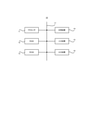
- FIG. 1 is a block diagram showing a hardware configuration of the learning system according to the first embodiment.
- the learning system 10 includes a processor 11, a RAM (Random Access Memory) 12, a ROM (Read Only Memory) 13, and a storage device 14.
- the learning system 10 may further include an input device 15 and an output device 16.
- the processor 11, the RAM 12, the ROM 13, the storage device 14, the input device 15, and the output device 16 are connected via the data bus 17.
- Processor 11 reads a computer program.
- the processor 11 is configured to read a computer program stored in at least one of the RAM 12, the ROM 13, and the storage device 14.
- the processor 11 may read a computer program stored in a computer-readable recording medium by using a recording medium reading device (not shown).
- the processor 11 may acquire (that is, read) a computer program from a device (not shown) located outside the learning system 10 via a network interface.
- the processor 11 controls the RAM 12, the storage device 14, the input device 15, and the output device 16 by executing the read computer program.
- a functional block for learning the layout is realized in the processor 11.
- processor 11 a CPU (Central Processing Unit), a GPU (Graphics Processing Unit), an FPGA (field-programmable get array), a DSP (Demand-Side Platform), and an ASIC (Application) are used. You may use them in parallel, or you may use them in parallel.
- CPU Central Processing Unit
- GPU Graphics Processing Unit
- FPGA field-programmable get array
- DSP Demand-Side Platform
- ASIC Application
- the RAM 12 temporarily stores the computer program executed by the processor 11.
- the RAM 12 temporarily stores data temporarily used by the processor 11 while the processor 11 is executing a computer program.
- the RAM 12 may be, for example, a D-RAM (Dynamic RAM).
- the ROM 13 stores a computer program executed by the processor 11.
- the ROM 13 may also store fixed data.
- the ROM 13 may be, for example, a P-ROM (Programmable ROM).
- the storage device 14 stores data stored in the learning system 10 for a long period of time.
- the storage device 14 may operate as a temporary storage device of the processor 11.
- the storage device 14 may include, for example, at least one of a hard disk device, a magneto-optical disk device, an SSD (Solid State Drive), and a disk array device.
- the input device 15 is a device that receives an input instruction from the user of the learning system 10.
- the input device 15 may include, for example, at least one of a keyboard, a mouse and a touch panel.
- the output device 16 is a device that outputs information about the learning system 10 to the outside.
- the output device 16 may be a display device (for example, a display) capable of displaying information about the learning system 10.
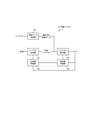
- FIG. 2 is a block diagram showing a functional configuration of the learning system according to the first embodiment.
- the learning system 10 is configured as a system for learning the layout generator 110 and the layout classifier 120 by a hostile generation network (GAN: Generative Adversarial Networks).
- the layout generator 110 is composed of a neural network, and generates a layout (for example, a layout showing an arrangement position of a sentence, a headline, an image, etc. in a document) using a random number (specifically, a random number vector).
- the layout classifier 120 is composed of a neural network like the layout generator 110, and discriminates between the layout input as training data and the generated layout generated by the layout generator 110 (for example, the discrimination result is shown. Output the score).
- the structure of the neural network constituting the layout generator 110 and the layout classifier 120 is not particularly limited.
- the learning system 10 includes a training data generation unit 130, a generator learning unit 140, and a discriminator learning unit 150 as processing blocks for realizing the function.
- the training data generation unit 130, the generator learning unit 140, and the discriminator learning unit 150 may be realized by, for example, a processor 11 (see FIG. 1).
- the training data generation unit 130 is configured to be able to generate restricted training data from the input layout (for example, an image showing the layout).
- the training data generation unit 130 extracts the input constraint of the layout (that is, the rule peculiar to the layout), and generates the constrained training data based on the constraint.
- the layout constraint may be automatically extracted from the input layout by the training data generation unit 130, or may be extracted in advance as a preset condition together with the input layout. .. Since the constrained training data is generated based on such constraints, the training data has a smaller degree of freedom than the case where it is generated without constraints.
- the generator learning unit 140 is configured to be able to execute optimization of the layout generator 110. More specifically, the generator learning unit 140 performs optimization by updating the parameters of the neural network constituting the layout generator 110. The generator learning unit 140 learns the layout generator 110 by means of a hostile generation network. The learning operation by the generator learning unit 140 will be described in detail in the operation description described later.
- the classifier learning unit 150 is configured to be able to execute optimization of the layout classifier 120. More specifically, the discriminator learning unit 150 performs optimization by updating the parameters of the neural network constituting the layout discriminator 120.
- the classifier learning unit 150 together with the generator learning unit 140 described above, learns the layout classifier 120 by a hostile generation network. The learning operation by the classifier learning unit 150 will be described in detail in the operation description described later.
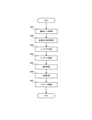
- FIG. 3 is a flowchart showing a flow of operations during learning in the learning system according to the first embodiment.
- the training data generation unit 130 first extracts a constraint from the input layout. Generate constrained training data (step S101). Specific methods for generating constrained training data will be described in detail in other embodiments.
- the generator learning unit 140 executes the learning process of the layout generator 110 (step S102). Further, the classifier learning unit 150 executes the learning process of the layout classifier 120 (step S103). The learning process of the generator learning unit 140 and the discriminator learning unit 150 is performed by the hostile generation network.
- step S104 determines that the learning process by the generator learning unit 140 and the discriminator learning unit 150 is completed (step S104: YES).
- step S104: NO determines that the learning process by the generator learning unit 140 and the discriminator learning unit 150 is completed when the iterative process of steps S101 to S103 reaches a predetermined number of times (for example, 100,000 times). Just do it.
- FIG. 4 is a flowchart showing the flow of learning processing of the layout generator in the learning system according to the first embodiment.
- the layout generator 110 first acquires a random number vector (for example, one created from a Gaussian random number) (step S201), and generates a layout from the random number vector. Generate (step S202). Then, the layout classifier 120 identifies the generated layout and outputs a score indicating the discrimination result (step S203).
- a random number vector for example, one created from a Gaussian random number
- the generator learning unit 140 calculates the loss function so that the identification result by the layout classifier 120 approaches the correct layout (step S204). That is, the generator learning unit 140 calculates the loss function so as to deceive the layout classifier 120 (that is, make the generated layout think that it is the correct layout).
- the generator learning unit 140 calculates the gradient of each parameter of the neural network constituting the layout generator 110 from the loss function described above by using the error back propagation method (step S205). Then, the generator learning unit 140 updates each parameter of the neural network constituting the layout generator 110 by using the calculated gradient (step S206).
- the learning process of one batch by the generator learning unit 140 is completed.
- the process shifts to the learning process of the layout classifier 120 by the classifier learning unit 150.
- FIG. 5 is a flowchart showing the flow of learning processing of the layout classifier in the learning system according to the first embodiment.
- the classifier learning unit 150 first acquires information on the correct layout from the training data (step S301).
- the classifier learning unit 150 acquires information on the correct layout by the batch size.
- the layout generator 110 acquires a random variable vector (step S302) and generates a generated layout from the random variable vector (step S303). Then, the layout classifier 120 identifies the generated layout and outputs a score indicating the discrimination result (step S304). The classifier learning unit 150 creates a loss function so that the discrimination result by the layout classifier 120 in this case approaches the generated layout (step S305).
- the layout classifier 120 further identifies the restricted training data (that is, the correct layout) and outputs a score indicating the discrimination result (step S306). Then, the discriminator learning unit 150 creates a loss function so that the discrimination result by the layout discriminator 120 in this case approaches the correct layout (step S307).
- the classifier learning unit 150 calculates the loss function so that the identification result of the generated layout becomes the generated layout and the identification result of the correct answer layout becomes the correct answer layout (step S308). That is, the classifier learning unit 150 calculates the loss function so that the layout classifier 120 can discriminate between the generated layout and the correct layout.
- the classifier learning unit 150 calculates the gradient of each parameter of the neural network constituting the layout classifier 120 from the loss function described above by using the error back propagation method (step S309). Then, the discriminator learning unit 150 updates each parameter of the neural network constituting the layout discriminator 120 by using the calculated gradient (step S310).
- the learning process of one batch by the classifier learning unit 150 is completed.
- the learning process of the layout classifier 120 by the classifier learning unit 150 is completed, the learning process of the next batch is executed. That is, as described in the flowchart of FIG. 3, the learning processes of the layout generator 110 and the layout classifier 120 are repeatedly executed until all the learning processes are completed.
- binary cross entropy is used as a loss function.
- the loss function is not particularly limited, and other loss functions may be used.
- the layout generator 110 and the layout classifier 120 are learned by the hostile generation network using the constrained training data.
- the constrained training data is generated based on the constraints specific to the layout, and therefore has less freedom than the unconstrained training data. Therefore, if the constrained training data is used, it is possible to execute the learning process more efficiently than in the case of using the unconstrained training data.
- the learning system 10 according to the second embodiment will be described with reference to FIGS. 6 and 7.
- the second embodiment explains a specific example of the constraint extracted at the time of generating the training data, and the operation and the configuration thereof may be the same as the first embodiment described above (for example, FIG. 1 to 5). Therefore, in the following, the parts different from the first embodiment will be described in detail, and the overlapping parts will be omitted as appropriate.
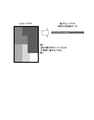
- FIG. 6 is a conceptual diagram showing a method of generating constrained training data using constraints based on the size of columns.
- constrained training data can be generated based on the constraints according to the size of the columns (that is, the width of the columns). Specifically, when the size of the columns is predetermined, constrained training data can be generated as a quantization layout in which one column is quantized into one pixel.
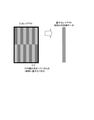
- FIG. 7 is a conceptual diagram showing a method of generating constrained training data using constraints based on row width.
- the line width (in other words, the width of characters) is set in advance.
- constrained training data can be generated based on the constraints according to the width of this row. Specifically, when the width of a row is predetermined, constrained training data can be generated as a quantized layout in which one row is quantized into one pixel.
- restricted training data is generated based on constraints according to the size of columns and the width of rows. Therefore, when learning the layout of newspapers, magazines, etc., it is possible to efficiently execute the learning process.
- the learning system 10 according to the third embodiment will be described with reference to FIGS. 8 and 9.
- the third embodiment differs from the first and second embodiments described above only in a part of the configuration and operation (specifically, a point where conditions are input), and the other parts are almost the same. be. Therefore, in the following, the parts different from the above-described embodiment will be described in detail, and the parts overlapping with the parts already described will be omitted as appropriate.
- FIG. 8 is a block diagram showing a functional configuration of the learning system according to the third embodiment.
- the learning system 10 can execute the learning process of the layout generator 110 and the layout classifier 120 by the conditional hostile generation network (CGAN: Conditional Generative Adversarial Networks). It is configured.
- the layout generator 110 is configured to input condition information in addition to random numbers.
- the layout generator 110 inputs random numbers and conditional information into the neural network to generate a generated layout.
- the layout classifier 120 is configured to input condition information as prior information. In this case, the layout classifier 120 identifies the layout using the condition information.
- FIG. 9 is a conceptual diagram showing an example of vectorization of conditions.
- condition information is vectorized and processed as a condition vector (multidimensional vector).
- condition vector multidimensional vector
- various information related to the article may be input as conditional information.
- the priority of an article that is, the degree of indicating how conspicuous the article is
- condition information may be a combination of a plurality of conditions as in the example of FIG. 9, or may be composed of only one condition.
- FIG. 10 is a flowchart showing the flow of learning processing of the layout generator in the learning system according to the third embodiment.
- the generator learning unit 140 first acquires information on the correct layout (that is, the input layout) from the training data (step S401).
- the generator learning unit 140 acquires information on the correct layout by the batch size.
- the layout generator 110 acquires the random variable vector and the condition information (step S402).
- the layout generator 110 generates a generation layout based on the acquired random variable vector and condition information (step S403).
- the layout classifier 120 identifies the generated layout using the condition information, and outputs a score indicating the discrimination result (step S404).
- the generator learning unit 140 calculates the loss function so that the identification result by the layout classifier 120 approaches the correct layout (step S405). That is, the generator learning unit 140 calculates the loss function so as to deceive the layout classifier 120 (that is, make the generated layout think that it is the correct layout).
- the generator learning unit 140 calculates the gradient of each parameter of the neural network constituting the layout generator 110 from the loss function described above by using the error back propagation method (step S406). Then, the generator learning unit 140 updates each parameter of the neural network constituting the layout generator 110 by using the calculated gradient (step S407).
- the learning process of one batch by the generator learning unit 140 is completed.
- the process shifts to the learning process of the layout classifier 120 by the classifier learning unit 150.
- the learning process of the layout classifier 120 according to the third embodiment may be the same as the process of the second embodiment described above (see FIG. 5). Therefore, the description of the learning process of the layout classifier 120 according to the third embodiment will be omitted.
- the learning process is executed by the conditional hostile generation network. Therefore, as compared with the case where the learning process is executed by the unconditional hostile generation network as in the first embodiment, the learning process can be executed more efficiently.
- the learning system 10 according to the fourth embodiment will be described with reference to FIGS. 11 and 12.
- the fourth embodiment describes the method of generating the constrained training data in each of the above-described embodiments, and the configuration and operation thereof may be the same as those of each of the above-described embodiments. Therefore, in the following, the parts different from the above-described embodiment will be described in detail, and the parts overlapping with the parts already described will be omitted as appropriate.
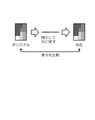
- FIG. 11 is a conceptual diagram showing a difference comparison between the original layout and the layout after reduction / enlargement.
- the layout input to the learning system 10 is a segmentation image in which an article ID is assigned to each pixel.
- the training data generation unit 130 reduces the segmentation image in the vertical direction by the nearest neighbor method, then enlarges it to the original size by the nearest neighbor method, and combines the original image and the reduced and enlarged image. Compare the differences between. More specifically, the training data generation unit 130 acquires the sum of the number of pixels that do not match the original image and the reduced / enlarged image as a difference value.
- the training data generation unit 130 repeatedly executes the process of acquiring the above-mentioned difference value so that the reduced size becomes smaller as a continuous value.
- the training data generation unit 130 determines the reduced size of the segmentation image (in other words, the image size of the constrained training data) based on the difference value obtained by such processing.
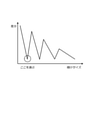
- FIG. 12 is a graph showing a method of determining the reduced size based on the difference in layout.
- the training data generation unit 130 determines the size when the difference value suddenly decreases as the minimum reduction size of the segmentation image (that is, the image size of the constrained training data).
- the above-mentioned process for determining the reduction size may be performed by reducing or enlarging the segmentation image in the horizontal direction. That is, the segmentation image is reduced in the horizontal direction by the nearest neighbor method, then enlarged to the original size by the nearest neighbor method, and the reduced size in the horizontal direction is determined from the difference value between the original image and the reduced / enlarged image. You may try to do it.
- the reduced size of the segmentation image may be determined in either the vertical direction or the horizontal direction, or may be determined in both the vertical direction and the horizontal direction. As an offset, a few pixels of the original image may be cut and then the reduction / enlargement processing may be performed.
- the first 2 pixels are removed as an offset, then reduced to 3 pixels (101), and then enlarged to obtain the same arrangement as the original image (111000111) and the pixels after the offset. (If the offset is 0, it cannot be the same array).
- the process of determining the image size of the constrained training data is performed in the initialization part of the learning operation, for example, using a plurality of data randomly sampled from all the data. After the minimum reduction size is determined, the training data generation unit 130 executes a process of reducing the input segmentation image with the size as a fixed value.
- the reduced size of the image is determined based on the difference between the layout image and the reduced / enlarged image. In this way, it is possible to easily and accurately generate appropriate constrained training data.
- the learning system according to Appendix 1 has a training data generation means for extracting constraints of the input layout and generating constrained training data, a layout generation means for generating a generation layout using random numbers, and the generation. It is a learning system including a learning means for learning a layout identification means for discriminating between a layout and the restricted training data by a hostile generation network.
- Appendix 2 In the learning system described in Appendix 2, the training data generation means extracts a constraint that the vertical length of the layout is quantized by the size of columns, and generates the restricted training data.
- Appendix 3 The learning system according to Appendix 3 is characterized in that the training data generation means extracts the constraint that the horizontal length of the layout is quantized by the width of the row and generates the restricted training data. This is the learning system according to Appendix 1 or 2.
- the estimation means is the learning system according to any one of Supplementary note 1 to 3, wherein the learning means performs learning by a conditional hostile generation network.
- Appendix 5 In the learning system described in Appendix 5, the conditions of the conditional hostile generation network are related to the length of the article contained in the layout, the priority of the article, the number of images related to the article, and the article.
- the learning system according to an appendix 6 is any one of the appendices 1 to 5, wherein the training data generation means reduces a layout image showing the layout based on the constraint to generate the constrained training data. This is the learning system described in item 1.
- Appendix 7 In the learning system described in Appendix 7, the training data generation means determines the reduced size of the layout image based on the difference between the layout image and the image obtained by reducing the layout image and then enlarging it to the original size.
- the learning system according to the appendix 8 is the learning system according to any one of the appendices 1 to 7, characterized in that the layout is a newspaper or a magazine.
- Appendix 9 The learning method described in Appendix 9 is a layout generation means that extracts constraints of the input layout, generates constrained training data, and generates a generated layout using random numbers, and the generated layout and the restricted. It is a learning method characterized by learning a layout identification means for distinguishing from training data by a hostile generation network.
- Appendix 10 The computer program according to Appendix 10 extracts the constraints of the input layout, generates constrained training data, and uses random numbers to generate a generated layout, and the generated layout and the constrained. It is a computer program characterized in that a computer is operated so as to learn a layout identification means for discriminating from training data by a hostile generation network.
- Appendix 11 The recording medium described in Appendix 11 is a recording medium characterized in that the computer program described in Appendix 10 is recorded.
Landscapes
- Engineering & Computer Science (AREA)
- Theoretical Computer Science (AREA)
- Physics & Mathematics (AREA)
- General Physics & Mathematics (AREA)
- General Engineering & Computer Science (AREA)
- Health & Medical Sciences (AREA)
- Artificial Intelligence (AREA)
- Computational Linguistics (AREA)
- General Health & Medical Sciences (AREA)
- Life Sciences & Earth Sciences (AREA)
- Evolutionary Computation (AREA)
- Software Systems (AREA)
- Mathematical Physics (AREA)
- Biomedical Technology (AREA)
- Biophysics (AREA)
- Data Mining & Analysis (AREA)
- Computing Systems (AREA)
- Molecular Biology (AREA)
- Audiology, Speech & Language Pathology (AREA)
- Multimedia (AREA)
- Signal Processing (AREA)
- Processing Or Creating Images (AREA)
- Editing Of Facsimile Originals (AREA)
- Image Analysis (AREA)
Priority Applications (3)
| Application Number | Priority Date | Filing Date | Title |
|---|---|---|---|
| PCT/JP2020/033195 WO2022049657A1 (ja) | 2020-09-02 | 2020-09-02 | 学習システム、学習方法、及びコンピュータプログラム |
| JP2022546767A JP7559824B2 (ja) | 2020-09-02 | 2020-09-02 | 学習システム、学習方法、及びコンピュータプログラム |
| US18/023,559 US20230325677A1 (en) | 2020-09-02 | 2020-09-02 | Learning system, learning method, and computer program |
Applications Claiming Priority (1)
| Application Number | Priority Date | Filing Date | Title |
|---|---|---|---|
| PCT/JP2020/033195 WO2022049657A1 (ja) | 2020-09-02 | 2020-09-02 | 学習システム、学習方法、及びコンピュータプログラム |
Publications (1)
| Publication Number | Publication Date |
|---|---|
| WO2022049657A1 true WO2022049657A1 (ja) | 2022-03-10 |
Family
ID=80490736
Family Applications (1)
| Application Number | Title | Priority Date | Filing Date |
|---|---|---|---|
| PCT/JP2020/033195 Ceased WO2022049657A1 (ja) | 2020-09-02 | 2020-09-02 | 学習システム、学習方法、及びコンピュータプログラム |
Country Status (3)
| Country | Link |
|---|---|
| US (1) | US20230325677A1 (https=) |
| JP (1) | JP7559824B2 (https=) |
| WO (1) | WO2022049657A1 (https=) |
Cited By (1)
| Publication number | Priority date | Publication date | Assignee | Title |
|---|---|---|---|---|
| US12573107B2 (en) | 2022-09-12 | 2026-03-10 | Nec Corporation | Layout support system, layout support apparatus, information accumulation apparatus, and storage medium |
Families Citing this family (1)
| Publication number | Priority date | Publication date | Assignee | Title |
|---|---|---|---|---|
| US12220640B2 (en) * | 2021-09-01 | 2025-02-11 | Electronic Arts Inc. | Generative interior design in video games |
Citations (3)
| Publication number | Priority date | Publication date | Assignee | Title |
|---|---|---|---|---|
| US20190377849A1 (en) * | 2018-06-12 | 2019-12-12 | International Business Machines Corporation | Generative adversarial networks for generating physical design layout patterns |
| JP2020057381A (ja) * | 2018-09-28 | 2020-04-09 | 大日本印刷株式会社 | 情報処理装置、情報処理方法及びプログラム |
| US20200151508A1 (en) * | 2018-11-09 | 2020-05-14 | Adobe Inc. | Digital Image Layout Training using Wireframe Rendering within a Generative Adversarial Network (GAN) System |
-
2020
- 2020-09-02 WO PCT/JP2020/033195 patent/WO2022049657A1/ja not_active Ceased
- 2020-09-02 US US18/023,559 patent/US20230325677A1/en active Pending
- 2020-09-02 JP JP2022546767A patent/JP7559824B2/ja active Active
Patent Citations (3)
| Publication number | Priority date | Publication date | Assignee | Title |
|---|---|---|---|---|
| US20190377849A1 (en) * | 2018-06-12 | 2019-12-12 | International Business Machines Corporation | Generative adversarial networks for generating physical design layout patterns |
| JP2020057381A (ja) * | 2018-09-28 | 2020-04-09 | 大日本印刷株式会社 | 情報処理装置、情報処理方法及びプログラム |
| US20200151508A1 (en) * | 2018-11-09 | 2020-05-14 | Adobe Inc. | Digital Image Layout Training using Wireframe Rendering within a Generative Adversarial Network (GAN) System |
Cited By (1)
| Publication number | Priority date | Publication date | Assignee | Title |
|---|---|---|---|---|
| US12573107B2 (en) | 2022-09-12 | 2026-03-10 | Nec Corporation | Layout support system, layout support apparatus, information accumulation apparatus, and storage medium |
Also Published As
| Publication number | Publication date |
|---|---|
| JPWO2022049657A1 (https=) | 2022-03-10 |
| US20230325677A1 (en) | 2023-10-12 |
| JP7559824B2 (ja) | 2024-10-02 |
Similar Documents
| Publication | Publication Date | Title |
|---|---|---|
| JP7026165B2 (ja) | テキスト認識方法及びテキスト認識装置、電子設備、記憶媒体 | |
| GB2569418A (en) | Using deep learning techniques to determine the contextual reading order in a document | |
| JP7732299B2 (ja) | 学習装置、学習方法およびプログラム | |
| JPWO2020240809A1 (ja) | 学習装置、分類装置、学習方法、分類方法、学習プログラム、及び分類プログラム | |
| JP2019028094A (ja) | 文字生成装置、プログラム及び文字出力装置 | |
| US9159147B2 (en) | Method and apparatus for personalized handwriting avatar | |
| WO2022049657A1 (ja) | 学習システム、学習方法、及びコンピュータプログラム | |
| JP5623574B2 (ja) | 帳票識別装置および帳票識別方法 | |
| KR20200134813A (ko) | 기계 학습을 위한 이미지 처리 장치 및 방법 | |
| JP7395396B2 (ja) | 情報処理装置、情報処理方法およびプログラム | |
| JP7099254B2 (ja) | 学習方法、学習プログラム及び学習装置 | |
| US20230351781A1 (en) | Line removal from an image | |
| JP7825972B2 (ja) | 情報処理装置、情報処理方法、およびプログラム | |
| JP6772629B2 (ja) | 情報処理装置、文字入力プログラムおよび文字入力方法 | |
| KR102570961B1 (ko) | 온라인 게임 내에서 문자를 인식하는 텍스트 마이닝 장치 | |
| Pornpanomchai et al. | Printed Thai character recognition by genetic algorithm | |
| US20220092260A1 (en) | Information output apparatus, question generation apparatus, and non-transitory computer readable medium | |
| EP4488851A1 (en) | Information processing device, information processing method, and information processing program | |
| KR20210117627A (ko) | 객체 검출 학습 장치 및 객체 검출 장치 | |
| US20240004614A1 (en) | Methods and apparatus for art work creation by using random numbers and random variables | |
| JP7593605B1 (ja) | 情報処理装置、情報処理方法及びプログラム | |
| JP7512798B2 (ja) | 情報処理装置及びコンピュータプログラム | |
| US12283092B2 (en) | Information processing device, learning method, and recording medium | |
| JP7516861B2 (ja) | ダイレクトメール作成支援装置、ダイレクトメール作成支援方法、及びプログラム | |
| JP4413904B2 (ja) | パターン認識装置、パターン認識方法およびパターン認識プログラム |
Legal Events
| Date | Code | Title | Description |
|---|---|---|---|
| 121 | Ep: the epo has been informed by wipo that ep was designated in this application |
Ref document number: 20952397 Country of ref document: EP Kind code of ref document: A1 |
|
| ENP | Entry into the national phase |
Ref document number: 2022546767 Country of ref document: JP Kind code of ref document: A |
|
| NENP | Non-entry into the national phase |
Ref country code: DE |
|
| 122 | Ep: pct application non-entry in european phase |
Ref document number: 20952397 Country of ref document: EP Kind code of ref document: A1 |