WO2022019293A1 - 光線照射装置 - Google Patents
光線照射装置 Download PDFInfo
- Publication number
- WO2022019293A1 WO2022019293A1 PCT/JP2021/027081 JP2021027081W WO2022019293A1 WO 2022019293 A1 WO2022019293 A1 WO 2022019293A1 JP 2021027081 W JP2021027081 W JP 2021027081W WO 2022019293 A1 WO2022019293 A1 WO 2022019293A1
- Authority
- WO
- WIPO (PCT)
- Prior art keywords
- light
- light beam
- irradiation
- beam irradiation
- average power
- Prior art date
- Legal status (The legal status is an assumption and is not a legal conclusion. Google has not performed a legal analysis and makes no representation as to the accuracy of the status listed.)
- Ceased
Links
Images


Classifications
-
- A—HUMAN NECESSITIES
- A61—MEDICAL OR VETERINARY SCIENCE; HYGIENE
- A61N—ELECTROTHERAPY; MAGNETOTHERAPY; RADIATION THERAPY; ULTRASOUND THERAPY
- A61N5/00—Radiation therapy
- A61N5/06—Radiation therapy using light
- A61N5/0613—Apparatus adapted for a specific treatment
-
- A—HUMAN NECESSITIES
- A61—MEDICAL OR VETERINARY SCIENCE; HYGIENE
- A61B—DIAGNOSIS; SURGERY; IDENTIFICATION
- A61B18/00—Surgical instruments, devices or methods for transferring non-mechanical forms of energy to or from the body
- A61B2018/00315—Surgical instruments, devices or methods for transferring non-mechanical forms of energy to or from the body for treatment of particular body parts
- A61B2018/00482—Digestive system
- A61B2018/00494—Stomach, intestines or bowel
-
- A—HUMAN NECESSITIES
- A61—MEDICAL OR VETERINARY SCIENCE; HYGIENE
- A61B—DIAGNOSIS; SURGERY; IDENTIFICATION
- A61B18/00—Surgical instruments, devices or methods for transferring non-mechanical forms of energy to or from the body
- A61B2018/00636—Sensing and controlling the application of energy
- A61B2018/00696—Controlled or regulated parameters
- A61B2018/00702—Power or energy
-
- A—HUMAN NECESSITIES
- A61—MEDICAL OR VETERINARY SCIENCE; HYGIENE
- A61N—ELECTROTHERAPY; MAGNETOTHERAPY; RADIATION THERAPY; ULTRASOUND THERAPY
- A61N5/00—Radiation therapy
- A61N2005/002—Cooling systems
- A61N2005/007—Cooling systems for cooling the patient
-
- A—HUMAN NECESSITIES
- A61—MEDICAL OR VETERINARY SCIENCE; HYGIENE
- A61N—ELECTROTHERAPY; MAGNETOTHERAPY; RADIATION THERAPY; ULTRASOUND THERAPY
- A61N5/00—Radiation therapy
- A61N5/06—Radiation therapy using light
- A61N2005/0635—Radiation therapy using light characterised by the body area to be irradiated
- A61N2005/0643—Applicators, probes irradiating specific body areas in close proximity
-
- A—HUMAN NECESSITIES
- A61—MEDICAL OR VETERINARY SCIENCE; HYGIENE
- A61N—ELECTROTHERAPY; MAGNETOTHERAPY; RADIATION THERAPY; ULTRASOUND THERAPY
- A61N5/00—Radiation therapy
- A61N5/06—Radiation therapy using light
- A61N2005/0635—Radiation therapy using light characterised by the body area to be irradiated
- A61N2005/0643—Applicators, probes irradiating specific body areas in close proximity
- A61N2005/0644—Handheld applicators
-
- A—HUMAN NECESSITIES
- A61—MEDICAL OR VETERINARY SCIENCE; HYGIENE
- A61N—ELECTROTHERAPY; MAGNETOTHERAPY; RADIATION THERAPY; ULTRASOUND THERAPY
- A61N5/00—Radiation therapy
- A61N5/06—Radiation therapy using light
- A61N2005/0658—Radiation therapy using light characterised by the wavelength of light used
- A61N2005/0659—Radiation therapy using light characterised by the wavelength of light used infrared
-
- A—HUMAN NECESSITIES
- A61—MEDICAL OR VETERINARY SCIENCE; HYGIENE
- A61N—ELECTROTHERAPY; MAGNETOTHERAPY; RADIATION THERAPY; ULTRASOUND THERAPY
- A61N5/00—Radiation therapy
- A61N5/06—Radiation therapy using light
- A61N5/0613—Apparatus adapted for a specific treatment
- A61N5/0619—Acupuncture
Definitions
- the present invention relates to a light irradiation device.
- the light beam irradiation device has been used for treatment or prevention of pain relief by, for example, percutaneously irradiating an affected area or a pot with infrared light (approximately a wavelength of 700 nm to 2500 nm) as therapeutic light. rice field.
- infrared light approximately a wavelength of 700 nm to 2500 nm
- rice field it has become clear that irradiation with light rays has effects on various nerves such as selective suppression of nerve transmission of sensory fibers that convey pain in the peripheral nervous system, suppression of pain-causing substances, and relaxation of sympathetic tone.
- the laser light beam is widely used in these applications because it can irradiate a specific wavelength with a high output.
- Patent Document 1 in the treatment of dysuria, in order to suppress the abnormal activity of the sensory nerve of the bladder, the urinary disorder is caused by percutaneously irradiating the sacral foramen in which the bladder sensory nerve is present with a laser beam. Is being treated. In such treatment, repeated irradiation of a predetermined site such as an affected area or acupuncture points is an important factor for obtaining the maximum effect. In addition, since it is necessary to repeat light irradiation for several minutes to several tens of minutes a day twice a week to every day, it is desirable that the patient himself irradiates the light at home. Further, Patent Document 2 reports that a chair-type phototherapy device can easily treat a sacral foramen that cannot be directly seen while sitting by irradiating the sacral foramen with a light beam.
- Irritable bowel syndrome is not a life-threatening disease of patients, but it is characterized by chronic abdominal pain and abnormal bowel movements, so it has a great impact on the daily life of patients and significantly impairs the QOL of their lives.
- Drug therapy is widely used for the treatment of irritable bowel syndrome, and ramosetron hydrochloride, which is a therapeutic agent for diarrhea-predominant irritable bowel syndrome described in Patent Document 3, has a therapeutic effect in the attached document shown in Non-Patent Document 1. It is shown. The responder rate showing efficacy is only 46.9% in men, and there are about half of the patients who cannot obtain the therapeutic effect.
- drugs that are not indicated for irritable bowel syndrome and psychotherapy such as cognitive-behavioral therapy are used, but the therapeutic or preventive effect is not sufficient at present. .. From the above background, a new therapeutic method or preventive method suitable for irritable bowel syndrome is desired. There is no report that light irradiation can be used for the treatment or prevention of irritable bowel syndrome.
- the present invention provides a new indication for phototherapy or prevention, and an object of the present invention is to provide a new treatment or prevention device for irritable bowel syndrome.
- Light irradiation is a non-invasive and safe treatment or prevention method, and can be treated or prevented at both medical institutions such as hospitals and at home, so that treatment or prevention of chronic diseases such as hypersensitive bowel syndrome can be performed. It is a suitable treatment or prevention method.
- the present invention is a device for treating or preventing irritable bowel syndrome, which is a device for treating or preventing irritable bowel syndrome by percutaneously irradiating the sacral foramen on one or both sides and the vicinity thereof. It is a device.
- the present invention is as follows. (1) It has a light source that emits light rays and a light irradiation probe that irradiates the light rays, and the light rays emitted by the light source are percutaneously directed from the light beam irradiation probe toward the sacral foramen on one or both sides and its vicinity. A light irradiation device used for treating or preventing hypersensitive bowel syndrome, which is characterized by light irradiation. (2) The light beam irradiation device according to (1), wherein the average power of the light rays emitted from the light beam irradiation probe is 200 mW or more.
- light irradiation device according to any one of the average power density of the light beam irradiated from the light irradiation probe characterized in that it is a 75mW / cm 2 ⁇ 6600mW / cm 2 (1) (4).
- the light beam irradiation device according to any one of (1) to (5), wherein the energy, which is the amount of light rays emitted from the light beam irradiation probe, is 130 J or more per treatment. .. (7)
- the energy, which is the amount of light rays emitted from the light beam irradiation probe is 130 J to 11020 J per treatment.
- the energy density obtained by dividing the energy which is the amount of light rays emitted from the light beam irradiation probe by the irradiation area of the light rays is 45 J / cm 2 or more per treatment.
- the light beam irradiating device according to any one of (1) to (8).
- the same elements are designated by the same reference numerals, and duplicate description will be omitted.
- the light irradiation device 1 according to the first embodiment of the present invention will be described with reference to the drawings.
- the light irradiation device 1 of the present embodiment is for treating or preventing irritable bowel syndrome by percutaneously irradiating the sacral foramen on one or both sides of a patient and its vicinity. It is a medical device.
- the light irradiation device includes a light irradiation probe 2 for irradiating light rays, a light source 3, a probe cable 4 for connecting the light source and the light irradiation probe, and a main body 5 having a built-in light source.
- FIG. 1 shows a state in which a light beam is guided by a probe cable 4, and the main body is provided with a power supply (not shown).
- the light irradiation probe 2 may have a light source and a power source 6 built-in, so that it can be carried around and treated or prevented even when going out.
- a portable treatment or prevention device can be used when necessary and is convenient.
- the light beam irradiation probe 2 may be held by hand and applied to the skin above the sacrum to irradiate light rays, or it may be fixed to the skin with a fixing tool such as a belt (not shown), a suction cup, or an adsorbent such as tape to adsorb and irradiate the skin. May be good.
- a fixing tool such as a belt (not shown), a suction cup, or an adsorbent such as tape to adsorb and irradiate the skin. May be good.
- the light irradiation probe may be attached to a chair type or a bed type.
- an imaging unit for imaging the irradiation unit with an instrument such as a camera is attached to the light irradiation probe to efficiently treat or prevent the sacrum. It is preferable to have a mechanism for irradiating the skin directly above the hole while visually observing it through a monitor or the like.
- a structure in which the tip of the light irradiation probe comes into contact with the skin and the diffuse reflected light in the skin of the irradiated light rays does not leak to the outside By providing a sensor and a control calculation unit that detect contact with the skin at the tip and vicinity of the light irradiation probe, a structure that enables irradiation only when the light irradiation probe is in correct contact with the skin at the irradiation site is provided. It is more preferable to have it.
- the repetition frequency is preferably 0.5 to 10 Hz.
- the irradiation site of the light beam in the present invention is in the vicinity of the sacral foramen on both sides or one side.
- irradiation is directed toward the sacral nerve root from any or some of the sacral foramen of S2, S3 and S4.
- the method of irradiating light rays is percutaneous irradiation.
- the surface area of the irradiated portion is about 0.5 cm 2 to about 6 cm 2 , preferably 0.6 cm 2 to 3 cm 2 , and the shape is preferably circular, elliptical, rectangular, or the like.
- the size of the sacral foramen is about 1 cm 2 , but the target can be efficiently irradiated by the transmission of the laser bone and the scattering in the living body.
- the light irradiation device in the present invention preferably has one or more of the following light conditions in order to show a therapeutic effect on irritable bowel syndrome. That is, the average power is 200 mW or more, the average power density obtained by dividing the average power by the irradiation area of the light beam is 75 mW / cm 2 or more, the energy which is the amount of light is 130 J or more per treatment, and the energy which is the amount of light is the light beam.
- the conditions are such that the energy density divided by the irradiation area is 45 J / cm 2 or more per treatment or prevention, and the wavelength is 750 to 850 nm.
- the average power, average power density, energy, and energy density are the clinical assumptions based on the light transmission conditions obtained by simulation in the test using the irritable bowel syndrome model rat. It is converted and determined.
- the light beam to be irradiated may be a single irradiation by continuous irradiation or an intermittent irradiation in which irradiation and pause are repeated.
- the light ray irradiating device in the present invention may be set to irradiate favorable light ray conditions in the treatment or prevention of irritable bowel syndrome, or the light ray irradiating device is provided with a light ray source for irradiating favorable light ray conditions. May be.
- a light beam satisfying various conditions such as average power, average power density, energy, energy density, and wavelength, which are irradiation conditions of the present invention
- a laser beam excited by a semiconductor element or the like As reported in Photochemical & Photobiological Sciences 2018; 17 (8): 1003-1017, LED rays as well as laser beams are widely used as rays used for treatment or prevention. (Average power range) As shown in the Journal of clinical laser medicine & surgery, 1991; 9 (4): 267-75, the relationship between light intensity and effect is explained by Arndt-Schwltz's law.
- the conditions indicating the amount of light rays in the present invention are peak power, average power, average power density, energy, and energy density. Therefore, it is considered that a similar neurotransmission inhibitory effect exists if the condition is larger than the lower limit value at which the effect is confirmed in each condition.
- the conditions related to the amount of light rays of the rat that is, the peak power, the average power, the average power density, the energy, and the energy density multiplied by 15.3 are the human equivalent conditions for each parameter. Therefore, the average power in the present invention is 0.2 W (200 mW) or more, preferably 0.2 W (200 mW) to 19 W, more preferably 0.2 W (200 mW) to 16 W, and more preferably 0. It is .2W (200mW) to 8.4W, more preferably 0.2W (200mW) to 7.5W, and even more preferably 0.2W (200mW) to 1.1W.
- the average power density which is the average power per unit area in the present invention, is 75 mW / cm 2 or more, more preferably 75 to 6600 mW / cm 2 , more preferably 75 to 5400 mW / cm 2 , and more preferably. It is 75 to 2600 mW / cm 2 , more preferably 75 to 390 mW / cm 2 , and even more preferably 75 to 400 mW / cm 2 . It is also preferable that the lower limit of each is 90 mW / cm 2 or more.
- the energy indicating the amount of light rays in the present invention is 130J or more, preferably 130J to 11020J, more preferably 130J to 9300J, more preferably 130J to 5070J, and more preferably 130J per treatment. It is ⁇ 4400J, and even more preferably 130J ⁇ 650J. Further, it is also preferable that each lower limit value is 160 J or more.
- Energy density showing a light amount in the present invention is a single treatment per 45 J / cm 2 or more, preferably 45J / cm 2 ⁇ 4000J / cm 2, more preferably 45J / cm 2 ⁇ 3400J / cm 2 by weight, more preferably 45J / cm 2 ⁇ 1820J / cm 2, more preferably 45J / cm 2 ⁇ 1600J / cm 2, even more preferably 45J / cm 2 ⁇ 240J / cm 2. Further, it is also preferable that each lower limit value is 51 J / cm 2 or more.
- the wavelength of 808 nm used in the efficacy test of the examples is included in the near infrared region of 750 nm to 850 nm. As shown in Journal of Physics D: Applied Physics, 2005, 38,2543-2555, the permeability to living organisms is equivalent in the near infrared region, so that the same effectiveness exists in the range of 750 nm to 850 nm. ..
- the wavelength in the present invention is preferably 750 nm to 850 nm, more preferably 780 nm to 850 nm, and even more preferably 788 nm to 828 nm.
- a frequency of about twice a day to once a week is preferable. It can also be used when it develops or is likely to develop, depending on the physical condition.
- the treatment time is preferably about 3 to 60 minutes, which is the time when the light beam is irradiated. At this time, if the laser beam is continuously irradiated for a long time, the skin may be burned.
- intermittent irradiation such as 1-minute irradiation, 10-second pause, 30-second irradiation, and 5-second pause.
- Example 1 Examination of light transmission by simulation The effectiveness of phototherapy depends on the amount of light in the target tissue. On the other hand, when a living body is irradiated with light rays, it repeatedly scatters and absorbs, and the amount of light decreases exponentially depending on the distance from the skin surface (Lambert-Beer's law), so its effectiveness in deep tissues is light rays. It is necessary to consider the transparency of. Small animals such as rats used clinically and non-clinically have a small body, for example, the distance to the sacral nerve is about half that of humans.
- the distance from human skin to the sacral nerve existing in the S3 sacral foramen is 22 mm on average for the results of 11 subjects, while the distance from rat skin to the L6 and S1 nerves corresponding to the human S3 sacral nerve is rat.
- the average of the results of 5 cases was 11.8 mm.
- the structure of the skin differs between rodents such as humans and rats, the constituents are the same, so that the light transmission depends more on the distance from the skin surface to the target tissue than on the animal species. I can say.
- the amount of light in tissues such as nerves is larger in rats than in humans. , It is difficult to predict clinical outcomes from nonclinical studies.
- MCML Monte Carlo Modeling of Light Transport in Multi-layered Tissues
- Monte Carlo method Computer Methods and Programs in Biomedicine, Volume 47, Issue 2, July 1995, Pages 131. -1466
- the purpose is to calculate how much the conditions related to the amount of light in the non-clinical test, such as peak power, average power, average power density, energy, and energy density, correspond to clinical conditions.
- the permeability was verified using MCML.
- Refractive index n 1.4 for both Absorption coefficient ⁇ a; 0.15 cm -1 , 0.02 cm -1 , 0.3 cm -1 Scattering coefficient ⁇ s; 100 cm -1 , 80 cm -1 , 33 cm -1 Isotropic scattering parameter g; both 0.85 Thickness; 0.1 cm, 0.4 cm, 2.0 cm It is assumed that a layer having a refractive index of 1.4 continues infinitely under the muscle layer. As the light irradiation conditions, the beam profile showing the spatial intensity distribution was Gaussian, the irradiation radius was 0.9 cm, and the energy was 600 J. The number of photons was 10 million, and the calculation was performed in 0.05 cm units in the depth direction and the radial direction.
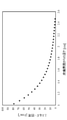
- FIG. 3 shows the relationship between the energy densities in the depth direction at a radius of 0.025 cm near the center of the light irradiation site.
- the energy density at a depth of 11.75 mm corresponding to the rat L6 and S1 nerve depth is 51.7 J / cm 3
- the energy at a depth of 21.75 mm corresponding to the human S3 sacral foramen depth is 3.37 J / cm. It was 3. Therefore, in order to reproduce the energy density of the rat L6 and S1 nerve depths at the human S3 sacral foramen depth, the energy density of the rat nerve depth divided by the energy density of the human sacral foramen is 15.3 times the rat. It is necessary to multiply the peak power, average power, average power density, energy, and energy density, which are the conditions related to the amount of light rays.
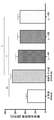
- AGOSTINI et al. After rats L6 and S1 The effectiveness was evaluated based on the change in the number of abdominal muscle contractions due to irradiation of the root ganglion (Neurogastroenterol Motil (2012) 24, 376-e172). A laser beam oscillated by a semiconductor was used as the ray.
- the names of the laser beam irradiation groups are laser 1, laser 2, and laser 3.
- the conditions of light rays will be explained.
- the light source used was a near-infrared semiconductor laser, and the wavelength used was 808 nm ⁇ 20 nm (788 nm to 828 nm) in consideration of individual differences of the laser.
- the peak power was set under three conditions of 10W, 0.7W, and 0.18W for laser 1, laser 2, and laser 3, respectively. The allowable range was ⁇ 20% for each.
- the beam shape was circular, and the profile showing the spatial power distribution was Gaussian distribution.
- the irradiation radius was from the maximum peak power to the peak power of 0.135 times (1 / e 2 ), and the irradiation area was 2.79 cm 2 .
- the irradiation mode was pulse irradiation, the pulse width was 20 ms, the rest time was 180 ms, the repetition frequency was 5 Hz, and the pulse duty ratio was 10%.
- the average power calculated by multiplying the peak power and the pulse duty ratio is 1 W, 0.07 W, 0.018 W for each of laser 1, laser 2, and laser 3, respectively, and the average power per unit area obtained by dividing the average power by the irradiation area.
- the average power densities are 358 mW / cm 2 , 25.1 mW / cm 2 , and 6.45 mW / cm 2 , respectively.
- the energy indicating the amount of light was obtained by multiplying the average power by the irradiation time, and the energy was 600J, 42.0J, and 10.8J for each of laser 1, laser 2, and laser 3, and the energy was calculated by the irradiation area.
- energy density is the energy per unit area divided by the 215J / cm 2, 15J / cm 2, it is 3.87J / cm 2. Based on the results described in the study of light transmission by simulation, the condition equivalent to humans is that the peak power, average power, average power density, energy, and energy density in the non-clinical test are each multiplied by 15.3.
- the laser conditions of the rats in the non-clinical study are equivalent to laser 1, laser 2, and laser 3, respectively, and the peak power is 153W, 10.7W, 2.8W, and the average power is 15.3W, 1.07W, 0. .28W, average power density 5484mW / cm 2 , 384mW / cm 2 , 99mW / cm 2 , energy 9180J, 643J, 165J, energy density 3290J / cm 2 , 230J / cm 2 , 59J / cm 2 . Equivalent to.
- the irradiation positions were on both sides of the dorsal root ganglion L6 and S1, and while L6 and S1 on one side were in the irradiation range at the same time, the irradiation was performed percutaneously for 300 seconds on each side and 600 seconds on both sides.
- the number of animals was 10 in the normal group and 15 in the remaining 4 groups.
- As an evaluation item the number of abdominal muscle contractions for 5 minutes was measured. The evaluation was done blindly, that is, in a situation where the evaluator did not know which group of animals was being evaluated.
- the animals in the normal group (Intact) and the pathological model group (Control) were subjected to baoding and pseudo-irradiation (pressing an irradiation device on which the laser was not oscillated).
- a barostat balloon catheter was inserted through the anus and fixed with elastore.
- fixation the animals were individually placed in observation cages and acclimatized for 30 minutes.
- air was injected using a manometer so that the internal pressure of the balloon was 60 mmHg, and the extension stimulus was applied for 5 minutes.
- a mirror was placed at the bottom of the observation cage during the 5-minute extension stimulus load to measure the number of abdominal muscle contractions in the animals.
- Student's t-test was performed as a comparative test between the normal group (Intact) and the pathological condition model group (Control).
- Dunnett's test was performed as a multiple comparison test. The significance level was set to 5%, and the case of less than 5% was considered to have a statistically significant difference.
- Example 3 Examination of therapeutic effect of irritable bowel syndrome model rat by light irradiation Part 2 Physical restraint stress model rats, one of the animal models of irritable bowel syndrome, were used and their efficacy was evaluated for different laser conditions.
- the rats are a normal group 2 (Intact 2) that is not stressed, a pathological model group 2 (Control 2) that is stressed to induce a pathological condition, and a laser irradiation group that is a laser irradiation group that is percutaneously irradiated with a laser beam under stress. 3 groups were set.
- the peak power was set to one condition of 4.6 W.
- the average power calculated by multiplying the peak power and the pulse Duty ratio is 0.46 W
- the average power density which is the average power per unit area obtained by dividing the average power by the irradiation area
- the energy indicating the amount of light is The average power is 276J multiplied by the irradiation time of 600 seconds
- the energy density which is the energy per unit area obtained by dividing the energy by the irradiation area, is 99J / cm 2 .
- ⁇ 20% was set as the allowable range.
- the above conditions in non-clinical rats are 15.3 times human equivalent with peak power of 70 W, average power of 7.0 W, average power density of 2523 mW / cm 2 , energy of 4223 J, and energy density of 1514 J /. It corresponds to the condition of cm 2.
- the wavelength was 808 nm ⁇ 20 nm (788 nm to 828 nm).
- the number of animals was 10 in the normal group 2 (Intact2) and 15 in the pathological model group 2 (Control2) and the laser 4. Other than that, the procedure was carried out under the same conditions as in Example 2.
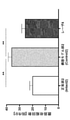
- Fig. 5 The results are shown in Fig. 5. The mean value is shown in a bar graph and the standard error is shown in an error bar. In addition, ** indicates that the p-value is lower than 0.01 between the groups. Since the number of abdominal muscle contractions in the pathological model group 2 (Control 2) was significantly increased compared to the normal group 2 (Intact 2), it was confirmed that the pathological condition was induced. For the pathological model group 2 (Control 2), the laser 4 confirmed a significant decrease in the number of abdominal muscle contractions, indicating that a therapeutic effect was present.
- Percutaneous laser beam irradiation of the sacral foramen can be said to be a treatment or prevention method for irritable bowel syndrome.
Landscapes
- Health & Medical Sciences (AREA)
- Engineering & Computer Science (AREA)
- Biomedical Technology (AREA)
- Pathology (AREA)
- Nuclear Medicine, Radiotherapy & Molecular Imaging (AREA)
- Radiology & Medical Imaging (AREA)
- Life Sciences & Earth Sciences (AREA)
- Animal Behavior & Ethology (AREA)
- General Health & Medical Sciences (AREA)
- Public Health (AREA)
- Veterinary Medicine (AREA)
- Radiation-Therapy Devices (AREA)
- Medicines Containing Material From Animals Or Micro-Organisms (AREA)
- Medicines That Contain Protein Lipid Enzymes And Other Medicines (AREA)
Priority Applications (6)
| Application Number | Priority Date | Filing Date | Title |
|---|---|---|---|
| CN202180059692.5A CN116133722A (zh) | 2020-07-21 | 2021-07-20 | 光线照射装置 |
| JP2022538015A JP7343708B2 (ja) | 2020-07-21 | 2021-07-20 | 光線照射装置 |
| EP21845900.6A EP4186561A4 (en) | 2020-07-21 | 2021-07-20 | LIGHT BEAM EXPOSURE APPARATUS |
| CA3189029A CA3189029A1 (en) | 2020-07-21 | 2021-07-20 | Light beam irradiation apparatus |
| KR1020237005253A KR102866868B1 (ko) | 2020-07-21 | 2021-07-20 | 광선 조사 장치 |
| US18/017,256 US20230285770A1 (en) | 2020-07-21 | 2021-07-20 | Light beam irradiation apparatus |
Applications Claiming Priority (4)
| Application Number | Priority Date | Filing Date | Title |
|---|---|---|---|
| JP2020-124370 | 2020-07-21 | ||
| JP2020124370 | 2020-07-21 | ||
| JP2020212321 | 2020-12-22 | ||
| JP2020-212321 | 2020-12-22 |
Publications (1)
| Publication Number | Publication Date |
|---|---|
| WO2022019293A1 true WO2022019293A1 (ja) | 2022-01-27 |
Family
ID=79729599
Family Applications (1)
| Application Number | Title | Priority Date | Filing Date |
|---|---|---|---|
| PCT/JP2021/027081 Ceased WO2022019293A1 (ja) | 2020-07-21 | 2021-07-20 | 光線照射装置 |
Country Status (7)
| Country | Link |
|---|---|
| US (1) | US20230285770A1 (enExample) |
| EP (1) | EP4186561A4 (enExample) |
| JP (1) | JP7343708B2 (enExample) |
| KR (1) | KR102866868B1 (enExample) |
| CN (1) | CN116133722A (enExample) |
| CA (1) | CA3189029A1 (enExample) |
| WO (1) | WO2022019293A1 (enExample) |
Citations (6)
| Publication number | Priority date | Publication date | Assignee | Title |
|---|---|---|---|---|
| JP3763360B2 (ja) | 2004-01-30 | 2006-04-05 | アステラス製薬株式会社 | 下痢型過敏性腸症候群治療剤 |
| JP2009172068A (ja) | 2008-01-22 | 2009-08-06 | Chiba Univ | 排尿障害の改善及び/又は治療に使用するレーザーの用途 |
| JP2012514498A (ja) * | 2009-01-05 | 2012-06-28 | プレクストロニクス インコーポレイテッド | 有機発光ダイオード光線療法照明システム |
| US20180228689A1 (en) * | 2017-02-16 | 2018-08-16 | Rebecca Lach | Wearable interactive system and method of non-opioid and drug-free pain control |
| US20180369602A1 (en) * | 2017-06-22 | 2018-12-27 | Tichauer Technical Laboratories, Llc | Low-level laser light therapy devices, and methods of use |
| WO2020004516A1 (ja) | 2018-06-29 | 2020-01-02 | 帝人ファーマ株式会社 | 椅子型光治療装置 |
Family Cites Families (7)
| Publication number | Priority date | Publication date | Assignee | Title |
|---|---|---|---|---|
| SE517605C2 (sv) * | 1999-09-20 | 2002-06-25 | Susanne Johansson | Anordning för laserbehandling av ojämna strukturer |
| SE538469C2 (sv) * | 2013-10-07 | 2016-07-12 | Johansson Susanne | Anordning för styrning av en laserprob |
| US20150238772A1 (en) * | 2014-02-24 | 2015-08-27 | Joseph J. Meyer | Noninvasive photo-ultrasonic biostimulation device and method of use |
| WO2017044904A1 (en) | 2015-09-11 | 2017-03-16 | Nalu Medical, Inc. | Apparatus for peripheral or spinal stimulation |
| EP3585475B1 (en) * | 2017-02-24 | 2024-04-03 | Nalu Medical, Inc. | Apparatus with sequentially implanted stimulators |
| EP3609575B1 (en) * | 2017-04-13 | 2024-07-31 | Multi Radiance Medical | Light source device for photobiomodulation therapy to reduce the effects of fibromyalgia |
| KR102162487B1 (ko) | 2018-07-04 | 2020-10-07 | 피움랩스 주식회사 | 방향물질 배출장치 |
-
2021
- 2021-07-20 WO PCT/JP2021/027081 patent/WO2022019293A1/ja not_active Ceased
- 2021-07-20 JP JP2022538015A patent/JP7343708B2/ja active Active
- 2021-07-20 CN CN202180059692.5A patent/CN116133722A/zh active Pending
- 2021-07-20 EP EP21845900.6A patent/EP4186561A4/en active Pending
- 2021-07-20 KR KR1020237005253A patent/KR102866868B1/ko active Active
- 2021-07-20 CA CA3189029A patent/CA3189029A1/en active Pending
- 2021-07-20 US US18/017,256 patent/US20230285770A1/en active Pending
Patent Citations (6)
| Publication number | Priority date | Publication date | Assignee | Title |
|---|---|---|---|---|
| JP3763360B2 (ja) | 2004-01-30 | 2006-04-05 | アステラス製薬株式会社 | 下痢型過敏性腸症候群治療剤 |
| JP2009172068A (ja) | 2008-01-22 | 2009-08-06 | Chiba Univ | 排尿障害の改善及び/又は治療に使用するレーザーの用途 |
| JP2012514498A (ja) * | 2009-01-05 | 2012-06-28 | プレクストロニクス インコーポレイテッド | 有機発光ダイオード光線療法照明システム |
| US20180228689A1 (en) * | 2017-02-16 | 2018-08-16 | Rebecca Lach | Wearable interactive system and method of non-opioid and drug-free pain control |
| US20180369602A1 (en) * | 2017-06-22 | 2018-12-27 | Tichauer Technical Laboratories, Llc | Low-level laser light therapy devices, and methods of use |
| WO2020004516A1 (ja) | 2018-06-29 | 2020-01-02 | 帝人ファーマ株式会社 | 椅子型光治療装置 |
Non-Patent Citations (9)
| Title |
|---|
| COMPUTER METHODS AND PROGRAMS IN BIOMEDICINE, vol. 47, July 1995 (1995-07-01), pages 131 - 146 |
| J. BIOMED. OPT., vol. 13, no. 1, January 2008 (2008-01-01), pages 014 - 015 |
| JOURNAL OF BIOLOGICAL CHEMISTRY, vol. 280, no. 6, 2005, pages 4761 - 4771 |
| JOURNAL OF CLINICAL LASER MEDICINE & SURGERY, vol. 9, no. 4, 1991, pages 267 - 75 |
| JOURNAL OF PHYSICS D: APPLIED PHYSICS, vol. 38, 2005, pages 2543 - 2555 |
| PHOTOCHEMICAL & PHOTOBIOLOGICAL SCIENCES, vol. 17, no. 8, 2018, pages 1003 - 1017 |
| PHYS. MED. BIOL., vol. 44, 1999, pages 2689 - 2702 |
| S. AGOSTINI ET AL., NEUROGASTROENTEROL MOTIL, vol. 24, 2012, pages 376 - e172 |
| See also references of EP4186561A4 |
Also Published As
| Publication number | Publication date |
|---|---|
| EP4186561A4 (en) | 2023-12-27 |
| CN116133722A (zh) | 2023-05-16 |
| JP7343708B2 (ja) | 2023-09-12 |
| CA3189029A1 (en) | 2022-01-27 |
| US20230285770A1 (en) | 2023-09-14 |
| EP4186561A1 (en) | 2023-05-31 |
| JPWO2022019293A1 (enExample) | 2022-01-27 |
| KR102866868B1 (ko) | 2025-09-30 |
| KR20230038556A (ko) | 2023-03-20 |
Similar Documents
| Publication | Publication Date | Title |
|---|---|---|
| Shirani et al. | Low-level laser therapy and myofacial pain dysfunction syndrome: a randomized controlled clinical trial | |
| US11013938B2 (en) | Methods and systems for peripheral nerve modulation using non ablative focused ultrasound with electromyography (EMG) monitoring | |
| US7918229B2 (en) | Method and device to inactivate and kill cells and organisms that are undesirable | |
| US20080033412A1 (en) | System and method for convergent light therapy having controllable dosimetry | |
| Kopacz et al. | Comparative analysis of the influence of selected physical factors on the level of pain in the course of temporomandibular joint disorders | |
| Ward et al. | A comparison of the analgesic efficacy of medium-frequency alternating current and TENS | |
| Prabhala et al. | External focused ultrasound treatment for neuropathic pain induced by common peroneal nerve injury | |
| Kubala et al. | Multidisciplinary and nonpharmacological management of pain in temporomandibular disorders (TMDs) | |
| JP7343708B2 (ja) | 光線照射装置 | |
| Banzer et al. | Short-time effects of laser needle stimulation on the peripheral microcirculation assessed by laser Doppler spectroscopy and near-infrared spectroscopy | |
| RU2556608C2 (ru) | Способ неинвазивной полихроматической световой импульсной терапии | |
| RU2734908C1 (ru) | Способ лечения заболеваний лицевого нерва лазерным излучением | |
| Abdelmageed et al. | Effect of High Power Laser Therapy on Patients with Chronic Discogenic Sciatica: A Randomized Clinical Trial | |
| Iennaco | The effect of photobiomodulation on cerebral blood flow | |
| WO2025229950A1 (ja) | 掻痒治療装置 | |
| RU2153668C1 (ru) | Биоэнергетический способ повышения тонуса организма | |
| CN1311783C (zh) | 一种人体生理-心理状况调节手段的效果评价方法 | |
| Lim | The Potential of intranasal light therapy for brain stimulation | |
| Martini et al. | Disentangling the effects of near-infrared light stimulation and exercise on cognitive function in fNIRS studies | |
| Tsai et al. | Effect of laser stimulation of acupoint taichong (LR3) on blood pressure and heart rate variability | |
| Motoyama et al. | Effects of Very Low-Intensity Transcranial Ultrasound Stimulation on Corticospinal Excitability and Motor Performance in Healthy Individuals | |
| Buzza | Selective Inhibition of Small-Diameter Nerve Fibers Through Photobiomodulation: Dosing, Behavioral Analyses, and Mechanistic Insights | |
| Li et al. | Transcranial low-level laser stimulation in near infrared-II region for brain safety and protection | |
| Mosaad et al. | Effect of Low Shock Wave Versus Low Level Laser on Temporomandibular Joint Disorders | |
| Yi et al. | Review of Domestic Papers on Low level laser therapy-mainly focused on laser apparatus |
Legal Events
| Date | Code | Title | Description |
|---|---|---|---|
| 121 | Ep: the epo has been informed by wipo that ep was designated in this application |
Ref document number: 21845900 Country of ref document: EP Kind code of ref document: A1 |
|
| ENP | Entry into the national phase |
Ref document number: 2022538015 Country of ref document: JP Kind code of ref document: A |
|
| ENP | Entry into the national phase |
Ref document number: 3189029 Country of ref document: CA |
|
| ENP | Entry into the national phase |
Ref document number: 20237005253 Country of ref document: KR Kind code of ref document: A |
|
| NENP | Non-entry into the national phase |
Ref country code: DE |
|
| ENP | Entry into the national phase |
Ref document number: 2021845900 Country of ref document: EP Effective date: 20230221 |