WO2022014620A1 - SARS-CoV-2ワクチン - Google Patents
SARS-CoV-2ワクチン Download PDFInfo
- Publication number
- WO2022014620A1 WO2022014620A1 PCT/JP2021/026368 JP2021026368W WO2022014620A1 WO 2022014620 A1 WO2022014620 A1 WO 2022014620A1 JP 2021026368 W JP2021026368 W JP 2021026368W WO 2022014620 A1 WO2022014620 A1 WO 2022014620A1
- Authority
- WO
- WIPO (PCT)
- Prior art keywords
- piv
- protein
- amino acid
- cov
- sars
- Prior art date
- Legal status (The legal status is an assumption and is not a legal conclusion. Google has not performed a legal analysis and makes no representation as to the accuracy of the status listed.)
- Ceased
Links
Images










Classifications
-
- A—HUMAN NECESSITIES
- A61—MEDICAL OR VETERINARY SCIENCE; HYGIENE
- A61K—PREPARATIONS FOR MEDICAL, DENTAL OR TOILETRY PURPOSES
- A61K35/00—Medicinal preparations containing materials or reaction products thereof with undetermined constitution
- A61K35/66—Microorganisms or materials therefrom
- A61K35/76—Viruses; Subviral particles; Bacteriophages
-
- A—HUMAN NECESSITIES
- A61—MEDICAL OR VETERINARY SCIENCE; HYGIENE
- A61K—PREPARATIONS FOR MEDICAL, DENTAL OR TOILETRY PURPOSES
- A61K39/00—Medicinal preparations containing antigens or antibodies
- A61K39/12—Viral antigens
- A61K39/215—Coronaviridae, e.g. avian infectious bronchitis virus
-
- A—HUMAN NECESSITIES
- A61—MEDICAL OR VETERINARY SCIENCE; HYGIENE
- A61K—PREPARATIONS FOR MEDICAL, DENTAL OR TOILETRY PURPOSES
- A61K48/00—Medicinal preparations containing genetic material which is inserted into cells of the living body to treat genetic diseases; Gene therapy
-
- A—HUMAN NECESSITIES
- A61—MEDICAL OR VETERINARY SCIENCE; HYGIENE
- A61P—SPECIFIC THERAPEUTIC ACTIVITY OF CHEMICAL COMPOUNDS OR MEDICINAL PREPARATIONS
- A61P11/00—Drugs for disorders of the respiratory system
-
- A—HUMAN NECESSITIES
- A61—MEDICAL OR VETERINARY SCIENCE; HYGIENE
- A61P—SPECIFIC THERAPEUTIC ACTIVITY OF CHEMICAL COMPOUNDS OR MEDICINAL PREPARATIONS
- A61P31/00—Antiinfectives, i.e. antibiotics, antiseptics, chemotherapeutics
- A61P31/12—Antivirals
- A61P31/14—Antivirals for RNA viruses
- A61P31/16—Antivirals for RNA viruses for influenza or rhinoviruses
-
- C—CHEMISTRY; METALLURGY
- C07—ORGANIC CHEMISTRY
- C07K—PEPTIDES
- C07K14/00—Peptides having more than 20 amino acids; Gastrins; Somatostatins; Melanotropins; Derivatives thereof
- C07K14/005—Peptides having more than 20 amino acids; Gastrins; Somatostatins; Melanotropins; Derivatives thereof from viruses
- C07K14/08—RNA viruses
- C07K14/165—Coronaviridae, e.g. avian infectious bronchitis virus
Definitions
- the present invention relates to a vaccine against the new coronavirus (SARS-CoV-2).
- the new coronavirus (SARS-CoV-2) is an enveloped virus that has a positive-strand single-stranded RNA as a genome, has a 5'end cap structure, and has a 3'end poly A sequence, and is extremely long as a virus, about 30 kb. Has a genome. Although the virus has a repair function in its own RNA polymerase, mutation of the genome is unavoidable.
- the genome consists of 14 ORFs and encodes 27 proteins.
- the protein consists of four types of structural proteins: Membrane (M), Envelope (E), Spike (S), and Nucleocapid protein (N).
- the Spike protein is mainly used as an antigen for vaccines.
- the Peplomer protein consists of an S1 region containing a receptor binding domain (RBD) and an S2 region required for viral membrane fusion with the host cell membrane.
- Infection of the host cell by SARS-CoV-2 begins with the binding of RBD to the host cell's human angiotensin converting enzyme 2 (hACE2).
- RBD has two states, up and down, and can be combined with hACE2 in the up state. This binding exposes S2'cleaved by a transmembrane serine protease 2 (TMPRSS2) protease, resulting in cell-virus fusion.
- TMPRSS2 transmembrane serine protease 2
- ARDS acute respiratory distress syndrome
- ACE2 a receptor for SARS-CoV-2, is expressed on the surface of airway epithelial cells including type II alveolar epithelium and infects airway epithelial cells via RBD of SARS-CoV-2. Diffuse alveolar injury due to ARDS is characteristic of SARS-CoV-2 infected pneumonia.
- the histology of diffuse alveolar disorders generally changes from the exudative phase to the organizing phase and then to the fibrotic phase over time, but in SARS-CoV-2 infection, these In many cases, lesions of different stages of the disease progress simultaneously in the lung lobes of the same individual and become severe.
- the neutralizing antibody action of the vaccine is to inhibit the binding between RBD and hACE2.
- the following mutations in the Spike protein have been reported so far, and it is expected that they will affect the neutralizing antibody induced by the vaccine.
- a British type (alpha): N501Y / D614G mutation, a South African type (beta): E484K / N501Y / D614G, and a Japanese type: E484K have been reported.
- the N501Y mutation is an amino acid mutation in a region mainly involved in the binding between RBD and hACE2, and the mutual binding between the tyrosine (Y) side chain of RBD and the amino acids Y41 and K353 of hACE2 is formed. It is said that the binding affinity is increased 7 times as compared with the Wuhan type.
- mRNA vaccine recombinant virus vector vaccine, whole particle inactivation vaccine, protein component vaccine, etc. against the wild strain new coronavirus (SARS-CoV-2) using Spike protein as an antigen.
- SARS-CoV-2 wild strain new coronavirus
- the mRNA vaccines of Pfizer and Moderna have been reported to be more than 90% effective (see Non-Patent Document 1).
- the present invention has been made in view of the above circumstances, and an object of the present invention is to provide a new modality, SARS-CoV-2 vaccine.
- the neutralizing antibody consisting of the sequence containing any one of the following amino acid sequences (a) to (c) and induced is the receptor binding domain (RBD) of SARS-CoV-2 and human angiotensin.
- a vaccine comprising a viral vector as an active ingredient, which presents a protein that inhibits the binding of converting enzyme 2 (hACE2) on a virus particle envelope.
- SEQ ID NO: 1 Amino acid sequence represented by SEQ ID NO: 1
- B An amino acid sequence in which one to several amino acids are deleted, inserted, substituted or added in the amino acid sequence represented by SEQ ID NO: 1.
- C An amino acid sequence having 80% or more identity in the amino acid sequence represented by SEQ ID NO: 1.
- amino acid sequence represented by SEQ ID NO: 1 has at least one mutation selected from the group consisting of K417N, L452R or L452Q, T478K, E484K, E484Q, F490S, and N501Y, [1] or [2].
- the protein is any one of [1] to [3], wherein the transmembrane (TM) sequence and the cytoplasmic tail (CT) sequence are replaced with the TM and CT sequences of human parainfluenza type 2 virus. Vaccines listed in one.
- a new modality the SARS-CoV-2 vaccine, can be provided.
- the gene encoding these proteins is cleaved with NotI (upstream region of the gene encoding the NP protein) or MluI (region between the gene encoding the M and HN protein) limiting enzyme of the hPIV2 construction plasmid lacking the F gene.
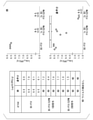
- the desired gene was introduced into the site. It is a figure which investigated the fusion of the cell which transfected the plasmid which encodes the Spike protein of Wuhan type SARS-CoV-2 which introduced 2P substitution. It is a figure which confirmed the protein in the infected cell and the virus particle of BC-PIV carrying the Spike gene of four kinds of Wuhan type SARS-CoV-2 by Western blotting.
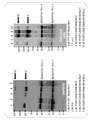
- FIG. 14 is a diagram confirming each protein in infected cells and virus particles of BC-PIV carrying the Spike gene of the mutant strains of SARS-CoV-2 (UK strain, South Africa strain, Japanese strain, India strain) by Western blot. Is.
- FIG. 14 is a diagram confirming each protein in infected cells and virus particles of BC-PIV carrying the Spike gene of the mutant strains of SARS-CoV-2 (UK strain, South Africa strain, Japanese strain, India strain) by Western blot. Is.
- FIG. 14 is a diagram confirming each protein in infected cells and virus particles of BC-PIV carrying the Spike gene of the mutant strains of SARS-CoV-2 (UK strain, South Africa strain, Japanese strain, India strain) by Western blot. Is.
- FIG. 14 is a diagram confirming each protein in infected cells and virus particles of BC-PIV carrying the Spike gene of the mutant strains of SARS-CoV-2 (UK strain, South Africa strain, Japanese strain, India strain)
- the present invention comprises a sequence comprising any one of the following amino acid sequences (a) to (c), and the induced neutralizing antibody is the receptor binding domain of SARS-CoV-2.
- a vaccine containing a viral vector as an active ingredient, which presents a protein that inhibits the binding between (RBD) and human angiotensin converting enzyme 2 (hACE2) on a viral particle envelope.
- RBD human angiotensin converting enzyme 2
- hACE2 human angiotensin converting enzyme 2
- A Amino acid sequence represented by SEQ ID NO: 1
- B An amino acid sequence in which one to several amino acids are deleted, inserted, substituted or added in the amino acid sequence represented by SEQ ID NO: 1.
- C An amino acid sequence having 80% or more identity in the amino acid sequence represented by SEQ ID NO: 1.
- the amino acid sequence represented by SEQ ID NO: 1 is the amino acid sequence of the Spike protein of Wuhan type SARS-CoV-2, and has a mutation of K986P / V987P.
- Wuhan-type SARS-CoV-2 is also referred to as Wuhan-type SARS-CoV-2 into which 2P substitution has been introduced.
- substitution mutation in an amino acid sequence when expressed, it may be expressed by the one-letter notation of the original amino acid, followed by the position number by a 1- to 4-digit number, and then the one-letter notation of the substituted amino acid.
- K lysine
- P proline
- the number of deleted, inserted, substituted or added amino acids is preferably 1 to 190, more preferably 1 to 120, more preferably 1 to 50, and more preferably 1 to 25. It is preferable, 1 to 10 pieces are more preferable, and 1 to 5 pieces are most preferable.
- the identity is preferably 85% or more, more preferably 90% or more, particularly preferably 95% or more, and most preferably 98% or more.
- the protein as an antigen used in the vaccine of the present embodiment is not limited to the Spike protein of Wuhan type SARS-CoV-2, and is also applied to proteins having the same or higher identity as defined in (b) and (c). .. That is, the proteins used in the vaccine of this embodiment are British type (alpha): N501Y or N501Y / D614G, South African type (beta): E484K / N501Y or E484K / N501Y / D614G, Japanese type: E484K or E484K / D614G.
- D614G mutation in the amino acid sequence represented by SEQ ID NO: 1, and in addition to the D614G mutation / or independently of the D614G mutation, in the amino acid sequence represented by SEQ ID NO: 1, K417N, L452R or L452Q. , T478K, E484K, E484Q, F490S and N501Y are more preferably having at least one mutation selected from the group.
- the protein used in the vaccine of the present embodiment is also applied to a mutant type expected in the future as a combination of these mutations.
- the induced neutralizing antibody inhibits the binding of the receptor binding domain (RBD) of SARS-CoV-2 to human angiotensin converting enzyme 2 (hACE2)
- RBD receptor binding domain
- hACE2 human angiotensin converting enzyme 2
- the vaccine of the present invention has neutralizing activity against all mutant SARS-CoV-2.
- the virus vector contained in the vaccine of the present embodiment is not limited as long as it presents an antigen protein on an envelope, and examples thereof include Sendai virus and human parainfluenza virus, preferably human parainfluenza virus, and human parainfluenza. Type 2 virus is more preferred.
- the present inventors have a membrane fusion (F membrane) protein (F membrane) of human paramyxoviridae type 2 virus (hereinafter referred to as hPIV2) belonging to the genus Rubulavirinae of the paramyxoviridae family, which is a minus single-stranded RNA virus.
- the F gene encoding protein or F protein
- the BC-PIV vector prepared as described above was constructed.
- BC-PIV is characterized by antigen introduction. Its characteristic is that it can coexist with hPIV2 HN membrane protein and F membrane protein on the BC-PIV envelope while maintaining the three-dimensional structure of large antigen proteins such as foreign virus outer membranes as well as antigen genes. It can be used as an efficient vaccine vector.
- BC-PIV in which an antigen is introduced onto the envelope can be used as a vector even if the genome is inactivated (VLP. BC-PIV). Since it is a non-proliferative vector at the time of inactivation, it can be treated with a drug having a much lower concentration than the usual virus inactivating treatment, and the immunogenicity of the introduced antigen can be maintained.
- BC-PIV provides a vaccine against SARS-CoV-2, which is a gene encoding the Spike protein of Wuhan-type SARS-CoV-2 and its mutant virus with 2P substitution introduced.
- SARS-CoV-2 which is a gene encoding the Spike protein of Wuhan-type SARS-CoV-2 and its mutant virus with 2P substitution introduced.
- the mutation (TM) and cytoplasmic tile (CT) sequences (base sequence shown in SEQ ID NO: 13) of the intracellular region of the protein are transferred to the TM / CT sequence of hPIV2 F (base sequence shown in SEQ ID NO: 14). It carries the gene-PIV2 FTM / CT gene encoding the Spike protein of the substituted Wuhan SARS-CoV-2 and its mutant virus. This includes methods of nasal administration and intramuscular administration of the vector.
- the gene encoding the Spike protein of Wuhan-type SARS-CoV-2 and its mutant virus-PIV2 FTM / CT gene is incorporated into BC-PIV or VLP.
- BC-PIV not only in gene form but also in protein form. Is done.
- the protein is recognized by innate immune cells and acquired immune cells at the time of administration, and then interacts with the protein produced by transcription and replication of genes to produce a stronger vaccine effect.
- One preferred form is an enveloped virus in which the Spike protein of Wuhan-type SARS-CoV-2 and its mutant virus containing an extramembrane region is loaded on the virus envelope.
- BC-PIV or Wuhan SARS-CoV-2 and its mutant virus Spike-PIV2F which retains Wuhan-type SARS-CoV-2 and its mutant virus Spike in a genetic and protein form.
- the vaccine of this embodiment may contain a pharmaceutically acceptable carrier.
- a pharmaceutically acceptable carrier those usually used for preparations can be used without particular limitation, and for example, solvents such as sterile water and physiological saline; binders such as gelatin, cornstarch, tragant gum and gum arabic, and the like. Excipients such as crystalline cellulose; swelling agents such as alginic acid and the like can be mentioned.
- the vaccine of this embodiment may contain an additive.
- Additives include lubricants such as magnesium stearate; sweeteners such as sucrose, lactose, and saccharin; flavoring agents such as peppermint and red mono oil; stabilizers such as benzyl alcohol and phenol; phosphates, sodium acetate and the like. Buffering agents; solubilizing agents such as benzyl benzoate and benzyl alcohol; antioxidants; preservatives; surfactants; emulsifiers and the like.
- intramuscular administration or nasal administration is preferable.
- spray administration into the nasal cavity is more preferable.
- the solvent for administration include isotonic solutions containing adjuvants such as physiological saline, glucose, D-sorbitol, D-mannose, D-mannitol, and sodium chloride.
- the solvent for the injection may contain an alcohol such as ethanol; a polyalcohol such as propylene glycol and polyethylene glycol; a nonionic surfactant such as Polysorbate 80 TM and HCO-50.
- the preparation of the vaccine for nasal administration may be a spray.
- the dose of the vaccine of this embodiment is usually considered to be about 10 ng to 1000 ⁇ g of the active ingredient per day for an adult (assuming a body weight of 60 kg). If necessary, administer multiple doses at intervals of 2-12 weeks.
- the invention provides a method of treating severe acute respiratory syndrome, comprising administering the vaccine described above to a patient in need of treatment.
- FIG. 1 Figure of four modified Spike proteins to be introduced into BC-PIV
- the SARS-CoV-2 Spike gene (SinoBiological Inc. Cat.) With optimized codons of the SARS-CoV-2 Spike gene (Gene Bank. MN908947).
- VG40591-UT and VG40590-UT / Gene Bank. QHD4346.1 See FIG. 1). Specifically, (1): S1 region protein, (2): protein fused with TM and CT regions of S1 region and hPIV2 F protein, (3): Wuhan type Spike protein (2P substitution introduction), and (4).
- a protein (named BC-PIV / S2PM) in which the TM and CT regions of the Wuhan-type Spike protein of (3) were replaced with the TM and CT regions of the hPIV2 F protein was used to construct a gene encoding these proteins.
- the full-length Spike protein introduces a 2P mutation (K986P / V987P (AAGGTG ⁇ ccccc)) in the S2 region in order to eliminate the autonomous proliferation ability of the Spike protein to stabilize the protein structure. The cell fusion ability was lost.
- a plasmid was constructed by adding the restriction enzyme cleavage sequence and the BC-PIV introduction tag sequence to the NotI cleavage site of BC-PIV.
- the number of bases in the total length of the BC-PIV gene including the transgene was adjusted to be a multiple of 6 (rule of 6).
- BC-PIV can be mounted on the envelope while maintaining the three-dimensional structure of the antigen of the multimer of the heterologous virus.
- the antigen is other than a membrane protein such as a foreign virus, the membrane region (transmembrane domain (TM) sequence) and intracellular region (cytoplasmic tile (CT) sequence) of the hPIV2 F membrane protein are added to the antigen.
- the antigen is incorporated into the BC-PIV envelope.
- the membrane anchoring signal of the introduced antigen is taken into the BC-PIV envelope as it is, and the membrane anchoring signal is that of hPIV2. If it is not replaced, it may not be incorporated into the BC-PIV envelope, which was examined in the construction of (3) and (4).
- Example 2 Confirmation of loss of fusion ability of modified protein having 2P mutation Cell by introducing the mutation in the Spike protein that suppresses cell fusion reported in MERS-CoV into the Spike protein of SARS-CoV-2. It was investigated whether fusion was suppressed.
- SARS-CoV-2 Spike gene with an optimized codon of the SARS-CoV-2 Spike gene (Gene Bank. MN908947) as a template, a 2P mutation (K986P / V987P) in the S2 region of the SARS-CoV-2 Spike protein (K986P / V987P).
- the structure-stable Spike gene (SARS-CoV-2 S2P) into which AAGGTG ⁇ cccccc)) was introduced and the Wuhan-type Spike gene (SARS-CoV-2 S) were introduced into the plasmid pcDNA.
- Each plasmid was translocated into Vero cells, fixed with 4% Paraformaldehide (PFA) after 3 days, and after permeabilization, an anti-SARS-CoV S1 antibody (SinoBiological Inc.) that cross-reactives with the SARS-CoV-2 S1 protein.
- the cells were stained with Cat. 40150-T62-COV2) and DAPI (Nacalai protein Cat. 19174-31) to confirm the presence or absence of cell fusion (see FIG.
- Example 3 Confirmation of modified Spike protein by Western blotting of BC-PIV having each of four types of modified Spike genes Using a BC-PIV construction plasmid into which the four types of modified Spike genes of FIG. 1 were introduced, minus BC-PIV virus was recovered by the reverse genetics method commonly used for single-stranded virus production. Since all viruses could be recovered, protein expression and BC-PIV vector uptake were examined.
- (1) is "BC-PIV / S1”
- (2) is "BC-PIV / S1M”
- (3) is "BC-PIV” for the four types described in Example 1.
- / S2P ”and (4) are referred to as“ BC-PIV / S2PM ”.
- Each BC-PIV infected cell and virus after several passages were subjected to Western blotting.
- the culture supernatant was centrifuged to remove cell residues, and the supernatant passed through a 0.8 ⁇ m filter was ultracentrifuged (141,000 g, 4 ° C., 30 min) and concentrated.
- Anti-SARS-CoV S1 antibody (SinoBiological Inc. Cat. 40150-T62-COV2)
- anti-GAPDH-HRP binding antibody and anti-PIV2 NP (20A), or anti-PIV2 P (211A) were used.
- the virus was subjected to Western blot 10 6 particles respectively.
- the expression of S1 protein was confirmed in all BC-PIVs, and the expression of S0 protein before cleavage was also confirmed in BC-PIV / S2P and BC-PIV / S2PM (see FIG. 3, left). Further, in the uptake into the virus particles shown on the right side of FIG. 3, the S1 protein was confirmed in BC-PIV / S1M, BC-PIV / S2P, and BC-PIV / S2PM, and it was confirmed that the protein was present on the particles. ..
- BC-PIV / S2P and BC-PIV / S2PM the S0 protein before cleavage was also present on the particles, but in BC-PIV / S2P, it was incorporated into vector particles as compared with BC-PIV / S2PM. It was found that there were few particles (see the right side of Fig. 3). In BC-PIV / S1, no S1 protein was observed on the particles, suggesting that the S1 protein was expressed and secreted extracellularly in the infected cells.
- each BC-PIV is Vero. Three days after infecting the cells, 4% PFA was fixed and permeabilized, and anti-SARS-CoV S1 antibody (SinoBiological Inc. Cat. 40150-T62-COV2), DAPI (Nacalai protein Cat. 19174-3), and anti-PIV2. Staining with NP antibody (20A), SARS-CoV-2 S1 with Alexa-568 (red), PIV2 NP with Alexa-488 (green) and nuclei detected with DAPI (blue).
- the BC-PIV / S2PM-derived Spike protein does not have cell fusion ability unlike the Wuhan-type Spike protein.
- the modified Spike gene is introduced into the PIV2 F gene-deficient BC-PIV, the modified Spike protein does not have autonomous proliferation ability in PIV2 F protein non-expressing cells, so that it does not produce secondary infectious particles.
- Example 5 Confirmation of binding of recovered virus to hACE2 It was confirmed whether a protein was present on each BC-PIV particle and could bind to the hACE2 protein, which is a receptor for Peplomer protein.
- Each BC-PIV of 1 ⁇ 10 6 TCID 50 / well was fixed to a 96-well ELISA plate.
- Human ACE2 (hACE2) -Fc tag (Acro Bosystems. Cat. AC2-H5257) 5 ng, 10 ng, 25 ng, 50 ng, 75 ng, 100 ng, 150 ng, 200 ng was added, and HRP-Protein A (Biolegend Cat. 6892) was added.
- the absorbance of BC-PIV / S2PM, BC-PIV / S2P, and BC-PIV / S1M increased depending on the addition concentration, but no binding was observed for BC-PIV / S1 and BC-PIV (Fig.). See 5A.), It was confirmed that the S1 protein was not present on the BC-PIV / S1 particles.
- the binding ability of BC-PIV / S2P and BC-PIV / S1M was almost the same, but that of BC-PIV / S2PM showed a higher binding value than that of BC-PIV / S2PM.
- FIG. 5B shows VLPs inactivated with 0.05% ⁇ -propiolactone. It is a figure which confirmed the binding between BC-PIV and hACE2 protein. Inactivated VLP. BC-PIV / S1M, VLP. BC-PIV / S2P, VLP. The amount of binding to the hACE2 protein was large in the order of BC-PIV / S2PM, and the result was similar to that of BC-PIV, and the inactivated VLP. It was suggested that the use of BC-PIV could also be a SARS-CoV-2 vaccine.
- Example 6 Virus morphology and hemagglutination activity The morphology of BC-PIV / S2PM was confirmed by an electron microscope. In normal electron microscopy, BC-PIV / S2PM or BC-PIV infected cells were fixed with 4% PFA + 2.5% Glutaraldehyde (GA), further fixed with 1% OsO4, dehydrated with alcohol, and embedded with epoxy resin. .. Ultra-thin sections were prepared and observed with an electron microscope. In the immunoelectron microscope, infected cells BC-PIV / S2PM or BC-PIV infected cells were fixed with a 2% PFA + 0.1% GA mixed solution, and further fixed with 4% PFA.
- G Glutaraldehyde
- BC-PIV erythrocyte aggregation activity
- a BC-PIV or BC-PIV / S2PM virus solution having the same number of particles was diluted 2-fold with cold PBS and mixed with 2% guinea pig erythrocytes in an equal amount in 96-well U bottom plate to examine the hemagglutination activity.
- BC-PIV showed a hemagglutination value of at least 64 HAU, but BC-PIV / S2PM did not show hemagglutination activity.
- BC-PIV has hemagglutination activity due to HN membrane protein, and it is usually difficult to eliminate this property, but it is a surprising result that this BC-PIV / S2PM virus lost the hemagglutination activity property. Met. It was speculated that the loss of this property was due to the fact that the HN protein on the BC-PIV particles was covered with the bulky Spike protein with a larger molecular weight, and the erythrocytes could not aggregate on the HN protein. It supports the result of FIG. 5 that BC-PIV / S2PM, which retains a bulkier Spike protein than BC-PIV / S1M, has a higher amount of binding to hACE2.
- the BC-PIV / S2PM HN protein is considered to coexist with the bulky Spike protein, but a 2P mutation has been introduced into the Spike protein, and as shown in FIGS. 2 and 4, the Spike protein is introduced. Since no dependent cell fusion was observed, cell infection depends on BC-PIV-derived HN protein and F protein, and the functions of both proteins are maintained.
- Example 8 Confirmation of administration method (nasal or muscle) in mice
- the antibody induced by nasal administration or intramuscular administration was evaluated.
- 5-7 week old BALB / c mice were administered 2 ⁇ 10 7 TCID 50 BC-PIV / S2PM or BC-PIV once nasally or intramuscularly.
- Blood was collected from mice on the 33rd day after administration, and after centrifugation, serum was collected and deactivated, and the antibody titer was confirmed by ELISA.
- RBD protein (SinoBiological Inc. Cat.
- Example 9 Antibody induction against S1 and RBD After nasal administration of the four BC-PIV vaccines (1) to (4) to mice, serum IgG antibody titers against S1 and RBD were evaluated. 2 ⁇ 10 7 TCID 50 (1): BC-PIV / S1, (2): BC-PIV / S1M, (3): BC-PIV / S2P, (4) in 5-7 week old BALB / c mice. : BC-PIV / S2PM, BC-PIV, or PBS was administered nasally. On the 33rd day after the first administration, blood was collected from mice, centrifuged, serum was collected and deactivated, and the antibody titer was confirmed by ELISA. S1 protein (SinoBiological Inc. Cat.
- BC-PIV is known to have low transcription / translation efficiency because it is a power-permissive in mice, but secretory BC-PIV / S1 is opposed to membrane-retaining BC-PIV / S1M and S1 protein.
- the antibody titer was almost the same as that of the RBD protein, and the antibody titer was slightly higher than that of the RBD protein.
- Using the full-length Spike protein as the antigen was more effective in inducing the antibody than the protein in the S1 region. It was confirmed that BC-PIV / S2PM carrying the full-length Spike protein was most suitable for the vaccine.
- Example 10 Evaluation of IgG / IgA antibody induction against Spike / RBD protein in mouse serum IgG in serum for S1 and RBD in mice treated with BC-PIV / S2PM vaccine once or twice nasally.
- the antibody titer and the IgA antibody titer in the nasal cavity were evaluated.
- 5-7 week old BALB / c mice were nasally administered with 2 ⁇ 10 7 TCID 50 BC-PIV / S2PM or BC-PIV. The two doses were given 4 weeks later.
- the IgG antibody titers against S1 and RBD of the serum were increased in the single-dose group, but the antibody titers were further increased in the double-dose group (see FIG. 10).
- the IgA antibody titer against S1 and RBD of the nasal cavity lavage fluid was increased in the single-dose group.
- a higher IgA antibody titer was observed 1 week after the double-dose administration.
- the half-life of IgA is known to be short, the presence of Spike protein-specific IgA for S1 or RBD was confirmed in the nasal cavity even after 5 weeks of single administration (see FIG. 10).
- cPass kit SARS-CoV-2 Surrogate Virus Neutralization Test Kit
- Each serum was diluted 20, 60, 180, 540, 1620, 4860 times and kept warm with HRP-bound RBD protein at 37 ° C for 30 minutes, and the mixture was placed in a plate on which hACE2 protein was immobilized and kept warm at 37 ° C for 15 minutes. After washing, the light was emitted by TMB, the absorbance at 450 nm was measured, and the inhibition rate (1- (sample OD / negative control OD)) ⁇ 100% was calculated from the obtained values. (Note: Negative control is the value at 20-fold dilution of the non-specific antibody attached to the kit.) According to the manual, when the inhibition rate is 20% or more, it has neutralizing antibody activity.
- BC-PIV / S2PM group In the BC-PIV / S2PM group, 540-fold dilution exceeded 20% in all individuals, and 1620-fold dilution also exceeded 20% inhibition rate (see FIG. 11). However, in the BC-PIV group, no neutralizing antibody could be confirmed because the inhibition rate was 20% or less in all individuals even when diluted 20-fold. Two nasal doses of BC-PIV / S2PM were able to induce high neutralizing antibodies.
- Example 12 Confirmation of infection protection test using hamsters
- vaccine effects were examined using hamsters susceptible to BC-PIV and SARS-CoV-2.
- a 4-week-old Syrian hamster received a single nasal dose of BC-PIV or BC-PIV / S2PM.
- the evaluation of the neutralizing antibody was carried out in the same manner as in Example 11 except that the dilution ratio was increased to 30 times.
- a high inhibition rate equivalent to that of the positive control (Note: the value at 20-fold dilution of the anti-RBD-specific positive antibody attached to the kit) was obtained in both the single administration and the double administration (Fig.). See 12.).
- the inhibition rate was 20% or less, so that the presence of neutralizing antibody could not be confirmed.
- Example 13 Mutant SARS-CoV-2 (British type (alpha): N501Y or N501Y / D614G, South African type (beta): E484K / N501Y or E484K / N501Y / D614G, Japanese type: E484K or E484K / D614G, Construction of BC-PIV vaccine against Indian type (kappa): L452R / E484Q or L452R / E484Q / D614G.
- mutant strains (British type (alpha): N501Y or N501Y / D614G, South African type (beta): E484K / N501Y or E484K / N501Y / D614G, Japanese type: E484K or E484K / D614G, Indian type (kappa): L452R / A BC-PIV was prepared by introducing a Spike gene that carries a 2P mutation corresponding to E484Q or L452R / E484Q / D614G).
- the nucleotide sequence of the British type (alpha) N501Y / D614G Spike gene is shown in SEQ ID NO: 3, and the nucleotide sequence of the South African type (beta) E484K / N501Y / D614G is shown in SEQ ID NO: 4.
- the nucleotide sequence of the Spike gene is shown in SEQ ID NO: 5
- the nucleotide sequence of the Indian type (kappa) L452R / E484Q / D614G is shown in SEQ ID NO: 6.
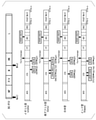
- Each mutation site is shown in FIG.
- the viruses were recovered by the same reverse genetex method as in Example 3.
- Western blots performed in the same manner as in Example 3 using the recovered virus particles are shown in FIGS. 15A and 15B.
- Spike protein was expressed in all virus-infected cells, and mutant Spike protein was found on BC-PIV.
- BC-PIV against the mutant virus is considered to have an effect against the mutant strain because of the high vaccine effect of BC-PIV against Wuhan-type SARS-CoV-2 so far.
- L452Q / F490S BC-PIVs were prepared with a Spike gene carrying a 2P mutation corresponding to (CTC / TTT ⁇ cgg / tct) or L452Q / F490S / D614G (CTC / TTT / GAT ⁇ cag / tct / ggt).
- the nucleotide sequence of the Indian type (delta) L452R / T478K / D614G Spike gene is shown in SEQ ID NO: 7, and the nucleotide sequence of the Indian type (delta plus) K417N / L452R / T478K / D614G is shown in SEQ ID NO: 8, South American type (Delta plus).
- the nucleotide sequence of the British type + Indian type (alpha + kappa) L452R / E484Q / N501Y / D614G Spike gene is shown in SEQ ID NO: 9, and the nucleotide sequence of the British type + Indian type (alpha + delta) L452R / T478K / N501Y / D614G is shown in SEQ ID NO: 9.
- the nucleotide sequence of the Spike gene of British type + Indian type (alpha + delta plus) K417N / L452R / T478K / N501Y / D614G is shown in SEQ ID NO: 10.
- Each mutation site is shown in FIG.
- the virus was prepared using the reverse genetics method of Example 3. BC-PIV against mutant virus expected in the future is expected to be effective against mutant strains expected to appear in the future due to the high vaccine effect of BC-PIV against Wuhan type SARS-CoV-2 so far. Conceivable.
- a new modality the SARS-CoV-2 vaccine, can be provided.
Landscapes
- Health & Medical Sciences (AREA)
- Life Sciences & Earth Sciences (AREA)
- Virology (AREA)
- Pharmacology & Pharmacy (AREA)
- Veterinary Medicine (AREA)
- Chemical & Material Sciences (AREA)
- Public Health (AREA)
- General Health & Medical Sciences (AREA)
- Medicinal Chemistry (AREA)
- Animal Behavior & Ethology (AREA)
- Pulmonology (AREA)
- Epidemiology (AREA)
- Engineering & Computer Science (AREA)
- Molecular Biology (AREA)
- Nuclear Medicine, Radiotherapy & Molecular Imaging (AREA)
- General Chemical & Material Sciences (AREA)
- Chemical Kinetics & Catalysis (AREA)
- Mycology (AREA)
- Communicable Diseases (AREA)
- Microbiology (AREA)
- Organic Chemistry (AREA)
- Genetics & Genomics (AREA)
- Biotechnology (AREA)
- Immunology (AREA)
- Bioinformatics & Cheminformatics (AREA)
- Oncology (AREA)
- Medicines Containing Antibodies Or Antigens For Use As Internal Diagnostic Agents (AREA)
Abstract
以下の(a)~(c)のいずれか一つのアミノ酸配列を含む配列からなり、且つ誘導される中和抗体が、SARS-CoV-2の受容体結合ドメイン(RBD)とヒトアンジオテンシン変換酵素2(hACE2)の結合を阻害するタンパク質をウイルス粒子エンベロープ上に提示するウイルスベクターを有効成分として含有する、ワクチン。 (a)配列番号1で表されるアミノ酸配列、(b)配列番号1で表されるアミノ酸配列において、1~数個のアミノ酸が欠失、挿入、置換若しくは付加されたアミノ酸配列、(c)配列番号1で表されるアミノ酸配列において、80%以上の同一性を有するアミノ酸配列
Description
本発明は、新型コロナウイルス(SARS-CoV-2)に対するワクチンに関する。
新型コロナウイルス(SARS-CoV-2)は、プラス鎖一本鎖RNAをゲノムとして持つエンベロープウイルスであり、5'末端キャップ構造、3'末端ポリA配列を持ち、ウイルスとしては極めて長い約 30kbのゲノムを持つ。当該ウイルスは、自前のRNAポリメラーゼに修復機能があるが、ゲノムの変異は避けられない。ゲノムは、14のORFよりなり、27のタンパク質をコードしている。当該タンパク質は、Membrane(M)、Envelope(E)、Spike(S)、及びNucleocapsid protein(N)の4種類の構造タンパク質よりなる。Spikeタンパク質は、主にワクチン用抗原として用いられる。Spikeタンパク質は、受容体結合ドメイン(RBD)を含むS1領域と宿主の細胞膜とウイルスの膜融合に必要なS2領域よりなる。
SARS-CoV-2による宿主細胞への感染は、RBDと宿主細胞のヒトアンジオテンシン変換酵素2(hACE2)の結合により始まる。RBDは、upとdownの2状態があり、up状態のときhACE2と結合することができる。この結合によりtransmembrane serine protease 2 (TMPRSS2)プロテアーゼによって切断されたS2’が露出され、細胞とウイルスの融合が生じる。また、後期エンドソーム・カテプシン経路による別の感染ルートがあるが、前者の方がウイルスの細胞侵入速度は速いとされる。
SARS-CoV-2感染が、重症化を引き起こす病態として、急性呼吸窮迫症候群(acute respiratory distress syndrome;ARDS)を呈する肺炎に最も留意すべきである。SARS-CoV-2の受容体であるACE2は、II型肺胞上皮をはじめとする気道上皮細胞の表面に発現しており、SARS-CoV-2のRBDを介して気道上皮細胞に感染する。SARS-CoV-2感染肺炎では、ARDSによるびまん性肺胞障害が特徴的である 。一般的にびまん性肺胞障害の組織像は、時間経過とともに、滲出期から器質化期、更に線維化期へと変化していくのが一般的であるが、SARS-CoV-2感染ではこれらの病期の異なる病変が、同一個体の肺葉内に同時に進行し、重篤化する場合も多い。
ワクチンの中和抗体作用は、RBDとhACE2の結合を阻害することである。これまで以下のようなSpikeタンパク質の変異が報告され、ワクチンが誘導する中和抗体に影響を与えるものと予想される。当該変異は、イギリス型(alpha):N501Y/D614G変異、南アフリカ型(beta):E484K/N501Y/D614G、日本型:E484Kが報告されてきた。
さらにWHOより直近でVariant of Interest (VOI) or Variant of Concern (VOC)に認定されたにインド型(kappa):L452R/E484Q/D614G、インド型(delta):L452R/T478K/D614G、インド型(delta plus)K417N/L452R/T478K/D614Gが報告されている。
例えば、N501Y変異は、RBDとhACE2 との結合に主に関与する領域のアミノ酸変異で、RBDのチロシン(Y)側鎖とhACE2のアミノ酸のY41とK353との相互結合が形成されることにより、結合親和性がWuhan型と比較して7倍上昇するとされる。
SARS-CoV-2に対する中和抗体作用が最も強いと評価される抗体(IC50が2ng/mL)において、Spikeタンパク質との結合の分子レベルの解析により、当該抗体の重鎖及び軽鎖中のアミノ酸がSpikeタンパク質のE484と相互作用をしていることが明らかにされている。つまり、E484K変異では、E484でみられた当該抗体との相互作用がK484では低くなり、Wuhan型SARS-CoV-2ワクチン接種で誘導される中和作用の最も高い抗体が、E484K変異では中和抗体として機能不全に陥る可能性が考えられる。
野生株新型コロナウイルス(SARS-CoV-2)に対し、Spikeタンパク質を抗原として、mRNAワクチン、組換えウイルスベクターワクチン、全粒子不活化ワクチン、タンパク質コンポーネントワクチン等の多様なモダリティのワクチンがあり、中でもファイザー社及びモデルナ社のmRNAワクチンは90%以上の有効性が報告されている(非特許文献1参照)。
The Advisory Committee on Immunization Practices' Interim Recommendation for Use of Pfizer-BioNTech COVID-19 Vaccine - United States, December 2020. Oliver SE, Gargano JW, Marin M, Wallace M, Curran KG, Chamberland M, McClung N, Campos-Outcalt D, Morgan RL, Mbaeyi S, Romero JR, Talbot HK, Lee GM, Bell BP, Dooling K. MMWR Morb Mortal Wkly Rep. 2020 Dec 18;69(50):1922-1924.
これらのワクチンはすべて筋肉内投与である。一方、ワクチン投与によるアナフィラキシー及び血栓、心筋症等の副反応が報告されており、mRNAワクチンは2回目の投与後により強い副反応が知られている。副反応等を理由にワクチン接種拒否者も多く、集団免疫の獲得が難しくなることが推測される。今後新型コロナワクチンには、筋肉内投与以外の投与法、副反応の低減、複数回投与が可能である多様なモダリティが必要である。
本発明は上記事情を鑑みてなされたものであり、新しいモダリティであるSARS-CoV-2ワクチン提供することを目的とする。
すなわち、本発明は、以下の態様を含む。
[1]以下の(a)~(c)のいずれか一つのアミノ酸配列を含む配列からなり、且つ誘導される中和抗体が、SARS-CoV-2の受容体結合ドメイン(RBD)とヒトアンジオテンシン変換酵素2(hACE2)の結合を阻害するタンパク質をウイルス粒子エンベロープ上に提示するウイルスベクターを有効成分として含有する、ワクチン。
(a)配列番号1で表されるアミノ酸配列、
(b)配列番号1で表されるアミノ酸配列において、1~数個のアミノ酸が欠失、挿入、置換若しくは付加されたアミノ酸配列、
(c)配列番号1で表されるアミノ酸配列において、80%以上の同一性を有するアミノ酸配列
[1]以下の(a)~(c)のいずれか一つのアミノ酸配列を含む配列からなり、且つ誘導される中和抗体が、SARS-CoV-2の受容体結合ドメイン(RBD)とヒトアンジオテンシン変換酵素2(hACE2)の結合を阻害するタンパク質をウイルス粒子エンベロープ上に提示するウイルスベクターを有効成分として含有する、ワクチン。
(a)配列番号1で表されるアミノ酸配列、
(b)配列番号1で表されるアミノ酸配列において、1~数個のアミノ酸が欠失、挿入、置換若しくは付加されたアミノ酸配列、
(c)配列番号1で表されるアミノ酸配列において、80%以上の同一性を有するアミノ酸配列
[2]配列番号1で表されるアミノ酸配列において、D614G変異を有する、[1]に記載のワクチン。
[3]配列番号1で表されるアミノ酸配列において、K417N、L452R又はL452Q、T478K、E484K、E484Q、F490S、及びN501Yからなる群から選ばれる少なくとも1つの変異を有する、[1]又は[2]に記載のワクチン。
[4]前記タンパク質は、そのtransmembrane(TM)配列及びcytoplasmic tail(CT)配列が、ヒトパラインフルエンザ2型ウイルスのTM及びCT配列に置換されている、[1]~[3]のいずれか一つに記載のワクチン。
[5]前記ウイルスベクターは、ヒトパラインフルエンザ2型ウイルスである、[1]~[4]のいずれか一つに記載のワクチン。
[6]ウイルスベクターとしての前記ヒトパラインフルエンザ2型ウイルスは、ゲノムよりF遺伝子を欠失した非増殖型である、[5]に記載のワクチン。
[7]ウイルスベクターとしての前記ヒトパラインフルエンザ2型ウイルスは、ゲノムが不活化している、[5]又は[6]に記載のワクチン。
[8]経鼻噴霧投与用である[1]~[7]のいずれか一つに記載のワクチン。
本発明によれば、新しいモダリティであるSARS-CoV-2ワクチン提供することができる。
≪ワクチン≫
1実施形態において、本発明は、以下の(a)~(c)のいずれか一つのアミノ酸配列を含む配列からなり、且つ誘導される中和抗体が、SARS-CoV-2の受容体結合ドメイン(RBD)とヒトアンジオテンシン変換酵素2(hACE2)の結合を阻害するタンパク質をウイルス粒子エンベロープ上に提示するウイルスベクターを有効成分として含有する、ワクチンを提供する。
(a)配列番号1で表されるアミノ酸配列、
(b)配列番号1で表されるアミノ酸配列において、1~数個のアミノ酸が欠失、挿入、置換若しくは付加されたアミノ酸配列、
(c)配列番号1で表されるアミノ酸配列において、80%以上の同一性を有するアミノ酸配列
1実施形態において、本発明は、以下の(a)~(c)のいずれか一つのアミノ酸配列を含む配列からなり、且つ誘導される中和抗体が、SARS-CoV-2の受容体結合ドメイン(RBD)とヒトアンジオテンシン変換酵素2(hACE2)の結合を阻害するタンパク質をウイルス粒子エンベロープ上に提示するウイルスベクターを有効成分として含有する、ワクチンを提供する。
(a)配列番号1で表されるアミノ酸配列、
(b)配列番号1で表されるアミノ酸配列において、1~数個のアミノ酸が欠失、挿入、置換若しくは付加されたアミノ酸配列、
(c)配列番号1で表されるアミノ酸配列において、80%以上の同一性を有するアミノ酸配列
(a)において、配列番号1で表されるアミノ酸配列は、Wuhan型SARS-CoV-2のSpikeタンパク質のアミノ酸配列であり、K986P/V987Pの変異を有している。本明細書において、Wuhan型SARS-CoV-2を、2P置換を導入したWuhan型SARS-CoV-2ともいう。
本明細書において、アミノ酸配列における置換変異を表す場合、元のアミノ酸の一文字表記、続いて1~4桁の数字による位置番号、次に置換されたアミノ酸の一文字表記により表現することがある。例えば、アミノ酸番号986位においてリジン(K)がプロリン(P)に置換される変異が生じている場合、「K986P」と表され、これは、「アミノ酸番号986位のLysのProの置換」と同義である。
(b)において、欠失、挿入、置換若しくは付加されたアミノ酸の数としては、1~190個が好ましく、1~120個がより好ましく、1~50個がより好ましく、1~25個がより好ましく、1~10個が更に好ましく、1~5個が最も好ましい。
(c)において、同一性としては、85%以上が好ましく、90%以上がより好ましく、95%以上が特に好ましく、98%以上が最も好ましい。
本実施形態のワクチンに用いられる抗原としてのタンパク質は、Wuhan型SARS-CoV-2のSpikeタンパク質に限定されず、(b)及び(c)に規定される同一性以上のタンパク質にも適用される。
即ち、本実施形態のワクチンに用いられるタンパク質は、イギリス型(alpha):N501Y又はN501Y/D614G、南アフリカ型(beta):E484K/N501Y又はE484K/N501Y/D614G、日本型:E484K又はE484K/D614G、インド型(kappa):L452R/E484Q又はL452R/E484Q/D614G、インド型(delta):L452R/T478K又はL452R/T478K/D614G、インド型(delta plus):K417N/L452R/T478K又はK417N/L452R/T478K/D614G、南米型(lambda):L452Q/F490S又は、L452Q/F490S/D614G、にも適用される。
即ち、本実施形態のワクチンに用いられるタンパク質は、イギリス型(alpha):N501Y又はN501Y/D614G、南アフリカ型(beta):E484K/N501Y又はE484K/N501Y/D614G、日本型:E484K又はE484K/D614G、インド型(kappa):L452R/E484Q又はL452R/E484Q/D614G、インド型(delta):L452R/T478K又はL452R/T478K/D614G、インド型(delta plus):K417N/L452R/T478K又はK417N/L452R/T478K/D614G、南米型(lambda):L452Q/F490S又は、L452Q/F490S/D614G、にも適用される。
配列番号1で表されるアミノ酸配列において、D614G変異を有することが好ましく、D614G変異に加えて/又はD614G変異とは独立して、配列番号1で表されるアミノ酸配列において、K417N、L452R又はL452Q、T478K、E484K、E484Q、F490S及びN501Yからなる群から選ばれる少なくとも1つの変異を有することがより好ましい。
本実施形態のワクチンに用いられるタンパク質は、これら変異の組み合わせとして、今後予想される変異型にも適用される。今後予想される変異としては、イギリス型+インド型(alpha+kappa):L452R/E484Q/N501Y(CTC/GAG/AAT→cgg/cag/tat)又はL452R/E484Q/N501Y/D614G(CTC/GAG/AAT/GAT→cgg/cag/tat/ggt)、イギリス型+インド型(alpha+delta):L452R/T478K/N501 (CTC/ACA/AAT→cgg/aaa/tat)又はL452R/T478K/N501/D614G(CTC/ACA/AAT/GAT→cgg/aaa/tat/ggt)、イギリス型+インド型(alpha+delta plus):K417N/L452R/T478K/N501Y(AAG/CTC/ACA/AAT→aac/cgg/aaa/tat)又はK417N/L452R/T478K/N501Y/D614G(AAG/CTC/ACA/AAT/GAT→aac/cgg/aaa/tat/ggt))が挙げられる。
本実施形態のワクチンに用いられるタンパク質は、これら変異の組み合わせとして、今後予想される変異型にも適用される。今後予想される変異としては、イギリス型+インド型(alpha+kappa):L452R/E484Q/N501Y(CTC/GAG/AAT→cgg/cag/tat)又はL452R/E484Q/N501Y/D614G(CTC/GAG/AAT/GAT→cgg/cag/tat/ggt)、イギリス型+インド型(alpha+delta):L452R/T478K/N501 (CTC/ACA/AAT→cgg/aaa/tat)又はL452R/T478K/N501/D614G(CTC/ACA/AAT/GAT→cgg/aaa/tat/ggt)、イギリス型+インド型(alpha+delta plus):K417N/L452R/T478K/N501Y(AAG/CTC/ACA/AAT→aac/cgg/aaa/tat)又はK417N/L452R/T478K/N501Y/D614G(AAG/CTC/ACA/AAT/GAT→aac/cgg/aaa/tat/ggt))が挙げられる。
本発明において、「誘導される中和抗体が、SARS-CoV-2の受容体結合ドメイン(RBD)とヒトアンジオテンシン変換酵素2(hACE2)の結合を阻害する」とは、ワクチンを投与されたヒト体内で誘導される中和抗体が、RBDに結合することにより、RBDとhACE2との結合を阻害することを意味する。
実施例で後述するように、本発明のワクチンは、あらゆる変異型SARS-CoV-2に対して中和活性を有する。
実施例で後述するように、本発明のワクチンは、あらゆる変異型SARS-CoV-2に対して中和活性を有する。
本実施形態のワクチンが含有するウイルスベクターとしては、抗原タンパク質をエンベロープ上に提示するものであれば限定されず、センダイウイルス、ヒトパラインフルエンザウイルスが挙げられ、ヒトパラインフルエンザウイルスが好ましく、ヒトパラインフルエンザ2型ウイルスがより好ましい。
[BC-PIVベクター及びVLP. BC-PIVベクター]
本発明者らは、マイナス一本鎖RNAウイルスであるパラミクソウイルス科パラミクソウイルス亜科ルブラウイルス属に属するヒトパラインフルエンザ2型ウイルス(以後hPIV2という。) の膜融合(Fusion)タンパク質(F膜タンパク質又はFタンパク質)をコードするF遺伝子を機能しないように欠失させ、当該F遺伝子が恒常的に発現するように組込まれたVero細胞を樹立し、当該細胞で2次感染性粒子が産生しないよう作製されたBC-PIVベクターを構築した。
本発明者らは、マイナス一本鎖RNAウイルスであるパラミクソウイルス科パラミクソウイルス亜科ルブラウイルス属に属するヒトパラインフルエンザ2型ウイルス(以後hPIV2という。) の膜融合(Fusion)タンパク質(F膜タンパク質又はFタンパク質)をコードするF遺伝子を機能しないように欠失させ、当該F遺伝子が恒常的に発現するように組込まれたVero細胞を樹立し、当該細胞で2次感染性粒子が産生しないよう作製されたBC-PIVベクターを構築した。
当該ベクターでは、感染宿主で2次感染性粒子が産生されないため高い安全性が担保される。当該ベクターは外来遺伝子を導入することができ、RNAベクターの特性を活かし、感染細胞で高い外来遺伝子発現が認められる。
更に、BC-PIVは、抗原導入に特徴をもつ。その特徴は、抗原遺伝子だけでなく、外来のウイルス外膜等の大型抗原タンパク質の立体構造を維持した状態で、BC-PIVエンベロープ上に、hPIV2のHN膜タンパク質及びF膜タンパク質と共存させることができ、効率的なワクチン用ベクターとして利用できる。
エボラウイルスワクチン等の中和抗体誘導に立体構造が必須とされる、当該ウイルス以外のウイルスの高分子量膜タンパク質を当該ベクターに導入し、中和抗体の誘導に成功している。また、抗原をエンベロープ上に導入したBC-PIVはゲノムを不活化してもベクターとしての利用が可能である(VLP. BC-PIV)。不活化の際、非増殖型ベクターであるために、通常のウイルス不活化処理より遥かに低濃度の薬剤で処理することが可能で、導入抗原の免疫原性を維持することができる。
更に、BC-PIVは、抗原導入に特徴をもつ。その特徴は、抗原遺伝子だけでなく、外来のウイルス外膜等の大型抗原タンパク質の立体構造を維持した状態で、BC-PIVエンベロープ上に、hPIV2のHN膜タンパク質及びF膜タンパク質と共存させることができ、効率的なワクチン用ベクターとして利用できる。
エボラウイルスワクチン等の中和抗体誘導に立体構造が必須とされる、当該ウイルス以外のウイルスの高分子量膜タンパク質を当該ベクターに導入し、中和抗体の誘導に成功している。また、抗原をエンベロープ上に導入したBC-PIVはゲノムを不活化してもベクターとしての利用が可能である(VLP. BC-PIV)。不活化の際、非増殖型ベクターであるために、通常のウイルス不活化処理より遥かに低濃度の薬剤で処理することが可能で、導入抗原の免疫原性を維持することができる。
好ましい実施形態では、BC-PIVは、SARS-CoV-2に対するワクチンを提供し、当該ワクチンは、2P置換を導入したWuhan型SARS-CoV-2及びその変異型ウイルスのSpikeタンパク質をコードする遺伝子又は当該タンパク質の細胞内領域のtransmembrane(TM)及びcytoplasmic tail(CT)配列(塩基配列を配列番号13に示す。)を、hPIV2 FのTM/CT配列(塩基配列を配列番号14に示す。)に置換したWuhan型SARS-CoV-2及びその変異ウイルスのSpikeタンパク質をコードする遺伝子-PIV2 F TM/CT遺伝子を保持する。
これには、当該ベクターを経鼻投与及び筋肉内投与する方法も含む。Wuhan型SARS-CoV-2及びその変異型ウイルスのSpikeタンパク質をコードする遺伝子-PIV2 F TM/CT遺伝子は、遺伝子形式だけでなく、タンパク質形式でもBC-PIV又はVLP. BC-PIV上に取込まれる。当該タンパク質は、自然免疫細胞や獲得免疫細胞により投与時点で認識され、その後遺伝子の転写・複製により産生される当該タンパク質と相互作用し、より強いワクチン効果を生じる。
これには、当該ベクターを経鼻投与及び筋肉内投与する方法も含む。Wuhan型SARS-CoV-2及びその変異型ウイルスのSpikeタンパク質をコードする遺伝子-PIV2 F TM/CT遺伝子は、遺伝子形式だけでなく、タンパク質形式でもBC-PIV又はVLP. BC-PIV上に取込まれる。当該タンパク質は、自然免疫細胞や獲得免疫細胞により投与時点で認識され、その後遺伝子の転写・複製により産生される当該タンパク質と相互作用し、より強いワクチン効果を生じる。
一つの好ましい形態では膜外領域を含むWuhan型SARS-CoV-2及びその変異ウイルスのSpikeタンパク質をウイルスエンベロープ上に搭載するエンベロープ型ウイルスである。より好ましい形態では、Wuhan型SARS-CoV-2及びその変異型ウイルスのSpikeを、遺伝子形式かつタンパク質形式で保持するBC-PIV又はWuhan型SARS-CoV-2及びその変異型ウイルスのSpike-PIV2 F TM/CTをタンパク質形式で保持するBC-PIVである。
[担体・添加剤]
本実施形態のワクチンは、薬学的に許容される担体を含有していてもよい。薬学的に許容される担体としては、通常製剤に用いられるものを特に制限なく用いることができ、例えば、滅菌水、生理食塩水等の溶媒;ゼラチン、コーンスターチ、トラガントガム、アラビアゴム等の結合剤、結晶性セルロース等の賦形剤;アルギン酸等の膨化剤等が挙げられる。
本実施形態のワクチンは、薬学的に許容される担体を含有していてもよい。薬学的に許容される担体としては、通常製剤に用いられるものを特に制限なく用いることができ、例えば、滅菌水、生理食塩水等の溶媒;ゼラチン、コーンスターチ、トラガントガム、アラビアゴム等の結合剤、結晶性セルロース等の賦形剤;アルギン酸等の膨化剤等が挙げられる。
本実施形態のワクチンは、添加剤を含んでいてもよい。添加剤としては、ステアリン酸マグネシウム等の潤滑剤;ショ糖、乳糖、サッカリン等の甘味剤;ペパーミント、アカモノ油等の香味剤;ベンジルアルコール、フェノール等の安定剤;リン酸塩、酢酸ナトリウム等の緩衝剤;安息香酸ベンジル、ベンジルアルコール等の溶解補助剤;酸化防止剤;防腐剤;界面活性剤;乳化剤等が挙げられる。
本実施形態のワクチンの投与形態としては、筋肉内投与又は経鼻投与が好ましい。経鼻投与は、鼻腔内へ噴霧投与がより好ましい。
投与における溶媒としては、例えば生理食塩水、ブドウ糖、D-ソルビトール、D-マンノース、D-マンニトール、塩化ナトリウム等の補助薬を含む等張液が挙げられる。注射剤用の溶媒は、エタノール等のアルコール;プロピレングリコール、ポリエチレングリコール等のポリアルコール;ポリソルベート80(商標)、HCO-50等の非イオン性界面活性剤等を含有していてもよい。
また、経鼻投与におけるワクチンの製剤は、スプレーでもよい。
投与における溶媒としては、例えば生理食塩水、ブドウ糖、D-ソルビトール、D-マンノース、D-マンニトール、塩化ナトリウム等の補助薬を含む等張液が挙げられる。注射剤用の溶媒は、エタノール等のアルコール;プロピレングリコール、ポリエチレングリコール等のポリアルコール;ポリソルベート80(商標)、HCO-50等の非イオン性界面活性剤等を含有していてもよい。
また、経鼻投与におけるワクチンの製剤は、スプレーでもよい。
本実施形態のワクチンの1回あたりの投与量は、通常成人(体重60kgとして)においては、1日あたり約10ng~1000μgの有効成分を投与することが考えられる。必要な場合には、2~12週間の間隔で複数回投与される。
<治療方法>
1実施形態において、本発明は、上述したワクチンを、治療を必要とする患者に投与することを含む、重症急性呼吸器症候群の治療方法を提供する。
1実施形態において、本発明は、上述したワクチンを、治療を必要とする患者に投与することを含む、重症急性呼吸器症候群の治療方法を提供する。
以下に実施例を挙げて本発明を更に詳述するが、本発明はこれらの実施例に限定されるものではない。
[実施例1]BC-PIVに導入する4種類の改変Spikeタンパク質図
SARS-CoV-2 Spike遺伝子(Gene Bank. MN908947)のコドンを最適化したSARS-CoV-2 Spike遺伝子(SinoBiological Inc. Cat.VG40591-UT、VG40590-UT/ Gene Bank.QHD43416.1 配列番号2)を鋳型にし、BC-PIVに導入する4種類の改変Wuhan型SARS-CoV-2のSpikeタンパク質をコードする遺伝子を構築した(図1参照。)。具体的には、(1):S1領域タンパク質、(2):S1領域とhPIV2 Fタンパク質のTM及びCT領域を融合したタンパク質、(3):Wuhan型Spikeタンパク質(2P置換導入)、及び(4):(3)のWuhan型Spikeタンパク質のTM及びCT領域をhPIV2 Fタンパク質のTM及びCT領域に置換したタンパク質(BC-PIV/S2PMと命名)で、これらタンパク質をコードする遺伝子を構築した。(3)と(4)において、全長Spikeタンパク質はSpikeタンパク質の持つ自律増殖能をなくすために、S2領域内に2P変異(K986P/V987P(AAGGTG→cccccc))を導入しタンパク質の構造を安定化させ細胞融合能をなくした。4種類の改変遺伝子は、BC-PIVのNotI切断部位に当該制限酵素切断配列とBC-PIV導入用tag配列を付加したプラスミドを構築した。この際、導入遺伝子を含めたBC-PIVの遺伝子全長の塩基数を6の倍数(ルール・オブ・6)になるように調整した。BC-PIVは、エンベロープ上に異種ウイルスの多量体の抗原の立体構造を維持した状態で搭載できることが可能である。抗原が外来ウイルス等の膜タンパク質以外の場合は、当該抗原にhPIV2 F膜タンパク質の膜領域(transmembrane domain (TM)配列)及び細胞内領域(cytoplasmic tail(CT)配列)を付加することにより、当該抗原はBC-PIVエンベロープに取込まれる。
一方、BC-PIVへの導入抗原が、ウイルス膜タンパク質又は膜結合タンパク質の場合、導入抗原の膜アンカーリングシグナルはそのままでもBC-PIVエンベロープに取込まれる場合と、膜アンカーリングシグナルをhPIV2のそれと置換しないとBC-PIVエンベロープに取込まれない場合があり、(3)と(4)の構築で検討した。
SARS-CoV-2 Spike遺伝子(Gene Bank. MN908947)のコドンを最適化したSARS-CoV-2 Spike遺伝子(SinoBiological Inc. Cat.VG40591-UT、VG40590-UT/ Gene Bank.QHD43416.1 配列番号2)を鋳型にし、BC-PIVに導入する4種類の改変Wuhan型SARS-CoV-2のSpikeタンパク質をコードする遺伝子を構築した(図1参照。)。具体的には、(1):S1領域タンパク質、(2):S1領域とhPIV2 Fタンパク質のTM及びCT領域を融合したタンパク質、(3):Wuhan型Spikeタンパク質(2P置換導入)、及び(4):(3)のWuhan型Spikeタンパク質のTM及びCT領域をhPIV2 Fタンパク質のTM及びCT領域に置換したタンパク質(BC-PIV/S2PMと命名)で、これらタンパク質をコードする遺伝子を構築した。(3)と(4)において、全長Spikeタンパク質はSpikeタンパク質の持つ自律増殖能をなくすために、S2領域内に2P変異(K986P/V987P(AAGGTG→cccccc))を導入しタンパク質の構造を安定化させ細胞融合能をなくした。4種類の改変遺伝子は、BC-PIVのNotI切断部位に当該制限酵素切断配列とBC-PIV導入用tag配列を付加したプラスミドを構築した。この際、導入遺伝子を含めたBC-PIVの遺伝子全長の塩基数を6の倍数(ルール・オブ・6)になるように調整した。BC-PIVは、エンベロープ上に異種ウイルスの多量体の抗原の立体構造を維持した状態で搭載できることが可能である。抗原が外来ウイルス等の膜タンパク質以外の場合は、当該抗原にhPIV2 F膜タンパク質の膜領域(transmembrane domain (TM)配列)及び細胞内領域(cytoplasmic tail(CT)配列)を付加することにより、当該抗原はBC-PIVエンベロープに取込まれる。
一方、BC-PIVへの導入抗原が、ウイルス膜タンパク質又は膜結合タンパク質の場合、導入抗原の膜アンカーリングシグナルはそのままでもBC-PIVエンベロープに取込まれる場合と、膜アンカーリングシグナルをhPIV2のそれと置換しないとBC-PIVエンベロープに取込まれない場合があり、(3)と(4)の構築で検討した。
[実施例2]2P変異をもつ改変タンパク質の融合能喪失の確認
MERS-CoVで報告された、細胞融合を抑制するSpikeタンパク質における変異を、SARS-CoV-2のSpikeタンパク質へ導入することにより細胞融合が抑制されるか調べた。SARS-CoV-2 Spike遺伝子(Gene Bank. MN908947)のコドンが最適化されたSARS-CoV-2 Spike遺伝子を鋳型に、SARS-CoV-2 Spikeタンパク質のS2領域内に2P変異(K986P/V987P(AAGGTG→cccccc))を導入した構造安定型Spike遺伝子(SARS-CoV-2 S2P)とWuhan型Spike遺伝子(SARS-CoV-2 S)をプラスミド pcDNAに導入した。各プラスミドをVero細胞にトランスフェクッションし、3日後、4%Paraformaldehyde(PFA)で固定し、透過処理後、SARS-CoV-2 S1タンパク質にも交差反応する抗SARS-CoV S1抗体(SinoBiological Inc. Cat.40150-T62-COV2)とDAPI(Nacalai tesque Cat.19174-31)で細胞染色し細胞融合の有無を確認した(図2参照。)。Wuhan型Spikeタンパク質は、細胞融合に特徴的な多核巨細胞が観察され細胞融合が誘導されたが、変異導入Spikeタンパク質ではタンパク質発現を確認できたが、多核巨細胞は認められず、細胞融合は起こらなかった。
MERS-CoVで報告された、細胞融合を抑制するSpikeタンパク質における変異を、SARS-CoV-2のSpikeタンパク質へ導入することにより細胞融合が抑制されるか調べた。SARS-CoV-2 Spike遺伝子(Gene Bank. MN908947)のコドンが最適化されたSARS-CoV-2 Spike遺伝子を鋳型に、SARS-CoV-2 Spikeタンパク質のS2領域内に2P変異(K986P/V987P(AAGGTG→cccccc))を導入した構造安定型Spike遺伝子(SARS-CoV-2 S2P)とWuhan型Spike遺伝子(SARS-CoV-2 S)をプラスミド pcDNAに導入した。各プラスミドをVero細胞にトランスフェクッションし、3日後、4%Paraformaldehyde(PFA)で固定し、透過処理後、SARS-CoV-2 S1タンパク質にも交差反応する抗SARS-CoV S1抗体(SinoBiological Inc. Cat.40150-T62-COV2)とDAPI(Nacalai tesque Cat.19174-31)で細胞染色し細胞融合の有無を確認した(図2参照。)。Wuhan型Spikeタンパク質は、細胞融合に特徴的な多核巨細胞が観察され細胞融合が誘導されたが、変異導入Spikeタンパク質ではタンパク質発現を確認できたが、多核巨細胞は認められず、細胞融合は起こらなかった。
[実施例3]各4種類の改変Spike遺伝子を有するBC-PIV のウエスタンブロットによる改変型Spikeタンパク質の確認
図1の4種類の改変Spike遺伝子を導入したBC-PIV構築用プラスミドを用いて、マイナス一本鎖ウイルス作製に常用されるリバースジェネティックス法によりBC-PIVウイルスの回収を行った。すべてのウイルスを回収することができたので、タンパク質の発現及びBC-PIVベクター取込みを調べた。
以後、特に断りが無ければ、実施例1に記載した4種類について、(1)を 「BC―PIV/S1」、(2)を「BC-PIV/S1M」、(3)を「BC-PIV/S2P」、(4)を「BC-PIV/S2PM」と表記する。数継代後の各BC-PIV感染細胞とウイルスをウエスタンブロットに供した。ウイルスは、培養上清を遠心し、細胞残渣を取り除き、さらに0.8μmフィルターを通した上清を超遠心(141,000g,4℃,30min)し、濃縮した。抗SARS-CoV S1抗体(SinoBiological Inc. Cat.40150-T62-COV2)、抗GAPDH-HRP結合抗体、及び抗PIV2 NP(20A)、又は抗PIV2 P(211A)を用いた。なお、ウイルスは、それぞれ106粒子をウエスタンブロットに供した。感染細胞では、全てのBC-PIVでS1タンパク質の発現が確認でき、BC-PIV/S2P、BC-PIV/S2PMでは開裂前のS0タンパク質の発現も確認された(図3左参照。)。また、図3右に示したウイルス粒子への取込みでは、BC-PIV/S1M、BC-PIV/S2P、BC-PIV/S2PMでは、S1タンパク質が確認でき、粒子上に存在することが確認された。また、BC-PIV/S2P、BC-PIV/S2PMでは、開裂前のS0タンパク質も粒子上に存在していたが、BC-PIV/S2Pでは、BC-PIV/S2PMに比べ、ベクター粒子への取込みが少ないことが分った(図3右参照。)。BC-PIV/S1では、粒子上にS1タンパク質は認められなかったことから、感染した細胞で、S1タンパク質が発現し細胞外へ分泌されていると考えられた。
図1の4種類の改変Spike遺伝子を導入したBC-PIV構築用プラスミドを用いて、マイナス一本鎖ウイルス作製に常用されるリバースジェネティックス法によりBC-PIVウイルスの回収を行った。すべてのウイルスを回収することができたので、タンパク質の発現及びBC-PIVベクター取込みを調べた。
以後、特に断りが無ければ、実施例1に記載した4種類について、(1)を 「BC―PIV/S1」、(2)を「BC-PIV/S1M」、(3)を「BC-PIV/S2P」、(4)を「BC-PIV/S2PM」と表記する。数継代後の各BC-PIV感染細胞とウイルスをウエスタンブロットに供した。ウイルスは、培養上清を遠心し、細胞残渣を取り除き、さらに0.8μmフィルターを通した上清を超遠心(141,000g,4℃,30min)し、濃縮した。抗SARS-CoV S1抗体(SinoBiological Inc. Cat.40150-T62-COV2)、抗GAPDH-HRP結合抗体、及び抗PIV2 NP(20A)、又は抗PIV2 P(211A)を用いた。なお、ウイルスは、それぞれ106粒子をウエスタンブロットに供した。感染細胞では、全てのBC-PIVでS1タンパク質の発現が確認でき、BC-PIV/S2P、BC-PIV/S2PMでは開裂前のS0タンパク質の発現も確認された(図3左参照。)。また、図3右に示したウイルス粒子への取込みでは、BC-PIV/S1M、BC-PIV/S2P、BC-PIV/S2PMでは、S1タンパク質が確認でき、粒子上に存在することが確認された。また、BC-PIV/S2P、BC-PIV/S2PMでは、開裂前のS0タンパク質も粒子上に存在していたが、BC-PIV/S2Pでは、BC-PIV/S2PMに比べ、ベクター粒子への取込みが少ないことが分った(図3右参照。)。BC-PIV/S1では、粒子上にS1タンパク質は認められなかったことから、感染した細胞で、S1タンパク質が発現し細胞外へ分泌されていると考えられた。
[実施例4]回収ウイルスの非F発現細胞での融合能喪失の確認
各BC-PIVに導入したSpikeタンパク質による細胞への感染・細胞融合能の動態を観察するため、各BC-PIVをVero細胞に感染させ3日後に4%PFA固定し透過処理を行い、抗SARS-CoV S1抗体(SinoBiological Inc. Cat.40150-T62-COV2)、DAPI(Nacalai tesque Cat.19174-3)、及び抗PIV2 NP抗体(20A)で染色し、SARS-CoV-2 S1をAlexa-568(赤色)で染色し、PIV2 NPをAlexa-488(緑色)で染色し、核をDAPI(青色)で検出した。BC-PIV/S2PM感染細胞は、いずれも細胞融合を誘導せず、多核巨細胞を形成しないことから、BC-PIV/S2PM由来Spikeタンパク質は、Wuhan型Spikeタンパク質と異なり細胞融合能を有しないことが確認された。
PIV2 F遺伝子欠損BC-PIVに改変Spike遺伝子を導入しても、PIV2 Fタンパク質非発現細胞では、改変Spikeタンパク質に自律増殖能力はないため、2次感染性粒子を産生することは無い。
各BC-PIVに導入したSpikeタンパク質による細胞への感染・細胞融合能の動態を観察するため、各BC-PIVをVero細胞に感染させ3日後に4%PFA固定し透過処理を行い、抗SARS-CoV S1抗体(SinoBiological Inc. Cat.40150-T62-COV2)、DAPI(Nacalai tesque Cat.19174-3)、及び抗PIV2 NP抗体(20A)で染色し、SARS-CoV-2 S1をAlexa-568(赤色)で染色し、PIV2 NPをAlexa-488(緑色)で染色し、核をDAPI(青色)で検出した。BC-PIV/S2PM感染細胞は、いずれも細胞融合を誘導せず、多核巨細胞を形成しないことから、BC-PIV/S2PM由来Spikeタンパク質は、Wuhan型Spikeタンパク質と異なり細胞融合能を有しないことが確認された。
PIV2 F遺伝子欠損BC-PIVに改変Spike遺伝子を導入しても、PIV2 Fタンパク質非発現細胞では、改変Spikeタンパク質に自律増殖能力はないため、2次感染性粒子を産生することは無い。
[実施例5]回収ウイルスのhACE2との結合確認
各BC-PIV粒子上にタンパク質が存在し、Spikeタンパク質のレセプターであるhACE2タンパク質と結合できるかを確認した。1×10⁶ TCID50/wellの各BC-PIVを、96well ELISA plateに固定した。Human ACE2(hACE2)-Fc tag(Acro Bosystems. Cat.AC2-H5257)5ng、10ng、25ng、50ng、75ng、100ng、150ng、200ngを添加し、HRP-ProteinA (Biolegend Cat.689202)とインキュベート後、TMB試薬で反応させ、450nmの吸光度を計測した。なお試験は、各n=3で実施した。
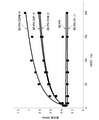
BC-PIV/S2PM、BC-PIV/S2P、及びBC-PIV/S1Mは、添加濃度依存的に、吸光度が上昇したが、BC-PIV/S1及びBC-PIVは、結合が認められず(図5A参照。)、BC-PIV/S1粒子上にS1タンパク質が存在していないことが確認された。
結合能力は、BC-PIV/S2PとBC-PIV/S1Mでは、ほぼ同等の結合力を持っていたが、BC-PIV/S2PMは、それらよりも高い結合価を示し、BC-PIV/S2PMより多くのSpikeタンパク質が取込まれていると考えられる。これは、Transmembrane Cytoplasmic TailをPIV2F TM/CTに置換することにより、BC-PIV粒子にSpikeタンパク質がより多く取込まれるためと推察された。この結果は、図3の粒子ウエスタンブロット(BC-PIV/S2PとBC-PIV/S2PM)の結果と符合する。
各BC-PIV粒子上にタンパク質が存在し、Spikeタンパク質のレセプターであるhACE2タンパク質と結合できるかを確認した。1×10⁶ TCID50/wellの各BC-PIVを、96well ELISA plateに固定した。Human ACE2(hACE2)-Fc tag(Acro Bosystems. Cat.AC2-H5257)5ng、10ng、25ng、50ng、75ng、100ng、150ng、200ngを添加し、HRP-ProteinA (Biolegend Cat.689202)とインキュベート後、TMB試薬で反応させ、450nmの吸光度を計測した。なお試験は、各n=3で実施した。
BC-PIV/S2PM、BC-PIV/S2P、及びBC-PIV/S1Mは、添加濃度依存的に、吸光度が上昇したが、BC-PIV/S1及びBC-PIVは、結合が認められず(図5A参照。)、BC-PIV/S1粒子上にS1タンパク質が存在していないことが確認された。
結合能力は、BC-PIV/S2PとBC-PIV/S1Mでは、ほぼ同等の結合力を持っていたが、BC-PIV/S2PMは、それらよりも高い結合価を示し、BC-PIV/S2PMより多くのSpikeタンパク質が取込まれていると考えられる。これは、Transmembrane Cytoplasmic TailをPIV2F TM/CTに置換することにより、BC-PIV粒子にSpikeタンパク質がより多く取込まれるためと推察された。この結果は、図3の粒子ウエスタンブロット(BC-PIV/S2PとBC-PIV/S2PM)の結果と符合する。
図5Bは、0.05%のβ―プロピオラクトンで不活化したVLP.BC-PIVとhACE2タンパク質との結合を確認した図である。不活化したVLP.BC-PIV/S1M、VLP.BC-PIV/S2P、VLP.BC-PIV/S2PMの順にhACE2タンパク質との結合量は多く、BC-PIVと同様の結果となり、不活化したVLP.BC-PIVを利用しても、SARS-CoV-2ワクチンになり得る可能性が示唆された。
[実施例6]ウイルスの形態と赤血球凝集活性
電子顕微鏡によりBC-PIV/S2PMの形態を確認した。
通常電顕では、BC-PIV/S2PMまたはBC-PIV感染細胞を4%PFA+2.5% Glutaraldehyde(GA)で固定し、更に1%OsO4で固定後、アルコールで脱水し、エポキシ樹脂で包埋した。超薄切片を作製して、電子顕微鏡で観察を行った。また、免疫電顕は、感染細胞BC-PIV/S2PM、又はBC-PIV感染細胞を、2%PFA+0.1%GA混合液で固定し、更に4%PFAで固定を行った。
その後、抗SARS-CoV-2 S1 antibody (Sino Biological Inc. Cat.40591-T62)と抗ウサギビオチン化抗体(Vector Laboratories)で染色後、DAB反応を行い1%OsO4で後固定した。アルコールで脱水し、エポキシ樹脂で包埋した。超薄切片を作製して電子顕微鏡で観察を行った。
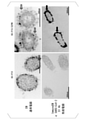
通常電顕像では、BC-PIV/S2PMのエンベロープ外側にSpikeタンパク質(図6上段 右 矢印参照。)と想定される大きな突起が認められたが、BC-PIVではそのような突起は認められなかった(図6上段 左参照。)。抗SARS-CoV-2 S1抗体を用いた免疫電顕では、BC-PIV/S2PMに抗S1抗体の陽性像(図6下段 右 矢印参照。)が認められ、エンベロープはSpikeタンパク質に覆われていることが視覚的に確認できた。
電子顕微鏡によりBC-PIV/S2PMの形態を確認した。
通常電顕では、BC-PIV/S2PMまたはBC-PIV感染細胞を4%PFA+2.5% Glutaraldehyde(GA)で固定し、更に1%OsO4で固定後、アルコールで脱水し、エポキシ樹脂で包埋した。超薄切片を作製して、電子顕微鏡で観察を行った。また、免疫電顕は、感染細胞BC-PIV/S2PM、又はBC-PIV感染細胞を、2%PFA+0.1%GA混合液で固定し、更に4%PFAで固定を行った。
その後、抗SARS-CoV-2 S1 antibody (Sino Biological Inc. Cat.40591-T62)と抗ウサギビオチン化抗体(Vector Laboratories)で染色後、DAB反応を行い1%OsO4で後固定した。アルコールで脱水し、エポキシ樹脂で包埋した。超薄切片を作製して電子顕微鏡で観察を行った。
通常電顕像では、BC-PIV/S2PMのエンベロープ外側にSpikeタンパク質(図6上段 右 矢印参照。)と想定される大きな突起が認められたが、BC-PIVではそのような突起は認められなかった(図6上段 左参照。)。抗SARS-CoV-2 S1抗体を用いた免疫電顕では、BC-PIV/S2PMに抗S1抗体の陽性像(図6下段 右 矢印参照。)が認められ、エンベロープはSpikeタンパク質に覆われていることが視覚的に確認できた。
次にSpikeタンパク質によるBC-PIVの特性変化の有無を確認するため、特性の1つである「赤血球凝集活性」を調べた。同じ粒子数のBC-PIV又はBC-PIV/S2PMウイルス溶液を、冷PBSで2倍段階希釈液し、96well U bottom plateに、2%モルモット赤血球と等量混ぜ赤血球凝集活性を調べた。試験はn=2で実施した。BC-PIVでは、少なくとも64HAUの赤血球凝集値が認められたが、BC-PIV/S2PMでは、赤血球凝集活性が認められなかった。BC-PIVは、HN膜タンパク質による赤血球凝集活性を持ち、通常当該特性を無くすことは困難であるところ、今回のBC-PIV/S2PMウイルスが、赤血球凝集活性特性を喪失したことは、驚くべき結果であった。当該特性の喪失は、BC-PIV粒子上のHNタンパク質がより大きな分子量で嵩高なSpikeタンパク質に覆われ、HNタンパク質上で赤血球が凝集を起こせなかったことによるものと推察された。BC-PIV/S1Mに比べてより嵩高なSpikeタンパク質を保持するBC-PIV/S2PMの方がhACE2との結合量が多くなるという図5の結果を支持するものである。なお、BC-PIV/S2PMのHNタンパク質は、嵩高なSpikeタンパク質と共存していると考えられるが、Spikeタンパク質には2P変異が導入されており、図2と図4で示すように、Spikeタンパク質依存的な細胞融合は認められていないことから、細胞への感染はBC-PIV由来のHNタンパク質とFタンパク質に依存しており両タンパク質の機能は維持されている。
[実施例8]マウスでの投与法(経鼻又は筋肉)の確認
ワクチン投与経路により誘導される抗体の抗体価の差異を調べるため、マウスに経鼻投与又は筋肉内投与し、誘導される抗体の抗体価を評価した。5-7週齢BALB/cマウスに、2×107 TCID50のBC-PIV/S2PM又はBC-PIVを1回経鼻又は筋肉内に投与した。試験はn=3で実施した。投与後33日目にマウスから血液を採取し、遠心分離後、血清を回収し非働化処理を行い、ELISAで抗体価を確認した。96well ELISA plateにRBDタンパク質(SinoBiological Inc. Cat.40592-V02H)を一晩4℃で固相化し、ブロッキング処理後、希釈した血清と反応させ、HRP結合抗マウスIgG抗体(Biolegend Cat.405306)で処理し、TMB試薬と反応させて450nmの吸光度を計測した。
経鼻投与、筋肉内投与の場合でも、BC-PIVよりBC-PIV/S2PMは共にRBDタンパク質に対するIgGの抗体価が高かった。また、経鼻投与、筋肉内投与による吸光度はほぼ同等値となったことから、投与経路による抗体誘導価に差異はなかった(図8参照。)。これらのことから、BC-PIVを用いたワクチンは、経鼻投与でも筋肉内投与と遜色なく、十分な抗体価を有する抗体を誘導することが示された。
ワクチン投与経路により誘導される抗体の抗体価の差異を調べるため、マウスに経鼻投与又は筋肉内投与し、誘導される抗体の抗体価を評価した。5-7週齢BALB/cマウスに、2×107 TCID50のBC-PIV/S2PM又はBC-PIVを1回経鼻又は筋肉内に投与した。試験はn=3で実施した。投与後33日目にマウスから血液を採取し、遠心分離後、血清を回収し非働化処理を行い、ELISAで抗体価を確認した。96well ELISA plateにRBDタンパク質(SinoBiological Inc. Cat.40592-V02H)を一晩4℃で固相化し、ブロッキング処理後、希釈した血清と反応させ、HRP結合抗マウスIgG抗体(Biolegend Cat.405306)で処理し、TMB試薬と反応させて450nmの吸光度を計測した。
経鼻投与、筋肉内投与の場合でも、BC-PIVよりBC-PIV/S2PMは共にRBDタンパク質に対するIgGの抗体価が高かった。また、経鼻投与、筋肉内投与による吸光度はほぼ同等値となったことから、投与経路による抗体誘導価に差異はなかった(図8参照。)。これらのことから、BC-PIVを用いたワクチンは、経鼻投与でも筋肉内投与と遜色なく、十分な抗体価を有する抗体を誘導することが示された。
[実施例9] S1及びRBDに対する抗体誘導
マウスに(1)~(4)の4種類のBC-PIVワクチンを経鼻投与した後、S1及びRBDに対する血清中のIgG抗体価を評価した。5-7週齢BALB/cマウスに2×107 TCID50の(1):BC-PIV/S1、(2):BC-PIV/S1M、(3):BC-PIV/S2P、(4):BC-PIV/S2PM、BC-PIV、又はPBSを経鼻投与した。初回投与後33日目にマウスから血液を採取し遠心分離後、血清を回収し非働化処理を行い、ELISAで抗体価を確認した。96well ELISA plateにS1タンパク質(SinoBiological Inc. Cat.40591-V02H)又はRBDタンパク質(SinoBiological Inc. Cat.40592-V02H)を固相化し、ブロッキング後、希釈した血清と反応させ、さらにHRP結合抗マウスIgG抗体(Biolegend Cat.405306)処理し、TMB試薬と反応させて450nmの吸光度を計測した。この試験はn=6で実施した。
全てのワクチン投与群でS1タンパク質及びRBDタンパク質に対する高い抗体誘導を認めた(図9参照)。BC-PIVは、マウスでpoor-permissiveであるため、転写・翻訳効率が低いことが知られているが、分泌型BC-PIV/S1は、膜停留型BC-PIV/S1MとS1タンパク質に対してほぼ同等の抗体価の誘導を示し、RBDタンパク質に対して若干高い抗体価の誘導を示したが、全長Spikeタンパク質のワクチン群には抗体価は及ばなかったことから、SARS-COV-2ワクチン抗原として、S1領域のタンパク質よりも全長のSpikeタンパク質を用いた方が抗体誘導には効果があった。全長Spikeタンパク質を搭載したBC-PIV/S2PMが、ワクチンに最も適していることが確認された。
マウスに(1)~(4)の4種類のBC-PIVワクチンを経鼻投与した後、S1及びRBDに対する血清中のIgG抗体価を評価した。5-7週齢BALB/cマウスに2×107 TCID50の(1):BC-PIV/S1、(2):BC-PIV/S1M、(3):BC-PIV/S2P、(4):BC-PIV/S2PM、BC-PIV、又はPBSを経鼻投与した。初回投与後33日目にマウスから血液を採取し遠心分離後、血清を回収し非働化処理を行い、ELISAで抗体価を確認した。96well ELISA plateにS1タンパク質(SinoBiological Inc. Cat.40591-V02H)又はRBDタンパク質(SinoBiological Inc. Cat.40592-V02H)を固相化し、ブロッキング後、希釈した血清と反応させ、さらにHRP結合抗マウスIgG抗体(Biolegend Cat.405306)処理し、TMB試薬と反応させて450nmの吸光度を計測した。この試験はn=6で実施した。
全てのワクチン投与群でS1タンパク質及びRBDタンパク質に対する高い抗体誘導を認めた(図9参照)。BC-PIVは、マウスでpoor-permissiveであるため、転写・翻訳効率が低いことが知られているが、分泌型BC-PIV/S1は、膜停留型BC-PIV/S1MとS1タンパク質に対してほぼ同等の抗体価の誘導を示し、RBDタンパク質に対して若干高い抗体価の誘導を示したが、全長Spikeタンパク質のワクチン群には抗体価は及ばなかったことから、SARS-COV-2ワクチン抗原として、S1領域のタンパク質よりも全長のSpikeタンパク質を用いた方が抗体誘導には効果があった。全長Spikeタンパク質を搭載したBC-PIV/S2PMが、ワクチンに最も適していることが確認された。
[実施例10]マウス血清でのSpike/RBDタンパク質に対するIgG・IgA抗体誘導評価
マウスにBC-PIV/S2PMワクチンを、1回又は2回経鼻投与したマウスでのS1及びRBDに対する血清中のIgG抗体価と鼻腔内のIgA抗体価を評価した。5-7週齢BALB/cマウスに2×107 TCID50のBC-PIV/S2PM又はBC-PIVを経鼻投与した。2回の投与は4週間後に行った。初回投与後35日目に、マウスから血液を採取し遠心分離後、血清を回収し非働化処理を行い、また鼻腔洗浄液は、PBSで回収し、ELISAで抗体価を確認した。96well ELISA plateに、S1タンパク質(SinoBiological Inc. Cat.40591-V02H)、又はRBDタンパク質(SinoBiological Inc. Cat.40592-V02H)を固相化し、ブロッキング後、希釈した血清又は希釈した鼻腔洗浄液を反応させ、さらにHRP結合抗マウスIgG抗体(Biolegend Cat.405306)又はHRP結合抗マウスIgA抗体(Southern Biotech Cat.1040-05)で処理し、TMB試薬と反応させて450nmの吸光度を計測した。この試験はn=5-6で実施した。
血清のS1及びRBDに対するIgG抗体価は、1回投与群で上昇していたが、2回投与群で更に抗体価が上昇した(図10参照。)。鼻腔洗浄液のS1及びRBDに対するIgA抗体価は1回投与群で上昇していた。2回投与群では、2回投与1週間後に更に高いIgAの抗体価を認められた。IgAの半減期は短いことが知られているが1回投与の5週間後も鼻腔内にS1またはRBDに対するSpikeタンパク質特異的なIgAの存在が確認できた(図10参照。)。
マウスにBC-PIV/S2PMワクチンを、1回又は2回経鼻投与したマウスでのS1及びRBDに対する血清中のIgG抗体価と鼻腔内のIgA抗体価を評価した。5-7週齢BALB/cマウスに2×107 TCID50のBC-PIV/S2PM又はBC-PIVを経鼻投与した。2回の投与は4週間後に行った。初回投与後35日目に、マウスから血液を採取し遠心分離後、血清を回収し非働化処理を行い、また鼻腔洗浄液は、PBSで回収し、ELISAで抗体価を確認した。96well ELISA plateに、S1タンパク質(SinoBiological Inc. Cat.40591-V02H)、又はRBDタンパク質(SinoBiological Inc. Cat.40592-V02H)を固相化し、ブロッキング後、希釈した血清又は希釈した鼻腔洗浄液を反応させ、さらにHRP結合抗マウスIgG抗体(Biolegend Cat.405306)又はHRP結合抗マウスIgA抗体(Southern Biotech Cat.1040-05)で処理し、TMB試薬と反応させて450nmの吸光度を計測した。この試験はn=5-6で実施した。
血清のS1及びRBDに対するIgG抗体価は、1回投与群で上昇していたが、2回投与群で更に抗体価が上昇した(図10参照。)。鼻腔洗浄液のS1及びRBDに対するIgA抗体価は1回投与群で上昇していた。2回投与群では、2回投与1週間後に更に高いIgAの抗体価を認められた。IgAの半減期は短いことが知られているが1回投与の5週間後も鼻腔内にS1またはRBDに対するSpikeタンパク質特異的なIgAの存在が確認できた(図10参照。)。
[実施例11]中和抗体の確認
マウスに2回のワクチン投与を行い、中和抗体の誘導を市販のキット用いて調べた。
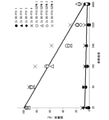
5-7週齢BALB/cマウスに、BC-PIV/S2PM又はBC-PIVを2×107 TCID50を4週間間隔で2回経鼻投与した。この試験はn=4で実施した。最終投与後7日目、マウスから血液を採取し遠心分離後、血清を回収し非働化処理後、SARS-CoV-2 Surrogate Virus Neutralization Test Kit (cPass kit)(GenScript Cat.L00847)を用いて、中和抗体を計測した。各血清を20、60、180、540、1620、4860倍希釈し、HRP結合RBDタンパク質と37℃ 30分間保温し、hACE2タンパク質を固相化したプレートに混合液を入れ、37℃ 15分間保温し、洗浄後、TMBで発光させて450nmの吸光度を計測し、得られた数値より阻害率(1-(サンプルOD/ネガティブコントロールOD))×100%)を計算した。(注:ネガティブコントロールは、kitに付属している非特異的抗体の20倍希釈での値である。)マニュアルによれば、20% 阻害率以上の場合、中和抗体活性を有するとしており、BC-PIV/S2PM群では、540倍希釈ですべての個体で20%を超えており、また1620倍希釈でも、20%阻害率を超えている個体が確認できた(図11参照)。しかし、BC-PIV群では、20倍希釈でも全ての個体で阻害率20%以下のため中和抗体が確認できなかった。BC-PIV/S2PMの2回経鼻投与は、高い中和抗体を誘導することが可能であった。
マウスに2回のワクチン投与を行い、中和抗体の誘導を市販のキット用いて調べた。
5-7週齢BALB/cマウスに、BC-PIV/S2PM又はBC-PIVを2×107 TCID50を4週間間隔で2回経鼻投与した。この試験はn=4で実施した。最終投与後7日目、マウスから血液を採取し遠心分離後、血清を回収し非働化処理後、SARS-CoV-2 Surrogate Virus Neutralization Test Kit (cPass kit)(GenScript Cat.L00847)を用いて、中和抗体を計測した。各血清を20、60、180、540、1620、4860倍希釈し、HRP結合RBDタンパク質と37℃ 30分間保温し、hACE2タンパク質を固相化したプレートに混合液を入れ、37℃ 15分間保温し、洗浄後、TMBで発光させて450nmの吸光度を計測し、得られた数値より阻害率(1-(サンプルOD/ネガティブコントロールOD))×100%)を計算した。(注:ネガティブコントロールは、kitに付属している非特異的抗体の20倍希釈での値である。)マニュアルによれば、20% 阻害率以上の場合、中和抗体活性を有するとしており、BC-PIV/S2PM群では、540倍希釈ですべての個体で20%を超えており、また1620倍希釈でも、20%阻害率を超えている個体が確認できた(図11参照)。しかし、BC-PIV群では、20倍希釈でも全ての個体で阻害率20%以下のため中和抗体が確認できなかった。BC-PIV/S2PMの2回経鼻投与は、高い中和抗体を誘導することが可能であった。
[実施例12]ハムスターを用いた感染防御試験の確認
動物での感染防御試験を行うため、BC-PIV及びSARS-CoV-2に感受性を有するハムスターを用いて、ワクチン効果の検討を行った。
4週齢シリアンハムスターに、BC-PIV又はBC-PIV/S2PMを、1回経鼻投与した。さらにBC-PIV/S2PMを、9週間間隔で2回経鼻投与した群を作製した。1回目投与より、それぞれ10週(1回投与群)、9週(2回投与群)の尻尾より採血した血清を用いて、cPass kitにより中和抗体が誘導されていることを確認した。試験はn=4で実施した。
中和抗体の評価は、希釈倍率を30倍にした以外は、全て実施例11と同じ方法で行った。BC-PIV/S2PM投与群では1回投与、2回投与共にポジティブコントロール(注:kit付属の抗RBD特異的陽性抗体の20倍希釈での値)と同等の高い阻害率が得られた(図12参照。)。一方、BC-PIV投与群では、阻害率が20%以下だったため、中和抗体の存在は確認できなかった。
動物での感染防御試験を行うため、BC-PIV及びSARS-CoV-2に感受性を有するハムスターを用いて、ワクチン効果の検討を行った。
4週齢シリアンハムスターに、BC-PIV又はBC-PIV/S2PMを、1回経鼻投与した。さらにBC-PIV/S2PMを、9週間間隔で2回経鼻投与した群を作製した。1回目投与より、それぞれ10週(1回投与群)、9週(2回投与群)の尻尾より採血した血清を用いて、cPass kitにより中和抗体が誘導されていることを確認した。試験はn=4で実施した。
中和抗体の評価は、希釈倍率を30倍にした以外は、全て実施例11と同じ方法で行った。BC-PIV/S2PM投与群では1回投与、2回投与共にポジティブコントロール(注:kit付属の抗RBD特異的陽性抗体の20倍希釈での値)と同等の高い阻害率が得られた(図12参照。)。一方、BC-PIV投与群では、阻害率が20%以下だったため、中和抗体の存在は確認できなかった。
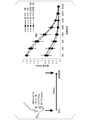
中和抗体評価を行った同一のハムスターを用い、1回目ワクチン投与11週間後に、103PFUのSARS-CoV-2を経鼻経由で感染させ、3日後に肺組織及び鼻甲介組織を回収した。組織1g当たりのSARS-CoV-2ウイルス数を、TMPRSS2遺伝子組換えVeroE6細胞を用いたプラークアッセイ法によりSARS-CoV-2数を評価した。肺組織(g当たり)BC-PIV投与群では、108以上のSARS-CoV-2粒子が認められたが、1回及び2回BC-PIV/S2PM投与群では、全くSARS-CoV-2粒子が認められなかった。BC-PIV/S2PM投与により、高い中和抗体が誘導され、ウイルス増殖が強く阻害された(図13参照。)。
また、鼻甲介組織(g当たり)BC-PIV投与群では、108個のSARS-CoV-2粒子が認められたが、1回投与群では、106-107にウイルス数が減少しており、また2回投与群では、2匹はウイルスが認められず、残りの2匹でもウイルス数が激減していた(図13参照。)。これらの結果より、肺でのウイルス増殖阻害効果は、1回投与でも長期にわたって持続する。鼻甲介では、IgAが主体と考えられる感染防御効果が確認できたが、IgAの特性によりIgG抗体と比べて長期間の感染防御を持続できないことも明らかになった(図13参照。)。
また、鼻甲介組織(g当たり)BC-PIV投与群では、108個のSARS-CoV-2粒子が認められたが、1回投与群では、106-107にウイルス数が減少しており、また2回投与群では、2匹はウイルスが認められず、残りの2匹でもウイルス数が激減していた(図13参照。)。これらの結果より、肺でのウイルス増殖阻害効果は、1回投与でも長期にわたって持続する。鼻甲介では、IgAが主体と考えられる感染防御効果が確認できたが、IgAの特性によりIgG抗体と比べて長期間の感染防御を持続できないことも明らかになった(図13参照。)。
[実施例13]変異株SARS-CoV-2(イギリス型(alpha):N501Y又はN501Y/D614G、南アフリカ型(beta):E484K/N501Y又はE484K/N501Y/D614G、日本型:E484K又はE484K/D614G、インド型(kappa):L452R/E484Q又はL452R/E484Q/D614G、に対するBC-PIVワクチンの構築
SARS-CoV-2 Wuhan株が世界中に広がり、その後、多数の変異株が報告されている。変異株に対して、Wuhan株由来Spikeタンパク質を用いたワクチンによる効果の低下が予想される。
そのため、変異株(イギリス型(alpha):N501Y又はN501Y/D614G、南アフリカ型(beta):E484K/N501Y又はE484K/N501Y/D614G、日本型:E484K又はE484K/D614G、インド型(kappa):L452R/E484Q又はL452R/E484Q/D614G)に対応し2P変異を保持するSpike遺伝子を導入したBC-PIVを作製した。
イギリス型(alpha)N501Y/D614GのSpike遺伝子の塩基配列を配列番号3に示し、南アフリカ型(beta)E484K/N501Y/D614GのSpike遺伝子の塩基配列を配列番号4に示し、日本型E484K/D614GのSpike遺伝子の塩基配列を配列番号5に示し、インド型(kappa)L452R/E484Q/D614GのSpike遺伝子の塩基配列を配列番号6に示す。
そのため、変異株(イギリス型(alpha):N501Y又はN501Y/D614G、南アフリカ型(beta):E484K/N501Y又はE484K/N501Y/D614G、日本型:E484K又はE484K/D614G、インド型(kappa):L452R/E484Q又はL452R/E484Q/D614G)に対応し2P変異を保持するSpike遺伝子を導入したBC-PIVを作製した。
イギリス型(alpha)N501Y/D614GのSpike遺伝子の塩基配列を配列番号3に示し、南アフリカ型(beta)E484K/N501Y/D614GのSpike遺伝子の塩基配列を配列番号4に示し、日本型E484K/D614GのSpike遺伝子の塩基配列を配列番号5に示し、インド型(kappa)L452R/E484Q/D614GのSpike遺伝子の塩基配列を配列番号6に示す。
各変異部位を図14に示した。これらウイルスを、実施例3と同様のリバースジェネテクス法によりウイルスを回収した。回収したウイルス粒子を用いて、実施例3と同様の方法で行ったウエスタンブロットを図15A及びBに示す。すべてのウイルスの感染細胞でSpikeタンパク質は発現しており、またBC-PIV上に変異型Spikeタンパク質が認められた。
当該変異型ウイルスに対するBC-PIVは、これまでのWuhan型SARS-CoV-2に対するBC-PIVの高いワクチン効果から、変異株にも対しても効果を有するものと考えられる。
当該変異型ウイルスに対するBC-PIVは、これまでのWuhan型SARS-CoV-2に対するBC-PIVの高いワクチン効果から、変異株にも対しても効果を有するものと考えられる。
[実施例14]変異株SARS-CoV-2(インド型(delta):L452R/T478K又はL452R/T478K/D614G、インド型(delta plus):K417N/L452R/T478K又はK417N/L452R/T478K/D614G、南米型(lambda):L452Q/F490S又はL452Q/F490S/D614G)、に対するBC-PIVワクチンの構築
更に変異株(インド型(delta)L452R/T478K(CTC/ACA→cgg/aaa)又はL452R/T478K/D614G(CTC/ACA/GAT→cgg/aaa/ggt)、インド型(delta plus)K417N/L452R/T478K(AAG/CTC/ACA→aac/cgg/aaa)又はK417N/L452R/T478K/D614G(AAG/CTC/ACA/GAT→aac/cgg/aaa/ggt)、南米型(lambda):L452Q/F490S(CTC/TTT→cag/tct)又はL452Q/F490S/D614G(CTC/TTT/GAT→cag/tct/ggt))に対応した2P変異を保持するSpike遺伝子を導入したBC-PIVを作製した。
インド型(delta)L452R/T478K/D614GのSpike遺伝子の塩基配列を配列番号7に示し、インド型(delta plus)K417N/L452R/T478K/D614GのSpike遺伝子の塩基配列を配列番号8、南米型(lambda):L452Q/F490S/D614GのSpike遺伝子の塩基配列を配列番号12に示す。
各変異部位を図16に示した。インド型変異型ウイルスに対するBC-PIVは、これまでのWuhan型SARS-CoV-2に対するBC-PIVの高いワクチン効果から、今後出現が予想される変異株にも対しても効果を有するものと考えられる。
インド型(delta)L452R/T478K/D614GのSpike遺伝子の塩基配列を配列番号7に示し、インド型(delta plus)K417N/L452R/T478K/D614GのSpike遺伝子の塩基配列を配列番号8、南米型(lambda):L452Q/F490S/D614GのSpike遺伝子の塩基配列を配列番号12に示す。
各変異部位を図16に示した。インド型変異型ウイルスに対するBC-PIVは、これまでのWuhan型SARS-CoV-2に対するBC-PIVの高いワクチン効果から、今後出現が予想される変異株にも対しても効果を有するものと考えられる。
[実施例15] 今後予想される変異株SARS-CoV-2(イギリス型+インド型(alpha+kappa):L452R/E484Q/N501Y又はL452R/E484Q/N501Y/D614G、イギリス型+インド型(alpha+delta):L452R/T478K/N501Y又はL452R/T478K/N501Y/D614G、イギリス型+インド型(alpha+delta plus):K417N/L452R/T478K/N501Y又はK417N/L452R/T478K/N501Y/D614G、に対するBC-PIVワクチンの構築
更に今後予想される変異株(イギリス型+インド型(alpha+kappa):L452R/E484Q/N501Y(CTC/GAG/AAT→cgg/cag/tat)又はL452R/E484Q/N501Y/D614G(CTC/GAG/AAT/GAT→cgg/cag/tat/ggt)、イギリス型+インド型(alpha+delta):L452R/T478K/N501Y(CTC/ACA/AAT→cgg/aaa/tat)又はL452R/T478K/N501Y/D614G(CTC/ACA/AAT/GAT→cgg/aaa/tat/ggt)、イギリス型+インド型(alpha+delta plus):K417N/L452R/T478K/N501Y(AAG/CTC/ACA/AAT→aac/cgg/aaa/tat)又はK417N/L452R/T478K/N501Y/D614G(AAG/CTC/ACA/AAT/GAT→aac/cgg/aaa/tat/ggt))に対応した2P変異を保持するSpike遺伝子を導入したBC-PIVを作製した。
イギリス型+インド型(alpha+kappa)L452R/E484Q/N501Y/D614GのSpike遺伝子の塩基配列を配列番号9に示し、イギリス型+インド型(alpha+delta)L452R/T478K/N501Y/D614GのSpike遺伝子の塩基配列を配列番号10に示し、イギリス型+インド型(alpha+delta plus)K417N/L452R/T478K/N501Y/D614GのSpike遺伝子の塩基配列を配列番号11に示す。
各変異部位を図17に示した。ウイルスは実施例3のリバースジェネティックス法を用いて作製した。今後予想される変異型ウイルスに対するBC-PIVはこれまでのWuhan型SARS-CoV-2に対するBC-PIVの高いワクチン効果から、今後出現が予想される変異株にも対しても効果を有するものと考えられる。
イギリス型+インド型(alpha+kappa)L452R/E484Q/N501Y/D614GのSpike遺伝子の塩基配列を配列番号9に示し、イギリス型+インド型(alpha+delta)L452R/T478K/N501Y/D614GのSpike遺伝子の塩基配列を配列番号10に示し、イギリス型+インド型(alpha+delta plus)K417N/L452R/T478K/N501Y/D614GのSpike遺伝子の塩基配列を配列番号11に示す。
各変異部位を図17に示した。ウイルスは実施例3のリバースジェネティックス法を用いて作製した。今後予想される変異型ウイルスに対するBC-PIVはこれまでのWuhan型SARS-CoV-2に対するBC-PIVの高いワクチン効果から、今後出現が予想される変異株にも対しても効果を有するものと考えられる。
本発明によれば、新しいモダリティであるSARS-CoV-2ワクチン提供することができる。
Claims (8)
- 以下の(a)~(c)のいずれか一つのアミノ酸配列を含む配列からなり、且つ誘導される中和抗体が、SARS-CoV-2の受容体結合ドメイン(RBD)とヒトアンジオテンシン変換酵素2(hACE2)の結合を阻害するタンパク質をウイルス粒子エンベロープ上に提示するウイルスベクターを有効成分として含有する、ワクチン。
(a)配列番号1で表されるアミノ酸配列、
(b)配列番号1で表されるアミノ酸配列において、1~数個のアミノ酸が欠失、挿入、置換若しくは付加されたアミノ酸配列、
(c)配列番号1で表されるアミノ酸配列において、80%以上の同一性を有するアミノ酸配列 - 配列番号1で表されるアミノ酸配列において、D614G変異を有する、請求項1に記載のワクチン。
- 配列番号1で表されるアミノ酸配列において、K417N、L452R又はL452Q、T478K、E484K、E484Q、F490S、及びN501Yからなる群から選ばれる少なくとも1つの変異を有する、請求項1又は2に記載のワクチン。
- 前記タンパク質は、そのtransmembrane(TM)配列及びcytoplasmic tail(CT)配列が、ヒトパラインフルエンザ2型ウイルスのTM及びCT配列に置換されている、請求項1~3のいずれか一項に記載のワクチン。
- 前記ウイルスベクターは、ヒトパラインフルエンザ2型ウイルスである、請求項1~4のいずれか一項に記載のワクチン。
- ウイルスベクターとしての前記ヒトパラインフルエンザ2型ウイルスは、ゲノムよりF遺伝子を欠失した非増殖型である、請求項5に記載のワクチン。
- ウイルスベクターとしての前記ヒトパラインフルエンザ2型ウイルスは、ゲノムが不活化している、請求項5又は6に記載のワクチン。
- 経鼻噴霧投与用である、請求項1~7のいずれか一項に記載のワクチン。
Priority Applications (1)
| Application Number | Priority Date | Filing Date | Title |
|---|---|---|---|
| JP2022536408A JP7825228B2 (ja) | 2020-07-13 | 2021-07-13 | SARS-CoV-2ワクチン |
Applications Claiming Priority (4)
| Application Number | Priority Date | Filing Date | Title |
|---|---|---|---|
| US202063050880P | 2020-07-13 | 2020-07-13 | |
| US63/050,880 | 2020-07-13 | ||
| US202163153385P | 2021-02-25 | 2021-02-25 | |
| US63/153,385 | 2021-02-25 |
Publications (1)
| Publication Number | Publication Date |
|---|---|
| WO2022014620A1 true WO2022014620A1 (ja) | 2022-01-20 |
Family
ID=79554674
Family Applications (1)
| Application Number | Title | Priority Date | Filing Date |
|---|---|---|---|
| PCT/JP2021/026368 Ceased WO2022014620A1 (ja) | 2020-07-13 | 2021-07-13 | SARS-CoV-2ワクチン |
Country Status (2)
| Country | Link |
|---|---|
| JP (1) | JP7825228B2 (ja) |
| WO (1) | WO2022014620A1 (ja) |
Citations (1)
| Publication number | Priority date | Publication date | Assignee | Title |
|---|---|---|---|---|
| WO2016199936A1 (ja) * | 2015-06-12 | 2016-12-15 | 国立大学法人三重大学 | ヒトパラインフルエンザ2型ウイルスベクター及びワクチン |
-
2021
- 2021-07-13 JP JP2022536408A patent/JP7825228B2/ja active Active
- 2021-07-13 WO PCT/JP2021/026368 patent/WO2022014620A1/ja not_active Ceased
Patent Citations (1)
| Publication number | Priority date | Publication date | Assignee | Title |
|---|---|---|---|---|
| WO2016199936A1 (ja) * | 2015-06-12 | 2016-12-15 | 国立大学法人三重大学 | ヒトパラインフルエンザ2型ウイルスベクター及びワクチン |
Non-Patent Citations (6)
| Title |
|---|
| ANONYMOUS: "Notice for development of starting new coronavirus vaccine development", BIOCOMO INCORPORATION, 19 March 2020 (2020-03-19), XP055898668, Retrieved from the Internet <URL:http://www.biocomo.jp/20200319.pdf> * |
| CASE JAMES BRETT, ROTHLAUF PAUL W., CHEN RITA E., KAFAI NATASHA M., FOX JULIE M., SHRIHARI SWATHI, MCCUNE BROC T., HARVEY IAN B., : "Replication-competent vesicular stomatitis virus vaccine vector protects against SARS-CoV-2-mediated pathogenesis", BIORXIV, 10 July 2020 (2020-07-10), pages 1 - 29, XP055828557, Retrieved from the Internet <URL:https://www.biorxiv.org/content/10.1101/2020.07.09.196386v1.full.pdf> [retrieved on 20210728], DOI: 10.1101/2020.07.09.196386 * |
| CASE JAMES BRETT, ROTHLAUF PAUL W., CHEN RITA E., LIU ZHUOMING, ZHAO HAIYAN, KIM ARTHUR S., BLOYET LOUIS-MARIE, ZENG QIRU, TAHAN S: "Neutralizing Antibody and Soluble ACE2 Inhibition of a Replication-Competent VSV-SARS-CoV-2 and a Clinical Isolate of SARS-CoV-2", CELL HOST & MICROBE, ELSEVIER, NL, vol. 28, no. 3, 1 September 2020 (2020-09-01), NL , pages 475 - 485.e5, XP055865245, ISSN: 1931-3128, DOI: 10.1016/j.chom.2020.06.021 * |
| JESPER PALLESEN, NIANSHUANG WANG, KIZZMEKIA S. CORBETT, DANIEL WRAPP, ROBERT N. KIRCHDOERFER, HANNAH L. TURNER, CHRISTOPHER A. COT: "Immunogenicity and structures of a rationally designed prefusion MERS-CoV spike antigen", PROCEEDINGS OF THE NATIONAL ACADEMY OF SCIENCES, NATIONAL ACADEMY OF SCIENCES, vol. 114, no. 35, 29 August 2017 (2017-08-29), pages E7348 - E7357, XP055692891, ISSN: 0027-8424, DOI: 10.1073/pnas.1707304114 * |
| KORBER B, FISCHER WM, GNANAKARAN S, YOON H, THEILER J, ABFALTERER W, FOLEY B, GIORGI EE, BHATTACHARYA T, PARKER MD, PARTRIDGE DG, : "Spike mutation pipeline reveals the emergence of a more transmissible form of SARS-CoV-2", BIORXIV, 30 April 2020 (2020-04-30), XP055898667, Retrieved from the Internet <URL:https://www.biorxiv.org/content/10.1101/2020.04.29.069054v1.full.pdf> [retrieved on 20220308], DOI: 10.1101/2020.04.29.069054 * |
| VAN DOREMALEN NEELTJE, LAMBE TERESA, SPENCER ALEXANDRA, BELIJ-RAMMERSTORFER SANDRA, PURUSHOTHAM JYOTHI N., PORT JULIA R., AVANZATO: "ChAdOx1 nCoV-19 vaccination prevents SARS-CoV-2 pneumonia in rhesus macaques", BIORXIV, 13 May 2020 (2020-05-13), pages 1 - 23, XP055774760, Retrieved from the Internet <URL:https://www.biorxiv.org/content/10.1101/2020.05.13.093195v1.full.pdf> [retrieved on 20210210], DOI: 10.1101/2020.05.13.093195 * |
Also Published As
| Publication number | Publication date |
|---|---|
| JP7825228B2 (ja) | 2026-03-06 |
| JPWO2022014620A1 (ja) | 2022-01-20 |
Similar Documents
| Publication | Publication Date | Title |
|---|---|---|
| TWI872326B (zh) | 對抗廣譜冠狀病毒變種的信使rna疫苗 | |
| Smith et al. | Respiratory syncytial virus fusion glycoprotein expressed in insect cells form protein nanoparticles that induce protective immunity in cotton rats | |
| US20230190917A1 (en) | Viral vaccine vector for immunization against a betacoronavirus | |
| US20230321217A1 (en) | Compositions comprising complexes displaying antigens and methods of using the compositions | |
| TW202222822A (zh) | 基於SARS-CoV-2的S抗原蛋白的疫苗和組合物 | |
| CN100333792C (zh) | Rsv基因表达疫苗 | |
| JP2006006335A (ja) | 異種免疫原を発現する生のベネズエラウマ脳炎ウイルスによる免疫応答の誘発方法 | |
| Li et al. | Enhanced protective immunity against SARS-CoV-2 elicited by a VSV vector expressing a chimeric spike protein | |
| CN113999321B (zh) | 一种具有广谱中和活性的新冠病毒抗体及其制备方法与应用 | |
| US20230310581A1 (en) | A live attenuated measles virus vectored vaccine for sars-cov-2 | |
| WO2021207848A1 (en) | Mers-cov vaccine | |
| WO2006009011A1 (ja) | コロナウイルススパイクs1融合蛋白及びその発現ベクター | |
| JP2023549787A (ja) | キメラコロナウイルススパイクタンパク質をコードする組換えベクターおよびその使用 | |
| JP7825228B2 (ja) | SARS-CoV-2ワクチン | |
| EP4431599A1 (en) | Betacoronavirus attenuated strain | |
| US20070003577A1 (en) | Purified trimeric S protein as vaccine against severe acute respiratory syndrome virus infections | |
| US20230149533A1 (en) | Sars-cov-2 mucosal vaccine composition, preparation and use thereof | |
| KR20240052044A (ko) | 코로나바이러스과 바이러스에 의한 감염을 치료 또는 예방하기 위한 바이러스-유사 입자 | |
| EP3383428B1 (en) | Respiratory syncytial virus vaccine | |
| CN103781902A (zh) | 变异狂犬病毒及疫苗 | |
| Clark et al. | Parainfluenza virus 5-based vaccine vectors expressing vaccinia virus (VACV) antigens provide long-term protection in mice from lethal intranasal VACV challenge | |
| US20250295759A1 (en) | Method for enhancing immunity | |
| US20240226276A1 (en) | Compositions and methods for mucosal vaccination against sars-cov-2 | |
| WO2024196683A2 (en) | Vsv-based sars-cov-2 vaccine candidates and igy antibodies as prophylactic and therapeutic agents against sars-cov-2 and variants of concern | |
| IL282190A (en) | Vaccine for sars-cov-2 |
Legal Events
| Date | Code | Title | Description |
|---|---|---|---|
| 121 | Ep: the epo has been informed by wipo that ep was designated in this application |
Ref document number: 21843077 Country of ref document: EP Kind code of ref document: A1 |
|
| ENP | Entry into the national phase |
Ref document number: 2022536408 Country of ref document: JP Kind code of ref document: A |
|
| NENP | Non-entry into the national phase |
Ref country code: DE |
|
| 122 | Ep: pct application non-entry in european phase |
Ref document number: 21843077 Country of ref document: EP Kind code of ref document: A1 |