WO2022003757A1 - 情報処理装置、情報処理システム、情報処理方法及びプログラム - Google Patents
情報処理装置、情報処理システム、情報処理方法及びプログラム Download PDFInfo
- Publication number
- WO2022003757A1 WO2022003757A1 PCT/JP2020/025459 JP2020025459W WO2022003757A1 WO 2022003757 A1 WO2022003757 A1 WO 2022003757A1 JP 2020025459 W JP2020025459 W JP 2020025459W WO 2022003757 A1 WO2022003757 A1 WO 2022003757A1
- Authority
- WO
- WIPO (PCT)
- Prior art keywords
- test signal
- content
- information processing
- transmission
- transmission paths
- Prior art date
- Legal status (The legal status is an assumption and is not a legal conclusion. Google has not performed a legal analysis and makes no representation as to the accuracy of the status listed.)
- Ceased
Links
Images



Classifications
-
- H—ELECTRICITY
- H04—ELECTRIC COMMUNICATION TECHNIQUE
- H04B—TRANSMISSION
- H04B3/00—Line transmission systems
- H04B3/02—Details
- H04B3/46—Monitoring; Testing
-
- H—ELECTRICITY
- H04—ELECTRIC COMMUNICATION TECHNIQUE
- H04H—BROADCAST COMMUNICATION
- H04H20/00—Arrangements for broadcast or for distribution combined with broadcast
- H04H20/12—Arrangements for observation, testing or troubleshooting
-
- H—ELECTRICITY
- H04—ELECTRIC COMMUNICATION TECHNIQUE
- H04H—BROADCAST COMMUNICATION
- H04H60/00—Arrangements for broadcast applications with a direct linking to broadcast information or broadcast space-time; Broadcast-related systems
- H04H60/29—Arrangements for monitoring broadcast services or broadcast-related services
- H04H60/32—Arrangements for monitoring conditions of receiving stations, e.g. malfunction or breakdown of receiving stations
Definitions
- the present invention relates to an information processing device, an information processing system, an information processing method and a program.
- Patent Document 1 by comparing the full-wave rectification results of two audio signals with an operating amplifier, discrimination is made based on the magnitude of the mid-range component in which the low-frequency component and the high-frequency component of the difference between the two audio signals are suppressed.
- the technique for displaying is disclosed.
- An object of the present invention is to provide an information processing apparatus, an information processing system, an information processing method and a program that solve the above-mentioned problems.
- the information processing apparatus is a receiving means for receiving a test signal set according to a type of content scheduled to be broadcast or being broadcast through one or more transmission paths among a plurality of transmission paths, and a receiving means.
- An evaluation means for evaluating the state of one or more transmission paths based on the state of the received test signal is provided.
- the information processing apparatus has a setting means for setting a test signal according to the type of content scheduled to be broadcast or being broadcast, and a test signal set by the setting means for one or more of a plurality of transmission paths.
- a second transmission means for transmitting through a transmission path is provided.
- a setting means for setting a test signal according to the type of content scheduled to be broadcast or being broadcast, and a test signal set by the setting means are set by one or more of a plurality of transmission paths. Evaluate the state of one or more transmission paths based on the state of the second transmitting means transmitting through the transmission path, the receiving means receiving the test signal through one or more transmission paths, and the state of the test signal received by the receiving means. Equipped with evaluation means.
- the information processing method receives a test signal set according to the type of content scheduled to be broadcast or being broadcast through one or more transmission paths among a plurality of transmission paths, and the received test signal. Includes evaluating the state of one or more transmission paths based on the state of.
- the information processing method sets a test signal according to the type of content scheduled to be broadcast or is being broadcast, and transmits the set test signal through one or more transmission paths among a plurality of transmission paths. Including that.
- the program according to the present invention receives a test of a computer of an information processing apparatus that receives a test signal set according to a type of content scheduled to be broadcast or being broadcast through one or more transmission paths among a plurality of transmission paths. It is executed as evaluating the state of one or more transmission paths based on the signal.
- the program according to the present invention sets a test signal for a computer according to the type of content scheduled to be broadcast or is being broadcast, and transmits the set test signal through one or more transmission paths among a plurality of transmission paths. Do it as you do.
- the information processing system 1 transmits the content produced by the performance center 10 to a user who views or listens to the content.
- FIG. 1 is a diagram showing a configuration of an information processing system 1 according to the first embodiment.
- the information processing system 1 includes a performance center system 100, a transmission station system 200, and a transmission path 30.
- the music station system 100 is an example of an information processing device.
- the transmission station system 200 is an example of an information processing device.
- Performance center 10 produces content for broadcasting and communication.
- An example of the performance place 10 is a place provided with a performance room for producing contents broadcast by a broadcasting station.
- Examples of content include images and audio. A detailed description of the content will be described later.
- the above images and sounds include acoustic signals.
- the performance hall 10 includes a main adjustment device (not shown), a performance room (not shown), performance equipment (not shown), and a performance hall system 100.
- the master control device is provided in the master control room inside the playing room 10.
- the performance center 10 may be provided in the master control room by integrating the main adjustment device and the performance center system 100. In the performance room, the content produced by the performance hall 10 is photographed and recorded.
- the performance equipment is also called a sub-control room, and the image or sound related to the content produced by the performance hall 10 is operated. The detailed configuration of the performance hall system 100 will be described later.
- the performance station 10 is connected to a plurality of transmission stations 20 through a transmission path 30.
- FIG. 1 shows an example of one transmission station 20 among a plurality of transmission stations 20 connected to the performance center 10.
- the number of performance venues 10 may be plural. In this case, the plurality of performance stations 10 are connected to the plurality of transmission stations 20.
- the transmission station 20 is a facility for sending signals related to the content produced by the performance center 10.
- Examples of the transmission station 20 include a master station equipped with radio equipment (not shown) and a relay station.
- Radio equipment refers to radio telegraphs, radio telephones, and other electrical equipment for transmitting or receiving radio waves.
- the master station is a core broadcasting station that plays a central role among a plurality of transmission stations 20 connected to the performance station 10.
- the relay station refers to a transmission station 20 other than the master station among a plurality of transmission stations 20 connected to the performance station 10.
- the master station has more equipment than the relay station and is large in scale.
- the transmission station 20 may be either a master station or a relay station.
- the transmission station 20 includes radio equipment and a transmission station system 200. The detailed configuration of the transmission station system 200 will be described later.
- the plurality of transmission stations 20 are connected to the performance station 10 through the transmission path 30. Further, the transmission station 20 is connected to the equipment owned by the content user or the equipment owned by the content user by the wireless equipment.
- the user of the above content is a person who views or listens to the content produced by the performance center 10.
- the performance hall 10 produces image or audio content.
- the transmission station 20 uses ultra high frequency (Ultra High Frequency, UHF), very high frequency (Very High Frequency, VHF), short wave (High Frequency, HF), medium wave (Middle Frequency, M), and the like. .. Therefore, the transmission station 20 is provided in the form of a tower on a mountain or the like where a plurality of contents can be transmitted to users by a wireless device.
- the transmission path 30 is composed of a line (also referred to as STL (Studio to Transmitter Link)) for transmitting the content produced by the performance center 10 from the performance center 10 to the transmission station 20.
- lines include optical cables, microwave lines, wide area Ethernet lines, and the like.
- the above optical cable is a dedicated line that is not used for purposes other than transmission by the performance center 10.
- the playing station 10 and the transmitting station 20 are connected by a plurality of transmission paths 30. By providing the information processing system 1 with a plurality of transmission paths 30, even if there is a problem in any of the transmission paths 30, transmission can be performed using the other transmission path 30.
- the information processing system 1 shown in FIG. 1 includes a transmission path 30A and a transmission path 30B.
- the playing station system 100 is connected to the transmitting station system 200 by two transmission paths 30.
- Examples of the types of content produced by the theater 10 include news, talk shows, and music programs. The characteristics of each content type will be described in detail below.
- the talk program is composed of the voices of multiple different people. Therefore, this type has more voice tone switching than other types.
- the loudness of this type of sound has a large change compared to other types. That is, the change in the amplitude of this type of sound is larger than that of other types.
- the change in timbre of this type of sound is larger than that of other types due to intonation and emotions. That is, the change in the waveform of this type of sound is larger than that of other types.
- the pitch of this type of sound is higher than that of news and lower than that of music programs. Therefore, the frequency related to this type shows a wider range than news and a narrow range compared to music programs.
- Music programs are composed of the sounds of various musical instruments. Therefore, the pitch of this type of sound is higher than that of other types. That is, the frequency of this type of sound shows a wider range than that of other types.
- the loudness of this type of sound has a large change compared to news, and a small change compared to a talk show. That is, the amplitude of this type of sound has a large change compared to news, and a small change compared to a talk show.
- the change in timbre of this type is larger than that of other types. That is, the change in the waveform of this type of sound is larger than that of other types.
- the acoustic signal included in the content differs depending on the type of content, such as loudness, pitch, and timbre.
- the type of content is not limited to the above example.
- the user of the information processing system 1 may classify the contents as different types and use them as the types as long as the characteristics of the acoustic signals of the contents are different.
- the user of the information processing system 1 can classify the above music program into detailed types.
- the user of the information processing system 1 may classify a music program into a case where the voice to be played is a human sound and a case where the voice to be played is the sound of a musical instrument.
- the user of the information processing system 1 may use a classic program and a general music as the type of content instead of the music program.
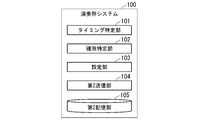
- FIG. 2 is a schematic block diagram showing the configuration of the performance hall system 100.
- the playing place system 100 includes a timing specifying unit 101, a type specifying unit 102, a setting unit 103, a second transmitting unit 104, and a second storage unit 105.
- the timing specifying unit 101 specifies the timing at which the second transmitting unit 104 transmits the test signal to the transmitting station 20 based on the content information.
- Content information is information that associates the date and time with the type of content. Examples of the content information include a program guide showing the content scheduled to be broadcast in relation to the date and time, information in which the content type is associated, and information in which the date and time are associated with the content type.
- the timing specifying unit 101 specifies the timing by subtracting a predetermined time from the date and time when the content scheduled to be broadcast changes. That is, the timing specifying unit 101 specifies the timing before the content scheduled to be broadcast is broadcast. An example of the above predetermined time is a few minutes ago. Further, the timing specifying unit 101 may specify a preset time as the timing at which the second transmitting unit 104 transmits the test signal to the transmitting station 20. For example, the timing specifying unit 101 may specify the time when the performance station 10 issues a time signal as the timing at which the second transmitting unit 104 transmits the test signal to the transmitting station 20.
- the timing specifying unit 101 may specify the time during the broadcasting of the content as the timing. For example, the timing specifying unit 101 specifies the time when one hour has elapsed from the start of the content scheduled to be broadcast for two hours as the timing.
- the performance hall system 100 may be provided with an input receiving unit.
- the input receiving unit accepts the timing input by the user of the information processing system 1.
- the timing specifying unit 101 specifies the timing received by the input receiving unit as the timing at which the second transmitting unit 104 transmits the test signal to the transmitting station 20.
- FIG. 3 is a diagram showing an example of content information.
- the date and time when the content scheduled to be broadcast changes is 10:10 on June 1, 2020.
- the timing specifying unit 101 specifies 10:07 on June 1, 2020 as the timing, which is obtained by subtracting 3 minutes from the above date and time.
- the type specifying unit 102 specifies the type of content at the timing specified by the timing specifying unit 101 by comparing the future date and time with the content information.
- the type specifying unit 102 is an example of the type specifying means.
- the type specifying unit 102 specifies the type of the content by comparing the future date and time obtained by adding a few minutes to the timing specified by the timing specifying unit 101 with the content information.
- the timing specified by the timing specifying unit 101 is 10:07 on June 1, 2020.
- the type specifying unit 102 specifies the future date and time, June 1, 2020, 10:10 by adding the time of 3 minutes to 10:07 on June 1, 2020 specified by the timing specifying unit 101. .. After that, the type specifying unit 102 identifies the music program which is the type of the content by comparing the specified 10:10 on June 1, 2020 with the content information.
- the input receiving unit may accept the type of content input by the user of the information processing system 1.
- the type specifying unit 102 specifies the type of content based on the type of content accepted by the input receiving unit.
- the setting unit 103 sets a test signal by comparing the type of the content specified by the type specifying unit 102 with the signal information.
- the setting unit 103 is an example of the setting means.
- the signal information is information that associates the type of content with the test signal.
- the test signal is an acoustic signal according to the type of content scheduled to be broadcast or being broadcast.
- the test signal is a signal related to the feature amount of each type of content.
- Examples of signals related to the feature amount of the content are a signal obtained by sampling a signal indicating the feature amount of the content (hereinafter referred to as a sampling signal) and a signal capable of evaluating the feature amount of the content (hereinafter referred to as an evaluation signal).
- a signal obtained by combining a sampling signal and an evaluation signal hereinafter referred to as a composite signal
- a signal obtained by processing any one of a sampling signal, an evaluation signal, and a composite signal is a signal related to the feature amount of each type of content.
- signals related to the feature amount of the content are a signal obtained by sampling a signal indicating the feature amount of the content (hereinafter referred to as a sampling signal) and a signal capable of evaluating the feature amount of the content (hereinafter referred to as an evaluation signal).
- examples of the mode of the evaluation signal include an audio signal, a sweep tone signal, a frequency weighted time stretch pulse, and the like.
- An example of the length of a test signal is a few seconds.
- feature quantities include the amount of power components obtained by analyzing the acoustic signal of the content by FFT (Fast Fourier Transform), the amount of time change thereof, and the time series thereof. Further, as an example of the feature amount, there is also an LPC coefficient obtained by analyzing the acoustic signal of the content by LPC (Linear Predictive Coding).
- FFT Fast Fourier Transform
- LPC Linear Predictive Coding
- the second transmission unit 104 transmits the test signal set by the setting unit 103 to the transmission station 20 through one or more transmission paths 30 among the plurality of transmission paths 30. For example, the second transmission unit 104 transmits the test signal to the transmission station system 200 through the transmission path 30A and the transmission path 30B. Further, the second transmission unit 104 transmits the content produced by the performance center 10 based on the broadcast information to the performance center 10 through the transmission path 30. Broadcast information is information that associates the date and time with the content.
- the second storage unit 105 is a device that stores content information, signal information, broadcast information, and content produced by the performance center 10.
- An example of the second storage unit 105 is a hard disk drive (Hard Disk Drive, HDD).
- the user of the information processing system 1 records the content information, the signal information, and the broadcast information in the second storage unit 105 in advance.
- the information processing system 1 does not include the second storage unit 105, and may use cloud storage.
- the information processing system 1 may further include an updating unit.
- the updating unit updates the content information or the signal information based on the input of the user of the information processing system 1 accepted by the input receiving unit. Examples of embodiments for updating include deletion, addition, and modification.
- the content produced by the performance center 10 is transmitted to the transmission station 20 by the performance center system 100. Further, before the content is transmitted to the transmission station 20, the performance center system 100 transmits a test signal related to the content to the transmission station 20. Therefore, the transmission station 20 can evaluate each transmission path 30 based on the received test signal before receiving the content. The operation of the transmission station 20 to evaluate each transmission path 30 and the like will be described later.
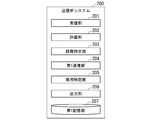
- FIG. 4 is a schematic block diagram showing the configuration of the transmission station system 200.
- the transmission station system 200 includes a reception unit 201, an evaluation unit 202, a route identification unit 203, a first transmission unit 204, a cause identification unit 205, an output unit 206, and a first storage unit 207.
- the receiving unit 201 receives the test signal through one or more transmission paths 30 out of the plurality of transmission paths 30.
- the receiving unit 201 is an example of the receiving means.
- the receiving unit 201 receives the test signal transmitted from the performance hall system 100 through the transmission path 30A and the transmission path 30B. Further, the receiving unit 201 receives the content transmitted from the performance hall system 100 through the transmission path 30A and the transmission path 30B.
- the evaluation unit 202 has one or more transmission paths 30 based on at least one of the feature amount related to the pitch of the received test signal, the feature amount related to the loudness, and the feature amount related to the timbre. Evaluate the condition of.
- the evaluation unit 202 is an example of evaluation means. Examples of the feature amount related to the pitch and the feature amount related to the loudness include the power component amount obtained by the FFT analysis. Further, as an example of the feature amount related to the timbre, the LPC coefficient obtained by the LPC analysis can be mentioned. An example of a specific operation of the evaluation unit 202 will be described.
- the user records in advance in the first storage unit 207 the feature amount related to the pitch of the test signal of each type of content, the feature amount related to the loudness, and the feature amount related to the tone color. That is, the first storage unit 207 stores in advance the amount of power components of each frequency bin obtained by the FFT analysis of the test signal and the LPC coefficient obtained by the LPC analysis of the test signal.
- the evaluation unit 202 FFT analyzes the received test signal to obtain the power component amount of each frequency bin. After that, the evaluation unit 202 uses the obtained power component amount of each frequency bin (hereinafter referred to as the first component amount) as the power component amount of each frequency bin stored in the first storage unit 207 (hereinafter referred to as the first component amount). (Referred to as the amount of two components). When the difference between the total amount of the first component amount and the total amount of the second component amount in each frequency bin is equal to or more than a preset threshold value, the time change amount of the first component amount and the time of the second component amount in each frequency bin.
- the evaluation unit 202 When the difference in the amount of change is equal to or greater than the preset threshold, and when the difference between the time series of the first component amount and the time series of the second component amount in each frequency bin is equal to or greater than the preset threshold, the evaluation unit 202 transmits. It is evaluated that there is a defect in the route 30. Further, when the frequency indicating the first component amount equal to or higher than the preset threshold value and the frequency indicating the second component amount equal to or higher than the preset threshold value are different from each other, the evaluation unit 202 has a problem with the transmission path 30. Evaluate as there is. By the above operation, the evaluation unit 202 can evaluate the state of the transmission path 30 based on the feature amount related to the pitch of the test signal or the feature amount related to the loudness of the test signal.
- the evaluation unit 202 LPC analyzes the received test signal to obtain an LPC coefficient. After that, the evaluation unit 202 compares the obtained LPC coefficient (hereinafter referred to as the first coefficient) with the LPC coefficient stored in the first storage unit 207 (hereinafter referred to as the second coefficient). When the difference between the first coefficient and the second coefficient is equal to or greater than a preset threshold value, the evaluation unit 202 evaluates that the transmission path 30 has a defect. By the above operation, the evaluation unit 202 can evaluate the state of the transmission path 30 based on the feature amount related to the tone color of the test signal.
- the defect of the transmission path 30 can be evaluated by the operation of the evaluation unit 202.
- the feature amount related to the pitch of the test signal, the feature amount related to the loudness, and the feature amount related to the timbre are not changed.
- the method in which the evaluation unit 202 evaluates the transmission path 30 is not limited to the above method.
- the evaluation unit 202 does not have to evaluate the states of all the transmission paths 30 at the same time.
- the evaluation unit 202 may evaluate the state of the transmission path 30A first, and when it is evaluated that the transmission path 30A has a defect, the evaluation unit 202 may evaluate the state of the transmission path 30B.
- the route specifying unit 203 specifies at least one transmission route 30 among the plurality of transmission routes 30 based on the contents evaluated by the evaluation unit 202.
- the route specifying unit 203 is an example of the route specifying means. An example of a specific operation of the route specifying unit 203 will be described below.
- the route specifying unit 203 specifies the transmission path 30A.
- the route specifying unit 203 specifies the transmission path 30B.
- the method by which the route specifying unit 203 specifies the transmission path 30 is not limited to the above method.
- the route specifying unit 203 may specify the transmission path 30 based on the evaluation of the states of all the transmission paths 30.
- the transmission station system 200 may be provided with an input receiving unit.
- the evaluation unit 202 evaluates that the transmission path 30 has a defect
- the output unit 206 outputs the content of the evaluation to a display device (not shown) provided in the transmission station system 200.
- the input receiving unit receives the transmission path 30 input by the user of the information processing system 1.
- the route specifying unit 203 specifies the transmission route 30 accepted by the input receiving unit.
- the first transmission unit 204 transmits the content received through the transmission route 30 specified by the route identification unit 203 to the outside.
- the first transmission unit 204 is an example of the first transmission means.
- the route specifying unit 203 specifies the transmission path 30A
- the first transmission unit 204 transmits the content received through the transmission path 30A to a user who views or listens to the content by using the radio equipment provided in the transmission station 20. do.
- the route specifying unit 203 specifies the transmission path 30B
- the first transmission unit 204 transmits the content received through the transmission path 30B to the user who views or listens to the content by using the radio equipment provided in the transmission station 20. do.
- the cause identification unit 205 identifies the cause of the failure of the transmission path 30 based on the content evaluated by the evaluation unit 202.
- the cause identification unit 205 is an example of the cause identification means. For example, when the evaluation unit 202 evaluates that the transmission path 30 has a defect, the cause identification unit 205 identifies the defect by comparing the evaluation result of the evaluation unit 202 with the defect information.
- the defect information is information in which the evaluation result of the evaluation unit 202 is associated with the type of defect.
- the output unit 206 outputs the cause identified by the cause identification unit 205 to the notification device provided in the transmission station system 200.
- Examples of the notification device include a display device, a speaker, and the like.
- the output unit 206 is an example of the output means.
- the first storage unit 207 stores the feature amount of the test signal for each type of content and the defect information.
- the user of the information processing system 1 records in advance the feature amount of the test signal for each type of content and the defect information in the first storage unit 207.
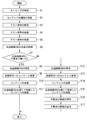
- FIG. 5 is a flowchart showing the operation of the information processing system 1. The following shows the operation of the information processing system 1 when the content information is as shown in FIG.
- the timing specifying unit 101 specifies the timing at which the second transmitting unit 104 transmits the test signal to the transmitting station 20 based on the content information (step S1). For example, the timing specifying unit 101 subtracts a predetermined time from the time when the news changes to a music program, and specifies 10:07 on June 1, 2020 as the timing.
- the type specifying unit 102 specifies the type of the content at the timing specified in step S1 by comparing the future date and time with the content information (step S2). For example, the type specifying unit 102 adds a predetermined time to the timing specified in step S1 to specify a future date and time, June 1, 2020, 10:10. After that, the type specifying unit 102 identifies the music program which is the type of the content by comparing the specified 10:10 on June 1, 2020 with the content information.
- the setting unit 103 sets a test signal by comparing the type of content specified in step S2 with the signal information (step S3). For example, the setting unit 103 sets a test signal associated with the music program.
- the second transmission unit 104 transmits the test signal set in step S3 to the transmission station 20 through the transmission path 30A and the transmission path 30B (step S4).
- the second transmission unit 104 transmits the test signal associated with the music program to the transmission station system 200 through the transmission path 30A and the transmission path 30B.
- the receiving unit 201 receives the test signal transmitted in step S4 through the transmission path 30A and the transmission path 30B (step S5).
- the receiving unit 201 receives the test signal associated with the music program transmitted by the music station system 100 through the transmission path 30A and the transmission path 30B.
- the evaluation unit 202 evaluates the state of the transmission path 30A based on the state of the test signal received in step S5 (step S6). For example, the evaluation unit 202 compares the amount of the first component obtained from the test signal related to the music program received in step S5 with the amount of the second component, and evaluates whether or not there is a defect in the transmission path 30A. Further, the evaluation unit 202 compares the first coefficient obtained from the test signal related to the music group received in step S5 with the second coefficient, and evaluates whether or not there is a defect in the transmission path 30A.
- step S8 When the evaluation unit 202 evaluates that there is no problem in the transmission path 30A in step S6 (step S7: YES), the route specifying unit 203 specifies the transmission path 30A (step S8).
- the second transmission unit 104 transmits the content related to the music program to the performance center 10 through the transmission path 30A and the transmission path 30B based on the broadcast information (step S9).
- the receiving unit 201 receives the content related to the music program transmitted in step S9 through the transmission path 30A and the transmission path 30B (step S10).
- the first transmission unit 204 transmits the content related to the music program received through the transmission path 30A specified in step S8 to the user who views or listens to the content (step S11).
- step S7 NO
- the route identification unit 203 specifies the transmission path 30B (step S12).
- the second transmission unit 104 transmits the content related to the music program to the performance center 10 through the transmission path 30A and the transmission path 30B based on the broadcast information (step S13).
- the receiving unit 201 receives the content related to the music program transmitted in step S13 through the transmission path 30A and the transmission path 30B (step S14).
- the first transmission unit 204 transmits the content related to the music program received through the transmission path 30B specified in step S12 to the user who views or listens to the content (step S15).
- the cause identification unit 205 identifies the cause of the failure of the transmission path 30 based on the content evaluated by the evaluation unit 202 (step S16). For example, the cause identification unit 205 identifies the cause of the defect by comparing the evaluation result in step S6 with the defect information.
- the output unit 206 outputs the cause identified in step S16 to the display device included in the transmission station system 200 (step S17).
- the display device displays the cause of the defect output by the output unit 206 to the user of the information processing system 1.
- the user of the information processing system 1 can grasp the cause of the malfunction of the transmission path 30.
- the information processing system 1 transmits a test signal related to the content as in step S4 before transmitting the content as in step S9 or step S13. Therefore, the transmission station 20 that has received the test signal can determine the state of the transmission path 30 before transmitting the content.
- the information processing system 1 can determine the state of the transmission path 30 in advance. Therefore, the information processing system 1 can prevent a broadcasting accident or the like caused by transmitting the content received through the defective transmission path 30 to the outside in advance.
- the information processing apparatus is a receiving means for receiving a test signal set according to a type of content scheduled to be broadcast or being broadcast through one or more transmission paths 30 among a plurality of transmission paths 30 and receiving.
- An evaluation means for evaluating the state of one or more transmission paths 30 based on the state of the test signal received by the means is provided.
- the information processing device receives the test signal related to the content. As a result, the information processing apparatus can determine the state of the transmission path 30 based on the state of the received test signal.
- the evaluation means of the information processing apparatus evaluates the state of one or more transmission paths 30 based on the state of the test signal received by the receiving means and set according to the type of the content to be broadcast next.
- the information processing device receives a test signal related to the content scheduled to be broadcast before receiving the content. Therefore, the information processing apparatus can determine the state of the transmission path 30 before receiving the content.
- the test signal of the information processing apparatus is an acoustic signal
- the evaluation means is a feature amount related to the pitch of the test signal, a feature amount related to the loudness of the test signal, and a feature amount related to the tone color of the test signal.
- the state of one or more transmission paths 30 is evaluated based on at least one or more.
- the information processing apparatus can evaluate the state of the transmission path 30 based on the feature amount related to the pitch of the received test signal, the feature amount related to the loudness, and the feature amount related to the timbre.
- the information processing apparatus further includes a route specifying means for specifying at least one transmission path 30 among the plurality of transmission paths 30 based on the contents evaluated by the evaluation means.
- the information processing apparatus identifies the transmission path 30 based on the state of the transmission path 30 evaluated by the evaluation means. As a result, the information processing apparatus can identify the transmission path 30 without any trouble.
- the information processing apparatus further includes a first transmission means for transmitting the content received through the transmission path 30 specified by the route specifying means to the outside.
- the information processing apparatus transmits the content received through the transmission path 30 specified by the state of the transmission path 30 to the outside.
- the information processing apparatus can prevent a broadcasting accident or the like caused by transmitting the content received through the defective transmission path 30 in advance.
- the information processing apparatus further includes a cause identifying means for identifying the cause of the failure of the transmission path 30 based on the content evaluated by the evaluation means, and an output means for outputting the cause identified by the cause identifying means. ..
- the information processing apparatus When there is a defect in the transmission path 30, the information processing apparatus identifies the cause of the defect based on the content evaluated by the evaluation means. Therefore, when a defect occurs in the transmission path 30, the user of the information processing apparatus can grasp the cause of the defect.
- the information processing apparatus has a setting means for setting a test signal according to the type of content scheduled to be broadcast or being broadcast, and one or more of a plurality of transmission paths 30 for the test signal set by the setting means.
- a second transmission means for transmitting through the transmission path 30 of the above is provided.
- the information processing device sends a test signal set according to the type of content.
- the user of the information processing apparatus can receive a test signal from the information processing apparatus and evaluate the state of the transmission path 30.
- the second transmission means of the information processing apparatus transmits a test signal according to the content to be broadcast next set by the setting means through one or more transmission paths 30 among the plurality of transmission paths 30.
- the information processing device transmits a test signal related to the content scheduled to be broadcast before transmitting the content. Therefore, the user of the information processing apparatus can evaluate the state of the transmission path 30 based on the test signal received before receiving the content.
- the information processing apparatus further includes a type specifying means for specifying the type of the content by comparing the future date and time with the content information in which the date and time and the type of the content are associated with each other, and the setting means is the type specifying means.
- the test signal is set by comparing the content type specified by the above with the signal information associated with the content type and the test signal.
- the information processing device identifies the type of content and sends a test signal associated with that type. Therefore, the user of the information processing apparatus can evaluate the state of the transmission path 30 based on the test signal associated with the type of content.
- the information processing system 1 sets a setting means for setting a test signal according to the type of content scheduled to be broadcast or being broadcast, and a test signal set by the setting means to be one of a plurality of transmission paths 30.
- a second transmission means for transmitting through the above transmission path 30, a receiving means for receiving a test signal through one or more transmission paths 30, and one or more transmission paths 30 based on the state of the test signal received by the receiving means. It is provided with an evaluation means for evaluating the state of.
- the second transmission means of the information processing system 1 transmits a test signal set according to the content type. Further, the receiving means of the information processing system 1 receives the test signal. As a result, the information processing system 1 can evaluate the state of the transmission path 30 based on the received test signal.
- the information processing method receives and receives a test signal set according to the type of content scheduled to be broadcast or being broadcast through one or more transmission paths 30 out of a plurality of transmission paths 30. It involves evaluating the state of one or more transmission paths 30 based on the state of the test signal.
- the user of the information processing method can receive the test signal related to the content. Thereby, the user of the information processing method can evaluate the state of the transmission path 30 from the received test signal.
- the information processing method sets a test signal according to the type of content scheduled to be broadcast or is being broadcast, and the set test signal is transmitted through one or more transmission paths 30 out of a plurality of transmission paths 30. Including sending.
- the user of the information processing method can transmit a test signal set according to the type of content. Thereby, the user of the information processing method can receive the test signal and evaluate the state of the transmission path 30.
- the program according to the present invention receives a computer of an information processing apparatus that receives a test signal set according to a type of content scheduled to be broadcast or being broadcast through one or more transmission paths 30 among a plurality of transmission paths 30. It is executed as evaluating the state of one or more transmission paths 30 based on the test signal.
- the user of the program can receive the test signal related to the content.
- the user of the program can evaluate the state of the transmission path 30 from the received test signal.
- the computer sets a test signal according to the type of content scheduled to be broadcast or is being broadcast, and the set test signal is transmitted to one or more transmission paths 30 out of a plurality of transmission paths 30. Run as sending through.
- the user of the program can send a test signal set according to the type of content.
- the user of the program can receive the test signal and evaluate the state of the transmission path 30.
- the evaluation unit 202 of the information processing system 1 may evaluate the state of the transmission path 30 by the following operations.
- the evaluation unit 202 includes a test signal received by the receiving unit 201 through the transmission path 30A (hereinafter referred to as a test signal A) and a test signal received by the receiving unit 201 through the transmission path 30B (hereinafter referred to as a test signal B). It may be evaluated whether or not there is a defect in any of the transmission paths 30 by comparing with the above.
- the evaluation unit 202 compares the power component amount or LPC coefficient obtained from the test signal A with the power component amount or LPC coefficient obtained from the test signal B, and determines the state of the transmission path 30 based on the difference. You may evaluate it.
- the first storage unit 207 of the information processing system 1 does not have to store the feature amount of the test signal.
- the information processing system 1 can evaluate the state of the transmission path 30 based on the feature amount of the test signal A and the feature amount of the test signal B.
- FIG. 6 is a schematic block diagram showing a basic configuration of a performance hall system 100 according to the present invention.
- the music station system 100 is an example of an information processing device.
- the configuration shown in FIG. 2 has been described as an embodiment of the performance hall system 100 according to the present invention, but the basic configuration of the performance hall system 100 according to the present invention is as shown in FIG. That is, the playing place system 100 according to the present invention has a setting unit 103 and a second transmission unit 104 as a basic configuration.
- the setting unit 103 sets a test signal by comparing the type of content with the signal information.
- the setting unit 103 is an example of the setting means.
- the test signal is a signal according to the type of content scheduled to be broadcast or being broadcast.
- the second transmission unit 104 transmits the test signal set by the setting unit 103 to the transmission station 20 through one or more transmission paths 30 among the plurality of transmission paths 30.
- the second transmission unit 104 transmits the test signal to the transmission station system 200 through the transmission path 30A and the transmission path 30B.
- the information processing apparatus is a receiving means for receiving a test signal set according to the type of content scheduled to be broadcast or being broadcast through one or more transmission paths 30 out of a plurality of transmission paths 30 and receiving.
- An evaluation means for evaluating the state of one or more transmission paths 30 based on the state of the test signal received by the means is provided.
- the information processing device receives the test signal related to the content. As a result, the information processing apparatus can evaluate the state of the transmission path 30 from the received test signal.
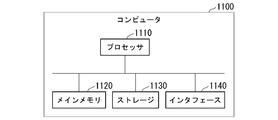
- FIG. 7 is a schematic block diagram showing the configuration of a computer according to at least one embodiment.
- the computer 1100 includes a processor 1110, a main memory 1120, a storage 1130, and an interface 1140.
- the above-mentioned playing station system 100 and transmitting station system 200 are mounted on the computer 1100.
- the operation of each of the above-mentioned processing units is stored in the storage 1130 in the form of a program.
- the processor 1110 reads a program from the storage 1130, expands it into the main memory 1120, and executes the above processing according to the program. Further, the processor 1110 secures a storage area corresponding to each of the above-mentioned storage units in the main memory 1120 according to the program.
- the program may be for realizing a part of the functions exerted by the computer 1100.
- the program may exert its function in combination with another program already stored in the storage 1130, or in combination with another program mounted on another device.
- the computer 1100 may include a custom LSI (Large Scale Integrated Circuit) such as a PLD (Programmable Logic Device) in addition to or in place of the above configuration.
- PLDs include PAL (Programmable Array Logic), GAL (Generic Array Logic), CPLD (Complex Programmable Logic Device), and FPGA (Field Programmable Gate).
- PLDs Programmable Logic Device
- PAL Programmable Array Logic
- GAL Generic Array Logic
- CPLD Complex Programmable Logic Device
- FPGA Field Programmable Gate
- Examples of the storage 1130 include magnetic disks, magneto-optical disks, semiconductor memories, and the like.
- the storage 1130 may be internal media directly connected to the bus of computer 1100, or external media connected to the computer via interface 1140 or a communication line.
- this program is distributed to the computer 1100 via a communication line, the distributed computer 1100 may expand the program to the main memory 1120 and execute the above processing.
- the storage 1130 is a non-temporary tangible storage medium.
- the program may be for realizing a part of the above-mentioned functions. Further, the program may be a so-called difference file (difference program) that realizes the above-mentioned function in combination with another program already stored in the storage 1130.
- difference file difference program
- the performance center system 100 and the transmission station system 200 may be configured by a single computer, or the configuration of the performance center system 100 or the transmission station system 200 may be divided into a plurality of computers. It may be arranged and a plurality of computers cooperate with each other to function as a performance hall system 100 or a transmission station system 200. At this time, a part of the computers constituting the performance hall system 100 or the transmission station system 200 may be mounted inside the work machine, and another computer may be provided outside the work machine.
- the information processing device receives the test signal related to the content. As a result, the information processing apparatus can determine the state of the transmission path based on the state of the received test signal.
- An information processing apparatus including an evaluation means for evaluating the state of one or more transmission paths based on the state of a test signal.
- the evaluation means evaluates the state of one or more transmission paths based on the state of the test signal received by the receiving means and then set according to the type of the content scheduled to be broadcast. , The information processing apparatus according to Appendix 1.
- the test signal is an acoustic signal
- the evaluation means is used for a feature amount related to the pitch of the test signal, a feature amount related to the loudness of the test signal, and a tone color of the test signal.
- the information processing apparatus according to Appendix 1 or Appendix 2, which evaluates the state of the one or more transmission paths based on at least one of the feature quantities.
- Supplementary note 4 Any of Supplementary note 1 to Supplementary note 3, further comprising a route specifying means for specifying at least one of the plurality of transmission paths based on the content evaluated by the evaluation means.
- a route specifying means for specifying at least one of the plurality of transmission paths based on the content evaluated by the evaluation means.
- Supplementary note 5 The information processing apparatus according to Supplementary note 4, further comprising a first transmission means for transmitting the content received through the transmission path specified by the route specifying means to the outside.
- a setting means for setting a test signal according to the type of content scheduled to be broadcast or being broadcast, and the test signal set by the setting means are transmitted through one or more transmission paths among a plurality of transmission paths.
- An information processing device including a second transmission means for transmission.
- the second transmission means transmits the test signal according to the content to be broadcast next set by the setting means through one or more transmission paths among the plurality of transmission paths.
- the information processing apparatus according to 7.
- a type specifying means for specifying the type of the content by comparing the future date and time with the content information in which the date and time and the type of the content are associated with each other is further provided, and the setting means is the type specifying means.
- a setting means for setting a test signal according to the type of content scheduled to be broadcast or being broadcast, and the test signal set by the setting means are transmitted through one or more transmission paths among a plurality of transmission paths.
- Appendix 11 Receiving a test signal set according to the type of content scheduled to be broadcast or being broadcast through one or more transmission paths among a plurality of transmission paths, and based on the state of the received test signal.
- An information processing method comprising evaluating the state of one or more transmission paths.
- Appendix 13 A computer of an information processing apparatus that receives a test signal set according to the type of content scheduled to be broadcast or being broadcast through one or more transmission paths among a plurality of transmission paths, based on the received test signal. , A program to evaluate the state of one or more transmission paths and execute as.
- the computer sets a test signal according to the type of content scheduled to be broadcast or is being broadcast, and transmits the set test signal through one or more transmission paths among a plurality of transmission paths. And a program to run as.
- Performance station 10
- Transmission station 30
- Transmission path 100
- Performance station system 101
- Timing specification unit 102
- Type specification unit 103
- Setting unit 104
- Second transmission unit 105
- Second storage unit 200
- Transmission station system 201
- Reception unit 202
- Evaluation unit 203
- Route Specific part 204
- 1st transmission part 205
- causes identification part 206
- Output part 207
- 1st storage part 1100
- Computer 1110 Processor 1120 Main memory 1130 Storage 1140 Interface
Landscapes
- Engineering & Computer Science (AREA)
- Signal Processing (AREA)
- Computer Networks & Wireless Communication (AREA)
- Two-Way Televisions, Distribution Of Moving Picture Or The Like (AREA)
- Testing, Inspecting, Measuring Of Stereoscopic Televisions And Televisions (AREA)
Priority Applications (3)
| Application Number | Priority Date | Filing Date | Title |
|---|---|---|---|
| US18/011,290 US12149300B2 (en) | 2020-06-29 | 2020-06-29 | Information processing device, information processing system, information processing method, and program |
| PCT/JP2020/025459 WO2022003757A1 (ja) | 2020-06-29 | 2020-06-29 | 情報処理装置、情報処理システム、情報処理方法及びプログラム |
| JP2022533262A JP7414141B2 (ja) | 2020-06-29 | 2020-06-29 | 情報処理装置、情報処理システム、情報処理方法及びプログラム |
Applications Claiming Priority (1)
| Application Number | Priority Date | Filing Date | Title |
|---|---|---|---|
| PCT/JP2020/025459 WO2022003757A1 (ja) | 2020-06-29 | 2020-06-29 | 情報処理装置、情報処理システム、情報処理方法及びプログラム |
Publications (1)
| Publication Number | Publication Date |
|---|---|
| WO2022003757A1 true WO2022003757A1 (ja) | 2022-01-06 |
Family
ID=79315743
Family Applications (1)
| Application Number | Title | Priority Date | Filing Date |
|---|---|---|---|
| PCT/JP2020/025459 Ceased WO2022003757A1 (ja) | 2020-06-29 | 2020-06-29 | 情報処理装置、情報処理システム、情報処理方法及びプログラム |
Country Status (3)
| Country | Link |
|---|---|
| US (1) | US12149300B2 (cg-RX-API-DMAC7.html) |
| JP (1) | JP7414141B2 (cg-RX-API-DMAC7.html) |
| WO (1) | WO2022003757A1 (cg-RX-API-DMAC7.html) |
Citations (4)
| Publication number | Priority date | Publication date | Assignee | Title |
|---|---|---|---|---|
| JP2003188828A (ja) * | 2002-11-26 | 2003-07-04 | Oki Electric Ind Co Ltd | 光伝送システム及び光チャネル安定品質測定方法 |
| JP2007295538A (ja) * | 2006-03-29 | 2007-11-08 | Hitachi Kokusai Electric Inc | 双方向信号伝送システム |
| JP2008271477A (ja) * | 2007-04-25 | 2008-11-06 | National Institute Of Advanced Industrial & Technology | モデム通信方法及びモデム装置 |
| WO2017208446A1 (ja) * | 2016-06-03 | 2017-12-07 | 三菱電機株式会社 | 通信システム |
Family Cites Families (7)
| Publication number | Priority date | Publication date | Assignee | Title |
|---|---|---|---|---|
| JPS5339204B2 (cg-RX-API-DMAC7.html) | 1973-10-22 | 1978-10-20 | ||
| USRE37991E1 (en) * | 1993-01-12 | 2003-02-18 | Visual Automation Systems, Inc. | Apparatus for tracking the flow of video signals by incorportating patterns of machine readable signals which will appear at predetermined locations of a television picture |
| US20070230542A1 (en) | 2006-03-29 | 2007-10-04 | Noriyasu Okada | Bidirectional signal transmission system |
| DE102007014692A1 (de) * | 2007-03-27 | 2008-10-02 | Rohde & Schwarz Gmbh & Co. Kg | Testvorrichtung und Mobilfunkgerät sowie Verfahren zum Testen eines Mobilfunkgeräts |
| US9769471B2 (en) * | 2015-01-06 | 2017-09-19 | The Directv Group, Inc. | Methods for determining localized outages and distributed signal verification of set-top boxes |
| CA2982341C (en) * | 2015-04-09 | 2023-08-08 | Ibiquity Digital Corporation | Systems and methods for detection of signal quality in digital radio broadcast signals |
| US10764611B2 (en) * | 2016-08-30 | 2020-09-01 | Disney Enterprises, Inc. | Program verification and decision system |
-
2020
- 2020-06-29 US US18/011,290 patent/US12149300B2/en active Active
- 2020-06-29 WO PCT/JP2020/025459 patent/WO2022003757A1/ja not_active Ceased
- 2020-06-29 JP JP2022533262A patent/JP7414141B2/ja active Active
Patent Citations (4)
| Publication number | Priority date | Publication date | Assignee | Title |
|---|---|---|---|---|
| JP2003188828A (ja) * | 2002-11-26 | 2003-07-04 | Oki Electric Ind Co Ltd | 光伝送システム及び光チャネル安定品質測定方法 |
| JP2007295538A (ja) * | 2006-03-29 | 2007-11-08 | Hitachi Kokusai Electric Inc | 双方向信号伝送システム |
| JP2008271477A (ja) * | 2007-04-25 | 2008-11-06 | National Institute Of Advanced Industrial & Technology | モデム通信方法及びモデム装置 |
| WO2017208446A1 (ja) * | 2016-06-03 | 2017-12-07 | 三菱電機株式会社 | 通信システム |
Also Published As
| Publication number | Publication date |
|---|---|
| US20230231595A1 (en) | 2023-07-20 |
| JPWO2022003757A1 (cg-RX-API-DMAC7.html) | 2022-01-06 |
| JP7414141B2 (ja) | 2024-01-16 |
| US12149300B2 (en) | 2024-11-19 |
Similar Documents
| Publication | Publication Date | Title |
|---|---|---|
| Dudley | Remaking speech | |
| RU2145446C1 (ru) | Способ оптимальной передачи сообщений любой физической природы, например, способ оптимального звуковоспроизведения и система для его осуществления, способ оптимального, пространственного, активного понижения уровня сигналов любой физической природы | |
| JP3418198B2 (ja) | オーディオ信号の聴覚に適応した品質評価方法および装置 | |
| Gabrielsson et al. | Loudspeaker frequency response and perceived sound quality | |
| CN103179496A (zh) | 移动终端的耳机麦克风和扬声器的音频测试系统及方法 | |
| CN115243183A (zh) | 一种音频检测方法、设备及存储介质 | |
| US6839675B2 (en) | Real-time monitoring system for codec-effect sampling during digital processing of a sound source | |
| US20220101821A1 (en) | Device, method and computer program for blind source separation and remixing | |
| JP7414141B2 (ja) | 情報処理装置、情報処理システム、情報処理方法及びプログラム | |
| Mores | Music studio technology | |
| US9485578B2 (en) | Audio format | |
| Osses Vecchi et al. | Assessing the perceived reverberation in different rooms for a set of musical instrument sounds | |
| JPH0689095A (ja) | 音響信号選択装置 | |
| Gannett et al. | The discernibility of changes in program band width | |
| CN115022792B (zh) | 测试喇叭的装置、系统及方法 | |
| Błasiński et al. | Perception of reverberation length in rooms with reverberation enhancement systems | |
| Williams | Some bandwidth compression systems for speech transmission | |
| Cox et al. | Testing of wideband digital coders | |
| Brachmanski | Experimental comparison between speech transmission index (STI) and mean opinion scores (MOS) in rooms | |
| Young et al. | Acoustics of school music rehearsal rooms | |
| Shixian | Effect of MP3 Compression on Sound Localization | |
| Selsted et al. | Acoustical and Electrical Considerations in Approaching Facsimile Reproduction of the Symphony Orchestra | |
| Skålevik | Measurements of IACC during music performance in concert halls | |
| Meyer‐Eppler | Some Problems of Reproduction and Perception of Electronic Tape Music | |
| US3670841A (en) | Method of adjusting a speaker of an electrical sound producing instrument |
Legal Events
| Date | Code | Title | Description |
|---|---|---|---|
| 121 | Ep: the epo has been informed by wipo that ep was designated in this application |
Ref document number: 20942464 Country of ref document: EP Kind code of ref document: A1 |
|
| ENP | Entry into the national phase |
Ref document number: 2022533262 Country of ref document: JP Kind code of ref document: A |
|
| NENP | Non-entry into the national phase |
Ref country code: DE |
|
| 122 | Ep: pct application non-entry in european phase |
Ref document number: 20942464 Country of ref document: EP Kind code of ref document: A1 |