WO2021246164A1 - ネットワークノード、User Equipment、及びこれらの方法 - Google Patents
ネットワークノード、User Equipment、及びこれらの方法 Download PDFInfo
- Publication number
- WO2021246164A1 WO2021246164A1 PCT/JP2021/018872 JP2021018872W WO2021246164A1 WO 2021246164 A1 WO2021246164 A1 WO 2021246164A1 JP 2021018872 W JP2021018872 W JP 2021018872W WO 2021246164 A1 WO2021246164 A1 WO 2021246164A1
- Authority
- WO
- WIPO (PCT)
- Prior art keywords
- plmn
- network
- network slice
- list
- hplmn
- Prior art date
- Legal status (The legal status is an assumption and is not a legal conclusion. Google has not performed a legal analysis and makes no representation as to the accuracy of the status listed.)
- Ceased
Links
Images

Classifications
-
- H—ELECTRICITY
- H04—ELECTRIC COMMUNICATION TECHNIQUE
- H04W—WIRELESS COMMUNICATION NETWORKS
- H04W8/00—Network data management
- H04W8/02—Processing of mobility data, e.g. registration information at HLR [Home Location Register] or VLR [Visitor Location Register]; Transfer of mobility data, e.g. between HLR, VLR or external networks
- H04W8/08—Mobility data transfer
- H04W8/12—Mobility data transfer between location registers or mobility servers
-
- H—ELECTRICITY
- H04—ELECTRIC COMMUNICATION TECHNIQUE
- H04W—WIRELESS COMMUNICATION NETWORKS
- H04W48/00—Access restriction; Network selection; Access point selection
- H04W48/18—Selecting a network or a communication service
-
- H—ELECTRICITY
- H04—ELECTRIC COMMUNICATION TECHNIQUE
- H04W—WIRELESS COMMUNICATION NETWORKS
- H04W48/00—Access restriction; Network selection; Access point selection
- H04W48/16—Discovering, processing access restriction or access information
-
- H—ELECTRICITY
- H04—ELECTRIC COMMUNICATION TECHNIQUE
- H04W—WIRELESS COMMUNICATION NETWORKS
- H04W60/00—Affiliation to network, e.g. registration; Terminating affiliation with the network, e.g. de-registration
- H04W60/04—Affiliation to network, e.g. registration; Terminating affiliation with the network, e.g. de-registration using triggered events
-
- H—ELECTRICITY
- H04—ELECTRIC COMMUNICATION TECHNIQUE
- H04W—WIRELESS COMMUNICATION NETWORKS
- H04W8/00—Network data management
- H04W8/22—Processing or transfer of terminal data, e.g. status or physical capabilities
-
- H—ELECTRICITY
- H04—ELECTRIC COMMUNICATION TECHNIQUE
- H04W—WIRELESS COMMUNICATION NETWORKS
- H04W84/00—Network topologies
- H04W84/02—Hierarchically pre-organised networks, e.g. paging networks, cellular networks, WLAN [Wireless Local Area Network] or WLL [Wireless Local Loop]
- H04W84/04—Large scale networks; Deep hierarchical networks
- H04W84/042—Public Land Mobile systems, e.g. cellular systems
-
- H—ELECTRICITY
- H04—ELECTRIC COMMUNICATION TECHNIQUE
- H04W—WIRELESS COMMUNICATION NETWORKS
- H04W92/00—Interfaces specially adapted for wireless communication networks
- H04W92/02—Inter-networking arrangements
-
- H—ELECTRICITY
- H04—ELECTRIC COMMUNICATION TECHNIQUE
- H04W—WIRELESS COMMUNICATION NETWORKS
- H04W92/00—Interfaces specially adapted for wireless communication networks
- H04W92/16—Interfaces between hierarchically similar devices
- H04W92/24—Interfaces between hierarchically similar devices between backbone network devices
Definitions
- This disclosure relates to wireless communication networks, especially to Public Land Mobile Network (PLMN) selection.
- PLMN Public Land Mobile Network
- 5G system supports network slicing.
- Network slicing makes it possible to create multiple logical networks on top of a physical network.
- Each logical network is called a network slice.
- Network slices provide specific network capabilities and network characteristics.
- 3GPP 3rd Generation Partnership Project
- S-NSSAI Single Network Slice Selection Assistance Information
- SST Slice / Service type
- SD Slice Differentiator
- SST means referreds to expected network slice behavior with respect to features and services.
- SD is optional information and complements SST to distinguish between multiple network slices of the same Slice / Service type.
- S-NSSAI can have standard values or non-standard values.
- Standard SST values 1, 2, 3, and 4 are enhanced Mobile Broad Band (eMBB), Ultra Reliable and Low Latency Communication (URLLC), Massive Internet of Things (MIoT), and Vehicle to Everything (V2X). It is associated with slice types.
- the non-standard value of S-NSSAI identifies one network slice within a particular Public Land Mobile Network (PLMN). That is, non-standard SST values are PLMN-specific values and are associated with the PLMN ID of the PLMN to which they are assigned.
- PLMN Public Land Mobile Network
- Each S-NSSAI assists the network in selecting a specific (particular) NSI.
- the same NSI may be selected via different S-NSSAIs.
- the same S-NSSAI may be associated with different NSIs.
- Each network slice may be uniquely identified by S-NSSAI.
- S-NSSAI There are two types of S-NSSAI, which are known as S-NSSAI and Mapped S-NSSAI.
- S-NSSAI identifies the network slice provided by the Public Land Mobile Network (PLMN) to which the UE connects. Therefore, when the home network is in the service area, S-NSSAI identifies the network slice of the home network. When roaming, S-NSSAI identifies the network slice of the roaming network.
- Mapped S-NSSAI is a Home PLMN (HPLMN) S-NSSAI that is mapped (associated or applicable) to the S-NSSAI that identifies the network slice of the roaming network when the UE is roaming. It may be S-NSSAI included in the subscriber information of the UE user.
- S-NSSAI Value is composed of S-NSSAI, or S-NSSAI and Mapped S-NSSAI.
- Mapped S-NSSAI may be read as HPLMN S-NSSAI.
- S-NSSAI may be read as VPLMN S-NSSAI.
- Non-Patent Document 1 discloses a study for supporting the Generic Network Slice Template (GST) attributes proposed by the GSM Association (GSMA) in the 5G system (5GS).
- GST is documented in Non-Patent Document 2.
- GST is a set of attributes that can characterize the type of network slice / service. GST is generic and is not related to any specific network deployment.
- Some Network Slice Types (NESTs) can be derived from GST by assigning values to the corresponding attributes defined in GST. That is, NEST is a GST filled with values. Attributes and these values are assigned to meet a set of requirements derived from the Network Slice Customer (NSC) use case.
- NSC Network Slice Customer
- NSC Network Slice Customer
- NSC Network Slice Provider
- NSP Network Slice Provider
- the NSP maps these requirements to the GST's attributes along with the appropriate values that generate the NEST.
- the attribute specifies the area in which the terminal can access a specific network slice (specifies the area where the terminals can access a particular network slice). Therefore, the attribute specifies a list of countries in which the service can be provided (specifies the list of the countries where the service will be provided). The list is unique to the NSPs and these roaming agreements. If the list contains one or more entries, a roaming agreement between HomePLMN (HPLMN) and VisitedPLMNs (VPLMNs) is required.
- HPLMN HomePLMN
- VPNs VisitedPLMNs
- Non-Patent Document 1 describes in section 5.8 the effect of the area of service attribute of GST on the PLMN selection (PLMN selection in roaming) during roaming.
- HPLMN's Single Network Slice Selection Assistance Information can only be used in specific (certain) (v) PLMNs in the country where the terminal (ie, User Equipment (UE)) is roaming. Is assumed.
- S-NSSAI is a network slice identifier. In this case, the UE must select PLMN (s) without knowing (v) whether PLMN supports S-NSSAI for HPLMN (with no awareness).
- Non-Patent Document 1 proposes that it is necessary to consider whether or not 3GPP supports S-NSSAI-aware PLMN selection and how to support it (whether and how to support). ..
- Non-Patent Document 3 further describes Steering of Roaming (SOR).
- SOR allows the HPLMN to update the "Operator Controlled PLMN Selector with Access Technology" list used by the roaming UE for PLMN selection via the VPLMN.
- 3GPP TR 23.700-40 V0.3.0 (2020-01) "3rd Generation Partnership Project; Technical Specification Group Services and System Aspects; Study on enhancement of network slicing; Phase 2 (Release 17)", January GSM Association Official Document NG.116, “Generic Network Slice Template Version 2.0", October 2019 3GPP TS 23.122 V16.5.0 (2020-03) "3rd Generation Partnership Project; Technical Specification Group Core Network and Terminals; Non-Access-Stratum (NAS) functions related to Mobile Station (MS) in idle mode (Release 16)” March 2020
- the UE may wish to use certain communication services provided by a particular network slice of the HPLMN outside the scope of the HPLMN (eg, in a foreign country different from the HPLMN country). However, the UE must make the PLMN selection without knowing in which VPLMN the particular communication service is available outside the scope.
- One of the objectives to be achieved by the embodiments disclosed herein is a device, a method that contributes to facilitating the UE to select a VPLMN capable of providing a network slice equivalent to a particular network slice of the HPLMN. , And to provide a program. It should be noted that this object is only one of the purposes that the plurality of embodiments disclosed herein seek to achieve. Other objectives or issues and novel features will be apparent from the description or accompanying drawings herein.
- the network node associated with the first PLMN comprises at least one memory and at least one processor coupled to the at least one memory.
- the at least one processor prepares a list showing at least one VPLMN capable of providing a network slice equivalent to the first network slice of the first PLMN.
- the at least one processor is further configured to send the list to the UE via a second PLMN in order to cause the UE to prioritize the at least one VPLMN in the PLMN selection.
- the first PLMN is the HPLMN of the UE.
- the second PLMN is a PLMN different from the first PLMN.
- the UE comprises at least one memory and at least one processor coupled to the at least one memory.
- the at least one processor displays a display indicating that the UE desires a Public Land Mobile Network (PLMN) selection that prioritizes the availability of the network slice, and displays the network node of the first PLMN which is the HPLMN of the UE. Is configured to be transmitted via the second PLMN.
- PLMN Public Land Mobile Network
- the method performed by the network node associated with the first PLMN comprises the following steps: (A) Prepare a list showing at least one VPLMN capable of providing a network slice equivalent to the first network slice of the first PLMN, and (b) prioritize the at least one VPLMN in the PLMN selection. To send the list to the UE via the second PLMN in order to cause the UE.
- the first PLMN is the HPLMN of the UE.
- the second PLMN is a PLMN different from the first PLMN.
- the method performed by the UE is the HPLMN of the UE, indicating that the UE desires a Public Land Mobile Network (PLMN) selection that prioritizes the availability of network slices. It includes transmitting to the network node of one PLMN via the second PLMN.
- PLMN Public Land Mobile Network
- the program includes an instruction group (software code) for causing the computer to perform the method according to the third or fourth aspect described above when the program is read by the computer.
- the plurality of embodiments described below can be implemented independently or in combination as appropriate. These plurality of embodiments have novel features that differ from each other. Therefore, these plurality of embodiments contribute to solving different purposes or problems, and contribute to different effects.
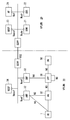
- FIG. 1 shows a configuration example of a wireless communication network (ie, 5GS) according to the present embodiment.
- Each of the elements shown in FIG. 1 is a network function and provides an interface defined by the 3rd Generation Partnership Project (3GPP).
- 3GPP 3rd Generation Partnership Project
- Each element (network function) shown in FIG. 1 is, for example, as a network element on dedicated hardware, as a running software instance on dedicated hardware, or on an application platform. It can be implemented as an instantiated virtualization function.
- HPLMN20 is a PLMN whose PLMN identity Mobile Country Code (MCC) and Mobile Network Code (MNC) match UE1's International Mobile Subscriber Identity (IMSI) MCC and MNC.
- MCC Mobile Country Code
- MNC Mobile Network Code
- IMSI International Mobile Subscriber Identity
- USIM Universal Subscriber Identity Module
- the USIM of UE1 may include an Equivalent HPLMN (EHPLMN) list.
- the EHPLMN list allows the provision of multiple HPLMN codes.
- the PLMN codes present in the EHPLMN list are replaced with the HPLMN codes derived from the IMSI for PLMN selection purposes.
- the EHPLMN list may include the HPLMN code derived from the IMSI.
- the VPLMN30 is a PLMN different from the HPLMN (if the EHPLMN list does not exist or is empty), or a PLMN different from the EHPLMN (if the EHPLMN list exists).
- UE1 may be referred to by a wireless terminal, a mobile terminal, a mobile station, or another name.
- UE1 utilizes the 5G connectivity service provided by HPLMN20 and VPLMN30 to communicate with DN50.
- the DN 50 may be the Internet or other service network.
- FIG. 1 shows the architecture of roaming with local breakout.
- UE1 user data traffic is routed directly to and from the Data Network (DN) 50 via VPLMN30.
- DN Data Network
- the "home routed” scenario may be applied.
- user data traffic is routed from VPLMN30 to HPLMN20 before being routed to DN50.
- UE1 is connected to the access network (ie, 5GAccessNetwork (5GAN)) 35 and connects the UserPlaneFunction (UPF) 36 in the core network (ie, 5Gcorenetwork (5GC)) of VPLMN30.
- AN35 includes Next Generation Radio Access Network (NG-RAN) and / or non-3GPP AN.
- the Non-3GPPAN may be a network that handles wireless LAN (WiFi) communication, or may be a network that handles wired communication represented by Wireline 5G Access Network (W-5GAN).
- the UPF36 may include a plurality of interconnected UPFs.
- the connectivity service between UE1 and DN50 is supported by one or more Protocol Data Unit (PDU) sessions.
- a PDU session is an association, session, or connection between UE1 and DN50.
- the PDU session is used to provide a PDU connectivity service (ie, exchange of PDUs between UE1 and DN50).
- UE1 establishes one or more PDU sessions between UE1 and UPF36 (i.e., PDU session anchor) to which DN50 is connected.
- UPF36 i.e., PDU session anchor
- a PDU session consists of a tunnel within the 5GC (N9 tunnel), a tunnel between the 5GC and AN35 (N3 tunnel), and one or more radio bearers.
- the UE 1 may establish a plurality of PDU sessions with each of the plurality of UPFs (PDU session anchors) 36 in order to access the plurality of DNs 50 at the same time (concurrently).
- AMF32 is one of the network functions in the 5GC Control Plane of VPLMN30.
- the AMF 32 provides the termination of the RAN Control Plane (CP) interface (i.e., N2 interface).
- AMF32 terminates one (single) signaling connection (i.e., N1 NAS signaling connection) with UE1 and provides registration management, connection management, and mobility management.
- the AMF 32 provides NF services (services) to NF consumers (e.g. other AMFs and Session Management Function (SMF) 33) on a service-based interface (i.e., Namf interface).
- the NF service provided by AMF32 includes a communication service (Namf_Communication).
- AMF 32 uses NF services provided by other NFs (Network Slice Selection Function (NSSF) 34 of e.g., VPLMN 30 and Unified Data Management (UDM) 21 of HPLMN 20).
- NSSF Network Slice Selection Function
- UDM Unified Data Management
- the SMF33 is one of the network functions in 5GC Control Plane of VPLMN30.
- the SMF 33 manages the PDU session.
- the SMF33 is a SM signaling message (NAS-SM messages, N1 SM messages) with the Non-Access-Stratum (NAS) Session Management (SM) layer of UE1 via the communication service provided by AMF32.
- NAS-SM messages Non-Access-Stratum
- SM Non-Access-Stratum Session Management
- the SMF 33 provides NF services (services) to NF consumers (e.g., AMF32, other SMFs) on a service-based interface (i.e., Nsmf interface).
- the NF service provided by SMF33 includes a PDU session management service (Nsmf_PDUSession).
- the NF service allows the NF consumer (e.g., AMF32) to handle PDU sessions.
- the SMF 33 may be an Intermediate SMF (I-SMF).
- I-SMF is inserted between the AMF 32 and the original SMF as needed when the UPF 36 belongs to a different SMF service area and cannot be controlled by the original SMF.
- NSSF34 is one of the network functions in the 5GC Control Plane of VPLMN30.
- the AMF32 or NSSF34 determines the mapping of the Configured NSSAI to the HPLMN Subscribed S-NSSAI (s) for the serving PLMN (i.e., VPLMN30). Further, the AMF32 or NSSF34 determines the mapping of the Allowed NSSAI to the HPLMN Subscribed S-NSSAI (s) for the serving PLMN (i.e., VPLMN30).
- the Configured NSSAI is provisioned into UE1 by the serving PLMN (i.e., VPLMN30) during the Registration or UE Configuration Update procedure.
- Configured NSSAI includes at least one S-NSSAIs, each applicable to at least one PLMNs.
- Allowed NSSAI indicates at least one S-NSSAIs that can be used by UE1 in the current (current) Registration Area of the serving PLMN (i.e., VPLMN30). Allowed NSSAI is provisioned into UE1 by serving PLMN (i.e., VPLMN30), for example during the registration procedure.
- UDM21 is one of the network functions in the 5GC Control Plane of HPLMN20.
- the UDM 21 provides access to a database (i.e., User Data Repository (UDR) 22) in which subscriber data (subscription information) is stored.
- UDM21 provides NF services (services) to NF consumers (eg VPLMN30 AMF32, VPLMN30 SMF33, and HPLMN20 AuthenticationServerFunction (AUSF) 23) on a service-based interface (ie, Nudm interface). do.
- the NF service provided by UDM21 includes a subscriber data management service. The NF service enables the NF consumer to retrieve the subscriber data and provides the updated subscriber data to the NF consumer.
- the network function for storing subscriber data may be UDM21 or UDR22.
- the UDR 22 may store the subscriber data.
- the split architecture if the split architecture is not used, it may be the UDM 21 that stores the subscriber data.
- the network function for storing subscriber data may be UDM21 or UDR22. In this specification, UDM21 and UDR22 may be read and described interchangeably.
- AUSF23 is one of the network functions in the 5GC Control Plane.
- AUSF23 provides NF services (services) to NF consumers (e.g., AMF32 of VPLMN30, UDM21 of HPLMN20) on a service-based interface (i.e., Nausf interface).
- the NF service provided by AUSF23 includes the Nausf_SoRProtection service.
- the Nausf_SoRProtection service provides UDM21 with security parameters to protect Steering of Roaming (SOR) information.
- SOR information is information that includes at least a list showing at least one VPLMN. The list may indicate at least one VPLMN capable of providing a particular communication service provided by a particular network slice of the HPLMN20. Specific examples of SOR information will be described later.
- AF 24 interacts with 5GC of HPLMN20 to provide services.
- AF24 may include Steering of Roaming AF (SOR-AF).
- SOR-AF Steering of Roaming AF
- the SOR-AF may send (or provide) a list of preferred PLMN / access technology combinations or a secured packet to the UDM 21.
- secured packets include list of preferred PLMN / access technology combinations encapsulated by (U) security algorithms for SIM applications.
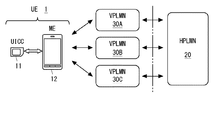
- FIG. 2 is a conceptual diagram showing PLMN selection by UE1.
- UE1 selects VPLMN from a plurality of VPLMNs (e.g., VPLMNs30A, 30B, and 30C) having a roaming agreement with HPLMN20, and tries to register to the selected VPLMN.
- UE1 includes Universal Integrated Circuit Card (UICC) 11 and Mobile Equipment (ME) 12, and UICC 11 includes USIM.
- UICC 11 may be an embedded UICC (embedded USIM) or an integrated UICC (integrated USIM).
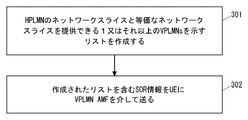
- FIG. 3 shows an example of the Steering of Roaming operation performed by UDM21 of HPLMN20.
- UDM 21 prepares a list showing one or more VPLMNs capable of providing network slices equivalent to the particular network slice of HPLMN20.
- the network slice of VPLMN equivalent to the specific network slice of HPLMN20 may mean the VPLMN network slice capable of providing the specific communication service provided by the specific network slice of HPLMN20. ..
- a VPLMN network slice equivalent to a particular network slice of HPLMN 20 may mean a VPLMN network slice to which a particular network slice of HPLMN 20 is mapped.
- a VPLMN network slice equivalent to a particular network slice of HPLMN20 may mean a VPLMN network slice that provides equivalent network capacity and / or network characteristics to that of a particular network slice of HPLMN20. good.
- a VPLMN network slice equivalent to a particular network slice of HPLMN 20 may mean the same type of VPLMN network slice as a particular network slice of HPLMN 20.
- a VPLMN network slice equivalent to a particular network slice of the HPLMN 20 may mean a VPLMN network slice that supports the network slice defined in the UE1 subscriber information.
- the network slice defined in the subscriber information may be identified by Subscribed S-NSSAI included in the subscriber information of UE1 held by UDM21 (or UDR22). Further, the network slice of the VPLMN that supports the network slice defined in the subscriber information of UE1 may mean the S-NSSAI mapped to the Subscribed S-NSSAI in the VPLMN.
- the list may show a combination of VPLMN and access technology. That is, the list may be list of preferred PLMN / access technology combinations.
- UDM21 may prepare a secured packet. Secured packets include list of preferred PLMN / access technology combinations encapsulated by (U) security algorithms for SIM applications.
- UDM21 may create a list of preferred PLMN / access technology combinations (or secured packet) by itself.
- the UDM 21 may interact with the SOR-AF24 to prepare a list of preferred PLMN / access technology combinations (or secured packets).
- the UDM 21 may receive the list of preferred PLMN / access technology combinations (or secured packet) from the SOR-AF24.
- the SOR-AF24 may create a list of preferred PLMN / access technology combinations (or secured packets) and supply it to the UDM 21.
- the UDM21 may include in the list in step 301 VPLMN (s) capable of providing a network slice equivalent to the specific network slice of HPLMN20 expected (or desired) by UE1. More specifically, if the UDM21 (or SOR-AF24) expects (or wishes) to use a particular network slice of HPLMN20, then a network slice equivalent to that particular network slice of HPLMN20. VPLMN (s) that can provide the above may be included in the list in step 301. If the UE1 expects (or wishes) to use a particular communication service provided by a particular network slice of the HPLMN20, the UDM21 (or SOR-AF24) can provide that communication service with VPLMN (s). ) May be included in the list of step 301.
- step 302 UDM21 sends SOR information to UE1 via AMF32 of VPLMN30.
- the SOR information includes the list created in step 301 (i.e., list of preferred PLMN / access technology combinations or secured packet).
- the list causes UE1 to prioritize one or more VPLMNs capable of providing network slices equivalent to a particular network slice of HPLMN20 in PLMN selection.
- UDM21 may use the Nausf_SoR Protection service provided by AUSF23 to transmit SOR information. Specifically, the UDM 21 receives security parameters (parameters) for protecting the SOR information from the AUSF23, and receives the list (ie, list of preferred PLMN / access technology combinations or secured packet) created in step 301. , May be sent with these security parameters.
- Security parameters include a message authentication code (MAC) value (ie, SoR-MAC-I AUSF ) and a counter value (ie, Counter SoR ).
- MAC message authentication code
- UE1 may update the "Operator Controlled PLMN Selector with Access Technology" list stored in UICC11 (USIM) or ME12 by the received list of preferred PLMN / access technology combinations. More specifically, UE1 may update the highest priority entry (the highest priority entries) in the “Operator Controlled PLMN Selector with Access Technology” list by the received list of preferred PLMN / access technology combinations. ..
- the "Operator Controlled PLMN Selector with Access Technology” list is one of the PLMN lists used by UE1 for PLMN selection.
- the "Operator Controlled PLMN Selector with Access Technology" list (or data file) is determined by the Network Operator (NOP) of the HPLMN20, and the preferred PLMNs of the NOP are defined in priority order.
- NOP Network Operator
- UE1 may update another PLMN list different from the "Operator Controlled PLMN Selector with Access Technology" list.
- UE1 may update the “UserControlledPLMNSelectorwithAccessTechnology” list by the listofpreferredPLMN / accesstechnologycombinations received from the UDM21 of the HPLMN20. More specifically, UE1 may update the highest priority entry (the highest priority entries) in the “User Controlled PLMN Selector with Access Technology” list by the received list of preferred PLMN / access technology combinations. ..
- the "User Controlled PLMN Selector with Access Technology" list (or data file) is determined by the user of UE1 and defines the preferred PLMNs of the user in priority order.
- the "User Controlled PLMN Selector with Access Technology” list is stored in UICC11 (USIM).
- UE1 may manage the "Operator Controlled PLMN Selector with Access Technology" list or a similar PLMNs list for each network slice of the HPLMN20. Specifically, if UE1 desires a particular network slice (or equivalent network slice) of the HPLMN20, UE1 uses the PLMN list for that particular network slice in the PLMN selection. In this case, the list sent from the HPLMN UDM 21 to the UE1 in step 302 may be unique to a particular network slice of the HPLMN 20. In other words, the list sent in step 302 may be associated with a particular network slice of HPLMN20. UE1 updates the PLMN list for a particular network slice using the list received in step 302.
- the UE1 When UE1 receives the list for each network slice of HPLMN20 in step 302, the UE1 selects PLMN using any of the lists at the discretion of UE1. UE1 may also use the received list to update the PLMN list for a particular network slice before making a PLMN selection.
- UE1 may hold a "Sliceaware PLMN selector with Access Technology" data file that is different from the "Operator Controlled PLMN Selector with Access Technology" data file and the "User Controlled PLMN Selector with Access Technology” data file.
- the UE NAS if the UE NAS expects (or wishes) to use the specific communication service provided by the specific network slice of the HPLMN 20 when the PLMN selection is made, the UE NAS will "Slice aware PLMN". Select PLMN based on the "selector with Access Technology" data file.
- This Sliceaware PLMN selector with Access Technology ”data file may be stored in advance in UE1 (UICC11 (USIM) or ME12), or may be stored in advance by a provider (Communication Service Provider (CSP)) that provides the specific communication service. It may be provided directly to UE1 or via the Operator before or at the time of providing the service to UE1.
- UE1 UICC11 (USIM) or ME12
- CSP Communication Service Provider
- UE1 may select PLMN based on the "Slice aware PLMN selector with Access Technology" data file when using a specific communication service provided by a specific network slice of HPLMN20. For example, UE1 may update the “Slice awareness PLMN selector with Access Technology” list by the list of preferred PLMN / access technology combinations received from the UDM 21. More specifically, UE1 may update the highest priority entry (the highest priority entries) in the “Slice aware PLMN selector with Access Technology” list by the received list of preferred PLMN / access technology combinations. ..
- the “Sliceaware PLMN selector with Access Technology” list (or data file) is determined by the provider (Communication Service Provider (CSP)) that provides the specific communication service provided by the specific network slice of the HPLMN20, and is determined by the CSP. Define preferred PLMNs in priority order.
- CSP Commonation Service Provider
- UICC11 UICC11
- the HPLMN20 can easily select a VPLMN capable of providing a network slice equivalent to a specific network slice of the HPLMN20 for the roaming UE1.
- the HPLMN20 can easily choose to select a VPLMN available for a particular communication service provided by a particular network slice of the HPLMN20 to the roaming UE1.
- the procedure of FIG. 3 may be performed during the procedure of registering UE1 in any VPLMN.
- the procedure of FIG. 3 may be HPLMN-led after UE1 has registered with any VPLMN.
- the UDM 21 may send SOR information to the UE 1 by a DL NAS Transport message via the VPLMN (e.g., AMF32).
- the UDM21 registers the identifier (eg, S-NSSAI) of a particular network slice (referred to as the first network slice) of the HPLMN20 with any VPLMN (eg, VPLMN30A) for UE1.
- the identifier eg, S-NSSAI
- the VPLMN e.g. VPLMN30A
- the list of step 301 is sent to UE1. You may.
- the UE1 subscription data stored in the UDR22 may include priority information for HPLMN network slices.
- the priority information indicates the priority among multiple HPLMN network slices.
- the UDM 21 may decide whether or not to send the list of step 301 to the UE1 based on the priority information included in the subscriber data of the UE1. For example, UDM21 indicates that UE1 desires a second network slice of HPLMN20 in addition to the first network slice, and that the first network slice takes precedence over the second network slice (priority).
- the list of steps 301 may be sent to UE1 if the information) indicates and the serving VPLMN (eg, VPLMN30A) does not provide a network slice equivalent to the first network slice.
- the serving VPLMN eg, VPLMN30A
- UDM21 states that UE1 desires a second network slice of HPLMN20 in addition to the first network slice, and that the first network slice takes precedence over the second network slice (subscriber data).
- the list of step 301 may be sent to UE1 if the priority information) indicates.
- the UDM 21 receives an indication from UE1 via any VPLMN (eg, VPLMN30A) indicating that UE1 desires a PLMN selection that prioritizes the availability of network slices.
- the list of steps 301 may be sent to UE1.
- the PLMN selection that prioritizes the availability of network slices may be referred to as slice-aware PLMN selection.
- the display may be referred to as a display indicating slice-aware PLMN selection.
- the "Operator Controlled PLMN Selector with Access Technology" list or similar PLMNs list may be registered on a non-public network (NPN).
- the NPN may be a Standalone NPN (SNPN) or a Public Network Integrated NPN (PNI-NPN).
- SNPN Standalone NPN
- PNI-NPN Public Network Integrated NPN
- the NPN does not rely on the network functionality provided by the PLMN.
- the NPN is deployed as a PNI-NPN, the NPN is made available via the PLMN.
- the "Operator Controlled PLMN Selector with Access Technology" list or similar PLMNs list may include a Network identifier (NID) in addition to the PLMN ID.
- NID Network identifier
- the “Operator Controlled PLMN Selector with Access Technology” list or similar PLMNs list may include a Closed Access Group (CAG) identifier in addition to the PLMN ID.
- CAG Closed
- ⁇ Second embodiment> The configuration example of the wireless communication network according to the present embodiment is the same as the example shown in FIGS. 1 and 2.
- the present embodiment provides a specific example of transmission of SOR information from UDM21 to UE1.
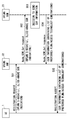
- FIG. 4 shows an example of SOR information transmission according to this embodiment.
- UE1 transmits a Non-Access Stratum (NAS) registration request (REGISTRATION REQUEST) message to VPLMN AMF32.
- the NAS registration request message includes at least one HPLMN network slice identifier (i.e., HPLMN S-NSSAI (s)).
- HPLMN S-NSSAI HPLMN network slice identifier
- the NAS registration request message may be one of "initial registration", “periodic registration updating", and "mobility registration updating”.
- the HPLMN S-NSSAI (s) may be included in the Mapping Of Requested NSSAI in the NAS registration request message.
- Including HPLMN S-NSSAI (s) in MappingOfRequested NSSAI may mean that the HPLMN S-NSSAI is set as Mapped S-NSSAI of Requested NSSAI.
- the HPLMN S-NSSAI (s) is included in the NAS registration request message as Mapping Of Requested NSSAI
- the HPLMN S-NSSAI (s) that is the Mapped S-NSSAI and the corresponding VPLMN S-NSSAI S-NSSAI Value is configured.
- UE1 has an HPLMN S-NSSAI (s) for an established PDU session (s)
- UE1 will set the corresponding VPLMN S-NSSAI in the S-NSSAI Value configuration.
- only the HPLMN S-NSSAI (s) may be included in the Mapping Of Requested NSSAI in the NAS registration request message.
- UE1 may set HPLMNS-NSSAIs in the requested NSSAI included in the NAS registration request message in order of priority (decreasing order). In some implementations, UE1 may set HPLMNS-NSSAI to RequestedNSSAI with data indicating that it is a required network slice as UE1 (mandatory) or otherwise (option).
- the VPLMN AMF 32 implements a Nudm_SDM_Get service operation (invoke) on the HPLMN UDM 21 in order to acquire the subscriber data of the UE1.
- the message (Nudm_SDM_Get request) sent from the AMF 32 to the UDM 21 in step 402 indicates the HPLMN S-NSSAI (s) sent from the UE 1.
- the AMF 32 may set an access technology type indicating the access technology in which the UE 1 communicates with the AN35 in the message (Nudm_SDM_Get request) sent from the AMF 32 to the UDM 21.
- AMF32 may set the location information about UE1 in the message (Nudm_SDM_Get request) sent from AMF32 to UDM21.
- the location information related to UE1 is VPLMNID of VPLMN including MCC and MNC, MCC of VPLMNID, E-UTRANCellGlobalIdentification (ECGI) of AN35 to which UE1 is connected, and NRCellGlobal of AN35 to which UE1 is connected. It may be Identity (NCGI) or other information that represents the region.
- the HPLMN UDM21 decides whether or not to send the SOR information to UE1.
- the UDM21 sends SOR information to UE1 if the serving VPLMN does not provide a network slice equivalent to at least one network slice identified by HPLMN S-NSSAI (s) sent from UE1. May be decided.
- the SOR information includes list of preferred PLMN / access technology combinations (or secured packets).
- the list of preferred PLMN / access technology combinations indicates at least one VPLMN capable of providing a network slice equivalent to at least one network slice identified by the HPLMN S-NSSAI (s) sent from UE1.
- the UDM 21 may decide to send the UE 1 SOR information, including the optimal PLMN information for at least one network slice identified by the HPLMN S-NSSAI (s) sent from the UE 1.
- the UDM 21 may decide to send the SOR information if the subscriber data of the UE1 indicates that it will send the SOR information including the optimal PLMN information for the network slice.
- UDM21 may decide to send SOR information to UE1 based on the HPLMN S-NSSAI prioritizing order sent from UE1.
- the UDM 21 may decide to send the SOR information if the subscriber data of the UE1 indicates that it will send the SOR information including the optimal PLMN information for the network slice.
- the priority of PLMN information may be set in the list of VPLMN included in the SOR information according to the priority of the HPLMN S-NSSAI. For example, PLMN, which provides a network slice equivalent to HPLMN S-NSSAI, which has the highest priority, may be set as the highest priority in the SOR information.
- the HPLMN S-NSSAI set with the highest priority may mean the HPLMN S-NSSAI set first in the list of HPLMS-NSSAIs sent from UE1.
- Setting the PLMN as the highest priority in the SOR information may mean that the PLMN is set first in the list of preferred PLMN / access technology combinations.
- the PLMN that provides the network slice equivalent to the HPLMN S-NSSAI whose priority is set to the nth may be set as the nth priority in the SOR information.
- the HPLMN S-NSSAI whose priority is set to the nth position may mean the HPLMN S-NSSAI set to the nth position in the list of HPLMS-NSSAIs sent from UE1.
- Setting the PLMN as the nth priority in the SOR information may mean setting the PLMN to the nth of the list of preferred PLMN / access technology combinations.
- the SOR information indicates at least one VPLMN capable of providing a network slice equivalent to the network slice identified by the highest priority HPLMN S-NSSAI in the order of priority of HPLMN S-NSSAI sent from UE1. It may include a list.
- the highest priority HPLMN S-NSSAI is the HPLMN S-NSSAI with the highest priority in the list of HPLM S-NSSAIs sent from UE1, and the list of HPLM S-NSSAIs sent from UE1. It may be the HPLMN S-NSSAI set first in.
- UDM21 may decide to send SOR information to UE1 based on the needs indicated by UE1. Further or instead, the UDM 21 may decide to send SOR information to the UE 1 based on the access technology type used by the UE 1 for communication. Further or instead, the UDM 21 may decide to send SOR information to the UE 1 based on the location information about the UE 1.
- the UDM21 has at least one of the HPLMN S-NSSAI prioritizing order sent from UE1, the need indicated by UE1, the access technology type used by UE1 for communication, and the location information about UE1.
- the content of the SOR information itself may be determined based on the above.
- the UDM21 in order to determine whether to send SOR information to UE1, the UDM21 will ask if the HPLMN S-NSSAI (s) priority information sent from UE1 is present in the UE1 subscriber data. You may consider whether or not. For example, the priority information associated with the HPLMN S-NSSAI (s) sent from UE1 exists in the subscriber data, and the network slice equivalent to the network slice identified by the HPLMN S-NSSAI is served VPLMN. May decide that UDM21 sends SOR information to UE1 if it does not provide.
- This SOR information includes a list showing at least one VPLMN capable of providing a network slice equivalent to at least one network slice identified by the HPLMN S-NSSAI (s).
- the serving VPLMN does not provide a network slice equivalent to the HPLMN S-NSSAI that should be given the highest priority based on the priority information in the subscriber data among the multiple HPLMN S-NSSAIs sent from UE1.
- UDM21 may decide to send SOR information to UE1.
- This SOR information includes a list showing at least one VPLMN that can provide a network slice equivalent to the network slice identified by the highest priority HPLMN S-NSSAI.
- the UDM21 may decide to send the SOR information to UE1.
- the UDM 21 may decide to send the SOR information to the UE1 if the subscriber data of the UE1 indicates to send the SOR information including the PLMN information optimal for the network slice to the UE1.
- This SOR information includes a list showing at least one VPLMN that can provide a network slice equivalent to at least one network slice identified by the highest priority HPLMN S-NSSAI.
- UDM21 in order to determine whether to send SOR information to UE1, UDM21 considers whether UE1's subscriber data indicates that it will send SOR information containing the optimal PLMN information for the network slice. You may. Further or instead, in order to determine whether or not to send the SOR information to the UE1, the UDM 21 does not indicate that the UE1 subscriber data sends the SOR information, but the operator policy sends the SOR information. You may consider whether or not to indicate.
- UDM21 does not send or sends SOR information to UE1 if the priority information associated with HPLMN S-NSSAI (s) sent from UE1 does not exist in the subscriber data. You may prohibit it.
- the UDM 21 may interact with the SOR-AF24 to prepare the list of preferred PLMN / access technology combinations (or secured packets) described above.
- UDM21 may interact with AUSF23 to prepare the SOR information described above.
- the UDM 21 sends a Nudm_SDM_Get response to the VPLMN AMF32.
- the response includes SOR information in the UE1 subscriber data (e.g., Access and Mobility Subscription data).
- the VPLMN AMF 32 transparently sends the received SOR information to the UE 1 via a registration approval (REGISTRATION ACCEPT) message.
- UE1 receives the SOR information.
- UE1 updates the "Operator Controlled PLMN Selector with Access Technology" list by the list of preferred PLMN / access technology combinations included in the SOR information. In this case, if it is determined based on the list that UE1 is in automatic network selection mode and UE1 has a higher priority VPLMN than the current serving VPLMN (campedVPLMN), UE1 is on the higher priority VPLMN. Try to get service on.
- UE1 may update the "Slice aware PLMN selector with Access Technology" list by the list of preferred PLMN / access technology combinations included in the SOR information. In this case, if it is determined based on the list that UE1 is in automatic network selection mode and UE1 has a higher priority VPLMN than the current serving VPLMN (campedVPLMN), UE1 is on the higher priority VPLMN. Try to get service on.
- the list of preferred PLMN / access technology combinations included in the SOR information may be registered with NPN.
- the NPN may be an SNPN or a PNI-NPN.
- the list of preferred PLMN / access technology combinations may include a NID in addition to the PLMN ID in order to indicate the SNPN.
- the list of preferred PLMN / access technology combinations may include a CAG Identifier in addition to the PLMN ID.
- ⁇ Third embodiment> The configuration example of the wireless communication network according to the present embodiment is the same as the example shown in FIGS. 1 and 2.
- the present embodiment provides a specific example of transmission of SOR information from UDM21 to UE1.
- FIG. 5 shows an example of SOR information transmission according to this embodiment.
- the UE1 displays an indication via the VPLMN AMF32 via the VPLMN AMF32 to indicate that the UE1 desires a PLMN selection that prioritizes the availability of network slices in one of the VPLMN registration procedures. Send to UDM21.
- the PLMN selection that prioritizes the availability of network slices may be referred to as slice-aware PLMN selection.
- the display may be referred to as a display indicating slice-aware PLMN selection.
- UE1 includes the display in the NAS registration request message sent to VPLMN AMF32.
- the NAS registration request message may be one of "initial registration", “periodic registration updating", and "mobility registration updating”.
- the registration request message further includes at least one HPLMN network slice identifier (i.e., HPLMN S-NSSAI (s)).
- HPLMN S-NSSAI (s) may be included in the Mapping Of Requested NSSAI in the NAS registration request message.
- Including HPLMN S-NSSAI (s) in MappingOfRequested NSSAI may mean that the HPLMN S-NSSAI is set as Mapped S-NSSAI of Requested NSSAI. Instead of this, the HPLMN S-NSSAI (s) may be included in the Requested NSSAI in the NAS registration request message.
- UE1 may set HPLMNS-NSSAIs to the Requested NSSAI included in the NAS registration request message in order of priority (decreasing order). In some implementations, UE1 may set HPLMNS-NSSAI to RequestedNSSAI with data indicating that it is a required network slice as UE1 (mandatory) or otherwise (option).
- the VPLMN AMF 32 implements a Nudm_SDM_Get service operation (invoke) on the HPLMN UDM 21 in order to acquire the subscriber data of the UE1.
- the message (Nudm_SDM_Get request) sent from the AMF 32 to the UDM 21 in step 502 indicates the display sent from the UE 1 together with the HPLMN S-NSSAI (s).
- the AMF 32 may set an access technology type indicating the access technology in which the UE 1 communicates with the AN35 in the message (Nudm_SDM_Get request) sent from the AMF 32 to the UDM 21.
- AMF32 may set the location information about UE1 in the message (Nudm_SDM_Get request) sent from AMF32 to UDM21.
- the location information regarding UE1 may be VPLMNID of VPLMN including MCC and MNC, MCC of VPLMNID, ECGI of AN35 to which UE1 is connected, NCGI of AN35 to which UE1 is connected, or other information representing a region. ..
- the HPLMN UDM21 determines whether or not to send the SOR information to UE1.
- the UDM21 receives a display indicating slice-aware PLMN selection from UE1 and is equivalent to at least one network slice identified by HPLMN S-NSSAI (s) sent from UE1. May be determined to send SOR information to UE1 if the serving VPLMN does not provide.
- the SOR information includes list of preferred PLMN / access technology combinations (or secured packets).
- the list of preferred PLMN / access technology combinations indicates at least one VPLMN capable of providing a network slice equivalent to at least one network slice identified by the HPLMN S-NSSAI (s) sent from UE1.
- the UDM 21 may decide to send the UE 1 SOR information, including the optimal PLMN information for at least one network slice identified by the HPLMN S-NSSAI (s) sent from the UE 1. In addition to this, the UDM 21 may decide to send the SOR information based on the display indicating the slice-aware PLMN selection sent from the UE1.
- UDM21 may decide to send SOR information to UE1 based on the HPLMN S-NSSAI prioritizing order sent from UE1. In addition to this, the UDM 21 may decide to send the SOR information based on the display indicating the slice-aware PLMN selection sent from the UE1. Specifically, the priority of PLMN information may be set in the list of VPLMN included in the SOR information according to the priority of the HPLMN S-NSSAI. For example, PLMN, which provides a network slice equivalent to HPLMN S-NSSAI, which has the highest priority, may be set as the highest priority in the SOR information.
- the HPLMN S-NSSAI set with the highest priority may mean the HPLMN S-NSSAI set first in the list of HPLMS-NSSAIs sent from UE1.
- Setting the PLMN as the highest priority in the SOR information may mean that the PLMN is set first in the list of preferred PLMN / access technology combinations.
- the PLMN that provides the network slice equivalent to the HPLMN S-NSSAI whose priority is set to the nth may be set as the nth priority in the SOR information.
- the HPLMN S-NSSAI whose priority is set to the nth position may mean the HPLMN S-NSSAI set to the nth position in the list of HPLMS-NSSAIs sent from UE1.
- Setting the PLMN as the nth priority in the SOR information may mean setting the PLMN to the nth of the list of preferred PLMN / access technology combinations.
- the SOR information indicates at least one VPLMN capable of providing a network slice equivalent to the network slice identified by the highest priority HPLMN S-NSSAI in the order of priority of HPLMN S-NSSAI sent from UE1. It may include a list.
- the highest priority HPLMN S-NSSAI is the HPLMN S-NSSAI with the highest priority in the list of HPLM S-NSSAIs sent from UE1, and the list of HPLM S-NSSAIs sent from UE1. It may be the HPLMN S-NSSAI set first in.
- the UDM21 is at least one of the HPLMN S-NSSAI prioritizing order sent from UE1, the need indicated by UE1, the access technology type used by UE1 for communication, and the location information about UE1.
- the content of the SOR information itself may be determined based on.
- the UDM 21 may not send or prohibit sending SOR information to UE1 if it does not receive a display indicating slice-aware PLMN selection from UE1.
- the UDM21 determines that the HPLMN S-NSSAI (s) sent from UE1 is subject to slice-aware PLMN selection. Further consideration may be given to whether or not the UE1 subscriber data indicates. Specifically, a network in which at least one of one or more HPLMN S-NSSAIs sent from UE1 is a slice-aware PLMN selection target (subject to) and is identified by the HPLMN S-NSSAI. If the serving VPLMN does not provide a network slice equivalent to the slice, it may decide to send the SOR information to UE1.
- This SOR information includes a list showing at least one VPLMN capable of providing a network slice equivalent to at least one network slice identified by the HPLMN S-NSSAI (s) being selected for slice-aware PLMN.
- UDM21 in order to determine whether to send SOR information to UE1, UDM21 considers whether UE1's subscriber data indicates that it will send SOR information containing the optimal PLMN information for the network slice. You may. Further or instead, in order to determine whether or not to send the SOR information to the UE1, the UDM 21 does not indicate that the UE1 subscriber data sends the SOR information, but the operator policy sends the SOR information. You may consider whether or not to indicate.
- the UDM21 determines whether the UE1 subscriber data indicates that the HPLMN S-NSSAI (s) sent from the UE1 is subject to the slice-aware PLMN selection, and slice.
- -Aware PLMN may be determined based on whether or not the display indicating the selection is received, whether or not the SOR information can be transmitted, and at least one of its contents.
- the display indicating slice-aware PLMN selection may mean that UE1 desires PLMN selection that prioritizes the availability of network slices.
- the absence of a slice-aware PLMN selection indicator may mean that UE1 does not want a PLMN selection that prioritizes the availability of network slices.
- the UDM 21 when the UDM 21 receives a display indicating slice-aware PLMN selection from UE1, it means that the PLMN selection by UE1 gives priority (or consideration) to the availability of slice service. Therefore, for example, subscriber data indicates that HPLMN S-NSSAIs including S-NSSAI # 1 and S-NSSAI # 2 are received from UE1 and S-NSSAI # 1 is targeted for Slice aware NW selection. If S-NSSAI # 2 is included in Allowed NSSAI and S-NSSAI # 1 is included in Rejected NSSAI, UDM21 is SOR information (Sliceaware PLMN) indicating that the slice service in S-NSSAI # 1 can be used.
- S-NSSAI # 2 is included in Allowed NSSAI
- S-NSSAI # 1 is included in Rejected NSSAI
- UDM21 is SOR information (Sliceaware PLMN) indicating that the slice service in S-NSSAI # 1 can be used.
- the SOR information supports S-NSSAI # 1 (that is, the network slice of HPLMN identified by S-NSSAI # 1). May mean SOR information including PLMN information (which can provide a network slice equivalent to).
- the UDM 21 does not receive the display indicating slice-aware PLMN selection from UE1, it means that the PLMN selection by UE1 does not prioritize (or consider) whether or not the slice service can be provided.
- subscriber data indicates that HPLMN S-NSSAIs including S-NSSAI # 1 and S-NSSAI # 2 are received from UE1 and S-NSSAI # 1 is targeted for Slice aware NW selection. If S-NSSAI # 2 is included in Allowed NSSAI and S-NSSAI # 1 is included in Rejected NSSAI, UDM21 is SOR information (Sliceaware PLMN) indicating that the slice service in S-NSSAI # 1 can be used. It is not necessary to notify UE1 of selection information (list of PLMN)).
- Steps 504 and 505 are the same as steps 404 and 405 of FIG.
- the list of preferred PLMN / access technology combinations included in the SOR information may be registered with NPN.
- the NPN may be an SNPN or a PNI-NPN.
- the list of preferred PLMN / access technology combinations may include a NID in addition to the PLMN ID in order to indicate the SNPN.
- the list of preferred PLMN / access technology combinations may include a CAG Identifier in addition to the PLMN ID.
- the HPLMN20 (UDM21) has SOR information (eg, list of preferred PLMN /) adapted to slice-aware PLMN selection only when UE1 desires PLMN selection that prioritizes network slice availability. access technology combinations) can be provided to UE1.
- SOR information eg, list of preferred PLMN /
- UE1 desires PLMN selection that prioritizes network slice availability. access technology combinations
- UE1 may encrypt the display indicating slice-aware PLMN selection using the encryption key of HPLMN20.
- the encrypted display is transparently sent to the HPLMN UDM 21 by the VPLMN AMF32. More specifically, UE1 may encrypt the display with the public key of HPLMN20.
- the UDM 21 may decrypt the display using the corresponding private key of the HPLMN 20. This prevents the HPLMN20's policy regarding slice-aware PLMN selection from being known to the VPLMN30.
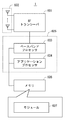
- FIG. 6 is a block diagram showing a configuration example of UE1.
- Radio Frequency (RF) transceiver 601 performs analog RF signal processing to communicate with the RAN node.
- the RF transceiver 601 may include a plurality of transceivers.
- the analog RF signal processing performed by the RF transceiver 601 includes frequency up-conversion, frequency down-conversion, and amplification.
- the RF transceiver 601 is coupled with the antenna array 602 and the baseband processor 603.
- the RF transceiver 601 receives modulation symbol data (or OFDM symbol data) from the baseband processor 603, generates a transmit RF signal, and supplies the transmit RF signal to the antenna array 602. Further, the RF transceiver 601 generates a baseband reception signal based on the received RF signal received by the antenna array 602, and supplies the baseband reception signal to the baseband processor 603.
- the RF transceiver 601 may include an analog beamformer circuit for beamforming.
- the analog beamformer circuit includes, for example, a plurality of phase shifters and a plurality of power amplifiers.
- the baseband processor 603 performs digital baseband signal processing (data plane processing) and control plane processing for wireless communication.
- Digital baseband signal processing includes (a) data compression / restoration, (b) data segmentation / concatenation, (c) transmission format (transmission frame) generation / decomposition, and (d) transmission path coding / decoding. , (E) Modulation (symbol mapping) / demodulation, and (f) Generation of OFDM symbol data (baseband OFDM signal) by Inverse Fast Fourier Transform (IFFT).
- the control plane processing includes layer 1 (eg, transmission power control), layer 2 (eg, wireless resource management, and hybrid automatic repeat request (HARQ) processing), and layer 3 (eg, attach, mobility, and call management). Includes communication management (signaling regarding).
- digital baseband signal processing by the baseband processor 603 includes a ServiceDataAdaptationProtocol (SDAP) layer, a PacketDataConvergenceProtocol (PDCP) layer, a RadioLinkControl (RLC) layer, a MediumAccessControl (MAC) layer, and a Physical. (PHY) layer signal processing may be included.
- SDAP ServiceDataAdaptationProtocol
- PDCP PacketDataConvergenceProtocol
- RLC RadioLinkControl
- MAC MediumAccessControl
- PHY Physical.
- control plane processing by the baseband processor 603 may include processing of Non-Access Stratum (NAS) protocol, Radio Resource Control (RRC) protocol, MAC Control Elements (CEs), and Downlink Control Information (DCIs).
- NAS Non-Access Stratum
- RRC Radio Resource Control
- CEs MAC Control Elements
- DCIs Downlink Control Information
- the baseband processor 603 may perform Multiple Input Multiple Output (MIMO) encoding and precoding for beamforming.
- MIMO Multiple Input Multiple Output
- the baseband processor 603 includes a modem processor (eg, Digital Signal Processor (DSP)) that performs digital baseband signal processing and a protocol stack processor (eg, Central Processing Unit (CPU) or Micro Processing Unit (eg, Central Processing Unit (CPU)) that performs control plane processing. MPU)) may be included.
- DSP Digital Signal Processor
- MPU Central Processing Unit
- the protocol stack processor that performs the control plane processing may be shared with the application processor 604 described later.
- the application processor 604 is also called a CPU, MPU, microprocessor, or processor core.
- the application processor 604 may include a plurality of processors (a plurality of processor cores).
- the application processor 604 is a system software program (Operating System (OS)) read from memory 606 or a memory (not shown) and various application programs (eg, call application, web browser, mailer, camera operation application, music playback). By executing the application), various functions of UE1 are realized.
- OS Operating System
- the baseband processor 603 and the application processor 604 may be integrated on one chip, as shown by the dashed line (605) in FIG.
- the baseband processor 603 and the application processor 604 may be implemented as one System on Chip (SoC) device 605.
- SoC devices are sometimes referred to as system Large Scale Integration (LSI) or chipsets.
- the memory 606 is a volatile memory, a non-volatile memory, or a combination thereof.
- the memory 606 may include a plurality of physically independent memory devices.
- the volatile memory is, for example, Static Random Access Memory (SRAM), Dynamic RAM (DRAM), or a combination thereof.
- the non-volatile memory is a mask ReadOnlyMemory (MROM), Electrically ErasableProgrammableROM (EEPROM), flash memory, or hard disk drive, or any combination thereof.
- the memory 606 may include an external memory device accessible from the baseband processor 603, the application processor 604, and the SoC 605.
- the memory 606 may include an internal memory device integrated within the baseband processor 603, application processor 604, or SoC 605.
- the memory 606 may include a memory in a Universal Integrated Circuit Card (UICC).
- UICC Universal Integrated Circuit Card
- the memory 606 may store one or more software modules (computer programs) 607 including instruction groups and data for performing processing by the UE 1 described in the plurality of embodiments described above.
- the baseband processor 603 or application processor 604 is configured to read the software module 607 from memory 606 and execute it to perform the processing of UE1 described with reference to the drawings in the above embodiments. May be done.
- control plane processing and operation performed by the UE 1 described in the above-described embodiment is performed by other elements other than the RF transceiver 601 and the antenna array 602, that is, at least one of the baseband processor 603 and the application processor 604, and the software module 607. It can be realized by the memory 606 that stores the above.
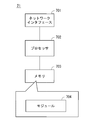
- FIG. 7 shows a configuration example of UDM21.
- Other network elements such as AUSF23, AF24 (e.g., SOF-AF), AMF32, and NSSF34 may have the same configuration as shown in FIG.
- the UDM 21 includes a network interface 701, a processor 702, and a memory 703.
- the network interface 701 is used, for example, to communicate with other network functions (NFs) or nodes.
- the network interface 701 may include, for example, a network interface card (NIC) compliant with the IEEE802.3 series.
- NIC network interface card
- the processor 702 may be, for example, a microprocessor, a MicroProcessingUnit (MPU), or a CentralProcessingUnit (CPU).
- the processor 702 may include a plurality of processors.
- the memory 703 is composed of a volatile memory and a non-volatile memory.
- the memory 703 may include a plurality of physically independent memory devices.
- the volatile memory is, for example, Static Random Access Memory (SRAM), Dynamic RAM (DRAM), or a combination thereof.
- the non-volatile memory is a mask ReadOnlyMemory (MROM), Electrically ErasableProgrammableROM (EEPROM), flash memory, or hard disk drive, or any combination thereof.
- the memory 703 may include storage located away from the processor 702. In this case, the processor 702 may access the memory 703 via the network interface 701 or an I / O interface (not shown).
- the memory 703 may store one or more software modules (computer programs) 704 including instruction groups and data for performing processing by the UDM 21 described in the plurality of embodiments described above.
- the processor 702 may be configured to read the software module 704 from the memory 703 and execute it to perform the processing of the UDM 21 described in the embodiments described above.
- the wireless terminal (User Equipment (UE)) in the present specification is an entity connected to a network via a wireless interface.
- the wireless terminal (UE) of the present specification is not limited to a dedicated communication device, and is any device as follows having the communication function of the wireless terminal (UE) described in the present specification. You may.
- UE User terminal (as a word used in 3GPP)", “mobile station”, “mobile terminal”, “mobile device”, and “wireless”
- wireless device is generally intended to be synonymous with each other.
- UE is a stand-alone mobile station such as terminals, mobile phones, smartphones, tablets, cellular IoT terminals, IoT devices, etc.
- the terms “UE” and “wireless terminal” also include devices that have been stationary for extended periods of time.
- UE is, for example, production equipment / manufacturing equipment and / or energy related machinery (for example, boilers, engines, turbines, solar panels, wind power generators, hydroelectric generators, thermal power generators, nuclear power generators, storage batteries, nuclear systems, etc.
- UE is, for example, transportation equipment (for example, vehicles, automobiles, two-wheeled vehicles, bicycles, trains, buses, rear cars, rickshaws, ships (ship and other watercraft), airplanes, rockets, artificial satellites, drones, balloons, etc.) There may be.
- transportation equipment for example, vehicles, automobiles, two-wheeled vehicles, bicycles, trains, buses, rear cars, rickshaws, ships (ship and other watercraft), airplanes, rockets, artificial satellites, drones, balloons, etc.
- the UE may be, for example, an information communication device (for example, a computer and related devices, a communication device and related devices, electronic components, etc.).
- an information communication device for example, a computer and related devices, a communication device and related devices, electronic components, etc.
- UEs are, for example, refrigerating machines, refrigerating machine application products and equipment, commercial and service equipment, vending machines, automatic service machines, office machinery and equipment, consumer electrical and electronic machinery and equipment (for example, audio equipment, speakers, etc. It may be a radio, video equipment, television, oven range, rice cooker, coffee maker, dishwasher, washing machine, dryer, electric fan, ventilation fan and related products, vacuum cleaner, etc.).
- the UE may be, for example, an electronic application system or an electronic application device (for example, an X-ray device, a particle accelerator, a radioactive material application device, a sound wave application device, an electromagnetic application device, a power application device, etc.).
- an electronic application system for example, an X-ray device, a particle accelerator, a radioactive material application device, a sound wave application device, an electromagnetic application device, a power application device, etc.
- UEs are, for example, light bulbs, lighting, weighing machines, analyzers, testing machines and measuring machines (for example, smoke alarms, personal alarm sensors, motion sensors, wireless tags, etc.), watches or clocks, physics and chemistry machines, etc. It may be an optical machine, a medical device and / or a medical system, a weapon, a clockwork tool, or a hand tool.
- the UE may be, for example, a personal digital assistant or device with wireless communication capabilities (eg, an electronic device to which or is configured to install or insert a wireless card, wireless module, etc. (eg, personal computer, electronic measuring instrument, etc.)). ) May be.
- a personal digital assistant or device with wireless communication capabilities eg, an electronic device to which or is configured to install or insert a wireless card, wireless module, etc. (eg, personal computer, electronic measuring instrument, etc.)).
- the UE may be, for example, a device or a part thereof that provides the following applications, services, and solutions in the "Internet of Things (IoT)" using wired or wireless communication technology.
- IoT devices include suitable electronics, software, sensors, network connections, etc. that allow devices to collect and exchange data with each other and with other communication devices.
- the IoT device may be an automated device that complies with software directives stored in internal memory. IoT devices may operate without the need for human supervision or response.
- the IoT device may remain inactive for a long period of time and / or for a long period of time. IoT devices can be implemented as part of a stationary device.
- IoT devices can be embedded in non-stationary devices (eg vehicles) or attached to animals or people that are monitored / tracked. IoT technology can be implemented on any communication device that can be connected to a communication network that sends and receives data regardless of human input control or software instructions stored in memory.
- the IoT device is sometimes called a Machine Type Communication (MTC) device, a Machine to Machine (M2M) communication device, or a Narrow Band-IoT (NB-IoT) UE.
- MTC Machine Type Communication
- M2M Machine to Machine
- NB-IoT Narrow Band-IoT
- the UE may support one or more IoT or MTC applications.
- MTC applications are listed in the list shown in 3GPP TS22.368 V13.2.0 (2017-01-13) Annex B (whose content is incorporated herein by reference). This list is not exhaustive and shows an example MTC application.
- the Service Area of the MTC application is Security, Tracking & Tracing, Payment, Health, Remote Maintenance / Control, Includes Metering and Consumer Devices.
- MTC applications related to security are surveillance systems (Surveillance systems), landline backups (Backup for landline), control of physical access (eg building access) (Control of physical access (eg to buildings)), and vehicles. / Includes driver security (Car / driver security).
- MTC applications for tracking and tracing are Fleet Management, Order Management, Telematics Insurance: Pay as you drive (PAYD), Asset Tracking, Navigation. Includes (Navigation), Traffic information, Road tolling, and Road traffic optimization / steering.
- MTC applications related to payment include point-of-sale information management (Point of sales (POS)), vending machines, and Gaming machines.
- POS Point of sales
- Gaming machines Examples of MTC applications related to payment include point-of-sale information management (Point of sales (POS)), vending machines, and Gaming machines.
- POS Point of sales
- Examples of health-related MTC applications are Monitoring vital signs, Supporting the aged or handicapped, Web Access Telemedicine points, and Remote diagnostics. including.
- MTC applications for remote maintenance / control are Sensors, Lighting, Pumps, Valves, Elevator control, Vending machine control, and vehicles. Includes diagnostics.
- MTC applications for weighing include Power, Gas, Water, Heating, Grid control, and Industrial metering.
- Examples of MTC applications for consumer devices include digital photo frames, digital cameras, and ebooks.
- MVNO Mobile Virtual Network Operator
- PBX Primary Branch eXchange
- MVNO Mobile Virtual Network Operator
- PBX Primary Branch eXchange
- / System PHS / Digital Cordless Telephone Service / System
- Point of sales (POS) System Point of sales
- Advertisement Transmission Service / System Multimedia Broadcast and Multicast Service (MBMS) Service / System
- V2X Vehicle to Everything: Vehicle-to-Vehicle Communication
- road-to-vehicle / pedestrian communication services / systems in-train mobile wireless services / systems, location information-related services / systems, disaster / emergency wireless communication services / systems, IoT (Internet of Things) services / systems , Community service / system, video distribution service / system, Femto cell application service / system, VoLTE (Voice over LTE) service / system, wireless tag service / system, billing service / system, radio on-demand service / system, roaming service
- the UE category described above is merely an application example of the technical idea and embodiment described in the present specification.
- the UEs herein are not limited to these examples, and one of ordinary skill in the art may make various modifications to them.
- the first PLMN is the Home PLMN (HPLMN) of the UE.
- the second PLMN is a PLMN different from the first PLMN. Network node.
- the at least one processor When the identifier of the first network slice is received from the UE via the second PLMN in the procedure for registering the UE in the second PLMN, and the second PLMN receives the equivalent network slice. If not provided, the list is configured to be sent to the UE.
- the network node described in Appendix 1. (Appendix 3) The at least one processor is configured to determine whether or not to send the list to the UE based on the priority information of the first network slice contained in the subscriber data of the UE. The network node described in Appendix 2.
- the at least one processor is such that the UE registers the identifier of the other at least one network slice of the first PLMN in addition to the first network slice in the procedure of registering the UE with the second PLMN.
- the subscriber data indicates that the first network slice takes precedence over all of the other at least one network slice when received via the second PLMN from the second PLMN. Is configured to send the list to the UE if does not provide the equivalent network slice.
- the network node described in Appendix 3. (Appendix 5) The identifier of the first network slice of the first PLMN is transmitted to the second PLMN in the registration procedure.
- the network node according to any one of Supplementary note 2 to 4.
- the list is displayed when the at least one processor receives an indication from the UE via the second PLMN that the UE desires a PLMN selection that prioritizes the availability of network slices. Configured to send to UE, The network node according to any one of Supplementary note 1 to 5. (Appendix 7) The display is encrypted by the UE using the encryption key of the first PLMN. The network node described in Appendix 6. (Appendix 8) The at least one processor is configured to send, for each network slice, the list showing at least one VPLMN capable of providing a network slice equivalent to the network slice to the UE via the second PLMN.
- the network node according to any one of Supplementary note 1 to 7.
- the network node comprises at least one of the Unified data management (UDM) and Steering of Roaming Application Function (SOR-AF) of the first PLMN.
- the network node according to any one of Supplementary Provisions 1 to 8.
- HPLMN Home PLMN
- PLMN Public Land Mobile Network
- the at least one processor is configured to encrypt the display with the encryption key of the first PLMN.
- the at least one processor is configured to transmit the indication in the procedure for registering the UE with the second PLMN.
- the at least one processor is configured to transmit the identifier of the first network slice of the first PLMN to the second PLMN in the registration procedure. UE described in Appendix 12.
- the at least one processor provides a list showing at least one Visited PLMN (VPLMN) capable of providing a network slice equivalent to the first network slice when transmitting the display and the identifier of the first network slice. Configured to receive from the network node via the second PLMN. UE described in Appendix 13. (Appendix 15) The list is transmitted by the network node if the second PLMN does not provide the equivalent network slice. UE described in Appendix 14. (Appendix 16) The at least one processor is configured to manage the Operator Controlled PLMN Selector with Access Technology data file for each network slice of the first PLMN. The UE according to any one of the appendices 10 to 15.
- VPN Visited PLMN
- (Appendix 17) A method performed by a network node associated with the first Public Land Mobile Network (PLMN).
- PLMN Public Land Mobile Network
- User should prepare a list showing at least one Visited PLMN (VPLMN) capable of providing a network slice equivalent to the first network slice of the first PLMN, and prioritize the at least one VPLMN in the PLMN selection.
- the second PLMN is a PLMN different from the first PLMN.
- Method. (Appendix 18) It is a method performed by User Equipment (UE).
- a display indicating that the UE desires a Public Land Mobile Network (PLMN) selection that prioritizes the availability of network slices is displayed on the network node of the first PLMN, which is the Home PLMN (HPLMN) of the UE.
- PLMN Public Land Mobile Network
- HPLMN Home PLMN
- Method. A non-temporary computer-readable medium containing a program that causes the computer to perform a method when executed by a computer mounted on a network node associated with the first Public Land Mobile Network (PLMN).
- the method is User should prepare a list showing at least one Visited PLMN (VPLMN) capable of providing a network slice equivalent to the first network slice of the first PLMN, and prioritize the at least one VPLMN in the PLMN selection.
- VPLMN Visited PLMN
- the second PLMN is a PLMN different from the first PLMN.
- Non-temporary computer-readable medium Appendix 20
- the method displays a display indicating that the UE desires a Public Land Mobile Network (PLMN) selection that prioritizes the availability of network slices, which is the network of the first PLMN which is the Home PLMN (HPLMN) of the UE. It comprises transmitting to the node via a second PLMN different from the first PLMN.
- PLMN Public Land Mobile Network
Landscapes
- Engineering & Computer Science (AREA)
- Computer Networks & Wireless Communication (AREA)
- Signal Processing (AREA)
- Computer Security & Cryptography (AREA)
- Databases & Information Systems (AREA)
- Mobile Radio Communication Systems (AREA)
Priority Applications (3)
| Application Number | Priority Date | Filing Date | Title |
|---|---|---|---|
| JP2021572656A JP7264284B2 (ja) | 2020-06-01 | 2021-05-18 | ネットワークノード、User Equipment、及びこれらの方法 |
| US17/628,737 US20220272621A1 (en) | 2020-06-01 | 2021-05-18 | Network node, user equipment, and methods thereof |
| EP21817760.8A EP3993462A4 (en) | 2020-06-01 | 2021-05-18 | NETWORK NODE, USER DEVICE AND METHOD THEREOF |
Applications Claiming Priority (2)
| Application Number | Priority Date | Filing Date | Title |
|---|---|---|---|
| JP2020095520 | 2020-06-01 | ||
| JP2020-095520 | 2020-06-01 |
Publications (1)
| Publication Number | Publication Date |
|---|---|
| WO2021246164A1 true WO2021246164A1 (ja) | 2021-12-09 |
Family
ID=78830498
Family Applications (1)
| Application Number | Title | Priority Date | Filing Date |
|---|---|---|---|
| PCT/JP2021/018872 Ceased WO2021246164A1 (ja) | 2020-06-01 | 2021-05-18 | ネットワークノード、User Equipment、及びこれらの方法 |
Country Status (4)
| Country | Link |
|---|---|
| US (1) | US20220272621A1 (https=) |
| EP (1) | EP3993462A4 (https=) |
| JP (2) | JP7264284B2 (https=) |
| WO (1) | WO2021246164A1 (https=) |
Cited By (3)
| Publication number | Priority date | Publication date | Assignee | Title |
|---|---|---|---|---|
| WO2023170652A1 (en) * | 2022-03-10 | 2023-09-14 | Lenovo (Singapore) Pte. Ltd. | Service management in wireless networks |
| WO2023204744A1 (en) * | 2022-04-19 | 2023-10-26 | Telefonaktiebolaget Lm Ericsson (Publ) | Wireless device, network node, and methods performed thereby for handling one or more slices |
| WO2024095966A1 (en) * | 2022-11-02 | 2024-05-10 | Nec Corporation | Method of user equipment (ue), method of communication apparatus, ue and communication apparatus |
Families Citing this family (13)
| Publication number | Priority date | Publication date | Assignee | Title |
|---|---|---|---|---|
| EP4098001A4 (en) * | 2020-02-14 | 2023-07-05 | Samsung Electronics Co., Ltd. | Method and system for improving plmn selection based on required services/slices for roaming subscribers |
| JP7302677B2 (ja) * | 2020-05-21 | 2023-07-04 | 日本電気株式会社 | User Equipment、無線アクセスネットワークノード、及びこれらの方法 |
| WO2022016050A1 (en) * | 2020-07-17 | 2022-01-20 | Google Llc | Permission-based network slice selection |
| US20240284320A1 (en) * | 2021-09-07 | 2024-08-22 | Telefonaktiebolaget Lm Ericsson (Publ) | Network slicing based vplmn prioritization |
| US12439237B2 (en) * | 2022-03-28 | 2025-10-07 | Cisco Technology, Inc. | Home network assisted concurrent access to network slices in multiple visited public land mobile networks (VPLMNs) |
| EP4515989A4 (en) | 2022-10-14 | 2025-05-21 | ZTE Corporation | Protecting capability indication in ue initiated visited public land mobile network (vplmn) slice-based steering of roaming (sor) |
| WO2024147706A1 (en) * | 2023-01-05 | 2024-07-11 | Samsung Electronics Co., Ltd. | Method and apparatus for plmn selection in wireless communication system |
| WO2024185489A1 (en) * | 2023-03-09 | 2024-09-12 | Nec Corporation | User equipment, first access and mobility management function, unified data management, and method thereof |
| WO2024083357A1 (en) * | 2023-03-17 | 2024-04-25 | Lenovo (Singapore) Pte. Ltd. | Techniques for provisioning of localized service information for network selection |
| US20250016854A1 (en) * | 2023-07-05 | 2025-01-09 | Verizon Patent And Licensing Inc. | Systems and methods for secure roaming network steering |
| GB2632362A (en) * | 2023-08-03 | 2025-02-05 | Samsung Electronics Co Ltd | Improvements in and relating to encoding of slice and PLMN prioritization information in a telecommunication network |
| US20250175554A1 (en) * | 2023-11-27 | 2025-05-29 | Verizon Patent And Licensing Inc. | Systems and methods for blocking or allowing calls in a wireless network |
| US20250220559A1 (en) * | 2023-12-28 | 2025-07-03 | T-Mobile Usa, Inc. | Subscriber service validation using suci cleartext |
Citations (2)
| Publication number | Priority date | Publication date | Assignee | Title |
|---|---|---|---|---|
| JP2008544596A (ja) * | 2005-06-11 | 2008-12-04 | テレフオンアクチーボラゲット エル エム エリクソン(パブル) | 在圏ネットワークを選択するための装置及び方法 |
| JP2020095520A (ja) | 2018-12-13 | 2020-06-18 | 大日本印刷株式会社 | Rfタグラベル |
Family Cites Families (7)
| Publication number | Priority date | Publication date | Assignee | Title |
|---|---|---|---|---|
| US6961569B2 (en) * | 2003-05-07 | 2005-11-01 | Motorola Inc | Method for a radiotelephone to scan for higher priority public land mobile network |
| EP3639542B1 (en) * | 2017-06-16 | 2023-01-04 | Telefonaktiebolaget LM Ericsson (Publ) | Network, network nodes, wireless communication devices and method therein for handling network slices in a wireless communication network |
| EP3641423B1 (en) * | 2017-06-17 | 2022-04-20 | LG Electronics Inc. | Method for registering terminal in wireless communication system and apparatus therefor |
| US10785637B2 (en) * | 2017-11-17 | 2020-09-22 | Ofinno, Llc | SMF selection for isolated network slice |
| US10986506B2 (en) * | 2018-02-16 | 2021-04-20 | Lenovo (Singapore) Pte. Ltd. | Network slice selection assistance information configuration |
| CN110366241B (zh) * | 2018-04-09 | 2024-09-17 | 华为技术有限公司 | 通信方法、装置和系统 |
| US11563536B2 (en) * | 2018-11-30 | 2023-01-24 | Nokia Technologies Oy | Method and apparatus for enabling concurrent transport via control plane |
-
2021
- 2021-05-18 US US17/628,737 patent/US20220272621A1/en active Pending
- 2021-05-18 WO PCT/JP2021/018872 patent/WO2021246164A1/ja not_active Ceased
- 2021-05-18 JP JP2021572656A patent/JP7264284B2/ja active Active
- 2021-05-18 EP EP21817760.8A patent/EP3993462A4/en not_active Withdrawn
-
2023
- 2023-04-04 JP JP2023060893A patent/JP7540533B2/ja active Active
Patent Citations (2)
| Publication number | Priority date | Publication date | Assignee | Title |
|---|---|---|---|---|
| JP2008544596A (ja) * | 2005-06-11 | 2008-12-04 | テレフオンアクチーボラゲット エル エム エリクソン(パブル) | 在圏ネットワークを選択するための装置及び方法 |
| JP2020095520A (ja) | 2018-12-13 | 2020-06-18 | 大日本印刷株式会社 | Rfタグラベル |
Non-Patent Citations (5)
| Title |
|---|
| "3rd Generation Partnership Project; Technical Specification Group Core Network and Terminals; Non-Access-Stratum (NAS) functions related to Mobile Station (MS) in idle mode (Release 16", 3GPP TS 23.122, March 2020 (2020-03-01) |
| "3rd Generation Partnership Project; Technical Specification Group Services and System Aspects; Study on enhancement of network slicing; Phase 2 (Release 17", 3GPP TR 23.700-40, January 2020 (2020-01-01) |
| "Generic Network Slice Template Version 2.0", GSM ASSOCIATION OFFICIAL DOCUMENT NG.116, October 2019 (2019-10-01) |
| 3GPP TS 22.368, 13 January 2017 (2017-01-13) |
| ERICSSON: "Comments on "Update to section 8.1. Interim Agreements"", 3GPP DRAFT; S2-166785_COMMENTS-TO-166498 NETSLICING_PROPOSED AGREEMENTSUPDATES-FINAL, 3RD GENERATION PARTNERSHIP PROJECT (3GPP), MOBILE COMPETENCE CENTRE ; 650, ROUTE DES LUCIOLES ; F-06921 SOPHIA-ANTIPOLIS CEDEX ; FRANCE, vol. SA WG2, no. Reno, Nevada, USA; 20161114 - 20161118, 21 November 2016 (2016-11-21), Mobile Competence Centre ; 650, route des Lucioles ; F-06921 Sophia-Antipolis Cedex ; France , XP051199770 * |
Cited By (3)
| Publication number | Priority date | Publication date | Assignee | Title |
|---|---|---|---|---|
| WO2023170652A1 (en) * | 2022-03-10 | 2023-09-14 | Lenovo (Singapore) Pte. Ltd. | Service management in wireless networks |
| WO2023204744A1 (en) * | 2022-04-19 | 2023-10-26 | Telefonaktiebolaget Lm Ericsson (Publ) | Wireless device, network node, and methods performed thereby for handling one or more slices |
| WO2024095966A1 (en) * | 2022-11-02 | 2024-05-10 | Nec Corporation | Method of user equipment (ue), method of communication apparatus, ue and communication apparatus |
Also Published As
| Publication number | Publication date |
|---|---|
| EP3993462A4 (en) | 2022-10-12 |
| EP3993462A1 (en) | 2022-05-04 |
| JPWO2021246164A1 (https=) | 2021-12-09 |
| US20220272621A1 (en) | 2022-08-25 |
| JP7264284B2 (ja) | 2023-04-25 |
| JP2023076602A (ja) | 2023-06-01 |
| JP7540533B2 (ja) | 2024-08-27 |
Similar Documents
| Publication | Publication Date | Title |
|---|---|---|
| JP7264284B2 (ja) | ネットワークノード、User Equipment、及びこれらの方法 | |
| US20240323828A1 (en) | Method of af apparatus, method of nef apparatus, method of udm apparatus, method of amf apparatus, method of ue, method of pcf apparatus, method of ran node, af apparatus, nef apparatus, udm apparatus, amf apparatus, ue, pcf apparatus and ran node | |
| JP7586186B2 (ja) | コアネットワークノード及びその方法 | |
| JP2024532741A (ja) | gNB-CU-CP装置の方法、AMF装置の方法、SMF装置の方法、gNB-CU-CP装置、AMF装置、SMF装置、及びUPF装置 | |
| JP7708317B2 (ja) | Ue、通信装置、ueの方法、および通信装置の方法 | |
| JP7786595B2 (ja) | ユーザ装置(ue)の方法、及びue | |
| JP2021052346A (ja) | 無線端末、コアネットワークノード、及びこれらの方法 | |
| JP7764978B2 (ja) | ユーザ装置の方法、ユーザ装置、通信装置の方法、及び通信装置 | |
| JP2025118981A (ja) | 無線端末及び無線端末のための方法 | |
| US20250071653A1 (en) | Method of communication apparatus, method of user equipment (ue), communication apparatus, and ue | |
| WO2023054198A1 (ja) | 第1のノード、第2のノード、第1のノードによる方法、第2のノードよる方法、ue、及びueによる方法 | |
| WO2024162428A1 (en) | Method of communication apparatus, method of user equipment (ue), communication apparatus and ue | |
| JP7302677B2 (ja) | User Equipment、無線アクセスネットワークノード、及びこれらの方法 | |
| EP4412313A1 (en) | First node, second node, method from first node, and method from second node | |
| US12089150B2 (en) | Communication terminal and method therefor | |
| JP7838667B2 (ja) | 通信装置の方法、ユーザ装置の方法、通信装置、及びユーザ装置 | |
| WO2024095966A1 (en) | Method of user equipment (ue), method of communication apparatus, ue and communication apparatus |
Legal Events
| Date | Code | Title | Description |
|---|---|---|---|
| ENP | Entry into the national phase |
Ref document number: 2021572656 Country of ref document: JP Kind code of ref document: A |
|
| 121 | Ep: the epo has been informed by wipo that ep was designated in this application |
Ref document number: 21817760 Country of ref document: EP Kind code of ref document: A1 |
|
| ENP | Entry into the national phase |
Ref document number: 2021817760 Country of ref document: EP Effective date: 20220126 |
|
| NENP | Non-entry into the national phase |
Ref country code: DE |