WO2021246066A1 - 化合物、非線形光学材料、記録媒体、情報の記録方法及び情報の読出方法 - Google Patents
化合物、非線形光学材料、記録媒体、情報の記録方法及び情報の読出方法 Download PDFInfo
- Publication number
- WO2021246066A1 WO2021246066A1 PCT/JP2021/015827 JP2021015827W WO2021246066A1 WO 2021246066 A1 WO2021246066 A1 WO 2021246066A1 JP 2021015827 W JP2021015827 W JP 2021015827W WO 2021246066 A1 WO2021246066 A1 WO 2021246066A1
- Authority
- WO
- WIPO (PCT)
- Prior art keywords
- group
- compound
- formula
- light
- independently
- Prior art date
- Legal status (The legal status is an assumption and is not a legal conclusion. Google has not performed a legal analysis and makes no representation as to the accuracy of the status listed.)
- Ceased
Links
- 0 Cc1c(*)c(*)c(*)c(*)c1* Chemical compound Cc1c(*)c(*)c(*)c(*)c1* 0.000 description 5
Images


Classifications
-
- G—PHYSICS
- G11—INFORMATION STORAGE
- G11B—INFORMATION STORAGE BASED ON RELATIVE MOVEMENT BETWEEN RECORD CARRIER AND TRANSDUCER
- G11B7/00—Recording or reproducing by optical means, e.g. recording using a thermal beam of optical radiation by modifying optical properties or the physical structure, reproducing using an optical beam at lower power by sensing optical properties; Record carriers therefor
- G11B7/24—Record carriers characterised by shape, structure or physical properties, or by the selection of the material
- G11B7/241—Record carriers characterised by shape, structure or physical properties, or by the selection of the material characterised by the selection of the material
- G11B7/242—Record carriers characterised by shape, structure or physical properties, or by the selection of the material characterised by the selection of the material of recording layers
- G11B7/244—Record carriers characterised by shape, structure or physical properties, or by the selection of the material characterised by the selection of the material of recording layers comprising organic materials only
- G11B7/25—Record carriers characterised by shape, structure or physical properties, or by the selection of the material characterised by the selection of the material of recording layers comprising organic materials only containing liquid crystals
-
- C—CHEMISTRY; METALLURGY
- C07—ORGANIC CHEMISTRY
- C07D—HETEROCYCLIC COMPOUNDS
- C07D251/00—Heterocyclic compounds containing 1,3,5-triazine rings
- C07D251/02—Heterocyclic compounds containing 1,3,5-triazine rings not condensed with other rings
- C07D251/12—Heterocyclic compounds containing 1,3,5-triazine rings not condensed with other rings having three double bonds between ring members or between ring members and non-ring members
- C07D251/14—Heterocyclic compounds containing 1,3,5-triazine rings not condensed with other rings having three double bonds between ring members or between ring members and non-ring members with hydrogen or carbon atoms directly attached to at least one ring carbon atom
- C07D251/24—Heterocyclic compounds containing 1,3,5-triazine rings not condensed with other rings having three double bonds between ring members or between ring members and non-ring members with hydrogen or carbon atoms directly attached to at least one ring carbon atom to three ring carbon atoms
-
- G—PHYSICS
- G11—INFORMATION STORAGE
- G11B—INFORMATION STORAGE BASED ON RELATIVE MOVEMENT BETWEEN RECORD CARRIER AND TRANSDUCER
- G11B7/00—Recording or reproducing by optical means, e.g. recording using a thermal beam of optical radiation by modifying optical properties or the physical structure, reproducing using an optical beam at lower power by sensing optical properties; Record carriers therefor
- G11B7/004—Recording, reproducing or erasing methods; Read, write or erase circuits therefor
- G11B7/0045—Recording
-
- G—PHYSICS
- G11—INFORMATION STORAGE
- G11B—INFORMATION STORAGE BASED ON RELATIVE MOVEMENT BETWEEN RECORD CARRIER AND TRANSDUCER
- G11B7/00—Recording or reproducing by optical means, e.g. recording using a thermal beam of optical radiation by modifying optical properties or the physical structure, reproducing using an optical beam at lower power by sensing optical properties; Record carriers therefor
- G11B7/24—Record carriers characterised by shape, structure or physical properties, or by the selection of the material
- G11B7/241—Record carriers characterised by shape, structure or physical properties, or by the selection of the material characterised by the selection of the material
- G11B7/242—Record carriers characterised by shape, structure or physical properties, or by the selection of the material characterised by the selection of the material of recording layers
- G11B7/244—Record carriers characterised by shape, structure or physical properties, or by the selection of the material characterised by the selection of the material of recording layers comprising organic materials only
- G11B7/246—Record carriers characterised by shape, structure or physical properties, or by the selection of the material characterised by the selection of the material of recording layers comprising organic materials only containing dyes
Definitions
- the present disclosure relates to compounds, non-linear optical materials, recording media, information recording methods, and information reading methods.
- non-linear optical materials materials having a non-linear optical effect are called non-linear optical materials.
- the nonlinear optical effect means that when a substance is irradiated with strong light such as laser light, an optical phenomenon proportional to the square or the square of the electric field of the irradiation light occurs in the substance.
- Optical phenomena include absorption, reflection, scattering, and light emission.
- Examples of the second-order nonlinear optical effect proportional to the square of the electric field of the irradiation light include second harmonic generation (SHG), Pockels effect, and parametric effect.
- the third-order nonlinear optical effect proportional to the cube of the electric field of the irradiation light include two-photon absorption, multiphoton absorption, third harmonic generation (THG), and the Kerr effect.
- nonlinear optical materials As a nonlinear optical material, an inorganic material capable of easily preparing a single crystal has been developed. In recent years, the development of nonlinear optical materials made of organic materials is expected. Organic materials not only have a high degree of design freedom compared to inorganic materials, but also have large nonlinear optical constants. Moreover, in organic materials, the non-linear response is fast. In the present specification, a nonlinear optical material including an organic material may be referred to as an organic nonlinear optical material.
- the nonlinear optical material in one aspect of the present disclosure is represented by the following formula (1).
- R 1 to R 15 contain at least one atom selected from the group consisting of H, C, N, O, F, P, S, Cl, I and Br independently of each other.
- L 1 to L 3 are independently represented by the following equations (2) or (3).
- R 16 to R 19 contain at least one atom selected from the group consisting of H, C, N, O, F, P, S, Cl, I and Br independently of each other.
- N are integers from 1 to 3
- R 20 to R 23 are independent of each other, H, C, N, O, F, P, S, Cl, I and Br.
- At least one selected from the group consisting of R 1 , R 6 and R 11 is a halogen atom, an alkyl halide group, or an unsaturated hydrocarbon group. , Hydroxyl group, alkoxycarbonyl group, acyl group, amide group, acyloxy group, thiol group, alkylthio group, sulfonic acid group, acylthio group, alkylsulfonyl group, sulfonamide group, primary amino group, secondary amino group or nitro group. Is.
- the present disclosure provides a novel compound or nonlinear optical material having two-photon absorption characteristics for light having a wavelength in the short wavelength range.
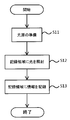
- FIG. 1A is a flowchart relating to a method of recording information using a recording medium containing a compound according to an embodiment of the present disclosure.
- FIG. 1B is a flowchart relating to a method of reading information using a recording medium containing a compound according to an embodiment of the present disclosure.
- FIG. 2 is a graph showing the 1 H-NMR spectrum of compound (6) -7.
- FIG. 3 is a graph showing the 1 H-NMR spectrum of compound (6) -9.
- FIG. 4 is a graph showing the 1 H-NMR spectrum of compound (6) -10.
- FIG. 5 is a graph showing the 1 H-NMR spectrum of compound (7) -7.
- Two-photon absorption means a phenomenon in which a compound absorbs two photons almost simultaneously and transitions to an excited state.
- Two-photon absorption in the wavelength range where the absorption band of one photon does not exist is called non-resonant two-photon absorption.
- two-photon absorption in which a compound absorbs the first photon, then further absorbs the second photon, and transitions to a higher-order excited state is called resonance two-photon absorption.
- resonance two-photon absorption In resonant two-photon absorption, the compound sequentially absorbs two photons.
- the amount of light absorbed by the compound is usually proportional to the square of the irradiation light intensity and exhibits non-linearity.
- the amount of light absorbed can be used as an index of the efficiency of two-photon absorption.
- the amount of light absorbed by the compound exhibits non-linearity, for example, light absorption by the compound can occur only near the focal point of a laser having a high electric field strength. That is, in a sample containing a two-photon absorption material, the compound can be excited only at a desired position.
- the compound that causes non-resonant two-photon absorption brings extremely high spatial resolution, its application to applications such as a recording layer of a three-dimensional optical memory and a photocurable resin composition for stereolithography is being studied. ..
- the two-photon absorbing material has further fluorescence characteristics, the two-photon absorbing material can also be applied to a fluorescent dye material used in a two-photon fluorescence microscope or the like. If this two-photon absorption material is used for a three-dimensional optical memory, there is a possibility that a method of reading the ON / OFF state of the recording layer based on the change in fluorescence from the two-photon absorption material can be adopted. In the current optical memory, a method of reading the ON / OFF state of the recording layer based on the change of the light reflectance and the change of the light absorption rate in the light absorbing material is adopted.
- the two-photon absorption cross section is an index showing the efficiency of two-photon absorption.
- the unit of the two-photon absorption cross-sectional area is GM (10 -50 cm 4 ⁇ s ⁇ molecule -1 ⁇ photon -1 ).
- GM 10 -50 cm 4 ⁇ s ⁇ molecule -1 ⁇ photon -1 .
- the two-photon absorption cross section is measured using laser light with wavelengths longer than 600 nm. In particular, near infrared rays having a wavelength longer than 750 nm may be used as the laser light.
- a material having a large two-photon absorption cross section is required when irradiated with a laser beam having a shorter wavelength.
- laser light having a short wavelength realizes a finer focused spot, so that the recording density of the three-dimensional optical memory can be improved.
- laser light having a short wavelength can realize modeling with higher resolution.
- the Blu-ray® disc standard uses laser light with a center wavelength of 405 nm. Therefore, if a compound having a large two-photon absorption cross section is developed for light in the same wavelength range as this laser light, it can greatly contribute to the development of industry.
- Patent Document 1 discloses a compound having a large two-photon absorption cross section with respect to light having a wavelength of around 405 nm.
- Patent Documents 2 and 3 disclose compounds contained in an optical information recording medium that can shorten the writing time when a laser beam having a wavelength in the vicinity of 405 nm is used.
- Patent Document 1 describes a benzene derivative having an expanded structure of a ⁇ -electron conjugated system.
- the two-photon absorption cross-sectional area increases due to the expansion of the ⁇ -electron conjugated system, while the one-photon absorption peak shifts to the long wavelength region.
- the wavelength of the excitation light is, for example, 405 nm defined by the Blu-ray® standard.
- the compound represented by the formula (1) described later has excellent two-photon absorption characteristics and low one-photon absorption with respect to light having a wavelength in the short wavelength range. It was newly found that it has absorption characteristics.
- the short wavelength region means a wavelength region including 405 nm, and means, for example, a wavelength region of 390 nm or more and 420 nm or less.
- the compound represented by the formula (1) has a large two-photon absorption cross section with respect to light having a wavelength of around 405 nm.
- the absorbance of one photon is small with respect to light having a wavelength of around 405 nm. In other words, this compound has a two-photon absorption property that exhibits high non-linearity with respect to light having a wavelength of around 405 nm.
- the nonlinear optical material according to the first aspect of the present disclosure is represented by the following formula (1).
- R 1 to R 15 contain at least one atom selected from the group consisting of H, C, N, O, F, P, S, Cl, I and Br independently of each other.
- L 1 to L 3 are independently represented by the following equations (2) or (3).
- R 16 to R 19 contain at least one atom selected from the group consisting of H, C, N, O, F, P, S, Cl, I and Br independently of each other.
- N are integers from 1 to 3
- R 20 to R 23 are independent of each other, H, C, N, O, F, P, S, Cl, I and Br. It contains at least one atom selected from the group consisting of, and m is an integer from 1 to 3.
- at least one selected from the group consisting of R 1 , R 6 and R 11 is a halogen atom, an alkyl halide group, or an unsaturated hydrocarbon group.
- the nonlinear optical material has excellent two-photon absorption characteristics and low one-photon absorption characteristics with respect to light having a wavelength in the short wavelength range. That is, the non-linear optical material has a two-photon absorption characteristic that exhibits high non-linearity with respect to light having a wavelength in the short wavelength range.
- the nonlinear optical material according to the first aspect may be represented by the following formula (5).
- R 24 to R 35 contain at least one atom selected from the group consisting of H, C, N, O, F, P, S, Cl, I and Br independently of each other. ..
- the R 1 to the R 15 are independent of each other, a hydrogen atom, a halogen atom, and an alkyl group.
- Alkyl halide group unsaturated hydrocarbon group, hydroxyl group, carboxyl group, alkoxycarbonyl group, acyl group, amide group, nitrile group, alkoxy group, acyloxy group, thiol group, alkylthio group, sulfonic acid group, acylthio group, It may be an alkylsulfonyl group, a sulfonamide group, a primary amino group, a secondary amino group, a tertiary amino group or a nitro group.
- the non-linear optical material has a two-photon absorption characteristic showing high non-linearity with respect to light having a wavelength in a short wavelength range.
- the R 1 to the R 3 , the R 6 to the R 8 , and the R 11 At least one selected from the group consisting of R 13 may be an electron donating group or an electron attracting group.
- the R 1 to the R 3 , the R 6 to the R 8 , and the R 11 At least one selected from the group consisting of R 13 may be an alkoxycarbonyl group.
- R 3 from said R 1, said from the R 6 R 8, and, from the R 11 At least one selected from the group consisting of R 13 may be -COOC 4 H 9 or -COOC 8 H 17 .
- the nonlinear optical material has better two-photon absorption characteristics with respect to light having a wavelength in the short wavelength range.
- the compound according to the seventh aspect of the present disclosure is It is used in a device that uses light having a wavelength of 390 nm or more and 420 nm or less, and is represented by the following formula (1).
- R 1 to R 15 contain at least one atom selected from the group consisting of H, C, N, O, F, P, S, Cl, I and Br independently of each other.
- L 1 to L 3 are independently represented by the following equations (2) or (3).
- R 16 to R 19 contain at least one atom selected from the group consisting of H, C, N, O, F, P, S, Cl, I and Br independently of each other.
- N are integers from 1 to 3
- R 20 to R 23 are independent of each other, H, C, N, O, F, P, S, Cl, I and Br. It contains at least one atom selected from the group consisting of, and m is an integer from 1 to 3.
- the compound has excellent two-photon absorption characteristics and low one-photon absorption characteristics with respect to light having a wavelength in the short wavelength range. That is, the compound has a two-photon absorption characteristic that exhibits high non-linearity with respect to light having a wavelength in the short wavelength range.
- the recording medium according to the eighth aspect of the present disclosure is The non-linear optical material represented by the following formula (1) is included.
- R 1 to R 15 contain at least one atom selected from the group consisting of H, C, N, O, F, P, S, Cl, I and Br independently of each other.
- L 1 to L 3 are independently represented by the following equations (2) or (3).
- R 16 to R 19 contain at least one atom selected from the group consisting of H, C, N, O, F, P, S, Cl, I and Br independently of each other.
- N are integers from 1 to 3
- R 20 to R 23 are independent of each other, H, C, N, O, F, P, S, Cl, I and Br. It contains at least one atom selected from the group consisting of, and m is an integer from 1 to 3.
- the nonlinear optical material has excellent two-photon absorption characteristics and low one-photon absorption characteristics with respect to light having a wavelength in the short wavelength range. That is, the non-linear optical material has a two-photon absorption characteristic that exhibits high non-linearity with respect to light having a wavelength in the short wavelength range.
- a recording medium containing such a nonlinear optical material can record information at a high recording density.
- the method for recording information according to the ninth aspect of the present disclosure is as follows. Preparing a light source that emits light with a wavelength of 390 nm or more and 420 nm or less, Condensing the light from the light source and irradiating the recording area in the recording medium containing the compound represented by the following formula (1). including.
- R 1 to R 15 contain at least one atom selected from the group consisting of H, C, N, O, F, P, S, Cl, I and Br independently of each other.
- L 1 to L 3 are independently represented by the following equations (2) or (3).
- R 16 to R 19 contain at least one atom selected from the group consisting of H, C, N, O, F, P, S, Cl, I and Br independently of each other.
- N are integers from 1 to 3
- R 20 to R 23 are independent of each other, H, C, N, O, F, P, S, Cl, I and Br. It contains at least one atom selected from the group consisting of, and m is an integer from 1 to 3.
- the compound has excellent two-photon absorption characteristics and low one-photon absorption characteristics with respect to light having a wavelength in the short wavelength range. That is, the compound has a two-photon absorption characteristic that exhibits high non-linearity with respect to light having a wavelength in the short wavelength range. According to the information recording method using a recording medium containing such a compound, information can be recorded with a high recording density.
- the method for reading information according to the tenth aspect of the present disclosure is, for example, a method for reading information recorded by the recording method according to the ninth aspect.
- the optical characteristics of the recording area can be measured. Determining whether or not information is recorded in the recording area based on the optical characteristics. including.
- the optical characteristic may be the intensity of light reflected in the recording region.
- the recording area in which the information is recorded can be easily identified.
- Compound A of the present embodiment is represented by the following formula (1).
- R 1 to R 15 contain at least one atom selected from the group consisting of H, C, N, O, F, P, S, Cl, I and Br independently of each other.
- R 1 to R 15 are independent of each other, and have a hydrogen atom, a halogen atom, an alkyl group, an alkyl halide group, an unsaturated hydrocarbon group, a hydroxyl group, a carboxyl group, an alkoxycarbonyl group, an acyl group, an amide group and a nitrile group.
- R 1 to R 15 are independent of each other, a hydrogen atom, a halogen atom, an alkyl group, an alkyl halide group, an unsaturated hydrocarbon group, a hydroxyl group, an alkoxycarbonyl group, an acyl group, an amide group, a nitrile group and an acyloxy group.
- R 1 to R 15 are independent of each other, a hydrogen atom, a halogen atom, an alkyl halide group, an unsaturated hydrocarbon group, a hydroxyl group, an alkoxycarbonyl group, an acyl group, an amide group, a nitrile group, an acyloxy group and a thiol group.
- R 1 to R 15 are independent of each other and have a hydrogen atom (except when all of R 1 to R 15 are hydrogen atoms), a halogen atom, an alkyl halide group, a hydroxyl group, an alkoxycarbonyl group, and an acyl group.
- Amid group nitrile group, acyloxy group, thiol group, sulfonic acid group, acylthio group, alkylsulfonyl group, sulfonamide group, primary amino group, secondary amino group, tertiary amino group or nitro group. ..
- halogen atom examples include F, Cl, Br, I and the like.
- a halogen atom may be referred to as a halogen group.
- the number of carbon atoms of the alkyl group is not particularly limited, and is, for example, 1 or more and 20 or less.
- the number of carbon atoms of the alkyl group may be 1 or more and 10 or less, or 1 or more and 5 or less, from the viewpoint that compound A can be easily synthesized.
- the alkyl group may be linear, branched chain, or cyclic.
- the at least one hydrogen atom contained in the alkyl group may be substituted with a group containing at least one atom selected from the group consisting of N, O, P and S.
- the alkyl group includes a methyl group, an ethyl group, a propyl group, a butyl group, a 2-methylbutyl group, a pentyl group, a hexyl group, a 2,3-dimethylhexyl group, a heptyl group, an octyl group, a nonyl group, a decyl group and an undecyl group.
- Dodecyl group tridecyl group, tetradecyl group, pentadecyl group, hexadecyl group, heptadecyl group, octadecyl group, nonadecyl group, eicosyl group, 2-methoxybutyl group, 6-methoxyhexyl group and the like.
- the halogenated alkyl group means a group in which at least one hydrogen atom contained in the alkyl group is substituted with a halogen atom.
- the halogenated alkyl group may be a group in which all hydrogen atoms contained in the alkyl group are substituted with halogen atoms. Examples of the alkyl group include those described above.
- a specific example of an alkyl halide group is -CF 3 .
- Unsaturated hydrocarbon groups include unsaturated bonds such as carbon-carbon double bonds and carbon-carbon triple bonds.
- the number of unsaturated bonds contained in the unsaturated hydrocarbon group is, for example, 1 or more and 5 or less.
- the number of carbon atoms of the unsaturated hydrocarbon group is not particularly limited, and may be, for example, 2 or more and 20 or less, 2 or more and 10 or less, or 2 or more and 5 or less.
- the unsaturated hydrocarbon group may be linear, branched or cyclic, or cyclic.
- the at least one hydrogen atom contained in the unsaturated hydrocarbon group may be substituted with a group containing at least one atom selected from the group consisting of N, O, P and S. Examples of the unsaturated hydrocarbon group include a vinyl group and an ethynyl group.
- the hydroxyl group is represented by -OH.
- the carboxyl group is represented by -COOH.
- the alkoxycarbonyl group is represented by -COOR a.
- the acyl group is represented by -COR b.
- the amide group is represented by -CONR c R d.
- the nitrile group is represented by -CN.
- the alkoxy group is represented by ⁇ OR e.
- the acyloxy group is represented by -OCOR f.
- the thiol group is represented by -SH.
- the alkylthio group is represented by -SR g.
- a sulfonic acid group is represented by -SO 3 H.
- the acylthio group is represented by -SCOR h.
- Alkylsulfonyl group is represented by -SO 2 R i.
- the sulfonamide group is represented by ⁇ SO 2 NR j R k.
- the primary amino group is represented by -NH 2.
- the secondary amino group is represented by -NHR l.
- the tertiary amino group is represented by ⁇ NR m R n.
- the nitro group is represented by -NO 2.
- R a to R n are alkyl groups independent of each other. Examples of the alkyl group include those described above. However, the amide groups R c and R d and the sulfonamide groups R j and R k may be hydrogen atoms independently of each other.
- alkoxycarbonyl group examples are -COOCH 3 , -COO (CH 2 ) 3 CH 3 and -COO (CH 2 ) 7 CH 3 .
- a specific example of an acyl group is -COCH 3 .
- a specific example of an amide group is -CONH 2 .
- Specific examples of the alkoxy group include methoxy group, ethoxy group, 2-methoxyethoxy group, butoxy group, 2-methylbutoxy group, 2-methoxybutoxy group, 4-ethylthiobutoxy group, pentyloxy group, hexyloxy group and heptyl.
- acyloxy group is -OCOCH 3 .
- acylthio group is -SCOCH 3 .
- alkylsulfonyl group is -SO 2 CH 3 .
- a specific example of a sulfonamide group is -SO 2 NH 2 .
- a specific example of a tertiary amino group is -N (CH 3 ) 2 .
- At least one selected from the group consisting of R 1 to R 3 , R 6 to R 8 , and R 11 to R 13 may be an electron donating group or an electron attracting group.
- R 1 to R 3 , R 6 to R 8 , and R 11 to R 13 the larger the electron donating property or electron attracting property, the larger the electron bias in the compound A.
- the bias of the electrons in the compound A is large, the electrons tend to move significantly in the compound A when the compound A is excited. Such compound A tends to have better two-photon absorption properties.
- compound A absorbs large two-photons when at least one selected from the group consisting of R 1 to R 3 , R 6 to R 8 and R 11 to R 13 is an electron donating group or an electron attracting group. Tends to have a cross section.
- the electron-withdrawing group means, for example, a substituent having a positive ⁇ p value, which is a substituent constant in the Hammett equation.
- the electron-withdrawing group includes a halogen atom, a carboxyl group, a nitro group, a thiol group, a sulfonic acid group, an acyloxy group, an alkylthio group, an alkylsulfonyl group, a sulfonamide group, an acyl group, an acylthio group, an alkoxycarbonyl group and an alkyl halide group. And so on. At least one selected from the group consisting of R 1 to R 3 , R 6 to R 8 and R 11 to R 13 may be an alkoxycarbonyl group, —COOC 4 H 9 or — COOC 8 H 17 May be.
- the electron donating group means, for example, a substituent in which the above-mentioned ⁇ p value is a negative value.
- Examples of the electron donating group include an alkyl group, an alkoxy group, a hydroxyl group and an amino group.
- Each of R 4 , R 5 , R 9 , R 10 , R 14 and R 15 may have a small volume. At this time, steric hindrance is unlikely to occur in R 4 , R 5 , R 9 , R 10 , R 14 and R 15. Therefore, in compound A, the flatness of the ⁇ -electron conjugated system tends to be improved. When the ⁇ -electron conjugated system of compound A has high planarity, compound A tends to have a large two-photon absorption cross section.
- Each of R 4 , R 5 , R 9 , R 10 , R 14 and R 15 may be a hydrogen atom.
- L 1 to L 3 are independently represented by the following formula (2) or (3).
- R 16 to R 19 contain at least one atom selected from the group consisting of H, C, N, O, F, P, S, Cl, I and Br independently of each other.
- R 16 to R 19 may be hydrogen atoms or the substituents described above in R 1 to R 15 independently of each other.
- Each of R 16 to R 19 may have a small volume. At this time, steric hindrance is unlikely to occur in R 16 to R 19. Therefore, in compound A, the flatness of the ⁇ -electron conjugated system is improved, so that compound A tends to have a large two-photon absorption cross section.
- Each of R 16 to R 19 may be a hydrogen atom.
- n is an integer from 1 to 3. The larger the value of n, the larger the ⁇ -electron conjugated system tends to be, and the more the two-photon absorption cross section of compound A tends to increase. Considering the solubility of compound A, n may be 1.
- R 20 to R 23 contain at least one atom selected from the group consisting of H, C, N, O, F, P, S, Cl, I and Br independently of each other.
- R 20 to R 23 may be hydrogen atoms or the substituents described above in R 1 to R 15 independently of each other.
- Each of R 20 to R 23 may have a small volume. At this time, steric hindrance is unlikely to occur in R 20 to R 23. Therefore, in compound A, the flatness of the ⁇ -electron conjugated system is improved, so that compound A tends to have a large two-photon absorption cross section.
- Each of R 20 to R 23 may be a hydrogen atom.
- m is an integer from 1 to 3. The larger the value of m, the larger the ⁇ -electron conjugated system tends to be, and the more the two-photon absorption cross section of compound A tends to increase. Considering the solubility of compound A, m may be 1.
- Each of L 1 to L 3 may be the same as or different from each other.
- each of L 1 to L 3 may be expressed by the equation (2).
- Compound A is, for example, compound B represented by the following formula (5).
- R 24 to R 35 contain at least one atom selected from the group consisting of H, C, N, O, F, P, S, Cl, I and Br independently of each other. Each of R 24 to R 35 corresponds to any of R 16 to R 19 described above.
- the compound A is the compound C represented by the following formula (4)
- at least one selected from the group consisting of R 1 , R 6 and R 11 is a halogen atom, an alkyl halide group, and an unsaturated carbide.
- R 1 , R 6 and R 11 are independent of each other, a hydrogen atom, a halogen atom, an alkyl halide group, an unsaturated hydrocarbon group, a hydroxyl group, an alkoxycarbonyl group, an acyl group, an amide group and a nitrile. It may be a group, an acyloxy group, a thiol group, a sulfonic acid group, an acylthio group, an alkylsulfonyl group, a sulfonamide group, a primary amino group, a secondary amino group, a tertiary amino group or a nitro group.
- R 1 , R 6 and R 11 are independent of each other and have a hydrogen atom (except when all of R 1 , R 6 and R 11 are hydrogen atoms), a halogen atom, an alkyl halide group, a hydroxyl group, and the like.
- each of R 1 , R 6 and R 11 of the formula (4) may be a substituent other than the above-mentioned substituent.
- Specific examples of the compound B represented by the formula (5) include the compound D represented by the following formula (6) and the compound E represented by the following formula (7).
- the plurality of Z's are the same as each other.
- the plurality of Zs correspond to R 1 , R 6 and R 11 of the equation (5), respectively. Specific examples of Z are shown in Table 1 below.
- the plurality of Zs may be -COOC 4 H 9 or -COOC 8 H 17. In some cases, in the formula (6), the plurality of Zs may be ⁇ COOH.
- the plurality of Z's are the same as each other.
- the plurality of Zs correspond to R 2 , R 3 , R 7 , R 8 , R 12 and R 13 , respectively, in the equation (5).
- the plurality of Zs may be hydrogen atoms or substituents shown in Table 1 above.
- the plurality of Zs may be -COOC 4 H 9 or -COOC 8 H 17.
- the plurality of Zs may be ⁇ COOH.
- Each of L 1 to L 3 of the formula (1) may be expressed by the formula (3).
- the compound A may be, for example, the compound F represented by the following formula (8).
- R 36 to R 47 contain at least one atom selected from the group consisting of H, C, N, O, F, P, S, Cl, I and Br independently of each other. Each of R 36 to R 47 corresponds to any of R 20 to R 23 described above.
- compound F include compound G represented by the following formula (9) and compound H represented by the following formula (10).
- the plurality of Z's are the same as each other.
- the plurality of Zs correspond to R 1 , R 6 and R 11 of the equation (8), respectively.
- the plurality of Zs may be hydrogen atoms or substituents shown in Table 1 above.
- the plurality of Z's are the same as each other.
- the plurality of Zs correspond to R 2 , R 3 , R 7 , R 8 , R 12 and R 13 , respectively, in the formula (8).
- the plurality of Zs may be hydrogen atoms or substituents shown in Table 1 above.
- the method for synthesizing the compound D represented by the formula (6) and the compound E represented by the formula (7) is not particularly limited.
- Compounds D and E can be synthesized, for example, by the following methods.
- compound I represented by the following formula (11) is prepared.
- Xa to Xc are substituents that are independent of each other and have reactivity with the coupling reaction.
- a typical example of such a substituent is a halogen group.
- X a to X c may be an ethynyl group.
- compound D or E can be synthesized by performing a coupling reaction with compound I and compound J having an appropriate structure.
- the structure of compound J is determined according to the structure of the target compound.
- the conditions of the coupling reaction can be appropriately adjusted according to, for example, compounds I and J.
- the method for synthesizing the compound G represented by the formula (9) and the compound H represented by the formula (10) is not particularly limited.
- Compounds G and H can be synthesized, for example, by the following methods.
- First, the compound K represented by the following formula (12) is prepared.
- compound G or H can be synthesized by performing a coupling reaction with compound K and compound L having an appropriate structure.
- the structure of compound L is determined according to the structure of the target compound.
- Compound L contains, for example, a substituent having reactivity with a coupling reaction.
- a typical example of such a substituent is a halogen group.
- the conditions of the coupling reaction can be appropriately adjusted depending on, for example, the structures of the compounds K and L.
- Compound A represented by the formula (1) has excellent two-photon absorption characteristics and low one-photon absorption characteristics with respect to light having a wavelength in the short wavelength range.
- compound A when compound A is irradiated with light having a wavelength of 405 nm, two-photon absorption occurs in compound A, while one-photon absorption hardly occurs.
- the two-photon absorption cross section of compound A for light having a wavelength of 405 nm may exceed 410 GM, may exceed 500 GM, may be 1000 GM or more, may be 1500 GM or more, and may be 1700 GM or more. There may be.
- the upper limit of the two-photon absorption cross section of compound A is not particularly limited, and is, for example, 5000 GM.
- the two-photon absorption cross section can be measured by, for example, the Z scan method described in J. Opt. Soc. Am. B, 2003, Vol. 20, p. 529. The Z-scan method is widely used as a method for measuring nonlinear optical constants.
- the measurement sample In the Z scan method, the measurement sample is moved along the irradiation direction of the beam in the vicinity of the focal point where the laser beam is focused. At this time, the change in the amount of light transmitted through the measurement sample is recorded.
- the power density of the incident light changes depending on the position of the measurement sample. Therefore, when the measurement sample performs non-linear absorption, the amount of transmitted light is attenuated when the measurement sample is located near the focal point of the laser beam.
- the two-photon absorption cross-sectional area can be calculated by fitting the change in the amount of transmitted light to the theoretical curve predicted from the intensity of the incident light, the thickness of the measurement sample, the concentration of compound A in the measurement sample, and the like. ..
- the two-photon absorption cross section may be a calculated value by computational chemistry.
- Several methods have been proposed for estimating the two-photon absorption cross section by computational chemistry.
- the calculated value of the two-photon absorption cross section can be calculated based on the second-order nonlinear response theory described in J. Chem. Theory Comput. 2018, Vol. 14, p. 807.
- the molar extinction coefficient of compound A for light having a wavelength of 405 nm may be 800 L / (mol ⁇ cm) or less, 500 L / (mol ⁇ cm) or less, or 210 L / (mol ⁇ cm). It may be less than or equal to 100 L / (mol ⁇ cm) or less.
- the lower limit of the molar extinction coefficient of compound A is not particularly limited, and is, for example, 0.01 L / (mol ⁇ cm).
- the molar extinction coefficient can be measured, for example, by a method in accordance with the provisions of Japanese Industrial Standards (JIS) K0115: 2004.
- a light source that irradiates light with a photon density at which the two-photon absorption by the compound A hardly occurs is used.
- the molar extinction coefficient can be used as an index of one photon absorption.
- the molar extinction coefficient may be a value calculated by a quantum chemical calculation program.
- the quantum chemistry calculation program for example, Gaussian16 (manufactured by Gaussian) can be used.
- compound A When compound A absorbs two photons, compound A absorbs about twice as much energy as the light irradiated to compound A.
- the wavelength of light having about twice the energy of light having a wavelength of 405 nm is, for example, 200 nm. That is, when compound A is irradiated with light having a wavelength of around 200 nm, monophoton absorption may occur in compound A. Further, in compound A, one-photon absorption may occur for light having a wavelength near the wavelength range in which two-photon absorption occurs.
- the quantum yield of fluorescence in compound A is not particularly limited, and may be, for example, 0% or more and 50% or less, 30% or less, or 20% or less.
- quantum yield specifically means internal quantum yield.
- the wavelength of the fluorescent light emitted by the compound A may be 405 nm or more and 660 nm or less, and in some cases, 350 nm or more and 650 nm or less.
- the quantum yield of fluorescence can be measured by, for example, a commercially available absolute PL quantum yield measuring device.
- Compound A represented by the formula (1) can be used, for example, as a component of a light absorbing material.
- the light absorbing material contains, for example, compound A as a main component.
- the "main component” means the component contained most in the light absorbing material in terms of weight ratio.
- the light absorbing material is, for example, substantially composed of compound A. By “consisting of substantially " is meant eliminating other components that alter the essential characteristics of the mentioned material. However, the light absorbing material may contain impurities in addition to compound A.
- the light-absorbing material functions as a multi-photon absorbing material such as a two-photon absorbing material.
- the light-absorbing material containing compound A has a two-photon absorption characteristic that exhibits high non-linearity with respect to light having a wavelength in the short wavelength range.
- a light absorbing material containing a compound represented by the following formula (1).
- R 1 to R 15 contain at least one atom selected from the group consisting of H, C, N, O, F, P, S, Cl, I and Br, independently of each other.
- L 1 to L 3 are independently represented by the following equations (2) or (3).
- R 16 to R 19 contain at least one atom selected from the group consisting of H, C, N, O, F, P, S, Cl, I and Br, independently of each other.
- n is an integer from 1 to 3.
- R 20 to R 23 contain at least one atom selected from the group consisting of H, C, N, O, F, P, S, Cl, I and Br, independently of each other.
- m is an integer from 1 to 3.
- at least one selected from the group consisting of R 1 , R 6 and R 11 is a halogen atom, an alkyl halide group, an unsaturated hydrocarbon group, and the like.
- Hydroxyl group carboxyl group, alkoxycarbonyl group, acyl group, amide group, acyloxy group, thiol group, alkylthio group, sulfonic acid group, acylthio group, alkylsulfonyl group, sulfonamide group, primary amino group, secondary amino group or It is a nitro group.
- Compound A is used, for example, in a device that utilizes light having a wavelength in the short wavelength range.
- a device that utilizes light having a wavelength in the short wavelength range.
- Examples of such a device include a recording medium, a modeling machine, a fluorescence microscope, and the like.
- the recording medium include a three-dimensional optical memory.
- a specific example of a three-dimensional optical memory is a three-dimensional optical disk.
- the molding machine include an optical modeling machine such as a 3D printer.
- the fluorescence microscope include a two-photon fluorescence microscope.
- the light utilized in these devices has a high photon density, for example, near its focal point.
- the power density near the focal point of the light used in the device is, for example, 0.1 W / cm 2 or more and 1.0 ⁇ 10 20 W / cm 2 or less.
- Power density near the focal point of the light may also be 1.0 W / cm 2 or more, may also be 1.0 ⁇ 10 2 W / cm 2 or more, 1.0 ⁇ 10 5 W / cm It may be 2 or more.
- a femtosecond laser such as a titanium sapphire laser or a pulse laser having a pulse width of picoseconds to nanoseconds such as a semiconductor laser can be used.
- R 1 to R 15 contain at least one atom selected from the group consisting of H, C, N, O, F, P, S, Cl, I and Br, independently of each other.
- L 1 to L 3 are independently represented by the following equations (2) or (3).
- R 16 to R 19 contain at least one atom selected from the group consisting of H, C, N, O, F, P, S, Cl, I and Br, independently of each other.
- n is an integer from 1 to 3.
- R 20 to R 23 contain at least one atom selected from the group consisting of H, C, N, O, F, P, S, Cl, I and Br, independently of each other.
- m is an integer from 1 to 3.
- the recording medium includes, for example, a thin film called a recording layer.
- information is recorded on the recording layer.
- the thin film as a recording layer contains compound A.
- a recording medium including a nonlinear optical material represented by the following formula (1) is provided.
- R 1 to R 15 contain at least one atom selected from the group consisting of H, C, N, O, F, P, S, Cl, I and Br, independently of each other.
- L 1 to L 3 are independently represented by the following equations (2) or (3).
- R 16 to R 19 contain at least one atom selected from the group consisting of H, C, N, O, F, P, S, Cl, I and Br, independently of each other.
- n is an integer from 1 to 3.
- R 20 to R 23 contain at least one atom selected from the group consisting of H, C, N, O, F, P, S, Cl, I and Br, independently of each other.
- m is an integer from 1 to 3.
- the recording layer may further contain a polymer compound that functions as a binder in addition to the compound A.
- the recording medium may include a dielectric layer in addition to the recording layer.
- the recording medium includes, for example, a plurality of recording layers and a plurality of dielectric layers. In the recording medium, a plurality of recording layers and a plurality of dielectric layers may be alternately laminated.
- FIG. 1A is a flowchart relating to a method of recording information using the above-mentioned recording medium.
- a light source that emits light having a wavelength of 390 nm or more and 420 nm or less is prepared.
- a femtosecond laser such as a titanium sapphire laser can be used.
- a pulse laser having a pulse width of picoseconds to nanoseconds such as a semiconductor laser may be used.
- step S12 the light from the light source is collected by a lens or the like and irradiated to the recording area on the recording medium.
- the power density near the focal point of this light is, for example, 0.1 W / cm 2 or more and 1.0 ⁇ 10 20 W / cm 2 or less. Power density near the focal point of the light may also be 1.0 W / cm 2 or more, may also be 1.0 ⁇ 10 2 W / cm 2 or more, 1.0 ⁇ 10 5 W / cm It may be 2 or more.
- the recording area means a spot that exists in the recording layer and can record information by being irradiated with light.
- Physical or chemical changes occur in the recording area irradiated with the above light. For example, heat is generated when compound A, which has absorbed light, returns from the transition state to the ground state. This heat alters the binder present in the recording area. This changes the optical characteristics of the recording area. For example, the intensity of light reflected in the recording area, the reflectance of light in the recording area, the absorption rate of light in the recording area, the refractive index of light in the recording area, and the like change. In the recording area irradiated with light, the intensity of the fluorescent light emitted from the recording area or the wavelength of the fluorescent light may change. As a result, information can be recorded in the recording area (step S13).
- R 1 to R 15 contain at least one atom selected from the group consisting of H, C, N, O, F, P, S, Cl, I and Br, independently of each other.
- L 1 to L 3 are independently represented by the following equations (2) or (3).
- R 16 to R 19 contain at least one atom selected from the group consisting of H, C, N, O, F, P, S, Cl, I and Br, independently of each other.
- n is an integer from 1 to 3.
- R 20 to R 23 contain at least one atom selected from the group consisting of H, C, N, O, F, P, S, Cl, I and Br, independently of each other.
- m is an integer from 1 to 3.
- FIG. 1B is a flowchart relating to a method of reading information using the above-mentioned recording medium.
- step S21 the recording area on the recording medium is irradiated with light.
- the light used in step S21 may be the same as the light used for recording information on the recording medium, or may be different.
- step S22 the optical characteristics of the recording area are measured. In step S22, for example, the intensity of the light reflected in the recording area is measured as an optical characteristic of the recording area.
- the optical characteristics of the recording area include the reflectance of light in the recording area, the absorption rate of light in the recording area, the refractive index of light in the recording area, and the intensity of fluorescent light emitted from the recording area.
- the wavelength of fluorescent light or the like may be measured.
- step S23 it is determined whether or not information is recorded in the recording area based on the optical characteristics of the recording area. For example, when the intensity of the light reflected in the recording area is equal to or less than a specific value, it is determined that the information is recorded in the recording area. On the other hand, when the intensity of the light reflected in the recording area exceeds a specific value, it is determined that the information is not recorded in the recording area. If it is determined that the information is not recorded in the recording area, the process returns to step S21, and the same operation is performed for the other recording areas. If it is determined that the information is recorded in the recording area, the information is read out in step S24.
- the information recording method and reading method using the above-mentioned recording medium can be performed by, for example, a known recording device.
- the recording device includes, for example, a light source that irradiates a recording area on a recording medium with light, a measuring instrument that measures the optical characteristics of the recording area, and a controller that controls the light source and the measuring instrument.
- the modeling machine performs modeling by, for example, irradiating a photocurable resin composition with light and curing the resin composition.
- a photocurable resin composition for stereolithography contains compound A.
- the photocurable resin composition contains, for example, a compound having a polymerizable property and a polymerization initiator in addition to the compound A.
- the photocurable resin composition may further contain an additive such as a binder resin.
- the photocurable resin composition may contain an epoxy resin.
- a biological sample containing a fluorescent dye material can be irradiated with light, and the fluorescence emitted from the dye material can be observed.
- the fluorescent dye material to be added to the biological sample contains compound A.
- the compound used in the examples is referred to as "Compound (X) -Y".
- X means the structural formula of the compound.
- Y means the kind of Z in the formula (X).
- the compound (6) -7 means a compound represented by the formula (6) in which Z is the substituent 7 (-COOH) shown in Table 1.
- FIG. 2 is a graph showing the 1 H-NMR spectrum of compound (6) -7.
- the 1 1 H-NMR spectrum of compound (6) -7 was as follows.
- FIG. 3 is a graph showing the 1 H-NMR spectrum of compound (6) -9.
- FIG. 4 is a graph showing the 1 H-NMR spectrum of compound (6) -10.
- the two-photon absorption cross section of the synthesized compound was measured for light having a wavelength of 405 nm.
- the two-photon absorption cross section was measured using the Z scan method described in J. Opt. Soc. Am. B, 2003, Vol. 20, p. 529.
- a titanium sapphire pulse laser was used as a light source for measuring the two-photon absorption cross section.
- the sample was irradiated with a second high frequency of a titanium sapphire pulse laser.
- the pulse width of the laser was 80 fs.
- the laser repeat frequency was 1 kHz.
- the average power of the laser was varied in the range of 0.01 mW or more and 0.08 mW or less.
- the light from the laser was light with a wavelength of 405 nm. Specifically, the light from the laser had a center wavelength of 402 nm or more and 404 nm or less. The full width at half maximum of the light from the laser was 4 nm.
- the two-photon absorption cross section for light having a wavelength of 405 nm was predicted.
- the two-photon absorption cross section was calculated by the density functional theory (DFT) calculation based on the second-order nonlinear response theory described in J. Chem. Theory Comput. 2018, Vol. 14, p. 807. ..
- DFT density functional theory
- Turbomole version 7.3.1 manufactured by COSMOlogic
- def2-TZVP was used as the basis function.
- B3LYP was used as a functional.
- the internal quantum yield of fluorescence was measured for the synthesized compound.
- the measurement sample was prepared by dissolving the compound in a dimethyl sulfoxide (DMSO) solvent.
- An absolute PL quantum yield measuring device (C9920-02 manufactured by Hamamatsu Photonics Co., Ltd.) was used for the measurement.
- the excitation wavelength was set to 325 nm.
- the measurement wavelength was adjusted in the range of 350 nm or more and 650 nm or less.
- a DMSO solvent was used as a reference.
- the molar extinction coefficient of the synthesized compound was measured by a method according to JIS K0115: 2004. Specifically, first, the absorption spectrum of the measurement sample was measured. From the obtained spectrum, the absorbance at a wavelength of 405 nm was read. The molar extinction coefficient was calculated based on the concentration of the compound in the measurement sample and the optical path length of the cell used for the measurement.
- ⁇ Prediction of molar extinction coefficient> The molar extinction coefficient of the synthesized compound was predicted. DFT calculation was used to predict the molar extinction coefficient. Specifically, first, the excited state of the compound was calculated using Gaussian16 (manufactured by Gaussian), which is a quantum chemistry calculation program. In the excited state calculation, 6-31 ++ G (d, p) was used as the basis function. As a functional, CAM-B3LYP was used. By the excited state calculation, the energy for exciting the compound and the transition probability to the excited state were calculated. Further, from these calculation results, from these calculation results, the absorption wavelength and the oscillator strength f (Oscillator strength) at each absorption wavelength were calculated.
- Gaussian16 manufactured by Gaussian
- the oscillator strength correlates with the molar extinction coefficient.
- the absorption spectrum was assumed to be Gaussian, and the half width was defined. Specifically, the half width was defined as 0.4 eV, and the absorption spectrum was drawn based on the absorption wavelength and the oscillator intensity. The absorbance at a wavelength of 405 nm was read from the obtained absorption spectrum. This absorbance was regarded as the calculated value of the molar extinction coefficient.
- Tables 2 to 4 show the measured and calculated values of the two-photon absorption cross section obtained by the above method, the quantum yield of fluorescence, and the measured and calculated values of the molar extinction coefficient.
- "No Data" means that no data has been acquired.
- the two-photon absorption cross section for light having a wavelength of 405 nm exceeded 410 GM. ..
- the molar extinction coefficient with respect to light having a wavelength of 405 nm was 800 L / (mol ⁇ cm) or less. From this result, it can be seen that the compounds of Examples 1 to 47 have two-photon absorption characteristics showing high non-linearity with respect to light having a wavelength in the short wavelength region.
- Hexakis (phenylethynyl) benzene of Comparative Example 2 which is a 6-substituted benzene, had a large two-photon absorption cross-sectional area for light having a wavelength of 405 nm, while having a molar extinction coefficient of 4010 L / (mol ⁇ cm). , It was a fairly large value.
- the one-photon absorption peak tends to shift to the long wavelength region due to the expansion of the ⁇ -electron conjugated system as compared with the 3-substituted benzene. Therefore, it is presumed that the molar extinction coefficient at 405 nm increased in the compound of Comparative Example 2.
- Compound A represented by the formula (1) has a triazine-substituted triazine ring and an expanded ⁇ -electron conjugated system. Due to such a structure, compound A is presumed to have a two-photon absorption property showing high non-linearity.
- the compound or nonlinear optical material of the present disclosure can be used, for example, in a recording layer of a three-dimensional optical memory, a photocurable resin composition for stereolithography, and the like.
- the compounds or non-linear optical materials of the present disclosure tend to have two-photon absorption properties that exhibit high non-linearity with respect to light having wavelengths in the short wavelength range. Therefore, the compound or nonlinear optical material of the present disclosure can realize extremely high spatial resolution in applications such as a three-dimensional optical memory and a modeling machine.
- the compounds or nonlinear optical materials of the present disclosure also tend to emit fluorescent light.
- this compound or nonlinear optical material is used for the recording layer of the three-dimensional optical memory, it is possible to adopt a method of reading the ON / OFF state of the recording layer based on the change in fluorescence from the compound or nonlinear optical material.
- the compounds or nonlinear optical materials of the present disclosure may also be used as fluorescent dye materials used in two-photon fluorescence microscopy and the like.
Landscapes
- Chemical & Material Sciences (AREA)
- Organic Chemistry (AREA)
- Crystallography & Structural Chemistry (AREA)
- Optical Record Carriers And Manufacture Thereof (AREA)
- Optical Modulation, Optical Deflection, Nonlinear Optics, Optical Demodulation, Optical Logic Elements (AREA)
Priority Applications (3)
| Application Number | Priority Date | Filing Date | Title |
|---|---|---|---|
| JP2022528473A JPWO2021246066A1 (https=) | 2020-06-01 | 2021-04-19 | |
| CN202180033371.8A CN115515942A (zh) | 2020-06-01 | 2021-04-19 | 化合物、非线性光学材料、记录介质、信息的记录方法及信息的读出方法 |
| US18/055,313 US20230109287A1 (en) | 2020-06-01 | 2022-11-14 | Compound, non-linear optical material, recording medium, method for recording information, and method for reading information |
Applications Claiming Priority (2)
| Application Number | Priority Date | Filing Date | Title |
|---|---|---|---|
| JP2020-095348 | 2020-06-01 | ||
| JP2020095348 | 2020-06-01 |
Related Child Applications (1)
| Application Number | Title | Priority Date | Filing Date |
|---|---|---|---|
| US18/055,313 Continuation US20230109287A1 (en) | 2020-06-01 | 2022-11-14 | Compound, non-linear optical material, recording medium, method for recording information, and method for reading information |
Publications (1)
| Publication Number | Publication Date |
|---|---|
| WO2021246066A1 true WO2021246066A1 (ja) | 2021-12-09 |
Family
ID=78830300
Family Applications (1)
| Application Number | Title | Priority Date | Filing Date |
|---|---|---|---|
| PCT/JP2021/015827 Ceased WO2021246066A1 (ja) | 2020-06-01 | 2021-04-19 | 化合物、非線形光学材料、記録媒体、情報の記録方法及び情報の読出方法 |
Country Status (4)
| Country | Link |
|---|---|
| US (1) | US20230109287A1 (https=) |
| JP (1) | JPWO2021246066A1 (https=) |
| CN (1) | CN115515942A (https=) |
| WO (1) | WO2021246066A1 (https=) |
Cited By (2)
| Publication number | Priority date | Publication date | Assignee | Title |
|---|---|---|---|---|
| WO2023223692A1 (ja) * | 2022-05-17 | 2023-11-23 | パナソニックIpマネジメント株式会社 | 非線形光吸収材料、記録媒体、情報の記録方法及び情報の読出方法 |
| WO2023223693A1 (ja) * | 2022-05-17 | 2023-11-23 | パナソニックIpマネジメント株式会社 | 記録媒体、情報の記録方法及び情報の読出方法 |
Families Citing this family (1)
| Publication number | Priority date | Publication date | Assignee | Title |
|---|---|---|---|---|
| CN117423359B (zh) * | 2023-10-30 | 2025-03-07 | 百代(上海)数据技术有限公司 | 存储系统、信息记录方法及三维存储器 |
Citations (3)
| Publication number | Priority date | Publication date | Assignee | Title |
|---|---|---|---|---|
| JPH0665217A (ja) * | 1992-05-14 | 1994-03-08 | Kawamura Inst Of Chem Res | トリアジン化合物 |
| JP2013242939A (ja) * | 2012-05-21 | 2013-12-05 | Sony Corp | 記録層および光情報記録媒体 |
| CN109174185A (zh) * | 2018-08-21 | 2019-01-11 | 武汉绿帆世纪科技有限公司 | 一种钛掺杂型三元金属有机骨架材料及其制备方法 |
-
2021
- 2021-04-19 WO PCT/JP2021/015827 patent/WO2021246066A1/ja not_active Ceased
- 2021-04-19 CN CN202180033371.8A patent/CN115515942A/zh active Pending
- 2021-04-19 JP JP2022528473A patent/JPWO2021246066A1/ja not_active Withdrawn
-
2022
- 2022-11-14 US US18/055,313 patent/US20230109287A1/en not_active Abandoned
Patent Citations (3)
| Publication number | Priority date | Publication date | Assignee | Title |
|---|---|---|---|---|
| JPH0665217A (ja) * | 1992-05-14 | 1994-03-08 | Kawamura Inst Of Chem Res | トリアジン化合物 |
| JP2013242939A (ja) * | 2012-05-21 | 2013-12-05 | Sony Corp | 記録層および光情報記録媒体 |
| CN109174185A (zh) * | 2018-08-21 | 2019-01-11 | 武汉绿帆世纪科技有限公司 | 一种钛掺杂型三元金属有机骨架材料及其制备方法 |
Non-Patent Citations (7)
| Title |
|---|
| IIJIMA, T. LEE, C.H. FUJIWARA, Y. SHIMOKAWA, M. SUZUKI, H. YAMANE, K. YAMAMOTO, T.: "Photoluminescence of 2,4,6-tris[4-(phenylethynyl)phenyl]-1,3,5-triazines dispersed in polymer films", OPTICAL MATERIALS, ELSEVIER SCIENCE PUBLISHERS B.V. AMSTERDAM., NL, vol. 29, no. 12, 23 June 2007 (2007-06-23), NL , pages 1782 - 1788, XP022126855, ISSN: 0925-3467, DOI: 10.1016/j.optmat.2006.10.009 * |
| JIAO SHIHU; MEN JIAN; AO CHUNYAN; HUO JUNJI; MA XIAOYAN; GAO GUOWEI: "Synthesis and mesophases ofC3h-symmetric 2,4,6-tris(2-hydroxyphenyl)-1,3,5-triazine derivatives with intramolecular hydrogen bonding networks", TETRAHEDRON LETTERS, ELSEVIER, AMSTERDAM , NL, vol. 56, no. 37, 21 July 2015 (2015-07-21), Amsterdam , NL , pages 5185 - 5189, XP029257258, ISSN: 0040-4039, DOI: 10.1016/j.tetlet.2015.07.049 * |
| KLINKEBIEL ARNE, BEYER OLE, LÜNING ULRICH: "Substituted 1,3,5-Triazine Hexacarboxylates as Potential Linkers for MOFs", MOLECULES, vol. 24, no. 19, 25 September 2019 (2019-09-25), XP055880377, DOI: 10.3390/molecules24193480 * |
| LEE CHI-HAN , YAMAMOTO TAKAKAZU: "A new class of star-shaped discotic liquid crystal containing a 2,4,6-triphenyl-1,3,5-triazine unit as a core", BULLETIN OF THE CHEMICAL SOCIETY OF JAPAN, vol. 75, no. 3, 30 November 2001 (2001-11-30), JP , pages 615 - 618, XP009532835, ISSN: 0009-2673, DOI: 10.1246/bcsj.75.615 * |
| LEE, C.-H. YAMAMOTO, T.: "Synthesis and characterization of a new class of liquid-crystalline, highly luminescent molecules containing a 2,4,6-triphenyl-1,3,5-triazine unit", TETRAHEDRON LETTERS, ELSEVIER, AMSTERDAM , NL, vol. 42, no. 24, 11 June 2001 (2001-06-11), Amsterdam , NL , pages 3993 - 3996, XP004240836, ISSN: 0040-4039, DOI: 10.1016/S0040-4039(01)00640-2 * |
| LIU BIN; WANG HUIJUAN; HU QUANYUAN: "Hyper-Rayleigh scattering studies of a three-photon fluorescent non-linear optical molecule at 1500 nm", CHEMICAL PHYSICS LETTERS, ELSEVIER BV, NL, vol. 716, 1 January 1900 (1900-01-01), NL , pages 252 - 256, XP085584393, ISSN: 0009-2614, DOI: 10.1016/j.cplett.2018.11.059 * |
| VIDYA V. M., PRABHAKAR CHETTI: "A DFT probe on the linear and nonlinear optical characteristics of some star-shaped DI-n-DII-A type acetylene-bridged rigid triazines", JOURNAL OF PHYSICAL ORGANIC CHEMISTRY, vol. 33, no. 1, 14 November 2019 (2019-11-14), XP055880379, DOI: 10.1002/poc.4027 * |
Cited By (3)
| Publication number | Priority date | Publication date | Assignee | Title |
|---|---|---|---|---|
| WO2023223692A1 (ja) * | 2022-05-17 | 2023-11-23 | パナソニックIpマネジメント株式会社 | 非線形光吸収材料、記録媒体、情報の記録方法及び情報の読出方法 |
| WO2023223693A1 (ja) * | 2022-05-17 | 2023-11-23 | パナソニックIpマネジメント株式会社 | 記録媒体、情報の記録方法及び情報の読出方法 |
| JP7390676B1 (ja) * | 2022-05-17 | 2023-12-04 | パナソニックIpマネジメント株式会社 | 非線形光吸収材料、記録媒体、情報の記録方法及び情報の読出方法 |
Also Published As
| Publication number | Publication date |
|---|---|
| CN115515942A (zh) | 2022-12-23 |
| US20230109287A1 (en) | 2023-04-06 |
| JPWO2021246066A1 (https=) | 2021-12-09 |
Similar Documents
| Publication | Publication Date | Title |
|---|---|---|
| WO2021246066A1 (ja) | 化合物、非線形光学材料、記録媒体、情報の記録方法及び情報の読出方法 | |
| US20230028064A1 (en) | Light-absorbing material, recording medium using the same, information recording method and information reading method | |
| Tian et al. | Investigations and facile synthesis of a series of novel multi-functional two-photon absorption materials | |
| Gu et al. | Carbazole-based 1D and 2D hemicyanines: synthesis, two-photon absorption properties and application for two-photon photopolymerization 3D lithography | |
| JP6994667B1 (ja) | 非線形光学材料、光吸収材料、記録媒体、情報の記録方法及び情報の読出方法 | |
| JP6994666B1 (ja) | 非線形光学材料、光吸収材料、記録媒体、情報の記録方法及び情報の読出方法 | |
| JP7766286B2 (ja) | 非線形光吸収材料、記録媒体、情報の記録方法及び情報の読出方法 | |
| JP2022177737A (ja) | 非線形吸収材料、記録媒体、情報の記録方法及び情報の読出方法 | |
| CN117296096B (en) | Nonlinear light absorbing material, recording medium, information recording method, and information reading method | |
| JP7738280B2 (ja) | 化合物、光吸収材料、非線形光吸収材料、記録媒体、情報の記録方法及び情報の読出方法 | |
| JP7759582B2 (ja) | 光吸収材料、記録媒体、情報の記録方法及び情報の読出方法 | |
| WO2022149462A1 (ja) | 光吸収材料、記録媒体、情報の記録方法及び情報の読出方法 | |
| WO2022149461A1 (ja) | 非線形光吸収材料、記録媒体、情報の記録方法及び情報の読出方法 | |
| JP7738279B2 (ja) | 非線形光吸収材料、記録媒体、情報の記録方法及び情報の読出方法 | |
| WO2022149459A1 (ja) | 非線形光吸収材料、記録媒体、情報の記録方法及び情報の読出方法 | |
| WO2022149460A1 (ja) | 光吸収材料、記録媒体、情報の記録方法及び情報の読出方法 | |
| JP7390676B1 (ja) | 非線形光吸収材料、記録媒体、情報の記録方法及び情報の読出方法 | |
| JP7766275B2 (ja) | 記録媒体、情報の記録方法、情報の読出方法、及び記録層を作製するための組成物 | |
| WO2023223693A1 (ja) | 記録媒体、情報の記録方法及び情報の読出方法 | |
| WO2022244430A1 (ja) | 非線形光吸収材料、記録媒体、情報の記録方法及び情報の読出方法 | |
| CN1249060C (zh) | 具有强双光子吸收特性的杂芴衍生物 | |
| JP2004339435A (ja) | 非共鳴2光子吸収色素および非共鳴2光子吸収誘起方法 |
Legal Events
| Date | Code | Title | Description |
|---|---|---|---|
| 121 | Ep: the epo has been informed by wipo that ep was designated in this application |
Ref document number: 21818160 Country of ref document: EP Kind code of ref document: A1 |
|
| ENP | Entry into the national phase |
Ref document number: 2022528473 Country of ref document: JP Kind code of ref document: A |
|
| NENP | Non-entry into the national phase |
Ref country code: DE |
|
| 122 | Ep: pct application non-entry in european phase |
Ref document number: 21818160 Country of ref document: EP Kind code of ref document: A1 |