WO2021240928A1 - 脂肪組織再生基材 - Google Patents
脂肪組織再生基材 Download PDFInfo
- Publication number
- WO2021240928A1 WO2021240928A1 PCT/JP2021/007314 JP2021007314W WO2021240928A1 WO 2021240928 A1 WO2021240928 A1 WO 2021240928A1 JP 2021007314 W JP2021007314 W JP 2021007314W WO 2021240928 A1 WO2021240928 A1 WO 2021240928A1
- Authority
- WO
- WIPO (PCT)
- Prior art keywords
- adipose tissue
- tissue regeneration
- bioabsorbable material
- granules
- bag
- Prior art date
- Legal status (The legal status is an assumption and is not a legal conclusion. Google has not performed a legal analysis and makes no representation as to the accuracy of the status listed.)
- Ceased
Links
Images


Classifications
-
- C—CHEMISTRY; METALLURGY
- C12—BIOCHEMISTRY; BEER; SPIRITS; WINE; VINEGAR; MICROBIOLOGY; ENZYMOLOGY; MUTATION OR GENETIC ENGINEERING
- C12N—MICROORGANISMS OR ENZYMES; COMPOSITIONS THEREOF; PROPAGATING, PRESERVING, OR MAINTAINING MICROORGANISMS; MUTATION OR GENETIC ENGINEERING; CULTURE MEDIA
- C12N5/00—Undifferentiated human, animal or plant cells, e.g. cell lines; Tissues; Cultivation or maintenance thereof; Culture media therefor
- C12N5/0068—General culture methods using substrates
-
- A—HUMAN NECESSITIES
- A61—MEDICAL OR VETERINARY SCIENCE; HYGIENE
- A61L—METHODS OR APPARATUS FOR STERILISING MATERIALS OR OBJECTS IN GENERAL; DISINFECTION, STERILISATION OR DEODORISATION OF AIR; CHEMICAL ASPECTS OF BANDAGES, DRESSINGS, ABSORBENT PADS OR SURGICAL ARTICLES; MATERIALS FOR BANDAGES, DRESSINGS, ABSORBENT PADS OR SURGICAL ARTICLES
- A61L27/00—Materials for grafts or prostheses or for coating grafts or prostheses
- A61L27/14—Macromolecular materials
- A61L27/18—Macromolecular materials obtained otherwise than by reactions only involving carbon-to-carbon unsaturated bonds
-
- A—HUMAN NECESSITIES
- A61—MEDICAL OR VETERINARY SCIENCE; HYGIENE
- A61L—METHODS OR APPARATUS FOR STERILISING MATERIALS OR OBJECTS IN GENERAL; DISINFECTION, STERILISATION OR DEODORISATION OF AIR; CHEMICAL ASPECTS OF BANDAGES, DRESSINGS, ABSORBENT PADS OR SURGICAL ARTICLES; MATERIALS FOR BANDAGES, DRESSINGS, ABSORBENT PADS OR SURGICAL ARTICLES
- A61L27/00—Materials for grafts or prostheses or for coating grafts or prostheses
- A61L27/14—Macromolecular materials
- A61L27/22—Polypeptides or derivatives thereof, e.g. degradation products
- A61L27/24—Collagen
-
- A—HUMAN NECESSITIES
- A61—MEDICAL OR VETERINARY SCIENCE; HYGIENE
- A61L—METHODS OR APPARATUS FOR STERILISING MATERIALS OR OBJECTS IN GENERAL; DISINFECTION, STERILISATION OR DEODORISATION OF AIR; CHEMICAL ASPECTS OF BANDAGES, DRESSINGS, ABSORBENT PADS OR SURGICAL ARTICLES; MATERIALS FOR BANDAGES, DRESSINGS, ABSORBENT PADS OR SURGICAL ARTICLES
- A61L27/00—Materials for grafts or prostheses or for coating grafts or prostheses
- A61L27/40—Composite materials, i.e. containing one material dispersed in a matrix of the same or different material
-
- A—HUMAN NECESSITIES
- A61—MEDICAL OR VETERINARY SCIENCE; HYGIENE
- A61L—METHODS OR APPARATUS FOR STERILISING MATERIALS OR OBJECTS IN GENERAL; DISINFECTION, STERILISATION OR DEODORISATION OF AIR; CHEMICAL ASPECTS OF BANDAGES, DRESSINGS, ABSORBENT PADS OR SURGICAL ARTICLES; MATERIALS FOR BANDAGES, DRESSINGS, ABSORBENT PADS OR SURGICAL ARTICLES
- A61L27/00—Materials for grafts or prostheses or for coating grafts or prostheses
- A61L27/50—Materials characterised by their function or physical properties, e.g. injectable or lubricating compositions, shape-memory materials, surface modified materials
- A61L27/56—Porous materials, e.g. foams or sponges
-
- A—HUMAN NECESSITIES
- A61—MEDICAL OR VETERINARY SCIENCE; HYGIENE
- A61L—METHODS OR APPARATUS FOR STERILISING MATERIALS OR OBJECTS IN GENERAL; DISINFECTION, STERILISATION OR DEODORISATION OF AIR; CHEMICAL ASPECTS OF BANDAGES, DRESSINGS, ABSORBENT PADS OR SURGICAL ARTICLES; MATERIALS FOR BANDAGES, DRESSINGS, ABSORBENT PADS OR SURGICAL ARTICLES
- A61L27/00—Materials for grafts or prostheses or for coating grafts or prostheses
- A61L27/50—Materials characterised by their function or physical properties, e.g. injectable or lubricating compositions, shape-memory materials, surface modified materials
- A61L27/58—Materials at least partially resorbable by the body
-
- C—CHEMISTRY; METALLURGY
- C12—BIOCHEMISTRY; BEER; SPIRITS; WINE; VINEGAR; MICROBIOLOGY; ENZYMOLOGY; MUTATION OR GENETIC ENGINEERING
- C12M—APPARATUS FOR ENZYMOLOGY OR MICROBIOLOGY; APPARATUS FOR CULTURING MICROORGANISMS FOR PRODUCING BIOMASS, FOR GROWING CELLS OR FOR OBTAINING FERMENTATION OR METABOLIC PRODUCTS, i.e. BIOREACTORS OR FERMENTERS
- C12M21/00—Bioreactors or fermenters specially adapted for specific uses
- C12M21/14—Bioreactors or fermenters specially adapted for specific uses for producing enzymes
-
- C—CHEMISTRY; METALLURGY
- C12—BIOCHEMISTRY; BEER; SPIRITS; WINE; VINEGAR; MICROBIOLOGY; ENZYMOLOGY; MUTATION OR GENETIC ENGINEERING
- C12N—MICROORGANISMS OR ENZYMES; COMPOSITIONS THEREOF; PROPAGATING, PRESERVING, OR MAINTAINING MICROORGANISMS; MUTATION OR GENETIC ENGINEERING; CULTURE MEDIA
- C12N5/00—Undifferentiated human, animal or plant cells, e.g. cell lines; Tissues; Cultivation or maintenance thereof; Culture media therefor
- C12N5/06—Animal cells or tissues; Human cells or tissues
- C12N5/0602—Vertebrate cells
- C12N5/0652—Cells of skeletal and connective tissues; Mesenchyme
- C12N5/0653—Adipocytes; Adipose tissue
-
- A—HUMAN NECESSITIES
- A61—MEDICAL OR VETERINARY SCIENCE; HYGIENE
- A61L—METHODS OR APPARATUS FOR STERILISING MATERIALS OR OBJECTS IN GENERAL; DISINFECTION, STERILISATION OR DEODORISATION OF AIR; CHEMICAL ASPECTS OF BANDAGES, DRESSINGS, ABSORBENT PADS OR SURGICAL ARTICLES; MATERIALS FOR BANDAGES, DRESSINGS, ABSORBENT PADS OR SURGICAL ARTICLES
- A61L2300/00—Biologically active materials used in bandages, wound dressings, absorbent pads or medical devices
- A61L2300/60—Biologically active materials used in bandages, wound dressings, absorbent pads or medical devices characterised by a special physical form
- A61L2300/62—Encapsulated active agents, e.g. emulsified droplets
-
- C—CHEMISTRY; METALLURGY
- C12—BIOCHEMISTRY; BEER; SPIRITS; WINE; VINEGAR; MICROBIOLOGY; ENZYMOLOGY; MUTATION OR GENETIC ENGINEERING
- C12N—MICROORGANISMS OR ENZYMES; COMPOSITIONS THEREOF; PROPAGATING, PRESERVING, OR MAINTAINING MICROORGANISMS; MUTATION OR GENETIC ENGINEERING; CULTURE MEDIA
- C12N2513/00—3D culture
-
- C—CHEMISTRY; METALLURGY
- C12—BIOCHEMISTRY; BEER; SPIRITS; WINE; VINEGAR; MICROBIOLOGY; ENZYMOLOGY; MUTATION OR GENETIC ENGINEERING
- C12N—MICROORGANISMS OR ENZYMES; COMPOSITIONS THEREOF; PROPAGATING, PRESERVING, OR MAINTAINING MICROORGANISMS; MUTATION OR GENETIC ENGINEERING; CULTURE MEDIA
- C12N2533/00—Supports or coatings for cell culture, characterised by material
- C12N2533/30—Synthetic polymers
- C12N2533/40—Polyhydroxyacids, e.g. polymers of glycolic or lactic acid (PGA, PLA, PLGA); Bioresorbable polymers
-
- C—CHEMISTRY; METALLURGY
- C12—BIOCHEMISTRY; BEER; SPIRITS; WINE; VINEGAR; MICROBIOLOGY; ENZYMOLOGY; MUTATION OR GENETIC ENGINEERING
- C12N—MICROORGANISMS OR ENZYMES; COMPOSITIONS THEREOF; PROPAGATING, PRESERVING, OR MAINTAINING MICROORGANISMS; MUTATION OR GENETIC ENGINEERING; CULTURE MEDIA
- C12N2533/00—Supports or coatings for cell culture, characterised by material
- C12N2533/50—Proteins
- C12N2533/54—Collagen; Gelatin
Definitions
- the present invention relates to an adipose tissue regeneration substrate that is easy to handle and can regenerate a large volume of adipose tissue in a normal shape.
- Silicone implants are mainly used for breast reconstruction, but because they are non-absorbable, they remain in the body as foreign bodies forever, which may cause postoperative leakage or infection due to foreign body reactions. There are also concerns about adverse effects such as allergies and carcinogenesis due to contact.
- Another method is to collect adipose tissue from another site and transplant it to the affected area with a depression, but it may be absorbed quickly after transplantation and may be depressed again.
- collecting tissue causes new wounds, which is not always preferable from the viewpoint of QOL.
- the present inventors have disclosed a breast reconstruction member in which a sponge containing collagen is contained inside a hollow granule made of polylactic acid (patented). Document 1).
- the breast reconstruction member of Patent Document 1 is filled in the space created by partial resection of the breast, so that surrounding cells invade the breast reconstruction member and proliferate using the breast reconstruction member as a scaffold to other sites.
- Breast reconstruction can be done without transplanting adipose tissue from.
- the breast reconstruction member of Patent Document 1 is made of a bioabsorbable material, it is gradually absorbed into the body as the breast is regenerated and finally disappears, so that the safety is high.
- the breast reconstruction member of Patent Document 1 is very effective as a breast reconstruction technique because it can safely regenerate a breast composed of its own living cells.
- the breast reconstruction member of Patent Document 1 has a problem that the ease of implantation is inferior because a large amount of the breast reconstruction member must be packed when the excision range becomes large.
- radiation therapy is used in combination to completely kill the cancer cells after cancer resection. Since the skin is hardened due to the effect, the skin is gradually enlarged with a tissue expander or the like, and then an incision is made, the tissue expander is taken out, and an implant is inserted.
- An object of the present invention is to provide an adipose tissue regeneration substrate that is easy to handle and can regenerate a large volume of adipose tissue in a normal shape.
- the present invention is a bag made of a bioabsorbable material having an internal space and having a plurality of openings leading to the internal space on the surface, and a bioabsorbable material having an opening and wrapping the plurality of granules. It is an adipose tissue regeneration base material composed of a body. The present invention will be described in detail below.
- the present inventors have made a case where the excision site is large by packing granules made of a plurality of bioabsorbable materials in a bag-shaped body made of a bioabsorbable material having an opening. We have found that it is easy to bury even if it is present, and that the shape does not easily collapse even when an external force is applied, and that a tissue having a normal shape can be regenerated, and the present invention has been completed.
- the adipose tissue regeneration substrate of the present invention comprises a granular material made of a bioabsorbable material having an internal space and having a plurality of openings leading to the internal space on the surface, and a living body having an opening and wrapping the plurality of the granular bodies. It is composed of a bag-shaped body made of an absorbent material.
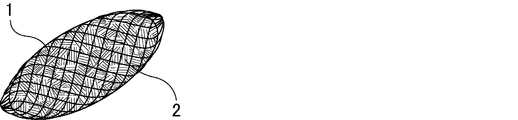
- FIGS. 1 and 2 show schematic views of the adipose tissue regeneration substrate and the above-mentioned granules of the present invention.
- the adipose tissue regeneration substrate of the present invention has a structure in which a plurality of granules 1 are enclosed inside the bag-shaped body 3.
- the granular body 1 has an internal space, has a plurality of openings leading to the internal space on the surface, and has a closed shape as a whole.
- the bag-shaped body 3 has a large number of openings and an internal space, and has a closed shape so that what is enclosed inside does not move to the outside. Adipose tissue is regenerated by the cells passing through the openings of the bag-shaped body 3 and the granule 1 proliferating using the wall surface inside the granule as a scaffold.
- the granules 1 and the bag-shaped body 3 are made of a bioabsorbable material, the space of the adipose tissue to be regenerated is maintained until the adipose tissue is regenerated, and after the adipose tissue is regenerated, it is absorbed into the body. It will eventually disappear. Since the adipose tissue regeneration substrate of the present invention is formed by bundling a plurality of granules into a bag-like body, it is easy to implant in a large space and has high handleability.
- the granules 1 can be implanted in a shape close to the shape after regeneration. Further, even when an external force is applied after the implantation, the granular body 1 does not move to the outside of the bag-shaped body 3, so that the shape at the time of implantation does not easily collapse and the adipose tissue having a normal shape is regenerated. can do. Further, the adipose tissue regeneration substrate of the present invention may be provided with a sponge-like porous body 2 made of a bioabsorbable material inside the granular body 1.
- the sponge-like porous body 2 made of a bioabsorbable material is provided inside the granular body 1, so that the scaffolding of cells is increased, so that the regeneration of adipose tissue can be further promoted and the strength can be increased.
- the sponge-like porous body is not only spongy, but also includes a shape having a large number of voids such as non-woven fabric and cotton.
- the bioabsorbable material constituting the granules is not particularly limited as long as the safety as an implant is confirmed, but since it takes about half a year to one year to regenerate adipose tissue, the adipose tissue regeneration base material is buried during that period. It is preferable that the material has strength and decomposition rate that can maintain the planted space.
- bioabsorbable materials include collagen, gelatin, chitin, chitosan and the like for natural polymers, and homogens of lactic acid, glycolic acid, ⁇ -caprolactone, dioxanone and trimethylene carbonate for synthetic polymers. Examples thereof include polymers and copolymers composed of at least two or more materials selected from these.
- polylactic acid or a copolymer of lactic acid and another bioabsorbable material is preferable because the strength and the decomposition rate in the living body are suitable for the adipose tissue regeneration base material.
- the polylactic acid or the copolymer of lactic acid and other bioabsorbable materials include polylactide described in Patent Document 1, a copolymer of lactide and glycolic acid, and a copolymer of lactide and ⁇ -caprolactone. Be done.
- the weight average molecular weight is preferably 4000 or more and 300,000 or less.
- the weight average molecular weight is more preferably 100,000 or more, and more preferably 200,000 or less.
- the shape of the granules is not particularly limited as long as it can provide a scaffold for cell proliferation and maintain the space of adipose tissue to be regenerated, and examples thereof include spherical, columnar, and amorphous shapes. Among them, the shape is not easily deformed by an external force after implantation, and appropriate voids are generated between the granules to further promote the regeneration of adipose tissue. Therefore, the spherical shape is preferable, and the elliptical spherical body is preferable. More preferred.
- the size of the internal space is not particularly limited, it is preferably 10 mm 3 or more 100,000 mm 3 or less. When the size of the internal space is within the above range, it is possible to more reliably regenerate the adipose tissue up to the center of the granules while securing a space for regenerating the adipose tissue. More preferably the size of the internal space is 25 mm 3 or more, further preferably 50 mm 3 or more, more preferably 50,000 mm 3 or less, still more preferably 25000 mm 3 or less.
- the shape of the opening of the granular body is not particularly limited, and may be circular, lattice-like, polygonal, amorphous, or the like. Further, the number of openings of the granular material is not particularly limited as long as it is two or more.
- the size and occupancy of the openings of the granules are not particularly limited, and are not particularly limited as long as cells can smoothly pass through the inside of the granules, but the openings having a maximum length of 0.1 mm or more and 20 mm or less are not particularly limited. Is preferably distributed at an occupancy rate of 50% or more and 99% or less of the surface area of the granules.
- the size and occupancy of the openings in the above range can further enhance the balance between the strength of the granules and the permeability of the cells.
- the maximum length of the opening may be a size that allows adipose tissue to invade and does not invade peripheral tissues other than fat that already exist as tissue, and is more preferably 15 mm or less, and more preferably 10 mm or less. More preferred.
- the occupancy rate of the opening is more preferably 60% or more, more preferably 70% or more, and 95% from the viewpoint of securing the shape of the granules in order to facilitate tissue invasion. It is more preferably% or less, and further preferably 90% or less.
- the maximum length refers to the maximum length when the distance between two points of the opening is measured.
- the granules include mesh granules, porous capsules and the like.
- the granular material is a granular material of a mesh
- examples of the mesh constituting the granular material include a mesh (net) formed from a monofilament or a multifilament, a woven fabric, and a knitted fabric.
- the elliptical sphere of mesh is more preferable from the viewpoint of elasticity, shape retention, adipose tissue permeability and the like.
- the thickness of each mesh constituting the granules is not particularly limited, but is 0.05 mm or more from the viewpoint of elasticity, shape retention, cell permeability, etc. of the mesh. It is preferably 1 mm or less, and more preferably 0.1 mm or more and 0.4 mm or less.
- the mesh size of the mesh constituting the granules is preferably in the range of 0.01 mm or more and 6 mm or less in each of the vertical and horizontal directions, and more preferably in the range of 0.02 mm or more and 5 mm or less.
- the size of the granules is not particularly limited, but when the granules are elliptical and spherical, the major axis is preferably 8 mm or more and 150 mm or less, and the minor axis is preferably 5 mm or more and 100 mm or less. When the size of the granules is within the above range, the shape can be easily adjusted when regenerating a large volume of adipose tissue, and the adipose tissue can be more reliably regenerated to the center.
- the major axis of the granules is more preferably 10 mm or more and 30 mm or less, and further preferably 15 mm or more and 20 mm or less.
- the minor axis of the granular material is more preferably 5 mm or more and 20 mm or less, and further preferably 7 mm or more and 15 mm or less.
- the number of the granules in the adipose tissue regeneration substrate of the present invention is not particularly limited as long as it is two or more, and can be appropriately adjusted according to the size of the granules and the size of the space of the implantation destination. From the viewpoint of handleability and further promoting the regeneration of a large volume of adipose tissue, the number is preferably 5 or more, more preferably 10 or more, preferably 100 or less, and 50 or less. Is more preferable.
- the bioabsorbable material constituting the sponge-like porous body is not particularly limited, and for example, polyglycolide, polylactide, poly- ⁇ -caprolactone, lactide-glycolic acid copolymer, glycolide- ⁇ -caprolactone copolymer, lactide.
- - ⁇ -Caprolactone copolymer polycitrate, polyapple acid, poly- ⁇ -cyanoacrylate, poly- ⁇ -hydroxy acid, polytrimethylene oxalate, polytetramethylene oxalate, polyorthoester, polyorthocarbonate, polyethylene carbonate , Poly- ⁇ -benzyl-L-glutamate, poly- ⁇ -methyl-L-glutamate, poly-L-alanine, polyglycol sebastinic acid and other synthetic polymers, starch, alginic acid, hyaluronic acid, chitin, pectic acid.
- examples thereof include polysaccharides such as and derivatives thereof, and natural polymers such as proteins such as gelatin, collagen, albumin and fibrin. Among them, collagen is preferably contained because it has a high affinity with a living body.
- the sponge-like porous body contains collagen
- the content of collagen in the sponge-like porous body is more preferably 60% by weight or more, further preferably 70% by weight or more, further preferably 80% by weight or more, and 90% by weight.
- the above is particularly preferable, 95% by weight or more is very preferable, and 100% by weight is most preferable.
- collagen those derived from the skin, tendons, etc. of cows, pigs, etc. can be used without particular limitation.
- atelocollagen in which collagen is treated with an enzyme such as protease or pepsin to remove terrorpeptides as much as possible is preferable from the viewpoint of eliminating antigenicity and enhancing safety.
- Examples of commercially available products of the sponge-like porous body containing collagen include Pernac (manufactured by Smith & Nephew Management Co., Ltd.) and Terumo (manufactured by Terumo Corporation).
- the shape of the bag-shaped body is not particularly limited, and any shape such as a rectangular bag shape or a circular bag shape can be used depending on the ease of molding at the implantation site.
- specific embodiments include a net in which filaments are knitted into a bag shape, a porous bag shape, and the like.
- the bioabsorbable material constituting the bag-shaped body is not particularly limited, and since it does not require long-term strength maintenance as compared with the granular body, the same bioabsorbable material as the bioabsorbable material constituting the sponge-like porous body is used. Can be used. However, it is necessary to have a strong strength to retain a plurality of granules and maintain the overall shape, and since it is implanted in a living body as an implant, it is preferable that the inflammatory reaction or the foreign body reaction is as small as possible.
- bioabsorbable material examples include materials that can be used as sutures, and it is preferable to use polyglycolide, polylactic acid, polycaprolactone, polydioxane, trimethylene carbonate, or a copolymer thereof, and poly. It is more preferable to use a copolymer of glycolide, polyglycolide and another bioabsorbable material, or a copolymer of lactic acid and another bioabsorbable material.
- the thickness of the filament constituting the bag-shaped body is not particularly limited, but is preferably 0.01 mm or more, preferably 0.1 mm or more, from the viewpoint of the balance between flexibility and strength. It is more preferably 2 mm or less, and more preferably 0.5 mm or less.
- the occupancy rate of the opening of the bag-shaped body is not particularly limited, and is not particularly limited as long as cells can be smoothly passed through the granules, but the occupancy rate is 50% or more and 99% or less of the surface area of the bag-shaped body. Is preferable.
- the occupancy rate of the opening in the above range can further enhance the balance between the strength of the bag-like body and the invasion of cells.
- the occupancy rate of the opening of the bag-shaped body is more preferably 60% or more, further preferably 70% or more, still more preferably 95% or less, and 90%. The following is more preferable.
- the size of the opening of the bag-shaped body is not particularly limited as long as it does not inhibit the invasion of cells into the granules and the granules do not jump out of the bag-shaped body, but the maximum size of the opening of the bag-shaped body is limited.
- the length is preferably 1/50 times or more, more preferably 1/20 times or more, preferably 1/3 times or less, and 1/10 times or less the minor axis of the granules. It is more preferable to have.
- the specific numerical value of the mesh size of the bag-shaped body is, for example, 0.02 mm or more and 0.5 mm or less in both the vertical and horizontal directions, and 0.05 mm or more. It is more preferably 0.1 mm or less.
- the size of the bag-shaped body can be appropriately adjusted according to the volume of the implant site and the number of the granules, but the granules collapse after implantation while improving the moldability of the adipose tissue regeneration base material.
- the internal space of the bag-shaped body is preferably 1.2 times or more, more preferably 1.5 times or more, and 3 times or less the total volume of the granules. It is preferable, and it is more preferable that it is twice or less.
- the total volume of the granules also includes the volume of the internal space of the granules.
- the method for producing the adipose tissue regenerating base material of the present invention is not particularly limited, and for example, a plurality of granules can be produced by wrapping the sponge-like porous body with a mesh made of a bioabsorbable material and closing the ends. It can be produced by wrapping the obtained granules in a bag-like body made of a bioabsorbable material and closing the ends. It is also possible to insert a sponge-like porous material through the opening after producing the granules.
- the method of closing the end portion of the mesh or the bag-like body is not particularly limited, and examples thereof include a method of connecting filaments to each other and thermocompression bonding.
- the adipose tissue regeneration substrate of the present invention is used for implanting in adipose tissue to regenerate adipose tissue.
- live adipose tissue consisting of own cells can be regenerated from other sites without implanting the tissue.
- adipose tissue to which the present invention can be used include breast, buttocks, abdomen and the like.
- the present invention can regenerate a large volume of adipose tissue in a normal shape, it is very effective for implanting in a defect caused by partial excision of the breast to regenerate the breast.
- an adipose tissue regeneration substrate that is easy to handle and can regenerate a large volume of adipose tissue in a normal shape.
- MRI nuclear magnetic resonance image
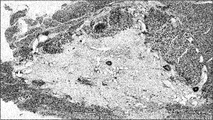
- 6 is a hematoxylin eosin (HE) stained image of the transplanted portion 6 months after the transplantation of the adipose tissue regeneration substrate obtained in Example 1 into the supfascial defect portion of the pig.
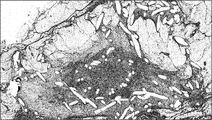
- 6 is an Oil Red O-stained image of the transplanted portion 6 months after the transplantation of the adipose tissue regeneration substrate obtained in Example 1 into the supfascial defect in a pig.
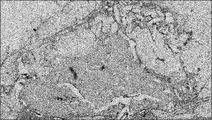
- 6 is an Azan-stained image of the transplanted portion 6 months after the transplantation of the adipose tissue regeneration substrate obtained in Example 1 into the supfascial defect in a pig.
- 6 is an anti-CD31 antibody immunostaining image of the transplanted portion 6 months after the transplantation of the adipose tissue regeneration substrate obtained in Example 1 into the supfascial defect in a pig.
- Example 1 Collagen sponge (Pernac, manufactured by Smith & Nephew Management Co., Ltd.) and a mesh made of polylactic acid (weight average molecular weight: 220,000) (filament thickness: 0.2 mm to 0.25 mm, mesh opening: 1 ⁇ By wrapping it in 1 mm to 2 ⁇ 2 mm) and closing the end by thermocompression bonding, an elliptical spherical granule having a collagen sponge inside and having a major axis of 18 mm and a minor axis of 7.5 mm was obtained.
- Polylactic acid weight average molecular weight: 220,000
- Example 2 An adipose tissue regeneration substrate was obtained in the same manner as in Example 1 except that a collagen sponge was not used.
- Example 1 The 30 granules of Example 1 were used as they were as the adipose tissue regeneration base material.
- the length of the incision (length, width) and the height of the defect were measured by the same method using 30 adipose tissue regeneration base materials of Comparative Example 1.
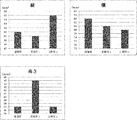
- the measurement results are shown in FIG. From the measurement results, in Comparative Example 1, the adipose tissue regenerated base material penetrated into the cut portion and was difficult to form in the height direction, whereas in Example 1, the adipose tissue regenerated base material did not spread much in the vertical and horizontal directions and was formed in the height direction. Since it is densely packed to form a mountain, it is easy to form a tall shape, and it can be seen that the adipose tissue such as the breast and the buttocks is excellent in formability.
- Comparative Example 1 the adipose tissue regeneration substrate spreads in the vertical direction of the cut and is difficult to form in the height direction, while in Example 1 it is difficult to spread in the vertical and horizontal directions and a mountain is formed in the height direction. It can be seen that it is easy to form a tall shape and that the adipose tissue such as the breast and the buttocks is excellent in formability.
- an adipose tissue regeneration substrate that is easy to handle and can regenerate a large volume of adipose tissue in a normal shape.
Landscapes
- Health & Medical Sciences (AREA)
- Life Sciences & Earth Sciences (AREA)
- Chemical & Material Sciences (AREA)
- General Health & Medical Sciences (AREA)
- Engineering & Computer Science (AREA)
- Oral & Maxillofacial Surgery (AREA)
- Epidemiology (AREA)
- Transplantation (AREA)
- Animal Behavior & Ethology (AREA)
- Medicinal Chemistry (AREA)
- Dermatology (AREA)
- Public Health (AREA)
- Veterinary Medicine (AREA)
- Biomedical Technology (AREA)
- Organic Chemistry (AREA)
- Zoology (AREA)
- Wood Science & Technology (AREA)
- Bioinformatics & Cheminformatics (AREA)
- Genetics & Genomics (AREA)
- Biotechnology (AREA)
- Biochemistry (AREA)
- General Engineering & Computer Science (AREA)
- Microbiology (AREA)
- Biophysics (AREA)
- Chemical Kinetics & Catalysis (AREA)
- Cell Biology (AREA)
- Dispersion Chemistry (AREA)
- Sustainable Development (AREA)
- Materials Engineering (AREA)
- Composite Materials (AREA)
- Molecular Biology (AREA)
- Rheumatology (AREA)
- Prostheses (AREA)
- Materials For Medical Uses (AREA)
Abstract
Description
以下に本発明を詳述する。
ここで、本発明の脂肪組織再生基材及び上記粒状体の模式図を図1、2に示す。
図1に示すように、本発明の脂肪組織再生基材は複数の粒状体1が袋状体3の内部に封入された構造となっている。上記粒状体1は、内部空間を有し、表面に上記内部空間へ通じる開口部を複数有しており、全体として閉じた形状となっている。袋状体3は、多数の開口部と内部空間を有し、内部に封入したものが外部へ移動しないような閉じた形状となっている。上記袋状体3と粒状体1の開口部を通過した細胞が粒状体内部の壁面を足場として増殖することで脂肪組織が再生される。また、粒状体1及び袋状体3は、生体吸収性材料からなるため、脂肪組織が再生するまでの間は、再生すべき脂肪組織の空間を維持し、脂肪組織の再生後は体内へ吸収され最終的には消滅する。本発明の脂肪組織再生基材は、複数の粒状体を袋状体でまとめているため、大きな空間への埋植が容易であり、取り扱い性が高い。また、複数の粒状体1が袋状体3に包まれることで、粒状体1が広範囲に散らばらないことから、再生後の形状に近い形で埋植が可能となる。また、埋植後に外部から力がかかった場合であっても、粒状体1が袋状体3より外側へは移動しないため、埋植時の形状が崩れ難く、正常な形状の脂肪組織を再生することができる。更に、本発明の脂肪組織再生基材は、粒状体1の内部に生体吸収性材料からなるスポンジ様多孔質体2を設けていてもよい。粒状体1の内部に生体吸収性材料からなるスポンジ様多孔質体2を設けると、細胞の足場が増加することから脂肪組織の再生をより促進することができるとともに強度も高めることができる。
なお、上記スポンジ様多孔質体は海綿状だけでなく、不織布や綿等の多数の空隙を有する形状も含まれる。
また、上記粒状体の開口部の数も2箇所以上であれば特に限定されない。上記粒状体の開口部の大きさ及び占有率は特に限定されず、細胞をスムーズに粒状体の内部へ通過させることができれば特に限定されないが、最大長さが0.1mm以上20mm以下の開口部が粒状体の表面積の50%以上99%以下の占有率で分布していることが好ましい。上記範囲の開口部のサイズおよび占有率であると、粒状体の強度と細胞の侵入性のバランスをより高めることができる。上記開口部の最大長さは脂肪組織が侵入でき、脂肪以外の既に組織として存在している周辺組織が侵入しないサイズであれば良く、15mm以下であることがより好ましく、10mm以下であることが更に好ましい。上記開口部の占有率は、組織侵入を容易にするために粒状体の表面積の60%以上であることがより好ましく、70%以上であることが更に好ましく、粒状体の形状確保の観点より95%以下であることがより好ましく、90%以下であることが更に好ましい。なお、本明細書中において最大長さとは開口部の2点間の距離を測定した際に最大となる長さのことを指す。
コラーゲンスポンジ(ペルナック、スミス・アンド・ネフューウンドマネジメント社製)をポリ乳酸(重量平均分子量:220,000)からなるメッシュ(フィラメントの太さ:0.2mm~0.25mm、メッシュ開口部:1×1mm~2×2mm)で包み、端部を熱圧着によって閉じることで、コラーゲンスポンジを内部に有する、長径18mm、短径7.5mmの楕円球状の粒状体を得た。次いで、同様の方法で粒状体を30個作製し、得られた粒状体を110mm×35mmのポリグリコリドマルチフィラメントからなる封筒形状の袋状体(フィラメントの構成:0.015mm×12、網目サイズ:0.05mm×0.05mm)で包み、端部を熱溶着して閉じることで、脂肪組織再生基材を得た。
コラーゲンスポンジを用いなかった以外は実施例1と同様にして脂肪組織再生基材を得た。
実施例1の粒状体30個をそのまま脂肪組織再生基材として用いた。
実施例及び比較例で得られた脂肪組織再生基材について以下の評価を行った。
ミニブタ(約20kg)の背部皮下を切開し、正中線の左側に実施例1、2で得られた脂肪組織再生基材を埋植した。4ヶ月後、脂肪組織再生基材を埋植した部分を取り出し、組織の再生の有無を確認したところ、約4cmの組織が再生された。
実験動物として大型動物であるミニブタ(約25kg)を用意し、腹部の皮膚を正中切開した。次いで、腹部左右の脂肪・乳腺組織を剥離し、乳腺下、筋膜上に欠損部を作製した。筋膜上欠損部に、実施例1で得られた脂肪組織再生基材を移植し、皮膚を縫合した。
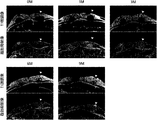
術後、0(移植直後)、1、3、6、9か月後に腹部の核磁気共鳴画像(MRI)を撮影した。撮影した核磁気共鳴画像(MRI)を図5に示した。
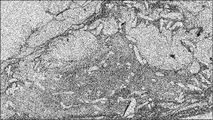
また、術後6か月後に腹部右の筋層上脂肪組織を取り出し、移植部分を摘出した。得られた検体を切片標本にし、ヘマトキシリンエオジン(HE)染色、オイルレッドO染色、アザン染色および抗CD31抗体免疫染色を行った。各染色を行った顕微鏡写真像をそれぞれ図6、図7、図8および図9に示した。
図5より、術後6か月後には、脂肪組織再生基材を移植した部分において、脂肪組織や乳腺組織と接している周辺部からの脂肪組織の再生(図5のMRI像(T1強調像)において白く呈色された部分)が認められた。また、術後9か月後には、より大きな範囲に脂肪組織再生基材の周辺部から脂肪組織の再生が認められた。
加えて、図6、図7及び図8より、術後6か月後には、脂肪組織再生基材の内部に脂肪組織やコラーゲン組織の形成が認められた。また、図9より、この脂肪組織やコラーゲン組織に血管の形成が認められた。
(1)孔状欠損に対する成形性
皮膚と脂肪組織の代用として皮付きの鶏胸肉358gを用意し、皮を部分的に剥がして肉の部分を露出させた。次いで、露出させた肉に十字切り込みを入れ、更に中央部をくりぬいて孔状欠損部を作った。皮を元の位置に戻したうえで切り込みの長さ(縦、横)及び欠損部の高さを測定した。その後、欠損部に実施例1で得られた脂肪組織再生基材を埋植し、皮を元の位置に戻したうえで切り込みの長さ(縦、横)及び欠損部の高さを測定した。
次いで、比較例1の脂肪組織再生基材30個を用いて同様の方法で切り込みの長さ(縦、横)及び欠損部の高さを測定した。測定結果を図3に示した。測定結果より、比較例1は脂肪組織再生基材が切り込み部位へ入り込んで高さ方向へ成形しづらい一方、実施例1は脂肪組織再生基材が縦横の方向へあまり広がらず、高さ方向へ山を作るように密集していることから、高さのある形状を成形しやすく、乳房や臀部等の脂肪組織の成形性に優れることが分かる。
皮膚と脂肪組織の代用として皮付きの鶏胸肉379gを用意し、皮を部分的に剥がして肉の部分を露出させた。次いで、露出させた肉の筋繊維方向に一本の切り込みを入れ、切り込みの長さ(横)、切り込みを開いたときの長さ(縦)及び切り込みの高さを測定した。その後、切り込み部に実施例1で得られた脂肪組織再生基材を埋植し、切り込みの長さ(縦、横)及び高さを測定した。次いで、比較例1の脂肪組織再生基材30個を用いて同様の方法で切り込みの長さ(縦、横)及び高さを測定した。
この際、実施例1及び比較例1の脂肪組織再生基材を埋植した状態を観察したところ、実施例1では切り込みから脂肪組織再生基材がはみ出ることはなかったが、比較例1では複数個の脂肪組織再生基材が切り込みから突出、脱落していた。なお、比較例1の測定は、突出、脱落した脂肪組織再生基材を切り込み内へ押し込んだ後に行った。
測定結果を図4に示した。測定結果より、比較例1は脂肪組織再生基材が切り込みの縦方向に広がって高さ方向へ成形しづらい一方、実施例1は縦、横方向へ広がりにくく、高さ方向へ山を作るように密集していることから、高さのある形状を成形しやすく、乳房や臀部等の脂肪組織の成形性に優れることが分かる。
2 スポンジ様多孔質体
3 袋状体
Claims (8)
- 内部空間を有し表面に前記内部空間へ通じる開口部を複数有する生体吸収性材料からなる粒状体と、開口部を有し複数の前記粒状体を包む生体吸収性材料からなる袋状体とから構成されることを特徴とする脂肪組織再生基材。
- 前記粒状体が、ポリ乳酸又は乳酸と他の生体吸収性材料との共重合体を含む楕円球状体であることを特徴とする請求項1記載の脂肪組織再生基材。
- 前記粒状体の内部に生体吸収性材料からなるスポンジ様多孔質体を有することを特徴とする請求項1又は2記載の脂肪組織再生基材。
- 前記袋状体を構成する生体吸収性材料がポリグリコリド、ポリグリコリドと他の生体吸収性材料との共重合体又は乳酸と他の生体吸収性材料との共重合体であることを特徴とする請求項1、2又は3記載の脂肪組織再生基材。
- 乳房の部分的切除によって生じた欠損部に埋植して用いられる、請求項1、2、3又は4記載の脂肪組織再生基材。
- 請求項1記載の脂肪組織再生基材に用いられる粒状体であって、内部空間を有し表面に前記内部空間へ通じる開口部を複数有する生体吸収性材料からなることを特徴とする粒状体。
- ポリ乳酸又は乳酸と他の生体吸収性材料との共重合体を含む楕円球状体であることを特徴とする請求項6記載の粒状体。
- 内部に生体吸収性材料からなるスポンジ様多孔質体を有することを特徴とする請求項6又は7記載の粒状体。
Priority Applications (4)
| Application Number | Priority Date | Filing Date | Title |
|---|---|---|---|
| CN202180038936.1A CN115916275B (zh) | 2020-05-29 | 2021-02-26 | 脂肪组织再生基材 |
| JP2022527522A JP7678506B2 (ja) | 2020-05-29 | 2021-02-26 | 脂肪組織再生基材 |
| US17/999,501 US20230212508A1 (en) | 2020-05-29 | 2021-02-26 | Adipose tissue regeneration base material |
| KR1020227041171A KR20230018373A (ko) | 2020-05-29 | 2021-02-26 | 지방 조직 재생 기재 |
Applications Claiming Priority (2)
| Application Number | Priority Date | Filing Date | Title |
|---|---|---|---|
| JP2020094690 | 2020-05-29 | ||
| JP2020-094690 | 2020-05-29 |
Publications (1)
| Publication Number | Publication Date |
|---|---|
| WO2021240928A1 true WO2021240928A1 (ja) | 2021-12-02 |
Family
ID=78744269
Family Applications (1)
| Application Number | Title | Priority Date | Filing Date |
|---|---|---|---|
| PCT/JP2021/007314 Ceased WO2021240928A1 (ja) | 2020-05-29 | 2021-02-26 | 脂肪組織再生基材 |
Country Status (5)
| Country | Link |
|---|---|
| US (1) | US20230212508A1 (ja) |
| JP (1) | JP7678506B2 (ja) |
| KR (1) | KR20230018373A (ja) |
| CN (1) | CN115916275B (ja) |
| WO (1) | WO2021240928A1 (ja) |
Cited By (2)
| Publication number | Priority date | Publication date | Assignee | Title |
|---|---|---|---|---|
| EP4458381A4 (en) * | 2021-12-30 | 2025-11-05 | Plcoskin Co Ltd | Three-dimensional biocompatible scaffolding for tissue restoration |
| WO2025254180A1 (ja) * | 2024-06-07 | 2025-12-11 | グンゼ株式会社 | 脂肪組織再生基材 |
Citations (4)
| Publication number | Priority date | Publication date | Assignee | Title |
|---|---|---|---|---|
| WO2003028782A1 (en) * | 2001-09-27 | 2003-04-10 | Nitta Gelatin Inc. | Composite material for tissue regeneration |
| JP2004130118A (ja) * | 2002-09-03 | 2004-04-30 | Masamitsu Nio | 乳房メッシュインプラント |
| JP2006116212A (ja) * | 2004-10-25 | 2006-05-11 | Hiroshima Univ | 間葉系組織再生誘導用シート及びその製造方法 |
| JP2016140494A (ja) * | 2015-01-30 | 2016-08-08 | グンゼ株式会社 | 脂肪組織再建用部材 |
Family Cites Families (5)
| Publication number | Priority date | Publication date | Assignee | Title |
|---|---|---|---|---|
| US8591531B2 (en) * | 2006-02-08 | 2013-11-26 | Tyrx, Inc. | Mesh pouches for implantable medical devices |
| MX2012000795A (es) * | 2009-07-17 | 2012-06-12 | Milux Holding Sa | Sistema de implante de mama. |
| US20130123917A1 (en) * | 2011-11-12 | 2013-05-16 | Christina Marie Riad | Breast prosthesis form |
| US20160008145A1 (en) * | 2011-11-12 | 2016-01-14 | Christina Riad | Breast Prosthesis Form |
| US10363127B2 (en) * | 2017-11-13 | 2019-07-30 | Surgical Innovation Associates, Inc. | Mesh pouch for medical implant and method for using same |
-
2021
- 2021-02-26 US US17/999,501 patent/US20230212508A1/en active Pending
- 2021-02-26 KR KR1020227041171A patent/KR20230018373A/ko active Pending
- 2021-02-26 JP JP2022527522A patent/JP7678506B2/ja active Active
- 2021-02-26 WO PCT/JP2021/007314 patent/WO2021240928A1/ja not_active Ceased
- 2021-02-26 CN CN202180038936.1A patent/CN115916275B/zh active Active
Patent Citations (4)
| Publication number | Priority date | Publication date | Assignee | Title |
|---|---|---|---|---|
| WO2003028782A1 (en) * | 2001-09-27 | 2003-04-10 | Nitta Gelatin Inc. | Composite material for tissue regeneration |
| JP2004130118A (ja) * | 2002-09-03 | 2004-04-30 | Masamitsu Nio | 乳房メッシュインプラント |
| JP2006116212A (ja) * | 2004-10-25 | 2006-05-11 | Hiroshima Univ | 間葉系組織再生誘導用シート及びその製造方法 |
| JP2016140494A (ja) * | 2015-01-30 | 2016-08-08 | グンゼ株式会社 | 脂肪組織再建用部材 |
Cited By (2)
| Publication number | Priority date | Publication date | Assignee | Title |
|---|---|---|---|---|
| EP4458381A4 (en) * | 2021-12-30 | 2025-11-05 | Plcoskin Co Ltd | Three-dimensional biocompatible scaffolding for tissue restoration |
| WO2025254180A1 (ja) * | 2024-06-07 | 2025-12-11 | グンゼ株式会社 | 脂肪組織再生基材 |
Also Published As
| Publication number | Publication date |
|---|---|
| JPWO2021240928A1 (ja) | 2021-12-02 |
| US20230212508A1 (en) | 2023-07-06 |
| CN115916275A (zh) | 2023-04-04 |
| KR20230018373A (ko) | 2023-02-07 |
| JP7678506B2 (ja) | 2025-05-16 |
| CN115916275B (zh) | 2025-06-06 |
Similar Documents
| Publication | Publication Date | Title |
|---|---|---|
| Dougherty et al. | The natural history of alloplastic implants in orbital floor reconstruction: an animal model | |
| AU2008277355B2 (en) | Mesh implant | |
| US6638308B2 (en) | Bioabsorbable breast implant | |
| US5634945A (en) | Biological filler and use of same | |
| US20090228021A1 (en) | Matrix material | |
| JP2019520900A5 (ja) | ||
| GB2403409A (en) | Repair method for Dura mater using equinine collagen foil | |
| HU225952B1 (en) | Plaster for treating of joint surface cartilage | |
| JP2013031730A (ja) | コラーゲンから成る薄フィルム多房状構造体、それを含む組織再生用部材、及びそれらの製造方法 | |
| WO2021240928A1 (ja) | 脂肪組織再生基材 | |
| Kinoshita et al. | Reconstruction of mandibular continuity defects in dogs using poly (L-lactide) mesh and autogenic particulate cancellous bone and marrow: preliminary report | |
| US20250281675A1 (en) | Soft tissue composite | |
| Kinoshita et al. | Study on the efficacy of biodegradable polyf (l-lactide) mesh for supporting transplanted particulate cancellous bone and marrow: experiment involving subcutaneous implantation in dogs | |
| US20210386911A1 (en) | Surgical implants and methods for nipple or facial reconstruction | |
| JP2006528672A5 (ja) | ||
| JP6466605B2 (ja) | 脂肪組織再建用部材 | |
| JP6305357B2 (ja) | 脂肪組織再建用部材 | |
| JP2025185496A (ja) | 脂肪組織再生用基材及び袋型脂肪組織再生用基材 | |
| Murata et al. | Barrier effects of a poly (lactic acid/caprolactone) bilayer membrane for guided bone regeneration on skull without periosteum of adult-senior staged rats | |
| Yohannes et al. | Review on Biological Properties of Suture Materials. J of Clin Case Stu, Re-views & Reports 2 (3), 1-5 | |
| Kim et al. | Osteogenic Capacity of the Prefabricated Periosteofascial Flap using Vascular Induction with Skeletonized Pedicle Transfer in Rabbit Calvarium | |
| Hochberg et al. | Alloderm (Acellular Human Dermis) in Breast Reconstruction with Tissue Expansion: P6 | |
| Valente et al. | Biodegradable Polymer (D, L-Lactide-ε-Caprolactone) in Aortic Vascular Prosthesis: Morphological Evaluation in an Animal Model | |
| CN206453818U (zh) | 一种肝胆用止血器 | |
| Hasirci et al. | Biomaterials and devices in soft tissue augmentation |
Legal Events
| Date | Code | Title | Description |
|---|---|---|---|
| 121 | Ep: the epo has been informed by wipo that ep was designated in this application |
Ref document number: 21813836 Country of ref document: EP Kind code of ref document: A1 |
|
| ENP | Entry into the national phase |
Ref document number: 2022527522 Country of ref document: JP Kind code of ref document: A |
|
| NENP | Non-entry into the national phase |
Ref country code: DE |
|
| 122 | Ep: pct application non-entry in european phase |
Ref document number: 21813836 Country of ref document: EP Kind code of ref document: A1 |
|
| WWG | Wipo information: grant in national office |
Ref document number: 202180038936.1 Country of ref document: CN |