WO2021220968A1 - 労働生産性損失コスト算出システム、労働生産性損失コスト算出方法、および労働生産性損失コスト算出プログラム - Google Patents
労働生産性損失コスト算出システム、労働生産性損失コスト算出方法、および労働生産性損失コスト算出プログラム Download PDFInfo
- Publication number
- WO2021220968A1 WO2021220968A1 PCT/JP2021/016495 JP2021016495W WO2021220968A1 WO 2021220968 A1 WO2021220968 A1 WO 2021220968A1 JP 2021016495 W JP2021016495 W JP 2021016495W WO 2021220968 A1 WO2021220968 A1 WO 2021220968A1
- Authority
- WO
- WIPO (PCT)
- Prior art keywords
- loss cost
- labor productivity
- employee
- stress
- storage unit
- Prior art date
- Legal status (The legal status is an assumption and is not a legal conclusion. Google has not performed a legal analysis and makes no representation as to the accuracy of the status listed.)
- Ceased
Links
Images










Classifications
-
- G—PHYSICS
- G06—COMPUTING OR CALCULATING; COUNTING
- G06Q—INFORMATION AND COMMUNICATION TECHNOLOGY [ICT] SPECIALLY ADAPTED FOR ADMINISTRATIVE, COMMERCIAL, FINANCIAL, MANAGERIAL OR SUPERVISORY PURPOSES; SYSTEMS OR METHODS SPECIALLY ADAPTED FOR ADMINISTRATIVE, COMMERCIAL, FINANCIAL, MANAGERIAL OR SUPERVISORY PURPOSES, NOT OTHERWISE PROVIDED FOR
- G06Q10/00—Administration; Management
- G06Q10/06—Resources, workflows, human or project management; Enterprise or organisation planning; Enterprise or organisation modelling
- G06Q10/063—Operations research, analysis or management
- G06Q10/0639—Performance analysis of employees; Performance analysis of enterprise or organisation operations
-
- G—PHYSICS
- G06—COMPUTING OR CALCULATING; COUNTING
- G06Q—INFORMATION AND COMMUNICATION TECHNOLOGY [ICT] SPECIALLY ADAPTED FOR ADMINISTRATIVE, COMMERCIAL, FINANCIAL, MANAGERIAL OR SUPERVISORY PURPOSES; SYSTEMS OR METHODS SPECIALLY ADAPTED FOR ADMINISTRATIVE, COMMERCIAL, FINANCIAL, MANAGERIAL OR SUPERVISORY PURPOSES, NOT OTHERWISE PROVIDED FOR
- G06Q10/00—Administration; Management
- G06Q10/06—Resources, workflows, human or project management; Enterprise or organisation planning; Enterprise or organisation modelling
-
- G—PHYSICS
- G06—COMPUTING OR CALCULATING; COUNTING
- G06Q—INFORMATION AND COMMUNICATION TECHNOLOGY [ICT] SPECIALLY ADAPTED FOR ADMINISTRATIVE, COMMERCIAL, FINANCIAL, MANAGERIAL OR SUPERVISORY PURPOSES; SYSTEMS OR METHODS SPECIALLY ADAPTED FOR ADMINISTRATIVE, COMMERCIAL, FINANCIAL, MANAGERIAL OR SUPERVISORY PURPOSES, NOT OTHERWISE PROVIDED FOR
- G06Q10/00—Administration; Management
- G06Q10/06—Resources, workflows, human or project management; Enterprise or organisation planning; Enterprise or organisation modelling
- G06Q10/063—Operations research, analysis or management
- G06Q10/0639—Performance analysis of employees; Performance analysis of enterprise or organisation operations
- G06Q10/06398—Performance of employee with respect to a job function
-
- G—PHYSICS
- G06—COMPUTING OR CALCULATING; COUNTING
- G06Q—INFORMATION AND COMMUNICATION TECHNOLOGY [ICT] SPECIALLY ADAPTED FOR ADMINISTRATIVE, COMMERCIAL, FINANCIAL, MANAGERIAL OR SUPERVISORY PURPOSES; SYSTEMS OR METHODS SPECIALLY ADAPTED FOR ADMINISTRATIVE, COMMERCIAL, FINANCIAL, MANAGERIAL OR SUPERVISORY PURPOSES, NOT OTHERWISE PROVIDED FOR
- G06Q10/00—Administration; Management
- G06Q10/10—Office automation; Time management
-
- G—PHYSICS
- G06—COMPUTING OR CALCULATING; COUNTING
- G06Q—INFORMATION AND COMMUNICATION TECHNOLOGY [ICT] SPECIALLY ADAPTED FOR ADMINISTRATIVE, COMMERCIAL, FINANCIAL, MANAGERIAL OR SUPERVISORY PURPOSES; SYSTEMS OR METHODS SPECIALLY ADAPTED FOR ADMINISTRATIVE, COMMERCIAL, FINANCIAL, MANAGERIAL OR SUPERVISORY PURPOSES, NOT OTHERWISE PROVIDED FOR
- G06Q10/00—Administration; Management
- G06Q10/10—Office automation; Time management
- G06Q10/105—Human resources
-
- G—PHYSICS
- G06—COMPUTING OR CALCULATING; COUNTING
- G06Q—INFORMATION AND COMMUNICATION TECHNOLOGY [ICT] SPECIALLY ADAPTED FOR ADMINISTRATIVE, COMMERCIAL, FINANCIAL, MANAGERIAL OR SUPERVISORY PURPOSES; SYSTEMS OR METHODS SPECIALLY ADAPTED FOR ADMINISTRATIVE, COMMERCIAL, FINANCIAL, MANAGERIAL OR SUPERVISORY PURPOSES, NOT OTHERWISE PROVIDED FOR
- G06Q10/00—Administration; Management
- G06Q10/10—Office automation; Time management
- G06Q10/105—Human resources
- G06Q10/1057—Benefits or employee welfare, e.g. insurance, holiday or retirement packages
-
- G—PHYSICS
- G06—COMPUTING OR CALCULATING; COUNTING
- G06Q—INFORMATION AND COMMUNICATION TECHNOLOGY [ICT] SPECIALLY ADAPTED FOR ADMINISTRATIVE, COMMERCIAL, FINANCIAL, MANAGERIAL OR SUPERVISORY PURPOSES; SYSTEMS OR METHODS SPECIALLY ADAPTED FOR ADMINISTRATIVE, COMMERCIAL, FINANCIAL, MANAGERIAL OR SUPERVISORY PURPOSES, NOT OTHERWISE PROVIDED FOR
- G06Q10/00—Administration; Management
- G06Q10/10—Office automation; Time management
- G06Q10/109—Time management, e.g. calendars, reminders, meetings or time accounting
- G06Q10/1091—Recording time for administrative or management purposes
-
- G—PHYSICS
- G16—INFORMATION AND COMMUNICATION TECHNOLOGY [ICT] SPECIALLY ADAPTED FOR SPECIFIC APPLICATION FIELDS
- G16H—HEALTHCARE INFORMATICS, i.e. INFORMATION AND COMMUNICATION TECHNOLOGY [ICT] SPECIALLY ADAPTED FOR THE HANDLING OR PROCESSING OF MEDICAL OR HEALTHCARE DATA
- G16H10/00—ICT specially adapted for the handling or processing of patient-related medical or healthcare data
- G16H10/60—ICT specially adapted for the handling or processing of patient-related medical or healthcare data for patient-specific data, e.g. for electronic patient records
-
- G—PHYSICS
- G16—INFORMATION AND COMMUNICATION TECHNOLOGY [ICT] SPECIALLY ADAPTED FOR SPECIFIC APPLICATION FIELDS
- G16H—HEALTHCARE INFORMATICS, i.e. INFORMATION AND COMMUNICATION TECHNOLOGY [ICT] SPECIALLY ADAPTED FOR THE HANDLING OR PROCESSING OF MEDICAL OR HEALTHCARE DATA
- G16H40/00—ICT specially adapted for the management or administration of healthcare resources or facilities; ICT specially adapted for the management or operation of medical equipment or devices
- G16H40/20—ICT specially adapted for the management or administration of healthcare resources or facilities; ICT specially adapted for the management or operation of medical equipment or devices for the management or administration of healthcare resources or facilities, e.g. managing hospital staff or surgery rooms
-
- G—PHYSICS
- G16—INFORMATION AND COMMUNICATION TECHNOLOGY [ICT] SPECIALLY ADAPTED FOR SPECIFIC APPLICATION FIELDS
- G16H—HEALTHCARE INFORMATICS, i.e. INFORMATION AND COMMUNICATION TECHNOLOGY [ICT] SPECIALLY ADAPTED FOR THE HANDLING OR PROCESSING OF MEDICAL OR HEALTHCARE DATA
- G16H10/00—ICT specially adapted for the handling or processing of patient-related medical or healthcare data
- G16H10/20—ICT specially adapted for the handling or processing of patient-related medical or healthcare data for electronic clinical trials or questionnaires
-
- G—PHYSICS
- G16—INFORMATION AND COMMUNICATION TECHNOLOGY [ICT] SPECIALLY ADAPTED FOR SPECIFIC APPLICATION FIELDS
- G16H—HEALTHCARE INFORMATICS, i.e. INFORMATION AND COMMUNICATION TECHNOLOGY [ICT] SPECIALLY ADAPTED FOR THE HANDLING OR PROCESSING OF MEDICAL OR HEALTHCARE DATA
- G16H50/00—ICT specially adapted for medical diagnosis, medical simulation or medical data mining; ICT specially adapted for detecting, monitoring or modelling epidemics or pandemics
- G16H50/30—ICT specially adapted for medical diagnosis, medical simulation or medical data mining; ICT specially adapted for detecting, monitoring or modelling epidemics or pandemics for calculating health indices; for individual health risk assessment
Definitions
- the present invention relates to a labor productivity loss cost calculation system, a labor productivity loss cost calculation method, and a labor productivity loss cost calculation program.
- Health-related costs consist of medical expenses, injury and illness allowances and workers' accident compensation benefits for disabilities, absolute ism loss costs, and presentity ism loss costs (see, for example, Non-Patent Document 1).
- Patent Document 1 there is known a system that aggregates item data related to attendance, item data related to the result of health examination, and item data related to the result of stress check (see, for example, Patent Document 1).
- the management server that configures the system manages item data related to attendance, item data related to health examinations, and item data related to stress checks.
- the item data related to the stress check generally conforms to the survey form “Simple Survey Form for Occupational Stress (57 items)” recommended by the Ministry of Health, Labor and Welfare (see, for example, Non-Patent Document 2).
- Non-Patent Document 3 As a method of calculating the stress value according to the "Simple Survey Form for Occupational Stress (57 items)", a simple total score (see, for example, Non-Patent Document 3) and a standardized score using a raw score conversion table are known. There is. In addition, a method of weighting and scoring each item data related to stress check so that employees with low motivation and employees with poor mentality and the stress check score tendency of the employee are more consistent. Is also known (see, for example, Patent Document 2).
- An object of the present invention is to provide a labor productivity loss cost calculation method, a labor productivity loss cost calculation program, and a labor productivity loss cost calculation system that can improve the calculation accuracy of the labor productivity loss cost.
- the labor productivity loss cost calculation system for solving the above problems includes an employment information storage unit that stores a plurality of item data related to employment information for each employee in association with an employee code assigned to each employee.
- a health examination result storage unit that stores a plurality of item data related to the health examination for each employee in association with the employee code, and a plurality of item data related to the stress check for each employee associated with the employee code are stored.
- the labor productivity loss cost calculation method for solving the above problems is associated with a plurality of item data related to the employment information for each employee in association with the employee code assigned to each employee and in association with the employee code. Multiple item data related to the health check for each employee, multiple item data related to the stress check for each employee associated with the employee code, and setting data set to calculate the labor productivity loss cost.
- the labor productivity loss cost calculation unit calculates the labor productivity loss cost using and, and the output unit outputs the calculated labor productivity loss cost to a screen or a file in a tabular format or a graph format. Including to output.
- the labor productivity loss cost calculation program for solving the above problems associates a computer with an employee code assigned to each employee and stores a plurality of item data related to the employment information for each employee. Employment information storage.
- a unit and a health examination result storage unit that stores a plurality of item data related to the health examination for each employee in association with the employee code, and a plurality of items related to the stress check for each employee in association with the employee code.
- a stress check result storage unit that stores data, a setting data storage unit that stores setting data set for calculating labor productivity loss cost, item data stored by the employment information storage unit, and the health examination.
- the labor productivity loss cost calculation unit that calculates the labor productivity loss cost from the item data stored in the result storage unit and the item data stored in the stress check result storage unit, and the labor productivity loss cost calculation unit.
- the output labor productivity loss cost function as an output unit that outputs to a screen or file in tabular or graph format.
- the overtime time loss cost can be calculated from the number of overtime hours of the employee stored in the employment information storage unit and the hourly unit price.
- the Absentiism loss cost can be calculated from the paid leave and absenteeism due to the illness stored in the employment information storage unit, and the individual average daily unit price included in the setting data.
- the presentity ism loss cost can be calculated from the health diagnosis result, the stress check result, and the individual average monthly unit price included in the setting data. Therefore, it is possible to reduce the error based on the uncertain memory of the employee and the ambiguous evaluation depending on the individual judgment standard, and improve the calculation accuracy of the labor productivity loss cost.
- the labor productivity loss cost calculation unit calculates the absolute ism loss cost based on the item data stored in the employment information storage unit. And the overtime work time loss cost calculation unit that calculates the overtime time loss cost based on the item data stored in the employment information storage unit, and the health examination result storage unit as a sample for specifying the presentity ism loss rate.
- the labor productivity loss cost calculation unit includes a presentity ism loss cost calculation unit that calculates the presentity ism loss cost using the item data to be performed and the item data stored in the stress check result storage unit.
- the productivity loss cost the absolute ism loss cost calculated by the absolute loss cost calculation unit, the presentity ism loss cost calculated by the presentity ism loss cost calculation unit, and the overtime time loss cost are calculated.
- the added value of the overtime loss cost calculated by the calculation unit may be calculated.
- the labor productivity loss cost calculation unit calculates the absolute ism loss cost based on the item data stored in the employment information storage unit.
- the overtime work time loss cost calculation unit that calculates the overtime time loss cost based on the item data stored in the employment information storage unit, and the lifestyle disease loss cost based on the item data stored in the health examination result storage unit.
- the stress loss cost calculation unit that calculates the stress loss cost based on the item data stored in the stress check result storage unit, and the item data stored in the employment information storage unit.
- the overtime loss cost calculation unit may be provided for calculating the overtime loss cost
- the labor productivity loss cost calculation unit may calculate the labor productivity loss cost using the following equations 1 and 2.
- the stress loss cost calculation unit calculates the stress value of each employee based on the item data stored in the stress check result storage unit, and the stress upper limit included in the setting data.
- the stress loss cost may be calculated using the following formula 3 based on the individual average monthly unit price, which is the average amount of salary paid per employee per month, and the number of months for calculating the labor productivity loss cost.
- Stress loss cost Number of people affected by high stress x Number of months calculated x Individual average monthly unit price x Stress loss rate ... (Equation 3) According to this configuration, the stress loss cost can be calculated according to the total magnitude of the stress values of each employee.
- the lifestyle-related disease loss cost calculation unit determines that the lifestyle-related disease is a lifestyle-related disease based on the item data stored in the health examination result storage unit and the judgment standard table for each medical examination item.
- the determined employee is a person who falls under a lifestyle-related disease
- the number of people who fall under the lifestyle-related disease which is the number of people who fall under the lifestyle-related disease
- the lifestyle-related disease loss rate stored in the setting data storage unit, and the employee.
- Calculate the lifestyle-related disease loss cost using the following formula 4 based on the individual average monthly unit price, which is the average monthly salary paid per member, and the number of months for calculating the labor productivity loss cost. May be good.
- Lifestyle-related disease loss cost Number of people affected by lifestyle-related disease x Number of months calculated x Individual average monthly unit price x Lifestyle-related disease loss rate ... (Equation 4) According to this configuration, it is possible to calculate the lifestyle-related disease loss cost according to the magnitude of the company's total lifestyle-related disease value.
- the Absentiism loss cost calculation unit includes the number of paid vacation days and the number of absentee days due to poor physical condition of the employee acquired from the employment information storage unit, and the setting data.
- the Absentiism loss cost may be calculated using the following formula 5 based on the individual average daily unit price, which is the average amount of salary paid to one employee per day included in.
- Absentyism loss cost (number of absentee days + paid leave due to poor physical condition) x individual average daily unit price ... (Equation 5) According to this configuration, the labor productivity loss cost can be calculated without conducting an additional questionnaire to calculate the absolute ism loss cost.
- the overtime loss cost calculation unit uses the following formula 6 based on the overtime hours including overtime work and legal overtime of employees acquired from the employment information storage unit. You may calculate the overtime loss cost.
- Overtime loss cost Overtime hours of all employees during the calculation period x Individual average hourly unit price ... (Equation 6)
- the accuracy of calculating the labor productivity loss cost can be improved.
- managers, personnel and labor managers, department heads, industrial physicians, and health management advisors will take measures to improve and implement improvements in the working environment, and improve employees' lifestyle-related diseases and mental disorders.
- labor productivity can be expected to improve, leading to an increase in corporate profits.
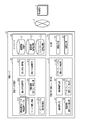
- the block diagram which shows the structure of the 1st Embodiment of the labor productivity loss cost calculation system The block diagram which shows the structure of the employment information record in the same embodiment.
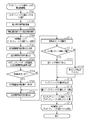
- the flowchart which shows the process of calculating the absolute ism loss cost in the same embodiment The block diagram which shows the structure of the 2nd Embodiment of the labor productivity loss cost calculation system.
- (A) and (b) are schematic diagrams showing the results of a questionnaire on the power performance in the same embodiment.
- (A) to (c) are schematic diagrams showing an example of a questionnaire on power performance in the same embodiment.
- the schematic diagram which shows the presentity ism loss rate definition table in the same embodiment.
- (A) The schematic diagram which shows the determination result about the presentity ism loss determination item in the same embodiment.
- (B) is a schematic diagram showing the result of counting the number of people corresponding to the presentity-ism loss determination item in the same embodiment.
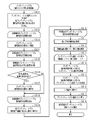
- the flowchart which shows the process of calculating the presentism loss cost in the same embodiment.
- the labor productivity loss cost calculation system includes a management server 10.
- the management server 10 is connected to a plurality of user terminals 1 via a network 2.
- the management server 10 stores the labor productivity loss cost calculation program and calculates the labor productivity loss cost by executing the labor productivity loss cost calculation program.
- the management server 10 is 1) one or more processors that execute various processes according to a computer program (software), 2) an integrated circuit (ASIC) for a specific application, or the like that executes at least a part of the various processes. It can be configured as a circuitry that includes one or more dedicated hardware circuits, or 3) a combination thereof.
- the processor includes a CPU and a memory such as a RAM and a ROM, and the memory stores a program code or a command configured to cause the CPU to execute a process.
- Memory or computer-readable medium includes any available medium accessible by a general purpose or dedicated computer.
- the user terminal 1 is, for example, a desktop type, notebook type or tablet type computer terminal used by a person in charge of labor management of a company, and includes an output unit and an input unit.
- the output unit has a function of outputting various information, and is composed of a display, a printer, and the like.
- the input unit has a function of inputting various information, and is composed of a keyboard, a pointing device, a communication interface, and the like.
- the user terminal 1 is configured to be able to browse files stored on the management server 10 and other servers other than the management server 10 and set to be shared.
- the user terminal 1 is configured to be able to download and save a file stored on a server other than the management server 10 and the management server 10 and set to be shared.
- the management server 10 is a computer system composed of hardware such as a CPU, ROM, RAM, and hard disk.
- the management server 10 includes a database 20, a setting data storage unit 300, a labor productivity loss cost calculation unit 40, and a server-side output unit 50.
- the database 20 includes an employment information storage unit 21, a health examination result storage unit 22, and a stress check result storage unit 23.
- the employment information storage unit 21 stores employment information of each employee.
- the health diagnosis result storage unit 22 stores information on the results of the health diagnosis of each employee.
- the stress check result storage unit 23 stores information on the stress check results of each employee.
- the setting data storage unit 300 stores setting data which is various settings such as a numerical value which is a condition for calculating the labor productivity loss cost and a numerical value used for the calculation.
- the setting data is data preset by the user of the labor productivity loss cost calculation system in order to calculate the labor productivity loss cost.
- the setting data includes a judgment standard table 301 for each medical examination item, an individual average daily unit price 302, an individual average monthly unit price 303, a stress loss rate 304, a lifestyle-related disease loss rate 305, and a stress boundary upper limit value 306. , Labor productivity loss cost calculation number of months 307 and target vacation reason 308.
- each determination standard table 301 has test values of "A", “B”, “C”, and "D” for systolic blood pressure, which is a medical examination item.
- the inspection value range for determining in four stages is stored in association with each inspection value.
- the individual average daily unit price 302 is the average daily labor cost for all employees calculated based on the financial statements.
- the average monthly unit price of an individual 303 is the average monthly labor cost of all employees calculated based on financial statements.
- the stress loss rate 304, the lifestyle-related disease loss rate 305, and the stress boundary upper limit value 306 are values fixed to the system or set by the user from the user terminal 1, and are considered to be appropriate based on various research results. Any value that can be.
- the number of months for calculating the labor productivity loss cost 307 is the number of months for which the labor productivity loss cost is calculated, and is set by the employer according to the time when the stress check or the health examination is carried out. Or the system is fixed.
- the target vacation reason 308 is used to identify the vacation used to calculate the Absentiism loss cost among the vacations taken by the employee.
- the labor productivity loss cost calculation unit 40 uses the number of days on which the target vacation reason 308 is used as the reason for the vacation among the days when the employee has taken the vacation to calculate the absolute ism loss cost.
- leave reasons include possible leave such as maternity leave, childcare leave, leave due to illness treatment hospitalization, and repulsion
- the target leave reason 308 includes sudden illness such as a cold, human relations at work, overwork, etc. It is an unexpected vacation such as poor physical condition due to burnout syndrome.
- the labor productivity loss cost calculation unit 40 includes a standard value calculation unit 41, a medical examination numerical value calculation unit 42, a stress loss cost calculation unit 43, a lifestyle-related disease loss cost calculation unit 44, and an absolute ism loss cost calculation.
- a unit 45 and an overtime loss cost calculation unit 46 are provided.
- the standard value calculation unit 41 calculates a standard value for each medical examination item.
- the medical examination numerical value calculation unit 42 calculates the medical examination numerical value for each medical examination item.
- the stress loss cost calculation unit 43 calculates the stress loss cost that constitutes the presentity ism loss cost.
- the lifestyle-related disease loss cost calculation unit 44 calculates the lifestyle-related disease loss cost that constitutes the presentity-ism loss cost.
- the Absenti-ism loss cost calculation unit 45 calculates the Absent-ism loss cost.
- the standard value calculation unit 41 calculates the standard value of each medical examination item by using the judgment standard table 301 for each medical examination item before calculating the labor productivity loss cost.
- the standard value calculated by the standard value calculation unit 41 is stored in the determination standard table 301 corresponding to the medical examination item of the standard value.
- the medical examination numerical value calculation unit 42 calculates the medical examination numerical value of each medical examination item by using the medical examination result record 22a and the judgment standard table 301 for each medical examination item.
- the medical examination numerical value calculated by the medical examination numerical value calculation unit 42 is stored in the health examination result storage unit 22.
- the medical examination numerical value calculated by the medical examination numerical value calculation unit 42 is used for calculating the lifestyle-related disease loss cost.
- the stress loss cost calculation unit 43 calculates the stress loss cost by using the stress check result record 23a, the stress loss rate 304, and the individual average monthly unit price 303.
- the lifestyle-related disease loss cost calculation unit 44 calculates the lifestyle-related disease loss cost using the medical examination result record 22a, the lifestyle-related disease loss rate 305, and the individual average monthly unit price 303.
- the Absentiism loss cost calculation unit 45 calculates the Absentiism loss cost using the employment information record 21a, the individual average daily unit price 302, and the target vacation reason 308.
- the overtime hour loss cost calculation unit 46 applies the employment information record 21a and the individual average hourly unit price derived from the individual average daily unit price 302 to the following formula 6 to calculate the overtime hour loss cost.
- the server-side output unit 50 includes a screen output unit 51 and a form output unit 52.
- the screen output unit 51 outputs data including the absolute ism loss cost calculated by the labor productivity loss cost calculation unit 40 and the presentity ism loss cost to an external screen.
- the screen output unit 51 outputs the absolute ism loss cost and the presentity ism loss cost to the user terminal 1.
- the user terminal 1 to which the absolute ism loss cost and the presentity ism loss cost are output is displayed on the display in a table format or a graph format.
- the form output unit 52 outputs data including the absolute ism loss cost calculated by the labor productivity loss cost calculation unit 40 and the presentity ism loss cost to the form.
- the form output unit 52 outputs the absolute ism loss cost and the presentity ism loss cost to the form by printing them in a table format or a graph format through a printer (not shown) via the network 2.
- the employment information storage unit 21 stores the employment information record 21a.
- the employment information record 21a includes item data which is data of items related to the employment status of each employee.
- the employment information record 21a is associated with an employee code, which is a code assigned to each employee.
- employee code which is a code assigned to each employee.
- Item data related to the employment status of each employee is input from the attendance management system used by the company.
- Item data relating to the employment status of each employee may be input from the user terminal 1 via the network 2 by the labor management person in charge of the company.
- the health examination result storage unit 22 stores the health examination result record 22a.
- the health examination result record 22a includes item data which is data of items related to the health examination of each employee.
- the medical examination result record 22a is associated with the employee code.
- the health examination result record 22a includes the test value for each item of the health examination and the determination result as item data.
- the item data of the items related to the health examination of each employee is taken in by processing the digital data acquired from the health examination center where the health examination was conducted, or the data printed on the paper medium is manually processed by the person in charge of the company. Is entered in.
- the medical examination result record 22a includes test values of medical examination items such as abdominal circumference, BMI value, systolic blood pressure, diastolic blood pressure, and uric acid as the medical examination result.
- the medical examination result record 22a includes a fasting blood glucose (FPG) test value, an HbA1c (NGSP) test value, an LDL cholesterol test value, an HDL cholesterol level, a triglyceride test value, a GOT (AST) test value, and a GPT (ALT) test.
- FPG fasting blood glucose
- NGSP HbA1c
- LDL cholesterol test value an LDL cholesterol test value
- HDL cholesterol level an HDL cholesterol level
- a triglyceride test value a GOT (AST) test value
- ALT GPT
- the medical examination result record 22a shows the systolic blood pressure determination result, the diastolic blood pressure determination result, and the fasting state in which each test value is determined in four stages of "A", "B", “C”, and "D” based on the criterion table 301.
- the blood pressure level determination result, HbA1c determination result, HDL cholesterol determination result, triglyceride determination result, GOT determination result, GPT determination result and the like are included.
- the determination result "E” indicates that the item is being treated regardless of the test value.
- the judgment result of each inspection value indicates that "A” is good, and the closer it is to "D", the worse it is.
- the medical examination result record 22a is a metabolic syndrome determination in which the possibility of corresponding to a lifestyle-related disease is determined in four stages of "A", "B", “C”, and “D” based on the determination result or the test value. Results, diabetes determination result, hypertension determination result, hyperuricemia determination result, dyslipidemia determination result, and liver dysfunction determination result are included.
- the determination result "E” indicates that the item is being treated regardless of the test value.
- the determination result of lifestyle-related disease indicates that "A" is less likely to correspond to lifestyle-related disease, and that the closer it is to "D", the higher the possibility of corresponding to lifestyle-related disease. Strictly speaking, metabolic syndrome is not a lifestyle-related disease, but in the present embodiment, it is treated as being similar to a lifestyle-related disease.
- the stress check result storage unit 23 stores the stress check result record 23a.
- the stress check result record 23a is associated with the employee code.
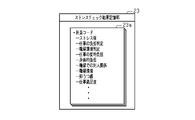
- the stress check result record 23a includes item data which is data of items related to the stress check of each employee.
- the stress check result record 23a includes results such as work burden determination, work environment determination, work qualitative burden, physical burden, interpersonal relationships in the workplace, work environment, depression, and work satisfaction.
- the stress check result record 23a includes a comprehensive evaluation of 5 stages or 2 stages. In the comprehensive evaluation, the total points such as mental and physical stress reactions and work stress factors are calculated based on each result included in the stress check result record 23a, and whether or not the person is highly stressed or not, whether or not the person is mentally ill.
- the stress check result record 23a includes the result of the stress value.
- the stress value is calculated using a known calculation method described in Patent Document 2. Item data related to the stress check is input by an industrial physician who performed the stress check.
- the labor productivity loss cost calculation system calculates the absolute ism loss cost and the presentity ism loss cost, and outputs the result to a screen or a file. A series of procedures including the procedure will be described.
- the labor management person operates the user terminal 1 and sends a calculation instruction of the labor productivity loss cost to the management server 10.
- the management server 10 that has received the calculation instruction calculates the labor productivity loss cost in the labor productivity loss cost calculation unit.
- the standard value calculation unit 41 calculates the standard value used for the calculation process of the medical examination value before calculating the labor productivity cost.
- the standard value is a standardized coefficient for calculating the medical examination numerical value, and is a coefficient for regarding the difference between the upper limit value and the lower limit value that can be taken by the test value of the medical examination item as "50".
- step S11 the standard value calculation unit 41 starts the standard value calculation process for each medical examination item.
- step S12 the standard value calculation unit 41 refers to the judgment standard table 301 of the designated medical examination item and acquires the lower limit value that the inspection value of the designated medical examination item can take.
- the lower limit value that the test value of the designated medical examination item can take is a numerical value corresponding to the urgent need for treatment in the determination criterion table 301 of the designated medical examination item.
- the standard value calculation unit 41 refers to the systolic blood pressure determination standard table 301a1 shown in FIG. 7, and is a value described in the column of D determination. Get 160.
- the standard value calculation unit 41 refers to the judgment standard table 301 of the designated medical examination item and acquires the upper limit value that the inspection value of the designated medical examination item can take.
- the upper limit value that can be taken by the test value of the designated medical examination item is a numerical value corresponding to no abnormality in the judgment standard table 301 of the designated medical examination item.
- the standard value calculation unit 41 refers to the systolic blood pressure determination standard table 301a1 shown in FIG. 7, and is the value described in the column of A determination. Get 129.
- step S14 the standard value calculation unit 41 calculates the standard value of the designated medical examination item.
- the standard value is calculated by the following formula 7.
- Standard value (lower limit value-upper limit value) / 50 ... (Equation 7)
- "50" is used as an intermediate value when 100 points are taken as a perfect score.
- the standard value of systolic blood pressure calculated by Equation 7 is calculated as follows.
- step S15 the standard value calculation unit 41 stores the calculated standard value in the systolic blood pressure determination standard table 301b1 of the medical examination item corresponding to the standard value.
- step S16 when there are still medical examination items for which the standard value calculation process has not been completed, the standard value calculation unit 41 proceeds to step S11 and performs the standard value calculation process for the next medical examination item. Start.
- the standard value calculation unit 41 uses the diastolic blood pressure determination standard table 301a2 shown in FIG. 7, and is the value described in the column of D determination. 100 is acquired as the lower limit of the medical examination value (step S12). Then, the standard value calculation unit 41 acquires 84, which is the value described in the column of A determination, as the upper limit value of the medical examination value (step S13). Next, the standard value calculation unit 41 calculates the reference value of the diastolic blood pressure as follows (step S14).
- the reference value calculation unit 41 stores the calculated reference value in the reference value item of the diastolic blood pressure determination reference table 301b2 (step S15). Then, when the calculation process of the standard value for all the medical examination items is completed, the standard value calculation unit 41 ends the calculation process of the standard value.
- the medical examination numerical value calculation unit 42 calculates the medical examination numerical values of all the target medical examination items for all the employees for which the labor productivity loss cost is calculated.
- the target medical examination items are abdominal circumference, BMI, systolic blood pressure, diastolic blood pressure, HDL cholesterol, LDL cholesterol, triglyceride, fasting blood glucose, HbA1c, uric acid, GOT, GPT, and ⁇ -GTP.
- step S21 the medical examination numerical value calculation unit 42 starts the calculation process of the medical examination numerical value for each employee.
- step S22 the medical examination numerical value calculation unit 42 starts the calculation process of the medical examination numerical value for each medical examination item for each employee.
- the medical examination numerical value calculation unit 42 refers to the judgment standard table 301 for each medical examination item, and acquires the standard value of the target medical examination item calculated earlier. For example, when the target medical examination item is systolic blood pressure, the medical examination numerical value calculation unit 42 refers to the standard value of the systolic blood pressure determination standard table 301b1 and acquires 0.62 as the standard value of systolic blood pressure.
- the medical examination numerical value calculation unit 42 refers to the judgment standard table 301 for each medical examination item, and acquires the boundary value between the B judgment and the C judgment of the target medical examination item. For example, when the target medical examination item is systolic blood pressure, the medical examination numerical value calculation unit 42 uses the systolic blood pressure determination standard table 301b1 to acquire 139, which is a boundary value between B determination and C determination.
- step S25 the health examination numerical value calculation unit 42 acquires the test value of the target medical examination item of the employee corresponding to the calculation target person from the health examination result storage unit 22, and calculates the medical examination numerical value by the following formula 8. ..
- Medical examination value 100+ (border value between B judgment and C judgment-test value) / standard value ... (Equation 8) That is, the medical examination numerical value is a numerical value indicating the size at which the test value is separated from the boundary value between the B judgment and the C judgment, assuming that the difference between the lower limit value and the upper limit value is 50. The medical examination value indicates that the value larger than 100 is better, and the value smaller than 100 is not good.
- the health examination numerical value calculation unit 42 stores the calculated medical examination numerical value in the health examination result storage unit 22.
- the medical examination numerical value calculation unit 42 ends the medical examination numerical value calculation process of each medical examination item. For each employee, if there are still medical examination items for which the calculation process of the medical examination numerical value has not been completed, the medical examination numerical value calculation unit 42 proceeds to step S22 and determines the medical examination numerical value in the next medical examination item. Start the calculation process.
- the medical examination numerical value calculation unit 42 refers to the diastolic blood pressure determination standard table 301b2 and sets a value of 0.32 as the standard value of diastolic blood pressure. Acquire (step S23). Subsequently, the medical examination numerical calculation unit 42 refers to the diastolic blood pressure determination standard table 301b2, and acquires a value of 89 as a boundary value between the B determination and the C determination for the diastolic blood pressure (step S24). When the test value of diastolic blood pressure is 95, the medical examination numerical value calculation unit 42 calculates the diastolic blood pressure medical examination value as follows (rounded to the second decimal place) (step S25).
- the health examination numerical value calculation unit 42 stores the calculated health examination numerical value in the health examination result storage unit 22 (step S26). Further, in step S27, when the calculation process of the medical examination numerical value for all the medical examination items is completed in each employee, the medical examination numerical value calculation unit 42 ends the calculation process of the medical examination numerical value in each employee. If there are still employees who have not completed the calculation process of the medical examination numerical value, the medical examination numerical value calculation unit 42 proceeds to step S21 and starts the calculation process of the medical examination numerical value for the next employee.
- the medical examination numerical value calculation unit 42 ends the calculation process of the medical examination numerical value.
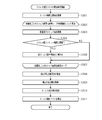
- Stress loss cost calculation process As shown in FIG. 8, the stress loss cost calculation unit 43 calculates the stress loss cost from the stress values of all the employees for which the labor productivity loss cost is calculated. In step S301, the stress loss cost calculation unit 43 acquires the stress boundary upper limit value 306 from the setting data storage unit 300. In step S302, the stress loss cost calculation unit 43 starts the stress loss cost calculation process for each employee.
- step S303 the stress loss cost calculation unit 43 extracts the stress value of the employee from the stress check result storage unit 23.
- step S304 the stress loss cost calculation unit 43 determines whether or not the stress value of the employee exceeds the stress boundary upper limit value 306.
- step S306 1 is added to the number of people corresponding to high stress in the program variable. That is, when an employee having a stress value exceeding the stress boundary upper limit value 306 is regarded as a high stress applicable person, the number of high stress applicable persons in the company is the high stress applicable person.
- step S307 if there are still employees who have completed the determination of the stress value, the stress loss cost calculation unit 43 proceeds to step S302 and determines the stress value for the remaining employees. When the determination of the stress value is completed for all the employees for which the labor productivity loss cost is to be calculated, the stress loss cost calculation unit 43 proceeds to step S308.
- step S308 the stress loss cost calculation unit 43 acquires the individual average monthly unit price 303 from the setting data storage unit 300.
- the stress loss cost calculation unit 43 acquires the labor productivity loss cost calculation months 307 from the setting data storage unit 300.
- step S310 the stress loss cost calculation unit 43 acquires the stress loss rate 304 from the setting data storage unit 300.
- step S311 the stress loss cost calculation unit 43 calculates the stress loss cost using the following equation 3.
- the lifestyle-related disease loss cost calculation unit 44 determines the metabolic syndrome provided as a result of a medical examination to all employees for which the labor productivity loss cost is calculated, and the lifestyle-related disease. Make a judgment and calculate the cost of loss of lifestyle-related diseases.
- the lifestyle-related disease loss cost calculation unit 44 determines lifestyle-related disease determination items for each employee, specifically, metabolic syndrome determination result, diabetes determination result, hypertension determination result, hyperuric acidemia determination result, Based on the results of determining dyslipidemia and the results of determining hepatic dysfunction, it is determined whether or not each employee is a person with a lifestyle-related disease, and the cost of loss of lifestyle-related disease for the entire company is calculated.
- step S401 the number of people corresponding to lifestyle-related diseases is set to 0.
- step S402 it is started to determine whether or not each employee has a lifestyle-related disease.
- step S403 it is determined whether or not the plurality of lifestyle-related disease determination items correspond to the C to E determination for one employee.
- step S404 from the health diagnosis result storage unit 22, lifestyle-related disease determination items, specifically, metabolic syndrome determination result, diabetes determination result, hypertension determination result, hyperuricemia determination result, dyslipidemia determination result, and liver Acquire the dysfunction judgment results in sequence.
- step S405 it is determined whether or not the determination result of the lifestyle-related disease determination item is from "C” to "E".
- the employee's metabolic syndrome judgment result, diabetes judgment result, hypertension judgment result, hyperuricemia judgment result, dyslipidemia judgment result, or liver dysfunction judgment result is C judgment, D judgment, or E judgment ( YES in step S405)
- the process proceeds to step S407.
- the employee's metabolic syndrome judgment result, diabetes judgment result, hypertension judgment result, hyperuricemia judgment result, dyslipidemia judgment result, or liver dysfunction judgment result is not C judgment, D judgment, or E judgment. (NO in step S405), the process proceeds to step S406.
- step S407 1 is added to the number of people with lifestyle-related diseases. That is, when an employee with a lifestyle-related disease whose lifestyle-related disease judgment is "C” to "E” is regarded as a person with a lifestyle-related disease, the number of people with a lifestyle-related disease in the company is the number of people with a lifestyle-related disease. be. After that, the lifestyle-related disease loss cost calculation unit 44 shifts to step S408.
- step S406 if there are remaining lifestyle-related disease determination items for which the determination result has not been checked, the lifestyle-related disease loss cost calculation unit 44 proceeds to step S403 and starts checking the remaining lifestyle-related disease determination items. do. When the check for all the lifestyle-related disease determination items is completed, the lifestyle-related disease loss cost calculation unit 44 proceeds to step S408.
- step S408 if there are still employees who have not completed the determination of whether or not they are affected by lifestyle-related diseases, the lifestyle-related disease loss cost calculation unit 44 shifts to step S402, and the remaining employees have lifestyle-related habits. Start determining whether or not the person is ill. When the determination as to whether or not all the employees for which the labor productivity loss cost is to be calculated is applicable to the lifestyle-related disease is completed, the lifestyle-related disease loss cost calculation unit 44 proceeds to step S409.
- step S409 the individual average monthly unit price 303 is acquired from the setting data storage unit 300.
- step S410 the labor productivity loss cost calculation month 307 is acquired from the setting data storage unit 300.
- step S411 the lifestyle-related disease loss rate 305 is acquired from the setting data storage unit 300.
- step S412 the lifestyle-related disease loss cost is calculated using the following formula 4.
- Lifestyle-related disease loss cost Number of people affected by lifestyle-related disease x Individual average monthly unit price x Labor productivity loss cost calculation months x Lifestyle-related disease loss rate ... (Equation 4) (Abcentyism loss cost calculation process) As shown in FIG. 10, the Absentiism loss cost calculation unit 45 calculates the Absentiism loss cost. Steps S51 to S58 are carried out for all employees whose labor productivity loss cost is to be calculated.
- step S51 the target vacation reason 308 is acquired from the setting data storage unit 300.
- step S52 the Absentiism loss cost calculation unit 45 starts the calculation process of the number of vacation days of each employee in the period for which the labor productivity loss cost is calculated.
- step S53 the employment information storage unit 21 is referred to, and the number of absentee days for the employee is acquired.
- step S54 the employment information storage unit 21 is referred to, and the number of days of paid leave taken by the employee due to the vacation reason corresponding to the target vacation reason 308 is acquired.
- step S55 the number of absentee days acquired in step S53 and the number of paid vacation days acquired in step S54 are added to the total number of vacation days covered by the company in the program variable.
- step S56 if there are still employees who have not completed the vacation days calculation process, the Absent-ism loss cost calculation unit 45 proceeds to step S52 to calculate the vacation days for the next employee. To start. When the calculation process of the number of vacation days is completed for all the employees for which the labor productivity loss cost is to be calculated, the Absentiism loss cost calculation unit 45 proceeds to step S57.
- step S57 the individual average daily unit price 302 is acquired from the setting data storage unit 300.
- the labor productivity loss cost calculation unit 40 calculates the labor productivity loss cost using the following formulas 1 and 2. At this time, with reference to the employment information record 21a, the overtime hours of all employees in the calculation period are acquired, and the individual average hourly unit price is calculated from the individual average daily unit price 302 to calculate the overtime hour loss cost. ..
- the management server 10 outputs data including the calculated labor productivity loss cost from the screen output unit 51 to the user terminal 1 via the network 2.
- the data including the labor productivity loss cost is, for example, a tabular format that stores the history of the labor productivity loss cost for each year, or a graph representation of the change in the labor productivity loss cost for each year. be.
- the user terminal 1 outputs data including the labor productivity loss cost output from the screen output unit 51 by the output unit included in the user terminal 1. For example, the user terminal 1 outputs labor productivity loss cost by displaying data in a table format or a graph format on a display.
- the management server 10 outputs data including the calculated labor productivity loss cost from the form output unit 52 to a printer (not shown) via the network 2.
- the printer prints the output data including the labor productivity loss cost and outputs it as a form.
- the labor productivity loss cost calculation system has the item data of the medical examination result record 22a stored in the health examination result storage unit 22 and the item data of the stress check result record 23a stored in the stress check result storage unit 23.
- the presentity ism loss cost is calculated from and. Therefore, even if there are errors in the uncertain memory of employees included in the answers to questionnaires such as whether or not they are attending work with illness or symptoms, or in ambiguous evaluations that depend on individual judgment criteria, such The effect of the error is mitigated by adding accurate data such as medical examination results. As a result, the accuracy of calculating the labor productivity loss cost can be improved.
- the labor productivity loss cost calculation system calculates the labor productivity loss cost using the above formulas 1 and 2, in addition to the decrease in labor productivity due to the physical condition of the employee, in addition to the decrease in labor productivity.
- the labor productivity loss cost can be calculated in consideration of the decrease in labor productivity caused by mental disorders.
- the labor productivity loss cost calculation system calculates the stress loss cost using the above formula 3
- the stress loss cost can be calculated according to the number of persons subject to high stress.
- the labor productivity loss cost calculation system calculates the lifestyle-related disease loss cost using the above formula 4
- the lifestyle-related disease loss cost can be calculated according to the number of persons corresponding to the lifestyle-related disease.
- the labor productivity loss cost calculation system of the second embodiment is different from the first embodiment in that it stores the results of the questionnaire on the power performance.
- the setting data storage unit 300 further stores the business execution efficiency 309 according to the questionnaire.
- the labor productivity loss cost calculation unit 40 further includes a business execution efficiency calculation unit 47 based on a questionnaire.
- the work performance efficiency 309 of each employee by the questionnaire is the work performance efficiency data that each employee answered to the questionnaire question by the industrial physician or the public health nurse, and the employee code and the answer. It is saved in association with the day.
- the work performance efficiency is 100% of the work performance and productivity before any disease or symptom occurs, and each employee responds to the work performance and productivity efficiency for a specified period. become.
- the work performance efficiency 309 according to the questionnaire is stored together with the work performance efficiency data answered by each employee, the high stress determination result, and the number of items corresponding to lifestyle-related diseases.
- the number of lifestyle-related disease applicable items is the number of lifestyle-related disease determination items corresponding to C to E determination among the lifestyle-related disease determination items for each employee.
- the stress loss rate and the lifestyle-related disease loss rate are fixed to the system or set by the user from the user terminal 1.
- the stress loss rate and the lifestyle-related disease loss rate are calculated from the results of an interview guidance by an industrial physician or a public health nurse or a questionnaire to employees at the time of health guidance, and the stress loss cost and lifestyle-related habits are calculated. Used when calculating the cost of disease loss.
- the questionnaire is conducted by an industrial physician or a public health nurse for employees at the time of interview guidance or health guidance, and the questionnaire results are input from the user terminal 1 via the questionnaire result input screen provided by the management server 10. It is stored in the work execution efficiency 309 by the questionnaire in association with the employee code of the employee.
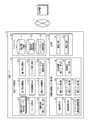
- the questionnaire contains questions such as (a), (b), or (c) in FIG.
- the work performance that can be demonstrated when there is no illness or injury is set to 100%, and the work performance for the past 4 weeks at the time of interview guidance or health guidance is 0%, 20%, 40%. , 60%, 80%, 100%.
- FIG. 13 (b) is a format called the University of Tokyo 1-item version presentity ism questionnaire, and questions with almost the same contents as those in FIG. 13 (a) are given to the target person.
- the difference from FIG. 13A is that the work performance efficiency is self-evaluated between 1 and 100%, and this may be used.
- FIG. 13 (c) shows questions B10 and B11 of what is called the WHO HPQ Short Form (shortened version of the "World Health Organization (WHO) Survey on Health and Work Performance”), and this is used as a questionnaire. It doesn't matter. For the individual work performance efficiency at this time, the ratio of question 1 and question 2 in (c) of FIG. 13 can be adopted.
- WHO HPQ Short Form shortened version of the "World Health Organization (WHO) Survey on Health and Work Performance
- the work execution efficiency calculation unit 47 by the questionnaire acquires the work execution efficiency 309 by the questionnaire, and applies the same to the stress loss rate and the lifestyle-related disease loss rate from the work execution efficiency 309 by the questionnaire. Calculate the presentity ism loss rate as a value. Steps S61 to S66 are performed on all the questionnaire results answered in the designated period.
- the business execution efficiency calculation unit 47 based on the questionnaire calculates the presentationism loss rate based on the results of the questionnaire answered in the designated period.
- step S61 the cumulative value of work execution efficiency and the number of questionnaire responses are set to 0.
- step S62 the aggregation of the power efficiency of the questionnaire results answered in the designated period is started.
- step S63 the value of the power performance obtained from the acquired questionnaire result is added to the cumulative value of the power performance.
- step S64 1 is added to the number of questionnaire responses.
- step S65 if among the questionnaire results answered in the designated period, the questionnaire results for which the addition of the work performance efficiency has not been completed remain, the work performance efficiency calculation unit 47 by the questionnaire shifts to step S62. , Continue to aggregate the questionnaire results. When the aggregation of the questionnaire results is completed, the business execution efficiency calculation unit 47 based on the questionnaire proceeds to step S66.
- the labor productivity loss cost calculation unit 40 stores the presentity-ism loss rate obtained here in the stress loss rate 304 and the lifestyle-related disease loss rate 305.
- the labor productivity loss cost calculation unit 40 calculates the labor productivity loss cost using the stored stress loss rate 304 and the lifestyle-related disease loss rate 305.
- the labor productivity loss cost calculation system of the third embodiment is different from the second embodiment in that the labor productivity loss cost calculation unit 40 includes the presentity ism loss cost calculation unit 48.
- the stress value of the employee who responded to the questionnaire and the work performance efficiency of the questionnaire result are classified according to the result of the lifestyle-related disease judgment item, and based on this, the presentity ism loss cost calculation unit 48 is the stress value of the employee.
- the calculation of labor productivity loss cost according to the result of the lifestyle-related disease judgment item is different.
- the work performance efficiency 309 by the questionnaire associates the average value of the work performance efficiency and the presentity ism loss rate for each combination of the result of the high stress judgment and the number of items corresponding to lifestyle-related diseases. Also includes a combination table.
- the average value of the work performance efficiency associated with the combination of the result of the high stress judgment and the number of items corresponding to lifestyle-related diseases is the result of the high stress judgment and the items corresponding to lifestyle-related diseases among the questionnaire results shown in FIG. 12 (a). It is the average value of the work execution efficiency in the extracted questionnaire results when the questionnaire results that match the numbers are extracted.
- the presentation ism loss rate associated with the combination of the result of the high stress determination and the number of items corresponding to lifestyle-related diseases is a numerical value obtained by subtracting the average value of the work performance efficiency from 100%.
- the presentity ism loss cost calculation unit 48 calculates the presentity ism loss cost based on this combination table.
- the presentity-ism loss cost in this case is calculated by the process shown in FIG. 15 instead of the above equation (8).
- the presentation-ism loss cost calculation unit 48 calculates the presentation-ism loss cost of the entire company in steps S701 to S717.
- step S701 the presentism loss cost of the entire company is set to 0.
- step S702 the individual average monthly unit price 303 is acquired from the setting data storage unit 300.
- step S703 the number of months for calculating the labor productivity loss cost 307 is acquired from the setting data storage unit 300.
- step S704 the calculation process of the presentationism loss cost for each employee and the presentationism loss cost for the entire company is started.
- step S705 the number of items corresponding to lifestyle-related diseases is set to 0.
- step S706 it is determined for one employee whether or not the lifestyle-related disease determination result corresponds to a specific determination result.
- step S707 from the health diagnosis result storage unit 22, lifestyle-related disease determination items, specifically, metabolic syndrome determination result, diabetes determination result, hypertension determination result, hyperuricemia determination result, dyslipidemia determination result, and liver Acquire the dysfunction judgment results in sequence.
- step S708 it is determined whether or not the value of the lifestyle-related disease determination item is from “C” to “E”.
- the employee's metabolic syndrome judgment result, diabetes judgment result, hypertension judgment result, hyperuricemia judgment result, dyslipidemia judgment result, or liver dysfunction judgment result is C judgment, D judgment, or E judgment The process proceeds to step S709.
- step S709 1 is added to the number of items corresponding to lifestyle-related diseases.
- step S710 if there are remaining lifestyle-related disease determination items for which the lifestyle-related disease determination result has not been checked, the process proceeds to step S706 to start checking the remaining lifestyle-related disease determination items. When the checks for all the lifestyle-related disease determination items are completed, the process proceeds to step S711.
- step S711 the stress value of the employee is taken out from the stress check result storage unit 23.
- step S712 it is determined whether or not the stress value of the employee exceeds the stress boundary upper limit value 306.
- step S713 the result of the high stress determination of the employee is set to "Yes", and the process proceeds to step S715.
- the process proceeds to step S714.
- step S714 the result of the high stress determination of the employee is set to "No", and the process proceeds to step S715.
- step S715 the presentity ism loss rate of the row in which the result of the high stress determination and the number of items corresponding to the lifestyle-related disease match is acquired from the table of FIG. 12 (b).
- step S716 the personal presentism loss cost is calculated using the following formula 9.
- step S716 Presenty ism loss rate x labor productivity loss cost calculation months x individual average monthly unit price ... (Equation 9)
- step S716 the individual presentity ism loss cost is added to the presentity ism loss cost of the entire company.
- the presentity-ism loss cost of the entire company is the sum of the individual presentation-ism loss costs of all employees.
- step S717 if there are still employees who have not completed the calculation of the individual presentationism loss cost, the process proceeds to step S704 and the calculation of the individual presentationism loss cost is started for the remaining employees.
- the presentity ism loss cost calculation unit 48 ends the process.
- the labor productivity loss cost calculation system of the fourth embodiment has the stress loss rate 304, the stress loss cost calculation unit 43, the lifestyle-related disease loss rate 305, and the lifestyle-related disease loss cost calculation unit 44 described with reference to FIG. Stress loss and lifestyle-related disease loss are treated as similar things without using.
- the presentity ism loss cost calculation unit 48 calculates the presentity ism loss cost based on the fact that the stress loss and the lifestyle-related disease loss are similar. calculate.
- the setting data storage unit 300 may or may not store the stress loss rate 304 and the lifestyle-related disease loss rate 305. Further, the labor productivity loss cost calculation unit 40 may or may not include the stress loss cost calculation unit 43 and the lifestyle-related disease loss cost calculation unit 44.
- the setting data storage unit 300 stores the presentity ism loss rate definition table 310.
- the presentation ism loss rate definition table 310 is a combination table in which the number of presentty ism loss applicable items, which is the number of items corresponding to the criteria among the presentity ism determination items, and the presentity ism loss rate are associated with each other.
- the presentity ism judgment item is an item for judging whether or not the presentity ism loss cost is incurred for each employee. For example, the judgment result of metabolic syndrome, the judgment result of each lifestyle-related disease, and high stress. This is the judgment result.
- the determination result of metabolic syndrome and the determination result of each lifestyle-related disease are counted as the number of items corresponding to the presentity ism loss when the determination result meets the criteria based on the criteria being C to E.
- the high stress determination result is counted as the number of items corresponding to the presentity ism loss when the stress value exceeds the stress upper limit boundary value and meets the standard.
- the presentation ism loss rate definition table 310 may store the presentity ism loss rate preset by the company as the presentity ism loss rate, or is calculated by the procedure using the questionnaire shown in FIGS. 13 and 14.
- the presentity ism loss rate may be stored.
- the presentation ism loss cost calculation unit 48 is based on the data of the health examination result storage unit 22 and the stress check result storage unit 23 for all employees, from among the presentation ism loss determination items of each employee. Check the number of items that correspond to Presenty Ism Loss.
- the breakdown of the presentationism loss determination items of each employee is configured as an example.
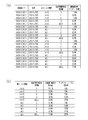
- the data search results of the employee code "001001" from the health examination result storage unit 22 and the stress check result storage unit 23 show that the metabolic syndrome determination result is A, the hypertension determination result is B, the dyslipidemia determination result is C, and the diabetes determination. Since the result is A, the dyslipidemia judgment result is D, the hyperuricemia judgment result is E, and the stress judgment result is "No", the presentation among the presentity ism loss judgment items of the employee with the employee code "001001" is presented.
- the number of items corresponding to T-ism loss is 3.
- the presentity-ism loss cost calculation unit 48 reads out the loss rate corresponding to the number of items corresponding to each presentation-ism loss from the combination table of FIG. Then, the presentity-ism loss cost calculation unit 48 uses the number of people for each number of presentity-ism loss applicable items, the loss rate corresponding to the number of presentity-ism loss applicable items, the number of calculated months, and the individual average monthly unit price. Calculate the cost of presentism loss for all employees.
- equation 10 is used instead of equations 1, 3, and 4.
- Presenteeism loss The minimum value of the number of applicable items is 0, and the maximum value is the same as the number of presentationism judgment items.
- the presentity-ism loss cost of an employee whose number of presentation-ism loss judgments is 0 is 0, so that the presentity-ism loss cost is excluded, and the number of presentity-ism loss judgment items 1 to 7 corresponds to the presentity-ism loss cost. calculate.
- the presentity-ism loss cost calculation unit 48 calculates the presentation-ism loss cost of the entire company according to steps S801 to S817 of FIG.
- step S801 the number of people whose presentity ism loss corresponding items correspond to 0 to 7 is initialized to 0, respectively.
- step S802 the process of determining the number of items corresponding to the presentationism loss of all employees is started.
- step S803 the number of items corresponding to the presentity ism loss is set to 0.
- step S804 the calculation process of the number of items corresponding to the presentity ism loss is started for one employee.
- step S805 one of the determination results of the presentity ism loss determination item of one employee is acquired from the data of the health examination result storage unit 22 and the stress check result storage unit 23.
- step S806 it is determined whether or not the determination result of the acquired presentity ism loss determination item corresponds to the standard.
- the metabolic syndrome determination result and each lifestyle-related disease determination result obtained from the health examination result storage unit 22 are based on the determination results being C to E.
- the result of the high stress determination acquired from the stress check result storage unit 23 is based on the fact that the stress value exceeds the stress upper limit boundary value. If the presentity ism loss determination item meets the criteria (“Yes” in step S806), the process proceeds to step S807. If the presentity ism loss determination item does not meet the criteria (when “No” in step S806), the process proceeds to step S808.
- step S807 1 is added to the number of items corresponding to the employee's presentationism loss. Then, the process proceeds to step S808.
- step S808 if the presentity ism determination item to be determined remains, the process proceeds to step S804, and if not, the process proceeds to step S809.
- step S809 the number of people corresponding to the number of items corresponding to the presentity ism loss is increased by 1. For example, in the case of the employee code 001001, since the number of items corresponding to the presentity ism loss is 3, the number of persons corresponding to the number of items corresponding to the presentity ism loss is increased by 1.
- step S810 if there are still employees who have not completed the determination of the number of items corresponding to the individual presentationism loss, the process proceeds to step S802, and the number of items corresponding to the individual presentationism loss is determined for the remaining employees. Start the process of determining.
- the process proceeds to step S811. At this time, as shown in FIG. 18B, data indicating the number of people for each presentity-ism loss applicable item may be created and used for calculating the labor productivity loss cost.
- step S811 the individual average monthly unit price 303 is acquired from the setting data storage unit 300.
- step S812 the number of months for calculating the labor productivity loss cost 307 is acquired from the setting data storage unit 300.
- step S813 the presentation ism loss cost is calculated for each number of presentity ism loss determination items among the presentity ism loss determination items. That is, it starts by calculating the presentationism loss cost of the employee whose number of items corresponding to the presentationism loss is 1, and then the presentationism loss cost of the employee whose number of items corresponding to the presentationism loss is 2. Then, the presentationism loss cost of the employee whose number of applicable items is 3, and finally the presentationism loss cost of the employee whose presentationism loss cost is 7. It ends. Let i be the number of items corresponding to this presentity ism loss.
- step S814 the presentation ism loss rate of the number of items i corresponding to the presentity ism loss is acquired from the combination table of the presentity ism loss rate in FIG. For example, when i is 1, 10%, which is the presentation ism loss rate in which the number of corresponding items is 1, is acquired.
- step S815 the presentationism loss cost of the number of items i corresponding to the presentationism loss is calculated by the following formula.
- step S816 i is incremented by 1.
- step S817 the process proceeds to step S813 when the number of items corresponding to the next presentity-ism loss for which the presentty-ism loss cost is calculated remains, that is, when i is 7 or less.
- step S818 when the number of items corresponding to the next presentity-ism loss for which the presentty-ism loss cost is calculated does not exist, that is, when i is larger than 7, the iterative processing of steps S813 to S817 is ended, and the process proceeds to step S818.
- step S818 the presentationism loss cost for the entire company is calculated by summing the presentationism loss costs for each number of applicable items. Then, the presentity ism loss cost calculation unit 48 ends the process.
- the high stress determination result is determined by whether or not the stress value of each employee exceeds the stress upper limit boundary value.
- the setting data storage unit 300 may store a standard for evaluating the stress value stepwise instead of the stress upper limit boundary value.
- the high stress determination result is determined in five stages from the determination A, which is considered to be the least stressed, to the determination E, which is considered to be the most stressed,, for example, according to the criteria for evaluating the stress value stepwise. ..
- the Absentiism Loss Cost Calculation Unit 45 has acquired the number of days absent from work and the number of days of paid leave taken for reasons that match the target vacation reason 308.
- the Absentiism loss cost calculation unit 45 may acquire the number of days off and the time to leave early, in addition to the number of days absenteeism and the number of days of paid leave taken.
- the labor productivity loss cost calculation system calculates the labor productivity loss cost for all employees in one company.
- the labor productivity loss cost calculation system may calculate the labor productivity loss cost for each department in the company.
- the labor productivity loss cost may be calculated for a plurality of companies.
- the labor productivity calculation cost calculation system calculates the labor productivity loss cost for employees in the company.
- the labor productivity loss cost calculation system calculates the labor productivity loss cost if it is an organization whose members are those engaged in labor, such as corporations including non-profit corporations and public corporations, or groups of sole proprietors. can do.
- the stress loss cost is calculated using the number of employees whose stress value exceeds the stress upper limit boundary value, and the employee whose lifestyle-related disease determination is from "C" to "E".
- the cost of loss of lifestyle-related diseases was calculated using the number of people.
- the labor productivity loss cost calculation system targets employees whose stress check results are unsatisfactory and whose health examination results are unsatisfactory, and presenteeism loss cost calculation targets.
- the presentity-ism loss cost may be calculated based on the number of persons and the presentation-ism loss rate set by the company.
- ⁇ Judgment as to whether or not the result of the stress check is unsatisfactory is made based on whether or not the stress value of the employee exceeds the stress upper limit boundary value, and whether or not the result of the health examination is unsatisfactory is determined by C.
- ⁇ E Depends on whether or not there is a lifestyle-related disease that has been judged. According to the above-described configuration, it is possible to extract the presentee-ism calculation target person based on the standard set by the Japan Society for Ningen Dock and calculate the presentee-ism loss cost.
- whether or not the result of the stress check is unsatisfactory is determined by whether or not the stress value of the employee exceeds the national average value of the stress value, and whether or not the result of the health examination is unsatisfactory. The judgment may be made based on whether or not the total value of the employee's medical examination values exceeds the national average value. According to the above-described configuration, it is possible to extract the presentee-ism calculation target person according to the change in the domestic working environment and calculate the presentee-ism loss cost.
Landscapes
- Business, Economics & Management (AREA)
- Human Resources & Organizations (AREA)
- Engineering & Computer Science (AREA)
- Strategic Management (AREA)
- Entrepreneurship & Innovation (AREA)
- Economics (AREA)
- General Business, Economics & Management (AREA)
- Educational Administration (AREA)
- Tourism & Hospitality (AREA)
- General Physics & Mathematics (AREA)
- Theoretical Computer Science (AREA)
- Physics & Mathematics (AREA)
- Quality & Reliability (AREA)
- Operations Research (AREA)
- Marketing (AREA)
- Development Economics (AREA)
- Game Theory and Decision Science (AREA)
- Data Mining & Analysis (AREA)
- Health & Medical Sciences (AREA)
- General Health & Medical Sciences (AREA)
- Medical Informatics (AREA)
- Primary Health Care (AREA)
- Epidemiology (AREA)
- Public Health (AREA)
- Biomedical Technology (AREA)
- Medical Treatment And Welfare Office Work (AREA)
- Management, Administration, Business Operations System, And Electronic Commerce (AREA)
Priority Applications (2)
| Application Number | Priority Date | Filing Date | Title |
|---|---|---|---|
| US17/922,137 US20230196249A1 (en) | 2020-04-30 | 2021-04-23 | System for calculating cost of labor productivity loss, method for calculating cost of labor productivity loss, and program for calculating cost of labor productivity loss |
| CN202180031951.3A CN115516478A (zh) | 2020-04-30 | 2021-04-23 | 劳动生产率损失成本计算系统、劳动生产率损失成本计算方法以及劳动生产率损失成本计算程序 |
Applications Claiming Priority (2)
| Application Number | Priority Date | Filing Date | Title |
|---|---|---|---|
| JP2020-080639 | 2020-04-30 | ||
| JP2020080639A JP7343121B2 (ja) | 2020-04-30 | 2020-04-30 | 労働生産性損失コスト算出システム、労働生産性損失コスト算出方法、および労働生産性損失コスト算出プログラム |
Publications (1)
| Publication Number | Publication Date |
|---|---|
| WO2021220968A1 true WO2021220968A1 (ja) | 2021-11-04 |
Family
ID=78279725
Family Applications (1)
| Application Number | Title | Priority Date | Filing Date |
|---|---|---|---|
| PCT/JP2021/016495 Ceased WO2021220968A1 (ja) | 2020-04-30 | 2021-04-23 | 労働生産性損失コスト算出システム、労働生産性損失コスト算出方法、および労働生産性損失コスト算出プログラム |
Country Status (4)
| Country | Link |
|---|---|
| US (1) | US20230196249A1 (https=) |
| JP (1) | JP7343121B2 (https=) |
| CN (1) | CN115516478A (https=) |
| WO (1) | WO2021220968A1 (https=) |
Families Citing this family (2)
| Publication number | Priority date | Publication date | Assignee | Title |
|---|---|---|---|---|
| US20240232770A9 (en) * | 2022-10-25 | 2024-07-11 | PTO Genius, LLC | Systems and methods for exhaustion mitigation and organization optimization |
| WO2024202064A1 (ja) * | 2023-03-31 | 2024-10-03 | ミイダス株式会社 | ユーザの健康経営優良法人認定を支援する方法 |
Citations (1)
| Publication number | Priority date | Publication date | Assignee | Title |
|---|---|---|---|---|
| JP2019185416A (ja) * | 2018-04-11 | 2019-10-24 | アビームコンサルティング株式会社 | 労働生産性及び健康経営の指標値の自動計算方法及び情報処理システム |
Family Cites Families (3)
| Publication number | Priority date | Publication date | Assignee | Title |
|---|---|---|---|---|
| US7624037B2 (en) * | 2001-10-31 | 2009-11-24 | Ncqa | Economic model for measuring the cost and value of a particular health insurance plan |
| US11100545B2 (en) * | 2012-05-17 | 2021-08-24 | Gregory J. Hummer | Web-based health index calculator |
| US20230058271A1 (en) * | 2020-01-22 | 2023-02-23 | Cxa Group Pte. Limited | Methods, systems, and devices for processing health-related information |
-
2020
- 2020-04-30 JP JP2020080639A patent/JP7343121B2/ja active Active
-
2021
- 2021-04-23 WO PCT/JP2021/016495 patent/WO2021220968A1/ja not_active Ceased
- 2021-04-23 US US17/922,137 patent/US20230196249A1/en not_active Abandoned
- 2021-04-23 CN CN202180031951.3A patent/CN115516478A/zh active Pending
Patent Citations (1)
| Publication number | Priority date | Publication date | Assignee | Title |
|---|---|---|---|---|
| JP2019185416A (ja) * | 2018-04-11 | 2019-10-24 | アビームコンサルティング株式会社 | 労働生産性及び健康経営の指標値の自動計算方法及び情報処理システム |
Non-Patent Citations (3)
| Title |
|---|
| "Visualization of health issues through collaboration between insurers and business owners based on the framework of ''health management", 31 March 2015 (2015-03-31), JP, pages 1 - 56, XP009532031, Retrieved from the Internet <URL:https://www.mhlw.go.jp/file/06-Seisakujouhou-12400000-Hokenkyoku/houkoku12.pdf> [retrieved on 20210616] * |
| ANONYMOUS: "The industry's first new function "Presentism Analysis Report" is installed as standard in the stress check system", HUMANAGE INC., 8 February 2019 (2019-02-08), XP055868941, Retrieved from the Internet <URL:https://www.hrpro.co.jp/press_detail.php?ccd=00753&press_no=5> * |
| MATSUMOTO, ICHIRO: "Visualization of "happiness" with IoT Health management has high returns", TELECOMMUNICATION, vol. 37, no. 5, 25 April 2020 (2020-04-25), JP , pages 7 - 9, XP009532026, ISSN: 0910-7576 * |
Also Published As
| Publication number | Publication date |
|---|---|
| JP7343121B2 (ja) | 2023-09-12 |
| JP2021174465A (ja) | 2021-11-01 |
| CN115516478A (zh) | 2022-12-23 |
| US20230196249A1 (en) | 2023-06-22 |
Similar Documents
| Publication | Publication Date | Title |
|---|---|---|
| Kornblith et al. | Association of race and ethnicity with incidence of dementia among older adults | |
| Mark et al. | Medical economics and the assessment of value in cardiovascular medicine: part I | |
| McMorrow et al. | Determinants of receipt of recommended preventive services: implications for the Affordable Care Act | |
| Christopher et al. | Access to care and chronic disease outcomes among Medicaid-insured persons versus the uninsured | |
| Kinman | Work stressors, health and sense of coherence in UK academic employees | |
| Passali et al. | Work-related musculoskeletal disorders among Greek hospital nursing professionals: A cross-sectional observational study | |
| Sand-Jecklin et al. | Efficiently assessing patient health literacy: the BHLS instrument | |
| Cigolle et al. | Inconsistency in the self-report of chronic diseases in panel surveys: developing an adjudication method for the health and retirement study | |
| EP3358513A1 (en) | Labor management system, labor management method, and labor management method | |
| Reuben et al. | Development of a method to identify seniors at high risk for high hospital utilization | |
| Girard et al. | Wechsler Adult Intelligence Scale–IV dyads for estimating global intelligence | |
| Goetzel et al. | Ten modifiable health risk factors and employees’ medical costs—an update | |
| Katerndahl et al. | Complexity of ambulatory care across disciplines | |
| Miller et al. | Effects of gender, disability, and age in the receipt of preventive services | |
| Michalopoulou | Likert scales require validation before application-another cautionary tale | |
| Leggett et al. | Falls and hospitalizations among persons with dementia and associated caregiver emotional difficulties | |
| Moyer et al. | Implementation of clinical decision support rules to reduce repeat measurement of serum ionized calcium, serum magnesium, and N-terminal pro-B-type natriuretic peptide in intensive care unit inpatients | |
| Wildeboer et al. | Validation of the International Classification of Functioning, Disability and Health (ICF) core set for Diabetes Mellitus from nurses’ perspective using the Delphi method | |
| Batty et al. | Does IQ explain socio-economic differentials in total and cardiovascular disease mortality? Comparison with the explanatory power of traditional cardiovascular disease risk factors in the Vietnam Experience Study | |
| Frochen et al. | Functional status and adaptation: measuring activities of daily living and device use in the National Health and aging trends study | |
| WO2021220968A1 (ja) | 労働生産性損失コスト算出システム、労働生産性損失コスト算出方法、および労働生産性損失コスト算出プログラム | |
| Garcia-Dominguez et al. | Measuring burden in caregivers of people with multiple sclerosis: psychometric properties of the CSI questionnaire | |
| Aldridge et al. | Assessment of communication competence in acquired communication disorders: a systematic scoping review | |
| McDonald et al. | Improvements in health behaviors and health status among newly insured members of an innovative health access plan | |
| Marsteller et al. | Effects of Guided Care on providers' satisfaction with care: a three-year matched-pair cluster-randomized trial |
Legal Events
| Date | Code | Title | Description |
|---|---|---|---|
| 121 | Ep: the epo has been informed by wipo that ep was designated in this application |
Ref document number: 21796741 Country of ref document: EP Kind code of ref document: A1 |
|
| NENP | Non-entry into the national phase |
Ref country code: DE |
|
| 122 | Ep: pct application non-entry in european phase |
Ref document number: 21796741 Country of ref document: EP Kind code of ref document: A1 |